US7737628B2 - Aromatic amine derivative and organic electroluminescence device using the same - Google Patents
Aromatic amine derivative and organic electroluminescence device using the same Download PDFInfo
- Publication number
- US7737628B2 US7737628B2 US11/336,857 US33685706A US7737628B2 US 7737628 B2 US7737628 B2 US 7737628B2 US 33685706 A US33685706 A US 33685706A US 7737628 B2 US7737628 B2 US 7737628B2
- Authority
- US
- United States
- Prior art keywords
- group
- aromatic amine
- substituted
- carbon atoms
- butyl
- Prior art date
- Legal status (The legal status is an assumption and is not a legal conclusion. Google has not performed a legal analysis and makes no representation as to the accuracy of the status listed.)
- Active, expires
Links
- GDFJTZFSMFVMKX-UHFFFAOYSA-N CC1=CC=C(C2CCCCC2)C=C1 Chemical compound CC1=CC=C(C2CCCCC2)C=C1 GDFJTZFSMFVMKX-UHFFFAOYSA-N 0.000 description 152
- URLKBWYHVLBVBO-UHFFFAOYSA-N CC1=CC=C(C)C=C1 Chemical compound CC1=CC=C(C)C=C1 URLKBWYHVLBVBO-UHFFFAOYSA-N 0.000 description 57
- DXLNQBADBSYAHT-UHFFFAOYSA-N CC1=CC=C(C2CCCC2)C=C1 Chemical compound CC1=CC=C(C2CCCC2)C=C1 DXLNQBADBSYAHT-UHFFFAOYSA-N 0.000 description 42
- IVSZLXZYQVIEFR-UHFFFAOYSA-N CC1=CC=CC(C)=C1 Chemical compound CC1=CC=CC(C)=C1 IVSZLXZYQVIEFR-UHFFFAOYSA-N 0.000 description 33
- ZYMUTEFYSALKTD-UHFFFAOYSA-N CC1=CC(C2CCCCC2)=CC(C2CCCCC2)=C1 Chemical compound CC1=CC(C2CCCCC2)=CC(C2CCCCC2)=C1 ZYMUTEFYSALKTD-UHFFFAOYSA-N 0.000 description 19
- ULBWADKCMNAMFJ-UHFFFAOYSA-N CC1=CC(C2CCCCC2)=CC=C1 Chemical compound CC1=CC(C2CCCCC2)=CC=C1 ULBWADKCMNAMFJ-UHFFFAOYSA-N 0.000 description 19
- YXFVVABEGXRONW-UHFFFAOYSA-N CC1=CC=CC=C1 Chemical compound CC1=CC=CC=C1 YXFVVABEGXRONW-UHFFFAOYSA-N 0.000 description 18
- AUHZEENZYGFFBQ-UHFFFAOYSA-N CC1=CC(C)=CC(C)=C1 Chemical compound CC1=CC(C)=CC(C)=C1 AUHZEENZYGFFBQ-UHFFFAOYSA-N 0.000 description 17
- HFPZCAJZSCWRBC-UHFFFAOYSA-N CC1=CC=C(C(C)C)C=C1 Chemical compound CC1=CC=C(C(C)C)C=C1 HFPZCAJZSCWRBC-UHFFFAOYSA-N 0.000 description 16
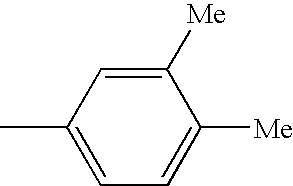
- GWHJZXXIDMPWGX-UHFFFAOYSA-N CC1=CC=C(C)C(C)=C1 Chemical compound CC1=CC=C(C)C(C)=C1 GWHJZXXIDMPWGX-UHFFFAOYSA-N 0.000 description 16
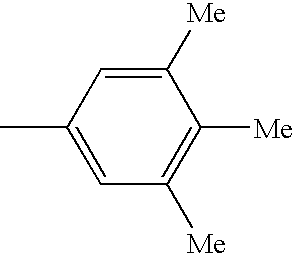
- BFIMMTCNYPIMRN-UHFFFAOYSA-N CC1=CC(C)=C(C)C(C)=C1 Chemical compound CC1=CC(C)=C(C)C(C)=C1 BFIMMTCNYPIMRN-UHFFFAOYSA-N 0.000 description 15
- QCWXDVFBZVHKLV-UHFFFAOYSA-N CC1=CC=C(C(C)(C)C)C=C1 Chemical compound CC1=CC=C(C(C)(C)C)C=C1 QCWXDVFBZVHKLV-UHFFFAOYSA-N 0.000 description 14
- JRLPEMVDPFPYPJ-UHFFFAOYSA-N CCC1=CC=C(C)C=C1 Chemical compound CCC1=CC=C(C)C=C1 JRLPEMVDPFPYPJ-UHFFFAOYSA-N 0.000 description 13
- RZTDESRVPFKCBH-UHFFFAOYSA-N CC1=CC=C(C2=CC=C(C)C=C2)C=C1 Chemical compound CC1=CC=C(C2=CC=C(C)C=C2)C=C1 RZTDESRVPFKCBH-UHFFFAOYSA-N 0.000 description 10
- APQSQLNWAIULLK-UHFFFAOYSA-N CC1=C2C=CC=CC2=C(C)C=C1 Chemical compound CC1=C2C=CC=CC2=C(C)C=C1 APQSQLNWAIULLK-UHFFFAOYSA-N 0.000 description 9
- KAKOUNRRKSHVJO-UHFFFAOYSA-N CC.CC1=CC=CC=C1 Chemical compound CC.CC1=CC=CC=C1 KAKOUNRRKSHVJO-UHFFFAOYSA-N 0.000 description 8
- DALBHIYZSZZWBS-UHFFFAOYSA-N CC1=C2C=CC=CC2=C2C=CC=CC2=C1 Chemical compound CC1=C2C=CC=CC2=C2C=CC=CC2=C1 DALBHIYZSZZWBS-UHFFFAOYSA-N 0.000 description 8
- QIMMUPPBPVKWKM-UHFFFAOYSA-N CC1=CC2=C(C=CC=C2)C=C1 Chemical compound CC1=CC2=C(C=CC=C2)C=C1 QIMMUPPBPVKWKM-UHFFFAOYSA-N 0.000 description 8
- IVIDJLLPQYHHLM-UHFFFAOYSA-N CC1=CC=C2CCCCC2=C1 Chemical compound CC1=CC=C2CCCCC2=C1 IVIDJLLPQYHHLM-UHFFFAOYSA-N 0.000 description 8
- CTQNGGLPUBDAKN-UHFFFAOYSA-N CC1=CC=CC=C1C Chemical compound CC1=CC=CC=C1C CTQNGGLPUBDAKN-UHFFFAOYSA-N 0.000 description 8
- QPUYECUOLPXSFR-UHFFFAOYSA-N CC1=C2C=CC=CC2=CC=C1 Chemical compound CC1=C2C=CC=CC2=CC=C1 QPUYECUOLPXSFR-UHFFFAOYSA-N 0.000 description 7
- RFXBCGVZEJEYGG-UHFFFAOYSA-N CC1=CC=C2CCCC2=C1 Chemical compound CC1=CC=C2CCCC2=C1 RFXBCGVZEJEYGG-UHFFFAOYSA-N 0.000 description 7
- RFQXTZGKFOTWFL-UHFFFAOYSA-N CC1=CC=C(C23CC4CC(CC(C4)C2)C3)C=C1 Chemical compound CC1=CC=C(C23CC4CC(CC(C4)C2)C3)C=C1 RFQXTZGKFOTWFL-UHFFFAOYSA-N 0.000 description 6
- YBLLKDQCAWXYAC-UHFFFAOYSA-N CC1=CC=C(C2CC3CCC2C3)C=C1 Chemical compound CC1=CC=C(C2CC3CCC2C3)C=C1 YBLLKDQCAWXYAC-UHFFFAOYSA-N 0.000 description 6
- FDEYNQHYWGZWRS-UHFFFAOYSA-N CC1=CC=C(C2CCC(C)CC2)C=C1 Chemical compound CC1=CC=C(C2CCC(C)CC2)C=C1 FDEYNQHYWGZWRS-UHFFFAOYSA-N 0.000 description 6
- ZSPRDOHWTFSGKJ-UHFFFAOYSA-N CC1=CC=C(C2CCCCCC2)C=C1 Chemical compound CC1=CC=C(C2CCCCCC2)C=C1 ZSPRDOHWTFSGKJ-UHFFFAOYSA-N 0.000 description 6
- DXSIFZLOUITCRR-UHFFFAOYSA-N CC1=CC=C2C(=C1)C(C)(C)C1=C2C=CC=C1 Chemical compound CC1=CC=C2C(=C1)C(C)(C)C1=C2C=CC=C1 DXSIFZLOUITCRR-UHFFFAOYSA-N 0.000 description 6
- RKJHJMAZNPASHY-UHFFFAOYSA-N CC1=CC=C2C(=C1)CC1=C2C=CC=C1 Chemical compound CC1=CC=C2C(=C1)CC1=C2C=CC=C1 RKJHJMAZNPASHY-UHFFFAOYSA-N 0.000 description 6
- XCYJPXQACVEIOS-UHFFFAOYSA-N CC1=CC=CC(C(C)C)=C1 Chemical compound CC1=CC=CC(C(C)C)=C1 XCYJPXQACVEIOS-UHFFFAOYSA-N 0.000 description 6
- KRVWMPNTAYTOGS-UHFFFAOYSA-N CC1=CC2=C(C=C1)C=C(C(C)C)C=C2 Chemical compound CC1=CC2=C(C=C1)C=C(C(C)C)C=C2 KRVWMPNTAYTOGS-UHFFFAOYSA-N 0.000 description 5
- ZZLCFHIKESPLTH-UHFFFAOYSA-N CC1=CC=C(C2=CC=CC=C2)C=C1 Chemical compound CC1=CC=C(C2=CC=CC=C2)C=C1 ZZLCFHIKESPLTH-UHFFFAOYSA-N 0.000 description 5
- WRWPPGUCZBJXKX-UHFFFAOYSA-N CC1=CC=C(F)C=C1 Chemical compound CC1=CC=C(F)C=C1 WRWPPGUCZBJXKX-UHFFFAOYSA-N 0.000 description 5
- YGYNBBAUIYTWBF-UHFFFAOYSA-N CC1=CC2=C(C=C1)C=C(C)C=C2 Chemical compound CC1=CC2=C(C=C1)C=C(C)C=C2 YGYNBBAUIYTWBF-UHFFFAOYSA-N 0.000 description 4
- NZQKAWXKMYCJDO-UHFFFAOYSA-N CC1=CC=C(C(C)(C)C2=CC=CC=C2)C=C1 Chemical compound CC1=CC=C(C(C)(C)C2=CC=CC=C2)C=C1 NZQKAWXKMYCJDO-UHFFFAOYSA-N 0.000 description 4
- ZXXGUXICWKNYJD-UHFFFAOYSA-N CC1=CC=C(C2=CC3=C(C=CC=C3)C=C2)C=C1 Chemical compound CC1=CC=C(C2=CC3=C(C=CC=C3)C=C2)C=C1 ZXXGUXICWKNYJD-UHFFFAOYSA-N 0.000 description 4
- KUZNURGIXXKBEJ-UHFFFAOYSA-N CC1=CC=C(C2=CN=CC=C2)C=C1 Chemical compound CC1=CC=C(C2=CN=CC=C2)C=C1 KUZNURGIXXKBEJ-UHFFFAOYSA-N 0.000 description 4
- KJNZQKYSNAQLEO-UHFFFAOYSA-N CC1=CC=C(C2=NC=CC=C2)C=C1 Chemical compound CC1=CC=C(C2=NC=CC=C2)C=C1 KJNZQKYSNAQLEO-UHFFFAOYSA-N 0.000 description 4
- BTIWHURRJLUZRN-UHFFFAOYSA-N CC1=CC=C(C2CC3CCC2CC3)C=C1 Chemical compound CC1=CC=C(C2CC3CCC2CC3)C=C1 BTIWHURRJLUZRN-UHFFFAOYSA-N 0.000 description 4
- JWLLJSFLLATDMA-UHFFFAOYSA-N CC1=CC=C(C2CCC(C)(C)CC2)C=C1 Chemical compound CC1=CC=C(C2CCC(C)(C)CC2)C=C1 JWLLJSFLLATDMA-UHFFFAOYSA-N 0.000 description 4
- CVFXRTRMJYAVJB-UHFFFAOYSA-N CC1=CC=C(CCC2=CC=CC=C2)C=C1 Chemical compound CC1=CC=C(CCC2=CC=CC=C2)C=C1 CVFXRTRMJYAVJB-UHFFFAOYSA-N 0.000 description 4
- GYVGXEWAOAAJEU-UHFFFAOYSA-N CC1=CC=C(N(C)C)C=C1 Chemical compound CC1=CC=C(N(C)C)C=C1 GYVGXEWAOAAJEU-UHFFFAOYSA-N 0.000 description 4
- AGHYMXKKEXDUTA-UHFFFAOYSA-N CC1=CC=C(NC2=CC=CC=C2)C=C1 Chemical compound CC1=CC=C(NC2=CC=CC=C2)C=C1 AGHYMXKKEXDUTA-UHFFFAOYSA-N 0.000 description 4
- LWCFXYMSEGQWNB-UHFFFAOYSA-N CCC(C)C1=CC=C(C)C=C1 Chemical compound CCC(C)C1=CC=C(C)C=C1 LWCFXYMSEGQWNB-UHFFFAOYSA-N 0.000 description 4
- HFPPJNVUPMBSBN-UHFFFAOYSA-N CCC(CC)C1=CC=C(C)C=C1 Chemical compound CCC(CC)C1=CC=C(C)C=C1 HFPPJNVUPMBSBN-UHFFFAOYSA-N 0.000 description 4
- NAZXTTXTNXDPLH-UHFFFAOYSA-N C1=CC=C(N(C2=CC=CC=C2)C2=CC3=C(C=C(N(C4=CC=CC=C4)C4=CC=CC=C4)C4=C3C=CC=C4)C3=CC=CC=C32)C=C1.CC.CC.CC.CC Chemical compound C1=CC=C(N(C2=CC=CC=C2)C2=CC3=C(C=C(N(C4=CC=CC=C4)C4=CC=CC=C4)C4=C3C=CC=C4)C3=CC=CC=C32)C=C1.CC.CC.CC.CC NAZXTTXTNXDPLH-UHFFFAOYSA-N 0.000 description 3
- SOTDUNCVHWIEGF-UHFFFAOYSA-N C1=CC=C(N(CC2=CC3=C(C=C(CN(C4=CC=CC=C4)C4=CC=CC=C4)C4=C3C=CC=C4)C3=CC=CC=C23)C2=CC=CC=C2)C=C1.CC.CC.CC.CC Chemical compound C1=CC=C(N(CC2=CC3=C(C=C(CN(C4=CC=CC=C4)C4=CC=CC=C4)C4=C3C=CC=C4)C3=CC=CC=C23)C2=CC=CC=C2)C=C1.CC.CC.CC.CC SOTDUNCVHWIEGF-UHFFFAOYSA-N 0.000 description 3
- KDYVCOSVYOSHOL-UHFFFAOYSA-N CC1=CC2=C(C=CC=N2)C=C1 Chemical compound CC1=CC2=C(C=CC=N2)C=C1 KDYVCOSVYOSHOL-UHFFFAOYSA-N 0.000 description 3
- SSTNIXFHCIOCJI-UHFFFAOYSA-N CC1=CC=C(OC2=CC=CC=C2)C=C1 Chemical compound CC1=CC=C(OC2=CC=CC=C2)C=C1 SSTNIXFHCIOCJI-UHFFFAOYSA-N 0.000 description 2
- YCAYVMOKDCQMPX-UHFFFAOYSA-N CCCC1CCC(C2=CC=C(C)C=C2)CC1 Chemical compound CCCC1CCC(C2=CC=C(C)C=C2)CC1 YCAYVMOKDCQMPX-UHFFFAOYSA-N 0.000 description 2
- CHLICZRVGGXEOD-UHFFFAOYSA-N COC1=CC=C(C)C=C1 Chemical compound COC1=CC=C(C)C=C1 CHLICZRVGGXEOD-UHFFFAOYSA-N 0.000 description 2
- YCRDGFYLJBQXIZ-UHFFFAOYSA-N C1=CC2=C(C=C1)/C1=C/C=C\C3=C(/C4=C5\C=CC=C\C5=C(/C5=CC=C(/C6=C/C=C7/C8=C(C=CC=C8)C8=CC=CC6=C87)C=C5)C5=C4C=CC=C5)C=CC2=C31.C1=CC2=C(C=C1)C1=C(C=CC=C1)C(C1=CC=C(/C3=C4\C=CC=C\C4=C(/C4=CC5=C(C=CC=C5)C5=C4C=CC=C5)C4=C3C=CC=C4)C=C1)=C2.C1=CC=C(C2=CC=C(C3=CC=CC=C3C3=C4C=CC=CC4=C(C4=CC=CC5=C4C=CC4=C5C=CC=C4)C4=C3C=CC(C3=CC=CC=C3)=C4)C=C2)C=C1.CC1=CC2=C(C=C1)C(C1=C3/C=C\C4=CC=CC5=C4C3=C(C=C5)C=C1)=C1C=CC=CC1=C2C1=CC=CC=C1C1=CC=CC=C1.CC1=CC2=C(C=C1)C(C1=CC3=C(C=CC=C3)C3=C1C=CC=C3)=C1C=CC=CC1=C2C1=CC=CC(C2=CC=CC=C2)=C1.CC1=CC2=C(C=C1)C(C1=CC=C(C3=CC=CC=C3)C=C1)=C1C=CC=CC1=C2C1=C2C=CC=CC2=CC=C1 Chemical compound C1=CC2=C(C=C1)/C1=C/C=C\C3=C(/C4=C5\C=CC=C\C5=C(/C5=CC=C(/C6=C/C=C7/C8=C(C=CC=C8)C8=CC=CC6=C87)C=C5)C5=C4C=CC=C5)C=CC2=C31.C1=CC2=C(C=C1)C1=C(C=CC=C1)C(C1=CC=C(/C3=C4\C=CC=C\C4=C(/C4=CC5=C(C=CC=C5)C5=C4C=CC=C5)C4=C3C=CC=C4)C=C1)=C2.C1=CC=C(C2=CC=C(C3=CC=CC=C3C3=C4C=CC=CC4=C(C4=CC=CC5=C4C=CC4=C5C=CC=C4)C4=C3C=CC(C3=CC=CC=C3)=C4)C=C2)C=C1.CC1=CC2=C(C=C1)C(C1=C3/C=C\C4=CC=CC5=C4C3=C(C=C5)C=C1)=C1C=CC=CC1=C2C1=CC=CC=C1C1=CC=CC=C1.CC1=CC2=C(C=C1)C(C1=CC3=C(C=CC=C3)C3=C1C=CC=C3)=C1C=CC=CC1=C2C1=CC=CC(C2=CC=CC=C2)=C1.CC1=CC2=C(C=C1)C(C1=CC=C(C3=CC=CC=C3)C=C1)=C1C=CC=CC1=C2C1=C2C=CC=CC2=CC=C1 YCRDGFYLJBQXIZ-UHFFFAOYSA-N 0.000 description 1
- ULDIGKOHCGIRDG-UHFFFAOYSA-N C1=CC2=C(C=C1)C(C1=CC=C(/C3=C4\C=CC=C\C4=C(/C4=C5/C=C\C=C6\C7=C(C=CC=C7)C(=C56)C=C4)C4=C3C=CC=C4)C=C1)=CC=C2.C1=CC2=C(C=C1)C=C(C1=CC=C(/C3=C4\C=CC=C\C4=C(/C4=C5/C=C\C=C6\C7=C(C=CC=C7)C(=C56)C=C4)C4=C3C=CC=C4)C=C1)C=C2.C1=CC=C(C2=CC(C3=CC=CC=C3)=CC(/C3=C4\C=CC=C\C4=C(/C4=C5C=CC=CC5=CC=C4)C4=C3C=CC=C4)=C2)C=C1.C1=CC=C(C2=CC=C(/C3=C4\C=CC=C\C4=C(/C4=CC5=C(C=CC=C5)C5=C4C=CC=C5)C4=C3C=CC=C4)C=C2C2=CC=CC=C2)C=C1.C1=CC=C(C2=CC=C(C3=CC=CC=C3/C3=C4\C=CC=C\C4=C(C4=C/C5=C(C=CC=C5)C5=C\4C=CC=C5)\C4=C3C=CC=C4)C=C2)C=C1.C1=CC=C(C2=CC=CC=C2/C2=C3\C=CC=C\C3=C(/C3=C4/C=C\C5=CC=CC6=C5C4=C(C=C6)C=C3)C3=C2C=CC=C3)C=C1 Chemical compound C1=CC2=C(C=C1)C(C1=CC=C(/C3=C4\C=CC=C\C4=C(/C4=C5/C=C\C=C6\C7=C(C=CC=C7)C(=C56)C=C4)C4=C3C=CC=C4)C=C1)=CC=C2.C1=CC2=C(C=C1)C=C(C1=CC=C(/C3=C4\C=CC=C\C4=C(/C4=C5/C=C\C=C6\C7=C(C=CC=C7)C(=C56)C=C4)C4=C3C=CC=C4)C=C1)C=C2.C1=CC=C(C2=CC(C3=CC=CC=C3)=CC(/C3=C4\C=CC=C\C4=C(/C4=C5C=CC=CC5=CC=C4)C4=C3C=CC=C4)=C2)C=C1.C1=CC=C(C2=CC=C(/C3=C4\C=CC=C\C4=C(/C4=CC5=C(C=CC=C5)C5=C4C=CC=C5)C4=C3C=CC=C4)C=C2C2=CC=CC=C2)C=C1.C1=CC=C(C2=CC=C(C3=CC=CC=C3/C3=C4\C=CC=C\C4=C(C4=C/C5=C(C=CC=C5)C5=C\4C=CC=C5)\C4=C3C=CC=C4)C=C2)C=C1.C1=CC=C(C2=CC=CC=C2/C2=C3\C=CC=C\C3=C(/C3=C4/C=C\C5=CC=CC6=C5C4=C(C=C6)C=C3)C3=C2C=CC=C3)C=C1 ULDIGKOHCGIRDG-UHFFFAOYSA-N 0.000 description 1
- LGNNJPCRCMCIBA-UHFFFAOYSA-N C1=CC2=C(C=C1)C(C1=CC=C(C3=CC=C4/C=C\C5=C(C6=C/C=C7/C=CC=C\C7=C/6)\C=C/C6=CC=C3C4=C65)C=C1)=CC=C2.C1=CC2=CC=C(C3=CC(/C4=C/C=C5/C=C\C6=CC=C(C7=CC=C(C8=CC=CC9=C8C=CC=C9)C=C7)C7=CC=C4C5=C67)=CC=C3)C=C2C=C1.C1=CC=C(C2=C(C3=C4/C=C\C5=C(C6=C/C=C7/C=CC=C\C7=C/6)\C=C(\C6=CC=CC=C6)C6=CC=C(C(C7=C8C=CC=CC8=CC=C7)=C3)C4=C65)C=CC=C2)C=C1.C1=CC=C(C2=CC=C(C3=C(/C4=C/C=C5/C=C\C6=CC=C(C7=CC=C(C8=CC=CC9=C8C=CC=C9)C=C7)C7=CC=C4C5=C67)C=CC=C3)C=C2)C=C1.CC1(C)C2=C(C=CC(C3=CC=C4/C=C\C5=CC=CC6=C5C4=C3C=C6)=C2)C2=C1C=C(C1=C3C=CC=CC3=CC=C1)C=C2 Chemical compound C1=CC2=C(C=C1)C(C1=CC=C(C3=CC=C4/C=C\C5=C(C6=C/C=C7/C=CC=C\C7=C/6)\C=C/C6=CC=C3C4=C65)C=C1)=CC=C2.C1=CC2=CC=C(C3=CC(/C4=C/C=C5/C=C\C6=CC=C(C7=CC=C(C8=CC=CC9=C8C=CC=C9)C=C7)C7=CC=C4C5=C67)=CC=C3)C=C2C=C1.C1=CC=C(C2=C(C3=C4/C=C\C5=C(C6=C/C=C7/C=CC=C\C7=C/6)\C=C(\C6=CC=CC=C6)C6=CC=C(C(C7=C8C=CC=CC8=CC=C7)=C3)C4=C65)C=CC=C2)C=C1.C1=CC=C(C2=CC=C(C3=C(/C4=C/C=C5/C=C\C6=CC=C(C7=CC=C(C8=CC=CC9=C8C=CC=C9)C=C7)C7=CC=C4C5=C67)C=CC=C3)C=C2)C=C1.CC1(C)C2=C(C=CC(C3=CC=C4/C=C\C5=CC=CC6=C5C4=C3C=C6)=C2)C2=C1C=C(C1=C3C=CC=CC3=CC=C1)C=C2 LGNNJPCRCMCIBA-UHFFFAOYSA-N 0.000 description 1
- SUUCJTKVULDBCR-UHFFFAOYSA-N C1=CC2=C(C=C1)C(C1=CC=C(C3=CC=C4/C=C\C5=C(C6=CC=C(C7=CC=C8/C=C\C=C/C8=C7)C=C6)\C=C/C6=CC=C3C4=C65)C=C1)=CC=C2.C1=CC2=C(C=C1)C(C1=CC=C3/C=C\C4=C(C5=C/C=C6/C=CC=C\C6=C/5)\C=C/C5=CC=C1C3=C54)=CC=C2.C1=CC=C(C2=C3/C=C\C4C5=C3C(=CC=C5/C(C3=CC=CC=C3)=C\C4C3=C\C=C4\C=CC=C\C4=C\3)C(C3=CC=C4C=CC=CC4=C3)=C2)C=C1.C1=CC=C(C2=C3C=CC=CC3=C(C3=CC=C(C4=CC=C5/C=C\C6=C(C7=C/C=C8/C=CC=C\C8=C/7)\C=C/C7=CC=C4C5=C76)C=C3)C3=C2C=CC=C3)C=C1.CC1(C)C2=C(C=CC(C3=CC=C4/C=C\C5=CC=CC6=C5C4=C3C=C6)=C2)C2=C1C=C(C1=C3C=CC=CC3=C(C3=CC=CC=C3)C3=C1C=CC=C3)C=C2.C[Si]1(C)C2=C(C=CC(C3=CC=C4/C=C\C5=CC=CC6=C5C4=C3C=C6)=C2)C2=C1C=C(C1=C3C=CC=CC3=C(C3=CC=CC=C3)C3=C1C=CC=C3)C=C2 Chemical compound C1=CC2=C(C=C1)C(C1=CC=C(C3=CC=C4/C=C\C5=C(C6=CC=C(C7=CC=C8/C=C\C=C/C8=C7)C=C6)\C=C/C6=CC=C3C4=C65)C=C1)=CC=C2.C1=CC2=C(C=C1)C(C1=CC=C3/C=C\C4=C(C5=C/C=C6/C=CC=C\C6=C/5)\C=C/C5=CC=C1C3=C54)=CC=C2.C1=CC=C(C2=C3/C=C\C4C5=C3C(=CC=C5/C(C3=CC=CC=C3)=C\C4C3=C\C=C4\C=CC=C\C4=C\3)C(C3=CC=C4C=CC=CC4=C3)=C2)C=C1.C1=CC=C(C2=C3C=CC=CC3=C(C3=CC=C(C4=CC=C5/C=C\C6=C(C7=C/C=C8/C=CC=C\C8=C/7)\C=C/C7=CC=C4C5=C76)C=C3)C3=C2C=CC=C3)C=C1.CC1(C)C2=C(C=CC(C3=CC=C4/C=C\C5=CC=CC6=C5C4=C3C=C6)=C2)C2=C1C=C(C1=C3C=CC=CC3=C(C3=CC=CC=C3)C3=C1C=CC=C3)C=C2.C[Si]1(C)C2=C(C=CC(C3=CC=C4/C=C\C5=CC=CC6=C5C4=C3C=C6)=C2)C2=C1C=C(C1=C3C=CC=CC3=C(C3=CC=CC=C3)C3=C1C=CC=C3)C=C2 SUUCJTKVULDBCR-UHFFFAOYSA-N 0.000 description 1
- KZDGPQAJBRAUMT-UHFFFAOYSA-N C1=CC2=C(C=C1)C=C(C1=C3C=CC=CC3=C(C3=CC=C(C4=CC5=C(C=CC=C5)C5=C4C=CC=C5)C=C3)C3=C1C=CC=C3)C=C2.C1=CC2=C(C=C1)C=C(C1=C3C=CC=CC3=C(C3=CC=C(C4=CC=C5C6=C(C=CC=C6)C6=CC=CC4=C65)C=C3)C3=C1C=CC=C3)C=C2.C1=CC2=C(C=C1)C=C(C1=C3C=CC=CC3=C(C3=CC=C(C4=CC=CC5=C4C=CC=C5)C=C3)C3=C1C=CC=C3)C=C2.C1=CC2=C(C=C1)C=C(C1=CC=C(C3=C4C=CC=CC4=C(C4=CC5=C(C=CC=C5)C=C4)C4=C3C=CC=C4)C=C1)C=C2.CC1=CC2=C(C=C1)C(C1=CC3=C(C=CC=C3)C=C1)=C1C=CC=CC1=C2C1=CC=C(C2=CC=CC=C2)C=C1.CC1=CC2=C(C=C1)C(C1=CC=CC(C3=CC=CC=C3)=C1)=C1C=CC=CC1=C2C1=CC2=C(C=CC=C2)C=C1 Chemical compound C1=CC2=C(C=C1)C=C(C1=C3C=CC=CC3=C(C3=CC=C(C4=CC5=C(C=CC=C5)C5=C4C=CC=C5)C=C3)C3=C1C=CC=C3)C=C2.C1=CC2=C(C=C1)C=C(C1=C3C=CC=CC3=C(C3=CC=C(C4=CC=C5C6=C(C=CC=C6)C6=CC=CC4=C65)C=C3)C3=C1C=CC=C3)C=C2.C1=CC2=C(C=C1)C=C(C1=C3C=CC=CC3=C(C3=CC=C(C4=CC=CC5=C4C=CC=C5)C=C3)C3=C1C=CC=C3)C=C2.C1=CC2=C(C=C1)C=C(C1=CC=C(C3=C4C=CC=CC4=C(C4=CC5=C(C=CC=C5)C=C4)C4=C3C=CC=C4)C=C1)C=C2.CC1=CC2=C(C=C1)C(C1=CC3=C(C=CC=C3)C=C1)=C1C=CC=CC1=C2C1=CC=C(C2=CC=CC=C2)C=C1.CC1=CC2=C(C=C1)C(C1=CC=CC(C3=CC=CC=C3)=C1)=C1C=CC=CC1=C2C1=CC2=C(C=CC=C2)C=C1 KZDGPQAJBRAUMT-UHFFFAOYSA-N 0.000 description 1
- UCYSFKBFPQELJR-UHFFFAOYSA-N C1=CC2=C(C=C1)C=C(C1=CC=C(C3=C4C=CC=CC4=C(C4=C5C=CC=C6C7=C(C=CC=C7)C(=C65)C=C4)C4=C3C=C(C3=CC5=C(C=C3)N=CC=N5)C=C4)C=C1)C=C2.C1=CC2=C(C=C1)N=C(C1=CC3=C(C=C1)C(C1=C4C=CC=C5C6=C(C=CC=C6)C(=C54)C=C1)=C1C=CC=CC1=C3C1=CC=C(C3=CC=C4C5=C(C=CC=C5)C5=CC=CC3=C54)C=C1)C=N2.C1=CC=C(C2=CC(C3=CC=CC=C3)=CC(C3=C4C=CC=CC4=C(/C4=C5\C=CC=C\C5=C(/C5=CC6=C(C=CC=C6)C=C5)C5=CC=CC=C54)C4=C3C=CC=C4)=C2)C=C1.C1=CC=C2C(=C1)C(C1=CC3=C(C=CC=C3)C=C1)=C1C=CC=CC1=C2C1=C2C=CC=CC2=C(C2=CC=C(C3=CC4=C(C=CC=C4)C=C3)C=C2)C2=C1C=CC=C2.CC1=CC2=C(C=C1)C(/C1=C/C3=C(C=CC=C3)C3=C1C=CC=C3)=C1C=CC=CC1=C2C1=CC=C(C2=CC3=C(C=CC=C3)C3=C2C=CC=C3)C=C1 Chemical compound C1=CC2=C(C=C1)C=C(C1=CC=C(C3=C4C=CC=CC4=C(C4=C5C=CC=C6C7=C(C=CC=C7)C(=C65)C=C4)C4=C3C=C(C3=CC5=C(C=C3)N=CC=N5)C=C4)C=C1)C=C2.C1=CC2=C(C=C1)N=C(C1=CC3=C(C=C1)C(C1=C4C=CC=C5C6=C(C=CC=C6)C(=C54)C=C1)=C1C=CC=CC1=C3C1=CC=C(C3=CC=C4C5=C(C=CC=C5)C5=CC=CC3=C54)C=C1)C=N2.C1=CC=C(C2=CC(C3=CC=CC=C3)=CC(C3=C4C=CC=CC4=C(/C4=C5\C=CC=C\C5=C(/C5=CC6=C(C=CC=C6)C=C5)C5=CC=CC=C54)C4=C3C=CC=C4)=C2)C=C1.C1=CC=C2C(=C1)C(C1=CC3=C(C=CC=C3)C=C1)=C1C=CC=CC1=C2C1=C2C=CC=CC2=C(C2=CC=C(C3=CC4=C(C=CC=C4)C=C3)C=C2)C2=C1C=CC=C2.CC1=CC2=C(C=C1)C(/C1=C/C3=C(C=CC=C3)C3=C1C=CC=C3)=C1C=CC=CC1=C2C1=CC=C(C2=CC3=C(C=CC=C3)C3=C2C=CC=C3)C=C1 UCYSFKBFPQELJR-UHFFFAOYSA-N 0.000 description 1
- HZWIBHXJOZPPDC-UHFFFAOYSA-N C1=CC2=C3C(=C1)/C=C\C1=C3C(=CC=C1)C=C2.C1=CC=C(C2=CC=C(C3=C4C=CC=CC4=C(C4=C5C=CC=CC5=C(/C5=C6\C=CC=C\C6=C(/C6=CC7=C(C=CC=C7)C=C6)C6=CC=CC=C65)C5=C4C=CC=C5)C4=C3C=CC=C4)C=C2)C=C1.C1=CC=C(C2=CC=C(C3=C4C=CC=CC4=C(C4=C5C=CC=CC5=C(C5=CC6=C(C=CC=C6)C=C5)C5=CC=CC=C54)C4=C3C=CC=C4)C=C2C2=CC=CC=C2)C=C1.C1=CC=C(C2=CC=C(C3=CC=CC=C3C3=C4C=CC=CC4=C(/C4=C5\C=CC=C\C5=C(/C5=CC6=C(C=CC=C6)C=C5)C5=CC=CC=C54)C4=C3C=CC=C4)C=C2)C=C1.C1=CC=C(C2=CC=CC=C2C2=C3C=CC=CC3=C(/C3=C4\C=CC=C\C4=C(/C4=CC5=C(C=CC=C5)C=C4)C4=CC=CC=C43)C3=C2C=CC=C3)C=C1.CC[Ar].CC[Ar].[Ar].[Ar].[Ar].[Ar].[Ar].[Ar].[Ar].[Ar].[Ar] Chemical compound C1=CC2=C3C(=C1)/C=C\C1=C3C(=CC=C1)C=C2.C1=CC=C(C2=CC=C(C3=C4C=CC=CC4=C(C4=C5C=CC=CC5=C(/C5=C6\C=CC=C\C6=C(/C6=CC7=C(C=CC=C7)C=C6)C6=CC=CC=C65)C5=C4C=CC=C5)C4=C3C=CC=C4)C=C2)C=C1.C1=CC=C(C2=CC=C(C3=C4C=CC=CC4=C(C4=C5C=CC=CC5=C(C5=CC6=C(C=CC=C6)C=C5)C5=CC=CC=C54)C4=C3C=CC=C4)C=C2C2=CC=CC=C2)C=C1.C1=CC=C(C2=CC=C(C3=CC=CC=C3C3=C4C=CC=CC4=C(/C4=C5\C=CC=C\C5=C(/C5=CC6=C(C=CC=C6)C=C5)C5=CC=CC=C54)C4=C3C=CC=C4)C=C2)C=C1.C1=CC=C(C2=CC=CC=C2C2=C3C=CC=CC3=C(/C3=C4\C=CC=C\C4=C(/C4=CC5=C(C=CC=C5)C=C4)C4=CC=CC=C43)C3=C2C=CC=C3)C=C1.CC[Ar].CC[Ar].[Ar].[Ar].[Ar].[Ar].[Ar].[Ar].[Ar].[Ar].[Ar] HZWIBHXJOZPPDC-UHFFFAOYSA-N 0.000 description 1
- WMAXBLMNRIEBEE-UHFFFAOYSA-N C1=CC2=CC(C3=CC=C(C4=C5\C=C/C6=CC=C(C7=CC=C(C8=CC=CC9=C8C=CC=C9)C=C7)C7=CC=C(\C=C/4)C5=C67)C=C3)=C3C=CC=CC3=C2C=C1.C1=CC2=CC=C(C3=C4\C=C/C5=CC=C(C6=CC7=C(C=CC=C7)C7=C6C=CC=C7)C6=CC=C(\C=C/3)C4=C56)C=C2C=C1.C1=CC=C(C2=CC3=CC=C(C4=C5\C=C/C6=CC=C(C7=CC=C(C8=CC=CC9=C8C=CC=C9)C=C7)C7=CC=C(\C=C/4)C5=C67)C=C3C=C2)C=C1.C1=CC=C(C2=CC=CC(C3=C4\C=C/C5=CC=C(C6=CC=C(C7=CC=CC8=C7C=CC=C8)C=C6)C6=CC=C(\C=C/3)C4=C56)=C2)C=C1.CC1(C)C2=C(C=CC=C2)C2=C1C=C(C1=CC=C3/C=C\C4=C(C5=CC=C(C6=C7/C=C\C=C8\CCC(=C78)C=C6)C=C5)C=CC5=C4C3=C1C=C5)C=C2.CC1(C)C2=C(C=CC=C2)C2=C1C=C(C1=CC=C3/C=C\C4=C(C5=CC=C(C6=C7C=CC=CC7=CC=C6)C=C5)C=CC5=C4C3=C1C=C5)C=C2 Chemical compound C1=CC2=CC(C3=CC=C(C4=C5\C=C/C6=CC=C(C7=CC=C(C8=CC=CC9=C8C=CC=C9)C=C7)C7=CC=C(\C=C/4)C5=C67)C=C3)=C3C=CC=CC3=C2C=C1.C1=CC2=CC=C(C3=C4\C=C/C5=CC=C(C6=CC7=C(C=CC=C7)C7=C6C=CC=C7)C6=CC=C(\C=C/3)C4=C56)C=C2C=C1.C1=CC=C(C2=CC3=CC=C(C4=C5\C=C/C6=CC=C(C7=CC=C(C8=CC=CC9=C8C=CC=C9)C=C7)C7=CC=C(\C=C/4)C5=C67)C=C3C=C2)C=C1.C1=CC=C(C2=CC=CC(C3=C4\C=C/C5=CC=C(C6=CC=C(C7=CC=CC8=C7C=CC=C8)C=C6)C6=CC=C(\C=C/3)C4=C56)=C2)C=C1.CC1(C)C2=C(C=CC=C2)C2=C1C=C(C1=CC=C3/C=C\C4=C(C5=CC=C(C6=C7/C=C\C=C8\CCC(=C78)C=C6)C=C5)C=CC5=C4C3=C1C=C5)C=C2.CC1(C)C2=C(C=CC=C2)C2=C1C=C(C1=CC=C3/C=C\C4=C(C5=CC=C(C6=C7C=CC=CC7=CC=C6)C=C5)C=CC5=C4C3=C1C=C5)C=C2 WMAXBLMNRIEBEE-UHFFFAOYSA-N 0.000 description 1
- OQYQXTGNSMFPEW-UHFFFAOYSA-N C1=CC2=CC=C(/C3=C/C=C4/C=C\C5=CC=C(C6=CC=CC7=C6C=CC=C7)C6=CC=C3C4=C56)C=C2C=C1.C1=CC2=CC=CC(C3=CC4=CC=C(C5=C6\C=C/C7=CC=C(C8=CC=C(C9=CC=CC%10=C9C=CC=C%10)C=C8)C8=CC=C(\C=C/5)C6=C78)C=C4C=C3)=C2C=C1.C1=CC=C(C2=C(C3=C4/C=C\C5=C(C6=CC=C7C=CC=CC7=C6)\C=C(\C6=CC=CC=C6)C6=CC=C(C(C7=CC8=C(C=CC=C8)C=C7)=C3)C4=C65)C=CC=C2)C=C1.C1=CC=C(C2=C3/C=C\C4=C(C5=CC=C6C=CC=CC6=C5)\C=C(\C5=CC=CC=C5)C5=CC=C(C(C6=CC=CC7=C6C=CC=C7)=C2)C3=C54)C=C1 Chemical compound C1=CC2=CC=C(/C3=C/C=C4/C=C\C5=CC=C(C6=CC=CC7=C6C=CC=C7)C6=CC=C3C4=C56)C=C2C=C1.C1=CC2=CC=CC(C3=CC4=CC=C(C5=C6\C=C/C7=CC=C(C8=CC=C(C9=CC=CC%10=C9C=CC=C%10)C=C8)C8=CC=C(\C=C/5)C6=C78)C=C4C=C3)=C2C=C1.C1=CC=C(C2=C(C3=C4/C=C\C5=C(C6=CC=C7C=CC=CC7=C6)\C=C(\C6=CC=CC=C6)C6=CC=C(C(C7=CC8=C(C=CC=C8)C=C7)=C3)C4=C65)C=CC=C2)C=C1.C1=CC=C(C2=C3/C=C\C4=C(C5=CC=C6C=CC=CC6=C5)\C=C(\C5=CC=CC=C5)C5=CC=C(C(C6=CC=CC7=C6C=CC=C7)=C2)C3=C54)C=C1 OQYQXTGNSMFPEW-UHFFFAOYSA-N 0.000 description 1
- MHTIGLAGTDOZNC-UHFFFAOYSA-N C1=CC=C(C2=CC(/C3=C4\C=CC=C\C4=C(C4=C/C5=C(C=CC=C5)C5C=CC=CC\45)\C4=C3C=CC=C4)=CC=C2)C=C1.C1=CC=C(C2=CC=C(/C3=C4\C=CC=C\C4=C(/C4=C5C=CC=CC5=CC=C4)C4=C3C=CC=C4)C=C2)C=C1.C1=CC=C(CC2=CC3=C(C=C2)/C(C2=CC4=C(C=CC=C4)C=C2)=C2/C=CC=C/C2=C/3C2=CC=C(C3=CC4=C(C=CC=C4)C4=C3C=CC=C4)C=C2)C=C1.CC1=CC2=C(C=C1)/C(C1=CC=C(C3=CC=C4C5=C(C=CC=C5)C5=CC=CC3=C54)C=C1)=C1/C=CC=C/C1=C/2C1=CC2=C(C=CC=C2)C=C1.CC1=CC2=C(C=C1)C(C1=CC3=C(C=CC=C3)C=C1)=C1C=CC=CC1=C2C1=CC=C(C2=CC3=C(C=CC=C3)C=C2)C=C1 Chemical compound C1=CC=C(C2=CC(/C3=C4\C=CC=C\C4=C(C4=C/C5=C(C=CC=C5)C5C=CC=CC\45)\C4=C3C=CC=C4)=CC=C2)C=C1.C1=CC=C(C2=CC=C(/C3=C4\C=CC=C\C4=C(/C4=C5C=CC=CC5=CC=C4)C4=C3C=CC=C4)C=C2)C=C1.C1=CC=C(CC2=CC3=C(C=C2)/C(C2=CC4=C(C=CC=C4)C=C2)=C2/C=CC=C/C2=C/3C2=CC=C(C3=CC4=C(C=CC=C4)C4=C3C=CC=C4)C=C2)C=C1.CC1=CC2=C(C=C1)/C(C1=CC=C(C3=CC=C4C5=C(C=CC=C5)C5=CC=CC3=C54)C=C1)=C1/C=CC=C/C1=C/2C1=CC2=C(C=CC=C2)C=C1.CC1=CC2=C(C=C1)C(C1=CC3=C(C=CC=C3)C=C1)=C1C=CC=CC1=C2C1=CC=C(C2=CC3=C(C=CC=C3)C=C2)C=C1 MHTIGLAGTDOZNC-UHFFFAOYSA-N 0.000 description 1
- UPACSXXLQBYMNK-UHFFFAOYSA-N C1=CC=C(C2=CC(C3=C4C=CC=CC4=C(C4=CC5=C(C=CC=C5)C=C4)C4=C3C=CC=C4)=CC=C2)C=C1.C1=CC=C(C2=CC(C3=CC=CC=C3)=CC(C3=C4C=CC=CC4=C(C4=CC5=C(C=CC=C5)C=C4)C4=C3C=CC=C4)=C2)C=C1.C1=CC=C(C2=CC=C(C3=C4C=CC=CC4=C(C4=CC5=C(C=CC=C5)C=C4)C4=C3C=CC=C4)C=C2)C=C1.C1=CC=C(C2=CC=C(C3=C4C=CC=CC4=C(C4=CC5=C(C=CC=C5)C=C4)C4=C3C=CC=C4)C=C2C2=CC=CC=C2)C=C1.C1=CC=C(C2=CC=C(C3=CC=CC=C3C3=C4C=CC=CC4=C(C4=CC5=C(C=CC=C5)C=C4)C4=C3C=CC=C4)C=C2)C=C1.C1=CC=C(C2=CC=CC=C2C2=C3C=CC=CC3=C(C3=CC4=C(C=CC=C4)C=C3)C3=C2C=CC=C3)C=C1 Chemical compound C1=CC=C(C2=CC(C3=C4C=CC=CC4=C(C4=CC5=C(C=CC=C5)C=C4)C4=C3C=CC=C4)=CC=C2)C=C1.C1=CC=C(C2=CC(C3=CC=CC=C3)=CC(C3=C4C=CC=CC4=C(C4=CC5=C(C=CC=C5)C=C4)C4=C3C=CC=C4)=C2)C=C1.C1=CC=C(C2=CC=C(C3=C4C=CC=CC4=C(C4=CC5=C(C=CC=C5)C=C4)C4=C3C=CC=C4)C=C2)C=C1.C1=CC=C(C2=CC=C(C3=C4C=CC=CC4=C(C4=CC5=C(C=CC=C5)C=C4)C4=C3C=CC=C4)C=C2C2=CC=CC=C2)C=C1.C1=CC=C(C2=CC=C(C3=CC=CC=C3C3=C4C=CC=CC4=C(C4=CC5=C(C=CC=C5)C=C4)C4=C3C=CC=C4)C=C2)C=C1.C1=CC=C(C2=CC=CC=C2C2=C3C=CC=CC3=C(C3=CC4=C(C=CC=C4)C=C3)C3=C2C=CC=C3)C=C1 UPACSXXLQBYMNK-UHFFFAOYSA-N 0.000 description 1
- PWLPHPFAQNBNTH-UHFFFAOYSA-N C1=CC=C(C2=CC3=C(C=C2)C(C2=CC4=C(C=CC=C4)C=C2)=C2C=C(C4=CC=CC=C4)C=CC2=C3C2=CC=C(C3=CC=CC4=C3C=CC=C4)C=C2)C=C1.C1=CC=C(C2=CC3=C(C=C2)C(C2=CC4=C(C=CC=C4)C=C2)=C2C=CC=CC2=C3C2=CC=C(C3=CC=CC=C3)C(C3=CC=CC=C3)=C2)C=C1.CC1=CC2=C(C=C1)C(C1=CC3=C(C=CC=C3)C=C1)=C1C=CC=CC1=C2C1=CC(C2=CC=CC=C2)=CC(C2=CC=CC=C2)=C1.CC1=CC2=C(C=C1)C(C1=CC3=C(C=CC=C3)C=C1)=C1C=CC=CC1=C2C1=CC=CC=C1C1=CC=CC=C1.CC1=CC2=C(C=C1)C(C1=CC=CC=C1C1=CC=C(C3=CC=CC=C3)C=C1)=C1C=CC=CC1=C2C1=CC2=C(C=CC=C2)C=C1 Chemical compound C1=CC=C(C2=CC3=C(C=C2)C(C2=CC4=C(C=CC=C4)C=C2)=C2C=C(C4=CC=CC=C4)C=CC2=C3C2=CC=C(C3=CC=CC4=C3C=CC=C4)C=C2)C=C1.C1=CC=C(C2=CC3=C(C=C2)C(C2=CC4=C(C=CC=C4)C=C2)=C2C=CC=CC2=C3C2=CC=C(C3=CC=CC=C3)C(C3=CC=CC=C3)=C2)C=C1.CC1=CC2=C(C=C1)C(C1=CC3=C(C=CC=C3)C=C1)=C1C=CC=CC1=C2C1=CC(C2=CC=CC=C2)=CC(C2=CC=CC=C2)=C1.CC1=CC2=C(C=C1)C(C1=CC3=C(C=CC=C3)C=C1)=C1C=CC=CC1=C2C1=CC=CC=C1C1=CC=CC=C1.CC1=CC2=C(C=C1)C(C1=CC=CC=C1C1=CC=C(C3=CC=CC=C3)C=C1)=C1C=CC=CC1=C2C1=CC2=C(C=CC=C2)C=C1 PWLPHPFAQNBNTH-UHFFFAOYSA-N 0.000 description 1
- YHNITIDWWJKCBH-UHFFFAOYSA-N C1=CC=C(OC2=CC3=C(C=C2)C(C2=CC=C(C4=CC=CC=C4)C(C4=CC=CC=C4)=C2)=C2C=CC=CC2=C3C2=CC3=C(C=CC=C3)C3=C2C=CC=C3)C=C1.C1=CC=C(OC2=CC3=C(C=C2)C(C2=CC=CC=C2C2=CC=C(C4=CC=CC=C4)C=C2)=C2C=CC=CC2=C3C2=CC3=C(C=CC=C3)C3=C2C=CC=C3)C=C1.C1=CN=C(C2=CC3=C(C=C2)C(C2=C4C=CC=C5C6=C(C=CC=C6)C(=C54)C=C2)=C2C=CC=CC2=C3C2=CC=C(C3=CC=CC4=C3C=CC=C4)C=C2)C=C1.COC1=CC2=C(C=C1)C(C1=C3/C=C\C4=CC=CC5=C4C3=C(C=C5)C=C1)=C1C=CC=CC1=C2C1=CC=CC=C1C1=CC=CC=C1.COC1=CC2=C(C=C1)C(C1=C3C=CC=CC3=CC=C1)=C1C=CC=CC1=C2C1=CC(C2=CC=CC=C2)=CC(C2=CC=CC=C2)=C1 Chemical compound C1=CC=C(OC2=CC3=C(C=C2)C(C2=CC=C(C4=CC=CC=C4)C(C4=CC=CC=C4)=C2)=C2C=CC=CC2=C3C2=CC3=C(C=CC=C3)C3=C2C=CC=C3)C=C1.C1=CC=C(OC2=CC3=C(C=C2)C(C2=CC=CC=C2C2=CC=C(C4=CC=CC=C4)C=C2)=C2C=CC=CC2=C3C2=CC3=C(C=CC=C3)C3=C2C=CC=C3)C=C1.C1=CN=C(C2=CC3=C(C=C2)C(C2=C4C=CC=C5C6=C(C=CC=C6)C(=C54)C=C2)=C2C=CC=CC2=C3C2=CC=C(C3=CC=CC4=C3C=CC=C4)C=C2)C=C1.COC1=CC2=C(C=C1)C(C1=C3/C=C\C4=CC=CC5=C4C3=C(C=C5)C=C1)=C1C=CC=CC1=C2C1=CC=CC=C1C1=CC=CC=C1.COC1=CC2=C(C=C1)C(C1=C3C=CC=CC3=CC=C1)=C1C=CC=CC1=C2C1=CC(C2=CC=CC=C2)=CC(C2=CC=CC=C2)=C1 YHNITIDWWJKCBH-UHFFFAOYSA-N 0.000 description 1
- FVOQHIXSDLLQNC-UHFFFAOYSA-N CC.CC.CC.CC1=C2C=CC=CC2=C(C2=CC=CC=C2)C2=CC=CC=C21.C[Ar].[Ar].[Ar] Chemical compound CC.CC.CC.CC1=C2C=CC=CC2=C(C2=CC=CC=C2)C2=CC=CC=C21.C[Ar].[Ar].[Ar] FVOQHIXSDLLQNC-UHFFFAOYSA-N 0.000 description 1
- WKLMNQHOWISABS-UHFFFAOYSA-N CC.CC.CC1=C2C=CC=CC2=C([Ar])C2=CC=CC=C21.[Ar] Chemical compound CC.CC.CC1=C2C=CC=CC2=C([Ar])C2=CC=CC=C21.[Ar] WKLMNQHOWISABS-UHFFFAOYSA-N 0.000 description 1
- NITFFWDINPLMRI-UHFFFAOYSA-N CCC1(c(cc(C)cc2)c2-c2ccccc12)NC Chemical compound CCC1(c(cc(C)cc2)c2-c2ccccc12)NC NITFFWDINPLMRI-UHFFFAOYSA-N 0.000 description 1
- KSAGHOXYILGNFL-UHFFFAOYSA-N Cc(cc1)cc(cc2)c1cc2NC Chemical compound Cc(cc1)cc(cc2)c1cc2NC KSAGHOXYILGNFL-UHFFFAOYSA-N 0.000 description 1
Images


Classifications
-
- H—ELECTRICITY
- H10—SEMICONDUCTOR DEVICES; ELECTRIC SOLID-STATE DEVICES NOT OTHERWISE PROVIDED FOR
- H10K—ORGANIC ELECTRIC SOLID-STATE DEVICES
- H10K85/00—Organic materials used in the body or electrodes of devices covered by this subclass
- H10K85/60—Organic compounds having low molecular weight
- H10K85/631—Amine compounds having at least two aryl rest on at least one amine-nitrogen atom, e.g. triphenylamine
-
- C—CHEMISTRY; METALLURGY
- C07—ORGANIC CHEMISTRY
- C07C—ACYCLIC OR CARBOCYCLIC COMPOUNDS
- C07C209/00—Preparation of compounds containing amino groups bound to a carbon skeleton
- C07C209/68—Preparation of compounds containing amino groups bound to a carbon skeleton from amines, by reactions not involving amino groups, e.g. reduction of unsaturated amines, aromatisation, or substitution of the carbon skeleton
- C07C209/70—Preparation of compounds containing amino groups bound to a carbon skeleton from amines, by reactions not involving amino groups, e.g. reduction of unsaturated amines, aromatisation, or substitution of the carbon skeleton by reduction of unsaturated amines
-
- C—CHEMISTRY; METALLURGY
- C07—ORGANIC CHEMISTRY
- C07C—ACYCLIC OR CARBOCYCLIC COMPOUNDS
- C07C211/00—Compounds containing amino groups bound to a carbon skeleton
- C07C211/01—Compounds containing amino groups bound to a carbon skeleton having amino groups bound to acyclic carbon atoms
- C07C211/02—Compounds containing amino groups bound to a carbon skeleton having amino groups bound to acyclic carbon atoms of an acyclic saturated carbon skeleton
- C07C211/03—Monoamines
- C07C211/06—Monoamines containing only n- or iso-propyl groups
-
- C—CHEMISTRY; METALLURGY
- C07—ORGANIC CHEMISTRY
- C07C—ACYCLIC OR CARBOCYCLIC COMPOUNDS
- C07C211/00—Compounds containing amino groups bound to a carbon skeleton
- C07C211/43—Compounds containing amino groups bound to a carbon skeleton having amino groups bound to carbon atoms of six-membered aromatic rings of the carbon skeleton
- C07C211/57—Compounds containing amino groups bound to a carbon skeleton having amino groups bound to carbon atoms of six-membered aromatic rings of the carbon skeleton having amino groups bound to carbon atoms of six-membered aromatic rings being part of condensed ring systems of the carbon skeleton
- C07C211/61—Compounds containing amino groups bound to a carbon skeleton having amino groups bound to carbon atoms of six-membered aromatic rings of the carbon skeleton having amino groups bound to carbon atoms of six-membered aromatic rings being part of condensed ring systems of the carbon skeleton with at least one of the condensed ring systems formed by three or more rings
-
- C—CHEMISTRY; METALLURGY
- C07—ORGANIC CHEMISTRY
- C07C—ACYCLIC OR CARBOCYCLIC COMPOUNDS
- C07C309/00—Sulfonic acids; Halides, esters, or anhydrides thereof
- C07C309/01—Sulfonic acids
- C07C309/28—Sulfonic acids having sulfo groups bound to carbon atoms of six-membered aromatic rings of a carbon skeleton
- C07C309/29—Sulfonic acids having sulfo groups bound to carbon atoms of six-membered aromatic rings of a carbon skeleton of non-condensed six-membered aromatic rings
- C07C309/30—Sulfonic acids having sulfo groups bound to carbon atoms of six-membered aromatic rings of a carbon skeleton of non-condensed six-membered aromatic rings of six-membered aromatic rings substituted by alkyl groups
- C07C309/31—Sulfonic acids having sulfo groups bound to carbon atoms of six-membered aromatic rings of a carbon skeleton of non-condensed six-membered aromatic rings of six-membered aromatic rings substituted by alkyl groups by alkyl groups containing at least three carbon atoms
-
- H—ELECTRICITY
- H10—SEMICONDUCTOR DEVICES; ELECTRIC SOLID-STATE DEVICES NOT OTHERWISE PROVIDED FOR
- H10K—ORGANIC ELECTRIC SOLID-STATE DEVICES
- H10K59/00—Integrated devices, or assemblies of multiple devices, comprising at least one organic light-emitting element covered by group H10K50/00
- H10K59/10—OLED displays
- H10K59/12—Active-matrix OLED [AMOLED] displays
- H10K59/125—Active-matrix OLED [AMOLED] displays including organic TFTs [OTFT]
-
- H—ELECTRICITY
- H10—SEMICONDUCTOR DEVICES; ELECTRIC SOLID-STATE DEVICES NOT OTHERWISE PROVIDED FOR
- H10K—ORGANIC ELECTRIC SOLID-STATE DEVICES
- H10K85/00—Organic materials used in the body or electrodes of devices covered by this subclass
- H10K85/10—Organic polymers or oligomers
- H10K85/111—Organic polymers or oligomers comprising aromatic, heteroaromatic, or aryl chains, e.g. polyaniline, polyphenylene or polyphenylene vinylene
-
- H—ELECTRICITY
- H10—SEMICONDUCTOR DEVICES; ELECTRIC SOLID-STATE DEVICES NOT OTHERWISE PROVIDED FOR
- H10K—ORGANIC ELECTRIC SOLID-STATE DEVICES
- H10K85/00—Organic materials used in the body or electrodes of devices covered by this subclass
- H10K85/10—Organic polymers or oligomers
- H10K85/111—Organic polymers or oligomers comprising aromatic, heteroaromatic, or aryl chains, e.g. polyaniline, polyphenylene or polyphenylene vinylene
- H10K85/114—Poly-phenylenevinylene; Derivatives thereof
-
- H—ELECTRICITY
- H10—SEMICONDUCTOR DEVICES; ELECTRIC SOLID-STATE DEVICES NOT OTHERWISE PROVIDED FOR
- H10K—ORGANIC ELECTRIC SOLID-STATE DEVICES
- H10K85/00—Organic materials used in the body or electrodes of devices covered by this subclass
- H10K85/60—Organic compounds having low molecular weight
- H10K85/615—Polycyclic condensed aromatic hydrocarbons, e.g. anthracene
- H10K85/622—Polycyclic condensed aromatic hydrocarbons, e.g. anthracene containing four rings, e.g. pyrene
-
- H—ELECTRICITY
- H10—SEMICONDUCTOR DEVICES; ELECTRIC SOLID-STATE DEVICES NOT OTHERWISE PROVIDED FOR
- H10K—ORGANIC ELECTRIC SOLID-STATE DEVICES
- H10K85/00—Organic materials used in the body or electrodes of devices covered by this subclass
- H10K85/60—Organic compounds having low molecular weight
- H10K85/631—Amine compounds having at least two aryl rest on at least one amine-nitrogen atom, e.g. triphenylamine
- H10K85/633—Amine compounds having at least two aryl rest on at least one amine-nitrogen atom, e.g. triphenylamine comprising polycyclic condensed aromatic hydrocarbons as substituents on the nitrogen atom
-
- C—CHEMISTRY; METALLURGY
- C07—ORGANIC CHEMISTRY
- C07C—ACYCLIC OR CARBOCYCLIC COMPOUNDS
- C07C2601/00—Systems containing only non-condensed rings
- C07C2601/12—Systems containing only non-condensed rings with a six-membered ring
- C07C2601/14—The ring being saturated
-
- C—CHEMISTRY; METALLURGY
- C07—ORGANIC CHEMISTRY
- C07C—ACYCLIC OR CARBOCYCLIC COMPOUNDS
- C07C2603/00—Systems containing at least three condensed rings
- C07C2603/02—Ortho- or ortho- and peri-condensed systems
- C07C2603/40—Ortho- or ortho- and peri-condensed systems containing four condensed rings
- C07C2603/42—Ortho- or ortho- and peri-condensed systems containing four condensed rings containing only six-membered rings
- C07C2603/48—Chrysenes; Hydrogenated chrysenes
-
- H—ELECTRICITY
- H10—SEMICONDUCTOR DEVICES; ELECTRIC SOLID-STATE DEVICES NOT OTHERWISE PROVIDED FOR
- H10K—ORGANIC ELECTRIC SOLID-STATE DEVICES
- H10K50/00—Organic light-emitting devices
- H10K50/10—OLEDs or polymer light-emitting diodes [PLED]
- H10K50/11—OLEDs or polymer light-emitting diodes [PLED] characterised by the electroluminescent [EL] layers
-
- Y—GENERAL TAGGING OF NEW TECHNOLOGICAL DEVELOPMENTS; GENERAL TAGGING OF CROSS-SECTIONAL TECHNOLOGIES SPANNING OVER SEVERAL SECTIONS OF THE IPC; TECHNICAL SUBJECTS COVERED BY FORMER USPC CROSS-REFERENCE ART COLLECTIONS [XRACs] AND DIGESTS
- Y10—TECHNICAL SUBJECTS COVERED BY FORMER USPC
- Y10S—TECHNICAL SUBJECTS COVERED BY FORMER USPC CROSS-REFERENCE ART COLLECTIONS [XRACs] AND DIGESTS
- Y10S428/00—Stock material or miscellaneous articles
- Y10S428/917—Electroluminescent
Definitions
- the present invention relates to an aromatic amine derivative and an organic electroluminescence device using the derivative and, more particularly, to an organic electroluminescence device having long lifetime, a high efficiency of light emission and emitting blue light of a high purity and an aromatic amine derivative realizing the organic electroluminescence device.
- Organic EL devices which utilize organic substances are expected to be useful for application as an inexpensive full color display device of the solid light emission type having a great size and various developments on the organic EL devices are being conducted.
- an organic EL device has a construction comprising a light emitting layer and a pair of electrodes sandwiching the light emitting layer.
- the light emission of the organic EL device is a phenomenon in which, when an electric field is applied between the two electrodes, electrons are injected from the cathode side and holes are injected from the anode side, the electrons are recombined with the holes in the light emitting layer to form an excited state, and energy generated when the excited state returns to the ground state is emitted as light.
- Patent Literature 1 there is disclosed such a technique using a single monoanthracene compound as an organic light-emitting material (refer to Patent Literature 1 below).
- a luminance obtained by using the material is as low as 1650 cd/m 2 , for example, at a current density of 165 mA/cm 2 , and an efficiency of light emission thereof is very low, i.e., only 1 cd/A, which is practically unusable.
- Patent Literature 2 there is disclosed a technique using a single bisanthracene compound as an organic light emitting material.
- a current efficiency of light emission obtained by using the material is also as low as about 1 to 3 cd/A.
- Patent Literature 4 a technique of employing mono or bis-anthracene compound and a di styryl compound as an organic light emitting medium layer is disclosed (refer to Patent Literature 4 below).
- a conjugated structure of the styryl compound lengthened wave length of a light emission spectrum and deteriorated the purity of color.
- Patent Literature 5 discloses a blue luminescence device with the use of diamino chrysene derivatives. However, despite the superiority in efficiency of light emission, because the devices are not sufficient in its lifetime, further improvement was required.
- the present invention has been made to overcome the above problems and has an object of providing an organic EL device which emits blue light with high purity and of long lifetime, and an object of providing an aromatic amine derivative realizing the EL device.
- the object of the present invention can be achieved by employing an aromatic amine derivative represented by any one of following general formula (1) or general formula (2) whose diphenylamino group having a benzene ring is bonded with a cycloalkyl group.
- an aromatic amine derivative represented by any one of following general formula (1) or general formula (2) whose diphenylamino group having a benzene ring is bonded with a cycloalkyl group.
- the present invention provides an aromatic amine derivative represented by any one of following general formula (1) or general formula (2):
- a 1 to A 4 each independently represents a hydrogen atom, a substituted or unsubstituted alkyl group having 1 to 50 carbon atoms, a substituted or unsubstituted aryl group having 5 to 50 ring carbon atoms, a substituted or unsubstituted aralkyl group having 6 to 50 ring carbon atoms, a substituted or unsubstituted cycloalkyl group having 3 to 50 ring carbon atoms, a substituted or unsubstituted alkoxyl group having 1 to 50 carbon atoms, a substituted or unsubstituted aryloxy group having 5 to 50 ring carbon atoms, a substituted or unsubstituted arylamino group having 5 to 50 ring carbon atoms, a substituted or unsubstituted alkylamino group having 1 to 20 carbon atoms, a substituted or unsubstituted heterocyclic group having 5 to 50 ring carbon
- a, b, c and d each independently represents an integer of 0 to 5; when a, b, c and d each are 2 or greater, A 1 to A 4 may be the same with or different from each other, and may bond each other to form a saturated or unsaturated ring; and further,
- a couple of A 1 and A 2 , and a couple of A 3 and A 4 may bond each other to form a saturated or unsaturated ring.
- At least one of a, b, c and d is an integer of 1 or greater, and in this occasion, at least one of A 1 to A 4 is a substituted or unsubstituted cycloalkyl group having 3 to 50 ring carbon atoms.
- a 5 to A 8 each independently represents a hydrogen atom, a substituted or unsubstituted alkyl group having 1 to 50 carbon atoms, a substituted or unsubstituted aryl group having 5 to 50 ring carbon atoms, a substituted or unsubstituted aralkyl group having 6 to 50 ring carbon atoms, a substituted or unsubstituted cycloalkyl group having 3 to 50 ring carbon atoms, a substituted or unsubstituted alkoxyl group having 1 to 50 carbon atoms, a substituted or unsubstituted aryloxy group having 5 to 50 ring carbon atoms, a substituted or unsubstituted arylamino group having 5 to 50 ring carbon atoms, a substituted or unsubstituted alkylamino group having 1 to 20 carbon atoms, a substituted or unsubstituted heterocyclic group having 5 to 50 ring carbon
- e, f, g and h each independently represents an integer of 0 to 5; when e, f, g and h each are 2 or more, A 5 to A 8 may be the same with or different from each other, and may bond each other to form a saturated or unsaturated ring; and further, a couple of A 5 and A 6 , and a couple of A 7 and A 8 may bond each other to form a saturated or unsaturated ring; X 1 and X 2 each independently represents a substituted or unsubstituted arylene group having 5 to 50 ring carbon atoms; however, at least one of e, f, g and h is an integer of 1 or greater, and in this occasion, at least one of A 5 to A 8 is a substituted or unsubstituted cycloalkyl group having 3 to 50 ring carbon atoms.
- the present invention provides an organic EL device which comprises at least one organic thin film layer comprising a light emitting layer sandwiched between a pair of electrode consisting of an anode and a cathode, wherein at least one of the organic thin film layer comprises the aromatic amine derivative singly or as its mixture component.
- the organic EL device employing the aromatic amine derivative of the present invention reveals practically sufficient luminance even under low applied voltage, exhibits an enhanced efficiency of light emission, and is resistant to degrade even after a long time usage demonstrating a prolonged lifetime.
- FIG. 1 is a chart showing 1 H-Nuclear Magnetic Resonance (NMR) spectrum of the aromatic amine derivative of the present invention obtained in Synthesis Example 1;
- FIG. 2 is a chart showing 1 H-NMR spectrum of the aromatic amine derivative of the present invention obtained in Synthesis Example 2;
- FIG. 3 is a chart showing 1 H-NMR spectrum of the aromatic amine derivative of the present invention obtained in Synthesis Example 3.
- FIG. 4 is a chart showing 1 H-NMR spectrum of the aromatic amine derivative of the present invention obtained in Synthesis Example 4.
- the present invention provides an aromatic amine derivative represented by any one of following general formula (1) or general formula (2).
- a 1 to A 4 each independently represents a hydrogen atom, a substituted or unsubstituted alkyl group having 1 to 50 (preferably 1 to 20) carbon atoms, a substituted or unsubstituted aryl group having 5 to 50 (preferably 5 to 20) ring carbon atoms, a substituted or unsubstituted aralkyl group having 6 to 50 (preferably 6 to 20) ring carbon atoms, a substituted or unsubstituted cycloalkyl group having 3 to 50 (preferably 5 to 12) ring carbon atoms, a substituted or unsubstituted alkoxyl group having 1 to 50 (preferably 1 to 6) carbon atoms, a substituted or unsubstituted aryloxy group having 5 to 50 (preferably 5 to 18) ring carbon atoms, a substituted or unsubstituted arylamino group having 5 to 50 (preferably 5 to 18) carbon atoms, a substituted or unsubstituted alky
- Examples of the substituted or unsubstituted alkyl group represented by A 1 to A 4 include methyl group, ethyl group, propyl group, isopropyl group, butyl group, sec-butyl group, tert-butyl group, pentyl group, hexyl group, heptyl group, octyl group, stearyl group, 2-phenylisopropyl group, trichloromethyl group, trifluoromethyl group, benzyl group, ⁇ -phenoxybenzyl group, ⁇ , ⁇ -dimethylbenzyl group, ⁇ , ⁇ -methylphenylbenzyl group, ⁇ , ⁇ -ditrifluoromethylbenzyl group, triphenylmethyl group, ⁇ -benzyloxybenzyl group, etc.
- Examples of the substituted or unsubstituted aryl group represented by A 1 to A 4 include phenyl group, 2-methylphenyl group, 3-methylphenyl group, 4-methylphenyl group, 4-ethylphenyl group, biphenyl group, 4-methyl biphenyl group, 4-ethyl biphenyl group, 4-cyclohexylbiphenyl group, terphenyl group, 3,5-dichlorophenyl group, naphthyl group, 5-methylnaphthyl group, anthryl group, pyrenyl group, etc.
- Examples of the substituted or unsubstituted aralkyl group represented by A 1 to A 4 include benzyl group, ⁇ , ⁇ -methylphenylbenzyl group, triphenylmethyl group, 1-phenylethyl group, 2-phenylethyl group, 1-phenylisopropyl group, 2-phenylisopropyl group, phenyl-t-butyl group, ⁇ -naphthylmethyl group, 1- ⁇ -naphthylethyl group, 2- ⁇ -naphthylethy group, 1- ⁇ -naphthylisopropyl group, 2- ⁇ -naphthylisopropyl group, ⁇ -naphthylmethyl group, 1- ⁇ -naphthylethyl group, 2- ⁇ -naphthylethyl group, 1- ⁇ -naphthylisopropyl group, 2- ⁇ -naphthylisoprop
- Examples of the cycloalkyl group represented by A 1 to A 4 include cyclopropyl group, cyclobutyl group, cyclopentyl group, cyclohexyl group, cyclo octyl group, cyclo nonyl group, bicycloheptyl group, bicyclo octyl group, tricycloheptyl group, adamanthyl group, etc.
- cyclopentyl group, cyclohexyl group, cycloheptyl group, bicycloheptyl group, bicyclo octyl group, and adamanthyl group are prferable.
- Examples of the alkoxy group represented by A 1 to A 4 include methoxy group, ethoxy group, propoxy group, isopropoxy group, butoxy group, isobutoxy group, sec-butoxy group, tert-butoxy group, various kinds of pentyloxy groups, various kinds of hexyloxy groups, etc.
- Examples of the aryloxy group represented by A 1 to A 4 include phenoxy group, tolyloxy group, naphthyloxy group, etc.
- Examples of the arylamino group represented by A 1 to A 4 include diphenylamino group, ditolylamino group, dinaphthylamino group, naphthylphenylamino group, etc.
- Examples of the alkylamino group represented by A 1 to A 4 include dimethylamino group, diethylamino group, dihexylamino group, etc.
- heterocyclic group represented by A 1 to A 4 examples include moieties of imidazole, benzimidazole, pyrrole, furan, thiophene, benzothiophene, oxadiazoline, indoline, carbazole, pyridine, a quinoline, isoquinoline, benzoquinone, pyrazoline, imidazolidine, piperidine, etc.
- Examples of the halogen atom represented by A 1 to A 4 include fluorine atom, chlorine atom, bromine atom, etc.
- a, b, c and d each independently represents an integer of 0 to 5, preferably an integer of 0 to 3, and more preferably an integer of 0 to 2.
- a 1 to A 4 may be the same with or different from each other, and may bond each other to form a saturated or unsaturated ring; and further, a couple of A 1 and A 2 , and a couple of A 3 and A 4 may each other to form a saturated or unsaturated ring.
- the ring examples include a cycloalkane having 4 to 12 carbon atoms such as cyclobutane, cyclopentane, cyclohexane, adamantane, norbornane, etc.; a cycloalkene having 4 to 12 carbon atoms such as cyclobutene, cyclopentene, cyclohexene, cycloheptene, cyclo octene, etc.; a cycloalkadiene having 6 to 12 carbon atoms such as cyclohexadiene, cycloheptadiene, cyclo octadiene, etc.; an aromatic ring having 6 to 50 carbon atoms such as benzene, naphthalene, phenanthrene, anthracene, pyrene, chrysene, acenaphthylene, etc.; and a heterocyclic group having 5 to 50 carbon atoms such as imidazole
- Examples of the substituent for A 1 to A 4 include a substituted or unsubstituted aryl group having 5 to 50 ring carbon atoms, a substituted or unsubstituted alkyl group having 1 to 50 carbon atoms, a substituted or unsubstituted alkoxy group having 1 to 50 carbon atoms, a substituted or unsubstituted aralkyl group having 6 to 50 carbon atoms, a substituted or unsubstituted aryloxy group having 5 to 50 ring carbon atoms, a substituted or unsubstituted arylthio group having 5 to 50 ring carbon atoms, a substituted or unsubstituted alkoxycarbonyl group having 1 to 50 carbon atoms, an amino group, a halogen atom, a cyano group, a nitro group, a hydroxyl group, a carboxyl group, etc.
- At least one of a, b, c and d is an integer of 1 or greater, and in this occasion, at least one of A 1 to A 4 is a substituted or unsubstituted cycloalkyl group having 3 to 50 ring carbon atoms, which is preferably a cyclopentyl group, a cyclohexyl group, a cycloheptyl group, a bicycloheptyl group, a bicyclo octyl group or an adamanthyl group.
- a 5 to A 8 are the same as explained about the foregoing A 1 to A 4 in the general formula (1) including the specific examples or the preferable examples.
- e, f, g and h each independently represents an integer of 0 to 5, preferably an integer of 0 to 3, and more preferably an integer of 0 to 2.
- a 5 to A 8 may be the same with or different from each other, and may bond each other to form a saturated or unsaturated ring; and further, a couple of A 5 and A 6 , and a couple of A 7 and A 8 may each other to form a saturated or unsaturated ring; and examples of the ring are the same as explained about A 1 to A 4 in the general formula (1).
- X 1 and X 2 each independently represents a substituted or unsubstituted arylene group having 5 to 50 ring carbon atoms.
- Examples of the arylene group represented by X 1 and X 2 include phenylene group, naphthylene group, biphenylene group, anthranylene group, perylenylene group, pyrenylene group, etc.; phenylene group, naphthylene group, and biphenylene group being preferable.
- At least one of e, f, g and h is an integer of 1 or greater, and in this occasion, at least one of A 5 to A 8 is a substituted or unsubstituted cycloalkyl group having 3 to 50 ring carbon atoms, which is preferably a cyclopentyl group, a cyclohexyl group, a cycloheptyl group, a bicycloheptyl group, a bicyclo octyl group or an adamanthyl group.
- the preparation process of the aromatic amine derivative represented by general formula (1) of the present invention is not particularly limited and may be in accordance with well-known process, for example, amination of 6,12-dibromochrysene obtained in accordance with a description on Rev. Roum. Chim., 34 1907 (1989) (M. D. Bancia) with the use of diaryl amine prepares the aromatic amine.
- the preparation process of the aromatic amine derivative represented by general formula (2) of the present invention is not particularly limited and may be in accordance with well-known process, for example, coupling reaction between 6,12-dibromo chrysene and triarylamino boronic acid prepares the aromatic amine.
- the aromatic amine derivative represented by the general formula (1) or (2) of the present invention since the substituted benzene ring is connected to a diaminocrysene structure as a light emission center, the association between the compounds is prevented, resulting in a prolonged lifetime thereof. Further, in an occasion that a cycloalkyl group connects to an end benzene ring coupling with a nitrogen atom, the association between the compounds is further prevented resulting in an enhancement of the prolonged lifetime. Moreover, the aromatic amine derivative of the present invention has strong fluorescent property in its solid state, superior electroluminescent property and further fluorescent quantum efficiency of 0.3 or greater.
- the aromatic amine derivative of the present invention has a superior injecting property and a superior hole transporting property from the metal electrode or from the organic thin film layer together with a superior electron injecting property and a superior electron transporting property from the metal electrode or from the organic thin film layer, it is effectively employed as a light emitting material, particularly as a dopant for the organic EL devices; and still further, it may be employed as another hole transporting material, electron transporting material or a dopant.
- the organic EL device of the present invention is a device comprising a film of organic compounds having a single layer or a plurality of layers disposed between an anode and a cathode.
- a light emitting layer is disposed between the anode and the cathode.
- the light emitting layer contains the light emitting material and may further contain a hole injecting material and an electron injecting material in order to effectively transport holes injected from the anode or electrons injected from the cathode to the light emitting material.
- the aromatic amine derivatives represented by the general formula (1) or the general formula (2) has an enhanced light emitting property and excellent hole injecting ability and hole transporting ability as well as excellent electron injecting ability and electron transporting ability and, therefore, can be used as a light emitting material in the light emitting layer.
- the light emitting layer contains the aromatic amine derivative of the present invention in an amount of preferably 0.1 to 20% by weight and more preferably 1 to 10% by weight.
- the aromatic amine derivatives of the present invention exhibit not only an extremely high fluorescent quantum efficiency but also high hole transporting ability and electron transporting ability, and further are capable of forming a uniform thin film, so that the light emitting layer may be formed from the aromatic amine derivatives only.
- the organic thin film layers preferably include an organic layer containing the aromatic amine derivative of the present invention as an essential component which is provided between the anode and the light emitting layer.
- an organic layer may be a hole injecting layer, a hole transporting layer, etc.
- the aromatic amine derivative of the present invention is employed as a doping material, it is preferable that at least one kind selected from the group consisting of anthracene derivatives of a following general formula (5), anthracene derivatives of a following general formula (6) and pyrene derivatives of a following general formula (7) is employed as a host material.
- X 1 and X 2 each independently represents a hydrogen atom, a substituted or unsubstituted alkyl group having 1 to 50 carbon atoms, a substituted or unsubstituted aryl group having 5 to 50 ring carbon atoms, a substituted or unsubstituted aralkyl group having 1 to 50 ring carbon atoms, a substituted or unsubstituted cycloalkyl group having 3 to 50 ring carbon atoms, a substituted or unsubstituted alkoxyl group having 1 to 50 ring carbon atoms, a substituted or unsubstituted aryloxy group having 5 to 50 ring carbon atoms, a substituted or unsubstituted arylamino group having 5 to 50 ring carbon atoms, a substituted or unsubstituted alkylamino group having 1 to 20 carbon atoms, a substituted or unsubstituted heterocyclic group having 3 to
- Ar 1 and Ar 2 each independently represents a substituted or unsubstituted aryl group having 5 to 50 ring carbon atoms or a substituted or unsubstituted heterocyclic group having 3 to 50 ring carbon atoms; at least one of Ar 1 or Ar 2 represents a substituted or unsubstituted aryl group with a condensed ring and having 10 to 50 ring carbon atoms; and m represents an integer of 1 to 3.
- a group within a parentheses: [ ] may be the same with or different from each other.
- X 1 to X 2 each independently represents a hydrogen atom, a substituted or unsubstituted alkyl group having 1 to 50 carbon atoms, a substituted or unsubstituted aryl group having 5 to 50 ring carbon atoms, a substituted or unsubstituted aralkyl group having 1 to 50 ring carbon atoms, a substituted or unsubstituted cycloalkyl group having 3 to 50 ring carbon atoms, a substituted or unsubstituted alkoxyl group having 1 to 50 ring carbon atoms, a substituted or unsubstituted aryloxy group having 5 to 50 ring carbon atoms, a substituted or unsubstituted arylamino group having 5 to 50 ring carbon atoms, a substituted or unsubstituted alkylamino group having 1 to 20 carbon atoms, a substituted or unsubstituted heterocyclic group having 3
- Ar 1 represents a substituted or unsubstituted aryl group with a condensed ring and having 10 to 50 ring carbon atoms and Ar 3 represents substituted or unsubstituted aryl group having 5 to 50 ring carbon atoms.
- n represents an integer of 1 to 3; when n is 2 or greater, a group within a parentheses: [ ] may be the same with or different from each other.
- anthracene derivative represented by the general formulae (3) and (4) will be shown below, though not particularly limited thereto.
- Ar 5 and Ar 6 each represents a substituted or unsubstituted aryl group having 6 to 50 ring carbon atoms;
- L 1 and L 2 each represents a substituted or unsubstituted phenylene group, a substituted or unsubstituted naphthalenylene group, a substituted or unsubstituted fluorenylene group or a substituted or unsubstituted dibenzosilolylene group;
- s represents an integer of 0 to 2
- p represents an integer of 1 to 4
- q represents an integer of 0 to 2
- r represents an integer of 0 to 4;
- L 1 or Ar 5 bonds to any one of 1 to 5 position of pyrene, also L 2 or Ar 6 bonds to any one of 6 to 10 position thereof;
- both L 1 and L 2 or pyrene each bonds respectively to the same position of Ar 5 and Ar 6 , excluding a case where a pyrene derivative having both L 1 and L 2 or both Ar 5 and Ar 6 bond to 1 and 6 positions thereof, or 2 and 7 positions thereof.
- Examples of the organic EL device of a multilayer type include those having multilayer structures such as (an anode/a hole injecting layer/a light emitting layer/a cathode), (an anode/a light emitting layer/an electron injecting layer/a cathode) and (an anode/a hole injecting layer/a light emitting layer/an electron injecting layer/a cathode).
- the light emitting layer may also optionally contain, in addition to the aromatic amine derivatives of the present invention, conventionally known materials such as light emitting materials, dopants, hole injecting materials and electron injecting materials according to requirements.
- conventionally known materials such as light emitting materials, dopants, hole injecting materials and electron injecting materials according to requirements.
- the organic EL device having such a multilayer structure can be prevented from suffering from deterioration in luminance and lifetime due to quenching. If required, the light emitting materials, dopants, hole injecting materials and electron injecting materials may be used in combination with each other. The use of the dopants enables the resultant device to be improved in luminance and efficiency of light emission, and further emit a red color light or a blue color light.
- the hole injecting layer, the light emitting layer and the electron injecting layer may respectively have a multilayer structure including two or more layers.
- the multi-layer hole injecting layer may include a hole injecting layer into which holes are injected from the electrode, and a hole transporting layer for accepting the holes from the hole injecting layer and transporting the holes to the light emitting layer.
- the multi-layer electron injecting layer may include an electron injecting layer into which electrons are injected from the electrode, and an electron transporting layer for accepting the electrons from the electron injecting layer and transporting the electrons to the light emitting layer.
- Examples of the host material or the dopant besides the foregoing general formulae (3) to (5) employable for the light emitting layer together with the aromatic amine derivative of the present invention include fused mass aromatic compound such as naphthalene, phenanthrene, rubrene, anthracene, tetracene, pyrene, perylene, chrysene, decacyclene, coronene, tetraphenylcyclopentadiene, pentaphenyl cyclopentadiene, fluorene, spiro fluorene, 9,10-diphenylanthracene, 9,10-bis(phenyl-ethynyl)anthracene, 1,4-bis(9′-ethynyl anthracenyl)benzene and those derivatives; organometallic complex such as tris(8-quinolinolat)aluminium, bis-(2-methyl-8-quinolinolat)-4-(phen
- the hole injecting material is preferably made of compounds which have a good hole transporting ability as well as excellent capabilities of accepting holes injected from the anode and injecting the holes into the light emitting layer or light emitting material, prevent excited particles produced in the light emitting layer from moving into the electron injecting layer or electron injecting material, and exhibit an excellent capability of forming a thin film.
- the hole injecting material include phthalocyanine derivatives, naphthalocyanine derivatives, porphyrin derivatives, oxazole, oxadiazole, triazole, imidazole, imidazolone, imidazole thione, pyrazoline, pyrazolone, tetrahydroimidazole, hydrazone, acyl hydrazone, polyaryl alkanes, stilbene, butadiene, benzidine-type triphenyl amine, styryl amine-type triphenyl amine, diamine-type triphenyl amine and derivatives thereof, as well as polyvinyl carbazoles, polysilanes, and high molecular materials such as conductive polymers, though not particularly limited thereto.
- hole injecting materials usable in the organic EL device of the present invention are aromatic tertiary amine derivatives and phthalocyanine derivatives.
- aromatic tertiary amine derivatives include triphenyl amine, tritolyl amine, tolyldiphenyl amine, N,N′-diphenyl-N,N′-(3-methylphenyl)-1,1′-biphenyl-4,4′-diamine, N,N,N′,N′-(4-methylphenyl)-1,1′-phenyl-4,4′-diamine, N,N,N′,N′-(4-methylphenyl)-1,1′-biphenyl-4,4′-diamine, N,N′-diphenyl-N,N′-dinaphthyl-1,1′-biphenyl-4,4′-diamine, N,N′-(methylphenyl)-N,N′-(4-n-butylphenyl)-phenanthrene-9,10-diamine, N,N-bis(4-di-4-tolylaminophenyl, N
- phthalocyanine (Pc) derivatives include phthalocyanine derivatives such as H 2 Pc, CuPc, CoPc, NiPc, ZnPc, PdPc, FePc, MnPc, ClAlPc, ClGaPc, ClInPc, ClSnPc, Cl 2 SiPc, (HO)AlPc, (HO)GaPc, VOPc, TiOPc, MoOPc, GaPc-O—GaPc, as well as naphthalocyanine derivatives, though not particularly limited thereto.
- phthalocyanine derivatives such as H 2 Pc, CuPc, CoPc, NiPc, ZnPc, PdPc, FePc, MnPc, ClAlPc, ClGaPc, ClInPc, ClSnPc, Cl 2 SiPc, (HO)AlPc, (HO)GaPc, VOPc, TiOPc, MoOPc, GaPc-O
- the organic EL device of the present invention between the light emitting layer and the anode, there is preferably provided a layer containing these aromatic tertiary amine derivatives and/or phthalocyanine derivatives, such as the above hole transporting layer or hole injecting layer.
- the electron injecting material is preferably made of compounds which have a good electron transporting ability as well as excellent capabilities of accepting electrons injected from the cathode and injecting the electrons into the light emitting layer or light emitting material, prevent excited particles produced in the light emitting layer from moving into the hole injecting layer, and exhibit an excellent capability of forming a thin film.
- Specific examples of the electron injecting material include fluorenone, anthraquinodimethane, diphenoquinone, thiopyrane dioxide, oxazole, oxadiazole, triazole, imidazole, perylenetetracarboxylic acid, fluorenylidene methane, anthrone, and derivatives thereof, though not particularly limited thereto.
- an electron accepting substance and an electron donating substance may be added to the hole injecting material and the electron injecting material, respectively, for enhanced sensitization thereof.
- more effective electron injecting materials are metal complex compounds and nitrogen-containing five-member ring derivatives.
- metal complex compounds include 8-hydroxyquinolinato lithium, bis(8-hydroxyquinolinato)zinc, bis(8-hydroxyquinolinato)copper, bis(8-hydroxyquinolinato)manganese, tris(8-hydroxyquinolinato)aluminum, tris(2-methyl-8-hydroxyquinolinato)aluminum, tris(8-hydroxyquinolinato)gallium, bis(10-hydroxybenzo[h]quinolinato)beryllium, bis(10-hydroxybenzo[h]quinolinato)zinc, bis(2-methyl-8-quinolinato) hlorogallium, bis(2-methyl-8-quinolinato)(o-cresolato)gallium, bis(2-methyl-8-quinolinato)(1-naphtholato)aluminum, and bis(2-methyl-8-quinolinato)(2-naphtholato)gallium, though not particularly limited thereto.
- the nitrogen-containing five member ring derivatives are preferably derivatives of oxazole, thiazole, oxadiazole, thiadiazole or triazole.
- Specific examples of the nitrogen-containing five membered ring derivatives include 2,5-bis(1-phenyl)-1,3,4-oxazole, dimethyl POPOP, 2,5-bis(1-phenyl)-1,3,4-thiazole, 2,5-bis(1-phenyl)-1,3,4-oxadiazole, 2-(4′-tert-butylphenyl)-5-(4′′-biphenyl)-1,3,4-oxadiazole, 2,5-bis(1-naphthyl)-1,3,4-oxadiazole, 1,4-bis[2-(5-phenyloxadiazolyl)]benzene, 1,4-bis[2-(5-phenyloxadiazolyl)-4-tert-butylbenzene], 2-(4′-tert-
- the light emitting layer may also optionally contain, in addition to the aromatic amine derivatives represented by the general formula (1) or general formula (2), at least one material selected from the group consisting of light emitting materials, dopants, hole injecting materials and electron injecting materials.
- the organic EL device of the present invention may be further provided on a surface thereof with a protective layer, or the whole part thereof may be protected with silicone oil, resins, etc., in order to enhance stability thereof against temperature, humidity, atmosphere, etc.
- the anode of the organic EL device according to the present invention may be suitably made of a conductive material having a work function more than 4 eV.
- the conductive material for the anode include carbon, aluminum, vanadium, iron, cobalt, nickel, tungsten, silver, gold, platinum, palladium and alloys thereof, metal oxides such as tin oxide and indium oxide which are used for ITO substrates or NESA substrates, and organic conductive resins such as polythiophene and polypyrrole.
- the cathode of the organic EL device according to the present invention may be suitably made of a conductive material having a work function of 4 eV or less.
- Examples of the conductive material for the cathode include magnesium, calcium, tin, lead, titanium, yttrium, lithium, ruthenium, manganese, aluminum, lithium fluoride and alloys thereof, though not particularly limited thereto.
- Typical examples of the alloys include alloys of magnesium and silver, alloys of magnesium and indium, and alloys of lithium and aluminum, though not particularly limited thereto.
- the ratio between the constituting metals in the alloys may be controlled and appropriately determined depending upon temperature of vapor deposition sources, atmosphere, vacuum degree, etc.
- the anode and cathode may be constituted of two or more layers, if required.
- At least one surface of the organic EL device of the present invention preferably exhibits a sufficient transparency in a wavelength range of light emitted therefrom in order to enhance an efficiency of light emission thereof.
- the substrate for the device is also preferably transparent.
- the transparent electrode is formed using the above conductive material by vapor deposition process, sputtering process, etc., so as to ensure a desirable transparency thereof.
- the electrode disposed on a light emitting surface of the device preferably has a light transmittance of 10% or more.
- the substrate is not particularly limited as long as it suitably has a good mechanical and thermal strength as well as a good transparency. Examples of the substrate include glass substrates and transparent resin films.
- the transparent resin films include films made of polyethylene, ethylene-vinyl acetate copolymer, ethylene-vinyl alcohol copolymer, polypropylene, polystyrene, polymethyl methacrylate, polyvinyl chloride, polyvinyl alcohol, polyvinyl butyral, nylons, polyether ether ketones, polysulfones, polyether sulfones, tetrafluoroethylene-perfluoroalkylvinyl ether copolymer, polyvinyl fluoride, tetrafluoroethylene-ethylene copolymer, tetrafluororethylene-hexafluoropropylene copolymer, polychlorotrifluoroethylene, polyvinylidene fluoride, polyesters, polycarbonates, polyurethanes, polyimides, and polyether imides, polyimide, polypropylene, etc.
- the respective layers of the organic EL device of the present invention may be formed by either a dry film-forming process such as vacuum deposition, sputtering, plasma and ion-plating, or a wet film-forming process such as spin-coating, dipping and flow-coating.
- the thickness of the respective layers is not particularly limited, but should be adjusted to an appropriate range. When the thickness is too large, a large electric voltage must be applied to the device in order to achieve a predetermined light output, resulting in a poor efficiency of light emission. On the other hand, when the thickness is too small, pinholes tend to be formed in the layers, thereby failing to obtain a sufficient luminance of light emitted even upon applying an electric field thereto.
- the suitable thickness of the respective layers is usually in the range of from 5 nm to 10 ⁇ m and preferably from 10 nm to 0.2 ⁇ m.
- materials constituting the respective layers are dissolved or dispersed in a suitable solvent such as ethanol, chloroform, tetrahydrofuran and dioxane to form a thin film thereof.
- a suitable solvent such as ethanol, chloroform, tetrahydrofuran and dioxane.
- the solvent used for forming the respective layers is not particularly limited.
- suitable resins or additives may be added to the respective organic thin film layers for the purposes of improving a film-forming property, preventing formation of pinholes in the resultant film, etc.
- the resins usable for the above purposes include insulating resins such as polystyrene, polycarbonates, polyarylates, polyesters, polyamides, polyurethanes, polysulfones, polymethyl methacrylate, polymethyl acrylate and celluloses as well as copolymers thereof, photoconductive resins such as poly-N-vinyl carbazole and polysilanes, and conductive resins such as polythiophene and polypyrrole.
- the additives include antioxidants, ultraviolet absorbers and plasticizers.
- the organic EL device of the present invention is suitably applied to, for example, surface light-emitting members such as a wall-type TV flat panel displays, light sources for copiers, printers, back light for liquid crystal displays and, measuring equipments, display panels, marker light, etc.
- surface light-emitting members such as a wall-type TV flat panel displays, light sources for copiers, printers, back light for liquid crystal displays and, measuring equipments, display panels, marker light, etc.
- the material of the present invention can be used not only for organic EL devices but also in other applications such as electrophotographic members, photoelectric converters, solar cells, image sensors, etc.
- a 120 nm-thick transparent electrode made of indium tin oxide was formed on a glass substrate having a size of 25 mm ⁇ 75 mm ⁇ 1.1 mm.
- the glass substrate with the transparent electrode was cleaned by irradiation of Ultra Violet ray and ozone.
- the thus cleaned glass substrate with the transparent electrode was mounted to a vacuum vapor deposition apparatus.
- N′,N′′-bis[4-(diphenylamino)phenyl]-N′,N′′-diphenylbiphenyl-4,4′-diamine was vapor-deposited to form a hole injecting layer having a thickness of 60 nm
- N,N,N′,N′-tetrakis(4-biphenyl)-4,4′-bendizine was vapor-deposited on the hole injecting layer to form a hole transporting layer having a thickness of 20 nm.
- 10,10′-bis[1,1′,4′,1′′]terphenyl-2-yl-9,9′-bianthracenyl and the above Compound (D-26) were simultaneously vapor-deposited at a weight ratio of 40:2 on the hole transporting layer to form a light emitting layer having a thickness of 40 nm.
- tris(8-hydroxyquinolinato)aluminum was vapor-deposited on the light emitting layer to form an electron injecting layer having a thickness of 20 nm.
- lithium fluoride was deposited up to 1 nm in thickness and then, aluminum was deposited up to 150 nm in thickness.
- the aluminum/lithium fluoride layer works as a cathode.
- An organic EL device was fabricated in the manner descried above.
- An organic EL device was fabricated in accordance with the same procedures as those conducted in Example 1 except that Compound (D-26) was replaced with Compound (D-22).
- An organic EL device was fabricated in accordance with the same procedures as those conducted in Example 1 except that Compound (D-26) was replaced with Compound (D-24).
- An organic EL device was fabricated in accordance with the same procedures as those conducted in Example 1 except that Compound (D-26) was replaced with 6,12-bis(4-isopropylphenyl-p-tolylamino)chrysene.
- the organic EL device using the aromatic amine derivative according to the present invention exhibits excellent luminance and enhanced efficiency of light emission and further, the device is free from deterioration in properties even after being used for a long period of time and, therefore, has a prolonged lifetime. Resultantly, the EL device is useful as a flat panel light emitting member for a wall-hanging type television or as a light source of backlight and the like for display devices.
Landscapes
- Chemical & Material Sciences (AREA)
- Organic Chemistry (AREA)
- Engineering & Computer Science (AREA)
- Materials Engineering (AREA)
- Physics & Mathematics (AREA)
- Spectroscopy & Molecular Physics (AREA)
- Chemical Kinetics & Catalysis (AREA)
- Microelectronics & Electronic Packaging (AREA)
- Electroluminescent Light Sources (AREA)
- Organic Low-Molecular-Weight Compounds And Preparation Thereof (AREA)
Abstract
Description
-
- Patent Literature 1: Japanese Unexamined Patent Application Laid-Open No. Hei 11-3782
- Patent Literature 2: Japanese Unexamined Patent Application Laid-Open No. Hei 8-12600
- Patent Literature 3: International Application Published under PCT No. WO 00/06402
- Patent Literature 4: Japanese Unexamined Patent Application Laid-Open No. 2001-284050
- Patent Literature 5: International Application Published under PCT No. WO 04/04088


X1 and X2 each independently represents a substituted or unsubstituted arylene group having 5 to 50 ring carbon atoms;
however, at least one of e, f, g and h is an integer of 1 or greater, and in this occasion, at least one of A5 to A8 is a substituted or unsubstituted cycloalkyl group having 3 to 50 ring carbon atoms.


 |
 |
||
| D-1 |
 |
 |
| D-2 |
 |
 |
| D-3 |
 |
 |
| D-4 |
 |
 |
| D-5 |
 |
 |
| D-6 |
 |
 |
| D-7 |
 |
 |
| D-8 |
 |
 |
| D-9 |
 |
 |
| D-10 |
 |
 |
| D-11 |
 |
 |
| D-12 |
 |
 |
| D-13 |
 |
 |
| D-14 |
 |
 |
| D-15 |
 |
 |
| D-16 |
 |
 |
| D-17 |
 |
 |
| D-18 |
 |
 |
| D-19 |
 |
 |
| D-20 |
 |
 |
| D-21 |
 |
 |
| D-22 |
 |
 |
| D-23 |
 |
 |
| D-24 |
 |
 |
| D-25 |
 |
 |
| D-26 |
 |
 |
| D-27 |
 |
 |
| D-28 |
 |
 |
| D-29 |
 |
 |
| D-30 |
 |
 |
| D-31 |
 |
 |
| D-32 |
 |
 |
| D-33 |
 |
 |
| D-34 |
 |
 |
| D-35 |
 |
 |
| D-36 |
 |
 |
| D-37 |
 |
 |
| D-38 |
 |
 |
| D-39 |
 |
 |
| D-40 |
 |
 |
| D-41 |
 |
 |
| D-42 |
 |
 |
| D-43 |
 |
 |
| D-44 |
 |
 |
| D-45 |
 |
 |
| D-46 |
 |
 |
| D-47 |
 |
 |
| D-48 |
 |
 |
| D-49 |
 |
 |
| D-50 |
 |
 |
| D-51 |
 |
 |
| D-52 |
 |
 |
| D-53 |
 |
 |
| D-54 |
 |
 |
| D-55 |
 |
 |
| D-56 |
 |
 |
| D-57 |
 |
 |
| D-58 |
 |
 |
| D-59 |
 |
 |
| D-60 |
 |
 |
| D-61 |
 |
 |
| D-62 |
 |
 |
| D-63 |
 |
 |
| D-64 |
 |
 |
| D-65 |
 |
 |
| D-66 |
 |
 |
| D-67 |
 |
 |
| D-68 |
 |
 |
| D-69 |
 |
 |
| D-70 |
 |
 |
| D-71 |
 |
 |
| D-72 |
 |
 |
| D-73 |
 |
 |
| D-74 |
 |
 |
| D-75 |
 |
 |
| D-76 |
 |
 |
| D-77 |
 |
 |
| D-78 |
 |
 |
| D-79 |
 |
 |
| D-80 |
 |
 |
| D-81 |
 |
 |
| D-82 |
 |
 |
| D-83 |
 |
 |
| D-84 |
 |
 |
| D-85 |
 |
 |
| D-86 |
 |
 |
| D-87 |
 |
 |
| D-88 |
 |
 |
| D-89 |
 |
 |
| D-90 |
 |
 |
 |
 |
||
| D-1 |
 |
 |
| D-2 |
 |
 |
| D-3 |
 |
 |
| D-4 |
 |
 |
| D-5 |
 |
 |
| D-6 |
 |
 |
| D-7 |
 |
 |
| D-8 |
 |
 |
| D-9 |
 |
 |
| D-10 |
 |
 |
| D-11 |
 |
 |
| D-12 |
 |
 |
| D-13 |
 |
 |
| D-14 |
 |
 |
| D-15 |
 |
 |
| D-16 |
 |
 |
| D-17 |
 |
 |
| D-18 |
 |
 |
| D-19 |
 |
 |
| D-20 |
 |
 |
| D-21 |
 |
 |
| D-22 |
 |
 |
| D-23 |
 |
 |
| D-24 |
 |
 |
| D-25 |
 |
 |
| D-26 |
 |
 |
| D-27 |
 |
 |
| D-28 |
 |
 |
| D-29 |
 |
 |
| D-30 |
 |
 |
| D-31 |
 |
 |
| D-32 |
 |
 |
| D-33 |
 |
 |
| D-34 |
 |
 |
| D-35 |
 |
 |
| D-36 |
 |
 |
| D-37 |
 |
 |
| D-38 |
 |
 |
| D-39 |
 |
 |
| D-40 |
 |
 |
| D-41 |
 |
 |
| D-42 |
 |
 |
| D-43 |
 |
 |
| D-44 |
 |
 |
| D-45 |
 |
 |
| D-46 |
 |
 |
| D-47 |
 |
 |
| D-48 |
 |
 |
| D-49 |
 |
 |
| D-50 |
 |
 |
| D-51 |
 |
 |
| D-52 |
 |
 |
| D-53 |
 |
 |
| D-54 |
 |
 |
| D-55 |
 |
 |
| D-56 |
 |
 |
| D-57 |
 |
 |
| D-58 |
 |
 |
| D-59 |
 |
 |
| D-60 |
 |
 |
| D-61 |
 |
 |
| D-62 |
 |
 |
| D-63 |
 |
 |
| D-64 |
 |
 |
| D-65 |
 |
 |
| D-66 |
 |
 |
| D-67 |
 |
 |
| D-68 |
 |
 |
| D-69 |
 |
 |
| D-70 |
 |
 |
| D-71 |
 |
 |
| D-72 |
 |
 |
| D-73 |
 |
 |
| D-74 |
 |
 |
| D-75 |
 |
 |
| D-76 |
 |
 |
| D-77 |
 |
 |
| D-78 |
 |
 |
| D-79 |
 |
 |
| D-80 |
 |
 |
| D-81 |
 |
 |
| D-82 |
 |
 |
| D-83 |
 |
 |
| D-84 |
 |
 |
| D-85 |
 |
 |
| D-86 |
 |
 |
| D-87 |
 |
 |
| D-88 |
 |
 |
| D-89 |
 |
 |
| D-90 |
 |
 |
| X1 | X2 | ||
| D-91 |
 |
 |
| D-92 |
 |
 |
| D-93 |
 |
 |
| D-94 |
 |
 |
| D-95 |
 |
 |
| D-96 |
 |
 |
| D-97 |
 |
 |
| D-98 |
 |
 |
| D-99 |
 |
 |
| D-100 |
 |
 |
| D-101 |
 |
 |
| D-102 |
 |
 |
| D-103 |
 |
 |
| D-104 |
 |
 |
| D-105 |
 |
 |
| D-106 |
 |
 |
| D-107 |
 |
 |
| D-108 |
 |
 |
| D-109 |
 |
 |
| D-110 |
 |
 |
| D-111 |
 |
 |
| D-112 |
 |
 |
| D-113 |
 |
 |
| D-114 |
 |
 |
| D-115 |
 |
 |
| D-116 |
 |
 |
| D-117 |
 |
 |
| D-118 |
 |
 |
| D-119 |
 |
 |
| D-120 |
 |
 |
| D-121 |
 |
 |
| D-122 |
 |
 |
| D-123 |
 |
 |
| D-124 |
 |
 |
 |
 |
||
| D-91 |
 |
 |
| D-92 |
 |
 |
| D-93 |
 |
 |
| D-94 |
 |
 |
| D-95 |
 |
 |
| D-96 |
 |
 |
| D-97 |
 |
 |
| D-98 |
 |
 |
| D-99 |
 |
 |
| D-100 |
 |
 |
| D-101 |
 |
 |
| D-102 |
 |
 |
| D-103 |
 |
 |
| D-104 |
 |
 |
| D-105 |
 |
 |
| D-106 |
 |
 |
| D-107 |
 |
 |
| D-108 |
 |
 |
| D-109 |
 |
 |
| D-110 |
 |
 |
| D-111 |
 |
 |
| D-112 |
 |
 |
| D-113 |
 |
 |
| D-114 |
 |
 |
| D-115 |
 |
 |
| D-116 |
 |
 |
| D-117 |
 |
 |
| D-118 |
 |
 |
| D-119 |
 |
 |
| D-120 |
 |
 |
| D-121 |
 |
 |
| D-122 |
 |
 |
| D-123 |
 |
 |
| D-124 |
 |
 |
 |
 |
||
| D-91 |
 |
 |
| D-92 |
 |
 |
| D-93 |
 |
 |
| D-94 |
 |
 |
| D-95 |
 |
 |
| D-96 |
 |
 |
| D-97 |
 |
 |
| D-98 |
 |
 |
| D-99 |
 |
 |
| D-100 |
 |
 |
| D-101 |
 |
 |
| D-102 |
 |
 |
| D-103 |
 |
 |
| D-104 |
 |
 |
| D-105 |
 |
 |
| D-106 |
 |
 |
| D-107 |
 |
 |
| D-108 |
 |
 |
| D-109 |
 |
 |
| D-110 |
 |
 |
| D-111 |
 |
 |
| D-112 |
 |
 |
| D-113 |
 |
 |
| D-114 |
 |
 |
| D-115 |
 |
 |
| D-116 |
 |
 |
| D-117 |
 |
 |
| D-118 |
 |
 |
| D-119 |
 |
 |
| D-120 |
 |
 |
| D-121 |
 |
 |
| D-122 |
 |
 |
| D-123 |
 |
 |
| D-124 |
 |
 |


Claims (15)


Applications Claiming Priority (2)
| Application Number | Priority Date | Filing Date | Title |
|---|---|---|---|
| JP2005030580 | 2005-02-07 | ||
| JP2005-030580 | 2005-02-07 |
Publications (2)
| Publication Number | Publication Date |
|---|---|
| US20060194074A1 US20060194074A1 (en) | 2006-08-31 |
| US7737628B2 true US7737628B2 (en) | 2010-06-15 |
Family
ID=36777095
Family Applications (1)
| Application Number | Title | Priority Date | Filing Date |
|---|---|---|---|
| US11/336,857 Active 2027-09-03 US7737628B2 (en) | 2005-02-07 | 2006-01-23 | Aromatic amine derivative and organic electroluminescence device using the same |
Country Status (8)
| Country | Link |
|---|---|
| US (1) | US7737628B2 (en) |
| EP (1) | EP1847525B1 (en) |
| JP (1) | JP4308294B2 (en) |
| KR (1) | KR101267124B1 (en) |
| CN (1) | CN101115708B (en) |
| DE (1) | DE602006018864D1 (en) |
| TW (1) | TW200635877A (en) |
| WO (1) | WO2006082705A1 (en) |
Cited By (2)
| Publication number | Priority date | Publication date | Assignee | Title |
|---|---|---|---|---|
| US20090195149A1 (en) * | 2002-11-12 | 2009-08-06 | Idemitsu Kosan Co., Ltd. | Material for organic electroluminescent device using same |
| US20110034733A1 (en) * | 2005-03-15 | 2011-02-10 | Idemitsu Kosan Co., Ltd. | Aromatic amine derivative and organic electroluminescence device using the same |
Families Citing this family (36)
| Publication number | Priority date | Publication date | Assignee | Title |
|---|---|---|---|---|
| KR101192519B1 (en) * | 2004-05-12 | 2012-10-17 | 이데미쓰 고산 가부시키가이샤 | Aromatic amine derivative, organic electroluminescent element employing the same, and process for producing aromatic amine derivative |
| WO2006025273A1 (en) * | 2004-08-31 | 2006-03-09 | Idemitsu Kosan Co., Ltd. | Aromatic amine derivative and organic electroluminescent device using same |
| US20070292714A1 (en) * | 2004-09-17 | 2007-12-20 | Idemitsu Kosan Co., Ltd. | Aromatic Amine Derivative and Organic Electroluminescent Device Using Same |
| JP2007137837A (en) | 2005-11-21 | 2007-06-07 | Idemitsu Kosan Co Ltd | Aromatic amine derivative and organic electroluminescence device using the same |
| US8115378B2 (en) * | 2006-12-28 | 2012-02-14 | E. I. Du Pont De Nemours And Company | Tetra-substituted chrysenes for luminescent applications |
| CN101679207B (en) | 2007-06-01 | 2014-05-28 | E.I.内穆尔杜邦公司 | Chrysenes for deep blue luminescent applications |
| WO2008150942A1 (en) * | 2007-06-01 | 2008-12-11 | E.I. Du Pont De Nemours And Company | Blue luminescent materials |
| CN101918512B (en) | 2007-06-01 | 2014-09-24 | E.I.内穆尔杜邦公司 | Green luminescent materials |
| CN101679853B (en) * | 2007-06-01 | 2013-10-30 | E.I.内穆尔杜邦公司 | * for green glow applications |
| CN100484353C (en) * | 2008-01-29 | 2009-04-29 | 清华大学 | Organic electroluminescent part |
| CN102112435B (en) | 2008-07-30 | 2014-05-28 | 出光兴产株式会社 | Indenopyrene compound, and material for organic thin-film solar cell and organic thin-film solar cell using same |
| CN102113147A (en) * | 2008-07-31 | 2011-06-29 | 三菱化学株式会社 | Composition for organic electroluminescent element, organic thin film, organic electroluminescent element, organic el display device, and organic el lighting |
| JP5687628B2 (en) * | 2008-11-19 | 2015-03-18 | イー・アイ・デュポン・ドウ・ヌムール・アンド・カンパニーE.I.Du Pont De Nemours And Company | Chrysene compounds for blue or green luminescence applications |
| US8932733B2 (en) * | 2008-12-19 | 2015-01-13 | E I Du Pont De Nemours And Company | Chrysene derivative host materials |
| TW201038532A (en) | 2008-12-19 | 2010-11-01 | Du Pont | Anthracene compounds for luminescent applications |
| US8531100B2 (en) | 2008-12-22 | 2013-09-10 | E I Du Pont De Nemours And Company | Deuterated compounds for luminescent applications |
| US8759818B2 (en) | 2009-02-27 | 2014-06-24 | E I Du Pont De Nemours And Company | Deuterated compounds for electronic applications |
| KR101427457B1 (en) * | 2009-02-27 | 2014-08-08 | 이 아이 듀폰 디 네모아 앤드 캄파니 | Deuterated compounds for electronic applications |
| JP5363164B2 (en) * | 2009-03-31 | 2013-12-11 | 出光興産株式会社 | Benzofluoranthene compound and organic thin film solar cell using the same |
| WO2010114583A1 (en) * | 2009-04-03 | 2010-10-07 | E. I. Du Pont De Nemours And Company | Electroactive materials |
| KR101720399B1 (en) * | 2009-05-07 | 2017-03-27 | 이 아이 듀폰 디 네모아 앤드 캄파니 | Deuterated compounds for luminescent applications |
| US9260657B2 (en) | 2009-05-19 | 2016-02-16 | E I Du Pont De Nemours And Company | Chrysene compounds for luminescent applications |
| TW201105612A (en) * | 2009-05-19 | 2011-02-16 | Du Pont | Deuterated compounds for electronic applications |
| EP2449054A4 (en) | 2009-07-01 | 2013-05-29 | Du Pont | CHRYSENE COMPOUNDS FOR LUMINESCENT APPLICATIONS |
| JP5567675B2 (en) * | 2009-08-13 | 2014-08-06 | イー・アイ・デュポン・ドウ・ヌムール・アンド・カンパニー | Chrysene derivative material |
| EP2471121A4 (en) * | 2009-08-24 | 2013-10-30 | Du Pont | ORGANIC LIGHT EMITTING DIODE LUMINAIRES |
| CN102482570B (en) * | 2009-09-03 | 2014-11-12 | E.I.内穆尔杜邦公司 | Deuterated compounds for electronic applications |
| WO2011037828A2 (en) * | 2009-09-22 | 2011-03-31 | University Of Utah Research Foundation | Device comprising deuterated organic interlayer |
| WO2011040939A1 (en) | 2009-09-29 | 2011-04-07 | E. I. Du Pont De Nemours And Company | Deuterated compounds for luminescent applications |
| TW201114771A (en) | 2009-10-29 | 2011-05-01 | Du Pont | Deuterated compounds for electronic applications |
| CN102245543B (en) * | 2009-10-30 | 2014-09-10 | 三菱化学株式会社 | Low-molecular compound, polymer, electronic device material, composition for electronic device, organic electroluminescence element, organic solar cell element, display device, and lighting device |
| KR101137388B1 (en) * | 2009-11-13 | 2012-04-20 | 삼성모바일디스플레이주식회사 | Organic light-emitting device |
| US8617720B2 (en) | 2009-12-21 | 2013-12-31 | E I Du Pont De Nemours And Company | Electroactive composition and electronic device made with the composition |
| JP4579343B1 (en) * | 2010-04-23 | 2010-11-10 | 富士フイルム株式会社 | Organic electroluminescent element material and organic electroluminescent element |
| JP5727038B2 (en) | 2010-12-20 | 2015-06-03 | イー・アイ・デュポン・ドウ・ヌムール・アンド・カンパニーE.I.Du Pont De Nemours And Company | Compositions for electronic technology applications |
| CN106133075B (en) * | 2014-03-27 | 2019-06-11 | 日产化学工业株式会社 | Charge-transporting varnish |
Citations (10)
| Publication number | Priority date | Publication date | Assignee | Title |
|---|---|---|---|---|
| US3951693A (en) | 1974-01-17 | 1976-04-20 | Motorola, Inc. | Ion-implanted self-aligned transistor device including the fabrication method therefor |
| EP0106112A1 (en) | 1982-10-02 | 1984-04-25 | Robert Bosch Gmbh | Anti-blocking system |
| EP0786926A2 (en) | 1996-01-29 | 1997-07-30 | Toyo Ink Manufacturing Co., Ltd. | Light-emitting material for organo-electroluminescence device and organo-electroluminescence devive for which the light-emitting material is adapted |
| JPH09268283A (en) | 1996-01-29 | 1997-10-14 | Toyo Ink Mfg Co Ltd | Light emitting material for organic electroluminescence device and organic electroluminescence device using the same |
| WO2000039247A1 (en) | 1998-12-28 | 2000-07-06 | Idemitsu Kosan Co., Ltd. | Organic electroluminescent element |
| JP2001052868A (en) | 1999-08-05 | 2001-02-23 | Idemitsu Kosan Co Ltd | Organic electroluminescence device |
| JP2001131541A (en) | 1998-12-28 | 2001-05-15 | Idemitsu Kosan Co Ltd | Organic electroluminescent device material and organic electroluminescent device using the same |
| WO2004044088A1 (en) | 2002-11-12 | 2004-05-27 | Idemitsu Kosan Co., Ltd. | Material for organic electroluminescent device and organic electroluminescent device using same |
| WO2004092111A1 (en) * | 2003-04-10 | 2004-10-28 | Idemitsu Kosan Co., Ltd. | Aromatic amine derivative and organic electroluminescent element employing the same |
| US7425653B2 (en) * | 2004-08-31 | 2008-09-16 | Idemitsu Kosan Co., Ltd. | Aromatic amine derivative and organic electroluminescence device employing the same |
Family Cites Families (2)
| Publication number | Priority date | Publication date | Assignee | Title |
|---|---|---|---|---|
| US5219692A (en) * | 1989-03-29 | 1993-06-15 | Ricoh Company, Ltd. | Electrophotographic photoconductors and tertiary amine compounds having condensed polycyclic group for use in the same |
| ATE529494T1 (en) * | 2002-07-19 | 2011-11-15 | Idemitsu Kosan Co | ORGANIC ELECTROLUMINescent DEVICES AND ORGANIC LIGHT EMITTING MEDIUM |
-
2006
- 2006-01-17 CN CN200680004165XA patent/CN101115708B/en not_active Expired - Fee Related
- 2006-01-17 JP JP2007501523A patent/JP4308294B2/en not_active Expired - Fee Related
- 2006-01-17 DE DE602006018864T patent/DE602006018864D1/en not_active Expired - Lifetime
- 2006-01-17 WO PCT/JP2006/300499 patent/WO2006082705A1/en not_active Ceased
- 2006-01-17 KR KR1020077018026A patent/KR101267124B1/en not_active Expired - Fee Related
- 2006-01-17 EP EP06711779A patent/EP1847525B1/en not_active Expired - Lifetime
- 2006-01-23 US US11/336,857 patent/US7737628B2/en active Active
- 2006-01-24 TW TW095102679A patent/TW200635877A/en not_active IP Right Cessation
Patent Citations (16)
| Publication number | Priority date | Publication date | Assignee | Title |
|---|---|---|---|---|
| US3951693A (en) | 1974-01-17 | 1976-04-20 | Motorola, Inc. | Ion-implanted self-aligned transistor device including the fabrication method therefor |
| EP0106112A1 (en) | 1982-10-02 | 1984-04-25 | Robert Bosch Gmbh | Anti-blocking system |
| EP0786926A2 (en) | 1996-01-29 | 1997-07-30 | Toyo Ink Manufacturing Co., Ltd. | Light-emitting material for organo-electroluminescence device and organo-electroluminescence devive for which the light-emitting material is adapted |
| JPH09268283A (en) | 1996-01-29 | 1997-10-14 | Toyo Ink Mfg Co Ltd | Light emitting material for organic electroluminescence device and organic electroluminescence device using the same |
| US5811834A (en) | 1996-01-29 | 1998-09-22 | Toyo Ink Manufacturing Co., Ltd. | Light-emitting material for organo-electroluminescence device and organo-electroluminescence device for which the light-emitting material is adapted |
| US20050038296A1 (en) | 1998-12-28 | 2005-02-17 | Idemitsu Kosan Co., Ltd. | Organic electrolumescence device |
| WO2000039247A1 (en) | 1998-12-28 | 2000-07-06 | Idemitsu Kosan Co., Ltd. | Organic electroluminescent element |
| JP2001131541A (en) | 1998-12-28 | 2001-05-15 | Idemitsu Kosan Co Ltd | Organic electroluminescent device material and organic electroluminescent device using the same |
| US6743948B1 (en) | 1998-12-28 | 2004-06-01 | Idemitsu Kosan Co., Ltd. | Organic electroluminescent device |
| JP2001052868A (en) | 1999-08-05 | 2001-02-23 | Idemitsu Kosan Co Ltd | Organic electroluminescence device |
| WO2004044088A1 (en) | 2002-11-12 | 2004-05-27 | Idemitsu Kosan Co., Ltd. | Material for organic electroluminescent device and organic electroluminescent device using same |
| EP1561794A1 (en) | 2002-11-12 | 2005-08-10 | Idemitsu Kosan Co., Ltd. | Material for organic electroluminescent device and organic electroluminescent device using same |
| US20060052641A1 (en) | 2002-11-12 | 2006-03-09 | Masakazu Funahashi | Material for organic electroluminescent device and organic electroluminescent device using same |
| WO2004092111A1 (en) * | 2003-04-10 | 2004-10-28 | Idemitsu Kosan Co., Ltd. | Aromatic amine derivative and organic electroluminescent element employing the same |
| US20060202190A1 (en) | 2003-04-10 | 2006-09-14 | Masakazu Funahashi | Aromatic amine derivative and organic electroluminescent element employing the same |
| US7425653B2 (en) * | 2004-08-31 | 2008-09-16 | Idemitsu Kosan Co., Ltd. | Aromatic amine derivative and organic electroluminescence device employing the same |
Non-Patent Citations (6)
| Title |
|---|
| U.S. Appl. No. 11/282,697, filed Nov. 21, 2005, Funahashi. |
| U.S. Appl. No. 11/336,855, filed Jan. 23, 2006, Funahashi,et al. |
| U.S. Appl. No. 11/344,604, filed Feb. 1, 2006, Hosokawa, et al. |
| U.S. Appl. No. 11/550,519, filed Oct. 18, 2006, Funahashi. |
| U.S. Appl. No. 11/575,441, filed Mar. 16, 2007, Funahashi. |
| U.S. Appl. No. 11/596,299, filed Nov. 13, 2006, Funahashi. |
Cited By (4)
| Publication number | Priority date | Publication date | Assignee | Title |
|---|---|---|---|---|
| US20090195149A1 (en) * | 2002-11-12 | 2009-08-06 | Idemitsu Kosan Co., Ltd. | Material for organic electroluminescent device using same |
| US8178218B2 (en) * | 2002-11-12 | 2012-05-15 | Idemitsu Kosan Co., Ltd. | Material for organic electroluminescent device and organic electroluminescent device using same |
| US20110034733A1 (en) * | 2005-03-15 | 2011-02-10 | Idemitsu Kosan Co., Ltd. | Aromatic amine derivative and organic electroluminescence device using the same |
| US8058478B2 (en) | 2005-03-15 | 2011-11-15 | Idemitsu Kosan Co., Ltd. | Aromatic amine derivative and organic electroluminescence device using the same |
Also Published As
| Publication number | Publication date |
|---|---|
| CN101115708A (en) | 2008-01-30 |
| JP4308294B2 (en) | 2009-08-05 |
| EP1847525A1 (en) | 2007-10-24 |
| KR101267124B1 (en) | 2013-05-23 |
| TW200635877A (en) | 2006-10-16 |
| TWI354658B (en) | 2011-12-21 |
| EP1847525B1 (en) | 2010-12-15 |
| CN101115708B (en) | 2010-10-13 |
| DE602006018864D1 (en) | 2011-01-27 |
| EP1847525A4 (en) | 2009-06-17 |
| US20060194074A1 (en) | 2006-08-31 |
| WO2006082705A1 (en) | 2006-08-10 |
| JPWO2006082705A1 (en) | 2008-06-26 |
| KR20070101306A (en) | 2007-10-16 |
Similar Documents
| Publication | Publication Date | Title |
|---|---|---|
| US7737628B2 (en) | Aromatic amine derivative and organic electroluminescence device using the same | |
| US8592051B2 (en) | Aromatic amine derivative and organic electroluminescent element made with the same | |
| US7524568B2 (en) | Aromatic amine derivative and organic electroluminescence device employing the same | |
| US7816017B2 (en) | Aromatic amine derivative and organic electroluminescence device using the same | |
| US8709613B2 (en) | Aromatic amine derivative, organic electroluminescent element employing the same, and process for producing aromatic amine derivative | |
| US7705183B2 (en) | Aromatic amine derivative and organic electroluminescence device employing the same | |
| US7642380B2 (en) | Aromatic amine derivative and organic electroluminescence device using the same | |
| US8164251B2 (en) | Aromatic amine derivatives and organic electroluminescence devices using the same | |
| US7834214B2 (en) | Aromatic amine derivative and organic electroluminescence device employing the same | |
| EP1790631A1 (en) | Aromatic amine derivative and organic electroluminescent device using same | |
| US8614009B2 (en) | Aromatic amine derivative and organic electroluminescent element using the same | |
| KR20070053753A (en) | Aromatic Amine Derivatives and Organic Electroluminescent Devices Using The Same |
Legal Events
| Date | Code | Title | Description |
|---|---|---|---|
| AS | Assignment |
Owner name: IDEMITSU KOSAN CO., LTD.,JAPAN Free format text: ASSIGNMENT OF ASSIGNORS INTEREST;ASSIGNOR:FUNAHASHI, MASAKAZU;REEL/FRAME:017500/0698 Effective date: 20060113 Owner name: IDEMITSU KOSAN CO., LTD., JAPAN Free format text: ASSIGNMENT OF ASSIGNORS INTEREST;ASSIGNOR:FUNAHASHI, MASAKAZU;REEL/FRAME:017500/0698 Effective date: 20060113 |
|
| STCF | Information on status: patent grant |
Free format text: PATENTED CASE |
|
| FEPP | Fee payment procedure |
Free format text: PAYOR NUMBER ASSIGNED (ORIGINAL EVENT CODE: ASPN); ENTITY STATUS OF PATENT OWNER: LARGE ENTITY |
|
| FEPP | Fee payment procedure |
Free format text: PAYER NUMBER DE-ASSIGNED (ORIGINAL EVENT CODE: RMPN); ENTITY STATUS OF PATENT OWNER: LARGE ENTITY Free format text: PAYOR NUMBER ASSIGNED (ORIGINAL EVENT CODE: ASPN); ENTITY STATUS OF PATENT OWNER: LARGE ENTITY |
|
| FPAY | Fee payment |
Year of fee payment: 4 |
|
| MAFP | Maintenance fee payment |
Free format text: PAYMENT OF MAINTENANCE FEE, 8TH YEAR, LARGE ENTITY (ORIGINAL EVENT CODE: M1552) Year of fee payment: 8 |
|
| MAFP | Maintenance fee payment |
Free format text: PAYMENT OF MAINTENANCE FEE, 12TH YEAR, LARGE ENTITY (ORIGINAL EVENT CODE: M1553); ENTITY STATUS OF PATENT OWNER: LARGE ENTITY Year of fee payment: 12 |