US7730010B2 - Method, system, and apparatus for maintaining user privacy in a knowledge interchange system - Google Patents
Method, system, and apparatus for maintaining user privacy in a knowledge interchange system Download PDFInfo
- Publication number
- US7730010B2 US7730010B2 US10/945,198 US94519804A US7730010B2 US 7730010 B2 US7730010 B2 US 7730010B2 US 94519804 A US94519804 A US 94519804A US 7730010 B2 US7730010 B2 US 7730010B2
- Authority
- US
- United States
- Prior art keywords
- contact
- user
- interest
- item
- identified
- Prior art date
- Legal status (The legal status is an assumption and is not a legal conclusion. Google has not performed a legal analysis and makes no representation as to the accuracy of the status listed.)
- Expired - Fee Related, expires
Links
Images



Classifications
-
- G—PHYSICS
- G06—COMPUTING OR CALCULATING; COUNTING
- G06F—ELECTRIC DIGITAL DATA PROCESSING
- G06F15/00—Digital computers in general; Data processing equipment in general
-
- G—PHYSICS
- G06—COMPUTING OR CALCULATING; COUNTING
- G06F—ELECTRIC DIGITAL DATA PROCESSING
- G06F21/00—Security arrangements for protecting computers, components thereof, programs or data against unauthorised activity
- G06F21/60—Protecting data
- G06F21/62—Protecting access to data via a platform, e.g. using keys or access control rules
- G06F21/6218—Protecting access to data via a platform, e.g. using keys or access control rules to a system of files or objects, e.g. local or distributed file system or database
- G06F21/6245—Protecting personal data, e.g. for financial or medical purposes
Definitions
- An expert is an individual that is likely to help a seeker locate information relating to a topic or to locate another person that may have information related to the topic.
- a seeker may also be interested identifying and contacting an expert on a topic of interest.
- a user of a knowledge interchange system may specify privacy preferences that define the information that may be collected and transmitted to a server computer for processing.
- the user may also specify keywords, noun phrases, and contacts as being either public or private.
- the privacy settings may be utilized to ensure the privacy of the user, including brokering requests to the user for assistance and ensuring that the user is not contacted too frequently by other users asking for assistance.
- a method for maintaining user privacy in a knowledge interchange (“KI”) system.
- a knowledge interchange system is a system that gathers information on the interests of and connections between users and utilizes this information to allow users to identify information and experts on particular topics.
- a user may provide privacy preferences relating to their participation in a KI system.
- the user's interaction with one or more programs may be monitored to identify items of interest, such as documents read or created by the user, electronic mail (“e-mail”) messages, etc.
- the privacy settings may limit what types of information is monitored. For instance, the user may specify that e-mail message from a particular person not be included in the analysis.
- a KI profile may be created that identifies the interests of the user, the individuals with which the user has communicated, and the topics on which the communication with the individuals was made.
- the KI profile may include one or more keywords, noun phrases, and contacts.
- the KI profile may also include one or more keywords for each contact that indicates the subject matter upon which communication was made with the contacts.
- the user may identify in the privacy preferences specific keywords, noun phrases, and contacts that should not be transmitted to a KI server computer with the KI profile.
- the user may also be permitted to specify in the privacy preferences whether each keyword, noun phrase, or contact should be public or private. If a public keyword is identified during a search query as being associated with the user, the user's identity will be made publicly available. The user may then be contacted with requests for assistance regarding the topic. In this regard, the user may be able to specify in the privacy settings the number of times that they may be contacted for assistance within a period of time. For instance, a user may specify that they only be contacted five times each week for assistance. This preference will then be utilized by the server computer to ensure that the user is not contacted more than the specified number of times in a given period of time.
- a KI server computer may provide a brokered communication process between the user submitting the search query that identified the user and the user (the “expert”). According to the brokered communication process, the search results will identify the expert anonymously. The searching user may then submit a request to the KI server computer to contact the expert. Based on the request, the KI server will transmit to the expert a request for assistance on behalf of the user submitting the search query. The request may or may not specifically identify the user submitting the search query.
- the expert may then reply to the request with an indication as to whether or not they will provide assistance to the user submitting the search query. If the expert will offer assistance, the identity of the expert is transmitted to the user making the search query. Otherwise, an indication is transmitted to the user making the search query that assistance will not be provided. The user making the search query may then choose to contact another individual from the provided search results.
- the invention may be implemented as a computer process, a computing apparatus, or as an article of manufacture such as a computer program product or computer readable media.
- the computer program product may be a computer storage media readable by a computer system and encoding a computer program of instructions for executing a computer process.
- the computer program product may also be a propagated signal on a carrier readable by a computing system and encoding a computer program of instructions for executing a computer process.
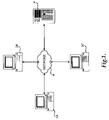
- FIG. 1 is a computer network diagram illustrating aspects of an illustrative operating environment for the various embodiments of the invention
- FIG. 2 is a computer system architecture diagram illustrating aspects of a computer system utilized in and provided by the various embodiments of the invention
- FIG. 3 is a computer software architecture diagram illustrating aspects of several software components utilized in the various embodiments of the invention.
- FIG. 4 is a flow diagram illustrating aspects of the operation of a client computer and a server computer according to one embodiment of the invention
- FIGS. 5-11 are flow diagrams illustrating additional aspects of the operation of a client computer according to the various embodiments of the invention.
- FIGS. 12-13 are flow diagrams illustrating additional aspects of the operation of a client computer according to the various embodiments of the invention.
- FIG. 1 and the corresponding discussion are intended to provide a brief, general description of a suitable computing environment in which embodiments of the invention may be implemented. While the invention will be described in the general context of program modules that execute in conjunction with program modules that run on an operating system on a personal computer, those skilled in the art will recognize that the invention may also be implemented in combination with other types of computer systems and program modules.
- program modules include routines, programs, components, data structures, and other types of structures that perform particular tasks or implement particular abstract data types.
- program modules may be located in both local and remote memory storage devices.
- FIG. 1 illustrates aspects of a Knowledge Interchange (“KI”) system provided according to the various embodiments of the invention.
- the KI system is a client-server system that facilitates the process of finding a person (a “connector” or “expert”) who can help users (“seekers”) connect with information or other people.
- a “connector” or “expert” who can help users (“seekers”) connect with information or other people.
- seekers users
- connectors have an additional burden imposed on them as a result of their participation in the KI system. In particular, they are the most important human elements of the system because they help other people. Because of this, the KI system provided herein provides the connectors control over many aspects of the operation of the KI system.
- connectors can choose to remain anonymous until they decide to help. Furthermore, if a connector decides not to help, their identity will never be revealed to seekers. As will be described herein, the KI system also helps connectors find their own data faster, thereby reducing the burden of helping others in some cases and helping themselves in some.
- FIG. 1 shows an illustrative operating environment for a KI system provided by various embodiments of the invention.
- a network 4 interconnects a number of client computers 2 A- 2 C and a server computer 6 .
- the network 4 may comprise any type of computing network, including a local area network (“LAN”) or a wide area network (“WAN”), such as the Internet.
- the network 4 provides a medium for enabling communication between any number of client computers 2 A- 2 C and the server computer 6 .
- three client computers 2 A- 2 C are shown in FIG. 1 , it should be appreciated that the invention is contemplated for use with any number of client computers.
- each of the client computers 2 A- 2 C comprises a general purpose desktop, laptop, tablet, or other type of computer capable of executing one or more application programs.
- the computer 2 is operative to execute an operating system and one or more desktop application programs.
- the client computers 2 A- 2 C are operative to execute word processing programs, spreadsheet programs, presentation programs, web browser programs, instant messaging client programs, personal information management programs, and other types of application programs.
- the client computers 2 A- 2 C are also operative to execute KI client programs that monitor the interaction of a user with the various programs executing on the client computers 2 A- 2 C.
- the KI client programs can identify items of interest to the user, such as electronic mail (“e-mail”) messages, documents, web pages, and instant messages.
- the KI client programs may create a KI profile that models the user's interests and contacts.
- the interests are captured in the form of keywords and noun phrases. Noun phrases are phrases made from nouns.
- the KI client programs estimate the strength of the relationship measure.
- the KI client programs send the KI profile to the server computer 6 when it finds that the user is interested in new topics or contacts or if the user's affinity for a contact or topic changes significantly.
- the KI client programs also allow the user to edit this model and delete or add keywords or contacts.
- the KI profiles from each of the client computers 2 A- 2 C are aggregated and processed by the server computer 6 .
- the aggregated profile data may then be utilized by the server computer 6 to respond to various types of queries for people or information.
- FIG. 2 an illustrative computer architecture for a client computer 2 utilized in the various embodiments of the invention will be described.
- the computer architecture shown in FIG. 2 illustrates a conventional desktop, laptop, or tablet computer, including a central processing unit 8 (“CPU”), a system memory 12 , including a random access memory 18 (“RAM”) and a read-only memory (“ROM”) 20 , and a system bus 10 that couples the memory to the CPU 8 .
- the computer 2 further includes a mass storage device 14 for storing an operating system 24 , application programs 26 , and other program modules, which will be described in greater detail below with respect to FIG. 3 .
- the mass storage device 14 is connected to the CPU 8 through a mass storage controller (not shown) connected to the bus 10 .
- the mass storage device 14 and its associated computer-readable media provide non-volatile storage for the computer 2 .
- computer-readable media can be any available media that can be accessed by the computer 2 .
- Computer-readable media may comprise computer storage media and communication media.
- Computer storage media includes volatile and non-volatile, removable and non-removable media implemented in any method or technology for storage of information such as computer-readable instructions, data structures, program modules or other data.
- Computer storage media includes, but is not limited to, RAM, ROM, EPROM, EEPROM, flash memory or other solid state memory technology, CD-ROM, digital versatile disks (“DVD”), or other optical storage, magnetic cassettes, magnetic tape, magnetic disk storage or other magnetic storage devices, or any other storage medium which can be used to store the desired information and which can be accessed by the computer 2 .
- the computer 2 may operate in a networked environment using logical connections to remote computers through a TCP/IP network 4 , such as the Internet.
- the computer 2 may connect to the network 4 through a network interface unit 16 connected to the bus 10 .
- the network interface unit 16 may also be utilized to connect to other types of networks and remote computer systems.
- the computer 2 may also include an input/output controller 22 for receiving and processing input from a number of other devices, including a keyboard, mouse, or electronic stylus (not shown in FIG. 2 ).
- an input/output controller 22 may provide output to a display screen, a printer, or other type of output device.
- the server computer 6 may include many or all of the conventional computing components shown in FIG. 2 .
- the server computer 6 may also include additional hardware and software components necessary or desirable for the operation of a server computer.
- the server computer may include an operating system and other programs utilizing in the operation of a server computer, such as a web server program, an e-mail server program, and other types of programs.
- the server computer 6 may also include other hardware devices to improve the performance of the server computer 6 , such as additional memory, redundant mass storage devices, and other types of server hardware known to those skilled in the art.
- FIG. 3 additional details regarding the various software components utilized by the client computer 2 and the server computer 6 will be described.
- a number of program modules and data files may be stored in the mass storage device 14 and RAM 18 of the client computer 2 , including an operating system 24 suitable for controlling the operation of a networked personal computer, such as the WINDOWS XP operating system from MICROSOFT CORPORATION of Redmond, Wash.
- an operating system 24 suitable for controlling the operation of a networked personal computer, such as the WINDOWS XP operating system from MICROSOFT CORPORATION of Redmond, Wash.
- the mass storage device 14 and RAM 18 of the client computer 2 may also store one or more program modules.
- the mass storage device 14 and the RAM 18 may store an application suite 27 that comprises one or more application programs.
- the application suite 27 may include a personal information manager (“PIM”) application program 28 for sending and receiving e-mail messages, for organizing meetings, contacts, and tasks, and for performing other functions.
- PIM application program 28 comprises the OUTLOOK PIM program from MICROSOFT CORPORATION of Redmond, Wash., but other PIM programs from other manufacturers may be utilized.
- the application suite 27 may also include a word processor application 30 for creating, editing, and viewing electronic documents.
- the word processor application program 30 comprises the WORD word processing application program from MICROSOFT CORPORATION of Redmond, Wash., but other word processing programs from other manufacturers may be utilized.
- the application suite 27 may also include a presentation application 34 for creating, editing, and viewing electronic presentations.
- the presentation application program 34 comprises the POWERPOINT presentation application program from MICROSOFT CORPORATION of Redmond, Wash., but other presentation programs from other manufacturers may be utilized.
- the application suite 27 may also include a spreadsheet application 32 for creating, editing, and viewing electronic spreadsheets.
- the spreadsheet application program 32 comprises the EXCEL spreadsheet application program from MICROSOFT CORPORATION of Redmond, Wash., but other spreadsheet programs from other manufacturers may be utilized.
- the client computer 2 may execute other types of programs in addition to the application suite 27 .
- the client computer 2 may execute an instant messaging client application program for instant messaging with other computer.
- the client computer 2 may also execute a web browser application program 36 for viewing and interacting with web pages.
- the web browser program 36 comprises the INTERNET EXPLORER application program from MICROSOFT CORPORATION. It should be appreciated, however, that other web browser programs from other manufacturers may be utilized.
- a number of software components relating to the KI system are also stored and executed on the client computer 2 .
- a KI plug-in 38 is executed that interfaces with the operating system 24 and the application programs 27 and 36 executing on the client computer.
- the KI plug-in 38 monitors the user interaction with the operating system and application programs to identify items of interest that may describe the user's interests or contacts.
- the KI plug-in 38 may identify the documents created or read by a user, the e-mail messages sent and received by the user, the instant messages sent and received by the user, the web pages visited by the user, the cut-and-paste operations performed by a user, the names of files and folders created by the user, and virtually any other interaction between the user and the operating system or application programs executing on the client computer 2 .
- the KI plug-in may also identify the dwell time on particular documents and web pages to determine the strength of the user's interest in the particular document or web page.
- the KI plug-in stores the items of interest identified during monitoring in a client database 44 .
- the KI indexing engine 48 also interfaces with the operating system 24 and the application programs 27 and 36 executing on the client computer.
- the KI indexing engine 48 also monitors the user interaction with the operating system and application programs to identify items of interest that may describe the user's interests or contacts.
- the KI indexing engine 48 also performs processing on the items of interest to create an inverted index 50 .
- the inverted index 50 contains data that describes the frequency that words appear among all of the collected items of interest.
- the inverted index 50 also maintains the location of each word within each item of interest. Therefore, the inverted index 50 may be searched with a word to identify the number of times it occurs in the items of interest and to determine where the word appears in the items of interest.
- a KI analysis engine 52 is also periodically executed on the client computer 2 .
- the KI analysis engine 52 utilizes the contents of the KI client database 44 and the inverted index 50 and performs processing to create a KI profile 46 for a user of the client computer 2 .
- the KI profile 46 identifies the interests of the user, the individuals with which the user has communicated, and the topics on which the communication with the individuals was made. More specifically, the KI profile 46 includes one or more keywords and noun phrases that identify the interests of a user of the client computer.
- the KI profile 46 also includes the identities of one or more individuals with which a user of the client computer has communicated. For each contact, a set of keywords is provided that describes the topics on which communication with the contacts was made.
- the keywords, noun phrases, and contacts also include weight values that described their importance, or strength. Additional details regarding the various operations performed by the KI analysis engine 52 in creating the KI profile 46 will be provided below.
- a KI desktop application 40 for controlling the various aspects of the operation of the KI client programs. For instance, through the KI desktop application 40 a user may provide a number of privacy preferences 42 that describe what data may be collected at the client computer, how the data may be utilized, and other preferences regarding anonymity. Additional details regarding the privacy preferences 42 that may be specified by a user and their use will be provided below.
- the KI desktop application 40 also provides an interface for querying the client computer 2 and the server computer 6 for information and people. Additional details regarding the search process will also be provided below.
- the KI desktop application 40 is operative to periodically transmit over the network 4 the KI profile 46 for a user to a KI server component 60 executing on the server computer 6 .
- Updates to the KI profile 46 are typically transmitted when significant changes occur to the profile.
- the privacy preferences 42 for the user are also transmitted to the server computer 6 .
- the profile is stored in the profile database 64 .
- Profiles from all of the client computers participating in the KI system are aggregated in the profile database 64 . Additional processing may be performed on the corpus of KI profiles, for instance, to eliminate noise words across the entire body of keywords. This processing may be performed by the analysis engine 66 .
- the KI server component 60 is also operative to receive and respond to query requests from the KI desktop application 40 . In response to such requests, the KI server component 60 queries the profile database 60 for the desired information and returns the search results to the requesting client computer. As will be described in greater detail below, some participants in the KI system may desire to remain anonymous until such time as they desire to aid another participant. In such cases, it may be necessary for the server computer 6 to provide a brokered communication process between a seeker and an anonymous connector. An SMTP server 62 is utilized to send and receive e-mail messages during the brokered communication process. Additional details regarding the processes performed by the server computer 6 when receiving and responding to search queries and for performing the brokered communication process will be described below.
- routines 400 A and 400 B will be described illustrating processes performed by the client computer 2 and the server computer 6 , respectively, for providing a KI system.
- routines 400 A and 400 B will be described illustrating processes performed by the client computer 2 and the server computer 6 , respectively, for providing a KI system.
- routines 400 A and 400 B will be described illustrating processes performed by the client computer 2 and the server computer 6 , respectively, for providing a KI system.
- the routine 400 A illustrates the various operations performed by client computers 2 A- 2 C participating in the KI system.
- the routine 400 B illustrates the various operations performed by the server computer 6 .
- the routine 400 A begins at operation 402 , where privacy preferences 42 are received from a user by the KI desktop application 40 .
- the privacy preferences 42 specify the type of data that may be collected by the KI system, how the data may be utilized, and other types of privacy-related preferences.
- the privacy preferences 42 are transmitted from the client computer 2 to the server computer 6 .
- the server computer 6 receives and stores the privacy preferences 42 . Additional details regarding the types of privacy preferences that may be specified by a user and their use are provided below with respect to FIG. 5 .
- routine 400 continues to operation 404 , where the KI client programs perform data gathering, build the KI profile 46 , and upload the KI profile 46 to the server computer 6 .
- the server computer 6 receives and stores the KI profile 46 at operation 452 of the routine 400 B. Additional details regarding the gathering of data and creation of the KI profile 46 will be provided below with respect to FIG. 6 .
- the routine 400 B continues to operation 454 , where the server computer 6 performs out-of-process processing on the profile database. For instance, the server computer 6 may remove noise words from the profile database. Additional details regarding this process are provided below with respect to FIG. 12 .
- routine 400 A continues to operation 406 , where a search query 70 is received from a user at the KI desktop application 40 .
- the search query 70 may first be performed on the client computer 2 to locate any relevant information that is stored locally.
- the query 70 may then be transmitted to the server computer 6 , where it is received and processed by the server computer 6 at operation 456 of the routine 400 B. Additional details regarding receiving and processing a search request at the client computer will be provided below with respect to FIG. 11 . Additional details regarding receiving and processing search requests at the server computer 6 will be described in greater detail below with respect to FIG. 13 .
- the server computer 6 transmits the search results 72 to the client computer 2 .
- the client computer 2 displays the search results at operation 408 .
- the search results may identify information, such as documents, web pages, etc., that are of interest to the user.
- the search results may also identify contacts that may have information helpful to the user. According to one embodiment of the invention, a contact identified as helpful may have specified that they would like to remain anonymous with respect to certain keywords or contacts. If such a contact is identified within the search results 72 , the contact will be identified anonymously in the search results.
- the user of the client computer 2 may then make a request to connect with the anonymous contact at operation 410 . If such a request is received, the server computer 6 performs a brokered communication process with the anonymous contact at operation 460 .
- the KI server 6 will transmit to the anonymous contact a request for assistance on behalf of the user submitting the search query.
- the request may or may not specifically identify the user submitting the search query.
- the expert may then reply to the request with an indication as to whether or not they will provide assistance to the user submitting the search query. If the expert will offer assistance, the identity of the expert is transmitted to the user making the search query. Otherwise, an indication is transmitted to the user making the search query that assistance will no be provided. The user making the search query may then choose to contact another individual from the provided search results. Additional details regarding the brokered communication process will be provided below.
- routine 400 A branches back to operation 402 , where data collection continues, where privacy preferences may be modified, and where search requests may again be processed and received.
- routine 400 B continues back to operation 450 , where privacy preferences and updated KI profiles are received and stored, where search queries are received and processed, and where brokered communications may be performed. Additional details regarding each of these individual processes are described in greater detail below with respect to FIGS. 5-13 .
- the KI desktop application 40 creates a list of keywords and noun phrases that estimate a participating user's interest areas and their strength of interest.
- the KI desktop application 40 also creates a list of business/social contacts that estimate the user's social network and the associated strength of the relationships.
- This information is sent to the KI server 6 in the form of the KI profile 46 .
- the server computer 6 utilizes this information to match seekers with connectors who are likely to help.
- the process of connecting the seeker with a connector is workable if and only if the connector is comfortable with the process and continues to be a part of the process.
- the KI system provides a number of controls to the connector so that the connector may set privacy preferences relating to the collection and use of their personal information. These features are illustrated in FIG. 5 .
- the routine 500 begins at operation 502 , where preferences are received from the user of the client computer 2 regarding anonymity.
- the participant can choose to remain anonymous until he or she decides to help without the seeker knowing their identity.
- the KI server 6 performs a mediated communication process to provide a connection between the seeker and the target without letting the seeker know the target's identity.
- the target can choose to reject the request. In, that case, the seeker may move on to the next plausible connector. This process works both when the connector connects the seeker with knowledge, such as a document, or other people.
- the routine 500 continues to operation 504 , where preferences may be received from the participant regarding the information to be collected at the client computer 2 .
- the participant may choose to exclude any type of item or category of item from the collection process performed at the client computer 2 .
- the user may indicate that confidential or attorney/client privileged e-mails be excluded from collection.
- the participant may indicate that e-mails from a particular e-mail address or domain, such as e-mails likely to be received from personal contacts, be excluded from the collection.
- the user may exclude instant messages from particular instant messaging contacts from collection. In this manner, the user can specifically set boundaries on the types of information that may be monitored at the client computer 2 .
- the routine 500 continues to operation 506 where the user may specify one or more banned keywords and contacts. By banning keywords and contacts, the user of the computer 2 can ensure that the keywords or contacts are not transmitted to the server computer 6 and stored within the profile data. From operation 506 , the routine 500 continues to operation 508 , where preferences are received from the user regarding frequency of contact. In this manner, the user can choose to be contacted only a certain number of times per week, or other period of time. Through the use of this privacy setting, the server computer 6 will only contact a user the specified number of times during the specified period. From operation 508 , the routine 500 continues to operation 510 .
- the user is permitted to specify privacy preferences regarding public and private keywords and contacts.
- Public keywords and contacts are those contacts that should be published for all users. Alternatively, specific keywords or contacts may be published only for friends of the participant, or for friends of friends of the participant. Alternatively, the participant may identify keywords or contacts as private words which, when utilized to identify the participant, will result in the participant's name being treated as anonymous.
- communication In order to connect with a participant through a keyword or contact that has been identified as private, communication must be performed through the KI server 6 anonymously.
- the brokered communication process described herein provides the means for communicating with an anonymous participant. Additional details regarding the brokered communication process are provided below. From operation 510 , the routine 500 continues to operation 512 , where it returns to operation 404 , described above with respect to FIG. 4 .
- the routine 600 begins at operation 602 , where data is collected at the client computer 2 .
- data is collected by monitoring user interaction with programs executing at the client computer to identify items of interest to the user.
- items of interest may comprise word processing documents, spreadsheet documents, presentation documents, e-mail messages, instant messages, web sites, and other types of information described herein.
- the KI analysis engine 52 indexes all of the items of interest to create an index 50 .
- the index 50 consists of the content and the metadata associated with the items of interest such as the people listed within an e-mail on the To:, From:, CC:, and other fields. This data forms the basis of analysis of the expertise and the social network.
- the KI client software may also obtain publicly available information from lightweight directory assistance protocol (“LDAP”) servers about the user such as the user's name, title, manager, and other publicly available information. Utilizing this data, the KI analysis engine 52 creates the index 50 at operation 604 .
- LDAP lightweight directory assistance protocol
- routine 600 continues to operation 606 , where an analysis is performed on the contents of the index to build the KI profile 46 .
- an analysis is performed on the contents of the index to build the KI profile 46 .
- social analysis, an interest analysis, and a noun phrase analysis are performed on the content in the index to create the KI profile 46 that is transmitted to the server computer 6 . Additional details regarding this process will be described below with respect to FIG. 7 .
- routine 600 continues to operation 608 , where a determination is made as to whether new information exists within the KI profile 46 since the last transmission of the profile to the server computer 6 . If no new information exists within the profile, the routine 600 returns to 602 where the data collection and analysis process continues. If, however, new information exists within the KI profile 46 , the routine 600 continues to operation 610 where the user may be asked whether the new information should be uploaded to the server computer 6 . The routine 600 then continues to operation 614 .
- the routine 700 begins at 702 , where each new item of interest is identified that was generated since the KI profile 46 was last built.
- the routine 700 then continues to operation 704 , where a temporary variable pointing to a current item is set to the first item of interest among the identified items. In this manner, each item of interest may be processed individually in the manner described below.
- the routine 700 continues to operation 706 , where a social analysis is performed on the current item.
- the social network analysis identifies a pattern of communication between the user and others via electronic mail messages, calendar meetings, and instant messages. As will be described in greater detail below with respect to FIG. 8 , the analysis examines each electronic mail message, meeting request, and instant message, and identifies the contacts listed in the various header fields. All electronic mail messages and meetings from all folders are considered. Additional details regarding this process will be provided below with respect to FIG. 8 .
- routine 700 continues to operation 708 , where an interest analysis is performed for the current item.
- the interest analysis examines the contents of each item of interest and its subject. Additional details regarding the interest analysis are provided below with respect to FIG. 9 .
- routine 700 continues to operation 710 , where the results of the social analysis and the interest analysis are saved.
- routine 700 then continues to operation 712 , where a determination is made as to whether additional items of interest remain to be processed. If additional items of interest remain to be processed, the routine 700 continues to operation 714 , where the temporary variable pointing to the current item is incremented to the next item of interest to be processed.
- routine 700 then returns to operation 706 , where the social analysis and interest analysis are performed on the current item.
- the routine 700 branches from operation 712 , to operation 716 .
- keywords identified by the interest analysis are aged based upon a time decay. This analysis takes into account the idea that the words occurring in the past are less relevant at the current time than other words that have occurred more recently.
- the routine then continues to operation 718 , where contacts identified by the social network analysis are eliminated based on the existence of an asymmetric relationship. This may occur, for instance, with electronic mail messages that did not include round-trip communication between a sender and a receiver. This would, for example, remove senders of span messages and distribution list senders. In a similar vein, keywords that were contained only in items of interest having an asymmetric relationship may also be removed.
- the routine 700 continues to operation 720 , where the keywords identified through the interest analysis may also be pruned using one more programmed factors.
- Programmed factors may be included with the KI client software and additional program factors may be added later by a custom software developer.
- the programmed factors may include a consistency factor that judges the relevance of keywords over an extended period of time. In order to apply the consistency factor, the relevance of keywords in each electronic mail message may be summed to form the expertise of the user over time. This reflects the idea that if a particular keyword appears to be relevant to a person for an extended period of time, then the keyword is in an area of higher interest.
- the diffusion index is defined as the number of people a person communicates with about a particular topic.
- the diffusion index reflects the idea that if a person talks about a topic with numerous people, then the user is more likely to be a connector within the KI system. This becomes relevant in the processing of the server computer 6 when finding a likely helper in response to a search query.
- a folder factor flags all words appearing in folder names that are non-standard as potential keywords for the KI system. When the same words appear within documents and electronic mail messages, the relevance of these words may be increased.
- the folder factor reflects the idea that users are likely to utilize keywords of interest when creating file folders on the computer 2 .
- distribution lists comprise mailing lists in which two or more individuals may be mailed with information simultaneously.
- a similar analysis is carried out as described herein on all of the e-mails where the distribution list appears. This allows keywords to be identified that capture the interest shared by the individuals named on the distribution list. It should be appreciated that other programmed factors may also be utilized at operation 720 .
- the routine 700 continues to operation 722 , where a noun phrase analysis is performed on the list of keywords that have been identified as associated with the user.
- the noun phrase analysis attempt to identify noun phrases that captures the user's interest. The idea is to capture a higher level concept than just keywords. Additional details regarding the process for performing the noun phrase analysis will be described below with respect to FIG. 10 .
- the routine 700 continues to operation 724 , where it returns to operation 608 described above with respect to FIG. 6 .
- the routine 800 begins at operation 802 , where all of the individuals related to an item of interest are identified. For instance, each of the individuals listed in the header fields of an electronic mail message, such as the From, To, CC; and BCC fields, is identified. Alternatively, with respect to meeting requests, each of the individuals listed as participating in the meeting are identified. Once each individual related to the item of interest has been identified, the routine 800 continues from operation 802 to operation 804 .
- a weight is assigned to each individual related to the item depending on the individual's relationship with the item. For instance, different weights may be provided to users that are listed in different fields of an electronic mail message. For instance, a user listed in the From field may be given a higher weight than a user listed in the To field. A user listed in the cc field may be given a higher weight than a user listed in the BCC field, and so on. This takes into account that there is a business or social relationship between people listed within an electronic mail message and accounts for the fact that the strength may be proportional to where the person appears in the various fields of the electronic mail message. A weight is assigned and each person appearing on the list gets a weight associated with the social or business relationship between the user and the identified person.
- the routine 800 continues to operation 806 , where the weights assigned to each individual related to the item are normalized to the total weight of all the weights assigned for the item. This takes into account the fact that as the number of people listed on an electronic mail message increases, the relevance of the message to the closeness of the participants may go down. The more people that are listed on an e-mail message, the less weight they can contribute to the social network as a result of the particular item.
- the weight associated with a particular item may also be decreased with time. This takes into account the idea that electronic mail messages from the distant past are less of an indication of closeness between people than more recent e-mails.
- the KI profile estimates the strength of the relationship between the user and each of the user's contacts.
- the interest analysis examines the contents of each item of interest.
- the analysis enumerates each item of interest and examines the content and subject.
- the result of the interest analysis is a list of keywords and weights for each keyword corresponding the level of interest for the user.
- the routine 900 begins at operation 902 , where keywords within the current item of interest are identified.
- a software program for tagging parts of speech within a run of text may be utilized to identify the various parts of speech within the current item.
- the routine 900 then continues to operation 906 , where various types of words may be removed from the current item. For instance, equivalent words like “add” and “added” may be removed, and other words that are extremely common may be ignored.
- routine 900 continues to operation 908 , where additional weight may be allocated to certain keywords based on their location with respect to the item of interest. For instance, additional weight may be assigned to words in the subject line, heading, title, or folder name of the current item.
- the routine 900 continues to operation 910 , where the weight of each keyword is assigned based on the frequency of occurrence of the word. This takes into account the idea that words that occur infrequently within the item of interest should be considered important. This also takes into account the idea that words that occur too often may have less weight per occurrence. In order to perform this process, the weight of a word occurring in the item of interest is normalized across the corpus of the words occurring in the user's indexed data.
- the routine 900 continues to operation 912 , where the weight of each word is based on its location within the current item.
- a word that occurs within a subject line of an e-mail message for instance, does not decay with its position in the subject or in the body.
- a word, however, that occurs exclusively in the body of an electronic mail message decays with its position in the body. The further away from the beginning of the body a word occurs, the more the word decays. This takes into account the idea that people put more important words and ideas in the title and early portion of an e-mail message.
- the routine 900 continues to operation 914 .
- keywords within the current item are identified as those words having a weight greater than a predetermined number.
- the weights of all of the words in the current item are added up. Only words that have a weight above a predetermined number are chosen as keywords for the current item. Generally, this reflects the idea that there are only a few keywords per item of interest.
- routine 900 continues to operation 916 , where the words occurring just prior to and just after the identified keywords are saved for use in the noun phrase analysis. Additional details regarding the noun phrase analysis are described below with reference to FIG. 10 . From operation 916 , the routine 900 continues to operation 918 , where it returns to operation 710 , described above with respect to FIG. 7 .
- the noun phrase analysis is performed once a list of keywords associated with the user has been estimated.
- a noun phrase analysis attempts to find noun phrases of length two or three that capture the user's interest. This allows the noun phrase analysis to capture a higher level concept than just individual keywords.
- the routine 1000 begins at operation 1002 , where noun phrases are identified by their frequency of occurrence.
- each item of interest is analyzed and the keywords previously identified are examined. Words occurring before and after each keyword are identified and analyzed to find runs of words occurring next to each other. The runs of words are then reordered based on the total relevance of the words occurring in the phrase.
- a test is also performed as to whether the words appear in the titles or headings of documents that have been indexed. If so, the noun phrases are associated with the user in the KI profile 46 . This takes into account that words and relevant noun phrases occur in that form many times in a row in e-mail and other conversations. These same words are also likely to occur in titles of documents and also in hearings of various documents.
- routine 1000 continues to operation 1004 , where headings and titles of items of interest are utilized to identify noun phrases.
- the documents authored or read by the user are examined and the titles and headings are extracted from the documents. These noun phrases contained within the titles and headings are then added to the noun phrases list contained within the KI profile 46 .
- the routine 1000 continues to operation 1006 , there it returns to operation 724 , described above with respect to FIG. 7 .
- routine 1100 will be described for receiving and processing a search request at the client computer 2 .
- the KI desktop application 40 may receive search queries of the user client computer 2 . This occurs at operation 1102 .
- the routine 1100 continues to operation 1104 where a local search of the data contained on the client computer 2 is performed for the requested query. This allows any data relevant to the requested search query that is local to the client computer 2 to be identified for the user.
- the routine 1100 continues from operation 1104 to operation 1106 , where the query request is transmitted to the KI server component 60 executing on the server computer 6 .
- the search query is processed by the client computer 2 to identify information or individuals from within the profile database 64 that satisfy the search query.
- the results are then returned from the server computer 6 to the client computer 2 where they are displayed to the user.
- the routine 1100 continues to operation 1108 , where it returns to operation 408 , discussed above with reference to FIG. 4 .
- the out-of-process analysis refers to the fact that the analysis occurs out of the context of a search query. This processing is performed by the server computer 6 in the ordinary course of its analysis.
- the routine 1200 begins at operation 1202 , where noise words within the corpus of the profile database 64 are eliminated. Noise words are words that are very common among users in a large disjointed population. It should be appreciated that other types of out-of-process analysis may be performed by the server computer 6 . From operation 1202 , the routine continues to operation 1204 , where it returns to operation 456 , described above with respect to FIG. 4 .
- the request to query the profile database 64 may take the form of a request to locate an individual that can assist with a particular topic.
- the profile database 64 may be searched to identify individuals that are experts in the particular topic and that are within a predefined social distance from the user making the search query. Social distance indicates the number of individuals needed to connect any two individuals among a group of connected individuals.
- the request to query the profile database 64 may take the form of a request to locate an individual that can make a connection to another individual within the profile database.
- the profile database 64 may be searched to identify individuals that are within a predefined social distance from the user making the search query and that also have the individual listed as a contact within their KI profile.
- the request to query the profile database may take the form of a request to locate an individual that can make a connection to another individual that is located outside an enterprise and therefore not directly identified within the profile database 64 .
- the profile database may be searched to identify individuals that have the queried individual listed as a contact within their KI profile.
- individuals may be identified based upon keywords that have been projected upon them. This occurs, for instance, when a user is not a participant within the KI system and is a contact of others that are participants within the KI system.
- the KI system builds a profile for the user even though the user is not a participant based on keywords projected onto the user by others. The individuals that are not participants in the KI system can them be identified and located just as any other participants within the KI system.
- the search query may be performed to locate individuals with interest common to the searcher and to determine the materials that the individuals have been reading or otherwise utilizing.
- the search request takes the form of a request to query the profile database to locate information consumed by other individuals having similar interests.
- the profile database is searched to identify individuals having similar interests as the user making the request. Thereafter, the profile database is searched to identify information consumed by the individuals having similar interests from the contents of their KI profiles.
- FIG. 13 illustrates an abstract method for performing each of these types of queries.
- the routine 1300 begins at operation 1302 , where the query terms are received at the server computer 6 from the client computer 2 .
- the routine 1300 then continues to operation 1304 , where variables corresponding to the current social distance is set equivalent to one.
- the routine then continues to operation 1306 , where a search is performed over the profile database 64 for query terms within the current social distance. Once keywords have been identified within the profile database 64 that correspond to the query terms these keywords are ranked by order of relevance.
- the routine 1300 continues to operation 1308 , where a determination is made as to whether the social distance is greater than a predetermined number. In one embodiment, this number is equivalent to two. If the current social distance is not greater than the predetermined number, the routine 1300 branches to operation 1310 where the current social distance is incremented. The routine then branches back from operation 1310 to operation 1306 where an additional search is performed at the current social distance.
- a predetermined number In one embodiment, this number is equivalent to two. If the current social distance is not greater than the predetermined number, the routine 1300 branches to operation 1310 where the current social distance is incremented. The routine then branches back from operation 1310 to operation 1306 where an additional search is performed at the current social distance.
- routine 1300 continues to operation 1312 , where the search results are returned to the user of the client computer 2 .
- the routine 1300 then continues to operation 1314 , where it returns to operation 458 , described above with respect to FIG. 4 .
- a private keyword is identified during a search query as being associated with a contact, the user's identity is not made publicly available with the search results. Rather, the KI server computer 6 performs a brokered communication process between the user submitting the search query that identified the user and the target. According to the brokered communication process, the search results identify the expert only anonymously.
- the searching user may submit a request to the KI server computer to contact the expert. Based on the request, the KI server will transmit to the expert a request for assistance on behalf of the user submitting the search query.
- the request may or may not specifically identify the user submitting the search query.
- the expert may then reply to the request with an indication as to whether or not they will provide assistance to the user submitting the search query. If the expert will offer assistance, the identity of the expert is transmitted to the user making the search query. Otherwise, an indication is transmitted to the user making the search query that assistance will not be provided. The user making the search query may then choose to contact another individual from the provided search results.
Landscapes
- Engineering & Computer Science (AREA)
- Theoretical Computer Science (AREA)
- Bioethics (AREA)
- General Health & Medical Sciences (AREA)
- Health & Medical Sciences (AREA)
- Physics & Mathematics (AREA)
- Computer Hardware Design (AREA)
- General Physics & Mathematics (AREA)
- General Engineering & Computer Science (AREA)
- Medical Informatics (AREA)
- Software Systems (AREA)
- Computer Security & Cryptography (AREA)
- Databases & Information Systems (AREA)
- Information Transfer Between Computers (AREA)
- Information Retrieval, Db Structures And Fs Structures Therefor (AREA)
- Management, Administration, Business Operations System, And Electronic Commerce (AREA)
Priority Applications (5)
| Application Number | Priority Date | Filing Date | Title |
|---|---|---|---|
| US10/945,198 US7730010B2 (en) | 2004-09-20 | 2004-09-20 | Method, system, and apparatus for maintaining user privacy in a knowledge interchange system |
| KR1020050074811A KR101150095B1 (ko) | 2004-09-20 | 2005-08-16 | 지식 교환 시스템에서 사용자 프라이버시를 유지하기 위한 방법, 시스템, 장치 및 컴퓨터-판독가능 저장 매체 |
| CNA2005100927210A CN1752973A (zh) | 2004-09-20 | 2005-08-19 | 用于在知识互换系统中维护用户私密的方法、系统和装置 |
| EP05108155A EP1638032A3 (en) | 2004-09-20 | 2005-09-06 | Method, system and apparatus for maintaining user privacy in a knowledge interchange system |
| JP2005270829A JP5010128B2 (ja) | 2004-09-20 | 2005-09-16 | ナレッジ交換システムにおけるユーザプライバシーを保持する方法、システム、および装置 |
Applications Claiming Priority (1)
| Application Number | Priority Date | Filing Date | Title |
|---|---|---|---|
| US10/945,198 US7730010B2 (en) | 2004-09-20 | 2004-09-20 | Method, system, and apparatus for maintaining user privacy in a knowledge interchange system |
Publications (2)
| Publication Number | Publication Date |
|---|---|
| US20060074863A1 US20060074863A1 (en) | 2006-04-06 |
| US7730010B2 true US7730010B2 (en) | 2010-06-01 |
Family
ID=35519616
Family Applications (1)
| Application Number | Title | Priority Date | Filing Date |
|---|---|---|---|
| US10/945,198 Expired - Fee Related US7730010B2 (en) | 2004-09-20 | 2004-09-20 | Method, system, and apparatus for maintaining user privacy in a knowledge interchange system |
Country Status (5)
| Country | Link |
|---|---|
| US (1) | US7730010B2 (enExample) |
| EP (1) | EP1638032A3 (enExample) |
| JP (1) | JP5010128B2 (enExample) |
| KR (1) | KR101150095B1 (enExample) |
| CN (1) | CN1752973A (enExample) |
Cited By (35)
| Publication number | Priority date | Publication date | Assignee | Title |
|---|---|---|---|---|
| US20060121987A1 (en) * | 2004-12-07 | 2006-06-08 | Microsoft Corporation | User-centric method of aggregating information sources to reinforce digital identity |
| US20090070334A1 (en) * | 2007-09-07 | 2009-03-12 | Ezra Callahan | Dynamically updating privacy settings in a social network |
| US20090292526A1 (en) * | 2008-05-20 | 2009-11-26 | Aol Llc | Monitoring conversations to identify topics of interest |
| US20110055932A1 (en) * | 2009-08-26 | 2011-03-03 | International Business Machines Corporation | Data Access Control with Flexible Data Disclosure |
| US20110066606A1 (en) * | 2009-09-15 | 2011-03-17 | International Business Machines Corporation | Search engine with privacy protection |
| US20110119593A1 (en) * | 2009-11-16 | 2011-05-19 | Xobni Corporation | Collecting and presenting data including links from communications sent to or from a user |
| US20110118035A1 (en) * | 2004-12-07 | 2011-05-19 | Microsoft Corporation | Game achievements system |
| US20110153597A1 (en) * | 2009-12-18 | 2011-06-23 | International Business Machines Corporation | System and method for ontology-based location of expertise |
| US20110162084A1 (en) * | 2009-12-29 | 2011-06-30 | Joshua Fox | Selecting portions of computer-accessible documents for post-selection processing |
| US8392836B1 (en) | 2005-07-11 | 2013-03-05 | Google Inc. | Presenting quick list of contacts to communication application user |
| US8425331B2 (en) | 2004-12-07 | 2013-04-23 | Microsoft Corporation | User interface for viewing aggregated game, system and personal information |
| US8751582B1 (en) | 2005-08-22 | 2014-06-10 | Google Inc. | Managing presence subscriptions for messaging services |
| US20150149571A1 (en) * | 2010-12-14 | 2015-05-28 | Liveperson, Inc. | Authentication of service requests initiated from a social networking site |
| US9144741B2 (en) | 2004-12-07 | 2015-09-29 | Microsoft Technology Licensing, Llc | Application interface for tracking player identity |
| US9195853B2 (en) | 2012-01-15 | 2015-11-24 | International Business Machines Corporation | Automated document redaction |
| US9275126B2 (en) | 2009-06-02 | 2016-03-01 | Yahoo! Inc. | Self populating address book |
| US9275118B2 (en) | 2007-07-25 | 2016-03-01 | Yahoo! Inc. | Method and system for collecting and presenting historical communication data |
| US9479468B2 (en) | 2005-07-11 | 2016-10-25 | Google Inc. | Presenting instant messages |
| US9558276B2 (en) | 2008-08-04 | 2017-01-31 | Liveperson, Inc. | Systems and methods for facilitating participation |
| US9563336B2 (en) | 2012-04-26 | 2017-02-07 | Liveperson, Inc. | Dynamic user interface customization |
| US9584343B2 (en) | 2008-01-03 | 2017-02-28 | Yahoo! Inc. | Presentation of organized personal and public data using communication mediums |
| US9590930B2 (en) | 2005-09-14 | 2017-03-07 | Liveperson, Inc. | System and method for performing follow up based on user interactions |
| US9672196B2 (en) | 2012-05-15 | 2017-06-06 | Liveperson, Inc. | Methods and systems for presenting specialized content using campaign metrics |
| US9767212B2 (en) | 2010-04-07 | 2017-09-19 | Liveperson, Inc. | System and method for dynamically enabling customized web content and applications |
| US9819561B2 (en) | 2000-10-26 | 2017-11-14 | Liveperson, Inc. | System and methods for facilitating object assignments |
| US9842144B2 (en) | 2010-02-03 | 2017-12-12 | Yahoo Holdings, Inc. | Presenting suggestions for user input based on client device characteristics |
| US9892278B2 (en) | 2012-11-14 | 2018-02-13 | International Business Machines Corporation | Focused personal identifying information redaction |
| US9892417B2 (en) | 2008-10-29 | 2018-02-13 | Liveperson, Inc. | System and method for applying tracing tools for network locations |
| US10038683B2 (en) | 2010-12-14 | 2018-07-31 | Liveperson, Inc. | Authentication of service requests using a communications initiation feature |
| US10191622B2 (en) | 2005-09-14 | 2019-01-29 | Liveperson, Inc. | System and method for design and dynamic generation of a web page |
| US10278065B2 (en) | 2016-08-14 | 2019-04-30 | Liveperson, Inc. | Systems and methods for real-time remote control of mobile applications |
| US10326719B2 (en) | 2012-03-06 | 2019-06-18 | Liveperson, Inc. | Occasionally-connected computing interface |
| US10869253B2 (en) | 2015-06-02 | 2020-12-15 | Liveperson, Inc. | Dynamic communication routing based on consistency weighting and routing rules |
| US11263548B2 (en) | 2008-07-25 | 2022-03-01 | Liveperson, Inc. | Method and system for creating a predictive model for targeting web-page to a surfer |
| US12079829B2 (en) | 2014-03-31 | 2024-09-03 | Liveperson, Inc. | Online behavioral predictor |
Families Citing this family (44)
| Publication number | Priority date | Publication date | Assignee | Title |
|---|---|---|---|---|
| US7707167B2 (en) * | 2004-09-20 | 2010-04-27 | Microsoft Corporation | Method, system, and apparatus for creating a knowledge interchange profile |
| US7593924B2 (en) * | 2004-09-20 | 2009-09-22 | Microsoft Corporation | Method, system, and apparatus for receiving and responding to knowledge interchange queries |
| US20060140182A1 (en) * | 2004-12-23 | 2006-06-29 | Michael Sullivan | Systems and methods for monitoring and controlling communication traffic |
| US20060287765A1 (en) * | 2005-06-20 | 2006-12-21 | Kraft Harold H | Privacy Information Reporting Systems with Broad Search Scope and Integration |
| US8842818B2 (en) * | 2006-06-30 | 2014-09-23 | Avaya Inc. | IP telephony architecture including information storage and retrieval system to track fluency |
| US7792967B2 (en) * | 2006-07-14 | 2010-09-07 | Chacha Search, Inc. | Method and system for sharing and accessing resources |
| WO2008011454A2 (en) * | 2006-07-18 | 2008-01-24 | Chacha Search, Inc. | Anonymous search system using human searchers |
| JP2010500665A (ja) * | 2006-08-07 | 2010-01-07 | チャチャ サーチ,インク. | 関連グループ検索に関する方法、システム及びコンピュータ読込可能ストレージ |
| US7801971B1 (en) | 2006-09-26 | 2010-09-21 | Qurio Holdings, Inc. | Systems and methods for discovering, creating, using, and managing social network circuits |
| US8578501B1 (en) | 2006-11-14 | 2013-11-05 | John W. Ogilvie | Anonymous social networking with community-based privacy reviews obtained by members |
| US9195996B1 (en) | 2006-12-27 | 2015-11-24 | Qurio Holdings, Inc. | System and method for classification of communication sessions in a social network |
| US8015246B1 (en) | 2007-03-21 | 2011-09-06 | Google Inc. | Graphical user interface for chat room with thin walls |
| US8006191B1 (en) | 2007-03-21 | 2011-08-23 | Google Inc. | Chat room with thin walls |
| US7904500B1 (en) | 2007-03-22 | 2011-03-08 | Google Inc. | Advertising in chat system without topic-specific rooms |
| US7860928B1 (en) * | 2007-03-22 | 2010-12-28 | Google Inc. | Voting in chat system without topic-specific rooms |
| US7899869B1 (en) | 2007-03-22 | 2011-03-01 | Google Inc. | Broadcasting in chat system without topic-specific rooms |
| US7865553B1 (en) | 2007-03-22 | 2011-01-04 | Google Inc. | Chat system without topic-specific rooms |
| AU2008261648B2 (en) * | 2007-06-12 | 2013-10-03 | Facebook, Inc. | Personalized social networking application content |
| US20090006622A1 (en) * | 2007-06-27 | 2009-01-01 | William Doerr | Ultimate client development system |
| US8732846B2 (en) * | 2007-08-15 | 2014-05-20 | Facebook, Inc. | Platform for providing a social context to software applications |
| US8577894B2 (en) | 2008-01-25 | 2013-11-05 | Chacha Search, Inc | Method and system for access to restricted resources |
| US20090210403A1 (en) * | 2008-02-20 | 2009-08-20 | Menachem Reinshmidt | System and method for extended structured searching architecture |
| US9268843B2 (en) * | 2008-06-27 | 2016-02-23 | Cbs Interactive Inc. | Personalization engine for building a user profile |
| US8214346B2 (en) * | 2008-06-27 | 2012-07-03 | Cbs Interactive Inc. | Personalization engine for classifying unstructured documents |
| US8943551B2 (en) | 2008-08-14 | 2015-01-27 | Microsoft Corporation | Cloud-based device information storage |
| US20100235231A1 (en) * | 2009-01-30 | 2010-09-16 | Cbs Interactive, Inc. | Lead acquisition, promotion and inventory management system and method |
| WO2010107431A1 (en) * | 2009-03-18 | 2010-09-23 | Two Cats & A Cup Of Coffee, Llc | System for submitting queries and for collecting, routing and transferring responses over a network |
| US8543639B2 (en) * | 2009-03-18 | 2013-09-24 | Vocus, Inc. | Methods and apparatus for collecting and transferring information over a network |
| CN101572607B (zh) | 2009-06-12 | 2011-11-09 | 阿里巴巴集团控股有限公司 | 一种社会化网络中处理认证请求消息的方法及装置 |
| CN101572614B (zh) | 2009-06-12 | 2013-12-04 | 阿里巴巴集团控股有限公司 | 一种社会化网络中处理认证请求消息的方法及装置 |
| US9104737B2 (en) | 2009-10-08 | 2015-08-11 | Microsoft Technology Licensing, Llc | Social distance based search result order adjustment |
| CN102201048A (zh) * | 2010-03-24 | 2011-09-28 | 日电(中国)有限公司 | 对文档集合进行主题级别隐私保护的方法和系统 |
| US20140351157A1 (en) * | 2011-09-13 | 2014-11-27 | Monk Akarshala Design Private Limited | Learning identity management in a modular learning system |
| US9203925B1 (en) * | 2012-10-15 | 2015-12-01 | Facebook, Inc. | User search based on private information |
| US20140122522A1 (en) * | 2012-10-26 | 2014-05-01 | Google Inc. | Method for providing users with help from their contacts while searching the web |
| US9405932B2 (en) * | 2013-05-24 | 2016-08-02 | Microsoft Technology Licensing, Llc | User centric data maintenance |
| CN110097931B (zh) * | 2013-12-04 | 2023-09-26 | 苹果公司 | 健康注册 |
| US10326768B2 (en) * | 2015-05-28 | 2019-06-18 | Google Llc | Access control for enterprise knowledge |
| CN104951533B (zh) * | 2015-06-18 | 2019-02-26 | 北京乐动卓越科技有限公司 | 一种信息名片查询方法及系统 |
| WO2018103039A1 (en) * | 2016-12-08 | 2018-06-14 | Alibaba Group Holding Limited | Machine learning in message distribution |
| US11152100B2 (en) | 2019-06-01 | 2021-10-19 | Apple Inc. | Health application user interfaces |
| US12002588B2 (en) | 2019-07-17 | 2024-06-04 | Apple Inc. | Health event logging and coaching user interfaces |
| CN114286975A (zh) | 2019-09-09 | 2022-04-05 | 苹果公司 | 调查研究用户界面 |
| US11698710B2 (en) | 2020-08-31 | 2023-07-11 | Apple Inc. | User interfaces for logging user activities |
Citations (39)
| Publication number | Priority date | Publication date | Assignee | Title |
|---|---|---|---|---|
| US5717923A (en) | 1994-11-03 | 1998-02-10 | Intel Corporation | Method and apparatus for dynamically customizing electronic information to individual end users |
| US5941944A (en) | 1997-03-03 | 1999-08-24 | Microsoft Corporation | Method for providing a substitute for a requested inaccessible object by identifying substantially similar objects using weights corresponding to object features |
| US6021403A (en) | 1996-07-19 | 2000-02-01 | Microsoft Corporation | Intelligent user assistance facility |
| US6041311A (en) | 1995-06-30 | 2000-03-21 | Microsoft Corporation | Method and apparatus for item recommendation using automated collaborative filtering |
| US6049777A (en) | 1995-06-30 | 2000-04-11 | Microsoft Corporation | Computer-implemented collaborative filtering based method for recommending an item to a user |
| US6078928A (en) | 1997-12-12 | 2000-06-20 | Missouri Botanical Garden | Site-specific interest profiling system |
| US6092049A (en) | 1995-06-30 | 2000-07-18 | Microsoft Corporation | Method and apparatus for efficiently recommending items using automated collaborative filtering and feature-guided automated collaborative filtering |
| US6374275B2 (en) | 1997-06-11 | 2002-04-16 | Scientific-Atlanta, Inc. | System, method, and media for intelligent selection of searching terms in a keyboardless entry environment |
| US6397209B1 (en) | 1996-08-30 | 2002-05-28 | Telexis Corporation | Real time structured summary search engine |
| US6415257B1 (en) | 1999-08-26 | 2002-07-02 | Matsushita Electric Industrial Co., Ltd. | System for identifying and adapting a TV-user profile by means of speech technology |
| US6421655B1 (en) | 1999-06-04 | 2002-07-16 | Microsoft Corporation | Computer-based representations and reasoning methods for engaging users in goal-oriented conversations |
| US20020124253A1 (en) * | 2001-03-02 | 2002-09-05 | Eyer Mark Kenneth | Personal information database with privacy for targeted advertising |
| US20020161764A1 (en) | 2001-01-30 | 2002-10-31 | Linda Sharo | Network based system and method for marketing management |
| US20030046401A1 (en) * | 2000-10-16 | 2003-03-06 | Abbott Kenneth H. | Dynamically determing appropriate computer user interfaces |
| US6539375B2 (en) | 1998-08-04 | 2003-03-25 | Microsoft Corporation | Method and system for generating and using a computer user's personal interest profile |
| US20030063072A1 (en) * | 2000-04-04 | 2003-04-03 | Brandenberg Carl Brock | Method and apparatus for scheduling presentation of digital content on a personal communication device |
| US20030069877A1 (en) | 2001-08-13 | 2003-04-10 | Xerox Corporation | System for automatically generating queries |
| US20030126136A1 (en) * | 2001-06-22 | 2003-07-03 | Nosa Omoigui | System and method for knowledge retrieval, management, delivery and presentation |
| US20030167324A1 (en) * | 2002-02-20 | 2003-09-04 | Farnham Shelly D. | Social mapping of contacts from computer communication information |
| US20030182310A1 (en) * | 2002-02-04 | 2003-09-25 | Elizabeth Charnock | Method and apparatus for sociological data mining |
| EP1376387A2 (en) | 2002-06-28 | 2004-01-02 | Microsoft Corporation | Word-processing document stored in a single XML file |
| US6701362B1 (en) | 2000-02-23 | 2004-03-02 | Purpleyogi.Com Inc. | Method for creating user profiles |
| US20040073918A1 (en) * | 2002-09-30 | 2004-04-15 | Ferman A. Mufit | Automatic user profiling |
| US20040078216A1 (en) * | 2002-02-01 | 2004-04-22 | Gregory Toto | Clinical trial process improvement method and system |
| WO2004038564A2 (en) | 2002-10-25 | 2004-05-06 | Pandesa Corporation | Owner-brokered knowledge sharing machine |
| US6746120B2 (en) | 2000-10-30 | 2004-06-08 | Novartis Ag | Method and system for ordering customized cosmetic contact lenses |
| US6853982B2 (en) | 1998-09-18 | 2005-02-08 | Amazon.Com, Inc. | Content personalization based on actions performed during a current browsing session |
| US6856986B1 (en) * | 1993-05-21 | 2005-02-15 | Michael T. Rossides | Answer collection and retrieval system governed by a pay-off meter |
| EP1587009A2 (en) | 2004-04-15 | 2005-10-19 | Microsoft Corporation | Content propagation for enhanced document retrieval |
| US20060035632A1 (en) | 2004-08-16 | 2006-02-16 | Antti Sorvari | Apparatus and method for facilitating contact selection in communication devices |
| US20060041505A1 (en) * | 2002-10-11 | 2006-02-23 | 900Email Inc. | Fee-based message delivery system |
| US7013308B1 (en) | 2000-11-28 | 2006-03-14 | Semscript Ltd. | Knowledge storage and retrieval system and method |
| US20060064431A1 (en) | 2004-09-20 | 2006-03-23 | Microsoft Corporation | Method, system, and apparatus for creating a knowledge interchange profile |
| US20060064404A1 (en) | 2004-09-20 | 2006-03-23 | Microsoft Corporation | Method, system, and apparatus for receiving and responding to knowledge interchange queries |
| US7120695B2 (en) * | 2001-08-23 | 2006-10-10 | Telefonaktiebolaget Lm Ericsson (Publ) | Method for limiting conveyance information of user profile within mobile Internet transactions |
| US7249117B2 (en) | 2002-05-22 | 2007-07-24 | Estes Timothy W | Knowledge discovery agent system and method |
| US7249123B2 (en) | 2002-10-31 | 2007-07-24 | International Business Machines Corporation | System and method for building social networks based on activity around shared virtual objects |
| US7359894B1 (en) * | 2004-06-30 | 2008-04-15 | Google Inc. | Methods and systems for requesting and providing information in a social network |
| US7424701B2 (en) | 2002-02-12 | 2008-09-09 | Sandpiper Software, Inc. | Method and apparatus for frame-based knowledge representation in the unified modeling language (UML) |
Family Cites Families (3)
| Publication number | Priority date | Publication date | Assignee | Title |
|---|---|---|---|---|
| JP3957802B2 (ja) * | 1997-01-24 | 2007-08-15 | 株式会社東芝 | 知識情報提示装置および知識情報出力方法 |
| JP2002073901A (ja) * | 2000-08-29 | 2002-03-12 | Yuuki Shibata | オンライン総合カウンセリング方法及びそのシステム |
| JP2004110435A (ja) * | 2002-09-18 | 2004-04-08 | Ricoh Co Ltd | プロファイル生成装置および情報提供装置 |
-
2004
- 2004-09-20 US US10/945,198 patent/US7730010B2/en not_active Expired - Fee Related
-
2005
- 2005-08-16 KR KR1020050074811A patent/KR101150095B1/ko not_active Expired - Fee Related
- 2005-08-19 CN CNA2005100927210A patent/CN1752973A/zh active Pending
- 2005-09-06 EP EP05108155A patent/EP1638032A3/en not_active Ceased
- 2005-09-16 JP JP2005270829A patent/JP5010128B2/ja not_active Expired - Fee Related
Patent Citations (44)
| Publication number | Priority date | Publication date | Assignee | Title |
|---|---|---|---|---|
| US6856986B1 (en) * | 1993-05-21 | 2005-02-15 | Michael T. Rossides | Answer collection and retrieval system governed by a pay-off meter |
| US5717923A (en) | 1994-11-03 | 1998-02-10 | Intel Corporation | Method and apparatus for dynamically customizing electronic information to individual end users |
| US6049777A (en) | 1995-06-30 | 2000-04-11 | Microsoft Corporation | Computer-implemented collaborative filtering based method for recommending an item to a user |
| US6092049A (en) | 1995-06-30 | 2000-07-18 | Microsoft Corporation | Method and apparatus for efficiently recommending items using automated collaborative filtering and feature-guided automated collaborative filtering |
| US6041311A (en) | 1995-06-30 | 2000-03-21 | Microsoft Corporation | Method and apparatus for item recommendation using automated collaborative filtering |
| US6262730B1 (en) | 1996-07-19 | 2001-07-17 | Microsoft Corp | Intelligent user assistance facility |
| US6233570B1 (en) | 1996-07-19 | 2001-05-15 | Microsoft Corporation | Intelligent user assistance facility for a software program |
| US6260035B1 (en) | 1996-07-19 | 2001-07-10 | Microsoft Corporation | Intelligent user assistance facility for a software program |
| US6021403A (en) | 1996-07-19 | 2000-02-01 | Microsoft Corporation | Intelligent user assistance facility |
| US6397209B1 (en) | 1996-08-30 | 2002-05-28 | Telexis Corporation | Real time structured summary search engine |
| US5941944A (en) | 1997-03-03 | 1999-08-24 | Microsoft Corporation | Method for providing a substitute for a requested inaccessible object by identifying substantially similar objects using weights corresponding to object features |
| US6374275B2 (en) | 1997-06-11 | 2002-04-16 | Scientific-Atlanta, Inc. | System, method, and media for intelligent selection of searching terms in a keyboardless entry environment |
| US6078928A (en) | 1997-12-12 | 2000-06-20 | Missouri Botanical Garden | Site-specific interest profiling system |
| US6539375B2 (en) | 1998-08-04 | 2003-03-25 | Microsoft Corporation | Method and system for generating and using a computer user's personal interest profile |
| US6853982B2 (en) | 1998-09-18 | 2005-02-08 | Amazon.Com, Inc. | Content personalization based on actions performed during a current browsing session |
| US6421655B1 (en) | 1999-06-04 | 2002-07-16 | Microsoft Corporation | Computer-based representations and reasoning methods for engaging users in goal-oriented conversations |
| US6415257B1 (en) | 1999-08-26 | 2002-07-02 | Matsushita Electric Industrial Co., Ltd. | System for identifying and adapting a TV-user profile by means of speech technology |
| US6701362B1 (en) | 2000-02-23 | 2004-03-02 | Purpleyogi.Com Inc. | Method for creating user profiles |
| US20030063072A1 (en) * | 2000-04-04 | 2003-04-03 | Brandenberg Carl Brock | Method and apparatus for scheduling presentation of digital content on a personal communication device |
| US6834195B2 (en) * | 2000-04-04 | 2004-12-21 | Carl Brock Brandenberg | Method and apparatus for scheduling presentation of digital content on a personal communication device |
| US20030046401A1 (en) * | 2000-10-16 | 2003-03-06 | Abbott Kenneth H. | Dynamically determing appropriate computer user interfaces |
| US6746120B2 (en) | 2000-10-30 | 2004-06-08 | Novartis Ag | Method and system for ordering customized cosmetic contact lenses |
| US7013308B1 (en) | 2000-11-28 | 2006-03-14 | Semscript Ltd. | Knowledge storage and retrieval system and method |
| US20020161764A1 (en) | 2001-01-30 | 2002-10-31 | Linda Sharo | Network based system and method for marketing management |
| US20020124253A1 (en) * | 2001-03-02 | 2002-09-05 | Eyer Mark Kenneth | Personal information database with privacy for targeted advertising |
| US20030126136A1 (en) * | 2001-06-22 | 2003-07-03 | Nosa Omoigui | System and method for knowledge retrieval, management, delivery and presentation |
| US20030069877A1 (en) | 2001-08-13 | 2003-04-10 | Xerox Corporation | System for automatically generating queries |
| US7120695B2 (en) * | 2001-08-23 | 2006-10-10 | Telefonaktiebolaget Lm Ericsson (Publ) | Method for limiting conveyance information of user profile within mobile Internet transactions |
| US20040078216A1 (en) * | 2002-02-01 | 2004-04-22 | Gregory Toto | Clinical trial process improvement method and system |
| US20030182310A1 (en) * | 2002-02-04 | 2003-09-25 | Elizabeth Charnock | Method and apparatus for sociological data mining |
| US7424701B2 (en) | 2002-02-12 | 2008-09-09 | Sandpiper Software, Inc. | Method and apparatus for frame-based knowledge representation in the unified modeling language (UML) |
| US20030167324A1 (en) * | 2002-02-20 | 2003-09-04 | Farnham Shelly D. | Social mapping of contacts from computer communication information |
| US7249117B2 (en) | 2002-05-22 | 2007-07-24 | Estes Timothy W | Knowledge discovery agent system and method |
| EP1376387A2 (en) | 2002-06-28 | 2004-01-02 | Microsoft Corporation | Word-processing document stored in a single XML file |
| US20040073918A1 (en) * | 2002-09-30 | 2004-04-15 | Ferman A. Mufit | Automatic user profiling |
| US20060041505A1 (en) * | 2002-10-11 | 2006-02-23 | 900Email Inc. | Fee-based message delivery system |
| WO2004038564A2 (en) | 2002-10-25 | 2004-05-06 | Pandesa Corporation | Owner-brokered knowledge sharing machine |
| US7249123B2 (en) | 2002-10-31 | 2007-07-24 | International Business Machines Corporation | System and method for building social networks based on activity around shared virtual objects |
| EP1587009A2 (en) | 2004-04-15 | 2005-10-19 | Microsoft Corporation | Content propagation for enhanced document retrieval |
| US7359894B1 (en) * | 2004-06-30 | 2008-04-15 | Google Inc. | Methods and systems for requesting and providing information in a social network |
| US20060035632A1 (en) | 2004-08-16 | 2006-02-16 | Antti Sorvari | Apparatus and method for facilitating contact selection in communication devices |
| US20060064404A1 (en) | 2004-09-20 | 2006-03-23 | Microsoft Corporation | Method, system, and apparatus for receiving and responding to knowledge interchange queries |
| US20060064431A1 (en) | 2004-09-20 | 2006-03-23 | Microsoft Corporation | Method, system, and apparatus for creating a knowledge interchange profile |
| US7593924B2 (en) | 2004-09-20 | 2009-09-22 | Microsoft Corporation | Method, system, and apparatus for receiving and responding to knowledge interchange queries |
Non-Patent Citations (27)
| Title |
|---|
| Albrecht, Steffen; Lübcke, Maren, "Communicational Patterns As Basis of Organizational Structures," Regulated Agent-Based Social Systems, First International Workshop, RASTA 2002, Bologna, Italy, Jul. 16, 202, Revised Selected and Invited Papers, Gabriela Lindemann, Daniel Moldt, Mario Paolucci (Eds.), Springer-Verlag Berlin Heidelberg New York, 2004. |
| Analysis of social voging patterns on digg: Kristoma Leman et al.; Aug. 18, 2008; ACM978-1-60558182-Aug. 8, 2008. * |
| Anonymous, "Mulberry Slideshow XML (v 2.1): A User's Guide", Online Publication, Dec. 7, 2001, http://www.mulberrytech.com/slideshow/Mulberry-slideshow.zip. |
| Anonymous, "Technical Note TN2067: About the Keynote XML File Format (APXL Schema)", Online Publication, Feb. 12, 2003, http://developer.appl.com/technotes/tn2002/pdf/m2067.pdf. |
| Anonymous, "Technical Note TN2073: Deconstructing a Keynote 1.x Document: Part One-Slides", Online Publication, May 20, 2003, http://developer.appl.com/technotes/tn2002/pdf/tn2073.pdf. |
| Chinese First Office Action dated Jan. 16, 2009 cited in Chinese Application No. 200510092455.1. |
| Chinese Official Action dated Jul. 4, 2008 cited in Chinese Application No. 200510092721.0. |
| Chinese Second Office Action dated Apr. 17, 2009 cited in Application No. 200510092455.1. |
| Chinese Second Office Action dated Mar. 13, 2009 cited in Application No. 200510092721.0. |
| European Communication dated Aug. 5, 2009 cited in Application No. 05 108 155.2-2212 (60001.0385ep01). |
| European Communication dated Nov. 30, 2005. |
| European Communication dated Oct. 23, 2006 cited in EP Application No. 05111509.5-1527. |
| M. Brauer et al., "Open Office Specification 1.0", Online Publication, Mar. 22, 2004, http://www.oasis-open.org/committees/download.php/6037/office-spec-1.0-cd-1.pdf. |
| Towards Enabling Social Analysis of Scientific Data; Juliana Freire et al; Apr. 2008; ACM CHI 2008. * |
| U.S. Appl. No. 10/945,149 entitled "Method, System, and Apparatus for Receiving and Responding to Knowledge Interchange Queries" filed Sep. 20, 2004. |
| U.S. Appl. No. 10/945,500 entitled "Method, System, and Apparatus for Creating a Knowledge Interchange Profile" filed Sep. 20, 2004. |
| U.S. Final Office Action dated Jul. 27, 2009 cited in U.S. Appl. No. 10/945,500. |
| U.S. Final Office Action dated Jul. 5, 2007 cited in U.S. Appl. No. 10/945,500. |
| U.S. Final Office Action dated Jun. 23, 2008 cited in U.S. Appl. No. 10/945,500. |
| U.S. Office Action dated Dec. 13, 2007 cited in U.S. Appl. No. 10/945,500. |
| U.S. Office Action dated Dec. 7, 2006 cited in U.S. Appl. No. 10/945,500. |
| U.S. Office Action dated Feb. 4, 2009 cited in U.S. Appl. No. 10/945,500. |
| U.S. Office Action dated Nov. 17, 2008 cited in U.S. Appl. No. 10/945,149. |
| Van der Aalst, Wil M.P.; Song, Minseok, "Mining Social Networks: Uncovering Interaction Patterns In Business Processes," Business Process Management, Second International Conference, BPM 2004, Potsdam, Germany, Jun. 17-18, 2004 Proceedings, Jörg Desel, Barbara Pernici, Mathias Weske (Eds.), Springer-Verlag Berlin Heidelberg New York, 2004. |
| Visualization of Interaction Patterns in Collaborative Knowledge Networks for medical Applications: Peter A. Gloor et al.; Feb. 2002; InternetPortal and content management technologies. * |
| Yolum, Pinar; Singh, Munindar P., "Self-Organizing Referral Networks: A Process View of Trust and Authority," Engineering Self-Organising Systems, Nature-Inspired Approaches to Software Engineering, Giovanna Di Marzo Serugendo, Anthony Karageorgos, Omer F. Rana, Franco Zambonelli (Eds.), Springer-Verlag Berlin Heidelberg New York, 2004. |
| Yuri Quintana, "Knowledge-Based Information Filtering of Financial Information," Proceedings of the National Online Meeting, May 13, 1997, pp. 279-285. |
Cited By (104)
| Publication number | Priority date | Publication date | Assignee | Title |
|---|---|---|---|---|
| US10797976B2 (en) | 2000-10-26 | 2020-10-06 | Liveperson, Inc. | System and methods for facilitating object assignments |
| US9819561B2 (en) | 2000-10-26 | 2017-11-14 | Liveperson, Inc. | System and methods for facilitating object assignments |
| US8323112B2 (en) | 2004-12-07 | 2012-12-04 | Microsoft Corporation | Game achievements system |
| US8277325B2 (en) | 2004-12-07 | 2012-10-02 | Microsoft Corporation | Game achievements system |
| US9355097B2 (en) | 2004-12-07 | 2016-05-31 | Microsoft Technology Licensing, Llc | Game achievements system |
| US8876606B2 (en) * | 2004-12-07 | 2014-11-04 | Microsoft Corporation | User-centric method of aggregating information sources to reinforce digital identity |
| US20110118035A1 (en) * | 2004-12-07 | 2011-05-19 | Microsoft Corporation | Game achievements system |
| US20110136575A1 (en) * | 2004-12-07 | 2011-06-09 | Microsoft Corporation | Game achievements system |
| US20060121987A1 (en) * | 2004-12-07 | 2006-06-08 | Microsoft Corporation | User-centric method of aggregating information sources to reinforce digital identity |
| US8425331B2 (en) | 2004-12-07 | 2013-04-23 | Microsoft Corporation | User interface for viewing aggregated game, system and personal information |
| US9144741B2 (en) | 2004-12-07 | 2015-09-29 | Microsoft Technology Licensing, Llc | Application interface for tracking player identity |
| US8454443B2 (en) | 2004-12-07 | 2013-06-04 | Microsoft Corporation | Game achievements system |
| US10391405B2 (en) | 2004-12-07 | 2019-08-27 | Microsoft Technology Licensing, Llc | Application interface for tracking player identity |
| US9367543B2 (en) | 2004-12-07 | 2016-06-14 | Microsoft Technology Licensing, Llc | Game achievements system |
| US9654427B2 (en) | 2005-07-11 | 2017-05-16 | Google Inc. | Presenting instant messages |
| US9479468B2 (en) | 2005-07-11 | 2016-10-25 | Google Inc. | Presenting instant messages |
| US8392836B1 (en) | 2005-07-11 | 2013-03-05 | Google Inc. | Presenting quick list of contacts to communication application user |
| US9195969B2 (en) | 2005-07-11 | 2015-11-24 | Google, Inc. | Presenting quick list of contacts to communication application user |
| US8751582B1 (en) | 2005-08-22 | 2014-06-10 | Google Inc. | Managing presence subscriptions for messaging services |
| US11526253B2 (en) | 2005-09-14 | 2022-12-13 | Liveperson, Inc. | System and method for design and dynamic generation of a web page |
| US10191622B2 (en) | 2005-09-14 | 2019-01-29 | Liveperson, Inc. | System and method for design and dynamic generation of a web page |
| US11394670B2 (en) | 2005-09-14 | 2022-07-19 | Liveperson, Inc. | System and method for performing follow up based on user interactions |
| US9590930B2 (en) | 2005-09-14 | 2017-03-07 | Liveperson, Inc. | System and method for performing follow up based on user interactions |
| US11743214B2 (en) | 2005-09-14 | 2023-08-29 | Liveperson, Inc. | System and method for performing follow up based on user interactions |
| US9948582B2 (en) | 2005-09-14 | 2018-04-17 | Liveperson, Inc. | System and method for performing follow up based on user interactions |
| US10958741B2 (en) | 2007-07-25 | 2021-03-23 | Verizon Media Inc. | Method and system for collecting and presenting historical communication data |
| US9275118B2 (en) | 2007-07-25 | 2016-03-01 | Yahoo! Inc. | Method and system for collecting and presenting historical communication data |
| US9298783B2 (en) | 2007-07-25 | 2016-03-29 | Yahoo! Inc. | Display of attachment based information within a messaging system |
| US9716764B2 (en) | 2007-07-25 | 2017-07-25 | Yahoo! Inc. | Display of communication system usage statistics |
| US9954963B2 (en) | 2007-07-25 | 2018-04-24 | Oath Inc. | Indexing and searching content behind links presented in a communication |
| US9596308B2 (en) | 2007-07-25 | 2017-03-14 | Yahoo! Inc. | Display of person based information including person notes |
| US10069924B2 (en) | 2007-07-25 | 2018-09-04 | Oath Inc. | Application programming interfaces for communication systems |
| US9591086B2 (en) | 2007-07-25 | 2017-03-07 | Yahoo! Inc. | Display of information in electronic communications |
| US10623510B2 (en) | 2007-07-25 | 2020-04-14 | Oath Inc. | Display of person based information including person notes |
| US10554769B2 (en) | 2007-07-25 | 2020-02-04 | Oath Inc. | Method and system for collecting and presenting historical communication data for a mobile device |
| US11394679B2 (en) | 2007-07-25 | 2022-07-19 | Verizon Patent And Licensing Inc | Display of communication system usage statistics |
| US10356193B2 (en) | 2007-07-25 | 2019-07-16 | Oath Inc. | Indexing and searching content behind links presented in a communication |
| US11552916B2 (en) | 2007-07-25 | 2023-01-10 | Verizon Patent And Licensing Inc. | Indexing and searching content behind links presented in a communication |
| US9699258B2 (en) | 2007-07-25 | 2017-07-04 | Yahoo! Inc. | Method and system for collecting and presenting historical communication data for a mobile device |
| US8713055B2 (en) * | 2007-09-07 | 2014-04-29 | Ezra Callahan | Dynamically updating privacy settings in a social network |
| US20090070334A1 (en) * | 2007-09-07 | 2009-03-12 | Ezra Callahan | Dynamically updating privacy settings in a social network |
| US9218496B2 (en) | 2007-09-07 | 2015-12-22 | Facebook, Inc. | Dynamically updating privacy settings in a social network |
| US9584343B2 (en) | 2008-01-03 | 2017-02-28 | Yahoo! Inc. | Presentation of organized personal and public data using communication mediums |
| US10200321B2 (en) | 2008-01-03 | 2019-02-05 | Oath Inc. | Presentation of organized personal and public data using communication mediums |
| US10339220B2 (en) | 2008-05-20 | 2019-07-02 | Oath Inc. | Monitoring conversations to identify topics of interest |
| US20090292526A1 (en) * | 2008-05-20 | 2009-11-26 | Aol Llc | Monitoring conversations to identify topics of interest |
| US9384186B2 (en) * | 2008-05-20 | 2016-07-05 | Aol Inc. | Monitoring conversations to identify topics of interest |
| US11132508B2 (en) | 2008-05-20 | 2021-09-28 | Verizon Media Inc. | Monitoring conversations to identify topics of interest |
| US11763200B2 (en) | 2008-07-25 | 2023-09-19 | Liveperson, Inc. | Method and system for creating a predictive model for targeting web-page to a surfer |
| US11263548B2 (en) | 2008-07-25 | 2022-03-01 | Liveperson, Inc. | Method and system for creating a predictive model for targeting web-page to a surfer |
| US10891299B2 (en) | 2008-08-04 | 2021-01-12 | Liveperson, Inc. | System and methods for searching and communication |
| US11386106B2 (en) | 2008-08-04 | 2022-07-12 | Liveperson, Inc. | System and methods for searching and communication |
| US9569537B2 (en) | 2008-08-04 | 2017-02-14 | Liveperson, Inc. | System and method for facilitating interactions |
| US9558276B2 (en) | 2008-08-04 | 2017-01-31 | Liveperson, Inc. | Systems and methods for facilitating participation |
| US10657147B2 (en) | 2008-08-04 | 2020-05-19 | Liveperson, Inc. | System and methods for searching and communication |
| US9582579B2 (en) | 2008-08-04 | 2017-02-28 | Liveperson, Inc. | System and method for facilitating communication |
| US9563707B2 (en) | 2008-08-04 | 2017-02-07 | Liveperson, Inc. | System and methods for searching and communication |
| US11562380B2 (en) | 2008-10-29 | 2023-01-24 | Liveperson, Inc. | System and method for applying tracing tools for network locations |
| US9892417B2 (en) | 2008-10-29 | 2018-02-13 | Liveperson, Inc. | System and method for applying tracing tools for network locations |
| US10867307B2 (en) | 2008-10-29 | 2020-12-15 | Liveperson, Inc. | System and method for applying tracing tools for network locations |
| US10963524B2 (en) | 2009-06-02 | 2021-03-30 | Verizon Media Inc. | Self populating address book |
| US9275126B2 (en) | 2009-06-02 | 2016-03-01 | Yahoo! Inc. | Self populating address book |
| US10169599B2 (en) | 2009-08-26 | 2019-01-01 | International Business Machines Corporation | Data access control with flexible data disclosure |
| US20110055932A1 (en) * | 2009-08-26 | 2011-03-03 | International Business Machines Corporation | Data Access Control with Flexible Data Disclosure |
| US9224007B2 (en) | 2009-09-15 | 2015-12-29 | International Business Machines Corporation | Search engine with privacy protection |
| US10454932B2 (en) | 2009-09-15 | 2019-10-22 | International Business Machines Corporation | Search engine with privacy protection |
| US20110066606A1 (en) * | 2009-09-15 | 2011-03-17 | International Business Machines Corporation | Search engine with privacy protection |
| US10768787B2 (en) | 2009-11-16 | 2020-09-08 | Oath Inc. | Collecting and presenting data including links from communications sent to or from a user |
| US9514466B2 (en) * | 2009-11-16 | 2016-12-06 | Yahoo! Inc. | Collecting and presenting data including links from communications sent to or from a user |
| US20110119593A1 (en) * | 2009-11-16 | 2011-05-19 | Xobni Corporation | Collecting and presenting data including links from communications sent to or from a user |
| US20110153597A1 (en) * | 2009-12-18 | 2011-06-23 | International Business Machines Corporation | System and method for ontology-based location of expertise |
| US8255380B2 (en) * | 2009-12-18 | 2012-08-28 | International Business Machines Corporation | System and method for ontology-based location of expertise |
| US20110162084A1 (en) * | 2009-12-29 | 2011-06-30 | Joshua Fox | Selecting portions of computer-accessible documents for post-selection processing |
| US9886159B2 (en) | 2009-12-29 | 2018-02-06 | International Business Machines Corporation | Selecting portions of computer-accessible documents for post-selection processing |
| US9600134B2 (en) | 2009-12-29 | 2017-03-21 | International Business Machines Corporation | Selecting portions of computer-accessible documents for post-selection processing |
| US9842145B2 (en) | 2010-02-03 | 2017-12-12 | Yahoo Holdings, Inc. | Providing profile information using servers |
| US9842144B2 (en) | 2010-02-03 | 2017-12-12 | Yahoo Holdings, Inc. | Presenting suggestions for user input based on client device characteristics |
| US9767212B2 (en) | 2010-04-07 | 2017-09-19 | Liveperson, Inc. | System and method for dynamically enabling customized web content and applications |
| US11615161B2 (en) | 2010-04-07 | 2023-03-28 | Liveperson, Inc. | System and method for dynamically enabling customized web content and applications |
| US10104020B2 (en) * | 2010-12-14 | 2018-10-16 | Liveperson, Inc. | Authentication of service requests initiated from a social networking site |
| US10038683B2 (en) | 2010-12-14 | 2018-07-31 | Liveperson, Inc. | Authentication of service requests using a communications initiation feature |
| US11050687B2 (en) * | 2010-12-14 | 2021-06-29 | Liveperson, Inc. | Authentication of service requests initiated from a social networking site |
| US20150149571A1 (en) * | 2010-12-14 | 2015-05-28 | Liveperson, Inc. | Authentication of service requests initiated from a social networking site |
| US11777877B2 (en) | 2010-12-14 | 2023-10-03 | Liveperson, Inc. | Authentication of service requests initiated from a social networking site |
| US9195853B2 (en) | 2012-01-15 | 2015-11-24 | International Business Machines Corporation | Automated document redaction |
| US11711329B2 (en) | 2012-03-06 | 2023-07-25 | Liveperson, Inc. | Occasionally-connected computing interface |
| US11134038B2 (en) | 2012-03-06 | 2021-09-28 | Liveperson, Inc. | Occasionally-connected computing interface |
| US10326719B2 (en) | 2012-03-06 | 2019-06-18 | Liveperson, Inc. | Occasionally-connected computing interface |
| US11323428B2 (en) | 2012-04-18 | 2022-05-03 | Liveperson, Inc. | Authentication of service requests using a communications initiation feature |
| US11689519B2 (en) | 2012-04-18 | 2023-06-27 | Liveperson, Inc. | Authentication of service requests using a communications initiation feature |
| US10666633B2 (en) | 2012-04-18 | 2020-05-26 | Liveperson, Inc. | Authentication of service requests using a communications initiation feature |
| US11269498B2 (en) | 2012-04-26 | 2022-03-08 | Liveperson, Inc. | Dynamic user interface customization |
| US11868591B2 (en) | 2012-04-26 | 2024-01-09 | Liveperson, Inc. | Dynamic user interface customization |
| US9563336B2 (en) | 2012-04-26 | 2017-02-07 | Liveperson, Inc. | Dynamic user interface customization |
| US10795548B2 (en) | 2012-04-26 | 2020-10-06 | Liveperson, Inc. | Dynamic user interface customization |
| US9672196B2 (en) | 2012-05-15 | 2017-06-06 | Liveperson, Inc. | Methods and systems for presenting specialized content using campaign metrics |
| US11687981B2 (en) | 2012-05-15 | 2023-06-27 | Liveperson, Inc. | Methods and systems for presenting specialized content using campaign metrics |
| US11004119B2 (en) | 2012-05-15 | 2021-05-11 | Liveperson, Inc. | Methods and systems for presenting specialized content using campaign metrics |
| US9904798B2 (en) | 2012-11-14 | 2018-02-27 | International Business Machines Corporation | Focused personal identifying information redaction |
| US9892278B2 (en) | 2012-11-14 | 2018-02-13 | International Business Machines Corporation | Focused personal identifying information redaction |
| US12079829B2 (en) | 2014-03-31 | 2024-09-03 | Liveperson, Inc. | Online behavioral predictor |
| US11638195B2 (en) | 2015-06-02 | 2023-04-25 | Liveperson, Inc. | Dynamic communication routing based on consistency weighting and routing rules |
| US10869253B2 (en) | 2015-06-02 | 2020-12-15 | Liveperson, Inc. | Dynamic communication routing based on consistency weighting and routing rules |
| US10278065B2 (en) | 2016-08-14 | 2019-04-30 | Liveperson, Inc. | Systems and methods for real-time remote control of mobile applications |
Also Published As
| Publication number | Publication date |
|---|---|
| KR20060050485A (ko) | 2006-05-19 |
| US20060074863A1 (en) | 2006-04-06 |
| CN1752973A (zh) | 2006-03-29 |
| KR101150095B1 (ko) | 2012-06-04 |
| JP2006092540A (ja) | 2006-04-06 |
| EP1638032A3 (en) | 2006-11-15 |
| EP1638032A2 (en) | 2006-03-22 |
| JP5010128B2 (ja) | 2012-08-29 |
Similar Documents
| Publication | Publication Date | Title |
|---|---|---|
| US7730010B2 (en) | Method, system, and apparatus for maintaining user privacy in a knowledge interchange system | |
| US7707167B2 (en) | Method, system, and apparatus for creating a knowledge interchange profile | |
| US7593924B2 (en) | Method, system, and apparatus for receiving and responding to knowledge interchange queries | |
| US9490991B2 (en) | System and method for impromptu shared communication spaces | |
| US7246164B2 (en) | Distributed personal relationship information management system and methods | |
| US7530021B2 (en) | Instant meeting preparation architecture | |
| JP3469848B2 (ja) | 通信関係に基づく情報検索の最適化方法 | |
| US8499041B2 (en) | Collaborative browsing and related methods and systems | |
| US8566253B2 (en) | System and method for managing information flow between members of an online social network | |
| US8386564B2 (en) | Methods for determining a reputation score for a user of a social network | |
| US20060122974A1 (en) | System and method for a dynamic content driven rendering of social networks | |
| CA2813037A1 (en) | Presenting social search results | |
| US20030158747A1 (en) | Knowledge management system | |
| US8799501B2 (en) | System and method for anonymously sharing and scoring information pointers, within a system for harvesting community knowledge | |
| JP4146101B2 (ja) | 知識蓄積支援システムおよび同システムにおける公開まとめ提供方法 | |
| US8190746B2 (en) | Explicit casualty control in a client/server system | |
| US9400791B2 (en) | Bi-directional widget for recording user feedback | |
| WO2002093418A1 (en) | Personal document system and method | |
| JP2002342339A (ja) | 知識蓄積支援システムおよび同システムにおけるまとめメッセージのリンク制御方法 |
Legal Events
| Date | Code | Title | Description |
|---|---|---|---|
| AS | Assignment |
Owner name: MICROSOFT CORPORATION, WASHINGTON Free format text: ASSIGNMENT OF ASSIGNORS INTEREST;ASSIGNORS:KISHORE, AJITESH;SAHASRABUDHE, SANDEEP;REEL/FRAME:015298/0408 Effective date: 20040917 Owner name: MICROSOFT CORPORATION,WASHINGTON Free format text: ASSIGNMENT OF ASSIGNORS INTEREST;ASSIGNORS:KISHORE, AJITESH;SAHASRABUDHE, SANDEEP;REEL/FRAME:015298/0408 Effective date: 20040917 |
|
| CC | Certificate of correction | ||
| REMI | Maintenance fee reminder mailed | ||
| LAPS | Lapse for failure to pay maintenance fees | ||
| STCH | Information on status: patent discontinuation |
Free format text: PATENT EXPIRED DUE TO NONPAYMENT OF MAINTENANCE FEES UNDER 37 CFR 1.362 |
|
| FP | Lapsed due to failure to pay maintenance fee |
Effective date: 20140601 |
|
| AS | Assignment |
Owner name: MICROSOFT TECHNOLOGY LICENSING, LLC, WASHINGTON Free format text: ASSIGNMENT OF ASSIGNORS INTEREST;ASSIGNOR:MICROSOFT CORPORATION;REEL/FRAME:034541/0477 Effective date: 20141014 |