US7431996B2 - Polyester resin, functional device and organic electroluminescent device using polyester resin, and method of manufacturing organic electroluminescent device - Google Patents

Polyester resin, functional device and organic electroluminescent device using polyester resin, and method of manufacturing organic electroluminescent device Download PDF

Info

Publication number
US7431996B2
US7431996B2 US10/631,716 US63171603A US7431996B2 US 7431996 B2 US7431996 B2 US 7431996B2 US 63171603 A US63171603 A US 63171603A US 7431996 B2 US7431996 B2 US 7431996B2
Authority
US
United States
Prior art keywords
group
substituted
carbon atoms
polyester resin
unsubstituted
Prior art date
Legal status (The legal status is an assumption and is not a legal conclusion. Google has not performed a legal analysis and makes no representation as to the accuracy of the status listed.)
Expired - Fee Related, expires
Application number
US10/631,716
Other versions
US20040126616A1 (en
Inventor
Masahiro Iwasaki
Katsumi Nukada
Current Assignee (The listed assignees may be inaccurate. Google has not performed a legal analysis and makes no representation or warranty as to the accuracy of the list.)
Fujifilm Business Innovation Corp
Original Assignee
Fuji Xerox Co Ltd
Priority date (The priority date is an assumption and is not a legal conclusion. Google has not performed a legal analysis and makes no representation as to the accuracy of the date listed.)
Filing date
Publication date
Application filed by Fuji Xerox Co Ltd filed Critical Fuji Xerox Co Ltd
Assigned to FUJI XEROX CO., LTD. reassignment FUJI XEROX CO., LTD. ASSIGNMENT OF ASSIGNORS INTEREST (SEE DOCUMENT FOR DETAILS). Assignors: IWASAKI, MASAHIRO, NUKADA, KATSUMI
Publication of US20040126616A1 publication Critical patent/US20040126616A1/en
Application granted granted Critical
Publication of US7431996B2 publication Critical patent/US7431996B2/en
Adjusted expiration legal-status Critical
Expired - Fee Related legal-status Critical Current

Links

Images

Classifications

    • HELECTRICITY
    • H05ELECTRIC TECHNIQUES NOT OTHERWISE PROVIDED FOR
    • H05BELECTRIC HEATING; ELECTRIC LIGHT SOURCES NOT OTHERWISE PROVIDED FOR; CIRCUIT ARRANGEMENTS FOR ELECTRIC LIGHT SOURCES, IN GENERAL
    • H05B33/00Electroluminescent light sources
    • H05B33/12Light sources with substantially two-dimensional radiating surfaces
    • H05B33/14Light sources with substantially two-dimensional radiating surfaces characterised by the chemical or physical composition or the arrangement of the electroluminescent material, or by the simultaneous addition of the electroluminescent material in or onto the light source
    • CCHEMISTRY; METALLURGY
    • C08ORGANIC MACROMOLECULAR COMPOUNDS; THEIR PREPARATION OR CHEMICAL WORKING-UP; COMPOSITIONS BASED THEREON
    • C08GMACROMOLECULAR COMPOUNDS OBTAINED OTHERWISE THAN BY REACTIONS ONLY INVOLVING UNSATURATED CARBON-TO-CARBON BONDS
    • C08G63/00Macromolecular compounds obtained by reactions forming a carboxylic ester link in the main chain of the macromolecule
    • C08G63/68Polyesters containing atoms other than carbon, hydrogen and oxygen
    • C08G63/685Polyesters containing atoms other than carbon, hydrogen and oxygen containing nitrogen
    • CCHEMISTRY; METALLURGY
    • C08ORGANIC MACROMOLECULAR COMPOUNDS; THEIR PREPARATION OR CHEMICAL WORKING-UP; COMPOSITIONS BASED THEREON
    • C08GMACROMOLECULAR COMPOUNDS OBTAINED OTHERWISE THAN BY REACTIONS ONLY INVOLVING UNSATURATED CARBON-TO-CARBON BONDS
    • C08G63/00Macromolecular compounds obtained by reactions forming a carboxylic ester link in the main chain of the macromolecule
    • C08G63/68Polyesters containing atoms other than carbon, hydrogen and oxygen
    • C08G63/685Polyesters containing atoms other than carbon, hydrogen and oxygen containing nitrogen
    • C08G63/6854Polyesters containing atoms other than carbon, hydrogen and oxygen containing nitrogen derived from polycarboxylic acids and polyhydroxy compounds
    • C08G63/6858Polycarboxylic acids and polyhydroxy compounds in which at least one of the two components contains aliphatic unsaturation
    • CCHEMISTRY; METALLURGY
    • C09DYES; PAINTS; POLISHES; NATURAL RESINS; ADHESIVES; COMPOSITIONS NOT OTHERWISE PROVIDED FOR; APPLICATIONS OF MATERIALS NOT OTHERWISE PROVIDED FOR
    • C09KMATERIALS FOR MISCELLANEOUS APPLICATIONS, NOT PROVIDED FOR ELSEWHERE
    • C09K11/00Luminescent, e.g. electroluminescent, chemiluminescent materials
    • C09K11/06Luminescent, e.g. electroluminescent, chemiluminescent materials containing organic luminescent materials
    • HELECTRICITY
    • H10SEMICONDUCTOR DEVICES; ELECTRIC SOLID-STATE DEVICES NOT OTHERWISE PROVIDED FOR
    • H10KORGANIC ELECTRIC SOLID-STATE DEVICES
    • H10K85/00Organic materials used in the body or electrodes of devices covered by this subclass
    • H10K85/10Organic polymers or oligomers
    • H10K85/111Organic polymers or oligomers comprising aromatic, heteroaromatic, or aryl chains, e.g. polyaniline, polyphenylene or polyphenylene vinylene
    • HELECTRICITY
    • H10SEMICONDUCTOR DEVICES; ELECTRIC SOLID-STATE DEVICES NOT OTHERWISE PROVIDED FOR
    • H10KORGANIC ELECTRIC SOLID-STATE DEVICES
    • H10K85/00Organic materials used in the body or electrodes of devices covered by this subclass
    • H10K85/10Organic polymers or oligomers
    • H10K85/141Organic polymers or oligomers comprising aliphatic or olefinic chains, e.g. poly N-vinylcarbazol, PVC or PTFE
    • CCHEMISTRY; METALLURGY
    • C09DYES; PAINTS; POLISHES; NATURAL RESINS; ADHESIVES; COMPOSITIONS NOT OTHERWISE PROVIDED FOR; APPLICATIONS OF MATERIALS NOT OTHERWISE PROVIDED FOR
    • C09KMATERIALS FOR MISCELLANEOUS APPLICATIONS, NOT PROVIDED FOR ELSEWHERE
    • C09K2211/00Chemical nature of organic luminescent or tenebrescent compounds
    • C09K2211/14Macromolecular compounds
    • C09K2211/1441Heterocyclic
    • C09K2211/1475Heterocyclic containing nitrogen and oxygen as heteroatoms
    • HELECTRICITY
    • H10SEMICONDUCTOR DEVICES; ELECTRIC SOLID-STATE DEVICES NOT OTHERWISE PROVIDED FOR
    • H10KORGANIC ELECTRIC SOLID-STATE DEVICES
    • H10K50/00Organic light-emitting devices
    • H10K50/10OLEDs or polymer light-emitting diodes [PLED]
    • H10K50/11OLEDs or polymer light-emitting diodes [PLED] characterised by the electroluminescent [EL] layers
    • HELECTRICITY
    • H10SEMICONDUCTOR DEVICES; ELECTRIC SOLID-STATE DEVICES NOT OTHERWISE PROVIDED FOR
    • H10KORGANIC ELECTRIC SOLID-STATE DEVICES
    • H10K50/00Organic light-emitting devices
    • H10K50/10OLEDs or polymer light-emitting diodes [PLED]
    • H10K50/14Carrier transporting layers
    • HELECTRICITY
    • H10SEMICONDUCTOR DEVICES; ELECTRIC SOLID-STATE DEVICES NOT OTHERWISE PROVIDED FOR
    • H10KORGANIC ELECTRIC SOLID-STATE DEVICES
    • H10K85/00Organic materials used in the body or electrodes of devices covered by this subclass
    • H10K85/60Organic compounds having low molecular weight
    • H10K85/631Amine compounds having at least two aryl rest on at least one amine-nitrogen atom, e.g. triphenylamine
    • HELECTRICITY
    • H10SEMICONDUCTOR DEVICES; ELECTRIC SOLID-STATE DEVICES NOT OTHERWISE PROVIDED FOR
    • H10KORGANIC ELECTRIC SOLID-STATE DEVICES
    • H10K85/00Organic materials used in the body or electrodes of devices covered by this subclass
    • H10K85/60Organic compounds having low molecular weight
    • H10K85/649Aromatic compounds comprising a hetero atom
    • H10K85/656Aromatic compounds comprising a hetero atom comprising two or more different heteroatoms per ring
    • H10K85/6565Oxadiazole compounds
    • YGENERAL TAGGING OF NEW TECHNOLOGICAL DEVELOPMENTS; GENERAL TAGGING OF CROSS-SECTIONAL TECHNOLOGIES SPANNING OVER SEVERAL SECTIONS OF THE IPC; TECHNICAL SUBJECTS COVERED BY FORMER USPC CROSS-REFERENCE ART COLLECTIONS [XRACs] AND DIGESTS
    • Y10TECHNICAL SUBJECTS COVERED BY FORMER USPC
    • Y10STECHNICAL SUBJECTS COVERED BY FORMER USPC CROSS-REFERENCE ART COLLECTIONS [XRACs] AND DIGESTS
    • Y10S428/00Stock material or miscellaneous articles
    • Y10S428/917Electroluminescent

Definitions

  • the present invention relates to a functional device such as a so-called organic electroluminescent device, which converts electric energy into light for emission and can be used for a variety of light sources in a variety of display devices, electrophotography, illumination, and the like, to useful materials therefor and to a method for manufacturing the organic electroluminescent device.
  • a functional device such as a so-called organic electroluminescent device, which converts electric energy into light for emission and can be used for a variety of light sources in a variety of display devices, electrophotography, illumination, and the like, to useful materials therefor and to a method for manufacturing the organic electroluminescent device.
  • organic electroluminescent devices (hereinafter sometimes referred to as “organic EL devices”), which have an organic thin film formed by vapor deposition of organic compounds (for example, see Applied Physics Letters, 51, pp. 913-915 (1987)) are known.
  • organic electroluminescent devices can produce light with high luminance under low voltage and therefore receive attention as promising display devices.
  • a method of manufacturing organic EL devices by vacuum deposition of organic compounds has a problem with respect to productivity.
  • it is difficult to form organic EL device having a large area by a doping process because, in the doping process, different materials must be vapor-deposited at the same time with a concentration of each material precisely controlled.
  • amorphous films of low-molecular materials have poor heat resistance and tend to cause defects such as crystallized portions.
  • the low-molecular organic layers should be replaced with high-molecular organic polymer layers, and a variety of organic electroluminescent devices which include a charge transport group-incorporated polymer chain have also been reported.
  • organic electroluminescent devices which include a charge transport group-incorporated polymer chain have also been reported.
  • examples of such a polymer include a ⁇ conjugated system, such as poly(paraphenylene vinylene) (for example, see Advanced Materials, p. 4 (1992)).
  • a method of producing devices by coating such a material is suitable in terms of simplification of the process, processibility and production of devices having a large area, and is promising because the resultant device has good heat resistance.
  • the polymers with the ⁇ conjugated system are excellent materials, because they are coatable and have good heat resistance. Since a luminescent portion is in a conjugated main chain of the polymer, however, it is difficult to control a concentration of the luminescent material, and it is also difficult to delicately control color tone and luminescent intensity. In addition, thermal motion of the polymer is caused as the temperature increases with the emission, and the conjugated structure can be disturbed, so that color tone may tend to vary.
  • a light emitting device similarly produced through the coating step is a device in which a low-molecular weight fluorescent compound is dispersed in poly (N-vinylcarbazole) (for example, see Japanese Patent Application Laid-Open (JP-A) No. 4-212286).
  • This device is a function separation type-device in which the poly(N-vinylcarbazole) has a charge transport function and the low-molecular weight fluorescent compound has a light emitting function.
  • the type of the fluorescent compound can freely be altered, and therefore, color tone and luminescent intensity can be relatively easily adjusted.
  • the poly(N-vinylcarbazole) has a relatively large carbazole group at a side chain, however, it forms a brittle film or it is difficult to form a film with it.
  • a driving voltage is high, and the durability of such a device is problematic, because brightness tends to decrease when the device is driven after a long period of non-use or is driven continuously.
  • polycarbonate having a repeating unit of a diarylene-vinylene-arylene skeleton has been proposed for an organic electroluminescent device produced through the coating step (for example, see JP-A No. 5-247458). It is disclosed that this material can be formed into a thin film by coating and can provide a blue light emitting organic EL device. However, the material has a problem in that film-forming properties are insufficient, a uniform surface is hard to form, and durability is low because of dark spot generation.
  • polyethers, polythioethers, and polyesters each having a repeating unit of a diarylene-vinylene-arylene skeleton are disclosed as a material for use in a light emitting device (for example, see JP-A No. 2001-40347).
  • the polymer tends to crystallize, because the ether or ester group is directly bonded to the arylene group in the skeleton having the light emitting function.
  • Such a material cannot be sufficient in terms of solubility and film-forming properties.
  • a polymer whose skeleton has an electron transport function as well as a light emitting function is used to form a film.
  • an oxadiazole skeleton having a high electron transport performance and EL devices in which the oxadiazole is incorporated into a main chain of a polyether or into a side chain of a polyvinyl type polymer are known (for example, see JP-A Nos. 9-188756 and 9-255725).
  • the oxadiazole skeleton-incorporated polymer has low solubility in an organic solvent and tends to have poor film-forming properties, and these drawbacks are improved by copolymerizing the oxadiazole with a highly soluble structure. In such a case, however, it is difficult to obtain sufficient electron transport performance.
  • Other reported examples include vapor deposition and polymerization of a reactive monomer having the oxadiazole structure in the process of forming a thin film (for example, see JP-A No. 8-88084). However, such a process has a problem with respect to productivity because of the difficulty in controlling a reaction rate of the reactive group, and it is hard to achieve sufficient durable properties due to dark spot generation and the like.
  • a first aspect of the invention is to provide a polyester resin comprising at least one repeating unit represented by the following formula (1):
  • Ar 1 , Ar 2 and Ar 3 independently represent a substituted or unsubstituted arylene group, a substituted or unsubstituted bivalent heterocyclic group, or a combination thereof;
  • T 1 and T 2 represent a linear or branched bivalent hydrocarbon group having 1 to 10 carbon atoms; and n represents 0 or 1.
  • a second aspect of the invention is to provide a polyester resin comprising at least one repeating unit represented by the following formula (2):
  • Ar 4 , Ar 6 and Ar 8 independently represent a substituted or unsubstituted arylene group, a substituted or unsubstituted bivalent heterocyclic group, or a combination thereof;
  • Ar 5 and Ar 7 independently represent a substituted or unsubstituted aryl group or a substituted or unsubstituted heterocyclic group;
  • R 1 and R 2 independently represent a hydrogen atom, a cyano group, an alkyl group, an alkoxy group, an alkylthio group, an aryloxy group, an arylthio group, or a heterocyclic group;
  • T 3 and T 4 represent a linear or branched bivalent hydrocarbon group having 1 to 10 carbon atoms.
  • a third aspect of the invention is to provide a copolymerized polyester resin comprising: at least one repeating unit represented by the above-described formula (1); and at least one repeating unit represented by the above-described formula (2).
  • a fourth aspect of the invention is to provide a copolymerized polyester resin comprising: at least one of a repeating unit represented by the above-described formula (1) and a repeating unit represented by the above-described formula (2); and a compound having an electron transport function.
  • a fifth aspect of the invention is to provide a copolymerized polyester resin comprising: at least one of a repeating unit represented by the above-described formula (1) and a repeating unit represented by the above-described formula (2); and a compound having a hole transport function.
  • a sixth aspect of the invention is to provide a copolymerized polyester resin comprising: at least one of a repeating unit represented by the above-described formula (1) and a repeating unit represented by the above-described formula (2); and a compound having a light emitting function.
  • a seventh aspect of the invention is to provide a functional device including at least one kind of the above-described polyester resins.
  • An eighth aspect of the invention is to provide an organic electroluminescent device, including: a pair of electrodes composed of an anode and a cathode, at least one of which is transparent or translucent; and at least one organic compound layer that is sandwiched between the electrodes and contains at least one kind of the above polyester resins.
  • a ninth aspect of the invention is to provide a method for manufacturing an organic electroluminescent device, including the steps of: forming at least one organic compound layer on a surface of an electrode; and forming a counter electrode on a surface of the at least one organic compound layer, wherein at least one kind of the above-described polyester resins is used to form at least one layer of the at least one organic compound layer in the step of forming the at least one organic compound layer.
  • the polyester resin including at least one of the repeating units represented by the specific structural formulae can provide an organic EL device with high brightness, high efficiency and long lifetime.
  • a good thin film having few defects such as pinholes can be formed by a coating method such as a spin coating method and a dipping method.
  • FIG. 1 is a sectional view showing an example of the organic EL device according to the present invention.
  • FIG. 2 is a sectional view showing another example of the organic EL device according to the invention.
  • FIG. 3 is a sectional view showing still another example of the organic EL device according to the invention.
  • FIG. 4 is a sectional view showing still another example of the organic EL device according to the invention.
  • FIG. 5 is a chart showing the IR spectrum of an polyester resin according to the invention.
  • FIG. 6 is a chart showing the IR spectrum of another polyester resin according to the invention.
  • FIG. 7 is a chart showing the IR spectrum of a still another polyester resin according to the invention.
  • FIG. 8 is a chart showing the IR spectrum of a still another polyester resin according to the invention.
  • FIG. 9 is a chart showing the IR spectrum of a still another polyester resin according to the invention.
  • FIG. 10 is a chart showing the IR spectrum of a still another polyester resin according to the invention.
  • FIG. 11 is a chart showing the IR spectrum of a still another polyester resin according to the invention.
  • the polyester resin of the invention has at least one repeating unit represented by the following formula (1):
  • Ar 1 , Ar 2 and Ar 3 independently represent a substituted or unsubstituted arylene group, a substituted or unsubstituted bivalent heterocyclic group, or a combination thereof
  • T 1 and T 2 independently represent a linear or branched bivalent hydrocarbon group having 1 to 10 carbon atoms, and n represents 0 or 1.
  • polyester resin of the invention has at least one repeating unit represented by the following formula (2):
  • Ar 4 , Ar 6 and Ar 1 independently represent a substituted or unsubstituted arylene group, a substituted or unsubstituted bivalent heterocyclic group, or a combination thereof
  • Ar 5 and Ar 7 independently represent a substituted or unsubstituted aryl group or a substituted or unsubstituted heterocyclic group
  • R 1 and R 2 independently represent a hydrogen atom, a cyano group, an alkyl group, an alkoxy group, an alkylthio group, an aryloxy group, an arylthio group, or a heterocyclic group
  • T 3 and T 4 independently represent a linear or branched bivalent hydrocarbon group having 1 to 10 carbon atoms.
  • Ar 1 , Ar 2 , Ar 3 , Ar 1 , Ar 6 , and Ar 8 independently represent an arylene group, a bivalent heterocyclic group or a combination thereof.
  • the arylene group is preferably a monocyclic or condensed-cyclic arylene group having 6 to 60 carbon atoms, more preferably 6 to 40 carbon atoms, and still more preferably 6 to 30 carbon atoms.
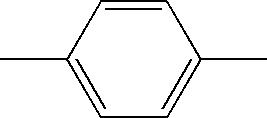
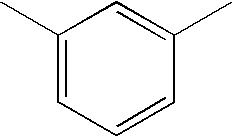
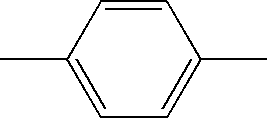
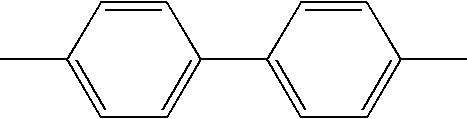
  • arylene group examples include phenylene, biphenylene, triphenylene, tetraphenylene, naphthalenediyl, anthracenediyl, phenanthrolinediyl, pyrenediyl, triphenylenediyl, benzophenanthrolinediyl, perylenediyl, pentaphenylenediyl, and pentacenediyl.
  • phenylene, biphenylene, naphthalenediyl, anthracenediyl, pyrenediyl, and perylenediyl are preferable, and phenylene, biphenylene and triphenylene are more preferable.
  • the bivalent heterocyclic group is preferably a monocyclic or condensed-cyclic heterocyclic group having 4 to 60 carbon atoms, more preferably a C 4 to C 60 monocyclic or condensed-cyclic heterocyclic group containing at least one of nitrogen, oxygen and sulfur atoms, and still more preferably a five- or six-membered heterocyclic group having 4 to 30 carbon atoms.
  • heterocyclic group examples include pyrrolediyl, furandiyl, thienylene, pyridinediyl, pyridadinediyl, pyrimidinediyl, pyrazinediyl, quinolinediyl, isoquinolinediyl, cinnolinediyl, quinazolinediyl, quinoxalinediyl, phthalazinediyl, pteridinediyl, acridinediyl, phenazinediyl, and phenanthrolinediyl.
  • furandiyl, thienylene, pyridinediyl, pyridadinediyl, pyrimidinediyl, pyrazinediyl, quinolinediyl, quinoxalinediyl, and phthalazinediyl are preferable, and thienylene and pyridinediyl are more preferable.
  • the arylene or heterocyclic group may have a substituent.
  • substituents include an alkyl group (preferably those having 1 to 20 carbon atoms, more preferably 1 to 12 carbon atoms, and still more preferably 1 to 8 carbon atoms, for example, methyl, ethyl, iso-propyl, tert-butyl, n-octyl, n-decyl, n-hexadecyl, cyclopropyl, cyclopentyl, and cyclohexyl); an alkenyl group (preferably those having 2 to 20 carbon atoms, more preferably 2 to 12 carbon atoms, and still more preferably 2 to 8 carbon atoms, for example, vinyl, allyl, 2-butenyl, and 3-pentenyl); an alkynyl group (preferably those having 2 to 20 carbon atoms, more preferably 2 to 12 carbon atoms, and still more preferably 2 to 8 carbon atoms, for example, propargy
  • substituents may further be substituted.
  • the at least two substituents may be the same or different and may bond to each other to form a ring, if possible.
  • Examples of the substituent for the further substitution preferably include an alkyl group, an alkenyl group, an aralkyl group, an aryl group, an alkoxy group, an aryloxy group, an alkylthio group, an arylthio group, a halogen atom, a cyano group, and a heterocyclic group.
  • an alkyl group, an aryl group, an alkoxy group, an aryloxy group, an alkylthio group, an arylthio group, and a heterocyclic group are preferable, and an aryl group and an aromatic heterocyclic group are more preferable.
  • Ar 5 and Ar 7 independently represent an aryl group or a heterocyclic group.
  • the aryl group is preferably a monocyclic or condensed-cyclic aryl group having 6 to 40 carbon atoms (such as phenyl, naphthyl, biphenyl, anthryl, phenanthryl, pyrenyl, benzophenanthryl, triphenylenyl, naphthacenyl, chrysenyl, picenyl, perylenyl, pentaphenyl, and pentacenyl), more preferably those having 6 to 30 carbon atoms (such as phenyl, naphthyl, anthryl, phenanthryl, pyrenyl, and perylenyl), and still more preferably those having 6 to 20 carbon atoms (such as phenyl, naphthyl, biphenyl, anthryl, phenanthryl, pyrenyl, and perylenyl).
  • 6 to 40 carbon atoms such as phenyl, naphthyl, bipheny
  • the heterocyclic group represented by Ar 5 or Ar 7 may be a 3 to 10-membered saturated or unsaturated hetero ring including at least one of N, O and S atoms and may be monocyclic or form a condensed ring together with any other ring.
  • heterocyclic group examples include pyrrolidine, piperidine, piperazine, morpholine, thiophene, furan, pyrrole, imidazole, pyrazole, pyridine, pyrazine, pyridazine, pyrimidine, triazole, triazine, indole, indazole, purine, thiazoline, thiazole, thiadiazole, oxazoline, oxazole, oxadiazole, quinoline, isoquinoline, phthalazine, naphthyridine, quinoxaline, quinazoline, cinnoline, pteridine, acridine, phenanthroline, phenazine, tetrazole, benzimidazole, benzoxazole, benzothiazole, benzotriazole, and tetrazaindene.
  • Preferred examples of these groups include 5 or 6-membered aromatic heterocyclic groups, and more preferred examples include thiophene, furan, pyrrole, imidazole, pyrazole, pyridine, pyrimidine, thiazole, thiadiazole, oxazole, oxadiazole, quinoline, benzimidazole, benzoxazole, and benzothiazole, and still more preferred examples include thiophene, furan, pyridine, pyrimidine, thiazole, thiadiazole, oxazoline, oxazole, oxadiazole, and quinoline.
  • R 1 and R 2 independently represent a hydrogen atom, a cyano group, an alkyl group, an alkoxy group, an alkylthiol group, an aryloxy group, or a heterocyclic group.
  • R 1 and R 2 are particularly preferably a hydrogen atom or a cyano group.
  • the alkyl group preferably has 1 to 20 carbon atoms, more preferably 1 to 12 carbon atoms, and still more preferably 1 to 8 carbon atoms.
  • Examples of the alkyl group include methyl, ethyl, propyl, n-butyl, iso-propyl, n-hexadecyl, cyclopropyl, and cyclopentyl.
  • the alkoxy group preferably has 1 to 20 carbon atoms, more preferably 1 to 12 carbon atoms, and still more preferably 1 to 8 carbon atoms. Examples of the alkoxy group include methoxy, ethoxy and butoxy.
  • the alkylthio group preferably has 1 to 20 carbon atoms, more preferably 1 to 16 carbon atoms, and still more preferably 1 to 12 carbon atoms.
  • Examples of the alkylthio group include methylthio and ethylthio.
  • the aryloxy group preferably has 6 to 20 carbon atoms, more preferably 6 to 16 carbon atoms, and still more preferably 6 to 12 carbon atoms.
  • Examples of the aryloxy group include phenyloxy and 2-naphthyloxy.
  • the arylthio group preferably has 6 to 20 carbon atoms, more preferably 6 to 16 carbon atoms, and still more preferably 6 to 12 carbon atoms. Examples of the arylthio group include phenylthio.
  • the heterocyclic group preferably has 1 to 20 carbon atoms, and more preferably 1 to 12 carbon atoms.
  • the hetero atom thereof may be a nitrogen, oxygen or sulfur atom.
  • Examples of the heterocyclic group include imidazolyl, pyridyl, quinolyl, furyl, piperidyl, morpholino, benzoxazolyl, benzimidazolyl, and benzothiazolyl.
  • T 1 , T 2 , T 3 , and T 4 independently represent an linear or branched bivalent hydrocarbon group having 1 to 10 carbon atoms, and preferably 1 to 4 carbon atoms, and may be, for example, a methylene group, an ethylene group, a propylene group, or a butylene group.
  • the polyester resin of the invention generally includes a structural unit that has a low solubility in an organic solvent.
  • the bivalent hydrocarbon group such as T 1 , T 2 , T 3 , and T 4 directly bonded to such a less soluble structural unit provides the polyester resin with significantly increased solubility.
  • the polyester resin including the repeating unit of the invention can easily form a coating film by the steps of dissolving it in an organic solvent and applying the solution.
  • the crystallized portion will be a defect in light emitting.
  • the effect of T 1 , T 2 , T 3 , T 4 , and the like leads to an increased flexibility in the molecule so that the crystallization can be suppressed.
  • Examples of the compound (the repeating unit) represented by formula (1) are shown in Tables 1 to 18 below.
  • Examples of the compound (the repeating unit) represented by formula (2) are also shown in Tables 19 to 24 below. However, such examples are not intended to limit the scope of the invention.
  • Ar 1 Ar 2 Ar 3 T 1 T 2 (62) 1 —CH 2 CH 2 — —CH 2 CH 2 — (63) 1 —CH 2 CH 2 CH 2 — —CH 2 CH 2 CH 2 — (64) 1 —(CH 2 ) 4 — —(CH 2 ) 4 — (65) 1 —CH 2 — —CH 2 — (66) 1 —CH 2 CH 2 — —CH 2 CH 2 — (67) 1 —CH 2 CH 2 CH 2 — —CH 2 CH 2 CH 2 — (68) 1 —(CH 2 ) 4 — —(CH 2 ) 4 — (69) 1 —CH 2 — —CH 2 — (70) 1 —CH 2 CH 2 — —CH 2 CH 2 —
  • Ar 1 Ar 2 Ar 3 T 1 T 2 (103) 1 —CH 2 CH 2 CH 2 — —CH 2 CH 2 CH 2 — (104) 1 —(CH 2 ) 4 — —(CH 2 ) 4 — (105) 1 —CH 2 — —CH 2 — (106) 1 —CH 2 CH 2 — —CH 2 CH 2 — (107) 1 —CH 2 CH 2 CH 2 — —CH 2 CH 2 CH 2 — (108) 1 —(CH 2 ) 4 — —(CH 2 ) 4 — (109) 1 —CH 2 — —CH 2 —CH 2 —
  • Ar 1 Ar 2 Ar 3 T 1 T 2 (110) 1 —CH 2 CH 2 — —CH 2 CH 2 — (111) 1 —CH 2 CH 2 CH 2 — —CH 2 CH 2 CH 2 — (112) 1 —(CH 2 ) 4 — —(CH 2 ) 4 — (113) 1 —CH 2 — —CH 2 — (114) 1 —CH 2 CH 2 — —CH 2 CH 2 —
  • the polyester resin of the invention can be formed by polymerization of a monomer having the skeleton of formula (1) and a spacer compound or by polymerization of a monomer having the skeleton of formula (2) and a spacer compound. Specifically, if the monomer having the skeleton of formula (1) or (2) is a bisester compound, a bis-acid halide or a dicarboxylic acid compound, the spacer compound is a diol compound, and both are polymerized to form the polyester resin of the invention.
  • the spacer compound is a bisester compound, a bis-acid halide or a dicarboxylic acid compound, and they are polymerized to form the polyester resin of the invention.
  • the spacer compound include a diol compound, a diester compund, a dicarboxylic acid, and a dicarboxylic acid halide each having the following skeleton.
  • each having the skeleton of formula (1) or (2) or spacer compounds may freely be selected, and a mixture thereof may be polymerized.
  • the spacer compound does not necessarily have the above-described skeleton.
  • the spacer compound may have any skeleton without limitation, as long as it can form an ester bond together with the repeating unit represented by formula (1) or (2).
  • ester bonds may be formed in the same direction at both ends of the repeating unit, or the repeating unit represented by the following formula (3) or (4) may be formed in which ester bonds are in the opposite direction at both ends.
  • polyester resin including the repeating unit represented by formula (2) may have the repeating unit represented by the following formula (5) or (6).
  • the polyester resin of the invention may be a copolymerized polyester resin including at least one repeating unit represented by formula (1) and at least one repeating unit represented by formula (2).
  • the copolymerization of the repeating units represented by formulae (1) and (2) can form a portion having an electron transport function and a portion having a light emitting function in the molecule as described below.
  • the repeating unit represented by formula (1) form a structural unit having the electron transport function.
  • the monomer having the skeleton of formula (1) and any other compound having an electron transport function may be copolymerized for the purpose of controlling physical properties of the resulting polyester resin, such as solubility, mobility, uniformity of the coating film, and glass transition point.
  • Examples of the compound having the electron transport function include, but are not limited to, diols, diesters, dicarboxylic acids, and dicarboxylic acid halides of fluorenone derivatives, anthraquinodimethane derivatives, anthrone derivatives, diphenoquinone derivatives, thiopyrandioxide derivatives, carbidiimide derivatives, fluorenylidenemethane derivatives, distyrylpyrazine derivatives, perylene derivatives, and quinoxaline derivatives.
  • the copolymerization ratio may be represented by the mass ratio (A/B) of the mass (A) of the repeating unit represented by formula (1) to the mass (B) of the compound having the electron transport function in the copolymer.
  • the mass ratio (A/B) is preferably in the range of from 100/1 to 1/100, and more preferably from 10/1 to 1/10.
  • the monomer having the skeleton of formula (1) and any compound having a hole transport function may be copolymerized to form a molecule having a bipolar property.
  • Examples of the compound having the hole transport function include, but are not limited to, diols, diesters, dicarboxylic acids, and dicarboxylic acid halides of carbazole derivatives, triazole derivatives, oxazole derivatives, imidazole derivatives, polyarylalkane derivatives, pyrazoline derivatives, pyrazolone derivatives, phenylenediamine derivatives, arylamine derivatives, amino-substituted chalcone derivatives, styrylanthracene derivatives, fluorenone derivatives, hydrazone derivatives, stilbene derivatives, silazane derivatives, aromatic tertiary amine compounds, styrylamine compounds, aromatic dimethylidyne compounds, porphyrin compounds, polysilane compounds, and oligothiophen derivatives.
  • carbazole derivatives triazole derivatives, oxazole derivatives, imidazole derivatives, polyarylalkane derivatives, pyr
  • the copolymerization ratio may be represented by the mass ratio (C/D) of the mass (C) of the repeating unit represented by formula (1) to the mass (D) of the compound having the hole transport function in the copolymer.
  • the mass ratio (C/D) is preferably in the range of from 100/1 to 1/100, and more preferably from 10/1 to 1/10.
  • the monomer having the skeleton of formula (1) may also be copolymerized with any compound having a light emitting function.
  • Examples of the compound having the light emitting function include, but are not limited to, the monomers having the skeleton of formula (2), and diols, diesters, dicarboxylic acids, and dicarboxylic acid halides of benzimidazole derivatives, benzothiazole derivatives, styrylbenzene derivatives, polyphenyl derivatives, diphenylbutadiene derivatives, tetraphenylbutadiene derivatives, naphthalimide derivatives, coumarin derivatives, perylene derivatives, perynone derivatives, aldazine derivatives, pyralidine derivatives, cyclopentadiene derivatives, bisstyrylanthracene derivatives, quinacridone derivatives, pyrrolopyridine derivatives, thiadiazolopyridine derivatives, cyclopentadiene derivatives, styrylamine derivatives, and aromatic dimethylidyne compounds.
  • benzimidazole derivatives benzothiazo
  • the copolymerization ratio may be represented by the mass ratio (E/F) of the mass (E) of the repeating unit represented by formula (1) to the mass (F) of the compound having the light emitting function in the copolymer.
  • the mass ratio (E/F) is preferably in the range of from 100/1 to 1/100, and more preferably from 10/1 to 1/10.
  • the repeating unit represented by formula (2) form a structural unit having a light emitting function.
  • the monomer having the skeleton of formula (2) and any other compound having an electron transport function may be copolymerized for the purpose of controlling physical properties of the resulting polyester resin, such as solubility, luminescent properties, uniformity of the coating film, and glass transition point.
  • Examples of the compound having the electron transport function include, but are not limited to, the monomers having the skeleton of formula (1), and diols, diesters, dicarboxylic acids, and dicarboxylic acid halides of triazole derivatives, fluorenone derivatives, anthraquinodimethane derivatives, anthrone derivatives, diphenoquinone derivatives, thiopyrandioxide derivatives, carbidiimide derivatives, fluorenylidenemethane derivatives, distyrylpyrazine derivatives, perylene derivatives, and quinoxaline derivatives.
  • the monomers having the skeleton of formula (1) include, but are not limited to, the monomers having the skeleton of formula (1), and diols, diesters, dicarboxylic acids, and dicarboxylic acid halides of triazole derivatives, fluorenone derivatives, anthraquinodimethane derivatives, anthrone derivatives, diphenoquinone
  • the copolymerization ratio may be represented by the mass ratio (G/H) of the mass (G) of the repeating unit represented by formula (2) to the mass (H) of the compound having the electron transport function in the copolymer.
  • the mass ratio (G/H) is preferably in the range of from 100/1 to 1/100, and more preferably from 10/1 to 1/10.
  • the monomer having the skeleton of formula (2) may also be copolymerized with any compound having a hole transport function.
  • Examples of the compound having the hole transport function include, but are not limited to, diols, diesters, dicarboxylic acids, and dicarboxylic acid halides of carbazole derivatives, triazole derivatives, oxazole derivatives, imidazole derivatives, polyarylalkane derivatives, pyrazoline derivatives, pyrazolone derivatives, phenylenediamine derivatives, arylamine derivatives, amino-substituted chalcone derivatives, styrylanthracene derivatives, fluorenone derivatives, hydrazone derivatives, stilbene derivatives, silazane derivatives, aromatic tertiary amine compounds, styrylamine compounds, aromatic dimethylidyne compounds, porphyrin compounds, polysilane compounds, and oligothiophen derivatives.
  • carbazole derivatives triazole derivatives, oxazole derivatives, imidazole derivatives, polyarylalkane derivatives, pyr
  • the copolymerization ratio may be represented by the mass ratio (I/J) of the mass (I) of the repeating unit represented by formula (2) to the mass (J) of the compound having the hole transport function in the copolymer.
  • the mass ratio (I/J) is preferably in the range of from 100/1 to 1/100, and more preferably from 10/1 to 1/10.
  • the monomer having the skeleton of formula (2) may also be copolymerized with any compound having a light emitting function.
  • Examples of the compound having the light emitting function include, but are not limited to, diols, diesters, dicarboxylic acids, and dicarboxylic acid halides of benzimidazole derivatives, benzothiazole derivatives, styrylbenzene derivatives, polyphenyl derivatives, diphenylbutadiene derivatives, tetraphenylbutadiene derivatives, naphthalimide derivatives, coumarin derivatives, perylene derivatives, perynone derivatives, aldazine derivatives, pyralidine derivatives, cyclopentadiene derivatives, bisstyrylanthracene derivatives, quinacridone derivatives, pyrrolopyridine derivatives, thiadiazolopyridine derivatives, cyclopentadiene derivatives, and styrylamine derivatives.
  • the copolymerization ratio may be represented by the mass ratio (K/L) of the mass (K) of the repeating unit represented by formula (2) to the mass (L) of the compound having the light emitting function in the copolymer.
  • the mass ratio (K/L) is preferably in the range of from 100/1 to 1/100, and more preferably from 10/1 to 1/10.
  • the copolymer may also be formed of the monomer having the skeleton of formula (1), the monomer having the skeleton of formula (2), the compound having the electron transport function (exclusive of the monomer having the skeleton of general formula (1)), the compound having the hole transport function, and the compound having the light emitting function (exclusive of the monomer having the skeleton of formula (2)).
  • the copolymerization ratio may be similar to the above except that it is represented by the mass ratio of the mass of each functional compound to the total mass of the repeating units represented by formulae (1) and (2).
  • the polyester resin of the invention may be synthesized by any method including, but are not limited to, transesterification of the ester compound with the diol compound, dehydrohalogenation reaction of the dicarboxylic acid halide with the diol compound, or dehydration reaction of the dicarboxylic acid compound with the diol compound.
  • the weight average molecular weight (Mw) of the polymer having the partial structure(s) represented by formula (1) and/or formula (2) may depends on the type of the substituent but is preferably in the range of from 1,000 to 500,000, more preferably from 2,000 to 300,000, and still more preferably from 3,000 to 200,000.
  • the weight average molecular weight (Mw) is determined in terms of polystyrene by gel permeation chromatography.
  • the polyester resin of the invention may be synthesized by the transesterification reaction of the diester compound component with the diol compound component.
  • an excessive amount of the diol compound component may be added to the diester compound component and the resultant mixture is heated in the presence of a catalyst such as an inorganic acid such as sulfuric acid or phosphoric acid; titanium alkoxide; an acetate or carbonate of calcium or cobalt; or an oxide of zinc or lead.
  • the amount of the diol compound component may be in the range of from 2 to 100 equivalents, and preferably from 3 to 50 equivalents.
  • the amount of the catalyst may be in the range of from 1/1000 to 1 part by mass, and preferably form 1/1000 to 1/2 parts by mass.
  • the reaction temperature may be in the range of from 100 to 300° C.
  • the reaction is preferably carried out under reduced pressure. In some cases, a high boiling solvent such as chloronaphthalene may be used in the reaction to form an azeotrope with the diol component under ordinary pressure.
  • the product may be dissolved in a solvent.
  • a solvent such as alcohols such as methanol and ethanol; or acetone, in which the polymer is less soluble, so that the polymer is precipitated.
  • the polymer is sufficiently washed with water or an organic solvent and dried. If necessary, reprecipitation may be conducted once or more in which the polymer is dissolved in an appropriate organic solvent and then the resultant solution is added dropwise to the poor solvent to precipitate the polymer again.
  • the reprecipitation process is preferably conducted while the system is being stirred efficiently with a mechanical stirrer or the like.
  • one part by mass of the polymer may be dissolved in 1 to 100 parts by mass, preferably 2 to 50 parts by mass of the solvent.
  • the poor solvent may be used in an amount of 1 to 1,000 parts by mass, and preferably 10 to 500 parts by mass.
  • the polymer may be synthesized by dehydration reaction of the dicarboxylic acid halide component with the diol compound component.
  • both components maybe mixed with each other in equivalent amounts and polymerized using an organic basic catalyst such as pyridine or triethylamine.
  • the amount of the catalyst may be in the range of from 1 to 10 equivalents, and preferably from 2 to 5 equivalents.
  • Typical examples of the solvent include methylene chloride, tetrahydrofuran (THF), toluene, chlorobenzene, and 1-chloronaphthalene.
  • the solvent may be used in an amount of 1 to 100 parts by mass, and preferably 2 to 50 parts by mass.
  • the reaction temperature may be set at any point. After the polymerization reaction, the reprecipitation may be conducted for purification.
  • the polymer may be synthesized by dehydration reaction of the dicarboxylic acid compound with the diol compound.
  • an equivalent amount of the diol compound component may be added to the dicarboxylic acid compound and polymerized using an acid catalyst.
  • the acid catalyst may be a conventional catalyst for esterification such as sulfuric acid, toluenesulfonic acid or trifluoroacetic acid. Based on one part by mass of the dicarboxylic acid compound component, the amount of the catalyst may be in the range of from 1/10000 to 1/10 parts by mass, and preferably from 1/1000 to 1/50 parts by mass.
  • a solvent that can form an azeotrope with water is preferably used for the purpose of removing water produced during the polymerization process.
  • the solvent include toluene, chlorobenzene and 1-chloronaphthalene.
  • the solvent Based on one part by mass of the dicarboxylic acid compound component, the solvent is used in an amount of 1 to 100 parts by mass, and preferably 2 to 50 parts by mass.
  • the reaction temperature may be set at any point, but the reaction is preferably carried out at the boiling point of the solvent for the purse of removing water produced during the polymerization process. After the polymerization reaction, the reprecipitation may be conducted for purification.
  • the monomers can be prepared as described below.
  • the diol monomer can easily be synthesized by converting the ester monomer in the presence of a reducing catalyst such as sodium borohydride or lithium aluminum hydride in a solvent such as tetrahydrofuran or an alcohol.
  • the dicarboxylic acid monomer can be synthesized by hydrolyzing the ester monomer with an alkali or acid in water or an alcohol.
  • the bisacid halide monomer can be synthesized by causing a halogenating reagent such as thionyl chloride to react with the dicarboxylic acid monomer.
  • any type of monomer may be selected from the ester and diol monomers.
  • the organic EL device of the invention has: a pair of electrodes, at least one of which is transparent or translucent, and at least one or more organic compound layer sandwiched between the electrodes, and at least one layer of the at least one organic compound layer contains the polyester of the invention.
  • a light emitting layer or a plurality of organic compound layers including the light emitting layer are disposed between the pair of electrodes including an anode and a cathode.
  • the device may include a hole-injection layer, a hole transport layer, an electron-injection layer, an electron transport layer, a protective layer, and/or the like. Each of these layers may also have any other function.
  • a variety of materials may be used in order to form the respective layers, but the at least one of the organic compound layers necessarily contains the polyester resin of the invention.
  • the organic compound layer is a light emitting layer having a carrier (electron or hole) transport function, and the light emitting layer contains the polyester resin of the invention.
  • the organic EL device of the invention has a plurality of organic compound layers (in the case of the function separation type EL device), at least one of the layers is a light emitting layer (which may or may not have a carrier transport function), and the other layer(s) is a carrier transport layer such as a hole transport layer, an electron transport layer or a combination of the hole and electron transport layers, and at least one of the layers contains the polyester resin of the invention.
  • Examples of the organic EL device include an organic EL device including at least a light emitting layer and an electron transport layer, an organic EL device having at least a hole transport layer, a light emitting layer and an electron transport layer, and an organic EL device having at least a hole transport layer and a light emitting layer. At least one layer of these layers (the light emitting layer, the hole transport layer and the electron transport layer) may contain the polyester resin of the invention.
  • the organic EL device of the invention is not limited to the specific ones below.
  • FIGS. 1 to 4 are cross-sectional views each showing the layered structure of the organic EL device of the invention.
  • FIGS. 1 , 2 and 4 each show an example of the organic EL device having a plurality of the organic compound layers
  • FIG. 3 shows an example of the organic EL device having one organic compound layer.
  • the elements having the same function are indicated by the same reference numeral.
  • the organic EL device includes a transparent insulator substrate 1 , and a transparent electrode 2 , a light emitting layer 6 having a carrier transport function, an electron transport layer 5 , and a back-side electrode 7 , which are sequentially stacked on the surface of the substrate 1 .
  • the organic EL device includes a transparent insulator substrate 1 , and a transparent electrode 2 , a hole transport layer 3 , a light emitting layer 4 , an electron transport layer 5 , and a back-side electrode 7 , which are sequentially stacked on the surface of the substrate 1 .
  • the organic EL device includes a transparent insulator substrate 1 , and a transparent electrode 2 , a light emitting layer 6 having a carrier transport function, and a back-side electrode 7 , which are sequentially stacked on the surface of the substrate 1 .
  • the organic EL device includes a transparent insulator substrate 1 , and a transparent electrode 2 , a hole transport layer 3 , a light emitting layer 6 having a carrier transport function, and a back-side electrode 7 , which are sequentially stacked on the surface of the substrate 1 .
  • the organic EL device of the invention may have any other layer such as a hole-injection layer or an electron-injection layer. Each structure will be described in detail below.
  • the layered structure of the organic EL device as shown in each of FIGS. 1 , 2 and 4 is adopted to improve durability or luminous efficiency of the device in the case where the luminescent material (the light emitting layer) used does not have clear carrier transportation properties.
  • the hole transport layer is provided between the light emitting layer 4 or the light emitting layer 6 having a carrier transport function and the transparent electrode 2
  • the electron transport layer is provided between the light emitting layer 4 or the light emitting layer 6 having a carrier transport function and the back-side electrode 7 .
  • the organic compound layer containing the polyester resin of the invention is preferably used as the electron transport layer 5 or the light emitting layer 6 having a carrier transport function.
  • the organic compound layer containing the polyester resin may be used as any of the light emitting layer 4 and the electron transport layer 5 , preferably as the light emitting layer 4 .
  • the organic compound layer containing the polyester resin is preferably used as the light emitting layer 6 having a carrier transport function.
  • the organic compound layer containing the polyester resin may be used as the light emitting layer 6 having a carrier transport function, and such use is preferable in terms of cost, because the number of the process steps can significantly be reduced.
  • the structures as shown in FIGS. 1 and 4 are preferable as the organic EL device including the organic compound layer of the polyester resin of the invention. This is because the device can easily be manufactured, the properties of the polyester resin of the invention is effective, and sufficient brightness, stability and durability can be achieved.
  • the method of manufacturing the organic electroluminescent device includes the steps of: forming at least one organic compound layer on the surface of an electrode; and forming a counter electrode on the surface of the at least one organic compound layer, wherein at least one layer of the at least one organic compound layer is formed so as to include at least one kind of the polyester resins of the invention in the step of forming the at least one organic compound layer.
  • the anode which supplies holes to the hole-injection layer, the hole transport layer, the light emitting layer, or the like, may be made of metal, alloy, metal oxide, an electrically conductive compound, or a combination thereof and preferably made of a material having a work function of 4 eV or more.
  • anode material examples include an electrically conductive metal oxide such as tin oxide, zinc oxide, indium oxide, or indium tin oxide (ITO); a metal such as gold, silver, chromium, or nickel; a mixture or laminate of the metal and the electrically conductive metal oxide; an electrically conductive inorganic material such as copper iodide or copper sulfide; an electrically conductive organic material such as polyaniline, polythiophene or polypyrrole; and a laminate of ITO and any of these materials.
  • the electrically conductive metal oxide is preferable, and ITO is particularly preferable in terms of productivity, high conductivity, transparency, and the like.
  • the thickness of the anode may be appropriately set at any level in accordance with the material and is preferably in the range of from 10 nm to 5 ⁇ m, more preferably from 50 nm to 1 ⁇ m, and still more preferably from 100 nm to 500 nm.
  • the anode is generally formed as a layer on the surface of a substrate such as a soda-lime glass, an alkali-free glass or a transparent resin substrate.
  • a substrate such as a soda-lime glass, an alkali-free glass or a transparent resin substrate.
  • the substrate transparent insulator substrate 1
  • the alkali-free glass is preferably used so that the amount of ions eluting from the glass can be reduced.
  • the substrate is made of the soda-lime glass
  • the substrate is preferably provided with a barrier coat such as silica.
  • the thickness of the substrate is not particularly limited as long as it is sufficient to maintain mechanical strength and, when glass is used, is generally 0.2 mm or more, and preferably 0.7 mm or more.
  • the anode may be formed by any method in accordance with the material.
  • an ITO electrode film may be formed by an electron beam method, a sputtering method, a resistance heating vapor deposition process, a chemical reaction process (sol-gel process), or coating of an indium tin oxide dispersion.
  • the anode may be washed or subjected to any other process for the purpose of reducing the driving voltage of the device or increasing the luminous efficiency of the device. For example, a UV-ozone treatment or plasma treatment is effective on the ITO.
  • the material for the cathode (back-side electrode 7 ), which supplies electrons to the electron-injection layer, the electron transport layer, the light emitting layer, or the like, is selected in view of adhesion to the adjacent layer such as the electron-injection layer, the electron transport layer or the light emitting layer, ionization potential, stability, and the like.
  • the material for the cathode may be metal, alloy, metal halide, metal oxide, an electrically conductive compound, or a combination thereof.
  • the material include alkali metals (such as Li, Na and K) and fluorides thereof; alkaline earth metals (such as Mg and Ca) and fluorides thereof; gold, silver, lead, aluminum, sodium-potassium alloys, and a metal mixture thereof; lithium-aluminum alloys or a metal mixture thereof; magnesium-silver alloys or a metal mixture thereof; and rare earth metals such as indium and ytterbium.
  • Preferred materials have a work function of 4 eV or less, and more preferred materials include aluminum, lithium-aluminum alloys and a metal mixture thereof, and magnesium-silver alloys and a metal mixture thereof.
  • the cathode may have a monolayer structure of the above compound or a mixture thereof or a laminate structure of the above compounds or mixtures thereof.
  • the film thickness of the cathode may be appropriately set at any level in accordance with the material and is preferably in the range of from 10 nm to 5 ⁇ m, more preferably from 50 nm to 1 ⁇ m, and still more preferably from 100 nm to 1 ⁇ m.
  • the cathode may be formed by an electron beam method, a sputtering method, a resistance heating vapor deposition process, or a coating method.
  • a metal may be vapor-deposited, or two or more components may simultaneously be vapor-deposited. Different metals may also be simultaneously vapor-deposited to form an alloy electrode. Alternatively, a previously prepared alloy may be vapor-deposited.
  • the counter electrode can be formed as described above.
  • the anode and the cathode preferably have a low sheet resistance, which is preferably several hundred ⁇ /cm 2 or less.
  • Each organic compound layer containing the polyester resin of the invention may be formed by any method such as resistance heating vapor deposition, an electron beam method, sputtering, a molecular layering method, or a coating method.
  • the resistance heating vapor deposition and the coating method are preferable in view of characteristics and productivity of the device.
  • the coating method is particularly preferable to form the organic compound layer containing the polyester resin of the invention.
  • the light emitting layer 4 may be made of any material that can form a layer having a function of injecting holes from the anode, the hole-injection layer or the hole transport layer 3 under an applied electric field and a function of injecting electrons from the cathode, the electron-injection layer or the electron transport layer 5 , a function of shifting the injected charge or providing a place for recombination of holes and electrons for emission. Any other luminescent material may be used in addition to the polyester resin of the invention.
  • any other material examples include metal complexes such as metal or rare earth element complexes of benzoxazole derivatives, benzimidazole derivatives, benzothiazole derivatives, styrylbenzene derivatives, polyphenyl derivatives, diphenylbutadiene derivatives, tetraphenylbutadiene derivatives, naphthalimide derivatives, coumarin derivatives, perylene derivatives, perynone derivatives, oxadiazole derivatives, aldazine derivatives, pyralidine derivatives, cyclopentadiene derivatives, bisstyrylanthracene derivatives, quinacridone derivatives, pyrrolopyridine derivatives, thiadiazolopyridine derivatives, cyclopentadiene derivatives, styrylamine derivatives, aromatic dimethylidyne compounds, or 8-quinolinol derivatives; and polymer compounds such as polythiophene, polyphenylene and polyphenylenevinylene.
  • One of the above compounds may be used alone, or two or more of the above compounds may be used in combination.
  • the addition amount of any other luminescent material is preferably 0.1 to 90% by mass, and more preferably 1 to 50% by mass, based on the total mass of the whole layer.
  • the thickness of the light emitting layer 4 is not particularly limited but, in general, is preferably in the range of from 1 nm to 5 ⁇ m, more preferably from 5 nm to 1 ⁇ m, and still more preferably from 10 nm to 500 nm.
  • the light emitting layer 4 may be formed by any method such as resistance heating vapor deposition, an electron beam method, sputtering, a molecular layering method, a coating method (such as spin coating, casting and dip coating), or an LB method.
  • the resistance heating vapor deposition and the coating method are preferably used.
  • the hole-injection layer and the hole transport layer 3 may be made of any material that has any of a function of injecting holes from the anode, a function of transporting holes and a function of blocking the electrons injected from the cathode.
  • Examples of such a material include electrically conductive polymers or oligomers such as carbazole derivatives, triazole derivatives, oxazole derivatives, oxadiazole derivatives, imidazole derivatives, polyarylalkane derivatives, pyrazoline derivatives, pyrazolone derivatives, phenylenediamine derivatives, arylamine derivatives, amino-substituted chalcone derivatives, styrylanthracene derivatives, fluorenone derivatives, hydrazone derivatives, stilbene derivatives, silazane derivatives, aromatic tertiary amine compounds, styrylamine compounds, aromatic dimethylidyne compounds, porphyrin compounds, polysilane compounds, poly(N-vinylcarbazole) derivatives, aniline copolymers, thiophene oligomers, and polythiophene.
  • electrically conductive polymers or oligomers such as carbazole derivatives, triazole derivative
  • One of the above compounds may be used alone, or two or more of the above compounds may be used in combination.
  • the film thickness of the hole-injection layer or the hole transport layer 3 is not particularly limited but, in general, is preferably in the range of from 1 nm to 5 ⁇ m, more preferably from 5 nm to 1 ⁇ m, and still more preferably from 10 nm to 500 nm.
  • the hole-injection layer or the hole transport layer 3 may have a monolayer structure of at least one of the above materials or have a multilayer structure including a plurality of layers having the same or different compositions.
  • the hole-injection layer or the hole transport layer 3 may be formed by a vacuum evaporation method, an LB method, or a process of coating a solvent or dispersion of the hole-injection or transport agent (such as spin coating, casting and dip coating).
  • the agent may be dissolved or dispersed in a solvent together with a resin component.
  • the resin component examples include polyvinyl chloride, polycarbonate, polystyrene, polymethyl methacrylate, polybutyl methacrylate, polyester, polysulfon, polyphenylene oxide, polybutadiene, poly(N-vinylcarbazole), hydrocarbon resins, ketone resins, phenoxy resins, polyamide, ethylcellulose, polyvinyl acetate, ABS resins, polyurethane, melamine resins, unsaturated polyester resins, alkyd resins, epoxy resins, and silicone resins.
  • the electron-injection layer and the electron transport layer 5 may be made of any material that has any of a function of injecting electrons from the cathode, a function of transporting electrons and a function of blocking the holes injected from the anode.
  • Such a material include the polyester resin of the invention; and heterocyclic tetracarboxylic acid anhydrides such as triazole derivatives, oxazole derivatives, fluorenone derivatives, anthraquinodimethane derivatives, anthrone derivatives, diphenylquinone derivatives, thiopyrandioxide derivatives, carbidiimide derivatives, fluorenylidenemethane derivatives, distyrylpyrazine derivatives, and naphthaleneperylene; and metal complexes such as metal complexes of phthalocyanine derivatives or 8-quinolinol derivatives and metal phthalocyanine and metal complexes having, as a ligand, benzoxazole or benzothiazole.
  • heterocyclic tetracarboxylic acid anhydrides such as triazole derivatives, oxazole derivatives, fluorenone derivatives, anthraquinodimethane derivatives, anthrone derivatives
  • One of the above compounds may be used alone, or two or more of the above compounds may be used in combination.
  • the addition amount of any other material in the polyester resin of the invention is preferably 0.1 to 90% by mass, and more preferably 1 to 50% by mass, based on the total mass of the whole layer.
  • the thickness of the electron-injection layer or the electron transport layer 5 is not particularly limited but is preferably in the range of from 1 nm to 5 ⁇ m, more preferably from 5 nm to 1 ⁇ m, and still more preferably from 10 nm to 500 nm.
  • the electron-injection layer or the electron transport layer 5 may have a monolayer structure of at least one of the above materials or have a multilayer structure including a plurality of layers having the same or different compositions.
  • the electron-injection layer or the electron transport layer 5 maybe formed by a vacuum evaporation method, an LB method, or a process of coating a solution or dispersion of the electron-injection or transport agent (such as spin coating, casting and dip coating).
  • the agent may be dissolved or dispersed in a solvent together with a resin component.
  • the resin component may be the same as those for use in the hole-injection or transport layer.
  • each of the above-described materials may be dispersed in a solvent in the form of molecules or fine particles.
  • the dispersion solvent should be common to the respective materials.
  • the dispersion solvent for making a fine particle dispersion should be selected in view of dispersibility and solubility of the above materials.
  • the fine particle dispersion can be prepared with a ball mill, a sand mill, a paint shaker, an attritor, a homogenizer, a supersonic method, or the like.
  • a protective layer may be provided if necessary.
  • the protective layer may be made of any material that has a function of blocking device degradation promoting substances such as water and oxygen from entering the device.
  • Such a material examples include metals such as In, Sn, Pb, Au, Cu, Ag, Al, Ti, and Ni, metal oxides such as MgO, SiO, SiO 2 , Al 2 O 3 , GeO, NiO, CaO, BaO, Fe 2 O 3 , Y 2 O 3 , and TiO 2 , metal fluorides such as MgF 2 , LiF, AlF 3 , and CaF 2 , polyethylene, polypropylene, polymethyl methacrylate, polyimide, polyurea, polytetrafluoroethylene, polychlorotrifluoroethylene, polydichlorodifluoroethylene, copolymers of chlorotrifluoroethylene and dichlorodifluoroethylene, copolymers formed by copolymerization of a monomer mixture including tetrafluoroethylene and at least one comonomer, fluorine-containing copolymers having a cyclic structure in a copolymerized main chain, water absorbing
  • the protective layer may be formed by any method such as a vacuum evaporation process, a sputtering method, a reactive sputtering method, an MBE (molecular beam epitaxy) method, a cluster ion beam method, an ion plating method, a plasma polymerization method (a radiofrequency excited ion plating method), a plasma CVD method, a laser CVD method, a thermal CVD method, a gas source CVD method, or a coating method.
  • a vacuum evaporation process a sputtering method, a reactive sputtering method, an MBE (molecular beam epitaxy) method, a cluster ion beam method, an ion plating method, a plasma polymerization method (a radiofrequency excited ion plating method), a plasma CVD method, a laser CVD method, a thermal CVD method, a gas source CVD method, or a coating method.
  • the functional device includes at least one kind of the polyester resins of the invention.
  • the functional device is typically the above organic EL device.
  • the material may also be used for an electron transport layer and/or an underlying layer of an organic photoconductor (OPC), an organic laser diode (OLD), or the like.
  • OPC organic photoconductor
  • OLD organic laser diode
  • the polyester resin of the invention has a good electron transport function or a good light emitting function and a good film forming property and a good coating film stabilizing property and therefore can be widely used in electronic or optical functional devices that are required to have a large area and durability.
  • a flask having a nominal volume of 100 ml is charged with 5 g of methyl ester monomer (A) having the following structure, 15 g of ethylene glycol and 50 mg of tetrabutoxy titanium and the resultant mixture is heated and refluxed for 3 hours under a stream of nitrogen.
  • the internal pressure of the flask is then reduced to 66.7 Pa, and the ethylene glycol is slowly removed by distillation. Under the reduced pressure, the polymerization is accelerated at 200° C. for 3 hours, and then, the resultant reaction system is cooled to room temperature.
  • the system is dissolved in 20 ml of 1,3-dimethyl-2-imidazolidinone, and then insoluble materials are filtered out with a PTFE filter having a pore size of 0.5 ⁇ m. 200 ml of methanol is added dropwise to the resultant resin solution while the resin solution is being stirred to precipitate the polymer.
  • polyester resin (P-1) having the following structure is thus obtained.
  • the weight average molecular weight (Mw) of polyester resin (P-1) is measured and found to be 7.6 ⁇ 10 4 (in terms of styrene).
  • the resulting polyester (P-1) has an IR spectrum as shown in FIG. 2 .
  • the weight average molecular weight (Mw) of polyester resin (P-2) is measured and found to be 8.1 ⁇ 10 4 (in terms of styrene).
  • the resulting polyester (P-2) has an IR spectrum as shown in FIG. 3 .
  • a flask having a nominal volume of 100 ml is charged with 4 g of methyl ester monomer (A) as shown above, 1 g of ester monomer (C) as shown below, 15 g of ethylene glycol, and 50 mg of tetrabutoxy titanium and the resultant mixture is heated and refluxed for 3 hours under a stream of nitrogen.
  • the internal pressure of the flask is then reduced to 66.7 Pa, and the ethylene glycol is slowly removed by distillation. Under the reduced pressure, the polymerization is carried out at 200° C. for 4 hours, and then, the resultant reaction system is cooled to room temperature.
  • the system is dissolved in 40 ml of methylene chloride, and then insoluble materials are filtered out with a PTFE filter having a pore size of 0.5 ⁇ m.
  • the resultant resin solution is added dropwise to 400 ml of methanol which is being stirred to precipitate the resultant polymer.
  • the weight average molecular weight (Mw) of copolymerized polyester resin (P-3) is measured and found to be 5.3 ⁇ 10 4 (in terms of styrene).
  • the resulting random copolymer polyester resin (P-3) has an IR spectrum as shown in FIG. 4 .
  • the weight average molecular weight (Mw) of copolymerized polyester resin (P-4) is measured and found to be 4.2 ⁇ 10 4 (in terms of styrene).
  • the resulting random copolymer polyester (P-4) has an IR spectrum as shown in FIG. 5 .
  • the weight average molecular weight (Mw) of copolymerized polyester resin (P-5) is measured and found to be 6.6 ⁇ 10 4 (in terms of styrene).
  • the resulting random copolymer polyester resin (P-5) has an IR spectrum as shown in FIG. 6 .
  • a flask having a nominal volume of 100 ml is charged with 0.1 g of monomer (E) as shown above, 3.5 g of dimethyl succinate 3 g of ethylene glycol, and 7 g of diol monomer (F) as shown below and the monomers are caused to react at 170° C. for 3.5 hours under a stream of nitrogen, and then the resultant reaction system is cooled to room temperature.
  • the weight average molecular weight (Mw) of copolymerized polyester resin (P-6) is measured and found to be 5.5 ⁇ 10 4 (in terms of styrene).
  • the resulting random copolymer polyester resin (P-6) has an IR spectrum as shown in FIG. 7 .
  • the weight average molecular weight (Mw) of polyester resin (P-7) is measured and found to be 7.2 ⁇ 10 4 (in terms of styrene).
  • the resulting polyester resin (P-7) has an IR spectrum as shown in FIG. 8 .
  • a glass substrate with an ITO electrode etched into the shape of a strip having a width of 2 mm is washed with 2-propanol (electronics industry grade, manufactured by Kanto Kagaku) by ultrasonic cleaning and then dried.
  • 2-propanol electros industry grade, manufactured by Kanto Kagaku
  • a hole transport layer of the hole transport material corresponding to the following compound (I) which hole transport layer has a thickness of 0.050 ⁇ m is formed on the surface of the substrate, and a light emitting layer of the luminescent material corresponding to the following compound (II) which light emitting layer has a thickness of 0.065 ⁇ m is formed on the surface of the hole transport layer, sequentially by vacuum evaporation.
  • polyester rein (P-1) obtained in Synthesis Example 1 is dissolved in methylene chloride so that a concentration thereof is 5% by mass.
  • the resulting solution is filtered with a polytetrafluoroethylene (PTFE) filter having a pore size of 0.1 ⁇ m.
  • the filtrate is applied onto the surface of the light emitting layer by a spin coater method so that an electron transport layer having a thickness of 0.050 ⁇ m is formed.
  • a Mg—Ag alloy is finally deposited on the surface of the electron transport layer by vapor codeposition to form a back-side electrode having a width of 2 mm and a thickness of 0.15 ⁇ m and intersecting with the ITO electrode in the plan figure.
  • a multilayer organic EL device is thus obtained.
  • the resulting organic EL device has an effective area of 0.04 cm 2 .
  • the organic EL device as prepared above is subjected to light emission measurement in which a DC voltage of 9.8 V is applied between the ITO electrode (plus) and the Mg—Ag back-side electrode (minus) in a vacuum state (0.13 Pa) in order to evaluate maximum brightness and emitted light color of the device.
  • a DC voltage of 9.8 V is applied between the ITO electrode (plus) and the Mg—Ag back-side electrode (minus) in a vacuum state (0.13 Pa) in order to evaluate maximum brightness and emitted light color of the device.
  • Table 25 The results are shown in Table 25.
  • the light emission life of the organic EL device is also measured in dry nitrogen.
  • a current value is set so as to provide an initial brightness of 50 cd/m 2 , and the time period from a time when application of the voltage is initiated to a time when the brightness has been reduced to half of the initial value under constant current drive conditions is determined as the life (hours) of device.
  • the driving current density and the device life measured are also shown in Table 25.
  • the coating film in the organic EL device is visually even with no irregular portion observed.
  • the multilayer organic EL device is prepared in the same manner as in Example 1 except that polyester resin (P-2) obtained in Synthesis Example 2 is used in place of polyester resin (P-1). The same evaluation is conducted and the results are shown in Table 25.
  • the multilayer organic EL device is prepared in the same manner as in Example 1 except that polyester resin (P-5) obtained in Synthesis Example 5 is used in place of polyester resin (P-1). The same evaluation is conducted and the results are shown in Table 25.
  • a liquid dispersion is prepared by adding compound (II) as shown above to a 1 mass % methylene chloride solution of polyester resin (P-7) obtained in Synthesis Example 7 in such a manner that the content of compound (II) is 0.5% by mass based on polyester resin (P-7) and dispersing them with a sand mill and glass beads having a diameter of 1 mm for 2 hours.
  • the multilayer organic EL device is prepared as in Example 1 except that the resulting solution is used to form a light emitting layer having a thickness of 0.06 ⁇ m in place of the light emitting layer used in Example 1. The same evaluation is conducted and the results are shown in Table 25.
  • a glass substrate with an ITO electrode etched into the shape of a strip having a width of 2 mm is washed with 2-propanol (electronics industry grade, manufactured by Kanto Kagaku) by ultrasonic cleaning and then dried.
  • 2-propanol electros industry grade, manufactured by Kanto Kagaku
  • a hole transport layer of the hole transport material corresponding to compound (I) described above which hole transport layer has a thickness of 0.050 ⁇ m is formed on the surface of the substrate, and a light emitting layer of the luminescent material corresponding to compound (II) above which light emitting layer has a thickness of 0.065 ⁇ m is formed on the surface of the hole transport layer, sequentially by vacuum evaporation.
  • an electron transport layer of compound (III) as shown below having a thickness of 0.050 ⁇ m is formed by vacuum evaporation.
  • a Mg—Ag alloy is finally deposited on the surface of the electron transport layer by vapor codeposition to form a back-side electrode having a width of 2 mm and a thickness of 0.15 ⁇ m and intersecting with the ITO electrode in the plane figure.
  • a multilayer organic EL device is thus prepared.
  • the resulting organic EL device has an effective area of 0.04 cm 2 .
  • the resulting organic EL device is evaluated in the same manner as in Example 1.
  • the multilayer organic EL device is prepared in the same manner as in Comparative Example 1 except that the above-described monomer A is used in place of compound (III). The same evaluation is conducted and the results are shown in Table 25.
  • the multilayer organic EL device is prepared in the same manner as in Comparative Example 1 except that the step of forming the electron transport layer is omitted. The same evaluation is conducted and the results are shown in Table 25.
  • a 10 mass % dichloroethane dispersion liquid is prepared through the step of mixing 3 parts by mass of polyester compound (P-3) obtained in Synthesis Example 3 and 1 part by mass of the luminescent material corresponding to compound (II) described above.
  • the dispersion is subjected to a dispersion process with a sand mill and glass beads having a diameter of 1 mm for 2 hours and then filtered with a PTFE filter having a pore size of 0.1 ⁇ m.
  • the filtrate is applied onto a glass substrate with an ITO electrode etched into the shape of a strip having a width of 2 mm by a spin coater method so that a light emitting layer having a carrier transport function and having a thickness of 0.15 ⁇ m is formed.
  • a Mg—Ag alloy is deposited by vapor codeposition to form a back-side electrode having a width of 2 mm and a thickness of 0.15 ⁇ m and intersecting with the ITO electrode when viewed from the upper side.
  • a monolayer organic EL device is prepared.
  • the resulting organic EL device has an effective area of 0.04 cm 2 .
  • the resulting organic EL device is evaluated in the same manner as in Example 1. The results are shown in Table 25.
  • a monolayer organic EL device is prepared in the same manner as in Example 5 except that polyester resin (P-4) obtained in Synthesis Example 4 is used in place of polyester resin (P-3). The same evaluation is conducted and the results are shown in Table 25.
  • a monolayer organic EL device is prepared in the same manner as in Example 5 except that 2 parts by mass of polyester compound (P-1) obtained in Synthesis Example 1 and 1 part by mass of polyvinylcarbazole (PVK) are used in place of 3 parts by mass of polyester resin (P-3). The same evaluation is conducted and the results are shown in Table 25.
  • a monolayer organic EL device is prepared in the same manner as in Example 5 except that 0.5 parts by mass of polyester compound (P-6) obtained in Synthesis Example 6 is added to the solution of the mixture of polyester resin (P-3) and compound (II). The same evaluation is conducted and the results are shown in Table 25.
  • a monolayer organic EL device is prepared in the same manner as in Example 5 except that 2 parts by mass of polyvinylcarbazole (PVK) as a hole transport material and 1 part by mass of compound (III) as an electron transport material are used in place of 3 parts by mass of polyester compound (P-3). The same evaluation is conducted and the results are shown in Table 25.
  • PVK polyvinylcarbazole
  • III compound (III) as an electron transport material
  • a monolayer organic EL device is prepared in the same manner as in Comparative Example 4 except that the electron transport material of compound (III) is not used. The same evaluation is conducted and the results are shown in Table 25.

Landscapes

  • Chemical & Material Sciences (AREA)
  • Organic Chemistry (AREA)
  • Engineering & Computer Science (AREA)
  • Materials Engineering (AREA)
  • Health & Medical Sciences (AREA)
  • Chemical Kinetics & Catalysis (AREA)
  • Medicinal Chemistry (AREA)
  • Polymers & Plastics (AREA)
  • Electroluminescent Light Sources (AREA)
  • Polyesters Or Polycarbonates (AREA)

Abstract

The present invention relates to a polyester resin including at least one repeating unit represented by the following formula (1):
Figure US07431996-20081007-C00001
    • wherein Ar1, Ar2 and Ar3 independently represent a substituted or unsubstituted arylene group, a substituted or unsubstituted bivalent heterocyclic group, or a combination thereof; T1 and T2 each represent a linear or branched bivalent hydrocarbon group having 1 to 10 carbon atoms; and n represents 0 or 1.

Description

CROSS-REFERENCE TO RELATED APPLICATION
This application claims priority under 35 USC 119 from Japanese Patent Application No. 2002-365413, the disclosure of which is incorporated by reference herein.
BACKGROUND OF THE INVENTION
1. Field of the Invention
The present invention relates to a functional device such as a so-called organic electroluminescent device, which converts electric energy into light for emission and can be used for a variety of light sources in a variety of display devices, electrophotography, illumination, and the like, to useful materials therefor and to a method for manufacturing the organic electroluminescent device.
2. Description of the Related Art
Today, research and development of a variety of display devices is aggressively being carried out. For example, organic electroluminescent devices (hereinafter sometimes referred to as “organic EL devices”), which have an organic thin film formed by vapor deposition of organic compounds (for example, see Applied Physics Letters, 51, pp. 913-915 (1987)) are known. Such organic electroluminescent devices can produce light with high luminance under low voltage and therefore receive attention as promising display devices.
However, a method of manufacturing organic EL devices by vacuum deposition of organic compounds has a problem with respect to productivity. In particular, it is difficult to form organic EL device having a large area by a doping process, because, in the doping process, different materials must be vapor-deposited at the same time with a concentration of each material precisely controlled. In addition, amorphous films of low-molecular materials have poor heat resistance and tend to cause defects such as crystallized portions.
In order to solve such problems, it has been proposed that the low-molecular organic layers should be replaced with high-molecular organic polymer layers, and a variety of organic electroluminescent devices which include a charge transport group-incorporated polymer chain have also been reported. Examples of such a polymer include a π conjugated system, such as poly(paraphenylene vinylene) (for example, see Advanced Materials, p. 4 (1992)). A method of producing devices by coating such a material is suitable in terms of simplification of the process, processibility and production of devices having a large area, and is promising because the resultant device has good heat resistance.
The polymers with the π conjugated system are excellent materials, because they are coatable and have good heat resistance. Since a luminescent portion is in a conjugated main chain of the polymer, however, it is difficult to control a concentration of the luminescent material, and it is also difficult to delicately control color tone and luminescent intensity. In addition, thermal motion of the polymer is caused as the temperature increases with the emission, and the conjugated structure can be disturbed, so that color tone may tend to vary.
Another example of a light emitting device similarly produced through the coating step is a device in which a low-molecular weight fluorescent compound is dispersed in poly (N-vinylcarbazole) (for example, see Japanese Patent Application Laid-Open (JP-A) No. 4-212286). This device is a function separation type-device in which the poly(N-vinylcarbazole) has a charge transport function and the low-molecular weight fluorescent compound has a light emitting function. In this type of device, the type of the fluorescent compound can freely be altered, and therefore, color tone and luminescent intensity can be relatively easily adjusted. Since the poly(N-vinylcarbazole) has a relatively large carbazole group at a side chain, however, it forms a brittle film or it is difficult to form a film with it. In addition, a driving voltage is high, and the durability of such a device is problematic, because brightness tends to decrease when the device is driven after a long period of non-use or is driven continuously.
In view of such problems, polycarbonate having a repeating unit of a diarylene-vinylene-arylene skeleton has been proposed for an organic electroluminescent device produced through the coating step (for example, see JP-A No. 5-247458). It is disclosed that this material can be formed into a thin film by coating and can provide a blue light emitting organic EL device. However, the material has a problem in that film-forming properties are insufficient, a uniform surface is hard to form, and durability is low because of dark spot generation.
In order to solve the above problems, polyethers, polythioethers, and polyesters each having a repeating unit of a diarylene-vinylene-arylene skeleton are disclosed as a material for use in a light emitting device (for example, see JP-A No. 2001-40347). In the device made of such a material, however, the polymer tends to crystallize, because the ether or ester group is directly bonded to the arylene group in the skeleton having the light emitting function. Such a material cannot be sufficient in terms of solubility and film-forming properties.
Several examples have also been proposed in which a polymer whose skeleton has an electron transport function as well as a light emitting function is used to form a film. For example, an oxadiazole skeleton having a high electron transport performance and EL devices in which the oxadiazole is incorporated into a main chain of a polyether or into a side chain of a polyvinyl type polymer are known (for example, see JP-A Nos. 9-188756 and 9-255725).
In general, the oxadiazole skeleton-incorporated polymer has low solubility in an organic solvent and tends to have poor film-forming properties, and these drawbacks are improved by copolymerizing the oxadiazole with a highly soluble structure. In such a case, however, it is difficult to obtain sufficient electron transport performance. Other reported examples include vapor deposition and polymerization of a reactive monomer having the oxadiazole structure in the process of forming a thin film (for example, see JP-A No. 8-88084). However, such a process has a problem with respect to productivity because of the difficulty in controlling a reaction rate of the reactive group, and it is hard to achieve sufficient durable properties due to dark spot generation and the like.
Thus, there has been a demand for a polyester resin that has excellent coatability, adhesion to substrates and durability, and that is a useful material for forming a light emitting device that efficiently produces light with high brightness under low driving voltage. There has also been a demand for a functional device, an organic electroluminescent device and a method of manufacturing the organic electroluminescent device, which each uses such a material.
SUMMARY OF THE INVENTION
A first aspect of the invention is to provide a polyester resin comprising at least one repeating unit represented by the following formula (1):
Figure US07431996-20081007-C00002
wherein Ar1, Ar2 and Ar3 independently represent a substituted or unsubstituted arylene group, a substituted or unsubstituted bivalent heterocyclic group, or a combination thereof; T1 and T2 represent a linear or branched bivalent hydrocarbon group having 1 to 10 carbon atoms; and n represents 0 or 1.
A second aspect of the invention is to provide a polyester resin comprising at least one repeating unit represented by the following formula (2):
Figure US07431996-20081007-C00003
wherein Ar4, Ar6 and Ar8 independently represent a substituted or unsubstituted arylene group, a substituted or unsubstituted bivalent heterocyclic group, or a combination thereof; Ar5 and Ar7 independently represent a substituted or unsubstituted aryl group or a substituted or unsubstituted heterocyclic group; R1 and R2 independently represent a hydrogen atom, a cyano group, an alkyl group, an alkoxy group, an alkylthio group, an aryloxy group, an arylthio group, or a heterocyclic group; and T3 and T4 represent a linear or branched bivalent hydrocarbon group having 1 to 10 carbon atoms.
A third aspect of the invention is to provide a copolymerized polyester resin comprising: at least one repeating unit represented by the above-described formula (1); and at least one repeating unit represented by the above-described formula (2).
A fourth aspect of the invention is to provide a copolymerized polyester resin comprising: at least one of a repeating unit represented by the above-described formula (1) and a repeating unit represented by the above-described formula (2); and a compound having an electron transport function.
A fifth aspect of the invention is to provide a copolymerized polyester resin comprising: at least one of a repeating unit represented by the above-described formula (1) and a repeating unit represented by the above-described formula (2); and a compound having a hole transport function.
A sixth aspect of the invention is to provide a copolymerized polyester resin comprising: at least one of a repeating unit represented by the above-described formula (1) and a repeating unit represented by the above-described formula (2); and a compound having a light emitting function.
A seventh aspect of the invention is to provide a functional device including at least one kind of the above-described polyester resins.
An eighth aspect of the invention is to provide an organic electroluminescent device, including: a pair of electrodes composed of an anode and a cathode, at least one of which is transparent or translucent; and at least one organic compound layer that is sandwiched between the electrodes and contains at least one kind of the above polyester resins.
A ninth aspect of the invention is to provide a method for manufacturing an organic electroluminescent device, including the steps of: forming at least one organic compound layer on a surface of an electrode; and forming a counter electrode on a surface of the at least one organic compound layer, wherein at least one kind of the above-described polyester resins is used to form at least one layer of the at least one organic compound layer in the step of forming the at least one organic compound layer.
According to the invention, the polyester resin including at least one of the repeating units represented by the specific structural formulae can provide an organic EL device with high brightness, high efficiency and long lifetime. According to the invention, a good thin film having few defects such as pinholes can be formed by a coating method such as a spin coating method and a dipping method.
BRIEF DESCRIPTION OF THE DRAWINGS
FIG. 1 is a sectional view showing an example of the organic EL device according to the present invention.
FIG. 2 is a sectional view showing another example of the organic EL device according to the invention.
FIG. 3 is a sectional view showing still another example of the organic EL device according to the invention.
FIG. 4 is a sectional view showing still another example of the organic EL device according to the invention.
FIG. 5 is a chart showing the IR spectrum of an polyester resin according to the invention.
FIG. 6 is a chart showing the IR spectrum of another polyester resin according to the invention.
FIG. 7 is a chart showing the IR spectrum of a still another polyester resin according to the invention.
FIG. 8 is a chart showing the IR spectrum of a still another polyester resin according to the invention.
FIG. 9 is a chart showing the IR spectrum of a still another polyester resin according to the invention.
FIG. 10 is a chart showing the IR spectrum of a still another polyester resin according to the invention.
FIG. 11 is a chart showing the IR spectrum of a still another polyester resin according to the invention.
DETAILED DESCRIPTION OF THE INVENTION
The present invention will be described in detail below.
Polyester Resins
The polyester resin of the invention has at least one repeating unit represented by the following formula (1):
Figure US07431996-20081007-C00004
wherein Ar1, Ar2 and Ar3 independently represent a substituted or unsubstituted arylene group, a substituted or unsubstituted bivalent heterocyclic group, or a combination thereof, T1 and T2 independently represent a linear or branched bivalent hydrocarbon group having 1 to 10 carbon atoms, and n represents 0 or 1.
In another embodiment, the polyester resin of the invention has at least one repeating unit represented by the following formula (2):
Figure US07431996-20081007-C00005
wherein Ar4, Ar6 and Ar1 independently represent a substituted or unsubstituted arylene group, a substituted or unsubstituted bivalent heterocyclic group, or a combination thereof, Ar5 and Ar7 independently represent a substituted or unsubstituted aryl group or a substituted or unsubstituted heterocyclic group, R1 and R2 independently represent a hydrogen atom, a cyano group, an alkyl group, an alkoxy group, an alkylthio group, an aryloxy group, an arylthio group, or a heterocyclic group, and T3 and T4 independently represent a linear or branched bivalent hydrocarbon group having 1 to 10 carbon atoms.
As defined above, Ar1, Ar2, Ar3, Ar1, Ar6, and Ar8 independently represent an arylene group, a bivalent heterocyclic group or a combination thereof. The arylene group is preferably a monocyclic or condensed-cyclic arylene group having 6 to 60 carbon atoms, more preferably 6 to 40 carbon atoms, and still more preferably 6 to 30 carbon atoms.
Specific examples of the arylene group include phenylene, biphenylene, triphenylene, tetraphenylene, naphthalenediyl, anthracenediyl, phenanthrolinediyl, pyrenediyl, triphenylenediyl, benzophenanthrolinediyl, perylenediyl, pentaphenylenediyl, and pentacenediyl. Among them, phenylene, biphenylene, naphthalenediyl, anthracenediyl, pyrenediyl, and perylenediyl are preferable, and phenylene, biphenylene and triphenylene are more preferable.
The bivalent heterocyclic group is preferably a monocyclic or condensed-cyclic heterocyclic group having 4 to 60 carbon atoms, more preferably a C4 to C60 monocyclic or condensed-cyclic heterocyclic group containing at least one of nitrogen, oxygen and sulfur atoms, and still more preferably a five- or six-membered heterocyclic group having 4 to 30 carbon atoms.
Examples of the heterocyclic group include pyrrolediyl, furandiyl, thienylene, pyridinediyl, pyridadinediyl, pyrimidinediyl, pyrazinediyl, quinolinediyl, isoquinolinediyl, cinnolinediyl, quinazolinediyl, quinoxalinediyl, phthalazinediyl, pteridinediyl, acridinediyl, phenazinediyl, and phenanthrolinediyl. Among them, furandiyl, thienylene, pyridinediyl, pyridadinediyl, pyrimidinediyl, pyrazinediyl, quinolinediyl, quinoxalinediyl, and phthalazinediyl are preferable, and thienylene and pyridinediyl are more preferable.
The arylene or heterocyclic group may have a substituent. Examples of the substituent include an alkyl group (preferably those having 1 to 20 carbon atoms, more preferably 1 to 12 carbon atoms, and still more preferably 1 to 8 carbon atoms, for example, methyl, ethyl, iso-propyl, tert-butyl, n-octyl, n-decyl, n-hexadecyl, cyclopropyl, cyclopentyl, and cyclohexyl); an alkenyl group (preferably those having 2 to 20 carbon atoms, more preferably 2 to 12 carbon atoms, and still more preferably 2 to 8 carbon atoms, for example, vinyl, allyl, 2-butenyl, and 3-pentenyl); an alkynyl group (preferably those having 2 to 20 carbon atoms, more preferably 2 to 12 carbon atoms, and still more preferably 2 to 8 carbon atoms, for example, propargyl and 3-pentynyl); an aryl group (preferably those having 6 to 30 carbon atoms, more preferably 6 to 20 carbon atoms, and still more preferably 6 to 12 carbon atoms, for example, phenyl, p-methylphenyl and naphthyl); an amino group (preferably those having 0 to 20 carbon atoms, more preferably 0 to 10 carbon atoms, and still more preferably 0 to 6 carbon atoms, for example, amino, methylamino, dimethylamino, diethylamino, and dibenzylamino); an alkoxy group (preferably those having 1 to 20 carbon atoms, more preferably 1 to 12 carbon atoms, and still more preferably 1 to 8 carbon atoms, for example, methoxy, ethoxy and butoxy); an aryloxy group (preferably those having 6 to 20 carbon atoms, more preferably 6 to 16 carbon atoms, and still more preferably 6 to 12 carbon atoms, for example, phenyloxy and 2-naphthyloxy); an acyl group (preferably those having 1 to 20 carbon atoms, more preferably 1 to 16 carbon atoms, and still more preferably 1 to 12 carbon atoms, for example, acetyl, benzoyl, formyl, and pivaloyl); an alkoxycarbonyl group (preferably those having 2 to 20 carbon atoms, more preferably 2 to 16 carbon atoms, and still more preferably 2 to 12 carbon atoms, for example, methoxycarbonyl and ethoxycarbonyl); an aryloxycarbonyl group (preferably those having 7 to 20 carbon atoms, more preferably 7 to 16 carbon atoms, and still more preferably 7 to 10 carbon atoms, for example, phenyloxycarbonyl); an acyloxy group (preferably those having 2 to 20 carbon atoms, more preferably 2 to 16 carbon atoms, and still more preferably 2 to 10 carbon atoms, for example, acetoxy and benzoyloxy); an acylamino group (preferably those having 2 to 20 carbon atoms, more preferably 2 to 16 carbon atoms, and still more preferably 2 to 10 carbon atoms, for example, acetylamino and benzoylamino); an alkoxycarbonylamino group (preferably those having 2 to 20 carbon atoms, more preferably 2 to 16 carbon atoms, and still more preferably 2 to 12 carbon atoms, for example, methoxycarbonylamino); an aryloxycarbonylamino group (preferably those having 7 to 20 carbon atoms, more preferably 7 to 16 carbon atoms, and still more preferably 7 to 12 carbon atoms, for example, phenyloxycarbonylamino); a sulfonylamino group (preferably those having 1 to 20 carbon atoms, more preferably 1 to 16 carbon atoms, and still more preferably 1 to 12 carbon atoms, for example, methanesulfonylamino and benzenesulfonylamino); a sulfamoyl group (preferably those having 0 to 20 carbon atoms, more preferably 0 to 16 carbon atoms, and still more preferably 0 to 12 carbon atoms, for example, sulfamoyl, methylsulfamoyl, dimethylsulfamoyl, and phenylsulfamoyl); a carbamoyl group (preferably those having 1 to 20 carbon atoms, more preferably 1 to 16 carbon atoms, and still more preferably 1 to 12 carbon atoms, for example, carbamoyl, methylcarbamoyl, diethylcarbamoyl, and phenylcarbamoyl); an alkylthio group (preferably those having 1 to 20 carbon atoms, more preferably 1 to 16 carbon atoms, and still more preferably 1 to 12 carbon atoms, for example, methylthio and ethylthio); an arylthio group (preferably those having 6 to 20 carbon atoms, more preferably 6 to 16 carbon atoms, and still more preferably 6 to 12 carbon atoms, for example, phenylthio); a sulfonyl group (preferably those having 1 to 20 carbon atoms, more preferably 1 to 16 carbon atoms, and still more preferably 1 to 12 carbon atoms, for example, mesyl and tosyl); a sulfinyl group (preferably those having 1 to 20 carbon atoms, more preferably 1 to 16 carbon atoms, and still more preferably 1 to 12 carbon atoms, for example, methanesulfinyl and benzenesulfinyl); an ureido group (preferably those having 1 to 20 carbon atoms, more preferably 1 to 16 carbon atoms, and still more preferably 1 to 12 carbonatoms, for example, ureido, methylureido and phenylureido); a phosphoric acid amide group (preferably those having 1 to 20 carbon atoms, more preferably 1 to 16 carbon atoms, and still more preferably 1 to 12 carbon atoms, for example, diethylphosphoric acid amide and phenylphosphoric acid amide); a hydroxyl group; a mercapto group; a halogen atom (such as fluorine, chlorine, bromine, or iodine atom); a cyano group; a sulfo group; a carboxyl group; a nitro group; a hydroxamate group; a sulfino group; a hydrazino group; an imino group; a heterocyclic group (preferably those having 1 to 30 carbon atoms, and more preferably 1 to 12 carbon atoms, with the hetero atom being a nitrogen, oxygen or sulfur atom, for example, imidazolyl, pyridyl, quinolyl, furyl, piperidyl, morpholino, benzoxazolyl, benzimidazolyl, and benzthiazolyl); and a silyl group (preferably those having 3 to 40 carbon atoms, more preferably 3 to 30 carbon atoms, and still more preferably 3 to 24 carbon atoms, for example, trimethylsilyl and triphenylsilyl).
These substituents may further be substituted. When the arylene group or the hetero group has at least two substituents, the at least two substituents may be the same or different and may bond to each other to form a ring, if possible.
Examples of the substituent for the further substitution preferably include an alkyl group, an alkenyl group, an aralkyl group, an aryl group, an alkoxy group, an aryloxy group, an alkylthio group, an arylthio group, a halogen atom, a cyano group, and a heterocyclic group. Among them, an alkyl group, an aryl group, an alkoxy group, an aryloxy group, an alkylthio group, an arylthio group, and a heterocyclic group are preferable, and an aryl group and an aromatic heterocyclic group are more preferable.
As defined above, Ar5 and Ar7 independently represent an aryl group or a heterocyclic group.
The aryl group is preferably a monocyclic or condensed-cyclic aryl group having 6 to 40 carbon atoms (such as phenyl, naphthyl, biphenyl, anthryl, phenanthryl, pyrenyl, benzophenanthryl, triphenylenyl, naphthacenyl, chrysenyl, picenyl, perylenyl, pentaphenyl, and pentacenyl), more preferably those having 6 to 30 carbon atoms (such as phenyl, naphthyl, anthryl, phenanthryl, pyrenyl, and perylenyl), and still more preferably those having 6 to 20 carbon atoms (such as phenyl, naphthyl, biphenyl, anthryl, phenanthryl, pyrenyl, and perylenyl).
The heterocyclic group represented by Ar5 or Ar7 may be a 3 to 10-membered saturated or unsaturated hetero ring including at least one of N, O and S atoms and may be monocyclic or form a condensed ring together with any other ring.
Examples of the above heterocyclic group include pyrrolidine, piperidine, piperazine, morpholine, thiophene, furan, pyrrole, imidazole, pyrazole, pyridine, pyrazine, pyridazine, pyrimidine, triazole, triazine, indole, indazole, purine, thiazoline, thiazole, thiadiazole, oxazoline, oxazole, oxadiazole, quinoline, isoquinoline, phthalazine, naphthyridine, quinoxaline, quinazoline, cinnoline, pteridine, acridine, phenanthroline, phenazine, tetrazole, benzimidazole, benzoxazole, benzothiazole, benzotriazole, and tetrazaindene.
Preferred examples of these groups include 5 or 6-membered aromatic heterocyclic groups, and more preferred examples include thiophene, furan, pyrrole, imidazole, pyrazole, pyridine, pyrimidine, thiazole, thiadiazole, oxazole, oxadiazole, quinoline, benzimidazole, benzoxazole, and benzothiazole, and still more preferred examples include thiophene, furan, pyridine, pyrimidine, thiazole, thiadiazole, oxazoline, oxazole, oxadiazole, and quinoline.
As defined above, R1 and R2 independently represent a hydrogen atom, a cyano group, an alkyl group, an alkoxy group, an alkylthiol group, an aryloxy group, or a heterocyclic group. R1 and R2 are particularly preferably a hydrogen atom or a cyano group.
The alkyl group preferably has 1 to 20 carbon atoms, more preferably 1 to 12 carbon atoms, and still more preferably 1 to 8 carbon atoms. Examples of the alkyl group include methyl, ethyl, propyl, n-butyl, iso-propyl, n-hexadecyl, cyclopropyl, and cyclopentyl. The alkoxy group preferably has 1 to 20 carbon atoms, more preferably 1 to 12 carbon atoms, and still more preferably 1 to 8 carbon atoms. Examples of the alkoxy group include methoxy, ethoxy and butoxy. The alkylthio group preferably has 1 to 20 carbon atoms, more preferably 1 to 16 carbon atoms, and still more preferably 1 to 12 carbon atoms. Examples of the alkylthio group include methylthio and ethylthio. The aryloxy group preferably has 6 to 20 carbon atoms, more preferably 6 to 16 carbon atoms, and still more preferably 6 to 12 carbon atoms. Examples of the aryloxy group include phenyloxy and 2-naphthyloxy. The arylthio group preferably has 6 to 20 carbon atoms, more preferably 6 to 16 carbon atoms, and still more preferably 6 to 12 carbon atoms. Examples of the arylthio group include phenylthio. The heterocyclic group preferably has 1 to 20 carbon atoms, and more preferably 1 to 12 carbon atoms. The hetero atom thereof may be a nitrogen, oxygen or sulfur atom. Examples of the heterocyclic group include imidazolyl, pyridyl, quinolyl, furyl, piperidyl, morpholino, benzoxazolyl, benzimidazolyl, and benzothiazolyl.
As defined above, T1, T2, T3, and T4 independently represent an linear or branched bivalent hydrocarbon group having 1 to 10 carbon atoms, and preferably 1 to 4 carbon atoms, and may be, for example, a methylene group, an ethylene group, a propylene group, or a butylene group.
As shown above, the polyester resin of the invention generally includes a structural unit that has a low solubility in an organic solvent. However, the bivalent hydrocarbon group such as T1, T2, T3, and T4 directly bonded to such a less soluble structural unit provides the polyester resin with significantly increased solubility.
Thus, the polyester resin including the repeating unit of the invention can easily form a coating film by the steps of dissolving it in an organic solvent and applying the solution.
In general, if the compound layer is partially crystallized in the organic EL device, the crystallized portion will be a defect in light emitting. In the organic EL device with an organic compound layer including the polyester resin of the invention, however, the effect of T1, T2, T3, T4, and the like leads to an increased flexibility in the molecule so that the crystallization can be suppressed.
Examples of the compound (the repeating unit) represented by formula (1) are shown in Tables 1 to 18 below. Examples of the compound (the repeating unit) represented by formula (2) are also shown in Tables 19 to 24 below. However, such examples are not intended to limit the scope of the invention.
TABLE 1
Compound
No. n Ar1 Ar2 Ar3 T1 T2
(1) 0
Figure US07431996-20081007-C00006
Figure US07431996-20081007-C00007
—CH2 —CH2
(2) 0
Figure US07431996-20081007-C00008
Figure US07431996-20081007-C00009
—CH2CH2 —CH2CH2
(3) 0
Figure US07431996-20081007-C00010
Figure US07431996-20081007-C00011
—CH2CH2CH2 —CH2CH2CH2
(4) 0
Figure US07431996-20081007-C00012
Figure US07431996-20081007-C00013
—(CH2)4 —(CH2)4
(5) 0
Figure US07431996-20081007-C00014
Figure US07431996-20081007-C00015
—CH2 —CH2
(6) 0
Figure US07431996-20081007-C00016
Figure US07431996-20081007-C00017
—CH2CH2 —CH2CH2
(7) 0
Figure US07431996-20081007-C00018
Figure US07431996-20081007-C00019
—CH2CH2CH2 —CH2CH2CH2
(8) 0
Figure US07431996-20081007-C00020
Figure US07431996-20081007-C00021
—(CH2)4 —(CH2)4
(9) 0
Figure US07431996-20081007-C00022
Figure US07431996-20081007-C00023
—CH2 —CH2
TABLE 2
Compound
No. n Ar1 Ar2 Ar3 T1 T2
(10) 0
Figure US07431996-20081007-C00024
Figure US07431996-20081007-C00025
—CH2CH2 —CH2CH2
(11) 0
Figure US07431996-20081007-C00026
Figure US07431996-20081007-C00027
—CH2CH2CH2 —CH2CH2CH2
(12) 0
Figure US07431996-20081007-C00028
Figure US07431996-20081007-C00029
—(CH2)4 —(CH2)4
(13) 0
Figure US07431996-20081007-C00030
Figure US07431996-20081007-C00031
—CH2 —CH2
(14) 0
Figure US07431996-20081007-C00032
Figure US07431996-20081007-C00033
—CH2CH2 —CH2CH2
(15) 0
Figure US07431996-20081007-C00034
Figure US07431996-20081007-C00035
—CH2CH2CH2 —CH2CH2CH2
(16) 0
Figure US07431996-20081007-C00036
Figure US07431996-20081007-C00037
—(CH2)4 —(CH2)4
TABLE 3
Compound
No. n Ar1 Ar2 Ar3 T1 T2
(17) 0
Figure US07431996-20081007-C00038
Figure US07431996-20081007-C00039
—CH2 —CH2
(18) 0
Figure US07431996-20081007-C00040
Figure US07431996-20081007-C00041
—CH2CH2 —CH2CH2
(19) 0
Figure US07431996-20081007-C00042
Figure US07431996-20081007-C00043
—CH2CH2CH2 —CH2CH2CH2
(20) 0
Figure US07431996-20081007-C00044
Figure US07431996-20081007-C00045
—(CH2)4 —(CH2)4
(21) 0
Figure US07431996-20081007-C00046
Figure US07431996-20081007-C00047
—CH2 —CH2
(22) 0
Figure US07431996-20081007-C00048
Figure US07431996-20081007-C00049
—CH2CH2 —CH2CH2
(23) 0
Figure US07431996-20081007-C00050
Figure US07431996-20081007-C00051
—CH2CH2CH2 —CH2CH2CH2
(24) 0
Figure US07431996-20081007-C00052
Figure US07431996-20081007-C00053
—(CH2)4 —(CH2)4
(25) 0
Figure US07431996-20081007-C00054
Figure US07431996-20081007-C00055
—CH2 —CH2
TABLE 4
Compound
No. n Ar1 Ar2 Ar3 T1 T2
(26) 0
Figure US07431996-20081007-C00056
Figure US07431996-20081007-C00057
—CH2CH2 —CH2CH2
(27) 0
Figure US07431996-20081007-C00058
Figure US07431996-20081007-C00059
—CH2CH2CH2 —CH2CH2CH2
(28) 0
Figure US07431996-20081007-C00060
Figure US07431996-20081007-C00061
—(CH2)4 —(CH2)4
(29) 0
Figure US07431996-20081007-C00062
Figure US07431996-20081007-C00063
—CH2 —CH2
(30) 0
Figure US07431996-20081007-C00064
Figure US07431996-20081007-C00065
—CH2CH2 —CH2CH2
(31) 0
Figure US07431996-20081007-C00066
Figure US07431996-20081007-C00067
—CH2CH2CH2 —CH2CH2CH2
(32) 0
Figure US07431996-20081007-C00068
Figure US07431996-20081007-C00069
—(CH2)4 —(CH2)4
(33) 0
Figure US07431996-20081007-C00070
Figure US07431996-20081007-C00071
—CH2 —CH2
(34) 0
Figure US07431996-20081007-C00072
Figure US07431996-20081007-C00073
—CH2CH2 —CH2CH2
TABLE 5
Compound
No. n Ar1 Ar2 Ar3 T1 T2
(35) 0
Figure US07431996-20081007-C00074
Figure US07431996-20081007-C00075
—CH2CH2CH2 —CH2CH2CH2
(36) 0
Figure US07431996-20081007-C00076
Figure US07431996-20081007-C00077
—(CH2)4 —(CH2)4
(37) 0
Figure US07431996-20081007-C00078
Figure US07431996-20081007-C00079
—CH2 —CH2
(38) 0
Figure US07431996-20081007-C00080
Figure US07431996-20081007-C00081
—CH2CH2 —CH2CH2
(39) 0
Figure US07431996-20081007-C00082
Figure US07431996-20081007-C00083
—CH2CH2CH2 —CH2CH2CH2
(40) 0
Figure US07431996-20081007-C00084
Figure US07431996-20081007-C00085
—(CH2)4 —(CH2)4
(41) 0
Figure US07431996-20081007-C00086
Figure US07431996-20081007-C00087
—CH2 —CH2
TABLE 6
Compound
No. n Ar1 Ar2 Ar3 T1 T2
(42) 0
Figure US07431996-20081007-C00088
Figure US07431996-20081007-C00089
—CH2CH2 —CH2CH2
(43) 0
Figure US07431996-20081007-C00090
Figure US07431996-20081007-C00091
—CH2CH2CH2 —CH2CH2CH2
(44) 0
Figure US07431996-20081007-C00092
Figure US07431996-20081007-C00093
—(CH2)4 —(CH2)4
(45) 0
Figure US07431996-20081007-C00094
Figure US07431996-20081007-C00095
—CH2 —CH2
(46) 0
Figure US07431996-20081007-C00096
Figure US07431996-20081007-C00097
—CH2CH2 —CH2CH2
TABLE 7
Compound
No. n Ar1 Ar2 Ar3 T1 T2
(47) 0
Figure US07431996-20081007-C00098
Figure US07431996-20081007-C00099
—CH2CH2CH2 —CH2CH2CH2
(48) 0
Figure US07431996-20081007-C00100
Figure US07431996-20081007-C00101
—(CH2)4 —(CH2)4
(49) 0
Figure US07431996-20081007-C00102
Figure US07431996-20081007-C00103
—CH2 —CH2
(50) 0
Figure US07431996-20081007-C00104
Figure US07431996-20081007-C00105
—CH2CH2 —CH2CH2
(51) 0
Figure US07431996-20081007-C00106
Figure US07431996-20081007-C00107
—CH2CH2CH2 —CH2CH2CH2
TABLE 8
Compound
No. n Ar1 Ar2 Ar3 T1 T2
(52) 0
Figure US07431996-20081007-C00108
Figure US07431996-20081007-C00109
—(CH2)4 —(CH2)4
(53) 0
Figure US07431996-20081007-C00110
Figure US07431996-20081007-C00111
—CH2 —CH2
(54) 0
Figure US07431996-20081007-C00112
Figure US07431996-20081007-C00113
—CH2CH2 —CH2CH2
(55) 0
Figure US07431996-20081007-C00114
Figure US07431996-20081007-C00115
—CH2CH2CH2 —CH2CH2CH2
(56) 0
Figure US07431996-20081007-C00116
Figure US07431996-20081007-C00117
—(CH2)4 —(CH2)4
TABLE 9
Compound
No. n Ar1 Ar2 Ar3 T1 T2
(57) 0
Figure US07431996-20081007-C00118
Figure US07431996-20081007-C00119
—CH2 —CH2
(58) 0
Figure US07431996-20081007-C00120
Figure US07431996-20081007-C00121
—CH2CH2 —CH2CH2
(59) 0
Figure US07431996-20081007-C00122
Figure US07431996-20081007-C00123
—CH2CH2CH2 —CH2CH2CH2
(60) 0
Figure US07431996-20081007-C00124
Figure US07431996-20081007-C00125
—(CH2)4 —(CH2)4
(61) 1
Figure US07431996-20081007-C00126
Figure US07431996-20081007-C00127
Figure US07431996-20081007-C00128
—CH2 —CH2
TABLE 10
Compound
No. n Ar1 Ar2 Ar3 T1 T2
(62) 1
Figure US07431996-20081007-C00129
Figure US07431996-20081007-C00130
Figure US07431996-20081007-C00131
—CH2CH2 —CH2CH2
(63) 1
Figure US07431996-20081007-C00132
Figure US07431996-20081007-C00133
Figure US07431996-20081007-C00134
—CH2CH2CH2 —CH2CH2CH2
(64) 1
Figure US07431996-20081007-C00135
Figure US07431996-20081007-C00136
Figure US07431996-20081007-C00137
—(CH2)4 —(CH2)4
(65) 1
Figure US07431996-20081007-C00138
Figure US07431996-20081007-C00139
Figure US07431996-20081007-C00140
—CH2 —CH2
(66) 1
Figure US07431996-20081007-C00141
Figure US07431996-20081007-C00142
Figure US07431996-20081007-C00143
—CH2CH2 —CH2CH2
(67) 1
Figure US07431996-20081007-C00144
Figure US07431996-20081007-C00145
Figure US07431996-20081007-C00146
—CH2CH2CH2 —CH2CH2CH2
(68) 1
Figure US07431996-20081007-C00147
Figure US07431996-20081007-C00148
Figure US07431996-20081007-C00149
—(CH2)4 —(CH2)4
(69) 1
Figure US07431996-20081007-C00150
Figure US07431996-20081007-C00151
Figure US07431996-20081007-C00152
—CH2 —CH2
(70) 1
Figure US07431996-20081007-C00153
Figure US07431996-20081007-C00154
Figure US07431996-20081007-C00155
—CH2CH2 —CH2CH2
TABLE 11
Compound
No. n Ar1 Ar2 Ar3 T1 T2
(71) 1
Figure US07431996-20081007-C00156
Figure US07431996-20081007-C00157
Figure US07431996-20081007-C00158
—CH2CH2CH2 —CH2CH2CH2
(72) 1
Figure US07431996-20081007-C00159
Figure US07431996-20081007-C00160
Figure US07431996-20081007-C00161
—(CH2)4 —(CH2)4
(73) 1
Figure US07431996-20081007-C00162
Figure US07431996-20081007-C00163
Figure US07431996-20081007-C00164
—CH2 —CH2
(74) 1
Figure US07431996-20081007-C00165
Figure US07431996-20081007-C00166
Figure US07431996-20081007-C00167
—CH2CH2 —CH2CH2
(75) 1
Figure US07431996-20081007-C00168
Figure US07431996-20081007-C00169
Figure US07431996-20081007-C00170
—CH2CH2CH2 —CH2CH2CH2
(76) 1
Figure US07431996-20081007-C00171
Figure US07431996-20081007-C00172
Figure US07431996-20081007-C00173
—(CH2)4 —(CH2)4
(77) 1
Figure US07431996-20081007-C00174
Figure US07431996-20081007-C00175
Figure US07431996-20081007-C00176
—CH2 —CH2
(78) 1
Figure US07431996-20081007-C00177
Figure US07431996-20081007-C00178
Figure US07431996-20081007-C00179
—CH2CH2 —CH2CH2
TABLE 12
Compound
No. n Ar1 Ar2 Ar3 T1 T2
(79) 1
Figure US07431996-20081007-C00180
Figure US07431996-20081007-C00181
Figure US07431996-20081007-C00182
—CH2CH2CH2 —CH2CH2CH2
(80) 1
Figure US07431996-20081007-C00183
Figure US07431996-20081007-C00184
Figure US07431996-20081007-C00185
—(CH2)4 —(CH2)4
(81) 1
Figure US07431996-20081007-C00186
Figure US07431996-20081007-C00187
Figure US07431996-20081007-C00188
—CH2 —CH2
(82) 1
Figure US07431996-20081007-C00189
Figure US07431996-20081007-C00190
Figure US07431996-20081007-C00191
—CH2CH2 —CH2CH2
(83) 1
Figure US07431996-20081007-C00192
Figure US07431996-20081007-C00193
Figure US07431996-20081007-C00194
—CH2CH2CH2 —CH2CH2CH2
(84) 1
Figure US07431996-20081007-C00195
Figure US07431996-20081007-C00196
Figure US07431996-20081007-C00197
—(CH2)4 —(CH2)4
(85) 1
Figure US07431996-20081007-C00198
Figure US07431996-20081007-C00199
Figure US07431996-20081007-C00200
—CH2 —CH2
(86) 1
Figure US07431996-20081007-C00201
Figure US07431996-20081007-C00202
Figure US07431996-20081007-C00203
—CH2CH2 —CH2CH2
(87) 1
Figure US07431996-20081007-C00204
Figure US07431996-20081007-C00205
Figure US07431996-20081007-C00206
—CH2CH2CH2 —CH2CH2CH2
TABLE 13
Compound
No. n Ar1 Ar2 Ar3 T1 T2
(88) 1
Figure US07431996-20081007-C00207
Figure US07431996-20081007-C00208
Figure US07431996-20081007-C00209
—(CH2)4 —(CH2)4
(89) 1
Figure US07431996-20081007-C00210
Figure US07431996-20081007-C00211
Figure US07431996-20081007-C00212
—CH2 —CH2
(90) 1
Figure US07431996-20081007-C00213
Figure US07431996-20081007-C00214
Figure US07431996-20081007-C00215
—CH2CH2 —CH2CH2
(91) 1
Figure US07431996-20081007-C00216
Figure US07431996-20081007-C00217
Figure US07431996-20081007-C00218
—CH2CH2CH2 —CH2CH2CH2
(92) 1
Figure US07431996-20081007-C00219
Figure US07431996-20081007-C00220
Figure US07431996-20081007-C00221
—(CH2)4 —(CH2)4
(93) 1
Figure US07431996-20081007-C00222
Figure US07431996-20081007-C00223
Figure US07431996-20081007-C00224
—CH2 —CH2
(94) 1
Figure US07431996-20081007-C00225
Figure US07431996-20081007-C00226
Figure US07431996-20081007-C00227
—CH2CH2 —CH2CH2
(95) 1
Figure US07431996-20081007-C00228
Figure US07431996-20081007-C00229
Figure US07431996-20081007-C00230
—CH2CH2CH2 —CH2CH2CH2
TABLE 14
Compound
No. n Ar1 Ar2 Ar3 T1 T2
(96) 1
Figure US07431996-20081007-C00231
Figure US07431996-20081007-C00232
Figure US07431996-20081007-C00233
—(CH2)4 —(CH2)4
(97) 1
Figure US07431996-20081007-C00234
Figure US07431996-20081007-C00235
Figure US07431996-20081007-C00236
—CH2 —CH2
(98) 1
Figure US07431996-20081007-C00237
Figure US07431996-20081007-C00238
Figure US07431996-20081007-C00239
—CH2CH2 —CH2CH2
(99) 1
Figure US07431996-20081007-C00240
Figure US07431996-20081007-C00241
Figure US07431996-20081007-C00242
—CH2CH2CH2 —CH2CH2CH2
(100) 1
Figure US07431996-20081007-C00243
Figure US07431996-20081007-C00244
Figure US07431996-20081007-C00245
—(CH2)4 —(CH2)4
(101) 1
Figure US07431996-20081007-C00246
Figure US07431996-20081007-C00247
Figure US07431996-20081007-C00248
—CH2 —CH2
(102) 1
Figure US07431996-20081007-C00249
Figure US07431996-20081007-C00250
Figure US07431996-20081007-C00251
—CH2CH2 —CH2CH2
TABLE 15
Compound
No. n Ar1 Ar2 Ar3 T1 T2
(103) 1
Figure US07431996-20081007-C00252
Figure US07431996-20081007-C00253
Figure US07431996-20081007-C00254
—CH2CH2CH2 —CH2CH2CH2
(104) 1
Figure US07431996-20081007-C00255
Figure US07431996-20081007-C00256
Figure US07431996-20081007-C00257
—(CH2)4 —(CH2)4
(105) 1
Figure US07431996-20081007-C00258
Figure US07431996-20081007-C00259
Figure US07431996-20081007-C00260
—CH2 —CH2
(106) 1
Figure US07431996-20081007-C00261
Figure US07431996-20081007-C00262
Figure US07431996-20081007-C00263
—CH2CH2 —CH2CH2
(107) 1
Figure US07431996-20081007-C00264
Figure US07431996-20081007-C00265
Figure US07431996-20081007-C00266
—CH2CH2CH2 —CH2CH2CH2
(108) 1
Figure US07431996-20081007-C00267
Figure US07431996-20081007-C00268
Figure US07431996-20081007-C00269
—(CH2)4 —(CH2)4
(109) 1
Figure US07431996-20081007-C00270
Figure US07431996-20081007-C00271
Figure US07431996-20081007-C00272
—CH2 —CH2
TABLE 16
Compound
No. n Ar1 Ar2 Ar3 T1 T2
(110) 1
Figure US07431996-20081007-C00273
Figure US07431996-20081007-C00274
Figure US07431996-20081007-C00275
—CH2CH2 —CH2CH2
(111) 1
Figure US07431996-20081007-C00276
Figure US07431996-20081007-C00277
Figure US07431996-20081007-C00278
—CH2CH2CH2 —CH2CH2CH2
(112) 1
Figure US07431996-20081007-C00279
Figure US07431996-20081007-C00280
Figure US07431996-20081007-C00281
—(CH2)4 —(CH2)4
(113) 1
Figure US07431996-20081007-C00282
Figure US07431996-20081007-C00283
Figure US07431996-20081007-C00284
—CH2 —CH2
(114) 1
Figure US07431996-20081007-C00285
Figure US07431996-20081007-C00286
Figure US07431996-20081007-C00287
—CH2CH2 —CH2CH2
TABLE 17
Compound
No. n Ar1 Ar2 Ar3 T1 T2
(115) 1
Figure US07431996-20081007-C00288
Figure US07431996-20081007-C00289
Figure US07431996-20081007-C00290
—CH2CH2CH2 —CH2CH2CH2
(116) 1
Figure US07431996-20081007-C00291
Figure US07431996-20081007-C00292
Figure US07431996-20081007-C00293
—(CH2)4 —(CH2)4
(117) 1
Figure US07431996-20081007-C00294
Figure US07431996-20081007-C00295
Figure US07431996-20081007-C00296
—CH2 —CH2
TABLE 18
Compound
No. n Ar1 Ar2 Ar3 T1 T2
(118) 1
Figure US07431996-20081007-C00297
Figure US07431996-20081007-C00298
Figure US07431996-20081007-C00299
—CH2CH2 —CH2CH2
(119) 1
Figure US07431996-20081007-C00300
Figure US07431996-20081007-C00301
Figure US07431996-20081007-C00302
—CH2CH2CH2 —CH2CH2CH2
(120) 1
Figure US07431996-20081007-C00303
Figure US07431996-20081007-C00304
Figure US07431996-20081007-C00305
—(CH2)4 —(CH2)4
TABLE 19
Com-
pound
No. Ar4 Ar5 Ar6 Ar7 Ar8
(121)
Figure US07431996-20081007-C00306
Figure US07431996-20081007-C00307
Figure US07431996-20081007-C00308
Figure US07431996-20081007-C00309
Figure US07431996-20081007-C00310
(122)
Figure US07431996-20081007-C00311
Figure US07431996-20081007-C00312
Figure US07431996-20081007-C00313
Figure US07431996-20081007-C00314
Figure US07431996-20081007-C00315
(123)
Figure US07431996-20081007-C00316
Figure US07431996-20081007-C00317
Figure US07431996-20081007-C00318
Figure US07431996-20081007-C00319
Figure US07431996-20081007-C00320
(124)
Figure US07431996-20081007-C00321
Figure US07431996-20081007-C00322
Figure US07431996-20081007-C00323
Figure US07431996-20081007-C00324
Figure US07431996-20081007-C00325
(125)
Figure US07431996-20081007-C00326
Figure US07431996-20081007-C00327
Figure US07431996-20081007-C00328
Figure US07431996-20081007-C00329
Figure US07431996-20081007-C00330
(126)
Figure US07431996-20081007-C00331
Figure US07431996-20081007-C00332
Figure US07431996-20081007-C00333
Figure US07431996-20081007-C00334
Figure US07431996-20081007-C00335
(127)
Figure US07431996-20081007-C00336
Figure US07431996-20081007-C00337
Figure US07431996-20081007-C00338
Figure US07431996-20081007-C00339
Figure US07431996-20081007-C00340
(128)
Figure US07431996-20081007-C00341
Figure US07431996-20081007-C00342
Figure US07431996-20081007-C00343
Figure US07431996-20081007-C00344
Figure US07431996-20081007-C00345
(129)
Figure US07431996-20081007-C00346
Figure US07431996-20081007-C00347
Figure US07431996-20081007-C00348
Figure US07431996-20081007-C00349
Figure US07431996-20081007-C00350
(130)
Figure US07431996-20081007-C00351
Figure US07431996-20081007-C00352
Figure US07431996-20081007-C00353
Figure US07431996-20081007-C00354
Figure US07431996-20081007-C00355
Com-
pound
No. R1 R2 T3 T4
(121) —H —H —CH2 —CH2
(122) —H —H —CH2CH2 —CH2CH2
(123) —H —H —CH2CH2CH2 —CH2CH2CH2
(124) —H —H —(CH2)4 —(CH2)4
(125) —H —H —CH2 —CH2
(126) —H —H —CH2CH2 —CH2CH2
(127) —H —H —CH2CH2CH2 —CH2CH2CH2
(128) —H —H —(CH2)4 —(CH2)4
(129) —H —H —CH2 —CH2
(130) —H —H —CH2CH2 —CH2CH2
TABLE 20
Compound
No. Ar4 Ar5 Ar6
(131)
Figure US07431996-20081007-C00356
Figure US07431996-20081007-C00357
Figure US07431996-20081007-C00358
(132)
Figure US07431996-20081007-C00359
Figure US07431996-20081007-C00360
Figure US07431996-20081007-C00361
(133)
Figure US07431996-20081007-C00362
Figure US07431996-20081007-C00363
Figure US07431996-20081007-C00364
(134)
Figure US07431996-20081007-C00365
Figure US07431996-20081007-C00366
Figure US07431996-20081007-C00367
(135)
Figure US07431996-20081007-C00368
Figure US07431996-20081007-C00369
Figure US07431996-20081007-C00370
(136)
Figure US07431996-20081007-C00371
Figure US07431996-20081007-C00372
Figure US07431996-20081007-C00373
(137)
Figure US07431996-20081007-C00374
Figure US07431996-20081007-C00375
Figure US07431996-20081007-C00376
(138)
Figure US07431996-20081007-C00377
Figure US07431996-20081007-C00378
Figure US07431996-20081007-C00379
(139)
Figure US07431996-20081007-C00380
Figure US07431996-20081007-C00381
Figure US07431996-20081007-C00382
(140)
Figure US07431996-20081007-C00383
Figure US07431996-20081007-C00384
Figure US07431996-20081007-C00385
Compound
No. Ar7 Ar8 R1 R2 T3 T4
(131)
Figure US07431996-20081007-C00386
Figure US07431996-20081007-C00387
—H —H —CH2CH2CH2 —CH2CH2CH2
(132)
Figure US07431996-20081007-C00388
Figure US07431996-20081007-C00389
—H —H —(CH2)4 —(CH2)4
(133)
Figure US07431996-20081007-C00390
Figure US07431996-20081007-C00391
—H —H —CH2 —CH2
(134)
Figure US07431996-20081007-C00392
Figure US07431996-20081007-C00393
—H —H —CH2CH2 —CH2CH2
(135)
Figure US07431996-20081007-C00394
Figure US07431996-20081007-C00395
—H —H —CH2CH2CH2 —CH2CH2CH2
(136)
Figure US07431996-20081007-C00396
Figure US07431996-20081007-C00397
—H —H —(CH2)4 —(CH2)4
(137)
Figure US07431996-20081007-C00398
Figure US07431996-20081007-C00399
—H —H —CH2 —CH2
(138)
Figure US07431996-20081007-C00400
Figure US07431996-20081007-C00401
—H —H —CH2CH2 —CH2CH2
(139)
Figure US07431996-20081007-C00402
Figure US07431996-20081007-C00403
—H —H —CH2CH2CH2 —CH2CH2CH2
(140)
Figure US07431996-20081007-C00404
Figure US07431996-20081007-C00405
—H —H —(CH2)4 —(CH2)4
TABLE 21
Com-
pound
No. Ar4 Ar5 Ar6 Ar7 Ar8
(141)
Figure US07431996-20081007-C00406
Figure US07431996-20081007-C00407
Figure US07431996-20081007-C00408
Figure US07431996-20081007-C00409
Figure US07431996-20081007-C00410
(142)
Figure US07431996-20081007-C00411
Figure US07431996-20081007-C00412
Figure US07431996-20081007-C00413
Figure US07431996-20081007-C00414
Figure US07431996-20081007-C00415
(143)
Figure US07431996-20081007-C00416
Figure US07431996-20081007-C00417
Figure US07431996-20081007-C00418
Figure US07431996-20081007-C00419
Figure US07431996-20081007-C00420
(144)
Figure US07431996-20081007-C00421
Figure US07431996-20081007-C00422
Figure US07431996-20081007-C00423
Figure US07431996-20081007-C00424
Figure US07431996-20081007-C00425
(145)
Figure US07431996-20081007-C00426
Figure US07431996-20081007-C00427
Figure US07431996-20081007-C00428
Figure US07431996-20081007-C00429
Figure US07431996-20081007-C00430
(146)
Figure US07431996-20081007-C00431
Figure US07431996-20081007-C00432
Figure US07431996-20081007-C00433
Figure US07431996-20081007-C00434
Figure US07431996-20081007-C00435
(147)
Figure US07431996-20081007-C00436
Figure US07431996-20081007-C00437
Figure US07431996-20081007-C00438
Figure US07431996-20081007-C00439
Figure US07431996-20081007-C00440
(148)
Figure US07431996-20081007-C00441
Figure US07431996-20081007-C00442
Figure US07431996-20081007-C00443
Figure US07431996-20081007-C00444
Figure US07431996-20081007-C00445
(149)
Figure US07431996-20081007-C00446
Figure US07431996-20081007-C00447
Figure US07431996-20081007-C00448
Figure US07431996-20081007-C00449
Figure US07431996-20081007-C00450
(150)
Figure US07431996-20081007-C00451
Figure US07431996-20081007-C00452
Figure US07431996-20081007-C00453
Figure US07431996-20081007-C00454
Figure US07431996-20081007-C00455
Com-
pound
No. R1 R2 T3 T4
(141) —H —H —CH2 —CH2
(142) —H —H —CH2CH2 —CH2CH2
(143) —H —H —CH2CH2CH2 —CH2CH2CH2
(144) —H —H —(CH2)4 —(CH2)4
(145) —H —H —CH2 —CH2
(146) —H —H —CH2CH2 —CH2CH2
(147) —H —H —CH2CH2CH2 —CH2CH2CH2
(148) —H —H —(CH2)4 —(CH2)4
(149) —H —H —CH2 —CH2
(150) —H —H —CH2CH2 —CH2CH2
TABLE 22
Com-
pound
No. Ar4 Ar5 Ar6 Ar7 Ar8
(151)
Figure US07431996-20081007-C00456
Figure US07431996-20081007-C00457
Figure US07431996-20081007-C00458
Figure US07431996-20081007-C00459
Figure US07431996-20081007-C00460
(152)
Figure US07431996-20081007-C00461
Figure US07431996-20081007-C00462
Figure US07431996-20081007-C00463
Figure US07431996-20081007-C00464
Figure US07431996-20081007-C00465
(153)
Figure US07431996-20081007-C00466
Figure US07431996-20081007-C00467
Figure US07431996-20081007-C00468
Figure US07431996-20081007-C00469
Figure US07431996-20081007-C00470
(154)
Figure US07431996-20081007-C00471
Figure US07431996-20081007-C00472
Figure US07431996-20081007-C00473
Figure US07431996-20081007-C00474
Figure US07431996-20081007-C00475
(155)
Figure US07431996-20081007-C00476
Figure US07431996-20081007-C00477
Figure US07431996-20081007-C00478
Figure US07431996-20081007-C00479
Figure US07431996-20081007-C00480
(156)
Figure US07431996-20081007-C00481
Figure US07431996-20081007-C00482
Figure US07431996-20081007-C00483
Figure US07431996-20081007-C00484
Figure US07431996-20081007-C00485
(157)
Figure US07431996-20081007-C00486
Figure US07431996-20081007-C00487
Figure US07431996-20081007-C00488
Figure US07431996-20081007-C00489
Figure US07431996-20081007-C00490
(158)
Figure US07431996-20081007-C00491
Figure US07431996-20081007-C00492
Figure US07431996-20081007-C00493
Figure US07431996-20081007-C00494
Figure US07431996-20081007-C00495
(159)
Figure US07431996-20081007-C00496
Figure US07431996-20081007-C00497
Figure US07431996-20081007-C00498
Figure US07431996-20081007-C00499
Figure US07431996-20081007-C00500
(160)
Figure US07431996-20081007-C00501
Figure US07431996-20081007-C00502
Figure US07431996-20081007-C00503
Figure US07431996-20081007-C00504
Figure US07431996-20081007-C00505
Com-
pound
No. R1 R2 T3 T4
(151) —H —H —CH2CH2CH2 —CH2CH2CH2
(152) —H —H —(CH2)4 —(CH2)4
(153) —H —H —CH2 —CH2
(154) —H —H —CH2CH2 —CH2CH2
(155) —H —H —CH2CH2CH2 —CH2CH2CH2
(156) —H —H —(CH2)4 —(CH2)4
(157) —H —H —CH2 —CH2
(158) —H —H —CH2CH2 —CH2CH2
(159) —H —H —CH2CH2CH2 —CH2CH2CH2
(160) —H —H —(CH2)4 —(CH2)4
TABLE 23
Com-
pound
No. Ar4 Ar5 Ar6 Ar7 Ar8
(161)
Figure US07431996-20081007-C00506
Figure US07431996-20081007-C00507
Figure US07431996-20081007-C00508
Figure US07431996-20081007-C00509
Figure US07431996-20081007-C00510
(162)
Figure US07431996-20081007-C00511
Figure US07431996-20081007-C00512
Figure US07431996-20081007-C00513
Figure US07431996-20081007-C00514
Figure US07431996-20081007-C00515
(163)
Figure US07431996-20081007-C00516
Figure US07431996-20081007-C00517
Figure US07431996-20081007-C00518
Figure US07431996-20081007-C00519
Figure US07431996-20081007-C00520
(164)
Figure US07431996-20081007-C00521
Figure US07431996-20081007-C00522
Figure US07431996-20081007-C00523
Figure US07431996-20081007-C00524
Figure US07431996-20081007-C00525
(165)
Figure US07431996-20081007-C00526
Figure US07431996-20081007-C00527
Figure US07431996-20081007-C00528
Figure US07431996-20081007-C00529
Figure US07431996-20081007-C00530
(166)
Figure US07431996-20081007-C00531
Figure US07431996-20081007-C00532
Figure US07431996-20081007-C00533
Figure US07431996-20081007-C00534
Figure US07431996-20081007-C00535
(167)
Figure US07431996-20081007-C00536
Figure US07431996-20081007-C00537
Figure US07431996-20081007-C00538
Figure US07431996-20081007-C00539
Figure US07431996-20081007-C00540
(168)
Figure US07431996-20081007-C00541
Figure US07431996-20081007-C00542
Figure US07431996-20081007-C00543
Figure US07431996-20081007-C00544
Figure US07431996-20081007-C00545
(169)
Figure US07431996-20081007-C00546
Figure US07431996-20081007-C00547
Figure US07431996-20081007-C00548
Figure US07431996-20081007-C00549
Figure US07431996-20081007-C00550
(170)
Figure US07431996-20081007-C00551
Figure US07431996-20081007-C00552
Figure US07431996-20081007-C00553
Figure US07431996-20081007-C00554
Figure US07431996-20081007-C00555
Com-
pound
No. R1 R2 T3 T4
(161) —CH3 —CH3 —CH2 —CH2
(162) —CH3 —CH3 —CH2CH2 —CH2CH2
(163) —CH3 —CH3 —CH2CH2CH2 —CH2CH2CH2
(164) —CH3 —CH3 —(CH2)4 —(CH2)4
(165) —CN —CN —CH2 —CH2
(166) —CN —CN —CH2CH2 —CH2CH2
(167) —CN —CN —CH2CH2CH2 —CH2CH2CH2
(168) —CN —CN —(CH2)4 —(CH2)4
(169)
Figure US07431996-20081007-C00556
Figure US07431996-20081007-C00557
—CH2 —CH2
(170)
Figure US07431996-20081007-C00558
Figure US07431996-20081007-C00559
—CH2CH2 —CH2CH2
TABLE 24
Com-
pound
No. Ar4 Ar5 Ar6 Ar7 Ar8
(171)
Figure US07431996-20081007-C00560
Figure US07431996-20081007-C00561
Figure US07431996-20081007-C00562
Figure US07431996-20081007-C00563
Figure US07431996-20081007-C00564
(172)
Figure US07431996-20081007-C00565
Figure US07431996-20081007-C00566
Figure US07431996-20081007-C00567
Figure US07431996-20081007-C00568
Figure US07431996-20081007-C00569
(173)
Figure US07431996-20081007-C00570
Figure US07431996-20081007-C00571
Figure US07431996-20081007-C00572
Figure US07431996-20081007-C00573
Figure US07431996-20081007-C00574
(174)
Figure US07431996-20081007-C00575
Figure US07431996-20081007-C00576
Figure US07431996-20081007-C00577
Figure US07431996-20081007-C00578
Figure US07431996-20081007-C00579
(175)
Figure US07431996-20081007-C00580
Figure US07431996-20081007-C00581
Figure US07431996-20081007-C00582
Figure US07431996-20081007-C00583
Figure US07431996-20081007-C00584
(176)
Figure US07431996-20081007-C00585
Figure US07431996-20081007-C00586
Figure US07431996-20081007-C00587
Figure US07431996-20081007-C00588
Figure US07431996-20081007-C00589
(177)
Figure US07431996-20081007-C00590
Figure US07431996-20081007-C00591
Figure US07431996-20081007-C00592
Figure US07431996-20081007-C00593
Figure US07431996-20081007-C00594
(178)
Figure US07431996-20081007-C00595
Figure US07431996-20081007-C00596
Figure US07431996-20081007-C00597
Figure US07431996-20081007-C00598
Figure US07431996-20081007-C00599
(179)
Figure US07431996-20081007-C00600
Figure US07431996-20081007-C00601
Figure US07431996-20081007-C00602
Figure US07431996-20081007-C00603
Figure US07431996-20081007-C00604
(180)
Figure US07431996-20081007-C00605
Figure US07431996-20081007-C00606
Figure US07431996-20081007-C00607
Figure US07431996-20081007-C00608
Figure US07431996-20081007-C00609
Com-
pound
No. R1 R2 T3 T4
(171)
Figure US07431996-20081007-C00610
Figure US07431996-20081007-C00611
—CH2CH2CH2 —CH2CH2CH2
(172)
Figure US07431996-20081007-C00612
Figure US07431996-20081007-C00613
—(CH2)4 —(CH2)4
(173) —H —H —CH2 —CH2
(174) —H —H —CH2CH2 —CH2CH2
(175) —H —H —CH2CH2CH2 —CH2CH2CH2
(176) —H —H —(CH2)4 —(CH2)4
(177) —H —H —CH2 —CH2
(178) —H —H —CH2CH2 —CH2CH2
(179) —H —H —CH2CH2CH2 —CH2CH2CH2
(180) —H —H —(CH2)4 —(CH2)4
The polyester resin of the invention can be formed by polymerization of a monomer having the skeleton of formula (1) and a spacer compound or by polymerization of a monomer having the skeleton of formula (2) and a spacer compound. Specifically, if the monomer having the skeleton of formula (1) or (2) is a bisester compound, a bis-acid halide or a dicarboxylic acid compound, the spacer compound is a diol compound, and both are polymerized to form the polyester resin of the invention. On the other hand, if the monomer having the skeleton of formula (1) or (2) is a diol compound, the spacer compound is a bisester compound, a bis-acid halide or a dicarboxylic acid compound, and they are polymerized to form the polyester resin of the invention.
Specific examples of the spacer compound include a diol compound, a diester compund, a dicarboxylic acid, and a dicarboxylic acid halide each having the following skeleton.
Figure US07431996-20081007-C00614
Different monomers each having the skeleton of formula (1) or (2) or spacer compounds may freely be selected, and a mixture thereof may be polymerized. The spacer compound does not necessarily have the above-described skeleton. The spacer compound may have any skeleton without limitation, as long as it can form an ester bond together with the repeating unit represented by formula (1) or (2).
If the resulting polyester resin of the invention includes, for example, the repeating unit represented by formula (1), ester bonds may be formed in the same direction at both ends of the repeating unit, or the repeating unit represented by the following formula (3) or (4) may be formed in which ester bonds are in the opposite direction at both ends.
Figure US07431996-20081007-C00615
Moreover, the polyester resin including the repeating unit represented by formula (2) may have the repeating unit represented by the following formula (5) or (6).
Figure US07431996-20081007-C00616
Alternatively, the polyester resin of the invention may be a copolymerized polyester resin including at least one repeating unit represented by formula (1) and at least one repeating unit represented by formula (2).
The copolymerization of the repeating units represented by formulae (1) and (2) can form a portion having an electron transport function and a portion having a light emitting function in the molecule as described below.
The repeating unit represented by formula (1) will be described in detail below.
The repeating unit represented by formula (1) form a structural unit having the electron transport function. In the invention, the monomer having the skeleton of formula (1) and any other compound having an electron transport function may be copolymerized for the purpose of controlling physical properties of the resulting polyester resin, such as solubility, mobility, uniformity of the coating film, and glass transition point.
Examples of the compound having the electron transport function include, but are not limited to, diols, diesters, dicarboxylic acids, and dicarboxylic acid halides of fluorenone derivatives, anthraquinodimethane derivatives, anthrone derivatives, diphenoquinone derivatives, thiopyrandioxide derivatives, carbidiimide derivatives, fluorenylidenemethane derivatives, distyrylpyrazine derivatives, perylene derivatives, and quinoxaline derivatives.
The copolymerization ratio may be represented by the mass ratio (A/B) of the mass (A) of the repeating unit represented by formula (1) to the mass (B) of the compound having the electron transport function in the copolymer. The mass ratio (A/B) is preferably in the range of from 100/1 to 1/100, and more preferably from 10/1 to 1/10.
In the invention, the monomer having the skeleton of formula (1) and any compound having a hole transport function may be copolymerized to form a molecule having a bipolar property.
Examples of the compound having the hole transport function include, but are not limited to, diols, diesters, dicarboxylic acids, and dicarboxylic acid halides of carbazole derivatives, triazole derivatives, oxazole derivatives, imidazole derivatives, polyarylalkane derivatives, pyrazoline derivatives, pyrazolone derivatives, phenylenediamine derivatives, arylamine derivatives, amino-substituted chalcone derivatives, styrylanthracene derivatives, fluorenone derivatives, hydrazone derivatives, stilbene derivatives, silazane derivatives, aromatic tertiary amine compounds, styrylamine compounds, aromatic dimethylidyne compounds, porphyrin compounds, polysilane compounds, and oligothiophen derivatives.
The copolymerization ratio may be represented by the mass ratio (C/D) of the mass (C) of the repeating unit represented by formula (1) to the mass (D) of the compound having the hole transport function in the copolymer. The mass ratio (C/D) is preferably in the range of from 100/1 to 1/100, and more preferably from 10/1 to 1/10.
The monomer having the skeleton of formula (1) may also be copolymerized with any compound having a light emitting function.
Examples of the compound having the light emitting function include, but are not limited to, the monomers having the skeleton of formula (2), and diols, diesters, dicarboxylic acids, and dicarboxylic acid halides of benzimidazole derivatives, benzothiazole derivatives, styrylbenzene derivatives, polyphenyl derivatives, diphenylbutadiene derivatives, tetraphenylbutadiene derivatives, naphthalimide derivatives, coumarin derivatives, perylene derivatives, perynone derivatives, aldazine derivatives, pyralidine derivatives, cyclopentadiene derivatives, bisstyrylanthracene derivatives, quinacridone derivatives, pyrrolopyridine derivatives, thiadiazolopyridine derivatives, cyclopentadiene derivatives, styrylamine derivatives, and aromatic dimethylidyne compounds.
The copolymerization ratio may be represented by the mass ratio (E/F) of the mass (E) of the repeating unit represented by formula (1) to the mass (F) of the compound having the light emitting function in the copolymer. The mass ratio (E/F) is preferably in the range of from 100/1 to 1/100, and more preferably from 10/1 to 1/10.
The repeating unit represented by formula (2) will be described in detail below.
The repeating unit represented by formula (2) form a structural unit having a light emitting function. In the invention, the monomer having the skeleton of formula (2) and any other compound having an electron transport function may be copolymerized for the purpose of controlling physical properties of the resulting polyester resin, such as solubility, luminescent properties, uniformity of the coating film, and glass transition point.
Examples of the compound having the electron transport function include, but are not limited to, the monomers having the skeleton of formula (1), and diols, diesters, dicarboxylic acids, and dicarboxylic acid halides of triazole derivatives, fluorenone derivatives, anthraquinodimethane derivatives, anthrone derivatives, diphenoquinone derivatives, thiopyrandioxide derivatives, carbidiimide derivatives, fluorenylidenemethane derivatives, distyrylpyrazine derivatives, perylene derivatives, and quinoxaline derivatives.
The copolymerization ratio may be represented by the mass ratio (G/H) of the mass (G) of the repeating unit represented by formula (2) to the mass (H) of the compound having the electron transport function in the copolymer. The mass ratio (G/H) is preferably in the range of from 100/1 to 1/100, and more preferably from 10/1 to 1/10.
The monomer having the skeleton of formula (2) may also be copolymerized with any compound having a hole transport function.
Examples of the compound having the hole transport function include, but are not limited to, diols, diesters, dicarboxylic acids, and dicarboxylic acid halides of carbazole derivatives, triazole derivatives, oxazole derivatives, imidazole derivatives, polyarylalkane derivatives, pyrazoline derivatives, pyrazolone derivatives, phenylenediamine derivatives, arylamine derivatives, amino-substituted chalcone derivatives, styrylanthracene derivatives, fluorenone derivatives, hydrazone derivatives, stilbene derivatives, silazane derivatives, aromatic tertiary amine compounds, styrylamine compounds, aromatic dimethylidyne compounds, porphyrin compounds, polysilane compounds, and oligothiophen derivatives.
The copolymerization ratio may be represented by the mass ratio (I/J) of the mass (I) of the repeating unit represented by formula (2) to the mass (J) of the compound having the hole transport function in the copolymer. The mass ratio (I/J) is preferably in the range of from 100/1 to 1/100, and more preferably from 10/1 to 1/10.
The monomer having the skeleton of formula (2) may also be copolymerized with any compound having a light emitting function.
Examples of the compound having the light emitting function include, but are not limited to, diols, diesters, dicarboxylic acids, and dicarboxylic acid halides of benzimidazole derivatives, benzothiazole derivatives, styrylbenzene derivatives, polyphenyl derivatives, diphenylbutadiene derivatives, tetraphenylbutadiene derivatives, naphthalimide derivatives, coumarin derivatives, perylene derivatives, perynone derivatives, aldazine derivatives, pyralidine derivatives, cyclopentadiene derivatives, bisstyrylanthracene derivatives, quinacridone derivatives, pyrrolopyridine derivatives, thiadiazolopyridine derivatives, cyclopentadiene derivatives, and styrylamine derivatives.
The copolymerization ratio may be represented by the mass ratio (K/L) of the mass (K) of the repeating unit represented by formula (2) to the mass (L) of the compound having the light emitting function in the copolymer. The mass ratio (K/L) is preferably in the range of from 100/1 to 1/100, and more preferably from 10/1 to 1/10.
In the invention, the copolymer may also be formed of the monomer having the skeleton of formula (1), the monomer having the skeleton of formula (2), the compound having the electron transport function (exclusive of the monomer having the skeleton of general formula (1)), the compound having the hole transport function, and the compound having the light emitting function (exclusive of the monomer having the skeleton of formula (2)).
In this case, the copolymerization ratio may be similar to the above except that it is represented by the mass ratio of the mass of each functional compound to the total mass of the repeating units represented by formulae (1) and (2).
The polyester resin of the invention may be synthesized by any method including, but are not limited to, transesterification of the ester compound with the diol compound, dehydrohalogenation reaction of the dicarboxylic acid halide with the diol compound, or dehydration reaction of the dicarboxylic acid compound with the diol compound.
The weight average molecular weight (Mw) of the polymer having the partial structure(s) represented by formula (1) and/or formula (2) may depends on the type of the substituent but is preferably in the range of from 1,000 to 500,000, more preferably from 2,000 to 300,000, and still more preferably from 3,000 to 200,000.
The weight average molecular weight (Mw) is determined in terms of polystyrene by gel permeation chromatography.
The method for synthesizing the polyester resin of the invention will be described in detail below.
The polyester resin of the invention may be synthesized by the transesterification reaction of the diester compound component with the diol compound component. In such a synthesis process, an excessive amount of the diol compound component may be added to the diester compound component and the resultant mixture is heated in the presence of a catalyst such as an inorganic acid such as sulfuric acid or phosphoric acid; titanium alkoxide; an acetate or carbonate of calcium or cobalt; or an oxide of zinc or lead.
Based on one equivalent of the diester compound component, the amount of the diol compound component may be in the range of from 2 to 100 equivalents, and preferably from 3 to 50 equivalents. Based on one part by mass of the diester compound component, the amount of the catalyst may be in the range of from 1/1000 to 1 part by mass, and preferably form 1/1000 to 1/2 parts by mass. The reaction temperature may be in the range of from 100 to 300° C. For the purpose of accelerating the polymerization by elimination of the diol component, the reaction is preferably carried out under reduced pressure. In some cases, a high boiling solvent such as chloronaphthalene may be used in the reaction to form an azeotrope with the diol component under ordinary pressure.
After the reaction is completed in a solvent-free system, the product may be dissolved in a solvent. In the case where a solvent is used in the reaction, the reaction solution as formed may be added dropwise to a poor solvent such as alcohols such as methanol and ethanol; or acetone, in which the polymer is less soluble, so that the polymer is precipitated. After the polymer is separated, the polymer is sufficiently washed with water or an organic solvent and dried. If necessary, reprecipitation may be conducted once or more in which the polymer is dissolved in an appropriate organic solvent and then the resultant solution is added dropwise to the poor solvent to precipitate the polymer again. The reprecipitation process is preferably conducted while the system is being stirred efficiently with a mechanical stirrer or the like. In the reprecipitation process, one part by mass of the polymer may be dissolved in 1 to 100 parts by mass, preferably 2 to 50 parts by mass of the solvent. Based on one part by mass of the polymer, the poor solvent may be used in an amount of 1 to 1,000 parts by mass, and preferably 10 to 500 parts by mass.
The polymer may be synthesized by dehydration reaction of the dicarboxylic acid halide component with the diol compound component. In such a process, both components maybe mixed with each other in equivalent amounts and polymerized using an organic basic catalyst such as pyridine or triethylamine. Based on one equivalent of the dicarboxylic acid halide component, the amount of the catalyst may be in the range of from 1 to 10 equivalents, and preferably from 2 to 5 equivalents. Typical examples of the solvent include methylene chloride, tetrahydrofuran (THF), toluene, chlorobenzene, and 1-chloronaphthalene. Based on one part by mass of the dicarboxylic acid halide component, the solvent may be used in an amount of 1 to 100 parts by mass, and preferably 2 to 50 parts by mass. The reaction temperature may be set at any point. After the polymerization reaction, the reprecipitation may be conducted for purification.
The polymer may be synthesized by dehydration reaction of the dicarboxylic acid compound with the diol compound. In such a process, an equivalent amount of the diol compound component may be added to the dicarboxylic acid compound and polymerized using an acid catalyst. The acid catalyst may be a conventional catalyst for esterification such as sulfuric acid, toluenesulfonic acid or trifluoroacetic acid. Based on one part by mass of the dicarboxylic acid compound component, the amount of the catalyst may be in the range of from 1/10000 to 1/10 parts by mass, and preferably from 1/1000 to 1/50 parts by mass. A solvent that can form an azeotrope with water is preferably used for the purpose of removing water produced during the polymerization process. Typical examples of the solvent include toluene, chlorobenzene and 1-chloronaphthalene. Based on one part by mass of the dicarboxylic acid compound component, the solvent is used in an amount of 1 to 100 parts by mass, and preferably 2 to 50 parts by mass. The reaction temperature may be set at any point, but the reaction is preferably carried out at the boiling point of the solvent for the purse of removing water produced during the polymerization process. After the polymerization reaction, the reprecipitation may be conducted for purification.
Among the above polymerization methods, the transesterification method is more preferable, because a high-molecular weight product can easily be obtained. The monomers can be prepared as described below. The diol monomer can easily be synthesized by converting the ester monomer in the presence of a reducing catalyst such as sodium borohydride or lithium aluminum hydride in a solvent such as tetrahydrofuran or an alcohol. The dicarboxylic acid monomer can be synthesized by hydrolyzing the ester monomer with an alkali or acid in water or an alcohol. The bisacid halide monomer can be synthesized by causing a halogenating reagent such as thionyl chloride to react with the dicarboxylic acid monomer. For the synthesis of the polyester of the invention, any type of monomer may be selected from the ester and diol monomers.
<Organic Electroluminescent Device and Method for Manufacturing the Same>
The organic EL device and the method for manufacturing the same of the invention will be described in detail below.
The organic EL device of the invention has: a pair of electrodes, at least one of which is transparent or translucent, and at least one or more organic compound layer sandwiched between the electrodes, and at least one layer of the at least one organic compound layer contains the polyester of the invention.
In the organic EL device of the invention, a light emitting layer or a plurality of organic compound layers including the light emitting layer are disposed between the pair of electrodes including an anode and a cathode. In addition to the light emitting layer, the device may include a hole-injection layer, a hole transport layer, an electron-injection layer, an electron transport layer, a protective layer, and/or the like. Each of these layers may also have any other function. A variety of materials may be used in order to form the respective layers, but the at least one of the organic compound layers necessarily contains the polyester resin of the invention.
When the organic EL device of the invention has a single organic compound layer, the organic compound layer is a light emitting layer having a carrier (electron or hole) transport function, and the light emitting layer contains the polyester resin of the invention. When the organic EL device of the invention has a plurality of organic compound layers (in the case of the function separation type EL device), at least one of the layers is a light emitting layer (which may or may not have a carrier transport function), and the other layer(s) is a carrier transport layer such as a hole transport layer, an electron transport layer or a combination of the hole and electron transport layers, and at least one of the layers contains the polyester resin of the invention.
Examples of the organic EL device include an organic EL device including at least a light emitting layer and an electron transport layer, an organic EL device having at least a hole transport layer, a light emitting layer and an electron transport layer, and an organic EL device having at least a hole transport layer and a light emitting layer. At least one layer of these layers (the light emitting layer, the hole transport layer and the electron transport layer) may contain the polyester resin of the invention.
Referring to the drawings, the invention will be more specifically described below, but the organic EL device of the invention is not limited to the specific ones below.
FIGS. 1 to 4 are cross-sectional views each showing the layered structure of the organic EL device of the invention. FIGS. 1, 2 and 4 each show an example of the organic EL device having a plurality of the organic compound layers, and FIG. 3 shows an example of the organic EL device having one organic compound layer. In FIGS. 1 to 4, the elements having the same function are indicated by the same reference numeral.
Referring to FIG. 1, the organic EL device includes a transparent insulator substrate 1, and a transparent electrode 2, a light emitting layer 6 having a carrier transport function, an electron transport layer 5, and a back-side electrode 7, which are sequentially stacked on the surface of the substrate 1. Referring to FIG. 2, the organic EL device includes a transparent insulator substrate 1, and a transparent electrode 2, a hole transport layer 3, a light emitting layer 4, an electron transport layer 5, and a back-side electrode 7, which are sequentially stacked on the surface of the substrate 1. Referring to FIG. 3, the organic EL device includes a transparent insulator substrate 1, and a transparent electrode 2, a light emitting layer 6 having a carrier transport function, and a back-side electrode 7, which are sequentially stacked on the surface of the substrate 1. Referring to FIG. 4, the organic EL device includes a transparent insulator substrate 1, and a transparent electrode 2, a hole transport layer 3, a light emitting layer 6 having a carrier transport function, and a back-side electrode 7, which are sequentially stacked on the surface of the substrate 1. If necessary, the organic EL device of the invention may have any other layer such as a hole-injection layer or an electron-injection layer. Each structure will be described in detail below.
The layered structure of the organic EL device as shown in each of FIGS. 1, 2 and 4 is adopted to improve durability or luminous efficiency of the device in the case where the luminescent material (the light emitting layer) used does not have clear carrier transportation properties. In the layered structure, the hole transport layer is provided between the light emitting layer 4 or the light emitting layer 6 having a carrier transport function and the transparent electrode 2, or the electron transport layer is provided between the light emitting layer 4 or the light emitting layer 6 having a carrier transport function and the back-side electrode 7.
In the layered structure of the organic EL device as shown in FIG. 1, the organic compound layer containing the polyester resin of the invention is preferably used as the electron transport layer 5 or the light emitting layer 6 having a carrier transport function. In the layered structure of the organic EL device as shown in FIG. 2, the organic compound layer containing the polyester resin may be used as any of the light emitting layer 4 and the electron transport layer 5, preferably as the light emitting layer 4. In the layered structure of the organic EL device as shown in FIG. 3, the organic compound layer containing the polyester resin is preferably used as the light emitting layer 6 having a carrier transport function. In the layered structure of the organic EL device as shown in FIG. 4, the organic compound layer containing the polyester resin may be used as the light emitting layer 6 having a carrier transport function, and such use is preferable in terms of cost, because the number of the process steps can significantly be reduced.
Among the above layered structures, the structures as shown in FIGS. 1 and 4 are preferable as the organic EL device including the organic compound layer of the polyester resin of the invention. This is because the device can easily be manufactured, the properties of the polyester resin of the invention is effective, and sufficient brightness, stability and durability can be achieved.
The electrodes, the material for each layer and the manufacturing process will be described below. According to the invention, the method of manufacturing the organic electroluminescent device includes the steps of: forming at least one organic compound layer on the surface of an electrode; and forming a counter electrode on the surface of the at least one organic compound layer, wherein at least one layer of the at least one organic compound layer is formed so as to include at least one kind of the polyester resins of the invention in the step of forming the at least one organic compound layer.
The anode (transparent electrode 2), which supplies holes to the hole-injection layer, the hole transport layer, the light emitting layer, or the like, may be made of metal, alloy, metal oxide, an electrically conductive compound, or a combination thereof and preferably made of a material having a work function of 4 eV or more.
Examples of the anode material include an electrically conductive metal oxide such as tin oxide, zinc oxide, indium oxide, or indium tin oxide (ITO); a metal such as gold, silver, chromium, or nickel; a mixture or laminate of the metal and the electrically conductive metal oxide; an electrically conductive inorganic material such as copper iodide or copper sulfide; an electrically conductive organic material such as polyaniline, polythiophene or polypyrrole; and a laminate of ITO and any of these materials. The electrically conductive metal oxide is preferable, and ITO is particularly preferable in terms of productivity, high conductivity, transparency, and the like.
The thickness of the anode may be appropriately set at any level in accordance with the material and is preferably in the range of from 10 nm to 5 μm, more preferably from 50 nm to 1 μm, and still more preferably from 100 nm to 500 nm.
The anode is generally formed as a layer on the surface of a substrate such as a soda-lime glass, an alkali-free glass or a transparent resin substrate. If the substrate (transparent insulator substrate 1) is made of glass, the alkali-free glass is preferably used so that the amount of ions eluting from the glass can be reduced. If the substrate is made of the soda-lime glass, the substrate is preferably provided with a barrier coat such as silica. The thickness of the substrate is not particularly limited as long as it is sufficient to maintain mechanical strength and, when glass is used, is generally 0.2 mm or more, and preferably 0.7 mm or more.
The anode may be formed by any method in accordance with the material. For example, an ITO electrode film may be formed by an electron beam method, a sputtering method, a resistance heating vapor deposition process, a chemical reaction process (sol-gel process), or coating of an indium tin oxide dispersion. The anode may be washed or subjected to any other process for the purpose of reducing the driving voltage of the device or increasing the luminous efficiency of the device. For example, a UV-ozone treatment or plasma treatment is effective on the ITO.
The material for the cathode (back-side electrode 7), which supplies electrons to the electron-injection layer, the electron transport layer, the light emitting layer, or the like, is selected in view of adhesion to the adjacent layer such as the electron-injection layer, the electron transport layer or the light emitting layer, ionization potential, stability, and the like.
The material for the cathode may be metal, alloy, metal halide, metal oxide, an electrically conductive compound, or a combination thereof. Examples of the material include alkali metals (such as Li, Na and K) and fluorides thereof; alkaline earth metals (such as Mg and Ca) and fluorides thereof; gold, silver, lead, aluminum, sodium-potassium alloys, and a metal mixture thereof; lithium-aluminum alloys or a metal mixture thereof; magnesium-silver alloys or a metal mixture thereof; and rare earth metals such as indium and ytterbium. Preferred materials have a work function of 4 eV or less, and more preferred materials include aluminum, lithium-aluminum alloys and a metal mixture thereof, and magnesium-silver alloys and a metal mixture thereof.
The cathode may have a monolayer structure of the above compound or a mixture thereof or a laminate structure of the above compounds or mixtures thereof. The film thickness of the cathode may be appropriately set at any level in accordance with the material and is preferably in the range of from 10 nm to 5 μm, more preferably from 50 nm to 1 μm, and still more preferably from 100 nm to 1 μm.
The cathode may be formed by an electron beam method, a sputtering method, a resistance heating vapor deposition process, or a coating method. A metal may be vapor-deposited, or two or more components may simultaneously be vapor-deposited. Different metals may also be simultaneously vapor-deposited to form an alloy electrode. Alternatively, a previously prepared alloy may be vapor-deposited. The counter electrode can be formed as described above.
The anode and the cathode preferably have a low sheet resistance, which is preferably several hundred Ω/cm2 or less.
The organic compound layer formed on the surface of the electrode (the process of forming at least one organic compound layer) will be described below. Each organic compound layer containing the polyester resin of the invention may be formed by any method such as resistance heating vapor deposition, an electron beam method, sputtering, a molecular layering method, or a coating method. The resistance heating vapor deposition and the coating method are preferable in view of characteristics and productivity of the device. The coating method is particularly preferable to form the organic compound layer containing the polyester resin of the invention.
The light emitting layer 4 may be made of any material that can form a layer having a function of injecting holes from the anode, the hole-injection layer or the hole transport layer 3 under an applied electric field and a function of injecting electrons from the cathode, the electron-injection layer or the electron transport layer 5, a function of shifting the injected charge or providing a place for recombination of holes and electrons for emission. Any other luminescent material may be used in addition to the polyester resin of the invention.
Examples of any other material include metal complexes such as metal or rare earth element complexes of benzoxazole derivatives, benzimidazole derivatives, benzothiazole derivatives, styrylbenzene derivatives, polyphenyl derivatives, diphenylbutadiene derivatives, tetraphenylbutadiene derivatives, naphthalimide derivatives, coumarin derivatives, perylene derivatives, perynone derivatives, oxadiazole derivatives, aldazine derivatives, pyralidine derivatives, cyclopentadiene derivatives, bisstyrylanthracene derivatives, quinacridone derivatives, pyrrolopyridine derivatives, thiadiazolopyridine derivatives, cyclopentadiene derivatives, styrylamine derivatives, aromatic dimethylidyne compounds, or 8-quinolinol derivatives; and polymer compounds such as polythiophene, polyphenylene and polyphenylenevinylene.
One of the above compounds may be used alone, or two or more of the above compounds may be used in combination. The addition amount of any other luminescent material is preferably 0.1 to 90% by mass, and more preferably 1 to 50% by mass, based on the total mass of the whole layer.
The thickness of the light emitting layer 4 is not particularly limited but, in general, is preferably in the range of from 1 nm to 5 μm, more preferably from 5 nm to 1 μm, and still more preferably from 10 nm to 500 nm.
The light emitting layer 4 may be formed by any method such as resistance heating vapor deposition, an electron beam method, sputtering, a molecular layering method, a coating method (such as spin coating, casting and dip coating), or an LB method. The resistance heating vapor deposition and the coating method are preferably used.
The hole-injection layer and the hole transport layer 3 may be made of any material that has any of a function of injecting holes from the anode, a function of transporting holes and a function of blocking the electrons injected from the cathode.
Examples of such a material include electrically conductive polymers or oligomers such as carbazole derivatives, triazole derivatives, oxazole derivatives, oxadiazole derivatives, imidazole derivatives, polyarylalkane derivatives, pyrazoline derivatives, pyrazolone derivatives, phenylenediamine derivatives, arylamine derivatives, amino-substituted chalcone derivatives, styrylanthracene derivatives, fluorenone derivatives, hydrazone derivatives, stilbene derivatives, silazane derivatives, aromatic tertiary amine compounds, styrylamine compounds, aromatic dimethylidyne compounds, porphyrin compounds, polysilane compounds, poly(N-vinylcarbazole) derivatives, aniline copolymers, thiophene oligomers, and polythiophene.
One of the above compounds may be used alone, or two or more of the above compounds may be used in combination.
The film thickness of the hole-injection layer or the hole transport layer 3 is not particularly limited but, in general, is preferably in the range of from 1 nm to 5 μm, more preferably from 5 nm to 1 μm, and still more preferably from 10 nm to 500 nm. The hole-injection layer or the hole transport layer 3 may have a monolayer structure of at least one of the above materials or have a multilayer structure including a plurality of layers having the same or different compositions.
The hole-injection layer or the hole transport layer 3 may be formed by a vacuum evaporation method, an LB method, or a process of coating a solvent or dispersion of the hole-injection or transport agent (such as spin coating, casting and dip coating). In the coating process, the agent may be dissolved or dispersed in a solvent together with a resin component. Examples of the resin component include polyvinyl chloride, polycarbonate, polystyrene, polymethyl methacrylate, polybutyl methacrylate, polyester, polysulfon, polyphenylene oxide, polybutadiene, poly(N-vinylcarbazole), hydrocarbon resins, ketone resins, phenoxy resins, polyamide, ethylcellulose, polyvinyl acetate, ABS resins, polyurethane, melamine resins, unsaturated polyester resins, alkyd resins, epoxy resins, and silicone resins.
The electron-injection layer and the electron transport layer 5 may be made of any material that has any of a function of injecting electrons from the cathode, a function of transporting electrons and a function of blocking the holes injected from the anode.
Specific examples of such a material include the polyester resin of the invention; and heterocyclic tetracarboxylic acid anhydrides such as triazole derivatives, oxazole derivatives, fluorenone derivatives, anthraquinodimethane derivatives, anthrone derivatives, diphenylquinone derivatives, thiopyrandioxide derivatives, carbidiimide derivatives, fluorenylidenemethane derivatives, distyrylpyrazine derivatives, and naphthaleneperylene; and metal complexes such as metal complexes of phthalocyanine derivatives or 8-quinolinol derivatives and metal phthalocyanine and metal complexes having, as a ligand, benzoxazole or benzothiazole.
One of the above compounds may be used alone, or two or more of the above compounds may be used in combination. The addition amount of any other material in the polyester resin of the invention is preferably 0.1 to 90% by mass, and more preferably 1 to 50% by mass, based on the total mass of the whole layer.
The thickness of the electron-injection layer or the electron transport layer 5 is not particularly limited but is preferably in the range of from 1 nm to 5 μm, more preferably from 5 nm to 1 μm, and still more preferably from 10 nm to 500 nm. The electron-injection layer or the electron transport layer 5 may have a monolayer structure of at least one of the above materials or have a multilayer structure including a plurality of layers having the same or different compositions.
The electron-injection layer or the electron transport layer 5 maybe formed by a vacuum evaporation method, an LB method, or a process of coating a solution or dispersion of the electron-injection or transport agent (such as spin coating, casting and dip coating). In the coating process, the agent may be dissolved or dispersed in a solvent together with a resin component. Examples of the resin component may be the same as those for use in the hole-injection or transport layer.
Each of the above-described materials (the polyester resin, the luminescent material or the like) may be dispersed in a solvent in the form of molecules or fine particles. In the coating process using a coating solution, the dispersion solvent should be common to the respective materials. The dispersion solvent for making a fine particle dispersion should be selected in view of dispersibility and solubility of the above materials. The fine particle dispersion can be prepared with a ball mill, a sand mill, a paint shaker, an attritor, a homogenizer, a supersonic method, or the like.
In the invention, a protective layer may be provided if necessary. The protective layer may be made of any material that has a function of blocking device degradation promoting substances such as water and oxygen from entering the device.
Examples of such a material include metals such as In, Sn, Pb, Au, Cu, Ag, Al, Ti, and Ni, metal oxides such as MgO, SiO, SiO2, Al2O3, GeO, NiO, CaO, BaO, Fe2O3, Y2O3, and TiO2, metal fluorides such as MgF2, LiF, AlF3, and CaF2, polyethylene, polypropylene, polymethyl methacrylate, polyimide, polyurea, polytetrafluoroethylene, polychlorotrifluoroethylene, polydichlorodifluoroethylene, copolymers of chlorotrifluoroethylene and dichlorodifluoroethylene, copolymers formed by copolymerization of a monomer mixture including tetrafluoroethylene and at least one comonomer, fluorine-containing copolymers having a cyclic structure in a copolymerized main chain, water absorbing substances with a water absorption percentage of 1% or more, and moisture-proof substances with a water absorbing percentage of 0.1% or less.
The protective layer may be formed by any method such as a vacuum evaporation process, a sputtering method, a reactive sputtering method, an MBE (molecular beam epitaxy) method, a cluster ion beam method, an ion plating method, a plasma polymerization method (a radiofrequency excited ion plating method), a plasma CVD method, a laser CVD method, a thermal CVD method, a gas source CVD method, or a coating method.
<Functional Devices>
According to the invention, the functional device includes at least one kind of the polyester resins of the invention.
The functional device is typically the above organic EL device. The material may also be used for an electron transport layer and/or an underlying layer of an organic photoconductor (OPC), an organic laser diode (OLD), or the like.
As described above, the polyester resin of the invention has a good electron transport function or a good light emitting function and a good film forming property and a good coating film stabilizing property and therefore can be widely used in electronic or optical functional devices that are required to have a large area and durability.
EXAMPLES
The present invention will be described by way of the following examples, but the examples are not intended to limit the scope of the invention.
Synthesis examples of the polyester resin of the invention including the polyester resins used in the respective examples are shown below.
Synthesis of Polyester Resins
Synthesis Example 1 Resin Having the Repeating Unit of Illustrative Compound (2)
A flask having a nominal volume of 100 ml is charged with 5 g of methyl ester monomer (A) having the following structure, 15 g of ethylene glycol and 50 mg of tetrabutoxy titanium and the resultant mixture is heated and refluxed for 3 hours under a stream of nitrogen. The internal pressure of the flask is then reduced to 66.7 Pa, and the ethylene glycol is slowly removed by distillation. Under the reduced pressure, the polymerization is accelerated at 200° C. for 3 hours, and then, the resultant reaction system is cooled to room temperature. The system is dissolved in 20 ml of 1,3-dimethyl-2-imidazolidinone, and then insoluble materials are filtered out with a PTFE filter having a pore size of 0.5 μm. 200 ml of methanol is added dropwise to the resultant resin solution while the resin solution is being stirred to precipitate the polymer.
The resulting polymer is separated by filtration, sufficiently washed with methanol and dissolved in 20 ml of chloroform. The polymer solution is added dropwise to 200 ml of methanol and precipitated again. The resulting polymer is separated by filtration, sufficiently washed with methanol and dried. 4.1 g of polyester resin (P-1) having the following structure is thus obtained.
The weight average molecular weight (Mw) of polyester resin (P-1) is measured and found to be 7.6×10⁴ (in terms of styrene). The resulting polyester (P-1) has an IR spectrum as shown in FIG. 2.
Figure US07431996-20081007-C00617
Synthesis Example 2 Resin Having the Repeating Unit of Illustrative Compound (6)
The same process as in Synthesis Example 1 is conducted except that 5 g of monomer (B) having the following structure is used in place of monomer (A). As a result, 3.9 g of polyester resin (P-2) as shown below is obtained.
The weight average molecular weight (Mw) of polyester resin (P-2) is measured and found to be 8.1×10⁴ (in terms of styrene). The resulting polyester (P-2) has an IR spectrum as shown in FIG. 3.
Figure US07431996-20081007-C00618
Synthesis Example 3 Copolymer of Compound (C) Having Hole Transport Property
A flask having a nominal volume of 100 ml is charged with 4 g of methyl ester monomer (A) as shown above, 1 g of ester monomer (C) as shown below, 15 g of ethylene glycol, and 50 mg of tetrabutoxy titanium and the resultant mixture is heated and refluxed for 3 hours under a stream of nitrogen. The internal pressure of the flask is then reduced to 66.7 Pa, and the ethylene glycol is slowly removed by distillation. Under the reduced pressure, the polymerization is carried out at 200° C. for 4 hours, and then, the resultant reaction system is cooled to room temperature. The system is dissolved in 40 ml of methylene chloride, and then insoluble materials are filtered out with a PTFE filter having a pore size of 0.5 μm. The resultant resin solution is added dropwise to 400 ml of methanol which is being stirred to precipitate the resultant polymer.
The resulting polymer is separated by filtration, sufficiently washed with methanol and dissolved in 20 ml of methylene chloride. The resin solution is added dropwise to 200 ml of methanol which is being stirred so that the polymer is precipitated again. The resulting polymer is separated by filtration, sufficiently washed with methanol and dried. 3.5 g of copolymerized polyester resin (P-3) having the following structure is thus obtained.
The weight average molecular weight (Mw) of copolymerized polyester resin (P-3) is measured and found to be 5.3×10⁴ (in terms of styrene). The resulting random copolymer polyester resin (P-3) has an IR spectrum as shown in FIG. 4.
Figure US07431996-20081007-C00619
Synthesis Example 4 Copolymer of Compound (D) Having Hole Transport Property
The same process as in Synthesis Example 3 is conducted except that 3.5 g of monomer (B) is used in place of 4 g of monomer (A) and that 1.5 g of ester monomer (D) as shown below is used in place of 1 g of monomer (C). As a result, 4.0 g of copolymerized polyester resin (P-4) is obtained.
The weight average molecular weight (Mw) of copolymerized polyester resin (P-4) is measured and found to be 4.2×10⁴ (in terms of styrene). The resulting random copolymer polyester (P-4) has an IR spectrum as shown in FIG. 5.
Figure US07431996-20081007-C00620
Synthesis Example 5 Copolymer of Compound (E) Having Light Emitting Function
The same process as in Synthesis Example 3 is conducted except that 2.5 g of monomer (B) is used in place of 4 g of monomer (A) and that 2.5 g of ester monomer (E) (light yellow oily matter) as shown below is used in place of 1 g of monomer (C). As a result, 4.3 g of copolymerized polyester resin (P-5) is obtained.
The weight average molecular weight (Mw) of copolymerized polyester resin (P-5) is measured and found to be 6.6×10⁴ (in terms of styrene). The resulting random copolymer polyester resin (P-5) has an IR spectrum as shown in FIG. 6.
Figure US07431996-20081007-C00621
Synthesis Example 6 Copolymer of Compound (E) Having Light Emitting Function and Monomer (F)
A flask having a nominal volume of 100 ml is charged with 0.1 g of monomer (E) as shown above, 3.5 g of dimethyl succinate 3 g of ethylene glycol, and 7 g of diol monomer (F) as shown below and the monomers are caused to react at 170° C. for 3.5 hours under a stream of nitrogen, and then the resultant reaction system is cooled to room temperature.
While the temperature is being raised to 230° C., the excessive ethylene glycol is then slowly removed by distillation under a reduced pressure of 113.3 Pa. Under the same reduced pressure, the mixture is kept at 230° C. and caused to react for 5 hours, and then cooled to room temperature. The system is dissolved in 50 ml of tetrahydrofuran (THF), and then insoluble materials are filtered out with a PTFE filter having a pore size of 0.5 μm. The resultant polymer solution is added dropwise to 500 ml of n-hexane which is being stirred to precipitate the resultant polymer. 5.4 g of random copolymer polyester resin (P-6) as shown below is thus obtained.
The weight average molecular weight (Mw) of copolymerized polyester resin (P-6) is measured and found to be 5.5×10⁴ (in terms of styrene). The resulting random copolymer polyester resin (P-6) has an IR spectrum as shown in FIG. 7.
Figure US07431996-20081007-C00622
Synthesis Example 7 Resin Having the Repeating Unit of Illustrative Compound (130)
The same process as in Synthesis Example 1 is conducted except that 5 g of monomer (E) is used in place of 5 g of monomer (A). As a result, 4.4 g of polyester resin (P-7) as shown below is obtained.
The weight average molecular weight (Mw) of polyester resin (P-7) is measured and found to be 7.2×10⁴ (in terms of styrene). The resulting polyester resin (P-7) has an IR spectrum as shown in FIG. 8.
Figure US07431996-20081007-C00623
Example 1
A glass substrate with an ITO electrode etched into the shape of a strip having a width of 2 mm is washed with 2-propanol (electronics industry grade, manufactured by Kanto Kagaku) by ultrasonic cleaning and then dried. A hole transport layer of the hole transport material corresponding to the following compound (I) which hole transport layer has a thickness of 0.050 μm is formed on the surface of the substrate, and a light emitting layer of the luminescent material corresponding to the following compound (II) which light emitting layer has a thickness of 0.065 μm is formed on the surface of the hole transport layer, sequentially by vacuum evaporation.
Thereafter, polyester rein (P-1) obtained in Synthesis Example 1 is dissolved in methylene chloride so that a concentration thereof is 5% by mass. The resulting solution is filtered with a polytetrafluoroethylene (PTFE) filter having a pore size of 0.1 μm. The filtrate is applied onto the surface of the light emitting layer by a spin coater method so that an electron transport layer having a thickness of 0.050 μm is formed. A Mg—Ag alloy is finally deposited on the surface of the electron transport layer by vapor codeposition to form a back-side electrode having a width of 2 mm and a thickness of 0.15 μm and intersecting with the ITO electrode in the plan figure. A multilayer organic EL device is thus obtained. The resulting organic EL device has an effective area of 0.04 cm2.
Figure US07431996-20081007-C00624
The organic EL device as prepared above is subjected to light emission measurement in which a DC voltage of 9.8 V is applied between the ITO electrode (plus) and the Mg—Ag back-side electrode (minus) in a vacuum state (0.13 Pa) in order to evaluate maximum brightness and emitted light color of the device. The results are shown in Table 25.
The light emission life of the organic EL device is also measured in dry nitrogen. In evaluation of the light emission life, a current value is set so as to provide an initial brightness of 50 cd/m2, and the time period from a time when application of the voltage is initiated to a time when the brightness has been reduced to half of the initial value under constant current drive conditions is determined as the life (hours) of device. The driving current density and the device life measured are also shown in Table 25. The coating film in the organic EL device is visually even with no irregular portion observed.
Example 2
The multilayer organic EL device is prepared in the same manner as in Example 1 except that polyester resin (P-2) obtained in Synthesis Example 2 is used in place of polyester resin (P-1). The same evaluation is conducted and the results are shown in Table 25.
Example 3
The multilayer organic EL device is prepared in the same manner as in Example 1 except that polyester resin (P-5) obtained in Synthesis Example 5 is used in place of polyester resin (P-1). The same evaluation is conducted and the results are shown in Table 25.
Example 4
A liquid dispersion is prepared by adding compound (II) as shown above to a 1 mass % methylene chloride solution of polyester resin (P-7) obtained in Synthesis Example 7 in such a manner that the content of compound (II) is 0.5% by mass based on polyester resin (P-7) and dispersing them with a sand mill and glass beads having a diameter of 1 mm for 2 hours.
The multilayer organic EL device is prepared as in Example 1 except that the resulting solution is used to form a light emitting layer having a thickness of 0.06 μm in place of the light emitting layer used in Example 1. The same evaluation is conducted and the results are shown in Table 25.
Comparative Example 1
A glass substrate with an ITO electrode etched into the shape of a strip having a width of 2 mm is washed with 2-propanol (electronics industry grade, manufactured by Kanto Kagaku) by ultrasonic cleaning and then dried. A hole transport layer of the hole transport material corresponding to compound (I) described above which hole transport layer has a thickness of 0.050 μm is formed on the surface of the substrate, and a light emitting layer of the luminescent material corresponding to compound (II) above which light emitting layer has a thickness of 0.065 μm is formed on the surface of the hole transport layer, sequentially by vacuum evaporation.
Thereafter, an electron transport layer of compound (III) as shown below having a thickness of 0.050 μm is formed by vacuum evaporation. A Mg—Ag alloy is finally deposited on the surface of the electron transport layer by vapor codeposition to form a back-side electrode having a width of 2 mm and a thickness of 0.15 μm and intersecting with the ITO electrode in the plane figure. A multilayer organic EL device is thus prepared. The resulting organic EL device has an effective area of 0.04 cm2.
Figure US07431996-20081007-C00625
The resulting organic EL device is evaluated in the same manner as in Example 1.
The results are shown in Table 25.
Comparative Example 2
The multilayer organic EL device is prepared in the same manner as in Comparative Example 1 except that the above-described monomer A is used in place of compound (III). The same evaluation is conducted and the results are shown in Table 25.
Comparative Example 3
The multilayer organic EL device is prepared in the same manner as in Comparative Example 1 except that the step of forming the electron transport layer is omitted. The same evaluation is conducted and the results are shown in Table 25.
Example 5
A 10 mass % dichloroethane dispersion liquid is prepared through the step of mixing 3 parts by mass of polyester compound (P-3) obtained in Synthesis Example 3 and 1 part by mass of the luminescent material corresponding to compound (II) described above. The dispersion is subjected to a dispersion process with a sand mill and glass beads having a diameter of 1 mm for 2 hours and then filtered with a PTFE filter having a pore size of 0.1 μm.
The filtrate is applied onto a glass substrate with an ITO electrode etched into the shape of a strip having a width of 2 mm by a spin coater method so that a light emitting layer having a carrier transport function and having a thickness of 0.15 μm is formed. After a thorough drying step, a Mg—Ag alloy is deposited by vapor codeposition to form a back-side electrode having a width of 2 mm and a thickness of 0.15 μm and intersecting with the ITO electrode when viewed from the upper side. As a result, a monolayer organic EL device is prepared. The resulting organic EL device has an effective area of 0.04 cm2.
The resulting organic EL device is evaluated in the same manner as in Example 1. The results are shown in Table 25.
Example 6
A monolayer organic EL device is prepared in the same manner as in Example 5 except that polyester resin (P-4) obtained in Synthesis Example 4 is used in place of polyester resin (P-3). The same evaluation is conducted and the results are shown in Table 25.
Example 7
A monolayer organic EL device is prepared in the same manner as in Example 5 except that 2 parts by mass of polyester compound (P-1) obtained in Synthesis Example 1 and 1 part by mass of polyvinylcarbazole (PVK) are used in place of 3 parts by mass of polyester resin (P-3). The same evaluation is conducted and the results are shown in Table 25.
Example 8
A monolayer organic EL device is prepared in the same manner as in Example 5 except that 0.5 parts by mass of polyester compound (P-6) obtained in Synthesis Example 6 is added to the solution of the mixture of polyester resin (P-3) and compound (II). The same evaluation is conducted and the results are shown in Table 25.
Comparative Example 4
A monolayer organic EL device is prepared in the same manner as in Example 5 except that 2 parts by mass of polyvinylcarbazole (PVK) as a hole transport material and 1 part by mass of compound (III) as an electron transport material are used in place of 3 parts by mass of polyester compound (P-3). The same evaluation is conducted and the results are shown in Table 25.
Comparative Example 5
A monolayer organic EL device is prepared in the same manner as in Comparative Example 4 except that the electron transport material of compound (III) is not used. The same evaluation is conducted and the results are shown in Table 25.
TABLE 25
Driving
Maximum Color of Current Life of
Brightness Emitted Density Device
(cd/m2) Light (mA/cm2) (hours)
Example 1 1500 Green 7.5 34
Example 2 1100 Green 7.8 32
Example 3 1760 Green 7.4 32
Example 4 1440 Green 8.0 40
Comparative 1380 Green 8.5 13
Example 1
Comparative 1100 Green 8.8 17
Example 2
Comparative 1180 Green 8.5 19
Example 3
Example 5 1400 Green 8.6 32
Example 6 1200 Green 8.7 28
Example 7 1050 Green 8.9 26
Example 8 1100 Green 8.8 22
Comparative 950 Green 9.6 10
Example 4
Comparative 850 Green 9.8 15
Example 5
In each of the organic EL devices prepared in Examples, no unevenness is observed in the coating film, and a high brightness and a long device life are achieved. In each of the organic EL devices prepared in Comparative Examples, the brightness is low, and the device life is short. In Comparative Example 4, the coating film is particularly poor in evenness.

Claims (8)

1. A copolymerized polyester resin comprising: at least one repeating unit represented by the following formula (1); and at least one repeating unit represented by the following formula (2);
Figure US07431996-20081007-C00626
wherein Ar1, Ar2 and Ar3 independently represent a substituted or unsubstituted arylene group, a substituted or unsubstituted bivalent heterocyclic group, or a combination thereof; T1 and T2 represent a linear or branched bivalent hydrocarbon group having 1 to 10 carbon atoms; and n represents 0 or 1,
Figure US07431996-20081007-C00627
wherein Ar4, Ar6 and Ar8 independently represent a substituted or unsubstituted arylene group, a substituted or unsubstituted bivalent heterocyclic group, or a combination thereof; Ar5 and Ar7 independently represent a substituted or unsubstituted aryl group or a substituted or unsubstituted heterocyclic group; R1 and R2 independently represent a hydrogen atom, a cyano group, an alkyl group, an alkoxy group, an alkylthio group, an aryloxy group, an arylthio group, or a heterocyclic group; and T3 and T4 represent a linear or branched bivalent hydrocarbon group having 1 to 10 carbon atoms.
2. A copolymerized polyester resin comprising: at least one of a repeating unit represented by the following formula (1) and a repeating unit represented by the following formula (2); and a portion having an electron transport function;
Figure US07431996-20081007-C00628
wherein Ar1, Ar2 and Ar3 independently represent a substituted or unsubstituted arylene group, a substituted or unsubstituted bivalent heterocyclic group, or a combination thereof; T1 and T2 represent a linear or branched bivalent hydrocarbon group having 1 to 10 carbon atoms; and n represents 0 or 1,
Figure US07431996-20081007-C00629
wherein Ar4, Ar6 and Ar8 independently represent a substituted or unsubstituted arylene group, a substituted or unsubstituted bivalent heterocyclic group, or a combination thereof; Ar5 and Ar7 independently represent a substituted or unsubstituted aryl group or a substituted or unsubstituted heterocyclic group; R1 and R2 independently represent a hydrogen atom, a cyano group, an alkyl group, an alkoxy group, an alkylthio group, an aryloxy group, an arylthio group, or a heterocyclic group; and T3 and T4 represent a linear or branched bivalent hydrocarbon group having 1 to 10 carbon atoms, and
wherein the portion having the electron transport function excludes the repeating unit represented by formula (1).
3. A copolymerized polyester resin comprising: at least one of a repeating unit represented by the following formula (1) and a repeating unit represented by the following formula (2); and a portion having a hole transport function;
Figure US07431996-20081007-C00630
wherein Ar1, Ar2 and Ar3 independently represent a substituted or unsubstituted arylene group, a substituted or unsubstituted bivalent heterocyclic group, or a combination thereof; T1 and T2 represent a linear or branched bivalent hydrocarbon group having 1 to 10 carbon atoms; and n represents 0 or 1,
Figure US07431996-20081007-C00631
wherein Ar4, Ar6 and Ar8 independently represent a substituted or unsubstituted arylene group, a substituted or unsubstituted bivalent heterocyclic group, or a combination thereof; Ar5 and Ar7 independently represent a substituted or unsubstituted aryl group or a substituted or unsubstituted heterocyclic group; R1 and R2 independently represent a hydrogen atom, a cyano group, an alkyl group, an alkoxy group, an alkylthio group, an aryloxy group, an arylthio group, or a heterocyclic group; and T3 and T4 represent a linear or branched bivalent hydrocarbon group having 1 to 10 carbon atoms, and
wherein the portion having the hole transport function excludes the repeating unit represented by formula (2).
4. A copolymerized polyester resin comprising: at least one of a repeating unit represented by the following formula (1) and a repeating unit represented by the following formula (2); and a portion having a light emitting function;
Figure US07431996-20081007-C00632
wherein Ar1, Ar2 and Ar3 independently represent a substituted or unsubstituted arylene group, a substituted or unsubstituted bivalent heterocyclic group, or a combination thereof; T1 and T2 represent a linear or branched bivalent hydrocarbon group having 1 to 10 carbon atoms; and n represents 0 or 1,
Figure US07431996-20081007-C00633
wherein Ar4, Ar6 and Ar8 independently represent a substituted or unsubstituted arylene group, a substituted or unsubstituted bivalent heterocyclic group, or a combination thereof; Ar5 and Ar7 independently represent a substituted or unsubstituted aryl group or a substituted or unsubstituted heterocyclic group; R1 and R2 independently represent a hydrogen atom, a cyano group, an alkyl group, an alkoxy group, an alkylthio group, an aryloxy group, an arylthio group, or a heterocyclic group; and T3 and T4 represent a linear or branched bivalent hydrocarbon group having 1 to 10 carbon atoms, and
wherein the portion having the light emitting function excludes the repeating unit represented by formula (2).
5. A functional device comprising at least one kind of the polyester resin of claim 1.
6. An organic electroluminescent device comprising: a pair of electrodes composed of an anode and a cathode, at least one of which is transparent or translucent; and at least one organic compound layer that is sandwiched between the electrodes and contains at least one kind of the polyester resin of claim 1.
7. The copolymerized polyester resin of claim 3, wherein the portion having the hole transport function is an arylamine derivative.
8. A method of manufacturing an organic electroluminescent device, the method comprising the steps of: forming at least one organic compound layer on a surface of an electrode; and forming a counter electrode on a surface of the at least one organic compound layer, wherein at least one kind of the polyester resin according to claim 1 is used to form at least one layer of the at least one organic compound layer in the step of forming the at least one organic compound layer.
US10/631,716 2002-12-17 2003-08-01 Polyester resin, functional device and organic electroluminescent device using polyester resin, and method of manufacturing organic electroluminescent device Expired - Fee Related US7431996B2 (en)

Applications Claiming Priority (2)

Application Number Priority Date Filing Date Title
JP2002-365413 2002-12-17
JP2002365413A JP4066802B2 (en) 2002-12-17 2002-12-17 POLYESTER RESIN AND FUNCTIONAL DEVICE USING SAME, ORGANIC ELECTROLUMINESCENT DEVICE, AND METHOD FOR PRODUCING ORGANIC ELECTROLUMINESCENT DEVICE

Publications (2)

Publication Number Publication Date
US20040126616A1 US20040126616A1 (en) 2004-07-01
US7431996B2 true US7431996B2 (en) 2008-10-07

Family

ID=32652612

Family Applications (1)

Application Number Title Priority Date Filing Date
US10/631,716 Expired - Fee Related US7431996B2 (en) 2002-12-17 2003-08-01 Polyester resin, functional device and organic electroluminescent device using polyester resin, and method of manufacturing organic electroluminescent device

Country Status (2)

Country Link
US (1) US7431996B2 (en)
JP (1) JP4066802B2 (en)

Cited By (3)

* Cited by examiner, † Cited by third party
Publication number Priority date Publication date Assignee Title
US20100041861A1 (en) * 2008-08-18 2010-02-18 Xerox Corporation Semiconducting polymers
US20100038631A1 (en) * 2008-08-18 2010-02-18 Xerox Corporation Electronic device comprising semiconducting polymers
US8785007B2 (en) 2009-09-18 2014-07-22 Adeka Corporation Pendant-type polymeric compound, color conversion film using pendant-type polymeric compound, and multicolor emission organic EL device

Families Citing this family (6)

* Cited by examiner, † Cited by third party
Publication number Priority date Publication date Assignee Title
JP4732084B2 (en) * 2004-09-21 2011-07-27 三星モバイルディスプレイ株式會社 SUBSTRATE FOR LIGHT EMITTING ELEMENT, ITS MANUFACTURING METHOD, ELECTRODE FOR LIGHT EMITTING ELEMENT, AND LIGHT EMITTING ELEMENT HAVING THE SAME
US8026510B2 (en) * 2004-10-20 2011-09-27 Dai Nippon Printing Co., Ltd. Organic electronic device and method for producing the same
US7282276B2 (en) * 2004-11-08 2007-10-16 Fujifilm Corporation Organic electroluminescent device
JP5194403B2 (en) * 2006-01-18 2013-05-08 富士ゼロックス株式会社 Organic electroluminescence device
DE102009041289A1 (en) * 2009-09-16 2011-03-17 Merck Patent Gmbh Organic electroluminescent device
KR102504126B1 (en) * 2017-08-04 2023-02-28 삼성디스플레이 주식회사 Condensed-cyclic compound and organic light emitting device comprising the same

Citations (4)

* Cited by examiner, † Cited by third party
Publication number Priority date Publication date Assignee Title
JPS5575424A (en) 1978-12-01 1980-06-06 Toray Ind Inc Preparation of copolyester
JPH101665A (en) * 1996-06-18 1998-01-06 Toyota Central Res & Dev Lab Inc EL device
WO2000068291A1 (en) 1999-05-07 2000-11-16 Kabushiki Kaisha Ueno Seiyaku Oyo Kenkyujo Liquid-crystal polymer
US6887591B2 (en) * 2001-10-18 2005-05-03 Fuji Xerox, Co., Ltd. Organic electroluminescence device

Patent Citations (4)

* Cited by examiner, † Cited by third party
Publication number Priority date Publication date Assignee Title
JPS5575424A (en) 1978-12-01 1980-06-06 Toray Ind Inc Preparation of copolyester
JPH101665A (en) * 1996-06-18 1998-01-06 Toyota Central Res & Dev Lab Inc EL device
WO2000068291A1 (en) 1999-05-07 2000-11-16 Kabushiki Kaisha Ueno Seiyaku Oyo Kenkyujo Liquid-crystal polymer
US6887591B2 (en) * 2001-10-18 2005-05-03 Fuji Xerox, Co., Ltd. Organic electroluminescence device

Non-Patent Citations (5)

* Cited by examiner, † Cited by third party
Title
de Morais et al., Hybrid Organic-Inorganic Light-Emitting Diodes, Advanced Materials, 11(2), 1999, pp. 107-112. *
Holzer et al, Amplified spontaneous emission in neat films of arylene-vinylene polymers, Optical and Quantum Electronics, 33 121-150, 2001. *
Peng et al., Novel oxadiazole-containing conjugated polymers as efficient single layer light-emitting diodes, Synthetic Metals, 105, (1999) pp. 73-78. *
Polymethacrylates with Pendant Oxadiazole Units Synthesis and Application in Organic LEDs, Greczmiel et al., Macromolecules 1997, 30, pp. 6042-6046. *
Translation of Japanese Office Action.

Cited By (5)

* Cited by examiner, † Cited by third party
Publication number Priority date Publication date Assignee Title
US20100041861A1 (en) * 2008-08-18 2010-02-18 Xerox Corporation Semiconducting polymers
US20100038631A1 (en) * 2008-08-18 2010-02-18 Xerox Corporation Electronic device comprising semiconducting polymers
US7928181B2 (en) * 2008-08-18 2011-04-19 Xerox Corporation Semiconducting polymers
US7928433B2 (en) * 2008-08-18 2011-04-19 Xerox Corporation Electronic device comprising semiconducting polymers
US8785007B2 (en) 2009-09-18 2014-07-22 Adeka Corporation Pendant-type polymeric compound, color conversion film using pendant-type polymeric compound, and multicolor emission organic EL device

Also Published As

Publication number Publication date
US20040126616A1 (en) 2004-07-01
JP2004196910A (en) 2004-07-15
JP4066802B2 (en) 2008-03-26

Similar Documents

Publication Publication Date Title
US7118811B2 (en) Materials for light emitting devices consisting of novel compounds and light emitting devices using the same
US6921591B2 (en) Luminescent device material, luminescent device using the same, and amine compound
JP2002255934A (en) New compound, its polymer, light emission element material using these substances and the light emission element
US20050227112A1 (en) Organic electroluminescent element
US20060049410A1 (en) Organic electroluminescence device
US11555034B2 (en) Composition of matter for use in organic light-emitting diodes
JP4686011B2 (en) Novel heterocyclic compound, light emitting device material, and light emitting device using the same
JP2002241455A (en) New polymer, material for light-emitting element using the same, and light-emitting element
US20010012572A1 (en) Novel polymer, light-emitting device material and light-emitting device using the same
US20090001880A1 (en) Organic electroluminescent device, an azepine compound, and a method for making the same
US6413658B1 (en) Polymers, luminescent device materials, and luminescent devices comprising said materials
US7648777B2 (en) Blue electroluminescent compound and organic electroluminescent device using the same
US7431996B2 (en) Polyester resin, functional device and organic electroluminescent device using polyester resin, and method of manufacturing organic electroluminescent device
US7527878B2 (en) Organic electroluminescence element and silicon compound
CN100463247C (en) Substance for intermediate layer of organic electroluminescence device and the device using same
JP4078922B2 (en) Organic electroluminescence device
JP4211203B2 (en) Polymer phosphor and polymer light emitting device using the same
US6905786B2 (en) Light emitting device material, light emitting device using thereof, and amine compound
US11588118B2 (en) Composition of matter for use in organic light-emitting diodes
US11444250B2 (en) Composition of matter for use in organic light-emitting diodes
JP2003007470A (en) Organic electric field emitting element
JP4239523B2 (en) Organic electroluminescence device
JP2001226469A (en) New polymer, luminescent element material and luminescent element using the same
JP2000017057A (en) Styrylic compound, its preparation and organic light emitting element using the same
US6555959B1 (en) Material for light emitting device, light emitting device using thereof, and amine compound

Legal Events

Date Code Title Description
AS Assignment

Owner name: FUJI XEROX CO., LTD., JAPAN

Free format text: ASSIGNMENT OF ASSIGNORS INTEREST;ASSIGNORS:IWASAKI, MASAHIRO;NUKADA, KATSUMI;REEL/FRAME:014125/0211

Effective date: 20031106

STCF Information on status: patent grant

Free format text: PATENTED CASE

FEPP Fee payment procedure

Free format text: PAYOR NUMBER ASSIGNED (ORIGINAL EVENT CODE: ASPN); ENTITY STATUS OF PATENT OWNER: LARGE ENTITY

FPAY Fee payment

Year of fee payment: 4

FPAY Fee payment

Year of fee payment: 8

FEPP Fee payment procedure

Free format text: MAINTENANCE FEE REMINDER MAILED (ORIGINAL EVENT CODE: REM.); ENTITY STATUS OF PATENT OWNER: LARGE ENTITY

LAPS Lapse for failure to pay maintenance fees

Free format text: PATENT EXPIRED FOR FAILURE TO PAY MAINTENANCE FEES (ORIGINAL EVENT CODE: EXP.); ENTITY STATUS OF PATENT OWNER: LARGE ENTITY

STCH Information on status: patent discontinuation

Free format text: PATENT EXPIRED DUE TO NONPAYMENT OF MAINTENANCE FEES UNDER 37 CFR 1.362

FP Lapsed due to failure to pay maintenance fee

Effective date: 20201007