US7379824B2 - Computational method and apparatus for predicting polypeptide aggregation or solubility - Google Patents
Computational method and apparatus for predicting polypeptide aggregation or solubility Download PDFInfo
- Publication number
- US7379824B2 US7379824B2 US11/184,548 US18454805A US7379824B2 US 7379824 B2 US7379824 B2 US 7379824B2 US 18454805 A US18454805 A US 18454805A US 7379824 B2 US7379824 B2 US 7379824B2
- Authority
- US
- United States
- Prior art keywords
- polypeptide
- aggregation
- δδg
- coil
- modified
- Prior art date
- Legal status (The legal status is an assumption and is not a legal conclusion. Google has not performed a legal analysis and makes no representation as to the accuracy of the status listed.)
- Expired - Fee Related, expires
Links
Images




Classifications
-
- G—PHYSICS
- G16—INFORMATION AND COMMUNICATION TECHNOLOGY [ICT] SPECIALLY ADAPTED FOR SPECIFIC APPLICATION FIELDS
- G16B—BIOINFORMATICS, i.e. INFORMATION AND COMMUNICATION TECHNOLOGY [ICT] SPECIALLY ADAPTED FOR GENETIC OR PROTEIN-RELATED DATA PROCESSING IN COMPUTATIONAL MOLECULAR BIOLOGY
- G16B15/00—ICT specially adapted for analysing two-dimensional [2D] or three-dimensional [3D] molecular structures, e.g. structural or functional relations or structure alignment
-
- G—PHYSICS
- G01—MEASURING; TESTING
- G01N—INVESTIGATING OR ANALYSING MATERIALS BY DETERMINING THEIR CHEMICAL OR PHYSICAL PROPERTIES
- G01N33/00—Investigating or analysing materials by specific methods not covered by groups G01N1/00 - G01N31/00
- G01N33/48—Biological material, e.g. blood, urine; Haemocytometers
- G01N33/50—Chemical analysis of biological material, e.g. blood, urine; Testing involving biospecific ligand binding methods; Immunological testing
- G01N33/68—Chemical analysis of biological material, e.g. blood, urine; Testing involving biospecific ligand binding methods; Immunological testing involving proteins, peptides or amino acids
- G01N33/6803—General methods of protein analysis not limited to specific proteins or families of proteins
-
- G—PHYSICS
- G16—INFORMATION AND COMMUNICATION TECHNOLOGY [ICT] SPECIALLY ADAPTED FOR SPECIFIC APPLICATION FIELDS
- G16B—BIOINFORMATICS, i.e. INFORMATION AND COMMUNICATION TECHNOLOGY [ICT] SPECIALLY ADAPTED FOR GENETIC OR PROTEIN-RELATED DATA PROCESSING IN COMPUTATIONAL MOLECULAR BIOLOGY
- G16B15/00—ICT specially adapted for analysing two-dimensional [2D] or three-dimensional [3D] molecular structures, e.g. structural or functional relations or structure alignment
- G16B15/20—Protein or domain folding
-
- G—PHYSICS
- G16—INFORMATION AND COMMUNICATION TECHNOLOGY [ICT] SPECIALLY ADAPTED FOR SPECIFIC APPLICATION FIELDS
- G16B—BIOINFORMATICS, i.e. INFORMATION AND COMMUNICATION TECHNOLOGY [ICT] SPECIALLY ADAPTED FOR GENETIC OR PROTEIN-RELATED DATA PROCESSING IN COMPUTATIONAL MOLECULAR BIOLOGY
- G16B20/00—ICT specially adapted for functional genomics or proteomics, e.g. genotype-phenotype associations
-
- G—PHYSICS
- G16—INFORMATION AND COMMUNICATION TECHNOLOGY [ICT] SPECIALLY ADAPTED FOR SPECIFIC APPLICATION FIELDS
- G16B—BIOINFORMATICS, i.e. INFORMATION AND COMMUNICATION TECHNOLOGY [ICT] SPECIALLY ADAPTED FOR GENETIC OR PROTEIN-RELATED DATA PROCESSING IN COMPUTATIONAL MOLECULAR BIOLOGY
- G16B20/00—ICT specially adapted for functional genomics or proteomics, e.g. genotype-phenotype associations
- G16B20/50—Mutagenesis
Definitions
- This invention relates to methods for determining the effect of an amino acid modification on the rate of aggregation of a polypeptide by calculating the propensity of a modified polypeptide to aggregate, i.e. the solubility of a modified polypeptide, relative to a reference polypeptide.
- the invention further relates to a method for designing a modified polypeptide with a particular ability to aggregate, i.e. a particular solubility.
- the invention further relates to such methods carried out by means of computer software and to computer hardware programmed for carrying out the methods.
- a specific peptide or protein that is normally soluble is deposited, either intact or in fragmented form, into insoluble aggregates that accumulate in one or more type(s) of tissue.
- Numerous mutations have been found to be associated with familial forms of protein deposition diseases and more than 100 have been shown directly to involve the sequence of the peptide or protein responsible for aggregation (Siepen and Westhead, 2002). Many of these mutations have been identified over the past 5 years, and the number is expected to increase dramatically in the near future.
- hydrophobic residues are usually embedded within the core of a protein, thus the opportunity for these residues to interact is limited.
- proteins are dynamic and an equilibrium exists between the stable and folded conformation, and destabilised, partially or fully unfolded states.
- the free energy value ( ⁇ G, kJ mol ⁇ 1 ) for a protein provides an indication of the stability of the protein. Aggregation occurs when proteins in their native state denature; as the protein unfolds, intramolecular bonds are broken, allowing the polypeptide main chain (backbone) and hydrophobic side chains to be exposed. Hydrogen bonds and other interactions can then form between the partially or fully denatured protein molecules, resulting in intermolecular associations and aggregate formation.
- aggregates in particular fibrils, for example for use as plastic materials, in electronics, as conductors, for catalysis or as a slow release form of the polypeptide, or where polypeptide fibrils are to be spun into a polypeptide “yarn” for various applications; for example, as described in published patent applications WO0017328 (Dobson) and WO0242321 (Dobson & McPhee).
- the rate of aggregation was determined for over 50 mutational variants of this protein (Chiti et al., 2002a; 2002b: Chiti, F., Taddei, N., Baroni, F., Capanni, C., Stefani, M., Ramponi, G. & Dobson, C. M. Kinetic partitioning of protein folding and aggregation. Nature Struct. Biol.
- Chiti (2002a) concluded that the measured changes in aggregation rate upon mutation positively correlated with changes in the hydrophobicity and ⁇ -sheet propensity of the regions of the protein in which the mutations are located.
- Chiti (2002b) examined AcP mutations that altered the charge state of the AcP protein without affecting significantly the hydrophobicity or secondary structure propensitities of the polypeptide chain. An inverse correlation was reported between the rate of aggregation of protein variants under denaturing conditions and the overall net charge of the protein.
- the factors that affect the rate of aggregation of a protein are diverse. When amino acid substitutions are made in a protein, several factors are involved to different extents. A single mutation can increase the net charge, thereby disfavouring aggregation (for example, the replacement of Ala for Asp in a positively charged protein). Nevertheless, the same mutation can increase hydrophobicity, thereby bringing an accelerating contribution to the aggregation rate. Finally, the same mutation also changes the ⁇ -helical and ⁇ -sheet propensities of the polypeptide chain, introducing other factors. The relationship between the factors and their relative importance to aggregation (solubility) are not well characterised.
- methods of the invention may be used to identify or design polypeptide sequences with a reduced aggregation propensity, re-designed polypeptides could be administered by methods such as gene therapy to treat certain disorders, particularly those associated with protein aggregation.
- the ability to identify or design polypeptides with specific aggregation properties will be important for development and manufacture of polypeptides for applications in the material and device areas, such as those described in WO0017328 (Dobson) and WO0242321 (Dobson & McPhee).
- the invention provides a prediction method for predicting the effect of an amino acid modification on the rate of aggregation (solubility) of a reference polypeptide, which method comprises calculating the difference in hydrophobicity ( ⁇ Hydr) between the reference polypeptide and a modified polypeptide, calculating the difference in ⁇ -sheet propensity ( ⁇ G coil- ⁇ + ⁇ G ⁇ -coil ) between the reference polypeptide and modified polypeptide, calculating the difference in charge ( ⁇ Charge) between the reference polypeptide and modified polypeptide and calculating: [x* ⁇ Hydr]+[y*( ⁇ G coil- ⁇ + ⁇ G ⁇ -coil )] ⁇ [z* ⁇ Charge], wherein x, y and z are scaling factors.
- a value for [x* ⁇ Hydr]+[y*( ⁇ G coil- ⁇ + ⁇ G ⁇ -coil )] ⁇ [z* ⁇ Charge] of a first sign indicates that the modified polypeptide has a greater propensity to aggregate relative to the reference polypeptide and a value for [x* ⁇ Hydr]+[y*( ⁇ G coil - ⁇ + ⁇ G ⁇ -coil )] ⁇ [z* ⁇ Charge] of a sign opposite to the first sign indicates that the modified polypeptide has a reduced propensity to aggregate relative to the reference polypeptide.
- ln(v mod /v ref ) a positive value for ln(v mod /v ref ), indicates that the modified polypeptide has a greater propensity to aggregate (lower solubility) relative to the reference polypeptide; and a negative value for ln(v mod /v ref ), indicates that the modified polypeptide has a reduced propensity to aggregate (higher solubility) relative to the reference polypeptide.
- the scaling factor x is a value from 0.59 to 0.64 to, the scaling factor y is a value from 0.19 to 0.22 and the scaling factor z is a value from 0.49 to 0.51. It is particularly preferred that the scaling factor x is 0.6, 0.63 or 0.633, the scaling factor y is 0.2 or 0.198 and the scaling factor z is 0.5, 0.49 or 0.491.
- the invention also provides an identification method for identifying an amino acid modification that reduces the aggregation rate (increases the solubility) of a reference polypeptide comprising using a method of the invention to predict the change in aggregation rate for one or more modified polypeptide(s), the modified polypeptide having one or more amino acid modification(s) when compared to the reference polypeptide, comparing the predicted aggregation rates of the reference and said one or more modified polypeptides, and identifying one or more modified polypeptide(s) having a predicted reduced aggregation rate relative to the reference polypeptide.
- the present invention provides a modified polypeptide having a reduced aggregation rate identified by this method.
- the invention further provides a prediction method as hereinbefore described for use in the identification method or in the preparation of a modified polypeptide.
- the invention also provides an identification method for identifying an amino acid modification that increases the aggregation rate (decreases the solubility) of a polypeptide comprising using a method of the invention to predict the change in aggregation rate for one or more modified polypeptide(s), each modified polypeptide having one or more amino acid modification(s) when compared to the reference polypeptide, comparing the predicted aggregation rates of the reference and said one or more modified polypeptide(s) and identifying one or more modified polypeptides having a predicted increased aggregation rate relative to the reference polypeptide. Additionally, the present invention provides a modified polypeptide having an increased aggregation rate identified by this method.
- a method for making a polypeptide having a reduced aggregation rate (increased solubility) comprising using a method of the invention to identify a modification predicted to reduce the aggregation rate of a polypeptide and making a modified polypeptide having said modification. Also provided is a modified polypeptide having a reduced aggregation rate obtained by this method.
- a method for making a polypeptide having an increased aggregation rate comprising using a method of the invention to identify a modification predicted to increase the aggregation rate of a polypeptide and making a modified polypeptide having said modification.
- Another aspect of the invention provides a modified polypeptide having an increased aggregation rate obtained by this method.
- the reference and modified polypeptide(s) are structurally related in terms of amino acid composition and sequence.
- Structurally related polypeptides have at least 60%, preferably at least 70%, more preferably at least 80%, yet more preferably at least 90%, further preferably at least 95% amino acid sequence homology.
- the reference and modified polypeptide(s) are structurally unrelated.
- the reference polypeptide is a wild type polypeptide and the modified polypeptide is a mutant thereof.
- a modified polypeptide is preparable by chemical modification and/or by modification(s) such as substitution, deletion and/or addition of one or more amino acids of the reference protein.
- amino acid substituted or added to the reference protein may be a natural amino acid or a chemically synthesised or chemically modified amino acid.
- 1 to 20, 1 to 16, 1 to 12, or 1 to 10 amino acids are substituted, deleted and/or added; most preferably 1, 2, 3, 4, 5, or 6 amino acids are substituted, deleted and/or added.
- the modification of the polypeptide is by amino acid substitution, which can be substitution of one or more amino acids, preferably by substitution of 1 to 20, 1 to 16, 1 to 12, or 1 to 10 amino acids, more preferably substitution of 1, 2, 3, 4, 5, or 6 amino acids.
- modification the polypeptide may be by deletion of one or more amino acids, preferably by deletion of 1 to 20, 1 to 16, 1 to 12, or 1 to 10 amino acids; more preferably by deletion of 1, 2, 3, 4, 5, or 6 amino acids.
- the reference polypeptide may be a natural polypeptide from any species, or a non-natural “designed” polypeptide. Proposed modifications of the reference polypeptide may be selected by comparing the amino acid sequence of a reference polypeptide with the amino acid sequence of a related polypeptide or polypeptides from different species. It is preferred that modification be made in regions of a polypeptide that are polymorphic between different species. Proposed modifications of a reference protein may also be selected by comparing the amino acid sequence of the reference protein with naturally occurring or induced polypeptide variants of the reference protein, preferably by comparing wild type and mutant polypeptides.
- the reference polypeptide is preferably a human polypeptide. Proposed modifications of a human reference polypeptide may be selected by comparing a human reference polypeptide with a related polypeptide from a non-human source. Modification may be such that an amino acid in the human form of a polypeptide is modified to the amino acid present at that position in a related polypeptide from a non-human source. Alternatively, the reference polypeptide may be a non-human polypeptide and the modification may be such that the non-human polypeptide is “humanised”.
- modification is such that an activity of the polypeptide is maintained or improved.
- the modification may be outside the active site of the polypeptide or may be within the active site of the polypeptide.
- polypeptide as used herein encompasses proteins and peptides.
- modified (e.g. mutant) polypeptides can be designed that are more/less liable to aggregate (that have a lesser or greater solubility) than the reference (e.g. wild type) polypeptide, or that have a propensity to aggregate within a desired range.
- the change of aggregation rate as a result of a modification can be expressed as ln(v mod /v ref ), e.g. (ln(v mut /v wt )).
- the rate of aggregation may also be expressed in terms of an aggregation time, such as a half time of aggregation, and a ratio of aggregation rate is equivalent to a ratio of aggregation times, as discussed further later.
- a consensus hydrophobicity scale can be used to assign a hydrophobicity value for each amino acid.
- Different hydrophobicity scales may be used for different pH values, for example, scales described in Cowan, R. & Whittaker, R. G. (1990) Peptide Research 3: 75-80) may be used to calculate the hydrophobicity of polypeptides at low pH.
- An averaged hydrophobicity scale can be used, which can be obtained by using a combination of scales, such as those available in the literature (e.g. Fauchere J.-L & Pliska V. E. (1983) Eur. J. Med. Chem. 18: 369-375; Kyte J., Doolittle R. F. (1982) J. Mol. Biol.
- the hydrophobicity value for each amino acid is assigned using the values given in Table 1 for hydrophobicity of the 20 amino acid residues at neutral pH based on the partition coefficients from water to octanol; the data are from column 6 of Table 4.8 in Creighton (1993) (Creighton, T. E. In Proteins. Structure and molecular properties. Second edition . W. H. Freeman & Company (New York, 1993), p. 154.).
- the scaling factor x can be derived by plotting observed ln(v mod /v ref ), e.g. ln(v mut /v wt ), versus ⁇ Hydr for a number of polypeptide sequences, which may be unrelated or related (e.g. a collection of AcP mutants) and determining the line of best fit, the scaling factor x is the slope (gradient) of the line.
- the predicted ⁇ -helical propensities can be calculated using modelling software/algorithms such as AGADIR (www.embl-heidelberg.de/Services/serrano/agadir/agadir-start.html) Mu ⁇ oz & Serrano (1994) Nature Structural Biol 1, 399-409; Mu ⁇ oz & Serrano (1994) J Mol Biol 245, 297-308; Mu ⁇ oz & Serrano (1997) Biopolymers 41 495 509 and Lacroix et al (1998) J Mol Biol 284 173-191; PHD (Rost, B. et al, (1993) J Mol Biol 232, 584-599); PROF (Rost, B.
- ⁇ G ⁇ -coil 13.64(P ⁇ ref ⁇ P ⁇ mod ), where ⁇ G ⁇ -coil is the change of free energy for the transition from random coil to ⁇ -sheet resulting from the modification ( ⁇ G ⁇ -coil ), 13.64 is the conversion constant from the normalised scale to units of kJ mol ⁇ 1 ; P ⁇ ref and P ⁇ mod are the normalised ⁇ -sheet propensities of the reference (e.g. wild type) and modified (e.g. mutant) residue, respectively. Values of ⁇ -sheet propensity for all 20 amino acids can be determined using a published scale.
- Table 1 provides ⁇ -sheet propensity values for 19 amino acid residues (all except proline), these are normalised from 0 (high ⁇ -sheet propensity) to 1 (low ⁇ -sheet propensity). These data are from column 4 of Table 1 of Street and Mayo (1999) (Street, A. G. & Mayo, S. L. Intrinsic ⁇ -sheet propensities result from van der Waals interactions between side chains and the local backbone. Proc. Natl. Acad. Sci. USA, 96, 9074-9076 (1999)). The ⁇ -sheet propensity of proline is not reported due to the difficulty in determining it experimentally. The ⁇ -sheet propensity of glycine is obtained from theoretical calculations.
- the scaling factor y can be derived by plotting observed ln(v mod /v ref ) versus ( ⁇ G coil- ⁇ + ⁇ G 62 -coil ) for a number of unrelated or related polypeptide sequences (e.g. by plotting observed ln(v mut /v wt ) versus ( ⁇ G coil- ⁇ + ⁇ G ⁇ -coil ) for a number of AcP polypeptide mutations) and determining the line of best fit, the scaling factor y is the slope (gradient) of the line.
- ⁇ Charge
- the operator of “absolute value” is introduced so that a negative value of ⁇ Charge results from the equation when the mutation causes the entire protein or peptide to approach neutrality, regardless of the initial sign of the protein sequence. A positive value of ⁇ Charge is obtained when the mutation causes the entire protein sequence to deviate further from neutrality.
- the scaling factor z can be derived by plotting observed ln(v mod /v ref ) versus ⁇ Charge for a number of related or unrelated polypeptide sequences, e.g. by plotting observed ln(v mut /v wt ) for a number of AcP polypeptide mutants, and determining the line of best fit; the scaling factor z is the slope (gradient) of the line.
- the scaling factors x, y, and z can be refined by plotting a larger number of data points for further polypeptide modifications.
- a multiple regression analysis can be used to determine the scaling factors x for ⁇ Hydr, y for ⁇ G coil- ⁇ + ⁇ G ⁇ -coil , and z for ⁇ Charge.
- the multiple regression analysis method consists of calculating simultaneously the individual scaling factors x, y, and z for a given set of polypeptides (e.g. mutant polypeptides) for which the experimental values of ln(v mod /v ref ) (e.g. ln(v mut /v wt )) are available.
- Initial estimations for the values of x, y and z can be used in the calculations.
- the calculated ln(v mod /v ref ) values are compared with the values obtained experimentally.
- the calculations can be repeated through a number of iterations, each time using a different combination of x, y, and z values. The iterations will end when a set of best values is found for x, y and z, i.e. when minimal difference between the calculated and experimental value of ln(v mod /v ref ) is found.
- the calculation can be modified by inclusion of another term or terms, such as a stability factor to correct for mutations that affect protein stability.
- Terms can be added to the equation to represent other factors that affect aggregation rate, such as the position of the mutation along the sequence, non-cumulative effects of double substitutions, distance in sequence between double substitutions. Refinement of the equation by inclusion of additional factors can improve the accuracy of the method. Accordingly, methods of the invention can further comprise an additional calculation step or steps, for example, an additional step in which a stability factor is used to correct for mutations that affect protein stability.
- the invention also provides computer program code to, when running, predict the effect of an amino acid modification on the rate of aggregation of a polypeptide, the code comprising code to: input an amino acid modification that would convert the reference polyeptide to a modified form of the polypeptide; calculate a difference in hydrophobicity ( ⁇ Hydr) between the reference polypeptide and modified polypeptide; calculate a difference in ⁇ -sheet propensity ( ⁇ G coil- ⁇ + ⁇ G ⁇ -coil ) between the reference polypeptide and modified polypeptide; calculate a difference in charge ( ⁇ Charge) between the reference polypeptide and modified polypeptide; and calculate: [x* ⁇ Hydr]+[y*( ⁇ G coil- ⁇ + ⁇ G ⁇ -coil )] ⁇ [z* ⁇ Charge], wherein x, y and z are scaling factors.
- code to, when running, identify a polypeptide comprising: code to predict the change in aggregation rate for one or more modified polypeptides, comprising code as described above; and further code to identify one or more of said modified polypeptides dependent upon said predicted change in aggregation rate.
- the invention also provides a computer system for determining a rate of aggregation of a second polypeptide in relation to a reference polypeptide, said second polypeptide and said reference polypeptide each having an amino acid sequence, the amino acid sequence of said second polypeptide comprising a modified version of the amino acid sequence of said reference polypeptide, the computer system comprising a data store for storing data comprising hydrophobicity data, ⁇ -sheet propensity data and charge data for a set of amino acids; a program store storing processor implementable code; and a processor, coupled to said program store and to said data store for implementing said stored code, the code comprising code for controlling the processor to: input an amino acid sequence for said second polypeptide; read hydrophobicity data for said second polypeptide amino acid sequence from said data store and determine a hydrophobicity value for said second polypeptide; read change data for said second polypeptide amino acid sequence from said data store and determine a ⁇ -sheet propensity value for said second polypeptide; determine an ⁇ -he
- the ⁇ -sheet propensity may be expressed in terms of free energy.
- the set of amino acids may comprise, for example, all the natural amino acid residues.
- the ⁇ -helix propensities of the reference and modified polypeptide sequences may be determined using a code within the computer system or a request may be sent to a separate computer system, for example on a network, and ⁇ -helix propensity data received back from this second computer system.
- the hydrophobicity data, charge data and secondary structural propensity data for the reference and modified polypeptides may be determined from scales of values for each amino acid that were previously published and input to the computer system and/or stored, for example in the data store.
- the relative rate of aggregation determined by the apparatus may simply comprise a determination of whether the aggregation rates (or in other embodiments, the solubility) of the second polypeptide is above or below that of the reference polypeptide; alternatively a quantitative determination of the relative aggregation rates of these polypeptides may be made.
- the code evaluates the sum of a difference in hydrophobicity, a difference in secondary structural propensity and a difference in charge between the second polypeptide and the reference polypeptide, each multiplied by a scaling factor.
- One or more of the scaling factors may be selected responsive to, for example, the type of polypeptide for which the determination is being made.
- the computer system may be used to evaluate a plurality of second polypeptides, presenting the results, for example, as an ordered list or graph and/or selecting a promising candidate sequence for synthesis and further evaluation.
- the invention provides a method of determining a relative aggregation rate indicator, said relative aggregation rate indicator predicting a rate of aggregation of a second polypeptide in comparison to a rate of aggregation of a reference polypeptide, said second polypeptide comprising a version of said reference polypeptide with a modified amino acid sequence, the method comprising: determining a difference in hydrophobicity between said second polypeptide and said reference polypeptide; determining a difference in a secondary structure propensity between said second polypeptide and said reference a polypeptide; determining a difference in charge between said second polypeptide and said reference polypeptide; forming a weighted combination of said difference in hydrophobicity, said difference in secondary propensity of said difference in change to determine said relative aggregation rate indicator.
- the invention further provides computer programme code to implement the above-described methods, and computer apparatus programmed to implement the methods.
- Embodiments of the methods may be implemented using computer programme code in peptide synthesis apparatus, preferably apparatus for automatically synthesising a polypeptide based upon results obtained by applying the methods.
- the invention also encompasses polypeptides synthesised in this manner.
- the program code may be provided on a data carrier or storage medium, such as a hard or floppy disk, ROM or CD-ROM, or on an optical or electrical signal carrier, for example via a communications network.
- the processor control code may comprise program code in any conventional programming language for example C or assembler or machine code, and embodiments of the invention may be implemented on a general purpose computer system.
- FIG. 1 shows the change of the aggregation rate of AcP resulting from mutation plotted against (a) the predicted change of hydrophobicity, (b) propensity to convert from an ⁇ -helical to a ⁇ -sheet conformation and (c) charge.
- FIG. 2( a ) shows the calculated versus observed change of the aggregation rate upon mutation for the short peptides or natively unfolded proteins listed in Table 2.
- FIG. 2( b ) shows the calculated versus observed change of the aggregation rate upon mutation for 27 amino acid substitutions of AcP within two regions of the sequence that appear to be relevant for aggregation and encompassing residues 16-31 and 87-98.
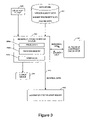
- FIG. 3 shows a block diagram of a computer system for implementing an aggregation rate determination procedure according to an embodiment of an aspect of the present invention.
- FIG. 4 shows a flow diagram of a comparative aggregation rate determination procedure according to an embodiment of the present invention.
- FIG. 5 shows a flow diagram of an automated protein synthesis candidate determination procedure.
- the change of aggregation rate as a result of a mutation was expressed in all cases as the natural logarithm of the ratio of the aggregation rate constants of the mutant and wild-type protein (ln(v mut /v wt )).
- the hydrophobicity values of the 20 amino acid residues at neutral pH are based on the partition coefficients from water to octanol. These data are from column 6 of Table 4.8 in Creighton (1993) (Creighton, T. E. In Proteins. Structure and molecular properties. Second edition . W. H. Freeman & Company (New York, 1993), p. 154.)).
- the ⁇ -sheet propensities of the 20 amino acid residues are normalised from 0 (high ⁇ -sheet propensity) to 1 (low ⁇ -sheet propensity). These data are from column 1 of Table 4 of Street and Mayo (1999) (Street, A. G. & Mayo, S. L.
- Intrinsic ⁇ -sheet propensities result from van der Waals interactions between side chains and the local backbone. Proc. Natl. Acad. Sci. USA, 96, 9074-9076 (1999)). The ⁇ -sheet propensity of proline is not reported due to the difficulty in determining it experimentally. The ⁇ -sheet propensity of glycine is obtained from theoretical calculations. The values of charge are at neutral pH. Values in brackets are at a pH lower than 6.0, when the histidine residue is positively charged.
- Equation 1 the change of aggregation rate ln(v mut /v wt ) was calculated for 27 amino acid substitutions of AcP within the two regions of the sequence that appear to be relevant for aggregation and encompassing residues 16-31 and 87-98.
- the change of aggregation rate for each mutation was determined experimentally, as described in Example 1, under conditions in which all protein variants consist of ensembles of relatively unstructured conformations.
- the calculated versus the experimental values of ln(v mut /v wt ) for all the mutations of AcP were plotted as shown in FIG. 2 b .
- Equation 1 The combined function, Equation 1, was applied to calculate the change in aggregation rate upon mutation (calculated ln(v mut /v wt )) for 26 mutations in the polypeptides amylin, prion peptides, ⁇ -synuclein, amyloid ⁇ -peptide, tau, leucine rich repeat and a model peptide, as listed in Table 2.
- Equation 1 was tested against other systems to evaluate its applicability to broader systems. Calculations used to derive Equation 1 are based on the aggregation kinetics experienced by protein and peptide variants that differ in a single residue from the original sequence.
- the rates (v mut and v wt ) used in the expression correspond to the exponential phase of aggregation for each one of the peptides, and do not include any possible lag period or nucleation phase preceding that stage.
- the aggregation times for each one of the peptides could be defined in two different ways: the first one was the nucleation time or time that precedes the initiation of aggregation or the development of turbidity in the solution (T 1 ), and the second one would correspond to the half time of aggregation or the time at which variations in the measurements used for monitoring aggregation (light scattering, or any other method) reached half of it maximum value (T 2 ). This might enable the application of the equation to the prediction of aggregation propensities for a much broader range of molecules with important design aspects.
- Salmon calcitonin has 16 modified positions when compared to the human sequence.
- Sequence ID NO 14 show 6 modified positions when compared to the human sequence.
- a Values for calculating ⁇ were obtained using T1 as described above.
- b Values for calculating ⁇ were obtained using T2 as described above.
- Equation 1 can be used to predict the aggregation behaviour of a given polypeptide that has more than one amino acid modification compared to the original polypeptide sequence. Moreover, it suggests that in systems where a lag phase is present, or the aggregation rate can be difficult to calculate, alternative kinetic parameters represented by the times of aggregation (either T 1 -nucleation time- or T 2 -half time of aggregation-) can provide valid values to compare with the predictions given by Equation 1.
- Peptides A ⁇ (1-40) and A ⁇ (1-42) that are associated with Alzheimer's disease show differences in their aggregation propensities.
- the peptides differ in sequence only by two residues at the C-terminus.
- the methods of the invention explain the higher propensity to aggregate of the 42 residues form, relative to the 40 residues form, of the amyloid ⁇ peptide associated with Alzheimer's disease (Jarrett et al., 1993). Indeed, although the ⁇ -helical propensity and charge of the entire peptide appear to be unchanged upon addition of the dipeptide Ile-Ala at the C-terminus, the values of hydrophobicity and ⁇ -sheet propensity of the two residues are higher than the average values calculated over the entire peptide.
- the change of ⁇ -sheet propensity resulting from insertion can be calculated similarly.
- a general purpose computer system 300 comprises a processor 300 a coupled to programme memory 300 b storing computer programme code to implement embodiments of the method, as described further below, and interfaces 300 c such as conventional computer screen, keyboard, mouse, and printer, as well as other interfaces such as a network interface, a control interface for a peptide synthesiser and software interfaces such as a database interface.
- the computer system 300 accepts user input from a input device 304 such as a keyboard, input data file, or network interface, and provides an output to an output device 308 such as a printer, network interface, or data storage device.
- Input device 304 receives an input comprising an amino acid sequence for the modified (e.g. mutant) peptide as well as pH and temperature values appropriate to an environment for which the aggregation rate of the polypeptide is determined.
- a glycine/proline correction factor such as a weight for a structural distortion factor interfering with inter-molecular ⁇ -sheet formation or aggregation, may also be inputted.
- the output device 308 provides a comparative aggregation rate information such as a log (base 10 or natural) aggregation ratio, for example, a ratio of half times for aggregation of a mutant as compared with a wild type polypeptide.
- Computer system 300 is coupled to a data store 302 which stores hydrophobicity data, ⁇ -sheet propensity data (either as propensity data per se or in terms of free energy) and charge data. This data is stored for each amino acid (residue) and preferably a plurality of sets of each of these data types is stored corresponding to different values of pH and temperature.
- the computer system in the illustrated embodiment, is shown interfacing with an ⁇ -helix propensity calculator 306 .
- ⁇ -helix propensity code may be stored within programme memory 300 b and operate in a unitary fashion with the aggregation rate determination code described below.
- the ⁇ -helix propensity calculator receives sequence data, indirectly from the user input device, and provides ⁇ -helix propensity data in return.
- This data and the data in data store 302 may either be determined on an amino acid by amino acid basis or may be determined taking into account sequence context, for example, using a window over the sequence to modify data values dependent upon neighbouring amino acids.
- computer system 300 may also provide a data control output 310 to an automated peptide synthesiser 312 .
- the control data will generally comprise an amino acid sequence of a polypeptide.
- computer system 300 may be programmed to automatically compare the properties of a number of modified (e.g. mutant) polypeptides and select one or more of those which are predicted to have favourable properties for automated synthesis.
- An example of such an automated peptide synthesiser would be an ABI 433A Peptide Synthesiser (Applied Biosystems).
- FIG. 4 shows a procedure for determining a comparative aggregation rate along the lines described above.
- FIG. 4 represents a flow diagram of an embodiment of code running in programme memory 300 b of FIG. 3 .
- a user inputs an amino acid sequence, pH and temperature data, optionally with C- and N-terminus data for the sequence. Then at step S 402 the computer system reads hydrophobicity data for the input sequence from the data store and sums this to provide an estimate of hydrophobicity for the peptide coded by the sequence. Where, as is strongly preferable, data for a range of pH and temperature values is available, data most closely corresponding to the desired pH and temperature is retrieved.
- the procedure reads charge data and ⁇ -sheet propensity data from the data store in a similar manner, summing the charge data to provide a charge estimate for the polypeptide corresponding to the input sequence and, similarly, summing the ⁇ -sheet propensity data (normally expressed in terms of free energy).
- proline no ⁇ -sheet propensity value is available and so a proline residue may be skipped when summarising these values or an arbitrary ⁇ -sheet propensity value or one corresponding to another amino acid may be employed.
- an arbitrary value of 1, or a value corresponding to another amino acid can be used.
- steps S 402 and S 406 may employ a “window” (for example of 3, 5, 7, or more amino acids) that would include a correction for the effect of flanking residues on the properties of a particular amino acid, (i.e. to take account of near neighbours within an amino acid sequence), rather than considering each amino acid of the sequence individually.
- a “window” for example of 3, 5, 7, or more amino acids
- Step S 408 the procedure provides the input sequence to an ⁇ -helix propensity calculator, with the pH and temperature data, and, where available, with the C- and N-terminus data.
- An ⁇ -helix propensity calculator S 408 a operates on this data and returns data back to the procedure at step S 410 , the returned data comprising an ⁇ -helix propensity value for the complete sequence.
- the procedure determines the comparative aggregation rate of the polypeptide defined by the input amino acid sequence as compared with a reference polypeptide, using equation 1 above. It can be seen from equation 1 that a determination of comparative aggregation rate requires a difference in hydrophobicity, secondary structural propensity, and charge, and values for hydrophobicity, secondary structural propensity and charge for the reference polypeptides may either be determined by repeating steps S 400 to S 410 for the reference polypeptide or by reading stored values of these parameters from data store 302 , or in any other conventional manner.
- the parameters or scaling factors in equation 1 operating on the differences in hydrophobicity, structural propensity and charge can be selected from sets of suitable parameters (step S 414 ) in response to input data such as polypeptide type data.
- suitable parameters such as polypeptide type data.
- a completely random coil polypeptide may use different parameters to a partially unfolded or structured polypeptide.
- a polypeptide rich in a specific type of residue, such as aromatic or charged amino acids may require different parameters.
- an optional correction may be applied at step S 416 for proline and or glycine residues in order to account for additional conformational or structural preferences that may hinder formation of inter-molecular ⁇ -sheet or aggregated structures by a given polypeptide and then at step S 418 the system outputs the result of the comparative aggregation rate calculation.
- This may comprise a simple positive or negative value indicating whether the aggregation rate of the modified polypeptide (e.g. mutant) is greater or less than that of the reference polypeptide, but preferably this comprises quantitative data relating to the comparative aggregation rates such as a log aggregation rate ratio.
- FIG. 5 shows a flow diagram of one advantageous implementation of the procedure of FIG. 4 .
- FIG. 5 shows a method of screening modified polypeptides (e.g. mutations) in order to select candidates with promising properties for further investigation and, optionally, synthesis.
- modified polypeptides e.g. mutations
- the procedure may also allow a modification or range of modifications to be specified, for example in terms of a pre-determined set or selection of amino acids.
- step S 502 the procedure generates a modified sequence representing one of the possible permutations defined by the input data and then, at step S 504 , determines a comparative aggregation rate for modified polypeptide in comparison with the reference polypeptide, for example using the procedure at FIG. 4 . Then, at step S 506 , the procedure checks whether there are any more permutations for which to perform the calculation, and if so returns to step S 502 until a complete set of possible permutations has been generated. Then, at step S 508 , the set of comparative aggregation rate data for each modified polypeptide (in comparison with the reference protein) is output, for example as an autolist, graph, or in any other convenient manner.
- This data may then be used, for example to identify candidates for synthesis and/or for comparison with other data such as immunogenicity/antigenicity.
- one or more of the ‘best’ modified polypeptides for example mutants with a particularly high or low aggregation rate, may be collected and the sequence data for these modified polypeptides output to an automated peptide synthesiser such as synthesiser 312 of FIG. 3 to automatically produce the mutant proteins for, say, further investigation.
Landscapes
- Life Sciences & Earth Sciences (AREA)
- Health & Medical Sciences (AREA)
- Engineering & Computer Science (AREA)
- Physics & Mathematics (AREA)
- Bioinformatics & Cheminformatics (AREA)
- Chemical & Material Sciences (AREA)
- Spectroscopy & Molecular Physics (AREA)
- General Health & Medical Sciences (AREA)
- Bioinformatics & Computational Biology (AREA)
- Biotechnology (AREA)
- Molecular Biology (AREA)
- Biophysics (AREA)
- Evolutionary Biology (AREA)
- Medical Informatics (AREA)
- Theoretical Computer Science (AREA)
- Proteomics, Peptides & Aminoacids (AREA)
- Analytical Chemistry (AREA)
- Genetics & Genomics (AREA)
- Urology & Nephrology (AREA)
- Biomedical Technology (AREA)
- Crystallography & Structural Chemistry (AREA)
- Hematology (AREA)
- Immunology (AREA)
- Medicinal Chemistry (AREA)
- Microbiology (AREA)
- Food Science & Technology (AREA)
- Cell Biology (AREA)
- Biochemistry (AREA)
- General Physics & Mathematics (AREA)
- Pathology (AREA)
- Peptides Or Proteins (AREA)
- Measuring Or Testing Involving Enzymes Or Micro-Organisms (AREA)
- Medicines That Contain Protein Lipid Enzymes And Other Medicines (AREA)
- Investigating Or Analysing Biological Materials (AREA)
- Management, Administration, Business Operations System, And Electronic Commerce (AREA)
Priority Applications (3)
| Application Number | Priority Date | Filing Date | Title |
|---|---|---|---|
| US11/184,548 US7379824B2 (en) | 2003-01-20 | 2005-07-19 | Computational method and apparatus for predicting polypeptide aggregation or solubility |
| US12/061,489 US8849578B2 (en) | 2003-01-20 | 2008-04-02 | Computational method and apparatus for predicting polypeptide aggregation or solubility |
| US12/098,030 US7930157B2 (en) | 2003-01-20 | 2008-04-04 | Computational method and apparatus for predicting polypeptide aggregation or solubility |
Applications Claiming Priority (5)
| Application Number | Priority Date | Filing Date | Title |
|---|---|---|---|
| GB0301235A GB2398072B (en) | 2003-01-20 | 2003-01-20 | Method and apparatus for predicting polypeptide aggregation or solubility |
| GB0301235.8 | 2003-01-20 | ||
| US44191403P | 2003-01-21 | 2003-01-21 | |
| PCT/GB2004/000089 WO2004066168A1 (en) | 2003-01-20 | 2004-01-19 | Computational method and apparatus for predicting polypeptide aggregation or solubility |
| US11/184,548 US7379824B2 (en) | 2003-01-20 | 2005-07-19 | Computational method and apparatus for predicting polypeptide aggregation or solubility |
Related Parent Applications (1)
| Application Number | Title | Priority Date | Filing Date |
|---|---|---|---|
| PCT/GB2004/000089 Continuation WO2004066168A1 (en) | 2003-01-20 | 2004-01-19 | Computational method and apparatus for predicting polypeptide aggregation or solubility |
Related Child Applications (2)
| Application Number | Title | Priority Date | Filing Date |
|---|---|---|---|
| US12/061,489 Division US8849578B2 (en) | 2003-01-20 | 2008-04-02 | Computational method and apparatus for predicting polypeptide aggregation or solubility |
| US12/098,030 Division US7930157B2 (en) | 2003-01-20 | 2008-04-04 | Computational method and apparatus for predicting polypeptide aggregation or solubility |
Publications (2)
| Publication Number | Publication Date |
|---|---|
| US20060025977A1 US20060025977A1 (en) | 2006-02-02 |
| US7379824B2 true US7379824B2 (en) | 2008-05-27 |
Family
ID=32773961
Family Applications (3)
| Application Number | Title | Priority Date | Filing Date |
|---|---|---|---|
| US11/184,548 Expired - Fee Related US7379824B2 (en) | 2003-01-20 | 2005-07-19 | Computational method and apparatus for predicting polypeptide aggregation or solubility |
| US12/061,489 Expired - Fee Related US8849578B2 (en) | 2003-01-20 | 2008-04-02 | Computational method and apparatus for predicting polypeptide aggregation or solubility |
| US12/098,030 Expired - Fee Related US7930157B2 (en) | 2003-01-20 | 2008-04-04 | Computational method and apparatus for predicting polypeptide aggregation or solubility |
Family Applications After (2)
| Application Number | Title | Priority Date | Filing Date |
|---|---|---|---|
| US12/061,489 Expired - Fee Related US8849578B2 (en) | 2003-01-20 | 2008-04-02 | Computational method and apparatus for predicting polypeptide aggregation or solubility |
| US12/098,030 Expired - Fee Related US7930157B2 (en) | 2003-01-20 | 2008-04-04 | Computational method and apparatus for predicting polypeptide aggregation or solubility |
Country Status (9)
| Country | Link |
|---|---|
| US (3) | US7379824B2 (de) |
| EP (1) | EP1586059B1 (de) |
| AT (1) | ATE459056T1 (de) |
| CY (1) | CY1110093T1 (de) |
| DE (1) | DE602004025669D1 (de) |
| DK (1) | DK1586059T3 (de) |
| ES (1) | ES2341648T3 (de) |
| PT (1) | PT1586059E (de) |
| WO (1) | WO2004066168A1 (de) |
Cited By (2)
| Publication number | Priority date | Publication date | Assignee | Title |
|---|---|---|---|---|
| US20060271306A1 (en) * | 2003-11-05 | 2006-11-30 | Christopher Dobson | Method and apparatus for assessing polypeptide aggregation |
| US20080183455A1 (en) * | 2003-01-20 | 2008-07-31 | Cambridge University Technical Services Ltd. | Computational method and apparatus for predicting polypeptide aggregation or solubility |
Families Citing this family (3)
| Publication number | Priority date | Publication date | Assignee | Title |
|---|---|---|---|---|
| GB2455102A (en) * | 2007-11-28 | 2009-06-03 | Cambridge Entpr Ltd | Protein Aggregation Prediction Systems |
| US9957495B2 (en) | 2012-04-18 | 2018-05-01 | Vib Vzw | Means and methods for generating improved proteins |
| WO2025123288A1 (zh) * | 2023-12-14 | 2025-06-19 | 中国科学院深圳先进技术研究院 | 一种通过电荷修饰增强药物靶向生物分子凝聚体的方法 |
Citations (5)
| Publication number | Priority date | Publication date | Assignee | Title |
|---|---|---|---|---|
| WO2000017328A2 (en) | 1998-09-21 | 2000-03-30 | Isis Innovation Limited | Fibrils |
| US6188965B1 (en) | 1997-04-11 | 2001-02-13 | California Institute Of Technology | Apparatus and method for automated protein design |
| WO2002042341A1 (en) | 2000-11-27 | 2002-05-30 | Bp Chemicals Limited | Process for the continuous gas-phase (co-) polymerisation of olefins in a fluidised bed reactor |
| EP1255209A2 (de) | 1997-04-11 | 2002-11-06 | California Institute Of Technology | Gerät und Verfahren für automatischen Protein-Entwurf |
| WO2004066168A1 (en) | 2003-01-20 | 2004-08-05 | Cambridge University Technical Services Limited | Computational method and apparatus for predicting polypeptide aggregation or solubility |
Family Cites Families (2)
| Publication number | Priority date | Publication date | Assignee | Title |
|---|---|---|---|---|
| AU2002223886A1 (en) | 2000-11-24 | 2002-06-03 | Isis Innovation Limited | Mixed fibrils |
| GB0325817D0 (en) | 2003-11-05 | 2003-12-10 | Univ Cambridge Tech | Method and apparatus for assessing polypeptide aggregation |
-
2004
- 2004-01-19 DK DK04703201.6T patent/DK1586059T3/da active
- 2004-01-19 WO PCT/GB2004/000089 patent/WO2004066168A1/en not_active Ceased
- 2004-01-19 EP EP04703201A patent/EP1586059B1/de not_active Expired - Lifetime
- 2004-01-19 ES ES04703201T patent/ES2341648T3/es not_active Expired - Lifetime
- 2004-01-19 DE DE602004025669T patent/DE602004025669D1/de not_active Expired - Lifetime
- 2004-01-19 PT PT04703201T patent/PT1586059E/pt unknown
- 2004-01-19 AT AT04703201T patent/ATE459056T1/de active
-
2005
- 2005-07-19 US US11/184,548 patent/US7379824B2/en not_active Expired - Fee Related
-
2008
- 2008-04-02 US US12/061,489 patent/US8849578B2/en not_active Expired - Fee Related
- 2008-04-04 US US12/098,030 patent/US7930157B2/en not_active Expired - Fee Related
-
2010
- 2010-05-21 CY CY20101100457T patent/CY1110093T1/el unknown
Patent Citations (7)
| Publication number | Priority date | Publication date | Assignee | Title |
|---|---|---|---|---|
| US6188965B1 (en) | 1997-04-11 | 2001-02-13 | California Institute Of Technology | Apparatus and method for automated protein design |
| US6269312B1 (en) | 1997-04-11 | 2001-07-31 | California Institute Of Technology | Apparatus and method for automated protein design |
| EP1255209A2 (de) | 1997-04-11 | 2002-11-06 | California Institute Of Technology | Gerät und Verfahren für automatischen Protein-Entwurf |
| US6708120B1 (en) | 1997-04-11 | 2004-03-16 | California Institute Of Technology | Apparatus and method for automated protein design |
| WO2000017328A2 (en) | 1998-09-21 | 2000-03-30 | Isis Innovation Limited | Fibrils |
| WO2002042341A1 (en) | 2000-11-27 | 2002-05-30 | Bp Chemicals Limited | Process for the continuous gas-phase (co-) polymerisation of olefins in a fluidised bed reactor |
| WO2004066168A1 (en) | 2003-01-20 | 2004-08-05 | Cambridge University Technical Services Limited | Computational method and apparatus for predicting polypeptide aggregation or solubility |
Non-Patent Citations (6)
| Title |
|---|
| "International Search Report for corresponding PCT Application No. PCT/GB2004/000089", (Jun. 23, 2004), 5 pgs. |
| Avbelj, F., "Amino Acid Conformational Preferences and Solvation of Polar Backbone Atoms in Peptides and Proteins", Journal of Molecular Biology, 300(5), (Jul. 28, 2000), 1335-1359. |
| Avbelj, F., et al., "Role of Main-Chain Electrostatics, Hydrophobic Effect and Side-Chain Conformational Entropy in Determining the Secondary Structure of Proteins", Journal of Molecular Biology,279(3), (Jun. 12, 1998), 665-684. |
| De La Paz, M. L., et al., "De novo Designed Peptide-Based Amyloid Fibrils", Proc Natl Acad Sci USA., 99(25), (Dec. 10, 2002), 16052-16057. |
| Qamar et al. J. Biochem, 1993, vol. 114, No. 6 786-792. * |
| Siepen, J. A., et al., "The fibril<SUB>-</SUB>one On-line Database: Mutations, Experimental Conditions, and Trends Associated With Amyloid Fibril Formation", Protein Science, 11. (Jul. 2002), 1862-1866. |
Cited By (7)
| Publication number | Priority date | Publication date | Assignee | Title |
|---|---|---|---|---|
| US20080183455A1 (en) * | 2003-01-20 | 2008-07-31 | Cambridge University Technical Services Ltd. | Computational method and apparatus for predicting polypeptide aggregation or solubility |
| US7930157B2 (en) | 2003-01-20 | 2011-04-19 | Cambridge University Technical Services Ltd. | Computational method and apparatus for predicting polypeptide aggregation or solubility |
| US8849578B2 (en) | 2003-01-20 | 2014-09-30 | Cambridge University Technical Services Ltd. | Computational method and apparatus for predicting polypeptide aggregation or solubility |
| US20060271306A1 (en) * | 2003-11-05 | 2006-11-30 | Christopher Dobson | Method and apparatus for assessing polypeptide aggregation |
| US7698070B2 (en) | 2003-11-05 | 2010-04-13 | Cambridge University Technical Services Ltd. | Method and apparatus for assessing polypeptide aggregation |
| US20100261882A1 (en) * | 2003-11-05 | 2010-10-14 | Cambridge University Technical Services Ltd. | Method and apparatus for assessing polypeptide aggregation |
| US8155888B2 (en) | 2003-11-05 | 2012-04-10 | Cambridge University Technical Services Ltd. | Method and apparatus for assessing polypeptide aggregation |
Also Published As
| Publication number | Publication date |
|---|---|
| US20080262742A1 (en) | 2008-10-23 |
| EP1586059B1 (de) | 2010-02-24 |
| ATE459056T1 (de) | 2010-03-15 |
| DK1586059T3 (da) | 2010-06-14 |
| US20080183455A1 (en) | 2008-07-31 |
| ES2341648T3 (es) | 2010-06-24 |
| US20060025977A1 (en) | 2006-02-02 |
| PT1586059E (pt) | 2010-05-28 |
| US7930157B2 (en) | 2011-04-19 |
| WO2004066168A1 (en) | 2004-08-05 |
| DE602004025669D1 (de) | 2010-04-08 |
| CY1110093T1 (el) | 2015-01-14 |
| US8849578B2 (en) | 2014-09-30 |
| EP1586059A1 (de) | 2005-10-19 |
Similar Documents
| Publication | Publication Date | Title |
|---|---|---|
| US8155888B2 (en) | Method and apparatus for assessing polypeptide aggregation | |
| Teixeira et al. | IDPConformerGenerator: a flexible software suite for sampling the conformational space of disordered protein states | |
| Sgourakis et al. | The Alzheimer’s peptides Aβ40 and 42 adopt distinct conformations in water: a combined MD/NMR study | |
| Luo et al. | Structural insight into tau protein’s paradox of intrinsically disordered behavior, self-acetylation activity, and aggregation | |
| Conchillo-Solé et al. | AGGRESCAN: a server for the prediction and evaluation of" hot spots" of aggregation in polypeptides | |
| Cao et al. | Self-assembly pathways of β-sheet-rich amyloid-β (1–40) dimers: Markov state model analysis on millisecond hybrid-resolution simulations | |
| Yoo et al. | Refined parameterization of nonbonded interactions improves conformational sampling and kinetics of protein folding simulations | |
| Sommer et al. | Structure-guided isoform identification for the human transcriptome | |
| Coskuner et al. | The structures of the E22Δ mutant-type amyloid-β alloforms and the impact of E22Δ mutation on the structures of the wild-type amyloid-β alloforms | |
| US8849578B2 (en) | Computational method and apparatus for predicting polypeptide aggregation or solubility | |
| JP5683959B2 (ja) | タンパク質凝集予測システム | |
| Bacci et al. | Amyloid β fibril elongation by monomers involves disorder at the tip | |
| Barrick | What have we learned from the studies of two-state folders, and what are the unanswered questions about two-state protein folding? | |
| Robinson et al. | Are AMBER force fields and implicit solvation models additive? A folding study with a balanced peptide test set | |
| Takeda et al. | Probing the effect of amino-terminal truncation for Aβ1− 40 peptides | |
| Wu et al. | Modeling structural interconversion in Alzheimers’ amyloid beta peptide with classical and intrinsically disordered protein force fields | |
| Punihaole et al. | Monomeric polyglutamine structures that evolve into fibrils | |
| He et al. | Investigation of the structure of full-length tau proteins with coarse-grained and all-atom molecular dynamics simulations | |
| Rezaei-Ghaleh et al. | Familial Alzheimer’s disease-related mutations differentially alter stability of amyloid-beta aggregates | |
| Kovács et al. | The influence of random-coil chemical shifts on the assessment of structural propensities in folded proteins and IDPs | |
| Kuznetsov et al. | Comparative computational analysis of prion proteins reveals two fragments with unusual structural properties and a pattern of increase in hydrophobicity associated with disease‐promoting mutations | |
| Yuwen et al. | Role of electrostatic interactions in binding of peptides and intrinsically disordered proteins to their folded targets: 2. The model of encounter complex involving the double mutant of the c-Crk N-SH3 domain and peptide Sos | |
| Davidson et al. | Effects of familial Alzheimer’s disease mutations on the folding free energy and dipole–dipole interactions of the amyloid β-peptide | |
| GB2398072A (en) | Method of predicting polypeptide aggregation | |
| JP2930851B2 (ja) | 蛋白質の立体構造の予測精度演算方法及び予測精度演算装置 |
Legal Events
| Date | Code | Title | Description |
|---|---|---|---|
| AS | Assignment |
Owner name: CAMBRIDGE UNIVERSITY TECHNICAL SERVICES LTD., UNIT Free format text: ASSIGNMENT OF ASSIGNORS INTEREST;ASSIGNORS:DOBSON, CHRISTOPHER;CHITI, FABRIZIO;ZURDO, JESUS;REEL/FRAME:016884/0492;SIGNING DATES FROM 20050905 TO 20051004 |
|
| STCF | Information on status: patent grant |
Free format text: PATENTED CASE |
|
| CC | Certificate of correction | ||
| FPAY | Fee payment |
Year of fee payment: 4 |
|
| FPAY | Fee payment |
Year of fee payment: 8 |
|
| FEPP | Fee payment procedure |
Free format text: MAINTENANCE FEE REMINDER MAILED (ORIGINAL EVENT CODE: REM.); ENTITY STATUS OF PATENT OWNER: LARGE ENTITY |
|
| LAPS | Lapse for failure to pay maintenance fees |
Free format text: PATENT EXPIRED FOR FAILURE TO PAY MAINTENANCE FEES (ORIGINAL EVENT CODE: EXP.); ENTITY STATUS OF PATENT OWNER: LARGE ENTITY |
|
| STCH | Information on status: patent discontinuation |
Free format text: PATENT EXPIRED DUE TO NONPAYMENT OF MAINTENANCE FEES UNDER 37 CFR 1.362 |
|
| FP | Lapsed due to failure to pay maintenance fee |
Effective date: 20200527 |