US6951866B2 - Bicyclic pyrimidine compounds and therapeutic use thereof - Google Patents
Bicyclic pyrimidine compounds and therapeutic use thereof Download PDFInfo
- Publication number
- US6951866B2 US6951866B2 US10/222,922 US22292202A US6951866B2 US 6951866 B2 US6951866 B2 US 6951866B2 US 22292202 A US22292202 A US 22292202A US 6951866 B2 US6951866 B2 US 6951866B2
- Authority
- US
- United States
- Prior art keywords
- alkyl
- straight
- branched
- substituted
- cycloalkyl
- Prior art date
- Legal status (The legal status is an assumption and is not a legal conclusion. Google has not performed a legal analysis and makes no representation as to the accuracy of the status listed.)
- Expired - Fee Related, expires
Links
- 0 [2*]C1=C([3*])C(C)=NC(N)=N1 Chemical compound [2*]C1=C([3*])C(C)=NC(N)=N1 0.000 description 11
- SMABWJMSNURPPV-UHFFFAOYSA-N CC(=O)C1(C)CCOCC1 Chemical compound CC(=O)C1(C)CCOCC1 SMABWJMSNURPPV-UHFFFAOYSA-N 0.000 description 7
- GPBBNPPLBQIADY-UHFFFAOYSA-N CC1(C)CCOCC1 Chemical compound CC1(C)CCOCC1 GPBBNPPLBQIADY-UHFFFAOYSA-N 0.000 description 7
- QPRQEDXDYOZYLA-UHFFFAOYSA-N CCC(C)CO Chemical compound CCC(C)CO QPRQEDXDYOZYLA-UHFFFAOYSA-N 0.000 description 6
- IIEWJVIFRVWJOD-UHFFFAOYSA-N CCC1CCCCC1 Chemical compound CCC1CCCCC1 IIEWJVIFRVWJOD-UHFFFAOYSA-N 0.000 description 3
- MGZDAOPTTMOUKA-UHFFFAOYSA-N NC1=NC2=C(COCC2)C(Cl)=N1 Chemical compound NC1=NC2=C(COCC2)C(Cl)=N1 MGZDAOPTTMOUKA-UHFFFAOYSA-N 0.000 description 3
- VDEJWZPKSNURIY-UHFFFAOYSA-N CC1(CCOCC1)C(N)=O Chemical compound CC1(CCOCC1)C(N)=O VDEJWZPKSNURIY-UHFFFAOYSA-N 0.000 description 2
- KJRRQXYWFQKJIP-UHFFFAOYSA-N CC1=COC=C1 Chemical compound CC1=COC=C1 KJRRQXYWFQKJIP-UHFFFAOYSA-N 0.000 description 2
- SLSYMKZGXBFRJT-UHFFFAOYSA-N CCCCCCC1=C(C)N=C(N)N=C1NCCCCC Chemical compound CCCCCCC1=C(C)N=C(N)N=C1NCCCCC SLSYMKZGXBFRJT-UHFFFAOYSA-N 0.000 description 2
- DKQJLZGVCBMQGR-UHFFFAOYSA-N CCCCCNC1=NC(Cl)=NC2=C1CCC2 Chemical compound CCCCCNC1=NC(Cl)=NC2=C1CCC2 DKQJLZGVCBMQGR-UHFFFAOYSA-N 0.000 description 2
- LQSOVJUZPZOESH-UHFFFAOYSA-N CCCCCNC1=NC(N)=NC(C)=C1CC Chemical compound CCCCCNC1=NC(N)=NC(C)=C1CC LQSOVJUZPZOESH-UHFFFAOYSA-N 0.000 description 2
- AZSGQOZVSDCWCU-UHFFFAOYSA-N CCCCCNC1=NC(N)=NC2=C1CCCC2 Chemical compound CCCCCNC1=NC(N)=NC2=C1CCCC2 AZSGQOZVSDCWCU-UHFFFAOYSA-N 0.000 description 2
- JDJIAUTZBPQDRO-UHFFFAOYSA-N CC(=O)C(CC(C)C)NC1=NC(N)=NC2=C1CCCC2 Chemical compound CC(=O)C(CC(C)C)NC1=NC(N)=NC2=C1CCCC2 JDJIAUTZBPQDRO-UHFFFAOYSA-N 0.000 description 1
- LVIVPDDEXGEWFY-UHFFFAOYSA-N CC(=O)CNC1=NC(N)=NC2=C1CCCC2 Chemical compound CC(=O)CNC1=NC(N)=NC2=C1CCCC2 LVIVPDDEXGEWFY-UHFFFAOYSA-N 0.000 description 1
- NUGQOZJAWOOGSB-UHFFFAOYSA-N CC1=C(CC2=CC=CC=C2)C(Cl)=NC(N)=N1 Chemical compound CC1=C(CC2=CC=CC=C2)C(Cl)=NC(N)=N1 NUGQOZJAWOOGSB-UHFFFAOYSA-N 0.000 description 1
- VRCGFYUFABMDSD-UHFFFAOYSA-N CC1=C(CC2=CC=CC=C2)C(O)=NC(N)=N1 Chemical compound CC1=C(CC2=CC=CC=C2)C(O)=NC(N)=N1 VRCGFYUFABMDSD-UHFFFAOYSA-N 0.000 description 1
- UASVXQJEHXKHSE-UHFFFAOYSA-N CC1=NC(N)=NC2=C1CCC2.CC1=NC(N)=NC2=C1CCCC2.CC1=NC(N)=NC2=C1CCCCC2 Chemical compound CC1=NC(N)=NC2=C1CCC2.CC1=NC(N)=NC2=C1CCCC2.CC1=NC(N)=NC2=C1CCCCC2 UASVXQJEHXKHSE-UHFFFAOYSA-N 0.000 description 1
- JRDGZPUZLPZOEU-UHFFFAOYSA-N CC1=NC(N)=NC2=C1CCCOC2.CC1=NC(N)=NC2=C1CCOC2.CC1=NC(N)=NC2=C1CCOCC2.CC1=NC(N)=NC2=C1COC2.CC1=NC(N)=NC2=C1COCC2.CC1=NC(N)=NC2=C1COCCC2 Chemical compound CC1=NC(N)=NC2=C1CCCOC2.CC1=NC(N)=NC2=C1CCOC2.CC1=NC(N)=NC2=C1CCOCC2.CC1=NC(N)=NC2=C1COC2.CC1=NC(N)=NC2=C1COCC2.CC1=NC(N)=NC2=C1COCCC2 JRDGZPUZLPZOEU-UHFFFAOYSA-N 0.000 description 1
- OVXISBIMQAWERJ-UHFFFAOYSA-N CCC1=CC(C(N)OC)=CC=C1 Chemical compound CCC1=CC(C(N)OC)=CC=C1 OVXISBIMQAWERJ-UHFFFAOYSA-N 0.000 description 1
- ZEWGMOQWTWMZMZ-UHFFFAOYSA-N CCC1=CC(F)=CC=C1 Chemical compound CCC1=CC(F)=CC=C1 ZEWGMOQWTWMZMZ-UHFFFAOYSA-N 0.000 description 1
- BLDNWXVISIXWKZ-UHFFFAOYSA-N CCC1=CC=C(F)C=C1 Chemical compound CCC1=CC=C(F)C=C1 BLDNWXVISIXWKZ-UHFFFAOYSA-N 0.000 description 1
- HYFLWBNQFMXCPA-UHFFFAOYSA-N CCC1=CC=CC=C1C Chemical compound CCC1=CC=CC=C1C HYFLWBNQFMXCPA-UHFFFAOYSA-N 0.000 description 1
- VJXRKZJMGVSXPX-UHFFFAOYSA-N CCC1=CC=NC=C1 Chemical compound CCC1=CC=NC=C1 VJXRKZJMGVSXPX-UHFFFAOYSA-N 0.000 description 1
- MFEIKQPHQINPRI-UHFFFAOYSA-N CCC1=CN=CC=C1 Chemical compound CCC1=CN=CC=C1 MFEIKQPHQINPRI-UHFFFAOYSA-N 0.000 description 1
- QKAJTXSUAXKDBI-UHFFFAOYSA-N CCCC(=O)CNC1=NC(N)=NC2=C1CCCC2 Chemical compound CCCC(=O)CNC1=NC(N)=NC2=C1CCCC2 QKAJTXSUAXKDBI-UHFFFAOYSA-N 0.000 description 1
- TZJFZDMFAAKCEW-UHFFFAOYSA-N CCCC(O)CNC1=NC(N)=NC(C)=C1CC1=CC=CC=C1 Chemical compound CCCC(O)CNC1=NC(N)=NC(C)=C1CC1=CC=CC=C1 TZJFZDMFAAKCEW-UHFFFAOYSA-N 0.000 description 1
- HTFWPZFQQFTUEG-UHFFFAOYSA-N CCCC(O)CNC1=NC(N)=NC2=C1CCCC2 Chemical compound CCCC(O)CNC1=NC(N)=NC2=C1CCCC2 HTFWPZFQQFTUEG-UHFFFAOYSA-N 0.000 description 1
- WERMNPDGKRWANQ-UHFFFAOYSA-N CCCCC(CO)NC1=NC(N)=NC2=C1CCCC2 Chemical compound CCCCC(CO)NC1=NC(N)=NC2=C1CCCC2 WERMNPDGKRWANQ-UHFFFAOYSA-N 0.000 description 1
- NHFFUAXLXREJPB-UHFFFAOYSA-N CCCCC(NC1=NC(N)=NC2=C1CCCC2)C(=O)OC Chemical compound CCCCC(NC1=NC(N)=NC2=C1CCCC2)C(=O)OC NHFFUAXLXREJPB-UHFFFAOYSA-N 0.000 description 1
- PSTIJXHSQUNQST-UHFFFAOYSA-N CCCCC(NC1=NC(N)=NC2=C1CCCC2)C(N)=O Chemical compound CCCCC(NC1=NC(N)=NC2=C1CCCC2)C(N)=O PSTIJXHSQUNQST-UHFFFAOYSA-N 0.000 description 1
- JCZBNDNYEJPMCQ-UHFFFAOYSA-N CCCCC1(C)CCOCC1 Chemical compound CCCCC1(C)CCOCC1 JCZBNDNYEJPMCQ-UHFFFAOYSA-N 0.000 description 1
- RGEBQSGYHZEFEV-UHFFFAOYSA-N CCCCC1=C(C)C(Cl)=NC(N)=N1 Chemical compound CCCCC1=C(C)C(Cl)=NC(N)=N1 RGEBQSGYHZEFEV-UHFFFAOYSA-N 0.000 description 1
- MGMJINGLVXWGAO-UHFFFAOYSA-N CCCCC1=C(C)C(O)=NC(N)=N1 Chemical compound CCCCC1=C(C)C(O)=NC(N)=N1 MGMJINGLVXWGAO-UHFFFAOYSA-N 0.000 description 1
- OJSWAIOKPQDUQY-UHFFFAOYSA-N CCCCC1=C(C)N=C(N)N=C1Cl Chemical compound CCCCC1=C(C)N=C(N)N=C1Cl OJSWAIOKPQDUQY-UHFFFAOYSA-N 0.000 description 1
- ZDJXTZMWRPBODK-UHFFFAOYSA-N CCCCC1=C(C)N=C(N)N=C1NCC(O)CCC Chemical compound CCCCC1=C(C)N=C(N)N=C1NCC(O)CCC ZDJXTZMWRPBODK-UHFFFAOYSA-N 0.000 description 1
- VYCNDBQWMCGZAA-UHFFFAOYSA-N CCCCC1=C(C)N=C(N)N=C1O Chemical compound CCCCC1=C(C)N=C(N)N=C1O VYCNDBQWMCGZAA-UHFFFAOYSA-N 0.000 description 1
- PSUQYEONRIYSPX-UHFFFAOYSA-N CCCCCCC1=C(C)N=C(N)N=C1Cl Chemical compound CCCCCCC1=C(C)N=C(N)N=C1Cl PSUQYEONRIYSPX-UHFFFAOYSA-N 0.000 description 1
- HADJIBFQXNGHFR-UHFFFAOYSA-N CCCCCCNC1=NC(N)=NC2=C1CCCC2 Chemical compound CCCCCCNC1=NC(N)=NC2=C1CCCC2 HADJIBFQXNGHFR-UHFFFAOYSA-N 0.000 description 1
- XQFXFCTVDCZGMS-UHFFFAOYSA-N CCCCCNC1=NC(Cl)=NC(C)=C1C Chemical compound CCCCCNC1=NC(Cl)=NC(C)=C1C XQFXFCTVDCZGMS-UHFFFAOYSA-N 0.000 description 1
- KOVRUHZFIUMYIY-UHFFFAOYSA-N CCCCCNC1=NC(Cl)=NC2=C1CCCC2 Chemical compound CCCCCNC1=NC(Cl)=NC2=C1CCCC2 KOVRUHZFIUMYIY-UHFFFAOYSA-N 0.000 description 1
- SEUGQUWUMKOJRA-UHFFFAOYSA-N CCCCCNC1=NC(N)=NC(C)=C1C Chemical compound CCCCCNC1=NC(N)=NC(C)=C1C SEUGQUWUMKOJRA-UHFFFAOYSA-N 0.000 description 1
- JCZDGUXZPPWROA-UHFFFAOYSA-N CCCCCNC1=NC(N)=NC(C)=C1CC1=CC=CC=C1 Chemical compound CCCCCNC1=NC(N)=NC(C)=C1CC1=CC=CC=C1 JCZDGUXZPPWROA-UHFFFAOYSA-N 0.000 description 1
- NKBHOQSYJMSXAS-UHFFFAOYSA-N CCCCCNC1=NC(N)=NC(C)=C1CCC Chemical compound CCCCCNC1=NC(N)=NC(C)=C1CCC NKBHOQSYJMSXAS-UHFFFAOYSA-N 0.000 description 1
- HIZATVKVMPDKIX-UHFFFAOYSA-N CCCCCNC1=NC(N)=NC(C)=C1CCC1=CC=CC=C1 Chemical compound CCCCCNC1=NC(N)=NC(C)=C1CCC1=CC=CC=C1 HIZATVKVMPDKIX-UHFFFAOYSA-N 0.000 description 1
- AEBBCRQCZPTMBF-UHFFFAOYSA-N CCCCCNC1=NC(N)=NC(C)=C1CCCC Chemical compound CCCCCNC1=NC(N)=NC(C)=C1CCCC AEBBCRQCZPTMBF-UHFFFAOYSA-N 0.000 description 1
- DDHJPZZLNWYTES-UHFFFAOYSA-N CCCCCNC1=NC(N)=NC(CCCC)=C1C Chemical compound CCCCCNC1=NC(N)=NC(CCCC)=C1C DDHJPZZLNWYTES-UHFFFAOYSA-N 0.000 description 1
- LINDJJJZQPKKLO-UHFFFAOYSA-N CCCCCNC1=NC(N)=NC2=C1CCC2 Chemical compound CCCCCNC1=NC(N)=NC2=C1CCC2 LINDJJJZQPKKLO-UHFFFAOYSA-N 0.000 description 1
- ATCQYBFSNUJNBX-UHFFFAOYSA-N CCCCCNC1=NC(N)=NC2=C1COCC2 Chemical compound CCCCCNC1=NC(N)=NC2=C1COCC2 ATCQYBFSNUJNBX-UHFFFAOYSA-N 0.000 description 1
- HGEMUUFTVSAPOM-UHFFFAOYSA-N CCCCCNC1=NC(N)=NC=C1CC1=CC=CC=C1 Chemical compound CCCCCNC1=NC(N)=NC=C1CC1=CC=CC=C1 HGEMUUFTVSAPOM-UHFFFAOYSA-N 0.000 description 1
- PAWSCFSCHHTUSD-UHFFFAOYSA-N CCCCCNc1c(CCOC)c(C)nc(N)n1 Chemical compound CCCCCNc1c(CCOC)c(C)nc(N)n1 PAWSCFSCHHTUSD-UHFFFAOYSA-N 0.000 description 1
- ATSGNLDQRXTBHY-UHFFFAOYSA-N CCCCNC1=NC(N)=NC2=C1CCCC2 Chemical compound CCCCNC1=NC(N)=NC2=C1CCCC2 ATSGNLDQRXTBHY-UHFFFAOYSA-N 0.000 description 1
- NJPQFACDTRCYAD-UHFFFAOYSA-N CCOC(=O)C(C)NC1=NC(N)=NC2=C1CCCC2 Chemical compound CCOC(=O)C(C)NC1=NC(N)=NC2=C1CCCC2 NJPQFACDTRCYAD-UHFFFAOYSA-N 0.000 description 1
- SMGRHCCILTYVRF-UHFFFAOYSA-N CCOC(=O)C(CO)NC1=NC(N)=NC2=C1CCCC2 Chemical compound CCOC(=O)C(CO)NC1=NC(N)=NC2=C1CCCC2 SMGRHCCILTYVRF-UHFFFAOYSA-N 0.000 description 1
- AJBUKHBSSSXWPR-UHFFFAOYSA-N CCOC(CNc1c(CCCC2)c2nc(N)n1)=O Chemical compound CCOC(CNc1c(CCCC2)c2nc(N)n1)=O AJBUKHBSSSXWPR-UHFFFAOYSA-N 0.000 description 1
- GRELAOXZRDTXLF-UHFFFAOYSA-N CCOCCNC1=NC(N)=NC2=C1CCCC2 Chemical compound CCOCCNC1=NC(N)=NC2=C1CCCC2 GRELAOXZRDTXLF-UHFFFAOYSA-N 0.000 description 1
- NIEHEMAZEULEKB-UHFFFAOYSA-N CCc(cccc1)c1OC Chemical compound CCc(cccc1)c1OC NIEHEMAZEULEKB-UHFFFAOYSA-N 0.000 description 1
- ZUORSWNFLYOARB-UHFFFAOYSA-N COCCC1=C(C)N=C(N)N=C1Cl Chemical compound COCCC1=C(C)N=C(N)N=C1Cl ZUORSWNFLYOARB-UHFFFAOYSA-N 0.000 description 1
- KGHIDMFJEQPDPA-UHFFFAOYSA-N COCCC1=C(C)N=C(N)N=C1O Chemical compound COCCC1=C(C)N=C(N)N=C1O KGHIDMFJEQPDPA-UHFFFAOYSA-N 0.000 description 1
- VJVQURFWVIPIFM-UHFFFAOYSA-N NC1=NC2=C(CCCC2)C(Br)=N1 Chemical compound NC1=NC2=C(CCCC2)C(Br)=N1 VJVQURFWVIPIFM-UHFFFAOYSA-N 0.000 description 1
- BTLNLOHFQGIGLV-UHFFFAOYSA-N NC1=NC2=C(CCCC2)C(Cl)=N1 Chemical compound NC1=NC2=C(CCCC2)C(Cl)=N1 BTLNLOHFQGIGLV-UHFFFAOYSA-N 0.000 description 1
- AWUQRXVMCFHXRF-UHFFFAOYSA-N NC1=NC2=C(CCCC2)C(NCC2CCCCC2)=N1 Chemical compound NC1=NC2=C(CCCC2)C(NCC2CCCCC2)=N1 AWUQRXVMCFHXRF-UHFFFAOYSA-N 0.000 description 1
- DKGDVCPTCNQONG-UHFFFAOYSA-N NC1=NC2=C(CCCC2)C(NCC2CCCO2)=N1 Chemical compound NC1=NC2=C(CCCC2)C(NCC2CCCO2)=N1 DKGDVCPTCNQONG-UHFFFAOYSA-N 0.000 description 1
- MUGVXCHGASIZAN-UHFFFAOYSA-N NC1=NC2=C(CCCC2)C(O)=N1 Chemical compound NC1=NC2=C(CCCC2)C(O)=N1 MUGVXCHGASIZAN-UHFFFAOYSA-N 0.000 description 1
- QKOJJWMXCCQJKO-UHFFFAOYSA-N NC1=NC=C(CC2=CC=CC=C2)C(Cl)=N1 Chemical compound NC1=NC=C(CC2=CC=CC=C2)C(Cl)=N1 QKOJJWMXCCQJKO-UHFFFAOYSA-N 0.000 description 1
- AZAPTJADIJNMGJ-UHFFFAOYSA-N NC1=NC=C(CCC2=CC=CC=C2)C(Cl)=N1 Chemical compound NC1=NC=C(CCC2=CC=CC=C2)C(Cl)=N1 AZAPTJADIJNMGJ-UHFFFAOYSA-N 0.000 description 1
- HJFHZMPLTXXTPB-UHFFFAOYSA-N NC1=NC=C(CCC2=CC=CC=C2)C(O)=N1 Chemical compound NC1=NC=C(CCC2=CC=CC=C2)C(O)=N1 HJFHZMPLTXXTPB-UHFFFAOYSA-N 0.000 description 1
- HOTOSLYJGBQUDL-UHFFFAOYSA-N [C-]#[N+]CCC1=C(C)N=C(N)N=C1Cl Chemical compound [C-]#[N+]CCC1=C(C)N=C(N)N=C1Cl HOTOSLYJGBQUDL-UHFFFAOYSA-N 0.000 description 1
- FEUANTVULXSSEG-UHFFFAOYSA-N [C-]#[N+]CCC1=C(C)N=C(N)N=C1NCCCCC Chemical compound [C-]#[N+]CCC1=C(C)N=C(N)N=C1NCCCCC FEUANTVULXSSEG-UHFFFAOYSA-N 0.000 description 1
- KTMBKNHNVZCBDM-UHFFFAOYSA-N [C-]#[N+]CCC1=C(C)N=C(N)N=C1O Chemical compound [C-]#[N+]CCC1=C(C)N=C(N)N=C1O KTMBKNHNVZCBDM-UHFFFAOYSA-N 0.000 description 1
Classifications
-
- C—CHEMISTRY; METALLURGY
- C07—ORGANIC CHEMISTRY
- C07D—HETEROCYCLIC COMPOUNDS
- C07D405/00—Heterocyclic compounds containing both one or more hetero rings having oxygen atoms as the only ring hetero atoms, and one or more rings having nitrogen as the only ring hetero atom
- C07D405/02—Heterocyclic compounds containing both one or more hetero rings having oxygen atoms as the only ring hetero atoms, and one or more rings having nitrogen as the only ring hetero atom containing two hetero rings
- C07D405/04—Heterocyclic compounds containing both one or more hetero rings having oxygen atoms as the only ring hetero atoms, and one or more rings having nitrogen as the only ring hetero atom containing two hetero rings directly linked by a ring-member-to-ring-member bond
-
- A—HUMAN NECESSITIES
- A61—MEDICAL OR VETERINARY SCIENCE; HYGIENE
- A61P—SPECIFIC THERAPEUTIC ACTIVITY OF CHEMICAL COMPOUNDS OR MEDICINAL PREPARATIONS
- A61P37/00—Drugs for immunological or allergic disorders
- A61P37/02—Immunomodulators
-
- A—HUMAN NECESSITIES
- A61—MEDICAL OR VETERINARY SCIENCE; HYGIENE
- A61P—SPECIFIC THERAPEUTIC ACTIVITY OF CHEMICAL COMPOUNDS OR MEDICINAL PREPARATIONS
- A61P37/00—Drugs for immunological or allergic disorders
- A61P37/08—Antiallergic agents
-
- C—CHEMISTRY; METALLURGY
- C07—ORGANIC CHEMISTRY
- C07D—HETEROCYCLIC COMPOUNDS
- C07D405/00—Heterocyclic compounds containing both one or more hetero rings having oxygen atoms as the only ring hetero atoms, and one or more rings having nitrogen as the only ring hetero atom
- C07D405/02—Heterocyclic compounds containing both one or more hetero rings having oxygen atoms as the only ring hetero atoms, and one or more rings having nitrogen as the only ring hetero atom containing two hetero rings
- C07D405/12—Heterocyclic compounds containing both one or more hetero rings having oxygen atoms as the only ring hetero atoms, and one or more rings having nitrogen as the only ring hetero atom containing two hetero rings linked by a chain containing hetero atoms as chain links
-
- C—CHEMISTRY; METALLURGY
- C07—ORGANIC CHEMISTRY
- C07D—HETEROCYCLIC COMPOUNDS
- C07D405/00—Heterocyclic compounds containing both one or more hetero rings having oxygen atoms as the only ring hetero atoms, and one or more rings having nitrogen as the only ring hetero atom
- C07D405/14—Heterocyclic compounds containing both one or more hetero rings having oxygen atoms as the only ring hetero atoms, and one or more rings having nitrogen as the only ring hetero atom containing three or more hetero rings
Definitions
- the present invention relates to pyrimidine derivatives and medicinal uses thereof.
- the present invention relates to pyrimidine derivatives having activities for suppression of type 2 helper T cell (Th2) immune responses and enhancement of type 1 helper T cell (Th1) immune responses and therapeutic methods for immune diseases by using the pyrimidine derivatives and therapeutic compositions containing the pyrimidine derivatives.
- Th2 type 2 helper T cell
- Th1 type 1 helper T cell
- Lymphocytes which play the central role in immune responses are classified into two subsets. They classified mouse helper T cells (Th) into Th1 and Th2 depending on the kinds of cytokines produced (J. Immunol. 136, 2348-2357 (1986)).
- Th1-type cytokines interleukin 2 (IL-2), interferon ⁇ (IFN- ⁇ ), etc. are illustrated.
- Th2-type cytokines interleukin 4 (IL-4), interleukin 5 (IL-5), interleukin 10 (IL-10), interleukin 13 (IL-13), etc. are illustrated.
- Th1-type Immune responses on Th1-type are mainly induced by cytokines such as interleukin 2 (IL-2), interferon ⁇ (IFN- ⁇ ), etc. produced by activated Th1.
- cytokines such as interleukin 2 (IL-2), interferon ⁇ (IFN- ⁇ ), etc. produced by activated Th1.
- Th1 cytokines participate to cell-mediated immunity such as protection mainly against infections of virus, bacteria, etc. by activation of macrophage, natural killer cells etc., or by further activation of Th1 via IL-12 etc. produced by the activated macrophages.
- Th2 cytokines participate to humoral immunity such as production of antibodies (e.g. IgE class) from B cells.
- Th2 produce cytokines such as IL-4 or IL-5 which relates to allergic reaction
- Th2 are suggested to be the responsible cells on allergic reaction.
- IL-4 a typical Th2-type cytokine
- IL-4 also induces expression of VCAM-1 gene, which is an important molecule which works when eosinophils adhere to vascular endothelial cells and infiltrate into the tissue (Farumashia, 29, 1123-1128(1993)).
- IL-4 has been paid attention as a differentiation-inducing factor for Th2.
- IL-5 another Th2-type cytokine, induces differentiation, migration and activation of eosinophils. Allergic inflammation is characterized in being triggered off by infiltration, activation and degranulation of eosinophils, as typical chronic airway inflammation in asthma. Thus IL-5 is considered to be a factor inducing allergic inflammation.
- Th2 cytokines have above properties, it is recognized that Th2 control both allergic reactions of “early phase reaction” by IgE antibodies or mast cells and “late phase reaction” by eosinophils, and therefore, Th2 are central cells in allergic inflammation. And it is considered that allergic diseases are caused by over expression of Th2-type immune responses. This consideration is also supported by findings of presence of Th2 or production of Th2-type cytokines such as IL-4, IL-5, etc. in the lesion of allergic disease, such as airway or skin.
- Th2 it is considered to be important to suppress immune responses of Th2, in order to inhibit both early phase and late phase reactions, or inhibit allergic inflammatory reaction characterized with infiltration and activation of eosinophils in the stage of fundamental source and to treat therapeutically and prophylactically general allergic diseases.
- a drug is developed to suppress immune responses of Th2-type, the drug will be one for therapeutic and prophylactic agent for allergic diseases.
- bronchodilators which are represented by xanthine derivatives or ⁇ -stimulants which have been used as asthma agents for long years, are known to have suppressive activity of constriction of broncho smooth muscle by various stimulation.
- these are ineffective to chronic airway inflammation which is a basic cause for asthma.
- side effects of xanthine derivatives or ⁇ -stimulants to circulatory organs are anxious.
- asthma therapy as definitely shown in the guide line of WHO, asthma is taken as chronic inflammation of airway and it has made a principal object to cure the chronic inflammation of air way.
- the chronic inflammation of airway in asthma is triggered off by infiltration, activation and degranulation of eosinophils and has its pathologic characteristic feature which results in hypertrophy and fibrillation of airway-epithelium.
- the sole steroid inhalants effective to the chronic air way inflammation are now positioned as the first chosen medicine to asthma of more than middle degree.
- steroids have been often used for serious asthma and atopic dermatitis as being considered as the sole effective drugs.
- various side effects steroid dermatitis, induced infected disease, discorticism, etc.
- the drugs which suppress immune responses on Th2 as mentioned above and enhance immune responses on Th1 simultaneously are more preferable as medicines.
- Th1 play an important role for the living body, namely infection-protection against virus and bacteria by mainly producing IFN- ⁇
- the drugs which suppress the immune responses on Th2 and enhance activity of Th1 are very preferable in view of side-effects.
- immunosuppressives e.g. cyclosporin or FK506 are known to strongly inhibit activation of Th2.
- both cyclosporin and FK506 show non-specific suppression against immune responses, namely not only inhibit activation of Th2, but also more strongly inhibit activation of Th1. Therefore, serious side effects such as opportunistic infection or increase of carcinogenic rate caused by such non-specific suppression against immune responses have been problem.
- Other non-specific immunosuppressives are also considered to have same problems.
- the drug which enhances immune responses on Th1 represented by production of IFN- ⁇ and suppresses immune responses on Th2 represented by production of IL-4 and IL-5 simultaneously will be a therapeutic and prophylactic agent for allergic diseases with less side effects.
- Pyrimidine derivatives having general anti-virus activity are disclosed in Japanese Patent Publication A 9-301958 and Japanese Patent Publication A8-134044. However, there is no suggestion of pyrimidine derivatives of the present invention which enhances immune responses of Th1 and suppress immune responses of Th2.
- the present invention relates to:
- R 4 is straight or branched C 1-10 alkyl, C 2-6 alkenyl, C 3-6 alkinyl, C 3-6 cycloalkyl, C 4-10 cycloalkyl-alkyl, or OR 8 (R 8 is straight or branched C 1-10 alkyl, C 3-6 alkenyl, C 3-6 alkinyl, C 3-6 cycloalkyl or C 4-10 cycloalkyl-alkyl) ⁇ , or a formula (3); ⁇ in the formula (3), R 5 is straight or branched C 1-10 alkyl; C 2-6 alkenyl; C 3-6 alkinyl; straight or branched C 1-10 alkyl substituted by hydroxy, halogen atom or C 1-4 alkoxy; phenyl; C 3-8 cycloalkyl; a 5 to 7 membered saturated heterocyclic ring containing one or two oxygen atoms as heteroatoms; or C( ⁇ O)R 9 (R 9 is straight or branched C 1-10 al
- R 6 is hydrogen atom, straight or branched C 1-10 alkyl, C 6-10 aryl, halogen atom, C 6-10 aryl substituted by C 1-4 alkoxy or C 1-4 alkyl, carbamoyl, or hydroxymethyl, and
- R 7 is hydrogen atom, or straight or branched C 1-10 alkyl ⁇
- R 2 is hydrogen atom, or straight or branched C 1-10 alkyl
- R 3 is straight or branched C 1-10 alkyl; C 3-6 cycloalkyl; straight or branched C 1-10 alkyl substituted by C 1-2 alkylcarbamoyl, C 2-4 dialkylcarbamoyl, C 1-4 alkoxy, C 1-4 alkoxycarbonyl, C 3-6 cycloalkyl, hydroxy, C 1-4 alkylcarbonyloxy, halogen atom, amino, C 2-4 acyl-substituted amino, C 1-4 alkyl-substituted sulfonylamino or C 1-5 alkoxycarbonylamino; or a formula (4); R 11 —(CH 2 ) n — (4) ⁇ in the formula (4), R 11 is phenyl, pyridyl, thienyl, or furyl and each of them may be substituted by one or more substituents.
- substituents are halogen atom, cyano, carbamoyl, C 1-4 alkoxy, or C 1-4 alkyl.
- n is integers of 0-4, provided that n is intergers of 1-4 when R 11 is phenyl. ⁇ , or
- R 2 and R 3 taken together are C 3-5 alkylene or said alkylene in which methylene is substituted by O atom,
- R 2 and R 3 taken together are C 3-5 alkylene or said alkylene in which methylene is substituted by O atom,
- An immunomodulator which suppresses immune responses of type 2 helper T cell and enhances immune responses of type 1 helper T cell comprising the pyrimidine derivative or its pharmaceutically acceptable salt of any one of [1] to [10] as an active ingredient,
- a therapeutic or prophylactic agent for diseases in the state that immune responses of type 2 helper T cell are abnormally enhanced comprising the pyrimidine derivative or its pharmaceutically acceptable salt of any one of [1] to [10] as an active ingredient,
- C 3-10 cycloalkane in ring A examples are cyclopropane, cyclobutane, cyclopentane, cyclohexane, cycloheptane, cyclooctane, etc.
- Examples of C 5-10 cycloalkene are cyclopentene, cyclohexene, etc.
- Examples of C 7-10 bicycloalkane are bicyclo[2.2.1]heptane, bicyclo[2.2.1]hepta-5-ene, bicyclo[2.2.2]octane, bicyclo[2.2.2]octa-5-ene, etc.
- substituents of substituted cycloalkane, substituted cycloalkene, substituted bicycloalkane and substituted heterocyclic ring in ring A are C 1-3 alkyl, hydroxy, C 1-3 alkoxycarbonyl, carboxy, carbamoyl, etc. And said substituents on the adjacent carbon atoms may form tetramethylene bridge, or carbon atom(s) in the ring may be substituted by carbonyl (C ⁇ O). Said substituent(s) are one or more and the same or different. Examples of C 1-3 alkyl are methyl, ethyl, n-propyl, 2-propyl, etc. Examples of C 1-3 alkoxycarbonyl are methoxycarbonyl, ethoxycarbonyl, n-propoxycarbonyl, 2-propoxycarbonyl, etc.
- Examples of straight or branched C 1-10 alkyl in R 2 , R 3 , R 4 , R 5 , R 6 , R 7 , R 8 , R 9 and R 10 are methyl, ethyl, propyl, 1-methylethyl, butyl, 1-methylpropyl, 2-methylpropyl, pentyl, 1-methylbutyl, 2-methylbutyl, 3-methylbutyl, 1-ethylpropyl, hexyl, 1-methylpentyl, 2-methylpentyl, 3-methylpentyl, 4-methylpentyl, 1-ethylbutyl, 2-ethylbutyl, heptyl, octyl, nonyl, decyl, etc.
- Examples of C 3-8 cycloalkyl in substituents of straight or branched C 1-10 alkyl in R 3 , R 4 , R 5 , R 8 , R 9 and R 10 are cyclopropyl, cyclobutyl, cyclopentyl, cyclohexyl, cycloheptyl, cyclooctyl, etc.
- C 4-10 cycloalkyl-alkyl in R 4 , R 8 , R 9 and R 10 are cyclopropylmethyl, cyclobutylmethyl, cyclopentylethyl, cyclohexylmethyl, cyclohexylpropyl, etc.
- halogen atoms in R 3 , R 5 and R 6 are fluorine atom, chlorine atom, bromine atom, or iodine atom.
- Examples of C 1-4 alkoxy in R 3 , R 5 and R 6 are methoxy, ethoxy, propoxy, butoxy, etc.
- examples of C 1-2 alkylcarbamoyl is methylcarbamoyl, ethylcarbamoyl, etc.; examples of C 2-4 dialkylcarbamoyl is dimethylcarbamoyl, methylethylcarbamoyl, diethylcarbamoyl, etc.; examples of C 1-4 alkoxycarbonyl are methoxycarbonyl, ethoxycarbonyl, propoxycarbonyl, 2-propoxycarbonyl, etc.; examples of C 1-4 alkylcarbonyloxy are acetoxy, ethylcarbonyloxy, propylcarbonyloxy, etc., examples of amino substituted by C 2-4 acyl are acetylamino, propanoylamino, etc.; examples of sulfonylamino substituted by C 1-4 alkyl are methylsulfony
- R 11 in R 3 means phenyl, pyridyl, thienyl, or furyl, and each of them may be substituted by one or more substituents. Phenyl and pyridyl are preferable, and phenyl is especially preferable.
- the substituents are halogen atoms, such as F, Cl, Br, etc., cyano, carbamoyl, C 1-4 alkoxy, such as methoxy, ethoxy, propoxy, etc., C 1-4 alkyl, such as methyl, ethyl, propyl, butyl, etc.
- n is integers 0-4, provided that n is integers 1-4 when R 11 is phenyl.
- n is preferably integers 0-2, more preferably 1 or 2.
- Examples of a 5 to 7 membered saturated heterocyclic ring containing one or two oxygen atoms as heteroatoms in R 5 are tetrahydrofuran, oxane, 1,4-dioxane, oxepane, etc.
- Preferable substituents of straight or branched C 1-10 alkyl in R 5 are hydroxy, its preferable number are one or more, and its preferable position is 1 or 2 (position 2 or 3 on counting from amino group of pyrimidine ring).
- the substituent of straight or branched C 1-10 alkyl in R 5 is hydroxy, its position is preferably not the end position of the alkyl chain.
- C 6-10 aryl in R 6 are phenyl, naphthyl, etc.
- straight or branched C 1-10 alkyl in R 9 is straight or branched C 2-4 alkyl, e.g. ethyl, propyl, 1-methylethyl, butyl, etc.
- C 3-5 alkylene which R 2 and R 3 taken together form are trimethylene, tetramethylene, pentamethylene, etc. They are illustrated as following formulas (4), (5) and (6);
- C 3-5 alkylene which R 2 and R 3 taken together form in which methylene is substituted by O atom, are oxybismethylene, oxymethyleneethylene, oxybisethylene, etc. They are illustrated as following formulas (7), (8), (9), (10), (11) and (12);
- the pyrimidine derivatives of the present invention being active ingredients as medical drugs are formed into pharmaceutically acceptable salts.
- pharmaceutically acceptable salts there are illustrated acid addition salts and base addition salts.
- acid addition salts there are illustrated inorganic acid salts, such as hydrochloride, hydrobromide, sulfate or phosphate, or organic acid salts, such as citrate, oxalate, malate, tartrate, fumarate or maleate.
- base addition salts there are inorganic base salts such as sodium salts or calcium salts, or organic base salts, such as meglumine salt, tris(hydroxymethyl)aminomethane salt.
- the pyrimidine derivatives of the present invention or pharmaceutically acceptable salts thereof also include solvates such as hydrates, etc.
- the compound (22) is prepared by reacting the compound (21) with phosphorus oxychloride.
- the reaction may be carried out, if necessary in the presence of a solvent.
- a solvent there are aromatic hydrocarbons such as toluene or xylene.
- the reaction may be carried out in the presence of a reaction promoter such as N,N-dimethylaminopyridine.
- the reaction temperature is selected between room temperature and reflux temperature of the solvent.
- the compound (1) of the present invention can be prepared by reacting the compound (22) with the compound (23).
- the solvents there are aromatic hydrocarbons such as toluene or xylene, ethers such as tetrahydrofuran (THF) or dioxane, alcohols, such as ethanol, 2-propanol or butanol, or inert solvents such as dimethylformamide (DMF) or acetonitrile.
- THF tetrahydrofuran
- alcohols such as ethanol, 2-propanol or butanol
- inert solvents such as dimethylformamide (DMF) or acetonitrile.
- the reaction is carried out, if necessary in the presence of an organic base such as triethylamine, or an inorganic base such as sodium carbonate or potassium carbonate.
- the reaction temperature is selected between for example, room temperature and reflux temperature of the solvent.
- the compound (1) of the present invention can also be prepared by reacting the compound (25) with sodium azide, followed by reduction with triphenyl phosphine.
- the reaction with sodium azide is carried out in an inert solvent such as DMF, etc.
- the reaction temperature is selected from about room temperature to around the boiling point of the solvent.
- Reduction by triphenyl phosphine is carried out in an ether such as THF, etc.
- the reaction temperature is selected from about room temperature to around the boiling point of the solvent.
- the compounds of the formula (1) of the present invention and intermediates for preparing them can be purified with conventional methods such as column chromatography, recrysatallization, etc.
- solvents for recrystallization there are alcohols such as methanol, ethanol or 2-propanol, ethers such as diethyl ether, esters such as ethyl acetate, aromatic hydrocarbons such as toluene, ketones such as acetone, hydrocarbons such as hexane, or a mixture thereof.
- protection or deprotection techniques are, if necessary, employed.
- the protection or deprotection techniques are in detail described in “Protecting Groups in Organic Synthesis” by T. W. Greene and P. G. M. Wuts (1991), JOHN WILEY & SONS INC.
- the pyrimidine derivatives of the present invention or pharmaceutically acceptable salts thereof can form solvates such as hydrates and therefore, the present invention also includes the solvates.
- optical isomers exist and therefore, a mixture thereof and an isolated optical isomer are included in the compounds of the present invention. In order to purify such an optical isomer, optical resolution is employed.
- the compounds of the present invention or intermediates thereof can be formed salts with an optically active acid (e.g. monocarboxylic acid such as mandelic acid, N-benzyloxyalanine or lactic acid, dicarboxylic acid such as tartaric acid, o-diisopropylidene tartaric acid or malic acid, or sulfonic acids such as campher-sulfonic acid, bromocampher-sulfonic acid) in an inert solvent (e.g.
- an optically active acid e.g. monocarboxylic acid such as mandelic acid, N-benzyloxyalanine or lactic acid, dicarboxylic acid such as tartaric acid, o-diisopropylidene tartaric acid or malic acid, or sulfonic acids such as campher-sulfonic acid, bromocampher-sulfonic acid
- an inert solvent e.g.
- alcohols such as methanol, ethanol or 2-propanol
- ethers such as diethyl ether
- esters such as ethyl acetate
- aromatic hydrocarbons such as toluene, acetonitrile or a mixture thereof).
- the compounds of the present invention or intermediates thereof have an acidic substituent such as carboxy group, etc.
- they can be formed salts with an optically active amine (e.g. an organic amine such as ⁇ -phenethylamine, quinine, quinidine, cinchonidine, cinchonine, strychnine, etc.), too.
- an optically active amine e.g. an organic amine such as ⁇ -phenethylamine, quinine, quinidine, cinchonidine, cinchonine, strychnine, etc.
- the temperature forming salts is from room temperature to the boiling point of the solvent. In order to increase the optical purity of the compound, the temperature is preferably raised once to around the boiling point of the solvent. The yield can be increased, if necessary by cooling the solvent before filtering a precipitated salt.
- the amount of an optically active acid or amine is about 0.5-2.0 equimoles to the substrate, preferably about 1 equimole. If necessary, the crystals are recrystallized in an inert solvent (e.g.
- compositions are prepared with pharmaceutically acceptable fillers and additives by the conventional method.
- Pharmaceutically acceptable fillers and additives include carriers, binders, flavors, buffering agents, viscosity-increasing agents, coloring agents, stabilizing agents, emulsifiers, dispersing agents, suspending agents, preservatives, etc.
- Pharmaceutically acceptable carriers include, for example magnesium carbonate, magnesium stearate, talc, sugar, lactose, pectin, dextrin, starch, gelatin, tragacanth, methylcellulose, sodium carboxymethyl cellulose, wax (lower melting point), cacao butter, etc.
- Capsules can be prepared by putting the compound of the present invention with pharmaceutically acceptable carriers.
- the compound of the present invention is mixed with pharmaceutically acceptable fillers and the mixture is put into capsules, or the compound without any filler is put into capsules.
- Caches can be prepared by the same method as the capsules.
- Solutions for injection include, for example solutions, suspensions, emulsions, etc. such as an aqueous solution, water-propylene glycol solution.
- the solution may contain water and can be prepared in propylene glycol or/and propylene glycol solution.
- the solutions suitable for oral administration can be prepared by adding the compound of the present invention into water and if necessary, adding a coloring agent, a flavor, a stabilizing agent, a sweetening, a solubilizing agent, a viscosity-increasing agent, etc.
- the solutions suitable for oral administration can be prepared can be prepared by adding the compound of the present invention and a dispersing agent into water to make viscositic solutions.
- the viscosity-increasing agents include, for example natural or synthetic gum, resin, methylcellulose, sodium carboxymethyl cellulose, or known emulsifiers.
- the preparations for topical administration include for example above mentioned solutions, creams, aerosols, sprays, powders, lotions, ointments, etc.
- the preparations for topical administration can be prepared by mixing the compound of the present invention, pharmaceutically acceptable diluents and carriers conventionally used.
- Creams and ointments can be prepared, for example by mixing aqueous or oil bases and viscosity-increasing agents and/or gelating agents.
- the bases include, for example water, liquid paraffin, plant oil (peanut oil, castor oil), etc.
- the viscosity-increasing agents include, for example soft paraffin, aluminum stearate, cetostearyl alcohol, propylene glycol, polyethylene glycol, lanolin, hydrogenated lanolin, bees wax, etc.
- the lotions can be prepared by mixing aqueous or oil bases, and one or more pharmaceutically acceptable stabilizing agents, suspending agents, emulsifiers, dispersing agents, viscosity-increasing agents, coloring agents, flavors, etc.
- the powders are prepared with pharmaceutically acceptable powder bases.
- the bases are talc, lactose, starch, etc.
- Drops can be prepared with aqueous or non-aqueous bases and one or more pharmaceutically acceptable dispersing agents, suspending agents, solbilizing agents, etc.
- the preparations for topical administration may contain, if necessary preservatives, such as hydroxy benzoic acid methyl ester, hydroxy benzoic acid propyl ester, chloro cresol, benzalkonium chloride, and antibacterial agents.
- preservatives such as hydroxy benzoic acid methyl ester, hydroxy benzoic acid propyl ester, chloro cresol, benzalkonium chloride, and antibacterial agents.
- Liquids for spray, powders or drops containing the compound of the present invention can be nasally administered.
- Dose and number of administration vary with a disease to be treated, age, body weight, route of administration.
- an active ingredient is administered to an adult generally about 1-500 mg per day, preferably about 5-100 mg, once or several times.
- an active ingredient is administered generally about 0.1-300 mg per day, preferably about 1-100 mg, once or several times.
- R1 R2 R3 1 Me —(CH 2 ) 3 Me 2 —Me 3 —Me —CH 2 CH 2 CN 4 —Me —CH 2 CH 2 CONH 2 5 —Me 6 —Me 7 —(CH 2 ) 4 — 8 —(CH 2 ) 4 Me —Me —CH 2 CH 2 NHSO 3 Me 9 —(CH 2 ) 4 Me —Me 10 —(CH 2 ) 4 Me —Me —(CH 2 ) 3 NH 2 11 —(CH 2 ) 4 Me —Me —CH 2 CH 2 CONH 2 12 —(CH 2 ) 4 Me —Me 13 —(CH 2 ) 4 Me —Et 14 —(CH 2 ) 4 Me —(CH 2 ) 3 — 15 —Me —(CH 2 ) 3 Me 16 —Me 17 —Me —CH 2 CH 2 CN 18 —Me —CH 2 CH 2 CONH 2 5 —M
- mice were purchased from Japan Charlse River (Yokohama) and 8 weeks female mice were used.
- D-MEM (High Glucose) medium Nakken Biomedical Research Lab. (Kyoto), Code No. CM4402 supplemented with 20% heat-inactivated (56° C., 30 min.) fetal bovine serum (Characterized, Code No. A-1115-L, HyClone Lab., Logan, Utah), 50 ⁇ M 2-mercaptoethanol (Sigma, St. Louis, Mo., Code No. M-6250), 100 unit/ml penicillin and 100 ⁇ g/ml streptomycin (Penicillin-Streptomycin, Bibco-BRL, Code No. 15140-122) were used for the assay.
- KLH (0.2 mg) was subcutaneously administered to mouse foot with Freund's complete adjuvant (Difco Lab., Detroit, Mich., Code No. 3113-60-5). Eight days later popliteal lymph node was picked up and its cell suspension was prepared.
- lymph node cells 2.5 ⁇ 10 6 cells/ml
- test compound 0.1 mg/ml
- lymph node cells 2.5 ⁇ 10 6 cells/ml
- the mixture was incubated at 37° C. under 5% CO 2 for 4 days (Corning 25850, 0.15 ml/well). Then, amount of cytokine produced in the supernatant was measured by ELISA specific to cytokine.
- IL-4 interleukin 4
- IL-5 interleukin 5
- IFN- ⁇ interferon ⁇
- Amount of IL-4 was measured by ELISA as mentioned below.
- a rat anti-mouse IL-4 antibody (Pharmingen, San Diego, Calif., Code No. 18031D, 0.5 mg/ml) as a primary antibody was diluted 250 times with hydrogen carbonate buffer, and it was inoculated to the 96-well plate (Falcon 3912, Becton Dickinson and Company, Flanklin Lakes, N.J.) (50 ⁇ /well) and each well was coated at 4° C. overnight. Then the plate was blocked with PBS ( ⁇ ) solution (phosphate-buffered saline without calcium chloride and magnesium chloride) containing 3% BSA (200 ⁇ l/well).
- PBS ⁇
- a rat anti-mouse IL-4 antibody labeled by biotin (Pharmingen, Code No. 18042D, 0.5 mg/ml) as a secondary antibody, which was diluted 500 times with PBS ( ⁇ ) solution containing 0.1% BSA, was poured into wells (100 ⁇ l/well). The plate was incubated at room temperature for one hour. The secondary antibody bound to the plate was detected with streptoabidin alkaliphosphatase (Kirkegaad & Perry Lab., Gaithersburg, Md., Code No. 15-30-00) (0.25 ⁇ g/ml, 100 ⁇ l/well). After incubation of the plate at 37° C.
- PNPP substrate p-nitrophenyl disodium phosphate substrate (Nacalai Tesque) (1 mg/ml, 100 ⁇ l/well)
- the absorption at 415 nm was measured by a microplate reader (MTP-120 Microplate reader, Corona Electric Co.)
- Measurement of amount of IFN- ⁇ was carried out in the same method as mentioned above by using a rat anti-mouse IFN- ⁇ antibody (Pharmingen, San Diego, Calif., Code No. 18181D, 0.5 mg/ml) as a primary antibody and a rat anti-mouse IL-5 antibody labeled by biotin (Pharmingen, Code No. 18112D, 0.5 mg/ml) as a secondary antibody.
- Recombinant mouse IFN- ⁇ (Pharmingen, Code No. 19301U) was used for preparing a calibration curve.
- Measurement of amount of IL-5 was carried out in the same method as mentioned above by using a rat anti-mouse IL-5 antibody (Pharmingen, San Diego, Calif., Code No. 18051D, 0.5 mg/ml) as a primary antibody and a rat anti-mouse IL-5 antibody labeled by biotin (Pharmingen, Code No. 18062D, 0.5 mg/ml) as a secondary antibody.
- Recombinant mouse IL-5 (Pharmingen, Code No. 19241W) was used for preparing a calibration curve. The test was carried out three times and their average was calculated.
- each test compound dissolved in DMSO (Nacalai Tesque (Kyoto) code No. 11J) at a concentration of 100 mM was diluted to final concentration with the medium. Sensitization and preparation of lymph node cells, production of cytokine by stimulation with an antigen and measurement of amounts of cytokines were conducted in the same method as in Test 1.
- each test compound dissolved in DMSO (Nacalai Tesque (Kyoto) code No. 11J) at a concentration of 100 mM was diluted to final concentration with the medium. Sensitization and preparation of lymph node cells, production of cytokine by stimulation with an antigen and measurement of amounts of cytokines were conducted in the same method as in Test 1.
- Physiological saline solution containing ovalbumin (Sigma Chemical Co., St Louis, Mo.) (4 ⁇ g/ml) and aluminum hydroxide.adjuvant (Alu-Gel-S; Serva Feinbiochemica GmbH & Co., Code No. 12261) were mixed in the same amount and the mixture was intraperitoneally administered to mouse.
- ovalbumin Sigma Chemical Co., St Louis, Mo.
- aluminum hydroxide.adjuvant Alu-Gel-S; Serva Feinbiochemica GmbH & Co., Code No. 12261
- rat anti-mouse IgE monoclonal antibody Yamasa soy sauce Co., Chiba, Code No. 7627
- a biotin labeled rat anti-mouse IgE monoclonal antibody Yamasa soy sauce Co., Chiba, Code No. 7617
- the assay was done using the serum 500 times.
- Amount of IgE in blood was calculated by using standard curve of mouse IgE (Yamasa soy sauce Co., Chiba, Code No. 7626).
- mice (6-8 weeks female mice) were purchased from Japan Charlse River (Yokohama). Before use, the mice were allowed to acclimatize for one week.
- the solution prepared by dissolving a test compound (0.4 mg) in acetone (20 ⁇ l) was spread on left auricula 1-2 hours before sensitization.
Landscapes
- Chemical & Material Sciences (AREA)
- Organic Chemistry (AREA)
- Health & Medical Sciences (AREA)
- Immunology (AREA)
- Engineering & Computer Science (AREA)
- Bioinformatics & Cheminformatics (AREA)
- Chemical Kinetics & Catalysis (AREA)
- General Chemical & Material Sciences (AREA)
- Medicinal Chemistry (AREA)
- Nuclear Medicine, Radiotherapy & Molecular Imaging (AREA)
- Pharmacology & Pharmacy (AREA)
- Life Sciences & Earth Sciences (AREA)
- Animal Behavior & Ethology (AREA)
- General Health & Medical Sciences (AREA)
- Public Health (AREA)
- Veterinary Medicine (AREA)
- Pulmonology (AREA)
- Pharmaceuticals Containing Other Organic And Inorganic Compounds (AREA)
- Plural Heterocyclic Compounds (AREA)
- Nitrogen Condensed Heterocyclic Rings (AREA)
Abstract

has an inhibitory activity of production of Th2 type cytokines such as IL-4, IL-5, etc., and is useful as an therapeutic agent for allergic diseases, autoimmune diseases such as systemic lupus erythemathosus, etc., and acquired immunodeficiecy syndrome (AIDS) and so on.
Description

wherein R1 is a formula (2);

{in the formula (2), ring A is substituted or unsubstituted C3-10 cycloalkane, substituted or unsubstituted C5-10 cycloalkene, substituted or unsubstituted C7-10 bicycloalkane, or substituted or unsubstituted heterocyclic ring containing O atom or S atom as a heteroatom, and said S atom may form sulfinyl or sulfonyl together with one or two oxygen atoms, and

{in the formula (3), R5 is straight or branched C1-10 alkyl; C2-6 alkenyl; C3-6 alkinyl; straight or branched C1-10 alkyl substituted by hydroxy, halogen atom or C1-4 alkoxy; phenyl; C3-8 cycloalkyl; a 5 to 7 membered saturated heterocyclic ring containing one or two oxygen atoms as heteroatoms; or C(═O)R9 (R9 is straight or branched C1-10 alkyl, C2-6 alkenyl, C3-6 alkinyl, C3-6 cycloalkyl, C4-10 cycloalkyl-alkyl, or OR10 (R10 is straight or branched C1-10 alkyl, C2-6 alkenyl, C3-6 alkinyl, C3-6 cycloalkyl or C4-10 cycloalkyl-alkyl)),
R11—(CH2)n— (4)
{in the formula (4), R11 is phenyl, pyridyl, thienyl, or furyl and each of them may be substituted by one or more substituents. Said substituents are halogen atom, cyano, carbamoyl, C1-4 alkoxy, or C1-4 alkyl. n is integers of 0-4, provided that n is intergers of 1-4 when R11 is phenyl.}, or
R11—(CH2)n— (4)
wherein R11 and n are the same defined above,

wherein the ring A and R4 are the same defined above,

wherein ring R5, R6 and R7 are the same defined above,


wherein R1, R2 and R3 are the same as defined in the formula (1) above.
Process 1


 |
| No. | R1 | R2 | R3 |
| 1 |
 |
—Me | —(CH2)3Me |
| 2 |
 |
—Me |
 |
| 3 |
 |
—Me | —CH2CH2CN |
| 4 |
 |
—Me | —CH2CH2CONH2 |
| 5 |
 |
—Me |
 |
| 6 |
 |
—Me |
 |
| 7 |
 |
—(CH2)4— |
| 8 | —(CH2)4Me | —Me | —CH2CH2NHSO3Me |
| 9 | —(CH2)4Me | —Me |
 |
| 10 | —(CH2)4Me | —Me | —(CH2)3NH2 |
| 11 | —(CH2)4Me | —Me | —CH2CH2CONH2 |
| 12 | —(CH2)4Me | —Me |
 |
| 13 | —(CH2)4Me | —Et |
 |
| 14 | —(CH2)4Me | —(CH2)3— |
| 15 |
 |
—Me | —(CH2)3Me |
| 16 |
 |
—Me |
 |
| 17 |
 |
—Me | —CH2CH2CN |
| 18 |
 |
—Me | —CH2CH2CONH2 |
| 19 |
 |
—Me |
 |
| 20 |
 |
—Me |
 |
| 21 |
 |
—(CH2)3— |
| 22 |
 |
—Me | —(CH2)3Me |
| 23 |
 |
—Me |
 |
| 24 |
 |
—Me | —CH2CH2CN |
| 25 |
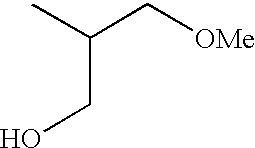 |
—Me | —CH2CH2CONH2 |
| 26 |
 |
—Me |
 |
| 27 |
 |
—(CH2)4— |


| TABLE 1 | |||
| IL-4 inhibition activity | |||
| Ex. No. | IC50 (μg/ml) | ||
| 1 | 0.6 | ||
| 2 | 0.6 | ||
| 3 | 0.5 | ||
| 4 | 3 | ||
| 5 | 0.2 | ||
| 6 | 1 | ||
| 7 | 0.5 | ||
| 8 | 1 | ||
| 9 | 1 | ||
| 10 | 0.1 | ||
| 11 | 0.1 | ||
| 12 | 1 | ||
| 13 | 10 | ||
| 14 | 0.1 | ||
| 15 | 0.4 | ||
| 16 | 3 | ||
| 17 | 5 | ||
| 18 | 0.3 | ||
| 19 | 0.2 | ||
| 20 | 0.3 | ||
| 21 | 0.5 | ||
| 22 | 0.5 | ||
| 23 | 0.5 | ||
| 24 | 0.2 | ||
| 25 | 0.1 | ||
Test 3
Activity on Cytokines Production from Mouse Lymph Node Cells by Compounds of Working Examples
Experimental Method and Results
| TABLE 2 | |||
| IL-4 inhibition activity | |||
| Ex. No. | IC50 (μg/ml) | ||
| 26 | 0.5 | ||
| 27 | 1 | ||
| 28 | 2 | ||
Test 5
Activity on IgE Production from Mouse in vivo by Compounds of Working Examples
Experimental Method
1) Animal
Value of thickness of auricula=thickness of spread left auricula−thickness of unspread right auricula.
4) Administration Method of Test Compound
Claims (13)


R11—(CH2)n— (4)


Priority Applications (1)
| Application Number | Priority Date | Filing Date | Title |
|---|---|---|---|
| US10/222,922 US6951866B2 (en) | 1998-08-27 | 2002-08-19 | Bicyclic pyrimidine compounds and therapeutic use thereof |
Applications Claiming Priority (7)
| Application Number | Priority Date | Filing Date | Title |
|---|---|---|---|
| JP24184298 | 1998-08-27 | ||
| JP241842/1998 | 1998-08-27 | ||
| JP253506/1998 | 1998-09-08 | ||
| JP25350698 | 1998-09-08 | ||
| PCT/JP1999/004505 WO2000012487A1 (en) | 1998-08-27 | 1999-08-20 | Pyrimidine derivatives |
| US09/763,728 US6458798B1 (en) | 1998-08-27 | 1999-08-20 | Bicyclic pyrimidine compounds and therapeutic use thereof |
| US10/222,922 US6951866B2 (en) | 1998-08-27 | 2002-08-19 | Bicyclic pyrimidine compounds and therapeutic use thereof |
Related Parent Applications (2)
| Application Number | Title | Priority Date | Filing Date |
|---|---|---|---|
| US09/763,728 Division US6458798B1 (en) | 1998-08-27 | 1999-08-20 | Bicyclic pyrimidine compounds and therapeutic use thereof |
| PCT/JP1999/004505 Division WO2000012487A1 (en) | 1998-08-27 | 1999-08-20 | Pyrimidine derivatives |
Publications (2)
| Publication Number | Publication Date |
|---|---|
| US20030105323A1 US20030105323A1 (en) | 2003-06-05 |
| US6951866B2 true US6951866B2 (en) | 2005-10-04 |
Family
ID=26535473
Family Applications (2)
| Application Number | Title | Priority Date | Filing Date |
|---|---|---|---|
| US09/763,728 Expired - Fee Related US6458798B1 (en) | 1998-08-27 | 1999-08-20 | Bicyclic pyrimidine compounds and therapeutic use thereof |
| US10/222,922 Expired - Fee Related US6951866B2 (en) | 1998-08-27 | 2002-08-19 | Bicyclic pyrimidine compounds and therapeutic use thereof |
Family Applications Before (1)
| Application Number | Title | Priority Date | Filing Date |
|---|---|---|---|
| US09/763,728 Expired - Fee Related US6458798B1 (en) | 1998-08-27 | 1999-08-20 | Bicyclic pyrimidine compounds and therapeutic use thereof |
Country Status (8)
| Country | Link |
|---|---|
| US (2) | US6458798B1 (en) |
| EP (1) | EP1110951B1 (en) |
| JP (1) | JP4497340B2 (en) |
| AT (1) | ATE267175T1 (en) |
| CA (1) | CA2341707C (en) |
| DE (1) | DE69917469T2 (en) |
| ES (1) | ES2221414T3 (en) |
| WO (1) | WO2000012487A1 (en) |
Cited By (32)
| Publication number | Priority date | Publication date | Assignee | Title |
|---|---|---|---|---|
| US20070190071A1 (en) * | 2004-03-26 | 2007-08-16 | Dainippon Sumitomo Pharma Co., Ltd. | 9-Substituted 8-oxoadenine compound |
| US20080300244A1 (en) * | 2006-12-14 | 2008-12-04 | Astrazeneca Ab | Novel compounds |
| US20090143400A1 (en) * | 2005-09-16 | 2009-06-04 | Mcinally Thomas | Purine derivatives having immuno-modulating properties |
| US20090209524A1 (en) * | 2007-11-22 | 2009-08-20 | Astrazeneca Ab | Novel Compounds |
| US20100087443A1 (en) * | 2007-03-19 | 2010-04-08 | Roger Victor Bonnert | 9-substituted-8-oxo-adenine compounds as toll-like receptor (tlr7) modulators |
| US20100093998A1 (en) * | 2007-03-20 | 2010-04-15 | Dainippon Sumitomo Pharma Co., Ltd. | Novel adenine compound |
| US20100099870A1 (en) * | 2007-03-20 | 2010-04-22 | Dainippon Sumitomo Phama Co., Ltd | Novel adenine compound |
| US20100130491A1 (en) * | 2007-03-19 | 2010-05-27 | Roger Victor Bonnert | 9-substituted-8-oxo-adenine compounds as toll-like receptor (tlr7 ) modulators |
| US20100240623A1 (en) * | 2006-07-05 | 2010-09-23 | Anthony Cook | 8-oxoadenine derivatives acting as modulators of tlr7 |
| US20100280001A1 (en) * | 2007-05-08 | 2010-11-04 | Roger Victor Bonnert | Imidazoquinolines with immuno-modulating properties |
| US20100298364A1 (en) * | 2009-05-21 | 2010-11-25 | Astrazeneca Ab | salts 756 |
| US20110136801A1 (en) * | 2009-12-03 | 2011-06-09 | Dainippon Sumitomo Pharma Co. Ltd. | Novel Compounds |
| US8673907B2 (en) | 2007-12-17 | 2014-03-18 | Astrazeneca Ab | Pharmaceutically acceptable salts of methyl (3-{ [[3-(6-amino- 2-butoxy-8-oxo-7,8-dihydro-9H-purin-9-yl) propyl] (3-morpholin-4-ylpropyl) amino] methyl }phenyl) acetate and their use in therapy |
| US8895570B2 (en) | 2010-12-17 | 2014-11-25 | Astrazeneca Ab | Purine derivatives |
| US9045472B2 (en) | 2010-12-16 | 2015-06-02 | Astrazeneca Ab | Imidazoquinoline compounds |
| US9284304B2 (en) * | 2012-08-10 | 2016-03-15 | Janssen Sciences Ireland Uc | Substituted pyrimidines as toll-like receptor modulators |
| US9376398B2 (en) | 2012-05-18 | 2016-06-28 | Sumitomo Dainippon Pharma Co., Ltd | Carboxylic acid compounds |
| US9533978B2 (en) | 2009-05-21 | 2017-01-03 | Sumitomo Dainippon Pharma Co., Ltd | Pyrimidine derivatives and their use in the treatment of cancer and further diseases |
| US10253003B2 (en) | 2012-11-16 | 2019-04-09 | Janssen Sciences Ireland Uc | Heterocyclic substituted 2-amino quinazoline derivatives for the treatment of viral infections |
| US10259793B2 (en) | 2013-02-21 | 2019-04-16 | Janssen Sciences Ireland Uc | 2-aminopyrimidine derivatives for the treatment of viral infections |
| US10259814B2 (en) | 2012-10-10 | 2019-04-16 | Janssen Sciences Ireland Uc | Pyrrolo[3,2-d]pyrimidine derivatives for the treatment of viral infections and other diseases |
| US10266543B2 (en) | 2013-03-29 | 2019-04-23 | Janssen Sciences Ireland Uc | Macrocyclic deaza-purinones for the treatment of viral infections |
| US10280180B2 (en) | 2012-07-13 | 2019-05-07 | Janssen Sciences Ireland Uc | Macrocyclic purines for the treatment of viral infections |
| US10280167B2 (en) | 2011-11-09 | 2019-05-07 | Janssen Sciences Ireland Uc | Purine derivatives for the treatment of viral infections |
| US10316043B2 (en) | 2013-07-30 | 2019-06-11 | Janssen Sciences Ireland Unlimited Company | Thieno[3,2-d]pyrimidines derivatives for the treatment of viral infections |
| US10377738B2 (en) | 2013-05-24 | 2019-08-13 | Janssen Sciences Ireland Unlimited Company | Pyridone derivatives for the treatment of viral infections and further diseases |
| US10385054B2 (en) | 2013-06-27 | 2019-08-20 | Janssen Sciences Ireland Unlimited Company | Pyrrolo[3,2-d]pyrimidine derivatives for the treatment of viral infections and other diseases |
| US10420767B2 (en) | 2011-04-08 | 2019-09-24 | Janssen Sciences Ireland Uc | Pyrimidine derivatives for the treatment of viral infections |
| US10662161B2 (en) * | 2017-01-30 | 2020-05-26 | Regents Of The University Of Minnesota | Pyrimidines and uses thereof |
| US10968184B2 (en) | 2016-09-29 | 2021-04-06 | Janssen Sciences Ireland Unlimited Company | Pyrimidine prodrugs for the treatment of viral infections and further diseases |
| US11053256B2 (en) | 2016-07-01 | 2021-07-06 | Janssen Sciences Ireland Unlimited Company | Dihydropyranopyrimidines for the treatment of viral infections |
| US11597704B2 (en) | 2018-03-01 | 2023-03-07 | Janssen Sciences Ireland Unlimited Company | 2,4-diaminoquinazoline derivatives and medical uses thereof |
Families Citing this family (16)
| Publication number | Priority date | Publication date | Assignee | Title |
|---|---|---|---|---|
| US7772432B2 (en) | 1991-09-19 | 2010-08-10 | Astrazeneca Ab | Amidobenzamide derivatives which are useful as cytokine inhibitors |
| ATE232205T1 (en) | 1998-10-01 | 2003-02-15 | Astrazeneca Ab | QUINOLINE AND QUINAZOLINE DERIVATIVES AND THEIR USE AS INHIBITORS OF DISEASES INVOLVING CYTOKINE |
| AU761453B2 (en) | 1999-03-17 | 2003-06-05 | Astrazeneca Ab | Amide derivatives |
| US7037916B2 (en) | 1999-07-15 | 2006-05-02 | Pharmacopeia Drug Discovery, Inc. | Pyrimidine derivatives as IL-8 receptor antagonists |
| GB9924092D0 (en) * | 1999-10-13 | 1999-12-15 | Zeneca Ltd | Pyrimidine derivatives |
| GB0324790D0 (en) | 2003-10-24 | 2003-11-26 | Astrazeneca Ab | Amide derivatives |
| CN1984887B (en) * | 2004-07-13 | 2010-07-28 | 大鹏药品工业株式会社 | Uniformity evaluation method of sulfonastase crystals, uniform crystals and production method thereof |
| ES2426780T3 (en) * | 2006-07-14 | 2013-10-25 | Amgen Inc. | Pyridone compounds substituted with alkyne and methods of use |
| EP2326627A1 (en) * | 2008-08-20 | 2011-06-01 | Schering Corporation | Substituted pyridine and pyrimidine derivatives and their use in treating viral infections |
| WO2010064705A1 (en) * | 2008-12-05 | 2010-06-10 | 大日本住友製薬株式会社 | Novel 7-substituted dihydropyranopyrimidine derivative having h4 receptor antagonistic activity |
| SG11201404743TA (en) | 2012-02-08 | 2014-09-26 | Janssen R & D Ireland | Piperidino-pyrimidine derivatives for the treatment of viral infections |
| WO2014053595A1 (en) | 2012-10-05 | 2014-04-10 | Janssen R&D Ireland | Acylaminopyrimidine derivatives for the treatment of viral infections and further diseases |
| WO2017061532A1 (en) | 2015-10-07 | 2017-04-13 | 大日本住友製薬株式会社 | Pyrimidine compound |
| EP3603619B1 (en) | 2017-03-29 | 2025-08-13 | Sumitomo Pharma Co., Ltd. | Vaccine adjuvant formulation |
| CN111757755A (en) | 2017-12-21 | 2020-10-09 | 大日本住友制药株式会社 | Combination drugs containing TLR7 agonists |
| CA3107409A1 (en) | 2018-07-23 | 2020-01-30 | Japan As Represented By Director General Of National Institute Of Infectious Diseases | Composition containing influenza vaccine |
Citations (6)
| Publication number | Priority date | Publication date | Assignee | Title |
|---|---|---|---|---|
| US3034954A (en) * | 1960-03-23 | 1962-05-15 | Monsanto Chemicals | Virus inhibitors |
| US3185691A (en) | 1965-05-25 | Gycloocteno-pyrimroines | ||
| US3272811A (en) | 1962-07-04 | 1966-09-13 | Boehringer Sohn Ingelheim | Dihydrothieno-[3, 4-d]-pyrimidines |
| GB1152883A (en) | 1967-01-25 | 1969-05-21 | Ucb Sa | 4,5-Polymethylene-Pyrimidine Derivatives |
| JPH04235976A (en) | 1991-01-18 | 1992-08-25 | Ube Ind Ltd | Production of aralkylaminopyrimidine compounds |
| WO1997009325A1 (en) | 1995-09-01 | 1997-03-13 | Signal Pharmaceuticals, Inc. | Pyrimidine carboxylates and related compounds and methods for treating inflammatory conditions |
Family Cites Families (1)
| Publication number | Priority date | Publication date | Assignee | Title |
|---|---|---|---|---|
| GB152883A (en) | 1919-11-26 | 1920-10-28 | Carl Conrad Albin Perlich | Improvements in means for controlling the supply of gas to gas cooking apparatus |
-
1999
- 1999-08-20 ES ES99938567T patent/ES2221414T3/en not_active Expired - Lifetime
- 1999-08-20 AT AT99938567T patent/ATE267175T1/en not_active IP Right Cessation
- 1999-08-20 CA CA2341707A patent/CA2341707C/en not_active Expired - Fee Related
- 1999-08-20 EP EP99938567A patent/EP1110951B1/en not_active Expired - Lifetime
- 1999-08-20 WO PCT/JP1999/004505 patent/WO2000012487A1/en not_active Ceased
- 1999-08-20 JP JP2000567517A patent/JP4497340B2/en not_active Expired - Fee Related
- 1999-08-20 US US09/763,728 patent/US6458798B1/en not_active Expired - Fee Related
- 1999-08-20 DE DE69917469T patent/DE69917469T2/en not_active Expired - Lifetime
-
2002
- 2002-08-19 US US10/222,922 patent/US6951866B2/en not_active Expired - Fee Related
Patent Citations (6)
| Publication number | Priority date | Publication date | Assignee | Title |
|---|---|---|---|---|
| US3185691A (en) | 1965-05-25 | Gycloocteno-pyrimroines | ||
| US3034954A (en) * | 1960-03-23 | 1962-05-15 | Monsanto Chemicals | Virus inhibitors |
| US3272811A (en) | 1962-07-04 | 1966-09-13 | Boehringer Sohn Ingelheim | Dihydrothieno-[3, 4-d]-pyrimidines |
| GB1152883A (en) | 1967-01-25 | 1969-05-21 | Ucb Sa | 4,5-Polymethylene-Pyrimidine Derivatives |
| JPH04235976A (en) | 1991-01-18 | 1992-08-25 | Ube Ind Ltd | Production of aralkylaminopyrimidine compounds |
| WO1997009325A1 (en) | 1995-09-01 | 1997-03-13 | Signal Pharmaceuticals, Inc. | Pyrimidine carboxylates and related compounds and methods for treating inflammatory conditions |
Non-Patent Citations (5)
| Title |
|---|
| Elslager et al., Journal of Medicinal Chemistry, vol. 17, No. 1, pp. 75-100 (1974). |
| Modest et al., Chemical Abstract 63:5639f, (1965). |
| Ross et al., Chemical Abstract 54:6742b, (1960). |
| Tani et al., CAPLUS Abstract 82:140173 (1975). * |
| Trantolo et al., CAPLUS Abstract 105:162 (1986). * |
Cited By (61)
| Publication number | Priority date | Publication date | Assignee | Title |
|---|---|---|---|---|
| US20070190071A1 (en) * | 2004-03-26 | 2007-08-16 | Dainippon Sumitomo Pharma Co., Ltd. | 9-Substituted 8-oxoadenine compound |
| US8969362B2 (en) | 2004-03-26 | 2015-03-03 | Astrazeneca Aktiebolag | 9-substituted 8-oxoadenine compound |
| US8575180B2 (en) | 2004-03-26 | 2013-11-05 | Astrazeneca Aktiebolag | 9-substituted 8-oxoadenine compound |
| US8012964B2 (en) | 2004-03-26 | 2011-09-06 | Dainippon Sumitomo Pharma Co., Ltd. | 9-substituted 8-oxoadenine compound |
| US20090143400A1 (en) * | 2005-09-16 | 2009-06-04 | Mcinally Thomas | Purine derivatives having immuno-modulating properties |
| US20100240623A1 (en) * | 2006-07-05 | 2010-09-23 | Anthony Cook | 8-oxoadenine derivatives acting as modulators of tlr7 |
| US8138172B2 (en) | 2006-07-05 | 2012-03-20 | Astrazeneca Ab | 8-oxoadenine derivatives acting as modulators of TLR7 |
| US8067411B2 (en) | 2006-12-14 | 2011-11-29 | Astrazeneca Ab | Compounds |
| US20080300244A1 (en) * | 2006-12-14 | 2008-12-04 | Astrazeneca Ab | Novel compounds |
| US8067413B2 (en) | 2007-03-19 | 2011-11-29 | Astrazeneca Ab | 9-substituted-8-oxo-adenine compounds as toll-like receptor (TLR7 ) modulators |
| US20100087443A1 (en) * | 2007-03-19 | 2010-04-08 | Roger Victor Bonnert | 9-substituted-8-oxo-adenine compounds as toll-like receptor (tlr7) modulators |
| US20100130491A1 (en) * | 2007-03-19 | 2010-05-27 | Roger Victor Bonnert | 9-substituted-8-oxo-adenine compounds as toll-like receptor (tlr7 ) modulators |
| US8063051B2 (en) | 2007-03-19 | 2011-11-22 | Astrazeneca Ab | 9-substituted-8-oxo-adenine compounds as toll-like receptor (TLR7) modulators |
| US20110028715A1 (en) * | 2007-03-20 | 2011-02-03 | Dainippon Sumitomo Pharma Co., Ltd. | Novel adenine compound |
| US20100099870A1 (en) * | 2007-03-20 | 2010-04-22 | Dainippon Sumitomo Phama Co., Ltd | Novel adenine compound |
| US8044056B2 (en) | 2007-03-20 | 2011-10-25 | Dainippon Sumitomo Pharma Co., Ltd. | Adenine compound |
| US20100093998A1 (en) * | 2007-03-20 | 2010-04-15 | Dainippon Sumitomo Pharma Co., Ltd. | Novel adenine compound |
| US8436178B2 (en) | 2007-05-08 | 2013-05-07 | Astrazeneca Ab | Imidazoquinolines with immuno-modulating properties |
| US20100280001A1 (en) * | 2007-05-08 | 2010-11-04 | Roger Victor Bonnert | Imidazoquinolines with immuno-modulating properties |
| US8268990B2 (en) * | 2007-11-22 | 2012-09-18 | Astrazeneca Ab | Compounds |
| US20090209524A1 (en) * | 2007-11-22 | 2009-08-20 | Astrazeneca Ab | Novel Compounds |
| US8765939B2 (en) | 2007-11-22 | 2014-07-01 | Astrazeneca Ab | Pyrimidline derivatives having immune modulating properties that act via TLR7 for the treatment of viral or allergic diseases and cancers |
| US8673907B2 (en) | 2007-12-17 | 2014-03-18 | Astrazeneca Ab | Pharmaceutically acceptable salts of methyl (3-{ [[3-(6-amino- 2-butoxy-8-oxo-7,8-dihydro-9H-purin-9-yl) propyl] (3-morpholin-4-ylpropyl) amino] methyl }phenyl) acetate and their use in therapy |
| US20100298364A1 (en) * | 2009-05-21 | 2010-11-25 | Astrazeneca Ab | salts 756 |
| US8476288B2 (en) | 2009-05-21 | 2013-07-02 | Astrazeneca Ab | Salts 756 |
| US9533978B2 (en) | 2009-05-21 | 2017-01-03 | Sumitomo Dainippon Pharma Co., Ltd | Pyrimidine derivatives and their use in the treatment of cancer and further diseases |
| US20110136801A1 (en) * | 2009-12-03 | 2011-06-09 | Dainippon Sumitomo Pharma Co. Ltd. | Novel Compounds |
| US9045472B2 (en) | 2010-12-16 | 2015-06-02 | Astrazeneca Ab | Imidazoquinoline compounds |
| US8895570B2 (en) | 2010-12-17 | 2014-11-25 | Astrazeneca Ab | Purine derivatives |
| US11541050B2 (en) | 2011-04-08 | 2023-01-03 | Janssen Sciences Ireland Uc | Pyrimidine derivatives for the treatment of viral infections |
| US10780089B2 (en) | 2011-04-08 | 2020-09-22 | Janssen Sciences Ireland Uc | Pyrimidine derivatives for the treatment of viral infections |
| US10420767B2 (en) | 2011-04-08 | 2019-09-24 | Janssen Sciences Ireland Uc | Pyrimidine derivatives for the treatment of viral infections |
| US10280167B2 (en) | 2011-11-09 | 2019-05-07 | Janssen Sciences Ireland Uc | Purine derivatives for the treatment of viral infections |
| US11104678B2 (en) | 2011-11-09 | 2021-08-31 | Janssen Sciences Ireland Unlimited Company | Purine derivatives for the treatment of viral infections |
| US9376398B2 (en) | 2012-05-18 | 2016-06-28 | Sumitomo Dainippon Pharma Co., Ltd | Carboxylic acid compounds |
| US10562861B2 (en) | 2012-05-18 | 2020-02-18 | Sumitomo Dainippon Pharma Co., Ltd. | Carboxylic acid compounds |
| US10150743B2 (en) | 2012-05-18 | 2018-12-11 | Sumitomo Dainippon Pharma Co., Ltd. | Carboxylic acid compounds |
| US12077510B2 (en) | 2012-05-18 | 2024-09-03 | Sumitomo Pharma Co., Ltd. | Carboxylic acid compounds |
| US11299465B2 (en) | 2012-05-18 | 2022-04-12 | Sumitomo Dainippon Pharma Co., Ltd. | Carboxylic acid compounds |
| US10280180B2 (en) | 2012-07-13 | 2019-05-07 | Janssen Sciences Ireland Uc | Macrocyclic purines for the treatment of viral infections |
| US10822349B2 (en) | 2012-07-13 | 2020-11-03 | Janssen Sciences Ireland Unlimited Company | Macrocyclic purines for the treatment of viral infections |
| US9284304B2 (en) * | 2012-08-10 | 2016-03-15 | Janssen Sciences Ireland Uc | Substituted pyrimidines as toll-like receptor modulators |
| US11220504B2 (en) | 2012-10-10 | 2022-01-11 | Janssen Sciences Ireland Unlimited Company | Pyrrolo[3,2-d] pyrimidine derivatives for the treatment of viral infections and other diseases |
| US10259814B2 (en) | 2012-10-10 | 2019-04-16 | Janssen Sciences Ireland Uc | Pyrrolo[3,2-d]pyrimidine derivatives for the treatment of viral infections and other diseases |
| US10723707B2 (en) | 2012-11-16 | 2020-07-28 | Janssen Sciences Ireland Unlimited Company | Heterocyclic substituted 2-amino quinazoline derivatives for the treatment of viral infections |
| US10253003B2 (en) | 2012-11-16 | 2019-04-09 | Janssen Sciences Ireland Uc | Heterocyclic substituted 2-amino quinazoline derivatives for the treatment of viral infections |
| US10259793B2 (en) | 2013-02-21 | 2019-04-16 | Janssen Sciences Ireland Uc | 2-aminopyrimidine derivatives for the treatment of viral infections |
| US10647684B2 (en) | 2013-02-21 | 2020-05-12 | Janssen Sciences Ireland Unlimited Company | 2-aminopyrimidine derivatives for the treatment of viral infections |
| US10266543B2 (en) | 2013-03-29 | 2019-04-23 | Janssen Sciences Ireland Uc | Macrocyclic deaza-purinones for the treatment of viral infections |
| US11702426B2 (en) | 2013-03-29 | 2023-07-18 | Janssen Sciences Ireland Unlimited Company | Macrocyclic deaza-purinones for the treatment of viral infections |
| US10829494B2 (en) | 2013-03-29 | 2020-11-10 | Janssen Sciences Ireland Unlimited Company | Macrocyclic deaza-purinones for the treatment of viral infections |
| US10865193B2 (en) | 2013-05-24 | 2020-12-15 | Janssen Sciences Ireland Unlimited Company | Pyridone derivatives for the treatment of viral infections and further diseases |
| US10377738B2 (en) | 2013-05-24 | 2019-08-13 | Janssen Sciences Ireland Unlimited Company | Pyridone derivatives for the treatment of viral infections and further diseases |
| US10781216B2 (en) | 2013-06-27 | 2020-09-22 | Janssen Sciences Ireland Unlimited Company | Pyrrolo [3,2-d]pyrimidine derivatives for the treatment of viral infections and other diseases |
| US10385054B2 (en) | 2013-06-27 | 2019-08-20 | Janssen Sciences Ireland Unlimited Company | Pyrrolo[3,2-d]pyrimidine derivatives for the treatment of viral infections and other diseases |
| US10822347B2 (en) | 2013-07-30 | 2020-11-03 | Janssen Sciences Ireland Unlimited Company | Thieno[3,2-d]pyrimidines derivatives for the treatment of viral infections |
| US10316043B2 (en) | 2013-07-30 | 2019-06-11 | Janssen Sciences Ireland Unlimited Company | Thieno[3,2-d]pyrimidines derivatives for the treatment of viral infections |
| US11053256B2 (en) | 2016-07-01 | 2021-07-06 | Janssen Sciences Ireland Unlimited Company | Dihydropyranopyrimidines for the treatment of viral infections |
| US10968184B2 (en) | 2016-09-29 | 2021-04-06 | Janssen Sciences Ireland Unlimited Company | Pyrimidine prodrugs for the treatment of viral infections and further diseases |
| US10662161B2 (en) * | 2017-01-30 | 2020-05-26 | Regents Of The University Of Minnesota | Pyrimidines and uses thereof |
| US11597704B2 (en) | 2018-03-01 | 2023-03-07 | Janssen Sciences Ireland Unlimited Company | 2,4-diaminoquinazoline derivatives and medical uses thereof |
Also Published As
| Publication number | Publication date |
|---|---|
| US6458798B1 (en) | 2002-10-01 |
| CA2341707A1 (en) | 2000-03-09 |
| ES2221414T3 (en) | 2004-12-16 |
| WO2000012487A1 (en) | 2000-03-09 |
| DE69917469T2 (en) | 2005-05-12 |
| EP1110951B1 (en) | 2004-05-19 |
| JP4497340B2 (en) | 2010-07-07 |
| ATE267175T1 (en) | 2004-06-15 |
| EP1110951A1 (en) | 2001-06-27 |
| US20030105323A1 (en) | 2003-06-05 |
| DE69917469D1 (en) | 2004-06-24 |
| EP1110951A4 (en) | 2002-01-02 |
| CA2341707C (en) | 2010-02-16 |
Similar Documents
| Publication | Publication Date | Title |
|---|---|---|
| US6951866B2 (en) | Bicyclic pyrimidine compounds and therapeutic use thereof | |
| JPWO2000012487A1 (en) | Pyrimidine Derivatives | |
| JP4890723B2 (en) | Coumarin derivatives useful as TNFα inhibitors | |
| JP4342007B2 (en) | Quinazoline derivatives | |
| US7365200B2 (en) | Thienopyridinone derivatives as macrophage migration inhibitory factor inhibitors | |
| JPH05507093A (en) | Antiviral and antihypertensive compounds | |
| JP4315300B2 (en) | Novel quinazoline derivatives | |
| TW200413373A (en) | Novel compounds | |
| KR102588426B1 (en) | Substituted dihydropyrrolopyrazole derivatives | |
| AU2007275653A1 (en) | Benzo(d) isoxazole derivatives as c-kit tyrosine kinase inhibitors for the treatment of disorders associated with the over production of histamine | |
| EP0359537A1 (en) | Benzopyran derivatives with antihypertensive activity | |
| JP3218243B2 (en) | Benzimidazoles, their production and use | |
| JP7008073B2 (en) | Substituted pyrazoloazepine-4-one and their use as phosphodiesterase inhibitors | |
| US20070129383A1 (en) | Substituted 2-amino-[1,2,4]triazolo[1,5-a]pyrimidine derivative and use thereof | |
| JP4244398B2 (en) | Quinazoline derivatives | |
| EP2049115B1 (en) | Alkyne-substituted pyridone compounds and methods of use | |
| DE68921175T2 (en) | Benzopyran type compounds. | |
| EP0562833B1 (en) | Anti-ulcer pyridyloxy derivatives, their preparation and uses | |
| CA3223475A1 (en) | Novel benzopyran derivative and use thereof | |
| JP2000063381A (en) | Pyridopyrimidine derivatives | |
| JP2004323458A (en) | [1,2,4]TRIAZOLO[1,5-a]PYRIDIN-2-YLAMINE DERIVATIVE, METHOD FOR PRODUCING THE SAME AND ITS APPLICATION | |
| KR101666247B1 (en) | Novel pyranopyrandione compounds or pharmaceutically acceptable salts thereof, process for preparing thereof and pharmaceutical composition comprising the same for treating disease derived from allergic inflammatory response | |
| CN102076682A (en) | Five-membered ring compound |
Legal Events
| Date | Code | Title | Description |
|---|---|---|---|
| AS | Assignment |
Owner name: DAINIPPON SUMITOMO PHARMA CO., LTD.,JAPAN Free format text: MERGER;ASSIGNOR:SUMITOMO PHARMACEUTICALS COMPANY, LTD.;REEL/FRAME:017089/0420 Effective date: 20051001 Owner name: DAINIPPON SUMITOMO PHARMA CO., LTD., JAPAN Free format text: MERGER;ASSIGNOR:SUMITOMO PHARMACEUTICALS COMPANY, LTD.;REEL/FRAME:017089/0420 Effective date: 20051001 |
|
| CC | Certificate of correction | ||
| FEPP | Fee payment procedure |
Free format text: PAYOR NUMBER ASSIGNED (ORIGINAL EVENT CODE: ASPN); ENTITY STATUS OF PATENT OWNER: LARGE ENTITY |
|
| FPAY | Fee payment |
Year of fee payment: 4 |
|
| REMI | Maintenance fee reminder mailed | ||
| LAPS | Lapse for failure to pay maintenance fees | ||
| STCH | Information on status: patent discontinuation |
Free format text: PATENT EXPIRED DUE TO NONPAYMENT OF MAINTENANCE FEES UNDER 37 CFR 1.362 |
|
| STCH | Information on status: patent discontinuation |
Free format text: PATENT EXPIRED DUE TO NONPAYMENT OF MAINTENANCE FEES UNDER 37 CFR 1.362 |
|
| FP | Lapsed due to failure to pay maintenance fee |
Effective date: 20131004 |