US6830692B1 - Amino acid composition for hemodialysis - Google Patents
Amino acid composition for hemodialysis Download PDFInfo
- Publication number
- US6830692B1 US6830692B1 US09/399,743 US39974399A US6830692B1 US 6830692 B1 US6830692 B1 US 6830692B1 US 39974399 A US39974399 A US 39974399A US 6830692 B1 US6830692 B1 US 6830692B1
- Authority
- US
- United States
- Prior art keywords
- amino acid
- dialyzer
- hemodialysis
- fluid
- vessel
- Prior art date
- Legal status (The legal status is an assumption and is not a legal conclusion. Google has not performed a legal analysis and makes no representation as to the accuracy of the status listed.)
- Expired - Fee Related
Links
Images


Classifications
-
- A—HUMAN NECESSITIES
- A61—MEDICAL OR VETERINARY SCIENCE; HYGIENE
- A61K—PREPARATIONS FOR MEDICAL, DENTAL OR TOILETRY PURPOSES
- A61K31/00—Medicinal preparations containing organic active ingredients
- A61K31/185—Acids; Anhydrides, halides or salts thereof, e.g. sulfur acids, imidic, hydrazonic or hydroximic acids
- A61K31/19—Carboxylic acids, e.g. valproic acid
- A61K31/195—Carboxylic acids, e.g. valproic acid having an amino group
Definitions
- the present invention relates to a special amino acid mixture and dialysis solution for hemodialysis.
- the use of the amino acid mixture for preparing a solution suitable for hemodialysis is also set forth.
- the present invention also relates to a method and an apparatus for hemodialysis.
- compositions suitable for hemodialysis which overcome the difficulties described above, and to methods of dialysis using such compositions.
- amino acid composition comprising the following proportion of amino acids, based on the total weight of the amino acids:
- the objects of the present invention may also be accomplished with a dialyzer fluid containing the proportions of the amino acids described above.
- dialyzer fluid comprising amino acids at the following concentrations:
- the objects of the present invention may also be accomplished with a method of hemodialysis by dialyzing a patient in need thereof using the inventive amino acid composition.
- the objects of the present invention may also be accomplished with a method of hemodialysis by dialyzing a patient in need thereof with a dialyzer fluid containing the amino acid composition of the invention.
- an apparatus for hemodialysis with a dialyzer comprising:
- the vessel has a connection for withdrawal of dialyzer fluid to be supplied by the dialyzer and has a connection for the return to the vessel of the dialyzer fluid arriving from the dialyzer,
- the vessel is sufficiently thermally insulated from the ambient air that there is no need for a heating means to control the temperature of the dialyzer fluid and to keep it constant throughout the duration of the dialysis treatment
- connection for withdrawal of the dialyzer fluid discharges at the upper region of the vessel and the connection for return of the dialyzer fluid discharges in the lower region of the vessel
- the vessel contains a dialyzer fluid containing the amino acid composition of the present invention.
- the amino acid composition according to the invention may be added to a dialyzer solution in the proportion required to obtain a dialyzer fluid which corresponds in composition and concentration to the amino acid plasma level of a healthy person.
- the subject matter of the invention therefore, also includes a dialysis solution having the amino acid composition described above.
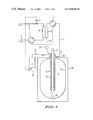
- FIG. 1 schematic of an apparatus according to the present invention
- FIG. 2 results of dialysis according to the present invention.
- FIG. 3 results of dialysis according to the present invention.
- amino acid mixture for hemodialysis within the composition described above has not been used.
- the amino acid mixtures used for dialysis to date have never contained all amino acids cited hereinabove, or were originally designed for parenteral nutrition. Such solutions did not and still do not contain all amino acids listed in Table 1.
- concentration in those solutions is not adapted to the physiological plasma concentration, and so special imbalances not only are not compensated for but in some cases are further exacerbated, to the extent that pathological conditions as serious as hepatogenic encephalopathic coma can develop during continued dialysis.
- Another aspect of the invention is the use of the amino acid composition for the preparation of a solution suitable for hemodialysis.
- the dialyzer fluid In order to adjust the dialyzer fluid to the physiological concentrations listed in Table 2, preferably 0.43 to 0.37 g of the amino acid composition is added per liter of dialyzer solution.
- the dialyzer fluid of the present invention may contain the inventive amino acid composition in a fluid medium that is suitable for use in dialysis treatments.
- the fluid medium may be any which are routinely used in dialysis.
- the fluid medium is preferably an aqueous solution.
- the aqueous solution may contain appropriate buffers, electrolytes and/or nutrients.
- Another aspect of the invention is a hemodialysis method characterized by the use of the amino acid composition according to the invention or the dialyzer fluid according to the invention.
- the dialyses were performed with the Genius dialysis system of Teerstegen and Endert (German Patent DE 3115665, incorporated herein by reference), which has a volumetric capacity of 75 liters of inlet solution.
- the amino acid composition used had the following absolute or relative composition:
- the measured values represent mean values for ten patients, each treated in twelve dialysis sessions, and so the results are based on a considerable number of amino acid analyses and thereby are also very reliable.
- Another aspect of the present invention is a hemodialysis apparatus designed in a manner characteristic of and advantageous for the invention.
- the unit uses a dialysis solution containing amino acids in a composition according to the invention.
- the dialysis unit with a dialyzer described herein is provided with a first flow path for the blood, a second flow path for the dialyzer fluid and a semipermeable membrane separating the two flow paths, as well as with a vessel containing dialyzer fluid, wherein the dialyzer fluid can be withdrawn via a connection and the spent dialyzer fluid can be returned to the same vessel.
- Poli et al. describe the positive influence of dialysis by means of dialyzer fluids which contained amino acids in such concentration and composition that the concentration gradient developed on both sides of the dialysis membrane is as small as possible, although detrimental amino acid losses from the patient's body normally occur in the apparatus has correspondingly large dimensions. According to that publication (The International Journal of Artificial Organs 1978, Vol. 1, No. 1, pp. 112 ff.), however, a socalled single-pass system such as described in more detail as prior art in German Patent DE 3115665 was used.
- Another aspect of the present invention is a simple hemodialysis system which does not suffer from the disadvantages of dialysis systems using physiological amino acid solutions as dialyzer fluid.
- the system should be easy to manipulate, inexpensive to operate and robust in application.
- a hemodialysis unit is equipped with a dialyzer containing a first flow path for the blood, a second flow path for the dialyzer fluid and a semipermeable membrane separating the two flow paths, as well as a vessel for the dialyzer fluid with a connection for withdrawal of dialyzer fluid to be supplied by the dialyzer and with a connection for return to the vessel of the dialyzer fluid arriving from the dialyzer, vessel ( 6 ) being sufficiently thermally insulated from the ambient air that there is no need for a heating means to control the temperature of the dialyzer fluid and to keep it constant throughout the duration of the dialysis treatment, and by the fact that connection ( 5 a ) for withdrawal of the dialyzer fluid discharges at the upper region of vessel ( 6 ) while connection ( 9 a ) for return of the dialyzer fluid discharges in the lower region of vessel ( 6 ), vessel ( 6 ) containing for the upcoming hemodialysis a dialyzer solution of amino acids in dissolved form, the amino acids being present in
- vessel ( 6 ) can have double walls and the space between inner vessel ( 6 a ) and surrounding additional jacket ( 6 b ) can be sealed from the ambient air. It is further advantageous for inner vessel ( 6 a ) and jacket ( 6 b ) to be made of transparent materials having low thermal conductivity compared with metals.
- a radiant heating element can be disposed in the hemodialysis unit, preferably under inner vessel ( 6 a ). In this way, it is ensured that the temperature of the dialyzer solution remains constant even during prolonged dialysis sessions.
- vessel ( 6 ) of the hemodialysis unit according to the invention is provided with a means for housing a UV irradiation source ( 11 ). In this way easy and efficient disinfection of the dialyzer fluid is possible.
- connection ( 8 ) for return of the dialyzer fluid discharges at the upper part of vessel ( 6 ) into a tube ( 9 ), which is disposed in the interior of the vessel and the end of which is open close to the vessel bottom, Tube ( 9 ) is axially disposed, and at its bottom end is provided with a closed inner tube ( 10 ) for housing UV irradiation source ( 11 ).
- vessel ( 6 ) is in communication via an overflow ( 12 ) with a measuring instrument ( 13 ) for recording any excess fluid volume produced.
- a flow resistance ( 14 ) for adjustment of the ultrafiltration speed can be provided in return line ( 4 ) of the first flow path of the dialyzer.
- a device for generating a positive backpressure can be provided in the second flow path of the dialyzer.
- a measurement and control instrument measures the excess fluid volume produced, compares the measured value with a specified value and, on the basis of the result of the comparison, automatically adjusts the flow resistance in the return line of the first flow path or the positive backpressure in the second flow path of the dialyzer such that the deviation between measured value and specified value is minimized.
- FIG. 1 shows a schematic diagram of a preferred apparatus.
- the blood is pumped through a line 1 , conveyed by means of a pump 2 through a first flow path 3 a of a dialyzer and returned to the patient via a line 4 .
- the dialyzer fluid flows in countercurrent thereto in a second flow path 3 b of the dialyzer.
- This fluid is withdrawn from vessel 6 through a line 5 with a connection 5 a discharging into the vessel, conveyed by means of a pump 7 through flow path 3 b of the dialyzer and returned to vessel 6 via a line 8 and a tube 9 discharging at 9 a in the lower region of the vessel.
- Vessel 6 is thermally insulated, specifically to the effect that the temperature of the dialyzer fluid, which was preheated before being introduced, does not drop by more than about 1° C. per hour (internal temperature about 38° C., external temperature about 21° C.).
- Inner vessel 6 a and jacket 6 b are preferably made of transparent materials, such as glass for the inner vessel and a transparent polymer for the jacket, so that visual inspection is possible. At the same time, these materials have the advantage that their thermal conductivity is lower than that of metals.
- An inner vessel of glass is bacteriologically and hygienically superior to other materials, since the surface is pore-free. Furthermore, glass is thermally stable and thus favorable for sterilization, largely resistant to chemicals that may be used, can be thoroughly cleaned, and is rigid, volumetrically stable and physiologically safe.
- line 5 discharges at the withdrawal point of the dialyzer fluid at 5 a in the upper region of the vessel.
- Return line 8 discharges into tube 9 , which is disposed centrally in the vessel.
- the spent dialyzer fluid is delivered through open end 9 a of tube 9 into the fluid-filled vessel interior in the vicinity of the vessel bottom.
- the vessel is also designed to house an ultraviolet irradiation source.
- a closed inner tube 10 into which rod-shaped UV irradiation source 11 is inserted, is provided for this purpose at the bottom end of tube 9 , concentrically therewith.
- Tubes 9 and 10 should be made of material of adequate UV transparency, such as quartz glass.
- the excess fluid volume produced by ultrafiltration can be diverted through an overflow from the loop of dialyzer fluid and collected in a measuring vessel 13 , wherein the outflow rate can be adjusted by a variable flow resistance on the discharge side of the first flow path of the dialyzer.
- an overflow line 12 leading to a measuring cylinder 13 is connected to the system filled with dialyzer fluid at in principle an arbitrary point, but preferably on the discharge side of the second flow path of the dialyzer.
- a flow restrictor 14 in the form, for example, of a tube clamp is disposed as a flow resistance on blood return line 4 .
- Flow restrictor 14 can be used to vary the pressure on the blood side of the dialysis membrane and thus the pressure difference, which is the determining factor for ultrafiltration, between the two sides of the membrane. This flow restrictor is adjusted in such a way, while observing the outflow at the end of overflow 12 , that the desired ultrafiltration volume per unit time is obtained. In addition, the total volume of ultrafiltrate collected can be read in the scale of measuring cylinder 13 .
- the described adjustment method is also characterized by extremely simple apparatus design. Furthermore, it has the advantage, compared to the method described in German Accepted Application DE-AS 2259787, for example, that the pressure in the vessel remains constant, and so the rigidity of the vessel and of the lines connected thereto does not have to meet particularly strict requirements, and even any air volume that may become trapped in the upper part of the vessel does not impair measurement accuracy. In contrast, these problems have a considerable influence in the system illustrated in DE-AS 2259787, because therein the pressure differences caused during adjustment of the ultrafiltration speed can lead to corresponding volume fluctuations. Moreover, additional errors can occur if air is sucked through existing leaks into the vessel because, for example, of the subatmospheric pressure prevailing in the vessel.
- an infrared heating element can also be provided, preferably disposed under inner vessel 6 a .
- the water contained in the inner vessel can be heated for sterilization purposes.
- the radiation passes through the glass and is then absorbed in the fluid, so that the fluid is heated to boiling point.
- a temperature of about 110° C. as is favorable for sterilization purposes, can be reached at slightly elevated internal pressure.
- the hemodialysis apparatus according to the invention is made in simple and thus no less advantageous form by the expedient that, in vessel ( 6 ) of an apparatus such as just described, there is mixed a suitable amino acid mixture with a commercially available dialyzer solution not containing amino acids or vice versa, depending on which sequence seems more advantageous from the viewpoint of possible mutual precipitation of constituents. Once a complete solution with stabilized temperature has been formed, the unit according to the invention is ready for dialysis.
- the amino acid concentration gradient between the dialyzer solution and plasma can be compensated in extremely simple manner with the advantages discussed hereinabove.
Landscapes
- Health & Medical Sciences (AREA)
- Chemical & Material Sciences (AREA)
- Medicinal Chemistry (AREA)
- Pharmacology & Pharmacy (AREA)
- Epidemiology (AREA)
- Life Sciences & Earth Sciences (AREA)
- Animal Behavior & Ethology (AREA)
- General Health & Medical Sciences (AREA)
- Public Health (AREA)
- Veterinary Medicine (AREA)
- External Artificial Organs (AREA)
Abstract
Description
| TABLE 1 | |||
| wt % | wt % | ||
| Lower Limit | Upper Limit | ||
| Gln | 15.2 | 22.8 | ||
| Ala | 7.6 | 11.4 | ||
| Pro | 6.0 | 9.0 | ||
| Val | 6.0 | 9.0 | ||
| Gly | 3.7 | 5.5 | ||
| Lys | 6.6 | 9.8 | ||
| Leu | 3.7 | 5.5 | ||
| Thr | 3.1 | 4.7 | ||
| Ser | 2.4 | 3.5 | ||
| Arg | 4.2 | 6.3 | ||
| His | 2.9 | 4.3 | ||
| Ile | 1.8 | 2.8 | ||
| Tyr | 2.4 | 3.5 | ||
| Orn | 2.4 | 3.5 | ||
| Glu | 1.8 | 2.8 | ||
| Phe | 2.1 | 3.1 | ||
| Cys | 2.9 | 4.3 | ||
| Asn | 1.3 | 2.0 | ||
| Trp | 1.6 | 2.4 | ||
| Cit | 1.0 | 1.6 | ||
| Met | 0.8 | 1.2 | ||
| Abu | 0.0 | 0.5 | ||
| Asp | 0.5 | 0.8 | ||
| Concentra- | Concentra- | Concentra- | |||
| Amino | tion | Amino | tion | Amino | tion |
| Acid | (μmol/l) | Acid | (μmol/l) | Acid | (μmol/l) |
| Gln | 401.8-663.9 | Thr | 103.2-169.1 | Glu | 39.5-88.9 |
| Ala | 339.7-555.2 | Ser | 84.9-138.5 | Phe | 49.1-79.0 |
| Pro | 178.1-355.5 | Arg | 70.1-130.9 | Cys | 50.9-70.0 |
| Val | 206.9-320.8 | His | 76.9-111.8 | Asn | 23.5-61.4 |
| Gly | 175.8-303.9 | Ile | 50.1-99.9 | Trp | 18.4-58.2 |
| Lys | 136.0-231.9 | Tyr | 50.4-91.4 | Cit | 19.3-42.1 |
| Leu | 95.8-180.1 | Orn | 52.2-85.8 | Met | 16.6-33.4 |
| Abu | 10.4-31.8 | Asp | 13.0-22.1 | ||
| TABLE 2 | |||||
| Physiological | Physiological | Physiological | |||
| concentration | concentration | concentration | |||
| AA | μmol/l | AA | μmol/l | AA | μmol/l |
| Gln | 401.8-663.9 | Thr | 103.2-169.1 | Glu | 39.5-88.9 |
| Ala | 339.7-555.2 | Ser | 84.9-138.5 | Phe | 49.1-79.0 |
| Pro | 178.1-355.5 | Arg | 70.1-130.9 | Cys | 50.9-70.0 |
| Val | 206.9-320.8 | His | 76.9-111.8 | Asn | 23.5-61.4 |
| Gly | 175.8-303.9 | Ile | 50.1-99.9 | Trp | 18.4-58.2 |
| Lys | 136.0-231.9 | Tyr | 50.4-91.4 | Cit | 19.3-42.1 |
| Leu | 95.8-180.1 | Orn | 52.2-85.8 | Met | 16.6-33.4 |
| Abu | 10.4-31.8 | Asp | 13.0-22.1 | ||
| TABLE 3 | |||||||
| AA | g/batch | rel. | AA | g/batch | rel. | ||
| Gln | 5.8 | 19.02% | Tyr | 0.9 | 2.95% | ||
| Ala | 2.9 | 9.51% | Orn | 0.9 | 2.95% | ||
| Pro | 2.3 | 7.54% | Glu | 0.7 | 2.30% | ||
| Val | 2.3 | 7.54% | Phe | 0.8 | 2.62% | ||
| Gly | 1.4 | 4.59% | Cys | 1.1 | 3.61% | ||
| Lys | 2.5 | 8.20% | Asn | 0.5 | 1.64% | ||
| Leu | 1.4 | 4.59% | Trp | 0.6 | 1.97% | ||
| Thr | 1.2 | 3.93% | Cit | 0.4 | 1.31% | ||
| Ser | 0.9 | 2.95% | Met | 0.3 | 0.98% | ||
| Arg | 1.6 | 5.25% | Abu | 0.0 | 0.00% | ||
| His | 1.1 | 3.61% | Asp | 0.2 | 0.66% | ||
| Ile | 0.7 | 2.30% | |||||
Claims (9)
Priority Applications (1)
| Application Number | Priority Date | Filing Date | Title |
|---|---|---|---|
| US09/399,743 US6830692B1 (en) | 1999-09-20 | 1999-09-20 | Amino acid composition for hemodialysis |
Applications Claiming Priority (1)
| Application Number | Priority Date | Filing Date | Title |
|---|---|---|---|
| US09/399,743 US6830692B1 (en) | 1999-09-20 | 1999-09-20 | Amino acid composition for hemodialysis |
Publications (1)
| Publication Number | Publication Date |
|---|---|
| US6830692B1 true US6830692B1 (en) | 2004-12-14 |
Family
ID=33489218
Family Applications (1)
| Application Number | Title | Priority Date | Filing Date |
|---|---|---|---|
| US09/399,743 Expired - Fee Related US6830692B1 (en) | 1999-09-20 | 1999-09-20 | Amino acid composition for hemodialysis |
Country Status (1)
| Country | Link |
|---|---|
| US (1) | US6830692B1 (en) |
Cited By (4)
| Publication number | Priority date | Publication date | Assignee | Title |
|---|---|---|---|---|
| US20050148647A1 (en) * | 2003-10-31 | 2005-07-07 | Landry Donald W. | Hemodialysis solutions and uses thereof |
| US20070281985A1 (en) * | 2006-04-24 | 2007-12-06 | Ajinomoto Co., Inc. | Infusion fluid for dialysis patients |
| CN100417380C (en) * | 2005-12-14 | 2008-09-10 | 于力犁 | Dialysate amino acid powder/liquid, and its compound dialysate power/liquid and preparing method |
| CN102370640A (en) * | 2010-08-18 | 2012-03-14 | 俞黎黎 | Compound amino acid preparation for hemodialysis and hemodialysis preparation containing same |
Citations (3)
| Publication number | Priority date | Publication date | Assignee | Title |
|---|---|---|---|---|
| DE2259787A1 (en) | 1971-12-06 | 1973-07-19 | Rhone Poulenc Sa | ARTIFICIAL KIDNEY WITH MEMBRANE |
| DE3115665A1 (en) | 1981-04-18 | 1982-11-04 | Günter van Dr.med. 4000 Düsseldorf Endert | HAEMODIALYSIS DEVICE AND WORKING METHOD FOR ULTRAFILTRATION CONTROL WITH THIS DEVICE |
| US5670176A (en) * | 1992-12-22 | 1997-09-23 | Baxter International Inc. | Amino acid solutions for treatment of peritoneal dialysis patients |
-
1999
- 1999-09-20 US US09/399,743 patent/US6830692B1/en not_active Expired - Fee Related
Patent Citations (3)
| Publication number | Priority date | Publication date | Assignee | Title |
|---|---|---|---|---|
| DE2259787A1 (en) | 1971-12-06 | 1973-07-19 | Rhone Poulenc Sa | ARTIFICIAL KIDNEY WITH MEMBRANE |
| DE3115665A1 (en) | 1981-04-18 | 1982-11-04 | Günter van Dr.med. 4000 Düsseldorf Endert | HAEMODIALYSIS DEVICE AND WORKING METHOD FOR ULTRAFILTRATION CONTROL WITH THIS DEVICE |
| US5670176A (en) * | 1992-12-22 | 1997-09-23 | Baxter International Inc. | Amino acid solutions for treatment of peritoneal dialysis patients |
Non-Patent Citations (9)
| Title |
|---|
| Carolyn L. Abitbol, M.D., et al., Effects of Amino Acid Additives During Hemodialysis of Children, Journal of Parenteral and Enteral Nutrition, vol. 8, No. 1, (1984), pp. 25-29. |
| Charles Chazot et al., Dialytic Nutrition: Provision of Amino Acids in Dialysate During Hemodialysis, Kidney Intl., vol. 52, (1997), pp. 1663-1670. |
| F. Quarto di Palo, et al., Clinical Use of a Dialysis Solution Containing Amino Acids, The International Journal of Artificial Organs, vol. 1., No. 1, (1978) pp. 112-113. |
| Joel D. Kopple, M.D., Therapeutic Approaches to Malnutrition in Chronic Dialysis Patients: The Different Modalities of Nutritional Support, American Journal of Kidney Diseases, vol. 33, No. 1 (1999), pp. 180-185. |
| Kirk-Othmer Encyclopedia of Chemical Technology, Fourth Edition, vol. 8, pp. 64-74. |
| S. Fruend, et al., The Addition of Aminoacids and Phosphate to Hemodiafiltration Solutions in Newborns with Hyperammonemic Coma, Clinical Nephrology, vol. 46, (1996), pp. 64-66. |
| S. Troupel et al., Plasma Free Amino Profiles and Nutrition Proteins in Chronic Renal Failure: Effect of Dialysis Treatment, Amino Acids, vol. 2, (1992), pp. 127-132. |
| T. Tepper, et al., Amino Acids and Hemodialysis, Int. J. Artificial Org., 4, 208-10 (1981). |
| Wilfred Druml, Protein Metabolism in Acute Renal Failure, Mineral and Electrolyte Metabolism, 1998: 24, pp. 47-54. |
Cited By (5)
| Publication number | Priority date | Publication date | Assignee | Title |
|---|---|---|---|---|
| US20050148647A1 (en) * | 2003-10-31 | 2005-07-07 | Landry Donald W. | Hemodialysis solutions and uses thereof |
| CN100417380C (en) * | 2005-12-14 | 2008-09-10 | 于力犁 | Dialysate amino acid powder/liquid, and its compound dialysate power/liquid and preparing method |
| US20070281985A1 (en) * | 2006-04-24 | 2007-12-06 | Ajinomoto Co., Inc. | Infusion fluid for dialysis patients |
| EP1849466A3 (en) * | 2006-04-24 | 2007-12-26 | Ajinomoto Co., Ltd. | Infusion fluid for dialysis patients |
| CN102370640A (en) * | 2010-08-18 | 2012-03-14 | 俞黎黎 | Compound amino acid preparation for hemodialysis and hemodialysis preparation containing same |
Similar Documents
| Publication | Publication Date | Title |
|---|---|---|
| EP0456806B1 (en) | Histidine buffered peritoneal dialysis solution | |
| US6787039B2 (en) | Amino acid composition for hemodialysis | |
| CN1204930C (en) | Device for measuring channel flow | |
| EP1585531B1 (en) | Biocompatible dialysis fluids containing icodextrins | |
| GOTLOIB et al. | Sequential hemofiltration in nonoliguric high capillary permeability pulmonary edema of severe sepsis: preliminary report | |
| CA2169451C (en) | Biochemically balanced peritoneal dialysis solutions | |
| KR20040078540A (en) | Bicarbonate-Based Solutions for Dialysis Therapies | |
| JP2009051850A (en) | Composition for treatment of renal failure comprising l-carnosine | |
| EP0078832B1 (en) | Dialysis solution containing glycerol | |
| MXPA06014254A (en) | Bicarbonate-based peritoneal dialysis solutions. | |
| Daniels et al. | Glucose and glycerol compared as osmotic agents for peritoneal dialysis | |
| US6830692B1 (en) | Amino acid composition for hemodialysis | |
| AU682609B2 (en) | Dialysis fluid containing peptides obtained from casein as osmotic agents and bicarbonate ions as buffering agents | |
| KR100778611B1 (en) | Compositions for peritoneal dialysis | |
| Hoenich et al. | Haemodialysis fluid: composition and clinical importance | |
| David et al. | Predilution hemofiltration. Clinical experience and removal of small molecular weight solutes | |
| Fischbach et al. | Why does three times per week hemodialysis provide inadequate dialysis for children? | |
| Zheng et al. | Heat sterilization of peritoneal dialysis solutions influences ingestive behavior in non-uremic rats | |
| Skrabal et al. | Calcium uptake and phosphate removal during hemodialysis with variing dialysate calcium | |
| Movilli et al. | The role of hematocrit in efficiency of dialysis | |
| Vaziri et al. | Hemodialysis studies of antidiuretic hormone | |
| Rubin et al. | Evaluation of Stagnant Fluid Films During Simulated Peritoneal Dialysis: In-Vitro and In-Vivo Studies | |
| RU1808329C (en) | Polyionic disintoxicating solution for separative processes on semipermeable diaphragms | |
| Capodicasa et al. | CAPD+ Hemoperfusion once a week for end stage renal disease | |
| Pelosi et al. | Amino acid loss in acute renal failure: comparative effects of peritoneal dialysis and haemodialysis |
Legal Events
| Date | Code | Title | Description |
|---|---|---|---|
| AS | Assignment |
Owner name: DEGUSSA-HUELS AKTIENGESELLSCHAFT, GERMANY Free format text: ASSIGNMENT OF ASSIGNORS INTEREST;ASSIGNORS:DRAUZ, KARLHEINZ;KNAUP, GUENTER;RICHET, GERARD;AND OTHERS;REEL/FRAME:011056/0388;SIGNING DATES FROM 20000707 TO 20000805 |
|
| AS | Assignment |
Owner name: DEGUSSA AG, GERMANY Free format text: MERGER;ASSIGNOR:DEGUSSA-HUELS AKTIENGESELLSCHAFT;REEL/FRAME:012090/0881 Effective date: 20010209 |
|
| AS | Assignment |
Owner name: DEGUSSA AG, GERMANY Free format text: DOCUMENT PREVIOUSLY RECORDED AT REEL 012090, FRAME 0881 CONTAINED AN ERROR IN THE RECEIVING PARTY'S ADDRESS. DOCUMENT RE-RECORDED TO CORRECT ERROR ON STATED REEL.;ASSIGNOR:DEGUSSA-HUELS AKTIENGESELLSCHAFT;REEL/FRAME:012916/0568 Effective date: 20010209 Owner name: DEGUSSA AG, GERMANY Free format text: DOCUMENT PREVIOUSLY RECORDED AT REEL 012090, FRAME 0881 CONTAINED AN ERROR IN THE RECEIVING PARTY'S ADDRESS. DOCUMENT RE-RECORDED TO CORRECT ERROR ON STATED REEL;ASSIGNOR:DEGUSSA-HUELS AKTIENGESELLSCHAFT;REEL/FRAME:012916/0568 Effective date: 20010209 |
|
| FPAY | Fee payment |
Year of fee payment: 4 |
|
| AS | Assignment |
Owner name: EVONIK DEGUSSA GMBH,GERMANY Free format text: CHANGE ADDRESS;ASSIGNOR:EVONIK DEGUSSA GMBH;REEL/FRAME:023985/0296 Effective date: 20071031 Owner name: DEGUSSA GMBH,GERMANY Free format text: CHANGE OF ENTITY;ASSIGNOR:DEGUSSA AG;REEL/FRAME:023998/0937 Effective date: 20070102 Owner name: EVONIK DEGUSSA GMBH, GERMANY Free format text: CHANGE ADDRESS;ASSIGNOR:EVONIK DEGUSSA GMBH;REEL/FRAME:023985/0296 Effective date: 20071031 Owner name: DEGUSSA GMBH, GERMANY Free format text: CHANGE OF ENTITY;ASSIGNOR:DEGUSSA AG;REEL/FRAME:023998/0937 Effective date: 20070102 |
|
| AS | Assignment |
Owner name: EVONIK DEGUSSA GMBH,GERMANY Free format text: CHANGE OF NAME;ASSIGNOR:DEGUSSA GMBH;REEL/FRAME:024006/0127 Effective date: 20070912 Owner name: EVONIK DEGUSSA GMBH, GERMANY Free format text: CHANGE OF NAME;ASSIGNOR:DEGUSSA GMBH;REEL/FRAME:024006/0127 Effective date: 20070912 |
|
| FPAY | Fee payment |
Year of fee payment: 8 |
|
| REMI | Maintenance fee reminder mailed | ||
| LAPS | Lapse for failure to pay maintenance fees | ||
| STCH | Information on status: patent discontinuation |
Free format text: PATENT EXPIRED DUE TO NONPAYMENT OF MAINTENANCE FEES UNDER 37 CFR 1.362 |
|
| FP | Lapsed due to failure to pay maintenance fee |
Effective date: 20161214 |