US6763243B2 - Method and apparatus for providing prioritized multi-party communication sessions in a wireless communication system - Google Patents
Method and apparatus for providing prioritized multi-party communication sessions in a wireless communication system Download PDFInfo
- Publication number
- US6763243B2 US6763243B2 US10/187,696 US18769602A US6763243B2 US 6763243 B2 US6763243 B2 US 6763243B2 US 18769602 A US18769602 A US 18769602A US 6763243 B2 US6763243 B2 US 6763243B2
- Authority
- US
- United States
- Prior art keywords
- talkgroup
- talkgroups
- communication session
- mobile station
- identifier
- Prior art date
- Legal status (The legal status is an assumption and is not a legal conclusion. Google has not performed a legal analysis and makes no representation as to the accuracy of the status listed.)
- Expired - Lifetime, expires
Links
- 238000004891 communication Methods 0.000 title claims abstract description 152
- 238000000034 method Methods 0.000 title claims description 41
- 238000012913 prioritisation Methods 0.000 claims abstract description 37
- 230000004044 response Effects 0.000 claims description 15
- 241000287181 Sturnus vulgaris Species 0.000 claims 1
- 238000010586 diagram Methods 0.000 description 10
- 230000008901 benefit Effects 0.000 description 6
- 230000006870 function Effects 0.000 description 3
- 230000008569 process Effects 0.000 description 3
- 108010031946 deacetoxycephalosporin C hydroxylase Proteins 0.000 description 2
- 230000000977 initiatory effect Effects 0.000 description 2
- 230000003068 static effect Effects 0.000 description 2
- 230000004913 activation Effects 0.000 description 1
- 230000000881 depressing effect Effects 0.000 description 1
- 235000019838 diammonium phosphate Nutrition 0.000 description 1
- 230000009977 dual effect Effects 0.000 description 1
- 238000010295 mobile communication Methods 0.000 description 1
- 238000006467 substitution reaction Methods 0.000 description 1
- 230000000007 visual effect Effects 0.000 description 1
Images
Classifications
-
- H—ELECTRICITY
- H04—ELECTRIC COMMUNICATION TECHNIQUE
- H04W—WIRELESS COMMUNICATION NETWORKS
- H04W4/00—Services specially adapted for wireless communication networks; Facilities therefor
- H04W4/06—Selective distribution of broadcast services, e.g. multimedia broadcast multicast service [MBMS]; Services to user groups; One-way selective calling services
- H04W4/08—User group management
-
- H—ELECTRICITY
- H04—ELECTRIC COMMUNICATION TECHNIQUE
- H04W—WIRELESS COMMUNICATION NETWORKS
- H04W72/00—Local resource management
- H04W72/12—Wireless traffic scheduling
- H04W72/121—Wireless traffic scheduling for groups of terminals or users
-
- H—ELECTRICITY
- H04—ELECTRIC COMMUNICATION TECHNIQUE
- H04W—WIRELESS COMMUNICATION NETWORKS
- H04W8/00—Network data management
- H04W8/18—Processing of user or subscriber data, e.g. subscribed services, user preferences or user profiles; Transfer of user or subscriber data
- H04W8/186—Processing of subscriber group data
-
- H—ELECTRICITY
- H04—ELECTRIC COMMUNICATION TECHNIQUE
- H04W—WIRELESS COMMUNICATION NETWORKS
- H04W80/00—Wireless network protocols or protocol adaptations to wireless operation
- H04W80/08—Upper layer protocols
- H04W80/10—Upper layer protocols adapted for application session management, e.g. SIP [Session Initiation Protocol]
Definitions
- the present invention relates generally to wireless communication systems, and, in particular, to group call services in wireless communication systems.
- a Group Call Controller determines a corresponding talkgroup by reference to a database listing the talkgroup.
- the Group Call Controller conveys a page to the talkgroup members, or MSs affiliated with the talkgroup, which page includes a talkgroup identifier associated with the talkgroup.
- the MS responds to the page and is coupled by the Group Call Controller to the talkgroup call.
- the MS does not respond to the page.
- the Group Call Controller does not try to individually contact the MS that is actively engaged in another group call. As a result, an MS that is actively engaged in another group call is not coupled to the new group call.
- a user may be a member of a first talkgroup, such as a business talkgroup, and a second talkgroup, such as a social talkgroup.
- a first talkgroup such as a business talkgroup
- a second talkgroup such as a social talkgroup.
- Such a user may desire to be interrupted by, and to participate in, a group call involving the business talkgroup if the user is participating in a group call involving the social talkgroup.
- the user may desire to not be interrupted if the user is participating in a group call involving the business talk group and a group call involving the social talkgroup is initiated.
- a user participating in a group call is not alerted to the existence of a new group call while the user continues to participate in an earlier group call.
- the user cannot select the group calls for which he or she shall be interrupted and shall not be interrupted.
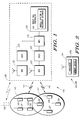
- FIG. 1 is a block diagram of a wireless communication system in accordance with an embodiment of the present invention.
- FIG. 2 is a block diagram of a mobile station of FIG. 1 in accordance with an embodiment of the present invention.
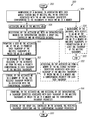
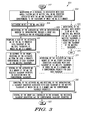
- FIG. 3 is a logic flow diagram of steps executed by the communication system of FIG. 1 in providing a prioritization of each of multiple talkgroups associated with a mobile station of FIG. 1 in accordance with an embodiment of the present invention.
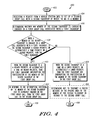
- FIG. 4 is a logic flow diagram of steps executed by the communication system of FIG. 1 in establishing a prioritized group call in accordance with an embodiment of the present invention.
- a wireless communication system that includes an MS that is a member of multiple talkgroups and provides for a prioritization of the multiple talkgroups.
- a database included in the system maintains an MS identifier associated with the MS and maintains multiple talkgroup identifiers in association with the MS identifier, wherein each talkgroup identifier of the multiple talkgroup identifiers corresponds to a talkgroup of the multiple talkgroups.
- the database further maintains a prioritization associated with at least one talkgroup of the multiple talkgroups.
- the MS may dynamically prioritize the multiple talkgroups to which is belongs.
- the prioritization may be statically maintained.
- the system utilizes the maintained prioritizations to determine whether to interrupt the MS when the MS is involved in a multi-party communication session.
- an embodiment of the present invention encompasses a method for prioritizing talkgroups in a wireless communication system that comprises multiple talkgroups.
- the method includes steps of maintaining a mobile station (MS) identifier, wherein an MS corresponding to the MS identifier is a member of each talkgroup of the multiple talkgroups, maintaining multiple talkgroup identifiers in association with the MS identifier, wherein each talkgroup identifier of the multiple talkgroup identifiers corresponds to a talkgroup of the multiple talkgroups, and maintaining a prioritization of at least one talkgroup of the multiple talkgroups.
- MS mobile station
- Another embodiment of the present invention encompasses a method for establishing a prioritized multi-party communication session in a wireless communication system.
- the method includes steps of receiving a request to establish a second multi-party communication session involving a second talkgroup and determining whether an MS affiliated with the second talkgroup is engaged in a first multi-party communication session associated with a first talkgroup.
- the method further includes steps of determining a priority of the first talkgroup relative to a priority of the second talkgroup; and, based on the determined priority of the first talkgroup relative to the priority of the second talkgroup, determining whether to interrupt the participation of the MS in the first multi-party communication session.
- Yet another embodiment of the present invention encompasses a method for dynamically prioritizing talkgroups by an MS that is a member of each talkgroup of multiple talkgroups.
- the method includes steps of storing an MS identifier, wherein the MS identifier is uniquely associated with the MS, and storing multiple talkgroup identifiers in association with the MS identifier, wherein each talkgroup identifier of the multiple talkgroup identifiers corresponds to a talkgroup of the multiple talkgroups.
- the method further includes steps of prompting a user of the MS to prioritize at least one talkgroup of the multiple talkgroups and, in response to the prompt, receiving a prioritization of the at least one talkgroup of the multiple talkgroups.
- Still another embodiment of the present invention encompasses an apparatus for prioritizing talkgroups in a wireless communication system that includes multiple talkgroups.
- the apparatus includes a database that stores a talkgroup identifier corresponding to each talkgroup of the multiple talkgroups and, in association with each talkgroup of the multiple talkgroups, stores an identifier associated with at least one member of the talkgroup and a priority of the talkgroup.
- the apparatus further includes a group call controller that determines a priority of a talkgroup of the multiple talkgroups relative to a different talkgroup of the multiple talkgroups by reference to the database.
- FIG. 1 is a block diagram of a wireless communication system 100 in accordance with an embodiment of the present invention.
- Communication system 100 includes multiple Base Station Subsystems (BSSs) 120 , 121 (two shown) that are each operably coupled to a respective Digital Access Crossconnect Switch (DACS) 122 , 123 .
- BSSs Base Station Subsystems
- DACS Digital Access Crossconnect Switch
- Each DACS 122 , 123 is in turn coupled to a Metro Packet Switch (MPS) 124 , and the MPS is in turn operably coupled to a Group Call Controller 126 .
- MPS Metro Packet Switch
- each BSS of the multiple BSSs 120 , 121 is an Enhanced Base Transceiver System (EBTS) and Group Call Controller 126 is a Dispatch Application Processor (DAP) that has been modified to perform functions in accordance with the present invention.
- EBTSs and DAPs are each available from Motorola, Inc., of Schaumburg, Ill.
- DACSs 122 and 123 and MPS 124 are also available from Motorola.
- BSSs 120 and 121 , DACSs 122 and 123 , MPS 124 , and DAP 126 are collectively referred to herein as a fixed infrastructure 130 of communication system 100 .
- Communication system 100 further comprises multiple mobile stations (MSs) 101 - 108 (eight shown).
- MSs mobile stations
- Each MS of the multiple MSs 101 - 108 is in wireless communication with a BSS of the multiple BSSs 120 , 121 , such as BSS 120 , which BSS provides wireless communication services to the MS.
- each MS of the multiple MSs 101 - 108 belongs to at least one talkgroup of multiple talkgroups 110 , 112 (two shown) included in system 100 .
- each of MSs 101 - 105 is a member of talkgroup 110
- each of MSs 105 - 108 is a member of talkgroup 112 .
- FIG. 2 is a block diagram of a mobile station, such as MSs 101 - 108 , in accordance with an embodiment of the present invention.
- Each MS of the multiple MSs 101 - 108 includes a user display (not shown), a processor 202 , such as one or more microprocessors, microcontrollers, digital signal processors (DSPs), combinations thereof or such other devices known to those having ordinary skill in the art, and one or more associated memory devices 204 , such as random access memory (RAM), dynamic random access memory (DRAM), and/or read only memory (ROM) or equivalents thereof, that store data and programs that may be executed by the processor.
- Memory device 204 further stores an MS identifier that is uniquely associated with the MS and talkgroup identifiers that correspond to each of the talkgroups of which the MS is a member.
- MPS 124 includes a packet switch and routes control information between Group Call Controller 126 and BSS 120 .
- Group Call Controller 126 maintains and tracks provisioning and mobility information with respect to group calls for each MS 101 - 108 in communication system 100 , including registration of the MS when the MS activates in communication system 100 and control of group calls.
- Group Call Controller 126 includes, or is operably coupled to, a mobile station and talkgroup database 128 that stores, in association with each talkgroup 110 , 112 (two shown) included in communication system 100 , a talkgroup identifier uniquely associated with the talkgroup and a list of MS identifiers, wherein each MS identifier in the list of MS identifiers corresponds to an MS that is a member of the talkgroup.
- database 128 stores, in association with each MS 101 - 108 included in communication system 100 , an MS identifier associated with the MS, dispatch services subscribed to by the MS, and a list of talkgroups, preferably the talkgroup identifier associated with each talkgroup, of which the MS is a member.
- Database 128 may be included in a Home Location Register (HLR) or a Visited Location Register (VLR) as known in the art, or a combination of a HLR and a VLR, or a combination of one or more HLRs and/or VLRs, which HLRs and/or VLRs are modified to perform the functions of the present invention.
- the functions performed herein by Group Call Controller 126 may be distributed among the Group Call Controller and the Register, such as an HLR or a VLR, that includes database 128 .
- communication system 100 comprises a wireless dispatch communication system.
- an initiating MS such as MS 101
- each element 101 - 108 , 122 , 124 , 124 , and 126 of communication system 100 operates in accordance with well-known wireless dispatch communication protocols.
- a user of MS 101 can be assured that MS 101 will be able to communicate with infrastructure 130 and establish a dispatch communication with other members of a talkgroup that includes MS 101 .
- communication system 100 operates in accordance with the iDEN® standard, which standard specifies wireless telecommunications system operating protocols, including radio system parameters and call processing procedures.
- communication system 100 is a Time Division Multiple Access (TDMA) communication system in which communication channels, such as traffic channels and control channels, comprise time slots in a frequency bandwidth.
- TDMA Time Division Multiple Access
- communication system 100 may operate in accordance with any wireless telecommunication system that includes group calls, such as but not limited to a Code Division Multiple Access (CDMA) communication system, a Global System for Mobile communication (GSM) communication system, other Time Division Multiple Access (TDMA) communication systems, a Frequency Division Multiple Access (FDMA) communication system, or an Orthogonal Frequency Division Multiple Access (OFDM) communication system.
- CDMA Code Division Multiple Access
- GSM Global System for Mobile communication
- TDMA Time Division Multiple Access
- FDMA Frequency Division Multiple Access
- OFDM Orthogonal Frequency Division Multiple Access
- a Group Call Controller determines a talkgroup associated with the group call by reference to a VLR or an HLR.
- the Group Call Controller then conveys a page to the talkgroup members, that is, the MSs affiliated with the talkgroup.
- the page includes a talkgroup identifier associated with the talkgroup.
- a user of an MS may desire to be interrupted when a higher priority group call is initiated while the user is participating in lower priority group call, or to not be interrupted when the user of the MS is participating in higher priority call and a lower priority call is initiated.
- communication system 100 provides a method and apparatus for prioritizing talkgroups and interrupting a group call based on talkgroup prioritization.
- FIG. 3 is a logic flow diagram 300 of steps executed by communication system 100 in order to provide a dynamic process of prioritization of each of multiple talkgroups associated with an MS, such as MS 105 , in accordance with an embodiment of the present invention.
- Logic flow diagram 300 begins ( 302 ) with communication system 100 maintaining ( 302 ), in database 128 , an MS identifier associated with each MS of the multiple MSs 101 - 108 and, in association with each MS identifier, a list of all talkgroups to which the corresponding MS belongs.
- Database 128 preferably further maintains, in association with each MS active in communication system 100 , such as MSs 101 - 104 and 106 - 108 , and the talkgroups to which the MS belongs, a temporary MS identifier assigned by Group Call Controller 126 to the MS.
- Group Call Controller Upon assigning the temporary MS identifier to MS 105 , Group Call Controller further stores the temporary MS identifier in database 128 in association with the talkgroup identifiers corresponding to the talkgroups 110 , 112 of which MS 105 is a member.
- MS 105 in particular memory device 204 of the MS, also maintains an MS identifier associated with the MS and a corresponding list of talkgroup identifiers associated with the talkgroups 110 , 112 to which the MS belongs.
- MS 105 conveys the MS identifier stored in memory device 204 of the MS to infrastructure 130 .
- Infrastructure 130 routes the received MS identifier to Group Call Controller 126 .
- Group Call Controller 126 retrieves, from database 128 , the services subscribed to by MS 105 and multiple talkgroups 110 , 112 , preferably the talkgroup identifiers corresponding to the talkgroups, associated with MS 105 .
- Group Call Controller 126 also assigns to MS 105 , and stores in database 128 in association with MS 105 , a temporary MS identifier that is used to identify MS 105 while the MS is active in communication system 100 .
- Group Call Controller 126 conveys the retrieved talkgroup identifiers and assigned temporary MS identifier to MS 105 .
- MS 105 stores the received temporary MS identifier, preferably in memory device 204 of the MS, and synchronizes the received talkgroup identifiers with the list of talkgroup identifiers stored in the MS.
- MS 105 then prompts ( 310 ) a user of the MS to prioritize the talkgroups 110 , 112 of which the MS is a member, preferably by displaying a list of talkgroups associated with the MS.
- the user assigns, preferably via a keypad included in the MS or alternatively via audio instructions, and MS 105 receives ( 312 ), a priority corresponding to each talkgroup.
- the user of MS 105 may assign a ‘high’ priority or a ‘low’ priority to each talkgroup.
- the number of priority levels is up to the designer of the communication system, and that more than two priority levels may be used herein without departing from the spirit and scope of the present invention.
- MS 105 then conveys ( 316 ) the talkgroup identifiers and corresponding assigned priorities to infrastructure 130 , where Group Call Controller 126 stores ( 318 ) the received talkgroup identifiers and corresponding priorities in database 128 .
- MS 105 may also store ( 314 ), in association with the corresponding talk groups and in memory device 204 of the MS, the assigned priorities input by the user of the MS.
- Logic flow 300 then ends ( 320 ). Based on the priorities assigned by the user of the MS to the talkgroups associated with the MS, when a communication session corresponding to higher priority talkgroup is initiated, communication system 100 may interrupt a participation of the MS in a communication session corresponding to lower priority, or alternatively same priority or lower priority, talkgroup.
- the user's prioritization of the talk groups to which the user belongs may be stored in the user's MS and conveyed to infrastructure upon activation of the MS without user intervention. For example, when the user first activates the MS in system 100 , the MS may prompt the user to prioritize the talkgroups as described above in step 310 , in response to which the user inputs the talkgroup priorities as described above in step 312 and the MS stores the input priorities as described above in step 314 .
- the MS retrieves ( 322 ), from memory device 204 of the MS, the stored talkgroup identifiers associated with the talkgroups to which the MS belongs and the corresponding talkgroup priorities and conveys, as described above in step 316 , the retrieved talkgroup identifiers and the corresponding talkgroup priorities to infrastructure 130 .
- talkgroups associated with an MS may be prioritized, that is, assigned a priority, when a user of the MS subscribes to the services of communication system 100 .
- Each talkgroup is assigned a priority at the time that the MS is added to communication system 100 .
- Each assigned priority is then stored, for example by a system operator, and subsequently maintained ( 324 ), in database 128 in association with the MS and the corresponding talkgroup.
- the storing of talk group identifiers and corresponding talk group priorities may include a step of marking, preferably by Group Call Controller 126 in the dynamic embodiment or by the system operator in the static embodiment, at least one talkgroup of which MS 105 is a member and which MS 105 has prioritized.
- the step of marking of a talkgroup preferably comprises steps of storing, in database 128 and with respect to the talkgroup, such as talkgroup 110 or 112 , and subsequently maintaining by the database, information indicating that MS 105 may be interrupted in order to participate in a second multi-party communication session involving a second talkgroup when the MS is participating in a first multi-party communication session involving first talkgroup that is a lower priority, or a same or a lower priority, than the second talkgroup.
- a talkgroup may be marked upon conveyance by the MS of the talkgroup priorities or upon the initial participation by the MS in a multi-party communication session involving the lower priority talkgroup. In the latter instance, the Group Call Controller may remove, or cancel, the mark upon termination of the communication session involving the lower priority talk group.
- Group Call Controller 126 or the system operator may mark a higher priority talkgroup, such as talkgroup 110 , by adding MS 105 , that is, an MS identifier corresponding to MS 105 , to a priority list that is stored in database 128 and associated with the talkgroup.
- the priority list is a list of MS identifiers corresponding to each MS, such as MS 105 , that has assigned the talkgroup, that is, talkgroup 110 , a higher priority, or alternatively a same or a higher priority, than a different talkgroup, such as talkgroup 112 , of the multiple talkgroups to which the MS belongs.
- Group Call Controller 126 can determine, by reference to database 128 and the priority list associated with higher priority talkgroup 110 , to interrupt MS 105 if MS 105 is engaged in a communication session involving a lower priority talkgroup, that is, talkgroup 112 .
- Group Call Controller 126 or the system operator may mark a lower priority talkgroup, such as talkgroup 112 , by storing information, in database 128 and with respect to lower priority talkgroup 112 , indicating the talkgroups, such as talkgroup 110 , to which MS 105 has assigned a higher priority, or alternatively a same priority or a higher priority, than talkgroup 112 .
- Group Call Controller 126 When communication system 100 sets up a multi-party communication session involving the lower priority talkgroup, that is, talkgroup 112 , Group Call Controller 126 references the marking information stored in database 128 with respect to lower priority talkgroup 112 and marks each talkgroup of which MS 105 is a member and which talkgroup (i.e., talkgroup 110 ) has been assigned a higher priority, or a same or a higher priority than lower priority talkgroup 112 . That is, when a multi-party communication session is set up for lower priority talkgroup 112 , Group Call Controller 126 stores, in database 128 , information in association with higher priority talkgroup 110 that indicates that MS 105 may be interrupted if communication system 100 sets up a multi-party communication session for talkgroup 110 .
- Group Call Controller 126 is able to determine to interrupt the MS by reference to database 128 and the marking information that was stored in association with talkgroup 110 when the multi-party communication session involving talk group 112 was set up.
- the marks may be removed, or cancelled, from the higher priority talk groups by Group Call Controller 126 .
- communication system 100 in order to determine whether or not to interrupt an MS, such as MS 105 , when the MS is participating in a multi-party communication session and a different multi-party communication session is initiated, maintains, in database 128 , talkgroup identifiers corresponding to each of the multiple talkgroups 110 , 112 to which MS 105 belongs and further maintains prioritizations associated with each talkgroup of the multiple talkgroups 110 , 112 .
- MS 105 may dynamically prioritize the multiple talkgroups to which it belongs by assigning priorities to each talkgroup each time the MS registers with communication system 100 .
- the prioritization may be statically maintained in database 128 .
- the maintaining of talkgroup prioritizations may include marking a second talkgroup to indicate that the MS may be interrupted when engaged in a multi-party communication session involving a first talkgroup, wherein the second talkgroup is a higher priority, or a same or a higher priority, talkgroup than the first talkgroup.
- the maintaining of talk group prioritizations may include marking a first talkgroup with information associating the talkgroup with a second talkgroup, wherein the second talkgroup is a higher priority, or a same or a higher priority, than the first talkgroup.
- communication system 100 marks the associated second talkgroup based on the marking of the first talkgroup, thereby facilitating a determination by Group Call Controller 126 to interrupt the multi-party communication session involving the first talkgroup when a multi-party communication session involving the second talkgroup is initiated.
- FIG. 4 is a logic flow diagram 400 of steps executed by communication system 100 in order to establish a prioritized multi-party communication session, such as a group call, involving multiple participants in accordance with an embodiment of the present invention.
- Logic flow diagram 400 begins ( 402 ) when infrastructure 130 , and in particular BSS 120 receives ( 404 ) a request from an MS, such as MS 108 , to set up a second multi-party communication session, preferably a group call, with respect to a second talkgroup 10 of which the MS is a member, while another MS that is a member of talkgroup 110 , that is, MS 105 , is participating in a first multi-party communication session, preferably also a group call, involving a first talkgroup, that is, talkgroup 112 .
- the request includes a talkgroup identifier associated with the second talkgroup.
- the request is routed by infrastructure 130 to Group Call Controller 126 .
- Group Call Controller 126 determines ( 406 ), by reference to database 128 , whether any member of second talkgroup 110 , such as MS 105 , is currently engaged in a first multi-party communication session associated with a first talkgroup, that is, talkgroup 112 .
- Group Call Controller 126 further determines ( 408 ) whether the second talkgroup 110 is a higher priority talkgroup, or alternatively is a talkgroup of a same priority or a higher priority, than first talkgroup 112 .
- Group Call Controller 126 interrupts ( 410 ) a participation of MS 105 in the first multi-party communication session associated with first talkgroup 112 so that MS 105 may participate in the second multi-party communication session associated second talkgroup 110 .
- Group Call Controller 126 interrupts MS 105 's participation in the first multi-party communication session by conveying a control message, preferably a talkgroup priority message, to the MS, via MPS 124 , DACS 122 , and BSS 120 , informing the MS that the MS has a higher priority call, or alternatively a same priority or a higher priority call, elsewhere.
- the talkgroup priority message is conveyed over a control channel to MS 105 , which control channel preferably is an associated control channel that is associated with, and included in, a first traffic channel 116 assigned by infrastructure 130 to the first multi-party communication session involving first talkgroup 112 .
- the talkgroup priority message includes an MS identifier associated with MS 105 , preferably the MS's temporary MS identifier, or a talkgroup identifier associated with the second talkgroup 110 , and informs of a second traffic channel 114 assigned by infrastructure 130 to the second talkgroup 110 .
- MS 105 switches ( 412 ) to the second multi-party communication session associated with the second, higher priority, or alternatively higher or same priority, talkgroup 110 , preferably by tuning to the second traffic channel 114 , and the logic flow ends ( 418 ).
- the step of switching ( 412 ) includes MS 105 automatically switching to the second traffic channel in response to receipt of the talkgroup changeover message without an intervention of a user of MS 105 .
- the step of switching ( 412 ) may include the following steps. Upon receiving the message and determining that the message is intended for itself, MS 105 notifies the user of the MS, via an audio announcement or a visual announcement, of the existence of the second multi-party communication session. In response to receiving the announcement, the user may ignore the announcement if the user desires to continue participating in the first multi-party communication session.
- MS 105 may cause MS 105 to switch to the second traffic channel 114 by inputting a request to switch to the second multi-party communication session, for example by depressing a key on a keypad of the MS or by touching a softkey on the user display of the MS.
- MS 105 tunes to the second traffic channel 114 .
- Group Call Controller 126 may determine not to interrupt ( 414 ) a participation of MS 105 in the first communication session associated with the first talkgroup 112 .
- Group Call Controller 126 may determine ( 416 ) to not even transmit a paging message in the paging area of MS 105 in regard to the second communication session.
- communication system 100 utilizes talkgroup prioritizations to determine whether to interrupt a mobile station, such as MS 105 , when the MS is engaged in a multi-party communication session involving a first talkgroup and a new multi-party communication session is initiated involving a second talkgroup.
- the talkgroup prioritizations are maintained in database 128 in association with the talkgroups to which the MS belongs.
- system 100 alerts MS 105 to the existence of the second multi-party communication session in order to allow the MS to switch to the second multi-party communication session.
- system 100 may determine not to interrupt the MS's participation in the first multi-party communication session and may determine to not even page the MS in regard to the second multi-party communication session.
Landscapes
- Engineering & Computer Science (AREA)
- Computer Networks & Wireless Communication (AREA)
- Signal Processing (AREA)
- Databases & Information Systems (AREA)
- Multimedia (AREA)
- Mobile Radio Communication Systems (AREA)
- Telephonic Communication Services (AREA)
- Transceivers (AREA)
- Input Circuits Of Receivers And Coupling Of Receivers And Audio Equipment (AREA)
- Channel Selection Circuits, Automatic Tuning Circuits (AREA)
Priority Applications (8)
| Application Number | Priority Date | Filing Date | Title |
|---|---|---|---|
| US10/187,696 US6763243B2 (en) | 2002-07-02 | 2002-07-02 | Method and apparatus for providing prioritized multi-party communication sessions in a wireless communication system |
| AT03763025T ATE494742T1 (de) | 2002-07-02 | 2003-06-26 | Verfahren und vorrichtung zur bereitstellung von mehrparteiensitzungen mit vorrang in einem drahtlosen kommunikationssystem |
| PCT/US2003/020193 WO2004006449A1 (en) | 2002-07-02 | 2003-06-26 | Method and apparatus for providing prioritized multi-party communication sessions in a wireless communication system |
| KR1020047021698A KR100605248B1 (ko) | 2002-07-02 | 2003-06-26 | 무선 통신 시스템에서 우선 순위화된 다중-당사자 통신세션들을 제공하는 방법 및 장치 |
| DE60335630T DE60335630D1 (de) | 2002-07-02 | 2003-06-26 | Ehrparteiensitzungen mit vorrang in einem drahtlosen kommunikationssystem |
| EP03763025A EP1530826B1 (de) | 2002-07-02 | 2003-06-26 | Verfahren und vorrichtung zur bereitstellung von mehrparteiensitzungen mit vorrang in einem drahtlosen kommunikationssystem |
| CNB038155044A CN100373963C (zh) | 2002-07-02 | 2003-06-26 | 用于在无线通信系统中提供排定优先级的多方通信会话的方法与设备 |
| AU2003258959A AU2003258959A1 (en) | 2002-07-02 | 2003-06-26 | Method and apparatus for providing prioritized multi-party communication sessions in a wireless communication system |
Applications Claiming Priority (1)
| Application Number | Priority Date | Filing Date | Title |
|---|---|---|---|
| US10/187,696 US6763243B2 (en) | 2002-07-02 | 2002-07-02 | Method and apparatus for providing prioritized multi-party communication sessions in a wireless communication system |
Publications (2)
| Publication Number | Publication Date |
|---|---|
| US20040005904A1 US20040005904A1 (en) | 2004-01-08 |
| US6763243B2 true US6763243B2 (en) | 2004-07-13 |
Family
ID=29999393
Family Applications (1)
| Application Number | Title | Priority Date | Filing Date |
|---|---|---|---|
| US10/187,696 Expired - Lifetime US6763243B2 (en) | 2002-07-02 | 2002-07-02 | Method and apparatus for providing prioritized multi-party communication sessions in a wireless communication system |
Country Status (8)
| Country | Link |
|---|---|
| US (1) | US6763243B2 (de) |
| EP (1) | EP1530826B1 (de) |
| KR (1) | KR100605248B1 (de) |
| CN (1) | CN100373963C (de) |
| AT (1) | ATE494742T1 (de) |
| AU (1) | AU2003258959A1 (de) |
| DE (1) | DE60335630D1 (de) |
| WO (1) | WO2004006449A1 (de) |
Cited By (5)
| Publication number | Priority date | Publication date | Assignee | Title |
|---|---|---|---|---|
| US20050185783A1 (en) * | 2004-02-19 | 2005-08-25 | Alcatel | Communication method |
| US20050197146A1 (en) * | 2004-02-27 | 2005-09-08 | Rao Padakandla K. | Method, system, and device for provisioned talkgroup identifier discovery |
| US20100165904A1 (en) * | 2008-12-29 | 2010-07-01 | Motorola, Inc. | Method for selecting a channel in a multi-channel communication system |
| US8170594B1 (en) * | 2006-08-08 | 2012-05-01 | Nextel Communications, Inc. | Method and computer-readable medium for precedence group calling |
| US8452315B1 (en) * | 2007-03-09 | 2013-05-28 | Nextel Communications Inc. | Apparatus, method and computer-readable medium for dispatch group calling across fleets |
Families Citing this family (44)
| Publication number | Priority date | Publication date | Assignee | Title |
|---|---|---|---|---|
| US6961595B2 (en) | 2002-08-08 | 2005-11-01 | Flarion Technologies, Inc. | Methods and apparatus for operating mobile nodes in multiple states |
| US7363039B2 (en) | 2002-08-08 | 2008-04-22 | Qualcomm Incorporated | Method of creating and utilizing diversity in multiple carrier communication system |
| US7664506B2 (en) * | 2003-01-09 | 2010-02-16 | Eads Secure Networks Oy | Arrangement and method for capacity management in communication system |
| US7411895B2 (en) * | 2003-02-19 | 2008-08-12 | Qualcomm Incorporated | Controlled superposition coding in multi-user communication systems |
| US8593932B2 (en) * | 2003-05-16 | 2013-11-26 | Qualcomm Incorporated | Efficient signal transmission methods and apparatus using a shared transmission resource |
| US7925291B2 (en) * | 2003-08-13 | 2011-04-12 | Qualcomm Incorporated | User specific downlink power control channel Q-bit |
| DE102004005720B3 (de) * | 2004-02-05 | 2005-08-04 | Siemens Ag | Verfahren zum Verwalten von Kommunikationssitzungen |
| ATE387070T1 (de) | 2004-02-27 | 2008-03-15 | Research In Motion Ltd | Verfahren, system und vorrichtung zur bestimmung der selektiven nichtberücksichtigung der do-not- disturb-funktion |
| US7856213B2 (en) * | 2004-02-27 | 2010-12-21 | Research In Motion Limited | Method, system, and device for specifying selective override of do-not-disturb functionality |
| KR20050101505A (ko) * | 2004-04-19 | 2005-10-24 | 삼성전자주식회사 | 무선 통신 시스템에서 다중 세션 모니터링 방법 및 장치 |
| US20050243988A1 (en) * | 2004-04-30 | 2005-11-03 | Barclay Deborah L | Telephone switching system and method for alerting for priority calls |
| EP1850620A4 (de) * | 2005-01-26 | 2011-11-23 | Sharp Kk | Mobilkommunikationsnetzwerk-teilnehmerinformationsverwaltungssystem, teilnehmerinformationsverwaltungsverfahren, kommunikationssteuereinrichtung, kommunikationsendgerät und kommunikationssteuerverfahren |
| US8681751B2 (en) * | 2005-07-11 | 2014-03-25 | Nokia Corporation | Method and apparatus for providing presence information in support of wireless communication services |
| DE102005039668B4 (de) * | 2005-08-22 | 2007-06-21 | Infineon Technologies Ag | Verfahren zum rechnergestützten Bilden einer Konferenzsitzungs-Einladungsnachricht, Verfahren zum rechnergestützten Erzeugen einer Konferenzsitzung, Verfahren zum rechnergestützten Verarbeiten von Nachrichten in einer Konferenzsitzung, Konferenzsitzungs-Einladungsnachricht-Erzeugungseinheit, Konferenzsitzungs-Erzeugungseinheit und Kommunikations-Endgeräte |
| US20070207826A1 (en) * | 2005-11-21 | 2007-09-06 | Utstarcom, Incorporated | Intelligent mobile switching center (MSC) feature control |
| EP1977563B1 (de) * | 2006-01-11 | 2018-01-03 | QUALCOMM Incorporated | Codierung von bakensignalen zur identifikationsbereitstellung bei der peer-to-peer-kommunikation |
| US8811369B2 (en) * | 2006-01-11 | 2014-08-19 | Qualcomm Incorporated | Methods and apparatus for supporting multiple communications modes of operation |
| US8774155B2 (en) * | 2006-02-03 | 2014-07-08 | Broadcom Corporation | Transporting call data via a packet data network |
| CN1809099B (zh) * | 2006-02-13 | 2010-09-01 | 迈普通信技术股份有限公司 | 一种基于号码优先级强拆呼叫的方法 |
| FR2901447B1 (fr) * | 2006-05-18 | 2008-12-26 | Sagem Comm | Procede de determination d'associations entre des informations de priorite et des categories d'appel de groupe d'un service d'appel de groupe deploye sur un reseau de telephonie mobile |
| US9152928B2 (en) * | 2006-06-30 | 2015-10-06 | Triplay, Inc. | Context parameters and identifiers for communication |
| US7711383B2 (en) * | 2006-06-30 | 2010-05-04 | Motorola, Inc. | Method and system for communicating within a communication network |
| US8346872B2 (en) | 2006-06-30 | 2013-01-01 | The Invention Science Fund I, Llc | Context parameters and identifiers for communication |
| US8949337B2 (en) | 2006-06-30 | 2015-02-03 | The Invention Science Fund I, Llc | Generation and establishment of identifiers for communication |
| US9219815B2 (en) * | 2006-08-18 | 2015-12-22 | Triplay, Inc. | Identifier technique for communication interchange |
| JP2010516208A (ja) | 2007-01-11 | 2010-05-13 | クゥアルコム・インコーポレイテッド | 無線通信システムにおいてdtxおよびdrxを使用すること |
| US20080298293A1 (en) * | 2007-05-29 | 2008-12-04 | Motorola, Inc. | Peer-to-peer group call support in a communication system |
| US8027696B2 (en) * | 2007-12-28 | 2011-09-27 | Motorola Solutions, Inc. | Method and apparatus for allocating channel resources in a wireless communication system |
| US8856003B2 (en) | 2008-04-30 | 2014-10-07 | Motorola Solutions, Inc. | Method for dual channel monitoring on a radio device |
| US8538464B2 (en) | 2008-05-06 | 2013-09-17 | Telefonaktiebolaget L M Ericsson (Publ) | Code word assignment methods for quick paging in telecommunication systems |
| US8595501B2 (en) | 2008-05-09 | 2013-11-26 | Qualcomm Incorporated | Network helper for authentication between a token and verifiers |
| US8401584B2 (en) * | 2008-06-17 | 2013-03-19 | Motorola Solutions, Inc. | Dynamic group prioritization in communication networks |
| US8577404B2 (en) | 2008-07-15 | 2013-11-05 | Qualcomm Incorporated | Prioritization of group communications at a wireless communication device |
| US8874056B2 (en) * | 2008-08-26 | 2014-10-28 | Cisco Technology, Inc. | Identifying channels in a communication network |
| US20100151895A1 (en) * | 2008-12-16 | 2010-06-17 | Motorola, Inc. | Method for managing competing call requests |
| US8755831B2 (en) * | 2009-03-24 | 2014-06-17 | QYALCOMM Incorporated | Selectively allocating data channel resources to wireless communication devices within a wireless communications system |
| US8700081B2 (en) * | 2009-03-30 | 2014-04-15 | Qualcomm Incorporated | Determining whether to switch between group calls based on priority within a wireless communications system |
| US8738058B2 (en) * | 2009-04-06 | 2014-05-27 | Qualcomm Incorporated | High-priority communications sessions within a wireless communications system |
| KR101661524B1 (ko) * | 2009-06-09 | 2016-10-11 | 삼성전자주식회사 | 사용자 명령과 소속 그룹에 기초한 네트워크 참여방법 및 이를 적용한 디바이스 |
| JP5631271B2 (ja) | 2010-07-28 | 2014-11-26 | ローム アンド ハース カンパニーRohm And Haas Company | 改良されたクロマトグラフィー媒体の製造方法および使用方法 |
| US9515724B2 (en) * | 2015-02-05 | 2016-12-06 | Iridium Satellite Llc | Position-based communication |
| US9578470B2 (en) * | 2015-02-05 | 2017-02-21 | Iridium Satellite Llc | Priority talkgroups |
| US11139989B2 (en) | 2019-08-30 | 2021-10-05 | Motorola Solutions, Inc. | Method of enrolling a device into a PKI domain for certificate management using factory key provisioning |
| US12526655B2 (en) | 2023-07-10 | 2026-01-13 | T-Mobile Usa, Inc. | Managing bandwidth consumption associated with multiple interaction channels of a wireless telecommunication network related to information campaigns |
Citations (5)
| Publication number | Priority date | Publication date | Assignee | Title |
|---|---|---|---|---|
| US5634197A (en) * | 1993-08-12 | 1997-05-27 | Nokia Telecommunications Oy | Method, mobile exchange, and subscriber station in a mobile radio system for establishing a high-priority call |
| US5752196A (en) * | 1994-11-22 | 1998-05-12 | Nokia Telecommunications Oy | Maintaining group data in a mobile communications system |
| US6138031A (en) * | 1995-06-21 | 2000-10-24 | Nokia Telecommunications Oy | Call establishment in a mobile communication system |
| US6208872B1 (en) * | 1998-09-04 | 2001-03-27 | Ericsson Inc. | Method and apparatus for inhibition of calls while roaming |
| US6516200B1 (en) * | 1999-10-28 | 2003-02-04 | Ericsson Inc. | Controlling communications terminal response to group call page based on group call characteristics |
Family Cites Families (4)
| Publication number | Priority date | Publication date | Assignee | Title |
|---|---|---|---|---|
| FI92787C (fi) * | 1993-03-30 | 1994-12-27 | Nokia Telecommunications Oy | Ryhmäpuhelumenetelmä, järjestelmäohjain ja tilaaja-asema radiojärjestelmässä |
| US5537684A (en) | 1994-07-29 | 1996-07-16 | Motorola, Inc. | Method for a communication unit to influence communication resource allocation |
| US6067457A (en) | 1996-04-30 | 2000-05-23 | Motorola, Inc. | Method for dynamically assigning priority to a call |
| US6363258B1 (en) * | 1999-10-28 | 2002-03-26 | Ericsson Inc. | Communications system providing call type indication for group calls |
-
2002
- 2002-07-02 US US10/187,696 patent/US6763243B2/en not_active Expired - Lifetime
-
2003
- 2003-06-26 CN CNB038155044A patent/CN100373963C/zh not_active Expired - Lifetime
- 2003-06-26 AU AU2003258959A patent/AU2003258959A1/en not_active Abandoned
- 2003-06-26 WO PCT/US2003/020193 patent/WO2004006449A1/en not_active Ceased
- 2003-06-26 DE DE60335630T patent/DE60335630D1/de not_active Expired - Lifetime
- 2003-06-26 KR KR1020047021698A patent/KR100605248B1/ko not_active Expired - Lifetime
- 2003-06-26 EP EP03763025A patent/EP1530826B1/de not_active Expired - Lifetime
- 2003-06-26 AT AT03763025T patent/ATE494742T1/de not_active IP Right Cessation
Patent Citations (5)
| Publication number | Priority date | Publication date | Assignee | Title |
|---|---|---|---|---|
| US5634197A (en) * | 1993-08-12 | 1997-05-27 | Nokia Telecommunications Oy | Method, mobile exchange, and subscriber station in a mobile radio system for establishing a high-priority call |
| US5752196A (en) * | 1994-11-22 | 1998-05-12 | Nokia Telecommunications Oy | Maintaining group data in a mobile communications system |
| US6138031A (en) * | 1995-06-21 | 2000-10-24 | Nokia Telecommunications Oy | Call establishment in a mobile communication system |
| US6208872B1 (en) * | 1998-09-04 | 2001-03-27 | Ericsson Inc. | Method and apparatus for inhibition of calls while roaming |
| US6516200B1 (en) * | 1999-10-28 | 2003-02-04 | Ericsson Inc. | Controlling communications terminal response to group call page based on group call characteristics |
Cited By (8)
| Publication number | Priority date | Publication date | Assignee | Title |
|---|---|---|---|---|
| US20050185783A1 (en) * | 2004-02-19 | 2005-08-25 | Alcatel | Communication method |
| US7532878B2 (en) * | 2004-02-19 | 2009-05-12 | Alcatel | Communication method |
| US20050197146A1 (en) * | 2004-02-27 | 2005-09-08 | Rao Padakandla K. | Method, system, and device for provisioned talkgroup identifier discovery |
| US7840192B2 (en) * | 2004-02-27 | 2010-11-23 | Research In Motion Limited | Method, system, and device for provisioned talkgroup identifier discovery |
| US8170594B1 (en) * | 2006-08-08 | 2012-05-01 | Nextel Communications, Inc. | Method and computer-readable medium for precedence group calling |
| US8452315B1 (en) * | 2007-03-09 | 2013-05-28 | Nextel Communications Inc. | Apparatus, method and computer-readable medium for dispatch group calling across fleets |
| US20100165904A1 (en) * | 2008-12-29 | 2010-07-01 | Motorola, Inc. | Method for selecting a channel in a multi-channel communication system |
| US8427996B2 (en) * | 2008-12-29 | 2013-04-23 | Motorola Solutions, Inc. | Method for selecting a channel in a multi-channel communication system |
Also Published As
| Publication number | Publication date |
|---|---|
| WO2004006449A1 (en) | 2004-01-15 |
| EP1530826A4 (de) | 2007-04-18 |
| EP1530826B1 (de) | 2011-01-05 |
| AU2003258959A1 (en) | 2004-01-23 |
| DE60335630D1 (de) | 2011-02-17 |
| US20040005904A1 (en) | 2004-01-08 |
| KR100605248B1 (ko) | 2006-07-31 |
| KR20050016715A (ko) | 2005-02-21 |
| EP1530826A1 (de) | 2005-05-18 |
| CN1666421A (zh) | 2005-09-07 |
| CN100373963C (zh) | 2008-03-05 |
| ATE494742T1 (de) | 2011-01-15 |
Similar Documents
| Publication | Publication Date | Title |
|---|---|---|
| US6763243B2 (en) | Method and apparatus for providing prioritized multi-party communication sessions in a wireless communication system | |
| US6577874B1 (en) | Methods and systems for providing temporary identification numbers for mobile terminals | |
| US6532224B1 (en) | Method, systems, and terminals for assigning control channel time slots for group and individual pages | |
| US6564049B1 (en) | Methods and systems for providing group calls with reduced setup times | |
| JP5386505B2 (ja) | コール・グループのセットアップ、グループ・コールの管理およびグループ・コールの調整 | |
| US8265094B2 (en) | De-registering a multicast group member from a multicast group within a wireless communications network | |
| WO2001031964A1 (en) | Dynamically controlled group call services in mobile telecommunications networks | |
| KR100407330B1 (ko) | 이동통신 단말기의 로밍서비스 방법 | |
| US6829341B2 (en) | Method for managing a plurality of extension communication units | |
| US6151501A (en) | Method and apparatus for alerting a communication unit of a service request in a communication system | |
| CA2689527C (en) | Automatically switching a tdma radio affiliated with a fdma site to a tdma site | |
| US8279845B2 (en) | Method and system for realizing reception of calling number by the terminal in advance | |
| US8159996B2 (en) | Control method for reaccessing after the terminal in the trunked system has exited the group call | |
| US7460875B2 (en) | Additional information for voice group call service | |
| CN100370883C (zh) | 对广播多播业务用户进行寻呼的方法 | |
| KR20090099004A (ko) | HRPD시스템에서 1x 페이징 전달의 거절 방법 | |
| US20020147010A1 (en) | Unsolicited paging response apparatus and method | |
| EP1569486B1 (de) | Verfahren, System und Gerät für die Ermittlung der Identifikatoren von bereitgestellten Sprechgruppen | |
| CN101237628A (zh) | 一种集群通信系统中实现一键通呼叫提示的方法 | |
| KR100244257B1 (ko) | 디지틀 이동 패켓 통신망용 서비스 방법 | |
| KR0173909B1 (ko) | 주파수 송출기의 주파수 제어를 통한 무선호출 광역서비스 방법 | |
| KR20000003242A (ko) | 무선통신 시스템에서의 페이징영역 등록 방법 및 그를 이용한다단계 페이징 방법 | |
| CN117202109A (zh) | 宽带集群系统中基于位置的呼叫方法及装置 | |
| JP2005294879A (ja) | 移動通信システム及び移動通信システムによる同報通信方法 | |
| KR20030034565A (ko) | 이동망의 위치 정보 알림 서비스 방법 |
Legal Events
| Date | Code | Title | Description |
|---|---|---|---|
| AS | Assignment |
Owner name: MOTOROLA, INC., ILLINOIS Free format text: ASSIGNMENT OF ASSIGNORS INTEREST;ASSIGNORS:WOLF, TRACY L.;ERICKSON, PAUL M.;STANAWAY, JOHN C.;AND OTHERS;REEL/FRAME:013082/0886;SIGNING DATES FROM 20020701 TO 20020702 |
|
| STCF | Information on status: patent grant |
Free format text: PATENTED CASE |
|
| FPAY | Fee payment |
Year of fee payment: 4 |
|
| AS | Assignment |
Owner name: MOTOROLA SOLUTIONS, INC., ILLINOIS Free format text: CHANGE OF NAME;ASSIGNOR:MOTOROLA, INC;REEL/FRAME:026081/0001 Effective date: 20110104 |
|
| FPAY | Fee payment |
Year of fee payment: 8 |
|
| FPAY | Fee payment |
Year of fee payment: 12 |