US6613184B1 - Stable interfaces between electrically conductive adhesives and metals - Google Patents
Stable interfaces between electrically conductive adhesives and metals Download PDFInfo
- Publication number
- US6613184B1 US6613184B1 US08/855,811 US85581197A US6613184B1 US 6613184 B1 US6613184 B1 US 6613184B1 US 85581197 A US85581197 A US 85581197A US 6613184 B1 US6613184 B1 US 6613184B1
- Authority
- US
- United States
- Prior art keywords
- metal
- electrically
- coating
- intervening layer
- metal substrate
- Prior art date
- Legal status (The legal status is an assumption and is not a legal conclusion. Google has not performed a legal analysis and makes no representation as to the accuracy of the status listed.)
- Expired - Fee Related
Links
Images



Classifications
-
- C—CHEMISTRY; METALLURGY
- C23—COATING METALLIC MATERIAL; COATING MATERIAL WITH METALLIC MATERIAL; CHEMICAL SURFACE TREATMENT; DIFFUSION TREATMENT OF METALLIC MATERIAL; COATING BY VACUUM EVAPORATION, BY SPUTTERING, BY ION IMPLANTATION OR BY CHEMICAL VAPOUR DEPOSITION, IN GENERAL; INHIBITING CORROSION OF METALLIC MATERIAL OR INCRUSTATION IN GENERAL
- C23C—COATING METALLIC MATERIAL; COATING MATERIAL WITH METALLIC MATERIAL; SURFACE TREATMENT OF METALLIC MATERIAL BY DIFFUSION INTO THE SURFACE, BY CHEMICAL CONVERSION OR SUBSTITUTION; COATING BY VACUUM EVAPORATION, BY SPUTTERING, BY ION IMPLANTATION OR BY CHEMICAL VAPOUR DEPOSITION, IN GENERAL
- C23C22/00—Chemical surface treatment of metallic material by reaction of the surface with a reactive liquid, leaving reaction products of surface material in the coating, e.g. conversion coatings, passivation of metals
- C23C22/02—Chemical surface treatment of metallic material by reaction of the surface with a reactive liquid, leaving reaction products of surface material in the coating, e.g. conversion coatings, passivation of metals using non-aqueous solutions
-
- C—CHEMISTRY; METALLURGY
- C09—DYES; PAINTS; POLISHES; NATURAL RESINS; ADHESIVES; COMPOSITIONS NOT OTHERWISE PROVIDED FOR; APPLICATIONS OF MATERIALS NOT OTHERWISE PROVIDED FOR
- C09J—ADHESIVES; NON-MECHANICAL ASPECTS OF ADHESIVE PROCESSES IN GENERAL; ADHESIVE PROCESSES NOT PROVIDED FOR ELSEWHERE; USE OF MATERIALS AS ADHESIVES
- C09J5/00—Adhesive processes in general; Adhesive processes not provided for elsewhere, e.g. relating to primers
- C09J5/02—Adhesive processes in general; Adhesive processes not provided for elsewhere, e.g. relating to primers involving pretreatment of the surfaces to be joined
-
- C—CHEMISTRY; METALLURGY
- C09—DYES; PAINTS; POLISHES; NATURAL RESINS; ADHESIVES; COMPOSITIONS NOT OTHERWISE PROVIDED FOR; APPLICATIONS OF MATERIALS NOT OTHERWISE PROVIDED FOR
- C09J—ADHESIVES; NON-MECHANICAL ASPECTS OF ADHESIVE PROCESSES IN GENERAL; ADHESIVE PROCESSES NOT PROVIDED FOR ELSEWHERE; USE OF MATERIALS AS ADHESIVES
- C09J9/00—Adhesives characterised by their physical nature or the effects produced, e.g. glue sticks
- C09J9/02—Electrically-conducting adhesives
-
- H—ELECTRICITY
- H05—ELECTRIC TECHNIQUES NOT OTHERWISE PROVIDED FOR
- H05K—PRINTED CIRCUITS; CASINGS OR CONSTRUCTIONAL DETAILS OF ELECTRIC APPARATUS; MANUFACTURE OF ASSEMBLAGES OF ELECTRICAL COMPONENTS
- H05K3/00—Apparatus or processes for manufacturing printed circuits
- H05K3/30—Assembling printed circuits with electric components, e.g. with resistor
- H05K3/32—Assembling printed circuits with electric components, e.g. with resistor electrically connecting electric components or wires to printed circuits
- H05K3/321—Assembling printed circuits with electric components, e.g. with resistor electrically connecting electric components or wires to printed circuits by conductive adhesives
-
- H—ELECTRICITY
- H05—ELECTRIC TECHNIQUES NOT OTHERWISE PROVIDED FOR
- H05K—PRINTED CIRCUITS; CASINGS OR CONSTRUCTIONAL DETAILS OF ELECTRIC APPARATUS; MANUFACTURE OF ASSEMBLAGES OF ELECTRICAL COMPONENTS
- H05K2201/00—Indexing scheme relating to printed circuits covered by H05K1/00
- H05K2201/02—Fillers; Particles; Fibers; Reinforcement materials
- H05K2201/0203—Fillers and particles
- H05K2201/0206—Materials
- H05K2201/0239—Coupling agent for particles
-
- H—ELECTRICITY
- H05—ELECTRIC TECHNIQUES NOT OTHERWISE PROVIDED FOR
- H05K—PRINTED CIRCUITS; CASINGS OR CONSTRUCTIONAL DETAILS OF ELECTRIC APPARATUS; MANUFACTURE OF ASSEMBLAGES OF ELECTRICAL COMPONENTS
- H05K3/00—Apparatus or processes for manufacturing printed circuits
- H05K3/38—Improvement of the adhesion between the insulating substrate and the metal
- H05K3/382—Improvement of the adhesion between the insulating substrate and the metal by special treatment of the metal
-
- H—ELECTRICITY
- H05—ELECTRIC TECHNIQUES NOT OTHERWISE PROVIDED FOR
- H05K—PRINTED CIRCUITS; CASINGS OR CONSTRUCTIONAL DETAILS OF ELECTRIC APPARATUS; MANUFACTURE OF ASSEMBLAGES OF ELECTRICAL COMPONENTS
- H05K3/00—Apparatus or processes for manufacturing printed circuits
- H05K3/38—Improvement of the adhesion between the insulating substrate and the metal
- H05K3/389—Improvement of the adhesion between the insulating substrate and the metal by the use of a coupling agent, e.g. silane
-
- Y—GENERAL TAGGING OF NEW TECHNOLOGICAL DEVELOPMENTS; GENERAL TAGGING OF CROSS-SECTIONAL TECHNOLOGIES SPANNING OVER SEVERAL SECTIONS OF THE IPC; TECHNICAL SUBJECTS COVERED BY FORMER USPC CROSS-REFERENCE ART COLLECTIONS [XRACs] AND DIGESTS
- Y10—TECHNICAL SUBJECTS COVERED BY FORMER USPC
- Y10T—TECHNICAL SUBJECTS COVERED BY FORMER US CLASSIFICATION
- Y10T428/00—Stock material or miscellaneous articles
- Y10T428/31504—Composite [nonstructural laminate]
- Y10T428/31536—Including interfacial reaction product of adjacent layers
Definitions
- the present invention relates to a technique for improving the electrical properties of the adhesive bond formed between a metal surface and an electrically conductive adhesive.
- electrically conductive elements are bonded to one another by means of electrically-conductive adhesives.
- electrically-conductive adhesives For example, wireless cards are often bonded to thick metal backers, especially those formed from aluminum and its alloys, using electrically-conductive adhesives.
- Aluminum surfaces are protected by a naturally formed thin layer of aluminum oxide that provides passivation of the metal at room temperature and moderate relative humidity. Although the native oxide of aluminum is a poor conductor, it is thin enough to allow a reasonably low contact resistance for conductive interconnections and resists further degradation of the electrical interconnection. Exposure to higher temperatures and humidity induces a transformation of the aluminum oxide to aluminum oxyhydroxide (AlOOH) and finally, if the transformation is complete, aluminum hydroxide (Al(OH) 3 ). These changes in surface composition are accompanied by a transformation of the original morphology of the thin oxide layer to a “corn flake” type structure and finally to platelets.
- AlOOH aluminum oxyhydroxide
- Al(OH) 3 aluminum hydroxide
- Roughening of surfaces for example by sand blasting, chemical etching, or anodization has been commonly practiced to enhance adhesion of aluminum/polymer adhesive systems and to provide structural durability in humid or corrosive environments.
- treatments that improve adhesion by producing a thick oxide layer such as phosphoric acid or chromic acid anodization, are not suitable because of the poor electrical properties of the thick oxide layers.
- the Forest Products Laboratory (FPL) process developed in 1950, has been found to be effective in enhancing the structural stability of non-conductive adhesive bonds to aluminum in humid environments, especially when used in conjunction with organic corrosion inhibitors. See J. S. Ahearn, G. D. Davis, T. S. Sun and J. D. Venables, “Adhesion Aspects of Polymer Coatings,” edited by K. L. Mittal, Plenum Publishing Corp., 1982 p.281. However, treatments for promoting electrical stability of electrically conductive bonds to aluminum using electrically conductive adhesives are not known.
- the present invention provides a new technique for enhancing the electrical properties of the bond between an electrically-conductive adhesive and a metal substrate attached thereto.
- the technique comprises treating the metal surface to be bonded with an organic material that chemically bonds to the metal surface and subsequently is capable of reacting with the polymer in the adhesive.
- the present invention also provides new electrical components containing metal elements bonded to electrically-conductive adhesives, the components containing a layer of an adhesion promoter between the substrate and the adhesive, the adhesion promoter comprising a material capable of bonding to the metal of the substrate and also of capable of reacting with the adhesive.
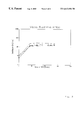
- FIGS. 1 to 4 are graphical representations of the result obtained in Examples 1 to 4 discussed later in this specification.
- Electrically-conductive adhesives are commonly used for ahesively and electrically bonding together a wide variety of different electrically-conductive components.
- circuit boards or cards can be directly bonded, adhesively and electrically, to metal substrates such as metal heatsinks by means of electrically-conductive adhesives.
- a continuous electrically-conductive surface of the component can be bonded to the metal backing by a continuous layer of an electrically-conductive adhesive.
- selective areas of the component for example electrical contacts on a card or circuit board surface, can be bonded to the metal backer by means of individual, discrete, normally co-planar layers of electrically-conductive adhesive, each discrete layer being associated with one electrical contact on the board.
- Electrically conductive adhesives can also be used to replace traditional solder as, for example, in the case of bonding a wire to the electrical contact of an electronic device.
- the present invention is broadly applicable to all these applications of electrically-conductive adhesives, as well as any other use for these materials.
- the surface of the metal article or substrate to be bonded, both electrically and adhesively, to the electrically-conductive adhesive is treated with an organic material that chemically bonds to the metal surface and subsequently is capable of reacting with the polymer in the adhesive.
- organic coupling agents Such materials are well known and exemplified, for example, by coupling agents containing organic groups, hereinafter “organic coupling agents”.
- Organic coupling agents take the form of compounds having at least one functional group capable of bonding to a metal substrate and another functional group capable of bonding to different types of polymers.
- Organosilanes, organotitanates and organozirconates are good examples of these types of compounds.
- these compounds contain an organomoiety having a terminal group capable of reacting with one or more different types of organic polymers, such terminal groups being exemplified by amino, epoxy, carboxyl, halo, mercapto, acrylate, etc.
- these compounds also typically include one or more groups capable of bonding to the metal substrate, such groups usually comprising alkoxy, aryloxy, or halide groups.
- any compound which will bond to the metal substrate and also react with a subsequently applied polymer adhesive can be employed in the present invention.
- Specific examples are illustrated in G. Tesoro and Y. Wu “Silicon Coupling Agents: The role of the Functional Group,” J. Adhesion Sci. Technol., 5, 771 (1991).
- Other useful materials are described, for example, in U.S. Pat. No. 3,911,169, U.S. Pat. No. 4,976,990, U.S. Pat. No. 4,727,168, U.S. Pat. No. 5,112,395 and Japanese Patent 77149538 (771213), the disclosures of which are incorporated herein by reference.
- Preferred adhesion promoters are organosilanes, titanates and zirconates containing alkoxy or halide groups.
- Particularly preferred adhesion promoters are organosilanes containing alkoxy (e.g. methoxy, ethoxy or propoxy) groups or halides attached directly to the silicon atom plus an additional functional group such as amino or glycido remote from the silicon atom.
- Examples of such adhesion promoters are trimethoxy-3-glycidoxy silane sold under the designation Z-6040 from Dow Corning, gamma-aminopropyltriethoxysilane sold under the designation A-1100 by Union Carbide and also under the designation A ⁇ 75 ⁇ by Petrarch of Bristol, Pa. and N-(2-amino)-3-aminopropyltrimethoxysilane sold under the designation Z-6020 by Dow Corning.
- the adhesion promoter can be applied to the metal substrate by any conventional technique. Most conveniently, the adhesion promoter is applied by spraying the adhesion promoter in liquid form on the surface to be treated or dipping the surface to be treated in a container containing the adhesion promoter.
- the adhesion promoter can be used as is, i.e. undiluted, or it can be diluted with a suitable solvent such as an alcohol or water. Isopropyl alcohol or a mixture of isopropyl alcohol and water are preferred.
- the concentration of the adhesion promoter in the solvent is not critical and can easily be determined by routine experimentations for optimal performance. Concentrations on the order of 0.5 to 10 wt. %, more preferably 1 to 5 wt. %, have been found to be suitable, although any concentration can be used.
- the amount of adhesion promoter to be applied to the metal substrate is not critical and can vary widely. Theoretically, only a single atomic layer of the adhesion promoter need be applied. In practice, the amount applied should be such that the adhesion promoter is present in a layer of 100 Angstroms or less in thickness, preferably 50 Angstroms or less. Thicker layers can be used, although this may adversely affect the electrical properties of the bond.
- the metal substrate After the metal substrate is treated with the adhesion promoter, as discussed above, it can be allowed to dry as is. Alternately, it can be rinsed so as to remove excess adhesion promoter. This can be done by spraying the treated surface with, or dipping the treated surface in, a suitable solvent such as water, alcohol or a mixture of alcohol and water. A mixture of water and isopropyl alcohol is preferred.
- a suitable solvent such as water, alcohol or a mixture of alcohol and water. A mixture of water and isopropyl alcohol is preferred.
- the so-treated surface can simply be dried, if desired.
- the treated metal substrate can be subjected to blow drying in atmospheric air.
- the treated substrate is heated slightly as, for example, by heating in air at one hour at 78° C. This not only insures complete drying but also accelerates the hydrolysis reaction which occurs when the adhesion promoter bonds to the metal substrate.
- the pretreating procedure of the present invention as discussed above can be applied to metal surfaces of the component to be bonded directly without any surface preparation.
- the metal surface to be bonded can be cleaned so as to remove any dirt, oxides, machining oils and so forth form its surfaces prior to application of the adhesion promoter.
- Surface cleaning can be accomplished by any technique known in the art. For example, surface cleaning can be accomplished by sandblasting or chemical etching or simple cleaning with a solvent such as isopropyl alcohol or the like.
- electrically-conductive adhesives are well known in the art, and any electrically-conductive adhesive can be used in accordance with the present invention.
- electrically-conductive adhesives are composed of a polymer adhesive which contains an electrically-conductive material dispersed therein.
- Epoxy adhesives containing particulate silver, or particulate ceramics such as mica coated with silver, are a common, well-known type of electrically-conductive adhesive.
- Electrically-conductive adhesives can also be filled with other electrically-conductive particulate materials such as gold, nickel, palladium and the like.
- the adhesive portion of the electrically-conductive adhesive can be formed from other adhesive resins such as silicones, silicone/epoxies, polyamides and the like. Any such electrically-conductive adhesive can be used in accordance with the present invention of course, the adhesive to be used should be one which reacts with the reactive moiety in the adhesion promoter used in accordance with the present invention to pretreat the metal surface for adhesion promotion.
- the electrically-conductive adhesive is applied to the metal substrate, the electrically-conductive article to be bonded thereto, the adherend, is contacted therewith to complete the physical and electrical connection of two electrically-conductive articles.
- the adherend can also be treated with an adhesion promoter in accordance with the present invention so that the electrical properties of its adhesive/metal bond are improved as well.
- the electrical properties of the adhesive bonds so formed as a function of time were then tested by measuring the resistance across the joined rivets, i.e. from the tail of one rivet through the adhesive bond to the tail of the other rivet. This was done by placing the joined rivets in a chamber maintained at 85° C. and 85% relative humidity and connecting the leads of an ohmmeter to the tails of the two rivets. Resistance was measured for periods of up to 150 hours to determine the effect on the electrical properties on the bond of high humidity conditions. Also the experiment in each example was repeated a number of times to insure reliability.
- Example 1 was repeated except that, after cleaning with isopropyl alcohol, the two metal surfaces to be bonded were further cleaned by a vapor blast technique.
- a slurry of a sand abrasive in water was sprayed at high pressure at the surfaces to be bonded so as to further clean and roughen the surfaces.
- the rivets were joined together in the manner described above to produce the test product of Example 2.
- the resistance of the bond so formed was far better than that of Example 1 in terms of initial resistance, the “plateau resistance” (i.e. the essentially constant resistance reached after the initial resistance increase), and the overall time period over which the resistance remained essentially constant. Also, the results obtained in one of the three experiments conducted in this example were particularly good, although these results were not reproducible in the other experiments.
- Example 2 was repeated except that after the vapor blasting procedure and prior to application of the electrically-conductive adhesive, both metal surfaces to be bonded were treated with a gamma-aminopropyltriethoxysilane coupling agent sold under the designation of A-1100 by Union Carbide.
- the aminosilane coupling agent was applied by dipping the surfaces to be treated in a 2% solution of the aminosilane in isopropyl alcohol. Thereafter, the rivets were withdrawn from the treating solution and rinsed by dipping in de-ionized water. After withdrawing from the de-ionized water, the so-treated surfaces were dried by blow drying and then placed in an oven at 70° C.
- the resistance of the metal/adhesive/metal bond in this example was significantly better than that obtained in Examples 1 and 2 on a consistent basis.
- Example 3 was repeated except that the adhesion promoter used was trimethoxy-3-glycidoxysilane (Z6040 available from Dow Corning). The results obtained are set forth in FIG. 4 .
Landscapes
- Chemical & Material Sciences (AREA)
- Organic Chemistry (AREA)
- Engineering & Computer Science (AREA)
- General Chemical & Material Sciences (AREA)
- Chemical Kinetics & Catalysis (AREA)
- Materials Engineering (AREA)
- Mechanical Engineering (AREA)
- Metallurgy (AREA)
- Manufacturing & Machinery (AREA)
- Microelectronics & Electronic Packaging (AREA)
- Adhesives Or Adhesive Processes (AREA)
Abstract
The electrical properties of the bond formed between a metal substrate and an electrically conductive adhesive is improved, especially in high humidity conditions, by applying to the metal substrate an organic coupling agent prior to application of the electrically-conductive adhesive thereto.
Description
The present invention relates to a technique for improving the electrical properties of the adhesive bond formed between a metal surface and an electrically conductive adhesive.
In modern electronic devices, there are many applications in which electrically conductive elements are bonded to one another by means of electrically-conductive adhesives. For example, wireless cards are often bonded to thick metal backers, especially those formed from aluminum and its alloys, using electrically-conductive adhesives.
The formation of metal oxide, hydroxide, and other corrosion products at the interface between a conductive adhesive and the metal bonding surface (adherend) can compromise both the electrical and mechanical stability of such adhesive bonds, and thus the performance and reliability of the packaging structure. This problem is particularly troublesome in humid environments, especially in the case of adhesively-bonded aluminum.
Aluminum surfaces are protected by a naturally formed thin layer of aluminum oxide that provides passivation of the metal at room temperature and moderate relative humidity. Although the native oxide of aluminum is a poor conductor, it is thin enough to allow a reasonably low contact resistance for conductive interconnections and resists further degradation of the electrical interconnection. Exposure to higher temperatures and humidity induces a transformation of the aluminum oxide to aluminum oxyhydroxide (AlOOH) and finally, if the transformation is complete, aluminum hydroxide (Al(OH)3). These changes in surface composition are accompanied by a transformation of the original morphology of the thin oxide layer to a “corn flake” type structure and finally to platelets. These changes are associated with layers that are mechanically weaker, and non-passivating (i.e., offer no protection of the underlying aluminum/aluminum oxide surface from corrosion). Because it is possible to change the thickness of the oxide layer by these transformations, the mechanical integrity of an adhesive/aluminum oxide interface becomes weaker. Such transformations can also lead to substantial increases in interfacial electrical resistance through the bond and ultimately to mechanical separation of the bonded surfaces (adhesive to aluminum).
Roughening of surfaces, for example by sand blasting, chemical etching, or anodization has been commonly practiced to enhance adhesion of aluminum/polymer adhesive systems and to provide structural durability in humid or corrosive environments. However, when the bond must be electrically conductive, treatments that improve adhesion by producing a thick oxide layer, such as phosphoric acid or chromic acid anodization, are not suitable because of the poor electrical properties of the thick oxide layers.
The Forest Products Laboratory (FPL) process, developed in 1950, has been found to be effective in enhancing the structural stability of non-conductive adhesive bonds to aluminum in humid environments, especially when used in conjunction with organic corrosion inhibitors. See J. S. Ahearn, G. D. Davis, T. S. Sun and J. D. Venables, “Adhesion Aspects of Polymer Coatings,” edited by K. L. Mittal, Plenum Publishing Corp., 1982 p.281. However, treatments for promoting electrical stability of electrically conductive bonds to aluminum using electrically conductive adhesives are not known.
Accordingly, there is a need for new technology for forming bonds between metal substrates, especially aluminum substrates, and electrically-conductive adhesives which promote and maintain good ohmic contact between the adhesive and the metal to which is bonded, even when the bond is subjected to humid environments over extended periods of time.
In accordance with the present invention, it has been found that the increase in electrical resistance of a metal/adhesive bond when subjected to humid conditions for extended periods of time can be reduced or even eliminated by treating the surface to be bonded with a specific organic chemical preferably organic coupling agents such as organosilanes, organotitanates and organozirconates, prior to application of the electrically-conductive adhesive.
Thus, the present invention provides a new technique for enhancing the electrical properties of the bond between an electrically-conductive adhesive and a metal substrate attached thereto. The technique comprises treating the metal surface to be bonded with an organic material that chemically bonds to the metal surface and subsequently is capable of reacting with the polymer in the adhesive. In addition, the present invention also provides new electrical components containing metal elements bonded to electrically-conductive adhesives, the components containing a layer of an adhesion promoter between the substrate and the adhesive, the adhesion promoter comprising a material capable of bonding to the metal of the substrate and also of capable of reacting with the adhesive.
FIGS. 1 to 4 are graphical representations of the result obtained in Examples 1 to 4 discussed later in this specification.
Electrically-conductive adhesives are commonly used for ahesively and electrically bonding together a wide variety of different electrically-conductive components. For example, circuit boards or cards can be directly bonded, adhesively and electrically, to metal substrates such as metal heatsinks by means of electrically-conductive adhesives. In some applications, a continuous electrically-conductive surface of the component can be bonded to the metal backing by a continuous layer of an electrically-conductive adhesive. In other applications, selective areas of the component, for example electrical contacts on a card or circuit board surface, can be bonded to the metal backer by means of individual, discrete, normally co-planar layers of electrically-conductive adhesive, each discrete layer being associated with one electrical contact on the board.
Electrically conductive adhesives can also be used to replace traditional solder as, for example, in the case of bonding a wire to the electrical contact of an electronic device.
The present invention is broadly applicable to all these applications of electrically-conductive adhesives, as well as any other use for these materials.
In accordance with the present invention, the surface of the metal article or substrate to be bonded, both electrically and adhesively, to the electrically-conductive adhesive is treated with an organic material that chemically bonds to the metal surface and subsequently is capable of reacting with the polymer in the adhesive. Such materials are well known and exemplified, for example, by coupling agents containing organic groups, hereinafter “organic coupling agents”.
Organic coupling agents take the form of compounds having at least one functional group capable of bonding to a metal substrate and another functional group capable of bonding to different types of polymers. Organosilanes, organotitanates and organozirconates are good examples of these types of compounds. Typically, these compounds contain an organomoiety having a terminal group capable of reacting with one or more different types of organic polymers, such terminal groups being exemplified by amino, epoxy, carboxyl, halo, mercapto, acrylate, etc. In addition, these compounds also typically include one or more groups capable of bonding to the metal substrate, such groups usually comprising alkoxy, aryloxy, or halide groups.
In this context, it is well known that most metals, when exposed to the atmosphere, form oxides on their surfaces. In addition, it is also known that hydroxyl groups become associated with such oxides when the surface is exposed to water, typically in the atmosphere, either by chemical reaction or by adsorption through hydrogen bonding, van derWaals forces and the like. When an organosilane coupling agent is contacted with such a surface, a hydrolysis reaction occurs in which the alkoxy group on the silicon atom is driven off as an alcohol via reaction with surface hydroxyl groups of the metal substrate. This reaction “anchors” the organic moeity to the metal substrate and allows the “other end” of the organosilane to bond with a subsequently applied polymer adhesive or other material. Analogous reactions occur when the coupling agent is an organotitanate or organozirconate.
In accordance with the present invention, any compound which will bond to the metal substrate and also react with a subsequently applied polymer adhesive can be employed in the present invention. Specific examples are illustrated in G. Tesoro and Y. Wu “Silicon Coupling Agents: The role of the Functional Group,” J. Adhesion Sci. Technol., 5, 771 (1991). Other useful materials are described, for example, in U.S. Pat. No. 3,911,169, U.S. Pat. No. 4,976,990, U.S. Pat. No. 4,727,168, U.S. Pat. No. 5,112,395 and Japanese Patent 77149538 (771213), the disclosures of which are incorporated herein by reference.
Preferred adhesion promoters are organosilanes, titanates and zirconates containing alkoxy or halide groups. Particularly preferred adhesion promoters are organosilanes containing alkoxy (e.g. methoxy, ethoxy or propoxy) groups or halides attached directly to the silicon atom plus an additional functional group such as amino or glycido remote from the silicon atom. Examples of such adhesion promoters are trimethoxy-3-glycidoxy silane sold under the designation Z-6040 from Dow Corning, gamma-aminopropyltriethoxysilane sold under the designation A-1100 by Union Carbide and also under the designation Aø75ø by Petrarch of Bristol, Pa. and N-(2-amino)-3-aminopropyltrimethoxysilane sold under the designation Z-6020 by Dow Corning.
The adhesion promoter can be applied to the metal substrate by any conventional technique. Most conveniently, the adhesion promoter is applied by spraying the adhesion promoter in liquid form on the surface to be treated or dipping the surface to be treated in a container containing the adhesion promoter. In this connection, the adhesion promoter can be used as is, i.e. undiluted, or it can be diluted with a suitable solvent such as an alcohol or water. Isopropyl alcohol or a mixture of isopropyl alcohol and water are preferred. The concentration of the adhesion promoter in the solvent is not critical and can easily be determined by routine experimentations for optimal performance. Concentrations on the order of 0.5 to 10 wt. %, more preferably 1 to 5 wt. %, have been found to be suitable, although any concentration can be used.
The amount of adhesion promoter to be applied to the metal substrate is not critical and can vary widely. Theoretically, only a single atomic layer of the adhesion promoter need be applied. In practice, the amount applied should be such that the adhesion promoter is present in a layer of 100 Angstroms or less in thickness, preferably 50 Angstroms or less. Thicker layers can be used, although this may adversely affect the electrical properties of the bond.
After the metal substrate is treated with the adhesion promoter, as discussed above, it can be allowed to dry as is. Alternately, it can be rinsed so as to remove excess adhesion promoter. This can be done by spraying the treated surface with, or dipping the treated surface in, a suitable solvent such as water, alcohol or a mixture of alcohol and water. A mixture of water and isopropyl alcohol is preferred.
Once the liquid adhesion promoter is applied as discussed above, the so-treated surface can simply be dried, if desired. For example, the treated metal substrate can be subjected to blow drying in atmospheric air. Preferably, however, the treated substrate is heated slightly as, for example, by heating in air at one hour at 78° C. This not only insures complete drying but also accelerates the hydrolysis reaction which occurs when the adhesion promoter bonds to the metal substrate.
The pretreating procedure of the present invention as discussed above can be applied to metal surfaces of the component to be bonded directly without any surface preparation. Alternatively, the metal surface to be bonded can be cleaned so as to remove any dirt, oxides, machining oils and so forth form its surfaces prior to application of the adhesion promoter. Surface cleaning can be accomplished by any technique known in the art. For example, surface cleaning can be accomplished by sandblasting or chemical etching or simple cleaning with a solvent such as isopropyl alcohol or the like.
Once the metal surface to be bonded is pretreated with an adhesion promoter in accordance with the present invention, it is contacted with a suitable electrically-conductive adhesive. Electrically-conductive adhesives are well known in the art, and any electrically-conductive adhesive can be used in accordance with the present invention. Conventionally, electrically-conductive adhesives are composed of a polymer adhesive which contains an electrically-conductive material dispersed therein. Epoxy adhesives containing particulate silver, or particulate ceramics such as mica coated with silver, are a common, well-known type of electrically-conductive adhesive. Electrically-conductive adhesives can also be filled with other electrically-conductive particulate materials such as gold, nickel, palladium and the like. Also, the adhesive portion of the electrically-conductive adhesive can be formed from other adhesive resins such as silicones, silicone/epoxies, polyamides and the like. Any such electrically-conductive adhesive can be used in accordance with the present invention of course, the adhesive to be used should be one which reacts with the reactive moiety in the adhesion promoter used in accordance with the present invention to pretreat the metal surface for adhesion promotion.
Once the electrically-conductive adhesive is applied to the metal substrate, the electrically-conductive article to be bonded thereto, the adherend, is contacted therewith to complete the physical and electrical connection of two electrically-conductive articles. If desired, the adherend can also be treated with an adhesion promoter in accordance with the present invention so that the electrical properties of its adhesive/metal bond are improved as well.
In order to more thoroughly illustrate the present invention, the following examples were conducted. In these examples, two flat-headed rivets made from 6061 aluminum alloy were joined together at their heads by means of an electrically-conductive adhesive composed of epoxy filled with 80% weight percent silver particles. In each example, the surface of the rivet heads to be bonded were first ultrasonically cleaned in isopropyl alcohol. Thereafter, the metal surfaces so cleaned were subjected to additional processing steps. Once the processing was completed, the two rivets were joined together by means of a layer of the above electrically-conductive adhesive and the joined rivets were then maintained at a temperature of 150° C. under a pressure of 1 psi to effect cure of the adhesive under the conditions recommended by the manufacturer.
The electrical properties of the adhesive bonds so formed as a function of time were then tested by measuring the resistance across the joined rivets, i.e. from the tail of one rivet through the adhesive bond to the tail of the other rivet. This was done by placing the joined rivets in a chamber maintained at 85° C. and 85% relative humidity and connecting the leads of an ohmmeter to the tails of the two rivets. Resistance was measured for periods of up to 150 hours to determine the effect on the electrical properties on the bond of high humidity conditions. Also the experiment in each example was repeated a number of times to insure reliability.
In this example, the two rivets were joined immediately after ultrasonic cleaning with isopropyl alcohol, no other treatment being conducted. The electrical properties of the metal/adhesive/metal bond produced, under the test conditions described above, are illustrated in FIG. 1.
As shown in this figure, the initial resistance of approximately 100 and 600 milliohms, respectively, increased within a few hours by a power of 10. Thereafter, the resistance remained constant for approximately 25 hours after which it began to increase again. The test was terminated after about 28 hours since resistance levels on the order of 5 to 10 thousand milliohms were deemed unacceptable.
Example 1 was repeated except that, after cleaning with isopropyl alcohol, the two metal surfaces to be bonded were further cleaned by a vapor blast technique. In this technique, a slurry of a sand abrasive in water was sprayed at high pressure at the surfaces to be bonded so as to further clean and roughen the surfaces. After this further cleaning procedure, the rivets were joined together in the manner described above to produce the test product of Example 2.
The joined rivets of this example were then subjected to the same test procedure described above. The results obtained are illustrated in FIG. 2.
As shown in this figure, the resistance of the bond so formed was far better than that of Example 1 in terms of initial resistance, the “plateau resistance” (i.e. the essentially constant resistance reached after the initial resistance increase), and the overall time period over which the resistance remained essentially constant. Also, the results obtained in one of the three experiments conducted in this example were particularly good, although these results were not reproducible in the other experiments.
This shows that the additional cleaning and surface roughening provided by vapor blasting significantly enhanced the electrical properties of the adhesive/metal bond produced.
Example 2 was repeated except that after the vapor blasting procedure and prior to application of the electrically-conductive adhesive, both metal surfaces to be bonded were treated with a gamma-aminopropyltriethoxysilane coupling agent sold under the designation of A-1100 by Union Carbide. The aminosilane coupling agent was applied by dipping the surfaces to be treated in a 2% solution of the aminosilane in isopropyl alcohol. Thereafter, the rivets were withdrawn from the treating solution and rinsed by dipping in de-ionized water. After withdrawing from the de-ionized water, the so-treated surfaces were dried by blow drying and then placed in an oven at 70° C. for one hour to complete the drying operation and foster bonding of the organosilane to the metal surface. After bonding the rivets together and curing in the manner described above, the adhesively bonded rivets were then tested in the same manner as described above. The results obtained are illustrated in FIG. 3.
As shown in this figure, the resistance of the metal/adhesive/metal bond in this example was significantly better than that obtained in Examples 1 and 2 on a consistent basis. This shows the significant improvement in electrical properties produced when the metal surfaces to be bonded are treated by applying an adhesion promoter thereto in accordance with the present invention.
Example 3 was repeated except that the adhesion promoter used was trimethoxy-3-glycidoxysilane (Z6040 available from Dow Corning). The results obtained are set forth in FIG. 4.
As shown in this figure, the electrical properties of the bond so obtained are even better than those obtained in Example 3. This again shows the superior electrical properties obtained in the bonds formed between a metal and an electrically-conductive adhesive when produced in accordance with the present invention.
Although only a few embodiments of the present invention have been described above, it should be appreciated that many modifications can be made without departing from the spirit and scope of the invention. For example, although aluminum has been described above as the metal to be bonded, it should be appreciated that the present invention can be used for bonding any type of electrically-conductive metal. Examples are copper, tin and titanium. All such modifications are intended to be included within the scope of the present invention, which is to be limited only by the following claims:
Claims (14)
1. A device comprising a metal substrate with a roughened surface, an electrically-conductive adhesive and an intervening layer selected from the group of organosilanes, organotitanates, and organozirconates situated between said roughened surface of said metal substrate and said adhesive, said intervening layer being 100 Angstroms or less in thickness, said intervening layer was applied directly to said roughened surface of said metal substrate prior to application of said adhesive to said intervening layer, said intervening layer substantially coating said roughened surface of said metal substrate to inhibit corrosion, said intervening layer being bonded to said roughened metal surface of said metal substrate and being reacted with said electrically-conductive adhesive, said electrically-conductive adhesive comprising an adhesive material and metal particles or metal coated particles dispersed in said adhesive material.
2. A device as set forth in claim 1 wherein said metal particles or metal coated particles are a majority weight percentage of said electrically-conductive adhesive.
3. A device as set forth in claim 1 wherein said metal particles are about 80 percent of a weight of said electrically-conductive adhesive.
4. A device as set forth in claim 1 wherein said adhesive material comprises a polymer, and said intervening layer is reacted with said polymer.
5. A device as set forth in claim 1 wherein said metal particles or the coating of said metal coated particles comprise silver or gold, whereby said metal particles or said metal coating do not react with said intervening layer.
6. A device as set forth in claim 1 wherein said metal particles or the coating of said metal particles comprise tin or palladium, whereby said metal particles or said metal coating do not react with said intervening layer.
7. A device as set forth in claim 1 wherein said intervening layer is an amine-terminated silane or an epoxy-terminated silane.
8. A device as set forth in claim 1 wherein said metal substrate comprises aluminum and said intervening layer is such as to inhibit corrosion of said aluminum.
9. A method for inhibiting corrosion of a metal substrate and conductively bonding said metal substrate to another metallic object using an adhesive, said method comprising:
roughening a surface of said metal substrate;
forming a discrete coating of organosilanes, organotitanates or organozirconates directly on said roughened surface of said metal substrate to inhibit corrosion of said metal substrate, said coating being 100 Angstroms or less in thickness; and
after said forming step, applying an electrically-conductive adhesive on said coating, said coating being chemically bonded to said metal substrate and being reacted with said electrically-conductive adhesive, said electrically-conductive adhesive comprising an adhesive material and metal particles or metal coated particles dispersed in said adhesive material.
10. A method as set forth in claim 9 wherein said adhesive material comprises a polymer, and said intervening layer is reacted with said polymer.
11. A method as set forth in claim 9 wherein said forming step comprises the step of applying a solution of organosilanes, organotitanates or organozirconates onto said metal substrate and, before the adhesion applying step, heating said solution which was applied to said metal substrate to accelerate a hydrolysis reaction between said organosilanes, organotitanates or organozirconates and said metal substrate.
12. A method as set forth in claim 9 wherein said metal particles or the metal coating of said metal coated particles comprise silver or gold where by said metal particles or metal coating do not react with said intervening layer.
13. A method as set forth in claim 9 wherein said metal particles or the metal coating of said metal coated particles comprise tin or palladium, whereby said metal particles or coating do not react with said intervening layer.
14. A method as set forth in claim 9 wherein said roughening step comprises the step of vapor blasting said surface of said metal substrate.
Priority Applications (1)
| Application Number | Priority Date | Filing Date | Title |
|---|---|---|---|
| US08/855,811 US6613184B1 (en) | 1997-05-12 | 1997-05-12 | Stable interfaces between electrically conductive adhesives and metals |
Applications Claiming Priority (1)
| Application Number | Priority Date | Filing Date | Title |
|---|---|---|---|
| US08/855,811 US6613184B1 (en) | 1997-05-12 | 1997-05-12 | Stable interfaces between electrically conductive adhesives and metals |
Publications (1)
| Publication Number | Publication Date |
|---|---|
| US6613184B1 true US6613184B1 (en) | 2003-09-02 |
Family
ID=27766532
Family Applications (1)
| Application Number | Title | Priority Date | Filing Date |
|---|---|---|---|
| US08/855,811 Expired - Fee Related US6613184B1 (en) | 1997-05-12 | 1997-05-12 | Stable interfaces between electrically conductive adhesives and metals |
Country Status (1)
| Country | Link |
|---|---|
| US (1) | US6613184B1 (en) |
Cited By (11)
| Publication number | Priority date | Publication date | Assignee | Title |
|---|---|---|---|---|
| US20040234222A1 (en) * | 2001-05-30 | 2004-11-25 | Toshihiro Kuroda | Optical element, method of producing optical elements, coating device, and coating method |
| US20060081820A1 (en) * | 2004-10-18 | 2006-04-20 | Yi Li | Electrically conductive adhesives and methods of making |
| US20060081819A1 (en) * | 2004-10-14 | 2006-04-20 | Yi Li | Modified electrically conductive adhesives |
| US20060251364A1 (en) * | 2000-10-30 | 2006-11-09 | Takafumi Terahara | Optical fiber cable |
| US20070041142A1 (en) * | 2005-07-13 | 2007-02-22 | Amit Lal | Relay-connected semiconductor transistors |
| US20110270067A1 (en) * | 2010-04-30 | 2011-11-03 | Boozarjomehr Faraji | Biocompatible Bonding Method |
| US8614900B2 (en) | 2010-05-28 | 2013-12-24 | International Business Machines Corporation | Grounded lid for micro-electronic assemblies |
| US10538686B2 (en) | 2017-09-27 | 2020-01-21 | Honda Motor Co., Ltd. | Multi-material assembly and methods of making thereof |
| KR20210124994A (en) * | 2019-02-13 | 2021-10-15 | 케메탈 게엠베하 | Improved process for applying silane-based coatings on solid surfaces, particularly on metal surfaces |
| US20220083158A1 (en) * | 2020-08-25 | 2022-03-17 | Steven Chrisopher Welch | High Precision Trackpad and Methods of Manufacture |
| US20220282052A1 (en) * | 2019-10-08 | 2022-09-08 | Toyobo Co., Ltd. | Laminate, method for manufacturing laminate, and method for manufacturing flexible electronic device |
Citations (25)
| Publication number | Priority date | Publication date | Assignee | Title |
|---|---|---|---|---|
| US3715371A (en) * | 1971-11-16 | 1973-02-06 | Hercules Inc | Adhesion promoting agents |
| US3788895A (en) * | 1970-04-21 | 1974-01-29 | Licentia Gmbh | Method for producing a stable surface protection for semiconductor components |
| US3911169A (en) | 1972-07-31 | 1975-10-07 | Rhone Poulenc Sa | Process for improving the adhesion of coating made of photoresistant polymers to surfaces of inorganic oxides |
| US3956353A (en) * | 1974-07-15 | 1976-05-11 | Dow Corning Corporation | Anionic coupling agents |
| JPS5481353A (en) | 1977-12-13 | 1979-06-28 | Somar Mfg | Surface treating agent of inorganic filler for thermosetting resin |
| US4502903A (en) * | 1982-01-20 | 1985-03-05 | Polaroid Corporation | Method of making lithium batteries with laminar anodes |
| US4616413A (en) * | 1982-03-23 | 1986-10-14 | Thomson-Csf | Process for manufacturing printed circuits with an individual rigid conductive metallic support |
| US4727168A (en) | 1984-09-14 | 1988-02-23 | Shin-Etsu Chemical Co., Ltd. | Adhesion promotor |
| US4963425A (en) | 1985-03-05 | 1990-10-16 | Unisys Corporation | Printed wiring board substrate for surface mounted components |
| US4976990A (en) | 1986-09-30 | 1990-12-11 | Macdermid, Incorporated | Process for metallizing non-conductive substrates |
| US5002808A (en) * | 1988-03-23 | 1991-03-26 | The Dow Chemical Company | Adhesion methods employing benzocyclobutene-based organosilane adhesion aids |
| US5112395A (en) | 1989-02-22 | 1992-05-12 | Monsanto Company | Compositions and process for metal treatment |
| US5172301A (en) | 1991-10-08 | 1992-12-15 | Lsi Logic Corporation | Heatsink for board-mounted semiconductor devices and semiconductor device assembly employing same |
| US5180625A (en) | 1989-05-03 | 1993-01-19 | Trw Inc. | Ceramic aluminum laminate and thermally conductive adhesive therefor |
| US5210941A (en) | 1991-07-19 | 1993-05-18 | Poly Circuits, Inc. | Method for making circuit board having a metal support |
| US5221399A (en) | 1991-03-05 | 1993-06-22 | Harris Corporation | Joining of printed wiring board to aluminum stiffener using adhesive film, electrically insulative mesh structure that cures at room temperature |
| US5355280A (en) | 1989-09-27 | 1994-10-11 | Robert Bosch Gmbh | Connection arrangement with PC board |
| US5362421A (en) | 1993-06-16 | 1994-11-08 | Minnesota Mining And Manufacturing Company | Electrically conductive adhesive compositions |
| US5393362A (en) * | 1989-09-14 | 1995-02-28 | Minnesota Mining And Manufacturing Company | Method for improving adhesion to metal |
| US5437937A (en) * | 1988-11-01 | 1995-08-01 | Richard A. Cayless | Surface treatment of metals |
| US5448020A (en) | 1993-12-17 | 1995-09-05 | Pendse; Rajendra D. | System and method for forming a controlled impedance flex circuit |
| US5455738A (en) | 1993-07-28 | 1995-10-03 | E-Systems, Inc. | High thermal conductivity, matched CTE. low density mounting plate for a semiconductor circuit |
| US5538789A (en) | 1990-02-09 | 1996-07-23 | Toranaga Technologies, Inc. | Composite substrates for preparation of printed circuits |
| US5731369A (en) * | 1996-06-27 | 1998-03-24 | Minnesota Mining And Manufacturing Company | Cold curing epoxy resin formulations comprising amine-free antimony pentafluoride-alcohol complex |
| US5958578A (en) * | 1996-11-04 | 1999-09-28 | The Boeing Company | Hybrid laminate having improved metal-to-resin adhesion |
-
1997
- 1997-05-12 US US08/855,811 patent/US6613184B1/en not_active Expired - Fee Related
Patent Citations (29)
| Publication number | Priority date | Publication date | Assignee | Title |
|---|---|---|---|---|
| US3788895A (en) * | 1970-04-21 | 1974-01-29 | Licentia Gmbh | Method for producing a stable surface protection for semiconductor components |
| US3715371A (en) * | 1971-11-16 | 1973-02-06 | Hercules Inc | Adhesion promoting agents |
| US3911169A (en) | 1972-07-31 | 1975-10-07 | Rhone Poulenc Sa | Process for improving the adhesion of coating made of photoresistant polymers to surfaces of inorganic oxides |
| US3956353A (en) * | 1974-07-15 | 1976-05-11 | Dow Corning Corporation | Anionic coupling agents |
| JPS5481353A (en) | 1977-12-13 | 1979-06-28 | Somar Mfg | Surface treating agent of inorganic filler for thermosetting resin |
| US4502903A (en) * | 1982-01-20 | 1985-03-05 | Polaroid Corporation | Method of making lithium batteries with laminar anodes |
| US4616413A (en) * | 1982-03-23 | 1986-10-14 | Thomson-Csf | Process for manufacturing printed circuits with an individual rigid conductive metallic support |
| US4727168A (en) | 1984-09-14 | 1988-02-23 | Shin-Etsu Chemical Co., Ltd. | Adhesion promotor |
| US4963425A (en) | 1985-03-05 | 1990-10-16 | Unisys Corporation | Printed wiring board substrate for surface mounted components |
| US4976990A (en) | 1986-09-30 | 1990-12-11 | Macdermid, Incorporated | Process for metallizing non-conductive substrates |
| US5002808A (en) * | 1988-03-23 | 1991-03-26 | The Dow Chemical Company | Adhesion methods employing benzocyclobutene-based organosilane adhesion aids |
| US5437937A (en) * | 1988-11-01 | 1995-08-01 | Richard A. Cayless | Surface treatment of metals |
| US5112395A (en) | 1989-02-22 | 1992-05-12 | Monsanto Company | Compositions and process for metal treatment |
| US5180625A (en) | 1989-05-03 | 1993-01-19 | Trw Inc. | Ceramic aluminum laminate and thermally conductive adhesive therefor |
| US5490895A (en) | 1989-05-03 | 1996-02-13 | Trw Inc. | Ceramic aluminum laminate and thermally conductive adhesive therefor |
| US5393362A (en) * | 1989-09-14 | 1995-02-28 | Minnesota Mining And Manufacturing Company | Method for improving adhesion to metal |
| US5355280A (en) | 1989-09-27 | 1994-10-11 | Robert Bosch Gmbh | Connection arrangement with PC board |
| US5538789A (en) | 1990-02-09 | 1996-07-23 | Toranaga Technologies, Inc. | Composite substrates for preparation of printed circuits |
| US5565267A (en) | 1990-02-09 | 1996-10-15 | Toranaga Technologies, Inc. | Composite substrates for preparation of printed circuits |
| US5221399A (en) | 1991-03-05 | 1993-06-22 | Harris Corporation | Joining of printed wiring board to aluminum stiffener using adhesive film, electrically insulative mesh structure that cures at room temperature |
| US5366027A (en) | 1991-07-19 | 1994-11-22 | Poly Circuits, Inc. | Circuit board having a bonded metal support |
| US5432303A (en) | 1991-07-19 | 1995-07-11 | Poly Circuits, Inc. | Conductive adhesive for use in a circuit board |
| US5210941A (en) | 1991-07-19 | 1993-05-18 | Poly Circuits, Inc. | Method for making circuit board having a metal support |
| US5172301A (en) | 1991-10-08 | 1992-12-15 | Lsi Logic Corporation | Heatsink for board-mounted semiconductor devices and semiconductor device assembly employing same |
| US5362421A (en) | 1993-06-16 | 1994-11-08 | Minnesota Mining And Manufacturing Company | Electrically conductive adhesive compositions |
| US5455738A (en) | 1993-07-28 | 1995-10-03 | E-Systems, Inc. | High thermal conductivity, matched CTE. low density mounting plate for a semiconductor circuit |
| US5448020A (en) | 1993-12-17 | 1995-09-05 | Pendse; Rajendra D. | System and method for forming a controlled impedance flex circuit |
| US5731369A (en) * | 1996-06-27 | 1998-03-24 | Minnesota Mining And Manufacturing Company | Cold curing epoxy resin formulations comprising amine-free antimony pentafluoride-alcohol complex |
| US5958578A (en) * | 1996-11-04 | 1999-09-28 | The Boeing Company | Hybrid laminate having improved metal-to-resin adhesion |
Non-Patent Citations (4)
| Title |
|---|
| "Process and Performance Advancements in Conductive Bonding of Circuit Cards to Aluminum Thick Metal Backers." Donald Farquhar, Michael Klodowski, Andy Seman and David Light. |
| Methods to Electrically Connect A1 Heat Sinks To Semiconductor Chip Packages-IBM Technical Disclosure Bulletin vol. 35 No. 1A Jun. 1992. |
| Process for Enhanced Polyimide Adhesion-Reproduced from Research Disclosure, Feb. 1986, No. 262-Kenneth Mason Publications Ltd. England. |
| Process for Improved Photoresist to Polyimide Adhesion-Reproduced from Research Disclosure, Dec. 1989, No. 308-Kenneth Mason Publications, Ltd. England. |
Cited By (17)
| Publication number | Priority date | Publication date | Assignee | Title |
|---|---|---|---|---|
| US20060251364A1 (en) * | 2000-10-30 | 2006-11-09 | Takafumi Terahara | Optical fiber cable |
| US20040234222A1 (en) * | 2001-05-30 | 2004-11-25 | Toshihiro Kuroda | Optical element, method of producing optical elements, coating device, and coating method |
| US7139460B2 (en) * | 2001-05-30 | 2006-11-21 | Hitachi Chemical Company, Ltd. | Optical element, method of producing optical elements, coating device, and coating method |
| US20060081819A1 (en) * | 2004-10-14 | 2006-04-20 | Yi Li | Modified electrically conductive adhesives |
| US20060081820A1 (en) * | 2004-10-18 | 2006-04-20 | Yi Li | Electrically conductive adhesives and methods of making |
| US7527749B2 (en) | 2004-10-18 | 2009-05-05 | Georgia Tech Research Corporation | Electrically conductive adhesives and methods of making |
| US20070041142A1 (en) * | 2005-07-13 | 2007-02-22 | Amit Lal | Relay-connected semiconductor transistors |
| US20110270067A1 (en) * | 2010-04-30 | 2011-11-03 | Boozarjomehr Faraji | Biocompatible Bonding Method |
| US8614900B2 (en) | 2010-05-28 | 2013-12-24 | International Business Machines Corporation | Grounded lid for micro-electronic assemblies |
| US9042120B2 (en) | 2010-05-28 | 2015-05-26 | International Business Machines Corporation | Grounded lid for micro-electronic assemblies |
| US10538686B2 (en) | 2017-09-27 | 2020-01-21 | Honda Motor Co., Ltd. | Multi-material assembly and methods of making thereof |
| US11193045B2 (en) | 2017-09-27 | 2021-12-07 | Honda Motor Co., Ltd. | Multi-material assembly and methods of making there of |
| KR20210124994A (en) * | 2019-02-13 | 2021-10-15 | 케메탈 게엠베하 | Improved process for applying silane-based coatings on solid surfaces, particularly on metal surfaces |
| US20220118476A1 (en) * | 2019-02-13 | 2022-04-21 | Chemetall Gmbh | Improved method for applying silane-based coatings on solid surfaces, in particular on metal surfaces |
| US20220282052A1 (en) * | 2019-10-08 | 2022-09-08 | Toyobo Co., Ltd. | Laminate, method for manufacturing laminate, and method for manufacturing flexible electronic device |
| US12472732B2 (en) * | 2019-10-08 | 2025-11-18 | Toyobo Co., Ltd. | Laminate, method for manufacturing laminate, and method for manufacturing flexible electronic device |
| US20220083158A1 (en) * | 2020-08-25 | 2022-03-17 | Steven Chrisopher Welch | High Precision Trackpad and Methods of Manufacture |
Similar Documents
| Publication | Publication Date | Title |
|---|---|---|
| US6613184B1 (en) | Stable interfaces between electrically conductive adhesives and metals | |
| CA1084784A (en) | Process for bonding a durable low surface energy coating | |
| JPH0530620B2 (en) | ||
| KR100204080B1 (en) | Method for improving of polymeric adhesive to nickel surface | |
| JP2010528153A (en) | Anticorrosive adhesive composition | |
| EP0099570B1 (en) | Coated ceramic substrates for mounting integrated circuits and methods of coating such substrates | |
| JP4270517B2 (en) | Electroless plating method and plated metal | |
| CA1187352A (en) | Polymer coatings and methods of applying same | |
| Matienzo et al. | The use of silane coupling agents in the design of electrically stable interfaces of 6061 T6 aluminum alloy surfaces and epoxy-based electrically conductive adhesives | |
| US20200227278A1 (en) | Method of Forming a Layer Structure, Layer Structure, Method of Forming a Contact Structure, Method of Forming a Chip Package, and Chip Package | |
| JPH10101962A (en) | Conductive electroless plating powder | |
| US11818849B1 (en) | Increasing adhesion of metal-organic interfaces by silane vapor treatment | |
| TW466721B (en) | Cap attach surface modification for improved adhesion | |
| JPWO2006109369A1 (en) | Electronic component module | |
| EP0501564A1 (en) | Semiconductor device | |
| CN102741188B (en) | Surface treatment and coating | |
| EP0751238A2 (en) | A method of adhering silica to gold | |
| WO1990008347A1 (en) | Surface treatment for thin metal or semiconductor oxide coatings | |
| EP0133916A2 (en) | Process for forming a thin insulative coating on a substrate | |
| US8076003B2 (en) | Coating composition and a method of coating | |
| JPH1070114A (en) | Organic material coating method | |
| JP2005226096A (en) | Copper or copper alloy sheet/bar stock for electronic component, and production method therefor | |
| JPH1150262A (en) | Noble metal material or surface treatment agent for noble metal plating material and surface treatment method | |
| CN119287319B (en) | A thin film material for capacitor and preparation method thereof | |
| EP0849795A2 (en) | Adhesive promotion of TAB/FLEX tape in a laminar electronic package contruction |
Legal Events
| Date | Code | Title | Description |
|---|---|---|---|
| AS | Assignment |
Owner name: IBM CORPORATION, NEW YORK Free format text: ASSIGNMENT OF ASSIGNORS INTEREST;ASSIGNORS:EGITTO, FRANK D.;LOGAN, PAUL E.;MATIENZO, LUIS J.;REEL/FRAME:008554/0115;SIGNING DATES FROM 19970501 TO 19970505 |
|
| FEPP | Fee payment procedure |
Free format text: PAYOR NUMBER ASSIGNED (ORIGINAL EVENT CODE: ASPN); ENTITY STATUS OF PATENT OWNER: LARGE ENTITY |
|
| FPAY | Fee payment |
Year of fee payment: 4 |
|
| REMI | Maintenance fee reminder mailed | ||
| LAPS | Lapse for failure to pay maintenance fees | ||
| STCH | Information on status: patent discontinuation |
Free format text: PATENT EXPIRED DUE TO NONPAYMENT OF MAINTENANCE FEES UNDER 37 CFR 1.362 |
|
| FP | Lapsed due to failure to pay maintenance fee |
Effective date: 20110902 |