US6310220B1 - Stabilizing polycarbonates - Google Patents
Stabilizing polycarbonates Download PDFInfo
- Publication number
- US6310220B1 US6310220B1 US09/517,261 US51726100A US6310220B1 US 6310220 B1 US6310220 B1 US 6310220B1 US 51726100 A US51726100 A US 51726100A US 6310220 B1 US6310220 B1 US 6310220B1
- Authority
- US
- United States
- Prior art keywords
- alkyl
- substituted
- hydrogen
- unsubstituted
- oxygen
- Prior art date
- Legal status (The legal status is an assumption and is not a legal conclusion. Google has not performed a legal analysis and makes no representation as to the accuracy of the status listed.)
- Expired - Lifetime
Links
- GETQZCLCWQTVFV-UHFFFAOYSA-N CN(C)C Chemical compound CN(C)C GETQZCLCWQTVFV-UHFFFAOYSA-N 0.000 description 50
- LPLJRRIQJNEDDB-UHFFFAOYSA-N C.C.C[O-] Chemical compound C.C.C[O-] LPLJRRIQJNEDDB-UHFFFAOYSA-N 0.000 description 6
- ZOSLHSCOFGIFCG-UHFFFAOYSA-N CC1=C(C)C(C)=C(C)C(C)=C1C.II Chemical compound CC1=C(C)C(C)=C(C)C(C)=C1C.II ZOSLHSCOFGIFCG-UHFFFAOYSA-N 0.000 description 5
- 0 CN(**)*IC Chemical compound CN(**)*IC 0.000 description 4
- PXMJCECEFTYEKE-UHFFFAOYSA-N *.COC(=O)CCC1=CC(C(C)(C)C)=C(O)C(C(C)(C)C)=C1 Chemical compound *.COC(=O)CCC1=CC(C(C)(C)C)=C(O)C(C(C)(C)C)=C1 PXMJCECEFTYEKE-UHFFFAOYSA-N 0.000 description 3
- KQEOIOGVQNJICP-UHFFFAOYSA-N CC1=C(C)C(C)=C2C(=C1C)OC(=O)C2(C)C Chemical compound CC1=C(C)C(C)=C2C(=C1C)OC(=O)C2(C)C KQEOIOGVQNJICP-UHFFFAOYSA-N 0.000 description 3
- KDXOTPJDQCBYCG-UHFFFAOYSA-M CC1=C(C)C(C)=C2C(=C1C)OC(=O)C2(C)C.[V]I Chemical compound CC1=C(C)C(C)=C2C(=C1C)OC(=O)C2(C)C.[V]I KDXOTPJDQCBYCG-UHFFFAOYSA-M 0.000 description 3
- COSWCAGTKRUTQV-UHFFFAOYSA-N CNC(=O)N(C)C Chemical compound CNC(=O)N(C)C COSWCAGTKRUTQV-UHFFFAOYSA-N 0.000 description 3
- FMLMCCLNWHHDNF-UHFFFAOYSA-N COC(C)(C)C(C)=O.[H]C(C)(OC)C(C)(C)OC Chemical compound COC(C)(C)C(C)=O.[H]C(C)(OC)C(C)(C)OC FMLMCCLNWHHDNF-UHFFFAOYSA-N 0.000 description 3
- JZHIJURQSGWECR-UHFFFAOYSA-N [H]C(C)(OC)C(C)(C)OC Chemical compound [H]C(C)(OC)C(C)(C)OC JZHIJURQSGWECR-UHFFFAOYSA-N 0.000 description 3
- QGSOYEQFIDUKDJ-UHFFFAOYSA-N [H]C1(C)C(=O)OC2=C(C)C=C(C(C)(C)C)C=C21 Chemical compound [H]C1(C)C(=O)OC2=C(C)C=C(C(C)(C)C)C=C21 QGSOYEQFIDUKDJ-UHFFFAOYSA-N 0.000 description 3
- BELPJNJLJWUUPR-UHFFFAOYSA-N [H]C1(C2=C(C)C(C)=CC=C2)C(=O)OC2=C(C(C)(C)C)C=C(C(C)(C)C)C=C21.[H]C1(C2=CC(C)=C(C)C=C2)C(=O)OC2=C(C(C)(C)C)C=C(C(C)(C)C)C=C21 Chemical compound [H]C1(C2=C(C)C(C)=CC=C2)C(=O)OC2=C(C(C)(C)C)C=C(C(C)(C)C)C=C21.[H]C1(C2=CC(C)=C(C)C=C2)C(=O)OC2=C(C(C)(C)C)C=C(C(C)(C)C)C=C21 BELPJNJLJWUUPR-UHFFFAOYSA-N 0.000 description 3
- RDDIIAYGQFICIL-UHFFFAOYSA-N [H]C1(C2=CC=C(OCCOC(C)=O)C=C2)C(=O)OC2=C(C(C)(C)C)C=C(C(C)(C)C)C=C21 Chemical compound [H]C1(C2=CC=C(OCCOC(C)=O)C=C2)C(=O)OC2=C(C(C)(C)C)C=C(C(C)(C)C)C=C21 RDDIIAYGQFICIL-UHFFFAOYSA-N 0.000 description 3
- JBDRANBCFWEAEC-UHFFFAOYSA-N CC(=O)CC(C)=O.CC(=O)CC(C)C1=CC(C(C)(C)C)=C(O)C(C)=C1.CC(=O)CC1=CC(C)=C(C)C(C(C)(C)C)=C1.CC(=O)CSCC1=CC(C(C)(C)C)=C(C)C(C)=C1.CCC(C)=O Chemical compound CC(=O)CC(C)=O.CC(=O)CC(C)C1=CC(C(C)(C)C)=C(O)C(C)=C1.CC(=O)CC1=CC(C)=C(C)C(C(C)(C)C)=C1.CC(=O)CSCC1=CC(C(C)(C)C)=C(C)C(C)=C1.CCC(C)=O JBDRANBCFWEAEC-UHFFFAOYSA-N 0.000 description 2
- RYJKIOVTXUQPDN-UHFFFAOYSA-N CC(=O)CC(C)=O.CC(=O)CC(C)C1=CC(C(C)(C)C)=C(O)C(C)=C1.CC(=O)CC1=CC(C)=C(O)C(C(C)(C)C)=C1.CC(=O)CSCC1=CC(C(C)(C)C)=C(O)C(C)=C1.CCC(C)=O Chemical compound CC(=O)CC(C)=O.CC(=O)CC(C)C1=CC(C(C)(C)C)=C(O)C(C)=C1.CC(=O)CC1=CC(C)=C(O)C(C(C)(C)C)=C1.CC(=O)CSCC1=CC(C(C)(C)C)=C(O)C(C)=C1.CCC(C)=O RYJKIOVTXUQPDN-UHFFFAOYSA-N 0.000 description 2
- HUMRMJFWSKICIA-UHFFFAOYSA-N CC(c(c(O1)c(c(N)c2N)N)c2N)(C1=O)N Chemical compound CC(c(c(O1)c(c(N)c2N)N)c2N)(C1=O)N HUMRMJFWSKICIA-UHFFFAOYSA-N 0.000 description 2
- MHTNDSOXOHXRSL-UHFFFAOYSA-N CC1=C(C(C)(C)C)C=C(C(C)(C)C)C(OPC2=CC=C(C3=CC=C(POC4=CC(C)=C(C(C)(C)C)C=C4C(C)(C)C)C=C3)C=C2)=C1 Chemical compound CC1=C(C(C)(C)C)C=C(C(C)(C)C)C(OPC2=CC=C(C3=CC=C(POC4=CC(C)=C(C(C)(C)C)C=C4C(C)(C)C)C=C3)C=C2)=C1 MHTNDSOXOHXRSL-UHFFFAOYSA-N 0.000 description 2
- QRQKZOPLBQCQFN-UHFFFAOYSA-N CC1=CC(O)=C(C2=NC(C3=CC=CC=C3)=NC(C3=CC=CC=C3)=N2)C=C1 Chemical compound CC1=CC(O)=C(C2=NC(C3=CC=CC=C3)=NC(C3=CC=CC=C3)=N2)C=C1 QRQKZOPLBQCQFN-UHFFFAOYSA-N 0.000 description 2
- GSNUFIFRDBKVIE-UHFFFAOYSA-N CC1=CC=C(C)O1 Chemical compound CC1=CC=C(C)O1 GSNUFIFRDBKVIE-UHFFFAOYSA-N 0.000 description 2
- GWQOOADXMVQEFT-UHFFFAOYSA-N CC1=CC=C(C)S1 Chemical compound CC1=CC=C(C)S1 GWQOOADXMVQEFT-UHFFFAOYSA-N 0.000 description 2
- ZTHHLTJXLWWCQW-UHFFFAOYSA-N [H]C1(C2=C(C)C(C)=C(C)C(C)=C2C)C(=O)OC2=C(C)C(C)=C(C)C(C)=C21.[V] Chemical compound [H]C1(C2=C(C)C(C)=C(C)C(C)=C2C)C(=O)OC2=C(C)C(C)=C(C)C(C)=C21.[V] ZTHHLTJXLWWCQW-UHFFFAOYSA-N 0.000 description 2
- UAYLVDMKNBOABG-KBXBZICCSA-N *.*.*.CC(C)(C)c1cc(C(C)(C)C)c2op(OCCN)oc3c(C(C)(C)C)cc(C(C)(C)C)cc3c2c1.CC(C)(C)c1ccc(OPc2ccc(-c3ccc(POc4ccc(C(C)(C)C)cc4C(C)(C)C)cc3)cc2)c(C(C)(C)C)c1.CC1c2cc(C(C)(C)C)cc(C(C)(C)C)c2OP(F)Oc2c1cc(C(C)(C)C)cc2C(C)(C)C.CCC.CCCCC(CC)COp1oc2c(C(C)(C)C)cc(C(C)(C)C)cc2c2cc(C(C)(C)C)cc(C(C)(C)C)c2o1.CCCCC1(CC)COP(Oc2c(C(C)(C)C)cc(C(C)(C)C)cc2C(C)(C)C)OC1.CCOPOc1c(C)cc(C(C)(C)C)cc1C(C)(C)C.COP1OCC2(CO1)COP(OC)OC2.Cc1cc(C(C)(C)C)c(OP2OCC3(CO2)COP(Oc2c(C(C)(C)C)cc(C)cc2C(C)(C)C)OC3)c(C(C)(C)C)c1.Cc1cc(OPc2ccc(-c3ccc(POc4cc(C)c(C(C)(C)C)cc4C(C)(C)C)cc3)cc2)c(C(C)(C)C)cc1C(C)(C)C.Cc1ccc(OP2OCC3(CO2)COP(Oc2ccc(C(C)(C)C)cc2C(C)(C)C)OC3)c(C(C)(C)C)c1.[2HH] Chemical compound *.*.*.CC(C)(C)c1cc(C(C)(C)C)c2op(OCCN)oc3c(C(C)(C)C)cc(C(C)(C)C)cc3c2c1.CC(C)(C)c1ccc(OPc2ccc(-c3ccc(POc4ccc(C(C)(C)C)cc4C(C)(C)C)cc3)cc2)c(C(C)(C)C)c1.CC1c2cc(C(C)(C)C)cc(C(C)(C)C)c2OP(F)Oc2c1cc(C(C)(C)C)cc2C(C)(C)C.CCC.CCCCC(CC)COp1oc2c(C(C)(C)C)cc(C(C)(C)C)cc2c2cc(C(C)(C)C)cc(C(C)(C)C)c2o1.CCCCC1(CC)COP(Oc2c(C(C)(C)C)cc(C(C)(C)C)cc2C(C)(C)C)OC1.CCOPOc1c(C)cc(C(C)(C)C)cc1C(C)(C)C.COP1OCC2(CO1)COP(OC)OC2.Cc1cc(C(C)(C)C)c(OP2OCC3(CO2)COP(Oc2c(C(C)(C)C)cc(C)cc2C(C)(C)C)OC3)c(C(C)(C)C)c1.Cc1cc(OPc2ccc(-c3ccc(POc4cc(C)c(C(C)(C)C)cc4C(C)(C)C)cc3)cc2)c(C(C)(C)C)cc1C(C)(C)C.Cc1ccc(OP2OCC3(CO2)COP(Oc2ccc(C(C)(C)C)cc2C(C)(C)C)OC3)c(C(C)(C)C)c1.[2HH] UAYLVDMKNBOABG-KBXBZICCSA-N 0.000 description 1
- MAIHBCHTUGSOSW-UHFFFAOYSA-N *.*.CC(C)(C1=CC=CC=C1)C1=CC=C(OP2OCC3(CO2)COP(OC2=CC=C(C(C)(C)C4=CC=CC=C4)C=C2C(C)(C)C2=CC=CC=C2)OC3)C(C(C)(C)C2=CC=CC=C2)=C1.CCCCCCCCOP1OC2=C(C(C)(C)C)C=C(C(C)(C)C)C=C2CC2=CC(C(C)(C)C)=CC(C(C)(C)C)=C2O1 Chemical compound *.*.CC(C)(C1=CC=CC=C1)C1=CC=C(OP2OCC3(CO2)COP(OC2=CC=C(C(C)(C)C4=CC=CC=C4)C=C2C(C)(C)C2=CC=CC=C2)OC3)C(C(C)(C)C2=CC=CC=C2)=C1.CCCCCCCCOP1OC2=C(C(C)(C)C)C=C(C(C)(C)C)C=C2CC2=CC(C(C)(C)C)=CC(C(C)(C)C)=C2O1 MAIHBCHTUGSOSW-UHFFFAOYSA-N 0.000 description 1
- RGTRAUKVLBPLJV-UHFFFAOYSA-N C.CC(C)(C1=CC=CC=C1)C1=CC(N2N=C3C=CC=CC3=N2)=C(O)C(C(C)(C)C2=CC=CC=C2)=C1 Chemical compound C.CC(C)(C1=CC=CC=C1)C1=CC(N2N=C3C=CC=CC3=N2)=C(O)C(C(C)(C)C2=CC=CC=C2)=C1 RGTRAUKVLBPLJV-UHFFFAOYSA-N 0.000 description 1
- NIUBYXMRCYXSQN-UHFFFAOYSA-N C.[H]C(C)(OC)C(C)(C)OC Chemical compound C.[H]C(C)(OC)C(C)(C)OC NIUBYXMRCYXSQN-UHFFFAOYSA-N 0.000 description 1
- WKTIWTPDWNKUHZ-UHFFFAOYSA-N C.[H]C([H])(C1=CC(C(C)(C)CC(C)(C)C)=CC(N2/N=C3/C=CC=C/C3=N/2)=C1O)C1=C(O)C(N2N=C3C=CC=CC3=N2)=CC(C(C)(C)CC(C)(C)C)=C1 Chemical compound C.[H]C([H])(C1=CC(C(C)(C)CC(C)(C)C)=CC(N2/N=C3/C=CC=C/C3=N/2)=C1O)C1=C(O)C(N2N=C3C=CC=CC3=N2)=CC(C(C)(C)CC(C)(C)C)=C1 WKTIWTPDWNKUHZ-UHFFFAOYSA-N 0.000 description 1
- VQTUBCCKSQIDNK-UHFFFAOYSA-N C=C(C)C Chemical compound C=C(C)C VQTUBCCKSQIDNK-UHFFFAOYSA-N 0.000 description 1
- OLFNXLXEGXRUOI-UHFFFAOYSA-N CC(C)(C1=CC=CC=C1)C1=CC(N2N=C3C=CC=CC3=N2)=C(O)C(C(C)(C)C2=CC=CC=C2)=C1 Chemical compound CC(C)(C1=CC=CC=C1)C1=CC(N2N=C3C=CC=CC3=N2)=C(O)C(C(C)(C)C2=CC=CC=C2)=C1 OLFNXLXEGXRUOI-UHFFFAOYSA-N 0.000 description 1
- KMZYLAUYQTUUOF-UHFFFAOYSA-N CC1=C(C)C(C(C)(C)C)=CC(CCC(=O)OCCOCCOCCOC(=O)CCC2=CC(C)=C(O)C(C(C)(C)C)=C2)=C1 Chemical compound CC1=C(C)C(C(C)(C)C)=CC(CCC(=O)OCCOCCOCCOC(=O)CCC2=CC(C)=C(O)C(C(C)(C)C)=C2)=C1 KMZYLAUYQTUUOF-UHFFFAOYSA-N 0.000 description 1
- QSRJVOOOWGXUDY-UHFFFAOYSA-N CC1=C(O)C(C(C)(C)C)=CC(CCC(=O)OCCOCCOCCOC(=O)CCC2=CC(C)=C(O)C(C(C)(C)C)=C2)=C1 Chemical compound CC1=C(O)C(C(C)(C)C)=CC(CCC(=O)OCCOCCOCCOC(=O)CCC2=CC(C)=C(O)C(C(C)(C)C)=C2)=C1 QSRJVOOOWGXUDY-UHFFFAOYSA-N 0.000 description 1
- RXHRYVBLZLGGNC-UHFFFAOYSA-N CC1=CC=C(C)O1.CC1=CC=C(C)S1 Chemical compound CC1=CC=C(C)O1.CC1=CC=C(C)S1 RXHRYVBLZLGGNC-UHFFFAOYSA-N 0.000 description 1
- WIDVGAUYQJKBRR-UHFFFAOYSA-N COC(C)(C)C(C)=O Chemical compound COC(C)(C)C(C)=O WIDVGAUYQJKBRR-UHFFFAOYSA-N 0.000 description 1
- OSBVBLRMJYFDFK-UHFFFAOYSA-N CO[N](N)(N)[NH+](N)[O-] Chemical compound CO[N](N)(N)[NH+](N)[O-] OSBVBLRMJYFDFK-UHFFFAOYSA-N 0.000 description 1
- FQUNFJULCYSSOP-UHFFFAOYSA-N [H]C([H])(C1=CC(C(C)(C)CC(C)(C)C)=CC(N2/N=C3/C=CC=C/C3=N/2)=C1O)C1=C(O)C(N2N=C3C=CC=CC3=N2)=CC(C(C)(C)CC(C)(C)C)=C1 Chemical compound [H]C([H])(C1=CC(C(C)(C)CC(C)(C)C)=CC(N2/N=C3/C=CC=C/C3=N/2)=C1O)C1=C(O)C(N2N=C3C=CC=CC3=N2)=CC(C(C)(C)CC(C)(C)C)=C1 FQUNFJULCYSSOP-UHFFFAOYSA-N 0.000 description 1
- JFYKXFLSIZYLRY-UHFFFAOYSA-N [H]C1(C2=C(C)C(C)=CC=C2)C(=O)OC2=C(C(C)(C)C)C=C(C(C)(C)C)C=C21 Chemical compound [H]C1(C2=C(C)C(C)=CC=C2)C(=O)OC2=C(C(C)(C)C)C=C(C(C)(C)C)C=C21 JFYKXFLSIZYLRY-UHFFFAOYSA-N 0.000 description 1
- CYHYIIFODCKQNP-UHFFFAOYSA-N [H]C1(C2=CC(C)=C(C)C=C2)C(=O)OC2=C(C(C)(C)C)C=C(C(C)(C)C)C=C21 Chemical compound [H]C1(C2=CC(C)=C(C)C=C2)C(=O)OC2=C(C(C)(C)C)C=C(C(C)(C)C)C=C21 CYHYIIFODCKQNP-UHFFFAOYSA-N 0.000 description 1
Classifications
-
- C—CHEMISTRY; METALLURGY
- C08—ORGANIC MACROMOLECULAR COMPOUNDS; THEIR PREPARATION OR CHEMICAL WORKING-UP; COMPOSITIONS BASED THEREON
- C08K—Use of inorganic or non-macromolecular organic substances as compounding ingredients
- C08K5/00—Use of organic ingredients
- C08K5/0008—Organic ingredients according to more than one of the "one dot" groups of C08K5/01 - C08K5/59
- C08K5/005—Stabilisers against oxidation, heat, light, ozone
-
- C—CHEMISTRY; METALLURGY
- C08—ORGANIC MACROMOLECULAR COMPOUNDS; THEIR PREPARATION OR CHEMICAL WORKING-UP; COMPOSITIONS BASED THEREON
- C08K—Use of inorganic or non-macromolecular organic substances as compounding ingredients
- C08K5/00—Use of organic ingredients
- C08K5/04—Oxygen-containing compounds
- C08K5/15—Heterocyclic compounds having oxygen in the ring
- C08K5/151—Heterocyclic compounds having oxygen in the ring having one oxygen atom in the ring
- C08K5/1535—Five-membered rings
-
- C—CHEMISTRY; METALLURGY
- C08—ORGANIC MACROMOLECULAR COMPOUNDS; THEIR PREPARATION OR CHEMICAL WORKING-UP; COMPOSITIONS BASED THEREON
- C08L—COMPOSITIONS OF MACROMOLECULAR COMPOUNDS
- C08L101/00—Compositions of unspecified macromolecular compounds
-
- C—CHEMISTRY; METALLURGY
- C08—ORGANIC MACROMOLECULAR COMPOUNDS; THEIR PREPARATION OR CHEMICAL WORKING-UP; COMPOSITIONS BASED THEREON
- C08L—COMPOSITIONS OF MACROMOLECULAR COMPOUNDS
- C08L2201/00—Properties
- C08L2201/08—Stabilised against heat, light or radiation or oxydation
Definitions
- the present invention relates to compositions comprising a polycarbonate, polyester or polyketone which is subject to oxidative, thermal and/or light-induced degradation, or their mixtures and blends, and at least one benzofuran-2-one type compound, to be use thereof for stabilising polycarbonate, polyester or polyketone or their mixtures or blends against oxidative, thermal and/or light-induced degradation, as well as to a process for stabilising these plastic materials.
- polycarbonates may be protected by suitable stabiliser mixtures, comprising triarylphosphites or phosphonites and certain phenolic antioxidants, against oxidative damage during their preparation, processing and use.
- stabiliser mixtures do not meet the high demands made on stabiliser mixtures in all respects, in particular as regards storage stability, absorption of water, susceptibility to hydrolysis, processing stabilisation, colour behaviour, transmission properties, volatility, migration behaviour, compatibility and enhancement of light stabilisation.
- amorphous plastics used e.g. as a substitute for glass
- discolorations and reduction in transparency are undesirable while processing or using the plastics.
- polyesters in particular PET, which come into contact with beverages, the degradation products of polyester, such as formaldehyde or acetaldehyde, are extremely undesirable because these can affect the taste of the beverages already at low concentrations.
- benzofuran-2-one type compounds are particularly suitable as stabilisers for polycarbonates, polyesters or polyketones or their mixtures or blends.
- compositions comprising
- compositions are those, wherein component (b) is a compound of formula I
- R 1 is naphthyl, phenanthryl, anthryl, 5,6,7,8-tetrahydro-2-naphthyl, 5,6,7,8-tetrahydro-1-naphthyl, thienyl, benzo[b]thienyl, naphtho[2,3b]thienyl, thianthrenyl, dibenzofuryl, chromenyl, xanthenyl, phenoxathiinyl, pyrrolyl, imidazolyl, pyrazolyl, pyrazinyl, pyrimidinyl, pyridazinyl, indolizinyl, isoindolyl, indolyl, indazolyl, purinyl, quinolizinyl, isoquinolyl, quinolyl, phthalazinyl, naphthyridinyl, quinoxalinyl, quinazolinyl, cinnoliny
- R 1 is unsubstituted or C 1 -C 4 alkyl- or hydroxy-substituted phenylene or naphthylene; or —R 12 —X—R 13 —,
- R 2 , R 3 , R 4 and R 5 are each independently of one another hydrogen, chloro, hydroxy, C 1 -C 25 alkyl, C 7 -C 9 phenylalkyl, unsubstituted or C 1 -C 4 alkyl-substituted phenyl; unsubstituted or C 1 -C 4 alkyl-substituted C 5 -C 8 cycloalkyl; C 1 -C 18 alkoxy, C 1 -C 18 alkylthio, C 1 -C 4 alkylamino, di(C 1 -C 4 -alkyl)amino, C 1 -C 25 alkanoyloxy, C 1 -C 25 alkanoylamino, C 3 -C 25 alkenoyloxy; C 3 -C 25 alkanoyloxy which is interrupted by oxygen, sulfur or
- R 4 is additionally —(CH 2 ) p —COR 15 or —(CH 2 ) q OH or, if R 3 , R 5 and R 6 are hydrogen, R 4 is additionally a radical of formula III
- R 6 is hydrogen or a radical of formula IV
- R 7 , R 8 , R 9 , R 10 and R 11 are each independently of one another hydrogen, halogen, hydroxy, C 1 -C 25 alkyl; C 2 -C 25 alkyl which is interrupted by oxygen, sulfur or
- C 1 -C 25 alkylthio C 3 -C 25 -alkenyl, C 3 -C 25 alkenyloxy, C 3 -C 25 alkynyl, C 3 -C 25 alkynyloxy, C 7 -C 9 phenylalkyl, C 7 -C 9 phenylalkoxy, unsubstituted or C 1 -C 4 alkyl-substituted phenyl; unsubstituted or C 1 -C 4 alkyl-substituted phenoxy; unsubstituted or C 1 -C 4 alkyl-substituted C 5 -C 8 cycloalkyl; unsubstituted or C 1 -C 4 alkyl-substituted C 5 -C 8 cycloalkoxy; C 1 -C 4 alkylamino, di(C 1 -C 4 alkyl)amino, C 1 -C 25 alkanoyl; C 3
- R 12 and R 13 are each independently of the other unsubstituted or C 1 -C 4 alkyl-substituted phenylene or naphthylene,
- R 14 is hydrogen or C 1 -C 8 alkyl
- R 15 is hydroxy
- R 16 and R 17 are each independently of the other hydrogen, CF 3 , C 1 -C 12 alkyl or phenyl, or R 16 and R 17 , together with the linking carbon atom, are a C 5 -C 8 cycloalkylidene ring which is unsubstituted or substituted by 1 to 3 C 1 -C 4 alkyl;
- R 18 and R 19 are each independently of the other hydrogen, C 1 -C 4 alkyl or phenyl,
- R 20 is hydrogen or C 1 -C 4 alkyl
- R 21 is hydrogen, unsubstituted or C 1 -C 4 alkyl-substituted phenyl; C 1 -C 25 alkyl; C 2 -C 25 alkyl which is interrupted by oxygen, sulfur or
- C 7 -C 9 phenylalkyl which is unsubstituted or substituted at the phenyl moiety by 1 to 3 C 1 -C 4 alkyl; C 7 -C 25 phenylalkyl which is interrupted by oxygen, sulfur or
- R 22 is hydrogen or C 1 -C 4 alkyl
- R 23 is hydrogen, C 1 -C 25 alkanoyl, C 3 -C 25 alkenoyl; C 3 -C 25 alkanoyl which is interrupted by oxygen, sulfur or
- C 2 -C 25 alkanoyl which is substituted by a di(C 1 -C 6 alkyl)phosphonate group; C 6 -C 9 cycloalkylcarbonyl, thenoyl, furoyl, benzoyl or C 1 -C 12 alkyl-substituted benzoyl;
- R 24 and R 25 are each independently of the other hydrogen or C 1 -C 18 alkyl
- R 26 is hydrogen or C 1 -C 8 alkyl
- R 27 is a direct bond, C 1 -C 18 alkylene; C 2 -C 18 alkylene which is interrupted by oxygen, sulfur or
- R 28 is hydroxy
- R 29 is oxygen, —NH— or
- R 30 is C 1 -C 18 alkyl or phenyl
- R 31 is hydrogen or C 1 -C 18 alkyl
- M is an r-valent metal cation
- X is a direct bond, oxygen, sulfur or —NR 31 —,
- n 1 or 2
- p 0, 1 or 2
- q 1, 2, 3, 4, 5 or 6
- r is 1, 2 or 3
- s 0, 1 or 2.
- naphthyl phenanthryl, anthryl, 5,6,7,8-tetrahydro-2-naphthyl, 5,6,7,8tetrahydro-1-naphthyl, thienyl, benzo[b]thienyl, naphtho[2,3-b]thienyl, thianthrenyl, dibenzofuryl, chromenyl, xanthenyl, phenoxathiinyl, pyrrolyl, isoindolyl, indolyl, phenothiazinyl, biphenyl, terphenyl, fluorenyl or phenoxazinyl, each of which is unsubstituted or substituted by C 1 -C 4 alkyl, C 1 -C 4 alkoxy, C 1 -C 4 alkylthio, hydroxy, phenylamino or di(C 1 -C 4 -alkyl)amino
- Halogen is typically chloro, bromo or iodo. Chloro is preferred.
- Alkanoyl of up to 25 carbon atoms is a branched or unbranched radical, typically formyl, acetyl, propionyl, butanoyl, pentanoyl, hexanoyl, heptanoyl, octanoyl, nonanoyl, decanoyl, undecanoyl, dodecanoyl, tridecanoyl, tetradecanoyl, pentadecanoyl, hexadecanoyl, heptadecanoyl, octadecanoyl, eicosanoyl or docosanoyl.
- Alkanoyl of 2 to 18, in particular of 2 to 12, e.g. of 2 to 6, carbon atoms is preferred. Acetyl is particularly preferred.
- C 2 -C 25 Alkanoyl which is substituted by a di(C 1 -C 6 alkyl)phosphonate group is typically (CH 3 CH 2 O) 2 POCH 2 CO—, (CH 3 O) 2 POCH 2 CO—, (CH 3 CH 2 CH 2 CH 2 O) 2 POCH 2 CO—, (CH 3 CH 2 O) 2 POCH 2 CH 2 CO—, (CH 3 O) 2 POCH 2 CH 2 CO—, (CH 3 CH 2 CH 2 CH 2 O) 2 POCH 2 CH 2 CO—, (CH 3 CH 2 O) 2 PO(CH 2 ) 4 CO—, (CH 3 CH 2 O) 2 PO(CH 2 ) 8 CO— or (CH 3 CH 2 O) 2 PO(CH 2 ) 17 CO—.
- Alkanoyloxy of up to 25 carbon atoms is a branched or unbranched radical, typically formyloxy, acetoxy, propionyloxy, butanoyloxy, pentanoyloxy, hexanoyloxy, heptanoyloxy, octanoyloxy, nonanoyloxy, decanoyloxy, undecanoyloxy, dodecanoyloxy, tridecanoyloxy, tetradecanoyloxy, pentadecanoyloxy, hexadecanoyloxy, heptadecanoyloxy, octadecanoyloxy, eicosanoyloxy or docosanoyloxy.
- Alkanoyloxy of 2 to 18, in particular of 2 to 12, e.g. of 2 to 6, carbon atoms is preferred. Acetoxy is particularly preferred.
- Alkenoyl of 3 to 25 carbon atoms is a branched or unbranched radical, typically propenyloxy, 2-butenoyl, 3-butenoyl, isobutenoyl, n-2,4-pentadienoyl, 3-methyl-2-butenoyl, n-2-octenoyl, n-2-dodecenoyl, isododecenoyl, oleoyl, n-2-octadecenoyl or n-4-octadecenoyl.
- Alkenoyl of 3 to 18, preferably of 3 to 12, e.g. of 3 to 6, most preferably of 3 to 4, carbon atoms is preferred.
- Alkenoyloxy of 3 to 25 carbon atoms is a branched or unbranched radical, typically propenoyloxy, 2-butenoyloxy, 3-butenoyloxy, isobutenoyloxy, n-2,4-pentadienoyloxy, 3-methyl-2-butenoyloxy, n-2-octenoyloxy, n-2-dodecenoyloxy, isododecenoyloxy, oleoyloxy, n-2-octadecenoyloxy or n-4octadecenoyloxy.
- Alkenoyloxy of 3 to 18, preferably of 3 to 12, e.g. of 3 to 6, most preferably of 3 to 4, carbon atoms is preferred.
- Cycloalkylcarbonyl is typically cyclohexylcarbonyl, cycloheptylcarbonyl or cyclooctylcarbonyl. Cyclohexylcarbonyl is preferred.
- Cycloalkylcarbonyloxy is typically cyclohexylcarbonyloxy, cycloheptylcarbonyloxy or cyclooctylcarbonyloxy. Cyclohexylcarbonyloxy is preferred.
- alkyl-substituted benzoyl which preferably carries 1 to 3, more preferably 1 or 2, alkyl groups is typically o-, m- or p-methylbenzoyl, 2,3-dimethylbenzoyl, 2,4-dimethylbenzoyl, 2,5-dimethylbenzoyl, 2,6-dimethylbenzoyl, 3,4-dimethylbenzoyl, 3,5-dimethylbenzoyl, 2-methyl-6-ethylbenzoyl, 4-tert-butylbenzoyl, 2-ethylbenzoyl, 2,4,6-trimethylbenzoyl, 2,6-dimethyl-4-tert-butylbenzoyl or 3,5-di-tert-butylbenzoyl.
- Preferred substituents are C 1 -C 8 alkyl, in particular C 1 -C 4 alkyl.
- C 1 -C 12 Alkyl-substituted benzoyloxy which preferably carries 1 to 3, more preferably 1 or 2, alkyl groups is typically o-, m- or p-methylbenzoyloxy, 2,3-dimethylbenzoyloxy, 2,4-dimethylbenzoyloxy, 2,5-dimethylbenzoyloxy, 2,6-dimethylbenzoyloxy, 3,4-dimethylbenzoyloxy, 3,5-dimethylbenzoyloxy, 2-methyl-6-ethylbenzoyloxy, 4-tert-butylbenzoyloxy, 2-ethylbenzoyloxy, 2,4,6-trimethylbenzoyloxy, 2,6-dimethy-4-tert-butylbenzoyloxy or 3,5-di-tert-butylbenzoyloxy.
- Preferred substituents are C 1 -C 8 alkyl, in particular C 1 -C 4 alkyl.
- Alkyl of up to 25 carbon atoms is a branched or unbranched radical, such as methyl, ethyl, propyl, isopropyl, n-butyl, sec-butyl, isobutyl, tert-butyl, 2-ethylbutyl, n-pentyl, isopentyl, 1-methylpentyl, 1,3-dimethylbutyl, n-hexyl, 1-methylhexyl, n-heptyl, isoheptyl, 1,1,3,3-tetramethylbutyl, 1-methylheptyl, 3methylheptyl, n-octyl, 2-ethylhexyl, 1,1,3-trimethylhexyl, 1,1,3,3-tetramethylpentyl, nonyl, decyl, undecyl, 1-methylundecyl, dodecyl, 1,1,3,3,5,5-hexamethylhexy
- Alkenyl of 3 to 25 carbon atoms is a branched or unbranched radical, such as propenyl, 2-butenyl, 3-butenyl, isobutenyl, n-2,4-pentadienyl, 3-methyl-2-butenyl, n-2-octenyl, n-2-dodecenyl, isododecenyl, oleyl, n-2-octadecenyl or n-4-octadecenyl.
- Alkenyl of 3 to 18, preferably of 3 to 12, e.g. of 3 to 6, in particular of 3 to 4, carbon atoms is preferred.
- Alkenyloxy of 3 to 25 carbon atoms is a branched or unbranched radical, such as propenyloxy, 2-butenyloxy, 3-butenyloxy, isobutenyloxy, n-2,4-pentadienyloxy, 3-methyl-2-butenyloxy, n-2-octenyloxy, n-2-dodecenyloxy, isododecenyloxy, oleyloxy, n-2-octadecenyloxy or n-4-octadecenyloxy.
- Alkenyloxy of 3 to 18, preferably of 3 to 12, e.g. of 3 to 6, in particular of 3 to 4, carbon atoms is preferred.
- Alkynyl of 3 to 25 carbon atoms is a branched or unbranched radical, such as propynyl (—CH 2 —C ⁇ CH), 2-butynyl, 3-butynyl, n-2-octynyl, or n-2-dodecynyl.
- Alkynyl of 3 to 18, preferably of 3 to 12, e.g. of 3 to 6, in particular of 3 to 4 carbon atoms is preferred.
- Alkynyloxy of 3 to 25 carbon atoms is a branched or unbranched radical, such propynyloxy (—OCH 2 —C ⁇ CH) 2-butynyloxy, 3-butynyloxy, n-2-octynyloxy, or n-2-dodecynyloxy.
- Phenylalkyl is typically benzyl, ⁇ -methylbenzyl, ⁇ , ⁇ -dimethylbenzyl or 2-phenylethyl. Benzyl and ⁇ , ⁇ -dimethylbenzyl are preferred.
- Phenylalkyl which is unsubstituted or substituted at the phenyl moiety by 1 to 3 C 1 -C 4 alkyl is typically benzyl, ⁇ -methylbenzyl, ⁇ , ⁇ -dimethylbenzyl, 2-phenylethyl, 2-methylbenzyl, 3-methylbenzyl, 4-methylbenzyl, 2,4-dimethylbenzyl, 2,6-dimethylbenzyl or 4tert-butylbenzyl. Benzyl is preferred.
- C 1 -C 4 alkyl is a branched or unbranched radical, such as phenoxymethyl, 2-methylphenoxymethyl, 3-methyl-phenoxymethyl, 4-methylphenoxymethyl, 2,4-dimethylphenoxymethyl, 2,3-dimethylphenoxymethyl, phenylthiomethyl, N-methyl-N-phenyl-methyl, N-ethyl-N-phenylmethyl, 4-tert-butylphenoxymethyl, 4-tert-butylphenoxyethoxymethyl, 2,4-di-tert-butylphenoxymethyl, 2,4-di-tert-butylphenoxyethoxymethyl, phenoxyethoxyethoxyethoxymethyl, benzyloxymethyl, benzyloxyethoxymethyl, N-benzyl-N-ethylmethyl or N-benzyl-N-isopropylmethyl.
- Phenylalkoxy is typically benzyloxy, ⁇ -methylbenzyloxy, ⁇ , ⁇ -dimethylbenzyloxy or 2-phenylethoxy. Benzyloxy is preferred.
- alkyl-substituted phenyl which preferably contains 1 to 3, in particular 1 or 2, alkyl groups is typically o-, m- or p-methylphenyl, 2,3-dimethylphenyl, 2,4-dimethylphenyl, 2,5-dimethylphenyl, 2,6-dimethylphenyl, 3,4-dimethylphenyl, 3,5-dimethylphenyl, 2-methyl-6-ethylphenyl, 4-tert-butylphenyl, 2-ethylphenyl or 2,6-diethylphenyl.
- alkyl-substituted phenoxy which preferably contains 1 to 3, in particular 1 or 2, alkyl groups is typically o-, m- or p-methylphenoxy, 2,3-dimethylphenoxy, 2,4-dimethylphenoxy, 2,5-dimethylphenoxy, 2,6-dimethylphenoxy, 3,4-dimethylphenoxy, 3,5-dimethylphenoxy, 2-methyl-6-ethylphenoxy, 4tert-butylphenoxy, 2-ethylphenoxy or 2,6-diethylphenoxy.
- Unsubstituted or C 1 -C 4 alkyl-substituted C 5 -C 8 cycloalkyl is, for example, cyclopentyl, methylcyclopentyl, dimethylcyclopentyl, cyclohexyl, methylcyclohexyl, dimethylcyclohexyl, trimethylcyclohexyl, tert-butylcyclohexyl, cycloheptyl or cyclooctyl. Cyclohexyl and tert-butylcyclohexyl are preferred.
- Unsubstituted or C 1 -C 4 alkyl-substituted C 5 -C 8 cycloalkoxy is, for example, cyclopentoxy, methylcyclopentoxy, dimethylcyclopentoxy, cyclohexoxy, methylcyclohexoxy, dimethylcyclohexoxy, trimethylcyclohexoxy, tert-butylcyclohexoxy, cycloheptoxy or cyclooctoxy. Cyclohexoxy and tert-butylcyclohexoxy are preferred.
- Alkoxy of up to 25 carbon atoms is a branched or unbranched radical, such as methoxy, ethoxy, propoxy, isopropoxy, n-butoxy, isobutoxy, pentoxy, isopentoxy, hexoxy, heptoxy, octoxy, decyloxy, tetradecyloxy, hexadecyloxy or octadecyloxy.
- Alkoxy of 1 to 12, in particular of 1 to 8, e.g. of 1 to 6, carbon atoms is preferred.
- Alkylthio of up to 25 carbon atoms is a branched or unbranched radical, such as methylthio, ethylthio, propylthio, isopropylthio, n-butylthio, isobutylthio, pentylthio, isopentylthio, hexylthio, heptylthio, octylthio, decylthio, tetradecylthio, hexadecylthio or octadecylthio.
- Alkylthio of 1 to 12, in particular of 1 to 8, e.g. of 1 to 6 carbon atoms is preferred.
- Alkylamino of up to 4 carbon atoms is a branched or unbranched radical, such as methyl-amino, ethylamino, propylamino, isopropylamino, n-butylamino, isobutylamino or tert-butyl-amino.
- Di(C 1 -C 4 alkyl)amino also means that the two radicals are independently of the other branched or unbranched, such as dimethylamino, methylethylamino, diethylamino, methyl-n-propylamino, methylisopropylamino, methyl-n-butylamino, methylisobutylamino, ethylisopropylamino, ethyl-n-butylamino, ethylisobutylamino, ethyl-tert-butylamino, diethylamino, diisopropylamino, isopropyl-n-butylamino, isopropylisobutylamino, di-n-butylamino or di-isobutylamino.
- Alkanoylamino of up to 25 carbon atoms is a branched or unbranched radical, such as formylamino, acetylamino, propionylamino, butanoylamino, pentanoylamino, hexanoylamino, heptanoylamino, octanoylamino, nonanoylamino, decanoylamino, undecanoylamino, dodecanoylamino, tridecanoylamino, tetradecanoylamino, pentadecanoylamino, hexadecanoylamino, heptadecanoylamino, octadecanoyamino, eicosanoylamino or docsanoylamino.
- Alkanoylamino of 2 to 18, in particular of 2 to 12, e.g. of 2 to 6, carbon atoms is preferred
- C 1 -C 18 Alkylene is a branched or unbranched radical, such as methylene, ethylene, propylene, trimethylene, tetramethylene, pentamethylene, hexamethylene, heptamethylene, octamethylene, decamethylene, dodecamethylene or octadecamethylene.
- C 1 -C 12 Alkylene and, in particular, C 1 -C 8 alkylene are preferred.
- a C 1 -C 4 Alkyl-substituted C 5 -C 12 cycloalkylene ring which preferably contains 1 to 3, in particular 1 or 2, branched or unbranched alkyl groups is typically cyclopentylene, methylcyclopentylene, dimethylcyclopentylene, cyclohexylene, methylcyclohexylene, dimethylcyclohexylene, trimethylcyclohexylene, tert-butylcyclohexylene, cycloheptylene, cyclooctylene or cyclodecylene. Cyclohexylene and tert-butylcyclohexylene are preferred.
- C 2 -C 18 Alkenylene is typically vinylene, methylvinylene, octenylethylene or dodecenylethylene.
- C 2 -C 8 Alkenylene is preferred.
- Alkylidene of 2 to 20 carbon atoms is, for example, ethylidene, propylidene, butylidene, pentylidene, 4-methylpentylidene, heptylidene, nonylidene, tridecylidene, nonadecylidene, 1-methylethylidene, 1 -ethylpropylidene or 1 -ethylpentylidene.
- C 2 -C 8 Alkylidene is preferred.
- Phenylalkylidene of 7 to 20 carbon atoms is typically benzylidene, 2-phenylethylidene or 1-phenyl-2-hexylidene. C 7 -C 9 Phenylalkylidene is preferred.
- Cycloalkylene is a saturated hydrocarbon group having two free valencies and at least one ring unit and is typically cyclopentylene, cyclohexylene, cycloheptylene or cyclooctylene. Cyclohexylene is preferred.
- C 7 -C 8 Bicycloalkylene is typically bicycloheptylene or bicyclooctylene.
- Unsubstituted or C 1 -C 4 alkyl-substituted phenylene or naphthylene is typically 1,2-, 1,3-, 1,4-phenylene, 1,2-, 1,3-, 1,4-, 1,6-, 1,7-, 2,6- or 2,7-naphthylene. 1,4-Phenylene is preferred.
- a C 1 -C 4 Alkyl-substituted C 5 -C 8 cycloalkylidene ring which preferably contains 1 to 3, in particular 1 or 2, branched or unbranched alkyl groups is typically cyclopentylidene, methylcyclopentylidene, dimethylcyclopentylidene, cyclohexylidene, methylcyclohexylidene, dimethylcyclohexylidene, trimethylcyclohexylidene, tert-butylcyclohexylidene, cycloheptylidene or cyclooctylidene. Cyclohexylidene and tert-butylcyclohexylidene are preferred.
- a mono-, di- or tri-valent metal cation is preferably an alkali metal cation, alkaline earth metal cation or aluminium cation, typically Na + , K + , Mg ++ , Ca ++ or Al +++ .
- compositions are those containing as component (b) at least one compound of formula I, wherein,
- R 1 is —R 12 —X—R 13 —
- R 12 and R 13 are phenylene
- X is oxygen or —NR 31 —
- R 31 is C 1 -C 4 alkyl.
- compositions are those containing as component (b) at least one compound of formula I, wherein,
- R 1 is naphthyl, phenanthryl, thienyl, dibenzofuryl, carbazolyl, fluorenyl which are unsubstituted or substituted by C 1 -C 4 alkyl, C 1 -C 4 alkoxy, C 1 -C 4 alkylthio, hydroxy, halogen, amino, C 1 -C 4 alkylamino or di(C 1 -C 4 -alkyl)amino, or a radical of formula II
- R 7 , R 8 , R 9 , R 10 and R 11 are each independently of one another hydrogen, chloro, bromo, hydroxy, C 1 -C 18 alkyl; C 2 -C 18 alkyl which is interrupted by oxygen or sulfur; C 1 -C 18 alkoxy; C 2 -C 18 alkoxy which is interrupted by oxygen or sulfur; C 1 -C 18 alkylthio, C 3 -C 12 alkenyloxy, C 3 -C 12 -alkynyloxy, C 7 -C 9 phenylalkyl, C 7 -C 9 phenylalkoxy, unsubstituted or C 1 -C 4 alkyl-substituted phenyl; phenoxy, cyclohexyl, C 5 -C 8 cycloalkoxy, C 1 -C 4 alkylamino, di(C 1 -C 4 alkyl)amino, C 1 -C 12 alkanoyl; C 3 -C 12
- R 15 is hydroxy, C 1 -C 12 alkoxy or
- R 18 and R 19 are each independently of the other hydrogen or C 1 -C 4 alkyl
- R 20 is hydrogen
- R 21 is hydrogen, phenyl, C 1 -C 18 alkyl; C 2 -C 18 alkyl which is interrupted by oxygen or sulfur; C 7 -C 9 phenylalkyl; C 7 -C 18 phenylalkyl which is interrupted by oxygen or sulfur and which is unsubstituted or substituted at the phenyl moiety by 1 to 3 C 1 -C 4 alkyl, or R 20 and R 21 , together with the linking carbon atoms, form a cyclohexylene ring which is unsubstituted or substituted by 1 to 3 C 1 -C 4 alkyl,
- R 22 is hydrogen or C 1 -C 4 alkyl
- R 23 is hydrogen, C 1 -C 18 alkanoyl, C 3 -C 18 alkenoyl; C 3 -C 12 alkanoyl which is interrupted by oxygen or sulfur; C 2 -C 12 alkanoyl which is substituted by a di(C 1 -C 6 alkyl)phosphonate group; C 6 -C 9 cycloalkylcarbonyl, benzoyl,
- R 24 and R 25 are each independently of the other hydrogen or C 1 -C 12 alkyl
- R 26 is hydrogen or C 1 -C 4 alkyl
- R 27 is C 1 -C 12 alkylene, C 2 -C 8 alkenylene, C 2 -C 8 alkylidene, C 7 -C 12 phenylalkylidene, C 5 -C 8 cycloalkylene or phenylene,
- R 28 is hydroxy, C 1 -C 12 alkoxy or
- R 29 is oxygen or —NH—
- R 30 is C 1 -C 18 alkyl or phenyl
- s 1 or 2.
- compositions which are also preferred are those containing as component (b) at least one compound of formula I, wherein,
- R 1 is phenanthryl, thienyl, dibenzofuryl, unsubstituted or C 1 -C 4 alkyl-substituted carbazolyl; or fluorenyl; or R 1 is a radical of formula II
- R 7 , R 8 , R 9 , R 10 and R 11 are each independently of one another hydrogen, chloro, hydroxy, C 1 -C 18 alkyl, C 1 -C 18 alkoxy, C 1 -C 18 alkylthio, C 3 -C 4 alkenyloxy, C 3 -C 4 alkynyloxy, phenyl, benzoyl, benzoyloxy or
- R 20 is hydrogen
- R 21 is hydrogen, phenyl or C 1 -C 18 alkyl, or R 20 and R 21 , together with the linking carbon atoms, form a cyclohexylene ring which is unsubstituted or substituted by 1 to 3 C 1 -C 4 alkyl,
- R 22 is hydrogen or C 1 -C 4 alkyl
- R 23 is hydrogen, C 1 -C 12 alkanoyl or benzoyl.
- compositions are those containing as component (b) at least one compound of formula I, wherein,
- R 7 , R 8 , R 9 , R 10 and R 11 are each independently of one another hydrogen, C 1 -C 12 alkyl, C 1 -C 4 alkylthio or phenyl.
- compositions are those containing as component (b) at least one compound of formula I, wherein
- R 2 , R 3 , R 4 and R 5 are each independently of one another hydrogen, chloro, C 1 -C 18 alkyl, benzyl, phenyl, C 5 -C 8 cycloalkyl, C 1 -C 18 alkoxy, C 1 -C 18 alkylthio, C 1 -C 18 alkanoyloxy, C 1 -C 18 alkanoylamino, C 3 -C 18 alkenoyloxy or benzoyloxy; or R 2 and R 3 , or R 3 and R 4 , or R 4 and R 5 , together with the linking carbon atoms, are a benzene ring, R 4 is additionally —(CH 2 ) p —COR 15 or —(CH 2 ) q OH or, if R 3 , R 5 and R 6 are hydrogen, R 4 is additionally a radical of formula III,
- R 15 is hydroxy, C 1 -C 12 alkoxy or
- R 16 and R 17 are methyl groups or, together with the linking carbon atoms, are a C 5 -C 8 cycloalkylidene ring which is unsubstituted or substituted by 1 to 3 C 1 -C 4 alkyl,
- R 24 and R 25 are each independently of the other hydrogen or C 1 -C 12 alkyl
- p 1 or 2
- q 2, 3, 4, 5 or 6.
- compositions are those containing as component (b) at least one compound of formula I, wherein at least two of R 2 , R 3 , R 4 and R 5 are hydrogen.
- compositions are especially those containing as component (b) at least one compound of formula I, wherein R 3 and R 5 are hydrogen.
- compositions are those containing as compnent (b) at least one compound of formula I, wherein
- R 2 is C 1 -C 4 alkyl
- R 3 is hydrogen
- R 4 is C 1 -C 4 alkyl or, if R 6 is hydrogen, R 4 is additionally a radical of formula III,
- R 5 is hydrogen
- R 16 and R 17 together with the linking carbon atom, are a cyclohexylidene ring.
- the following compounds are examples of the benzofuran-2-one type which are particularly suitable as component (b) in the novel composition: 3-[4-(2-acetoxyethoxy)phenyl]-5,7-di-tert-butylbenzofuran-2-one; 5,7-di-tert-butyl-3-[4-(2-stearoyloxyethoxy)phenyl]-benzofuran-2-one; 3,3′-bis[5,7-di-tert-butyl-3-(4-[2-hydroxyethoxy]phenyl)benzofuran-2-one]; 5,7-di-tert-butyl-3-(4-ethoxyphenyl)benzofuran-2-one; 3-(4-acetoxy-3,5-dimethylphenyl)-5,7-di-tert-butylbenzofuran-2-one; 3-(3,5-dimethyl-4-pivaloyloxyphenyl)-5,7-di-tert-but
- compositions are also especially those containing as component (b) at least one compound of formula V
- R 2 is hydrogen or C 1 -C 6 alkyl
- R 3 is hydrogen
- R 4 is hydrogen or C 1 -C 6 alkyl
- R 5 is hydrogen
- R 7 , R 8 , R 9 , R 10 and R 11 are each independently of one another hydrogen, C 1 -C 4 alkyl, C 1 -C 4 alkoxy or
- R 20 , R 21 and R 23 are hydrogen
- R 23 is C 2 -C 4 alkanoyl.
- compositions are those containing as component (b) at least one compound of formula Va or Vb
- benzofuran-2-one type compounds used as component (b) in the novel composition are known in the literature and their preparation is described, inter alia, in the following U.S. Pat. Nos. 4,325,863; 4,388,244; 5,175,312; 5,252,643; 5,216,052; 5,369,159; 5,488,117; 5,356,966; 5,367,008; 5,428,162; 5,428,177 or U.S. Pat. No. 5,516,920.
- the benzofuran-2-one type compounds [component (b)] are suitable for stabilising polycarbonate, polyester or polyketone or their mixtures or blends against oxidative, thermal and/or light-induced degradation. It is of special importance that the benzofuran-2-one type compounds do not substantially reduce the transparency of these plastics when exposed to light or under oxidative or thermal stress and substantially prevent yellowing.
- component (a) is a transparent, solid and vitreous moulded article.
- Vitreous moulded articles are, for example, windows, windscreens, automobile light glasses, protective shields or packaging, such as bottles or films.
- compositions are those wherein the moulded article used as component (a) is transparent at a wavelength of 350 to 700 nm.
- Polyesters may be homo- or copolyesters which are composed of aliphatic, cycloaliphatic or aromatic dicarboxylic acids and diols or hydroxycarboxylic acids.
- the aliphatic dicarboxylic acids may contain 2 to 40 carbon atoms
- the cycloaliphatic dicarboxylic acids may contain 6 to 10 carbon atoms
- the aromatic dicarboxylic acids may contain 8 to 14 carbon atoms
- the aliphatic hydroxycarboxylic acids may contain 2 to 12 carbon atoms
- the aromatic as well as the cycloaliphatic hydroxycarboxylic acids may contain 7 to 14 carbon atoms.
- the aliphatic diols may contain 2 to 12 carbon atoms, the cycloaliphatic diols may contain 5 to 8 carbon atoms, and the aromatic diols can contain 6 to 16 carbon atoms.
- Aromatic diols are those, wherein two hydroxyl groups are bound to one or different aromatic hydrocarbon radicals.
- polyesters are branched with small amounts, e.g. from 0.1 to 3 mol %, based on the dicarboxylic acids present, of more than difunctional monomers (e.g. pentaerythritol, trimellitic acid, 1,3,5-tri(hydroxyphenyl)benzene, 2,4-dihydroxybenzoic acid or 2-(4-hydroxyphenyl)-2-(2,4-dihydroxyphenyl)propane).
- difunctional monomers e.g. pentaerythritol, trimellitic acid, 1,3,5-tri(hydroxyphenyl)benzene, 2,4-dihydroxybenzoic acid or 2-(4-hydroxyphenyl)-2-(2,4-dihydroxyphenyl)propane.
- polyesters consisting of at least 2 monomers, these can be randomly distributed or may be block copolymers.
- Suitable dicarboxylic acids are linear and branched saturated aliphatic dicarboxylic acids, aromatic dicarboxylic acids, and cycloaliphatic dicarboxylic acids.
- Aliphatic dicarboxylic acids are suitably those containing 2 to 40 carbon atoms, typically oxalic acid, malonic acid, dimethylmalonic acid, succinic acid, pimelic acid, adipic acid, trimethyladipic acid, sebacic acid, azelaic acid and dimeric acids (dimerisation products of unsaturated aliphatic carboxylic acids such as oleic acid), alkylated malonic and succinic acids such as octadecylsuccinic acid.
- Suitable cycloaliphatic dicarboxylic acids are: 1,3-cyclobutanedicarboxylic acid, 1,3-cyclopentanedicarboxylic acid, 1,3- and 1,4-cyclohexanedicarboxylic acid, 1,3- and 1,4-(dicarboxylmethyl)cyclohexane, 4,4′-dicyclohexyldicarboxylic acid.
- Suitable aromatic dicarboxylic acids are: Preferably terephthalic acid, isophthalic acid, ophthalic acid as well as 1,3,-1,4-, 2,6- or 2,7-naphthalenedicarboxylic acid, 4,4′-diphenyldicarboxylic acid, 4,4′-diphenylsulfonedicarboxylic acid, 4,4′-benzophenonedicarboxylic acid, 1,1,3-trimethyl-5-carboxyl-3-(p-carboxylphenyl)indane, 4,4′-diphenyl ether dicarboxylic acid, bis-p(carboxylphenyl)methane, or bis-p(carboxylphenyl)ethane.
- aromatic dicarboxylic acids are preferred and of these, in particular, terephthalic acid, isophthalic acid and 2,6-naphthalenedicarboxylic acid.
- dicarboxylic acids are those containing —CO—NH groups; they are disclosed in DE-A-2 414 349.
- Dicarboxylic acids containing N-heterocyclic rings are also suitable, for example those which are derived from carboxylalkylated, carboxylphenylated or carboxybenzylated monoamine-s-triazinedicarboxylic acids (see DE-A-2 121 184 and 2 533 675), mono- or bishydantoins, benzimidazoles which may be halogenated, or parabanic acid.
- the carboxyalkyl groups can in this case contain 3 to 20 carbon atoms.
- Suitable aliphatic diols are the linear and branched aliphatic glycols, preferably those of 2 to 12, preferably 2 to 6, carbon atoms in the molecule, for example: ethylene glycol, 1,2- and 1,3-propylene glycol, 1,2-, 1,3-, 2,3- or 1,4-butanediol, pentyl glycol, neopentyl glycol, 1,6-hexanediol, 1,12-dodecanediol.
- a suitable cycloaliphatic diol is, for example, 1,4-dihydroxycyclohexane.
- aliphatic diols are typically 1,4-bis(hydroxymethyl)cyclohexane, aromatic-aliphatic diols, such as p-xylylene glycol or 2,5-dichloro-p-xylylene glycol, 2,2-( ⁇ -hydroxyethoxyphenyl)propane as well as polyoxyalkylene glycols, such as diethylene glycol, triethylene glycol, polyethylene glycol or polypropylene glycol.
- aromatic-aliphatic diols such as p-xylylene glycol or 2,5-dichloro-p-xylylene glycol, 2,2-( ⁇ -hydroxyethoxyphenyl)propane
- polyoxyalkylene glycols such as diethylene glycol, triethylene glycol, polyethylene glycol or polypropylene glycol.
- the alkylenediols are preferably linear and preferably contain 2 to 4 carbon atoms.
- Preferred diols are the alkylenediols, 1,4-dihydroxycyclohexane and 1,4-bis(hydroxymethyl)cyclohexane.
- Ethylene glycol, 1,4-butanediol as well as 1,2- and 1,3-propylene glycol are particularly preferred.
- aliphatic diols are the -hydroxyalkylated, preferably ⁇ -hydroxyethylated, bisphenols such as 2,2-bis[4′-( ⁇ -hydroxyethoxy)phenyl]propane. Further bisphenols as indicated later.
- Suitable aliphatic diols are the heterocyclic diols disclosed in the German specifications 1 812 003, 2 342 432, 2 342 372 and 2 453 326.
- Illustrative examples are: N,N′-bis( ⁇ -hydroxyethyl)-5,5-dimethylhydantoin, N,N′-bis( ⁇ -hydroxypropyl)-5,5-dimethyl-hydantoin, methylenebis[N-( ⁇ -hydroxyethyl)-5-methyl-5-ethylhydantoin], methylenebis[N-( ⁇ -hydroxyethyl)-5,5-dimethylhydantoin], N,N′-bis( ⁇ -hydroxyethyl)benzimidazolone, N,N′-bis( ⁇ -hydroxyethyl)-(tetrachloro)benzimidazolone, or N,N′-bis( ⁇ -hydroxyethyl)-(tetrabromo)benzimid
- Suitable aromatic diols are mononuclear diphenols and, preferably, binuclear diphenols, which carry a hydroxyl group at each aromatic nucleus.
- Aromatic will preferably be understood as meaning aromatic hydrocarbon radicals such as phenylene or naphthylene.
- aromatic hydrocarbon radicals such as phenylene or naphthylene.
- hydroquinone, resorcinol or 1,5-, 2,6- and 2,7-dihydroxynaphthalene those bisphenols merit particular mention which can be illustrated by the following formulae:
- the hydroxyl groups can be in m-position, preferably in p-position, R′ and R′′ in these formulae may be alkyl of 1 to 6 carbon atoms, halogen such as chloro or bromo and, preferably, hydrogen atoms.
- A can be a direct bond, or oxygen, sulfur, —SO—, —SO 2 —,
- Typical examples of unsubstituted or substituted alkylidene are ethylidene, 1,1- or 2,2-propylidene, 2,2-butylidene, 1,1-isobutylidene, pentylidene, hexylidene, heptylidene, octylidene, dichloroethylidene, trichloroethylidene.
- Typical examples of unsubstituted or substituted alkylene are methylene, ethylene, phenylmethylene, diphenylmethylene, methylphenylmethylene.
- Typical examples of cycloalkylidene are cyclopentylidene, cyclohexylidene, cycloheptylidene and cyclooctylidene.
- bisphenols are: bis(p-hydroxyphenyl)ether or bis(p-hydroxyphenyl)thioether, bis(p-hydroxyphenyl)sulfone, bis(p-hydroxyphenyl)methane, bis(4-hydroxyphenyl)-2,2′-biphenyl, phenylhydroquinone, 1,2-bis(p-hydroxyphenyl)ethane, 1-phenyl-bis(p-hydroxyphenyl)methane, diphenyl-bis(p-hydroxyphenyl)methane, diphenyl-bis(p-hydroxyphenyl)ethane, bis(3,5-dimethyl-4-hydroxyphenyl)sulfone, bis(3,5-dimethyl-4-hydroxyphenyl)-p-diisopropylbenzene, bis(3,5-dimethyl-4-hydroxyphenyl)-m-diisopropylbenzene, 2,2-bis(3′,5′-dimethyl-4′-
- Suitable polyesters of hydroxycarboxylic acids are typically polycaprolactone, polypivalolactone or the polyesters of 4-hydroxycyclohexanecarboxylic acid or 4-hydroxybenzoic acid.
- Polymers which are also suitable are those predominantly containing ester bonds, but which can also contain other bonds, e.g. polyester amides or polyester imides.
- Polyesters containing aromatic dicarboxylic acids have become of the greatest importance, especially the polyalkylene terephthalates. Those novel moulding compounds are therefore preferred, wherein the polyester is composed of at least 30 mol %, preferably of at least 40 mol %, of aromatic dicarboxylic acids, and of at least 30 mol %, preferably of at least 40 mol %, of alkylenediols which preferably contain 2 to 12 carbon atoms, based on the polyester.
- the alkylenediol is preferably linear and contains 2 to 6 carbon atoms, typically ethylene-, tri-, tetra- or hexamethylene glycol, and the aromatic dicarboxylic acid terephthalic acid and/or isophthalic acid.
- polyesters are PEN (polyethylene naphthalate), PTT (polytriethylene terephthalate, PET (polyethylene terephthalate), PETG (glycol-modified polyethylene terephthalate) or PBT (polybutylene terephthalate) and corresponding copolymers or blends thereof. PET and its copolymers are particularly preferred.
- PC polycarbonates
- polycarbonates are the simplest polyesters.
- Polycarbonates are obtained, for example from bisphenol A and phosgene or phosgene-analogon such as trichloromethylchloroformate, triphosgene or diphenylcarbonate by condensation, in the latter case usually with addition of a suitable transesterification catalyst, for example a boron hydride, an amine, e.g. 2-methylimidazole, or a quaternary ammonium salt.
- a suitable transesterification catalyst for example a boron hydride, an amine, e.g. 2-methylimidazole, or a quaternary ammonium salt.
- a suitable transesterification catalyst for example a boron hydride, an amine, e.g. 2-methylimidazole, or a quaternary ammonium salt.
- other bisphenol components can also be used, and it is also possible to use monomers which are halogen
- bisphenol A 2,2-bis(4′-hydroxyphenyl)propane
- 2,4′-dihydroxydiphenylmethane bis(2-hydroxyphenyl)methane, bis(4-hydroxyphenyl)methane, bis-(4-hydroxy-5-propylphenyl)methane
- 1,1-bis(4′-hydroxyphenyl)ethane bis(4-hydroxyphenyl)cyclohexylmethane
- 2,2-bis(4′-hydroxyphenyl)-1-phenylpropane 2,2-bis(3′, 5′-dimethyl-4′-hydroxyphenyl)propane, 2,2-bis(3′, 5′-dibromo-4′-hydroxyphenyl)propane, 2,2-bis(3′,5′-dichloro-4′-hydroxyphenyl)propane, 1,1-bis(4′-hydroxyphenyl)cyclododecane, 1,1-bis(3′5,
- polymers to be used according to this invention are suitably also PC/ABS and ternary blends, such as blends of PBT/PC/ABS, PBT/PET/PC, PBT/PET/PC/ABS or PBT/PC/ASA.
- the blends are prepared in customary manner from the starting polymers.
- the preferred PES component is PBT and the preferred PC component is a PC based on bisphenolA.
- the ratio of PES to PC is preferably from 95:5 to 5:95, a ratio wherein one component provides at least 70% being particularly preferred.
- all PES/PC blends usually comprise are more or less large proportion of block copolymer structures, i.e. part of the blend is in the form of a PC/PES block copolymer.
- the inventive enhancement of the properties increases the compatibility of the polymers with one another.
- compositions are those, wherein component (a) is a polycarbonate which is derived from bisphenol A.
- Polyketones will be understood as meaning plastic materials which are prepared by polymerising carbon monoxide with unsaturated hydrocarbons, such as disclosed, inter alia, in EP-A-0 222 454 or EP-A-0 685 517.
- compositions are those wherein components (b) and (c) are present in an amount of 0.0005 to 5%, preferably of 0.001 to 2%, typically of 0.01 to 2%, based on the weight of component (a).
- novel compositions can comprise additional additives or costabilisers, for example the following:
- Alkylated monpohenols for example 2,6-di-tert-butyl-4-methylphenol, 2-tert-butyl-4,6-dimethylphenol, 2,6-di-tert-butyl-4-ethylphenol, 2,6-di-tert-butyl-4-n-butylphenol, 2,6-di-tert-butyl-4-isobutylphenol, 2,6-dicyclopentyl-4-methylphenol, 2-( ⁇ -methylcyclohexyl)-4,6-dimethylphenol, 2,6-dioctadecyl-4-methylphenol, 2,4,6-tricyclohexylphenol, 2,6-di-tert-butyl-4-methoxymethylphenol, nonylphenols which are linear or branched in the side chains, for example, 2,6-di-nonyl-4-methylphenol, 2,4-dimethyl-6-(1′-methylundec-1′-yl
- Alkylthiomethylphenols for example 2,4-dioctylthiomethyl-6-tert-butylphenol, 2,4-dioctylthiomethyl-6-methylphenol, 2,4-dioctylthiomethyl-6-ethylphenol, 2,6-di-dodecylthiomethyl-4-nonylphenol.
- Hydroquinones and alkylated hydroquinones for example 2,6-di-tert-butyl-4-methoxyphenol, 2,5-di-tert-butylhydroquinone, 2,5-di-tert-amylhydroquinone, 2,6-diphenyl-4-octadecyloxyphenol, 2,6-di-tert-butylhydroquinone, 2,5-di-tert-butyl-4-hydroxyanisole, 3,5-di-tert-butyl-4-hydroxyanisole, 3,5di-tert-butyl-4-hydroxyphenyl stearate, bis-(3,5-di-tert-butyl-4-hydroxyphenyl)adipate.
- 2,6-di-tert-butyl-4-methoxyphenol 2,5-di-tert-butylhydroquinone, 2,5-di-tert-amylhydroquinone, 2,6-diphenyl-4-o
- Tocopherols for example ⁇ -tocopherol, ⁇ -tocopherol, ⁇ -tocopherol, ⁇ -tocopherol and mixtures thereof (Vitamin E).
- Hydroxylated thiodiphenyl ethers for example 2,2′-thiobis(6-tert-butyl-4-methylphenol), 2,2′-thiobis(4-octylphenol), 4,4′-thiobis(6-tert-butyl-3-methylphenol), 4,4′-thiobis(6-tert-butyl-2-methylphenol), 4,4′-thiobis-(3,6-di-sec-amylphenol), 4,4′-bis(2,6-dimethyl-4-hydroxyphenyl)disulfide.
- 2,2′-thiobis(6-tert-butyl-4-methylphenol 2,2′-thiobis(4-octylphenol), 4,4′-thiobis(6-tert-butyl-3-methylphenol), 4,4′-thiobis(6-tert-butyl-2-methylphenol), 4,4′-thiobis-(3,6-di-sec-amylphenol), 4,4′-bis(2,6
- Alkylidenebisphenols for example 2,2′-methylenebis(6-tert-butyl-4-methylphenol), 2,2′-methylenebis(6-tert-butyl-4-ethylphenol), 2,2′-methylenebis[4-methyl-6-( ⁇ -methylcyclohexyl)phenol], 2,2′-methylenebis(4-methyl-6-cyclohexylphenol), 2,2′-methylenebis(6-nonyl-4-methylphenol), 2,2′-methylenebis(4,6-di-tert-butylphenol), 2,2′-ethylidenebis(4,6-di-tert-butylphenol), 2,2′-ethylidenebis(6-tert-butyl-4-isobutylphenol), 2,2′-methylenebis[6-( ⁇ -methylbenzyl)-4-nonylphenol], 2,2′-methylenebis[6-( ⁇ , ⁇ -dimethylbenzyl)-4-nonylphenol
- O-, N- and S-benzyl compounds for example 3,5,3′,5′-tetra-tert-butyl-4,4′-dihydroxydibenzyl ether, octadecyl-4-hydroxy-3,5-dimethylbenzylmercaptoacetate, tridecyl-4-hydroxy-3,5-di-tert-butylbenzylmercaptoacetate, tris(3,5-di-tert-butyl-4-hydroxybenzyl)amine, bis(4-tert-butyl-3-hydroxy-2,6-dimethylbenzyl)dithioterephthalate, bis(3,5-di-tert-butyl-4hydroxybenzyl)sulfide, isooctyl-3,5-di-tert-butyl-4-hydroxybenzylmercaptoacetate.
- Hydroxybenzylated malonates for example dioctadecyl-2,2-bis-(3,5-di-tert-butyl-2-hydroxybenzyl)-malonate, di-octadecyl-2-(3-tert-butyl-4-hydroxy-5-methylbenzyl)-malonate, didodecylmercaptoethyl-2,2-bis-(3,5-di-tert-butyl-4-hydroxybenzyl)malonate, bis[4-(1,1,3,3-tetramethylbutyl)phenyl]-2,2-bis(3,5-di-tert-butyl-4-hydroxybenzyl)malonate.
- Aromatic hydroxybenzyl compounds for example 1,3,5-tris-(3,5-di-tert-butyl-4-hydroxybenzyl)-2,4,6-trimethylbenzene, 1,4-bis(3,5-di-tert-butyl-4-hydroxybenzyl)-2,3,5,6-tetramethylbenzene, 2,4,6-tris(3,5-di-tert-butyl-4-hydroxybenzyl)phenol.
- Triazine compounds for example 2,4-bis(octylmercapto)-6-(3,5-di-tert-butyl-4-hydroxyanilino)-1,3,5-triazine, 2octylmercapto-4,6-bis(3,5-di-tert-butyl-4-hydroxyanilino)-1,3,5-triazine, 2-octylmercapto-4,6-bis(3,5-di-tert-butyl-4-hydroxyphenoxy)-1,3,5-triazine, 2,4,6-tris-(3,5-di-tert-butyl-4-hydroxyphenoxy)-1,2,3-triazine, 1,3,5-tris-(3,5-di-tert-butyl-4-hydroxybenzyl)isocyanurate, 1,3,5-tris(4-tert-butyl-3-hydroxy-2,6-dimethylbenzyl)isocyanurate, 2,4,6-tris
- Benzylphosphonates for example dimethyl-2,5-di-tert-butyl-4-hydroxybenzylphosphonate, diethyl-3,5-di-tert-butyl-4-hydroxybenzylphosphonate, dioctadecyl3,5-di-tert-butyl-4-hydroxybenzylphosphonate, dioctadecyl-5-tert-butyl-4-hydroxy-3-methylbenzylphosphonate, the calcium salt of the monoethyl ester of 3,5-di-tert-butyl-4-hydroxybenzylphosphonic acid.
- Acylaminophenols for example 4-hydroxylauranilide, 4-hydroxystearanilide, octyl N-(3,5-di-tert-butyl-4-hydroxyphenyl)carbamate.
- esters of ⁇ -(3,5-di-tert-butyl-4-hydroxyphenyl)propionic acid with mono- or polyhydric alcohols e.g. with methanol, ethanol, n-octanol, i-octanol, octadecanol, 1,6-hexanediol, 1,9-nonanediol, ethylene glycol, 1,2-propanediol, neopentyl glycol, thiodiethylene glycol, diethylene glycol, triethylene glycol, pentaerythritol, tris(hydroxyethyl) isocyanurate, N,N′-bis(hydroxyethyl)oxamide, 3-thiaundecanol, 3-thiapentadecanol, trimethylhexanediol, trimethylolpropane, 4-hydroxymethyl-1-phospha-2,6,7-trioxabicyclo[
- esters of ⁇ -(5-tert-butyl-4-hydroxy-3-methylphenyl)propionic acid with mono- or polyhydric alcohols e.g. with methanol, ethanol, n-octanol, i-octanol, octadecanol, 1,6-hexanediol, 1,9-nonanediol, ethylene glycol, 1,2-propanediol, neopentyl glycol, thiodiethylene glycol, diethylene glycol, triethylene glycol, pentaerythritol, tris(hydroxyethyl) isocyanurate, N,N′-bis(hydroxyethyl)oxamide, 3-thiaundecanol, 3-thiapentadecanol, trimethylhexanediol, trimethylolpropane, 4-hydroxymethyl-1-phospha-2,6,7-trioxabicyclo[2.
- esters of ⁇ -(3,5-dicyclohexyl-4-hydroxyphenyl)propionic acid with mono- or polyhydric alcohols e.g. with methanol, ethanol, octanol, octadecanol, 1,6-hexanediol, 1,9-nonanediol, ethylene glycol, 1,2-propanediol, neopentyl glycol, thiodiethylene glycol, diethylene glycol, triethylene glycol, pentaerythritol, tris(hydroxyethyl)isocyanurate, N,N′-bis(hydroxyethyl)oxamide, 3-thiaundecanol, 3-thiapentadecanol, trimethylhexanediol, trimethylolpropane, 4-hydroxymethyl-1-phospha-2,6,7-trioxabicyclo[2.2.2]octane.
- esters of 3,5-di-tert-butyl-4-hydroxyphenyl acetic acid with mono- or polyhydric alcohols e.g. with methanol, ethanol, octanol, octadecanol, 1,6-hexanediol, 1,9-nonanediol, ethylene glycol, 1,2-propanediol, neopentyl glycol, thiodiethylene glycol, diethylene glycol, triethylene glycol, pentaerythritol, tris(hydroxyethyl)isocyanurate, N,N′-bis(hydroxyethyl)oxamide, 3-thiaundecanol, 3-thiapentadecanol, trimethylhexanediol, trimethylolpropane, 4-hydroxymethyl-1-phospha-2,6,7-trioxabicyclo[2.2.2]octane.
- Aminic antioxidants for example N,N′-di-isopropyl-p-phenylenediamine, N,N′-di-sec-butyl-p-phenylenediamine, N,N′-bis(1,4-dimethylpentyl)-p-phenylenediamine, N,N′-bis(1-ethyl-3-methylpentyl)-p-phenylenediamine, N,N′-bis(1-methylheptyl)-p-phenylenediamine, N,N′-dicyclohexyl-p-phenylenediamine, N,N′-diphenyl-p-phenylenediamine, N,N′-bis(2-naphthyl)-p-phenylenediamine, N-isopropyl-N′-phenyl-p-phenylenediamine, N-(1,3-dimethylbutyl)-N′-phenyl-p-
- 2-(2′-Hydroxyphenyl)benzotriazoles for example 2-(2′-hydroxy-5′-methylphenyl)-benzotriazole, 2-(3′,5′-di-tert-butyl-2′-hydroxyphenyl)benzotriazole, 2-(5′-tert-butyl-2′-hydroxyphenyl)benzotriazole, 2-(2′-hydroxy-5′-(1,1,3,3-tetramethylbutyl)phenyl)benzotriazole, 2-(3′,5′-di-tert-butyl-2′-hydroxyphenyl)-5-chloro-benzotriazole, 2-(3′-tert-butyl-2′-hydroxy-5′-methylphenyl)-5-chloro-benzotriazole, 2-(3′-sec-butyl-5′-tert-butyl-2′-hydroxyphenyl)benzotriazole, 2-(2′-hydroxy-4′-octyloxy
- 2-Hydroxybenzophenones for example the 4-hydroxy, 4-methoxy, 4-octyloxy, 4-decyloxy, 4-dodecyloxy, 4-benzyloxy, 4,2′,4′-trihydroxy and 2′-hydroxy-4,4′-dimethoxy derivatives.
- Esters of substituted and unsubstituted benzoic acids as for example 4-tertbutyl-phenyl salicylate, phenyl salicylate, octylphenyl salicylate, dibenzoyl resorcinol, bis(4-tert-butylbenzoyl) resorcinol, benzoyl resorcinol, 2,4-di-tert-butylphenyl 3,5-di-tert-butyl-4-hydroxybenzoate, hexadecyl 3,5-di-tert-butyl-4-hydroxybenzoate, octadecyl 3,5-di-tert-butyl-4-hydroxybenzoate, 2-methyl-4,6-di-tert-butylphenyl 3,5-di-tert-butyl-4-hydroxybenzoate.
- Acrylates for example ethyl ⁇ -cyano- ⁇ , ⁇ -diphenylacrylate, isooctyl ⁇ -cyano- ⁇ , ⁇ -diphenylacrylate, methyl ⁇ -carbomethoxycinnamate, methyl ⁇ -cyano- ⁇ -methyl-p-methoxy-cinnamate, butyl ⁇ -cyano- ⁇ -methyl-p-methoxy-cinnamate, methyl ⁇ -carbomethoxy-p-methoxycinnamate and N-( ⁇ -carbomethoxy- ⁇ -cyanovinyl)-2-methylindoline.
- Nickel compounds for example nickel complexes of 2,2′-thio-bis-[4-(1,1,3,3-tetramethylbutyl)phenol], such as the 1:1 or 1:2 complex, with or without additional ligands such as n-butylamine, triethanolamine or N-cyclohexyldiethanolamine, nickel dibutyldithiocarbamate, nickel salts of the monoalkyl esters, e.g. the methyl or ethyl ester, of 4-hydroxy-3,5-di-tert-butylbenzylphosphonic acid, nickel complexes of ketoximes, e.g. of 2-hydroxy-4-methylphenyl undecylketoxime, nickel complexes of 1-phenyl-4-lauroyl-5-hydroxypyrazole, with or without additional ligands.
- additional ligands such as n-butylamine, triethanolamine or N-cyclohexyldiethanolamine, nickel dibutyldithiocarbamate
- Sterically hindered amines for example bis(2,2,6,6-tetramethyl-4-piperidyl)sebacate, bis(2,2,6,6-tetramethyl-4-piperidyl)succinate, bis(1,2,2,6,6-pentamethyl-4-piperidyl)sebacate, bis(1-octyloxy-2,2,6,6-tetramethyl-4-piper idyl)sebacate, bis(1,2,2,6,6-pentamethyl-4-piperidyl) n-butyl-3,5-di-tert-butyl ⁇ hydroxybenzylmalonate, the condensate of 1-(2-hydroxyethyl)-2,2,6,6-tetramethyl-4-hydroxypiperidine and succinic acid, linear or cyclic condensates of N,N′-bis(2,2,6,6-tetramethyl-4-piperidyl)hexamethylenediamine and 4-tert-octylamino
- Oxamides for example 4,4′-dioctyloxyoxanilide, 2,2′-diethoxyoxanilide, 2,2′-dioctyloxy-5,5′-di-tert-butoxanilide, 2,2′-didodecyloxy-5,5′-di-tert-butoxanilide, 2-ethoxy-2′-ethyloxanilide, N,N′-bis(3-dimethylaminopropyl)oxamide, 2-ethoxy-5-tert-butyl-2′-ethyloxanilide and its mixture with 2-ethoxy-2′-ethyl-5,4′-di-tert-butoxanilide, mixtures of o- and p-methoxy-disubstituted oxanilides and mixtures of o- and p-ethoxy-disubstituted oxanilides.
- Metal deactivators for example N,N′-diphenyloxamide, N-salicylal-N′-salicyloyl hydrazine, N,N′-bis(salicyloyl) hydrazine, N,N′-bis(3,5-di-tert-butyl-4-hydroxyphenylpropionyl) hydrazine, 3-salicyloylamino-1,2,4-triazole, bis(benzylidene)oxalyl dihydrazide, oxanilide, isophthaloyl dihydrazide, sebacoyl bisphenylhydrazide, N,N′-diacetyladipoyl dihydrazide, N,N′-bis(salicyloyl)oxalyl dihydrazide, N,N′-bis(salicyloyl)thiopropionyl dihydrazide.
- Phosphites and phosphonites for example triphenyl phosphite, diphenyl alkyl phosphites, phenyl dialkyl phosphites, tris(nonylphenyl) phosphite, trilauryl phosphite, trioctadecyl phosphite, distearyl pentaerythritol diphosphite, tris(2,4-di-tert-butylphenyl) phosphite, diisodecyl pentaerythritol diphosphite, bis(2,4-di-tert-butylphenyl) pentaerythritol diphosphite, bis(2,6-di-tert-butyl-4-methylphenyl)-pentaerythritol diphosphite, diisodecyloxypentaerythritol diphosphite, bis
- phosphites Especially preferred are the following phosphites:
- Tris(2,4-di-tert-butylphenyl)phosphite (Irgafos®168, Ciba-Geigy), tris(nonylphenyl)phosphite),
- Hydroxylamines for example N,N-dibenzylhydroxylamine, N,N-diethylhydroxylamine, N,N-dioctylhydroxylamine, N,N-dilaurylhydroxylamine, N,N-ditetradecylhydroxylamine, N,N-dihexadecylhydroxylamine, N,N-dioctadecylhydroxylamine, N-hexadecyl-N-octadecylhydroxylamine, N-heptadecyl-N-octadecylhydroxylamine, N,N-dialkylhydroxylamine derived from hydrogenated tallow amine.
- Nitrones for example N-benzyl-alpha-phenyl-nitrone, N-ethyl-alpha-methyl-nitrone, N-octyl-alpha-heptyl-nitrone, N-lauryl-alpha-undecyl-nitrone, N-tetradecyl-alpha-tridcyl-nitrone, N-hexadecyl-alpha-pentadecyl-nitrone, N-octadecyl-alpha-heptadecyl-nitrone, N-hexadecyl-alpha-heptadecyl-nitrone, N-ocatadecyl-alpha-pentadecyl-nitrone, N-heptadecyl-alpha-heptadecyl-nitrone, N-octadecyl-alpha-hexadecyl-nitrone, nitron
- Thiosynergists for example dilauryl thiodipropionate or distearyl thiodipropionate.
- Peroxide scavengers for example esters of ⁇ -thiodipropionic acid, for example the lauryl, stearyl, myristyl or tridecyl esters, mercaptobenzimidazole or the zinc salt of 2-mercaptobenzimidazole, zinc dibutyldithiocarbamate, dioctadecyl disulfide, pentaerythritol tetrakis( ⁇ -dodecylmercapto)propionate.
- esters of ⁇ -thiodipropionic acid for example the lauryl, stearyl, myristyl or tridecyl esters
- mercaptobenzimidazole or the zinc salt of 2-mercaptobenzimidazole zinc dibutyldithiocarbamate
- dioctadecyl disulfide pentaerythritol tetrakis( ⁇ -dodecylmercap
- Basic co-stabilisers for example melamine, polyvinylpyrrolidone, dicyandiamide, triallyl cyanurate, urea derivatives, hydrazine derivatives, amines, polyamides, polyurethanes, alkali metal salts and alkaline earth metal salts of higher fatty acids, for example, calcium stearate, zinc stearate, magnesium behenate, magnesium stearate, sodium ricinoleate and potassium palmitate, antimony pyrocatecholate or zink pyrocatecholate.
- Basic co-stabilisers for example melamine, polyvinylpyrrolidone, dicyandiamide, triallyl cyanurate, urea derivatives, hydrazine derivatives, amines, polyamides, polyurethanes, alkali metal salts and alkaline earth metal salts of higher fatty acids, for example, calcium stearate, zinc stearate, magnesium behenate, magnesium stearate
- Nucleating agents for example, inorganic substances such as talcum, metal oxides such as titanium dioxide or magnesium oxide, phosphates, carbonates or sulfates of, preferably, alkaline earth metals; organic compounds such as mono- or polycarboxylic acids and the salts thereof, e.g. 4-tert-butylbenzoic acid, adipic acid, diphenylacetic acid, sodium succinate or sodium benzoate; polymeric compounds such as ionic copolymers (ionomers).
- inorganic substances such as talcum, metal oxides such as titanium dioxide or magnesium oxide, phosphates, carbonates or sulfates of, preferably, alkaline earth metals
- organic compounds such as mono- or polycarboxylic acids and the salts thereof, e.g. 4-tert-butylbenzoic acid, adipic acid, diphenylacetic acid, sodium succinate or sodium benzoate
- polymeric compounds such as ionic copolymers (ionomers
- Fillers and reinforcing agents for example, calcium carbonate, silicates, glass fibres, glass beads, asbestos, talc, kaolin, mica, barium sulfate, metal oxides and hydroxides, carbon black, graphite, wood flour and flours or fibers of other natural products, synthetic fibers.
- Triarylphosphines for example triphenylphosphine.
- additives for example, plasticisers, lubricants, emulsifiers, pigments, rheology additives, catalysts, flow-control agents, optical brighteners, flameproofing agents, antistatic agents and blowing agents.
- the costabilisers are added in concentrations of, for example, 0.01 to 10 %, based on the total weight of the polycarbonate, polyester or polyketone or their mixtures or blends to be stabilised.
- compositions comprise further additives in addition to components (a) and (b), in particular phenolic antoxidants, light stabilisers or/and processing stabilisers.
- Particularly preferred additives are phenolic antioxidants (item 1 of the list), sterically hindered amines (item 2.6 of the list), phosphites and phosphonites (item 4 of the list), triarylphosphines (item 12 of the list) and UV absorbers (item 2.1; 2.2 and 2.8 of the list).
- Component (b) and any further additives are incorporated into component (a) [polycarbonate, polyester or polyketone or their mixtures or blends] by known methods, typically before or during moulding, or alternatively by applying the dissolved or dispersed components (b) to the component (a), with subsequent evaporation of the solvent, when used.
- Component (b) can also be added to the materials to be stabilised [component (a)] in the form of a master-batch which contains these components in a concentration of 2.5 to 25 % by weight.
- Component (b) can also be added before or during polymerisation or before crosslinking.
- Component (b) can be incorporated into the component (a) to be stabilised in pure form or encapsulated in waxes, oils or polymers.
- Component (b) can also be sprayed onto the component (a) to be stabilised. It is able to dilute other additives (e.g. the standard additives cited above) or their melts, so that they can also be sprayed onto the component (a) to be stabilised together with these additives.
- Application by spraying during deactivation of the polymerisation catalysts is particularly advantageous, in which case the steam used for the deactivation may be used for spraying.
- polycarbonates, polyesters and polyketones or their mixtures or blends which are stabilised in this manner can be used in a wide range of forms, typically including glasses, films, fibres, filaments, moulding compositions, profiles or binders for paints, in particular powder coatings, adhesives or putties.
- the polycarbonates, polyesters and polyketones or their mixtures or blends which are stabilised in this manner are used as a glass substitute for e.g. windows, windshields, automobile light glasses or protective shields.
- Component (b) is particularly suitable as processing stabiliser (heat stabiliser). To this end it is preferably added to component (a) before or during processing.
- processing stabiliser heat stabiliser
- a preferred embodiment of this invention is therefore the use of the benzofuran-2-one type compounds [component (b)] as stabilisers for polycarbonates, polyesters or polyketones or their mixtures or blends [component (a)] against oxidative, thermal and/or light-induced degradation.
- Component (b) is distinguished by its advantageous colour behaviour, i.e. minor discoloration of the polycarbonates, polyesters and polyketones or their mixtures or blends during processing.
- This invention also relates to a process for stabilising polycarbonates, polyesters or polyketones or their mixtures or blends against oxidative, thermal and/or light-induced degradation, which comprises incorporating therein, or applying thereto, at least one benzofuran-2-one type compound [component (b)].
- the preferred compounds of the benzofuran-2-one type for use as stabilisers and for the process for stabilising are the same as those described for the compositions with a polycarbonate, polyester or polyketone or their mixture or blends.
- the yellowness index (YI) of these plates is then determined according to ASTM D 1925-70 and the transmission is determined in percent at 450 nm.
- Low YI values denote little discoloration, high YI values high discoloration of the patterns.
- the less discoloration the more effective the stabiliser.
- the higher the transmission values the more effective the stabiliser.
- Irgafos ® 168 (Ciba Spezialitätenchemie AG) denotes tris(2,4-di-tert-butylphenyl)phosphite.
- Compound (101) is a mixture of about 85 parts by weight of the compound of formula Va and about 15 parts by weight of the compound of formula Vb.
- Compound (102) denotes 3-[4-(2-acetoxyethoxy)phenyl]-5,7-di-tert-butyl-benzofuran-2-one of formula Vc.
- Tinuvin ® 234 (Ciba Spezialitätenchemie AG) denotes a compound of formula UV-1
- Tinuvin ® 360 (Ciba Spezialitätenchemie AG) denotes a compound of formula UV-2
- Tinuvin ® 1577 (Ciba Spezi Rundenchemie AG) denotes a compound of formula UV-3
Landscapes
- Chemical & Material Sciences (AREA)
- Health & Medical Sciences (AREA)
- Chemical Kinetics & Catalysis (AREA)
- Medicinal Chemistry (AREA)
- Polymers & Plastics (AREA)
- Organic Chemistry (AREA)
- Compositions Of Macromolecular Compounds (AREA)
- Polyesters Or Polycarbonates (AREA)
- Organic Low-Molecular-Weight Compounds And Preparation Thereof (AREA)
Abstract
This invention relates to compositions comprising a polycarbonate, polyester or polyketone which is subject to oxidative, thermal and/or light-induced degradation, or their mixtures and blends, and at least one benzofuran-2-one type compound, to the use thereof for stabilising polycarbonate, polyester or polyketone or their mixtures or blends against oxidative, thermal and/or light-induced degradation, as well as to a process for stabilising these plastic materials.
Description
This application is a con of Ser. No. 09/033,267 filed Mar. 2, 1998 now abandoned.
The present invention relates to compositions comprising a polycarbonate, polyester or polyketone which is subject to oxidative, thermal and/or light-induced degradation, or their mixtures and blends, and at least one benzofuran-2-one type compound, to be use thereof for stabilising polycarbonate, polyester or polyketone or their mixtures or blends against oxidative, thermal and/or light-induced degradation, as well as to a process for stabilising these plastic materials.
It is known from, inter alia, R. Gächter and H. Müller, “Plastics Additives Handbook, 3rd Edition”, pages 88/89 (1990) that polycarbonates may be protected by suitable stabiliser mixtures, comprising triarylphosphites or phosphonites and certain phenolic antioxidants, against oxidative damage during their preparation, processing and use.
These known stabiliser mixtures do not meet the high demands made on stabiliser mixtures in all respects, in particular as regards storage stability, absorption of water, susceptibility to hydrolysis, processing stabilisation, colour behaviour, transmission properties, volatility, migration behaviour, compatibility and enhancement of light stabilisation. In the case of amorphous plastics, used e.g. as a substitute for glass, discolorations and reduction in transparency are undesirable while processing or using the plastics. In the case of polyesters, in particular PET, which come into contact with beverages, the degradation products of polyester, such as formaldehyde or acetaldehyde, are extremely undesirable because these can affect the taste of the beverages already at low concentrations. There is therefore still a need for effective stabilisers for polycarbonates, polyesters or polyketones or their mixtures or blends which do not substantially reduce the transparency of these plastics on exposure to light or under oxidative or thermal stress and which largely prevent the yellowing of these plastics and the release of degradation products of these plastics.
The use of the compounds of the benzofuran-2-one type as stabilisers for organic polymers, in particular polyolefins, is known, for example, from U.S. Pat. Nos. 4,325,863; 4,388,244; 5,175,312; 5,252,643; 5,216,052; 5,369,159; 5,488,117; 5,356,966; 5,367,008; 5,428,162; 5,428,177 or U.S. Pat. No. 5,516,920.
It has now been found that these benzofuran-2-one type compounds are particularly suitable as stabilisers for polycarbonates, polyesters or polyketones or their mixtures or blends.
Accordingly, this invention relates to compositions comprising
a) a polycarbonate, polyester or polyketone which is subject to oxidative, thermal and/or light-induced degradation, or their mixtures or blends, and
b) at least one benzofuran-2-one type compound.
Interesting compositions are those, wherein component (b) is a compound of formula I 
wherein,
if n=1,
R1 is naphthyl, phenanthryl, anthryl, 5,6,7,8-tetrahydro-2-naphthyl, 5,6,7,8-tetrahydro-1-naphthyl, thienyl, benzo[b]thienyl, naphtho[2,3b]thienyl, thianthrenyl, dibenzofuryl, chromenyl, xanthenyl, phenoxathiinyl, pyrrolyl, imidazolyl, pyrazolyl, pyrazinyl, pyrimidinyl, pyridazinyl, indolizinyl, isoindolyl, indolyl, indazolyl, purinyl, quinolizinyl, isoquinolyl, quinolyl, phthalazinyl, naphthyridinyl, quinoxalinyl, quinazolinyl, cinnolinyl, pyridinyl, carbazolyl, β-carbolinyl, phenanthridinyl, acridinyl, perimidinyl, phenanthrolinyl, phenazinyl, isothiazolyl, phenothiazinyl, isoxazolyl, furazanyl, biphenyl, terphenyl, fluorenyl or phenoxazinyl, each of which is unsubstituted or substituted by C1-C4alkyl, C1-C4alkoxy, C1-C4alkylthio, hydroxy, halogen, amino, C1-C4alkylamino, phenylamino or di(C1-C4-alkyl)amino, or R1 is a radical of formula II 
and,
if n=2,
R1 is unsubstituted or C1-C4alkyl- or hydroxy-substituted phenylene or naphthylene; or —R12—X—R13—,
R2, R3, R4 and R5 are each independently of one another hydrogen, chloro, hydroxy, C1-C25alkyl, C7-C9phenylalkyl, unsubstituted or C1-C4alkyl-substituted phenyl; unsubstituted or C1-C4alkyl-substituted C5-C8cycloalkyl; C1-C18alkoxy, C1-C18alkylthio, C1-C4alkylamino, di(C1-C4-alkyl)amino, C1-C25alkanoyloxy, C1-C25alkanoylamino, C3-C25alkenoyloxy; C3-C25alkanoyloxy which is interrupted by oxygen, sulfur or 
C6-C9cycloalkyl-carbonyloxy, benzoyloxy or C1-C12alkyl-substituted benzoyloxy; or R2 and R3, or R3 and R4, or R4 and R5, together with the linking carbon atoms, form a benzene ring, R4 is additionally —(CH2)p—COR15 or —(CH2)qOH or, if R3, R5 and R6 are hydrogen, R4 is additionally a radical of formula III 
wherein
R1 is as defined above for n=1,
R6 is hydrogen or a radical of formula IV 
wherein R4 is not a radical of formula III, and R1 is as defined above for n=1,
R7, R8, R9, R10 and R11 are each independently of one another hydrogen, halogen, hydroxy, C1-C25alkyl; C2-C25alkyl which is interrupted by oxygen, sulfur or 
C1-C25alkoxy; C2-C25alkoxy which is interrupted by oxygen, sulfur or 
C1-C25alkylthio C3-C25-alkenyl, C3-C25alkenyloxy, C3-C25alkynyl, C3-C25alkynyloxy, C7-C9phenylalkyl, C7-C9phenylalkoxy, unsubstituted or C1-C4alkyl-substituted phenyl; unsubstituted or C1-C4alkyl-substituted phenoxy; unsubstituted or C1-C4alkyl-substituted C5-C8cycloalkyl; unsubstituted or C1-C4alkyl-substituted C5-C8cycloalkoxy; C1-C4alkylamino, di(C1-C4alkyl)amino, C1-C25alkanoyl; C3-C25alkanoyl which is interrupted by oxygen, sulfur or 
C1-C25alkanoyloxy; C3-C25alkanoyloxy which is interrupted by oxygen, sulfur or 
C1-C25 alkanoylamino, C3-C25alkenoyl; C3-C25alkenoyl which is interrupted by oxygen, sulfur or 
C3-C25alkenoyloxy; C3-C25alkenoyloxy which is interrupted by oxygen, sulfur or 
C6-C9cycloalkylcarbonyl, C6-C9cycloalkylcarbonyloxy, benzoyl or C1-C12alkyl-substituted benzoyl; benzoyloxy or C1-C12alkyl-substituted benzoyloxy; 
or, in formula II, R7 and R8, or R8 and R11, together with the linking carbon atoms, form a benzene ring,
R12 and R13are each independently of the other unsubstituted or C1-C4alkyl-substituted phenylene or naphthylene,
(R14 is hydrogen or C1-C8alkyl,
R15 is hydroxy, 
C1-C18alkoxy or 
R16 and R17 are each independently of the other hydrogen, CF3, C1-C12alkyl or phenyl, or R16 and R17, together with the linking carbon atom, are a C5-C8cycloalkylidene ring which is unsubstituted or substituted by 1 to 3 C1-C4alkyl;
R18 and R19 are each independently of the other hydrogen, C1-C4alkyl or phenyl,
R20 is hydrogen or C1-C4alkyl,
R21 is hydrogen, unsubstituted or C1-C4alkyl-substituted phenyl; C1-C25alkyl; C2-C25alkyl which is interrupted by oxygen, sulfur or 
C7-C9phenylalkyl which is unsubstituted or substituted at the phenyl moiety by 1 to 3 C1-C4alkyl; C7-C25phenylalkyl which is interrupted by oxygen, sulfur or 
and which is unsubstituted or substituted at the phenyl moiety by 1 to 3 C1-C4alkyl, or R20 and R21, together with the linking carbon atoms, form a C5-C12cycloalkylene ring which is unsubstituted or substituted by 1 to 3 C1-C4alkyl;
R22 is hydrogen or C1-C4alkyl,
R23 is hydrogen, C1-C25alkanoyl, C3-C25alkenoyl; C3-C25alkanoyl which is interrupted by oxygen, sulfur or 
C2-C25alkanoyl which is substituted by a di(C1-C6alkyl)phosphonate group; C6-C9cycloalkylcarbonyl, thenoyl, furoyl, benzoyl or C1-C12alkyl-substituted benzoyl; 
R24 and R25 are each independently of the other hydrogen or C1-C18alkyl,
R26 is hydrogen or C1-C8alkyl,
R27 is a direct bond, C1-C18alkylene; C2-C18alkylene which is interrupted by oxygen, sulfur or 
C2-C18alkenylene, C2-C20alkylidene, C7-C20phenylalkylidene, C5-C8cycloalkylene, C7-C8bicycloalkylene, unsubstituted or C1-C4alkyl-substituted phenylene, 
R28 is hydroxy, 
C1-C18alkoxy or 
R29 is oxygen, —NH— or 
R30 is C1-C18alkyl or phenyl,
R31 is hydrogen or C1-C18alkyl,
M is an r-valent metal cation,
X is a direct bond, oxygen, sulfur or —NR31—,
n is 1 or 2,
p is 0, 1 or 2,
q is 1, 2, 3, 4, 5 or 6,
r is 1, 2 or 3, and
s is 0, 1 or 2.
Naphthyl, phenanthryl, anthryl, 5,6,7,8-tetrahydro-2-naphthyl, 5,6,7,8-tetrahydro-1-naphthyl, thienyl, benzo[b]thienyl, naphtho[2,3-b]thienyl, thianthrenyl, dibenzofuryl, chromenyl, xanthenyl, phenoxathiinyl, pyrrolyl, imidazolyl, pyrazolyl, pyrazinyl, pyrimidinyl, pyridazinyl, indolizinyl, isoindolyl, indolyl, indazolyl, purinyl, quinolizinyl, isoquinolyl, quinolyl, phthalazinyl, naphthyridinyl, quinoxalinyl, quinazolinyl, cinnolinyl, pteridinyl, carbazolyl, β-carbolinyl, phenanthridinyl, acridinyl, perimidinyl, phenanthrolinyl, phenazinyl, isothiazolyl, phenothiazinyl, isoxazolyl, furazanyl, biphenyl, terphenyl, fluorenyl or phenoxazinyl, each of which is unsubstituted or substituted by C1-C4alkyl, C1-C4alkoxy, C1-C4alkylthio, hydroxy, halogen, amino, C1-C4alkylamino, phenylamino or di(C1-C4alkyl)amino are, for example, 1-naphthyl, 2-naphthyl, 1-phenylamino-4-naphthyl, 1-methylnaphthyl, 2-methylnaphthyl, 1-methoxy-2-naphthyl, 2-methoxy-1-naphthyl, 1dimethylamino-2-naphthyl, 1,2-dimethyl-4-naphthyl, 1,2-dimethyl-6-naphthyl, 1,2-dimethyl-7-naphthyl, 1,3-dimethyl-6-naphthyl, 1,4-dimethyl-6-naphthyl, 1,5-dimethyl-2-naphthyl, 1,6-dimethyl-2-naphthyl, 1-hydroxy-2-naphthyl, 2-hydroxy-1-naphthyl, 1,4-dihydroxy-2-naphthyl, 7-phenanthryl, 1-anthryl, 2-anthryl, 9-anthryl, 3-benzo[b]thienyl, 5-benzo[b]thienyl, 2-benzo[b]thienyl, 4-dibenzofuryl, 4,7dibenzofuryl, 4-methyl-7-dibenzofuryl, 2-xanthenyl, 8-methyl-2-xanthenyl, 3-xanthenyl, 2-phenoxathiinyl, 2,7-phenoxathiinyl, 2-pyrrolyl, 3-pyrrolyl, 5-methyl-3-pyrrolyl, 2-imidazolyl, 4-imidazolyl, 5-imidazolyl, 2-methyl-4-imidazolyl, 2-ethyl-4-imidazolyl, 2-ethyl-5-imidazolyl, 3-pyrazolyl, 1-methyl-3-pyrazolyl, 1-propyl-4-pyrazolyl, 2-pyrazinyl, 5,6-dimethyl-2-pyrazinyl, 2-indolizinyl, 2-methyl-3-isoindolyl, 2-methyl-1-isoindolyl, 1-methyl-2-indolyl, 1-methyl-3-indolyl, 1,5-dimethyl-2-indolyl, 1-methyl-3-indazolyl, 2,7-dimethyl-8-purinyl, 2-methoxy-7-methyl-8-purinyl, 2-quinolizinyl, 3-isoquinolyl, 6-isoquinolyl, 7-isoquinolyl, isoquinolyl, 3-methoxy-6-isoquinolyl, 2-quinolyl, 6-quinolyl, 7-quinolyl, 2-methoxy-3-quinolyl, 2-methoxy-6-quinolyl, 6-phthalazinyl, 7-phthalazinyl, 1-methoxy-6-phthalazinyl, 1,4-dimethoxy-6-phthalazinyl, 1,8-naphthyridin-2-yl, 2-quinoxalinyl, 6-quinoxalinyl, 2,3-dimethyl-6-quinoxalinyl, 2,3-dimethoxy-6quinoxalinyl, 2quinazolinyl, 7-quinazolinyl, 2-dimethylamino-6-quinazolinyl, 3-cinnolinyl, 6-cinnolinyl, 7-cinnolinyl, 3-methoxy-7-cinnolinyl, 2-pteridinyl, 6-pteridinyl, 7-pteridinyl, 6,7-dimethoxy-2-pteridinyl, 2-carbazolyl, 3-carbazolyl, 9-methyl-2-carbazolyl, 9-methyl-3-carbazolyl, β-carbolin-3-yl, 1-methyl-β-carbolin-3-yl, 1-methyl-β-carbolin-6-yl, 3-phenanthridinyl, 2-acridinyl, 3-acridinyl, 2-perimidinyl, 1-methyl-5-perimidinyl, 5-phenanthrolinyl, 6-phenanthrolinyl, 1-phenazinyl, 2-phenazinyl, 3-isothiazolyl, 4-isothiazolyl, 5-isothiazolyl, 2-phenothiazinyl, 3-phenothiazinyl, 10-methyl-3-phenothiazinyl, 3-isoxazolyl, 4-isoxazolyl, 5-isoxazolyl, 4-methyl-3-furazanyl, 2-phenoxazinyl or 10-methyl-2-phenoxazinyl.
Particularly preferred are naphthyl, phenanthryl, anthryl, 5,6,7,8-tetrahydro-2-naphthyl, 5,6,7,8tetrahydro-1-naphthyl, thienyl, benzo[b]thienyl, naphtho[2,3-b]thienyl, thianthrenyl, dibenzofuryl, chromenyl, xanthenyl, phenoxathiinyl, pyrrolyl, isoindolyl, indolyl, phenothiazinyl, biphenyl, terphenyl, fluorenyl or phenoxazinyl, each of which is unsubstituted or substituted by C1-C4alkyl, C1-C4alkoxy, C1-C4alkylthio, hydroxy, phenylamino or di(C1-C4-alkyl)amino, for example 1-naphthyl, 2-naphthyl, 1-phenylamino-4-naphthyl, 1-methylnaphthyl, 2-methylnaphthyl, 1-methoxy-2-naphthyl, 2-methoxy-1-naphthyl, 1-dimethylamino-2-naphthyl, 1,2-dimethyl-4-naphthyl, 1,2-dimethyl-6-naphthyl, 1,2-dimethyl-7-naphthyl, 1,3-dimethyl-6-naphthyl, 1,4-dimethyl-6-naphthyl, 1,5-dimethyl-2-naphthyl, 1,6-dimethyl-2-naphthyl, 1-hydroxy-2-naphthyl, 2-hydroxy-1-naphthyl, 1,4-dihydroxy-2-naphthyl, 7-phenanthryl, 1-anthryl, 2-anthryl, 9-anthryl, 3-benzo[b]thienyl, 5-benzo[b]thienyl, 2-benzo[b]thienyl, 4-dibenzofuryl, 4,7-dibenzofuryl, 4-methyl-7-dibenzofuryl, 2-xanthenyl, 8-methyl-2-xanthenyl, 3-xanthenyl, 2-pyrrolyl, 3-pyrrolyl, 2-phenothiazinyl, 3-phenothiazinyl, 10-methyl-3-phenothiazinyl.
Halogen is typically chloro, bromo or iodo. Chloro is preferred.
Alkanoyl of up to 25 carbon atoms is a branched or unbranched radical, typically formyl, acetyl, propionyl, butanoyl, pentanoyl, hexanoyl, heptanoyl, octanoyl, nonanoyl, decanoyl, undecanoyl, dodecanoyl, tridecanoyl, tetradecanoyl, pentadecanoyl, hexadecanoyl, heptadecanoyl, octadecanoyl, eicosanoyl or docosanoyl. Alkanoyl of 2 to 18, in particular of 2 to 12, e.g. of 2 to 6, carbon atoms is preferred. Acetyl is particularly preferred.
C2-C25Alkanoyl which is substituted by a di(C1-C6alkyl)phosphonate group is typically (CH3CH2O)2POCH2CO—, (CH3O)2POCH2CO—, (CH3CH2CH2CH2O)2POCH2CO—, (CH3CH2O)2POCH2CH2CO—, (CH3O)2POCH2CH2CO—, (CH3CH2CH2CH2O)2POCH2CH2CO—, (CH3CH2O)2PO(CH2)4CO—, (CH3CH2O)2PO(CH2)8CO— or (CH3CH2O)2PO(CH2)17CO—.
Alkanoyloxy of up to 25 carbon atoms is a branched or unbranched radical, typically formyloxy, acetoxy, propionyloxy, butanoyloxy, pentanoyloxy, hexanoyloxy, heptanoyloxy, octanoyloxy, nonanoyloxy, decanoyloxy, undecanoyloxy, dodecanoyloxy, tridecanoyloxy, tetradecanoyloxy, pentadecanoyloxy, hexadecanoyloxy, heptadecanoyloxy, octadecanoyloxy, eicosanoyloxy or docosanoyloxy. Alkanoyloxy of 2 to 18, in particular of 2 to 12, e.g. of 2 to 6, carbon atoms is preferred. Acetoxy is particularly preferred.
Alkenoyl of 3 to 25 carbon atoms is a branched or unbranched radical, typically propenyloxy, 2-butenoyl, 3-butenoyl, isobutenoyl, n-2,4-pentadienoyl, 3-methyl-2-butenoyl, n-2-octenoyl, n-2-dodecenoyl, isododecenoyl, oleoyl, n-2-octadecenoyl or n-4-octadecenoyl. Alkenoyl of 3 to 18, preferably of 3 to 12, e.g. of 3 to 6, most preferably of 3 to 4, carbon atoms is preferred.
C3-C25Alkenoyl which is interrupted by oxygen, sulfur or 
is typically CH3OCH2CH2CH=CHCO— or CH3OCH2CH2OCH=CHCO—.
Alkenoyloxy of 3 to 25 carbon atoms is a branched or unbranched radical, typically propenoyloxy, 2-butenoyloxy, 3-butenoyloxy, isobutenoyloxy, n-2,4-pentadienoyloxy, 3-methyl-2-butenoyloxy, n-2-octenoyloxy, n-2-dodecenoyloxy, isododecenoyloxy, oleoyloxy, n-2-octadecenoyloxy or n-4octadecenoyloxy. Alkenoyloxy of 3 to 18, preferably of 3 to 12, e.g. of 3 to 6, most preferably of 3 to 4, carbon atoms is preferred.
C3-C25Alkenoyloxy which is interrupted by oxygen, sulfur or 
is typically CH3OCH2CH2CH=CHCOO— or CH3OCH2CH2OCH=CHCOO—.
C3-C25Alkanoyl which is interrupted by oxygen, sulfur or 
is typically CH3—O—CH2CO—, CH3—S—CH2CO—, CH3—NH—CH2CO—, CH3—N(CH3)—CH2CO—, CH3—O—CH2CH2—O—CH2CO—, CH3—(O—CH2CH2—)2O—CH2CO—, CH3—(O—CH2CH2—)3O-CH2CO— or CH3—(O—CH2CH2—)4O—CH2CO—.
C3-C2Alkanoyloxy which is interrupted by oxygen, sulfur or 
is typically CH3—O—CH2COO—, CH3—S—CH2COO—, CH3—NH—CH2COO—, CH3—N(CH3)—CH2COO—, CH3—O—CH2CH2—O—CH2COO—, CH3—(O—CH2CH2—)2O—CH2COO—, CH3—(O—CH2CH2—)3O—CH2COO— or CH3—(O—CH2CH2—)4O—CH2COO—.
C6-C9Cycloalkylcarbonyl is typically cyclohexylcarbonyl, cycloheptylcarbonyl or cyclooctylcarbonyl. Cyclohexylcarbonyl is preferred.
C6-C9Cycloalkylcarbonyloxy is typically cyclohexylcarbonyloxy, cycloheptylcarbonyloxy or cyclooctylcarbonyloxy. Cyclohexylcarbonyloxy is preferred.
C1-C12Alkyl-substituted benzoyl which preferably carries 1 to 3, more preferably 1 or 2, alkyl groups is typically o-, m- or p-methylbenzoyl, 2,3-dimethylbenzoyl, 2,4-dimethylbenzoyl, 2,5-dimethylbenzoyl, 2,6-dimethylbenzoyl, 3,4-dimethylbenzoyl, 3,5-dimethylbenzoyl, 2-methyl-6-ethylbenzoyl, 4-tert-butylbenzoyl, 2-ethylbenzoyl, 2,4,6-trimethylbenzoyl, 2,6-dimethyl-4-tert-butylbenzoyl or 3,5-di-tert-butylbenzoyl. Preferred substituents are C1-C8alkyl, in particular C1-C4alkyl.
C1-C12Alkyl-substituted benzoyloxy which preferably carries 1 to 3, more preferably 1 or 2, alkyl groups is typically o-, m- or p-methylbenzoyloxy, 2,3-dimethylbenzoyloxy, 2,4-dimethylbenzoyloxy, 2,5-dimethylbenzoyloxy, 2,6-dimethylbenzoyloxy, 3,4-dimethylbenzoyloxy, 3,5-dimethylbenzoyloxy, 2-methyl-6-ethylbenzoyloxy, 4-tert-butylbenzoyloxy, 2-ethylbenzoyloxy, 2,4,6-trimethylbenzoyloxy, 2,6-dimethy-4-tert-butylbenzoyloxy or 3,5-di-tert-butylbenzoyloxy. Preferred substituents are C1-C8alkyl, in particular C1-C4alkyl.
Alkyl of up to 25 carbon atoms is a branched or unbranched radical, such as methyl, ethyl, propyl, isopropyl, n-butyl, sec-butyl, isobutyl, tert-butyl, 2-ethylbutyl, n-pentyl, isopentyl, 1-methylpentyl, 1,3-dimethylbutyl, n-hexyl, 1-methylhexyl, n-heptyl, isoheptyl, 1,1,3,3-tetramethylbutyl, 1-methylheptyl, 3methylheptyl, n-octyl, 2-ethylhexyl, 1,1,3-trimethylhexyl, 1,1,3,3-tetramethylpentyl, nonyl, decyl, undecyl, 1-methylundecyl, dodecyl, 1,1,3,3,5,5-hexamethylhexyl, tridecyl, tetradecyl, pentadecyl, hexadecyl, heptadecyl, octadecyl, eicosyl or docosyl. One of the preferred meanings of R2 and R4 is, for example, C1-C18alkyl. A particularly preferred meaning of R4 is C1-C4alkyl.
Alkenyl of 3 to 25 carbon atoms is a branched or unbranched radical, such as propenyl, 2-butenyl, 3-butenyl, isobutenyl, n-2,4-pentadienyl, 3-methyl-2-butenyl, n-2-octenyl, n-2-dodecenyl, isododecenyl, oleyl, n-2-octadecenyl or n-4-octadecenyl. Alkenyl of 3 to 18, preferably of 3 to 12, e.g. of 3 to 6, in particular of 3 to 4, carbon atoms is preferred.
Alkenyloxy of 3 to 25 carbon atoms is a branched or unbranched radical, such as propenyloxy, 2-butenyloxy, 3-butenyloxy, isobutenyloxy, n-2,4-pentadienyloxy, 3-methyl-2-butenyloxy, n-2-octenyloxy, n-2-dodecenyloxy, isododecenyloxy, oleyloxy, n-2-octadecenyloxy or n-4-octadecenyloxy. Alkenyloxy of 3 to 18, preferably of 3 to 12, e.g. of 3 to 6, in particular of 3 to 4, carbon atoms is preferred.
Alkynyl of 3 to 25 carbon atoms is a branched or unbranched radical, such as propynyl (—CH2—C≡CH), 2-butynyl, 3-butynyl, n-2-octynyl, or n-2-dodecynyl. Alkynyl of 3 to 18, preferably of 3 to 12, e.g. of 3 to 6, in particular of 3 to 4 carbon atoms is preferred.
Alkynyloxy of 3 to 25 carbon atoms is a branched or unbranched radical, such propynyloxy (—OCH2—C≡CH) 2-butynyloxy, 3-butynyloxy, n-2-octynyloxy, or n-2-dodecynyloxy.
Alkynyloxy of 3 to 18, preferably of 3 to 12, e.g. of 3 to 6, in particular of 3 to 4, carbon atoms is preferred.
C2-C25Alkyl which is interrupted by oxygen, sulfur or 
is typically CH3—O—CH2—, CH3—S—CH2—, CH3—NH—CH2—, CH3—N(CH3)—CH2—, CH3—O—CH2CH2—O—CH2—, CH3—(O—CH2CH2—)2—O—CH2—, CH3—(O—CH2CH2—)3O—CH2— or CH3—(O—CH2Ch2—)4O—CH2—.
C7-C9Phenylalkyl is typically benzyl, α-methylbenzyl, α,α-dimethylbenzyl or 2-phenylethyl. Benzyl and α,α-dimethylbenzyl are preferred.
C7-C9Phenylalkyl which is unsubstituted or substituted at the phenyl moiety by 1 to 3 C1-C4alkyl is typically benzyl, α-methylbenzyl, α,α-dimethylbenzyl, 2-phenylethyl, 2-methylbenzyl, 3-methylbenzyl, 4-methylbenzyl, 2,4-dimethylbenzyl, 2,6-dimethylbenzyl or 4tert-butylbenzyl. Benzyl is preferred.
C7-C25Phenylalkyl which is interrupted by oxygen, sulfur or 
and which is unsubstituted or substituted at the phenyl moiety by 1 to 3 C1-C4alkyl is a branched or unbranched radical, such as phenoxymethyl, 2-methylphenoxymethyl, 3-methyl-phenoxymethyl, 4-methylphenoxymethyl, 2,4-dimethylphenoxymethyl, 2,3-dimethylphenoxymethyl, phenylthiomethyl, N-methyl-N-phenyl-methyl, N-ethyl-N-phenylmethyl, 4-tert-butylphenoxymethyl, 4-tert-butylphenoxyethoxymethyl, 2,4-di-tert-butylphenoxymethyl, 2,4-di-tert-butylphenoxyethoxymethyl, phenoxyethoxyethoxyethoxymethyl, benzyloxymethyl, benzyloxyethoxymethyl, N-benzyl-N-ethylmethyl or N-benzyl-N-isopropylmethyl.
C7-C9Phenylalkoxy is typically benzyloxy, α-methylbenzyloxy, α,α-dimethylbenzyloxy or 2-phenylethoxy. Benzyloxy is preferred.
C1-C4Alkyl-substituted phenyl which preferably contains 1 to 3, in particular 1 or 2, alkyl groups is typically o-, m- or p-methylphenyl, 2,3-dimethylphenyl, 2,4-dimethylphenyl, 2,5-dimethylphenyl, 2,6-dimethylphenyl, 3,4-dimethylphenyl, 3,5-dimethylphenyl, 2-methyl-6-ethylphenyl, 4-tert-butylphenyl, 2-ethylphenyl or 2,6-diethylphenyl.
C1-C4Alkyl-substituted phenoxy which preferably contains 1 to 3, in particular 1 or 2, alkyl groups is typically o-, m- or p-methylphenoxy, 2,3-dimethylphenoxy, 2,4-dimethylphenoxy, 2,5-dimethylphenoxy, 2,6-dimethylphenoxy, 3,4-dimethylphenoxy, 3,5-dimethylphenoxy, 2-methyl-6-ethylphenoxy, 4tert-butylphenoxy, 2-ethylphenoxy or 2,6-diethylphenoxy.
Unsubstituted or C1-C4alkyl-substituted C5-C8cycloalkyl is, for example, cyclopentyl, methylcyclopentyl, dimethylcyclopentyl, cyclohexyl, methylcyclohexyl, dimethylcyclohexyl, trimethylcyclohexyl, tert-butylcyclohexyl, cycloheptyl or cyclooctyl. Cyclohexyl and tert-butylcyclohexyl are preferred.
Unsubstituted or C1-C4alkyl-substituted C5-C8cycloalkoxy is, for example, cyclopentoxy, methylcyclopentoxy, dimethylcyclopentoxy, cyclohexoxy, methylcyclohexoxy, dimethylcyclohexoxy, trimethylcyclohexoxy, tert-butylcyclohexoxy, cycloheptoxy or cyclooctoxy. Cyclohexoxy and tert-butylcyclohexoxy are preferred.
Alkoxy of up to 25 carbon atoms is a branched or unbranched radical, such as methoxy, ethoxy, propoxy, isopropoxy, n-butoxy, isobutoxy, pentoxy, isopentoxy, hexoxy, heptoxy, octoxy, decyloxy, tetradecyloxy, hexadecyloxy or octadecyloxy. Alkoxy of 1 to 12, in particular of 1 to 8, e.g. of 1 to 6, carbon atoms is preferred.
C2-C25Alkoxy which is interrupted by oxygen, sulfur or 
is typically
CH3—O—CH2CH2O—, CH3—S—CH2CH2O—, CH3—NH—CH2O—, CH3—N(CH3)—CH2CH2O—, CH3—O—CH2CH2—O—CH2CH2O—, CH3—(O—CH2CH2—)2O—CH2CH2O—, CH3—(O—CH2CH2—)3O—CH2CH2O— or CH3—(O—CH2CH2—)4O—CH2CH2O—.
Alkylthio of up to 25 carbon atoms is a branched or unbranched radical, such as methylthio, ethylthio, propylthio, isopropylthio, n-butylthio, isobutylthio, pentylthio, isopentylthio, hexylthio, heptylthio, octylthio, decylthio, tetradecylthio, hexadecylthio or octadecylthio. Alkylthio of 1 to 12, in particular of 1 to 8, e.g. of 1 to 6 carbon atoms is preferred.
Alkylamino of up to 4 carbon atoms is a branched or unbranched radical, such as methyl-amino, ethylamino, propylamino, isopropylamino, n-butylamino, isobutylamino or tert-butyl-amino.
Di(C1-C4alkyl)amino also means that the two radicals are independently of the other branched or unbranched, such as dimethylamino, methylethylamino, diethylamino, methyl-n-propylamino, methylisopropylamino, methyl-n-butylamino, methylisobutylamino, ethylisopropylamino, ethyl-n-butylamino, ethylisobutylamino, ethyl-tert-butylamino, diethylamino, diisopropylamino, isopropyl-n-butylamino, isopropylisobutylamino, di-n-butylamino or di-isobutylamino.
Alkanoylamino of up to 25 carbon atoms is a branched or unbranched radical, such as formylamino, acetylamino, propionylamino, butanoylamino, pentanoylamino, hexanoylamino, heptanoylamino, octanoylamino, nonanoylamino, decanoylamino, undecanoylamino, dodecanoylamino, tridecanoylamino, tetradecanoylamino, pentadecanoylamino, hexadecanoylamino, heptadecanoylamino, octadecanoyamino, eicosanoylamino or docsanoylamino. Alkanoylamino of 2 to 18, in particular of 2 to 12, e.g. of 2 to 6, carbon atoms is preferred.
C1-C18Alkylene is a branched or unbranched radical, such as methylene, ethylene, propylene, trimethylene, tetramethylene, pentamethylene, hexamethylene, heptamethylene, octamethylene, decamethylene, dodecamethylene or octadecamethylene. C1-C12Alkylene and, in particular, C1-C8alkylene are preferred.
A C1-C4Alkyl-substituted C5-C12cycloalkylene ring which preferably contains 1 to 3, in particular 1 or 2, branched or unbranched alkyl groups is typically cyclopentylene, methylcyclopentylene, dimethylcyclopentylene, cyclohexylene, methylcyclohexylene, dimethylcyclohexylene, trimethylcyclohexylene, tert-butylcyclohexylene, cycloheptylene, cyclooctylene or cyclodecylene. Cyclohexylene and tert-butylcyclohexylene are preferred.
C2-C18Alkylene which is interrupted by oxygen, sulfur or 
is, for example,
—CH2—O—CH2—, —CH2—S—CH2—, —CH2—NH—CH2—, —CH2—N(CH3)—CH2—, —CH2—O—CH2CH2—O—CH2—, —CH2—(O—CH2CH2—)2O—CH2—, —CH2—(O—CH2CH2—)3O—CH2—, —CH2—(O—CH2CH2—)4O—CH2— or —CH2CH2—S—CH2CH2—.
C2-C18Alkenylene is typically vinylene, methylvinylene, octenylethylene or dodecenylethylene. C2-C8Alkenylene is preferred.
Alkylidene of 2 to 20 carbon atoms is, for example, ethylidene, propylidene, butylidene, pentylidene, 4-methylpentylidene, heptylidene, nonylidene, tridecylidene, nonadecylidene, 1-methylethylidene, 1 -ethylpropylidene or 1 -ethylpentylidene. C2-C8Alkylidene is preferred.
Phenylalkylidene of 7 to 20 carbon atoms is typically benzylidene, 2-phenylethylidene or 1-phenyl-2-hexylidene. C7-C9Phenylalkylidene is preferred.
C5-C8Cycloalkylene is a saturated hydrocarbon group having two free valencies and at least one ring unit and is typically cyclopentylene, cyclohexylene, cycloheptylene or cyclooctylene. Cyclohexylene is preferred.
C7-C8Bicycloalkylene is typically bicycloheptylene or bicyclooctylene.
Unsubstituted or C1-C4alkyl-substituted phenylene or naphthylene is typically 1,2-, 1,3-, 1,4-phenylene, 1,2-, 1,3-, 1,4-, 1,6-, 1,7-, 2,6- or 2,7-naphthylene. 1,4-Phenylene is preferred.
A C1-C4Alkyl-substituted C5-C8cycloalkylidene ring which preferably contains 1 to 3, in particular 1 or 2, branched or unbranched alkyl groups is typically cyclopentylidene, methylcyclopentylidene, dimethylcyclopentylidene, cyclohexylidene, methylcyclohexylidene, dimethylcyclohexylidene, trimethylcyclohexylidene, tert-butylcyclohexylidene, cycloheptylidene or cyclooctylidene. Cyclohexylidene and tert-butylcyclohexylidene are preferred.
A mono-, di- or tri-valent metal cation is preferably an alkali metal cation, alkaline earth metal cation or aluminium cation, typically Na+, K+, Mg++, Ca++ or Al+++.
Interesting compositions are those containing as component (b) at least one compound of formula I, wherein, if n=1, R1 is phenyl which is unsubstituted or substituted in para-position by C1-C18alkylthio or di(C1-C4-alkyl)amino; mono- to penta-substituted alkylphenyl containing together a total of at most 18 carbon atoms in the 1 to 5 alkyl substituents; naphthyl, biphenyl, terphenyl, phenanthryl, anthryl, fluorenyl, carbazolyl, thienyl, pyrrolyl, phenothiazinyl or 5,6,7,8-tetrahydronaphthyl which are unsubstituted or substituted by C1-C4-alkyl, C1-C4alkoxy, C1-C4alkylthio, hydroxy or amino.
Preferred compositions are those containing as component (b) at least one compound of formula I, wherein,
if n=2,
R1 is —R12—X—R13—,
R12 and R13 are phenylene,
X is oxygen or —NR31—, and
R31 is C1-C4alkyl.
Other preferred compositions are those containing as component (b) at least one compound of formula I, wherein,
if n=1,
R1 is naphthyl, phenanthryl, thienyl, dibenzofuryl, carbazolyl, fluorenyl which are unsubstituted or substituted by C1-C4alkyl, C1-C4alkoxy, C1-C4alkylthio, hydroxy, halogen, amino, C1-C4alkylamino or di(C1-C4-alkyl)amino, or a radical of formula II 
R7, R8, R9, R10 and R11 are each independently of one another hydrogen, chloro, bromo, hydroxy, C1-C18alkyl; C2-C18alkyl which is interrupted by oxygen or sulfur; C1-C18alkoxy; C2-C18alkoxy which is interrupted by oxygen or sulfur; C1-C18alkylthio, C3-C12alkenyloxy, C3-C12-alkynyloxy, C7-C9phenylalkyl, C7-C9phenylalkoxy, unsubstituted or C1-C4alkyl-substituted phenyl; phenoxy, cyclohexyl, C5-C8cycloalkoxy, C1-C4alkylamino, di(C1-C4alkyl)amino, C1-C12alkanoyl; C3-C12alkanoyl which is interrupted by oxygen or sulfur; C1-C12alkanoyloxy; C3-C12alkanoyloxy which is interrupted by oxygen or sulfur; C1-C12alkanoylamino, C3-C12-alkenoyl, C3-C12alkenoyloxy, cyclohexylcarbonyl, cyclohexylcarbonyloxy, benzoyl or C1-C4alkyl-substituted benzoyl; benzoyloxy or C1-C4alkyl-substituted benzoyloxy; 
or 
or, in formula II, R7 and R8, or R8 and R11, together with the linking carbon atoms, form a benzene ring,
R15 is hydroxy, C1-C12alkoxy or 
R18 and R19 are each independently of the other hydrogen or C1-C4alkyl,
R20 is hydrogen,
R21 is hydrogen, phenyl, C1-C18alkyl; C2-C18alkyl which is interrupted by oxygen or sulfur; C7-C9phenylalkyl; C7-C18phenylalkyl which is interrupted by oxygen or sulfur and which is unsubstituted or substituted at the phenyl moiety by 1 to 3 C1-C4alkyl, or R20 and R21, together with the linking carbon atoms, form a cyclohexylene ring which is unsubstituted or substituted by 1 to 3 C1-C4alkyl,
R22 is hydrogen or C1-C4alkyl,
R23 is hydrogen, C1-C18alkanoyl, C3-C18alkenoyl; C3-C12alkanoyl which is interrupted by oxygen or sulfur; C2-C12alkanoyl which is substituted by a di(C1-C6alkyl)phosphonate group; C6-C9cycloalkylcarbonyl, benzoyl, 
R24 and R25 are each independently of the other hydrogen or C1-C12alkyl,
R26 is hydrogen or C1-C4alkyl,
R27 is C1-C12alkylene, C2-C8alkenylene, C2-C8alkylidene, C7-C12phenylalkylidene, C5-C8cycloalkylene or phenylene,
R28 is hydroxy, C1-C12alkoxy or 
R29 is oxygen or —NH—,
R30 is C1-C18alkyl or phenyl, and
s is 1 or 2.
Compositions which are also preferred are those containing as component (b) at least one compound of formula I, wherein,
if n=1,
R1 is phenanthryl, thienyl, dibenzofuryl, unsubstituted or C1-C4alkyl-substituted carbazolyl; or fluorenyl; or R1 is a radical of formula II 
R7, R8, R9, R10 and R11 are each independently of one another hydrogen, chloro, hydroxy, C1-C18alkyl, C1-C18alkoxy, C1-C18alkylthio, C3-C4alkenyloxy, C3-C4alkynyloxy, phenyl, benzoyl, benzoyloxy or 
R20is hydrogen,
R21 is hydrogen, phenyl or C1-C18alkyl, or R20 and R21, together with the linking carbon atoms, form a cyclohexylene ring which is unsubstituted or substituted by 1 to 3 C1-C4alkyl,
R22 is hydrogen or C1-C4alkyl, and
R23 is hydrogen, C1-C12alkanoyl or benzoyl.
Particularly preferred compositions are those containing as component (b) at least one compound of formula I, wherein,
if n=1,
R7, R8, R9, R10 and R11 are each independently of one another hydrogen, C1-C12alkyl, C1-C4alkylthio or phenyl.
Particularly interesting compositions are those containing as component (b) at least one compound of formula I, wherein
R2, R3, R4 and R5 are each independently of one another hydrogen, chloro, C1-C18alkyl, benzyl, phenyl, C5-C8cycloalkyl, C1-C18alkoxy, C1-C18 alkylthio, C1-C18alkanoyloxy, C1-C18alkanoylamino, C3-C18alkenoyloxy or benzoyloxy; or R2 and R3, or R3 and R4, or R4 and R5, together with the linking carbon atoms, are a benzene ring, R4 is additionally —(CH2)p—COR15 or —(CH2)qOH or, if R3, R5 and R6 are hydrogen, R4 is additionally a radical of formula III,
R15 is hydroxy, C1-C12alkoxy or 
R16 and R17 are methyl groups or, together with the linking carbon atoms, are a C5-C8cycloalkylidene ring which is unsubstituted or substituted by 1 to 3 C1-C4alkyl,
R24 and R25 are each independently of the other hydrogen or C1-C12alkyl,
p is 1 or 2, and
q is 2, 3, 4, 5 or 6.
Other particularly interesting compositions are those containing as component (b) at least one compound of formula I, wherein at least two of R2, R3, R4 and R5 are hydrogen.
Particularly interesting compositions are especially those containing as component (b) at least one compound of formula I, wherein R3 and R5 are hydrogen.
Very particularly interesting compositions are those containing as compnent (b) at least one compound of formula I, wherein
R2 is C1-C4alkyl,
R3 is hydrogen,
R4 is C1-C4alkyl or, if R6 is hydrogen, R4 is additionally a radical of formula III,
R5 is hydrogen, and
R16 and R17, together with the linking carbon atom, are a cyclohexylidene ring.
The following compounds are examples of the benzofuran-2-one type which are particularly suitable as component (b) in the novel composition: 3-[4-(2-acetoxyethoxy)phenyl]-5,7-di-tert-butylbenzofuran-2-one; 5,7-di-tert-butyl-3-[4-(2-stearoyloxyethoxy)phenyl]-benzofuran-2-one; 3,3′-bis[5,7-di-tert-butyl-3-(4-[2-hydroxyethoxy]phenyl)benzofuran-2-one]; 5,7-di-tert-butyl-3-(4-ethoxyphenyl)benzofuran-2-one; 3-(4-acetoxy-3,5-dimethylphenyl)-5,7-di-tert-butylbenzofuran-2-one; 3-(3,5-dimethyl-4-pivaloyloxyphenyl)-5,7-di-tert-butyl-benzofuran-2-one; 5,7-di-tert-butyl-3-phenylbenzofuran-2-one; 5,7-di-tert-butyl-3-(3,4-dimethylphenyl)-benzofuran-2-one; 5,7-di-tert-butyl-3-(2,3-dimethylphenyl)benzofuran-2-one.
Particularly interesting compositions are also especially those containing as component (b) at least one compound of formula V 
wherein
R2 is hydrogen or C1-C6alkyl,
R3 is hydrogen,
R4 is hydrogen or C1-C6alkyl,
R5 is hydrogen,
R7, R8, R9, R10 and R11, are each independently of one another hydrogen, C1-C4alkyl, C1-C4alkoxy or 
with the proviso that at least two of R7, R8, R9, R10 or R11 are hydrogen,
R20, R21 and R23 are hydrogen, and
R23 is C2-C4alkanoyl.
Very particularly preferred compositions are those containing as component (b) at least one compound of formula Va or Vb 
or a mixture of the two compounds of formula Va and Vb.
The benzofuran-2-one type compounds used as component (b) in the novel composition are known in the literature and their preparation is described, inter alia, in the following U.S. Pat. Nos. 4,325,863; 4,388,244; 5,175,312; 5,252,643; 5,216,052; 5,369,159; 5,488,117; 5,356,966; 5,367,008; 5,428,162; 5,428,177 or U.S. Pat. No. 5,516,920.
The benzofuran-2-one type compounds [component (b)] are suitable for stabilising polycarbonate, polyester or polyketone or their mixtures or blends against oxidative, thermal and/or light-induced degradation. It is of special importance that the benzofuran-2-one type compounds do not substantially reduce the transparency of these plastics when exposed to light or under oxidative or thermal stress and substantially prevent yellowing.
Accordingly, those novel compositions are also preferred wherein component (a) is a transparent, solid and vitreous moulded article.
Vitreous moulded articles are, for example, windows, windscreens, automobile light glasses, protective shields or packaging, such as bottles or films.
Particularly interesting compositions are those wherein the moulded article used as component (a) is transparent at a wavelength of 350 to 700 nm.
Polyesters (PES) may be homo- or copolyesters which are composed of aliphatic, cycloaliphatic or aromatic dicarboxylic acids and diols or hydroxycarboxylic acids.
The aliphatic dicarboxylic acids may contain 2 to 40 carbon atoms, the cycloaliphatic dicarboxylic acids may contain 6 to 10 carbon atoms, the aromatic dicarboxylic acids may contain 8 to 14 carbon atoms, the aliphatic hydroxycarboxylic acids may contain 2 to 12 carbon atoms, and the aromatic as well as the cycloaliphatic hydroxycarboxylic acids may contain 7 to 14 carbon atoms.
The aliphatic diols may contain 2 to 12 carbon atoms, the cycloaliphatic diols may contain 5 to 8 carbon atoms, and the aromatic diols can contain 6 to 16 carbon atoms.
Aromatic diols are those, wherein two hydroxyl groups are bound to one or different aromatic hydrocarbon radicals.
It is also possible that the polyesters are branched with small amounts, e.g. from 0.1 to 3 mol %, based on the dicarboxylic acids present, of more than difunctional monomers (e.g. pentaerythritol, trimellitic acid, 1,3,5-tri(hydroxyphenyl)benzene, 2,4-dihydroxybenzoic acid or 2-(4-hydroxyphenyl)-2-(2,4-dihydroxyphenyl)propane).
In polyesters consisting of at least 2 monomers, these can be randomly distributed or may be block copolymers.
Suitable dicarboxylic acids are linear and branched saturated aliphatic dicarboxylic acids, aromatic dicarboxylic acids, and cycloaliphatic dicarboxylic acids.
Aliphatic dicarboxylic acids are suitably those containing 2 to 40 carbon atoms, typically oxalic acid, malonic acid, dimethylmalonic acid, succinic acid, pimelic acid, adipic acid, trimethyladipic acid, sebacic acid, azelaic acid and dimeric acids (dimerisation products of unsaturated aliphatic carboxylic acids such as oleic acid), alkylated malonic and succinic acids such as octadecylsuccinic acid.
Suitable cycloaliphatic dicarboxylic acids are: 1,3-cyclobutanedicarboxylic acid, 1,3-cyclopentanedicarboxylic acid, 1,3- and 1,4-cyclohexanedicarboxylic acid, 1,3- and 1,4-(dicarboxylmethyl)cyclohexane, 4,4′-dicyclohexyldicarboxylic acid.
Suitable aromatic dicarboxylic acids are: Preferably terephthalic acid, isophthalic acid, ophthalic acid as well as 1,3,-1,4-, 2,6- or 2,7-naphthalenedicarboxylic acid, 4,4′-diphenyldicarboxylic acid, 4,4′-diphenylsulfonedicarboxylic acid, 4,4′-benzophenonedicarboxylic acid, 1,1,3-trimethyl-5-carboxyl-3-(p-carboxylphenyl)indane, 4,4′-diphenyl ether dicarboxylic acid, bis-p(carboxylphenyl)methane, or bis-p(carboxylphenyl)ethane.
The aromatic dicarboxylic acids are preferred and of these, in particular, terephthalic acid, isophthalic acid and 2,6-naphthalenedicarboxylic acid.
Further suitable dicarboxylic acids are those containing —CO—NH groups; they are disclosed in DE-A-2 414 349. Dicarboxylic acids containing N-heterocyclic rings are also suitable, for example those which are derived from carboxylalkylated, carboxylphenylated or carboxybenzylated monoamine-s-triazinedicarboxylic acids (see DE-A-2 121 184 and 2 533 675), mono- or bishydantoins, benzimidazoles which may be halogenated, or parabanic acid. The carboxyalkyl groups can in this case contain 3 to 20 carbon atoms.
Suitable aliphatic diols are the linear and branched aliphatic glycols, preferably those of 2 to 12, preferably 2 to 6, carbon atoms in the molecule, for example: ethylene glycol, 1,2- and 1,3-propylene glycol, 1,2-, 1,3-, 2,3- or 1,4-butanediol, pentyl glycol, neopentyl glycol, 1,6-hexanediol, 1,12-dodecanediol. A suitable cycloaliphatic diol is, for example, 1,4-dihydroxycyclohexane. Further suitable aliphatic diols are typically 1,4-bis(hydroxymethyl)cyclohexane, aromatic-aliphatic diols, such as p-xylylene glycol or 2,5-dichloro-p-xylylene glycol, 2,2-(β-hydroxyethoxyphenyl)propane as well as polyoxyalkylene glycols, such as diethylene glycol, triethylene glycol, polyethylene glycol or polypropylene glycol. The alkylenediols are preferably linear and preferably contain 2 to 4 carbon atoms.
Preferred diols are the alkylenediols, 1,4-dihydroxycyclohexane and 1,4-bis(hydroxymethyl)cyclohexane. Ethylene glycol, 1,4-butanediol as well as 1,2- and 1,3-propylene glycol are particularly preferred.
Further suitable aliphatic diols are the -hydroxyalkylated, preferably β-hydroxyethylated, bisphenols such as 2,2-bis[4′-(β-hydroxyethoxy)phenyl]propane. Further bisphenols as indicated later.
Another group of suitable aliphatic diols are the heterocyclic diols disclosed in the German specifications 1 812 003, 2 342 432, 2 342 372 and 2 453 326. Illustrative examples are: N,N′-bis(β-hydroxyethyl)-5,5-dimethylhydantoin, N,N′-bis(β-hydroxypropyl)-5,5-dimethyl-hydantoin, methylenebis[N-(β-hydroxyethyl)-5-methyl-5-ethylhydantoin], methylenebis[N-(β-hydroxyethyl)-5,5-dimethylhydantoin], N,N′-bis(β-hydroxyethyl)benzimidazolone, N,N′-bis(β-hydroxyethyl)-(tetrachloro)benzimidazolone, or N,N′-bis(β-hydroxyethyl)-(tetrabromo)benzimidazolone.
Suitable aromatic diols are mononuclear diphenols and, preferably, binuclear diphenols, which carry a hydroxyl group at each aromatic nucleus. Aromatic will preferably be understood as meaning aromatic hydrocarbon radicals such as phenylene or naphthylene. In addition to, for example, hydroquinone, resorcinol or 1,5-, 2,6- and 2,7-dihydroxynaphthalene, those bisphenols merit particular mention which can be illustrated by the following formulae: 
The hydroxyl groups can be in m-position, preferably in p-position, R′ and R″ in these formulae may be alkyl of 1 to 6 carbon atoms, halogen such as chloro or bromo and, preferably, hydrogen atoms. A can be a direct bond, or oxygen, sulfur, —SO—, —SO2—, 
—P(O)(C1-C20alkyl)-, unsubstituted or substituted alkylidene, cycloalkylidene or alkylene.
Typical examples of unsubstituted or substituted alkylidene are ethylidene, 1,1- or 2,2-propylidene, 2,2-butylidene, 1,1-isobutylidene, pentylidene, hexylidene, heptylidene, octylidene, dichloroethylidene, trichloroethylidene.
Typical examples of unsubstituted or substituted alkylene are methylene, ethylene, phenylmethylene, diphenylmethylene, methylphenylmethylene. Typical examples of cycloalkylidene are cyclopentylidene, cyclohexylidene, cycloheptylidene and cyclooctylidene.
Illustrative examples of bisphenols are: bis(p-hydroxyphenyl)ether or bis(p-hydroxyphenyl)thioether, bis(p-hydroxyphenyl)sulfone, bis(p-hydroxyphenyl)methane, bis(4-hydroxyphenyl)-2,2′-biphenyl, phenylhydroquinone, 1,2-bis(p-hydroxyphenyl)ethane, 1-phenyl-bis(p-hydroxyphenyl)methane, diphenyl-bis(p-hydroxyphenyl)methane, diphenyl-bis(p-hydroxyphenyl)ethane, bis(3,5-dimethyl-4-hydroxyphenyl)sulfone, bis(3,5-dimethyl-4-hydroxyphenyl)-p-diisopropylbenzene, bis(3,5-dimethyl-4-hydroxyphenyl)-m-diisopropylbenzene, 2,2-bis(3′,5′-dimethyl-4′-hydroxyphenyl)propane, 1,1- or 2,2-bis(p-hydroxyphenyl)butane, 2,2-bis(p-hydroxyphenyl)hexafluoropropane, 1,1-dichloro- or 1,1,1-trichloro-2,2-bis(p-hydroxyphenyl)ethane, 1,1-bis(p-hydroxyphenyl)cyclopentane and, preferably, 2,2-bis(p-hydroxyphenyl)propane (bisphenol A) and 1,1-bis(p-hydroxyphenyl)cyclohexane (bisphenol C).
Suitable polyesters of hydroxycarboxylic acids are typically polycaprolactone, polypivalolactone or the polyesters of 4-hydroxycyclohexanecarboxylic acid or 4-hydroxybenzoic acid.
Polymers which are also suitable are those predominantly containing ester bonds, but which can also contain other bonds, e.g. polyester amides or polyester imides.
Polyesters containing aromatic dicarboxylic acids have become of the greatest importance, especially the polyalkylene terephthalates. Those novel moulding compounds are therefore preferred, wherein the polyester is composed of at least 30 mol %, preferably of at least 40 mol %, of aromatic dicarboxylic acids, and of at least 30 mol %, preferably of at least 40 mol %, of alkylenediols which preferably contain 2 to 12 carbon atoms, based on the polyester.
In this case the alkylenediol is preferably linear and contains 2 to 6 carbon atoms, typically ethylene-, tri-, tetra- or hexamethylene glycol, and the aromatic dicarboxylic acid terephthalic acid and/or isophthalic acid.
Particularly suitable polyesters are PEN (polyethylene naphthalate), PTT (polytriethylene terephthalate, PET (polyethylene terephthalate), PETG (glycol-modified polyethylene terephthalate) or PBT (polybutylene terephthalate) and corresponding copolymers or blends thereof. PET and its copolymers are particularly preferred.
As esters of carboxylic acid, polycarbonates (PC) are the simplest polyesters. Polycarbonates are obtained, for example from bisphenol A and phosgene or phosgene-analogon such as trichloromethylchloroformate, triphosgene or diphenylcarbonate by condensation, in the latter case usually with addition of a suitable transesterification catalyst, for example a boron hydride, an amine, e.g. 2-methylimidazole, or a quaternary ammonium salt. In addition to bisphenol A, other bisphenol components can also be used, and it is also possible to use monomers which are halogenated in the benzene nucleus. Particularly suitable bisphenol components to be mentioned are: 2,2-bis(4′-hydroxyphenyl)propane (bisphenol A), 2,4′-dihydroxydiphenylmethane, bis(2-hydroxyphenyl)methane, bis(4-hydroxyphenyl)methane, bis-(4-hydroxy-5-propylphenyl)methane, 1,1-bis(4′-hydroxyphenyl)ethane, bis(4-hydroxyphenyl)cyclohexylmethane, 2,2-bis(4′-hydroxyphenyl)-1-phenylpropane, 2,2-bis(3′, 5′-dimethyl-4′-hydroxyphenyl)propane, 2,2-bis(3′, 5′-dibromo-4′-hydroxyphenyl)propane, 2,2-bis(3′,5′-dichloro-4′-hydroxyphenyl)propane, 1,1-bis(4′-hydroxyphenyl)cyclododecane, 1,1-bis(3′5, ′-dimethyl-4′-hydroxyphenyl)cyclododecane, 1,1-bis(4′-hydroxyphenyl)-3,3,5-trimethylcyclohexane, 1,1-bis(4′-hydroxyphenyl)-3,3,5,5-tetramethylcyclohexane or 1,1-bis(4′-hydroxyphenyl)-3,3,5-trimethylcyclopentane. The polycarbonates can be branched by suitable amounts of more than difunctional monomers (examples as stated above).
In addition to blends of PES and PC, i.e. in particular PBT/PC and PET/PC, polymers to be used according to this invention are suitably also PC/ABS and ternary blends, such as blends of PBT/PC/ABS, PBT/PET/PC, PBT/PET/PC/ABS or PBT/PC/ASA.
The blends are prepared in customary manner from the starting polymers. The preferred PES component is PBT and the preferred PC component is a PC based on bisphenolA. The ratio of PES to PC is preferably from 95:5 to 5:95, a ratio wherein one component provides at least 70% being particularly preferred.
Owing to transesterification reactions, all PES/PC blends usually comprise are more or less large proportion of block copolymer structures, i.e. part of the blend is in the form of a PC/PES block copolymer. The inventive enhancement of the properties increases the compatibility of the polymers with one another. However, it is also possible to increase the compatibility with so-called compatibilisers. In the present case, these may be, for example, polyester/polycarbonate copolymers or also polyarylates (=aromat. polyester).
Particularly interesting compositions are those, wherein component (a) is a polycarbonate which is derived from bisphenol A.
Polyketones will be understood as meaning plastic materials which are prepared by polymerising carbon monoxide with unsaturated hydrocarbons, such as disclosed, inter alia, in EP-A-0 222 454 or EP-A-0 685 517.
Convenient compositions, as described above, are those wherein components (b) and (c) are present in an amount of 0.0005 to 5%, preferably of 0.001 to 2%, typically of 0.01 to 2%, based on the weight of component (a).
In addition to components (a) and (b), the novel compositions can comprise additional additives or costabilisers, for example the following:
1. Antioxidants
1.1. Alkylated monpohenols, for example 2,6-di-tert-butyl-4-methylphenol, 2-tert-butyl-4,6-dimethylphenol, 2,6-di-tert-butyl-4-ethylphenol, 2,6-di-tert-butyl-4-n-butylphenol, 2,6-di-tert-butyl-4-isobutylphenol, 2,6-dicyclopentyl-4-methylphenol, 2-(α-methylcyclohexyl)-4,6-dimethylphenol, 2,6-dioctadecyl-4-methylphenol, 2,4,6-tricyclohexylphenol, 2,6-di-tert-butyl-4-methoxymethylphenol, nonylphenols which are linear or branched in the side chains, for example, 2,6-di-nonyl-4-methylphenol, 2,4-dimethyl-6-(1′-methylundec-1′-yl)phenol, 2,4-dimethyl-6-(1′-methylheptadec-1′-yl)phenol, 2,4-dimethyl-6-(1′-methyltridec-1′-yl)phenol and mixtures thereof.
1.2. Alkylthiomethylphenols, for example 2,4-dioctylthiomethyl-6-tert-butylphenol, 2,4-dioctylthiomethyl-6-methylphenol, 2,4-dioctylthiomethyl-6-ethylphenol, 2,6-di-dodecylthiomethyl-4-nonylphenol.
1.3. Hydroquinones and alkylated hydroquinones, for example 2,6-di-tert-butyl-4-methoxyphenol, 2,5-di-tert-butylhydroquinone, 2,5-di-tert-amylhydroquinone, 2,6-diphenyl-4-octadecyloxyphenol, 2,6-di-tert-butylhydroquinone, 2,5-di-tert-butyl-4-hydroxyanisole, 3,5-di-tert-butyl-4-hydroxyanisole, 3,5di-tert-butyl-4-hydroxyphenyl stearate, bis-(3,5-di-tert-butyl-4-hydroxyphenyl)adipate.
1.4. Tocopherols, for example α-tocopherol, β-tocopherol, γ-tocopherol, δ-tocopherol and mixtures thereof (Vitamin E).
1.5. Hydroxylated thiodiphenyl ethers, for example 2,2′-thiobis(6-tert-butyl-4-methylphenol), 2,2′-thiobis(4-octylphenol), 4,4′-thiobis(6-tert-butyl-3-methylphenol), 4,4′-thiobis(6-tert-butyl-2-methylphenol), 4,4′-thiobis-(3,6-di-sec-amylphenol), 4,4′-bis(2,6-dimethyl-4-hydroxyphenyl)disulfide.
1.6. Alkylidenebisphenols, for example 2,2′-methylenebis(6-tert-butyl-4-methylphenol), 2,2′-methylenebis(6-tert-butyl-4-ethylphenol), 2,2′-methylenebis[4-methyl-6-(α-methylcyclohexyl)phenol], 2,2′-methylenebis(4-methyl-6-cyclohexylphenol), 2,2′-methylenebis(6-nonyl-4-methylphenol), 2,2′-methylenebis(4,6-di-tert-butylphenol), 2,2′-ethylidenebis(4,6-di-tert-butylphenol), 2,2′-ethylidenebis(6-tert-butyl-4-isobutylphenol), 2,2′-methylenebis[6-(α-methylbenzyl)-4-nonylphenol], 2,2′-methylenebis[6-(α, α-dimethylbenzyl)-4-nonylphenol], 4,4′-methylenebis(2,6-di-tert-butylphenol), 4,4′-methylenebis(6-tert-butyl-2-methylphenol), 1,1-bis(5-tert-butyl-4-hydroxy-2-methylphenyl)butane, 2,6-bis(3-tert-butyl-5-methyl-2-hydroxybenzyl)-4-methylphenol, 1,1,3-tris(5-tert-butyl-4-hydroxy-2-methylphenyl)butane, 1,1-bis(5-tert-butyl-4-hydroxy-2-methyl-phenyl)-3-n-dodecylmercaptobutane, ethylene glycol bis[3,3-bis(3′-tert-butyl-4′-hydroxyphenyl)butyrate], bis(3-tert-butyl-4-hydroxy-5-methyl-phenyl)dicyclopentadiene, bis[2-(3′-tert-butyl-2′-hydroxy-5′-methylbenzyl)-6-tert-butyl-4-methylphenyl]terephthalate, 1,1-bis-(3,5-dimethyl-2-hydroxyphenyl)butane, 2,2-bis-(3,5-di-tert-butyl-4-hydroxyphenyl)propane, 2,2-bis-(5-tert-butyl-4-hydroxy2-methylphenyl)-4-n-dodecylmercaptobutane, 1,1,5,5-tetra-(5-tert-butyl-4-hydroxy-2-methylphenyl)pentane.
1.7. O-, N- and S-benzyl compounds, for example 3,5,3′,5′-tetra-tert-butyl-4,4′-dihydroxydibenzyl ether, octadecyl-4-hydroxy-3,5-dimethylbenzylmercaptoacetate, tridecyl-4-hydroxy-3,5-di-tert-butylbenzylmercaptoacetate, tris(3,5-di-tert-butyl-4-hydroxybenzyl)amine, bis(4-tert-butyl-3-hydroxy-2,6-dimethylbenzyl)dithioterephthalate, bis(3,5-di-tert-butyl-4hydroxybenzyl)sulfide, isooctyl-3,5-di-tert-butyl-4-hydroxybenzylmercaptoacetate.
1.8. Hydroxybenzylated malonates, for example dioctadecyl-2,2-bis-(3,5-di-tert-butyl-2-hydroxybenzyl)-malonate, di-octadecyl-2-(3-tert-butyl-4-hydroxy-5-methylbenzyl)-malonate, didodecylmercaptoethyl-2,2-bis-(3,5-di-tert-butyl-4-hydroxybenzyl)malonate, bis[4-(1,1,3,3-tetramethylbutyl)phenyl]-2,2-bis(3,5-di-tert-butyl-4-hydroxybenzyl)malonate.
1.9. Aromatic hydroxybenzyl compounds, for example 1,3,5-tris-(3,5-di-tert-butyl-4-hydroxybenzyl)-2,4,6-trimethylbenzene, 1,4-bis(3,5-di-tert-butyl-4-hydroxybenzyl)-2,3,5,6-tetramethylbenzene, 2,4,6-tris(3,5-di-tert-butyl-4-hydroxybenzyl)phenol.
1.10. Triazine compounds, for example 2,4-bis(octylmercapto)-6-(3,5-di-tert-butyl-4-hydroxyanilino)-1,3,5-triazine, 2octylmercapto-4,6-bis(3,5-di-tert-butyl-4-hydroxyanilino)-1,3,5-triazine, 2-octylmercapto-4,6-bis(3,5-di-tert-butyl-4-hydroxyphenoxy)-1,3,5-triazine, 2,4,6-tris-(3,5-di-tert-butyl-4-hydroxyphenoxy)-1,2,3-triazine, 1,3,5-tris-(3,5-di-tert-butyl-4-hydroxybenzyl)isocyanurate, 1,3,5-tris(4-tert-butyl-3-hydroxy-2,6-dimethylbenzyl)isocyanurate, 2,4,6-tris-(3,5-di-tert-butyl-4-hydroxyphenylethyl)-1,3,5-triazine, 1,3,5-tris(3,5-di-tert-butyl-4-hydroxyphenylpropionyl)-hexahydro-1,3,5-triazine, 1,3,5-tris(3,5-dicyclohexyl-4-hydroxybenzyl)isocyanurate.
1.11. Benzylphosphonates, for example dimethyl-2,5-di-tert-butyl-4-hydroxybenzylphosphonate, diethyl-3,5-di-tert-butyl-4-hydroxybenzylphosphonate, dioctadecyl3,5-di-tert-butyl-4-hydroxybenzylphosphonate, dioctadecyl-5-tert-butyl-4-hydroxy-3-methylbenzylphosphonate, the calcium salt of the monoethyl ester of 3,5-di-tert-butyl-4-hydroxybenzylphosphonic acid.
1.12. Acylaminophenols, for example 4-hydroxylauranilide, 4-hydroxystearanilide, octyl N-(3,5-di-tert-butyl-4-hydroxyphenyl)carbamate.
1.13. Esters of β-(3,5-di-tert-butyl-4-hydroxyphenyl)propionic acid with mono- or polyhydric alcohols, e.g. with methanol, ethanol, n-octanol, i-octanol, octadecanol, 1,6-hexanediol, 1,9-nonanediol, ethylene glycol, 1,2-propanediol, neopentyl glycol, thiodiethylene glycol, diethylene glycol, triethylene glycol, pentaerythritol, tris(hydroxyethyl) isocyanurate, N,N′-bis(hydroxyethyl)oxamide, 3-thiaundecanol, 3-thiapentadecanol, trimethylhexanediol, trimethylolpropane, 4-hydroxymethyl-1-phospha-2,6,7-trioxabicyclo[2.2.2]octane.
1.14. Esters of β-(5-tert-butyl-4-hydroxy-3-methylphenyl)propionic acid with mono- or polyhydric alcohols, e.g. with methanol, ethanol, n-octanol, i-octanol, octadecanol, 1,6-hexanediol, 1,9-nonanediol, ethylene glycol, 1,2-propanediol, neopentyl glycol, thiodiethylene glycol, diethylene glycol, triethylene glycol, pentaerythritol, tris(hydroxyethyl) isocyanurate, N,N′-bis(hydroxyethyl)oxamide, 3-thiaundecanol, 3-thiapentadecanol, trimethylhexanediol, trimethylolpropane, 4-hydroxymethyl-1-phospha-2,6,7-trioxabicyclo[2.2.2]octane.
1.15. Esters of β-(3,5-dicyclohexyl-4-hydroxyphenyl)propionic acid with mono- or polyhydric alcohols, e.g. with methanol, ethanol, octanol, octadecanol, 1,6-hexanediol, 1,9-nonanediol, ethylene glycol, 1,2-propanediol, neopentyl glycol, thiodiethylene glycol, diethylene glycol, triethylene glycol, pentaerythritol, tris(hydroxyethyl)isocyanurate, N,N′-bis(hydroxyethyl)oxamide, 3-thiaundecanol, 3-thiapentadecanol, trimethylhexanediol, trimethylolpropane, 4-hydroxymethyl-1-phospha-2,6,7-trioxabicyclo[2.2.2]octane.
1.16. Esters of 3,5-di-tert-butyl-4-hydroxyphenyl acetic acid with mono- or polyhydric alcohols, e.g. with methanol, ethanol, octanol, octadecanol, 1,6-hexanediol, 1,9-nonanediol, ethylene glycol, 1,2-propanediol, neopentyl glycol, thiodiethylene glycol, diethylene glycol, triethylene glycol, pentaerythritol, tris(hydroxyethyl)isocyanurate, N,N′-bis(hydroxyethyl)oxamide, 3-thiaundecanol, 3-thiapentadecanol, trimethylhexanediol, trimethylolpropane, 4-hydroxymethyl-1-phospha-2,6,7-trioxabicyclo[2.2.2]octane.
1.17. Amides of β-(3,5-di-tert-butyl-4-hydroxyphenyl)propionic acid e.g. N,N′-bis(3,5-di-tert-butyl-4-hydroxyphenylpropionyl)hexamethylenediamide, N,N′-bis(3,5-di-tert-butyl-4-hydroxyphenylpropionyl)trimethylenediamide, N,N′-bis(3,5-di-tert-butyl-4-hydroxyphenylpropionyl)hydrazide, N,N′-bis[2-(3-[3,5-di-tert-butyl-4-hydroxyphenyl]propionyloxy)ethyl]oxamide (Naugard®XL-1, supplied by Uniroyal).
1.18. Ascorbic acid (vitamin C)
1.19. Aminic antioxidants, for example N,N′-di-isopropyl-p-phenylenediamine, N,N′-di-sec-butyl-p-phenylenediamine, N,N′-bis(1,4-dimethylpentyl)-p-phenylenediamine, N,N′-bis(1-ethyl-3-methylpentyl)-p-phenylenediamine, N,N′-bis(1-methylheptyl)-p-phenylenediamine, N,N′-dicyclohexyl-p-phenylenediamine, N,N′-diphenyl-p-phenylenediamine, N,N′-bis(2-naphthyl)-p-phenylenediamine, N-isopropyl-N′-phenyl-p-phenylenediamine, N-(1,3-dimethylbutyl)-N′-phenyl-p-phenylenediamine, N-(1-methylheptyl)-N′-phenyl-p-phenylenediamine, N-cyclohexyl-N′-phenyl-p-phenylenediamine, 4-(p-toluenesulfamoyl)diphenylamine, N,N′-dimethyl-N,N′-di-sec-butyl-p-phenylenediamine, diphenylamine, N-allyldiphenylamine, 4-isopropoxy-diphenylamine, N-phenyl-1-naphthylamine, N-(4-tert-octylphenyl)-1-naphthylamine, N-phenyl-2-naphthylamine, octylated diphenylamine, for example p,p′-di-tert-octyldiphenylamine, 4-n-butylaminophenol, 4-butyrylaminophenol, 4-nonanoylaminophenol, 4-dodecanoylaminophenol, 4-octadecanoylaminophenol, bis(4-methoxyphenyl)amine, 2,6-di-tert-butyl-4-dimethylaminomethylphenol, 2,4′-diaminodiphenylmethane, 4,4′-diaminodiphenylmethane, N,N,N′,N′-tetramethyl-4,4′-diaminodiphenylmethane, 1,2-bis[(2-methylphenyl)amino]ethane, 1,2-bis(phenylamino)propane, (o-tolyl)biguanide, bis[4-(1′, 3′-dimethylbutyl)phenyl]amine, tert-octylated N-phenyl-1-naphthylamine, a mixture of mono- and dialkylated tert-butyl/tert-octyldiphenylamines-octyldiphenylamines, a mixture of mono- and dialkylated nonyldiphenylamines, a mixture of mono- and dialkylated dodecyldiphenylamines, a mixture of mono- and dialkylated isopropyl/isohexyldiphenylamines, a mixture of mono- and dialkylated tert-butyldiphenylamines, 2,3-dihydro-3,3-dimethyl-4H-1,4-benzothiazine, phenothiazine, a mixture of mono- und dialkylated tert-butyl/tert-octylphenothiazines, a mixture of mono- und dialkylated tert-octyl-phenothiazines, N-allylphenothiazin, N,N,N′,N′-tetraphenyl-1,4-diaminobut-2-ene, N,N-bis-(2,2,6,6-tetramethyl-piperid-4-yl-hexamethylenediamine, bis(2,2,6,6,-tetramenthylpiperid-4-yl)sebacate, 2,2,6,6-tetramethylpiperidin-4-one, 2,2,6,6-tetramethylpiperidin-4-ol.
2. UV absorbers and light stabilisers
2.1. 2-(2′-Hydroxyphenyl)benzotriazoles, for example 2-(2′-hydroxy-5′-methylphenyl)-benzotriazole, 2-(3′,5′-di-tert-butyl-2′-hydroxyphenyl)benzotriazole, 2-(5′-tert-butyl-2′-hydroxyphenyl)benzotriazole, 2-(2′-hydroxy-5′-(1,1,3,3-tetramethylbutyl)phenyl)benzotriazole, 2-(3′,5′-di-tert-butyl-2′-hydroxyphenyl)-5-chloro-benzotriazole, 2-(3′-tert-butyl-2′-hydroxy-5′-methylphenyl)-5-chloro-benzotriazole, 2-(3′-sec-butyl-5′-tert-butyl-2′-hydroxyphenyl)benzotriazole, 2-(2′-hydroxy-4′-octyloxyphenyl)benzotriazole, 2-(3′,5′-di-tert-amyl-2′-hydroxyphenyl)benzotriazole, 2-(3′,5′-bis-(α,α-dimethylbenzyl)-2′-hydroxyphenyl)benzotriazole, 2-(3′-tert-butyl-2′-hydroxy-5′-(2-octyloxycarbonylethyl)phenyl)-5-chloro-benzotriazole, 2-(3′-tert-butyl-5′-[2-(2-ethylhexyloxy)-carbonylethyl]-2′-hydroxyphenyl)-5-chloro-benzotriazole, 2-(3′-tert-butyl-2′-hydroxy-5′-(2-methoxycarbonylethyl)phenyl)-5-chloro-benzotriazole, 2-(3′-tert-butyl-2′-hydroxy-5′-(2-methoxycarbonylethyl)phenyl)benzotriazole, 2-(3′-tert-butyl-2′-hydroxy-5′-(2-octyloxycarbonylethyl)phenyl)benzotriazole, 2-(3′-tert-butyl-5′-[2-(2-ethylhexyloxy)carbonylethyl]-2′-hydroxyphenyl)benzotriazole, 2-(3′-dodecyl-2′-hydroxy-5′-methylphenyl)benzotriazole, 2-(3′-tert-butyl-2′-hydroxy-5′-(2-isooctyloxycarbonylethyl)phenylbenzotriazole, 2,2′-methylene-bis[4-(1,1,3,3-tetramethylbutyl)-6-benzotriazole-2-ylphenol); the transesterification product of 2-[3′-tert-butyl-5′-(2-methoxycarbonylethyl)-2′-hydroxyphenyl]-2H-benzotriazole with polyethylene glycol 300; [R—CH2CH2—COO—CH2CH22 where R=3′-tert-butyl-4′-hydroxy-5′-2H-benzotriazol-2-ylphenyl, 2-[2′-hydroxy-3′-(α,α-dimethylbenzyl)-5′-(1,1,3,3-tetramethylbutyl)-phenyl]-benzotriazole; 2-[2′-hydroxy-3′-(1,1,3,3-tetramethylbutyl)-5′-α,α-dimethylbenzyl)-phenyl]-benzotriazole.
2.2. 2-Hydroxybenzophenones, for example the 4-hydroxy, 4-methoxy, 4-octyloxy, 4-decyloxy, 4-dodecyloxy, 4-benzyloxy, 4,2′,4′-trihydroxy and 2′-hydroxy-4,4′-dimethoxy derivatives.
2.3. Esters of substituted and unsubstituted benzoic acids, as for example 4-tertbutyl-phenyl salicylate, phenyl salicylate, octylphenyl salicylate, dibenzoyl resorcinol, bis(4-tert-butylbenzoyl) resorcinol, benzoyl resorcinol, 2,4-di-tert-butylphenyl 3,5-di-tert-butyl-4-hydroxybenzoate, hexadecyl 3,5-di-tert-butyl-4-hydroxybenzoate, octadecyl 3,5-di-tert-butyl-4-hydroxybenzoate, 2-methyl-4,6-di-tert-butylphenyl 3,5-di-tert-butyl-4-hydroxybenzoate.
2.4. Acrylates, for example ethyl α-cyano-β,β-diphenylacrylate, isooctyl α-cyano-β,β-diphenylacrylate, methyl α-carbomethoxycinnamate, methyl α-cyano-β-methyl-p-methoxy-cinnamate, butyl α-cyano-β-methyl-p-methoxy-cinnamate, methyl α-carbomethoxy-p-methoxycinnamate and N-(β-carbomethoxy-β-cyanovinyl)-2-methylindoline.
2.5. Nickel compounds, for example nickel complexes of 2,2′-thio-bis-[4-(1,1,3,3-tetramethylbutyl)phenol], such as the 1:1 or 1:2 complex, with or without additional ligands such as n-butylamine, triethanolamine or N-cyclohexyldiethanolamine, nickel dibutyldithiocarbamate, nickel salts of the monoalkyl esters, e.g. the methyl or ethyl ester, of 4-hydroxy-3,5-di-tert-butylbenzylphosphonic acid, nickel complexes of ketoximes, e.g. of 2-hydroxy-4-methylphenyl undecylketoxime, nickel complexes of 1-phenyl-4-lauroyl-5-hydroxypyrazole, with or without additional ligands.
2.6. Sterically hindered amines, for example bis(2,2,6,6-tetramethyl-4-piperidyl)sebacate, bis(2,2,6,6-tetramethyl-4-piperidyl)succinate, bis(1,2,2,6,6-pentamethyl-4-piperidyl)sebacate, bis(1-octyloxy-2,2,6,6-tetramethyl-4-piper idyl)sebacate, bis(1,2,2,6,6-pentamethyl-4-piperidyl) n-butyl-3,5-di-tert-butyl~hydroxybenzylmalonate, the condensate of 1-(2-hydroxyethyl)-2,2,6,6-tetramethyl-4-hydroxypiperidine and succinic acid, linear or cyclic condensates of N,N′-bis(2,2,6,6-tetramethyl-4-piperidyl)hexamethylenediamine and 4-tert-octylamino-2,6-dichloro-1,3,5-triazine, tris(2,2,6,6-tetramethyl-4-piperidyl)nitrilotriacetate, tetrakis(2,2,6,6-tetramethyl-4-piperidyl)-1,2,3,4-butane-tetracarboxylate, 1,1′-(1,2-ethanediyl)-bis(3,3,5,5-tetramethylpiperazinone), 4-benzoyl-2,2,6,6-tetramethylpiperidine, 4-stearyloxy-2,2,6,6-tetramethylpiperidine, bis(1,2,2,6,6-pentamethylpiperidyl)-2-n-butyl-2-(2-hydroxy-3,5-di-tert-butylbenzyl)malonate, 3-n-octyl-7,7,9,9-tetramethyl-1,3,8-triazaspiro[4.5]decan-2,4-dione, bis(1-octyloxy-2,2,6,6-tetramethylpiperidyl)sebacate, bis(1octyloxy-2,2,6,6-tetramethylpiperidyl)succinate, linear or cyclic condensates of N,N′-bis-(2,2,6,6-tetramethyl-4-piperidyl)hexamethylenediamine and 4-morpholino-2,6dichloro-1,3,5-triazine, the condensate of 2-chloro-4,6-bis(4-n-butylamino-2,2,6,6-tetramethylpiperidyl)-1,3,5-triazine and 1,2-bis(3-aminopropylamino)ethane, the condensate of 2-chloro-4,6-di-(4-n-butylamino-1,2,2,6,6-pentamethylpiperidyl)-1,3,5-triazine and 1,2-bis-(3-aminopropylamino)ethane, 8-acetyl-3-dodecyl-7,7,9,9-tetramethyl-1,3,8-triazaspiro[4.5]decane-2,4-dione, 3dodecyl-1-(2,2,6,6-tetramethyl-4-piperidyl)pyrrolidin-2,5-dione, 3dodecyl-1 -(1,2,2,6,6-pentamethyl-4-piperidyl)pyrrolidine-2,5-dione, a mixture of 4-hexadecyloxy- and 4-stearyloxy-2,2,6,6-tetramethylpiperidine, a condensation product of N,N′-bis(2,2,6,6-tetramethyl-4-piperidyl)hexamethylenediamine and 4-cyclohexylamino-2,6-dichloro-1,3,5-triazine, a condensation product of 1,2-bis(3-aminopropylamino)ethane and 2,4,6-trichloro-1,3,5-triazine as well as 4-butylamino-2,2,6,6-tetramethylpiperidine (CAS Reg. No. [136504-96-6]); N-(2,2,6,6-tetramethyl-4-piperidyl)-n-dodecylsuccinimide, N-(1,2,2,6,6-pentamethyl-4-piperidyl)-n-dodecylsuccinimid, 2-undecyl-7,7,9,9-tetramethyl-1-oxa-3,8-diaza-4-oxo-spiro[4,5]decane, a reaction product of 7,7,9,9-tetramethyl-2-cycloundecyl-1-oxa-3,8-diaza-4-oxospiro [4,5]decane und epichlorohydrin, 1,1-bis(1,2,2,6,6-pentamethyl-4-piperidyloxycarbonyl)-2-(4-methoxyphenyl)ethene, N,N′-bis-formyl-N,N′-bis-(2,2,6,6-tetramethyl-4-piperidyl)hexamethylenediamine, diester of 4-methoxy-methylenemalonic acid with 1,2,2,6,6-pentamethyl-4-hydroxypiperidine, poly[methylpropyl-3-oxy4-(2,2,6,6-tetramethyl-4-piperidyl)]siloxane, reaction product of maleic acid anhydride-α-olefine-copolymer with 2,2,6,6-tetramethyl-4-aminopiperidine or 1,2,2,6,6-pentamethyl-4-aminopiperidine.
2.7. Oxamides, for example 4,4′-dioctyloxyoxanilide, 2,2′-diethoxyoxanilide, 2,2′-dioctyloxy-5,5′-di-tert-butoxanilide, 2,2′-didodecyloxy-5,5′-di-tert-butoxanilide, 2-ethoxy-2′-ethyloxanilide, N,N′-bis(3-dimethylaminopropyl)oxamide, 2-ethoxy-5-tert-butyl-2′-ethyloxanilide and its mixture with 2-ethoxy-2′-ethyl-5,4′-di-tert-butoxanilide, mixtures of o- and p-methoxy-disubstituted oxanilides and mixtures of o- and p-ethoxy-disubstituted oxanilides.
2.8. 2-(2-Hydroxyphenyl)-1,3,5-triazines, for example 2,4,6-tris(2-hydroxy-4-octyloxyphenyl)-1,3,5-triazine, 2-(2-hydroxy-4-octyloxyphenyl)4,6-bis(2,4-dimethylphenyl)-1,3,5-triazine, 2-(2,4-dihydroxyphenyl)-4,6-bis(2,4-dimethylphenyl)-1,3,5-triazine, 2,4-bis(2-hydroxy4-propyloxyphenyl)-6-(2,4-dimethylphenyl)-1,3,5-triazine, 2-(2-hydroxy-4-octyloxyphenyl)-4,6-bis-(4-methylphenyl)-1,3,5-triazine, 2-(2-hydroxy-4-dodecyloxyphenyl)-4,6-bis(2,4-dimethylphenyl)-1,3,5-triazine, 2-(2-hydroxy-4-tridecyloxyphenyl)-4,6-bis(2,4-dimethylphenyl)-1,3,5-triazine, 2-[2-hydroxy-4-(2-hydroxy-3-butyloxy-propoxy)phenyl]-4,6-bis(2,4-dimethyl)-1,3,5-triazine, 2-[2-hydroxy-4-(2-hydroxy-3-octyloxy-propyloxy)phenyl]-4,6-bis(2,4-dimethyl)-1,3,5-triazine, 2-[4-(dodecyloxy/tridecyloxy-2-hydroxypropoxy)-2-hydroxy-phenyl]-4,6-bis(2,4-dimethylphenyl)-1,3,5-triazine, 2-[2-hydroxy-4-(2-hydroxy-3-dodecyloxy-propoxy)phenyl]-4,6-bis(2,4-dimethylphenyl)-1,3,5-triazine, 2-(2-hydroxy-4-hexyloxy)phenyl-4,6-diphenyl-1,3,5-triazine, 2-(2-hydroxy-4-methoxyphenyl)-4,6-diphenyl-1,3,5-triazine, 2,4,6-tris[2-hydroxy-4-(3-butoxy-2-hydroxypropoxy)phenyl]-1,3,5-triazine, 2-(2-hydroxyphenyl)-4-(4-methoxyphenyl)-6-phenyl-1,3,5-triazine, 2-{2-hydroxy-4-[3-(2-ethylhexyl-1-oxy)-2-hydroxypropyloxy]phenyl}-4,6-bis(2,4-dimethylphenyl)-1 ,3,5-triazine.
3. Metal deactivators, for example N,N′-diphenyloxamide, N-salicylal-N′-salicyloyl hydrazine, N,N′-bis(salicyloyl) hydrazine, N,N′-bis(3,5-di-tert-butyl-4-hydroxyphenylpropionyl) hydrazine, 3-salicyloylamino-1,2,4-triazole, bis(benzylidene)oxalyl dihydrazide, oxanilide, isophthaloyl dihydrazide, sebacoyl bisphenylhydrazide, N,N′-diacetyladipoyl dihydrazide, N,N′-bis(salicyloyl)oxalyl dihydrazide, N,N′-bis(salicyloyl)thiopropionyl dihydrazide.
4. Phosphites and phosphonites, for example triphenyl phosphite, diphenyl alkyl phosphites, phenyl dialkyl phosphites, tris(nonylphenyl) phosphite, trilauryl phosphite, trioctadecyl phosphite, distearyl pentaerythritol diphosphite, tris(2,4-di-tert-butylphenyl) phosphite, diisodecyl pentaerythritol diphosphite, bis(2,4-di-tert-butylphenyl) pentaerythritol diphosphite, bis(2,6-di-tert-butyl-4-methylphenyl)-pentaerythritol diphosphite, diisodecyloxypentaerythritol diphosphite, bis(2,4-di-tert-butyl-6-methylphenyl)pentaerythritol diphosphite, bis(2,4,6-tris(tert-butylphenyl)pentaerythritol diphosphite, tristearyl sorbitol triphosphite, tetrakis(2,4-di-tert-butylphenyl)4,4′-biphenylene diphosphonite, 6-isooctyloxy-2,4,8,10-tetra-tert-butyl-12H-dibenz[d,g]-1,3,2-dioxaphosphocin, 6-fluoro-2,4,8,10-tetra-tert-butyl-12-methyl-dibenz[d,g]-1,3,2-dioxaphosphocin, bis(2,4-di-tert-butyl-6-methylphenyl) methyl phosphite, bis(2,4-di-tert-butyl-6-methylphenyl) ethyl phosphite, 2-ethylhexyl(3,3′,5,5′-tetra-tert-butyl-1,1′-biphenyl-2,2′-diyl) phosphite.
Especially preferred are the following phosphites:
Tris(2,4-di-tert-butylphenyl)phosphite (Irgafos®168, Ciba-Geigy), tris(nonylphenyl)phosphite), 

It is very particularly preferred to use tris(2,4-di-tert-butylphenyl)phosphite [Irgafos®168, Ciba Spezialitätenchemie], bis(2,4-di-tert-butyl-6-methylphenyl)ethyl phosphite [Irgafos®38, Ciba Spezialitätenchemie, formula (G)], Ultranox®626 [GE Chemicals, formula (D)], tetrakis(2,4-di-tert-butylphenyl)-4,4′-biphenylene diphosphonite [Irgafos®P-EPQ, Ciba Spezialitätenchemie, formula (H)], GSYA® 101 [Yoshitomi, formula (I)], Ultranox®641 [GE Chemicals, formula (K)], Doverphos®S9228 [Dover Chemicals, formula (L)] or Mark®HP10 [Adeka Argus, formula (M)].
5. Hydroxylamines, for example N,N-dibenzylhydroxylamine, N,N-diethylhydroxylamine, N,N-dioctylhydroxylamine, N,N-dilaurylhydroxylamine, N,N-ditetradecylhydroxylamine, N,N-dihexadecylhydroxylamine, N,N-dioctadecylhydroxylamine, N-hexadecyl-N-octadecylhydroxylamine, N-heptadecyl-N-octadecylhydroxylamine, N,N-dialkylhydroxylamine derived from hydrogenated tallow amine.
6. Nitrones, for example N-benzyl-alpha-phenyl-nitrone, N-ethyl-alpha-methyl-nitrone, N-octyl-alpha-heptyl-nitrone, N-lauryl-alpha-undecyl-nitrone, N-tetradecyl-alpha-tridcyl-nitrone, N-hexadecyl-alpha-pentadecyl-nitrone, N-octadecyl-alpha-heptadecyl-nitrone, N-hexadecyl-alpha-heptadecyl-nitrone, N-ocatadecyl-alpha-pentadecyl-nitrone, N-heptadecyl-alpha-heptadecyl-nitrone, N-octadecyl-alpha-hexadecyl-nitrone, nitrone derived from N,N-dialkylhydroxylamine derived from hydrogenated tallow amine.
7. Thiosynergists, for example dilauryl thiodipropionate or distearyl thiodipropionate.
8. Peroxide scavengers, for example esters of β-thiodipropionic acid, for example the lauryl, stearyl, myristyl or tridecyl esters, mercaptobenzimidazole or the zinc salt of 2-mercaptobenzimidazole, zinc dibutyldithiocarbamate, dioctadecyl disulfide, pentaerythritol tetrakis(β-dodecylmercapto)propionate.
9. Basic co-stabilisers, for example melamine, polyvinylpyrrolidone, dicyandiamide, triallyl cyanurate, urea derivatives, hydrazine derivatives, amines, polyamides, polyurethanes, alkali metal salts and alkaline earth metal salts of higher fatty acids, for example, calcium stearate, zinc stearate, magnesium behenate, magnesium stearate, sodium ricinoleate and potassium palmitate, antimony pyrocatecholate or zink pyrocatecholate.
10. Nucleating agents, for example, inorganic substances such as talcum, metal oxides such as titanium dioxide or magnesium oxide, phosphates, carbonates or sulfates of, preferably, alkaline earth metals; organic compounds such as mono- or polycarboxylic acids and the salts thereof, e.g. 4-tert-butylbenzoic acid, adipic acid, diphenylacetic acid, sodium succinate or sodium benzoate; polymeric compounds such as ionic copolymers (ionomers).
11. Fillers and reinforcing agents, for example, calcium carbonate, silicates, glass fibres, glass beads, asbestos, talc, kaolin, mica, barium sulfate, metal oxides and hydroxides, carbon black, graphite, wood flour and flours or fibers of other natural products, synthetic fibers.
12. Triarylphosphines, for example triphenylphosphine.
13. Other additives, for example, plasticisers, lubricants, emulsifiers, pigments, rheology additives, catalysts, flow-control agents, optical brighteners, flameproofing agents, antistatic agents and blowing agents.
The costabilisers are added in concentrations of, for example, 0.01 to 10 %, based on the total weight of the polycarbonate, polyester or polyketone or their mixtures or blends to be stabilised.
Other preferred compositions comprise further additives in addition to components (a) and (b), in particular phenolic antoxidants, light stabilisers or/and processing stabilisers.
Particularly preferred additives are phenolic antioxidants (item 1 of the list), sterically hindered amines (item 2.6 of the list), phosphites and phosphonites (item 4 of the list), triarylphosphines (item 12 of the list) and UV absorbers (item 2.1; 2.2 and 2.8 of the list).
Component (b) and any further additives are incorporated into component (a) [polycarbonate, polyester or polyketone or their mixtures or blends] by known methods, typically before or during moulding, or alternatively by applying the dissolved or dispersed components (b) to the component (a), with subsequent evaporation of the solvent, when used. Component (b) can also be added to the materials to be stabilised [component (a)] in the form of a master-batch which contains these components in a concentration of 2.5 to 25 % by weight.
Component (b) can also be added before or during polymerisation or before crosslinking.
Component (b) can be incorporated into the component (a) to be stabilised in pure form or encapsulated in waxes, oils or polymers.
Component (b) can also be sprayed onto the component (a) to be stabilised. It is able to dilute other additives (e.g. the standard additives cited above) or their melts, so that they can also be sprayed onto the component (a) to be stabilised together with these additives. Application by spraying during deactivation of the polymerisation catalysts is particularly advantageous, in which case the steam used for the deactivation may be used for spraying.
The polycarbonates, polyesters and polyketones or their mixtures or blends which are stabilised in this manner can be used in a wide range of forms, typically including glasses, films, fibres, filaments, moulding compositions, profiles or binders for paints, in particular powder coatings, adhesives or putties. In a particularly preferred embodiment of this invention, the polycarbonates, polyesters and polyketones or their mixtures or blends which are stabilised in this manner are used as a glass substitute for e.g. windows, windshields, automobile light glasses or protective shields.
Component (b) is particularly suitable as processing stabiliser (heat stabiliser). To this end it is preferably added to component (a) before or during processing.
A preferred embodiment of this invention is therefore the use of the benzofuran-2-one type compounds [component (b)] as stabilisers for polycarbonates, polyesters or polyketones or their mixtures or blends [component (a)] against oxidative, thermal and/or light-induced degradation.
Component (b) is distinguished by its advantageous colour behaviour, i.e. minor discoloration of the polycarbonates, polyesters and polyketones or their mixtures or blends during processing.
This invention also relates to a process for stabilising polycarbonates, polyesters or polyketones or their mixtures or blends against oxidative, thermal and/or light-induced degradation, which comprises incorporating therein, or applying thereto, at least one benzofuran-2-one type compound [component (b)].
The preferred compounds of the benzofuran-2-one type for use as stabilisers and for the process for stabilising are the same as those described for the compositions with a polycarbonate, polyester or polyketone or their mixture or blends.
The invention is further illustrated by the following Examples in which parts and percentages are by weight.
Stabilisation of Polycarbonate
1.0 kg of a polycarbonate powder which has been dried for 8 hours at 120° C. in a vacuum drying oven (Lexan®115, of General Electric) and 0.1 to 0.6 g (0.01 to 0.06 %) of the stabilisers listed in Table 1 are mixed for 2 minutes in a Henschel mixer. This mixture is then extruded in a Schwabenthan extruder at a maximum of 280° C. The polymer string is then granulated. Using an injection moulding machine, plates having a layer thickness of 2 mm are then moulded from the granulate so obtained at a maximum of 300° C. These plates are then aged in a circulating air oven at 135° C. for 2000 hours. The yellowness index (YI) of these plates is then determined according to ASTM D 1925-70 and the transmission is determined in percent at 450 nm. Low YI values denote little discoloration, high YI values high discoloration of the patterns. The less discoloration, the more effective the stabiliser. The higher the transmission values, the more effective the stabiliser. The results are compiled in Tables 1 and 2.
| TABLE 1 | |||
| Yellowness | |||
| Yellowness | index after | ||
| index prior | 2000 hours at | ||
| Example | Stabilisers | to oven-ageing | 135° C. |
| 1aa) | — | 4.0 | 24.7 |
| 1ba) | 0.05% Irgafos ® 168c) | 3.3 | 23.1 |
| 1cb) | 0.01% compound (101)d) | 3.6 | 16.3 |
| 1db) | 0.01% compound (102)e) | 4.1 | 14.2 |
| 1eb) | 0.05% Irgafos ® 168c) | 3.0 | 17.7 |
| 0.01% compound (101)d) | |||
| 1fb) | 0.05% Irgafos ® 168c) | 3.0 | 14.6 |
| 0.01% compound (102)e) | |||
| TABLE 2 | |||
| Transmission | Transmission in % | ||
| in % prior to | after 2000 hours at | ||
| Example | Stabilisers | oven-ageing | 135° C. |
| 1aa) | — | 84.9 | 76.5 |
| 1ba) | 0.05% Irgafos ® 168c) | 84.8 | 77.9 |
| 1cb) | 0.01% compound (101)d) | 85.7 | 81.0 |
| 1db) | 0.01% compound (102)e) | 85.6 | 81.5 |
| 1eb) | 0.05% Irgafos ® 168c) | 85.8 | 81.1 |
| 0.01% compound (101)d) | |||
| 1fe) | 0.05% Irgafos ® 168c) | 86.2 | 81.6 |
| 0.01% compound (102)e) | |||
| a)Comparison Examples. | |||
| b)Example of this invention. | |||
| c)Irgafos ® 168 (Ciba Spezialitätenchemie AG) denotes tris(2,4-di-tert-butylphenyl)phosphite. | |||
| d)Compound (101) is a mixture of about 85 parts by weight of the compound of formula Va and about 15 parts by weight of the compound of formula Vb. | |||
 |
|||
 |
|||
| e)Compound (102) denotes 3-[4-(2-acetoxyethoxy)phenyl]-5,7-di-tert-butyl-benzofuran-2-one of formula Vc. | |||
 |
|||
Stabilisation of Polycarbonate
1.0 kg of a polycarbonate powder which has been dried for 8 hours at 120° C. in a vacuum drying oven (Lexane®145, of General Electric) is charged with the stabilisers listed in Table 3 and is mixed for 2 minutes in a Henschel mixer. This mixture is then extruded in a Schwabenthan extruder at a maximum of 280° C. The polymer string is then granulated. Using an injection moulding machine, plates having a layer thickness of 2 mm are then moulded from the granulate so obtained at a maximum of 300° C. These plates are then aged in a circulating air oven at 135° C., the time in hours until the yellowness index (YI) reaches a value of 20 according to ASTM D 1925-70 being measured. The longer the time, the more effective the stabiliser. The results are compiled in Table 3.
| TABLE 3 | ||
| Time in hours at | ||
| Example | Stabilisers | 135° C. to YI = 20 |
| 2aa) | — | 1550 |
| 2ba) | 0.05% Irgafos ® 168c) | 2000 |
| 2cb) | 0.006% compound (101)d) | 2300 |
| 0.022% Irgafos ® 168c) | ||
| 0.012% Irganox ® 1076f) | ||
| 2db) | 0.009% compound (101)d) | 2300 |
| 0.034% Irgafos ® 168c) | ||
| 0.017% Irganox ® 1076f) | ||
| Footnotes a) to d) are explained at the end of Table 2. | ||
| f)Irganox ® 1076 (Ciba Spezialitätenchemie AG) denotes a compound of formula A | ||
 |
||
Stabilisation of Polycarbonate
1.0 kg of a polycarbonate powder which has been dried for 8 hours at 120° C. in a vacuum drying oven (Lexan®145, of Firma General Electric) is charged with the stabilisers listed in Table 4 and is mixed for 2 minutes in a Henschel mixer. This mixture is then extruded in a Schwabenthan extruder at a maximum of 280° C. The polymer string is then granulated. Using an injection moulding machine, plates having a layer thickness of 2, 4 and 8 mm are then moulded from the granulate so obtained at a maximum of 300° C. The yellowness index (YI) of these plates is determined according to ASTM D 1925-70. Low YI values denote little discoloration, high YI values high discoloration of the plates. The less discoloration, the more effective the stabiliser or the stabiliser mixture. The results are compiled in Table 4.
| TABLE 4 | ||
| Yellowness index of | ||
| 2, 4 & 8 mm plates | ||
| Example | Stabilisers | 2 mm | 4 mm | 8 mm |
| 3aa) | — | 3.1 | 6.6 | 14.1 |
| 3bb) | 0.006% compound (101)d) | 0.4 | 2.0 | 4.8 |
| 0.022% Irgafos ® 168c) | ||||
| 0.012% Irganox ®°1076f) | ||||
| Footnotes a) to f) are explained at the end of Tables 2 and 3. | ||||
Stabilisation of Polybutylene Terephthalate (PBT)
1.0 kg of a polybutylene terephthalate powder which has been dried for 10 hours at 100° C. in a vacuum drying oven (Crastin®S600, of Ciba Spezialitätenchemie AG) is charged with the stabilisers listed in Table 5 and is mixed for 2 minutes in a Henschel mixer. This mixture is then extruded in a twin-screw extruder (type Berstorff) at a maximum of 250° C. and is then granulated. In an injection moulding apparatus, the granulate so obtained is moulded at a maximum of 260° C. to little rods 4×6 mm thick and 50 mm long. These little rods are then aged in a circulating air oven at 160° C. After 360 hours the impact strength of the rods is measured in KJ/m2. The higher the values, the better the stabilisation. The results are compiled in Table 5.
| TABLE 5 |
| Impact strength in the oven-ageing test at 160° C. |
| Impact strength in KJ/m2 |
| Example | Stabilisers | after 0 h | after 360 h | ||
| 4aa) | — | 130 | 25 | ||
| 4ba) | 0.05% Irganox ® 245g) | 130 | 109 | ||
| 4ca) | 0.10% Irganox ® 245g) | 133 | 111 | ||
| 4da) | 0.05% Irganox ® 245g) | 133 | 108 | ||
| 0.05% Irgafos ® 168c) | |||||
| 4eb) | 0.05% Irganox ® 245g) | 131 | 129 | ||
| 0.05% Irgafos ® 168c) | |||||
| 0.02% compound (101)d) | |||||
| Footnotes a) to f) are explained at the end of Tables 2 and 3. | |||||
| g)Irganox ® 245 (Ciba Spezialitätenchemie AG) denotes a compound of formula B | |||||
 |
|||||
Stabilisation of Polycarbonate
1.0 kg of a polycarbonate powder which has been dried for 8 hours at 120° C. in a vacuum drying oven (Lexan®145, of General Electric) is charged with the stabilisers listed in Table 6 and is mixed for 2 minutes in a Henschel mixer. This mixture is then extruded in a Schwabenthan extruder at a maximum of 280° C. The polymer string is then granulated. Using an injection moulding machine, plates having a layer thickness of 2 mm are then moulded from the granulate so obtained at a maximum of 300° C. These plates are then irradiated in a Weather-O-Meter (WOM Cl 65) for 2500 hours at a black standard temperature of 63° C., at a dry/wet cycle of 102/18 minutes and at an intensity of 0.35 W/m2 at 340 nm. The yellowness index (YI) of these plates is then determined according to ASTM D 1925-70. Low YI values denote little discoloration, high YI values high discoloration of the plates. The less discoloration, the more effective the stabiliser or the stabiliser mixture. The results are compiled in Table 6.
| TABLE 6 | ||
| Yellowness index | ||
| after 2500 h exposure | ||
| Example | Stabilisers | to light |
| 5aa) | — | 30.2 |
| 5ba) | 0.30% Tinuvin ® 234h) | 17.9 |
| 5ca) | 0.30% Tinuvin ® 360i) | 16.5 |
| 5da) | 0.30% Tinuvin ® 1577j) | 11.0 |
| 5eb) | 0.30% Tinuvin ® 234h) | 17.0 |
| 0.02% compound (101)d) | ||
| 5fb) | 0.30% Tinuvin ® 360i) | 15.1 |
| 0.02% compound (101)d) | ||
| 5gb) | 0.30% Tinuvin ® 1577j) | 10.0 |
| 0.02% compound (101)d) | ||
| 5hb) | 0.30% Tinuvin ® 234h) | 13.7 |
| 0.05% Irgafos ® 168c) | ||
| 0.02% compound (101)d) | ||
| 5ib) | 0.30% Tinuvin ® 360i) | 12.2 |
| 0.05% Irgafos ® 168c) | ||
| 0.02% compound (101)d) | ||
| 5jb) | 0.30% Tinuvin ® 1577j) | 9.7 |
| 0.05% Irgafos ® 168c) | ||
| 0.02% compound (101)d) | ||
| Footnotes a) to f) are explained at the end of Tables 2 and 3. | ||
| h)Tinuvin ® 234 (Ciba Spezialitätenchemie AG) denotes a compound of formula UV-1 | ||
 |
||
| i)Tinuvin ® 360 (Ciba Spezialitätenchemie AG) denotes a compound of formula UV-2 | ||
 |
||
| j)Tinuvin ® 1577 (Ciba Spezialitätenchemie AG) denotes a compound of formula UV-3 | ||
 |
||
Stabilisation of Polycarbonate
1.0 kg of a polycarbonate powder which has been dried for 8 hours at 120° C. in a vacuum drying oven (Lexanr145, of General Electric) is charged with the stabilisers listed in Table 7 and is then mixed for 2 minutes in a Henschel mixer. This mixture is then extruded in a Schwabenthan extruder at a maximum of 280° C. The polymer string is then granulated. The granulate so obtained is packed into 1 cm thick polystyrene boxes and the yellowness index (YI) is determined according to ASTM D 1925-70. Low YI values denote little discoloration, high YI values high discoloration of the samples. The less discoloration, the more effective the stabiliser or the stabiliser mixture. The results are compiled in Table 7.
| TABLE 7 | ||
| Example | Stabilisers | Yellowness index |
| 6aa) | — | 10.1 |
| 6bb) | 0.05% GSY ® P101k) | 5.0 |
| 6cb) | 0.04% GSY ® P101k) | 1.0 |
| 0.02% compound (101)d) | 1.0 | |
| Footnotes a, b and d are explained at the end of Table 2. | ||
| k)GSY ® P101 (Yoshitomi) denotes a compound of formula I | ||
 |
||
Stabilisation of Polyesters
2.5 kg of a polyester which has been dried for 12 hours at 120° C. in a vacuum drying oven (Polyclear® T86, of Hoechst) is charged with the stabilisers listed in Table 8 and is mixed for 2 hours in a Henschel mixer. This mixture is then extruded in a Schwabenthan extruder at a maximum of 275° C. The polymer string is then granulated. The granulate so obtained is dried for another 12 hours in a vacuum drying oven. In a double determination, 500 mg of the granulate is heated over 10 minutes to 290° C. and is stored for 1 hour under pure oxygen in a rancimate at 290° C. The resulting gaseous separation products are continuously led into an aqueous collecting solution and the conductivity (μS) of this solution is continuously measured. Low conductivity values signify that few separation products are formed, high conductivity values signify that very many separation products are formed. The lower the conductivity values, the more effective the stabiliser. The results are compiled in Table 8.
| TABLE 8 | ||
| Example | Stabilisers | Conductivity (μS) |
| 7aa) | — | 46 |
| 7bb) | 0.20% compound (101)d) | 33 |
| Footnotes a), b) and d) are explained at the end of Table 2. | ||
Stabilisation of Polyesters
2.5 kg of a polyester which has been dried for 12 hours at 120° C. in a vacuum drying oven (Polyclear®T86, of Hoechst) is charged with the stabilisers listed in Table 9 and are mixed for 2 hours in a Henschel mixer. This mixture is then extruded in a Schwabenthan extruder at a maximum of 275° C. The polymer string is then granulated. The granulate so obtained is, dried for another 12 hours in a vacuum drying oven. Starting from a starting temperature of 30° C., 15 mg of the granulate are subjected to a heating programme in a thermographimeter (Mettler Thermo Gravimeter). On heating, separation products are formed, reducing the weight of the original sample. The temperature is measured at which the sample reaches a weight loss of 1%. The higher the temperature at which 1% weight loss are reached, the better the stabilisation. The results are compiled in Table 9.
| TABLE 9 | ||
| Example | Stabilisers | Temperature (° C.) |
| 8aa) | — | 271 |
| 8bb) | 0.20% compound (101)d) | 277 |
| Footnotes a), b) and d) are explained at the end of Table 2. | ||
Stabilisation of Polyesters
2.5 kg of a polyester which has been dried for 12 hours at 120° C. in a vacuum drying oven (Polyclear®T86, of Hoechst) are charged with the stabilisers listed in Table 10 and are mixed for 2 hours in a Henschel mixer. This mixture is then extruded in a Schwabenthen extruder at a maximum of 275° C. The polymer string is then granulated. The granulate so obtained is dried for another 12 hours in a vacuum drying oven. Starting from a starting temperature of 30° C., 15 mg of the granulate are then subjected to a heating programme in a thermographimeter (Mettler Thermo Gravimeter). On heating, separation products are formed, reducing the weight of the original sample. Measurement is terminated upon reaching 290° C. and the weight loss of the sample is determined. The lower the weight loiss reached at 290° C., the more efficient the stabilisation. The results are compiled in Table 10.
| TABLE 10 | ||
| Weight loss in % at | ||
| Example | Stabilisers | 290° C. |
| 9aa) | — | 3.0 |
| 9bb) | 0.20% compound (101)d) | 2.5 |
| Footnotes a), b) and d) are explained at the end of Table 2. | ||
Claims (11)
1. A composition, which comprises
a) a transparent, solid and vitreous moulded article which is transparent at a wavelength of 350 to 700 nm and composed of a polycarbonate, polyester or polyketone or a mixture thereof which is subject to oxidative, thermal and/or light-induced degradation, and
b) at least one benzofuran-2-one compound of formula I 
wherein,
if n=1,
R1 is naphthyl, phenanthryl, anthryl, 5,6,7,8-tetrahydro-2-naphthyl, 5,6,7,8-tetrahydro-1-naphthyl, thienyl, benzo[b]thienyl, naphtho[2,3-b]thienyl, thianthrenyl, dibenzofuryl, chromenyl, xanthenyl, phenoxathiinyl, pyrrolyl, imidazolyl, pyrazolyl, pyrazinyl, pyrimidinyl, pyridazinyl, indolizinyl, isoindolyl, indolyl, indazolyl, purinyl, quinolizinyl, isoquinolyl, quinolyl, phthalazinyl, naphthyridinyl, quinoxalinyl, quinazolinyl, cinnolinyl, pteridinyl, carbazolyl, β-carbolinyl, phenanthridinyl, acridinyl, perimidinyl, phenanthrolinyl, phenazinyl, isothiazolyl, phenothiazinyl, isoxazolyl, furazanyl, biphenyl, terphenyl, fluorenyl or phenoxazinyl, each of which is unsubstituted or substituted by C1-C4alkyl, C1-C4alkoxy, C1-C4alkylthio, hydroxy, halogen, amino, C1-C4alkylamino, phenylamino or di(C1-C4-alkyl)amino, or R1 is a radical of formula II 
and,
if n=2,
R1 is unsubstituted or C1-C4alkyl- or hydroxy-substituted phenylene or naphthylene; or —R12—X—R13—, R2R3, R4 and R5 are each independently of one another hydrogen, chloro, hydroxy, C1-C25-alkyl, C7-C9phenylalkyl, unsubstituted or C1-C4alkyl-substituted phenyl; unsubstituted or C1-C4alkyl-substituted C5-C8cycloalkyl; C1-C18alkoxy, C1-C18alkylthio, C1-C4alkylamino, di(C1-C4-alkyl)amino, C1-C25alkanoyloxy, C1-C25alkanoylamino, C3-C25alkenoyloxy; C3-C25alkanoyloxy which is interrupted by oxygen, sulfur or 
C6-C9cycloalkylcarbonyloxy, benzoyloxy or C1-C12alkyl-subsbtuted benzoyloxy; or R2 and R3, or R3 and R4, or R4 and R5, together with the linking carbon atoms, form a benzene ring, R4 is additional —(CH2)p—COR15 or —(CH2)qOH or, if R3, R5 and R6 are hydrogen, R4 is additionally a radical of formula III 
wherein
R1 is as defined above for n=1,
R6 is hydrogen or a radical of formula IV 
wherein
R4 is not a radical of formula III, and R1 is as defined above for n=1,
R7, R8, R9, R10 and R11 are each independently of one another hydrogen, halogen, hydroxy, C1-C25alkyl; C2-C25alkyl which is interrupted by oxygen, sulfur or 
C1-C25alkoxy; C2-C25alkoxy which is interrupted by oxygen, sulfur or 
C1-C25alkylthio, C3-C25-alkenyl, C3-C25alkenyloxy, C3-C25alkynyl, C3-C25alkynyloxy, C7-C9phenylalkyl, C7-C9phenylalkoxy, unsubstituted or C1-C4alkyl-substituted phenyl; unsubstituted or C1-C4alkyl-substituted phenoxy; unsubstituted or C1-C4alkyl-substituted C5-C8cycloalkyl; unsubstituted or C1-C4alkyl-substituted C5-C8cycloalkoxy; C1-C4alkylamino, di(C1-C4alkyl)amino, C1-C25alkanoyl; C3-C25alkanoyl which is interrupted by oxygen, sulfur or 
C1-C25alkanoyloxy; C3-C25alkanoyloxy which is interrupted by oxygen, sulfur or 
C1-C25alkanoylamino, C3-C25alkenoyl; C3-C25alkenoyl which is interrupted by oxygen, sulfur or 
C3-C25alkenoyloxy; C3-C25alkenoyloxy which is interrupted by oxygen, sulfur or 
C6-C9cycloalkylcarbonyl, C6-C9cycloalkylcarbonyloxy, benzoyl or C1-C12alkyl-substituted benzoyl; benzoyloxy or C1-C12alkyl-substituted benzoyloxy; 
or in formula II,
R7, and R8, or R8 and R11, together with the linking carbon atoms, form a benzene ring,
R12 and R13 are each independently of the other unsubstituted or C1-C4alkyl-substituted phenylene or naphthylene,
R14 is hydrogen or C1-C8alkyl,
R15 is hydroxy, 
C1-C18alkoxy or 
R16 and R17 are each independently of the other hydrogen, CF3, C1-C12alkyl or phenyl, or R16 and R17, together with the linking carbon atom, are a C5-C8cycloalkylidene ring which is unsubstituted or substituted by 1 to 3 C1-C4alkyl;
R18 and R19 are each independently of the other hydrogen, C1-C4alkyl or phenyl,
R20 is hydrogen or C1-C4alkyl,
R21 is hydrogen, unsubstituted or C1-C4alkyl-substituted phenyl; C1-C25alkyl; C2-C25alkyl which is interrupted by oxygen, sulfur or 
C7-C9phenylalkyl which is unsubstituted or substituted at the phenyl moiety by 1 to 3 C1-C4alkyl; C7-C25phenylalkyl which is interrupted by oxygen, sulfur or 
and which is unsubstituted or substituted at the phenyl moiety by 1 to 3 C1-C4alkyl or, R20 and R21, together with the linking carbon atoms, form a C5-C12cycloalkylene ring which is unsubstituted or substituted by 1 to 3 C1-C4alkyl;
R22 is hydrogen or C1-C4alkyl,
R23 is hydrogen, C1-C25alkanoyl, C3-C25alkenoyl; C3-C25alkanoyl which is interrupted by oxygen, sulfur or 
C2-C25alkanoyl which is substituted by a di(C1-C6alkyl)phosphonate group; C6-C9cycloalkylcarbonyl, thienoyl, furoyl, benzoyl or C1-C12alkyl-substituted benzoyl; 
R24 and R25 are each independently of the other hydrogen or C1-C18alkyl,
R26 is hydrogen or C1-C8alkyl,
R27 is a direct bond, C1-C18alkylene; C2-C18alkylene which is interrupted by oxygen, sulfur or 
C2-C18alkenylene, C2-C20alkylidene, C7-C20phenylalkylidene, C5-C8cyclo alkylene, C7-C8bicycloalkylene, unsubstituted or C1-C4alkyl-substituted phenylene, 
or 
R28 is hydroxy 
C1-C18alkyloxy or 
R29 is oxygen, —NH— or 
R30 is C1-C18alkyl or phenyl,
R31 is hydrogen or C1-C18alkyl,
M is an r-valent metal cation,
X is a direct bond, oxygen, sulfur or —NR31—,
n is 1 or 2,
p is 0, 1 or 2,
q is 1, 2, 3, 4, 5 or 6,
r is 1, 2 or 3, and
s is 0, 1 or 2.
2. A composition according claim 1, wherein component (b) is a compound of formula V 
wherein
R2 is hydrogen or C1-C6alkyl,
R3 is hydrogen,
R4 is hydrogen or C1-C6alkyl,
R5 is hydrogen,
R7, R8, R9, R10 and R1 are each independently of one another hydrogen, C1-C4alkyl, C1-C4-alkoxy or 
with the proviso that at least two of R7, R8, R9, R10 or
R11 are hydrogen,
R20, R21 and R23 are hydrogen, and
R23 is C2-C4alkanoyl.
3. A composition according to claim 1, wherein component (b) is a compound of formula Va or Vb 
or a mixture of the two compounds of formulae Va and Vb.
4. A composition according to claim 1, wherein the polycarbonate component (a) is derived from bisphenol A.
5. A composition according to claim 1, wherein the polyester in component (a) is a PEN (polyethylene naphthalate), PTT (polytriethylene terephthalate), PET (polyethylene terephthalate), PETG (glycol-modified polyethylene terephthalate) or PBT (polybutylene terephthalate) or a copolymer thereof.
6. A composition according to claim 1, wherein component (b) is present in an amount of 0.0005 to 5%, based on the weight of component (a).
7. A composition according to claim 1, which additionally comprises phenolic antioxidants, UV absorbers, light stabilisers or/and processing stabilisers as further additives in addition to components (a) and (b).
8. A composition according to claim 7, which comprises as further additives phenolic anti-oxidants, UV absorbers, light stabilisers or/and processing stabilisers.
9. A composition according to claim 7, which comprises as further additive at least one organic phosphite or phosphonite compound.
10. A method of stabilising a transparent, solid and vitreous moulded article which is transparent at a wavelength of 350 to 700 nm and composed of a polycarbonate, polyester or polyketone or their mixtures against oxidative, thermal and/or light-induced degradation, which comprises incorporating therein, or applying thereto, at least one benzofuran-2-one compound of formula I 
wherein,
if n=1,
R1 is naphthyl, phenanthryl, anthryl, 5,6,7,8-tetrahydro-2-naphthyl, 5,6,7,8-tetrahydro-1-naphthyl, thienyl, benzo[b]thienyl, naphtho[2,3-b]thienyl, thianthrenyl, dibenzofuryl, chromenyl, xanthenyl, phenoxathiinyl, pyrrolyl, imidazolyl, pyrazolyl, pyrazinyl, pyrimidinyl, pyridazinyl, indolizinyl, isoindolyl, indolyl, indazolyl, purinyl, quinolizinyl, isoquinolyl, quinolyl, phthalazinyl, naphthyridinyl, quinoxalinyl, quinazolinyl, cinnolinyl, pteridinyl, carbazolyl, β-carbolinyl, phenanthridinyl, acridinyl, perimidinyl, phenanthrolinyl, phenazinyl, isothiazolyl, phenothiazinyl, isoxazolyl, furazanyl, biphenyl, terphenyl, fluorenyl or phenoxazinyl, each of which is unsubstituted or substituted by C1-C4alkyl, C1-C4alkoxy, C1-C4alkylthio, hydroxy, halogen, amino, C1-C4alkylamino, phenylamino or di(C1-C4-alkyl)amino, or R1 is a radical of formula II 
and,
if n=2,
R1 is unsubstituted or C1-C4alkyl- or hydroxy-substituted phenylene or naphthylene; or —R12—X—R13—, R2, R3, R4 and R5 are each independently of one another hydrogen, chloro, hydroxy, C1-C25-alkyl, C7-C9phenylalkyl, unsubstituted or C1-C4alkyl-substituted phenyl; unsubstituted or C1-C4alkyl-substituted C5-C8cycloalkyl; C1-C18alkoxy, C1-C18alkylthio, C1-C4alkylamino, di(C1-C4-alkyl)amino, C1-C25alkanoyloxy, C1-C25alkanoylamino, C3-C25alkenoyloxy; C3-C25alkanoyloxy which is interrupted by oxygen, sulfur or 
C6-C9cycloalkylcarbonyloxy, benzoyloxy or C1-C12alkyl-substituted benzoyloxy; or R2 and R3, or R3 and R4, or R4 and R5, together with the linking carbon atoms, form a benzene ring, R4 is additionally —(CH2)p—COR15 or —(CH2)qOH or, if R3, R5 and R6 are hydrogen, R4 is additionally a radical of formula III 
wherein
R1 is as defined above for n=1,
R6 is hydrogen or a radical of formula IV 
wherein
R4 is not a radical of formula III, and R1 is as defined above for n=1
R7, R8, R9, R10 and R11 are each independently of one another hydrogen, halogen, hydroxy, C1-C25alkyl which is interrupted by oxygen, sulfur or 
C1-C25alkoxy; C2-C25alkoxy which is interrupted by oxygen, sulfur or 
C1-C25alkylthio, C3-C25-alkenyl, C3-C25alkenyloxy, C3-C25alkynyl, C3-C25alkynyloxy, C7-C9phenylalkyl, C7-C9phenylalkoxy, unsubstituted or C1-C4alkyl-substituted phenyl; unsubstituted or C1-C4alkyl-substituted phenoxy; unsubstituted or C1-C4alkyl-substituted C5-C8cycloalkyl; unsubstituted or C1-C4alkyl-substituted C5-C8cycloalkoxy; C1-C4alkylamino, di(C1-C4alkyl)amino, C1-C25alkanoyl; C3-C25alkanoyl which is interrupted by oxygen, sulfur or 
C1-C25alkanoyloxy; C3-C25alkanoyloxy which is interrupted by oxygen, sulfur or 
C1-C25alkanoylamino, C3-C25alkenoyl; C3-C25alkenoyl which is interrupted by oxygen, sulfur or 
C3-C25alkonoyloxy, C3-C25alkenoyloxy which is interrupted by oxygen, sulfur or 
C6-C9cycloalkylcarbonyl C8-C9cycloalkylcarbonyloxy, benzoyl or C1-C12alkyl-substituted benzoyl; benzoyloxy or C1-C12alkyl-substituted benzoyloxy; 
or in formula II,
R7 and R8, or R8and R11, together with the linking carbon atoms, form a benzene ring,
R12 and R13 are each independently of the other unsubstituted or C1-C4alkyl-substituted phenylene; or naphthylene,
R14 is hydrogen or C1-C8alkyl,
R15 is hydroxy, 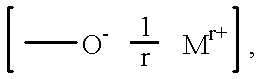
C1-C18alkoxy or 
R16 and R17 are each independently of the other hydrogen, CF3, C1-C12alkyl or phenyl, or R16 and R17, together with the linking carbon atom, are a C5-C8cycloalkylidene ring which is unsubstituted or substituted by 1 to 3 C1-C4alkyl;
R18 and R19 are each independently of the other hydrogen, C1-C4alkyl or phenyl,
R20 is hydrogen or C1-C4alkyl, R21 is hydrogen, unsubstituted or C1-C4alkyl-substituted phenyl; C1-C25alkyl; C2-C25alkyl which is interrupted by oxygen, sulfur or 
C7-C9phenylalkyl which is unsubstituted or substituted at the phenyl moiety by 1 to 3 C1-C4alkyl; C7-C25phenylalkyl which is interrupted by oxygen, sulfur or 
and which is unsubstituted or substituted at the phenyl moiety by 1 to 3 C1-C4alkyl, or R20 and R21, together with the linking carbon atoms, form a C5-C12cycloalkylene ring which is unsubstituted or substituted by 1 to 3 C1-C4alkyl;
R22 is hydrogen or C1-C4alkyl,
R23 is hydrogen, C1-C25alkanoyl, C3-C25alkenoyl; C3-C25alkanoyl which is interrupted by oxygen, sulfur or 
C2-C25 alkanoyl which is substituted by a di(C1-C6alkyl)phosphonate group; C6-C9cycloalkylcarbonyl, thienoyl, furoyl, benzoyl or C1-C12alkyl-substituted benzoyl; 
R24 and R25are each independently of the other hydrogen or C1-C18alkyl,
R26 is hydrogen or C1-C8alkyl,
R27 is a direct bond, C1-C18alkylene; C2-C18alkylene which is interrupted by oxygen, sulfur or 
C2-C18alkenylene, C2-C20alkylidene, C7-C20phenylalkylidene, C5-C8cyclo alkylene, C7-C8bicycloalkylene, unsubstituted or C1-C4alkyl-substituted phenylene, 
or 
R28 is hydroxy, 
C1-C18alkoxy or 
R29 is oxygen, —NH— or 
R30 is C1-C18alkyl or phenyl,
R31 is hydrogen or C1-C18alkyl,
M is an r-valent metal cation,
X is a direct bond, oxygen, sulfur or —NR31 —,
n is 1 or 2,
p is 0, 1 or 2,
q is 1, 2, 3, 4, 5 or 6,
r is 1, 2 or 3, and
s is 0, 1 or 2.
11. A composition according to claim 1, wherein component (b) is a compound of formula Va or Vb 
or a mixture of the two compounds of formulae Va and Vb; or a compound of formula Vc 
which additionally comprises in addition to components (a) and (b) further additives selected from the group consisting of tris(2,4di-tert-butylphenyl)phosphite, a compound of formula A 
a compound of formula B 
a compound of formula UV-1 
a compound of formula UV-2 
a compound of formula UV-3 
a compound of formula I′ 
Priority Applications (1)
| Application Number | Priority Date | Filing Date | Title |
|---|---|---|---|
| US09/517,261 US6310220B1 (en) | 1997-03-06 | 2000-03-02 | Stabilizing polycarbonates |
Applications Claiming Priority (4)
| Application Number | Priority Date | Filing Date | Title |
|---|---|---|---|
| CH52697 | 1997-03-06 | ||
| CH526/97 | 1997-03-06 | ||
| US3326798A | 1998-03-02 | 1998-03-02 | |
| US09/517,261 US6310220B1 (en) | 1997-03-06 | 2000-03-02 | Stabilizing polycarbonates |
Related Parent Applications (1)
| Application Number | Title | Priority Date | Filing Date |
|---|---|---|---|
| US3326798A Continuation | 1997-03-06 | 1998-03-02 |
Publications (1)
| Publication Number | Publication Date |
|---|---|
| US6310220B1 true US6310220B1 (en) | 2001-10-30 |
Family
ID=4189028
Family Applications (1)
| Application Number | Title | Priority Date | Filing Date |
|---|---|---|---|
| US09/517,261 Expired - Lifetime US6310220B1 (en) | 1997-03-06 | 2000-03-02 | Stabilizing polycarbonates |
Country Status (10)
| Country | Link |
|---|---|
| US (1) | US6310220B1 (en) |
| JP (1) | JP4217926B2 (en) |
| KR (1) | KR100530094B1 (en) |
| BE (1) | BE1012881A5 (en) |
| DE (1) | DE19808938A1 (en) |
| ES (1) | ES2149678B1 (en) |
| FR (1) | FR2760460B1 (en) |
| GB (1) | GB2322861B (en) |
| IT (1) | IT1298340B1 (en) |
| NL (1) | NL1008496C2 (en) |
Cited By (11)
| Publication number | Priority date | Publication date | Assignee | Title |
|---|---|---|---|---|
| US20020112701A1 (en) * | 2001-02-20 | 2002-08-22 | Gracyalny Gary J. | Automatic fuel vent closure and fuel shutoff apparatus having mechanical actuation |
| US20030020048A1 (en) * | 1999-12-20 | 2003-01-30 | Christoph Krohnke | Mixture of phosphanes and chromane derivatives |
| US20040186207A1 (en) * | 2001-08-06 | 2004-09-23 | Christoph Krohnke | Phenolfree stabilization of polyolefins |
| US6899939B2 (en) | 2001-03-26 | 2005-05-31 | Bayer Aktiengesellschaft | Polymer mixtures |
| US20050159517A1 (en) * | 2003-12-22 | 2005-07-21 | Bayer Materialscience Ag | Stabilized thermoplastic compositions |
| US20100233406A1 (en) * | 2009-03-13 | 2010-09-16 | Ciba Corporation | Stabilized Blends of Polyester and Polyamide |
| US10941261B2 (en) | 2016-12-27 | 2021-03-09 | Lg Chem, Ltd. | Polyalkylene carbonate-based resin film |
| US11384199B2 (en) | 2017-03-29 | 2022-07-12 | Sk Innovation Co., Ltd. | Polymer composition containing polyalkylene carbonate resin and film using the same |
| EP4407000A1 (en) | 2023-01-24 | 2024-07-31 | Seal for Life Global Dutch Holding B.V. | Composition for the protection of an article against corrosion |
| EP4442756A1 (en) | 2023-04-04 | 2024-10-09 | Seal for Life Global Dutch Holding B.V. | Composition for the protection of a shaped article against corrosion |
| CN119955280A (en) * | 2025-01-23 | 2025-05-09 | 金发科技股份有限公司 | A polycarbonate composition and preparation method thereof |
Families Citing this family (24)
| Publication number | Priority date | Publication date | Assignee | Title |
|---|---|---|---|---|
| WO1999064506A1 (en) * | 1998-06-11 | 1999-12-16 | Teijin Limited | η-RAY STABILIZER AND THERMOPLASTIC POLYMER COMPOSITION CONTAINING THE SAME |
| GB2343007B (en) | 1998-10-19 | 2001-11-07 | Ciba Sc Holding Ag | Colour photographic material |
| DE19853707A1 (en) * | 1998-11-20 | 2000-05-25 | Basf Ag | Carbon monoxide copolymer composition, useful for the production of fibers, film and articles, contains an inorganic metal salt, a metal deactivating chelate and an optionally substituted lactone |
| AU3727300A (en) * | 1999-03-15 | 2000-10-04 | Bayer Corporation | Melt-stable, pigmented polycarbonate molding composition |
| US6069225A (en) * | 1999-03-17 | 2000-05-30 | Bayer Corporation | Polycarbonate composition useful in optical storage applications |
| CA2373082A1 (en) * | 1999-06-14 | 2000-12-21 | Clariant Finance (Bvi) Limited | Stabilization of plastics and articles produced or coated therewith |
| KR100712873B1 (en) | 1999-09-01 | 2007-05-02 | 다우 글로벌 테크놀로지스 인크. | Polycarbonate resin composition comprising a cyanacrylic acid ester stabilizer compound and a product prepared therefrom |
| DE19961464A1 (en) * | 1999-12-20 | 2001-06-21 | Clariant Internat Ltd Muttenz | Mixtures containing phosphane and chromane derivatives are useful as stabilizers against the thermo-oxidate decomposition of polymers. |
| US6197854B1 (en) * | 2000-04-03 | 2001-03-06 | Bayer Corporation | Polycarbonate composition resistant to gamma radiation |
| WO2001090244A1 (en) * | 2000-05-19 | 2001-11-29 | Dow Global Technologies Inc. | Carbonate polymer compositions comprising low volatile uv absorbing compounds |
| JP2002322264A (en) * | 2001-04-26 | 2002-11-08 | Mitsubishi Gas Chem Co Inc | Method for producing aromatic-aliphatic copolymerized polycarbonate |
| JP2002322265A (en) * | 2001-04-26 | 2002-11-08 | Mitsubishi Gas Chem Co Inc | Method for producing aromatic-aliphatic copolymerized polycarbonate |
| EP1914594A3 (en) | 2004-01-30 | 2008-07-02 | FUJIFILM Corporation | Silver halide color photographic light-sensitive material and color image-forming method |
| US7390912B2 (en) * | 2004-12-17 | 2008-06-24 | Milliken & Company | Lactone stabilizing compositions |
| JP5309429B2 (en) * | 2006-06-06 | 2013-10-09 | 三菱瓦斯化学株式会社 | Polyester resin composition |
| JP2009040866A (en) * | 2007-08-08 | 2009-02-26 | Unitika Ltd | Polyarylate resin composition |
| CN102348762A (en) * | 2009-03-13 | 2012-02-08 | 巴斯夫欧洲公司 | Stabilized blends of polyester and polyamide |
| EP3168252B1 (en) * | 2015-11-13 | 2019-01-09 | Ems-Patent Ag | Polyketone moulding materials with improved properties, moulded parts produced therefrom and method for its manufacture |
| EP3168253B1 (en) | 2015-11-13 | 2018-04-11 | Ems-Patent Ag | Flame retardant aliphatic polyketone masses, moulds obtained from these and method for preparing the same |
| KR20180085847A (en) | 2017-01-19 | 2018-07-30 | 주식회사 효성 | Polyketone composition comprising thermoplastic elastomer(TPE) and polyester resin |
| JP2021503021A (en) * | 2017-11-14 | 2021-02-04 | ビーエイエスエフ・ソシエタス・エウロパエアBasf Se | Polycarbonate composition |
| KR102042496B1 (en) * | 2018-01-22 | 2019-11-08 | 효성화학 주식회사 | Polyketone blend having improved mechanical property and light resistance against UV |
| JP7731760B2 (en) * | 2021-10-22 | 2025-09-01 | 三菱瓦斯化学株式会社 | Resin sheet |
| CN121794313A (en) | 2023-09-15 | 2026-04-03 | 富士胶片株式会社 | Compound, composition, functional material, silver halide photographic light-sensitive material, and diffusion transfer type silver halide photographic light-sensitive material |
Citations (24)
| Publication number | Priority date | Publication date | Assignee | Title |
|---|---|---|---|---|
| CH178414A (en) | 1934-12-22 | 1935-07-15 | Ig Farbenindustrie Ag | Process for the production of a copper-containing dye. |
| US2830979A (en) | 1954-02-13 | 1958-04-15 | Bayer Ag | Brown tetrakisazo dyestuff and its heavy metal complex compounds |
| DE2533139A1 (en) | 1974-07-26 | 1976-02-12 | Eastman Kodak Co | Stabilised compsn. contg. polyester, unsatd. polymer - and ultraviolet stabiliser, for addn. to ultraviolet-degradable polymers |
| EP0022485A1 (en) | 1979-07-03 | 1981-01-21 | Bayer Ag | Copper-complex dyestuffs and their use in dyeing and printing materials containing nitrogen |
| US4263229A (en) | 1969-05-23 | 1981-04-21 | Martin Studer | Metal complex dyes of trisazo compounds having a 3,5-dinitro-2-hydroxyphenylazo group and two other arylazo groups bound to a 1-amino-3-hydroxy-1,3-diamino- or 1,3-dihydroxy-benzene nucleus |
| US4325863A (en) | 1979-02-05 | 1982-04-20 | Sandoz Ltd. | Benzofuranone or indolinone compounds useful as stabilizers for organic materials |
| DE3428836A1 (en) | 1983-08-09 | 1985-02-21 | Basf Ag, 6700 Ludwigshafen | AZO CONNECTIONS |
| EP0152012A2 (en) | 1984-02-10 | 1985-08-21 | General Electric Company | Method for enhancing ionizing radiation resistance of polymer compositions |
| US4547566A (en) | 1982-04-02 | 1985-10-15 | Basf Aktiengesellschaft | Copper, cobalt, nickel and iron complexes of disazo dyes |
| US4797435A (en) | 1986-01-23 | 1989-01-10 | Bayer Aktiengesellschaft | Use of 3-benzalphthalides as UV stabilizers for thermoplastic, aromatic polyesters, polycarbonates and polyester carbonates |
| US5104979A (en) | 1988-08-12 | 1992-04-14 | Basf Aktiengesellschaft | Polyazo dyes with diazo components of the aminophenol and the amino diphenyl-sulfide, -sulfoxide or -sulfone series |
| US5175312A (en) | 1989-08-31 | 1992-12-29 | Ciba-Geigy Corporation | 3-phenylbenzofuran-2-ones |
| US5216052A (en) | 1991-07-01 | 1993-06-01 | Ciba-Geigy Corporation | Bisbenzofuran-2-ones |
| US5252643A (en) | 1991-07-01 | 1993-10-12 | Ciba-Geigy Corporation | Thiomethylated benzofuran-2-ones |
| US5356966A (en) | 1992-05-22 | 1994-10-18 | Ciba-Geigy Corporation | 3-(carboxymethoxyphenyl)benzofuran-2-one stabilizers |
| US5367008A (en) | 1992-05-22 | 1994-11-22 | Ciba-Geigy Corporation | 3-(alkoxyphenyl)benzofuran-2-ones as stabilisers |
| US5369159A (en) | 1992-05-22 | 1994-11-29 | Ciba-Geigy Corporation | 3-(acyloxyphenyl)benzofuran-2-one stabilizers |
| US5428162A (en) | 1992-09-23 | 1995-06-27 | Ciba-Geigy Corporation | 3-(2-acyloxyethoxyphenyl)benzofuran-2-ones for use as stabilizers |
| US5428177A (en) | 1992-09-23 | 1995-06-27 | Ciba-Geigy Corporation | 3-(Dihydrobenzofuran-5-yl)benzofuran-2-ones as stabilizers |
| US5516920A (en) | 1993-09-17 | 1996-05-14 | Ciba-Geigy Corporation | 3-arylbenzofuranones |
| WO1996033236A1 (en) | 1995-04-19 | 1996-10-24 | Shell Internationale Research Maatschappij B.V. | Polyketone polymer composition |
| GB2311528A (en) | 1996-03-29 | 1997-10-01 | Ciba Geigy Ag | Stabiliser mixtures for polyamides, polyesters and polyketones |
| US5763512A (en) | 1996-03-29 | 1998-06-09 | Ciba Specialty Chemicals Corporation | Stabilization of polyamide, polyester and polyketone |
| EP0857765A2 (en) | 1997-02-05 | 1998-08-12 | Ciba SC Holding AG | Stabilizing agents for powder paints |
Family Cites Families (1)
| Publication number | Priority date | Publication date | Assignee | Title |
|---|---|---|---|---|
| ES2062486T3 (en) * | 1989-08-31 | 1994-12-16 | Ciba Geigy Ag | 3-PHENYLBENZOFURAN-2-ONAS. |
-
1998
- 1998-02-25 ES ES009800395A patent/ES2149678B1/en not_active Expired - Lifetime
- 1998-02-27 GB GB9804057A patent/GB2322861B/en not_active Expired - Fee Related
- 1998-02-27 BE BE9800154A patent/BE1012881A5/en active
- 1998-03-03 DE DE19808938A patent/DE19808938A1/en not_active Ceased
- 1998-03-04 JP JP06941998A patent/JP4217926B2/en not_active Expired - Fee Related
- 1998-03-05 NL NL1008496A patent/NL1008496C2/en not_active IP Right Cessation
- 1998-03-05 IT IT98MI000445A patent/IT1298340B1/en active IP Right Grant
- 1998-03-05 FR FR9802697A patent/FR2760460B1/en not_active Expired - Fee Related
- 1998-03-06 KR KR1019980007415A patent/KR100530094B1/en not_active Expired - Fee Related
-
2000
- 2000-03-02 US US09/517,261 patent/US6310220B1/en not_active Expired - Lifetime
Patent Citations (27)
| Publication number | Priority date | Publication date | Assignee | Title |
|---|---|---|---|---|
| CH178414A (en) | 1934-12-22 | 1935-07-15 | Ig Farbenindustrie Ag | Process for the production of a copper-containing dye. |
| US2830979A (en) | 1954-02-13 | 1958-04-15 | Bayer Ag | Brown tetrakisazo dyestuff and its heavy metal complex compounds |
| US4263229A (en) | 1969-05-23 | 1981-04-21 | Martin Studer | Metal complex dyes of trisazo compounds having a 3,5-dinitro-2-hydroxyphenylazo group and two other arylazo groups bound to a 1-amino-3-hydroxy-1,3-diamino- or 1,3-dihydroxy-benzene nucleus |
| DE2533139A1 (en) | 1974-07-26 | 1976-02-12 | Eastman Kodak Co | Stabilised compsn. contg. polyester, unsatd. polymer - and ultraviolet stabiliser, for addn. to ultraviolet-degradable polymers |
| US4325863A (en) | 1979-02-05 | 1982-04-20 | Sandoz Ltd. | Benzofuranone or indolinone compounds useful as stabilizers for organic materials |
| US4338244A (en) | 1979-02-05 | 1982-07-06 | Sandoz Ltd. | Benzofuran(2)one or indolin(2)one compounds useful as stabilizers for organic materials |
| EP0022485A1 (en) | 1979-07-03 | 1981-01-21 | Bayer Ag | Copper-complex dyestuffs and their use in dyeing and printing materials containing nitrogen |
| US4547566A (en) | 1982-04-02 | 1985-10-15 | Basf Aktiengesellschaft | Copper, cobalt, nickel and iron complexes of disazo dyes |
| US4638055A (en) | 1982-04-02 | 1987-01-20 | Basf Aktiengesellschaft | Iron, copper and chromium complexes of disazo dyes |
| DE3428836A1 (en) | 1983-08-09 | 1985-02-21 | Basf Ag, 6700 Ludwigshafen | AZO CONNECTIONS |
| EP0152012A2 (en) | 1984-02-10 | 1985-08-21 | General Electric Company | Method for enhancing ionizing radiation resistance of polymer compositions |
| US4797435A (en) | 1986-01-23 | 1989-01-10 | Bayer Aktiengesellschaft | Use of 3-benzalphthalides as UV stabilizers for thermoplastic, aromatic polyesters, polycarbonates and polyester carbonates |
| US5104979A (en) | 1988-08-12 | 1992-04-14 | Basf Aktiengesellschaft | Polyazo dyes with diazo components of the aminophenol and the amino diphenyl-sulfide, -sulfoxide or -sulfone series |
| US5175312A (en) | 1989-08-31 | 1992-12-29 | Ciba-Geigy Corporation | 3-phenylbenzofuran-2-ones |
| US5216052A (en) | 1991-07-01 | 1993-06-01 | Ciba-Geigy Corporation | Bisbenzofuran-2-ones |
| US5252643A (en) | 1991-07-01 | 1993-10-12 | Ciba-Geigy Corporation | Thiomethylated benzofuran-2-ones |
| US5488117A (en) | 1992-05-22 | 1996-01-30 | Ciba-Geigy Corporation | 3-(acyloxyphenyl)benzofuran-2-one stabilisers |
| US5356966A (en) | 1992-05-22 | 1994-10-18 | Ciba-Geigy Corporation | 3-(carboxymethoxyphenyl)benzofuran-2-one stabilizers |
| US5367008A (en) | 1992-05-22 | 1994-11-22 | Ciba-Geigy Corporation | 3-(alkoxyphenyl)benzofuran-2-ones as stabilisers |
| US5369159A (en) | 1992-05-22 | 1994-11-29 | Ciba-Geigy Corporation | 3-(acyloxyphenyl)benzofuran-2-one stabilizers |
| US5428162A (en) | 1992-09-23 | 1995-06-27 | Ciba-Geigy Corporation | 3-(2-acyloxyethoxyphenyl)benzofuran-2-ones for use as stabilizers |
| US5428177A (en) | 1992-09-23 | 1995-06-27 | Ciba-Geigy Corporation | 3-(Dihydrobenzofuran-5-yl)benzofuran-2-ones as stabilizers |
| US5516920A (en) | 1993-09-17 | 1996-05-14 | Ciba-Geigy Corporation | 3-arylbenzofuranones |
| WO1996033236A1 (en) | 1995-04-19 | 1996-10-24 | Shell Internationale Research Maatschappij B.V. | Polyketone polymer composition |
| GB2311528A (en) | 1996-03-29 | 1997-10-01 | Ciba Geigy Ag | Stabiliser mixtures for polyamides, polyesters and polyketones |
| US5763512A (en) | 1996-03-29 | 1998-06-09 | Ciba Specialty Chemicals Corporation | Stabilization of polyamide, polyester and polyketone |
| EP0857765A2 (en) | 1997-02-05 | 1998-08-12 | Ciba SC Holding AG | Stabilizing agents for powder paints |
Non-Patent Citations (4)
| Title |
|---|
| Derwent Abstr. 06124 D/05 for EP 0022485, Jan. 21, 1981. |
| Derwent Abstr. 76-13363X for DE 2533139, 1976. |
| Derwent Abstract 85-051367/09 for DE 3428836, Feb. 21, 1985. |
| R. Gächter & H. Müller, Plastics Additives Handbook, 3rd Ed., Hanser Publishers, pp. 88-89 (1990). |
Cited By (16)
| Publication number | Priority date | Publication date | Assignee | Title |
|---|---|---|---|---|
| US20030020048A1 (en) * | 1999-12-20 | 2003-01-30 | Christoph Krohnke | Mixture of phosphanes and chromane derivatives |
| US7083743B2 (en) | 1999-12-20 | 2006-08-01 | Clariant Finance (Bvi) Limited | Mixture of phosphanes and chromane derivatives |
| US20020112701A1 (en) * | 2001-02-20 | 2002-08-22 | Gracyalny Gary J. | Automatic fuel vent closure and fuel shutoff apparatus having mechanical actuation |
| US6899939B2 (en) | 2001-03-26 | 2005-05-31 | Bayer Aktiengesellschaft | Polymer mixtures |
| US20040186207A1 (en) * | 2001-08-06 | 2004-09-23 | Christoph Krohnke | Phenolfree stabilization of polyolefins |
| US7105590B2 (en) * | 2001-08-06 | 2006-09-12 | Clariant Finance (Bvi) Limited | Phenolfree stabilization of polyolefins |
| US20050159517A1 (en) * | 2003-12-22 | 2005-07-21 | Bayer Materialscience Ag | Stabilized thermoplastic compositions |
| CN100549076C (en) * | 2003-12-22 | 2009-10-14 | 拜尔材料科学股份公司 | Stabilized thermoplastic composition |
| US20100233406A1 (en) * | 2009-03-13 | 2010-09-16 | Ciba Corporation | Stabilized Blends of Polyester and Polyamide |
| WO2010103030A3 (en) * | 2009-03-13 | 2010-11-25 | Basf Se | Stabilized blends of polyester and polyamide |
| US10941261B2 (en) | 2016-12-27 | 2021-03-09 | Lg Chem, Ltd. | Polyalkylene carbonate-based resin film |
| US11384199B2 (en) | 2017-03-29 | 2022-07-12 | Sk Innovation Co., Ltd. | Polymer composition containing polyalkylene carbonate resin and film using the same |
| EP4407000A1 (en) | 2023-01-24 | 2024-07-31 | Seal for Life Global Dutch Holding B.V. | Composition for the protection of an article against corrosion |
| EP4442756A1 (en) | 2023-04-04 | 2024-10-09 | Seal for Life Global Dutch Holding B.V. | Composition for the protection of a shaped article against corrosion |
| WO2024208838A1 (en) | 2023-04-04 | 2024-10-10 | Seal For Life Global Dutch Holding B.V. | Composition for the protection of a shaped article against corrosion |
| CN119955280A (en) * | 2025-01-23 | 2025-05-09 | 金发科技股份有限公司 | A polycarbonate composition and preparation method thereof |
Also Published As
| Publication number | Publication date |
|---|---|
| ITMI980445A1 (en) | 1999-09-05 |
| DE19808938A1 (en) | 1998-10-08 |
| BE1012881A5 (en) | 2001-05-08 |
| KR100530094B1 (en) | 2006-03-09 |
| FR2760460B1 (en) | 2003-09-12 |
| ES2149678A1 (en) | 2000-11-01 |
| NL1008496A1 (en) | 1998-09-08 |
| GB2322861B (en) | 2001-04-18 |
| KR19980079962A (en) | 1998-11-25 |
| GB2322861A (en) | 1998-09-09 |
| FR2760460A1 (en) | 1998-09-11 |
| ES2149678B1 (en) | 2001-05-16 |
| NL1008496C2 (en) | 1998-11-13 |
| IT1298340B1 (en) | 1999-12-20 |
| JP4217926B2 (en) | 2009-02-04 |
| JPH10306209A (en) | 1998-11-17 |
| GB9804057D0 (en) | 1998-04-22 |
Similar Documents
| Publication | Publication Date | Title |
|---|---|---|
| JP4217926B2 (en) | Stabilized polycarbonate, polyester and polyketone | |
| US5883165A (en) | Stabilizer combination for the rotomolding process | |
| DE69518505T2 (en) | INCREASE IN THE MOLECULAR WEIGHT OF POLYESTERS | |
| JPH10114835A (en) | Stabilization of phenol-free polyolefin fibers | |
| DE60217151T2 (en) | POLYESTER AND POLYAMIDE COMPOSITIONS WITH LOW RESTALDEHYDE CONTENT | |
| ITMI980307A1 (en) | MIXTURE OF STABILIZERS FOR ORGANIC MATERIALS | |
| WO1999048997A1 (en) | Stabilisation of organic materials | |
| US20040110876A1 (en) | Stabilizers for powder coatings | |
| US5763512A (en) | Stabilization of polyamide, polyester and polyketone | |
| CA2201182A1 (en) | Stabilisation of polyamide, polyester and polyketone | |
| EP0880557A1 (en) | Stabilisation of polyolefin-recyclates | |
| US6140397A (en) | Stabilizers and anti-ozonants for elastomers | |
| CA2255172A1 (en) | Stabilisation of polyamide, polyester and polyacetal | |
| US20070055047A1 (en) | Molecular weight increase and modification of polycondensates | |
| CA2221097C (en) | Stabilisation of polyolefins which are in permanent contact with extracting media | |
| WO1998055543A1 (en) | Polymer stabilization |
Legal Events
| Date | Code | Title | Description |
|---|---|---|---|
| STCF | Information on status: patent grant |
Free format text: PATENTED CASE |
|
| FPAY | Fee payment |
Year of fee payment: 4 |
|
| FPAY | Fee payment |
Year of fee payment: 8 |
|
| FPAY | Fee payment |
Year of fee payment: 12 |