US6228489B1 - Fibrillated acrylic fiber - Google Patents
Fibrillated acrylic fiber Download PDFInfo
- Publication number
- US6228489B1 US6228489B1 US09/381,419 US38141999A US6228489B1 US 6228489 B1 US6228489 B1 US 6228489B1 US 38141999 A US38141999 A US 38141999A US 6228489 B1 US6228489 B1 US 6228489B1
- Authority
- US
- United States
- Prior art keywords
- fiber
- acrylic
- gel
- state
- fibrillated
- Prior art date
- Legal status (The legal status is an assumption and is not a legal conclusion. Google has not performed a legal analysis and makes no representation as to the accuracy of the status listed.)
- Expired - Fee Related
Links
Images

Classifications
-
- D—TEXTILES; PAPER
- D01—NATURAL OR MAN-MADE THREADS OR FIBRES; SPINNING
- D01F—CHEMICAL FEATURES IN THE MANUFACTURE OF ARTIFICIAL FILAMENTS, THREADS, FIBRES, BRISTLES OR RIBBONS; APPARATUS SPECIALLY ADAPTED FOR THE MANUFACTURE OF CARBON FILAMENTS
- D01F6/00—Monocomponent artificial filaments or the like of synthetic polymers; Manufacture thereof
- D01F6/02—Monocomponent artificial filaments or the like of synthetic polymers; Manufacture thereof from homopolymers obtained by reactions only involving carbon-to-carbon unsaturated bonds
- D01F6/18—Monocomponent artificial filaments or the like of synthetic polymers; Manufacture thereof from homopolymers obtained by reactions only involving carbon-to-carbon unsaturated bonds from polymers of unsaturated nitriles, e.g. polyacrylonitrile, polyvinylidene cyanide
-
- Y—GENERAL TAGGING OF NEW TECHNOLOGICAL DEVELOPMENTS; GENERAL TAGGING OF CROSS-SECTIONAL TECHNOLOGIES SPANNING OVER SEVERAL SECTIONS OF THE IPC; TECHNICAL SUBJECTS COVERED BY FORMER USPC CROSS-REFERENCE ART COLLECTIONS [XRACs] AND DIGESTS
- Y10—TECHNICAL SUBJECTS COVERED BY FORMER USPC
- Y10T—TECHNICAL SUBJECTS COVERED BY FORMER US CLASSIFICATION
- Y10T428/00—Stock material or miscellaneous articles
- Y10T428/29—Coated or structually defined flake, particle, cell, strand, strand portion, rod, filament, macroscopic fiber or mass thereof
- Y10T428/2904—Staple length fiber
-
- Y—GENERAL TAGGING OF NEW TECHNOLOGICAL DEVELOPMENTS; GENERAL TAGGING OF CROSS-SECTIONAL TECHNOLOGIES SPANNING OVER SEVERAL SECTIONS OF THE IPC; TECHNICAL SUBJECTS COVERED BY FORMER USPC CROSS-REFERENCE ART COLLECTIONS [XRACs] AND DIGESTS
- Y10—TECHNICAL SUBJECTS COVERED BY FORMER USPC
- Y10T—TECHNICAL SUBJECTS COVERED BY FORMER US CLASSIFICATION
- Y10T428/00—Stock material or miscellaneous articles
- Y10T428/29—Coated or structually defined flake, particle, cell, strand, strand portion, rod, filament, macroscopic fiber or mass thereof
- Y10T428/2913—Rod, strand, filament or fiber
-
- Y—GENERAL TAGGING OF NEW TECHNOLOGICAL DEVELOPMENTS; GENERAL TAGGING OF CROSS-SECTIONAL TECHNOLOGIES SPANNING OVER SEVERAL SECTIONS OF THE IPC; TECHNICAL SUBJECTS COVERED BY FORMER USPC CROSS-REFERENCE ART COLLECTIONS [XRACs] AND DIGESTS
- Y10—TECHNICAL SUBJECTS COVERED BY FORMER USPC
- Y10T—TECHNICAL SUBJECTS COVERED BY FORMER US CLASSIFICATION
- Y10T428/00—Stock material or miscellaneous articles
- Y10T428/29—Coated or structually defined flake, particle, cell, strand, strand portion, rod, filament, macroscopic fiber or mass thereof
- Y10T428/2913—Rod, strand, filament or fiber
- Y10T428/2933—Coated or with bond, impregnation or core
- Y10T428/2964—Artificial fiber or filament
- Y10T428/2967—Synthetic resin or polymer
Definitions
- This invention relates to fibrillated acrylic fibers, and in particular to fibers which are oxidizable to form oxidized acrylic fibers.
- Polyacrylonitrile fibers have been converted commercially to carbon fibers for a number of years.
- a known process is described in U.S. Pat. No. 3,533,743, in which the acrylonitrile fiber is oxidized prior to carbonization and graphitization.
- the acrylonitrile fiber is typically placed under tension during the oxidation phase of the process so that essentially carbon fiber is made from continuous filament acrylonitrile fiber.
- Continuous filament carbon fiber is used as reinforcement in composite materials for the manufacture of high-strength/low-weight composites, used for example in fishing rods, tennis racquets and racing car body parts. Where the carbon fibers are used in short lengths for discontinuous fiber reinforcement, these are obtained by chopping the continuous filament into short lengths.
- Fibrillated acrylic fibers are disclosed, for example, in EP-A-0,265,762.
- the present invention provides fibrillated acrylic fibers which are suitable for oxidation in the form of staple fibers, and which are copolymers of acrylonitrile and an unsaturated carboxylic acid.
- Such fibers are particularly suitable for oxidation to form fibrillated oxidized acrylic fibers.
- the fibers are copolymers of acrylonitrile and itaconic acid or methacrylic acid.
- the fiber contains 0.5-2% itaconic acid groups.
- the copolymer fiber may comprise a further monomer such as methylacrylate, methylmethacrylate or vinylacetate, or any combination thereof. Typically the copolymer contains 3-8% of the further monomer.
- the staple fibers have a length of about 4-8 mm and are fibrillated to a Canadian Freeness value of less than 700 and more typically 350-500.
- the fiber has a decitex value of between 0.6 and 6.0 decitex, preferably about 1.2-1.7 decitex.
- a method of manufacture of oxidizable acrylic fiber in which a staple acrylic fiber is made by copolymerization of acrylonitrile and an unsaturated carboxylic acid, and is fibrillated in the gel state prior to drying.
- the staple fiber is cut to a length in the range of 4-8 mm, preferably 6 mm.
- the acrylic fiber comprises 0.5-2% itaconic acid, 3-8% methyl acrylate, and 90-96.5% of acrylonitrile.
- the itaconic acid or methacrylic acid may be added in the form of free acid or as a sodium or amine salt.
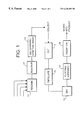
- FIG. 1 is a schematic drawing of various stages in the production of fibrillated polyacrylonitrile fibers
- FIG. 2 is a photograph of the fibrillated staple fibers made according to the present invention in Example B after 240 minutes refining.
- a reaction mixture containing 93.5% acrylonitrile, 5% methyl acrylate and 1.5% itaconic acid (% by weight) is mixed in a feed mix vessel ( 11 ) with sodium thiocyanate, accelerators and initiators and is then polymerized in solution in a reactor ( 12 ).
- the polymerized polyacrylonitrile copolymer is then wet spun at a spinning cell ( 13 ) into a dilute solution of sodium thiocyanate having a specific gravity of 1.052, stretched, washed and cut ( 14 ) into staple fiber having a length in the range 4-12 mm, preferably 6 mm-8 mm.
- the polyacrylonitrile is spun and drawn to produce fiber having a decitex value in the range 0.6-6.0 decitex, preferably about 1.2-1.7 decitex.
- the staple fiber is then mechanically fibrillated in its gel state (never-dried) as a dispersion in the range 0.5-3% fibers by weight in water.
- the fiber is processed in a suitable fibrillating apparatus ( 15 ) such as a disc refiner e.g. a Sprout-Waldron type 105 available from Sprout-Waldron & Co., Muncy, Pa., USA.
- the fibrillating apparatus basically comprises a pair of disc-like plates about 30 cm in diameter and spaced apart by a variable distance of between 0.2 and 3.75 mm. One plate is fixed and the other plate rotates at a speed of about 3,000 revolutions per minute.
- the dispersion is continuously recycled through the apparatus for a number of cycles to increase fibrillation.
- the refining time is given as a total refining time.
- the through-put through the disc refiner can be varied from 50 liters per minute up to 900 liters per minute.
- the fibrillated loose staple fiber is then passed into an oven ( 16 ) for drying, and is then suitable for oxidation.
- the fiber is opened out ( 17 ) and then passed into an oven for oxidation. Oxidation may take place with the opened fibers spread thinly on trays.
- the polyacrylonitrile (PAN) fiber may be held at 225° C. for two hours to produce a fibrillated oxidised PAN fiber containing about 8% of added oxygen (by weight).
- Such fibers may be used as reinforcing fillers in other compounds.
- the degree of staple fiber fibrillation varied with the processing time as detailed below in the fibrillation tests.
- the fibrillation obtained over different refining time periods is expressed as water retention and imbibition value measured in accordance with DIN 53814.
- the results are given in Table 1 and Table 2 below.
- the degree of fibrillation was determined for the following examples in which 6 mm staple fiber was dispersed in 600 liters of water which was continuously passed through a disc refiner at a throughput of 500 liters per minute, with the two plates set 1.0 mm apart.
- Samples A and B were 1.2 decitex Polyacrylonitrile fibers processed in 1.3% and 2% dispersions respectively, and Sample C was a 4.3 decitex fiber processed in a 2% dispersion.
- Example A Example B
- Example C 0 115 115 125 240 mins 508 533
- Acrylic fiber (6 g, staple length 6 mm) from Example B and demineralised water (2 l) were placed in the bowl of the standard disintegrator described in TAPPI Standard T-205 om-88, and disintegrated (simulating valley beating) until the fiber was well-dispersed. Suitable disintegrators are available from Messmer Instruments Limited, Gravesend, Kent, UK and from Büchel van de Korput BV, Veemendaal, Netherlands. The Canadian Standard Freeness (CSF) of the fiber in the resulting slurry or stock was measured according to TAPPI Standard T227 om.97 and recorded in ml. The stock was divided into two 1 l portions for measurement of CSF and the two results averaged.
- CSF Canadian Standard Freeness
Landscapes
- Health & Medical Sciences (AREA)
- Toxicology (AREA)
- Chemical & Material Sciences (AREA)
- Chemical Kinetics & Catalysis (AREA)
- General Chemical & Material Sciences (AREA)
- Engineering & Computer Science (AREA)
- Textile Engineering (AREA)
- Artificial Filaments (AREA)
- Nonwoven Fabrics (AREA)
- Paper (AREA)
- Yarns And Mechanical Finishing Of Yarns Or Ropes (AREA)
Abstract
Fibrillated acrylic fibers which are suitable for oxidation in the form of staple fibers are formed as copolymers of acrylonitrile and an unsaturated carboxylic acid such as itaconic acid or methacrylic acid. A further monomer may also be included, such as methacrylate, methylmethacrylate or vinyl acetate. Fibers having a Canadian Freeness valve of 350-500, and a decitex value of 1.2 to 1.7 may be produced.
Description
This invention relates to fibrillated acrylic fibers, and in particular to fibers which are oxidizable to form oxidized acrylic fibers.
Polyacrylonitrile fibers have been converted commercially to carbon fibers for a number of years. A known process is described in U.S. Pat. No. 3,533,743, in which the acrylonitrile fiber is oxidized prior to carbonization and graphitization. The acrylonitrile fiber is typically placed under tension during the oxidation phase of the process so that essentially carbon fiber is made from continuous filament acrylonitrile fiber. Continuous filament carbon fiber is used as reinforcement in composite materials for the manufacture of high-strength/low-weight composites, used for example in fishing rods, tennis racquets and racing car body parts. Where the carbon fibers are used in short lengths for discontinuous fiber reinforcement, these are obtained by chopping the continuous filament into short lengths.
Fibrillated acrylic fibers are disclosed, for example, in EP-A-0,265,762.
The present invention provides fibrillated acrylic fibers which are suitable for oxidation in the form of staple fibers, and which are copolymers of acrylonitrile and an unsaturated carboxylic acid.
Such fibers are particularly suitable for oxidation to form fibrillated oxidized acrylic fibers. Preferably the fibers are copolymers of acrylonitrile and itaconic acid or methacrylic acid. Preferably the fiber contains 0.5-2% itaconic acid groups. The copolymer fiber may comprise a further monomer such as methylacrylate, methylmethacrylate or vinylacetate, or any combination thereof. Typically the copolymer contains 3-8% of the further monomer. The staple fibers have a length of about 4-8 mm and are fibrillated to a Canadian Freeness value of less than 700 and more typically 350-500.
The fiber has a decitex value of between 0.6 and 6.0 decitex, preferably about 1.2-1.7 decitex.
Also according to the invention there is provided a method of manufacture of oxidizable acrylic fiber in which a staple acrylic fiber is made by copolymerization of acrylonitrile and an unsaturated carboxylic acid, and is fibrillated in the gel state prior to drying.
The staple fiber is cut to a length in the range of 4-8 mm, preferably 6 mm.
Further monomers such as methyl acrylate, methyl methacrylate or vinyl acetate may be added to the copolymerization.
Preferably the acrylic fiber comprises 0.5-2% itaconic acid, 3-8% methyl acrylate, and 90-96.5% of acrylonitrile.
The itaconic acid or methacrylic acid may be added in the form of free acid or as a sodium or amine salt.
The invention will hereinafter be described by way of example and with reference to the accompanying drawings in which:
FIG. 1 is a schematic drawing of various stages in the production of fibrillated polyacrylonitrile fibers, and
FIG. 2 is a photograph of the fibrillated staple fibers made according to the present invention in Example B after 240 minutes refining.
A reaction mixture containing 93.5% acrylonitrile, 5% methyl acrylate and 1.5% itaconic acid (% by weight) is mixed in a feed mix vessel (11) with sodium thiocyanate, accelerators and initiators and is then polymerized in solution in a reactor (12). The polymerized polyacrylonitrile copolymer is then wet spun at a spinning cell (13) into a dilute solution of sodium thiocyanate having a specific gravity of 1.052, stretched, washed and cut (14) into staple fiber having a length in the range 4-12 mm, preferably 6 mm-8 mm.
The polyacrylonitrile is spun and drawn to produce fiber having a decitex value in the range 0.6-6.0 decitex, preferably about 1.2-1.7 decitex.
The staple fiber is then mechanically fibrillated in its gel state (never-dried) as a dispersion in the range 0.5-3% fibers by weight in water. The fiber is processed in a suitable fibrillating apparatus (15) such as a disc refiner e.g. a Sprout-Waldron type 105 available from Sprout-Waldron & Co., Muncy, Pa., USA. The fibrillating apparatus basically comprises a pair of disc-like plates about 30 cm in diameter and spaced apart by a variable distance of between 0.2 and 3.75 mm. One plate is fixed and the other plate rotates at a speed of about 3,000 revolutions per minute.
The dispersion is continuously recycled through the apparatus for a number of cycles to increase fibrillation. In the examples which follow, the refining time is given as a total refining time.
The through-put through the disc refiner can be varied from 50 liters per minute up to 900 liters per minute.
The fibrillated loose staple fiber is then passed into an oven (16) for drying, and is then suitable for oxidation. The fiber is opened out (17) and then passed into an oven for oxidation. Oxidation may take place with the opened fibers spread thinly on trays. The polyacrylonitrile (PAN) fiber may be held at 225° C. for two hours to produce a fibrillated oxidised PAN fiber containing about 8% of added oxygen (by weight).
Such fibers may be used as reinforcing fillers in other compounds.
The degree of staple fiber fibrillation varied with the processing time as detailed below in the fibrillation tests.
Fibrillation Test 1
The fibrillation obtained over different refining time periods is expressed as water retention and imbibition value measured in accordance with DIN 53814. The results are given in Table 1 and Table 2 below. The degree of fibrillation was determined for the following examples in which 6 mm staple fiber was dispersed in 600 liters of water which was continuously passed through a disc refiner at a throughput of 500 liters per minute, with the two plates set 1.0 mm apart.
| TABLE 1 |
| Water Imbibition |
| Refining time | Water Imbibition % |
| (mins) | Example A | Example B | Example C | ||
| 0 | 106 | 106 | 110 | ||
| 30 | 111 | 119 | |||
| 60 | 111 | 117 | 131 | ||
| 90 | 129 | 121 | |||
| 120 | 116 | 143 | 115 | ||
| 150 | 161 | 114 | |||
| 180 | 168 | 179 | 120 | ||
| 210 | 200 | 120 | |||
| 240 | 181 | 223 | 121 | ||
| 300 | 200 | ||||
| 360 | 240 | ||||
Samples A and B were 1.2 decitex Polyacrylonitrile fibers processed in 1.3% and 2% dispersions respectively, and Sample C was a 4.3 decitex fiber processed in a 2% dispersion.
| TABLE 2 |
| Residual Water Content |
| Residual Water Content |
| Refining Time | Example A | Example B | Example C | ||
| 0 | 115 | 115 | 125 | ||
| 240 mins | 508 | 533 | |||
Fibrillation Test II
Acrylic fiber (6 g, staple length 6 mm) from Example B and demineralised water (2 l) were placed in the bowl of the standard disintegrator described in TAPPI Standard T-205 om-88, and disintegrated (simulating valley beating) until the fiber was well-dispersed. Suitable disintegrators are available from Messmer Instruments Limited, Gravesend, Kent, UK and from Büchel van de Korput BV, Veemendaal, Netherlands. The Canadian Standard Freeness (CSF) of the fiber in the resulting slurry or stock was measured according to TAPPI Standard T227 om.97 and recorded in ml. The stock was divided into two 1 l portions for measurement of CSF and the two results averaged.
The results of CSF value versus refining time are given in Table 3 below.
| TABLE 3 |
| Canadian Standard Freeness |
| Refining time | |||
| (min) | CSF (ml) | ||
| 0 | |||
| 60 | 692 | ||
| 120 | 646 | ||
| 240 | 358 | ||
The results of the water imbibition and Canadian Standard Freeness test show a correlation between refining time and increased fibrillation. An increase in fiber content in the dispersion being processed also produces an increase in fibrillation over a given process time.
Claims (10)
1. An oxidized fibrillated acrylic fiber made by a process including the steps of:
copolymerizing a mixture of olefinic monomers comprising acrylonitrile and an unsaturated carboxylic acid to form an acrylic polymer;
forming a solution of said acrylic polymer;
wet-spinning said solution to form gel-state acrylic fiber;
forming gel-state acrylic staple fiber from said gel-state acrylic fiber;
mechanically fibrillating said gel-state acrylic staple fiber to form gel-state fibrillated acrylic staple fiber;
drying said gel-state fibrillated acrylic staple fiber to form dried fibrillated acrylic staple fiber; and
forming said oxidized fibrillated acrylic fiber by oxidizing said dried fibrillated acrylic staple fiber to an extent such that the oxidized fibrillated acrylic fiber contains about 8% by weight of added oxygen.
2. A fiber as claimed in claim 1 wherein said unsaturated carboxylic acid is selected from the croup consisting of itaconic acid and methacrylic acid.
3. A fiber as claimed in claim 2 wherein said acrylic polymer contains 0.5-2% of itaconic acid units.
4. A fiber as claimed in claim 1 wherein said gel-state acrylic fiber has a decitex value in the range 0.6-6.0 decitex.
5. A fiber as claimed in claim 1 wherein said gel-state acrylic fiber has a decitex value in the range 1.2-1.7 decitex.
6. A fiber as claimed in claim 1 wherein said gel-state acrylic staple fiber has a length of 4-12 mm.
7. A fiber as claimed in claim 1 wherein said gel-state fibrillated acrylic staple fiber has a Canadian Freeness value of less than 700.
8. A fiber as claimed in claim 1 said mixture of olefinic monomers further comprising as least one further monomer selected from the group consisting of methyl acrylate, methyl methacrylate and vinyl acetate.
9. A fiber as claimed in claim 6 wherein said gel-state acrylic staple fiber has a length of 6 to 8 mm.
10. A fiber as claimed in claim 7 wherein said gel-state fibrillated acrylic staple fiber has a Canadian Freeness value in the range of 350 to 450.
Priority Applications (1)
| Application Number | Priority Date | Filing Date | Title |
|---|---|---|---|
| US09/805,319 US20010018126A1 (en) | 1997-03-21 | 2001-03-13 | Fibrillated acrylic fibre |
Applications Claiming Priority (3)
| Application Number | Priority Date | Filing Date | Title |
|---|---|---|---|
| GB9705920 | 1997-03-21 | ||
| GB9705920A GB2323392B (en) | 1997-03-21 | 1997-03-21 | Fibrillated acrylic fibre |
| PCT/GB1998/000856 WO1998042899A1 (en) | 1997-03-21 | 1998-03-20 | Fibrillated acrylic fibre |
Related Parent Applications (1)
| Application Number | Title | Priority Date | Filing Date |
|---|---|---|---|
| PCT/GB1998/000856 A-371-Of-International WO1998042899A1 (en) | 1997-03-21 | 1998-03-20 | Fibrillated acrylic fibre |
Related Child Applications (1)
| Application Number | Title | Priority Date | Filing Date |
|---|---|---|---|
| US09/805,319 Division US20010018126A1 (en) | 1997-03-21 | 2001-03-13 | Fibrillated acrylic fibre |
Publications (1)
| Publication Number | Publication Date |
|---|---|
| US6228489B1 true US6228489B1 (en) | 2001-05-08 |
Family
ID=10809655
Family Applications (2)
| Application Number | Title | Priority Date | Filing Date |
|---|---|---|---|
| US09/381,419 Expired - Fee Related US6228489B1 (en) | 1997-03-21 | 1998-03-20 | Fibrillated acrylic fiber |
| US09/805,319 Abandoned US20010018126A1 (en) | 1997-03-21 | 2001-03-13 | Fibrillated acrylic fibre |
Family Applications After (1)
| Application Number | Title | Priority Date | Filing Date |
|---|---|---|---|
| US09/805,319 Abandoned US20010018126A1 (en) | 1997-03-21 | 2001-03-13 | Fibrillated acrylic fibre |
Country Status (10)
| Country | Link |
|---|---|
| US (2) | US6228489B1 (en) |
| EP (1) | EP0968326A1 (en) |
| JP (1) | JP2001517275A (en) |
| KR (1) | KR20000076228A (en) |
| CN (1) | CN1250493A (en) |
| AU (1) | AU6738798A (en) |
| GB (1) | GB2323392B (en) |
| HU (1) | HUP0002243A3 (en) |
| TR (1) | TR199902247T2 (en) |
| WO (1) | WO1998042899A1 (en) |
Families Citing this family (2)
| Publication number | Priority date | Publication date | Assignee | Title |
|---|---|---|---|---|
| US6277933B1 (en) * | 1998-04-03 | 2001-08-21 | Solutia Inc. | Polyacrylonitrile particles by surfmer polymerization and sodium removal by chemical exchange |
| CN110433528B (en) * | 2019-08-01 | 2021-04-06 | 太原理工大学 | Preparation method of efficient porous flexible oil absorption material |
Citations (3)
| Publication number | Priority date | Publication date | Assignee | Title |
|---|---|---|---|---|
| US3867499A (en) * | 1971-02-16 | 1975-02-18 | Monsanto Co | Process for wet-spinning fibers derived from acrylic polymers |
| US4789509A (en) * | 1984-11-21 | 1988-12-06 | Mitsubishi Chemical Industries Ltd. | Method for fibrillating carbonaceous fibers |
| US5508109A (en) * | 1993-10-06 | 1996-04-16 | Avco Corporation | Fiber blend for low cost, asbestos free friction material |
Family Cites Families (12)
| Publication number | Priority date | Publication date | Assignee | Title |
|---|---|---|---|---|
| BE613349A (en) * | 1961-02-01 | |||
| NL276072A (en) * | 1961-03-16 | |||
| GB1107724A (en) * | 1964-06-03 | 1968-03-27 | Chemstrand Ltd | Improvements in or relating to the manufacture of paper |
| US3826712A (en) * | 1972-01-18 | 1974-07-30 | Asahi Chemical Ind | Acrylic synthetic paper and method for producing the same acrylic fibers wet spun from a blend of hydrolyzed and unhydrolyzed acrylic polymers having at least 60 % acrylonitriles by weight and paper made from such fibers |
| EP0255109B1 (en) * | 1986-07-28 | 1993-01-20 | Mitsubishi Rayon Co., Ltd. | Process for producing an acrylic fiber having high fiber characteristics |
| US4811908A (en) * | 1987-12-16 | 1989-03-14 | Motion Control Industries, Inc. | Method of fibrillating fibers |
| JPH0441728A (en) * | 1990-06-05 | 1992-02-12 | Asahi Chem Ind Co Ltd | Tow system spun yarn |
| GB9210955D0 (en) * | 1992-05-22 | 1992-07-08 | Courtaulds Plc | Fibres and filaments |
| GB2270030B (en) * | 1992-08-19 | 1996-06-19 | Courtaulds Plc | Method of producing fibre or film |
| JPH06101129A (en) * | 1992-09-17 | 1994-04-12 | Asahi Chem Ind Co Ltd | Acrylic spun yarn |
| US5364581A (en) * | 1993-05-06 | 1994-11-15 | Kenneth Wilkinson | Process of making polyacrylonitrile fibers |
| AU702352B2 (en) * | 1994-08-09 | 1999-02-18 | Sterling Chemicals International, Inc. | Asbestos-free gaskets and the like containing blends of organic fibrous and particulate components |
-
1997
- 1997-03-21 GB GB9705920A patent/GB2323392B/en not_active Expired - Fee Related
-
1998
- 1998-03-20 AU AU67387/98A patent/AU6738798A/en not_active Abandoned
- 1998-03-20 JP JP54445098A patent/JP2001517275A/en active Pending
- 1998-03-20 KR KR1019997008322A patent/KR20000076228A/en not_active Withdrawn
- 1998-03-20 CN CN98803434A patent/CN1250493A/en active Pending
- 1998-03-20 TR TR1999/02247T patent/TR199902247T2/en unknown
- 1998-03-20 EP EP98912605A patent/EP0968326A1/en not_active Withdrawn
- 1998-03-20 HU HU0002243A patent/HUP0002243A3/en unknown
- 1998-03-20 US US09/381,419 patent/US6228489B1/en not_active Expired - Fee Related
- 1998-03-20 WO PCT/GB1998/000856 patent/WO1998042899A1/en not_active Ceased
-
2001
- 2001-03-13 US US09/805,319 patent/US20010018126A1/en not_active Abandoned
Patent Citations (3)
| Publication number | Priority date | Publication date | Assignee | Title |
|---|---|---|---|---|
| US3867499A (en) * | 1971-02-16 | 1975-02-18 | Monsanto Co | Process for wet-spinning fibers derived from acrylic polymers |
| US4789509A (en) * | 1984-11-21 | 1988-12-06 | Mitsubishi Chemical Industries Ltd. | Method for fibrillating carbonaceous fibers |
| US5508109A (en) * | 1993-10-06 | 1996-04-16 | Avco Corporation | Fiber blend for low cost, asbestos free friction material |
Also Published As
| Publication number | Publication date |
|---|---|
| GB2323392A (en) | 1998-09-23 |
| US20010018126A1 (en) | 2001-08-30 |
| HUP0002243A2 (en) | 2000-11-28 |
| GB9705920D0 (en) | 1997-05-07 |
| WO1998042899A1 (en) | 1998-10-01 |
| TR199902247T2 (en) | 2000-04-21 |
| AU6738798A (en) | 1998-10-20 |
| HUP0002243A3 (en) | 2001-01-29 |
| CN1250493A (en) | 2000-04-12 |
| KR20000076228A (en) | 2000-12-26 |
| EP0968326A1 (en) | 2000-01-05 |
| GB2323392B (en) | 2001-08-22 |
| JP2001517275A (en) | 2001-10-02 |
Similar Documents
| Publication | Publication Date | Title |
|---|---|---|
| JP6656608B1 (en) | Carboxyl group-containing beaten acrylonitrile fiber, method for producing the fiber, and structure containing the fiber | |
| NL8102974A (en) | FIBER-BASED PRODUCT MADE WITH HYDRAULIC BINDERS. | |
| US4309475A (en) | Bicomponent acrylic fiber | |
| US20010018126A1 (en) | Fibrillated acrylic fibre | |
| US3733386A (en) | Process for producing acrylic synthetic fibers improved in the hydrophilicity | |
| US4997610A (en) | Process for producing filaments and fibers of acrylic polymers which contain carboxyl groups | |
| MXPA99008642A (en) | Fibrillated acrylic fibre | |
| KR100475423B1 (en) | Absorbent acrylic fiber | |
| Abou‐Zeid et al. | Graft copolymerization of styrene, methylmethacrylate, and acrylonitrile onto jute fibres | |
| JPH086210B2 (en) | High-strength and high-modulus carbon fiber and method for producing the same | |
| AU2020340608A1 (en) | Fluff pulp | |
| JP4210924B2 (en) | Fibrilized acrylic fiber, method for producing the same, and structure containing the fiber | |
| CN116043349B (en) | Preparation method of polyacrylonitrile fiber and pulp for sealing and friction materials | |
| US11542660B2 (en) | Method for manufacturing aramid pulp comprising PVP | |
| JPH01239114A (en) | Production of lignin fiber | |
| JPH02221486A (en) | Synthetic pulp with low freeness | |
| Borbély et al. | Grafting of industrial cellulose pulp with vinyl acetate monomer by Ceric ion redox system as initiator | |
| DE2434927C3 (en) | Flillable synthetic fiber, process for their production and their use | |
| JP2021181669A (en) | Easy-to-beat acrylonitrile-based fiber, pulp-like acrylonitrile-based fiber, structure body containing the same fiber, and method of manufacturing the same fiber | |
| DE862510C (en) | Process for the production of artificial leather | |
| JPS59128261A (en) | Fiber material for cement reinforcement | |
| JPH0299609A (en) | Production method for novel acrylic synthetic fiber | |
| Raj et al. | Modification of wood fiber surface by grafting and its effect on mechanical properties of polystyrene filled system | |
| JP2020059939A (en) | Hygroscopic and exothermic acrylic fiber | |
| JPH0274621A (en) | Graphitized fiber having low density and high elastic modulus |
Legal Events
| Date | Code | Title | Description |
|---|---|---|---|
| FEPP | Fee payment procedure |
Free format text: PAYOR NUMBER ASSIGNED (ORIGINAL EVENT CODE: ASPN); ENTITY STATUS OF PATENT OWNER: LARGE ENTITY |
|
| REMI | Maintenance fee reminder mailed | ||
| LAPS | Lapse for failure to pay maintenance fees | ||
| STCH | Information on status: patent discontinuation |
Free format text: PATENT EXPIRED DUE TO NONPAYMENT OF MAINTENANCE FEES UNDER 37 CFR 1.362 |
|
| FP | Lapsed due to failure to pay maintenance fee |
Effective date: 20050508 |