US6146611A - Graphitizable foam preform - Google Patents
Graphitizable foam preform Download PDFInfo
- Publication number
- US6146611A US6146611A US09/502,352 US50235200A US6146611A US 6146611 A US6146611 A US 6146611A US 50235200 A US50235200 A US 50235200A US 6146611 A US6146611 A US 6146611A
- Authority
- US
- United States
- Prior art keywords
- preform
- foam
- graphitizable
- accordance
- pitch
- Prior art date
- Legal status (The legal status is an assumption and is not a legal conclusion. Google has not performed a legal analysis and makes no representation as to the accuracy of the status listed.)
- Expired - Fee Related
Links
- 239000006260 foam Substances 0.000 title claims abstract description 62
- 239000000203 mixture Substances 0.000 claims abstract description 21
- 229920003987 resole Polymers 0.000 claims abstract description 13
- 230000000694 effects Effects 0.000 claims abstract description 5
- 238000005187 foaming Methods 0.000 claims abstract description 5
- 239000011302 mesophase pitch Substances 0.000 claims description 11
- ISWSIDIOOBJBQZ-UHFFFAOYSA-N phenol group Chemical group C1(=CC=CC=C1)O ISWSIDIOOBJBQZ-UHFFFAOYSA-N 0.000 claims description 8
- 239000011295 pitch Substances 0.000 claims description 8
- 239000003054 catalyst Substances 0.000 claims description 7
- 239000004604 Blowing Agent Substances 0.000 claims description 6
- 239000000654 additive Substances 0.000 claims description 6
- 239000004094 surface-active agent Substances 0.000 claims description 6
- 230000000996 additive effect Effects 0.000 claims description 5
- 230000006911 nucleation Effects 0.000 claims description 4
- 238000010899 nucleation Methods 0.000 claims description 4
- 239000011318 synthetic pitch Substances 0.000 claims description 2
- 238000009472 formulation Methods 0.000 abstract description 9
- 239000000463 material Substances 0.000 abstract description 8
- 230000009467 reduction Effects 0.000 abstract description 2
- 238000000034 method Methods 0.000 description 15
- 238000003763 carbonization Methods 0.000 description 9
- 238000004519 manufacturing process Methods 0.000 description 8
- 230000008569 process Effects 0.000 description 8
- OKTJSMMVPCPJKN-UHFFFAOYSA-N Carbon Chemical compound [C] OKTJSMMVPCPJKN-UHFFFAOYSA-N 0.000 description 7
- 229910052799 carbon Inorganic materials 0.000 description 7
- 239000002783 friction material Substances 0.000 description 7
- CREMABGTGYGIQB-UHFFFAOYSA-N carbon carbon Chemical compound C.C CREMABGTGYGIQB-UHFFFAOYSA-N 0.000 description 6
- 239000011203 carbon fibre reinforced carbon Substances 0.000 description 6
- 238000000280 densification Methods 0.000 description 6
- 239000000835 fiber Substances 0.000 description 6
- 238000010438 heat treatment Methods 0.000 description 6
- 238000005470 impregnation Methods 0.000 description 6
- VLKZOEOYAKHREP-UHFFFAOYSA-N n-Hexane Chemical compound CCCCCC VLKZOEOYAKHREP-UHFFFAOYSA-N 0.000 description 6
- 239000000126 substance Substances 0.000 description 5
- 229920000049 Carbon (fiber) Polymers 0.000 description 4
- OFBQJSOFQDEBGM-UHFFFAOYSA-N Pentane Chemical compound CCCCC OFBQJSOFQDEBGM-UHFFFAOYSA-N 0.000 description 4
- IUHFWCGCSVTMPG-UHFFFAOYSA-N [C].[C] Chemical class [C].[C] IUHFWCGCSVTMPG-UHFFFAOYSA-N 0.000 description 4
- 239000004917 carbon fiber Substances 0.000 description 4
- 210000004027 cell Anatomy 0.000 description 4
- 239000002131 composite material Substances 0.000 description 4
- VNWKTOKETHGBQD-UHFFFAOYSA-N methane Chemical compound C VNWKTOKETHGBQD-UHFFFAOYSA-N 0.000 description 4
- 238000012545 processing Methods 0.000 description 4
- VYPSYNLAJGMNEJ-UHFFFAOYSA-N Silicium dioxide Chemical compound O=[Si]=O VYPSYNLAJGMNEJ-UHFFFAOYSA-N 0.000 description 3
- 230000008901 benefit Effects 0.000 description 3
- 239000002245 particle Substances 0.000 description 3
- IJGRMHOSHXDMSA-UHFFFAOYSA-N Atomic nitrogen Chemical compound N#N IJGRMHOSHXDMSA-UHFFFAOYSA-N 0.000 description 2
- UFWIBTONFRDIAS-UHFFFAOYSA-N Naphthalene Chemical compound C1=CC=CC2=CC=CC=C21 UFWIBTONFRDIAS-UHFFFAOYSA-N 0.000 description 2
- 210000002421 cell wall Anatomy 0.000 description 2
- 238000005229 chemical vapour deposition Methods 0.000 description 2
- 238000011161 development Methods 0.000 description 2
- 229910001873 dinitrogen Inorganic materials 0.000 description 2
- 239000006261 foam material Substances 0.000 description 2
- 229930195733 hydrocarbon Natural products 0.000 description 2
- 150000002430 hydrocarbons Chemical class 0.000 description 2
- 238000002156 mixing Methods 0.000 description 2
- 229920000136 polysorbate Polymers 0.000 description 2
- 239000000758 substrate Substances 0.000 description 2
- 238000012360 testing method Methods 0.000 description 2
- 230000000930 thermomechanical effect Effects 0.000 description 2
- 239000003039 volatile agent Substances 0.000 description 2
- KXGFMDJXCMQABM-UHFFFAOYSA-N 2-methoxy-6-methylphenol Chemical compound [CH]OC1=CC=CC([CH])=C1O KXGFMDJXCMQABM-UHFFFAOYSA-N 0.000 description 1
- 239000004215 Carbon black (E152) Substances 0.000 description 1
- 229920001219 Polysorbate 40 Polymers 0.000 description 1
- 239000002253 acid Substances 0.000 description 1
- GRMUPWPOPOBSGO-UHFFFAOYSA-N benzene;formaldehyde;urea Chemical compound O=C.NC(N)=O.C1=CC=CC=C1 GRMUPWPOPOBSGO-UHFFFAOYSA-N 0.000 description 1
- 230000015572 biosynthetic process Effects 0.000 description 1
- 238000001354 calcination Methods 0.000 description 1
- 239000007833 carbon precursor Substances 0.000 description 1
- 238000006243 chemical reaction Methods 0.000 description 1
- 239000011280 coal tar Substances 0.000 description 1
- 239000011294 coal tar pitch Substances 0.000 description 1
- 239000011248 coating agent Substances 0.000 description 1
- 238000000576 coating method Methods 0.000 description 1
- 238000007796 conventional method Methods 0.000 description 1
- 239000013078 crystal Substances 0.000 description 1
- 238000001035 drying Methods 0.000 description 1
- 238000005516 engineering process Methods 0.000 description 1
- 238000001125 extrusion Methods 0.000 description 1
- 229910021485 fumed silica Inorganic materials 0.000 description 1
- 239000007789 gas Substances 0.000 description 1
- 229910021469 graphitizable carbon Inorganic materials 0.000 description 1
- 230000036541 health Effects 0.000 description 1
- 239000012770 industrial material Substances 0.000 description 1
- 238000001764 infiltration Methods 0.000 description 1
- 230000008595 infiltration Effects 0.000 description 1
- 238000009413 insulation Methods 0.000 description 1
- 239000007788 liquid Substances 0.000 description 1
- 239000012528 membrane Substances 0.000 description 1
- 238000012986 modification Methods 0.000 description 1
- 230000004048 modification Effects 0.000 description 1
- 230000003647 oxidation Effects 0.000 description 1
- 238000007254 oxidation reaction Methods 0.000 description 1
- 239000003208 petroleum Substances 0.000 description 1
- 229920001568 phenolic resin Polymers 0.000 description 1
- 239000005011 phenolic resin Substances 0.000 description 1
- 239000002685 polymerization catalyst Substances 0.000 description 1
- 239000002994 raw material Substances 0.000 description 1
- 229920005989 resin Polymers 0.000 description 1
- 239000011347 resin Substances 0.000 description 1
- 239000002904 solvent Substances 0.000 description 1
- 229920001169 thermoplastic Polymers 0.000 description 1
- 239000004634 thermosetting polymer Substances 0.000 description 1
- 239000004416 thermosoftening plastic Substances 0.000 description 1
- XLYOFNOQVPJJNP-UHFFFAOYSA-N water Substances O XLYOFNOQVPJJNP-UHFFFAOYSA-N 0.000 description 1
Images
Classifications
-
- C—CHEMISTRY; METALLURGY
- C04—CEMENTS; CONCRETE; ARTIFICIAL STONE; CERAMICS; REFRACTORIES
- C04B—LIME, MAGNESIA; SLAG; CEMENTS; COMPOSITIONS THEREOF, e.g. MORTARS, CONCRETE OR LIKE BUILDING MATERIALS; ARTIFICIAL STONE; CERAMICS; REFRACTORIES; TREATMENT OF NATURAL STONE
- C04B35/00—Shaped ceramic products characterised by their composition; Ceramics compositions; Processing powders of inorganic compounds preparatory to the manufacturing of ceramic products
- C04B35/622—Forming processes; Processing powders of inorganic compounds preparatory to the manufacturing of ceramic products
- C04B35/626—Preparing or treating the powders individually or as batches ; preparing or treating macroscopic reinforcing agents for ceramic products, e.g. fibres; mechanical aspects section B
- C04B35/63—Preparing or treating the powders individually or as batches ; preparing or treating macroscopic reinforcing agents for ceramic products, e.g. fibres; mechanical aspects section B using additives specially adapted for forming the products, e.g.. binder binders
- C04B35/632—Organic additives
- C04B35/634—Polymers
- C04B35/63448—Polymers obtained otherwise than by reactions only involving carbon-to-carbon unsaturated bonds
- C04B35/63472—Condensation polymers of aldehydes or ketones
- C04B35/63476—Phenol-formaldehyde condensation polymers
-
- C—CHEMISTRY; METALLURGY
- C04—CEMENTS; CONCRETE; ARTIFICIAL STONE; CERAMICS; REFRACTORIES
- C04B—LIME, MAGNESIA; SLAG; CEMENTS; COMPOSITIONS THEREOF, e.g. MORTARS, CONCRETE OR LIKE BUILDING MATERIALS; ARTIFICIAL STONE; CERAMICS; REFRACTORIES; TREATMENT OF NATURAL STONE
- C04B35/00—Shaped ceramic products characterised by their composition; Ceramics compositions; Processing powders of inorganic compounds preparatory to the manufacturing of ceramic products
- C04B35/515—Shaped ceramic products characterised by their composition; Ceramics compositions; Processing powders of inorganic compounds preparatory to the manufacturing of ceramic products based on non-oxide ceramics
- C04B35/52—Shaped ceramic products characterised by their composition; Ceramics compositions; Processing powders of inorganic compounds preparatory to the manufacturing of ceramic products based on non-oxide ceramics based on carbon, e.g. graphite
- C04B35/521—Shaped ceramic products characterised by their composition; Ceramics compositions; Processing powders of inorganic compounds preparatory to the manufacturing of ceramic products based on non-oxide ceramics based on carbon, e.g. graphite obtained by impregnation of carbon products with a carbonisable material
-
- C—CHEMISTRY; METALLURGY
- C04—CEMENTS; CONCRETE; ARTIFICIAL STONE; CERAMICS; REFRACTORIES
- C04B—LIME, MAGNESIA; SLAG; CEMENTS; COMPOSITIONS THEREOF, e.g. MORTARS, CONCRETE OR LIKE BUILDING MATERIALS; ARTIFICIAL STONE; CERAMICS; REFRACTORIES; TREATMENT OF NATURAL STONE
- C04B35/00—Shaped ceramic products characterised by their composition; Ceramics compositions; Processing powders of inorganic compounds preparatory to the manufacturing of ceramic products
- C04B35/515—Shaped ceramic products characterised by their composition; Ceramics compositions; Processing powders of inorganic compounds preparatory to the manufacturing of ceramic products based on non-oxide ceramics
- C04B35/52—Shaped ceramic products characterised by their composition; Ceramics compositions; Processing powders of inorganic compounds preparatory to the manufacturing of ceramic products based on non-oxide ceramics based on carbon, e.g. graphite
- C04B35/522—Graphite
-
- C—CHEMISTRY; METALLURGY
- C04—CEMENTS; CONCRETE; ARTIFICIAL STONE; CERAMICS; REFRACTORIES
- C04B—LIME, MAGNESIA; SLAG; CEMENTS; COMPOSITIONS THEREOF, e.g. MORTARS, CONCRETE OR LIKE BUILDING MATERIALS; ARTIFICIAL STONE; CERAMICS; REFRACTORIES; TREATMENT OF NATURAL STONE
- C04B38/00—Porous mortars, concrete, artificial stone or ceramic ware; Preparation thereof
- C04B38/0022—Porous mortars, concrete, artificial stone or ceramic ware; Preparation thereof obtained by a chemical conversion or reaction other than those relating to the setting or hardening of cement-like material or to the formation of a sol or a gel, e.g. by carbonising or pyrolysing preformed cellular materials based on polymers, organo-metallic or organo-silicon precursors
-
- C—CHEMISTRY; METALLURGY
- C10—PETROLEUM, GAS OR COKE INDUSTRIES; TECHNICAL GASES CONTAINING CARBON MONOXIDE; FUELS; LUBRICANTS; PEAT
- C10C—WORKING-UP PITCH, ASPHALT, BITUMEN, TAR; PYROLIGNEOUS ACID
- C10C3/00—Working-up pitch, asphalt, bitumen
- C10C3/02—Working-up pitch, asphalt, bitumen by chemical means reaction
- C10C3/04—Working-up pitch, asphalt, bitumen by chemical means reaction by blowing or oxidising, e.g. air, ozone
-
- F—MECHANICAL ENGINEERING; LIGHTING; HEATING; WEAPONS; BLASTING
- F16—ENGINEERING ELEMENTS AND UNITS; GENERAL MEASURES FOR PRODUCING AND MAINTAINING EFFECTIVE FUNCTIONING OF MACHINES OR INSTALLATIONS; THERMAL INSULATION IN GENERAL
- F16D—COUPLINGS FOR TRANSMITTING ROTATION; CLUTCHES; BRAKES
- F16D69/00—Friction linings; Attachment thereof; Selection of coacting friction substances or surfaces
- F16D69/02—Composition of linings ; Methods of manufacturing
- F16D69/023—Composite materials containing carbon and carbon fibres or fibres made of carbonizable material
-
- C—CHEMISTRY; METALLURGY
- C04—CEMENTS; CONCRETE; ARTIFICIAL STONE; CERAMICS; REFRACTORIES
- C04B—LIME, MAGNESIA; SLAG; CEMENTS; COMPOSITIONS THEREOF, e.g. MORTARS, CONCRETE OR LIKE BUILDING MATERIALS; ARTIFICIAL STONE; CERAMICS; REFRACTORIES; TREATMENT OF NATURAL STONE
- C04B2235/00—Aspects relating to ceramic starting mixtures or sintered ceramic products
- C04B2235/02—Composition of constituents of the starting material or of secondary phases of the final product
- C04B2235/30—Constituents and secondary phases not being of a fibrous nature
- C04B2235/48—Organic compounds becoming part of a ceramic after heat treatment, e.g. carbonising phenol resins
-
- C—CHEMISTRY; METALLURGY
- C04—CEMENTS; CONCRETE; ARTIFICIAL STONE; CERAMICS; REFRACTORIES
- C04B—LIME, MAGNESIA; SLAG; CEMENTS; COMPOSITIONS THEREOF, e.g. MORTARS, CONCRETE OR LIKE BUILDING MATERIALS; ARTIFICIAL STONE; CERAMICS; REFRACTORIES; TREATMENT OF NATURAL STONE
- C04B2235/00—Aspects relating to ceramic starting mixtures or sintered ceramic products
- C04B2235/02—Composition of constituents of the starting material or of secondary phases of the final product
- C04B2235/50—Constituents or additives of the starting mixture chosen for their shape or used because of their shape or their physical appearance
- C04B2235/54—Particle size related information
- C04B2235/5418—Particle size related information expressed by the size of the particles or aggregates thereof
- C04B2235/5436—Particle size related information expressed by the size of the particles or aggregates thereof micrometer sized, i.e. from 1 to 100 micron
-
- C—CHEMISTRY; METALLURGY
- C04—CEMENTS; CONCRETE; ARTIFICIAL STONE; CERAMICS; REFRACTORIES
- C04B—LIME, MAGNESIA; SLAG; CEMENTS; COMPOSITIONS THEREOF, e.g. MORTARS, CONCRETE OR LIKE BUILDING MATERIALS; ARTIFICIAL STONE; CERAMICS; REFRACTORIES; TREATMENT OF NATURAL STONE
- C04B2235/00—Aspects relating to ceramic starting mixtures or sintered ceramic products
- C04B2235/60—Aspects relating to the preparation, properties or mechanical treatment of green bodies or pre-forms
- C04B2235/614—Gas infiltration of green bodies or pre-forms
-
- C—CHEMISTRY; METALLURGY
- C04—CEMENTS; CONCRETE; ARTIFICIAL STONE; CERAMICS; REFRACTORIES
- C04B—LIME, MAGNESIA; SLAG; CEMENTS; COMPOSITIONS THEREOF, e.g. MORTARS, CONCRETE OR LIKE BUILDING MATERIALS; ARTIFICIAL STONE; CERAMICS; REFRACTORIES; TREATMENT OF NATURAL STONE
- C04B2235/00—Aspects relating to ceramic starting mixtures or sintered ceramic products
- C04B2235/60—Aspects relating to the preparation, properties or mechanical treatment of green bodies or pre-forms
- C04B2235/616—Liquid infiltration of green bodies or pre-forms
Definitions
- the present invention relates generally to the production of a graphitizable foam material, and in particular to a graphitizable foam preform that may be subsequently densified to provide a friction material.
- Carbon-carbon composites are widely used for aircraft brake friction materials. Carbon-carbon is attractive because it is lightweight and can operate at very high temperatures, and because it can, pound for pound, absorb a great deal of aircraft energy and convert it to heat.
- a major drawback with the use of carbon-carbon for this application is the high cost of raw material used to make the parts. Expensive carbon fiber is a significant component; sometimes up to 45% fiber is used in the composite. Fiber costs can often be the single largest contributor to the cost of making a friction material.
- Another drawback is that the manufacture of carbon-carbon is a time-consuming process. The overall process for making a carbon brake disk is measured in weeks, and even months. Long cycle times are undesirable in a modern manufacturing environment. It is highly desirable to provide a process that has a reduced cost and shortened cycle time for making a carbon-carbon composite.
- the invention disclosed herein addresses the major drawbacks of manufacturing carbon-carbon composites: cost and cycle time. These drawbacks have been identified and discussed in the parent U.S. patent application Ser. No. 08/970,558, filed on Nov. 14, 1997, and incorporated by reference herein.
- One way of overcoming these drawbacks to manufacturing carbon-carbon composites is to replace the fiber preform with a graphitizable foam that would result in significantly lowered manufacturing and processing costs.
- the foam preform should have predominantly and uniformly open cells to allow for the subsequent densification of the foam preform.
- the foam preform should have the necessary mechanical integrity and be physically robust for ease of handling during subsequent processing.
- the thermo mechanical properties e.g.
- thermal conductivity/diffusivity) of a carbon-fiber preform can be attained by a foam preform only if it is graphitized. Therefore, the foam preform must be graphitizable. If these requisite properties are accomplished, a further benefit can be attained with the use of a graphitizable foam preform as opposed to a carbon-fiber preform.
- a graphitizable foam preform will have the requisite physical and thermo-mechanical isotropy.
- Carbon-fiber preforms (made from both random fiber and non-woven methods) are profoundly anisotropic in that properties such as thermal conductivity vary according to the orientation of the fibers.
- the graphitizable foam preform which does not include fibers, reduces the degree of bulk anisotropy and would be very useful in the development of carbon-carbon composite discs for applications such as friction discs in aircraft brakes.
- the present invention comprises a process utilizing a thermoset resin with a thermoplastic additive and a physical blowing agent to provide a graphitizable foam preform, comprising the steps of providing a mixture of a resole phenolic, one of a ground pitch and synthetic pitch, surfactant, catalyst and blowing agent;
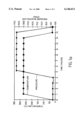
- FIG. 1a is a graphic representation of the vacuum impregnation cycle used for densifying foams in accordance with the present invention
- FIG. 1b is a representation of a portion of the graph of FIG. 1a;
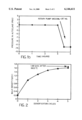
- FIG. 2 is a graph of the density of the impregnated foams
- the present invention provides an inexpensive, open cell, mechanically robust and graphitizable foam preform.
- the graphitizable foam is produced via a modified standard flower foam formulation.
- Flower foams are resole phenolic-based foams used to mount or hold flowers in a dry or aqueous environment.
- the present invention comprises a modified formula for such flower foams wherein a mesophase material is incorporated along with a corresponding reduction in the resole component.
- the mesophase material replaces 30-70% by weight (a target of 50% by weight) of the resole component of the formulation.
- the formulation of a flower foam and its modification to include a mesophase component are both listed below in Chart A.
- the modified flower foam formulation is provided by mixing the components listed in Chart A at room temperature by using a high shear mixer for approximately two to three minutes. Although experimental work has included the nucleation-additive Cab-O-Sil®, it is believed that the function of the nucleation additive is duplicated by the mesophase pitch. The mixture is then charged into a mold and subsequently placed into a drying oven at 73° C. ⁇ 5° C. The mixture begins foaming within one to two minutes, and after a further ten to fifteen minutes the mixture will expand five to tenfold in volume. For all intents and purposes, the foam is ⁇ thermoset ⁇ after this stage and can be carbonized (heated) by conventional methods to produce an open cell, graphitizable foam.
- the mesophase pitch in this case, Mitsubishi AR24
- the mesophase particles are then more evenly distributed throughout the foam struts and nodes.
- the graphitizable foam formulation is designed specifically to discourage the formation of cell walls and by the use of an appropriate amount of surfactant and mesophase pitch particles this goal is achieved.
- the component of the foam that imparts graphitizability can be replaced with other graphitizable carbon precursors such as coal-tar, petroleum or synthetic pitches. Additionally, the above method of producing foam can be replaced by the use of conventional foam extrusion technology.
- the foam preform can be carbonized by any one of carbonization processes well known to those skilled in the art. Carbonization can be carried out in the range of as low as 600° C. and up to 2000° C. in order to remove volatiles and so on from the structure. Carbonization may then be followed by heat treatment if it is desired to modify the mechanical, thermal and chemical properties of the carbon in the struts of the foam preform.
- the foam preform may be heat treated in the range of 1600° C. to 2800° C. The effect of such a treatment on graphitizable materials is well known. Higher temperatures increase the degree of order in the material, increase the thermal conductivity of the carbon in the struts, and increase the elastic modulus.
- the carbonized foam preform may be densified by any method for densifying a carbon preform as well known to those experienced in the fabrication of carbon--carbon composites.
- the most obvious techniques are chemical vapor deposition (CVD) of carbon, also known as chemical vapor infiltration (CVI), and pitch impregnation followed by carbonization. A combination of those techniques may also be used. Multiple cycles of densification are almost always required.
- CVD chemical vapor deposition
- VI chemical vapor infiltration
- pitch impregnation followed by carbonization A combination of those techniques may also be used. Multiple cycles of densification are almost always required.
- an intermediate or final heat treatment of the preform is usually applied to modify the crystal structure and order of the carbon. This process is typically very similar to the heat treatment of the foam, described above.
- the material is machined to the usable shape of a friction material or other structural component.
- An oxidation protection coating or treatment can be applied if desired.
- articles made from the graphitizable foam of the present invention For example, substrates for catalysts, high temperature insulation/dampers, filters and substrates for/or conversion to SiC.
- One of the advantages provided by the present invention is the ease of processing and handling the graphitizable foam preform.
- the graphitizable foam preform does not have to be kept at a warm temperature to avoid brittlization, and has sufficient robustness for handling during processing. Additionally, all of the components (with the exception of mesophase pitch) are commonly used industrial materials with no significant health and safety concerns.
- the graphitizable foam of the present invention enables the rapid and low cost production of complex carbon-carbon composite parts.
- FIG. 1a A schematic or graphic representation of the vacuum/pressure impregnation procedure is shown in FIG. 1a.
- FIG. 1b is an enlarged illustration of the vacuum which is applied during the impregnation procedure.
- the impregnated hybrid foam is carbonized up to 600° C. under pressure in an autoclave.
- a typical cycle is as follows: from room temperature (25° C.) to 600° C. in 4 hours, a 2 hour soak at 600° C. and cool down from 600° C. to room temp in >4 hours.
- the vessel Prior to heating the vessel is pressurized to 700 psig with nitrogen gas.
- the pressure vessel is fitted with a pressure relief valve set at 2000 psig.
- the pressure rise during carbonization is due initially to a rise in temperature of the nitrogen gas but with increased temperature (>120° C.) volatiles such as water and low molecular weight hydrocarbons are evolved from the pitch and contribute to the pressure increase. Volatile evolution continues throughout the carbonization process (particularly between 300° C. and 500° C.) such that the pressure of the vessel is maintained at 2000 psig during the soak period at 600° C. It is this imposition of pressure during carbonization that increases the carbon yield from pitch impregnants such as 15-V coal tar pitch.
- the pressurized carbonization cycle partially carbonizes the densified hybrid foam sample.
- the impregnated hybrid foam sample is fully carbonized, and it can be further densified as is or heat-treated (graphitized) before repeating the densification process.
- FIG. 2 shows an example of the densification profile of a graphitizable foam friction material used to produce test specimens for a brake dynamometer.
- the friction material was tested using a standard 220 stop test sequence.
- the densified foam friction material had a density of 1.68 g/cc, an average friction coefficient of 0.346 after 220 stops and a wear rate of 0.3608 mg/s/s (miligrams/surface/stop) over a friction area of 14.7 square centimeters.
Landscapes
- Chemical & Material Sciences (AREA)
- Engineering & Computer Science (AREA)
- Ceramic Engineering (AREA)
- Materials Engineering (AREA)
- Structural Engineering (AREA)
- Organic Chemistry (AREA)
- Manufacturing & Machinery (AREA)
- Chemical Kinetics & Catalysis (AREA)
- General Chemical & Material Sciences (AREA)
- General Engineering & Computer Science (AREA)
- Composite Materials (AREA)
- Dispersion Chemistry (AREA)
- Inorganic Chemistry (AREA)
- Civil Engineering (AREA)
- Oil, Petroleum & Natural Gas (AREA)
- Mechanical Engineering (AREA)
- Ceramic Products (AREA)
- Braking Arrangements (AREA)
- Compositions Of Macromolecular Compounds (AREA)
- Pharmaceuticals Containing Other Organic And Inorganic Compounds (AREA)
- Porous Artificial Stone Or Porous Ceramic Products (AREA)
Abstract
The present invention provides an inexpensive, open cell, mechanically robust and graphitizable foam preform. The graphitizable foam is produced via a modified standard flower foam formulation. The invention provides a modified formula for such flower foams wherein a mesophase material is incorporated along with a corresponding reduction in the resole component. The mesophase material replaces 30-70% by weight (a target of 50% by weight) of the resole component of the formulation. The formulation is heated to effect foaming of the mixture, and then carbonized to produce an open cell, graphitizable foam preform.
Description
This is a division of U.S. patent application Ser. No. 09/112,993 filed Jul. 10, 1998 allowed.
This patent application claims priority upon U.S. provisional patent application Ser. No. 60/086,426, filed May 22, 1998.
This is a continuation-in-part of U.S. patent application Ser. No. 08/970,558, filed Nov. 14, 1997 U.S. Pat. No. 6,077,464.
The present invention relates generally to the production of a graphitizable foam material, and in particular to a graphitizable foam preform that may be subsequently densified to provide a friction material.
Carbon-carbon composites are widely used for aircraft brake friction materials. Carbon-carbon is attractive because it is lightweight and can operate at very high temperatures, and because it can, pound for pound, absorb a great deal of aircraft energy and convert it to heat. A major drawback with the use of carbon-carbon for this application is the high cost of raw material used to make the parts. Expensive carbon fiber is a significant component; sometimes up to 45% fiber is used in the composite. Fiber costs can often be the single largest contributor to the cost of making a friction material. Another drawback is that the manufacture of carbon-carbon is a time-consuming process. The overall process for making a carbon brake disk is measured in weeks, and even months. Long cycle times are undesirable in a modern manufacturing environment. It is highly desirable to provide a process that has a reduced cost and shortened cycle time for making a carbon-carbon composite.
The invention disclosed herein addresses the major drawbacks of manufacturing carbon-carbon composites: cost and cycle time. These drawbacks have been identified and discussed in the parent U.S. patent application Ser. No. 08/970,558, filed on Nov. 14, 1997, and incorporated by reference herein. One way of overcoming these drawbacks to manufacturing carbon-carbon composites is to replace the fiber preform with a graphitizable foam that would result in significantly lowered manufacturing and processing costs. The foam preform should have predominantly and uniformly open cells to allow for the subsequent densification of the foam preform. The foam preform should have the necessary mechanical integrity and be physically robust for ease of handling during subsequent processing. The thermo mechanical properties (e.g. thermal conductivity/diffusivity) of a carbon-fiber preform can be attained by a foam preform only if it is graphitized. Therefore, the foam preform must be graphitizable. If these requisite properties are accomplished, a further benefit can be attained with the use of a graphitizable foam preform as opposed to a carbon-fiber preform. A graphitizable foam preform will have the requisite physical and thermo-mechanical isotropy. Carbon-fiber preforms (made from both random fiber and non-woven methods) are profoundly anisotropic in that properties such as thermal conductivity vary according to the orientation of the fibers. The graphitizable foam preform, which does not include fibers, reduces the degree of bulk anisotropy and would be very useful in the development of carbon-carbon composite discs for applications such as friction discs in aircraft brakes.
Briefly, the present invention comprises a process utilizing a thermoset resin with a thermoplastic additive and a physical blowing agent to provide a graphitizable foam preform, comprising the steps of providing a mixture of a resole phenolic, one of a ground pitch and synthetic pitch, surfactant, catalyst and blowing agent;
(a) heating the mixture to above 50° C. in order to effect foaming of the mixture to provide a foam preform, and
(b) heating the foam preform to a temperature within the range of 600-2000° C. to produce an open cell, graphitizable foam preform.
FIG. 1a is a graphic representation of the vacuum impregnation cycle used for densifying foams in accordance with the present invention;
FIG. 1b is a representation of a portion of the graph of FIG. 1a;
FIG. 2 is a graph of the density of the impregnated foams
The present invention provides an inexpensive, open cell, mechanically robust and graphitizable foam preform. The graphitizable foam is produced via a modified standard flower foam formulation. Flower foams are resole phenolic-based foams used to mount or hold flowers in a dry or aqueous environment. The present invention comprises a modified formula for such flower foams wherein a mesophase material is incorporated along with a corresponding reduction in the resole component. The mesophase material replaces 30-70% by weight (a target of 50% by weight) of the resole component of the formulation. The formulation of a flower foam and its modification to include a mesophase component are both listed below in Chart A.
                                  CHART A
__________________________________________________________________________
                               Graphitizable Foam
                               (wt. %)
Material             Flower Foam (wt. %)
                               Target
                                   Range
__________________________________________________________________________
Resole Phenolic (e.g. HRJ11761)
                     73.30     42.30
                                   (28.36-66.16)
Mesophase Pitch (e.g. AR24)
                     0.00      42.30
                                   (28.36-66.16)
Surfactant (e.g. Tween 40 ® )
                     0.73      0.40
                                   (0.1-1.0)
Catalyst Sol.sup.n., QO ® FA-ROK ® 6301
                     22.00     12.70
                                    (8.0-25.0)
Nucleation Additive, Cab-O-Sil ®
                     0.37      0.23
                                   (0.0-0.5)
Blowing Agent, e.g. hexane/pentane (50/50 vol.)
                     3.70      2.13
                                   (1.0-5.0)
__________________________________________________________________________
 HRJ 11761 is a liquid phenolic resole resin produced by Schenectady
 International Inc.
 Mesophase pitch AR24 is a synthetic naphthalene derived mesophase pitch
 supplied by Mitsubishi Gas Chemical Company.
 Tween 40 ® [polyoxyethylene (20) sorbitan monopalmitate] is a
 surfactant supplied by Aldrich Chemical Company.
 QO ® FAROK ® 6301 (phenosulfonic acid mixture) supplied by QO
 Chemicals, Oakbrook, Illinois, is a polymerization catalyst for the resol
 phenolic resin.
 CaO-Sil ® is an amorphous fumed silica (grade M5) supplied by Cabot
 Corporation.
 The hydrocarbon solvent blowing agents used in above formulation (i.e.
 hexane/pentane) are readily available from many sources (there is no
 specific purity grade preferred).
The modified flower foam formulation is provided by mixing the components listed in Chart A at room temperature by using a high shear mixer for approximately two to three minutes. Although experimental work has included the nucleation-additive Cab-O-Sil®, it is believed that the function of the nucleation additive is duplicated by the mesophase pitch. The mixture is then charged into a mold and subsequently placed into a drying oven at 73° C.±5° C. The mixture begins foaming within one to two minutes, and after a further ten to fifteen minutes the mixture will expand five to tenfold in volume. For all intents and purposes, the foam is `thermoset` after this stage and can be carbonized (heated) by conventional methods to produce an open cell, graphitizable foam.
To ensure a homogenous microstructure and uniform foam morphology, it is essential that the mesophase pitch (in this case, Mitsubishi AR24) is ground to -325 mesh before mixing. The mesophase particles are then more evenly distributed throughout the foam struts and nodes. There appears to be an added benefit associated with the mesophase particles in that they disrupt the development of a uniform cell wall membrane. The graphitizable foam formulation is designed specifically to discourage the formation of cell walls and by the use of an appropriate amount of surfactant and mesophase pitch particles this goal is achieved. It should be clearly understood that the component of the foam that imparts graphitizability (mesophase pitch) can be replaced with other graphitizable carbon precursors such as coal-tar, petroleum or synthetic pitches. Additionally, the above method of producing foam can be replaced by the use of conventional foam extrusion technology.
After the graphitizable foam preform has been created by expansion of the foam material, the foam preform can be carbonized by any one of carbonization processes well known to those skilled in the art. Carbonization can be carried out in the range of as low as 600° C. and up to 2000° C. in order to remove volatiles and so on from the structure. Carbonization may then be followed by heat treatment if it is desired to modify the mechanical, thermal and chemical properties of the carbon in the struts of the foam preform. The foam preform may be heat treated in the range of 1600° C. to 2800° C. The effect of such a treatment on graphitizable materials is well known. Higher temperatures increase the degree of order in the material, increase the thermal conductivity of the carbon in the struts, and increase the elastic modulus. However, higher temperatures may also tend to decrease the strength somewhat. Finally, the carbonized foam preform may be densified by any method for densifying a carbon preform as well known to those experienced in the fabrication of carbon--carbon composites. The most obvious techniques are chemical vapor deposition (CVD) of carbon, also known as chemical vapor infiltration (CVI), and pitch impregnation followed by carbonization. A combination of those techniques may also be used. Multiple cycles of densification are almost always required. After densification, an intermediate or final heat treatment of the preform is usually applied to modify the crystal structure and order of the carbon. This process is typically very similar to the heat treatment of the foam, described above. And finally, the material is machined to the usable shape of a friction material or other structural component. An oxidation protection coating or treatment can be applied if desired. There are many potential uses for articles made from the graphitizable foam of the present invention. For example, substrates for catalysts, high temperature insulation/dampers, filters and substrates for/or conversion to SiC. One of the advantages provided by the present invention is the ease of processing and handling the graphitizable foam preform. The graphitizable foam preform does not have to be kept at a warm temperature to avoid brittlization, and has sufficient robustness for handling during processing. Additionally, all of the components (with the exception of mesophase pitch) are commonly used industrial materials with no significant health and safety concerns. The graphitizable foam of the present invention enables the rapid and low cost production of complex carbon-carbon composite parts.
A graphitizable foam preform was densified in a repeated vacuum/pressure impregnation and pressurized carbonization cycle. This type of densification cycle is common and known to those practiced in the art. A schematic or graphic representation of the vacuum/pressure impregnation procedure is shown in FIG. 1a. FIG. 1b is an enlarged illustration of the vacuum which is applied during the impregnation procedure. Subsequent to the vacuum/pressure impregnation stage the impregnated hybrid foam is carbonized up to 600° C. under pressure in an autoclave. A typical cycle is as follows: from room temperature (25° C.) to 600° C. in 4 hours, a 2 hour soak at 600° C. and cool down from 600° C. to room temp in >4 hours. Prior to heating the vessel is pressurized to 700 psig with nitrogen gas. The pressure vessel is fitted with a pressure relief valve set at 2000 psig. The pressure rise during carbonization is due initially to a rise in temperature of the nitrogen gas but with increased temperature (>120° C.) volatiles such as water and low molecular weight hydrocarbons are evolved from the pitch and contribute to the pressure increase. Volatile evolution continues throughout the carbonization process (particularly between 300° C. and 500° C.) such that the pressure of the vessel is maintained at 2000 psig during the soak period at 600° C. It is this imposition of pressure during carbonization that increases the carbon yield from pitch impregnants such as 15-V coal tar pitch. The pressurized carbonization cycle partially carbonizes the densified hybrid foam sample. To fully carbonize the sample it undergoes a further char or calcination step to 1050° C. at atmospheric pressure. At this stage the impregnated hybrid foam sample is fully carbonized, and it can be further densified as is or heat-treated (graphitized) before repeating the densification process.
FIG. 2 shows an example of the densification profile of a graphitizable foam friction material used to produce test specimens for a brake dynamometer. The friction material was tested using a standard 220 stop test sequence. The densified foam friction material had a density of 1.68 g/cc, an average friction coefficient of 0.346 after 220 stops and a wear rate of 0.3608 mg/s/s (miligrams/surface/stop) over a friction area of 14.7 square centimeters.
Claims (10)
1. A graphitizable foam preform, comprising a preform structure having open cells provided by struts and nodes of the preform, the foam made from a mixture of resole phenolic, ground mesophase pitch, surfactant, catalyst, and blowing agent that was heated to above 50° C. to effect foaming and subsequently heated to the temperature range of 600-2000° C. to provide a foam preform of substantially homogenous microstructure and uniform morphology and which is graphitizable.
2. The preform in accordance with claim 1, wherein the mesophase pitch was ground to at least -325 mesh.
3. The preform in accordance with claim 1, wherein the resole phenolic had a weight percentage within the range of approximately 28-66%, and the mesophase pitch had a weight percentage within the range of approximately 28-66%.
4. The preform in accordance with claim 1, wherein the catalyst was within the range of approximately 8-25% by weight.
5. The preform in accordance with claim 1, wherein the mixture includes a nucleation additive.
6. A graphitizable foam preform, comprising a preform structure having open cells provided by struts and nodes of the preform, the foam made from a mixture of resole phenolic; one of a ground pitch and synthetic pitch; surfactant; catalyst; and blowing agent that was heated to above 50° C. to effect foaming and subsequently heated to the temperature range of 600-2000° C. to provide a foam preform of substantially homogenous microstructure and uniform morphology and which is graphitizable.
7. The preform in accordance with claim 6, wherein the pitch was ground to at least -325 mesh.
8. The preform in accordance with claim 6, wherein the resole phenolic had a weight percentage within the range of approximately 28-66%, and the pitch had a weight percentage within the range of approximately 28-66%.
9. The preform in accordance with claim 6, wherein the catalyst was within the range of approximately 8-25% by weight.
10. The preform in accordance with claim 6, wherein the mixture includes a nucleation additive.
Priority Applications (1)
| Application Number | Priority Date | Filing Date | Title |
|---|---|---|---|
| US09/502,352 US6146611A (en) | 1997-11-14 | 2000-02-11 | Graphitizable foam preform |
Applications Claiming Priority (4)
| Application Number | Priority Date | Filing Date | Title |
|---|---|---|---|
| US08/970,558 US6077464A (en) | 1996-12-19 | 1997-11-14 | Process of making carbon-carbon composite material made from densified carbon foam |
| US8642698P | 1998-05-22 | 1998-05-22 | |
| US09/112,993 US6126874A (en) | 1997-11-14 | 1998-07-10 | Process of making a graphitizable foam preform |
| US09/502,352 US6146611A (en) | 1997-11-14 | 2000-02-11 | Graphitizable foam preform |
Related Parent Applications (2)
| Application Number | Title | Priority Date | Filing Date |
|---|---|---|---|
| US08/970,558 Continuation-In-Part US6077464A (en) | 1996-12-19 | 1997-11-14 | Process of making carbon-carbon composite material made from densified carbon foam |
| US09/112,993 Division US6126874A (en) | 1997-11-14 | 1998-07-10 | Process of making a graphitizable foam preform |
Publications (1)
| Publication Number | Publication Date |
|---|---|
| US6146611A true US6146611A (en) | 2000-11-14 |
Family
ID=26774742
Family Applications (2)
| Application Number | Title | Priority Date | Filing Date |
|---|---|---|---|
| US09/112,993 Expired - Fee Related US6126874A (en) | 1997-11-14 | 1998-07-10 | Process of making a graphitizable foam preform |
| US09/502,352 Expired - Fee Related US6146611A (en) | 1997-11-14 | 2000-02-11 | Graphitizable foam preform |
Family Applications Before (1)
| Application Number | Title | Priority Date | Filing Date |
|---|---|---|---|
| US09/112,993 Expired - Fee Related US6126874A (en) | 1997-11-14 | 1998-07-10 | Process of making a graphitizable foam preform |
Country Status (6)
| Country | Link |
|---|---|
| US (2) | US6126874A (en) |
| EP (1) | EP1084089A2 (en) |
| JP (1) | JP2002518285A (en) |
| CN (1) | CN1310697A (en) |
| AU (1) | AU6128999A (en) |
| WO (1) | WO1999065843A2 (en) |
Cited By (10)
| Publication number | Priority date | Publication date | Assignee | Title |
|---|---|---|---|---|
| US6315974B1 (en) * | 1997-11-14 | 2001-11-13 | Alliedsignal Inc. | Method for making a pitch-based foam |
| US20050277703A1 (en) * | 2003-06-20 | 2005-12-15 | Joseph Lovette | Static dissipative polyurethane foams |
| US20070154381A1 (en) * | 2005-12-29 | 2007-07-05 | Miller Douglas J | Carbon foam with improved graphitizability |
| US20100072002A1 (en) * | 2006-08-29 | 2010-03-25 | Honeywell International Inc. | Aircraft brake using mixed carbon composite friction couple with different degrees of graphitization for improved rejected take off and wear performance |
| US20100078839A1 (en) * | 2005-06-23 | 2010-04-01 | Honeywell International Inc. | Pitch densification of carbon fiber preforms |
| US20100294391A1 (en) * | 2007-10-08 | 2010-11-25 | Carbone Lorraine Composants | Method of manufacturing a tubular insulating device and corresponding device |
| EP2440492A4 (en) * | 2009-06-12 | 2013-03-20 | Graftech Int Holdings Inc | Highly oriented graphite product |
| US20140246138A1 (en) * | 2005-05-30 | 2014-09-04 | Kaneka Corporation | Process for producing graphite film and graphite film produced thereby |
| EP3733598A1 (en) * | 2019-04-30 | 2020-11-04 | Heraeus Battery Technology GmbH | A formulation comprising a graphitizable and a non-graphitizable carbon source |
| US11345598B2 (en) * | 2018-10-10 | 2022-05-31 | Cfoam Llc | Method for pore stabilized carbon foam |
Families Citing this family (16)
| Publication number | Priority date | Publication date | Assignee | Title |
|---|---|---|---|---|
| US6077464A (en) * | 1996-12-19 | 2000-06-20 | Alliedsignal Inc. | Process of making carbon-carbon composite material made from densified carbon foam |
| US6780505B1 (en) * | 1997-09-02 | 2004-08-24 | Ut-Battelle, Llc | Pitch-based carbon foam heat sink with phase change material |
| US6033506A (en) | 1997-09-02 | 2000-03-07 | Lockheed Martin Engery Research Corporation | Process for making carbon foam |
| US6037032A (en) | 1997-09-02 | 2000-03-14 | Lockheed Martin Energy Research Corp. | Pitch-based carbon foam heat sink with phase change material |
| US6673328B1 (en) * | 2000-03-06 | 2004-01-06 | Ut-Battelle, Llc | Pitch-based carbon foam and composites and uses thereof |
| AUPP941399A0 (en) * | 1999-03-23 | 1999-04-15 | University Of Melbourne, The | Improved carbon-containing materials |
| US7147214B2 (en) * | 2000-01-24 | 2006-12-12 | Ut-Battelle, Llc | Humidifier for fuel cell using high conductivity carbon foam |
| MY138532A (en) | 2000-08-31 | 2009-06-30 | Foseco Int | Refractory articles |
| WO2005016818A1 (en) * | 2003-08-05 | 2005-02-24 | Touchstone Research Laboratory, Ltd. | Carbon foam from metallic salts of lignosulfonates |
| US8601760B2 (en) * | 2007-01-19 | 2013-12-10 | Balco, Inc. | Fire barrier |
| US20080286191A1 (en) * | 2007-05-14 | 2008-11-20 | Stansberry Peter G | Process For The Production Of Highly Graphitizable Carbon Foam |
| US10260968B2 (en) | 2013-03-15 | 2019-04-16 | Nano Composite Products, Inc. | Polymeric foam deformation gauge |
| BR112015022879B8 (en) | 2013-03-15 | 2022-08-30 | Univ Brigham Young | APPARATUS COMPRISING A UNIFORM COMPOSITE FOAM AND METHOD FOR MEASURING COMPRESSION TENSION USING SUCH APPARATUS |
| US9857246B2 (en) | 2014-09-17 | 2018-01-02 | Sensable Technologies, Llc | Sensing system including a sensing membrane |
| US10405779B2 (en) | 2015-01-07 | 2019-09-10 | Nano Composite Products, Inc. | Shoe-based analysis system |
| CN106565272B (en) * | 2016-11-04 | 2020-01-17 | 中南林业科技大学 | A kind of preparation method of silicon carbide ceramic foam |
Citations (6)
| Publication number | Priority date | Publication date | Assignee | Title |
|---|---|---|---|---|
| US4548957A (en) * | 1981-09-25 | 1985-10-22 | Union Oil Company Of California | Densified carbonaceous bodies with improved surface finishes |
| US4582632A (en) * | 1983-04-11 | 1986-04-15 | Kabushiki Kaisha Kobe Seiko Sho | Non-permeable carbonaceous formed bodies and method for producing same |
| US4631181A (en) * | 1984-03-31 | 1986-12-23 | Nippon Steel Corporation | Process for producing mesophase pitch |
| US4832881A (en) * | 1988-06-20 | 1989-05-23 | The United States Of America As Represented By The United States Department Of Energy | Low density microcellular carbon foams and method of preparation |
| US6033506A (en) * | 1997-09-02 | 2000-03-07 | Lockheed Martin Engery Research Corporation | Process for making carbon foam |
| US6037032A (en) * | 1997-09-02 | 2000-03-14 | Lockheed Martin Energy Research Corp. | Pitch-based carbon foam heat sink with phase change material |
Family Cites Families (22)
| Publication number | Priority date | Publication date | Assignee | Title |
|---|---|---|---|---|
| GB1260034A (en) * | 1969-08-12 | 1972-01-12 | Coal Industry Patents Ltd | Method of manufacturing unitary porous carbon bodies |
| JPS5213516B2 (en) * | 1972-10-23 | 1977-04-14 | ||
| GB2012303B (en) * | 1977-12-14 | 1982-05-06 | British Petroleum Co | Process for preparing pitch foams and products so produced |
| US4605595A (en) * | 1983-11-18 | 1986-08-12 | Allied Corporation | Method of manufacturing a friction article |
| US4537823A (en) * | 1983-11-18 | 1985-08-27 | Allied Corporation | Method of manufacturing a friction article |
| US4891203A (en) * | 1985-06-28 | 1990-01-02 | Union Carbide Corporation | Flake-like carbon bodies from semicoke |
| US5360500A (en) * | 1986-11-20 | 1994-11-01 | Dunlop Limited | Method of producing light-weight high-strength stiff panels |
| US4975261A (en) * | 1987-09-22 | 1990-12-04 | Petoca Ltd. | Process for producing high strength carbon-carbon composite |
| JPS6479079A (en) * | 1987-09-22 | 1989-03-24 | Petoca Ltd | Porous isotropic carbon-carbon composite material and its production |
| JPH01115882A (en) * | 1987-10-29 | 1989-05-09 | Sumitomo Metal Ind Ltd | Production of porous carbonaceous material |
| US4832870A (en) * | 1988-06-20 | 1989-05-23 | The United States Department Of Energy | Electrically conductive composite material |
| US4986943A (en) * | 1989-02-28 | 1991-01-22 | The Aerospace Corporation | Method for oxidation stabilization of pitch-based matrices for carbon-carbon composites |
| CN1056892A (en) * | 1990-05-18 | 1991-12-11 | 何永碧 | The foamy graphite ceramoplastics of type material |
| US5015522A (en) * | 1990-09-05 | 1991-05-14 | The Dow Chemical Company | Multicomponent fibers, films and foams |
| US5260855A (en) * | 1992-01-17 | 1993-11-09 | Kaschmitter James L | Supercapacitors based on carbon foams |
| EP0562591B1 (en) * | 1992-03-27 | 1996-12-18 | Ucar Carbon Technology Corporation | Pitch based impregnant for carbon and graphite |
| US5268395A (en) * | 1992-10-13 | 1993-12-07 | Martin Marietta Energy Systems, Inc. | Microcellular carbon foam and method |
| JPH0733551A (en) * | 1993-07-27 | 1995-02-03 | Nippon Steel Chem Co Ltd | Method for manufacturing heat insulating material for vacuum furnace |
| US5744510A (en) * | 1995-04-25 | 1998-04-28 | Regents Of The University Of California | Organic carbon aerogels from the sol-gel polymerization of phenolic-furfural mixtures |
| US5744075A (en) * | 1995-05-19 | 1998-04-28 | Martin Marietta Energy Systems, Inc. | Method for rapid fabrication of fiber preforms and structural composite materials |
| US5770127A (en) * | 1996-07-15 | 1998-06-23 | The United States Of America As Represented By The Secretary Of The Air Force | Carbon or graphite foam reinforced composites |
| US5868974A (en) * | 1997-11-27 | 1999-02-09 | The United States Of America As Represented By The Secretary Of The Air Force | Process for preparing pitch foams |
-
1998
- 1998-07-10 US US09/112,993 patent/US6126874A/en not_active Expired - Fee Related
-
1999
- 1999-05-21 EP EP99948031A patent/EP1084089A2/en not_active Withdrawn
- 1999-05-21 WO PCT/US1999/011278 patent/WO1999065843A2/en not_active Ceased
- 1999-05-21 CN CN99808992A patent/CN1310697A/en active Pending
- 1999-05-21 JP JP2000554672A patent/JP2002518285A/en active Pending
- 1999-05-21 AU AU61289/99A patent/AU6128999A/en not_active Abandoned
-
2000
- 2000-02-11 US US09/502,352 patent/US6146611A/en not_active Expired - Fee Related
Patent Citations (6)
| Publication number | Priority date | Publication date | Assignee | Title |
|---|---|---|---|---|
| US4548957A (en) * | 1981-09-25 | 1985-10-22 | Union Oil Company Of California | Densified carbonaceous bodies with improved surface finishes |
| US4582632A (en) * | 1983-04-11 | 1986-04-15 | Kabushiki Kaisha Kobe Seiko Sho | Non-permeable carbonaceous formed bodies and method for producing same |
| US4631181A (en) * | 1984-03-31 | 1986-12-23 | Nippon Steel Corporation | Process for producing mesophase pitch |
| US4832881A (en) * | 1988-06-20 | 1989-05-23 | The United States Of America As Represented By The United States Department Of Energy | Low density microcellular carbon foams and method of preparation |
| US6033506A (en) * | 1997-09-02 | 2000-03-07 | Lockheed Martin Engery Research Corporation | Process for making carbon foam |
| US6037032A (en) * | 1997-09-02 | 2000-03-14 | Lockheed Martin Energy Research Corp. | Pitch-based carbon foam heat sink with phase change material |
Cited By (14)
| Publication number | Priority date | Publication date | Assignee | Title |
|---|---|---|---|---|
| US6315974B1 (en) * | 1997-11-14 | 2001-11-13 | Alliedsignal Inc. | Method for making a pitch-based foam |
| US20050277703A1 (en) * | 2003-06-20 | 2005-12-15 | Joseph Lovette | Static dissipative polyurethane foams |
| US20140246138A1 (en) * | 2005-05-30 | 2014-09-04 | Kaneka Corporation | Process for producing graphite film and graphite film produced thereby |
| US9745196B2 (en) | 2005-05-30 | 2017-08-29 | Kaneka Corporation | Process for producing graphite film and graphite film produced thereby |
| US9512007B2 (en) * | 2005-05-30 | 2016-12-06 | Kaneka Corporation | Process for producing graphite film and graphite film produced thereby |
| US20100078839A1 (en) * | 2005-06-23 | 2010-04-01 | Honeywell International Inc. | Pitch densification of carbon fiber preforms |
| US20070154381A1 (en) * | 2005-12-29 | 2007-07-05 | Miller Douglas J | Carbon foam with improved graphitizability |
| US20100072002A1 (en) * | 2006-08-29 | 2010-03-25 | Honeywell International Inc. | Aircraft brake using mixed carbon composite friction couple with different degrees of graphitization for improved rejected take off and wear performance |
| US9249920B2 (en) * | 2007-10-08 | 2016-02-02 | Carbone Lorraine Composants | Method of manufacturing a tubular insulating device and corresponding device |
| US20100294391A1 (en) * | 2007-10-08 | 2010-11-25 | Carbone Lorraine Composants | Method of manufacturing a tubular insulating device and corresponding device |
| EP2440492A4 (en) * | 2009-06-12 | 2013-03-20 | Graftech Int Holdings Inc | Highly oriented graphite product |
| US11345598B2 (en) * | 2018-10-10 | 2022-05-31 | Cfoam Llc | Method for pore stabilized carbon foam |
| EP3733598A1 (en) * | 2019-04-30 | 2020-11-04 | Heraeus Battery Technology GmbH | A formulation comprising a graphitizable and a non-graphitizable carbon source |
| WO2020221742A1 (en) * | 2019-04-30 | 2020-11-05 | Heraeus Battery Technology Gmbh | A formulation comprising a graphitizable and a non-graphitizable carbon source |
Also Published As
| Publication number | Publication date |
|---|---|
| CN1310697A (en) | 2001-08-29 |
| JP2002518285A (en) | 2002-06-25 |
| US6126874A (en) | 2000-10-03 |
| EP1084089A2 (en) | 2001-03-21 |
| WO1999065843A2 (en) | 1999-12-23 |
| AU6128999A (en) | 2000-01-05 |
| WO1999065843A3 (en) | 2000-02-24 |
Similar Documents
| Publication | Publication Date | Title |
|---|---|---|
| US6126874A (en) | Process of making a graphitizable foam preform | |
| EP3549926B1 (en) | Method for preparing c/c-sic composite material part | |
| US4226900A (en) | Manufacture of high density, high strength isotropic graphite | |
| US6287375B1 (en) | Pitch based foam with particulate | |
| US6261485B1 (en) | Pitch-based carbon foam and composites | |
| CA1222961A (en) | Brake disc of carbon-carbon composite material and its manufacture | |
| US5217657A (en) | Method of making carbon-carbon composites | |
| EP1911990A2 (en) | Carbon-carbon friction material with improved wear life | |
| EP0335736B1 (en) | Process for producing carbon/carbon composites | |
| US6376431B1 (en) | Reduced wear carbon brake material | |
| US3671385A (en) | Fibrous carbonaceous composites and method for manufacturing same | |
| US5336522A (en) | Method of manufacturing parts made of ceramic matric composite material | |
| US20040155382A1 (en) | Manufacture of carbon/carbon composites by hot pressing | |
| Aleshkevich et al. | High performance carbon–carbon composites obtained by a two-step process from phthalonitrile matrix composites | |
| WO2005121592A1 (en) | Method for producing carbon-carbon brake material with improved initial friction coefficient or “bite” | |
| US20250270143A1 (en) | Method for producing carbonised or graphitised 3D objects | |
| US6261692B1 (en) | Carbon-carbon composites containing ceramic power and method for preparing the same | |
| DE10011013A1 (en) | Production of carbon foam, used as insulator, catalyst, core material for sandwich structure or reinforcing material or for tribological application or part, involves foaming mixture of carbonizable polymer and blowing agent and pyrolysis | |
| JPH03163174A (en) | Heat-insulating coating agent and process for coating with same | |
| RU2225873C2 (en) | Graphitized foamed blank | |
| RU2641748C2 (en) | Leak-tight product of high-temperature composite material, reinforced with long-length fibers, and method of its manufacture | |
| JPS62297280A (en) | Carbon base foam heat insulating formed body and manufacture | |
| EP1359132A1 (en) | Composites, applications, and process for manufacturing said composites | |
| JP4420371B2 (en) | Manufacturing method of screw member made of C / C material | |
| JP2806408B2 (en) | Self-fusing carbonaceous powder and high density carbon material |
Legal Events
| Date | Code | Title | Description |
|---|---|---|---|
| REMI | Maintenance fee reminder mailed | ||
| FPAY | Fee payment |
Year of fee payment: 4 |
|
| SULP | Surcharge for late payment | ||
| REMI | Maintenance fee reminder mailed | ||
| LAPS | Lapse for failure to pay maintenance fees | ||
| LAPS | Lapse for failure to pay maintenance fees |
Free format text: PATENT EXPIRED FOR FAILURE TO PAY MAINTENANCE FEES (ORIGINAL EVENT CODE: EXP.); ENTITY STATUS OF PATENT OWNER: LARGE ENTITY |
|
| STCH | Information on status: patent discontinuation |
Free format text: PATENT EXPIRED DUE TO NONPAYMENT OF MAINTENANCE FEES UNDER 37 CFR 1.362 |
|
| FP | Lapsed due to failure to pay maintenance fee |
Effective date: 20081114 |