US5750466A - Coated cottonseed and a process for its manufacture - Google Patents
Coated cottonseed and a process for its manufacture Download PDFInfo
- Publication number
- US5750466A US5750466A US08/691,578 US69157896A US5750466A US 5750466 A US5750466 A US 5750466A US 69157896 A US69157896 A US 69157896A US 5750466 A US5750466 A US 5750466A
- Authority
- US
- United States
- Prior art keywords
- cottonseed
- starch
- coated
- suspension
- linter
- Prior art date
- Legal status (The legal status is an assumption and is not a legal conclusion. Google has not performed a legal analysis and makes no representation as to the accuracy of the status listed.)
- Expired - Lifetime
Links
- 235000012343 cottonseed oil Nutrition 0.000 title claims abstract description 114
- 238000000034 method Methods 0.000 title claims abstract description 23
- 238000004519 manufacturing process Methods 0.000 title claims description 5
- 229920002472 Starch Polymers 0.000 claims abstract description 68
- 235000019698 starch Nutrition 0.000 claims abstract description 66
- 239000008107 starch Substances 0.000 claims abstract description 66
- 238000000576 coating method Methods 0.000 claims abstract description 31
- 239000011248 coating agent Substances 0.000 claims abstract description 26
- 239000003795 chemical substances by application Substances 0.000 claims abstract description 10
- 241001465754 Metazoa Species 0.000 claims abstract description 9
- 241000283984 Rodentia Species 0.000 claims abstract description 9
- 239000006052 feed supplement Substances 0.000 claims abstract description 9
- 239000003921 oil Substances 0.000 claims abstract description 9
- 235000019198 oils Nutrition 0.000 claims abstract description 9
- 239000003755 preservative agent Substances 0.000 claims abstract description 9
- 235000013343 vitamin Nutrition 0.000 claims abstract description 9
- 239000011782 vitamin Substances 0.000 claims abstract description 9
- 229940088594 vitamin Drugs 0.000 claims abstract description 9
- 229930003231 vitamin Natural products 0.000 claims abstract description 9
- 239000000077 insect repellent Substances 0.000 claims abstract description 8
- XSQUKJJJFZCRTK-UHFFFAOYSA-N Urea Chemical compound NC(N)=O XSQUKJJJFZCRTK-UHFFFAOYSA-N 0.000 claims abstract description 7
- 239000004202 carbamide Substances 0.000 claims abstract description 7
- 229940079593 drug Drugs 0.000 claims abstract description 7
- 239000003814 drug Substances 0.000 claims abstract description 7
- 239000003925 fat Substances 0.000 claims abstract description 7
- 239000000463 material Substances 0.000 claims abstract description 7
- 238000002483 medication Methods 0.000 claims abstract description 7
- 239000000725 suspension Substances 0.000 claims description 38
- 238000001035 drying Methods 0.000 claims description 14
- 239000003429 antifungal agent Substances 0.000 claims description 7
- 229940121375 antifungal agent Drugs 0.000 claims description 7
- 229920002261 Corn starch Polymers 0.000 claims description 6
- 238000010438 heat treatment Methods 0.000 claims description 6
- 238000005507 spraying Methods 0.000 claims description 6
- 238000009835 boiling Methods 0.000 claims description 3
- 239000003086 colorant Substances 0.000 claims description 2
- 238000001816 cooling Methods 0.000 claims description 2
- 230000001737 promoting effect Effects 0.000 claims description 2
- 239000008120 corn starch Substances 0.000 claims 4
- 239000007900 aqueous suspension Substances 0.000 claims 1
- 229920000742 Cotton Polymers 0.000 description 11
- 238000003860 storage Methods 0.000 description 10
- 241000219146 Gossypium Species 0.000 description 9
- 238000002156 mixing Methods 0.000 description 9
- 239000004615 ingredient Substances 0.000 description 7
- 238000002360 preparation method Methods 0.000 description 6
- XLYOFNOQVPJJNP-UHFFFAOYSA-N water Substances O XLYOFNOQVPJJNP-UHFFFAOYSA-N 0.000 description 5
- 244000144972 livestock Species 0.000 description 4
- 241000283690 Bos taurus Species 0.000 description 3
- 240000002024 Gossypium herbaceum Species 0.000 description 3
- 235000004341 Gossypium herbaceum Nutrition 0.000 description 3
- 238000010586 diagram Methods 0.000 description 3
- 239000000203 mixture Substances 0.000 description 3
- 235000016709 nutrition Nutrition 0.000 description 3
- 238000003756 stirring Methods 0.000 description 3
- 244000061456 Solanum tuberosum Species 0.000 description 2
- 235000002595 Solanum tuberosum Nutrition 0.000 description 2
- 241000209140 Triticum Species 0.000 description 2
- 235000021307 Triticum Nutrition 0.000 description 2
- 238000013019 agitation Methods 0.000 description 2
- 239000011230 binding agent Substances 0.000 description 2
- 238000010411 cooking Methods 0.000 description 2
- 235000013365 dairy product Nutrition 0.000 description 2
- 235000015872 dietary supplement Nutrition 0.000 description 2
- 239000000945 filler Substances 0.000 description 2
- 229920001592 potato starch Polymers 0.000 description 2
- 238000009999 singeing Methods 0.000 description 2
- 239000004753 textile Substances 0.000 description 2
- 241000282849 Ruminantia Species 0.000 description 1
- 150000001413 amino acids Chemical class 0.000 description 1
- 238000010923 batch production Methods 0.000 description 1
- 230000009286 beneficial effect Effects 0.000 description 1
- 239000006227 byproduct Substances 0.000 description 1
- 235000013877 carbamide Nutrition 0.000 description 1
- 235000013339 cereals Nutrition 0.000 description 1
- 238000004040 coloring Methods 0.000 description 1
- 210000001520 comb Anatomy 0.000 description 1
- 239000002131 composite material Substances 0.000 description 1
- 238000010924 continuous production Methods 0.000 description 1
- 239000002385 cottonseed oil Substances 0.000 description 1
- 230000001627 detrimental effect Effects 0.000 description 1
- -1 e.g. Substances 0.000 description 1
- 239000004744 fabric Substances 0.000 description 1
- 235000019197 fats Nutrition 0.000 description 1
- 239000000835 fiber Substances 0.000 description 1
- 239000000576 food coloring agent Substances 0.000 description 1
- 230000035784 germination Effects 0.000 description 1
- 244000144980 herd Species 0.000 description 1
- 229910052500 inorganic mineral Inorganic materials 0.000 description 1
- 230000007774 longterm Effects 0.000 description 1
- 244000005700 microbiome Species 0.000 description 1
- 235000013379 molasses Nutrition 0.000 description 1
- 235000015097 nutrients Nutrition 0.000 description 1
- 238000009304 pastoral farming Methods 0.000 description 1
- 239000000843 powder Substances 0.000 description 1
- 239000010734 process oil Substances 0.000 description 1
- 239000000047 product Substances 0.000 description 1
- 102000004169 proteins and genes Human genes 0.000 description 1
- 108090000623 proteins and genes Proteins 0.000 description 1
- 238000004064 recycling Methods 0.000 description 1
- 230000000717 retained effect Effects 0.000 description 1
- 239000007858 starting material Substances 0.000 description 1
- 239000000126 substance Substances 0.000 description 1
- 239000013589 supplement Substances 0.000 description 1
- 239000004094 surface-active agent Substances 0.000 description 1
- 230000001052 transient effect Effects 0.000 description 1
- 150000003722 vitamin derivatives Chemical class 0.000 description 1
- 239000002699 waste material Substances 0.000 description 1
- 239000000080 wetting agent Substances 0.000 description 1
Images
Classifications
-
- A—HUMAN NECESSITIES
- A01—AGRICULTURE; FORESTRY; ANIMAL HUSBANDRY; HUNTING; TRAPPING; FISHING
- A01N—PRESERVATION OF BODIES OF HUMANS OR ANIMALS OR PLANTS OR PARTS THEREOF; BIOCIDES, e.g. AS DISINFECTANTS, AS PESTICIDES OR AS HERBICIDES; PEST REPELLANTS OR ATTRACTANTS; PLANT GROWTH REGULATORS
- A01N25/00—Biocides, pest repellants or attractants, or plant growth regulators, characterised by their forms, or by their non-active ingredients or by their methods of application, e.g. seed treatment or sequential application; Substances for reducing the noxious effect of the active ingredients to organisms other than pests
-
- A—HUMAN NECESSITIES
- A01—AGRICULTURE; FORESTRY; ANIMAL HUSBANDRY; HUNTING; TRAPPING; FISHING
- A01C—PLANTING; SOWING; FERTILISING
- A01C1/00—Apparatus, or methods of use thereof, for testing or treating seed, roots, or the like, prior to sowing or planting
- A01C1/06—Coating or dressing seed
-
- A—HUMAN NECESSITIES
- A23—FOODS OR FOODSTUFFS; TREATMENT THEREOF, NOT COVERED BY OTHER CLASSES
- A23K—FODDER
- A23K10/00—Animal feeding-stuffs
- A23K10/30—Animal feeding-stuffs from material of plant origin, e.g. roots, seeds or hay; from material of fungal origin, e.g. mushrooms
-
- A—HUMAN NECESSITIES
- A23—FOODS OR FOODSTUFFS; TREATMENT THEREOF, NOT COVERED BY OTHER CLASSES
- A23K—FODDER
- A23K40/00—Shaping or working-up of animal feeding-stuffs
- A23K40/30—Shaping or working-up of animal feeding-stuffs by encapsulating; by coating
-
- Y—GENERAL TAGGING OF NEW TECHNOLOGICAL DEVELOPMENTS; GENERAL TAGGING OF CROSS-SECTIONAL TECHNOLOGIES SPANNING OVER SEVERAL SECTIONS OF THE IPC; TECHNICAL SUBJECTS COVERED BY FORMER USPC CROSS-REFERENCE ART COLLECTIONS [XRACs] AND DIGESTS
- Y10—TECHNICAL SUBJECTS COVERED BY FORMER USPC
- Y10S—TECHNICAL SUBJECTS COVERED BY FORMER USPC CROSS-REFERENCE ART COLLECTIONS [XRACs] AND DIGESTS
- Y10S47/00—Plant husbandry
- Y10S47/09—Physical and chemical treatment of seeds for planting
Definitions
- the present invention relates to linter-bearing cottonseed, covered with a coating of starch to adapt it for use with animal feed handing equipment currently used on farms and ranches, and a process for applying the coating to the cottonseed.
- Cottonseed is rich in nutrients and is highly regarded by dairy cattle producers as a favored feed stock for their herds. Cottonseed would be even more popular as a feed if it could be shipped, stored and distributed by conventional feed handling equipment. After the cotton has been picked from the boll of the cotton plant, it is processed through a gin which combs through the cotton to separate the seeds from the cotton fibers. The cottonseed as it comes from the gin is covered with a thin coat of residual cotton fibers, known as "linters,” or “fuzz" giving the cottonseed a fuzzy appearance. The protruding linters on each seed have a strong tendency to interlock with the linters of neighboring seeds, causing the seeds to stick together rather than flow. The poor ability of cottonseed to flow creates the need for specialized equipment to handle and transport cottonseed.
- planting seed is characterized by high quality, high cost, and low volume.
- cottonseed for use as a feed is characterized by lessor quality, low to moderate cost, and high volume. Therefore, a high cost per unit volume for improving the flow characteristics of planting seed may be acceptable whereas it would not be for livestock feed.
- heating during processing may affect the germination of planting seed, whereas, moderate heating or roasting of feed stock seed may actually improve its feed value for cattle.
- the "binder” of Coles et al. is selected from molasses, gum, starch or lignasite, and the "filler” is an inorganic mineral powder or textured protein.
- linters have some nutritional value for ruminant animals, so where cottonseed is to be used as feed, retaining the linters is beneficial.
- the first aspect of the present invention is linter-bearing cottonseed covered with a coat of starch, optionally containing vitamins, feed supplements, oils, fats, urea, anti-fungal agents, rodent repellants, insect repellants, medications, anti-germination agents and preservatives.
- the coated cottonseed, of this invention is particularly useful because it can be handled and transported by conventional feed and grain handling and transporting equipment widely available to farmers, dairymen, and ranchers. Further, optional ingredients in the coating may enhance the nutritional value of the cottonseed, prolong its storage life, and increase the durability of the coating.
- the second aspect of the present invention is a process for coating cottonseed consisting essentially of the steps of:
- linter-bearing cottonseed with a coating consisting essentially of a hot, aqueous, gelatinized starch suspension, optionally containing one or more biologically related materials selected from vitamins, feed supplements, oils, fats, urea, anti-fungal agents, rodent repellants, insect repellants, medications, anti-germination agents, and preservatives, while agitating said linter-bearing cottonseed to yield starch suspension coated cottonseed;
- Steps a, b, and c may be repeated one or more times to provide a double or multiple coating.
- the coated cottonseed may be roasted and heat-steeped.
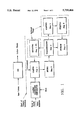
- FIG. 1 is a flow chart illustrating the steps of the process of the present invention for preparing coated cottonseed.
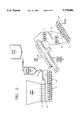
- FIG. 2 is a schematic diagram related to the process of the present invention for preparing coated cottonseed to illustrate Examples 1, 2, and 3.
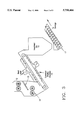
- FIG. 3 is a schematic diagram related to the process of the present invention for preparing coated cottonseed to illustrate Example 4.
- cotton seed As used herein, terms “cotton seed,” “seed of cotton,” and “seed” can be singular or plural and refer to the individual components of the commodity referred to by the singular, collective term “cottonseed”.
- cottonseed is removed from the raw cotton, i.e., as it comes from the boll of the cotton plant, in the ginning operation.
- the deseeded cotton is further processed into fabric.
- the cottonseed used as the starting material in the present process has previously had most of the longer fibers removed.
- Step 1 of the coating process shown in FIG. 1 the linter-bearing cottonseed is sprayed with a hot, gelatinous starch suspension with agitation to uniformly coat the cottonseed with the gelatinous starch suspension.
- the thickness of the coating is a function of three major factors: a) the viscosity of the starch suspension, b) the concentration of starch, and c) the time the seeds are being sprayed with the suspension. Each of these factors can be varied to adjust the thickness of the coating.
- the gelatinous starch suspension may be prepared in a starch cooking vessel equipped with means for heating and stirring the suspension. It is known in the art of preparing starch suspensions, e.g., see Theory and Practice of Textile Slashing, 1st Ed., Monograph No.1, Auburn University, Auburn, Ala. (1972), that the starch and water should be mixed in a certain range of proportions, in a certain sequence, and in a certain temperature range to obtain a smooth and uniform gelatinous suspension.
- the starch suspension preferred for the process of the present invention is about 2% to about 25% starch by weight, and is heated at a temperature from about 76° C. to boiling with stirring until it is gelatinized. It will be appreciated by those skilled in the art that a gelatious starch suspension can be prepared by a batch or continuous process.
- the essential ingredients of the gelatinous starch suspension are starch and water, but one or more optional biologically related ingredients such as vitamins, food supplements, oils, fats, urea, anti-fungal agents, rodent repellants, insect repellants, medications, anti-germination agents, and preservatives may be added to enhance the properties of the coated cottonseed.
- a coating might contain a vitamin mixture plus a coloring agent to identify easily the enhanced coated cottonseed.
- small quantities of surfactants e.g., wetting agents, may be added to the starch suspension to promote uniform coating.
- the optional ingredients can be added anytime during the starch suspension preparation, but conveniently may be added near the end of the cooking process, just before spraying on the cottonseed, or during agitation of the sprayed cottonseed.
- Step 2 the starch coated cottonseed is substantially dried by hot forced air.
- this can be carried out by passing a stream of hot air (about 100° C. to about 150° C.) over and/or through a bed of coated seeds as they are moved by a means of conveying, such as a moving belt, grid or screen, through a drying chamber.
- the rate of drying can be controlled by the temperature of the stream of hot air, the rate of flow of the stream of hot air, and rate of movement of the seeds. These factors may be adjusted so that coating of the cottonseed as it leaves the drying chamber is hard but not brittle or flaky.
- the coating should be dried so that the moisture level is between about 7% and about 11%.
- Step 3 clumps of coated seeds are broken up, i.e., disaggregated, by passing the coated cottonseed through a series of beaters.
- the disaggregation may be a single or multi-step process and may be consecutive or concurrent with Step 2.
- the beaters may be of any configuration known in the art for disaggregation of coated items, such as counter rotating drums with spikes projecting from the drums that pull the aggregated coated seeds apart.
- a series of beaters may be placed in the drying chamber taught in Step 2.
- Step 4 The coated seeds are allowed to cool to ambient temperature, then placed in storage until packaged or shipped in bulk to the user.
- the stored coated cottonseed must be kept dry and protected from temperature extremes.
- Step 1(R) is a recycling step. If a thicker coat is wanted, or if multiple coats are required, Steps 1, 2, and 3 may be repeated, i.e., the process may be recycled one or more times. (The broken line box in FIG. 1 indicates that step 1(R) is optional.)
- Applying multiple, thin coatings rather than a single, thick coating may be advantageous for some applications. Multiple, thin applications yield a hard starch coat that can withstand rough handling and long storage. Multiple, thin coatings are preferred for coated cottonseed to be used as planting stock. However, the application of a single, thick coat consumes less resources and energy to apply than multiple coats and is acceptable for many animal feed applications.
- the degree of coating is preferably between about 5% and about 10% of the weight of the coated cottonseed (on the basis of dry starch and dry cottonseed).
- some specialized applications may require very thin or extra thick coatings, such as when several optional ingredients are included in the coating.
- Starch from a variety of sources may be used for the present invention.
- potato, wheat, and corn starches or mixtures thereof are acceptable. Therefore, the choice of the type of starch is based on availability and economic considerations.
- the coated cottonseed prepared by Steps 1 through 4 also may be used as planting stock, i.e., seed planted to produce a crop for another growing season.
- planting stock i.e., seed planted to produce a crop for another growing season.
- multiple, thin coating is preferred to give the cottonseed a composite coat that is sufficiently durable to be used in mechanized planting equipment.
- the degree of coating is the same for planting stock as for feed stock.
- the optional ingredients in the starch coating of the cottonseed may be antifungal agents, rodent repellants, germinating promoting agents, and preservatives, but would not be anti-germinating agents or other ingredients only useful for animal feed and detrimental to cotton plants.
- the coated seeds may be further heated, preferably between about 140° C. and about 150° C. for about 5 min to about 15 min, to more completely remove residual moisture and to roast the coated cottonseed.
- the hot, dry coated cottonseed from Step 5 is allowed to steep in a holding area preferably at a temperature between about 100° C. and about 150° C. for about 20 min to about 30 min before the coated cottonseed is allowed to cool to ambient temperature and is put into long term storage, Step 4.
- the moisture content of the coated cottonseed after being subjected to Steps 5 and 6 preferably is between about 1% and about 5%.
- roasting and steeping significantly lowers the moisture level within the seeds and reduces the level of microorganisms that can cause the seeds to spoil; thus, enabling the coated cottonseed to be stored for a long period.
- the coated cottonseed is to be used within a few months of preparation, and is stored under dry, mild temperature conditions, these two extra steps are generally not needed.
- Roasting and steeping may also produce a richer feed stock for dairy cattle.
- the marginal increase in nutritional value must be balanced against the resources consumed in these two extra steps.
- FIG. 2 and FIG. 3 are schematic diagrams relating to the process taught above and illustrated by the flow chart of in FIG. 1, and are presented as aids in understanding these examples.
- a hot, gelatinous starch suspension is prepared by adding starch (64 Kg) and cool water (450 L) into a starch cooker 1 equipped with a stirrer and a steam jacket for heating.
- the starch and water are vigorously stirred to form a milk-like suspension that is then heated at, or near, boiling with stirring until the starch becomes gelatinous. That is, the milk-like suspension becomes a thick, translucent gel.
- the hot, gelatinous suspension is then pumped from the cooker through insulated piping into an insulated storage tank 2, where it is stored before coating the cottonseed.
- Linter-bearing cottonseed in batches of about 250 Kg is charged into a seed hopper 4 from which it is moved by a series of metering wheels 5, into a mixing chamber above which is a series of spraying nozzles 6.
- a seed hopper 4 is moved by a series of metering wheels 5, into a mixing chamber above which is a series of spraying nozzles 6.
- the hot, gelatinous starch suspension fed from the storage tank 2 is forced by a pump 3 through an insulated line out through the spraying nozzles 6 onto the cottonseed that is being agitated in the mixing chamber by a mixing auger 7.
- the gelatinous starch suspension is added at a rate so that the entire batch is applied uniformly to the 1000 Kg of cottonseed.
- This rate of application may be determined by calculation considering the flow rate of the cottonseed and suspension or empirically using pilot batches.)
- the mixing auger moves the cottonseed with random rotation through the mixing chamber, the cottonseed is sprayed from above by the spraying nozzles 6.
- the seeds are also rolled in the suspension collected in the bottom of the mixing chamber.
- the coated cottonseed is moved out of the mixing chamber by the motion of the mixing auger and transferred by a screw auger 8 into a conveyor drying chamber 10 and onto a ventilated conveyor belt.
- a leveling wheel 11 which is set just high enough above the conveyor belt to produce a uniform bed depth of about 1.5 cm thick.
- forced hot air about 110° C. to about 125° C.
- the coated seeds tend to aggregate together.
- a first set of beaters 12 i.e., a pair of counter rotating drums with spike extensions, which breaks up most of the aggregates.
- the coated seeds then drop onto a sloping, sorter screen 13 having a mesh sized so that single coated seeds pass through while coated seeds that are still aggregated slide across the top of the screen.
- the remaining aggregated seeds then fall through a second set of beaters 14 (substantially the same as the first set of beaters 12), which breaks them apart.
- the disaggregated coated seeds drop onto a conveyor 17 and cool to near ambient temperature as they are being transported to a storage container.
- the starch coating ranges from about 5% to about 7% of the weight of the dried, coated cottonseed.
- the coated cotton seed is prepared as in Example 1 except that just before transfer from the cooker to the storage tank, 25 Kg of protected amino acid feed supplement and 0.5 Kg of USDA approved blue food coloring is blended into the gelatinous starch suspension.
- the coated cottonseed product is nutritionally enhanced and is colored blue so that it can be identified as such.
- the dry supplement and coloring are added at the point of starch application without pre-mixing.
- the coated cottonseed is prepared in a similar manner as in Example 1 except that 600 L (rather than 450 L) of water is used to prepare the gelatinous starch suspension. This variation yields a thinner suspension. Further, the rate of application of the suspension is adjusted so that about one third of the batch of the suspension is placed on the 1000 Kg of cottonseed. After all the cottonseed has been coated and dried, it is returned to the seed hopper and coated and dried again. The coating process is repeated again to yield cottonseed bearing three thin coats of starch. This batch of coated cottonseed may also be used as planting stock.
- a batch of coated cottonseed is prepared as in Example 1.
- the coated cottonseed is allowed to fall onto a ventilated conveyor belt and enters a second conveyor drying chamber 15, substantially the same as conveyor drying chamber 10 (see FIG. 3).
- the coated cottonseed is heated by forced hot air (about 146° C.) during its transit time of about ten minutes. This heating further removes moisture from within the coated cottonseed and raises the internal temperature of the seeds to about 146° C.
- the coated cottonseed passes into an insulated bin 16 to heat-steep for about 20 min before being cooled to ambient temperature and transferred to storage.
- the moisture content of coated cottonseed ranges from about 2% to about 4%.
Landscapes
- Life Sciences & Earth Sciences (AREA)
- Engineering & Computer Science (AREA)
- Polymers & Plastics (AREA)
- Chemical & Material Sciences (AREA)
- Zoology (AREA)
- Health & Medical Sciences (AREA)
- General Health & Medical Sciences (AREA)
- Environmental Sciences (AREA)
- Food Science & Technology (AREA)
- Botany (AREA)
- Plant Pathology (AREA)
- Physiology (AREA)
- Mycology (AREA)
- Molecular Biology (AREA)
- Biotechnology (AREA)
- Agronomy & Crop Science (AREA)
- Soil Sciences (AREA)
- Pest Control & Pesticides (AREA)
- Animal Husbandry (AREA)
- Toxicology (AREA)
- Dentistry (AREA)
- Wood Science & Technology (AREA)
- Pretreatment Of Seeds And Plants (AREA)
- Fodder In General (AREA)
- Fertilizers (AREA)
- Agricultural Chemicals And Associated Chemicals (AREA)
Abstract
Description
Claims (13)
Priority Applications (4)
| Application Number | Priority Date | Filing Date | Title |
|---|---|---|---|
| US08/691,578 US5750466A (en) | 1996-08-02 | 1996-08-02 | Coated cottonseed and a process for its manufacture |
| AU32401/97A AU715809B2 (en) | 1996-08-02 | 1997-07-30 | Coated cottonseed and a process for its manufacture |
| GR970100302A GR1003143B (en) | 1996-08-02 | 1997-07-30 | Coated cottonseed and a process for its manufacture |
| TR97/00728A TR199700728A2 (en) | 1996-08-02 | 1997-07-31 | Coated Cotton seeds and the process for their production. |
Applications Claiming Priority (1)
| Application Number | Priority Date | Filing Date | Title |
|---|---|---|---|
| US08/691,578 US5750466A (en) | 1996-08-02 | 1996-08-02 | Coated cottonseed and a process for its manufacture |
Publications (1)
| Publication Number | Publication Date |
|---|---|
| US5750466A true US5750466A (en) | 1998-05-12 |
Family
ID=24777108
Family Applications (1)
| Application Number | Title | Priority Date | Filing Date |
|---|---|---|---|
| US08/691,578 Expired - Lifetime US5750466A (en) | 1996-08-02 | 1996-08-02 | Coated cottonseed and a process for its manufacture |
Country Status (4)
| Country | Link |
|---|---|
| US (1) | US5750466A (en) |
| AU (1) | AU715809B2 (en) |
| GR (1) | GR1003143B (en) |
| TR (1) | TR199700728A2 (en) |
Cited By (26)
| Publication number | Priority date | Publication date | Assignee | Title |
|---|---|---|---|---|
| US5972414A (en) * | 1998-09-04 | 1999-10-26 | Westway Trading Corporation | Acidic treatment for improving handleability and digestibility of whole cottonseed |
| WO1999057959A1 (en) * | 1998-05-14 | 1999-11-18 | Seedbiotics, L.L.C. | Seed film coating with a starch-based polymer |
| US6051269A (en) * | 1998-09-04 | 2000-04-18 | Westway Trading Corporation | Basic treatment for improving handleability and digestibility of whole cottonseed |
| US6322845B1 (en) | 2000-06-03 | 2001-11-27 | Ernest Michael Dunlow | Method for producing pelletized fuzzy cottonseed |
| US6383548B1 (en) | 2000-07-07 | 2002-05-07 | The United States Of America As Represented By The Secretary Of Agriculture | Coby products and a process for their manufacture |
| WO2002094026A1 (en) * | 2001-05-19 | 2002-11-28 | Ernest Michael Dunlow | Method and system for producing pelletized fuzzy cottonseed with cotton fibers replacing lint within the cottonseed |
| US6516975B2 (en) | 2001-07-09 | 2003-02-11 | Gts Investments Pty Ltd. | Cottonseed feeder |
| US6698137B2 (en) * | 2001-02-05 | 2004-03-02 | Blaine Muhr | Seed inoculation system |
| US20040096471A1 (en) * | 2001-02-14 | 2004-05-20 | Hakala Marja Riita | Fixing agent in the form of an oil/water type emulsion or suspension, and preparation of the same |
| US20040118040A1 (en) * | 2002-12-03 | 2004-06-24 | Monsanto Technology, L.L.C. | Method of protecting seeds treated with a phytotoxic agent |
| US20040128908A1 (en) * | 2001-05-30 | 2004-07-08 | Robert Neumann | Capsicum based seed coating and method of use |
| US6824788B2 (en) | 2001-01-25 | 2004-11-30 | Ajinomoto U.S.A., Inc. | Flowable cottonseed and method for its preparation |
| US20050246953A1 (en) * | 2004-05-10 | 2005-11-10 | Tom Wedegaertner | Coated planting cotton seed and a process for its manufacture |
| US20070077334A1 (en) * | 2005-10-03 | 2007-04-05 | Harris Joseph M | Processes for coating an animal feed to obtain coated animal feed products |
| US20090119986A1 (en) * | 2007-11-13 | 2009-05-14 | Pioneer Hi-Bred International, Inc. | High speed seed treatment apparatus |
| WO2011045004A3 (en) * | 2009-10-13 | 2011-11-03 | Bayer Material Science Ag | Fuzzy cotton seeds comprising an aqueous polyurethane coating |
| US20120131849A1 (en) * | 2009-06-25 | 2012-05-31 | Masanori Asada | Method for storage of seeds |
| CN103348800A (en) * | 2013-08-01 | 2013-10-16 | 黑龙江省农副产品加工机械化研究所 | High cold region seed coating process |
| US8632830B2 (en) | 2003-09-15 | 2014-01-21 | Trouw International B.V. | Fish fodder for freshwater fish and use of such fodder |
| JP2016129498A (en) * | 2015-01-13 | 2016-07-21 | 株式会社クボタ | Iron powder coated seed oxidation preparation device |
| AU2015269119B2 (en) * | 2014-06-03 | 2017-11-02 | Egreen Co., Ltd. | Method for preparing coated, whole cottonseed from which germination function is removed |
| US9963802B2 (en) | 2014-03-04 | 2018-05-08 | Basf Se | Method of delinting cotton seeds |
| US20180209068A1 (en) * | 2011-05-27 | 2018-07-26 | Cotton Incorporated | Cottonseed Delinters and Methods |
| US20180263172A1 (en) * | 2015-09-28 | 2018-09-20 | Basf Se | Method of neutralizing cotton seeds |
| CN113875351A (en) * | 2021-10-21 | 2022-01-04 | 江西省棉花研究所 | Cotton hair seed pelleting preparation method |
| US20220053812A1 (en) * | 2020-08-20 | 2022-02-24 | Daejoo Inc. | Pet food and manufacturing method thereof |
Families Citing this family (1)
| Publication number | Priority date | Publication date | Assignee | Title |
|---|---|---|---|---|
| KR102075948B1 (en) * | 2018-09-19 | 2020-05-18 | (주)이푸른 | The Double-Coating and Non-Drying Manufacturing Method of Whole Cottonseed Which has Improved Its Storage Stability |
Citations (18)
| Publication number | Priority date | Publication date | Assignee | Title |
|---|---|---|---|---|
| US2166974A (en) * | 1937-04-14 | 1939-07-25 | Texas Co | Apparatus for treating cottonseed |
| US2240503A (en) * | 1937-07-15 | 1941-05-06 | Chemical Seed Treating And Del | Apparatus for the treatment of cottonseed and the like |
| US2302526A (en) * | 1937-11-22 | 1942-11-17 | Benjamin H Card | Apparatus for treatment of feed and other material with molasses |
| US2502809A (en) * | 1944-02-24 | 1950-04-04 | Seed Pellets Inc | Method of treating seed and seed products |
| US2579732A (en) * | 1946-09-20 | 1951-12-25 | Filtrol Corp | Coated seed |
| US2656649A (en) * | 1946-10-02 | 1953-10-27 | Marius H Ostier | Seed pellet |
| US3808740A (en) * | 1973-01-08 | 1974-05-07 | Northrup King & Co | Coated seeds and methods |
| US3911183A (en) * | 1972-11-10 | 1975-10-07 | Thomas M Hinkes | Seed coating process and product |
| US3943604A (en) * | 1974-10-21 | 1976-03-16 | The Procter And Gamble Company | Abrasive seed defiberization |
| US3991517A (en) * | 1975-02-07 | 1976-11-16 | Union Carbide Corporation | Seed coating |
| US4259764A (en) * | 1979-02-08 | 1981-04-07 | Delinting Systems, Inc. | Apparatus for the foamed acid delinting of cottonseed |
| US4696824A (en) * | 1985-12-23 | 1987-09-29 | General Foods Corporation | Bulk handling of raisins |
| US5204102A (en) * | 1991-01-14 | 1993-04-20 | Grainco Queensland Co-Operative Association Limited | Animal feedstuff |
| US5361457A (en) * | 1993-04-16 | 1994-11-08 | Gordo Wladimir P | Device for de-linting cotton seeds |
| US5363754A (en) * | 1991-09-03 | 1994-11-15 | Grainco Queensland Co-Operative Association Limited | Apparatus for preparing animal feedstuff from cotton seed |
| US5397581A (en) * | 1993-02-05 | 1995-03-14 | Lerman; Russell E. | Means for continuous confectionery coating of edible centers |
| US5423107A (en) * | 1993-07-30 | 1995-06-13 | Associated Farmers Delinting, Inc. | Abrasive seed delinting with cottonseed refrigeration |
| US5471971A (en) * | 1994-05-16 | 1995-12-05 | Maruhachi Ceramics Of America | Turret tile and machine for production of turret tile |
-
1996
- 1996-08-02 US US08/691,578 patent/US5750466A/en not_active Expired - Lifetime
-
1997
- 1997-07-30 GR GR970100302A patent/GR1003143B/en not_active IP Right Cessation
- 1997-07-30 AU AU32401/97A patent/AU715809B2/en not_active Ceased
- 1997-07-31 TR TR97/00728A patent/TR199700728A2/en unknown
Patent Citations (18)
| Publication number | Priority date | Publication date | Assignee | Title |
|---|---|---|---|---|
| US2166974A (en) * | 1937-04-14 | 1939-07-25 | Texas Co | Apparatus for treating cottonseed |
| US2240503A (en) * | 1937-07-15 | 1941-05-06 | Chemical Seed Treating And Del | Apparatus for the treatment of cottonseed and the like |
| US2302526A (en) * | 1937-11-22 | 1942-11-17 | Benjamin H Card | Apparatus for treatment of feed and other material with molasses |
| US2502809A (en) * | 1944-02-24 | 1950-04-04 | Seed Pellets Inc | Method of treating seed and seed products |
| US2579732A (en) * | 1946-09-20 | 1951-12-25 | Filtrol Corp | Coated seed |
| US2656649A (en) * | 1946-10-02 | 1953-10-27 | Marius H Ostier | Seed pellet |
| US3911183A (en) * | 1972-11-10 | 1975-10-07 | Thomas M Hinkes | Seed coating process and product |
| US3808740A (en) * | 1973-01-08 | 1974-05-07 | Northrup King & Co | Coated seeds and methods |
| US3943604A (en) * | 1974-10-21 | 1976-03-16 | The Procter And Gamble Company | Abrasive seed defiberization |
| US3991517A (en) * | 1975-02-07 | 1976-11-16 | Union Carbide Corporation | Seed coating |
| US4259764A (en) * | 1979-02-08 | 1981-04-07 | Delinting Systems, Inc. | Apparatus for the foamed acid delinting of cottonseed |
| US4696824A (en) * | 1985-12-23 | 1987-09-29 | General Foods Corporation | Bulk handling of raisins |
| US5204102A (en) * | 1991-01-14 | 1993-04-20 | Grainco Queensland Co-Operative Association Limited | Animal feedstuff |
| US5363754A (en) * | 1991-09-03 | 1994-11-15 | Grainco Queensland Co-Operative Association Limited | Apparatus for preparing animal feedstuff from cotton seed |
| US5397581A (en) * | 1993-02-05 | 1995-03-14 | Lerman; Russell E. | Means for continuous confectionery coating of edible centers |
| US5361457A (en) * | 1993-04-16 | 1994-11-08 | Gordo Wladimir P | Device for de-linting cotton seeds |
| US5423107A (en) * | 1993-07-30 | 1995-06-13 | Associated Farmers Delinting, Inc. | Abrasive seed delinting with cottonseed refrigeration |
| US5471971A (en) * | 1994-05-16 | 1995-12-05 | Maruhachi Ceramics Of America | Turret tile and machine for production of turret tile |
Non-Patent Citations (3)
| Title |
|---|
| Textile Slashing Short Course, Proceedings, The Department of Textile Engineering, Auburn University, Auburn, Alabama (1984). * |
| Textile Slashing Short Course, Proceedings, The Department of Textile Engineering, Auburn University, Auburn, Alabama (1986). * |
| Theory and Practice of Textile Slashing, First edition., Monograph No. 1, Auburn University, Auburn, Alabama (1972). * |
Cited By (36)
| Publication number | Priority date | Publication date | Assignee | Title |
|---|---|---|---|---|
| WO1999057959A1 (en) * | 1998-05-14 | 1999-11-18 | Seedbiotics, L.L.C. | Seed film coating with a starch-based polymer |
| US5972414A (en) * | 1998-09-04 | 1999-10-26 | Westway Trading Corporation | Acidic treatment for improving handleability and digestibility of whole cottonseed |
| US6051269A (en) * | 1998-09-04 | 2000-04-18 | Westway Trading Corporation | Basic treatment for improving handleability and digestibility of whole cottonseed |
| US6322845B1 (en) | 2000-06-03 | 2001-11-27 | Ernest Michael Dunlow | Method for producing pelletized fuzzy cottonseed |
| WO2001093698A1 (en) * | 2000-06-03 | 2001-12-13 | Ernest Michael Dunlow | Method for producing pelletized fuzzy cottonseed |
| US6383548B1 (en) | 2000-07-07 | 2002-05-07 | The United States Of America As Represented By The Secretary Of Agriculture | Coby products and a process for their manufacture |
| US6824788B2 (en) | 2001-01-25 | 2004-11-30 | Ajinomoto U.S.A., Inc. | Flowable cottonseed and method for its preparation |
| US7001623B2 (en) | 2001-01-25 | 2006-02-21 | Ajinomoto U.S.A. Inc. | Flowable cottonseed and method for its preparation |
| US6698137B2 (en) * | 2001-02-05 | 2004-03-02 | Blaine Muhr | Seed inoculation system |
| US20040096471A1 (en) * | 2001-02-14 | 2004-05-20 | Hakala Marja Riita | Fixing agent in the form of an oil/water type emulsion or suspension, and preparation of the same |
| US7367158B2 (en) * | 2001-02-14 | 2008-05-06 | Neste Oil Oyj | Fixing agent in the form of an oil/water type emulsion or suspension, and preparation of the same |
| WO2002094026A1 (en) * | 2001-05-19 | 2002-11-28 | Ernest Michael Dunlow | Method and system for producing pelletized fuzzy cottonseed with cotton fibers replacing lint within the cottonseed |
| US20040128908A1 (en) * | 2001-05-30 | 2004-07-08 | Robert Neumann | Capsicum based seed coating and method of use |
| US6516975B2 (en) | 2001-07-09 | 2003-02-11 | Gts Investments Pty Ltd. | Cottonseed feeder |
| US20040118040A1 (en) * | 2002-12-03 | 2004-06-24 | Monsanto Technology, L.L.C. | Method of protecting seeds treated with a phytotoxic agent |
| US7836630B2 (en) | 2002-12-03 | 2010-11-23 | Monsanto Technology Llc | Method of protecting seeds treated with a phytotoxic agent |
| US8632830B2 (en) | 2003-09-15 | 2014-01-21 | Trouw International B.V. | Fish fodder for freshwater fish and use of such fodder |
| US20050246953A1 (en) * | 2004-05-10 | 2005-11-10 | Tom Wedegaertner | Coated planting cotton seed and a process for its manufacture |
| US7645471B2 (en) | 2005-10-03 | 2010-01-12 | Westway Trading Corporation | Processes for coating an animal feed to obtain coated animal feed products |
| US20070077334A1 (en) * | 2005-10-03 | 2007-04-05 | Harris Joseph M | Processes for coating an animal feed to obtain coated animal feed products |
| US8458953B2 (en) * | 2007-11-13 | 2013-06-11 | Pioneer Hi-Bred International, Inc. | High speed seed treatment apparatus |
| US20090119986A1 (en) * | 2007-11-13 | 2009-05-14 | Pioneer Hi-Bred International, Inc. | High speed seed treatment apparatus |
| US20120131849A1 (en) * | 2009-06-25 | 2012-05-31 | Masanori Asada | Method for storage of seeds |
| WO2011045004A3 (en) * | 2009-10-13 | 2011-11-03 | Bayer Material Science Ag | Fuzzy cotton seeds comprising an aqueous polyurethane coating |
| US20120202689A1 (en) * | 2009-10-13 | 2012-08-09 | Sebastian Dorr | Fuzzy cotton seeds comprising an aqueous polyurethane coating |
| US20180209068A1 (en) * | 2011-05-27 | 2018-07-26 | Cotton Incorporated | Cottonseed Delinters and Methods |
| CN103348800A (en) * | 2013-08-01 | 2013-10-16 | 黑龙江省农副产品加工机械化研究所 | High cold region seed coating process |
| US9963802B2 (en) | 2014-03-04 | 2018-05-08 | Basf Se | Method of delinting cotton seeds |
| AU2015269119B2 (en) * | 2014-06-03 | 2017-11-02 | Egreen Co., Ltd. | Method for preparing coated, whole cottonseed from which germination function is removed |
| US10440976B2 (en) * | 2014-06-03 | 2019-10-15 | Egreen Co., Ltd. | Method for preparing coated, whole cottonseed from which germination function is removed |
| JP2016129498A (en) * | 2015-01-13 | 2016-07-21 | 株式会社クボタ | Iron powder coated seed oxidation preparation device |
| US20180263172A1 (en) * | 2015-09-28 | 2018-09-20 | Basf Se | Method of neutralizing cotton seeds |
| US11330758B2 (en) * | 2015-09-28 | 2022-05-17 | Basf Se | Method of neutralizing cotton seeds |
| US20220053812A1 (en) * | 2020-08-20 | 2022-02-24 | Daejoo Inc. | Pet food and manufacturing method thereof |
| US11627755B2 (en) * | 2020-08-20 | 2023-04-18 | Daejoo Inc. | Pet food and manufacturing method thereof |
| CN113875351A (en) * | 2021-10-21 | 2022-01-04 | 江西省棉花研究所 | Cotton hair seed pelleting preparation method |
Also Published As
| Publication number | Publication date |
|---|---|
| TR199700728A2 (en) | 1998-02-21 |
| AU3240197A (en) | 1998-02-12 |
| AU715809B2 (en) | 2000-02-10 |
| GR970100302A (en) | 1998-04-30 |
| GR1003143B (en) | 1999-06-02 |
Similar Documents
| Publication | Publication Date | Title |
|---|---|---|
| US5750466A (en) | Coated cottonseed and a process for its manufacture | |
| AU621784B1 (en) | Animal feedstuff | |
| KR101045399B1 (en) | Manufacturing Method of Organic Fertilizer Using Shaft and Phosphorus and Its Manufacturing System | |
| US20020018842A1 (en) | Method and system for producing pelletized fuzzy cottonseed with cotton fibers replacing lint within the cottonseed | |
| CN107156444A (en) | Pleurotus eryngii mushroom bran and uncommercialized mushroom body feedstuff and its preparation method and application | |
| Adegbola et al. | Preparation of cassava peels for use in small ruminant production in Western Nigeria | |
| CN101606578A (en) | Plant leaf green powder feed | |
| CN108935973A (en) | A kind of complete stool quinoa bundling wraps up in packet Silaging method | |
| US6322845B1 (en) | Method for producing pelletized fuzzy cottonseed | |
| US20050246953A1 (en) | Coated planting cotton seed and a process for its manufacture | |
| US20170280746A1 (en) | Method for producing feed or pet food ingredient using crushed pineapple leaves and stalks and feed or pet food ingredient using crushed pineapple leaves and stalks | |
| CN100369867C (en) | Highly effective ecology animal and plant nutriment, preparation method and application thereof | |
| AU710271B1 (en) | Basic treatment for improving handleability and digestibility of whole cottonseed | |
| CN1177449A (en) | Coated cotten seed and production technology therefor | |
| US10980253B2 (en) | Composition, system and method for pellet or flake production | |
| US5972414A (en) | Acidic treatment for improving handleability and digestibility of whole cottonseed | |
| Sharma | New trends in cotton ginning & cotton seed processing | |
| JPH05330965A (en) | Production of organic fertilizer capable of increasing sugar content of crops by amino acid and its product | |
| JPH1112072A (en) | Production of fertilizer | |
| CN112167461A (en) | Laying hen feed formula and preparation method thereof | |
| Zaica et al. | Aspects regarding the flattened installation for the drying cereals in a wet condition. | |
| SU1255096A1 (en) | Method of preparing feed from vegetable plant raw material for farm animal s | |
| Katoch | Postharvest Processing and Preservation of Forages | |
| Allender | Potatoes for livestock feed | |
| Mussehl et al. | The Growth Promoting Values of Dried Buttermilk, Dried Skimmilk, and Dried Whey for Chicks |
Legal Events
| Date | Code | Title | Description |
|---|---|---|---|
| AS | Assignment |
Owner name: COTTON INCORPORATED, NEW YORK Free format text: ASSIGNMENT OF ASSIGNORS INTEREST;ASSIGNORS:WEDEGAERTNER, THOMAS C.;VALCO, THOMAS D.;LALOR, WILLIAM F.;REEL/FRAME:008141/0521 Effective date: 19960729 |
|
| FEPP | Fee payment procedure |
Free format text: PAYOR NUMBER ASSIGNED (ORIGINAL EVENT CODE: ASPN); ENTITY STATUS OF PATENT OWNER: LARGE ENTITY |
|
| STCF | Information on status: patent grant |
Free format text: PATENTED CASE |
|
| FPAY | Fee payment |
Year of fee payment: 4 |
|
| FPAY | Fee payment |
Year of fee payment: 8 |
|
| FEPP | Fee payment procedure |
Free format text: PAYOR NUMBER ASSIGNED (ORIGINAL EVENT CODE: ASPN); ENTITY STATUS OF PATENT OWNER: LARGE ENTITY Free format text: PAYER NUMBER DE-ASSIGNED (ORIGINAL EVENT CODE: RMPN); ENTITY STATUS OF PATENT OWNER: LARGE ENTITY |
|
| FEPP | Fee payment procedure |
Free format text: PAYOR NUMBER ASSIGNED (ORIGINAL EVENT CODE: ASPN); ENTITY STATUS OF PATENT OWNER: LARGE ENTITY Free format text: PAYER NUMBER DE-ASSIGNED (ORIGINAL EVENT CODE: RMPN); ENTITY STATUS OF PATENT OWNER: LARGE ENTITY |
|
| FPAY | Fee payment |
Year of fee payment: 12 |