US5552257A - Thermal decomposition of azide-containing materials - Google Patents
Thermal decomposition of azide-containing materials Download PDFInfo
- Publication number
- US5552257A US5552257A US08/184,281 US18428194A US5552257A US 5552257 A US5552257 A US 5552257A US 18428194 A US18428194 A US 18428194A US 5552257 A US5552257 A US 5552257A
- Authority
- US
- United States
- Prior art keywords
- azide
- polymer
- sub
- material according
- groups
- Prior art date
- Legal status (The legal status is an assumption and is not a legal conclusion. Google has not performed a legal analysis and makes no representation as to the accuracy of the status listed.)
- Expired - Fee Related
Links
- IVRMZWNICZWHMI-UHFFFAOYSA-N azide group Chemical group [N-]=[N+]=[N-] IVRMZWNICZWHMI-UHFFFAOYSA-N 0.000 title claims abstract description 20
- 238000005979 thermal decomposition reaction Methods 0.000 title claims abstract description 14
- 239000000463 material Substances 0.000 title claims description 47
- 229920000642 polymer Polymers 0.000 claims abstract description 70
- 239000012018 catalyst precursor Substances 0.000 claims abstract description 35
- 125000002524 organometallic group Chemical group 0.000 claims abstract description 32
- 239000003054 catalyst Substances 0.000 claims abstract description 19
- 238000001149 thermolysis Methods 0.000 claims abstract description 4
- -1 cyclic amine Chemical class 0.000 claims description 89
- 150000001540 azides Chemical class 0.000 claims description 44
- 239000003446 ligand Substances 0.000 claims description 32
- 229910052751 metal Inorganic materials 0.000 claims description 31
- 239000002184 metal Substances 0.000 claims description 31
- 150000001875 compounds Chemical class 0.000 claims description 28
- IJGRMHOSHXDMSA-UHFFFAOYSA-N Atomic nitrogen Chemical compound N#N IJGRMHOSHXDMSA-UHFFFAOYSA-N 0.000 claims description 23
- RIOQSEWOXXDEQQ-UHFFFAOYSA-N triphenylphosphine Chemical compound C1=CC=CC=C1P(C=1C=CC=CC=1)C1=CC=CC=C1 RIOQSEWOXXDEQQ-UHFFFAOYSA-N 0.000 claims description 18
- 229910052742 iron Inorganic materials 0.000 claims description 13
- 229910052757 nitrogen Inorganic materials 0.000 claims description 11
- 125000002887 hydroxy group Chemical group [H]O* 0.000 claims description 10
- 125000004429 atom Chemical group 0.000 claims description 9
- 150000001450 anions Chemical group 0.000 claims description 8
- 239000000178 monomer Substances 0.000 claims description 8
- NINIDFKCEFEMDL-UHFFFAOYSA-N Sulfur Chemical compound [S] NINIDFKCEFEMDL-UHFFFAOYSA-N 0.000 claims description 7
- 125000004122 cyclic group Chemical group 0.000 claims description 7
- 125000005842 heteroatom Chemical group 0.000 claims description 7
- QVGXLLKOCUKJST-UHFFFAOYSA-N atomic oxygen Chemical compound [O] QVGXLLKOCUKJST-UHFFFAOYSA-N 0.000 claims description 6
- 229910052799 carbon Inorganic materials 0.000 claims description 6
- ZSWFCLXCOIISFI-UHFFFAOYSA-N endo-cyclopentadiene Natural products C1C=CC=C1 ZSWFCLXCOIISFI-UHFFFAOYSA-N 0.000 claims description 6
- 150000002738 metalloids Chemical group 0.000 claims description 6
- 229910052760 oxygen Inorganic materials 0.000 claims description 6
- 239000001301 oxygen Substances 0.000 claims description 6
- 239000011593 sulfur Substances 0.000 claims description 6
- 229910052717 sulfur Inorganic materials 0.000 claims description 6
- 230000000737 periodic effect Effects 0.000 claims description 5
- 125000006615 aromatic heterocyclic group Chemical group 0.000 claims description 4
- 125000002091 cationic group Chemical group 0.000 claims description 3
- 125000000058 cyclopentadienyl group Chemical group C1(=CC=CC1)* 0.000 claims description 3
- 230000007935 neutral effect Effects 0.000 claims description 3
- BDHFUVZGWQCTTF-UHFFFAOYSA-M sulfonate Chemical compound [O-]S(=O)=O BDHFUVZGWQCTTF-UHFFFAOYSA-M 0.000 claims description 3
- 229910052720 vanadium Inorganic materials 0.000 claims description 3
- OKTJSMMVPCPJKN-UHFFFAOYSA-N Carbon Chemical compound [C] OKTJSMMVPCPJKN-UHFFFAOYSA-N 0.000 claims description 2
- UCKMPCXJQFINFW-UHFFFAOYSA-N Sulphide Chemical compound [S-2] UCKMPCXJQFINFW-UHFFFAOYSA-N 0.000 claims description 2
- 125000003277 amino group Chemical group 0.000 claims description 2
- 125000003178 carboxy group Chemical group [H]OC(*)=O 0.000 claims description 2
- 150000004292 cyclic ethers Chemical class 0.000 claims description 2
- 229910052763 palladium Inorganic materials 0.000 claims description 2
- 229910052697 platinum Inorganic materials 0.000 claims description 2
- 229910052702 rhenium Inorganic materials 0.000 claims description 2
- 229910052703 rhodium Inorganic materials 0.000 claims description 2
- BPLUKJNHPBNVQL-UHFFFAOYSA-N triphenylarsine Chemical compound C1=CC=CC=C1[As](C=1C=CC=CC=1)C1=CC=CC=C1 BPLUKJNHPBNVQL-UHFFFAOYSA-N 0.000 claims description 2
- 101150108015 STR6 gene Proteins 0.000 claims 1
- NIXOWILDQLNWCW-UHFFFAOYSA-N acrylic acid group Chemical group C(C=C)(=O)O NIXOWILDQLNWCW-UHFFFAOYSA-N 0.000 claims 1
- PXQLVRUNWNTZOS-UHFFFAOYSA-N sulfanyl Chemical class [SH] PXQLVRUNWNTZOS-UHFFFAOYSA-N 0.000 claims 1
- XEEYBQQBJWHFJM-UHFFFAOYSA-N iron Substances [Fe] XEEYBQQBJWHFJM-UHFFFAOYSA-N 0.000 description 52
- ZWEHNKRNPOVVGH-UHFFFAOYSA-N 2-Butanone Chemical compound CCC(C)=O ZWEHNKRNPOVVGH-UHFFFAOYSA-N 0.000 description 33
- 238000000354 decomposition reaction Methods 0.000 description 32
- 239000000243 solution Substances 0.000 description 15
- 239000000460 chlorine Substances 0.000 description 14
- 239000011572 manganese Substances 0.000 description 14
- 150000002902 organometallic compounds Chemical class 0.000 description 14
- 238000000034 method Methods 0.000 description 13
- 238000006243 chemical reaction Methods 0.000 description 12
- 239000000203 mixture Substances 0.000 description 12
- UHOVQNZJYSORNB-UHFFFAOYSA-N Benzene Chemical compound C1=CC=CC=C1 UHOVQNZJYSORNB-UHFFFAOYSA-N 0.000 description 10
- 229910017048 AsF6 Inorganic materials 0.000 description 9
- 238000002411 thermogravimetry Methods 0.000 description 9
- AUHZEENZYGFFBQ-UHFFFAOYSA-N mesitylene Substances CC1=CC(C)=CC(C)=C1 AUHZEENZYGFFBQ-UHFFFAOYSA-N 0.000 description 8
- 125000002496 methyl group Chemical group [H]C([H])([H])* 0.000 description 8
- 125000004432 carbon atom Chemical group C* 0.000 description 7
- 125000001183 hydrocarbyl group Chemical group 0.000 description 7
- YXFVVABEGXRONW-UHFFFAOYSA-N toluene Substances CC1=CC=CC=C1 YXFVVABEGXRONW-UHFFFAOYSA-N 0.000 description 7
- WEVYAHXRMPXWCK-UHFFFAOYSA-N Acetonitrile Chemical compound CC#N WEVYAHXRMPXWCK-UHFFFAOYSA-N 0.000 description 6
- YMWUJEATGCHHMB-UHFFFAOYSA-N Dichloromethane Chemical compound ClCCl YMWUJEATGCHHMB-UHFFFAOYSA-N 0.000 description 6
- 229910052787 antimony Inorganic materials 0.000 description 6
- WATWJIUSRGPENY-UHFFFAOYSA-N antimony atom Chemical compound [Sb] WATWJIUSRGPENY-UHFFFAOYSA-N 0.000 description 6
- 229910052785 arsenic Inorganic materials 0.000 description 6
- RQNWIZPPADIBDY-UHFFFAOYSA-N arsenic atom Chemical compound [As] RQNWIZPPADIBDY-UHFFFAOYSA-N 0.000 description 6
- 239000011651 chromium Substances 0.000 description 6
- 230000000052 comparative effect Effects 0.000 description 6
- 239000003431 cross linking reagent Substances 0.000 description 6
- 125000001997 phenyl group Chemical group [H]C1=C([H])C([H])=C(*)C([H])=C1[H] 0.000 description 6
- 238000002360 preparation method Methods 0.000 description 6
- 229910052710 silicon Inorganic materials 0.000 description 6
- 238000012360 testing method Methods 0.000 description 6
- 229910052718 tin Inorganic materials 0.000 description 6
- ZOXJGFHDIHLPTG-UHFFFAOYSA-N Boron Chemical compound [B] ZOXJGFHDIHLPTG-UHFFFAOYSA-N 0.000 description 5
- KFZMGEQAYNKOFK-UHFFFAOYSA-N Isopropanol Chemical compound CC(C)O KFZMGEQAYNKOFK-UHFFFAOYSA-N 0.000 description 5
- OAICVXFJPJFONN-UHFFFAOYSA-N Phosphorus Chemical compound [P] OAICVXFJPJFONN-UHFFFAOYSA-N 0.000 description 5
- BUGBHKTXTAQXES-UHFFFAOYSA-N Selenium Chemical compound [Se] BUGBHKTXTAQXES-UHFFFAOYSA-N 0.000 description 5
- XUIMIQQOPSSXEZ-UHFFFAOYSA-N Silicon Chemical compound [Si] XUIMIQQOPSSXEZ-UHFFFAOYSA-N 0.000 description 5
- ATJFFYVFTNAWJD-UHFFFAOYSA-N Tin Chemical compound [Sn] ATJFFYVFTNAWJD-UHFFFAOYSA-N 0.000 description 5
- 125000003118 aryl group Chemical group 0.000 description 5
- 229910052796 boron Inorganic materials 0.000 description 5
- 230000003197 catalytic effect Effects 0.000 description 5
- 238000000576 coating method Methods 0.000 description 5
- GPRSOIDYHMXAGW-UHFFFAOYSA-N cyclopenta-1,3-diene cyclopentanecarboxylic acid iron Chemical compound [CH-]1[CH-][CH-][C-]([CH-]1)C(=O)O.[CH-]1C=CC=C1.[Fe] GPRSOIDYHMXAGW-UHFFFAOYSA-N 0.000 description 5
- 125000001495 ethyl group Chemical group [H]C([H])([H])C([H])([H])* 0.000 description 5
- 229910052698 phosphorus Inorganic materials 0.000 description 5
- 239000011574 phosphorus Substances 0.000 description 5
- 229910052711 selenium Inorganic materials 0.000 description 5
- 239000011669 selenium Substances 0.000 description 5
- 239000010703 silicon Substances 0.000 description 5
- 229910052714 tellurium Inorganic materials 0.000 description 5
- PORWMNRCUJJQNO-UHFFFAOYSA-N tellurium atom Chemical compound [Te] PORWMNRCUJJQNO-UHFFFAOYSA-N 0.000 description 5
- JSOGDEOQBIUNTR-UHFFFAOYSA-N 2-(azidomethyl)oxirane Chemical compound [N-]=[N+]=NCC1CO1 JSOGDEOQBIUNTR-UHFFFAOYSA-N 0.000 description 4
- HZAXFHJVJLSVMW-UHFFFAOYSA-N 2-Aminoethan-1-ol Chemical compound NCCO HZAXFHJVJLSVMW-UHFFFAOYSA-N 0.000 description 4
- UORVGPXVDQYIDP-UHFFFAOYSA-N borane Chemical compound B UORVGPXVDQYIDP-UHFFFAOYSA-N 0.000 description 4
- WDECIBYCCFPHNR-UHFFFAOYSA-N chrysene Chemical compound C1=CC=CC2=CC=C3C4=CC=CC=C4C=CC3=C21 WDECIBYCCFPHNR-UHFFFAOYSA-N 0.000 description 4
- 239000011248 coating agent Substances 0.000 description 4
- 238000000113 differential scanning calorimetry Methods 0.000 description 4
- 229910052732 germanium Inorganic materials 0.000 description 4
- GNPVGFCGXDBREM-UHFFFAOYSA-N germanium atom Chemical compound [Ge] GNPVGFCGXDBREM-UHFFFAOYSA-N 0.000 description 4
- 238000010438 heat treatment Methods 0.000 description 4
- 150000002739 metals Chemical class 0.000 description 4
- PXHVJJICTQNCMI-UHFFFAOYSA-N nickel Substances [Ni] PXHVJJICTQNCMI-UHFFFAOYSA-N 0.000 description 4
- 239000003380 propellant Substances 0.000 description 4
- 239000000376 reactant Substances 0.000 description 4
- 239000002904 solvent Substances 0.000 description 4
- 239000000126 substance Substances 0.000 description 4
- XLYOFNOQVPJJNP-UHFFFAOYSA-N water Substances O XLYOFNOQVPJJNP-UHFFFAOYSA-N 0.000 description 4
- SMRVJNGSLACCEY-UHFFFAOYSA-N 2,2-bis(azidomethyl)oxetane Chemical compound [N-]=[N+]=NCC1(CN=[N+]=[N-])CCO1 SMRVJNGSLACCEY-UHFFFAOYSA-N 0.000 description 3
- HIXDQWDOVZUNNA-UHFFFAOYSA-N 2-(3,4-dimethoxyphenyl)-5-hydroxy-7-methoxychromen-4-one Chemical compound C=1C(OC)=CC(O)=C(C(C=2)=O)C=1OC=2C1=CC=C(OC)C(OC)=C1 HIXDQWDOVZUNNA-UHFFFAOYSA-N 0.000 description 3
- LFQSCWFLJHTTHZ-UHFFFAOYSA-N Ethanol Chemical compound CCO LFQSCWFLJHTTHZ-UHFFFAOYSA-N 0.000 description 3
- OKKJLVBELUTLKV-UHFFFAOYSA-N Methanol Chemical compound OC OKKJLVBELUTLKV-UHFFFAOYSA-N 0.000 description 3
- JUJWROOIHBZHMG-UHFFFAOYSA-N Pyridine Chemical compound C1=CC=NC=C1 JUJWROOIHBZHMG-UHFFFAOYSA-N 0.000 description 3
- 239000002253 acid Substances 0.000 description 3
- 150000001345 alkine derivatives Chemical class 0.000 description 3
- JFDZBHWFFUWGJE-UHFFFAOYSA-N benzonitrile Chemical compound N#CC1=CC=CC=C1 JFDZBHWFFUWGJE-UHFFFAOYSA-N 0.000 description 3
- HGCIXCUEYOPUTN-UHFFFAOYSA-N cyclohexene Chemical compound C1CCC=CC1 HGCIXCUEYOPUTN-UHFFFAOYSA-N 0.000 description 3
- 150000002148 esters Chemical class 0.000 description 3
- RTZKZFJDLAIYFH-UHFFFAOYSA-N ether Substances CCOCC RTZKZFJDLAIYFH-UHFFFAOYSA-N 0.000 description 3
- 238000002474 experimental method Methods 0.000 description 3
- 239000002360 explosive Substances 0.000 description 3
- KTWOOEGAPBSYNW-UHFFFAOYSA-N ferrocene Chemical compound [Fe+2].C=1C=C[CH-]C=1.C=1C=C[CH-]C=1 KTWOOEGAPBSYNW-UHFFFAOYSA-N 0.000 description 3
- 238000009472 formulation Methods 0.000 description 3
- 239000007789 gas Substances 0.000 description 3
- 125000005843 halogen group Chemical group 0.000 description 3
- 238000003384 imaging method Methods 0.000 description 3
- 229910052752 metalloid Chemical class 0.000 description 3
- 150000003839 salts Chemical class 0.000 description 3
- 230000035939 shock Effects 0.000 description 3
- 230000000007 visual effect Effects 0.000 description 3
- 239000008096 xylene Substances 0.000 description 3
- 150000003738 xylenes Chemical class 0.000 description 3
- IPRROFRGPQGDOX-UHFFFAOYSA-K 1,2,3,4,5-pentamethylcyclopenta-1,3-diene;trichlorotitanium Chemical group Cl[Ti](Cl)Cl.CC=1C(C)=C(C)[C-](C)C=1C IPRROFRGPQGDOX-UHFFFAOYSA-K 0.000 description 2
- VXNZUUAINFGPBY-UHFFFAOYSA-N 1-Butene Chemical compound CCC=C VXNZUUAINFGPBY-UHFFFAOYSA-N 0.000 description 2
- AFFLGGQVNFXPEV-UHFFFAOYSA-N 1-decene Chemical compound CCCCCCCCC=C AFFLGGQVNFXPEV-UHFFFAOYSA-N 0.000 description 2
- KWKAKUADMBZCLK-UHFFFAOYSA-N 1-octene Chemical compound CCCCCCC=C KWKAKUADMBZCLK-UHFFFAOYSA-N 0.000 description 2
- KMVWNDHKTPHDMT-UHFFFAOYSA-N 2,4,6-tripyridin-2-yl-1,3,5-triazine Chemical compound N1=CC=CC=C1C1=NC(C=2N=CC=CC=2)=NC(C=2N=CC=CC=2)=N1 KMVWNDHKTPHDMT-UHFFFAOYSA-N 0.000 description 2
- CDAWCLOXVUBKRW-UHFFFAOYSA-N 2-aminophenol Chemical compound NC1=CC=CC=C1O CDAWCLOXVUBKRW-UHFFFAOYSA-N 0.000 description 2
- FKNQCJSGGFJEIZ-UHFFFAOYSA-N 4-methylpyridine Chemical compound CC1=CC=NC=C1 FKNQCJSGGFJEIZ-UHFFFAOYSA-N 0.000 description 2
- UJOBWOGCFQCDNV-UHFFFAOYSA-N 9H-carbazole Chemical compound C1=CC=C2C3=CC=CC=C3NC2=C1 UJOBWOGCFQCDNV-UHFFFAOYSA-N 0.000 description 2
- CSCPPACGZOOCGX-UHFFFAOYSA-N Acetone Chemical compound CC(C)=O CSCPPACGZOOCGX-UHFFFAOYSA-N 0.000 description 2
- QGZKDVFQNNGYKY-UHFFFAOYSA-N Ammonia Chemical compound N QGZKDVFQNNGYKY-UHFFFAOYSA-N 0.000 description 2
- 229910021630 Antimony pentafluoride Inorganic materials 0.000 description 2
- KAKZBPTYRLMSJV-UHFFFAOYSA-N Butadiene Chemical compound C=CC=C KAKZBPTYRLMSJV-UHFFFAOYSA-N 0.000 description 2
- SNRUBQQJIBEYMU-UHFFFAOYSA-N Dodecane Natural products CCCCCCCCCCCC SNRUBQQJIBEYMU-UHFFFAOYSA-N 0.000 description 2
- DHMQDGOQFOQNFH-UHFFFAOYSA-N Glycine Chemical compound NCC(O)=O DHMQDGOQFOQNFH-UHFFFAOYSA-N 0.000 description 2
- AEMRFAOFKBGASW-UHFFFAOYSA-N Glycolic acid Chemical compound OCC(O)=O AEMRFAOFKBGASW-UHFFFAOYSA-N 0.000 description 2
- SIKJAQJRHWYJAI-UHFFFAOYSA-N Indole Chemical compound C1=CC=C2NC=CC2=C1 SIKJAQJRHWYJAI-UHFFFAOYSA-N 0.000 description 2
- 229910018385 Mn(CO)5 Inorganic materials 0.000 description 2
- LRHPLDYGYMQRHN-UHFFFAOYSA-N N-Butanol Chemical compound CCCCO LRHPLDYGYMQRHN-UHFFFAOYSA-N 0.000 description 2
- UFWIBTONFRDIAS-UHFFFAOYSA-N Naphthalene Chemical compound C1=CC=CC2=CC=CC=C21 UFWIBTONFRDIAS-UHFFFAOYSA-N 0.000 description 2
- KEJOCWOXCDWNID-UHFFFAOYSA-N Nitrilooxonium Chemical compound [O+]#N KEJOCWOXCDWNID-UHFFFAOYSA-N 0.000 description 2
- XYFCBTPGUUZFHI-UHFFFAOYSA-N Phosphine Chemical compound P XYFCBTPGUUZFHI-UHFFFAOYSA-N 0.000 description 2
- ATUOYWHBWRKTHZ-UHFFFAOYSA-N Propane Chemical compound CCC ATUOYWHBWRKTHZ-UHFFFAOYSA-N 0.000 description 2
- WYURNTSHIVDZCO-UHFFFAOYSA-N Tetrahydrofuran Chemical compound C1CCOC1 WYURNTSHIVDZCO-UHFFFAOYSA-N 0.000 description 2
- DGEZNRSVGBDHLK-UHFFFAOYSA-N [1,10]phenanthroline Chemical compound C1=CN=C2C3=NC=CC=C3C=CC2=C1 DGEZNRSVGBDHLK-UHFFFAOYSA-N 0.000 description 2
- 125000002777 acetyl group Chemical group [H]C([H])([H])C(*)=O 0.000 description 2
- CUJRVFIICFDLGR-UHFFFAOYSA-N acetylacetonate Chemical compound CC(=O)[CH-]C(C)=O CUJRVFIICFDLGR-UHFFFAOYSA-N 0.000 description 2
- YRKCREAYFQTBPV-UHFFFAOYSA-N acetylacetone Chemical compound CC(=O)CC(C)=O YRKCREAYFQTBPV-UHFFFAOYSA-N 0.000 description 2
- DZBUGLKDJFMEHC-UHFFFAOYSA-N acridine Chemical compound C1=CC=CC2=CC3=CC=CC=C3N=C21 DZBUGLKDJFMEHC-UHFFFAOYSA-N 0.000 description 2
- 125000002015 acyclic group Chemical group 0.000 description 2
- 150000001336 alkenes Chemical class 0.000 description 2
- 125000000217 alkyl group Chemical group 0.000 description 2
- HSFWRNGVRCDJHI-UHFFFAOYSA-N alpha-acetylene Natural products C#C HSFWRNGVRCDJHI-UHFFFAOYSA-N 0.000 description 2
- 229910052782 aluminium Inorganic materials 0.000 description 2
- XAGFODPZIPBFFR-UHFFFAOYSA-N aluminium Chemical compound [Al] XAGFODPZIPBFFR-UHFFFAOYSA-N 0.000 description 2
- RDOXTESZEPMUJZ-UHFFFAOYSA-N anisole Chemical compound COC1=CC=CC=C1 RDOXTESZEPMUJZ-UHFFFAOYSA-N 0.000 description 2
- MWPLVEDNUUSJAV-UHFFFAOYSA-N anthracene Chemical compound C1=CC=CC2=CC3=CC=CC=C3C=C21 MWPLVEDNUUSJAV-UHFFFAOYSA-N 0.000 description 2
- RWZYAGGXGHYGMB-UHFFFAOYSA-N anthranilic acid Chemical compound NC1=CC=CC=C1C(O)=O RWZYAGGXGHYGMB-UHFFFAOYSA-N 0.000 description 2
- VBVBHWZYQGJZLR-UHFFFAOYSA-I antimony pentafluoride Chemical compound F[Sb](F)(F)(F)F VBVBHWZYQGJZLR-UHFFFAOYSA-I 0.000 description 2
- 239000012736 aqueous medium Substances 0.000 description 2
- 230000008901 benefit Effects 0.000 description 2
- 125000005605 benzo group Chemical group 0.000 description 2
- 125000003236 benzoyl group Chemical group [H]C1=C([H])C([H])=C(C([H])=C1[H])C(*)=O 0.000 description 2
- IMHDGJOMLMDPJN-UHFFFAOYSA-N biphenyl-2,2'-diol Chemical group OC1=CC=CC=C1C1=CC=CC=C1O IMHDGJOMLMDPJN-UHFFFAOYSA-N 0.000 description 2
- 229910000085 borane Inorganic materials 0.000 description 2
- IAQRGUVFOMOMEM-UHFFFAOYSA-N but-2-ene Chemical compound CC=CC IAQRGUVFOMOMEM-UHFFFAOYSA-N 0.000 description 2
- YTIVTFGABIZHHX-UHFFFAOYSA-N butynedioic acid Chemical compound OC(=O)C#CC(O)=O YTIVTFGABIZHHX-UHFFFAOYSA-N 0.000 description 2
- BVKZGUZCCUSVTD-UHFFFAOYSA-N carbonic acid Chemical class OC(O)=O BVKZGUZCCUSVTD-UHFFFAOYSA-N 0.000 description 2
- YCIMNLLNPGFGHC-UHFFFAOYSA-N catechol Chemical compound OC1=CC=CC=C1O YCIMNLLNPGFGHC-UHFFFAOYSA-N 0.000 description 2
- 229910052801 chlorine Inorganic materials 0.000 description 2
- 229910052804 chromium Inorganic materials 0.000 description 2
- 239000003086 colorant Substances 0.000 description 2
- 238000002485 combustion reaction Methods 0.000 description 2
- 230000000536 complexating effect Effects 0.000 description 2
- 229920001577 copolymer Polymers 0.000 description 2
- MGNZXYYWBUKAII-UHFFFAOYSA-N cyclohexa-1,3-diene Chemical compound C1CC=CC=C1 MGNZXYYWBUKAII-UHFFFAOYSA-N 0.000 description 2
- 125000000113 cyclohexyl group Chemical group [H]C1([H])C([H])([H])C([H])([H])C([H])(*)C([H])([H])C1([H])[H] 0.000 description 2
- LDSMDXBTOWGAEJ-UHFFFAOYSA-N cyclopenta-1,3-diene 1-ethyl-5-[2-(2-ethylcyclopenta-2,4-dien-1-yl)propan-2-yl]cyclopenta-1,3-diene iron(2+) Chemical compound [Fe++].[Fe++].c1cc[cH-]c1.c1cc[cH-]c1.CCc1ccc[c-]1C(C)(C)[c-]1cccc1CC LDSMDXBTOWGAEJ-UHFFFAOYSA-N 0.000 description 2
- LDSUEKXPKCHROT-UHFFFAOYSA-N cyclopenta-1,3-diene-1-carboxylic acid;iron(2+) Chemical compound [Fe+2].OC(=O)C1=CC=C[CH-]1.OC(=O)C1=CC=C[CH-]1 LDSUEKXPKCHROT-UHFFFAOYSA-N 0.000 description 2
- LPIQUOYDBNQMRZ-UHFFFAOYSA-N cyclopentene Chemical compound C1CC=CC1 LPIQUOYDBNQMRZ-UHFFFAOYSA-N 0.000 description 2
- NNBZCPXTIHJBJL-UHFFFAOYSA-N decalin Chemical compound C1CCCC2CCCCC21 NNBZCPXTIHJBJL-UHFFFAOYSA-N 0.000 description 2
- 230000007423 decrease Effects 0.000 description 2
- 238000001212 derivatisation Methods 0.000 description 2
- XNMQEEKYCVKGBD-UHFFFAOYSA-N dimethylacetylene Natural products CC#CC XNMQEEKYCVKGBD-UHFFFAOYSA-N 0.000 description 2
- ZUOUZKKEUPVFJK-UHFFFAOYSA-N diphenyl Chemical compound C1=CC=CC=C1C1=CC=CC=C1 ZUOUZKKEUPVFJK-UHFFFAOYSA-N 0.000 description 2
- KCIDZIIHRGYJAE-YGFYJFDDSA-L dipotassium;[(2r,3r,4s,5r,6r)-3,4,5-trihydroxy-6-(hydroxymethyl)oxan-2-yl] phosphate Chemical compound [K+].[K+].OC[C@H]1O[C@H](OP([O-])([O-])=O)[C@H](O)[C@@H](O)[C@H]1O KCIDZIIHRGYJAE-YGFYJFDDSA-L 0.000 description 2
- 125000003438 dodecyl group Chemical group [H]C([H])([H])C([H])([H])C([H])([H])C([H])([H])C([H])([H])C([H])([H])C([H])([H])C([H])([H])C([H])([H])C([H])([H])C([H])([H])C([H])([H])* 0.000 description 2
- 230000000694 effects Effects 0.000 description 2
- 125000002534 ethynyl group Chemical group [H]C#C* 0.000 description 2
- RMBPEFMHABBEKP-UHFFFAOYSA-N fluorene Chemical compound C1=CC=C2C3=C[CH]C=CC3=CC2=C1 RMBPEFMHABBEKP-UHFFFAOYSA-N 0.000 description 2
- 229910052731 fluorine Inorganic materials 0.000 description 2
- 125000002485 formyl group Chemical group [H]C(*)=O 0.000 description 2
- 229910052736 halogen Inorganic materials 0.000 description 2
- 150000002367 halogens Chemical class 0.000 description 2
- 150000004678 hydrides Chemical class 0.000 description 2
- 229910052740 iodine Inorganic materials 0.000 description 2
- 150000002527 isonitriles Chemical class 0.000 description 2
- JVTAAEKCZFNVCJ-UHFFFAOYSA-N lactic acid Chemical compound CC(O)C(O)=O JVTAAEKCZFNVCJ-UHFFFAOYSA-N 0.000 description 2
- 239000002609 medium Substances 0.000 description 2
- 230000004048 modification Effects 0.000 description 2
- 238000012986 modification Methods 0.000 description 2
- 229910052759 nickel Inorganic materials 0.000 description 2
- NIHNNTQXNPWCJQ-UHFFFAOYSA-N o-biphenylenemethane Natural products C1=CC=C2CC3=CC=CC=C3C2=C1 NIHNNTQXNPWCJQ-UHFFFAOYSA-N 0.000 description 2
- 125000000962 organic group Chemical group 0.000 description 2
- HFPZCAJZSCWRBC-UHFFFAOYSA-N p-cymene Chemical compound CC(C)C1=CC=C(C)C=C1 HFPZCAJZSCWRBC-UHFFFAOYSA-N 0.000 description 2
- 229920005862 polyol Polymers 0.000 description 2
- 150000003077 polyols Chemical class 0.000 description 2
- 125000002924 primary amino group Chemical group [H]N([H])* 0.000 description 2
- 125000001436 propyl group Chemical group [H]C([*])([H])C([H])([H])C([H])([H])[H] 0.000 description 2
- BBEAQIROQSPTKN-UHFFFAOYSA-N pyrene Chemical compound C1=CC=C2C=CC3=CC=CC4=CC=C1C2=C43 BBEAQIROQSPTKN-UHFFFAOYSA-N 0.000 description 2
- SMUQFGGVLNAIOZ-UHFFFAOYSA-N quinaldine Chemical compound C1=CC=CC2=NC(C)=CC=C21 SMUQFGGVLNAIOZ-UHFFFAOYSA-N 0.000 description 2
- 150000003254 radicals Chemical class 0.000 description 2
- 230000004044 response Effects 0.000 description 2
- YGSDEFSMJLZEOE-UHFFFAOYSA-N salicylic acid Chemical compound OC(=O)C1=CC=CC=C1O YGSDEFSMJLZEOE-UHFFFAOYSA-N 0.000 description 2
- 125000001424 substituent group Chemical group 0.000 description 2
- GTQXMAIXVFLYKF-UHFFFAOYSA-N thiochrome Chemical compound CC1=NC=C2CN3C(C)=C(CCO)SC3=NC2=N1 GTQXMAIXVFLYKF-UHFFFAOYSA-N 0.000 description 2
- 229910052719 titanium Inorganic materials 0.000 description 2
- 239000010936 titanium Substances 0.000 description 2
- 229910052723 transition metal Inorganic materials 0.000 description 2
- GETQZCLCWQTVFV-UHFFFAOYSA-N trimethylamine Chemical compound CN(C)C GETQZCLCWQTVFV-UHFFFAOYSA-N 0.000 description 2
- YWWDBCBWQNCYNR-UHFFFAOYSA-N trimethylphosphine Chemical compound CP(C)C YWWDBCBWQNCYNR-UHFFFAOYSA-N 0.000 description 2
- 239000012991 xanthate Substances 0.000 description 2
- YJLIKUSWRSEPSM-WGQQHEPDSA-N (2r,3r,4s,5r)-2-[6-amino-8-[(4-phenylphenyl)methylamino]purin-9-yl]-5-(hydroxymethyl)oxolane-3,4-diol Chemical compound C=1C=C(C=2C=CC=CC=2)C=CC=1CNC1=NC=2C(N)=NC=NC=2N1[C@@H]1O[C@H](CO)[C@@H](O)[C@H]1O YJLIKUSWRSEPSM-WGQQHEPDSA-N 0.000 description 1
- JJZONEUCDUQVGR-WXUKJITCSA-N (NE)-N-[(2E)-2-hydroxyimino-1,2-diphenylethylidene]hydroxylamine Chemical compound c1ccccc1\C(=N/O)\C(=N\O)\c1ccccc1 JJZONEUCDUQVGR-WXUKJITCSA-N 0.000 description 1
- XTUXVDJHGIEBAA-BQYQJAHWSA-N (e)-3,4-dimethylhex-3-ene Chemical compound CC\C(C)=C(/C)CC XTUXVDJHGIEBAA-BQYQJAHWSA-N 0.000 description 1
- XGCDBGRZEKYHNV-UHFFFAOYSA-N 1,1-bis(diphenylphosphino)methane Chemical compound C=1C=CC=CC=1P(C=1C=CC=CC=1)CP(C=1C=CC=CC=1)C1=CC=CC=C1 XGCDBGRZEKYHNV-UHFFFAOYSA-N 0.000 description 1
- QFMZQPDHXULLKC-UHFFFAOYSA-N 1,2-bis(diphenylphosphino)ethane Chemical compound C=1C=CC=CC=1P(C=1C=CC=CC=1)CCP(C=1C=CC=CC=1)C1=CC=CC=C1 QFMZQPDHXULLKC-UHFFFAOYSA-N 0.000 description 1
- AYWJHRRJYGYFBI-UHFFFAOYSA-N 1,3-diisocyanopropane Chemical compound [C-]#[N+]CCC[N+]#[C-] AYWJHRRJYGYFBI-UHFFFAOYSA-N 0.000 description 1
- XAZPZATZJWZAFY-UHFFFAOYSA-N 1-(4-bromothiophen-2-yl)-2-[[2-[(4-methylsulfonylphenyl)methoxy]phenyl]methylamino]ethanol Chemical compound C1=CC(S(=O)(=O)C)=CC=C1COC1=CC=CC=C1CNCC(O)C1=CC(Br)=CS1 XAZPZATZJWZAFY-UHFFFAOYSA-N 0.000 description 1
- LIKMAJRDDDTEIG-UHFFFAOYSA-N 1-hexene Chemical compound CCCCC=C LIKMAJRDDDTEIG-UHFFFAOYSA-N 0.000 description 1
- UUFQTNFCRMXOAE-UHFFFAOYSA-N 1-methylmethylene Chemical compound C[CH] UUFQTNFCRMXOAE-UHFFFAOYSA-N 0.000 description 1
- ZKUOFPDCKZKYBF-UHFFFAOYSA-N 10h-phenoxaphosphinine Chemical compound C1=CC=C2OC3=CC=CC=C3PC2=C1 ZKUOFPDCKZKYBF-UHFFFAOYSA-N 0.000 description 1
- OOLUVSIJOMLOCB-UHFFFAOYSA-N 1633-22-3 Chemical compound C1CC(C=C2)=CC=C2CCC2=CC=C1C=C2 OOLUVSIJOMLOCB-UHFFFAOYSA-N 0.000 description 1
- SPVWSVYJPGRPFL-UHFFFAOYSA-N 2,4,6-triphenylphosphinine Chemical compound C1=CC=CC=C1C1=CC(C=2C=CC=CC=2)=PC(C=2C=CC=CC=2)=C1 SPVWSVYJPGRPFL-UHFFFAOYSA-N 0.000 description 1
- PZEXNMSXAVGEAP-UHFFFAOYSA-N 2-diphenylarsanylethyl(diphenyl)arsane Chemical compound C=1C=CC=CC=1[As](C=1C=CC=CC=1)CC[As](C=1C=CC=CC=1)C1=CC=CC=C1 PZEXNMSXAVGEAP-UHFFFAOYSA-N 0.000 description 1
- ZWVHTXAYIKBMEE-UHFFFAOYSA-N 2-hydroxyacetophenone Chemical compound OCC(=O)C1=CC=CC=C1 ZWVHTXAYIKBMEE-UHFFFAOYSA-N 0.000 description 1
- GWXLLCCXSBQIQS-UHFFFAOYSA-N 2-phenylborinine Chemical compound C1=CC=CB=C1C1=CC=CC=C1 GWXLLCCXSBQIQS-UHFFFAOYSA-N 0.000 description 1
- 125000003903 2-propenyl group Chemical group [H]C([*])([H])C([H])=C([H])[H] 0.000 description 1
- WPTCSQBWLUUYDV-UHFFFAOYSA-N 2-quinolin-2-ylquinoline Chemical compound C1=CC=CC2=NC(C3=NC4=CC=CC=C4C=C3)=CC=C21 WPTCSQBWLUUYDV-UHFFFAOYSA-N 0.000 description 1
- CMLFRMDBDNHMRA-UHFFFAOYSA-N 2h-1,2-benzoxazine Chemical compound C1=CC=C2C=CNOC2=C1 CMLFRMDBDNHMRA-UHFFFAOYSA-N 0.000 description 1
- UPMLOUAZCHDJJD-UHFFFAOYSA-N 4,4'-Diphenylmethane Diisocyanate Chemical compound C1=CC(N=C=O)=CC=C1CC1=CC=C(N=C=O)C=C1 UPMLOUAZCHDJJD-UHFFFAOYSA-N 0.000 description 1
- RJWBTWIBUIGANW-UHFFFAOYSA-N 4-chlorobenzenesulfonic acid Chemical compound OS(=O)(=O)C1=CC=C(Cl)C=C1 RJWBTWIBUIGANW-UHFFFAOYSA-N 0.000 description 1
- GLJFYGFBITUZOE-UHFFFAOYSA-N 4-phenylbutylbenzene Chemical compound C=1C=CC=CC=1CCCCC1=CC=CC=C1 GLJFYGFBITUZOE-UHFFFAOYSA-N 0.000 description 1
- KYNSBQPICQTCGU-UHFFFAOYSA-N Benzopyrane Chemical compound C1=CC=C2C=CCOC2=C1 KYNSBQPICQTCGU-UHFFFAOYSA-N 0.000 description 1
- 239000004604 Blowing Agent Substances 0.000 description 1
- KXDHJXZQYSOELW-UHFFFAOYSA-N Carbamic acid Chemical class NC(O)=O KXDHJXZQYSOELW-UHFFFAOYSA-N 0.000 description 1
- UGFAIRIUMAVXCW-UHFFFAOYSA-N Carbon monoxide Chemical group [O+]#[C-] UGFAIRIUMAVXCW-UHFFFAOYSA-N 0.000 description 1
- ZAMOUSCENKQFHK-UHFFFAOYSA-N Chlorine atom Chemical compound [Cl] ZAMOUSCENKQFHK-UHFFFAOYSA-N 0.000 description 1
- VYZAMTAEIAYCRO-UHFFFAOYSA-N Chromium Chemical compound [Cr] VYZAMTAEIAYCRO-UHFFFAOYSA-N 0.000 description 1
- RYGMFSIKBFXOCR-UHFFFAOYSA-N Copper Chemical compound [Cu] RYGMFSIKBFXOCR-UHFFFAOYSA-N 0.000 description 1
- 229910021591 Copper(I) chloride Inorganic materials 0.000 description 1
- 229910019813 Cr(CO)6 Inorganic materials 0.000 description 1
- 239000004971 Cross linker Substances 0.000 description 1
- RPNUMPOLZDHAAY-UHFFFAOYSA-N Diethylenetriamine Chemical compound NCCNCCN RPNUMPOLZDHAAY-UHFFFAOYSA-N 0.000 description 1
- OTMSDBZUPAUEDD-UHFFFAOYSA-N Ethane Chemical compound CC OTMSDBZUPAUEDD-UHFFFAOYSA-N 0.000 description 1
- VGGSQFUCUMXWEO-UHFFFAOYSA-N Ethene Chemical compound C=C VGGSQFUCUMXWEO-UHFFFAOYSA-N 0.000 description 1
- 239000005977 Ethylene Substances 0.000 description 1
- PIICEJLVQHRZGT-UHFFFAOYSA-N Ethylenediamine Chemical compound NCCN PIICEJLVQHRZGT-UHFFFAOYSA-N 0.000 description 1
- HIHMDSCEJYSXIE-UHFFFAOYSA-N FC(C(=O)CC(C)=O)(F)F.[Fe+3] Chemical compound FC(C(=O)CC(C)=O)(F)F.[Fe+3] HIHMDSCEJYSXIE-UHFFFAOYSA-N 0.000 description 1
- DBRZGNYIMPFKEV-UHFFFAOYSA-N FC(F)(F)C1(C=CSS1)C(F)(F)F Chemical compound FC(F)(F)C1(C=CSS1)C(F)(F)F DBRZGNYIMPFKEV-UHFFFAOYSA-N 0.000 description 1
- 229910017147 Fe(CO)5 Inorganic materials 0.000 description 1
- 229910017344 Fe2 O3 Inorganic materials 0.000 description 1
- PXGOKWXKJXAPGV-UHFFFAOYSA-N Fluorine Chemical compound FF PXGOKWXKJXAPGV-UHFFFAOYSA-N 0.000 description 1
- 239000004471 Glycine Substances 0.000 description 1
- 239000005057 Hexamethylene diisocyanate Substances 0.000 description 1
- AVXURJPOCDRRFD-UHFFFAOYSA-N Hydroxylamine Chemical class ON AVXURJPOCDRRFD-UHFFFAOYSA-N 0.000 description 1
- QNAYBMKLOCPYGJ-REOHCLBHSA-N L-alanine Chemical compound C[C@H](N)C(O)=O QNAYBMKLOCPYGJ-REOHCLBHSA-N 0.000 description 1
- 229910018382 Mn(CO)3 Inorganic materials 0.000 description 1
- 229910017333 Mo(CO)6 Inorganic materials 0.000 description 1
- 238000005481 NMR spectroscopy Methods 0.000 description 1
- YIKSCQDJHCMVMK-UHFFFAOYSA-N Oxamide Chemical compound NC(=O)C(N)=O YIKSCQDJHCMVMK-UHFFFAOYSA-N 0.000 description 1
- 101150003085 Pdcl gene Proteins 0.000 description 1
- ISWSIDIOOBJBQZ-UHFFFAOYSA-N Phenol Chemical compound OC1=CC=CC=C1 ISWSIDIOOBJBQZ-UHFFFAOYSA-N 0.000 description 1
- 239000004721 Polyphenylene oxide Substances 0.000 description 1
- 239000004793 Polystyrene Substances 0.000 description 1
- WUGQZFFCHPXWKQ-UHFFFAOYSA-N Propanolamine Chemical compound NCCCO WUGQZFFCHPXWKQ-UHFFFAOYSA-N 0.000 description 1
- 101100386054 Saccharomyces cerevisiae (strain ATCC 204508 / S288c) CYS3 gene Proteins 0.000 description 1
- 101150041109 Snph gene Proteins 0.000 description 1
- 229920002125 Sokalan® Polymers 0.000 description 1
- 229910010068 TiCl2 Inorganic materials 0.000 description 1
- RTAQQCXQSZGOHL-UHFFFAOYSA-N Titanium Chemical compound [Ti] RTAQQCXQSZGOHL-UHFFFAOYSA-N 0.000 description 1
- XSTXAVWGXDQKEL-UHFFFAOYSA-N Trichloroethylene Chemical group ClC=C(Cl)Cl XSTXAVWGXDQKEL-UHFFFAOYSA-N 0.000 description 1
- SLGBZMMZGDRARJ-UHFFFAOYSA-N Triphenylene Natural products C1=CC=C2C3=CC=CC=C3C3=CC=CC=C3C2=C1 SLGBZMMZGDRARJ-UHFFFAOYSA-N 0.000 description 1
- GNZKCLSXDUXHNG-UHFFFAOYSA-N Vanadium cation Chemical compound [V+] GNZKCLSXDUXHNG-UHFFFAOYSA-N 0.000 description 1
- 229910008940 W(CO)6 Inorganic materials 0.000 description 1
- HCHKCACWOHOZIP-UHFFFAOYSA-N Zinc Chemical compound [Zn] HCHKCACWOHOZIP-UHFFFAOYSA-N 0.000 description 1
- 150000007513 acids Chemical class 0.000 description 1
- 150000001252 acrylic acid derivatives Chemical class 0.000 description 1
- 125000003647 acryloyl group Chemical group O=C([*])C([H])=C([H])[H] 0.000 description 1
- 230000004913 activation Effects 0.000 description 1
- 235000004279 alanine Nutrition 0.000 description 1
- 150000001298 alcohols Chemical class 0.000 description 1
- 150000001335 aliphatic alkanes Chemical class 0.000 description 1
- 125000003545 alkoxy group Chemical group 0.000 description 1
- 125000002877 alkyl aryl group Chemical group 0.000 description 1
- 125000001118 alkylidene group Chemical group 0.000 description 1
- 229910021529 ammonia Inorganic materials 0.000 description 1
- 229940072049 amyl acetate Drugs 0.000 description 1
- PGMYKACGEOXYJE-UHFFFAOYSA-N anhydrous amyl acetate Natural products CCCCCOC(C)=O PGMYKACGEOXYJE-UHFFFAOYSA-N 0.000 description 1
- 239000003125 aqueous solvent Substances 0.000 description 1
- 150000001491 aromatic compounds Chemical class 0.000 description 1
- 150000004945 aromatic hydrocarbons Chemical class 0.000 description 1
- XRFXFAVKXJREHL-UHFFFAOYSA-N arsinine Chemical compound [As]1=CC=CC=C1 XRFXFAVKXJREHL-UHFFFAOYSA-N 0.000 description 1
- 125000003710 aryl alkyl group Chemical group 0.000 description 1
- 238000000429 assembly Methods 0.000 description 1
- 230000000712 assembly Effects 0.000 description 1
- 125000001797 benzyl group Chemical group [H]C1=C([H])C([H])=C(C([H])=C1[H])C([H])([H])* 0.000 description 1
- 239000011230 binding agent Substances 0.000 description 1
- 230000015572 biosynthetic process Effects 0.000 description 1
- 235000010290 biphenyl Nutrition 0.000 description 1
- 239000004305 biphenyl Substances 0.000 description 1
- AXYSDZQJEIAXBL-UHFFFAOYSA-N bis(oxomethylidene)iron Chemical compound O=C=[Fe]=C=O AXYSDZQJEIAXBL-UHFFFAOYSA-N 0.000 description 1
- OHJMTUPIZMNBFR-UHFFFAOYSA-N biuret Chemical compound NC(=O)NC(N)=O OHJMTUPIZMNBFR-UHFFFAOYSA-N 0.000 description 1
- 229920001400 block copolymer Polymers 0.000 description 1
- 125000000707 boryl group Chemical group B* 0.000 description 1
- 229910052794 bromium Inorganic materials 0.000 description 1
- 125000001246 bromo group Chemical group Br* 0.000 description 1
- LLCSWKVOHICRDD-UHFFFAOYSA-N buta-1,3-diyne Chemical group C#CC#C LLCSWKVOHICRDD-UHFFFAOYSA-N 0.000 description 1
- 125000000484 butyl group Chemical group [H]C([*])([H])C([H])([H])C([H])([H])C([H])([H])[H] 0.000 description 1
- LGFPDDKHVBSPBT-UHFFFAOYSA-N butyl(methylidyne)azanium Chemical compound CCCC[N+]#C LGFPDDKHVBSPBT-UHFFFAOYSA-N 0.000 description 1
- 125000002837 carbocyclic group Chemical group 0.000 description 1
- JNZSJDBNBJWXMZ-UHFFFAOYSA-N carbon diselenide Chemical compound [Se]=C=[Se] JNZSJDBNBJWXMZ-UHFFFAOYSA-N 0.000 description 1
- DXHPZXWIPWDXHJ-UHFFFAOYSA-N carbon monosulfide Chemical compound [S+]#[C-] DXHPZXWIPWDXHJ-UHFFFAOYSA-N 0.000 description 1
- 229910002091 carbon monoxide Inorganic materials 0.000 description 1
- NQZFAUXPNWSLBI-UHFFFAOYSA-N carbon monoxide;ruthenium Chemical compound [Ru].[Ru].[Ru].[O+]#[C-].[O+]#[C-].[O+]#[C-].[O+]#[C-].[O+]#[C-].[O+]#[C-].[O+]#[C-].[O+]#[C-].[O+]#[C-].[O+]#[C-].[O+]#[C-].[O+]#[C-] NQZFAUXPNWSLBI-UHFFFAOYSA-N 0.000 description 1
- 125000002915 carbonyl group Chemical group [*:2]C([*:1])=O 0.000 description 1
- 125000001721 carboxyacetyl group Chemical group 0.000 description 1
- 150000007942 carboxylates Chemical group 0.000 description 1
- 125000002843 carboxylic acid group Chemical group 0.000 description 1
- 238000010538 cationic polymerization reaction Methods 0.000 description 1
- 150000001768 cations Chemical class 0.000 description 1
- 230000008859 change Effects 0.000 description 1
- 239000007795 chemical reaction product Substances 0.000 description 1
- 229910017052 cobalt Inorganic materials 0.000 description 1
- 239000010941 cobalt Substances 0.000 description 1
- GUTLYIVDDKVIGB-UHFFFAOYSA-N cobalt atom Chemical compound [Co] GUTLYIVDDKVIGB-UHFFFAOYSA-N 0.000 description 1
- 238000010276 construction Methods 0.000 description 1
- 238000007334 copolymerization reaction Methods 0.000 description 1
- 229910052802 copper Inorganic materials 0.000 description 1
- 239000010949 copper Substances 0.000 description 1
- OXBLHERUFWYNTN-UHFFFAOYSA-M copper(I) chloride Chemical compound [Cu]Cl OXBLHERUFWYNTN-UHFFFAOYSA-M 0.000 description 1
- 125000004093 cyano group Chemical group *C#N 0.000 description 1
- 125000000753 cycloalkyl group Chemical group 0.000 description 1
- CFBGXYDUODCMNS-UHFFFAOYSA-N cyclobutene Chemical compound C1CC=C1 CFBGXYDUODCMNS-UHFFFAOYSA-N 0.000 description 1
- CHVJITGCYZJHLR-UHFFFAOYSA-N cyclohepta-1,3,5-triene Chemical compound C1C=CC=CC=C1 CHVJITGCYZJHLR-UHFFFAOYSA-N 0.000 description 1
- ZXIJMRYMVAMXQP-UHFFFAOYSA-N cycloheptene Chemical compound C1CCC=CCC1 ZXIJMRYMVAMXQP-UHFFFAOYSA-N 0.000 description 1
- UVJHQYIOXKWHFD-UHFFFAOYSA-N cyclohexa-1,4-diene Chemical compound C1C=CCC=C1 UVJHQYIOXKWHFD-UHFFFAOYSA-N 0.000 description 1
- KDUIUFJBNGTBMD-VXMYFEMYSA-N cyclooctatetraene Chemical compound C1=C\C=C/C=C\C=C1 KDUIUFJBNGTBMD-VXMYFEMYSA-N 0.000 description 1
- 230000000368 destabilizing effect Effects 0.000 description 1
- 238000005474 detonation Methods 0.000 description 1
- 150000004985 diamines Chemical class 0.000 description 1
- PCERBVBQNKZCFS-UHFFFAOYSA-N dibenzylcarbamodithioic acid Chemical compound C=1C=CC=CC=1CN(C(=S)S)CC1=CC=CC=C1 PCERBVBQNKZCFS-UHFFFAOYSA-N 0.000 description 1
- DHCWLIOIJZJFJE-UHFFFAOYSA-L dichlororuthenium Chemical compound Cl[Ru]Cl DHCWLIOIJZJFJE-UHFFFAOYSA-L 0.000 description 1
- KORSJDCBLAPZEQ-UHFFFAOYSA-N dicyclohexylmethane-4,4'-diisocyanate Chemical compound C1CC(N=C=O)CCC1CC1CCC(N=C=O)CC1 KORSJDCBLAPZEQ-UHFFFAOYSA-N 0.000 description 1
- 229940116901 diethyldithiocarbamate Drugs 0.000 description 1
- LMBWSYZSUOEYSN-UHFFFAOYSA-N diethyldithiocarbamic acid Chemical compound CCN(CC)C(S)=S LMBWSYZSUOEYSN-UHFFFAOYSA-N 0.000 description 1
- 125000005594 diketone group Chemical group 0.000 description 1
- QFEOTYVTTQCYAZ-UHFFFAOYSA-N dimanganese decacarbonyl Chemical compound [Mn].[Mn].[O+]#[C-].[O+]#[C-].[O+]#[C-].[O+]#[C-].[O+]#[C-].[O+]#[C-].[O+]#[C-].[O+]#[C-].[O+]#[C-].[O+]#[C-] QFEOTYVTTQCYAZ-UHFFFAOYSA-N 0.000 description 1
- 125000002147 dimethylamino group Chemical group [H]C([H])([H])N(*)C([H])([H])[H] 0.000 description 1
- JGUQDUKBUKFFRO-CIIODKQPSA-N dimethylglyoxime Chemical compound O/N=C(/C)\C(\C)=N\O JGUQDUKBUKFFRO-CIIODKQPSA-N 0.000 description 1
- WQGPPBHFCXJZLP-UHFFFAOYSA-N diphenylstibane Chemical compound C=1C=CC=CC=1[SbH]C1=CC=CC=C1 WQGPPBHFCXJZLP-UHFFFAOYSA-N 0.000 description 1
- 239000012990 dithiocarbamate Substances 0.000 description 1
- 150000004659 dithiocarbamates Chemical class 0.000 description 1
- 239000000975 dye Substances 0.000 description 1
- 125000006575 electron-withdrawing group Chemical group 0.000 description 1
- 230000007613 environmental effect Effects 0.000 description 1
- ZOOODBUHSVUZEM-UHFFFAOYSA-N ethoxymethanedithioic acid Chemical compound CCOC(S)=S ZOOODBUHSVUZEM-UHFFFAOYSA-N 0.000 description 1
- 125000000219 ethylidene group Chemical group [H]C(=[*])C([H])([H])[H] 0.000 description 1
- 239000010408 film Substances 0.000 description 1
- 239000010419 fine particle Substances 0.000 description 1
- GVEPBJHOBDJJJI-UHFFFAOYSA-N fluoranthrene Natural products C1=CC(C2=CC=CC=C22)=C3C2=CC=CC3=C1 GVEPBJHOBDJJJI-UHFFFAOYSA-N 0.000 description 1
- 239000011737 fluorine Substances 0.000 description 1
- 125000001153 fluoro group Chemical group F* 0.000 description 1
- 239000006260 foam Substances 0.000 description 1
- 239000000446 fuel Substances 0.000 description 1
- 125000000524 functional group Chemical group 0.000 description 1
- 229910052735 hafnium Inorganic materials 0.000 description 1
- 150000008282 halocarbons Chemical class 0.000 description 1
- MNWFXJYAOYHMED-UHFFFAOYSA-M heptanoate Chemical compound CCCCCCC([O-])=O MNWFXJYAOYHMED-UHFFFAOYSA-M 0.000 description 1
- YUWFEBAXEOLKSG-UHFFFAOYSA-N hexamethylbenzene Chemical compound CC1=C(C)C(C)=C(C)C(C)=C1C YUWFEBAXEOLKSG-UHFFFAOYSA-N 0.000 description 1
- RRAMGCGOFNQTLD-UHFFFAOYSA-N hexamethylene diisocyanate Chemical compound O=C=NCCCCCCN=C=O RRAMGCGOFNQTLD-UHFFFAOYSA-N 0.000 description 1
- 125000004051 hexyl group Chemical group [H]C([H])([H])C([H])([H])C([H])([H])C([H])([H])C([H])([H])C([H])([H])* 0.000 description 1
- BHEPBYXIRTUNPN-UHFFFAOYSA-N hydridophosphorus(.) (triplet) Chemical compound [PH] BHEPBYXIRTUNPN-UHFFFAOYSA-N 0.000 description 1
- 125000004435 hydrogen atom Chemical group [H]* 0.000 description 1
- PZOUSPYUWWUPPK-UHFFFAOYSA-N indole Natural products CC1=CC=CC2=C1C=CN2 PZOUSPYUWWUPPK-UHFFFAOYSA-N 0.000 description 1
- RKJUIXBNRJVNHR-UHFFFAOYSA-N indolenine Natural products C1=CC=C2CC=NC2=C1 RKJUIXBNRJVNHR-UHFFFAOYSA-N 0.000 description 1
- 239000003999 initiator Substances 0.000 description 1
- 125000001905 inorganic group Chemical group 0.000 description 1
- 230000003993 interaction Effects 0.000 description 1
- 150000002500 ions Chemical class 0.000 description 1
- 229910052741 iridium Inorganic materials 0.000 description 1
- 239000012948 isocyanate Substances 0.000 description 1
- 150000002513 isocyanates Chemical class 0.000 description 1
- ZRKSVHFXTRFQFL-UHFFFAOYSA-N isocyanomethane Chemical compound C[N+]#[C-] ZRKSVHFXTRFQFL-UHFFFAOYSA-N 0.000 description 1
- 150000002576 ketones Chemical class 0.000 description 1
- BWHLPLXXIDYSNW-UHFFFAOYSA-N ketorolac tromethamine Chemical compound OCC(N)(CO)CO.OC(=O)C1CCN2C1=CC=C2C(=O)C1=CC=CC=C1 BWHLPLXXIDYSNW-UHFFFAOYSA-N 0.000 description 1
- 235000014655 lactic acid Nutrition 0.000 description 1
- 239000004310 lactic acid Substances 0.000 description 1
- 238000011068 loading method Methods 0.000 description 1
- 229910052748 manganese Inorganic materials 0.000 description 1
- WPBNNNQJVZRUHP-UHFFFAOYSA-L manganese(2+);methyl n-[[2-(methoxycarbonylcarbamothioylamino)phenyl]carbamothioyl]carbamate;n-[2-(sulfidocarbothioylamino)ethyl]carbamodithioate Chemical compound [Mn+2].[S-]C(=S)NCCNC([S-])=S.COC(=O)NC(=S)NC1=CC=CC=C1NC(=S)NC(=O)OC WPBNNNQJVZRUHP-UHFFFAOYSA-L 0.000 description 1
- 238000004519 manufacturing process Methods 0.000 description 1
- 238000005259 measurement Methods 0.000 description 1
- 238000002844 melting Methods 0.000 description 1
- 230000008018 melting Effects 0.000 description 1
- 125000001827 mesitylenyl group Chemical group [H]C1=C(C(*)=C(C([H])=C1C([H])([H])[H])C([H])([H])[H])C([H])([H])[H] 0.000 description 1
- HZVOZRGWRWCICA-UHFFFAOYSA-N methanediyl Chemical group [CH2] HZVOZRGWRWCICA-UHFFFAOYSA-N 0.000 description 1
- UZKWTJUDCOPSNM-UHFFFAOYSA-N methoxybenzene Substances CCCCOC=C UZKWTJUDCOPSNM-UHFFFAOYSA-N 0.000 description 1
- 125000001160 methoxycarbonyl group Chemical group [H]C([H])([H])OC(*)=O 0.000 description 1
- 125000003357 methylseleno group Chemical group [H]C([H])([H])[Se][*] 0.000 description 1
- 238000002156 mixing Methods 0.000 description 1
- 229910052750 molybdenum Inorganic materials 0.000 description 1
- TVMXDCGIABBOFY-UHFFFAOYSA-N n-Octanol Natural products CCCCCCCC TVMXDCGIABBOFY-UHFFFAOYSA-N 0.000 description 1
- 125000004108 n-butyl group Chemical group [H]C([H])([H])C([H])([H])C([H])([H])C([H])([H])* 0.000 description 1
- 229910052758 niobium Inorganic materials 0.000 description 1
- 150000002825 nitriles Chemical class 0.000 description 1
- 125000000449 nitro group Chemical group [O-][N+](*)=O 0.000 description 1
- 125000000018 nitroso group Chemical group N(=O)* 0.000 description 1
- SJYNFBVQFBRSIB-UHFFFAOYSA-N norbornadiene Chemical compound C1=CC2C=CC1C2 SJYNFBVQFBRSIB-UHFFFAOYSA-N 0.000 description 1
- IRUCBBFNLDIMIK-UHFFFAOYSA-N oct-4-ene Chemical compound CCCC=CCCC IRUCBBFNLDIMIK-UHFFFAOYSA-N 0.000 description 1
- JRZJOMJEPLMPRA-UHFFFAOYSA-N olefin Natural products CCCCCCCC=C JRZJOMJEPLMPRA-UHFFFAOYSA-N 0.000 description 1
- 238000005580 one pot reaction Methods 0.000 description 1
- 229910052762 osmium Inorganic materials 0.000 description 1
- 125000003431 oxalo group Chemical group 0.000 description 1
- 239000007800 oxidant agent Substances 0.000 description 1
- FJKROLUGYXJWQN-UHFFFAOYSA-N papa-hydroxy-benzoic acid Natural products OC(=O)C1=CC=C(O)C=C1 FJKROLUGYXJWQN-UHFFFAOYSA-N 0.000 description 1
- RGSFGYAAUTVSQA-UHFFFAOYSA-N pentamethylene Natural products C1CCCC1 RGSFGYAAUTVSQA-UHFFFAOYSA-N 0.000 description 1
- YWAKXRMUMFPDSH-UHFFFAOYSA-N pentene Chemical compound CCCC=C YWAKXRMUMFPDSH-UHFFFAOYSA-N 0.000 description 1
- 125000005010 perfluoroalkyl group Chemical group 0.000 description 1
- 150000002989 phenols Chemical class 0.000 description 1
- 125000000951 phenoxy group Chemical group [H]C1=C([H])C([H])=C(O*)C([H])=C1[H] 0.000 description 1
- 125000006678 phenoxycarbonyl group Chemical group 0.000 description 1
- RCIBIGQXGCBBCT-UHFFFAOYSA-N phenyl isocyanide Chemical compound [C-]#[N+]C1=CC=CC=C1 RCIBIGQXGCBBCT-UHFFFAOYSA-N 0.000 description 1
- 229910000073 phosphorus hydride Inorganic materials 0.000 description 1
- 239000000049 pigment Substances 0.000 description 1
- 239000004014 plasticizer Substances 0.000 description 1
- 229920003227 poly(N-vinyl carbazole) Polymers 0.000 description 1
- 229920003251 poly(α-methylstyrene) Polymers 0.000 description 1
- 229920001921 poly-methyl-phenyl-siloxane Polymers 0.000 description 1
- 229920000728 polyester Polymers 0.000 description 1
- 229920000570 polyether Polymers 0.000 description 1
- 229920001228 polyisocyanate Polymers 0.000 description 1
- 239000005056 polyisocyanate Substances 0.000 description 1
- 229920002223 polystyrene Polymers 0.000 description 1
- 239000002243 precursor Substances 0.000 description 1
- 239000000047 product Substances 0.000 description 1
- 239000001294 propane Substances 0.000 description 1
- 125000001501 propionyl group Chemical group O=C([*])C([H])([H])C([H])([H])[H] 0.000 description 1
- QQONPFPTGQHPMA-UHFFFAOYSA-N propylene Natural products CC=C QQONPFPTGQHPMA-UHFFFAOYSA-N 0.000 description 1
- 125000004805 propylene group Chemical group [H]C([H])([H])C([H])([*:1])C([H])([H])[*:2] 0.000 description 1
- AOHJOMMDDJHIJH-UHFFFAOYSA-N propylenediamine Chemical compound CC(N)CN AOHJOMMDDJHIJH-UHFFFAOYSA-N 0.000 description 1
- MWWATHDPGQKSAR-UHFFFAOYSA-N propyne Chemical group CC#C MWWATHDPGQKSAR-UHFFFAOYSA-N 0.000 description 1
- UMJSCPRVCHMLSP-UHFFFAOYSA-N pyridine Natural products COC1=CC=CN=C1 UMJSCPRVCHMLSP-UHFFFAOYSA-N 0.000 description 1
- 238000000197 pyrolysis Methods 0.000 description 1
- 229920005604 random copolymer Polymers 0.000 description 1
- 239000012429 reaction media Substances 0.000 description 1
- 238000009877 rendering Methods 0.000 description 1
- 239000013557 residual solvent Substances 0.000 description 1
- 125000006413 ring segment Chemical group 0.000 description 1
- 229910052707 ruthenium Inorganic materials 0.000 description 1
- ORIHZIZPTZTNCU-YVMONPNESA-N salicylaldoxime Chemical compound O\N=C/C1=CC=CC=C1O ORIHZIZPTZTNCU-YVMONPNESA-N 0.000 description 1
- 229960004889 salicylic acid Drugs 0.000 description 1
- 229920006395 saturated elastomer Polymers 0.000 description 1
- 238000012216 screening Methods 0.000 description 1
- IESITBBFRHFJKD-UHFFFAOYSA-N selenanthrene Chemical compound C1=CC=C2[Se]C3=CC=CC=C3[Se]C2=C1 IESITBBFRHFJKD-UHFFFAOYSA-N 0.000 description 1
- YJHHPIHPAJYNFT-UHFFFAOYSA-N silabenzene Chemical compound C1=CC=[SiH]C=C1 YJHHPIHPAJYNFT-UHFFFAOYSA-N 0.000 description 1
- 239000012714 single-catalyst precursor Substances 0.000 description 1
- 239000007787 solid Substances 0.000 description 1
- 230000003381 solubilizing effect Effects 0.000 description 1
- 125000003696 stearoyl group Chemical group O=C([*])C([H])([H])C([H])([H])C([H])([H])C([H])([H])C([H])([H])C([H])([H])C([H])([H])C([H])([H])C([H])([H])C([H])([H])C([H])([H])C([H])([H])C([H])([H])C([H])([H])C([H])([H])C([H])([H])C([H])([H])[H] 0.000 description 1
- 239000011550 stock solution Substances 0.000 description 1
- 238000003860 storage Methods 0.000 description 1
- 101150035983 str1 gene Proteins 0.000 description 1
- 229920003048 styrene butadiene rubber Polymers 0.000 description 1
- 125000000547 substituted alkyl group Chemical group 0.000 description 1
- 125000003107 substituted aryl group Chemical group 0.000 description 1
- 150000003871 sulfonates Chemical class 0.000 description 1
- 239000000725 suspension Substances 0.000 description 1
- 229910052715 tantalum Inorganic materials 0.000 description 1
- 229910052713 technetium Inorganic materials 0.000 description 1
- XSOKHXFFCGXDJZ-UHFFFAOYSA-N telluride(2-) Chemical compound [Te-2] XSOKHXFFCGXDJZ-UHFFFAOYSA-N 0.000 description 1
- 125000000999 tert-butyl group Chemical group [H]C([H])([H])C(*)(C([H])([H])[H])C([H])([H])[H] 0.000 description 1
- 238000010998 test method Methods 0.000 description 1
- 239000012085 test solution Substances 0.000 description 1
- YLQBMQCUIZJEEH-UHFFFAOYSA-N tetrahydrofuran Natural products C=1C=COC=1 YLQBMQCUIZJEEH-UHFFFAOYSA-N 0.000 description 1
- 238000001931 thermography Methods 0.000 description 1
- 238000001757 thermogravimetry curve Methods 0.000 description 1
- 125000003396 thiol group Chemical class [H]S* 0.000 description 1
- ZWYDDDAMNQQZHD-UHFFFAOYSA-L titanium(ii) chloride Chemical compound [Cl-].[Cl-].[Ti+2] ZWYDDDAMNQQZHD-UHFFFAOYSA-L 0.000 description 1
- DVKJHBMWWAPEIU-UHFFFAOYSA-N toluene 2,4-diisocyanate Chemical compound CC1=CC=C(N=C=O)C=C1N=C=O DVKJHBMWWAPEIU-UHFFFAOYSA-N 0.000 description 1
- JOXIMZWYDAKGHI-UHFFFAOYSA-N toluene-4-sulfonic acid Chemical compound CC1=CC=C(S(O)(=O)=O)C=C1 JOXIMZWYDAKGHI-UHFFFAOYSA-N 0.000 description 1
- 125000005147 toluenesulfonyl group Chemical group C=1(C(=CC=CC1)S(=O)(=O)*)C 0.000 description 1
- 125000003944 tolyl group Chemical group 0.000 description 1
- 150000003623 transition metal compounds Chemical class 0.000 description 1
- 150000003624 transition metals Chemical class 0.000 description 1
- 150000003852 triazoles Chemical class 0.000 description 1
- XTTGYFREQJCEML-UHFFFAOYSA-N tributyl phosphite Chemical compound CCCCOP(OCCCC)OCCCC XTTGYFREQJCEML-UHFFFAOYSA-N 0.000 description 1
- UBOXGVDOUJQMTN-UHFFFAOYSA-N trichloroethylene Natural products ClCC(Cl)Cl UBOXGVDOUJQMTN-UHFFFAOYSA-N 0.000 description 1
- 125000000026 trimethylsilyl group Chemical group [H]C([H])([H])[Si]([*])(C([H])([H])[H])C([H])([H])[H] 0.000 description 1
- ODHXBMXNKOYIBV-UHFFFAOYSA-N triphenylamine Chemical compound C1=CC=CC=C1N(C=1C=CC=CC=1)C1=CC=CC=C1 ODHXBMXNKOYIBV-UHFFFAOYSA-N 0.000 description 1
- 125000005580 triphenylene group Chemical group 0.000 description 1
- AAAQKTZKLRYKHR-UHFFFAOYSA-N triphenylmethane Chemical compound C1=CC=CC=C1C(C=1C=CC=CC=1)C1=CC=CC=C1 AAAQKTZKLRYKHR-UHFFFAOYSA-N 0.000 description 1
- HVYVMSPIJIWUNA-UHFFFAOYSA-N triphenylstibine Chemical compound C1=CC=CC=C1[Sb](C=1C=CC=CC=1)C1=CC=CC=C1 HVYVMSPIJIWUNA-UHFFFAOYSA-N 0.000 description 1
- SBXWFLISHPUINY-UHFFFAOYSA-N triphenyltin Chemical group C1=CC=CC=C1[Sn](C=1C=CC=CC=1)C1=CC=CC=C1 SBXWFLISHPUINY-UHFFFAOYSA-N 0.000 description 1
- LOFJKBAHPJENQS-UHFFFAOYSA-N tris(oxomethylidene)chromium Chemical compound O=C=[Cr](=C=O)=C=O LOFJKBAHPJENQS-UHFFFAOYSA-N 0.000 description 1
- 229910052721 tungsten Inorganic materials 0.000 description 1
- GPPXJZIENCGNKB-UHFFFAOYSA-N vanadium Chemical compound [V]#[V] GPPXJZIENCGNKB-UHFFFAOYSA-N 0.000 description 1
- PXXNTAGJWPJAGM-UHFFFAOYSA-N vertaline Natural products C1C2C=3C=C(OC)C(OC)=CC=3OC(C=C3)=CC=C3CCC(=O)OC1CC1N2CCCC1 PXXNTAGJWPJAGM-UHFFFAOYSA-N 0.000 description 1
- 125000000391 vinyl group Chemical group [H]C([*])=C([H])[H] 0.000 description 1
- 229920002554 vinyl polymer Polymers 0.000 description 1
- 229910052725 zinc Inorganic materials 0.000 description 1
- 239000011701 zinc Substances 0.000 description 1
- 229910052726 zirconium Inorganic materials 0.000 description 1
Images

Classifications
-
- C—CHEMISTRY; METALLURGY
- C08—ORGANIC MACROMOLECULAR COMPOUNDS; THEIR PREPARATION OR CHEMICAL WORKING-UP; COMPOSITIONS BASED THEREON
- C08G—MACROMOLECULAR COMPOUNDS OBTAINED OTHERWISE THAN BY REACTIONS ONLY INVOLVING UNSATURATED CARBON-TO-CARBON BONDS
- C08G65/00—Macromolecular compounds obtained by reactions forming an ether link in the main chain of the macromolecule
- C08G65/02—Macromolecular compounds obtained by reactions forming an ether link in the main chain of the macromolecule from cyclic ethers by opening of the heterocyclic ring
- C08G65/32—Polymers modified by chemical after-treatment
- C08G65/321—Polymers modified by chemical after-treatment with inorganic compounds
- C08G65/325—Polymers modified by chemical after-treatment with inorganic compounds containing nitrogen
-
- C—CHEMISTRY; METALLURGY
- C06—EXPLOSIVES; MATCHES
- C06B—EXPLOSIVES OR THERMIC COMPOSITIONS; MANUFACTURE THEREOF; USE OF SINGLE SUBSTANCES AS EXPLOSIVES
- C06B45/00—Compositions or products which are defined by structure or arrangement of component of product
- C06B45/04—Compositions or products which are defined by structure or arrangement of component of product comprising solid particles dispersed in solid solution or matrix not used for explosives where the matrix consists essentially of nitrated carbohydrates or a low molecular organic explosive
- C06B45/06—Compositions or products which are defined by structure or arrangement of component of product comprising solid particles dispersed in solid solution or matrix not used for explosives where the matrix consists essentially of nitrated carbohydrates or a low molecular organic explosive the solid solution or matrix containing an organic component
- C06B45/10—Compositions or products which are defined by structure or arrangement of component of product comprising solid particles dispersed in solid solution or matrix not used for explosives where the matrix consists essentially of nitrated carbohydrates or a low molecular organic explosive the solid solution or matrix containing an organic component the organic component containing a resin
- C06B45/105—The resin being a polymer bearing energetic groups or containing a soluble organic explosive
-
- Y—GENERAL TAGGING OF NEW TECHNOLOGICAL DEVELOPMENTS; GENERAL TAGGING OF CROSS-SECTIONAL TECHNOLOGIES SPANNING OVER SEVERAL SECTIONS OF THE IPC; TECHNICAL SUBJECTS COVERED BY FORMER USPC CROSS-REFERENCE ART COLLECTIONS [XRACs] AND DIGESTS
- Y10—TECHNICAL SUBJECTS COVERED BY FORMER USPC
- Y10T—TECHNICAL SUBJECTS COVERED BY FORMER US CLASSIFICATION
- Y10T428/00—Stock material or miscellaneous articles
- Y10T428/24—Structurally defined web or sheet [e.g., overall dimension, etc.]
- Y10T428/24479—Structurally defined web or sheet [e.g., overall dimension, etc.] including variation in thickness
- Y10T428/24521—Structurally defined web or sheet [e.g., overall dimension, etc.] including variation in thickness with component conforming to contour of nonplanar surface
- Y10T428/24545—Containing metal or metal compound
Definitions
- This invention relates to the thermal decomposition of azide-containing materials and in particular, it relates to such decomposition utilizing a catalyst precursor which is an organometallic complex.
- azides can be catalyzed by certain Lewis or protic acids.
- ferruginous compounds such as Fe 2 O 3 , ferrocene, 2,2-bis(ethylferrocenyl)propane CatoceneTM combustion catalyst, etc.
- azide-containing polymers such as glycidyl azide polymer (“GAP”) and bis(azidomethyl)oxetane polymer (“BAMO”).
- GAP glycidyl azide polymer
- BAMO bis(azidomethyl)oxetane polymer
- the thermal decomposition of azide-containing materials can be efficiently controlled by the use of certain catalyst precursors which are organometallic complexes.
- organometallic complexes which are utilized in the present invention are essentially catalytically inactive for the thermal decomposition of azide-containing oligomers and polymers until the organometallic complex is heated at or near its respective decomposition temperature at which time it releases at least one coordination site, thereby generating the catalyst for the thermal decomposition of the azide-containing oligomer or polymer.
- a material comprising:
- L 1 represents none or 1 to 12 ligands contributing pi-electrons that can be the same or different selected from: substituted and unsubstituted acyclic and cyclic unsaturated compounds and groups and substituted and unsubstituted carbocyclic aromatic and heterocyclic aromatic compounds, each contributing 2 to 6 pi-electrons to the valence shell of M;
- L 2 represents none or 1 to 24 ligands that can be the same or different, contributing an even number of sigma-electrons, selected from: mono-, di-, and tri-dentate ligands, each donating 2, 4, or 6 sigma-electrons to the valence shell of M;
- L 3 represents none or 1 to 12 ligands that can be the same or different, each contributing no more than one sigma-electron each to the valence shell of each M;
- M represents 1 to 4 of the same or different metal atoms selected from the elements of Periodic Groups IVB, VB, VIB, VIIB, and VIII;
- e is an integer having a value of 0, 1, or 2, such that the organometallic portion of the molecule is neutral, cationic, or dicationic;
- X is an anion selected from organic sulfonate and halogenated metal or metalloid groups
- f is an integer having a value of 0, 1, or 2, the number of anions required to balance the charge e on the organometallic complex;
- the organometallic complex contains at least one metal-carbon bond: (ii) L 1 , L 2 , L 3 , M, e, X, and f are chosen so as to achieve a stable electronic configuration: and (iii) if M is Fe, e is 0, and L 1 is two substituted or unsubstituted cyclopentadienyl ligands, then one of L 2 or L 3 must be present.
- the polymer contains at least about 35 wt % azide groups and more preferably, at least about 40 wt % azide groups based upon the weight of the polymer.
- the azide-containing polymer is present in the inventive material in the range of from about 5 to 99.9 wt % based upon the total weight of the inventive material comprising the azide-containing polymer. The specific amount of azide-containing polymer used will depend upon the properties desired for the specific application.
- the azide-containing polymer is preferably glycidyl azide polymer ("GAP”); bis(azidomethyl)oxetane (“BAMO”); or is a block or random copolymer unit derived from at least two different monomers, at least one of the monomers containing at least one azide group.
- GAP glycidyl azide polymer
- BAMO bis(azidomethyl)oxetane
- BAMO bis(azidomethyl)oxetane
- the catalyst precursor is present in the inventive material in the range of from about 0.1 to 40 wt %, and more preferably, from about 1 to 10 wt %, based upon the total weight of the inventive material comprising the azide-containing polymer.
- the present invention provides a material comprising:
- the oligomer is end-capped with an ester, an ether, or a hydroxyl group; has a molecular weight in the range of about 150 to 2500; and is present in the inventive mixture in the range of from about 40-95 wt % and more preferably, from about 50-75 wt %, based upon the total weight of the inventive material comprising the oligomer.
- the non-energetic polymer has a thermally available nitrogen content of less than about 5 wt % and is soluble in the energetic oligomer.
- soluble in the energetic oligomer means the polymer and oligomer are miscible in the temperature range of interest for formulation, coating, storage, and use.
- the non-energetic polymer is a polyether or a polyester and is present in the inventive material in the range of from about 5-60 wt % and more preferably, from about 25-50 wt %, based upon the total weight of the inventive material.
- the catalyst precursor is present in the inventive material comprising the oligomer in the range of from about 0.1 to 40 wt %, and more preferably, from about 1 to 10 wt %, based upon the total weight of the inventive material.
- group refers to not only pure hydrocarbon chains or structures such as methyl, ethyl, cyclohexyl, and the like, but also to chains or structures bearing conventional substituents in the art such as hydroxyl, alkoxy, phenyl, halo (F, Cl, Br, I), cyano, nitro, amino, etc.;
- radical refers to the inclusion of only pure hydrocarbon chains such as methyl, ethyl, propyl, cyclohexyl, isooctyl, tert-butyl, and the like;
- thermally available nitrogen content refers to the nitrogen content (weight percentage basis) of a material which upon exposure to heat (preferably less than about 300° C. and more preferably less than about 250° C.) generates or liberates nitrogen (N 2 ) gas;
- stable electronic configuration means that there are restrictions on the sum of electrons donated by the ligands, L 1 , L 2 , L 3 of formula I and the valence electrons possessed by the metal. For most organometallic compounds not involving intramolecular metal-metal bonding, this sum is governed by the "eighteen electron rule” [see J. Chem. Ed., 46, 811 (1969)]. This rule is sometimes called the “nine orbital rule", “the effective member rule”, or the "rare gas rule”. This rule states that the most stable electronic configurations for organometallic compounds tend to be those in which the sum of the electrons donated by the ligands and the metal is eighteen.
- organometallic compounds having a sum of 16, 17, 19, and 20 electrons are also known. Therefore, organometallic compounds not including intramolecular metal-metal bonding as described by formula I, in which complexed metals having a total sum of 16, 17, 18, 19, or 20 electrons in the valence shell, are included within the scope of the invention.
- a dinuclear compound is seen to have 34 CVE's, a trinuclear compound 48 CVEs, and a tetranuclear compound having tetrahedron, butterfly, and square planar geometry is seen to have 60, 62, or 64 CVE's, respectively.
- organometallic cluster compounds having a sum of 42, 44, 46, 50 CVE's for a trinuclear compound and 58 CVE's for a tetranuclear compound are also known.
- di, tri, or tetranuclear organometallic compounds are described by formula I in which the complexed metal cluster, MM, MMM, or MMMM has a sum of 34; 42, 44, 46, 48, 50; 58, 60, 62, or 64 CVE's in the valence shell, respectively, and are included within the scope of this invention.
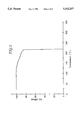
- FIG. 1 is a Thermal Gravimetric Analysis (TGA) scan at 10° C./min. for an energetic polymer containing a catalyst precursor of this invention and shows a sharp decomposition at about 135° C.
- TGA Thermal Gravimetric Analysis
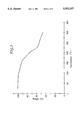
- FIG. 2 is a TGA scan at 10° C./min. for a comparative example of energetic polymer containing no catalyst precursor and shows an abrupt decomposition at about 235° C.
- FIG. 3 TGA scan at 10° C./min. for a comparative example of energetic polymer containing a non-inventive catalyst precursor and shows a gradual decomposition over a broad range starting at about 100° C. and continuing beyond 300° C.
- the energetic polymer(s) utilized in the present invention is at least one which contains at least about 25 wt %; preferably, at least about 35 wt %; and more preferably, at least about 40 wt % azide groups.
- the azide-containing polymer used as one of the reactants has the following formula:
- Y represents a hydroxyl, azide, carboxyl, mercapto, or amino (including mono-alkyl and aryl-substituted amino) group and preferably, Y is an azide or a hydroxyl group;
- R represents a divalent monomer group, containing a N 3 group, derived from a cyclic ether such as, for example, --CH 2 CH(CH 2 N 3 )O--, --CH 2 C(CH 3 )(CH 2 N 3 )CH 2 O--, --CH(CH 2 N 3 )CH 2 O--, --CH 2 C(CH 2 N 3 ) 2 CH 2 O--, --CH(CH 2 N 3 )CH(CH 2 N 3 )O--, and --CH 2 CH(N 3 )CH 2 O--; a cyclic sulfide such as, for example, --CH 2 CH(CH 2 N 3 )S--, --CH 2 C(CH 2 N 3 ) 2 CH 2 S--, --CH(CH 2 N 3 )CH(CH 2 N 3 )S, and --CH 2 CH(N 3 )CH 2 S--; and a cyclic amine such as, for example, --CH 2 CH(CH 2 N 3 )NR 1 --,
- R 1 represents a hydrocarbyl group (e.g., alkyl, cycloalkyl, aryl, aralkyl, alkaryl, etc.);
- L represents a mono-, di-, tri- or tetra-valent alkyl radical.
- monovalent radicals are methyl and ethyl.
- polyvalent alkyl radicals are ethylene, methylene, propylene, 1,2,3-propanetriyl, 2-ethyl-2-methylene-1,3-propanediyl, 2,2-dimethylene-1,3-propanediyl, etc.
- L is 2-ethyl-2-methylene-1,3-propanediyl;
- m 1, 2, 3, or 4;
- n any positive integer greater than 1; preferably, greater than 5; and more preferably, greater than 10.
- azide-containing polymer of Formula (II) can be made by procedures well known to those skilled in the art of synthetic organic chemistry such as disclosed, for example, in U.S. Pat. Nos. 3,645,917 and 4,879,419, the disclosures of which are incorporated herein by reference.
- One or more crosslinking agents may be employed in combination with the azide-containing polymer of Formula (II) to provide coatings having improved strength.
- the choice of an appropriate crosslinking agent depends on the functional groups on the azide-containing polymer. Thus, if hydroxyl groups are present on the azide-containing polymer, then crosslinking agents for polyols could be employed (e.g., isocyanates).
- a free-radical initiator may be used as a crosslinking agent.
- a crosslinking agent for polyols is employed in combination with an azide-containing polymer having multiple hydroxyl end groups.
- Preferred crosslinking agents in this case are polyisocyanates, including but not limited to, hexamethylene diisocyanate; diphenylmethane diisocyanate; bis(4-isocyanatocyclohexyl)methane, 2,4-toluene diisocyanate, etc.
- the azide-containing polymer used as one of the reactants is a glycidyl azide polymer having recurring units of the following formula: ##STR1## wherein: R 2 represents an N 3 -containing group.
- R 2 represents an N 3 -containing group.
- An example of a preferred azide group is --CH 2 N 3 .
- the azide-containing polymer of Formula (III) can be made by procedures well known to those skilled in the art of synthetic organic chemistry such as disclosed, for example, in U.S. Pat. Nos. 4,891,438, 5,191,034, 5,214,110, 5,164,521, and 5,256,804, the disclosures of which are incorporated herein by reference.
- the azide-containing polymer used as one of the reactants is a polymer having recurring units of the following formula: ##STR2## wherein: either R 3 or R 4 or both each independently represent an N 3 -containing group.
- An example of a preferred azide group is --CH 2 N 3 .
- the azide-containing polymer of Formula (IV) can be made by procedures well known to those skilled in the art of synthetic organic chemistry such as disclosed, for example, in U.S. Pat. No. 3,694,383, the disclosure of which is incorporated herein by reference.
- energetic copolymers are utilized as reactants having repeating units derived from different monomers, one or more of which have N 3 groups.
- the monomers are cyclic oxides having three to six ring atoms.
- Copolymerization of the monomers is preferably carried out by cationic polymerization. The foregoing copolymers and their method of preparation are disclosed in U.S. Pat. No. 4,483,978, the disclosure of which is incorporated herein by reference.
- some of the azide groups of the polymer can undergo a derivatization reaction with dipolarophiles which have reactive groups or centers selected from olefins and alkynes.
- the reactive groups of the dipolarophile are substituted with electron withdrawing groups as is known in the art.
- triazole or triazoline groups are formed depending upon the dipolarophile and considerations of regiospecificity.
- Z and Z' may be independently represented by the following non-inclusive list: R 5 , CO 2 R 5 , COR 5 , NO 2 , CF(NO 2 ) 2 , CN, SOR 5 , SO 2 R 5 , SO 3 R 5 , where R 5 is H, halogen, alkyl, aryl, substituted-alkyl, substituted-aryl, perfluoroalkyl, or substituted-perfluoroalkyl.
- the foregoing derivatization reactions occur under extremely mild conditions in a "one-pot" reaction.
- a solution of the azide-containing polymer and the dipolarophile in an appropriate solvent such as MEK
- MEK a solvent
- Enough of the dipolarophile is added to react with a portion of the azide groups in the polymer, resulting in an energetic polymer containing at least 25 wt % unreacted azide groups.
- the amount of dipolarophile to be added can usually be determined by ordinary stoichiometric calculations.
- the reaction occurs during heating and the resulting solution can be used directly for coating after it has been cooled to room temperature or the material can be concentrated and the solvent changed to another which is more preferable.
- the reactive groups of the dipolarophile should be substituted with water-solubilizing groups such as carboxylates or groups which are easily transformed into water solubilizing groups.
- Water solubility of the azide-containing polymeric reaction product is desirable for several reasons.
- aqueous coating solutions are highly preferred in the manufacture of films because of environmental, safety, and handling considerations.
- an increase in the number of certain substituents, such a ammonium carboxylates, on the azide-containing polymer can improve the polymer's thermal properties.
- the polymers can be used in combination with materials which can only be dissolved in aqueous media (e.g., catalysts, oxidizers, sensitizers, etc.).
- the energetic oligomers used in the present invention comprise from about 2 to 20 monomeric units, each of the monomeric units comprising at least one azide group.
- the oligomer is end-capped with an ester, an ether, or a hydroxyl group; has a molecular weight in the range of from about 150 to 2500; and is present in the inventive material in the range of from about 40 to 95 wt %, and more preferably, from about 50 to 75 wt %, based upon the total weight of the mixture comprising the energetic oligomers.
- the preferred energetic oligomers for use in this invention are composed of monomer units (V), for BAMO, and (VI), for GAP. ##STR4##
- the energetic oligomers of Formulae V and VI can be made by procedures well known to those skilled in the art of synthetic organic chemistry such as disclosed, for example, in U.S. Pat. Nos. 4,781,861, 4,938,812, and 4,970,326, the disclosures of which are incorporated herein by reference.
- the energetic oligomers used in this invention may be combined with other materials including binders, pigments, oxidants, fuels, plasticizers, crosslinkers, dyes, etc. to impart a particular set of properties as desired.
- the catalyst precursor(s) used in the present invention has (have) the following formula:
- L 1 represents none or 1 to 12 ligands contributing pi-electrons that can be the same or different selected from: substituted and unsubstituted acyclic and cyclic unsaturated compounds and groups and substituted and unsubstituted carbocyclic aromatic and heterocyclic aromatic compounds, each contributing 2 to 6 pi-electrons to the valence shell of M;
- L 2 represents none or 1 to 24 ligands that can be the same or different contributing an even number of sigma-electrons selected from: mono-, di-, and tri-dentate ligands, each donating 2, 4, or 6 sigma-electrons to the valence shell of M;
- L 3 represents none or 1 to 12 ligands that can be the same or different, each contributing no more than one sigma-electron each to the valence shell of each M;
- M represents 1 to 4 of the same or different metal atoms selected from the elements of Periodic Groups IVB,VB, VIB, VIIB, and VIII (commonly referred to as transition metals);
- e is an integer having a value of 0, 1, or 2, such that the organometallic complex is neutral, cationic, or dicationic;
- X is an anion selected from organic sulfonate and halogenated metal or metalloid groups:
- f is an integer of 0, 1, or 2, the number of anions required to balance the charge e on the organometallic complex
- the organometallic complex contains at least one metal-carbon bond;
- L 1 , L 2 , L 3 , M, e, X, and f are chosen so as to achieve a stable electronic configuration: and (iii) if M is Fe, e is 0 and L 1 is two substituted or unsubstituted cyclopentadienyl ligands, then one of L 2 or L 3 must be present.
- Ligands L 1 to L 3 are well known in the art of transition metal organometallic compounds. At least one such ligand must be present in the catalyst precursor of the present invention. Any of the L 1 or L 2 or L 3 ligands may be present as a pendant group on a polymer.
- Ligand L 1 of general formula (I) is provided by any monomeric or polymeric compound having an accessible unsaturated group, i.e., an ethylenic, --C ⁇ C-- group; acetylenic, --C.tbd.C-- group; or aromatic group which has accessible pi-electrons regardless of the total molecular weight of the compound.
- a reaction medium such as an alcohol, e.g., methanol; a ketone, e.g., methyl ethyl ketone; an ester, e.g., amyl acetate; a halocarbon, e.g., trichloroethylene; an alkane, e.g., decalin; an aromatic hydrocarbon, e.g., anisole; an ether, e.g., tetrahydrofuran; etc, or that the compound is divisible into very fine particles of high surface area so that the unsaturated group (including aromatic group) is sufficiently close to a metal atom to form a pi-bond between that unsaturated group and the metal atom.
- a reaction medium such as an alcohol, e.g., methanol; a ketone, e.g., methyl ethyl ketone; an ester, e.g., amyl acetate; a halocarbon, e
- ligand L 1 Illustrative of ligand L 1 are the linear and cyclic ethylenic and acetylenic compounds having less than 100 carbon atoms (when monomeric), preferably having less than 60 carbon atoms, and from zero to 10 hetero atoms selected from nitrogen, sulfur, non-peroxidic oxygen, phosphorous, arsenic, selenium, boron, antimony, tellurium, silicon, germanium, and tin, the ligands being those such as, for example, ethylene, acetylene, propylene, methylacetylene, alpha-butene, 2-butene, diacetylene, butadiene, 1,2-dimethylacetylene, cyclobutene, pentene, cyclopentene, hexene, cyclohexene, 1,3-cyclohexadiene, cyclopentadiene, 1,4-cyclohexadiene, cycloheptene, 1-oc
- the ligand can be a unit of a polymer, for example, the phenyl group in polystyrene, poly(styrene-co-butadiene), poly(styrene-co-methyl methacrylate), poly(alpha-methylstyrene), polyvinylcarbazole, and polymethylphenylsiloxane; the cyclopentadiene group in poly(vinylcyclopentadiene); the pyridine group in poly(vinylpyridine), etc.
- Polymers having a weight average molecular weight up to 1,000,000 or more can be used. It is preferable that 1 to 50 percent of the unsaturated or aromatic groups present in the polymer be complexed with organometallic groups.
- Each ligand L 1 can be substituted by groups that do not interfere with the complexing of the ligand with the metal atom or which do not reduce the solubility of the ligand to the extent that complexing with the metal atom does not take place.
- substituting groups all of which preferably have less than 30 carbon atoms and up to 10 hetero atoms selected from nitrogen, sulfur, non-peroxidic oxygen, phosphorus, arsenic, selenium, antimony, tellurium, silicon, germanium, tin, and boron, include hydrocarbyl groups such as methyl, ethyl, butyl, dodecyl, tetracosanyl, phenyl, benzyl, allyl, benzylidene, ethenyl, and ethynyl; hydrocarbyloxy groups such as methoxy, butoxy, and phenoxy; hydrocarbylmercapto groups such as methylmercapto (thiomethoxy), phenylmercapto
- Each ligand L 2 in formula (I) is provided by monodentate and polydentate compounds preferably containing up to about 30 carbon atoms and up to 10 hetero atoms selected from nitrogen, sulfur, non-peroxidic oxygen, phosphorus, arsenic, selenium, antimony, and tellurium, where upon addition to the metal atom, following loss of zero, one, or two hydrogens, the polydentate compounds preferably forming with the metal, M, a 4-, 5-, or 6-membered saturated or unsaturated ring.
- Suitable monodentate compounds or groups are carbon monoxide, carbon sulfide, carbon selenide, carbon telluride, alcohols such as ethanol, butanol, and phenol; nitrosonium (i.e., NO + ); compounds of Group VA elements such as ammonia, phosphine, trimethylamine, trimethylphosphine, triphenylamine, triphenylphosphine, triphenylarsine, triphenylstibine, tributylphosphite; nitriles such as acetonitrile, benzonitrile; isonitriles such as phenylisonitrile, butylisonitrile; carbene groups such as ethoxymethylcarbene, dithiomethoxycarbene; alkylidenes such as methylidene, ethylidene; suitable polydentate compounds or groups include 1,2-bis(diphenylphosphino)ethane, 1,2-bis(diphenylarsino)
- the ligand can be a unit of a polymer, for example the amino group in poly(ethyleneamine); the phosphino group in poly(4-vinylphenyldiphenylphosphine); the carboxylic acid group in poly(acrylic acid); and the isonitriles group in poly(4-vinylphenylisonitrile).
- Suitable ligands L 3 in formula (I) include any group having in its structure an atom with an unshared electron. Suitable groups can contain any number of carbon atoms and hetero atoms, but preferably contain less than 30 carbon atoms and up to 10 hetero atoms selected from nitrogen, sulfur, oxygen, phosphorus, arsenic, selenium, antimony, tellurium, silicon, germanium, tin, and boron.
- hydrocarbyl groups such as methyl, ethyl, propyl, hexyl, dodecyl, phenyl, tolyl, etc.
- unsaturated hydrocarbyl groups such as vinyl, eta 1 -allyl, eta 1 -butenyl, eta 1 -cyclohexenyl
- the hydrocarbyl derivatives of a Group IVA element such as trimethylgermanyl, triphenylstannyl, trimethylsilyl, etc.
- organic groups such as formyl, acetyl, propionyl, acryloyl, octadecanoyl, benzoyl, toluenesulfonyl, oxalyl, malonyl, o-phthaloyl.
- L 3 is any group having in its structure two, three, or four unshared electrons.
- groups are CH 2 , CHCH 3 , SiMe 2 , SiPh 2 (wherein Ph is phenyl), SnPh 2 , GePh 2 , CH, SiMe, SiPh, SnPh, C, Si, and Sn.
- M can be any element from the Periodic Groups IVB, VB, VIB, VIIB, and VIIIB, such as, for example, Ti, Zr, Hf, V, Nb, Ta, Cr, Mo, W, Mn, Tc, Re, Fe, Ru, Os, Co, Rh, Ir, Ni, Pd and Pt.
- Each X is provided by organic sulfonates, or halogenated metals or metalloids.
- organic sulfonates or halogenated metals or metalloids.
- ions are CH 3 SO 3 - , CF 3 SO 3 - , C 6 H 5 SO 3 - , p-toluenesulfonate, p-chlorobenzenesulfonate and related isomers and the like, and those in which X has the formula DZ r , wherein D is a metal from Groups IB to VIIIB or a metal or metalloid from Groups IIIA to VA of the Periodic Chart of Elements, Z is a halogen atom or hydroxyl group, and r is an integer having a value of 1 to 6.
- the metals are copper, zinc, titanium, vanadium, chromium, manganese, iron, cobalt, or nickel and the metalloids preferably are boron, aluminum, antimony, tin, arsenic, and phosphorus.
- the halogen, Z is chlorine or fluorine.
- Illustrative of suitable anions are BF 4 - , PF 6 - , AsF 6 - , SbF 6 - , FeCl 4 - , SnCl 5 - , SbF 5 - , AlF 6 - , GaCl 4 - , InF 4 - , TiF 6 - , etc.
- the anions are CF 3 SO 3 - , BF 4 - , PF 6 - , SbF 6 - , SbF 5 OH - , AsF 6 - , and SbCl 6 - .
- Covalently bonded organometallic compounds useful in the present invention are available from Strem Chemical Company (Newburyport, Mass.) or can be prepared by literature methods known to those skilled in the art, see for example Inorg. Chem. 17, 1003 (1978), Chem. Ber. 102, 2449 (1969), J. Organormet. Chem. 135, 373 (1977), and Inorg. Chem. 18, 553 (1979).
- Organometallic complexes useful in the present invention can be prepared as disclosed in U.S. Pat. No. 5,191,101.
- organometallic compounds according to formula (I) include metal carbonyls such as Cr(CO) 6 , Mo(CO) 6 , W(CO) 6 , Fe(CO) 5 , Fe 2 (CO) 9 ; CpFe(CO) 2 Cl; metal-metal bonded binuclear compounds such as [CpFe(CO) 2 ] 2 , Mn 2 (CO) 10 , [CpMo(CO) 3 ] 2 , [CpW(CO) 3 ] 2 , Re 2 (CO) 10 , CO 2 (CO) 8 , Cp(CO) 3 W--Mo(CO) 3 Cp, Cp(CO) 3 Mo--Mn(CO) 5 , Cp(CO) 3 Mo--Re(CO) 5 , (CO) 5 Mn--Fe(CO) 2 Cp, Cp(CO) 3 W--Mn(CO) 5 , Cp(CO) 3 W--Re(CO) 5 , Cp(CO) 5 Mn-
- Me is methyl
- Ph is phenyl
- Cp is eta 5 -cyclopentadienyl
- Cp* is eta 5 -pentamethylcyclopentadienyl
- MeCp is eta 5 -methylcyclopentadienyl
- Me 3 SiCp is eta 5 -trimethylsilylcyclopentadienyl.
- the preferred class of catalyst precursors used in the present invention is of formula (I), wherein M is iron.
- a more preferred class of catalyst precursors used in the present invention is of formula (I), wherein M is iron and L 1 is eta 5 -cyclopentadienyl.
- the most preferred catalyst precursor used in the present invention is CpFe(CO) 2 Cl.
- the azide-containing materials utilizing the catalyst precursors of the present invention may be used in a variety of applications where the decomposition of the azide-containing material is desired.
- the azide-containing materials of the present invention may be used in the preparation of materials such as ablative imaging materials, propellants, gas generating films, blowing agents, and foams for a variety of applications.
- the thermal decomposition of the azide-containing materials of the present invention may be brought about by any of the applicable heating methods used in the art.
- the preferred method of heating will depend on the particular application. For example in imaging applications, either resistive or radiative heat sources are commonly used. For ablative imaging constructions, a laser is a preferred heat source. An infrared laser or a flash lamp are particularly preferred heat sources.
- BAMO poly[bis(azidomethyl)oxetane]
- the material had a molecular weight (MW) of about 4500 as determined by GPC.
- a suspension of 5 g of BAMO in 45 g of methyl ethyl ketone (MEK) was warmed to approximately 60° C. until the polymer dissolved and then 250 mg of acetylene dicarboxylic acid was added.
- the resulting solution was heated in a sealed jar at 60° C. for 3 hrs. and then cooled to room temperature before use. NMR analysis indicated the reaction of the alkyne to form the substituted-triazole.
- AD-10-BAMO was prepared similarly to the AD-5-BAMO.
- Acetylene dicarboxylic acid (1.0 g) was added to a solution of 40 g MEK and 9.0 g BAMO and heated to 50° C. for 10 hours. This material was either used in the MEK solution or it was prepared in an aqueous solvent.
- a 33.3 g portion of the MEK solution was concentrated on a rotary evaporator to give a viscous semi-solid (less than 3% residual solvent), and redissolved in a mixture of 1.8 g ethanolamine, 44 g isopropyl alcohol, and 88 g water at 40° C.
- GAP is an acronym for a glycidyl azide polymer.
- GAP-triol refers to a triol-terminated GAP polymer made according to the procedure disclosed in U.S. Pat. No. 4,962,213, incorporated herein by reference, and having a molecular weight of about 3,500 and a polydispersity index of less than 2.5.
- organometallic compounds useful in the present invention are available from commercial sources such as Strem Chemical Company (Newburyport, Mass.) or Alfa (Johnson Matthey Catalog Company, Inc., Ward Hill, Mass.). Those that are not commercially available can be prepared by literature methods known to those skilled in the art; see, for example, Dictionary of Organometallic Compounds, Chapman and Hall, London, 1984, Comprehensive Organometallic Chemistry, Pergamon Press, Oxford, 1982, or Comprehensive Coordination Chemistry, Pergamon Press, 1984. U.S. Pat. No. 5,191,101 describes the preparation of organometallic complex salts useful in the present invention.
- 2,2-bis(ethylferrocenyl)propane is available from Strem Chemical Company (Newburyport, Mass.) and also as CatoceneTM combustion catalyst (Syntex Corporation, Boulder, Colo.).
- Examples 1, C1, and C2 utilize Thermal Gravimetric Analysis (TGA) to compare energetic decomposition of compositions using the catalyst precursor of the present invention with compositions using known catalysts. All amounts are percent by weight unless otherwise noted.
- TGA Thermal Gravimetric Analysis
- TGA sample size was between 5 and 20 mg.
- a DuPont Instruments Model 951 Thermogravimetric Analyzer (Wilmington, Del.) was used to make the measurements. The TGA scans were run under nitrogen and the temperature ramp was 10° C./minute.
- the TGA curves are show in FIGS. 1, 2 and 3.
- sample C1 the decomposition is abrupt at about 235° C.
- sample C2 shows a gradual decline over a broad range starting at about 100° C. and continuing beyond 300° C.
- Example 1 shows a sharp decomposition at about 135° C., almost 100° C. lower than C1 and much sharper and well defined than the gradual decline seen in C2. This sharp decomposition behavior is preferred for applications such as ablative thermal imaging.
- Terephthaloylazide (N 3 CO--p--C 6 H 4 --CON 3 ), which when tested alone with this hot plate method, decomposes vigorously at 130° C., does not, when mixed with AD-5-BAMO, affect the decomposition temperature of the alkyl azide-containing polymer. This result supports the fact that it is an iron species acting in a catalytic manner which decomposes the azides and not just an exothermic reaction of the iron-containing organometallic releasing enough energy to initiate azide decomposition.
- Example 2 The procedure of Example 2 was repeated, only various organometallic compounds containing metals other than iron were used as catalyst precursors and methylene chloride was used as solvent. The results of the decomposition tests are summarized below in Table 3.
- the assembly was placed under suspended 10 lb. weight, the temperature was noted, and the weight was then dropped vertically on a rail (usually 24") directly onto the plunger.
- the area of the sample was a circle of radius 0.1", area 0.031 in 2 .
- the device was disassembled, evidence for decomposition (such as odor and change in visual appearance) was noted, and the device was cleaned with acetone. The experiment was repeated as noted in Table 6.
Landscapes
- Chemical & Material Sciences (AREA)
- Health & Medical Sciences (AREA)
- Organic Chemistry (AREA)
- Life Sciences & Earth Sciences (AREA)
- Chemical Kinetics & Catalysis (AREA)
- Medicinal Chemistry (AREA)
- Polymers & Plastics (AREA)
- General Chemical & Material Sciences (AREA)
- Inorganic Chemistry (AREA)
- Dispersion Chemistry (AREA)
- Molecular Biology (AREA)
- Crystallography & Structural Chemistry (AREA)
- Organic Low-Molecular-Weight Compounds And Preparation Thereof (AREA)
- Catalysts (AREA)
- Polyethers (AREA)
- Other Resins Obtained By Reactions Not Involving Carbon-To-Carbon Unsaturated Bonds (AREA)
Abstract
Various catalyst precursors are used for the thermal decomposition of azide-containing polymers and oligomers. The catalyst precursors are organometallic complexes which upon thermolysis are capable of liberating at least one coordination site, thereby generating a catalyst for the thermal decomposition of the azide-containing polymer or oligomer.
Description
This invention relates to the thermal decomposition of azide-containing materials and in particular, it relates to such decomposition utilizing a catalyst precursor which is an organometallic complex.
It is well established that the thermal decomposition of azides can be catalyzed by certain Lewis or protic acids. For example, ferruginous compounds such as Fe2 O3, ferrocene, 2,2-bis(ethylferrocenyl)propane Catocene™ combustion catalyst, etc., have been studied as catalysts for burning-rate modification of propellants comprising azide-containing polymers such as glycidyl azide polymer ("GAP") and bis(azidomethyl)oxetane polymer ("BAMO"). See, for example, N. Kubota et al., Propellants, Explosives, Pyrotechnics, 12, 183-187 (1987); Y. Oyumi, Propellants, Explosives, Pyrotechnics, 17, 226-231 (1992); S. Shen et al., Thermochimica Acta., 216, 255-266 (1993); and S. Shen et al., Thermochimica Acta., 221, 275-282 (1993).
Due to the nature of catalysts and their effect on the Arrhenius kinetics of a thermal reaction (such as the pyrolysis of azides), the resulting lowering in the energy of activation of the thermal reaction by the catalyst accelerates the rate of the reaction at all temperatures. Thus, some reactions will occur at lower than desired temperatures. This can cause short shelf lives for some formulations of thermally-decomposable material and catalyst, thereby rendering a given application of the formulation, such as a coating, impractical.
In view of the foregoing, what is needed is a system whereby the acid-catalyzed thermal decomposition of materials, such as azide-containing polymers and oligomers, can be fine-tuned and controlled, thereby extending the shelf lives and broadening the potential applications of azide-containing materials.
In accordance with the present invention, it has been discovered that the thermal decomposition of azide-containing materials can be efficiently controlled by the use of certain catalyst precursors which are organometallic complexes. Although not wishing to be bound by theory, it is believed that the particular organometallic complexes which are utilized in the present invention are essentially catalytically inactive for the thermal decomposition of azide-containing oligomers and polymers until the organometallic complex is heated at or near its respective decomposition temperature at which time it releases at least one coordination site, thereby generating the catalyst for the thermal decomposition of the azide-containing oligomer or polymer.
Thus, in one embodiment of the present invention there is provided a material comprising:
(a) at least one polymer which contains at least about 25 wt % azide groups: and
(b) at least one catalyst precursor which is an organometallic complex which upon thermolysis liberates at least one coordination site, thereby generating a catalyst for the thermal decomposition of the azide-containing polymer, the catalyst precursor having the formula:
[L.sup.1 L.sup.2 L.sup.3 M].sup.+e X.sub.f (I)
wherein:
L1 represents none or 1 to 12 ligands contributing pi-electrons that can be the same or different selected from: substituted and unsubstituted acyclic and cyclic unsaturated compounds and groups and substituted and unsubstituted carbocyclic aromatic and heterocyclic aromatic compounds, each contributing 2 to 6 pi-electrons to the valence shell of M;
L2 represents none or 1 to 24 ligands that can be the same or different, contributing an even number of sigma-electrons, selected from: mono-, di-, and tri-dentate ligands, each donating 2, 4, or 6 sigma-electrons to the valence shell of M;
L3 represents none or 1 to 12 ligands that can be the same or different, each contributing no more than one sigma-electron each to the valence shell of each M;
M represents 1 to 4 of the same or different metal atoms selected from the elements of Periodic Groups IVB, VB, VIB, VIIB, and VIII;
e is an integer having a value of 0, 1, or 2, such that the organometallic portion of the molecule is neutral, cationic, or dicationic;
X is an anion selected from organic sulfonate and halogenated metal or metalloid groups; and
f is an integer having a value of 0, 1, or 2, the number of anions required to balance the charge e on the organometallic complex;
with the proviso that: (i) the organometallic complex contains at least one metal-carbon bond: (ii) L1, L2, L3, M, e, X, and f are chosen so as to achieve a stable electronic configuration: and (iii) if M is Fe, e is 0, and L1 is two substituted or unsubstituted cyclopentadienyl ligands, then one of L2 or L3 must be present.
Preferably, the polymer contains at least about 35 wt % azide groups and more preferably, at least about 40 wt % azide groups based upon the weight of the polymer. Preferably, the azide-containing polymer is present in the inventive material in the range of from about 5 to 99.9 wt % based upon the total weight of the inventive material comprising the azide-containing polymer. The specific amount of azide-containing polymer used will depend upon the properties desired for the specific application.
The azide-containing polymer is preferably glycidyl azide polymer ("GAP"); bis(azidomethyl)oxetane ("BAMO"); or is a block or random copolymer unit derived from at least two different monomers, at least one of the monomers containing at least one azide group.
Preferably, the catalyst precursor is present in the inventive material in the range of from about 0.1 to 40 wt %, and more preferably, from about 1 to 10 wt %, based upon the total weight of the inventive material comprising the azide-containing polymer.
In another embodiment, the present invention provides a material comprising:
(a) an oligomer which comprises from about 2 to 20 monomeric units, each of the monomeric units comprising at least one azide group;
(b) a polymer which has a thermally available nitrogen content of less than about 5 wt % and which is soluble in the oligomer; and
(c) at least one catalyst precursor which is an organometallic complex which upon thermolysis is capable of liberating at least one coordination site, thereby generating a catalyst for the thermal decomposition of the oligomer, the catalyst precursor having the formula (I) as disclosed earlier herein.
Preferably, the oligomer is end-capped with an ester, an ether, or a hydroxyl group; has a molecular weight in the range of about 150 to 2500; and is present in the inventive mixture in the range of from about 40-95 wt % and more preferably, from about 50-75 wt %, based upon the total weight of the inventive material comprising the oligomer.
The non-energetic polymer has a thermally available nitrogen content of less than about 5 wt % and is soluble in the energetic oligomer. As used herein "soluble in the energetic oligomer" means the polymer and oligomer are miscible in the temperature range of interest for formulation, coating, storage, and use. Additionally, it is preferred that the non-energetic polymer is a polyether or a polyester and is present in the inventive material in the range of from about 5-60 wt % and more preferably, from about 25-50 wt %, based upon the total weight of the inventive material.
Preferably, the catalyst precursor is present in the inventive material comprising the oligomer in the range of from about 0.1 to 40 wt %, and more preferably, from about 1 to 10 wt %, based upon the total weight of the inventive material.
As used herein:
"azide" refers to N3 ;
"group" refers to not only pure hydrocarbon chains or structures such as methyl, ethyl, cyclohexyl, and the like, but also to chains or structures bearing conventional substituents in the art such as hydroxyl, alkoxy, phenyl, halo (F, Cl, Br, I), cyano, nitro, amino, etc.;
"radical" refers to the inclusion of only pure hydrocarbon chains such as methyl, ethyl, propyl, cyclohexyl, isooctyl, tert-butyl, and the like;
"thermally available nitrogen content" refers to the nitrogen content (weight percentage basis) of a material which upon exposure to heat (preferably less than about 300° C. and more preferably less than about 250° C.) generates or liberates nitrogen (N2) gas; and
"stable electronic configuration" means that there are restrictions on the sum of electrons donated by the ligands, L1, L2, L3 of formula I and the valence electrons possessed by the metal. For most organometallic compounds not involving intramolecular metal-metal bonding, this sum is governed by the "eighteen electron rule" [see J. Chem. Ed., 46, 811 (1969)]. This rule is sometimes called the "nine orbital rule", "the effective member rule", or the "rare gas rule". This rule states that the most stable electronic configurations for organometallic compounds tend to be those in which the sum of the electrons donated by the ligands and the metal is eighteen.
Those skilled in the art, however, know that there are exceptions to this rule and that organometallic compounds having a sum of 16, 17, 19, and 20 electrons are also known. Therefore, organometallic compounds not including intramolecular metal-metal bonding as described by formula I, in which complexed metals having a total sum of 16, 17, 18, 19, or 20 electrons in the valence shell, are included within the scope of the invention.
For compounds described in formula I in which intramolecular metal-metal bonding exists, serious departure from the "eighteen electron rule" can occur. It has been proposed [J. Amer. Chem. Soc. 100, 5305 (1978)] that the departure from the "eighteen electron rule" in these transition metal compounds is due to the metal-metal interactions destabilizing the metal p orbitals to an extent to cause them to be unavailable for ligand bonding. Hence, rather than count electrons around each metal separately in a metal cluster, cluster valence electrons (CVE) are counted. A dinuclear compound is seen to have 34 CVE's, a trinuclear compound 48 CVEs, and a tetranuclear compound having tetrahedron, butterfly, and square planar geometry is seen to have 60, 62, or 64 CVE's, respectively. Those skilled in the art, however, know that there are exceptions to this electron counting method and that organometallic cluster compounds having a sum of 42, 44, 46, 50 CVE's for a trinuclear compound and 58 CVE's for a tetranuclear compound are also known. Therefore, di, tri, or tetranuclear organometallic compounds are described by formula I in which the complexed metal cluster, MM, MMM, or MMMM has a sum of 34; 42, 44, 46, 48, 50; 58, 60, 62, or 64 CVE's in the valence shell, respectively, and are included within the scope of this invention.
Other aspects, advantages, and benefits of the present invention are apparent from the detailed description, the examples, and the claims.
FIG. 1 is a Thermal Gravimetric Analysis (TGA) scan at 10° C./min. for an energetic polymer containing a catalyst precursor of this invention and shows a sharp decomposition at about 135° C.
FIG. 2 is a TGA scan at 10° C./min. for a comparative example of energetic polymer containing no catalyst precursor and shows an abrupt decomposition at about 235° C.
FIG. 3 TGA scan at 10° C./min. for a comparative example of energetic polymer containing a non-inventive catalyst precursor and shows a gradual decomposition over a broad range starting at about 100° C. and continuing beyond 300° C.
Energetic Polymer
The energetic polymer(s) utilized in the present invention is at least one which contains at least about 25 wt %; preferably, at least about 35 wt %; and more preferably, at least about 40 wt % azide groups.
In one preferred embodiment, the azide-containing polymer used as one of the reactants has the following formula:
(Y.brket open-st.R.brket close-st..sub.n .paren close-st..sub.m L(II)
wherein:
Y represents a hydroxyl, azide, carboxyl, mercapto, or amino (including mono-alkyl and aryl-substituted amino) group and preferably, Y is an azide or a hydroxyl group;
R represents a divalent monomer group, containing a N3 group, derived from a cyclic ether such as, for example, --CH2 CH(CH2 N3)O--, --CH2 C(CH3)(CH2 N3)CH2 O--, --CH(CH2 N3)CH2 O--, --CH2 C(CH2 N3)2 CH2 O--, --CH(CH2 N3)CH(CH2 N3)O--, and --CH2 CH(N3)CH2 O--; a cyclic sulfide such as, for example, --CH2 CH(CH2 N3)S--, --CH2 C(CH2 N3)2 CH2 S--, --CH(CH2 N3)CH(CH2 N3)S, and --CH2 CH(N3)CH2 S--; and a cyclic amine such as, for example, --CH2 CH(CH2 N3)NR1 --, --CH(CH2 N3)CH2 NR1 --, --CH2 C(CH2 N3)2 CH2 NR1 --, --CH(CH2 N3)CH(CH2 N3)NR1 --, and --CH2 CH(N3)CH2 NR1 --;
R1 represents a hydrocarbyl group (e.g., alkyl, cycloalkyl, aryl, aralkyl, alkaryl, etc.);
L represents a mono-, di-, tri- or tetra-valent alkyl radical. Non-limiting examples of monovalent radicals are methyl and ethyl. Non-limiting examples of polyvalent alkyl radicals are ethylene, methylene, propylene, 1,2,3-propanetriyl, 2-ethyl-2-methylene-1,3-propanediyl, 2,2-dimethylene-1,3-propanediyl, etc. Preferably, L is 2-ethyl-2-methylene-1,3-propanediyl;
corresponding to L, m represents 1, 2, 3, or 4; and
n represents any positive integer greater than 1; preferably, greater than 5; and more preferably, greater than 10.
The foregoing azide-containing polymer of Formula (II) can be made by procedures well known to those skilled in the art of synthetic organic chemistry such as disclosed, for example, in U.S. Pat. Nos. 3,645,917 and 4,879,419, the disclosures of which are incorporated herein by reference.
One or more crosslinking agents may be employed in combination with the azide-containing polymer of Formula (II) to provide coatings having improved strength. The choice of an appropriate crosslinking agent depends on the functional groups on the azide-containing polymer. Thus, if hydroxyl groups are present on the azide-containing polymer, then crosslinking agents for polyols could be employed (e.g., isocyanates). In cases where free-radically polymerizable groups, such as acrylates, are attached to the polymer backbone, a free-radical initiator may be used as a crosslinking agent.
Preferably, a crosslinking agent for polyols is employed in combination with an azide-containing polymer having multiple hydroxyl end groups. Preferred crosslinking agents in this case are polyisocyanates, including but not limited to, hexamethylene diisocyanate; diphenylmethane diisocyanate; bis(4-isocyanatocyclohexyl)methane, 2,4-toluene diisocyanate, etc.
In another preferred embodiment, the azide-containing polymer used as one of the reactants is a glycidyl azide polymer having recurring units of the following formula: ##STR1## wherein: R2 represents an N3 -containing group. An example of a preferred azide group is --CH2 N3.
The azide-containing polymer of Formula (III) can be made by procedures well known to those skilled in the art of synthetic organic chemistry such as disclosed, for example, in U.S. Pat. Nos. 4,891,438, 5,191,034, 5,214,110, 5,164,521, and 5,256,804, the disclosures of which are incorporated herein by reference.
In another preferred embodiment, the azide-containing polymer used as one of the reactants is a polymer having recurring units of the following formula: ##STR2## wherein: either R3 or R4 or both each independently represent an N3 -containing group. An example of a preferred azide group is --CH2 N3.
The azide-containing polymer of Formula (IV) can be made by procedures well known to those skilled in the art of synthetic organic chemistry such as disclosed, for example, in U.S. Pat. No. 3,694,383, the disclosure of which is incorporated herein by reference.
In another preferred embodiment, energetic copolymers are utilized as reactants having repeating units derived from different monomers, one or more of which have N3 groups. Preferably, the monomers are cyclic oxides having three to six ring atoms. Copolymerization of the monomers is preferably carried out by cationic polymerization. The foregoing copolymers and their method of preparation are disclosed in U.S. Pat. No. 4,483,978, the disclosure of which is incorporated herein by reference.
Depending upon the initial loading of the azide content of the starting polymer, some of the azide groups of the polymer can undergo a derivatization reaction with dipolarophiles which have reactive groups or centers selected from olefins and alkynes. The reactive groups of the dipolarophile are substituted with electron withdrawing groups as is known in the art. As a result of the reaction of the dipolarophile with some of the azide groups of the polymer, triazole or triazoline groups are formed depending upon the dipolarophile and considerations of regiospecificity.
The reaction between an azide group of a polymer and an olefin or alkyne reactive group of a dipolarophile may be illustrated by the following synthetic schemes: ##STR3##
Z and Z' may be independently represented by the following non-inclusive list: R5, CO2 R5, COR5, NO2, CF(NO2)2, CN, SOR5, SO2 R5, SO3 R5, where R5 is H, halogen, alkyl, aryl, substituted-alkyl, substituted-aryl, perfluoroalkyl, or substituted-perfluoroalkyl.
Generally, the foregoing derivatization reactions occur under extremely mild conditions in a "one-pot" reaction. A solution of the azide-containing polymer and the dipolarophile in an appropriate solvent (such as MEK) is heated in a closed container at about 60° C. for about 1-24 hours. Enough of the dipolarophile is added to react with a portion of the azide groups in the polymer, resulting in an energetic polymer containing at least 25 wt % unreacted azide groups. The amount of dipolarophile to be added can usually be determined by ordinary stoichiometric calculations. The reaction occurs during heating and the resulting solution can be used directly for coating after it has been cooled to room temperature or the material can be concentrated and the solvent changed to another which is more preferable.
If water solubility of the resulting polymer product is desired, then the reactive groups of the dipolarophile should be substituted with water-solubilizing groups such as carboxylates or groups which are easily transformed into water solubilizing groups.
Water solubility of the azide-containing polymeric reaction product is desirable for several reasons. First, aqueous coating solutions are highly preferred in the manufacture of films because of environmental, safety, and handling considerations. Second, an increase in the number of certain substituents, such a ammonium carboxylates, on the azide-containing polymer can improve the polymer's thermal properties. Third, the polymers can be used in combination with materials which can only be dissolved in aqueous media (e.g., catalysts, oxidizers, sensitizers, etc.).
Energetic Oligomers
The energetic oligomers used in the present invention comprise from about 2 to 20 monomeric units, each of the monomeric units comprising at least one azide group. Preferably, the oligomer is end-capped with an ester, an ether, or a hydroxyl group; has a molecular weight in the range of from about 150 to 2500; and is present in the inventive material in the range of from about 40 to 95 wt %, and more preferably, from about 50 to 75 wt %, based upon the total weight of the mixture comprising the energetic oligomers.
The preferred energetic oligomers for use in this invention are composed of monomer units (V), for BAMO, and (VI), for GAP. ##STR4##
The energetic oligomers of Formulae V and VI can be made by procedures well known to those skilled in the art of synthetic organic chemistry such as disclosed, for example, in U.S. Pat. Nos. 4,781,861, 4,938,812, and 4,970,326, the disclosures of which are incorporated herein by reference.
The energetic oligomers used in this invention may be combined with other materials including binders, pigments, oxidants, fuels, plasticizers, crosslinkers, dyes, etc. to impart a particular set of properties as desired.
The Catalyst Precursor(s)
The catalyst precursor(s) used in the present invention has (have) the following formula:
[L.sup.1 L.sup.2 L.sup.3 M].sup.+e X.sub.f (I)
wherein:
L1 represents none or 1 to 12 ligands contributing pi-electrons that can be the same or different selected from: substituted and unsubstituted acyclic and cyclic unsaturated compounds and groups and substituted and unsubstituted carbocyclic aromatic and heterocyclic aromatic compounds, each contributing 2 to 6 pi-electrons to the valence shell of M;
L2 represents none or 1 to 24 ligands that can be the same or different contributing an even number of sigma-electrons selected from: mono-, di-, and tri-dentate ligands, each donating 2, 4, or 6 sigma-electrons to the valence shell of M;
L3 represents none or 1 to 12 ligands that can be the same or different, each contributing no more than one sigma-electron each to the valence shell of each M;
M represents 1 to 4 of the same or different metal atoms selected from the elements of Periodic Groups IVB,VB, VIB, VIIB, and VIII (commonly referred to as transition metals);
e is an integer having a value of 0, 1, or 2, such that the organometallic complex is neutral, cationic, or dicationic;
X is an anion selected from organic sulfonate and halogenated metal or metalloid groups:
f is an integer of 0, 1, or 2, the number of anions required to balance the charge e on the organometallic complex;
with the proviso that: (i) the organometallic complex contains at least one metal-carbon bond; (ii) L1, L2, L3, M, e, X, and f are chosen so as to achieve a stable electronic configuration: and (iii) if M is Fe, e is 0 and L1 is two substituted or unsubstituted cyclopentadienyl ligands, then one of L2 or L3 must be present.
Ligands L1 to L3 are well known in the art of transition metal organometallic compounds. At least one such ligand must be present in the catalyst precursor of the present invention. Any of the L1 or L2 or L3 ligands may be present as a pendant group on a polymer.
Ligand L1 of general formula (I) is provided by any monomeric or polymeric compound having an accessible unsaturated group, i.e., an ethylenic, --C═C-- group; acetylenic, --C.tbd.C-- group; or aromatic group which has accessible pi-electrons regardless of the total molecular weight of the compound. By "accessible", it is meant that the compound (or precursor compound from which the accessible compound is prepared) bearing the unsaturated group is soluble or swellable in a reaction medium, such as an alcohol, e.g., methanol; a ketone, e.g., methyl ethyl ketone; an ester, e.g., amyl acetate; a halocarbon, e.g., trichloroethylene; an alkane, e.g., decalin; an aromatic hydrocarbon, e.g., anisole; an ether, e.g., tetrahydrofuran; etc, or that the compound is divisible into very fine particles of high surface area so that the unsaturated group (including aromatic group) is sufficiently close to a metal atom to form a pi-bond between that unsaturated group and the metal atom.
Illustrative of ligand L1 are the linear and cyclic ethylenic and acetylenic compounds having less than 100 carbon atoms (when monomeric), preferably having less than 60 carbon atoms, and from zero to 10 hetero atoms selected from nitrogen, sulfur, non-peroxidic oxygen, phosphorous, arsenic, selenium, boron, antimony, tellurium, silicon, germanium, and tin, the ligands being those such as, for example, ethylene, acetylene, propylene, methylacetylene, alpha-butene, 2-butene, diacetylene, butadiene, 1,2-dimethylacetylene, cyclobutene, pentene, cyclopentene, hexene, cyclohexene, 1,3-cyclohexadiene, cyclopentadiene, 1,4-cyclohexadiene, cycloheptene, 1-octene, 4-octene, 3,4-dimethyl-3-hexene, and 1-decene; eta3 -allyl, eta3 -pentenyl, norbornadiene, eta5 -cyclohexadienyl, cycloheptatriene, cyclooctatetraene, and substituted and unsubstituted carbocyclic and heterocyclic aromatic ligands having up to 25 rings and up to 100 carbon atoms and up to 10 hetero atoms selected from nitrogen, sulfur, non-peroxidic oxygen, phosphorus, arsenic, selenium, boron, antimony, tellurium, silicon, germanium, and tin, such as, for example, eta5 -cyclopentadienyl, benzene, mesitylene, hexamethylbenzene, fluorene, naphthalene, anthracene, chrysene, pyrene, eta7 -cycloheptatrienyl, triphenylmethane, paracyclophane, 1,4-diphenylbutane, eta5 -pyrrole, eta5 -thiophene, eta5 -furan, pyridine, gamma-picoline, quinaldine, benzopyran, thiochrome, benzoxazine, indole, acridine, carbazole, triphenylene, silabenzene, arsabenzene, stibabenzene, 2,4,6-triphenylphosphabenzene, eta5 -selenophene, dibenzostannepine, eta5 -tellurophene, phenothiarsine, selenanthrene, phenoxaphosphine, phenarsazine, phenatellurazine, eta5 -methylcyclopentadienyl, eta5 -pentamethylcyclopentadienyl, and 1-phenylborabenzene. Other suitable aromatic compounds can be found by consulting any of many chemical handbooks.
As mentioned before, the ligand can be a unit of a polymer, for example, the phenyl group in polystyrene, poly(styrene-co-butadiene), poly(styrene-co-methyl methacrylate), poly(alpha-methylstyrene), polyvinylcarbazole, and polymethylphenylsiloxane; the cyclopentadiene group in poly(vinylcyclopentadiene); the pyridine group in poly(vinylpyridine), etc. Polymers having a weight average molecular weight up to 1,000,000 or more can be used. It is preferable that 1 to 50 percent of the unsaturated or aromatic groups present in the polymer be complexed with organometallic groups.
Each ligand L1 can be substituted by groups that do not interfere with the complexing of the ligand with the metal atom or which do not reduce the solubility of the ligand to the extent that complexing with the metal atom does not take place. Examples of substituting groups, all of which preferably have less than 30 carbon atoms and up to 10 hetero atoms selected from nitrogen, sulfur, non-peroxidic oxygen, phosphorus, arsenic, selenium, antimony, tellurium, silicon, germanium, tin, and boron, include hydrocarbyl groups such as methyl, ethyl, butyl, dodecyl, tetracosanyl, phenyl, benzyl, allyl, benzylidene, ethenyl, and ethynyl; hydrocarbyloxy groups such as methoxy, butoxy, and phenoxy; hydrocarbylmercapto groups such as methylmercapto (thiomethoxy), phenylmercapto (thiophenoxy); hydrocarbyloxycarbonyl such as methoxycarbonyl and phenoxycarbonyl; hydrocarbylcarbonyl such as formyl, acetyl, and benzoyl; hydrocarbylcarbonyloxy such as acetoxy, benzoxy, and cyclohexanecarbonyloxy; hydrocarbylcarbonamido, e.g., acetamido, benzamido; azo, boryl; halo, e.g., chloro, iodo, bromo, and fluoro; hydroxy; cyano; nitro; nitroso, oxo; dimethylamino; diphenylphosphino, diphenylarsino; diphenylstibine; trimethylgermyl; tributylstannyl; methylseleno; ethyltelluro; and trimethylsiloxy; condensed rings such as benzo, cyclopenta; naphtho, indeno; and the like.
Each ligand L2 in formula (I) is provided by monodentate and polydentate compounds preferably containing up to about 30 carbon atoms and up to 10 hetero atoms selected from nitrogen, sulfur, non-peroxidic oxygen, phosphorus, arsenic, selenium, antimony, and tellurium, where upon addition to the metal atom, following loss of zero, one, or two hydrogens, the polydentate compounds preferably forming with the metal, M, a 4-, 5-, or 6-membered saturated or unsaturated ring. Examples of suitable monodentate compounds or groups are carbon monoxide, carbon sulfide, carbon selenide, carbon telluride, alcohols such as ethanol, butanol, and phenol; nitrosonium (i.e., NO+); compounds of Group VA elements such as ammonia, phosphine, trimethylamine, trimethylphosphine, triphenylamine, triphenylphosphine, triphenylarsine, triphenylstibine, tributylphosphite; nitriles such as acetonitrile, benzonitrile; isonitriles such as phenylisonitrile, butylisonitrile; carbene groups such as ethoxymethylcarbene, dithiomethoxycarbene; alkylidenes such as methylidene, ethylidene; suitable polydentate compounds or groups include 1,2-bis(diphenylphosphino)ethane, 1,2-bis(diphenylarsino)ethane, bis(diphenylphosphino)methane, ethylenediamine, propylenediamine, diethylenetriamine, 1,3-diisocyanopropane, and hydridotripyrazolylborate; the hydroxycarboxylic acids such as glycolic acid, lactic acid, salicylic acid; polyhydric phenols such as catechol and 2,2'-dihydroxybiphenyl; hydroxyamines such as ethanolamine, propanolamine, and 2-aminophenol; dithiocarbamates such as diethyldithiocarbamate, dibenzyldithiocarbamate; xanthates such as ethyl xanthate, phenyl xanthate; the dithiolenes such as bis(perfluoromethyl)-1,2-dithiolene; aminocarboxylic acids such as alanine, glycine and o-aminobenzoic acid; dicarboxylic diamines as oxalamide, biuret; diketones such as 2,4-pentanedione; hydroxyketones such as 2-hydroxyacetophenone; alphahydroxyoximes such as salicylaldoxime; ketoximes such as benzil oxime; and glyoximes such as dimethylglyoxime.
Other suitable groups are the inorganic groups such as, for example, CN-, SCN-, F-, OH-, Cl-, Br-, I-, and H- and the organic groups such as, for example, acetoxy, formyloxy, benzoyloxy, etc. As mentioned before, the ligand can be a unit of a polymer, for example the amino group in poly(ethyleneamine); the phosphino group in poly(4-vinylphenyldiphenylphosphine); the carboxylic acid group in poly(acrylic acid); and the isonitriles group in poly(4-vinylphenylisonitrile).
Suitable ligands L3 in formula (I) include any group having in its structure an atom with an unshared electron. Suitable groups can contain any number of carbon atoms and hetero atoms, but preferably contain less than 30 carbon atoms and up to 10 hetero atoms selected from nitrogen, sulfur, oxygen, phosphorus, arsenic, selenium, antimony, tellurium, silicon, germanium, tin, and boron. Examples of such groups are hydrocarbyl groups such as methyl, ethyl, propyl, hexyl, dodecyl, phenyl, tolyl, etc.; unsaturated hydrocarbyl groups such as vinyl, eta1 -allyl, eta1 -butenyl, eta1 -cyclohexenyl; the hydrocarbyl derivatives of a Group IVA element such as trimethylgermanyl, triphenylstannyl, trimethylsilyl, etc.; and organic groups such as formyl, acetyl, propionyl, acryloyl, octadecanoyl, benzoyl, toluenesulfonyl, oxalyl, malonyl, o-phthaloyl.
Also suitable as L3 is any group having in its structure two, three, or four unshared electrons. Examples of such groups are CH2, CHCH3, SiMe2, SiPh2 (wherein Ph is phenyl), SnPh2, GePh2, CH, SiMe, SiPh, SnPh, C, Si, and Sn.
M can be any element from the Periodic Groups IVB, VB, VIB, VIIB, and VIIIB, such as, for example, Ti, Zr, Hf, V, Nb, Ta, Cr, Mo, W, Mn, Tc, Re, Fe, Ru, Os, Co, Rh, Ir, Ni, Pd and Pt.
Each X is provided by organic sulfonates, or halogenated metals or metalloids. Examples of such ions are CH3 SO3 -, CF3 SO3 -, C6 H5 SO3 -, p-toluenesulfonate, p-chlorobenzenesulfonate and related isomers and the like, and those in which X has the formula DZr, wherein D is a metal from Groups IB to VIIIB or a metal or metalloid from Groups IIIA to VA of the Periodic Chart of Elements, Z is a halogen atom or hydroxyl group, and r is an integer having a value of 1 to 6. Preferably, the metals are copper, zinc, titanium, vanadium, chromium, manganese, iron, cobalt, or nickel and the metalloids preferably are boron, aluminum, antimony, tin, arsenic, and phosphorus. Preferably, the halogen, Z, is chlorine or fluorine.
Illustrative of suitable anions are BF4 -, PF6 -, AsF6 -, SbF6 -, FeCl4 -, SnCl5 -, SbF5 -, AlF6 -, GaCl4 -, InF4 -, TiF6 -, etc. Preferably, the anions are CF3 SO3 -, BF4 -, PF6 -, SbF6 -, SbF5 OH-, AsF6 -, and SbCl6 -.
Covalently bonded organometallic compounds useful in the present invention are available from Strem Chemical Company (Newburyport, Mass.) or can be prepared by literature methods known to those skilled in the art, see for example Inorg. Chem. 17, 1003 (1978), Chem. Ber. 102, 2449 (1969), J. Organormet. Chem. 135, 373 (1977), and Inorg. Chem. 18, 553 (1979). Organometallic complexes useful in the present invention can be prepared as disclosed in U.S. Pat. No. 5,191,101.
Illustrative examples of organometallic compounds according to formula (I) include metal carbonyls such as Cr(CO)6, Mo(CO)6, W(CO)6, Fe(CO)5, Fe2 (CO)9 ; CpFe(CO)2 Cl; metal-metal bonded binuclear compounds such as [CpFe(CO)2 ]2, Mn2 (CO)10, [CpMo(CO)3 ]2, [CpW(CO)3 ]2, Re2 (CO)10, CO2 (CO)8, Cp(CO)3 W--Mo(CO)3 Cp, Cp(CO)3 Mo--Mn(CO)5, Cp(CO)3 Mo--Re(CO)5, (CO)5 Mn--Fe(CO)2 Cp, Cp(CO)3 W--Mn(CO)5, Cp(CO)3 W--Re(CO)5, Cp(CO)3 Mo--Co(CO)4, Cp(CO)3 W--Co(CO)4, Cp(CO)3 Mo--Fe(CO)2 Cp, Cp(CO)3 W--Fe(CO)2 Cp, [CpMo(CO)2 PPh3 ]2, Mn2 (CO)9 PPh3, Mn2 (CO)8 (PPh3)2, (CO)5 Mn--Re(CO)5, Mn2 (CO)8 (1,10-phenanthroline), Re2 (CO)8 (1,10-phenanthroline), R2 (CO)8 (2,2'-biquinoline), [CpNi(CO)]2, [Cp*Fe(CO)2 ]2, Cp(CO)2 Fe--Fe(CO)(PPh3)Cp, Cp(CO)3 Mo--Mo(CO)2 (PPh3)Cp; metal clusters such as Co4 (CO)12, Fe3 (CO)12, Ru3 (CO)12, Os3 (CO)12, Ru3 (CO)11 PPh3, Ru3 (CO)10 (Ph2 P--CH2 CH2 --PPh2), Fe2 Ru(CO)12, Ir4 (CO)12 ; compounds containing a metal-Group IVA bond such as CpFe(CO)2 SnPh3, CpFe(CO)2 GePh3, [CpFe(CO)2 ]2 SnPh2, CpMo(CO)3 SnPh3, (CO)5 MnSnPh3, [(CO)5 Mn]2 SnPh2, CpFe(CO)2 PbPh3, CpFe(CO)2 CH2 Ph, CpFe(CO)2 (COPh), CpFe(CO)2 (SiPh3), (CO)5 MnPbPh3, (CO)5 ReSnPh3, CpPtMe3, (MeCp)PtMe3, (Me3 SiCp)PtMe3, CpW(CO)3 Me, [CpFe(CO)2 ]4 Si; salts of organometallic complex cations such as Cp(CO)3 Fe(1+)PF6 (1-), Cp(CO)2 (CS)Fe(1+)BF4 (1-), Cp(CO)(Ph3 Sb)2 Fe(1+)PF6 (1-), Cp(CO)3 Ru(1+)FeCl4 (1-), Cp(CO)2 (Ph3 Sb)Fe(1+)SbF6 (1-), (MeCp)(CO)2 Mn(1+)SbF6 (1-), (MeCp)(eta3 -allyl)(CO)2 Mn(1+)BF4 (1-), Cp(CO)4 Mo(1+)PF6 (1-), (eta5 -pentadienyl)(CO)3 Fe(1+)BF4 (1-), (eta5 -cyclohexadienyl)(CO)3 Fe(1+)AsF6 (1-), (eta5 -cyclohexadienyl)(ethylidene)(CO)(Ph3 P)Fe(1+)BF4 (1-), Cp(ethoxymethylcarbene)(CO)(Ph3 P)Fe(1+)BF4 (1-), Cp(dithiomethoxycarbene)(CO)2 Fe(1+)PF6 (1-), Cp(CO)2 (methylisonitrile)Fe(1+)AsF6 (1-), (eta6 -toluene)(CO)3 Mn(1+)SbF6 (1-), (eta6 -mesitylene)(CO)3 Re(1+)SbF6 (1-), (eta7 -cycloheptatrienyl)(CO)3 Cr(1+)PF6 (1-), (eta7 -cycloheptatrienyl)(CO)3 W(1+)AsF6 (1-), Cp(eta2 -1-pentene)(CO)2 Fe(1+)BF4 (1-), (eta6 -benzene)CpFe(1+)PF6 (1-), (eta6 -mesitylene)CpFe(1+)BF4 (1-), (eta6 -naphthalene)CpFe(1+)SbF6 (1-), (eta6 -acetophenone)(MeCp)Fe(1+)AsF6 (1-), Cp2 Co(1+)PF6 (1-), Cp2 Fe(1+)SbF6 (1-), bis(eta5 -chlorocyclopentadienyl)Ni(1+)PF6 (1-), bis(eta6 -benzene)Cr(1+)SbF6 (1-), (CO)4 (Ph3 P)Co(1+)PF6 (1-), (CO)3 (Ph3 P)2 Ir(1+)PF6 (1-), (eta3 -allyl)(CO)5 Cr(1+)BF4 (1-), (CO)5 (NO)Mo(1+)PF6 (1-), (eta3 -allyl)(CO)4 Fe(1+)SbF6 (1-), (CO)6 Re(1+)SbF6 (1-), bis(eta6 -hexamethylbenzene)Mn(1+)BF4 (1-), bis(eta6 -mesitylene)vanadium(1+)PF6 (1-), (eta7 -cycloheptatrienyl)CpMn(1+)AsF6 (1-), (eta8 -cyclooctatetraenyl)CpCr(1+)PF6 (1-), (eta6 -fluorene)CpFe(1+)PF6 (1-), (eta6 -1-phenylborabenzene)CpCo(1+)PF6 (1-), Cp(eta5 -N-methylpyrrolyl)Fe(1+)PF6 (1-), (eta6 -2,3,4,5-tetrathiomethoxybenzene)CpFe(1+)AsF6 (1-), [(eta6 -1,2,3,3a, 13b, 13a)benzo(10,11)chryseno(2,3-d)(1,3)dioxide](MeCp)Fe(1+)PF6 (1-), bis(eta5 -acetylcyclopentadienyl)Fe(1+)BF4 (1-), (eta3 -1-methylallyl)(CO)4 Fe(+1)PF6 (1-), (eta3 -1,3-dimethylallyl)(CO)4 Fe(+1)SbCl6 (1-); salts of organometallic complex dications such as bis(eta6 -hexamethylbenzene)Co(2+)[AsF6 (1-)]2, bis(eta6 -mesitylene)Fe(2+)[SbF6 (1-)]2, bis(eta6 -hexamethylbenzene)Ni(2+)[SbF6 (1-)]2, bis(eta6 -hexamethylbenzene)Fe(2+)[PF6 (1-)]2, [(eta6 -1,2,3,4,5,6)(eta6 -7,8,9,10,11,12)biphenyl]Cp2 Fe2 (2+)[BF4 (1-)]2, [(eta6 -1,2,3,4,4a,9a)(eta6 -5,6,7,8,8a,5a)fluorene]Cp2 Fe2 (2+)[PF6 (1-)]2, [(eta6 -1,2,3,4,4a, 12a)(eta6 -7,8,9,10,10a,6a)chrysene]bis(eta6 -benzene)Cr2 (2+)[SbF6 (1-)]2, (CO)2 bis[(diphenylphosphino)ethane]Cp2 Fe2 (2+)[PF6 (1-)]2, [(eta6 -4,5,5a,28c,28b,3a)(eta6 -8a,8b,20d,22a,22b,24c)1H, 14H-dipyrano(3,4,5-gh:3',4',5'-g'h')anthra(2",1",9":4,5,6; 6",5",10":4',5'6')diisoquino(2,1-a:2',1'-a)dipyrimidine]Cp2 Fe2 (2+)[SbF6 (1-)]2, [(eta6 -1,2,3,3a,16c,16b)(eta6 -9,10,11,11a,13c,8b)cycloocta(1,2,3,4-def:5,6,7,8-d'e'f')diphenanthrene]bis(eta5 -acetyl cyclopentadienyl)Fe(2+)[BF4 (1-)]2 ; and other organometallic compounds such as (MeCp)Mn(CO)3, CpMn(CO)3, CpFe(CO)2 Cl, [(p-cymene)RuCl2 ]2, (eta6 -benzene)Cr(CO)3, Re(CO)5 Br, Cp2 Fe, Cp2 TiCl2 ; wherein:
Me is methyl;
Ph is phenyl;
Cp is eta5 -cyclopentadienyl;
Cp* is eta5 -pentamethylcyclopentadienyl;
MeCp is eta5 -methylcyclopentadienyl; and
Me3 SiCp is eta5 -trimethylsilylcyclopentadienyl.
It is within the scope of the present invention that a single catalyst precursor or mixtures of catalyst precursors can be used.
The preferred class of catalyst precursors used in the present invention is of formula (I), wherein M is iron. A more preferred class of catalyst precursors used in the present invention is of formula (I), wherein M is iron and L1 is eta5 -cyclopentadienyl. The most preferred catalyst precursor used in the present invention is CpFe(CO)2 Cl.
The azide-containing materials utilizing the catalyst precursors of the present invention may be used in a variety of applications where the decomposition of the azide-containing material is desired. The azide-containing materials of the present invention may be used in the preparation of materials such as ablative imaging materials, propellants, gas generating films, blowing agents, and foams for a variety of applications.
The thermal decomposition of the azide-containing materials of the present invention may be brought about by any of the applicable heating methods used in the art. The preferred method of heating will depend on the particular application. For example in imaging applications, either resistive or radiative heat sources are commonly used. For ablative imaging constructions, a laser is a preferred heat source. An infrared laser or a flash lamp are particularly preferred heat sources.
The following non-limiting examples illustrate the present invention.
BAMO (poly[bis(azidomethyl)oxetane]) was obtained from the Aerojet Corp. The material had a molecular weight (MW) of about 4500 as determined by GPC. A suspension of 5 g of BAMO in 45 g of methyl ethyl ketone (MEK) was warmed to approximately 60° C. until the polymer dissolved and then 250 mg of acetylene dicarboxylic acid was added. The resulting solution was heated in a sealed jar at 60° C. for 3 hrs. and then cooled to room temperature before use. NMR analysis indicated the reaction of the alkyne to form the substituted-triazole.
AD-10-BAMO was prepared similarly to the AD-5-BAMO. Acetylene dicarboxylic acid (1.0 g) was added to a solution of 40 g MEK and 9.0 g BAMO and heated to 50° C. for 10 hours. This material was either used in the MEK solution or it was prepared in an aqueous solvent. A 33.3 g portion of the MEK solution was concentrated on a rotary evaporator to give a viscous semi-solid (less than 3% residual solvent), and redissolved in a mixture of 1.8 g ethanolamine, 44 g isopropyl alcohol, and 88 g water at 40° C.
"GAP" is an acronym for a glycidyl azide polymer. "GAP-triol" refers to a triol-terminated GAP polymer made according to the procedure disclosed in U.S. Pat. No. 4,962,213, incorporated herein by reference, and having a molecular weight of about 3,500 and a polydispersity index of less than 2.5.
Many of the organometallic compounds useful in the present invention are available from commercial sources such as Strem Chemical Company (Newburyport, Mass.) or Alfa (Johnson Matthey Catalog Company, Inc., Ward Hill, Mass.). Those that are not commercially available can be prepared by literature methods known to those skilled in the art; see, for example, Dictionary of Organometallic Compounds, Chapman and Hall, London, 1984, Comprehensive Organometallic Chemistry, Pergamon Press, Oxford, 1982, or Comprehensive Coordination Chemistry, Pergamon Press, 1984. U.S. Pat. No. 5,191,101 describes the preparation of organometallic complex salts useful in the present invention.
2,2-bis(ethylferrocenyl)propane is available from Strem Chemical Company (Newburyport, Mass.) and also as Catocene™ combustion catalyst (Syntex Corporation, Boulder, Colo.).
Examples 1, C1, and C2 utilize Thermal Gravimetric Analysis (TGA) to compare energetic decomposition of compositions using the catalyst precursor of the present invention with compositions using known catalysts. All amounts are percent by weight unless otherwise noted.
A stock solution of 25% AD-10-BAMO in MEK was used in the preparation of the following test samples. The compositions are described below in Table 1.
              TABLE 1
______________________________________
Test Samples for TGA
                   Weight
Compo-             of       Weight of AD-10-BAMO
sition Catalyst    Catalyst Solution
______________________________________
1      CpFe(CO).sub.2 Cl
                   0.0129 g 1.02 g
C1     None        --       1.00 g
C2     2,2-Bis(ethyl-
                   0.0122 g 1.01 g
       ferrocenyl)
       propane
______________________________________
Approximately 0.9 g of each of the above samples was placed on a piece of silicon release liner, allowed to air dry for about one hour, and then dried in a vacuum oven at room temperature overnight. The TGA sample size was between 5 and 20 mg. A DuPont Instruments Model 951 Thermogravimetric Analyzer (Wilmington, Del.) was used to make the measurements. The TGA scans were run under nitrogen and the temperature ramp was 10° C./minute.
The TGA curves are show in FIGS. 1, 2 and 3. For sample C1, the decomposition is abrupt at about 235° C., while sample C2 shows a gradual decline over a broad range starting at about 100° C. and continuing beyond 300° C.
These results are in contrast to those for Example 1, which shows a sharp decomposition at about 135° C., almost 100° C. lower than C1 and much sharper and well defined than the gradual decline seen in C2. This sharp decomposition behavior is preferred for applications such as ablative thermal imaging.
Various iron-containing organometallic compounds were tested as catalyst precursors at 5% w/w w.r.t AD-5-BAMO. The appropriate amount of each catalyst precursor was dissolved in a 10% w/w solution of AD-5-BAMO in methyl ethyl ketone, four drops of this solution were placed in a small open aluminum pan such as used in differential scanning calorimetry (DSC) as a sample pan, and the solvent was evaporated by placing the pan on a hot plate at 60° C. The pan was then transferred to the surface of a Dataplate® Series 730 Digital Hot Plate/Stirrer (PMC Industries, Inc., San Diego, Calif.) plate at 100° C. and the hot plate was programmed to heat to 350° C. at its maximum rate. Decomposition of the sample was detectable both visibly and audibly. Temperature was noted on the hot plate display. The results of the decomposition tests are summarized below in Table 2.
Prior to use, the solutions of catalyst precursors and AD-5-BAMO in methyl ethyl ketone were checked for free iron cations by mixing with an acetonitrile solution of 2,4,6-tri(2-pyridyl)-1,3,5-triazine (TPTZ). The absence of blue color was taken to be indicative of catalyst precursor quality/integrity. A blue color indicates a decomposed complex liberating iron to complex with the TPTZ. Heating of these TPTZ-catalyst precursor test solutions gave rise to an intense blue color, indicating the formation of an active catalytic species from a latent catalyst precursor.
              TABLE 2
______________________________________
                   Decomposition Temperature
Iron-Containing Organometallic
                   (°C.)
______________________________________
none               250-275
CpFe(CO).sub.2 Br  darkening, no detonation
trifluoroacetylacetone iron (III)
                   190-265
CpFe(xylenes)SbF.sub.6
                   259
CpFe(mesitylene)SbF.sub.6
                   250
CpFe(benzene)PF.sub.6
                   240
CpFe(xylenes)PF.sub.6
                   237
[CpFe(CO).sub.2 ].sub.2
                   230
CpFe(xylenes)CF.sub.3 SO.sub.3
                   229
CpFe(toluene)PF.sub.6
                   226
CpFe(mesitylene)PF.sub.6
                   218
CpFe(toluene)SbF.sub.6
                   214
[CpFe(CO).sub.2 PPh.sub.3 ]CoCl.sub.4
                   210
[CpFe(CO).sub.2 PPh.sub.3 ]AsF.sub.6
                   208
[CpFe(CO).sub.2 AsPh.sub.3 ]AsF.sub.6
                   207
CpFe(mesitylene)BF.sub.4
                   204
[CpFe(CO).sub.2 PPh.sub.3 ]CuCl.sub.4
                   198
[CpFe(CO).sub.2 PPh.sub.3 ]BF.sub.4
                   195
[CpFe(CO).sub.2 PPh.sub.3 ]SnCl.sub.6
                   192
[CpFe(CO).sub.2 SbPh.sub.3 ]Cl
                   188
[CpFe(CO).sub.2 PPh.sub.3 ]ZnCl.sub.4
                   188
[CpFe(CO).sub.2 PPh.sub.3 ]FeCl.sub.4
                   180
CpFe(CO).sub.2 Cl  140-145
______________________________________
The same test performed at 15% w/w CpFe(CO)2 Cl w.r.t AD-5-BAMO revealed thermal decomposition of the azides at 105° C. (In this instance, the hot plate temperature was determined with an external thermocouple.) Also, a DSC (TA instruments Model 912 Differential Scanning Calorimeter using a scan rate of 10° C./min.) of CpFe(CO)2 Cl showed a melting endotherm at 98° C. and a decomposition exotherm at 103° C.
Terephthaloylazide (N3 CO--p--C6 H4 --CON3), which when tested alone with this hot plate method, decomposes vigorously at 130° C., does not, when mixed with AD-5-BAMO, affect the decomposition temperature of the alkyl azide-containing polymer. This result supports the fact that it is an iron species acting in a catalytic manner which decomposes the azides and not just an exothermic reaction of the iron-containing organometallic releasing enough energy to initiate azide decomposition.
The procedure of Example 2 was repeated, only various organometallic compounds containing metals other than iron were used as catalyst precursors and methylene chloride was used as solvent. The results of the decomposition tests are summarized below in Table 3.
              TABLE 3
______________________________________
                   Decomposition Temperature
Organometallic Compound
                   (°C.)
______________________________________
none               250-275
(MeCp)Mn(CO).sub.3 276
(MeCp)Mn(CO).sub.2 (PPh.sub.3)
                   272
[CpRe(CO).sub.2 (NO)].sup.+ [BF.sub.4 ].sup.-
                   264
Mn(acac).sub.3     280
[(MeCp)Mn(CO).sub.2 (NO)].sup.+ [PF.sub.6 ].sup.-
                   275
(CO).sub.5 ReBr    263
V(acac).sub.3      272
Rh.sub.6 (CO).sub.16
                   283
[(n-Bu).sub.4 N].sup.+ [Rh(CO).sub.2 Cl.sub.2 ].sup.-
                   275
(CO).sub.2 Co(PPh.sub.3)(NO)
                   218
Fe.sub.2 Ru(CO).sub.12
                   269
Cp.sub.2 Ru        277
(PhCN).sub.2 PdCl.sub.2
                   262
CpPtMe.sub.3       262
O[(CH(CH.sub.3)Cp)Mn(CO).sub.3 ].sub.2
                   281
 ##STR5##          220
______________________________________
Additional screening of other organometallic catalyst precursor compounds for potential catalytic activity in the decomposition of energetic azide-containing polymers was performed as follows:
15 mg of the following organometailic compounds tested in Table 4 were added to 1.0 g of 30% by weight solution of AD-5-BAMO in methylene chloride (approximately 0.3 g AD-5-BAMO, therefore 5% by weight organometallic). Two drops of each mixture were placed into an open DSC pan and each pan was heated for 2 min. at 100° C. on a hot plate. The samples were then transferred to a hot plate at 150° C. and the temperature was immediately increased at the fastest rate the hot plate would heat.
              TABLE 4
______________________________________
COMPARATIVE EXAMPLES
                            Decomposition
Compound         Solubility Temperature
______________________________________
none             --         284° C.
dipotassium decaboranedeca-
                 incomplete 275° C.
hydride
ferrocene        complete   254°
2,2-bis(ethylferrocenyl)
                 complete   252° C.
propane
1,1'-ferrocenedicarboxylic
                 incomplete 232° C.
acid
ferrocenecarboxylic acid
                 incomplete 220° C.
N,N-dimethylaminomethyl-
                 complete   220° C.
ferrocene methiodide salt
______________________________________
None of these samples approached the far lower decomposition temperature of CpFe(CO)2 Cl. The reported decomposition temperature of ferrocenecarboxylic acid is 210° C., which, when coupled with the decomposition temperature it produces when mixed with the energetic polymer, is in accord with previous mechanistic suggestions (decomposition of the organometallic produces an active Lewis-acidic, iron-containing species which catalyzes azide decomposition). The N,N-dimethylaminomethyl-ferrocene methiodide salt, ferrocenecarboxylic acid, and 1,1'-ferrocenedicarboxylic acid samples exhibited pronounced darkening at 90° C. No unusual colors were observed for the borane-containing sample during the experiment.
10 mg of the compounds listed in Table 5 were added to 1.0 g of a 13% by weight solution of AD-10-BAMO in 1:2 isopropanol:H2 O neutralized with ethanolamine (approximately 0.13 g AD-10-BAMO, therefore 7.7% by weight organometallic.) Four drops of each mixture were placed into an open DSC pan and each pan was heated for 2 min. at 100° C. on a hot plate. The samples were then transferred to a hot plate at 150° C., heated at 150° C. for 2 min., and then the temperature was immediately increased at the fastest rate the hot plate would heat.
              TABLE 5
______________________________________
COMPARATIVE EXAMPLES
                            Decomposition
Compound         Solubility Temperature
______________________________________
none             --         284° C.
dipotassium decaboranedeca-
                 complete   284° C.
hydride
ferrocene        incomplete 255° C.
2,2-bis(ethylferrocenyl)
                 incomplete 252° C.
propane
1,1'-ferrocenedicarboxylic
                 incomplete 229° C.
acid
N,N-dimethylaminomethyl-
                 complete   220° C.
ferrocene methiodide salt
ferrocenecarboxylic acid
                 incomplete 216° C.
______________________________________
Both the magnitude and ordering of the catalytic effects provided by these materials in an aqueous medium are on a par with those seen when an organic medium is used. All the samples left a black residue after decomposition (unlike those from the organic medium tests). The N,N-dimethylaminomethylferrocene methiodide salt, ferrocenecarboxylic acid, and 1,1'-ferrocenedicarboxylic acid samples exhibited pronounced darkening at ˜190° C. and no unusual colors were observed for the borane-containing sample during the experiment.
Further evidence for the catalytic effect of the organo-iron complexes is shown by the effect of the CpFe(CO)2 Cl material on the response of azides to shock waves at elevated temperatures. A test procedure was developed to subject samples to shock waves at controlled elevated temperatures. Iron assemblies typically used to evaluate the response to shock waves of explosives were made with a relatively large thermal mass. These consisted of a large holder, with an anvil, hammer, plunger, and thermocouple. The thermocouple was threaded into the area immediately adjacent to the sample and monitored. The assembly was put into an oven and its temperature was allowed to stabilize as measured with the thermocouple. The sample was loaded on the anvil (typically as a 20% solution in MEK which immediately evaporated) and the hammer and plunger were added. The assembly was placed under suspended 10 lb. weight, the temperature was noted, and the weight was then dropped vertically on a rail (usually 24") directly onto the plunger. The area of the sample was a circle of radius 0.1", area 0.031 in2. After each drop, the device was disassembled, evidence for decomposition (such as odor and change in visual appearance) was noted, and the device was cleaned with acetone. The experiment was repeated as noted in Table 6.
              TABLE 6
______________________________________
Sample       75° C.
                     100° C.
                              117° C.
                                    130° C.
______________________________________
GAP                           no
GAP + 5% catalyst
             no      yes
BAMO                                no (10" drop)
BAMO + 5% catalyst   slight
GAP + BAMO +         very
5% catalyst          slight
______________________________________
"catalyst" used was CpFe(CO)2 Cl.
"no" indicates no evidence for decomposition.
"yes" means that there was a noticeable odor and visual decomposition of the sample after the drop and disassembly.
"slight" means that there was only a slight odor and the visual decomposition did not cover all of the area of the anvil.
"very slight" means that there was no noticeable odor, and there was only a small area of decomposition noted on the sample.
Reasonable modifications and variations are possible from the foregoing disclosure without departing from either the spirit or scope of the present invention as defined by the claims.
Claims (12)
1. A material comprising:
(a) at least one polymer which contains at least about 25 wt % azide groups; and
(b) at least one catalyst precursor which is an organometallic complex which upon thermolysis liberates at least one coordination site, thereby generating a catalyst for the thermal decomposition of said polymer, said catalyst precursor having the formula:
[L.sup.1 L.sup.2 L.sup.3 M].sup.+e X.sub.f
wherein:
L1 represents none or 1 to 12 ligands contributing pi-electrons that can be the same or different selected from: substituted and unsubstituted acrylic and cyclic unsaturated compounds and groups and substituted and unsubstituted carbocyclic aromatic and heterocyclic aromatic compounds, each contributing 2 to 6 pi-electrons to the valence shell of M;
L2 represents none or 1 to 24 ligands that can be the same or different, contributing an even number of sigma-electrons, selected from: mono-, di-, and tri-dentate ligands, each donating 2, 4, or 6 sigma-electrons to the valence shell of M;
L3 represents none or 1 to 12 ligands that can be the same or different, each contributing no more than one sigma-electron each to the valence shell of each M;
M represents 1 to 4 of the same or different metal atoms selected from the elements of periodic Groups IVB, VB, VIB, VIIB, and VIII;
e is an integer having a value of 0, 1, or 2, such that the organometallic portion of the molecule is neutral, cationic, or dicationic;
X is an anion selected from organic sulfonate and halogenated metal or metalloid groups; and
f is an integer having a value of 0, 1, or 2, the number of anions required to balance the charge e on the organometallic complex;
with the proviso that (i) the organometallic complex contains at least one metal-carbon bond; (ii) L1, L2, L3, M, e, X, and f are chosen so as to achieve a stable electronic configuration; and (iii) if M is Fe, e is 0, and L1 is two substituted or unsubstituted cyclopentadienyl ligands, then one of L2 or L3 must be present.
2. The material according to claim 1 wherein said polymer contains at least about 35 wt % azide groups.
3. The material according to claim 2 wherein said polymer contains at least about 40 wt % azide groups.
4. The material according to claim 1 wherein said polymer has the following formula:
(Y .paren open-st.R.paren close-st..sub.n .paren close-st..sub.m L
wherein:
Y represents a hydroxyl, azide, carboxyl, mercapto, or amino group;
R represents a divalent monomer group, containing a N3 group, derived from a cyclic ether; a cyclic sulfide; and a cyclic amine;
L represents a mono-, di-, tri- or tetra-valent alkyl radical;
corresponding to L, m represents 1, 2, 3, or 4; and
n represents any positive integer greater than 1.
5. The material according to claim 1 wherein said polymer comprises recurring units of the formula: ##STR6## wherein: R3 and R4 each independently represent an azide-containing group.
6. The material according to claim 1 wherein said polymer is present in an amount in the range of from about 5 to 99.9 weight percent of said material.
7. The material according to claim 1 wherein M is selected from the group consisting of Fe, Re, Co, Ru, Mn, Rh, V, Pt, and Pd.
8. The material according to claim 1 wherein L1 of said organometallic complex contains up to 24 carbon and up to two hetero atoms selected from nitrogen, oxygen, and sulfur.
9. The material according to claim 1 wherein L2 of said organometallic complex is selected from CO, PPh3, AsPh3, and SbPh3.
10. The material according to claim 1 wherein said catalyst precursor is CpFe(CO)2 Cl.
11. The material according to claim 1 wherein said catalyst precursor is present in an amount in the range of from about 0.1 to 40 weight percent of said material.
12. The material according to claim 11 wherein said catalyst precursor is present in an amount in the range of from about 1 to 10 weight percent of said material.
Priority Applications (3)
| Application Number | Priority Date | Filing Date | Title |
|---|---|---|---|
| US08/184,281 US5552257A (en) | 1994-01-21 | 1994-01-21 | Thermal decomposition of azide-containing materials |
| JP7004416A JPH07238274A (en) | 1994-01-21 | 1995-01-13 | Thermal decomposition of azide-containing substances |
| EP95400104A EP0664310A1 (en) | 1994-01-21 | 1995-01-19 | Thermal decomposition of azide-containing materials |
Applications Claiming Priority (1)
| Application Number | Priority Date | Filing Date | Title |
|---|---|---|---|
| US08/184,281 US5552257A (en) | 1994-01-21 | 1994-01-21 | Thermal decomposition of azide-containing materials |
Publications (1)
| Publication Number | Publication Date |
|---|---|
| US5552257A true US5552257A (en) | 1996-09-03 |
Family
ID=22676282
Family Applications (1)
| Application Number | Title | Priority Date | Filing Date |
|---|---|---|---|
| US08/184,281 Expired - Fee Related US5552257A (en) | 1994-01-21 | 1994-01-21 | Thermal decomposition of azide-containing materials |
Country Status (3)
| Country | Link |
|---|---|
| US (1) | US5552257A (en) |
| EP (1) | EP0664310A1 (en) |
| JP (1) | JPH07238274A (en) |
Cited By (7)
| Publication number | Priority date | Publication date | Assignee | Title |
|---|---|---|---|---|
| US6410682B1 (en) | 2001-01-03 | 2002-06-25 | Trw Inc. | Polymeric amine for a gas generating material |
| US6802533B1 (en) * | 2000-04-19 | 2004-10-12 | Trw Inc. | Gas generating material for vehicle occupant protection device |
| US20070017612A1 (en) * | 1996-04-26 | 2007-01-25 | Rainer Hagel | Ignition mixtures |
| US7338540B1 (en) * | 2002-08-06 | 2008-03-04 | Ultramet Incorporated | Decomposition of organic azides |
| US20090316747A1 (en) * | 2005-07-27 | 2009-12-24 | L-3 Communications Cyterra Corporation | Energetic material detector |
| US20110151575A1 (en) * | 2005-07-27 | 2011-06-23 | L-3 Communications Cyterra Corporation | Energetic Material Detector |
| US8292496B1 (en) | 2005-07-27 | 2012-10-23 | L-3 Communications Cyterra Corporation | Energetic material detector |
Families Citing this family (3)
| Publication number | Priority date | Publication date | Assignee | Title |
|---|---|---|---|---|
| US5681904A (en) * | 1996-04-01 | 1997-10-28 | Minnesota Mining And Manufacturing Company | Azido polymers having improved burn rate |
| US6666935B1 (en) * | 1997-09-09 | 2003-12-23 | The Regents Of The University Of California | Sol-gel manufactured energetic materials |
| CN114522732B (en) * | 2022-01-07 | 2024-03-08 | 中南大学 | Preparation and application of chiral titanium oxide cluster capable of serving as chiral construction unit |
Citations (15)
| Publication number | Priority date | Publication date | Assignee | Title |
|---|---|---|---|---|
| US3645917A (en) * | 1970-02-25 | 1972-02-29 | Hercules Inc | Polyethers containing azidomethyl side chains |
| US3694383A (en) * | 1970-12-14 | 1972-09-26 | Dainippon Ink & Chemicals | Process for the production of light-sensitive polymer |
| GB1497531A (en) * | 1965-06-22 | 1978-01-12 | Nitrochemie Gmbh | Solid propellant grain having an improved burning rate |
| US4318760A (en) * | 1979-09-20 | 1982-03-09 | Atlantic Research Corporation | Solid propellant containing diferrocenyl ketone |
| US4379903A (en) * | 1982-03-01 | 1983-04-12 | The United States Of America As Represented By The Secretary Of The Navy | Propellant binders cure catalyst |
| US4483978A (en) * | 1981-05-12 | 1984-11-20 | S R I International | Energetic copolymers and method of making same |
| US4781861A (en) * | 1987-06-01 | 1988-11-01 | Rockwell International Corporation | Azide-terminated azido compound |
| US4879419A (en) * | 1985-07-01 | 1989-11-07 | Minnesota Mining And Manufacturing Company | Hydroxyl-terminated polyepichlorohydrin polymers |
| US4891438A (en) * | 1986-12-01 | 1990-01-02 | Her Majesty The Queen In Right Of Canada, As Repesented By The Minister Of National Defence Of Her Majesty's Canadian Government | Direct conversion of epichlorohydrin to glycidyl azide polymer |
| US4938812A (en) * | 1989-06-12 | 1990-07-03 | Rockwell International Corporation | Glycidyl azide polymer esters |
| US4970326A (en) * | 1989-06-12 | 1990-11-13 | Rockwell International Corporation | Glycidyl azide polymer diacetate |
| US5164521A (en) * | 1985-08-30 | 1992-11-17 | Minnesota Mining And Manufacturing Company | Primary hydroxyl-terminated polyglycidyl azide |
| US5191034A (en) * | 1991-04-05 | 1993-03-02 | Her Majesty The Queen In Right Of Canada, As Represented By The Minister Of National Defence | Branched energetic polyether elastomers |
| US5214110A (en) * | 1989-10-02 | 1993-05-25 | Her Majesty The Queen In Right Of Canada, As Represented By The Minister Of National Defence Of Her Majesty's Canadian Government | Branched azido copolymers |
| US5256804A (en) * | 1991-10-03 | 1993-10-26 | Her Majesty The Queen In Right Of Canada, As Represented By The Minister Of National Defence Of Her Majesty's Canadian Government | Glycidyl azide polymer |
-
1994
- 1994-01-21 US US08/184,281 patent/US5552257A/en not_active Expired - Fee Related
-
1995
- 1995-01-13 JP JP7004416A patent/JPH07238274A/en active Pending
- 1995-01-19 EP EP95400104A patent/EP0664310A1/en not_active Withdrawn
Patent Citations (15)
| Publication number | Priority date | Publication date | Assignee | Title |
|---|---|---|---|---|
| GB1497531A (en) * | 1965-06-22 | 1978-01-12 | Nitrochemie Gmbh | Solid propellant grain having an improved burning rate |
| US3645917A (en) * | 1970-02-25 | 1972-02-29 | Hercules Inc | Polyethers containing azidomethyl side chains |
| US3694383A (en) * | 1970-12-14 | 1972-09-26 | Dainippon Ink & Chemicals | Process for the production of light-sensitive polymer |
| US4318760A (en) * | 1979-09-20 | 1982-03-09 | Atlantic Research Corporation | Solid propellant containing diferrocenyl ketone |
| US4483978A (en) * | 1981-05-12 | 1984-11-20 | S R I International | Energetic copolymers and method of making same |
| US4379903A (en) * | 1982-03-01 | 1983-04-12 | The United States Of America As Represented By The Secretary Of The Navy | Propellant binders cure catalyst |
| US4879419A (en) * | 1985-07-01 | 1989-11-07 | Minnesota Mining And Manufacturing Company | Hydroxyl-terminated polyepichlorohydrin polymers |
| US5164521A (en) * | 1985-08-30 | 1992-11-17 | Minnesota Mining And Manufacturing Company | Primary hydroxyl-terminated polyglycidyl azide |
| US4891438A (en) * | 1986-12-01 | 1990-01-02 | Her Majesty The Queen In Right Of Canada, As Repesented By The Minister Of National Defence Of Her Majesty's Canadian Government | Direct conversion of epichlorohydrin to glycidyl azide polymer |
| US4781861A (en) * | 1987-06-01 | 1988-11-01 | Rockwell International Corporation | Azide-terminated azido compound |
| US4970326A (en) * | 1989-06-12 | 1990-11-13 | Rockwell International Corporation | Glycidyl azide polymer diacetate |
| US4938812A (en) * | 1989-06-12 | 1990-07-03 | Rockwell International Corporation | Glycidyl azide polymer esters |
| US5214110A (en) * | 1989-10-02 | 1993-05-25 | Her Majesty The Queen In Right Of Canada, As Represented By The Minister Of National Defence Of Her Majesty's Canadian Government | Branched azido copolymers |
| US5191034A (en) * | 1991-04-05 | 1993-03-02 | Her Majesty The Queen In Right Of Canada, As Represented By The Minister Of National Defence | Branched energetic polyether elastomers |
| US5256804A (en) * | 1991-10-03 | 1993-10-26 | Her Majesty The Queen In Right Of Canada, As Represented By The Minister Of National Defence Of Her Majesty's Canadian Government | Glycidyl azide polymer |
Non-Patent Citations (16)
| Title |
|---|
| Aviram et al., J. Imaging Technology, 17 (6), pp. 295 298, 1991. * |
| Aviram et al., J. Imaging Technology, 17 (6), pp. 295-298, 1991. |
| B. F. Hallam and P. L. Pauson, J. Chem. Soc., 1956, 3030 3037. * |
| B. F. Hallam and P. L. Pauson, J. Chem. Soc., 1956, 3030-3037. |
| N. Kubota et al., Propellants, Explosives, Pyrotechnics, 12, 183 187 (1987). * |
| N. Kubota et al., Propellants, Explosives, Pyrotechnics, 12, 183-187 (1987). |
| Peter A. S. Smith, Molecular Rearrangements, Paul Demayo, Ed., Interscience, New York, 1963, Part One, pp. 457 591. * |
| Peter A. S. Smith, Molecular Rearrangements, Paul Demayo, Ed., Interscience, New York, 1963, Part One, pp. 457-591. |
| Piper et al., J. Inorganic and Nuclear Chemistry, 1955, vol. 1, pp. 165 174. * |
| Piper et al., J. Inorganic and Nuclear Chemistry, 1955, vol. 1, pp. 165-174. |
| S. Shen et al., Thermochimica Acta., 216, 255 266 (1993). * |
| S. Shen et al., Thermochimica Acta., 216, 255-266 (1993). |
| S. Shen et al., Thermochimica Acta., 221, 275 282 (1993). * |
| S. Shen et al., Thermochimica Acta., 221, 275-282 (1993). |
| Y. Oyumi, Propellants, Explosives, Pyrotechnics, 17, 226 231 (1992). * |
| Y. Oyumi, Propellants, Explosives, Pyrotechnics, 17, 226-231 (1992). |
Cited By (10)
| Publication number | Priority date | Publication date | Assignee | Title |
|---|---|---|---|---|
| US20070017612A1 (en) * | 1996-04-26 | 2007-01-25 | Rainer Hagel | Ignition mixtures |
| US20110162547A1 (en) * | 1996-04-26 | 2011-07-07 | Rainer Hagel | Ignition mixtures |
| US6802533B1 (en) * | 2000-04-19 | 2004-10-12 | Trw Inc. | Gas generating material for vehicle occupant protection device |
| US6410682B1 (en) | 2001-01-03 | 2002-06-25 | Trw Inc. | Polymeric amine for a gas generating material |
| US7338540B1 (en) * | 2002-08-06 | 2008-03-04 | Ultramet Incorporated | Decomposition of organic azides |
| US20090316747A1 (en) * | 2005-07-27 | 2009-12-24 | L-3 Communications Cyterra Corporation | Energetic material detector |
| US7645069B1 (en) * | 2005-07-27 | 2010-01-12 | L-3 Communications Cyterra Corporation | Energetic material detector |
| US20100240140A1 (en) * | 2005-07-27 | 2010-09-23 | L-3 Communications Corporation | Energetic material detector |
| US20110151575A1 (en) * | 2005-07-27 | 2011-06-23 | L-3 Communications Cyterra Corporation | Energetic Material Detector |
| US8292496B1 (en) | 2005-07-27 | 2012-10-23 | L-3 Communications Cyterra Corporation | Energetic material detector |
Also Published As
| Publication number | Publication date |
|---|---|
| JPH07238274A (en) | 1995-09-12 |
| EP0664310A1 (en) | 1995-07-26 |
Similar Documents
| Publication | Publication Date | Title |
|---|---|---|
| KR0141493B1 (en) | Energy curable composition comprising a two-component curing agent | |
| US5294517A (en) | Energy-curable cyanate compositions | |
| US5326621A (en) | Energy-induced dual curable compositions | |
| KR970004936B1 (en) | Energy polymerizable polyurethane precursors | |
| US5462797A (en) | Energy curable pressure-sensitive adhesive compositions | |
| US5086086A (en) | Energy-induced curable compositions | |
| US5147900A (en) | Energy-induced dual curable compositions | |
| CA1335620C (en) | Energy-induced curable compositions | |
| EP0664310A1 (en) | Thermal decomposition of azide-containing materials | |
| Tong et al. | Recent research progress in the synthesis and properties of burning rate catalysts based on ferrocene-containing polymers and derivatives | |
| US5708102A (en) | Living radical polymerization of vinyl monomers | |
| EP0631592B1 (en) | Energy curable compositions having improved cure speeds | |
| HK1008032A1 (en) | Energy polymerizable compositions containing organometallic initiators | |
| Pittman Jr et al. | Organometallic polymers. XVI. Copolymerization of styrenetricarbonylchromium and the reaction of polystyrene with chromium hexacarbonyl | |
| Manners | Ring-opening polymerization (ROP) of strained, ring-tilted silicon-bridged [1] ferrocenophanes: Synthetic methods and mechanisms | |
| EP0344911B1 (en) | Energy curable compositions: single component curing agents | |
| WO1987003605A1 (en) | Oligomerization process | |
| EP0797595B1 (en) | Living radical polymerization of vinyl monomers | |
| US5618896A (en) | Energy polymerizable compositions, homopolymers and copolymers of oxazolines | |
| Ohishi et al. | Synthesis of core cross-linked star polymers consisting of well-defined aromatic polyamide arms | |
| Kobayashi et al. | A germylene and stannylene as polymerization comonomer and initiator | |
| HK1008035B (en) | Energy-curable cyanate compositions | |
| JPS6311508A (en) | Method for producing phosphazene polymer |
Legal Events
| Date | Code | Title | Description |
|---|---|---|---|
| AS | Assignment |
Owner name: MINNESOTA MINING AND MANUFACTURING COMPANY, MINNES Free format text: ASSIGNMENT OF ASSIGNORS INTEREST;ASSIGNORS:STEWART, EDWARD G.;PALAZZOTTO, MICHAEL C.;WOLK, MARTIN B.;AND OTHERS;REEL/FRAME:006871/0973;SIGNING DATES FROM 19940119 TO 19940121 |
|
| REMI | Maintenance fee reminder mailed | ||
| LAPS | Lapse for failure to pay maintenance fees | ||
| FP | Lapsed due to failure to pay maintenance fee |
Effective date: 20000903 |
|
| STCH | Information on status: patent discontinuation |
Free format text: PATENT EXPIRED DUE TO NONPAYMENT OF MAINTENANCE FEES UNDER 37 CFR 1.362 |