US5227135A - Apparatus for simultaneous measurement of sulfur and non-sulfur containing compounds - Google Patents
Apparatus for simultaneous measurement of sulfur and non-sulfur containing compounds Download PDFInfo
- Publication number
- US5227135A US5227135A US07/759,105 US75910591A US5227135A US 5227135 A US5227135 A US 5227135A US 75910591 A US75910591 A US 75910591A US 5227135 A US5227135 A US 5227135A
- Authority
- US
- United States
- Prior art keywords
- sulfur
- flame
- detector
- containing compounds
- chamber
- Prior art date
- Legal status (The legal status is an assumption and is not a legal conclusion. Google has not performed a legal analysis and makes no representation as to the accuracy of the status listed.)
- Expired - Lifetime
Links
Images

Classifications
-
- G—PHYSICS
- G01—MEASURING; TESTING
- G01N—INVESTIGATING OR ANALYSING MATERIALS BY DETERMINING THEIR CHEMICAL OR PHYSICAL PROPERTIES
- G01N30/00—Investigating or analysing materials by separation into components using adsorption, absorption or similar phenomena or using ion-exchange, e.g. chromatography or field flow fractionation
- G01N30/02—Column chromatography
- G01N30/62—Detectors specially adapted therefor
- G01N30/64—Electrical detectors
- G01N30/68—Flame ionisation detectors
-
- G—PHYSICS
- G01—MEASURING; TESTING
- G01N—INVESTIGATING OR ANALYSING MATERIALS BY DETERMINING THEIR CHEMICAL OR PHYSICAL PROPERTIES
- G01N21/00—Investigating or analysing materials by the use of optical means, i.e. using sub-millimetre waves, infrared, visible or ultraviolet light
- G01N21/75—Systems in which material is subjected to a chemical reaction, the progress or the result of the reaction being investigated
- G01N21/76—Chemiluminescence; Bioluminescence
- G01N21/766—Chemiluminescence; Bioluminescence of gases
-
- G—PHYSICS
- G01—MEASURING; TESTING
- G01N—INVESTIGATING OR ANALYSING MATERIALS BY DETERMINING THEIR CHEMICAL OR PHYSICAL PROPERTIES
- G01N31/00—Investigating or analysing non-biological materials by the use of the chemical methods specified in the subgroup; Apparatus specially adapted for such methods
- G01N31/12—Investigating or analysing non-biological materials by the use of the chemical methods specified in the subgroup; Apparatus specially adapted for such methods using combustion
-
- G—PHYSICS
- G01—MEASURING; TESTING
- G01N—INVESTIGATING OR ANALYSING MATERIALS BY DETERMINING THEIR CHEMICAL OR PHYSICAL PROPERTIES
- G01N33/00—Investigating or analysing materials by specific methods not covered by groups G01N1/00 - G01N31/00
- G01N33/0004—Gaseous mixtures, e.g. polluted air
- G01N33/0009—General constructional details of gas analysers, e.g. portable test equipment
- G01N33/0027—General constructional details of gas analysers, e.g. portable test equipment concerning the detector
- G01N33/0036—General constructional details of gas analysers, e.g. portable test equipment concerning the detector specially adapted to detect a particular component
- G01N33/0042—SO2 or SO3
-
- G—PHYSICS
- G01—MEASURING; TESTING
- G01N—INVESTIGATING OR ANALYSING MATERIALS BY DETERMINING THEIR CHEMICAL OR PHYSICAL PROPERTIES
- G01N33/00—Investigating or analysing materials by specific methods not covered by groups G01N1/00 - G01N31/00
- G01N33/20—Metals
- G01N33/202—Constituents thereof
- G01N33/2022—Non-metallic constituents
- G01N33/2025—Gaseous constituents
-
- G—PHYSICS
- G01—MEASURING; TESTING
- G01N—INVESTIGATING OR ANALYSING MATERIALS BY DETERMINING THEIR CHEMICAL OR PHYSICAL PROPERTIES
- G01N33/00—Investigating or analysing materials by specific methods not covered by groups G01N1/00 - G01N31/00
- G01N33/26—Oils; Viscous liquids; Paints; Inks
- G01N33/28—Oils, i.e. hydrocarbon liquids
- G01N33/2835—Specific substances contained in the oils or fuels
-
- Y—GENERAL TAGGING OF NEW TECHNOLOGICAL DEVELOPMENTS; GENERAL TAGGING OF CROSS-SECTIONAL TECHNOLOGIES SPANNING OVER SEVERAL SECTIONS OF THE IPC; TECHNICAL SUBJECTS COVERED BY FORMER USPC CROSS-REFERENCE ART COLLECTIONS [XRACs] AND DIGESTS
- Y10—TECHNICAL SUBJECTS COVERED BY FORMER USPC
- Y10T—TECHNICAL SUBJECTS COVERED BY FORMER US CLASSIFICATION
- Y10T436/00—Chemistry: analytical and immunological testing
- Y10T436/18—Sulfur containing
- Y10T436/188—Total or elemental sulfur
Definitions
- This invention relates to a process and apparatus for simultaneously detecting and quantifying trace amounts of sulfur and non-sulfur containing compounds.
- detectors that can be classified as either “general” or “universal” detectors. These detectors produce a response for all of the chemical constituents contained in a carrier stream (except for the eluent or carrier itself). Selective detectors, on the other hand, respond to specific chemical constituents based on one or more elements within each compound detected and/or unique physical or chemical properties of the components. Selective detection is often required when the chemical components of interest are present at low concentrations, together with much higher concentrations of other chemicals in the stream.
- Detection systems can be further classified as being non-destructive detectors, in which the chemical composition of the stream is not altered by the measurement process, or destructive detectors, in which the sample is destroyed or chemically altered as a result of the measurement process.
- a destructive detector such as a flame ionization detector
- a selective detector it is necessary to split the sample stream prior to measurement of the chemical constituents by the respective detectors. Difficulties in controlling the amount of the sample stream which flows into the different detectors using stream splitting has severely limited the utility of this technique.
- the identity of a chemical compound is determined based on the "retention time" of the compound in a chromatographic system.
- the amount of the compound is determined based on the detector response.
- several analyses are performed using standard solutions of the test compound at different concentrations. Based on this information, a calibration curve is constructed by comparing the detector response (e.g. peak area) to the amount of injected compound. For both “universal” and “selective” detectors, retention time as well as response of a given chemical compound relative to a "standard” compound provide information regarding the identity of the chemical.
- An important class of selective detectors are devices for the selective measurement of sulfur-containing compounds. When present as impurities at low concentrations, sulfur-containing compounds are detrimental to a wide range of chemical processes. In consumer products, trace levels of sulfur-containing compounds can impart objectionable taste and odor to products. In petrochemical applications, trace sulfur contaminants can rapidly poison costly catalysts. For these reasons, numerous processes and apparatus have been developed for the measurement of low concentrations of sulfur-containing compounds in sample streams.
- the reactive sulfur and phosphorus species generated in the FPD flame are short-lived and therefore require that the light measurement device be located in close proximity to the flame.
- This basic design requirement has precluded the simultaneous operation of the FPD with other "universal" detection systems, such as the flame ionization detector.
- the flame ionization detector responds sensitively to nearly all organic compounds (excluding formaldehyde and formic acid) but not to inorganic compounds (e.g., O 2 , N 2 , Ar, CO 2 , CO, SO 2 , H 2 S, COS, etc.).
- Another example of selective detection of sulfur-containing compounds is that disclosed in U.S. Pat. Nos. 4,678,756 and 4,352,779 of R. E. Parks.
- a sample is passed through a furnace containing a metal oxide catalyst to convert sulfur-containing compounds to sulfur dioxide.
- the sulfur dioxide is then passed through a second furnace, where the sample is mixed with hydrogen gas to facilitate the conversion of sulfur dioxide to hydrogen sulfide.
- the effluent of the second furnace is then directed into a reaction cell where the hydrogen sulfide is mixed with ozone and the resultant chemiluminescence is measured by means of a photomultiplier tube.
- Inorganic sulfur-containing compounds e.g., H 2 S, SO 2 , etc.
- H 2 S, SO 2 , etc. do not undergo fluorine-induced chemiluminescence, while many non-sulfur-containing compounds, such as olefins and aromatic hydrocarbons, do react and interfere in the measurement of sulfur compounds.
- Halstead and Thrush have described the chemiluminescent reaction of sulfur monoxide with ozone.
- Sulfur monoxide produced from sulfur dioxide using a microwave discharge, was reacted with ozone.
- One of the reaction products was identified as electronically excited sulfur dioxide.
- the emission spectrum from this species was recorded and found to extend from 280 to 420 nm, with maximum emission at 350 nm.
- sulfur monoxide is one of the species formed in the combustion of sulfur compounds in a flame.
- sulfur monoxide is present at about 10 times the level of diatomic sulfur.
- the air stream containing the sulfur compounds is mixed with an excess of hydrogen in a quartz burner assembly equipped with an external ignition source.
- a quartz sampling probe is used to collect sulfur monoxide and other products from the flame for transfer to a modified nitric oxide/ozone chemiluminescence detector.
- This detection system was found to provide greater sensitivity for the measurement of sulfur-containing compounds than existing sulfur-selective detectors and did not suffer interferences in the measurement of sulfur species due to the presence of higher concentrations of non-sulfur species such as water, carbon dioxide and heptene.
- the USD is designed so that the sulfur-containing compounds are contained in an air stream which is required to support combustion when mixed with a second stream containing hydrogen gas.
- the optimum gas flow rates were determined to be 400 to 500 mL/min of air and 300 mL/min of hydrogen.
- the optimum internal diameter for the quartz sampling probe was reported as about 0.1 mm.
- a key feature of the system reported by Benner and Stedman was the need to add a halogenated compound, such as CF 2 Cl 2 , into the air stream in order to achieve stable instrument baseline and long term instrument stability.
- the fundamental design of the USD precludes the measurement of non-sulfur containing compounds by conventional means such as the detection of ionic species produced in the flame.
- the present invention describes a process and apparatus for the simultaneous measurement of sulfur-containing compounds and non-sulfur-containing compounds based on the combustion of species in the hydrogen/air flame of a flame ionization detector, measurement of the ionic species produced in the flame, and concurrent withdrawal of sulfur monoxide produced in the flame and measurement of the sulfur monoxide by ozone-induced chemiluminescence.
- the integrated detection system simultaneously measures organic compounds capable of producing ionic species upon combustion in the hydrogen/air flame and selectively measures all sulfur-containing compounds based on conversion of these sulfur-containing compounds in the same hydrogen/air flame to form sulfur monoxide, which is withdrawn from the flame and detected by means of ozone-induced chemiluminescence.
- An important advantage of the present integrated detector device is that it is not necessary to split the sample stream before it enters the detector cell.
- the selective detection system simultaneously forms both sulfur monoxide, from which sulfur-containing species are measured, and ions containing carbon, from which organic compound concentrations can be deduced.
- This device provides a means for direct operation of a "universal" detector (such as the flame ionization detector) and selective detection, without the need for splitting the sample stream.
- the response of two different detectors for the same compound is simultaneously measured, which greatly simplifies use of relative response factors in the identification of chemical compounds.
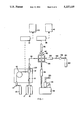
- FIG. 1 is a schematic diagram of a preferred embodiment of the detector apparatus constructed in accordance with the present invention
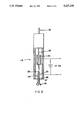
- FIG. 2 is a detailed view of the flame source and flame sampling probe
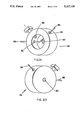
- FIG. 3(a-b) shows a front and back elevational view of the preferred embodiment of the chemiluminescent reaction cell
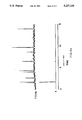
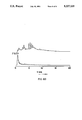
- FIGS. 4(a-b) and 5(a-b) are illustrative representation of chromatograms produced by the detectors in accordance with the present invention and gas chromatography;
- FIG. 6(a-b) illustrates representations of chromatograms produced by the detectors in accordance with the present invention and supercritical fluid chromatography.
- FIG. 1 a preferred embodiment of the apparatus for the simultaneous detection of sulfur-containing compounds and non-sulfur-containing compounds after elution from a chromatographic column.
- the column 10 is contained in an oven 12, has an injection port 14 for injection of the sample and a supply 16 of the chromatographic mobile phase consisting of either a gas, liquid or supercritical fluid source.
- the effluent of the chromatographic column 10 is directed into the inlet 18 of an apparatus 19 for the combustion of the chemical constituents of the carrier stream in a hydrogen/air flame 20.
- a commonly available flame ionization detector may be used, if adapted as described below.
- a hydrogen gas source 17 and a compressed air or oxygen source 15 is in fluid communication with the interior of combustion apparatus 19.
- Standard means for adjusting the flow of these gases to create an appropriate flame may also be included and are well known in the art.
- an external electrical potential 22 is applied between the base of the flame 20 and a metal tube 26, which serves as a collector for ionic species formed in the flame.
- the existence and quantity of ionic species formed in the flame 20, are derived from the current generated between the base of the flame and the metal tube 26.
- the current data is transferred to a microprocessor unit 31, which is capable of displaying the current detected as a function of time on a recorder 33.
- a flame sampling probe 28 is positioned above the flame to withdraw 90-95% of the flame gases from the flame assembly via a transfer line 30 into a chemical reaction cell 36.
- the flame gases are mixed with a stream containing ozone produced by means of an electrical discharge of air or oxygen. Sulfur monoxide and other reactive species formed in the flame 20 will be carried to the chemical reaction cell 36 via the transfer line 30, and will undergo chemical reactions with ozone to produce species such as sulfur dioxide in an excited electronic state, which will emit radiation.
- the radiation emitted by the transient excited species is measured by means of a photomultiplier tube 38 after passage through a quartz window 40 and an optical filter 42.
- a vacuum pump 44 is used to withdraw the gases from the flame via the sampling probe 28, the transfer line 30 into the chemical reaction cell 36, and withdraw the gaseous products after completion of the chemiluminescent reaction from the reaction cell 36.
- a chemical trap 46 is used prior to the vacuum pump 44 to remove reactive chemical compounds, such as ozone and oxides of nitrogen, to prevent degradation of the vacuum pump and pump oil.
- a gas ballast and an oil return filter 48 is connected to the exhaust of the vacuum pump to facilitate the removal of water vapor and other gases from the vacuum pump 44 and the recylcing of oil vapor from the pump exhaust. The pump 44 is exhausted out vent 50.
- the flame sampling probe 28 consists of a high purity (>99.99%) aluminum oxide tube with an internal diameter of 0.020 in. and a length of 3.2 to 4.2 in., with minimal contamination of the probe material by silicon dioxide.
- the probe material may be either a high purity ceramic or high purity crystalline sapphire or ruby tube.
- the sample stream to be analyzed is mixed with hydrogen gas and enters the flame jet 24.
- the flame source is comprised of a flame jet 24 that extends into the body of the ionic detector 19.
- the flame jet 24 is comprised of an outer chamber 25 and an inner tube chamber 27.
- the outer chamber 25 is in fluid communication with the source of hyudrogen gas 17, and the inner tube chamber is in fluid communication with column 10 via inlet 18.
- the base of the ionic detector 19 is in fluid communication with the source of compressed air or oxygen 15.
- a stream of air is passed around the exterior of the tube and mixed with the stream containing the hydrogen and sample at the outlet of the tube 23.
- the flow rate of the sample stream is 0.5 to 30 mL/min
- the flow rate of the hydrogen gas stream is 170 to 190 mL/min
- the flow rate of the air or oxygen stream is 275 to 350 mL/min.
- the high purity aluminum oxide sampling probe 28 is positioned 4 to 8 mm from the top of the flame jet 24, and the height can be adjusted by means of a positional set-screw (not shown).
- Exhaust gases from the flame 20 are withdrawn by means of a vacuum pump 44 through a transfer line 30 which is constructed of a chemically inert material to facilitate complete transfer of sulfur monoxide and other flame exhaust gases into the chemiluminescent reaction chamber 36.
- the transfer line 30 is comprised of a 5 ft. length of 1.7 mm ID by 1/8 in. OD tubing composed of PFA, which has been treated with carbon black or other opaque materials in order to prohibit the passage of light through the walls of the transfer line tubing and into the chemiluminescent cell.
- the present invention is distinctly different from the USD system of Benner and Stedman discussed above.
- the design of the USD precluded the measurement of non-sulfur-containing compounds based on the formation of ionic species in the flame.
- the sample is mixed with a hydrogen stream and then is mixed with air and the temperature of the hydrogen/air flame 20 is much higher (>150° C.) due to the higher gas flow rate employed and the use of a smaller size flame than the diffuse flame employed in the USD.
- the higher flame temperatures are important in the formation of ionic species from organic compounds during combustion.
- the optimum materials to be used for sampling the flame exhaust gases in the of the present invention are high purity aluminum oxides, with minimal contamination by silicon dioxide, in contrast to the pure silicon dioxide (quartz) sampling probe employed in the USD.
- Use of a sampling probe 28 composed of silicon dioxide (quartz) in the present invention resulted in lower overall sensitivity of the detector for sulfur-containing compounds versus a high purity aluminum oxide sampling probe.
- the present invention does not require the addition of a halogen-containing compound to the air stream for baseline stability.
- FIG. 3 Detailed views of the chemiluminescent reaction cell 36 are shown in FIG. 3.
- the cell 36 is composed of aluminum and machined to an internal volume of about 10 cubic centimeters.
- Port A 52 is the sulfur monoxide inlet
- port B 54 is the ozone inlet from the ozone generator
- port C 58 is the pressure transducer used to monitor the internal cell pressure
- port D 60 is the vacuum outlet.
- a sulfur monoxide inlet tube 53 in fluid communication with transfer line 30, enters through Port A 52 and into the interior of reaction cell 36.
- An ozone inlet tube 55 enters through Port B 54 and into the interior of reaction cell 36.
- the ends of sulfur monoxide inlet tube 53 and the ozone inlet tube 55 are within 5 millimeters.
- Ozone inlet tube 55 is in fluid communication with ozone generator 56.
- a source of compressed air or gas 60 is fed through conduit 62, via regulator 64 and filter 66, into ozone generator 56.
- Ozone generator 56 consists of an electrical discharge device that produces consistent and quantifiable amounts of ozone.
- the quartz window 40 On the face of the chemical reaction cell 36 opposite the vacuum outlet 60, the quartz window 40 is held in a sealing relationship. All gases exit the reaction cell 36 via vacuum Port D 60. Light emitted by transient excited species within the interior of the reaction cell 36 passes through the quartz window 40, through the optical filter 42, and is measured at the photomultiplier tube 38. Data concerning the quantity of light generated is transferred to controller 39 for display on recorder 41.
- the apparatus shown in FIGS. 1, 2 and 3 consists, in part, of a Hewlett Packard Model 5890 gas chromatograph equipped with a 30 m ⁇ 0.32 mm ID fused silica capillary column 10, coated with a 4 micrometer film of methyl silicone (Supelco, Inc.).
- a helium carrier gas operated at a flow rate of about 2 mL/min is used to transfer organic compounds and sulfur-containing compounds from a heated injection port 14, through the chromatographic column 10 and into the integrated organic/sulfur detection system.
- the flame sampling probe 28 consists of a 3.2 cm ⁇ 0.5 mm ID ceramic probe positioned 6 mm from the tip of the flame jet 24.
- the instrument for the measurement of ozone-induced chemiluminescence of the flame exhaust gases is a Sievers Research, Inc. Model 350 Sulfur Chemiluminescence Detector equipped with an Edwards Model E2M-1 vacuum pump.
- the lower chromatogram A is obtained by the measurement of ionic species produced in the hydrogen/air flame from the combustion of organic compounds.
- the upper chromatogram B is obtained by collection of sulfur monoxide formed in the flame and measurement of the radiation emitted from the flame exhaust gases after they are mixed with ozone.
- Example 2 Utilizing the same apparatus as previously described in Example 1, but with a 30 m ⁇ 0.32 mm ID fused silica capillary with a 2 micrometer coating of methyl silicon, and under similar conditions as detailed in Example 1, a sample of a naphtha feed stock was injected into the gas chromatograph and the organic components and the sulfur-containing compounds measured using the integrated detection system. As illustrated in FIG. 5, the lower chromatogram C demonstrates that the naphtha sample is primarily composed of a large number of aliphatic, aromatic and olefinic hydrocarbons. The upper chromatogram D shows the input from the chemiluminescent detector portion of the detection system.
- the complex nature of this sample does not permit complete resolution of all of the components and, in particular, trace levels of the sulfur-containing compounds and higher levels of the non-sulfur-containing hydrocarbon compounds cannot be measured with other detection systems.
- the trace levels of the sulfur-containing compounds can be sensitively measured by the ozone-induced chemiluminescence component, while the higher levels of hydrocarbons are simultaneously measured by the flame ionization component of the detection system.
- Example 1 The apparatus detailed in Example 1 was modified by removal of the flame sampling probe 28 from the system and adjustment of the hydrogen flow rate to about 30 mL/min and the air flow rate to about 250 mL/min. These flame conditions are the same as those employed in the standard operation of a flame ionization detector. Under these modified conditions, a sample containing a mixture of hydrocarbons was injected into the chromatographic system and the flame ionization response for each compound was measured relative to normal hexane. The flame sampling probe 28 was then reinstalled, flow rate adjusted to the conditions detailed in Example 1 and the sample re-injected. The response relative to hexane (Relative Response Factor, or RRF) for representative hydrocarbons determined under these two different operating conditions are shown in Table I.
- RRF Relative Response Factor
- Table 1 Also shown in Table 1 are the response factors for selected sulfur compounds relative to diethylsulfide. Response factors are calculated relative to diethylsulfide since hexane produces no response in the sulfur-selective portion of the simultaneous detection system. As can be seen from this data, significant differences exist in the relative responses of different sulfur compounds when measured by the different detectors of the simultaneous detection system, which in principle, can be used as a means of compound identification.
- Example 1 The apparatus detailed in Example 1 was modified for use as a supercritical fluid chromatograph.
- a CCS Model 7000 SFC fluid controller was used to deliver supercritical carbon dioxide.
- a 150 mm ⁇ 1 mm stainless steel column packed with 3 micrometer particles of octadecyl silyl treated silica was housed in an HP 5890 oven for temperature control.
- a short length (about 5 cm) of 0.025 m ID fused silica tubing was connected between the exit of the column and the inlet of the flame source to act as a restrictor. Combustion gases from the hydrogen air flame were collected using a 3.2 cm ⁇ 0.020 in. ID sapphire tube 28.
- FIG. 6 shows the simultaneous analysis of organic compounds (chromatogram E) and sulfur-containing compounds (chromatogram F) present in a sample of crude oil using the present invention coupled with supercritical fluid chromatography.
Landscapes
- Chemical & Material Sciences (AREA)
- Life Sciences & Earth Sciences (AREA)
- Health & Medical Sciences (AREA)
- Physics & Mathematics (AREA)
- Analytical Chemistry (AREA)
- General Physics & Mathematics (AREA)
- Pathology (AREA)
- Immunology (AREA)
- Engineering & Computer Science (AREA)
- Biochemistry (AREA)
- General Health & Medical Sciences (AREA)
- Combustion & Propulsion (AREA)
- Food Science & Technology (AREA)
- Medicinal Chemistry (AREA)
- Molecular Biology (AREA)
- Chemical Kinetics & Catalysis (AREA)
- Plasma & Fusion (AREA)
- Investigating Or Analysing Materials By The Use Of Chemical Reactions (AREA)
- Other Investigation Or Analysis Of Materials By Electrical Means (AREA)
Abstract
Description
              TABLE 1
______________________________________
           RRF        RRF         RRF
           SULFUR     STANDARD    SULFUR
COMPOUND   MODE FID   FID         DETECTOR
______________________________________
c-2-hexane 0.19       0.19        0
Benzene    1.72       1.72        0
Toluene    2.85       3.15        0
n-octane   3.41       3.69        0
o-xylene   1.28       1.45        0
Napthalene 0.32       0.39        0
Dimethyldisulfide
           0.63                   2.09
Diethyldisulfide
           0.86                   1.67
______________________________________
Claims (7)
Priority Applications (2)
| Application Number | Priority Date | Filing Date | Title |
|---|---|---|---|
| US07/759,105 US5227135A (en) | 1988-11-25 | 1991-09-06 | Apparatus for simultaneous measurement of sulfur and non-sulfur containing compounds |
| US08/013,338 US5330714A (en) | 1988-11-25 | 1993-02-04 | Process and apparatus for simultaneous measurement of sulfur and non-sulfur containing compounds |
Applications Claiming Priority (3)
| Application Number | Priority Date | Filing Date | Title |
|---|---|---|---|
| US27598088A | 1988-11-25 | 1988-11-25 | |
| US44463689A | 1989-12-01 | 1989-12-01 | |
| US07/759,105 US5227135A (en) | 1988-11-25 | 1991-09-06 | Apparatus for simultaneous measurement of sulfur and non-sulfur containing compounds |
Related Parent Applications (1)
| Application Number | Title | Priority Date | Filing Date |
|---|---|---|---|
| US44463689A Continuation | 1988-11-25 | 1989-12-01 |
Publications (1)
| Publication Number | Publication Date |
|---|---|
| US5227135A true US5227135A (en) | 1993-07-13 |
Family
ID=27402785
Family Applications (1)
| Application Number | Title | Priority Date | Filing Date |
|---|---|---|---|
| US07/759,105 Expired - Lifetime US5227135A (en) | 1988-11-25 | 1991-09-06 | Apparatus for simultaneous measurement of sulfur and non-sulfur containing compounds |
Country Status (1)
| Country | Link |
|---|---|
| US (1) | US5227135A (en) |
Cited By (24)
| Publication number | Priority date | Publication date | Assignee | Title |
|---|---|---|---|---|
| WO1995022049A1 (en) * | 1994-02-10 | 1995-08-17 | Sievers Instruments, Inc. | Apparatus for simultaneous measurement of sulfur and non-sulfur containing compounds |
| US5451788A (en) * | 1994-05-18 | 1995-09-19 | Pollack; Larry J. | Chemiluminescent detector |
| US5614417A (en) * | 1993-10-07 | 1997-03-25 | Kubala; Sidney W. | Sulfur chemiluminescence detection method |
| US5702954A (en) * | 1995-09-29 | 1997-12-30 | Colorado Seminary | Method to detect phosphorus |
| US5916523A (en) * | 1996-12-04 | 1999-06-29 | Antek Instruments, Inc. | Methods for near simultaneous chemiluminescent sulfur and nitrogen detection |
| US6057162A (en) * | 1997-03-07 | 2000-05-02 | Thermedics Detection, Inc. | Disease diagnosis by vapor sample analysis |
| US6106710A (en) * | 1999-09-10 | 2000-08-22 | Agilent Technologies, Inc. | Fraction collection delay calibration for liquid chromatography |
| US6238622B1 (en) * | 1997-12-05 | 2001-05-29 | Rosemount Analytical Inc. | Flame ionization detector |
| US20020021984A1 (en) * | 1998-10-24 | 2002-02-21 | Armin Kroneisen | Device for methane-free hydrocarbon measurement |
| US20020121468A1 (en) * | 2000-07-06 | 2002-09-05 | Fischer Steven M. | Fraction collection delay calibration for liquid chromatography |
| US20020158225A1 (en) * | 2000-12-20 | 2002-10-31 | Gyula Vigh | Buffer compositions with volatile combustion products for use with gas-phase or vapor-phase element-specific detectors |
| US6830730B2 (en) | 2001-09-11 | 2004-12-14 | Spectrolanalytical Instruments | Method and apparatus for the on-stream analysis of total sulfur and/or nitrogen in petroleum products |
| US20070295648A1 (en) * | 2006-06-23 | 2007-12-27 | Exxonmobil Research And Engineering Company | Method for the measurement of the reactive molecular species in liquid petroleum and liquid petroleum products |
| US20100238444A1 (en) * | 2007-12-05 | 2010-09-23 | Anderson Jr James M | Methods and apparatus for analyzing samples and collecting sample fractions |
| CN101811870B (en) * | 2009-07-21 | 2012-09-05 | 哈尔滨理工大学 | Probe for quick tester of hydrogen content in aluminium alloy melt and manufacturing method thereof |
| US8305582B2 (en) | 2009-09-01 | 2012-11-06 | Alltech Associates, Inc. | Methods and apparatus for analyzing samples and collecting sample fractions |
| US9086422B2 (en) | 2008-12-10 | 2015-07-21 | Alltech Associates, Inc. | Chromatography systems and system components |
| US9133833B2 (en) | 2008-12-04 | 2015-09-15 | Alltech Associates, Inc. | Methods and apparatus for moving aliquot samples of fluid |
| US20150285770A1 (en) * | 2010-02-26 | 2015-10-08 | Rosario Mannino | Jet assembly for use in detectors and other devices |
| US9448177B2 (en) | 2012-10-25 | 2016-09-20 | Agilent Technologies, Inc. | Flame photometric detector |
| US10767862B2 (en) * | 2017-07-12 | 2020-09-08 | Rinnai Corporation | Flame rod |
| US11002684B2 (en) | 2012-10-25 | 2021-05-11 | Agilent Technologies, Inc. | Chemiluminescent detector having coating to reduce excited species adsorption |
| US20220026360A1 (en) * | 2020-07-22 | 2022-01-27 | Agar Corporation, Inc. | Fluorescence and scatter and absorption spectroscopic apparatus with a sapphire tube and method for analyzing inline low level hydrocarbon in a flow medium |
| US11402333B2 (en) * | 2016-09-06 | 2022-08-02 | Ac Analytical Controls B.V. | Method for chemiluminescent sulphur detection and a furnace |
Citations (2)
| Publication number | Priority date | Publication date | Assignee | Title |
|---|---|---|---|---|
| US4018562A (en) * | 1975-10-24 | 1977-04-19 | Antek Instruments, Inc. | Chemiluminescent nitrogen detection apparatus and method |
| US4717675A (en) * | 1984-08-03 | 1988-01-05 | Sievers Research, Inc. | Method for selective conversion of organic compounds and detecting same by gas chromotography and chemiluminescence detection |
-
1991
- 1991-09-06 US US07/759,105 patent/US5227135A/en not_active Expired - Lifetime
Patent Citations (2)
| Publication number | Priority date | Publication date | Assignee | Title |
|---|---|---|---|---|
| US4018562A (en) * | 1975-10-24 | 1977-04-19 | Antek Instruments, Inc. | Chemiluminescent nitrogen detection apparatus and method |
| US4717675A (en) * | 1984-08-03 | 1988-01-05 | Sievers Research, Inc. | Method for selective conversion of organic compounds and detecting same by gas chromotography and chemiluminescence detection |
Cited By (36)
| Publication number | Priority date | Publication date | Assignee | Title |
|---|---|---|---|---|
| US5614417A (en) * | 1993-10-07 | 1997-03-25 | Kubala; Sidney W. | Sulfur chemiluminescence detection method |
| WO1995022049A1 (en) * | 1994-02-10 | 1995-08-17 | Sievers Instruments, Inc. | Apparatus for simultaneous measurement of sulfur and non-sulfur containing compounds |
| US5451788A (en) * | 1994-05-18 | 1995-09-19 | Pollack; Larry J. | Chemiluminescent detector |
| US5702954A (en) * | 1995-09-29 | 1997-12-30 | Colorado Seminary | Method to detect phosphorus |
| US6143245A (en) * | 1996-12-04 | 2000-11-07 | Antek Instruments, Inc. | Apparatus for near simultaneous chemiluminescent sulfur and nitrogen detection |
| US5916523A (en) * | 1996-12-04 | 1999-06-29 | Antek Instruments, Inc. | Methods for near simultaneous chemiluminescent sulfur and nitrogen detection |
| US6057162A (en) * | 1997-03-07 | 2000-05-02 | Thermedics Detection, Inc. | Disease diagnosis by vapor sample analysis |
| US6238622B1 (en) * | 1997-12-05 | 2001-05-29 | Rosemount Analytical Inc. | Flame ionization detector |
| US20020021984A1 (en) * | 1998-10-24 | 2002-02-21 | Armin Kroneisen | Device for methane-free hydrocarbon measurement |
| US6106710A (en) * | 1999-09-10 | 2000-08-22 | Agilent Technologies, Inc. | Fraction collection delay calibration for liquid chromatography |
| US6406633B1 (en) * | 1999-09-10 | 2002-06-18 | Agilent Technologies, Inc. | Fraction collection delay calibration for liquid chromatography |
| US20020121468A1 (en) * | 2000-07-06 | 2002-09-05 | Fischer Steven M. | Fraction collection delay calibration for liquid chromatography |
| US6767467B2 (en) | 2000-07-06 | 2004-07-27 | Agilent Technologies, Inc. | Fraction collection delay calibration for liquid chromatography |
| US20020158225A1 (en) * | 2000-12-20 | 2002-10-31 | Gyula Vigh | Buffer compositions with volatile combustion products for use with gas-phase or vapor-phase element-specific detectors |
| US6830730B2 (en) | 2001-09-11 | 2004-12-14 | Spectrolanalytical Instruments | Method and apparatus for the on-stream analysis of total sulfur and/or nitrogen in petroleum products |
| US6867047B2 (en) | 2001-09-11 | 2005-03-15 | Spectro Analytical Instruments | Method and apparatus for preventing nitrogen interference in pyro-electrochemical methods |
| US20070295648A1 (en) * | 2006-06-23 | 2007-12-27 | Exxonmobil Research And Engineering Company | Method for the measurement of the reactive molecular species in liquid petroleum and liquid petroleum products |
| WO2008002424A3 (en) * | 2006-06-23 | 2008-04-03 | Exxonmobil Res & Eng Co | Method for the measurement of the reactive molecular species in liquid petroleum and liquid petroleum products |
| US20100238444A1 (en) * | 2007-12-05 | 2010-09-23 | Anderson Jr James M | Methods and apparatus for analyzing samples and collecting sample fractions |
| US8305581B2 (en) | 2007-12-05 | 2012-11-06 | Alltech Associates, Inc. | Methods and apparatus for analyzing samples and collecting sample fractions |
| US8115930B2 (en) | 2007-12-05 | 2012-02-14 | Alltech Associates, Inc. | Methods and apparatus for analyzing samples and collecting sample fractions |
| US9133833B2 (en) | 2008-12-04 | 2015-09-15 | Alltech Associates, Inc. | Methods and apparatus for moving aliquot samples of fluid |
| US9086422B2 (en) | 2008-12-10 | 2015-07-21 | Alltech Associates, Inc. | Chromatography systems and system components |
| CN101811870B (en) * | 2009-07-21 | 2012-09-05 | 哈尔滨理工大学 | Probe for quick tester of hydrogen content in aluminium alloy melt and manufacturing method thereof |
| US9322813B2 (en) | 2009-09-01 | 2016-04-26 | Alltech Associates, Inc. | Methods and apparatus for analyzing samples and collecting sample fractions |
| US8314934B2 (en) | 2009-09-01 | 2012-11-20 | Alltech Associates, Inc. | Methods and apparatus for analyzing samples and collecting sample fractions |
| US8305582B2 (en) | 2009-09-01 | 2012-11-06 | Alltech Associates, Inc. | Methods and apparatus for analyzing samples and collecting sample fractions |
| US20150285770A1 (en) * | 2010-02-26 | 2015-10-08 | Rosario Mannino | Jet assembly for use in detectors and other devices |
| US9448177B2 (en) | 2012-10-25 | 2016-09-20 | Agilent Technologies, Inc. | Flame photometric detector |
| US11002684B2 (en) | 2012-10-25 | 2021-05-11 | Agilent Technologies, Inc. | Chemiluminescent detector having coating to reduce excited species adsorption |
| US11402333B2 (en) * | 2016-09-06 | 2022-08-02 | Ac Analytical Controls B.V. | Method for chemiluminescent sulphur detection and a furnace |
| US10767862B2 (en) * | 2017-07-12 | 2020-09-08 | Rinnai Corporation | Flame rod |
| US20220026360A1 (en) * | 2020-07-22 | 2022-01-27 | Agar Corporation, Inc. | Fluorescence and scatter and absorption spectroscopic apparatus with a sapphire tube and method for analyzing inline low level hydrocarbon in a flow medium |
| US11885743B2 (en) * | 2020-07-22 | 2024-01-30 | Agar Corporation, Inc. | Fluorescence and scatter and absorption spectroscopic apparatus with a sapphire tube and method for analyzing inline low level hydrocarbon in a flow medium |
| US20240094124A1 (en) * | 2020-07-22 | 2024-03-21 | Agar Corporation, Inc. | Fluorescence and scatter and absorption spectroscopic apparatus with a sapphire tube and method for analyzing inline low level hydrocarbon in a flow medium |
| US12174117B2 (en) * | 2020-07-22 | 2024-12-24 | Agrar Corporation Inc. | Fluorescence and scatter and absorption spectroscopic apparatus with a sapphire tube and method for analyzing inline low level hydrocarbon in a flow medium |
Similar Documents
| Publication | Publication Date | Title |
|---|---|---|
| US5310683A (en) | Process for simultaneous measurement of sulfur and non-sulfur containing compounds | |
| US4193963A (en) | Apparatus for the determination of chemical compounds by chemiluminescence with ozone | |
| US8448493B2 (en) | Gas chromatograph-combustion system and method for mass spectrometry | |
| US5330714A (en) | Process and apparatus for simultaneous measurement of sulfur and non-sulfur containing compounds | |
| US4851683A (en) | Element specific radio frequency discharge helium plasma detector for chromatography | |
| Luffer et al. | Evaluation of a supercritical fluid chromatograph coupled to a surface-wave-sustained microwave-induced-plasma detector | |
| US5501981A (en) | Method and apparatus for chemiluminescent detection of sulfur | |
| WO1990006508A1 (en) | Process and apparatus for the detection of sulfur | |
| Nelson et al. | Fluorine induced chemiluminescence detector for reduced sulfur compounds | |
| US4569918A (en) | Sulfur dioxide analysis system | |
| US4070155A (en) | Apparatus for chromatographically analyzing a liquid sample | |
| US4066409A (en) | Method and apparatus for chromatographically analyzing a liquid sample | |
| Skelton et al. | Element-selective detection after supercritical fluid chromatography using a radio frequency plasma detector | |
| US4916077A (en) | Method and apparatus for oxidative decomposition and analysis of a sample | |
| US4111554A (en) | Process for the specific quantitative detection of sulfur compounds and apparatus for carrying out this process | |
| US4950456A (en) | Apparatus for analysis of a sample for sulphur | |
| Peters et al. | Versatile interface for gas chromatographic detection or solution nebulization analysis by inductively coupled plasma mass spectrometry: preliminary results | |
| Calzada et al. | Chemical generation of chlorine, bromine and iodine for sample introduction into a surfatron-generated argon microwave-induced plasma | |
| WO1991008472A1 (en) | Process and apparatus for simultaneous measurement of sulfur and non-sulfur containing compounds | |
| Kendler et al. | Ultrafast gas chromatographic separation of organophosphor and organosulfur compounds utilizing a microcountercurrent flame photometric detector | |
| Broekaert et al. | Spectrochemical analysis with DC glow discharges at atmospheric pressure | |
| WO1995022049A1 (en) | Apparatus for simultaneous measurement of sulfur and non-sulfur containing compounds | |
| Skelton Jr et al. | Multi‐element selective radio frequency plasma detector for capillary gas chromatography | |
| Uchida et al. | Determination of non-metallic elements by capacitively coupled helium microwave plasma atomic emission spectrometry with capillary gas chromatography | |
| Bian et al. | Online flow digestion of biological and environmental samples for inductively coupled plasma–optical emission spectroscopy (ICP–OES) |
Legal Events
| Date | Code | Title | Description |
|---|---|---|---|
| STCF | Information on status: patent grant |
Free format text: PATENTED CASE |
|
| FEPP | Fee payment procedure |
Free format text: PAT HLDR NO LONGER CLAIMS SMALL ENT STAT AS INDIV INVENTOR (ORIGINAL EVENT CODE: LSM1); ENTITY STATUS OF PATENT OWNER: LARGE ENTITY |
|
| FPAY | Fee payment |
Year of fee payment: 4 |
|
| FPAY | Fee payment |
Year of fee payment: 8 |
|
| AS | Assignment |
Owner name: UBS AG, STAMFORD BRANCH AS COLLATERAL AGENT, CONNE Free format text: SECURITY INTEREST;ASSIGNOR:SIEVERS INSTRUMENTS, INC.;REEL/FRAME:014972/0711 Effective date: 20040213 Owner name: UBS AG, STAMFORD BRANCH AS COLLATERAL AGENT, CONNECTICUT Free format text: SECURITY INTEREST;ASSIGNOR:SIEVERS INSTRUMENTS, INC.;REEL/FRAME:014972/0711 Effective date: 20040213 |
|
| FPAY | Fee payment |
Year of fee payment: 12 |
|
| AS | Assignment |
Owner name: SIEVERS INSTRUMENTS, INC., COLORADO Free format text: RELEASE BY SECURED PARTY;ASSIGNOR:UBS AG, STAMFORD BRANCH AS COLLATERAL AGENT;REEL/FRAME:018635/0629 Effective date: 20061215 |
|
| AS | Assignment |
Owner name: GE ANALYTICAL INSTRUMENTS, COLORADO Free format text: ASSIGNMENT OF ASSIGNORS INTEREST;ASSIGNOR:GODEC, RICHARD;REEL/FRAME:018645/0258 Effective date: 20061215 Owner name: GE ANALYTICAL INSTRUMENTS, COLORADO Free format text: ASSIGNMENT OF ASSIGNORS INTEREST;ASSIGNOR:JOHANSEN, NEIL;REEL/FRAME:018645/0366 Effective date: 20061218 |
|
| AS | Assignment |
Owner name: AGILENT TECHNOLOGIES INC., COLORADO Free format text: ASSIGNMENT OF ASSIGNORS INTEREST;ASSIGNOR:GE ANALYTICAL INSTRUMENTS, INC.;REEL/FRAME:020174/0276 Effective date: 20061219 |