US5226946A - Vacuum melting/casting method to reduce inclusions - Google Patents
Vacuum melting/casting method to reduce inclusions Download PDFInfo
- Publication number
- US5226946A US5226946A US07/890,965 US89096592A US5226946A US 5226946 A US5226946 A US 5226946A US 89096592 A US89096592 A US 89096592A US 5226946 A US5226946 A US 5226946A
- Authority
- US
- United States
- Prior art keywords
- melting
- melted
- charge
- vessel
- alloy
- Prior art date
- Legal status (The legal status is an assumption and is not a legal conclusion. Google has not performed a legal analysis and makes no representation as to the accuracy of the status listed.)
- Expired - Lifetime
Links
- 238000002844 melting Methods 0.000 title claims abstract description 138
- 230000008018 melting Effects 0.000 title claims abstract description 138
- 238000005266 casting Methods 0.000 title claims abstract description 47
- 238000000034 method Methods 0.000 title claims description 36
- 229910045601 alloy Inorganic materials 0.000 claims abstract description 47
- 239000000956 alloy Substances 0.000 claims abstract description 47
- 239000000155 melt Substances 0.000 claims abstract description 42
- 239000007789 gas Substances 0.000 claims abstract description 41
- 238000005275 alloying Methods 0.000 claims abstract description 18
- 239000011261 inert gas Substances 0.000 claims abstract description 14
- 238000009736 wetting Methods 0.000 claims abstract description 14
- 230000005494 condensation Effects 0.000 claims abstract description 13
- 238000009833 condensation Methods 0.000 claims abstract description 13
- 230000005012 migration Effects 0.000 claims abstract description 6
- 238000013508 migration Methods 0.000 claims abstract description 6
- XKRFYHLGVUSROY-UHFFFAOYSA-N Argon Chemical compound [Ar] XKRFYHLGVUSROY-UHFFFAOYSA-N 0.000 claims description 46
- 229910000601 superalloy Inorganic materials 0.000 claims description 29
- 229910052786 argon Inorganic materials 0.000 claims description 23
- PXHVJJICTQNCMI-UHFFFAOYSA-N Nickel Chemical compound [Ni] PXHVJJICTQNCMI-UHFFFAOYSA-N 0.000 claims description 22
- XEEYBQQBJWHFJM-UHFFFAOYSA-N Iron Chemical compound [Fe] XEEYBQQBJWHFJM-UHFFFAOYSA-N 0.000 claims description 18
- 239000000919 ceramic Substances 0.000 claims description 15
- 239000000470 constituent Substances 0.000 claims description 15
- 230000006698 induction Effects 0.000 claims description 12
- 229910052759 nickel Inorganic materials 0.000 claims description 11
- 239000010941 cobalt Substances 0.000 claims description 10
- 229910017052 cobalt Inorganic materials 0.000 claims description 10
- GUTLYIVDDKVIGB-UHFFFAOYSA-N cobalt atom Chemical compound [Co] GUTLYIVDDKVIGB-UHFFFAOYSA-N 0.000 claims description 10
- 229910052742 iron Inorganic materials 0.000 claims description 9
- 229910052804 chromium Inorganic materials 0.000 claims description 8
- 229910001092 metal group alloy Inorganic materials 0.000 claims 1
- 239000002243 precursor Substances 0.000 abstract description 15
- VYPSYNLAJGMNEJ-UHFFFAOYSA-N Silicium dioxide Chemical compound O=[Si]=O VYPSYNLAJGMNEJ-UHFFFAOYSA-N 0.000 description 8
- MCMNRKCIXSYSNV-UHFFFAOYSA-N Zirconium dioxide Chemical compound O=[Zr]=O MCMNRKCIXSYSNV-UHFFFAOYSA-N 0.000 description 8
- 230000015572 biosynthetic process Effects 0.000 description 7
- 230000000694 effects Effects 0.000 description 4
- 238000005495 investment casting Methods 0.000 description 4
- 239000000377 silicon dioxide Substances 0.000 description 4
- 238000007711 solidification Methods 0.000 description 4
- 230000008023 solidification Effects 0.000 description 4
- 230000002411 adverse Effects 0.000 description 3
- QVGXLLKOCUKJST-UHFFFAOYSA-N atomic oxygen Chemical compound [O] QVGXLLKOCUKJST-UHFFFAOYSA-N 0.000 description 3
- 230000009286 beneficial effect Effects 0.000 description 3
- 239000010949 copper Substances 0.000 description 3
- 230000003628 erosive effect Effects 0.000 description 3
- 238000004519 manufacturing process Methods 0.000 description 3
- 239000001301 oxygen Substances 0.000 description 3
- 229910052760 oxygen Inorganic materials 0.000 description 3
- 210000003625 skull Anatomy 0.000 description 3
- XLYOFNOQVPJJNP-UHFFFAOYSA-N water Substances O XLYOFNOQVPJJNP-UHFFFAOYSA-N 0.000 description 3
- RYGMFSIKBFXOCR-UHFFFAOYSA-N Copper Chemical compound [Cu] RYGMFSIKBFXOCR-UHFFFAOYSA-N 0.000 description 2
- 238000006243 chemical reaction Methods 0.000 description 2
- 229910052802 copper Inorganic materials 0.000 description 2
- 239000013078 crystal Substances 0.000 description 2
- 238000010894 electron beam technology Methods 0.000 description 2
- 239000000203 mixture Substances 0.000 description 2
- 238000012986 modification Methods 0.000 description 2
- 230000004048 modification Effects 0.000 description 2
- 229910000967 As alloy Inorganic materials 0.000 description 1
- 229910001069 Ti alloy Inorganic materials 0.000 description 1
- 230000008021 deposition Effects 0.000 description 1
- 238000009826 distribution Methods 0.000 description 1
- 238000000829 induction skull melting Methods 0.000 description 1
- 229910052751 metal Inorganic materials 0.000 description 1
- 239000002184 metal Substances 0.000 description 1
- 229910044991 metal oxide Inorganic materials 0.000 description 1
- 150000004706 metal oxides Chemical class 0.000 description 1
- 230000002093 peripheral effect Effects 0.000 description 1
- 238000005303 weighing Methods 0.000 description 1
Images


Classifications
-
- F—MECHANICAL ENGINEERING; LIGHTING; HEATING; WEAPONS; BLASTING
- F27—FURNACES; KILNS; OVENS; RETORTS
- F27B—FURNACES, KILNS, OVENS OR RETORTS IN GENERAL; OPEN SINTERING OR LIKE APPARATUS
- F27B14/00—Crucible or pot furnaces
- F27B14/04—Crucible or pot furnaces adapted for treating the charge in vacuum or special atmosphere
-
- C—CHEMISTRY; METALLURGY
- C21—METALLURGY OF IRON
- C21C—PROCESSING OF PIG-IRON, e.g. REFINING, MANUFACTURE OF WROUGHT-IRON OR STEEL; TREATMENT IN MOLTEN STATE OF FERROUS ALLOYS
- C21C7/00—Treating molten ferrous alloys, e.g. steel, not covered by groups C21C1/00 - C21C5/00
- C21C7/10—Handling in a vacuum
-
- F—MECHANICAL ENGINEERING; LIGHTING; HEATING; WEAPONS; BLASTING
- F27—FURNACES; KILNS; OVENS; RETORTS
- F27B—FURNACES, KILNS, OVENS OR RETORTS IN GENERAL; OPEN SINTERING OR LIKE APPARATUS
- F27B14/00—Crucible or pot furnaces
- F27B14/06—Crucible or pot furnaces heated electrically, e.g. induction crucible furnaces with or without any other source of heat
- F27B14/061—Induction furnaces
-
- Y—GENERAL TAGGING OF NEW TECHNOLOGICAL DEVELOPMENTS; GENERAL TAGGING OF CROSS-SECTIONAL TECHNOLOGIES SPANNING OVER SEVERAL SECTIONS OF THE IPC; TECHNICAL SUBJECTS COVERED BY FORMER USPC CROSS-REFERENCE ART COLLECTIONS [XRACs] AND DIGESTS
- Y02—TECHNOLOGIES OR APPLICATIONS FOR MITIGATION OR ADAPTATION AGAINST CLIMATE CHANGE
- Y02P—CLIMATE CHANGE MITIGATION TECHNOLOGIES IN THE PRODUCTION OR PROCESSING OF GOODS
- Y02P10/00—Technologies related to metal processing
- Y02P10/25—Process efficiency
Definitions
- the present invention relates to a method for reducing inclusion levels in the vacuum melting of successive alloy charges containing one or more volatile alloying elements.
- inclusions in superalloy investment castings is a concern of gas turbine engine manufacturers as the engine operating conditions, especially temperature, have become more severe. As is known, these inclusions can adversely affect the mechanical properties of the casting and, if present at a critical size, can cause catastrophic failure of the castings under the high temperature and stress conditions of engine service. Moreover, the adverse effect of inclusions on the casting properties may be exacerbated as the section size (e.g., wall thickness) of the castings is reduced for weight savings purposes. The presence of unacceptable levels and/or sizes of inclusions in investment castings results in excessive scrap rates that increase the overall cost of producing castings for use in gas turbine engines. The inclusion problem worsened as remelt vacuum levels and leak rates of casting equipment were improved.
- Non-metallic and dross type inclusions can originate from several sources during the investment casting operation.
- inclusions can be introduced by the master alloys used, by remelting in a ceramic crucible, by the remelting environment, and by mold/melt reactions that can occur during solidification, especially during the relatively long mold/melt contact periods required in the production of directionally solidified and single crystal castings.
- superalloys are typically remelted and cast under relatively high vacuum conditions (e.g., ⁇ 10 -3 torr) to reduce the presence of residual oxygen and other gases in the remelting/casting atmosphere and/or in the melt.
- relatively high vacuum conditions e.g., ⁇ 10 -3 torr
- Typical remelting procedures employed include vacuum induction melting in a refractory crucible and "cold hearth" melting including vacuum arc, induction skull and electron beam melting in a water cooled metallic (e.g., copper) crucible.
- unacceptably high inclusion levels may still be experienced in the production of certain superalloy investment castings that include one or more relatively volatile alloying elements, such as Cr and Al, especially during the melting of successive alloy charges in the same crucible.
- the present invention contemplates the melting of one or successive alloy charges including one or more volatile constituents in a manner to reduce inclusions attributable to the melting operation.
- the present invention is based on the discovery that the problem of unacceptably high inclusion levels in vacuum melted alloys including one or more volatile constituents, (e.g., volatile alloying elements including Al, Cr, Mg, etc.) melted in a melting vessel arises from volatilization of such constituents under the temperature and pressure conditions of melting and the condensation of the volatized constituent as condensate deposits on cool regions of the melting vessel and associated melting chamber where the deposits constitute inclusion precursors that can enter the melt during the melting and/or casting operations to provide the observed high inclusion levels in the resultant casting.
- volatile constituents e.g., volatile alloying elements including Al, Cr, Mg, etc.
- the condensate deposits may comprise metal oxides as a result of reaction of the volatile constituent with residual gas, such as oxygen in the melting chamber, during constituent migration from the melt and/or after constituent condensation on the cool regions.
- the condensate deposits build-up on the melting vessel and associated melting chamber as alloy charges are melted and cast and eventually reach a condition where entry of the deposits into the melt occurs.
- One embodiment of the present invention involves establishing a gas partial pressure on the melted alloy charge effective to reduce mobility of the volatile constituent and formation of the inclusion precursors at cool regions of the melting vessel and chamber.
- the gas partial pressure is established by introduction of an inert gas to the melting chamber prior to melting of the alloy by, for example, vacuum induction melting or "cold hearth” melting, and after evacuation of the vessel to a subambient pressure.
- the gas partial pressure is effective to minimize volatilization, migration and deposition of the volatile constituents while avoiding trapping harmful amounts of the gas in the casting produced from the melt.
- the alloy charge is melted in a ceramic crucible in a manner that a cool region lies between the melt line and an upper lip of the melting vessel (e.g., crucible).
- the melted charge may be tilt poured from the vessel into a casting mold such that the melted alloy flows over the cool region of the crucible where formation of the inclusion precursors is minimized or reduced by the presence of the gas partial pressure.
- the superalloy In melting one or successive charges of a nickel, cobalt or iron base superalloy including one of Al and Cr as an alloying element, the superalloy is melted in a ceramic crucible under an inert gas partial pressure effective to reduce volatilization of the Al and/or Cr alloying elements and formation/build-up of the inclusion precursor deposits on the cool regions of the crucible and melting chamber where they might enter the melt.
- An argon partial pressure in the range of about 50 microns and above is preferably established on the superalloy melt to this end.
- an argon partial pressure of about 5000 microns is used since the long residence time of the melt in the mold allows any entrapped argon gas to escape.
- Another embodiment of the present invention involves establishing a gas partial pressure on the melt effective to reduce wetting of the melting vessel by the melt during the melting operation. This embodiment reduces the extent of wetting between the melt and the vessel and resultant erosion of the vessel over time so as to reduce inclusion levels in the melts attributable to the melting operation.
- this embodiment of the invention involves melting the superalloy charges in a melting vessel including a working ceramic (e.g., silica, zirconia, etc.) surface contacting the melt and establishing an inert gas partial pressure on the melt effective to reduce wetting of the inner surface of the melting vessel by the melt.
- a working ceramic e.g., silica, zirconia, etc.
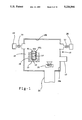
- FIG. 1 is a schematic sectioned side view of a melting and casting apparatus for practicing one embodiment of the invention.
- FIGS. 2a-2d are photographs of crucible liners showing the effect of argon partial pressure on condensate build-up on the liners.
- FIG. 3 is a photograph at 250X magnification of a typical inclusion showing laminated morphology attributable to condensate build-up on the crucible.
- FIGS. 4a-4d are photographs of crucibles showing the effect of argon partial pressure on wetting of the crucibles by the melt.
- FIGS. 5a-5d and 6a-6d are histograms representing inclusion distributions found by metallographic analysis of castings made by the invention (FIG. 5) versus prior art castings (FIG. 6).
- the present invention is illustrated hereinbelow with respect to the vacuum induction remelting of successive charges of an alloy including one or more volatile constituents in a refractory melting vessel (e.g., ceramic crucible) in a manner to reduce formation/build-up of inclusion precursors on cool regions of the vessel and melting chamber.
- a refractory melting vessel e.g., ceramic crucible
- the invention is not limited to vacuum induction melting and can be practiced using other vacuum melting techniques such as the so-called "cold hearth" techniques of induction skull, electron beam and vacuum arc melting where the alloy charge is melted in a water-cooled metal (e.g., copper) melting vessel.
- a suitable refractory casting mold e.g., a conventional ceramic investment mold.
- the remelt charge cast into the mold may be solidified by known techniques to produce equiaxed, directionally solidified, and single crystal castings.
- the invention may also be used in the alloy manufacture process where individual alloy constituents are blended and remelted by one of the aforementioned processes and cast into ingot molds.
- a remelting/casting apparatus 10 for vacuum induction remelting successive charges of a superalloy, which may include a nickel, cobalt, or iron base superalloys such as IN713LC, MAR-M-427, MAR-M-509, etc., in a ceramic crucible 14 enclosed in a melting chamber 16 having water cooled walls 16a.
- the ceramic crucible 14 is enclosed and supported by a ceramic member 15.
- An induction coil 18 is disposed about the crucible 14 in the chamber 16 and is energized by suitable electrical power in conventional manner to inductively heat and melt each charge in the crucible 14 to a desired casting superheat temperature (i.e., a temperature above the melting point of the superalloy).
- the crucible 14 is charged with the alloy through a vacuum charge interlock 13 in conventional manner.
- Each superheated melt 12 (melted charge) is cast into a ceramic investment mold 20 which is positioned in the melting chamber 16 through a conventional vacuum interlock chamber 22 communicating to the melting chamber 16.
- the mold 20 can be positioned in the melting chamber before or after the charge is melted via the interlock chamber 22.
- the superheated melt 12 is cast into the mold 20 by tilting the crucible 14 using an associated conventional tilting device (not shown) in the melting chamber so as to pour the melt over a crucible pour lip 14b and into the mold 20.
- the melt can be cast in other ways; e.g., by "bottom pouring" through a suitable valved opening in the bottom of the crucible into a mold located beneath the crucible.
- the melting chamber 16 can be evacuated to a desired subambient pressure by a vacuum pump 24 communicated to the chamber 16 via an associated conduit and valve V1 as shown. Moreover, for purposes to be described, the melting chamber 16 is communicated to a source 26 of inert gas (e.g., a conventional cylinder of high purity inert gas such as argon) external of the melting chamber via an associated conduit and valve V2 as also shown in FIG. 1.
- a source 26 of inert gas e.g., a conventional cylinder of high purity inert gas such as argon
- the present invention involves the discovery that the problem of unacceptably high inclusion levels observed heretofore in the vacuum melting of successive charges of superalloys including one or more volatile constituents (e.g., volatile alloying elements) in a crucible 14 arises from volatilization of such constituents under the temperature and pressure conditions of remelting and the condensation of the volatized constituents on cool regions of the crucible and melting chamber walls as condensate deposits that constitute inclusion precursors.
- the volatized alloying elements may react with residual gas, such as oxygen, in the melting chamber 16, to form oxide or other inclusion precursors.
- the cool regions on the apparatus 10 include the surface 14c of the crucible 14 between the melt line ML and the upper peripheral lip 14b. Cool regions also include the water-cooled melting chamber walls 16a.
- the upper melting chamber wall 16b is especially important as a source of condensate as a result of its position overlying the melt 12 in the crucible 14 and mold 20.
- the inclusion precursors gradually build-up over time as successive alloy charges are melted in the crucible 14 and cast until at some point in time the inclusion precursors begin to find their way into the melt by, for example, flaking off the cool regions of the crucible or being washed off the cool regions of the crucible during melting/superheating and pouring of the melt over the pour lip 14b into the mold 20.
- the inclusion precursors may flake off the chamber walls 16a, especially chamber wall 16b overlying the melt 12 and mold 20.
- the inclusion precursors thereby enter the melt and become incorporated in the resultant casting as inclusions.
- a typical inclusion originating from such build-up and found in an IN713LC nickel base superalloy equiaxed casting is shown in FIG. 3 wherein the laminated morphology indicative of layer build-up over time is apparent.
- Each layer of the inclusion was determined to primarily comprise Al and/or Cr oxides, the Al and Cr comprising volatile alloying elements of that particular nickel base superalloy.
- a partial pressure of an inert gas is established in the melting chamber 16 (i.e., on the superalloy melt 12 in the crucible 14) at a partial pressure level effective to reduce volatilization of the volatile alloying elements and thus formation/build-up of the inclusion precursors at the aforementioned cool regions of the crucible and vacuum chamber walls as successive alloy charges are melted and cast.
- the inert gas partial pressure is established by introduction of an inert gas, such as argon, from the source 26 via the associated valve V2 into the vacuum chamber 16 prior to melting of the alloy.
- the vacuum chamber 16 is first evacuated to subambient pressure, e.g., ⁇ 10 -3 Torr, after the alloy charge is introduced into the crucible 14 through the interlock 13 and then the argon is introduced into the vacuum chamber 16 to the aforementioned effective partial pressure level.
- subambient pressure e.g., ⁇ 10 -3 Torr
- the gas partial pressure is selected to be sufficient to suppress volatilization and migration of the volatile alloying elements from the melt to the aforementioned cool regions while avoiding trapping harmful amounts of the inert gas in the casting solidified from the melt.
- the gas partial pressure inhibits condensation of the volatized alloying elements at the cool regions of the crucible as well as at the vacuum chamber walls.
- FIGS. 2a-2d illustrate the dependence of condensate build-up on a silica crucible liner at a high vacuum level (0.5 micron) and at different argon partial pressures (100, 275, and 1000 microns Ar) in the melting chamber 16.
- Each Figure was generated by vacuum induction melting 3900 grams of MAR-M-247 bar stock (nominal composition Ni-10Co-8Cr-10W-5.5Al-1.5Hf-1Ti in weight %) in a virgin silica crucible liner and holding the melt at MP plus 110° C. (MP is the melting point of the alloy) for one (1) minute. The melt was then allowed to solidify in the liner. A significant reduction in condensate build-up on the silica liner is observed as the argon partial pressure level is increased.
- a gas (e.g., argon) partial pressure in the melting chamber 16 i.e., applied on the melt 12
- the gas partial pressure should not be so high as to entrap gas in the castings, or to otherwise adversely affect a particular casting process, such as direction solidification (DS) processes.
- an argon partial pressure of about 5000 microns is employed since the DS superalloys typically include higher levels of volatile alloyants and since the long residence time of the melt in the mold allows escape of any entrapped argon gas.
- FIGS. 4a-4d illustrate a series of ceramic (zirconia) crucibles used to melt the highly wetting cobalt base superalloy, MAR-M-509, at MP plus 150° C. for 2 minutes under a high vacuum (0.5 micron) and at different argon partial pressures (100, 275, and 1000 microns).
- the zirconia crucible used to melt the MAR-M-509 superalloy in the high vacuum shows a significant degree of wetting by the melt.
- the degree of wetting of the zirconia crucibles by the melt is progressively reduced as the argon partial pressure is increased to 100, 275, and 1000 microns.
- the effect of argon partial pressures to reduce crucible wetting is beneficial in that wettability of the crucible for a particular alloy system strongly determines the life of the crucible.
- lower wettability of the crucible by the melt tends to retard crucible erosion by the melt, extending the crucible life and reducing crucible erosion as a source of inclusions in the melt.
- a series of 4 charges of IN713C alloy (composition of Ni-13.5Cr-4.5Mo-6.0Al-1.0Co-2(Cb+Ta) in weight %) were successively melted in a water cooled Cu induction skull crucible. Each charge was in the form bar stock weighing 4550 grams. After charging into the crucible, the melting chamber was evacuated to 5 microns. Then, high purity argon gas was introduced into the melting chamber from a gas cylinder external of the melting chamber to an initial Ar partial pressure level of about 360,000 microns (about 1/2 atmosphere Ar). Each charge was then melted by induction skull melting procedures to a superheat temperature of MP+30° C. and held at that temperature for 2-3 minutes.
- Each melted charge was cast from the crucible by tilt pouring into a ceramic integral rotor investment mold in the melting chamber and solidified in the mold inside the melting chamber to form an equiaxed casting.
- the melting chamber was evacuated to about 200 microns Ar to minimize gas entrapment in the castings.
- the castings were metallographically analyzed to determine inclusion levels therein. The results are presented in the histograms shown in FIGS. 5a-5d.
- the inclusion levels in the four castings made in accordance with the invention were significantly reduced as compared to inclusion levels (FIGS. 6a-6d) found in four castings similarly melted and cast under a vacuum level of 5 microns (i.e., without an argon gas partial pressure); for example, as shown by comparing FIGS. 5a-5d and 6a-6d.
- the invention is described hereinabove as being practiced using argon or other inert gas, the invention is not so limited and can be practiced using other gases which are inert or nondegrading toward the melt. Furthermore, although especially useful in the casting of superalloys, the invention can be used to cast other alloys such as titanium alloys. In the event the alloy to be melted is other than a nickel, cobalt, or iron base superalloy, the selection of the particular gas as well as gas partial pressure used to practice the invention will be tailored to the particular alloy to be melted.
Landscapes
- Engineering & Computer Science (AREA)
- Chemical & Material Sciences (AREA)
- Materials Engineering (AREA)
- Metallurgy (AREA)
- Organic Chemistry (AREA)
- Mechanical Engineering (AREA)
- General Engineering & Computer Science (AREA)
- Manufacture And Refinement Of Metals (AREA)
Abstract
Description
Claims (22)
Priority Applications (1)
| Application Number | Priority Date | Filing Date | Title |
|---|---|---|---|
| US07/890,965 US5226946A (en) | 1992-05-29 | 1992-05-29 | Vacuum melting/casting method to reduce inclusions |
Applications Claiming Priority (1)
| Application Number | Priority Date | Filing Date | Title |
|---|---|---|---|
| US07/890,965 US5226946A (en) | 1992-05-29 | 1992-05-29 | Vacuum melting/casting method to reduce inclusions |
Publications (1)
| Publication Number | Publication Date |
|---|---|
| US5226946A true US5226946A (en) | 1993-07-13 |
Family
ID=25397396
Family Applications (1)
| Application Number | Title | Priority Date | Filing Date |
|---|---|---|---|
| US07/890,965 Expired - Lifetime US5226946A (en) | 1992-05-29 | 1992-05-29 | Vacuum melting/casting method to reduce inclusions |
Country Status (1)
| Country | Link |
|---|---|
| US (1) | US5226946A (en) |
Cited By (28)
| Publication number | Priority date | Publication date | Assignee | Title |
|---|---|---|---|---|
| US5592984A (en) * | 1995-02-23 | 1997-01-14 | Howmet Corporation | Investment casting with improved filling |
| US5706881A (en) * | 1994-05-12 | 1998-01-13 | Howmet Research Corporation | Heat treatment of superalloy casting with partial mold removal |
| US6385230B1 (en) | 2001-03-14 | 2002-05-07 | Floswerve Manage Company | Homogeneous electrode of a reactive metal alloy for vacuum arc remelting and a method for making the same from a plurality of induction melted charges |
| WO2002095080A3 (en) * | 2001-05-23 | 2003-04-17 | Santoku America Inc | Castings of metallic alloys fabricated in anisotropic pyrolytic graphite molds under vacuum |
| US20030084751A1 (en) * | 2001-10-26 | 2003-05-08 | Norio Yamamoto | Electron beam melting method for metallic material |
| US6634413B2 (en) | 2001-06-11 | 2003-10-21 | Santoku America, Inc. | Centrifugal casting of nickel base superalloys in isotropic graphite molds under vacuum |
| EP1365201A1 (en) * | 2002-05-14 | 2003-11-26 | Howmet Research Corporation | Melting crucible and method |
| US20040060685A1 (en) * | 2001-06-11 | 2004-04-01 | Ranjan Ray | Centrifugal casting of titanium alloys with improved surface quality, structural integrity and mechanical properties in isotropic graphite molds under vacuum |
| US6799626B2 (en) | 2001-05-15 | 2004-10-05 | Santoku America, Inc. | Castings of metallic alloys with improved surface quality, structural integrity and mechanical properties fabricated in finegrained isotropic graphite molds under vacuum |
| US6799627B2 (en) | 2002-06-10 | 2004-10-05 | Santoku America, Inc. | Castings of metallic alloys with improved surface quality, structural integrity and mechanical properties fabricated in titanium carbide coated graphite molds under vacuum |
| US20050099731A1 (en) * | 2003-11-12 | 2005-05-12 | Brink Damon D. | Remelted magnetic head support structure in a disk drive |
| US6986381B2 (en) | 2003-07-23 | 2006-01-17 | Santoku America, Inc. | Castings of metallic alloys with improved surface quality, structural integrity and mechanical properties fabricated in refractory metals and refractory metal carbides coated graphite molds under vacuum |
| US20070124625A1 (en) * | 2005-11-30 | 2007-05-31 | Microsoft Corporation | Predicting degradation of a communication channel below a threshold based on data transmission errors |
| US20070125457A1 (en) * | 2005-12-05 | 2007-06-07 | The Japan Steel Works, Ltd. | Hydrogen storage alloy and producing method thereof |
| US20070151695A1 (en) * | 2000-11-15 | 2007-07-05 | Ati Properties, Inc. | Refining and Casting Apparatus and Method |
| US20080115905A1 (en) * | 2000-11-15 | 2008-05-22 | Forbes Jones Robin M | Refining and casting apparatus and method |
| US20080179034A1 (en) * | 2005-09-22 | 2008-07-31 | Ati Properties, Inc. | Apparatus and method for clean, rapidly solidified alloys |
| US20080179033A1 (en) * | 2005-09-22 | 2008-07-31 | Ati Properties, Inc. | Method and apparatus for producing large diameter superalloy ingots |
| US20080237200A1 (en) * | 2007-03-30 | 2008-10-02 | Ati Properties, Inc. | Melting Furnace Including Wire-Discharge Ion Plasma Electron Emitter |
| WO2009053675A1 (en) * | 2007-10-26 | 2009-04-30 | Castings Technology International | Casting a metal object |
| WO2009126095A1 (en) * | 2008-04-09 | 2009-10-15 | Biopm Ab | Method of producing precious metal alloy objects |
| CN101347836B (en) * | 2008-08-29 | 2010-04-21 | 厦门嘉鹭金属工业有限公司 | Vacuum induction melting furnace |
| US7798199B2 (en) | 2007-12-04 | 2010-09-21 | Ati Properties, Inc. | Casting apparatus and method |
| US8216339B2 (en) | 2005-09-22 | 2012-07-10 | Ati Properties, Inc. | Apparatus and method for clean, rapidly solidified alloys |
| US8747956B2 (en) | 2011-08-11 | 2014-06-10 | Ati Properties, Inc. | Processes, systems, and apparatus for forming products from atomized metals and alloys |
| US8748773B2 (en) | 2007-03-30 | 2014-06-10 | Ati Properties, Inc. | Ion plasma electron emitters for a melting furnace |
| WO2017192334A1 (en) * | 2016-05-06 | 2017-11-09 | Honeywell International Inc. | High quality, void and inclusion free alloy wire |
| CN113042934A (en) * | 2021-03-12 | 2021-06-29 | 北京北冶功能材料有限公司 | Preparation method of cobalt-based wear-resistant welding wire with high purity and high density |
Citations (7)
| Publication number | Priority date | Publication date | Assignee | Title |
|---|---|---|---|---|
| US3598383A (en) * | 1969-01-14 | 1971-08-10 | William H Moore | Method and apparatus for incorporating additives in a melt |
| US3693698A (en) * | 1968-04-05 | 1972-09-26 | Inst Po Metalloznanie I Tekno | Method of casting volatile metals |
| US3858640A (en) * | 1972-06-09 | 1975-01-07 | Combustible Nucleaire | Reinforced composite alloys, process and apparatus for the production thereof |
| US3948650A (en) * | 1972-05-31 | 1976-04-06 | Massachusetts Institute Of Technology | Composition and methods for preparing liquid-solid alloys for casting and casting methods employing the liquid-solid alloys |
| US4508682A (en) * | 1982-04-02 | 1985-04-02 | Toyota Jidosha Kabushiki Kaisha | Method for making composite material including matrix metal and metal cored ceramic surfaced fine powder material |
| US4770697A (en) * | 1986-10-30 | 1988-09-13 | Air Products And Chemicals, Inc. | Blanketing atmosphere for molten aluminum-lithium alloys or pure lithium |
| US4902342A (en) * | 1982-10-29 | 1990-02-20 | Wahlbeck H G E | Method for the manufacture of non-allergy creating precious metal objects |
-
1992
- 1992-05-29 US US07/890,965 patent/US5226946A/en not_active Expired - Lifetime
Patent Citations (7)
| Publication number | Priority date | Publication date | Assignee | Title |
|---|---|---|---|---|
| US3693698A (en) * | 1968-04-05 | 1972-09-26 | Inst Po Metalloznanie I Tekno | Method of casting volatile metals |
| US3598383A (en) * | 1969-01-14 | 1971-08-10 | William H Moore | Method and apparatus for incorporating additives in a melt |
| US3948650A (en) * | 1972-05-31 | 1976-04-06 | Massachusetts Institute Of Technology | Composition and methods for preparing liquid-solid alloys for casting and casting methods employing the liquid-solid alloys |
| US3858640A (en) * | 1972-06-09 | 1975-01-07 | Combustible Nucleaire | Reinforced composite alloys, process and apparatus for the production thereof |
| US4508682A (en) * | 1982-04-02 | 1985-04-02 | Toyota Jidosha Kabushiki Kaisha | Method for making composite material including matrix metal and metal cored ceramic surfaced fine powder material |
| US4902342A (en) * | 1982-10-29 | 1990-02-20 | Wahlbeck H G E | Method for the manufacture of non-allergy creating precious metal objects |
| US4770697A (en) * | 1986-10-30 | 1988-09-13 | Air Products And Chemicals, Inc. | Blanketing atmosphere for molten aluminum-lithium alloys or pure lithium |
Cited By (51)
| Publication number | Priority date | Publication date | Assignee | Title |
|---|---|---|---|---|
| US5706881A (en) * | 1994-05-12 | 1998-01-13 | Howmet Research Corporation | Heat treatment of superalloy casting with partial mold removal |
| US5592984A (en) * | 1995-02-23 | 1997-01-14 | Howmet Corporation | Investment casting with improved filling |
| US8891583B2 (en) | 2000-11-15 | 2014-11-18 | Ati Properties, Inc. | Refining and casting apparatus and method |
| US20080115905A1 (en) * | 2000-11-15 | 2008-05-22 | Forbes Jones Robin M | Refining and casting apparatus and method |
| US20070151695A1 (en) * | 2000-11-15 | 2007-07-05 | Ati Properties, Inc. | Refining and Casting Apparatus and Method |
| US9008148B2 (en) | 2000-11-15 | 2015-04-14 | Ati Properties, Inc. | Refining and casting apparatus and method |
| US10232434B2 (en) | 2000-11-15 | 2019-03-19 | Ati Properties Llc | Refining and casting apparatus and method |
| US6385230B1 (en) | 2001-03-14 | 2002-05-07 | Floswerve Manage Company | Homogeneous electrode of a reactive metal alloy for vacuum arc remelting and a method for making the same from a plurality of induction melted charges |
| US6799626B2 (en) | 2001-05-15 | 2004-10-05 | Santoku America, Inc. | Castings of metallic alloys with improved surface quality, structural integrity and mechanical properties fabricated in finegrained isotropic graphite molds under vacuum |
| WO2002095080A3 (en) * | 2001-05-23 | 2003-04-17 | Santoku America Inc | Castings of metallic alloys fabricated in anisotropic pyrolytic graphite molds under vacuum |
| US6705385B2 (en) | 2001-05-23 | 2004-03-16 | Santoku America, Inc. | Castings of metallic alloys with improved surface quality, structural integrity and mechanical properties fabricated in anisotropic pyrolytic graphite molds under vacuum |
| US6776214B2 (en) | 2001-06-11 | 2004-08-17 | Santoku America, Inc. | Centrifugal casting of titanium alloys with improved surface quality, structural integrity and mechanical properties in isotropic graphite molds under vacuum |
| US6755239B2 (en) | 2001-06-11 | 2004-06-29 | Santoku America, Inc. | Centrifugal casting of titanium alloys with improved surface quality, structural integrity and mechanical properties in isotropic graphite molds under vacuum |
| US20040060685A1 (en) * | 2001-06-11 | 2004-04-01 | Ranjan Ray | Centrifugal casting of titanium alloys with improved surface quality, structural integrity and mechanical properties in isotropic graphite molds under vacuum |
| US6634413B2 (en) | 2001-06-11 | 2003-10-21 | Santoku America, Inc. | Centrifugal casting of nickel base superalloys in isotropic graphite molds under vacuum |
| US6858059B2 (en) * | 2001-10-26 | 2005-02-22 | Toho Titanium Co., Ltd. | Electron beam melting method for metallic material |
| US20030084751A1 (en) * | 2001-10-26 | 2003-05-08 | Norio Yamamoto | Electron beam melting method for metallic material |
| EP1365201A1 (en) * | 2002-05-14 | 2003-11-26 | Howmet Research Corporation | Melting crucible and method |
| US6799627B2 (en) | 2002-06-10 | 2004-10-05 | Santoku America, Inc. | Castings of metallic alloys with improved surface quality, structural integrity and mechanical properties fabricated in titanium carbide coated graphite molds under vacuum |
| US6986381B2 (en) | 2003-07-23 | 2006-01-17 | Santoku America, Inc. | Castings of metallic alloys with improved surface quality, structural integrity and mechanical properties fabricated in refractory metals and refractory metal carbides coated graphite molds under vacuum |
| US20050099731A1 (en) * | 2003-11-12 | 2005-05-12 | Brink Damon D. | Remelted magnetic head support structure in a disk drive |
| US7450344B2 (en) | 2003-11-12 | 2008-11-11 | Intri-Plex Technologies, Inc. | Remelted Magnetic head support structure in a disk drive |
| US8221676B2 (en) | 2005-09-22 | 2012-07-17 | Ati Properties, Inc. | Apparatus and method for clean, rapidly solidified alloys |
| US20080179033A1 (en) * | 2005-09-22 | 2008-07-31 | Ati Properties, Inc. | Method and apparatus for producing large diameter superalloy ingots |
| US20080179034A1 (en) * | 2005-09-22 | 2008-07-31 | Ati Properties, Inc. | Apparatus and method for clean, rapidly solidified alloys |
| US8226884B2 (en) | 2005-09-22 | 2012-07-24 | Ati Properties, Inc. | Method and apparatus for producing large diameter superalloy ingots |
| US8216339B2 (en) | 2005-09-22 | 2012-07-10 | Ati Properties, Inc. | Apparatus and method for clean, rapidly solidified alloys |
| US20100276112A1 (en) * | 2005-09-22 | 2010-11-04 | Ati Properties, Inc. | Apparatus and Method for Clean, Rapidly Solidified Alloys |
| US7803212B2 (en) | 2005-09-22 | 2010-09-28 | Ati Properties, Inc. | Apparatus and method for clean, rapidly solidified alloys |
| US7803211B2 (en) | 2005-09-22 | 2010-09-28 | Ati Properties, Inc. | Method and apparatus for producing large diameter superalloy ingots |
| US20100258262A1 (en) * | 2005-09-22 | 2010-10-14 | Ati Properties, Inc. | Method and apparatus for producing large diameter superalloy ingots |
| US20070124625A1 (en) * | 2005-11-30 | 2007-05-31 | Microsoft Corporation | Predicting degradation of a communication channel below a threshold based on data transmission errors |
| US20070125457A1 (en) * | 2005-12-05 | 2007-06-07 | The Japan Steel Works, Ltd. | Hydrogen storage alloy and producing method thereof |
| US8642916B2 (en) | 2007-03-30 | 2014-02-04 | Ati Properties, Inc. | Melting furnace including wire-discharge ion plasma electron emitter |
| US20080237200A1 (en) * | 2007-03-30 | 2008-10-02 | Ati Properties, Inc. | Melting Furnace Including Wire-Discharge Ion Plasma Electron Emitter |
| US8748773B2 (en) | 2007-03-30 | 2014-06-10 | Ati Properties, Inc. | Ion plasma electron emitters for a melting furnace |
| US9453681B2 (en) | 2007-03-30 | 2016-09-27 | Ati Properties Llc | Melting furnace including wire-discharge ion plasma electron emitter |
| WO2009053675A1 (en) * | 2007-10-26 | 2009-04-30 | Castings Technology International | Casting a metal object |
| US7963314B2 (en) | 2007-12-04 | 2011-06-21 | Ati Properties, Inc. | Casting apparatus and method |
| US8156996B2 (en) | 2007-12-04 | 2012-04-17 | Ati Properties, Inc. | Casting apparatus and method |
| US8302661B2 (en) | 2007-12-04 | 2012-11-06 | Ati Properties, Inc. | Casting apparatus and method |
| US7798199B2 (en) | 2007-12-04 | 2010-09-21 | Ati Properties, Inc. | Casting apparatus and method |
| US20100314068A1 (en) * | 2007-12-04 | 2010-12-16 | Ati Properties, Inc. | Casting Apparatus and Method |
| WO2009126095A1 (en) * | 2008-04-09 | 2009-10-15 | Biopm Ab | Method of producing precious metal alloy objects |
| US20110030853A1 (en) * | 2008-04-09 | 2011-02-10 | Biopm Ab | Method of producing precious metal alloy objects |
| CN101347836B (en) * | 2008-08-29 | 2010-04-21 | 厦门嘉鹭金属工业有限公司 | Vacuum induction melting furnace |
| US8747956B2 (en) | 2011-08-11 | 2014-06-10 | Ati Properties, Inc. | Processes, systems, and apparatus for forming products from atomized metals and alloys |
| CN109153070A (en) * | 2016-05-06 | 2019-01-04 | 霍尼韦尔国际公司 | High quality, the alloy wire without gap and field trash |
| WO2017192334A1 (en) * | 2016-05-06 | 2017-11-09 | Honeywell International Inc. | High quality, void and inclusion free alloy wire |
| US10421161B2 (en) | 2016-05-06 | 2019-09-24 | Honeywell International Inc. | High quality, void and inclusion free alloy wire |
| CN113042934A (en) * | 2021-03-12 | 2021-06-29 | 北京北冶功能材料有限公司 | Preparation method of cobalt-based wear-resistant welding wire with high purity and high density |
Similar Documents
| Publication | Publication Date | Title |
|---|---|---|
| US5226946A (en) | Vacuum melting/casting method to reduce inclusions | |
| US20070280328A1 (en) | Melting method using graphite melting vessel | |
| US11124861B2 (en) | Processes for producing low nitrogen essentially nitride-free chromium and chromium plus niobium-containing nickel-based alloys and the resulting chromium and nickel-based alloys | |
| CA2100832C (en) | Method and apparatus for making intermetallic castings | |
| US20110094705A1 (en) | Methods for centrifugally casting highly reactive titanium metals | |
| US20090133850A1 (en) | Systems for centrifugally casting highly reactive titanium metals | |
| US4641704A (en) | Continuous casting method and ingot produced thereby | |
| Breig et al. | Induction skull melting of titanium aluminides | |
| Fred Major | Aluminum and aluminum alloy castings | |
| US3470936A (en) | Method for producing high purity copper castings | |
| US3993474A (en) | Fluid mold casting slag | |
| US3723097A (en) | Method of preventing dross formation during remelting | |
| JP2646659B2 (en) | Vacuum induction melting method | |
| JPH03199330A (en) | Production and agglomeration method of TiAl-based intermetallic compound alloy | |
| JPS61186431A (en) | Manufacture of al-si alloy | |
| Goosey et al. | The induction melting and casting of Beryllium | |
| JPH10273711A (en) | Method for manufacturing thick-walled spheroidal graphite cast iron for high temperature | |
| RU92002691A (en) | METHOD FOR PRODUCING MAGNESIUM-CALCIUM ALLOYS | |
| HK40012069B (en) | Processes for producing low nitrogen, essentially nitride-free chromuim and chromium plus niobium-containing nickel-based alloys and the resulting chromium and nickel-based alloys | |
| HK40012069A (en) | Processes for producing low nitrogen, essentially nitride-free chromuim and chromium plus niobium-containing nickel-based alloys and the resulting chromium and nickel-based alloys | |
| JPH1076356A (en) | Method of heating casting material for thixocasting | |
| JPH06238424A (en) | High melting point active metal alloy casting method | |
| HK1242745A1 (en) | Processes for producing low nitrogen, essentially nitride-free chromuim and chromium plus niobium-containing nickel-based alloys and the resulting chromium and nickel-based alloys | |
| HK1135835A (en) | Melting method using graphite melting vessel | |
| JPH02241663A (en) | Method for ingot-making of chromium and chromium alloy |
Legal Events
| Date | Code | Title | Description |
|---|---|---|---|
| AS | Assignment |
Owner name: HOWMET CORPORATION, CONNECTICUT Free format text: ASSIGNMENT OF ASSIGNORS INTEREST.;ASSIGNORS:DIEHM, RANDALL S.;WEERSTRA, ROBERT N.;ZUIDEMA, BLAKE K.;REEL/FRAME:006420/0455;SIGNING DATES FROM 19920415 TO 19920511 |
|
| STCF | Information on status: patent grant |
Free format text: PATENTED CASE |
|
| CC | Certificate of correction | ||
| AS | Assignment |
Owner name: BANKERS TRUST COMPANY, NEW YORK Free format text: ASSIGNMENT OF SECURITY INTEREST;ASSIGNOR:HOWMET CORPORATION;REEL/FRAME:007846/0334 Effective date: 19951213 |
|
| FPAY | Fee payment |
Year of fee payment: 4 |
|
| AS | Assignment |
Owner name: HOWMET RESEARCH CORPORATION, MICHIGAN Free format text: ASSIGNMENT OF ASSIGNORS INTEREST;ASSIGNOR:HOWMET CORPORATION;REEL/FRAME:008489/0136 Effective date: 19970101 |
|
| FPAY | Fee payment |
Year of fee payment: 8 |
|
| FPAY | Fee payment |
Year of fee payment: 12 |
|
| AS | Assignment |
Owner name: HOWMET CORPORATION, OHIO Free format text: CHANGE OF NAME;ASSIGNOR:HOWMET RESEARCH CORPORATION;REEL/FRAME:025502/0899 Effective date: 20100610 |