US5196840A - Secure communications system for remotely located computers - Google Patents
Secure communications system for remotely located computers Download PDFInfo
- Publication number
- US5196840A US5196840A US07/609,354 US60935490A US5196840A US 5196840 A US5196840 A US 5196840A US 60935490 A US60935490 A US 60935490A US 5196840 A US5196840 A US 5196840A
- Authority
- US
- United States
- Prior art keywords
- key
- user
- location
- ciphering
- information
- Prior art date
- Legal status (The legal status is an assumption and is not a legal conclusion. Google has not performed a legal analysis and makes no representation as to the accuracy of the status listed.)
- Expired - Fee Related
Links
Images


Classifications
-
- H—ELECTRICITY
- H04—ELECTRIC COMMUNICATION TECHNIQUE
- H04L—TRANSMISSION OF DIGITAL INFORMATION, e.g. TELEGRAPHIC COMMUNICATION
- H04L9/00—Cryptographic mechanisms or cryptographic arrangements for secret or secure communications; Network security protocols
- H04L9/32—Cryptographic mechanisms or cryptographic arrangements for secret or secure communications; Network security protocols including means for verifying the identity or authority of a user of the system or for message authentication, e.g. authorization, entity authentication, data integrity or data verification, non-repudiation, key authentication or verification of credentials
- H04L9/3236—Cryptographic mechanisms or cryptographic arrangements for secret or secure communications; Network security protocols including means for verifying the identity or authority of a user of the system or for message authentication, e.g. authorization, entity authentication, data integrity or data verification, non-repudiation, key authentication or verification of credentials using cryptographic hash functions
- H04L9/3242—Cryptographic mechanisms or cryptographic arrangements for secret or secure communications; Network security protocols including means for verifying the identity or authority of a user of the system or for message authentication, e.g. authorization, entity authentication, data integrity or data verification, non-repudiation, key authentication or verification of credentials using cryptographic hash functions involving keyed hash functions, e.g. message authentication codes [MACs], CBC-MAC or HMAC
-
- G—PHYSICS
- G06—COMPUTING OR CALCULATING; COUNTING
- G06Q—INFORMATION AND COMMUNICATION TECHNOLOGY [ICT] SPECIALLY ADAPTED FOR ADMINISTRATIVE, COMMERCIAL, FINANCIAL, MANAGERIAL OR SUPERVISORY PURPOSES; SYSTEMS OR METHODS SPECIALLY ADAPTED FOR ADMINISTRATIVE, COMMERCIAL, FINANCIAL, MANAGERIAL OR SUPERVISORY PURPOSES, NOT OTHERWISE PROVIDED FOR
- G06Q20/00—Payment architectures, schemes or protocols
- G06Q20/38—Payment protocols; Details thereof
- G06Q20/40—Authorisation, e.g. identification of payer or payee, verification of customer or shop credentials; Review and approval of payers, e.g. check credit lines or negative lists
- G06Q20/401—Transaction verification
- G06Q20/4012—Verifying personal identification numbers [PIN]
-
- G—PHYSICS
- G07—CHECKING-DEVICES
- G07F—COIN-FREED OR LIKE APPARATUS
- G07F7/00—Mechanisms actuated by objects other than coins to free or to actuate vending, hiring, coin or paper currency dispensing or refunding apparatus
- G07F7/08—Mechanisms actuated by objects other than coins to free or to actuate vending, hiring, coin or paper currency dispensing or refunding apparatus by coded identity card or credit card or other personal identification means
- G07F7/10—Mechanisms actuated by objects other than coins to free or to actuate vending, hiring, coin or paper currency dispensing or refunding apparatus by coded identity card or credit card or other personal identification means together with a coded signal, e.g. in the form of personal identification information, like personal identification number [PIN] or biometric data
- G07F7/1016—Devices or methods for securing the PIN and other transaction-data, e.g. by encryption
-
- H—ELECTRICITY
- H04—ELECTRIC COMMUNICATION TECHNIQUE
- H04L—TRANSMISSION OF DIGITAL INFORMATION, e.g. TELEGRAPHIC COMMUNICATION
- H04L9/00—Cryptographic mechanisms or cryptographic arrangements for secret or secure communications; Network security protocols
- H04L9/06—Cryptographic mechanisms or cryptographic arrangements for secret or secure communications; Network security protocols the encryption apparatus using shift registers or memories for block-wise or stream coding, e.g. DES systems or RC4; Hash functions; Pseudorandom sequence generators
- H04L9/0618—Block ciphers, i.e. encrypting groups of characters of a plain text message using fixed encryption transformation
- H04L9/0625—Block ciphers, i.e. encrypting groups of characters of a plain text message using fixed encryption transformation with splitting of the data block into left and right halves, e.g. Feistel based algorithms, DES, FEAL, IDEA or KASUMI
-
- H—ELECTRICITY
- H04—ELECTRIC COMMUNICATION TECHNIQUE
- H04L—TRANSMISSION OF DIGITAL INFORMATION, e.g. TELEGRAPHIC COMMUNICATION
- H04L9/00—Cryptographic mechanisms or cryptographic arrangements for secret or secure communications; Network security protocols
- H04L9/06—Cryptographic mechanisms or cryptographic arrangements for secret or secure communications; Network security protocols the encryption apparatus using shift registers or memories for block-wise or stream coding, e.g. DES systems or RC4; Hash functions; Pseudorandom sequence generators
- H04L9/0643—Hash functions, e.g. MD5, SHA, HMAC or f9 MAC
-
- H—ELECTRICITY
- H04—ELECTRIC COMMUNICATION TECHNIQUE
- H04L—TRANSMISSION OF DIGITAL INFORMATION, e.g. TELEGRAPHIC COMMUNICATION
- H04L9/00—Cryptographic mechanisms or cryptographic arrangements for secret or secure communications; Network security protocols
- H04L9/32—Cryptographic mechanisms or cryptographic arrangements for secret or secure communications; Network security protocols including means for verifying the identity or authority of a user of the system or for message authentication, e.g. authorization, entity authentication, data integrity or data verification, non-repudiation, key authentication or verification of credentials
- H04L9/3226—Cryptographic mechanisms or cryptographic arrangements for secret or secure communications; Network security protocols including means for verifying the identity or authority of a user of the system or for message authentication, e.g. authorization, entity authentication, data integrity or data verification, non-repudiation, key authentication or verification of credentials using a predetermined code, e.g. password, passphrase or PIN
-
- H—ELECTRICITY
- H04—ELECTRIC COMMUNICATION TECHNIQUE
- H04L—TRANSMISSION OF DIGITAL INFORMATION, e.g. TELEGRAPHIC COMMUNICATION
- H04L9/00—Cryptographic mechanisms or cryptographic arrangements for secret or secure communications; Network security protocols
- H04L9/32—Cryptographic mechanisms or cryptographic arrangements for secret or secure communications; Network security protocols including means for verifying the identity or authority of a user of the system or for message authentication, e.g. authorization, entity authentication, data integrity or data verification, non-repudiation, key authentication or verification of credentials
- H04L9/3247—Cryptographic mechanisms or cryptographic arrangements for secret or secure communications; Network security protocols including means for verifying the identity or authority of a user of the system or for message authentication, e.g. authorization, entity authentication, data integrity or data verification, non-repudiation, key authentication or verification of credentials involving digital signatures
-
- H—ELECTRICITY
- H04—ELECTRIC COMMUNICATION TECHNIQUE
- H04L—TRANSMISSION OF DIGITAL INFORMATION, e.g. TELEGRAPHIC COMMUNICATION
- H04L2209/00—Additional information or applications relating to cryptographic mechanisms or cryptographic arrangements for secret or secure communication H04L9/00
- H04L2209/04—Masking or blinding
-
- H—ELECTRICITY
- H04—ELECTRIC COMMUNICATION TECHNIQUE
- H04L—TRANSMISSION OF DIGITAL INFORMATION, e.g. TELEGRAPHIC COMMUNICATION
- H04L2209/00—Additional information or applications relating to cryptographic mechanisms or cryptographic arrangements for secret or secure communication H04L9/00
- H04L2209/08—Randomization, e.g. dummy operations or using noise
-
- H—ELECTRICITY
- H04—ELECTRIC COMMUNICATION TECHNIQUE
- H04L—TRANSMISSION OF DIGITAL INFORMATION, e.g. TELEGRAPHIC COMMUNICATION
- H04L2209/00—Additional information or applications relating to cryptographic mechanisms or cryptographic arrangements for secret or secure communication H04L9/00
- H04L2209/56—Financial cryptography, e.g. electronic payment or e-cash
Definitions
- This invention relates, in general, to computer communication systems and, more specifically, to user authorization and security in connections between remote computer users and a host computer.
- Interception can be accomplished by tapping the communicating lines or channels and observing the transferred data between the computers. This can provide enough information to enable the interceptor to later pose as a valid user and obtain data or funds fraudulently under the name of the intercepted user.
- Another form of fraudulent activity involves the changing of data sent by one computer system to the other in order to alter the actual request or instructions made by the system, such as the destination and amount of a monetary withdrawal from a bank account.
- Ciphering the data transferred between the users offers a predictable degree of indirection or difficulty to the possible interceptor, thus discouraging the fraudulent act by making a successful interception much more difficult.
- Another method is to use a confidential user code or personal identification number (PIN) known only by the remote user and the host computer.
- PIN personal identification number
- Validation of the user and ciphering of the transferred communications data are two methods of security which have been used in thwarting unauthorized access to and control of remote computer systems.
- the remote user system goes through a predefined process which establishes the user as legitimate. This usually involves the use of the PIN and possibly a user identification (ID).
- ID user identification
- Ciphering of the data also provides a security enhancement, but some methods of ciphering are more secure than others.
- a conventional and very satisfactory method of ciphering uses readily available ciphering algorithms or functions which require a ciphering key to operate on the data. Without knowledge of the key, it is virtually impossible to decipher the ciphered data. Therefore, one of the important facets of such ciphering systems is to maintain the secrecy of the ciphering key value.
- U.S. Pat. No. 4,649,233 discloses a system for establishing user authentication Which uses keys stored at each location and which generates a random number at each location.
- the system is useful when used between nodes of communications facilities wherein the equipment, and the internally stored keys, are reasonably secure and not easily tampered with or accessed by a computer hacker or fraudulent interceptor. Although this system offers significant security in specific applications, it would not provide the security and objectives desired with a remote user personal computer system.
- the objective of the present invention is to provide secure communications for remote users without the disadvantages associated with some of the prior art systems.
- a desirable feature is to transfer the user s PIN only in ciphered or encrypted form rather than in the clear. This makes it much more difficult for an unauthorized user to intercept the PIN.
- Another desirable feature is to not store any ciphering keys at the personal computer, both for security reasons and for versatility in allowing the user to communicate from any personal computer. Regardless of how sophisticated the encryption scheme, a stored key value is susceptible to discovery by one who has enough patience and expertise in breaking or detecting secure parameters. Still another objective is to provide a security system wherein the ciphering functions in the personal computer do not come under any difficult export restrictions.
- DES Data Encryption Standard
- the system provides the functions of authorizing a remote user and establishing a session ciphering key which can be used in ciphering data transferred during the session.
- the security, flexibility, and usefullness of the disclosed system is realized by the fact that a cipher key does not need to be stored in the remote computer, and that the confidential user code or PIN is not transferred between the systems in the clear. Additional security can be achieved by using randomness and masking information specified by the host computer system.
- a random number is generated at the host computer system and encrypted under the PIN which is determined from the received user ID.
- This encrypted random number is sent to the remote user where it is decrypted under the PIN.
- the PIN is then encrypted under the random number and transferred back to the host computer in encrypted form.
- this quantity is decrypted under the random number and compared with the original PIN. When these values are equal, it is determined that the correct PIN has been entered and the authority of the user to communicate further with the host computer is validated.
- the random number is used as the session key for the ciphering operations.
- the user ID entered at the remote user location is ciphered under a one-way encrypting function and transferred to the host computer where it is used to address a look up table to determine the actual user ID and PIN.
- the PIN and ID are concatenated to form a first ciphering key.
- This key is used to cipher a number provided by a random number generator which has had masking and randomness information added to the random number.
- the number or signature value is sent in ciphered form back to the remote user where it is deciphered under a key formed from the user PIN and ID.
- the resulting signature value is reciphered under a masked key which has been generated from PIN and user ID information and from randomness and masking information directed by the host computer.
- the ciphering and deciphering functions performed at the remote user location are accomplished by Message Authentication Code (MAC) functions.
- MAC Message Authentication Code
- the reciphered signature value is sent back to the host computer where it is decrypted or deciphered to determine if the resulting value is equal to the original signature value established by the host computer.
- the deciphered value depends upon a trial key used in the deciphering process. If the output value is equal to the signature value, the user is validated. If the values are not equal, other trial keys are generated within the realm of possibility of the randomness criteria to determine if the PIN entered by the user is one of the possible PIN's. If all possible keys have been tried and no match has been achieved, the users authority is rejected.
- FIG. 1 is a diagram illustrating an overall communications system which can use the invention
- FIG. 2 is a block diagram of the communications system shown in FIG. 1;
- FIG. 3 is a block diagram of one embodiment of the invention:
- FIG. 4 is a flow chart illustrating the operation of the embodiment shown in FIG. 3;
- FIG. 5 is a block diagram of another specific embodiment of the invention.
- FIG. 6 is a flow chart illustrating the operation of the user portion of the embodiment shown in FIG. 5;
- FIG. 7 is a flow chart illustrating the operation of the host portion of the embodiment shown in FIG. 7;
- FIG. 8 illustrates the operation of the masking and randomness information used in FIG. 5.
- FIG. 9 is a table illustrating examples of randomness applied to an entered PIN.
- FIG. 1 there is shown a diagram of a communications system wherein remote personal computers 10 and 12 are able to communicate with host computers 14 and 16.
- the personal computers 10 and 12 are connected to the node 18 through the communications lines 20 and 22, respectively. These lines typically are of an unsecured nature and may be tapped or monitored relatively easily.
- the nodes 18 and 24 are connected together by the communications channel or line 26 and the node 24 is connected to the host computers 14 and 16 by the lines 28 and 30, respectively.
- Telephone lines or communication channels 26, 28 and 30 may be relatively secure compared to the lines 20 and 22, especially when encryption devices are used on these lines. Thus, the interception of data on these lines is relatively difficult.
- the system in FIG. 1 illustrates only two personal computers and two host computers. However, it is within the contemplation of the invention that different numbers of computers may be used and the number of nodes through which the communicating data travels may be different from that shown in FIG. 1.
- FIG. 2 is a block diagram of the communications system shown in FIG. 1.
- the host computer 32 is connected through the communications channel 34 to the network 36.
- the network 36 provides the function of establishing a connection between the remote user 38 and the host computer 32.
- the user 38 is connected through the communications channel or line 40 to the network 36.
- the unsecure nature of the line 40, and possibly channel 34 and network 36, presents the possibility of intercepting and altering the data or falsely representing an imposter as a valid user.
- access directly to the computer system is also possible by a person with fraudulent intents.
- FIG. 3 is a block diagram of a basic embodiment of the invention which provides these features.
- the personal computer user is first identified by sending a user ID across line 42 to the host computer, which is located on the other side of the line 44 which represents the communications network and the division between the two computer systems. Devices for sending and receiving the information across the communications channel are well known and not illustrated in the Figure.
- the host computer system uses the user ID to determine the PIN of the user. This information is usually stored in memory at the location of the host computer.
- a random number (RN), or signature value is generated, as indicated by block 48, and encrypted by block 50 under a key value based upon the PIN of the user.
- the particular size of the PIN-based key value depends upon the encryption method used and may require duplicate digits in the key when the PIN is smaller than the required key.
- Encryption can be by any suitable method, including that provided by Data Encryption Standard (DES) functions which are well known in the art.
- DES Data Encryption Standard
- DES Data Encryption Standard
- DES Data Encryption Standard
- DES Data Encryption Standard
- the output from the encrypt block 50 is the encrypted random number (e * RN). This is sent back to the remote user computer (to the left of line 44) and decrypted by block 52. Decryption can also be done according to the DES algorithm. Decryption is accomplished by using a key which is based upon the user's PIN or confidential user code. Since this same number or value was used to encrypt at the host location, the result is the same random number RN generated at block 48.
- the PIN is encrypted at block 54 under the RN key and transferred back to the host computer system where it is decrypted by block 56 under the RN key. If the PIN's used at both locations are equal, the resulting decrypted value PIN from block 56 will equal the PIN provided by block 46.
- Block 58 compares the two numbers and will authenticate the user as a valid user when they are equal. Therefore, encryption and decryption are performed on the data without storing a key Value at the remote user location, and without passing the PIN between the systems in the clear, or unencrypted. This allows the user to be validated and the random number, which is now available at both locations, can be used as an encryption key for further encrypting and decrypting processes during the remainder of the session. Besides offering the features indicated, the encryption key RN provided by this embodiment is valid only for the remainder of the session. This additionally enhances the security of the system since, if the key value was somehow determined, it would not be valid or useful once the current session has been terminated. A new key value is generated for each session.
- FIG. 4 is a flow chart illustrating the operation of the embodiment shown in FIG. 3. Proceeding through the blocks of FIG. 4, the user ID is sent at block 60 to the host computer where it is obtained by block 62 and used at block 64 to determine the users PIN. Block 66 indicates the generation of a random number which is encrypted as indicated in block 68 under the PIN-based key determined by block 64. The encrypted random number is transferred or sent back to the remote user, as indicated by block 70. At this point, the host computer effectively waits for a response from the remote user before proceeding with the process of validating the remote user. According to block 72, the encrypted random number is received at the remote user location and decrypted, according to block 74, under a key based upon the PIN of the remote user.
- the PIN is entered by the remote user rather than being stored in the computer system.
- the next step is to encrypt the PIN under the RN, as indicated in block 76.
- the encrypted PIN is sent to the host computer system for validation.
- the encrypted PIN is received, as indicated in block 80, and decrypted under the RN according to block 82.
- a comparison is made at block 84 to determine if the PIN is equal to the PIN received and decrypted from the user. If they are equal, the user is validated and the random number can be used as a ciphering key during the remainder of the session.
- Encryption and decryption generally refer to the changing of the data in one form to another form, according to a known algorithm or process and under the control of a key value.
- "Ciphering" is sometimes used synonymously with encrypting and decrypting.
- ciphering can include encrypting or decrypting. Therefore, cipher and decipher could be either encrypt and decrypt, respectively, or decrypt and encrypt, respectively. This is so because one obtains the same result or output by first decrypting and then encrypting as when first encrypting and then decrypting.
- ciphering and deciphering can be referring to either encrypting and decrypting, respectively, or decrypting and encrypting respectively.
- FIG. 5 is a block diagram of a specific embodiment of the invention wherein additional steps are taken to secure the data between the two systems and to authenticate the validity of the remote user to use the host system or device.
- the functions performed by the host computer are to the right of line 86 and the functions performed at the remote user location are to the left of line 86.
- a one-way function or irreversible encryption device 88 is used to encrypt the user ID and transfer the encrypted ID, e * ID, to the host computer.
- the encryption device 88 can use the standard DES algorithm with the user ID applied to both the data and key value inputs of the device 88.
- the host computer uses a lookup table 90 which includes data corresponding to the encrypted ID, the ID in the clear, and the corresponding PIN for the user with that ID.
- the encrypted ID is used to address a section of memory in a lookup table which contains the unencrypted ID and the associated PIN.
- This information is concatenated by block 100 to form a first key K1.
- the concatenation provided by block 100 combines the ID and PIN values in a known manner to produce the key K1.
- many different ways to combine the ID and PIN values are possible to establish K1.
- the random number generator 102 generates a random number, pseudorandom number, or other non-predetermined number "RN" which is applied to the block 104 to have masking and randomness information added to RN. This produces a value which is referred to herein as a signature value "SIG". This value ultimately becomes the session key for the remainder of the secure communications session provided that the user is accepted as being valid.
- the masking and randomness information added to the random number is under the control of the host computer system and determines the extent of additional security added to the overall system. In certain types of transactions, the host computer may require a higher degree of security than in other types of transactions. Specific host types may require higher security than other host types. Thus, this added information allows the host computer to control the degree of security.
- Randomness pertains to the random digits which may be added to the PIN at the remote user location, and will also be discussed in more detail in connection with FIG. 5 and with FIG. 9.
- the signature value SIG is an 8-byte quantity wherein one byte is used for masking information, one-half byte is used for randomness information, and the remaining 61/2 bytes are used for the random number information.
- the signature value SIG is decrypted by block 106 under the key K1.
- a standard DES algorithm can be used for the decryption.
- decryption is accomplished, at this location, prior to encryption.
- this type of ciphering will eventually yield an appropriate output if the correct deciphering process is subsequently used.
- the remote user location not contain a general encrypting/decrypting algorithm according to the DES algorithm, care has been taken in this embodiment to allow for another type of algorithm to be used at the remote user location to decipher the ciphered or decrypted signature value, d*SIG, which is produced by block 106.
- the deciphering of the transferred data at the remote user location, or personal computer is performed by a Message Authentication Code (MAC) function 108.
- the key value, K2 is derived by concatenating, at block 110, the PIN and user ID in the same manner as the block 100 concatenated similar information at the host user system. Therefore, the key K2 is equal to the key K1. Since the MAC function 108, in the specific case of an 8-byte decrypted value, performs an encryption of the data under the same key value, the resulting output of the MAC function 108 is the signature value SIG.
- the ciphering and deciphering operation is performed on the signature value produced at the host computer without using a general encrypting/decrypting DES algorithm at the remote user location.
- the deciphering provided by the MAC function 108 is equivalent to encrypting the data produced by the block 106 at the host computer.
- the MAC function 108 can be produced by an algorithm defined in ANSI specification X9.9-1986, which is a national standard message authentication algorithm known by those skilled in the art.
- the next function at the user location, or the personal computer is to recipher or encrypt the signature value SIG by the MAC function 112 to produce the "macked" response m * RSP which is transferred back to the host computer.
- the masked key value K3 is used by the MAC function 112 to encrypt or recipher the signature value and is generated originally from the user ID and the user's PIN. Randomness is added to the user's PIN by block 114 according to the instructions and information included in the signature value received from the host computer system. Generally speaking, the randomness information indicates the degree to which random numbers are added to the PIN entered by the user before being used to establish the masked key K3.
- the user may enter a four digit PIN and the randomness information may indicate that the computer system should include two extra digits in the random number for constructing the key K3.
- the advantage of this randomness will be described and explained in connection with FIGS. 8 and 9.
- the randomized PIN and the user ID are concatenated, according to a predetermined pattern, at block 116 to establish a temporary key TK which is used by the MAC function 118 as an encryption key. This encrypts the user 1D under the key TK to provide the unmasked key K3.
- the MAC function 118 adds another level of indirection and increases the difficulty for anyone trying to observe the data and determine what encryption keys are used in the process, especially when no random digits are added to the PIN.
- Additional indirection is added by masking the key K3 by the function 120 to obtain a masked key K3 which is used as the encryption key for the MAC function 112.
- the ciphered response, M * RSP is transferred to the host computer system where it is decrypted by the decrypter 122 under a masked trial key with the hopes of producing an output equal to the signature value SIG.
- the decrypter 122 produces the SIG output assuming that the key used in decryption is the same as the masked key K3 used at the user location for encryption under the MAC function 112, and assuming also that the correct PIN has been entered by the user. This requires that the trial key take into consideration any other random numbers added to the PIN.
- the block 124 contains information from the host computer concerning the user's PIN and any random digits which may be added to that PIN at the remote user location.
- the block 124 generates one of the key possibilities from this information and uses that as an encryption key at the MAC function 126 to encrypt the users ID.
- the trial key established by the MAC function 126 is masked by mask 125 with the same information or value used by the mask 120 at the user location. This produces the masked trial key which is used by the decrypter 122.
- Block 130 determines whether the output of the decrypter 122 is equal to the signature value SIG originally produced at the host computer at block 104.
- the user is accepted as being valid and the signature value SIG is used as a session key for any other encryptions and decryptions performed during the remainder of the session, as indicated by block 132.
- block 134 determines if other possible keys can be generated. If they can, block 124 generates another possible key and the process is continued until the output of the decrypter 122 equals the signature value for one of the possible key values. If all of the possible key values have been tried and there is no equality established between the output of decrypter 122 and the signature value, the user is rejected as indicated by block 136, and the session is terminated. Therefore, by trying all of the possible key values which could be generated by taking into consideration the randomness added to the PIN number, the host computer is able to determine if the PIN entered by the remote user is equal to the PIN assigned to that user.
- FIG. 6 is a flow chart illustrating the operation of the user portion of the embodiment shown in FIG. 5.
- the user ID is encrypted under the user ID, as indicated in block 138, to provide the one-way encryption function.
- the encrypted ID is sent to the host computer, as indicated by block 140.
- the remote user system then concatenates the user ID and the user's PIN to form a key K2, as indicated in block 142.
- the session key is deciphered using the key K2, as indicated in block 146.
- Block 148 represents the adding of the random digit(s) and block 150 represents the process of concatenating the randomized PIN, or confidential user code, with the user ID to form the key TK.
- the user ID is ciphered, or MAC'ed, with key TK to form unmasked key K3.
- This is masked at block 152 with the masking information supplied by the host computer and contained in the signature value SIG.
- the masked key K3 is used to cipher the session key SIG, according to block 154.
- the ciphered session key or response, RSP is sent to the host computer for validation, as indicated by block 156.
- the blocks in FIG. 6 indicate the steps or functions performed during the process, not necessarily the order in which they are performed.
- FIG. 7 is a flow chart illustrating the operation of the host computer portion of the embodiment shown in FIG. 5.
- the random number is generated at the host as indicated in block 158.
- the masking and randomness information is added to the random number RN as indicated in block 160 and the user ID and PIN is obtained from the remote user system according to block 162.
- This information is concatenated, according to block 164, to form a key K1 which is used to cipher the random number RN' which has had the randomness and masking information added thereto, RN' is the same value as the signature value SIG indicated in FIG. 5.
- the ciphered random number with the added masking and randomness information is sent to the remote user system for processing, according to block 168.
- the reciphered random number, or response RSP is received as indicated by block 170.
- This is deciphered under a trial key as indicated in block 172, wherein the trial key is provided by the block 174.
- the deciphered value is compared with the originally generated random number, with the masking and randomness information added, to determine if they are equal, as indicated in block 176. If they are equal, process flow continues to block 178 where the user is accepted and the random number RN' is used as the session key for any other ciphering and deciphering functions during the remainder of the session.
- process flow is diverted to block 180 where it is determined if there are other trial key possibilities available depending upon the randomness information added to the random number. If so, process flow is directed to block 174 where another trial key is generated and the process repeated. If all of the trial key possibilities have already been tried, process flow is diverted to block 182 which rejects the user as invalid and terminates the session.
- FIG. 8 is a diagram illustrating the masking and randomness functions used in the security system of FIG. 5.
- the 8-byte word or value 184 represents the original random number generated by the system.
- the most significant byte. B 1 is assumed to have the binary values indicated in FIG. 8 by the byte 186.
- This is the masking template which will be applied to the key values to determine the masked key values.
- the 8-byte key value 188 shown in abbreviated form, represents a typical key value before masking is applied thereto.
- the masking process involves exclusive-ORing the value in byte 186 with each of the bytes in the 8-byte word 188. With the binary values indicated, the masking of the key 188 with the masking information 186 produces the masked key 190. This type of masking adds additional indirection to any attempt at determining the key values used in the security system.
- Byte 192 shown in FIG. 8 is used to convey the randomness information from the host system to the remote user computer.
- the least significant four bits of the byte 192 are used to convey the randomness information in the form of a value of an exponent to the base number 2.
- the number 2 taken to the power indicated by the 4 bit-binary number in byte 192 tells the remote user system how many extra digits or numbers to add to the PIN entered by the user.
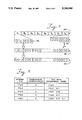
- FIG. 9 is a table indicating examples of randomness applied to an entered PIN. This table further illustrates the operation and purpose of the randomness information contained in byte 192.
- Increasing the user's PIN by adding random digits to the predetermined number of digits entered by the user enhances the security of the system by making it much more difficult for the PIN to be determined or calculated from intercepted data.
- the degree of difficulty in determining a PIN included in an intercepted data stream is dependent upon the number of calculations which must be made to look at all possible combinations.
- the actual calculation time or computer time necessary to look at all the possible numbers can be increased significantly without affecting the ordinary use of the PIN. For example, adding one extra decimal digit to a four-digit PIN can increase the required computer time by a factor of ten. Having two decimal digits can increase the computer time by a factor of one hundred.
- the disclosure herein uses a unique session security system which functions to accomplish a specific and desirable result, and one which is particularly advantageous to secure transactions with remote personal computer users. Ciphering of data is accomplished without having a permanent key stored at the personal computer. The personal computer user's PIN is never transmitted in the clear between the computers, even before the session ciphering key is established. Additional security can be provided by ciphering the user ID without a stored key and adding random digits to the PIN.
Landscapes
- Engineering & Computer Science (AREA)
- Computer Security & Cryptography (AREA)
- Computer Networks & Wireless Communication (AREA)
- Signal Processing (AREA)
- Business, Economics & Management (AREA)
- General Physics & Mathematics (AREA)
- Accounting & Taxation (AREA)
- Power Engineering (AREA)
- Physics & Mathematics (AREA)
- Finance (AREA)
- General Business, Economics & Management (AREA)
- Theoretical Computer Science (AREA)
- Strategic Management (AREA)
- Storage Device Security (AREA)
- Computer And Data Communications (AREA)
Priority Applications (3)
| Application Number | Priority Date | Filing Date | Title |
|---|---|---|---|
| US07/609,354 US5196840A (en) | 1990-11-05 | 1990-11-05 | Secure communications system for remotely located computers |
| JP3225976A JP2746352B2 (ja) | 1990-11-05 | 1991-09-05 | 遠隔位置に設置したコンピュータによる通信のための機密防護通信システム及び方法 |
| EP19910117201 EP0484686A3 (en) | 1990-11-05 | 1991-10-09 | Secure communications system for remotely located computers |
Applications Claiming Priority (1)
| Application Number | Priority Date | Filing Date | Title |
|---|---|---|---|
| US07/609,354 US5196840A (en) | 1990-11-05 | 1990-11-05 | Secure communications system for remotely located computers |
Publications (1)
| Publication Number | Publication Date |
|---|---|
| US5196840A true US5196840A (en) | 1993-03-23 |
Family
ID=24440441
Family Applications (1)
| Application Number | Title | Priority Date | Filing Date |
|---|---|---|---|
| US07/609,354 Expired - Fee Related US5196840A (en) | 1990-11-05 | 1990-11-05 | Secure communications system for remotely located computers |
Country Status (3)
| Country | Link |
|---|---|
| US (1) | US5196840A (de) |
| EP (1) | EP0484686A3 (de) |
| JP (1) | JP2746352B2 (de) |
Cited By (89)
| Publication number | Priority date | Publication date | Assignee | Title |
|---|---|---|---|---|
| US5414753A (en) * | 1992-07-30 | 1995-05-09 | Nec Corporation | Number assignment module setting system for portable telephone set |
| US5420925A (en) * | 1994-03-03 | 1995-05-30 | Lectron Products, Inc. | Rolling code encryption process for remote keyless entry system |
| US5428745A (en) * | 1992-06-12 | 1995-06-27 | Dow Benelux N.V. | Secure communication system for re-establishing time limited communication between first and second computers before communication time period expiration using new random number |
| US5467398A (en) * | 1994-07-05 | 1995-11-14 | Motorola, Inc. | Method of messaging in a communication system |
| US5534857A (en) * | 1991-11-12 | 1996-07-09 | Security Domain Pty. Ltd. | Method and system for secure, decentralized personalization of smart cards |
| US5548721A (en) * | 1994-04-28 | 1996-08-20 | Harris Corporation | Method of conducting secure operations on an uncontrolled network |
| EP0756276A1 (de) * | 1995-07-28 | 1997-01-29 | Sony Corporation | Einrichtung der Unterhaltungselektronik und Steuerungsverfahren dafür |
| US5636280A (en) * | 1994-10-31 | 1997-06-03 | Kelly; Tadhg | Dual key reflexive encryption security system |
| US5644710A (en) * | 1995-02-13 | 1997-07-01 | Eta Technologies Corporation | Personal access management system |
| US5646998A (en) * | 1992-11-17 | 1997-07-08 | Stambler; Leon | Secure transaction system and method utilized therein |
| US5673319A (en) * | 1995-02-06 | 1997-09-30 | International Business Machines Corporation | Block cipher mode of operation for secure, length-preserving encryption |
| US5706349A (en) * | 1995-03-06 | 1998-01-06 | International Business Machines Corporation | Authenticating remote users in a distributed environment |
| US5754652A (en) * | 1994-12-14 | 1998-05-19 | Lucent Technologies Inc. | Method and apparatus for secure pin entry |
| US5825300A (en) * | 1993-11-08 | 1998-10-20 | Hughes Aircraft Company | Method of protected distribution of keying and certificate material |
| US5919257A (en) * | 1997-08-08 | 1999-07-06 | Novell, Inc. | Networked workstation intrusion detection system |
| US5949335A (en) * | 1998-04-14 | 1999-09-07 | Sensormatic Electronics Corporation | RFID tagging system for network assets |
| US6044154A (en) * | 1994-10-31 | 2000-03-28 | Communications Devices, Inc. | Remote generated, device identifier key for use with a dual-key reflexive encryption security system |
| US6047072A (en) * | 1997-10-23 | 2000-04-04 | Signals, Inc. | Method for secure key distribution over a nonsecure communications network |
| US6073237A (en) * | 1997-11-06 | 2000-06-06 | Cybercash, Inc. | Tamper resistant method and apparatus |
| US6105132A (en) * | 1997-02-20 | 2000-08-15 | Novell, Inc. | Computer network graded authentication system and method |
| US6111956A (en) * | 1997-10-23 | 2000-08-29 | Signals, Inc. | Method for secure key distribution over a nonsecure communications network |
| US6119230A (en) * | 1997-10-01 | 2000-09-12 | Novell, Inc. | Distributed dynamic security capabilities |
| WO2001045049A1 (en) * | 1999-12-14 | 2001-06-21 | Gte Service Corporation | Secure gateway having user identification and password authentication |
| US6266525B1 (en) * | 1998-12-17 | 2001-07-24 | Lucent Technologies Inc. | Method for detecting fraudulent use of a communications system |
| US6275939B1 (en) | 1998-06-25 | 2001-08-14 | Westcorp Software Systems, Inc. | System and method for securely accessing a database from a remote location |
| US20010044894A1 (en) * | 1997-03-28 | 2001-11-22 | Yoko Saito | Security management method for network system |
| US6336114B1 (en) | 1998-09-03 | 2002-01-01 | Westcorp Software Systems, Inc. | System and method for restricting access to a data table within a database |
| US6349289B1 (en) | 1998-01-16 | 2002-02-19 | Ameritech Corporation | Method and system for tracking computer system usage through a remote access security device |
| US6351811B1 (en) | 1999-04-22 | 2002-02-26 | Adapt Network Security, L.L.C. | Systems and methods for preventing transmission of compromised data in a computer network |
| US20020029342A1 (en) * | 2000-09-07 | 2002-03-07 | Keech Winston Donald | Systems and methods for identity verification for secure transactions |
| US6374354B1 (en) * | 1997-07-15 | 2002-04-16 | Silverbrook Research Pty Ltd | Consumable authentication protocol and system |
| US6385730B2 (en) | 1998-09-03 | 2002-05-07 | Fiware, Inc. | System and method for restricting unauthorized access to a database |
| US20020073046A1 (en) * | 1999-07-30 | 2002-06-13 | David Sancho Enrique | System and method for secure network purchasing |
| WO2002060119A1 (en) * | 2001-01-23 | 2002-08-01 | Mentor Graphics Corporations | Authenticating communications |
| US20020120587A1 (en) * | 1999-01-15 | 2002-08-29 | D'agostino John | System and method for performing secure user account purchases |
| US20020138361A1 (en) * | 2001-03-20 | 2002-09-26 | Payeasy Digital Integration Co., Ltd. | System and method for e-commerce business |
| US6477648B1 (en) | 1997-03-23 | 2002-11-05 | Novell, Inc. | Trusted workstation in a networked client/server computing system |
| US20030018567A1 (en) * | 2001-06-04 | 2003-01-23 | Orbis Patents Ltd. | Business-to-business commerce using financial transaction numbers |
| US20030028481A1 (en) * | 1998-03-25 | 2003-02-06 | Orbis Patents, Ltd. | Credit card system and method |
| US20030159050A1 (en) * | 2002-02-15 | 2003-08-21 | Alexander Gantman | System and method for acoustic two factor authentication |
| US20030159036A1 (en) * | 2000-02-15 | 2003-08-21 | Walmsley Simon Robert | Validation protocol and system |
| US20030172268A1 (en) * | 2000-02-15 | 2003-09-11 | Walmsley Simon Robert | Consumable authentication protocol and system |
| US6696919B1 (en) * | 1999-07-21 | 2004-02-24 | Nokia Mobile Phones Ltd. | Method of starting a device protected against unauthorized use by a PIN without using an input |
| US20040049468A1 (en) * | 1997-07-15 | 2004-03-11 | Walmsley Simon Robert | Authentication of consumable items |
| US6711677B1 (en) * | 1999-07-12 | 2004-03-23 | Hewlett-Packard Development Company, L.P. | Secure printing method |
| US20040117321A1 (en) * | 1999-07-30 | 2004-06-17 | Sancho Enrique David | System and method for secure network purchasing |
| US20040168081A1 (en) * | 2003-02-20 | 2004-08-26 | Microsoft Corporation | Apparatus and method simplifying an encrypted network |
| US6816968B1 (en) | 1998-07-10 | 2004-11-09 | Silverbrook Research Pty Ltd | Consumable authentication protocol and system |
| US20040236961A1 (en) * | 1997-07-15 | 2004-11-25 | Walmsley Simon Robert | Integrated circuit incorporating protection from power supply attacks |
| US20040254890A1 (en) * | 2002-05-24 | 2004-12-16 | Sancho Enrique David | System method and apparatus for preventing fraudulent transactions |
| US6917685B1 (en) * | 1999-02-04 | 2005-07-12 | Meteora System Co., Ltd. | IP key management mechanism with divergence barrier increasing entropy against computational crypto-analyses |
| US6931528B1 (en) * | 1997-11-10 | 2005-08-16 | Nokia Networks Oy | Secure handshake protocol |
| US6944762B1 (en) | 1999-09-03 | 2005-09-13 | Harbor Payments Corporation | System and method for encrypting data messages |
| US20060075262A1 (en) * | 2004-10-06 | 2006-04-06 | Samsung Electronics Co., Ltd. | Apparatus and method for securely storing data |
| US7043635B1 (en) * | 2000-09-15 | 2006-05-09 | Swivel Secure Limited | Embedded synchronous random disposable code identification method and system |
| US20060106703A1 (en) * | 2000-11-02 | 2006-05-18 | First Usa Bank, Na | System and method for aggregate portfolio client support |
| US20060149967A1 (en) * | 2004-12-30 | 2006-07-06 | Samsung Electronics Co., Ltd. | User authentication method and system for a home network |
| US20060161502A1 (en) * | 2005-01-18 | 2006-07-20 | International Business Machines Corporation | System and method for secure and convenient handling of cryptographic binding state information |
| US7111167B1 (en) * | 2000-06-30 | 2006-09-19 | Intel Corporation | Digital watermarks with values derived from remote platforms |
| US20070088960A1 (en) * | 1994-10-27 | 2007-04-19 | Intarsia Software Llc | Data copyright management |
| US7249108B1 (en) | 1997-07-15 | 2007-07-24 | Silverbrook Research Pty Ltd | Validation protocol and system |
| US20070283168A1 (en) * | 2005-05-31 | 2007-12-06 | International Business Machines Corporation | Program, classification method and system |
| US20080031455A1 (en) * | 2005-06-21 | 2008-02-07 | Greenwald Industries | Method, system, and computer program product for implementing pin-based data transfer activities |
| US7346586B1 (en) | 1997-07-15 | 2008-03-18 | Silverbrook Research Pty Ltd | Validation protocol and system |
| US7409711B1 (en) * | 2002-12-24 | 2008-08-05 | The Chamberlain Group, Inc. | Method and apparatus for troubleshooting a security gate system remotely |
| US7433845B1 (en) | 1999-04-13 | 2008-10-07 | Orbis Patents Limited | Data structure, method and system for generating person-to-person, person-to-business, business-to-person, and business-to-business financial transactions |
| US20090031408A1 (en) * | 2007-07-27 | 2009-01-29 | Microsoft Corporation | Integrity protected smart card transaction |
| US20090044015A1 (en) * | 2002-05-15 | 2009-02-12 | Qualcomm Incorporated | System and method for managing sonic token verifiers |
| US20090058597A1 (en) * | 2007-09-04 | 2009-03-05 | Kabushiki Kaisha Tokai Rika Denki Seisakusho | Vehicle communication system |
| US7756816B2 (en) | 2002-10-02 | 2010-07-13 | Jpmorgan Chase Bank, N.A. | System and method for network-based project management |
| US20110047626A1 (en) * | 1994-10-27 | 2011-02-24 | Makoto Saito | Digital content management system and apparatus |
| US7966496B2 (en) | 1999-07-02 | 2011-06-21 | Jpmorgan Chase Bank, N.A. | System and method for single sign on process for websites with multiple applications and services |
| US7979354B2 (en) | 1994-04-01 | 2011-07-12 | Intarsia Software Llc | Controlling database copyrights |
| US7987501B2 (en) | 2001-12-04 | 2011-07-26 | Jpmorgan Chase Bank, N.A. | System and method for single session sign-on |
| US8160960B1 (en) | 2001-06-07 | 2012-04-17 | Jpmorgan Chase Bank, N.A. | System and method for rapid updating of credit information |
| US8185940B2 (en) | 2001-07-12 | 2012-05-22 | Jpmorgan Chase Bank, N.A. | System and method for providing discriminated content to network users |
| US8301886B2 (en) | 2001-08-24 | 2012-10-30 | Zih Corp. | Method and apparatus for article authentication |
| US8301493B2 (en) | 2002-11-05 | 2012-10-30 | Jpmorgan Chase Bank, N.A. | System and method for providing incentives to consumers to share information |
| US8352373B2 (en) | 1994-09-30 | 2013-01-08 | Intarsia Software Llc | Data copyright management system |
| USRE44220E1 (en) * | 1998-06-18 | 2013-05-14 | Zih Corp. | Electronic identification system and method with source authenticity |
| EP1147493B1 (de) * | 1999-01-18 | 2013-10-09 | Iridian Technologies, Inc. | Verfahren und vorrichtung zur gesicherten übertragung und authentifizierung von biometrischen daten über ein netzwerk |
| US8595502B2 (en) | 1995-09-29 | 2013-11-26 | Intarsia Software Llc | Data management system |
| US8849716B1 (en) | 2001-04-20 | 2014-09-30 | Jpmorgan Chase Bank, N.A. | System and method for preventing identity theft or misuse by restricting access |
| US10104519B2 (en) * | 2010-10-08 | 2018-10-16 | Beijing Xiaomi Mobile Software Co., Ltd. | Apparatus and method for communications |
| US10726417B1 (en) | 2002-03-25 | 2020-07-28 | Jpmorgan Chase Bank, N.A. | Systems and methods for multifactor authentication |
| US10873460B2 (en) * | 2015-12-10 | 2020-12-22 | SZ DJI Technology Co., Ltd. | UAV authentication method and system |
| US11087317B2 (en) * | 2006-02-02 | 2021-08-10 | Alcatel Lucent | Authentication and verification services for third party vendors using mobile devices |
| US11156663B2 (en) * | 2018-10-23 | 2021-10-26 | Arm Limited | Generating a test sequence of code based on a directed sequence of code and randomly selected instructions |
| US11336438B2 (en) * | 2020-03-31 | 2022-05-17 | EMC IP Holding Company LLC | Remote approval and execution of restricted operations |
Families Citing this family (11)
| Publication number | Priority date | Publication date | Assignee | Title |
|---|---|---|---|---|
| US5390252A (en) * | 1992-12-28 | 1995-02-14 | Nippon Telegraph And Telephone Corporation | Authentication method and communication terminal and communication processing unit using the method |
| JPH1030367A (ja) * | 1996-05-16 | 1998-02-03 | Sony Corp | 識別信号照合装置及び識別信号照合方法 |
| US6075861A (en) * | 1996-05-29 | 2000-06-13 | At&T Corp. | Security access system |
| DE19652161A1 (de) * | 1996-12-14 | 1998-06-18 | Deutsche Telekom Ag | Verfahren und Anordnung zur abhörsicheren Eingabe von PIN-Codes im sprachlichen Dialog |
| GB2363664B (en) * | 1997-12-01 | 2002-04-17 | Global Money Transfer Holdings | Method and apparatus for money transfers |
| ES2177417B1 (es) * | 2000-09-18 | 2004-08-16 | Ricardo Candela Sospedra | Tarjeta de credito y procedimiento de uso. |
| AT411947B (de) * | 2001-04-23 | 2004-07-26 | Fischlmayr Albert | System für die sichere durchführung von transaktionen zwischen informationsverarbeitenden anlagen |
| JP5262941B2 (ja) * | 2009-04-10 | 2013-08-14 | ソニー株式会社 | 認証装置、認証方法、及びプログラム |
| US8566593B2 (en) * | 2009-07-06 | 2013-10-22 | Intel Corporation | Method and apparatus of deriving security key(s) |
| FR2974694B1 (fr) * | 2011-04-27 | 2013-05-31 | Peugeot Citroen Automobiles Sa | Procede d'echange securise de messages cryptes symetriquement |
| JP2017532707A (ja) * | 2014-10-17 | 2017-11-02 | クラウドウェア、インコーポレイテッド | アウト・オブ・バンド・データから導出されるデジタルフィンガープリント信号に基づくユーザ検証 |
Citations (13)
| Publication number | Priority date | Publication date | Assignee | Title |
|---|---|---|---|---|
| US4281215A (en) * | 1978-05-03 | 1981-07-28 | Atalla Technovations | Method and apparatus for securing data transmissions |
| US4283599A (en) * | 1979-01-16 | 1981-08-11 | Atalla Technovations | Method and apparatus for securing data transmissions |
| US4471216A (en) * | 1979-11-09 | 1984-09-11 | Compagnie Internationale Pour L'informatique Cii-Honeywell Bull (Societe Anonyme | System and process for identification of persons requesting access to particular facilities |
| US4590470A (en) * | 1983-07-11 | 1986-05-20 | At&T Bell Laboratories | User authentication system employing encryption functions |
| US4596898A (en) * | 1984-03-14 | 1986-06-24 | Computer Security Systems, Inc. | Method and apparatus for protecting stored and transmitted data from compromise or interception |
| US4633037A (en) * | 1983-02-22 | 1986-12-30 | British Telecommunications Public Limited Company | Generation of identification keys |
| US4649233A (en) * | 1985-04-11 | 1987-03-10 | International Business Machines Corporation | Method for establishing user authenication with composite session keys among cryptographically communicating nodes |
| US4720859A (en) * | 1981-04-08 | 1988-01-19 | U.S. Philips Corporation | Method and system for the mutual encyphered indentification between data communicating stations and stations for use with such method and system |
| US4731841A (en) * | 1986-06-16 | 1988-03-15 | Applied Information Technologies Research Center | Field initialized authentication system for protective security of electronic information networks |
| US4799061A (en) * | 1985-11-18 | 1989-01-17 | International Business Machines Corporation | Secure component authentication system |
| US4860352A (en) * | 1985-05-20 | 1989-08-22 | Satellite Financial Systems Corporation | Satellite communication system and method with message authentication suitable for use in financial institutions |
| US4876716A (en) * | 1986-08-22 | 1989-10-24 | Nec Corporation | Key distribution method |
| US4965568A (en) * | 1989-03-01 | 1990-10-23 | Atalla Martin M | Multilevel security apparatus and method with personal key |
Family Cites Families (5)
| Publication number | Priority date | Publication date | Assignee | Title |
|---|---|---|---|---|
| GB2146815A (en) * | 1983-09-17 | 1985-04-24 | Ibm | Electronic fund transfer systems |
| US4783798A (en) * | 1985-03-14 | 1988-11-08 | Acs Communications Systems, Inc. | Encrypting transponder |
| JPH0632099B2 (ja) * | 1985-05-15 | 1994-04-27 | 日本電気株式会社 | カ−ド書込装置 |
| JPH01259443A (ja) * | 1988-04-08 | 1989-10-17 | Matsushita Electric Ind Co Ltd | 端末認証方法 |
| JP2768474B2 (ja) * | 1988-10-20 | 1998-06-25 | セコム株式会社 | 資格認証システム |
-
1990
- 1990-11-05 US US07/609,354 patent/US5196840A/en not_active Expired - Fee Related
-
1991
- 1991-09-05 JP JP3225976A patent/JP2746352B2/ja not_active Expired - Lifetime
- 1991-10-09 EP EP19910117201 patent/EP0484686A3/en not_active Withdrawn
Patent Citations (13)
| Publication number | Priority date | Publication date | Assignee | Title |
|---|---|---|---|---|
| US4281215A (en) * | 1978-05-03 | 1981-07-28 | Atalla Technovations | Method and apparatus for securing data transmissions |
| US4283599A (en) * | 1979-01-16 | 1981-08-11 | Atalla Technovations | Method and apparatus for securing data transmissions |
| US4471216A (en) * | 1979-11-09 | 1984-09-11 | Compagnie Internationale Pour L'informatique Cii-Honeywell Bull (Societe Anonyme | System and process for identification of persons requesting access to particular facilities |
| US4720859A (en) * | 1981-04-08 | 1988-01-19 | U.S. Philips Corporation | Method and system for the mutual encyphered indentification between data communicating stations and stations for use with such method and system |
| US4633037A (en) * | 1983-02-22 | 1986-12-30 | British Telecommunications Public Limited Company | Generation of identification keys |
| US4590470A (en) * | 1983-07-11 | 1986-05-20 | At&T Bell Laboratories | User authentication system employing encryption functions |
| US4596898A (en) * | 1984-03-14 | 1986-06-24 | Computer Security Systems, Inc. | Method and apparatus for protecting stored and transmitted data from compromise or interception |
| US4649233A (en) * | 1985-04-11 | 1987-03-10 | International Business Machines Corporation | Method for establishing user authenication with composite session keys among cryptographically communicating nodes |
| US4860352A (en) * | 1985-05-20 | 1989-08-22 | Satellite Financial Systems Corporation | Satellite communication system and method with message authentication suitable for use in financial institutions |
| US4799061A (en) * | 1985-11-18 | 1989-01-17 | International Business Machines Corporation | Secure component authentication system |
| US4731841A (en) * | 1986-06-16 | 1988-03-15 | Applied Information Technologies Research Center | Field initialized authentication system for protective security of electronic information networks |
| US4876716A (en) * | 1986-08-22 | 1989-10-24 | Nec Corporation | Key distribution method |
| US4965568A (en) * | 1989-03-01 | 1990-10-23 | Atalla Martin M | Multilevel security apparatus and method with personal key |
Non-Patent Citations (2)
| Title |
|---|
| IBM Technical Disclosure Bulletin, vol. 24, No. 12, pp. 6504 6509 May 1982. * |
| IBM Technical Disclosure Bulletin, vol. 24, No. 12, pp. 6504-6509-May 1982. |
Cited By (168)
| Publication number | Priority date | Publication date | Assignee | Title |
|---|---|---|---|---|
| US5534857A (en) * | 1991-11-12 | 1996-07-09 | Security Domain Pty. Ltd. | Method and system for secure, decentralized personalization of smart cards |
| US5428745A (en) * | 1992-06-12 | 1995-06-27 | Dow Benelux N.V. | Secure communication system for re-establishing time limited communication between first and second computers before communication time period expiration using new random number |
| US5414753A (en) * | 1992-07-30 | 1995-05-09 | Nec Corporation | Number assignment module setting system for portable telephone set |
| US5646998A (en) * | 1992-11-17 | 1997-07-08 | Stambler; Leon | Secure transaction system and method utilized therein |
| US5974148A (en) * | 1992-11-17 | 1999-10-26 | Stambler; Leon | Method for securing information relevant to a transaction |
| US5793302A (en) * | 1992-11-17 | 1998-08-11 | Stambler; Leon | Method for securing information relevant to a transaction |
| US5825300A (en) * | 1993-11-08 | 1998-10-20 | Hughes Aircraft Company | Method of protected distribution of keying and certificate material |
| US5420925A (en) * | 1994-03-03 | 1995-05-30 | Lectron Products, Inc. | Rolling code encryption process for remote keyless entry system |
| US7979354B2 (en) | 1994-04-01 | 2011-07-12 | Intarsia Software Llc | Controlling database copyrights |
| US8554684B2 (en) | 1994-04-01 | 2013-10-08 | Intarsia Software Llc | Controlling database copyrights |
| US5548721A (en) * | 1994-04-28 | 1996-08-20 | Harris Corporation | Method of conducting secure operations on an uncontrolled network |
| GB2296413A (en) * | 1994-07-05 | 1996-06-26 | Motorola Inc | A method of messaging in a communciation system |
| GB2296413B (en) * | 1994-07-05 | 1999-04-28 | Motorola Inc | A method of messaging in a communciation system |
| WO1996001536A1 (en) * | 1994-07-05 | 1996-01-18 | Motorola Inc. | A method of messaging in a communication system |
| US5467398A (en) * | 1994-07-05 | 1995-11-14 | Motorola, Inc. | Method of messaging in a communication system |
| US8352373B2 (en) | 1994-09-30 | 2013-01-08 | Intarsia Software Llc | Data copyright management system |
| US20070088960A1 (en) * | 1994-10-27 | 2007-04-19 | Intarsia Software Llc | Data copyright management |
| US9245260B2 (en) | 1994-10-27 | 2016-01-26 | Xylon Llc | Data copyright management |
| US8448254B2 (en) | 1994-10-27 | 2013-05-21 | Intarsia Software Llc | Digital content management system and apparatus |
| US7986785B2 (en) * | 1994-10-27 | 2011-07-26 | Intarsia Software Llc | Data management |
| US20110047626A1 (en) * | 1994-10-27 | 2011-02-24 | Makoto Saito | Digital content management system and apparatus |
| US5636280A (en) * | 1994-10-31 | 1997-06-03 | Kelly; Tadhg | Dual key reflexive encryption security system |
| US6044154A (en) * | 1994-10-31 | 2000-03-28 | Communications Devices, Inc. | Remote generated, device identifier key for use with a dual-key reflexive encryption security system |
| US5754652A (en) * | 1994-12-14 | 1998-05-19 | Lucent Technologies Inc. | Method and apparatus for secure pin entry |
| US5940511A (en) * | 1994-12-14 | 1999-08-17 | Lucent Technologies, Inc. | Method and apparatus for secure PIN entry |
| US5673319A (en) * | 1995-02-06 | 1997-09-30 | International Business Machines Corporation | Block cipher mode of operation for secure, length-preserving encryption |
| US5644710A (en) * | 1995-02-13 | 1997-07-01 | Eta Technologies Corporation | Personal access management system |
| US5706349A (en) * | 1995-03-06 | 1998-01-06 | International Business Machines Corporation | Authenticating remote users in a distributed environment |
| EP0756276A1 (de) * | 1995-07-28 | 1997-01-29 | Sony Corporation | Einrichtung der Unterhaltungselektronik und Steuerungsverfahren dafür |
| US6247132B1 (en) | 1995-07-28 | 2001-06-12 | Sony Corporation | Electronic equipment, method of controlling operation thereof and controlling method |
| US8595502B2 (en) | 1995-09-29 | 2013-11-26 | Intarsia Software Llc | Data management system |
| US6105132A (en) * | 1997-02-20 | 2000-08-15 | Novell, Inc. | Computer network graded authentication system and method |
| US6477648B1 (en) | 1997-03-23 | 2002-11-05 | Novell, Inc. | Trusted workstation in a networked client/server computing system |
| US20010044894A1 (en) * | 1997-03-28 | 2001-11-22 | Yoko Saito | Security management method for network system |
| US7346586B1 (en) | 1997-07-15 | 2008-03-18 | Silverbrook Research Pty Ltd | Validation protocol and system |
| US20070226498A1 (en) * | 1997-07-15 | 2007-09-27 | Silverbrook Research Pty Ltd | Validating Apparatus For Use With A Pair Of Integrated Circuits |
| US20040049468A1 (en) * | 1997-07-15 | 2004-03-11 | Walmsley Simon Robert | Authentication of consumable items |
| US7991699B2 (en) | 1997-07-15 | 2011-08-02 | Silverbrook Research Pty Ltd | Tamper detection line circuitry for use in authenticating an integrated circuit |
| US6374354B1 (en) * | 1997-07-15 | 2002-04-16 | Silverbrook Research Pty Ltd | Consumable authentication protocol and system |
| US20110208966A1 (en) * | 1997-07-15 | 2011-08-25 | Silverbrook Research Pty Ltd | Integrated circuit for authentication of consumable storage device |
| US7747541B2 (en) | 1997-07-15 | 2010-06-29 | Silverbrook Research Pty Ltd | Validating apparatus for use with a pair of integrated circuits |
| US7743262B2 (en) | 1997-07-15 | 2010-06-22 | Silverbrook Research Pty Ltd | Integrated circuit incorporating protection from power supply attacks |
| US20040236961A1 (en) * | 1997-07-15 | 2004-11-25 | Walmsley Simon Robert | Integrated circuit incorporating protection from power supply attacks |
| US7246098B1 (en) | 1997-07-15 | 2007-07-17 | Silverbrook Research Pty Ltd | Consumable authentication protocol and system |
| US7509292B2 (en) | 1997-07-15 | 2009-03-24 | Silverbrook Research Pty Ltd | Authentication of consumable items |
| US20090126030A1 (en) * | 1997-07-15 | 2009-05-14 | Silverbrook Research Pty Ltd | Tamper detection line circuitry for use in authenticating an integrated circuit |
| US7249108B1 (en) | 1997-07-15 | 2007-07-24 | Silverbrook Research Pty Ltd | Validation protocol and system |
| US5919257A (en) * | 1997-08-08 | 1999-07-06 | Novell, Inc. | Networked workstation intrusion detection system |
| US6119230A (en) * | 1997-10-01 | 2000-09-12 | Novell, Inc. | Distributed dynamic security capabilities |
| US6111956A (en) * | 1997-10-23 | 2000-08-29 | Signals, Inc. | Method for secure key distribution over a nonsecure communications network |
| US6047072A (en) * | 1997-10-23 | 2000-04-04 | Signals, Inc. | Method for secure key distribution over a nonsecure communications network |
| US6073237A (en) * | 1997-11-06 | 2000-06-06 | Cybercash, Inc. | Tamper resistant method and apparatus |
| US6931528B1 (en) * | 1997-11-10 | 2005-08-16 | Nokia Networks Oy | Secure handshake protocol |
| US20070219881A1 (en) * | 1998-01-16 | 2007-09-20 | Sbc Properties, L.P. | Method and system for tracking computer system usage through a remote access security device |
| US7020628B2 (en) | 1998-01-16 | 2006-03-28 | Sbc Properties, L.P. | Method and system for tracking computer system usage through a remote access security device |
| US7181421B2 (en) | 1998-01-16 | 2007-02-20 | Sbc Properties, L.P. | Method and system for tracking computer system usage through a remote access security device |
| US6349289B1 (en) | 1998-01-16 | 2002-02-19 | Ameritech Corporation | Method and system for tracking computer system usage through a remote access security device |
| US8676707B2 (en) | 1998-03-25 | 2014-03-18 | Orbis Patents Ltd. | Credit cards system and method having additional features |
| US7567934B2 (en) | 1998-03-25 | 2009-07-28 | Orbis Patents Ltd. | Credit card system and method |
| US6636833B1 (en) | 1998-03-25 | 2003-10-21 | Obis Patents Ltd. | Credit card system and method |
| US7136835B1 (en) | 1998-03-25 | 2006-11-14 | Orbis Patents Ltd. | Credit card system and method |
| US20030028481A1 (en) * | 1998-03-25 | 2003-02-06 | Orbis Patents, Ltd. | Credit card system and method |
| US20090037333A1 (en) * | 1998-03-25 | 2009-02-05 | Orbis Patents Limited | Credit cards system and method having additional features |
| US9881298B2 (en) | 1998-03-25 | 2018-01-30 | Orbis Patents Limited | Credit card system and method |
| US8756150B2 (en) | 1998-03-25 | 2014-06-17 | Orbis Patents Limited | Credit card system and method |
| US20090134217A1 (en) * | 1998-03-25 | 2009-05-28 | Orbis Patents Ltd. | Credit card system and method |
| US7593896B1 (en) | 1998-03-25 | 2009-09-22 | Orbis Patents Ltd. | Credit card system and method |
| US7571142B1 (en) | 1998-03-25 | 2009-08-04 | Orbis Patents Limited | Credit card system and method |
| US9898730B2 (en) | 1998-03-25 | 2018-02-20 | Orbit Patents Limited | Credit card system and method |
| US5949335A (en) * | 1998-04-14 | 1999-09-07 | Sensormatic Electronics Corporation | RFID tagging system for network assets |
| USRE44220E1 (en) * | 1998-06-18 | 2013-05-14 | Zih Corp. | Electronic identification system and method with source authenticity |
| US6275939B1 (en) | 1998-06-25 | 2001-08-14 | Westcorp Software Systems, Inc. | System and method for securely accessing a database from a remote location |
| US20100031064A1 (en) * | 1998-07-10 | 2010-02-04 | Silverbrook Research Pty Ltd | Tamper Detection Line Circuitry For An Authentication Integrated Circuit |
| US7210038B2 (en) | 1998-07-10 | 2007-04-24 | Silverbrook Research Pty Ltd | Method for validating an authentication chip |
| US6816968B1 (en) | 1998-07-10 | 2004-11-09 | Silverbrook Research Pty Ltd | Consumable authentication protocol and system |
| US7401223B2 (en) | 1998-07-10 | 2008-07-15 | Silverbrook Research Pty Ltd | Authentication chip for authenticating an untrusted chip |
| US20050066168A1 (en) * | 1998-07-10 | 2005-03-24 | Walmsley Simon Robert | Authentication chip for authenticating an untrusted chip |
| US20050010778A1 (en) * | 1998-07-10 | 2005-01-13 | Walmsley Simon Robert | Method for validating an authentication chip |
| US6385730B2 (en) | 1998-09-03 | 2002-05-07 | Fiware, Inc. | System and method for restricting unauthorized access to a database |
| US6336114B1 (en) | 1998-09-03 | 2002-01-01 | Westcorp Software Systems, Inc. | System and method for restricting access to a data table within a database |
| US6266525B1 (en) * | 1998-12-17 | 2001-07-24 | Lucent Technologies Inc. | Method for detecting fraudulent use of a communications system |
| US20020120587A1 (en) * | 1999-01-15 | 2002-08-29 | D'agostino John | System and method for performing secure user account purchases |
| US8036988B2 (en) | 1999-01-15 | 2011-10-11 | D Agostino John | System and method for performing secure credit card transactions |
| US7840486B2 (en) | 1999-01-15 | 2010-11-23 | D Agostino John | System and method for performing secure credit card purchases |
| US20110071945A1 (en) * | 1999-01-15 | 2011-03-24 | D Agostino John | System and method for performing secure credit card transations |
| US20060031161A1 (en) * | 1999-01-15 | 2006-02-09 | D Agostino John | System and method for performing secure credit card purchases |
| EP1147493B1 (de) * | 1999-01-18 | 2013-10-09 | Iridian Technologies, Inc. | Verfahren und vorrichtung zur gesicherten übertragung und authentifizierung von biometrischen daten über ein netzwerk |
| US6917685B1 (en) * | 1999-02-04 | 2005-07-12 | Meteora System Co., Ltd. | IP key management mechanism with divergence barrier increasing entropy against computational crypto-analyses |
| US7895122B2 (en) | 1999-04-13 | 2011-02-22 | Orbis Patents Limited | Person-to-person, person-to business and business-to-business financial transaction system |
| US7433845B1 (en) | 1999-04-13 | 2008-10-07 | Orbis Patents Limited | Data structure, method and system for generating person-to-person, person-to-business, business-to-person, and business-to-business financial transactions |
| US20090012897A1 (en) * | 1999-04-13 | 2009-01-08 | Orbis Patents Limited | Person-to-person, person-to business and business-to-business financial transaction system |
| US6351811B1 (en) | 1999-04-22 | 2002-02-26 | Adapt Network Security, L.L.C. | Systems and methods for preventing transmission of compromised data in a computer network |
| US7966496B2 (en) | 1999-07-02 | 2011-06-21 | Jpmorgan Chase Bank, N.A. | System and method for single sign on process for websites with multiple applications and services |
| US8590008B1 (en) | 1999-07-02 | 2013-11-19 | Jpmorgan Chase Bank, N.A. | System and method for single sign on process for websites with multiple applications and services |
| US6711677B1 (en) * | 1999-07-12 | 2004-03-23 | Hewlett-Packard Development Company, L.P. | Secure printing method |
| US6696919B1 (en) * | 1999-07-21 | 2004-02-24 | Nokia Mobile Phones Ltd. | Method of starting a device protected against unauthorized use by a PIN without using an input |
| US7366702B2 (en) | 1999-07-30 | 2008-04-29 | Ipass Inc. | System and method for secure network purchasing |
| US20020073046A1 (en) * | 1999-07-30 | 2002-06-13 | David Sancho Enrique | System and method for secure network purchasing |
| US20040117321A1 (en) * | 1999-07-30 | 2004-06-17 | Sancho Enrique David | System and method for secure network purchasing |
| US20050108177A1 (en) * | 1999-07-30 | 2005-05-19 | Sancho Enrique D. | System and method for secure network purchasing |
| US6944762B1 (en) | 1999-09-03 | 2005-09-13 | Harbor Payments Corporation | System and method for encrypting data messages |
| WO2001045049A1 (en) * | 1999-12-14 | 2001-06-21 | Gte Service Corporation | Secure gateway having user identification and password authentication |
| US6324648B1 (en) | 1999-12-14 | 2001-11-27 | Gte Service Corporation | Secure gateway having user identification and password authentication |
| US7885899B1 (en) | 2000-02-08 | 2011-02-08 | Ipass Inc. | System and method for secure network purchasing |
| US7685423B1 (en) | 2000-02-15 | 2010-03-23 | Silverbrook Research Pty Ltd | Validation protocol and system |
| US20030159036A1 (en) * | 2000-02-15 | 2003-08-21 | Walmsley Simon Robert | Validation protocol and system |
| US7685424B2 (en) | 2000-02-15 | 2010-03-23 | Silverbrook Research Pty Ltd | Validating untrusted objects and entities |
| US7197642B2 (en) | 2000-02-15 | 2007-03-27 | Silverbrook Research Pty Ltd | Consumable authentication protocol and system |
| US7757084B2 (en) | 2000-02-15 | 2010-07-13 | Silverbrook Research Pty Ltd | Method of validating consumable authentication chip |
| US20030172268A1 (en) * | 2000-02-15 | 2003-09-11 | Walmsley Simon Robert | Consumable authentication protocol and system |
| US20070143623A1 (en) * | 2000-02-15 | 2007-06-21 | Silverbrook Research Pty Ltd | Method of validating consumable authentication chip |
| US7111167B1 (en) * | 2000-06-30 | 2006-09-19 | Intel Corporation | Digital watermarks with values derived from remote platforms |
| US7392388B2 (en) * | 2000-09-07 | 2008-06-24 | Swivel Secure Limited | Systems and methods for identity verification for secure transactions |
| US20020029342A1 (en) * | 2000-09-07 | 2002-03-07 | Keech Winston Donald | Systems and methods for identity verification for secure transactions |
| US7043635B1 (en) * | 2000-09-15 | 2006-05-09 | Swivel Secure Limited | Embedded synchronous random disposable code identification method and system |
| US20060106703A1 (en) * | 2000-11-02 | 2006-05-18 | First Usa Bank, Na | System and method for aggregate portfolio client support |
| WO2002060119A1 (en) * | 2001-01-23 | 2002-08-01 | Mentor Graphics Corporations | Authenticating communications |
| US6912653B2 (en) | 2001-01-23 | 2005-06-28 | Erika Monika Gohl | Authenticating communications |
| US20020138361A1 (en) * | 2001-03-20 | 2002-09-26 | Payeasy Digital Integration Co., Ltd. | System and method for e-commerce business |
| US10380374B2 (en) | 2001-04-20 | 2019-08-13 | Jpmorgan Chase Bank, N.A. | System and method for preventing identity theft or misuse by restricting access |
| US8849716B1 (en) | 2001-04-20 | 2014-09-30 | Jpmorgan Chase Bank, N.A. | System and method for preventing identity theft or misuse by restricting access |
| US8527416B2 (en) | 2001-06-04 | 2013-09-03 | Orbis Patents Limited | Business-to-business commerce using financial transaction numbers |
| US20080120238A1 (en) * | 2001-06-04 | 2008-05-22 | Orbis Patents, Ltd | Business-to Business commerce using financial transaction numbers |
| US20030018567A1 (en) * | 2001-06-04 | 2003-01-23 | Orbis Patents Ltd. | Business-to-business commerce using financial transaction numbers |
| US10592901B2 (en) | 2001-06-04 | 2020-03-17 | Orbis Patents, Ltd. | Business-to-business commerce using financial transaction numbers |
| US8160960B1 (en) | 2001-06-07 | 2012-04-17 | Jpmorgan Chase Bank, N.A. | System and method for rapid updating of credit information |
| US8185940B2 (en) | 2001-07-12 | 2012-05-22 | Jpmorgan Chase Bank, N.A. | System and method for providing discriminated content to network users |
| US8667276B2 (en) | 2001-08-24 | 2014-03-04 | Zih Corp. | Method and apparatus for article authentication |
| US8301886B2 (en) | 2001-08-24 | 2012-10-30 | Zih Corp. | Method and apparatus for article authentication |
| US7987501B2 (en) | 2001-12-04 | 2011-07-26 | Jpmorgan Chase Bank, N.A. | System and method for single session sign-on |
| US8707410B2 (en) | 2001-12-04 | 2014-04-22 | Jpmorgan Chase Bank, N.A. | System and method for single session sign-on |
| US7966497B2 (en) * | 2002-02-15 | 2011-06-21 | Qualcomm Incorporated | System and method for acoustic two factor authentication |
| US20030159050A1 (en) * | 2002-02-15 | 2003-08-21 | Alexander Gantman | System and method for acoustic two factor authentication |
| US20090141890A1 (en) * | 2002-02-15 | 2009-06-04 | Qualcomm Incorporated | Digital authentication over acoustic channel |
| US8391480B2 (en) | 2002-02-15 | 2013-03-05 | Qualcomm Incorporated | Digital authentication over acoustic channel |
| US10726417B1 (en) | 2002-03-25 | 2020-07-28 | Jpmorgan Chase Bank, N.A. | Systems and methods for multifactor authentication |
| US8943583B2 (en) | 2002-05-15 | 2015-01-27 | Qualcomm Incorporated | System and method for managing sonic token verifiers |
| US20090044015A1 (en) * | 2002-05-15 | 2009-02-12 | Qualcomm Incorporated | System and method for managing sonic token verifiers |
| US20040254890A1 (en) * | 2002-05-24 | 2004-12-16 | Sancho Enrique David | System method and apparatus for preventing fraudulent transactions |
| US7756816B2 (en) | 2002-10-02 | 2010-07-13 | Jpmorgan Chase Bank, N.A. | System and method for network-based project management |
| US8301493B2 (en) | 2002-11-05 | 2012-10-30 | Jpmorgan Chase Bank, N.A. | System and method for providing incentives to consumers to share information |
| US7409711B1 (en) * | 2002-12-24 | 2008-08-05 | The Chamberlain Group, Inc. | Method and apparatus for troubleshooting a security gate system remotely |
| US20040168081A1 (en) * | 2003-02-20 | 2004-08-26 | Microsoft Corporation | Apparatus and method simplifying an encrypted network |
| US20060075262A1 (en) * | 2004-10-06 | 2006-04-06 | Samsung Electronics Co., Ltd. | Apparatus and method for securely storing data |
| US20060149967A1 (en) * | 2004-12-30 | 2006-07-06 | Samsung Electronics Co., Ltd. | User authentication method and system for a home network |
| US20060161502A1 (en) * | 2005-01-18 | 2006-07-20 | International Business Machines Corporation | System and method for secure and convenient handling of cryptographic binding state information |
| WO2006077222A1 (en) | 2005-01-18 | 2006-07-27 | International Business Machines Corporation | System and method for secure and convenient handling of cryptographic binding state information |
| US7814323B2 (en) * | 2005-05-31 | 2010-10-12 | International Business Machines Corporation | Program, classification method and system |
| US20070283168A1 (en) * | 2005-05-31 | 2007-12-06 | International Business Machines Corporation | Program, classification method and system |
| US7934640B2 (en) * | 2005-06-21 | 2011-05-03 | Greenwald Industries, Incorporated | Method, system, and computer program product for implementing pin-based data transfer activities |
| US20080031455A1 (en) * | 2005-06-21 | 2008-02-07 | Greenwald Industries | Method, system, and computer program product for implementing pin-based data transfer activities |
| US11087317B2 (en) * | 2006-02-02 | 2021-08-10 | Alcatel Lucent | Authentication and verification services for third party vendors using mobile devices |
| US8966269B2 (en) | 2007-07-27 | 2015-02-24 | Microsoft Corporation | Integrity protected smart card transaction |
| US20110179283A1 (en) * | 2007-07-27 | 2011-07-21 | Microsoft Corporation | Integrity protected smart card transaction |
| US8504838B2 (en) | 2007-07-27 | 2013-08-06 | Microsoft Corporation | Integrity protected smart card transaction |
| US9075980B2 (en) | 2007-07-27 | 2015-07-07 | Microsoft Technology Licensing, Llc | Integrity protected smart card transaction |
| US20110179282A1 (en) * | 2007-07-27 | 2011-07-21 | Microsoft Corporation | Integrity protected smart card transaction |
| US9305156B2 (en) | 2007-07-27 | 2016-04-05 | Microsoft Technology Licensing, Llc | Integrity protected smart card transaction |
| US20110176682A1 (en) * | 2007-07-27 | 2011-07-21 | Microsoft Corporation | Integrity protected smart card transaction |
| US20090031408A1 (en) * | 2007-07-27 | 2009-01-29 | Microsoft Corporation | Integrity protected smart card transaction |
| US8495374B2 (en) | 2007-07-27 | 2013-07-23 | Microsoft Corporation | Integrity protected smart card transaction |
| US7934096B2 (en) * | 2007-07-27 | 2011-04-26 | Microsoft Corporation | Integrity protected smart card transaction |
| US8423774B2 (en) | 2007-07-27 | 2013-04-16 | Microsoft Corporation | Integrity protected smart card transaction |
| US20090058597A1 (en) * | 2007-09-04 | 2009-03-05 | Kabushiki Kaisha Tokai Rika Denki Seisakusho | Vehicle communication system |
| US10104519B2 (en) * | 2010-10-08 | 2018-10-16 | Beijing Xiaomi Mobile Software Co., Ltd. | Apparatus and method for communications |
| US10873460B2 (en) * | 2015-12-10 | 2020-12-22 | SZ DJI Technology Co., Ltd. | UAV authentication method and system |
| US11156663B2 (en) * | 2018-10-23 | 2021-10-26 | Arm Limited | Generating a test sequence of code based on a directed sequence of code and randomly selected instructions |
| US11336438B2 (en) * | 2020-03-31 | 2022-05-17 | EMC IP Holding Company LLC | Remote approval and execution of restricted operations |
Also Published As
| Publication number | Publication date |
|---|---|
| EP0484686A3 (en) | 1993-04-14 |
| JPH04230566A (ja) | 1992-08-19 |
| JP2746352B2 (ja) | 1998-05-06 |
| EP0484686A2 (de) | 1992-05-13 |
Similar Documents
| Publication | Publication Date | Title |
|---|---|---|
| US5196840A (en) | Secure communications system for remotely located computers | |
| US5745576A (en) | Method and apparatus for initialization of cryptographic terminal | |
| US4918728A (en) | Data cryptography operations using control vectors | |
| EP0354774B1 (de) | Geheime Datenübertragung mittels Steuervektoren | |
| US4349695A (en) | Recipient and message authentication method and system | |
| US5265164A (en) | Cryptographic facility environment backup/restore and replication in a public key cryptosystem | |
| US4912762A (en) | Management of cryptographic keys | |
| EP0678836B1 (de) | Verfahren und Vorrichtung zur Verknüpfung und zur Anwendung von Verschlüsselungen bei der Personenüberprüfung und der Authentisierung von Meldungen bei der Übertragung in Netzwerken | |
| US7502467B2 (en) | System and method for authentication seed distribution | |
| EP0674795B1 (de) | Kombiniertes geheimnummereingabe- und endgerät | |
| US6230272B1 (en) | System and method for protecting a multipurpose data string used for both decrypting data and for authenticating a user | |
| US5371796A (en) | Data communication system | |
| US6073237A (en) | Tamper resistant method and apparatus | |
| US4326098A (en) | High security system for electronic signature verification | |
| JP2942913B2 (ja) | 相手認証/暗号鍵配送方式 | |
| US5345506A (en) | Mutual authentication/cipher key distribution system | |
| US4924514A (en) | Personal identification number processing using control vectors | |
| US20030145203A1 (en) | System and method for performing mutual authentications between security tokens | |
| WO1997045979A9 (en) | Method and apparatus for initialization of cryptographic terminal | |
| EP0005179A2 (de) | Beglaubigung der Identität eines Benutzers eines Informationssystems | |
| CN104322003B (zh) | 借助实时加密进行的密码认证和识别方法 | |
| CN1638331A (zh) | 使用密码块链接的个人识别号验证 | |
| JPH09233068A (ja) | 電子認証システム | |
| JPH09147072A (ja) | 個人認証システム、個人認証カードおよびセンタ装置 | |
| JPH04247737A (ja) | 暗号化装置 |
Legal Events
| Date | Code | Title | Description |
|---|---|---|---|
| AS | Assignment |
Owner name: INTERNATIONAL BUSINESS MACHINES CORPORATION, NEW Y Free format text: ASSIGNMENT OF ASSIGNORS INTEREST.;ASSIGNORS:LEITH, VICTOR S.;STEVENS, JAMES V.;REEL/FRAME:005506/0937 Effective date: 19901031 |
|
| FPAY | Fee payment |
Year of fee payment: 4 |
|
| REMI | Maintenance fee reminder mailed | ||
| LAPS | Lapse for failure to pay maintenance fees | ||
| FP | Lapsed due to failure to pay maintenance fee |
Effective date: 20010323 |
|
| STCH | Information on status: patent discontinuation |
Free format text: PATENT EXPIRED DUE TO NONPAYMENT OF MAINTENANCE FEES UNDER 37 CFR 1.362 |