US4900244A - Gas flaring method and apparatus - Google Patents

Gas flaring method and apparatus Download PDF

Info

Publication number
US4900244A
US4900244A US06/645,343 US64534384A US4900244A US 4900244 A US4900244 A US 4900244A US 64534384 A US64534384 A US 64534384A US 4900244 A US4900244 A US 4900244A
Authority
US
United States
Prior art keywords
burner
stack
gas mixture
gas
gas stream
Prior art date
Legal status (The legal status is an assumption and is not a legal conclusion. Google has not performed a legal analysis and makes no representation as to the accuracy of the status listed.)
Expired - Fee Related
Application number
US06/645,343
Inventor
Michael R. Keller
Roger K. Noble
Dale W. Pressnall
Current Assignee (The listed assignees may be inaccurate. Google has not performed a legal analysis and makes no representation or warranty as to the accuracy of the list.)
KGI Inc
Original Assignee
John Zink Co
Priority date (The priority date is an assumption and is not a legal conclusion. Google has not performed a legal analysis and makes no representation as to the accuracy of the date listed.)
Filing date
Publication date
Application filed by John Zink Co filed Critical John Zink Co
Priority to US06/645,343 priority Critical patent/US4900244A/en
Assigned to JOHN ZINK COMPANY, A DE CORP. reassignment JOHN ZINK COMPANY, A DE CORP. ASSIGNMENT OF ASSIGNORS INTEREST. Assignors: KELLER, MICHAEL R., NOBLE, ROGER K., PRESSNALL, DALE W.
Assigned to KOCH ENGINEERING COMPANY, INC. reassignment KOCH ENGINEERING COMPANY, INC. ASSIGNMENT OF ASSIGNORS INTEREST. Assignors: JOHN ZINK COMPANY
Application granted granted Critical
Publication of US4900244A publication Critical patent/US4900244A/en
Anticipated expiration legal-status Critical
Expired - Fee Related legal-status Critical Current

Links

Images

Classifications

    • FMECHANICAL ENGINEERING; LIGHTING; HEATING; WEAPONS; BLASTING
    • F23COMBUSTION APPARATUS; COMBUSTION PROCESSES
    • F23GCREMATION FURNACES; CONSUMING WASTE PRODUCTS BY COMBUSTION
    • F23G7/00Incinerators or other apparatus for consuming industrial waste, e.g. chemicals
    • F23G7/06Incinerators or other apparatus for consuming industrial waste, e.g. chemicals of waste gases or noxious gases, e.g. exhaust gases
    • F23G7/08Incinerators or other apparatus for consuming industrial waste, e.g. chemicals of waste gases or noxious gases, e.g. exhaust gases using flares, e.g. in stacks

Definitions

  • the present invention relates generally to gas flaring methods and apparatus, and more particularly, but not by way of limitation, to a method and apparatus for flaring gas mixtures such as the gas mixtures emitted from landfills while retarding the backward propagation of flame in the gas mixtures.
  • waste and vent gas flaring methods and apparatus have been developed and used heretofore. Such methods and apparatus generally involve conducting the waste or vent gases to one or more burners which are elevated or which are positioned within the lower portion of a vertical stack. Air is mixed with the gases either just before the gases enter the burner or after the gases are emitted from the burner and the gases are combusted. The products of combustion are discharged into the atmosphere.
  • the burners In systems where air is mixed with the gases just prior to entering the burners whereby an air-gas mixture flows through the burners, the burners have been equipped with means for retarding flashbacks, e.g., structure through which the air-gas mixture flows which prevents or retards backward flame propagation. Examples of such burners are described in U.S. Pat. Nos. 1,420,405 dated June 20, 1922; 2,627,910 issued Feb. 10, 1953; and 3,807,940 issued Apr. 30, 1974.
  • a method of flaring a gas stream while retarding the reverse propagation of flame therethrough is provided.
  • the gas stream is conducted to a burner structure having a plurality of flow passages therein configured such that the gas stream can flow through the passages but the backward propagation of flame therethrough is retarded.
  • the gas stream is flowed through the flow passages of the burner structure whereby it is jetted outwardly therefrom, initially mixed with air and ignited.
  • the ignited gas stream is confined within a stack configured to allow the admission of air therein whereby additional air is mixed with the gas stream and to discharge combustion products into the atmosphere.
  • Apparatus for carrying out the method is also provided.
  • a further object of the present invention is the provision of a method and apparatus for efficiently flaring combustible gas mixtures at low pressures and varying flow rates while retarding the backward propagation of flame through the gas mixture towards the source thereof.
  • Another object of the present invention is the provision of apparatus for flaring a combustible gas mixture while retarding the backward propagation of flame therethrough which is efficient and economical to install and operate.
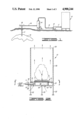
  • FIG. 1 is a schematic illustration of apparatus of the present invention connected to a landfill.
  • FIG. 2 is a vertical cross-sectional view of the flare apparatus of the present invention.
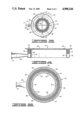
  • FIG. 3 is a cross-sectional view taken along line 3--3 of FIG. 2.
  • FIG. 4 is an enlarged side cross-sectional view of the burner of FIGS. 2 and 3.
  • FIG. 5 is a top view of the burner of FIG. 4.
  • FIG. 6 is a side cross-sectional view of an alternate form of burner.
  • FIG. 7 is a side cross-sectional view of another form of burner.
  • FIG. 8 is a partial top view of the burner of FIG. 7.
  • the gas flaring apparatus of the present invention is schematically illustrated connected to a source of landfill gas. That is, the flare apparatus 10, which will described in detail herebelow, is connected by a conduit 11 to the gas outlet of a conventional gas blower 12.
  • the inlet of the blower 12 is connected to the gas outlet of a conventional gas-liquid separator 14 by a conduit 13.
  • the inlet connection of the separator 14 is connected by a conduit 16 to a manifold 18 which is in turn communicated with the landfill 19 by a conduit 17.
  • a stream of gas from the landfill 19 is withdrawn therefrom and caused to flow by the blower 12 through the conduit 17, the manifold 18 and the conduit 16 to the separator 14.
  • the gas stream includes flammable gases produced by degradation in the landfill, and possibly air drawn into the landfill by the blower suction, and may therefore be combustible.
  • condensed liquids carried with the gas stream are separated from the gas stream and removed.
  • the resulting liquid-free gas stream flows by way of the conduit 13, the blower 12 and the conduit 11 to the flare apparatus 10.
  • the stream of gas flowing to the flare apparatus 10 is combusted therein and the products of combustion formed are discharged to the atmosphere.
  • the apparatus 10 retards the backward propagation of flame through the stream of gas even though such gas stream is at low pressure and low or static flow rate conditions.
  • the apparatus 10 is comprised of a vertically positioned preferably cylindrical stack 20 which is open at both its upper end 25 and lower end 27.
  • the lower end 27 of the stack 20 is held above ground level by a plurality of legs 22 attached thereto and a burner, generally designated by the numeral 24, is disposed within the stack 20 adjacent the lower end 27 thereof.
  • the burner 24 is supported concentrically with respect to the stack 20 by cross members 23 attached thereto and to the legs 22.
  • An annular air flow restricting ring 21 can optionally be attached within the stack 20 at its lower end 27.
  • the ring 21 is of an internal diameter such that the cross-sectional area available for air flow into the stack 20 is optimized for the particular design combustion conditions therein.
  • a skirt (not shown) with sized openings therein or with manually or automatically adjustable louvers attached thereto can be utilized between the bottom end 27 of the stack 20 and ground level. The control of the rate of air flow into the stack 20 insures the efficient combustion of the gas mixture being flared by the apparatus 10.
  • the burner 24 is comprised of an annular channel 26 having vertical sides and a horizontal bottom, and having a continuous annular labyrinth structure 30 disposed within and closing the upper portion thereof.
  • the lower chamber 29 formed below the labyrinth 30 within the channel 26 is connected to an inlet conduit 28.
  • the inlet conduit 28 extends beneath the lower end 27 of the stack 20 and terminates in a flange fitting 31 which is connected to a complementary flange fitting 32 attached to the conduit 11.
  • the labyrinth 30 contains a plurality of upwardly extending elongated flow passages 33 (FIG. 4), each of which has its length related to its cross-sectional area in a known manner to allow a required rate of gas to pass therethrough and to be jetted therefrom, but which prevents or retards reverse propagation of flame through the gas. That is, the labyrinth 30 retards reverse flame propagation therethrough by quenching the flame after it enters the passages 33.
  • the reverse flame propagation arresting labyrinth 30 can be formed in a variety of ways from various materials.
  • the labyrinth 30 can be constructed by spirally winding a corrugated sheet and a flat sheet whereby adjacent layers of the flat and corrugated sheet form the elongated flow passages 33 therein.
  • baffles 36 and 38 are attached to both sides of the channel 26 of the burner 24 at the top thereof.
  • the baffles 36 and 38 completely encircle the top of the channel 26 and the labyrinth structure 30 therein on both sides thereof and each of the baffles contains a plurality of openings therein for the passage of air therethrough.
  • the baffles 36 and 38 may be inclined upwardly at small angles from the horizontal and function to retain flame adjacent the burner 24 by interrupting and reducing the velocity of the upward air flow. As illustrated by the arrows on FIG.
  • the internal central opening of the burner 24, i.e., the opening defined by the internal sides of the channel 26, is of an area of at least about 10% of the total cross-sectional area available for atmospheric air flow into the stack 20.
  • a stream of gas flows by way of the conduit 28 into the lower chamber 29 of the annular burner 24. From the chamber 29, the gas stream flows through the labyrinth structure 30 by way of the upwardly extending passages 33 thereof and is jetted into the stack 20. As the gas stream is jetted from the burner 24, it mixes with air surrounding the burner and is ignited by conventional igniting apparatus (not shown) or by previously ignited gases within the stack 20.
  • the burning of the initially formed gas-air mixture and the upward flow thereof draws air from the atmosphere into the lower end 27 of the stack 20 which flows upwardly around and through the flame retaining baffles 36 and 38 and the burner 24 whereby additional air mixes with the gas stream and brings about the efficient combustion thereof.
  • the air flows upwardly through the interior opening in the burner 24 as well as through the annular area between the burner 24 and the ring 21 of the stack 20 whereby it mixes with the gases exiting the passages 33 and combustion takes place.
  • the resulting combustion products flow into the atmosphere by way of the open upper end 25 of the stack 20 thereby completing the flaring process.
  • the flow passages of the burner 24 are configured such that the gas to be flared can be flowed therethrough and jetted therefrom, but the backward propagation of flame through the gas into the interior of the burner, conduits and other components is retarded.
  • the jetted and ignited gas stream within the stack 20 and providing air flow thereinto whereby air is mixed with the upwardly flowing combusting gases, efficient combustion takes place.
  • FIGS. 6-8 alternate forms of burners which can be substituted for the burner 24 in the apparatus 10 are illustrated.
  • a burner 40 is illustrated which is identical to the burner 24 described above except that it does not include the flame retention baffles 36 and 38 and it directs a gas mixture emitted therefrom outwardly as well as upwardly. That is, the burner 40 is formed of an annular channel 42, the sides of which are inclined outwardly. An annular labyrinth structure 44 closes the top of the channel 42.
  • FIGS. 7 and 8 illustrate a burner 50 which is similar to the burner 24 described above except that in addition to or instead of the flame retention baffles 36 nd 38, the burner 50 includes a baffle arrangement attached thereto which causes a gas mixture emitted therefrom to be directed upwardly and outwardly in a spiral path. That is, the burner 50 includes a continuous, inverted truncated cone-shaped baffle 52 attached to the top of the interior side 54 of the channel 56 forming the burner.
  • a plurality of outwardly extending spaced apart baffles 58 are attached to the baffle 52 and the baffles 58 are positioned so that gases jetted upwardly from the labyrinth structure 60 of the burner 50 are deflected outwardly by the baffle 52 and then into a spiral path by the baffles 58.
  • the burners 40 and 50 are utilized in the flare apparatus 10 in lieu of the burner 24 when it is necessary to achieve a higher degree of turbulence and gas-air mixing within the stack 20 in order to achieve efficient combustion.
  • various alternate burner, gas directing baffle and flame retention baffle arrangements can be utilized to achieve desired combustion efficiency results including burners which jet the gas stream to be flared inwardly.
  • the method and apparatus of the present invention bring about the efficient flaring of gas mixtures such as those withdrawn from landfills and retard the possibility of explosions or fires taking place due to reverse flame propagation.
  • the present invention is well adapted to carry out the objects and advantages mentioned as well as those inherent therein. While numerous changes in the arrangement of steps and elements can be made by those skilled in the art, such changes are encompassed within the spirit of this invention as defined by the appended claims.
Landscapes

  • Engineering & Computer Science (AREA)
  • Environmental & Geological Engineering (AREA)
  • Mechanical Engineering (AREA)
  • General Engineering & Computer Science (AREA)
  • Incineration Of Waste (AREA)

Abstract

A method and apparatus for flaring a gas stream such as the gas mixtures formed in landfills while retarding the backward propagation of flame thereto are provided. The method comprises conducting the gas stream to a burner structure having a plurality of flow passages therein configured such that the gas stream can flow through the passages, but the backward propagation of flame therethrough is retarded; flowing the gas stream through the flow passages of the burner whereby the gas stream is jetted therefrom and initially mixed with air; igniting the gas stream; and mixing the ignited gas stream with additional air by confining the jetted and ignited gas mixture within a stack configured to allow the admission of air around the burner structure and to discharge products of combustion into the atmosphere.

Description

BACKGROUND OF THE INVENTION
1. Field Of The Invention
The present invention relates generally to gas flaring methods and apparatus, and more particularly, but not by way of limitation, to a method and apparatus for flaring gas mixtures such as the gas mixtures emitted from landfills while retarding the backward propagation of flame in the gas mixtures.
2. Description Of The Prior Art
A great variety of waste and vent gas flaring methods and apparatus have been developed and used heretofore. Such methods and apparatus generally involve conducting the waste or vent gases to one or more burners which are elevated or which are positioned within the lower portion of a vertical stack. Air is mixed with the gases either just before the gases enter the burner or after the gases are emitted from the burner and the gases are combusted. The products of combustion are discharged into the atmosphere.
In systems where air is mixed with the gases just prior to entering the burners whereby an air-gas mixture flows through the burners, the burners have been equipped with means for retarding flashbacks, e.g., structure through which the air-gas mixture flows which prevents or retards backward flame propagation. Examples of such burners are described in U.S. Pat. Nos. 1,420,405 dated June 20, 1922; 2,627,910 issued Feb. 10, 1953; and 3,807,940 issued Apr. 30, 1974.
In flaring combustible gas mixtures which at their source contain flammable gases and combustion supporting gases such as oxygen or air, it is mandatory that the backward propagation of flame through the advancing mixture toward the source of the mixture be retarded since if such propagation takes place, fire and/or explosion can result. This problem is particularly severe in the flaring of gas mixtures formed in landfills since the flaring must take place at varying flow rates and flowing pressures.
The degradation of buried refuse and wastes in landfill areas often produces gas mixtures which collect within the landfill. The presence of such gas mixtures in the landfill presents a hazardous condition in that the gas mixtures can leak to the surface whereby they produce a nuisance such as by causing an odor problem, and they may be ignited. In order to eliminate the hazards presented by the formation of gas mixtures in landfills, such mixtures have been withdrawn therefrom and flared. However, because in the act of removing gas mixtures from landfills air is often introduced and combustible mixtures formed, problems have been encountered as a result of reverse flame propagation.
By the present invention, a method and apparatus for efficiently flaring gas streams including combustible gas mixtures which retard reverse propagation of flame are provided.
SUMMARY OF THE INVENTION
A method of flaring a gas stream while retarding the reverse propagation of flame therethrough is provided. The gas stream is conducted to a burner structure having a plurality of flow passages therein configured such that the gas stream can flow through the passages but the backward propagation of flame therethrough is retarded. The gas stream is flowed through the flow passages of the burner structure whereby it is jetted outwardly therefrom, initially mixed with air and ignited. The ignited gas stream is confined within a stack configured to allow the admission of air therein whereby additional air is mixed with the gas stream and to discharge combustion products into the atmosphere. Apparatus for carrying out the method is also provided.
It is, therefore, a general object of the present invention to provide a gas flaring method and apparatus.
A further object of the present invention is the provision of a method and apparatus for efficiently flaring combustible gas mixtures at low pressures and varying flow rates while retarding the backward propagation of flame through the gas mixture towards the source thereof.
Another object of the present invention is the provision of apparatus for flaring a combustible gas mixture while retarding the backward propagation of flame therethrough which is efficient and economical to install and operate.
Other and further objects, features and advantages of the present invention will be readily apparent to those skilled in the art upon a reading of the description or preferred embodiments which follows when taken in conjunction with the accompanying drawings.
BRIEF DESCRIPTION OF THE DRAWINGS
FIG. 1 is a schematic illustration of apparatus of the present invention connected to a landfill.
FIG. 2 is a vertical cross-sectional view of the flare apparatus of the present invention.
FIG. 3 is a cross-sectional view taken along line 3--3 of FIG. 2.
FIG. 4 is an enlarged side cross-sectional view of the burner of FIGS. 2 and 3.
FIG. 5 is a top view of the burner of FIG. 4.
FIG. 6 is a side cross-sectional view of an alternate form of burner.
FIG. 7 is a side cross-sectional view of another form of burner.
FIG. 8 is a partial top view of the burner of FIG. 7.
DESCRIPTION OF PREFERRED EMBODIMENTS
Referring now to the drawings and particularly to FIG. 1, the gas flaring apparatus of the present invention, generally designated by the numeral 10, is schematically illustrated connected to a source of landfill gas. That is, the flare apparatus 10, which will described in detail herebelow, is connected by a conduit 11 to the gas outlet of a conventional gas blower 12. The inlet of the blower 12 is connected to the gas outlet of a conventional gas-liquid separator 14 by a conduit 13. The inlet connection of the separator 14 is connected by a conduit 16 to a manifold 18 which is in turn communicated with the landfill 19 by a conduit 17.
In operation, a stream of gas from the landfill 19 is withdrawn therefrom and caused to flow by the blower 12 through the conduit 17, the manifold 18 and the conduit 16 to the separator 14. The gas stream includes flammable gases produced by degradation in the landfill, and possibly air drawn into the landfill by the blower suction, and may therefore be combustible. While flowing through the separator 14, condensed liquids carried with the gas stream are separated from the gas stream and removed. The resulting liquid-free gas stream flows by way of the conduit 13, the blower 12 and the conduit 11 to the flare apparatus 10.
The stream of gas flowing to the flare apparatus 10 is combusted therein and the products of combustion formed are discharged to the atmosphere. In addition, the apparatus 10 retards the backward propagation of flame through the stream of gas even though such gas stream is at low pressure and low or static flow rate conditions.
Referring now to FIGS. 2-5, a preferred form of the flare apparatus 10 is illustrated in detail. As best shown in FIG. 2, the apparatus 10 is comprised of a vertically positioned preferably cylindrical stack 20 which is open at both its upper end 25 and lower end 27. The lower end 27 of the stack 20 is held above ground level by a plurality of legs 22 attached thereto and a burner, generally designated by the numeral 24, is disposed within the stack 20 adjacent the lower end 27 thereof. The burner 24 is supported concentrically with respect to the stack 20 by cross members 23 attached thereto and to the legs 22.
An annular air flow restricting ring 21 can optionally be attached within the stack 20 at its lower end 27. The ring 21 is of an internal diameter such that the cross-sectional area available for air flow into the stack 20 is optimized for the particular design combustion conditions therein. In addition to or in lieu of the ring 21, a skirt (not shown) with sized openings therein or with manually or automatically adjustable louvers attached thereto can be utilized between the bottom end 27 of the stack 20 and ground level. The control of the rate of air flow into the stack 20 insures the efficient combustion of the gas mixture being flared by the apparatus 10.
The burner 24 is comprised of an annular channel 26 having vertical sides and a horizontal bottom, and having a continuous annular labyrinth structure 30 disposed within and closing the upper portion thereof. The lower chamber 29 formed below the labyrinth 30 within the channel 26 is connected to an inlet conduit 28. The inlet conduit 28 extends beneath the lower end 27 of the stack 20 and terminates in a flange fitting 31 which is connected to a complementary flange fitting 32 attached to the conduit 11.
The labyrinth 30 contains a plurality of upwardly extending elongated flow passages 33 (FIG. 4), each of which has its length related to its cross-sectional area in a known manner to allow a required rate of gas to pass therethrough and to be jetted therefrom, but which prevents or retards reverse propagation of flame through the gas. That is, the labyrinth 30 retards reverse flame propagation therethrough by quenching the flame after it enters the passages 33. The reverse flame propagation arresting labyrinth 30 can be formed in a variety of ways from various materials. For example, the labyrinth 30 can be constructed by spirally winding a corrugated sheet and a flat sheet whereby adjacent layers of the flat and corrugated sheet form the elongated flow passages 33 therein.
As best shown in FIGS. 4 and 5, inwardly and outwardly extending baffles 36 and 38, respectively, are attached to both sides of the channel 26 of the burner 24 at the top thereof. The baffles 36 and 38 completely encircle the top of the channel 26 and the labyrinth structure 30 therein on both sides thereof and each of the baffles contains a plurality of openings therein for the passage of air therethrough. The baffles 36 and 38 may be inclined upwardly at small angles from the horizontal and function to retain flame adjacent the burner 24 by interrupting and reducing the velocity of the upward air flow. As illustrated by the arrows on FIG. 2, air is drawn into the stack 20 by way of the annular opening between the ring 21 of the stack 20 and the burner 24 as well as by way of the central opening in the burner 20. In order to insure that air drawn into the stack 20 around the burner 24 contributes to the efficient combustion of the gases being flared, the internal central opening of the burner 24, i.e., the opening defined by the internal sides of the channel 26, is of an area of at least about 10% of the total cross-sectional area available for atmospheric air flow into the stack 20.
In operation of the flare apparatus 10, a stream of gas flows by way of the conduit 28 into the lower chamber 29 of the annular burner 24. From the chamber 29, the gas stream flows through the labyrinth structure 30 by way of the upwardly extending passages 33 thereof and is jetted into the stack 20. As the gas stream is jetted from the burner 24, it mixes with air surrounding the burner and is ignited by conventional igniting apparatus (not shown) or by previously ignited gases within the stack 20.
The burning of the initially formed gas-air mixture and the upward flow thereof draws air from the atmosphere into the lower end 27 of the stack 20 which flows upwardly around and through the flame retaining baffles 36 and 38 and the burner 24 whereby additional air mixes with the gas stream and brings about the efficient combustion thereof. As mentioned above, the air flows upwardly through the interior opening in the burner 24 as well as through the annular area between the burner 24 and the ring 21 of the stack 20 whereby it mixes with the gases exiting the passages 33 and combustion takes place. The resulting combustion products flow into the atmosphere by way of the open upper end 25 of the stack 20 thereby completing the flaring process.
As mentioned above, the flow passages of the burner 24 are configured such that the gas to be flared can be flowed therethrough and jetted therefrom, but the backward propagation of flame through the gas into the interior of the burner, conduits and other components is retarded. By confining the jetted and ignited gas stream within the stack 20 and providing air flow thereinto whereby air is mixed with the upwardly flowing combusting gases, efficient combustion takes place.
Referring now to FIGS. 6-8, alternate forms of burners which can be substituted for the burner 24 in the apparatus 10 are illustrated. In FIG. 6, a burner 40 is illustrated which is identical to the burner 24 described above except that it does not include the flame retention baffles 36 and 38 and it directs a gas mixture emitted therefrom outwardly as well as upwardly. That is, the burner 40 is formed of an annular channel 42, the sides of which are inclined outwardly. An annular labyrinth structure 44 closes the top of the channel 42.
FIGS. 7 and 8 illustrate a burner 50 which is similar to the burner 24 described above except that in addition to or instead of the flame retention baffles 36 nd 38, the burner 50 includes a baffle arrangement attached thereto which causes a gas mixture emitted therefrom to be directed upwardly and outwardly in a spiral path. That is, the burner 50 includes a continuous, inverted truncated cone-shaped baffle 52 attached to the top of the interior side 54 of the channel 56 forming the burner. A plurality of outwardly extending spaced apart baffles 58 are attached to the baffle 52 and the baffles 58 are positioned so that gases jetted upwardly from the labyrinth structure 60 of the burner 50 are deflected outwardly by the baffle 52 and then into a spiral path by the baffles 58.
The burners 40 and 50 are utilized in the flare apparatus 10 in lieu of the burner 24 when it is necessary to achieve a higher degree of turbulence and gas-air mixing within the stack 20 in order to achieve efficient combustion. As will be understood, various alternate burner, gas directing baffle and flame retention baffle arrangements can be utilized to achieve desired combustion efficiency results including burners which jet the gas stream to be flared inwardly.
The method and apparatus of the present invention bring about the efficient flaring of gas mixtures such as those withdrawn from landfills and retard the possibility of explosions or fires taking place due to reverse flame propagation. Thus, the present invention is well adapted to carry out the objects and advantages mentioned as well as those inherent therein. While numerous changes in the arrangement of steps and elements can be made by those skilled in the art, such changes are encompassed within the spirit of this invention as defined by the appended claims.

Claims (7)

What is claimed is:
1. A method of flaring a gas mixture formed in a landfill comprising the steps of:
withdrawing said gas mixture from said landfill;
conducting said gas mixture to an annular burner comprised of an annular channel having sides and a bottom and a continuous top structure having a plurality of elongated flow passages therein configured such that said gas mixture can flow through said passages but the backward propagation of flame therethrough at low pressure and low or static flow rate conditions is retarded;
flowing said gas mixture through said passages in said burner structure whereby the gas mixture is jetted therefrom and caused to mix with air surrounding said burner;
igniting the resulting gas mixture; and
confining said ignited gas mixture within a vertical stack configured to allow the admission of additional air around said burner structure and to discharge combustion products into the atmosphere above said stack.
2. The method of claim 1 which is further characterized to include the step of separating condensed liquids from said gas mixture prior to flowing said gas mixture through said passages in said burner structure.
3. The method of claim 1 wherein said annular burner includes an interior opening therein for the admission of air therethrough, said opening having a cross-sectional area equal to at least 10% of the cross-sectional area available for the admission of air into said stack.
4. Apparatus for flaring a gas stream formed in a landfill while retarding the backward propagation of flame through the apparatus comprising:
a stack having an opening in a lower portion thereof for admitting air therewithin and an opening in an upper portion thereof for discharging products of combustion into the atmosphere;
a burner comprised of an annular channel having sides and a bottom and a continuous top structure having a plurality of elongated flow passages therein configured such that said gas stream can flow through said passages but the backward propagation of flame therethrough at low pressure and low or static flow rate conditions is retarded, said burner having an opening therein positioned interiorly of said flow passages for the flow of air therethrough, and said burner being positioned at least partially within the interior of said stack at said lower portion thereof; and
conduit means connected to said burner for conducting said gas stream to said burner whereby said gas stream is jetted from said burner by way of said flow passages.
5. The apparatus of claim 4 wherein said burner is annular and said gas stream is jetted from upwardly facing flow passages in a circular pattern.
6. The apparatus of claim 4 wherein said stack is cylindrical.
7. The apparatus of claim 4 wherein the area of the interior opening in said burner is at least 10% of the cross-sectional area of said opening in said stack for admitting air therewithin.
US06/645,343 1984-08-29 1984-08-29 Gas flaring method and apparatus Expired - Fee Related US4900244A (en)

Priority Applications (1)

Application Number Priority Date Filing Date Title
US06/645,343 US4900244A (en) 1984-08-29 1984-08-29 Gas flaring method and apparatus

Applications Claiming Priority (1)

Application Number Priority Date Filing Date Title
US06/645,343 US4900244A (en) 1984-08-29 1984-08-29 Gas flaring method and apparatus

Publications (1)

Publication Number Publication Date
US4900244A true US4900244A (en) 1990-02-13

Family

ID=24588635

Family Applications (1)

Application Number Title Priority Date Filing Date
US06/645,343 Expired - Fee Related US4900244A (en) 1984-08-29 1984-08-29 Gas flaring method and apparatus

Country Status (1)

Country Link
US (1) US4900244A (en)

Cited By (24)

* Cited by examiner, † Cited by third party
Publication number Priority date Publication date Assignee Title
US5443021A (en) * 1992-11-12 1995-08-22 Trepaud Environnement Dump and process for vitrifying waste
WO1995034349A1 (en) * 1994-06-10 1995-12-21 Thermatrix, Inc. Method and apparatus for in situ soil remediation
US5484279A (en) * 1993-03-22 1996-01-16 Emcon, Inc. Method and apparatus for disposal of landfill gas condensate
US5533890A (en) * 1992-12-17 1996-07-09 Thermatrix, Inc. Method and apparatus for control of fugitive VOC emissions
US5609829A (en) * 1993-04-27 1997-03-11 Comenco Systems Inc. Catalytic/thermal convertor unit
GB2306347A (en) * 1995-11-01 1997-05-07 Hi Lo Flare Systems & Services Flare assemblies
US5649820A (en) * 1995-05-05 1997-07-22 Callidus Technologies Flare burner
US5802623A (en) * 1995-12-06 1998-09-08 Vincent; Ray T. Electronic air deodorizer and method of using same
US5873712A (en) * 1996-08-02 1999-02-23 Guerra; Romeo E. Flame arrested eductor flare stack
US5971744A (en) * 1997-06-11 1999-10-26 Eaton; Timothy C. Gas burner tool for purging a gas supply pipe
US5997284A (en) * 1996-11-08 1999-12-07 Altex Oilfield Equipment, Ltd. Portable flare tank for degassing of drilling fluid
US6231334B1 (en) * 1998-11-24 2001-05-15 John Zink Company Biogas flaring unit
EP1291093A3 (en) * 1997-09-17 2003-04-09 Société publique d'Aide à la Qualité de l'Environnement, S.P.A.Q.U.E., Société Anonyme Method and system for withdrawing gases produced by fermentable materials, particularly waste
US20050158681A1 (en) * 2004-01-15 2005-07-21 Bussman Wesley R. Remote staged radiant wall furnace burner configurations and methods
US20050158684A1 (en) * 2004-01-15 2005-07-21 Bussman Wesley R. Remote staged furnace burner configurations and methods
US20060035182A1 (en) * 2004-08-13 2006-02-16 Hesse David J Detonation safety in microchannels
US20080063991A1 (en) * 2006-09-07 2008-03-13 Sifers Don S Method and apparatus for controlling fecal odors
US20090233248A1 (en) * 2006-11-08 2009-09-17 Nv Bekaert Sa Modular flare stack and method of flaring waste gas
US20090317754A1 (en) * 2008-06-24 2009-12-24 Mcfatter Ii William E Flare gas flammability control
US20100035193A1 (en) * 2008-08-08 2010-02-11 Ze-Gen, Inc. Method and system for fuel gas combustion, and burner for use therein
US20160123581A1 (en) * 2013-06-14 2016-05-05 Beneq Oy Burner nozzle, burner and a surface treatment device
WO2020061641A1 (en) * 2018-09-28 2020-04-02 Australian Rig Construction Holdings Pty Ltd Flare system
US20220349575A1 (en) * 2021-04-28 2022-11-03 Forrest D. Heath Method and Apparatus for Eliminating Hydrocarbon Gas Venting from Pneumatic Controllers
US12492814B1 (en) 2021-11-04 2025-12-09 Perennial Energy, LLC Gas skid and systems for mine gas flaring operations

Citations (21)

* Cited by examiner, † Cited by third party
Publication number Priority date Publication date Assignee Title
US1227277A (en) * 1914-04-22 1917-05-22 Charles H Land Burner for dental furnaces.
US1420405A (en) * 1919-08-25 1922-06-20 Troop Mfg Company Gas burner
US1677156A (en) * 1925-12-23 1928-07-17 Surface Comb Company Apparatus for burning explosive gaseous mixtures
US1735261A (en) * 1927-02-02 1929-11-12 Oil Conservation Engineering C Flame arrester
US2009271A (en) * 1932-10-17 1935-07-23 American Stove Co Gas burner
US2348011A (en) * 1940-05-18 1944-05-02 Smith Corp A O Sheet metal gas burner
US2369235A (en) * 1941-05-10 1945-02-13 Servel Inc Gas burner
US2572445A (en) * 1947-10-29 1951-10-23 Emhart Mfg Co Gas burner flame arrester
US2618540A (en) * 1949-09-30 1952-11-18 Air Reduction Gas mixer
US2627910A (en) * 1947-10-23 1953-02-10 Roper Corp Geo D Grid port structure for gas burners
US2879862A (en) * 1957-08-26 1959-03-31 Pasadena Invest Co Secondary combustion device
US3013602A (en) * 1956-09-18 1961-12-19 American Infra Red Radiant Co Radiant gas burner
US3173411A (en) * 1962-10-22 1965-03-16 Enardo Mfg Company Flame arrestor
US3501255A (en) * 1968-03-25 1970-03-17 Bobby H Greene Gas burner apparatus
US3703349A (en) * 1971-05-17 1972-11-21 Combustion Unltd Inc Ground flare
US3807940A (en) * 1971-08-25 1974-04-30 Sulzer Ag Burner for burning off gas
US3833335A (en) * 1972-08-04 1974-09-03 Aquitaine Petrole Flare installation for the combustion of hydrocarbon gas with prior admixing of air
US3933420A (en) * 1974-08-19 1976-01-20 Zink John S Vertically fired burner for waste combustible gases
US4137036A (en) * 1977-03-28 1979-01-30 Combustion Unlimited Incorporated Flare burner
US4442901A (en) * 1982-03-08 1984-04-17 Getty Synthetic Fuels, Inc. Landfill gas recovery method
US4479546A (en) * 1983-01-28 1984-10-30 Bresie Don A Method and apparatus for producing natural gas from tight formations

Patent Citations (21)

* Cited by examiner, † Cited by third party
Publication number Priority date Publication date Assignee Title
US1227277A (en) * 1914-04-22 1917-05-22 Charles H Land Burner for dental furnaces.
US1420405A (en) * 1919-08-25 1922-06-20 Troop Mfg Company Gas burner
US1677156A (en) * 1925-12-23 1928-07-17 Surface Comb Company Apparatus for burning explosive gaseous mixtures
US1735261A (en) * 1927-02-02 1929-11-12 Oil Conservation Engineering C Flame arrester
US2009271A (en) * 1932-10-17 1935-07-23 American Stove Co Gas burner
US2348011A (en) * 1940-05-18 1944-05-02 Smith Corp A O Sheet metal gas burner
US2369235A (en) * 1941-05-10 1945-02-13 Servel Inc Gas burner
US2627910A (en) * 1947-10-23 1953-02-10 Roper Corp Geo D Grid port structure for gas burners
US2572445A (en) * 1947-10-29 1951-10-23 Emhart Mfg Co Gas burner flame arrester
US2618540A (en) * 1949-09-30 1952-11-18 Air Reduction Gas mixer
US3013602A (en) * 1956-09-18 1961-12-19 American Infra Red Radiant Co Radiant gas burner
US2879862A (en) * 1957-08-26 1959-03-31 Pasadena Invest Co Secondary combustion device
US3173411A (en) * 1962-10-22 1965-03-16 Enardo Mfg Company Flame arrestor
US3501255A (en) * 1968-03-25 1970-03-17 Bobby H Greene Gas burner apparatus
US3703349A (en) * 1971-05-17 1972-11-21 Combustion Unltd Inc Ground flare
US3807940A (en) * 1971-08-25 1974-04-30 Sulzer Ag Burner for burning off gas
US3833335A (en) * 1972-08-04 1974-09-03 Aquitaine Petrole Flare installation for the combustion of hydrocarbon gas with prior admixing of air
US3933420A (en) * 1974-08-19 1976-01-20 Zink John S Vertically fired burner for waste combustible gases
US4137036A (en) * 1977-03-28 1979-01-30 Combustion Unlimited Incorporated Flare burner
US4442901A (en) * 1982-03-08 1984-04-17 Getty Synthetic Fuels, Inc. Landfill gas recovery method
US4479546A (en) * 1983-01-28 1984-10-30 Bresie Don A Method and apparatus for producing natural gas from tight formations

Cited By (38)

* Cited by examiner, † Cited by third party
Publication number Priority date Publication date Assignee Title
US5443021A (en) * 1992-11-12 1995-08-22 Trepaud Environnement Dump and process for vitrifying waste
US5533890A (en) * 1992-12-17 1996-07-09 Thermatrix, Inc. Method and apparatus for control of fugitive VOC emissions
US5484279A (en) * 1993-03-22 1996-01-16 Emcon, Inc. Method and apparatus for disposal of landfill gas condensate
US5609829A (en) * 1993-04-27 1997-03-11 Comenco Systems Inc. Catalytic/thermal convertor unit
WO1995034349A1 (en) * 1994-06-10 1995-12-21 Thermatrix, Inc. Method and apparatus for in situ soil remediation
US5649820A (en) * 1995-05-05 1997-07-22 Callidus Technologies Flare burner
GB2306347A (en) * 1995-11-01 1997-05-07 Hi Lo Flare Systems & Services Flare assemblies
GB2306347B (en) * 1995-11-01 1999-03-31 Hi Lo Flare Systems & Services Flare assemblies
US5802623A (en) * 1995-12-06 1998-09-08 Vincent; Ray T. Electronic air deodorizer and method of using same
US5873712A (en) * 1996-08-02 1999-02-23 Guerra; Romeo E. Flame arrested eductor flare stack
US5997284A (en) * 1996-11-08 1999-12-07 Altex Oilfield Equipment, Ltd. Portable flare tank for degassing of drilling fluid
US5971744A (en) * 1997-06-11 1999-10-26 Eaton; Timothy C. Gas burner tool for purging a gas supply pipe
EP1291093A3 (en) * 1997-09-17 2003-04-09 Société publique d'Aide à la Qualité de l'Environnement, S.P.A.Q.U.E., Société Anonyme Method and system for withdrawing gases produced by fermentable materials, particularly waste
US6231334B1 (en) * 1998-11-24 2001-05-15 John Zink Company Biogas flaring unit
US7153129B2 (en) 2004-01-15 2006-12-26 John Zink Company, Llc Remote staged furnace burner configurations and methods
US7025590B2 (en) 2004-01-15 2006-04-11 John Zink Company, Llc Remote staged radiant wall furnace burner configurations and methods
US20050158681A1 (en) * 2004-01-15 2005-07-21 Bussman Wesley R. Remote staged radiant wall furnace burner configurations and methods
US20050158684A1 (en) * 2004-01-15 2005-07-21 Bussman Wesley R. Remote staged furnace burner configurations and methods
US8517717B2 (en) * 2004-08-13 2013-08-27 Velocys, Inc. Detonation safety in microchannels
US20060035182A1 (en) * 2004-08-13 2006-02-16 Hesse David J Detonation safety in microchannels
US20080063991A1 (en) * 2006-09-07 2008-03-13 Sifers Don S Method and apparatus for controlling fecal odors
US9955829B2 (en) 2006-09-07 2018-05-01 Environmental Purification, Llc Method and apparatus for controlling odors
US9265389B2 (en) 2006-09-07 2016-02-23 Environmental Purification, Llc Method and apparatus for controlling odors
US20100221145A1 (en) * 2006-09-07 2010-09-02 Ann Rogers Business Trust Method and apparatus for controlling fecal odors
US9017606B2 (en) 2006-09-07 2015-04-28 Environmental Purification, Llc Method and apparatus for controlling odors
US8784739B2 (en) 2006-09-07 2014-07-22 Environmental Purification, Llc Method and apparatus for controlling fecal odors
US8475718B2 (en) 2006-09-07 2013-07-02 Environmental Purification, Llc Method and apparatus for controlling fecal odors
US20090233248A1 (en) * 2006-11-08 2009-09-17 Nv Bekaert Sa Modular flare stack and method of flaring waste gas
US8282389B2 (en) * 2006-11-08 2012-10-09 Nv Bekaert Sa Modular flare stack and method of flaring waste gas
US7931466B2 (en) * 2008-06-24 2011-04-26 Equistar Chemicals, Lp Flare gas flammability control
US20090317754A1 (en) * 2008-06-24 2009-12-24 Mcfatter Ii William E Flare gas flammability control
US20100035193A1 (en) * 2008-08-08 2010-02-11 Ze-Gen, Inc. Method and system for fuel gas combustion, and burner for use therein
US20160123581A1 (en) * 2013-06-14 2016-05-05 Beneq Oy Burner nozzle, burner and a surface treatment device
US9726372B2 (en) * 2013-06-14 2017-08-08 Beneq Oy Burner nozzle, burner and a surface treatment device
WO2020061641A1 (en) * 2018-09-28 2020-04-02 Australian Rig Construction Holdings Pty Ltd Flare system
AU2019351577B2 (en) * 2018-09-28 2025-05-29 Well Equipment Solutions Holdings Pty Ltd Flare system
US20220349575A1 (en) * 2021-04-28 2022-11-03 Forrest D. Heath Method and Apparatus for Eliminating Hydrocarbon Gas Venting from Pneumatic Controllers
US12492814B1 (en) 2021-11-04 2025-12-09 Perennial Energy, LLC Gas skid and systems for mine gas flaring operations

Similar Documents

Publication Publication Date Title
US4900244A (en) Gas flaring method and apparatus
US6840761B2 (en) Ultra-stable flare pilot and methods
US3994671A (en) Flare gas burner
US3893810A (en) Flare stack burner for odor and pollutant elimination
CA2293848C (en) Enclosed ground-flare incinerator
US3885919A (en) Residual gas burner with superimposed, increasing size burning chambers
US3408167A (en) Exhaust gas afterburner
US4105394A (en) Dual pressure flare
CA1040090A (en) Flare gas burner
US4003693A (en) Flare stack gas burner
MX2010004321A (en) Air flare apparatus and method.
US2802521A (en) Waste gas burner
US4157239A (en) Molecular seal improvement action
US2506972A (en) Flare stack tip
US3779689A (en) Method and apparatus for non-polluting combustion of waste gases
CA1053561A (en) Invisible flare burner
US4065247A (en) Apparatus for incinerating waste gases
US4610622A (en) Method and apparatus for igniting flare gas
US3887324A (en) Method for non-polluting combustion of waste gases
US4975042A (en) Method and burner apparatus for flaring inert vitiated waste gases
US5919036A (en) Method and apparatus for burning combustible gases
US4087235A (en) Apparatus for incinerating waste gases
US2804031A (en) Apparatus for burning wood refuse
EP0057518B1 (en) Immediate ignition and smokeless burning of waste gases
US3868210A (en) Safety flare

Legal Events

Date Code Title Description
AS Assignment

Owner name: JOHN ZINK COMPANY, TULSA, OK A DE CORP.

Free format text: ASSIGNMENT OF ASSIGNORS INTEREST.;ASSIGNORS:KELLER, MICHAEL R.;NOBLE, ROGER K.;PRESSNALL, DALE W.;REEL/FRAME:004305/0168

Effective date: 19840823

AS Assignment

Owner name: KOCH ENGINEERING COMPANY, INC., KANSAS

Free format text: ASSIGNMENT OF ASSIGNORS INTEREST.;ASSIGNOR:JOHN ZINK COMPANY;REEL/FRAME:005249/0775

Effective date: 19891004

REMI Maintenance fee reminder mailed
LAPS Lapse for failure to pay maintenance fees
FP Expired due to failure to pay maintenance fee

Effective date: 19940213

STCH Information on status: patent discontinuation

Free format text: PATENT EXPIRED DUE TO NONPAYMENT OF MAINTENANCE FEES UNDER 37 CFR 1.362