US4783219A - Method for melting and reducing chrome ore - Google Patents

Method for melting and reducing chrome ore Download PDF

Info

Publication number
US4783219A
US4783219A US06/929,171 US92917186A US4783219A US 4783219 A US4783219 A US 4783219A US 92917186 A US92917186 A US 92917186A US 4783219 A US4783219 A US 4783219A
Authority
US
United States
Prior art keywords
molten metal
vessel
chrome ore
gas
charging
Prior art date
Legal status (The legal status is an assumption and is not a legal conclusion. Google has not performed a legal analysis and makes no representation as to the accuracy of the status listed.)
Expired - Fee Related
Application number
US06/929,171
Inventor
Hajime Mori
Minoru Hirano
Teruyuki Hasegawa
Yoshihiko Kawai
Yoshiteru Kikuchi
Kenji Takahashi
Current Assignee (The listed assignees may be inaccurate. Google has not performed a legal analysis and makes no representation or warranty as to the accuracy of the list.)
JFE Engineering Corp
Original Assignee
Nippon Kokan Ltd
Priority date (The priority date is an assumption and is not a legal conclusion. Google has not performed a legal analysis and makes no representation as to the accuracy of the date listed.)
Filing date
Publication date
Application filed by Nippon Kokan Ltd filed Critical Nippon Kokan Ltd
Assigned to NIPPON KOKAN KABUSHIKI KAISHA reassignment NIPPON KOKAN KABUSHIKI KAISHA ASSIGNMENT OF ASSIGNORS INTEREST. Assignors: TAKAHASHI, KENJI, KIKUCHI, YOSHITERU, HASEGAWA, TERUYUKI, HIRANO, MINORU, KAWAI, YOSHIHIKO, MORI, HAJIME
Application granted granted Critical
Publication of US4783219A publication Critical patent/US4783219A/en
Anticipated expiration legal-status Critical
Expired - Fee Related legal-status Critical Current

Links

Images

Classifications

    • CCHEMISTRY; METALLURGY
    • C22METALLURGY; FERROUS OR NON-FERROUS ALLOYS; TREATMENT OF ALLOYS OR NON-FERROUS METALS
    • C22BPRODUCTION AND REFINING OF METALS; PRETREATMENT OF RAW MATERIALS
    • C22B34/00Obtaining refractory metals
    • C22B34/30Obtaining chromium, molybdenum or tungsten
    • C22B34/32Obtaining chromium
    • CCHEMISTRY; METALLURGY
    • C22METALLURGY; FERROUS OR NON-FERROUS ALLOYS; TREATMENT OF ALLOYS OR NON-FERROUS METALS
    • C22BPRODUCTION AND REFINING OF METALS; PRETREATMENT OF RAW MATERIALS
    • C22B5/00General methods of reducing to metals
    • C22B5/02Dry methods smelting of sulfides or formation of mattes
    • C22B5/10Dry methods smelting of sulfides or formation of mattes by solid carbonaceous reducing agents

Definitions

  • the present invention relates to a method for melting and reducing chrome ore, and more particularly, to a method for melting and reducing chrome ore by charging in chrome ore and carbonaceous material, and blowing oxygen gas onto the molten metal.
  • Japanese Patent Laid Open No. 159963/84 describes a method wherein:
  • Carbonaceous material for example, coal or coke, and gases for stirring, are supplied;
  • a method for melting and reducing chrome ore by employing a reaction vessel capable of allowing top blowing and bottom blowing onto molten metal and decreasing pressure inside the reaction vessel, comprising the steps of:
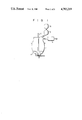
  • FIG. 1 is a schematic view showing an example of equipment employed for carrying out a method for melting and reducing chrome ore according to the present invention
  • FIG. 2 is a schematic view showing an example of experimental equipment for performing another example of the method
  • FIG. 3 is a graphical representation showing the operation progress of Example 1 of the method
  • FIG. 4 is a graphical representation showing the operation progress of Example 2 of the method.
  • FIG. 5 is a graphical representation showing each change of chrome content, carbon content, and temperature, in relation to time.
  • FIG. 1 is a schematic view showing an example of equipment employed for a method for melting and reducing chrome ore, according to the present invention.
  • Molten metal 7 is first supplied into reaction vessel 1.
  • the pressure inside the vessel is decreased to 1 to 600 Torr, by use of a device 4 for exhausting gases.
  • the decreased pressure is maintained.
  • Lumps of chrome ore, of coal, and of flux are charged in through upper hopper 5 and lower hopper 6, onto the molten metal.
  • Argon gas is blown in through tuyere 3.
  • Oxygen gas is blown through lance 2 onto the molten metal, while the molten metal is being stirred by the argon gas.
  • reaction vessel 1 since a decreased pressure or vaccum is maintained within reaction vessel 1, CO gas generated in the reduction process of chrome ore is removed from the vessel. Consequently, the reaction of the reduction is accelerated by this removal of gas. If the pressure is 600 Torr or less, it is effective for the reaction. If it is 300 Torr or less, it is even more effective. However, if it is less than 1 Torr, this radically raises the cost of investment in the equipment related to production on a commercial scale. Therefore, 1 to 600 Torr is appropriate, and 1 to 300 Torr more preferable.
  • the reaction time thus shortened by the acceleration thereby reduces the stress on the equipment; the method of present invention can therefore extend the life of the equipment.
  • lumps of chrome ore are used.
  • Chrome ore in powdered form can be used instead, wherein supplying the powder through lance 2 or tuyere 3 is deemed desirable.
  • As another method charging the lumps of chrome ore through the upper part of reaction vessel 1 and also injecting the powdered chrome ore through lance 2 or tuyere 3 can be employed.
  • Lumps of coal are used as carbonaceous material, in the present embodiment. Lumps of coke, or powdered coal or coke can be substituted therefor. Charging of the lumps through the upper part of the vessel, and injecting of the powdered material through lance 2 or tuyere 3 is recommended. Moreover, to employ both the methods of charging the lumps through the upper part of the vessel and injecting the powder through lance 2 or tuyere 3 can be considered as an alternative method of supplying the carbonaceous material.
  • the optimum amount of oxygen gas to be supplied ranges from 1.0 to 5.0 Nm 3 /minute.T, where T represents one ton of molten metal.
  • the amount of oxygen gas supplied is more than 5.0 Nm 3 /minute.T, more massive, and thus expensive equipment is required. On the other hand, if it is less than 1.0 Nm 3 /minute.T, the speed of the reduction process becomes slow, and the amount of heat produced by combustion of the carbonaceous material becomes insufficient.
  • oxygen gas is blown in through the lance.
  • it can be supplied through the tuyere, which has also the effect of stirring the molten metal.
  • oxygen gas can be blown in through both the lance and the tuyere.
  • Argon gas is blown in through the bottom, for stirring the molten metal, in the present embodiment.
  • N 2 gas, CO 2 gas, or the process gas generated in the vessel during the melting and reducing reaction can be used.
  • the appropriate amount of gas blown in through the bottom ranges from 0.1 to 1.5 Nm 2 /minute.T.
  • the gas necessary for stirring can be of a smaller amount.
  • the pressure becomes close to 600 Torr a greater amount of gas is required.
  • FIG. 2 illustrated schematically an example of experimental equipment employed for one example of the present invention.
  • the equipment is composed of reactor 11 accommodated in vacuum vessel 10 which is connected with a device 14 for exhausting gases, so as to remove the gas from inside the reactor.
  • the vaccum vessel consists of upper and lower parts; the upper part is equipped with a pipe leading to the device, and with inlet 15 for charging material; a gap between the upper and the lower parts is tightly sealed by sealing tool 16.
  • the experimental equipment forms a tightly sealed system.
  • a5: Chrome ore was reduced in the state wherein oxygen gas of 150 Nl/min. (3.75 Nm 3 /min..T) and argon gas of 20 to 50 Nl/min. (0.5 to 1.25 Nm 3 /min..T) were introduced onto the molten metal, under a pressure again decreased to 200 Torr for 8 minutes after the lapse of 29 minutes; and
  • the 8-minute reducing reaction increased the chromium content in the molten metal by 0.32%; the chromium content increased 0.04% per minute.
  • the carbon content was almost constant throughout the operation, and the silicon content fell to a minute
  • Example 1 The operation of another example according to the present invention was carried out, employing the same experimental equipment and the same molten metal as in Example 1.
  • the 5-minute reducing reaction increased the chromium content in the molten metal by 0.43%; the chromium content increased 0.086% per minute.
  • the increase in the chromium content of this example was larger than that of Example 1. This is perhaps because the initial temperature of the reduction stage increased by about 50, due to the time for heating the molten metal and producing molten slag having been longer.
  • Example 2 of the present invention In addition to the operation of Example 2 of the present invention, a comparative operation of reduction, with oxygen gas supplied under the same conditions as in Example 2, except for the atmospheric pressure was carried out.
  • the comparative operation increased the chromium content by 0.15%, or 0.03% per minute.
  • the reduction speed of the comparative operation was so slow as to correspond to about one third of that of Example 2. The reduction speed was considerably slow, even in comparison with that of Example 1.
  • the first 5-minute operation carried out under the atmospheric pressure of 760 Torr increased the chromium content by 0.15%; the chromium content increased 0.03% per minute.
  • the subsequent 5 minute operation under the pressure decreased to 200 Torr increased the chromium content by 0.5%; the chromium content increased 0.1% per minute.
  • the comparison proves that the reduction, carried out at less than the atmospheric pressure, proceeded far faster. There was, however, almost no difference to be found with respect to carbon content and temperature in the two comparison operations.
Landscapes

  • Engineering & Computer Science (AREA)
  • Chemical & Material Sciences (AREA)
  • Manufacturing & Machinery (AREA)
  • Materials Engineering (AREA)
  • Mechanical Engineering (AREA)
  • Metallurgy (AREA)
  • Organic Chemistry (AREA)
  • Manufacture And Refinement Of Metals (AREA)
  • Manufacture Of Iron (AREA)
  • Carbon Steel Or Casting Steel Manufacturing (AREA)

Abstract

A method for melting and reducing chrome ore, which comprises charging chrome ore and carbonaceous material, and blowing in oxygen gas under a pressure ranging from 1 to 600 Torr, while molten metal is being stirred by a stirring gas blown in. In this method, a reaction vessel capable of allowing top blowing and bottom blowing onto the molten metal and decreasing pressure within the vessel is employed. Chrome ore and carbonaceous material can be used in the form of lumps or powder. When powdered ore and material are used, they can be injected through a lance or a tuyere into the vessel.

Description

BACKGROUND OF THE INVENTION
1. Field of the Invention
The present invention relates to a method for melting and reducing chrome ore, and more particularly, to a method for melting and reducing chrome ore by charging in chrome ore and carbonaceous material, and blowing oxygen gas onto the molten metal.
2. Description of the Prior Art
Recently, various methods for melting and reducing chrome ore have been proposed. Japanese Patent Laid Open No. 159963/84, for example, describes a method wherein:
(a) Powder of chrome oxides is injected by carrier-oxidizing gas being blown onto the molten metal;
(b) Carbonaceous material, for example, coal or coke, and gases for stirring, are supplied; and
(c) Through the process of reduction, achieved in steps (a) and (b), molten metal containing less than 40% by weight of chromium is produced.
This method, however, is disadvantageous in that it takes much time to obtain molten metal containing the desired percentage of chromium, since chrome ore is, by nature, hard to reduce.
SUMMARY OF THE INVENTION
It is an object of the present invention to provide a method for melting and reducing chrome ore in a high speed.
In order to achieve the above-mentioned object, a method is provided, for melting and reducing chrome ore, by employing a reaction vessel capable of allowing top blowing and bottom blowing onto molten metal and decreasing pressure inside the reaction vessel, comprising the steps of:
supplying molten metal into the vessel;
charging chrome ore into the vessel;
charging carbonaceous material into the vessel;
decreasing the pressure therein to less than the atmospheric pressure; and
blowing oxygen gas onto the molten metal while the molten metal is being stirred by a gas being introduced through a tuyere at the bottom of the vessel.
BRIEF DESCRIPTION OF THE DRAWINGS
FIG. 1 is a schematic view showing an example of equipment employed for carrying out a method for melting and reducing chrome ore according to the present invention;
FIG. 2 is a schematic view showing an example of experimental equipment for performing another example of the method;
FIG. 3 is a graphical representation showing the operation progress of Example 1 of the method;
FIG. 4 is a graphical representation showing the operation progress of Example 2 of the method; and
FIG. 5 is a graphical representation showing each change of chrome content, carbon content, and temperature, in relation to time.
DETAILED DESCRIPTION OF THE PREFERRED EMBODIMENT
FIG. 1 is a schematic view showing an example of equipment employed for a method for melting and reducing chrome ore, according to the present invention. Molten metal 7 is first supplied into reaction vessel 1. The pressure inside the vessel is decreased to 1 to 600 Torr, by use of a device 4 for exhausting gases. The decreased pressure is maintained. Lumps of chrome ore, of coal, and of flux are charged in through upper hopper 5 and lower hopper 6, onto the molten metal. Argon gas is blown in through tuyere 3. Oxygen gas is blown through lance 2 onto the molten metal, while the molten metal is being stirred by the argon gas. A portion of carbon contained in the charged lumps of coal produces CO gas, another portion dissolves into the molten metal, and the balance remains contained in slag. Thus, chrome ore is reduced by the reaction of the carbon contained in the molten metal and in the slag.
The reduction of chrome ore proceeds in accordance with the following formula:
Cr.sub.2 O.sub.3 +3C→2Cr+3CO
According to the present embodiment, since a decreased pressure or vaccum is maintained within reaction vessel 1, CO gas generated in the reduction process of chrome ore is removed from the vessel. Consequently, the reaction of the reduction is accelerated by this removal of gas. If the pressure is 600 Torr or less, it is effective for the reaction. If it is 300 Torr or less, it is even more effective. However, if it is less than 1 Torr, this radically raises the cost of investment in the equipment related to production on a commercial scale. Therefore, 1 to 600 Torr is appropriate, and 1 to 300 Torr more preferable.
In addition to the advantage of acceleration of the reaction according to the present invention, the reaction time thus shortened by the acceleration thereby reduces the stress on the equipment; the method of present invention can therefore extend the life of the equipment.
In the present embodiment, lumps of chrome ore are used. Chrome ore in powdered form can be used instead, wherein supplying the powder through lance 2 or tuyere 3 is deemed desirable. As another method charging the lumps of chrome ore through the upper part of reaction vessel 1 and also injecting the powdered chrome ore through lance 2 or tuyere 3 can be employed.
Lumps of coal are used as carbonaceous material, in the present embodiment. Lumps of coke, or powdered coal or coke can be substituted therefor. Charging of the lumps through the upper part of the vessel, and injecting of the powdered material through lance 2 or tuyere 3 is recommended. Moreover, to employ both the methods of charging the lumps through the upper part of the vessel and injecting the powder through lance 2 or tuyere 3 can be considered as an alternative method of supplying the carbonaceous material. The optimum amount of oxygen gas to be supplied ranges from 1.0 to 5.0 Nm3 /minute.T, where T represents one ton of molten metal. If the amount of oxygen gas supplied is more than 5.0 Nm3 /minute.T, more massive, and thus expensive equipment is required. On the other hand, if it is less than 1.0 Nm3 /minute.T, the speed of the reduction process becomes slow, and the amount of heat produced by combustion of the carbonaceous material becomes insufficient.
In the present embodiment, oxygen gas is blown in through the lance. Alternatively, it can be supplied through the tuyere, which has also the effect of stirring the molten metal. Moreover, oxygen gas can be blown in through both the lance and the tuyere.
Argon gas is blown in through the bottom, for stirring the molten metal, in the present embodiment. In place of argon gas, N2 gas, CO2 gas, or the process gas generated in the vessel during the melting and reducing reaction can be used. The appropriate amount of gas blown in through the bottom ranges from 0.1 to 1.5 Nm2 /minute.T. As the pressure decreases to close to 1 Torr, the gas necessary for stirring can be of a smaller amount. On the other hand, as the pressure becomes close to 600 Torr, a greater amount of gas is required. If, even in a low-pressure atmosphere (from 500 to 600 Torr), the amount of the gas blown in is more than 1.5 Nm3 /minute.T, this quantity is so excessive that a so-called hold-up phenomenon occurs wherein reacting molten metal is ejected out of the reaction vessel.
The present invention will be understood more readily with reference to the following examples; however, these examples are intended to illustrate the present invention and are not to be construed as limiting the scope thereof.
EXAMPLE 1
FIG. 2 illustrated schematically an example of experimental equipment employed for one example of the present invention. The equipment is composed of reactor 11 accommodated in vacuum vessel 10 which is connected with a device 14 for exhausting gases, so as to remove the gas from inside the reactor. The vaccum vessel consists of upper and lower parts; the upper part is equipped with a pipe leading to the device, and with inlet 15 for charging material; a gap between the upper and the lower parts is tightly sealed by sealing tool 16. Thus, the experimental equipment forms a tightly sealed system.
In this experiment, molten metal containing 5% carbon and 1.2% silicon was used; lumps of chrome ore, of coke, and of burnt lime were charged through inlet 15; oxygen gas was blown in through lance 2; and argon gas for stirring was injected through porous plug 13 provided at the bottom of the reactor.
The operation progress of the example will now be described with reference to FIG. 3. The operation proceeded in 6 steps to a6.
a1: 40 kgs. of molten metal was supplied at the start;
a2: 1 kg. (25 kgs./T) of burnt lime and 2 kgs. (50 kgs./T) of coke were charged in 2 minutes after the start;
a3: Molten metal 17 was heated and molten slag was produced in the state wherein oxygen gas of 150 Nl/min. (3.75 Nm3 /min..T) and argon gas of 30 Nl/min. (0.75 Nm3 /min..T) were introduced onto the molten metal, under a pressure decreased to 200 Torr for 3 minutes after the lapse of 17 minutes;
a4: 2 kgs. (50 kgs./T) of chrome ore was charged in 28 minutes after the start;
a5: Chrome ore was reduced in the state wherein oxygen gas of 150 Nl/min. (3.75 Nm3 /min..T) and argon gas of 20 to 50 Nl/min. (0.5 to 1.25 Nm3 /min..T) were introduced onto the molten metal, under a pressure again decreased to 200 Torr for 8 minutes after the lapse of 29 minutes; and
a6: The reduced metal was tapped out in 52 minutes after the start.
In the operation, the 8-minute reducing reaction increased the chromium content in the molten metal by 0.32%; the chromium content increased 0.04% per minute. The carbon content was almost constant throughout the operation, and the silicon content fell to a minute
EXAMPLE 2
The operation of another example according to the present invention was carried out, employing the same experimental equipment and the same molten metal as in Example 1.
The operation progress of the example will now be described with reference to FIG. 4. The operation proceeded in 6 stages b1 to b6.
b1: 40 kgs. of molten metal was supplied at the start;
b2: 1 kg. (25 kgs./T) of burnt lime and 1.5 kgs. (37.5 kgs./T) of coke were charged in 2 minutes after the start;
b3: Molten metal 17 was heated and molten slag was produced in the state wherein oxygen gas of 150 Nl/min. (3.75 Nm3 /min..T) and argon gas of 50 Nl/min. (1.25 Nm3 /min..T) were introduced onto the molten metal, under an atmospheric pressure of 760 Torr for 6 minutes after the lapse of 3 minutes;
b4: 2 kgs. (50 kgs./T) of chrome ore and 1.5 kgs.
(37.5 kgs./T) of coke were charged in
12 minutes after the start;
b5: Chrome ore was reduced in the state wherein oxygen gas of 150 to 180 Nl/min. (3.75 to 4.5 Nm3 /min..T) and argon gas of 20 to 50 Nl/min. (0.5 to 1.25 Nm3 /min..T) were introduced onto the molten metal, under the pressure decreased to 200 Torr; and
b6: The reduced metal was tapped out in 30 minutes after the start.
In this operation, the 5-minute reducing reaction increased the chromium content in the molten metal by 0.43%; the chromium content increased 0.086% per minute. The increase in the chromium content of this example was larger than that of Example 1. This is perhaps because the initial temperature of the reduction stage increased by about 50, due to the time for heating the molten metal and producing molten slag having been longer.
In addition to the operation of Example 2 of the present invention, a comparative operation of reduction, with oxygen gas supplied under the same conditions as in Example 2, except for the atmospheric pressure was carried out. The comparative operation increased the chromium content by 0.15%, or 0.03% per minute. The reduction speed of the comparative operation was so slow as to correspond to about one third of that of Example 2. The reduction speed was considerably slow, even in comparison with that of Example 1.
EXAMPLE 3
An operation of one example according to the present invention, under a pressure decreased to 200 Torr, and another operation, under the atmospheric pressure were carried out, employing the same experimental equipment as in the cases of Examples 1 and 2, for comparison of the two operations.
At the beginning, the following materials were charged into reactor 11:
______________________________________                                    
chrome ore; 2           kgs.     (50 kgs./T)                              
burnt lime; 1           kg.      (25 kgs./T)                              
silica;     1           kg.      (25 kgs./T)                              
______________________________________                                    
For the first 5 minutes, chrome ore was reduced under the following conditions:
______________________________________                                    
pressure;          760 Torr                                               
                   (atmospheric pressure)                                 
oxygen gas introduced;                                                    
                   150 Nl/min.                                            
                   (3.75 Nm.sup.3 /min. · T)                     
argon gas introduced;                                                     
                   10 Nl/min.                                             
                   (0.25 Nm.sup.3 /min. · T)                     
______________________________________                                    
and
For the subsequent 5 minutes, chrome ore was reduced under the following conditions:
______________________________________                                    
pressure;         200 Torr                                                
oxygen gas introduced;                                                    
                  150 Nl/min. (3.75 Nm.sup.3 /T)                          
argon gas introduced;                                                     
                  10 Nl/min. (0.25 Nm.sup.3 /T)                           
______________________________________                                    
The result is graphically illustrated in FIG. 5.
The first 5-minute operation carried out under the atmospheric pressure of 760 Torr increased the chromium content by 0.15%; the chromium content increased 0.03% per minute. The subsequent 5 minute operation under the pressure decreased to 200 Torr increased the chromium content by 0.5%; the chromium content increased 0.1% per minute. The comparison proves that the reduction, carried out at less than the atmospheric pressure, proceeded far faster. There was, however, almost no difference to be found with respect to carbon content and temperature in the two comparison operations.

Claims (14)

What is claimed is:
1. A method for melting and reducing chrome ore, employing a reaction vessel including a lance disposed above molten metal in said vessel for top blowing and a tuyere disposed at the bottom of the vessel for bottom blowing through the molten metal and pressure means for decreasing pressure within said vessel, which comprises the steps of:
supplying molten metal into said vessel;
charging chrome ore into said vessel;
charging solid carbonaceous material into said vessel to substantially maintain the carbon content in the reaction vessel;
decreasing the pressure within the vessel through said pressure means to less than atmospheric pressure; and
blowing oxygen gas onto said molten metal through the lance while said molten metal is being stirred by a gas which is introduced through the tuyere at the bottom of said vessel.
2. The method according to claim 1, wherein said step of decreasing the pressure includes decreasing the pressure to 1 to 600 Torr by the pressure means comprising a device for exhausting gases.
3. The method according to claim 2, wherein said step of decreasing the pressure includes decreasing the pressure to 1 to 300 Torr.
4. The method according to claim 1, wherein said step of charging chrome ore includes charging lumps of chrome ore through the upper part of said vessel.
5. The method according to claim 1, wherein said step of charging chrome ore includes injecting powdered chrome ore through a lance at the upper part of said vessel.
6. The method according to claim 1, wherein said step of charging chrome ore includes injecting powdered chrome ore through a tuyere at the bottom of said vessel.
7. The method according to claim 1, wherein said step of charging carbonaceous material includes charging lumps of carbonaceous material through the upper part of said vessel.
8. The method according to claim 1, wherein said step of charging carbonaceous material includes injecting powdered carbonaceous material through said lance.
9. The method according to claim 1, wherein said step of charging carbonaceous material includes injecting powdered carbonaceous material through said tuyere.
10. The method according to claim 1, wherein an oxygen gas is blown in an amount ranging from 1.0 to 5.0 Nm3 /min..T, where T represents one ton of molten metal.
11. The method according to claim 1, wherein the gas for stirring said molten metal, introduced through said tuyere includes a gas selected from the group consisting of Ar, N2, and CO2, and in an amount ranging from 0.1 to 1.5 Nm3 /min..T, where T represents one ton of molten metal.
12. The method according to claim 1, wherein the gas for stirring said molten metal, introduced through said tuyere includes a gas selected from the group consisting of Ar, N2, and CO2, and in an amount ranging from 0.3 to 1.5 Nm3 /min..T, where T represents one ton of molten metal.
13. The method according to claim 1, wherein the gas for stirring said molten metal, introduced through said tuyere includes a gas generated in the reaction within said vessel, and in an amount ranging from 0.1 to 1.5 ; Nm3 /min..T, where T represents one ton of molten metal.
14. The method according to claim 1, wherein the gas for stirring said molten metal, introduced through said tuyere includes a gas generated in the reaction within said vessel, and in an amount ranging from 0.3 to 1.5 Nm3 /min..T, where T represents one ton of molten metal.
US06/929,171 1985-11-13 1986-11-10 Method for melting and reducing chrome ore Expired - Fee Related US4783219A (en)

Applications Claiming Priority (2)

Application Number Priority Date Filing Date Title
JP25263585 1985-11-13
JP60-252635 1985-11-13

Publications (1)

Publication Number Publication Date
US4783219A true US4783219A (en) 1988-11-08

Family

ID=17240093

Family Applications (1)

Application Number Title Priority Date Filing Date
US06/929,171 Expired - Fee Related US4783219A (en) 1985-11-13 1986-11-10 Method for melting and reducing chrome ore

Country Status (8)

Country Link
US (1) US4783219A (en)
EP (1) EP0222397B1 (en)
JP (1) JPS62202035A (en)
CN (1) CN86107703A (en)
AT (1) ATE73172T1 (en)
CA (1) CA1289364C (en)
DE (1) DE3684099D1 (en)
ZA (1) ZA868613B (en)

Cited By (7)

* Cited by examiner, † Cited by third party
Publication number Priority date Publication date Assignee Title
US4894087A (en) * 1986-09-23 1990-01-16 A. Finkl & Sons Co. Simplified method and apparatus for treating molten steel
US4944799A (en) * 1987-09-10 1990-07-31 Nkk Corporation Method of producing stainless molten steel by smelting reduction
US4961784A (en) * 1987-08-13 1990-10-09 Nkk Corporation Method of smelting reduction of chromium raw materials and a smelting reduction furnace thereof
US5112387A (en) * 1991-08-21 1992-05-12 Instituto Mexicano De Investigaciones Siderurgicas Producing stainless steels in electric arc furnaces without secondary processing
US5180423A (en) * 1991-04-26 1993-01-19 Inco Limited Converter and method for top blowing nonferrous metal
CN103836946A (en) * 2012-11-21 2014-06-04 虞文娟 Induction furnace for metal smelting
CN103836943A (en) * 2012-11-21 2014-06-04 虞文娟 Bottom combined blowing induction furnace

Families Citing this family (7)

* Cited by examiner, † Cited by third party
Publication number Priority date Publication date Assignee Title
JPH01165743A (en) * 1987-09-10 1989-06-29 Nkk Corp Method for charging of material in melting reduction of ore
SE466315B (en) * 1988-01-05 1992-01-27 Middelburg Steel & Alloys Pty PROCEDURES FOR SULFUR AND SILICON CONTROL IN PRE-CHROME PREPARATION
DE3825658A1 (en) * 1988-07-28 1990-02-01 Hoechst Ag WATER-SOLUBLE FIBER-REACTIVE DYES, METHOD FOR THEIR PRODUCTION AND THEIR USE
RU2125112C1 (en) * 1989-06-02 1999-01-20 Си-Ар-Эй Сервисиз Лимитед Method of producing ferroalloy
WO1995028507A2 (en) * 1994-04-08 1995-10-26 Raymond Joseph Sartini Process for continuous hot dip zinc coating of aluminum profiles
RU2167952C1 (en) * 2000-04-17 2001-05-27 Магнитогорский государственный технический университет им. Г.И. Носова Method of producing ferrochromium from lean iron-containing chromium ores
CN116640937B (en) * 2023-05-31 2024-05-28 湖北旌冶科技有限公司 Smelting method of high-quality metal chromium

Citations (8)

* Cited by examiner, † Cited by third party
Publication number Priority date Publication date Assignee Title
US3046107A (en) * 1960-11-18 1962-07-24 Union Carbide Corp Decarburization process for highchromium steel
US3252790A (en) * 1956-06-27 1966-05-24 Union Carbide Corp Preparation of metals and alloys
US3773496A (en) * 1970-02-18 1973-11-20 Maximilianshuette Eisenwerk Process for producing chrome steels and a converter for carrying out the process
US3844768A (en) * 1971-05-28 1974-10-29 Creusot Loire Process for refining alloy steels containing chromium and including stainless steels
US3854932A (en) * 1973-06-18 1974-12-17 Allegheny Ludlum Ind Inc Process for production of stainless steel
US4178173A (en) * 1977-08-22 1979-12-11 Fried. Krupp Huttenwerke Aktiengesellschaft Process for producing stainless steels
EP0079182A1 (en) * 1981-10-30 1983-05-18 British Steel Corporation Improvements in or relating to the production of steel
US4497656A (en) * 1982-06-23 1985-02-05 Pennsylvania Engineering Corporation Steel making method

Family Cites Families (2)

* Cited by examiner, † Cited by third party
Publication number Priority date Publication date Assignee Title
US3508906A (en) * 1967-08-30 1970-04-28 Foote Mineral Co Beneficiation of chromium ore to reduce the iron content
DE3442245A1 (en) * 1984-11-19 1986-05-28 Japan Metals & Chemicals Co., Ltd., Tokio/Tokyo Process for producing an alloy of high chromium content by smelting reduction

Patent Citations (8)

* Cited by examiner, † Cited by third party
Publication number Priority date Publication date Assignee Title
US3252790A (en) * 1956-06-27 1966-05-24 Union Carbide Corp Preparation of metals and alloys
US3046107A (en) * 1960-11-18 1962-07-24 Union Carbide Corp Decarburization process for highchromium steel
US3773496A (en) * 1970-02-18 1973-11-20 Maximilianshuette Eisenwerk Process for producing chrome steels and a converter for carrying out the process
US3844768A (en) * 1971-05-28 1974-10-29 Creusot Loire Process for refining alloy steels containing chromium and including stainless steels
US3854932A (en) * 1973-06-18 1974-12-17 Allegheny Ludlum Ind Inc Process for production of stainless steel
US4178173A (en) * 1977-08-22 1979-12-11 Fried. Krupp Huttenwerke Aktiengesellschaft Process for producing stainless steels
EP0079182A1 (en) * 1981-10-30 1983-05-18 British Steel Corporation Improvements in or relating to the production of steel
US4497656A (en) * 1982-06-23 1985-02-05 Pennsylvania Engineering Corporation Steel making method

Cited By (8)

* Cited by examiner, † Cited by third party
Publication number Priority date Publication date Assignee Title
US4894087A (en) * 1986-09-23 1990-01-16 A. Finkl & Sons Co. Simplified method and apparatus for treating molten steel
US4961784A (en) * 1987-08-13 1990-10-09 Nkk Corporation Method of smelting reduction of chromium raw materials and a smelting reduction furnace thereof
US4944799A (en) * 1987-09-10 1990-07-31 Nkk Corporation Method of producing stainless molten steel by smelting reduction
AU604974B2 (en) * 1987-09-10 1991-01-03 Nkk Corporation Process for producing molten stainless steel
US5180423A (en) * 1991-04-26 1993-01-19 Inco Limited Converter and method for top blowing nonferrous metal
US5112387A (en) * 1991-08-21 1992-05-12 Instituto Mexicano De Investigaciones Siderurgicas Producing stainless steels in electric arc furnaces without secondary processing
CN103836946A (en) * 2012-11-21 2014-06-04 虞文娟 Induction furnace for metal smelting
CN103836943A (en) * 2012-11-21 2014-06-04 虞文娟 Bottom combined blowing induction furnace

Also Published As

Publication number Publication date
JPS62202035A (en) 1987-09-05
CA1289364C (en) 1991-09-24
DE3684099D1 (en) 1992-04-09
ATE73172T1 (en) 1992-03-15
EP0222397A2 (en) 1987-05-20
CN86107703A (en) 1987-06-10
EP0222397A3 (en) 1989-06-07
EP0222397B1 (en) 1992-03-04
ZA868613B (en) 1987-07-29

Similar Documents

Publication Publication Date Title
US4783219A (en) Method for melting and reducing chrome ore
CA1160056A (en) Method of, and arrangement for, producing molten pig iron or steel pre-material
US3169058A (en) Decarburization, deoxidation, and alloy addition
US4373949A (en) Method for increasing vessel lining life for basic oxygen furnaces
US4001009A (en) Process for the manufacture of steels with a high chromium content
CA1330623C (en) Method for manufacturing steel through smelting reduction
GB1451028A (en) Method of producing chromium-containing steel imidazole derivatives
CA1174855A (en) Method of producing molten metal consisting mainly of manganese and iron
JPS6250544B2 (en)
EP0950117B1 (en) A method for producing metals and metal alloys
JPH0778250B2 (en) Method for producing crude iron and gas from refined iron ore and plant apparatus for implementing the method
JPH06100918A (en) Cementite manufacturing method
JPH083613A (en) Ironmaking method
JP3685000B2 (en) Hot metal desiliconization method
KR102171769B1 (en) Method for processing molten material and stainless steel manufactured using the same
JPS6132366B2 (en)
JP3560637B2 (en) Converter furnace blowing method for stainless steel
JPH01252715A (en) Method for operating iron bath type smelting reduction furnace
SU1022994A1 (en) Steel melting process
JPH0120208B2 (en)
JPH0159327B2 (en)
CN114350882A (en) Method for controlling end point oxygen in smelting ultra-low carbon steel by low-silicon molten iron
JPH01168806A (en) Production of chromium-contained molten iron
JPH0243802B2 (en)
JPH03271309A (en) Production of low nitrogen-high carbon iron alloy with smelting reduction

Legal Events

Date Code Title Description
AS Assignment

Owner name: NIPPON KOKAN KABUSHIKI KAISHA, 1-2, 1-CHOME, MARUN

Free format text: ASSIGNMENT OF ASSIGNORS INTEREST.;ASSIGNORS:MORI, HAJIME;HIRANO, MINORU;HASEGAWA, TERUYUKI;AND OTHERS;REEL/FRAME:004629/0485;SIGNING DATES FROM 19861027 TO 19861030

Owner name: NIPPON KOKAN KABUSHIKI KAISHA,JAPAN

Free format text: ASSIGNMENT OF ASSIGNORS INTEREST;ASSIGNORS:MORI, HAJIME;HIRANO, MINORU;HASEGAWA, TERUYUKI;AND OTHERS;SIGNING DATES FROM 19861027 TO 19861030;REEL/FRAME:004629/0485

FEPP Fee payment procedure

Free format text: PAYOR NUMBER ASSIGNED (ORIGINAL EVENT CODE: ASPN); ENTITY STATUS OF PATENT OWNER: LARGE ENTITY

REFU Refund

Free format text: REFUND OF EXCESS PAYMENTS PROCESSED (ORIGINAL EVENT CODE: R169); ENTITY STATUS OF PATENT OWNER: LARGE ENTITY

FPAY Fee payment

Year of fee payment: 4

REMI Maintenance fee reminder mailed
LAPS Lapse for failure to pay maintenance fees
FP Lapsed due to failure to pay maintenance fee

Effective date: 19961113

STCH Information on status: patent discontinuation

Free format text: PATENT EXPIRED DUE TO NONPAYMENT OF MAINTENANCE FEES UNDER 37 CFR 1.362