BACKGROUND OF THE INVENTION
The present invention relates to a display tube or cathode-ray tube and, more particularly, to a fluorescent display tube constituting a pixel of a color display device.
A large-screen color display device having a large number of fluorescent display tubes of different colors has been used in a variety of practical applications.
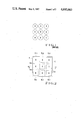
FIG. 1 shows a screen surface of a conventional color display device of this type. The circles represent display surfaces of single-color fluorescent display tubes. Reference symbols R, G, and B denote red, green, and blue, respectively. Three each of red, green, and blue fluorescent display tubes, a total of nine tubes, are used to constitute a 3 (rows)×3 (columns) matrix. A conventional color display device of this matrix arrangement has a low total resolution due to predetermined spaces between adjacent tubes. In addition, the numbers of parts and manufacturing steps are large, resulting in inconvenience.
SUMMARY OF THE INVENTION
It is an object of the present invention to provide a fluorescent display tube for a light source wherein the conventional problems can be solved, the resolution of a large-screen color display can be increased, and the manufacturing cost can be reduced.
In order to achieve the above object of the present invention, there is provided a fluorescent display tube comprising: an envelope constituted by a front panel, a rear panel, and a side panel, at least the front panel being able to transmit light therethrough; a plurality of phosphor screens formed on an inner surface of the front panel to constitute a matrix in a first direction and in a second direction perpendicular to the first direction; a plurality of anodes, respectively arranged around the phosphor screens, for accelerating electron beams; a plurality of cathodes, respectively corresponding to the phosphor screens and supported to float from an inner surface of the rear panel, for emitting the electron beams; plate-like control grids which are respectively arranged between the phosphor screens and the cathodes arranged in the first direction, and which have apertures for transmitting the electron beams from the cathodes to the phosphor screens; and stripe-like back electrodes which oppose the cathodes aligned on the inner surface of the rear panel along the second direction, wherein voltages applied to the control and back electrodes are higher or lower than those applied to the cathodes, thereby controlling light emission of the phosphor screens.
BRIEF DESCRIPTION OF THE DRAWINGS
FIG. 1 is a schematic view for explaining a color display device using conventional fluorescent display tubes for a light source;
FIG. 2 is a front view of a fluorescent display tube for a light source according to an embodiment of the present invention;
FIG. 3 is a sectional view of the display tube in FIG. 2 taken along the line III--III thereof; and
FIG. 4 is a perspective view showing part of the display tube in FIGS. 2 and 3.
DETAILED DESCRIPTION OF THE PREFERRED EMBODIMENT
The present invention will be described in detail with reference to the accompanying drawings.
FIG. 2 represents an illustration of a front display screen of a fluorescent display tube for a light source according to an embodiment of the present invention; FIG. 3 is a sectional view thereof taken along the line III--III thereof; and FIG. 4 is a perspective view showing part thereof. Referring to FIGS. 2 to 4, an envelope 1 is constituted by a glass front panel 2, a glass rear panel 3, and a glass side panel 4, which form a box-like shape. The envelope 1 is kept in vacuum. Phosphor screens 51,1, 51,2, . . . 53,3 of red, green, and blue phosphors are formed on the inner surface of the front panel 2 to constitute a matrix, as shown in FIG. 2. The phosphor screens are close to each other. Reference letters R, G, and B in FIG. 2 represent red, green, and blue, respectively. A plurality of accelerating anodes 61, 62, . . . are arranged corresponding to the boundaries between adjacent ones of phosphor screens 51,1 to 53,3. The anodes 61, 62, . . . are applied with a high voltage through an external terminal 16. Electron-emitting cathodes 71,1 to 73,3, respectively corresponding to the phosphor screens 51,1 to 53,3, are arranged in a matrix form in the same manner as the phosphor screens. Each of the cathodes 71,1 to 73,3 is supported between a pair of supports 17a and 17b fixed on the rear panel 3. An indirect heating type cathode prepared by coating an oxide on an Ni sleeve, or a direct heating type cathode prepared by coating an oxide on tungsten or the like can be used as each of the cathodes 71,1 to 73,3.
Discrete row selection control grids 81 to 83 are arranged between the cathode electrodes and the phosphor screens of the respective matrix rows. Each of the control grids 81 to 83 has electron beam apertures 91 to 93 for transmitting electron beams 11 as nonfocused beams from corresponding ones of the cathodes 71,1 to 73,3 to the corresponding phosphor screens 51,1 to 53,3.
Stripe-like three column selection back electrodes 101 to 103 are formed on the inner surface of the rear panel 3 so as to correspond to the columns of the matrix constituted by the cathodes 71,1 to 73,3. The back electrodes 101 to 103 are formed by conductive layers of Ag or the like. A negative and 0 V or a positive voltage of several volts, with respect to the potential at the cathodes 71,1 to 73,3, are applied to the back electrodes 101 to 103 to control the electron beams 11 emitted from the cathodes 71,1 to 73,3. Reference numeral 12 in FIG. 3 denotes lead pins as external terminals for leading the cathode, grid and back electrodes 71,1 to 73,3, 81 to 83, and 101 to 103 outside, through the back panel 3.
The basic operation of the arrangement described above will now be described. Assume that the back electrode 101 is kept negative with respect to the potential at the cathodes 71,1, 72,1, and 73,1. In this case, the electrons from the cathodes 71,1, 72,1, and 73,1 corresponding to the back electrode 101 are not supplied to the control grids 81 to 83 and the anode 61, and the cutoff state is obtained. If 0 V or a positive voltage of several volts, with respect to the potential at the cathodes 71,1 to 73,3, is applied to the back electrode 101, the electron beams 11 from the cathodes 71,1, 72,1, and 73,1 are supplied toward the control grids 81 to 83. For example, if the control grid 81 is negative with respect to the cathodes 71,1 to 73,3, the electron beam 11 cannot pass through the aperture 91 or reach the corresponding anode 61, and the phosphor screen 51,1 cannot emit light. However, if the control grid 81 is positive with respect to the cathodes 71,1 to 73,3, the electron beam 11 can pass through the corresponding aperture 91 to emit light from the phosphor screen 51,1. The above operation can also be applied to the back electrodes 102 and 103 and the control grids 82 and 83. By selectively driving the control grids 81 to 83 and the back electrodes 101 to 103, i.e., by performing dynamic driving thereof, the phosphor screens 51,1 to 53,3 at the intersections of the control grids and the back electrodes can be arbitrarily driven.
In the above embodiment, the number of phosphor screens is 3×3. However, the total number is not limited to 9. In addition, the number of phosphor colors need not be limited to three.
According to the present invention as described above, a composite fluorescent display tube for a light source incorporating a plurality of pixels in a single vacuum envelope can have a higher resolution since the space between adjacent pixels can be reduced. In addition, the numbers of parts and manufacturing steps can be reduced. At the same time, the structure of the display tube can be simplified. The display tube can be effectively applied to a large-screen display device, providing many practical advantages.