US4350737A - Power insertable nylon coated magnet wire - Google Patents
Power insertable nylon coated magnet wire Download PDFInfo
- Publication number
- US4350737A US4350737A US06/312,599 US31259981A US4350737A US 4350737 A US4350737 A US 4350737A US 31259981 A US31259981 A US 31259981A US 4350737 A US4350737 A US 4350737A
- Authority
- US
- United States
- Prior art keywords
- wire
- fatty acids
- nylon
- esters
- triglyceride
- Prior art date
- Legal status (The legal status is an assumption and is not a legal conclusion. Google has not performed a legal analysis and makes no representation as to the accuracy of the status listed.)
- Expired - Lifetime
Links
Images
Classifications
-
- H—ELECTRICITY
- H01—ELECTRIC ELEMENTS
- H01B—CABLES; CONDUCTORS; INSULATORS; SELECTION OF MATERIALS FOR THEIR CONDUCTIVE, INSULATING OR DIELECTRIC PROPERTIES
- H01B3/00—Insulators or insulating bodies characterised by the insulating materials; Selection of materials for their insulating or dielectric properties
- H01B3/18—Insulators or insulating bodies characterised by the insulating materials; Selection of materials for their insulating or dielectric properties mainly consisting of organic substances
- H01B3/30—Insulators or insulating bodies characterised by the insulating materials; Selection of materials for their insulating or dielectric properties mainly consisting of organic substances plastics; resins; waxes
- H01B3/303—Macromolecular compounds obtained by reactions forming a linkage containing nitrogen with or without oxygen or carbon in the main chain of the macromolecule, not provided for in groups H01B3/38 or H01B3/302
-
- H—ELECTRICITY
- H01—ELECTRIC ELEMENTS
- H01B—CABLES; CONDUCTORS; INSULATORS; SELECTION OF MATERIALS FOR THEIR CONDUCTIVE, INSULATING OR DIELECTRIC PROPERTIES
- H01B3/00—Insulators or insulating bodies characterised by the insulating materials; Selection of materials for their insulating or dielectric properties
- H01B3/18—Insulators or insulating bodies characterised by the insulating materials; Selection of materials for their insulating or dielectric properties mainly consisting of organic substances
- H01B3/20—Insulators or insulating bodies characterised by the insulating materials; Selection of materials for their insulating or dielectric properties mainly consisting of organic substances liquids, e.g. oils
-
- Y—GENERAL TAGGING OF NEW TECHNOLOGICAL DEVELOPMENTS; GENERAL TAGGING OF CROSS-SECTIONAL TECHNOLOGIES SPANNING OVER SEVERAL SECTIONS OF THE IPC; TECHNICAL SUBJECTS COVERED BY FORMER USPC CROSS-REFERENCE ART COLLECTIONS [XRACs] AND DIGESTS
- Y10—TECHNICAL SUBJECTS COVERED BY FORMER USPC
- Y10T—TECHNICAL SUBJECTS COVERED BY FORMER US CLASSIFICATION
- Y10T29/00—Metal working
- Y10T29/49—Method of mechanical manufacture
- Y10T29/49002—Electrical device making
- Y10T29/49009—Dynamoelectric machine
-
- Y—GENERAL TAGGING OF NEW TECHNOLOGICAL DEVELOPMENTS; GENERAL TAGGING OF CROSS-SECTIONAL TECHNOLOGIES SPANNING OVER SEVERAL SECTIONS OF THE IPC; TECHNICAL SUBJECTS COVERED BY FORMER USPC CROSS-REFERENCE ART COLLECTIONS [XRACs] AND DIGESTS
- Y10—TECHNICAL SUBJECTS COVERED BY FORMER USPC
- Y10T—TECHNICAL SUBJECTS COVERED BY FORMER US CLASSIFICATION
- Y10T428/00—Stock material or miscellaneous articles
- Y10T428/29—Coated or structually defined flake, particle, cell, strand, strand portion, rod, filament, macroscopic fiber or mass thereof
- Y10T428/2913—Rod, strand, filament or fiber
- Y10T428/2933—Coated or with bond, impregnation or core
- Y10T428/294—Coated or with bond, impregnation or core including metal or compound thereof [excluding glass, ceramic and asbestos]
- Y10T428/2942—Plural coatings
- Y10T428/2947—Synthetic resin or polymer in plural coatings, each of different type
Definitions
- the field of art to which this invention pertains is lubricant coatings for electrical conductors, and specifically lubricant coated magnet wire.
- an insulated magnet wire having a nylon insulation overcoating which can be power inserted into a coil slot in the locking wire size range without damage to the wire.
- the present invention is directed to magnet wire having an outermost insulating layer of nylon overcoated with an external lubricant coating which allows it to be reliably power inserted into a coil slot in its locking wire size range without damage to the insulation.
- the lubricant comprises a mixture of paraffin wax, hydrogenated triglyceride and esters of fatty acids and fatty alcohols.
- Another aspect of the invention is directed to wire as described above additionally containing in the nylon insulating layer an internal lubricant comprising esters of fatty acids and fatty alcohols.
- Another aspect of the invention is directed to wire as described above additionally containing in the nylon insulating layer an internal lubricant comprising hydrogenated triglyceride.
- Another aspect of the invention includes the method of producing such lubricated wires by applying the external lubricant composition in solution to the nylon insulation and drying the coated wire.
- Another aspect of the invention includes the method of power inserting such wires into coil slots.
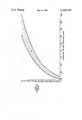
- the FIGURE demonstrates power insertion locking wire size range as a function of coil slot opening size.
- the paraffin wax should be present in an amount about 0.1% to about 4% by weight, the hydrogenated triglyceride present in about 0.1% to about 10% by weight, and the esters of fatty alcohols and fatty acids present in about 0.1% to about 10%, with the balance being solvent.
- the preferred composition comprises by weight about 1% paraffin wax, about 0.5% hydrogenated triglyceride, and about 0.5% esters of fatty alcohols and fatty acids, with balance solvent. While solution application is preferred, if solventless (i.e.
- the paraffin and triglyceride should be used in a ratio by weight of 1:15 to 60:1 and preferably in a ratio of about 2:1 and the triglycerides and esters in a ratio of about 30:1 and preferably in a ratio of about 1:1.
- the paraffin wax is preferably petroleum based having a melting point of 122° F. to 127° F. (50° C. to 52.8° C.).
- Eskar R-25 produced by Amoco Oil Company, having a refractive index of 1.4270 at 80° C., an oil content of 0.24%, specific gravity (at 60° F., 15.6° C.) of 0.839 and a flash point of 415° F. (212.8° C.) has been found to be particularly suitable.
- the hydrogenated triglyceride is aliphatic hydrocarbon solvent soluble and has a melting point of 47° C. to 50° C.
- a hydrogenated triglyceride which has been found to be particularly suitable is Synwax #3 produced by Werner G. Smith, Inc. (Cleveland, Ohio) having an Iodine No. of 22-35, a Saponification No. of 188-195, an Acid No. of 5 (maximum) and has approximate fatty acid component proportions of C 14 fatty acids--8%, C 16 fatty acids--34%, C 18 fatty acids--27%, C 20 fatty acids--16%, and C 22 fatty acids--15%.
- a fatty acid ester composition which has been found to be particularly suitable is Smithol 76 produced by Werner G. Smith, Inc., which has a Saponification No. of 130-140, an Iodine No. of 85-95 and comprises (in approximate proportions) C 12 to C 14 fatty alcohol esters of tall oil fatty acids (54.6%), tripentaerythritol esters of tall oil fatty acids (24.5 %), tetra-pentaerythritol esters of tall oil fatty acids (9.8%), free tall oil fatty acids (6.3%) and free C 12 to C 14 alcohols (4.8%).
- the solvents for the solution applications of the lubricant composition according to the present invention are preferably aliphaic hydrocarbons with a rapid vaporization rate, but a flash point which is not so low as to present inordinate flammability dangers.
- Aliphatic hydrocarbons such as naphtha, heptane and hexane can be used.
- LacoleneTM produced by Ashland Chemical Company, an aliphatic hydrocarbon having a flash point (Tag closed cup) of 22° F. (-5.6° C.), an initial boiling point of 195° F. (90.6° C.) a boilding range of 195° F. (90.6%) to 230° F. (110° C.), a specific gravity at 60° F.
- any of the above materials may be used in admixture with Freon® solvents (duPont de Nemours and Co., Inc.).
- a small amount of the above esters of fatty alcohols and fatty acids or the above hydrogenated triglyceride (or mixtures thereof) both of which are unreactive and insoluble in the nylon film can be added to the nylon insulation layer to further improve power insertability of the treated wires.
- the fatty acid ester or triglyceride composition is added to the nylon in amounts of about 0.05% to about 8% by weight, with about 0.5% preferred for the triglyceride composition and about 1% for the fatty acid ester composition preferred.
- the fatty acid ester and triglyceride compositions can be added to the nylon enamel composition either as it is being formulated or after formulation and prior to application to the wire. In the latter case, the enamel composition should be heated up slightly above room temperature to aid in uniform mixing of the ester or triglyceride composition in the enamel.
- any electrical conductor which requires a lubricant can be treated according to the present invention, although the invention is particularly adapted to wire and specifically magnet wire.
- the wire is generally copper or aluminum ranging anywhere from 2 to 128 mils in diameter, with wires 10 mils to 64 mils being the most commonly treated wires according to the present invention.
- the insulating wire coatings to which the lubricant is applied generally range from about 0.2 to about 2 mils in thickness, and generally about 0.7 mil to 1.6 mils.
- nylon insulating layer which is treated with the lubricants according to the present invention
- any nylon based material conventionally used in this art can be used including such things as nylon 6, nylon 66, nylon 10, nylon 11, nylon 12, nylon 612, nylon 69 and mixtures and copolymers thereof.
- This material can be used as a sale coat or part of a multicoat system on such conventional basecoat material as polyesters, polyurethanes, polyvinylformals, polyimides, polyamide-imides, polyesterimides, etc. and combinations thereof.
- the lubricants according to the present invention are preferably used in conjunction with nylon 66 or urethane modified nylon 66 overcoated on polyester, and in particular glycerine or tris-hydroxyethyl isocyanurate based polyester basecoats.
- the preferred treated wire according to the present invention comprises about 75% by weight basecoat and about 25% by weight nylon overcoat based on total insulation coating weight.
- the external lubricant can be applied by any conventional means such as coating dies, rollers or felt applicators.
- the preferred method of application utilizes a low boiling hydrocarbon solvent solution of the lubricant which can be applied with felt applicators and air dried, allowing a very thin "wash coat" film of lubricant to be applied to the wire.
- the amount of lubricant in the coating composition may vary, it is most preferred to use approximately 1% to 3% of the lubricant dissolved in the aliphatic hycrocarbon solvent.
- the coating is preferably applied to represent about 0.003% to about 0.004% by weight based on total weight of wire for copper wire, and about 0.009% to about 0.012% for aluminum wire.
- a copper wire approximately 22.6 mils in diameter was coated with a first insulating layer of a THEIC based polyester condensation polymer of ethylene glycol, trishydroxyethyl isocyanurate and dimethylterephthalate. Over this was applied a layer of nylon 66.
- the insulating layers were approximately 1.6 mils thick with about 75% of the coating weight constituted by the polyester basecoat, and about 25% by the nylon topcoat.
- the hydrogenated triglyceride and fatty acid ester (if solid) compositions were similarly slowly brought to their melting point and added to the warm solvent. The blend was mixed thoroughly for 5 minutes.
- the nylon overcoated THEIC polyester wire was run between two felt pads partially immersed in the above formulated lubricant composition at a rate of about 70 feet to 80 feet per minute (21 M/min to 24 M/min) and the thus applied coating air dried.
- the lubricant represented about 0.003% to about 0.004% by weight of the entire weight of the wire.
- Example 2 The same procedure followed in Example 1 was performed here, with the exception that 0.5% by weight based on total weight of the nylon insulating layer was comprised of hydrogenated triglyceride (Synwax #3).
- the hydrogenated triglyceride composition was added to the nylon enamel when it was in solution prior to the application to the wire.
- Multiple windings of the thus lubricated wire were power inserted simultaneously into the stators in its locking wire size range with no damage to the insulated magnet wire.
- the area A on the curve represents the locking wire size range as a function of insertion bladed coil slot opening (coil slot opening less 0.8 mm)
- the coated wire was clearly within locking wire size range and yet inserted with no problem.
- what the lubricated wires according to the present invention have accomplished is to shrink area A in the FIGURE to the point of eliminating locking wire size restrictions for power insertable magnet wires according to the present invention.
- the lubricants of the present invention impart advantages to the magnet wires even when they are inserted outside the locking wire size range, and even when the magnet wires are not intended to be power inserted at all.
- the magnet wires which are power inserted ouside the locking wire size range less damage is imparted to the wires as compared to similar wires with other lubricants, and it is possible to insert at lower pressures which further lessens damage to the wires. This results in a much lower failure rate (e.g. under conventional surge failure testing) for power inserted coils made with wire according to the present invention than with other lubricated wires.
- much improved windability is imparted to such wires, also resulting in less damage to the wires than with other lubricants.
- esters non-reactive with and insoluble in the nylon film insulation resulting from reaction of C 8 to C 24 alcohols having 1 to 12 hydroxyls with C 8 to C 24 fatty acids including some portions containing free alcohol and free acid can be used as lubricants according to the present invention, either admixed with paraffin as an external lubricant, or alone (or as admixtures themselves) as internal lubricants. These materials can also be hydrogenated to reduce their unsaturation to a low degree. It is also believed from preliminary tesing that C 12 to C 18 alcohols and mixtures thereof are similarly suitable lubricants for use according to the present invention.
Landscapes
- Physics & Mathematics (AREA)
- Spectroscopy & Molecular Physics (AREA)
- Chemical & Material Sciences (AREA)
- Chemical Kinetics & Catalysis (AREA)
- Oil, Petroleum & Natural Gas (AREA)
- Insulated Conductors (AREA)
- Organic Insulating Materials (AREA)
Abstract
Description
Claims (12)
Priority Applications (2)
| Application Number | Priority Date | Filing Date | Title |
|---|---|---|---|
| US06/312,599 US4350737A (en) | 1981-10-19 | 1981-10-19 | Power insertable nylon coated magnet wire |
| US06/385,218 US4385436A (en) | 1981-10-19 | 1982-06-04 | Method of power inserting nylon coated magnet wire |
Applications Claiming Priority (1)
| Application Number | Priority Date | Filing Date | Title |
|---|---|---|---|
| US06/312,599 US4350737A (en) | 1981-10-19 | 1981-10-19 | Power insertable nylon coated magnet wire |
Related Child Applications (1)
| Application Number | Title | Priority Date | Filing Date |
|---|---|---|---|
| US06/385,218 Division US4385436A (en) | 1981-10-19 | 1982-06-04 | Method of power inserting nylon coated magnet wire |
Publications (1)
| Publication Number | Publication Date |
|---|---|
| US4350737A true US4350737A (en) | 1982-09-21 |
Family
ID=23212192
Family Applications (1)
| Application Number | Title | Priority Date | Filing Date |
|---|---|---|---|
| US06/312,599 Expired - Lifetime US4350737A (en) | 1981-10-19 | 1981-10-19 | Power insertable nylon coated magnet wire |
Country Status (1)
| Country | Link |
|---|---|
| US (1) | US4350737A (en) |
Cited By (16)
| Publication number | Priority date | Publication date | Assignee | Title |
|---|---|---|---|---|
| US4400430A (en) * | 1981-07-24 | 1983-08-23 | Sumitomo Electric Industries, Ltd. | Magnet wires |
| US4420536A (en) * | 1981-11-23 | 1983-12-13 | Essex Group, Inc. | Self-bonding magnet wire |
| US4550055A (en) * | 1984-10-12 | 1985-10-29 | Essex Group, Inc. | Titanium chelate modified nylon magnet wire insulation coating |
| US4551398A (en) * | 1984-06-13 | 1985-11-05 | Essex Group, Inc. | Tetraalkyl titanate modified nylon magnet wire insulation coating |
| US4563369A (en) * | 1984-10-12 | 1986-01-07 | Essex Group, Inc. | Titanium chelate modified nylon magnet wire insulation coating |
| US4568607A (en) * | 1984-10-12 | 1986-02-04 | Essex Group, Inc. | Aromatic titanate modified nylon magnet wire insulation coating |
| US4614670A (en) * | 1985-07-25 | 1986-09-30 | Essex Group, Inc. | Method for insulating a magnet wire with an aromatic titanate modified nylon |
| US4693936A (en) * | 1984-05-02 | 1987-09-15 | Essex Group, Inc. | Low coefficient of friction magnet wire enamels |
| WO1993007239A1 (en) * | 1991-09-30 | 1993-04-15 | Danfoss Compressors Gmbh | A lubricant for wire used for forming the stator windings of an electrical refrigerating compressor |
| TR26215A (en) * | 1991-09-19 | 1995-02-15 | Gillette Co | A TRASS MACHINE WITH A LAYOUT TO SUPPORT THE LEGGING ELEMENTS ON THE FLEXIBLE FORM |
| US5902681A (en) * | 1996-11-08 | 1999-05-11 | Sumitomo Electric Industries, Ltd. | Insulated wire |
| US20030198826A1 (en) * | 2002-04-19 | 2003-10-23 | Seydel Scott O. | Moisture resistant, repulpable paper products and method of making same |
| RU2234754C2 (en) * | 2002-02-12 | 2004-08-20 | Общество с ограниченной ответственностью "Научная Производственная фирма Диэлектрик" | Silicone compound for producing electrical components |
| US7244509B1 (en) | 2002-04-19 | 2007-07-17 | Evco Research, Llc | Moisture resistant, repulpable paper products and method of making same |
| RU2342723C1 (en) * | 2007-11-15 | 2008-12-27 | ЗАО "Электроизолит" | Insulating enamel |
| EP4253508A1 (en) * | 2022-03-31 | 2023-10-04 | Afton Chemical Corporation | Durable magnet wires and lubricating fluids for electric and hybrid vehicle applications |
Citations (15)
| Publication number | Priority date | Publication date | Assignee | Title |
|---|---|---|---|---|
| US3413148A (en) * | 1964-06-18 | 1968-11-26 | Westinghouse Electric Corp | Polyethylene lubricated enameled wire |
| US3446660A (en) * | 1965-07-27 | 1969-05-27 | Anaconda Wire & Cable Co | High temperature magnet wire |
| US3513252A (en) * | 1969-04-07 | 1970-05-19 | Southwire Co | Insulated aluminum alloy magnet wire |
| US3632440A (en) * | 1969-01-13 | 1972-01-04 | Essex International Inc | Resinous composition for coating electric conductors |
| US3775175A (en) * | 1972-03-15 | 1973-11-27 | Westinghouse Electric Corp | Enameled wire lubricated with polyethylene |
| US3856566A (en) * | 1972-05-24 | 1974-12-24 | Gen Cable Corp | Method of making insulated magnet wire |
| US3953649A (en) * | 1973-08-12 | 1976-04-27 | Kanegafuchi Kagaku Kogyo Kabushiki Kaisha | Self-bonding magnet wire and process of manufacturing same |
| US3975571A (en) * | 1974-10-25 | 1976-08-17 | Sumitomo Electric Industries, Ltd. | Self-bonding magnet wire |
| US4002797A (en) * | 1974-03-01 | 1977-01-11 | Siemens Aktiengesellschaft | Lubricant for wires with enameled or lacquered insulation |
| US4004063A (en) * | 1974-12-31 | 1977-01-18 | General Electric Company | Aqueous enamel for coating magnet wire |
| US4163826A (en) * | 1977-02-28 | 1979-08-07 | Sumitomo Electric Industries, Ltd. | Self-bonding magnet wires and coils made therefrom |
| JPS5580204A (en) * | 1978-12-12 | 1980-06-17 | Hitachi Cable | Insulated wire |
| JPS5580208A (en) * | 1978-12-14 | 1980-06-17 | Hitachi Cable | Insulated wire |
| JPS5580207A (en) * | 1978-12-14 | 1980-06-17 | Hitachi Cable | Insulated wire |
| US4216263A (en) * | 1979-05-04 | 1980-08-05 | Rea Magnet Wire Co., Inc. | Magnet wire |
-
1981
- 1981-10-19 US US06/312,599 patent/US4350737A/en not_active Expired - Lifetime
Patent Citations (15)
| Publication number | Priority date | Publication date | Assignee | Title |
|---|---|---|---|---|
| US3413148A (en) * | 1964-06-18 | 1968-11-26 | Westinghouse Electric Corp | Polyethylene lubricated enameled wire |
| US3446660A (en) * | 1965-07-27 | 1969-05-27 | Anaconda Wire & Cable Co | High temperature magnet wire |
| US3632440A (en) * | 1969-01-13 | 1972-01-04 | Essex International Inc | Resinous composition for coating electric conductors |
| US3513252A (en) * | 1969-04-07 | 1970-05-19 | Southwire Co | Insulated aluminum alloy magnet wire |
| US3775175A (en) * | 1972-03-15 | 1973-11-27 | Westinghouse Electric Corp | Enameled wire lubricated with polyethylene |
| US3856566A (en) * | 1972-05-24 | 1974-12-24 | Gen Cable Corp | Method of making insulated magnet wire |
| US3953649A (en) * | 1973-08-12 | 1976-04-27 | Kanegafuchi Kagaku Kogyo Kabushiki Kaisha | Self-bonding magnet wire and process of manufacturing same |
| US4002797A (en) * | 1974-03-01 | 1977-01-11 | Siemens Aktiengesellschaft | Lubricant for wires with enameled or lacquered insulation |
| US3975571A (en) * | 1974-10-25 | 1976-08-17 | Sumitomo Electric Industries, Ltd. | Self-bonding magnet wire |
| US4004063A (en) * | 1974-12-31 | 1977-01-18 | General Electric Company | Aqueous enamel for coating magnet wire |
| US4163826A (en) * | 1977-02-28 | 1979-08-07 | Sumitomo Electric Industries, Ltd. | Self-bonding magnet wires and coils made therefrom |
| JPS5580204A (en) * | 1978-12-12 | 1980-06-17 | Hitachi Cable | Insulated wire |
| JPS5580208A (en) * | 1978-12-14 | 1980-06-17 | Hitachi Cable | Insulated wire |
| JPS5580207A (en) * | 1978-12-14 | 1980-06-17 | Hitachi Cable | Insulated wire |
| US4216263A (en) * | 1979-05-04 | 1980-08-05 | Rea Magnet Wire Co., Inc. | Magnet wire |
Non-Patent Citations (2)
| Title |
|---|
| "Motor Winding Insertion" by Cal Towne, Electrical/Electronics Insulation Conference, Boston, Mass., Sep. 1979. * |
| European Patent Application No. 0-033-244, published Aug. 5, 1981 (Bulletin 8/31). * |
Cited By (23)
| Publication number | Priority date | Publication date | Assignee | Title |
|---|---|---|---|---|
| US4400430A (en) * | 1981-07-24 | 1983-08-23 | Sumitomo Electric Industries, Ltd. | Magnet wires |
| US4420536A (en) * | 1981-11-23 | 1983-12-13 | Essex Group, Inc. | Self-bonding magnet wire |
| US4693936A (en) * | 1984-05-02 | 1987-09-15 | Essex Group, Inc. | Low coefficient of friction magnet wire enamels |
| US4551398A (en) * | 1984-06-13 | 1985-11-05 | Essex Group, Inc. | Tetraalkyl titanate modified nylon magnet wire insulation coating |
| US4550055A (en) * | 1984-10-12 | 1985-10-29 | Essex Group, Inc. | Titanium chelate modified nylon magnet wire insulation coating |
| US4563369A (en) * | 1984-10-12 | 1986-01-07 | Essex Group, Inc. | Titanium chelate modified nylon magnet wire insulation coating |
| US4568607A (en) * | 1984-10-12 | 1986-02-04 | Essex Group, Inc. | Aromatic titanate modified nylon magnet wire insulation coating |
| US4614670A (en) * | 1985-07-25 | 1986-09-30 | Essex Group, Inc. | Method for insulating a magnet wire with an aromatic titanate modified nylon |
| TR26215A (en) * | 1991-09-19 | 1995-02-15 | Gillette Co | A TRASS MACHINE WITH A LAYOUT TO SUPPORT THE LEGGING ELEMENTS ON THE FLEXIBLE FORM |
| US6461730B1 (en) * | 1991-09-20 | 2002-10-08 | Danfoss A/S | Lubricant for wire used for forming the stator windings of an electrical refrigerating compressor |
| TR27161A (en) * | 1991-09-30 | 1994-11-10 | Danfoss Flensburg Gmbh | A lubricant for the wire used to create stator windings of an electric refrigerant compressor. |
| WO1993007239A1 (en) * | 1991-09-30 | 1993-04-15 | Danfoss Compressors Gmbh | A lubricant for wire used for forming the stator windings of an electrical refrigerating compressor |
| US6562767B1 (en) * | 1991-09-30 | 2003-05-13 | Danfoss Compressors Gmbh | Process for producing a lubricant coated laquered wire used for forming the stator winding of an electrical refrigerating compressor |
| US5902681A (en) * | 1996-11-08 | 1999-05-11 | Sumitomo Electric Industries, Ltd. | Insulated wire |
| RU2234754C2 (en) * | 2002-02-12 | 2004-08-20 | Общество с ограниченной ответственностью "Научная Производственная фирма Диэлектрик" | Silicone compound for producing electrical components |
| US20030198826A1 (en) * | 2002-04-19 | 2003-10-23 | Seydel Scott O. | Moisture resistant, repulpable paper products and method of making same |
| US6846573B2 (en) | 2002-04-19 | 2005-01-25 | Evco Research Llc | Moisture resistant, repulpable paper products and method of making same |
| US20050123780A1 (en) * | 2002-04-19 | 2005-06-09 | Seydel Scott O. | Moisture resistant, repulpable paper products and method of making same |
| US7244509B1 (en) | 2002-04-19 | 2007-07-17 | Evco Research, Llc | Moisture resistant, repulpable paper products and method of making same |
| RU2342723C1 (en) * | 2007-11-15 | 2008-12-27 | ЗАО "Электроизолит" | Insulating enamel |
| EP4253508A1 (en) * | 2022-03-31 | 2023-10-04 | Afton Chemical Corporation | Durable magnet wires and lubricating fluids for electric and hybrid vehicle applications |
| US11814599B2 (en) | 2022-03-31 | 2023-11-14 | Afton Chemical Corporation | Durable magnet wires and lubricating fluids for electric and hybrid vehicle applications |
| US12227716B2 (en) | 2022-03-31 | 2025-02-18 | Afton Chemical Corporation | Durable magnet wires and lubricating fluids for electric and hybrid vehicle applications |
Similar Documents
| Publication | Publication Date | Title |
|---|---|---|
| US4390590A (en) | Power insertable polyamide-imide coated magnet wire | |
| US4420536A (en) | Self-bonding magnet wire | |
| US4410592A (en) | Power insertable nylon coated magnet wire | |
| US4693936A (en) | Low coefficient of friction magnet wire enamels | |
| US4348460A (en) | Power insertable polyamide-imide coated magnet wire | |
| US4216263A (en) | Magnet wire | |
| US4350738A (en) | Power insertable polyamide-imide coated magnet wire | |
| US4449290A (en) | Power insertable nylon coated magnet wire | |
| JP3419226B2 (en) | Insulated wire | |
| US4406055A (en) | Power insertable polyamide-imide coated magnet wire | |
| US4385436A (en) | Method of power inserting nylon coated magnet wire | |
| US4379807A (en) | Magnet wire for hermetic motors | |
| US4385437A (en) | Method of power inserting polyamide-imide coated magnet wire | |
| US4385435A (en) | Method of power inserting polyamide-imide coated magnet wire | |
| US3822147A (en) | Insulated electrical conductor and coils formed thereof | |
| WO1993007239A1 (en) | A lubricant for wire used for forming the stator windings of an electrical refrigerating compressor | |
| JP5337972B2 (en) | Lubricating insulated wire and motor using the same | |
| US4346136A (en) | Bondable magnet wire comprising polyamide-imide coating containing residual solvent | |
| JP3188171B2 (en) | Manufacturing method of rectangular insulated wire | |
| JPH03115477A (en) | Insulating coating material and insulated wire | |
| JPS5847801B2 (en) | Jikojiyunkatsusei Enamel Settsuendensen | |
| JPH0963358A (en) | Insulated wire | |
| CA1177548A (en) | Bondable magnet wire | |
| JPH0426427Y2 (en) | ||
| JPS6161203B2 (en) |
Legal Events
| Date | Code | Title | Description |
|---|---|---|---|
| AS | Assignment |
Owner name: ESSEX GROUP, INC., 1601 WALL ST., FT. WAYNE, IN 46 Free format text: ASSIGNMENT OF ASSIGNORS INTEREST.;ASSIGNORS:SAUNDERS, HOLLIS S.;CARMER, RICHARD V.;PAYETTE, LIONEL J.;REEL/FRAME:003937/0699 Effective date: 19811016 |
|
| STCF | Information on status: patent grant |
Free format text: PATENTED CASE |
|
| MAFP | Maintenance fee payment |
Free format text: PAYMENT OF MAINTENANCE FEE, 4TH YEAR, PL 96-517 (ORIGINAL EVENT CODE: M170); ENTITY STATUS OF PATENT OWNER: LARGE ENTITY Year of fee payment: 4 |
|
| MAFP | Maintenance fee payment |
Free format text: PAYMENT OF MAINTENANCE FEE, 8TH YEAR, PL 96-517 (ORIGINAL EVENT CODE: M171); ENTITY STATUS OF PATENT OWNER: LARGE ENTITY Year of fee payment: 8 |
|
| AS | Assignment |
Owner name: CHEMICAL BANK Free format text: SECURITY INTEREST;ASSIGNOR:ESEX GROUP, INC.;REEL/FRAME:006399/0203 Effective date: 19921009 |
|
| MAFP | Maintenance fee payment |
Free format text: PAYMENT OF MAINTENANCE FEE, 12TH YEAR, LARGE ENTITY (ORIGINAL EVENT CODE: M185); ENTITY STATUS OF PATENT OWNER: LARGE ENTITY Year of fee payment: 12 |
|
| FEPP | Fee payment procedure |
Free format text: PAYOR NUMBER ASSIGNED (ORIGINAL EVENT CODE: ASPN); ENTITY STATUS OF PATENT OWNER: LARGE ENTITY |
|
| FEPP | Fee payment procedure |
Free format text: PAYOR NUMBER ASSIGNED (ORIGINAL EVENT CODE: ASPN); ENTITY STATUS OF PATENT OWNER: LARGE ENTITY Free format text: PAYER NUMBER DE-ASSIGNED (ORIGINAL EVENT CODE: RMPN); ENTITY STATUS OF PATENT OWNER: LARGE ENTITY |
|
| AS | Assignment |
Owner name: CHASE MANHATTAN BANK, NEW YORK Free format text: SECURITY AGREEMENT;ASSIGNOR:ESSEX GROUP, INC.;REEL/FRAME:008376/0143 Effective date: 19961031 |
|
| AS | Assignment |
Owner name: DNE TECHNOLOGIES INC., CONNECTICUT Free format text: RELEASE OF INTELLECTUAL PROERTY;ASSIGNOR:CHASE MANHATTAN BANK, THE (F/K/A CHEMICAL BANK), AS ADMINISTRATIVE AGENT;REEL/FRAME:009748/0197 Effective date: 19981127 Owner name: BANKERS TRUST COMPANY, AS COLLATERAL AGENT, NEW YO Free format text: SECURITY AGREEMENT;ASSIGNORS:ESSEX TECHNOLOGY, INC.;ESSEX GROUP, INC.;SUPERIOR TELECOMMUNICATIONS INC.;AND OTHERS;REEL/FRAME:009756/0756 Effective date: 19981127 Owner name: SUPERIOR TELECOMMUNICATIONS INC., GEORGIA Free format text: RELEASE OF INTELLECTUAL PROERTY;ASSIGNOR:CHASE MANHATTAN BANK, THE (F/K/A CHEMICAL BANK), AS ADMINISTRATIVE AGENT;REEL/FRAME:009748/0197 Effective date: 19981127 Owner name: ESSEX GROUP, INC., INDIANA Free format text: RELEASE OF INTELLECTUAL PROERTY;ASSIGNOR:CHASE MANHATTAN BANK, THE (F/K/A CHEMICAL BANK), AS ADMINISTRATIVE AGENT;REEL/FRAME:009748/0197 Effective date: 19981127 Owner name: ESSEX TECHNOLOGY, INC., INDIANA Free format text: RELEASE OF INTELLECTUAL PROERTY;ASSIGNOR:CHASE MANHATTAN BANK, THE (F/K/A CHEMICAL BANK), AS ADMINISTRATIVE AGENT;REEL/FRAME:009748/0197 Effective date: 19981127 |
|
| AS | Assignment |
Owner name: ESSEX TECHNOLOGY, INC., DELAWARE Free format text: ASSIGNMENT OF ASSIGNORS INTEREST;ASSIGNOR:ESSEX GROUP, INC.;REEL/FRAME:009773/0001 Effective date: 19981101 |
|
| AS | Assignment |
Owner name: ESSEX TECHNOLOGY, INC., DELAWARE Free format text: ASSIGNMENT OF ASSIGNORS INTEREST;ASSIGNOR:ESSEX GROUP, INC.;REEL/FRAME:010231/0104 Effective date: 19981101 |