US3389618A - Torque transmitting device - Google Patents
Torque transmitting device Download PDFInfo
- Publication number
- US3389618A US3389618A US549240A US54924066A US3389618A US 3389618 A US3389618 A US 3389618A US 549240 A US549240 A US 549240A US 54924066 A US54924066 A US 54924066A US 3389618 A US3389618 A US 3389618A
- Authority
- US
- United States
- Prior art keywords
- star
- ring member
- axis
- relative
- casing section
- Prior art date
- Legal status (The legal status is an assumption and is not a legal conclusion. Google has not performed a legal analysis and makes no representation as to the accuracy of the status listed.)
- Expired - Lifetime
Links
- 239000012530 fluid Substances 0.000 description 18
- 238000010276 construction Methods 0.000 description 4
- 238000007789 sealing Methods 0.000 description 4
- 230000004323 axial length Effects 0.000 description 3
- 230000004048 modification Effects 0.000 description 3
- 238000012986 modification Methods 0.000 description 3
- 238000004891 communication Methods 0.000 description 2
- 238000004519 manufacturing process Methods 0.000 description 2
- 238000005096 rolling process Methods 0.000 description 2
- 229920000136 polysorbate Polymers 0.000 description 1
- 238000005086 pumping Methods 0.000 description 1
Images


Classifications
-
- F—MECHANICAL ENGINEERING; LIGHTING; HEATING; WEAPONS; BLASTING
- F16—ENGINEERING ELEMENTS AND UNITS; GENERAL MEASURES FOR PRODUCING AND MAINTAINING EFFECTIVE FUNCTIONING OF MACHINES OR INSTALLATIONS; THERMAL INSULATION IN GENERAL
- F16D—COUPLINGS FOR TRANSMITTING ROTATION; CLUTCHES; BRAKES
- F16D3/00—Yielding couplings, i.e. with means permitting movement between the connected parts during the drive
- F16D3/02—Yielding couplings, i.e. with means permitting movement between the connected parts during the drive adapted to specific functions
- F16D3/04—Yielding couplings, i.e. with means permitting movement between the connected parts during the drive adapted to specific functions specially adapted to allow radial displacement, e.g. Oldham couplings
-
- F—MECHANICAL ENGINEERING; LIGHTING; HEATING; WEAPONS; BLASTING
- F04—POSITIVE - DISPLACEMENT MACHINES FOR LIQUIDS; PUMPS FOR LIQUIDS OR ELASTIC FLUIDS
- F04C—ROTARY-PISTON, OR OSCILLATING-PISTON, POSITIVE-DISPLACEMENT MACHINES FOR LIQUIDS; ROTARY-PISTON, OR OSCILLATING-PISTON, POSITIVE-DISPLACEMENT PUMPS
- F04C2/00—Rotary-piston machines or pumps
- F04C2/08—Rotary-piston machines or pumps of intermeshing-engagement type, i.e. with engagement of co-operating members similar to that of toothed gearing
- F04C2/10—Rotary-piston machines or pumps of intermeshing-engagement type, i.e. with engagement of co-operating members similar to that of toothed gearing of internal-axis type with the outer member having more teeth or tooth-equivalents, e.g. rollers, than the inner member
- F04C2/102—Rotary-piston machines or pumps of intermeshing-engagement type, i.e. with engagement of co-operating members similar to that of toothed gearing of internal-axis type with the outer member having more teeth or tooth-equivalents, e.g. rollers, than the inner member the two members rotating simultaneously around their respective axes
-
- F—MECHANICAL ENGINEERING; LIGHTING; HEATING; WEAPONS; BLASTING
- F16—ENGINEERING ELEMENTS AND UNITS; GENERAL MEASURES FOR PRODUCING AND MAINTAINING EFFECTIVE FUNCTIONING OF MACHINES OR INSTALLATIONS; THERMAL INSULATION IN GENERAL
- F16H—GEARING
- F16H1/00—Toothed gearings for conveying rotary motion
- F16H1/28—Toothed gearings for conveying rotary motion with gears having orbital motion
- F16H1/32—Toothed gearings for conveying rotary motion with gears having orbital motion in which the central axis of the gearing lies inside the periphery of an orbital gear
Definitions
- a drive mechanism for transmitting torque between two relatively orbital members comprising a plurality of circumferentially arranged articulated holes, with each hole being formed partly in one member and partly in the other, and a like number of rollers respectively and loosely disposed in the articulated holes.
- This invention relates to a torque transmitting device for transmitting torque between a first member which is rotatable or stationary and a second member which is eccentrically disposed relative to said first member and which is capable of orbital movement and which may or may not also be capable of rotational movement.
- German Patent 535,807 A prior art form of a torque transmitting device of the type referred to above is shown in German Patent 535,807.
- the means for transmitting torque between two relatively orbitably moveable members comprises a plurality of circumferentially arranged holes in one of the members and a circumferentially arranged plurality of rollers or pins for disposition in the holes fixedly attached to the other of the members.
- One inherent characteristic of the prior art construction is that a separate plate member to which the roller members are attached must be provided.
- the means for transmitting torque between two relatively orbital members comprises a plurality of circumferentially arranged, articulated holes, with each hole being formed partly in one member and partly in the other, and a like number of rollers respectively and loosely disposed in the articulated holes.
- a main object of the invention is to provide a new and improved torque transmitting device as described herein.
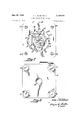
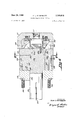
- FIG. 1 is a longitudinal sectional view of a fluid pressure device in which a first embodiment of the torque transmitting device of the present invention is embodied;
- FIG. 2 is a sectional view taken on line 22 of FIG. 1;
- FIG. 4 is a longitudinal sectional view of a fluid pressure device in which a second embodiment of the torque transmitting device of the present invention is embodied;
- the present invention has general utility and it is only by way of example that it is illustrated herein as being 3,389,618 Patented June 25, 1968 embodied in fluid pressure devices which may be utilized as pumps or motors.
- a casing or housing made of several sections which are a valve casing section 10, a fluid passage casing section 12, a gerotor casing section 14 and an end section 15.
- Casing sections 10, 12, 14 and 15 are generally rectangular in shape and'are held together in axial and radial alignment by four circumferentially spaced bolts 16.
- Casing section 10 is provided with inlet and outlet ports 18 and 19 which could be reversed for operation of the pump or motor in the opposite direction.
- gerotor casing section 14 has a plurality of circumferentially arranged internal teeth 20 which are concentrically arranged relative to a longitudinally extending axis 22.
- An externally toothed star member 26 having at least one fewer teeth 27 than gerotor casing section 14, which may be referred to as ring member 14, has the teeth thereof in meshing engagement with the teeth 20 of ring member 14.
- Star member 26 partakes of a hypocycloidal movement with the geometric axis 28 thereof defining or having a circular orbital path about the axis 22 of the ring member 14.
- Star 26 is equal in axial length to ring member 14 and is sealing engagement with adjacent annular surfaces of casing sections 12 and 15 between which star 26 is disposed.
- Star 26 has a cylindrical bore 30 which is concentrically disposed relative to star axis 28 and eccentrically disposed relative to ring axis 22.
- Ring member 14 and star member 26 which comprise a gerotor mechanism may be used as the rotor and stator elements of a fluid pressure motor or pump.
- Casing sections 12 and 15 have bores 32 and 34 which constitute bearing surfaces and which are concentric relative to ring axis 22.
- a shaft 36 which has a cylindrically shaped intermediate portion 38 which is concentrically arranged relative to axis 22 and has a larger diameter than the end portions of the shaft.
- Intermediate shaft portion 38 is disposed in star 'bore 30 and is illustrated as being equal in axial length to star member 26 and as having a diameter equal to the diameter of star bore 30* minus twice the distance between axes 22 and 28.
- the diameter of shaft portion 38 may be somewhat smaller than illustrated, relative to star bore 30, but not larger if interference is to be avoided.
- a plurality of articulated holes 40 are provided be tween star 26 and shaft portion 38.
- Each hole 40 would have the two halves thereof in a cylindrically shaped locus if star 26 were concentrically positioned relative to shaft portion 38.
- star 28 is always eccentrically disposed relative to shaft portion 3%, however, none of the holes 40 ever have both surfaces thereof entirely within a single, cylindrically shaped locus.
- the size of a hole 40 reference will be made to the etfective diameter of the hole which will mean the diameter it would have if star 26 and shaft portion 38 were arranged concentrically.
- each hole 40 Disposed in holes 40 are a corresponding number of cylindrically shaped rollers 42.
- the effective diameter of each hole 40 is equal to the diameter of a roller 42 therein plus twice the distance between axes 22 and 28.
- the rollers 42 provide torque transmitting connections between shaft portion 38 and star 26 and with the construction illustrated, having regard to the shapes and the relative sizes of the holes 40 and rollers 42, a true rolling action results between the rollers 42 and shaft portion 38 and between rollers 42 and star 26.
- externally toothed star member 26 is disposed eccentrically in the chamber or space formed and surrounded by ring member 14 and the axis 28 of star member 26 is movable in a circular orbital path about the axis 22 of ring member 14.
- the teeth 27 thereof intermesh with the ring member teeth in sealing engagement to form expanding and contracting cells which are equal in number to the number of star member teeth 27.
- a vertical centerline 48 incidentally represents the line of eccentricity for the star member 26 for that particular position of the star member relative to the ring member 14.
- the cells on the left side of the line of eccentricity would be expanding and the cells on the right side would be contracting.
- a star member 26 having sixteen teeth will make one revolution about its own axis 28 for every Sixteen times the star member orbits in the opposite direction about the axis 22 of the ring member 14.
- star member 26 will b gyrated and rotated by a turning force applied to shaft 36 and transmitted to star member 26 through rollers 42.
- the star 26 and shaft portion 38 of shaft 36 may be arranged with fixtures or the like such that the respective axes 28 and 22 are coaxial.
- a plurality of cylindrically shaped holes 46 may then be drilled which are equidistant from and circumferentially arranged relative to the coaxial axes 23 and 22.
- the holes extend axially and are parallel relative to the coaxial axes 22 and 28 and are articulated by reason of being formed partially in the star member 25 and partially in the shaft portion 38.
- Valve casing section 10 has an axially extending bore 50 which is concentric relative to axis 22.
- Rotatably disposed in bore 50 is a generally cylindrically shaped valve 52 which is connected to shaft 36 by means of drive pins 54 and 55 so as to be rotatable therewith relative to casing sections 16 and 12.
- Casing section 12 has seventeen axially extending, circumferentially arranged passages 56 which are periodically in fluid communication with inlet and outlet passages in valve 52 in a known manner to provide for the flow of fluid from inlet port 18 to expanding chambers formed between the teeth of the star and ring members and for the flow of fluid from contracting chambers formed between the teeth of the star and ring members to the outlet port 19.
- a casing or hOusing made of several sections which are a valve casing section 110, a fluid passage casing section 112, a gerotor casing section 114 and an end section 115.
- Casing sections 110, 112, 114 and 115 are generally rectangular in shape and are held together in axial and radial alignment by four circumferentially spaced bolts 11s.
- Casing section is provided with inlet and outlet ports 117 and 118 which could be reversed for operation of the pump or motor in the opposite direction.
- gerotor casing section 114 has a cylindrical bore 119 which is concentrically disposed relative to a longitudinally extending axis 120. Disposed in bore 119 is a generally annularly shaped ring member 121 which has a plurality of circumferentially arranged internal teeth 122 which are circumferentially arranged relative to the geometric axis 123 of ring member 121. Ring member 121 is equal in axial length to casing section 114 and is in sealing engagement with adjacent annular surfaces of casing sections 112 and between which ring member 121 is disposed.
- Ring member 121 has :a cylindrically shaped outer surface 124 which is concentric relative to the geometric axis 123 of ring 121 and 4t is adapted to have orbital movement about axis 120.
- the diameter of ring member surface 124 is illustrated as being equal to the diameter of casing bore 119 minus twice the distance between axes 12% and 123.
- the outside diameter of ring member 121 may be somewhat smaller than illustrated, relative to the casing bore 119, but not larger if interference is to be avoided.
- a plurality of articulated holes 126 are provided between ring member 121 and casing section 114. Each hole 126 would have the two halves thereof in a cylindrically shaped locus if ring member 121 were concentrically positioned relative to casing section 114. As ring member 121 is always eccentrically disposed relative to casing section 114, however, none of the holes 126 ever have both surfaces thereof entirely within a single cylindrically shaped locus. In referring to the size of a hole 125 reference will be made to the "effective diameter of the hole which will mean the diameter it would have if ring member 121 and casing section 114 were arranged concentrically.
- each hole 126 Disposed in holes 126 are a corresponding number of cylindrically shaped rollers 128.
- the effective diameter of each hole 126 is equal to the diameter of a roller 123 therein plus twice the distance between axes 126 and 123.
- the rollers 126 provide torque transmitting connections between ring member 121 and easing section 114 and with the construction illustrated, having regard to the shapes and the relative sizes of the holes 126 and rollers 128, a true rolling action results between the rollers 126 and ring member 121, and between rollers 126 and casing section 114, during orbital movement of ring member 121 relative to casing section 114.
- Casing sections 112 and 115 have bores 132 and 134 which constitute bearing surfaces and which are concentric relative to axis 120.
- Rotatably disposed and journalled in bores 132 and 134 is a shaft 136 which has an intermediate portion 138 of larger diameter than the end portions of the shaft.
- Intermediate shaft portion 138 has the form of an externally toothed star member which has at least one fewer teeth 140' than ring member 121 with the teeth 140 thereof being in meshing engagement with the teeth 122 of ring member 121.
- Rotation of shaft causes rotation of star 138 about axis 120 which in turn imparts an orbital movement to ring member 121 which defines a circular orbital path about the axis 120.
- Ring member 121 and star member 133 comprise a ge-rotor mechanism which may be used as the cooperating elements of a fluid pressure motor or pump.
- the star teeth thereof intermesh with the ring member teeth 122 in sealing engagement to form expanding and contracting cells which are equal in number to the number of star member teeth 14%
- a vertical centerline 148 incidentally represents the line of eccentricity for the star and ring members for the particular position shown of the members relative to each other.
- the ring member 121 and casing section 114 may be arranged with fixtures or the like such that the respective axes 123 and 126 thereof are coaxial.
- a plurality of cylindrically shaped holes 126 may then be drilled which are equidistant from and circumferentially arranged relative to the coaxial axes 123 and 120.
- the holes 126 extend axially and are parallel relative to the coaxial axes 123 and 120 and are articulated by reason of being formed partially in the ring member 121 and partially in the casing section 114.
- Valve casing section 110- has an axially extending bore 150 which is concentric relative to axis 120.
- Rotatably disposed in bore 150* is a generally cylindrically shaped valve 152 which is connected to shaft 135 by means of drive pins 154 and 155 so as to be rotatable therewith relative to casing sections 110 and 112.
- Casing section 112 has seventeen axially extending, circumferentially arranged passages 156 which are periodically in fluid communication with inlet and outlet passages in valve 152 in a known manner to provide for the flow of fluid from inlet port 118 to expanding chambers formed between the teeth of the star and ring members and for the flow of fluid from cont-acting chambers formed between the teeth of the star and ring members to the outlet port 119.
- a drive mechanism comprising a first member having an axis, a second member eccentrically disposed relative to said first member and adapted to orbit in a circular path about said axis, a plurality of articulated holes extending longitudinally relative to said axis with each hole being formed partly in said first member and partly in said second member, and a plurality of cylindrically shaped rollers loosely disposed respectively in said holes, said rollers being of less diameter than said holes, the diiference in diameters between one of said holes and one of said rollers disposed therein being equal to twice the I eccentricity of said second member, whereby the orbital movement of said second member is facilitated.
Landscapes
- Engineering & Computer Science (AREA)
- General Engineering & Computer Science (AREA)
- Mechanical Engineering (AREA)
- Hydraulic Motors (AREA)
Description
June 25, 1968 L, MCDERMQTT 3,389,618
TORQUE TRANSMITTING DEVICE Filed May 11, 1966 4 Sheets-Sheet 1 I NVEN TOR. HUGH I. MQDEWOTT t Afraid/[V June 25, 1968 Filed May 11, 1966 4 Sheets-Sheet .nlnllll ATMP/VEV June 25, 1968 MCDERMOTT 3,389,618
TORQUE TRANSMITTING DEVICE Filed May 11, 1966 4 Sheets-Sheet 5 INVENTOR. HUGH L M Dsmaz'z' June 25, 1968 H, L. McDERMoTT 3,389,618
TORQUE TRANSMITTING DEVICE Filed May 11, 1966 4 Sheets-Sheet 4 116/ W1 1 NVEN TOR.
' HUGH-LMEDERMOZ'T IE 6 7% 62m United States Patent 3,389,618 TORQUE TRANSMITTING DEVICE Hugh L. McDermott, Minneapolis, Minn., assignor to Char-Lynn Company, Eden Prairie, Minn., a corporation of Minnesota Filed May 11, 1966, Ser. No. 549,240 1 Claim. (Cl. 74--804) ABSTRACT OF THE DISCLOSURE A drive mechanism for transmitting torque between two relatively orbital members, the mechanism comprising a plurality of circumferentially arranged articulated holes, with each hole being formed partly in one member and partly in the other, and a like number of rollers respectively and loosely disposed in the articulated holes.
This invention relates to a torque transmitting device for transmitting torque between a first member which is rotatable or stationary and a second member which is eccentrically disposed relative to said first member and which is capable of orbital movement and which may or may not also be capable of rotational movement.
A prior art form of a torque transmitting device of the type referred to above is shown in German Patent 535,807. In the prior art type of device shown in the patent the means for transmitting torque between two relatively orbitably moveable members comprises a plurality of circumferentially arranged holes in one of the members and a circumferentially arranged plurality of rollers or pins for disposition in the holes fixedly attached to the other of the members. One inherent characteristic of the prior art construction is that a separate plate member to which the roller members are attached must be provided.
In the torque transmitting device of the present invention the means for transmitting torque between two relatively orbital members comprises a plurality of circumferentially arranged, articulated holes, with each hole being formed partly in one member and partly in the other, and a like number of rollers respectively and loosely disposed in the articulated holes.
Two advantages the present invention has over the prior art are (1) the need for a separate plate or the like for carrying rollers attached thereto is eliminated and (2) the space requirement for the separate plate or the like in an axial direction is eliminated.
. A main object of the invention is to provide a new and improved torque transmitting device as described herein.
Other objects and advantages of the invention will become apparent from the following specifications, drawings and appended claims.
In the drawings:
FIG. 1 is a longitudinal sectional view of a fluid pressure device in which a first embodiment of the torque transmitting device of the present invention is embodied;
FIG. 2 is a sectional view taken on line 22 of FIG. 1;
FIG. 3 is an end view taken from the right side of FIG. 1;
FIG. 4 is a longitudinal sectional view of a fluid pressure device in which a second embodiment of the torque transmitting device of the present invention is embodied;
FIG. 5 is a sectional view taken on line 5-5 of FIG. 1; and
FIG. 6 is an end view taken from the right side of FIG. 4.
The present invention has general utility and it is only by way of example that it is illustrated herein as being 3,389,618 Patented June 25, 1968 embodied in fluid pressure devices which may be utilized as pumps or motors.
In the fluid pressure motor or pump illustrated in FIGS. 1 to 3 there is provided a casing or housing made of several sections which are a valve casing section 10, a fluid passage casing section 12, a gerotor casing section 14 and an end section 15. Casing sections 10, 12, 14 and 15 are generally rectangular in shape and'are held together in axial and radial alignment by four circumferentially spaced bolts 16. Casing section 10 is provided with inlet and outlet ports 18 and 19 which could be reversed for operation of the pump or motor in the opposite direction.
Referring to FIG. 2, gerotor casing section 14 has a plurality of circumferentially arranged internal teeth 20 which are concentrically arranged relative to a longitudinally extending axis 22. An externally toothed star member 26 having at least one fewer teeth 27 than gerotor casing section 14, which may be referred to as ring member 14, has the teeth thereof in meshing engagement with the teeth 20 of ring member 14. Star member 26 partakes of a hypocycloidal movement with the geometric axis 28 thereof defining or having a circular orbital path about the axis 22 of the ring member 14. Star 26 is equal in axial length to ring member 14 and is sealing engagement with adjacent annular surfaces of casing sections 12 and 15 between which star 26 is disposed. Star 26 has a cylindrical bore 30 which is concentrically disposed relative to star axis 28 and eccentrically disposed relative to ring axis 22. Ring member 14 and star member 26 which comprise a gerotor mechanism may be used as the rotor and stator elements of a fluid pressure motor or pump.
A plurality of articulated holes 40 are provided be tween star 26 and shaft portion 38. Each hole 40 would have the two halves thereof in a cylindrically shaped locus if star 26 were concentrically positioned relative to shaft portion 38. As star 28 is always eccentrically disposed relative to shaft portion 3%, however, none of the holes 40 ever have both surfaces thereof entirely within a single, cylindrically shaped locus. In referring to the size of a hole 40 reference will be made to the etfective diameter of the hole which will mean the diameter it would have if star 26 and shaft portion 38 were arranged concentrically.
Disposed in holes 40 are a corresponding number of cylindrically shaped rollers 42. The effective diameter of each hole 40 is equal to the diameter of a roller 42 therein plus twice the distance between axes 22 and 28. The rollers 42 provide torque transmitting connections between shaft portion 38 and star 26 and with the construction illustrated, having regard to the shapes and the relative sizes of the holes 40 and rollers 42, a true rolling action results between the rollers 42 and shaft portion 38 and between rollers 42 and star 26.
With reference to FIG. 2, externally toothed star member 26 is disposed eccentrically in the chamber or space formed and surrounded by ring member 14 and the axis 28 of star member 26 is movable in a circular orbital path about the axis 22 of ring member 14. During orbital movement of star member 26 the teeth 27 thereof intermesh with the ring member teeth in sealing engagement to form expanding and contracting cells which are equal in number to the number of star member teeth 27.
With further reference to FIG. 2, a vertical centerline 48 incidentally represents the line of eccentricity for the star member 26 for that particular position of the star member relative to the ring member 14. During orbital movement of the star member 25, assuming the orbital movement is clockwise, the cells on the left side of the line of eccentricity would be expanding and the cells on the right side would be contracting. In operation a star member 26 having sixteen teeth will make one revolution about its own axis 28 for every Sixteen times the star member orbits in the opposite direction about the axis 22 of the ring member 14. When the fluid pressure device is utilized as a pump, star member 26 will b gyrated and rotated by a turning force applied to shaft 36 and transmitted to star member 26 through rollers 42. When the fluid pressure device is used as a motor, the force created by the gyration and rotation of star member 26 will be transmitted through rollers 42 to shaft 36 to cause turning of shaft 36. The valving arrangement which facilitates the pumping or motor action will be referred to further on herein.
During the manufacturing operations the star 26 and shaft portion 38 of shaft 36 may be arranged with fixtures or the like such that the respective axes 28 and 22 are coaxial. A plurality of cylindrically shaped holes 46 may then be drilled which are equidistant from and circumferentially arranged relative to the coaxial axes 23 and 22. The holes extend axially and are parallel relative to the coaxial axes 22 and 28 and are articulated by reason of being formed partially in the star member 25 and partially in the shaft portion 38.
In the fluid pressure motor or pump illustrated in FIGS. 3 to 6 there is provided a casing or hOusing made of several sections which are a valve casing section 110, a fluid passage casing section 112, a gerotor casing section 114 and an end section 115. Casing sections 110, 112, 114 and 115 are generally rectangular in shape and are held together in axial and radial alignment by four circumferentially spaced bolts 11s. Casing section is provided with inlet and outlet ports 117 and 118 which could be reversed for operation of the pump or motor in the opposite direction.
Referring to FIG. 5, gerotor casing section 114 has a cylindrical bore 119 which is concentrically disposed relative to a longitudinally extending axis 120. Disposed in bore 119 is a generally annularly shaped ring member 121 which has a plurality of circumferentially arranged internal teeth 122 which are circumferentially arranged relative to the geometric axis 123 of ring member 121. Ring member 121 is equal in axial length to casing section 114 and is in sealing engagement with adjacent annular surfaces of casing sections 112 and between which ring member 121 is disposed. Ring member 121 has :a cylindrically shaped outer surface 124 which is concentric relative to the geometric axis 123 of ring 121 and 4t is adapted to have orbital movement about axis 120. The diameter of ring member surface 124 is illustrated as being equal to the diameter of casing bore 119 minus twice the distance between axes 12% and 123. The outside diameter of ring member 121 may be somewhat smaller than illustrated, relative to the casing bore 119, but not larger if interference is to be avoided.
A plurality of articulated holes 126 are provided between ring member 121 and casing section 114. Each hole 126 would have the two halves thereof in a cylindrically shaped locus if ring member 121 were concentrically positioned relative to casing section 114. As ring member 121 is always eccentrically disposed relative to casing section 114, however, none of the holes 126 ever have both surfaces thereof entirely within a single cylindrically shaped locus. In referring to the size of a hole 125 reference will be made to the "effective diameter of the hole which will mean the diameter it would have if ring member 121 and casing section 114 were arranged concentrically.
Disposed in holes 126 are a corresponding number of cylindrically shaped rollers 128. The effective diameter of each hole 126 is equal to the diameter of a roller 123 therein plus twice the distance between axes 126 and 123. The rollers 126 provide torque transmitting connections between ring member 121 and easing section 114 and with the construction illustrated, having regard to the shapes and the relative sizes of the holes 126 and rollers 128, a true rolling action results between the rollers 126 and ring member 121, and between rollers 126 and casing section 114, during orbital movement of ring member 121 relative to casing section 114.
During the manufacturing operations the ring member 121 and casing section 114 may be arranged with fixtures or the like such that the respective axes 123 and 126 thereof are coaxial. A plurality of cylindrically shaped holes 126 may then be drilled which are equidistant from and circumferentially arranged relative to the coaxial axes 123 and 120. The holes 126 extend axially and are parallel relative to the coaxial axes 123 and 120 and are articulated by reason of being formed partially in the ring member 121 and partially in the casing section 114.
Valve casing section 110- has an axially extending bore 150 which is concentric relative to axis 120. Rotatably disposed in bore 150* is a generally cylindrically shaped valve 152 which is connected to shaft 135 by means of drive pins 154 and 155 so as to be rotatable therewith relative to casing sections 110 and 112. Casing section 112 has seventeen axially extending, circumferentially arranged passages 156 which are periodically in fluid communication with inlet and outlet passages in valve 152 in a known manner to provide for the flow of fluid from inlet port 118 to expanding chambers formed between the teeth of the star and ring members and for the flow of fluid from cont-acting chambers formed between the teeth of the star and ring members to the outlet port 119.
While two embodiments of the invention are described here, it will be understood that they are capable of modification, and that such modification, including a reversal of parts, may be made without departure from the spirit and scope' of the invention as defined in the claim. An obvious modification, for example, would be to substitute balls or torque transmitting elements having other shapes for the rollers 42 and 128 in each of the embodiments illustrated.
What I claim is:
1. A drive mechanism comprising a first member having an axis, a second member eccentrically disposed relative to said first member and adapted to orbit in a circular path about said axis, a plurality of articulated holes extending longitudinally relative to said axis with each hole being formed partly in said first member and partly in said second member, and a plurality of cylindrically shaped rollers loosely disposed respectively in said holes, said rollers being of less diameter than said holes, the diiference in diameters between one of said holes and one of said rollers disposed therein being equal to twice the I eccentricity of said second member, whereby the orbital movement of said second member is facilitated.
References Cited UNITED STATES PATENTS 1,972,779 9/1934 Kradoska 649 2,874,594 2/1959 Sunclt 74805 2,989,951 6/1961 Charlson 103130 XR 3,304,808 2/ 1967 Grant 74-804 FRED C. MATTERN, 111., Primary Examiner.
T. R. HAMPSHIRE, Assistant Examiner.
Priority Applications (4)
| Application Number | Priority Date | Filing Date | Title |
|---|---|---|---|
| US549240A US3389618A (en) | 1966-05-11 | 1966-05-11 | Torque transmitting device |
| DE19666601500U DE6601500U (en) | 1966-05-11 | 1966-11-26 | DEVICE FOR TRANSMISSION OF TORQUE |
| GB53229/66A GB1165358A (en) | 1966-05-11 | 1966-11-28 | Mechanical Connections Between Members one of which is Movable Orbitally |
| FR89557A FR1507031A (en) | 1966-05-11 | 1966-12-30 | Device for transmitting torque between two elements arranged eccentrically |
Applications Claiming Priority (1)
| Application Number | Priority Date | Filing Date | Title |
|---|---|---|---|
| US549240A US3389618A (en) | 1966-05-11 | 1966-05-11 | Torque transmitting device |
Publications (1)
| Publication Number | Publication Date |
|---|---|
| US3389618A true US3389618A (en) | 1968-06-25 |
Family
ID=24192183
Family Applications (1)
| Application Number | Title | Priority Date | Filing Date |
|---|---|---|---|
| US549240A Expired - Lifetime US3389618A (en) | 1966-05-11 | 1966-05-11 | Torque transmitting device |
Country Status (4)
| Country | Link |
|---|---|
| US (1) | US3389618A (en) |
| DE (1) | DE6601500U (en) |
| FR (1) | FR1507031A (en) |
| GB (1) | GB1165358A (en) |
Cited By (18)
| Publication number | Priority date | Publication date | Assignee | Title |
|---|---|---|---|---|
| US3460481A (en) * | 1967-09-27 | 1969-08-12 | Trw Inc | Rotor-stator gear set in a hydraulic motor-pump device |
| US3591321A (en) * | 1969-12-23 | 1971-07-06 | George V Woodling | Valving in combination with fluid pressure operating means |
| US3658448A (en) * | 1970-11-27 | 1972-04-25 | George V Woodling | Rotary and axially compressible valve system means |
| US3658450A (en) * | 1970-02-16 | 1972-04-25 | George V Woodling | Balanced fluid pressure valve means |
| US3715175A (en) * | 1971-02-24 | 1973-02-06 | G Woodling | Rotary valve component means |
| US3716311A (en) * | 1968-07-11 | 1973-02-13 | G Woodling | Independent control means for fluid pressure device |
| US3736078A (en) * | 1971-07-01 | 1973-05-29 | Bendix Corp | Drive control and hold-in arrangement for a rotary actuator |
| US3743450A (en) * | 1970-02-16 | 1973-07-03 | G Woodling | Directly mounted rotary valve on an axial thrust bearing load shaft |
| US3784336A (en) * | 1971-12-10 | 1974-01-08 | Sperry Rand Corp | Power transmission |
| US3841801A (en) * | 1972-06-13 | 1974-10-15 | Danfoss As | Gerotor type motor with pressure biased rotary valve |
| US3846051A (en) * | 1973-01-03 | 1974-11-05 | Eaton Corp | Valving arrangement in a hydraulic device |
| US3905727A (en) * | 1971-07-28 | 1975-09-16 | John B Kilmer | Gerotor type fluid motor, pump or the like |
| US3930766A (en) * | 1973-05-04 | 1976-01-06 | Eaton Corporation | Radial balancing means for a hydraulic device |
| US4561833A (en) * | 1982-04-07 | 1985-12-31 | Sumitomo Heavy Industries, Ltd. | Fluid pressure device |
| US4992034A (en) * | 1989-04-24 | 1991-02-12 | Eaton Corporation | Low-speed, high-torque gerotor motor and improved valving therefor |
| WO2005121583A1 (en) * | 2004-06-08 | 2005-12-22 | Hebden, William | Offset drive direct ratio gear coupling |
| US20060032502A1 (en) * | 2004-08-12 | 2006-02-16 | Draeger Medical, Inc. | Adaptor for releasably mounting a vaporizer on an anesthesia machine |
| US20090078066A1 (en) * | 2006-05-19 | 2009-03-26 | Keiper Gmbh & Co. Kg | Gear train for an actuator |
Families Citing this family (2)
| Publication number | Priority date | Publication date | Assignee | Title |
|---|---|---|---|---|
| DE3367968D1 (en) * | 1982-12-27 | 1987-01-15 | Emerson Electric Co | Motion transmitting system |
| JPH0439447A (en) * | 1990-06-05 | 1992-02-10 | Matsuura Sangyo Kk | Annular geared power transmitting mechanism and bush cutter using the same |
Citations (4)
| Publication number | Priority date | Publication date | Assignee | Title |
|---|---|---|---|---|
| US1972779A (en) * | 1932-05-02 | 1934-09-04 | George J Keller | Flexible coupling |
| US2874594A (en) * | 1957-06-10 | 1959-02-24 | Edward V Sundt | Speed reducer |
| US2989951A (en) * | 1959-04-29 | 1961-06-27 | Germane Corp | Rotary fluid pressure device |
| US3304808A (en) * | 1964-11-05 | 1967-02-21 | Allied Machine & Eng Corp | Reversing and reduction gear |
-
1966
- 1966-05-11 US US549240A patent/US3389618A/en not_active Expired - Lifetime
- 1966-11-26 DE DE19666601500U patent/DE6601500U/en not_active Expired
- 1966-11-28 GB GB53229/66A patent/GB1165358A/en not_active Expired
- 1966-12-30 FR FR89557A patent/FR1507031A/en not_active Expired
Patent Citations (4)
| Publication number | Priority date | Publication date | Assignee | Title |
|---|---|---|---|---|
| US1972779A (en) * | 1932-05-02 | 1934-09-04 | George J Keller | Flexible coupling |
| US2874594A (en) * | 1957-06-10 | 1959-02-24 | Edward V Sundt | Speed reducer |
| US2989951A (en) * | 1959-04-29 | 1961-06-27 | Germane Corp | Rotary fluid pressure device |
| US3304808A (en) * | 1964-11-05 | 1967-02-21 | Allied Machine & Eng Corp | Reversing and reduction gear |
Cited By (20)
| Publication number | Priority date | Publication date | Assignee | Title |
|---|---|---|---|---|
| US3460481A (en) * | 1967-09-27 | 1969-08-12 | Trw Inc | Rotor-stator gear set in a hydraulic motor-pump device |
| US3716311A (en) * | 1968-07-11 | 1973-02-13 | G Woodling | Independent control means for fluid pressure device |
| US3591321A (en) * | 1969-12-23 | 1971-07-06 | George V Woodling | Valving in combination with fluid pressure operating means |
| US3658450A (en) * | 1970-02-16 | 1972-04-25 | George V Woodling | Balanced fluid pressure valve means |
| US3743450A (en) * | 1970-02-16 | 1973-07-03 | G Woodling | Directly mounted rotary valve on an axial thrust bearing load shaft |
| US3658448A (en) * | 1970-11-27 | 1972-04-25 | George V Woodling | Rotary and axially compressible valve system means |
| US3715175A (en) * | 1971-02-24 | 1973-02-06 | G Woodling | Rotary valve component means |
| US3736078A (en) * | 1971-07-01 | 1973-05-29 | Bendix Corp | Drive control and hold-in arrangement for a rotary actuator |
| US3905727A (en) * | 1971-07-28 | 1975-09-16 | John B Kilmer | Gerotor type fluid motor, pump or the like |
| US3784336A (en) * | 1971-12-10 | 1974-01-08 | Sperry Rand Corp | Power transmission |
| US3841801A (en) * | 1972-06-13 | 1974-10-15 | Danfoss As | Gerotor type motor with pressure biased rotary valve |
| US3846051A (en) * | 1973-01-03 | 1974-11-05 | Eaton Corp | Valving arrangement in a hydraulic device |
| US3930766A (en) * | 1973-05-04 | 1976-01-06 | Eaton Corporation | Radial balancing means for a hydraulic device |
| US4561833A (en) * | 1982-04-07 | 1985-12-31 | Sumitomo Heavy Industries, Ltd. | Fluid pressure device |
| US4992034A (en) * | 1989-04-24 | 1991-02-12 | Eaton Corporation | Low-speed, high-torque gerotor motor and improved valving therefor |
| WO2005121583A1 (en) * | 2004-06-08 | 2005-12-22 | Hebden, William | Offset drive direct ratio gear coupling |
| US20060032502A1 (en) * | 2004-08-12 | 2006-02-16 | Draeger Medical, Inc. | Adaptor for releasably mounting a vaporizer on an anesthesia machine |
| US7472700B2 (en) * | 2004-08-12 | 2009-01-06 | Drager Medical Ag & Co. Kg | Adaptor for releasably mounting a vaporizer on an anesthesia machine |
| US20090078066A1 (en) * | 2006-05-19 | 2009-03-26 | Keiper Gmbh & Co. Kg | Gear train for an actuator |
| US8298110B2 (en) * | 2006-05-19 | 2012-10-30 | Keiper Gmbh & Co. Kg | Gear train for an actuator |
Also Published As
| Publication number | Publication date |
|---|---|
| DE6601500U (en) | 1969-03-13 |
| FR1507031A (en) | 1967-12-22 |
| GB1165358A (en) | 1969-09-24 |
Similar Documents
| Publication | Publication Date | Title |
|---|---|---|
| US3087436A (en) | Hydraulic pump | |
| US4639202A (en) | Gerotor device with dual valving plates | |
| US3215043A (en) | Hydraulic torque motors | |
| US3270681A (en) | Rotary fluid pressure device | |
| US3270683A (en) | Porting arrangement for balancing valve of fluid pressure device | |
| US3687578A (en) | Hydraulic pump motor | |
| US3316814A (en) | Rotary fluid pressure device | |
| US3272142A (en) | Porting and passage arrangement for fluid pressure device | |
| US3846051A (en) | Valving arrangement in a hydraulic device | |
| US3383931A (en) | Drive mechanism | |
| US3391608A (en) | Hydraulic torque motor | |
| US3309999A (en) | Drive mechanism for gerotor gear set | |
| US3944378A (en) | Rotary fluid displacement apparatus with orbiting toothed ring member | |
| US3910732A (en) | Gerotor pump or motor | |
| US3286645A (en) | Rotary fluid pressure device | |
| US3377873A (en) | Counterweight or the like for gerotor gear set | |
| US3352247A (en) | Fluid pressure device with dual feed and exhaust | |
| US3446153A (en) | Fluid pressure operated motor or pump | |
| USRE28051E (en) | Torque traksmitting device | |
| US3270682A (en) | Rotary fluid pressure device | |
| US3778197A (en) | Fluid pressure device | |
| US4502855A (en) | Rotary piston machine with parallel internal axes | |
| US3339460A (en) | Pressure fluid motor | |
| US3606601A (en) | Hydraulic device | |
| US3302584A (en) | Valving arrangement for fluid pressure device |