US32484A - Beehive - Google Patents
Beehive Download PDFInfo
- Publication number
- US32484A US32484A US32484DA US32484A US 32484 A US32484 A US 32484A US 32484D A US32484D A US 32484DA US 32484 A US32484 A US 32484A
- Authority
- US
- United States
- Prior art keywords
- hive
- bees
- comb
- sections
- sides
- Prior art date
- Legal status (The legal status is an assumption and is not a legal conclusion. Google has not performed a legal analysis and makes no representation as to the accuracy of the status listed.)
- Expired - Lifetime
Links
- 241000257303 Hymenoptera Species 0.000 description 15
- XEEYBQQBJWHFJM-UHFFFAOYSA-N Iron Chemical compound [Fe] XEEYBQQBJWHFJM-UHFFFAOYSA-N 0.000 description 11
- 229910052742 iron Inorganic materials 0.000 description 6
- 239000011521 glass Substances 0.000 description 5
- 235000013601 eggs Nutrition 0.000 description 4
- ATJFFYVFTNAWJD-UHFFFAOYSA-N Tin Chemical compound [Sn] ATJFFYVFTNAWJD-UHFFFAOYSA-N 0.000 description 3
- 238000005192 partition Methods 0.000 description 3
- 238000010276 construction Methods 0.000 description 2
- 230000006378 damage Effects 0.000 description 2
- 235000012907 honey Nutrition 0.000 description 2
- 238000000034 method Methods 0.000 description 2
- 241001351995 Aphomia sociella Species 0.000 description 1
- 241000255896 Galleria mellonella Species 0.000 description 1
- 241000238631 Hexapoda Species 0.000 description 1
- 208000024780 Urticaria Diseases 0.000 description 1
- 208000027418 Wounds and injury Diseases 0.000 description 1
- 239000011324 bead Substances 0.000 description 1
- 210000001520 comb Anatomy 0.000 description 1
- 239000004744 fabric Substances 0.000 description 1
- 208000014674 injury Diseases 0.000 description 1
- 239000000463 material Substances 0.000 description 1
- 238000000926 separation method Methods 0.000 description 1
- 239000002023 wood Substances 0.000 description 1
Images

Classifications
-
- A—HUMAN NECESSITIES
- A01—AGRICULTURE; FORESTRY; ANIMAL HUSBANDRY; HUNTING; TRAPPING; FISHING
- A01K—ANIMAL HUSBANDRY; AVICULTURE; APICULTURE; PISCICULTURE; FISHING; REARING OR BREEDING ANIMALS, NOT OTHERWISE PROVIDED FOR; NEW BREEDS OF ANIMALS
- A01K47/00—Beehives
-
- Y—GENERAL TAGGING OF NEW TECHNOLOGICAL DEVELOPMENTS; GENERAL TAGGING OF CROSS-SECTIONAL TECHNOLOGIES SPANNING OVER SEVERAL SECTIONS OF THE IPC; TECHNICAL SUBJECTS COVERED BY FORMER USPC CROSS-REFERENCE ART COLLECTIONS [XRACs] AND DIGESTS
- Y10—TECHNICAL SUBJECTS COVERED BY FORMER USPC
- Y10S—TECHNICAL SUBJECTS COVERED BY FORMER USPC CROSS-REFERENCE ART COLLECTIONS [XRACs] AND DIGESTS
- Y10S585/00—Chemistry of hydrocarbon compounds
- Y10S585/8995—Catalyst and recycle considerations
- Y10S585/906—Catalyst preservation or manufacture, e.g. activation before use
Definitions
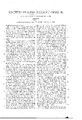
- FIG. 2 is a perspective view representing the external appearance of my improved hive.
- Fig. 3 is a perspective view of the comb sections, arranged in the position which they occupy in the hive.
- Fig. 3 is a view of one of the series of comb-sections, detached.
- Fig. 4 is a view of the glass partition which occupies the space between the comb-sections and the exterior walls.
- Fig. 5 is a fragmentary view showing the manner of connecting ⁇ the sides together, and with the bottom.
- Fig. 6, is a section of a portion of the front side of the hive, and a transverse section of the moth trap r.
- the side pieces are grooved in like manner, on their lower edges, and also on those edges that are contiguous when placed together in the form of a box.
- Pieces of strap or band iron about of an inch in width are then inserted ⁇ in the grooves in the lower ends of the side pieces, and in each alternate edge of the sides thereof, so as to connect them when brought together by the method known as tongue and groove, the projecting edge of the iron strips forming the tongue which enters the groovel in the adjoining piece, as represented in Fig. 5, a being the groovesthe iron tongue, C the bottom, and D, D,
- the board which forms the top or cover F is sulliciently large to project beyond the sides; and a strip or bead, Fig. 1, is attached to it in any convenient manner, and when it is on, holds the sides from separating at the top, while they are etfectually secured by the tongue and groove at the bottom. Hooks are also used on the sides and bottom to insure :against disconnection of the parts.
- This is a cheap mode of construction, and presents the advantage of enabling the hive to be taken apart readily for any purpose required, such as the removal of a portion of the honey,- cleansing the hive, or examining and dividing the bees to prevent their swarming. It also forms a perfectly tight oint which prevents motlis or insects from entering, and entirely excludes moisture.
- the interior of the hive is principally occupied with a series of comb-sections, arranged as shown in Fig. 2. They do not reach quite to the top of the hive but leave a space in which temporary honey boxes ⁇ may be placed, to be removed when filled.
- These comb-sections consist each of a light quadrangular frame H, Fig. 3, with two transverse slats c, c, across each side near the top, and two more about equally distant between the top and bottom. These serve for the bees to attach the combs to, and cause them to be kept distinct from each other, so that any one may be taken out without disturbing the other.
- each pair of slats two pins or wires are put through and support short tubes, which may be made of tin or other suitable material, about half an inch in diameter. These form passages for the bees through the sections of comb. These vpins are placed near the bottom of the slats, so that the tubes hang far enough below them to allow the bees to pass readily through from one comb to another. (They may be more or less in number, though I consider four sutlicient for all purposes). They are purposely so distributed through the different sections H, as to not be in range with each other. Each of the sections isprovided with a slot e, in the rear, which is provided with a slip of glass f, whichv slides in its fastenings, so that they may be opened and closed readily for the purpose of removing dead bees or other matter.
- short tubes which may be made of tin or other suitable material, about half an inch in diameter.
- the sections H are placed side by side with a very slight space between them, suflicient only to slide a piece of tin or sheet-iron between them, if it is required to separate the swarm, or cut o their ingress from a certain portion of the hive. They are kept thus far apart and also held in their places by strips of band iron, b, set edgewise in grooves across the bottom, in the manner previously described for joining the 'sides and bottom. This enables one or any num- ,be held together by clasps of wire or tin at the corners, or by any convenient means. In the space between the glass partitions I insert pasteboard slides I, which may be drawn out from the top with ease, when required.
- I provide a box K, which I attach to the front of the hive by hooks or other convenient means.
- the lower portion of it consists of an open space covered with wire-cloth L, which freely admits light and air, while its meshes do not allow of the passage of bees.
- This box is to be applied at the approach of winter and allowed to remain during the season,'when it affords the bees an opportunity to emerge from the hive and enjoy the light and air, when the warmth of the sun tempts them to go forth, while it prevents them from going far enough from their domicile to be unable to return, which is a fruitful cause of the destruction of bees during the cold season.
- the winter portal K, or attachment consisting of a box, with screen L, and tubular orifice m, constructed and applied substantially as and for the purpose set forth.
- the hanging' moth trap r constructed substantially in the manner and for the purpose setforth.
Landscapes
- Life Sciences & Earth Sciences (AREA)
- Environmental Sciences (AREA)
- Animal Husbandry (AREA)
- Biodiversity & Conservation Biology (AREA)
- Catching Or Destruction (AREA)
Description
OLIVER REYNOLDS, OF VEBSTER, NEV YORK.
Beni-tiva.
Speecaton f Letters Patent No.v 32,484, dated June 4, 1861.
To all 'whom it may concern:
Be it known that I, OLIVER REYNOLDS, of Webster, in the county of Monroe and State of New York, have invented a new and Improved Method of Constructing Beehives;`
and I do hereby declare that the following is ay full and exact description thereof, reference being had to the accompanying drawings, making part of this speciication, in which- Figure l, is a perspective view representing the external appearance of my improved hive.` Fig. 2, is a perspective view of the comb sections, arranged in the position which they occupy in the hive. Fig. 3, is a view of one of the series of comb-sections, detached. Fig. 4, is a view of the glass partition which occupies the space between the comb-sections and the exterior walls. Fig. 5, is a fragmentary view showing the manner of connecting` the sides together, and with the bottom. Fig. 6, is a section of a portion of the front side of the hive, and a transverse section of the moth trap r.
Like letters designate corresponding parts in all of the iwures.
I construct my hive by connecting the sides, bottom and 'top without the use of nails or screws, but by a joint of simple construction, which admits of the immediate separation of those parts whenever it is desired. The bottom having been prepared of suitable size and dressed smooth, is grooved on itsupper surface at about half an inch from the edges on all the sides. The grooves a, a, Figs. 2, t and 5, made thus, are sunk to the depth of about or l, of an inch, and are only wide enough to receive a piece of strap or band iron edgewise, and may be expeditiously and accurately formed by passing the board against the edge of a small circular saw, on a table arranged for the purpose. The side pieces are grooved in like manner, on their lower edges, and also on those edges that are contiguous when placed together in the form of a box. Pieces of strap or band iron about of an inch in width are then inserted `in the grooves in the lower ends of the side pieces, and in each alternate edge of the sides thereof, so as to connect them when brought together by the method known as tongue and groove, the projecting edge of the iron strips forming the tongue which enters the groovel in the adjoining piece, as represented in Fig. 5, a being the groovesthe iron tongue, C the bottom, and D, D,
the sides of the box. The board which forms the top or cover F, is sulliciently large to project beyond the sides; and a strip or bead, Fig. 1, is attached to it in any convenient manner, and when it is on, holds the sides from separating at the top, while they are etfectually secured by the tongue and groove at the bottom. Hooks are also used on the sides and bottom to insure :against disconnection of the parts. This is a cheap mode of construction, and presents the advantage of enabling the hive to be taken apart readily for any purpose required, such as the removal of a portion of the honey,- cleansing the hive, or examining and dividing the bees to prevent their swarming. It also forms a perfectly tight oint which prevents motlis or insects from entering, and entirely excludes moisture.
The interior of the hive is principally occupied with a series of comb-sections, arranged as shown in Fig. 2. They do not reach quite to the top of the hive but leave a space in which temporary honey boxes `may be placed, to be removed when filled.
These comb-sections consist each of a light quadrangular frame H, Fig. 3, with two transverse slats c, c, across each side near the top, and two more about equally distant between the top and bottom. These serve for the bees to attach the combs to, and cause them to be kept distinct from each other, so that any one may be taken out without disturbing the other.
Between each pair of slats, two pins or wires are put through and support short tubes, which may be made of tin or other suitable material, about half an inch in diameter. These form passages for the bees through the sections of comb. These vpins are placed near the bottom of the slats, so that the tubes hang far enough below them to allow the bees to pass readily through from one comb to another. (They may be more or less in number, though I consider four sutlicient for all purposes). They are purposely so distributed through the different sections H, as to not be in range with each other. Each of the sections isprovided with a slot e, in the rear, which is provided with a slip of glass f, whichv slides in its fastenings, so that they may be opened and closed readily for the purpose of removing dead bees or other matter.
The sections H, are placed side by side with a very slight space between them, suflicient only to slide a piece of tin or sheet-iron between them, if it is required to separate the swarm, or cut o their ingress from a certain portion of the hive. They are kept thus far apart and also held in their places by strips of band iron, b, set edgewise in grooves across the bottom, in the manner previously described for joining the 'sides and bottom. This enables one or any num- ,be held together by clasps of wire or tin at the corners, or by any convenient means. In the space between the glass partitions I insert pasteboard slides I, which may be drawn out from the top with ease, when required. This forms a winter protection for the bees, the double glass and space of confined air between being highly non-conducting, and the paper or paste-board slides adding .to this quality and also excluding the light, favors the continuance of theJ bees in a dormant and inactive state, while they are fully' protected against injury from ex.
treme cold. It is also found that the bee moth, if it enters the hive, will naturally deposit its eggs on the inside of the pasteboard slides, as being the warmest and securest place. The ready withdrawal of these slides, therefore, affords an easy way of removing the eggs and destroying them.
I provide a box K, which I attach to the front of the hive by hooks or other convenient means. The lower portion of it consists of an open space covered with wire-cloth L, which freely admits light and air, while its meshes do not allow of the passage of bees.
I insert a tube m, in the front above, which is designed for the ingress of the working bees. lVhen this attachment to the hive is used, and when the hive is attacked by robbers, the passages which admit the bees into the hive are closed temporarily until evening, excluding all. At evening, it may be opened, when the robberswill return to their own hives, and the excluded occupants are admitted. The hive is again closed and kept so the day following, when the robbers will be found to have entered the box K, through the orifice m, from which they cannot readily escape when they may be destroyed.
This box is to be applied at the approach of winter and allowed to remain during the season,'when it affords the bees an opportunity to emerge from the hive and enjoy the light and air, when the warmth of the sun tempts them to go forth, while it prevents them from going far enough from their domicile to be unable to return, which is a fruitful cause of the destruction of bees during the cold season.
Below the orifice 0, for ingress and egress, a shelf p, is ordinarily placed for the bees to alight on. To the underside of this, I hang a small slip of wood r, by two pins or screws, so that it will be parallel with the shelf but leave a small space or crevice between. This af'fords a convenient place for the bee-moth to deposit its eggs, and as the hanging piece moves easily on the pins, it can be pressed up against the shelf, and the eggs are crushed between the two. It may .also be cleaned out occasionally by inserting some small thing that will scrape out the refuse. The weight of this piece is such that it will drop itself, and thus keep the crevice open.
I do not claim the use of separate and distinct comb-sections merely; but
I claiml. Constructing sections consisting each of av frame of suitable dimensions for a full sized comb, when provided with suspended tubes d, d, arranged transversely of the comb structure, in such a manner that the bees may fill the frame with comb wrought around said tubes, and, at the same time, they will be left to form passageways for the working bees, substantially as set forth.
2. The double glass partitions G, with the slides I, for surrounding the swarm and maintaining greater uniformity of temperature in winter, substantially as described.
3. The winter portal K, or attachment, consisting of a box, with screen L, and tubular orifice m, constructed and applied substantially as and for the purpose set forth.
4. The hanging' moth trap r, constructed substantially in the manner and for the purpose setforth.
O. REYNOLDS.
IVitnesses JOHN L. BEADLE, J. FRASER.
Publications (1)
| Publication Number | Publication Date |
|---|---|
| US32484A true US32484A (en) | 1861-06-04 |
Family
ID=2102098
Family Applications (1)
| Application Number | Title | Priority Date | Filing Date |
|---|---|---|---|
| US32484D Expired - Lifetime US32484A (en) | Beehive |
Country Status (1)
| Country | Link |
|---|---|
| US (1) | US32484A (en) |
Cited By (2)
| Publication number | Priority date | Publication date | Assignee | Title |
|---|---|---|---|---|
| USD538494S1 (en) * | 2003-04-23 | 2007-03-13 | Mps Products, Inc. | Combined squeegee water blade with guard |
| US20190174727A1 (en) * | 2017-12-12 | 2019-06-13 | Joan Spiegel | Collapsible beehive assembly |
-
0
- US US32484D patent/US32484A/en not_active Expired - Lifetime
Cited By (2)
| Publication number | Priority date | Publication date | Assignee | Title |
|---|---|---|---|---|
| USD538494S1 (en) * | 2003-04-23 | 2007-03-13 | Mps Products, Inc. | Combined squeegee water blade with guard |
| US20190174727A1 (en) * | 2017-12-12 | 2019-06-13 | Joan Spiegel | Collapsible beehive assembly |
Similar Documents
| Publication | Publication Date | Title |
|---|---|---|
| NL8101797A (en) | BEING HOUSE. | |
| CN103141410A (en) | Automatic constant-temperature Chinese drone beehive with circular inside and square outside | |
| US1974549A (en) | Device for rearing and capturing insects | |
| US9300A (en) | Beehive | |
| US4546509A (en) | Multiple queen beehive | |
| US1435118A (en) | Combined feeder and hive ventilator | |
| WO2016147017A1 (en) | Two-colony beehives for migratory beekeeping and containers suitable for their storage and transportation by vehicles | |
| US3074081A (en) | Device for introducing queen bees | |
| US32101A (en) | Beehive | |
| US2227525A (en) | Swarm connector | |
| US1122697A (en) | Beehive. | |
| US32769A (en) | Beehive | |
| US134674A (en) | Improvement in honey-boxes for bee-hives | |
| US1042907A (en) | Beehive. | |
| US149882A (en) | Improvement in bee-hives | |
| US218822A (en) | Improvement in bee-hives | |
| US424844A (en) | Bee-hive | |
| US2988A (en) | Joseph | |
| US158826A (en) | Improvement in bee-hives | |
| US32217A (en) | Beehive | |
| US1131834A (en) | Beehive. | |
| US6285A (en) | Beehive | |
| US198223A (en) | Improvement in bee-hives | |
| US406972A (en) | Queen-rearing chamber | |
| US33486A (en) | Improvement in bee-hives |