US212291A - Improvement in locomotive smoke-stacks - Google Patents
Improvement in locomotive smoke-stacks Download PDFInfo
- Publication number
- US212291A US212291A US212291DA US212291A US 212291 A US212291 A US 212291A US 212291D A US212291D A US 212291DA US 212291 A US212291 A US 212291A
- Authority
- US
- United States
- Prior art keywords
- smoke
- locomotive
- stacks
- improvement
- deflector
- Prior art date
- Legal status (The legal status is an assumption and is not a legal conclusion. Google has not performed a legal analysis and makes no representation as to the accuracy of the status listed.)
- Expired - Lifetime
Links
- 230000003137 locomotive effect Effects 0.000 title description 12
- 238000005192 partition Methods 0.000 description 9
- 239000003818 cinder Substances 0.000 description 5
- 230000001105 regulatory effect Effects 0.000 description 5
- 239000000779 smoke Substances 0.000 description 5
- 238000002485 combustion reaction Methods 0.000 description 1
- 230000000694 effects Effects 0.000 description 1
- 229940020445 flector Drugs 0.000 description 1
- 239000000446 fuel Substances 0.000 description 1
- 230000010355 oscillation Effects 0.000 description 1
Images

Classifications
-
- B—PERFORMING OPERATIONS; TRANSPORTING
- B01—PHYSICAL OR CHEMICAL PROCESSES OR APPARATUS IN GENERAL
- B01D—SEPARATION
- B01D46/00—Filters or filtering processes specially modified for separating dispersed particles from gases or vapours
-
- Y—GENERAL TAGGING OF NEW TECHNOLOGICAL DEVELOPMENTS; GENERAL TAGGING OF CROSS-SECTIONAL TECHNOLOGIES SPANNING OVER SEVERAL SECTIONS OF THE IPC; TECHNICAL SUBJECTS COVERED BY FORMER USPC CROSS-REFERENCE ART COLLECTIONS [XRACs] AND DIGESTS
- Y10—TECHNICAL SUBJECTS COVERED BY FORMER USPC
- Y10S—TECHNICAL SUBJECTS COVERED BY FORMER USPC CROSS-REFERENCE ART COLLECTIONS [XRACs] AND DIGESTS
- Y10S55/00—Gas separation
- Y10S55/20—Spark arrester
Definitions
- Our improvement relates to a smoke-stack having a cinder-box and two vents for the smoke, one of which is shut of by the pressure of the steam-jet when the locomotive is running.
- Our improvement consists in the general construction of the stack, as shown, and in r the adjustable dampers by which the course of the smoke and capacity of the smoke-chamber are regulated.
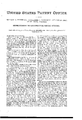
- Figure 1 is a side elevation.
- Fig. 2 is a longitudinal section.
- A is a portion of the top of the smoke-box of a locomotive.
- B is the lower portion of the smoke-stack in communication with the smoke-box.
- the flue B leads into the smokechamber 0.
- J is the cinder-box D for the collection of cinders.
- the cinders may be discharged through the orifices E, closed ordinarily by caps F.
- G is a damper or adjustable partition between the smoke-chamber G and the cinderbox D.
- This damper has capacity for oscillation on the hinge g at its lower end, and its position is regulated by a spring, H, thrusting it forward, and a rod, I, around which the spring is coiled, and which extends through the rear side of the cinder-box to the cab of the locomotive, where it has upon it a wheelnut, J, having bearing against the front wall K of the cab, so that the position of the damper may be regulated by turning the screwwheel J.
- L is the front exit of the smokestack
- M is the rear exit.
- N is a wiregauze placed across the flue to check the escape of cinders from the exit L.
- the exit M is also provided with gauze O for a similar purpose.
- the exit L is continually open, permitting the escape of smoke; but when the locomotive is running at ordinary speed the exit M is closed by a valve or damper, P, by the pressure of the exhaust-steam pipe Q.
- the pressure acts upon the valve P directly, and also acts upon the deflector R, hinged at r, and whose end is beneath the valve or damper P.
- the position of the deflector 1t when the locomotive is not running is regulated by a screw-rod, S, which passes up through the cap T, and carries a nut, s.
- the rod S is surrounded between the cap and the deflector by a spiral spring, 8, tending to hold it in its lower position, but yielding to the pressure of the steam-jet when the locomotive is running, so that then the deflector R is raised and the damper P closed, and at such time the exit of smoke is altogether through L.
- the de flector R and damper P open by their own weight and by the effect of spring s upon the deflector R, and the smoke finds exit through M in addition to L, so that the draft of the fire continues good While the engine is at rest, owing to the increased vent.
- the ca pacity of the smoke-chamber U is regulated by the position of the adjustable partition G, which fits the sides and bottom of the chamber, .but does not reach the deflector R at its upper end, so that the smoke passes freely over the top of the partition into the cinderchamber 1), where the cinders settle, and are discharged from time to time through the oriflces E.
- the purpose and advantages of the adjustable partition Gr have already been indicated. Owing to the varieties of fuel used and the varying force of the steam-jet it is considered desirable to have means for the adjustment of the capacity of the smoke-chamber O. This means is supplied by the partition G. Thus the size of the smoke-chamber is made to suit the amount of the products of combustion escaping from the fire, in addition to which the partition forms a deflector by which the action of the jet upon the valve 1? may be regulated, so that the valve P is kept wholly closed when the engine is running, or is only closed by each jet and allowed to open slightly between the jets.
- spark-arresters have been constructed where the smoke-stack is, at the top, in communication with a reservoir parallel thereto, said reservoir being adapted to receive the sparks and prevent their egress by means of deflecting-plates; such we do not claim; but
- a smoke-stack for locomotives having a smoke-chamber, O, and a cinder-chamber, D, formed by the internal partition Gr, oscillating on hinge g, and adjusted in position through the spring H and rod I, substantially as set forth.
Landscapes
- Chemical & Material Sciences (AREA)
- Chemical Kinetics & Catalysis (AREA)
- Solid-Fuel Combustion (AREA)
Description
2SheetS-fiheet 1. I W. M. & A. O. WETHERILL & O. REID. Locomotive Smoke-Stacks,
No. 212,291. Patented Feb. 11,1879.
Jinan: 172002220729,
. wJwL rm. U a/CZJ/nlb was/MW mm, I32
2 Sheets-Sheet 2. O. WETHE-RILL & 0. REID. Locomotive Smoke-Stacks.
Patented Feb. $1879.
N.PETERS. PHOTWLITHOGRAFHgR, WASHINGTON, D, c.
UNITED STATES PATENT OFFICE.
WILLIAM M. WETHEBILL, ALEXANDER O. WETHERILL, AND OSCAR REID, OF ST. LOUIS, MISSOURI.
IMPROVEMENT IN LOCOMOTIVE SMOKE-STACKS.
Specification forming part of Letters Patent No. 212,291, dated February 11, 1879; application filed September 20, 1878.
To all whom it may concern v v Be it known that we, WILLIAM M. WETH- ERILL, ALEX. O. WETHERILL, and OSCAR REID, all of the city of St. Louis, in the State of Missouri, have invented a new and useful Improvement in Locomotive Smoke-Stacks, of which the following is a full, clear, and exact description, reference being bad to the accompanyin g drawings, forming part of this speciiication.
Our improvement relates to a smoke-stack having a cinder-box and two vents for the smoke, one of which is shut of by the pressure of the steam-jet when the locomotive is running.
Our improvement consists in the general construction of the stack, as shown, and in r the adjustable dampers by which the course of the smoke and capacity of the smoke-chamber are regulated.
In the drawings, Figure 1 is a side elevation. Fig. 2 is a longitudinal section.
A is a portion of the top of the smoke-box of a locomotive. B is the lower portion of the smoke-stack in communication with the smoke-box. The flue B leads into the smokechamber 0. At the rear of the smoke-chamher (J is the cinder-box D for the collection of cinders. The cinders may be discharged through the orifices E, closed ordinarily by caps F. G is a damper or adjustable partition between the smoke-chamber G and the cinderbox D. This damper has capacity for oscillation on the hinge g at its lower end, and its position is regulated by a spring, H, thrusting it forward, and a rod, I, around which the spring is coiled, and which extends through the rear side of the cinder-box to the cab of the locomotive, where it has upon it a wheelnut, J, having bearing against the front wall K of the cab, so that the position of the damper may be regulated by turning the screwwheel J. L is the front exit of the smokestack, and M is the rear exit. N is a wiregauze placed across the flue to check the escape of cinders from the exit L. The exit M is also provided with gauze O for a similar purpose. The exit L is continually open, permitting the escape of smoke; but when the locomotive is running at ordinary speed the exit M is closed by a valve or damper, P, by the pressure of the exhaust-steam pipe Q. The pressure acts upon the valve P directly, and also acts upon the deflector R, hinged at r, and whose end is beneath the valve or damper P. The position of the deflector 1t when the locomotive is not running is regulated by a screw-rod, S, which passes up through the cap T, and carries a nut, s. The rod S is surrounded between the cap and the deflector by a spiral spring, 8, tending to hold it in its lower position, but yielding to the pressure of the steam-jet when the locomotive is running, so that then the deflector R is raised and the damper P closed, and at such time the exit of smoke is altogether through L. When the engine is not running, the de flector R and damper P open by their own weight and by the effect of spring s upon the deflector R, and the smoke finds exit through M in addition to L, so that the draft of the fire continues good While the engine is at rest, owing to the increased vent. The ca pacity of the smoke-chamber U is regulated by the position of the adjustable partition G, which fits the sides and bottom of the chamber, .but does not reach the deflector R at its upper end, so that the smoke passes freely over the top of the partition into the cinderchamber 1), where the cinders settle, and are discharged from time to time through the oriflces E.
An important advantage secured by our device is that the smoke has means of escape from both chimneys when the engine is standing, so that the fire continues to burn with sufflcient energy at that time; but when the engine is running and the steam-jet is in operation the rear jet is partially or fully closed, so as to give the cinders opportunity to subside into the rear chamber. The dampers or valves P R automatically accomplish the above result, and they are made adjustable by the spring S and nut s on the screw-rod S.
The purpose and advantages of the adjustable partition Gr have already been indicated. Owing to the varieties of fuel used and the varying force of the steam-jet it is considered desirable to have means for the adjustment of the capacity of the smoke-chamber O. This means is supplied by the partition G. Thus the size of the smoke-chamber is made to suit the amount of the products of combustion escaping from the fire, in addition to which the partition forms a deflector by which the action of the jet upon the valve 1? may be regulated, so that the valve P is kept wholly closed when the engine is running, or is only closed by each jet and allowed to open slightly between the jets.
We are aware that spark-arresters have been constructed where the smoke-stack is, at the top, in communication with a reservoir parallel thereto, said reservoir being adapted to receive the sparks and prevent their egress by means of deflecting-plates; such we do not claim; but
What we do claim, and desire to secure by Letters Patent, is 1. A smoke-stack for locomotives having a smoke-chamber, O, and a cinder-chamber, D, formed by the internal partition Gr, oscillating on hinge g, and adjusted in position through the spring H and rod I, substantially as set forth.
2. The combination, in a locomotive smokestack, with the adjustable partition Gr, hinged at its lower end to oscillate in a horizontallyangular direction, of the spring H and adjusting-rod I, substantially as set forth.
3. The combination, in a locomotive smokestack, of the two exits L and M, hinged deflector R, and damper P, closing exit M by the pressure of steam from the steam-exhaust pipe, as set forth.
4. The combination, in a stack having two exits, with the damper P, of the adjustable deflector R, closing exit M bythe pressure of steam from the steam-exhaust pipe, substantially as set forth.
5. The combination, in a locomotive smokestack, of the two exits L and M, chambers O and D, adjustable partition G, adjustable spring-deflector R, and dam per P, substantially as set forth.
Witness our hands at St. Louis, Missouri, this 16th day of September, 1878.
WILLIAM M. WETHERILL. ALEX. o. WETHERILL. OSCAR REID.
Witnesses:
SAML. KNIGHT, GEO. H. KNIGHT.
Publications (1)
| Publication Number | Publication Date |
|---|---|
| US212291A true US212291A (en) | 1879-02-11 |
Family
ID=2281697
Family Applications (1)
| Application Number | Title | Priority Date | Filing Date |
|---|---|---|---|
| US212291D Expired - Lifetime US212291A (en) | Improvement in locomotive smoke-stacks |
Country Status (1)
| Country | Link |
|---|---|
| US (1) | US212291A (en) |
Cited By (2)
| Publication number | Priority date | Publication date | Assignee | Title |
|---|---|---|---|---|
| US2455734A (en) * | 1944-07-26 | 1948-12-07 | Case Co J I | Radiator shield |
| US20060012287A1 (en) * | 2004-07-06 | 2006-01-19 | Sarnoff Corporation | Efficient, green-emitting phosphors, and combinations with red-emitting phosphors |
-
0
- US US212291D patent/US212291A/en not_active Expired - Lifetime
Cited By (2)
| Publication number | Priority date | Publication date | Assignee | Title |
|---|---|---|---|---|
| US2455734A (en) * | 1944-07-26 | 1948-12-07 | Case Co J I | Radiator shield |
| US20060012287A1 (en) * | 2004-07-06 | 2006-01-19 | Sarnoff Corporation | Efficient, green-emitting phosphors, and combinations with red-emitting phosphors |
Similar Documents
| Publication | Publication Date | Title |
|---|---|---|
| US137134A (en) | Improvement in locomotive spark-arresters | |
| US854016A (en) | Spark-arrester. | |
| US204522A (en) | William f | |
| US227657A (en) | Smoke box and stack for locomotives | |
| US1074603A (en) | Spark-arrester. | |
| US124830A (en) | Improvement in spark-arresters for locomotives | |
| US748550A (en) | Spark-arrester. | |
| US209668A (en) | Improvement in spark-arresters | |
| US752481A (en) | Spark-arrester | |
| US467051A (en) | Spark-arrester | |
| US614586A (en) | Spark-arrester | |
| USRE5687E (en) | Improvement in spark-arresters for locomotive-engines | |
| US791699A (en) | Spark-arrester. | |
| US209231A (en) | Improvement in smoke-stacks | |
| US130066A (en) | Improvement in spark-arresters | |
| US952737A (en) | Spark-arrester and smoke-consumer. | |
| US798896A (en) | Smoke and gas consumer. | |
| US316022A (en) | Jacob ela | |
| US239831A (en) | John s | |
| US2901A (en) | Spakk-akrester | |
| US579389A (en) | Draft-regulator for locomotives | |
| US216362A (en) | Improvement in locomotive smoke-stack and spark-arrester | |
| US10271A (en) | Condensing smoke and gases | |
| US766830A (en) | Motor-vehicle. | |
| US867839A (en) | Automatic draft-regulator. |