US20220184859A1 - Method and objects formed from polyurea polymers - Google Patents
Method and objects formed from polyurea polymers Download PDFInfo
- Publication number
- US20220184859A1 US20220184859A1 US17/122,514 US202017122514A US2022184859A1 US 20220184859 A1 US20220184859 A1 US 20220184859A1 US 202017122514 A US202017122514 A US 202017122514A US 2022184859 A1 US2022184859 A1 US 2022184859A1
- Authority
- US
- United States
- Prior art keywords
- coating
- polyurea
- mold
- fiberglass
- molded object
- Prior art date
- Legal status (The legal status is an assumption and is not a legal conclusion. Google has not performed a legal analysis and makes no representation as to the accuracy of the status listed.)
- Abandoned
Links
Images


Classifications
-
- B—PERFORMING OPERATIONS; TRANSPORTING
- B29—WORKING OF PLASTICS; WORKING OF SUBSTANCES IN A PLASTIC STATE IN GENERAL
- B29C—SHAPING OR JOINING OF PLASTICS; SHAPING OF MATERIAL IN A PLASTIC STATE, NOT OTHERWISE PROVIDED FOR; AFTER-TREATMENT OF THE SHAPED PRODUCTS, e.g. REPAIRING
- B29C41/00—Shaping by coating a mould, core or other substrate, i.e. by depositing material and stripping-off the shaped article; Apparatus therefor
- B29C41/02—Shaping by coating a mould, core or other substrate, i.e. by depositing material and stripping-off the shaped article; Apparatus therefor for making articles of definite length, i.e. discrete articles
- B29C41/08—Coating a former, core or other substrate by spraying or fluidisation, e.g. spraying powder
-
- B—PERFORMING OPERATIONS; TRANSPORTING
- B29—WORKING OF PLASTICS; WORKING OF SUBSTANCES IN A PLASTIC STATE IN GENERAL
- B29C—SHAPING OR JOINING OF PLASTICS; SHAPING OF MATERIAL IN A PLASTIC STATE, NOT OTHERWISE PROVIDED FOR; AFTER-TREATMENT OF THE SHAPED PRODUCTS, e.g. REPAIRING
- B29C41/00—Shaping by coating a mould, core or other substrate, i.e. by depositing material and stripping-off the shaped article; Apparatus therefor
- B29C41/02—Shaping by coating a mould, core or other substrate, i.e. by depositing material and stripping-off the shaped article; Apparatus therefor for making articles of definite length, i.e. discrete articles
- B29C41/22—Making multilayered or multicoloured articles
-
- E—FIXED CONSTRUCTIONS
- E04—BUILDING
- E04H—BUILDINGS OR LIKE STRUCTURES FOR PARTICULAR PURPOSES; SWIMMING OR SPLASH BATHS OR POOLS; MASTS; FENCING; TENTS OR CANOPIES, IN GENERAL
- E04H4/00—Swimming or splash baths or pools
- E04H4/0018—Easily movable or transportable swimming pools
- E04H4/0031—Easily movable or transportable swimming pools with shell type elements
- E04H4/0037—Mono-shell type
-
- B—PERFORMING OPERATIONS; TRANSPORTING
- B29—WORKING OF PLASTICS; WORKING OF SUBSTANCES IN A PLASTIC STATE IN GENERAL
- B29K—INDEXING SCHEME ASSOCIATED WITH SUBCLASSES B29B, B29C OR B29D, RELATING TO MOULDING MATERIALS OR TO MATERIALS FOR MOULDS, REINFORCEMENTS, FILLERS OR PREFORMED PARTS, e.g. INSERTS
- B29K2063/00—Use of EP, i.e. epoxy resins or derivatives thereof, as moulding material
-
- B—PERFORMING OPERATIONS; TRANSPORTING
- B29—WORKING OF PLASTICS; WORKING OF SUBSTANCES IN A PLASTIC STATE IN GENERAL
- B29K—INDEXING SCHEME ASSOCIATED WITH SUBCLASSES B29B, B29C OR B29D, RELATING TO MOULDING MATERIALS OR TO MATERIALS FOR MOULDS, REINFORCEMENTS, FILLERS OR PREFORMED PARTS, e.g. INSERTS
- B29K2075/00—Use of PU, i.e. polyureas or polyurethanes or derivatives thereof, as moulding material
-
- B—PERFORMING OPERATIONS; TRANSPORTING
- B29—WORKING OF PLASTICS; WORKING OF SUBSTANCES IN A PLASTIC STATE IN GENERAL
- B29K—INDEXING SCHEME ASSOCIATED WITH SUBCLASSES B29B, B29C OR B29D, RELATING TO MOULDING MATERIALS OR TO MATERIALS FOR MOULDS, REINFORCEMENTS, FILLERS OR PREFORMED PARTS, e.g. INSERTS
- B29K2075/00—Use of PU, i.e. polyureas or polyurethanes or derivatives thereof, as moulding material
- B29K2075/02—Polyureas
-
- B—PERFORMING OPERATIONS; TRANSPORTING
- B29—WORKING OF PLASTICS; WORKING OF SUBSTANCES IN A PLASTIC STATE IN GENERAL
- B29K—INDEXING SCHEME ASSOCIATED WITH SUBCLASSES B29B, B29C OR B29D, RELATING TO MOULDING MATERIALS OR TO MATERIALS FOR MOULDS, REINFORCEMENTS, FILLERS OR PREFORMED PARTS, e.g. INSERTS
- B29K2105/00—Condition, form or state of moulded material or of the material to be shaped
- B29K2105/06—Condition, form or state of moulded material or of the material to be shaped containing reinforcements, fillers or inserts
- B29K2105/16—Fillers
-
- B—PERFORMING OPERATIONS; TRANSPORTING
- B29—WORKING OF PLASTICS; WORKING OF SUBSTANCES IN A PLASTIC STATE IN GENERAL
- B29K—INDEXING SCHEME ASSOCIATED WITH SUBCLASSES B29B, B29C OR B29D, RELATING TO MOULDING MATERIALS OR TO MATERIALS FOR MOULDS, REINFORCEMENTS, FILLERS OR PREFORMED PARTS, e.g. INSERTS
- B29K2105/00—Condition, form or state of moulded material or of the material to be shaped
- B29K2105/25—Solid
- B29K2105/251—Particles, powder or granules
-
- B—PERFORMING OPERATIONS; TRANSPORTING
- B29—WORKING OF PLASTICS; WORKING OF SUBSTANCES IN A PLASTIC STATE IN GENERAL
- B29K—INDEXING SCHEME ASSOCIATED WITH SUBCLASSES B29B, B29C OR B29D, RELATING TO MOULDING MATERIALS OR TO MATERIALS FOR MOULDS, REINFORCEMENTS, FILLERS OR PREFORMED PARTS, e.g. INSERTS
- B29K2303/00—Use of resin-bonded materials as reinforcement
- B29K2303/04—Inorganic materials
-
- B—PERFORMING OPERATIONS; TRANSPORTING
- B29—WORKING OF PLASTICS; WORKING OF SUBSTANCES IN A PLASTIC STATE IN GENERAL
- B29L—INDEXING SCHEME ASSOCIATED WITH SUBCLASS B29C, RELATING TO PARTICULAR ARTICLES
- B29L2031/00—Other particular articles
- B29L2031/52—Sports equipment ; Games; Articles for amusement; Toys
- B29L2031/5254—Swimming or diving equipment
Definitions
- the present invention is directed to methods for the rapid manufacture of molded objects from polyurea-based coatings, and in particular, large-scale molded products such as swimming pools and spas that are exceptionally durable and structurally robust.
- Processes for forming molded objects are well-known in the art. While there are numerous techniques for forming molded objects, such as blow molding, compression molding, extrusion molding, and injection molding, the present invention focuses on manufacturing processes that involve shaping a liquid or malleable raw material by using a fixed, pre-formed surface or substrate, known as a mold. Generally, such processes comprise applying a liquid or molten material within or about a mold or substrate and thereafter allowed to cool or cure into a hardened structure, after which the structure is removed from the mold/substrate upon which the structure was formed.
- a manufacturer will initially spray a gelcoat about the mold having the desired shape of the pool to be made. Thereafter, a coating of chopped fiberglass mixed with vinyl ester resin in applied to impart structural rigidity and durability to the pool, followed by the integration of reinforcing structures and materials such as fiberglass blankets and the like, especially to areas requiring enhanced support or strength. At least one and often time more than one further layer of polyester resin is applied over the previously formed layers such that ultimately a rigid, multi-layer structure is formed about the mold and allowed to cure. From that point, the finished pool can be released from the mold and further processed to remove excess fiberglass, inspect for quality, plus other finishing steps.
- the present invention specifically addresses and alleviates the above-identified deficiencies in the art.
- the present invention is directed to methods for the rapid manufacture of molded objects from polyurea-based coatings that are exceptionally durable and do not need any kind of reinforcing materials, such as framing or bracing structures, to maintain their shape and function.
- the methods of the present invention and objects formed thereby are exceptionally well-suited for the manufacture of large-scale molded objects, and in particular swimming pools and spas where the finished pool/spa product possesses exceptional strength to withstand long-term, in-ground installation in virtually every type of climate.
- the methods initially involve the step of providing a convention mold or substrate surface having a pre-defined exterior shape that will serve to receive the coatings applied thereto that, when cured, will define the shape of the molded object as per conventional molding processes.
- the molds may take any of a variety of forms known in the art, including fiberglass molds having a tooling-gel exterior surface covered with a standard wax mold release agent.
- a first polyurea gelcoat coating is then sprayed upon the mold surface via conventional spraying techniques and equipment known in the art.
- the first polyurea composition will preferably comprise of a polyaspartic coating that is evenly applied about the mold to a thickness ranging from 20-25 mils.
- GelFlex two component polyaspartic coating manufactured by VersaFlex, Inc. of Kansas City, Kans.
- the coating need only set for 45 seconds to a minute and thus allows for rapid manufacturing.
- the coating can also be pigmented as desired for a given application.
- a second polyurea coating is applied over the first coating.
- Such polyurea coating will preferably comprise a novolac epoxy/polyurea hybrid coating formulated to be surface tolerant and hydrophobic in order to provide waterproofing properties and adhesion.
- An exemplary coating includes AquataFlex® 506 produced by Raven Lining Systems of Kansas City, Kans., in conjunction with VersaFlex, Inc. Such coating may be applied per conventional spraying techniques and equipment and will preferably be applied to a thickness ranging from 60 to 80 mils.
- Such coating will comprise a performance modified, reinforcing polyurea spray coating/lining material, an exemplary coating being VersaFlex Inc.'s AroStruct brand of structural, two-component performance modified polyurea spray coating/lining material.
- a performance modified, reinforcing polyurea spray coating/lining material an exemplary coating being VersaFlex Inc.'s AroStruct brand of structural, two-component performance modified polyurea spray coating/lining material.
- Such material is designed specifically for industrial applications and is exceptional for applications that receive constant or intermittent attack from contained materials, subsurface hydrostatic pressure, corrosive substances and abrasive action.
- Such material is further advantageously rigid and strong enough to remain intact under all conditions involving structural integrity, even without reinforcements.
- chopped fiberglass will be added to the third coating as it is being applied.
- chopped fiberglass will be added in an amount ranging from approximately 40% to 60% by weight relative the third polyurea coating and mixed to have a uniform consistency while being applied.
- the third coating will be applied via conventional spraying techniques and equipment as utilized in fiberglass molding applications and will preferably be applied via multiple spraying passes such that a uniform layer from 250 to 300 mils is ultimately formed over the second coating.
- the fourth coating will preferably be the same as the second novolac epoxy/polyurea hybrid coating and applied via the same conventional manner and to the same thickness range of 60 to 80 mils.
- the mixture of coatings is then allowed to cure for approximately one hour, after which the four coatings will have bonded to one another to form the finished molded structure.
- the molded structure may be removed from the mold and utilized as desired.
- the molded structure is immediately ready for shipping and installation.
- the combination of polyurea materials are capable of withstanding long term forces and conditions, such as expansive and contracting soil, greatly varying weather conditions and resistance to UV radiation to a degree believed to be at least equal to pools and spas manufactured from fiberglass.
- the pools and spas as formed by the methods of the present invention are dramatically faster to manufacture and multiple pools can be made in a single day, as opposed to a multi-day manufacturing process required for fiberglass pool and spa production.
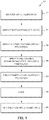
- FIG. 1 is a schematic block diagram for performing a method for the rapid manufacture of molded objects from polyurea-based coatings according to a preferred embodiment of the present invention
- FIG. 2 is a perspective view of a first polyurea coating being sprayed upon a mold by an individual;
- FIG. 3 is a perspective view of a second polyurea coating being sprayed upon the first coating as shown in FIG. 2 ;
- FIG. 4 is a perspective view of a third polyurea coating being sprayed upon the second coating as shown in FIG. 3 ;
- FIG. 5 is a perspective view of a fourth polyurea coating being sprayed upon the third coating as shown in FIG. 4 ;
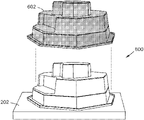
- FIG. 6 is an exploded view of the combined solidified coatings applied as shown in FIGS. 2-4 shown being removed from the mold;
- FIG. 7 is a perspective view of a spa as formed by the multiple coatings and removed from the mold in FIG. 5 .
- FIG. 1 there is shown a schematic diagram for sequentially preforming a method 10 for the rapid manufacture of molded objects from polyurea-based coatings according to a preferred embodiment of the present invention.
- Such method 10 involves forming the molded object via four sequentially applied coatings of polymers, discussed more fully below, upon a mold or substrate per conventional molding processes.
- the method contemplates a mold or substrate will be provided in initial step 12 that will serve as the basis for forming the molded structure.
- Such mold or substrate may take any of a variety of forms known in the art that are operative to define an exterior shape that will serve to receive the coatings applied thereto that, when cured, will define the shape of the molded object.
- Exemplary of such molds include fiberglass molds having a tooling-gel exterior surface covered with a standard wax mold release agent as are utilized in the production of fiberglass pools and spas, such as spa mold 202 as shown in FIGS. 2-6 .
- the first polyurea coating will preferably serve as a gelcoat.
- the first polyurea coating will preferably comprise a polyaspartic polyurea coating that may take the form of a two-component polyurea elastomer spray.
- GelFlex polyaspartic coating manufactured by VersaFlex Inc. of Kansas City, Kans. that provides for a first component or A Side with the following formulation:
- Sides A and B are mixed in a 1:1 ratio by volume with Side B being pre-mixed.
- the polyurea coating can also be pigmented as desired for a given application, such as to give a pool/spa a desired color.
- Such first coating is applied in step 14 via spraying technique 200 as illustrated in FIG. 2 .
- the polymer coating 204 is evenly applied about the mold to a thickness ranging from 20 to 25 mils.
- coating 204 can be applied to the mold 202 via conventional spraying 206 using conventional spraying equipment 208 as applied by an individual 210 making passes about the mold 202 to ensure even application.
- the coating 204 need only set for 45 seconds to a minute and thus allows for rapid manufacturing.
- a second polyurea coating 302 is applied over the first coating 204 per step 16 in FIG. 1 and shown as 300 in FIG. 3 .
- Such coating 302 will preferably comprise a novolac epoxy/polyurea hybrid coating formulated to impart increased stiffness and provide an additional waterproof barrier.
- An exemplary coating material includes AquataFlex® 506 produced by Raven Lining Systems of Kansas City, Kans., in conjunction with VersaFlex, Inc. Such coating is surface tolerant and is hydrophobic to provide excellent waterproofing properties and adhesion.
- the second coating will comprise a two-part spray.
- the first component or A Side includes the following formulation:
- the second component or B Side includes the following formulation:
- Sides A and B are mixed in a 1:1 ratio by volume with Side B being pre-mixed. Sides A and B are likewise preferably warmed to a minimum of 70° F. prior to processing.
- Such coating may be applied via conventional spraying techniques 304 utilizing conventional spraying equipment 306 known in the art and will be applied to a thickness ranging from approximately 60 to 80 mils.
- the second coating 302 due to its formulation, sets very rapidly and once applied to the correct thickness range can immediately accommodate the application of the third coating at step 18 of FIG. 1 .
- Step 18 also shown as application 400 of a third reinforcing coating 402 in FIG. 4 , preferably comprises spraying a performance modified, reinforcing polyurea coating/lining material formulated for industrial applications that receive constant or intermittent attack from contained materials, subsurface hydrostatic pressure, corrosive substances and abrasive action.
- suitable polyurea reinforcing coating materials 402 well suited for practicing the present invention include commercially available 100% solids, semi-structural, two-component performance modified polyurea spray coating/lining.
- An exemplary reinforcing polyurea coating as applied in step 18 includes VersaFlex Inc.'s AroStruct brand of structural polyurea spray coating/lining material.
- the AroStruct coating is a two-component formulation wherein the first component or Side A comprises:
- MDI Weight CAS Concentration Chemical Name number % Polymeric Diphenylmethane Diisocyanate 9016-87-9 50-60% (pMDI) 4,4′-Diphenylmethane Diisocyanate 101-68-8 30-40% (MDI) Isocyanic acid, polymethylenepoly- 58228-05-0 1-5% phenylene ester, polymer with methyloxirane polymer with oxirane ether with 1,2,3-propanetriol (3:1) Oxirane, methyl-, polymer with oxirane, 112898-48-3 1-5% ether with 1,2,3-propanetriol (3:1), polymer with 1,1′- methylenebis[isocyanatobenzene] 2,4′-Diphenylmethane Diisocyanate 5873-54-1 1-5% (MDI)
- the second or Side B component of the preferred AroStruct coating is formulated as follows:
- Sides A and B are mixed in a 1:1 ratio by volume with Side B being pre-mixed. Sides A and B are likewise preferably warmed to a minimum of 70° F. prior to processing.
- chopped fiberglass will be added to and mixed with the third coating so that the coating will be applied as a uniform mixture of polyurea coating and fiberglass over the second coating 302 .
- the chopped fiberglass will be added in an amount ranging from 40% to 60% by weight of the coating material.
- the application 400 of the third coating 402 can be applied via conventional spraying techniques 404 by the individual 210, including those techniques well-know for spraying fiberglass/polymer mixtures, and will preferably be applied via multiple spraying passes such that a uniform layer from 250 to 300 mils is ultimately formed over the second coating 302 .
- the fourth coating 502 will preferably comprise the same novolac epoxy/polyurea hybrid coating utilized in step 16 and applied in the same manner and thickness of 60 to 80 mils.
- the mixture of coatings is then allowed to cure per step 22 of FIG. 1 upon the mold 202 or substrate for approximately one hour, after which the coatings 204 , 302 , 402 , 502 will have cooperated to form the finished molded structure, illustrated as 602 in FIGS. 6 and 7 .
- the molded structure 602 may be removed from the mold per step 24 of FIG. 1 , and further illustrated as separation 600 from the mold 202 as shown in FIG. 6 , per conventional molding techniques.
- the molded structure 602 formed from the cured layers of polyurea can then be processed via conventional finishing techniques and inspected for quality to make the finished product shown in FIG. 7 and thereafter utilized as desired.
- molded objects formed by the methods of the present invention can be rapidly produced and can further be made on a large-scale basis without the need to utilize reinforcing or other support structures, although such structures can be incorporated if desired and/or to impart greater structural strength.
- the processes of the present invention when utilized to manufacture spas, swimming pools and the like, dramatically expedite manufacturing and multiple pools can be made in a single day, as opposed to a multi-day manufacturing process required for fiberglass pool and spa production.
- such molded pools and spas, once formed, are ready for shipping and installation as per conventional fiberglass pools and spas.
- the combination of polyurea materials like fiberglass spas/pools, are capable of withstanding expansive and contracting soil, varying weather conditions and resistance to UV radiation to a degree and for a longevity believed to be at least equal to pools and spas manufactured from fiberglass.
Landscapes
- Engineering & Computer Science (AREA)
- Architecture (AREA)
- Mechanical Engineering (AREA)
- Civil Engineering (AREA)
- Structural Engineering (AREA)
- Laminated Bodies (AREA)
Abstract
Description
- Not Applicable
- Not Applicable
- The present invention is directed to methods for the rapid manufacture of molded objects from polyurea-based coatings, and in particular, large-scale molded products such as swimming pools and spas that are exceptionally durable and structurally robust.
- Processes for forming molded objects are well-known in the art. While there are numerous techniques for forming molded objects, such as blow molding, compression molding, extrusion molding, and injection molding, the present invention focuses on manufacturing processes that involve shaping a liquid or malleable raw material by using a fixed, pre-formed surface or substrate, known as a mold. Generally, such processes comprise applying a liquid or molten material within or about a mold or substrate and thereafter allowed to cool or cure into a hardened structure, after which the structure is removed from the mold/substrate upon which the structure was formed.
- Among the types of applications that deploy such molding processes are the manufacture of objects formed from fiberglass, and in particular, large-scale objects such as fiberglass swimming pools and spas. Typical fabrication methods for such products will involve forming multiple layers of coatings or materials in a sequential manner over a mold that ultimately form a finished swimming pool/spa that is released from the mold and ready for installation. Because of the need to manufacture an exceptionally durable product that can withstand years, if not decades of use outdoors with potentially wide-ranging changes in temperature, moisture, UV exposure and expanding/contracting soil, all while holding a large quantity of water, manufacturing fiberglass pools of high quality requires meticulous construction methods and the use of large quantities of materials.
- In this regard, for the typical manufacture of a fiberglass pool, a manufacturer will initially spray a gelcoat about the mold having the desired shape of the pool to be made. Thereafter, a coating of chopped fiberglass mixed with vinyl ester resin in applied to impart structural rigidity and durability to the pool, followed by the integration of reinforcing structures and materials such as fiberglass blankets and the like, especially to areas requiring enhanced support or strength. At least one and often time more than one further layer of polyester resin is applied over the previously formed layers such that ultimately a rigid, multi-layer structure is formed about the mold and allowed to cure. From that point, the finished pool can be released from the mold and further processed to remove excess fiberglass, inspect for quality, plus other finishing steps.
- While such manufacturing processes have proven to result in exceptionally well-built and durable fiberglass-based structures, numerous drawbacks exist with such processes. First, the multi-layer construction process is both time and labor intensive, and further requires a multi-stage application process. Indeed, large quantities of fiberglass and resin must be used in the manufacture of every pool and spa and applied with sufficient thickness to meet demanding product specifications. Care must likewise be taken to ensure supplemental reinforcing materials and support structures are adequately integrated within the pool to prevent possible product failure, such as cracking in the pool once installed. Typical fiberglass molding manufacturing process also can take several days to produce a single pool. Indeed, the curing step alone averages at least one day.
- Accordingly, there is a substantial need in the art for an improved molding process that can be utilized to form molded structures that are exceptionally durable and structurally robust that are greatly simplified than current molding processes, especially fiberglass molding practices. There is likewise a need for such methods that are significantly faster, use less materials and can typically dispense with the need for further reinforcing/support structures as must usually be integrated into large-scale items molded from fiberglass, and in particular fiberglass swimming pools and spas. There is yet a further need in the art for such methods that can be deployed using conventional molds, spraying and coating techniques known in the art and thus do not require retooling or other large capital costs to use.
- The present invention specifically addresses and alleviates the above-identified deficiencies in the art. Specifically, the present invention is directed to methods for the rapid manufacture of molded objects from polyurea-based coatings that are exceptionally durable and do not need any kind of reinforcing materials, such as framing or bracing structures, to maintain their shape and function. The methods of the present invention and objects formed thereby are exceptionally well-suited for the manufacture of large-scale molded objects, and in particular swimming pools and spas where the finished pool/spa product possesses exceptional strength to withstand long-term, in-ground installation in virtually every type of climate.
- According to a preferred embodiment, the methods initially involve the step of providing a convention mold or substrate surface having a pre-defined exterior shape that will serve to receive the coatings applied thereto that, when cured, will define the shape of the molded object as per conventional molding processes. To that end, the molds may take any of a variety of forms known in the art, including fiberglass molds having a tooling-gel exterior surface covered with a standard wax mold release agent.
- A first polyurea gelcoat coating is then sprayed upon the mold surface via conventional spraying techniques and equipment known in the art. The first polyurea composition will preferably comprise of a polyaspartic coating that is evenly applied about the mold to a thickness ranging from 20-25 mils. Among the types of polyurea coating exceptionally well-suited for such applications is GelFlex two component polyaspartic coating manufactured by VersaFlex, Inc. of Kansas City, Kans. Advantageously, the coating need only set for 45 seconds to a minute and thus allows for rapid manufacturing. The coating can also be pigmented as desired for a given application.
- Within three hours or less after application of the first coating, a second polyurea coating is applied over the first coating. Such polyurea coating will preferably comprise a novolac epoxy/polyurea hybrid coating formulated to be surface tolerant and hydrophobic in order to provide waterproofing properties and adhesion. An exemplary coating includes AquataFlex® 506 produced by Raven Lining Systems of Kansas City, Kans., in conjunction with VersaFlex, Inc. Such coating may be applied per conventional spraying techniques and equipment and will preferably be applied to a thickness ranging from 60 to 80 mils.
- Due to its rapid set time, immediately following application of the second coating a third coating is applied thereover. Such coating will comprise a performance modified, reinforcing polyurea spray coating/lining material, an exemplary coating being VersaFlex Inc.'s AroStruct brand of structural, two-component performance modified polyurea spray coating/lining material. Such material is designed specifically for industrial applications and is exceptional for applications that receive constant or intermittent attack from contained materials, subsurface hydrostatic pressure, corrosive substances and abrasive action. Such material is further advantageously rigid and strong enough to remain intact under all conditions involving structural integrity, even without reinforcements.
- To provide greater material strength in the finished, molded product, chopped fiberglass will be added to the third coating as it is being applied. In such applications, it is contemplated that such chopped fiberglass will be added in an amount ranging from approximately 40% to 60% by weight relative the third polyurea coating and mixed to have a uniform consistency while being applied. To that end, the third coating will be applied via conventional spraying techniques and equipment as utilized in fiberglass molding applications and will preferably be applied via multiple spraying passes such that a uniform layer from 250 to 300 mils is ultimately formed over the second coating.
- Following application of the third coating, a fourth and final coating is applied thereover. The fourth coating will preferably be the same as the second novolac epoxy/polyurea hybrid coating and applied via the same conventional manner and to the same thickness range of 60 to 80 mils.
- Following the application of the fourth coating, the mixture of coatings is then allowed to cure for approximately one hour, after which the four coatings will have bonded to one another to form the finished molded structure. Per convention molding processes, the molded structure may be removed from the mold and utilized as desired. Advantageously, when the processes of the present invention are utilized to manufacture spas, swimming pools and the like, the molded structure is immediately ready for shipping and installation. Not only is the molded spa/pool ready for installation into the ground and receive water, the combination of polyurea materials are capable of withstanding long term forces and conditions, such as expansive and contracting soil, greatly varying weather conditions and resistance to UV radiation to a degree believed to be at least equal to pools and spas manufactured from fiberglass. Moreover, the pools and spas as formed by the methods of the present invention are dramatically faster to manufacture and multiple pools can be made in a single day, as opposed to a multi-day manufacturing process required for fiberglass pool and spa production.
- These and other features and advantages of the various embodiments disclosed herein will be better understood with respect to the following description and drawings, in which like numbers refer to like parts throughout, and in which:
-
FIG. 1 is a schematic block diagram for performing a method for the rapid manufacture of molded objects from polyurea-based coatings according to a preferred embodiment of the present invention; -
FIG. 2 is a perspective view of a first polyurea coating being sprayed upon a mold by an individual; -
FIG. 3 is a perspective view of a second polyurea coating being sprayed upon the first coating as shown inFIG. 2 ; -
FIG. 4 is a perspective view of a third polyurea coating being sprayed upon the second coating as shown inFIG. 3 ; -
FIG. 5 is a perspective view of a fourth polyurea coating being sprayed upon the third coating as shown inFIG. 4 ; -
FIG. 6 is an exploded view of the combined solidified coatings applied as shown inFIGS. 2-4 shown being removed from the mold; and -
FIG. 7 is a perspective view of a spa as formed by the multiple coatings and removed from the mold inFIG. 5 . - The detailed description set forth below in connection with the appended drawings is intended as a description of the presently preferred embodiment of the invention, and is not intended to represent the only form in which the present invention may be constructed or utilized. The description sets forth the functions and the sequence of steps for developing and operating the invention in connection with the illustrated embodiment. It is to be understood, however, that the same or equivalent functions and sequences may be accomplished by different embodiments that are also intended to be encompassed within the spirit and scope of the invention.
- Referring now to the drawings, and initially to
FIG. 1 , there is shown a schematic diagram for sequentially preforming amethod 10 for the rapid manufacture of molded objects from polyurea-based coatings according to a preferred embodiment of the present invention.Such method 10 involves forming the molded object via four sequentially applied coatings of polymers, discussed more fully below, upon a mold or substrate per conventional molding processes. To that end, the method contemplates a mold or substrate will be provided ininitial step 12 that will serve as the basis for forming the molded structure. Such mold or substrate may take any of a variety of forms known in the art that are operative to define an exterior shape that will serve to receive the coatings applied thereto that, when cured, will define the shape of the molded object. Exemplary of such molds include fiberglass molds having a tooling-gel exterior surface covered with a standard wax mold release agent as are utilized in the production of fiberglass pools and spas, such asspa mold 202 as shown inFIGS. 2-6 . - To such mold provided for in
step 12, there is applied via step 14 a first coating that will preferably serve as a gelcoat. The first polyurea coating will preferably comprise a polyaspartic polyurea coating that may take the form of a two-component polyurea elastomer spray. Among the types of polyurea coating exceptionally well-suit for such applications is GelFlex polyaspartic coating manufactured by VersaFlex Inc. of Kansas City, Kans. that provides for a first component or A Side with the following formulation: -
Weight CAS Concentration Chemical Name number % Hexamethylene Diisocyanate 28182-81-2 90-100% Homopolymer
The second component or B Side with the following formulation: -
Weight CAS Concentration Chemical Name number % Aspartic Acid Ester 1 68253-59-6 40-50% Cycloaliphatic Amine 20-30% Titanium Dioxide 13463-67-7 0-20% Amine-based Polyol 5-10% Trade Secret 5-10% Fumaric Acid Diester 623-91-6 1-5% Adhesion Promoter 0.1-1% Amorphous Hydrophobic Fumed Silica 67762-90-7 0-0.1% - Per the manufacturer's instructions, Sides A and B are mixed in a 1:1 ratio by volume with Side B being pre-mixed. The polyurea coating can also be pigmented as desired for a given application, such as to give a pool/spa a desired color.
- Such first coating is applied in
step 14 viaspraying technique 200 as illustrated inFIG. 2 . Preferably thepolymer coating 204 is evenly applied about the mold to a thickness ranging from 20 to 25 mils. To that end, it is contemplated that coating 204 can be applied to themold 202 viaconventional spraying 206 usingconventional spraying equipment 208 as applied by an individual 210 making passes about themold 202 to ensure even application. Advantageously, due to the chemical properties of the first gelcoat, thecoating 204 need only set for 45 seconds to a minute and thus allows for rapid manufacturing. - Within three hours or less after application of the
first coating 204, asecond polyurea coating 302 is applied over thefirst coating 204 perstep 16 inFIG. 1 and shown as 300 inFIG. 3 .Such coating 302 will preferably comprise a novolac epoxy/polyurea hybrid coating formulated to impart increased stiffness and provide an additional waterproof barrier. An exemplary coating material includes AquataFlex® 506 produced by Raven Lining Systems of Kansas City, Kans., in conjunction with VersaFlex, Inc. Such coating is surface tolerant and is hydrophobic to provide excellent waterproofing properties and adhesion. Like the first gelcoat coating, the second coating will comprise a two-part spray. The first component or A Side includes the following formulation: -
Weight CAS Concentration Chemical Name number % Polyurethane Prepolymer 30-60% Diphenylmethane Diisocyanate (MDI) 26447-40-5 10-30% Mixed Isomers 4,4′-Diphenylmethane Diisocyanate (MDI) 101-68-8 10-30%
The second component or B Side includes the following formulation: -
Weight CAS Concentration Chemical Name number % Diethyltoluenediamine 68479-98-1 5-10% Trade Secret 1-5% Titanium Dioxide 13463-67-7 0-5% Polyether Polyol 25791-96-2 1-5% Cashew, nutshell liquid 8007-24-7 1-5% Trade Secret 1-2% Carbon Black 1333-86-4 0-1% - Per the manufacturer's instructions, Sides A and B are mixed in a 1:1 ratio by volume with Side B being pre-mixed. Sides A and B are likewise preferably warmed to a minimum of 70° F. prior to processing. Such coating may be applied via
conventional spraying techniques 304 utilizingconventional spraying equipment 306 known in the art and will be applied to a thickness ranging from approximately 60 to 80 mils. Advantageously, thesecond coating 302, due to its formulation, sets very rapidly and once applied to the correct thickness range can immediately accommodate the application of the third coating atstep 18 ofFIG. 1 . -
Step 18, also shown asapplication 400 of a third reinforcingcoating 402 inFIG. 4 , preferably comprises spraying a performance modified, reinforcing polyurea coating/lining material formulated for industrial applications that receive constant or intermittent attack from contained materials, subsurface hydrostatic pressure, corrosive substances and abrasive action. Among the types of such suitable polyurea reinforcingcoating materials 402 well suited for practicing the present invention include commercially available 100% solids, semi-structural, two-component performance modified polyurea spray coating/lining. An exemplary reinforcing polyurea coating as applied instep 18 includes VersaFlex Inc.'s AroStruct brand of structural polyurea spray coating/lining material. Per the other aforementioned coatings, the AroStruct coating is a two-component formulation wherein the first component or Side A comprises: -
Weight CAS Concentration Chemical Name number % Polymeric Diphenylmethane Diisocyanate 9016-87-9 50-60% (pMDI) 4,4′-Diphenylmethane Diisocyanate 101-68-8 30-40% (MDI) Isocyanic acid, polymethylenepoly- 58228-05-0 1-5% phenylene ester, polymer with methyloxirane polymer with oxirane ether with 1,2,3-propanetriol (3:1) Oxirane, methyl-, polymer with oxirane, 112898-48-3 1-5% ether with 1,2,3-propanetriol (3:1), polymer with 1,1′- methylenebis[isocyanatobenzene] 2,4′-Diphenylmethane Diisocyanate 5873-54-1 1-5% (MDI)
The second or Side B component of the preferred AroStruct coating is formulated as follows: -
Weight CAS Concentration Chemical Name number % Trade Secret 30-40% Amine-based Polyol 20-30% Polyoxyalkyleneamine 9046-10-0 20-30% Glycerine, propoxylated aminated 64852-22-8 5-10% Diethyltoluenediamine 68479-98-1 5-10% Titanium Dioxide 13463-67-7 0-5% Trimethylolpropane 77-99-6 1-5% Polyether Polyol 25791-96-2 0-5% Carbon Black 1333-86-4 0-1% - Per the manufacturer's instructions, Sides A and B are mixed in a 1:1 ratio by volume with Side B being pre-mixed. Sides A and B are likewise preferably warmed to a minimum of 70° F. prior to processing.
- To provide greater strength and structural reinforcement to the finished molded product, chopped fiberglass will be added to and mixed with the third coating so that the coating will be applied as a uniform mixture of polyurea coating and fiberglass over the
second coating 302. Ideally, the chopped fiberglass will be added in an amount ranging from 40% to 60% by weight of the coating material. - As shown in
FIG. 4 , theapplication 400 of thethird coating 402 can be applied viaconventional spraying techniques 404 by the individual 210, including those techniques well-know for spraying fiberglass/polymer mixtures, and will preferably be applied via multiple spraying passes such that a uniform layer from 250 to 300 mils is ultimately formed over thesecond coating 302. - Once the
third coating 402 is applied, a final fourth coating is then formed over thereover instep 20 ofFIG. 1 and shown asapplication 500 inFIG. 5 . Thefourth coating 502 will preferably comprise the same novolac epoxy/polyurea hybrid coating utilized instep 16 and applied in the same manner and thickness of 60 to 80 mils. - Following the application of the fourth or
final coating 20 that is ultimately applied perFIG. 1 , the mixture of coatings is then allowed to cure perstep 22 ofFIG. 1 upon themold 202 or substrate for approximately one hour, after which thecoatings FIGS. 6 and 7 . Per convention molding processes, the moldedstructure 602 may be removed from the mold perstep 24 ofFIG. 1 , and further illustrated asseparation 600 from themold 202 as shown inFIG. 6 , per conventional molding techniques. The moldedstructure 602 formed from the cured layers of polyurea can then be processed via conventional finishing techniques and inspected for quality to make the finished product shown inFIG. 7 and thereafter utilized as desired. - Advantageously, molded objects formed by the methods of the present invention can be rapidly produced and can further be made on a large-scale basis without the need to utilize reinforcing or other support structures, although such structures can be incorporated if desired and/or to impart greater structural strength. Moreover, the processes of the present invention when utilized to manufacture spas, swimming pools and the like, dramatically expedite manufacturing and multiple pools can be made in a single day, as opposed to a multi-day manufacturing process required for fiberglass pool and spa production. Along those lines, such molded pools and spas, once formed, are ready for shipping and installation as per conventional fiberglass pools and spas. Not only are such molded spas/pools ready for installation into the ground and receive water, the combination of polyurea materials, like fiberglass spas/pools, are capable of withstanding expansive and contracting soil, varying weather conditions and resistance to UV radiation to a degree and for a longevity believed to be at least equal to pools and spas manufactured from fiberglass.
- The above description is given by way of example, and not limitation. Given the above disclosure, one skilled in the art could devise variations that are within the scope and spirit of the invention disclosed herein, including various ways of applying multiple layers of polyurea coatings upon a mold or substrate to produce a molded object as contemplated herein, which need not be limited in any way to swimming pools, spas and the like. Further, the various features of the embodiments disclosed herein can be used alone, or in varying combinations with each other and are not intended to be limited to the specific combination described herein. Thus, the scope of the claims is not to be limited by the illustrated embodiments.
Claims (11)
Priority Applications (1)
| Application Number | Priority Date | Filing Date | Title |
|---|---|---|---|
| US17/122,514 US20220184859A1 (en) | 2020-12-15 | 2020-12-15 | Method and objects formed from polyurea polymers |
Applications Claiming Priority (1)
| Application Number | Priority Date | Filing Date | Title |
|---|---|---|---|
| US17/122,514 US20220184859A1 (en) | 2020-12-15 | 2020-12-15 | Method and objects formed from polyurea polymers |
Publications (1)
| Publication Number | Publication Date |
|---|---|
| US20220184859A1 true US20220184859A1 (en) | 2022-06-16 |
Family
ID=81943107
Family Applications (1)
| Application Number | Title | Priority Date | Filing Date |
|---|---|---|---|
| US17/122,514 Abandoned US20220184859A1 (en) | 2020-12-15 | 2020-12-15 | Method and objects formed from polyurea polymers |
Country Status (1)
| Country | Link |
|---|---|
| US (1) | US20220184859A1 (en) |
Cited By (2)
| Publication number | Priority date | Publication date | Assignee | Title |
|---|---|---|---|---|
| AU2024219814B1 (en) * | 2024-09-17 | 2025-03-27 | Salter, Tom MR | Fiber-reinforced polymer (frp) composite swimming pools and method of constructing frp composite swimming pools |
| US20250109601A1 (en) * | 2023-09-29 | 2025-04-03 | 9257-4607 Québec Inc. | Reinforced pool structure |
Citations (10)
| Publication number | Priority date | Publication date | Assignee | Title |
|---|---|---|---|---|
| US4434021A (en) * | 1982-07-02 | 1984-02-28 | Goodyear Aerospace Corporation | Reverse building process for the manufacture of complex-shaped vehicle fuel tanks |
| US5342565A (en) * | 1991-09-18 | 1994-08-30 | Jacob Goren | Method for manufacturing simulated granite |
| US20030047836A1 (en) * | 2001-08-31 | 2003-03-13 | Stephen Rickner | Method for making a polyurea-polyurethane composite structure substantially free of volatile organic compounds |
| US20050133959A1 (en) * | 2003-12-22 | 2005-06-23 | Lear Corporation | System and method for producing multi-color polymeric components |
| US20080022453A1 (en) * | 2006-07-14 | 2008-01-31 | Quy That Ton | Spa Apparatus |
| US20120235324A1 (en) * | 2011-03-16 | 2012-09-20 | Cvg Management Corporation | Vehicle flooring system |
| US8701585B1 (en) * | 2011-02-03 | 2014-04-22 | Lloyd W. Seaman | Boat hull and method of making |
| US20190105593A1 (en) * | 2016-02-19 | 2019-04-11 | Baldwin Filters, Inc. | Surface coated filter method |
| US20200391452A1 (en) * | 2019-06-12 | 2020-12-17 | Allied Moulded Products, Inc. | Sheet molding compound and method of making |
| US20220032510A1 (en) * | 2018-10-01 | 2022-02-03 | Recticel Automobilsysteme Gmbh | Method for producing an elastomeric skin |
-
2020
- 2020-12-15 US US17/122,514 patent/US20220184859A1/en not_active Abandoned
Patent Citations (10)
| Publication number | Priority date | Publication date | Assignee | Title |
|---|---|---|---|---|
| US4434021A (en) * | 1982-07-02 | 1984-02-28 | Goodyear Aerospace Corporation | Reverse building process for the manufacture of complex-shaped vehicle fuel tanks |
| US5342565A (en) * | 1991-09-18 | 1994-08-30 | Jacob Goren | Method for manufacturing simulated granite |
| US20030047836A1 (en) * | 2001-08-31 | 2003-03-13 | Stephen Rickner | Method for making a polyurea-polyurethane composite structure substantially free of volatile organic compounds |
| US20050133959A1 (en) * | 2003-12-22 | 2005-06-23 | Lear Corporation | System and method for producing multi-color polymeric components |
| US20080022453A1 (en) * | 2006-07-14 | 2008-01-31 | Quy That Ton | Spa Apparatus |
| US8701585B1 (en) * | 2011-02-03 | 2014-04-22 | Lloyd W. Seaman | Boat hull and method of making |
| US20120235324A1 (en) * | 2011-03-16 | 2012-09-20 | Cvg Management Corporation | Vehicle flooring system |
| US20190105593A1 (en) * | 2016-02-19 | 2019-04-11 | Baldwin Filters, Inc. | Surface coated filter method |
| US20220032510A1 (en) * | 2018-10-01 | 2022-02-03 | Recticel Automobilsysteme Gmbh | Method for producing an elastomeric skin |
| US20200391452A1 (en) * | 2019-06-12 | 2020-12-17 | Allied Moulded Products, Inc. | Sheet molding compound and method of making |
Cited By (2)
| Publication number | Priority date | Publication date | Assignee | Title |
|---|---|---|---|---|
| US20250109601A1 (en) * | 2023-09-29 | 2025-04-03 | 9257-4607 Québec Inc. | Reinforced pool structure |
| AU2024219814B1 (en) * | 2024-09-17 | 2025-03-27 | Salter, Tom MR | Fiber-reinforced polymer (frp) composite swimming pools and method of constructing frp composite swimming pools |
Similar Documents
| Publication | Publication Date | Title |
|---|---|---|
| JP6000852B2 (en) | Use of layered superstructures in wind power plants | |
| KR101335571B1 (en) | Polyurethan composite for waterproof ground materials with high weather-resistant and method for surface coating of concrete structure using thereof | |
| US20080020194A1 (en) | Composite articles and a process for their production | |
| KR101974533B1 (en) | Polyurea resin waterproofing materials and manufacturing method thereof, the waterproof coating method using the same | |
| EP1253006B1 (en) | Composite materials made from fibre reinforced polyurethane and use in car body exterior parts | |
| KR101643520B1 (en) | Waterproof Coating Method of Structure | |
| KR101643519B1 (en) | Waterproof Coating Material Using Supermicro Fiber | |
| US20080299372A1 (en) | Extra strength polymer composite construction material and process for making the same | |
| DE1570524A1 (en) | Process for the production of coatings from polyether-polyurethane-polyurea-elastomers | |
| US20060266472A1 (en) | Vacuum bagging methods and systems | |
| CN101160210B (en) | Rigid polyurethane-isocyanurate reinforced foams | |
| CN1390186A (en) | Multiple layer composite material consisting of cement-bound concrete and polymer-bound concrete and method for producing the same | |
| EP3464412B1 (en) | Method for the preparation of sandwich components | |
| DE19825085A1 (en) | Composite elements containing compact polyisocyanate polyaddition products | |
| EP3137537B1 (en) | Fibre containing composites and processes for its production | |
| RU2012144348A (en) | METHOD FOR PRODUCING POLYURETHANES REINFORCED BY LONG FIBERS, WHICH CONTAIN GRANULATED FILLERS | |
| KR20140008564A (en) | Waterproof composite sheet made and method for constructing waterproofing floor of a swimming pool, a fountain, an artificial pond, and a bathhouse using the same | |
| KR101876806B1 (en) | Waterproofing method using polyurea | |
| KR101027595B1 (en) | Exposure waterproof composition of concrete structure and composite exposure waterproof construction method using the same | |
| US8701585B1 (en) | Boat hull and method of making | |
| EP2886322A1 (en) | Method for producing compound components | |
| US20090249722A1 (en) | Architectural Building Material | |
| DE19825084A1 (en) | A metal-plastics-metal sandwich element useful for ship building, bridges and high rise buildings | |
| US8389624B2 (en) | Intermediates for preparation of polymeric compositions | |
| CA2263511C (en) | Multilayered, flat shaped part with a visible side and a support layer |
Legal Events
| Date | Code | Title | Description |
|---|---|---|---|
| AS | Assignment |
Owner name: SAN JUAN PATENTS, INC., FLORIDA Free format text: ASSIGNMENT OF ASSIGNORS INTEREST;ASSIGNOR:SULLIVAN, KIRK;REEL/FRAME:054683/0287 Effective date: 20201214 |
|
| STPP | Information on status: patent application and granting procedure in general |
Free format text: RESPONSE TO NON-FINAL OFFICE ACTION ENTERED AND FORWARDED TO EXAMINER |
|
| STPP | Information on status: patent application and granting procedure in general |
Free format text: NON FINAL ACTION MAILED |
|
| STPP | Information on status: patent application and granting procedure in general |
Free format text: RESPONSE TO NON-FINAL OFFICE ACTION ENTERED AND FORWARDED TO EXAMINER |
|
| STPP | Information on status: patent application and granting procedure in general |
Free format text: NON FINAL ACTION MAILED |
|
| STCB | Information on status: application discontinuation |
Free format text: ABANDONED -- FAILURE TO RESPOND TO AN OFFICE ACTION |
|
| STCB | Information on status: application discontinuation |
Free format text: ABANDONED -- FAILURE TO RESPOND TO AN OFFICE ACTION |