US20220163243A1 - Air-conditioning apparatus - Google Patents
Air-conditioning apparatus Download PDFInfo
- Publication number
- US20220163243A1 US20220163243A1 US17/440,825 US201917440825A US2022163243A1 US 20220163243 A1 US20220163243 A1 US 20220163243A1 US 201917440825 A US201917440825 A US 201917440825A US 2022163243 A1 US2022163243 A1 US 2022163243A1
- Authority
- US
- United States
- Prior art keywords
- air
- valve
- conditioning apparatus
- distal end
- refrigerant pipes
- Prior art date
- Legal status (The legal status is an assumption and is not a legal conclusion. Google has not performed a legal analysis and makes no representation as to the accuracy of the status listed.)
- Granted
Links
Images



Classifications
-
- F—MECHANICAL ENGINEERING; LIGHTING; HEATING; WEAPONS; BLASTING
- F24—HEATING; RANGES; VENTILATING
- F24F—AIR-CONDITIONING; AIR-HUMIDIFICATION; VENTILATION; USE OF AIR CURRENTS FOR SCREENING
- F24F3/00—Air-conditioning systems in which conditioned primary air is supplied from one or more central stations to distributing units in the rooms or spaces where it may receive secondary treatment; Apparatus specially designed for such systems
- F24F3/06—Air-conditioning systems in which conditioned primary air is supplied from one or more central stations to distributing units in the rooms or spaces where it may receive secondary treatment; Apparatus specially designed for such systems characterised by the arrangements for the supply of heat-exchange fluid for the subsequent treatment of primary air in the room units
- F24F3/065—Air-conditioning systems in which conditioned primary air is supplied from one or more central stations to distributing units in the rooms or spaces where it may receive secondary treatment; Apparatus specially designed for such systems characterised by the arrangements for the supply of heat-exchange fluid for the subsequent treatment of primary air in the room units with a plurality of evaporators or condensers
-
- F—MECHANICAL ENGINEERING; LIGHTING; HEATING; WEAPONS; BLASTING
- F25—REFRIGERATION OR COOLING; COMBINED HEATING AND REFRIGERATION SYSTEMS; HEAT PUMP SYSTEMS; MANUFACTURE OR STORAGE OF ICE; LIQUEFACTION SOLIDIFICATION OF GASES
- F25B—REFRIGERATION MACHINES, PLANTS OR SYSTEMS; COMBINED HEATING AND REFRIGERATION SYSTEMS; HEAT PUMP SYSTEMS
- F25B41/00—Fluid-circulation arrangements
- F25B41/20—Disposition of valves, e.g. of on-off valves or flow control valves
-
- F—MECHANICAL ENGINEERING; LIGHTING; HEATING; WEAPONS; BLASTING
- F24—HEATING; RANGES; VENTILATING
- F24F—AIR-CONDITIONING; AIR-HUMIDIFICATION; VENTILATION; USE OF AIR CURRENTS FOR SCREENING
- F24F1/00—Room units for air-conditioning, e.g. separate or self-contained units or units receiving primary air from a central station
- F24F1/06—Separate outdoor units, e.g. outdoor unit to be linked to a separate room comprising a compressor and a heat exchanger
- F24F1/26—Refrigerant piping
- F24F1/32—Refrigerant piping for connecting the separate outdoor units to indoor units
-
- F—MECHANICAL ENGINEERING; LIGHTING; HEATING; WEAPONS; BLASTING
- F25—REFRIGERATION OR COOLING; COMBINED HEATING AND REFRIGERATION SYSTEMS; HEAT PUMP SYSTEMS; MANUFACTURE OR STORAGE OF ICE; LIQUEFACTION SOLIDIFICATION OF GASES
- F25B—REFRIGERATION MACHINES, PLANTS OR SYSTEMS; COMBINED HEATING AND REFRIGERATION SYSTEMS; HEAT PUMP SYSTEMS
- F25B13/00—Compression machines, plants or systems, with reversible cycle
-
- F—MECHANICAL ENGINEERING; LIGHTING; HEATING; WEAPONS; BLASTING
- F25—REFRIGERATION OR COOLING; COMBINED HEATING AND REFRIGERATION SYSTEMS; HEAT PUMP SYSTEMS; MANUFACTURE OR STORAGE OF ICE; LIQUEFACTION SOLIDIFICATION OF GASES
- F25B—REFRIGERATION MACHINES, PLANTS OR SYSTEMS; COMBINED HEATING AND REFRIGERATION SYSTEMS; HEAT PUMP SYSTEMS
- F25B41/00—Fluid-circulation arrangements
- F25B41/20—Disposition of valves, e.g. of on-off valves or flow control valves
- F25B41/24—Arrangement of shut-off valves for disconnecting a part of the refrigerant cycle, e.g. an outdoor part
-
- F—MECHANICAL ENGINEERING; LIGHTING; HEATING; WEAPONS; BLASTING
- F25—REFRIGERATION OR COOLING; COMBINED HEATING AND REFRIGERATION SYSTEMS; HEAT PUMP SYSTEMS; MANUFACTURE OR STORAGE OF ICE; LIQUEFACTION SOLIDIFICATION OF GASES
- F25B—REFRIGERATION MACHINES, PLANTS OR SYSTEMS; COMBINED HEATING AND REFRIGERATION SYSTEMS; HEAT PUMP SYSTEMS
- F25B41/00—Fluid-circulation arrangements
- F25B41/40—Fluid line arrangements
-
- F—MECHANICAL ENGINEERING; LIGHTING; HEATING; WEAPONS; BLASTING
- F25—REFRIGERATION OR COOLING; COMBINED HEATING AND REFRIGERATION SYSTEMS; HEAT PUMP SYSTEMS; MANUFACTURE OR STORAGE OF ICE; LIQUEFACTION SOLIDIFICATION OF GASES
- F25B—REFRIGERATION MACHINES, PLANTS OR SYSTEMS; COMBINED HEATING AND REFRIGERATION SYSTEMS; HEAT PUMP SYSTEMS
- F25B5/00—Compression machines, plants or systems, with several evaporator circuits, e.g. for varying refrigerating capacity
- F25B5/02—Compression machines, plants or systems, with several evaporator circuits, e.g. for varying refrigerating capacity arranged in parallel
-
- F—MECHANICAL ENGINEERING; LIGHTING; HEATING; WEAPONS; BLASTING
- F25—REFRIGERATION OR COOLING; COMBINED HEATING AND REFRIGERATION SYSTEMS; HEAT PUMP SYSTEMS; MANUFACTURE OR STORAGE OF ICE; LIQUEFACTION SOLIDIFICATION OF GASES
- F25B—REFRIGERATION MACHINES, PLANTS OR SYSTEMS; COMBINED HEATING AND REFRIGERATION SYSTEMS; HEAT PUMP SYSTEMS
- F25B2313/00—Compression machines, plants or systems with reversible cycle not otherwise provided for
- F25B2313/023—Compression machines, plants or systems with reversible cycle not otherwise provided for using multiple indoor units
- F25B2313/0233—Compression machines, plants or systems with reversible cycle not otherwise provided for using multiple indoor units in parallel arrangements
Definitions
- the present disclosure relates to an air-conditioning apparatus in which an outdoor unit installed outdoors and an indoor unit installed indoors are connected by refrigerant pipes to form a refrigerant circuit.
- an outdoor unit is installed outdoors, and an indoor unit or units are installed indoors.
- refrigerant that circulates in a refrigerant circuit transfers heat to air supplied to a heat exchanger in the indoor unit, thereby heating the air, and the heated air is sent to an air-conditioned space; and in a cooling operation, the refrigerant that circulates in the refrigerant circuit receives heat from air supplied to the heat exchanger of the indoor unit, thereby cooling the air, and the cooled air is sent to the air-conditioned space (for example, see Patent Literature 1).
- Such an air-conditioning apparatus as descried above is designed such that the load of components to be selected is equal to the load of a building. It should be noted that the loads are calculated such that an air-conditioning performance in the heating operation or the cooling operation varies from one region to another.
- Patent Literature 1 Japanese Unexamined Patent Application Publication No. 2007-10288
- an existing air-conditioning apparatus When an existing air-conditioning apparatus is installed in a building, components are selected such that in each of floors, the load of an indoor space and the load of an indoor unit are equal to each other. However, in some cases, after installation of an air-conditioning apparatus, the load of an indoor space and the load of an indoor unit that are initially designed are not equal to each other. This is because both the loads change due to a changing load such as a person or persons who enter or leave the building, partitions in each of the floors, and for other reasons. In the case where the load of the indoor space is larger than the load of the indoor unit, an air-conditioning performance of the indoor unit that heats or cools the indoor space is insufficient, and thus needs to be enhanced. In the case where the air-conditioning performance needs to be enhanced, it is necessary to carry out a construction work and to stop the air-conditioning apparatus installed in the building. Thus, an additional work is complicated.
- the present disclosure is applied to solve the above problem, and relates to an air-conditioning apparatus that enables a new indoor unit or units to be easily added without stopping the air-conditioning apparatus, after the air-conditioning apparatus is installed in a building.
- an outdoor unit installed in an outdoor space and an indoor unit installed in an indoor space are connected by refrigerant pipes to form a refrigerant circuit.
- One or more pairs of valve kits are provided at the refrigerant pipes by which the outdoor unit and the indoor unit are connected, and allow a pair of additional refrigerant pipes on an inflow side and an outflow side to be connected to one of the one or more pairs of valve kits, the pair of additional refrigerant pipes being additionally provided to enable a new indoor unit to be added after installation of the air-conditioning apparatus.
- the valve kits of the one or more pairs of valve kits have respective distal end portions that are inclined upwards relative to a horizontal direction. The distal end portions each allow an associated one of the additional refrigerant pipe to be connected to the distal end portion.
- the one or more valve kits are provided on the indoor-side refrigerant pipes that connect the outdoor unit and the indoor unit.
- a pair of refrigerant pipes on an inflow side and an outflow side is connectable to one of the one or more pairs of valve kits.
- the pair of refrigerant pipes is additionally provided as additional refrigerant pipes to enable the new indoor unit to be newly added after installation of the air-conditioning apparatus.
- the valve kits of the one or more pairs of valve kits are provided to have respective distal end portion inclined upwards relative to the horizontal direction. Each of the distal end portions allow an associated one of the additional refrigerant pipes to be connected to the distal end portion.
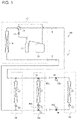
- FIG. 1 is a refrigerant circuit diagram illustrating an air-conditioning apparatus according to Embodiment 1.
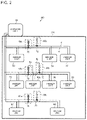
- FIG. 2 is an explanatory view illustrating an installed state of the air-conditioning apparatus according to Embodiment 1.
- FIG. 3 is a plan view illustrating a valve kit in Embodiment 1.
- FIG. 4 is an explanatory view illustrating a section of the valve kit in Embodiment 1 that is taken along line A-A in FIG. 3 .
- FIG. 5 is a top view illustrating the valve kit in Embodiment 1 as viewed in a direction indicated by an arrow B in FIG. 4 .
- FIG. 6 is a perspective view illustrating the valve kit in Embodiment 1 and a refrigerant pipe to be additionally provided.
- FIG. 1 is a refrigerant circuit diagram illustrating an air-conditioning apparatus 100 according to Embodiment 1.
- FIG. 2 is an explanatory view illustrating an installed state of the air-conditioning apparatus 100 according to Embodiment 1.
- the air-conditioning apparatus 100 includes a refrigerant circuit 1 that circulates refrigerant.
- a cooling mode or a heating mode can be freely selected as an operation mode of each of indoor units 50 .
- the air-conditioning apparatus 100 includes the indoor units 50 and an outdoor unit 10 that is a heat-source unit.
- the outdoor unit 10 and the indoor units 50 are connected by refrigerant pipes 4 to form the refrigerant circuit 1 .
- the outdoor unit 10 includes a compressor 11 , a backflow prevention device 12 , a four-way valve 13 , and a heat-source-side heat exchanger 14 .
- Each of the indoor units 50 includes a use-side heat exchanger 51 and an expansion device 53 .
- the outdoor unit 10 is installed in an outdoor space 200 located outside a building.
- the indoor units 50 are installed in indoor spaces 201 of the building.
- the outdoor space 200 in which the outdoor unit 10 is installed is an outdoor space at a rooftop of the building that is located above the indoor units 50 in an upward direction U.
- the above description concerning the location of the outdoor unit 10 is not limiting.
- the outdoor unit 10 may be installed in an outdoor space 200 that is located outside the building and at a position lower than the positions of the indoor units 50 .
- components to be provided are selected such that an indoor space load that is the load of an indoor space or spaces and an indoor unit load that is the load of indoor units are equal to each other.
- the indoor space load and the indoor unit load initially designed are not equal to each other. This is because the loads change due to a changing load such as a person or persons who enter or leave the building, partitions in each of the floors, and for other reasons.
- the indoor space load is larger than the indoor unit load, an air-conditioning performance of the indoor units 50 that heat or cool the indoor space is insufficient.
- valve kits 60 a and 60 b as described below are provided in the air-conditioning apparatus 100 .
- FIG. 3 is a plan view illustrating the valve kit 60 a or 60 b in Embodiment 1.
- FIG. 4 is an explanatory diagram illustrating a section of the valve kit 60 a or 60 b in Embodiment 1 that is taken along line A-A in FIG. 3 .
- FIG. 5 is a top view illustrating the valve kit 60 a or 60 b in Embodiment 1 as viewed in a direction indicated by an arrow B in FIG. 4 .
- FIG. 6 is a perspective view illustrating the valve kit 60 a or 60 b in Embodiment 1 and a refrigerant pipe 4 a or 4 b to be additionally provided.
- one or more pairs of valve kits 60 a and 60 b are provided at the indoor-side refrigerant pipes 4 that connect the outdoor unit 10 and the indoor units 50 , and a pair of refrigerant pipes 4 a and refrigerant pipe 4 b on an inflow side and an outflow side can be connected to one of the one or more pairs of valve kits 60 a and 60 b .
- the pair of refrigerant pipes 4 a and 4 b are additionally provided as additional pipes to enable a new indoor unit 50 c to be additionally installed after installation of the air-conditioning apparatus 100 . Refering to FIG. 2 , in each of the floors, one pair of valve kits 60 a and 60 b are provided.
- branch joints 70 are provided in respective middle portions of the indoor-side refrigerant pipes 4 connecting the outdoor unit 10 and the indoor units 50 .
- an associated one of the refrigerant pipes 4 a and 4 b connected to the one or more pairs of valve kits 60 a and 60 b branches off.
- a refrigerant pipe 4 c that extends as a branch pipe from each of the branch joints 70 extends upwards in a vertical direction. Therefore, a portion from each of the refrigerant pipes 4 connecting the outdoor unit 10 and the plurality of indoor units 50 to a distal end portion 61 of an associated one of the valve kits 60 a and 60 b extends upward in the vertical direction.
- part of the indoor-side refrigerant pipe 4 that extends before reaching the branch joint 70 is made to have a pipe diameter larger than a pipe diameter of each of refrigerant pipes for use in operation that is performed with an air-conditioning performance prior to addition of a new indoor unit or units 50 c , in order to enable the air-conditioning performance to be enhanced as the number of new indoor units 50 c is increased.
- the refrigerant pipe connected to the valve kit 60 a or 60 b may be made to branch, without provision of the branch joint 70 , from the middle of an associated one of the indoor-side refrigerant pipes 4 connecting the outdoor unit 10 and the indoor units 50 .
- each of the valve kits 60 a and 60 b straightly extends upwards in the vertical direction on an extension above the associated additional refrigerant pipe 4 a or 4 b that extends upwards from the branch joint 70 in the vertical direction.
- each of the valve kits 60 a and 60 b extends upwards in the vertical direction over the entire portion thereof from the distal end portion 61 that is be connected to the additional refrigerant pipe 4 a or 4 b to a downstream side of an operation valve 62 . It should be noted that it suffices that each of the valve kits 60 a and 60 b is inclined upwards to a horizontal direction.
- each of the valve kits 60 a and 60 b is inclined upwards relative to the horizontal direction.
- An outside diameter of each of the valve kits 60 a and 60 b is larger than an outside diameter of each of the refrigerant pipes 4 a and 4 b .
- Each of the valve kits 60 a and 60 b is a tubular member.
- a flow passage in each of the valve kits 60 a and 60 b is narrower than a flow passage in each of the refrigerant pipes 4 a and 4 b.
- each of the valve kits 60 a and 60 b includes the operation valve 62 and a port 63 .
- the operation valve 62 can be opened and closed for refrigerant that flows through the inside of the valve kit 60 a or 60 b .
- the port 63 is provided closer to the distal end portion 61 than the operation valve 62 in the upward direction U, and is open from the outside to the flow passage.
- a pair of attachment hole portions 64 are provided.
- the attachment hole portions 64 protrude from the body of the valve kit in the horizontal direction and are symmetrical and fixed by fixing members.
- the operation valve 62 has a valve body 62 a in the valve kit 60 a or 60 b .
- the operation valve 62 includes an operation unit 62 b that enables the valve body 62 a to be rotatably operated from the outside to open/close the flow passage in the valve body 62 a .
- the flow passage in the valve body 62 a is opened or closed.
- the flow passage in the valve body 62 a communicates with the flow passage in the valve kit 60 a or 60 b on both sides thereof in the vertical direction.
- the port 63 communicates with the outside and the flow passage in the valve kit 60 a or 60 b in the upward direction U.
- the port 63 is used in evacuation of a refrigerant flow passage formed by an associated one of the additional refrigerant pipes 4 a and 4 b on the inflow side and the outflow side and the new indoor unit 50 c , at the time of adding the new indoor unit 50 c.
- a dome-shaped flare 61 a is provided at a distal end of the distal end portion 61 of each of the valve kits 60 a and 60 b in the upward direction U.
- the dome-shaped flare 61 a can be jointed to a large-diameter tapered flare 41 that is provided at an end part of the additional refrigerant pipe 4 a or 4 b in a downward direction D.
- a screw portion 61 b is provided on an outer peripheral portion of the distal end portion 61 of each of the valve kits 60 a and 60 b .
- the screw portion 61 b is screwed to a flare nut 42 provided on the additional refrigerant pipe 4 a or 4 b .
- the screw portion 61 b is located below the distal end of the distal end portion 61 that has the shape of the dome-shaped flare 61 a in such a manner as to be screwable to the flare nut 42 provided on the additional refrigerant pipe 4 a or 4 b .
- a nut other than the flare nut 42 may be provided on the additional refrigerant pipe 4 a or 4 b.
- the refrigerant pipes 4 a and 4 b on the inflow side and the outflow side that are to be added on a secondary side of one pair of valve kits 60 a and 60 b and the new indoor unit 50 c are connected to refrigerant pipes 4 already provided, using the pair of valve kits 60 a and 60 b . Furthermore, only the refrigerant flow passage formed by one of the additional refrigerant pipes 4 a and 4 b on the inflow side and the outflow side and the new indoor unit 50 c is evacuated using the port 63 .
- the operation valve 62 is opened, and the new indoor unit 50 c is supplied with refrigerant that flows through the refrigerant pipes 4 of the air-conditioning apparatus 100 already installed in the building.
- valve kits 60 a and 60 b are not provided, and the air-conditioning performance needs to be improved, it is necessary to suspend the operation of the air-conditioning apparatus 100 in order to add the new indoor unit 50 c , and to recover all the refrigerant in the air-conditioning apparatus 100 .
- the work of additionally installing the new indoor unit is complicated.
- valve kits 60 a and 60 b are provided to extend upwards in the vertical direction relative to the refrigerant pipes 4 that connect the outdoor unit 10 and the indoor units 50 before reaching the branch joints 70 . Therefore, during the operation of the air-conditioning apparatus 100 , refrigerating machine oil that flows through the refrigerant pipes 4 flows downwards in the valve kit 60 a or 60 b due to gravity, and does not stay in the valve kit 60 a or 60 b.
- an outdoor unit 10 that is designed to have a capacity margin is previously selected at the timing of installing the air-conditioning apparatus 100 . More specifically, the air-conditioning performance of the outdoor unit 10 is enhanced in advance by the number of additional indoor units 50 to be additionally installed, compared with an air-conditioning performance necessary for the number of indoor units 50 at the time of installing the indoor units 50 . For example, at the time of installing the air-conditioning apparatus 100 having rated cooling capacity of 28 kW, it is appropriate that the outdoor unit 10 is designed to have a margin of 20 to 30%.
- the diameter of each of electric wires that are connected to the outdoor unit 10 is set larger than that of each of electric wires for use in the air-conditioning performance before a new indoor unit is added.
- An upper limit value is set as a compressor frequency of the outdoor unit 10 or an outdoor fan, based on a basic horsepower. In the case where the air-conditioning performance is enhanced, however, the upper limit value is changed, and an air-conditioning performance required for the indoor space load can be fulfilled. It is appropriate that it is determined whether the air-conditioning performance is enhanced or not, based on, for example, switch setting of the outdoor unit 10 or a total capacity of the indoor units 50 and the new indoor unit 50 c , and the upper limit value is automatically changed.
- the outdoor unit 10 installed in the outdoor space 200 and the indoor units 50 installed in the indoor spaces 201 are connected by the refrigerant pipes 4 to form the refrigerant circuit 1 .
- the one or more pairs of valve kits 60 a and 60 b are provided at the refrigerant pipes 4 connecting the outdoor unit 10 and the indoor units 50 .
- the pair of refrigerant pipes 4 a and 4 b on the inflow side and the outflow side are connectable.
- the pair of refrigerant pipes 4 a and 4 b are additionally provided to enable the new indoor unit 50 c to be added after installation of the air-conditioning apparatus 100 .
- Each of the valve kits of the one or more pairs of valve kits 60 a and 60 b is provided such that the distal end portion 61 is inclined upwards relative to the horizontal direction.
- the additional refrigerant pipe 4 a or 4 b to be additionally provided is connected to each of the distal end portions 61 .
- the refrigerating machine oil that is mixed with the refrigerant flowing through the refrigerant pipes 4 of the air-conditioning apparatus 100 already installed in the building and that has specific gravity greater than specific gravity of the refrigerant flows downwards from the valve kit 60 a or 60 b extending upwards, and does not stay in the valve kit 60 a or 60 b . Therefore, the refrigerating machine oil does not soil the inside of the valve kit 60 a or 60 b .
- the refrigerating machine oil does not flow into the new indoor unit 50 c from the valve kit 60 a or 60 b , and needless to say, the new indoor unit 50 c is not broken by the refrigerating machine oil. Therefore, the worker can easily perform the work of additionally installing the new indoor unit 50 c . That is, it is possible to easily add the new indoor unit 50 c without stopping the air-conditioning apparatus 100 already installed in the building.
- each of the valve kits 60 a and 60 b of the one or more pairs of valve kits 60 a and 60 b extends upwards in the vertical direction.
- the portion from each of the refrigerant pipes 4 connecting the outdoor unit 10 and the indoor units 50 to an associated one of the distal end portions 61 is inclined upwards relative to the horizontal direction.
- the refrigerating machine oil that is mixed with the refrigerant that flows through the refrigerant pipes 4 of the air-conditioning apparatus 100 already installed in the building and has the specific gravity greater than the specific gravity of the refrigerant flows downwards due to the gravity from the valve kit 60 a or 60 b that extends upwards or from the refrigerant pipes 4 c located below the valve kit 60 a or 60 b in the downward direction D, and does not stay in the valve kit 60 a or 60 b . Therefore, the refrigerating machine oil does not soil the inside of the valve kit 60 a or 60 b.
- the air-conditioning performance of the outdoor unit 10 is previously enhanced by the number of indoor units 50 to be additionally installed, compared with an air-conditioning performance necessary for the number of indoor units 50 at the time of installation thereof.
- the outdoor unit 10 can fulfill the air-conditioning performance without difficulty.
- each of the valve kits 60 a and 60 b of the one or more pairs of valve kits 60 a and 60 b includes the operation valve 62 that can be freely opened and closed for the refrigerant that flows through the valve kit 60 a or 60 b .
- Each of the valve kits 60 a and 60 b of the one or more pairs of valve kits 60 a and 60 b also has the port 63 that is provided closer to the distal end portion 61 than the operation valve 62 in the upward direction U, and that is open from the outside to the inside.
- the new indoor unit 50 c when being additionally installed, the new indoor unit 50 c is first installed along with the additional refrigerant pipes 4 a and 4 b on the inflow side and the outflow side. Furthermore, only the refrigerant flow passages formed by the additional refrigerant pipes 4 a and 4 b on the inflow side and the outflow side and the new indoor unit 50 c are evacuated using the port 63 . Thereafter, the operation valve 62 is opened, and the new indoor unit 50 c is supplied with the refrigerant that flows through the refrigerant pipes 4 of the air-conditioning apparatus 100 already installed in the building. Therefore, it is possible to add the new indoor unit 50 c without stopping operation of the air-conditioning apparatus 100 already installed in the building.
- the dome-shaped flare 61 a is provided at the distal end of each of the distal end portions 61 .
- the dome-shaped flare 61 a is joinable to the large-diameter tapered flare 41 provided at an end portion of the additional refrigerant pipe 4 a or 4 b.
- the dome-shaped flare 61 a and the large-diameter tapered flare 41 are joined to each other, thereby enabling the new indoor unit 50 c to be added.
- the screw portion 61 b is provided on the outer peripheral portion of each of the distal end portions 61 .
- the screw portion 61 b is screwed to the flare nut 42 provided on the additional refrigerant pipe 4 a or 4 b.
- the screw portion 61 b is provided below the distal end of the distal end portion 61 having the shape of the dome-shaped flare 61 a , in such a manner as to be screwable to the flare nut 42 provided on the additional refrigerant pipe 4 a or 4 b.
- the branch joints 70 are provided in the respective middles of the refrigerant pipes 4 that connect the outdoor unit 10 and the indoor units 50 .
- the refrigerant pipe 4 c connected to the valve kit 60 a or 60 b can previously branch off from the refrigerant pipes 4 included in the refrigerant circuit 1 .
- refrigerant circuit 4 : refrigerant pipe, 4 a : refrigerant pipe, 4 b : refrigerant pipe, 4 c : refrigerant pipe, 10 : outdoor unit, 11 : compressor, 12 : backflow prevention device, 13 : four-way valve, 14 : heat-source-side heat exchanger, 41 : large-diameter tapered flare, 42 : flare nut, 50 : indoor unit, 50 c : new indoor unit, 51 : use-side heat exchanger, 53 : expansion device, 60 a : valve kit, 60 b : valve kit, 61 : distal end portion, 61 a : dome-shaped flare, 61 b : screw portion, 62 : operation valve, 62 a : valve body, 62 b : operation portion, 63 : port, 64 : attachment hole portion, 70 : branch joint, 100 : air-conditioning apparatus, 200 : outdoor space, 201 : indoor space
Landscapes
- Engineering & Computer Science (AREA)
- Mechanical Engineering (AREA)
- General Engineering & Computer Science (AREA)
- Physics & Mathematics (AREA)
- Thermal Sciences (AREA)
- Chemical & Material Sciences (AREA)
- Combustion & Propulsion (AREA)
- Other Air-Conditioning Systems (AREA)
- Air Filters, Heat-Exchange Apparatuses, And Housings Of Air-Conditioning Units (AREA)
- Air Conditioning Control Device (AREA)
Abstract
Description
- The present disclosure relates to an air-conditioning apparatus in which an outdoor unit installed outdoors and an indoor unit installed indoors are connected by refrigerant pipes to form a refrigerant circuit.
- In an existing air-conditioning apparatus such as a multi-split air-conditioning apparatus for a building, an outdoor unit is installed outdoors, and an indoor unit or units are installed indoors. In such an air-conditioning apparatus, in a heating operation, refrigerant that circulates in a refrigerant circuit transfers heat to air supplied to a heat exchanger in the indoor unit, thereby heating the air, and the heated air is sent to an air-conditioned space; and in a cooling operation, the refrigerant that circulates in the refrigerant circuit receives heat from air supplied to the heat exchanger of the indoor unit, thereby cooling the air, and the cooled air is sent to the air-conditioned space (for example, see Patent Literature 1).
- Such an air-conditioning apparatus as descried above is designed such that the load of components to be selected is equal to the load of a building. It should be noted that the loads are calculated such that an air-conditioning performance in the heating operation or the cooling operation varies from one region to another.
- Patent Literature 1: Japanese Unexamined Patent Application Publication No. 2007-10288
- When an existing air-conditioning apparatus is installed in a building, components are selected such that in each of floors, the load of an indoor space and the load of an indoor unit are equal to each other. However, in some cases, after installation of an air-conditioning apparatus, the load of an indoor space and the load of an indoor unit that are initially designed are not equal to each other. This is because both the loads change due to a changing load such as a person or persons who enter or leave the building, partitions in each of the floors, and for other reasons. In the case where the load of the indoor space is larger than the load of the indoor unit, an air-conditioning performance of the indoor unit that heats or cools the indoor space is insufficient, and thus needs to be enhanced. In the case where the air-conditioning performance needs to be enhanced, it is necessary to carry out a construction work and to stop the air-conditioning apparatus installed in the building. Thus, an additional work is complicated.
- The present disclosure is applied to solve the above problem, and relates to an air-conditioning apparatus that enables a new indoor unit or units to be easily added without stopping the air-conditioning apparatus, after the air-conditioning apparatus is installed in a building.
- In an air-conditioning apparatus according to an embodiment of the present disclosure, an outdoor unit installed in an outdoor space and an indoor unit installed in an indoor space are connected by refrigerant pipes to form a refrigerant circuit. One or more pairs of valve kits are provided at the refrigerant pipes by which the outdoor unit and the indoor unit are connected, and allow a pair of additional refrigerant pipes on an inflow side and an outflow side to be connected to one of the one or more pairs of valve kits, the pair of additional refrigerant pipes being additionally provided to enable a new indoor unit to be added after installation of the air-conditioning apparatus. The valve kits of the one or more pairs of valve kits have respective distal end portions that are inclined upwards relative to a horizontal direction. The distal end portions each allow an associated one of the additional refrigerant pipe to be connected to the distal end portion.
- In the air-conditioning apparatus according to the embodiment of the present disclosure, the one or more valve kits are provided on the indoor-side refrigerant pipes that connect the outdoor unit and the indoor unit. A pair of refrigerant pipes on an inflow side and an outflow side is connectable to one of the one or more pairs of valve kits. The pair of refrigerant pipes is additionally provided as additional refrigerant pipes to enable the new indoor unit to be newly added after installation of the air-conditioning apparatus. The valve kits of the one or more pairs of valve kits are provided to have respective distal end portion inclined upwards relative to the horizontal direction. Each of the distal end portions allow an associated one of the additional refrigerant pipes to be connected to the distal end portion. As a result, it is possible to easily add the new indoor unit, using the valve kits, without stopping the air-conditioning apparatus already installed in the building. It is therefore possible to easily add the new indoor unit without stopping the air-conditioning apparatus already installed in the building.
-
FIG. 1 is a refrigerant circuit diagram illustrating an air-conditioning apparatus according toEmbodiment 1. -
FIG. 2 is an explanatory view illustrating an installed state of the air-conditioning apparatus according toEmbodiment 1. -
FIG. 3 is a plan view illustrating a valve kit in Embodiment 1. -
FIG. 4 is an explanatory view illustrating a section of the valve kit inEmbodiment 1 that is taken along line A-A inFIG. 3 . -
FIG. 5 is a top view illustrating the valve kit inEmbodiment 1 as viewed in a direction indicated by an arrow B inFIG. 4 . -
FIG. 6 is a perspective view illustrating the valve kit inEmbodiment 1 and a refrigerant pipe to be additionally provided. - An embodiment of the present disclosure will be described below with reference to drawings. It should be noted that in each of figures in the drawings, components that are the same as or equivalent to a previous figure or figures are denoted by the same reference signs, and the same is true of the entire text of the present specification. Furthermore, in a sectional view, hatching is omitted as appropriate in view of visibility. In the entire text of the specification, configurations of components are descried as examples, and these descriptions are not limiting.
-
FIG. 1 is a refrigerant circuit diagram illustrating an air-conditioning apparatus 100 according toEmbodiment 1.FIG. 2 is an explanatory view illustrating an installed state of the air-conditioning apparatus 100 according toEmbodiment 1. As illustrated inFIGS. 1 and 2 , the air-conditioning apparatus 100 includes arefrigerant circuit 1 that circulates refrigerant. In the air-conditioning apparatus 100, a cooling mode or a heating mode can be freely selected as an operation mode of each ofindoor units 50. - The air-
conditioning apparatus 100 includes theindoor units 50 and anoutdoor unit 10 that is a heat-source unit. Theoutdoor unit 10 and theindoor units 50 are connected by refrigerant pipes 4 to form therefrigerant circuit 1. Theoutdoor unit 10 includes acompressor 11, abackflow prevention device 12, a four-way valve 13, and a heat-source-side heat exchanger 14. Each of theindoor units 50 includes a use-side heat exchanger 51 and anexpansion device 53. - As illustrated in
FIG. 2 , theoutdoor unit 10 is installed in anoutdoor space 200 located outside a building. Theindoor units 50 are installed inindoor spaces 201 of the building. Theoutdoor space 200 in which theoutdoor unit 10 is installed is an outdoor space at a rooftop of the building that is located above theindoor units 50 in an upward direction U. The above description concerning the location of theoutdoor unit 10, however, is not limiting. Theoutdoor unit 10 may be installed in anoutdoor space 200 that is located outside the building and at a position lower than the positions of theindoor units 50. - When the air-
conditioning apparatus 100 is installed in the building, in each of floors that are located as illustrated inFIG. 2 , components to be provided are selected such that an indoor space load that is the load of an indoor space or spaces and an indoor unit load that is the load of indoor units are equal to each other. However, after installation of the air-conditioning apparatus 100, in some cases, the indoor space load and the indoor unit load initially designed are not equal to each other. This is because the loads change due to a changing load such as a person or persons who enter or leave the building, partitions in each of the floors, and for other reasons. In the case where the indoor space load is larger than the indoor unit load, an air-conditioning performance of theindoor units 50 that heat or cool the indoor space is insufficient. - When the air-conditioning performance is insufficient, comfort of the indoor space is deteriorated. Therefore, one or more pairs of
valve kits conditioning apparatus 100. - <Configuration of Valve
Kits -
FIG. 3 is a plan view illustrating thevalve kit FIG. 4 is an explanatory diagram illustrating a section of thevalve kit Embodiment 1 that is taken along line A-A inFIG. 3 .FIG. 5 is a top view illustrating thevalve kit Embodiment 1 as viewed in a direction indicated by an arrow B inFIG. 4 .FIG. 6 is a perspective view illustrating thevalve kit Embodiment 1 and arefrigerant pipe - As illustrated in
FIGS. 2, 3, 4, 5, and 6 , one or more pairs ofvalve kits outdoor unit 10 and theindoor units 50, and a pair ofrefrigerant pipes 4 a andrefrigerant pipe 4 b on an inflow side and an outflow side can be connected to one of the one or more pairs ofvalve kits refrigerant pipes indoor unit 50 c to be additionally installed after installation of the air-conditioning apparatus 100. Refering toFIG. 2 , in each of the floors, one pair ofvalve kits - As illustrated in
FIG. 2 , branch joints 70 are provided in respective middle portions of the indoor-side refrigerant pipes 4 connecting theoutdoor unit 10 and theindoor units 50. At each of the branch joints 70, an associated one of therefrigerant pipes valve kits outdoor unit 10 and the plurality ofindoor units 50 to a distal end portion 61 of an associated one of thevalve kits outdoor unit 10 and theindoor units 50, part of the indoor-side refrigerant pipe 4 that extends before reaching the branch joint 70 is made to have a pipe diameter larger than a pipe diameter of each of refrigerant pipes for use in operation that is performed with an air-conditioning performance prior to addition of a new indoor unit orunits 50 c, in order to enable the air-conditioning performance to be enhanced as the number of newindoor units 50 c is increased. - It should be noted that depending on the installed state of the air-conditioning apparatus, the refrigerant pipe connected to the
valve kit outdoor unit 10 and theindoor units 50. - As illustrated in
FIGS. 2, 3, 4, 5, and 6 , each of thevalve kits refrigerant pipe valve kits refrigerant pipe operation valve 62. It should be noted that it suffices that each of thevalve kits outdoor unit 10 and theindoor unit 50 to the distal end portion 61 of each of thevalve kits valve kits refrigerant pipes valve kits valve kits refrigerant pipes - As illustrated in
FIGS. 3, 4, 5, and 6 , each of thevalve kits operation valve 62 and a port 63. Theoperation valve 62 can be opened and closed for refrigerant that flows through the inside of thevalve kit operation valve 62 in the upward direction U, and is open from the outside to the flow passage. - At an outer peripheral portion in the middle of each of the
valve kits attachment hole portions 64 are provided. Theattachment hole portions 64 protrude from the body of the valve kit in the horizontal direction and are symmetrical and fixed by fixing members. - The
operation valve 62 has a valve body 62 a in thevalve kit operation valve 62 includes an operation unit 62 b that enables the valve body 62 a to be rotatably operated from the outside to open/close the flow passage in the valve body 62 a. When a worker inserts a tool into the operation unit 62 b and turns the operation unit 62 b, the flow passage in the valve body 62 a is opened or closed. When being opened, the flow passage in the valve body 62 a communicates with the flow passage in thevalve kit valve kit - The port 63 communicates with the outside and the flow passage in the
valve kit refrigerant pipes indoor unit 50 c, at the time of adding the newindoor unit 50 c. - At a distal end of the distal end portion 61 of each of the
valve kits flare 61 a is provided. The dome-shapedflare 61 a can be jointed to a large-diameter tapered flare 41 that is provided at an end part of the additionalrefrigerant pipe - A
screw portion 61 b is provided on an outer peripheral portion of the distal end portion 61 of each of thevalve kits screw portion 61 b is screwed to aflare nut 42 provided on the additionalrefrigerant pipe screw portion 61 b is located below the distal end of the distal end portion 61 that has the shape of the dome-shapedflare 61 a in such a manner as to be screwable to theflare nut 42 provided on the additionalrefrigerant pipe flare nut 42 may be provided on the additionalrefrigerant pipe - When the new
indoor unit 50 c is additionally installed, therefrigerant pipes valve kits indoor unit 50 c are connected to refrigerant pipes 4 already provided, using the pair ofvalve kits refrigerant pipes indoor unit 50 c is evacuated using the port 63. Thereafter, theoperation valve 62 is opened, and the newindoor unit 50 c is supplied with refrigerant that flows through the refrigerant pipes 4 of the air-conditioning apparatus 100 already installed in the building. By carrying out only such a construction work, it is possible to easily add the newindoor unit 50 c, and improve the air-conditioning performance of the air-conditioning apparatus 100 already installed, without stopping the operation of the air-conditioning apparatus 100. - In the case where the
valve kits conditioning apparatus 100 in order to add the newindoor unit 50 c, and to recover all the refrigerant in the air-conditioning apparatus 100. Thus, the work of additionally installing the new indoor unit is complicated. - The
valve kits outdoor unit 10 and theindoor units 50 before reaching the branch joints 70. Therefore, during the operation of the air-conditioning apparatus 100, refrigerating machine oil that flows through the refrigerant pipes 4 flows downwards in thevalve kit valve kit - It should be noted that in order to improve the air-conditioning performance, it is indispensable to improve the air-conditioning performance of the
outdoor unit 10 already installed. Therefore, anoutdoor unit 10 that is designed to have a capacity margin is previously selected at the timing of installing the air-conditioning apparatus 100. More specifically, the air-conditioning performance of theoutdoor unit 10 is enhanced in advance by the number of additionalindoor units 50 to be additionally installed, compared with an air-conditioning performance necessary for the number ofindoor units 50 at the time of installing theindoor units 50. For example, at the time of installing the air-conditioning apparatus 100 having rated cooling capacity of 28 kW, it is appropriate that theoutdoor unit 10 is designed to have a margin of 20 to 30%. In order that electric wires that are connected to theoutdoor unit 10 support the air-conditioning performance after the air-conditioning performance is enhanced, the diameter of each of electric wires that are connected to theoutdoor unit 10 is set larger than that of each of electric wires for use in the air-conditioning performance before a new indoor unit is added. - An upper limit value is set as a compressor frequency of the
outdoor unit 10 or an outdoor fan, based on a basic horsepower. In the case where the air-conditioning performance is enhanced, however, the upper limit value is changed, and an air-conditioning performance required for the indoor space load can be fulfilled. It is appropriate that it is determined whether the air-conditioning performance is enhanced or not, based on, for example, switch setting of theoutdoor unit 10 or a total capacity of theindoor units 50 and the newindoor unit 50 c, and the upper limit value is automatically changed. - According to
Embodiment 1, in the air-conditioning apparatus 100, theoutdoor unit 10 installed in theoutdoor space 200 and theindoor units 50 installed in theindoor spaces 201 are connected by the refrigerant pipes 4 to form therefrigerant circuit 1. The one or more pairs ofvalve kits outdoor unit 10 and theindoor units 50. To one of the one or more pairs ofvalve kits refrigerant pipes refrigerant pipes indoor unit 50 c to be added after installation of the air-conditioning apparatus 100. Each of the valve kits of the one or more pairs ofvalve kits refrigerant pipe - Because of provision of the above configuration, it is possible to easily add the new
indoor unit 50 c, using thevalve kit conditioning apparatus 100 already installed in the building. At this time, the refrigerating machine oil that is mixed with the refrigerant flowing through the refrigerant pipes 4 of the air-conditioning apparatus 100 already installed in the building and that has specific gravity greater than specific gravity of the refrigerant flows downwards from thevalve kit valve kit valve kit refrigerant pipe valve kit indoor unit 50 c from thevalve kit indoor unit 50 c is not broken by the refrigerating machine oil. Therefore, the worker can easily perform the work of additionally installing the newindoor unit 50 c. That is, it is possible to easily add the newindoor unit 50 c without stopping the air-conditioning apparatus 100 already installed in the building. - According to
Embodiment 1, the distal end portion 61 of each of thevalve kits valve kits - In the above configuration, the refrigerating machine oil that is mixed with the refrigerant that flows through the refrigerant pipes 4 of the air-
conditioning apparatus 100 already installed in the building and has the specific gravity greater than the specific gravity of the refrigerant straightly flows downwards due to gravity from thevalve kit valve kit valve kit - According to
Embodiment 1, the portion from each of the refrigerant pipes 4 connecting theoutdoor unit 10 and theindoor units 50 to an associated one of the distal end portions 61 is inclined upwards relative to the horizontal direction. - In the above configuration, the refrigerating machine oil that is mixed with the refrigerant that flows through the refrigerant pipes 4 of the air-
conditioning apparatus 100 already installed in the building and has the specific gravity greater than the specific gravity of the refrigerant flows downwards due to the gravity from thevalve kit valve kit valve kit valve kit - According to
Embodiment 1, the air-conditioning performance of theoutdoor unit 10 is previously enhanced by the number ofindoor units 50 to be additionally installed, compared with an air-conditioning performance necessary for the number ofindoor units 50 at the time of installation thereof. - In the above configuration, even when the
indoor unit 50 c is newly added, theoutdoor unit 10 can fulfill the air-conditioning performance without difficulty. - According to
Embodiment 1, each of thevalve kits valve kits operation valve 62 that can be freely opened and closed for the refrigerant that flows through thevalve kit valve kits valve kits operation valve 62 in the upward direction U, and that is open from the outside to the inside. - In the above configuration, when being additionally installed, the new
indoor unit 50 c is first installed along with the additionalrefrigerant pipes refrigerant pipes indoor unit 50 c are evacuated using the port 63. Thereafter, theoperation valve 62 is opened, and the newindoor unit 50 c is supplied with the refrigerant that flows through the refrigerant pipes 4 of the air-conditioning apparatus 100 already installed in the building. Therefore, it is possible to add the newindoor unit 50 c without stopping operation of the air-conditioning apparatus 100 already installed in the building. - According to
Embodiment 1, at the distal end of each of the distal end portions 61, the dome-shapedflare 61 a is provided. The dome-shapedflare 61 a is joinable to the large-diameter tapered flare 41 provided at an end portion of the additionalrefrigerant pipe - In the above configuration, the dome-shaped
flare 61 a and the large-diameter tapered flare 41 are joined to each other, thereby enabling the newindoor unit 50 c to be added. - According to
Embodiment 1, on the outer peripheral portion of each of the distal end portions 61, thescrew portion 61 b is provided. Thescrew portion 61 b is screwed to theflare nut 42 provided on the additionalrefrigerant pipe - In the above configuration, the
screw portion 61 b and theflare nut 42 are screwed to each other, thereby enabling the newindoor unit 50 c to be added. - According to
Embodiment 1, thescrew portion 61 b is provided below the distal end of the distal end portion 61 having the shape of the dome-shapedflare 61 a, in such a manner as to be screwable to theflare nut 42 provided on the additionalrefrigerant pipe - In the above configuration, the
screw portion 61 b and theflare nut 42 are screwed to each other. As a result, it is possible to add the newindoor unit 50 c, with the dome-shapedflare 61 a and the large-diameter tapered flare 41 joined to each other and a joint portion therebetween sealed. - According to
Embodiment 1, the branch joints 70 are provided in the respective middles of the refrigerant pipes 4 that connect theoutdoor unit 10 and theindoor units 50. At each of the branch joints 70, an associated one of therefrigerant pipes valve kits - In the above configuration, at each of the branch joints 70, the refrigerant pipe 4 c connected to the
valve kit refrigerant circuit 1. - 1: refrigerant circuit, 4: refrigerant pipe, 4 a: refrigerant pipe, 4 b: refrigerant pipe, 4 c: refrigerant pipe, 10: outdoor unit, 11: compressor, 12: backflow prevention device, 13: four-way valve, 14: heat-source-side heat exchanger, 41: large-diameter tapered flare, 42: flare nut, 50: indoor unit, 50 c: new indoor unit, 51: use-side heat exchanger, 53: expansion device, 60 a: valve kit, 60 b: valve kit, 61: distal end portion, 61 a: dome-shaped flare, 61 b: screw portion, 62: operation valve, 62 a: valve body, 62 b: operation portion, 63: port, 64: attachment hole portion, 70: branch joint, 100: air-conditioning apparatus, 200: outdoor space, 201: indoor space
Claims (9)
Applications Claiming Priority (1)
| Application Number | Priority Date | Filing Date | Title |
|---|---|---|---|
| PCT/JP2019/021813 WO2020240852A1 (en) | 2019-05-31 | 2019-05-31 | Air conditioning device |
Publications (2)
| Publication Number | Publication Date |
|---|---|
| US20220163243A1 true US20220163243A1 (en) | 2022-05-26 |
| US11971202B2 US11971202B2 (en) | 2024-04-30 |
Family
ID=73553722
Family Applications (1)
| Application Number | Title | Priority Date | Filing Date |
|---|---|---|---|
| US17/440,825 Active 2040-05-16 US11971202B2 (en) | 2019-05-31 | 2019-05-31 | Air-conditioning apparatus |
Country Status (5)
| Country | Link |
|---|---|
| US (1) | US11971202B2 (en) |
| EP (1) | EP3978822B1 (en) |
| JP (1) | JP7086285B2 (en) |
| CN (1) | CN113853501A (en) |
| WO (1) | WO2020240852A1 (en) |
Citations (1)
| Publication number | Priority date | Publication date | Assignee | Title |
|---|---|---|---|---|
| JP2010071497A (en) * | 2008-09-17 | 2010-04-02 | Hitachi Appliances Inc | Air conditioner |
Family Cites Families (21)
| Publication number | Priority date | Publication date | Assignee | Title |
|---|---|---|---|---|
| JP2994824B2 (en) * | 1991-11-27 | 1999-12-27 | 三洋電機株式会社 | Multi-room air conditioner |
| JP3033503B2 (en) * | 1996-11-05 | 2000-04-17 | 株式会社日立製作所 | Air conditioner |
| JP2000097453A (en) * | 1998-09-22 | 2000-04-04 | Toshiba Corp | Outdoor unit of air conditioner |
| KR20060055153A (en) * | 2004-11-18 | 2006-05-23 | 엘지전자 주식회사 | Divider structure of multi air conditioner |
| JP2007010288A (en) | 2005-07-04 | 2007-01-18 | Jfe Engineering Kk | Method for enhancing cooling / heating capacity of existing heat pump air conditioner, heat storage unit device, and heat pump air conditioner using the device |
| JP2008209083A (en) | 2007-02-28 | 2008-09-11 | Toshiba Carrier Corp | Air conditioner |
| JP4895891B2 (en) | 2007-03-30 | 2012-03-14 | 三菱電機株式会社 | Air conditioner |
| KR20090022119A (en) * | 2007-08-29 | 2009-03-04 | 엘지전자 주식회사 | Detachable multi-air conditioner with service valve assembly |
| US9587843B2 (en) * | 2008-10-29 | 2017-03-07 | Mitsubishi Electric Corporation | Air-conditioning apparatus and relay unit |
| CN102333996B (en) * | 2009-02-26 | 2014-03-12 | Lg电子株式会社 | Air conditioner and outdoor unit |
| KR101565406B1 (en) * | 2009-02-26 | 2015-11-03 | 엘지전자 주식회사 | Air conditioner |
| CN102192624B (en) * | 2010-03-11 | 2014-11-26 | Lg电子株式会社 | Outdoor unit, distribution unit and air conditioning device including them |
| KR101662078B1 (en) * | 2010-03-11 | 2016-10-04 | 엘지전자 주식회사 | Air conditioner |
| JP6099925B2 (en) * | 2012-10-04 | 2017-03-22 | 三菱重工業株式会社 | Air conditioner outdoor unit |
| JP5984779B2 (en) * | 2013-07-24 | 2016-09-06 | 三菱電機株式会社 | Outdoor unit and air conditioner |
| CN203869388U (en) * | 2014-03-27 | 2014-10-08 | 广东志高暖通设备股份有限公司 | Connecting tool for test on VRF air conditioner |
| CN105222297B (en) * | 2014-06-06 | 2018-07-20 | 台达电子工业股份有限公司 | Refrigerant socket for indoor application and air conditioning equipment with same |
| CN204100665U (en) | 2014-07-15 | 2015-01-14 | 芜湖美智空调设备有限公司 | The high pressure valve of detachable air conditioner |
| CN104654478A (en) * | 2014-12-31 | 2015-05-27 | 曙光信息产业(北京)有限公司 | Extensible computer-room air conditioning system |
| EP3617602B1 (en) * | 2017-04-24 | 2024-04-10 | Mitsubishi Electric Corporation | Indoor unit for air conditioner comprising a refrigerant-sensing device |
| CN207317130U (en) * | 2017-09-28 | 2018-05-04 | 广州双赛商贸有限公司 | A kind of multi-line system of extendible capacity installation |
-
2019
- 2019-05-31 CN CN201980095357.3A patent/CN113853501A/en active Pending
- 2019-05-31 US US17/440,825 patent/US11971202B2/en active Active
- 2019-05-31 WO PCT/JP2019/021813 patent/WO2020240852A1/en not_active Ceased
- 2019-05-31 JP JP2021522588A patent/JP7086285B2/en active Active
- 2019-05-31 EP EP19930607.7A patent/EP3978822B1/en active Active
Patent Citations (1)
| Publication number | Priority date | Publication date | Assignee | Title |
|---|---|---|---|---|
| JP2010071497A (en) * | 2008-09-17 | 2010-04-02 | Hitachi Appliances Inc | Air conditioner |
Also Published As
| Publication number | Publication date |
|---|---|
| JP7086285B2 (en) | 2022-06-17 |
| EP3978822A4 (en) | 2022-06-08 |
| EP3978822B1 (en) | 2025-11-26 |
| US11971202B2 (en) | 2024-04-30 |
| JPWO2020240852A1 (en) | 2021-10-28 |
| CN113853501A (en) | 2021-12-28 |
| EP3978822A1 (en) | 2022-04-06 |
| WO2020240852A1 (en) | 2020-12-03 |
Similar Documents
| Publication | Publication Date | Title |
|---|---|---|
| EP3054231B1 (en) | Air conditioning system and control method for same | |
| EP3059514B1 (en) | Air-conditioning system and control method therefor | |
| EP2492611B1 (en) | Heating medium converting machine, and air conditioning system | |
| US7013666B2 (en) | Multi-air conditioner and operation method thereof | |
| WO2020143540A1 (en) | Heat exchanger and air conditioner | |
| CN1224817C (en) | Multiunit air conditioner and method for controlling outdoor fan operation | |
| US20170284686A1 (en) | Air conditioner construction method | |
| EP3171096B1 (en) | Refrigerating and air conditioning device | |
| EP3572734A1 (en) | Indoor unit | |
| US11971202B2 (en) | Air-conditioning apparatus | |
| US11473816B2 (en) | Air conditioner | |
| CN108895698A (en) | air conditioner | |
| JP2682500B2 (en) | Air conditioner | |
| JP2002286325A (en) | Air conditioner | |
| JPH0643652Y2 (en) | Air conditioner | |
| US20180100669A1 (en) | Exterior rigging points for hvac units | |
| JP2745504B2 (en) | Air conditioner | |
| CN110107960A (en) | Air conditioner | |
| JPH0621728B2 (en) | Air conditioner | |
| JPH0282035A (en) | Air conditioner | |
| JPH03156225A (en) | Air conditioner | |
| KR20080070298A (en) | Air conditioning system | |
| JP2000065399A (en) | Refrigerant piping in air conditioning equipment | |
| JP2005114222A (en) | Piping connection structure, separated air conditioner | |
| JPH1096566A (en) | Air conditioner |
Legal Events
| Date | Code | Title | Description |
|---|---|---|---|
| AS | Assignment |
Owner name: MITSUBISHI ELECTRIC CORPORATION, JAPAN Free format text: ASSIGNMENT OF ASSIGNORS INTEREST;ASSIGNORS:NAJIMA, KOHEI;AOYAMA, YUTAKA;REEL/FRAME:057526/0484 Effective date: 20210816 |
|
| FEPP | Fee payment procedure |
Free format text: ENTITY STATUS SET TO UNDISCOUNTED (ORIGINAL EVENT CODE: BIG.); ENTITY STATUS OF PATENT OWNER: LARGE ENTITY |
|
| STPP | Information on status: patent application and granting procedure in general |
Free format text: DOCKETED NEW CASE - READY FOR EXAMINATION |
|
| STPP | Information on status: patent application and granting procedure in general |
Free format text: NON FINAL ACTION MAILED |
|
| STPP | Information on status: patent application and granting procedure in general |
Free format text: RESPONSE TO NON-FINAL OFFICE ACTION ENTERED AND FORWARDED TO EXAMINER |
|
| STPP | Information on status: patent application and granting procedure in general |
Free format text: NOTICE OF ALLOWANCE MAILED -- APPLICATION RECEIVED IN OFFICE OF PUBLICATIONS |
|
| ZAAB | Notice of allowance mailed |
Free format text: ORIGINAL CODE: MN/=. |
|
| STPP | Information on status: patent application and granting procedure in general |
Free format text: PUBLICATIONS -- ISSUE FEE PAYMENT VERIFIED |
|
| STCF | Information on status: patent grant |
Free format text: PATENTED CASE |