US20200048663A1 - Antimicrobial Preservatives For Cosmetic Products - Google Patents
Antimicrobial Preservatives For Cosmetic Products Download PDFInfo
- Publication number
- US20200048663A1 US20200048663A1 US16/538,138 US201916538138A US2020048663A1 US 20200048663 A1 US20200048663 A1 US 20200048663A1 US 201916538138 A US201916538138 A US 201916538138A US 2020048663 A1 US2020048663 A1 US 2020048663A1
- Authority
- US
- United States
- Prior art keywords
- growth
- antimicrobial agent
- yeast
- day
- bacterium
- Prior art date
- Legal status (The legal status is an assumption and is not a legal conclusion. Google has not performed a legal analysis and makes no representation as to the accuracy of the status listed.)
- Granted
Links
Images



Classifications
-
- A—HUMAN NECESSITIES
- A01—AGRICULTURE; FORESTRY; ANIMAL HUSBANDRY; HUNTING; TRAPPING; FISHING
- A01N—PRESERVATION OF BODIES OF HUMANS OR ANIMALS OR PLANTS OR PARTS THEREOF; BIOCIDES, e.g. AS DISINFECTANTS, AS PESTICIDES OR AS HERBICIDES; PEST REPELLANTS OR ATTRACTANTS; PLANT GROWTH REGULATORS
- A01N63/00—Biocides, pest repellants or attractants, or plant growth regulators containing microorganisms, viruses, microbial fungi, animals or substances produced by, or obtained from, microorganisms, viruses, microbial fungi or animals, e.g. enzymes or fermentates
- A01N63/20—Bacteria; Substances produced thereby or obtained therefrom
- A01N63/22—Bacillus
-
- A—HUMAN NECESSITIES
- A01—AGRICULTURE; FORESTRY; ANIMAL HUSBANDRY; HUNTING; TRAPPING; FISHING
- A01N—PRESERVATION OF BODIES OF HUMANS OR ANIMALS OR PLANTS OR PARTS THEREOF; BIOCIDES, e.g. AS DISINFECTANTS, AS PESTICIDES OR AS HERBICIDES; PEST REPELLANTS OR ATTRACTANTS; PLANT GROWTH REGULATORS
- A01N25/00—Biocides, pest repellants or attractants, or plant growth regulators, characterised by their forms, or by their non-active ingredients or by their methods of application, e.g. seed treatment or sequential application; Substances for reducing the noxious effect of the active ingredients to organisms other than pests
- A01N25/34—Shaped forms, e.g. sheets, not provided for in any other sub-group of this main group
-
- A—HUMAN NECESSITIES
- A01—AGRICULTURE; FORESTRY; ANIMAL HUSBANDRY; HUNTING; TRAPPING; FISHING
- A01N—PRESERVATION OF BODIES OF HUMANS OR ANIMALS OR PLANTS OR PARTS THEREOF; BIOCIDES, e.g. AS DISINFECTANTS, AS PESTICIDES OR AS HERBICIDES; PEST REPELLANTS OR ATTRACTANTS; PLANT GROWTH REGULATORS
- A01N31/00—Biocides, pest repellants or attractants, or plant growth regulators containing organic oxygen or sulfur compounds
- A01N31/04—Oxygen or sulfur attached to an aliphatic side-chain of a carbocyclic ring system
-
- A—HUMAN NECESSITIES
- A01—AGRICULTURE; FORESTRY; ANIMAL HUSBANDRY; HUNTING; TRAPPING; FISHING
- A01N—PRESERVATION OF BODIES OF HUMANS OR ANIMALS OR PLANTS OR PARTS THEREOF; BIOCIDES, e.g. AS DISINFECTANTS, AS PESTICIDES OR AS HERBICIDES; PEST REPELLANTS OR ATTRACTANTS; PLANT GROWTH REGULATORS
- A01N63/00—Biocides, pest repellants or attractants, or plant growth regulators containing microorganisms, viruses, microbial fungi, animals or substances produced by, or obtained from, microorganisms, viruses, microbial fungi or animals, e.g. enzymes or fermentates
- A01N63/30—Microbial fungi; Substances produced thereby or obtained therefrom
- A01N63/32—Yeast
-
- A—HUMAN NECESSITIES
- A61—MEDICAL OR VETERINARY SCIENCE; HYGIENE
- A61K—PREPARATIONS FOR MEDICAL, DENTAL OR TOILETRY PURPOSES
- A61K8/00—Cosmetics or similar toiletry preparations
- A61K8/18—Cosmetics or similar toiletry preparations characterised by the composition
- A61K8/30—Cosmetics or similar toiletry preparations characterised by the composition containing organic compounds
- A61K8/33—Cosmetics or similar toiletry preparations characterised by the composition containing organic compounds containing oxygen
- A61K8/34—Alcohols
- A61K8/345—Alcohols containing more than one hydroxy group
-
- A—HUMAN NECESSITIES
- A61—MEDICAL OR VETERINARY SCIENCE; HYGIENE
- A61K—PREPARATIONS FOR MEDICAL, DENTAL OR TOILETRY PURPOSES
- A61K8/00—Cosmetics or similar toiletry preparations
- A61K8/18—Cosmetics or similar toiletry preparations characterised by the composition
- A61K8/96—Cosmetics or similar toiletry preparations characterised by the composition containing materials, or derivatives thereof of undetermined constitution
- A61K8/97—Cosmetics or similar toiletry preparations characterised by the composition containing materials, or derivatives thereof of undetermined constitution from algae, fungi, lichens or plants; from derivatives thereof
- A61K8/9728—Fungi, e.g. yeasts
-
- A—HUMAN NECESSITIES
- A61—MEDICAL OR VETERINARY SCIENCE; HYGIENE
- A61K—PREPARATIONS FOR MEDICAL, DENTAL OR TOILETRY PURPOSES
- A61K8/00—Cosmetics or similar toiletry preparations
- A61K8/18—Cosmetics or similar toiletry preparations characterised by the composition
- A61K8/96—Cosmetics or similar toiletry preparations characterised by the composition containing materials, or derivatives thereof of undetermined constitution
- A61K8/99—Cosmetics or similar toiletry preparations characterised by the composition containing materials, or derivatives thereof of undetermined constitution from microorganisms other than algae or fungi, e.g. protozoa or bacteria
-
- A—HUMAN NECESSITIES
- A61—MEDICAL OR VETERINARY SCIENCE; HYGIENE
- A61Q—SPECIFIC USE OF COSMETICS OR SIMILAR TOILETRY PREPARATIONS
- A61Q19/00—Preparations for care of the skin
-
- A—HUMAN NECESSITIES
- A61—MEDICAL OR VETERINARY SCIENCE; HYGIENE
- A61Q—SPECIFIC USE OF COSMETICS OR SIMILAR TOILETRY PREPARATIONS
- A61Q19/00—Preparations for care of the skin
- A61Q19/10—Washing or bathing preparations
-
- A—HUMAN NECESSITIES
- A61—MEDICAL OR VETERINARY SCIENCE; HYGIENE
- A61Q—SPECIFIC USE OF COSMETICS OR SIMILAR TOILETRY PREPARATIONS
- A61Q5/00—Preparations for care of the hair
- A61Q5/002—Preparations for repairing the hair, e.g. hair cure
-
- A—HUMAN NECESSITIES
- A61—MEDICAL OR VETERINARY SCIENCE; HYGIENE
- A61Q—SPECIFIC USE OF COSMETICS OR SIMILAR TOILETRY PREPARATIONS
- A61Q5/00—Preparations for care of the hair
- A61Q5/12—Preparations containing hair conditioners
-
- C—CHEMISTRY; METALLURGY
- C12—BIOCHEMISTRY; BEER; SPIRITS; WINE; VINEGAR; MICROBIOLOGY; ENZYMOLOGY; MUTATION OR GENETIC ENGINEERING
- C12N—MICROORGANISMS OR ENZYMES; COMPOSITIONS THEREOF; PROPAGATING, PRESERVING, OR MAINTAINING MICROORGANISMS; MUTATION OR GENETIC ENGINEERING; CULTURE MEDIA
- C12N1/00—Microorganisms, e.g. protozoa; Compositions thereof; Processes of propagating, maintaining or preserving microorganisms or compositions thereof; Processes of preparing or isolating a composition containing a microorganism; Culture media therefor
- C12N1/14—Fungi; Culture media therefor
- C12N1/16—Yeasts; Culture media therefor
-
- C—CHEMISTRY; METALLURGY
- C12—BIOCHEMISTRY; BEER; SPIRITS; WINE; VINEGAR; MICROBIOLOGY; ENZYMOLOGY; MUTATION OR GENETIC ENGINEERING
- C12N—MICROORGANISMS OR ENZYMES; COMPOSITIONS THEREOF; PROPAGATING, PRESERVING, OR MAINTAINING MICROORGANISMS; MUTATION OR GENETIC ENGINEERING; CULTURE MEDIA
- C12N1/00—Microorganisms, e.g. protozoa; Compositions thereof; Processes of propagating, maintaining or preserving microorganisms or compositions thereof; Processes of preparing or isolating a composition containing a microorganism; Culture media therefor
- C12N1/20—Bacteria; Culture media therefor
-
- C—CHEMISTRY; METALLURGY
- C12—BIOCHEMISTRY; BEER; SPIRITS; WINE; VINEGAR; MICROBIOLOGY; ENZYMOLOGY; MUTATION OR GENETIC ENGINEERING
- C12P—FERMENTATION OR ENZYME-USING PROCESSES TO SYNTHESISE A DESIRED CHEMICAL COMPOUND OR COMPOSITION OR TO SEPARATE OPTICAL ISOMERS FROM A RACEMIC MIXTURE
- C12P39/00—Processes involving microorganisms of different genera in the same process, simultaneously
-
- C—CHEMISTRY; METALLURGY
- C12—BIOCHEMISTRY; BEER; SPIRITS; WINE; VINEGAR; MICROBIOLOGY; ENZYMOLOGY; MUTATION OR GENETIC ENGINEERING
- C12P—FERMENTATION OR ENZYME-USING PROCESSES TO SYNTHESISE A DESIRED CHEMICAL COMPOUND OR COMPOSITION OR TO SEPARATE OPTICAL ISOMERS FROM A RACEMIC MIXTURE
- C12P7/00—Preparation of oxygen-containing organic compounds
- C12P7/02—Preparation of oxygen-containing organic compounds containing a hydroxy group
- C12P7/22—Preparation of oxygen-containing organic compounds containing a hydroxy group aromatic
-
- C—CHEMISTRY; METALLURGY
- C12—BIOCHEMISTRY; BEER; SPIRITS; WINE; VINEGAR; MICROBIOLOGY; ENZYMOLOGY; MUTATION OR GENETIC ENGINEERING
- C12P—FERMENTATION OR ENZYME-USING PROCESSES TO SYNTHESISE A DESIRED CHEMICAL COMPOUND OR COMPOSITION OR TO SEPARATE OPTICAL ISOMERS FROM A RACEMIC MIXTURE
- C12P7/00—Preparation of oxygen-containing organic compounds
- C12P7/24—Preparation of oxygen-containing organic compounds containing a carbonyl group
-
- A—HUMAN NECESSITIES
- A61—MEDICAL OR VETERINARY SCIENCE; HYGIENE
- A61K—PREPARATIONS FOR MEDICAL, DENTAL OR TOILETRY PURPOSES
- A61K2800/00—Properties of cosmetic compositions or active ingredients thereof or formulation aids used therein and process related aspects
- A61K2800/10—General cosmetic use
-
- A—HUMAN NECESSITIES
- A61—MEDICAL OR VETERINARY SCIENCE; HYGIENE
- A61K—PREPARATIONS FOR MEDICAL, DENTAL OR TOILETRY PURPOSES
- A61K2800/00—Properties of cosmetic compositions or active ingredients thereof or formulation aids used therein and process related aspects
- A61K2800/40—Chemical, physico-chemical or functional or structural properties of particular ingredients
- A61K2800/52—Stabilizers
- A61K2800/524—Preservatives
Definitions
- the present invention relates to generation of antimicrobial agents, and more specifically, to use of these antimicrobial agents to maintain the microbiological safety of cosmetic and personal care products by reducing the amount of microbial contaminants, in turn, reducing or inhibiting fungal and/or bacterial growth.
- preservatives as antimicrobials to maintain the microbiological safety of cosmetic and personal care products.
- these preservatives may include: parabens (e.g., germaben II, methylparben, propylparaben, and butylparaben), formaldehyde releasers (e.g., germall plus, DMDM hydantoin, imadozolidinyl urea, and diazolidinyl urea), Isothiazolinones (e.g., kathon), phenoxyethanol (e.g., optiphen and optiphen plus), and organic acids (e.g., benzoic acid/sodium benzoate, sorbic acid/potassium sorbate, levulinic acid, and anisic acid).
- some of these preservatives such as the isothiazolinone and phenoxyethanol, may cause skin and lung irritation and/or toxicity to the kidneys,
- the present invention addresses this problem by providing an antimicrobial agent, and an associated method for generating the antimicrobial agent, which is configured to prevent or inhibit fungal growth within an area of a closed container housing a product.
- the method may include generating an antimicrobial agent by co-fermenting at least one bacterium and at least one yeast in a growth media, and applying one or more filtration methods to the co-fermented product to isolate and extract secondary metabolites from the co-fermented product for use as the antimicrobial agent.
- a method for producing an antimicrobial agent including co-fermenting at least one bacterium and at least one yeast in a growth media to produce a co-fermented product.
- the co-fermented product includes an antimicrobial agent.
- a filtration method is applied to the co-fermented product to isolate and extract the antimicrobial agent from the co-fermented product, wherein the antimicrobial agent is a secondary metabolite.
- the secondary metabolite of the antimicrobial agent may be cinnamic aldehyde, phenylethyl alcohol, and combinations thereof.
- the at least one bacterium of the co-fermentation may be Bacillus subtilis and at least one yeast may be Saccharomyces boulardii.
- the growth media of the co-fermentation may be ammonium sulfate, magnesium sulfate, disodium phosphate, yeast autolysate, and combinations thereof.
- the co-fermentation is performed at a temperature in a range of about 18° C. to about 22° C., preferably at a temperature of about 20° C.
- the co-fermentation is performed for a time period in a range of about 12 hours to about 18 hours at a pH in a range of about 4.0 to about 6.2, preferably at a pH in a range of about 5.8 to about 6.2.
- a packaged product having a container having a body and a lid.
- the body having an inner volume and an opening that is fluidly coupled to the inner volume.
- the lid having a first side and an opposing second side, wherein the first side of the lid is configured to contact the opening when the container is in a closed position.
- a product is disposed in the inner volume, wherein the product includes a composition and an antimicrobial agent.
- a portion of the inner volume is unoccupied by the product.
- the portion unoccupied by the product is located between the product and the first side of the lid when the container is in the closed position.
- the composition of the product may be a gel, a cream, a lotion, a liquid, and a powder.
- the antimicrobial agent prevents or inhibits fungal growth from fungi, the fungi may be Penicillium brevicompactum, Fusarium sp, and combinations thereof.
- the container may include a material of a natural polymeric material, a synthetic polymeric material, and combinations thereof.
- the antimicrobial agent of the product may include secondary metabolites extracted from a co-fermented byproduct of at least one bacterium and at least one yeast in a growth media, where the at least on bacterium includes Bacillus subtilis and the at least one yeast includes Saccharomyces boulardii.
- the antimicrobial agent of the product may include cinnamic aldehyde, phenylethyl alcohol, and combinations thereof.
- An antimicrobial agent is prepared by co-fermenting at least one bacterium and at least one yeast in a growth media to form a co-fermented product containing the antimicrobial agent, and isolating and extracting the antimicrobial agent from the co-fermented product.
- the antimicrobial agent may include a secondary metabolite, wherein the secondary metabolite may be cinnamic aldehyde, phenylethyl alcohol, and combinations thereof.
- a cosmetic or personal care product including the antimicrobial agent prepared by co-fermenting at least one bacterium and at least one yeast in a growth media.
- FIG. 1 depicts a schematic diagram involving combining an antimicrobial agent and a composition housed within a container to prevent or inhibit fungal growth within the container, according to at least some embodiments disclosed herein.
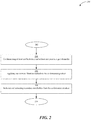
- FIG. 2 depicts a flowchart associated with a method to generate an antimicrobial agent suitable for preventing or inhibiting microbial growth inside of a closed container, according to at least some embodiments disclosed herein.
- FIG. 3 depicts graphical results of a moisturization assay involving several antimicrobial agents located within a closed container, according to at least some embodiments disclosed herein.
- the present invention provides antimicrobial agents for use in the prevention and inhibition of microbial growth within an area of a closed container that houses a product and an associated method for generating the antimicrobial agent. It should be appreciated that the antimicrobial agent may be formed naturally or synthetically.
- FIG. 1 depicts a schematic diagram involving combining an antimicrobial agent and a composition in a container to prevent or inhibit fungal growth within the container, according to at least some embodiments disclosed herein.
- FIG. 1 depicts schematic diagram of a container assembly 100 .
- the container assembly may include lid 102 and body 104 .
- the container assembly may be made of a material including a natural polymeric material and/or a synthetic polymeric material.
- Lid 102 may include first side 106 opposing second side 108 .
- Body 104 of the container assembly may include opening 110 .
- Antimicrobial agent 116 may be combined with composition 114 to form product 118 via any method known by those having skill in the art.
- Composition 114 may reside within body 104 of the container assembly before being combined with antimicrobial agent 116 .
- the composition 114 may be a cosmetic product or personal care product.
- the composition 114 may be in the form of a gel, a cream, a lotion, a liquid, or a powder, among other embodiments known to those of skill in the art. It should be appreciated that the form of antimicrobial agents and any compositions exemplified are not limited to the examples provided herein and other forms of product 118 are contemplated.
- Antimicrobial agent 116 may prevent or inhibit microbial growth within another area of the closed container assembly.
- the microbial growth may include fungal growth from Penicillium brevicompactum species and/or any species of the genus Fusarium.
- the other area may include headspace area 112 , or an area between product 118 and first side 106 of lid 102 .
- Antimicrobial agent 116 may be generated by co-fermenting a bacterium and a yeast in a growth media.
- the co-fermentation process may include a bio-fermentation process.
- the bacterium may be selected from Bacillus subtilis cells
- the yeast may be selected from Saccharomyces boulardii
- the growth media may be selected from: ammonium sulfate, magnesium sulfate, disodium phosphate, yeast autolysate, and combinations thereof. It should be appreciated that the bacterium, the yeast, and the growth media are not limited to the examples described herein and other examples are contemplated.
- the amount of bacterium and yeast added is about 10% to about 20% of the total composition of the bacterium, yeast and growth media. In some embodiments, the amount of growth media added is about 80% to about 90% of the total composition of the bacterium, yeast and growth media.
- the co-fermentation process may include 1.15 ⁇ 10 9 of bacterium and 0.15 ⁇ 10 9 of yeast.
- the co-fermentation process may be maintained at a temperature in a range of about 18° C. to about 22° C. and may occur for a time period in a range of about 12 hours to about 18 hours.
- the co-fermentation process may be maintained at a pH in a range of about 4.0 to about 6.2. In some embodiments, the co-fermentation process may be maintained at a pH in a range of about 5.8 to about 6.2.
- one or more filtration methods may be applied to the co-fermented product to isolate and extract secondary metabolites from the co-fermented product for use as the antimicrobial agent.
- at least one filtration method may include a solvent separation method.
- the solvent may be 1,3-propanediol.
- the secondary metabolites may include volatile and organic metabolites configured to prevent or reduce diseases caused by antimicrobials by: (a) limiting ascospore and mycelium production, (b) inhibiting metabolism function, and/or (c) lysing mold cells.
- the secondary metabolites may include cinnamic aldehyde, phenylethyl alcohol, and combinations thereof.
- FIG. 2 depicts a flowchart for a method 200 to generate an antimicrobial agent suitable for preventing or inhibiting microbial growth inside of a closed container according to at least some embodiments disclosed herein.
- the raw materials are checked for microbial contamination and that the raw materials are similar to previous batches by comparing the appearance, consistency and odor with retained samples before generating the antimicrobial agent.
- the Certificate of Analysis of the raw materials is also checked to match those of previous batches. Any liquid raw material is compared on an infrared (IR) spectrophotometer to previous batches.
- IR infrared
- an antimicrobial agent is generated by co-fermenting at least one bacterium and at least one yeast in a growth media.
- the at least one bacterium may include Bacillus subtilis cells and the at least one yeast may include Saccharomyces boulardii.
- the growth media may include ammonium sulfate, magnesium sulfate, disodium phosphate, yeast autolysate, and combinations thereof.
- the co-fermentation process may occur at a temperature in a range of about 18° C. to about 22° C., at a pH in a range of about 4.0 to about 6.2, and for a time period of about 12 hours to about 18 hours.
- the co-fermentation process may occur at a temperature in a range of about 18° C. to about 22° C., at a pH in a range of about 5.8 to about 6.2, and for a time period of about 12 hours to about 18 hours, wherein the culture can achieve early stationary phase.
- one or more filtration methods may be applied to the co-fermented product.
- the one or more filtration methods may include a solvent separation method.
- a solvent such as, 1,3-propanediol may be used.
- the co-fermented product may be mixed with the solvent to dissolve components of the co-fermented product, such as secondary metabolites, that it is desired to recover.
- the components of the co-fermented product are isolated and extracted from the co-fermented product and used as an antimicrobial agent.
- the secondary metabolites may include cinnamic aldehyde, phenylethyl alcohol, and combinations thereof.
- quality control can be performed to conclude the process.
- Quality control can include checking for the presence of microorganisms under a microscope, appearance, color, odor, pH, and/or refractive index.
- samples can be obtained to determine heavy metal contents, such as lead, arsenic, and cadmium.
- quality control fails, changes can be made to the process. For example, an initial step may be refiltration and reexamination by quality control.
- each block in the flowchart may represent a module, segment, or portion of instructions.
- the functions noted in the blocks may occur out of the order noted in FIG. 2 .
- two blocks shown in succession may, in fact, be executed substantially concurrently, or the blocks may sometimes be executed in the reverse order, depending upon the functionality involved.
- the antimicrobial agent suitable for preventing or inhibiting microbial growth may also improve moisture levels of the product when used.
- using a product including the antimicrobial agent of the present applicant shows high moisturizing capabilities.
- An inoculum suspension was prepared by: using a sterile pipette to add about 9 ml of a buffered sodium chloride peptone solution (of a pH of about 7) to test tubes and autoclaving at about 121° C. for a time period of about 20 minutes. After sterilization was complete, a sterile piece of cotton was used to swab and add Penicillium brevicompactum and Fusarium sp. to a test tube with the sterile buffered sodium chloride peptone solution.
- the inoculum suspension included a minimum microbial population of about 10 6 colony forming unit (CFU)/ml.
- Serial dilutions were then made in a ratio of 1:10 to achieve the microbial concentration using the buffered sodium chloride peptone solution. Further, the initial inoculum suspensions were plated per duplicate, using Sabouraud Dextrose Agar (SDA), to quantify the population after exposure in the test material for a specific time period.
- SDA Sabouraud Dextrose Agar
- the PET may be used to simulate contamination through inoculations containing micro-organisms over a period of time and then assessing the ability of preservatives to reduce or eliminate these micro-organisms.
- the inventive antimicrobial agent another antimicrobial agent as a positive control, and no antimicrobial agent as a negative control were accessed for reduction in bacteria growth.
- a base cream was poured into three containers at a temperature of about 45° C.
- the containers are each a 1 ounce white polypropylene double-wall radius jar.
- the base cream filled about 75 Vol % of each container, with about 25 Vol % of each container remaining empty and constituting the headspace area.
- An antimicrobial agent (“co-fermented antimicrobial agent”, 1 Vol %) was combined with the base cream and then added to container 1. This antimicrobial agent was generated by co-fermenting Bacillus subtilis and Saccharomyces boulardii in a growth media.
- An antimicrobial agent (“bacteria-fermented antimicrobial agent”, 1 Vol %) generated by fermenting Bacillus subtilis was combined with the base cream in container 2.
- Container 2 serves as a positive control.
- Container 3 serves as a negative control. In this case, the base cream of container 3 is considered ‘unpreserved’.
- the Penicillium brevicompactum and the Fusarium sp. were isolated via a passive sedimentation method and were added in units of 10 6 CFU/ml to the lid of each container separately. Each lid (or cap) was closed and each of the containers were stored at a temperature in a range of about 23° C. to about 25° C. A sterile swab of the buffered sodium chloride peptone solution was utilized to take a sample from each cap. Each cap was tested at various days, measured from the initial inoculation, including at day 7, day 14, day 21, and day 28 to determine the preservation efficacy of headspace in the container. The preservation efficacy of headspace is presented below in Table 1.
- the Penicillium brevicompactum column and Fusarium sp. column display the reduction in microbial growth under the associated conditions. “Growth” indicates a reduction of the micro-organisms by less than 99.999% or that at least 1 bacteria colony was observed. “No Growth” may indicate a reduction of the micro-organisms by more than 99.999% or that no bacteria colonies were observed.
- the co-fermented antimicrobial agent in combination with the base cream in container 1 exhibited “No Growth” of either Penicillium brevicompactum or Fusarium sp on any of the days measured.
- the bacteria-fermented antimicrobial agent in combination with the base cream in container 2 and the unpreserved base cream of container 3 exhibited “Growth” on every day measured.
- PETs were performed on different cosmetic and personal care products for the co-fermented antimicrobial agent in comparison to the unpreserved product.
- the test methods, co-fermented antimicrobial agent, and conditions were the same as those in Example 1, with the exception that different cosmetic and personal care products were used in place of the base cream.
- the cosmetic products tested were a Split End Masque Formula, Renewing Body Scrub Formula, Exfoliating Face Mask Formula and Beard Balm Formula. As shown in Tables 2 to 5 below, the co-fermented antimicrobial agent again exhibited “No Growth” in each product over the test period.
- Baseline moisturization readings were taken on day of the study for each subject. After the initial measurements, each subject was asked to apply 2 mg of each test material to their volar forearms. As a baseline, an untreated area of the volar forearm was also measured to compare the moisturization levels.
- the test materials included the co-fermented antimicrobial agent combined with the base lotion and only the base lotion.
- FIG. 3 depicts graphical results 300 of the moisturization assay, depicting x-axis 304 measuring time in hours and y-axis 302 measuring a percentage difference with respect to moisturization for each of a first comparison 306 , second comparison 308 , and third comparison 310 .
- the first comparison 306 is a comparison between the base lotion and the untreated control, e.g., the skin of a subject that received neither base lotion, nor the co-fermented antimicrobial agent combined with the base lotion.
- Second comparison 308 is a comparison between the co-fermented antimicrobial agent combined with base lotion and the untreated control.
- the third comparison 310 is a comparison between the co-fermented antimicrobial agent combined with base lotion and the base lotion.
- the addition of co-fermented antimicrobial agent to the base lotion improve moisturization levels by about 16.5% after a 24 hour time frame and may improve moisturization levels by about 34% after a four week time frame, as compared to the untreated control.
- the addition of co-fermented antimicrobial agent to the base lotion may improve moisturization levels by about 9.88% after a four week time frame, as compared to the base lotion.
- Table 6 below represents the average mositurization levels of the subjects.
- the first test material of the co-fermented antimicrobial agent combined with the base lotion showed higher moisturization capabilities than the other sites.
Landscapes
- Life Sciences & Earth Sciences (AREA)
- Health & Medical Sciences (AREA)
- Engineering & Computer Science (AREA)
- Chemical & Material Sciences (AREA)
- Organic Chemistry (AREA)
- General Health & Medical Sciences (AREA)
- Zoology (AREA)
- Wood Science & Technology (AREA)
- Biotechnology (AREA)
- Microbiology (AREA)
- Bioinformatics & Cheminformatics (AREA)
- Genetics & Genomics (AREA)
- Veterinary Medicine (AREA)
- General Engineering & Computer Science (AREA)
- Biochemistry (AREA)
- Public Health (AREA)
- Animal Behavior & Ethology (AREA)
- Mycology (AREA)
- General Chemical & Material Sciences (AREA)
- Chemical Kinetics & Catalysis (AREA)
- Dermatology (AREA)
- Tropical Medicine & Parasitology (AREA)
- Birds (AREA)
- Virology (AREA)
- Epidemiology (AREA)
- Dentistry (AREA)
- Plant Pathology (AREA)
- Environmental Sciences (AREA)
- Pest Control & Pesticides (AREA)
- Agronomy & Crop Science (AREA)
- Medicinal Chemistry (AREA)
- Biomedical Technology (AREA)
- Botany (AREA)
- Emergency Medicine (AREA)
- Toxicology (AREA)
- Cosmetics (AREA)
Abstract
Description
- The present application claims priority from U.S. Provisional Patent Application No. 62/717,093, the disclosure of which is incorporated by reference herein.
- The present invention relates to generation of antimicrobial agents, and more specifically, to use of these antimicrobial agents to maintain the microbiological safety of cosmetic and personal care products by reducing the amount of microbial contaminants, in turn, reducing or inhibiting fungal and/or bacterial growth.
- Recently, enhanced product safety regulations have driven consumers to select natural cosmetic and personal care products. However, as consumer use of these products increases, the likelihood of microbial and fungal growth and contamination within containers housing these products also increases. Of specific concern is the headspace area of the package, or the space between the product (housed within the container) and the lid of the container. Headspace area preservation becomes an issue when the container does not adequately protect the product from fungal or mold contamination, which may result from the manufacturing environment, poor storage conditions, or consumer use. For example, microbial or fungal growth may occur in this headspace area when a hot substance is poured into the container and subsequently cools. Alternatively or additionally, microbial growth may occur each time a consumer opens and uses the product, as the headspace area becomes exposed to the air and to the contaminants within the air.
- The current solution to this problem includes use of preservatives as antimicrobials to maintain the microbiological safety of cosmetic and personal care products. Examples of these preservatives may include: parabens (e.g., germaben II, methylparben, propylparaben, and butylparaben), formaldehyde releasers (e.g., germall plus, DMDM hydantoin, imadozolidinyl urea, and diazolidinyl urea), Isothiazolinones (e.g., kathon), phenoxyethanol (e.g., optiphen and optiphen plus), and organic acids (e.g., benzoic acid/sodium benzoate, sorbic acid/potassium sorbate, levulinic acid, and anisic acid). However, some of these preservatives, such as the isothiazolinone and phenoxyethanol, may cause skin and lung irritation and/or toxicity to the kidneys, nervous system, and/or liver.
- Therefore, there is a need for a natural, safe, and non-irritating product to reduce or eliminate microbial contaminants within the headspace area of a container housing a cosmetic or personal care product.
- This present invention addresses this problem by providing an antimicrobial agent, and an associated method for generating the antimicrobial agent, which is configured to prevent or inhibit fungal growth within an area of a closed container housing a product. In some embodiments, the method may include generating an antimicrobial agent by co-fermenting at least one bacterium and at least one yeast in a growth media, and applying one or more filtration methods to the co-fermented product to isolate and extract secondary metabolites from the co-fermented product for use as the antimicrobial agent.
- A method for producing an antimicrobial agent, including co-fermenting at least one bacterium and at least one yeast in a growth media to produce a co-fermented product. The co-fermented product includes an antimicrobial agent. A filtration method is applied to the co-fermented product to isolate and extract the antimicrobial agent from the co-fermented product, wherein the antimicrobial agent is a secondary metabolite.
- The secondary metabolite of the antimicrobial agent may be cinnamic aldehyde, phenylethyl alcohol, and combinations thereof. The at least one bacterium of the co-fermentation may be Bacillus subtilis and at least one yeast may be Saccharomyces boulardii. The growth media of the co-fermentation may be ammonium sulfate, magnesium sulfate, disodium phosphate, yeast autolysate, and combinations thereof.
- The co-fermentation is performed at a temperature in a range of about 18° C. to about 22° C., preferably at a temperature of about 20° C. The co-fermentation is performed for a time period in a range of about 12 hours to about 18 hours at a pH in a range of about 4.0 to about 6.2, preferably at a pH in a range of about 5.8 to about 6.2.
- A packaged product having a container having a body and a lid. The body having an inner volume and an opening that is fluidly coupled to the inner volume. The lid having a first side and an opposing second side, wherein the first side of the lid is configured to contact the opening when the container is in a closed position. A product is disposed in the inner volume, wherein the product includes a composition and an antimicrobial agent.
- In the packaged product, a portion of the inner volume is unoccupied by the product. The portion unoccupied by the product is located between the product and the first side of the lid when the container is in the closed position.
- The composition of the product may be a gel, a cream, a lotion, a liquid, and a powder. The antimicrobial agent prevents or inhibits fungal growth from fungi, the fungi may be Penicillium brevicompactum, Fusarium sp, and combinations thereof.
- The container may include a material of a natural polymeric material, a synthetic polymeric material, and combinations thereof.
- The antimicrobial agent of the product may include secondary metabolites extracted from a co-fermented byproduct of at least one bacterium and at least one yeast in a growth media, where the at least on bacterium includes Bacillus subtilis and the at least one yeast includes Saccharomyces boulardii. The antimicrobial agent of the product may include cinnamic aldehyde, phenylethyl alcohol, and combinations thereof.
- An antimicrobial agent is prepared by co-fermenting at least one bacterium and at least one yeast in a growth media to form a co-fermented product containing the antimicrobial agent, and isolating and extracting the antimicrobial agent from the co-fermented product. The antimicrobial agent may include a secondary metabolite, wherein the secondary metabolite may be cinnamic aldehyde, phenylethyl alcohol, and combinations thereof.
- A cosmetic or personal care product including the antimicrobial agent prepared by co-fermenting at least one bacterium and at least one yeast in a growth media.
- This invention may be best understood by reference to the following description taken in conjunction with the accompanying drawing figures in which:
-
FIG. 1 depicts a schematic diagram involving combining an antimicrobial agent and a composition housed within a container to prevent or inhibit fungal growth within the container, according to at least some embodiments disclosed herein. -
FIG. 2 depicts a flowchart associated with a method to generate an antimicrobial agent suitable for preventing or inhibiting microbial growth inside of a closed container, according to at least some embodiments disclosed herein. -
FIG. 3 depicts graphical results of a moisturization assay involving several antimicrobial agents located within a closed container, according to at least some embodiments disclosed herein. - The present invention provides antimicrobial agents for use in the prevention and inhibition of microbial growth within an area of a closed container that houses a product and an associated method for generating the antimicrobial agent. It should be appreciated that the antimicrobial agent may be formed naturally or synthetically.
-
FIG. 1 depicts a schematic diagram involving combining an antimicrobial agent and a composition in a container to prevent or inhibit fungal growth within the container, according to at least some embodiments disclosed herein. -
FIG. 1 depicts schematic diagram of acontainer assembly 100. The container assembly may includelid 102 andbody 104. According to some embodiments, the container assembly may be made of a material including a natural polymeric material and/or a synthetic polymeric material.Lid 102 may includefirst side 106 opposingsecond side 108.Body 104 of the container assembly may include opening 110.Antimicrobial agent 116 may be combined withcomposition 114 to formproduct 118 via any method known by those having skill in the art.Composition 114 may reside withinbody 104 of the container assembly before being combined withantimicrobial agent 116. In some embodiments, thecomposition 114 may be a cosmetic product or personal care product. In some embodiments, thecomposition 114 may be in the form of a gel, a cream, a lotion, a liquid, or a powder, among other embodiments known to those of skill in the art. It should be appreciated that the form of antimicrobial agents and any compositions exemplified are not limited to the examples provided herein and other forms ofproduct 118 are contemplated. -
Antimicrobial agent 116 may prevent or inhibit microbial growth within another area of the closed container assembly. In some embodiments, the microbial growth may include fungal growth from Penicillium brevicompactum species and/or any species of the genus Fusarium. The other area may includeheadspace area 112, or an area betweenproduct 118 andfirst side 106 oflid 102. -
Antimicrobial agent 116 may be generated by co-fermenting a bacterium and a yeast in a growth media. In some embodiments, the co-fermentation process may include a bio-fermentation process. In some embodiments, the bacterium may be selected from Bacillus subtilis cells, the yeast may be selected from Saccharomyces boulardii, and the growth media may be selected from: ammonium sulfate, magnesium sulfate, disodium phosphate, yeast autolysate, and combinations thereof. It should be appreciated that the bacterium, the yeast, and the growth media are not limited to the examples described herein and other examples are contemplated. In some embodiments, at the beginning of the co-fermentation process, the amount of bacterium and yeast added is about 10% to about 20% of the total composition of the bacterium, yeast and growth media. In some embodiments, the amount of growth media added is about 80% to about 90% of the total composition of the bacterium, yeast and growth media. In some embodiments, the co-fermentation process may include 1.15×10⁹ of bacterium and 0.15×10⁹ of yeast. The co-fermentation process may be maintained at a temperature in a range of about 18° C. to about 22° C. and may occur for a time period in a range of about 12 hours to about 18 hours. The co-fermentation process may be maintained at a pH in a range of about 4.0 to about 6.2. In some embodiments, the co-fermentation process may be maintained at a pH in a range of about 5.8 to about 6.2. - Subsequent to the co-fermentation process, one or more filtration methods may be applied to the co-fermented product to isolate and extract secondary metabolites from the co-fermented product for use as the antimicrobial agent. In some embodiments, at least one filtration method may include a solvent separation method. In some embodiments, the solvent may be 1,3-propanediol. The secondary metabolites may include volatile and organic metabolites configured to prevent or reduce diseases caused by antimicrobials by: (a) limiting ascospore and mycelium production, (b) inhibiting metabolism function, and/or (c) lysing mold cells. In some embodiments, the secondary metabolites may include cinnamic aldehyde, phenylethyl alcohol, and combinations thereof.
-
FIG. 2 depicts a flowchart for amethod 200 to generate an antimicrobial agent suitable for preventing or inhibiting microbial growth inside of a closed container according to at least some embodiments disclosed herein. - At
step 202, the raw materials are checked for microbial contamination and that the raw materials are similar to previous batches by comparing the appearance, consistency and odor with retained samples before generating the antimicrobial agent. The Certificate of Analysis of the raw materials is also checked to match those of previous batches. Any liquid raw material is compared on an infrared (IR) spectrophotometer to previous batches. - At
step 204, an antimicrobial agent is generated by co-fermenting at least one bacterium and at least one yeast in a growth media. In some embodiments, the at least one bacterium may include Bacillus subtilis cells and the at least one yeast may include Saccharomyces boulardii. In some embodiments, the growth media may include ammonium sulfate, magnesium sulfate, disodium phosphate, yeast autolysate, and combinations thereof. In some embodiments, the co-fermentation process may occur at a temperature in a range of about 18° C. to about 22° C., at a pH in a range of about 4.0 to about 6.2, and for a time period of about 12 hours to about 18 hours. In some embodiments, the co-fermentation process may occur at a temperature in a range of about 18° C. to about 22° C., at a pH in a range of about 5.8 to about 6.2, and for a time period of about 12 hours to about 18 hours, wherein the culture can achieve early stationary phase. - At
step 206, one or more filtration methods may be applied to the co-fermented product. In some embodiments, the one or more filtration methods may include a solvent separation method. In some examples, a solvent, such as, 1,3-propanediol may be used. In operation, the co-fermented product may be mixed with the solvent to dissolve components of the co-fermented product, such as secondary metabolites, that it is desired to recover. - At
step 208, the components of the co-fermented product, such as secondary metabolites, are isolated and extracted from the co-fermented product and used as an antimicrobial agent. In some examples, the secondary metabolites may include cinnamic aldehyde, phenylethyl alcohol, and combinations thereof. - At
Step 210, quality control can be performed to conclude the process. Quality control can include checking for the presence of microorganisms under a microscope, appearance, color, odor, pH, and/or refractive index. During initial startup of batch production, samples can be obtained to determine heavy metal contents, such as lead, arsenic, and cadmium. In the case that quality control fails, changes can be made to the process. For example, an initial step may be refiltration and reexamination by quality control. - The flowchart of
FIG. 2 illustrates architecture, functionality, and operation of possible implementations of systems and methods according to various embodiments of the present invention. In this regard, each block in the flowchart may represent a module, segment, or portion of instructions. In some alternative implementations, the functions noted in the blocks may occur out of the order noted inFIG. 2 . For example, two blocks shown in succession may, in fact, be executed substantially concurrently, or the blocks may sometimes be executed in the reverse order, depending upon the functionality involved. - The antimicrobial agent suitable for preventing or inhibiting microbial growth may also improve moisture levels of the product when used. Thus, using a product including the antimicrobial agent of the present applicant shows high moisturizing capabilities.
- An inoculum suspension was prepared by: using a sterile pipette to add about 9 ml of a buffered sodium chloride peptone solution (of a pH of about 7) to test tubes and autoclaving at about 121° C. for a time period of about 20 minutes. After sterilization was complete, a sterile piece of cotton was used to swab and add Penicillium brevicompactum and Fusarium sp. to a test tube with the sterile buffered sodium chloride peptone solution. The inoculum suspension included a minimum microbial population of about 106 colony forming unit (CFU)/ml. Serial dilutions were then made in a ratio of 1:10 to achieve the microbial concentration using the buffered sodium chloride peptone solution. Further, the initial inoculum suspensions were plated per duplicate, using Sabouraud Dextrose Agar (SDA), to quantify the population after exposure in the test material for a specific time period.
- The PET may be used to simulate contamination through inoculations containing micro-organisms over a period of time and then assessing the ability of preservatives to reduce or eliminate these micro-organisms. In the PET of Example 1 the inventive antimicrobial agent, another antimicrobial agent as a positive control, and no antimicrobial agent as a negative control were accessed for reduction in bacteria growth.
- A base cream was poured into three containers at a temperature of about 45° C. The containers are each a 1 ounce white polypropylene double-wall radius jar. The base cream filled about 75 Vol % of each container, with about 25 Vol % of each container remaining empty and constituting the headspace area.
- An antimicrobial agent (“co-fermented antimicrobial agent”, 1 Vol %) was combined with the base cream and then added to
container 1. This antimicrobial agent was generated by co-fermenting Bacillus subtilis and Saccharomyces boulardii in a growth media. - An antimicrobial agent (“bacteria-fermented antimicrobial agent”, 1 Vol %) generated by fermenting Bacillus subtilis was combined with the base cream in
container 2.Container 2 serves as a positive control. - No antimicrobial agent was added to the base cream in
container 3.Container 3 serves as a negative control. In this case, the base cream ofcontainer 3 is considered ‘unpreserved’. - The Penicillium brevicompactum and the Fusarium sp. (prepared in Example 1) were isolated via a passive sedimentation method and were added in units of 106 CFU/ml to the lid of each container separately. Each lid (or cap) was closed and each of the containers were stored at a temperature in a range of about 23° C. to about 25° C. A sterile swab of the buffered sodium chloride peptone solution was utilized to take a sample from each cap. Each cap was tested at various days, measured from the initial inoculation, including at day 7, day 14, day 21, and day 28 to determine the preservation efficacy of headspace in the container. The preservation efficacy of headspace is presented below in Table 1.
-
TABLE 1 Results of PET using the Antimicrobial Agent Testing Penicillium Fusarium Test Product Day brevicompactum sp. Base cream combined with Day 7 No Growth No Growth antimicrobial agent Day 14 No Growth No Growth generated by co-fermenting Day 21 No Growth No Growth a bacterium and a yeast Day 28 No Growth No Growth Base cream combined with Day 7 Growth Growth antimicrobial agent Day 14 Growth Growth generated by fermenting a Day 21 Growth Growth bacterium Day 28 Growth Growth Unpreserved base cream (no Day 7 Growth Growth antimicrobial agent) Day 14 Growth Growth Day 21 Growth Growth Day 28 Growth Growth - In Table 1, the Penicillium brevicompactum column and Fusarium sp. column display the reduction in microbial growth under the associated conditions. “Growth” indicates a reduction of the micro-organisms by less than 99.999% or that at least 1 bacteria colony was observed. “No Growth” may indicate a reduction of the micro-organisms by more than 99.999% or that no bacteria colonies were observed. For example, the co-fermented antimicrobial agent in combination with the base cream in
container 1 exhibited “No Growth” of either Penicillium brevicompactum or Fusarium sp on any of the days measured. In contrast, the bacteria-fermented antimicrobial agent in combination with the base cream incontainer 2 and the unpreserved base cream ofcontainer 3 exhibited “Growth” on every day measured. - PETs were performed on different cosmetic and personal care products for the co-fermented antimicrobial agent in comparison to the unpreserved product. The test methods, co-fermented antimicrobial agent, and conditions were the same as those in Example 1, with the exception that different cosmetic and personal care products were used in place of the base cream. The cosmetic products tested were a Split End Masque Formula, Renewing Body Scrub Formula, Exfoliating Face Mask Formula and Beard Balm Formula. As shown in Tables 2 to 5 below, the co-fermented antimicrobial agent again exhibited “No Growth” in each product over the test period.
-
TABLE 2 Results of PET of Split End Masque Testing Penicillium Fusarium Test Product Day brevicompactum sp. Split End Masque Formula Day 7 No Growth No Growth with antimicrobial agent Day 14 No Growth No Growth generated by co-fermenting Day 21 No Growth No Growth a bacterium and a yeast Day 28 No Growth No Growth Unpreserved Split End Day 7 Growth Growth Masque Formula Day 14 Growth Growth Day 21 Growth Growth Day 28 Growth Growth -
TABLE 3 Results of PET of Renewing Body Scrub Formula Testing Penicillium Fusarium Test Product Day brevicompactum sp. Renewed Body Scrub Day 7 No Growth No Growth Formula with antimicrobial Day 14 No Growth No Growth agent generated by co- Day 21 No Growth No Growth fermenting a bacterium and Day 28 No Growth No Growth a yeast Unpreserved Renewed Body Day 7 Growth Growth Scrub Formula Day 14 Growth Growth Day 21 Growth Growth Day 28 Growth Growth -
TABLE 4 Results of PET of Exfoliating Face Mask Formula Testing Penicillium Fusarium Test Product Day brevicompactum sp. Exfoliating Face Mask Day 7 No Growth No Growth Formula with antimicrobial Day 14 No Growth No Growth agent generated by co- Day 21 No Growth No Growth fermenting a bacterium and Day 28 No Growth No Growth a yeast Unpreserved Exfoliating Face Day 7 Growth Growth Mask Formula Day 14 Growth Growth Day 21 Growth Growth Day 28 Growth Growth -
TABLE 5 Results of PET of Beard Balm Formula Testing Penicillium Fusarium Test Product Day brevicompactum sp. Beard Balm Formula with Day 7 No Growth No Growth antimicrobial agent generated Day 14 No Growth No Growth by co-fermenting a bacterium Day 21 No Growth No Growth and a yeast Day 28 No Growth No Growth Unpreserved Beard Balm Day 7 Growth Growth Formula Day 14 Growth Growth Day 21 Growth Growth Day 28 Growth Growth - An in-vivo study was conducted over a four week period to evaluate the moisturization benefits of the co-fermented antimicrobial agent in a base lotion in comparison to a base lotion and an untreated control. Ten subjects participated in the study. The subjects included both male and female subjects between the ages of 23 to 45. Each subject who participated were known to be free of any skin pathologies before participating in the study. To measure the moisture levels of the subject's skin, a Dermalab Comeometer was used, which measures the amount of water within the skin. The presence of moisture, or water, in the skin improvise conductance and results in a higher reader than dry skin. Thus, the higher the levels of moisture, the higher the readings from the Dermalab Comeometer will be.
- Baseline moisturization readings were taken on day of the study for each subject. After the initial measurements, each subject was asked to apply 2 mg of each test material to their volar forearms. As a baseline, an untreated area of the volar forearm was also measured to compare the moisturization levels. The test materials included the co-fermented antimicrobial agent combined with the base lotion and only the base lotion.
-
FIG. 3 depictsgraphical results 300 of the moisturization assay, depictingx-axis 304 measuring time in hours and y-axis 302 measuring a percentage difference with respect to moisturization for each of afirst comparison 306,second comparison 308, andthird comparison 310. - The
first comparison 306 is a comparison between the base lotion and the untreated control, e.g., the skin of a subject that received neither base lotion, nor the co-fermented antimicrobial agent combined with the base lotion.Second comparison 308 is a comparison between the co-fermented antimicrobial agent combined with base lotion and the untreated control. Thethird comparison 310 is a comparison between the co-fermented antimicrobial agent combined with base lotion and the base lotion. As shown inFIG. 3 , the addition of co-fermented antimicrobial agent to the base lotion improve moisturization levels by about 16.5% after a 24 hour time frame and may improve moisturization levels by about 34% after a four week time frame, as compared to the untreated control. The addition of co-fermented antimicrobial agent to the base lotion may improve moisturization levels by about 9.88% after a four week time frame, as compared to the base lotion. - Table 6 below represents the average mositurization levels of the subjects. In Table 6, the first test material of the co-fermented antimicrobial agent combined with the base lotion showed higher moisturization capabilities than the other sites.
-
TABLE 6 Average Moisturization Levels T = 24 T = 1 T = 2 T = 3 T = 4 Averages T = 0 Hours Week Weeks Weeks Weeks Base Lotion 76.8 93.9 97.2 92.2 98.8 93.4 combined with antimicrobial agent Base Lotion 72.2 90.3 92.8 86 91.9 85 Untreated Site 63.6 80.6 82.7 77.4 85.6 69.7 - Although the invention herein has been described with reference to particular embodiments, it is to be understood that these embodiments are merely illustrative of the principles and applications of the present invention. It is therefore to be understood that numerous modifications may be made to the illustrative embodiments and that other arrangements may be devised without departing from the spirit and scope of the present invention as defined by the appended claims.
Claims (15)
Priority Applications (1)
| Application Number | Priority Date | Filing Date | Title |
|---|---|---|---|
| US16/538,138 US11193147B2 (en) | 2018-08-10 | 2019-08-12 | Antimicrobial preservatives for cosmetic products |
Applications Claiming Priority (2)
| Application Number | Priority Date | Filing Date | Title |
|---|---|---|---|
| US201862717093P | 2018-08-10 | 2018-08-10 | |
| US16/538,138 US11193147B2 (en) | 2018-08-10 | 2019-08-12 | Antimicrobial preservatives for cosmetic products |
Publications (2)
| Publication Number | Publication Date |
|---|---|
| US20200048663A1 true US20200048663A1 (en) | 2020-02-13 |
| US11193147B2 US11193147B2 (en) | 2021-12-07 |
Family
ID=69405684
Family Applications (1)
| Application Number | Title | Priority Date | Filing Date |
|---|---|---|---|
| US16/538,138 Expired - Fee Related US11193147B2 (en) | 2018-08-10 | 2019-08-12 | Antimicrobial preservatives for cosmetic products |
Country Status (1)
| Country | Link |
|---|---|
| US (1) | US11193147B2 (en) |
Family Cites Families (2)
| Publication number | Priority date | Publication date | Assignee | Title |
|---|---|---|---|---|
| WO2004098291A2 (en) | 2003-03-17 | 2004-11-18 | Novozymes Biologicals, Inc. | Methods for inhibiting fungal growth in materials |
| EP2654432B1 (en) | 2010-12-22 | 2017-02-08 | Roombiotic GmbH | Volatile organic compounds from bacterial antagonists for controlling microbial growth |
-
2019
- 2019-08-12 US US16/538,138 patent/US11193147B2/en not_active Expired - Fee Related
Also Published As
| Publication number | Publication date |
|---|---|
| US11193147B2 (en) | 2021-12-07 |
Similar Documents
| Publication | Publication Date | Title |
|---|---|---|
| Dynes et al. | Quantitative mapping of chlorhexidine in natural river biofilms | |
| Shaqra et al. | Microbiological quality of hair and skin care cosmetics manufactured in Jordan | |
| Khosravi et al. | Antifungal properties of Artemisia sieberi and Origanum vulgare essential oils against Candida glabrata isolates obtained from patients with vulvovaginal candidiasis | |
| Yahya | FTIR spectral changes in Candida albicans biofilm following exposure to antifungals | |
| Costa et al. | Methods for obtaining reliable and reproducible results in studies of C andida biofilms formed in vitro | |
| Alshehrei | Microbiological quality assessment of skin and body care cosmetics by using challenge test | |
| Trindade et al. | The antifungal and antibiofilm activity of Cymbopogon nardus essential oil and citronellal on clinical strains of Candida albicans | |
| Wang et al. | Effects of tea extracts on the colonization behaviour of Candida species: attachment inhibition and biofilm enhancement | |
| do Couto et al. | Antifungal activity of the piroctone olamine in experimental intra-abdominal candidiasis | |
| Vijayalakshmi et al. | The Evaluation of the virulence factors of clinical Candida isolates and the anti-biofilm activity of Elettaria cardamomum against multi-drug resistant Candida albicans | |
| US11193147B2 (en) | Antimicrobial preservatives for cosmetic products | |
| Lourenço et al. | Design space approach for preservative system optimization of an anti-aging eye fluid emulsion | |
| Giorgio et al. | Microbiological stability of cosmetics by using challenge test procedure | |
| Lall et al. | In vitro and in vivo activity of Myrsine africana on elastase inhibition and anti-wrinkle activity | |
| Zachariae et al. | Experimental elicitation of contact allergy from a diazolidinyl urea‐preserved cream in relation to anatomical region, exposure time and concentration | |
| KR20250127273A (en) | Method for testing the preservative efficacy of cosmetics | |
| Muhammed | Bacterial and fungal contamination in three brands of cosmetic marketed in Iraq | |
| US20190290574A1 (en) | Topical skin care compositions comprising myrsine africana extracts | |
| Montes et al. | Properties of silver and copper nanoparticle containing aqueous suspensions and evaluation of their in vitro activity against Candida albicans and Staphylococcus aureus biofilms | |
| CN104173236B (en) | Terpene aromatic antibacterial alcohol-based hand sanitizer | |
| SHAMS et al. | Rapid identification of Malassezia furfur from other Malassezia species: A major causative agent of pityriasis versicolor | |
| Sudhakar et al. | Antifungal efficacy of pyocyanin produced from bioindicators of nosocomial hazards | |
| Althulthi et al. | Evaluation of Bacteriological Quality and Preservatives Efficacy of Cosmetics | |
| Adampour et al. | The inhibitory effects of tyrosol on clinical Candida glabrata planktonic and biofilm cells | |
| Kamaruzzaman et al. | Inhibitory action of topical antifungal creams against Candida albicans biofilm |
Legal Events
| Date | Code | Title | Description |
|---|---|---|---|
| FEPP | Fee payment procedure |
Free format text: ENTITY STATUS SET TO UNDISCOUNTED (ORIGINAL EVENT CODE: BIG.); ENTITY STATUS OF PATENT OWNER: SMALL ENTITY |
|
| AS | Assignment |
Owner name: ACTIVE MICRO TECHNOLOGIES LLC, NORTH CAROLINA Free format text: ASSIGNMENT OF ASSIGNORS INTEREST;ASSIGNORS:SCHOLZ, DURANT;SEGURA, ERICA;DANAHER, MAUREEN;AND OTHERS;REEL/FRAME:050036/0600 Effective date: 20180813 |
|
| FEPP | Fee payment procedure |
Free format text: ENTITY STATUS SET TO SMALL (ORIGINAL EVENT CODE: SMAL); ENTITY STATUS OF PATENT OWNER: SMALL ENTITY |
|
| STPP | Information on status: patent application and granting procedure in general |
Free format text: DOCKETED NEW CASE - READY FOR EXAMINATION |
|
| STPP | Information on status: patent application and granting procedure in general |
Free format text: NOTICE OF ALLOWANCE MAILED -- APPLICATION RECEIVED IN OFFICE OF PUBLICATIONS |
|
| STPP | Information on status: patent application and granting procedure in general |
Free format text: PUBLICATIONS -- ISSUE FEE PAYMENT VERIFIED |
|
| STCF | Information on status: patent grant |
Free format text: PATENTED CASE |
|
| FEPP | Fee payment procedure |
Free format text: MAINTENANCE FEE REMINDER MAILED (ORIGINAL EVENT CODE: REM.); ENTITY STATUS OF PATENT OWNER: SMALL ENTITY |
|
| LAPS | Lapse for failure to pay maintenance fees |
Free format text: PATENT EXPIRED FOR FAILURE TO PAY MAINTENANCE FEES (ORIGINAL EVENT CODE: EXP.); ENTITY STATUS OF PATENT OWNER: SMALL ENTITY |
|
| STCH | Information on status: patent discontinuation |
Free format text: PATENT EXPIRED DUE TO NONPAYMENT OF MAINTENANCE FEES UNDER 37 CFR 1.362 |
|
| FP | Lapsed due to failure to pay maintenance fee |
Effective date: 20251207 |