US20080098224A1 - Processes and apparatus for establishing a secured connection with a joint test action group port - Google Patents
Processes and apparatus for establishing a secured connection with a joint test action group port Download PDFInfo
- Publication number
- US20080098224A1 US20080098224A1 US11/923,477 US92347707A US2008098224A1 US 20080098224 A1 US20080098224 A1 US 20080098224A1 US 92347707 A US92347707 A US 92347707A US 2008098224 A1 US2008098224 A1 US 2008098224A1
- Authority
- US
- United States
- Prior art keywords
- authentication
- module
- access module
- access
- authentication request
- Prior art date
- Legal status (The legal status is an assumption and is not a legal conclusion. Google has not performed a legal analysis and makes no representation as to the accuracy of the status listed.)
- Abandoned
Links
Images

Classifications
-
- H—ELECTRICITY
- H04—ELECTRIC COMMUNICATION TECHNIQUE
- H04L—TRANSMISSION OF DIGITAL INFORMATION, e.g. TELEGRAPHIC COMMUNICATION
- H04L9/00—Cryptographic mechanisms or cryptographic arrangements for secret or secure communications; Network security protocols
- H04L9/32—Cryptographic mechanisms or cryptographic arrangements for secret or secure communications; Network security protocols including means for verifying the identity or authority of a user of the system or for message authentication, e.g. authorization, entity authentication, data integrity or data verification, non-repudiation, key authentication or verification of credentials
- H04L9/3271—Cryptographic mechanisms or cryptographic arrangements for secret or secure communications; Network security protocols including means for verifying the identity or authority of a user of the system or for message authentication, e.g. authorization, entity authentication, data integrity or data verification, non-repudiation, key authentication or verification of credentials using challenge-response
Definitions
- the present disclosure is related to methods and apparatus for establishing security control of Joint Test Action Group (JTAG) ports on a semiconductor chip.
- JTAG Joint Test Action Group
- the present disclosure is related to authentication processes and system for authenticating a secure JTAG connection.
- JTAG Joint Test Action Group
- TAP Test Access Ports
- TCP Test Clock
- TMS Test Mode Select
- TDO Test Data Input
- TDO Test Data Output
- TRST Test Reset
- a security fuse technique is to set a fuse on a key path of the JTAG connection. When there is no need for testing, the fuse is burned by applying a fuse burning voltage to certain terminals of the chip. As a result, the test functions of the JTAG ports are prohibited. The advantage of this approach is that it can disable the functions of the JTAG ports physically. However, such an approach is irreversible. Once the security fuse is broken, the testing functions of the JTAG ports cannot be restored if further JTAG testing is desired in the future.
- the security logic module technique involves adding a security module inside the chip. When the chip is tested, a password is required to change a value in the security module's register to enable/disable the JTAG ports. This technique is simple and effective, but its operation is complicated because the password must be provided each time before and after a testing session.
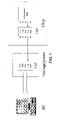
- FIG. 1 illustrates a JTAG connection configured in accordance with the prior art.
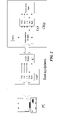
- FIG. 2 illustrates a secure JTAG connection authentication system in accordance with the present disclosure.
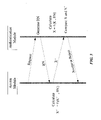
- FIG. 3 is a flow chart illustrating an authentication method in accordance with an embodiment of the present disclosure.
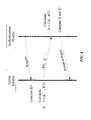
- FIG. 4 is a flow chart illustrating an authentication method in accordance with another embodiment of the present disclosure.
- One aspect of the present disclosure is related to providing authentication processes and apparatus for authenticating access to a JTAG port in a chip.
- Embodiments of the processes can automatically identify permitted access to the JTAG ports and enable/disable the JTAG functions accordingly to prevent illegal access to the internal logic of the chip.
- the system can be positioned between the test equipment and the chip to be tested.
- the system includes an access module having an interactive interface and authentication module.
- the authentication module is disposed in the chip and is connected with the TAP ports of the chip.
- the access module is connected with the TAP ports at the test equipment as well as the TAP ports of the chip.
- the access module and the authentication module include local private keys K and K′ for authentication.
- Another aspect of the present disclosure is an authentication process for establishing a secured connection with JTAG ports.
- the authentication process can include the following operations:
- One of the access module and the authentication module originates a authentication request, while the other generates a random number RN;
- the access module calculates an authentication code X′ for RN using the local private key K′, and sends X′ to the authentication module;
- the authentication module calculates an authentication code X for RN using the local private key K;
- the authentication module compares X and X′, and decides whether to open the TAP port of the chip;
- the authentication module returns the authentication result to the access module.
- the above-mentioned operation A can further include the following operations:
- the access module originates the authentication request to the authentication module
- the authentication module generates the RN and sends the generated RN to the access module after receiving the authentication request;
- the above-mentioned operation A can further include the following operations:
- the authentication module originates the authentication request to the access module
- the access module generates the RN after receiving the authentication request.
- the local private key K′ is used to calculate the authentication code X′ for RN, and the access module sends RN as well as X′ to the authentication module.
- the authentication module after receiving RN and X′, calculates the authentication code X using the local private key K.
- the technique disclosed in the present application can be reversible and reusable. Further, compared with the technique using a security logic module, the disclosed technique is simple, and there is no need for passwords to enable/disable the JTAG ports. Furthermore, the disclosed technique reduces the risk of stolen of passwords.
- FIG. 2 illustrates a secure JTAG connection authentication system in accordance with the present disclosure.
- the system includes two additional modules than the system in FIG. 1 : the access module and the authentication module.
- the access module is disposed outside the chip while the authentication module is disposed inside the chip. Both the access and authentication modules include the same private key.
- the access module and the authentication module undertake an authentication process. After the authentication, the authentication module enables the JTAG ports on the chip to allow the computer to modulate the chip.
- FIG. 3 is a flow chart illustrating an authentication method in accordance with an embodiment of the present disclosure. As illustrated in FIG. 3 , the method can include the following operations:
- Operation 1 the access module originates an authentication request to the authentication module
- Operation 2 The authentication module, after receiving the authentication request, generates a RN, and sends the generated RN to the access module;
- the access module calculates an authentication code X′ based on the RN generated in Operation 2 using the local private key K′, and returns the calculated authentication code X′ to the authentication module while the authentication module calculates another authentication code X based on the RN generated using the local private K;
- Operation 5 the authentication module returns the result to the access module.
- FIG. 4 is a flow chart illustrating an authentication method in accordance with another embodiment of the present disclosure.
- the authentication originator has changed.
- the module that generates the authentication request can be the authentication module in the chip, and the authentication operations can include the following:
- Operation 1 the authentication module generates an authentication request to the access module
- Operation 2 the access module generates a random number RN after receiving the authentication request, calculates the authentication code X′, and sends RN and X′ to the authentication module;
- Operation 3 the authentication module, after receiving RN and X′, calculates the authentication code X based on RN using the local private key K;
- Operation 5 the authentication module returns the authentication result to the access module.
Landscapes
- Engineering & Computer Science (AREA)
- Computer Security & Cryptography (AREA)
- Computer Networks & Wireless Communication (AREA)
- Signal Processing (AREA)
- Tests Of Electronic Circuits (AREA)
- Storage Device Security (AREA)
Abstract
Processes and apparatus for establishing a secure joint test action group port on a chip are disclosed herein.
Description
- This application claims priority to Chinese Patent Application No. 200610117452.3, filed Oct. 24, 2006, the disclosure of which is incorporated herein by reference in its entirety.
- The present disclosure is related to methods and apparatus for establishing security control of Joint Test Action Group (JTAG) ports on a semiconductor chip. In particular, the present disclosure is related to authentication processes and system for authenticating a secure JTAG connection.
- Joint Test Action Group (JTAG) ports are used for testing the logic functions of internal ports in a semiconductor chip after encapsulation. The JTAG ports play an important role in the development of the chip as well as subsequent maintenance of the chip. A conventional JTAG connection with a chip is illustrated in
FIG. 1 . As shown inFIG. 1 , a computer is coupled to a JTAG port of the chip via test equipment. The JTAG connection can be established mainly using the Test Access Ports (TAP), which includes five ports: Test Clock (TCK), Test Mode Select (TMS), Test Data Input (TDI), Test Data Output (TDO) and Test Reset (TRST). Because one can directly access the logic functions of the chip via the JTAG connection, the JTAG connection can be a potential safety risk to an end user and/or the chip itself if its access is not restricted. - Presently, there are two types of security measures to safeguard JTAG connections using: (1) security fuses or (2) security logic modules. A security fuse technique is to set a fuse on a key path of the JTAG connection. When there is no need for testing, the fuse is burned by applying a fuse burning voltage to certain terminals of the chip. As a result, the test functions of the JTAG ports are prohibited. The advantage of this approach is that it can disable the functions of the JTAG ports physically. However, such an approach is irreversible. Once the security fuse is broken, the testing functions of the JTAG ports cannot be restored if further JTAG testing is desired in the future. The security logic module technique involves adding a security module inside the chip. When the chip is tested, a password is required to change a value in the security module's register to enable/disable the JTAG ports. This technique is simple and effective, but its operation is complicated because the password must be provided each time before and after a testing session.
-
FIG. 1 illustrates a JTAG connection configured in accordance with the prior art. -
FIG. 2 illustrates a secure JTAG connection authentication system in accordance with the present disclosure. -
FIG. 3 is a flow chart illustrating an authentication method in accordance with an embodiment of the present disclosure. -
FIG. 4 is a flow chart illustrating an authentication method in accordance with another embodiment of the present disclosure. - Specific details of several embodiments of the disclosure are described below with reference to processes and apparatus for establishing a secured connection with a JTAG port. Several other embodiments of the invention may have different configurations, components, or procedures than those described in this section. A person of ordinary skill in the art, therefore, will accordingly understand that the invention may have other embodiments with additional elements, or the invention may have other embodiments without several of the elements shown and described below.
- One aspect of the present disclosure is related to providing authentication processes and apparatus for authenticating access to a JTAG port in a chip. Embodiments of the processes can automatically identify permitted access to the JTAG ports and enable/disable the JTAG functions accordingly to prevent illegal access to the internal logic of the chip.
- Another aspect of the present disclosure is related to a JTAG connection authentication system (the “system”). In certain embodiments, the system can be positioned between the test equipment and the chip to be tested. The system includes an access module having an interactive interface and authentication module. In certain embodiments, the authentication module is disposed in the chip and is connected with the TAP ports of the chip. The access module is connected with the TAP ports at the test equipment as well as the TAP ports of the chip. The access module and the authentication module include local private keys K and K′ for authentication.
- Another aspect of the present disclosure is an authentication process for establishing a secured connection with JTAG ports. In certain embodiments, the authentication process can include the following operations:
- A. One of the access module and the authentication module originates a authentication request, while the other generates a random number RN;
- B. The access module calculates an authentication code X′ for RN using the local private key K′, and sends X′ to the authentication module;
- C. The authentication module calculates an authentication code X for RN using the local private key K;
- D. The authentication module compares X and X′, and decides whether to open the TAP port of the chip;
- E. The authentication module returns the authentication result to the access module.
- The above-mentioned operation A can further include the following operations:
- A1. The access module originates the authentication request to the authentication module;
- A2. The authentication module generates the RN and sends the generated RN to the access module after receiving the authentication request;
- The above-mentioned operation A can further include the following operations:
- A1′. The authentication module originates the authentication request to the access module;
- A2′. The access module generates the RN after receiving the authentication request.
- In operation B described above, the local private key K′ is used to calculate the authentication code X′ for RN, and the access module sends RN as well as X′ to the authentication module. In operation C described above, the authentication module, after receiving RN and X′, calculates the authentication code X using the local private key K.
- Unlike the security fuse technique, the technique disclosed in the present application can be reversible and reusable. Further, compared with the technique using a security logic module, the disclosed technique is simple, and there is no need for passwords to enable/disable the JTAG ports. Furthermore, the disclosed technique reduces the risk of stolen of passwords.
-
FIG. 2 illustrates a secure JTAG connection authentication system in accordance with the present disclosure. As illustrated inFIG. 2 , the system includes two additional modules than the system inFIG. 1 : the access module and the authentication module. As depicted byFIG. 2 , the access module is disposed outside the chip while the authentication module is disposed inside the chip. Both the access and authentication modules include the same private key. When the test interface accesses the chip, the access module and the authentication module undertake an authentication process. After the authentication, the authentication module enables the JTAG ports on the chip to allow the computer to modulate the chip. -
FIG. 3 is a flow chart illustrating an authentication method in accordance with an embodiment of the present disclosure. As illustrated inFIG. 3 , the method can include the following operations: - Operation 1: the access module originates an authentication request to the authentication module;
- Operation 2: The authentication module, after receiving the authentication request, generates a RN, and sends the generated RN to the access module;
- Operation 3, the access module calculates an authentication code X′ based on the RN generated in Operation 2 using the local private key K′, and returns the calculated authentication code X′ to the authentication module while the authentication module calculates another authentication code X based on the RN generated using the local private K;
- Operation 4: the authentication module compares the two authentication codes to determine whether they are the same: X=X′ or X≠X′, and decide whether to enable the TAP port on the chip;
- Operation 5: the authentication module returns the result to the access module.
-
FIG. 4 is a flow chart illustrating an authentication method in accordance with another embodiment of the present disclosure. In this embodiment, the authentication originator has changed. The module that generates the authentication request can be the authentication module in the chip, and the authentication operations can include the following: - Operation 1: the authentication module generates an authentication request to the access module;
- Operation 2: the access module generates a random number RN after receiving the authentication request, calculates the authentication code X′, and sends RN and X′ to the authentication module;
- Operation 3: the authentication module, after receiving RN and X′, calculates the authentication code X based on RN using the local private key K;
- Operation 4: the authentication module compares the two authentication codes to see whether they are the same: X=X′, or X≠X′, and to decide whether to enable the TAP port on the chip.
- Operation 5: the authentication module returns the authentication result to the access module.
- From the foregoing, it will be appreciated that specific embodiments of the invention have been described herein for purposes of illustration, but that various modifications may be made without deviating from the invention. Many of the elements of one embodiment may be combined with other embodiments in addition to or in lieu of the elements of the other embodiments. Accordingly, the invention is not limited except as by the appended claims.
Claims (7)
1. A system for performing JTAG connection authentication, comprising:
an access module coupled to a test interface of a TAP port on a chip; and
an authentication module coupled to the TAP port on the chip, wherein the access module and the authentication module include local private keys K and K′ for the authentication, respectively.
2. The system of claim 1 wherein one of the access module and the authentication module originates an authentication request while the other generates a random number RN, and wherein the access module calculates a first authentication code X′ based on RN using the local private key K′, and sends X′ to the authentication module, and wherein the authentication module calculates a second authentication code X based on RN using the local private key K and compares X to X′, and decides whether to enable the TAP port based on the comparison.
3. The system of claim 2 wherein the access module originates the authentication request to the authentication module and the authentication module, after receiving the authentication request, generates the RN, and sends the generated RN to the access module.
4. The system of claim 2 wherein the authentication module originates the authentication request to the access module and the access module generates the RN after receiving the authentication request.
5. The method for authenticating access to a JTAG port in a chip, comprising:
starting an authentication request by one of an access module and an authentication module while the other generates a random number RN;
calculating a first authentication code X′ based on RN using the local private key K′ at the access module and sending X′ to the authentication module;
calculating a second authentication code X based on RN using the local private key K at the authentication module;
comparing the first authentication code X′ to the second authentication code X;
determining whether to enable the JTAG port based on the comparison; and
returning the authentication result to the access module.
6. The method of claim 5 wherein starting an authentication request further includes:
starting the authentication request at the access module before sending the authentication request to the authentication module; and
after receiving the authentication request, generating the RN and sending the generated RN to the access module at the authentication module.
7. The method of claim 5 wherein starting an authentication request further includes:
starting the authentication request at the authentication module and sending the authentication request to the access module; and
generating the RN after receiving the authentication request at the access module.
Applications Claiming Priority (2)
| Application Number | Priority Date | Filing Date | Title |
|---|---|---|---|
| CN200610117452.3 | 2006-10-24 | ||
| CNA2006101174523A CN101169809A (en) | 2006-10-24 | 2006-10-24 | A secure JTAG connection authentication system and its authentication method |
Publications (1)
| Publication Number | Publication Date |
|---|---|
| US20080098224A1 true US20080098224A1 (en) | 2008-04-24 |
Family
ID=39319448
Family Applications (1)
| Application Number | Title | Priority Date | Filing Date |
|---|---|---|---|
| US11/923,477 Abandoned US20080098224A1 (en) | 2006-10-24 | 2007-10-24 | Processes and apparatus for establishing a secured connection with a joint test action group port |
Country Status (2)
| Country | Link |
|---|---|
| US (1) | US20080098224A1 (en) |
| CN (1) | CN101169809A (en) |
Cited By (4)
| Publication number | Priority date | Publication date | Assignee | Title |
|---|---|---|---|---|
| US20100263043A1 (en) * | 2009-04-09 | 2010-10-14 | Freescale Semiconductor, Inc. | Method and device for secure test port authentication |
| US10382013B2 (en) | 2015-10-23 | 2019-08-13 | Altera Corporation | Pulse-width modulation voltage identification interface |
| EP3543881A4 (en) * | 2018-01-29 | 2020-01-01 | Shenzhen Goodix Technology Co., Ltd. | CHIP ACCESS METHOD, SECURITY CONTROL MODULE, CHIP, AND DEBUG DEVICE |
| EP3866034A1 (en) * | 2020-02-17 | 2021-08-18 | Bayerische Motoren Werke Aktiengesellschaft | Electronic control unit, apparatus for performing control operations on an electronic control unit, and corresponding methods and computer programs |
Families Citing this family (7)
| Publication number | Priority date | Publication date | Assignee | Title |
|---|---|---|---|---|
| CN104951410B (en) * | 2014-03-27 | 2018-01-26 | 北京兆易创新科技股份有限公司 | The access method and device of a kind of chip information |
| EP3511853B1 (en) * | 2016-09-26 | 2021-11-24 | Huawei Technologies Co., Ltd. | Security authentication method, integrated circuit and system |
| WO2019178787A1 (en) * | 2018-03-21 | 2019-09-26 | 深圳市汇顶科技股份有限公司 | Chip access method, microchip, smart card, and debugging device |
| CN109613421A (en) * | 2018-12-21 | 2019-04-12 | 郑州云海信息技术有限公司 | A JTAG circuit and measurement and control device |
| CN109977023A (en) * | 2019-04-03 | 2019-07-05 | 北京智芯微电子科技有限公司 | Support the cpu chip emulator of debugging permission control |
| CN111901117A (en) * | 2019-05-06 | 2020-11-06 | 深圳大普微电子科技有限公司 | Safety authentication method and system based on JTAG interface |
| CN114861173A (en) * | 2021-02-03 | 2022-08-05 | 北京龙腾融智信息技术有限公司 | Security protection method, device, system, equipment and storage medium of JTAG interface |
Citations (2)
| Publication number | Priority date | Publication date | Assignee | Title |
|---|---|---|---|---|
| US20020010856A1 (en) * | 2000-06-30 | 2002-01-24 | Fujitsu Limited | IC, IC-mounted electronic device, debugging method and IC debugger |
| US20060282539A1 (en) * | 2005-06-14 | 2006-12-14 | Cisco Technology, Inc. (A California Corporation) | Method and apparatus for conveying data through an ethernet port |
-
2006
- 2006-10-24 CN CNA2006101174523A patent/CN101169809A/en active Pending
-
2007
- 2007-10-24 US US11/923,477 patent/US20080098224A1/en not_active Abandoned
Patent Citations (2)
| Publication number | Priority date | Publication date | Assignee | Title |
|---|---|---|---|---|
| US20020010856A1 (en) * | 2000-06-30 | 2002-01-24 | Fujitsu Limited | IC, IC-mounted electronic device, debugging method and IC debugger |
| US20060282539A1 (en) * | 2005-06-14 | 2006-12-14 | Cisco Technology, Inc. (A California Corporation) | Method and apparatus for conveying data through an ethernet port |
Cited By (10)
| Publication number | Priority date | Publication date | Assignee | Title |
|---|---|---|---|---|
| US20100263043A1 (en) * | 2009-04-09 | 2010-10-14 | Freescale Semiconductor, Inc. | Method and device for secure test port authentication |
| US8276199B2 (en) | 2009-04-09 | 2012-09-25 | Freescale Semiconductor, Inc. | Method and device for secure test port authentication |
| US10382013B2 (en) | 2015-10-23 | 2019-08-13 | Altera Corporation | Pulse-width modulation voltage identification interface |
| EP3543881A4 (en) * | 2018-01-29 | 2020-01-01 | Shenzhen Goodix Technology Co., Ltd. | CHIP ACCESS METHOD, SECURITY CONTROL MODULE, CHIP, AND DEBUG DEVICE |
| US11093600B2 (en) | 2018-01-29 | 2021-08-17 | Shenzhen Goodix Technology Co. Ltd. | Chip accessing method, security controlling module, chip and debugging device |
| EP3866034A1 (en) * | 2020-02-17 | 2021-08-18 | Bayerische Motoren Werke Aktiengesellschaft | Electronic control unit, apparatus for performing control operations on an electronic control unit, and corresponding methods and computer programs |
| WO2021164903A1 (en) * | 2020-02-17 | 2021-08-26 | Bayerische Motoren Werke Aktiengesellschaft | Electronic control unit, apparatus for performing control operations on an electronic control unit, and corresponding methods and computer programs |
| EP4002169A1 (en) * | 2020-02-17 | 2022-05-25 | Bayerische Motoren Werke Aktiengesellschaft | Electronic control unit, apparatus for performing control operations on an electronic control unit, and corresponding methods and computer programs |
| US20230076726A1 (en) * | 2020-02-17 | 2023-03-09 | Bayerische Motoren Werke Aktiengesellschaft | Electronic Control Unit, Apparatus for Performing Control Operations on an Electronic Control Unit, and Corresponding Methods and Computer Programs |
| US12069160B2 (en) * | 2020-02-17 | 2024-08-20 | Bayerische Motoren Werke Aktiengesellschaft | Electronic control unit, apparatus for performing control operations on an electronic control unit, and corresponding methods and computer programs |
Also Published As
| Publication number | Publication date |
|---|---|
| CN101169809A (en) | 2008-04-30 |
Similar Documents
| Publication | Publication Date | Title |
|---|---|---|
| CN110337652B (en) | Chip access method, security control module, chip and debugging equipment | |
| US7810002B2 (en) | Providing trusted access to a JTAG scan interface in a microprocessor | |
| US9810736B2 (en) | System and apparatus for trusted and secure test ports of integrated circuit devices | |
| JP5480449B2 (en) | Method and apparatus for providing scan chain security | |
| US20070162759A1 (en) | Protected port for electronic access to an embedded device | |
| US8489888B2 (en) | Processor apparatus having a security function | |
| Valea et al. | A survey on security threats and countermeasures in IEEE test standards | |
| CN100458643C (en) | Method and apparatus for resisting hardware hacking through internal register interface | |
| CN102301375A (en) | Authenticated debug access for field returns | |
| Yasin et al. | Testing the trustworthiness of IC testing: An oracle-less attack on IC camouflaging | |
| Dworak et al. | Board security enhancement using new locking SIB-based architectures | |
| Kochte et al. | Specification and verification of security in reconfigurable scan networks | |
| KR100818620B1 (en) | Method for testing an integrated circuit including hardware and/or software parts having a confidential nature | |
| US8171542B2 (en) | Advanced encryption standard to provide hardware key interface | |
| CN101169809A (en) | A secure JTAG connection authentication system and its authentication method | |
| Lee et al. | A brief review on jtag security | |
| Bhakthavatchalu et al. | Verilog design of programmable JTAG controller for digital VLSI IC’s | |
| Merandat et al. | A comprehensive approach to a trusted test infrastructure | |
| Calzada et al. | Hi-sst: Safeguarding sip authenticity through secure split-test in heterogeneous integration | |
| US11954201B2 (en) | Framework for obfuscation based watermarking | |
| Hély et al. | Security challenges during VLSI test | |
| Chen et al. | Striking a balance between SoC security and debug requirements | |
| Åhlund et al. | Secure and efficient sharing of on-chip resources | |
| US12430474B1 (en) | Locking mechanism and core wrapping for IP core | |
| EP1785905A1 (en) | Advanced encyrption standard to provide hardware key interface |
Legal Events
| Date | Code | Title | Description |
|---|---|---|---|
| AS | Assignment |
Owner name: SPREADTRUM COMMUNICATIONS CORPORATION, CHINA Free format text: ASSIGNMENT OF ASSIGNORS INTEREST;ASSIGNORS:HUI, MIAO;LING, LV;REEL/FRAME:021974/0247 Effective date: 20071024 |
|
| AS | Assignment |
Owner name: SPREADTRUM COMMUNICATIONS INC., CAYMAN ISLANDS Free format text: ASSIGNMENT OF ASSIGNORS INTEREST;ASSIGNOR:SPREADTRUM COMMUNICATIONS CORPORATION;REEL/FRAME:022125/0326 Effective date: 20081217 |
|
| STCB | Information on status: application discontinuation |
Free format text: ABANDONED -- FAILURE TO RESPOND TO AN OFFICE ACTION |