US20030196570A1 - Ink set for inkjet printers - Google Patents
Ink set for inkjet printers Download PDFInfo
- Publication number
- US20030196570A1 US20030196570A1 US10/418,783 US41878303A US2003196570A1 US 20030196570 A1 US20030196570 A1 US 20030196570A1 US 41878303 A US41878303 A US 41878303A US 2003196570 A1 US2003196570 A1 US 2003196570A1
- Authority
- US
- United States
- Prior art keywords
- ink
- concentration
- dye
- colorant
- black
- Prior art date
- Legal status (The legal status is an assumption and is not a legal conclusion. Google has not performed a legal analysis and makes no representation as to the accuracy of the status listed.)
- Granted
Links
- 239000002736 nonionic surfactant Substances 0.000 claims abstract description 37
- 239000003086 colorant Substances 0.000 claims abstract description 33
- 239000000203 mixture Substances 0.000 claims description 45
- 238000000034 method Methods 0.000 claims description 24
- 238000007639 printing Methods 0.000 claims description 22
- 239000003906 humectant Substances 0.000 claims description 20
- 230000000740 bleeding effect Effects 0.000 claims description 19
- 239000000049 pigment Substances 0.000 claims description 11
- 239000003960 organic solvent Substances 0.000 claims description 9
- 239000002245 particle Substances 0.000 claims description 6
- 239000000654 additive Substances 0.000 claims description 4
- 230000000996 additive effect Effects 0.000 claims 2
- 230000003115 biocidal effect Effects 0.000 claims 2
- 239000003139 biocide Substances 0.000 claims 2
- 239000000976 ink Substances 0.000 description 116
- 239000001041 dye based ink Substances 0.000 description 59
- 239000004094 surface-active agent Substances 0.000 description 47
- 239000002904 solvent Substances 0.000 description 41
- 239000001042 pigment based ink Substances 0.000 description 30
- LYCAIKOWRPUZTN-UHFFFAOYSA-N Ethylene glycol Chemical compound OCCO LYCAIKOWRPUZTN-UHFFFAOYSA-N 0.000 description 29
- XLYOFNOQVPJJNP-UHFFFAOYSA-N water Substances O XLYOFNOQVPJJNP-UHFFFAOYSA-N 0.000 description 26
- QQONPFPTGQHPMA-UHFFFAOYSA-N propylene Natural products CC=C QQONPFPTGQHPMA-UHFFFAOYSA-N 0.000 description 25
- 239000000975 dye Substances 0.000 description 24
- 238000010586 diagram Methods 0.000 description 23
- 230000000844 anti-bacterial effect Effects 0.000 description 17
- 239000003899 bactericide agent Substances 0.000 description 17
- 229920000642 polymer Polymers 0.000 description 16
- 239000008367 deionised water Substances 0.000 description 13
- 229910021641 deionized water Inorganic materials 0.000 description 13
- WGCNASOHLSPBMP-UHFFFAOYSA-N hydroxyacetaldehyde Natural products OCC=O WGCNASOHLSPBMP-UHFFFAOYSA-N 0.000 description 13
- 229940094543 polyethylene glycol 900 Drugs 0.000 description 13
- 239000000047 product Substances 0.000 description 13
- HNJBEVLQSNELDL-UHFFFAOYSA-N pyrrolidin-2-one Chemical group O=C1CCCN1 HNJBEVLQSNELDL-UHFFFAOYSA-N 0.000 description 13
- 239000003795 chemical substances by application Substances 0.000 description 12
- 150000001875 compounds Chemical class 0.000 description 12
- NECRQCBKTGZNMH-UHFFFAOYSA-N 3,5-dimethylhex-1-yn-3-ol Chemical compound CC(C)CC(C)(O)C#C NECRQCBKTGZNMH-UHFFFAOYSA-N 0.000 description 11
- 239000007788 liquid Substances 0.000 description 10
- 238000001035 drying Methods 0.000 description 8
- 238000002474 experimental method Methods 0.000 description 7
- 238000007641 inkjet printing Methods 0.000 description 6
- AJDUTMFFZHIJEM-UHFFFAOYSA-N n-(9,10-dioxoanthracen-1-yl)-4-[4-[[4-[4-[(9,10-dioxoanthracen-1-yl)carbamoyl]phenyl]phenyl]diazenyl]phenyl]benzamide Chemical compound O=C1C2=CC=CC=C2C(=O)C2=C1C=CC=C2NC(=O)C(C=C1)=CC=C1C(C=C1)=CC=C1N=NC(C=C1)=CC=C1C(C=C1)=CC=C1C(=O)NC1=CC=CC2=C1C(=O)C1=CC=CC=C1C2=O AJDUTMFFZHIJEM-UHFFFAOYSA-N 0.000 description 6
- 239000001043 yellow dye Substances 0.000 description 6
- 239000006185 dispersion Substances 0.000 description 5
- 230000007423 decrease Effects 0.000 description 4
- LXOFYPKXCSULTL-UHFFFAOYSA-N 2,4,7,9-tetramethyldec-5-yne-4,7-diol Chemical compound CC(C)CC(C)(O)C#CC(C)(O)CC(C)C LXOFYPKXCSULTL-UHFFFAOYSA-N 0.000 description 3
- PEDCQBHIVMGVHV-UHFFFAOYSA-N Glycerine Chemical compound OCC(O)CO PEDCQBHIVMGVHV-UHFFFAOYSA-N 0.000 description 3
- 230000002708 enhancing effect Effects 0.000 description 3
- 230000008595 infiltration Effects 0.000 description 3
- 238000001764 infiltration Methods 0.000 description 3
- 238000004364 calculation method Methods 0.000 description 2
- 230000000694 effects Effects 0.000 description 2
- 229910017053 inorganic salt Inorganic materials 0.000 description 2
- 230000004048 modification Effects 0.000 description 2
- 238000012986 modification Methods 0.000 description 2
- 230000035515 penetration Effects 0.000 description 2
- 239000010453 quartz Substances 0.000 description 2
- VYPSYNLAJGMNEJ-UHFFFAOYSA-N silicon dioxide Inorganic materials O=[Si]=O VYPSYNLAJGMNEJ-UHFFFAOYSA-N 0.000 description 2
- 239000000126 substance Substances 0.000 description 2
- 239000003021 water soluble solvent Substances 0.000 description 2
- 241000894006 Bacteria Species 0.000 description 1
- 101100235626 Caenorhabditis elegans hlb-1 gene Proteins 0.000 description 1
- 239000002202 Polyethylene glycol Substances 0.000 description 1
- 239000000853 adhesive Substances 0.000 description 1
- 230000001070 adhesive effect Effects 0.000 description 1
- 150000001298 alcohols Chemical class 0.000 description 1
- 230000004075 alteration Effects 0.000 description 1
- 125000002091 cationic group Chemical group 0.000 description 1
- 238000006243 chemical reaction Methods 0.000 description 1
- 239000002270 dispersing agent Substances 0.000 description 1
- 238000001704 evaporation Methods 0.000 description 1
- 230000008020 evaporation Effects 0.000 description 1
- 239000000835 fiber Substances 0.000 description 1
- 229920001223 polyethylene glycol Polymers 0.000 description 1
- 239000002244 precipitate Substances 0.000 description 1
- 125000004805 propylene group Chemical group [H]C([H])([H])C([H])([*:1])C([H])([H])[*:2] 0.000 description 1
- 235000015096 spirit Nutrition 0.000 description 1
Images




Classifications
-
- C—CHEMISTRY; METALLURGY
- C09—DYES; PAINTS; POLISHES; NATURAL RESINS; ADHESIVES; COMPOSITIONS NOT OTHERWISE PROVIDED FOR; APPLICATIONS OF MATERIALS NOT OTHERWISE PROVIDED FOR
- C09D—COATING COMPOSITIONS, e.g. PAINTS, VARNISHES OR LACQUERS; FILLING PASTES; CHEMICAL PAINT OR INK REMOVERS; INKS; CORRECTING FLUIDS; WOODSTAINS; PASTES OR SOLIDS FOR COLOURING OR PRINTING; USE OF MATERIALS THEREFOR
- C09D11/00—Inks
- C09D11/30—Inkjet printing inks
- C09D11/40—Ink-sets specially adapted for multi-colour inkjet printing
Definitions
- the present invention relates to ink set for inkjet printers; in particular, the ink set comprising a deep color ink and a light color ink.
- Inkjet printing technique has been developed for several years. It is inexpensive, quiet, and with printing quality of colorfulness. Moreover, the ink can adhere to different kinds of medium, such as normal plain paper, paper for special printing and slide for printing.
- Inkjet printing is similar to conventional printing.
- the basic ink set is a combination of cyan, magenta, yellow, and black.
- the combination can only be three colors including cyan, magenta and yellow to achieve full color effect.
- the color saturation and printing quality can be enhanced by adding colors of light cyan, light magenta, light yellow, gray, green, blue, orange, etc.
- Inks used for inkjet printing can be classified as dye-based ink or pigment-based ink according to compositions.
- the composition of ink is related to the presentation of colors.
- the dye is easily dissolved in water and presents brighter color. However, it usually has poor light resistance. Because of its good water solubility, the dye has poor water resistance. When the image from dye-based ink contacts water, the dyed ink dissolves again which damages the printing quality.
- the pigment is insoluble in water and has better water resistance and light resistance, but its color saturation is relative poor. Because the pigment is in particle form, it is hard to be dispersed uniformly and becomes larger particle to damage inkjet heads of printers. Therefore, a good dispersion is an important characteristic of the pigment-based ink.
- inks used for inkjet printing can be classified as deep ink or light ink according to lightness.
- the inventors use the method as following:
- Sample holder is quartz based with 0.2 cm thickness (holder thickness not wall thickness)
- the deeper color has the smaller lightness.
- the lightness of the black ink is generally smaller than 30, the lightness of the cyan ink is generally in a range 30 to 55, the lightness of the magenta ink is generally in a range 45 to 60, the lightness of the yellow ink is generally higher than 70.
- the drying speed and ink bleeding also affect printing quality.
- Fast drying means that the drying time for the ink on the printing medium is short.
- the drying speed will affect the printing speed of the printer, because the second diagram cannot be printed until the first one is dry.
- Ink bleeding means the ink spreading out or infiltrating into another color. It is because that the ink cannot cohere efficiently and also because of the capillary effect by the medium fiber. Ink bleeding will seriously damage printing quality.
- One method is to accelerate the drying speed by adding additives with higher volatility into the ink, such as low carbon-numbers alcohols.
- the second method is to accelerate the ink penetration on the medium by controlling the physical characters of the ink. This method not only makes the ink dry fast, but also restrains bleeding.
- the third method is to produce a wall to prevent infiltrating from one color into another. The wall can be produced by chemical reactions of two colors which contacting each other.
- the other method to retard bleeding is to add an effective surfactant into the ink to decreases the surface tension resulting in fast dry and printing speed.
- HLB Hydrophilic Lipophilic Balance
- the HLB value is ranged from 0 to 20.
- the higher the HLB value the stronger the hydrophile character, and vice versa.
- the color inks is mostly dye-based inks for enhancing the color saturation of image, and making images lighter.
- the black dye-based ink becomes less popular and is substituted by pigment-based ink, because the images with pigment-based ink can last longer. Because of the difference between dye and pigment, printing qualities of different ink sets are different.
- the objective of the present invention is to provide an ink set to solve the above mentioned issue.
- the present invention provides an ink set comprising a first ink and at least one second ink for an inkjet printer.
- the first ink comprises at least one first colorant, a first media and at least one first non-ionic surfactant having a first HLB (Hydrophilic Lipophilic Balance) value.
- the second ink comprises at least one second colorant for providing corresponding color of the second ink, a second media and at least one second non-ionic surfactant having a second HLB value.
- the first HLB value is smaller than or equals to the second HLB value.
- the lightness of the first ink is smaller than the second ink.
- the media may comprises aqueous, an organic solvent, a humectant, a polymer solvent, a bactericide or the combination of the above-mentioned.
- the inventors For analyzing the lightness of the inks, generally, the inventors use the method as following:
- Sample holder is quartz based with 0.2 cm thickness (holder thickness not wall thickness)
- the method defines ink solution only to classify deep or light color.
- the deeper color has the smaller lightness.
- the lightness of the black ink is generally smaller than 30
- the lightness of the cyan ink is generally in a range 30 to 55
- the lightness of the magenta ink is generally in a range 45 to 60
- the lightness of the yellow ink is generally higher than 70.
- the ink set decreases the drying time, accelerates the printing speed, restrains bleeding, and further improves the printing quality.
- FIG. 1 is a print-out diagram of the experimental result of the 1st embodiment according to the present invention.
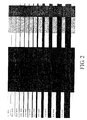
- FIG. 2 is a print-out diagram of the experimental result of the 2nd embodiment according to the present invention.
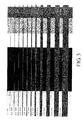
- FIG. 3 is a print-out diagram of the experimental result of the 1st contrast according to the present invention.
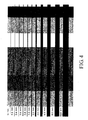
- FIG. 4 is a print-out diagram of the experimental result of the 3rd embodiment according to the present invention.
- FIG. 5 is a print-out diagram of the experimental result of the 4th embodiment according to the present invention.
- FIG. 6 is a print-out diagram of the experimental result of the 5th embodiment according to the present invention.
- FIG. 7 is a print-out diagram of the experimental result of the 2nd contrast according to the present invention.
- FIG. 8 is a print-out diagram of the experimental result of the 3rd contrast according to the present invention.
- FIG. 9 is a print-out diagram of the experimental result of the 4th contrast according to the present invention.
- the present invention provides an ink set for inkjet printers.
- the ink set comprises a first ink and at least one second ink.
- the major composition of the black first ink in the ink set comprises a first media, at least one first colorant, and at least one first non-ionic surfactant.
- the first media comprises aqueous, organic solvent, humectant, polymer solvent, bactericide, or the combination of those mentioned.
- the concentration of the water is ranged from 50 wt % to 95 wt %.
- the preferred concentration range is 70 wt % to 90wt %.
- the ink set also comprises a water soluble solvent such as organic solvent and inorganic salt for enhancing the infiltration and dispersion of the ink.
- the major components of the second ink comprise a second media, at least one second colorant, and at least one second non-ionic surfactant.
- the second media may be aqueous, organic solvent, humectant, polymer solvent, bactericide or any combination of those solvents.
- the concentration of the water is ranged from 50 wt % to 95 wt %.
- the preferred concentration range is from 70 wt % to 90 wt %.
- the ink also comprises a water soluble solvent like organic solvent and inorganic salt for enhancing the infiltration and dispersion of the ink.
- the ink in the print head is easy to evaporate and produce precipitants, resulting print head clogging and affecting printing quality.
- the humectant is added into the ink.
- the humectant used in the present is the organic solvent with low volatility, such as ethylene glycol, polyethylene glycol, and glycerol. The concentration is below 20 wt %.
- the bactericide is added to prevent the bacteria growing in the ink.
- the buffer is added to make the first colorant or the second colorant within a preferred pH value, and the ink can show preferred colors.
- Other additives can also be added for better light resistance and weather resistance.
- the first non-ionic surfactant added in the first ink has a first hydrophilic lipophilic balance (HLB) value.
- the second non-ionic surfactant added in second ink has a second HLB value.
- the first HLB value must be smaller than or equal to the second HLB value.
- the calculation of the HLB value of the non-ionic surfactant is the same as Formula 1 described above.
- the lightness of the first ink is lower than the lightness of the second ink. The analyzing method of the lightness is described above.
- the lightness of the black ink is generally smaller than 30, the lightness of the cyan ink is generally in a range 30 to 55, the lightness of the magenta ink is generally in a range 45 to 60, the lightness of the yellow ink is generally higher than 70.
- the ink set of the invention prevents bleeding between the inks.
- the experiment result of the present invention is described as following.
- the first ink is black pigment-based ink and the at least one second ink are color dyed inks.
- the pigment has a larger particle size. It precipitates more easily and clogs up the print head. Therefore, the particle size needs to be controlled.
- the preferred particle size of the pigment is smaller than 1.0 ⁇ m. Also, dispersant and adhesive are used to reduce clogging.
- the dispersed pigment of the invention can be AcryJet Black 357 (from Rohm & Haas), Bayscipt Black VPSP 20016, Bayscipt Black VPSP 20046(from Bayer AG), LJD-3107, LJD-3207, LJD-3209 (from Sun Chemical), Hostafine T, Hostafine TS, Hostafine PT, (from Clariant GmbH), Cab-O-Jet 200, Cab-O-Jet 300 (from Cabot), BonJet CW-1, BonJet CW-2 (from Orient), etc.
- the concentration of the black pigmented ink is ranged from 1 wt % to 15 wt %, and the preferred range is from 1 wt % to 8 wt %.
- the surfactant in the black pigment-based ink can affect the adhesion and the surface tension, and adjust the dispersion and the infiltration of the black pigment-based ink.
- inkjeting becomes smoother because of a proper adhesion, and no bleeding because of a proper surface tension.
- the present invention also improves the dispersion of black pigment-based ink and the penetration of the medium.
- the surfactant in the black pigment-based ink is the non-ionic surfactant, the first non-ionic surfactant mentioned above.
- the first non-ionic surfactant can be Surfynol 104, Surfynol 400 Series (from Air Products), Tergitol 15-S-n Series (from UCC), TRE Series, NP Series (from En Hou), etc.
- the total adding sum is less than 0.001 wt % to 10 wt %.
- the preferred concentration range is from 0.001 wt % to 3.5 wt %.
- the dye has better water solubility but is easy to crystallize, that will affect the fluency of inkjeting.
- the dye in this invention comprises Duasyn SF Series (from Clariant GmbH), ProJet Series (from Avecia), Bayscipt Series (from Bayer AG), Experimental PC Series, Access Series, Palmer Series, Liquitant Series (from Milliken Chemical), Y1189, Y104, Y178, M377, M1114 (from Ilford), Water Color Series (from Orient), Basacid Series (from BASF), etc.
- the concentration -is ranged from 0.5 wt % to 14 wt %.
- the preferred concentration range is from 1 wt % to 7 wt %.
- the surfactant in the dye-based ink of the invention is the non-ionic surfactant, the second non-ionic surfactant mention above.
- the second non-ionic surfactant can be chosen from the first non-ionic surfactants mentioned before.
- the total surfactant added is usually less than 0.001 wt % to 10 wt %.
- the preferred concentration is ranged from 0.001 wt % to 3.5 wt %.
- the first non-ionic surfactant added in the black pigment-based ink has a first hydrophilic lipophilic balance (HLB) value.
- the second non-ionic surfactant added in non-black dye-based ink has a second HLB value.
- the first HLB value must be smaller than or equal to the second HLB value.
- the calculation of the HLB value of the non-ionic surfactant is the same as Formula 1 described above.
- the ink set of the invention prevents bleeding between the inks.
- Table 1(a), Table 1(b), Table 1(c) and Table 1(d) list the compositions of the cyan dyed ink, magenta dyed ink, yellow dye-based ink, and black pigment-based ink, respectively, in the 1st embodiment of the invention.
- Table 1(a) to Table 1(d) are the ink set of the black pigment-based ink and the non-black dye-based ink in the 1st embodiment of this present invention.
- the non-black dye-based ink of the ink set comprises three kinds of ink, which are cyan dye-based ink, magenta dye-based ink, and yellow dye-based ink.
- the composition of cyan dye-based ink is Bayscript Cyan BA liq (from Bayer AG), and the concentration is 4 wt %.
- the humectant is Propene Glycol (from Adrich), and the concentration is 10 wt %.
- the organic solvent is 2-pyrrolidone (from Adrich), and the concentration is 1.5 wt %.
- the polymer solvent is Polyethylene Glycol 900 (from Adrich), and the concentration is 6 wt %.
- the surfactant is Tergitol 15-S-5(from UCC) with the HLB value ats 10.6, and the concentration is 1 wt %.
- the bactericide is Mergal K7 (from Clariant), and the concentration is 0.5 wt %. Finally, the concentration of deionized water is 77 wt %.
- compositions of the magenta dye-based ink and the composition of the yellow dye-based ink are similar to the composition of cyan dye-based ink shown in Table 1 (a), but slightly different in dye.
- the dye of the magenta dye-based ink is Bayscript Magenta VPSP 25032 (from Bayer AG).
- the dye of the yellow dye-based ink is Bayscript Yellow GGN (from Bayer AG).
- composition of the black pigment-based ink is also similar to the three kinds of dye-based ink, but slightly different in the pigment and surfactant.
- the pigment is Bayscript Black VPSP 20016 (from Bayer AG).
- the surfactant is Surfynol 420 (from Air Products) with the HLB value of 4.
- magenta dye-based ink in the 1st embodiment Magenta Dye-based Ink Concentration Composition Chemical Compound (wt %) Dye Bayscript Magenta VPSP 25032 4 (from Bayer AG) Humectant Propene Glycol (from Adrich) 10 Organic 2-pyrrolidone (from Adrich) 1.5 Solvent Polymer Polyethylene Glycol 900 (from Adrich) 6 Solvent Surfactant Tergitol15-S-5 1 (from UCC, HLB value: 10.6) Bactericide Mergal K7 (from Clariant) 0.5 Solvent Deionized Water 77
- Table 2 is the composition and the concentration of the black pigment-based ink in the 2nd embodiment according to the invention.
- the three kinds of non-black dye-based ink of the ink set and their compositions are the same as those in the 1st embodiment.
- the composition of the black pigment-based ink in the second embodiment is similar to that in the first embodiment, but slightly different in the surfactant.
- the surfactant in the black pigment-based ink of the second embodiment is Tergitol 15-S-5 (from UCC) with the HLB value at 10.6.
- Table 3 is the composition of the 1st contrast to the 1st and 2nd embodiments of the present invention.
- the 1st contrast has the same three kinds of non-black dye-based ink and compositions as those in the embodiments of the present invention, details referring to Table 1(a)-(c).
- the composition of the black pigment-based ink of the 1st contrast is similar to those of the two embodiments. The only difference is that its surfactant is Surfynol 485W (from Air Products) with the HLB value at 17.
- the difference is the surfactant of the black pigment-based ink.
- the HLB value of the surfactant in the black pigment-based ink is smaller than or equal to the HLB value of the surfactant in the non-black dye-based ink.
- the HLB value of the surfactant in the black pigment-based ink is larger than the HLB value of the surfactant in the non-black dye-based ink. Therefore, the variable is controlled by the HLB value. The characteristics of the invention become obvious by minimizing the variable.
- FIG. 1 is a print-out diagram of the experimental result of the 1st embodiment according to the present invention.
- FIG. 2 is a print-out diagram of the experimental result of the 2nd embodiment according to the present invention.
- FIG. 3 is a print-out diagram of the experimental result of the 1st contrast according to the present invention.
- Table 4 is the result of the 1st experiments. These result diagrams are made by the same inkjet printer (from HP930C, the ink cartridge is HP C6578 & 51645), and the same medium (from Plain paper 70 gsm). By Comparing the three diagrams, there is no bleeding between the pigment-based ink and the dye-based ink in the first and the second embodiments.
- proper non-ionic surfactants are added into the black pigment-based ink and the non-black dye-based ink.
- the HLB value of the surfactant in the black pigment-based ink is smaller than or equals to the HLB value of the surfactant in the non-black dye-based ink.
- Such ink set decreases the drying time, accelerates the printing speed, restrains bleeding, and further improves the printing quality.
- the first ink is black dye-based ink and the at least one second ink are color dye-based inks.
- the difference between the 1st embodiment and the 2nd embodiment is the first colorant of the first ink.
- the 1st and 2nd embodiments are black pigment-based ink and the 3rd embodiment is black dye-based ink. The followings just describes the difference between the embodiments.
- the black dye in 3rd embodiment comprises PRO-JET FAST BLACK2 LIQUID (from Avecia), PRO-JET FAST BLACK 2CF2 LIQUID (from Avecia), PRO-JET FAST BLACK CN LIQUID (form Avecia), Duasyn Black NB-SF liq. (from Clariant), Duasyn Black SU-SF liq. (from Clariant), Duasyn Black BL-SF liq. (from Clariant), Duasyn Vietnameseschwarz HEF-SF (from Clariant), Bayscript Black SP Liq. (from Bayer), Bayscript Black BS Liq.
- the concentration of the dyed ink is ranged from 0.5 wt % to 14 wt %.
- the preferred concentration range is from 1 wt % to 7 wt %.
- the composition of the black dye-based ink is also similar to the three kinds of dye-based ink, but slightly different in the black dye and surfactant.
- the black dye is ProJet Black CN liquid (from Avecia).
- the surfactant is Surfynol 104E (from Air Products) with the HLB value of 4.
- composition of the black dye-based ink in the 4th embodiment is also similar to the composition of black dye-based ink in the 3rd embodiment, but slightly different in the surfactant.
- the surfactant is Surfynol 420 (from Air Products) with the HLB value of 4.
- composition of the black dye-based ink in the 5th embodiment is also similar to the composition of black dyed ink in the third embodiment, but slightly different in the surfactant.
- the surfactant is Tergitol 15-S-5 (from UCC) with the HLB value of 10.6.
- Table 9 and Table 10 are the composition of the contrast to the 3rd to 5th embodiments of the present invention.
- the 2 nd , 3 rd , 4th contrast has the same three kinds of non-black dye-based ink and compositions as those in the embodiments of the present invention, details referring to Table 5-7.
- the composition of the black dye-based ink of the contrasts is similar to those of the three embodiments.
- the difference is the surfactant of the black dye-based ink.
- the HLB value of the surfactant in the black dye-based ink is smaller than or equal to the HLB value of the surfactant in the non-black dye-based ink.
- the HLB value of the surfactant in the black dye-based ink is larger than the HLB value of the surfactant in the non-black dye-based ink. Therefore, the variable is controlled by the HLB value. The characteristics of the invention become obvious by minimizing the variable.
- FIG. 4 is a print-out diagram of the experimental result of the 3rd embodiment according to the present invention.
- FIG. 5 is a print-out diagram of the experimental result of the 4th embodiment according to the present invention.
- FIG. 6 is a print-out diagram of the experimental result of the 5th embodiment according to the present invention.
- FIG. 7 is a print-out diagram of the experimental result of the 2nd contrast according to the present invention.
- FIG. 8 is a print-out diagram of the experimental result of the 3rd contrast according to the present invention.
- FIG. 9 is a print-out diagram of the experimental result of the 4th contrast according to the present invention.
- Table 11 is the result of the 2nd experiments.
- proper non-ionic surfactants are added into the black dye-based ink and the non-black dye-based ink.
- the HLB value of the surfactant in the black dye-based ink is smaller than or equals to the HLB value of the surfactant in the non-black dye-based ink.
- Such ink set decreases the drying time, accelerates the printing speed, restrains bleeding, and further improves the printing quality.
Landscapes
- Chemical & Material Sciences (AREA)
- Life Sciences & Earth Sciences (AREA)
- Engineering & Computer Science (AREA)
- Materials Engineering (AREA)
- Wood Science & Technology (AREA)
- Organic Chemistry (AREA)
- Ink Jet Recording Methods And Recording Media Thereof (AREA)
- Inks, Pencil-Leads, Or Crayons (AREA)
Abstract
Description
- 1. Field of the Invention
- The present invention relates to ink set for inkjet printers; in particular, the ink set comprising a deep color ink and a light color ink.
- 2. Description of the Prior Art
- Inkjet printing technique has been developed for several years. It is inexpensive, quiet, and with printing quality of colorfulness. Moreover, the ink can adhere to different kinds of medium, such as normal plain paper, paper for special printing and slide for printing.
- Inkjet printing is similar to conventional printing. The basic ink set is a combination of cyan, magenta, yellow, and black. By modification, the combination can only be three colors including cyan, magenta and yellow to achieve full color effect. Moreover, the color saturation and printing quality can be enhanced by adding colors of light cyan, light magenta, light yellow, gray, green, blue, orange, etc.
- Inks used for inkjet printing can be classified as dye-based ink or pigment-based ink according to compositions. The composition of ink is related to the presentation of colors. The dye is easily dissolved in water and presents brighter color. However, it usually has poor light resistance. Because of its good water solubility, the dye has poor water resistance. When the image from dye-based ink contacts water, the dyed ink dissolves again which damages the printing quality. The pigment is insoluble in water and has better water resistance and light resistance, but its color saturation is relative poor. Because the pigment is in particle form, it is hard to be dispersed uniformly and becomes larger particle to damage inkjet heads of printers. Therefore, a good dispersion is an important characteristic of the pigment-based ink.
- On the other hand, inks used for inkjet printing can be classified as deep ink or light ink according to lightness. For analyzing the lightness of the inks, generally, the inventors use the method as following:
- 1. Ink solution dilute to 200 ppm of colorant content
- 2. Sample holder is quartz based with 0.2 cm thickness (holder thickness not wall thickness)
- 3. Measure the lightness of diluted ink solution by calorimeter with predetermined light source.
- The deeper color has the smaller lightness. For example: the lightness of the black ink is generally smaller than 30, the lightness of the cyan ink is generally in a range 30 to 55, the lightness of the magenta ink is generally in a range 45 to 60, the lightness of the yellow ink is generally higher than 70.
- Besides lightness, water resistance and light resistance, the drying speed and ink bleeding also affect printing quality. Fast drying means that the drying time for the ink on the printing medium is short. The drying speed will affect the printing speed of the printer, because the second diagram cannot be printed until the first one is dry. Ink bleeding means the ink spreading out or infiltrating into another color. It is because that the ink cannot cohere efficiently and also because of the capillary effect by the medium fiber. Ink bleeding will seriously damage printing quality.
- There are several methods to restrain or retard ink bleeding on the medium. One method is to accelerate the drying speed by adding additives with higher volatility into the ink, such as low carbon-numbers alcohols. The second method is to accelerate the ink penetration on the medium by controlling the physical characters of the ink. This method not only makes the ink dry fast, but also restrains bleeding. The third method is to produce a wall to prevent infiltrating from one color into another. The wall can be produced by chemical reactions of two colors which contacting each other. The other method to retard bleeding is to add an effective surfactant into the ink to decreases the surface tension resulting in fast dry and printing speed.
- Surfactant is commonly classified as cationic, ionic, non-ionic and amphoteric. Non-ionic surfactant has both hydrophilic and lipophilic sides, and is dissolved easily. In order to estimate its hydrophilic and lipophilic characters of the non-ionic surfactant, the Hydrophilic Lipophilic Balance (HLB) value is used. However, the algorithm for HLB value has not yet unified. The following is a common formula to calculate HLB.
- [(molecular weight of the hydrophilic composition)/(total molecular weight)]×20 Formula 1
- According to Formula 1, the HLB value is ranged from 0 to 20. The higher the HLB value, the stronger the hydrophile character, and vice versa. By adding the surfactant into the ink, solubility of water and oil can be controlled and the surface tension of the ink can be adjusted.
- Moreover, in the common desktop inkjet printing system, the color inks is mostly dye-based inks for enhancing the color saturation of image, and making images lighter. The black dye-based ink becomes less popular and is substituted by pigment-based ink, because the images with pigment-based ink can last longer. Because of the difference between dye and pigment, printing qualities of different ink sets are different.
- Therefore, it is needed to accelerate the printing speed and improve printing quality. How to make a better combination of the deep/light inks, dyed/pigmented based inks, dyed/dyed based inks, and pigmented/pigmented based inks for inkjet printing becomes an important issue.
- The objective of the present invention is to provide an ink set to solve the above mentioned issue.
- The present invention provides an ink set comprising a first ink and at least one second ink for an inkjet printer. The first ink comprises at least one first colorant, a first media and at least one first non-ionic surfactant having a first HLB (Hydrophilic Lipophilic Balance) value. The second ink comprises at least one second colorant for providing corresponding color of the second ink, a second media and at least one second non-ionic surfactant having a second HLB value. The first HLB value is smaller than or equals to the second HLB value. The lightness of the first ink is smaller than the second ink. The media may comprises aqueous, an organic solvent, a humectant, a polymer solvent, a bactericide or the combination of the above-mentioned.
- For analyzing the lightness of the inks, generally, the inventors use the method as following:
- 1. Ink solution dilute to 200 ppm of colorant content
- 2. Sample holder is quartz based with 0.2 cm thickness (holder thickness not wall thickness)
- 3. Measure the lightness of diluted ink solution by calorimeter with predetermined light source.
- Generally, the method defines ink solution only to classify deep or light color. The deeper color has the smaller lightness. For example: the lightness of the black ink is generally smaller than 30, the lightness of the cyan ink is generally in a range 30 to 55, the lightness of the magenta ink is generally in a range 45 to 60, the lightness of the yellow ink is generally higher than 70. According to the present invention, the ink set decreases the drying time, accelerates the printing speed, restrains bleeding, and further improves the printing quality.
- The advantage and spirit of the invention may be understood by the following recitations together with the appended drawings.
- The patent or application file contains at least one drawing executed in color. Copies of this patent or patent application publication with color drawing(s) will be provided by the Office upon request and payment of the necessary fee.
- FIG. 1 is a print-out diagram of the experimental result of the 1st embodiment according to the present invention.
- FIG. 2 is a print-out diagram of the experimental result of the 2nd embodiment according to the present invention.
- FIG. 3 is a print-out diagram of the experimental result of the 1st contrast according to the present invention.
- FIG. 4 is a print-out diagram of the experimental result of the 3rd embodiment according to the present invention.
- FIG. 5 is a print-out diagram of the experimental result of the 4th embodiment according to the present invention.
- FIG. 6 is a print-out diagram of the experimental result of the 5th embodiment according to the present invention.
- FIG. 7 is a print-out diagram of the experimental result of the 2nd contrast according to the present invention.
- FIG. 8 is a print-out diagram of the experimental result of the 3rd contrast according to the present invention.
- FIG. 9 is a print-out diagram of the experimental result of the 4th contrast according to the present invention.
- The present invention provides an ink set for inkjet printers. The ink set comprises a first ink and at least one second ink. The major composition of the black first ink in the ink set comprises a first media, at least one first colorant, and at least one first non-ionic surfactant. The first media comprises aqueous, organic solvent, humectant, polymer solvent, bactericide, or the combination of those mentioned. The concentration of the water is ranged from 50 wt % to 95 wt %. The preferred concentration range is 70 wt % to 90wt %. The ink set also comprises a water soluble solvent such as organic solvent and inorganic salt for enhancing the infiltration and dispersion of the ink.
- The major components of the second ink comprise a second media, at least one second colorant, and at least one second non-ionic surfactant. The second media may be aqueous, organic solvent, humectant, polymer solvent, bactericide or any combination of those solvents. The concentration of the water is ranged from 50 wt % to 95 wt %. The preferred concentration range is from 70 wt % to 90 wt %. The ink also comprises a water soluble solvent like organic solvent and inorganic salt for enhancing the infiltration and dispersion of the ink.
- If the print head exposes to the air for a long time, the ink in the print head is easy to evaporate and produce precipitants, resulting print head clogging and affecting printing quality. For slowing down the evaporation and preventing from clogging, the humectant is added into the ink. The humectant used in the present is the organic solvent with low volatility, such as ethylene glycol, polyethylene glycol, and glycerol. The concentration is below 20 wt %.
- Besides the above-mentioned components, the bactericide is added to prevent the bacteria growing in the ink. The buffer is added to make the first colorant or the second colorant within a preferred pH value, and the ink can show preferred colors. Other additives can also be added for better light resistance and weather resistance.
- In this invention, the first non-ionic surfactant added in the first ink has a first hydrophilic lipophilic balance (HLB) value. The second non-ionic surfactant added in second ink has a second HLB value. The first HLB value must be smaller than or equal to the second HLB value. The calculation of the HLB value of the non-ionic surfactant is the same as Formula 1 described above. The lightness of the first ink is lower than the lightness of the second ink. The analyzing method of the lightness is described above. Conventionally, the lightness of the black ink is generally smaller than 30, the lightness of the cyan ink is generally in a range 30 to 55, the lightness of the magenta ink is generally in a range 45 to 60, the lightness of the yellow ink is generally higher than 70. By the criterions of the above mention, the ink set of the invention prevents bleeding between the inks.
- The experiment result of the present invention is described as following. In the 1st embodiment of the present invention, the first ink is black pigment-based ink and the at least one second ink are color dyed inks.
- Because the pigment has a larger particle size. It precipitates more easily and clogs up the print head. Therefore, the particle size needs to be controlled. The preferred particle size of the pigment is smaller than 1.0 μm. Also, dispersant and adhesive are used to reduce clogging. The dispersed pigment of the invention can be AcryJet Black 357 (from Rohm & Haas), Bayscipt Black VPSP 20016, Bayscipt Black VPSP 20046(from Bayer AG), LJD-3107, LJD-3207, LJD-3209 (from Sun Chemical), Hostafine T, Hostafine TS, Hostafine PT, (from Clariant GmbH), Cab-O-Jet 200, Cab-O-Jet 300 (from Cabot), BonJet CW-1, BonJet CW-2 (from Orient), etc. The concentration of the black pigmented ink is ranged from 1 wt % to 15 wt %, and the preferred range is from 1 wt % to 8 wt %.
- The surfactant in the black pigment-based ink can affect the adhesion and the surface tension, and adjust the dispersion and the infiltration of the black pigment-based ink. When adding a surfactant with a proper concentration into black pigment-based ink, inkjeting becomes smoother because of a proper adhesion, and no bleeding because of a proper surface tension. The present invention also improves the dispersion of black pigment-based ink and the penetration of the medium.
- The surfactant in the black pigment-based ink is the non-ionic surfactant, the first non-ionic surfactant mentioned above. The first non-ionic surfactant can be Surfynol 104, Surfynol 400 Series (from Air Products), Tergitol 15-S-n Series (from UCC), TRE Series, NP Series (from En Hou), etc. The total adding sum is less than 0.001 wt % to 10 wt %. The preferred concentration range is from 0.001 wt % to 3.5 wt %.
- The dye has better water solubility but is easy to crystallize, that will affect the fluency of inkjeting. The dye in this invention comprises Duasyn SF Series (from Clariant GmbH), ProJet Series (from Avecia), Bayscipt Series (from Bayer AG), Experimental PC Series, Access Series, Palmer Series, Liquitant Series (from Milliken Chemical), Y1189, Y104, Y178, M377, M1114 (from Ilford), Water Color Series (from Orient), Basacid Series (from BASF), etc. The concentration -is ranged from 0.5 wt % to 14 wt %. The preferred concentration range is from 1 wt % to 7 wt %.
- The surfactant in the dye-based ink of the invention is the non-ionic surfactant, the second non-ionic surfactant mention above. The second non-ionic surfactant can be chosen from the first non-ionic surfactants mentioned before. The total surfactant added is usually less than 0.001 wt % to 10 wt %. The preferred concentration is ranged from 0.001 wt % to 3.5 wt %.
- In this invention, the first non-ionic surfactant added in the black pigment-based ink has a first hydrophilic lipophilic balance (HLB) value. The second non-ionic surfactant added in non-black dye-based ink has a second HLB value. The first HLB value must be smaller than or equal to the second HLB value. The calculation of the HLB value of the non-ionic surfactant is the same as Formula 1 described above. The ink set of the invention prevents bleeding between the inks.
- The embodiments of the present invention and its corresponding contrast are used in a same inkjet printer, and exported on a same medium to compare with each other. Please refer to Table 1(a), Table 1(b), Table 1(c) and Table 1(d). Table 1(a) Table 1(b), Table 1(c) and Table 1(d) list the compositions of the cyan dyed ink, magenta dyed ink, yellow dye-based ink, and black pigment-based ink, respectively, in the 1st embodiment of the invention. Table 1(a) to Table 1(d) are the ink set of the black pigment-based ink and the non-black dye-based ink in the 1st embodiment of this present invention. The non-black dye-based ink of the ink set comprises three kinds of ink, which are cyan dye-based ink, magenta dye-based ink, and yellow dye-based ink.
- Please refer to Table 1(a), the composition of cyan dye-based ink. The dye is Bayscript Cyan BA liq (from Bayer AG), and the concentration is 4 wt %. The humectant is Propene Glycol (from Adrich), and the concentration is 10 wt %. The organic solvent is 2-pyrrolidone (from Adrich), and the concentration is 1.5 wt %. The polymer solvent is Polyethylene Glycol 900 (from Adrich), and the concentration is 6 wt %. The surfactant is Tergitol 15-S-5(from UCC) with the HLB value ats 10.6, and the concentration is 1 wt %. The bactericide is Mergal K7 (from Clariant), and the concentration is 0.5 wt %. Finally, the concentration of deionized water is 77 wt %.
- Please refer to Table 1(b) and Table 1(c), the composition of the magenta dye-based ink and the composition of the yellow dye-based ink, respectively. The compositions of the magenta dye-based ink and the yellow dye-based ink are similar to the composition of cyan dye-based ink shown in Table 1 (a), but slightly different in dye. The dye of the magenta dye-based ink is Bayscript Magenta VPSP 25032 (from Bayer AG). The dye of the yellow dye-based ink is Bayscript Yellow GGN (from Bayer AG).
- Please refer to Table 1(d), the composition of the black pigment-based ink. The composition of the black pigment-based ink is also similar to the three kinds of dye-based ink, but slightly different in the pigment and surfactant. The pigment is Bayscript Black VPSP 20016 (from Bayer AG). The surfactant is Surfynol 420 (from Air Products) with the HLB value of 4.
TABLE 1(a) The cyan dye-based ink in the 1st embodiment Cyan Dye-based Ink Concentration Composition Chemical Compound (wt %) Dye Bayscript Cyan BA liq 4 (from Bayer AG) Humectant Propene Glycol (from Adrich) 10 Organic 2-pyrrolidone (from Adrich) 1.5 Solvent Polymer Polyethylene Glycol 900 (from Adrich) 6 Solvent Surfactant Tergitol 15-S-5 1 (from UCC, HLB value:10.6) Bactericide Mergal K7 (from Clariant) 0.5 Solvent Deionized Water 77 -
TABLE 1(b) The magenta dye-based ink in the 1st embodiment Magenta Dye-based Ink Concentration Composition Chemical Compound (wt %) Dye Bayscript Magenta VPSP 25032 4 (from Bayer AG) Humectant Propene Glycol (from Adrich) 10 Organic 2-pyrrolidone (from Adrich) 1.5 Solvent Polymer Polyethylene Glycol 900 (from Adrich) 6 Solvent Surfactant Tergitol15-S-5 1 (from UCC, HLB value: 10.6) Bactericide Mergal K7 (from Clariant) 0.5 Solvent Deionized Water 77 -
TABLE 1(c) The yellow dye-based ink in the 1st embodiment Yellow Dye-based Ink Concentration Composition Chemical Compound (wt %) Dye Bayscript Yellow GGN 4 (from Bayer AG) Humectant Propene Glycol (from Adrich) 10 Organic 2-pyrrolidone (from Adrich) 1.5 Solvent Polymer Polyethylene Glycol 900 (from Adrich) 6 Solvent Surfactant Tergitol 15-S-5 1 (from UCC, HLB: 10.6) Bactericide Mergal K7 (from Clariant) 0.5 Solvent Deionized Water 77 -
TABLE 1(d) The black pigment-based ink in the 1st embodiment Black Pigment-based Ink Concentration Composition Chemical Compound (wt %) Dye Bayscript Black VPSP 20016 4 (from Bayer AG) Humectant Propene Glycol (from Adrich) 10 Organic 2-pyrrolidone (from Adrich) 1.5 Solvent Polymer Polyethylene Glycol 900 (from Adrich) 6 Solvent Surfactant Surfynol 420 1 (from Air Products, HLB: 4) Bactericide Mergal K7 (from Clariant) 0.5 Solvent Deionized Water 77 - Please refer to Table 2. Table 2 is the composition and the concentration of the black pigment-based ink in the 2nd embodiment according to the invention. In the 2nd embodiment, the three kinds of non-black dye-based ink of the ink set and their compositions (not listed in Table 2) are the same as those in the 1st embodiment. The composition of the black pigment-based ink in the second embodiment is similar to that in the first embodiment, but slightly different in the surfactant. The surfactant in the black pigment-based ink of the second embodiment is Tergitol 15-S-5 (from UCC) with the HLB value at 10.6.
TABLE 2 The black pigment-based ink in the 2nd embodiment Black Pigment-based Ink Concentration Composition Chemical Compound (wt %) Dye Bayscript Black VPSP 20016 4 (from Bayer AG) Humectant Propene Glycol (from Adrich) 10 Organic 2-pyrrolidone (from Adrich) 1.5 Solvent Polymer Polyethylene Glycol 900 6 Solvent (from Adrich) Surfactant Tergitol 15-S-5 (from UCC, HLB: 10.6) 1 Bactericide Mergal K7 (from Clariant) 0.5 Solvent Deionized Water 77 - Please refer to Table 3. Table 3 is the composition of the 1st contrast to the 1st and 2nd embodiments of the present invention. The 1st contrast has the same three kinds of non-black dye-based ink and compositions as those in the embodiments of the present invention, details referring to Table 1(a)-(c). The composition of the black pigment-based ink of the 1st contrast is similar to those of the two embodiments. The only difference is that its surfactant is Surfynol 485W (from Air Products) with the HLB value at 17.
TABLE 3 The 1st contrast of the black pigmented ink Black Pigmented Ink Concentration Composition Chemical Compound (wt %) Dye Bayscript Black VPSP 20016 4 (from Bayer AG) Humectant Propene Glycol (from Adrich) 10 Organic 2-pyrrolidone (from Adrich) 1.5 Solvent Polymer Polyethylene Glycol 900 6 Solvent (from Adrich) Surfactant Surfynol 485W 1 (from Air Products, HLB: 17) Bactericide Mergal K7 (from Clariant) 0.5 Solvent Deionized Water 77 - Among the 1st and the 2nd embodiments, and the 1st contrast ink sets, the difference is the surfactant of the black pigment-based ink. In the 1st and the 2nd embodiments, the HLB value of the surfactant in the black pigment-based ink is smaller than or equal to the HLB value of the surfactant in the non-black dye-based ink. In the 1st contrast, the HLB value of the surfactant in the black pigment-based ink is larger than the HLB value of the surfactant in the non-black dye-based ink. Therefore, the variable is controlled by the HLB value. The characteristics of the invention become obvious by minimizing the variable.
- Please refer to FIG. 1, FIG. 2, FIG. 3 and Table 4. FIG. 1 is a print-out diagram of the experimental result of the 1st embodiment according to the present invention. FIG. 2 is a print-out diagram of the experimental result of the 2nd embodiment according to the present invention. FIG. 3 is a print-out diagram of the experimental result of the 1st contrast according to the present invention. Table 4 is the result of the 1st experiments. These result diagrams are made by the same inkjet printer (from HP930C, the ink cartridge is HP C6578 & 51645), and the same medium (from Plain paper 70 gsm). By Comparing the three diagrams, there is no bleeding between the pigment-based ink and the dye-based ink in the first and the second embodiments. However, bleeding occurs in the contrast. The results of the 1st experiment are summarized in Table 4.
TABLE 4 The results of the 1st experiment HLB value Restrain Bleeding Fast Dry The 1st Embodiment 4 yes yes The 2nd Embodiment 10.6 yes yes The 1st Contrast 17 no yes - According to the present invention, proper non-ionic surfactants are added into the black pigment-based ink and the non-black dye-based ink. The HLB value of the surfactant in the black pigment-based ink is smaller than or equals to the HLB value of the surfactant in the non-black dye-based ink. Such ink set decreases the drying time, accelerates the printing speed, restrains bleeding, and further improves the printing quality.
- In the 3rd embodiment of the present invention, the first ink is black dye-based ink and the at least one second ink are color dye-based inks. The difference between the 1st embodiment and the 2nd embodiment is the first colorant of the first ink. The 1st and 2nd embodiments are black pigment-based ink and the 3rd embodiment is black dye-based ink. The followings just describes the difference between the embodiments.
- The black dye in 3rd embodiment comprises PRO-JET FAST BLACK2 LIQUID (from Avecia), PRO-JET FAST BLACK 2CF2 LIQUID (from Avecia), PRO-JET FAST BLACK CN LIQUID (form Avecia), Duasyn Black NB-SF liq. (from Clariant), Duasyn Black SU-SF liq. (from Clariant), Duasyn Black BL-SF liq. (from Clariant), Duasyn Direktschwarz HEF-SF (from Clariant), Bayscript Black SP Liq. (from Bayer), Bayscript Black BS Liq. (from Bayer), Water Black 100L (from Orient), BonJet814L (from Orient), Basacid Black X34 (from BASF), Basacid Black X38 (from BASF), Basacid Black X40 (from BASF), K1334L (from ILFORD), etc. The concentration of the dyed ink is ranged from 0.5 wt % to 14 wt %. The preferred concentration range is from 1 wt % to 7 wt %.
- Please refer to Table 5, the composition of the black dye-based ink. The composition of the black dye-based ink is also similar to the three kinds of dye-based ink, but slightly different in the black dye and surfactant. The black dye is ProJet Black CN liquid (from Avecia). The surfactant is Surfynol 104E (from Air Products) with the HLB value of 4.
TABLE 5 The black dye-based ink in the 3rd embodiment Black Dye-based Ink Concentration Composition Chemical Compound (wt %) Dye ProJet Black CN liquid (from Avecia) 4 Humectant Propene Glycol (from Adrich) 10 Organic 2-pyrrolidone (from Adrich) 1.5 Solvent Polymer Polyethylene Glycol 900 (from Adrich) 6 Solvent Surfactant Surfynol 104E 1 (from Air Products, HLB value: 4) Bactericide Mergal K7 (from Clariant) 0.5 Solvent Deionized Water 77 - Please refer to Table 6, the composition of the black dye-based ink in the 4th embodiment. The composition of the black dyed ink in the 4th embodiment is also similar to the composition of black dye-based ink in the 3rd embodiment, but slightly different in the surfactant. The surfactant is Surfynol 420 (from Air Products) with the HLB value of 4.
TABLE 6 The black dye-based ink in the 4th embodiment Black Dye-based Ink Concentration Composition Chemical Compound (wt %) Dye ProJet Black CN liquid (from Avecia) 4 Humectant Propene Glycol (from Adrich) 10 Organic 2-pyrrolidone (from Adrich) 1.5 Solvent Polymer Polyethylene Glycol 900 (from Adrich) 6 Solvent Surfactant Surfynol 420 1 (from Air Products, HLB value: 4) Bactericide Mergal K7 (from Clariant) 0.5 Solvent Deionized Water 77 - Please refer to Table 7, the composition of the black dye-based ink in the 5th embodiment. The composition of the black dye-based ink in the 5th embodiment is also similar to the composition of black dyed ink in the third embodiment, but slightly different in the surfactant. The surfactant is Tergitol 15-S-5 (from UCC) with the HLB value of 10.6.
TABLE 7 The black dyed ink in the 5th embodiment Black Dyed Ink Concentration Composition Chemical Compound (wt %) Dye ProJet Black CN liquid (from Avecia) 4 Humectant Propene Glycol (from Adrich) 10 Organic 2-pyrrolidone (from Adrich) 1.5 Solvent Polymer Polyethylene Glycol 900 (from Adrich) 6 Solvent Surfactant Tergitol 15-S-5 1 (from UCC, HLB value: 10.6) Bactericide Mergal K7 (from Clariant) 0.5 Solvent Deionized Water 77 - Please refer to Table 8, Table 9 and Table 10. Table 8, Table 9 and Table 10 are the composition of the contrast to the 3rd to 5th embodiments of the present invention. The 2 nd, 3rd, 4th contrast has the same three kinds of non-black dye-based ink and compositions as those in the embodiments of the present invention, details referring to Table 5-7. The composition of the black dye-based ink of the contrasts is similar to those of the three embodiments. The only difference is that its surfactants are Honon TX-6 (from HOCLEAN) with the HLB value at 11.7, Surfynol 465 (from Air Products) with the HLB value at 13, and Surfynol 485W (from Air Products) with the HLB value at 17
TABLE 8 The 2nd contrast of the black dye-based ink Black Dye-based Ink Concentration Composition Chemical Compound (wt %) Dye ProJet Black CN liquid (from Avecia) 4 Humectant Propene Glycol (from Adrich) 10 Organic 2-pyrrolidone (from Adrich) 1.5 Solvent Polymer Polyethylene Glycol 900 (from Adrich) 6 Solvent Surfactant Honon TX-6 1 (from HOCLEAN, HLB value: 11.7) Bactericide Mergal K7 (from Clariant) 0.5 Solvent Deionized Water 77 -
TABLE 9 The 3rd contrast of the black dye-based ink Black Dye-based Ink Concentration Composition Chemical Compound (wt %) Dye ProJet Black CN liquid (from Avecia) 4 Humectant Propene Glycol (from Adrich) 10 Organic 2-pyrrolidone (from Adrich) 1.5 Solvent Polymer Polyethylene Glycol 900 (from Adrich) 6 Solvent Surfactant Surfynol 465 1 (from Air Products, HLB value: 13) Bactericide Mergal K7 (from Clariant) 0.5 Solvent Deionized Water 77 -
TABLE 10 The 4th contrast of the black dye-based ink Black Dye-based Ink Concentration Composition Chemical Compound (wt %) Dye ProJet Black CN liquid (from Avecia) 4 Humectant Propene Glycol (from Adrich) 10 Organic 2-pyrrolidone (from Adrich) 1.5 Solvent Polymer Polyethylene Glycol 900 (from Adrich) 6 Solvent Surfactant Surfynol 485W (from Air Products, HLB 1 value: 17) Bactericide Mergal K7 (from Clariant) 0.5 Solvent Deionized Water 77 - Among the 3rd to the 5th embodiments, and the contrasts ink sets, the difference is the surfactant of the black dye-based ink. In the 3rd to the 5th embodiments, the HLB value of the surfactant in the black dye-based ink is smaller than or equal to the HLB value of the surfactant in the non-black dye-based ink. In the contrasts, the HLB value of the surfactant in the black dye-based ink is larger than the HLB value of the surfactant in the non-black dye-based ink. Therefore, the variable is controlled by the HLB value. The characteristics of the invention become obvious by minimizing the variable.
- Please refer to FIG. 4, FIG. 5, FIG. 6, FIG. 7, FIG. 8, FIG. 9 and Table 11. FIG. 4 is a print-out diagram of the experimental result of the 3rd embodiment according to the present invention. FIG. 5 is a print-out diagram of the experimental result of the 4th embodiment according to the present invention. FIG. 6 is a print-out diagram of the experimental result of the 5th embodiment according to the present invention. FIG. 7 is a print-out diagram of the experimental result of the 2nd contrast according to the present invention. FIG. 8 is a print-out diagram of the experimental result of the 3rd contrast according to the present invention. FIG. 9 is a print-out diagram of the experimental result of the 4th contrast according to the present invention. Table 11 is the result of the 2nd experiments. These result diagrams are made by the same inkjet printer (from HP930C, the ink cartridge is HP C6578 & 51645), and the same medium (from Plain paper 70 gsm). By Comparing the six diagrams, there is no bleeding in the 3rd to 5th embodiments. However, bleeding occurs in the 2nd to 4th contrasts. The results of the experiment are summarized in Table 11.
TABLE 11 The results of the experiment HLB value Restrain Bleeding Fast Dry The 3rd Embodiment 4 yes yes The 4th Embodiment 4 yes yes The 5th Embodiment 10.6 yes yes The 2nd Contrast 11.7 no yes The 3rd Contrast 13 no yes The 4th Contrast 17 no yes - According to the present invention, proper non-ionic surfactants are added into the black dye-based ink and the non-black dye-based ink. The HLB value of the surfactant in the black dye-based ink is smaller than or equals to the HLB value of the surfactant in the non-black dye-based ink. Such ink set decreases the drying time, accelerates the printing speed, restrains bleeding, and further improves the printing quality.
- With the example and explanations above, the features and spirits of the invention will be hopefully well described. Those skilled in the art will readily observe that numerous modifications and alterations of the device may be made while retaining the teaching of the invention. Accordingly, the above disclosure should be construed as limited only by the metes and bounds of the appended claims.
Claims (31)
Applications Claiming Priority (4)
| Application Number | Priority Date | Filing Date | Title |
|---|---|---|---|
| TW91107946A TWI246529B (en) | 2002-04-18 | 2002-04-18 | Ink set for inkjet printer |
| TW91107946 | 2002-04-18 | ||
| TW92108735 | 2003-04-15 | ||
| TW92108735A TW577824B (en) | 2003-04-15 | 2003-04-15 | Ink set for inkjet printer |
Publications (2)
| Publication Number | Publication Date |
|---|---|
| US20030196570A1 true US20030196570A1 (en) | 2003-10-23 |
| US6964702B2 US6964702B2 (en) | 2005-11-15 |
Family
ID=29218084
Family Applications (1)
| Application Number | Title | Priority Date | Filing Date |
|---|---|---|---|
| US10/418,783 Expired - Lifetime US6964702B2 (en) | 2002-04-18 | 2003-04-18 | Ink set for inkjet printers |
Country Status (2)
| Country | Link |
|---|---|
| US (1) | US6964702B2 (en) |
| DE (1) | DE10317973A1 (en) |
Cited By (4)
| Publication number | Priority date | Publication date | Assignee | Title |
|---|---|---|---|---|
| EP1721944A1 (en) * | 2005-05-11 | 2006-11-15 | Samsung Electronics Co., Ltd. | Ink Set comprising surfactants with different HLB values |
| WO2006036379A3 (en) * | 2004-08-24 | 2007-05-24 | Lexmark Int Inc | Metal colloid dispersions and their aqueous metal inks |
| EP2097492A4 (en) * | 2006-11-27 | 2010-06-16 | Fujifilm Dimatix Inc | Carbon nanotube ink |
| US12305052B2 (en) * | 2022-01-12 | 2025-05-20 | Seiko Epson Corporation | Ink set, recording method, and recording device |
Families Citing this family (3)
| Publication number | Priority date | Publication date | Assignee | Title |
|---|---|---|---|---|
| US8163075B2 (en) | 2006-10-31 | 2012-04-24 | Sensient Colors Llc | Inks comprising modified pigments and methods for making and using the same |
| AU2008288785B2 (en) | 2007-08-23 | 2014-08-21 | Sensient Colors Inc. | Self-dispersed pigments and methods for making and using the same |
| KR20110135989A (en) | 2009-04-07 | 2011-12-20 | 센션트 컬러스 엘엘씨 | Self-dispersing particles and methods of making and using the same |
Citations (8)
| Publication number | Priority date | Publication date | Assignee | Title |
|---|---|---|---|---|
| US5536306A (en) * | 1995-07-11 | 1996-07-16 | Hewlett-Packard Company | Thermal ink-jet inks having reduced black to color and color to color bleed |
| US5626655A (en) * | 1995-07-11 | 1997-05-06 | Hewlett-Packard Company | Use of co-surfactants to adjust properties of ink-jet inks |
| US5730790A (en) * | 1996-04-11 | 1998-03-24 | Hewlett-Packard Company | Black to color bleed control using cationic surfactants |
| US6033463A (en) * | 1997-04-21 | 2000-03-07 | Fuji Xerox Co., Ltd. | Multicolor ink set and ink jet recording method |
| US6036759A (en) * | 1998-04-30 | 2000-03-14 | Hewlett-Packard Company | Black to color bleed control in ink-jet printing inks |
| US6051645A (en) * | 1996-04-17 | 2000-04-18 | Fuji Xerox Co., Ltd. | Ink jet recording ink and ink jet recording method |
| US20030081086A1 (en) * | 2001-08-22 | 2003-05-01 | Canon Kabushiki Kaisha | Ink, ink cartridge, recording unit, ink jet recording method, ink jet recording apparatus and method for stabilizing ink discharge |
| US6706104B2 (en) * | 2000-09-04 | 2004-03-16 | Canon Kabushiki Kaisha | Ink set, ink jet recording method, recording unit, ink cartridge, ink jet recording apparatus, bleed-alleviating method, and method for improving fixability of black image |
Family Cites Families (2)
| Publication number | Priority date | Publication date | Assignee | Title |
|---|---|---|---|---|
| JP3539054B2 (en) | 1995-04-19 | 2004-06-14 | セイコーエプソン株式会社 | Color ink jet recording ink composition set and recording method |
| CN1136277C (en) | 1998-07-22 | 2004-01-28 | 研能科技股份有限公司 | Fragrant ink |
-
2003
- 2003-04-17 DE DE10317973A patent/DE10317973A1/en not_active Ceased
- 2003-04-18 US US10/418,783 patent/US6964702B2/en not_active Expired - Lifetime
Patent Citations (8)
| Publication number | Priority date | Publication date | Assignee | Title |
|---|---|---|---|---|
| US5536306A (en) * | 1995-07-11 | 1996-07-16 | Hewlett-Packard Company | Thermal ink-jet inks having reduced black to color and color to color bleed |
| US5626655A (en) * | 1995-07-11 | 1997-05-06 | Hewlett-Packard Company | Use of co-surfactants to adjust properties of ink-jet inks |
| US5730790A (en) * | 1996-04-11 | 1998-03-24 | Hewlett-Packard Company | Black to color bleed control using cationic surfactants |
| US6051645A (en) * | 1996-04-17 | 2000-04-18 | Fuji Xerox Co., Ltd. | Ink jet recording ink and ink jet recording method |
| US6033463A (en) * | 1997-04-21 | 2000-03-07 | Fuji Xerox Co., Ltd. | Multicolor ink set and ink jet recording method |
| US6036759A (en) * | 1998-04-30 | 2000-03-14 | Hewlett-Packard Company | Black to color bleed control in ink-jet printing inks |
| US6706104B2 (en) * | 2000-09-04 | 2004-03-16 | Canon Kabushiki Kaisha | Ink set, ink jet recording method, recording unit, ink cartridge, ink jet recording apparatus, bleed-alleviating method, and method for improving fixability of black image |
| US20030081086A1 (en) * | 2001-08-22 | 2003-05-01 | Canon Kabushiki Kaisha | Ink, ink cartridge, recording unit, ink jet recording method, ink jet recording apparatus and method for stabilizing ink discharge |
Cited By (6)
| Publication number | Priority date | Publication date | Assignee | Title |
|---|---|---|---|---|
| WO2006036379A3 (en) * | 2004-08-24 | 2007-05-24 | Lexmark Int Inc | Metal colloid dispersions and their aqueous metal inks |
| EP1721944A1 (en) * | 2005-05-11 | 2006-11-15 | Samsung Electronics Co., Ltd. | Ink Set comprising surfactants with different HLB values |
| US20060258775A1 (en) * | 2005-05-11 | 2006-11-16 | Jong-In Lee | Ink set, ink cartridge including the same, and inkjet recording apparatus employing the ink cartridge |
| KR100708131B1 (en) * | 2005-05-11 | 2007-04-16 | 삼성전자주식회사 | Ink sets, ink cartridges and ink jet recorders containing them |
| EP2097492A4 (en) * | 2006-11-27 | 2010-06-16 | Fujifilm Dimatix Inc | Carbon nanotube ink |
| US12305052B2 (en) * | 2022-01-12 | 2025-05-20 | Seiko Epson Corporation | Ink set, recording method, and recording device |
Also Published As
| Publication number | Publication date |
|---|---|
| US6964702B2 (en) | 2005-11-15 |
| DE10317973A1 (en) | 2004-01-15 |
Similar Documents
| Publication | Publication Date | Title |
|---|---|---|
| JP4194914B2 (en) | Inkjet printing method and system providing improved image durability | |
| US6779884B1 (en) | Ink-jet printing methods and systems providing dry rub resistance | |
| US20050093948A1 (en) | Ink-jet systems and methods using visible and invisible ink | |
| JP2009045851A (en) | Image forming method and apparatus | |
| JP2011521017A (en) | Inkjet overcoat composition and related systems and methods | |
| JP2010194998A (en) | Ink-jet ink set and ink-jet recording image forming method | |
| US7052537B2 (en) | Solvent systems for ink-jet inks | |
| US7744206B2 (en) | Ozone resistant dye-based images | |
| US6964702B2 (en) | Ink set for inkjet printers | |
| WO2003078533A1 (en) | Ink-jet inks and ink sets providing excellent gamut, image quality, and permanence | |
| JP4678573B2 (en) | Ink for inkjet recording | |
| JP2002020664A (en) | Recording ink and recording method using the ink | |
| JP2001179956A (en) | Ink set, ink jet recording method and recorded matter using the same | |
| JP2009507991A (en) | Inkjet ink and ink set | |
| US20070046748A1 (en) | Ink set and inkjet recording method and recorded matter using the ink set | |
| JP4603756B2 (en) | Ink composition for inkjet recording | |
| US20060028521A1 (en) | Ink composition and ink-jet printing method using the same for improving ink-jet print quality | |
| EP0841185A1 (en) | Back-print recording medium for ink-jet printing | |
| JPH11314449A (en) | Image forming method | |
| US20080178764A1 (en) | Phthalocyanine dyes formulated with salts and anti-flocculent aromatic polyamines for ink-jet imaging | |
| US9090786B2 (en) | Inkjet printing fluid composition | |
| CN1942535A (en) | Pigment black and dilute dye inks in ink set | |
| US6790269B2 (en) | Ink for use in ink jet recording | |
| JP2000319560A (en) | Color ink for inkjet recording | |
| JPH11315233A (en) | Image forming method |
Legal Events
| Date | Code | Title | Description |
|---|---|---|---|
| AS | Assignment |
Owner name: BENQ CORPORATION, TAIWAN Free format text: ASSIGNMENT OF ASSIGNORS INTEREST;ASSIGNORS:SHEN, YU-CHANG;SIR, IN-SHAN;CHIEN, CHIA-HSIN;AND OTHERS;REEL/FRAME:014291/0136 Effective date: 20030625 |
|
| STCF | Information on status: patent grant |
Free format text: PATENTED CASE |
|
| AS | Assignment |
Owner name: QISDA CORPORATION, TAIWAN Free format text: CHANGE OF NAME;ASSIGNOR:BENQ CORPORATION;REEL/FRAME:020679/0952 Effective date: 20070831 |
|
| FPAY | Fee payment |
Year of fee payment: 4 |
|
| AS | Assignment |
Owner name: BENQ CORPORATION, TAIWAN Free format text: ASSIGNMENT OF ASSIGNORS INTEREST;ASSIGNOR:QISDA CORPORATION;REEL/FRAME:029317/0472 Effective date: 20121116 |
|
| FEPP | Fee payment procedure |
Free format text: PAYER NUMBER DE-ASSIGNED (ORIGINAL EVENT CODE: RMPN); ENTITY STATUS OF PATENT OWNER: LARGE ENTITY |
|
| FPAY | Fee payment |
Year of fee payment: 8 |
|
| AS | Assignment |
Owner name: YOSHIKUNI HOLDINGS LLC, DELAWARE Free format text: ASSIGNMENT OF ASSIGNORS INTEREST;ASSIGNOR:BENQ CORPORATION;REEL/FRAME:029557/0884 Effective date: 20121214 |
|
| FEPP | Fee payment procedure |
Free format text: PAYOR NUMBER ASSIGNED (ORIGINAL EVENT CODE: ASPN); ENTITY STATUS OF PATENT OWNER: LARGE ENTITY |
|
| FPAY | Fee payment |
Year of fee payment: 12 |