US1857775A - Seamless hose and method of making - Google Patents
Seamless hose and method of making Download PDFInfo
- Publication number
- US1857775A US1857775A US448648A US44864830A US1857775A US 1857775 A US1857775 A US 1857775A US 448648 A US448648 A US 448648A US 44864830 A US44864830 A US 44864830A US 1857775 A US1857775 A US 1857775A
- Authority
- US
- United States
- Prior art keywords
- needles
- heel
- progressively
- action
- knitting
- Prior art date
- Legal status (The legal status is an assumption and is not a legal conclusion. Google has not performed a legal analysis and makes no representation as to the accuracy of the status listed.)
- Expired - Lifetime
Links
- 238000004519 manufacturing process Methods 0.000 title description 9
- 238000009940 knitting Methods 0.000 description 29
- 239000004744 fabric Substances 0.000 description 24
- 230000000295 complement effect Effects 0.000 description 14
- 230000015572 biosynthetic process Effects 0.000 description 1
- 238000010276 construction Methods 0.000 description 1
- 210000005069 ears Anatomy 0.000 description 1
- 230000000694 effects Effects 0.000 description 1
- 238000000034 method Methods 0.000 description 1
- 238000003825 pressing Methods 0.000 description 1
- 230000002250 progressing effect Effects 0.000 description 1
- 230000037303 wrinkles Effects 0.000 description 1
Images
Classifications
-
- D—TEXTILES; PAPER
- D04—BRAIDING; LACE-MAKING; KNITTING; TRIMMINGS; NON-WOVEN FABRICS
- D04B—KNITTING
- D04B9/00—Circular knitting machines with independently-movable needles
- D04B9/42—Circular knitting machines with independently-movable needles specially adapted for producing goods of particular configuration
- D04B9/46—Circular knitting machines with independently-movable needles specially adapted for producing goods of particular configuration stockings, or portions thereof
-
- D—TEXTILES; PAPER
- D04—BRAIDING; LACE-MAKING; KNITTING; TRIMMINGS; NON-WOVEN FABRICS
- D04B—KNITTING
- D04B1/00—Weft knitting processes for the production of fabrics or articles not dependent on the use of particular machines; Fabrics or articles defined by such processes
- D04B1/22—Weft knitting processes for the production of fabrics or articles not dependent on the use of particular machines; Fabrics or articles defined by such processes specially adapted for knitting goods of particular configuration
- D04B1/24—Weft knitting processes for the production of fabrics or articles not dependent on the use of particular machines; Fabrics or articles defined by such processes specially adapted for knitting goods of particular configuration wearing apparel
- D04B1/26—Weft knitting processes for the production of fabrics or articles not dependent on the use of particular machines; Fabrics or articles defined by such processes specially adapted for knitting goods of particular configuration wearing apparel stockings
Definitions
- the principal objects of the invention are, to devise a knitted fabric in the heel of a stocking which will conform to the shape of the foot without distortion andwhich will present a different appearance from that of the ordinary diagonal suture heel.
- a further object is to provide a heel of greater length in relation to the leg of the stocking than its width lengthwise of the foot, and to eliminate wrinkles and puckers, and further to enhance the appearance of the heel and to provide a stocking, the heel of which lies flat.
- the principal feature of the invention consists in the novel manner of knitting the heel portion of the stocking whereby the direction of the wales are altered to conform to the bend of the heel with the least amount of opposing stress, and whereby sutures are formed to shape the fabric to the configuration of the heel of the wearer.
- Figure 2 is a side elevational View of the heel portion of my improved stocking.
- Figure 3 is a back view.
- Figure-4 is a diagrammatic view illustrating the manner of manipulation ofthe neevnarrow width at the back of the heel.
- the needles are picked up out of action, preferably one at a time progressively narrowing the fabric for about ten courses between the points A and D forming a gusset with narrowed ends. Then about thlrty-five needles 0 are picked up out of action all at once between the points D and E again abruptly narrowing the fabric, reducing the number of stitches in the fabric by a multiplicity of stitches in one course.
- All the needles thus removed from action from D to E are then progressively returned into action preferably two at a time at the end of each course progressively widening the fabric and knitting same to the last course of-the gusset ex- 0 tending from E to D. If it be desired to lengthen the sole of the foot, picking down the needles from E to D may be efi'ected one at a time and this will increase the number of courses and lengthen the bottom of the "35 foot.
- the needles have been progressively returned to points D from E the remainder of the half complement of needles from D to -'A is returned instantaneously forming an abruptly widened fabric which is 49 knit directly to tapered ends DA of the insert, portion.
- a yarn change may be made'wherever desired in the construction of the heel, but it is preferable to make the change in alignment with the points A-D so as to retain the square heel appearance.
- heel structure set forth is of greater vertical length than horizontal, which is in proper relationship to the natural proportions of the foot.
- What I claim as my invention is 1.
- a method of making hosiery consisting in knitting the leg portion to the commencement of the heel, then narrowing the heel for a predetermined number of needles, then lifting a plurality of needles out of action simultaneously, then widenin the fabric and knitting a gusset along 516 narrowed portion of the heel, then knitting in a widening foot portion to the gusset, and finall continuing the foot in the use of the f l circle of the needles.
- a method of making hosiery consisting in knitting the leg portion to the commencement of the heel, then rogressively narrowing the heel for a pre etermined number of courses, then knitting a shortened course to no the last knit course centrally of its length, then knitting progressively longer courses to said shortenedcourse forming a gusset, then knitting a lengthened course to extend along the tapered side of the narrowed heel portion, thenknitting progressively shorter courses to the last knit lengthened course narrowing the fabric, then widening the fabric, and finally knitting in the full compleno ment of stitches.
- a method of making hosiery consisting in knitting the leg portion with the full complement of needles, then, commencing the heel portion on half the complement of me dles and progressively removing needles from action to form a tapering heel section, then simultaneously removing a plurality of needles from action, then progressively returning the needles 'to action that were removed 12o simultaneously, then simultaneously returning the needles to action progressively removed from action in the tapering of the heel, then progressively reducing the number of needles in action tapering the ends, then simultaneously removing a plurality of needles from action, then progressively returning the needles to action simultaneousl removed, then continuing the knitting o the hose with the full complement of needles.
- a method of making hosiery consisting in knitting the leg portion to the commence ment of the heel, then continuing the knitting with substantially half the complement of needles progressively narrowing the heel for a predetermined number of courses by removing about to needles from action progressively at each end of the courses, then abruptly narrowing the fabric a plurality of wales by simultaneously removing from operation about 20 to 25 needles at each end, then progressively widening the fabric for a number of courses corresponding with the number of wales abruptly narrowed by progressively returning to operation at each end the 20 to 25 needles that were previously removed simultaneously from operation, then abruptly widening the fabric by returning to operation the remaining needles of the half complement on which the heel was started, then progressively narrowing the fabric for approximately ten courses, then abruptly narrowing the fabric a number of wales by removin from operation about 35 needles at each en then progressively widening the fabric to the commencement of the last abruptly narrowed portion by returning at each end said latter 35 needles one or two at
- An improved hose having the longest course of stitches of a tapered msert portion knitted along the tapere edge of a progressively narrowed heel portion and having the tapered edge of a progressively widened portion knitted directly to the last course of knitting of said progressively narrowed heel portion.
- An im roved hose havin the longest course of knitting of a tapered insert portion knitted along the tapered edge of a progressively narrowed heel portionand having the tapered edge of a progressively widened porand having progressively widened portions respectively at the front and rear of said insert portion connected directly and respectively with the last course of knitting of said insert portion and said progressively narrowed heel portion.
Landscapes
- Engineering & Computer Science (AREA)
- Textile Engineering (AREA)
- Knitting Of Fabric (AREA)
- Socks And Pantyhose (AREA)
Description
y 1932- J. M. ALLEN 1,857,775
SEAMLESS HOSE AND METHOD OF MAKING Filed April 30, 1930 Inventor. John M. A Hen.
Patented May 10, 1932 UNITED STATES JOHll' M. ALLEN, OF TORONTO, ONTARIO, CANADA SEAMLESS HOSE AND METHOD OF Application filed April 80, 1830. Serial No. 448,648.-
The principal objects of the invention are, to devise a knitted fabric in the heel of a stocking which will conform to the shape of the foot without distortion andwhich will present a different appearance from that of the ordinary diagonal suture heel.
A further object is to provide a heel of greater length in relation to the leg of the stocking than its width lengthwise of the foot, and to eliminate wrinkles and puckers, and further to enhance the appearance of the heel and to provide a stocking, the heel of which lies flat.
The principal feature of the invention consists in the novel manner of knitting the heel portion of the stocking whereby the direction of the wales are altered to conform to the bend of the heel with the least amount of opposing stress, and whereby sutures are formed to shape the fabric to the configuration of the heel of the wearer.
In the manufacture of hosiery it is the usual practice to form the heel of the stocking by first narrowing and then widening the fabric by the use of a number of fashioning needles which produce a pocket with adiagonal suture at each side. 'Such heel pockets are of a square formation and the inner ends of the sutures form dog ears or puckers and steam pressing and stretching is resorted to to draw the pucker into a mere semblance to the natural shape of the human foot.
It is well known that the sutures formed in the fashioning of the stocking are nonproved method.
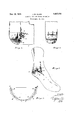
Figure 2 is a side elevational View of the heel portion of my improved stocking.
Figure 3 is a back view.
Figure-4 is a diagrammatic view illustrating the manner of manipulation ofthe neevnarrow width at the back of the heel.
dles on a cylinder knitting Inachine to accomplish the result shown.
In the manufacture of my improved stocking heel, the knitting of the leg of the stock-' ing is carried to the point A on the full complement of needles, and from that point approximately one-half the needles are left out of action and knitting is continued on theremaining half of the needles and one needle is picked up out of action at the end of each course until from thirty-five to forty needles between the points A and B are removed from action, thus progressively narrowing the fabric forming same with the taperededges AB.
From the point B to C from twenty to twenty-five needles are picked up out of action all at once abruptly narrowing the fabric, that is to say, reducing the width of the fabric-in one course by the dropping of a multiplicity of stitches and knitting is continued on the remaining needles across the back of the heel between the points CC on either side of the heel, which forms a ver In continuing the knitting from the point C the needles taken out of action are picked down one at a time, or two down and one up as may be desired, progressively widening the fabric, forming the same with tapered edges CB until the complement of needles between the/points C and B have been returned into action, then the full complement of needles between the points B and A are picked down all at once thereby abruptly widenin the fabric, that is, increasing the width 0 the fabric in one course by a multiplicity of stitches and the longest course is knitted directly to the tapering edges B-A of the first mentioned. progressively narrowed heel portion.
It will be seen that in knitting beyond the point A, the wales'run lengthwise down the leg of the stocking to the diagonal and transverse suture lines AB and BG. The
picking down into, action of the needles from 5 abruptly by an increase in the number of stitches to extend from B to A when the complete half'complement of needles will be in v use. This forms the wales in the insert portion at an angle of approximately 135 to the leg wales.
Immediately all of the half complement of needles used 1n knitting the heel have been returned to action as stated, from A to A, the needles are picked up out of action, preferably one at a time progressively narrowing the fabric for about ten courses between the points A and D forming a gusset with narrowed ends. Then about thlrty-five needles 0 are picked up out of action all at once between the points D and E again abruptly narrowing the fabric, reducing the number of stitches in the fabric by a multiplicity of stitches in one course. All the needles thus removed from action from D to E are then progressively returned into action preferably two at a time at the end of each course progressively widening the fabric and knitting same to the last course of-the gusset ex- 0 tending from E to D. If it be desired to lengthen the sole of the foot, picking down the needles from E to D may be efi'ected one at a time and this will increase the number of courses and lengthen the bottom of the "35 foot. When the needles have been progressively returned to points D from E the remainder of the half complement of needles from D to -'A is returned instantaneously forming an abruptly widened fabric which is 49 knit directly to tapered ends DA of the insert, portion.
The full complement of needles is then in action and the foot portion F is knitted in the usual manner.
It will be noted that the Wales of the por-' tion knitted in from the points E to the -points D are in substantially right angular relation to the wales extending down the leg to the suture formed between the points v 50 A-B C but the wales in the intervening portion of the fabric extend in an intermediate angle, thus giving to the heel structure great elastioit and thereby eliminating the non-yielding eature of the single diagonal suture.
It will be further noted that the angulari of the courses in the portion between the A-B-C and E-D, being midway sutures between the horizontal as in the leg section,
30 and in the vertical, as in the foot section, is
so disposed as to give the greatest fashioning effect to the heel and also the greatest measure of elasticity, and the longitudinal strain of the leg portion in the action of walking will not be pulling dead against a suture forming a dividing line between the vertical and the horizontal, but will pull against the flexible and resilient knitted structure in. between.
A yarn change may be made'wherever desired in the construction of the heel, but it is preferable to make the change in alignment with the points A-D so as to retain the square heel appearance.
As previously described the heel structure set forth is of greater vertical length than horizontal, which is in proper relationship to the natural proportions of the foot.
In the above description the steps of knitting have been described as progressing from the leg ortion but these steps may be reversed i it be desired to first knit the foot portion.
What I claim as my invention is 1. A method of making hosiery, consisting in knitting the leg portion to the commencement of the heel, then narrowing the heel for a predetermined number of needles, then lifting a plurality of needles out of action simultaneously, then widenin the fabric and knitting a gusset along 516 narrowed portion of the heel, then knitting in a widening foot portion to the gusset, and finall continuing the foot in the use of the f l circle of the needles. 1
2. A method of making hosiery consisting in knitting the leg portion to the commencement of the heel, then rogressively narrowing the heel for a pre etermined number of courses, then knitting a shortened course to no the last knit course centrally of its length, then knitting progressively longer courses to said shortenedcourse forming a gusset, then knitting a lengthened course to extend along the tapered side of the narrowed heel portion, thenknitting progressively shorter courses to the last knit lengthened course narrowing the fabric, then widening the fabric, and finally knitting in the full compleno ment of stitches.
3. A method of making hosiery, consisting in knitting the leg portion with the full complement of needles, then, commencing the heel portion on half the complement of me dles and progressively removing needles from action to form a tapering heel section, then simultaneously removing a plurality of needles from action, then progressively returning the needles 'to action that were removed 12o simultaneously, then simultaneously returning the needles to action progressively removed from action in the tapering of the heel, then progressively reducing the number of needles in action tapering the ends, then simultaneously removing a plurality of needles from action, then progressively returning the needles to action simultaneousl removed, then continuing the knitting o the hose with the full complement of needles.
4. A method of making hoisery,'consisting in first knittin the le of the hose with the full comp ement 0 needles, then removing half the complement from action, then gradually removing needles one at a time at the ends of each course for a predetermined number of courses, then simultaneously lifting out of action a dpredetermined number of needles on each si e leaving only a few needles in action, then progressively returning into action the needles simultaneously removed, then simultaneously returning into action the needles gpgressively removed then continuing the tting progressively removing needles from the courses till a predetermined number have been removed from action, then simultaneously lifting out I of action a predetermined number of needles,
then progressively returning into action the needles simultaneously removed from action, and finally returning all the needles into action to knit the foot.
5. A method of making hosiery consisting in knitting the leg portion to the commence ment of the heel, then continuing the knitting with substantially half the complement of needles progressively narrowing the heel for a predetermined number of courses by removing about to needles from action progressively at each end of the courses, then abruptly narrowing the fabric a plurality of wales by simultaneously removing from operation about 20 to 25 needles at each end, then progressively widening the fabric for a number of courses corresponding with the number of wales abruptly narrowed by progressively returning to operation at each end the 20 to 25 needles that were previously removed simultaneously from operation, then abruptly widening the fabric by returning to operation the remaining needles of the half complement on which the heel was started, then progressively narrowing the fabric for approximately ten courses, then abruptly narrowing the fabric a number of wales by removin from operation about 35 needles at each en then progressively widening the fabric to the commencement of the last abruptly narrowed portion by returning at each end said latter 35 needles one or two at a time, then knitting in the full circle fabric with the full complement of needles.
6. An improved hose having the longest course of stitches of a tapered msert portion knitted along the tapere edge of a progressively narrowed heel portion and having the tapered edge of a progressively widened portion knitted directly to the last course of knitting of said progressively narrowed heel portion.
7. An im roved hose havin the longest course of knitting of a tapered insert portion knitted along the tapered edge of a progressively narrowed heel portionand having the tapered edge of a progressively widened porand having progressively widened portions respectively at the front and rear of said insert portion connected directly and respectively with the last course of knitting of said insert portion and said progressively narrowed heel portion.
9. Hosiery having the back of the heel formed with a progressively narrowed portion terminating in an abruptly shortened course of knitting, an insert having progressively widened and abruptly widened portions knitted to the narrowedback, said insert being progressively narrowed presenting tapered ends, and forward sections having a progressively widened portion knitted to the last course of knitting of the insert and abruptly widened portions knitted to the tapered ends of the insert.
10. Hosiery having a portion of the heel progressively narrowed for a number of courses, then abruptly narrowed in one course, a portion progressively widened for a number of courses to connect with the last course of knitting of the progressively narrowed portion, a portion knitted to the last course of said progressively widened. portion and to the tapered edge of the progressively narrowed portion and having one end thereof progressively narrowed, and a progressively widened portion knitted between the last course of the latter portion and the foot of the hose.
JOHN M. ALLEN.
Priority Applications (1)
| Application Number | Priority Date | Filing Date | Title |
|---|---|---|---|
| US448648A US1857775A (en) | 1930-04-30 | 1930-04-30 | Seamless hose and method of making |
Applications Claiming Priority (1)
| Application Number | Priority Date | Filing Date | Title |
|---|---|---|---|
| US448648A US1857775A (en) | 1930-04-30 | 1930-04-30 | Seamless hose and method of making |
Publications (1)
| Publication Number | Publication Date |
|---|---|
| US1857775A true US1857775A (en) | 1932-05-10 |
Family
ID=23781112
Family Applications (1)
| Application Number | Title | Priority Date | Filing Date |
|---|---|---|---|
| US448648A Expired - Lifetime US1857775A (en) | 1930-04-30 | 1930-04-30 | Seamless hose and method of making |
Country Status (1)
| Country | Link |
|---|---|
| US (1) | US1857775A (en) |
Cited By (1)
| Publication number | Priority date | Publication date | Assignee | Title |
|---|---|---|---|---|
| US2444403A (en) * | 1945-09-19 | 1948-06-29 | Vermont Hosiery And Machinery | Hosiery and method of producing same |
-
1930
- 1930-04-30 US US448648A patent/US1857775A/en not_active Expired - Lifetime
Cited By (1)
| Publication number | Priority date | Publication date | Assignee | Title |
|---|---|---|---|---|
| US2444403A (en) * | 1945-09-19 | 1948-06-29 | Vermont Hosiery And Machinery | Hosiery and method of producing same |
Similar Documents
| Publication | Publication Date | Title |
|---|---|---|
| US2144563A (en) | Stocking | |
| US1811786A (en) | Stocking for varicose veins | |
| DE1585117B2 (en) | CIRCULAR KNITTED STOCKING | |
| EP3572570B1 (en) | Compression article | |
| EP1621164A1 (en) | Knitwear for supporting, compressing or applying pressure to a portion of the body | |
| CN109154114A (en) | Round knitted dress article with hole and its manufacturing method | |
| EP2075361A1 (en) | Seamless compression knitwear and method for its production | |
| US2188241A (en) | Self-supporting stocking | |
| US2388649A (en) | Circular knit hosiery and method of making same | |
| GB2569199A (en) | Anti-slip-off sock and knitting method thereof | |
| US2608847A (en) | High-back heel structure for seamless hose and method | |
| US1798804A (en) | Fashioned heel and method of knitting | |
| US2244604A (en) | Stocking | |
| US271338A (en) | Stocking | |
| US1975706A (en) | Hosiery toe | |
| US490241A (en) | Joseph black | |
| US3279220A (en) | Articles of knitted hose | |
| USRE17958E (en) | allen | |
| US2010936A (en) | Stocking and method of manufac | |
| US1872964A (en) | Seamless stocking and method of making the same | |
| US1979360A (en) | Hosiery heel and method of making | |
| US1621343A (en) | Seamless hosiery and method of making same | |
| US1754185A (en) | Hosiery | |
| US1876721A (en) | Stocking and method of knitting the same | |
| US472873A (en) | Henry josiah griswold |