US185654A - Improvement in umbrellas - Google Patents
Improvement in umbrellas Download PDFInfo
- Publication number
- US185654A US185654A US185654DA US185654A US 185654 A US185654 A US 185654A US 185654D A US185654D A US 185654DA US 185654 A US185654 A US 185654A
- Authority
- US
- United States
- Prior art keywords
- rib
- git
- stretcher
- ribs
- wire
- Prior art date
- Legal status (The legal status is an assumption and is not a legal conclusion. Google has not performed a legal analysis and makes no representation as to the accuracy of the status listed.)
- Expired - Lifetime
Links
- 239000007787 solid Substances 0.000 description 10
- 238000007373 indentation Methods 0.000 description 7
- 230000002950 deficient Effects 0.000 description 2
- 238000005728 strengthening Methods 0.000 description 2
- 238000010276 construction Methods 0.000 description 1
- 239000002184 metal Substances 0.000 description 1
- 230000000717 retained effect Effects 0.000 description 1
- 238000007493 shaping process Methods 0.000 description 1
Images
Classifications
-
- A—HUMAN NECESSITIES
- A45—HAND OR TRAVELLING ARTICLES
- A45B—WALKING STICKS; UMBRELLAS; LADIES' OR LIKE FANS
- A45B25/00—Details of umbrellas
- A45B25/02—Umbrella frames
Definitions
- This invention has, first, for its object to improve the means of securing to paragon or trough ribs the git or middle bit, which forms part of the stretcher-joint.
- the git is formed solid, and with two projecting webs to come on the two sides of the rib, and the whole is then compressed in a press to cause part of the metal of the two webs to enter and fill up the indentations in the sides of the ribs.
- the filling-piece of wire may be made longer than the git, to strengthen the rib on each side of the git.
- the strecher end which is to be jointed to the git, I make two-fork, shaping the end of the paragon-wire which is to form the stretcherfork, and inserting within the end either a piece of smaller paragon-wire or solid wire split and shaped to correspond, and I fix the two together by indenting their sides while in the soft state, and then harden and temper the stretcher. Or a strengthening-piece of wire of atrough form may for the same purpose be placed upon the exterior of the stretcher end.
- the joint-pin of the stretcherjoint I pass through the git close up to the rib, and curve the stretcher end so as to enable the stretcher to lie close up to and against the rib when the umbrella is closed.
- the git may be made smaller-that is, less deep, than heretofore-and the tendency of the ribs to lock or catch together when the umbrella is being opened is much reduced.
- top ends of the paragon or trough ribs and the ends of the stretchers which arejointed to the runner I also make two-fork, in the manner previously mentioned with regard to the ends of the stretchers which are jointed to the ribs.
- the top notch and the runner have formed in them two slots for each rib and stretcher, respectively.
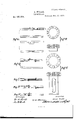
- FIGS. 3, 4,4", and 5 of the drawings annexed show illustrations of gits or middle bits oflixed to paragon or trough ribs in the manner above described.
- Figs. 1 show a portion of a paragon or trough rib where the git or middle bit is to be secured to it.
- a is the rib;
- a are small indentations made in the two opposite sides of the rib at this point.
- a single indentation only may be made on either side of the rib, as shown at Fig. 1".
- Figs. 2 show one of the gits in its rough state. This git is temporarily secured in its place on the rib by pressing the webs of the git inward, and the whole is then compressed together by a pair of tools in a flypress, to scure the git firmly, and at the same time give to it the proper form.
- the git is finished in the same manner as with gits on solid ribs, and has a hole, 0, pierced or drilled through it, as shown at Figs. 3, and, as is well understood, to receive the joint-pin of the stretcher-joint.
- Fig.4 shows a paragon-rib with a git secured to it in the manner above described, and with the filling-piece of wire b extending beyond the git, so as to strengthen the rib on each side of the git.
- Fig. 4" shows a similar rib and git with the filling and strengthening piece b of trough-wire of a similar section to the rib.
- a filling-piece of fine wire is in addition inserted into it at the point where the git is to r be secured.
- Figs. 6 show a two-fork stretcher end to be jointed to the git.
- the end of the stretcher is for this purpose split and shaped as shown, and the ends are strengthened either by a piece of wire correspondingly split at the end, as shown, or by a piece of paragon or trough wire similarly split at the end, as shown at Fig. 7, or by both a piece of split paragon or trough wire and a piece of solid wire, as shown at Fig. 8, or by apiece of paragon or trough wire secured externally to the stretcher end, as shown at Fig. 9.
- the sides of the stretcher are indented, as shown at e 6, while in the soft state, and the stretcher is subsequently hardened and tempered.
- indentations are previously formed in them to allow of the indentations being afterward made in the sides of the stretcher, as above described.
- the stretcher end shown at Figs. 6 the forked arms are shown to be curved, to enable the pin of the stretcherjoint to pass through the git close up to the rib.
- the stretcher ends may be made straight, the rib in this case being prepared to receive the git in the manner shown at Fig. 1", and the hole a being pierced through the git in its ordinary position, as shown at Fig. 3".
- Figs. 5 show the git or middle bit shaped to fit within the stretcher-fork, as hereinbefore described.
- Figs. 10 show a top notch formed, as above described, with two slits for each rib end, all of the rib ends being made twofork, and strengthened either with an internal or external strengthening'piece, as before described with regard to the stretcher ends. This mode of jointing the ribs to the top notch greatly increases the durability and steadiness of the frame, even if the stretchers are jointed to the runner in the ordinary manner.
- Figs. 11 show a runner formed with two slits for each stretcher end, the several stretcher ends being made two-fork and strengthened, as described.
- the trough-shaped rib for umbrellas, 8m constructed as hereinbefore described, with its upper end split, and having a correspondingly-split piece secured thereto by indenting and compressing, whereby the end is strengthened and made two-fork for attachment to the top notch, as set forth.
- the trough-shaped stretcher for umbrellas, 8tc. constructed as hereinbefore described, with one or both of its ends split, and having a correspondingly-split piece secured to its split end by indenting and compressing, whereby the end is strengthened and made two-fork, as set forth.
Landscapes
- Walking Sticks, Umbrellas, And Fans (AREA)
Description
2 Sheets-Sheet 2.
J. WILLIS.
' UMBRELLAS.
No. 185,654, Patented Dec. 26, 1876.
Y J Y J 11 m @210. a I O 1 I II II II Ill Y J rnE GRAPHIC comm.
U ITED STATES PATENT OFFICES} JAMES WILLIS, OF DEEPOAR, NEAR SHEFFIELD, ENGLAND.
IMPROVEMENT IN UMBRELLAS.
Specification forming part of Letters Patent No. 185,654, dated December 26, 1876; application tiled September 12, 1676.
To all whom it may concern Be it known that I, JAMES WILLIS, of Stocksbridge Works, Deepcar, near Sheffield, in the county of York, England, have invented new and useful Improvements in Umbrellas and Sunshades, which improvements are fully set forth in the following specification, reference being had to the accompanying drawings.
This invention has, first, for its object to improve the means of securing to paragon or trough ribs the git or middle bit, which forms part of the stretcher-joint. For this purpose I place in the hollow of the paragon or trough rib, at the point at which the git is to be applied to it, a filling-piece of wire. It may be a wire of a similar section to the rib, or a solid round wire. I then close together the sides of the rib at this point, and at the same time cause indentations to be made in the opposite sides of the rib. The git is formed solid, and with two projecting webs to come on the two sides of the rib, and the whole is then compressed in a press to cause part of the metal of the two webs to enter and fill up the indentations in the sides of the ribs. By these means I am enabled to apply a git to paragon or trough ribs without allowing any portion of the git to project from the rib at the back. In some cases the filling-piece of wire may be made longer than the git, to strengthen the rib on each side of the git. The strecher end, which is to be jointed to the git, I make two-fork, shaping the end of the paragon-wire which is to form the stretcherfork, and inserting within the end either a piece of smaller paragon-wire or solid wire split and shaped to correspond, and I fix the two together by indenting their sides while in the soft state, and then harden and temper the stretcher. Or a strengthening-piece of wire of atrough form may for the same purpose be placed upon the exterior of the stretcher end. The joint-pin of the stretcherjoint I pass through the git close up to the rib, and curve the stretcher end so as to enable the stretcher to lie close up to and against the rib when the umbrella is closed. By this means also the git may be made smaller-that is, less deep, than heretofore-and the tendency of the ribs to lock or catch together when the umbrella is being opened is much reduced. To enable the joint-pin to be brought as near as practicable to the center of the rib, I prefer to form the indentation above mentioned in each side of the ribs wider at its two ends than at its center, so as not to bulge the rib outward where the joint-pin is to lie across it.
In order to prevent, as far as may be, any strain being put upon the forked ends of the stretchers at the time when the umbrella-covor is being folded up, and also to reduce the tendency to droop downward of those ribs which happen to be at the two sides of the stick when the umbrella is being opened 1 in some cases elongate the gits toward the outer or tip ends of the ribs, and also shape the portion of the gits which projects from the ribs to fit within the forks of the stretchers. Elongated gits, shaped as above described, to fit within the forked ends of the StIGtChGiS may also be used with solid ribs. The top ends of the paragon or trough ribs and the ends of the stretchers which arejointed to the runner I also make two-fork, in the manner previously mentioned with regard to the ends of the stretchers which are jointed to the ribs. The top notch and the runner have formed in them two slots for each rib and stretcher, respectively.
This way of jointing trough-stretchers to a runner by means of a strengthened two-fork end is applicable both when the stretchers are of the same section as the ribs, and also when the stretchers are of considerably wider section to allow of the ribs lying within them when the umbrella is closed. By this construction an extremely strong frame is obtained, whereas heretofore when other ribs and stretchers have been made two'fork where they have been jointed to the top notch and runner their ends have been deficient in strength, by reason of the defective manner in which the forked ends have been formed.
Figures 3, 4,4", and 5 of the drawings annexed show illustrations of gits or middle bits oflixed to paragon or trough ribs in the manner above described. Figs. 1 show a portion of a paragon or trough rib where the git or middle bit is to be secured to it. a is the rib;
b,-a shortlength of wirein sorted into the trough or hollow of the rib; This wire is retained by closing over it the sides of the rib, as shown.
(1* a are small indentations made in the two opposite sides of the rib at this point. For cheaper work, and where a shallow joint is not required, a single indentation only may be made on either side of the rib, as shown at Fig. 1". Figs. 2 show one of the gits in its rough state. This git is temporarily secured in its place on the rib by pressing the webs of the git inward, and the whole is then compressed together by a pair of tools in a flypress, to scure the git firmly, and at the same time give to it the proper form. Afterward the git is finished in the same manner as with gits on solid ribs, and has a hole, 0, pierced or drilled through it, as shown at Figs. 3, and, as is well understood, to receive the joint-pin of the stretcher-joint.
By these means I am enabled to apply a solid git to paragon or trough ribs, which cannot possibly become twisted or loosened, and which leaves the back of the rib perfectly smooth.
Fig.4 shows a paragon-rib with a git secured to it in the manner above described, and with the filling-piece of wire b extending beyond the git, so as to strengthen the rib on each side of the git. Fig. 4" shows a similar rib and git with the filling and strengthening piece b of trough-wire of a similar section to the rib. A filling-piece of fine wire is in addition inserted into it at the point where the git is to r be secured. Figs. 6 show a two-fork stretcher end to be jointed to the git. The end of the stretcher is for this purpose split and shaped as shown, and the ends are strengthened either by a piece of wire correspondingly split at the end, as shown, or by a piece of paragon or trough wire similarly split at the end, as shown at Fig. 7, or by both a piece of split paragon or trough wire and a piece of solid wire, as shown at Fig. 8, or by apiece of paragon or trough wire secured externally to the stretcher end, as shown at Fig. 9. To retain these pieces of solid or paragon wire to the end of the stretcher, the sides of the stretcher are indented, as shown at e 6, while in the soft state, and the stretcher is subsequently hardened and tempered. If solid wire filling-pieces are used, indentations are previously formed in them to allow of the indentations being afterward made in the sides of the stretcher, as above described. In the stretcher end shown at Figs. 6 the forked arms are shown to be curved, to enable the pin of the stretcherjoint to pass through the git close up to the rib. For cheaper work, when a shallow joint is not required, the stretcher ends may be made straight, the rib in this case being prepared to receive the git in the manner shown at Fig. 1", and the hole a being pierced through the git in its ordinary position, as shown at Fig. 3".
Figs. 5 show the git or middle bit shaped to fit within the stretcher-fork, as hereinbefore described. Figs. 10 show a top notch formed, as above described, with two slits for each rib end, all of the rib ends being made twofork, and strengthened either with an internal or external strengthening'piece, as before described with regard to the stretcher ends. This mode of jointing the ribs to the top notch greatly increases the durability and steadiness of the frame, even if the stretchers are jointed to the runner in the ordinary manner.
Figs. 11 show a runner formed with two slits for each stretcher end, the several stretcher ends being made two-fork and strengthened, as described.
Having thus described the nature of my in vention, and the manner of performing the same, I would have it understood that i claim- 1. The combination of the paragon or trough shaped rib for umbrellas, &c., the filling-piece or wire secured therein, and the webbed git or middle bit, these members being constructed and secured together by indenting and compressing, substantially as hereinbefore set forth.
2. The trough-shaped rib for umbrellas, 8m, constructed as hereinbefore described, with its upper end split, and having a correspondingly-split piece secured thereto by indenting and compressing, whereby the end is strengthened and made two-fork for attachment to the top notch, as set forth.
3. The trough-shaped stretcher for umbrellas, 8tc., constructed as hereinbefore described, with one or both of its ends split, and having a correspondingly-split piece secured to its split end by indenting and compressing, whereby the end is strengthened and made two-fork, as set forth.
4. The combination of the split ended trough shaped rib or stretcher, the correspondingly-shaped split piece, and the additional strengthening-piece of solid wire, these parts being constructed and united substantially in the manner and for the purposes specified.
5. The combination, in an umbrella-frame, substantially as hereinbefore set forth, of the ribs, the elongated gits or middle bits, and the fork-ended stretchers, within which the elongated gits of the ribs fit when the frame is being closed and opened, whereby strain on the ends of the stretchers is lessened, and the tendency of the ribs to droop is reduced.
6. The combination of the strengthened fork-ended paragon or trough-shaped ribs, the top notch with slits in pairs, in which each rib is jointed, the stretchers forked at both ends, the runners with slits in pairs, in which one forked end of each stretcher is jointed, and the git or middle bit, by which the opposite forked ends of the stretchers are jointed to their respective ribs, these members being constructed and operating substantially as hereinbefore set forth.
JAMES WILLIS.
Witnesses:
WILMER M. Haams, Tnos. BROWN, Both of No. 17 Gracech'wrch St, London.
Publications (1)
| Publication Number | Publication Date |
|---|---|
| US185654A true US185654A (en) | 1876-12-26 |
Family
ID=2255060
Family Applications (1)
| Application Number | Title | Priority Date | Filing Date |
|---|---|---|---|
| US185654D Expired - Lifetime US185654A (en) | Improvement in umbrellas |
Country Status (1)
| Country | Link |
|---|---|
| US (1) | US185654A (en) |
-
0
- US US185654D patent/US185654A/en not_active Expired - Lifetime
Similar Documents
| Publication | Publication Date | Title |
|---|---|---|
| US941952A (en) | Securing notches to sticks of umbrellas and parasols. | |
| US1126293A (en) | Umbrella. | |
| US1397794A (en) | Umbrella | |
| US591446A (en) | Sail-slide | |
| US944000A (en) | Ladder. | |
| US965652A (en) | Umbrella or parasol. | |
| US1156709A (en) | Umbrella and parasol frame. | |
| US619831A (en) | Umbrella-stick | |
| US98887A (en) | Improvement in horse hay-forks | |
| US896308A (en) | Folding umbrella. | |
| US1120092A (en) | Locking attachment for umbrellas and canes. | |
| US725712A (en) | Hinge. | |
| US126365A (en) | Improvement in umbrellas | |
| US317123A (en) | Edwaed p | |
| US962539A (en) | Folding umbrella. | |
| US282231A (en) | Jambs thomas smith | |
| US285702A (en) | John stewart | |
| US180709A (en) | Improvement in ferrules for umbrellas | |
| US819927A (en) | Hair-fastener. | |
| US1779760A (en) | Shovel handle | |
| US106681A (en) | Improvement in umbrellas | |
| US285530A (en) | Combined cane and fan | |
| US429420A (en) | Umbrella or parasol | |
| US235943A (en) | Stantin faeeadesche | |
| US257262A (en) | Henry s |