US1854551A - Delivery mechanism for continuous picklers and the like - Google Patents
Delivery mechanism for continuous picklers and the like Download PDFInfo
- Publication number
- US1854551A US1854551A US361962A US36196229A US1854551A US 1854551 A US1854551 A US 1854551A US 361962 A US361962 A US 361962A US 36196229 A US36196229 A US 36196229A US 1854551 A US1854551 A US 1854551A
- Authority
- US
- United States
- Prior art keywords
- carriers
- sheets
- articles
- delivery mechanism
- sheet
- Prior art date
- Legal status (The legal status is an assumption and is not a legal conclusion. Google has not performed a legal analysis and makes no representation as to the accuracy of the status listed.)
- Expired - Lifetime
Links
- 239000000969 carrier Substances 0.000 description 91
- 230000005484 gravity Effects 0.000 description 10
- 238000005554 pickling Methods 0.000 description 6
- 238000005452 bending Methods 0.000 description 2
- 241000282472 Canis lupus familiaris Species 0.000 description 1
- 238000010276 construction Methods 0.000 description 1
- 238000010924 continuous production Methods 0.000 description 1
- 238000002788 crimping Methods 0.000 description 1
- 239000002184 metal Substances 0.000 description 1
- 238000012986 modification Methods 0.000 description 1
- 230000004048 modification Effects 0.000 description 1
- 238000005096 rolling process Methods 0.000 description 1
- 238000000926 separation method Methods 0.000 description 1
- 210000002105 tongue Anatomy 0.000 description 1
- 238000011282 treatment Methods 0.000 description 1
- XLYOFNOQVPJJNP-UHFFFAOYSA-N water Substances O XLYOFNOQVPJJNP-UHFFFAOYSA-N 0.000 description 1
Images
Classifications
-
- B—PERFORMING OPERATIONS; TRANSPORTING
- B65—CONVEYING; PACKING; STORING; HANDLING THIN OR FILAMENTARY MATERIAL
- B65G—TRANSPORT OR STORAGE DEVICES, e.g. CONVEYORS FOR LOADING OR TIPPING, SHOP CONVEYOR SYSTEMS OR PNEUMATIC TUBE CONVEYORS
- B65G49/00—Conveying systems characterised by their application for specified purposes not otherwise provided for
- B65G49/02—Conveying systems characterised by their application for specified purposes not otherwise provided for for conveying workpieces through baths of liquid
- B65G49/025—Conveying systems characterised by their application for specified purposes not otherwise provided for for conveying workpieces through baths of liquid conveyor feeding and discharging means
Definitions
- Our invention has to do with improved mechanism for taking articles from carriers moving through a continuous path, and in the exemplary embodiment herein to be described, it will be addressed to the provision of a delivery device for continuous picklers of a type such as that described in the copending application of Palmer and Kronborg, Serial No..14l7,311, filed November 9,
- Figure 1 is a perspective and semi-diagrammatic view of a continuous pickling device showing our delivery mechanism in op eration.
- Figure 2 is a side view of a hanger.'
- Figure 3 is a semi-diagrammatic sectional view of a portion of the pic'kler and delivery mechanism of Figure 1.
- our invention we provide means at the delivery end of a conveying device,to tilt the hangers so that the sheets therein will fall forwardly, and means to pull the sheets rapidly out of the hangers and convey them away.
- the pickler or other mechanism for which our invention provides a delivery requires no particular description because it does not form a part of our lnvention excepting ashereinafter described.
- the pickler is of the type 6, preferably flanged, so that the carriers may be moved along tracks.
- the carriers do not form a part of the endless chains, nor are they aflixed thereto.
- the chains merely move the carriers along their tracks as will be more fully explained.
- a metal sheet 7 may be placed in the carriers as shown in Figure 2, and
- the particular pickling mechanism of the figures has both a slow and a rapid endless chain conveyor.
- the hangers or carriers are moved along the track 8 in that portion which lies horizontally above the pickling tank by a slow endless chain conveyor.
- the links of this chain have dogs 9 which engage the ends of p the shafts 5 as shown, and push along the carriers.
- the rods attached to the carriers extend down into the tank and hold the sheets beneath the surface of the pickling solution or water therein.
- the slow chain conveyor leaves the carriers at a point near the end of the horizontal portion of the track 8, and returns around a sprocket 10. 1
- the carriers will be moved through the tank horizontally, and then out of the tank in a slantwise upward direction.
- a deflector plate 12 also slanting upwardly, but at a smaller angle to the ver tical than the track 8.
- the rods will be tilted during further travel of the carriers, until the sheets pass the vertical and fall forward against the deflector plate.
- This may be accomplished by varying the position of the several means either during the horizontal or the slantwise motion of the carriers, or partly during both.
- we have shown a positioning of the deflector plate such that the tilting of the carrier rods starts while the carriers are moving horizontally. It is possible, however, to arrange the parts so that the carriers will be lifted clear of the tank before the rods strike the deflector plate.
- a belt conveyor is provided beyond the deflector plate, comprising a number of endless belts 13a operating over interspaced pulleys li and 14a.
- the deflector plate is cut away in its upper portion to form notches through which the peripheries of the pulleys 14a may extend a. little distance, and leaving tongues 15 between the pulleys.
- the sheet, as it slides along the deflector plate will strike the belts on the pulleys 14a.
- the shaft 16 upon which are mounted the pulleys 14, will be driven, and preferably at such a rate that the pe ripheral speed of the pulleys 14a is about twice the linear speed of the carriers.
- the sheet rises in contact with the belt conveyors where they extend through the deflector plate, it will hear more and more heavily upon them, frequently flexibly bending over them somewhat as shown. hen the bearing of the sheet against the conveyor ends becomes heavy enough.
- the conveyors will grip the sheet, and whip it rapidly out of engagement with the hooks on the carriers, before it has fallen to a horizontal position. 'VVhen ithas thus fallen, it will be carried forward by the conveyor 13, from the end of which it may be caused to fall upon the conveyor 17, which will transport it to a point at which it may be stacked for further processing or shipment.
- a delivery mechanism for conveyors having carriers upon which articles are held by gravity
- the combination of means to move said carriers and means to tilt said carriers whereby the articles held upon said carriers may be caused to fall against said carrier tilt ing means and be moved on said carrier tilting means by said carriers, and means to remove said articles from said tilting means and carriers.
- a delivery mechanism for conveyors having carriers upon which articles are held by gravity
- a delivery device for conveyors having carriers upon which sheets rest by gravity, means for moving'said carriers in a predetermined path, a plate opposing the movement of the lower ends of said carriers whereby said carriers are tilted and the articles held thereby caused to move forwardly against said plate and to be carried along said plate by said carriers, and means for removing said articles from engagement with said carrier.
- a delivery device for conveyors having carriers upon which articles are held by gravity, means to move said carriers through a predetermined path, a plate opposed to the movement of the lower ends of said carriers gravity, means to move said carriers through a predetermined path, a plate opposed to themovement of the lower ends of said carriers whereby said carriers are tilted and said articles are caused to fall forwardly against said plate, and conveying means to carry away said articles as they are moved upwardly over said plate during the continued movement of said carriers, said conveyor means extending beyond said plate and adapted to grasp said articles before they have fallen over the edge of said plate, and disengage them from said carriers at a rate of speed greater than the speed of movement of said carriers.
- a sheet delivery device for conveying means having carriers upon which the sheets are held by gravity, means to move the carriers and a deflector plate opposing'the movement of the lower ends of said carriers wherc by said carriers are tilted and said sheets caused to move upwardly along said deflector plate. the lower ends thereof being still engaged by the locks on said carriers, and conveying means positioned to engage said sheets before they have fallen over the upper end of said deflector plate, said conveyor means moving at a greater rate of speed than said carriers, and adapted to whip said sheets rapidly out of engagement'with said carriers.
- a deflector plate also lying in an upwardly inclined direction. and adapted to oppose the movement of the lower ends of said carriers whereby said carriers are tilted and the sheets caused to fall forwardly against said deflector plate and to be carried along in contact therewith upwardly by the further movement of said carriers, said deflector plate having portions cut away to permit the sheets to contact a conveying mechanism, a conveying mechanism running at a higher rate of speed than the speed of movement of said carriers, said conveying mechanism adapted to engage said sheets before they have fallen over the upper edge of said deflector plate, and whip them rapidly out of engagement with said carriers.
- a delivery means for conveyors having carriers upon which articles are held by gravity, means to move said carriers upward, and means to tilt said carriers while they are being moved upward, whereby the articles are started from the carriers, and upwardly moving means engaging said articles, while the articles are moving upward, to complete the'removal of said articles from said carriers, this last mentioned means having a movement to carry said articles away from said carriers.
- a delivery mechanism for sheet conveyors having upwardly moving carriers, said carriers bearing parts supporting the sheets substantially upright therein by engagement with the lower edges of the sheets, means drawing the sheets upwardly away from said parts while the carriers are moving.
- a delivery mechanism for sheet conveyors having moving carriers, said carriers bearing parts supporting the sheets substantially upright therein by engagement with the lower edges of the sheets, means moving the carriers to tilt the sheets in the general direction of movement so as to overbalance them, and means engaged by the tilted sheets,
- a delivery mechanism for sheet 0011- veyors having moving carriers, said carriers bearing parts supporting the sheets substantially upright therein by engagement with the lower edges of the sheets, means moving in the general direction of movement of said carriers, making frictional contact with the sheets, and by said frictional contact, drawing the sheets away from said parts in said general direction, while the carriers are movin v 1 g KRISTIAN KRONBORG'.
Landscapes
- Sheets, Magazines, And Separation Thereof (AREA)
Description
K. KRONBORG ET AL DELIVERY MECHANISM FOR CONTINUOUS PICKLERS AND THE LIKE Filed May 10, 1929 2 Sheets-Sheet l A TT0RNEY$ April 19, 1932.
. April 19, 1932. K KRONBORG ET AL 1,854,551
DELIVERY MECHANISM FOR CONTINUOUS PICKLERS AND THE LIKE r'lled May 10 1929 2 Sheets-Sheet 2 Kwizd INVENTOR5 By (Tm hm f.
A TTORNEYS Patented Apr. 19, 1932 nits s'rATEs PATENT OFFICE KRISTIAN KRONBOR-G AND CLAYTON C. HURSH, OF MIDDLETOWN, OHIO, ASSIGNORS TO THE AMERICAN ROLLING MILL COMPANY, OF MIDDLETOWN, OHIO, A CORPORATION OF OHIO DELIVERY MECHANISM FOR CONTINUOUS PICKLERS AND THE LIKE Application filed may 10, 1929. Serial No. 361,962.
Our invention has to do with improved mechanism for taking articles from carriers moving through a continuous path, and in the exemplary embodiment herein to be described, it will be addressed to the provision of a delivery device for continuous picklers of a type such as that described in the copending application of Palmer and Kronborg, Serial No..14l7,311, filed November 9,
It is an object of our invention to provide a simplified and inexpensive mechanism for removing sheets from hangers traveling with endless chains.
It is a further object of our invention to provide a delivery mechanism whichis not liable to get out of order, and which is positive and direct in its action.
It is still another object of our invention to provide a delivery mechanism wherein the sheets may be started. from the hangers by gravity, complete separation being efiected by means which disengage the sheet from the hanger without allowing it to be bent or marred.
These and other objects of our invention which will be pointed out hereinafter or will be apparent to one skilled in the art upon reading these specifications, we accomplish by that certain construction and arrangement of parts of which we will now describe a preferred embodiment, reference being had to the drawings which form a part of these specifications.
In the drawings:
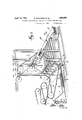
Figure 1 is a perspective and semi-diagrammatic view of a continuous pickling device showing our delivery mechanism in op eration.
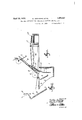
Figure 2 is a side view of a hanger.'
Figure 3 is a semi-diagrammatic sectional view of a portion of the pic'kler and delivery mechanism of Figure 1.
Briefly, in our invention, we provide means at the delivery end of a conveying device,to tilt the hangers so that the sheets therein will fall forwardly, and means to pull the sheets rapidly out of the hangers and convey them away.
The pickler or other mechanism for which our invention provides a delivery requires no particular description because it does not form a part of our lnvention excepting ashereinafter described. In the exemplary embodiment shown, the pickler is of the type 6, preferably flanged, so that the carriers may be moved along tracks. In the embodiment shown, the carriers do not form a part of the endless chains, nor are they aflixed thereto. The chains merely move the carriers along their tracks as will be more fully explained. A metal sheet 7 may be placed in the carriers as shown in Figure 2, and
will lie against the rods 3, the hooks at the ends thereof preventing the falling of the sheet downwardly.
The particular pickling mechanism of the figures has both a slow and a rapid endless chain conveyor.
The hangers or carriers are moved along the track 8 in that portion which lies horizontally above the pickling tank by a slow endless chain conveyor. The links of this chain have dogs 9 which engage the ends of p the shafts 5 as shown, and push along the carriers. The rods attached to the carriers extend down into the tank and hold the sheets beneath the surface of the pickling solution or water therein. The slow chain conveyor leaves the carriers at a point near the end of the horizontal portion of the track 8, and returns around a sprocket 10. 1
At this point a rapid chain conveyor 11,
traveling around a series of sprockets, picks up the carriers and conveys them along the upwardly inclined portion of the track 8, and hence lifts the sheets upwardly out of the solution in the tank.- The delivery of the sheets occurs during this slantwise upward movement of the carriers. After delivery of the sheets, the carriers will, of course, be moved back by the rapid chain conveyor to the starting point of the pickling machine, along tracks not shown, for reloading. This needs no description here.
The carriers, as explained, will be moved through the tank horizontally, and then out of the tank in a slantwise upward direction. We position a deflector plate 12 also slanting upwardly, but at a smaller angle to the ver tical than the track 8. During the movement of the carriers their lower hooked ends will strike the deflector plate, and the rods will be tilted during further travel of the carriers, until the sheets pass the vertical and fall forward against the deflector plate. This may be accomplished by varying the position of the several means either during the horizontal or the slantwise motion of the carriers, or partly during both. In the section of Figure 2, we have shown a positioning of the deflector plate such that the tilting of the carrier rods starts while the carriers are moving horizontally. It is possible, however, to arrange the parts so that the carriers will be lifted clear of the tank before the rods strike the deflector plate.
During the further movement of the carriers, the sheet, still engaged in the hooks at the ends of the rod, will he slid upwardly along the deflector plate. It will be quite clear that, the upward movement of the carrier being continued, the sheetwill fall over the upper end of the deflector plate where it may be conveyed away by any means desired. However, since the sheet is still engaged by the hooks, such a falling away would result in a crimping or bending of the edges of the sheet. To prevent this, we provide means to whip the sheets quickly out of the hooks before they fall over the deflector plate. A belt conveyor is provided beyond the deflector plate, comprising a number of endless belts 13a operating over interspaced pulleys li and 14a. The deflector plate is cut away in its upper portion to form notches through which the peripheries of the pulleys 14a may extend a. little distance, and leaving tongues 15 between the pulleys. The sheet, as it slides along the deflector plate will strike the belts on the pulleys 14a. The shaft 16 upon which are mounted the pulleys 14, will be driven, and preferably at such a rate that the pe ripheral speed of the pulleys 14a is about twice the linear speed of the carriers. As the sheet rises in contact with the belt conveyors where they extend through the deflector plate, it will hear more and more heavily upon them, frequently flexibly bending over them somewhat as shown. hen the bearing of the sheet against the conveyor ends becomes heavy enough. the conveyors will grip the sheet, and whip it rapidly out of engagement with the hooks on the carriers, before it has fallen to a horizontal position. 'VVhen ithas thus fallen, it will be carried forward by the conveyor 13, from the end of which it may be caused to fall upon the conveyor 17, which will transport it to a point at which it may be stacked for further processing or shipment.
Various modifications may be made in the exemplary apparatus described without departing from the spirit of our invention. It will be evident that our invention is i'ieither restricted to the use of sheet carrying means, nor to continuous pickling equipment, but is applicable to a wide variety of continuous processes and treatments, and the conveying of many sorts of articles therethrough.
Having thus described our invention, what we claim as new and desire to secure by Letters Patent, is
1. In a delivery mechanism for conveyors having carriers upon which articles are held by gravity, the combination of means to move said carriers and means to tilt said carriers whereby the articles held upon said carriers may be caused to fall against said carrier tilting means and be moved on said carrier tilting means by said carriers.
2. In a delivery mechanism for conveyors having carriers upon which articles are held by gravity, the combination of means to move said carriers and means to tilt said carriers whereby the articles held upon said carriers may be caused to fall against said carrier tilt ing means and be moved on said carrier tilting means by said carriers, and means to remove said articles from said tilting means and carriers.
3. In a delivery mechanism for conveyors having carriers upon which articles are held by gravity, the combination of means to move said carriers and means to tilt said carriers whereby the articles held upon said carriers may be caused to fall against said carrier tilting means and be moved on said carrier tilting means by said carriers, and means to remove said articles from said tilting means and carriers, said means comprising an element to engage and move said articles at a rate of speed different from the speed of said carriers.
4. In a delivery device for conveyors having carriers upon which sheets rest by gravity, means for moving'said carriers in a predetermined path, a plate opposing the movement of the lower ends of said carriers whereby said carriers are tilted and the articles held thereby caused to move forwardly against said plate and to be carried along said plate by said carriers, and means for removing said articles from engagement with said carrier.
5. In a delivery device for conveyors having carriers upon which articles are held by gravity, means to move said carriers through a predetermined path, a plate opposed to the movement of the lower ends of said carriers gravity, means to move said carriers through a predetermined path, a plate opposed to themovement of the lower ends of said carriers whereby said carriers are tilted and said articles are caused to fall forwardly against said plate, and conveying means to carry away said articles as they are moved upwardly over said plate during the continued movement of said carriers, said conveyor means extending beyond said plate and adapted to grasp said articles before they have fallen over the edge of said plate, and disengage them from said carriers at a rate of speed greater than the speed of movement of said carriers.
7. In a sheet delivery device for conveying means having carriers upon which the sheets are held by gravity, means to move the carriers and a deflector plate opposing'the movement of the lower ends of said carriers wherc by said carriers are tilted and said sheets caused to move upwardly along said deflector plate. the lower ends thereof being still engaged by the locks on said carriers, and conveying means positioned to engage said sheets before they have fallen over the upper end of said deflector plate, said conveyor means moving at a greater rate of speed than said carriers, and adapted to whip said sheets rapidly out of engagement'with said carriers.
8. In a delivery mechanism for conveyor systems having carriers upon which sheets are held by gravity, means to move said carriers first in a horizontal and then in an upwardly inclined path, a deflector plate also lying in an upwardly inclined direction. and adapted to oppose the movement of the lower ends of said carriers whereby said carriers are tilted and the sheets caused to fall forwardly against said deflector plate and to be carried along in contact therewith upwardly by the further movement of said carriers, said deflector plate having portions cut away to permit the sheets to contact a conveying mechanism, a conveying mechanism running at a higher rate of speed than the speed of movement of said carriers, said conveying mechanism adapted to engage said sheets before they have fallen over the upper edge of said deflector plate, and whip them rapidly out of engagement with said carriers.
9. In a delivery means for conveyors having carriers upon which articles are held by gravity, means to move said carriers upward, and means to tilt said carriers while they are being moved upward, whereby the articles are started from the carriers, and upwardly moving means engaging said articles, while the articles are moving upward, to complete the'removal of said articles from said carriers, this last mentioned means having a movement to carry said articles away from said carriers.
10. In a delivery mechanism for sheet conveyors having moving carriers, said carriers bearing parts supporting the sheets substantially upright therein by engagement with.
the lower edges of the sheets, means drawing the sheets away from said parts while the carriers are moving. I
11. In a delivery mechanism for sheet conveyors having moving carriers, said carriers bearingv parts supporting the sheets substan tially upright therein by engagement with the lower edges of the sheets, means drawing the sheets away from said parts in the general,
direction of movement of said carriers, while the carriers are moving.
12. In a delivery mechanism for sheet conveyors having upwardly moving carriers, said carriers bearing parts supporting the sheets substantially upright therein by engagement with the lower edges of the sheets, means drawing the sheets upwardly away from said parts while the carriers are moving.
13. In a delivery mechanism for sheet conveyors having moving carriers, said carriers bearing parts supporting the sheets substantially upright therein by engagement with the lower edges of the sheets, means moving the carriers to tilt the sheets in the general direction of movement so as to overbalance them, and means engaged by the tilted sheets,
drawing the sheets away from said parts in said general direction, while the carriers are movlng.
14. In a delivery mechanism for sheet 0011- veyors having moving carriers, said carriers bearing parts supporting the sheets substantially upright therein by engagement with the lower edges of the sheets, means moving in the general direction of movement of said carriers, making frictional contact with the sheets, and by said frictional contact, drawing the sheets away from said parts in said general direction, while the carriers are movin v 1 g KRISTIAN KRONBORG'.
CLAYTON C. HURSH.
Priority Applications (1)
| Application Number | Priority Date | Filing Date | Title |
|---|---|---|---|
| US361962A US1854551A (en) | 1929-05-10 | 1929-05-10 | Delivery mechanism for continuous picklers and the like |
Applications Claiming Priority (1)
| Application Number | Priority Date | Filing Date | Title |
|---|---|---|---|
| US361962A US1854551A (en) | 1929-05-10 | 1929-05-10 | Delivery mechanism for continuous picklers and the like |
Publications (1)
| Publication Number | Publication Date |
|---|---|
| US1854551A true US1854551A (en) | 1932-04-19 |
Family
ID=23424121
Family Applications (1)
| Application Number | Title | Priority Date | Filing Date |
|---|---|---|---|
| US361962A Expired - Lifetime US1854551A (en) | 1929-05-10 | 1929-05-10 | Delivery mechanism for continuous picklers and the like |
Country Status (1)
| Country | Link |
|---|---|
| US (1) | US1854551A (en) |
Cited By (4)
| Publication number | Priority date | Publication date | Assignee | Title |
|---|---|---|---|---|
| US2639049A (en) * | 1949-10-28 | 1953-05-19 | Anetsberger Bros Inc | Doughnut handling apparatus |
| US2668002A (en) * | 1950-10-30 | 1954-02-02 | Read Standard Corp | Apparatus for removing covers from baking pans |
| US2925052A (en) * | 1953-12-14 | 1960-02-16 | Glass Robert Taylor | Confection machine |
| US2941648A (en) * | 1958-02-19 | 1960-06-21 | Bolidens Gruv Ab | Apparatus for taking up anodes |
-
1929
- 1929-05-10 US US361962A patent/US1854551A/en not_active Expired - Lifetime
Cited By (4)
| Publication number | Priority date | Publication date | Assignee | Title |
|---|---|---|---|---|
| US2639049A (en) * | 1949-10-28 | 1953-05-19 | Anetsberger Bros Inc | Doughnut handling apparatus |
| US2668002A (en) * | 1950-10-30 | 1954-02-02 | Read Standard Corp | Apparatus for removing covers from baking pans |
| US2925052A (en) * | 1953-12-14 | 1960-02-16 | Glass Robert Taylor | Confection machine |
| US2941648A (en) * | 1958-02-19 | 1960-06-21 | Bolidens Gruv Ab | Apparatus for taking up anodes |
Similar Documents
| Publication | Publication Date | Title |
|---|---|---|
| US3068987A (en) | Conveyor system | |
| US2813617A (en) | Article aligning machine | |
| US3268055A (en) | Drying device for the soles of shoes | |
| US1892670A (en) | Apparatus for handling articles | |
| JPH0229567B2 (en) | ||
| US1556438A (en) | Conveying apparatus | |
| US2286250A (en) | Can conveying and elevating apparatus | |
| JPH03106709A (en) | Conveyor for storage | |
| US3447663A (en) | Magnetic elevator for containers | |
| US3506110A (en) | Accumulator | |
| US2919821A (en) | Case stacker | |
| US1920563A (en) | Apparatus for transferring boxes from alpha pile | |
| US1325167A (en) | Automatic gravity-loader for conveyers | |
| US3118531A (en) | Conveyor for selective dispatching of articles | |
| US3152682A (en) | Conveyor for selective dispatching of articles | |
| US1964152A (en) | Egg feeding machine | |
| US3107800A (en) | Apparatus for handling fruit-carrying trays and the fruit | |
| GB323604A (en) | Conveyor and elevator mechanism | |
| US1972488A (en) | Can arranging machine | |
| US4324326A (en) | Discharge assembly for an oven | |
| JPH0585720U (en) | Poly bottle alignment feeder | |
| US668079A (en) | Conveyer. | |
| US2591987A (en) | Endless conveyer having retractable flights | |
| US3414110A (en) | Feeding apples in single file from a bulk supply | |
| US2540181A (en) | Machine for handling glass jars |