US1854514A - ishbia - Google Patents
ishbia Download PDFInfo
- Publication number
- US1854514A US1854514A US1854514DA US1854514A US 1854514 A US1854514 A US 1854514A US 1854514D A US1854514D A US 1854514DA US 1854514 A US1854514 A US 1854514A
- Authority
- US
- United States
- Prior art keywords
- letters
- sign
- shutter
- flag
- vacant
- Prior art date
- Legal status (The legal status is an assumption and is not a legal conclusion. Google has not performed a legal analysis and makes no representation as to the accuracy of the status listed.)
- Expired - Lifetime
Links
- 230000004048 modification Effects 0.000 description 5
- 238000012986 modification Methods 0.000 description 5
- 239000011521 glass Substances 0.000 description 2
- 238000009825 accumulation Methods 0.000 description 1
- 238000010276 construction Methods 0.000 description 1
- 208000018999 crinkle Diseases 0.000 description 1
- 239000004744 fabric Substances 0.000 description 1
- 238000005286 illumination Methods 0.000 description 1
- 239000004922 lacquer Substances 0.000 description 1
- 239000000463 material Substances 0.000 description 1
- 239000003973 paint Substances 0.000 description 1
- 210000001364 upper extremity Anatomy 0.000 description 1
- XLYOFNOQVPJJNP-UHFFFAOYSA-N water Substances O XLYOFNOQVPJJNP-UHFFFAOYSA-N 0.000 description 1
Images
Classifications
-
- G—PHYSICS
- G07—CHECKING-DEVICES
- G07B—TICKET-ISSUING APPARATUS; FARE-REGISTERING APPARATUS; FRANKING APPARATUS
- G07B13/00—Taximeters
- G07B13/02—Details; Accessories
- G07B13/04—Details; Accessories for indicating fare or state of hire
- G07B13/045—Details; Accessories for indicating fare or state of hire with indicating means on the outside of the vehicle
Definitions
- This invention relates to an improvement 18 preferably, though not necessarily, of 001-" in signs adapted particularly for use on taxiored glass.
- cabs so as to indicate whether the same are As shown in Fig; 3, this sign has an opaque occupied or vacant.
- the device includes background indicated at 20-and'a number of means having two sets of transparent letters transparent letters 22. In the embodiment 551v thereon, either set of which can be uncovillustrated,apiece of red colored crinkle glass ered. .F or example, when the cab is vacant, is used and the background is formed by the letters VA O A N T appear luminouspainting in such a way that the-desired let 1y. When the cab is occupied, the letters form transparencies.
- a spring 30 pulls the ing drawings and the features of novelty will shutter to such a position that the-letters spellb'e defined with particularity in the appending the word Vacant are uncovered;
- the shutter is pulled'to the left in Figs; 2 and In thedrawings: 4, the openings 26 expose to view the letters Fig. 1 is a front elevation of a portion of which spell the word Occupied.
- Themove taxicab showing the application of my inment of the shutter is limited by lugs or stops vention thereto; 82 which engage the end 84"of thei casinge Fig.
- FIG. 2 is a front elevation of a device em- The shutter slides through slits 34 formed bodying the invention; in the end walls 36-36 of the casing."
- a flex Fig. 3 is'a detached detail view of the signv ible cable 38 is connected at one end 'ofthe' havingtransparent and opaque portions; shutter and passes through a suitable'flexible Fig. 4 is a detail showing. the construction tubing 40.
- This cable is operatively con- 30 of the shutter adapted touncover selected sets nected with the signal flag 42 of the taximeter 30 of letters; 44, the flag being. pivoted at 461 Interposed Fig.
- the shutter 3 24 will b e shiftedto 10 expose to view the set of letters which indicate that the cab is occupied.
- the sign In daytime, the sign is illuminated by the sun shining on the mirror or reflector 18. The light will be projected through the transparent lettering as will be understood. At nlght, the sign will be illuminated byan electric light 50 as shown.
- the casing will be adjustably mounted on suitable brackets 52 secured to the roof of the cab, these brackets carrying pivot bearings 54.
- a flexible sign indicated as a whole at 56 This in practice is formed of coarsely woven netting which is relatively transparent. Over this is pasted a sheet of opaque material such as paper or cloth indicated at 58. The latter has cut out portions 60 which as indicated are letters spelling the word Vacant. Similar cut-outs 62 at another location spell the word Occupied.
- the upper extremity of the flexible sign 56 is secured to a rotatably mounted roller 64 having a spring 66 normally tending to turn it clockwise, as indicated by the arrow in Fig. 7.
- a light rod 68 is secured to the lower end of the sign 56.
- a cord 38 which is adapted to be connected to the swingable flag signal 42 in substantially the same manner as the cord 88 above referred to.
- a screen 70 Located in juxtaposition to the flexible sign 56, there is a screen 70, the upper portion 72 of which is transparent and the lower portion of which has a covering such as a coat of paint or lacquer, indicated at 74, which makes it opaque.
- a hinged roof or cover 7 6 is provided. This may be swung open during the daytime so that the sunlight will be reflected through the transparent parts of the sign. In bad weather, the cover can be closed. It will also be closed at night when illumination is furnished by the light 50
- the socket for the light is supported by an inverted channel member 7 8 which spaces the same away from the bottom of the casing. This channel member also forms an enclosure for the electric wiring and shields it from any moisture which may enter the casing. To prevent accumulation of rain water, the casing will be provided with drain holes, indicated at 80.
- Fig. 9 illustrates a further modification in which I show a rotatably mounted sign 82 having at least two faces 84 and 86.
- I On the face 84, I provide the letters O C- O U P I E D, on the face 86 the letters V A O A N T are provided.
- the sign 82 for example, may be of rectangular section and the letters painted thereon.
- a spring 88 tends to turn the sign to such a position that the word- Vacant is visible.
- a stop 90 limits the turning movement, this stop coacting, for example, with an arm 92. This arm 92 is connected by means of a cable 94 with the signal flag 42 of the taximeter 44.
- the sign when the flag is swung, from the upright vacant position shown, downwardly to the occupied position, the sign will be turned so that the word Occupied will be visible.
- the lettering need not be transparent.
- the sign will be mounted in a suitable casing 96 with a window therein of suiiicient size to display the lettering.
- Fig. 10 illustrates another modification in which I provide a sign having two semaphore arms 98 and 100 adapted to be alternately exposed to view through a window 102.
- This sign is pivoted at 100 on a suitable fixed support and carries an arm 106 which is connected by means of a flexible member 108 and spring 110 with the signal flag 42 of the taximeter 44.
- l/Vith this arrangement, one arm will have the word Vacant printed thereon as indicated at 98 and will be exposed to View when the taximeter signal flag 42 is in upright position.
- the flag is swung down, a pull will be exerted on the member 108. This will bring the arm 100 carrying the word Occupied into register with the window 102.
- an illuminated device adapted to indicate whether the taxicab is vacant or occupied, said device including a sign having two sets of transparent letters, means for reflecting light through said letters, a shutter for covering and uncovering either set of letters, a spring pulling the shutter in one direction; and a flexible connection including an extensible member connected with said flag signal for moving said shutter in the opposite direction.
- a device adapted to indicate whether the taxicab is vacant or occupied including a movable sign having two sets of letters thereon, motion transmitting means responsive to the movements of said signal for moving the sign so as to alternately expose one set of letters to view, and compensating means connected between the movable signal and said transmitting means adapted to compensate for variations in the stroke of said signal.
- a device adapted for use on a taxicab adapted to show whether it is occupied or vacant including an upwardly and outwardly flaring casing supporting an upwardly and outwardly inclined sign having two sets of transparent letters thereon, an oppositely inclined reflector supported by said casing, the casing being open at the top so as to admit natural light which is adapted to be reflected through said transparent letters, a shutter interposed between the reflector and the sign and mounted for slidable movement relatively thereto, said shutter having interrupted portions adapted to alternately cover and uncover different letters on said sign, a taximeter having a signal flag mounted for movement thereon, means tending to move said shutter in one direction and means for transmitting movement from said signal flag to said shutter in the opposite direction.
- a device adapted for use on a taxicab adapted to show whether it is occupied or vacant including a casing whose walls flare upwardly and outwardly, a sign supported by said casing and inclined upwardly and outwardly and having two sets of transparent letters thereon, a mirror-like reflector supported by said casing, a shutter interposed between the reflector and the sign and mounted for slidable movement relatively thereto, a light between the shutter and said reflector, said shutter having interrupted portions adapted to alternately cover and uncover different sets of said transparent letters, a taximeter having a signal flag mounted for pivotal movement, and means for transmitting movement from said flag to said shutter.
Landscapes
- Physics & Mathematics (AREA)
- General Physics & Mathematics (AREA)
- Illuminated Signs And Luminous Advertising (AREA)
Description
APTii 9, 1932. D. L. :sHBsA 1,854,514
VARIABLE ILLUMINATED SIGN Filed July 8, 1950 s Sheets-Sheet 1 [a] 3m AM] ilk SW April 19, 1932. D. ISHBIA VARIABLE ILLUMINATED SIGN Filed July 8, 1930 3 Sheets-Sheet 2 vwemcoz J (/a'ci Z; 5/: Lab.
April 19, 1932. D. L. ISHBIA 1,354,514
VARIABLE ILLUMINATED SIGN Filed July 8, 1930 3 Sheets-Sheet s INVENTOR Jae 00825. J's/nick,
ML =& [6M
- ATTORNEYS Patented Apr. 19, 1932 r r v UNITED STATES PATENT oFFIi-eE DAVID L. ISH IBIA, OF NEW YORK, N. Y. VARIABLE ILLUMINATED SIGN Application'filedpJ'uly 8, 1930. Serial No. 466,482;
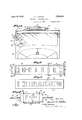
This invention relates to an improvement 18 preferably, though not necessarily, of 001-" in signs adapted particularly for use on taxiored glass. cabs so as to indicate whether the same are As shown in Fig; 3, this sign has an opaque occupied or vacant. The device includes background indicated at 20-and'a number of means having two sets of transparent letters transparent letters 22. In the embodiment 551v thereon, either set of which can be uncovillustrated,apiece of red colored crinkle glass ered. .F or example, when the cab is vacant, is used and the background is formed by the letters VA O A N T appear luminouspainting in such a way that the-desired let 1y. When the cab is occupied, the letters form transparencies. These letters are ters O C G U P If) D appear luminously. arranged in sets. One set of'letters' spell the Means are provided so that the appropriate word Occupied, as indicatedin Fig. 2; The set of letters are uncovered automatically other set of letters spell-the word Vacant; when the driver of the taxicab depresses the In order to selectively uncover either set of usual 'fiag signal forming part of the standletters in the'embodiment of Figs. 1 to 5 in- 5 ard taximeter. The invention will be fully elusive, I providea shutter24 having a num apparent from the following specification ber of cut-away portions 26 and alternate: when read in connection with the accompanycovering portions 28. A spring 30 pulls the ing drawings and the features of novelty will shutter to such a position that the-letters spellb'e defined with particularity in the appending the word Vacant are uncovered; When 0 ed claims. the shutter is pulled'to the left in Figs; 2 and In thedrawings: 4, the openings 26 expose to view the letters Fig. 1 is a front elevation of a portion of which spell the word Occupied. Themove taxicab showing the application of my inment of the shutter is limited by lugs or stops vention thereto; 82 which engage the end 84"of thei casinge Fig. 2 is a front elevation of a device em- The shutter slides through slits 34 formed bodying the invention; in the end walls 36-36 of the casing." A flex Fig. 3 is'a detached detail view of the signv ible cable 38 is connected at one end 'ofthe' havingtransparent and opaque portions; shutter and passes through a suitable'flexible Fig. 4 is a detail showing. the construction tubing 40. This cable is operatively con- 30 of the shutter adapted touncover selected sets nected with the signal flag 42 of the taximeter 30 of letters; 44, the flag being. pivoted at 461 Interposed Fig. 5 is an enlarged section on line 5-5 of between the flag 42 and the -flexible -connee 5 7 tion 38, there is a tension spring 48. As thus 35 E 8 6 a front f o an alterna' arranged, it will be understood that when the twe.embqdlment of the ll m i taximeterflag 42 is swung about its pivot '46, 7 1S a imnsverse Section on Staggered a pull will be exerted on the flexible member i i e 38. This will be sufiicient to shift the'posi Fig. 8 1s a detail view on line 8-8 of tion of the Shutter 24m 40 Flgfl; The'purpose of the spring 48 "is to conijoen- 'Fig. 9 is a view showing a modification; v W
sat-e for dlflerent lengths of strokes of signal aggii 1S a new Showmg another modlfi flags 42. For example, in some mak-esoftaxi- Referringto the drawings, 10 represents a meters the 5 adapted to e? 'j lt f taxicab having mounted on the roof thereof turn and 111 rs 1t makes a shghty greater movement, some meters employing 5 111 im roved device indicated as a whole at r a I g y 12 This device includes a casing,14,whieh g rwhlchfllake almost a 1 6 supports a mirror or reflector 16 preferably Spring 48 W111 of course be strongenthan the disposed at an angle so as to reflect rays of the spring 80 so that whenever flag is turned sun in'the daytime. Opposite the reflector 16 from the upright vacant posltl on to the down 5 andalso inclined at an angle there is a sign position, the shutter 3 24 will b e shiftedto 10 expose to view the set of letters which indicate that the cab is occupied.
In daytime, the sign is illuminated by the sun shining on the mirror or reflector 18. The light will be projected through the transparent lettering as will be understood. At nlght, the sign will be illuminated byan electric light 50 as shown. The casing will be adjustably mounted on suitable brackets 52 secured to the roof of the cab, these brackets carrying pivot bearings 54.
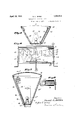
In the embodiment of the invention illustrated in Figs. 1 to 4 inclusive, the sign is fixed and the shutter moves relatively thereto. In the modification shown in Figs. 5 to 8 inclusive, instead of using a movable shutter, I employ a flexible sign indicated as a whole at 56. This in practice is formed of coarsely woven netting which is relatively transparent. Over this is pasted a sheet of opaque material such as paper or cloth indicated at 58. The latter has cut out portions 60 which as indicated are letters spelling the word Vacant. Similar cut-outs 62 at another location spell the word Occupied.
The upper extremity of the flexible sign 56 is secured to a rotatably mounted roller 64 having a spring 66 normally tending to turn it clockwise, as indicated by the arrow in Fig. 7. A light rod 68 is secured to the lower end of the sign 56. Connected to this, there is a cord 38 which is adapted to be connected to the swingable flag signal 42 in substantially the same manner as the cord 88 above referred to. Located in juxtaposition to the flexible sign 56, there is a screen 70, the upper portion 72 of which is transparent and the lower portion of which has a covering such as a coat of paint or lacquer, indicated at 74, which makes it opaque. When the cord 38 is pulled down, the letters O O C U P I E D will be opposite the transparent portion 72 of the screen. When the taximeter flag signal 42 is lifted, the spring 66 will cause the roller to turn clockwise and therefore position the letters V A O A N T opposite the transparent portion 72 of the screen 70. It will be understood that the latter letters, in the position of Figs. 6 and 7, are behind the opaque part 74. The design of these figures is also provided with an electric light 50 and a reflector 16 substantially the same as those shown in Fig. 5.
For protecting the device against the elements, a hinged roof or cover 7 6 is provided. This may be swung open during the daytime so that the sunlight will be reflected through the transparent parts of the sign. In bad weather, the cover can be closed. It will also be closed at night when illumination is furnished by the light 50 The socket for the light is supported by an inverted channel member 7 8 which spaces the same away from the bottom of the casing. This channel member also forms an enclosure for the electric wiring and shields it from any moisture which may enter the casing. To prevent accumulation of rain water, the casing will be provided with drain holes, indicated at 80.
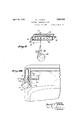
Fig. 9 illustrates a further modification in which I show a rotatably mounted sign 82 having at least two faces 84 and 86. On the face 84, I provide the letters O C- O U P I E D, on the face 86 the letters V A O A N T are provided. The sign 82, for example, may be of rectangular section and the letters painted thereon. A spring 88 tends to turn the sign to such a position that the word- Vacant is visible. A stop 90 limits the turning movement, this stop coacting, for example, with an arm 92. This arm 92 is connected by means of a cable 94 with the signal flag 42 of the taximeter 44. Thus, it will be understood that when the flag is swung, from the upright vacant position shown, downwardly to the occupied position, the sign will be turned so that the word Occupied will be visible. In this embodiment of the invention, the lettering need not be transparent. The sign will be mounted in a suitable casing 96 with a window therein of suiiicient size to display the lettering.
Fig. 10 illustrates another modification in which I provide a sign having two semaphore arms 98 and 100 adapted to be alternately exposed to view through a window 102. This sign is pivoted at 100 on a suitable fixed support and carries an arm 106 which is connected by means of a flexible member 108 and spring 110 with the signal flag 42 of the taximeter 44. l/Vith this arrangement, one arm will have the word Vacant printed thereon as indicated at 98 and will be exposed to View when the taximeter signal flag 42 is in upright position. When the flag is swung down, a pull will be exerted on the member 108. This will bring the arm 100 carrying the word Occupied into register with the window 102.
While the specific embodiments of the invention have been defined with great particularity it is not to be construed that I am limited thereto since various modifications may be made without departing from the invention as defined in the appended claims.
What I claim is: I
1. In combination with a taximeter having a swingable flag signal thereon, an illuminated device adapted to indicate whether the taxicab is vacant or occupied, said device including a sign having two sets of transparent letters, means for reflecting light through said letters, a shutter for covering and uncovering either set of letters, a spring pulling the shutter in one direction; and a flexible connection including an extensible member connected with said flag signal for moving said shutter in the opposite direction.
2. In combination with a taximeter having a movable signal thereon, a device adapted to indicate whether the taxicab is vacant or occupied including a movable sign having two sets of letters thereon, motion transmitting means responsive to the movements of said signal for moving the sign so as to alternately expose one set of letters to view, and compensating means connected between the movable signal and said transmitting means adapted to compensate for variations in the stroke of said signal.
3. A device adapted for use on a taxicab adapted to show whether it is occupied or vacant including an upwardly and outwardly flaring casing supporting an upwardly and outwardly inclined sign having two sets of transparent letters thereon, an oppositely inclined reflector supported by said casing, the casing being open at the top so as to admit natural light which is adapted to be reflected through said transparent letters, a shutter interposed between the reflector and the sign and mounted for slidable movement relatively thereto, said shutter having interrupted portions adapted to alternately cover and uncover different letters on said sign, a taximeter having a signal flag mounted for movement thereon, means tending to move said shutter in one direction and means for transmitting movement from said signal flag to said shutter in the opposite direction.
4. A device adapted for use on a taxicab adapted to show whether it is occupied or vacant, including a casing whose walls flare upwardly and outwardly, a sign supported by said casing and inclined upwardly and outwardly and having two sets of transparent letters thereon, a mirror-like reflector supported by said casing, a shutter interposed between the reflector and the sign and mounted for slidable movement relatively thereto, a light between the shutter and said reflector, said shutter having interrupted portions adapted to alternately cover and uncover different sets of said transparent letters, a taximeter having a signal flag mounted for pivotal movement, and means for transmitting movement from said flag to said shutter.
In witness whereof, I have hereunto signed my name.
DAVID L. ISHBIA.
Publications (1)
| Publication Number | Publication Date |
|---|---|
| US1854514A true US1854514A (en) | 1932-04-19 |
Family
ID=3423674
Family Applications (1)
| Application Number | Title | Priority Date | Filing Date |
|---|---|---|---|
| US1854514D Expired - Lifetime US1854514A (en) | ishbia |
Country Status (1)
| Country | Link |
|---|---|
| US (1) | US1854514A (en) |
Cited By (3)
| Publication number | Priority date | Publication date | Assignee | Title |
|---|---|---|---|---|
| US3102365A (en) * | 1954-08-03 | 1963-09-03 | Lee S Whitesell | Combined sign and shelter |
| US3271568A (en) * | 1963-08-29 | 1966-09-06 | George W Lundberg | Mural apparatus |
| US4953315A (en) * | 1988-12-27 | 1990-09-04 | Romaine Richard A | Display device for vehicles |
-
0
- US US1854514D patent/US1854514A/en not_active Expired - Lifetime
Cited By (3)
| Publication number | Priority date | Publication date | Assignee | Title |
|---|---|---|---|---|
| US3102365A (en) * | 1954-08-03 | 1963-09-03 | Lee S Whitesell | Combined sign and shelter |
| US3271568A (en) * | 1963-08-29 | 1966-09-06 | George W Lundberg | Mural apparatus |
| US4953315A (en) * | 1988-12-27 | 1990-09-04 | Romaine Richard A | Display device for vehicles |
Similar Documents
| Publication | Publication Date | Title |
|---|---|---|
| US3156990A (en) | Time and weather indicator | |
| US1739592A (en) | Sign | |
| US2939108A (en) | Automobile signalling device | |
| US2850717A (en) | Traffic control sign | |
| US2809448A (en) | Illuminated globe | |
| US1842474A (en) | Sign | |
| US1173361A (en) | Publicity device. | |
| US1881995A (en) | Advertising display apparatus | |
| CN208061553U (en) | A kind of Multifunctional street nameplate | |
| US1831532A (en) | Sign | |
| US1885776A (en) | Combined street and traffic sign | |
| US1799709A (en) | E simmons | |
| US649304A (en) | Sign for street-cars. | |
| US1741610A (en) | Automobile tag | |
| US1840213A (en) | Direction indicator | |
| US1831181A (en) | House numbering device | |
| CN213228321U (en) | Waterproof dustproof panel board to spacious covering or awning on a car, boat, etc. sports car | |
| US1556511A (en) | Advertising apparatus | |
| US2823474A (en) | Illuminated sign character | |
| US658761A (en) | Sign for street or other cars. | |
| US2253869A (en) | Changeable exhibitor | |
| US614143A (en) | Colokfo pyffalwtkacing clothcolo | |
| US1959481A (en) | Automobile traffic indicator | |
| US1329751A (en) | Direction-indicator | |
| US1004808A (en) | Illuminated sign. |