US1853520A - Circular knitting machine - Google Patents
Circular knitting machine Download PDFInfo
- Publication number
- US1853520A US1853520A US282361A US28236128A US1853520A US 1853520 A US1853520 A US 1853520A US 282361 A US282361 A US 282361A US 28236128 A US28236128 A US 28236128A US 1853520 A US1853520 A US 1853520A
- Authority
- US
- United States
- Prior art keywords
- clutch
- knitting
- cylinder
- machine
- rotary
- Prior art date
- Legal status (The legal status is an assumption and is not a legal conclusion. Google has not performed a legal analysis and makes no representation as to the accuracy of the status listed.)
- Expired - Lifetime
Links
- 238000009940 knitting Methods 0.000 title description 44
- 230000007246 mechanism Effects 0.000 description 19
- 230000008859 change Effects 0.000 description 5
- 244000221110 common millet Species 0.000 description 2
- 239000004744 fabric Substances 0.000 description 2
- 230000001788 irregular Effects 0.000 description 2
- 241001136792 Alle Species 0.000 description 1
- 241000607479 Yersinia pestis Species 0.000 description 1
- 230000002159 abnormal effect Effects 0.000 description 1
- 230000009471 action Effects 0.000 description 1
- 208000008784 apnea Diseases 0.000 description 1
- 230000008901 benefit Effects 0.000 description 1
- 230000015572 biosynthetic process Effects 0.000 description 1
- 238000010276 construction Methods 0.000 description 1
- 230000004048 modification Effects 0.000 description 1
- 238000012986 modification Methods 0.000 description 1
- 230000002093 peripheral effect Effects 0.000 description 1
- 238000012797 qualification Methods 0.000 description 1
- 230000000979 retarding effect Effects 0.000 description 1
Images



Classifications
-
- D—TEXTILES; PAPER
- D04—BRAIDING; LACE-MAKING; KNITTING; TRIMMINGS; NON-WOVEN FABRICS
- D04B—KNITTING
- D04B15/00—Details of, or auxiliary devices incorporated in, weft knitting machines, restricted to machines of this kind
- D04B15/14—Needle cylinders
- D04B15/16—Driving devices for reciprocatory action
-
- D—TEXTILES; PAPER
- D04—BRAIDING; LACE-MAKING; KNITTING; TRIMMINGS; NON-WOVEN FABRICS
- D04B—KNITTING
- D04B15/00—Details of, or auxiliary devices incorporated in, weft knitting machines, restricted to machines of this kind
- D04B15/94—Driving-gear not otherwise provided for
Definitions
- This "invention relates t circniai hitting machines and more articularly at inaehinfes adepted to knit narrowedend wvi'de'ned pockets on eppo'site side's 'of a seeinles'ssteeking,
- Anoth r object r the invention is to prefdnce a n'izichine 'W'h-i'c'h Will knit stoekings of this type Without musing undue Wear (in the machine.
- Fig. 1 is an elevajtidn from the right side of the well known s w; & Williams typeef revolving needle eylinder hosiery Ina-chine showing the driving mechanism with the frame and gearing partly 'breken aWe'y With one form (if the novel actuating means taken j net after the machine has shifted from r0- taryto re'ci roeatory knitting; H
- Fig.3 is asideelevation'df the'novelcl'utch shifting means of Fig. '2 when the clutch is about tn be shifted'befick to retar'ylmittii g';
- Fig. 4 is asiniilar 'view'ofano'ther modification in which the shift ba'ek tb rotary 'k'nitting is about to be made with thequad'rant at the en d; (if its forward stroke While Fig. 'is'a iew siinila'r'to and showing the meche-Lnisin "0f Fig. 1 'tWojreYOliitibhsof the needle cylinder prior to shifting to the "reciprecatory side.
- the invention wilflbe shownand described embodied in a machine forming the subject matter of the patent to Belief-t W. Scott 1,152;850,-September7,1915.
- the needle cylinder is driven from the in'a'iii drive shaft 32 by a clutch collar 3-3 sphned thereon.
- the clutch cellar causes the shaft 32 to recipro'cate when its'tenon 33d (shown i-i dot ted lines in Fig. 2 engages with the left clutch pinion 35, end egates r'oteify action of the needle 'eylinderW-hen the tendn of the "chitch teller engages with the fate 3-? 6f the righteln teh pin-i0n38.
- This riggihtr(flint-12h pini0n88 is unitary "With a hollow sleeve 3-9 (Fig. 1) on which the drivingpulley (pet shown) is mounted. Meshing directly with the pinion 38 is -a segment; a ggear which can he driven either by the gear 38 or can be nsedt-o 'drii 'e'the -gear38 ifdesi'red'hy means which it is not neeoothr'yhere to deseiiloe but which will *be qui'nd *ful ly ls'e't forth in the above mentidned Scet't Patent 1 1525850.
- revolutions Said in another way, the needle cylinders speed during reciprocaton is half that of its speed during rotation. Advantage is taken of this difference in speed in the pres ent invention. Wherever in this specification revolution is spoken of without qualification, revolution of the needle cylinder is meant.
- This shifting is controlled from the usual pattern chain 85 by mechanism which racks around a clutch shifting drum 90 the latter in turn causing the shifting of the clutch.
- This clutch shifting drum 90 is 10- cated directly beneath the clutch collar 33 92 sliding on a rod '93 on the frame of the machine.
- This clutch fork grips the collar 33 by means of a peripheral groove and is shifted laterally as above mentioned by means of a stud 89 lying in the cam path of the clutch shifting drum.
- the clutch shifting drum 90 is racked around at irregular intervals controlled by the pattern chain 85 by mechanism which will now be described.
- the drum 90 is fast on the shaft on which a sprocket 84 carrying the pattern chain revolves freely and is adjacent to the main rack wheel 81 having teeth out on its circumference at irregular intervals.
- This main rack wheel is also fast on the'shaft 80 and is the ordinarymeans for racking the clutch shifting drum 90.
- the pattern chain is racked around by means of the usual pattern chain rack wheel 86 fast to the sprocket wheel 84 carrying the pattern chain, the pawl 87 carried by the quadrant 75 racking the pattern chain 85 and wheel86 once for every revolution of the gear 60.
- the pawl controlled 83 is so positioned as to hold the main pawl 82 out of engagement with the main rack wheel except when the controller is tipped by a lug on the pattern chain, thus making it possible to cause the main rack wheel 81 to be turned whenever a lug on the pattern chain comes under the finger 830.
- the pattern chain pawl 87 and the main pawl 82 are so mounted on the quadrant 75 that they ordinarily are moving in opposite directions, and the cams on the surface of the clutch shifting drum 90 in the ordinary machine are so located that the clutch collar 33 is shifted from rotary to reciprocatory knitting and vice versa when the quadrant is at the mid-point of its downward or forward stroke (Fig. 3).
- the needle cylinder In order to change the position of the needle cylinder relatively to the rest of the mechanism to permit the knitting of the toe pocket on the opposite side of the tube of fabric from the heel fabric according to this invention the needle cylinder is allowed to drop back half a revolution, with relation to the rest of the machine while the machine is making round and round or rotary knitting, thus insuring that the toe pocket will be knit on the opposite half circle of needles from the heel pocket.
- the mechanism about to be described permits this dropping back at practically any time between the making of the heel pocket and the making of the toe pocket, and again between the making of the toe pocket and the making of the heel pocket, thus avoiding all possibility of interference with, or upiii) setting" the timing of the parts of themechine performing other ftiiiotioiis;
- Ac'eoi'tling' as the present invention the elht'h cellar 33 is shifted during i QtMy'kI'iitti-I ig in order to have the needle oylinde'i conheeted to the re'oipfooetory drivi g for one i'etoltltion of the right.
- the pin 89 hits haw been brought into ehg-hgelheht with a a the suifac'e' (h the clutlis'hiftei emit 90', czttising the clutch ollztf 33' to he shifted w the left into engegeiii'ent with the left or i6 apnea-ting 'cluteh piniofi 35.-
- the rec'iptocating Clfiteh fiinio'ii 3 5 is about to begin turniiig" in the (iireetioiif indicated by the arrow thieoii'iii Fig'.
- end the heedie cylinder is theieby ei ttiseclto cofif tiiiue its movement iii the homey oi fdi ititltt dire'tioii.
- the iiiaX iifii-Iifr speed of the ie'oitiioeitdfy liit-oh is the shine as the maximum speed of the i-etaif 'y clutoh piiiioii 38
- the pinion 38 tains its maximum sp'eed u-iiifoin'ily
- r'e-o'iproetoi-j pinion 35 is coht ii'inally eccel: eiating tiid cleeeleratiiig itit'h met-age speed of hlf of that of the piiiioi i 38 the time the quzidiaiit 75 has cel'hpieted
- the shifting of the clutch from the rotary to the reciprocatory and back again to drop the cylinder back can be carried out during the last revolution of the right clutch pinion 38 prior to the time when reciprocation begins for the making of the heel and toe pocket. If the retarding of the cylinder is done at this time, the shifting of the clutch from rotary to reciprocatory knitting can be accomplished in the manner already described but there is'no need of shifting the clutch back to rotary knitting-the machine is ready to begin reciprocation for the making of the heel or toe pocket. It will be observed in this case that the short cam a on the surface of the clutch shifting drum would not be used. Instead, one long cam is provided to shift the clutch and to permit the main pawl to give the additional rack to the.
- Another form of mechanism to accomplish the dropping back of the cylinder is one which shifts the clutch from rotary to reciprocatory knitting at the point in the cycle of movement of the quadrant where the shift would ordinarily be made, i. e., at the midpoint of the forward stroke, and shifting back again to rotary knitting when the quadrant has completed its forward stroke.
- the shift from rotary to reciprocatory knitting is made by the main pawl 82 racking the clutch drum.
- the lug on the pattern chain 85 which permits the pawl tomake its rack is so high that it brings the pawl into engagement, with the main rack wheel 81 shortly after the pawl begins to move forward.
- a circular knitting machine having a revolving needle cylinder, a pattern chain controlling said machine and a clutch normally controlled by said chain and always connected to said cylinder adapted to cause reciprocatory or rotary knitting by said cylinder at respectively different speeds in combination with means so constructedand ar ranged with relation to said chain and clutch as to cause said clutch to lose half a revolution relatively to the pattern chain during rotary knitting.
- a circular knitting machine having a pattern chain, a knitting head, a rotating cylinder in the knitting head, and a clutch adapted to positively drive said cylinder with reciprocatory or rotary movement at all times, in combination with means so constrncted and arranged with relation to said chain and clutch as to vary the time of shifting of the clutch relatively to the pattern chain to cause said needle cylinder to lose half a revolution, between the knitting of the heel and of the toe.
- a circular knitting machine having a pattern chain, a knitting head, and a rotating element in the knitting head, in combination with mechanism adapted to cause reciprocatory movement of said rotating element, other mechanism adapted to cause rotary movement thereof at a difierentaverage circumferential speed from that for reciprocation, a clutch driven by one or the other of said mechanisms adapted to change said machine from rotary to reciprocatory knitting and vice versa and means controlled from the pattern chain adapted to cause the re volving knitting elements to be driven by the reciprocatory mechanism an extra revolution of the rotary mechanism in a rotary direction, while the machine is otherwise adjusted for rotary knitting 4:.
- a circular knitting machine having a pattern chain, a rotating needle cylinder, normally controlled by said chain, mechanism adapted to cause reciprocatory movement thereof and other mechanism adapted to cause rotary movement thereof at a higher average circumferential speed from that for reciprocation, in combination with a clutch adapted to shift said machine from rotary to reciprocatory knitting and vice versa in such manner as to drive said cylinder positively at all times and auxiliary means so constructed and arranged with relation to said clutch lating quadrant to reciprocate said clutch at a different average speed from the rotary drive means, in combination with means so constructed and arranged with said clutch as to shift the clutch to and from engagement with the quadrant during a movement of the I latter in one direction to alter the relation of the cylinder to the rotary drive means.
- a circular knitting machine having a revolving needle cylinder, a clutch to drive said cylinder, means to drive the clutch for and chain as to cause said cylinder to lose half a revolution relatively to the pattern chain by an abnormal shift of the clutch to the reciprocatory mechanism.
- a circular knitting machine having revolving pattern means, a knitting head, a rotating cylinder in said head, a clutch to drive said cylinder and whose time of shift is normally controlled by said pattern means, said clutch being shifted from one position to another to change the cylinder from reciprocation to rotation and vice versa means to drive said clutch for reciprocation of said cylinder and means to drive said clutch for rotation of said cylinder at a different speed, in combination with means so arranged with the pattern means as to cause the clutch to be driven by the reciprocatory means to retard the cylinder from normal relation with the head.
- a circular knitting machine having a rotary cylinder, a clutch to drive said cylinder, said clutch being shifted from one position to another to change the cylinder from reciprocation to rotation and vice'versa ro tary means to drive said clutch and an oscil-
Landscapes
- Engineering & Computer Science (AREA)
- Textile Engineering (AREA)
- Knitting Machines (AREA)
Description
April 12, 1932. A. 5. PAGE 1,853,520
CIRCULAR KNITTING MACHINE Filed June 2, 1928 5 Sheets-Sheet l I ALBERT E. PAGE April 12, 1932. A. E. PAGE 1,853,520
CIRCULAR KNITTING MACHINE Filed June 2, 1928 5 Sheets-Sheet 2 T5. -2- INVENTOR j ALBERT E. PAGE M'MM April 12,. 1932. A. E. PAGE 1,853,520
CIRCULAR KNITTING MACHINE Filed June 2, 1928 5 Sheets-Sheet 3 WIN liii M Ti .51. INVENTOR j ALBERT E. PAGE Zyz's aiiarzzgs April 12, 1932.
A. E. PAGE 1,853,520
CIRCULAR KNITTING MACHINE Filed June 2, 1928 5 Sheets-Sheet 4 ALBERT 5. PAGE April 12, 1932. A. E. PAGE 1,853,520
CIRCULAR KNITTING MACHINE Filed June 2, 1928 5 Sheets-Sheet 5 TELQ.E. INVENTOR ALBERT E. PAGE 29 223 4 iiorizqys Patented Apr. 12, 1932 umree STATES ewes? ee -F1 meme on BRGOKLYN, New YORK, AssIeNe'R see'r re WILLIAMS, 12tmeme-men, OF NEW YORK, Y., A CQRE'ORATION OE AssACkUsETTs omen-Leia KNITTING ie-eomnn Application fi led :Tnn-e 2,
This "invention relates t circniai hitting machines and more articularly at inaehinfes adepted to knit narrowedend wvi'de'ned pockets on eppo'site side's 'of a seeinles'ssteeking,
M chines adapted to make 's'eainlessfstoekings in which "the lqo ped eenise's of the toe comes on the under side of the stocking have been known for a great man years and itis one object of the present 'i'njve'ntidn to make an iin'p'reve d and simple 'i'n aehine which knits such a stoeking 'With the least possible disturbanee to the other f 'fietions Of the machine. Anoth r object r the invention is to prefdnce a n'izichine 'W'h-i'c'h Will knit stoekings of this type Without musing undue Wear (in the machine.
In ina'c'h'iiies 'inade aecefding to the present inventiqn the needle 'fc linder is allowed to drop back half-a revolution between the heel and'toe, half -a revoltition between the tee and heel by "a 'novel manipulation of the clutch which shifts the machine between reciprpcatory and rotary knitting.
In the drawings:
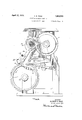
Fig. 1 is an elevajtidn from the right side of the well known s w; & Williams typeef revolving needle eylinder hosiery Ina-chine showing the driving mechanism with the frame and gearing partly 'breken aWe'y With one form (if the novel actuating means taken j net after the machine has shifted from r0- taryto re'ci roeatory knitting; H
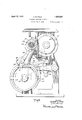
F '2 'is affrdiit elevation o'f pert "O'f aslightly modified form of actu'ating Ine'ans tak en'at the same moment as Fig. 1,'sh0wing the position of the pattern ehain, clutch,'and clutch shifting d'run'i; I
Fig.3 is asideelevation'df the'novelcl'utch shifting means of Fig. '2 when the clutch is about tn be shifted'befick to retar'ylmittii g';
Fig. 4 is asiniilar 'view'ofano'ther modification in which the shift ba'ek tb rotary 'k'nitting is about to be made with thequad'rant at the en d; (if its forward stroke While Fig. 'is'a iew siinila'r'to and showing the meche-Lnisin "0f Fig. 1 'tWojreYOliitibhsof the needle cylinder prior to shifting to the "reciprecatory side. A
In machines heretofdre kno'wn for knitting seamless heel and toe lpeckets on opposite 1928. Serial no. 2823621.
sides 0;. the stocking it has been neee'ssefy to break the connection between the ehiteh and a driving means on "the one hand andfthe needle cylinder o'nthe other ferd'er to ail-loin the needle cylinder to stand still in erde'r to vary its position relatively to the rest fof the machine. According to the pr-es'ent invention it is not necessary to hange the connee'tien between the driving means and the needleeylinder in anyway to put the "toe pockets on opp'ositefs'ides of the tube, the relation of the needle cylinder to the rest (if the machine being altered by special manipulation Gi -the ordinary elu't'eh.
The invention wilflbe shownand described embodied in a machine forming the subject matter of the patent to Belief-t W. Scott 1,152;850,-September7,1915. Inthis machine the needle cylinder is driven from the in'a'iii drive shaft 32 by a clutch collar 3-3 sphned thereon. The clutch cellar causes the shaft 32 to recipro'cate when its'tenon 33d (shown i-i dot ted lines in Fig. 2 engages with the left clutch pinion 35, end egeuses r'oteify action of the needle 'eylinderW-hen the tendn of the "chitch teller engages with the fate 3-? 6f the righteln teh pin-i0n38. This riggihtr(flint-12h pini0n88 is unitary "With a hollow sleeve 3-9 (Fig. 1) on which the drivingpulley (pet shown) is mounted. Meshing directly with the pinion 38 is -a segment; a ggear which can he driven either by the gear 38 or can be nsedt-o 'drii 'e'the -gear38 ifdesi'red'hy means which it is not neeessair'yhere to deseiiloe but which will *be feu'nd *ful ly ls'e't forth in the above mentidned Scet't Patent 1 1525850. These "rneens include a so-e'alle'd plate gear revolving "in unisen with the gear 60 and Carried jnstentsi'de "tlie frame of the machine on the shine shaft with the gtaarfiQFigQQ.
The segment eriving gea'r GO serifestO reeiproe'zite the left 1 elnteh pinion 35 by means eta pi'tinan 70, transmitting an es'cilleit-ory movement to the nsi al'quadrant er settir' ifi meshing with the left "e'liitch piiiio'iTBB. By Virtue o'f the conne'c'tion between-pinions 35 and 38'it Will be Qbservedthaethe-speed-ef the right Clutch ipinien is 'alivays the same relativelytq the "average speed of the le it clutch pinion, and in the machine shown in the drawings the gears are so cut that the right clutch pinion 38 will make four revolutions while the quadrant is completing one cycle of movement, i. e., one complete reciprocation. It therefore follows that the left clutch pinion will be making one complete reciprocation during four revolutions of the right clutch pinion 38. In the ordinary Scott & lVilliams machines the main shaft 32 revolves once for every revolution of the needle cylinder and thereforethe needlecylinder makes one revolution for every revolution of the pinion 38 during rotary knitting. hen the machine is'reciprocating, however, the needle cylinder makes one revolution in each direction, i. e., a total of two revolutions while the right clutch pinion is making four.
revolutions. Said in another way, the needle cylinders speed during reciprocaton is half that of its speed during rotation. Advantage is taken of this difference in speed in the pres ent invention. Wherever in this specification revolution is spoken of without qualification, revolution of the needle cylinder is meant.
The mechanism for shifting or changing the clutch collar 33 from rotary to reciprocating knitting and vice versa will now be de scribed. This shifting is controlled from the usual pattern chain 85 by mechanism which racks around a clutch shifting drum 90 the latter in turn causing the shifting of the clutch. This clutch shifting drum 90 is 10- cated directly beneath the clutch collar 33 92 sliding on a rod '93 on the frame of the machine. This clutch fork grips the collar 33 by means of a peripheral groove and is shifted laterally as above mentioned by means of a stud 89 lying in the cam path of the clutch shifting drum.
The clutch shifting drum 90 is racked around at irregular intervals controlled by the pattern chain 85 by mechanism which will now be described. The drum 90 is fast on the shaft on which a sprocket 84 carrying the pattern chain revolves freely and is adjacent to the main rack wheel 81 having teeth out on its circumference at irregular intervals. This main rack wheel is also fast on the'shaft 80 and is the ordinarymeans for racking the clutch shifting drum 90. The pattern chain is racked around by means of the usual pattern chain rack wheel 86 fast to the sprocket wheel 84 carrying the pattern chain, the pawl 87 carried by the quadrant 75 racking the pattern chain 85 and wheel86 once for every revolution of the gear 60. The indications given by the lugs on the pattern chain are transmitted as usual through a finger 830 to a pawl controller 83 pivoted on the fixed shaft 93. (Fig. 2.) This standard construction is fully set forth and described in the patent to Robert W. Scott, 1,152,180, where a description of the main pawl 82 and the rack wheel 81 is also to be found. This controller underlies the main pawl 82 which is carried by the quadrant 7 5 and is adapted to engage the teeth of the main rack wheel 81. The pawl controlled 83 is so positioned as to hold the main pawl 82 out of engagement with the main rack wheel except when the controller is tipped by a lug on the pattern chain, thus making it possible to cause the main rack wheel 81 to be turned whenever a lug on the pattern chain comes under the finger 830. The pattern chain pawl 87 and the main pawl 82 are so mounted on the quadrant 75 that they ordinarily are moving in opposite directions, and the cams on the surface of the clutch shifting drum 90 in the ordinary machine are so located that the clutch collar 33 is shifted from rotary to reciprocatory knitting and vice versa when the quadrant is at the mid-point of its downward or forward stroke (Fig. 3). At this moment the pinions 35 and 38 are revolving in the same direction as indicated by the arrow in Fig. 3 and the notches in the right and left clutch pinions 38 and 35 which are'adapted to receive the tenon 331 on the clutch collar 33 are opposite the tenon and the shift is therefore easily made.
In order to change the position of the needle cylinder relatively to the rest of the mechanism to permit the knitting of the toe pocket on the opposite side of the tube of fabric from the heel fabric according to this invention the needle cylinder is allowed to drop back half a revolution, with relation to the rest of the machine while the machine is making round and round or rotary knitting, thus insuring that the toe pocket will be knit on the opposite half circle of needles from the heel pocket. It has been discovered that it is possible, by manipulation of the clutch during rotary knitting, to permit the cylinder to thus lose half a revolution relatively to the pattern chain without disturbing the timing of any of the other functions of the machine including the changes necessary to the making of the heel and toe pockets and that mech anism for dropping the cylinder back another half a revolution, after the toe has been made. can also be provided without in any way disturbing the other functions of themachine. This dropping back is accomplished without allowing the driving means to revolve while the cylinder stands stillthe drive is positive at all times and the clutch goes directly from one operative connection to the other. It will be noted that the mechanism about to be described permits this dropping back at practically any time between the making of the heel pocket and the making of the toe pocket, and again between the making of the toe pocket and the making of the heel pocket, thus avoiding all possibility of interference with, or upiii) setting" the timing of the parts of themechine performing other ftiiiotioiis; Ac'eoi'tling' as the present invention the elht'h cellar 33 is shifted during i QtMy'kI'iitti-I ig in order to have the needle oylinde'i conheeted to the re'oipfooetory drivi g for one i'etoltltion of the right. driving pinion 38 when the reciproczttofy driving means are nothing in the saihe direction as the rotary means.- This is ac'coniplished by putting the clutch coll'ai' 33iiito engegemeht itith the left clutch pinion 35 diilfih'g half of the down or' forward motenieiit of the quadrant T5.- Y It has been found that engagement eise gegehm t between the chit-ch 6011211 33 and the left clutch pinion 35 chfi be ace-omplished at the beginning, middle or ehd of the fhrward i.- e.- clown movement of the quztc h'zi'nt (it an ext-ta notch is proviled on the chit-ch face 87 the metrically opposite to the regiilei notch fo't' i-ee'eiving' the tenon 331.} The desired shift to feciproczttory knitting can he at either the beginnin 01'" find-point of the fdfw'a'irl uadrant stioke end the desired return to rotary knitting at mid-point or end of the forward quadrantstroke.
I shall first desctihe the nie'hehisih foi causing the shifting of the clutch from tota-ry to reciprocating knitting when the quadtant is in its uppe-iniost position ready to commence its ,dowriward or forward stroke. This auxiliary iheans foi shifting the nmih rack Wheel 81 end the oil-iii contra 90 slightly sooner than usual involves an auxiliary hookpatvl 116 controlled. by earn 119 on e plate giving the shaft a' shot-t iaek sufioient to shift the Clutch shifter fork 92 into engageinent with the gea' i' 35" but not enough to compete the and cause the other changes necessary to shift fiom rote-i'y to" recipiroe'zitofy knitting of Vice verse, as the case may be. the shift is mecle- Without affecting the pattern chain as fall as concerns the rest of the machine.- This rack of the main rackwheel, early in point of time, is caused by the" hook pawl 116 ehg'agihg one of two cains- 11? mounted on the circumference of the belt shittef chum 102, the pawl 116 being mounted on and obtaining its movement through hell drank lever 118 one of Whose arms lies inthe path of the mm 119 on the plate gear 65, this belt shifter drum being test on the attern chain shaft 80 like the rack Wheel 81 the drum 90. It will be obt ious that when ver the rach ofthe' main r'ac'k Wheel 81 has brought one of the belt shiften drul'n chins 117 within teach of the pawl 1 16,; the engagement of the ezirh 119 With the bell eta-ilk lever 118' will give the cani drinn the necessary short reek; Ohe of the beltshifter druin cams is for the droping back of the cyl ii'idei' btwee'ii the heel and toe; and the othet for the dropping hack between the toe a IKI h''l; The pztw'l 116 is held in contact with the surface of the belt shifter dri-iin by Ihe'afis of htehsion spi'ing 1166; in order' to bring the dam 117 on the belt 3s bet-Dee the quad'r'ijit is at the middle of its downwml 'stioke; The position of; the 'p'ii-rts just attei" this rack is giten is shown in Fig. 5; TWO ietolutiolis alfti this iii'C'li his bel'i given,- niinely Whe'ii the quatti'ent is iii its topmost positiiij; the ani 1-19 oh the plttte gear 65tLi1sS the j'iettl 116 to feel: theb'elt shifter drum 102 ahcl the clutch shifting diam 90 which brings the piilts to the pest tiohshown in Fig; 1-. The pin 89 hits haw been brought into ehg-hgelheht with a a the suifac'e' (h the clutlis'hiftei emit 90', czttising the clutch ollztf 33' to he shifted w the left into engegeiii'ent with the left or i6 apnea-ting 'cluteh piniofi 35.- When this shift is made the rec'iptocating Clfiteh fiinio'ii 3 5 is about to begin turniiig" in the (iireetioiif indicated by the arrow thieoii'iii Fig'. 1, end the heedie cylinder is theieby ei ttiseclto cofif tiiiue its movement iii the homey oi fdi ititltt dire'tioii. However, While the iiiaX iifii-Iifr speed of the ie'oitiioeitdfy liit-oh is the shine as the maximum speed of the i-etaif 'y clutoh piiiioii 38, the pinion 38 tains its maximum sp'eed u-iiifoin'ily While r'e-o'iproetoi-j pinion 35 is coht ii'inally eccel: eiating tiid cleeeleratiiig itit'h met-age speed of hlf of that of the piiiioi i 38 the time the quzidiaiit 75 has cel'hpieted hgilt its dowfi'werd stroke and is, in the p'o'sitioxi sho tiv'n iii Fig; 3, the right clilitc'h pifiio'i'i 38 will have Completed one fev'oiutioii, but the leftc'lutoh pifiion 35 win have inzt-Cle hhly half a revolution, thus brihgihg the teiion 3316f the clutch c'olhii" ifiieg'istei" with the extra notch inthe face 37 of the pinion 88; This extranotoh is eitcuihfefentiau the regulef hatch The c'l-utch Caner 33 zihd tlie-tefoie the needle e j lihder' would have made a complete revolution in the oidii'iziii'y machine if engaged with the 'rote'fy' elutch pinion 38 but having been en aged with the reciprdcatory clutch pinion 35 it had fnad only hilf a ievoiution en'ct thetefofe the hee esshty i eta'rdetion of the needle cylinder reletiveiy to the restof the machine has been ao'col'nplished.
It the lhh hhie i notieedy' to go into the making of the heel or toe at this point the clutch oolltr can be shifted hack into efigztg ille'nt with the rotary clutch pinion 38th rotary knittifig. This shift ga n be eeeol'nplis'hecl by means of the ma'in pawl 82' as shown in Fig. 3, the pawlrac'king' the main reck Wheel 81 around until the pit! S9 in the: clutch fork 92 has passed 011' the ca 'n' a which has been holding the fork to the left.
The return of the" fork to the right 6311' be its accomplished either by a cam b (Fig. 1) on the surface of the drum or by a tension sprlng 108 located between the frame of the ma chine and the clutch fork 92 in such manner as to snap the clutch fork back to the rotary side as soon as the pin 89 passes the cam a (Figs. Zand 3.)
The shifting of the clutch from the rotary to the reciprocatory and back again to drop the cylinder back, can be carried out during the last revolution of the right clutch pinion 38 prior to the time when reciprocation begins for the making of the heel and toe pocket. If the retarding of the cylinder is done at this time, the shifting of the clutch from rotary to reciprocatory knitting can be accomplished in the manner already described but there is'no need of shifting the clutch back to rotary knitting-the machine is ready to begin reciprocation for the making of the heel or toe pocket. It will be observed in this case that the short cam a on the surface of the clutch shifting drum would not be used. Instead, one long cam is provided to shift the clutch and to permit the main pawl to give the additional rack to the. main rack wheel which will cause all the needle cam and yarn changes necessary to commence reciprocatory knitting and to knit the pocket. It will be observed that by the mechanism which has been described, there is no jerking forward of the needle cylinder by power driven means when the needle cylinder is standing still. The engagement of the clutch parts is positive and certain at all times and cannot possibly get out of time. It will also be observed thatwhen the change is made just prior to going into the heel or toe, the only shifting of the clutch required is the one which would be required even in the ordinary machine.
The necessary manipulation of the needles for the formation of the heel and toe pockets on the opposite sides can be obtained by the use of mechanism such as shown and described in my Patent No. 1,853,519, dated April 12, 1932.
Another form of mechanism to accomplish the dropping back of the cylinder is one which shifts the clutch from rotary to reciprocatory knitting at the point in the cycle of movement of the quadrant where the shift would ordinarily be made, i. e., at the midpoint of the forward stroke, and shifting back again to rotary knitting when the quadrant has completed its forward stroke. In this case the shift from rotary to reciprocatory knitting is made by the main pawl 82 racking the clutch drum. The lug on the pattern chain 85 which permits the pawl tomake its rack is so high that it brings the pawl into engagement, with the main rack wheel 81 shortly after the pawl begins to move forward. There is a notch on the main rack w'heel 81 so located, that the pawl comes into engagement with it as soon as the pawl touches the rack wheel and the racking movement therefore is a long one. When the quadrant has reached its mid-point and the pawl has turned the clutch shifting drum far enough to shift the clutch to the left for reciprocation, theparts will be in the position shown in Fig. 3. As the quadrantcontinues its downward movement the pawl continues to turn the main clutch drum and when the quadrant has reached its lowermost point, as shown in, Fig. 4, the auxiliary pawl 116 under the influence of 'the cam 119 will rack the clutch shifting drum around and thethe tenon 331 will be opposite one of the notches in the face 37 of the rotary pinion 38, and the spring will shove the clutch collar home.
In the copending ap lication of Albert E. Page and F rank R. age Serial Number 246,243 filed June 2, 1928, there are claims directed broadly to varying the angular relation of the cylinder and clutch jaw.
It will be obvious that any manipulations of the clutch which have been described can be used between the toe and heel as well as between the heel and the toe and that in this way stockings can be successfully knit with heel and toe pockets on opposite sides of the tube. It will also be obvious that only the minimum number of extra parts are required and these parts are not located directly in the driving means and are quite simple to attach to the ordinary machines Furthermore, as already pointed out, it is possible, by the mechanism described, to arrange the manipulationsin a manner to avoid any intereference with the timing of the rest of the machine.
What I claim is:
1. A circular knitting machine having a revolving needle cylinder, a pattern chain controlling said machine and a clutch normally controlled by said chain and always connected to said cylinder adapted to cause reciprocatory or rotary knitting by said cylinder at respectively different speeds in combination with means so constructedand ar ranged with relation to said chain and clutch as to cause said clutch to lose half a revolution relatively to the pattern chain during rotary knitting.
2. A circular knitting machine having a pattern chain, a knitting head, a rotating cylinder in the knitting head, and a clutch adapted to positively drive said cylinder with reciprocatory or rotary movement at all times, in combination with means so constrncted and arranged with relation to said chain and clutch as to vary the time of shifting of the clutch relatively to the pattern chain to cause said needle cylinder to lose half a revolution, between the knitting of the heel and of the toe.
3. A circular knitting machine having a pattern chain, a knitting head, and a rotating element in the knitting head, in combination with mechanism adapted to cause reciprocatory movement of said rotating element, other mechanism adapted to cause rotary movement thereof at a difierentaverage circumferential speed from that for reciprocation, a clutch driven by one or the other of said mechanisms adapted to change said machine from rotary to reciprocatory knitting and vice versa and means controlled from the pattern chain adapted to cause the re volving knitting elements to be driven by the reciprocatory mechanism an extra revolution of the rotary mechanism in a rotary direction, while the machine is otherwise adjusted for rotary knitting 4:. A circular knitting machine having a pattern chain, a rotating needle cylinder, normally controlled by said chain, mechanism adapted to cause reciprocatory movement thereof and other mechanism adapted to cause rotary movement thereof at a higher average circumferential speed from that for reciprocation, in combination with a clutch adapted to shift said machine from rotary to reciprocatory knitting and vice versa in such manner as to drive said cylinder positively at all times and auxiliary means so constructed and arranged with relation to said clutch lating quadrant to reciprocate said clutch at a different average speed from the rotary drive means, in combination with means so constructed and arranged with said clutch as to shift the clutch to and from engagement with the quadrant during a movement of the I latter in one direction to alter the relation of the cylinder to the rotary drive means.
7. A circular knitting machine having a revolving needle cylinder, a clutch to drive said cylinder, means to drive the clutch for and chain as to cause said cylinder to lose half a revolution relatively to the pattern chain by an abnormal shift of the clutch to the reciprocatory mechanism.
5. A circular knitting machine having revolving pattern means, a knitting head, a rotating cylinder in said head, a clutch to drive said cylinder and whose time of shift is normally controlled by said pattern means, said clutch being shifted from one position to another to change the cylinder from reciprocation to rotation and vice versa means to drive said clutch for reciprocation of said cylinder and means to drive said clutch for rotation of said cylinder at a different speed, in combination with means so arranged with the pattern means as to cause the clutch to be driven by the reciprocatory means to retard the cylinder from normal relation with the head.
6. A circular knitting machine having a rotary cylinder, a clutch to drive said cylinder, said clutch being shifted from one position to another to change the cylinder from reciprocation to rotation and vice'versa ro tary means to drive said clutch and an oscil-
Priority Applications (4)
| Application Number | Priority Date | Filing Date | Title |
|---|---|---|---|
| US282361A US1853520A (en) | 1928-06-02 | 1928-06-02 | Circular knitting machine |
| GB16832/29A GB312930A (en) | 1928-06-02 | 1929-05-31 | Improvements in circular knitting machines |
| DES91935D DE584719C (en) | 1928-06-02 | 1929-06-01 | Circular knitting machine |
| FR676040D FR676040A (en) | 1928-06-02 | 1929-06-01 | Circular knitting machines refinements |
Applications Claiming Priority (1)
| Application Number | Priority Date | Filing Date | Title |
|---|---|---|---|
| US282361A US1853520A (en) | 1928-06-02 | 1928-06-02 | Circular knitting machine |
Publications (1)
| Publication Number | Publication Date |
|---|---|
| US1853520A true US1853520A (en) | 1932-04-12 |
Family
ID=23081161
Family Applications (1)
| Application Number | Title | Priority Date | Filing Date |
|---|---|---|---|
| US282361A Expired - Lifetime US1853520A (en) | 1928-06-02 | 1928-06-02 | Circular knitting machine |
Country Status (4)
| Country | Link |
|---|---|
| US (1) | US1853520A (en) |
| DE (1) | DE584719C (en) |
| FR (1) | FR676040A (en) |
| GB (1) | GB312930A (en) |
Cited By (2)
| Publication number | Priority date | Publication date | Assignee | Title |
|---|---|---|---|---|
| US2860499A (en) * | 1951-04-28 | 1958-11-18 | H E Crawford Company Inc | Solid color pattern knitting machine and method |
| US2906110A (en) * | 1959-09-29 | Silencing attachment for seamless |
Families Citing this family (1)
| Publication number | Priority date | Publication date | Assignee | Title |
|---|---|---|---|---|
| GB1116625A (en) * | 1964-09-15 | 1968-06-12 | Bentley Eng Co Ltd | Improvements in or relating to the manufacture of seamless knitted footwear |
-
1928
- 1928-06-02 US US282361A patent/US1853520A/en not_active Expired - Lifetime
-
1929
- 1929-05-31 GB GB16832/29A patent/GB312930A/en not_active Expired
- 1929-06-01 FR FR676040D patent/FR676040A/en not_active Expired
- 1929-06-01 DE DES91935D patent/DE584719C/en not_active Expired
Cited By (2)
| Publication number | Priority date | Publication date | Assignee | Title |
|---|---|---|---|---|
| US2906110A (en) * | 1959-09-29 | Silencing attachment for seamless | ||
| US2860499A (en) * | 1951-04-28 | 1958-11-18 | H E Crawford Company Inc | Solid color pattern knitting machine and method |
Also Published As
| Publication number | Publication date |
|---|---|
| GB312930A (en) | 1929-11-28 |
| FR676040A (en) | 1930-02-18 |
| DE584719C (en) | 1933-09-25 |
Similar Documents
| Publication | Publication Date | Title |
|---|---|---|
| US1853520A (en) | Circular knitting machine | |
| US3469422A (en) | Knitting machine size changer | |
| US1969853A (en) | Pattern mechanism for knitting machines | |
| US1853519A (en) | Circular knitting machine | |
| US1841205A (en) | Circular knitting machine | |
| US2911807A (en) | Knitting machine | |
| US2436468A (en) | Pattern mechanism for knitting machines | |
| US2063000A (en) | Yarn feeding mechanism for straight knitting machines | |
| US3940950A (en) | Lever needle selecting means for circular knitting machines | |
| US933443A (en) | Circular automatic stocking-knitting machine. | |
| US1980103A (en) | Stop motion device | |
| US1774408A (en) | Pattern mechanism for automatic knitting machines | |
| US1929125A (en) | Knitting machine attachment | |
| US2076127A (en) | Flat fashioned knitting machine | |
| US1713353A (en) | Pattern control means for knitting machines | |
| US2411303A (en) | Clutch and pattern drum mechanism | |
| US2093858A (en) | Racking mechanism for knitting machines | |
| US1942322A (en) | Knitting machine | |
| US691888A (en) | Knitting machine. | |
| US1521574A (en) | Controlling means for fabric cages for knitting machines | |
| US1959588A (en) | Carrier rod operating mechanism for flat knitting machines | |
| US2326726A (en) | Shoe sewing machine | |
| US2828617A (en) | Circular knitting machines | |
| US1915415A (en) | Automatic loop variation compensating mechanism for knitting machines | |
| US1337099A (en) | stibbe |