US1852239A - Tent - Google Patents
Tent Download PDFInfo
- Publication number
- US1852239A US1852239A US467406A US46740630A US1852239A US 1852239 A US1852239 A US 1852239A US 467406 A US467406 A US 467406A US 46740630 A US46740630 A US 46740630A US 1852239 A US1852239 A US 1852239A
- Authority
- US
- United States
- Prior art keywords
- tent
- frame
- cots
- ground
- Prior art date
- Legal status (The legal status is an assumption and is not a legal conclusion. Google has not performed a legal analysis and makes no representation as to the accuracy of the status listed.)
- Expired - Lifetime
Links
- 239000004744 fabric Substances 0.000 description 9
- 230000015572 biosynthetic process Effects 0.000 description 3
- 241001465754 Metazoa Species 0.000 description 2
- 238000010276 construction Methods 0.000 description 2
- 230000000994 depressogenic effect Effects 0.000 description 2
- 230000009545 invasion Effects 0.000 description 2
- 241000606643 Anaplasma centrale Species 0.000 description 1
- 241000270295 Serpentes Species 0.000 description 1
- 238000004519 manufacturing process Methods 0.000 description 1
Images
Classifications
-
- E—FIXED CONSTRUCTIONS
- E04—BUILDING
- E04H—BUILDINGS OR LIKE STRUCTURES FOR PARTICULAR PURPOSES; SWIMMING OR SPLASH BATHS OR POOLS; MASTS; FENCING; TENTS OR CANOPIES, IN GENERAL
- E04H15/00—Tents or canopies, in general
- E04H15/32—Parts, components, construction details, accessories, interior equipment, specially adapted for tents, e.g. guy-line equipment, skirts, thresholds
- E04H15/324—Beds constituted by the tent supporting means
Definitions
- a still further object is to provide atent structure which will very readily fold up to small compass and which is easil haw dled and transported.
- the principal features of the invention consist in the novel construction of the tent fabric and frame whereby the fabric bottom is raised at either side of a central pocket to extend over raised sleeping surfaces arranged beneath the tent. said pocketforming a closed run-way and being adapted to receive and enclose the tent when folded.
- a further and important feature consists in the novel construction of the demountable and adjustable frame for supporting the tent in relation to the sleeping surfaces.
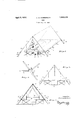
- Figure l is a perspective view showing the tent assembled and ready for use.
- Figure 2 is an end elevational view.
- Figure 4 is a perspective detail of a portion of the tent-supporting frame.
- the present invention aims to overcome these dili'iculties by providing a tent which is erected after the sleeping surfaces have been prepared.
- a tent constructed in accordance with this invention is herein shown as consisting of a top 1 of the ridge-pole type.
- the bottom 2 is preferably sewn to the longitudinal edges 3 of the top 1 and to the bottom edges of the ends 4 and is formed with the horizontal bed sections 5 and a central pocket 6 which is closed at the ends 6'.
- the tent is intended to be placed upon a pair of camp cots 7 which are arranged in a parallel position upon the ground and the bed sections 5 rest upon the cots while the sides 8 of the pocket 6 extend downwardly from the inside longitudinal edges of the cots and form a central runway between the cots.
- a suitable framework is provided for supporting the tent in a raised position and it comprises two triangular-shaped ends 9 and a connecting ridge piece 10 and side member 9'.
- the canvas structure fits taut over the frame when it is assembled and both the top and ends are thus held securely in position.
- a fly 14 it is preferable to arrange a fly 14 to extend upwardly from the cross bars 15 of the triangular end frames and to be secured to the end canvas sections 16. This fly will be very serviceable in protecting the occupant of the tent from draughts while sleeping and will prevent rain from driving in between the end sections 16 and the tent bottom.
- a tent constructed as described is very simple to handle.
- the pocket portion 6 serves as a receptacle for the entire structure when it is disassembled and folded.
- the rolled up tent is then laid between the raised surfaces and opened out and unfolded so that the bed sections 5 extend over the cots.
- the triangular frames are then assembled and erected inside of the tent and connected together by the ridge pole and side bars.
- the frame has been raised within the body of the tent the extension legs 13 are drawn out to rest upon or be imbedded in the ground to support the tent in a level position and it is then ready for occupancy.
- the bottom of the central pocket or runway rests upon the ground so that a person entering the tent steps over the end wall of the pocket on to the floor of the runway.
- the entire weight of the tent is supported by the extension legs which are adjusted so that the horizontal sections 5 of the closed bottom rest upon the previously arranged sleeping surfaces.
- the end and side bars of the frame are arranged to clear the sleepin surfaces so that the occupants of the tent may rest without danger of touching the tent ends or top and plenty of room is allowed for bed clothes.
- the device is extremely effective in providing a secure weather-proof shelter, of good appearance and very compact so that it may be easily handled.
- a tent having a bottom formed with spaced side portions adapted to rest upon a pair of spaced raised sleeping surfaces and having a laterally displaced central pocket portion to form a runway between said sleeping surfaces.
- a tent structure the combination with parallelly arranged raised sleeping surfaces, of a fabric bottom covering said sleeping surfaces formed with a centrally depressed longitudinal pocket to form a runway extcnd ing between said sleeping surfaces and a top secured to said bottom and supported above said sleeping surfaces.
- a tent having a bottom formed with a. central longitudinal pocket closed at the ends and side portions extending laterally from the upper edges of the pocket, means for supporting said lateral extensions from the underside, a top extending over said bottom portion, and a frame supporting said top in a raised position.
- a tent In a tent, a pair of cots parallelly spaced, a fabric spread over said cots and formed with a permanent central longitudinal walled pocket formation adapted to extend down between said cots to form a runway enclosure, a top extending upwardly from the bottom member above said cots, and a frame arranged within said top and supported from the ends.
- a tent a pair of triangular end frames, longitudinal bars connecting the corners of said frames and spacing them apart, adjustable means for supporting said frame above the ground, a fabric covering said frame and having a bottom secured around its edges and extending inwardly from the side bars of the frame and having, a centrally arranged longitudinal pocket.
- a pair of triangular end frames each having extensions at the bottom corners, struts adjustably mounted in said extensions adapted to support said frames with the bottom bars above the ground, longitudinal bars connecting the angles of said frames and spacing them apart, a fabric top extending over the top ridge bar, a fabric bottom secured to the edges of the top and having a pocket extending to the ground and raised portions at either side, and means for supporting the raised portions of the bottom.
- a fabric bottom formed with a permanent central longitudinal walled pocket formation, means for supporting the outer portions of the bottom horizontally above the ground with the pocket formation extending downwardly to form a runway enclosure therebetween, a fabric top integral with said outer portions of the bottom, a fly extending transversely between the respective outer portions of the bottom and extending thereabove to form a baflie, end closures for the top forming an overlap with said fly, and a dcniountable frame adapted to support the top in its raised position over the bottom.
- a bottom having a pair of horizontal bed portions and a central longitudinal depressed pocket, cots arranged to support the bed portions either side of said pocket, a pair of demountable frames adjnstably supported from the ground, longitudinal bars demountably connecting said frames, and a top mounted on said frames and secured to said bottom around the edges of the bed portions and the top of the ocket.
Landscapes
- Engineering & Computer Science (AREA)
- Architecture (AREA)
- Civil Engineering (AREA)
- Structural Engineering (AREA)
- Tents Or Canopies (AREA)
Description
April 1932- c B HENDERSON 1,852,239
TENT
Filed July 12, 1950 Im/enfor. C/Iflr/es Bl/enderson Patented Apr. 5, 1932 UNITED STATES CHARLES B. HENDERSON, OF TORONTO, ONTARIO, CANADLA TENT Application filed July 12, 1930. Serial No. 467,406.
sealed against the invasion of snakes or small animals.
A still further object is to provide atent structure which will very readily fold up to small compass and which is easil haw dled and transported.
The principal features of the invention consist in the novel construction of the tent fabric and frame whereby the fabric bottom is raised at either side of a central pocket to extend over raised sleeping surfaces arranged beneath the tent. said pocketforming a closed run-way and being adapted to receive and enclose the tent when folded.
A further and important feature consists in the novel construction of the demountable and adjustable frame for supporting the tent in relation to the sleeping surfaces.
In the drawings, Figure l is a perspective view showing the tent assembled and ready for use.
Figure 2 is an end elevational view.
Figure 3 is a vertical cross sectional view.
Figure 4 is a perspective detail of a portion of the tent-supporting frame.
In the manufacture of tents it has been common practice of construct them with a closed bottom sheet protecting the interior of the tent from the invasion of undesirable animals, but such tents are still objectionable on account of the difficulty of properly placing the sleeping cots after the tent is erected and also because of the discomfort and danger of sleeping on the ground. The present invention aims to overcome these dili'iculties by providing a tent which is erected after the sleeping surfaces have been prepared.
A tent constructed in accordance with this invention is herein shown as consisting of a top 1 of the ridge-pole type. The bottom 2 is preferably sewn to the longitudinal edges 3 of the top 1 and to the bottom edges of the ends 4 and is formed with the horizontal bed sections 5 and a central pocket 6 which is closed at the ends 6'.
The tent is intended to be placed upon a pair of camp cots 7 which are arranged in a parallel position upon the ground and the bed sections 5 rest upon the cots while the sides 8 of the pocket 6 extend downwardly from the inside longitudinal edges of the cots and form a central runway between the cots.
A suitable framework is provided for supporting the tent in a raised position and it comprises two triangular-shaped ends 9 and a connecting ridge piece 10 and side member 9'.
Each of the lower angle connections 11 of the frame structure is formed with a tubular projection 12 which extends through the canvas structure at the lower corners and each of said projections is provided with a telescopic extension 13 which rests upon or is imbedded in the ground to support the tent. structure in the desired position. The adjnstability of the members 13 enables the tent being placed in definite relation to the sleeping surfaces irrespective of the nature of the ground.
The canvas structure fits taut over the frame when it is assembled and both the top and ends are thus held securely in position.
It is preferable to arrange a fly 14 to extend upwardly from the cross bars 15 of the triangular end frames and to be secured to the end canvas sections 16. This fly will be very serviceable in protecting the occupant of the tent from draughts while sleeping and will prevent rain from driving in between the end sections 16 and the tent bottom.
A tent constructed as described is very simple to handle. The pocket portion 6 serves as a receptacle for the entire structure when it is disassembled and folded. When the tent is to be erected it is merely necessary to set up two cots and place them in parallel arrangei'nent which can be done quite elfectively. even on very uneven ground. or a pair of raised sleeping surfaces is otherwise prepared. The rolled up tent is then laid between the raised surfaces and opened out and unfolded so that the bed sections 5 extend over the cots. The triangular frames are then assembled and erected inside of the tent and connected together by the ridge pole and side bars.
The frame structure may be made of piping or of wooden members with suitable joint connectors to tie the members together.
lVhen the frame has been raised within the body of the tent the extension legs 13 are drawn out to rest upon or be imbedded in the ground to support the tent in a level position and it is then ready for occupancy.
The bottom of the central pocket or runway rests upon the ground so that a person entering the tent steps over the end wall of the pocket on to the floor of the runway.
It will be understood that the entire weight of the tent is supported by the extension legs which are adjusted so that the horizontal sections 5 of the closed bottom rest upon the previously arranged sleeping surfaces. The end and side bars of the frame are arranged to clear the sleepin surfaces so that the occupants of the tent may rest without danger of touching the tent ends or top and plenty of room is allowed for bed clothes.
The device is extremely effective in providing a secure weather-proof shelter, of good appearance and very compact so that it may be easily handled.
hat I claim as my invention is 1* 1. A tent having a bottom formed with spaced side portions adapted to rest upon a pair of spaced raised sleeping surfaces and having a laterally displaced central pocket portion to form a runway between said sleeping surfaces.
2. In a tent structure, the combination with parallelly arranged raised sleeping surfaces, of a fabric bottom covering said sleeping surfaces formed with a centrally depressed longitudinal pocket to form a runway extcnd ing between said sleeping surfaces and a top secured to said bottom and supported above said sleeping surfaces.
3. A tent having a bottom formed with a. central longitudinal pocket closed at the ends and side portions extending laterally from the upper edges of the pocket, means for supporting said lateral extensions from the underside, a top extending over said bottom portion, and a frame supporting said top in a raised position.
4. In a tent, a pair of cots parallelly spaced, a fabric spread over said cots and formed with a permanent central longitudinal walled pocket formation adapted to extend down between said cots to form a runway enclosure, a top extending upwardly from the bottom member above said cots, and a frame arranged within said top and supported from the ends.
5. In a tent, a pair of triangular end frames, longitudinal bars connecting the corners of said frames and spacing them apart, adjustable means for supporting said frame above the ground, a fabric covering said frame and having a bottom secured around its edges and extending inwardly from the side bars of the frame and having, a centrally arranged longitudinal pocket.
6. In a tent, a pair of triangular end frames each having extensions at the bottom corners, struts adjustably mounted in said extensions adapted to support said frames with the bottom bars above the ground, longitudinal bars connecting the angles of said frames and spacing them apart, a fabric top extending over the top ridge bar, a fabric bottom secured to the edges of the top and having a pocket extending to the ground and raised portions at either side, and means for supporting the raised portions of the bottom.
7. In a tent, a fabric bottom formed with a permanent central longitudinal walled pocket formation, means for supporting the outer portions of the bottom horizontally above the ground with the pocket formation extending downwardly to form a runway enclosure therebetween, a fabric top integral with said outer portions of the bottom, a fly extending transversely between the respective outer portions of the bottom and extending thereabove to form a baflie, end closures for the top forming an overlap with said fly, and a dcniountable frame adapted to support the top in its raised position over the bottom.
8. In a tent, a bottom having a pair of horizontal bed portions and a central longitudinal depressed pocket, cots arranged to support the bed portions either side of said pocket, a pair of demountable frames adjnstably supported from the ground, longitudinal bars demountably connecting said frames, and a top mounted on said frames and secured to said bottom around the edges of the bed portions and the top of the ocket.
CHARLES B. HENDER ON.
Priority Applications (1)
| Application Number | Priority Date | Filing Date | Title |
|---|---|---|---|
| US467406A US1852239A (en) | 1930-07-12 | 1930-07-12 | Tent |
Applications Claiming Priority (1)
| Application Number | Priority Date | Filing Date | Title |
|---|---|---|---|
| US467406A US1852239A (en) | 1930-07-12 | 1930-07-12 | Tent |
Publications (1)
| Publication Number | Publication Date |
|---|---|
| US1852239A true US1852239A (en) | 1932-04-05 |
Family
ID=23855557
Family Applications (1)
| Application Number | Title | Priority Date | Filing Date |
|---|---|---|---|
| US467406A Expired - Lifetime US1852239A (en) | 1930-07-12 | 1930-07-12 | Tent |
Country Status (1)
| Country | Link |
|---|---|
| US (1) | US1852239A (en) |
Cited By (1)
| Publication number | Priority date | Publication date | Assignee | Title |
|---|---|---|---|---|
| US3757360A (en) * | 1971-08-16 | 1973-09-11 | J Wescott | Portable foldable cot |
-
1930
- 1930-07-12 US US467406A patent/US1852239A/en not_active Expired - Lifetime
Cited By (1)
| Publication number | Priority date | Publication date | Assignee | Title |
|---|---|---|---|---|
| US3757360A (en) * | 1971-08-16 | 1973-09-11 | J Wescott | Portable foldable cot |
Similar Documents
| Publication | Publication Date | Title |
|---|---|---|
| US3601825A (en) | Quickly mountable and demountable accessory | |
| US1846011A (en) | Tent | |
| US6363955B1 (en) | Self-deploying tubular enclosure | |
| US4779294A (en) | Protective structure | |
| US1900274A (en) | Collapsible play pen and sun bath | |
| US2010472A (en) | Beach accessory | |
| US2134879A (en) | Beach shelter | |
| US3971495A (en) | Combination pack frame and bed | |
| US1950603A (en) | Play pen | |
| US6098218A (en) | Cabin cot | |
| WO2014080391A1 (en) | Modular inflatable personal shelter | |
| US5303434A (en) | Bed tent | |
| US1900335A (en) | Collapsible tent and frame | |
| US1737664A (en) | Canopy support for bedsteads | |
| US1852239A (en) | Tent | |
| US1785953A (en) | Beach rest and sunshade | |
| US1538296A (en) | Automobile comfort station | |
| US2210342A (en) | Tent structure | |
| US2848007A (en) | Portable camping shelter | |
| US1622435A (en) | Tourist's auto tent | |
| US2210540A (en) | Folding automobile bed and tent | |
| WO2004038135A1 (en) | Tent and tend bed for assembly on uneven ground surfaces | |
| US1962918A (en) | Tent | |
| US925059A (en) | Combined portable folding cot and tent. | |
| US7562690B1 (en) | Suspended bed tent |