US12265927B2 - Charging authentication system, charging control device, and charging authentication method - Google Patents
Charging authentication system, charging control device, and charging authentication method Download PDFInfo
- Publication number
- US12265927B2 US12265927B2 US17/866,974 US202217866974A US12265927B2 US 12265927 B2 US12265927 B2 US 12265927B2 US 202217866974 A US202217866974 A US 202217866974A US 12265927 B2 US12265927 B2 US 12265927B2
- Authority
- US
- United States
- Prior art keywords
- charging
- user terminal
- authentication
- charging device
- server
- Prior art date
- Legal status (The legal status is an assumption and is not a legal conclusion. Google has not performed a legal analysis and makes no representation as to the accuracy of the status listed.)
- Active, expires
Links
Images




Classifications
-
- G—PHYSICS
- G06—COMPUTING OR CALCULATING; COUNTING
- G06Q—INFORMATION AND COMMUNICATION TECHNOLOGY [ICT] SPECIALLY ADAPTED FOR ADMINISTRATIVE, COMMERCIAL, FINANCIAL, MANAGERIAL OR SUPERVISORY PURPOSES; SYSTEMS OR METHODS SPECIALLY ADAPTED FOR ADMINISTRATIVE, COMMERCIAL, FINANCIAL, MANAGERIAL OR SUPERVISORY PURPOSES, NOT OTHERWISE PROVIDED FOR
- G06Q30/00—Commerce
- G06Q30/04—Billing or invoicing
-
- B—PERFORMING OPERATIONS; TRANSPORTING
- B60—VEHICLES IN GENERAL
- B60L—PROPULSION OF ELECTRICALLY-PROPELLED VEHICLES; SUPPLYING ELECTRIC POWER FOR AUXILIARY EQUIPMENT OF ELECTRICALLY-PROPELLED VEHICLES; ELECTRODYNAMIC BRAKE SYSTEMS FOR VEHICLES IN GENERAL; MAGNETIC SUSPENSION OR LEVITATION FOR VEHICLES; MONITORING OPERATING VARIABLES OF ELECTRICALLY-PROPELLED VEHICLES; ELECTRIC SAFETY DEVICES FOR ELECTRICALLY-PROPELLED VEHICLES
- B60L53/00—Methods of charging batteries, specially adapted for electric vehicles; Charging stations or on-board charging equipment therefor; Exchange of energy storage elements in electric vehicles
- B60L53/10—Methods of charging batteries, specially adapted for electric vehicles; Charging stations or on-board charging equipment therefor; Exchange of energy storage elements in electric vehicles characterised by the energy transfer between the charging station and the vehicle
- B60L53/14—Conductive energy transfer
- B60L53/16—Connectors, e.g. plugs or sockets, specially adapted for charging electric vehicles
-
- B—PERFORMING OPERATIONS; TRANSPORTING
- B60—VEHICLES IN GENERAL
- B60L—PROPULSION OF ELECTRICALLY-PROPELLED VEHICLES; SUPPLYING ELECTRIC POWER FOR AUXILIARY EQUIPMENT OF ELECTRICALLY-PROPELLED VEHICLES; ELECTRODYNAMIC BRAKE SYSTEMS FOR VEHICLES IN GENERAL; MAGNETIC SUSPENSION OR LEVITATION FOR VEHICLES; MONITORING OPERATING VARIABLES OF ELECTRICALLY-PROPELLED VEHICLES; ELECTRIC SAFETY DEVICES FOR ELECTRICALLY-PROPELLED VEHICLES
- B60L53/00—Methods of charging batteries, specially adapted for electric vehicles; Charging stations or on-board charging equipment therefor; Exchange of energy storage elements in electric vehicles
- B60L53/10—Methods of charging batteries, specially adapted for electric vehicles; Charging stations or on-board charging equipment therefor; Exchange of energy storage elements in electric vehicles characterised by the energy transfer between the charging station and the vehicle
- B60L53/14—Conductive energy transfer
- B60L53/18—Cables specially adapted for charging electric vehicles
-
- B—PERFORMING OPERATIONS; TRANSPORTING
- B60—VEHICLES IN GENERAL
- B60L—PROPULSION OF ELECTRICALLY-PROPELLED VEHICLES; SUPPLYING ELECTRIC POWER FOR AUXILIARY EQUIPMENT OF ELECTRICALLY-PROPELLED VEHICLES; ELECTRODYNAMIC BRAKE SYSTEMS FOR VEHICLES IN GENERAL; MAGNETIC SUSPENSION OR LEVITATION FOR VEHICLES; MONITORING OPERATING VARIABLES OF ELECTRICALLY-PROPELLED VEHICLES; ELECTRIC SAFETY DEVICES FOR ELECTRICALLY-PROPELLED VEHICLES
- B60L53/00—Methods of charging batteries, specially adapted for electric vehicles; Charging stations or on-board charging equipment therefor; Exchange of energy storage elements in electric vehicles
- B60L53/30—Constructional details of charging stations
- B60L53/305—Communication interfaces
-
- B—PERFORMING OPERATIONS; TRANSPORTING
- B60—VEHICLES IN GENERAL
- B60L—PROPULSION OF ELECTRICALLY-PROPELLED VEHICLES; SUPPLYING ELECTRIC POWER FOR AUXILIARY EQUIPMENT OF ELECTRICALLY-PROPELLED VEHICLES; ELECTRODYNAMIC BRAKE SYSTEMS FOR VEHICLES IN GENERAL; MAGNETIC SUSPENSION OR LEVITATION FOR VEHICLES; MONITORING OPERATING VARIABLES OF ELECTRICALLY-PROPELLED VEHICLES; ELECTRIC SAFETY DEVICES FOR ELECTRICALLY-PROPELLED VEHICLES
- B60L53/00—Methods of charging batteries, specially adapted for electric vehicles; Charging stations or on-board charging equipment therefor; Exchange of energy storage elements in electric vehicles
- B60L53/60—Monitoring or controlling charging stations
- B60L53/65—Monitoring or controlling charging stations involving identification of vehicles or their battery types
-
- B—PERFORMING OPERATIONS; TRANSPORTING
- B60—VEHICLES IN GENERAL
- B60L—PROPULSION OF ELECTRICALLY-PROPELLED VEHICLES; SUPPLYING ELECTRIC POWER FOR AUXILIARY EQUIPMENT OF ELECTRICALLY-PROPELLED VEHICLES; ELECTRODYNAMIC BRAKE SYSTEMS FOR VEHICLES IN GENERAL; MAGNETIC SUSPENSION OR LEVITATION FOR VEHICLES; MONITORING OPERATING VARIABLES OF ELECTRICALLY-PROPELLED VEHICLES; ELECTRIC SAFETY DEVICES FOR ELECTRICALLY-PROPELLED VEHICLES
- B60L53/00—Methods of charging batteries, specially adapted for electric vehicles; Charging stations or on-board charging equipment therefor; Exchange of energy storage elements in electric vehicles
- B60L53/60—Monitoring or controlling charging stations
- B60L53/66—Data transfer between charging stations and vehicles
- B60L53/665—Methods related to measuring, billing or payment
-
- B—PERFORMING OPERATIONS; TRANSPORTING
- B60—VEHICLES IN GENERAL
- B60L—PROPULSION OF ELECTRICALLY-PROPELLED VEHICLES; SUPPLYING ELECTRIC POWER FOR AUXILIARY EQUIPMENT OF ELECTRICALLY-PROPELLED VEHICLES; ELECTRODYNAMIC BRAKE SYSTEMS FOR VEHICLES IN GENERAL; MAGNETIC SUSPENSION OR LEVITATION FOR VEHICLES; MONITORING OPERATING VARIABLES OF ELECTRICALLY-PROPELLED VEHICLES; ELECTRIC SAFETY DEVICES FOR ELECTRICALLY-PROPELLED VEHICLES
- B60L53/00—Methods of charging batteries, specially adapted for electric vehicles; Charging stations or on-board charging equipment therefor; Exchange of energy storage elements in electric vehicles
- B60L53/60—Monitoring or controlling charging stations
- B60L53/68—Off-site monitoring or control, e.g. remote control
-
- G—PHYSICS
- G06—COMPUTING OR CALCULATING; COUNTING
- G06Q—INFORMATION AND COMMUNICATION TECHNOLOGY [ICT] SPECIALLY ADAPTED FOR ADMINISTRATIVE, COMMERCIAL, FINANCIAL, MANAGERIAL OR SUPERVISORY PURPOSES; SYSTEMS OR METHODS SPECIALLY ADAPTED FOR ADMINISTRATIVE, COMMERCIAL, FINANCIAL, MANAGERIAL OR SUPERVISORY PURPOSES, NOT OTHERWISE PROVIDED FOR
- G06Q10/00—Administration; Management
- G06Q10/02—Reservations, e.g. for tickets, services or events
-
- G—PHYSICS
- G06—COMPUTING OR CALCULATING; COUNTING
- G06Q—INFORMATION AND COMMUNICATION TECHNOLOGY [ICT] SPECIALLY ADAPTED FOR ADMINISTRATIVE, COMMERCIAL, FINANCIAL, MANAGERIAL OR SUPERVISORY PURPOSES; SYSTEMS OR METHODS SPECIALLY ADAPTED FOR ADMINISTRATIVE, COMMERCIAL, FINANCIAL, MANAGERIAL OR SUPERVISORY PURPOSES, NOT OTHERWISE PROVIDED FOR
- G06Q30/00—Commerce
- G06Q30/02—Marketing; Price estimation or determination; Fundraising
- G06Q30/0283—Price estimation or determination
-
- G—PHYSICS
- G06—COMPUTING OR CALCULATING; COUNTING
- G06Q—INFORMATION AND COMMUNICATION TECHNOLOGY [ICT] SPECIALLY ADAPTED FOR ADMINISTRATIVE, COMMERCIAL, FINANCIAL, MANAGERIAL OR SUPERVISORY PURPOSES; SYSTEMS OR METHODS SPECIALLY ADAPTED FOR ADMINISTRATIVE, COMMERCIAL, FINANCIAL, MANAGERIAL OR SUPERVISORY PURPOSES, NOT OTHERWISE PROVIDED FOR
- G06Q50/00—Information and communication technology [ICT] specially adapted for implementation of business processes of specific business sectors, e.g. utilities or tourism
- G06Q50/06—Energy or water supply
-
- H02J7/47—
-
- B—PERFORMING OPERATIONS; TRANSPORTING
- B60—VEHICLES IN GENERAL
- B60L—PROPULSION OF ELECTRICALLY-PROPELLED VEHICLES; SUPPLYING ELECTRIC POWER FOR AUXILIARY EQUIPMENT OF ELECTRICALLY-PROPELLED VEHICLES; ELECTRODYNAMIC BRAKE SYSTEMS FOR VEHICLES IN GENERAL; MAGNETIC SUSPENSION OR LEVITATION FOR VEHICLES; MONITORING OPERATING VARIABLES OF ELECTRICALLY-PROPELLED VEHICLES; ELECTRIC SAFETY DEVICES FOR ELECTRICALLY-PROPELLED VEHICLES
- B60L2250/00—Driver interactions
- B60L2250/16—Driver interactions by display
-
- Y—GENERAL TAGGING OF NEW TECHNOLOGICAL DEVELOPMENTS; GENERAL TAGGING OF CROSS-SECTIONAL TECHNOLOGIES SPANNING OVER SEVERAL SECTIONS OF THE IPC; TECHNICAL SUBJECTS COVERED BY FORMER USPC CROSS-REFERENCE ART COLLECTIONS [XRACs] AND DIGESTS
- Y02—TECHNOLOGIES OR APPLICATIONS FOR MITIGATION OR ADAPTATION AGAINST CLIMATE CHANGE
- Y02T—CLIMATE CHANGE MITIGATION TECHNOLOGIES RELATED TO TRANSPORTATION
- Y02T90/00—Enabling technologies or technologies with a potential or indirect contribution to GHG emissions mitigation
- Y02T90/10—Technologies relating to charging of electric vehicles
- Y02T90/14—Plug-in electric vehicles
-
- Y—GENERAL TAGGING OF NEW TECHNOLOGICAL DEVELOPMENTS; GENERAL TAGGING OF CROSS-SECTIONAL TECHNOLOGIES SPANNING OVER SEVERAL SECTIONS OF THE IPC; TECHNICAL SUBJECTS COVERED BY FORMER USPC CROSS-REFERENCE ART COLLECTIONS [XRACs] AND DIGESTS
- Y02—TECHNOLOGIES OR APPLICATIONS FOR MITIGATION OR ADAPTATION AGAINST CLIMATE CHANGE
- Y02T—CLIMATE CHANGE MITIGATION TECHNOLOGIES RELATED TO TRANSPORTATION
- Y02T90/00—Enabling technologies or technologies with a potential or indirect contribution to GHG emissions mitigation
- Y02T90/10—Technologies relating to charging of electric vehicles
- Y02T90/16—Information or communication technologies improving the operation of electric vehicles
Definitions
- the present invention relates to a charging authentication system, a charging control device, and a charging authentication method to use a charging device that charges a battery mounted on an electric vehicle.
- Examples of an electric vehicle on which a battery is mounted include an electrically powered vehicle, a hybrid vehicle, an electric bicycle, and an electric wheelchair.
- One of problems with widespread use of the electric vehicle is a concern that, when the number of charging stations does not increase so as to cover an entire country, charging cannot be performed when the battery runs out at an outing destination.
- the present invention has been made in view of the above circumstances, and an object of the present invention is to provide a charging authentication system, a charging control device, and a charging authentication method capable of preventing a user from erroneously using a charging device that is not permitted for use.
- a charge authentication system includes:
- a charging control device ( 3 ) including:
- a charging authentication method includes:
- a charging authentication method includes:
- FIG. 1 is a block diagram showing an embodiment of a charging authentication system in which a charging authentication method according to the present embodiment is implemented.
- FIG. 2 is a block diagram showing details of a charging control device shown in FIG. 1 .
- FIG. 3 is a block diagram showing details of a communication terminal shown in FIG. 1 .
- FIG. 4 is a block diagram showing details of a server shown in FIG. 1 .
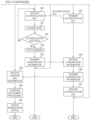
- FIG. 5 is a flowchart showing a processing procedure of the server, the charging control device, and the communication terminal shown in FIG. 1 .
- FIG. 6 is a flowchart showing a processing procedure of the server, the charging control device, and the communication terminal shown in FIG. 1 .
- FIG. 7 is an example of a registration screen displayed on the communication terminal shown in FIG. 1 .
- FIG. 8 is an example of a registration screen displayed on the communication terminal shown in FIG. 1 .
- FIG. 9 is an example of a search screen, a menu screen, and a search result screen displayed on the communication terminal shown in FIG. 1 .
- FIG. 10 is an example of the search screen and the search result screen displayed on the communication terminal shown in FIG. 1 .
- a charging authentication system 1 is a system that can search for a charging device installed in a private house, company, or the like and reserve the charging device.
- an electrically powered vehicle will be described as an example of an electric vehicle, but the electric vehicle may be a vehicle that travels using a battery as a drive source, and may be a hybrid vehicle, an electric bicycle, an electric motorcycle, or the like.
- the charging authentication system 1 includes a plurality of charging devices 2 , a charging control device 3 detachably attached to the charging device 2 , a communication terminal 5 (user terminal) owned by a user 4 who desires to use the charging devices 2 , and a server 6 that executes search, reservation, and the like of the charging devices 2 by communication with the communication terminal 5 .
- the communication terminal 5 and the server 6 are configured to be able to communicate with each other via Internet communication network 7 .
- the communication terminal 5 and the charging control device 3 are configured to be able to wirelessly communicate with each other using, for example, Bluetooth (BT (registered trademark)) communication, which is one of wireless communication standards that do not require a line usage fee.
- Bluetooth registered trademark
- the charging device 2 is installed in a detached house, a store, or the like all over the country, and has an outlet (not shown) for charging the electric vehicle. Normally, the electric vehicle can be charged by inserting a plug of a charging cable 9 connected to the electric vehicle into the outlet.
- the charging control device 3 is a device that is insertable (detachable) into the outlet of the charging device 2 and controls charging of the charging device 2 .
- the charging control device 3 includes a plug 31 , an outlet 32 , a switch 33 , a first communication unit 34 , an electromagnetic locking mechanism 35 (locking mechanism), a microcomputer (hereinafter, referred to as ⁇ COM) 36 , and a housing (not shown) that houses these components.
- the plug 31 is insertable into the outlet provided in the charging device 2 , and is provided on one surface of the housing. Charging power of the charging device 2 supplied from the plug 31 is output to the outlet 32 .
- the outlet 32 is provided on a surface opposite to the one surface of the housing on which the plug 31 is provided.
- the switch 33 is provided between the plug 31 and the outlet 32 , and when the switch 33 is turned on, the charging power is output from the outlet 32 , and when the switch 33 is turned off, the charging power output from the outlet 32 is cut off.
- the first communication unit 34 is a communication unit to perform BT communication with the communication terminal 5 .
- the electromagnetic locking mechanism 35 electromagnetically locks the charging cable 9 connected to the outlet 32 , and lock and unlock is controlled by the ⁇ COM 36 described later.
- the ⁇ COM 36 is an understood microcomputer including a CPU, a ROM, and a RAM, and controls the entire charging control device 3 .
- an authentication key of the charging control device 3 is stored in advance.
- the ⁇ COM 36 performs authentication using the authentication key received from the communication terminal 5 and the authentication key stored in the ROM, and when the authentication succeeds, the switch 33 is turned on to start charging.
- the communication terminal 5 includes, for example, a tablet, a smartphone, or the like. As shown in FIG. 3 , the communication terminal 5 includes a first communication unit 51 , a second communication unit 52 , an operation unit 53 , a display unit 54 , and a ⁇ COM 55 .
- the first communication unit 51 is a communication unit to perform BT communication with the charging control device 3 .
- the second communication unit 52 is a communication unit to connect to the Internet communication network 7 .
- the operation unit 53 performs various operations for using the charging authentication system 1 .
- Information transmitted from the server 6 is displayed on the display unit 54 .
- the ⁇ COM 55 controls the entire communication terminal 5 .
- a charging authentication application distributed by an operating company operating the charging authentication system 1 is downloaded and stored in the communication terminal 5 .
- the ⁇ COM 55 communicates with the server 6 via the Internet communication network 7 , and can reserve the charging device 2 .
- the ⁇ COM 55 After receiving the authentication key of the charging control device 3 attached to the reserved charging device 2 from the server 6 , the ⁇ COM 55 communicates with the charging control device 3 using BT communication, and transmits the authentication key to the charging control device 3 so that the reserved charging device 2 can be used.
- the server 6 includes a second communication unit 61 , a DB 62 , and a ⁇ COM 63 .
- the second communication unit 61 is a communication unit to connect to the Internet communication network 7 .
- the DB 62 stores the authentication key of the charging device 2 attached to the distributed charging control device 3 , registration information (installation location, use condition, surrounding information, and the like) and a reservation status of the charging device 2 to which the charging control device 3 is attached, and registration information (name, vehicle type, contact information, payment information, and the like) of the user 4 .
- the ⁇ COM 63 controls the entire server 6 , searches the DB 62 for the charging device 2 in response to input from the communication terminal 5 , and transmits a search result to the communication terminal 5 .
- the ⁇ COM 63 confirms reservation of the charging device 2 in response to the input from the communication terminal 5 , and transmits the authentication key of the charging control device 3 attached to the charging device 2 to the communication terminal 5 so that a confirmed charging device 2 can be used.
- the user 4 operates the communication terminal 5 in order to reserve the charging device 2 using the charging authentication system 1 to launch the charging authentication application.
- the ⁇ COM 55 of the communication terminal 5 executes the charging authentication application.
- the communication terminal 5 determines whether the user 4 is registered in the charging authentication application (S 1 ). If the user 4 is registered (Yin S 1 ), the communication terminal 5 immediately proceeds to S 6 . If the user 4 is not registered (N in S 1 ), the communication terminal 5 displays a registration screen Sc 1 as shown in FIG. 7 on the display unit 54 (S 2 ). When the user 4 touches “to select use plan” on the registration screen Sc 1 , the communication terminal 5 displays a use plan registration screen Sc 2 shown in FIG. 8 .
- the communication terminal 5 transmits the registration information to the server 6 (S 4 ), and then proceeds to S 6 .
- the server 6 receives the registration information and stores the registration information in the DB 62 (S 5 ).
- the communication terminal 5 displays a search screen Sc 3 as shown in FIG. 9 on the display unit 54 .
- the search screen Sc 3 for inputting narrowing-down conditions such as a destination, a date of use, and a time period of use as search conditions is displayed.
- a menu screen Sc 4 is displayed at a lower left of the search screen Sc 3
- a search result screen Sc 5 is displayed at a lower right of the search screen Sc 3 .
- On the menu screen Sc 4 a registration image of the user, a user name, and a use plan are displayed, and touch buttons for switching to a registration information change screen, a use plan change screen, a reservation list screen, and a help screen are displayed.
- a map of a surrounding is displayed before the search condition is input.
- the communication terminal 5 erases the menu screen Sc 4 and enlarges the search screen Sc 3 as shown in FIG. 10 .
- the communication terminal 5 transmits the search condition to the server 6 (S 8 ).
- the server 6 receives the search condition (S 9 )
- the server 6 searches the charging devices 2 registered in the DB 62 for the charging device 2 that matches the search condition (S 10 ).
- the server 6 transmits the search result to the communication terminal 5 (S 11 ).
- the communication terminal 5 receives the search result (S 12 )
- the communication terminal 5 displays the search result on the search screen Sc 3 .
- FIG. 10 it is considered to display an icon I 1 indicating an available charging device and an icon 12 indicating an unavailable charging device among the charging devices 2 searched for on the map.
- the icon 12 there is a display that reservation cannot be made.
- the user 4 touches the icon I 1 an image of a place where the charging device 2 is installed, an address, a reservation date and time (date of use, time period of use), ease of parking, a fee, and a reserve button B 1 are displayed.
- the charging device 2 corresponding to the touched icon I 1 is input to the communication terminal 5 as the charging device 2 to be reserved (S 13 ).
- the communication terminal 5 transmits the charging device 2 to be reserved to the server 6 (S 14 ).
- the server 6 When the server 6 receives the charging device 2 to be reserved (S 15 ), the server 6 confirms the reservation of the charging device 2 received in the date of use and the time period of use included in the search condition (S 16 ), and updates the reservation status of each charging device 2 (that is, makes the time period of use of the charging device 2 for which the reservation is confirmed non-reservable). Thereafter, the server 6 transmits the authentication key of the charging device 2 for which the reservation is confirmed to the communication terminal 5 (S 17 ). When the communication terminal 5 receives the authentication key (S 18 ), the communication terminal 5 stores the authentication key (S 19 ).
- the user 4 goes to a place of the charging device 2 on the date of use and the time period of use reserved by the electric vehicle 8 .
- the user 4 inserts one end of the owned charging cable 9 into the outlet 32 of the charging control device 3 , and inserts the other end into an outlet provided in the electric vehicle 8 . That is, the charging device 2 and the electric vehicle 8 are connected using the charging cable 9 .
- the user 4 operates the communication terminal 5 to launch the charging authentication application again, and transmits a charging start command and the stored authentication key to the charging control device 3 by BT communication (S 20 ).
- charging control device 3 When the ⁇ COM 36 of the charging control device 3 (hereinafter abbreviated as “charging control device 3 ”) receives the charging start command and the authentication key from the communication terminal 5 (S 21 ), the ⁇ COM 36 compares the received authentication key with an authentication key stored in the ⁇ COM 36 to perform authentication (S 22 ).
- the charging control device 3 transmits an authentication result to the communication terminal 5 (step S 23 ), and if the authentication result fails (N in S 24 ), the charging control device 3 immediately ends a processing, and if the authentication result succeeds (Y in S 24 ), the charging control device 3 turns on the switch 33 to start charging and functions as a lock control unit to control the electromagnetic locking mechanism 35 to lock the charging cable 9 (S 25 ).
- the communication terminal 5 receives the authentication result (S 26 ), and if the authentication result succeeds (Yin S 27 ), the communication terminal 5 transmits charging start information to the server 6 (S 28 ). Since the charging control device 3 starts charging when the authentication succeeds, the authentication result indicating success of the authentication described above can also be referred to as the charging start information. That is, in the present embodiment, the charging start information transmitted from the charging control device 3 is transmitted to the server 6 via the communication terminal 5 .
- the user 4 launches the charging authentication application on the communication terminal 5 and performs a charging end operation. Accordingly, the communication terminal 5 transmits a charging end command and the authentication key to the charging control device 3 (S 29 ).
- the charging control device 3 receives the charging end command and the authentication key from the communication terminal 5 (S 30 )
- the charging control device 3 compares the received authentication key with an authentication key stored in the charging control device 3 to perform authentication (S 31 ).
- the charging control device 3 returns to S 30 .
- the charging control device 3 When the authentication succeeds (Yin S 32 ), the charging control device 3 turns off the switch 33 to stop charging and functions as the lock control unit to control the electromagnetic locking mechanism 35 to release the lock of the charging cable 9 (S 33 ). Thereafter, the charging control device 3 transmits charging end information to the communication terminal 5 (S 34 ), and ends a processing.
- the communication terminal 5 When the communication terminal 5 receives the charging end information from the charging control device 3 (S 35 ), the communication terminal 5 transmits the charging end information to the server 6 (S 36 ). Thereafter, the communication terminal 5 discards the authentication key (S 37 ), and ends a processing.
- the server 6 When the server 6 receives the charging start information and the charging end information (S 38 , S 39 ), the server 6 calculates a fee corresponding to a charging time obtained from the received charging start information and charging end information, and performs a charging settlement processing of charging (S 40 ). In addition, the server 6 obtains vacancy information of the charging device 2 from the charging start information and the charging end information, updates the reservation status based on the vacancy information (step S 41 ), and then ends a processing.
- the charging control device 3 starts charging by the charging device 2 when the authentication of the communication terminal 5 succeeds, so that it is possible to prevent the user 4 from erroneously using the charging device 2 that is not permitted for use.
- the communication terminal 5 transmits the charging end command for the charging device 2 , and the charging control device 3 controls the charging device 2 to end the charging when the charging end command is transmitted from the communication terminal 5 . Accordingly, the charging can be ended at a timing when the user wants to end the charging.
- the charging control device 3 controls the electromagnetic locking mechanism 35 to lock the charging cable 9 at the start of charging, and to release the lock of the charging cable 9 at the end of charging. Accordingly, it is possible to prevent the charging cable 9 from being stolen while the user is away from the charging device 2 during charging.
- the server 6 can charging a fee according to the charging time obtained based on the charging start information and the charging end information.
- the charging control device 3 maintains electromagnetic lock by the electromagnetic locking mechanism 35 until the charging end command is transmitted, so that the user 4 cannot retrieve the charging cable 9 . Accordingly, the user 4 always operates the communication terminal 5 to prompt an end of charging, and the charging of the server 6 can be stopped.
- the server 6 can grasp vacancy situation of the charging device 2 from the charging start information and the charging end information.
- the charging control device 3 since the charging control device 3 is detachably attached to the charging device 2 , an authentication function of the charging device 2 can be easily provided only by attaching the charging control device 3 to the charging device 2 .
- the charging start information and the charging end information transmitted from the charging control device 3 is transmitted to the server 6 via the communication terminal 5 . Accordingly, the charging control device 3 only needs to be able to perform BT communication without using the line usage fee, and does not need to perform the communication via the Internet communication network 7 that requires the line usage fee. Therefore, cost of an owner of the charging device 2 can be reduced, and the charging device 2 can be more easily provided.
- the present invention is not limited to the above-described embodiment, and modifications, improvements, and the like can be made as appropriate.
- a material, shape, size, number, arrangement position, and the like of each component in the above embodiment are optional and are not limited as long as the present invention can be achieved.
- the charging control device 3 can directly communicate with only the communication terminal 5 , and transmits the charging start information and the charging end information to the server 6 via the communication terminal 5 , but the present invention is not limited thereto.
- the charging control device 3 and the server 6 may communicate with each other via the Internet communication network 7 so that the charging control device 3 can directly transmit the charging start information and the charging end information to the server 6 .
- the charging control device 3 is caused to perform authentication, but the present invention is not limited thereto.
- the authentication may be performed by the communication terminal 5 or the server 6 .
- the charging control device 3 transmits the authentication key of the charging control device 3 to the communication terminal 5
- the communication terminal 5 compares the authentication key transmitted from the charging control device 3 with the authentication key transmitted from the server 6 in advance to perform authentication.
- the server 6 performs the authentication, for example, it is considered that the charging control device 3 and the communication terminal 5 transmit their own identification information to the server 6 , and the server 6 performs the authentication based on the reservation status.
- the charging control device 3 is distributed to the owner of the charging device 2 , but the present invention is not limited thereto.
- the charging control device 3 may be distributed to the user 4 who uses the charging device 2 .
- the electromagnetic locking mechanism 35 is provided in the charging control device 3 , but the present invention is not limited thereto.
- the electromagnetic locking mechanism 35 is not an essential component, and may be omitted.
- the server 6 calculates the fee based on the charging time and charges the fee, but the present invention is not limited thereto.
- the server 6 may calculate a fee based on an amount of charging and charge the fee.
- the charging control device 3 is detachably attached to the charging device 2 and is retrofitted to the charging device 2 , but the present invention is not limited thereto.
- the charging control device may be incorporated in the charging device 2 in advance.
- an operation of the server 6 is not limited to the above-described embodiment, and when the user 4 reserves the charging device 2 , when the user 4 starts charging by the charging device 2 , when the user 4 ends charging by the charging device 2 , or the like, the fact may be automatically distributed by a medium such as an e-mail. Accordingly, the owner can also check a usage status of the charging device 2 one by one.
- the charging control device starts charging by the charging device when the authentication of the user terminal succeeds, so that it is possible to prevent the user from erroneously using a charging device that is not permitted for use.
- the user terminal transmits the charging end command for the charging device, and the charging control device controls the charging device to end charging when the charging end command is transmitted from the user terminal. Accordingly, the charging can be ended at a timing when the user wants to end the charging.
- the lock control unit controls the locking mechanism to lock the charging cable at the start of charging, and to release the lock of the charging cable at the end of charging. Accordingly, it is possible to prevent the charging cable from being stolen while the user is away from the charging device during charging.
- the server can charge the fee according to the charging time obtained based on the charging start information and the charging end information.
- the server can grasp vacancy situation of the charging device from the charging start information and the charging end information.
- the charging control device since the charging control device is detachably attached to the charging device, an authentication function of the charging device can be easily provided only by attaching the charging control device to the charging device.
- a charging authentication system it is possible to provide a charging authentication system, a charging control device, and a charging authentication method capable of preventing a user from erroneously using a charging device that is not permitted for use.
- the embodiment that provides this effect is useful for the charging authentication system, the charging control device, and the charging authentication method.
Landscapes
- Engineering & Computer Science (AREA)
- Business, Economics & Management (AREA)
- Development Economics (AREA)
- Economics (AREA)
- Strategic Management (AREA)
- Power Engineering (AREA)
- Mechanical Engineering (AREA)
- Transportation (AREA)
- Marketing (AREA)
- Physics & Mathematics (AREA)
- General Business, Economics & Management (AREA)
- General Physics & Mathematics (AREA)
- Theoretical Computer Science (AREA)
- Tourism & Hospitality (AREA)
- Accounting & Taxation (AREA)
- Finance (AREA)
- Human Resources & Organizations (AREA)
- Entrepreneurship & Innovation (AREA)
- Health & Medical Sciences (AREA)
- Operations Research (AREA)
- Quality & Reliability (AREA)
- Primary Health Care (AREA)
- General Health & Medical Sciences (AREA)
- Game Theory and Decision Science (AREA)
- Water Supply & Treatment (AREA)
- Public Health (AREA)
- Charge And Discharge Circuits For Batteries Or The Like (AREA)
- Electric Propulsion And Braking For Vehicles (AREA)
- Management, Administration, Business Operations System, And Electronic Commerce (AREA)
Abstract
Description
- Patent Literature 1: JP-A-2019-103255
-
- a user terminal owned by a user who desires to use a charging device for an electric vehicle and configured to transmit a charging start command for the charging device;
- an authentication unit configured to authenticate the user terminal that transmits the charging start command; and
- a charging control device connected to the charging device and configured to control the charging device to start charging when authentication by the authentication unit succeeds.
-
- a plug (31) that is insertable into an outlet provided in a charging device (2) for an electric vehicle (8);
- an outlet (32) that outputs charging power of the charging device (2) supplied from the plug (31); and
- a charging control unit configured to perform wireless communication with a user terminal (5) owned by a user (4) who desires to use the charging device (2), and to output the charging power from the outlet (32) when authentication of the user terminal (5) succeeds.
-
- a step of transmitting, by a user terminal (5) owned by a user (4) who desires to use a charging device (2) for an electric vehicle (8), a charging start command for the charging device (2);
- a step of authenticating, by an authentication unit, the user terminal (5) that transmits the charging start command; and
- a step of controlling, by a charging control device (3) connected to the charging device (2), the charging device (2) to start charging when authentication by the authentication unit succeeds.
-
- a step of distributing, to an owner of a charging device (2), a charging control device (3) that is detachably attached to the charging device (2) and that controls the charging device (2) to start charging only when authentication of a user (4) succeeds; and
- a step of transmitting, by a user terminal (5) owned by the user (4) who desires to use the charging device (2), a charging start command for the charging device (2).
-
- [1] A charging authentication system (1) including:
- a user terminal (5) owned by a user (4) who desires to use a charging device (2) for an electric vehicle (8) and configured to transmit a charging start command for the charging device (2);
- an authentication unit (36) configured to authenticate the user terminal (5) that transmits the charging start command; and
- a charging control device (3) connected to the charging device (2) and configured to control the charging device (2) to start charging when authentication by the authentication unit (36) succeeds.
- [2] In the charging authentication system (1) according to [1],
- the user terminal (5) may transmit a charging end command for the charging device (2), and
- when the charging end command is transmitted from the user terminal (5), the charging control device (3) may control the charging device (2) to end charging.
- [3] In the charging authentication system (1) according to [2],
- the charging control device (3) may include an outlet (32) into which a charging cable (9) is inserted, a locking mechanism (35) that locks the charging cable (9) inserted into the outlet (32), and a lock control unit (36) that controls the locking mechanism (35) to lock the charging cable (9) at the start of charging and to release the lock of the charging cable (9) at the end of charging.
- [4] In the charging authentication system (1) according to [2],
- the charging control device (3) may transmit charging start information at the start of charging and transmits charging end information at the end of charging, and
- a server (6) may further be included that calculates a fee according to a charging time obtained from the charging start information and the charging end information transmitted from the charging control device (3), and charges the fee.
- [5] In the charging authentication system (1) according to [4],
- the server (6) may obtain vacancy information of the charging device (2) based on the charging end information and the charging start information, and provides the vacancy information of the charging device (2) to the user terminal (5).
- [6] In the charging authentication system (1) according to [1],
- the charging control device (3) may be detachably attached to the charging device (2).
- [7] A charging control device (3) including:
- a plug (31) that is insertable into an outlet provided in a charging device (2) for an electric vehicle (8);
- an outlet (32) that outputs charging power of the charging device (2) supplied from the plug (31); and
- a charging control unit (36) configured to perform wireless communication with a user terminal (5) owned by a user (4) who desires to use the charging device (2), and to output the charging power from the outlet (32) when authentication of the user terminal (5) succeeds.
- [8] A charging authentication method including:
- a step of transmitting, by a user terminal (5) owned by a user (4) who desires to use a charging device (2) for an electric vehicle (8), a charging start command for the charging device (2);
- a step of authenticating, by an authentication unit (36), the user terminal (5) that transmits the charging start command; and
- a step of controlling, by a charging control device (3) connected to the charging device (2), the charging device (2) to start charging when authentication by the authentication unit (36) succeeds.
- [9] The charging authentication method according to [8], may further includes:
- a step of connecting the charging device (2) and the electric vehicle (8) by the user (4) using a charging cable before the user terminal (5) transmits the charging start command.
- [10] A charging authentication method including:
- a step of distributing, to an owner of a charging device (2), a charging control device (3) that is detachably attached to the charging device (2) and that controls the charging device (2) to start charging only when authentication of a user (4) succeeds; and
- a step of transmitting, by a user terminal (5) owned by the user (4) who desires to use the charging device (2), a charging start command for the charging device (2).
- [1] A charging authentication system (1) including:
Claims (10)
Applications Claiming Priority (3)
| Application Number | Priority Date | Filing Date | Title |
|---|---|---|---|
| JP2020-034114 | 2020-02-28 | ||
| JP2020034114A JP7319213B2 (en) | 2020-02-28 | 2020-02-28 | Charging service system and charging service method |
| PCT/JP2021/002922 WO2021171886A1 (en) | 2020-02-28 | 2021-01-27 | Charging authentication system, charging control device, and charging authentication method |
Related Parent Applications (1)
| Application Number | Title | Priority Date | Filing Date |
|---|---|---|---|
| PCT/JP2021/002922 Continuation WO2021171886A1 (en) | 2020-02-28 | 2021-01-27 | Charging authentication system, charging control device, and charging authentication method |
Publications (2)
| Publication Number | Publication Date |
|---|---|
| US20220351261A1 US20220351261A1 (en) | 2022-11-03 |
| US12265927B2 true US12265927B2 (en) | 2025-04-01 |
Family
ID=77490463
Family Applications (1)
| Application Number | Title | Priority Date | Filing Date |
|---|---|---|---|
| US17/866,974 Active 2041-04-20 US12265927B2 (en) | 2020-02-28 | 2022-07-18 | Charging authentication system, charging control device, and charging authentication method |
Country Status (5)
| Country | Link |
|---|---|
| US (1) | US12265927B2 (en) |
| EP (1) | EP4113423A4 (en) |
| JP (1) | JP7319213B2 (en) |
| CN (1) | CN115023727A (en) |
| WO (1) | WO2021171886A1 (en) |
Families Citing this family (2)
| Publication number | Priority date | Publication date | Assignee | Title |
|---|---|---|---|---|
| KR102860444B1 (en) * | 2022-09-19 | 2025-09-17 | (주)클린일렉스 | Electric vehicle charging system and operating method based on information exchange between user terminal and charger |
| JP7755111B2 (en) * | 2023-06-30 | 2025-10-15 | 株式会社Subaru | charger |
Citations (14)
| Publication number | Priority date | Publication date | Assignee | Title |
|---|---|---|---|---|
| JP2002369315A (en) | 2001-06-11 | 2002-12-20 | Tokyo R & D Co Ltd | System for utilizing electric automobile jointly |
| JP2009084813A (en) * | 2007-09-28 | 2009-04-23 | Toyota Motor Corp | Vehicle key, vehicle charging system and charging key |
| US20110193522A1 (en) | 2010-02-05 | 2011-08-11 | Motion Co., Ltd. | Operation managing server for charging stations and operation managing system for charging stations |
| US20110241824A1 (en) | 2010-03-31 | 2011-10-06 | Motion Co., Ltd. | In-vehicle mount type battery charging system, managing server, managing server control method and computer-readable medium storing program for managing server |
| JP2013198230A (en) | 2012-03-16 | 2013-09-30 | Mitsubishi Motors Corp | Management operation device for charging equipment |
| US20140055091A1 (en) * | 2012-04-27 | 2014-02-27 | Nec Corporation | Charger and charging method |
| JP2015146162A (en) | 2014-02-04 | 2015-08-13 | ソフトバンクモバイル株式会社 | power supply system |
| US9348381B2 (en) | 2011-10-19 | 2016-05-24 | Zeco Systems Pte Ltd | Methods and apparatuses for charging of electric vehicles |
| US20160225104A1 (en) * | 2013-02-27 | 2016-08-04 | Softbank Corp. | Power supply system |
| US9908506B2 (en) | 2011-07-26 | 2018-03-06 | Gogoro Inc. | Apparatus, method and article for physical security of power storage devices in vehicles |
| JP2019103255A (en) | 2017-12-04 | 2019-06-24 | 日東工業株式会社 | Authentication unit with authentication function added to charging means for vehicle |
| US20200286077A1 (en) * | 2014-05-13 | 2020-09-10 | Clear Token, Inc. | Payment And Enforcement System For Electric Vehicle Charging Stations |
| US20200380429A1 (en) * | 2018-11-19 | 2020-12-03 | Panasonic Intellectual Property Management Co., Ltd. | Information processing method and information processing system |
| US10960782B2 (en) * | 2018-02-19 | 2021-03-30 | Power Hero Corp. | Method and device for converting standalone EV charging stations into intelligent stations with remote communications connectivity and control |
Family Cites Families (2)
| Publication number | Priority date | Publication date | Assignee | Title |
|---|---|---|---|---|
| JP5730262B2 (en) * | 2012-10-18 | 2015-06-03 | オムロンオートモーティブエレクトロニクス株式会社 | In-vehicle system, vehicle control method, and vehicle control system |
| JP2020034114A (en) | 2018-08-30 | 2020-03-05 | 本田技研工業株式会社 | Holding structure of ring gear |
-
2020
- 2020-02-28 JP JP2020034114A patent/JP7319213B2/en active Active
-
2021
- 2021-01-27 WO PCT/JP2021/002922 patent/WO2021171886A1/en not_active Ceased
- 2021-01-27 EP EP21760445.3A patent/EP4113423A4/en active Pending
- 2021-01-27 CN CN202180011626.0A patent/CN115023727A/en active Pending
-
2022
- 2022-07-18 US US17/866,974 patent/US12265927B2/en active Active
Patent Citations (14)
| Publication number | Priority date | Publication date | Assignee | Title |
|---|---|---|---|---|
| JP2002369315A (en) | 2001-06-11 | 2002-12-20 | Tokyo R & D Co Ltd | System for utilizing electric automobile jointly |
| JP2009084813A (en) * | 2007-09-28 | 2009-04-23 | Toyota Motor Corp | Vehicle key, vehicle charging system and charging key |
| US20110193522A1 (en) | 2010-02-05 | 2011-08-11 | Motion Co., Ltd. | Operation managing server for charging stations and operation managing system for charging stations |
| US20110241824A1 (en) | 2010-03-31 | 2011-10-06 | Motion Co., Ltd. | In-vehicle mount type battery charging system, managing server, managing server control method and computer-readable medium storing program for managing server |
| US9908506B2 (en) | 2011-07-26 | 2018-03-06 | Gogoro Inc. | Apparatus, method and article for physical security of power storage devices in vehicles |
| US9348381B2 (en) | 2011-10-19 | 2016-05-24 | Zeco Systems Pte Ltd | Methods and apparatuses for charging of electric vehicles |
| JP2013198230A (en) | 2012-03-16 | 2013-09-30 | Mitsubishi Motors Corp | Management operation device for charging equipment |
| US20140055091A1 (en) * | 2012-04-27 | 2014-02-27 | Nec Corporation | Charger and charging method |
| US20160225104A1 (en) * | 2013-02-27 | 2016-08-04 | Softbank Corp. | Power supply system |
| JP2015146162A (en) | 2014-02-04 | 2015-08-13 | ソフトバンクモバイル株式会社 | power supply system |
| US20200286077A1 (en) * | 2014-05-13 | 2020-09-10 | Clear Token, Inc. | Payment And Enforcement System For Electric Vehicle Charging Stations |
| JP2019103255A (en) | 2017-12-04 | 2019-06-24 | 日東工業株式会社 | Authentication unit with authentication function added to charging means for vehicle |
| US10960782B2 (en) * | 2018-02-19 | 2021-03-30 | Power Hero Corp. | Method and device for converting standalone EV charging stations into intelligent stations with remote communications connectivity and control |
| US20200380429A1 (en) * | 2018-11-19 | 2020-12-03 | Panasonic Intellectual Property Management Co., Ltd. | Information processing method and information processing system |
Non-Patent Citations (1)
| Title |
|---|
| Huang, Xiaohong, et al. "LNSC: A security model for electric vehicle and charging pile management based on blockchain ecosystem." IEEE access 6 (2018): 13565-13574. (Year: 2018). * |
Also Published As
| Publication number | Publication date |
|---|---|
| US20220351261A1 (en) | 2022-11-03 |
| JP7319213B2 (en) | 2023-08-01 |
| EP4113423A1 (en) | 2023-01-04 |
| JP2021135955A (en) | 2021-09-13 |
| EP4113423A4 (en) | 2023-08-02 |
| CN115023727A (en) | 2022-09-06 |
| WO2021171886A1 (en) | 2021-09-02 |
Similar Documents
| Publication | Publication Date | Title |
|---|---|---|
| US11535115B2 (en) | Electric vehicle capable of providing power to another vehicle, method for controlling the same, and system | |
| EP3174177B1 (en) | Charging system and charging start control method | |
| EP3492308B1 (en) | System and method of authorizing off-line electric vehicle charging station | |
| JP6426574B2 (en) | Car sharing system and vehicle loan return method | |
| US12265927B2 (en) | Charging authentication system, charging control device, and charging authentication method | |
| CN107545630B (en) | Locking and unlocking system and key unit | |
| JP6662965B2 (en) | Car sharing system and vehicle lending return method | |
| JP5270328B2 (en) | Electric vehicle charging system | |
| US20140073254A1 (en) | Vehicle communication apparatus | |
| US20210291676A1 (en) | Method and system for activating an electrical charging process for a motor vehicle and server device | |
| JP6471469B2 (en) | Charging stand and power supply system | |
| JP2012011876A (en) | Vehicle anti-theft device | |
| US20180027364A1 (en) | Electric vehicle, server apparatus, and communication information terminal | |
| CN113227860B (en) | Lock release system for fusion splicing devices | |
| CN109840972A (en) | Relay, storage are for the storage medium of the program of relay and the control method of relay | |
| CN110015077A (en) | Charging method and device for electric vehicle, storage medium and electric vehicle | |
| JP6066328B2 (en) | Infrared communication system | |
| JP5826640B2 (en) | Charger | |
| JP2017053180A (en) | Remote control system | |
| KR102552107B1 (en) | Charging payment apparatus for electric vehicle | |
| US20100052881A1 (en) | Emergency starting system of vehicle and method thereof | |
| JP5809071B2 (en) | Charger | |
| JP7271585B2 (en) | Charging service system, mobile battery, application software for mobile communication terminal, and service server for charging service | |
| JP2025063349A (en) | Charger, portable device, system, control method, and information providing method |
Legal Events
| Date | Code | Title | Description |
|---|---|---|---|
| AS | Assignment |
Owner name: YAZAKI CORPORATION, JAPAN Free format text: ASSIGNMENT OF ASSIGNORS INTEREST;ASSIGNOR:KOGO, KOSUKE;REEL/FRAME:060692/0414 Effective date: 20220524 |
|
| FEPP | Fee payment procedure |
Free format text: ENTITY STATUS SET TO UNDISCOUNTED (ORIGINAL EVENT CODE: BIG.); ENTITY STATUS OF PATENT OWNER: LARGE ENTITY |
|
| STPP | Information on status: patent application and granting procedure in general |
Free format text: DOCKETED NEW CASE - READY FOR EXAMINATION |
|
| AS | Assignment |
Owner name: YAZAKI CORPORATION, JAPAN Free format text: CHANGE OF ADDRESS;ASSIGNOR:YAZAKI CORPORATION;REEL/FRAME:063845/0802 Effective date: 20230331 |
|
| STPP | Information on status: patent application and granting procedure in general |
Free format text: NON FINAL ACTION MAILED |
|
| STPP | Information on status: patent application and granting procedure in general |
Free format text: RESPONSE TO NON-FINAL OFFICE ACTION ENTERED AND FORWARDED TO EXAMINER |
|
| STPP | Information on status: patent application and granting procedure in general |
Free format text: FINAL REJECTION MAILED |
|
| STPP | Information on status: patent application and granting procedure in general |
Free format text: RESPONSE AFTER FINAL ACTION FORWARDED TO EXAMINER |
|
| STPP | Information on status: patent application and granting procedure in general |
Free format text: ADVISORY ACTION MAILED |
|
| STPP | Information on status: patent application and granting procedure in general |
Free format text: NON FINAL ACTION MAILED |
|
| STPP | Information on status: patent application and granting procedure in general |
Free format text: RESPONSE TO NON-FINAL OFFICE ACTION ENTERED AND FORWARDED TO EXAMINER |
|
| STPP | Information on status: patent application and granting procedure in general |
Free format text: NOTICE OF ALLOWANCE MAILED -- APPLICATION RECEIVED IN OFFICE OF PUBLICATIONS |
|
| STPP | Information on status: patent application and granting procedure in general |
Free format text: PUBLICATIONS -- ISSUE FEE PAYMENT RECEIVED |
|
| STPP | Information on status: patent application and granting procedure in general |
Free format text: PUBLICATIONS -- ISSUE FEE PAYMENT VERIFIED |
|
| STCF | Information on status: patent grant |
Free format text: PATENTED CASE |