US12209075B2 - Pyridine-sulfonamide derivatives as sodium channel inhibitors - Google Patents

Pyridine-sulfonamide derivatives as sodium channel inhibitors Download PDF

Info

Publication number
US12209075B2
US12209075B2 US17/056,325 US201917056325A US12209075B2 US 12209075 B2 US12209075 B2 US 12209075B2 US 201917056325 A US201917056325 A US 201917056325A US 12209075 B2 US12209075 B2 US 12209075B2
Authority
US
United States
Prior art keywords
phenyl
trifluoromethyl
pyridine
pyrimidin
sulfonamide
Prior art date
Legal status (The legal status is an assumption and is not a legal conclusion. Google has not performed a legal analysis and makes no representation as to the accuracy of the status listed.)
Active, expires
Application number
US17/056,325
Other versions
US20210214336A1 (en
Inventor
Steven MCKERRALL
Ramsay Beveridge
Kwong Wah Lai
Philippe Bergeron
Current Assignee (The listed assignees may be inaccurate. Google has not performed a legal analysis and makes no representation or warranty as to the accuracy of the list.)
Genentech Inc
Original Assignee
Genentech Inc
Priority date (The priority date is an assumption and is not a legal conclusion. Google has not performed a legal analysis and makes no representation as to the accuracy of the date listed.)
Filing date
Publication date
Application filed by Genentech Inc filed Critical Genentech Inc
Publication of US20210214336A1 publication Critical patent/US20210214336A1/en
Application granted granted Critical
Publication of US12209075B2 publication Critical patent/US12209075B2/en
Active legal-status Critical Current
Adjusted expiration legal-status Critical

Links

Classifications

    • CCHEMISTRY; METALLURGY
    • C07ORGANIC CHEMISTRY
    • C07DHETEROCYCLIC COMPOUNDS
    • C07D401/00Heterocyclic compounds containing two or more hetero rings, having nitrogen atoms as the only ring hetero atoms, at least one ring being a six-membered ring with only one nitrogen atom
    • C07D401/02Heterocyclic compounds containing two or more hetero rings, having nitrogen atoms as the only ring hetero atoms, at least one ring being a six-membered ring with only one nitrogen atom containing two hetero rings
    • C07D401/12Heterocyclic compounds containing two or more hetero rings, having nitrogen atoms as the only ring hetero atoms, at least one ring being a six-membered ring with only one nitrogen atom containing two hetero rings linked by a chain containing hetero atoms as chain links
    • AHUMAN NECESSITIES
    • A61MEDICAL OR VETERINARY SCIENCE; HYGIENE
    • A61KPREPARATIONS FOR MEDICAL, DENTAL OR TOILETRY PURPOSES
    • A61K9/00Medicinal preparations characterised by special physical form
    • A61K9/0012Galenical forms characterised by the site of application
    • A61K9/0014Skin, i.e. galenical aspects of topical compositions
    • AHUMAN NECESSITIES
    • A61MEDICAL OR VETERINARY SCIENCE; HYGIENE
    • A61PSPECIFIC THERAPEUTIC ACTIVITY OF CHEMICAL COMPOUNDS OR MEDICINAL PREPARATIONS
    • A61P11/00Drugs for disorders of the respiratory system
    • AHUMAN NECESSITIES
    • A61MEDICAL OR VETERINARY SCIENCE; HYGIENE
    • A61PSPECIFIC THERAPEUTIC ACTIVITY OF CHEMICAL COMPOUNDS OR MEDICINAL PREPARATIONS
    • A61P17/00Drugs for dermatological disorders
    • A61P17/04Antipruritics
    • AHUMAN NECESSITIES
    • A61MEDICAL OR VETERINARY SCIENCE; HYGIENE
    • A61PSPECIFIC THERAPEUTIC ACTIVITY OF CHEMICAL COMPOUNDS OR MEDICINAL PREPARATIONS
    • A61P25/00Drugs for disorders of the nervous system
    • AHUMAN NECESSITIES
    • A61MEDICAL OR VETERINARY SCIENCE; HYGIENE
    • A61PSPECIFIC THERAPEUTIC ACTIVITY OF CHEMICAL COMPOUNDS OR MEDICINAL PREPARATIONS
    • A61P29/00Non-central analgesic, antipyretic or antiinflammatory agents, e.g. antirheumatic agents; Non-steroidal antiinflammatory drugs [NSAID]
    • AHUMAN NECESSITIES
    • A61MEDICAL OR VETERINARY SCIENCE; HYGIENE
    • A61PSPECIFIC THERAPEUTIC ACTIVITY OF CHEMICAL COMPOUNDS OR MEDICINAL PREPARATIONS
    • A61P9/00Drugs for disorders of the cardiovascular system

Definitions

  • the present invention relates to organic compounds useful for therapy in a mammal, and in particular to inhibitors of sodium channel (e.g., NaV1.7) that are useful for treating sodium channel-mediated diseases or conditions, such as pain, as well as other diseases and conditions associated with the modulation of sodium channels.
  • sodium channel-mediated diseases or conditions such as pain, as well as other diseases and conditions associated with the modulation of sodium channels.
  • Voltage-gated sodium channels are transmembrane proteins that initiate action potentials in nerve, muscle and other electrically excitable cells, and are a necessary component of normal sensation, emotions, thoughts and movements (Catterall, W. A., Nature (2001), Vol. 409, pp. 988-990). These channels consist of a highly processed alpha subunit that is associated with auxiliary beta subunits. The pore-forming alpha subunit is sufficient for channel function, but the kinetics and voltage dependence of channel gating are in part modified by the beta subunits (Goldin et al., Neuron (2000), Vol. 28, pp. 365-368).
  • Electrophysiological recording, biochemical purification, and molecular cloning have identified ten different sodium channel alpha subunits and four beta subunits (Yu, F. H., et al., Sci. STKE (2004), 253; and Yu, F. H., et al., Neurosci. (2003), 20:7577-85).
  • the sodium channel family of proteins has been extensively studied and shown to be involved in a number of vital body functions. Research in this area has identified variants of the alpha subunits that result in major changes in channel function and activities, which can ultimately lead to major pathophysiological conditions.
  • the members of this family of proteins are denoted NaV1.1 to NaV1.9.
  • NaV1.7 is a tetrodotoxin-sensitive voltage-gated sodium channel encoded by the gene SCN9A.
  • Human NaV1.7 was first cloned from neuroendocrine cells (Klugbauer, N., et al., 1995 EMBO J., 14 (6): 1084-90.) and rat NaV1.7 was cloned from a pheochromocytoma PC12 cell line (Toledo-Aral, J. J., et al., Proc. Natl. Acad. Sci. USA (1997), 94:1527-1532) and from rat dorsal root ganglia (Sangameswaran, L., et al., (1997), J. Biol.
  • NaV1.7 is expressed primarily in the peripheral nervous system, especially nocieptors and olfactory neurons and sympathetic neurons. The inhibition, or blocking, of NaV1.7 has been shown to result in analgesic activity. Knockout of NaV1.7 expression in a subset of sensory neurons that are predominantly nociceptive results in resistance to inflammatory pain (Nassar, et al., op. cit.). Likewise, loss of function mutations in humans results in congenital indifference to pain (CIP), in which the individuals are resistant to both inflammatory and neuropathic pain (Cox, J. J., et al., Nature (2006); 444:894-898; Goldberg, Y.
  • CIP congenital indifference to pain
  • the present invention provides novel compounds having sodium channel blocking activity that are useful for the treatment of pain.
  • r is 1, 2, 3, or 4; or a pharmaceutically acceptable salt thereof.
  • r is 1, 2, 3, or 4; or a pharmaceutically acceptable salt thereof.
  • r is 1, 2, 3, or 4; or a pharmaceutically acceptable salt thereof.
  • E10 The compound or pharmaceutically acceptable salt of E1, E2, E3, or E6, wherein one R 8 is phenyl that is optionally substituted with from 1 to 4 substitutents independently selected from the group consisting of F, Cl, Br, I, C 1-4 alkyl, C 1-4 haloalkyl, and C 1-4 haloalkoxy.
  • E11 The compound or pharmaceutically acceptable salt of E1, E2, E3, E4, E5, E6, E7, E8, E9, or E10, wherein R 2 is H, F, Cl, Br, —CN, C 3-6 cycloalkyl, or C 1 -C 6 alkyl that is optionally substituted with one or more groups independently selected from halo.
  • E12 The compound or pharmaceutically acceptable salt of E1, E2, E3, E4, E5, E6, E7, E8, E9, or E10, wherein R 2 is H, F, Cl, Br, —CN, ethyl, cyclopropyl, or trifluoromethyl.
  • E13 The compound or pharmaceutically acceptable salt of E1, E2, E3, E4, E5, E6, E7, E8, E9, or E10, wherein R 2 is trifluoromethyl.
  • E14 The compound or pharmaceutically acceptable salt of E1, E2, E3, E4, E5, E6, E7, E8, E9, E10, E11, E12, or E13 wherein R 3 is H, Cl, or C 1-6 alkyl.
  • E15 The compound or pharmaceutically acceptable salt of E1, E2, E3, E4, E5, E6, E7, E8, E9, E10, E11, E12, E13, or E14 wherein R 4 is H, Cl, or C 1-6 alkyl.
  • E16 The compound or pharmaceutically acceptable salt of E1, E2, E3, E4, E5, E10, E11, E12, E13, E14, or E15, wherein R 5 is H, F, Cl, Br, —CN, C 3-6 cycloalkyl, or C 1 -C 6 alkyl that is optionally substituted with one or more groups independently selected from halo.
  • E17 The compound or pharmaceutically acceptable salt of E1, E2, E3, E4, E5, E10, E11, E12, E13, E14, or E15, wherein R 5 is H, F, Cl, Br, —CN, ethyl, cyclopropyl, or trifluoromethyl.
  • E18 The compound or pharmaceutically acceptable salt of E1, E2, E3, E4, E5, E6, E7, E8, E9, E10, E11, E12, E13, E14, E15, E16, or E17, wherein one of R 2 , R 3 , R 4 , and R 5 is other than H, and the remaining of R 2 , R 3 , R 4 , and R 5 are each H.
  • E19 The compound or pharmaceutically acceptable salt of E1, E2, E3, E4, E5, E6, E7, E8, E9, E10, E11, E12, E13, E14, E15, E16, or E17, wherein R 2 is other than H and R 3 , R 4 , and R 5 are each H.
  • E20 The compound or pharmaceutically acceptable salt of E1, E2, E3, E4, E5, E6, E7, E8, E9, E10, E11, E12, E14, E15, E16, or E17, wherein R 3 is other than H and R 2 , R 4 , and Ware each H.
  • E21 The compound or pharmaceutically acceptable salt of E1, E2, E3, E4, E5, E6, E7, E8, E9, E10, E11, E12, E14, E15, E16, or E17, wherein R 4 is other than H and R 2 , R 3 , and Ware each H.
  • E22 The compound or pharmaceutically acceptable salt of E1, E2, E3, E4, E5, E10, E11, E12, E14, E15, E16, or E17, wherein R 5 is other than H and R 2 , R 3 , and R 4 are each H.
  • E23 The compound or pharmaceutically acceptable salt of E1, E2, E3, E4, E5, E6, E7, E8, E9, E10, E11, E12, E13, E14, E15, E16, E17, E18, E19, E20, E21, or E22 wherein one of R 2 , R 3 , R 4 , and R 5 is trifluoromethyl.
  • E24 The compound or pharmaceutically acceptable salt of E1, E2, E3, E4, E5, E6, E7, E8, E9, E10, E11, E12, E13, E14, E15, E16, E17, E18, E19, E20, E21, E22, or E23 wherein R 6 is a 5-membered heteroaryl optionally substituted with one to three substituents each independently selected from the group consisting of C 1 -C 6 alkyl, cyano, halo, and C 1 -C 6 haloalkyl.
  • E25 The compound or pharmaceutically acceptable salt of E1, E2, E3, E4, E5, E6, E7, E8, E9, E10, E11, E12, E13, E14, E15, E16, E17, E18, E19, E20, E21, E22, or E23 wherein R 6 is a 6-membered heteroaryl optionally substituted with one to three substituents each independently selected from the group consisting of C 1 -C 6 alkyl, cyano, halo, and C 1 -C 6 haloalkyl.
  • E26 The compound or pharmaceutically acceptable salt of E1, E2, E3, E4, E5, E6, E7, E8, E9, E10, E11, E12, E13, E14, E15, E16, E17, E18, E19, E20, E21, E22, or E23 wherein R 6 is a pyrimidine ring that is optionally substituted with one to three substituents each independently selected from the group consisting of C 1 -C 6 alkyl, cyano, halo, and C 1 -C 6 haloalkyl.
  • E27 The compound or pharmaceutically acceptable salt of E1, E2, E3, E4, E5, E6, E7, E8, E9, E10, E11, E12, E13, E14, E15, E16, E17, E18, E19, E20, E21, E22, or E23 wherein R 6 is a pyrimidine ring.
  • E28 The compound or pharmaceutically acceptable salt of E1, E2, E3, E4, E5, E6, E7, E8, E10, E11, E12, E13, E14, E15, E16, E17, E18, E19, E20, E21, E22, E23, E24, E25, E26, or E27, wherein each R 9 is independently selected from the group consisting of hydrogen and C 1-6 alkyl.
  • E29 The compound or pharmaceutically acceptable salt of E1, E2, E3, E4, E5, E6, E7, E8, E10, E11, E12, E13, E14, E15, E16, E17, E18, E19, E20, E21, E22, E23, E24, E25, E26, or E27, wherein each R 9 is hydrogen.
  • E30 The compound or pharmaceutically acceptable salt of E1, E2, E3, E4, E5, E6, E7, E8, E10, E11, E12, E13, E14, E15, E16, E17, E18, E19, E20, E21, E22, E23, E24, E25, E26, or E27, wherein each R 9 is methyl.
  • E31 The compound or pharmaceutically acceptable salt of E1, E2, E3, E4, E5, E10, E11, E12, E13, E14, E15, E16, E17, E18, E19, E20, E21, E22, E23, E24, E25, E26, E27, E28, E29, or E30, wherein Z 1 is N and Z 2 is C(R 4 ).
  • E32 The compound or pharmaceutically acceptable salt of E1, E2, E3, E4, E5, E10, E11, E12, E13, E14, E15, E16, E17, E18, E19, E20, E21, E22, E23, E24, E25, E26, E27, E28, E29, or E30 wherein Z 1 is C(R 5 ) and Z 2 is N.
  • E33 The compound or pharmaceutically acceptable salt of E1, E2, E3, E10, E11, E12, E13, E14, E15, E16, E17, E18, E19, E20, E21, E22, E23, E24, E25, E26, E27, E28, E29, or E30 wherein Z is —O—.
  • E38 The compound or pharmaceutically acceptable salt of E1, E2, E3, E4, E5, E6, E7, E8, E10, E11, E12, E13, E14, E15, E16, E17, E18, E19, E20, E21, E22, E23, E24, E25, E26, E27, E31, E32, E33, or E36 wherein X is —N(R 9 ) 2 ; and wherein the two R 9 groups of X together with the nitrogen to which they are both attached form a 5-membered pyrrolidin-1-yl ring or a 6-membered piperidin-1-yl ring.
  • the present invention provides for a pharmaceutical composition
  • a pharmaceutical composition comprising a compound as described herein or a pharmaceutically acceptable salt thereof, and a pharmaceutically acceptable excipient.
  • the present invention provides for a method of treating a disease or condition in a mammal selected from the group consisting of pain, depression, cardiovascular diseases, respiratory diseases, and psychiatric diseases, and combinations thereof, wherein the method comprises administering to the mammal in need thereof a therapeutically effective amount of a compound as described herein, or a pharmaceutically acceptable salt thereof.
  • said disease or condition is selected from the group consisting of neuropathic pain, inflammatory pain, visceral pain, cancer pain, chemotherapy pain, trauma pain, surgical pain, post-surgical pain, childbirth pain, labor pain, neurogenic bladder, ulcerative colitis, chronic pain, persistent pain, peripherally mediated pain, centrally mediated pain, chronic headache, migraine headache, sinus headache, tension headache, phantom limb pain, dental pain, peripheral nerve injury or a combination thereof.
  • said disease or condition is selected from the group consisting of pain associated with HIV, HIV treatment induced neuropathy, trigeminal neuralgia, post-herpetic neuralgia, eudynia, heat sensitivity, tosarcoidosis, irritable bowel syndrome, Crohns disease, pain associated with multiple sclerosis (MS), amyotrophic lateral sclerosis (ALS), diabetic neuropathy, peripheral neuropathy, arthritis, rheumatoid arthritis, osteoarthritis, atherosclerosis, paroxysmal dystonia, myasthenia syndromes, myotonia, malignant hyperthermia, cystic fibrosis, pseudoaldosteronism, rhabdomyolysis, hypothyroidism, bipolar depression, anxiety, schizophrenia, sodium channel toxin related illnesses, familial erythromelalgia, primary erythromelalgia, familial rectal pain, cancer, epilepsy, partial and general tonic seizures, restless leg syndrome, ar
  • the present invention provides for a method of treating pain in a mammal by the inhibition of ion flux through a voltage-dependent sodium channel in the mammal, wherein the method comprises administering to the mammal in need thereof a therapeutically effective amount of a compound as described herein, or a pharmaceutically acceptable salt thereof.
  • the present invention provides for a method of decreasing ion flux through a voltage-dependent sodium channel in a cell in a mammal, wherein the method comprises contacting the cell with a compound as described herein, or a pharmaceutically acceptable salt thereof.
  • the present invention provides for a method of treating pruritus in a mammal, wherein the method comprises administering to the mammal in need thereof a therapeutically effective amount of a compound of the invention, or a pharmaceutically acceptable salt thereof.
  • the present invention provides for a method of treating cancer in a mammal, wherein the method comprises administering to the mammal in need thereof a therapeutically effective amount a compound as described herein, or a pharmaceutically acceptable salt thereof.
  • the present invention provides for a method of treating, but not preventing, pain in a mammal, wherein the method comprises administering to the mammal in need thereof a therapeutically effective amount of a compound as described herein, or a pharmaceutically acceptable salt thereof.
  • the pain is selected from the group consisting of neuropathic pain, inflammatory pain, visceral pain, cancer pain, chemotherapy pain, trauma pain, surgical pain, post-surgical pain, childbirth pain, labor pain, neurogenic bladder, ulcerative colitis, chronic pain, persistent pain, peripherally mediated pain, centrally mediated pain, chronic headache, migraine headache, sinus headache, tension headache, phantom limb pain, dental pain, peripheral nerve injury or a combination thereof.
  • the pain is associated with a disease or condition selected from the group consisting of HIV, HIV treatment induced neuropathy, trigeminal neuralgia, post-herpetic neuralgia, eudynia, heat sensitivity, tosarcoidosis, irritable bowel syndrome, Crohns disease, pain associated with multiple sclerosis (MS), amyotrophic lateral sclerosis (ALS), diabetic neuropathy, peripheral neuropathy, arthritis, rheumatoid arthritis, osteoarthritis, atherosclerosis, paroxysmal dystonia, myasthenia syndromes, myotonia, malignant hyperthermia, cystic fibrosis, pseudoaldosteronism, rhabdomyolysis, hypothyroidism, bipolar depression, anxiety, schizophrenia, sodium channel toxin related illnesses, familial erythromelalgia, primary erythromelalgia, familial rectal pain, cancer, epilepsy, partial and general tonic seizures, restless leg syndrome,
  • the present invention provides for a method for the treatment or prophylaxis of pain, depression, cardiovascular disease, respiratory disease, or psychiatric disease, or a combinations thereof, in an animal which method comprises administering an effective amount of a compound of as described herein, or a pharmaceutically acceptable salt thereof.
  • the present invention provides for a compound as described herein, or a pharmaceutically acceptable salt thereof for the use as a medicament for the treatment of diseases and disorders selected from the group consisting of pain, depression, cardiovascular diseases, respiratory diseases, and psychiatric diseases, or a combination thereof.
  • the present invention provides for the use of a compound as described herein, or a pharmaceutically acceptable salt thereof for the manufacture of a medicament for the treatment of diseases and disorders selected from the group consisting of pain, depression, cardiovascular diseases, respiratory diseases, and psychiatric diseases, or a combination thereof.
  • the present invention provides for the invention as described herein.
  • alkyl by itself or as part of another substituent, means, unless otherwise stated, a straight or branched chain hydrocarbon radical, having the number of carbon atoms designated (i.e., C 1-8 means one to eight carbons).
  • alkyl groups include methyl, ethyl, n-propyl, iso-propyl, n-butyl, t-butyl, iso-butyl, sec-butyl, n-pentyl, n-hexyl, n-heptyl, n-octyl, and the like.
  • alkoxy is used in its conventional sense, and refers to an alkyl group attached to the remainder of the molecule via an oxygen atom (“oxy”).
  • alkylthio is used in its conventional sense, and refers to an alkyl group attached to the remainder of the molecule via a sulfur atom.
  • halo by itself or as part of another substituent, mean, unless otherwise stated, a fluorine, chlorine, bromine, or iodine atom.
  • haloalkyl refers to an alkyl that is substituted with one or more (e.g. 1, 2, 3, 4, 5, or 6) halo groups.
  • the term includes an alkyl group having 1-6 carbon atoms that is substituted with one or more halo groups.
  • C 1 -C 6 haloalkyl include fluoromethyl, difluoromethyl, trifluoromethyl, chloromethyl, and 2,2,2-trifluoroethyl.
  • (haloalkyl)thio refers to an alkyl that is substituted with one or more (e.g. 1, 2, 3, 4, 5, or 6) halo groups and is attached to the remainder of the molecule via a sulfur atom.
  • halocycloalkyl refers to a cycloalkyl that is substituted with one or more (e.g. 1, 2, 3, 4, 5, or 6) halo groups.
  • the term includes a cycloalkyl group having 3-6 carbon atoms that is substituted with one or more halo groups.
  • Non-limiting examples of the term C 1 -C 6 halocycloalkyl include 1-fluorocyclopropyl.
  • aryl refers to a single all carbon aromatic ring or a multiple condensed all carbon ring system wherein at least one of the rings is aromatic.
  • an aryl group has 6 to 20 carbon atoms, 6 to 14 carbon atoms, or 6 to 12 carbon atoms.
  • Aryl includes a phenyl radical.
  • Aryl also includes multiple condensed ring systems (e.g., ring systems comprising 2, 3 or 4 rings) having about 9 to 20 carbon atoms in which at least one ring is aromatic and wherein the other rings may be aromatic or not aromatic (i.e., carbocycle).
  • Such multiple condensed ring systems are optionally substituted with one or more (e.g., 1, 2 or 3) oxo groups on any carbocycle portion of the multiple condensed ring system.
  • the rings of the multiple condensed ring system can be connected to each other via fused, spiro and bridged bonds when allowed by valency requirements. It is to be understood that the point of attachment of a multiple condensed ring system, as defined above, can be at any position of the ring system including an aromatic or a carbocycle portion of the ring.
  • aryl groups include, but are not limited to, phenyl, indenyl, naphthyl, 1, 2, 3, 4-tetrahydronaphthyl, anthracenyl, and the like.
  • carrier or “carbocyclyl” refers to a single saturated (i.e., cycloalkyl) or a single partially unsaturated (e.g., cycloalkenyl, cycloalkadienyl, etc.) all carbon ring having 3 to 7 carbon atoms (i.e., (C 3 -C 7 )carbocycle).
  • carrier or “carbocyclyl” also includes multiple condensed, saturated and partially unsaturated all carbon ring systems (e.g., ring systems comprising 2, 3 or 4 carbocyclic rings).
  • carbocycle includes multicyclic carbocyles such as a bicyclic carbocycles (e.g., bicyclic carbocycles having about 6 to 20 or 6 to 12 carbon atoms such as bicyclo[3.1.0]hexane and bicyclo[2.1.1]hexane), and polycyclic carbocycles (e.g. tricyclic and tetracyclic carbocycles with up to about 20 carbon atoms).
  • the rings of the multiple condensed ring system can be connected to each other via fused, spiro and bridged bonds when allowed by valency requirements.
  • multicyclic carbocyles can be connected to each other via a single carbon atom to form a spiro connection (e.g., spiropentane, spiro[4,5]decane, etc.), via two adjacent carbon atoms to form a fused connection (e.g., carbocycles such as decahydronaphthalene, norsabinane, norcarane) or via two non-adjacent carbon atoms to form a bridged connection (e.g., norbornane, bicyclo[2.2.2]octane, etc.).
  • a spiro connection e.g., spiropentane, spiro[4,5]decane, etc.
  • a fused connection e.g., carbocycles such as decahydronaphthalene, norsabinane, norcarane
  • a bridged connection e.g., norbornane, bicyclo[2.2.2]oct
  • carbocycle or “carbocyclyl” can also be optionally substituted with one or more (e.g., 1, 2 or 3) oxo groups.
  • carbocycle includes a C 3-12 carbocycle.
  • carbocycle includes a C 3-8 carbocycle.
  • carbocycle includes a C 3-6 carbocycle.
  • carbocycle includes a C 3-5 carbocycle.
  • Non-limiting examples of carbocycles include cyclopropyl, cyclobutyl, cyclopentyl, 1-cyclopent-1-enyl, 1-cyclopent-2-enyl, 1-cyclopent-3-enyl, cyclohexyl, 1-cyclohex-1-enyl, 1-cyclohex-2-enyl, bicyclo[2.2.1]heptane, pinane, adamantane, norborene, spirocyclic C 5-12 alkane, and 1-cyclohex-3-enyl.
  • the term “cycloalkyl” refers to a single saturated all carbon ring having 3 to 8 carbon atoms.
  • Non-limiting examples of carbocycles include cyclopropyl, cyclobutyl, cyclopentyl, and cyclohexyl.
  • heteroaryl refers to a single aromatic ring that has at least one atom other than carbon in the ring, wherein the atom is selected from the group consisting of oxygen, nitrogen and sulfur; “heteroaryl” also includes multiple condensed ring systems that have at least one such aromatic ring, which multiple condensed ring systems are further described below.
  • heteroaryl includes single aromatic rings of from about 1 to 6 carbon atoms and about 1-4 heteroatoms selected from the group consisting of oxygen, nitrogen and sulfur. The sulfur and nitrogen atoms may also be present in an oxidized form provided the ring is aromatic.
  • heteroaryl ring systems include but are not limited to pyridyl, pyrimidinyl, oxazolyl or furyl.
  • “Heteroaryl” also includes multiple condensed ring systems (e.g., ring systems comprising 2, 3 or 4 rings) wherein a heteroaryl group, as defined above, is condensed with one or more rings selected from heteroaryls (to form for example a naphthyridinyl such as 1,8-naphthyridinyl), heterocycles, (to form for example a 1, 2, 3, 4-tetrahydronaphthyridinyl such as 1,2,3,4-tetrahydro-1,8-naphthyridinyl), carbocycles (to form for example 5,6,7,8-tetrahydroquinolyl) and aryls (to form for example indazolyl) to form the multiple condensed ring system.
  • heteroaryl to form for example a naphthyridin
  • a heteroaryl (a single aromatic ring or multiple condensed ring system) has about 1-20 carbon atoms and about 1-6 heteroatoms within the heteroaryl ring.
  • a heteroaryl (a single aromatic ring or multiple condensed ring system) can also have about 5 to 20 or about 5 to 15 or about 5 to 10 members within the heteroaryl ring.
  • Such multiple condensed ring systems may be optionally substituted with one or more (e.g., 1, 2, 3 or 4) oxo groups on the carbocycle or heterocycle portions of the condensed ring.
  • the rings of the multiple condensed ring system can be connected to each other via fused, spiro and bridged bonds when allowed by valency requirements.
  • the individual rings of the multiple condensed ring system may be connected in any order relative to one another.
  • the point of attachment of a multiple condensed ring system (as defined above for a heteroaryl) can be at any position of the multiple condensed ring system including a heteroaryl, heterocycle, aryl or carbocycle portion of the multiple condensed ring system.
  • the point of attachment for a heteroaryl or heteroaryl multiple condensed ring system can be at any suitable atom of the heteroaryl or heteroaryl multiple condensed ring system including a carbon atom and a heteroatom (e.g., a nitrogen).
  • heteroaryls include but are not limited to pyridyl, pyrrolyl, pyrazinyl, pyrimidinyl, pyridazinyl, pyrazolyl, thienyl, indolyl, imidazolyl, oxazolyl, isoxazolyl, thiazolyl, furyl, oxadiazolyl, thiadiazolyl, quinolyl, isoquinolyl, benzothiazolyl, benzoxazolyl, indazolyl, quinoxalyl, quinazolyl, 5,6,7,8-tetrahydroisoquinolinyl benzofuranyl, benzimidazolyl, thianaphthenyl, pyrrolo[2,3-b]pyridinyl, quinazolinyl-4(3H)-one, triazolyl, 4,5,6,7-tetrahydro-1H-indazole and 3b,4,4
  • heteroaryl refers to a single aromatic ring containing at least one heteroatom.
  • the term includes 5-membered and 6-membered monocyclic aromatic rings that include one or more heteroatoms.
  • Non-limiting examples of heteroaryl include but are not limited to pyridyl, furyl, thiazole, pyrimidine, oxazole, and thiadiazole.
  • heterocyclyl or “heterocycle” as used herein refers to a single saturated or partially unsaturated ring that has at least one atom other than carbon in the ring, wherein the atom is selected from the group consisting of oxygen, nitrogen and sulfur; the term also includes multiple condensed ring systems that have at least one such saturated or partially unsaturated ring, which multiple condensed ring systems are further described below.
  • the term includes single saturated or partially unsaturated rings (e.g., 3, 4, 5, 6 or 7-membered rings) from about 1 to 6 carbon atoms and from about 1 to 3 heteroatoms selected from the group consisting of oxygen, nitrogen and sulfur in the ring.
  • the ring may be substituted with one or more (e.g., 1, 2 or 3) oxo groups and the sulfur and nitrogen atoms may also be present in their oxidized forms.
  • exemplary heterocycles include but are not limited to azetidinyl, tetrahydrofuranyl and piperidinyl.
  • heterocycle also includes multiple condensed ring systems (e.g., ring systems comprising 2, 3 or 4 rings) wherein a single heterocycle ring (as defined above) can be condensed with one or more groups selected from heterocycles (to form for example a 1,8-decahydronapthyridinyl), carbocycles (to form for example a decahydroquinolyl) and aryls to form the multiple condensed ring system.
  • a heterocycle a single saturated or single partially unsaturated ring or multiple condensed ring system
  • Such multiple condensed ring systems may be optionally substituted with one or more (e.g., 1, 2, 3 or 4) oxo groups on the carbocycle or heterocycle portions of the multiple condensed ring.
  • the rings of the multiple condensed ring system can be connected to each other via fused, spiro and bridged bonds when allowed by valency requirements. It is to be understood that the individual rings of the multiple condensed ring system may be connected in any order relative to one another.
  • a heterocycle (a single saturated or single partially unsaturated ring or multiple condensed ring system) has about 3-20 atoms including about 1-6 heteroatoms within the heterocycle ring system.
  • the point of attachment of a multiple condensed ring system can be at any position of the multiple condensed ring system including a heterocycle, aryl and carbocycle portion of the ring. It is also to be understood that the point of attachment for a heterocycle or heterocycle multiple condensed ring system can be at any suitable atom of the heterocycle or heterocycle multiple condensed ring system including a carbon atom and a heteroatom (e.g., a nitrogen).
  • the term heterocycle includes a C 2-20 heterocycle.
  • heterocycle includes a C 2-7 heterocycle.
  • the term heterocycle includes a C 2-5 heterocycle.
  • heterocycle includes a C 2-4 heterocycle.
  • exemplary heterocycles include, but are not limited to aziridinyl, azetidinyl, pyrrolidinyl, piperidinyl, homopiperidinyl, morpholinyl, thiomorpholinyl, piperazinyl, tetrahydrofuranyl, dihydrooxazolyl, tetrahydropyranyl, tetrahydrothiopyranyl, 1,2,3,4-tetrahydroquinolyl, benzoxazinyl, dihydrooxazolyl, chromanyl, 1,2-dihydropyridinyl, 2,3-dihydrobenzofuranyl, 1,3-benzodioxolyl, 1,4-benzodioxanyl, spiro[cyclopropane-1,1′-isoindolinyl]-3′-one, isoindolinyl-1-one, 2-oxa
  • heterocycle refers to a monocyclic, saturated or partially unsaturated, 3-8 membered ring having at least one heteroatom.
  • the term includes a monocyclic, saturated or partially unsaturated, 4, 5, 6, or 7 membered ring having at least one heteroatom.
  • Non-limiting examples of heterocycle include aziridine, azetidine, pyrrolidine, piperidine, piperidine, piperazine, oxirane, morpholine, and thiomorpholine.
  • the term “9- or 10-membered heterobicycle” as used herein refers to a partially unsaturated or aromatic fused bicyclic ring system having at least one heteroatom.
  • 9- or 10-membered heterobicycle includes a bicyclic ring system having a benzo ring fused to a 5-membered or 6-membered saturated, partially unsaturated, or aromatic ring that contains one or more heteroatoms.
  • heteroatom is meant to include oxygen (O), nitrogen (N), sulfur (S) and silicon (Si).
  • oxygen and sulfur can be in an oxidized form when feasible.
  • chiral refers to molecules which have the property of non-superimposability of the mirror image partner, while the term “achiral” refers to molecules which are superimposable on their mirror image partner.
  • stereoisomers refers to compounds which have identical chemical constitution, but differ with regard to the arrangement of the atoms or groups in space.
  • a wavy line “ ” that intersects a bond in a chemical structure indicates the point of attachment of the bond that the wavy bond intersects in the chemical structure to the remainder of a molecule.
  • Diastereomer refers to a stereoisomer with two or more centers of chirality and whose molecules are not mirror images of one another. Diastereomers have different physical properties, e.g. melting points, boiling points, spectral properties, and reactivities. Mixtures of diastereomers can separate under high resolution analytical procedures such as electrophoresis and chromatography.
  • Enantiomers refer to two stereoisomers of a compound which are non-superimposable mirror images of one another.
  • the compounds of the invention can contain asymmetric or chiral centers, and therefore exist in different stereoisomeric forms. It is intended that all stereoisomeric forms of the compounds of the invention, including but not limited to, diastereomers, enantiomers and atropisomers, as well as mixtures thereof such as racemic mixtures, form part of the present invention.
  • a specific stereoisomer can also be referred to as an enantiomer, and a mixture of such isomers is often called an enantiomeric mixture.
  • a 50:50 mixture of enantiomers is referred to as a racemic mixture or a racemate, which can occur where there has been no stereoselection or stereospecificity in a chemical reaction or process.
  • the terms “racemic mixture” and “racemate” refer to an equimolar mixture of two enantiomeric species, devoid of optical activity.
  • the atom to which the bond is attached includes all stereochemical possibilities.
  • a bond in a compound formula herein is drawn in a defined stereochemical manner (e.g. bold, bold-wedge, dashed or dashed-wedge)
  • a bond in a compound formula herein is drawn in a defined stereochemical manner (e.g. bold, bold-wedge, dashed or dashed-wedge)
  • the atom to which the stereochemical bond is attached is enriched in the absolute stereoisomer depicted unless otherwise noted.
  • the compound may be at least 51% the absolute stereoisomer depicted.
  • the compound may be at least 80% the absolute stereoisomer depicted.
  • the compound may be at least 90% the absolute stereoisomer depicted.
  • the compound may be at least 95% the absolute stereoisomer depicted. In another embodiment, the compound may be at least 97% the absolute stereoisomer depicted. In another embodiment, the compound may be at least 98% the absolute stereoisomer depicted. In another embodiment, the compound may be at least 99% the absolute stereoisomer depicted.
  • tautomer or “tautomeric form” refers to structural isomers of different energies which are interconvertible via a low energy barrier.
  • proton tautomers also known as prototropic tautomers
  • Valence tautomers include interconversions by reorganization of some of the bonding electrons.
  • solvate refers to an association or complex of one or more solvent molecules and a compound of the invention.
  • solvents that form solvates include, but are not limited to, water, isopropanol, ethanol, methanol, DMSO, ethyl acetate, acetic acid, and ethanolamine.
  • hydrate refers to the complex where the solvent molecule is water.
  • protecting group refers to a substituent that is commonly employed to block or protect a particular functional group on a compound.
  • an “amino-protecting group” is a substituent attached to an amino group that blocks or protects the amino functionality in the compound.
  • Suitable amino-protecting groups include acetyl, trifluoroacetyl, t-butoxycarbonyl (BOC), benzyloxycarbonyl (CBZ) and 9-fluorenylmethylenoxycarbonyl (Fmoc).
  • a “hydroxy-protecting group” refers to a substituent of a hydroxy group that blocks or protects the hydroxy functionality. Suitable protecting groups include acetyl and silyl.
  • a “carboxy-protecting group” refers to a substituent of the carboxy group that blocks or protects the carboxy functionality.
  • Common carboxy-protecting groups include phenylsulfonylethyl, cyanoethyl, 2-(trimethylsilyl)ethyl, 2-(trimethylsilyl)ethoxymethyl, 2-(p-toluenesulfonyl)ethyl, 2-(p-nitrophenylsulfenyl)ethyl, 2-(diphenylphosphino)-ethyl, nitroethyl and the like.
  • protecting groups and their use see P.G.M. Wuts and T.W. Greene, Greene's Protective Groups in Organic Synthesis 4 th edition, Wiley-Interscience, New York, 2006.
  • mammal includes, but is not limited to, humans, mice, rats, guinea pigs, monkeys, dogs, cats, horses, cows, pigs, and sheep.
  • salts are meant to include salts of the active compounds which are prepared with relatively nontoxic acids or bases, depending on the particular substituents found on the compounds described herein.
  • base addition salts can be obtained by contacting the neutral form of such compounds with a sufficient amount of the desired base, either neat or in a suitable inert solvent.
  • salts derived from pharmaceutically-acceptable inorganic bases include aluminum, ammonium, calcium, copper, ferric, ferrous, lithium, magnesium, manganic, manganous, potassium, sodium, zinc and the like.
  • Salts derived from pharmaceutically-acceptable organic bases include salts of primary, secondary and tertiary amines, including substituted amines, cyclic amines, naturally-occurring amines and the like, such as arginine, betaine, caffeine, choline, N,N′-dibenzylethylenediamine, diethylamine, 2-diethylaminoethanol, 2-dimethylaminoethanol, ethanolamine, ethylenediamine, N-ethylmorpholine, N-ethylpiperidine, glucamine, glucosamine, histidine, hydrabamine, isopropylamine, lysine, methylglucamine, morpholine, piperazine, piperidine, polyamine resins, procaine, purines, theobromine, triethylamine, trimethylamine, tripropylamine, tromethamine and the like.
  • acid addition salts can be obtained by contacting the neutral form of such compounds with a sufficient amount of the desired acid, either neat or in a suitable inert solvent.
  • pharmaceutically acceptable acid addition salts include those derived from inorganic acids like hydrochloric, hydrobromic, nitric, carbonic, monohydrogencarbonic, phosphoric, monohydrogenphosphoric, dihydrogenphosphoric, sulfuric, monohydrogensulfuric, hydriodic, or phosphorous acids and the like, as well as the salts derived from relatively nontoxic organic acids like acetic, propionic, isobutyric, malonic, benzoic, succinic, suberic, fumaric, mandelic, phthalic, benzenesulfonic, p-tolylsulfonic, citric, tartaric, methanesulfonic, and the like.
  • salts of amino acids such as arginate and the like, and salts of organic acids like glucuronic or galactunoric acids and the like (see, for example, Berge, S. M., et al., “Pharmaceutical Salts”, Journal of Pharmaceutical Science, 1977, 66, 1-19).
  • Certain specific compounds of the present invention contain both basic and acidic functionalities that allow the compounds to be converted into either base or acid addition salts.
  • the neutral forms of the compounds can be regenerated by contacting the salt with a base or acid and isolating the parent compound in the conventional manner.
  • the parent form of the compound differs from the various salt forms in certain physical properties, such as solubility in polar solvents, but otherwise the salts are equivalent to the parent form of the compound for the purposes of the present invention.
  • the present invention provides compounds which are in a prodrug form.
  • prodrug refers to those compounds that readily undergo chemical changes under physiological conditions to provide the compounds of the present invention.
  • prodrugs can be converted to the compounds of the present invention by chemical or biochemical methods in an ex vivo environment. For example, prodrugs can be slowly converted to the compounds of the present invention when placed in a transdermal patch reservoir with a suitable enzyme or chemical reagent.
  • Prodrugs of the invention include compounds wherein an amino acid residue, or a polypeptide chain of two or more (e.g., two, three or four) amino acid residues, is covalently joined through an amide or ester bond to a free amino, hydroxy or carboxylic acid group of a compound of the present invention.
  • the amino acid residues include but are not limited to the 20 naturally occurring amino acids commonly designated by three letter symbols and also includes phosphoserine, phosphothreonine, phosphotyrosine, 4-hydroxyproline, hydroxylysine, demosine, isodemosine, gamma-carboxyglutamate, hippuric acid, octahydroindole-2-carboxylic acid, statine, 1,2,3,4-tetrahydroisoquinoline-3-carboxylic acid, penicillamine, ornithine, 3-methylhistidine, norvaline, beta-alanine, gamma-aminobutyric acid, citrulline, homocysteine, homoserine, methyl-alanine, para-benzoylphenylalanine, phenylglycine, propargylglycine, sarcosine, methionine sulfone and tert-butylglycine.
  • prodrugs are also encompassed.
  • a free carboxyl group of a compound of the invention can be derivatized as an amide or alkyl ester.
  • compounds of this invention comprising free hydroxy groups can be derivatized as prodrugs by converting the hydroxy group into a group such as, but not limited to, a phosphate ester, hemisuccinate, dimethylaminoacetate, or phosphoryloxymethyloxycarbonyl group, as outlined in Fleisher, D. et al., (1996) Improved oral drug delivery: solubility limitations overcome by the use of prodrugs Advanced Drug Delivery Reviews, 19:115.
  • Carbamate prodrugs of hydroxy and amino groups are also included, as are carbonate prodrugs, sulfonate esters and sulfate esters of hydroxy groups.
  • Derivatization of hydroxy groups as (acyloxy)methyl and (acyloxy)ethyl ethers, wherein the acyl group can be an alkyl ester optionally substituted with groups including, but not limited to, ether, amine and carboxylic acid functionalities, or where the acyl group is an amino acid ester as described above, are also encompassed.
  • Prodrugs of this type are described in J. Med. Chem., (1996), 39:10.
  • More specific examples include replacement of the hydrogen atom of the alcohol group with a group such as (C 1-6 )alkanoyloxymethyl, 1-((C 1-6 )alkanoyloxy)ethyl, 1-methyl-1-((C 1-6 )alkanoyloxy)ethyl, (C 1-6 )alkoxycarbonyloxymethyl, N—(C 1-6 )alkoxycarbonylaminomethyl, succinoyl, (C 1-6 )alkanoyl, alpha-amino(C 1-4 )alkanoyl, arylacyl and alpha-aminoacyl, or alpha-aminoacyl-alpha-aminoacyl, where each alpha-aminoacyl group is independently selected from the naturally occurring L-amino acids, P(O)(OH) 2 , —P(O)(O(C 1-6 )alkyl) 2 or glycosyl (the radical resulting from the removal of a hydroxyl group of
  • prodrug derivatives see, for example, a) Design of Prodrugs, edited by H. Bundgaard, (Elsevier, 1985) and Methods in Enzymology, Vol. 42, p. 309-396, edited by K. Widder, et al. (Academic Press, 1985); b) A Textbook of Drug Design and Development, edited by Krogsgaard-Larsen and H. Bundgaard, Chapter 5 “Design and Application of Prodrugs,” by H. Bundgaard p. 113-191 (1991); c) H. Bundgaard, Advanced Drug Delivery Reviews, 8:1-38 (1992); d) H.
  • a “metabolite” refers to a product produced through metabolism in the body of a specified compound or salt thereof. Such products can result for example from the oxidation, reduction, hydrolysis, amidation, deamidation, esterification, deesterification, enzymatic cleavage, and the like, of the administered compound.
  • Metabolite products typically are identified by preparing a radiolabelled (e.g., 14 C or 3 H) isotope of a compound of the invention, administering it parenterally in a detectable dose (e.g., greater than about 0.5 mg/kg) to an animal such as rat, mouse, guinea pig, monkey, or to man, allowing sufficient time for metabolism to occur (typically about 30 seconds to 30 hours) and isolating its conversion products from the urine, blood or other biological samples.
  • a detectable dose e.g., greater than about 0.5 mg/kg
  • metabolites In general, analysis of metabolites is done in the same way as conventional drug metabolism studies well known to those skilled in the art.
  • the metabolite products so long as they are not otherwise found in vivo, are useful in diagnostic assays for therapeutic dosing of the compounds of the invention.
  • compositions and medicaments comprising a compound of the invention and at least one pharmaceutically acceptable carrier, diluent or excipient.
  • the compositions of the invention can be used to selectively inhibit NaV1.7 in patients (e.g., humans).
  • composition is intended to encompass a product comprising the specified ingredients in the specified amounts, as well as any product which results, directly or indirectly, from combination of the specified ingredients in the specified amounts.
  • pharmaceutically acceptable it is meant the carrier, diluent or excipient must be compatible with the other ingredients of the formulation and not deleterious to the recipient thereof.
  • the invention provides for pharmaceutical compositions (or medicaments) comprising a compound as described herein, and its stereoisomers, geometric isomers, tautomers, solvates, metabolites, isotopes, pharmaceutically acceptable salts, or prodrugs thereof) and a pharmaceutically acceptable carrier, diluent or excipient.
  • the invention provides for preparing compositions (or medicaments) comprising compounds of the invention.
  • the invention provides for administering a compound of the invention or a and compositions comprising a compound of the invention to a patient (e.g., a human patient) in need thereof.
  • compositions are formulated, dosed, and administered in a fashion consistent with good medical practice.
  • Factors for consideration in this context include the particular disorder being treated, the particular mammal being treated, the clinical condition of the individual patient, the cause of the disorder, the site of delivery of the agent, the method of administration, the scheduling of administration, and other factors known to medical practitioners.
  • the effective amount of the compound to be administered will be governed by such considerations, and is the minimum amount necessary to inhibit NaV1.7 activity as required to prevent or treat the undesired disease or disorder, such as for example, pain. For example, such amount may be below the amount that is toxic to normal cells, or the mammal as a whole.
  • the therapeutically effective amount of the compound of the invention administered parenterally per dose will be in the range of about 0.01-100 mg/kg, alternatively about e.g., 0.1 to 20 mg/kg of patient body weight per day, with the typical initial range of compound used being 0.3 to 15 mg/kg/day.
  • the daily does is, in certain embodiments, given as a single daily dose or in divided doses two to six times a day, or in sustained release form. In the case of a 70 kg adult human, the total daily dose will generally be from about 7 mg to about 1,400 mg. This dosage regimen may be adjusted to provide the optimal therapeutic response.
  • the compounds may be administered on a regimen of 1 to 4 times per day, preferably once or twice per day.
  • the compounds of the present invention may be administered in any convenient administrative form, e.g., tablets, powders, capsules, solutions, dispersions, suspensions, syrups, sprays, suppositories, gels, emulsions, patches, etc.
  • Such compositions may contain components conventional in pharmaceutical preparations, e.g., diluents, carriers, pH modifiers, sweeteners, bulking agents, and further active agents.
  • the compounds of the invention may be administered by any suitable means, including oral, topical (including buccal and sublingual), rectal, vaginal, transdermal, parenteral, subcutaneous, intraperitoneal, intrapulmonary, intradermal, intrathecal and epidural and intranasal, and, if desired for local treatment, intralesional administration.
  • Parenteral infusions include intramuscular, intravenous, intraarterial, intraperitoneal, intracerebral, intraocular, intralesional or subcutaneous administration.
  • compositions comprising compounds as described herein or an embodiment thereof are normally formulated in accordance with standard pharmaceutical practice as a pharmaceutical composition.
  • a typical formulation is prepared by mixing a compound of the present invention and a diluent, carrier or excipient. Suitable diluents, carriers and excipients are well known to those skilled in the art and are described in detail in, e.g., Ansel, Howard C., et al., Ansel's Pharmaceutical Dosage Forms and Drug Delivery Systems. Philadelphia: Lippincott, Williams & Wilkins, 2004; Gennaro, Alfonso R., et al. Remington: The Science and Practice of Pharmacy. Philadelphia: Lippincott, Williams & Wilkins, 2000; and Rowe, Raymond C.
  • the formulations may also include one or more buffers, stabilizing agents, surfactants, wetting agents, lubricating agents, emulsifiers, suspending agents, preservatives, antioxidants, opaquing agents, glidants, processing aids, colorants, sweeteners, perfuming agents, flavoring agents, diluents and other known additives to provide an elegant presentation of the drug (i.e., a compound of the present invention or pharmaceutical composition thereof) or aid in the manufacturing of the pharmaceutical product (i.e., medicament).
  • buffers stabilizing agents, surfactants, wetting agents, lubricating agents, emulsifiers, suspending agents, preservatives, antioxidants, opaquing agents, glidants, processing aids, colorants, sweeteners, perfuming agents, flavoring agents, diluents and other known additives to provide an elegant presentation of the drug (i.e., a compound of the present invention or pharmaceutical composition thereof) or aid in the manufacturing
  • Suitable carriers, diluents and excipients are well known to those skilled in the art and include materials such as carbohydrates, waxes, water soluble and/or swellable polymers, hydrophilic or hydrophobic materials, gelatin, oils, solvents, water and the like.
  • the particular carrier, diluent or excipient used will depend upon the means and purpose for which a compound of the present invention is being applied.
  • Solvents are generally selected based on solvents recognized by persons skilled in the art as safe (GRAS) to be administered to a mammal.
  • safe solvents are non-toxic aqueous solvents such as water and other non-toxic solvents that are soluble or miscible in water.
  • Suitable aqueous solvents include water, ethanol, propylene glycol, polyethylene glycols (e.g., PEG 400, PEG 300), etc. and mixtures thereof.
  • the formulations can also include one or more buffers, stabilizing agents, surfactants, wetting agents, lubricating agents, emulsifiers, suspending agents, preservatives, antioxidants, opaquing agents, glidants, processing aids, colorants, sweeteners, perfuming agents, flavoring agents and other known additives to provide an elegant presentation of the drug (i.e., a compound of the present invention or pharmaceutical composition thereof) or aid in the manufacturing of the pharmaceutical product (i.e., medicament).
  • Acceptable diluents, carriers, excipients and stabilizers are nontoxic to recipients at the dosages and concentrations employed, and include buffers such as phosphate, citrate and other organic acids; antioxidants including ascorbic acid and methionine; preservatives (such as octadecyldimethylbenzyl ammonium chloride; hexamethonium chloride; benzalkonium chloride, benzethonium chloride; phenol, butyl or benzyl alcohol; alkyl parabens such as methyl or propyl paraben; catechol; resorcinol; cyclohexanol; 3-pentanol; and m-cresol); low molecular weight (less than about 10 residues) polypeptides; proteins, such as serum albumin, gelatin, or immunoglobulins; hydrophilic polymers such as polyvinylpyrrolidone; amino acids such as glycine, glutamine, asparagine,
  • a active pharmaceutical ingredient of the invention can also be entrapped in microcapsules prepared, for example, by coacervation techniques or by interfacial polymerization, for example, hydroxymethylcellulose or gelatin-microcapsules and poly-(methylmethacylate) microcapsules, respectively, in colloidal drug delivery systems (for example, liposomes, albumin microspheres, microemulsions, nano-particles and nanocapsules) or in macroemulsions.
  • colloidal drug delivery systems for example, liposomes, albumin microspheres, microemulsions, nano-particles and nanocapsules
  • sustained-release preparations of a compound can be prepared.
  • suitable examples of sustained-release preparations include semipermeable matrices of solid hydrophobic polymers containing a compound as described herein, which matrices are in the form of shaped articles, e.g., films, or microcapsules.
  • sustained-release matrices include polyesters, hydrogels (for example, poly(2-hydroxyethyl-methacrylate), or poly(vinyl alcohol)), polylactides (U.S. Pat. No.
  • Sustained release compositions also include liposomally entrapped compounds, which can be prepared by methods known per se (Epstein et al., Proc. Natl. Acad. Sci. U.S.A. 82:3688, 1985; Hwang et al., Proc. Natl. Acad. Sci. U.S.A. 77:4030, 1980; U.S. Pat. Nos. 4,485,045 and 4,544,545; and EP 102,324A).
  • the liposomes are of the small (about 200-800 Angstroms) unilamelar type in which the lipid content is greater than about 30 mol % cholesterol, the selected proportion being adjusted for the optimal therapy.
  • the formulations include those suitable for the administration routes detailed herein.
  • the formulations can conveniently be presented in unit dosage form and can be prepared by any of the methods well known in the art of pharmacy. Techniques and formulations generally are found in Remington: The Science and Practice of Pharmacy: Remington the Science and Practice of Pharmacy (2005) 21 st Edition, Lippincott Williams & Wilkins, Philidelphia, Pa. Such methods include the step of bringing into association the active ingredient with the carrier which constitutes one or more accessory ingredients.
  • the formulations are prepared by uniformly and intimately bringing into association the active ingredient with liquid carriers, diluents or excipients or finely divided solid carriers, diluents or excipients, or both, and then, if necessary, shaping the product.
  • a typical formulation is prepared by mixing a compound of the present invention and a carrier, diluent or excipient.
  • the formulations can be prepared using conventional dissolution and mixing procedures.
  • the bulk drug substance i.e., compound of the present invention or stabilized form of the compound (e.g., complex with a cyclodextrin derivative or other known complexation agent) is dissolved in a suitable solvent in the presence of one or more of the excipients described above.
  • a compound of the present invention is typically formulated into pharmaceutical dosage forms to provide an easily controllable dosage of the drug and to enable patient compliance with the prescribed regimen.
  • compounds as described herein may be formulated by mixing at ambient temperature at the appropriate pH, and at the desired degree of purity, with physiologically acceptable carriers, i.e., carriers that are non-toxic to recipients at the dosages and concentrations employed into a galenical administration form.
  • physiologically acceptable carriers i.e., carriers that are non-toxic to recipients at the dosages and concentrations employed into a galenical administration form.
  • the pH of the formulation depends mainly on the particular use and the concentration of compound, but preferably ranges anywhere from about 3 to about 8.
  • a compound of of the invention is formulated in an acetate buffer, at pH 5.
  • a compound of the invention is sterile.
  • the compound may be stored, for example, as a solid or amorphous composition, as a lyophilized formulation or as an aqueous solution.
  • Formulations of a compound as described herein suitable for oral administration can be prepared as discrete units such as pills, capsules, cachets or tablets each containing a predetermined amount of a compound of the invention.
  • Compressed tablets can be prepared by compressing in a suitable machine the active ingredient in a free-flowing form such as a powder or granules, optionally mixed with a binder, lubricant, inert diluent, preservative, surface active or dispersing agent. Molded tablets can be made by molding in a suitable machine a mixture of the powdered active ingredient moistened with an inert liquid diluent. The tablets can optionally be coated or scored and optionally are formulated so as to provide slow or controlled release of the active ingredient therefrom.
  • Tablets, troches, lozenges, aqueous or oil suspensions, dispersible powders or granules, emulsions, hard or soft capsules, e.g., gelatin capsules, syrups or elixirs can be prepared for oral use.
  • Formulations of a compound as described herein intended for oral use can be prepared according to any method known to the art for the manufacture of pharmaceutical compositions and such compositions can contain one or more agents including sweetening agents, flavoring agents, coloring agents and preserving agents, in order to provide a palatable preparation. Tablets containing the active ingredient in admixture with non-toxic pharmaceutically acceptable excipient which are suitable for manufacture of tablets are acceptable.
  • excipients can be, for example, inert diluents, such as calcium or sodium carbonate, lactose, calcium or sodium phosphate; granulating and disintegrating agents, such as maize starch, or alginic acid; binding agents, such as starch, gelatin or acacia; and lubricating agents, such as magnesium stearate, stearic acid or talc. Tablets can be uncoated or can be coated by known techniques including microencapsulation to delay disintegration and adsorption in the gastrointestinal tract and thereby provide a sustained action over a longer period. For example, a time delay material such as glyceryl monostearate or glyceryl distearate alone or with a wax can be employed.
  • inert diluents such as calcium or sodium carbonate, lactose, calcium or sodium phosphate
  • granulating and disintegrating agents such as maize starch, or alginic acid
  • binding agents such as starch, ge
  • An example of a suitable oral administration form is a tablet containing about 1 mg, 5 mg, 10 mg, 25 mg, 30 mg, 50 mg, 80 mg, 100 mg, 150 mg, 250 mg, 300 mg and 500 mg of the compound of the invention compounded with about 90-30 mg anhydrous lactose, about 5-40 mg sodium croscarmellose, about 5-30 mg polyvinylpyrrolidone (PVP) K30, and about 1-10 mg magnesium stearate.
  • the powdered ingredients are first mixed together and then mixed with a solution of the PVP.
  • the resulting composition can be dried, granulated, mixed with the magnesium stearate and compressed to tablet form using conventional equipment.
  • An example of an aerosol formulation can be prepared by dissolving the compound, for example 5-400 mg, of the invention in a suitable buffer solution, e.g. a phosphate buffer, adding a tonicifier, e.g. a salt such sodium chloride, if desired.
  • a suitable buffer solution e.g. a phosphate buffer
  • a tonicifier e.g. a salt such sodium chloride
  • the solution may be filtered, e.g., using a 0.2 micron filter, to remove impurities and contaminants.
  • the formulations are preferably applied as a topical ointment or cream containing the active ingredient(s) in an amount of, for example, 0.075 to 20% w/w.
  • the active ingredient can be employed with either a paraffinic or a water-miscible ointment base.
  • the active ingredients can be formulated in a cream with an oil-in-water cream base.
  • the aqueous phase of the cream base can include a polyhydric alcohol, i.e., an alcohol having two or more hydroxyl groups such as propylene glycol, butane 1,3-diol, mannitol, sorbitol, glycerol and polyethylene glycol (including PEG 400) and mixtures thereof.
  • the topical formulations can desirably include a compound which enhances absorption or penetration of the active ingredient through the skin or other affected areas. Examples of such dermal penetration enhancers include dimethyl sulfoxide and related analogs.
  • the oily phase of the emulsions of this invention can be constituted from known ingredients in a known manner. While the phase can comprise merely an emulsifier, it desirably comprises a mixture of at least one emulsifier with a fat or an oil or with both a fat and an oil. Preferably, a hydrophilic emulsifier is included together with a lipophilic emulsifier which acts as a stabilizer. It is also preferred to include both an oil and a fat.
  • Emulsifiers and emulsion stabilizers suitable for use in the formulation of the invention include Tween® 60, Span® 80, cetostearyl alcohol, benzyl alcohol, myristyl alcohol, glyceryl mono-stearate and sodium lauryl sulfate.
  • a pharmaceutical composition according to the invention it is desired to administer an effective amount of a pharmaceutical composition according to the invention to target area, e.g., skin surfaces, mucous membranes, and the like, which are adjacent to peripheral neurons which are to be treated.
  • This amount will generally range from about 0.0001 mg to about 1 g of a compound of the invention per application, depending upon the area to be treated, whether the use is diagnostic, prophylactic or therapeutic, the severity of the symptoms, and the nature of the topical vehicle employed.
  • a preferred topical preparation is an ointment, wherein about 0.001 to about 50 mg of active ingredient is used per cc of ointment base.
  • the pharmaceutical composition can be formulated as transdermal compositions or transdermal delivery devices (“patches”). Such compositions include, for example, a backing, active compound reservoir, a control membrane, liner and contact adhesive. Such transdermal patches may be used to provide continuous pulsatile, or on demand delivery of the compounds of the present invention as desired.
  • Aqueous suspensions of a compound as described herein contain the active materials in admixture with excipients suitable for the manufacture of aqueous suspensions.
  • excipients include a suspending agent, such as sodium carboxymethylcellulose, croscarmellose, povidone, methylcellulose, hydroxypropyl methylcellulose, sodium alginate, polyvinylpyrrolidone, gum tragacanth and gum acacia, and dispersing or wetting agents such as a naturally occurring phosphatide (e.g., lecithin), a condensation product of an alkylene oxide with a fatty acid (e.g., polyoxyethylene stearate), a condensation product of ethylene oxide with a long chain aliphatic alcohol (e.g., heptadecaethyleneoxycetanol), a condensation product of ethylene oxide with a partial ester derived from a fatty acid and a hexitol anhydride (e.g., polyoxyethylene sorbitan
  • the aqueous suspension can also contain one or more preservatives such as ethyl or n-propyl p-hydroxybenzoate, one or more coloring agents, one or more flavoring agents and one or more sweetening agents, such as sucrose or saccharin.
  • preservatives such as ethyl or n-propyl p-hydroxybenzoate
  • coloring agents such as a coloring agent
  • flavoring agents such as sucrose or saccharin.
  • sweetening agents such as sucrose or saccharin.
  • Formulations of a compound as described herein can be in the form of a sterile injectable preparation, such as a sterile injectable aqueous or oleaginous suspension.
  • a sterile injectable preparation such as a sterile injectable aqueous or oleaginous suspension.
  • This suspension can be formulated according to the known art using those suitable dispersing or wetting agents and suspending agents which have been mentioned above.
  • the sterile injectable preparation can also be a sterile injectable solution or suspension in a non-toxic parenterally acceptable diluent or solvent, such as a solution in 1,3-butanediol or prepared as a lyophilized powder.
  • the acceptable vehicles and solvents that can be employed are water, Ringer's solution and isotonic sodium chloride solution.
  • sterile fixed oils can conventionally be employed as a solvent or suspending medium.
  • any bland fixed oil can be employed including synthetic mono- or diglycerides.
  • fatty acids such as oleic acid can likewise be used in the preparation of injectables.
  • a time-release formulation intended for oral administration to humans can contain approximately 1 to 1000 mg of active material compounded with an appropriate and convenient amount of carrier material which can vary from about 5 to about 95% of the total compositions (weight:weight).
  • the pharmaceutical composition can be prepared to provide easily measurable amounts for administration.
  • an aqueous solution intended for intravenous infusion can contain from about 3 to 500 ⁇ g of the active ingredient per milliliter of solution in order that infusion of a suitable volume at a rate of about 30 mL/hr can occur.
  • Formulations suitable for parenteral administration include aqueous and non-aqueous sterile injection solutions which can contain anti-oxidants, buffers, bacteriostats and solutes which render the formulation isotonic with the blood of the intended recipient; and aqueous and non-aqueous sterile suspensions which can include suspending agents and thickening agents.
  • Formulations suitable for topical administration to the eye also include eye drops wherein the active ingredient is dissolved or suspended in a suitable carrier, especially an aqueous solvent for the active ingredient.
  • the active ingredient is preferably present in such formulations in a concentration of about 0.5 to 20% w/w, for example about 0.5 to 10% w/w, for example about 1.5% w/w.
  • Formulations suitable for topical administration in the mouth include lozenges comprising the active ingredient in a flavored basis, usually sucrose and acacia or tragacanth; pastilles comprising the active ingredient in an inert basis such as gelatin and glycerin, or sucrose and acacia; and mouthwashes comprising the active ingredient in a suitable liquid carrier.
  • Formulations for rectal administration can be presented as a suppository with a suitable base comprising for example cocoa butter or a salicylate.
  • Formulations suitable for intrapulmonary or nasal administration have a particle size for example in the range of 0.1 to 500 microns (including particle sizes in a range between 0.1 and 500 microns in increments microns such as 0.5, 1, 30 microns, 35 microns, etc.), which is administered by rapid inhalation through the nasal passage or by inhalation through the mouth so as to reach the alveolar sacs.
  • Suitable formulations include aqueous or oily solutions of the active ingredient.
  • Formulations suitable for aerosol or dry powder administration can be prepared according to conventional methods and can be delivered with other therapeutic agents such as compounds heretofore used in the treatment of disorders as described below.
  • the formulations can be packaged in unit-dose or multi-dose containers, for example sealed ampoules and vials, and can be stored in a freeze-dried (lyophilized) condition requiring only the addition of the sterile liquid carrier, for example water, for injection immediately prior to use.
  • sterile liquid carrier for example water
  • Extemporaneous injection solutions and suspensions are prepared from sterile powders, granules and tablets of the kind previously described.
  • Preferred unit dosage formulations are those containing a daily dose or unit daily sub-dose, as herein above recited, or an appropriate fraction thereof, of the active ingredient.
  • certain embodiments of the invention provide for a compound as described herein to traverse the blood-brain barrier.
  • Certain neurodegenerative diseases are associated with an increase in permeability of the blood-brain barrier, such that a compound of of the invention can be readily introduced to the brain.
  • the blood-brain barrier remains intact, several art-known approaches exist for transporting molecules across it, including, but not limited to, physical methods, lipid-based methods, and receptor and channel-based methods.
  • Physical methods of transporting a compound as described herein across the blood-brain barrier include, but are not limited to, circumventing the blood-brain barrier entirely, or by creating openings in the blood-brain barrier.
  • Circumvention methods include, but are not limited to, direct injection into the brain (see, e.g., Papanastassiou et al., Gene Therapy 9:398-406, 2002), interstitial infusion/convection-enhanced delivery (see, e.g., Bobo et al., Proc. Natl. Acad. Sci. U.S.A. 91:2076-2080, 1994), and implanting a delivery device in the brain (see, e.g., Gill et al., Nature Med. 9:589-595, 2003; and Gliadel WafersTM, Guildford Pharmaceutical).
  • Methods of creating openings in the barrier include, but are not limited to, ultrasound (see, e.g., U.S.
  • Patent Publication No. 2002/0038086 osmotic pressure (e.g., by administration of hypertonic mannitol (Neuwelt, E. A., Implication of the Blood-Brain Barrier and its Manipulation, Volumes 1 and 2, Plenum Press, N.Y., 1989)), and permeabilization by, e.g., bradykinin or permeabilizer A-7 (see, e.g., U.S. Pat. Nos. 5,112,596, 5,268,164, 5,506,206, and 5,686,416).
  • Lipid-based methods of transporting a compound as described herein across the blood-brain barrier include, but are not limited to, encapsulating the a compound as described herein in liposomes that are coupled to antibody binding fragments that bind to receptors on the vascular endothelium of the blood-brain barrier (see, e.g., U.S. Patent Application Publication No. 2002/0025313), and coating a compound as described herein in low-density lipoprotein particles (see, e.g., U.S. Patent Application Publication No. 2004/0204354) or apolipoprotein E (see, e.g., U.S. Patent Application Publication No. 2004/0131692).
  • Receptor and channel-based methods of transporting a compound as described herein across the blood-brain barrier include, but are not limited to, using glucocorticoid blockers to increase permeability of the blood-brain barrier (see, e.g., U.S. Patent Application Publication Nos. 2002/0065259, 2003/0162695, and 2005/0124533); activating potassium channels (see, e.g., U.S. Patent Application Publication No. 2005/0089473), inhibiting ABC drug transporters (see, e.g., U.S. Patent Application Publication No.
  • the compounds can be administered continuously by infusion into the fluid reservoirs of the CNS, although bolus injection may be acceptable.
  • the inhibitors can be administered into the ventricles of the brain or otherwise introduced into the CNS or spinal fluid. Administration can be performed by use of an indwelling catheter and a continuous administration means such as a pump, or it can be administered by implantation, e.g., intracerebral implantation of a sustained-release vehicle. More specifically, the inhibitors can be injected through chronically implanted cannulas or chronically infused with the help of osmotic minipumps. Subcutaneous pumps are available that deliver proteins through a small tubing to the cerebral ventricles.
  • Highly sophisticated pumps can be refilled through the skin and their delivery rate can be set without surgical intervention.
  • suitable administration protocols and delivery systems involving a subcutaneous pump device or continuous intracerebroventricular infusion through a totally implanted drug delivery system are those used for the administration of dopamine, dopamine agonists, and cholinergic agonists to Alzheimer's disease patients and animal models for Parkinson's disease, as described by Harbaugh, J. Neural Transm. Suppl. 24:271, 1987; and DeYebenes et al., Mov. Disord. 2: 143, 1987.
  • a compound as described herein used in the invention are formulated, dosed, and administered in a fashion consistent with good medical practice.
  • Factors for consideration in this context include the particular disorder being treated, the particular mammal being treated, the clinical condition of the individual patient, the cause of the disorder, the site of delivery of the agent, the method of administration, the scheduling of administration, and other factors known to medical practitioners.
  • a compound as described herein need not be, but is optionally formulated with one or more agent currently used to prevent or treat the disorder in question. The effective amount of such other agents depends on the amount of a compound of the invention present in the formulation, the type of disorder or treatment, and other factors discussed above.
  • the appropriate dosage of a compound as described herein (when used alone or in combination with other agents) will depend on the type of disease to be treated, the properties of the compound, the severity and course of the disease, whether the compound is administered for preventive or therapeutic purposes, previous therapy, the patient's clinical history and response to the compound, and the discretion of the attending physician.
  • the compound is suitably administered to the patient at one time or over a series of treatments.
  • about 1 ⁇ g/kg to 15 mg/kg (e.g., 0.1 mg/kg-10 mg/kg) of compound can be an initial candidate dosage for administration to the patient, whether, for example, by one or more separate administrations, or by continuous infusion.
  • One typical daily dosage might range from about 1 ⁇ g kg to 100 mg/kg or more, depending on the factors mentioned above. For repeated administrations over several days or longer, depending on the condition, the treatment would generally be sustained until a desired suppression of disease symptoms occurs.
  • One exemplary dosage of a compound of the invention would be in the range from about 0.05 mg/kg to about 10 mg/kg.
  • one or more doses of about 0.5 mg/kg, 2.0 mg/kg, 4.0 mg/kg, or 10 mg/kg (or any combination thereof) may be administered to the patient.
  • Such doses may be administered intermittently, e.g., every week or every three weeks (e.g., such that the patient receives from about two to about twenty, or, e.g., about six doses of the antibody).
  • An initial higher loading dose, followed by one or more lower doses may be administered.
  • An exemplary dosing regimen comprises administering an initial loading dose of about 4 mg/kg, followed by a weekly maintenance dose of about 2 mg kg of the compound.
  • other dosage regimens may be useful. The progress of this therapy is easily monitored by conventional techniques and assays.
  • typical daily dosages might range from, for example, about 1 g/kg to up to 100 mg/kg or more (e.g., about 1 ⁇ g kg to 1 mg/kg, about 1 ⁇ g/kg to about 5 mg/kg, about 1 mg kg to 10 mg/kg, about 5 mg/kg to about 200 mg/kg, about 50 mg/kg to about 150 mg/mg, about 100 mg/kg to about 500 mg/kg, about 100 mg/kg to about 400 mg/kg, and about 200 mg/kg to about 400 mg/kg), depending on the factors mentioned above.
  • the clinician will administer a compound until a dosage is reached that results in improvement in or, optimally, elimination of, one or more symptoms of the treated disease or condition. The progress of this therapy is easily monitored by conventional assays.
  • One or more agent provided herein may be administered together or at different times (e.g., one agent is administered prior to the administration of a second agent).
  • One or more agent may be administered to a subject using different techniques (e.g., one agent may be administered orally, while a second agent is administered via intramuscular injection or intranasally).
  • One or more agent may be administered such that the one or more agent has a pharmacologic effect in a subject at the same time.
  • one or more agent may be administered, such that the pharmacological activity of the first administered agent is expired prior the administration of one or more secondarily administered agents (e.g., 1, 2, 3, or 4 secondarily administered agents).
  • the compounds of the invention modulate, preferably inhibit, ion flux through a voltage-dependent sodium channel in a mammal, (e.g., a human). Any such modulation, whether it be partial or complete inhibition or prevention of ion flux, is sometimes referred to herein as “blocking” and corresponding compounds as “blockers” or “inhibitors”.
  • the compounds of the invention modulate the activity of a sodium channel downwards by inhibiting the voltage-dependent activity of the sodium channel, and/or reduce or prevent sodium ion flux across a cell membrane by preventing sodium channel activity such as ion flux.
  • the compounds of the invention are sodium channel blockers and are therefore useful for treating diseases and conditions in mammals, for example humans, and other organisms, including all those diseases and conditions which are the result of aberrant voltage-dependent sodium channel biological activity or which may be ameliorated by modulation of voltage-dependent sodium channel biological activity.
  • the compounds of the invention i.e., the compounds of formula (I) and embodiments and (or stereoisomers, geometric isomers, tautomers, solvates, metabolites, isotopes, pharmaceutically acceptable salts, or prodrugs thereof), are useful for treating diseases and conditions in mammals, for example humans, which are the result of aberrant voltage-dependent NaV1.7 biological activity or which may be ameliorated by the modulation, preferably the inhibition, of NaV1.7 biological activity.
  • the compounds of the invention selectively inhibit NaV1.7 over NaV1.5.
  • a sodium channel-mediated disease or condition refers to a disease or condition in a mammal, preferably a human, which is ameliorated upon modulation of the sodium channel and includes, but is not limited to, pain, central nervous conditions such as epilepsy, anxiety, depression and bipolar disease; cardiovascular conditions such as arrhythmias, atrial fibrillation and ventricular fibrillation; neuromuscular conditions such as restless leg syndrome and muscle paralysis or tetanus; neuroprotection against stroke, neural trauma and multiple sclerosis; and channelopathies such as erythromyalgia and familial rectal pain syndrome.
  • pain central nervous conditions
  • cardiovascular conditions such as arrhythmias, atrial fibrillation and ventricular fibrillation
  • neuromuscular conditions such as restless leg syndrome and muscle paralysis or tetanus
  • neuroprotection against stroke neural trauma and multiple sclerosis
  • channelopathies such as erythromyalgia and familial rectal pain syndrome.
  • the present invention relates to compounds, pharmaceutical compositions and methods of using the compounds and pharmaceutical compositions for the treatment of sodium channel-mediated diseases in mammals, preferably humans and preferably diseases and conditions related to pain, central nervous conditions such as epilepsy, anxiety, depression and bipolar disease; cardiovascular conditions such as arrhythmias, atrial fibrillation and ventricular fibrillation; neuromuscular conditions such as restless leg syndrome and muscle paralysis or tetanus; neuroprotection against stroke, neural trauma and multiple sclerosis; and channelopathies such as erythromyalgia and familial rectal pain syndrome, by administering to a mammal, for example a human, in need of such treatment an effective amount of a sodium channel blocker modulating, especially inhibiting, agent.
  • central nervous conditions such as epilepsy, anxiety, depression and bipolar disease
  • cardiovascular conditions such as arrhythmias, atrial fibrillation and ventricular fibrillation
  • neuromuscular conditions such as restless leg syndrome and muscle paralysis or tetanus
  • a sodium channel-mediated disease or condition also includes pain associated with HIV, HIV treatment induced neuropathy, trigeminal neuralgia, glossopharyngeal neuralgia, neuropathy secondary to metastatic infiltration, adiposis dolorosa, thalamic lesions, hypertension, autoimmune disease, asthma, drug addiction (e.g., opiate, benzodiazepine, amphetamine, cocaine, alcohol, butane inhalation), Alzheimer, dementia, age-related memory impairment, Korsakoff syndrome, restenosis, urinary dysfunction, incontinence, Parkinson's disease, cerebrovascular ischemia, neurosis, gastrointestinal disease, sickle cell anemia, transplant rejection, heart failure, myocardial infarction, reperfusion injury, intermittant claudication, angina, convulsion, respiratory disorders, cerebral or myocardial ischemias, long-QT syndrome, Catecholeminergic polymorphic ventricular tachycardia, ophthalmic diseases, spasticity, spastic
  • pain refers to all categories of pain and is recognized to include, but is not limited to, neuropathic pain, inflammatory pain, nociceptive pain, idiopathic pain, neuralgic pain, orofacial pain, burn pain, burning mouth syndrome, somatic pain, visceral pain, myofacial pain, dental pain, cancer pain, chemotherapy pain, trauma pain, surgical pain, post-surgical pain, childbirth pain, labor pain, chronic regional pain syndrome (CRPS), reflex sympathetic dystrophy, brachial plexus avulsion, neurogenic bladder, acute pain (e.g., musculoskeletal and post-operative pain), chronic pain, persistent pain, peripherally mediated pain, centrally mediated pain, chronic headache, migraine headache, familial hemiplegic migraine, conditions associated with cephalic pain, sinus headache, tension headache, phantom limb pain, peripheral nerve injury, pain following stroke, thalamic lesions, radiculopathy, HIV pain, post-herpetic pain, non-cardiac chest pain,
  • the present invention therefore also relates to compounds, pharmaceutical compositions and methods of using the compounds and pharmaceutical compositions for the treatment of diseases or conditions such as cancer and pruritus (itch).
  • Pruritus commonly known as itch
  • itch is a common dermatological condition. While the exact causes of pruritus are complex and incompletely understood, there has long been evidence that itch involves sensory neurons, especially C fibers, similar to those that mediate pain (Schmelz, M., et al., J. Neurosci. (1997), 17: 8003-8). In particular, it is believed that sodium influx through voltage-gated sodium channels is essential for the propagation of itch sensation from the skin. Transmission of the itch impulses results in the unpleasant sensation that elicits the desire or reflex to scratch.
  • pruritus can be elicited by histamine or PAR-2 agonists such as mucunain that activate distinct populations of C fibers (Namer, B., et al., J. Neurophysiol. (2008),100: 2062-9).
  • PAR-2 agonists such as mucunain that activate distinct populations of C fibers
  • a variety of neurotrophic peptides are known to mediate itch in animal models (Wang, H., and Yosipovitch, G., International Journal of Dermatology (2010), 49: 1-11). Itch can also be elicited by opioids, evidence of distinct pharmacology from that of pain responses.
  • the compounds of the invention can also be useful for treating pruritus.
  • the rationale for treating itch with inhibitors of voltage-gated sodium channels, especially NaV1.7, is as follows.
  • the propagation of electrical activity in the C fibers that sense pruritinergic stimulants requires sodium entry through voltage-gated sodium channels.
  • NaV1.7 is expressed in the C fibers and kerotinocytes in human skin (Zhao, P., et al., Pain (2008), 139: 90-105).
  • a gain of function mutation of NaV1.7 (L858F) that causes erythromelalgia also causes chronic itch (Li, Y., et al., Clinical and Experimental Dermatology (2009), 34: e313-e4).
  • Chronic itch can be alleviated with treatment by sodium channel blockers, such as the local anesthetic lidocaine (Oaklander, A. L., et al., Pain (2002), 96: 9-12; Villamil, A. G., et al., The American Journal of Medicine (2005), 118: 1160-3).
  • lidocaine was effective when administered either intravenously or topically (a Lidoderm patch).
  • Lidocaine can have multiple activities at the plasma concentrations achieved when administered systemically, but when administered topically, the plasma concentrations are only about 1 ⁇ M (Center for Drug Evaluation and Research NDA 20-612).
  • lidocaine is selective for sodium channel block and inhibits spontaneous electrical activity in C fibers and pain responses in animal models (Xiao, W. H., and Bennett, G. J. Pain (2008), 137: 218-28).
  • the types of itch or skin irritation include, but are not limited to:
  • the compounds of the invention are also useful in treating certain cancers, such as hormone sensitive cancers, such as prostate cancer (adenocarcinoma), breast cancer, ovarian cancer, testicular cancer and thyroid neoplasia, in a mammal, preferably a human.
  • hormone sensitive cancers such as prostate cancer (adenocarcinoma), breast cancer, ovarian cancer, testicular cancer and thyroid neoplasia
  • the voltage gated sodium channels have been demonstrated to be expressed in prostate and breast cancer cells. Up-regulation of neonatal NaV1.5 occurs as an integral part of the metastatic process in human breast cancer and could serve both as a novel marker of the metastatic phenotype and a therapeutic target (Clin. Cancer Res. (2005), August 1; 11(15): 5381-9).
  • the present invention provides a method for treating a mammal for, or protecting a mammal from developing, a sodium channel-mediated disease, especially pain, comprising administering to the mammal, especially a human, in need thereof, a therapeutically effective amount of a compound of the invention or a pharmaceutical composition comprising a therapeutically effective amount of a compound of the invention wherein the compound modulates the activity of one or more voltage-dependent sodium channels.
  • a disease or a condition in a mammal preferably a human
  • the disease or condition is selected from the group consisting of pain, depression, cardiovascular diseases, respiratory diseases, and psychiatric diseases, and combinations thereof
  • the method comprises administering to the mammal in need thereof a therapeutically effective amount of an embodiment of a compound of the invention, as set forth above, as a stereoisomer, enantiomer or tautomer thereof or mixtures thereof, or a pharmaceutically acceptable salt, solvate or prodrug thereof, or a pharmaceutical composition comprising a therapeutically effective amount of a compound of the invention, as set forth above, as a stereoisomer, enantiomer or tautomer thereof or mixtures thereof, or a pharmaceutically acceptable salt, solvate or prodrug thereof, and a pharmaceutically acceptable excipient.
  • One embodiment of this embodiment is wherein the disease or condition is selected from the group consisting of acute pain, chronic pain, neuropathic pain, inflammatory pain, visceral pain, cancer pain, chemotherapy pain, trauma pain, surgical pain, post surgical pain, childbirth pain, labor pain, neurogenic bladder, ulcerative colitis, persistent pain, peripherally mediated pain, centrally mediated pain, chronic headache, migraine headache, sinus headache, tension headache, phantom limb pain, peripheral nerve injury, and combinations thereof.
  • the disease or condition is selected from the group consisting of pain associated with HIV, HIV treatment induced neuropathy, trigeminal neuralgia, post herpetic neuralgia, eudynia, heat sensitivity, tosarcoidosis, irritable bowel syndrome, Crohns disease, pain associated with multiple sclerosis (MS), amyotrophic lateral sclerosis (ALS), diabetic neuropathy, peripheral neuropathy, arthritic, rheumatoid arthritis, osteoarthritis, atherosclerosis, paroxysmal dystonia, myasthenia syndromes, myotonia, malignant hyperthermia, cystic fibrosis, pseudoaldosteronism, rhabdomyolysis, hypothyroidism, bipolar depression, anxiety, schizophrenia, sodium channel toxin related illnesses, familial erythromelalgia, primary erythromelalgia, familial rectal pain, cancer, epilepsy, partial and general tonic seizures, restless leg
  • Another embodiment of the invention is a method of treating, but not preventing, pain in a mammal, wherein the method comprises administering to the mammal in need thereof a therapeutically effective amount of a compound of the invention, as set forth above, as a stereoisomer, enantiomer or tautomer thereof or mixtures thereof, or a pharmaceutically acceptable salt, solvate or prodrug thereof, or a pharmaceutical composition comprising a therapeutically effective amount of a compound of the invention, as set forth above, as a stereoisomer, enantiomer or tautomer thereof or mixtures thereof, or a pharmaceutically acceptable salt, solvate or prodrug thereof, and a pharmaceutically acceptable excipient.
  • One embodiment of this embodiment is a method wherein the pain is selected from the group consisting of neuropathic pain, inflammatory pain, visceral pain, cancer pain, chemotherapy pain, trauma pain, surgical pain, post surgical pain, childbirth pain, labor pain, dental pain, chronic pain, persistent pain, peripherally mediated pain, centrally mediated pain, chronic headache, migraine headache, sinus headache, tension headache, phantom limb pain, peripheral nerve injury, trigeminal neuralgia, post herpetic neuralgia, eudynia, familial erythromelalgia, primary erythromelalgia, familial rectal pain or fibromyalgia, and combinations thereof.
  • Another embodiment of this embodiment is a method wherein the pain is associated with a disease or condition selected from HIV, HIV treatment induced neuropathy, heat sensitivity, tosarcoidosis, irritable bowel syndrome, Crohns disease, multiple sclerosis, amyotrophic lateral sclerosis, diabetic neuropathy, peripheral neuropathy, rheumatoid arthritis, osteoarthritis, atherosclerosis, paroxysmal dystonia, myasthenia syndromes, myotonia, malignant hyperthermia, cystic fibrosis, pseudoaldosteronism, rhabdomyolysis, hypothyroidism, bipolar depression, anxiety, schizophrenia, sodium channel toxin related illnesses, neurogenic bladder, ulcerative colitis, cancer, epilepsy, partial and general tonic seizures, restless leg syndrome, arrhythmias, ischaemic conditions caused by stroke or neural trauma, tachy arrhythmias, atrial fibrillation and ventricular fibrillation.
  • a disease or condition selected from HIV, HIV treatment
  • Another embodiment of the invention is the method of treating pain in a mammal, preferably a human, by the inhibition of ion flux through a voltage dependent sodium channel in the mammal, wherein the method comprises administering to the mammal in need thereof a therapeutically effective amount of an embodiment of a compound of the invention, as set forth above, as a stereoisomer, enantiomer or tautomer thereof or mixtures thereof, or a pharmaceutically acceptable salt, solvate or prodrug thereof, or a pharmaceutical composition comprising a therapeutically effective amount of a compound of the invention, as set forth above, as a stereoisomer, enantiomer or tautomer thereof or mixtures thereof, or a pharmaceutically acceptable salt, solvate or prodrug thereof, and a pharmaceutically acceptable excipient.
  • Another embodiment of the invention is the method of treating pruritus in a mammal, preferably a human, wherein the method comprises administering to the mammal in need thereof a therapeutically effective amount of an embodiment of a compound of the invention, as set forth above, as a stereoisomer, enantiomer or tautomer thereof or mixtures thereof, or a pharmaceutically acceptable salt, solvate or prodrug thereof, or a pharmaceutical composition comprising a therapeutically effective amount of a compound of the invention, as set forth above, as a stereoisomer, enantiomer or tautomer thereof or mixtures thereof, or a pharmaceutically acceptable salt, solvate or prodrug thereof, and a pharmaceutically acceptable excipient.
  • Another embodiment of the invention is the method of treating cancer in a mammal, preferably a human, wherein the method comprises administering to the mammal in need thereof a therapeutically effective amount of an embodiment of a compound of the invention, as set forth above, as a stereoisomer, enantiomer or tautomer thereof or mixtures thereof, or a pharmaceutically acceptable salt, solvate or prodrug thereof, or a pharmaceutical composition comprising a therapeutically effective amount of a compound of the invention, as set forth above, as a stereoisomer, enantiomer or tautomer thereof or mixtures thereof, or a pharmaceutically acceptable salt, solvate or prodrug thereof, and a pharmaceutically acceptable excipient.
  • Another embodiment of the invention is the method of decreasing ion flux through a voltage dependent sodium channel in a cell in a mammal, wherein the method comprises contacting the cell with an embodiment of a compound of the invention, as set forth above, as a stereoisomer, enantiomer or tautomer thereof or mixtures thereof, or a pharmaceutically acceptable salt, solvate or prodrug thereof.
  • Another embodiment of the invention is the method of selectively inhibiting a first voltage-gated sodium channel over a second voltage-gated sodium channel in a mammal, wherein the method comprises administering to the mammal an inhibitory amount of a compound of formula (I), or an embodiment of a compound of formula (I).
  • Another embodiment of the invention is the method of selectively inhibiting NaV1.7 in a mammal or a mammalian cell as compared to NaV1.5, wherein the method comprises administering to the mammal in need thereof an inhibitory amount of a compound of formula (I) or an embodiment of an embodiment thereof.
  • the present invention also contemplates relatedly a compound as described herein for the use as a medicament in the treatment of such diseases and conditions.
  • the present invention also contemplates relatedly the use of a compound as described herein for the manufacture of a medicament for the treatment of such diseases and conditions.
  • Another embodiment of the invention is a method of using a compound as described herein as a standard or control in in vitro or in vivo assays in determining the efficacy of test compounds in modulating voltage-dependent sodium channels.
  • the compounds as described herein are isotopically-labeled by having one or more atoms therein replaced by an atom having a different atomic mass or mass number.
  • isotopically-labeled (i.e., radiolabelled) compounds are considered to be within the scope of this invention.
  • isotopes that can be incorporated into the compounds include isotopes of hydrogen, carbon, nitrogen, oxygen, phosphorous, sulfur, fluorine, chlorine, and iodine, such as, but not limited to, 2 H, 3 H, 11 C, 13 C, 14 C, 13 N, 15 N, 15 O, 17 O, 18 O, 31 F, 32 F, 35 S, 18 F, 36 Cl, 123 I, and 125 I, respectively.
  • isotopically-labeled compounds would be useful to help determine or measure the effectiveness of the compounds, by characterizing, for example, the site or mode of action on the sodium channels, or binding affinity to pharmacologically important site of action on the sodium channels, particularly NaV1.7.
  • Certain isotopically-labeled compounds for example, those incorporating a radioactive isotope, are useful in drug and/or substrate tissue distribution studies.
  • the radioactive isotopes tritium, i.e. 3 H, and carbon-14, i.e., 14 C, are particularly useful for this purpose in view of their ease of incorporation and ready means of detection.
  • substitution with heavier isotopes such as deuterium, i.e. 2 H, may afford certain therapeutic advantages resulting from greater metabolic stability, for example, increased in vivo half-life or reduced dosage requirements, and hence may be preferred in some circumstances.
  • Isotopically-labeled compounds can generally be prepared by conventional techniques known to those skilled in the art or by processes analogous to those described in the Examples as set out below using an appropriate isotopically-labeled reagent in place of the non-labeled reagent previously employed.
  • the assessment of the compounds of the invention in mediating, especially inhibiting, the sodium channel ion flux can be determined using the assays described hereinbelow.
  • the assessment of the compounds in treating conditions and diseases in humans may be established in industry standard animal models for demonstrating the efficacy of compounds in treating pain.
  • Animal models of human neuropathic pain conditions have been developed that result in reproducible sensory deficits (allodynia, hyperalgesia, and spontaneous pain) over a sustained period of time that can be evaluated by sensory testing.
  • By establishing the degree of mechanical, chemical, and temperature induced allodynia and hyperalgesia present several physiopathological conditions observed in humans can be modeled allowing the evaluation of pharmacotherapies.
  • ectopic activity in the injured nerve corresponds to the behavioural signs of pain.
  • intravenous application of the sodium channel blocker and local anesthetic lidocaine can suppress the ectopic activity and reverse the tactile allodynia at concentrations that do not affect general behaviour and motor function (Mao, J. and Chen, L. L, Pain (2000), 87:7-17). Allometric scaling of the doses effective in these rat models, translates into doses similar to those shown to be efficacious in humans (Tanelian, D. L. and Brose, W. G., Anesthesiology (1991), 74(5):949-951).
  • Lidoderm® lidocaine applied in the form of a dermal patch
  • Lidoderm® is currently an FDA approved treatment for post-herpetic neuralgia (Devers, A. and Glaler, B. S., Clin. J. Pain (2000), 16(3):205-8).
  • the present invention readily affords many different means for identification of sodium channel modulating agents that are useful as therapeutic agents. Identification of modulators of sodium channel can be assessed using a variety of in vitro and in vivo assays, e.g., measuring current, measuring membrane potential, measuring ion flux, (e.g., sodium or guanidinium), measuring sodium concentration, measuring second messengers and transcription levels, and using e.g., voltage-sensitive dyes, radioactive tracers, and patch-clamp electrophysiology.
  • in vitro and in vivo assays e.g., measuring current, measuring membrane potential, measuring ion flux, (e.g., sodium or guanidinium), measuring sodium concentration, measuring second messengers and transcription levels, and using e.g., voltage-sensitive dyes, radioactive tracers, and patch-clamp electrophysiology.
  • One such protocol involves the screening of chemical agents for ability to modulate the activity of a sodium channel thereby identifying it as a modulating agent.
  • Throughput of test compounds is an important consideration in the choice of screening assay to be used. In some strategies, where hundreds of thousands of compounds are to be tested, it is not desirable to use low throughput means. In other cases, however, low throughput is satisfactory to identify important differences between a limited number of compounds. Often it will be necessary to combine assay types to identify specific sodium channel modulating compounds.
  • Electrophysiological assays using patch clamp techniques is accepted as a gold standard for detailed characterization of sodium channel compound interactions, and as described in Bean et al., op. cit. and Leuwer, M., et al., op. cit.
  • LTS manual low-throughput screening
  • MTS medium-throughput screening
  • HTS high-throughput screening
  • Planar electrodes are capable of achieving high-resistance, cells-attached seals followed by stable, low-noise whole-cell recordings that are comparable to conventional recordings.
  • a suitable instrument is the PatchXpress 7000A (Axon Instruments Inc, Union City, Calif.).
  • a variety of cell lines and culture techniques, which include adherent cells as well as cells growing spontaneously in suspension are ranked for seal success rate and stability.
  • Immortalized cells e.g. HEK and CHO
  • stably expressing high levels of the relevant sodium ion channel can be adapted into high-density suspension cultures.
  • assays can be selected which allow the investigator to identify compounds which block specific states of the channel, such as the open state, closed state or the resting state, or which block transition from open to closed, closed to resting or resting to open. Those skilled in the art are generally familiar with such assays.
  • Binding assays are also available. Designs include traditional radioactive filter based binding assays or the confocal based fluorescent system available from Evotec OAI group of companies (Hamburg, Germany), both of which are HTS.
  • Radioactive flux assays can also be used.
  • channels are stimulated to open with veratridine or aconitine and held in a stabilized open state with a toxin, and channel blockers are identified by their ability to prevent ion influx.
  • the assay can use radioactive 22[Na] and 14[C] guanidinium ions as tracers.
  • FlashPlate & Cytostar-T plates in living cells avoids separation steps and are suitable for HTS. Scintillation plate technology has also advanced this method to FITS suitability. Because of the functional aspects of the assay, the information content is reasonably good.
  • HTS FLIPR system membrane potential kit
  • Sodium dyes can be used to measure the rate or amount of sodium ion influx through a channel. This type of assay provides a very high information content regarding potential channel blockers. The assay is functional and would measure Na+ influx directly. CoroNa Red, SBFI and/or sodium green (Molecular Probes, Inc. Eugene Oreg.) can be used to measure Na influx; all are Na responsive dyes. They can be used in combination with the FLIPR instrument. The use of these dyes in a screen has not been previously described in the literature. Calcium dyes may also have potential in this format.
  • FRET based voltage sensors are used to measure the ability of a test compound to directly block Na influx.
  • HTS systems include the VIPRTM II FRET system (Life Technologies, or Aurora Biosciences Corporation, San Diego, Calif., a division of Vertex Pharmaceuticals, Inc.) which may be used in conjunction with FRET dyes, also available from Aurora Biosciences.
  • This assay measures sub-second responses to voltage changes. There is no requirement for a modifier of channel function.
  • the assay measures depolarization and hyperpolarizations, and provides ratiometric outputs for quantification.
  • a somewhat less expensive MTS version of this assay employs the FLEXstationTM (Molecular Devices Corporation) in conjunction with FRET dyes from Aurora Biosciences. Other methods of testing the compounds disclosed herein are also readily known and available to those skilled in the art.
  • Modulating agents so identified are then tested in a variety of in vivo models so as to determine if they alleviate pain, especially chronic pain or other conditions such as cancer and pruritus (itch) with minimal adverse events.
  • the assays described below in the Biological Assays Section are useful in assessing the biological activity of the instant compounds.
  • the efficacy of a compound of the invention is expressed by its IC50 value (“Inhibitory Concentration—50%”), which is the measure of the amount of compound required to achieve 50% inhibition of the activity of the target sodium channel over a specific time period.
  • IC50 value “Inhibitory Concentration—50%”
  • representative compounds of the present invention have demonstrated IC50's ranging from less than 100 nanomolar to less than 10 micromolar in the patch voltage clamp NaV1.7 electrophysiology assay described herein.
  • the compounds of the invention can be used in in vitro or in vivo studies as exemplary agents for comparative purposes to find other compounds also useful in treatment of, or protection from, the various diseases disclosed herein.
  • Another aspect of the invention relates to inhibiting NaV1.1, NaV1.2, NaV1.3, NaV1.4, NaV1.5, NaV1.6, NaV1.7, NaV1.8, or NaV1.9 activity, preferably NaV1.7 activity, in a biological sample or a mammal, preferably a human, which method comprises administering to the mammal, preferably a human, or contacting said biological sample with a compound as described herein or a pharmaceutical composition comprising a compound as described herein.
  • biological sample includes, without limitation, cell cultures or extracts thereof; biopsied material obtained from a mammal or extracts thereof; and blood, saliva, urine, feces, semen, tears, or other body fluids or extracts thereof.
  • Inhibition of NaV1.1, NaV1.2, NaV1.3, NaV1.4, NaV1.5, NaV1.6, NaV1.7, NaV1.8, or NaV1.9 activity in a biological sample is useful for a variety of purposes that are known to one of skill in the art. Examples of such purposes include, but are not limited to, the study of sodium ion channels in biological and pathological phenomena; and the comparative evaluation of new sodium ion channel inhibitors.
  • the compounds of the invention can be used in the preparation of a medicament for the treatment of sodium channel-mediated disease or condition in a mammal.
  • the compounds of the invention may be usefully combined with one or more other compounds of the invention or one or more other therapeutic agent or as any combination thereof, in the treatment of sodium channel-mediated diseases and conditions.
  • a compound of the invention may be administered simultaneously, sequentially or separately in combination with other therapeutic agents, including, but not limited to:
  • Sodium channel-mediated diseases and conditions that may be treated and/or prevented using such combinations include but not limited to, pain, central and peripherally mediated, acute, chronic, neuropathic as well as other diseases with associated pain and other central nervous disorders such as epilepsy, anxiety, depression and bipolar disease; or cardiovascular disorders such as arrhythmias, atrial fibrillation and ventricular fibrillation; neuromuscular disorders such as restless leg syndrome and muscle paralysis or tetanus; neuroprotection against stroke, neural trauma and multiple sclerosis; and channelopathies such as erythromyalgia and familial rectal pain syndrome.
  • “combination” refers to any mixture or permutation of one or more compounds of the invention and one or more other compounds of the invention or one or more additional therapeutic agent. Unless the context makes clear otherwise, “combination” may include simultaneous or sequentially delivery of a compound of the invention with one or more therapeutic agents. Unless the context makes clear otherwise, “combination” may include dosage forms of a compound of the invention with another therapeutic agent. Unless the context makes clear otherwise, “combination” may include routes of administration of a compound of the invention with another therapeutic agent. Unless the context makes clear otherwise, “combination” may include formulations of a compound of the invention with another therapeutic agent. Dosage forms, routes of administration and pharmaceutical compositions include, but are not limited to, those described herein.
  • NMR spectra were obtained in deuterated CDCl 3 , d 6 -DMSO, CH 3 OD or d 6 -acetone solvent solutions (reported in ppm) using or trimethylsilane (TMS) or residual non-deuterated solvent peaks as the reference standard.
  • TMS trimethylsilane
  • peak multiplicities the following abbreviates are used: s (singlet), d (doublet), t (triplet), q (quartet), m (multiplet), br (broad), dd (doublet of doublets), dt (doublet of triplets). Coupling constants, when given, are reported in Hz (Hertz).
  • Methyltriphenylphosphonium bromide (17.1 g, 47.8 mmol) was added to an oven dried flask, and THF (64 mL) was added. The suspension was cooled to 0° C. and potassium tert-butoxide (5.37 g, 47.8 mmol) was added. The resulting yellow suspension was stirred at 0° C. for 45 min. To the suspension was then added a solution of 3′-(trifluoromethyl)acetophenone (6.07 mL, 39.9 mmol) in THF (32 mL) dropwise. The resulting mixture was warmed to rt slowly and stirred at rt for 16 h.
  • the reaction mixture was then diluted with hexanes (200 mL) and stirred for 20 min and the resulting precipitate was filtered.
  • the filtrate was concentrated in vacuo then a further portion of hexanes (200 mL) was added and stirred for 20 min.
  • the resulting precipitate was filtered through celite and the filtrate was concentrated in vacuo to provide crude 1-(prop-1-en-2-yl)-3-(trifluoromethyl)benzene (6.3 g, 85% yield), which was used without further purification.
  • Methyl trifluoromethanesulfonate (225 mg, 1.37 mmol) was added to a solution of (1S,2S,4S)-2-amino-4-(3-(trifluoromethyl)phenyl)cyclohexanol (232 mg, 0.89 mmol) prepared in Example 1 in hexafluoroisopropanol (1.5 mL) and the mixture stirred at rt. After 2 h, the mixture was filtered through a short pad of silica gel using EtOAc/hexanes (1:1, 20 mL) followed by MeOH/CH 2 Cl 2 (1:9, 20 mL) to wash/elute.

Landscapes

  • Health & Medical Sciences (AREA)
  • Chemical & Material Sciences (AREA)
  • Organic Chemistry (AREA)
  • Life Sciences & Earth Sciences (AREA)
  • Pharmacology & Pharmacy (AREA)
  • Animal Behavior & Ethology (AREA)
  • General Health & Medical Sciences (AREA)
  • Public Health (AREA)
  • Veterinary Medicine (AREA)
  • Medicinal Chemistry (AREA)
  • Nuclear Medicine, Radiotherapy & Molecular Imaging (AREA)
  • Chemical Kinetics & Catalysis (AREA)
  • General Chemical & Material Sciences (AREA)
  • Bioinformatics & Cheminformatics (AREA)
  • Engineering & Computer Science (AREA)
  • Dermatology (AREA)
  • Epidemiology (AREA)
  • Pain & Pain Management (AREA)
  • Rheumatology (AREA)
  • Neurology (AREA)
  • Biomedical Technology (AREA)
  • Neurosurgery (AREA)
  • Pulmonology (AREA)
  • Cardiology (AREA)
  • Heart & Thoracic Surgery (AREA)
  • Pharmaceuticals Containing Other Organic And Inorganic Compounds (AREA)
  • Plural Heterocyclic Compounds (AREA)

Abstract

The invention provides a compound of formula (I) or a pharmaceutically acceptable salt thereof, wherein the variables Y1-Y6, X, Z, Z1, Z2, R2-R3, and R6 have the meaning as described herein, and compositions containing such compounds and methods for using such compounds and compositions. The compounds have sodium channel blocking activity that are useful for treating sodium channel-mediated diseases, in particular for treating pain.
Figure US12209075-20250128-C00001

Description

CROSS-REFERENCE TO RELATED APPLICATIONS
This application claims priority to International Application Number PCT/CN2019/082298, filed Apr. 11, 2019 and International Application Number PCT/CN2018/087837, filed May 22, 2018. The entire contents of the applications referenced above is hereby incorporated by reference herein.
The present invention relates to organic compounds useful for therapy in a mammal, and in particular to inhibitors of sodium channel (e.g., NaV1.7) that are useful for treating sodium channel-mediated diseases or conditions, such as pain, as well as other diseases and conditions associated with the modulation of sodium channels.
Voltage-gated sodium channels are transmembrane proteins that initiate action potentials in nerve, muscle and other electrically excitable cells, and are a necessary component of normal sensation, emotions, thoughts and movements (Catterall, W. A., Nature (2001), Vol. 409, pp. 988-990). These channels consist of a highly processed alpha subunit that is associated with auxiliary beta subunits. The pore-forming alpha subunit is sufficient for channel function, but the kinetics and voltage dependence of channel gating are in part modified by the beta subunits (Goldin et al., Neuron (2000), Vol. 28, pp. 365-368). Electrophysiological recording, biochemical purification, and molecular cloning have identified ten different sodium channel alpha subunits and four beta subunits (Yu, F. H., et al., Sci. STKE (2004), 253; and Yu, F. H., et al., Neurosci. (2003), 20:7577-85).
The sodium channel family of proteins has been extensively studied and shown to be involved in a number of vital body functions. Research in this area has identified variants of the alpha subunits that result in major changes in channel function and activities, which can ultimately lead to major pathophysiological conditions. The members of this family of proteins are denoted NaV1.1 to NaV1.9.
NaV1.7 is a tetrodotoxin-sensitive voltage-gated sodium channel encoded by the gene SCN9A. Human NaV1.7 was first cloned from neuroendocrine cells (Klugbauer, N., et al., 1995 EMBO J., 14 (6): 1084-90.) and rat NaV1.7 was cloned from a pheochromocytoma PC12 cell line (Toledo-Aral, J. J., et al., Proc. Natl. Acad. Sci. USA (1997), 94:1527-1532) and from rat dorsal root ganglia (Sangameswaran, L., et al., (1997), J. Biol. Chem., 272 (23): 14805-9). NaV1.7 is expressed primarily in the peripheral nervous system, especially nocieptors and olfactory neurons and sympathetic neurons. The inhibition, or blocking, of NaV1.7 has been shown to result in analgesic activity. Knockout of NaV1.7 expression in a subset of sensory neurons that are predominantly nociceptive results in resistance to inflammatory pain (Nassar, et al., op. cit.). Likewise, loss of function mutations in humans results in congenital indifference to pain (CIP), in which the individuals are resistant to both inflammatory and neuropathic pain (Cox, J. J., et al., Nature (2006); 444:894-898; Goldberg, Y. P., et al., Clin. Genet. (2007); 71:311-319). Conversely, gain of function mutations in NaV1.7 have been established in two human heritable pain conditions, primary erythromelalgia and familial rectal pain, (Yang, Y., et al., J. Med. Genet. (2004), 41(3):171-4). In addition, a single nucleotide polymorphism (R1150W) that has very subtle effects on the time- and voltage-dependence of channel gating has large effects on pain perception (Estacion, M., et al., 2009. Ann Neurol 66: 862-6; Reimann, F., et al., Proc Natl Acad Sci USA (2010), 107: 5148-53). About 10% of the patients with a variety of pain conditions have the allele conferring greater sensitivity to pain and thus might be more likely to respond to block of NaV1.7. Because NaV1.7 is expressed in both sensory and sympathetic neurons, one might expect that enhanced pain perception would be accompanied by cardiovascular abnormalities such as hypertension, but no correlation has been reported. Thus, both the CIP mutations and SNP analysis suggest that human pain responses are more sensitive to changes in NaV1.7 currents than are perturbations of autonomic function.
Sodium channel blockers have been shown to be useful in the treatment of pain, (see, e.g., Wood, J. N., et al., J. Neurobiol. (2004), 61(1), 55-71. Genetic and functional studies have provided evidence to support that activity of NaV1.7 as a major contributor to pain signalling in mammals. (See Hajj, et al. Nature Reviews Neuroscience; 2013, vol 14, 49-62; and Lee, et al. Cell; 2014, vol 157; 1-12). Presently, there are a limited number of effective sodium channel blockers for the treatment of pain with a minimum of adverse side effects which are currently in the clinic. Thus there remains a need for selective voltage-gated sodium channel modulators (e.g., modulators of NaV1.7) that are useful for the treatment of pain.
SUMMARY
In one aspect the present invention provides novel compounds having sodium channel blocking activity that are useful for the treatment of pain.
In a first embodiment (Embodiment 1; abbreviated as “E1”) the invention provides a compound of the invention, which is a compound of Formula (I):
Figure US12209075-20250128-C00002

or a pharmaceutically acceptable salt thereof; wherein
    • Z1 is N and Z2 is C(R4) or Z1 is C(R5) and Z2 is N;
    • R2, R3, R4, and Ware each independently selected from the group consisting of hydrogen, C1-C6 alkyl, cyano, C3-C6 cycloalkyl, hydroxy, C1-C6 alkoxy, nitro, and halo, wherein any C1-C6 alkyl, C1-C6 alkoxy, and C3-C6 cycloalkyl is optionally substituted with one or more groups independently selected from the group consisting of halo, cyano, hydroxy, C1-C6 alkoxy, C1-C6 haloalkyl, C1-C6 haloalkoxy, C3-C6 cycloalkyl, and phenyl;
    • Z is selected from the group consisting of —N(Rz)—, —O—, —S—, —S(O)—, and —S(O)2—;
    • Rz is selected from the group consisting of hydrogen, C1-C6 alkyl, and C3-C6 cycloalkyl;
    • R6 is a 5- or 6-membered heteroaryl optionally substituted with one to three substituents each independently selected from the group consisting of C1-C6 alkyl, cyano, halo, and C1-C6 haloalkyl;
    • X is selected from the group consisting of —N(R9)2 and —N(R10)3 +−W, and amine oxides thereof;
    • Y1 is —C(R8)2—; and Y2 is selected from the group consisting of —(C(R8)2)n—, —N(R9)—, —O—, —C(R8)2—N(R9)—, —N(R9)—C(R8)2—, —C(R8)2—O—, and —O—C(R8)2—; or Y1 is selected from the group consisting of —N(R9)— and —O—; and Y2 is —(C(R8)2)n—;
    • n is selected from the group consisting of 0, 1, and 2;
    • Y3 and Y6 are each —C(R8)2—;
    • Y4 and Y5 are each —C(R8)—;
    • each R8 is independently selected from the group consisting of hydrogen, C1-C6 alkyl, C3-C6 cycloalkyl, 5-15 membered heteroaryl, benzyl, C1-C6 alkoxy, C3-C6 cycloalkoxy, hydroxy, halo, cyano, —SO2—Rd, C1-C6 alkylthio, —N(Re)2, 5-6 membered heterocycle, and -L-C6-C12 aryl; wherein each C1-C6 alkyl, C3-C6 cycloalkyl, C1-C6 alkylthio, -L-C6-C12 aryl, benzyl, 5-15 membered heteroaryl, 5-6 membered heterocycle, and C1-C6 alkoxy, is optionally substituted with one to four substituents Rx each independently selected from the group consisting of C1-C6 alkyl, C3-C6 cycloalkyl, C1-C6 alkoxy, C1-C6 haloalkyl, C1-C6 haloalkoxy, (C1-C6 haloalkyl)thio, cyano, halo, hydroxy, C3-C6 cycloalkoxy, C3-C6 halocycloalkyl, —S(C1-C6 alkyl), —S(O)(C1-C6 alkyl), —S(O)2(C1-C6 alkyl), —NH2—NH(C1-C6 alkyl), —N(C1-C6 alkyl)2, and 4-6 membered heterocycle; or two R8 that are on adjacent carbons taken together form a double bond;
    • L is selected from the group consisting of a bond, —O—, —S—, —S(O)—, and —S(O)2—;
    • each R9 is independently selected from the group consisting of hydrogen, C1-C6 alkyl, C3-C6 cycloalkyl, C1-C6 alkanoyl, 4-7 membered heterocycle, 5-6 membered heteroaryl, and C6-C12 aryl, wherein any C1-C6 alkyl, C3-C6 cycloalkyl, C1-C6 alkanoyl, 4-7 membered heterocycle, 5-6 membered heteroaryl, and C6-C12 aryl is optionally substituted with one or more groups independently selected from the group consisting of deuterium, halo, cyano, hydroxy, C1-C6 alkyl, C1-C6 alkoxy, C1-C6 alkanoyl, C1-C6 haloalkyl, C1-C6 haloalkoxy, C3-C6 cycloalkyl, C3-C6 halocycloalkyl, —NRaRb, —C(═O)NRaRb, Rc, and phenyl, wherein any C1-C6 alkyl, C1-C6 alkoxy, and C1-C6 alkanoyl is optionally substituted with C3-C6 cycloalkyl; or two R9 groups together with the nitrogen to which they are both attached form a 4- to 10-membered heterocycle that is optionally substituted with one or more groups independently selected from the group consisting of deuterium, halo, cyano, hydroxy, C1-C6 alkyl, and C3-C6 cycloalkyl, which C1-C6 alkyl, and C3-C6 cycloalkyl is optionally substituted with one or more groups independently selected from the group consisting of hydroxy and halo;
    • each R10 independently selected from the group consisting of hydrogen, C1-C6 alkyl, C3-C6 cycloalkyl, C1-C6 alkanoyl, 4-7 membered heterocycle, 5-6 membered heteroaryl, and C6-C12 aryl, wherein any C1-C6 alkyl, C3-C6 cycloalkyl, C1-C6 alkanoyl, 4-7 membered heterocycle, 5-6 membered heteroaryl, and C6-C12 aryl is optionally substituted with one or more groups independently selected from the group consisting of deuterium, halo, cyano, hydroxy, C1-C6 alkyl, C1-C6 alkoxy, C1-C6 alkanoyl, C1-C6 haloalkyl, C1-C6 haloalkoxy, C3-C6 cycloalkyl, C3-C6 halocycloalkyl, —NRaRb, —C(═O)NRaRb, Rc, and phenyl, wherein any C1-C6 alkyl, C1-C6 alkoxy, and C1-C6 alkanoyl is optionally substituted with C3-C6 cycloalkyl; or two R10 groups together with the nitrogen to which they are both attached form a 4- to 10-membered heterocycle that is optionally substituted with one or more groups independently selected from the group consisting of deuterium, halo, cyano, hydroxy, C1-C6 alkyl, and C3-C6 cycloalkyl, which C1-C6 alkyl, and C3-C6 cycloalkyl is optionally substituted with one or more groups independently selected from the group consisting of hydroxy and halo;
    • each Ra and Rb is independently selected from the group consisting of hydrogen, C1-C6 alkyl, and C1-C6 alkanoyl;
    • each Re is independently selected from the group consisting of 4-7 membered heterocycle that is optionally substituted with one or more groups independently selected from the group consisting of halo, C1-C6 alkyl, and C1-C6 haloalkyl;
    • each Rd is independently selected from the group consisting of C1-C6 alkyl and C1-C6 haloalkyl;
    • each Re is independently selected from the group consisting of hydrogen, C1-C6 alkyl, phenyl, and benzyl; wherein the phenyl ring of phenyl or benzyl is optionally substituted with one or more groups independently selected from the group consisting of halo, C1-C6 alkyl, C1-C6 haloalkyl, C1-C6 alkoxy, C1-C6haloalkoxy, and C1-C6 alkanoyl; and
    • W is a counterion.
Further embodiments (E2-E35) of the first embodiment of the invention are described below.
E2. The compound or pharmaceutically acceptable salt of E1, wherein the compound of formula (I) is a compound of formula (Ia):
Figure US12209075-20250128-C00003

or a pharmaceutically acceptable salt thereof.
E3. The compound or pharmaceutically acceptable salt of E1, wherein the compound of formula (I) is a compound of formula (Ib):
Figure US12209075-20250128-C00004

or a pharmaceutically acceptable salt thereof.
E4. The compound or pharmaceutically acceptable salt of E1, wherein the compound of formula (I) is a compound of formula (Ic):
Figure US12209075-20250128-C00005

or a pharmaceutically acceptable salt thereof.
E5. The compound or pharmaceutically acceptable salt of E1, wherein the compound of formula (I) is a compound of formula (Id):
Figure US12209075-20250128-C00006

or a pharmaceutically acceptable salt thereof.
E6. The compound or pharmaceutically acceptable salt of E1, wherein the compound of formula (I) is a compound of formula (Ie):
Figure US12209075-20250128-C00007

or a pharmaceutically acceptable salt thereof.
E7. The compound or pharmaceutically acceptable salt of E1, wherein the compound of formula (I) is a compound of formula (If):
Figure US12209075-20250128-C00008

wherein r is 1, 2, 3, or 4; or a pharmaceutically acceptable salt thereof.
E8. The compound or pharmaceutically acceptable salt of E1, wherein the compound of formula (I) is a compound of formula (Ig):
Figure US12209075-20250128-C00009

wherein r is 1, 2, 3, or 4; or a pharmaceutically acceptable salt thereof.
E9. The compound or pharmaceutically acceptable salt of E1, wherein the compound of formula (I) is a compound of formula (Ih):
Figure US12209075-20250128-C00010

wherein r is 1, 2, 3, or 4; or a pharmaceutically acceptable salt thereof.
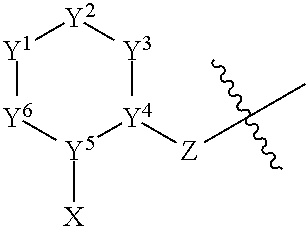
E10. The compound or pharmaceutically acceptable salt of E1, E2, E3, or E6, wherein one R8 is phenyl that is optionally substituted with from 1 to 4 substitutents independently selected from the group consisting of F, Cl, Br, I, C1-4 alkyl, C1-4haloalkyl, and C1-4haloalkoxy.
E11. The compound or pharmaceutically acceptable salt of E1, E2, E3, E4, E5, E6, E7, E8, E9, or E10, wherein R2 is H, F, Cl, Br, —CN, C3-6cycloalkyl, or C1-C6 alkyl that is optionally substituted with one or more groups independently selected from halo.
E12. The compound or pharmaceutically acceptable salt of E1, E2, E3, E4, E5, E6, E7, E8, E9, or E10, wherein R2 is H, F, Cl, Br, —CN, ethyl, cyclopropyl, or trifluoromethyl.
E13. The compound or pharmaceutically acceptable salt of E1, E2, E3, E4, E5, E6, E7, E8, E9, or E10, wherein R2 is trifluoromethyl.
E14. The compound or pharmaceutically acceptable salt of E1, E2, E3, E4, E5, E6, E7, E8, E9, E10, E11, E12, or E13 wherein R3 is H, Cl, or C1-6 alkyl.
E15. The compound or pharmaceutically acceptable salt of E1, E2, E3, E4, E5, E6, E7, E8, E9, E10, E11, E12, E13, or E14 wherein R4 is H, Cl, or C1-6 alkyl.
E16. The compound or pharmaceutically acceptable salt of E1, E2, E3, E4, E5, E10, E11, E12, E13, E14, or E15, wherein R5 is H, F, Cl, Br, —CN, C3-6cycloalkyl, or C1-C6 alkyl that is optionally substituted with one or more groups independently selected from halo.
E17. The compound or pharmaceutically acceptable salt of E1, E2, E3, E4, E5, E10, E11, E12, E13, E14, or E15, wherein R5 is H, F, Cl, Br, —CN, ethyl, cyclopropyl, or trifluoromethyl.
E18. The compound or pharmaceutically acceptable salt of E1, E2, E3, E4, E5, E6, E7, E8, E9, E10, E11, E12, E13, E14, E15, E16, or E17, wherein one of R2, R3, R4, and R5 is other than H, and the remaining of R2, R3, R4, and R5 are each H.
E19. The compound or pharmaceutically acceptable salt of E1, E2, E3, E4, E5, E6, E7, E8, E9, E10, E11, E12, E13, E14, E15, E16, or E17, wherein R2 is other than H and R3, R4, and R5 are each H.
E20. The compound or pharmaceutically acceptable salt of E1, E2, E3, E4, E5, E6, E7, E8, E9, E10, E11, E12, E14, E15, E16, or E17, wherein R3 is other than H and R2, R4, and Ware each H.
E21. The compound or pharmaceutically acceptable salt of E1, E2, E3, E4, E5, E6, E7, E8, E9, E10, E11, E12, E14, E15, E16, or E17, wherein R4 is other than H and R2, R3, and Ware each H.
E22. The compound or pharmaceutically acceptable salt of E1, E2, E3, E4, E5, E10, E11, E12, E14, E15, E16, or E17, wherein R5 is other than H and R2, R3, and R4 are each H.
E23. The compound or pharmaceutically acceptable salt of E1, E2, E3, E4, E5, E6, E7, E8, E9, E10, E11, E12, E13, E14, E15, E16, E17, E18, E19, E20, E21, or E22 wherein one of R2, R3, R4, and R5 is trifluoromethyl.
E24. The compound or pharmaceutically acceptable salt of E1, E2, E3, E4, E5, E6, E7, E8, E9, E10, E11, E12, E13, E14, E15, E16, E17, E18, E19, E20, E21, E22, or E23 wherein R6 is a 5-membered heteroaryl optionally substituted with one to three substituents each independently selected from the group consisting of C1-C6 alkyl, cyano, halo, and C1-C6 haloalkyl.
E25. The compound or pharmaceutically acceptable salt of E1, E2, E3, E4, E5, E6, E7, E8, E9, E10, E11, E12, E13, E14, E15, E16, E17, E18, E19, E20, E21, E22, or E23 wherein R6 is a 6-membered heteroaryl optionally substituted with one to three substituents each independently selected from the group consisting of C1-C6 alkyl, cyano, halo, and C1-C6 haloalkyl.
E26. The compound or pharmaceutically acceptable salt of E1, E2, E3, E4, E5, E6, E7, E8, E9, E10, E11, E12, E13, E14, E15, E16, E17, E18, E19, E20, E21, E22, or E23 wherein R6 is a pyrimidine ring that is optionally substituted with one to three substituents each independently selected from the group consisting of C1-C6 alkyl, cyano, halo, and C1-C6 haloalkyl.
E27. The compound or pharmaceutically acceptable salt of E1, E2, E3, E4, E5, E6, E7, E8, E9, E10, E11, E12, E13, E14, E15, E16, E17, E18, E19, E20, E21, E22, or E23 wherein R6 is a pyrimidine ring.
E28. The compound or pharmaceutically acceptable salt of E1, E2, E3, E4, E5, E6, E7, E8, E10, E11, E12, E13, E14, E15, E16, E17, E18, E19, E20, E21, E22, E23, E24, E25, E26, or E27, wherein each R9 is independently selected from the group consisting of hydrogen and C1-6alkyl.
E29. The compound or pharmaceutically acceptable salt of E1, E2, E3, E4, E5, E6, E7, E8, E10, E11, E12, E13, E14, E15, E16, E17, E18, E19, E20, E21, E22, E23, E24, E25, E26, or E27, wherein each R9 is hydrogen.
E30. The compound or pharmaceutically acceptable salt of E1, E2, E3, E4, E5, E6, E7, E8, E10, E11, E12, E13, E14, E15, E16, E17, E18, E19, E20, E21, E22, E23, E24, E25, E26, or E27, wherein each R9 is methyl.
E31. The compound or pharmaceutically acceptable salt of E1, E2, E3, E4, E5, E10, E11, E12, E13, E14, E15, E16, E17, E18, E19, E20, E21, E22, E23, E24, E25, E26, E27, E28, E29, or E30, wherein Z1 is N and Z2 is C(R4).
E32. The compound or pharmaceutically acceptable salt of E1, E2, E3, E4, E5, E10, E11, E12, E13, E14, E15, E16, E17, E18, E19, E20, E21, E22, E23, E24, E25, E26, E27, E28, E29, or E30 wherein Z1 is C(R5) and Z2 is N.
E33. The compound or pharmaceutically acceptable salt of E1, E2, E3, E10, E11, E12, E13, E14, E15, E16, E17, E18, E19, E20, E21, E22, E23, E24, E25, E26, E27, E28, E29, or E30 wherein Z is —O—.
E34. The compound or pharmaceutically acceptable salt of E1 wherein the group:
Figure US12209075-20250128-C00011

is selected from the group consisting of:
Figure US12209075-20250128-C00012
Figure US12209075-20250128-C00013
Figure US12209075-20250128-C00014
E35. The compound or pharmaceutically acceptable salt of E1 wherein the group:
Figure US12209075-20250128-C00015

is selected from the group consisting of:
Figure US12209075-20250128-C00016
Figure US12209075-20250128-C00017
Figure US12209075-20250128-C00018
Figure US12209075-20250128-C00019
Figure US12209075-20250128-C00020
E36. The compound or pharmaceutically acceptable salt of E1 wherein the group:
Figure US12209075-20250128-C00021

is selected from the group consisting of:
Figure US12209075-20250128-C00022
Figure US12209075-20250128-C00023
E37. The compound or pharmaceutically acceptable salt of E1 wherein the group:
Figure US12209075-20250128-C00024

is selected from the group consisting of:
Figure US12209075-20250128-C00025
E38. The compound or pharmaceutically acceptable salt of E1, E2, E3, E4, E5, E6, E7, E8, E10, E11, E12, E13, E14, E15, E16, E17, E18, E19, E20, E21, E22, E23, E24, E25, E26, E27, E31, E32, E33, or E36 wherein X is —N(R9)2; and wherein the two R9 groups of X together with the nitrogen to which they are both attached form a 5-membered pyrrolidin-1-yl ring or a 6-membered piperidin-1-yl ring.
In another aspect the present invention provides for a pharmaceutical composition comprising a compound as described herein or a pharmaceutically acceptable salt thereof, and a pharmaceutically acceptable excipient.
In another aspect the present invention provides for a method of treating a disease or condition in a mammal selected from the group consisting of pain, depression, cardiovascular diseases, respiratory diseases, and psychiatric diseases, and combinations thereof, wherein the method comprises administering to the mammal in need thereof a therapeutically effective amount of a compound as described herein, or a pharmaceutically acceptable salt thereof. In another aspect of the present invention said disease or condition is selected from the group consisting of neuropathic pain, inflammatory pain, visceral pain, cancer pain, chemotherapy pain, trauma pain, surgical pain, post-surgical pain, childbirth pain, labor pain, neurogenic bladder, ulcerative colitis, chronic pain, persistent pain, peripherally mediated pain, centrally mediated pain, chronic headache, migraine headache, sinus headache, tension headache, phantom limb pain, dental pain, peripheral nerve injury or a combination thereof. In another aspect of the present invention said disease or condition is selected from the group consisting of pain associated with HIV, HIV treatment induced neuropathy, trigeminal neuralgia, post-herpetic neuralgia, eudynia, heat sensitivity, tosarcoidosis, irritable bowel syndrome, Crohns disease, pain associated with multiple sclerosis (MS), amyotrophic lateral sclerosis (ALS), diabetic neuropathy, peripheral neuropathy, arthritis, rheumatoid arthritis, osteoarthritis, atherosclerosis, paroxysmal dystonia, myasthenia syndromes, myotonia, malignant hyperthermia, cystic fibrosis, pseudoaldosteronism, rhabdomyolysis, hypothyroidism, bipolar depression, anxiety, schizophrenia, sodium channel toxin related illnesses, familial erythromelalgia, primary erythromelalgia, familial rectal pain, cancer, epilepsy, partial and general tonic seizures, restless leg syndrome, arrhythmias, fibromyalgia, neuroprotection under ischaemic conditions cause by stroke or neural trauma, tach-arrhythmias, atrial fibrillation and ventricular fibrillation.
In another aspect the present invention provides for a method of treating pain in a mammal by the inhibition of ion flux through a voltage-dependent sodium channel in the mammal, wherein the method comprises administering to the mammal in need thereof a therapeutically effective amount of a compound as described herein, or a pharmaceutically acceptable salt thereof.
In another aspect the present invention provides for a method of decreasing ion flux through a voltage-dependent sodium channel in a cell in a mammal, wherein the method comprises contacting the cell with a compound as described herein, or a pharmaceutically acceptable salt thereof.
In another aspect the present invention provides for a method of treating pruritus in a mammal, wherein the method comprises administering to the mammal in need thereof a therapeutically effective amount of a compound of the invention, or a pharmaceutically acceptable salt thereof.
In another aspect the present invention provides for a method of treating cancer in a mammal, wherein the method comprises administering to the mammal in need thereof a therapeutically effective amount a compound as described herein, or a pharmaceutically acceptable salt thereof.
In another aspect the present invention provides for a method of treating, but not preventing, pain in a mammal, wherein the method comprises administering to the mammal in need thereof a therapeutically effective amount of a compound as described herein, or a pharmaceutically acceptable salt thereof. In another aspect of the present invention the pain is selected from the group consisting of neuropathic pain, inflammatory pain, visceral pain, cancer pain, chemotherapy pain, trauma pain, surgical pain, post-surgical pain, childbirth pain, labor pain, neurogenic bladder, ulcerative colitis, chronic pain, persistent pain, peripherally mediated pain, centrally mediated pain, chronic headache, migraine headache, sinus headache, tension headache, phantom limb pain, dental pain, peripheral nerve injury or a combination thereof. In another aspect the present invention the pain is associated with a disease or condition selected from the group consisting of HIV, HIV treatment induced neuropathy, trigeminal neuralgia, post-herpetic neuralgia, eudynia, heat sensitivity, tosarcoidosis, irritable bowel syndrome, Crohns disease, pain associated with multiple sclerosis (MS), amyotrophic lateral sclerosis (ALS), diabetic neuropathy, peripheral neuropathy, arthritis, rheumatoid arthritis, osteoarthritis, atherosclerosis, paroxysmal dystonia, myasthenia syndromes, myotonia, malignant hyperthermia, cystic fibrosis, pseudoaldosteronism, rhabdomyolysis, hypothyroidism, bipolar depression, anxiety, schizophrenia, sodium channel toxin related illnesses, familial erythromelalgia, primary erythromelalgia, familial rectal pain, cancer, epilepsy, partial and general tonic seizures, restless leg syndrome, arrhythmias, fibromyalgia, neuroprotection under ischaemic conditions cause by stroke or neural trauma, tach-arrhythmias, atrial fibrillation and ventricular fibrillation.
In another aspect the present invention provides for a method for the treatment or prophylaxis of pain, depression, cardiovascular disease, respiratory disease, or psychiatric disease, or a combinations thereof, in an animal which method comprises administering an effective amount of a compound of as described herein, or a pharmaceutically acceptable salt thereof.
In another aspect the present invention provides for a compound as described herein, or a pharmaceutically acceptable salt thereof for the use as a medicament for the treatment of diseases and disorders selected from the group consisting of pain, depression, cardiovascular diseases, respiratory diseases, and psychiatric diseases, or a combination thereof.
In another aspect the present invention provides for the use of a compound as described herein, or a pharmaceutically acceptable salt thereof for the manufacture of a medicament for the treatment of diseases and disorders selected from the group consisting of pain, depression, cardiovascular diseases, respiratory diseases, and psychiatric diseases, or a combination thereof.
In another aspect the present invention provides for the invention as described herein.
DETAILED DESCRIPTION Definitions
As used herein, the term “alkyl”, by itself or as part of another substituent, means, unless otherwise stated, a straight or branched chain hydrocarbon radical, having the number of carbon atoms designated (i.e., C1-8 means one to eight carbons). Examples of alkyl groups include methyl, ethyl, n-propyl, iso-propyl, n-butyl, t-butyl, iso-butyl, sec-butyl, n-pentyl, n-hexyl, n-heptyl, n-octyl, and the like.
The term “alkoxy” is used in its conventional sense, and refers to an alkyl group attached to the remainder of the molecule via an oxygen atom (“oxy”).
The term “alkylthio” is used in its conventional sense, and refers to an alkyl group attached to the remainder of the molecule via a sulfur atom.
The terms “halo” by itself or as part of another substituent, mean, unless otherwise stated, a fluorine, chlorine, bromine, or iodine atom.
The term “haloalkyl” refers to an alkyl that is substituted with one or more (e.g. 1, 2, 3, 4, 5, or 6) halo groups. For example the term includes an alkyl group having 1-6 carbon atoms that is substituted with one or more halo groups. Non-limiting examples of the term C1-C6 haloalkyl include fluoromethyl, difluoromethyl, trifluoromethyl, chloromethyl, and 2,2,2-trifluoroethyl.
The term “(haloalkyl)thio” refers to an alkyl that is substituted with one or more (e.g. 1, 2, 3, 4, 5, or 6) halo groups and is attached to the remainder of the molecule via a sulfur atom.
The term “halocycloalkyl” refers to a cycloalkyl that is substituted with one or more (e.g. 1, 2, 3, 4, 5, or 6) halo groups. For example the term includes a cycloalkyl group having 3-6 carbon atoms that is substituted with one or more halo groups. Non-limiting examples of the term C1-C6 halocycloalkyl include 1-fluorocyclopropyl.
The term “aryl” as used herein refers to a single all carbon aromatic ring or a multiple condensed all carbon ring system wherein at least one of the rings is aromatic. For example, in certain embodiments, an aryl group has 6 to 20 carbon atoms, 6 to 14 carbon atoms, or 6 to 12 carbon atoms. Aryl includes a phenyl radical. Aryl also includes multiple condensed ring systems (e.g., ring systems comprising 2, 3 or 4 rings) having about 9 to 20 carbon atoms in which at least one ring is aromatic and wherein the other rings may be aromatic or not aromatic (i.e., carbocycle). Such multiple condensed ring systems are optionally substituted with one or more (e.g., 1, 2 or 3) oxo groups on any carbocycle portion of the multiple condensed ring system. The rings of the multiple condensed ring system can be connected to each other via fused, spiro and bridged bonds when allowed by valency requirements. It is to be understood that the point of attachment of a multiple condensed ring system, as defined above, can be at any position of the ring system including an aromatic or a carbocycle portion of the ring. Non-limiting examples of aryl groups include, but are not limited to, phenyl, indenyl, naphthyl, 1, 2, 3, 4-tetrahydronaphthyl, anthracenyl, and the like.
The term “carbocycle” or “carbocyclyl” refers to a single saturated (i.e., cycloalkyl) or a single partially unsaturated (e.g., cycloalkenyl, cycloalkadienyl, etc.) all carbon ring having 3 to 7 carbon atoms (i.e., (C3-C7)carbocycle). The term “carbocycle” or “carbocyclyl” also includes multiple condensed, saturated and partially unsaturated all carbon ring systems (e.g., ring systems comprising 2, 3 or 4 carbocyclic rings). Accordingly, carbocycle includes multicyclic carbocyles such as a bicyclic carbocycles (e.g., bicyclic carbocycles having about 6 to 20 or 6 to 12 carbon atoms such as bicyclo[3.1.0]hexane and bicyclo[2.1.1]hexane), and polycyclic carbocycles (e.g. tricyclic and tetracyclic carbocycles with up to about 20 carbon atoms). The rings of the multiple condensed ring system can be connected to each other via fused, spiro and bridged bonds when allowed by valency requirements. For example, multicyclic carbocyles can be connected to each other via a single carbon atom to form a spiro connection (e.g., spiropentane, spiro[4,5]decane, etc.), via two adjacent carbon atoms to form a fused connection (e.g., carbocycles such as decahydronaphthalene, norsabinane, norcarane) or via two non-adjacent carbon atoms to form a bridged connection (e.g., norbornane, bicyclo[2.2.2]octane, etc.). The “carbocycle” or “carbocyclyl” can also be optionally substituted with one or more (e.g., 1, 2 or 3) oxo groups. In one embodiment the term carbocycle includes a C3-12 carbocycle. In one embodiment the term carbocycle includes a C3-8 carbocycle. In one embodiment the term carbocycle includes a C3-6 carbocycle. In one embodiment the term carbocycle includes a C3-5 carbocycle. Non-limiting examples of carbocycles include cyclopropyl, cyclobutyl, cyclopentyl, 1-cyclopent-1-enyl, 1-cyclopent-2-enyl, 1-cyclopent-3-enyl, cyclohexyl, 1-cyclohex-1-enyl, 1-cyclohex-2-enyl, bicyclo[2.2.1]heptane, pinane, adamantane, norborene, spirocyclic C5-12 alkane, and 1-cyclohex-3-enyl. In one embodiment the term “cycloalkyl” refers to a single saturated all carbon ring having 3 to 8 carbon atoms. Non-limiting examples of carbocycles include cyclopropyl, cyclobutyl, cyclopentyl, and cyclohexyl.
The term “heteroaryl” as used herein refers to a single aromatic ring that has at least one atom other than carbon in the ring, wherein the atom is selected from the group consisting of oxygen, nitrogen and sulfur; “heteroaryl” also includes multiple condensed ring systems that have at least one such aromatic ring, which multiple condensed ring systems are further described below. Thus, “heteroaryl” includes single aromatic rings of from about 1 to 6 carbon atoms and about 1-4 heteroatoms selected from the group consisting of oxygen, nitrogen and sulfur. The sulfur and nitrogen atoms may also be present in an oxidized form provided the ring is aromatic. Exemplary heteroaryl ring systems include but are not limited to pyridyl, pyrimidinyl, oxazolyl or furyl. “Heteroaryl” also includes multiple condensed ring systems (e.g., ring systems comprising 2, 3 or 4 rings) wherein a heteroaryl group, as defined above, is condensed with one or more rings selected from heteroaryls (to form for example a naphthyridinyl such as 1,8-naphthyridinyl), heterocycles, (to form for example a 1, 2, 3, 4-tetrahydronaphthyridinyl such as 1,2,3,4-tetrahydro-1,8-naphthyridinyl), carbocycles (to form for example 5,6,7,8-tetrahydroquinolyl) and aryls (to form for example indazolyl) to form the multiple condensed ring system. Thus, a heteroaryl (a single aromatic ring or multiple condensed ring system) has about 1-20 carbon atoms and about 1-6 heteroatoms within the heteroaryl ring. A heteroaryl (a single aromatic ring or multiple condensed ring system) can also have about 5 to 20 or about 5 to 15 or about 5 to 10 members within the heteroaryl ring. Such multiple condensed ring systems may be optionally substituted with one or more (e.g., 1, 2, 3 or 4) oxo groups on the carbocycle or heterocycle portions of the condensed ring. The rings of the multiple condensed ring system can be connected to each other via fused, spiro and bridged bonds when allowed by valency requirements. It is to be understood that the individual rings of the multiple condensed ring system may be connected in any order relative to one another. It is also to be understood that the point of attachment of a multiple condensed ring system (as defined above for a heteroaryl) can be at any position of the multiple condensed ring system including a heteroaryl, heterocycle, aryl or carbocycle portion of the multiple condensed ring system. It is also to be understood that the point of attachment for a heteroaryl or heteroaryl multiple condensed ring system can be at any suitable atom of the heteroaryl or heteroaryl multiple condensed ring system including a carbon atom and a heteroatom (e.g., a nitrogen). Exemplary heteroaryls include but are not limited to pyridyl, pyrrolyl, pyrazinyl, pyrimidinyl, pyridazinyl, pyrazolyl, thienyl, indolyl, imidazolyl, oxazolyl, isoxazolyl, thiazolyl, furyl, oxadiazolyl, thiadiazolyl, quinolyl, isoquinolyl, benzothiazolyl, benzoxazolyl, indazolyl, quinoxalyl, quinazolyl, 5,6,7,8-tetrahydroisoquinolinyl benzofuranyl, benzimidazolyl, thianaphthenyl, pyrrolo[2,3-b]pyridinyl, quinazolinyl-4(3H)-one, triazolyl, 4,5,6,7-tetrahydro-1H-indazole and 3b,4,4a,5-tetrahydro-1H-cyclopropa[3,4]cyclo-penta[1,2-c]pyrazole. In one embodiment the term “heteroaryl” refers to a single aromatic ring containing at least one heteroatom. For example, the term includes 5-membered and 6-membered monocyclic aromatic rings that include one or more heteroatoms. Non-limiting examples of heteroaryl include but are not limited to pyridyl, furyl, thiazole, pyrimidine, oxazole, and thiadiazole.
The term “heterocyclyl” or “heterocycle” as used herein refers to a single saturated or partially unsaturated ring that has at least one atom other than carbon in the ring, wherein the atom is selected from the group consisting of oxygen, nitrogen and sulfur; the term also includes multiple condensed ring systems that have at least one such saturated or partially unsaturated ring, which multiple condensed ring systems are further described below. Thus, the term includes single saturated or partially unsaturated rings (e.g., 3, 4, 5, 6 or 7-membered rings) from about 1 to 6 carbon atoms and from about 1 to 3 heteroatoms selected from the group consisting of oxygen, nitrogen and sulfur in the ring. The ring may be substituted with one or more (e.g., 1, 2 or 3) oxo groups and the sulfur and nitrogen atoms may also be present in their oxidized forms. Exemplary heterocycles include but are not limited to azetidinyl, tetrahydrofuranyl and piperidinyl. The term “heterocycle” also includes multiple condensed ring systems (e.g., ring systems comprising 2, 3 or 4 rings) wherein a single heterocycle ring (as defined above) can be condensed with one or more groups selected from heterocycles (to form for example a 1,8-decahydronapthyridinyl), carbocycles (to form for example a decahydroquinolyl) and aryls to form the multiple condensed ring system. Thus, a heterocycle (a single saturated or single partially unsaturated ring or multiple condensed ring system) has about 2-20 carbon atoms and 1-6 heteroatoms within the heterocycle ring. Such multiple condensed ring systems may be optionally substituted with one or more (e.g., 1, 2, 3 or 4) oxo groups on the carbocycle or heterocycle portions of the multiple condensed ring. The rings of the multiple condensed ring system can be connected to each other via fused, spiro and bridged bonds when allowed by valency requirements. It is to be understood that the individual rings of the multiple condensed ring system may be connected in any order relative to one another. Accordingly, a heterocycle (a single saturated or single partially unsaturated ring or multiple condensed ring system) has about 3-20 atoms including about 1-6 heteroatoms within the heterocycle ring system. It is also to be understood that the point of attachment of a multiple condensed ring system (as defined above for a heterocycle) can be at any position of the multiple condensed ring system including a heterocycle, aryl and carbocycle portion of the ring. It is also to be understood that the point of attachment for a heterocycle or heterocycle multiple condensed ring system can be at any suitable atom of the heterocycle or heterocycle multiple condensed ring system including a carbon atom and a heteroatom (e.g., a nitrogen). In one embodiment the term heterocycle includes a C2-20 heterocycle. In one embodiment the term heterocycle includes a C2-7 heterocycle. In one embodiment the term heterocycle includes a C2-5 heterocycle. In one embodiment the term heterocycle includes a C2-4 heterocycle. Exemplary heterocycles include, but are not limited to aziridinyl, azetidinyl, pyrrolidinyl, piperidinyl, homopiperidinyl, morpholinyl, thiomorpholinyl, piperazinyl, tetrahydrofuranyl, dihydrooxazolyl, tetrahydropyranyl, tetrahydrothiopyranyl, 1,2,3,4-tetrahydroquinolyl, benzoxazinyl, dihydrooxazolyl, chromanyl, 1,2-dihydropyridinyl, 2,3-dihydrobenzofuranyl, 1,3-benzodioxolyl, 1,4-benzodioxanyl, spiro[cyclopropane-1,1′-isoindolinyl]-3′-one, isoindolinyl-1-one, 2-oxa-6-azaspiro[3.3]heptanyl, imidazolidin-2-one N-methylpiperidine, imidazolidine, pyrazolidine, butyrolactam, valerolactam, imidazolidinone, hydantoin, dioxolane, phthalimide, 1,4-dioxane, thiomorpholine, thiomorpholine-S-oxide, thiomorpholine-S,S-oxide, pyran, 3-pyrroline, thiopyran, pyrone, tetrhydrothiophene, quinuclidine, tropane, 2-azaspiro[3.3]heptane, (1R,5S)-3-azabicyclo[3.2.1]octane, (1s,4s)-2-azabicyclo[2.2.2]octane, (1R,4R)-2-oxa-5-azabicyclo[2.2.2]octane and pyrrolidin-2-one. In one embodiment the term “heterocycle” refers to a monocyclic, saturated or partially unsaturated, 3-8 membered ring having at least one heteroatom. For example, the term includes a monocyclic, saturated or partially unsaturated, 4, 5, 6, or 7 membered ring having at least one heteroatom. Non-limiting examples of heterocycle include aziridine, azetidine, pyrrolidine, piperidine, piperidine, piperazine, oxirane, morpholine, and thiomorpholine. The term “9- or 10-membered heterobicycle” as used herein refers to a partially unsaturated or aromatic fused bicyclic ring system having at least one heteroatom. For example, the term 9- or 10-membered heterobicycle includes a bicyclic ring system having a benzo ring fused to a 5-membered or 6-membered saturated, partially unsaturated, or aromatic ring that contains one or more heteroatoms.
As used herein, the term “heteroatom” is meant to include oxygen (O), nitrogen (N), sulfur (S) and silicon (Si). The nitrogen and sulfur can be in an oxidized form when feasible.
As used herein, the term “chiral” refers to molecules which have the property of non-superimposability of the mirror image partner, while the term “achiral” refers to molecules which are superimposable on their mirror image partner.
As used herein, the term “stereoisomers” refers to compounds which have identical chemical constitution, but differ with regard to the arrangement of the atoms or groups in space.
As used herein a wavy line “
Figure US12209075-20250128-P00001
” that intersects a bond in a chemical structure indicates the point of attachment of the bond that the wavy bond intersects in the chemical structure to the remainder of a molecule.
“Diastereomer” refers to a stereoisomer with two or more centers of chirality and whose molecules are not mirror images of one another. Diastereomers have different physical properties, e.g. melting points, boiling points, spectral properties, and reactivities. Mixtures of diastereomers can separate under high resolution analytical procedures such as electrophoresis and chromatography.
“Enantiomers” refer to two stereoisomers of a compound which are non-superimposable mirror images of one another.
Stereochemical definitions and conventions used herein generally follow S. P. Parker, Ed., McGraw-Hill Dictionary of Chemical Terms (1984) McGraw-Hill Book Company, New York; and Eliel, E. and Wilen, S., “Stereochemistry of Organic Compounds”, John Wiley & Sons, Inc., New York, 1994. The compounds of the invention can contain asymmetric or chiral centers, and therefore exist in different stereoisomeric forms. It is intended that all stereoisomeric forms of the compounds of the invention, including but not limited to, diastereomers, enantiomers and atropisomers, as well as mixtures thereof such as racemic mixtures, form part of the present invention. Many organic compounds exist in optically active forms, i.e., they have the ability to rotate the plane of plane-polarized light. In describing an optically active compound, the prefixes D and L, or R and S, are used to denote the absolute configuration of the molecule about its chiral center(s). The prefixes d and l or (+) and (−) are employed to designate the sign of rotation of plane-polarized light by the compound, with (−) or l meaning that the compound is levorotatory. A compound prefixed with (+) or d is dextrorotatory. For a given chemical structure, these stereoisomers are identical except that they are mirror images of one another. A specific stereoisomer can also be referred to as an enantiomer, and a mixture of such isomers is often called an enantiomeric mixture. A 50:50 mixture of enantiomers is referred to as a racemic mixture or a racemate, which can occur where there has been no stereoselection or stereospecificity in a chemical reaction or process. The terms “racemic mixture” and “racemate” refer to an equimolar mixture of two enantiomeric species, devoid of optical activity.
When a bond in a compound formula herein is drawn in a non-stereochemical manner (e.g. flat), the atom to which the bond is attached includes all stereochemical possibilities. When a bond in a compound formula herein is drawn in a defined stereochemical manner (e.g. bold, bold-wedge, dashed or dashed-wedge), it is to be understood that the atom to which the stereochemical bond is attached is enriched in the absolute stereoisomer depicted unless otherwise noted. In one embodiment, the compound may be at least 51% the absolute stereoisomer depicted. In another embodiment, the compound may be at least 80% the absolute stereoisomer depicted. In another embodiment, the compound may be at least 90% the absolute stereoisomer depicted. In another embodiment, the compound may be at least 95% the absolute stereoisomer depicted. In another embodiment, the compound may be at least 97% the absolute stereoisomer depicted. In another embodiment, the compound may be at least 98% the absolute stereoisomer depicted. In another embodiment, the compound may be at least 99% the absolute stereoisomer depicted.
As used herein, the term “tautomer” or “tautomeric form” refers to structural isomers of different energies which are interconvertible via a low energy barrier. For example, proton tautomers (also known as prototropic tautomers) include interconversions via migration of a proton, such as keto-enol and imine-enamine isomerizations. Valence tautomers include interconversions by reorganization of some of the bonding electrons.
As used herein, the term “solvate” refers to an association or complex of one or more solvent molecules and a compound of the invention. Examples of solvents that form solvates include, but are not limited to, water, isopropanol, ethanol, methanol, DMSO, ethyl acetate, acetic acid, and ethanolamine. The term “hydrate” refers to the complex where the solvent molecule is water.
As used herein, the term “protecting group” refers to a substituent that is commonly employed to block or protect a particular functional group on a compound. For example, an “amino-protecting group” is a substituent attached to an amino group that blocks or protects the amino functionality in the compound. Suitable amino-protecting groups include acetyl, trifluoroacetyl, t-butoxycarbonyl (BOC), benzyloxycarbonyl (CBZ) and 9-fluorenylmethylenoxycarbonyl (Fmoc). Similarly, a “hydroxy-protecting group” refers to a substituent of a hydroxy group that blocks or protects the hydroxy functionality. Suitable protecting groups include acetyl and silyl. A “carboxy-protecting group” refers to a substituent of the carboxy group that blocks or protects the carboxy functionality. Common carboxy-protecting groups include phenylsulfonylethyl, cyanoethyl, 2-(trimethylsilyl)ethyl, 2-(trimethylsilyl)ethoxymethyl, 2-(p-toluenesulfonyl)ethyl, 2-(p-nitrophenylsulfenyl)ethyl, 2-(diphenylphosphino)-ethyl, nitroethyl and the like. For a general description of protecting groups and their use, see P.G.M. Wuts and T.W. Greene, Greene's Protective Groups in Organic Synthesis 4th edition, Wiley-Interscience, New York, 2006.
As used herein, the term “mammal” includes, but is not limited to, humans, mice, rats, guinea pigs, monkeys, dogs, cats, horses, cows, pigs, and sheep.
As used herein, the term “pharmaceutically acceptable salts” is meant to include salts of the active compounds which are prepared with relatively nontoxic acids or bases, depending on the particular substituents found on the compounds described herein. When compounds of the present invention contain relatively acidic functionalities, base addition salts can be obtained by contacting the neutral form of such compounds with a sufficient amount of the desired base, either neat or in a suitable inert solvent. Examples of salts derived from pharmaceutically-acceptable inorganic bases include aluminum, ammonium, calcium, copper, ferric, ferrous, lithium, magnesium, manganic, manganous, potassium, sodium, zinc and the like. Salts derived from pharmaceutically-acceptable organic bases include salts of primary, secondary and tertiary amines, including substituted amines, cyclic amines, naturally-occurring amines and the like, such as arginine, betaine, caffeine, choline, N,N′-dibenzylethylenediamine, diethylamine, 2-diethylaminoethanol, 2-dimethylaminoethanol, ethanolamine, ethylenediamine, N-ethylmorpholine, N-ethylpiperidine, glucamine, glucosamine, histidine, hydrabamine, isopropylamine, lysine, methylglucamine, morpholine, piperazine, piperidine, polyamine resins, procaine, purines, theobromine, triethylamine, trimethylamine, tripropylamine, tromethamine and the like. When compounds of the present invention contain relatively basic functionalities, acid addition salts can be obtained by contacting the neutral form of such compounds with a sufficient amount of the desired acid, either neat or in a suitable inert solvent. Examples of pharmaceutically acceptable acid addition salts include those derived from inorganic acids like hydrochloric, hydrobromic, nitric, carbonic, monohydrogencarbonic, phosphoric, monohydrogenphosphoric, dihydrogenphosphoric, sulfuric, monohydrogensulfuric, hydriodic, or phosphorous acids and the like, as well as the salts derived from relatively nontoxic organic acids like acetic, propionic, isobutyric, malonic, benzoic, succinic, suberic, fumaric, mandelic, phthalic, benzenesulfonic, p-tolylsulfonic, citric, tartaric, methanesulfonic, and the like. Also included are salts of amino acids such as arginate and the like, and salts of organic acids like glucuronic or galactunoric acids and the like (see, for example, Berge, S. M., et al., “Pharmaceutical Salts”, Journal of Pharmaceutical Science, 1977, 66, 1-19). Certain specific compounds of the present invention contain both basic and acidic functionalities that allow the compounds to be converted into either base or acid addition salts.
The neutral forms of the compounds can be regenerated by contacting the salt with a base or acid and isolating the parent compound in the conventional manner. The parent form of the compound differs from the various salt forms in certain physical properties, such as solubility in polar solvents, but otherwise the salts are equivalent to the parent form of the compound for the purposes of the present invention.
In addition to salt forms, the present invention provides compounds which are in a prodrug form. As used herein the term “prodrug” refers to those compounds that readily undergo chemical changes under physiological conditions to provide the compounds of the present invention. Additionally, prodrugs can be converted to the compounds of the present invention by chemical or biochemical methods in an ex vivo environment. For example, prodrugs can be slowly converted to the compounds of the present invention when placed in a transdermal patch reservoir with a suitable enzyme or chemical reagent.
Prodrugs of the invention include compounds wherein an amino acid residue, or a polypeptide chain of two or more (e.g., two, three or four) amino acid residues, is covalently joined through an amide or ester bond to a free amino, hydroxy or carboxylic acid group of a compound of the present invention. The amino acid residues include but are not limited to the 20 naturally occurring amino acids commonly designated by three letter symbols and also includes phosphoserine, phosphothreonine, phosphotyrosine, 4-hydroxyproline, hydroxylysine, demosine, isodemosine, gamma-carboxyglutamate, hippuric acid, octahydroindole-2-carboxylic acid, statine, 1,2,3,4-tetrahydroisoquinoline-3-carboxylic acid, penicillamine, ornithine, 3-methylhistidine, norvaline, beta-alanine, gamma-aminobutyric acid, citrulline, homocysteine, homoserine, methyl-alanine, para-benzoylphenylalanine, phenylglycine, propargylglycine, sarcosine, methionine sulfone and tert-butylglycine.
Additional types of prodrugs are also encompassed. For instance, a free carboxyl group of a compound of the invention can be derivatized as an amide or alkyl ester. As another example, compounds of this invention comprising free hydroxy groups can be derivatized as prodrugs by converting the hydroxy group into a group such as, but not limited to, a phosphate ester, hemisuccinate, dimethylaminoacetate, or phosphoryloxymethyloxycarbonyl group, as outlined in Fleisher, D. et al., (1996) Improved oral drug delivery: solubility limitations overcome by the use of prodrugs Advanced Drug Delivery Reviews, 19:115. Carbamate prodrugs of hydroxy and amino groups are also included, as are carbonate prodrugs, sulfonate esters and sulfate esters of hydroxy groups. Derivatization of hydroxy groups as (acyloxy)methyl and (acyloxy)ethyl ethers, wherein the acyl group can be an alkyl ester optionally substituted with groups including, but not limited to, ether, amine and carboxylic acid functionalities, or where the acyl group is an amino acid ester as described above, are also encompassed. Prodrugs of this type are described in J. Med. Chem., (1996), 39:10. More specific examples include replacement of the hydrogen atom of the alcohol group with a group such as (C1-6)alkanoyloxymethyl, 1-((C1-6)alkanoyloxy)ethyl, 1-methyl-1-((C1-6)alkanoyloxy)ethyl, (C1-6)alkoxycarbonyloxymethyl, N—(C1-6)alkoxycarbonylaminomethyl, succinoyl, (C1-6)alkanoyl, alpha-amino(C1-4)alkanoyl, arylacyl and alpha-aminoacyl, or alpha-aminoacyl-alpha-aminoacyl, where each alpha-aminoacyl group is independently selected from the naturally occurring L-amino acids, P(O)(OH)2, —P(O)(O(C1-6)alkyl)2 or glycosyl (the radical resulting from the removal of a hydroxyl group of the hemiacetal form of a carbohydrate).
For additional examples of prodrug derivatives, see, for example, a) Design of Prodrugs, edited by H. Bundgaard, (Elsevier, 1985) and Methods in Enzymology, Vol. 42, p. 309-396, edited by K. Widder, et al. (Academic Press, 1985); b) A Textbook of Drug Design and Development, edited by Krogsgaard-Larsen and H. Bundgaard, Chapter 5 “Design and Application of Prodrugs,” by H. Bundgaard p. 113-191 (1991); c) H. Bundgaard, Advanced Drug Delivery Reviews, 8:1-38 (1992); d) H. Bundgaard, et al., Journal of Pharmaceutical Sciences, 77:285 (1988); and e) N. Kakeya, et al., Chem. Pharm. Bull., 32:692 (1984), each of which is specifically incorporated herein by reference.
Additionally, the present invention provides for metabolites of compounds of the invention. As used herein, a “metabolite” refers to a product produced through metabolism in the body of a specified compound or salt thereof. Such products can result for example from the oxidation, reduction, hydrolysis, amidation, deamidation, esterification, deesterification, enzymatic cleavage, and the like, of the administered compound.
Metabolite products typically are identified by preparing a radiolabelled (e.g., 14C or 3H) isotope of a compound of the invention, administering it parenterally in a detectable dose (e.g., greater than about 0.5 mg/kg) to an animal such as rat, mouse, guinea pig, monkey, or to man, allowing sufficient time for metabolism to occur (typically about 30 seconds to 30 hours) and isolating its conversion products from the urine, blood or other biological samples. These products are easily isolated since they are labeled (others are isolated by the use of antibodies capable of binding epitopes surviving in the metabolite). The metabolite structures are determined in conventional fashion, e.g., by MS, LC/MS or NMR analysis. In general, analysis of metabolites is done in the same way as conventional drug metabolism studies well known to those skilled in the art. The metabolite products, so long as they are not otherwise found in vivo, are useful in diagnostic assays for therapeutic dosing of the compounds of the invention.
Pharmaceutical Compositions and Administration
In addition to one or more of the compounds provided above (or stereoisomers, geometric isomers, tautomers, solvates, metabolites, isotopes, pharmaceutically acceptable salts, or prodrugs thereof), the invention also provides for compositions and medicaments comprising a compound of the invention and at least one pharmaceutically acceptable carrier, diluent or excipient. The compositions of the invention can be used to selectively inhibit NaV1.7 in patients (e.g., humans).
The term “composition,” as used herein, is intended to encompass a product comprising the specified ingredients in the specified amounts, as well as any product which results, directly or indirectly, from combination of the specified ingredients in the specified amounts. By “pharmaceutically acceptable” it is meant the carrier, diluent or excipient must be compatible with the other ingredients of the formulation and not deleterious to the recipient thereof.
In one embodiment, the invention provides for pharmaceutical compositions (or medicaments) comprising a compound as described herein, and its stereoisomers, geometric isomers, tautomers, solvates, metabolites, isotopes, pharmaceutically acceptable salts, or prodrugs thereof) and a pharmaceutically acceptable carrier, diluent or excipient. In another embodiment, the invention provides for preparing compositions (or medicaments) comprising compounds of the invention. In another embodiment, the invention provides for administering a compound of the invention or a and compositions comprising a compound of the invention to a patient (e.g., a human patient) in need thereof.
Compositions are formulated, dosed, and administered in a fashion consistent with good medical practice. Factors for consideration in this context include the particular disorder being treated, the particular mammal being treated, the clinical condition of the individual patient, the cause of the disorder, the site of delivery of the agent, the method of administration, the scheduling of administration, and other factors known to medical practitioners. The effective amount of the compound to be administered will be governed by such considerations, and is the minimum amount necessary to inhibit NaV1.7 activity as required to prevent or treat the undesired disease or disorder, such as for example, pain. For example, such amount may be below the amount that is toxic to normal cells, or the mammal as a whole.
In one example, the therapeutically effective amount of the compound of the invention administered parenterally per dose will be in the range of about 0.01-100 mg/kg, alternatively about e.g., 0.1 to 20 mg/kg of patient body weight per day, with the typical initial range of compound used being 0.3 to 15 mg/kg/day. The daily does is, in certain embodiments, given as a single daily dose or in divided doses two to six times a day, or in sustained release form. In the case of a 70 kg adult human, the total daily dose will generally be from about 7 mg to about 1,400 mg. This dosage regimen may be adjusted to provide the optimal therapeutic response. The compounds may be administered on a regimen of 1 to 4 times per day, preferably once or twice per day.
The compounds of the present invention may be administered in any convenient administrative form, e.g., tablets, powders, capsules, solutions, dispersions, suspensions, syrups, sprays, suppositories, gels, emulsions, patches, etc. Such compositions may contain components conventional in pharmaceutical preparations, e.g., diluents, carriers, pH modifiers, sweeteners, bulking agents, and further active agents.
The compounds of the invention may be administered by any suitable means, including oral, topical (including buccal and sublingual), rectal, vaginal, transdermal, parenteral, subcutaneous, intraperitoneal, intrapulmonary, intradermal, intrathecal and epidural and intranasal, and, if desired for local treatment, intralesional administration. Parenteral infusions include intramuscular, intravenous, intraarterial, intraperitoneal, intracerebral, intraocular, intralesional or subcutaneous administration.
The compositions comprising compounds as described herein or an embodiment thereof are normally formulated in accordance with standard pharmaceutical practice as a pharmaceutical composition. A typical formulation is prepared by mixing a compound of the present invention and a diluent, carrier or excipient. Suitable diluents, carriers and excipients are well known to those skilled in the art and are described in detail in, e.g., Ansel, Howard C., et al., Ansel's Pharmaceutical Dosage Forms and Drug Delivery Systems. Philadelphia: Lippincott, Williams & Wilkins, 2004; Gennaro, Alfonso R., et al. Remington: The Science and Practice of Pharmacy. Philadelphia: Lippincott, Williams & Wilkins, 2000; and Rowe, Raymond C. Handbook of Pharmaceutical Excipients. Chicago, Pharmaceutical Press, 2005. The formulations may also include one or more buffers, stabilizing agents, surfactants, wetting agents, lubricating agents, emulsifiers, suspending agents, preservatives, antioxidants, opaquing agents, glidants, processing aids, colorants, sweeteners, perfuming agents, flavoring agents, diluents and other known additives to provide an elegant presentation of the drug (i.e., a compound of the present invention or pharmaceutical composition thereof) or aid in the manufacturing of the pharmaceutical product (i.e., medicament).
Suitable carriers, diluents and excipients are well known to those skilled in the art and include materials such as carbohydrates, waxes, water soluble and/or swellable polymers, hydrophilic or hydrophobic materials, gelatin, oils, solvents, water and the like. The particular carrier, diluent or excipient used will depend upon the means and purpose for which a compound of the present invention is being applied. Solvents are generally selected based on solvents recognized by persons skilled in the art as safe (GRAS) to be administered to a mammal. In general, safe solvents are non-toxic aqueous solvents such as water and other non-toxic solvents that are soluble or miscible in water. Suitable aqueous solvents include water, ethanol, propylene glycol, polyethylene glycols (e.g., PEG 400, PEG 300), etc. and mixtures thereof. The formulations can also include one or more buffers, stabilizing agents, surfactants, wetting agents, lubricating agents, emulsifiers, suspending agents, preservatives, antioxidants, opaquing agents, glidants, processing aids, colorants, sweeteners, perfuming agents, flavoring agents and other known additives to provide an elegant presentation of the drug (i.e., a compound of the present invention or pharmaceutical composition thereof) or aid in the manufacturing of the pharmaceutical product (i.e., medicament).
Acceptable diluents, carriers, excipients and stabilizers are nontoxic to recipients at the dosages and concentrations employed, and include buffers such as phosphate, citrate and other organic acids; antioxidants including ascorbic acid and methionine; preservatives (such as octadecyldimethylbenzyl ammonium chloride; hexamethonium chloride; benzalkonium chloride, benzethonium chloride; phenol, butyl or benzyl alcohol; alkyl parabens such as methyl or propyl paraben; catechol; resorcinol; cyclohexanol; 3-pentanol; and m-cresol); low molecular weight (less than about 10 residues) polypeptides; proteins, such as serum albumin, gelatin, or immunoglobulins; hydrophilic polymers such as polyvinylpyrrolidone; amino acids such as glycine, glutamine, asparagine, histidine, arginine, or lysine; monosaccharides, disaccharides and other carbohydrates including glucose, mannose, or dextrins; chelating agents such as EDTA; sugars such as sucrose, mannitol, trehalose or sorbitol; salt-forming counter-ions such as sodium; metal complexes (e.g., Zn-protein complexes); and/or non-ionic surfactants such as TWEEN™, PLURONICS™ or polyethylene glycol (PEG). A active pharmaceutical ingredient of the invention (e.g., a compound or pharmaceutically acceptable salt of the invention) can also be entrapped in microcapsules prepared, for example, by coacervation techniques or by interfacial polymerization, for example, hydroxymethylcellulose or gelatin-microcapsules and poly-(methylmethacylate) microcapsules, respectively, in colloidal drug delivery systems (for example, liposomes, albumin microspheres, microemulsions, nano-particles and nanocapsules) or in macroemulsions. Such techniques are disclosed in Remington: The Science and Practice of Pharmacy: Remington the Science and Practice of Pharmacy (2005) 21st Edition, Lippincott Williams & Wilkins, Philidelphia, Pa.
Sustained-release preparations of a compound can be prepared. Suitable examples of sustained-release preparations include semipermeable matrices of solid hydrophobic polymers containing a compound as described herein, which matrices are in the form of shaped articles, e.g., films, or microcapsules. Examples of sustained-release matrices include polyesters, hydrogels (for example, poly(2-hydroxyethyl-methacrylate), or poly(vinyl alcohol)), polylactides (U.S. Pat. No. 3,773,919), copolymers of L-glutamic acid and gamma-ethyl-L-glutamate (Sidman et al., Biopolymers 22:547, 1983), non-degradable ethylene-vinyl acetate (Langer et al., J. Biomed. Mater. Res. 15:167, 1981), degradable lactic acid-glycolic acid copolymers such as the LUPRON DEPOT™ (injectable microspheres composed of lactic acid-glycolic acid copolymer and leuprolide acetate) and poly-D-(−)-3-hydroxybutyric acid (EP 133,988A). Sustained release compositions also include liposomally entrapped compounds, which can be prepared by methods known per se (Epstein et al., Proc. Natl. Acad. Sci. U.S.A. 82:3688, 1985; Hwang et al., Proc. Natl. Acad. Sci. U.S.A. 77:4030, 1980; U.S. Pat. Nos. 4,485,045 and 4,544,545; and EP 102,324A). Ordinarily, the liposomes are of the small (about 200-800 Angstroms) unilamelar type in which the lipid content is greater than about 30 mol % cholesterol, the selected proportion being adjusted for the optimal therapy.
The formulations include those suitable for the administration routes detailed herein. The formulations can conveniently be presented in unit dosage form and can be prepared by any of the methods well known in the art of pharmacy. Techniques and formulations generally are found in Remington: The Science and Practice of Pharmacy: Remington the Science and Practice of Pharmacy (2005) 21st Edition, Lippincott Williams & Wilkins, Philidelphia, Pa. Such methods include the step of bringing into association the active ingredient with the carrier which constitutes one or more accessory ingredients.
In general the formulations are prepared by uniformly and intimately bringing into association the active ingredient with liquid carriers, diluents or excipients or finely divided solid carriers, diluents or excipients, or both, and then, if necessary, shaping the product. A typical formulation is prepared by mixing a compound of the present invention and a carrier, diluent or excipient. The formulations can be prepared using conventional dissolution and mixing procedures. For example, the bulk drug substance (i.e., compound of the present invention or stabilized form of the compound (e.g., complex with a cyclodextrin derivative or other known complexation agent) is dissolved in a suitable solvent in the presence of one or more of the excipients described above. A compound of the present invention is typically formulated into pharmaceutical dosage forms to provide an easily controllable dosage of the drug and to enable patient compliance with the prescribed regimen.
In one example, compounds as described herein may be formulated by mixing at ambient temperature at the appropriate pH, and at the desired degree of purity, with physiologically acceptable carriers, i.e., carriers that are non-toxic to recipients at the dosages and concentrations employed into a galenical administration form. The pH of the formulation depends mainly on the particular use and the concentration of compound, but preferably ranges anywhere from about 3 to about 8. In one example, a compound of of the invention is formulated in an acetate buffer, at pH 5. In another embodiment, a compound of the invention is sterile. The compound may be stored, for example, as a solid or amorphous composition, as a lyophilized formulation or as an aqueous solution.
Formulations of a compound as described herein suitable for oral administration can be prepared as discrete units such as pills, capsules, cachets or tablets each containing a predetermined amount of a compound of the invention.
Compressed tablets can be prepared by compressing in a suitable machine the active ingredient in a free-flowing form such as a powder or granules, optionally mixed with a binder, lubricant, inert diluent, preservative, surface active or dispersing agent. Molded tablets can be made by molding in a suitable machine a mixture of the powdered active ingredient moistened with an inert liquid diluent. The tablets can optionally be coated or scored and optionally are formulated so as to provide slow or controlled release of the active ingredient therefrom.
Tablets, troches, lozenges, aqueous or oil suspensions, dispersible powders or granules, emulsions, hard or soft capsules, e.g., gelatin capsules, syrups or elixirs can be prepared for oral use. Formulations of a compound as described herein intended for oral use can be prepared according to any method known to the art for the manufacture of pharmaceutical compositions and such compositions can contain one or more agents including sweetening agents, flavoring agents, coloring agents and preserving agents, in order to provide a palatable preparation. Tablets containing the active ingredient in admixture with non-toxic pharmaceutically acceptable excipient which are suitable for manufacture of tablets are acceptable. These excipients can be, for example, inert diluents, such as calcium or sodium carbonate, lactose, calcium or sodium phosphate; granulating and disintegrating agents, such as maize starch, or alginic acid; binding agents, such as starch, gelatin or acacia; and lubricating agents, such as magnesium stearate, stearic acid or talc. Tablets can be uncoated or can be coated by known techniques including microencapsulation to delay disintegration and adsorption in the gastrointestinal tract and thereby provide a sustained action over a longer period. For example, a time delay material such as glyceryl monostearate or glyceryl distearate alone or with a wax can be employed.
An example of a suitable oral administration form is a tablet containing about 1 mg, 5 mg, 10 mg, 25 mg, 30 mg, 50 mg, 80 mg, 100 mg, 150 mg, 250 mg, 300 mg and 500 mg of the compound of the invention compounded with about 90-30 mg anhydrous lactose, about 5-40 mg sodium croscarmellose, about 5-30 mg polyvinylpyrrolidone (PVP) K30, and about 1-10 mg magnesium stearate. The powdered ingredients are first mixed together and then mixed with a solution of the PVP. The resulting composition can be dried, granulated, mixed with the magnesium stearate and compressed to tablet form using conventional equipment. An example of an aerosol formulation can be prepared by dissolving the compound, for example 5-400 mg, of the invention in a suitable buffer solution, e.g. a phosphate buffer, adding a tonicifier, e.g. a salt such sodium chloride, if desired. The solution may be filtered, e.g., using a 0.2 micron filter, to remove impurities and contaminants.
For treatment of the eye or other external tissues, e.g., mouth and skin, the formulations are preferably applied as a topical ointment or cream containing the active ingredient(s) in an amount of, for example, 0.075 to 20% w/w. When formulated in an ointment, the active ingredient can be employed with either a paraffinic or a water-miscible ointment base. Alternatively, the active ingredients can be formulated in a cream with an oil-in-water cream base. If desired, the aqueous phase of the cream base can include a polyhydric alcohol, i.e., an alcohol having two or more hydroxyl groups such as propylene glycol, butane 1,3-diol, mannitol, sorbitol, glycerol and polyethylene glycol (including PEG 400) and mixtures thereof. The topical formulations can desirably include a compound which enhances absorption or penetration of the active ingredient through the skin or other affected areas. Examples of such dermal penetration enhancers include dimethyl sulfoxide and related analogs.
The oily phase of the emulsions of this invention can be constituted from known ingredients in a known manner. While the phase can comprise merely an emulsifier, it desirably comprises a mixture of at least one emulsifier with a fat or an oil or with both a fat and an oil. Preferably, a hydrophilic emulsifier is included together with a lipophilic emulsifier which acts as a stabilizer. It is also preferred to include both an oil and a fat. Together, the emulsifier(s) with or without stabilizer(s) make up the so-called emulsifying wax, and the wax together with the oil and fat make up the so-called emulsifying ointment base which forms the oily dispersed phase of the cream formulations. Emulsifiers and emulsion stabilizers suitable for use in the formulation of the invention include Tween® 60, Span® 80, cetostearyl alcohol, benzyl alcohol, myristyl alcohol, glyceryl mono-stearate and sodium lauryl sulfate.
In one aspect of topical applications, it is desired to administer an effective amount of a pharmaceutical composition according to the invention to target area, e.g., skin surfaces, mucous membranes, and the like, which are adjacent to peripheral neurons which are to be treated. This amount will generally range from about 0.0001 mg to about 1 g of a compound of the invention per application, depending upon the area to be treated, whether the use is diagnostic, prophylactic or therapeutic, the severity of the symptoms, and the nature of the topical vehicle employed. A preferred topical preparation is an ointment, wherein about 0.001 to about 50 mg of active ingredient is used per cc of ointment base. The pharmaceutical composition can be formulated as transdermal compositions or transdermal delivery devices (“patches”). Such compositions include, for example, a backing, active compound reservoir, a control membrane, liner and contact adhesive. Such transdermal patches may be used to provide continuous pulsatile, or on demand delivery of the compounds of the present invention as desired.
Aqueous suspensions of a compound as described herein contain the active materials in admixture with excipients suitable for the manufacture of aqueous suspensions. Such excipients include a suspending agent, such as sodium carboxymethylcellulose, croscarmellose, povidone, methylcellulose, hydroxypropyl methylcellulose, sodium alginate, polyvinylpyrrolidone, gum tragacanth and gum acacia, and dispersing or wetting agents such as a naturally occurring phosphatide (e.g., lecithin), a condensation product of an alkylene oxide with a fatty acid (e.g., polyoxyethylene stearate), a condensation product of ethylene oxide with a long chain aliphatic alcohol (e.g., heptadecaethyleneoxycetanol), a condensation product of ethylene oxide with a partial ester derived from a fatty acid and a hexitol anhydride (e.g., polyoxyethylene sorbitan monooleate). The aqueous suspension can also contain one or more preservatives such as ethyl or n-propyl p-hydroxybenzoate, one or more coloring agents, one or more flavoring agents and one or more sweetening agents, such as sucrose or saccharin.
Formulations of a compound as described herein can be in the form of a sterile injectable preparation, such as a sterile injectable aqueous or oleaginous suspension. This suspension can be formulated according to the known art using those suitable dispersing or wetting agents and suspending agents which have been mentioned above. The sterile injectable preparation can also be a sterile injectable solution or suspension in a non-toxic parenterally acceptable diluent or solvent, such as a solution in 1,3-butanediol or prepared as a lyophilized powder. Among the acceptable vehicles and solvents that can be employed are water, Ringer's solution and isotonic sodium chloride solution. In addition, sterile fixed oils can conventionally be employed as a solvent or suspending medium. For this purpose any bland fixed oil can be employed including synthetic mono- or diglycerides. In addition, fatty acids such as oleic acid can likewise be used in the preparation of injectables.
The amount of active ingredient that can be combined with the carrier material to produce a single dosage form will vary depending upon the host treated and the particular mode of administration. For example, a time-release formulation intended for oral administration to humans can contain approximately 1 to 1000 mg of active material compounded with an appropriate and convenient amount of carrier material which can vary from about 5 to about 95% of the total compositions (weight:weight). The pharmaceutical composition can be prepared to provide easily measurable amounts for administration. For example, an aqueous solution intended for intravenous infusion can contain from about 3 to 500 μg of the active ingredient per milliliter of solution in order that infusion of a suitable volume at a rate of about 30 mL/hr can occur.
Formulations suitable for parenteral administration include aqueous and non-aqueous sterile injection solutions which can contain anti-oxidants, buffers, bacteriostats and solutes which render the formulation isotonic with the blood of the intended recipient; and aqueous and non-aqueous sterile suspensions which can include suspending agents and thickening agents.
Formulations suitable for topical administration to the eye also include eye drops wherein the active ingredient is dissolved or suspended in a suitable carrier, especially an aqueous solvent for the active ingredient. The active ingredient is preferably present in such formulations in a concentration of about 0.5 to 20% w/w, for example about 0.5 to 10% w/w, for example about 1.5% w/w.
Formulations suitable for topical administration in the mouth include lozenges comprising the active ingredient in a flavored basis, usually sucrose and acacia or tragacanth; pastilles comprising the active ingredient in an inert basis such as gelatin and glycerin, or sucrose and acacia; and mouthwashes comprising the active ingredient in a suitable liquid carrier.
Formulations for rectal administration can be presented as a suppository with a suitable base comprising for example cocoa butter or a salicylate.
Formulations suitable for intrapulmonary or nasal administration have a particle size for example in the range of 0.1 to 500 microns (including particle sizes in a range between 0.1 and 500 microns in increments microns such as 0.5, 1, 30 microns, 35 microns, etc.), which is administered by rapid inhalation through the nasal passage or by inhalation through the mouth so as to reach the alveolar sacs. Suitable formulations include aqueous or oily solutions of the active ingredient. Formulations suitable for aerosol or dry powder administration can be prepared according to conventional methods and can be delivered with other therapeutic agents such as compounds heretofore used in the treatment of disorders as described below.
The formulations can be packaged in unit-dose or multi-dose containers, for example sealed ampoules and vials, and can be stored in a freeze-dried (lyophilized) condition requiring only the addition of the sterile liquid carrier, for example water, for injection immediately prior to use. Extemporaneous injection solutions and suspensions are prepared from sterile powders, granules and tablets of the kind previously described. Preferred unit dosage formulations are those containing a daily dose or unit daily sub-dose, as herein above recited, or an appropriate fraction thereof, of the active ingredient.
When the binding target is located in the brain, certain embodiments of the invention provide for a compound as described herein to traverse the blood-brain barrier. Certain neurodegenerative diseases are associated with an increase in permeability of the blood-brain barrier, such that a compound of of the invention can be readily introduced to the brain. When the blood-brain barrier remains intact, several art-known approaches exist for transporting molecules across it, including, but not limited to, physical methods, lipid-based methods, and receptor and channel-based methods.
Physical methods of transporting a compound as described herein across the blood-brain barrier include, but are not limited to, circumventing the blood-brain barrier entirely, or by creating openings in the blood-brain barrier.
Circumvention methods include, but are not limited to, direct injection into the brain (see, e.g., Papanastassiou et al., Gene Therapy 9:398-406, 2002), interstitial infusion/convection-enhanced delivery (see, e.g., Bobo et al., Proc. Natl. Acad. Sci. U.S.A. 91:2076-2080, 1994), and implanting a delivery device in the brain (see, e.g., Gill et al., Nature Med. 9:589-595, 2003; and Gliadel Wafers™, Guildford Pharmaceutical). Methods of creating openings in the barrier include, but are not limited to, ultrasound (see, e.g., U.S. Patent Publication No. 2002/0038086), osmotic pressure (e.g., by administration of hypertonic mannitol (Neuwelt, E. A., Implication of the Blood-Brain Barrier and its Manipulation, Volumes 1 and 2, Plenum Press, N.Y., 1989)), and permeabilization by, e.g., bradykinin or permeabilizer A-7 (see, e.g., U.S. Pat. Nos. 5,112,596, 5,268,164, 5,506,206, and 5,686,416).
Lipid-based methods of transporting a compound as described herein across the blood-brain barrier include, but are not limited to, encapsulating the a compound as described herein in liposomes that are coupled to antibody binding fragments that bind to receptors on the vascular endothelium of the blood-brain barrier (see, e.g., U.S. Patent Application Publication No. 2002/0025313), and coating a compound as described herein in low-density lipoprotein particles (see, e.g., U.S. Patent Application Publication No. 2004/0204354) or apolipoprotein E (see, e.g., U.S. Patent Application Publication No. 2004/0131692).
Receptor and channel-based methods of transporting a compound as described herein across the blood-brain barrier include, but are not limited to, using glucocorticoid blockers to increase permeability of the blood-brain barrier (see, e.g., U.S. Patent Application Publication Nos. 2002/0065259, 2003/0162695, and 2005/0124533); activating potassium channels (see, e.g., U.S. Patent Application Publication No. 2005/0089473), inhibiting ABC drug transporters (see, e.g., U.S. Patent Application Publication No. 2003/0073713); coating a compound as described herein with a transferrin and modulating activity of the one or more transferrin receptors (see, e.g., U.S. Patent Application Publication No. 2003/0129186), and cationizing the antibodies (see, e.g., U.S. Pat. No. 5,004,697).
For intracerebral use, in certain embodiments, the compounds can be administered continuously by infusion into the fluid reservoirs of the CNS, although bolus injection may be acceptable. The inhibitors can be administered into the ventricles of the brain or otherwise introduced into the CNS or spinal fluid. Administration can be performed by use of an indwelling catheter and a continuous administration means such as a pump, or it can be administered by implantation, e.g., intracerebral implantation of a sustained-release vehicle. More specifically, the inhibitors can be injected through chronically implanted cannulas or chronically infused with the help of osmotic minipumps. Subcutaneous pumps are available that deliver proteins through a small tubing to the cerebral ventricles. Highly sophisticated pumps can be refilled through the skin and their delivery rate can be set without surgical intervention. Examples of suitable administration protocols and delivery systems involving a subcutaneous pump device or continuous intracerebroventricular infusion through a totally implanted drug delivery system are those used for the administration of dopamine, dopamine agonists, and cholinergic agonists to Alzheimer's disease patients and animal models for Parkinson's disease, as described by Harbaugh, J. Neural Transm. Suppl. 24:271, 1987; and DeYebenes et al., Mov. Disord. 2: 143, 1987.
A compound as described herein used in the invention are formulated, dosed, and administered in a fashion consistent with good medical practice. Factors for consideration in this context include the particular disorder being treated, the particular mammal being treated, the clinical condition of the individual patient, the cause of the disorder, the site of delivery of the agent, the method of administration, the scheduling of administration, and other factors known to medical practitioners. A compound as described herein need not be, but is optionally formulated with one or more agent currently used to prevent or treat the disorder in question. The effective amount of such other agents depends on the amount of a compound of the invention present in the formulation, the type of disorder or treatment, and other factors discussed above.
These are generally used in the same dosages and with administration routes as described herein, or about from 1 to 99% of the dosages described herein, or in any dosage and by any route that is empirically/clinically determined to be appropriate.
For the prevention or treatment of disease, the appropriate dosage of a compound as described herein (when used alone or in combination with other agents) will depend on the type of disease to be treated, the properties of the compound, the severity and course of the disease, whether the compound is administered for preventive or therapeutic purposes, previous therapy, the patient's clinical history and response to the compound, and the discretion of the attending physician. The compound is suitably administered to the patient at one time or over a series of treatments. Depending on the type and severity of the disease, about 1 μg/kg to 15 mg/kg (e.g., 0.1 mg/kg-10 mg/kg) of compound can be an initial candidate dosage for administration to the patient, whether, for example, by one or more separate administrations, or by continuous infusion. One typical daily dosage might range from about 1 μg kg to 100 mg/kg or more, depending on the factors mentioned above. For repeated administrations over several days or longer, depending on the condition, the treatment would generally be sustained until a desired suppression of disease symptoms occurs. One exemplary dosage of a compound of the invention would be in the range from about 0.05 mg/kg to about 10 mg/kg. Thus, one or more doses of about 0.5 mg/kg, 2.0 mg/kg, 4.0 mg/kg, or 10 mg/kg (or any combination thereof) may be administered to the patient. Such doses may be administered intermittently, e.g., every week or every three weeks (e.g., such that the patient receives from about two to about twenty, or, e.g., about six doses of the antibody). An initial higher loading dose, followed by one or more lower doses may be administered. An exemplary dosing regimen comprises administering an initial loading dose of about 4 mg/kg, followed by a weekly maintenance dose of about 2 mg kg of the compound. However, other dosage regimens may be useful. The progress of this therapy is easily monitored by conventional techniques and assays.
Other typical daily dosages might range from, for example, about 1 g/kg to up to 100 mg/kg or more (e.g., about 1 μg kg to 1 mg/kg, about 1 μg/kg to about 5 mg/kg, about 1 mg kg to 10 mg/kg, about 5 mg/kg to about 200 mg/kg, about 50 mg/kg to about 150 mg/mg, about 100 mg/kg to about 500 mg/kg, about 100 mg/kg to about 400 mg/kg, and about 200 mg/kg to about 400 mg/kg), depending on the factors mentioned above. Typically, the clinician will administer a compound until a dosage is reached that results in improvement in or, optimally, elimination of, one or more symptoms of the treated disease or condition. The progress of this therapy is easily monitored by conventional assays. One or more agent provided herein may be administered together or at different times (e.g., one agent is administered prior to the administration of a second agent). One or more agent may be administered to a subject using different techniques (e.g., one agent may be administered orally, while a second agent is administered via intramuscular injection or intranasally). One or more agent may be administered such that the one or more agent has a pharmacologic effect in a subject at the same time. Alternatively, one or more agent may be administered, such that the pharmacological activity of the first administered agent is expired prior the administration of one or more secondarily administered agents (e.g., 1, 2, 3, or 4 secondarily administered agents).
The following compounds and pharmaceutically acceptable salts of the invention were prepared in the Examples below.
Example Structure Name
1
Figure US12209075-20250128-C00026
Single Known Stereoisomer N-pyrimidin-4-yl-6-[rac- (1S,2S,4S)-2- (dimethylamino)-4-[3- (trifluoromethyl)phenyl]- cyclohexoxy]pyridine-3- sulfonamide
2
Figure US12209075-20250128-C00027
Single Known Stereoisomer N-pyrimidin-4-yl-6-[rac- (1S,2S,4S)-2- (dimethylamino)-4-[3- (trifluoromethyl)phenyl]- cyclohexyl]amino]pyridine-3- sulfonamide
3
Figure US12209075-20250128-C00028
Single Known Stereoisomer 5-chloro-N-pyrimidin-4-yl-6- [rac-(1S,2S,4S)-2- (dimethylamino)-4-[3- (trifluoromethyl)phenyl]- cyclohexoxy]pyridine-3- sulfonamide formate salt
4
Figure US12209075-20250128-C00029
Single Known Stereoisomer 5-chloro-N-pyrimidin-4-yl-6- [[rac-(1S,2S,4S)-2- (dimethylamino)-4-[3- (trifluoromethyl)phenyl]- cyclohexyl]amino]pyridine-3- sulfonamide
5
Figure US12209075-20250128-C00030
Single Known Stereoisomer N-pyrimidin-4-yl-5-[[rac- (1S,2S,4S)-2- (dimethylamino)-4-[3- (trifluoromethyl)phenyl]- cyclohexyl]amino]pyridine-2- sulfonamide
6
Figure US12209075-20250128-C00031
Single Known Stereoisomer 5-cyano-N-pyrimidin-4-yl-6- [rac-(1S,2S,4S)-2- (dimethylamino)-4-[3- (trifluoromethyl)phenyl]- cyclohexoxy]pyridine-3- sulfonamide formate salt
7
Figure US12209075-20250128-C00032
Single Known Stereoisomer 5-cyclopropyl-N-pyrimidin-4- yl-6-[rac-(1S,2S,4S)-2- (dimethylamino)-4-[3- (trifluoromethyl)phenyl]- cyclohexoxy]pyridine-3- sulfonamide formate salt
8
Figure US12209075-20250128-C00033
Single Known Stereoisomer N-pyrimidin-4-yl-6-[[rac- (1S,2S,4S)-2-(dimethylamino)- 4-[3-(trifluoromethoxy)phenyl]- cyclohexyl]amino]pyridine-3- sulfonamide formate salt
9
Figure US12209075-20250128-C00034
Single Known Stereoisomer N-pyrimidin-4-yl-6-[rac- (1S,2S,4S)-2-pyrrolidin-1-yl- 4-[3-(trifluoromethoxy)- phenyl]cyclohexyl]amino]- pyridine-3-sulfonamide formate salt
10
Figure US12209075-20250128-C00035
Single Known Stereoisomer N-pyrimidin-4-yl-6-[rac- (1S,2S,4S)-2-pyrrolidin-1-yl- 4-[3-(trifluoromethoxy)- phenyl]-cyclohexoxy]pyridine- 3-sulfonamide
11
Figure US12209075-20250128-C00036
Single Known Stereoisomer N-pyrimidin-4-yl-6-[[rac- (1S,2S,4S)-4-[4-chloro-3- (trifluoromethyl)phenyl]-2- (dimethylamino)cyclohexyl]- amino]pyridine-3-sulfonamide formate salt
12
Figure US12209075-20250128-C00037
Single Known Stereoisomer N-pyrimidin-4-yl-6-[rac- (1S,2S,4S)-4-[4-chloro-3- (trifluoromethyl)phenyl]-2- (dimethylamino)cyclohexoxy]- pyridine-3-sulfonamide formate salt
13
Figure US12209075-20250128-C00038
Single Known Stereoisomer 5-chloro-N-pyrimidin-4-yl-6- [rac-(1S,2S,4S)-2-(dimethyl- amino)-4-[3-(trifluoro- methoxy)phenyl]cyclohexoxy] pyridine-3-sulfonamide
14
Figure US12209075-20250128-C00039
Single Known Stereoisomer N-pyrimidin-4-yl-6-[rac- (1S,2S,4S)-2-(dimethyl- amino)-4-[3-(trifluoromethyl)- phenyl]cyclohexoxy]-5- (trifluoromethyl)pyridine-3- sulfonamide
15
Figure US12209075-20250128-C00040
Single Known Stereoisomer 5-methyl-N-pyrimidin-4-yl-6- [rac-(1S,2S,4S)-2-(dimethyl- amino)-4-[3-(trifluoromethyl)- phenyl]cyclohexoxy]pyridine- 3-sulfonamide
16
Figure US12209075-20250128-C00041
Single Known Stereoisomer N-pyrimidin-4-yl-6-[rac- (1S,2S,4S)-2-pyrrolidin-1-yl- 4-[3-(trifluoromethyl)- phenyl]cyclohexyl]amino]- pyridine-3-sulfonamide formate salt
17
Figure US12209075-20250128-C00042
Single Known Stereoisomer N-pyrimidin-4-yl-6-[rac- (1S,2S,4S)-2-pyrrolidin-1-yl- 4-[3-(trifluoromethyl)- phenyl]cyclohexoxy]pyridine- 3-sulfonamide formate salt
18
Figure US12209075-20250128-C00043
Single Known Stereoisomer 5-chloro-N-pyrimidin-4-yl-6- [rac-(1S,2S,4S)-2-pyrrolidin- 1-yl-4-[3-(trifluoromethyl)- phenyl]cyclohexoxy]pyridine- 3-sulfonamide
19
Figure US12209075-20250128-C00044
Single Known Stereoisomer 5-chloro-N-pyrimidin-4-yl-6- [rac-(1S,2S,4S)-2-(1- piperidyl)-4-[3-(trifluoro- methyl)phenyl]cyclohexoxy]- pyridine-3-sulfonamide
20
Figure US12209075-20250128-C00045
Single Known Stereoisomer 5-bromo-N-pyrimidin-4-yl-6- [rac-(1S,2S,4S)-2-(dimethyl- amino)-4-[3-(trifluoromethyl)- phenyl]cyclohexoxy]pyridine- 3-sulfonamide formate salt
21
Figure US12209075-20250128-C00046
Single Known Stereoisomer 5-fluoro-N-pyrimidin-4-yl-6- [rac-(1S,2S,4S)-2-(dimethyl- amino)-4-[3-(trifluoromethyl)- phenyl]cyclohexoxy]pyridine- 3-sulfonamide
22
Figure US12209075-20250128-C00047
Single Known Stereoisomer 2-chloro-N-pyrimidin-4-yl-6- [rac-(1S,2S,4S)-2-(dimethyl- amino)-4-[3-(trifluoromethyl)- phenyl]cyclohexoxy]pyridine- 3-sulfonamide
23
Figure US12209075-20250128-C00048
Single Known Stereoisomer 2-methyl-N-pyrimidin-4-yl-6- [rac-(1S,2S,4S)-2-(dimethyl- amino)-4-[3-(trifluoromethyl)- phenyl]cyclohexoxy]pyridine- 3-sulfonamide formate salt
24
Figure US12209075-20250128-C00049
Single Known Stereoisomer 5-ethyl-N-pyrimidin-4-yl-6- [rac-(1S,2S,4S)-2-(dimethyl- amino)-4-[3-(trifluoromethyl)- phenyl]cyclohexoxy]pyridine- 3-sulfonamide formate salt
25
Figure US12209075-20250128-C00050
Single Known Stereoisomer formic acid; N-pyrimidin-4-yl- 6-[rac-(1S,2S,4S)-2-(dimethyl- amino)-4-[3-(trifluoro- methoxyphenyl]cyclohexoxy]- pyridine-3-sulfonamide
26
Figure US12209075-20250128-C00051
Single Known Stereoisomer N-pyrimidin-4-yl-6-[rac- (1S,2S,4S)-2-(1-piperidyl)-4- [3-(trifluoromethyl)phenyl]- cyclohexoxy]pyridine-3- sulfonamide
27
Figure US12209075-20250128-C00052
Single Known Stereoisomer 5-chloro-N-pyrimidin-4-yl-6- [rac-(1S,2S,4S)-4-(3-chloro- phenyl)-2-(dimethylamino)- cyclohexoxy]pyridine-3- sulfonamide
28
Figure US12209075-20250128-C00053
Single Known Stereoisomer 2-methyl-N-pyrimidin-4-yl-6- [rac-(1S,2S,4S)-2-(dimethyl- amino)-4-[3-(trifluoro- methoxy)phenyl]- cyclohexoxy]pyridine-3- sulfonamide
29
Figure US12209075-20250128-C00054
Single Known Stereoisomer 2-methyl-N-pyrimidin-4-yl-6- [rac-(1S,2S,4S)-2-pyrrolidin- 1-yl-4-[3-(trifluoromethyl)- phenyl]cyclohexoxy]pyridine- 3-sulfonamide
30
Figure US12209075-20250128-C00055
Single Known Stereoisomer 2-methyl-N-pyrimidin-4-yl-6- [rac-(1S,2S,4S)-2-pyrrolidin- 1-yl-4-[3-(trifluoromethoxy)- phenyl]cyclohexoxy]pyridine- 3-sulfonamide
31
Figure US12209075-20250128-C00056
Single Known Stereoisomer 4-chloro-6-(((1S,2S,4S)-2- (dimethylamino)-4-(3- (trifluoromethyl)phenyl)- cyclohexyl)oxy)-N-(pyrimidin- 4-yl)pyridine-3-sulfonamide
32
Figure US12209075-20250128-C00057
Single Known Stereoisomer 6-(((1S,2S,4S)-2-(dimethyl- amino)-4-(3-(trifluoro- methyl)phenyl)-cyclohexyl)- oxy)-4-methyl-N-(pyrimidin- 4-yl)pyridine-3-sulfonamide
33
Figure US12209075-20250128-C00058
Single Known Stereoisomer 6-(((1S,2S,4S)-2- (dimethylamino)-4-(3- (trifluoromethyl)phenyl)- cyclohexyl)oxy)-2-ethyl-N- (pyrimidin-4-yl)pyridine-3- sulfonamide
34
Figure US12209075-20250128-C00059
Single Known Stereoisomer 2-cyclopropyl-6-(((1S,2S,4S)- 2-(dimethylamino)-4-(3- (trifluoromethyl)phenyl)- cyclohexyl)oxy)-N-(pyrimidin- 4-yl)pyridine-3-sulfonamide
35
Figure US12209075-20250128-C00060
Single Known Stereoisomer 6-(((1S,2S,4S)-2-(cyclobutyl- (methyl)amino)-4-(3- (trifluoromethyl)phenyl)- cyclohexyl)oxy)-2-methyl-N- (pyrimidin-4-yl)pyridine-3- sulfonamide
36
Figure US12209075-20250128-C00061
Single Known Stereoisomer 6-(((1S,2S,4S)-4-(4-chloro-3- (trifluoromethyl)phenyl)-2- (dimethylamino)cyclohexyl)- oxy)-2-methyl-N-(pyrimidin- 4-yl)pyridine-3-sulfonamide
37
Figure US12209075-20250128-C00062
Single Known Stereoisomer 6-(((1S,2S,4S)-4-(3,4-dichloro- phenyl)-2-(dimethylamino)- cyclohexyl)oxy)-2-methyl-N- (pyrimidin-4-yl)pyridine-3- sulfonamide
38
Figure US12209075-20250128-C00063
Single Known Stereoisomer 6-(((1S,2S,4S)-4-(2-chloro-5- (trifluoromethyl)phenyl)-2- (dimethylamino)cyclohexyl)- oxy)-2-methyl-N-(pyrimidin- 4-yl)pyridine-3-sulfonamide
39
Figure US12209075-20250128-C00064
Single Known Stereoisomer 6-(((1S,2S,4S)-4-(2,5-dichloro- phenyl)-2-(dimethylamino)- cyclohexyl)oxy)-2-methyl-N- (pyrimidin-4-yl)pyridine-3- sulfonamide formate
40
Figure US12209075-20250128-C00065
Single Known Stereoisomer 5-chloro-N-(pyrimidin-4-yl)-6- (((1S,2S,4S)-2-(pyrrolidin-1- yl)-4-(6-(trifluoromethyl)- pyridin-2-yl)cyclohexyl)oxy)- pyridine-3-sulfonamide
41
Figure US12209075-20250128-C00066
Single Known Stereoisomer 6-(((1S,2S,4S)-4-(3-(1,1- difluoroethyl)phenyl)-2- (dimethylamino)cyclohexyl)- oxy)-2-methyl-N-(pyrimidin- 4-yl)pyridine-3-sulfonamide
42
Figure US12209075-20250128-C00067
Single Known Stereoisomer 6-(((1S,2S,4S)-2-(dimethyl- amino)-4-(3-fluoro-5- (trifluoromethyl)phenyl)- cyclohexyl)oxy)-2-methyl-N- (pyrimidin-4-yl)pyridine-3- sulfonamide
43
Figure US12209075-20250128-C00068
Single Known Stereoisomer 6-(((1S,2S,4S)-2-(dimethyl- amino)-4-(2-fluoro-5- (trifluoromethyl)phenyl)- cyclohexyl)oxy)-2-methyl-N- (pyrimidin-4-yl)pyridine-3- sulfonamide formate
44
Figure US12209075-20250128-C00069
Single Known Stereoisomer 2-Chloro-6-(((1S,2S,4S)-2- (dimethylamino)-4-(2-fluoro- 5-(trifluoromethyl)phenyl)- cyclohexyl)oxy)-N-(pyrimidin- 4-yl)pyridine-3-sulfonamide formate
45
Figure US12209075-20250128-C00070
Single Known Stereoisomer 6-(((1S,2S,4S)-2-(dimethyl- amino)-4-(4-fluoro-3- (trifluoromethyl)phenyl)- cyclohexyl)oxy)-2-methyl-N- (pyrimidin-4-yl)pyridine-3- sulfonamide formate
46
Figure US12209075-20250128-C00071
Single Known Stereoisomer 6-(((1S,2S,4S)-2-(dimethyl- amino)-4-(2-fluoro-3- (trifluoromethyl)phenyl)- cyclohexyl)oxy)-2-methyl-N- (pyrimidin-4-yl)pyridine-3- sulfonamide formate
47
Figure US12209075-20250128-C00072
Single Known Stereoisomer 6-(((1S,2S,4S)-2-(Diethy- lamino)-4-(3-(trifluoro- methyl)-phenyl)cyclohexyl)- oxy)-2-methyl-N-(pyrimidin- 4-yl)pyridine-3-sulfonamide
48
Figure US12209075-20250128-C00073
Single Known Stereoisomer 6-(((1S,2S,4S)-2-(ethyl- (methyl)amino)-4-(3- (trifluoromethyl)phenyl)- cyclohexyl)oxy)-2-methyl-N- (pyrimidin-4-yl)pyridine-3- sulfonamide
49
Figure US12209075-20250128-C00074
Single Known Stereoisomer 6-(((1S,2S,4S)-4-(3-chloro-5- (trifluoromethyl)phenyl)-2- (dimethylamino)cyclohexyl)- oxy)-2-methyl-N-(pyrimidin- 4-yl)pyridine-3-sulfonamide
50
Figure US12209075-20250128-C00075
Single Known Stereoisomer 6-(((1S,2S,4S)-4-(3,5- dichlorophenyl)-2-(dimethyl- amino)cyclohexyl)oxy)-2- methyl-N-(pyrimidin-4- yl)pyridine-3-sulfonamide
51
Figure US12209075-20250128-C00076
Single Known Stereoisomer 6-(((1S,2S,4S)-2-(dimethyl- amino)-4-(6-(trifluoromethyl)- pyridin-2-yl)cyclohexyl)oxy)- 2-methyl-N-(pyrimidin-4- yl)pyridine-3-sulfonamide
52
Figure US12209075-20250128-C00077
Single Known Stereoisomer 6-(((1S,2S,4S)-4-(3-(difluoro- methoxy)phenyl)-2-(dimethyl- amino)cyclohexyl)oxy)-2- methyl-N-(pyrimidin-4- yl)pyridine-3-sulfonamide
53
Figure US12209075-20250128-C00078
Single Known Stereoisomer 6-(((1S,2S,4S)-2-(dimethyl- amino)-4-(3-(trifluoromethyl)- phenyl)cyclohexyl)oxy)-5- fluoro-2-methyl-N-(pyrimidin- 4-yl)pyridine-3-sulfonamide formate
54
Figure US12209075-20250128-C00079
Single Known Stereoisomer 6-(((1S,2S,4S)-2-(dimethyl- amino)-4-(2-methyl-5- (trifluoromethyl)phenyl)- cyclohexyl)oxy)-2-methyl-N- (pyrimidin-4-yl)pyridine-3- sulfonamide
55
Figure US12209075-20250128-C00080
Single Known Stereoisomer 2-methyl-6-(((1S,2S,4S)-2- morpholino-4-(3-(trifluoro- methyl)phenyl)cyclohexyl)- oxy)-N-(pyrimidin-4- yl)pyridine-3-sulfonamide
56
Figure US12209075-20250128-C00081
Single Known Stereoisomer 6-(((1S,2S,4S)-2-(dimethyl- amino)-4-(4-methyl-3- (trifluoromethyl)phenyl)- cyclohexyl)oxy)-2-methyl-N- (pyrimidin-4-yl)pyridine-3- sulfonamide formate
57
Figure US12209075-20250128-C00082
Single Known Stereoisomer 6-(((1S,2S,4S)-4-(3-chloro- phenyl)-2-(dimethylamino)- cyclohexyl)oxy)-2-methyl-N- (pyrimidin-4-yl)pyridine-3- sulfonamide
58
Figure US12209075-20250128-C00083
Single Known Stereoisomer 6-(((1S,2S,4S)-2-(dimethyl- amino)-4-(3-methyl-5- (trifluoromethyl)phenyl)- cyclohexyl)oxy)-2-methyl-N- (pyrimidin-4-yl)pyridine-3- sulfonamide
59
Figure US12209075-20250128-C00084
Single Known Stereoisomer 6-(((1S,2S,4S)-2-(dimethyl- amino)-4-(3-(2,2,2-trifluoro- ethyl)phenyl)-cyclohexyl)- oxy)-2-methyl-N-(pyrimidin- 4-yl)pyridine-3-sulfonamide
60
Figure US12209075-20250128-C00085
Single Known Stereoisomer 6-(((1S,2S,4S)-2-(dimethyl- amino)-4-(2-methyl-3- (trifluoromethyl)phenyl)- cyclohexyl)oxy)-2-methyl-N- (pyrimidin-4-yl)pyridine-3- sulfonamide
61
Figure US12209075-20250128-C00086
Single Known Stereoisomer 6-(((1S,2S,4S)-2-(dimethyl- amino)-4-(3-(trifluoromethyl)- phenyl)cyclohexyl)oxy)-5- methoxy-N-(pyrimidin-4- yl)pyridine-3-sulfonamide formate
62
Figure US12209075-20250128-C00087
Single Known Stereoisomer 6-(((1S,2S,4S)-4-(5-chloro-6- (trifluoromethyl)pyridin-2-yl)- 2-(dimethylamino)- cyclohexyl)oxy)-2-methyl-N- (pyrimidin-4-yl)pyridine-3- sulfonamide
63
Figure US12209075-20250128-C00088
Single Known Stereoisomer 6-(((1S,2S,4S)-2-(dimethy- lamino)-4-(3-((trifluoro- methyl)thio)phenyl)cyclohexyl) oxy)-N-(pyrimidin-4-yl) pyridine-3-sulfonamide

Indications and Methods of Treatment
The compounds of the invention modulate, preferably inhibit, ion flux through a voltage-dependent sodium channel in a mammal, (e.g., a human). Any such modulation, whether it be partial or complete inhibition or prevention of ion flux, is sometimes referred to herein as “blocking” and corresponding compounds as “blockers” or “inhibitors”. In general, the compounds of the invention modulate the activity of a sodium channel downwards by inhibiting the voltage-dependent activity of the sodium channel, and/or reduce or prevent sodium ion flux across a cell membrane by preventing sodium channel activity such as ion flux.
Accordingly, the compounds of the invention are sodium channel blockers and are therefore useful for treating diseases and conditions in mammals, for example humans, and other organisms, including all those diseases and conditions which are the result of aberrant voltage-dependent sodium channel biological activity or which may be ameliorated by modulation of voltage-dependent sodium channel biological activity. In particular, the compounds of the invention, i.e., the compounds of formula (I) and embodiments and (or stereoisomers, geometric isomers, tautomers, solvates, metabolites, isotopes, pharmaceutically acceptable salts, or prodrugs thereof), are useful for treating diseases and conditions in mammals, for example humans, which are the result of aberrant voltage-dependent NaV1.7 biological activity or which may be ameliorated by the modulation, preferably the inhibition, of NaV1.7 biological activity. In certain aspects, the compounds of the invention selectively inhibit NaV1.7 over NaV1.5.
As defined herein, a sodium channel-mediated disease or condition refers to a disease or condition in a mammal, preferably a human, which is ameliorated upon modulation of the sodium channel and includes, but is not limited to, pain, central nervous conditions such as epilepsy, anxiety, depression and bipolar disease; cardiovascular conditions such as arrhythmias, atrial fibrillation and ventricular fibrillation; neuromuscular conditions such as restless leg syndrome and muscle paralysis or tetanus; neuroprotection against stroke, neural trauma and multiple sclerosis; and channelopathies such as erythromyalgia and familial rectal pain syndrome.
In one aspect, the present invention relates to compounds, pharmaceutical compositions and methods of using the compounds and pharmaceutical compositions for the treatment of sodium channel-mediated diseases in mammals, preferably humans and preferably diseases and conditions related to pain, central nervous conditions such as epilepsy, anxiety, depression and bipolar disease; cardiovascular conditions such as arrhythmias, atrial fibrillation and ventricular fibrillation; neuromuscular conditions such as restless leg syndrome and muscle paralysis or tetanus; neuroprotection against stroke, neural trauma and multiple sclerosis; and channelopathies such as erythromyalgia and familial rectal pain syndrome, by administering to a mammal, for example a human, in need of such treatment an effective amount of a sodium channel blocker modulating, especially inhibiting, agent.
A sodium channel-mediated disease or condition also includes pain associated with HIV, HIV treatment induced neuropathy, trigeminal neuralgia, glossopharyngeal neuralgia, neuropathy secondary to metastatic infiltration, adiposis dolorosa, thalamic lesions, hypertension, autoimmune disease, asthma, drug addiction (e.g., opiate, benzodiazepine, amphetamine, cocaine, alcohol, butane inhalation), Alzheimer, dementia, age-related memory impairment, Korsakoff syndrome, restenosis, urinary dysfunction, incontinence, Parkinson's disease, cerebrovascular ischemia, neurosis, gastrointestinal disease, sickle cell anemia, transplant rejection, heart failure, myocardial infarction, reperfusion injury, intermittant claudication, angina, convulsion, respiratory disorders, cerebral or myocardial ischemias, long-QT syndrome, Catecholeminergic polymorphic ventricular tachycardia, ophthalmic diseases, spasticity, spastic paraplegia, myopathies, myasthenia gravis, paramyotonia congentia, hyperkalemic periodic paralysis, hypokalemic periodic paralysis, alopecia, anxiety disorders, psychotic disorders, mania, paranoia, seasonal affective disorder, panic disorder, obsessive compulsive disorder (OCD), phobias, autism, Aspergers Syndrome, Retts syndrome, disintegrative disorder, attention deficit disorder, aggressivity, impulse control disorders, thrombosis, pre clampsia, congestive cardiac failure, cardiac arrest, Freidrich's ataxia, Spinocerebellear ataxia, myelopathy, radiculopathy, systemic lupus erythamatosis, granulomatous disease, olivo-ponto-cerebellar atrophy, spinocerebellar ataxia, episodic ataxia, myokymia, progressive pallidal atrophy, progressive supranuclear palsy and spasticity, traumatic brain injury, cerebral oedema, hydrocephalus injury, spinal cord injury, anorexia nervosa, bulimia, Prader-Willi syndrome, obesity, optic neuritis, cataract, retinal haemorrhage, ischaemic retinopathy, retinitis pigmentosa, acute and chronic glaucoma, macular degeneration, retinal artery occlusion, Chorea, Huntington's chorea, cerebral edema, proctitis, post-herpetic neuralgia, eudynia, heat sensitivity, sarcoidosis, irritable bowel syndrome, Tourette syndrome, Lesch-Nyhan Syndrome, Brugado syndrome, Liddle syndrome, Crohns disease, multiple sclerosis and the pain associated with multiple sclerosis (MS), amyotrophic lateral sclerosis (ALS), disseminated sclerosis, diabetic neuropathy, peripheral neuropathy, charcot marie tooth syndrome, arthritic, rheumatoid arthritis, osteoarthritis, chondrocalcinosis, atherosclerosis, paroxysmal dystonia, myasthenia syndromes, myotonia, myotonic dystrophy, muscular dystrophy, malignant hyperthermia, cystic fibrosis, pseudoaldosteronism, rhabdomyolysis, mental handicap, hypothyroidism, bipolar depression, anxiety, schizophrenia, sodium channel toxin related illnesses, familial erythromelalgia, primary erythromelalgia, rectal pain, cancer, epilepsy, partial and general tonic seizures, febrile seizures, absence seizures (petit mal), myoclonic seizures, atonic seizures, clonic seizures, Lennox Gastaut, West Syndome (infantile spasms), multiresistant seizures, seizure prophylaxis (anti-epileptogenic), familial Mediterranean fever syndrome, gout, restless leg syndrome, arrhythmias, fibromyalgia, neuroprotection under ischaemic conditions caused by stroke or neural trauma, tachy-arrhythmias, atrial fibrillation and ventricular fibrillation and as a general or local anaesthetic.
As used herein, the term “pain” refers to all categories of pain and is recognized to include, but is not limited to, neuropathic pain, inflammatory pain, nociceptive pain, idiopathic pain, neuralgic pain, orofacial pain, burn pain, burning mouth syndrome, somatic pain, visceral pain, myofacial pain, dental pain, cancer pain, chemotherapy pain, trauma pain, surgical pain, post-surgical pain, childbirth pain, labor pain, chronic regional pain syndrome (CRPS), reflex sympathetic dystrophy, brachial plexus avulsion, neurogenic bladder, acute pain (e.g., musculoskeletal and post-operative pain), chronic pain, persistent pain, peripherally mediated pain, centrally mediated pain, chronic headache, migraine headache, familial hemiplegic migraine, conditions associated with cephalic pain, sinus headache, tension headache, phantom limb pain, peripheral nerve injury, pain following stroke, thalamic lesions, radiculopathy, HIV pain, post-herpetic pain, non-cardiac chest pain, irritable bowel syndrome and pain associated with bowel disorders and dyspepsia, and combinations thereof.
Furthermore, sodium channel blockers have clinical uses in addition to pain. The present invention therefore also relates to compounds, pharmaceutical compositions and methods of using the compounds and pharmaceutical compositions for the treatment of diseases or conditions such as cancer and pruritus (itch).
Pruritus, commonly known as itch, is a common dermatological condition. While the exact causes of pruritus are complex and incompletely understood, there has long been evidence that itch involves sensory neurons, especially C fibers, similar to those that mediate pain (Schmelz, M., et al., J. Neurosci. (1997), 17: 8003-8). In particular, it is believed that sodium influx through voltage-gated sodium channels is essential for the propagation of itch sensation from the skin. Transmission of the itch impulses results in the unpleasant sensation that elicits the desire or reflex to scratch.
Multiple causes and electrical pathways for eliciting itch are known. In humans, pruritus can be elicited by histamine or PAR-2 agonists such as mucunain that activate distinct populations of C fibers (Namer, B., et al., J. Neurophysiol. (2008),100: 2062-9). A variety of neurotrophic peptides are known to mediate itch in animal models (Wang, H., and Yosipovitch, G., International Journal of Dermatology (2010), 49: 1-11). Itch can also be elicited by opioids, evidence of distinct pharmacology from that of pain responses.
There exists a complex interaction between itch and pain responses that arises in part from the overlapping sensory input from the skin (Ikoma, A., et al., Arch. Dermatol. (2003),139: 1475-8) and also from the diverse etiology of both pain and pruritus. Pain responses can exacerbate itching by enhancing central sensitization or lead to inhibition of painful scratching. Particularly severe forms of chronic itch occur when pain responses are absent, as in the case of post-herpetic itch (Oaklander, A. L., et al., Pain (2002), 96: 9-12).
The compounds of the invention can also be useful for treating pruritus. The rationale for treating itch with inhibitors of voltage-gated sodium channels, especially NaV1.7, is as follows.
The propagation of electrical activity in the C fibers that sense pruritinergic stimulants requires sodium entry through voltage-gated sodium channels.
NaV1.7 is expressed in the C fibers and kerotinocytes in human skin (Zhao, P., et al., Pain (2008), 139: 90-105).
A gain of function mutation of NaV1.7 (L858F) that causes erythromelalgia also causes chronic itch (Li, Y., et al., Clinical and Experimental Dermatology (2009), 34: e313-e4).
Chronic itch can be alleviated with treatment by sodium channel blockers, such as the local anesthetic lidocaine (Oaklander, A. L., et al., Pain (2002), 96: 9-12; Villamil, A. G., et al., The American Journal of Medicine (2005), 118: 1160-3). In these reports, lidocaine was effective when administered either intravenously or topically (a Lidoderm patch). Lidocaine can have multiple activities at the plasma concentrations achieved when administered systemically, but when administered topically, the plasma concentrations are only about 1 μM (Center for Drug Evaluation and Research NDA 20-612). At these concentrations, lidocaine is selective for sodium channel block and inhibits spontaneous electrical activity in C fibers and pain responses in animal models (Xiao, W. H., and Bennett, G. J. Pain (2008), 137: 218-28). The types of itch or skin irritation, include, but are not limited to:
    • psoriatic pruritus, itch due to hemodyalisis, aguagenic pruritus, and itching caused by skin disorders (e.g., contact dermatitis), systemic disorders, neuropathy, psychogenic factors or a mixture thereof;
    • itch caused by allergic reactions, insect bites, hypersensitivity (e.g., dry skin, acne, eczema, psoriasis), inflammatory conditions or injury;
    • itch associated with vulvar vestibulitis; and
    • skin irritation or inflammatory effect from administration of another therapeutic such as, for example, antibiotics, antivirals and antihistamines.
The compounds of the invention are also useful in treating certain cancers, such as hormone sensitive cancers, such as prostate cancer (adenocarcinoma), breast cancer, ovarian cancer, testicular cancer and thyroid neoplasia, in a mammal, preferably a human. The voltage gated sodium channels have been demonstrated to be expressed in prostate and breast cancer cells. Up-regulation of neonatal NaV1.5 occurs as an integral part of the metastatic process in human breast cancer and could serve both as a novel marker of the metastatic phenotype and a therapeutic target (Clin. Cancer Res. (2005), August 1; 11(15): 5381-9). Functional expression of voltage-gated sodium channel alpha-subunits, specifically NaV1.7, is associated with strong metastatic potential in prostate cancer (CaP) in vitro. Voltage-gated sodium channel alpha-subunits immunostaining, using antibodies specific to the sodium channel alpha subunit was evident in prostatic tissues and markedly stronger in CaP vs non-CaP patients (Prostate Cancer Prostatic Dis., 2005; 8(3):266-73). See also Diss, J. K. J., et al., Mol. Cell. Neurosci. (2008), 37:537-547 and Kis-Toth, K., et al., The Journal of Immunology (2011), 187:1273-1280.
In consideration of the above, in one embodiment, the present invention provides a method for treating a mammal for, or protecting a mammal from developing, a sodium channel-mediated disease, especially pain, comprising administering to the mammal, especially a human, in need thereof, a therapeutically effective amount of a compound of the invention or a pharmaceutical composition comprising a therapeutically effective amount of a compound of the invention wherein the compound modulates the activity of one or more voltage-dependent sodium channels.
In another embodiment of the invention is a method of treating a disease or a condition in a mammal, preferably a human, wherein the disease or condition is selected from the group consisting of pain, depression, cardiovascular diseases, respiratory diseases, and psychiatric diseases, and combinations thereof, and wherein the method comprises administering to the mammal in need thereof a therapeutically effective amount of an embodiment of a compound of the invention, as set forth above, as a stereoisomer, enantiomer or tautomer thereof or mixtures thereof, or a pharmaceutically acceptable salt, solvate or prodrug thereof, or a pharmaceutical composition comprising a therapeutically effective amount of a compound of the invention, as set forth above, as a stereoisomer, enantiomer or tautomer thereof or mixtures thereof, or a pharmaceutically acceptable salt, solvate or prodrug thereof, and a pharmaceutically acceptable excipient.
One embodiment of this embodiment is wherein the disease or condition is selected from the group consisting of acute pain, chronic pain, neuropathic pain, inflammatory pain, visceral pain, cancer pain, chemotherapy pain, trauma pain, surgical pain, post surgical pain, childbirth pain, labor pain, neurogenic bladder, ulcerative colitis, persistent pain, peripherally mediated pain, centrally mediated pain, chronic headache, migraine headache, sinus headache, tension headache, phantom limb pain, peripheral nerve injury, and combinations thereof.
Another embodiment of this embodiment is wherein the disease or condition is selected from the group consisting of pain associated with HIV, HIV treatment induced neuropathy, trigeminal neuralgia, post herpetic neuralgia, eudynia, heat sensitivity, tosarcoidosis, irritable bowel syndrome, Crohns disease, pain associated with multiple sclerosis (MS), amyotrophic lateral sclerosis (ALS), diabetic neuropathy, peripheral neuropathy, arthritic, rheumatoid arthritis, osteoarthritis, atherosclerosis, paroxysmal dystonia, myasthenia syndromes, myotonia, malignant hyperthermia, cystic fibrosis, pseudoaldosteronism, rhabdomyolysis, hypothyroidism, bipolar depression, anxiety, schizophrenia, sodium channel toxin related illnesses, familial erythromelalgia, primary erythromelalgia, familial rectal pain, cancer, epilepsy, partial and general tonic seizures, restless leg syndrome, arrhythmias, fibromyalgia, neuroprotection under ischaemic conditions caused by stroke or neural trauma, tachy arrhythmias, atrial fibrillation and ventricular fibrillation.
Another embodiment of the invention is a method of treating, but not preventing, pain in a mammal, wherein the method comprises administering to the mammal in need thereof a therapeutically effective amount of a compound of the invention, as set forth above, as a stereoisomer, enantiomer or tautomer thereof or mixtures thereof, or a pharmaceutically acceptable salt, solvate or prodrug thereof, or a pharmaceutical composition comprising a therapeutically effective amount of a compound of the invention, as set forth above, as a stereoisomer, enantiomer or tautomer thereof or mixtures thereof, or a pharmaceutically acceptable salt, solvate or prodrug thereof, and a pharmaceutically acceptable excipient.
One embodiment of this embodiment is a method wherein the pain is selected from the group consisting of neuropathic pain, inflammatory pain, visceral pain, cancer pain, chemotherapy pain, trauma pain, surgical pain, post surgical pain, childbirth pain, labor pain, dental pain, chronic pain, persistent pain, peripherally mediated pain, centrally mediated pain, chronic headache, migraine headache, sinus headache, tension headache, phantom limb pain, peripheral nerve injury, trigeminal neuralgia, post herpetic neuralgia, eudynia, familial erythromelalgia, primary erythromelalgia, familial rectal pain or fibromyalgia, and combinations thereof.
Another embodiment of this embodiment is a method wherein the pain is associated with a disease or condition selected from HIV, HIV treatment induced neuropathy, heat sensitivity, tosarcoidosis, irritable bowel syndrome, Crohns disease, multiple sclerosis, amyotrophic lateral sclerosis, diabetic neuropathy, peripheral neuropathy, rheumatoid arthritis, osteoarthritis, atherosclerosis, paroxysmal dystonia, myasthenia syndromes, myotonia, malignant hyperthermia, cystic fibrosis, pseudoaldosteronism, rhabdomyolysis, hypothyroidism, bipolar depression, anxiety, schizophrenia, sodium channel toxin related illnesses, neurogenic bladder, ulcerative colitis, cancer, epilepsy, partial and general tonic seizures, restless leg syndrome, arrhythmias, ischaemic conditions caused by stroke or neural trauma, tachy arrhythmias, atrial fibrillation and ventricular fibrillation.
Another embodiment of the invention is the method of treating pain in a mammal, preferably a human, by the inhibition of ion flux through a voltage dependent sodium channel in the mammal, wherein the method comprises administering to the mammal in need thereof a therapeutically effective amount of an embodiment of a compound of the invention, as set forth above, as a stereoisomer, enantiomer or tautomer thereof or mixtures thereof, or a pharmaceutically acceptable salt, solvate or prodrug thereof, or a pharmaceutical composition comprising a therapeutically effective amount of a compound of the invention, as set forth above, as a stereoisomer, enantiomer or tautomer thereof or mixtures thereof, or a pharmaceutically acceptable salt, solvate or prodrug thereof, and a pharmaceutically acceptable excipient.
Another embodiment of the invention is the method of treating pruritus in a mammal, preferably a human, wherein the method comprises administering to the mammal in need thereof a therapeutically effective amount of an embodiment of a compound of the invention, as set forth above, as a stereoisomer, enantiomer or tautomer thereof or mixtures thereof, or a pharmaceutically acceptable salt, solvate or prodrug thereof, or a pharmaceutical composition comprising a therapeutically effective amount of a compound of the invention, as set forth above, as a stereoisomer, enantiomer or tautomer thereof or mixtures thereof, or a pharmaceutically acceptable salt, solvate or prodrug thereof, and a pharmaceutically acceptable excipient.
Another embodiment of the invention is the method of treating cancer in a mammal, preferably a human, wherein the method comprises administering to the mammal in need thereof a therapeutically effective amount of an embodiment of a compound of the invention, as set forth above, as a stereoisomer, enantiomer or tautomer thereof or mixtures thereof, or a pharmaceutically acceptable salt, solvate or prodrug thereof, or a pharmaceutical composition comprising a therapeutically effective amount of a compound of the invention, as set forth above, as a stereoisomer, enantiomer or tautomer thereof or mixtures thereof, or a pharmaceutically acceptable salt, solvate or prodrug thereof, and a pharmaceutically acceptable excipient.
Another embodiment of the invention is the method of decreasing ion flux through a voltage dependent sodium channel in a cell in a mammal, wherein the method comprises contacting the cell with an embodiment of a compound of the invention, as set forth above, as a stereoisomer, enantiomer or tautomer thereof or mixtures thereof, or a pharmaceutically acceptable salt, solvate or prodrug thereof.
Another embodiment of the invention is the method of selectively inhibiting a first voltage-gated sodium channel over a second voltage-gated sodium channel in a mammal, wherein the method comprises administering to the mammal an inhibitory amount of a compound of formula (I), or an embodiment of a compound of formula (I).
Another embodiment of the invention is the method of selectively inhibiting NaV1.7 in a mammal or a mammalian cell as compared to NaV1.5, wherein the method comprises administering to the mammal in need thereof an inhibitory amount of a compound of formula (I) or an embodiment of an embodiment thereof.
For each of the above embodiments described related to treating diseases and conditions in a mammal, the present invention also contemplates relatedly a compound as described herein for the use as a medicament in the treatment of such diseases and conditions.
For each of the above embodiments described related to treating diseases and conditions in a mammal, the present invention also contemplates relatedly the use of a compound as described herein for the manufacture of a medicament for the treatment of such diseases and conditions.
Another embodiment of the invention is a method of using a compound as described herein as a standard or control in in vitro or in vivo assays in determining the efficacy of test compounds in modulating voltage-dependent sodium channels.
In another embodiment of the invention, the compounds as described herein are isotopically-labeled by having one or more atoms therein replaced by an atom having a different atomic mass or mass number. Such isotopically-labeled (i.e., radiolabelled) compounds are considered to be within the scope of this invention. Examples of isotopes that can be incorporated into the compounds include isotopes of hydrogen, carbon, nitrogen, oxygen, phosphorous, sulfur, fluorine, chlorine, and iodine, such as, but not limited to, 2H, 3H, 11C, 13C, 14C, 13N, 15N, 15O, 17O, 18O, 31F, 32F, 35S, 18F, 36Cl, 123I, and 125I, respectively. These isotopically-labeled compounds would be useful to help determine or measure the effectiveness of the compounds, by characterizing, for example, the site or mode of action on the sodium channels, or binding affinity to pharmacologically important site of action on the sodium channels, particularly NaV1.7. Certain isotopically-labeled compounds, for example, those incorporating a radioactive isotope, are useful in drug and/or substrate tissue distribution studies. The radioactive isotopes tritium, i.e. 3H, and carbon-14, i.e., 14C, are particularly useful for this purpose in view of their ease of incorporation and ready means of detection.
Substitution with heavier isotopes such as deuterium, i.e. 2H, may afford certain therapeutic advantages resulting from greater metabolic stability, for example, increased in vivo half-life or reduced dosage requirements, and hence may be preferred in some circumstances.
Substitution with positron emitting isotopes, such as 11C, 18F, 15O and 13N, a N, can be useful in Positron Emission Topography (PET) studies for examining substrate receptor occupancy. Isotopically-labeled compounds can generally be prepared by conventional techniques known to those skilled in the art or by processes analogous to those described in the Examples as set out below using an appropriate isotopically-labeled reagent in place of the non-labeled reagent previously employed.
Testing Compounds
The assessment of the compounds of the invention in mediating, especially inhibiting, the sodium channel ion flux can be determined using the assays described hereinbelow. Alternatively, the assessment of the compounds in treating conditions and diseases in humans may be established in industry standard animal models for demonstrating the efficacy of compounds in treating pain. Animal models of human neuropathic pain conditions have been developed that result in reproducible sensory deficits (allodynia, hyperalgesia, and spontaneous pain) over a sustained period of time that can be evaluated by sensory testing. By establishing the degree of mechanical, chemical, and temperature induced allodynia and hyperalgesia present, several physiopathological conditions observed in humans can be modeled allowing the evaluation of pharmacotherapies.
In rat models of peripheral nerve injury, ectopic activity in the injured nerve corresponds to the behavioural signs of pain. In these models, intravenous application of the sodium channel blocker and local anesthetic lidocaine can suppress the ectopic activity and reverse the tactile allodynia at concentrations that do not affect general behaviour and motor function (Mao, J. and Chen, L. L, Pain (2000), 87:7-17). Allometric scaling of the doses effective in these rat models, translates into doses similar to those shown to be efficacious in humans (Tanelian, D. L. and Brose, W. G., Anesthesiology (1991), 74(5):949-951). Furthermore, Lidoderm®, lidocaine applied in the form of a dermal patch, is currently an FDA approved treatment for post-herpetic neuralgia (Devers, A. and Glaler, B. S., Clin. J. Pain (2000), 16(3):205-8).
The present invention readily affords many different means for identification of sodium channel modulating agents that are useful as therapeutic agents. Identification of modulators of sodium channel can be assessed using a variety of in vitro and in vivo assays, e.g., measuring current, measuring membrane potential, measuring ion flux, (e.g., sodium or guanidinium), measuring sodium concentration, measuring second messengers and transcription levels, and using e.g., voltage-sensitive dyes, radioactive tracers, and patch-clamp electrophysiology.
One such protocol involves the screening of chemical agents for ability to modulate the activity of a sodium channel thereby identifying it as a modulating agent.
A typical assay described in Bean et al., J. General Physiology (1983), 83:613-642, and Leuwer, M., et al., Br. J. Pharmacol (2004), 141(1):47-54, uses patch-clamp techniques to study the behaviour of channels. Such techniques are known to those skilled in the art, and may be developed, using current technologies, into low or medium throughput assays for evaluating compounds for their ability to modulate sodium channel behaviour.
Throughput of test compounds is an important consideration in the choice of screening assay to be used. In some strategies, where hundreds of thousands of compounds are to be tested, it is not desirable to use low throughput means. In other cases, however, low throughput is satisfactory to identify important differences between a limited number of compounds. Often it will be necessary to combine assay types to identify specific sodium channel modulating compounds.
Electrophysiological assays using patch clamp techniques is accepted as a gold standard for detailed characterization of sodium channel compound interactions, and as described in Bean et al., op. cit. and Leuwer, M., et al., op. cit. There is a manual low-throughput screening (LTS) method which can compare 2-10 compounds per day; a recently developed system for automated medium-throughput screening (MTS) at 20-50 patches (i.e. compounds) per day; and a technology from Molecular Devices Corporation (Sunnyvale, Calif.) which permits automated high-throughput screening (HTS) at 1000-3000 patches (i.e. compounds) per day.
One automated patch-clamp system utilizes planar electrode technology to accelerate the rate of drug discovery. Planar electrodes are capable of achieving high-resistance, cells-attached seals followed by stable, low-noise whole-cell recordings that are comparable to conventional recordings. A suitable instrument is the PatchXpress 7000A (Axon Instruments Inc, Union City, Calif.). A variety of cell lines and culture techniques, which include adherent cells as well as cells growing spontaneously in suspension are ranked for seal success rate and stability. Immortalized cells (e.g. HEK and CHO) stably expressing high levels of the relevant sodium ion channel can be adapted into high-density suspension cultures.
Other assays can be selected which allow the investigator to identify compounds which block specific states of the channel, such as the open state, closed state or the resting state, or which block transition from open to closed, closed to resting or resting to open. Those skilled in the art are generally familiar with such assays.
Binding assays are also available. Designs include traditional radioactive filter based binding assays or the confocal based fluorescent system available from Evotec OAI group of companies (Hamburg, Germany), both of which are HTS.
Radioactive flux assays can also be used. In this assay, channels are stimulated to open with veratridine or aconitine and held in a stabilized open state with a toxin, and channel blockers are identified by their ability to prevent ion influx. The assay can use radioactive 22[Na] and 14[C] guanidinium ions as tracers. FlashPlate & Cytostar-T plates in living cells avoids separation steps and are suitable for HTS. Scintillation plate technology has also advanced this method to FITS suitability. Because of the functional aspects of the assay, the information content is reasonably good.
Yet another format measures the redistribution of membrane potential using the FLIPR system membrane potential kit (HTS) available from Molecular Dynamics (a division of Amersham Biosciences, Piscataway, N.J.). This method is limited to slow membrane potential changes. Some problems may result from the fluorescent background of compounds. Test compounds may also directly influence the fluidity of the cell membrane and lead to an increase in intracellular dye concentrations. Still, because of the functional aspects of the assay, the information content is reasonably good.
Sodium dyes can be used to measure the rate or amount of sodium ion influx through a channel. This type of assay provides a very high information content regarding potential channel blockers. The assay is functional and would measure Na+ influx directly. CoroNa Red, SBFI and/or sodium green (Molecular Probes, Inc. Eugene Oreg.) can be used to measure Na influx; all are Na responsive dyes. They can be used in combination with the FLIPR instrument. The use of these dyes in a screen has not been previously described in the literature. Calcium dyes may also have potential in this format.
In another assay, FRET based voltage sensors are used to measure the ability of a test compound to directly block Na influx. Commercially available HTS systems include the VIPR™ II FRET system (Life Technologies, or Aurora Biosciences Corporation, San Diego, Calif., a division of Vertex Pharmaceuticals, Inc.) which may be used in conjunction with FRET dyes, also available from Aurora Biosciences. This assay measures sub-second responses to voltage changes. There is no requirement for a modifier of channel function. The assay measures depolarization and hyperpolarizations, and provides ratiometric outputs for quantification. A somewhat less expensive MTS version of this assay employs the FLEXstation™ (Molecular Devices Corporation) in conjunction with FRET dyes from Aurora Biosciences. Other methods of testing the compounds disclosed herein are also readily known and available to those skilled in the art.
Modulating agents so identified are then tested in a variety of in vivo models so as to determine if they alleviate pain, especially chronic pain or other conditions such as cancer and pruritus (itch) with minimal adverse events. The assays described below in the Biological Assays Section are useful in assessing the biological activity of the instant compounds.
Typically, the efficacy of a compound of the invention is expressed by its IC50 value (“Inhibitory Concentration—50%”), which is the measure of the amount of compound required to achieve 50% inhibition of the activity of the target sodium channel over a specific time period. For example, representative compounds of the present invention have demonstrated IC50's ranging from less than 100 nanomolar to less than 10 micromolar in the patch voltage clamp NaV1.7 electrophysiology assay described herein.
In another aspect of the invention, the compounds of the invention can be used in in vitro or in vivo studies as exemplary agents for comparative purposes to find other compounds also useful in treatment of, or protection from, the various diseases disclosed herein.
Another aspect of the invention relates to inhibiting NaV1.1, NaV1.2, NaV1.3, NaV1.4, NaV1.5, NaV1.6, NaV1.7, NaV1.8, or NaV1.9 activity, preferably NaV1.7 activity, in a biological sample or a mammal, preferably a human, which method comprises administering to the mammal, preferably a human, or contacting said biological sample with a compound as described herein or a pharmaceutical composition comprising a compound as described herein. The term “biological sample”, as used herein, includes, without limitation, cell cultures or extracts thereof; biopsied material obtained from a mammal or extracts thereof; and blood, saliva, urine, feces, semen, tears, or other body fluids or extracts thereof.
Inhibition of NaV1.1, NaV1.2, NaV1.3, NaV1.4, NaV1.5, NaV1.6, NaV1.7, NaV1.8, or NaV1.9 activity in a biological sample is useful for a variety of purposes that are known to one of skill in the art. Examples of such purposes include, but are not limited to, the study of sodium ion channels in biological and pathological phenomena; and the comparative evaluation of new sodium ion channel inhibitors.
The compounds of the invention (or stereoisomers, geometric isomers, tautomers, solvates, metabolites, isotopes, pharmaceutically acceptable salts, or prodrugs thereof) and/or the pharmaceutical compositions described herein which comprise a pharmaceutically acceptable excipient and one or more compounds of the invention, can be used in the preparation of a medicament for the treatment of sodium channel-mediated disease or condition in a mammal.
Combination Therapy
The compounds of the invention may be usefully combined with one or more other compounds of the invention or one or more other therapeutic agent or as any combination thereof, in the treatment of sodium channel-mediated diseases and conditions. For example, a compound of the invention may be administered simultaneously, sequentially or separately in combination with other therapeutic agents, including, but not limited to:
    • opiates analgesics, e.g., morphine, heroin, cocaine, oxymorphine, levorphanol, levallorphan, oxycodone, codeine, dihydrocodeine, propoxyphene, nalmefene, fentanyl, hydrocodone, hydromorphone, meripidine, methadone, nalorphine, naloxone, naltrexone, buprenorphine, butorphanol, nalbuphine and pentazocine;
    • non-opiate analgesics, e.g., acetomeniphen, salicylates (e.g., aspirin);
    • nonsteroidal antiinflammatory drugs (NSAIDs), e.g., ibuprofen, naproxen, fenoprofen, ketoprofen, celecoxib, diclofenac, diflusinal, etodolac, fenbufen, fenoprofen, flufenisal, flurbiprofen, ibuprofen, indomethacin, ketoprofen, ketorolac, meclofenamic acid, mefenamic acid, meloxicam, nabumetone, naproxen, nimesulide, nitroflurbiprofen, olsalazine, oxaprozin, phenylbutazone, piroxicam, sulfasalazine, sulindac, tolmetin and zomepirac;
    • anticonvulsants, e.g., carbamazepine, oxcarbazepine, lamotrigine, valproate, topiramate, gabapentin and pregabalin;
    • antidepressants such as tricyclic antidepressants, e.g., amitriptyline, clomipramine, despramine, imipramine and nortriptyline;
    • COX-2 selective inhibitors, e.g., celecoxib, rofecoxib, parecoxib, valdecoxib, deracoxib, etoricoxib, and lumiracoxib;
    • alpha-adrenergics, e.g., doxazosin, tamsulosin, clonidine, guanfacine, dexmetatomidine, modafinil, and 4-amino-6,7-dimethoxy-2-(5-methane sulfonamido-1,2,3,4-tetrahydroisoquinol-2-yl)-5-(2-pyridyl) quinazoline;
    • barbiturate sedatives, e.g., amobarbital, aprobarbital, butabarbital, butabital, mephobarbital, metharbital, methohexital, pentobarbital, phenobartital, secobarbital, talbutal, theamylal and thiopental;
    • tachykinin (NK) antagonist, particularly an NK-3, NK-2 or NK-1 antagonist, e.g., (αR, 9R)-7-[3,5-bis(trifluoromethyl)benzyl)]-8,9,10,11-tetrahydro-9-methyl-5-(4-methylphenyl)-7H-[1,4]diazocino[2,1-g][1,7]-naphthyridine-6-13-dione (TAK-637), 5-[[2R,3S)-2-[(1R)-1-[3,5-bis(trifluoromethylphenyl]ethoxy-3-(4-fluorophenyl)-4-morpholinyl]-methyl]-1,2-dihydro-3H-1,2,4-triazol-3-one (MK-869), aprepitant, lanepitant, dapitant or 3-[[2-methoxy5-(trifluoromethoxy)phenyl]-methylamino]-2-phenylpiperidine (2S,3S);
    • coal-tar analgesics, in particular paracetamol;
    • serotonin reuptake inhibitors, e.g., paroxetine, sertraline, norfluoxetine (fluoxetine desmethyl metabolite), metabolite demethylsertraline, ‘3 fluvoxamine, paroxetine, citalopram, citalopram metabolite desmethylcitalopram, escitalopram, d,l-fenfluramine, femoxetine, ifoxetine, cyanodothiepin, litoxetine, dapoxetine, nefazodone, cericlamine, trazodone and fluoxetine;
    • noradrenaline (norepinephrine) reuptake inhibitors, e.g., maprotiline, lofepramine, mirtazepine, oxaprotiline, fezolamine, tomoxetine, mianserin, buproprion, buproprion metabolite hydroxybuproprion, nomifensine and viloxazine (Vivalan®)), especially a selective noradrenaline reuptake inhibitor such as reboxetine, in particular (S,S)-reboxetine, and venlafaxine duloxetine neuroleptics sedative/anxiolytics;
    • dual serotonin-noradrenaline reuptake inhibitors, such as venlafaxine, venlafaxine metabolite 0-desmethylvenlafaxine, clomipramine, clomipramine metabolite desmethylclomipramine, duloxetine, milnacipran and imipramine;
    • acetylcholinesterase inhibitors such as donepezil;
    • 5-HT3 antagonists such as ondansetron;
    • metabotropic glutamate receptor (mGluR) antagonists;
    • local anaesthetic such as mexiletine and lidocaine;
    • corticosteroid such as dexamethasone;
    • antiarrhythimics, e.g., mexiletine and phenytoin;
    • muscarinic antagonists, e.g., tolterodine, propiverine, tropsium chloride, darifenacin, solifenacin, temiverine and ipratropium;
    • cannabinoids;
    • vanilloid receptor agonists (e.g., resinferatoxin) or antagonists (e.g., capsazepine);
    • sedatives, e.g., glutethimide, meprobamate, methaqualone, and dichloralphenazone;
    • anxiolytics such as benzodiazepines,
    • antidepressants such as mirtazapine,
    • topical agents (e.g., lidocaine, capsacin and resiniferotoxin);
    • muscle relaxants such as benzodiazepines, baclofen, carisoprodol, chlorzoxazone, cyclobenzaprine, methocarbamol and orphrenadine;
    • anti-histamines or H1 antagonists;
    • NMDA receptor antagonists;
    • 5-HT receptor agonists/antagonists;
    • PDEV inhibitors;
    • Tramadol®;
    • cholinergic (nicotinc) analgesics;
    • alpha-2-delta ligands;
    • prostaglandin E2 subtype antagonists;
    • leukotriene B4 antagonists;
    • 5-lipoxygenase inhibitors; and
    • 5-HT3 antagonists.
Sodium channel-mediated diseases and conditions that may be treated and/or prevented using such combinations include but not limited to, pain, central and peripherally mediated, acute, chronic, neuropathic as well as other diseases with associated pain and other central nervous disorders such as epilepsy, anxiety, depression and bipolar disease; or cardiovascular disorders such as arrhythmias, atrial fibrillation and ventricular fibrillation; neuromuscular disorders such as restless leg syndrome and muscle paralysis or tetanus; neuroprotection against stroke, neural trauma and multiple sclerosis; and channelopathies such as erythromyalgia and familial rectal pain syndrome.
As used herein “combination” refers to any mixture or permutation of one or more compounds of the invention and one or more other compounds of the invention or one or more additional therapeutic agent. Unless the context makes clear otherwise, “combination” may include simultaneous or sequentially delivery of a compound of the invention with one or more therapeutic agents. Unless the context makes clear otherwise, “combination” may include dosage forms of a compound of the invention with another therapeutic agent. Unless the context makes clear otherwise, “combination” may include routes of administration of a compound of the invention with another therapeutic agent. Unless the context makes clear otherwise, “combination” may include formulations of a compound of the invention with another therapeutic agent. Dosage forms, routes of administration and pharmaceutical compositions include, but are not limited to, those described herein.
The invention will be more fully understood by reference to the following examples. They should not, however, be construed as limiting the scope of the invention.
EXAMPLES
These examples serve to provide guidance to a skilled artisan to prepare and use the compounds, compositions and methods of the invention. While a particular embodiment of the present invention are described, the skilled artisan will appreciate that various changes and modifications can be made without departing from the spirit and scope of the inventions.
The chemical reactions in the examples described can be readily adapted to prepare a number of other compounds of the invention, and alternative methods for preparing the compounds of this invention are deemed to be within the scope of this invention. For example, the synthesis of non-exemplified compounds according to the invention can be successfully performed by modifications apparent to those skilled in the art, for example, by appropriately protecting interfering groups by utilizing other suitable reagents known in the art other than those described, and/or by making routine modifications of reaction conditions.
In the examples below, unless otherwise indicated all temperatures are set forth in degrees Celsius. Commercially available reagents were purchased from suppliers such as Aldrich Chemical Company, Lancaster, TCI or Maybridge and were used without further purification unless otherwise indicated. The reactions set forth below were done under a positive pressure of nitrogen or argon or with a drying tube (unless otherwise stated) in anhydrous solvents, and the reaction flasks were typically fitted with rubber septa for the introduction of substrates and reagents via syringe. Glassware was oven dried and/or heat dried. NMR spectra were obtained in deuterated CDCl3, d6-DMSO, CH3OD or d6-acetone solvent solutions (reported in ppm) using or trimethylsilane (TMS) or residual non-deuterated solvent peaks as the reference standard. When peak multiplicities are reported, the following abbreviates are used: s (singlet), d (doublet), t (triplet), q (quartet), m (multiplet), br (broad), dd (doublet of doublets), dt (doublet of triplets). Coupling constants, when given, are reported in Hz (Hertz).
All abbreviations used to describe reagents, reaction conditions or equipment are intended to be consistent with the definitions set forth in the “List of standard abbreviates and acronyms”. The chemical names of discrete compounds of the invention were obtained using the structure naming feature of ChemDraw naming program.
Abbreviations
    • MeCN Acetonitrile
    • EtOAc Ethyl acetate
    • DCE Dichloroethane
    • DCM Dichloromethane
    • DIPEA Diisopropylethylamine
    • DEA Diethylamine
    • DMAP 4-dimethylaminopyridine
    • DMF N,N-Dimethylformamide
    • DMSO Dimethyl sulfoxide
    • FA Formic acid
    • IPA Isopropyl alcohol
    • TFA Trifluoroacetic acid
    • EDCI 1-Ethyl-3-(3-dimethylaminopropyl)carbodiimide hydrochloride
    • HCl Hydrochloric acid
    • HPLC High Pressure Liquid Chromatography
    • LCMS Liquid Chromatography Mass Spectrometry
    • MeOH Methanol
    • NMP N-methyl-2-pyrrolidone
    • RPHPLC Reverse phase high pressure liquid chromatography
    • RT Retention time
    • SFC Supercritical Fluid Chromatography
    • THF Tetrahydrofuran
    • TEA Triethylamine
Example 1
Figure US12209075-20250128-C00089
6-(((1S,2S,4S)-2-(Dimethylamino)-4-(3-(trifluoromethyl)phenyl)cyclohexyl)oxy)-N-(pyrimidin-4-yl)pyridine-3-sulfonamide
Figure US12209075-20250128-C00090
Figure US12209075-20250128-C00091

Step 1
Figure US12209075-20250128-C00092
N-((1/S,2S)-2-((tert-butyldimethylsilyl)oxy)cyclohexyl)picolinamide
To a suspension of (1S,2S)-2-aminocyclohexanol (20.0 g, 174 mmol) in CH2Cl2 (150 mL) at 0° C. was added 2,6-lutidine (25.6 mL, 347 mmol) followed by addition of tert-butyldimethylsilyl trifluoromethanesulfonate (41.1 mL, 191 mmol) dropwise and the mixture stirred at rt overnight. After 16 h, the mixture was diluted with MeOH (10 mL) and stirred another 1 hour then concentrated in vacuo to provide crude (1S,2S)-2-[tert-butyl(dimethyl)silyl]oxycyclohexanamine which was dissolved in DMF (150 mL). To this solution was added 2-picolinic acid (23.5 g, 191 mmol) and triethylamine (47.4 mL, 347 mmol) followed by portionwise addition of HATU (79.1 g, 208 mmol). The reaction was stirred at rt for 1 hour then diluted with water (300 mL) and EtOAc (300 mL). The phases were separated and the organic extract washed with water (2×100 mL), then with brine (50 mL), dried (Na2SO4), filtered and concentrated in vacuo. The crude material obtained was passed through a silica pad eluting with 100% hexanes to remove non-polar impurities followed by elution with 30% EtOAc/hexanes to provide N-((1S,2S)-2-((tert-butyldimethylsilyl)oxy)cyclohexyl)picolinamide (45.0 g, 78% yield). LCMS (ESI) m/z: 335.1 [M+H]+.
Step 2
Figure US12209075-20250128-C00093
N-((1S,2S,5S)-2-((tert-Butyldimethylsilyl)oxy)-5-(3-(trifluoromethyl)phenyl)cyclohexyl)picolinamide
N-((1S,2S)-2-((tert-Butyldimethylsilyl)oxy)cyclohexyl)picolinamide (44.0 g, 131 mmol), 3-iodobenzotrifluoride (85.3 mL, 592 mmol), palladium acetate (2.95 g, 13.2 mmol), 2,6-dimethylbenzoic acid (4.93 g, 32.9 mmol) and silver carbonate (36.3 g, 131.5 mmol) were charged to a flask equipped with a condenser in that order. The mixture was stirred at 100° C. for 3 days, then diluted with MeOH (200 mL) and filtered through a pad of Celite. The filtrate was concentrated in vacuo then co-evaporated with toluene in vacuo. The crude material was then diluted with toluene (50 mL) and filtered through a short pad of silica eluting with 40% EtOAc in hexanes and the filtrate was concentrated in vacuo. This material was further purified by flash column chromatography through Si gel (0-50% EtOAc/hexanes) to provide N-((1S,2S,5S)-2-((tert-butyldimethylsilyl)oxy)-5-(3-(trifluoromethyl)phenyl)cyclohexyl)picolinamide (23.1 g, 37% yield). LCMS (ESI) m/z: 479.3 [M+H]+.
Step 3
Figure US12209075-20250128-C00094
(1S,2S,4S)-2-Amino-4-(3-(trifluoromethyl)phenyl)cyclohexanol hydrochloride
To a solution of N-((1S,2S,5S)-2-((tert-butyldimethylsilyl)oxy)-5-(3-(trifluoromethyl)phenyl)-cyclohexyl)picolinamide (23.1 g, 48.3 mmol) in i-PrOH (250 mL) was added ground NaOH (38.6 g, 965 mmol) and the suspension was refluxed at 90° C. overnight. After 16 h, the reaction was concentrated in vacuo and the crude material diluted with EtOAc (400 mL) and water (300 mL). The phases were separated and the aqueous layer was extracted again with EtOAc (200 mL). The organic extracts were combined, washed with a mixture of brine (50 mL) and saturated aqueous NaHCO3(30 mL), dried over Na2SO4, filtered and concentrated in vacuo. The crude product was dissolved in MTBE (50 mL) and added slowly to a stirring solution of 4M HCl in dioxanes (30 mL) in MTBE (150 mL). After stirring for 1 h at rt, the resulting solids were filtered to provide (1S,2S,4S)-2-amino-4-(3-(trifluoromethyl)phenyl)cyclohexanol hydrochloride (11.2 g, 78% yield). LCMS (ESI) m/z: 260.2 [M+H]+.
Step 4
Figure US12209075-20250128-C00095
(1S,2S,4S)-2-(Dimethylamino)-4-(3-(trifluoromethyl)phenyl)cyclohexanol
(1S,2S,4S)-2-Amino-4-[3-(trifluoromethyl)phenyl]cyclohexanol hydrochloride (3.50 g, 11.8 mmol) was added to a mixture of EtOAc (100 mL) and saturated aqueous Na2CO3 (30 mL) and the phases were separated. The organic extract was washed with brine (20 mL), dried over Na2SO4, filtered and concentrated in vacuo. The resulting free based amine was dissolved in CH2Cl2 (50 mL) and to this solution was added formaldehyde (37% in water, 5.76 mL, 71.0 mmol). The mixture was stirred in a rt water bath for 5 min then sodium triacetoxyborohydride (9.94 g, 47.3 mmol) was added in small portions. After complete addition, the mixture was stirred at rt for 30 min then diluted with water (50 mL), saturated aqueous Na2CO3 (30 mL) and DCM (100 mL) and the phases were separated. The organic phase was then washed with brine (30 mL) and dried over Na2SO4, and concentrated in vacuo to provide (1S,2S,4S)-2-(dimethylamino)-4-(3-(trifluoromethyl)phenyl)cyclohexanol (3.50 g, 99% yield) which was used directly in the next step without further purification. LCMS (ESI) m/z: 288.2 [M+H]+.
Step 5
Figure US12209075-20250128-C00096
6-Chloro-N-(2,4-dimethoxybenzyl)-N-(pyrimidin-4-yl)pyridine-3-sulfonamide
To a solution of N-(2,4-dimethoxybenzyl)pyrimidin-4-amine (500 mg, 2.04 mmol) in 1,4-dioxane (10.2 mL) was added sodium hydride (245 mg, 10.2 mmol) and stirred at rt. After 30 min, 6-chloropyridine-3-sulfonyl chloride (648 mg, 3.06 mmol) was added and continued stirring at rt. After 16 h, the reaction was quenched by addition of saturated aqueous NH4Cl and diluted with EtOAc. The phases were separated and the organic extract was washed with saturated aqueous NaCl, dried (Na2SO4), filtered and concentrated in vacuo. The crude material was purified by flash chromatography through Si gel (0-50% EtOAc/CH2Cl2) to provide 6-chloro-N-(2,4-dimethoxybenzyl)-N-(pyrimidin-4-yl)pyridine-3-sulfonamide (604 mg, 70% yield) as a pale yellow solid. LCMS (ESI) m/z: 421.1 [M+H]+. 1H NMR (500 MHz, CDCl3) δ 8.90 (dd, J=2.6, 0.6 Hz, 1H), 8.85 (d, J=0.9 Hz, 1H), 8.52 (d, J=5.9 Hz, 1H), 8.09 (dd, J=8.4, 2.6 Hz, 1H), 7.40 (dd, J=8.4, 0.7 Hz, 1H), 7.13 (d, J=8.4 Hz, 1H), 7.10 (dd, J=5.9, 1.2 Hz, 1H), 6.42 (dd, J=8.4, 2.4 Hz, 1H), 6.38 (d, J=2.4 Hz, 1H), 5.16 (s, 2H), 3.78 (s, 3H), 3.67 (s, 3H).
Step 6
Figure US12209075-20250128-C00097
N-(2,4-Dimethoxybenzyl)-6-(((1S,2S,4S)-2-(dimethylamino)-4-(3-(trifluoromethyl)phenyl)-cyclohexyl)oxy)-N-(pyrimidin-4-yl)pyridine-3-sulfonamide
To a solution of (1S,2S,4S)-2-(dimethylamino)-4-(3-(trifluoromethyl)phenyl)cyclohexanol (50 mg, 0.17 mmol) in DMSO (2 mL) was added sodium tert-butoxide (37 mg, 0.38 mmol) and stirred at rt for 5 min then added to a stirring solution of 6-chloro-N-(2,4-dimethoxybenzyl)-N-(pyrimidin-4-yl)pyridine-3-sulfonamide (80 mg, 0.19 mmol) in DMSO (2 mL). After stirring at rt for 15 min, the mixture was diluted with water and ethyl acetate. The phases were separated and the organic extract washed twice with saturated aqueous NaCl, dried (Na2SO4), filtered and concentrated in vacuo to provide crude N-(2,4-dimethoxybenzyl)-6-(((1S,2S,4S)-2-(dimethylamino)-4-(3-(trifluoromethyl)phenyl)cyclohexyl)oxy)-N-(pyrimidin-4-yl)pyridine-3-sulfonamide (75 mg, 65%) which was used directly in the next step without further purification.
Step 7
Figure US12209075-20250128-C00098
6-(((1S,2S,4S)-2-(Dimethylamino)-4-(3-(trifluoromethyl)phenyl)cyclohexyl)oxy)-N-(pyrimidin-4-yl)pyridine-3-sulfonamide
To the crude N-(2,4-dimethoxybenzyl)-6-(((1S,2S,4S)-2-(dimethylamino)-4-(3-(trifluoromethyl)phenyl)cyclohexyl)oxy)-N-(pyrimidin-4-yl)pyridine-3-sulfonamide (75 mg, 0.11 mmol) prepared above in Step 6 was added 95% formic acid (1 mL) and the mixture stirred at rt. After 45 min, the mixture was concentrated in vacuo and the crude material purified by C18 reverse phase flash chromatography (15-75% MeCN/10 mM aqueous ammonium bicarbonate, pH=10). Appropriate fractions combined and lyophilized to provide 6-(((1S,2S,4S)-2-(dimethylamino)-4-(3-(trifluoromethyl)phenyl)cyclohexyl)oxy)-N-(pyrimidin-4-yl)pyridine-3-sulfonamide (28 mg, 47%) as a white solid. LCMS (ESI) m/z: 521.91 [M+H]+. 1H NMR (500 MHz, d6-DMSO) δ 8.59 (dd, J=2.5, 0.5 Hz, 1H), 8.39 (s, 1H), 8.12 (dd, J=8.7, 2.5 Hz, 1H), 8.04 (d, J=6.1 Hz, 1H), 7.73 (s, 1H), 7.65 (d, J=7.0 Hz, 1H), 7.62-7.49 (m, 2H), 6.88 (d, J=8.7 Hz, 1H), 6.65 (d, J=6.0 Hz, 1H), 5.48 (td, J=10.6, 4.7 Hz, 1H), 3.43 (s, 1H), 2.94-2.80 (m, 1H), 2.55 (s, 6H), 2.31-2.20 (m, 1H), 2.14-2.03 (m, 1H), 2.01-1.86 (m, 1H), 1.86-1.67 (m, 2H), 1.55 (ddd, J=23.4, 12.3, 4.8 Hz, 1H).
Example 2
Figure US12209075-20250128-C00099
6-(((1S,2S,4S)-2-(Dimethylamino)-4-(3-(trifluoromethyl)phenyl)cyclohexyl)amino)-N-(pyrimidin-4-yl)pyridine-3-sulfonamide
Figure US12209075-20250128-C00100
Figure US12209075-20250128-C00101
Figure US12209075-20250128-C00102

Step 1
Figure US12209075-20250128-C00103
1-(Prop-1-en-2-yl)-3-(trifluoromethyl)benzene
Methyltriphenylphosphonium bromide (17.1 g, 47.8 mmol) was added to an oven dried flask, and THF (64 mL) was added. The suspension was cooled to 0° C. and potassium tert-butoxide (5.37 g, 47.8 mmol) was added. The resulting yellow suspension was stirred at 0° C. for 45 min. To the suspension was then added a solution of 3′-(trifluoromethyl)acetophenone (6.07 mL, 39.9 mmol) in THF (32 mL) dropwise. The resulting mixture was warmed to rt slowly and stirred at rt for 16 h. The reaction mixture was then diluted with hexanes (200 mL) and stirred for 20 min and the resulting precipitate was filtered. The filtrate was concentrated in vacuo then a further portion of hexanes (200 mL) was added and stirred for 20 min. The resulting precipitate was filtered through celite and the filtrate was concentrated in vacuo to provide crude 1-(prop-1-en-2-yl)-3-(trifluoromethyl)benzene (6.3 g, 85% yield), which was used without further purification. 1H NMR (400 MHz, CDCl3) 7.71-7.69 (m, 1H), 7.64 (d, J=7.8 Hz, 1H), 7.52 (d, J=7.8 Hz, 1H), 7.44 (t, J=7.7 Hz, 1H), 5.43 (s, 1H), 5.26-5.08 (m, 1H), 2.18 (dd, J=1.4, 0.8 Hz, 3H).
Step 2
Figure US12209075-20250128-C00104
1-(3-Iodoprop-1-en-2-yl)-3-(trifluoromethyl)benzene
Iodine (5.45 g, 21.5 mmol) was dissolved in DMA (25 mL) and to this solution was added 1-isopropenyl-3-(trifluoromethyl)benzene (18.6 mL, 5.4 mmol) in one portion. The reaction mixture is stirred at rt for 20 min then the mixture was poured ino an aqueous solution of sodium bisulfite (6 g in 50 mL water). The product was extracted with EtOAc (50 mL) and the organic layer was washed with H2O (30 mL×3), then with brine (30 mL). The organic phase was dried (Na2SO4), filtered, and concentrated in vacuo to provide 1-(3-iodoprop-1-en-2-yl)-3-(trifluoromethyl)benzene (1.1 g, 65% yield), which was used without further purification. 1H NMR (400 MHz, CDCl3) 7.71 (d, J=10.1 Hz, 1H), 7.65-7.56 (m, 2H), 7.51 (d, J=7.7 Hz, 1H), 5.62 (s, 1H), 5.52 (s, 1H), 4.32 (s, 2H).
Step 3
Figure US12209075-20250128-C00105
(4S,5S)-tert-Butyl 4-allyl-6-oxo-5-(2-(3-(trifluoromethyl)phenyl)allyl)-1,3-oxazinane-3-carboxylate
A solution of tert-butyl (4S)-4-allyl-6-oxo-1,3-oxazinane-3-carboxylate (15.0 g, 62.2 mmol), prepared according to the procedure in WO2018072602, in THF (300 mL) was cooled to −78° C. under N2. KHMDS (0.5 M in toluene, 124 mL, 62.0 mmol) was then added dropwise to the solution and the mixture was left to stir at −78° C. for 30 min. 1-(3-iodoprop-1-en-2-yl)-3-(trifluoromethyl)benzene (18.3 g, 49.7 mmol) was then added at once quickly and the stirring was continued for 5 h at −78° C. The reaction was quenched by addition of saturated NH4Cl (100 mL) at −78° C. and then diluted with H2O (10 mL) and ethyl acetate (300 mL). The organic layer was separated and washed with brine (100 mL), dried (Na2SO4), and concentrated in vacuo. The crude material thus obtained was purified by flash column chromatography through Si gel (0-40% EtOAc/hexanes) to provide (4S,5S)-tert-butyl 4-allyl-6-oxo-5-(2-(3-(trifluoromethyl)phenyl)allyl)-1,3-oxazinane-3-carboxylate (12.0 g, 45% yield). LCMS (ESI) m/z: 326.1 [M-Boc+H]+.
Step 4
Figure US12209075-20250128-C00106
(4aS,8aS)-tert-Butyl 4-oxo-6-(3-(trifluoromethyl)phenyl)-2,4,4a,5,8,8a-hexahydro-1H-benzo[d][1,3]oxazine-1-carboxylate
(4S,5S)-tert-Butyl 4-allyl-6-oxo-5-(2-(3-(trifluoromethyl)phenyl)allyl)-1,3-oxazinane-3-carboxylate (10.0 g, 23.5 mmol) was dissolved in toluene (400 mL) and sparged with N2 for 20 min. To this solution was then added Grubbs catalyst 2nd generation (499 mg, 0.59 mmol) and the reaction mixture was stirred at 70° C. After 5 h, the mixture was cooled to rt and purified directly by flash column chromatography through Si gel (0-40% EtOAc/hexanes) to provide (4aS,8aS)-tert-butyl 4-oxo-6-(3-(trifluoromethyl)phenyl)-2,4,4a,5,8,8a-hexahydro-1H-benzo[d][1,3]oxazine-1-carboxylate (7.1 g, 76% yield). LCMS (ESI) m/z: 298.1 [M-Boc+H]+.
Step 5
Figure US12209075-20250128-C00107
((4aS,6S,8aS)-tert-Butyl 4-oxo-6-(3-(trifluoromethyl)phenyl)octahydro-1H-benzo[d][1,3]oxazine-1-carboxylate
(4aS,8aS)-tert-Butyl 4-oxo-6-(3-(trifluoromethyl)phenyl)-2,4,4a,5,8,8a-hexahydro-1H-benzo[d][1,3]oxazine-1-carboxylate (6.9 g, 17.4 mmol) was dissolved in EtOAc (30 mL) and to this solution was added Pd/C (10% w/w, 1.4 g). The reaction mixture was stirred under H2 (1 atm) at 25° C. for 1 h until completion. The crude was filtered through celite and the filtrate was concentrated in vacuo to provide ((4aS,6S,8aS)-tert-butyl 4-oxo-6-(3-(trifluoromethyl)phenyl)octahydro-1H-benzo[d][1,3]oxazine-1-carboxylate (6.4 g, 92% yield) which was used directly in the next step without further purification. LCMS (ESI) m/z: 300.1 [M-Boc+H]+.
Step 6
Figure US12209075-20250128-C00108
(1S,2S,5S)-2-((tert-Butoxycarbonyl)amino)-5-(3-(trifluoromethyl)phenyl)cyclohexanecarboxylic acid
((4aS,6S,8aS)-tert-butyl 4-oxo-6-(3-(trifluoromethyl)phenyl)octahydro-1H-benzo[d][1,3]oxazine-1-carboxylate (6.4 g, 16.1 mmol) was dissolved in THF (20 mL) and to this solution was added lithium hydroxide monohydrate (1.68 g, 40.2 mmol) in water (15 mL). The reaction mixture was stirred at 25° C. for 4 h then carefully acidified with HCl (6 M in water) to pH=3. The reaction was diluted with EtOAc (100 mL) and water (20 mL). The organic layer was separated and washed with brine (50 mL), dried over Na2SO4 and concentrated to afford (1S,2S,5S)-2-((tert-butoxycarbonyl)amino)-5-(3-(trifluoromethyl)phenyl)cyclohexanecarboxylic acid (5.7 g, 91% yield). LCMS (ESI) m/z: 386.1 [M−H].
Step 7
Figure US12209075-20250128-C00109
tert-Butyl ((1S,2S,4S)-2-isocyanato-4-(3-(trifluoromethyl)phenyl)cyclohexyl)carbamate
(1S,2S,5S)-2-((tert-butoxycarbonyl)amino)-5-(3-(trifluoromethyl)phenyl)cyclohexanecarboxylic acid (5.67 g, 14.6 mmol) was dissolved in toluene (30 mL) and to the solution was added DIPEA (3.9 mL, 22.0 mmol) and diphenylphosphoryl azide (3.79 mL, 17.6 mmol). The mixture was heated to 100° C. After 80 min, the mixture was cooled to rt then purified directly by flash column chromatography through Si gel (30-100% EtOAc/hexanes) to provide tert-butyl ((1S,2S,4S)-2-isocyanato-4-(3-(trifluoromethyl)phenyl)cyclohexyl)carbamate (3.98 g, 70% yield). LCMS (ESI) m/z: 407.2 [M+Na]+.
Step 8
Figure US12209075-20250128-C00110
tert-Butyl ((1S,2S,4S)-2-amino-4-(3-(trifluoromethyl)phenyl)cyclohexyl)carbamate
tert-Butyl ((1S,2S,4S)-2-isocyanato-4-(3-(trifluoromethyl)phenyl)cyclohexyl)carbamate (5.67 g, 14.6 mmol) was dissolved in THF (15 mL) and to this solution was added potassium trimethylsilanolate (1.6 g, 12.4 mmol) in THF (10 mL). The mixture was stirred at 25° C. for 20 min until completion. The reaction was then quenched with saturated NaHCO3(5 mL) and diluted with EtOAc (20 mL). The organic layer was separated, dried (Na2SO4), filtered concentrated in vacuo. The crude material thus obtained was purified by flash column chromatography through Si gel (0-10% MeOH/DCM) to provide tert-butyl ((1S,2S,4S)-2-amino-4-(3-(trifluoromethyl)phenyl)cyclohexyl)carbamate (3.1 g, 83% yield). LCMS (ESI) m/z: 359.2 [M+H]+.
Step 9
Figure US12209075-20250128-C00111
tert-Butyl ((1S,2S,4S)-2-(dimethylamino)-4-(3-(trifluoromethyl)phenyl)cyclohexyl)carbamate
tert-Butyl ((1S,2S,4S)-2-amino-4-(3-(trifluoromethyl)phenyl)cyclohexyl)carbamate (2.6 g, 7.3 mmol) was dissolved in methanol (15 mL) and to this solution was added formaldehyde (30% w/w in water, 3.6 mL, 108 mmol). To the stirring mixture was then added sodium cyanoborohydride (4.5 g, 72.5 mmol). The reaction was stirred at rt for 3 h until complete. The reaction was quenched with saturated NaHCO3(5 mL) and organics extracted with EtOAc (10 mL). The organic layer was then washed with brine (5 mL), dried (Na2SO4), filtered and concentrated in vacuo. The crude material thus obtained was purified by flash column chromatography through Si gel (0-5% MeOH/DCM) to provide tert-butyl ((1S,2S,4S)-2-(dimethylamino)-4-(3-(trifluoromethyl)phenyl)cyclohexyl)carbamate (2.23 g, 79% yield). LCMS (ESI) m/z: 387.2 [M+H]+.
Step 10
Figure US12209075-20250128-C00112
(1S,2S,5S)—N1,N1-Dimethyl-5-(3-(trifluoromethyl)phenyl)cyclohexane-1,2-diamine
tert-Butyl ((1S,2S,4S)-2-(dimethylamino)-4-(3-(trifluoromethyl)phenyl)cyclohexyl)carbamate (2.2 g, 5.7 mmol) was dissolved in 1,4-dioxane (4 mL) and to the mixture was added 4 M HCl in dioxanes (10 mL, 40 mmol). The reaction was stirred at rt for 1 h until complete then diluted with MTBE (100 mL) and quenched with NaOH (1M) until basic. The organic layer was separated, dried (Na2SO4), filtered and concentrated in vacuo to provide crude (1S,2S,5S)—N1,N1-dimethyl-5-(3-(trifluoromethyl)phenyl)cyclohexane-1,2-diamine (1.6 g, 95% yield) which was used directly in the next step without further purification. LCMS (ESI) m/z: 407.2 [M+Na]+.
Step 11
Figure US12209075-20250128-C00113
N-(2,4-dimethoxybenzyl)-6-(((1S,2S,4S)-2-(dimethylamino)-4-(3-(trifluoromethyl)phenyl)-cyclohexyl)amino)-N-(pyrimidin-4-yl)pyridine-3-sulfonamide
To a solution of (1S,2S,5S)—N1,N1-dimethyl-5-(3-(trifluoromethyl)phenyl)cyclohexane-1,2-diamine (20 mg, 0.070 mmol) in DMSO (0.6 mL) was added 6-chloro-N-(2,4-dimethoxybenzyl)-N-(pyrimidin-4-yl)pyridine-3-sulfonamide (32 mg, 0.080 mmol) prepared in Example 1 Step 5 and cesium carbonate (69 mg, 0.21 mmol) and the mixture placed in a 65° C. oil bath. After 16 h, the reaction was cooled to room temperature and diluted with water and EtOAc. The organic layer was separated and washed with water, then brine, dried (Na2SO4), filtered and concentrated in vacuo. The crude product was purified by C18 reverse phase chromatography (20-100% MeCN/10 mM aqueous ammonium bicarbonate, pH=10). Appropriate fractions were combined and concentrated to dryness to provide N-(2,4-dimethoxybenzyl)-6-(((1S,2S,4S)-2-(dimethylamino)-4-(3-(trifluoromethyl)phenyl)cyclohexyl)amino)-N-(pyrimidin-4-yl)pyridine-3-sulfonamide (10 mg, 21%). LCMS (ESI) m/z: 671.2 [M+H]+.
Step 12
Figure US12209075-20250128-C00114
6-(((1S,2S,4S)-2-(dimethylamino)-4-(3-(trifluoromethyl)phenyl)cyclohexyl)amino)-N-(pyrimidin-4-yl)pyridine-3-sulfonamide
Following the procedure described in Example 1 Step 7 and making non-critical variations as required to replace N-(2,4-dimethoxybenzyl)-6-(((1S,2S,4S)-2-(dimethylamino)-4-(3-(trifluoromethyl)phenyl)cyclohexyl)oxy)-N-(pyrimidin-4-yl)pyridine-3-sulfonamide with N-(2,4-dimethoxybenzyl)-6-(((1S,2S,4S)-2-(dimethylamino)-4-(3-(trifluoromethyl)phenyl)cyclohexyl)amino)-N-(pyrimidin-4-yl)pyridine-3-sulfonamide, 6-(((1S,2S,4S)-2-(dimethylamino)-4-(3-(trifluoromethyl)phenyl)cyclohexyl)amino)-N-(pyrimidin-4-yl)pyridine-3-sulfonamide (4.2 mg, 54%) was obtained. LCMS (ESI) m/z: 521.1 [M+H]+. 1H NMR (500 MHz, DMSO-d6) δ [sulfonamide NH signal not observed] 8.48 (s, 1H), 8.44 (d, J=2.4 Hz, 1H), 8.14 (s, 1H), 7.75 (dd, J=8.9, 2.4 Hz, 1H), 7.70 (s, 1H), 7.65 (d, J=6.7 Hz, 1H), 7.61-7.48 (m, 2H), 7.07 (d, J=8.2 Hz, 1H), 6.76 (d, J=4.8 Hz, 1H), 6.53 (d, J=8.9 Hz, 1H), 4.21 (bs, 1H), 2.95 (s, 1H), 2.80 (t, J=12.0 Hz, 1H), 2.42 (s, 6H), 2.06 (dd, J=35.8, 10.2 Hz, 2H), 1.91-1.59 (m, 3H), 1.53-1.32 (m, 1H).
Example 3
Figure US12209075-20250128-C00115
5-Chloro-6-(((1S,2S,4S)-2-(dimethylamino)-4-(3-(trifluoromethyl)phenyl)cyclohexyl)oxy)-N-(pyrimidin-4-yl)pyridine-3-sulfonamide
Figure US12209075-20250128-C00116

Step 1
Figure US12209075-20250128-C00117
5,6-Dichloro-N-(2,4-dimethoxybenzyl)-N-(pyrimidin-4-yl)pyridine-3-sulfonamide
To a solution of N-[(2,4-dimethoxyphenyl)methyl]pyrimidin-4-amine (145 mg, 0.59 mmol) in 1,4-dioxane (2.96 mL) at 0° C. was added sodium hydride (57 mg of 60% suspension in mineral oil, 1.48 mmol). The reaction was stirred for 30 min at rt and then 5,6-dichloropyridine-3-sulfonyl chloride (197 mg, 0.80 mmol) was added. The reaction was stirred at rt for 2 h before being diluted with aqueous saturated ammonium chloride (10 mL). The aqueous layer was extracted with EtOAc (2×10 mL), dried over Na2SO4, filtered and concentrated. The crude product was purified by flash column chromatography through Si gel (MeOH/DCM) to provide 5,6-dichloro-N-[(2,4-dimethoxyphenyl)methyl]-N-pyrimidin-4-yl-pyridine-3-sulfonamide (120 mg, 45% yield) as a pale yellow solid. LCMS (ESI) m/z: 473.0, 475.0.
Step 2
Figure US12209075-20250128-C00118
5-Chloro-N-(2,4-dimethoxybenzyl)-6-(((1S,2S,4S)-2-(dimethylamino)-4-(3-(trifluoromethyl)-phenyl)cyclohexyl)oxy)-N-(pyrimidin-4-yl)pyridine-3-sulfonamide
To a solution of (1S,2S,4S)-2-(dimethylamino)-4-[3-(trifluoromethyl)phenyl]cyclohexanol prepared in Example 1 (300 mg, 1.04 mmol) in DMSO (5.22 mL) was added 5,6-dichloro-N-[(2,4-dimethoxyphenyl)methyl]-N-pyrimidin-4-yl-pyridine-3-sulfonamide (523 mg, 1.15 mmol), followed by sodium tert-butoxide (221 mg, 2.30 mmol). The reaction mixture was stirred at 25° C. for 16 h and then directly purified by C18 reverse phase flash column chromatography (MeCN/10 mM aqueous ammonium bicarbonate, pH=10). Appropriate fractions combined and lyophilized to afford 5-chloro-N-[(2,4-dimethoxyphenyl)methyl]-6-[(1S,2S,4S)-2-(dimethylamino)-4-[3-(trifluoromethyl)phenyl]cyclohexoxy]-N-pyrimidin-4-yl-pyridine-3-sulfonamide (175 mg, 23% yield). LCMS (ESI) m/z: 706.2, 708.2.
Step 3
Figure US12209075-20250128-C00119
5-Chloro-6-(((1S,2S,4S)-2-(dimethylamino)-4-(3-(trifluoromethyl)phenyl)cyclohexyl)oxy)-N-(pyrimidin-4-yl)pyridine-3-sulfonamide
Following the procedure described in Example 1 Step 7 and making non-critical variations as required to replace N-(2,4-dimethoxybenzyl)-6-(((1S,2S,4S)-2-(dimethylamino)-4-(3-(trifluoromethyl)-phenyl)cyclohexyl)oxy)-N-(pyrimidin-4-yl)pyridine-3-sulfonamide with 5-chloro-N-[(2,4-dimethoxyphenyl)methyl]-6-[(1S,2S,4S)-2-(dimethylamino)-4-[3-(trifluoromethyl)phenyl]cyclohexoxy]-N-pyrimidin-4-yl-pyridine-3-sulfonamide, 5-chloro-6-(((1S,2S,4S)-2-(dimethylamino)-4-(3-(trifluoromethyl)phenyl)cyclohexyl)oxy)-N-(pyrimidin-4-yl)pyridine-3-sulfonamide was obtained. LCMS (ESI) m/z: 556.1, 558.0 [M+H]+. 1H NMR (400 MHz, DMSO) δ 8.51 (d, J=2.1 Hz, 1H), 8.37 (s, 1H), 8.22 (d, J=2.1 Hz, 1H), 8.01 (d, J=5.9 Hz, 1H), 7.71 (s, 1H), 7.65 (d, J=6.8 Hz, 1H), 7.61-7.53 (m, 2H), 6.57 (d, J=5.9 Hz, 1H), 5.58 (td, J=10.8, 5.2 Hz, 1H), 3.43 (s, 1H), 2.90 (t, J=11.2 Hz, 1H), 2.53 (d, J=18.9 Hz, 6H), 2.23 (dd, J=11.7, 3.7 Hz, 1H), 2.07 (d, J=11.4 Hz, 1H), 1.94 (q, J=12.3 Hz, 1H), 1.86-1.69 (m, 2H), 1.67-1.55 (m, 1H).
Example 4
Figure US12209075-20250128-C00120
5-Chloro-6-(((1S,2S,4S)-2-(dimethylamino)-4-(3-(trifluoromethyl)phenyl)cyclohexyl)amino)-N-(pyrimidin-4-yl)pyridine-3-sulfonamide
Figure US12209075-20250128-C00121

Step 1
Figure US12209075-20250128-C00122
5-Chloro-N-(2,4-dimethoxybenzyl)-6-(((1S,2S,4S)-2-(dimethylamino)-4-(3-(trifluoromethyl)-phenyl)cyclohexyl)amino)-N-(pyrimidin-4-yl)pyridine-3-sulfonamide
To a solution of (1S,2S,4S)—N2,N2-dimethyl-4-[3-(trifluoromethyl)phenyl]cyclohexane-1,2-diamine prepared in Example 2 (25 mg, 0.08 mmol) in DMSO (0.35 mL) was added 5,6-dichloro-N-[(2,4-dimethoxyphenyl)methyl]-N-pyrimidin-4-yl-pyridine-3-sulfonamide prepared in Example 3 (39 mg, 0.09 mmol) and cesium carbonate (101 mg, 0.31 mmol). The reaction was stirred at 65° C. for 16 h and then diluted with EtOAc (10 mL) and aqueous saturated sodium bicarbonate (25 mL). The phases were separated and the aqueous layer was extracted with EtOAc (2×10 mL), dried with Na2SO4 and evaporated. The residue was purified by C18 reverse phase flash chromatography (MeCN/10 mM aqueous ammonium bicarbonate, pH=10). Appropriate fractions combined and lyophilized to afford 5-chloro-N-[(2,4-dimethoxyphenyl)methyl]-6-[[(1S,2S,4S)-2-(dimethylamino)-4-[3-(trifluoromethyl)phenyl]cyclohexyl]amino]-N-pyrimidin-4-yl-pyridine-3-sulfonamide (12 mg, 22% yield). LCMS (ESI) m/z: 705.3, 707.3.
Step 2
Figure US12209075-20250128-C00123
5-Chloro-6-(((1S,2S,4S)-2-(dimethylamino)-4-(3-(trifluoromethyl)phenyl)cyclohexyl)amino)-N-(pyrimidin-4-yl)pyridine-3-sulfonamide
Following the procedure described in Example 1 Step 7 and making non-critical variations as required to replace N-(2,4-dimethoxybenzyl)-6-(((1S,2S,4S)-2-(dimethylamino)-4-(3-(trifluoromethyl)phenyl)cyclohexyl)oxy)-N-(pyrimidin-4-yl)pyridine-3-sulfonamide with 5-chloro-N-[(2,4-dimethoxyphenyl)methyl]-6-[[(1S,2S,4S)-2-(dimethylamino)-4-[3-(trifluoromethyl)phenyl]cyclohexyl]amino]-N-pyrimidin-4-yl-pyridine-3-sulfonamide, 5-chloro-6-(((1S,2S,4S)-2-(dimethylamino)-4-(3-(trifluoromethyl)phenyl)cyclohexyl)amino)-N-(pyrimidin-4-yl)pyridine-3-sulfonamide was obtained. LCMS (ESI) m/z: 555.0, 557.0 [M+H]+. 1H NMR (500 MHz, DMSO) δ 8.35 (d, J=2.0 Hz, 1H), 8.29 (s, 1H), 7.91 (d, J=5.9 Hz, 1H), 7.87 (d, J=1.9 Hz, 1H), 7.70 (s, 1H), 7.66 (d, J=6.6 Hz, 1H), 7.58-7.50 (m, 2H), 6.47 (d, J=6.0 Hz, 2H), 4.09 (s, 1H), 2.95 (s, 2H), 2.77 (t, J=12.7 Hz, 1H), 2.28 (s, 6H), 1.96 (d, J=11.1 Hz, 1H), 1.71 (dt, J=23.2, 13.1 Hz, 3H), 1.46 (d, J=14.4 Hz, 2H).
Example 5
Figure US12209075-20250128-C00124
6-(((1S,2S,4S)-2-(Dimethylamino)-4-(3-(trifluoromethyl)phenyl)cyclohexyl)amino)-N-(pyrimidin-4-yl)pyridine-3-sulfonamide
Figure US12209075-20250128-C00125

Step 1
Figure US12209075-20250128-C00126
5-Bromo-N-(2,4-dimethoxybenzyl)-N-(pyrimidin-4-yl)pyridine-2-sulfonamide
A flask was charged with 5-bromopyridine-2-sulfonyl chloride (470 mg, 1.83 mmol), N-(2,4-dimethoxybenzyl)pyrimidin-4-amine (575 mg, 2.34 mmol) and anhydrous pyridine (5 mL). The mixture was stirred at room temperature for 16 hours, then concentrated to dryness. The crude product was purified by C18 reverse phase flash chromatography (5-75% MeCN/10 mM aqueous ammonium formate, pH=3.8). Appropriate fractions combined and lyophilized to provide 5-bromo-N-(2,4-dimethoxybenzyl)-N-(pyrimidin-4-yl)pyridine-2-sulfonamide (490 mg, 1.05 mmol, 57% yield) as a pale yellow solid. LCMS (ESI) m/z: 464.8 [M+H]+. 1H NMR (400 MHz, CDCl3) δ 8.78 (d, J=0.9 Hz, 1H), 8.64 (dd, J=2.3, 0.7 Hz, 1H), 8.50 (d, J=6.0 Hz, 1H), 7.94 (dd, J=8.4, 2.3 Hz, 1H), 7.80 (dd, J=8.4, 0.7 Hz, 1H), 7.54 (dd, J=5.9, 1.3 Hz, 1H), 7.22 (d, J=8.4 Hz, 1H), 6.38 (dd, J=8.4, 2.4 Hz, 1H), 6.28 (d, J=2.4 Hz, 1H), 5.31 (s, 2H), 3.76 (s, 3H), 3.62 (s, 3H).
Step 2
Figure US12209075-20250128-C00127
N-(2,4-Dimethoxybenzyl)-5-(((1S,2S,4S)-2-(dimethylamino)-4-(3-(trifluoromethyl)phenyl)-cyclohexyl)amino)-N-(pyrimidin-4-yl)pyridine-2-sulfonamide
In a flask containing tert-butyl ((1S,2S,4S)-2-(dimethylamino)-4-(3-(trifluoromethyl)phenyl)-cyclohexyl)carbamate (47 mg, 0.12 mmol) was added EtOAc (1 mL) and 4M HCl in dioxane (1.0 mL, 4.0 mmol). After 2h, the mixture was concentrated to dryness to provide crude (1S,2S,5S)—N1,N1-dimethyl-5-(3-(trifluoromethyl)phenyl)cyclohexane-1,2-diamine hydrochloride. To this, was then added rac-BINAP (6.2 mg, 0.010 mmol), tris(dibenzylideneacetone)-dipalladium(0) (4.6 mg, 0.010 mmol), 5-bromo-N-(2,4-dimethoxybenzyl)-N-(pyrimidin-4-yl)pyridine-2-sulfonamide (46 mg, 0.10 mmol), and cesium carbonate (163 mg, 0.50 mmol). The flask was then flushed with nitrogen gas 5 min before addition of degassed toluene (1 mL) then the mixture was placed in an oil bath at 110° C. under nitrogen. After 16 hours the mixture was cooled to room temperature, the mixture was diluted with EtOAc (10 ml) and was filtered through Celite. The filtrate was concentrated and the crude product was purified by C18 reverse phase flash chromatography (30-100% MeCN/10 mM aqueous ammonium formate, pH=3.8). Appropriate fractions were combined, most of the MeCN was removed on the rotavap, the flask was frozen and lyophilized to afford N-(2,4-dimethoxybenzyl)-5-(((1S,2S,4S)-2-(dimethylamino)-4-(3-(trifluoromethyl)phenyl)cyclohexyl)amino)-N-(pyrimidin-4-yl)pyridine-2-sulfonamide (37 mg, 56% yield) as a pale yellow oil. LCMS (ESI) m/z: 671.3 [M+H]+.
Step 3
Figure US12209075-20250128-C00128
5-(((1S,2S,4S)-2-(Dimethylamino)-4-(3-(trifluoromethyl)phenyl)cyclohexyl)amino)-N-(pyrimidin-4-yl)pyridine-2-sulfonamide
Following the procedure described in Example 1 Step 7 and making non-critical variations as required to replace N-(2,4-dimethoxybenzyl)-6-(((1S,2S,4S)-2-(dimethylamino)-4-(3-(trifluoromethyl)-phenyl)cyclohexyl)oxy)-N-(pyrimidin-4-yl)pyridine-3-sulfonamide with N-(2,4-dimethoxybenzyl)-5-(((1S,2S,4S)-2-(dimethylamino)-4-(3-(trifluoromethyl)phenyl)cyclohexyl)amino)-N-(pyrimidin-4-yl)pyridine-2-sulfonamide, 5-(((1S,2S,4S)-2-(dimethylamino)-4-(3-(trifluoromethyl)phenyl)-cyclohexyl)amino)-N-(pyrimidin-4-yl)pyridine-2-sulfonamide (13 mg, 45% yield) was obtained as a white solid. LCMS (ESI) m/z: 521.1 [M+H]+. 1H NMR (400 MHz, DMSO-d6) δ [sulfonamide NH signal not observed] 8.51 (s, 1H), 8.25 (d, J=6.0 Hz, 1H), 7.95 (d, J=2.6 Hz, 1H), 7.75 (d, J=8.7 Hz, 1H), 7.68-7.51 (m, 4H), 7.09-7.00 (m, 2H), 6.46 (d, J=7.5 Hz, 1H), 3.63-3.53 (m, J=10.6 Hz, 1H), 2.86-2.75 (m, 2H), 2.29 (s, 6H), 2.14 (dd, J=12.9, 3.3 Hz, 1H), 2.00 (d, J=10.9 Hz, 1H), 1.81-1.66 (m, J=12.5, 7.8 Hz, 2H), 1.60 (q, J=12.1 Hz, 1H), 1.29 (ddd, J=18.4, 13.7, 5.1 Hz, 1H).
Example 6
Figure US12209075-20250128-C00129
5-Cyano-6-(((1S,2S,4S)-2-(dimethylamino)-4-(3-(trifluoromethyl)phenyl)cyclohexyl)oxy)-N-(pyrimidin-4-yl)pyridine-3-sulfonamide formate
Figure US12209075-20250128-C00130

Step 1
Figure US12209075-20250128-C00131
5-Bromo-6-chloro-N-(2,4-dimethoxybenzyl)-N-(pyrimidin-4-yl)pyridine-3-sulfonamide
To a solution of N-[(2,4-dimethoxyphenyl)methyl]pyrimidin-4-amine (500 mg, 2.04 mmol) in THF (3 mL) at 0° C. was added sodium tert-butoxide (235 mg, 2.45 mmol) and the reaction was stirred for 10 min at rt. This anion solution was then added to a stirring solution of 5-bromo-6-chloro-pyridine-3-sulfonyl chloride (712 mg, 2.45 mmol) in THF (3 mL) and the resulting mixture stirred at rt. After 16 h, the reaction was quenched slowly with saturated aqueous NH4Cl (10 mL), then diluted with EtOAc (50 mL), and the phases were separated. The organic extract was washed with brine, dried over Na2SO4, filtered and concentrated. The crude product was purified by flash column chromatography through Si gel (0-30% EtOAc/CH2Cl2) to provide 5-bromo-6-chloro-N-[(2,4-dimethoxyphenyl)methyl]-N-pyrimidin-4-yl-pyridine-3-sulfonamide (520 mg, 51% yield). LCMS (ESI) m/z: 518.9 [M+H]+.
Step 2
Figure US12209075-20250128-C00132
5-Bromo-N-(2,4-dimethoxybenzyl)-6-(((1S,2S,4S)-2-(dimethylamino)-4-(3-(trifluoromethyl)-phenyl)cyclohexyl)oxy)-N-(pyrimidin-4-yl)pyridine-3-sulfonamide
In a flask containing (1S,2S,4S)-2-(dimethylamino)-4-[3-(trifluoromethyl)phenyl]-cyclohexanol (400 mg, 1.39 mmol) prepared in Example 1 was added DMSO (0.6 mL). Sodium tert-butoxide (160 mg, 1.67 mmol) was then added and stirred for 5 min at rt. This solution was then added to a stirring solution of 5-bromo-6-chloro-N-[(2,4-dimethoxyphenyl)methyl]-N-pyrimidin-4-yl-pyridine-3-sulfonamide (522 mg, 1.04 mmol) in DMSO (0.6 mL) slowly and the resulting mixture stirred at rt. After 3 h, the reaction was quenched with saturated aqueous NH4Cl (10 mL), then diluted with EtOAc (30 mL), and the phases were separated. The organic extract was washed with water, then brine, dried over Na2SO4, and concentrated. The crude material was purified by flash column chromatography through Si gel (0-10% MeOH/CH2Cl2) to provide 5-bromo-N-[(2,4-dimethoxyphenyl)methyl]-6-[(1S,2S,4S)-2-(dimethylamino)-4-[3-(trifluoromethyl)phenyl]cyclohexoxy]-N-pyrimidin-4-yl-pyridine-3-sulfonamide (330 mg, 31% yield). LCMS (ESI) m/z: 750.2 [M+H]+.
Step 3
Figure US12209075-20250128-C00133
5-Cyano-N-(2,4-dimethoxybenzyl)-6-(((1S,2S,4S)-2-(dimethylamino)-4-(3-(trifluoromethyl)-phenyl)cyclohexyl)oxy)-N-(pyrimidin-4-yl)pyridine-3-sulfonamide
To a sealed tube containing 5-bromo-N-[(2,4-dimethoxyphenyl)methyl]-6-[(1S,2S,4S)-2-(dimethylamino)-4-[3-(trifluoromethyl)phenyl]cyclohexoxy]-N-pyrimidin-4-yl-pyridine-3-sulfonamide (100 mg, 0.13 mmol), zinc cyanide (31 mg, 0.27 mmol), and bis(tri-t-butylphosphine)palladium(0) (14 mg, 0.03 mmol) was added N2 sparged DMA (1 mL). The reaction mixture was stirred at 90° C. sealed for 16 hours then diluted with EtOAc and saturated aqueous NaHCO3 and the phases were separated. The organic extract was washed with brine, dried with Na2SO4 and evaporated. The crude residue was purified by C18 reverse phase flash column chromatography (0-100% MeCN/10 mM aqueous ammonium bicarbonate, pH=10). Appropriate fractions were combined and lyophilized to afford 5-cyano-N-[(2,4-dimethoxyphenyl)methyl]-6-[(1S,2S,4S)-2-(dimethylamino)-4-[3-(trifluoromethyl)phenyl]cyclohexoxy]-N-pyrimidin-4-yl-pyridine-3-sulfonamide (37 mg, 40% yield). LCMS (ESI) m/z: 697.3 [M+H]+.
Step 4
Figure US12209075-20250128-C00134
5-cyano-6-(((1S,2S,4S)-2-(dimethylamino)-4-(3-(trifluoromethyl)phenyl)cyclohexyl)oxy)-N-(pyrimidin-4-yl)pyridine-3-sulfonamide formate
Following the procedure described in Example 1 Step 7 and making non-critical variations as required to replace N-(2,4-dimethoxybenzyl)-6-(((1S,2S,4S)-2-(dimethylamino)-4-(3-(trifluoromethyl)-phenyl)cyclohexyl)oxy)-N-(pyrimidin-4-yl)pyridine-3-sulfonamide with 5-cyano-N-[(2,4-dimethoxy-phenyl)methyl]-6-[(1S,2S,4S)-2-(dimethylamino)-4-[3-(trifluoromethyl)phenyl]cyclohexoxy]-N-pyrimidin-4-yl-pyridine-3-sulfonamide, 5-cyano-N-[(2,4-dimethoxyphenyl)methyl]-6-[(1S,2S,4S)-2-(dimethyl-amino)-4-[3-(trifluoromethyl)phenyl]cyclohexoxy]-N-pyrimidin-4-yl-pyridine-3-sulfonamide formate was obtained. LCMS (ESI) m/z: 547.1 [M+H]+. 1H NMR (400 MHz, d6-DMSO) δ 8.77 (d, J=2.3 Hz, 1H), 8.52 (d, J=2.2 Hz, 1H), 8.30 (s, 1H), 7.95 (d, J=5.7 Hz, 1H), 7.68 (s, 1H), 7.62 (d, J=6.6 Hz, 1H), 7.57-7.50 (m, 2H), 6.45 (d, J=5.7 Hz, 1H), 5.53-5.59 (m, 1H), 2.83-2.92 (m, 1H), 2.36 (s, 6H), 2.16-2.25 (m, 1H), 1.95-2.05 (m, 1H), 1.89-1.58 (m, 4H).
Example 7
Figure US12209075-20250128-C00135
5-Cyclopropyl-6-(((1S,2S,4S)-2-(dimethylamino)-4-(3-(trifluoromethyl)phenyl)cyclohexyl)oxy)-N-(pyrimidin-4-yl)pyridine-3-sulfonamide formate
Figure US12209075-20250128-C00136

Step 1
Figure US12209075-20250128-C00137
5-Cyclopropyl-N-(2,4-dimethoxybenzyl)-6-(((1S,2S,4S)-2-(dimethylamino)-4-(3-(trifluoromethyl)-phenyl)cyclohexyl)oxy)-N-(pyrimidin-4-yl)pyridine-3-sulfonamide
To a solution of 5-bromo-N-[(2,4-dimethoxyphenyl)methyl]-6-[(1S,2S,4S)-2-(dimethylamino)-4-[3-(trifluoromethyl)phenyl]cyclohexoxy]-N-pyrimidin-4-yl-pyridine-3-sulfonamide (100 mg, 0.13 mmol) in toluene (0.50 mL) and water (0.05 mL) was added cyclopropyl(trifluoro)boron potassium (26 mg, 0.17 mmol). The mixture was degasssed with N2 for 10 min, then palladium(II) acetate (6 mg, 0.03 mmol), and n-butyl di-1-adamantylphosphine (9.6 mg, 0.03 mmol) were added and the the reaction mixture was placed in a 100° C. oil bath overnight. After 16 h, the mixture was cooled to rt and diluted with EtOAc (10 mL). The phases were separated and the organic extract dried over Na2SO4 and concentrated. The crude material was purified by reverse phase prep-LCMS (CSH colunm, 60-80% MeCN/10 mM aqueous ammonium bicarbonate, pH=10). Appropriate fractions combined and lyophilized to afford 5-cyclopropyl-N-[(2,4-dimethoxyphenyl)methyl]-6-[(1S,2S,4S)-2-(dimethylamino)-4-[3-(trifluoromethyl)phenyl]cyclohexoxy]-N-pyrimidin-4-yl-pyridine-3-sulfonamide (28 mg, 30% yield). LCMS (ESI) m/z: 712.3 [M+H]+.
Step 2
Figure US12209075-20250128-C00138
5-Cyclopropyl-6-(((1S,2S,4S)-2-(dimethylamino)-4-(3-(trifluoromethyl)phenyl)cyclohexyl)oxy)-N-(pyrimidin-4-yl)pyridine-3-sulfonamide formate
Following the procedure described in Example 1 Step 7 and making non-critical variations as required to replace N-(2,4-dimethoxybenzyl)-6-(((1S,2S,4S)-2-(dimethylamino)-4-(3-(trifluoromethyl)phenyl)cyclohexyl)oxy)-N-(pyrimidin-4-yl)pyridine-3-sulfonamide with 5-cyclopropyl-N-[(2,4-dimethoxyphenyl)methyl]-6-[(1S,2S,4S)-2-(dimethylamino)-4-[3-(trifluoromethyl)phenyl]cyclohexoxy]-N-pyrimidin-4-yl-pyridine-3-sulfonamide, 5-cyclopropyl-6-[(1S,2S,4S)-2-(dimethylamino)-4-[3-(trifluoromethyl)phenyl]cyclohexoxy]-N-pyrimidin-4-yl-pyridine-3-sulfonamide formate was obtained. LCMS (ESI) m/z: 562.2 [M+H]+. 1H NMR (400 MHz, d6-DMSO) 8.43-8.33 (m, 2H), 8.02 (d, J=5.8 Hz, 1H), 7.69 (s, 1H), 7.63 (t, J=4.4 Hz, 2H), 7.59-7.52 (m, 2H), 6.62 (d, J=5.8 Hz, 1H), 5.52 (td, J=10.5, 4.7 Hz, 1H), 2.84-2.88 (m, 1H), 2.51 (s 6H), 2.15-2.23 (m, 1H), 2.03-2.11 (m, 2H), 1.84-1.93 (m, 1H), 1.68-1.77 (m, 2H), 1.62-1.49 (m, 1H), 0.95 (dd, J=8.4, 4.7 Hz, 2H), 0.70-0.79 (m, 1H), 0.60-0.68 (m, 1H).
Example 8
Figure US12209075-20250128-C00139
6-(((1S,2S,4S)-2-(dimethylamino)-4-(3-(trifluoromethoxy)phenyl)cyclohexyl)amino)-N-(pyrimidin-4-yl)pyridine-3-sulfonamide formate
Following the procedure described in Example 2 and making non-critical variations as required to replace 1-(3-(trifluoromethyl)phenyl)ethanone with 1-(3-(trifluoromethoxy)phenyl)ethanone, the title compound was obtained as a white solid. LCMS (ESI) m/z: 537.1 [M+H]+. 1H NMR (400 MHz, DMSO-d6) δ 8.47 (s, 1H), 8.43 (s, 1H), 8.18 (s, 1H), 8.12 (d, J=6.0 Hz, 1H), 7.74 (d, J=8.8 Hz, 1H), 7.49-7.41 (m, 1H), 7.40-7.32 (m, 2H), 7.23-7.11 (m, 2H), 6.75 (d, J=6.0 Hz, 1H), 6.50 (d, J=8.8 Hz, 1H), 4.27-4.18 (m, 1H), 3.06-2.96 (m, 1H), 2.80-2.71 (m, 1H), 2.45 (s, 6H), 2.12-1.98 (m, 2H), 1.80-1.58 (m, 3H), 1.48-1.34 (m, 1H).
Example 9
Figure US12209075-20250128-C00140
N-(pyrimidin-4-yl)-6-(((1S,2S,4S)-2-(pyrrolidin-1-yl)-4-(3-(trifluoromethoxy)phenyl)cyclohexyl)-amino)pyridine-3-sulfonamide formate
Step 1
Figure US12209075-20250128-C00141
tert-butyl ((1S,2S,4S)-2-amino-4-(3-(trifluoromethoxy)phenyl)cyclohexyl)carbamate
Following the procedure described in Example 2 and making non-critical variations as required to replace 1-(3-(trifluoromethyl)phenyl)ethanone with 1-(3-(trifluoromethoxy)phenyl)ethanone, the title compound was obtained as a light yellow solid. 1H NMR (400 MHz, CDCl3) δ 7.36-7.29 (m, 1H), 7.13 (d, J=7.6 Hz, 1H), 7.09-7.01 (m, 2H), 4.62-4.40 (m, 1H), 3.36-3.15 (m, 1H), 2.76-2.51 (m, 2H), 2.25-2.11 (m, 2H), 1.99-1.87 (m, 1H), 1.58-1.50 (m, 2H), 1.47 (s, 9H), 1.40-1.30 (m, 1H).
Step 2
Figure US12209075-20250128-C00142
tert-butyl ((1S,2S,4S)-2-(pyrrolidin-1-yl)-4-(3-(trifluoromethoxy)phenyl)cyclohexyl)carbamate
To a solution of tert-butyl ((1S,2S,4S)-2-amino-4-(3-(trifluoromethoxy)phenyl)cyclohexyl)-carbamate (300 mg, 0.80 mmol) in MeCN (6.0 mL) was added 1,4-dibromobutane (260 mg, 1.2 mmol) and K2CO3 (554 mg, 4.01 mmol). The mixture was heated to 80° C. for 16 h. After cooling to room temperature, the reaction was diluted with water (15 mL) and extracted with EtOAc (30 mL×2). The organic layer was dried over anhydrous Na2SO4, filtered and concentrated in vacuo. The crude residue was purified by silica gel chromatography (solvent gradient: 0-50% EtOAc (1% NH4OH) in petroleum ether) to give the title compound (302 mg, 80%) as yellow oil. 1H NMR (400 MHz, CDCl3) δ 7.35-7.28 (m, 1H), 7.14 (d, J=7.6 Hz, 1H), 7.09-7.02 (m, 2H), 5.35 (s, 1H), 3.37-3.24 (m, 1H), 2.70-2.49 (m, 5H), 2.07-2.00 (m, 2H), 1.94-1.84 (m, 1H), 1.80-1.65 (m, 4H), 1.63-1.51 (m, 2H), 1.47 (s, 9H), 1.33-1.21 (m, 2H). LCMS (ESI) m/z: 429.1 [M+H]+.
Step 3
Figure US12209075-20250128-C00143
N-(pyrimidin-4-yl)-6-(((1S,2S,4S)-2-(pyrrolidin-1-yl)-4-(3-(trifluoromethoxy)phenyl)-cyclohexyl)amino)pyridine-3-sulfonamide formate
Following the procedure described in Example 2 and making non-critical variations as required to replace tert-butyl ((1S,2S,4S)-2-(dimethylamino)-4-(3-(trifluoromethyl)phenyl)cyclohexyl)carbamate with tert-butyl ((1S,2S,4S)-2-(pyrrolidin-1-yl)-4-(3-(trifluoromethoxy)phenyl)cyclohexyl)carbamate, the title compound was obtained as a white solid. 1H NMR (400 MHz, DMSO-d6) δ 8.42 (s, 2H), 8.14 (s, 1H), 8.07 (d, J=4.4 Hz, 1H), 7.76 (d, J=8.8 Hz, 1H), 7.48-7.41 (m, 1H), 7.41-7.34 (m, 2H), 7.20 (d, J=8.0 Hz, 1H), 7.09-7.02 (m, 1H), 6.68 (d, J=5.2 Hz, 1H), 6.53 (d, J=9.2 Hz, 1H), 4.30-4.17 (m, 1H), 3.15-3.00 (m, 5H), 2.81-2.70 (m, 1H), 2.09-2.01 (m, 2H), 1.86-1.64 (m, 7H), 1.49-1.39 (m, 1H). LCMS (ESI) m/z: 563.1 [M+H]+.
Example 10
Figure US12209075-20250128-C00144
N-(pyrimidin-4-yl)-6-(((1S,2S,4S)-2-(pyrrolidin-1-yl)-4-(3-(trifluoromethoxy)phenyl)cyclohexyl)oxy)-pyridine-3-sulfonamide
Step 1
Figure US12209075-20250128-C00145
(1S,2S,4S)-2-amino-4-(3-(trifluoromethoxy)phenyl)cyclohexanol
Following the procedure described in Example 1 and making non-critical variations as required to replace 1-iodo-3-(trifluoromethyl)benzene with 1-iodo-3-(trifluoromethoxy)benzene, the title compound was obtained as colorless oil. LCMS (ESI) m/z: 276.1 [M+H]+.
Step 2
Figure US12209075-20250128-C00146
(1S,2S,4S)-2-(pyrrolidin-1-yl)-4-(3-(trifluoromethoxy)phenyl)cyclohexanol
Following the procedure described in Example 9 and making non-critical variations as required to replace tert-butyl ((1S,2S,4S)-2-amino-4-(3-(trifluoromethoxy)phenyl)cyclohexyl)carbamate with (1S,2S,4S)-2-amino-4-(3-(trifluoromethoxy)phenyl)cyclohexanol, the title compound was obtained as colorless oil. LCMS (ESI) m/z: 330.2 [M+H]+.
Step 3
Figure US12209075-20250128-C00147
N-(pyrimidin-4-yl)-6-(((1S,2S,4S)-2-(pyrrolidin-1-yl)-4-(3-(trifluoromethoxy)phenyl)cyclohexyl)oxy)-pyridine-3-sulfonamide
Following the procedure described in Example 1 and making non-critical variations as required to replace (1S,2S,4S)-2-(dimethylamino)-4-(3-(trifluoromethyl)phenyl)cyclohexanol with (1S,2S,4S)-2-(pyrrolidin-1-yl)-4-(3-(trifluoromethoxy)phenyl)cyclohexanol, the title compound was obtained as a white solid. 1H NMR (400 MHz, DMSO-d6) δ 8.58 (d, J=2.4 Hz, 1H), 8.35 (s, 1H), 8.13-8.08 (m, 1H), 7.99 (d, J=6.0 Hz, 1H), 7.49-7.41 (m, 1H), 7.41-7.32 (m, 2H), 7.22 (d, J=8.0 Hz, 1H), 6.88 (d, J=8.8 Hz, 1H), 6.59 (d, J=6.0 Hz, 1H), 5.47-5.35 (m, 1H), 3.68-3.52 (m, 1H), 3.23-3.17 (m, 2H), 3.14-3.07 (m, 2H), 2.89-2.80 (m, 1H), 2.30-2.24 (m, 1H), 2.19-2.13 (m, 1H), 1.99-1.88 (m, 1H), 1.84-1.75 (m, 2H), 1.74-1.68 (m, 4H), 1.61-1.46 (m, 1H). LCMS (ESI) m/z: 564.2 [M+H]+.
Example 11
Figure US12209075-20250128-C00148
6-(((1S,2S,4S)-4-(4-chloro-3-(trifluoromethyl)phenyl)-2-(dimethylamino)cyclohexyl)amino)-N-(pyrimidin-4-yl)pyridine-3-sulfonamide formate
Following the procedure described in Example 2 and making non-critical variations as required to replace 1-(3-(trifluoromethyl)phenyl)ethanone with 1-(4-chloro-3-(trifluoromethyl)phenyl)ethanone, the title compound was obtained as a white solid. 1H NMR (400 MHz, DMSO-d6) δ 8.47 (s, 1H), 8.44 (d, J=2.0 Hz, 1H), 8.18 (s, 1H), 8.13 (d, J=6.0 Hz, 1H), 7.84 (s, 1H), 7.76-7.73 (m, 1H), 7.67 (s, 2H), 7.16 (d, J=8.0 Hz, 1H), 6.76 (d, J=6.0 Hz, 1H), 6.50 (d, J=8.8 Hz, 1H), 4.31-4.18 (m, 1H), 3.06-2.95 (m, 1H), 2.88-2.77 (m, 1H), 2.44 (s, 6H), 2.11-2.00 (m, 2H), 1.82-1.64 (m, 3H), 1.47-1.29 (m, 1H). LCMS (ESI) m/z: 555.0 [M+H]+.
Example 12
Figure US12209075-20250128-C00149
6-(((1S,2S,4S)-4-(4-chloro-3-(trifluoromethyl)phenyl)-2-(dimethylamino)cyclohexyl)oxy)-N-(pyrimidin-4-yl)pyridine-3-sulfonamide formate
Following the procedure described in Example 1 and making non-critical variations as required to replace 1-iodo-3-(trifluoromethyl)benzene with 1-chloro-4-iodo-2-(trifluoromethyl)benzene, the title compound was obtained as a white solid. 1H NMR (400 MHz, DMSO-d6) δ 8.58 (d, J=1.6 Hz, 1H), 8.38 (s, 1H), 8.15 (s, 1H), 8.13-8.06 (m, 1H), 8.02 (d, J=5.6 Hz, 1H), 7.85 (s, 1H), 7.72-7.62 (m, 2H), 6.86 (d, J=8.8 Hz, 1H), 6.63 (d, J=6.0 Hz, 1H), 5.53-5.40 (m, 1H), 3.46-3.31 (m, 1H), 2.97-2.82 (m, 1H), 2.52 (s, 6H), 2.30-2.19 (m, 1H), 2.12-2.00 (m, 1H), 1.98-1.84 (m, 1H), 1.83-1.68 (m, 2H), 1.60-1.45 (m, 1H). LCMS (ESI) m/z: 556.1 [M+H]+.
Example 13
Figure US12209075-20250128-C00150
5-chloro-6-(((1S,2S,4S)-2-(dimethylamino)-4-(3-(trifluoromethoxy)phenyl)cyclohexyl)oxy)-N-(pyrimidin-4-yl)pyridine-3-sulfonamide
Step 1
Figure US12209075-20250128-C00151
(1S,2S,4S)-2-(dimethylamino)-4-(3-(trifluoromethoxy)phenyl)cyclohexanol
Following the procedure described in Example 1 and making non-critical variations as required to replace 1-iodo-3-(trifluoromethyl)benzene with 1-iodo-3-(trifluoromethoxy)benzene, the title compound was obtained as brown oil. 1H NMR (400 MHz, CDCl3) δ 7.27-7.21 (m, 1H), 7.08-7.06 (m, 1H), 7.02-6.96 (m, 2H), 4.03 (s, 1H), 3.44-3.38 (m, 1H), 2.62-2.50 (m, 1H), 2.45-2.35 (m, 1H), 2.26 (s, 6H), 2.20-2.13 (m, 1H), 1.93-1.79 (m, 2H), 1.47-1.36 (m, 2H), 1.33-1.21 (m, 1H). LCMS (ESI) m/z: 304.1 [M+H]+.
Step 2
Figure US12209075-20250128-C00152
5-chloro-6-(((1S,2S,4S)-2-(dimethylamino)-4-(3-(trifluoromethoxy)phenyl)cyclohexyl)oxy)-N-(pyrimidin-4-yl)pyridine-3-sulfonamide
Following the procedure described in Example 3 and making non-critical variations as required to replace (1S,2S,4S)-2-(dimethylamino)-4-(3-(trifluoromethyl)phenyl)cyclohexanol with (1S,2S,4S)-2-(dimethylamino)-4-(3-(trifluoromethoxy)phenyl)cyclohexanol, the title compound was obtained as a white solid. 1H NMR (400 MHz, DMSO-d6) δ 8.52 (s, 1H), 8.40 (s, 1H), 8.23 (d, J=2.0 Hz, 1H), 8.03 (d, J=6.0 Hz, 1H), 7.49-7.43 (m, 1H), 7.41-7.32 (m, 2H), 7.22 (d, J=7.6 Hz, 1H), 6.60 (d, J=6.0 Hz, 1H), 5.64-5.52 (m, 1H), 3.59-3.49 (m, 1H), 2.93-2.78 (m, 1H), 2.62 (s, 6H), 2.28-2.18 (m, 1H), 2.16-2.05 (m, 1H), 2.02-1.88 (m, 1H), 1.85-1.68 (m, 2H), 1.68-1.53 (m, 1H). LCMS (ESI) m/z: 572.2 [M+H]+.
Example 14
Figure US12209075-20250128-C00153
6-(((1S,2S,4S)-2-(dimethylamino)-4-(3-(trifluoromethyl)phenyl)cyclohexyl)oxy)-N-(pyrimidin-4-yl)-5-(trifluoromethyl)pyridine-3-sulfonamide
Following the procedure described in Example 1 and making non-critical variations as required to replace 6-chloropyridine-3-sulfonyl chloride with 6-chloro-5-(trifluoromethyl)pyridine-3-sulfonyl chloride, the title compound was obtained as a white solid. 1H NMR (400 MHz, CDCl3) δ 9.04 (s, 1H), 8.46-8.29 (m, 2H), 8.10-8.00 (m, 1H), 7.51-7.36 (m, 4H), 6.75-6.70 (m, 1H), 6.15-6.00 (m, 1H), 3.40-3.32 (m, 1H), 2.77-2.75 (m, 1H), 2.72 (s, 6H), 2.45-2.39 (m, 1H), 2.34-2.25 (m, 1H), 1.96-1.76 (m, 2H), 1.68-1.57 (m, 1H), 1.25-1.18 (m, 1H). LCMS (ESI) m/z: 590.1 [M+H]+.
Example 15
Figure US12209075-20250128-C00154
6-(((1S,2S,4S)-2-(Dimethylamino)-4-(3-(trifluoromethyl)phenyl)cyclohexyl)oxy)-5-methyl-N-(pyrimidin-4-yl)pyridine-3-sulfonamide
Figure US12209075-20250128-C00155

Step 1
Figure US12209075-20250128-C00156
6-Chloro-N-(2,4-dimethoxybenzyl)-5-methyl-N-(pyrimidin-4-yl)pyridine-3-sulfonamide
To a solution of N-(2,4-dimethoxybenzyl)pyrimidin-4-amine (250 mg, 1.02 mmol) in THF (5 mL) at 25° C., was added sodium hydride (48 mg, 1.22 mmol). The reaction was stirred 30 min at rt before the addition of 6-chloro-5-methylpyridine-3-sulfonyl chloride (299 mg, 1.33 mmol) and stirring continued at rt overnight. After 16 h, the reaction was quenched slowly by addition of saturated aqueous NH4Cl then diluted with EtOAc and the phases were separated. The organic extract was then washed with brine, dried over Na2SO4, filtered and concentrated. The crude residue was purified by flash column chromatography through Si gel (0-100% EtOAc/CH2Cl2) to provide 6-chloro-N-(2,4-dimethoxybenzyl)-5-methyl-N-(pyrimidin-4-yl)pyridine-3-sulfonamide (413 mg, 93% yield). LCMS (ESI) m/z: 435.1 (M+H)+.
Step 2
Figure US12209075-20250128-C00157
N-(2,4-Dimethoxybenzyl)-6-(((1S,2S,4S)-2-(dimethylamino)-4-(3-(trifluoromethyl)phenyl)-cyclohexyl)oxy)-5-methyl-N-(pyrimidin-4-yl)pyridine-3-sulfonamide
To a solution of (1S,2S,4S)-2-(dimethylamino)-4-(3-(trifluoromethyl)phenyl)cyclohexanol (40 mg, 0.14 mmol) prepared in Example 1 in DMSO (0.70 mL), was added 6-chloro-N-(2,4-dimethoxybenzyl)-5-methyl-N-(pyrimidin-4-yl)pyridine-3-sulfonamide (67 mg, 0.15 mmol) followed by addition of sodium tert-butoxide (29 mg, 0.31 mmol). The reaction mixture was stirred overnight at rt. After 16 h, the mixture was diluted with saturated aqueous NaHCO3, and organics extracted twice with ethyl acetate. The combined organic extracts were washed with brine, dried over Na2SO4, filtered and concentrated. The crude residue was purified by C18 reverse phase flash chromatography (55-85% MeCN/10 mM aqueous ammonium bicarbonate, pH=10). Appropriate fractions combined and lyophilized to provide N-(2,4-dimethoxybenzyl)-6-(((1S,2S,4S)-2-(dimethylamino)-4-(3-(trifluoromethyl)phenyl)cyclohexyl)oxy)-5-methyl-N-(pyrimidin-4-yl)pyridine-3-sulfonamide (24 mg, 25% yield). LCMS (ESI) m/z: 686.2 (M+H)+.
Step 3
Figure US12209075-20250128-C00158
6-(((1S,2S,4S)-2-(Dimethylamino)-4-(3-(trifluoromethyl)phenyl)cyclohexyl)oxy)-5-methyl-N-(pyrimidin-4-yl)pyridine-3-sulfonamide
Following the procedure described in Example 1 Step 7 and making non-critical variations as required to replace N-(2,4-dimethoxybenzyl)-6-(((1S,2S,4S)-2-(dimethylamino)-4-(3-(trifluoromethyl)phenyl)cyclohexyl)oxy)-N-(pyrimidin-4-yl)pyridine-3-sulfonamide with N-(2,4-dimethoxybenzyl)-6-(((1S,2S,4S)-2-(dimethylamino)-4-(3-(trifluoromethyl)phenyl)cyclohexyl)oxy)-5-methyl-N-(pyrimidin-4-yl)pyridine-3-sulfonamide, 6-(((1S,2S,4S)-2-(Dimethylamino)-4-(3-(trifluoromethyl)phenyl)cyclohexyl)oxy)-5-methyl-N-(pyrimidin-4-yl)pyridine-3-sulfonamide was obtained. LCMS (ESI) m/z: 536.1 (M+H)+. 1H NMR (400 MHz, d6-dmso) δ 8.42 (d, J=2.4 Hz, 1H), 8.39 (d, J=14.0 Hz, 1H), 8.01 (d, J=6.0 Hz, 1H), 7.94 (dd, J=2.3, 0.8 Hz, 1H), 7.72 (s, 1H), 7.65 (d, J=6.9 Hz, 1H), 7.61-7.53 (m, 2H), 6.63 (d, J=5.9 Hz, 1H), 5.54 (td, J=10.6, 5.2 Hz, 1H), 2.88 (t, J=11.6 Hz, 1H), 2.53 (s, 6H), 2.25-2.14 (m, 4H), 2.05 (d, J=12.5 Hz, 1H), 1.92 (q, J=12.0 Hz, 1H), 1.80-1.67 (m, 2H), 1.61-1.46 (m, 1H).
Example 16
Figure US12209075-20250128-C00159
N-(pyrimidin-4-yl)-6-(((1S,2S,4S)-2-(pyrrolidin-1-yl)-4-(3-(trifluoromethyl)phenyl)cyclohexyl)-amino)pyridine-3-sulfonamide formate
Following the procedure described in Example 9 and making non-critical variations as required to replace 1-(3-(trifluoromethoxy)phenyl)ethanone with 1-(3-(trifluoromethyl)phenyl)ethanone, the title compound was obtained as a white solid. 1H NMR (400 MHz, DMSO-d6) δ 8.42 (s, 2H), 8.14 (s, 1H), 8.10-8.03 (m, 1H), 7.77-7.70 (m, 2H), 7.68-7.63 (m, 1H), 7.57-7.54 (m, 2H), 7.05-6.98 (m, 1H), 6.70-6.65 (m, 1H), 6.52 (d, J=9.6 Hz, 1H), 4.30-4.15 (m, 1H), 3.27-3.11 (m, 1H), 3.05-2.95 (m, 4H), 2.83 2.73 (m, 1H), 2.07-2.02 (m, 2H), 1.76-1.61 (m, 7H), 1.47-1.37 (m, 1H). LCMS (ESI) m/z: 547.1 [M+H]+.
Example 17
Figure US12209075-20250128-C00160
N-(pyrimidin-4-yl)-6-(((1S,2S,4S)-2-(pyrrolidin-1-yl)-4-(3-(trifluoromethyl)phenyl)cyclohexyl)oxy)-pyridine-3-sulfonamide formate
Following the procedure described in Example 10 and making non-critical variations as required to replace 1-iodo-3-(trifluoromethoxy)benzene with 1-iodo-3-(trifluoromethyl)benzene, the title compound was obtained as a white solid. 1H NMR (400 MHz, DMSO-d6) δ 8.60 (d, J=2.4 Hz, 1H), 8.38 (s, 1H), 8.15-8.10 (m, 2H), 8.02 (d, J=6.0 Hz, 1H), 7.72 (s, 1H), 7.66 (d, J=6.8 Hz, 1H), 7.61-7.54 (m, 2H), 6.91 (d, J=8.8 Hz, 1H), 6.63 (d, J=6.4 Hz, 1H), 5.48-5.39 (m, 1H), 3.70-3.60 (m, 1H), 3.30-3.20 (m, 2H), 3.19-3.05 (m, 2H), 2.95-2.85 (m, 1H), 2.31-2.25 (m, 1H), 2.25-2.15 (m, 1H), 2.05-1.92 (m, 1H), 1.84-1.65 (m, 6H), 1.62-1.48 (m, 1H). LCMS (ESI) m/z: 548.1 [M+H]+.
Example 18
Figure US12209075-20250128-C00161
5-chloro-N-(pyrimidin-4-yl)-6-(((1S,2S,4S)-2-(pyrrolidin-1-yl)-4-(3-(trifluoromethyl)phenyl)-cyclohexyl)oxy)pyridine-3-sulfonamide
Following the procedure described in Example 17 and making non-critical variations as required to replace 6-chloro-N-(2,4-dimethoxybenzyl)-N-(pyrimidin-4-yl)pyridine-3-sulfonamide with 5,6-dichloro-N-(2,4-dimethoxybenzyl)-N-(pyrimidin-4-yl)pyridine-3-sulfonamide, the title compound was obtained as a white solid. 1H NMR (400 MHz, DMSO-d6) δ 8.50 (d, J=2.0 Hz, 1H), 8.33 (s, 1H), 8.20 (s, 1H), 8.14 (s, 1H), 7.97 (d, J=6.0 Hz, 1H), 7.70 (s, 1H), 7.65 (d, J=6.4 Hz, 1H), 7.61-7.52 (m, 2H), 6.50 (d, J=5.6 Hz, 1H), 5.55-5.43 (m, 1H), 3.65-3.41 (m, 1H), 3.20-2.95 (m, 4H), 2.96-2.84 (m, 1H), 2.29-2.20 (m, 1H), 2.19-2.10 (m, 1H), 2.00-1.85 (m, 1H), 1.84-1.71 (m, 2H), 1.70-1.52 (m, 5H). LCMS (ESI) m/z: 582.0 [M+H]+.
Example 19
Figure US12209075-20250128-C00162
5-chloro-6-(((1S,2S,4S)-2-(piperidin-1-yl)-4-(3-(trifluoromethyl)phenyl)cyclohexyl)oxy)-N-(pyrimidin-4-yl)pyridine-3-sulfonamide
Step 1
Figure US12209075-20250128-C00163
(1S,2S,4S)-2-(piperidin-1-yl)-4-(3-(trifluoromethyl)phenyl)cyclohexanol
Following the procedure described in Example 9 and making non-critical variations as required to replace tert-butyl ((1S,2S,4S)-2-amino-4-(3-(trifluoromethoxy)phenyl)cyclohexyl)carbamate and 1,4-dibromobutane with (1S,2S,4S)-2-amino-4-(3-(trifluoromethyl)phenyl)cyclohexanol and 1,5-dibromopentane, the title compound was obtained as yellow oil. 1H NMR (400 MHz, CDCl3) δ 7.49-7.43 (m, 2H), 7.43-7.37 (m, 2H), 4.20-4.00 (m, 1H), 3.56-3.47 (m, 1H), 2.77-2.63 (m, 3H), 2.47-2.33 (m, 3H), 2.30-2.23 (m, 1H), 2.01-1.97 (m, 1H), 1.94-1.87 (m, 1H), 1.69-1.58 (m, 4H), 1.52-1.41 (m, 5H).
Step 2
Figure US12209075-20250128-C00164
5-chloro-6-(((1S,2S,4S)-2-(piperidin-1-yl)-4-(3-(trifluoromethyl)phenyl)cyclohexyl)oxy)-N-(pyrimidin-4-yl)pyridine-3-sulfonamide
Following the procedure described in Example 3 and making non-critical variations as required to replace (1S,2S,4S)-2-(dimethylamino)-4-(3-(trifluoromethyl)phenyl)cyclohexanol with (1S,2S,4S)-2-(piperidin-1-yl)-4-(3-(trifluoromethyl)phenyl)cyclohexanol, the title compound was obtained as a white solid. 1H NMR (400 MHz, DMSO-d6) δ 8.54 (s, 1H), 8.51 (s, 1H), 8.24 (s, 1H), 8.13 (s, 1H), 7.67 (s, 1H), 7.64-7.60 (m, 1H), 7.58-7.51 (m, 2H), 6.80-6.75 (m, 1H), 5.50-5.42 (m, 1H), 2.90-2.80 (m, 1H), 2.47-2.35 (m, 3H), 2.28-2.20 (m, 2H), 2.00-1.90 (m, 1H), 1.83-1.59 (m, 4H), 1.33-0.76 (m, 7H). LCMS (ESI) m/z: 596.0 [M+H]+.
Example 20
Figure US12209075-20250128-C00165
5-bromo-6-(((1S,2S,4S)-2-(dimethylamino)-4-(3-(trifluoromethyl)phenyl)cyclohexyl)oxy)-N-(pyrimidin-4-yl)pyridine-3-sulfonamide formate
Following the procedure described in Example 1 and making non-critical variations as required to replace 6-chloropyridine-3-sulfonyl chloride with 5-bromo-6-chloropyridine-3-sulfonyl chloride, the title compound was obtained as a white solid. 1H NMR (400 MHz, DMSO-d6) δ 8.57 (d, J=2.0 Hz, 1H), 8.40 (s, 1H), 8.37 (d, J=2.0 Hz, 1H), 8.14 (s, 1H), 8.03 (d, J=6.0 Hz, 1H), 7.72 (s, 1H), 7.68-7.63 (m, 1H), 7.62-7.55 (m, 2H), 6.60 (d, J=6.0 Hz, 1H), 5.64-5.54 (m, 1H), 3.47-3.59 (m, 1H), 2.87-2.97 (m, 1H), 2.64 (s, 6H), 2.27-2.19 (m, 1H), 2.07-2.16 (m, 1H), 1.93-2.04 (m, 1H), 1.83-1.71 (m, 2H), 1.66-1.56 (m, 1H). LCMS (ESI) m/z: 599.9 [M+H]+.
Example 21
Figure US12209075-20250128-C00166
6-(((1S,2S,4S)-2-(Dimethylamino)-4-(3-(trifluoromethyl)phenyl)cyclohexyl)oxy)-5-fluoro-N-(pyrimidin-4-yl)pyridine-3-sulfonamide
Figure US12209075-20250128-C00167

Step 1
Figure US12209075-20250128-C00168
6-Chloro-N-(2,4-dimethoxybenzyl)-5-fluoro-N-(pyrimidin-4-yl)pyridine-3-sulfonamide
To a solution of N-(2,4-dimethoxybenzyl)pyrimidin-4-amine (200 mg, 0.82 mmol) in THF (4 mL) at 25° C. was added sodium hydride (39 mg, 0.98 mmol). The reaction was stirred 10 min at rt before the addition of 6-chloro-5-fluoropyridine-3-sulfonyl chloride (244 mg, 1.06 mmol) and the mixture stirred at rt overnight. After 16 h, the reaction was quenched slowly by addition of saturated aqueous NH4Cl then diluted with EtOAc and the phases were separated. The organic extract was washed with brine, dried over Na2SO4, filtered and concentrated. The crude residue was purified by flash column chromatography through Si gel (0-100% EtOAc/CH2Cl2) to provide 6-chloro-N-(2,4-dimethoxybenzyl)-5-fluoro-N-(pyrimidin-4-yl)pyridine-3-sulfonamide (245 mg, 68% yield). LCMS (ESI) m/z: 439.0 (M+H)+.
Step 2
Figure US12209075-20250128-C00169
N-(2,4-Dimethoxybenzyl)-6-(((1S,2S,4S)-2-(dimethylamino)-4-(3-(trifluoromethyl)phenyl)-cyclohexyl)oxy)-5-fluoro-N-(pyrimidin-4-yl)pyridine-3-sulfonamide
To a solution of (1S,2S,4S)-2-(dimethylamino)-4-(3-(trifluoromethyl)phenyl)cyclohexanol prepared in Example 1 (40 mg, 0.14 mmol) in DMSO (0.70 mL), was added 6-chloro-N-(2,4-dimethoxybenzyl)-5-fluoro-N-(pyrimidin-4-yl)pyridine-3-sulfonamide (67 mg, 0.15 mmol) followed by sodium tert-butoxide (29 mg, 0.31 mmol). The resulting mixture was stirred overnight at rt then directly purified by C18 reverse phase flash chromatography (50-85%/10 mM aqueous ammonium bicarbonate, pH=10). Appropriate fractions combined and lyophilized to provide N-(2,4-dimethoxybenzyl)-6-(((1S,2S,4S)-2-(dimethylamino)-4-(3-(trifluoromethyl)phenyl)cyclohexyl)oxy)-5-fluoro-N-(pyrimidin-4-yl)pyridine-3-sulfonamide (20 mg, 21% yield). LCMS (ESI) m/z: 690.3 (M+H)+.
Step 3
Figure US12209075-20250128-C00170
6-(((1S,2S,4S)-2-(Dimethylamino)-4-(3-(trifluoromethyl)phenyl)cyclohexyl)oxy)-5-fluoro-N-(pyrimidin-4-yl)pyridine-3-sulfonamide
Following the procedure described in Example 1 Step 7 and making non-critical variations as required to replace N-(2,4-dimethoxybenzyl)-6-(((1S,2S,4S)-2-(dimethylamino)-4-(3-(trifluoromethyl)-phenyl)cyclohexyl)oxy)-N-(pyrimidin-4-yl)pyridine-3-sulfonamide with N-(2,4-dimethoxybenzyl)-6-(((1S,2S,4S)-2-(dimethylamino)-4-(3-(trifluoromethyl)phenyl)cyclohexyl)oxy)-5-fluoro-N-(pyrimidin-4-yl)pyridine-3-sulfonamide, 6-(((1S,2S,4S)-2-(Dimethylamino)-4-(3-(trifluoromethyl)phenyl)-cyclohexyl)oxy)-5-fluoro-N-(pyrimidin-4-yl)pyridine-3-sulfonamide was obtained. LCMS (ESI) m/z: 540.1 (M+H)+. 1H NMR (400 MHz, d6-dmso) δ 8.38 (d, J=1.9 Hz, 1H), 8.37 (s, 1H), 8.04 (dd, J=10.0, 1.9 Hz, 1H), 8.00 (d, J=6.1 Hz, 1H), 7.73 (s, 1H), 7.65 (d, J=6.9 Hz, 1H), 7.61-7.53 (m, 2H), 6.56 (d, J=6.0 Hz, 1H), 5.60 (td, J=10.3, 4.8 Hz, 1H), 3.50 (s, J=45.5 Hz, 1H), 2.89 (s, 1H), 2.63-2.51 (m, 6H), 2.28-2.19 (m, 1H), 2.09 (d, J=13.5 Hz, 1H), 1.95 (dd, J=22.8, 11.2 Hz, 1H), 1.83-1.73 (m, 2H), 1.62 (qd, J=11.8, 6.4 Hz, 1H).
Example 22
Figure US12209075-20250128-C00171
2-Chloro-6-(((1S,2S,4S)-2-(dimethylamino)-4-(3-(trifluoromethyl)phenyl)cyclohexyl)oxy)-N-(pyrimidin-4-yl)pyridine-3-sulfonamide
Figure US12209075-20250128-C00172

Step 1
Figure US12209075-20250128-C00173
2,6-Dichloro-N-(2,4-dimethoxybenzyl)-N-(pyrimidin-4-yl)pyridine-3-sulfonamide
To a solution of N-(2,4-dimethoxybenzyl)pyrimidin-4-amine (820 mg, 3.3 mmol) in THF (5.6 mL) was added sodium tert-butoxide (385 mg, 4.01 mmol) and the reaction was stirred at 0° C. for 5 minutes. This anion solution was then transferred to a solution of 2,6-dichloropyridine-3-sulfonyl chloride (989 mg, 4.01 mmol) in THF (5.6 mL) and the resulting mixture was stirred at room temperature overnight. After 16 h, the reaction was quenched slowly with saturated aqueous NH4Cl, then diluted with EtOAc and the phases were separated. The organic phase was washed with brine, dried over Na2SO4, filtered and concentrated. The crude residue was purified by flash column chromatography through Si gel (0-100% EtOAc/CH2Cl2) to provide 2,6-dichloro-N-(2,4-dimethoxybenzyl)-N-(pyrimidin-4-yl)pyridine-3-sulfonamide (760 mg, 50% yield) as a pale yellow solid. LCMS (ESI) m/z: 455.0, 457.0 [M+H]+. 1H NMR (400 MHz, CDCl3) δ 8.62 (d, J=8.3 Hz, 2H), 8.43 (s, 1H), 7.49 (d, J=8.3 Hz, 1H), 7.27 (d, J=8.1 Hz, 1H), 6.88 (d, J=5.7 Hz, 1H), 6.50-6.42 (m, 2H), 5.30 (s, 2H), 3.87 (s, 3H), 3.79 (s, 3H).
Step 2
Figure US12209075-20250128-C00174
2-Chloro-N-(2,4-dimethoxybenzyl)-6-(((1S,2S,4S)-2-(dimethylamino)-4-(3-(trifluoromethyl)-phenyl)cyclohexyl)oxy)-N-(pyrimidin-4-yl)pyridine-3-sulfonamide
In a flask containing (1S,2S,4S)-2-(dimethylamino)-4-(3-(trifluoromethyl)phenyl)cyclohexanol prepared in Example 1 (385 mg, 1.34 mmol) in DMSO (6.2 mL) was added lithium tert-butoxide (236 mg, 2.95 mmol) and the reaction was stirred at room temperature for 5 minutes. This solution was then added via syringe to a solution of 2,6-dichloro-N-(2,4-dimethoxybenzyl)-N-(pyrimidin-4-yl)pyridine-3-sulfonamide (793 mg, 1.74 mmol) in DMSO (6.2 mL) and the flask using an additional portion of DMSO (2.3 mL) to complete the transfer. The resulting mixture was stirred at room temperature for 60 minutes then diluted with water and EtOAc and the phases were separated. The organic extract was washed twice with saturated brine solution, then dried over NaSO4, filtered and concentrated. The crude material was purified by flash column chromatography through Si gel (0-20% MeOH/CH2Cl2) to provide 2-chloro-N-(2,4-dimethoxybenzyl)-6-(((1S,2S,4S)-2-(dimethylamino)-4-(3-(trifluoromethyl)phenyl)cyclohexyl)oxy)-N-(pyrimidin-4-yl)pyridine-3-sulfonamide (729 mg, 77% yield) as a pale yellow solid. LCMS (ESI) m/z: 706.3, 708.3 [M+H]+.
Step 3
Figure US12209075-20250128-C00175
2-Chloro-6-(((1S,2S,4S)-2-(dimethylamino)-4-(3-(trifluoromethyl)phenyl)cyclohexyl)oxy)-N-(pyrimidin-4-yl)pyridine-3-sulfonamide
Following the procedure described in Example 1 Step 7 and making non-critical variations as required to replace N-(2,4-dimethoxybenzyl)-6-(((1S,2S,4S)-2-(dimethylamino)-4-(3-(trifluoromethyl)-phenyl)cyclohexyl)oxy)-N-(pyrimidin-4-yl)pyridine-3-sulfonamide with 2-chloro-N-(2,4-dimethoxy-benzyl)-6-(((1S,2S,4S)-2-(dimethylamino)-4-(3-(trifluoromethyl)phenyl)cyclohexyl)oxy)-N-(pyrimidin-4-yl)pyridine-3-sulfonamide, 2-chloro-6-(((1S,2S,4S)-2-(dimethylamino)-4-(3-(trifluoromethyl)phenyl)-cyclohexyl)oxy)-N-(pyrimidin-4-yl)pyridine-3-sulfonamide was obtained. LCMS (ESI) m/z: 555.8, 557.8 [M+H]+. 1H NMR (400 MHz, DMSO-d6) δ 8.31 (d, J=8.5 Hz, 1H), 8.03 (d, J=5.8 Hz, 1H), 7.74 (s, 1H), 7.66 (d, J=7.2 Hz, 1H), 7.63-7.51 (m, 2H), 6.91 (d, J=8.5 Hz, 1H), 6.62 (d, J=6.2 Hz, 1H), 5.32 (td, J=10.4, 4.6 Hz, 1H), 2.94-2.79 (m, 1H), 2.55 (s, 6H), 2.31-2.21 (m, 1H), 2.15-2.02 (m, 1H), 2.02-1.87 (m, 1H), 1.87-1.68 (m, 2H), 1.68-1.50 (m, 1H).
Example 23
Figure US12209075-20250128-C00176
6-(((1S,2S,4S)-2-(Dimethylamino)-4-(3-(trifluoromethyl)phenyl)cyclohexyl)oxy)-2-methyl-N-(pyrimidin-4-yl)pyridine-3-sulfonamide formate
Figure US12209075-20250128-C00177

Step 1
Figure US12209075-20250128-C00178
N-(2,4-Dimethoxybenzyl)-6-(((1S,2S,4S)-2-(dimethylamino)-4-(3-(trifluoromethyl)-phenyl)cyclohexyl)oxy)-2-methyl-N-(pyrimidin-4-yl)pyridine-3-sulfonamide
In a sealed tube under nitrogen was added 2-chloro-N-(2,4-dimethoxybenzyl)-6-(((1S,2S,4S)-2-(dimethylamino)-4-(3-(trifluoromethyl)phenyl)cyclohexyl)oxy)-N-(pyrimidin-4-yl)pyridine-3-sulfonamide prepared in Example 22 (270 mg, 0.38 mmol), cesium carbonate (376 mg, 1.15 mmol), Methylboronic acid (572 mg, 9.56 mmol) and 1,1-bis(diphenylphosphino)ferroce-palladium dichloride (62 mg, 0.08 mmol). To this was then added N2 degassed 1,4-Dioxane (3.2 mL) and N2 degassed water (0.64 mL) and the tube was sealed and the reaction mixture was stirred at 90° C. overnight. After 16 h, the mixture was cooled to rt and filtered through Celite using EtOAc then MeOH to wash/elute and the filtrate was concentrated in vacuo. The crude material was purified by flash column chromatography through Si gel (0-20% MeOH/CH2Cl2) to provide N-(2,4-dimethoxybenzyl)-6-(((1S,2S,4S)-2-(dimethylamino)-4-(3-(trifluoromethyl)phenyl)cyclohexyl)oxy)-2-methyl-N-(pyrimidin-4-yl)pyridine-3-sulfonamide (70 mg, 27% yield). LCMS (ESI) m/z: 686.3 [M+H]+.
Step 2
Figure US12209075-20250128-C00179
6-(((1S,2S,4S)-2-(dimethylamino)-4-(3-(trifluoromethyl)phenyl)cyclohexyl)oxy)-2-methyl-N-(pyrimidin-4-yl)pyridine-3-sulfonamide formate
Following the procedure described in Example 1 Step 7 and making non-critical variations as required to replace N-(2,4-dimethoxybenzyl)-6-(((1S,2S,4S)-2-(dimethylamino)-4-(3-(trifluoromethyl)-phenyl)cyclohexyl)oxy)-N-(pyrimidin-4-yl)pyridine-3-sulfonamide with N-(2,4-dimethoxybenzyl)-6-(((1S,2S,4S)-2-(dimethylamino)-4-(3-(trifluoromethyl)phenyl)cyclohexyl)oxy)-2-methyl-N-(pyrimidin-4-yl)pyridine-3-sulfonamide, 6-(((1S,2S,4S)-2-(dimethylamino)-4-(3-(trifluoromethyl)phenyl)cyclohexyl)oxy)-2-methyl-N-(pyrimidin-4-yl)pyridine-3-sulfonamide formate was obtained. LCMS (ESI) m/z: 536.2 [M+H]+. 1H NMR (400 MHz, DMSO-d6) δ [exchangeable hydrogens not observed] 8.28 (s, 1H), 8.14 (s, 1H), 8.10 (d, J=8.6 Hz, 1H), 7.95 (d, J=5.9 Hz, 1H), 7.71 (s, 1H), 7.65 (d, J=6.7 Hz, 1H), 7.62-7.48 (m, 2H), 6.66 (d, J=8.6 Hz, 1H), 6.57 (d, J=6.0 Hz, 1H), 5.38 (td, J=10.2, 4.6 Hz, 1H), 3.22-3.10 (m, 1H), 2.91-2.77 (m, 1H), 2.65 (s, 3H), 2.41 (s, 6H), 2.29-2.17 (m, 1H), 1.98 (d, J=9.5 Hz, 1H), 1.94-1.64 (m, 3H), 1.64-1.46 (m, 1H).
Example 24
Figure US12209075-20250128-C00180
6-(((1S,2S,4S)-2-(Dimethylamino)-4-(3-(trifluoromethyl)phenyl)cyclohexyl)oxy)-5-ethyl-N-(pyrimidin-4-yl)pyridine-3-sulfonamide formate
Figure US12209075-20250128-C00181

Step 1
Figure US12209075-20250128-C00182
N-(2,4-Dimethoxybenzyl)-6-(((1S,2S,4S)-2-(dimethylamino)-4-(3-(trifluoromethyl)phenyl)-cyclohexyl)oxy)-5-ethyl-N-(pyrimidin-4-yl)pyridine-3-sulfonamide
A flask was charged with 5-bromo-N-(2,4-dimethoxybenzyl)-6-(((1S,2S,4S)-2-(dimethylamino)-4-(3-(trifluoromethyl)phenyl)cyclohexyl)oxy)-N-(pyrimidin-4-yl)pyridine-3-sulfonamide (40 mg, 0.05 mmol), potassium trifluorovinylboron (14 mg, 0.11 mmol), potassium carbonate (37 mg, 0.27 mmol), and 1,1-bis(diphenylphosphino)ferrocene-palladium dichloride (4 mg, 0.01 mmol) in that order. The flask was capped and N2 purged 5 min then N2 sparged THF (2 mL) was added and the flask was placed in a 90° C. oil bath under a N2 balloon. After 18 h, the reaction was not complete. A further portion of potassium trifluorovinylboron (14 mg, 0.11 mmol), potassium carbonate (37 mg, 0.27 mmol), and 1,1-bis(diphenylphosphino)ferrocene-palladium dichloride (4 mg, 0.01 mmol) were added and continued heating. After a further 18 h, the reaction was deemed complete. Diluted with EtOAc (30 mL) and filtered through celite and concentrated in vacuo to provide crude N-(2,4-dimethoxybenzyl)-6-(((1S,2S,4S)-2-(dimethylamino)-4-(3-(trifluoromethyl)phenyl)cyclohexyl)oxy)-N-(pyrimidin-4-yl)-5-vinylpyridine-3-sulfonamide (55 mg, 147%) as an orange oil which was used directly in the next step without further purification. LCMS (ESI) m/z: 698.0 [M+H]+.
The crude N-(2,4-dimethoxybenzyl)-6-(((1S,2S,4S)-2-(dimethylamino)-4-(3-(trifluoromethyl)phenyl)-cyclohexyl)oxy)-N-(pyrimidin-4-yl)-5-vinylpyridine-3-sulfonamide (55 mg, assumed 0.05 mmol) prepared above and 10% w/w Pd/C (53 mg) were charged to a flask. The flask was capped and N2 purged 5 min then H2 purged 10 min then stirred under a balloon of H2 at rt. After 16 h, the mixture was N2 purged and filtered through celite using EtOAc (40 mL) to wash/elute and concentrated in vacuo to provide N-(2,4-dimethoxybenzyl)-6-(((1S,2S,4S)-2-(dimethylamino)-4-(3-(trifluoromethyl)phenyl)cyclohexyl)oxy)-5-ethyl-N-(pyrimidin-4-yl)pyridine-3-sulfonamide (28 mg, 75% yield) as a brown oil. LCMS (ESI) m/z: 700.0 [M+H]+.
Step 2
Figure US12209075-20250128-C00183
6-(((1S,2S,4S)-2-(Dimethylamino)-4-(3-(trifluoromethyl)phenyl)cyclohexyl)oxy)-5-ethyl-N-(pyrimidin-4-yl)pyridine-3-sulfonamide formate
Following the procedure described in Example 1 Step 7 and making non-critical variations as required to replace N-(2,4-dimethoxybenzyl)-6-(((1S,2S,4S)-2-(dimethylamino)-4-(3-(trifluoromethyl)phenyl)cyclohexyl)oxy)-N-(pyrimidin-4-yl)pyridine-3-sulfonamide with N-(2,4-dimethoxybenzyl)-6-(((1S,2S,4S)-2-(dimethylamino)-4-(3-(trifluoromethyl)phenyl)cyclohexyl)oxy)-5-ethyl-N-(pyrimidin-4-yl)pyridine-3-sulfonamide, 6-(((1S,2S,4S)-2-(Dimethylamino)-4-(3-(trifluoromethyl)phenyl)cyclohexyl)oxy)-5-ethyl-N-(pyrimidin-4-yl)pyridine-3-sulfonamide formate was obtained as a white solid. LCMS (ESI) m/z: 549.9 [M+H]+. 1H NMR (500 MHz, d6-DMSO) δ 8.40 (d, J=2.2 Hz, 1H), 8.34 (s, 1H), 8.14 (s, 1H), 7.98 (d, J=5.5 Hz, 1H), 7.92 (s, 1H), 7.70 (s, 1H), 7.67-7.62 (m, 1H), 7.60-7.50 (m, 2H), 6.58 (d, J=5.8 Hz, 1H), 5.60-5.31 (m, 1H), 3.26-3.08 (m, 1H), 2.93-2.78 (m, 1H), 2.62-2.55 (m, 2H), 2.42 (s, 6H), 2.22-2.11 (m, 1H), 2.04-1.92 (m, 1H), 1.91-1.66 (m, 4H), 1.62-1.46 (m, 1H), 1.16 (t, J=7.5 Hz, 3H).
Example 25
Figure US12209075-20250128-C00184
6-(((1S,2S,4S)-2-(dimethylamino)-4-(3-(trifluoromethoxy)phenyl)cyclohexyl)oxy)-N-(pyrimidin-4-yl)pyridine-3-sulfonamide formate
Following the procedure described in Example 13 and making non-critical variations as required to replace 5,6-dichloro-N-(2,4-dimethoxybenzyl)-N-(pyrimidin-4-yl)pyridine-3-sulfonamide with 6-chloro-N-(2,4-dimethoxybenzyl)-N-(pyrimidin-4-yl)pyridine-3-sulfonamide, the title compound was obtained as a white solid. 1H NMR (400 MHz, DMSO-d6) δ 8.57 (d, J=2.4 Hz, 1H), 8.35 (s, 1H), 8.14 (s, 1H), 8.12-8.06 (m, 1H), 7.99 (d, J=6.0 Hz, 1H), 7.48-7.41 (m, 1H), 7.40-7.32 (m, 2H), 7.21 (d, J=8.0 Hz, 1H), 6.85 (d, J=8.4 Hz, 1H), 6.58 (d, J=6.0 Hz, 1H), 5.50-5.40 (m, 1H), 3.30-3.20 (m, 1H), 2.85-2.75 (m, 1H), 2.50 (s, 6H), 2.28-2.20 (m, 1H), 2.09-1.98 (m, 1H), 1.93-1.63 (m, 3H), 1.60-1.45 (m, 1H). LCMS (ESI) m/z: 538.1 [M+H]+.
Example 26
Figure US12209075-20250128-C00185
6-(((1S,2S,4S)-2-(piperidin-1-yl)-4-(3-(trifluoromethyl)phenyl)cyclohexyl)oxy)-N-(pyrimidin-4-yl)pyridine-3-sulfonamide
Following the procedure described in Example 1 and making non-critical variations as required to replace (1S,2S,4S)-2-(dimethylamino)-4-(3-(trifluoromethyl)phenyl)cyclohexanol with (1S,2S,4S)-2-(piperidin-1-yl)-4-(3-(trifluoromethyl)phenyl)cyclohexanol, the title compound was obtained as a white solid. 1H NMR (400 MHz, DMSO-d6) δ 8.64 (d, J=2.8 Hz, 1H), 8.54 (s, 1H), 8.20 (d, J=5.6 Hz, 1H), 8.16-8.13 (m, 1H), 7.69 (s, 1H), 7.62 (d, J=6.8 Hz, 1H), 7.59-7.53 (m, 2H), 6.94 (d, J=8.8 Hz, 1H), 6.85 (d, J=6.4 Hz, 1H), 5.53-5.48 (m, 1H), 2.88-2.74 (m, 4H), 2.54-2.52 (m, 1H), 2.24-2.21 (m, 1H), 2.05-1.96 (m, 1H), 1.82-1.59 (m, 5H), 1.38-1.14 (m, 6H). LCMS (ESI) m/z: 562.1 [M+H]+.
Example 27
Figure US12209075-20250128-C00186
5-Chloro-6-(((1S,2S,4S)-4-(3-chlorophenyl)-2-(dimethylamino)cyclohexyl)oxy)-N-(pyrimidin-4-yl)pyridine-3-sulfonamide
Step 1
Figure US12209075-20250128-C00187
(1S,2S,4S)-4-(3-chlorophenyl)-2-(dimethylamino)cyclohexanol
Following the procedure described in Example 1 and making non-critical variations as required to replace 1-iodo-3-(trifluoromethyl)benzene with 1-chloro-3-iodobenzene, the title compound was obtained as colorless oil. 1H NMR (400 MHz, CDCl3) δ 7.26-7.17 (m, 3H), 7.13-7.07 (m, 1H), 3.51-3.43 (m, 1H), 2.65-2.55 (m, 1H), 2.49-2.39 (m, 1H), 2.33 (s, 6H), 2.28-2.21 (m, 1H), 1.98-1.87 (m, 2H), 1.57-1.44 (m, 2H), 1.41-1.31 (m, 1H). LCMS (ESI) m/z: 254.2 [M+H]+.
Step 2
Figure US12209075-20250128-C00188
5-Chloro-6-(((1S,2S,4S)-4-(3-chlorophenyl)-2-(dimethylamino)cyclohexyl)oxy)-N-(pyrimidin-4-yl)pyridine-3-sulfonamide
Following the procedure described in Example 3 and making non-critical variations as required to replace (1S,2S,4S)-2-(dimethylamino)-4-(3-(trifluoromethyl)phenyl)cyclohexanol with (1S,2S,4S)-4-(3-chlorophenyl)-2-(dimethylamino)cyclohexanol, the title compound was obtained as a white solid. 1H NMR (400 MHz, DMSO-d6) δ 8.52 (d, J=2.0 Hz, 1H), 8.39 (s, 1H), 8.23 (d, J=2.0 Hz, 1H), 8.02 (d, J=6.0 Hz, 1H), 7.43 (s, 1H), 7.39-7.26 (m, 3H), 6.60 (d, J=6.0 Hz, 1H), 5.60-5.53 (m, 1H), 3.59-3.49 (m, 1H), 2.83-2.78 (m, 1H), 2.64 (s, 6H), 2.24-2.21 (m, 1H), 2.13-2.07 (m, 1H), 1.93-1.91 (m, 1H), 1.81-1.73 (m, 1H), 1.72-1.54 (m, 2H). LCMS (ESI) m/z: 522.2 [M+H]+.
Example 28
Figure US12209075-20250128-C00189
6-(((1S,2S,4S)-2-(Dimethylamino)-4-(3-(trifluoromethoxy)phenyl)cyclohexyl)oxy)-2-methyl-N-(pyrimidin-4-yl)pyridine-3-sulfonamide
Figure US12209075-20250128-C00190

Step 1
Figure US12209075-20250128-C00191
(1S,2S,4S)-2-Amino-4-(3-(trifluoromethoxy)phenyl)cyclohexanol hydrochloride
Following the procedure described in Example 1 Steps 2-3 and making non-critical variations as required to replace 1-iodo-3-(trifluoromethyl)benzene with 1-iodo-3-(trifluoromethoxy)benzene, (1S,2S,4S)-2-amino-4-(3-(trifluoromethoxy)phenyl)cyclohexanol hydrochloride was obtained. LCMS (ESI) m/z: 276.1 (M+H)+.
Step 2
Figure US12209075-20250128-C00192
(1S,2S,4S)-2-(Dimethylamino)-4-(3-(trifluoromethoxy)phenyl)cyclohexanol
Following the procedure described in Example 1 Step 4 and making non-critical variations as required to replace (1S,2S,4S)-2-amino-4-[3-(trifluoromethyl)phenyl]cyclohexanol hydrochloride with (1S,2S,4S)-2-amino-4-(3-(trifluoromethoxy)phenyl)cyclohexanol hydrochloride, (1S,2S,4S)-2-(dimethylamino)-4-(3-(trifluoromethoxy)phenyl)cyclohexanol was obtained.
Step 3
Figure US12209075-20250128-C00193
6-(((1S,2S,4S)-2-(dimethylamino)-4-(3-(trifluoromethoxy)phenyl)cyclohexyl)oxy)-2-methyl-N-(pyrimidin-4-yl)pyridine-3-sulfonamide
Following the procedure described in Example 23 and making non-critical variations as required to replace (1S,2S,4S)-2-(dimethylamino)-4-(3-(trifluoromethyl)phenyl)cyclohexanol with (1S,2S,4S)-2-(dimethylamino)-4-(3-(trifluoromethoxy)phenyl)cyclohexanol, 6-(((1S,2S,4S)-2-(dimethylamino)-4-(3-(trifluoromethoxy)phenyl)cyclohexyl)oxy)-2-methyl-N-(pyrimidin-4-yl)pyridine-3-sulfonamide was obtained. LCMS (ESI) m/z: 551.9 (M+H)+. 1H NMR (500 MHz, d6-DMSO) δ [sulfonamide NH signal not observed] 8.33 (s, 1H), 8.13 (d, J=8.6 Hz, 1H), 8.00 (d, J=5.5 Hz, 1H), 7.45 (t, J=7.9 Hz, 1H), 7.40-7.32 (m, 2H), 7.20 (d, J=8.1 Hz, 1H), 6.69 (d, J=8.6 Hz, 1H), 6.63 (d, J=6.0 Hz, 1H), 5.37 (td, J=10.5, 4.6 Hz, 1H), 3.34-3.29 (m, 1H), 2.87-2.74 (m, 1H), 2.66 (s, 3H), 2.47 (s, 6H), 2.28-2.19 (m, 1H), 2.02 (d, J=10.9 Hz, 1H), 1.88-1.73 (m, 2H), 1.67 (dt, J=13.2, 10.0 Hz, 1H), 1.58-1.47 (m, 1H).
Example 29
Figure US12209075-20250128-C00194
2-Methyl-N-(pyrimidin-4-yl)-6-(((1S,2S,4S)-2-(pyrrolidin-1-yl)-4-(3-(trifluoromethyl)phenyl)-cyclohexyl)oxy)pyridine-3-sulfonamide
Figure US12209075-20250128-C00195

Step 1
Figure US12209075-20250128-C00196
(1S,2S,4S)-2-(Pyrrolidin-1-yl)-4-(3-(trifluoromethyl)phenyl)cyclohexanol
To a solution of (1S,2S,4S)-2-amino-4-[3-(trifluoromethyl)phenyl]cyclohexanol hydrochloride prepared in Example 1 (350 mg, 1.18 mmol) in MeCN (4.7 mL) was added triethylamine (0.82 mL, 5.92 mmol) and after stirring at rt for 30 mins 1,4-dibromobutane (307 mg, 1.42 mmol) was added and the reaction mixture was placed in a 80° C. oil bath for 16 h. The mixture was then diluted with saturated aqueous NaHCO3(20 mL), and extracted with EtOAc (2×10 mL), dried over Na2SO4 and evaporated to provide crude (1S,2S,4S)-2-(pyrrolidin-1-yl)-4-(3-(trifluoromethyl)phenyl)cyclohexanol obtained (240 mg, 65%) which was used without any purification in the next step. LCMS (ESI) m/z: 314.1 (M+H)+.
Step 2
Figure US12209075-20250128-C00197
2-Methyl-N-(pyrimidin-4-yl)-6-(((1S,2S,4S)-2-(pyrrolidin-1-yl)-4-(3-(trifluoromethyl)phenyl)-cyclohexyl)oxy)pyridine-3-sulfonamide
Following the procedure described in Example 23 and making non-critical variations as required to replace (1S,2S,4S)-2-(dimethylamino)-4-(3-(trifluoromethyl)phenyl)cyclohexanol with (1S,2S,4S)-2-(pyrrolidin-1-yl)-4-(3-(trifluoromethyl)phenyl)cyclohexanol, 2-methyl-N-(pyrimidin-4-yl)-6-(((1S,2S,4S)-2-(pyrrolidin-1-yl)-4-(3-(trifluoromethyl)phenyl)cyclohexyl)oxy)pyridine-3-sulfonamide was obtained. LCMS (ESI) m/z: 562.2 [M+H]+. 1H NMR (400 MHz, d6-DMSO) δ [sulfonamide NH signal not observed] 8.28 (s, 1H), 8.12 (d, J=8.7 Hz, 1H), 8.00-7.91 (m, 1H), 7.69 (s, 1H), 7.67-7.60 (m, 1H), 7.60-7.49 (m, 2H), 6.69 (d, J=8.2 Hz, 1H), 6.58 (d, J=5.1 Hz, 1H), 5.32 (td, J=10.8, 4.7 Hz, 1H), 3.50-3.35 (m, 1H), 3.18-2.91 (m, 4H), 2.91-2.80 (m, 1H), 2.64 (s, 3H), 2.31-2.19 (m, 1H), 2.17-2.04 (m, 1H), 1.98-1.44 (m, 8H).
Example 30
Figure US12209075-20250128-C00198
2-Methyl-N-(pyrimidin-4-yl)-6-(((1S,2S,4S)-2-(pyrrolidin-1-yl)-4-(3-(trifluoromethoxy)phenyl)-cyclohexyl)oxy)pyridine-3-sulfonamide
Figure US12209075-20250128-C00199

Step 1
Figure US12209075-20250128-C00200
2-Methyl-N-(pyrimidin-4-yl)-6-(((1S,2S,4S)-2-(pyrrolidin-1-yl)-4-(3-(trifluoromethoxy)phenyl)-cyclohexyl)oxy)pyridine-3-sulfonamide
Following the procedure described in Example 29 and making non-critical variations as required to replace (1S,2S,4S)-2-amino-4-[3-(trifluoromethyl)phenyl]cyclohexanol hydrochloride with (1S,2S,4S)-2-amino-4-(3-(trifluoromethoxy)phenyl)cyclohexanol hydrochloride prepared in Example 28, 2-methyl-N-(pyrimidin-4-yl)-6-(((1S,2S,4S)-2-(pyrrolidin-1-yl)-4-(3-(trifluoromethyl)phenyl)cyclohexyl)oxy)pyridine-3-sulfonamide was obtained. LCMS (ESI) m/z: 578.2 [M+H]+. 1H NMR (400 MHz, d6-DMSO) δ [sulfonamide NH signal not observed] 8.51 (s, 1H), 8.25 (d, J=8.7 Hz, 1H), 8.20 (d, J=6.2 Hz, 1H), 7.47 (t, J=7.9 Hz, 1H), 7.42-7.33 (m, 2H), 7.23 (d, J=8.0 Hz, 1H), 6.91-6.83 (m, 2H), 5.38 (td, J=10.4, 4.6 Hz, 1H), 3.77 (t, J=10.3 Hz, 1H), 2.88 (t, J=11.8 Hz, 1H), 2.70 (s, 3H), 2.34 (d, J=12.4 Hz, 1H), 2.26 (d, J=11.0 Hz, 1H), 2.00 (dd, J=24.5, 12.3 Hz, 1H), 1.87-1.64 (m, 7H), 1.54 (dd, J=21.9, 10.2 Hz, 1H). [4 pyrrolidine CH signals hidden under water peak].
Example 31
Figure US12209075-20250128-C00201
4-Chloro-6-(((1S,2S,4S)-2-(dimethylamino)-4-(3-(trifluoromethyl)phenyl)cyclohexyl)oxy)-N-(pyrimidin-4-yl)pyridine-3-sulfonamide
Figure US12209075-20250128-C00202
Figure US12209075-20250128-C00203

Step 1
Figure US12209075-20250128-C00204
4,6-Dichloro-N-(2,4-dimethoxybenzyl)-N-(pyrimidin-4-yl)pyridine-3-sulfonamide
Following the procedure described in Example 22 Step 1 and making non-critical variations as required to replace 2,6-dichloropyridine-3-sulfonyl chloride with 4,6-dichloropyridine-3-sulfonyl chloride, 4,6-dichloro-N-(2,4-dimethoxybenzyl)-N-(pyrimidin-4-yl)pyridine-3-sulfonamide was obtained. LCMS (ESI) m/z: 455.1 [M+H]+.
Step 2
Figure US12209075-20250128-C00205
6-Chloro-N-(2,4-dimethoxybenzyl)-4-(((1S,2S,4S)-2-(dimethylamino)-4-(3-(trifluoromethyl)-phenyl)cyclohexyl)oxy)-N-(pyrimidin-4-yl)pyridine-3-sulfonamide and 4-chloro-N-(2,4-dimethoxybenzyl)-6-(((1S,2S,4S)-2-(dimethylamino)-4-(3-(trifluoromethyl)phenyl)-cyclohexyl)oxy)-N-(pyrimidin-4-yl)pyridine-3-sulfonamide
Following the procedure described in Example 1 Step 6 and making non-critical variations as required to replace 6-chloro-N-(2,4-dimethoxybenzyl)-N-(pyrimidin-4-yl)pyridine-3-sulfonamide with 4,6-dichloro-N-(2,4-dimethoxybenzyl)-N-(pyrimidin-4-yl)pyridine-3-sulfonamide and purification by reverse phase C18 prep-HPLC (CSH OBD C18 column, 60-80% MeCN/10 mM aqueous ammonium bicarbonate, pH=10, run time=12 min), 6-chloro-N-(2,4-dimethoxybenzyl)-4-(((1S,2S,4S)-2-(dimethylamino)-4-(3-(trifluoromethyl)phenyl)-cyclohexyl)oxy)-N-(pyrimidin-4-yl)pyridine-3-sulfonamide (peak-1) was obtained. LCMS (ESI) m/z: 706.2 [M+H]+. 4-Chloro-N-(2,4-dimethoxybenzyl)-6-(((1S,2S,4S)-2-(dimethylamino)-4-(3-(trifluoromethyl)phenyl)cyclohexyl)oxy)-N-(pyrimidin-4-yl)pyridine-3-sulfonamide (peak-2) was also obtained. LCMS (ESI) m/z: 706.2 [M+H]+.
Step 3
Figure US12209075-20250128-C00206
4-Chloro-6-(((1S,2S,4S)-2-(dimethylamino)-4-(3-(trifluoromethyl)phenyl)cyclohexyl)oxy)-N-(pyrimidin-4-yl)pyridine-3-sulfonamide
Following the procedure described in Example 1 Step 7 and making non-critical variations as required to replace N-(2,4-dimethoxybenzyl)-6-(((1S,2S,4S)-2-(dimethylamino)-4-(3-(trifluoromethyl)phenyl)cyclohexyl)oxy)-N-(pyrimidin-4-yl)pyridine-3-sulfonamide with 4-chloro-N-(2,4-dimethoxybenzyl)-6-(((1S,2S,4S)-2-(dimethylamino)-4-(3-(trifluoromethyl)-phenyl)cyclohexyl)oxy)-N-(pyrimidin-4-yl)pyridine-3-sulfonamide (peak-2 from step 2 above), 4-chloro-6-(((1S,2S,4S)-2-(dimethylamino)-4-(3-(trifluoromethyl)phenyl)cyclohexyl)oxy)-N-(pyrimidin-4-yl)pyridine-3-sulfonamide was obtained. LCMS (ESI) m/z: 555.8 [M+H]+. 1H NMR (400 MHz, d6-DMSO) δ 8.68 (s, 1H), 8.26 (s, 1H), 7.97 (d, J=6.8 Hz, 1H), 7.72 (s, 1H), 7.65 (d, J=6.2 Hz, 1H), 7.62-7.51 (m, 2H), 6.95 (s, 1H), 6.56 (d, J=5.2 Hz, 1H), 5.55-5.41 (m, 1H), 2.95-2.81 (m, 1H), 2.32-2.21 (m, 1H), 2.20-1.99 (m, 1H), 2.00-1.70 (m, 3H), 1.70-1.48 (m, 1H).
Example 32
Figure US12209075-20250128-C00207
6-(((1S,2S,4S)-2-(Dimethylamino)-4-(3-(trifluoromethyl)phenyl)cyclohexyl)oxy)-4-methyl-N-(pyrimidin-4-yl)pyridine-3-sulfonamide
Figure US12209075-20250128-C00208

Step 1
Figure US12209075-20250128-C00209
6-(((1S,2S,4S)-2-(Dimethylamino)-4-(3-(trifluoromethyl)phenyl)cyclohexyl)oxy)-4-methyl-N-(pyrimidin-4-yl)pyridine-3-sulfonamide
A flask was charged with 4-chloro-N-(2,4-dimethoxybenzyl)-6-(((1S,2S,4S)-2-(dimethylamino)-4-(3-(trifluoromethyl)phenyl)cyclohexyl)oxy)-N-(pyrimidin-4-yl)pyridine-3-sulfonamide which is peak-2 from Example 31 Step 2 (34 mg, 0.05 mmol), methylboronic acid (58 mg, 0.96 mmol), cesium carbonate (47 mg, 0.14 mmol), 1,1-bis(diphenylphosphino)-ferrocene-palladium dichloride-dichloromethane adduct (7.9 mg, 0.01 mmol), and N2 sparged 1,4-dioxane (0.41 mL) and N2 sparged H2O (0.07 mL) in that order. The flask was sealed and purged with N2 then placed in a 90° C. oil bath sealed. After 16 h, the mixture was cooled to rt and filtered through a pad of celite using EtOAc to wash/elute. The filtrate was concentrated under reduced pressure to provide crude N-(2,4-dimethoxybenzyl)-6-(((1S,2S,4S)-2-(dimethylamino)-4-(3-(trifluoromethyl)phenyl)cyclohexyl)oxy)-4-methyl-N-(pyrimidin-4-yl)pyridine-3-sulfonamide (33 mg, 99% yield) which was used in the next step without further purification.
Following the procedure described in Example 1 Step 7 and making non-critical variations as required to replace N-(2,4-dimethoxybenzyl)-6-(((1S,2S,4S)-2-(dimethylamino)-4-(3-(trifluoromethyl)phenyl)cyclohexyl)oxy)-N-(pyrimidin-4-yl)pyridine-3-sulfonamide with N-(2,4-dimethoxybenzyl)-6-(((1S,2S,4S)-2-(dimethylamino)-4-(3-(trifluoromethyl)phenyl)-cyclohexyl)oxy)-4-methyl-N-(pyrimidin-4-yl)pyridine-3-sulfonamide, 6-(((1S,2S,4S)-2-(dimethylamino)-4-(3-(trifluoromethyl)phenyl)cyclohexyl)oxy)-4-methyl-N-(pyrimidin-4-yl)pyridine-3-sulfonamide was obtained. LCMS (ESI) m/z: 535.9 [M+H]+. 1H NMR (400 MHz, d6-DMSO) δ 8.50 (s, 1H), 8.24 (s, 1H), 8.18 (s, 1H), 7.89 (d, J=5.8 Hz, 1H), 7.68 (s, 1H), 7.64 (d, J=6.3 Hz, 1H), 7.62-7.49 (m, 3H), 6.58 (s, 1H), 6.56 (d, J=6.1 Hz, 1H), 5.37 (td, J=10.6, 4.7 Hz, 1H), 2.92 (t, J=9.2 Hz, 1H), 2.88-2.68 (m, 1H), 2.26 (s, 6H), 2.22 (s, 3H), 2.19-2.12 (m, 1H), 1.90 (t, J=12.0 Hz, 1H), 1.84-1.63 (m, 3H), 1.63-1.43 (m, 2H).
Example 33
Figure US12209075-20250128-C00210
6-(((1S,2S,4S)-2-(Dimethylamino)-4-(3-(trifluoromethyl)phenyl)cyclohexyl)oxy)-2-ethyl-N-(pyrimidin-4-yl)pyridine-3-sulfonamide
Figure US12209075-20250128-C00211

Step 1
Figure US12209075-20250128-C00212
N-(2,4-Dimethoxybenzyl)-6-(((1S,2S,4S)-2-(dimethylamino)-4-(3-(trifluoromethyl)phenyl)-cyclohexyl)oxy)-N-(pyrimidin-4-yl)-2-vinylpyridine-3-sulfonamide
A flask was charged with 2-chloro-N-(2,4-dimethoxybenzyl)-6-(((1S,2S,4S)-2-(dimethylamino)-4-(3-(trifluoromethyl)phenyl)cyclohexyl)oxy)-N-(pyrimidin-4-yl)pyridine-3-sulfonamide (100 mg, 0.14 mmol) prepared in Example 22 Step 2, potassium trifluorovinylboron (57 mg, 0.42 mmol), potassium carbonate (98 mg, 0.71 mmol), 1,1-bis(diphenylphosphino)-ferrocene-palladium dichloride (10 mg, 0.01 mmol), and N2 sparged THF (0.75 mL) in that order. The flask was sealed and purged with N2 then placed in a 90° C. oil bath sealed. After 5 h, the mixture was cooled to rt and filtered through a pad of celite using EtOAc to wash/elute. The filtrate was concentrated under reduced pressure and the crude material was purified by flash chromatography through silica gel (0-10% MeOH/CH2Cl2) to provide N-(2,4-dimethoxybenzyl)-6-(((1S,2S,4S)-2-(dimethylamino)-4-(3-(trifluoromethyl)phenyl)cyclohexyl)oxy)-N-(pyrimidin-4-yl)-2-vinylpyridine-3-sulfonamide (78 mg, 79% yield). LCMS (ESI) m/z: 698.3 [M+H]+.
Step 2
Figure US12209075-20250128-C00213
6-(((1S,2S,4S)-2-(Dimethylamino)-4-(3-(trifluoromethyl)phenyl)cyclohexyl)oxy)-2-ethyl-N-(pyrimidin-4-yl)pyridine-3-sulfonamide
To a solution of N-(2,4-dimethoxybenzyl)-6-(((1S,2S,4S)-2-(dimethylamino)-4-(3-(trifluoromethyl)phenyl)cyclohexyl)oxy)-N-(pyrimidin-4-yl)-2-vinylpyridine-3-sulfonamide (70 mg, 0.10 mmol) in EtOAc (0.72 mL) was added 10% w/w Pd/C (10 mg). The reaction flask was sealed and purged with H2 then stirred under a balloon of H2 at rt. After 5 h, a further portion of 10% w/w Pd/C (10 mg) was added then purged with H2 again and stirred under a balloon of H2 at rt. After 20 h, the flask was purged with N2 and filtered through a pad of celite using EtOAc then MeOH to wash/elute. The filtrate was concentrated under reduced pressure to provide N-(2,4-dimethoxybenzyl)-6-(((1S,2S,4S)-2-(dimethylamino)-4-(3-(trifluoromethyl)phenyl)cyclohexyl)-oxy)-2-ethyl-N-(pyrimidin-4-yl)pyridine-3-sulfonamide (65 mg, 92% yield).
Following the procedure described in Example 1 Step 7 and making non-critical variations as required to replace N-(2,4-dimethoxybenzyl)-6-(((1S,2S,4S)-2-(dimethylamino)-4-(3-(trifluoromethyl)phenyl)cyclohexyl)oxy)-N-(pyrimidin-4-yl)pyridine-3-sulfonamide with N-(2,4-dimethoxybenzyl)-6-(((1S,2S,4S)-2-(dimethylamino)-4-(3-(trifluoromethyl)phenyl)-cyclohexyl)oxy)-2-ethyl-N-(pyrimidin-4-yl)pyridine-3-sulfonamide, 6-(((1S,2S,4S)-2-(dimethylamino)-4-(3-(trifluoromethyl)phenyl)cyclohexyl)oxy)-2-ethyl-N-(pyrimidin-4-yl)pyridine-3-sulfonamide was obtained. LCMS (ESI) m/z: 555.0 [M+H]+. 1H NMR (400 MHz, d6-DMSO) δ 8.31 (s, 1H), 8.15 (d, J=8.6 Hz, 1H), 7.99 (d, J=6.1 Hz, 1H), 7.73 (s, 1H), 7.66 (d, J=7.1 Hz, 1H), 7.62-7.49 (m, 2H), 6.69 (d, J=8.6 Hz, 1H), 6.60 (d, J=5.9 Hz, 1H), 5.42 (td, J=10.8, 4.7 Hz, 1H), 3.18-2.99 (m, 3H), 2.93-2.80 (m, 1H), 2.31-2.20 (m, 1H), 2.05 (d, J=7.9 Hz, 1H), 2.00-1.85 (m, 1H), 1.85-1.64 (m, 2H), 1.61-1.42 (m, 1H), 1.17 (t, J=7.4 Hz, 3H). [Dimethylamine signals hidden under DMSO peak].
Example 34
Figure US12209075-20250128-C00214
2-Cyclopropyl-6-(((1S,2S,4S)-2-(dimethylamino)-4-(3-(trifluoromethyl)phenyl)-cyclohexyl)oxy)-N-(pyrimidin-4-yl)pyridine-3-sulfonamide
Figure US12209075-20250128-C00215

Step 1
Figure US12209075-20250128-C00216
2-Cyclopropyl-6-(((1S,2S,4S)-2-(dimethylamino)-4-(3-(trifluoromethyl)phenyl)-cyclohexyl)oxy)-N-(pyrimidin-4-yl)pyridine-3-sulfonamide
A flask was charged with 2-chloro-N-(2,4-dimethoxybenzyl)-6-(((1S,2S,4S)-2-(dimethylamino)-4-(3-(trifluoromethyl)phenyl)cyclohexyl)oxy)-N-(pyrimidin-4-yl)pyridine-3-sulfonamide (100 mg, 0.14 mmol) prepared in Example 22 Step 2, cyclopropylboronic acid (36 mg, 0.42 mmol), potassium phosphate (90 mg, 0.42 mmol), palladium(II)acetate (3 mg, 0.01 mmol), and tricyclohexylphosphine (8 mg, 0.03 mmol) in that order. N2 sparged toluene (1.3 mL) and N2 sparged H2O (0.06 mL) were then added and the flask was sealed and purged with argon then irradiated at 120° C. in a microwave reactor for 2.5 h. The mixture was filtered through a pad of celite using CH2Cl2 then EtOAc to wash/elute and the filtrate was concentrated under reduced pressure to provide crude 2-cyclopropyl-N-(2,4-dimethoxybenzyl)-6-(((1S,2S,4S)-2-(dimethylamino)-4-(3-(trifluoromethyl)phenyl)cyclohexyl)oxy)-N-(pyrimidin-4-yl)pyridine-3-sulfonamide (66 mg, 66% yield).
Crude 2-cyclopropyl-N-(2,4-dimethoxybenzyl)-6-(((1S,2S,4S)-2-(dimethylamino)-4-(3-(trifluoromethyl)phenyl)cyclohexyl)oxy)-N-(pyrimidin-4-yl)pyridine-3-sulfonamide (66 mg, 0.09 mmol) prepared above was treated with formic acid (0.5 mL) and stirred at rt. After 60 min, the mixture was concentrated under reduced pressure and the crude residue directly purified by reverse phase prep-HPLC purification (CSH C18 OBD column, 25-45% MeCN/10 mM aqueous ammonium formate, pH=3.8 over 12 min). Appropriate fractions were combined and lyophilized to provide 2-cyclopropyl-6-(((1S,2S,4S)-2-(dimethylamino)-4-(3-(trifluoromethyl)-phenyl)cyclohexyl)oxy)-N-(pyrimidin-4-yl)pyridine-3-sulfonamide (21 mg, 41% yield). LCMS (ESI) m/z: 562.3 [M+H]+. 1H NMR (400 MHz, d6-DMSO) δ 8.33 (s, 1H), 8.14 (s, 1H), 8.10 (d, J=8.6 Hz, 1H), 8.00 (d, J=5.9 Hz, 1H), 7.70 (s, 1H), 7.66 (d, J=7.1 Hz, 1H), 7.62-7.52 (m, 2H), 6.62 (d, J=6.3 Hz, 1H), 6.58 (d, J=8.6 Hz, 1H), 5.24 (td, J=10.5, 4.7 Hz, 1H), 3.13-3.04 (m, 1H), 2.91-2.77 (m, 1H), 2.46 (s, 6H), 2.23-2.13 (m, 1H), 2.02 (d, J=10.2 Hz, 1H), 1.93-1.59 (m, 4H), 1.48 (dd, J=23.3, 9.0 Hz, 1H), 1.07-0.89 (m, 4H).
Example 35
Figure US12209075-20250128-C00217
6-(((1S,2S,4S)-2-(Cyclobutyl(methyl)amino)-4-(3-(trifluoromethyl)phenyl)cyclohexyl)oxy)-2-methyl-N-(pyrimidin-4-yl)pyridine-3-sulfonamide
Figure US12209075-20250128-C00218

Step 1
Figure US12209075-20250128-C00219
(1S,2S,4S)-2-(Cyclobutylamino)-4-(3-(trifluoromethyl)phenyl)cyclohexanol
To a solution of (1S,2S,4S)-2-amino-4-(3-(trifluoromethyl)phenyl)cyclohexanol prepared in Example 1 (118 mg, 0.46 mmol) in CH2Cl2 (2.5 mL) was added cyclobutanone (65 mg, 0.93 mmol), acetic acid (0.052 mL, 0.91 mmol) and sodium triacetoxyborohydride (191 mg, 0.91 mmol) in that order. The mixture was stirred at rt for 3 h then diluted with H2O. The mixture was extracted twice with CH2Cl2 and the organic extracts were combined, dried (MgSO4), filtered and concentrated under reduced pressure to provide crude (1S,2S,4S)-2-(cyclobutylamino)-4-(3-(trifluoromethyl)phenyl)cyclohexanol (141 mg, 99% yield) which was used directly in the next step without further purification. LCMS (ESI) m/z: 314.6 [M+H]+. 1H NMR (400 MHz, CDCl3) δ 7.52-7.35 (m, 4H), 4.30-3.92 (m, 2H), 3.55-3.39 (m, 2H), 2.76-2.53 (m, 2H), 2.32-2.12 (m, 4H), 1.99-1.85 (m, 3H), 1.82-1.62 (m, 2H), 1.61-1.40 (m, 3H).
Step 2
Figure US12209075-20250128-C00220
(1S,2S,4S)-2-(Cyclobutyl(methyl)amino)-4-(3-(trifluoromethyl)phenyl)cyclohexanol
To a solution of (1S,2S,4S)-2-(cyclobutylamino)-4-(3-(trifluoromethyl)phenyl)-cyclohexanol (141 mg, 0.0.45 mmol) in MeOH (2.5 mL) was added 37% aqueous formaldehyde (0.22 mL, 2.70 mmol) followed by sodium cyanoborohydride (85 mg, 1.35 mmol) and the mixture stirred at rt. After 5 h, volatiles were removed under reduced pressure and the crude material was directly purified by C18 reverse phase chromatography (0-45% MeCN/10 mM aqueous ammonium formate, pH=3.8). Appropriate fractions were combined and lyophilized to (1S,2S,4S)-2-(cyclobutyl(methyl)amino)-4-(3-(trifluoromethyl)phenyl)cyclohexanol (107 mg, 72% yield). LCMS (ESI) m/z: 328.2 [M+H]+.
Step 3
Figure US12209075-20250128-C00221
2-Chloro-6-(((1S,2S,4S)-2-(cyclobutyl(methyl)amino)-4-(3-(trifluoromethyl)phenyl)-cyclohexyl)oxy)-N-(2,4-dimethoxybenzyl)-N-(pyrimidin-4-yl)pyridine-3-sulfonamide
Following the procedure described in Example 22 Step 2 and making non-critical variations as required to replace (1S,2S,4S)-2-(dimethylamino)-4-(3-(trifluoromethyl)-phenyl)cyclohexanol with (1S,2S,4S)-2-(cyclobutyl(methyl)amino)-4-(3-(trifluoromethyl)-phenyl)cyclohexanol, 2-chloro-6-(((1S,2S,4S)-2-(cyclobutyl(methyl)amino)-4-(3-(trifluoromethyl)phenyl)cyclohexyl)oxy)-N-(2,4-dimethoxybenzyl)-N-(pyrimidin-4-yl)pyridine-3-sulfonamide was obtained. LCMS (ESI) m/z: 746.1 [M+H]+.
Step 4
Figure US12209075-20250128-C00222
6-(((1S,2S,4S)-2-(Cyclobutyl(methyl)amino)-4-(3-(trifluoromethyl)phenyl)cyclohexyl)oxy)-N-(2,4-dimethoxybenzyl)-2-methyl-N-(pyrimidin-4-yl)pyridine-3-sulfonamide
A sealed tube was sequentially charged with 2-chloro-6-(((1S,2S,4S)-2-(cyclobutyl-(methyl)amino)-4-(3-(trifluoromethyl)phenyl)cyclohexyl)oxy)-N-(2,4-dimethoxybenzyl)-N-(pyrimidin-4-yl)pyridine-3-sulfonamide (95 mg, 0.13 mmol), methylboronic acid (20 mg, 0.33 mmol), potassium carbonate (53 mg, 0.38 mmol), and tetrakis(triphenylphosphine)palladium (0) (15 mg, 0.01 mmol) in that order. N2 sparged dimethoxyethane (1.5 mL) was then added and the tube was placed in 90° C. oil bath sealed overnight. After 16 h, the mixture was diluted with H2O and organics were extracted twice with EtOAc. Organic extracts were dried (MgSO4), filtered, and concentrated in vacuo. The crude material was purified by flash column chromatography through silica gel (50% EtOAc/hexanes) to provide 6-(((1S,2S,4S)-2-(Cyclobutyl(methyl)amino)-4-(3-(trifluoromethyl)phenyl)cyclohexyl)oxy)-N-(2,4-dimethoxybenzyl)-2-methyl-N-(pyrimidin-4-yl)pyridine-3-sulfonamide (22 mg, 24% yield). LCMS (ESI) m/z: 726.5 [M+H]+.
Step 5
Figure US12209075-20250128-C00223
6-(((1S,2S,4S)-2-(Cyclobutyl(methyl)amino)-4-(3-(trifluoromethyl)phenyl)cyclohexyl)oxy)-2-methyl-N-(pyrimidin-4-yl)pyridine-3-sulfonamide
Following the procedure described in Example 1 Step 7 and making non-critical variations as required to replace N-(2,4-dimethoxybenzyl)-6-(((1S,2S,4S)-2-(dimethylamino)-4-(3-(trifluoromethyl)phenyl)cyclohexyl)oxy)-N-(pyrimidin-4-yl)pyridine-3-sulfonamide with 6-(((1S,2S,4S)-2-(Cyclobutyl(methyl)amino)-4-(3-(trifluoromethyl)phenyl)cyclohexyl)oxy)-N-(2,4-dimethoxybenzyl)-2-methyl-N-(pyrimidin-4-yl)pyridine-3-sulfonamide, 6-(((1S,2S,4S)-2-(cyclobutyl(methyl)amino)-4-(3-(trifluoromethyl)phenyl)cyclohexyl)oxy)-2-methyl-N-(pyrimidin-4-yl)pyridine-3-sulfonamide was obtained. LCMS (ESI) m/z: 576.0 [M+H]+. 1H NMR (400 MHz, d6-DMSO) δ 8.43 (s, 1H), 8.17 (d, J=8.7 Hz, 1H), 8.13 (d, J=6.1 Hz, 1H), 7.68 (s, 1H), 7.63 (d, J=7.2 Hz, 1H), 7.59-7.49 (m, 2H), 6.76 (d, J=5.7 Hz, 1H), 6.72 (d, J=8.6 Hz, 1H), 5.34 (td, J=10.5, 4.8 Hz, 1H), 3.20-2.97 (m, 2H), 2.91-2.78 (m, 1H), 2.67 (s, 3H), 2.29-2.20 (m, 1H), 2.17 (s, 3H), 2.05-1.92 (m, 1H), 1.92-1.62 (m, 7H), 1.61-1.42 (m, 3H).
Example 36
Figure US12209075-20250128-C00224
6-(((1S,2S,4S)-4-(4-chloro-3-(trifluoromethyl)phenyl)-2-(dimethylamino)cyclohexyl)oxy)-2-methyl-N-(pyrimidin-4-yl)pyridine-3-sulfonamide
Step 1
Figure US12209075-20250128-C00225
(1S,2S,4S)-4-(4-chloro-3-(trifluoromethyl)phenyl)-2-(dimethylamino)cyclohexanol
Following the procedure described in Example 1 and making non-critical variations as required to replace 1-iodo-3-(trifluoromethyl)benzene with 1-chloro-4-iodo-2-(trifluoromethyl)benzene, the title compound was obtained as a yellow solid. 1H NMR (400 MHz, CDCl3) δ 7.52 (d, J=1.6 Hz, 1H), 7.43 (d, J=8.4 Hz, 1H), 7.33 (d, J=8.0 Hz, 1H), 3.56-3.51 (m, 1H), 2.71-2.61 (m, 1H), 2.58-2.50 (m, 1H), 2.38 (s, 6H), 2.26-2.17 (m, 1H), 1.96-1.80 (m, 2H), 1.53-1.41 (m, 2H), 1.50-1.37 (m, 1H). LCMS (ESI) m/z: 322.3 [M+H]+.
Step 2
Figure US12209075-20250128-C00226
2-chloro-6-(((1S,2S,4S)-4-(4-chloro-3-(trifluoromethyl)phenyl)-2-(dimethylamino)-cyclohexyl)oxy)-N-(2,4-dimethoxybenzyl)-N-(pyrimidin-4-yl)pyridine-3-sulfonamide
Following the procedure described in Example 22 and making non-critical variations as required to replace (1S,2S,4S)-2-(dimethylamino)-4-(3-(trifluoromethyl)phenyl)cyclohexanol with (1S,2S,4S)-4-(4-chloro-3-(trifluoromethyl)phenyl)-2-(dimethylamino)cyclohexanol, the title compound was obtained as yellow oil. 1H NMR (400 MHz, CDCl3) δ 8.65 (s, 1H), 8.46 (d, J=8.8 Hz, 1H), 8.37 (d, J=6.0 Hz, 1H), 7.52 (s, 1H), 7.42 (d, J=8.4 Hz, 1H), 7.33-7.21 (m, 2H), 6.92 (d, J=6.0 Hz, 1H), 6.80 (d, J=8.8 Hz, 1H), 6.48-6.37 (m, 2H), 5.34-5.21 (m, 1H), 5.31 (s, 2H), 3.84 (s, 3H), 3.76 (s, 3H), 2.94-2.82 (m, 1H), 2.69-2.65 (m, 1H), 2.25 (s, 6H), 1.89-1.73 (m, 3H), 1.66-1.55 (m, 2H), 1.54-1.44 (m, 1H). LCMS (ESI) m/z: 740.1 [M+H]+.
Step 3
Figure US12209075-20250128-C00227
6-(((1S,2S,4S)-4-(4-chloro-3-(trifluoromethyl)phenyl)-2-(dimethylamino)cyclohexyl)oxy)-2-methyl-N-(pyrimidin-4-yl)pyridine-3-sulfonamide
Following the procedure described in Example 23 and making non-critical variations as required to replace 2-chloro-N-(2,4-dimethoxybenzyl)-6-(((1S,2S,4S)-2-(dimethylamino)-4-(3-(trifluoromethyl)phenyl)cyclohexyl)oxy)-N-(pyrimidin-4-yl)pyridine-3-sulfonamide with 2-chloro-6-(((1S,2S,4S)-4-(4-chloro-3-(trifluoromethyl)phenyl)-2-(dimethylamino)cyclohexyl)oxy)-N-(2,4-dimethoxybenzyl)-N-(pyrimidin-4-yl)pyridine-3-sulfonamide, the title compound was obtained as a white solid. 1H NMR (400 MHz, DMSO-d6) δ 8.35 (s, 1H), 8.15 (d, J=8.8 Hz, 1H), 8.03 (d, J=6.0 Hz, 1H), 7.84 (s, 1H), 7.68-7.59 (m, 2H), 6.71 (d, J=8.4 Hz, 1H), 6.65 (d, J=6.0 Hz, 1H), 5.42-5.36 (m, 1H), 3.16-3.06 (m, 1H), 2.90-2.85 (m, 1H), 2.64 (s, 3H), 2.38 (s, 6H), 2.26-2.24 (m, 1H), 2.05-2.02 (m, 1H), 1.86-1.61 (m, 3H), 1.56-1.51 (m, 1H). LCMS (ESI) m/z: 570.1 [M+H]+.
Example 37
Figure US12209075-20250128-C00228
6-(((1S,2S,4S)-4-(3,4-dichlorophenyl)-2-(dimethylamino)cyclohexyl)oxy)-2-methyl-N-(pyrimidin-4-yl)pyridine-3-sulfonamide
Following the procedure described in Example 36 and making non-critical variations as required to replace 1-chloro-4-iodo-2-(trifluoromethyl)benzene with 1,2-dichloro-4-iodobenzene, the title compound was obtained as a white solid. 1H NMR (400 MHz, DMSO-d6) δ 8.34 (s, 1H), 8.14 (d, J=8.4 Hz, 1H), 8.01 (d, J=6.0 Hz, 1H), 7.64 (s, 1H), 7.56 (d, J=8.4 Hz, 1H), 7.36-7.3 (m, 1H), 6.70 (d, J=8.4 Hz, 1H), 6.64 (d, J=6.0 Hz, 1H), 5.40-5.30 (m, 1H), 3.41-3.40 (m, 1H), 2.80-2.70 (m, 1H), 2.66 (s, 3H), 2.51 (s, 6H), 2.30-2.20 (m, 1H), 2.05-2.00 (m, 1H), 1.90-1.75 (m, 2H), 1.68-1.58 (m, 1H), 1.54-1.45 (m, 1H). LCMS (ESI) m/z: 536.0 [M+H]+.
Example 38
Figure US12209075-20250128-C00229
6-(((1S,2S,4S)-4-(2-chloro-5-(trifluoromethyl)phenyl)-2-(dimethylamino)cyclohexyl)oxy)-2-methyl-N-(pyrimidin-4-yl)pyridine-3-sulfonamide
Following the procedure described in Example 36 and making non-critical variations as required to replace 1-chloro-4-iodo-2-(trifluoromethyl)benzene with 1-chloro-2-iodo-4-(trifluoromethyl)benzene, the title compound was obtained as a white solid. 1H NMR (400 MHz, DMSO-d6) δ 8.37 (s, 1H), 8.17 (d, J=8.4 Hz, 1H), 8.05 (d, J=6.0 Hz, 1H), 7.95 (s, 1H), 7.73-7.68 (m, 1H), 7.67-7.60 (m, 1H), 6.74 (d, J=8.8 Hz, 1H), 6.68 (d, J=6.0 Hz, 1H), 5.48-5.39 (m, 1H), 3.48-3.46 (m, 1H), 3.28-3.25 (m, 1H), 2.67 (s, 3H), 2.55 (s, 6H), 2.31-2.21 (m, 1H), 2.10-1.99 (m, 2H), 1.84-1.67 (m, 2H), 1.64-1.50 (m, 1H). LCMS (ESI) m/z: 570.1 [M+H]+.
Example 39
Figure US12209075-20250128-C00230
6-(((1S,2S,4S)-4-(2,5-dichlorophenyl)-2-(dimethylamino)cyclohexyl)oxy)-2-methyl-N-(pyrimidin-4-yl)pyridine-3-sulfonamide formate
Following the procedure described in Example 36 and making non-critical variations as required to replace 1-chloro-4-iodo-2-(trifluoromethyl)benzene with 1,4-dichloro-2-iodobenzene, the title compound was obtained as a white solid. 1H NMR (400 MHz, DMSO-d6) δ 8.26 (s, 1H), 8.13 (s, 1H), 8.07 (d, J=8.4 Hz, 1H), 7.95 (d, J=5.6 Hz, 1H), 7.60 (d, J=2.4 Hz, 1H), 7.44 (d, J=8.4 Hz, 1H), 7.30-7.27 (m, 1H), 6.66-6.52 (m, 2H), 5.40-5.29 (m, 1H), 3.45-3.40 (m, 1H), 3.09-3.00 (m, 1H), 2.60 (s, 3H), 2.40 (s, 6H), 2.32-2.18 (m, 1H), 1.96-1.79 (m, 2H), 1.74-1.45 (m, 3H). LCMS (ESI) m/z: 536.0 [M+H]+.
Example 40
Figure US12209075-20250128-C00231
5-chloro-N-(pyrimidin-4-yl)-6-(((1S,2S,4S)-2-(pyrrolidin-1-yl)-4-(6-(trifluoromethyl)pyridin-2-yl)cyclohexyl)oxy)pyridine-3-sulfonamide
Step 1
Figure US12209075-20250128-C00232
(1S,2S,4S)-2-amino-4-(6-(trifluoromethyl)pyridin-2-yl)cyclohexanol
Following the procedure described in Example 1 and making non-critical variations as required to replace 1-iodo-3-(trifluoromethyl)benzene with 2-iodo-6-(trifluoromethyl)pyridine, the title compound was obtained as colorless oil. LCMS (ESI) m/z: 260.9 [M+H]+.
Step 2
Figure US12209075-20250128-C00233
(1S,2S,4S)-2-(pyrrolidin-1-yl)-4-(6-(trifluoromethyl)pyridin-2-yl)cyclohexanol
Following the procedure described in Example 10 and making non-critical variations as required to replace (1S,2S,4S)-2-amino-4-(3-(trifluoromethoxy)phenyl)cyclohexanol with (1S,2S,4S)-2-amino-4-(6-(trifluoromethyl)pyridin-2-yl)cyclohexanol, the title compound was obtained as colorless oil. LCMS (ESI) m/z: 315.1 [M+H]+.
Step 3
Figure US12209075-20250128-C00234
5-chloro-N-(pyrimidin-4-yl)-6-(((1S,2S,4S)-2-(pyrrolidin-1-yl)-4-(6-(trifluoromethyl)pyridin-2-yl)cyclohexyl)oxy)pyridine-3-sulfonamide
Following the procedure described in Example 3 and making non-critical variations as required to replace (1S,2S,4S)-2-(dimethylamino)-4-[3-(trifluoromethyl)phenyl]cyclohexanol with (1S,2S,4S)-2-(pyrrolidin-1-yl)-4-(6-(trifluoromethyl)pyridin-2-yl)cyclohexanol, the title compound was obtained as a white solid. 1H NMR (400 MHz, DMSO-d6) δ 8.52 (d, J=2.0 Hz, 1H), 8.38 (s, 1H), 8.23 (d, J=2.0 Hz, 1H), 8.09-8.05 (m, 1H), 8.01 (d, J=2.0 Hz, 1H), 7.78-7.72 (m, 2H), 6.59-6.57 (m, 1H), 5.53-5.47 (m, 1H), 3.29-3.15 (m, 5H), 3.11-3.05 (m, 1H), 2.36-2.29 (m, 2H), 2.01-1.92 (m, 2H), 1.78-1.61 (m, 6H). LCMS (ESI) m/z: 583.0 [M+H]+.
Example 41
Figure US12209075-20250128-C00235
6-(((1S,2S,4S)-4-(3-(1,1-difluoroethyl)phenyl)-2-(dimethylamino)cyclohexyl)oxy)-2-methyl-N-(pyrimidin-4-yl)pyridine-3-sulfonamide
Step 1
Figure US12209075-20250128-C00236
1-(1,1-difluoroethyl)-3-iodobenzene
To a stirred solution of DAST (2.25 mL, 12.19 mmol) was added MeOH (20 uL), and then 3′-iodoacetophenone (2.0 g, 8.13 mmol) dropwise. The resulted mixture was heated to 50° C. for 16 h under nitrogen atmosphere. After cooling to room temperature, the reaction mixture was poured into sat. aq. NaHCO3 (50 mL) and extracted with EtOAc (30 mL×2). The combined organic layers were washed with brine (50 mL), dried over anhydrous Na2SO4, filtered and concentrated in vacuo. The crude residue was purified by silica gel chromatography (eluting with petroleum ether) to give the title compound (144 mg, 7%) as colorless oil. 1H NMR (400 MHz, CDCl3) δ 7.86 (s, 1H) 7.73 (d, J=8.0 Hz, 1H), 7.48 (d, J=8.0 Hz, 1H) 7.18-7.16 (m, 1H) 1.91(t, J=18.0 Hz, 3H).
Step 2
Figure US12209075-20250128-C00237
6-(((1S,2S,4S)-4-(3-(1,1-difluoroethyl)phenyl)-2-(dimethylamino)cyclohexyl)oxy)-2-methyl-N-(pyrimidin-4-yl)pyridine-3-sulfonamide
Following the procedure described in Example 36 and making non-critical variations as required to replace 1-chloro-4-iodo-2-(trifluoromethyl)benzene with 1-(1,1-difluoroethyl)-3-iodobenzene, the title compound was obtained as a white solid. 1H NMR (400 MHz, DMSO-d6) δ 8.30 (s, 1H), 8.12 (d, J=8.4 Hz, 1H), 7.97 (d, J=5.6 Hz, 1H), 7.52 (s, 1H), 7.46-7.38 (m, 3H), 6.70 (d, J=8.0 Hz, 1H), 6.60 (d, J=4.0 Hz, 1H), 5.48-5.28 (m, 1H), 3.55-3.45 (m, 1H), 2.85-2.77 (m, 1H), 2.66 (s, 3H), 2.54 (s, 6H), 2.28-2.22 (m, 1H), 2.08-2.04 (m, 1H), 1.97 (t, J=18.8 Hz, 3H), 1.88-1.63 (m, 3H), 1.60-1.44 (m, 1H). LCMS (ESI) m/z: 532.3 [M+H]+.
Example 42
Figure US12209075-20250128-C00238
6-(((1S,2S,4S)-2-(Dimethylamino)-4-(3-fluoro-5-(trifluoromethyl)phenyl)cyclohexyl)oxy)-2-methyl-N-(pyrimidin-4-yl)pyridine-3-sulfonamide
Figure US12209075-20250128-C00239

Step 1
Figure US12209075-20250128-C00240
(1S,2S,4S)-2-(Dimethylamino)-4-(3-fluoro-5-(trifluoromethyl)phenyl)cyclohexanol
Following the procedure described in Example 1 Steps 2-4 and making non-critical variations as required to replace 1-iodo-3-(trifluoromethyl)benzene with 1-fluoro-3-iodo-5-(trifluoromethyl)benzene, (1S,2S,4S)-2-(dimethylamino)-4-(3-fluoro-5-(trifluoromethyl)phenyl)cyclohexanol was obtained. LCMS (ESI) m/z: 306.1 [M+H]+.
Step 2
Figure US12209075-20250128-C00241
6-(((1S,2S,4S)-2-(Dimethylamino)-4-(3-fluoro-5-(trifluoromethyl)phenyl)cyclohexyl)oxy)-2-methyl-N-(pyrimidin-4-yl)pyridine-3-sulfonamide
Following the procedure described in Example 35 Steps 3-5 and making non-critical variations as required to replace (1S,2S,4S)-2-(cyclobutyl(methyl)amino)-4-(3-(trifluoromethyl)phenyl)cyclohexanol with (1S,2S,4S)-2-(dimethylamino)-4-(3-fluoro-5-(trifluoromethyl)phenyl)cyclohexanol, 6-(((1S,2S,4S)-2-(dimethylamino)-4-(3-fluoro-5-(trifluoromethyl)phenyl)cyclohexyl)oxy)-2-methyl-N-(pyrimidin-4-yl)pyridine-3-sulfonamide was obtained. LCMS (ESI) m/z: 554.2 [M+H]+. 1H NMR (400 MHz, d6-DMSO) δ 8.30 (s, 1H), 8.14 (s, 1H), 8.11 (d, J=8.6 Hz, 1H), 7.97 (d, J=6.0 Hz, 1H), 7.61-7.53 (m, 2H), 7.49 (d, J=8.6 Hz, 1H), 6.66 (d, J=8.6 Hz, 1H), 6.59 (d, J=6.0 Hz, 1H), 5.37 (td, J=10.5, 4.6 Hz, 1H), 3.17-3.08 (m, 1H), 2.87 (t, J=11.9 Hz, 1H), 2.65 (s, 3H), 2.40 (s, 6H), 2.22 (dd, J=8.4, 3.8 Hz, 1H), 1.98 (d, J=10.8 Hz, 1H), 1.90-1.64 (m, 4H), 1.57-1.45 (m, 1H).
Example 43
Figure US12209075-20250128-C00242
6-(((1S,2S,4S)-2-(Dimethylamino)-4-(2-fluoro-5-(trifluoromethyl)phenyl)cyclohexyl)oxy)-2-methyl-N-(pyrimidin-4-yl)pyridine-3-sulfonamide formate
Figure US12209075-20250128-C00243

Step 1
Figure US12209075-20250128-C00244
6-(((1S,2S,4S)-2-(Dimethylamino)-4-(2-fluoro-5-(trifluoromethyl)phenyl)cyclohexyl)oxy)-2-methyl-N-(pyrimidin-4-yl)pyridine-3-sulfonamide formate
Following the procedure described in Example 35 Steps 4-5 and making non-critical variations as required to replace 2-chloro-6-(((1S,2S,4S)-2-(cyclobutyl-(methyl)amino)-4-(3-(trifluoromethyl)phenyl)cyclohexyl)oxy)-N-(2,4-dimethoxybenzyl)-N-(pyrimidin-4-yl)pyridine-3-sulfonamide with 2-chloro-N-(2,4-dimethoxybenzyl)-6-(((1S,2S,4S)-2-(dimethylamino)-4-(2-fluoro-5-(trifluoromethyl)phenyl)cyclohexyl)oxy)-N-(pyrimidin-4-yl)pyridine-3-sulfonamide, 6-(((1S,2S,4S)-2-(Dimethylamino)-4-(2-fluoro-5-(trifluoromethyl)-phenyl)cyclohexyl)oxy)-2-methyl-N-(pyrimidin-4-yl)pyridine-3-sulfonamide formate was obtained. LCMS (ESI) m/z: 554.2 [M+H]+. 1H NMR (400 MHz, d6-DMSO) δ 8.34 (s, 1H), 8.19-8.11 (m, 2H), 8.02 (dd, J=7.4, 4.0 Hz, 1H), 7.90 (dd, J=6.6, 2.1 Hz, 1H), 7.68-7.63 (m, 1H), 7.40 (t, J=9.3 Hz, 1H), 6.70 (d, J=8.5 Hz, 1H), 6.67-6.61 (m, 1H), 5.39 (td, J=10.5, 4.7 Hz, 1H), 3.39-3.35 (m, 1H), 3.17-3.07 (m, 1H), 2.65 (s, 3H), 2.49 (s, 6H), 2.28-2.20 (m, 1H), 1.99-1.96 (m, 2H), 1.77-1.70 (m, 2H), 1.55 (dt, J=22.8, 11.3 Hz, 1H).
Example 44
Figure US12209075-20250128-C00245
2-Chloro-6-(((1S,2S,4S)-2-(dimethylamino)-4-(2-fluoro-5-(trifluoromethyl)phenyl)-cyclohexyl)oxy)-N-(pyrimidin-4-yl)pyridine-3-sulfonamide formate
Figure US12209075-20250128-C00246

Step 1
Figure US12209075-20250128-C00247
(1S,2S,4S)-2-(Dimethylamino)-4-(2-fluoro-5-(trifluoromethyl)phenyl)cyclohexanol
Following the procedure described in Example 1 Steps 2-4 and making non-critical variations as required to replace 1-iodo-3-(trifluoromethyl)benzene with 1-fluoro-2-iodo-4-(trifluoromethyl)benzene, (1S,2S,4S)-2-(dimethylamino)-4-(2-fluoro-5-(trifluoromethyl)phenyl)cyclohexanol was obtained. LCMS (ESI) m/z: 306.1 [M+H]+.
Step 2
Figure US12209075-20250128-C00248
2-Chloro-N-(2,4-dimethoxybenzyl)-6-(((1S,2S,4S)-2-(dimethylamino)-4-(2-fluoro-5-(trifluoromethyl)phenyl)cyclohexyl)oxy)-N-(pyrimidin-4-yl)pyridine-3-sulfonamide
Following the procedure described in Example 35 Step 3 and making non-critical variations as required to replace (1S,2S,4S)-2-(cyclobutyl(methyl)amino)-4-(3-(trifluoromethyl)phenyl)cyclohexanol with (1S,2S,4S)-2-(dimethylamino)-4-(2-fluoro-5-(trifluoromethyl)phenyl)cyclohexanol, 2-chloro-N-(2,4-dimethoxybenzyl)-6-(((1S,2S,4S)-2-(dimethylamino)-4-(2-fluoro-5-(trifluoromethyl)phenyl)cyclohexyl)oxy)-N-(pyrimidin-4-yl)pyridine-3-sulfonamide was obtained. LCMS (ESI) m/z: 724.3 [M+H]+.
Step 3
Figure US12209075-20250128-C00249
2-Chloro-6-(((1S,2S,4S)-2-(dimethylamino)-4-(2-fluoro-5-(trifluoromethyl)phenyl)cyclohexyl)oxy)-N-(pyrimidin-4-yl)pyridine-3-sulfonamide formate
Following the procedure described in Example 1 Step 7 and making non-critical variations as required to replace N-(2,4-dimethoxybenzyl)-6-(((1S,2S,4S)-2-(dimethylamino)-4-(3-(trifluoromethyl)phenyl)cyclohexyl)oxy)-N-(pyrimidin-4-yl)pyridine-3-sulfonamide with 2-chloro-N-(2,4-dimethoxybenzyl)-6-(((1S,2S,4S)-2-(dimethylamino)-4-(2-fluoro-5-(trifluoro-methyl)phenyl)cyclohexyl)oxy)-N-(pyrimidin-4-yl)pyridine-3-sulfonamide, 2-chloro-6-(((1S,2S,4S)-2-(dimethylamino)-4-(2-fluoro-5-(trifluoromethyl)phenyl)cyclohexyl)oxy)-N-(pyrimidin-4-yl)pyridine-3-sulfonamide formate was obtained. LCMS (ESI) m/z: 574.2 [M+H]+. 1H NMR (400 MHz, d6-DMSO) δ 8.30 (d, J=8.5 Hz, 2H), 8.02 (d, J=6.3 Hz, 1H), 7.92 (d, J=4.6 Hz, 1H), 7.41 (t, J=9.3 Hz, 1H), 6.90 (d, J=8.5 Hz, 1H), 6.63 (d, J=6.2 Hz, 1H), 5.31 (td, J=10.4, 4.5 Hz, 1H), 3.14-3.11 (m, 1H), 2.50 (s, 6H), 2.26-2.23 (m, 1H), 2.05-1.98 (m, 2H), 1.79-1.72 (m, 2H), 1.64-1.58 (m, 1H).
Example 45
Figure US12209075-20250128-C00250
6-(((1S,2S,4S)-2-(Dimethylamino)-4-(4-fluoro-3-(trifluoromethyl)phenyl)cyclohexyl)oxy)-2-methyl-N-(pyrimidin-4-yl)pyridine-3-sulfonamide formate
Following the procedure described in Example 42 and making non-critical variations as required to replace 1-fluoro-3-iodo-5-(trifluoromethyl)benzene with 1-fluoro-4-iodo-2-(trifluoromethyl)benzene, 6-(((1S,2S,4S)-2-(dimethylamino)-4-(4-fluoro-3-(trifluoromethyl)-phenyl)cyclohexyl)oxy)-2-methyl-N-(pyrimidin-4-yl)pyridine-3-sulfonamide formate was obtained. LCMS (ESI) m/z: 554.1 [M+H]+. 1H NMR (400 MHz, d6-DMSO) δ 8.35 (s, 1H), 8.16 (s, 1H), 8.14 (d, J=1.9 Hz, 1H), 8.02 (d, J=6.1 Hz, 1H), 7.76 (dd, J=7.0, 1.9 Hz, 1H), 7.74-7.67 (m, 1H), 7.45 (dd, J=10.7, 8.8 Hz, 1H), 6.70 (d, J=8.6 Hz, 1H), 6.65 (d, J=6.1 Hz, 1H), 5.39 (td, J=10.5, 4.6 Hz, 1H), 3.36-3.21 (m, 3H), 2.92-2.78 (m, 1H), 2.66 (s, 3H), 2.31-2.19 (m, 1H), 2.02 (d, J=11.3 Hz, 1H), 1.88 (q, J=12.3 Hz, 1H), 1.82-1.62 (m, 2H), 1.59-1.44 (m, 1H). Dimethylamine signals under residual DMSO peak.
Example 46
Figure US12209075-20250128-C00251
6-(((1S,2S,4S)-2-(Dimethylamino)-4-(2-fluoro-3-(trifluoromethyl)phenyl)cyclohexyl)oxy)-2-methyl-N-(pyrimidin-4-yl)pyridine-3-sulfonamide formate
Following the procedure described in Example 42 and making non-critical variations as required to replace 1-fluoro-3-iodo-5-(trifluoromethyl)benzene with 2-fluoro-1-iodo-3-(trifluoromethyl)benzene, 6-(((1S,2S,4S)-2-(dimethylamino)-4-(2-fluoro-3-(trifluoromethyl)-phenyl)cyclohexyl)oxy)-2-methyl-N-(pyrimidin-4-yl)pyridine-3-sulfonamide formate was obtained. LCMS (ESI) m/z: 554.1 [M+H]+. 1H NMR (400 MHz, d6-DMSO) δ 8.35 (s, 1H), 8.15 (s, 1H), 8.13 (d, J=2.1 Hz, 1H), 8.03 (d, J=5.8 Hz, 1H), 7.85 (t, J=7.1 Hz, 1H), 7.65 (t, J=7.1 Hz, 1H), 7.41 (t, J=7.9 Hz, 1H), 6.70 (d, J=8.6 Hz, 1H), 6.65 (d, J=6.2 Hz, 1H), 5.38 (dd, J=10.6, 6.0 Hz, 1H), 3.20-3.04 (m, 2H), 2.66 (s, 3H), 2.46 (s, 6H), 2.30-2.17 (m, 1H), 2.01 (d, J=10.5 Hz, 1H), 1.96-1.83 (m, 1H), 1.81-1.65 (m, 2H), 1.65-1.47 (m, 1H).
Example 47
Figure US12209075-20250128-C00252
6-(((1S,2S,4S)-2-(Diethylamino)-4-(3-(trifluoromethyl)phenyl)cyclohexyl)oxy)-2-methyl-N-(pyrimidin-4-yl)pyridine-3-sulfonamide
Figure US12209075-20250128-C00253
Figure US12209075-20250128-C00254

Step 1
Figure US12209075-20250128-C00255
2-Chloro-N-(2,4-dimethoxybenzyl)-6-(((1S,2S,4S)-2-(ethyl(methyl)amino)-4-(3-(trifluoromethyl)phenyl)cyclohexyl)oxy)-N-(pyrimidin-4-yl)pyridine-3-sulfonamide and 2-chloro-6-(((1S,2S,4S)-2-(diethylamino)-4-(3-(trifluoromethyl)phenyl)cyclohexyl)oxy)-N-(2,4-dimethoxybenzyl)-N-(pyrimidin-4-yl)pyridine-3-sulfonamide
Methyl trifluoromethanesulfonate (225 mg, 1.37 mmol) was added to a solution of (1S,2S,4S)-2-amino-4-(3-(trifluoromethyl)phenyl)cyclohexanol (232 mg, 0.89 mmol) prepared in Example 1 in hexafluoroisopropanol (1.5 mL) and the mixture stirred at rt. After 2 h, the mixture was filtered through a short pad of silica gel using EtOAc/hexanes (1:1, 20 mL) followed by MeOH/CH2Cl2 (1:9, 20 mL) to wash/elute. The filtrate was concentrated under reduced pressure to give an inseparable mixture of (1S,2S,4S)-2-(methylamino)-4-(3-(trifluoromethyl)phenyl)-cyclohexanol and (1S,2S,4S)-2-amino-4-(3-(trifluoromethyl)phenyl)cyclohexanol which was used directly in the next step.
The crude mixture of (1S,2S,4S)-2-(methylamino)-4-(3-(trifluoromethyl)phenyl)-cyclohexanol and (1S,2S,4S)-2-amino-4-(3-(trifluoromethyl)phenyl)cyclohexanol was dissolved in MeOH (4 mL) and to this was then added acetaldehyde (197 mg, 4.48 mmol) followed by sodium cyanoborohydride (280 mg, 4.46 mmol) and the mixture stirred at rt. After 2 h, volatiles were removed under reduced pressure and the crude residue was partitioned between H2O and EtOAc. The phases were separated and the aqueous phase was extracted a second time with EtOAc. The organic extracts were combined, dried (MgSO4), filtered and concentrated under reduced pressure to provide a crude mixture of (1S,2S,4S)-2-(ethyl(methyl)amino)-4-(3-(trifluoromethyl)phenyl)cyclohexanol and (1S,2S,4S)-2-(diethylamino)-4-(3-(trifluoromethyl)-phenyl)cyclohexanol (339 mg, assumed quant.) which was used directly in the next step without further purification.
Following the procedure described in Example 22 Step 2 and making non-critical variations as required to replace (1S,2S,4S)-2-(dimethylamino)-4-(3-(trifluoromethyl)-phenyl)cyclohexanol with a crude mixture of (1S,2S,4S)-2-(ethyl(methyl)amino)-4-(3-(trifluoromethyl)phenyl)cyclohexanol and (1S,2S,4S)-2-(diethylamino)-4-(3-(trifluoromethyl)-phenyl)cyclohexanol, 2-chloro-N-(2,4-dimethoxybenzyl)-6-(((1S,2S,4S)-2-(ethyl(methyl)amino)-4-(3-(trifluoromethyl)phenyl)cyclohexyl)oxy)-N-(pyrimidin-4-yl)pyridine-3-sulfonamide was obtained. LCMS (ESI) m/z: 720.1 [M+H]+. Also obtained was 2-chloro-6-(((1S,2S,4S)-2-(diethylamino)-4-(3-(trifluoromethyl)phenyl)cyclohexyl)oxy)-N-(2,4-dimethoxybenzyl)-N-(pyrimidin-4-yl)pyridine-3-sulfonamide. LCMS (ESI) m/z: 736.0 [M+H]+.
Step 2
Figure US12209075-20250128-C00256
6-(((1S,2S,4S)-2-(Diethylamino)-4-(3-(trifluoromethyl)phenyl)cyclohexyl)oxy)-2-methyl-N-(pyrimidin-4-yl)pyridine-3-sulfonamide
Following the procedure described in Example 35 Steps 4-5 and making non-critical variations as required to replace 2-chloro-6-(((1S,2S,4S)-2-(cyclobutyl(methyl)amino)-4-(3-(trifluoromethyl)phenyl)cyclohexyl)oxy)-N-(2,4-dimethoxybenzyl)-N-(pyrimidin-4-yl)pyridine-3-sulfonamide with 2-chloro-6-(((1S,2S,4S)-2-(diethylamino)-4-(3-(trifluoromethyl)-phenyl)cyclohexyl)oxy)-N-(2,4-dimethoxybenzyl)-N-(pyrimidin-4-yl)pyridine-3-sulfonamide, 6-(((1S,2S,4S)-2-(diethylamino)-4-(3-(trifluoromethyl)phenyl)cyclohexyl)oxy)-2-methyl-N-(pyrimidin-4-yl)pyridine-3-sulfonamide was obtained. LCMS (ESI) m/z: 564.1 [M+H]+. 1H NMR (400 MHz, d6-DMSO) δ 8.25 (s, 1H), 8.05 (d, J=8.4 Hz, 1H), 7.92 (d, J=4.9 Hz, 1H), 7.67 (s, 1H), 7.62 (d, J=6.7 Hz, 1H), 7.57-7.48 (m, 2H), 6.58-6.48 (m, 2H), 5.45-5.35 (m, 1H), 3.50-3.42 (m, 1H), 3.29-3.19 (m, 1H), 2.89-2.71 (m, 2H), 2.61 (s, 3H), 2.58-2.52 (m, 1H), 2.44-2.24 (m, 2H), 2.22-2.09 (m, 1H), 1.90-1.48 (m, 4H), 0.81-0.53 (m, 6H).
Example 48
Figure US12209075-20250128-C00257
6-(((1S,2S,4S)-2-(Ethyl(methyl)amino)-4-(3-(trifluoromethyl)phenyl)cyclohexyl)oxy)-2-methyl-N-(pyrimidin-4-yl)pyridine-3-sulfonamide
Following the procedure described in Example 35 Steps 4-5 and making non-critical variations as required to replace 2-chloro-6-(((1S,2S,4S)-2-(cyclobutyl(methyl)amino)-4-(3-(trifluoromethyl)phenyl)cyclohexyl)oxy)-N-(2,4-dimethoxybenzyl)-N-(pyrimidin-4-yl)pyridine-3-sulfonamide with 2-chloro-N-(2,4-dimethoxybenzyl)-6-(((1S,2S,4S)-2-(ethyl(methyl)amino)-4-(3-(trifluoromethyl)phenyl)cyclohexyl)oxy)-N-(pyrimidin-4-yl)pyridine-3-sulfonamide, 6-(((1S,2S,4S)-2-(ethyl(methyl)amino)-4-(3-(trifluoromethyl)phenyl)cyclohexyl)oxy)-2-methyl-N-(pyrimidin-4-yl)pyridine-3-sulfonamide was obtained. LCMS (ESI) m/z: 550.0 [M+H]+. 1H NMR (400 MHz, d6-DMSO) δ 8.29 (s, 1H), 8.10 (d, J=8.6 Hz, 1H), 7.97 (d, J=5.0 Hz, 1H), 7.69 (s, 1H), 7.66-7.61 (m, 1H), 7.59-7.48 (m, 2H), 6.63 (d, J=8.6 Hz, 1H), 6.58 (d, J=6.4 Hz, 1H), 5.46-5.36 (m, 1H), 3.49-3.36 (m, 1H), 2.90-2.79 (m, 1H), 2.64 (s, 3H), 2.78-2.55 (m, 2H), 2.29 (br s, 3H), 2.24-2.16 (m, 1H), 2.00-1.87 (m, 1H), 1.86-1.63 (m, 3H), 1.62-1.46 (m, 1H), 0.85 (br s, 3H).
Example 49
Figure US12209075-20250128-C00258
6-(((1S,2S,4S)-4-(3-chloro-5-(trifluoromethyl)phenyl)-2-(dimethylamino)cyclohexyl)oxy)-2-methyl-N-(pyrimidin-4-yl)pyridine-3-sulfonamide
Following the procedure described in Example 36 and making non-critical variations as required to replace 1-chloro-4-iodo-2-(trifluoromethyl)benzene with 1-chloro-3-iodo-5-(trifluoromethyl)-benzene, the title compound was obtained as a white solid. 1H NMR (400 MHz, DMSO-d6) δ 8.35 (s, 1H), 8.15 (d, J=8.8 Hz, 1H), 8.03 (d, J=6.0 Hz, 1H), 7.80 (s, 1H), 7.75-7.65 (m, 2H), 6.72 (d, J=8.0 Hz, 1H), 6.66 (d, J=6.0 Hz, 1H), 5.43-5.37 (m, 1H), 3.45-3.40 (m, 1H), 2.93-2.87 (m, 1H), 2.67 (s, 3H), 2.52 (s, 6H), 2.27-2.24 (m, 1H), 2.08-2.04 (m, 1H), 1.99-1.92 (m, 1H), 1.78-1.71 (m, 2H), 1.56-1.51 (m, 1H). LCMS (ESI) m/z: 570.1 [M+H]+.
Example 50
Figure US12209075-20250128-C00259
6-(((1S,2S,4S)-4-(3,5-dichlorophenyl)-2-(dimethylamino)cyclohexyl)oxy)-2-methyl-N-(pyrimidin-4-yl)pyridine-3-sulfonamide
Following the procedure described in Example 36 and making non-critical variations as required to replace 1-chloro-4-iodo-2-(trifluoromethyl)benzene with 1,3-dichloro-5-iodobenzene, the title compound was obtained as a white solid. 1H NMR (400 MHz, DMSO-d6) δ 8.35 (s, 1H), 8.15 (d, J=8.8 Hz, 1H), 8.02 (d, J=6.4 Hz, 1H), 7.45 (s, 3H), 6.71 (d, J=8.4 Hz, 1H), 6.65 (d, J=6.0 Hz, 1H), 5.41-5.34 (m, 1H), 3.45-3.40 (m, 1H), 2.82-2.76 (m, 1H), 2.66 (s, 3H), 2.52 (s, 6H), 2.26-2.22 (m, 1H), 2.05-2.02 (m, 1H), 1.93-1.83 (m, 1H), 1.79-1.63 (m, 2H), 1.54-1.46 (m, 1H). LCMS (ESI) m/z: 536.0 [M+H]+.
Example 51
Figure US12209075-20250128-C00260
6-(((1S,2S,4S)-2-(dimethylamino)-4-(6-(trifluoromethyl)pyridin-2-yl)cyclohexyl)oxy)-2-methyl-N-(pyrimidin-4-yl)pyridine-3-sulfonamide
Following the procedure described in Example 36 and making non-critical variations as required to replace 1-chloro-4-iodo-2-(trifluoromethyl)benzene with 2-iodo-6-(trifluoromethyl)pyridine, the title compound was obtained as a white solid. 1H NMR (400 MHz, DMSO-d6) δ 8.36 (s, 1H), 8.16 (d, J=8.0 Hz, 1H), 8.11-8.01 (m, 2H), 7.80-7.70 (m, 2H), 6.73 (d, J=8.4 Hz, 1H), 6.67 (d, J=6.0 Hz, 1H), 5.43-5.33 (m, 1H), 3.34-3.33 (m, 1H), 3.07-2.97 (m, 1H), 2.67 (s, 3H), 2.49 (s, 6H), 2.32-2.24 (m, 1H), 2.21-2.11 (m, 1H), 1.94-1.87 (m, 1H), 1.86-1.76 (m, 1H), 1.79-1.69 (m, 1H), 1.63-1.53 (m, 1H). LCMS
(ESI) m/z: 537.1 [M+H]+.
Example 52
Figure US12209075-20250128-C00261
6-(((1S,2S,4S)-4-(3-(difluoromethoxy)phenyl)-2-(dimethylamino)cyclohexyl)oxy)-2-methyl-N-(pyrimidin-4-yl)pyridine-3-sulfonamide
Step 1
Figure US12209075-20250128-C00262
N-((1S,2S,5S)-2-((tert-butyldimethylsilyl)oxy)-5-(3-(difluoromethoxy)phenyl)-cyclohexyl)picolinamide
Following the procedure described in Example 1 and making non-critical variations as required to replace 1-iodo-3-(trifluoromethyl)benzene with 1-(difluoromethoxy)-3-iodobenzene, the title compound was obtained as a white solid. 1H NMR (400 MHz, CDCl3) δ 8.51 (d, J=4.0 Hz, 1H), 8.17 (d, J=8.0 Hz, 1H), 8.06 (d, J=8.4 Hz, 1H), 7.83-7.81 (m, 1H), 7.41-7.38 (m, 1H), 7.28-7.22 (m, 1H), 7.06 (d, J=7.6 Hz, 1H), 6.99-6.90 (m, 2H), 6.48 (t, J=74.4 Hz, 1H), 4.07-3.98 (m, 1H), 3.71-3.62 (m, 1H), 2.79-2.73 (m, 1H), 2.42-2.35 (m, 1H), 2.14-2.06 (m, 1H), 1.97-1.89 (m, 1H), 1.71-1.51 (m, 3H), 0.78 (s, 9H), 0.07 (s, 3H), 0.00 (s, 3H).
Step 2
Figure US12209075-20250128-C00263
(1S,2S,4S)-2-amino-4-(3-(difluoromethoxy)phenyl)cyclohexanol
To a solution of N-[(1S,2S,5S)-2-[tert-butyl(dimethyl)silyl]oxy-5-[3(difluoromethoxy)-phenyl]cyclohexyl]pyridine-2-carboxamide (1.02 g, 2.14 mmol) in THF (20 mL) and water (20 mL) was added 12N HCl (5 mL) at 0° C. under N2 atmosphere. The solution was stirred for 5 min, Zinc dust (2.1 g, 32.1 mmol) was added portionwise over 30 min. Then the mixture was stirred at 0° C. for 7 h. The reaction mixture was filtered through celite, and sat. aq. NaHCO3(100 mL) was added to the filtrate. The mixture was extracted with EtOAc (50×2 mL). The combined organic layers were dried over anhydrous Na2SO4, filtered and concentrated in vacuo. The crude residue was purified by silica gel chromatography (solvent gradient: 0-10% MeOH in DCM) to give the title compound (330 mg, 60%) as yellow oil. LCMS (ESI) m/z: 257.9 [M+H]+.
Step 3
Figure US12209075-20250128-C00264
(1S,2S,4S)-4-(3-(difluoromethoxy)phenyl)-2-(dimethylamino)cyclohexanol
Following the procedure described in Example 1 and making non-critical variations as required to replace (1S,2S,4S)-2-amino-4-(3-(trifluoromethyl)phenyl)cyclohexanol hydrochloride with (1S,2S,4S)-2-amino-4-(3-(difluoromethoxy)phenyl)cyclohexanol, the title compound was obtained as yellow oil. LCMS (ESI) m/z: 286.1 [M+H]+.
Step 4
Figure US12209075-20250128-C00265
6-(((1S,2S,4S)-4-(3-(difluoromethoxy)phenyl)-2-(dimethylamino)cyclohexyl)oxy)-2-methyl-N-(pyrimidin-4-yl)pyridine-3-sulfonamide
Following the procedure described in Example 36 and making non-critical variations as required to replace (1S,2S,4S)-4-(4-chloro-3-(trifluoromethyl)phenyl)-2-(dimethylamino)cyclohexanol with (1S,2S,4S)-4-(3-(difluoromethoxy)phenyl)-2-(dimethylamino)cyclohexanol, the title compound was obtained as a white solid. 1H NMR (400 MHz, CD3OD) δ 8.32-8.28 (m, 2H), 8.05 (d, J=6.0 Hz, 1H), 7.38-7.34 (m, 1H), 7.21 (d, J=7.6 Hz, 1H), 7.13 (s, 1H), 7.03-7.01 (m, 1H), 6.82 (t, J=74.4 Hz, 1H), 6.77 (d, J=8.8 Hz, 1H), 6.73 (d, J=6.0 Hz, 1H), 5.59-5.53 (m, 1H), 3.78-3.69 (m, 1H), 2.92-2.89 (m, 1H), 2.85 (s, 6H), 2.77 (s, 3H), 2.47-2.44 (m, 1H), 2.30-2.28 (m, 1H), 2.01-1.92 (m, 2H), 1.83-1.73 (m, 1H), 1.69-1.60 (m, 1H). LCMS (ESI) m/z: 534.1 [M+H]+.
Example 53
Figure US12209075-20250128-C00266
6-(((1S,2S,4S)-2-(Dimethylamino)-4-(3-(trifluoromethyl)phenyl)cyclohexyl)oxy)-5-fluoro-2-methyl-N-(pyrimidin-4-yl)pyridine-3-sulfonamide formate
Figure US12209075-20250128-C00267

Step 1
Figure US12209075-20250128-C00268
2,6-Dichloro-5-fluoro-N-(pyrimidin-4-yl)pyridine-3-sulfonamide
A flask containing H2O (20 mL) was cooled to 0° C. Thionyl chloride (4.41 mL, 60.8 mmol) was then added dropwise very slowly maintaining the internal temperature below 7° C. Upon complete addition, the mixture is slowly warmed to rt and stirred at rt for 4 h. Copper (I) chloride (55 mg, 0.55 mmol) was then added and solution was cooled to 0° C. Meanwhile, a separate flask containing 2,6-dichloro-5-fluoropyridin-3-amine (2.0 g, 11.0 mmol) and concentrated HCl (14 mL) was cooled to 0° C. before addition of a solution of sodium nitrite (1.11 g, 16.0 mmol) in H2O (10 mL). The resulting diazonium solution was stirred at 0° C. for 15 min then added dropwise to the flask containing the thionyl chloride and copper (I) chloride mixture over a period of 10 min. After addition, the mixture was stirred at 0° C. for 1 h then diluted with CH2Cl2 (2×30 mL). The organic extracts were combined, dried (MgSO4), filtered and concentrated under reduced pressure to provide 2,6-dichloro-5-fluoropyridine-3-sulfonyl chloride (2.4 g, 82% yield) which was used directly in the next step without further purification.
To a solution of 4-aminopyrimidine (0.65 g, 6.83 mmol) in THF (13.7 mL) was added sodium tert-butoxide (788 mg, 8.20 mmol). The mixture was stirred at rt for 5 min and was then added to a stirring solution of 2,6-dichloro-5-fluoropyridine-3-sulfonyl chloride (2.17 g, 8.20 mmol) in THF (13.7 mL) and the mixture was stirred at rt overnight. After 16 h, volatiles were removed under reduced pressure and the crude material was purified by C18 reverse phase chromatography (5-65% MeCN/10 mM aqueous ammonium formate, pH=3.8). Appropriate fractions were combined and lyophilized to provide 2,6-dichloro-5-fluoro-N-(pyrimidin-4-yl)pyridine-3-sulfonamide (440 mg, 20% yield). LCMS (ESI) m/z: 322.7 [M+H]+.
Step 2
Figure US12209075-20250128-C00269
2-Chloro-6-(((1S,2S,4S)-2-(dimethylamino)-4-(3-(trifluoromethyl)phenyl)cyclohexyl)oxy)-N-(ethoxymethyl)-5-fluoro-N-(pyrimidin-4-yl)pyridine-3-sulfonamide
To a solution of 2,6-dichloro-5-fluoro-N-(pyrimidin-4-yl)pyridine-3-sulfonamide (438 mg, 1.36 mmol) in CH2Cl2 (13.6 mL) was added N,N-diisopropylethylamine (0.35 mL, 2.03 mmol) followed by chloromethyl ethyl ether (154 mg, 1.63 mmol). The mixture was stirred at rt for 20 min then volatiles were removed under reduced pressure. Heptane was added and concentrated under reduced pressure (repeated x 3) to provide crude 2,6-dichloro-N-(ethoxymethyl)-5-fluoro-N-(pyrimidin-4-yl)pyridine-3-sulfonamide (516 mg, 99% yield) which was used directly in the next step without further purification.
Following the procedure described in Example 22 Step 2 and making non-critical variations as required to replace 2,6-dichloro-N-(2,4-dimethoxybenzyl)-5-fluoro-N-(pyrimidin-4-yl)pyridine-3-sulfonamide with 2,6-dichloro-N-(ethoxymethyl)-5-fluoro-N-(pyrimidin-4-yl)pyridine-3-sulfonamide, 2-chloro-6-(((1S,2S,4S)-2-(dimethylamino)-4-(3-(trifluoromethyl)phenyl)cyclohexyl)oxy)-N-(ethoxymethyl)-5-fluoro-N-(pyrimidin-4-yl)pyridine-3-sulfonamide was obtained. LCMS (ESI) m/z: 632.2 [M+H]+. 1H NMR (400 MHz, d6-DMSO) δ 8.76 (d, J=1.1 Hz, 1H), 8.69 (d, J=5.9 Hz, 1H), 8.44 (d, J=9.1 Hz, 1H), 7.67 (s, 1H), 7.64-7.58 (m, 1H), 7.58-7.48 (m, 2H), 7.38 (dd, J=5.9, 1.3 Hz, 1H), 5.60 (q, J=11.8 Hz, 2H), 5.39-5.24 (m, 1H), 3.66 (q, J=7.0 Hz, 2H), 2.86-2.72 (m, 2H), 2.22-2.09 (m, 2H), 2.03 (s, 6H), 1.90-1.51 (m, 5H), 1.17 (t, J=7.0 Hz, 3H).
Step 3
Figure US12209075-20250128-C00270
6-(((1S,2S,4S)-2-(Dimethylamino)-4-(3-(trifluoromethyl)phenyl)cyclohexyl)oxy)-N-(ethoxymethyl)-5-fluoro-2-methyl-N-(pyrimidin-4-yl)pyridine-3-sulfonamide
Following the procedure described in Example 35 Step 4 and making non-critical variations as required to replace 2-chloro-6-(((1S,2S,4S)-2-(cyclobutyl(methyl)amino)-4-(3-(trifluoromethyl)phenyl)cyclohexyl)oxy)-N-(2,4-dimethoxybenzyl)-N-(pyrimidin-4-yl)pyridine-3-sulfonamide with 2-chloro-6-(((1S,2S,4S)-2-(dimethylamino)-4-(3-(trifluoromethyl)phenyl)cyclohexyl)oxy)-N-(ethoxymethyl)-5-fluoro-N-(pyrimidin-4-yl)pyridine-3-sulfonamide, 6-(((1S,2S,4S)-2-(dimethylamino)-4-(3-(trifluoromethyl)phenyl)cyclohexyl)oxy)-N-(ethoxymethyl)-5-fluoro-2-methyl-N-(pyrimidin-4-yl)pyridine-3-sulfonamide was obtained. LCMS (ESI) m/z: 612.2 [M+H]+.
Step 4
Figure US12209075-20250128-C00271
6-(((1S,2S,4S)-2-(Dimethylamino)-4-(3-(trifluoromethyl)phenyl)cyclohexyl)oxy)-5-fluoro-2-methyl-N-(pyrimidin-4-yl)pyridine-3-sulfonamide formate
To a solution of 6-(((1S,2S,4S)-2-(dimethylamino)-4-(3-(trifluoromethyl)phenyl)-cyclohexyl)oxy)-N-(ethoxymethyl)-5-fluoro-2-methyl-N-(pyrimidin-4-yl)pyridine-3-sulfonamide (21 mg, 0.03 mmol) in CH2Cl2 (0.4 mL) was added trifluoroacetic acid (0.05 mL, 0.65 mmol) and the mixture stirred at rt overnight. After 20 h, volatiles were removed under reduced pressure and the crude residue was purified by C18 prep-HPLC reverse phase chromatography (CSH C18 OBD column, 20-40% MeCN/10 mM aqueous ammonium formate, pH=3.8, run time=12 min). Appropriate fractions combined and lyophilized to provide 6-(((1S,2S,4S)-2-(dimethylamino)-4-(3-(trifluoromethyl)phenyl)cyclohexyl)oxy)-5-fluoro-2-methyl-N-(pyrimidin-4-yl)pyridine-3-sulfonamide formate (8.6 mg, 42% yield) as a white solid. LCMS (ESI) m/z: 554.4 [M+H]+. 1H NMR (400 MHz, d6-DMSO) δ 8.27 (s, 1H), 8.14 (s, 1H), 8.00-7.88 (m, 2H), 7.70 (s, 1H), 7.64 (d, J=6.8 Hz, 1H), 7.61-7.49 (m, 2H), 6.52 (d, J=6.0 Hz, 1H), 5.46 (td, J=10.3, 4.9 Hz, 1H), 2.91-2.77 (m, 1H), 2.61 (s, 3H), 2.37 (s, 6H), 2.26-2.16 (m, 1H), 2.04-1.92 (m, 1H), 1.88-1.75 (m, 2H), 1.75-1.68 (m, 1H), 1.68-1.53 (m, 1H). 1 aliphatic C—H signal hidden under H2O peak.
Example 54
Figure US12209075-20250128-C00272
6-(((1S,2S,4S)-2-(dimethylamino)-4-(2-methyl-5-(trifluoromethyl)phenyl)cyclohexyl)oxy)-2-methyl-N-(pyrimidin-4-yl)pyridine-3-sulfonamide
Step 1
Figure US12209075-20250128-C00273
N-((1S,2S,5S)-2-((tert-butyldimethylsilyl)oxy)-5-(3-(difluoromethoxy)phenyl)cyclohexyl)-picolinamide
Following the procedure described in Example 1 and making non-critical variations as required to replace 1-iodo-3-(trifluoromethyl)benzene with 1-chloro-2-iodo-4-(trifluoromethyl)benzene, the title compound was obtained as yellow oil. 1H NMR (400 MHz, CDCl3) δ 8.53 (d, J=4.8 Hz, 1H), 8.19 (d, J=7.6 Hz, 1H), 8.12 (d, J=8.0 Hz, 1H), 7.84 (d, J=1.6 Hz, 1H), 7.53-7.45 (m, 2H), 7.44-7.37 (m, 2H), 4.18-4.01 (m, 1H), 3.77-3.71 (m, 1H), 3.36-3.32 (m, 1H), 2.46-2.31 (m, 1H), 2.18-2.09 (m, 1H), 2.03-1.95 (m, 1H), 1.84-1.67 (m, 2H), 1.63-1.52 (m, 1H), 0.79 (s, 9H), 0.10 (s, 3H), 0.01 (s, 3H). LCMS (ESI) m/z: 513.2 [M+H]+.
Step 2
Figure US12209075-20250128-C00274
N-((1S,2S,5S)-2-((tert-butyldimethylsilyl)oxy)-5-(2-methyl-5-(trifluoromethyl)phenyl)-cyclohexyl)picolinamide
To a solution of N-[(1S,2S,5S)-2-[tert-butyl(dimethyl)silyl]oxy-5-[2-chloro-5-(trifluoromethyl)-phenyl]cyclohexyl]pyridine-2-carboxamide (200.0 mg, 0.39 mmol) in toluene (7 mL) and water (0.7 mL) was added potassium methyltrifluoroborate (57.0 mg, 0.47 mmol), Cs2CO3 (381.0 mg, 1.17 mmol) and chloro[(di(1-adamantyl)-n-butylphosphine)-2-(2-aminobiphenyl)]palladium(II) (26.1 mg, 0.04 mmol). The resulted mixture was heated to 100° C. for 16 h under nitrogen atmosphere. After cooling to room temperature, the reaction mixture was diluted with water (10 mL) and extracted with EtOAc (25 mL×2). The combined organic layers were washed with brine (25 mL), dried over anhydrous Na2SO4, filtered and concentrated in vacuo. The crude residue was purified by flash chromatography (solvent gradient: 0-25% EtOAc in petroleum ether) to give the title compound (150 mg, 78%) as a yellow solid. 1H NMR (400 MHz, CDCl3) δ 8.54 (d, J=4.4 Hz, 1H), 8.20 (d, J=7.6 Hz, 1H), 8.15-8.08 (m, 1H), 7.85 (d, J=1.6 Hz, 1H), 7.45-7.39 (m, 2H), 7.37-7.31 (m, 1H), 7.24 (d, J=8.0 Hz, 1H), 4.16-4.04 (m, 1H), 3.78-3.68 (m, 1H), 3.10-2.98 (m, 1H), 2.42 (s, 3H), 2.33-2.28 (m, 1H), 2.18-2.09 (m, 1H), 1.91-1.86 (m, 1H), 1.77-1.63 (m, 3H), 0.80 (s, 9H), 0.09 (s, 3H), 0.02 (s, 3H).
Step 3
Figure US12209075-20250128-C00275
(1S,2S,4S)-2-(dimethylamino)-4-(2-methyl-5-(trifluoromethyl)phenyl)cyclohexanol
Following the procedure described in Example 1 and making non-critical variations as required to replace N-((1S,2S,5S)-2-((tert-butyldimethylsilyl)oxy)-5-(3-(trifluoromethyl)phenyl)cyclohexyl)picolinamide with N-((1S,2S,5S)-2-((tert-butyldimethylsilyl)-oxy)-5-(2-methyl-5-(trifluoromethyl)phenyl)cyclohexyl)picolinamide, the title compound was obtained as yellow oil. 1H NMR (400 MHz, CDCl3) δ 7.42 (s, 1H), 7.38 (d, J=8.0 Hz, 1H), 7.27 (d, J=7.2 Hz, 1H), 3.68-3.57 (m, 1H), 3.00-2.88 (m, 1H), 2.84-2.73 (m, 1H), 2.53 (s, 6H), 2.41 (s, 3H), 2.34-2.25 (m, 1H), 2.00-1.90 (m, 1H), 1.89-1.83 (m, 1H), 1.67-1.39 (m, 3H).
Step 4
Figure US12209075-20250128-C00276
6-(((1S,2S,4S)-2-(dimethylamino)-4-(2-methyl-5-(trifluoromethyl)phenyl)cyclohexyl)oxy)-2-methyl-N-(pyrimidin-4-yl)pyridine-3-sulfonamide
Following the procedure described in Example 36 and making non-critical variations as required to replace (1S,2S,4S)-4-(4-chloro-3-(trifluoromethyl)phenyl)-2-(dimethylamino)-cyclohexanol with (1S,2S,4S)-2-(dimethylamino)-4-(2-methyl-5-(trifluoromethyl)phenyl)-cyclohexanol, the title compound was obtained as a white solid. 1H NMR (400 MHz, DMSO-d6) δ 8.31 (s, 1H), 8.14 (d, J=8.4 Hz, 1H), 7.99 (d, J=6.0 Hz, 1H), 7.72 (s, 1H), 7.48-7.43 (m, 1H), 7.41-7.35 (m, 1H), 6.71 (d, J=8.4 Hz, 1H), 6.62 (d, J=6.0 Hz, 1H), 5.47-5.40 (m, 1H), 3.48-3.45 (m, 1H), 3.04-3.01 (m, 1H), 2.67 (s, 3H), 2.54 (s, 6H), 2.41 (s, 3H), 2.28-2.25 (m, 1H), 2.01-1.89 (m, 2H), 1.73-1.69 (m, 2H), 1.63-1.50 (m, 1H). LCMS (ESI) m/z: 550.1 [M+H]+.
Example 55
Figure US12209075-20250128-C00277
2-Methyl-6-(((1S,2S,4S)-2-morpholino-4-(3-(trifluoromethyl)phenyl)cyclohexyl)oxy)-N-(pyrimidin-4-yl)pyridine-3-sulfonamide
Figure US12209075-20250128-C00278

Step 1
Figure US12209075-20250128-C00279
(1S,2S,4S)-2-Morpholino-4-(3-(trifluoromethyl)phenyl)cyclohexanol
To a solution of (1S,2S,4S)-2-amino-4-(3-(trifluoromethyl)phenyl)cyclohexanol hydrochloride prepared in Example 1 (300 mg, 1.01 mmol) in MeCN (5 mL) was added bis(2-bromoethyl)ether (282 mg, 1.22 mmol) followed by triethylamine (513 mg, 0.71 mL, 5.07 mmol) and the mixture placed in a 80° C. oil bath sealed overnight. After 20 h, volatiles were removed under a stream of air and the crude residue partitioned between EtOAc (50 mL) and saturated aqueous sodium bicarbonate (20 mL). The phases were separated and the organic extract was dried (Na2SO4), filtered and concentrated under reduced pressure to provide (1S,2S,4S)-2-morpholino-4-(3-(trifluoromethyl)phenyl)cyclohexanol (234 mg, 70% yield). LCMS (ESI) m/z: 330.2 [M+H]+.
Step 2
Figure US12209075-20250128-C00280
2-Methyl-6-(((1S,2S,4S)-2-morpholino-4-(3-(trifluoromethyl)phenyl)cyclohexyl)oxy)-N-(pyrimidin-4-yl)pyridine-3-sulfonamide
Following the procedure described in Example 35 Steps 3-5 and making non-critical variations as required to replace (1S,2S,4S)-2-(cyclobutyl(methyl)amino)-4-(3-(trifluoromethyl)-phenyl)cyclohexanol with (1S,2S,4S)-2-morpholino-4-(3-(trifluoromethyl)phenyl)cyclohexanol, 2-methyl-6-(((1S,2S,4S)-2-morpholino-4-(3-(trifluoromethyl)phenyl)cyclohexyl)oxy)-N-(pyrimidin-4-yl)pyridine-3-sulfonamide was obtained. LCMS (ESI) m/z: 578.2 [M+H]+. 1H NMR (400 MHz, d6-DMSO) δ 12.57 (br.s, 1H), 8.52 (s, 1H), 8.24 (s, 1H), 8.19 (d, J=8.7 Hz, 1H), 7.66 (s, 1H), 7.62 (d, J=6.9 Hz, 1H), 7.57-7.48 (m, 2H), 6.86 (d, J=6.1 Hz, 1H), 6.72 (d, J=8.6 Hz, 1H), 5.44 (td, J=10.1, 4.7 Hz, 1H), 3.11-3.01 (m, 2H), 2.90-2.73 (m, 3H), 2.72-2.65 (m, 1H), 2.62 (s, 3H), 2.59-2.52 (m, 2H), 2.38-2.28 (m, 2H), 2.19-2.10 (m, 1H), 1.91-1.77 (m, 2H), 1.74-1.59 (m, 3H).
Example 56
Figure US12209075-20250128-C00281
6-(((1S,2S,4S)-2-(dimethylamino)-4-(4-methyl-3-(trifluoromethyl)phenyl)cyclohexyl)oxy)-2-methyl-N-(pyrimidin-4-yl)pyridine-3-sulfonamide formate
Following the procedure described in Example 36 and making non-critical variations as required to replace 1-chloro-4-iodo-2-(trifluoromethyl)benzene with 4-iodo-1-methyl-2-(trifluoromethyl)benzene, the title compound was obtained as a white solid. 1H NMR (400 MHz, DMSO-d6) δ 8.27 (s, 1H), 8.14 (s, 1H), 8.11 (d, J=8.8 Hz, 1H), 7.95 (d, J=6.0 Hz, 1H), 7.61 (s, 1H), 7.50 (d, J=7.6 Hz, 1H), 7.37 (d, J=8.0 Hz, 1H), 6.67 (d, J=8.4 Hz, 1H), 6.57 (d, J=6.4 Hz, 1H), 5.40-5.30 (m, 1H), 3.39-3.38 (m, 1H), 2.83-2.78 (m, 1H), 2.65 (s, 3H), 2.46 (s, 6H), 2.40 (s, 3H), 2.26-2.21 (m, 1H), 2.02-1.95 (m, 1H), 1.87-1.70 (m, 2H), 1.68-1.62 (m, 1H), 1.56-1.48 (m, 1H). LCMS (ESI) m/z: 550.1 [M+H]+.
Example 57
Figure US12209075-20250128-C00282
6-(((1S,2S,4S)-4-(3-chlorophenyl)-2-(dimethylamino)cyclohexyl)oxy)-2-methyl-N-(pyrimidin-4-yl)pyridine-3-sulfonamide
Following the procedure described in Example 36 and making non-critical variations as required to replace 1-chloro-4-iodo-2-(trifluoromethyl)benzene with 1-chloro-3-iodobenzene, the title compound was obtained as a white solid. 1H NMR (400 MHz, DMSO-d6) δ 8.35 (s, 1H), 8.15 (d, J=8.4 Hz, 1H), 8.02 (d, J=6.0 Hz, 1H), 7.44 (s, 1H), 7.36-7.26 (m, 3H), 6.71 (d, J=8.4 Hz, 1H), 6.65 (d, J=6.0 Hz, 1H), 5.40-5.34 (m, 1H), 3.43-3.14 (m, 1H), 2.80-2.73 (m, 1H), 2.66 (s, 3H), 2.54 (s, 6H), 2.29-2.21 (m, 1H), 2.10-2.00 (m, 1H), 1.91-1.82 (m, 1H), 1.82-1.74 (m, 1H), 1.72-1.61 (m, 1H), 1.58-1.47 (m, 1H). LCMS (ESI) m/z: 502.1 [M+H]+.
Example 58
Figure US12209075-20250128-C00283
6-(((1S,2S,4S)-2-(dimethylamino)-4-(3-methyl-5-(trifluoromethyl)phenyl)cyclohexyl)oxy)-2-methyl-N-(pyrimidin-4-yl)pyridine-3-sulfonamide
Following the procedure described in Example 40 and making non-critical variations as required to replace 1-chloro-2-iodo-4-(trifluoromethyl)benzene with 1-chloro-3-iodo-5-(trifluoromethyl)benzene, the title compound was obtained as a white solid. 1H NMR (400 MHz, DMSO-d6) δ 8.34 (s, 1H), 8.16 (d, J=8.4 Hz, 1H), 8.02 (d, J=6.4 Hz, 1H), 7.51-7.47 (m, 2H), 7.40 (s, 1H), 6.73 (d, J=8.4 Hz, 1H), 6.65 (d, J=6.8 Hz, 1H), 5.44-5.37 (m, 1H), 3.37-3.37 (m, 1H), 2.86-2.83 (m, 2H), 2.67 (s, 3H), 2.57 (s, 6H), 2.39 (s, 3H), 2.29-2.25 (m, 1H), 2.10-2.03 (m, 1H), 1.97-1.86 (m, 1H), 1.81-1.66 (m, 2H), 1.60-1.48 (m, 1H). LCMS (ESI) m/z: 550.1 [M+H]+.
Example 59
Figure US12209075-20250128-C00284
6-(((1S,2S,4S)-2-(dimethylamino)-4-(3-(2,2,2-trifluoroethyl)phenyl)cyclohexyl)oxy)-2-methyl-N-(pyrimidin-4-yl)pyridine-3-sulfonamide
Step 1
Figure US12209075-20250128-C00285
1-iodo-3-(2,2,2-trifluoroethyl)benzene
To a solution of 3-(2,2,2-trifluoroethyl)aniline (20.0 g, 114.19 mmol), prepared according to the procedure in Synthesis, 2012, 44, 1974, in 6N aq. HCl (152 mL, 913.5 mmol) at 0° C. was added sodium nitrite (12.61 g, 182.75 mmol) in water (40 mL) dropwise. The mixture was stirred at 0° C. for 1 h. Potassium iodide (37.9 g, 228.34 mmol) in water (80 mL) at 0° C. was added dropwise and stirred at −4° C. for an additional 2 h. The mixture was adjusted to pH 11 or above with a 6N aq. NaOH, and an aq. Na2S2O3 was added thereto. The mixture was extracted with EtOAc (80 mL×3). The combined organic layers were washed with brine (80 mL), dried over anhydrous Na2SO4, filtered and concentrated in vacuo. The residue was purified by silica gel chromatography (eluting with petroleum ether) to give the title compound (22 g, 67%) as yellow oil. 1H NMR (400 MHz, CDCl3) δ 7.70-7.66 (m, 2H), 7.28-7.26 (m, 1H), 7.12-7.08 (m, 1H), 3.31 (q, J=10.8 Hz, 2H).
Step 2
Figure US12209075-20250128-C00286
6-(((1S,2S,4S)-2-(dimethylamino)-4-(3-(2,2,2-trifluoroethyl)phenyl)cyclohexyl)oxy)-2-methyl-N-(pyrimidin-4-yl)pyridine-3-sulfonamide
Following the procedure described in Example 36 and making non-critical variations as required to replace 1-chloro-4-iodo-2-(trifluoromethyl)benzene with 1-iodo-3-(2,2,2-trifluoroethyl)benzene, the title compound was obtained as a white solid. 1H NMR (400 MHz, DMSO-d6) δ 8.57 (s, 1H), 8.33-8.21 (m, 2H), 7.36-7.32 (m, 3H), 7.23 (s, 1H), 7.09-6.95 (m, 1H), 6.60 (d, J=8.8 Hz, 1H), 5.46-5.40 (m, 1H), 3.83-3.75 (m, 1H), 3.66-3.60 (m, 2H), 3.25-3.16 (m, 1H), 2.79 (s, 3H), 2.71 (s, 6H), 2.39-2.34 (m, 1H), 2.25-2.21 (m, 1H), 2.00-1.94 (m, 1H), 1.78-1.69 (m, 2H), 1.58-1.55 (m, 1H). LCMS (ESI) m/z: 550.1 [M+H]+.
Example 60
Figure US12209075-20250128-C00287
6-(((1S,2S,4S)-2-(dimethylamino)-4-(2-methyl-3-(trifluoromethyl)phenyl)cyclohexyl)oxy)-2-methyl-N-(pyrimidin-4-yl)pyridine-3-sulfonamide
Following the procedure described in Example 36 and making non-critical variations as required to replace 1-chloro-4-iodo-2-(trifluoromethyl)benzene with 1-iodo-2-methyl-3-(trifluoromethyl)benzene, the title compound was obtained as a white solid. 1H NMR (400 MHz, DMSO-d6) δ 8.33 (s, 1H), 8.14 (d, J=8.4 Hz, 1H), 8.00 (d, J=4.8 Hz, 1H), 7.70 (d, J=7.6 Hz, 1H), 7.55 (d, J=7.2 Hz, 1H), 7.40-7.37 (m, 1H), 6.71 (d, J=8.4 Hz, 1H), 6.63 (d, J=5.6 Hz, 1H), 5.43-5.38 (m, 1H), 3.52-3.49 (m, 1H), 3.193-3.07 (m, 1H), 2.66 (s, 3H), 2.53 (s, 6H), 2.43 (s, 3H), 2.28-2.25 (m, 1H), 1.99-1.96 (m, 1H), 1.88-1.82 (m, 1H), 1.72-1.66 (m, 2H), 1.62-1.55 (m, 1H). LCMS (ESI) m/z: 550.1 [M+H]+.
Example 61
Figure US12209075-20250128-C00288
6-(((1S,2S,4S)-2-(Dimethylamino)-4-(3-(trifluoromethyl)phenyl)cyclohexyl)oxy)-5-methoxy-N-(pyrimidin-4-yl)pyridine-3-sulfonamide formate
Figure US12209075-20250128-C00289

Step 1
Figure US12209075-20250128-C00290
6-Chloro-N-(2,4-dimethoxybenzyl)-5-methoxy-N-(pyrimidin-4-yl)pyridine-3-sulfonamide
Following the procedure described in Example 6 Step 1 and making non-critical variations as required to replace 5-bromo-6-chloro-pyridine-3-sulfonyl chloride with 6-chloro-5-methoxypyridine-3-sulfonyl chloride, 6-chloro-N-(2,4-dimethoxybenzyl)-5-methoxy-N-(pyrimidin-4-yl)pyridine-3-sulfonamide was obtained. LCMS (ESI) m/z: 469.1 [M+NH4]+.
Step 2
Figure US12209075-20250128-C00291
N-(2,4-Dimethoxybenzyl)-6-(((1S,2S,4S)-2-(dimethylamino)-4-(3-(trifluoromethyl)-phenyl)cyclohexyl)oxy)-5-methoxy-N-(pyrimidin-4-yl)pyridine-3-sulfonamide
Following the procedure described in Example 22 Step 2 and making non-critical variations as required to replace 2,6-dichloro-N-(2,4-dimethoxybenzyl)-N-(pyrimidin-4-yl)pyridine-3-sulfonamide with 6-chloro-N-(2,4-dimethoxybenzyl)-5-methoxy-N-(pyrimidin-4-yl)pyridine-3-sulfonamide, N-(2,4-dimethoxybenzyl)-6-(((1S,2S,4S)-2-(dimethylamino)-4-(3-(trifluoromethyl)phenyl)cyclohexyl)oxy)-5-methoxy-N-(pyrimidin-4-yl)pyridine-3-sulfonamide was obtained. LCMS (ESI) m/z: 702.3 [M+H]+.
Step 3
Figure US12209075-20250128-C00292
6-(((1S,2S,4S)-2-(Dimethylamino)-4-(3-(trifluoromethyl)phenyl)cyclohexyl)oxy)-5-methoxy-N-(pyrimidin-4-yl)pyridine-3-sulfonamide formate
Following the procedure described in Example 1 Step 7 and making non-critical variations as required to replace N-(2,4-dimethoxybenzyl)-6-(((1S,2S,4S)-2-(dimethylamino)-4-(3-(trifluoromethyl)phenyl)cyclohexyl)oxy)-N-(pyrimidin-4-yl)pyridine-3-sulfonamide with N-(2,4-dimethoxybenzyl)-6-(((1S,2S,4S)-2-(dimethylamino)-4-(3-(trifluoromethyl)phenyl)-cyclohexyl)oxy)-5-methoxy-N-(pyrimidin-4-yl)pyridine-3-sulfonamide, 6-(((1S,2S,4S)-2-(dimethylamino)-4-(3-(trifluoromethyl)phenyl)cyclohexyl)oxy)-5-methoxy-N-(pyrimidin-4-yl)pyridine-3-sulfonamide formate was obtained. LCMS (ESI) m/z: 552.3 [M+H]+. 1H NMR (400 MHz, d6-DMSO) δ 8.35 (s, 1H), 8.15 (s, 1H), 8.08 (s, 1H), 7.96 (s, 1H), 7.69 (s, 1H), 7.66-7.59 (m, 2H), 7.59-7.52 (m, 2H), 6.57 (s, 1H), 5.54-5.45 (m, 1H), 3.82 (d, J=3.0 Hz, 3H), 3.18-3.08 (m, 1H), 2.90-2.78 (m, 1H), 2.66 (d, J=3.0 Hz, 1H), 2.36 (s, 6H), 2.20-2.12 (m, 1H), 2.07-1.90 (m, 1H), 1.87-1.66 (m, 3H), 1.61-1.49 (m, 1H).
Example 62
Figure US12209075-20250128-C00293
6-(((1S,2S,4S)-4-(5-chloro-6-(trifluoromethyl)pyridin-2-yl)-2-(dimethylamino)-cyclohexyl)oxy)-2-methyl-N-(pyrimidin-4-yl)pyridine-3-sulfonamide
Step 1
Figure US12209075-20250128-C00294
3-chloro-6-iodo-2-(trifluoromethyl)pyridine
To a stirred solution of 5-chloro-6-(trifluoromethyl)pyridin-2-amine (2.0 g, 10.18 mmol) in THF (20 mL) was added Cut (2.91 g, 15.26 mmol), diiodomethane (21.8 g, 81.4 mmol) and tert-butyl nitrite (4.2 g, 40.7 mmol). The mixture was stirred at 80° C. for 1 h under nitrogen atmosphere. After cooling to room temperature, the reaction was concentrated in vacuo. The crude residue was dissolved in EtOAc (50 mL) and extracted with 10% aq. Na2S2O3 and sat. aq. NaHCO3. The organic layer was washed with brine, dried over anhydrous Na2SO4 and concentrated in vacuo. The residue was purified by silica gel chromatography (eluting with petroleum ether) to give the title compound (2.8 g, 90%) as pink oil. 1H NMR (400 MHz, CDCl3) δ 7.85 (d, J=8.4 Hz, 1H), 7.49 (d, J=8.4 Hz, 1H).
Step 2
Figure US12209075-20250128-C00295
N-((1S,2S,5S)-2-((tert-butyldimethylsilyl)oxy)-5-(5-chloro-6-(trifluoromethyl)pyridin-2-yl)cyclohexyl)picolinamide
Following the procedure described in Example 1 and making non-critical variations as required to replace 1-iodo-3-(trifluoromethyl)benzene with 3-chloro-6-iodo-2-(trifluoromethyl)pyridine, the title compound was obtained as a brown oil. 1H NMR (400 MHz, CDCl3) δ 8.53 (d, J=4.4 Hz, 1H), 8.18 (d, J=8.0 Hz, 1H), 8.09 (d, J=8.0 Hz, 1H), 7.85-7.81 (m, 1H), 7.74 (d, J=8.4 Hz, 1H), 7.44-7.38 (m, 1H), 7.30 (d, J=8.4 Hz, 1H), 4.11-4.00 (m, 1H), 3.73-3.67 (m, 1H), 3.05-2.94 (m, 1H), 2.45-2.35 (m, 1H), 2.16-2.08 (m, 1H), 2.01-1.93 (m, 1H), 1.82-1.66 (m, 3H), 0.79 (s, 9H), 0.08 (s, 3H), 0.01 (s, 3H). LCMS (ESI) m/z: 514.3 [M+H]+.
Step 3
Figure US12209075-20250128-C00296
(1S,2S,4S)-2-amino-4-(5-chloro-6-(trifluoromethyl)pyridin-2-yl)cyclohexanol
Following the procedure described in Example 1, step 3 and making non-critical variations as required to replace N-((1S,2S,5S)-2-((tert-butyldimethylsilyl)oxy)-5-(3-(trifluoromethyl)phenyl)cyclohexyl)picolinamide and i-PrOH with N-((1S,2S,5S)-2-((tert-butyldimethylsilyl)oxy)-5-(5-chloro-6-(trifluoromethyl)pyridin-2-yl)cyclohexyl)picolinamide and dioxane, the title compound was obtained as a white solid. 1H NMR (400 MHz, CDCl3) δ 7.75 (d, J=8.4 Hz, 1H), 7.29 (d, J=8.4 Hz, 1H), 3.53-3.37 (m, 1H), 2.88-2.75 (m, 1H), 2.45-2.35 (m, 1H), 2.28 (s, 6H), 2.26-2.20 (m, 1H), 2.04-1.87 (m, 2H), 1.63-1.57 (m, 1H), 1.52-1.39 (m, 2H).
Step 4
Figure US12209075-20250128-C00297
6-(((1S,2S,4S)-4-(5-chloro-6-(trifluoromethyl)pyridin-2-yl)-2-(dimethylamino)-cyclohexyl)oxy)-2-methyl-N-(pyrimidin-4-yl)pyridine-3-sulfonamide
Following the procedure described in Example 39 and making non-critical variations as required to replace (1S,2S,4S)-2-amino-4-(3-(difluoromethoxy)phenyl)cyclohexanol with (1S,2S,4S)-2-amino-4-(5-chloro-6-(trifluoromethyl)pyridin-2-yl)cyclohexanol, the title compound was obtained as a white solid. 1H NMR (400 MHz, DMSO-d6) δ 8.35 (s, 1H), 8.21 (d, J=8.8 Hz, 1H), 8.14 (d, J=8.4 Hz, 1H), 8.02 (d, J=5.6 Hz, 1H), 7.78 (d, J=8.4 Hz, 1H), 6.70 (d, J=8.4 Hz, 1H), 6.66 (d, J=5.6 Hz, 1H), 5.41-5.30 (m, 1H), 3.60-3.59 (m, 1H), 3.08-2.94 (m, 1H), 2.66 (s, 3H), 2.46 (s, 6H), 2.30-2.22 (m, 1H), 2.18-2.09 (m, 1H), 1.94-1.85 (m, 1H), 1.82-1.67 (m, 2H), 1.62-1.47 (m, 1H). LCMS (ESI) m/z: 571.1 [M+H]+.
Example 63
Figure US12209075-20250128-C00298
6-(((1S,2S,4S)-2-(Dimethylamino)-4-(3-((trifluoromethyl)thio)phenyl)cyclohexyl)oxy)-N-(pyrimidin-4-yl)pyridine-3-sulfonamide
Figure US12209075-20250128-C00299

Step 1
Figure US12209075-20250128-C00300
(3-Iodophenyl)(trifluoromethyl)sulfane
To a suspension of 3-(trifluoromethylthio)aniline (5.37 g, 27.8 mmol) in H2O (27.8 mL) was added H2SO4 (5.5 mL) and the solution cooled to 0° C. A solution of sodium nitrite (2.0 g, 29 mmol) in H2O (27.8 mL) was then added dropwise over 10 min. After stirring in the cooling bath for 1 h, a solution of potassium iodide (6.96 g, 41.7 mmol) in H2O (27.8 mL) was added dropwise over 10 min then the mixture was stirred overnight allowing to warm to rt. After 16 h, the mixture was extracted with Et2O (3×150 mL). The organic extracts were combined, washed with saturated aqueous sodium bicarbonate (250 mL), dried (Na2SO4), filtered and concentrated under reduced pressure. The crude residue obtained was purified by flash chromatography through silica gel (100% pentane) to provide (3-iodophenyl)(trifluoromethyl)-sulfane (6.78 g, 80% yield). 1H NMR (400 MHz, CDCl3) δ 8.02 (t, J=1.7 Hz, 1H), 7.83 (ddd, J=8.0, 1.7, 1.0 Hz, 1H), 7.66-7.61 (m, 1H), 7.20-7.13 (m, 1H).
Step 2
Figure US12209075-20250128-C00301
(1S,2S,4S)-2-(Dimethylamino)-4-(3-((trifluoromethyl)thio)phenyl)cyclohexanol
Following the procedure described in Example 1 Steps 2-4 and making non-critical variations as required to replace 1-iodo-3-(trifluoromethyl)benzene with (3-iodophenyl)-(trifluoromethyl)sulfane, (1S,2S,4S)-2-(dimethylamino)-4-(3-((trifluoromethyl)thio)phenyl)-cyclohexanol was obtained. LCMS (ESI) m/z: 320.1 [M+H]+.
Step 3
Figure US12209075-20250128-C00302
6-(((1S,2S,4S)-2-(Dimethylamino)-4-(3-((trifluoromethyl)thio)phenyl)cyclohexyl)oxy)-N-(pyrimidin-4-yl)pyridine-3-sulfonamide
Following the procedure described in Example 1 Steps 6-7 and making non-critical variations as required to replace (1S,2S,4S)-2-(dimethylamino)-4-(3-(trifluoromethyl)-phenyl)cyclohexanol with (1S,2S,4S)-2-(dimethylamino)-4-(3-((trifluoromethyl)-thio)phenyl)cyclohexanol, 6-(((1S,2S,4S)-2-(dimethylamino)-4-(3-((trifluoromethyl)-thio)phenyl)cyclohexyl)oxy)-N-(pyrimidin-4-yl)pyridine-3-sulfonamide was obtained. LCMS (ESI) m/z: 554.2 [M+H]+. 1H NMR (500 MHz, d6-DMSO) δ 8.57 (d, J=2.3 Hz, 1H), 8.35 (s, 1H), 8.09 (dd, J=8.7, 2.4 Hz, 1H), 8.00 (d, J=5.1 Hz, 1H), 7.69 (s, 1H), 7.58 (dd, J=7.1, 5.4 Hz, 2H), 7.54-7.46 (m, 1H), 6.85 (d, J=8.6 Hz, 1H), 6.60 (d, J=5.5 Hz, 1H), 5.44 (td, J=10.6, 4.7 Hz, 1H), 2.83 (t, J=12.0 Hz, 1H), 2.48 (s, 6H), 2.29-2.19 (m, 1H), 2.13-1.96 (m, 1H), 1.92-1.64 (m, 3H), 1.61-1.46 (m, 1H). 1 aliphatic C—H signal hidden under H2O peak.
Although the preparation of the free-base or a specific salt form may be illustrated in the Examples above, it is understood that the free-base and its acid or base salt forms can be interconverted using standard techniques
Example 64a. Tritiated Compound Binding to Membranes Isolated from Cells that Heterologously Express hNav1.7 and the β1 Subunit
Preparation of membranes containing recombinantly expressed sodium channels: Frozen recombinant cell pellets are thawed on ice and diluted to 4 times the cell pellet weight with ice cold 50 mM Tris HCl, pH 7.4 buffer. The cell suspensions are homogenized on ice using a motorized glass dounce homogeniser. Homogenates are further diluted 8.4 times with ice cold 50 mM Tris HCl, pH 7.4 buffer and then centrifuged at 200×g at 4° C. for 15 minutes. The supernatants are collected and centrifuged at 10000×g at 4° C. for 50 min. The pellets are then re-suspended in 100 mM NaCl, 20 mM Tris HCl, pH 7.4 buffer containing 1% v/v protease inhibitors (Calbiochem) and re-homogenized on ice. The homogenized membranes are then processed through a syringe equipped with a 26 gauge needle. Protein concentrations arer determined by Bradford Assay and the membranes are stored at −80° C.
Radioligand Binding Studies: Saturation experiments. A competitive NaV1.7 inhibitor having a methyl group is tritiated. Three tritiums are incorporated in place of methyl hydrogens to generate [3H]compound. Binding of this radioligand is performed in 5 mL borosilicate glass test tubes at room temperature. Binding is initiated by adding membranes to increasing concentrations of [3H]compound in 100 mM NaCl, 20 mM Tris HCl, pH 7.4 buffer containing 0.01% w/v bovine serum albumin (BSA) for 18 h. Non-specific binding is determined in the presence of 1 μM unlabeled compound. After 18 h, the reactants are filtered through GF/C glass fiber filters presoaked in 0.5% w/v polyethylene imine. Filters are washed with 15 mL ice cold 100 mM NaCl, 20 mM Tris HCl, pH7.4 buffer containing 0.25% BSA to separate bound from free ligand. [3H]compound bound to filters is quantified by liquid scintillation counting.
Competitive binding experiments: Binding reactions are performed in 96-well polypropylene plates at room temperature for 18 h. In 360 μL, membranes are incubated with 100 pM [3H]compound and increasing concentrations of Test Compound. Non-specific binding is defined in the presence of 1 μM unlabeled compound. Reactions are transferred and filtered through 96-well glass fiber/C filter plates presoaked with 0.5% polyethylene imine. The filtered reactions are washed 5 times with 200 μL ice cold buffer containing 0.25% BSA. Bound radioactivity is determined by liquid scintillation counting.
Data Analysis: For saturation experiments, non-specific binding is subtracted from total binding to provide specific binding and these values are recalculated in terms of pmol ligand bound per mg protein. Saturation curves are constructed and dissociation constants are calculated using the single site ligand binding model: Beq=(Bmax*X)/(X+Kd), where Beq is the amount of ligand bound at equilibrium, Bmax is the maximum receptor density, Kd is the dissociation constant for the ligand, and X is the free ligand concentration. For competition studies percent inhibition is determined and IC50 values are calculated using a 4 parameter logistic model (% inhibition=(A+((B−A)/(1+((x/C){circumflex over ( )}D)))) using XLfit, where A and B are the maximal and minimum inhibition respectively, C is the IC50 concentration and D is the (Hill) slope.
Example 64b. Tritiated Compound Binding to Membranes Isolated from Cells that Heterologous Express hNav1.7 and the β1 Subunit
Preparation of membranes containing recombinantly expressed sodium channels: Following the procedure described in 31a, and making modifications as required to: centrifuge supernatants at 100000×g instead of 10000×g; re-suspend pellets in a buffer containing 0.01% BSA in addition to 100 mM NaCl, 20 mM Tris HCl, pH 7.4 buffer, and 1% v/v proteasome inhibitors; and storing membranes at −80° C. in single use aliquots instead of pooled.
Radioligand Binding Studies: Saturation experiments: Following the procedure described in Example 93A; and making modifications as required to incubate [3H]compound for 3 hours instead of 18 hours.
Competitive binding experiments: Following the procedure described in Example 93A, and creaking modifications as required to: perform binding experiments at room temperature for 3 hours instead of 18 hours; use 240 id, of solution and 300 pM of [3H]compound instead of 360 uL and 100 pM of [3H]compound; and wash filtered reactions 2 times instead of 5 times.
Data Analysis: Following the procedure described in Example 64a.
Example 64c. Electrophysiological Assay (EP) (In Vitro Assay)
Patch voltage clamp electrophysiology allows for the direct measurement and quantification of block of voltage-gated sodium channels (NaV's), and allows the determination of the time- and voltage-dependence of block which has been interpreted as differential binding to the resting, open, and inactivated states of the sodium channel (Hille, B., Journal of General Physiology (1977), 69: 497-515).
The following voltage clamp electrophysiology studies are performed on representative compounds using cells heterologously expressing Nav1.7 or Nav1.5 channels. cDNAs for Nav1.7 (NM 002977) and Nav1.5 (AC137587) are stably expressed in Chinese Hamstr Ovary (CHO) cells and CHL (Chinese Hamster Lung) cells respectively. Sodium currents are measured in the whole-cell configuration using Syncropatch 384PE (Hanlon Technologies, Germany). 1NPC®-384 chips with custom medium resistance and single hole mode are used. Internal solution consists of (in mM): 110CsCl, 10CsCl, 20EGTA, and 10Hepes (pH adjusted to 7.2); and external solution contains (in mM): 60NMDG, 80NaCl, 4 KCl, 1MgCl2, 2CaCl2, 2D-Glucose monohydrate, 10Hepes (pH adjusted to 7.4 with NaOH).
After system flushing, testing compounds are dissolved in external solution containing 0.1% Pluronic F-127. The chip is moved into the measuring head and the instrument primes the chip with external and internal solutions. 10 μl cells are added to the chip from a cell hotel, and a negative pressure of −50 mBar is applied to form a seal. Following treatment with seal enhancer solution and wash-off with external solution, negative pressure of −250 mbar is applied for 1 second to achieve the whole-cell configuration, followed by three washing steps in external solution. 20 μl of compounds is added to 40 μl in each well (1:3 dilution of compounds), and after mixing, 20 μl is removed so the volume is retained at 40 ul. After approximately 13 minutes recordings, 20 μl/well of 2 uM TTX, or 333 uM Tetracaine (for Nav1.5) is added to achieve full block.
For voltage protocol, an holding potential of −50 mV is applied during the whole experiment. A depolarizing step is applied to −10 mV for 10 ms, followed by a hyperpolarization step to −150 mV for 20 ms to allow channel recovery from inactivation. A second depolarizing step is applied from −150 mV to −10 mV for 10 ms, where currents are measured to derive blocking effects of compounds. Inhibition is determined based on 7.5 min of compound incubation.
Data for representative compounds is provided in Table 1.
TABLE 1
Nav1.7 EP_SP
LBA EVO hNav1.7 EVO
Example Structure IC50 (uM) IC50 (UM)
1
Figure US12209075-20250128-C00303
0.0282 0.0009
2
Figure US12209075-20250128-C00304
0.00917 0.000427
3
Figure US12209075-20250128-C00305
0.04 0.00221
4
Figure US12209075-20250128-C00306
0.0083 0.000765
5
Figure US12209075-20250128-C00307
0.0664 0.00833
6
Figure US12209075-20250128-C00308
0.0448 0.00351
7
Figure US12209075-20250128-C00309
0.00488 0.00116
8
Figure US12209075-20250128-C00310
0.00712 0.000574
9
Figure US12209075-20250128-C00311
0.00411 0.000664
10
Figure US12209075-20250128-C00312
0.0674 0.00562
11
Figure US12209075-20250128-C00313
0.0166 0.00107
12
Figure US12209075-20250128-C00314
0.00127 0.00066
13
Figure US12209075-20250128-C00315
0.0138 0.00155
14
Figure US12209075-20250128-C00316
0.0437 0.00508
15
Figure US12209075-20250128-C00317
0.0408 0.00423
16
Figure US12209075-20250128-C00318
0.0251 0.00279
17
Figure US12209075-20250128-C00319
0.00118 0.000602
18
Figure US12209075-20250128-C00320
0.00095 0.000388
19
Figure US12209075-20250128-C00321
0.000493 0.000281
20
Figure US12209075-20250128-C00322
0.0282 0.0009
21
Figure US12209075-20250128-C00323
0.00917 0.000427
22
Figure US12209075-20250128-C00324
0.04 0.00221
23
Figure US12209075-20250128-C00325
0.0083 0.000765
24
Figure US12209075-20250128-C00326
0.0664 0.00833
25
Figure US12209075-20250128-C00327
0.0448 0.00351
26
Figure US12209075-20250128-C00328
0.00488 0.00116
27
Figure US12209075-20250128-C00329
0.00712 0.000574
28
Figure US12209075-20250128-C00330
0.00411 0.000664
29
Figure US12209075-20250128-C00331
0.0674 0.00562
30
Figure US12209075-20250128-C00332
0.0166 0.00107
31
Figure US12209075-20250128-C00333
0.001885 0.01
32
Figure US12209075-20250128-C00334
0.0020725 0.0371
33
Figure US12209075-20250128-C00335
0.00154 0.0163
34
Figure US12209075-20250128-C00336
0.001145 0.154
35
Figure US12209075-20250128-C00337
0.00112 0.000597
36
Figure US12209075-20250128-C00338
0.001279 0.000247
37
Figure US12209075-20250128-C00339
0.001365 0.000301
38
Figure US12209075-20250128-C00340
0.001773 0.000409
39
Figure US12209075-20250128-C00341
0.000935 0.000645
40
Figure US12209075-20250128-C00342
0.000955 0.00386
41
Figure US12209075-20250128-C00343
0.0019 0.00195
42
Figure US12209075-20250128-C00344
0.00072 0.000646
43
Figure US12209075-20250128-C00345
0.00072 0.000687
44
Figure US12209075-20250128-C00346
0.00072 0.00181
45
Figure US12209075-20250128-C00347
0.000913 0.000473
46
Figure US12209075-20250128-C00348
0.000915 0.000917
47
Figure US12209075-20250128-C00349
0.000915 0.00173
48
Figure US12209075-20250128-C00350
0.00075 0.000272
49
Figure US12209075-20250128-C00351
0.001205 0.000188
50
Figure US12209075-20250128-C00352
0.001120 0.000222
51
Figure US12209075-20250128-C00353
0.000985 0.00459
52
Figure US12209075-20250128-C00354
0.000615 0.00182
53
Figure US12209075-20250128-C00355
0.000615 0.000989
54
Figure US12209075-20250128-C00356
0.000695 0.000404
55
Figure US12209075-20250128-C00357
0.00172 0.000527
56
Figure US12209075-20250128-C00358
0.00132 0.00013
57
Figure US12209075-20250128-C00359
0.000919
58
Figure US12209075-20250128-C00360
0.002865 0.000351
59
Figure US12209075-20250128-C00361
0.0015898 0.000942
60
Figure US12209075-20250128-C00362
0.00351 0.000909
61
Figure US12209075-20250128-C00363
0.001895 0.0107
62
Figure US12209075-20250128-C00364
0.001885 0.00153
63
Figure US12209075-20250128-C00365
0.000635 0.00105
Example 65. Analgesia Induced by Sodium Channel Blockers
Heat Induced Tail Flick Latency Test
In this test, the analgesia effect produced by administering a compound of the invention can be observed through heat-induced tail-flick in mice. The test includes a heat source consisting of a projector lamp with a light beam focused and directed to a point on the tail of a mouse being tested. The tail-flick latencies, which are assessed prior to drug treatment, and in response to a noxious heat stimulus, i.e., the response time from applying radiant heat on the dorsal surface of the tail to the occurrence of tail flick, are measured and recorded at 40, 80, 120, and 160 minutes.
For the first part of this study, 65 animals undergo assessment of baseline tail flick latency once a day over two consecutive days. These animals are then randomly assigned to one of the 11 different treatment groups including a vehicle control, a morphine control, and 9 compounds at 30 mg/Kg are administered intramuscularly. Following dose administration, the animals are closely monitored for signs of toxicity including tremor or seizure, hyperactivity, shallow, rapid or depressed breathing and failure to groom. The optimal incubation time for each compound is determined via regression analysis. The analgesic activity of the test compounds is expressed as a percentage of the maximum possible effect (% MPE) and is calculated using the following formula:
% MPE Postdrug latency - Predrug latency Cut off time ( 10 s ) - Predrug latency × 100 %
where:
    • Postdrug latency=the latency time for each individual animal taken before the tail is removed (flicked) from the heat source after receiving drug.
    • Predrug latency=the latency time for each individual animal taken before the tail is flicked from the heat source prior to receiving drug.
    • Cut-off time (10 s)=is the maximum exposure to the heat source.
      Acute Pain (Formalin Test)
The formalin test is used as an animal model of acute pain. In the formalin test, animals are briefly habituated to the plexiglass test chamber on the day prior to experimental day for 20 minutes. On the test day, animals are randomly injected with the test articles. At 30 minutes after drug administration, 50 μL of 10% formalin is injected subcutaneously into the plantar surface of the left hind paw of the rats. Video data acquisition begins immediately after formalin administration, for duration of 90 minutes.
The images are captured using the Actimetrix Limelight software which stores files under the *.llii extension, and then converts it into the MPEG-4 coding. The videos are then analyzed using behaviour analysis software “The Observer 5.1”, (Version 5.0, Noldus Information Technology, Wageningen, The Netherlands). The video analysis is conducted by watching the animal behaviour and scoring each according to type, and defining the length of the behaviour (Dubuisson and Dennis, 1977). Scored behaviours include: (1) normal behaviour, (2) putting no weight on the paw, (3) raising the paw, (4) licking/biting or scratching the paw. Elevation, favoring, or excessive licking, biting and scratching of the injected paw indicate a pain response. Analgesic response or protection from compounds is indicated if both paws are resting on the floor with no obvious favoring, excessive licking, biting or scratching of the injected paw.
Analysis of the formalin test data is done according to two factors: (1) Percent Maximal Potential Inhibitory Effect (% MPIE) and (2) pain score. The % MPIEs is calculated by a series of steps, where the first is to sum the length of non-normal behaviours (behaviours 1,2,3) of each animal. A single value for the vehicle group is obtained by averaging all scores within the vehicle treatment group. The following calculation yields the MPIE value for each animal:
MPIE (%)=100−[(treatment sum/average vehicle value)×100%]
The pain score is calculated from a weighted scale as described above. The duration of the behaviour is multiplied by the weight (rating of the severity of the response), and divided by the total length of observation to determine a pain rating for each animal. The calculation is represented by the following formula:
Pain rating=[0(To)+1(T1)+2(T2)+3(T3)]/(To+T1+T2+T3)
CFA Induced Chronic Inflammatory Pain
In this test, tactile allodynia is assessed with calibrated von Frey filaments. Following a full week of acclimatization to the vivarium facility, 150 μL of the “Complete Freund's Adjuvant” (CFA) emulsion (CFA suspended in an oil/saline (1:1) emulsion at a concentration of 0.5 mg/mL) is injected subcutaneously into the plantar surface of the left hind paw of rats under light isoflurane anaesthesia. Animals are allowed to recover from the anaesthesia and the baseline thermal and mechanical nociceptive thresholds of all animals are assessed one week after the administration of CFA. All animals are habituated to the experimental equipment for 20 minutes on the day prior to the start of the experiment. The test and control articles are administrated to the animals, and the nociceptive thresholds measured at defined time points after drug administration to determine the analgesic responses to each of the six available treatments. The time points used are previously determined to show the highest analgesic effect for each test compound.
Thermal nociceptive thresholds of the animals are assessed using the Hargreaves test. Animals are placed in a Plexiglas enclosure set on top of an elevated glass platform with heating units. The glass platform is thermostatically controlled at a temperature of approximately 30° C. for all test trials. Animals are allowed to accommodate for 20 minutes following placement into the enclosure until all exploration behaviour ceases. The Model 226 Plantar/Tail Stimulator Analgesia Meter (IITC, Woodland Hills, Calif.) is used to apply a radiant heat beam from underneath the glass platform to the plantar surface of the hind paws. During all test trials, the idle intensity and active intensity of the heat source are set at 1 and 45 respectively, and a cut off time of 20 seconds is employed to prevent tissue damage.
The response thresholds of animals to tactile stimuli are measured using the Model 2290 Electrovonfrey anesthesiometer (IITC Life Science, Woodland Hills, Calif.) following the Hargreaves test. Animals are placed in an elevated Plexiglas enclosure set on a mire mesh surface. After 10 minutes of accommodation, pre-calibrated Von Frey hairs are applied perpendicularly to the plantar surface of both paws of the animals in an ascending order starting from the 0.1 g hair, with sufficient force to cause slight buckling of the hair against the paw. Testing continues until the hair with the lowest force to induce a rapid flicking of the paw is determined or when the cut off force of approximately 20 g is reached. This cut off force is used because it represent approximately 10% of the animals' body weight and it serves to prevent raising of the entire limb due to the use of stiffer hairs, which would change the nature of the stimulus.
Postoperative Models of Nociception
In this model, the hypealgesia caused by an intra-planar incision in the paw is measured by applying increased tactile stimuli to the paw until the animal withdraws its paw from the applied stimuli. While animals are anaesthetized under 3.5% isofluorane, which is delivered via a nose cone, a 1 cm longitudinal incision is made using a number 10 scalpel blade in the plantar aspect of the left hind paw through the skin and fascia, starting 0.5 cm from the proximal edge of the heel and extending towards the toes. Following the incision, the skin is apposed using 2, 3-0 sterilized silk sutures. The injured site is covered with Polysporin and Betadine. Animals are returned to their home cage for overnight recovery.
The withdrawal thresholds of animals to tactile stimuli for both operated (ipsilateral) and unoperated (contralateral) paws can be measured using the Model 2290 Electrovonfrey anesthesiometer (IITC Life Science, Woodland Hills, Calif.). Animals are placed in an elevated Plexiglas enclosure set on a mire mesh surface. After at least 10 minutes of acclimatization, pre-calibrated Von Frey hairs are applied perpendicularly to the plantar surface of both paws of the animals in an ascending order starting from the 10 g hair, with sufficient force to cause slight buckling of the hair against the paw. Testing continues until the hair with the lowest force to induce a rapid flicking of the paw is determined or when the cut off force of approximately 20 g is reached. This cut off force is used because it represent approximately 10% of the animals' body weight and it serves to prevent raising of the entire limb due to the use of stiffer hairs, which would change the nature of the stimulus.
Neuropathic Pain Model; Chronic Constriction Injury
Briefly, an approximately 3 cm incision is made through the skin and the fascia at the mid thigh level of the animals' left hind leg using a no. 10 scalpel blade. The left sciatic nerve is exposed via blunt dissection through the biceps femoris with care to minim/ze haemorrhagia. Four loose ligatures are tied along the sciatic nerve using 4-0 non-degradable sterilized silk sutures at intervals of 1 to 2 mm apart. The tension of the loose ligatures is tight enough to induce slight constriction of the sciatic nerve when viewed under a dissection microscope at a magnification of 4 fold. In the sham-operated animal, the left sciatic nerve is exposed without further manipulation. Antibacterial ointment is applied directly into the wound, and the muscle is closed using sterilized sutures. Betadine is applied onto the muscle and its surroundings, followed by skin closure with surgical clips.
The response thresholds of animals to tactile stimuli are measured using the Model 2290 Electrovonfrey anesthesiometer (IITC Life Science, Woodland Hills, Calif.). Animals are placed in an elevated Plexiglas enclosure set on a mire mesh surface. After 10 minutes of accommodation, pre-calibrated Von Frey hairs are applied perpendicularly to the plantar surface of both paws of the animals in an ascending order starting from the 0.1 g hair, with sufficient force to cause slight buckling of the hair against the paw. Testing continues until the hair with the lowest force to induce a rapid flicking of the paw is determined or when the cut off force of approximately 20 g is reached. This cut off force is used because it represents approximately 10% of the animals' body weight and it serves to prevent raising of the entire limb due to the use of stiffer hairs, which would change the nature of the stimulus.
Thermal nociceptive thresholds of the animals are assessed using the Hargreaves test. Following the measurement of tactile thresholds, animals are placed in a Plexiglass enclosure set on top of an elevated glass platform with heating units. The glass platform is thermostatically controlled at a temperature of approximately 24 to 26° C. for all test trials. Animals are allowed to accommodate for 10 minutes following placement into the enclosure until all exploration behaviour ceases. The Model 226 Plantar/Tail Stimulator Analgesia Meter (IITC, Woodland Hills, Calif.) is used to apply a radiant heat beam from underneath the glass platform to the plantar surface of the hind paws. During all test trials, the idle intensity and active intensity of the heat source are set at 1 and 55 respectively, and a cut off time of 20 seconds is used to prevent tissue damage.
Neuropathic Pain Model: Spinal Nerve Ligation
The spinal nerve ligation (SNL) neuropathic pain model is used as an animal (i.e. rat) model of neuropathic pain. In the SNL test, the lumbar roots of spinal nerves L5 and L6 are tightly ligated to cause nerve injury, which results in the development of mechanical hyperalgesia, mechanical allodynia and thermal hypersensitivity. The surgery is performed two weeks before the test day in order for the pain state to fully develop in the animals. Several spinal nerve ligation variations are used to characterize the analgesic properties of a compound of the invention.
    • Ligation of the L5 spinal nerve;
    • Ligation of the L5 and L6 spinal nerves;
    • Ligation and transection of the L5 spinal nerve;
    • Ligation and transection of the L5 and L6 spinal nerves; or
    • Mild irritation of the L4 spinal nerve in combination with any one of the above (1)-(4).
While the animals are anaesthetized under 3.5% isofluorane delivered via a nose cone, an approximately 2.5 cm longitudinal incision is made using a number 10 scalpel blade in the skin just lateral to the dorsal midline, using the level of the posterior iliac crests as the midpoint of the incision. Following the incision, the isoflourane is readjusted to maintenance levels (1.5%-2.5%). At mid-sacral region, an incision is made with the scalpel blade, sliding the blade along the side of the vertebral column (in the saggital plane) until the blade hits the sacrum. Scissors tips are introduced through the incision and the muscle and ligaments are removed from the spine to expose 2-3 cm of the vertebral column. The muscle and fascia are cleared from the spinal vertebra in order to locate the point where the nerve exits from the vertebra. A small glass hook is placed medial to the spinal nerves and the spinal nerves are gently elevated from the surrounding tissues. Once the spinal nerves have been isolated, a small length of non-degradable 6-0 sterilized silk thread is wound twice around the ball at the tip of the glass hook and passed back under the nerve. The spinal nerves are then firmly ligated by tying a knot, ensuring that the nerve bulges on both sides of the ligature. The procedure may be repeated as needed. In some animals, the L4 spinal nerve may be lightly rubbed (up to 20 times) with the small glass hook to maxim/ze the development of neuropathic pain. Antibacterial ointment is applied directly into the incision, and the muscle is closed using sterilized sutures. Betadine is applied onto the muscle and its surroundings, followed by skin closure with surgical staples or sterile non-absorable monofilament 5-0 nylon sutures.
The analgesic effect produced by topical administration of a compound of the invention to the animals can then be observed by measuring the paw withdrawal threshold of animals to mechanical tactile stimuli. These may be measured using either the mechanical allodynia procedure or the mechanical hyperalgesia procedure as described below. After establishment of the appropriate baseline measurements by either method, topical formulation of a compound of the invention is applied on the ipsilateral ankle and foot. The animals are then placed in plastic tunnels for 15 minutes to prevent them from licking the treated area and removing the compound. Animals are placed in the acrylic enclosure for 15 minutes before testing the ipsilateral paw by either of the methods described below, and the responses are recorded at 0.5, 1.0 and 2.0 hour post treatment.
Mechanical Allodynia Method
The pain threshold of animals to mechanical alloydnia for both operated and control animals can be measured approximately 14 days post-surgery using manual calibrated von Frey filaments as follows. Animals are placed in an elevated plexiglass enclosure set on a mire mesh surface. Animals are allowed to acclimate for 20-30 minutes. Pre-calibrated Von Frey hairs are applied perpendicularly to the plantar surface of the ipsilateral paw of the animals starting from the 2.0 g hair, with sufficient force to cause slight buckling of the hair against the paw to establish the baseline measurements. Stimuli are presented in a consecutive manner, either in an ascending or descending order until the first change in response is noted, after which four additional responses are recorded for a total of six responses. The six responses measured in grams are entered into a formula as described by Chaplan, S. R. et al., J. Neurosci. Methods, 1994 July; 53(1):55-63, and a 50% withdrawal threshold is calculated. This constitutes the mechanical allodynia value.
Mechanical Hyperalgesia Method
The response thresholds of animals to tactile stimuli are measured using the Model 2290 Electrovonfrey anesthesiometer (IITC Life Science, Woodland Hills, Calif.). Animals are placed in an elevated Plexiglas enclosure set on a wire mesh surface. After 15 minutes of accommodation in this enclosure, a von Frey hair is applied perpendicularly to the plantar surface of the ipsilateral hind paws of the animals, with sufficient force, measured in grams, to elicit a crisp response of the paw. A response indicates a withdrawal from the painful stimulus and constitutes the efficacy endpoint. The data are expressed as percent change from baseline threshold measured in grams.
Example 66. In Vivo Assay for Treatment of Pruritus
The compounds of the invention can be evaluated for their activity as antipruritic agents by in vivo test using rodent models. One established model for peripherally elicited pruritus is through the injection of serotonin into the rostral back area (neck) in hairless rats. Prior to serotonin injections (e.g., 2 mg/mL, 50 μL), a dose of a compound of the present invention can be applied systemically through oral, intravenous or intraperitoneal routes or topically to a circular area fixed diameter (e.g. 18 mm). Following dosing, the serotonin injections are given in the area of the topical dosing. After serotonin injection the animal behaviour is monitored by video recording for 20 min-1.5 h, and the number of scratches in this time compared to vehicle treated animals. Thus, application of a compound of the current invention could suppress serotonin-induced scratching in rats.
All of the U.S. patents, U.S. patent application publications, U.S. patent applications, foreign patents, foreign patent applications and non patent publications referred to in this specification are incorporated herein by reference in their entireties.
Although the foregoing invention has been described in some detail to facilitate understanding, it will be apparent that certain changes and modifications may be practiced within the scope of the appended claims. Accordingly, the described embodiments are to be considered as illustrative and not restrictive, and the invention is not to be limited to the details given herein, but may be modified within the scope and equivalents of the appended claims.

Claims (3)

We claim:
1. A compound of formula I, or pharmaceutically acceptable salt thereof,
Figure US12209075-20250128-C00366
R9 is methyl or two R9 substituents and the nitrogen to which they are attached are pyrrolidine; and:
Figure US12209075-20250128-C00367
is selected from the group consisting of:
Figure US12209075-20250128-C00368
Figure US12209075-20250128-C00369
2. A compound selected from the group consisting of:
Figure US12209075-20250128-C00370
Figure US12209075-20250128-C00371
Figure US12209075-20250128-C00372
Figure US12209075-20250128-C00373
Figure US12209075-20250128-C00374
Figure US12209075-20250128-C00375
or a pharmaceutically acceptable salt thereof.
3. A compound selected from the group consisting of:
Figure US12209075-20250128-C00376
Figure US12209075-20250128-C00377
Figure US12209075-20250128-C00378
Figure US12209075-20250128-C00379
Figure US12209075-20250128-C00380
Figure US12209075-20250128-C00381
or a pharmaceutically acceptable salt thereof.
US17/056,325 2018-05-22 2019-05-21 Pyridine-sulfonamide derivatives as sodium channel inhibitors Active 2039-12-19 US12209075B2 (en)

Applications Claiming Priority (7)

Application Number Priority Date Filing Date Title
CNPCT/CN2018/087837 2018-05-22
WOPCT/CN2018/087837 2018-05-22
CN2018087837 2018-05-22
CNPCT/CN2019/082298 2019-04-11
CN2019082298 2019-04-11
WOPCT/CN2019/082298 2019-04-11
PCT/US2019/033374 WO2019226687A1 (en) 2018-05-22 2019-05-21 Pyrididne-sulfonamide derivatives as sodium channel inhibitors

Related Parent Applications (1)

Application Number Title Priority Date Filing Date
PCT/US2019/033374 A-371-Of-International WO2019226687A1 (en) 2018-05-22 2019-05-21 Pyrididne-sulfonamide derivatives as sodium channel inhibitors

Related Child Applications (1)

Application Number Title Priority Date Filing Date
US18/985,502 Continuation US20250115576A1 (en) 2018-05-22 2024-12-18 Therapeutic compounds and methods of use thereof

Publications (2)

Publication Number Publication Date
US20210214336A1 US20210214336A1 (en) 2021-07-15
US12209075B2 true US12209075B2 (en) 2025-01-28

Family

ID=66776911

Family Applications (2)

Application Number Title Priority Date Filing Date
US17/056,325 Active 2039-12-19 US12209075B2 (en) 2018-05-22 2019-05-21 Pyridine-sulfonamide derivatives as sodium channel inhibitors
US18/985,502 Pending US20250115576A1 (en) 2018-05-22 2024-12-18 Therapeutic compounds and methods of use thereof

Family Applications After (1)

Application Number Title Priority Date Filing Date
US18/985,502 Pending US20250115576A1 (en) 2018-05-22 2024-12-18 Therapeutic compounds and methods of use thereof

Country Status (6)

Country Link
US (2) US12209075B2 (en)
EP (1) EP3797101A1 (en)
JP (1) JP2021524466A (en)
CN (1) CN112368274A (en)
TW (1) TW202003490A (en)
WO (1) WO2019226687A1 (en)

Families Citing this family (3)

* Cited by examiner, † Cited by third party
Publication number Priority date Publication date Assignee Title
JP7644217B2 (en) 2021-03-01 2025-03-11 日本農薬株式会社 Fused heterocyclic compound having a sulfonamide group or its salt, agricultural and horticultural insecticide or animal external or internal parasite control agent containing said compound or its salt, and method of using them
JP2025536577A (en) * 2022-10-31 2025-11-07 ジェネップ インク. Imidazole compounds and their use as sodium channel inhibitors
US20250034108A1 (en) * 2023-07-07 2025-01-30 Novartis Ag Sodium channel blockers

Citations (118)

* Cited by examiner, † Cited by third party
Publication number Priority date Publication date Assignee Title
US3705185A (en) 1969-04-14 1972-12-05 Minnesota Mining & Mfg N-aroyl sulfonamides
US4225609A (en) 1977-10-27 1980-09-30 Merck & Co., Inc. Interphenylene 9-thia-11-oxo-12-aza-prostanoic acids
WO1990008128A1 (en) 1989-01-20 1990-07-26 Hans Bundgaard Novel prodrug derivatives of biologically active agents containing hydroxyl groups or nh-acidic groups
EP0179619B1 (en) 1984-10-19 1990-09-05 Ici Americas Inc. Heterocyclic amides
EP0516392A2 (en) 1991-05-31 1992-12-02 Zeneca Limited Naphthyridine derivatives as angiotensin II inhibitors
US5171748A (en) 1989-05-23 1992-12-15 Imperial Chemical Industries Plc Benz[4,5]imidazole-containing angiotensin antagonists
US5573653A (en) 1994-07-11 1996-11-12 Sandoz Ltd. Electrochemical process for thiocyanating aminobenzene compounds
WO1996037490A1 (en) 1995-05-24 1996-11-28 Novartis Ag Benzopyrans and pharmaceutical compositions containing them
US5580982A (en) 1992-11-23 1996-12-03 Hoechst Marion Roussel Inc. Substituted 3-(aminoalkylamino)-1,2-benzisoxazoles and related compounds
US5753653A (en) 1995-12-08 1998-05-19 Agouron Pharmaceuticals, Inc. Metalloproteinase inhibitors, pharmaceutical compositions containing them and their pharmaceutical uses
US6096771A (en) 1994-08-30 2000-08-01 Sankyo Company, Limited Isoxazole derivatives
US20040147748A1 (en) 2002-12-12 2004-07-29 Shaoqing Chen 5-Substituted-six-membered heteroaromatic glucokinase activators
WO2004092145A1 (en) 2003-04-15 2004-10-28 Pfizer Inc. Alpha substituted carboxylic acid as ppar modulators
US20050107357A1 (en) 2003-10-03 2005-05-19 Portola Pharmaceuticals, Inc. 2,4-dioxo-3-quinazolinylaryl sulfonylureas
US20050131021A1 (en) 2002-01-17 2005-06-16 Merck Patent Gmbh Phenoxy piperidines for treating diseases such as schizophrenia and depression
US20050137190A1 (en) 2003-08-08 2005-06-23 Gonzalez Jesus E.Iii Compositions useful as inhibitors of voltage-gated sodium channels
US6989402B1 (en) 1998-12-24 2006-01-24 Karo Bio Ab Thyroid receptor ligands and method II
US20060069093A1 (en) 2004-09-29 2006-03-30 Portola Pharmaceuticals, Inc. Substituted 2H-1,3-benzoxazin-4(3H)-ones
US20060084802A1 (en) 2004-08-12 2006-04-20 Philippe Bergeron Bisaryl-sulfonamides
WO2006121097A1 (en) 2005-05-12 2006-11-16 Astellas Pharma Inc. Bicyclic heterocyclic derivative or salt thereof
US20070082909A1 (en) 2005-09-09 2007-04-12 Bristol-Myers Squibb Company Acyclic Ikur inhibitors
US20070088015A1 (en) 2005-10-19 2007-04-19 Roche Palo Alto Llc Non-nucleoside reverse transcriptase inhibitors
US20070093510A1 (en) 2002-08-08 2007-04-26 Memory Pharmaceuticals Corp. Phosphodiesterase 4 inhibitors
WO2007062078A2 (en) 2005-11-23 2007-05-31 Ligand Pharmaceuticals Inc. Thrombopoietin activity modulating compounds and methods
US20070135431A1 (en) 2005-12-09 2007-06-14 Kalypsys, Inc Inhibitors of histone deacetylase for the treatment of disease
US7262304B2 (en) 2004-03-25 2007-08-28 Dainippon Sumitomo Pharma Co., Ltd. One-pot process for the preparation of 1,2-benzisoxazole-3-methanesulfonamide
US20070238733A1 (en) 2006-04-11 2007-10-11 Pramod Joshi Compositions useful as inhibitors of voltage-gated sodium channels
US7291638B2 (en) 2001-11-06 2007-11-06 Dongwha Pharm. Ind. Co., Ltd. 3-amido-1,2-benzoisoxazole derivatives, process for preparation, and use thereof
US20080161303A1 (en) 2006-10-11 2008-07-03 Amgen Inc. Imidazo- and triazolo-pyridine compounds and methods of use thereof
US20080176915A1 (en) 2005-05-18 2008-07-24 Gruenenthal Gmbh Substituted Benzo[d]isoxazol-3-yl Amine Compounds as Analgesics
US20080194616A1 (en) 2007-02-05 2008-08-14 Xenon Pharmaceuticals Inc. Pyridopyrimidinone compounds useful in treating sodium channel-mediated diseases or conditions
US20080312286A1 (en) 2004-07-30 2008-12-18 Pinkerton Anthony B Indanone Potentiators of Metabotropic Glutamate Receptors
US20090012103A1 (en) 2007-07-05 2009-01-08 Matthew Abelman Substituted heterocyclic compounds
WO2009012242A2 (en) 2007-07-13 2009-01-22 Icagen, Inc. Sodium channel inhibitors
WO2009010784A1 (en) 2007-07-13 2009-01-22 Astrazeneca Ab New compounds 955
US20090143358A1 (en) 2007-03-23 2009-06-04 Icagen, Inc. Inhibitors of ion channels
CN101643458A (en) 2003-08-08 2010-02-10 沃泰克斯药物股份有限公司 Heteroarylaminosulfonylphenyl derivatives for use as sodium or calcium channel blockers in the treatment of pain
WO2010022055A2 (en) 2008-08-20 2010-02-25 Amgen Inc. Inhibitors of voltage-gated sodium channels
EP2184278A1 (en) 2007-08-10 2010-05-12 Nippon Chemiphar Co., Ltd. P2x4 receptor antagonist
US20100179137A1 (en) 2007-06-07 2010-07-15 Takashi Kamikubo Pyridone compound
WO2010079443A1 (en) 2009-01-12 2010-07-15 Pfizer Limited Sulfonamide derivatives
US20100190787A1 (en) 2007-01-30 2010-07-29 Srinivas Rao Kasibhatla Modulators of Mitotic Kinases
US20100286110A1 (en) 2007-10-18 2010-11-11 Matthew Colin Thor Fyfe Azetidinyl g-protein coupled receptor agonists
US7858639B2 (en) 2005-06-17 2010-12-28 Bristol-Myers Squibb Company Bicyclic heterocycles as cannabinoid-1 receptor modulators
US20110021521A1 (en) 2009-07-27 2011-01-27 Gilead Palo Alto, Inc. Fused heterocyclic compounds as ion channel modulators
WO2011059042A1 (en) 2009-11-12 2011-05-19 武田薬品工業株式会社 Aromatic ring compound
US20110144052A1 (en) 2009-11-18 2011-06-16 Concert Pharmaceuticals, Inc. Niacin prodrugs and deuterated versions thereof
US20110201616A1 (en) 2008-06-23 2011-08-18 Astellas Pharma Inc. Sulfonamide compounds or salts thereof
WO2011153588A1 (en) 2010-06-10 2011-12-15 Biota Scientific Management Pty Ltd Viral polymerase inhibitors
US20120004714A1 (en) 2010-06-30 2012-01-05 Ryan Kleve Lead having coil electrode with preferential bending region
US20120010182A1 (en) 2010-07-09 2012-01-12 Icagen Inc. Chemical Compounds
US20120010207A1 (en) 2010-07-12 2012-01-12 Pfizer Limited Chemical Compounds
US20120010183A1 (en) 2010-07-12 2012-01-12 Pfizer Limited Chemical Compounds
WO2012039657A1 (en) 2010-09-22 2012-03-29 Astrazeneca Ab Novel chromane compound for the treatment of pain disorders
US8193194B2 (en) 2007-05-25 2012-06-05 Vertex Pharmaceuticals Incorporated Ion channel modulators and methods of use
US20120142691A1 (en) 2009-08-04 2012-06-07 Raqualia Pharma Inc. Picolinamide derivatives as ttx-s blockers
WO2012095781A1 (en) 2011-01-13 2012-07-19 Pfizer Limited Indazole derivatives as sodium channel inhibitors
US20120184521A1 (en) 2009-09-25 2012-07-19 Astellas Pharma Inc. Substituted amide compound
US20120196869A1 (en) 2011-02-02 2012-08-02 Sara Sabina Hadida Ruah Pyrrolopyrazine-spirocyclic piperidine amides as modulators of ion channels
US20120289555A1 (en) 2010-02-12 2012-11-15 N30 Pharmaceuticals, Llc Novel S-Nitrosoglutathione Reductase Inhibitors
US20130023541A1 (en) 2010-01-14 2013-01-24 Glaxo Group Limited Voltage-gated sodium channel blockers
US20130109701A1 (en) 2010-07-12 2013-05-02 Pfizer Limited Chemical Compounds
US20130109696A1 (en) 2010-07-09 2013-05-02 Pfizer Limited Chemical Compounds
US20130109667A1 (en) 2010-07-09 2013-05-02 Pfizer Limited Chemical Compounds
US20130109708A1 (en) 2010-07-12 2013-05-02 Pfizer Limited Chemical Compounds
US20130116285A1 (en) 2010-07-12 2013-05-09 Pfizer Limited Chemical Compounds
US20130150339A1 (en) 2011-12-07 2013-06-13 Amgen Inc. Bicyclic Aryl and Heteroaryl Sodium Channel Inhibitors
WO2013116491A1 (en) * 2012-02-01 2013-08-08 Rigel Pharmaceuticals, Inc. Carboxamide, sulfonamide and amine compounds and methods for using them
WO2013118805A1 (en) 2012-02-08 2013-08-15 大日本住友製薬株式会社 3-substituted proline derivative
WO2013146969A1 (en) 2012-03-29 2013-10-03 第一三共株式会社 Novel disubstituted cyclohexane derivative
US20130296247A1 (en) 2010-07-07 2013-11-07 Purdue Pharma L.P. Analogs of Sodium Channel Peptide Toxin
US20130317000A1 (en) 2012-05-22 2013-11-28 Xenon Pharmaceuticals Inc. N-substituted benzamides and methods of use thereof
US20130345211A1 (en) 2010-07-16 2013-12-26 Purdue Pharma L.P. Pyridine Compounds as Sodium Channel Blockers
US20140005212A1 (en) 2010-12-22 2014-01-02 Purdue Pharma L.P. Substituted Pyridines as Sodium Channel Blockers
US20140018393A1 (en) 2011-03-25 2014-01-16 Glaxo Smith Kline LLC Cyclopropylamines as lsd1 inhibitors
US8642660B2 (en) 2007-12-21 2014-02-04 The University Of Rochester Method for altering the lifespan of eukaryotic organisms
US20140045862A1 (en) 2012-02-09 2014-02-13 Daiichi Sankyo Company, Limited Cycloalkane Derivatives
US20140051676A1 (en) 2010-09-13 2014-02-20 Novartis Ag Triazine-oxadiazoles
US20140213616A1 (en) 2013-01-31 2014-07-31 Vertex Pharmaceuticals Incorporated Pyridone amides as modulators of sodium channels
US20140235676A1 (en) 2011-10-13 2014-08-21 Case Western Reserve University Rxr agonist compounds and methods
US20140256707A1 (en) 2011-08-17 2014-09-11 Amgen Inc. Heteroaryl Sodium Channel Inhibitors
US20140256736A1 (en) 2011-10-31 2014-09-11 Xenon Pharmaceuticals Inc. Biaryl ether sulfonamides and their use as therapeutic agents
US20140296266A1 (en) 2013-03-01 2014-10-02 Gilead Sciences, Inc. Therapeutic compounds
US20140296245A1 (en) 2011-10-31 2014-10-02 Xenon Pharmaceuticals Inc. Benzenesulfonamide compounds and their use as therapeutic agents
US20140303143A1 (en) 2011-10-28 2014-10-09 Merck Sharp & Dohme Corp. Benzoxazolinone compounds with selective activity in voltage-gated sodium channels
US20140315879A1 (en) 2011-12-15 2014-10-23 Pfizer Limited Sulfonamide Derivatives
US20140315783A1 (en) 2011-11-15 2014-10-23 Purdue Pharma L.P. Pyrimidine diol amides as sodium channel blockers
US20150018352A1 (en) 2012-03-09 2015-01-15 Amgen Inc. Sulfamide sodium channel inhibitors
US20150057271A1 (en) 2012-02-13 2015-02-26 Amgen Inc. Dihydrobenzoxazine and tetrahydroquinoxaline sodium channel inhibitors
US20150210640A1 (en) 2012-07-19 2015-07-30 Sumitomo Dainippon Pharma Co., Ltd. 1-(cycloalkyl-carbonyl)proline derivative
US20150252038A1 (en) 2013-11-27 2015-09-10 Genentech, Inc. Substituted benzamides and methods of use thereof
US20150252034A1 (en) 2012-10-26 2015-09-10 Merck Sharp & Dohme Corp. Benzoxazolinone compounds with selective activity in voltage-gated sodium channels
WO2015151001A1 (en) 2014-03-29 2015-10-08 Lupin Limited Sulfonamide compounds as voltage gated sodium channel modulators
US20150284389A1 (en) 2012-10-26 2015-10-08 Merck Sharp & Dohme Corp. N-substituted indazole sulfonamide compounds with selective activity in voltage-gated sodium channels
US20150291514A1 (en) 2012-01-04 2015-10-15 Pfizer Limted N-Aminosulfonyl Benzamides
US20150322002A1 (en) 2012-07-06 2015-11-12 Genentech, Inc. N-substituted benzamides and methods of use thereof
US20150336974A1 (en) 2012-12-20 2015-11-26 Purdue Pharma L.P. Cyclic Sulfonamides as Sodium Channel Blockers
US20160009710A1 (en) 2013-03-14 2016-01-14 Genentech, Inc. Substituted triazolopyridines and methods of use thereof
US20160009667A1 (en) 2013-03-15 2016-01-14 Genentech, Inc. Substituted benzoxazoles and methods of use thereof
EP2974730A1 (en) 2013-03-14 2016-01-20 Daiichi Sankyo Company, Limited Drug for respiratory diseases
WO2016021742A1 (en) 2014-08-07 2016-02-11 Takeda Pharmaceutical Company Limited Heterocyclic compounds as ep4 receptor antagonists
US20160046617A1 (en) 2013-03-15 2016-02-18 Chromocell Corporation Sodium channel modulators for the treatment of pain
US20160214971A1 (en) 2013-10-01 2016-07-28 One Amgen Center Drive Biaryl Acyl-Sulfonamide Compounds as Sodium Channel Inhibitors
US20160340309A1 (en) 2015-05-22 2016-11-24 Genentech, Inc. Substituted benzamides and methods of use thereof
US20170002008A1 (en) 2013-11-29 2017-01-05 Merck Sharp & Dohme Corp. Bicycloamine-substituted-n-benzenesulfonamide compounds with selective activity in voltage-gated sodium channels
WO2017037682A1 (en) 2015-09-04 2017-03-09 Lupin Limited Sulfonamide compounds as voltage-gated sodium channel modulators
WO2017058821A1 (en) 2015-09-28 2017-04-06 Genentech, Inc. Therapeutic compounds and methods of use thereof
WO2017082688A1 (en) * 2015-11-13 2017-05-18 주식회사 대웅제약 Sodium channel blocker
US20170174674A1 (en) 2015-12-18 2017-06-22 Merck Sharp & Dohme Corp. HYDROXYALKYLAMINE- and HYDROXYCYCLOALKYLAMINE-SUBSTITUTED DIAMINE-ARYLSULFONAMIDE COMPOUNDS WITH SELECTIVE ACTIVITY IN VOLTAGE-GATED SODIUM CHANNELS
US20170190662A1 (en) 2014-07-07 2017-07-06 Genentech, Inc. Therapeutic compounds and methods of use thereof
US9810473B2 (en) 2012-12-21 2017-11-07 Blue Quench Llc Modular retrofit quench unit
WO2018017896A1 (en) 2016-07-20 2018-01-25 Amgen Inc. Pyridine sulfonamides
US20180051021A1 (en) 2015-03-02 2018-02-22 Amgen Inc. Bicyclic ketone sulfonamide compounds
US20180105504A1 (en) 2016-10-17 2018-04-19 Genentech, Inc. Therapeutic compounds and methods of use thereof
US20180230079A1 (en) 2015-08-27 2018-08-16 Genentech, Inc. Therapeutic compounds and methods of use thereof
US20180362518A1 (en) 2015-12-18 2018-12-20 Merck Sharp & Dohme Corp. DIAMINO-ALKYLAMINO-Linked ARYLSULFONAMIDE COMPOUNDS WITH SELECTIVE ACTIVITY IN VOLTAGE-GATED SODIUM CHANNELS
US20190092738A1 (en) 2016-03-22 2019-03-28 Merck Sharp & Dohme Corp. N1-phenylpropane-1,2-diamine compounds with selective activity in voltage-gated sodium channels
US10793550B2 (en) 2017-03-24 2020-10-06 Genentech, Inc. 4-piperidin-n-(pyrimidin-4-yl)chroman-7-sulfonamide derivatives as sodium channel inhibitors

Family Cites Families (17)

* Cited by examiner, † Cited by third party
Publication number Priority date Publication date Assignee Title
US3773919A (en) 1969-10-23 1973-11-20 Du Pont Polylactide-drug mixtures
US4485045A (en) 1981-07-06 1984-11-27 Research Corporation Synthetic phosphatidyl cholines useful in forming liposomes
EP0102324A3 (en) 1982-07-29 1984-11-07 Ciba-Geigy Ag Lipids and surfactants in an aqueous medium
US4544545A (en) 1983-06-20 1985-10-01 Trustees University Of Massachusetts Liposomes containing modified cholesterol for organ targeting
HUT35524A (en) 1983-08-02 1985-07-29 Hoechst Ag Process for preparing pharmaceutical compositions containing regulatory /regulative/ peptides providing for the retarded release of the active substance
US5004697A (en) 1987-08-17 1991-04-02 Univ. Of Ca Cationized antibodies for delivery through the blood-brain barrier
US5112596A (en) 1990-04-23 1992-05-12 Alkermes, Inc. Method for increasing blood-brain barrier permeability by administering a bradykinin agonist of blood-brain barrier permeability
US5268164A (en) 1990-04-23 1993-12-07 Alkermes, Inc. Increasing blood-brain barrier permeability with permeabilizer peptides
ATE191853T1 (en) 1992-07-27 2000-05-15 Us Health TARGETING LIPOSOMES FOR THE BLOOD-BRAIN BARRIER
US6514221B2 (en) 2000-07-27 2003-02-04 Brigham And Women's Hospital, Inc. Blood-brain barrier opening
US20020065259A1 (en) 2000-08-30 2002-05-30 Schatzberg Alan F. Glucocorticoid blocking agents for increasing blood-brain barrier permeability
US7034036B2 (en) 2000-10-30 2006-04-25 Pain Therapeutics, Inc. Inhibitors of ABC drug transporters at the blood-brain barrier
DE10121982B4 (en) 2001-05-05 2008-01-24 Lts Lohmann Therapie-Systeme Ag Nanoparticles of protein with coupled apolipoprotein E to overcome the blood-brain barrier and process for their preparation
CA2450073C (en) 2001-07-25 2017-08-29 Biomarin Pharmaceutical Inc. Compositions and methods for modulating blood-brain barrier transport
US20030162695A1 (en) 2002-02-27 2003-08-28 Schatzberg Alan F. Glucocorticoid blocking agents for increasing blood-brain barrier permeability
CA2791165C (en) 2002-12-03 2015-02-24 Blanchette Rockefeller Neurosciences Institute A conjugate comprising cholesterol linked to tetracycline
JP2007505142A (en) 2003-09-10 2007-03-08 セダーズ−シナイ メディカル センター Potassium channel-mediated delivery of drugs across the blood brain barrier

Patent Citations (143)

* Cited by examiner, † Cited by third party
Publication number Priority date Publication date Assignee Title
US3705185A (en) 1969-04-14 1972-12-05 Minnesota Mining & Mfg N-aroyl sulfonamides
US4225609A (en) 1977-10-27 1980-09-30 Merck & Co., Inc. Interphenylene 9-thia-11-oxo-12-aza-prostanoic acids
EP0179619B1 (en) 1984-10-19 1990-09-05 Ici Americas Inc. Heterocyclic amides
WO1990008128A1 (en) 1989-01-20 1990-07-26 Hans Bundgaard Novel prodrug derivatives of biologically active agents containing hydroxyl groups or nh-acidic groups
US5171748A (en) 1989-05-23 1992-12-15 Imperial Chemical Industries Plc Benz[4,5]imidazole-containing angiotensin antagonists
EP0516392A2 (en) 1991-05-31 1992-12-02 Zeneca Limited Naphthyridine derivatives as angiotensin II inhibitors
US5580982A (en) 1992-11-23 1996-12-03 Hoechst Marion Roussel Inc. Substituted 3-(aminoalkylamino)-1,2-benzisoxazoles and related compounds
US5573653A (en) 1994-07-11 1996-11-12 Sandoz Ltd. Electrochemical process for thiocyanating aminobenzene compounds
US6096771A (en) 1994-08-30 2000-08-01 Sankyo Company, Limited Isoxazole derivatives
WO1996037490A1 (en) 1995-05-24 1996-11-28 Novartis Ag Benzopyrans and pharmaceutical compositions containing them
US5753653A (en) 1995-12-08 1998-05-19 Agouron Pharmaceuticals, Inc. Metalloproteinase inhibitors, pharmaceutical compositions containing them and their pharmaceutical uses
US6989402B1 (en) 1998-12-24 2006-01-24 Karo Bio Ab Thyroid receptor ligands and method II
US9771376B2 (en) 2000-05-22 2017-09-26 Genentech, Inc. N-substituted benzamides and methods of use thereof
US7291638B2 (en) 2001-11-06 2007-11-06 Dongwha Pharm. Ind. Co., Ltd. 3-amido-1,2-benzoisoxazole derivatives, process for preparation, and use thereof
US20050131021A1 (en) 2002-01-17 2005-06-16 Merck Patent Gmbh Phenoxy piperidines for treating diseases such as schizophrenia and depression
US20070093510A1 (en) 2002-08-08 2007-04-26 Memory Pharmaceuticals Corp. Phosphodiesterase 4 inhibitors
US20040147748A1 (en) 2002-12-12 2004-07-29 Shaoqing Chen 5-Substituted-six-membered heteroaromatic glucokinase activators
WO2004092145A1 (en) 2003-04-15 2004-10-28 Pfizer Inc. Alpha substituted carboxylic acid as ppar modulators
CN101643458A (en) 2003-08-08 2010-02-10 沃泰克斯药物股份有限公司 Heteroarylaminosulfonylphenyl derivatives for use as sodium or calcium channel blockers in the treatment of pain
US20050137190A1 (en) 2003-08-08 2005-06-23 Gonzalez Jesus E.Iii Compositions useful as inhibitors of voltage-gated sodium channels
US20050107357A1 (en) 2003-10-03 2005-05-19 Portola Pharmaceuticals, Inc. 2,4-dioxo-3-quinazolinylaryl sulfonylureas
US7262304B2 (en) 2004-03-25 2007-08-28 Dainippon Sumitomo Pharma Co., Ltd. One-pot process for the preparation of 1,2-benzisoxazole-3-methanesulfonamide
US20080312286A1 (en) 2004-07-30 2008-12-18 Pinkerton Anthony B Indanone Potentiators of Metabotropic Glutamate Receptors
US20060084802A1 (en) 2004-08-12 2006-04-20 Philippe Bergeron Bisaryl-sulfonamides
US20060069093A1 (en) 2004-09-29 2006-03-30 Portola Pharmaceuticals, Inc. Substituted 2H-1,3-benzoxazin-4(3H)-ones
WO2006121097A1 (en) 2005-05-12 2006-11-16 Astellas Pharma Inc. Bicyclic heterocyclic derivative or salt thereof
US20080176915A1 (en) 2005-05-18 2008-07-24 Gruenenthal Gmbh Substituted Benzo[d]isoxazol-3-yl Amine Compounds as Analgesics
US7858639B2 (en) 2005-06-17 2010-12-28 Bristol-Myers Squibb Company Bicyclic heterocycles as cannabinoid-1 receptor modulators
US20070082909A1 (en) 2005-09-09 2007-04-12 Bristol-Myers Squibb Company Acyclic Ikur inhibitors
US20070088015A1 (en) 2005-10-19 2007-04-19 Roche Palo Alto Llc Non-nucleoside reverse transcriptase inhibitors
WO2007062078A2 (en) 2005-11-23 2007-05-31 Ligand Pharmaceuticals Inc. Thrombopoietin activity modulating compounds and methods
US20070135431A1 (en) 2005-12-09 2007-06-14 Kalypsys, Inc Inhibitors of histone deacetylase for the treatment of disease
US20070238733A1 (en) 2006-04-11 2007-10-11 Pramod Joshi Compositions useful as inhibitors of voltage-gated sodium channels
CN101466665A (en) 2006-04-11 2009-06-24 沃泰克斯药物股份有限公司 Compositions useful as inhibitors of voltage-gated sodium channels
US20080161303A1 (en) 2006-10-11 2008-07-03 Amgen Inc. Imidazo- and triazolo-pyridine compounds and methods of use thereof
US20100190787A1 (en) 2007-01-30 2010-07-29 Srinivas Rao Kasibhatla Modulators of Mitotic Kinases
US20080194616A1 (en) 2007-02-05 2008-08-14 Xenon Pharmaceuticals Inc. Pyridopyrimidinone compounds useful in treating sodium channel-mediated diseases or conditions
US20090143358A1 (en) 2007-03-23 2009-06-04 Icagen, Inc. Inhibitors of ion channels
US8193194B2 (en) 2007-05-25 2012-06-05 Vertex Pharmaceuticals Incorporated Ion channel modulators and methods of use
US20100179137A1 (en) 2007-06-07 2010-07-15 Takashi Kamikubo Pyridone compound
US20130324525A1 (en) 2007-07-05 2013-12-05 Gilead Sciences, Inc. Substituted heterocyclic compounds
US20090012103A1 (en) 2007-07-05 2009-01-08 Matthew Abelman Substituted heterocyclic compounds
US20090023740A1 (en) 2007-07-13 2009-01-22 Icagen Sodium channel inhibitors
WO2009010784A1 (en) 2007-07-13 2009-01-22 Astrazeneca Ab New compounds 955
WO2009012242A2 (en) 2007-07-13 2009-01-22 Icagen, Inc. Sodium channel inhibitors
EP2184278A1 (en) 2007-08-10 2010-05-12 Nippon Chemiphar Co., Ltd. P2x4 receptor antagonist
US20110092703A1 (en) 2007-08-10 2011-04-21 Nippon Chemiphar Co., Ltd. P2x4 receptor antagonist
US20100286110A1 (en) 2007-10-18 2010-11-11 Matthew Colin Thor Fyfe Azetidinyl g-protein coupled receptor agonists
US8642660B2 (en) 2007-12-21 2014-02-04 The University Of Rochester Method for altering the lifespan of eukaryotic organisms
US20110201616A1 (en) 2008-06-23 2011-08-18 Astellas Pharma Inc. Sulfonamide compounds or salts thereof
WO2010022055A2 (en) 2008-08-20 2010-02-25 Amgen Inc. Inhibitors of voltage-gated sodium channels
WO2010079443A1 (en) 2009-01-12 2010-07-15 Pfizer Limited Sulfonamide derivatives
US8153814B2 (en) 2009-01-12 2012-04-10 Pfizer Limited Sulfonamide derivatives
US20100197655A1 (en) 2009-01-12 2010-08-05 Pfizer Limited Icagen, Inc. Sulfonamide derivatives
US20130338111A1 (en) 2009-01-12 2013-12-19 Icagen, Inc. Sulfonamide Derivatives
US20110021521A1 (en) 2009-07-27 2011-01-27 Gilead Palo Alto, Inc. Fused heterocyclic compounds as ion channel modulators
US20120142691A1 (en) 2009-08-04 2012-06-07 Raqualia Pharma Inc. Picolinamide derivatives as ttx-s blockers
US20120184521A1 (en) 2009-09-25 2012-07-19 Astellas Pharma Inc. Substituted amide compound
WO2011059042A1 (en) 2009-11-12 2011-05-19 武田薬品工業株式会社 Aromatic ring compound
US20110144052A1 (en) 2009-11-18 2011-06-16 Concert Pharmaceuticals, Inc. Niacin prodrugs and deuterated versions thereof
US20130023541A1 (en) 2010-01-14 2013-01-24 Glaxo Group Limited Voltage-gated sodium channel blockers
US20120289555A1 (en) 2010-02-12 2012-11-15 N30 Pharmaceuticals, Llc Novel S-Nitrosoglutathione Reductase Inhibitors
WO2011153588A1 (en) 2010-06-10 2011-12-15 Biota Scientific Management Pty Ltd Viral polymerase inhibitors
US20120004714A1 (en) 2010-06-30 2012-01-05 Ryan Kleve Lead having coil electrode with preferential bending region
US20130296247A1 (en) 2010-07-07 2013-11-07 Purdue Pharma L.P. Analogs of Sodium Channel Peptide Toxin
US20120010182A1 (en) 2010-07-09 2012-01-12 Icagen Inc. Chemical Compounds
US20130109667A1 (en) 2010-07-09 2013-05-02 Pfizer Limited Chemical Compounds
US20130109696A1 (en) 2010-07-09 2013-05-02 Pfizer Limited Chemical Compounds
US20130116285A1 (en) 2010-07-12 2013-05-09 Pfizer Limited Chemical Compounds
US20130109701A1 (en) 2010-07-12 2013-05-02 Pfizer Limited Chemical Compounds
US20130109708A1 (en) 2010-07-12 2013-05-02 Pfizer Limited Chemical Compounds
US9102621B2 (en) 2010-07-12 2015-08-11 Pfizer Limited Acyl sulfonamide compounds
US20120010207A1 (en) 2010-07-12 2012-01-12 Pfizer Limited Chemical Compounds
US20120010183A1 (en) 2010-07-12 2012-01-12 Pfizer Limited Chemical Compounds
US20130345211A1 (en) 2010-07-16 2013-12-26 Purdue Pharma L.P. Pyridine Compounds as Sodium Channel Blockers
US20140051676A1 (en) 2010-09-13 2014-02-20 Novartis Ag Triazine-oxadiazoles
WO2012039657A1 (en) 2010-09-22 2012-03-29 Astrazeneca Ab Novel chromane compound for the treatment of pain disorders
US20140005212A1 (en) 2010-12-22 2014-01-02 Purdue Pharma L.P. Substituted Pyridines as Sodium Channel Blockers
WO2012095781A1 (en) 2011-01-13 2012-07-19 Pfizer Limited Indazole derivatives as sodium channel inhibitors
US20120196869A1 (en) 2011-02-02 2012-08-02 Sara Sabina Hadida Ruah Pyrrolopyrazine-spirocyclic piperidine amides as modulators of ion channels
US20140018393A1 (en) 2011-03-25 2014-01-16 Glaxo Smith Kline LLC Cyclopropylamines as lsd1 inhibitors
US20140256707A1 (en) 2011-08-17 2014-09-11 Amgen Inc. Heteroaryl Sodium Channel Inhibitors
US20140235676A1 (en) 2011-10-13 2014-08-21 Case Western Reserve University Rxr agonist compounds and methods
US20140303143A1 (en) 2011-10-28 2014-10-09 Merck Sharp & Dohme Corp. Benzoxazolinone compounds with selective activity in voltage-gated sodium channels
US9481677B2 (en) 2011-10-31 2016-11-01 Xenon Pharmaceuticals Inc. Biaryl ether sulfonamides and their use as therapeutic agents
US9630929B2 (en) 2011-10-31 2017-04-25 Xenon Pharmaceuticals Inc. Benzenesulfonamide compounds and their use as therapeutic agents
US20140256736A1 (en) 2011-10-31 2014-09-11 Xenon Pharmaceuticals Inc. Biaryl ether sulfonamides and their use as therapeutic agents
US20140296245A1 (en) 2011-10-31 2014-10-02 Xenon Pharmaceuticals Inc. Benzenesulfonamide compounds and their use as therapeutic agents
US20140315783A1 (en) 2011-11-15 2014-10-23 Purdue Pharma L.P. Pyrimidine diol amides as sodium channel blockers
US20130150339A1 (en) 2011-12-07 2013-06-13 Amgen Inc. Bicyclic Aryl and Heteroaryl Sodium Channel Inhibitors
US20140315879A1 (en) 2011-12-15 2014-10-23 Pfizer Limited Sulfonamide Derivatives
US20150291514A1 (en) 2012-01-04 2015-10-15 Pfizer Limted N-Aminosulfonyl Benzamides
WO2013116491A1 (en) * 2012-02-01 2013-08-08 Rigel Pharmaceuticals, Inc. Carboxamide, sulfonamide and amine compounds and methods for using them
WO2013118805A1 (en) 2012-02-08 2013-08-15 大日本住友製薬株式会社 3-substituted proline derivative
US8889741B2 (en) 2012-02-09 2014-11-18 Daiichi Sankyo Company, Limited Cycloalkane derivatives
EP2813491A1 (en) 2012-02-09 2014-12-17 Daiichi Sankyo Co., Ltd. Cycloalkane derivative
US20140045862A1 (en) 2012-02-09 2014-02-13 Daiichi Sankyo Company, Limited Cycloalkane Derivatives
US20150057271A1 (en) 2012-02-13 2015-02-26 Amgen Inc. Dihydrobenzoxazine and tetrahydroquinoxaline sodium channel inhibitors
US20150018352A1 (en) 2012-03-09 2015-01-15 Amgen Inc. Sulfamide sodium channel inhibitors
WO2013146969A1 (en) 2012-03-29 2013-10-03 第一三共株式会社 Novel disubstituted cyclohexane derivative
US20130317000A1 (en) 2012-05-22 2013-11-28 Xenon Pharmaceuticals Inc. N-substituted benzamides and methods of use thereof
US20150224071A1 (en) 2012-05-22 2015-08-13 Xenon Pharmaceuticals Inc. N-substituted benzamides and methods of use thereof
US20170002017A1 (en) 2012-05-22 2017-01-05 Genentech, Inc. N-substituted benzamides and methods of use thereof
US8952169B2 (en) 2012-05-22 2015-02-10 Xenon Pharmaceuticals Inc. N-substituted benzamides and methods of use thereof
US8933236B2 (en) 2012-05-22 2015-01-13 Xenon Pharmaceuticals Inc. N-substituted benzamides and methods of use thereof
US20150322002A1 (en) 2012-07-06 2015-11-12 Genentech, Inc. N-substituted benzamides and methods of use thereof
EP2870138B1 (en) 2012-07-06 2018-08-22 Genentech, Inc. N-substituted benzamides and methods of use thereof
US20150210640A1 (en) 2012-07-19 2015-07-30 Sumitomo Dainippon Pharma Co., Ltd. 1-(cycloalkyl-carbonyl)proline derivative
US20150284389A1 (en) 2012-10-26 2015-10-08 Merck Sharp & Dohme Corp. N-substituted indazole sulfonamide compounds with selective activity in voltage-gated sodium channels
US20150252034A1 (en) 2012-10-26 2015-09-10 Merck Sharp & Dohme Corp. Benzoxazolinone compounds with selective activity in voltage-gated sodium channels
US20150336974A1 (en) 2012-12-20 2015-11-26 Purdue Pharma L.P. Cyclic Sulfonamides as Sodium Channel Blockers
US9810473B2 (en) 2012-12-21 2017-11-07 Blue Quench Llc Modular retrofit quench unit
US20140213616A1 (en) 2013-01-31 2014-07-31 Vertex Pharmaceuticals Incorporated Pyridone amides as modulators of sodium channels
US20140296266A1 (en) 2013-03-01 2014-10-02 Gilead Sciences, Inc. Therapeutic compounds
US9550775B2 (en) 2013-03-14 2017-01-24 Genentech, Inc. Substituted triazolopyridines and methods of use thereof
US20160009710A1 (en) 2013-03-14 2016-01-14 Genentech, Inc. Substituted triazolopyridines and methods of use thereof
EP2974730A1 (en) 2013-03-14 2016-01-20 Daiichi Sankyo Company, Limited Drug for respiratory diseases
US20160009667A1 (en) 2013-03-15 2016-01-14 Genentech, Inc. Substituted benzoxazoles and methods of use thereof
US20160046617A1 (en) 2013-03-15 2016-02-18 Chromocell Corporation Sodium channel modulators for the treatment of pain
US9493429B2 (en) 2013-03-15 2016-11-15 Genentech, Inc. Substituted benzoxazoles and methods of use thereof
US20160214971A1 (en) 2013-10-01 2016-07-28 One Amgen Center Drive Biaryl Acyl-Sulfonamide Compounds as Sodium Channel Inhibitors
US20150252038A1 (en) 2013-11-27 2015-09-10 Genentech, Inc. Substituted benzamides and methods of use thereof
US9546164B2 (en) 2013-11-27 2017-01-17 Genentech, Inc. Substituted benzamides and methods of use thereof
US9694002B2 (en) 2013-11-27 2017-07-04 Genentech, Inc. Substituted benzamides and methods of use thereof
US20170002008A1 (en) 2013-11-29 2017-01-05 Merck Sharp & Dohme Corp. Bicycloamine-substituted-n-benzenesulfonamide compounds with selective activity in voltage-gated sodium channels
WO2015151001A1 (en) 2014-03-29 2015-10-08 Lupin Limited Sulfonamide compounds as voltage gated sodium channel modulators
US20170190662A1 (en) 2014-07-07 2017-07-06 Genentech, Inc. Therapeutic compounds and methods of use thereof
WO2016021742A1 (en) 2014-08-07 2016-02-11 Takeda Pharmaceutical Company Limited Heterocyclic compounds as ep4 receptor antagonists
US20180051021A1 (en) 2015-03-02 2018-02-22 Amgen Inc. Bicyclic ketone sulfonamide compounds
US20160340309A1 (en) 2015-05-22 2016-11-24 Genentech, Inc. Substituted benzamides and methods of use thereof
US20180230079A1 (en) 2015-08-27 2018-08-16 Genentech, Inc. Therapeutic compounds and methods of use thereof
WO2017037682A1 (en) 2015-09-04 2017-03-09 Lupin Limited Sulfonamide compounds as voltage-gated sodium channel modulators
WO2017058821A1 (en) 2015-09-28 2017-04-06 Genentech, Inc. Therapeutic compounds and methods of use thereof
WO2017082688A1 (en) * 2015-11-13 2017-05-18 주식회사 대웅제약 Sodium channel blocker
US20180346459A1 (en) * 2015-11-13 2018-12-06 Daewoong Pharmaceutical Co., Ltd. Sodium channel blocker
US20170174674A1 (en) 2015-12-18 2017-06-22 Merck Sharp & Dohme Corp. HYDROXYALKYLAMINE- and HYDROXYCYCLOALKYLAMINE-SUBSTITUTED DIAMINE-ARYLSULFONAMIDE COMPOUNDS WITH SELECTIVE ACTIVITY IN VOLTAGE-GATED SODIUM CHANNELS
US20180362518A1 (en) 2015-12-18 2018-12-20 Merck Sharp & Dohme Corp. DIAMINO-ALKYLAMINO-Linked ARYLSULFONAMIDE COMPOUNDS WITH SELECTIVE ACTIVITY IN VOLTAGE-GATED SODIUM CHANNELS
US20190092738A1 (en) 2016-03-22 2019-03-28 Merck Sharp & Dohme Corp. N1-phenylpropane-1,2-diamine compounds with selective activity in voltage-gated sodium channels
WO2018017896A1 (en) 2016-07-20 2018-01-25 Amgen Inc. Pyridine sulfonamides
US20190167682A1 (en) 2016-07-20 2019-06-06 Amgen Inc. Pyridine sulfonamides
WO2018072602A1 (en) 2016-10-17 2018-04-26 Genentech, Inc. Therapeutic compounds and methods of use thereof
US20180105504A1 (en) 2016-10-17 2018-04-19 Genentech, Inc. Therapeutic compounds and methods of use thereof
US10793550B2 (en) 2017-03-24 2020-10-06 Genentech, Inc. 4-piperidin-n-(pyrimidin-4-yl)chroman-7-sulfonamide derivatives as sodium channel inhibitors

Non-Patent Citations (122)

* Cited by examiner, † Cited by third party
Title
Amaya , et al., "The voltage-gated sodium channel Na(v)1.9 is an effector of peripheral inflammatory pain hypersensitivity", J. Neurosci 26 (50), 12852-12860 (2006).
Arcangeli , et al., "Targeting Ion Channels in Cancer: A Novel Frontier in AntineoplasticTherapy", Current Medicinal Chemistry 16, 66-93 (2009).
Bach , et al., "A novel series of piperazinyl-pyridine ureas as antagonists of the purinergic P2712 receptor", Bioorganic & Medicinal Chemistry Letters 21, 2877-2881 (2011).
Banks , et al., "The Reaction of N-Aikylhydroxamic Acids with Sulphinyl Chlorides", J. Chern. Soc. Perkin Trans. II, 1211-1216 (1986).
Bean , et al., "Lidocaine Block of Cardiac Sodium Channels", J. Gen. Physiol. 81, 613-642 (1983).
Binder , et al., "Disease Mechanisms in Neuropathic Itch", Nature Clinical Practice Neurology 4(6), 329-337 (2008).
Black , et al., "Changes in the expression of tetrodotoxin-sensitive sodium channels within dorsal root ganglia neurons in inflammatory pain", Pain 108 (3), 237-247 (2004).
Blair , et al., "Roles of tetrodotoxin (TIX)-sensitive Na+ current, TIX-resistant Na+ current, and Ca2+ current in the action potentials of nociceptive sensory neurons", J. Neurosci 22, 10277-10290 (2002).
Borhade, S , et al., "Preclinical Characterization of Acyl Sulfonimidamides: Potential Carboxylic Acid Bioisosteres with Tunable Properties", ChemMedChem 10, 455-460 (2015).
Brackenbury , et al., "Activity-dependent regulation of voltage-gated Na+ channel expression in Mat-LyLu rat prostate cancer cell line", J. Physiol 573.2, 343-356 (2006).
Braga , et al., "Making crystals from crystals: a green route to crystal engineering and polymorphism", Chern Commun J Roy Soc Chern, 3635-3645 (2005).
Caldwell , et al., "Sodium channel Na(v)1.6 is localized at nodes of ranvier, dendrites, and synapses", Proc. Nail. Acad. Sci. 97(10), 5616-5620 (2000).
CAS Registry , Nos. 1027529-26-5, 1027209-51-3 and 1026292-79-4, 1 page (2015).
Catron , et al., "Preparation of 4-[4-[2-phenylcclohexen-1-en-1-yl)methyl]piperazin-1-ui]-N-(phenylsulfonyl) 13 benzamides and 4-[4-[ (2-phenylcyclohexen-1-en-1-yl)methyl]piperazin-1-71]-N-(3-pyridylsulfonlyl) benzamides", CAPLUS 2012:637301, 156:638098, 2 pages (2012).
Catterall , "From ionic currents to molecular mechanisms: the structure and function of voltage-gated sodium channels", Neuron 26 (1), 13-25 (2000).
Catterall , "Molecular mechanisms of gating and drug block of sodium channels", Novartis Foundation Symposium 241, 206-225 (2002).
Catterall , "Structural biology: A 3D view of sodium channels", Nature, vol. 409, 988-990 (2001).
Cestele , et al., "Molecular mechanisms of neurotoxin action on voltage-gated sodium channels", Biochimie vol. 82 (9-1 0), 883-892 (2000).
Chan , et al., "Rh(II)-Catalyzed Intermolecular Oxidative Sulfamidalion of Aldehydes: A Mild Efficient Synthesis of N-Sulfonylcarboxamides", J. Am. Chern. Soc., 129, 14106-14107 (2007).
Chemical Abstract Service , STN Registry Database No. 891026-77-0 [entered STN: Jul. 9, 2006].
Chemical Abstract Service , STN Registry Database No. 892698-09-8 [entered STN: Jul. 14, 2006].
Chemical Abstracts_ 4 , XP002744146, Database accession No. 1294599-14-6 Abstract, (May 15, 2011).
Chemical Abstracts_1 , XP002744143, Database accession No. 1321299-48-2 Abstract (Aug. 22, 2011).
Chemical Abstracts_10 , XP002744152, Database accession No. 1288553-28-5 Abstract (May 1, 2011).
Chemical Abstracts_11 , XP002744153, Database accession No. 1278399-39-5 Abstract (Apr. 11, 2011).
Chemical Abstracts_12 , XP002744154, Database accession No. 1297052-59-5 Abstract (May 19, 2011).
Chemical Abstracts_13 , XP002744155, Database accession No. 1277490-84-2 Abstract (Apr. 10, 2011).
Chemical Abstracts_2 , XP002744144, Database accession No. 1320435-32-2 Abstract (Aug. 22, 2011).
Chemical Abstracts_3 , XP002744145, Database accession No. 1319619-74-3 Abstract (Aug. 18, 2011).
Chemical Abstracts_5 , XP002744147, Database accession No. 1051238-85-7 Abstract (Sep. 21, 2008).
Chemical Abstracts_6 , XP002744148, Database accession No. 1051172-94-1 Abstract (Sep. 21, 2008).
Chemical Abstracts_7 , XP002744149, Database accession No. 1301192-24-4 (May 26, 2011).
Chemical Abstracts_8 , XP002744150, Database accession No. 1299653-84-3 Abstract (May 24, 2011).
Chemical Abstracts_9 , XP002744151, Database accession No. 299214-10-0 (May 24, 2011).
Chen, Y , "N-Monoacylation of Sulfonimidamides", Synthesis, 48, 1019-1028 (2016).
Chioni , et al., "A novel adhesion molecule in human breast cancer cell lines: Voltage-gated Na+ channel β1 subunit", Int'l J. Biochem.Cell Biol. 41, 1216-1227 (2009).
Chung , et al., "Sodium channels and neuropathic pain", Novartis Foundation Symposium 261, 19-31 (2004).
Clare , et al., "Voltage-gated sodium channels as therapeutic targets", Drug Discovery Today 5(11), 506-520 (2000).
Cox , et al., "An SCN9A channelopathy causes congenital inability to experience pain", Nature 444, 894-898 (2006).
Daeniker , et al., "234. Uber bicyclische Sulfonamide", Helvetica Chimica ACTA, vol. 45 (6), 1972-1981 (1962). [English Translation.].
Database Reaxys , XP002692384, Accession No. XRN: 6729065, 6731122, 1 page, (D. Bertoia et al., ""Base 24 promoted ring-opening reactions of 2-p-lolyl-5,6-dihydro-1, 4,3-oxathizaine 4,4-dioxides, Gazella Chimica Ilaliana, vol. 118 (6), 435-440 (1988).
Deng, Jinxia , et al., "Dynamic 1-15 Receptor-Based Pharmacophore Model Development and Its Application in Designing Novel HIV-1 Integrase Inhibitors", Journal of Medicinal Chemistry. vol. 48. No. 5, 1496-1505 (2005), Supporting Information, S1-S14. XP055285519. DOI: 10.1021jm049410e (2005).
Dermer, G , "Another Anniversary for the War on Cancer", Bio/Technology 12, 320 (1994).
Devor , et al., "Na+ ChannelImmunolocalization in Peripheral Mammalian Axons and Changes following Nerve Injury and Neuroma Formation", J. Neurosci. 13 (5), 1976-1992 (1993).
Dib-Hajj , et al., "Genetics and Molecular Pathophysiology of NaV1.7-related Pain Syndromes", Advances in Genetics 63,85-110 (2008).
Dib-Hajj , et al., "NaN, a novel voltage-gated Na channel, is expressed preferentially in peripheral sensory neurons and down-regulated after axotomy", Proc. Natl. Acad. Sci. 95 (15), 8963-8968 (1998).
Dib-Hajj , et al., "The Na(V)1.7 sodium channel: from molecule to man", Nature Reviews Neuroscience 14, 49-62 (2013).
Dickore , "Synthese und reaktionen von 1.3.4-oxathiazolin-3-dioxyden", Justus Liebigs Annalen Der Chemie, vol. 671, 135-146, XP055053742, Compounds IVa, IVb, IVd, V, VI (1964). [English Translation.].
Diss , et al., "A potential novel marker for human prostate cancer: voltage-gated sodium channel expression in vivo", Prostate Cancer and Prostatic Diseases 8, 266-273 (2005).
Diss , et al., "Expression profiles of voltage-gated sodium channel a-subunit genes in rat and human prostate cancer cell lines", The Prostate 48, 165-178 (2001).
Diss , et al., "Identification and characterization of the promoter region of the NaV1.7 voltage-gated sodium channel gene (SCN9A)", Mol. Cell. Neurosci. 37, 537-547 (2008).
Dong , et al., "Small interfering RNA-mediated selective knockdown of Na(V)1.8 tetrodotoxin-resistant sodium channel reverses mechanical allodynia in neuropathic rats", Neuroscience 146, 812-821 (2007).
Emery, E , et al., "Nav1.7 and other voltage-gated sodium channels as drug targets for pain relief", Expert Opinion of Therapeutic Targets 20(8), 975-983 (2016).
England , et al., "Isoform-selective voltage-gated Na(+) channel modulators as next-generation analgesics", Future Med Chern 2 (5), 775-790 (2010).
Estacion , et al., "A sodium channel gene SCN9A polymorphism that increases nociceptor excitability", Ann Neurol 66 (6), 862-866 (2009).
Federal Register , vol. 76(27), 7162-7175, Slide 1, 64-67 (2011).
File CAPLUS , Registry No. 1333872-40-4, entered STN: Sep. 29, 2011.
Fishman , et al., "Intravenous lidocaine for treatment-resistant pruritus", American J. of Medicine 102, 584-585 (1997).
Fraser , et al., "Voltage-gated sodium channel expression and potentiation of human breast cancer metastasis", Clin. Cancer Res. 11(15), 5381-5389 (2005).
Freshney , et al., "Culture of Animal Cells, A Manual of Basic Technique", Alan R. Liss, Inc., New York, 7 pages (1983).
Goldberg , et al., "Loss-of-function mutations in the Nav1.7 gene underlie congenital indifference to pain in multiple human populations", Clin. Genet. 71, 311-319 (2007).
Goldin , et al., "Nomenclature of Voltage-Gated Sodium Channels", Neuron vol. 28, 365-368 (2000).
Gould , et al., "Development of inflammatory hypersensitivity and augmentation of sodium channels in rat dorsal root ganglia", Brain Res. 824 (2), 296-299 (1999).
Hains , et al., "Upregulation of sodium channel Nav1.3 and functional involvement in neuronal hyperexcitability associated with central neuropathic pain after spinal cord injury", J. Neurosci. 23 (26), 8881-8892 (2003).
Hayes , et al., "Na(V)1.7 Paint Control: A Novel Target", Neurosurgery 73, N16 (2013).
Ikoma , et al., "Neuronal sensitization for histamine-induced itch in lesional skin of patients with atopic dermatitis", Arch. Dermatol. 139, 1445-1458 (2003).
Ikoma , et al., "The neurobiology of itch", Nature Reviews Neuroscience 7, 535-547 (2006).
Ikuma , et al., "Preparation of 3-substituted proline derivatives as FXIa inhibitors", CA159:371450 (2013).
Kis-Toth , et al., "Voltage-gated sodium channel NaV1.7 maintains the membrane potential and regulates the 45 activation and chemokine-induced migration of a monocyte-derived dendritic cell subset", J. Immunology 187, 1273-1280 (2011).
Klugbauer , et al., "Structure and functional expression of a new member of the tetrodotoxin-sensitive voltage-activated sodium channel family from human neuroendocrine cells", EMBO J. 14 (6), 1084-1090 (1995).
Kuo , et al., "Application of CoMFA and CoMSIA 3D-QSAR and Docking Studies in Optimization of Mercaptobenzenesulfonamides as HIV-1 Integrase Inhibitors", Journal of Medicinal Chemistry. American Chemical Society. US. vol. 47. No. 2, 385-399 (2003).
Kutt , et al., "A Comprehensive Self-Consistent Spectrophotometric Acidity Scale of Neutral Bronsted Acids in Acetonitrile", J. Org. Chern. 71, 2829-2838 (2006).
Lai , et al., "Inhibition of neuropathic pain by decreased expression of the tetrodotoxin-resistant sodium channel, NaV1.8", Pain 95 (1-2), 143-152 (2002).
Lai , et al., "The role of voltage-gated sodium channels in neuropathic pain", Current Opinion in Neurobiology 13, 291-297 (2003).
Lamoureux, G. , et al., "Use of the adamantane structure in medicinal chemistry", Curr Med Chem 17(26), 2967-2978 (2010).
Lee, J , et al., "A monoclonal antibody that targets a NaV1.7 channel voltage sensor for pain and itch relief", Cell 157(6), 1393-1404 (2014).
Leeman , et al., "Preparation of 4-benzimidazolylmethoxy-3-halophenylmethoxybenzoates and analogs as tRNA synthetase inhibitors", CA 133:35021 (2000).
Li , et al., "Recent advances in the structure-activity relationship study of small-molecule sodium channel blockers with analgesic effects", Acta Pharmaceutica Sinica, vol. 44, (2), 101-108 (2009). [English Translation.].
Liu , et al., "Mutations in cardiac sodium channels: clinical implications", Am. J. Pharmacogenomics 3(3), 173-179 (2003).
Mao , et al., "Systemic lidocaine for neuropathic pain relief", Pain 87, 7-17 (2000).
Massah , et al., "Synthesis. in vitro antibacterial and carbonic anyydrase II inhibitory activities of N-acylsulfonamides 2 using silica sulfuric acid as an efficient catalyst under both solvent-free and heterogeneous conditions", Bioorganic & Medicinal Chemistry 16, 5465-5472 (2008).
Meisler , et al., "Sodium channel gene family: epilepsy mutations, gene interactions and modifier effects", The Journal of Physiology 588.11, 1841-1848 (2010).
Morinville , et al., "Distribution of the voltage-gated sodium channel NaV1.7 in the rat: expression in the autonomic and endocrine systems", J. Comparative Neurology 504, 680-689 (2007).
Oaklander , et al., "Intractable post-herpetic itch and cutaneous deafferentation after facial singles", Pain 96,9-12 (2002).
Patani, George A., et al., "Bioisosterism: A Rational Approach in Drug Design", Chern Rev 96, 3147-3176 (1996).
Patent Cooperation Treaty , International Searching Authority, Search Report and Written Opinion for PCT/US2019/033374, 15 pages, dated Aug. 7, 2019.
Priest , "Future potential and status of selective sodium channel blockers for the treatment of pain", Current Opinion in Drug Discovery and Development, 12(5), 682-692 (2009).
Priest , et al., "Contribution of the tetrodotoxin-resistant voltage-gated sodium channel NaV1.9 to sensory transmission and nociceptive behavior", Proc Nail Acad Sci 102 (26) 9382-9387 (2005).
Prodrug , Dictionary.com, Internet (2002).
PubChem , Compound Summary for CID 14280666, N-(1 ,2-benzoxazol-3-yl) methanesulfonamide, https://pubchem.ncbi.nim.nih.gov/summary/summary.cgi?cid=14280666, 3 pages (2007).
Raymond , et al., "Expression of alternatively spliced sodium channel alpha-subunit genes. Unique splicing patterns are observed in dorsal root ganglia", J. Bioi. Chern. 279(44), 46234-46241 (2004).
Reimann , et al., "Pain perception is altered by a nucleotide polymorphism in SCN9A", Proc. Nail. Acad. Sci. 107, 5148-5153 (2010).
Roberts , et al., "Molybdenum-Mediated Carbonylaiton of Aryl Halides with Nucleophiles Using Microwave Irradiation", Organic Letters, vol. 12 (19), 4280-4283 (2010).
Roberts , et al., "Novel Aryl and Heteroaryl Acyl Sulfamide Synthesis via Microwave-Assisted Palladium-Catalyzed Carbonylation", Organic Letters, vol. 12 (6), 1264-1267 (2010).
Ruan , et al., "Sodium channel mutations and arrhythmias", Nature Reviews Cardiology, 6, 337-348 (2009).
Rugiero , et al., "Selective Expression of a Persistent Tetrodotoxin-Resistant Na+ Current and NaV1.9 Subunit in Myenteric Sensory Neurons", J. Neurosci 23 (7), 2715-2725 (2003).
Sakuma , et al., "Preparation of piperazine", CA150:260220 (2009).
Sangameswaran , et al., "A novel tetrodotoxin-sensitive, voltage-gated sodium channel expressed in rat and human dorsal root ganglia", J. Bioi. Chern. 272 (23), 14805-14809 (1997).
Sato , et al., "The voltage-sensitive sodium channel is a bell-shaped molecule with several cavities", Nature 409, 1047-1051 (2001).
Schmelz , et al., "Itch and pain", Neuroscience and Biobehaviorial Reviews, 34, 171-176 (2010).
Seddon , "Pseudopolymorph: A Polemic", Crystal Growth and Design vol. 4(6), 1087 (2004).
Silos-Santiago , "Drugs in Clinical Development for Neuropathic Pain", presented at First World Conference Abdominal and Pelvic Pain, Amsterdam, pp. 1-23 (Jun. 6, 2013).
Smith , et al., "Sodium channel protein expression enhances the invasiveness of rat and human prostate cancer cells", FEBS Letters, 423, 19-24 (1998).
Tamaoka , "Paramyotonia congenita and skeletal sodium channelopathy", Intern. Med. 42 (9), 769-770 (2003).
Tanelian , et al., "Neuropathic pain can be relieved by drugs that are use-dependent sodium channel blockers: lidocaine, carbamazepine and mexileline", Anesthesiology, 74(5), 949-951 (1991).
Termin , et al., "Recent Advances in Voltage-Gated Sodium Channel Blockers: Therapeutic Potential as Drug Targets in the CNS", Annual Reports in Medicinal Chemistry 43, 43-60 (2008).
Toledo-Aral , et al., "Identification of PN1, a predominant voltage-dependent sodium channel expressed principally in peripheral neurons", Proc. Nail. Acad. Sci. 94 (4), 1527-1532 (1997).
Vetter, I , et al., "Nav1.7 as a pain target—From gene to pharmacology", Pharmacology & Therapeutics 172, 73-100 (2017).
Villamil , et al., "Efficacy of lidocaine in the treatment of pruritus in patients with chronic chlolestatic liver disease", Am. J. Med, 118, 1160-1163 (2005).
Vippagunta , et al., "Crystal Solids", Adv Drug Del Rev vol. 48, 3-26 (2001).
Wakchaure, P , et al., "Synthesis of Vinyl- and Aryl-Acyl Sulfonimifamides Through Pd-Catalyzed Carbonylation Using Mo(CO)6 as ex situ CO Source", Eur. J. Org. Chem, 213-219 (2015).
Wallace , et al., "Efficacy of oral mexileline for neuropathic pain with allodynia: a double-blind, placebo-controlled, crossover study", Reg. Anesth. Pain Med. 25 (5), 459-467 (2000).
Williams et al. (Foye's Principles of Medicinal Chemistry, 5th Edition, pp. 50 and 59-61, 2002) (Year: 2002). *
Wolff , "Burger's Medicinal Chemistry and Drug Discovery", Fifth Edition, vol. 1: Principles and Practice, 975-977 (1995).
Wood , et al., "Voltage-gated sodium channels and pain pathways", J. Neurobiol. 61(1 ), 55-71 (2004).
Xiao , et al., "C-fiber spontaneous discharge evoked by chronic inflammation is suppressed by a long-term infusion of lidocaine yielding nanogram per milliliter plasma levels", Pain, 137,218-228 (2008).
Yang , et al., "Mutations in SCN9A, encoding a sodium channel alpha subunit, in patients with primary erythermalgia", J. Med. Genet. 41 (3), 171-174 (2004).
Yu , et al., "Reduced sodium current in GABAergic interneurons in a mouse model of severe myoclonic epilepsy in Infancy", Nat. Neurosci 9, 1142-1149 (2006).
Yu , et al., "Sodium Channel β4. a New Disulfide-Linked Auxiliary Subunit with Similarity to β2", J. Neurosci. 23(20), 7577-7585 (2003).
Yu , et al., "The VGL-chanome: a protein superfamily specialized for electrical signaling and ionic homeostasis", Sci. STKE 253, re15, 17 pages (2004).
Zhao , et al., "Voltage-gated sodium channel expression in rat and human epidermal keratinocytes: evidence for a role in pain", Pain, 139, 90-105 (2008).
Zuliani , et al., "Sodium channel blockers for neuropathic pain", Expert Opinion Ther Patents 20(6), 755-779 (2010).

Also Published As

Publication number Publication date
CN112368274A (en) 2021-02-12
EP3797101A1 (en) 2021-03-31
JP2021524466A (en) 2021-09-13
US20210214336A1 (en) 2021-07-15
US20250115576A1 (en) 2025-04-10
TW202003490A (en) 2020-01-16
WO2019226687A1 (en) 2019-11-28

Similar Documents

Publication Publication Date Title
US11203572B2 (en) Substituted benzamides and methods of use thereof
US9493429B2 (en) Substituted benzoxazoles and methods of use thereof
US10071957B2 (en) N-substituted benzamides and methods of use thereof
US9550775B2 (en) Substituted triazolopyridines and methods of use thereof
US10457654B2 (en) Therapeutic compounds and methods of use thereof
US11130726B2 (en) Therapeutic compounds and methods of use thereof
US20250115576A1 (en) Therapeutic compounds and methods of use thereof
US20210171516A1 (en) Therapeutic compounds and methods of use thereof
US20250042917A1 (en) Therapeutic compounds and methods of use thereof
US20210253548A1 (en) Substituted benzamides and methods of use thereof
US20240239766A1 (en) 3-amino piperidyl sodium channel inhibitors
US11028075B2 (en) Therapeutic compounds and methods of use thereof
HK40042664A (en) Pyrididne-sulfonamide derivatives as sodium channel inhibitors

Legal Events

Date Code Title Description
FEPP Fee payment procedure

Free format text: ENTITY STATUS SET TO UNDISCOUNTED (ORIGINAL EVENT CODE: BIG.); ENTITY STATUS OF PATENT OWNER: LARGE ENTITY

STPP Information on status: patent application and granting procedure in general

Free format text: APPLICATION DISPATCHED FROM PREEXAM, NOT YET DOCKETED

STPP Information on status: patent application and granting procedure in general

Free format text: DOCKETED NEW CASE - READY FOR EXAMINATION

STPP Information on status: patent application and granting procedure in general

Free format text: NON FINAL ACTION MAILED

STPP Information on status: patent application and granting procedure in general

Free format text: RESPONSE TO NON-FINAL OFFICE ACTION ENTERED AND FORWARDED TO EXAMINER

STPP Information on status: patent application and granting procedure in general

Free format text: NON FINAL ACTION MAILED

STPP Information on status: patent application and granting procedure in general

Free format text: RESPONSE TO NON-FINAL OFFICE ACTION ENTERED AND FORWARDED TO EXAMINER

STCV Information on status: appeal procedure

Free format text: NOTICE OF APPEAL FILED

STCV Information on status: appeal procedure

Free format text: NOTICE OF APPEAL FILED

STCV Information on status: appeal procedure

Free format text: APPEAL BRIEF (OR SUPPLEMENTAL BRIEF) ENTERED AND FORWARDED TO EXAMINER

STPP Information on status: patent application and granting procedure in general

Free format text: NON FINAL ACTION MAILED

STPP Information on status: patent application and granting procedure in general

Free format text: RESPONSE TO NON-FINAL OFFICE ACTION ENTERED AND FORWARDED TO EXAMINER

STPP Information on status: patent application and granting procedure in general

Free format text: NOTICE OF ALLOWANCE MAILED -- APPLICATION RECEIVED IN OFFICE OF PUBLICATIONS

ZAAB Notice of allowance mailed

Free format text: ORIGINAL CODE: MN/=.

STPP Information on status: patent application and granting procedure in general

Free format text: PUBLICATIONS -- ISSUE FEE PAYMENT VERIFIED

STCF Information on status: patent grant

Free format text: PATENTED CASE