US12173066B2 - Humanized and affinity-matured anti-CEACAM1 antibodies - Google Patents
Humanized and affinity-matured anti-CEACAM1 antibodies Download PDFInfo
- Publication number
- US12173066B2 US12173066B2 US17/311,258 US201917311258A US12173066B2 US 12173066 B2 US12173066 B2 US 12173066B2 US 201917311258 A US201917311258 A US 201917311258A US 12173066 B2 US12173066 B2 US 12173066B2
- Authority
- US
- United States
- Prior art keywords
- antibody
- antigen
- ceacam1
- sequence
- binding fragment
- Prior art date
- Legal status (The legal status is an assumption and is not a legal conclusion. Google has not performed a legal analysis and makes no representation as to the accuracy of the status listed.)
- Active, expires
Links
Images




Classifications
-
- C—CHEMISTRY; METALLURGY
- C07—ORGANIC CHEMISTRY
- C07K—PEPTIDES
- C07K16/00—Immunoglobulins [IG], e.g. monoclonal or polyclonal antibodies
- C07K16/18—Immunoglobulins [IG], e.g. monoclonal or polyclonal antibodies against material from animals or humans
- C07K16/28—Immunoglobulins [IG], e.g. monoclonal or polyclonal antibodies against material from animals or humans against receptors, cell surface antigens or cell surface determinants
- C07K16/2803—Immunoglobulins [IG], e.g. monoclonal or polyclonal antibodies against material from animals or humans against receptors, cell surface antigens or cell surface determinants against the immunoglobulin superfamily
-
- A—HUMAN NECESSITIES
- A61—MEDICAL OR VETERINARY SCIENCE; HYGIENE
- A61P—SPECIFIC THERAPEUTIC ACTIVITY OF CHEMICAL COMPOUNDS OR MEDICINAL PREPARATIONS
- A61P31/00—Antiinfectives, i.e. antibiotics, antiseptics, chemotherapeutics
- A61P31/04—Antibacterial agents
-
- A—HUMAN NECESSITIES
- A61—MEDICAL OR VETERINARY SCIENCE; HYGIENE
- A61P—SPECIFIC THERAPEUTIC ACTIVITY OF CHEMICAL COMPOUNDS OR MEDICINAL PREPARATIONS
- A61P31/00—Antiinfectives, i.e. antibiotics, antiseptics, chemotherapeutics
- A61P31/10—Antimycotics
-
- A—HUMAN NECESSITIES
- A61—MEDICAL OR VETERINARY SCIENCE; HYGIENE
- A61P—SPECIFIC THERAPEUTIC ACTIVITY OF CHEMICAL COMPOUNDS OR MEDICINAL PREPARATIONS
- A61P31/00—Antiinfectives, i.e. antibiotics, antiseptics, chemotherapeutics
- A61P31/12—Antivirals
- A61P31/14—Antivirals for RNA viruses
- A61P31/16—Antivirals for RNA viruses for influenza or rhinoviruses
-
- A—HUMAN NECESSITIES
- A61—MEDICAL OR VETERINARY SCIENCE; HYGIENE
- A61P—SPECIFIC THERAPEUTIC ACTIVITY OF CHEMICAL COMPOUNDS OR MEDICINAL PREPARATIONS
- A61P35/00—Antineoplastic agents
-
- A—HUMAN NECESSITIES
- A61—MEDICAL OR VETERINARY SCIENCE; HYGIENE
- A61P—SPECIFIC THERAPEUTIC ACTIVITY OF CHEMICAL COMPOUNDS OR MEDICINAL PREPARATIONS
- A61P35/00—Antineoplastic agents
- A61P35/02—Antineoplastic agents specific for leukemia
-
- C—CHEMISTRY; METALLURGY
- C07—ORGANIC CHEMISTRY
- C07K—PEPTIDES
- C07K16/00—Immunoglobulins [IG], e.g. monoclonal or polyclonal antibodies
- C07K16/18—Immunoglobulins [IG], e.g. monoclonal or polyclonal antibodies against material from animals or humans
- C07K16/28—Immunoglobulins [IG], e.g. monoclonal or polyclonal antibodies against material from animals or humans against receptors, cell surface antigens or cell surface determinants
- C07K16/30—Immunoglobulins [IG], e.g. monoclonal or polyclonal antibodies against material from animals or humans against receptors, cell surface antigens or cell surface determinants from tumour cells
-
- A—HUMAN NECESSITIES
- A61—MEDICAL OR VETERINARY SCIENCE; HYGIENE
- A61K—PREPARATIONS FOR MEDICAL, DENTAL OR TOILETRY PURPOSES
- A61K39/00—Medicinal preparations containing antigens or antibodies
- A61K2039/505—Medicinal preparations containing antigens or antibodies comprising antibodies
-
- A—HUMAN NECESSITIES
- A61—MEDICAL OR VETERINARY SCIENCE; HYGIENE
- A61K—PREPARATIONS FOR MEDICAL, DENTAL OR TOILETRY PURPOSES
- A61K39/00—Medicinal preparations containing antigens or antibodies
- A61K2039/80—Vaccine for a specifically defined cancer
- A61K2039/876—Skin, melanoma
-
- C—CHEMISTRY; METALLURGY
- C07—ORGANIC CHEMISTRY
- C07K—PEPTIDES
- C07K2299/00—Coordinates from 3D structures of peptides, e.g. proteins or enzymes
-
- C—CHEMISTRY; METALLURGY
- C07—ORGANIC CHEMISTRY
- C07K—PEPTIDES
- C07K2317/00—Immunoglobulins specific features
- C07K2317/20—Immunoglobulins specific features characterized by taxonomic origin
- C07K2317/21—Immunoglobulins specific features characterized by taxonomic origin from primates, e.g. man
-
- C—CHEMISTRY; METALLURGY
- C07—ORGANIC CHEMISTRY
- C07K—PEPTIDES
- C07K2317/00—Immunoglobulins specific features
- C07K2317/20—Immunoglobulins specific features characterized by taxonomic origin
- C07K2317/24—Immunoglobulins specific features characterized by taxonomic origin containing regions, domains or residues from different species, e.g. chimeric, humanized or veneered
-
- C—CHEMISTRY; METALLURGY
- C07—ORGANIC CHEMISTRY
- C07K—PEPTIDES
- C07K2317/00—Immunoglobulins specific features
- C07K2317/30—Immunoglobulins specific features characterized by aspects of specificity or valency
- C07K2317/33—Crossreactivity, e.g. for species or epitope, or lack of said crossreactivity
-
- C—CHEMISTRY; METALLURGY
- C07—ORGANIC CHEMISTRY
- C07K—PEPTIDES
- C07K2317/00—Immunoglobulins specific features
- C07K2317/30—Immunoglobulins specific features characterized by aspects of specificity or valency
- C07K2317/34—Identification of a linear epitope shorter than 20 amino acid residues or of a conformational epitope defined by amino acid residues
-
- C—CHEMISTRY; METALLURGY
- C07—ORGANIC CHEMISTRY
- C07K—PEPTIDES
- C07K2317/00—Immunoglobulins specific features
- C07K2317/40—Immunoglobulins specific features characterized by post-translational modification
- C07K2317/41—Glycosylation, sialylation, or fucosylation
-
- C—CHEMISTRY; METALLURGY
- C07—ORGANIC CHEMISTRY
- C07K—PEPTIDES
- C07K2317/00—Immunoglobulins specific features
- C07K2317/50—Immunoglobulins specific features characterized by immunoglobulin fragments
- C07K2317/52—Constant or Fc region; Isotype
-
- C—CHEMISTRY; METALLURGY
- C07—ORGANIC CHEMISTRY
- C07K—PEPTIDES
- C07K2317/00—Immunoglobulins specific features
- C07K2317/50—Immunoglobulins specific features characterized by immunoglobulin fragments
- C07K2317/56—Immunoglobulins specific features characterized by immunoglobulin fragments variable (Fv) region, i.e. VH and/or VL
-
- C—CHEMISTRY; METALLURGY
- C07—ORGANIC CHEMISTRY
- C07K—PEPTIDES
- C07K2317/00—Immunoglobulins specific features
- C07K2317/50—Immunoglobulins specific features characterized by immunoglobulin fragments
- C07K2317/56—Immunoglobulins specific features characterized by immunoglobulin fragments variable (Fv) region, i.e. VH and/or VL
- C07K2317/565—Complementarity determining region [CDR]
-
- C—CHEMISTRY; METALLURGY
- C07—ORGANIC CHEMISTRY
- C07K—PEPTIDES
- C07K2317/00—Immunoglobulins specific features
- C07K2317/60—Immunoglobulins specific features characterized by non-natural combinations of immunoglobulin fragments
- C07K2317/62—Immunoglobulins specific features characterized by non-natural combinations of immunoglobulin fragments comprising only variable region components
- C07K2317/622—Single chain antibody (scFv)
-
- C—CHEMISTRY; METALLURGY
- C07—ORGANIC CHEMISTRY
- C07K—PEPTIDES
- C07K2317/00—Immunoglobulins specific features
- C07K2317/70—Immunoglobulins specific features characterized by effect upon binding to a cell or to an antigen
-
- C—CHEMISTRY; METALLURGY
- C07—ORGANIC CHEMISTRY
- C07K—PEPTIDES
- C07K2317/00—Immunoglobulins specific features
- C07K2317/70—Immunoglobulins specific features characterized by effect upon binding to a cell or to an antigen
- C07K2317/73—Inducing cell death, e.g. apoptosis, necrosis or inhibition of cell proliferation
-
- C—CHEMISTRY; METALLURGY
- C07—ORGANIC CHEMISTRY
- C07K—PEPTIDES
- C07K2317/00—Immunoglobulins specific features
- C07K2317/70—Immunoglobulins specific features characterized by effect upon binding to a cell or to an antigen
- C07K2317/74—Inducing cell proliferation
-
- C—CHEMISTRY; METALLURGY
- C07—ORGANIC CHEMISTRY
- C07K—PEPTIDES
- C07K2317/00—Immunoglobulins specific features
- C07K2317/70—Immunoglobulins specific features characterized by effect upon binding to a cell or to an antigen
- C07K2317/76—Antagonist effect on antigen, e.g. neutralization or inhibition of binding
-
- C—CHEMISTRY; METALLURGY
- C07—ORGANIC CHEMISTRY
- C07K—PEPTIDES
- C07K2317/00—Immunoglobulins specific features
- C07K2317/90—Immunoglobulins specific features characterized by (pharmaco)kinetic aspects or by stability of the immunoglobulin
- C07K2317/92—Affinity (KD), association rate (Ka), dissociation rate (Kd) or EC50 value
-
- C—CHEMISTRY; METALLURGY
- C07—ORGANIC CHEMISTRY
- C07K—PEPTIDES
- C07K2319/00—Fusion polypeptide
Definitions
- the present invention relates generally to the field of molecular biology and medicine. More particularly, the invention provides monoclonal antibodies and antigen-binding fragments that bind to CEACAM1 and therapeutic compositions thereof, as well as methods of using such antibodies, including the inhibition of homophilic and heterophilic interactions with CEACAM1, and methods for treating cancer and infectious diseases.
- Carcinoembryonic antigen-related cell adhesion molecule 1 (CEACAM1) is a member of the carcinoembryonic antigen (CEA) family of immunoglobulin (Ig) like transmembrane glycoproteins.
- CEACAM family members are involved in cell-cell recognition and modulate cellular processes that range from the shaping of tissue architecture and neovascularization to the regulation of insulin homeostasis and T cell proliferation.
- CEACAM1 Various cellular activities have been attributed to the CEACAM1 protein, including roles in the differentiation and arrangement of tissue three-dimensional structure, angiogenesis, apoptosis, tumor suppression, metastasis, and the modulation of innate and adaptive immune responses. Further, several cell types express CEACAM1, including tumor cells, T cells, natural killer (NK) cells, and certain macrophages.
- high CEACAM1 expression occurs in a variety of cancers such as melanoma, colorectal, gastric, pancreatic, bladder, and thyroid cancer and is associated with worse tumor progression, metastasis and poor clinical prognosis.
- Non-small cell lung cancers (NSCLC) for example, with high CEACAM1 expression exhibit high microvessel density, distant metastases, and shorter median overall survival and progression free survival.
- CEACAM1 expression has also been strongly correlated with distant metastasis of pancreatic adenocarcinoma.
- CEACAM1 expression on tumors promotes CEACAM1-mediated inhibition of T and NK cells. Consequently, inhibiting CEACAM1 activity can inhibit tumor cell metastasis and the formation of a cancer stem cell niche.
- CEACAM1 is also expressed in certain immune system cells and plays a role in immune suppression and immune cell exhaustion.
- TILs tumor infiltrating lymphocytes
- CEACAM1 expression is mostly excluded from resting (na ⁇ ve) T cells, while the protein is expressed at high levels on activated T cells.
- CEACAM1-L is the dominant isoform expressed in most T cells and acts as an inhibitory receptor downregulating T cell activation and suppressing T cell functions. As such, inhibition of CEACAM1 on T-cells can recover T cell activity and increase anti-tumor responses.
- CEACAM1 is further expressed on NK cells, which are lymphocytes involved in innate immunity, participating in early control of viral infection and immune-surveillance of tumors.
- NK cells When NK cells encounter cells that express major histocompatibility complex (MHC) class I, an immune response against these cells is prevented by inhibitory signals through receptor-ligand interactions.
- MHC major histocompatibility complex
- NK cells are activated by the lack of inhibitory signals, which makes the “diseased” cells prone to NK cell-mediated killing.
- CEACAM1 When CEACAM1 is present on the surface of both NK and melanoma cells, the CEACAM1:CEACAM1 interactions lead to an inhibition of NK-mediated killing, independent of MHC class I expression. As such, disruption of this homophilic CEACAM1 interaction can be beneficial for restoring the NK-mediated immune response.
- CEACAM1 expression on subsets of macrophages is further associated with fibrosis in the tumor microenvironment.
- CEACAM1 also regulates other stromal cells in the tumor microenvironment such as the vascular endothelium. Therefore, inhibiting interactions of CEACAM1 with its binding partners can further inhibit fibrosis and angiogenesis.
- CEACAM1 also mediates intercellular adhesion via the extracellular portion of CEACAM1 containing a IgV-like N-domain, which is involved in homophilic (CEACAM1:CEACAM1) and heterophilic interactions (e.g. with CEA, CEACAM5, CEACAM8, T cell-immunoglobulin and mucin-domain containing 3 (TIM-3) protein, Helicobacter pylori adhesin HopQ, Neisseria gonorrhoeae/meningitidis opacity proteins (OPA), Moraxella sp.
- CEACAM1 homophilic
- CEACAM5 CEACAM5
- CEACAM8 T cell-immunoglobulin and mucin-domain containing 3 (TIM-3) protein
- TIM-3 mucin-domain containing 3
- OPA Neisseria gonorrhoeae/meningitidis opacity proteins
- Moraxella sp Moraxella s
- TIM-3 was identified as a Th1 specific cell surface protein that is expressed on activated T cells, subsets of dendritic cells and macrophages and NK cells. TIM-3 is an activation-induced inhibitory molecule that has been implicated in tolerance, and shown to induce T cell exhaustion in chronic viral infections and cancer. CEACAM1, which is also expressed on activated T cells, has been shown to interact with TIM-3, and this interaction is important for TIM-3-mediated T cell inhibition.
- CEACAM1 also serves as cellular receptor on the apical membrane of mucosal cells for a variety of Gram-negative bacterial pathogens associated with the human mucosa, as well as with fungal pathogens such as Candida albicans .
- Gram-negative bacterial pathogens associated with the human mucosa
- fungal pathogens such as Candida albicans .
- N. gonorrhoeae, N. meningitidis, Moraxella catarrhalis, H. influenza, H. aegyptius and pathogenic Escherichia coli strains possess well-characterized CEACAM1-binding adhesins.
- CEACAM1 engagement with bacterial adhesins triggers endocytosis of the bacteria into epithelial cells and transcytosis of microorganisms through intact epithelial layers, thus allowing the microorganisms to exploit CEACAM1 during mucosal colonization. Additionally, CEACAM1 has been implicated in infection with influenza virus H5N1 and with filial nematodes such as Wucheria bancrofti.
- antibodies and antigen-binding fragments thereof that bind to CEACAM1 and that block the interaction of CEACAM1 with one or more binding partners. Also provided are therapeutic compositions of such antibodies and antigen-binding fragments thereof, as well as methods of using these antibodies. By blocking the interaction of CEACAM1 with one or more binding partners, the antibodies and antigen-binding fragments thereof are useful for reducing, inhibiting, and/or reversing T cell tolerance and/or for enhancing T cell expansion.
- the CEACAM1 antibodies and antigen-binding fragments thereof are further useful for treating cancer, for reducing tumor growth, for reducing tumor metastasis, and/or for reducing cancer stemness in a subject in need thereof.
- the CEACAM1 antibodies and antigen-binding fragments thereof are also useful for treating patients that are resistant to checkpoint therapy. Further provided are methods of using the CEACAM1 antibodies and antigen-binding fragments thereof for reducing colonization of mammalian epithelia with bacteria expressing bacterial adhesins or Candida albicans or for reducing replication of an influenza virus or the release of pro-inflammatory cytokines or chemokines associated with influenza virus infection.
- the invention relates to an antibody, or antigen-binding fragment thereof, which binds to CEACAM1, wherein the antibody or antigen-binding fragment comprises a heavy chain variable region and a light chain variable region, wherein each of the heavy chain and the light chain variable regions comprises a CDR1, CDR2, and CDR3, and wherein:
- the invention relates to an antibody, or antigen-binding fragment thereof, which binds to CEACAM1, wherein the antibody or antigen-binding fragment comprises a heavy chain variable region and a light chain variable region, wherein each of the heavy chain and the light chain variable regions comprises a CDR1, CDR2, and CDR3, and wherein:
- the invention relates to an antibody, or antigen-binding fragment thereof, which binds to CEACAM1, wherein the antibody or antigen-binding fragment comprises a heavy chain variable region and a light chain variable region, wherein each of the heavy chain and the light chain variable regions comprises a CDR1, CDR2, and CDR3, and wherein:
- the invention relates to an antibody, or antigen-binding fragment thereof, which binds to CEACAM1, wherein the antibody or antigen-binding fragment comprises a heavy chain variable region and a light chain variable region, wherein each of the heavy chain and the light chain variable regions comprises a CDR1, CDR2, and CDR3, and wherein the sequence of CDR1H comprises the sequence SHGMS (SEQ ID NO:9);
- the invention relates to an antibody, or antigen-binding fragment thereof, which binds to CEACAM1, wherein the antibody or antigen-binding fragment comprises a heavy chain variable region and a light chain variable region, wherein each of the heavy chain and the light chain variable regions comprises a CDR1, CDR2, and CDR3, and wherein the sequence of CDR1H comprises the sequence SHGMS (SEQ ID NO:9);
- the invention provides an antibody or antigen-binding fragment thereof, which binds to CEACAM1, wherein the antibody or antigen-binding fragment comprises a heavy chain variable region and a light chain variable region, wherein the sequence of the heavy chain variable region comprises a sequence that is at least 90%, at least 95%, at least 96%, at least 97%, at least 98%, or at least 99% identical to the heavy chain variable region amino acid sequence of SEQ ID NO:13, and wherein the sequence of the light chain variable region comprises a sequence that is at least 90% identical to a light chain variable region amino acid sequence selected from the group consisting of SEQ ID NO: 14, SEQ ID NO: 15, and SEQ ID NO: 16.
- the invention provides an antibody or antigen-binding fragment thereof, which binds to CEACAM1, wherein the antibody or antigen-binding fragment comprises a heavy chain variable region and a light chain variable region, wherein the sequence of the heavy chain variable region comprises SEQ ID NO: 13, and wherein the sequence of the light chain variable region comprises a sequence selected from the group consisting of SEQ ID NO: 14, SEQ ID NO:15, and SEQ ID NO:16.
- the invention provides an antibody or antigen-binding fragment thereof which binds to CEACAM1, wherein the antibody or antigen-binding fragment comprises a heavy chain variable region and a light chain variable region, wherein the sequence of the heavy chain variable region comprises SEQ ID NO: 13, and wherein the sequence of the light chain variable region comprises SEQ ID NO:14.
- the invention provides an antibody or antigen-binding fragment thereof which binds to CEACAM1, wherein the sequence of the heavy chain variable region comprises SEQ ID NO:13, and wherein the sequence of the light chain variable region comprises SEQ ID NO:15.
- the invention provides an antibody or antigen-binding fragment thereof which binds to CEACAM1, wherein the antibody or antigen-binding fragment comprises a heavy chain variable region and a light chain variable region;
- the invention provides an antibody or antigen-binding fragment thereof which binds to CEACAM1, wherein the antibody or antigen-binding fragment comprises a heavy chain variable region and a light chain variable region,
- the CEACAM1 antibody or antigen-binding fragment thereof provided by the invention is a chimeric antibody, a CDR-grafted antibody, or a humanized antibody or antigen-binding fragment thereof.
- the CEACAM1 antibody or antigen-binding fragment thereof provided by the invention is a multispecific or a bispecific antibody or antigen-binding fragment thereof.
- the antibody or antigen-binding fragment is a bispecific antibody comprising a complementary region that binds to PD-1 or PD-L1.
- the CEACAM1 antibody or antigen-binding fragment thereof provided by the invention is an scFv, Fv, Fab′, Fab, F(ab′)2, or diabody.
- the CEACAM1 antibody or antigen-binding fragment thereof provided by the invention has isotype IgG4.
- the CEACAM1 antibody or antigen-binding fragment thereof provided by the invention contains a S241P substitution in the constant region of the heavy chain.
- the CEACAM1 antibody or antigen-binding fragment thereof provided by the invention is deglycosylated.
- the CEACAM1 antibody or antigen-binding fragment thereof provided by the invention is lacking a C-terminal lysine in the heavy chain.
- the CEACAM1 antibody or antigen-binding fragment thereof provided by the invention is conjugated to one ore more of a cytotoxin, a fluorescent label, and/or an imaging agent.
- the invention provides CEACAM1 antibodies and antigen-binding fragments thereof that are characterized by the epitopes on CEACAM1 that they bind to.
- such antibodies include, but are not limited to, the CEACAM1 antibodies and antigen-binding fragments thereof described by their structural features herein, including CDR motifs, CDR sequences, and heavy and light variable chain sequences.
- the invention provides CEACAM1 antibodies and antigen-binding fragments thereof that bind to residues in the IgV-like N-domain of CEACAM1.
- the antibodies and antigen-binding fragments thereof provided herein also bind selectively to CEACAM1 over one or more CEACAM family members.
- the CEACAM1 antibody or antigen-binding fragment thereof does not exhibit significant binding to other CEACAM family members including to CEACAM3, CEACAM5, CEACAM6 and/or CEACAM8.
- the invention provides CEACAM1 antibodies and antigen-binding fragments that bind an epitope on the N-domain of CEACAM1 that overlaps or at least partially overlaps with the CEACAM1:CEACAM1 dimer interface, thereby blocking CEACAM1 homophilic interactions.
- the invention provides CEACAM1 antibodies and antigen-binding fragments that bind to CEACAM1 residues that are located in the binding site on CEACAM1 for heterologous interaction partners, including but not limited to, other CEACAM family members, TIM family members, bacterial adhesins (such as HopQ, OPA, OMP P1 and/or OlpA), Candida albicans , influenza viruses (such as H5N1) and/or filial nematodes such as Wucheria bancrofti.
- other CEACAM family members TIM family members
- bacterial adhesins such as HopQ, OPA, OMP P1 and/or OlpA
- Candida albicans such as HopQ, OPA, OMP P1 and/or OlpA
- influenza viruses such as H5N1
- filial nematodes such as Wucheria bancrofti.
- the contemplated CEACAM1 antibody or antigen-binding fragment thereof binds to the same epitope as an antibody or antigen-binding fragment with a heavy chain variable region and a light variable chain region, wherein the sequence of the heavy chain variable region comprises SEQ ID NO: 13 and wherein the sequence of the light chain variable region comprises SEQ ID NO:14.
- the contemplated CEACAM1 antibody or antigen-binding fragment thereof binds to the IgV-like N-domain of CEACAM1 and binds to an epitope comprising one or more residues selected from the group consisting of residues F29, Y34, D40, G41, N42, T56, Q89, S93, D94, N97, and E99 of SEQ ID NO:17.
- the epitope further comprises residue Q44 of SEQ ID NO:17.
- the epitope further comprises one or more residues selected from the group consisting of residues S32, Q44, A49, 191, L95, and V96 of SEQ ID NO:17.
- the CEACAM1 antibody or antigen-binding fragment thereof binds to the IgV-like N-domain domain of CEACAM1.
- the CEACAM1 antibody or antigen-binding fragment thereof does not bind to one of more of CEACAM3, CEACAM5, CEACAM6, and CEACAM 8.
- the CEACAM1 antibody or antigen-binding fragment thereof binds at least partially binds to the binding site on CEACAM1 for TIM3.
- the CEACAM1 antibody or antigen-binding fragment thereof at least partially binds to the binding site on CEACAM1 for CEACAM1 during homo-dimerization.
- the invention provides antibodies or antigen-binding fragments thereof which bind to CEACAM and which bind partially or fully to the binding site on CEACAM1 for bacterial adhesins including, but not limited to Helicobacter pylori adhesin HopQ, Neisseria gonorrhoeae Opa, Neisseria meningitidis Opa, Haemophilus influenza OMP P1, Haemophilus aegyptius OMP P1, and/or Moraxella sp. Opa-like protein OlpA.
- the CEACAM1 antibody or antigen-binding fragments thereof binds to an epitope comprising one or more residues selected from the group consisting of residues F29, Y34, N42, Q89, and N97 of SEQ ID NO: 17.
- the CEACAM1 antibody or antigen-binding fragment thereof binds to an epitope comprising one or more residues selected from the group consisting of residues Y34, G41, N42, Q44, Q89, S93, D94, V96, and N97 of SEQ ID NO: 17.
- the epitope further comprises residues F29, S32, D40, A49, T56, 191, L95, and E99 of SEQ ID NO: 17.
- the invention provides for nucleic acid molecules encoding the CEACAM1 antibodies or antigen-binding fragments thereof described herein, as well as vectors comprising such nucleic acid molecules. Also provided are cells comprising a vector encoding the CEACAM1 antibodies or antigen-binding fragments thereof described herein as well as cells expressing the CEACAM1 antibodies or antigen-binding fragments thereof described herein. Provided herein is further a chimeric antigen receptor T-cells comprising the CDRs of any of the antibodies or antigen-binding fragments disclosed herein.
- the invention provides compositions comprising the antibodies or antigen-binding fragments thereof described herein and a pharmaceutically acceptable excipient.
- the invention provides methods of using the CEACAM1 antibodies or antigen-binding fragments thereof described herein for inhibiting binding of CEACAM1 its interaction partners and/or for reducing CEACAM1 activity, the method comprising contacting CEACAM1 with a CEACAM1 antibody or antigen-binding fragment thereof described herein.
- embodiments of the inventions are useful for inhibiting the interaction between CEACAM1 and a member of the CEACAM family.
- the CEACAM family member is CEACAM3, CEACAM5, CEACAM6, or CEACAM8.
- the CEACAM family member is CEACAM1 itself.
- the invention provides methods of using the CEACAM1 antibodies or antigen-binding fragments thereof described herein for inhibiting binding of CEACAM1 to a member of the TIM family, the method comprising contacting CEACAM1 with a CEACAM1 antibody or antigen-binding fragment thereof described herein.
- the TIM family member is TIM-3.
- the invention provides methods of using the CEACAM1 antibodies or antigen-binding fragments thereof described herein for inhibiting binding of CEACAM1 to bacterial adhesins, the method comprising contacting CEACAM1 with a CEACAM1 antibody or antigen-binding fragment thereof described herein.
- the bacterial adhesin is Helicobacter pylori adhesin HopQ, Neisseria gonorrhoeae Opa, Neisseria meningitidis Opa, Haemophilus influenza OMP P1, Haemophilus aegyptius OMP P1, or Moraxella sp. adhesin OlpA.
- the invention provides methods of using the CEACAM1 antibodies or antigen-binding fragments thereof described herein for inhibiting binding of CEACAM1 to Candida albicans , the method comprising contacting CEACAM1 with a CEACAM1 antibody or antigen-binding fragment thereof described herein. In one embodiment, the invention provides methods of using the CEACAM1 antibodies or antigen-binding fragments thereof described herein for inhibiting binding of CEACAM1 to an influenza virus, the method comprising contacting CEACAM1 with a CEACAM1 antibody or antigen-binding fragment thereof described herein. In one embodiment, the influenza virus is H5N1.
- the invention provides methods of using the CEACAM1 antibodies or antigen-binding fragments thereof described herein for reducing colonization of mammalian epithelia with bacteria expressing bacterial adhesins, the method comprising contacting CEACAM1 with a CEACAM1 antibody or antigen-binding fragment thereof described herein.
- the bacterial adhesin is Helicobacter pylori adhesin HopQ, Neisseria meningitidis Opa, Haemophilus influenza OMP P1, Haemophilus aegyptius OMP P1, or Moraxella sp. adhesin OlpA.
- the invention provides methods of using the CEACAM1 antibodies or antigen-binding fragments thereof described herein for reducing colonization of mammalian epithelia with Candida albicans , the method comprising contacting CEACAM1 with a CEACAM1 antibody or antigen-binding fragment thereof described herein.
- the invention provides methods of reducing replication of an influenza virus, the method comprising contacting CEACAM1 with a CEACAM1 antibody or antigen-binding fragment thereof described herein. In one embodiment, the invention provides methods of reducing the release of pro-inflammatory cytokines or chemokines associated with an infection with an influenza virus, the method comprising contacting a cell population comprising epithelial cells with a CEACAM1 antibody or antigen-binding fragment thereof described herein. In some embodiments, the influenza virus is H5N1.
- the invention provides methods of using the CEACAM1 antibodies or antigen-binding fragments thereof described herein for reducing T cell tolerance, and/or for enhancing T cell expansion or activation. These methods are useful for in vitro and in vivo applications.
- the invention provides methods of using the CEACAM1 antibodies or antigen-binding fragments thereof described herein for reducing T cell tolerance and/or enhancing T cell expansion in a subject in need thereof, the method comprising administering to the subject an effective amount of the antibody or antigen-binding fragment thereof. In one embodiment, the invention provides methods of using the CEACAM1 antibodies or antigen-binding fragments thereof described herein for treating cancer in a subject in need thereof, the method comprising administering to the subject an effective amount of the antibody or antigen-binding fragment thereof.
- the cancer is glioma, glioblastoma, thymoma, mesothelioma, sarcoma, uterine carcinosarcoma, chromophobe renal cell carcinoma, adenoid cystic carcinoma, acute myeloid leukemia, melanoma, uveal melanoma, papillary renal cell carcinoma, clear cell renal cell carcinoma, chloangiocarcinoma, lung adenocarcinoma, diffuse large B-cell lymphoma, pheochromocytoma and paraganglioma, pancreatic cancer, thyroid cancer, lung cancer, colorectal cancer, squamous cancer, breast cancer, prostate cancer, bladder cancer, gastric cancer, testicular germ cell cancer, ovarian cancer, head and neck cancer, uterine cancer, cervical cancer, or liver cancer.
- the invention provides methods of using the CEACAM1 antibodies or antigen-binding fragments thereof described herein for reducing tumor growth, reducing tumor metastasis, reducing tumor-associated fibrosis, and/or reducing cancer stemness in a subject in need thereof by administering to the subject an effective amount of the antibody or antigen-binding fragment.
- the invention provides methods that further comprise administering a checkpoint inhibitor.
- the checkpoint inhibitor is a CTLA-4, a PD-1, a PD-L1, and a PD-L2 inhibitor.
- the invention provides methods that further comprise administering one or more of an inhibitor of LAG3, TIGIT, LAP, Podoplanin, Protein C receptor, ICOS, GITR, CD226 or CD160. In some embodiments, the invention provides methods that further comprise administering a TIM-3 inhibitor. In some embodiments, the inhibitor is administered concurrently or consecutively with the antibody or antigen-binding fragment. In some embodiments, the inhibitor is administered separately or as a mixture with the antibody or antigen-binding fragment.
- the invention provides methods of using the CEACAM1 antibodies or antigen-binding fragments thereof described herein for reducing colonization of a subject's epithelia with bacteria expressing bacterial adhesins in a subject in need thereof, the method comprising administering to the subject an effective amount of the CEACAM1 antibodies or antigen-binding fragments thereof described herein.
- the bacterial adhesin is Helicobacter pylori adhesin HopQ, Neisseria meningitidis Opa, Haemophilus influenza OMP P1, Haemophilus aegyptius OMP P1, or Moraxella sp. OlpA.
- the invention provides methods of using the CEACAM1 antibodies or antigen-binding fragments thereof described herein for reducing colonization of a subject's epithelia with Candida albicans in a subject in need thereof, the method comprising administering to the subject an effective amount of the CEACAM1 antibodies or antigen-binding fragments thereof described herein.
- the invention provides methods of using the CEACAM1 antibodies or antigen-binding fragments thereof described herein for reducing replication of an influenza virus in a subject in need thereof, the method comprising administering to the subject an effective amount of the CEACAM1 antibodies or antigen-binding fragments thereof described herein.
- the invention provides methods of using the CEACAM1 antibodies or antigen-binding fragments thereof described herein for reducing the release of pro-inflammatory cytokines or chemokines associated with an infection with an influenza virus in a subject in need thereof, the method comprising administering to the subject an effective amount of the CEACAM1 antibodies or antigen-binding fragments thereof described herein.
- the influenza virus in H5N1.
- the invention provides methods of using the CEACAM1 antibodies or antigen-binding fragments thereof described herein for treating a subject that does not respond to therapy with a checkpoint inhibitor therapy (primary resistance), as well as patients that initially respond to treatment, but later become resistant to checkpoint inhibitor blockade (secondary or acquired resistance).
- Such methods for treating comprise administering to said subject the CEACAM1 antibodies or antigen-binding fragments thereof described herein.
- the subject has acquired resistance to therapy with one or more of a PD-1 inhibitor, a PD-L1 inhibitor, and a CTLA-4 inhibitor.
- Resistant cancer may also be referred to as refractory cancer.
- FIG. 1 shows plasmid maps for light chain expression vector pANTV ⁇ and heavy chain expression vector pANTVhG4 (S241P). Both V H and V ⁇ vectors contain genomic DNA fragments incorporating introns and polyA sequences. Expression of both chains is driven by a CMV promoter.
- FIG. 2 shows selectivity of CEACAM1 antibody variants. Humanized variant intermediates were examined by flow cytometry on HeLa cells transfected with CEACAM1, 3, 5, 6 and 8. The proportion of cells that were positive based on irrelevant hIgG4 staining is shown. There was no evidence of any staining of the HeLa-CEACAM3 or HeLa-CEACAM8 transfectants so these data are not reported.
- FIGS. 3 A, 3 B, and 3 C show certain nucleotide and amino acid sequences.
- FIG. 3 A Nucleotide acid (SEQ ID NO:50) and amino acid (SEQ ID NO: 19) sequences of heavy variable chain V H 1.
- FIG. 3 B Nucleotide sequence of heavy variable chain V H 1 (SEQ ID NO:50) and amino acid sequence of heavy variable chain CP08H03 (SEQ ID NO:13).
- FIG. 3 C Nucleotide acid (SEQ ID NO:52) and amino acid (SEQ ID NO:14) sequence light variable chain V ⁇ 8 S29A. CDRs are shaded. Numbering of CDR residues according to Kabat and according to the primary amino acid sequence is indicated.
- FIG. 4 illustrates that the chimeric CEACAM1 antibody V H 0/V ⁇ 0 is glycosylated in CDR1L.
- Introduction of mutations N26Q and S29A abrogates this glycosylation.
- Proteins were separated on a SDS-PAGE under denaturing conditions. The molecular weights of the heavy chain, the glycosylated light chain, and the aglycosylated light chain are indicated.
- Residues N26 and S29 are numbered using the Kabat numbering scheme.
- FIG. 5 shows a plasmid map for the phagemid expression vector pANT43.
- V H and V ⁇ domains are linked via a flexible glycine-serine (G4S) linker and are fused in frame to the M13 gene III phage coat protein.
- G4S flexible glycine-serine
- scFv single-chain variable fragment
- FIG. 6 illustrates the binding of phage to CEACAM1 antigen.
- Phage prepared from either the parent V H 1/V ⁇ 8 S29A scFv or an irrelevant scFv were serially diluted and incubated with plate bound GST-CEACAM1.
- Phage binding to CEACAM1 was detected using an anti-M13 Horseradish peroxidase (HRP) conjugate and 3,3′,5,5′-Tetramethylbenzidine (TMB) substrate.
- HRP Horseradish peroxidase
- TMB 3,3′,5,5′-Tetramethylbenzidine
- FIG. 7 provides an overview of the affinity maturation library design.
- CDRs as defined by Kabat
- SEQ ID NOs 95, 54, 55, and 56.
- Positions targeted are designated with an X. Individual positions may contain all 20 amino acids or a subset thereof.
- FIGS. 8 A, 8 B, and 8 C provide an overview of the library construction process to generate randomized phage libraries.
- Light chain CDR3 library FIG. 8 A
- heavy chain CDR1 library FIG. 8 B
- heavy chain CDR3 libraries FIG. 8 C
- FIGS. 9 A and 9 B provide an overview of the two different selection campaigns employed during the affinity maturation of CEACAM1 antibodies.
- FIG. 9 A Selection campaign 1: Solid phase panning CEACAM5/CEACAM6 deselection was performed on library phage and prior to round 2, with rounds of selection carried out on decreasing concentrations of biotinylated soluble CEACAM1.
- FIG. 9 B Selection campaign 2: Panning selection using CEACAM1 was performed in round 1 followed by 2 rounds of panning CEACAM5/CEACAM6 deselection and selection using decreasing concentrations of biotinylated soluble CEACAM1.
- FIG. 10 shows examples of scFv binding ELISA assays.
- a dilution series of purified parental scFv V H 1/V ⁇ 8 S29A or affinity matured scFv variants were added to plates coated with GST-CEACAM1. Binding was detected using an anti-HIS6-HRP antibody and TMB.
- All variable light chains contain a S29A mutation in CDR1L (Kabat numbering scheme, corresponding to a S28A mutation in the primary amino acid sequence of the variable light chain).
- FIG. 11 illustrates the binding selectivity of different affinity-matured CEACAM1 antibodies.
- Affinity matured antibodies CP08H03/V ⁇ 8 S29A (labeled “CP08_H03/Parent VL”), CP08H03/CP08F05, 8H3_9B3/CP08F05, and CP08H03/CP08E05 contain a phenylalanine (F) at CDR3H residue 104.
- Affinity matured antibodies CP09B03/CP08E05, CP09C02/CP08E05, CP09C02/CP08F05, and 9B3_9E5/CP08E05 contain an aspartic acid residue (D) at CDR3H residue 104.
- HELA cells were transfected with vector alone (HeLa-Neo) or vectors expressing CEACAM1, CEACAM3, CEACAM5, or CEACAM6, respectively, and stained with the indicated antibodies.
- the y-axis shows % staining of each antibody with the transfected panel of cells.
- hIgG4 control antibody with identical stabilizing hinge mutation.
- MOPC mouse IgG1 control antibody.
- Mouse antibodies as positive control for transfected CEACAM isoforms: Col-1 CEACAM3 and CEACAM5 antibody.
- 9A6 CEACAM6 antibody.
- Col-1 and 9A6 are commercially available antibodies (Dako) and T84.1 and T84.66 have been previously described (Neumaier M, J Immunol 1985; 135:3604-9). Data for affinity-matured antibodies 9B3_8H3/V K 8 S29A, 8H3_9B3/CP08_E05, and 8H3_9C2/CPO08_F05, as well as data for CEACAM8 antibody 80H3 were omitted from the Fig. due to an unusually high background signal.
- FIGS. 12 A, 12 B, and 12 C illustrate that CEACAM antibodies CP08H03/V K 8 S29A (labeled “CP08_H03/Parent VL”), CP08H03/CP08_F05, and V H 0/V ⁇ 0 are selective for CEACAM1.
- CP08H03/V ⁇ 8 S29A and CP08H03/CP08F05 contain a S29A mutation in CDR1L (Kabat numbering scheme, corresponding to a S28A mutation in the primary amino acid sequence of the variable light chain).
- FIG. 12 A shows single-cycle kinetics sensorgrams and fitted curves for the purified lead humanized and affinity-matured IgG4 variants.
- FIG. 12 B shows three-point binding ELISA data for the binding of the chimeric antibody V H 0/V ⁇ 0 (labeled “chimeric’), purified lead humanized and affinity-matured IgG4 variants to CEACAM1 and CEACAM3 family members.
- FIG. 12 C shows three-point binding ELISA data for the binding of the chimeric antibody V H 0/V ⁇ 0 (labeled “chimeric’) and purified lead humanized and affinity-matured IgG4 variants to CEACAM1, 5 and 6 family members.
- FIG. 13 shows the sequence homology among the N-domains of different CEACAM family members.
- CEACAM1 C1, UniProtKB accession number P13688
- CEACAM3 C3, UniProtKB accession number P40198
- CEACAM4 C4, UniProtKB accession number O75871
- CEACAM5 C5, UniProtKB accession number P06731
- CEACAM6 C6, UniProtKB accession number P40199
- CEACAM7 C7, UniProtKB accession number Q14002
- CEACAM8 C8, UniProtKB accession number P31997).
- the shown percent identity matrix was created using Clustal2.1. The specific residues analyzed for each CEACAM family member are indicated.
- FIG. 14 shows the results of a CEACAM1 mutagenesis study aimed at identifying residues in CEACAM1 that are involved in binding to the indicated CEACAM1 antibodies.
- CEACAM1-FLAG was expressed in transfected human embryonic kidney (HEK) cells with CEACAM1 containing the indicated mutations (Y34C, V39A, G41A, N42A, R43A, Q44L, G47A, and Q89H), the proteins resolved by SDS-PAGE and then immunoblotted.
- the wild-type (WT) or mutant CEACAM1 proteins were detected using the indicated chimeric (V H 0/V ⁇ 0) and humanized CEACAM antibodies. Decreased detection indicates that the mutated residue is involved in binding to the respective antibody used for detection.
- FIG. 15 shows the structure of the CEACAM1: CP08H03/V ⁇ 8 S29A Fab complex.
- the Fab is shown as a C ⁇ trace and the antigen is shown as a ribbon.
- FIG. 16 shows a view of the antigen (CEACAM1) towards the dimer interface.
- CEACAM1 residues including D40, N42, L95, V96, N97, and E99, which are interacting with the CP08H03/V ⁇ 8 S29A Fab light chain (see FIG. 15 )
- CEACAM1 residues including F29, S32, Y34, Q44, T56, Q89, and I91, which are interacting with the CP08H03/V ⁇ 8 S29A Fab heavy chain, are labeled.
- the relevant side chains are drawn as sticks.
- FIG. 17 shows a crystal structure illustrating the CEACAM1:CEACAM1 homodimer interface (PDB ID: 4QXW).
- PDB ID: 4QXW One CEACAM1 monomer is shown in on the left, the other one on the right.
- Residues Y34, Q44, Q89, and N97 form a YQQN pocket.
- FIG. 18 shows a stereo image of a close up view of the CP08H03/V ⁇ 8 S29A Fab-CEACAM1 interaction.
- CEACAM1 is drawn as a ribbon and Fab chains (light chain and heavy chain) are drawn as C ⁇ traces.
- Regions of the Fab light chain residues (including S30, Y31, Y48, L49, S51, N52, W90, S91, and N93) and heavy chains residues S52, S53, T56, Y57, Y59, D102, Y103, F104, P105, Y106, which interact with CEACAM1 residues including F29, S32, Y34, D40, N42, Q44, A49, T56, Q89, 191, L95, V96, N97, and E99 are labeled. Side chains of interest are drawn as sticks and hydrogen bonds are drawn as black dashes. Residue numbering is based on the primary amino acid sequence of the antibody and CEACAM1.
- FIG. 19 shows a comparison of CEACAM1 F29 and V49 or A49 residues in CEACAM1 WT: CP08H03/V ⁇ 8 S29A antibody crystal structure (left) or CEACAM1 A49V/Q89H mutant crystal structure (right).
- FIGS. 20 A and 20 B illustrate that the CEACAM1 antibody CP08H03/V ⁇ 8 S29A (labeled “CP08”) blocks human CEACAM1:CEACAM1 ( FIG. 20 A ) and CEACAM: human TIM-3 interactions ( FIG. 20 B ).
- IgG4 control antibody.
- FIG. 21 shows the experimental setup for testing the ability of CEACAM1 antibodies to induce CD45 + cell proliferation in humanized non-obese diabetic (NOD) scid gamma mice (NSG mice).
- PBMC peripheral blood mononuclear cells
- FACS fluorescence-activated cell sorter
- mice were treated with a single injection of human IgG4 isotype control or the indicated concentration of CP08H03/V ⁇ 8 S29A (labeled “CP08_H03/Parent VL”) or CP08H03/CP08F05 antibody.
- mice were treated with the second injection.
- mice were sacrificed for data acquisition.
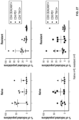
- FIG. 22 shows that CEACAM1 antibodies CP08H03/V ⁇ 8 S29A (labeled “CP08_H03/Parental”) and CP08H03/CP08F05 do not deplete the transplanted human cells in humanized NSG mice. Mean percentage of human CD4 and CD8 T lymphocytes was assessed at day 38. CP08H03/CP08F05 contains a S29A mutation in CDR1L (Kabat numbering scheme, corresponding to a S28A mutation in the primary amino acid sequence of the variable light chain).
- FIG. 23 illustrates that the administration of CEACAM1 antibody CP08H03/V ⁇ 8 S29A (labeled “CP08_H03/Parent VL”) or CP08H03/CP08F05, respectively, leads to an increase in antibody induced human CD45 immune cell expansion in humanized NSG mice.
- CP08H03/V ⁇ 8 S29A induces expansion of human CD45 PBMC in vivo.
- isotype hIgG4 control (10 mg/kg)
- CP08H03/V ⁇ 8 S29A (2 and 10 mg/kg)
- CP08H03/CP08F05 (2 and 10 mg/kg
- Proliferation ex vivo was carried out under T cell-stimulation condition, wherein cells were cultured under the soluble anti-CD3 (OKT3) (at indicated concentrations 10, 5, 2.5 ⁇ g/ml) and rIL-2 (40 units/ml) for 120 hours.
- the dilution of the proliferation dyes represents dividing cell/proliferation (when cells proliferate, duplex DNA was analyzed as diluted signal).
- CP08H03/CP08F05 contains a S29A mutation in CDR1L (Kabat numbering scheme, corresponding to a S28A mutation in the primary amino acid sequence of the variable light chain).
- FIGS. 24 A, 24 B, and 24 C illustrate that CEACAM1 antibody CP08H03/V ⁇ 8 S29A (labeled “CP08_H03/Parent VL”) reduces tumor growth in humanized mice.
- FIG. 24 A provides a schematic for the experimental protocol resulting in FIG. 24 B .
- FIG. 24 B shows average tumor size after 1 ⁇ 10 6 MALME-3M (human melanoma) cells were injected subcutaneously into NSG, along with 5 ⁇ 10 6 human PBMC. After 10 days, palpable tumors were documented and the mice were randomized to treatment on days 10, 13, 17, 20 and 24 with the respective antibody concentrations intraperitoneally.
- FIG. 24 C shows statistical comparisons by linear regression of the hIgG4 control treated group to the three different CP08H03/V ⁇ 8 S29A groups (2 mg/kg, 0.4 mg/kg and 0.08 mg/kg).
- FIG. 25 illustrates that T cells from humanized mice engrafted with human melanoma cell line MALME-3M and treated with CEACAM1 antibody CP08H03/V ⁇ 8 S29A (labeled “CP08_H03/Parent VL”) as described in FIG. 24 exhibit decreased quantities of tumor cells with decreased proliferation and increased quantities of intratumoral CD8 and CD4 positive T cells. These T cells exhibit increased proliferation when examined ex vivo after stimulation with anti-CD3.
- Tumor cells were identified by being FSC Hi SSC Hi cells, which were human CD45-negative, and proliferation quantified by dilution of a commercial dye that assesses proliferation (Becton-Dickinson).
- Human CD45 + CD4 + and CD45 + CD8 + T cells were identified by flow cytometry. Measurements of T cell proliferation ex vivo were carried out under T-cell-stimulation conditions wherein cells were cultured under the soluble anti-CD3 (2 ⁇ g/ml) and rIL-2 (40 units/ml) for 6 days.
- FIG. 26 illustrates phenotypic changes in intratumoral memory CD8 T cells upon blocking CEACAM1 with CEACAM1 antibody CP08H03/V ⁇ 8 S29A (labeled “CP08_H03/Parent VL”) as described in FIGS. 24 - 25 .
- Flow cytometry analyses of tumor infiltrated CD3 + CD8 + T cells populations from humanized NSG mice bearing melanoma was conducted using CD62L and CD44 cell markers for the characterizations of the central memory (CD62L CD44) and effector memory (CD62L ⁇ CD44 + CD3 + CD8 + ) T cells populations.
- Treatment conditions were isotype hIgG4 control (2 mg/kg) and CP08H03/V ⁇ 8 S29A (0.08, 0.4 and 2 mg/kg).
- FIG. 27 shows that CEACAM1 is expressed on primary CD4 + (top) and CD8 + T (bottom) T cells in TILs from na ⁇ ve (left) and PD-1 and/or CTLA-4 resistant (right) melanoma patients. A similar characterization of PD1 and TIM-3 expression is indicated as well.
- FIG. 28 shows that tumor associated cells (TACs) from patients that had acquired resistance to anti-PD-1 and/or anti-CTLA-4 therapy show significantly higher CEACAM1 expression as compared to TACs from patients that had no previous exposure to anti-PD-1 and/or anti-CTLA-4 therapy.
- TACs were obtained from melanoma patients who were na ⁇ ve (no previous exposure to anti-PD-1 and/or anti-CTLA-4 therapy) or those that acquired resistance to anti-PD-1 and/or anti-CTLA-4 therapy (acquired resistance).
- FIG. 29 illustrates a relative decrease in central memory (T em ) relative to effector memory (T em ) cells among CD8 + T cells isolated from patients resistant to anti-PD-1 and/or anti-CTLA-4 therapy as compared to CD8 + T cells isolated from na ⁇ ve patients.
- Tumor associated cells from na ⁇ ve patients and those with acquired resistance were stained for central memory (CCR7 + CD62L + ) and effector memory (CCR7 ⁇ CD62L ⁇ ) markers in TACs derived from na ⁇ ve and resistant patients.
- FIG. 30 illustrates that CEACAM1 antibody CP08H03/V ⁇ 8 S29A (labeled “CP08”) reverses T cell exhaustion in PD1/CTLA-4 resistant tumors.
- Tumor associated cells and PBMC were isolated from a melanoma patient with secondary resistance to Pembrolizumab, Ipilimumab+Nivolumab and Dabrafenib+Trametinib and Stage IV disease. Tumor associated cells and PBMC were stained for CEACAM1, PD1, or TIM-3 and the proportion of CD8 + and CD4 + T cells denoted that express these markers (left).
- PBMC or tumor-associated cells (“tumor”) cultured with soluble anti-CD3 (2 ⁇ g/ml) and rIL-2 (40 units/ml) in the presence of CP08H03/V ⁇ 8 S29A or hIgG4 control antibody are shown on the right. Release of IFN ⁇ and TNF ⁇ , measures for the reversal of T cell tolerance, was determined by ELISA.
- FIGS. 31 A and 31 B show flow cytometry analyses of stable HeLa CEACAM1 (HeLa C1) transfectant, stable HeLa CEACAM3 transfectant (HeLa C3), stable HeLa CEACAM5 transfectant (HeLa C5), stable HeLa CEACAM6 transfectant (HeLa C6), and stable HeLa CEACAM8 transfectant (HeLa C8).
- HeLa C1 stable HeLa CEACAM1
- HeLa C3 stable HeLa CEACAM3 transfectant
- HeLa CEACAM5 transfectant HeLa C5
- HeLa CEACAM6 transfectant HeLa C6
- HeLa CEACAM8 transfectant HeLa CEACAM8 transfectant
- FIG. 31 B shows a different representation of the data shown in FIG. 31 A .
- FIGS. 32 A, 32 B, and 32 C illustrate that CEACAM1 antibody CP08H03/V ⁇ 8 S29A (labeled “CP08”) is more effective than CEACAM1 antibody CM-24 in reversing T cell tolerance in tumor associated cells.
- Tumor associated cells derived from a na ⁇ ve Merkel cell carcinoma tumor were stained for CEACAM1, PD1 or TIM-3 and proportion of CD8 and CD4 T cell denoted ( FIGS. 32 A and 32 B ).
- Tumor associated cells were cultured with soluble anti-CD3 (2 ⁇ g/ml) and rIL-2 (40 units/ml) in presence of CP08H03/V ⁇ 8 S29A, CM-24 or hIgG4 control, respectively.
- FIGS. 33 A, 33 B, 33 C, and 33 D illustrate that CM-24 treated metastatic melanoma in NSG mice exhibits deceased TILs and increased tumor cells in comparison to CP08H03/V ⁇ 8 S29A (labeled “CP08”) treated metastatic melanoma.
- FIG. 33 A shows the experimental setup using a therapeutic tumor model in humanized NSG mice with human melanoma xenografts using four doses at 2 mg/kg of the respective antibodies including a hIgG4 control containing the identical stabilizing hinge mutation.
- FIG. 33 A shows the experimental setup using a therapeutic tumor model in humanized NSG mice with human melanoma xenografts using four doses at 2 mg/kg of the respective antibodies including a hIgG4 control containing the identical stabilizing hinge mutation.
- FIG. 33 B shows a pie chart display of the percentages of tumor infiltrating CD4 + T lymphocytes (gray), CD8 + T lymphocytes (black) and tumor cells (white) characterized by FSC/SCC High (FSC/SCC Hi ) and lack of the pan-leukocyte marker human CD45 (left: control antibody. middle: CEACAM1 antibody CP08H03/V ⁇ 8 S29A. right: CEACAM1 antibody CM-24).
- FIG. 33 C shows tumor cell proliferation for the IgG4 control, CP08H03/V ⁇ 8 S29A, and CM-24, indicating inhibition of tumor proliferation by CP08H03/V ⁇ 8 S29A but not by CM-24.
- FIG. 33 D illustrates the increased proliferation of splenic CD4 + T cells in CP08H03/V ⁇ 8 S29A treated mice and decreased proliferation of splenic CD4 + T cells in CM-24 treated mice.
- FIGS. 35 A and 35 B illustrate that CEACAM1 antibody CP08H03/V ⁇ 8 S29A covers the CEACAM1:HopQ binding interface and is expected to block CEACAM1:HopQ or CEACAM1:Opa proteins interactions.
- FIG. 35 A shows CEACAM1:HopQ binding interface based on the analysis of three crystal structures (PDB ID 6AW2, 6GBH and 6GBG).
- the CEACAM1 GFCC′ face which is formed by interactions of the CEACAM1 CC′ and FG loops' (see Huang et al., Nature. 2015 Jan.
- FIG. 35 B shows a superimposition of the CP08H03/V ⁇ 8 S29A:CEACAM1 crystal structure and the CEACAM1:HopQ crystal structure.
- the CP08H03/V ⁇ 8 S29A antibody light chain and heavy chain are shown in a surface representation.
- HopQ chains three different crystal structures PDB ID 6AW2, 6GBH and 6GBG
- CEACAM1 from three different co-crystal structures with HopQ (PDB ID 6AW2, 6GBH, 6GBG)
- CEACAM1 from co-crystal structure with CP08H03/V ⁇ 8 S29A are shown in ribbon diagram to highlight superimposition of the CP08H03/V ⁇ 8 S29A and HopQ binding epitopes.
- FIG. 36 illustrates that CEACAM1 antibody CP08H03/V ⁇ 8 S29A increases survival in tumor-bearing mice.
- NSG mice were injected with MALME-3M (human melanoma) cells and human PBMCs.
- Treatment with CEACAM1 antibody CP08H03/V ⁇ 8 S29A or the control human (h) IgG4 antibody, respectively, occurred on days 10, 13, 17, 20, and 24 (see arrows). Indicated is % survival. n 4/group.
- FIGS. 37 A and 38 B illustrate that CEACAM1 antibody CP08H03/V ⁇ 8 S29A increases expression of a variety of factors involved in immune responses to cancers by CD8 + T cells derived from a melanoma patient with secondary resistance to immunotherapy.
- FIG. 37 A shows a series of viSNE (Visually-Distributed Stochastic Neighbor Embedding) maps rendered in Cytobank using the Barnes-Hut implementation of the t-SNE algorithm that describe the intracellular expression in CD8 + T cells of the specific factors indicated as defined by mass cytometry on the left. The quantification of the heatmap levels for each indicated factor is shown on the right on the x-axis relative to the residuals associated with each factor as indicated on the y-axis.
- FIG. 37 B shows the fold variance of the intracellular responses of the indicated factors described in FIG. 37 A in response to CP08H03/V ⁇ 8 S29A relative to the hIgG4 control antibody which is set as 1.0.
- FIGS. 38 A and 38 B illustrate that CEACAM1 antibody CP08H03/V ⁇ 8 S29A reinvigorates the ability of tumor dissociated cells from two melanoma patients with either no prior treatment ( FIG. 38 B , subject 189) or with secondary resistance to immunotherapy ( FIG. 38 A , subject 185) to secrete interferon-gamma (IFN- ⁇ ).
- IFN- ⁇ interferon-gamma
- tumor specimens were disrupted by mechanical dissociation (Miltenyi) and the tumor dissociated cells treated in vitro with only 2 ⁇ g/ml of the CP08H03/V ⁇ 8 S29A or human IgG4 isotype control antibody.
- significant levels of interferon-gamma were detected in the supernatants of the CP08H03/V ⁇ 8 S29A but not the human IgG4 isotype control antibody treated samples.
- antibody is used in the broadest sense and includes monoclonal antibodies (including full length or intact monoclonal antibodies), polyclonal antibodies, multivalent antibodies, multispecific antibodies (e.g., bispecific antibodies), antibody fragments, and antigen-binding portions thereof (e.g., paratopes, CDRs), so long as they exhibit the desired biological activity and specificity.
- antibody variable domain refers to the portions of the light and heavy chains of antibody molecules that include amino acid sequences of Complementarity Determining Regions (CDRs; i.e., CDR1, CDR2, and CDR3), and Framework Regions (FRs).
- CDRs Complementarity Determining Regions
- FRs Framework Regions
- V H refers to the variable domain of the heavy chain.
- V L refers to the variable domain of the light chain.
- the amino acid positions assigned to CDRs and FRs may be defined according to Kabat or according to Chothia.
- the term “framework regions” (FR) refers to those variable domain residues other than the CDR residues.
- CDRs Complementarity Determining Regions
- Each variable domain typically has three CDR regions identified as CDR1, CDR2 and CDR3.
- Each CDR can comprise amino acid residues from a CDR as defined by e.g. Kabat (i.e., about residues 24-34 (L1), 50-56 (L2) and 89-97 (L3) in the light chain variable domain and 31-35 (H1), 50-65 (H2) and 95-102 (H3) in the heavy chain variable domain (Kabat et al., Sequences of Proteins of Immunological Interest, 5th Ed.
- Each CDR can also comprise amino acid residues from a “hypervariable loop” (i.e., about residues 26-32 (L1), 50-52 (L2) and 91-96 (L3) in the light chain variable domain and 26-32 (H1), 53-55 (H2) and 96-101 (H3) in the heavy chain variable domain (Chothia & Lesk 196 J. Mol. Biol. 901 (1987)).
- a CDR can include amino acids from both a CDR region defined according to Kabat and a hypervariable loop.
- the Kabat residue designations do not always correspond directly with the linear numbering of the amino acid residues (primary amino acid sequence).
- the actual linear amino acid sequence may contain fewer or additional amino acids than in the strict Kabat numbering corresponding to a shortening of, or insertion into, a structural component, whether framework or CDR, of the basic variable domain structure.
- the correct Kabat numbering of residues may be determined for a given antibody or antigen-binding fragment thereof by alignment of residues of homology in the sequence of the antibody or antigen-binding fragment thereof with a “standard” Kabat numbered sequence.
- An example of how the Kabat numbering relates to the primary amino acid sequence of an antibody can be seen in FIGS. 3 A, 3 B, and 3 C .
- a CDR can be defined according to the ImMunoGeneTics (IMGT) system (Lefranc, M.-P. et al., Dev. Comp. Immunol., 27, 55-77 (2003))
- the CEACAM1 antibody or antigen-binding fragment thereof provided herein comprises six CDRs, wherein:
- CEACAM1 antibody or antigen-binding fragment thereof provided herein comprises six CDRs, wherein:
- the CEACAM1 antibody or antigen-binding fragment thereof comprises six CDRs, wherein:
- affinity maturation of CDR1H, CDR3H and CDR3L of a humanized, aglycosylated CEACAM1 antibody led to variants that conferred substantial improvements in CEACAM1 binding affinity. Inspection of the variants that were obtained and comparison of these variants with the variability introduced into the affinity maturation libraries indicates certain CDR positions at which amino acids remained relatively unchanged and other CDR positions at which variation could be introduced, resulting in improved binding.
- the invention provides CEACAM1 antibodies or antigen-binding fragments thereof that comprise a CDR1H, wherein the CDR1H comprises residues 31-35 of the CEACAM1 antibody (Kabat definition, corresponds, e.g., to residues 31 to 35 in the primary amino acid sequence of the heavy variable chain of SEQ ID NO:19, see FIG. 3 A , or SEQ ID NO: 13, see FIG. 3 B ), and comprises the sequence X 1 HX 2 X 3 S (SEQ ID NO:1),
- CDR1H can be defined using the IMGT definition, wherein CDR1H comprises residues 26-33 of the CEACAM1 antibody (corresponds, e.g., to residues 26 to 33 in the primary amino acid sequence of the heavy variable chain of SEQ ID NO: 19, see FIG. 3 A , or SEQ ID NO: 13, see FIG. 3 B ,) and comprises the sequence X 14 X 15 X 16 FX 17 X 1 HX 2 (SEQ ID NO: 20),
- CDR1H (Kabat definition) of the CEACAM1 antibody or antigen-binding fragment thereof comprises sequence SHGMS (SEQ ID NO: 9).
- CDR1H (IMGT definition) comprises sequence GFIFSHG (SEQ ID NO: 21).
- the invention provides CEACAM1 antibodies or antigen-binding fragments thereof that comprise a CDR1H region, wherein the CDR1H comprises residues 26-35 of the CEACAM1 antibody (Kabat definition, corresponds, e.g., to residues 26 to 35 in the primary amino acid sequence of the heavy variable chain of SEQ ID NO: 19, see FIG. 3 A , or SEQ ID NO:13, see FIG. 3 B ) and comprises the sequence X 14 X 15 X 16 FX 17 X 1 HX 2 X 3 S (SEQ ID NO:22), wherein X 14 is G or E;
- the CDR1H region comprises sequence GFIFSSHGMS (SEQ ID NO: 23).
- the invention provides CEACAM1 antibodies or antigen-binding fragments thereof that comprise a CDR3H, wherein the CDR3H comprises residues 95-102 (Kabat definition, corresponds, e.g., to residues 99 to 110 in the primary amino acid sequence of the heavy variable chain of SEQ ID NO: 19, see FIG. 3 A , or SEQ ID NO: 13, see FIG. 3 B ) and which comprises the sequence HX 4 X 5 DYX 6 PX 7 WFAX 8 (SEQ ID NO:3),
- CDR3H comprises residues 95-102 (Kabat definition, corresponds, e.g., to residues 99 to 110 in the primary amino acid sequence of the heavy variable chain of SEQ ID NO: 19, see FIG. 3 A , or SEQ ID NO: 13, see FIG. 3 B ) and comprises sequence HX 4 X 5 DYFPYWFAX 8 (SEQ ID NO:7);
- CDR3H comprises sequence HDFDYFPYWFAH (SEQ ID NO:10).
- the invention provides CEACAM1 antibodies or antigen-binding fragments thereof that comprise a CDR3H region, wherein the CDR3H region comprises residues 94-102 (Kabat definition, corresponds, e.g., to residues 98 to 110 in the primary amino acid sequence of the heavy variable chain of SEQ ID NO: 19, see FIG. 3 A , or SEQ ID NO: 13, see FIG. 3 B ) and comprises the sequence X 18 HX 4 X 5 DYX 6 PX 7 WFAX 8 (SEQ ID NO:24),
- the CDR3H region comprises sequence RHDFDYFPYWFAH (SEQ ID NO:25).
- the invention provides CEACAM1 antibodies or antigen-binding fragments thereof that comprise a CDR3L, wherein the CDR3L comprises residues 89-97 (Kabat definition, corresponds, e.g., to residues 88 to 96 in the primary amino acid sequence of the heavy variable chain of SEQ ID NO:14, see FIG. 3 C ) and comprises the sequence QQX 9 X 10 X 11 X 12 PX 13 T (SEQ ID NO:6),
- CDR3L comprises residues 89-97 (Kabat definition, corresponds, e.g., to residues 88 to 96 in the primary amino acid sequence of the heavy variable chain of SEQ ID NO: 14, see FIG. 3 C ) and comprises sequence QQX 9 SSX 12 PX 13 T (SEQ ID NO:8),
- CDR3L comprises sequence QQWSSNPPT (SEQ ID NO:11) or sequence QQWTSNPPT (SEQ ID NO:12).
- the invention relates to an antibody, or antigen-binding fragment thereof, which binds to CEACAM1, wherein the antibody or antigen-binding fragment comprises a heavy chain variable region and a light chain variable region, wherein each of the heavy chain and the light chain variable regions comprises a CDR1, CDR2, and CDR3, and wherein:
- the invention relates to an antibody, or antigen-binding fragment thereof, which binds to CEACAM1, wherein the antibody or antigen-binding fragment comprises a heavy chain variable region and a light chain variable region, wherein each of the heavy chain and the light chain variable regions comprises a CDR1, CDR2, and CDR3, and wherein:
- the invention relates to an antibody, or antigen-binding fragment thereof, which binds to CEACAM1, wherein the antibody or antigen-binding fragment comprises a heavy chain variable region and a light chain variable region, wherein each of the heavy chain and the light chain variable regions comprises a CDR1, CDR2, and CDR3, and wherein:
- the invention provides CEACAM1 antibodies or antigen-binding fragments thereof, the CEACAM1 antibodies or antigen-binding fragments thereof comprising a heavy chain variable region and a light chain variable region, wherein the chain variable region comprises a CDR1H, CDR2H, and CDR3H (Kabat definitions), wherein the light chain variable region comprises a CDR1L, CDR2L, and CDR3L (Kabat definitions), and wherein:
- the invention relates to an antibody, or antigen-binding fragment thereof, which binds to CEACAM1, wherein the antibody or antigen-binding fragment comprises a heavy chain variable region and a light chain variable region, wherein each of the heavy chain and the light chain variable regions comprises a CDR1, CDR2, and CDR3, and wherein:
- the CEACAM1 antibodies or antigen-binding fragments thereof comprise a heavy chain variable region and a light chain variable region, wherein the chain variable region comprises a CDR1H, CDR2H, and CDR3H (Kabat definitions), wherein the light chain variable region comprises a CDR1L, CDR2L, and CDR3L (Kabat definitions), and wherein:
- the contemplated antibodies and antigen-binding fragments thereof also feature humanized frameworks for reduced immunogenicity.
- the CDRs of the contemplated antibody or antigen-binding fragment thereof are located in frameworks obtained from a human antibody or antigen-binding fragment thereof.
- surface-exposed framework residues of the contemplated antibody or antigen-binding fragment thereof are replaced with framework residues of a human antibody or antigen-binding fragment thereof.
- the CDRs may also be located in murine or humanized frameworks linked to human constant regions (i.e., chimeric antibodies).
- the CDRs of a contemplated antibody or antigen-binding fragment thereof are located in frameworks that are a composite of two or more human antibodies.
- the contemplated antibodies or antigen-binding fragments thereof comprise two or more sequence segments (“composites”) derived from V-regions of unrelated human antibodies that are selected to maintain monoclonal antibody sequences important for antigen binding of the starting precursor anti-human CEACAM1 monoclonal antibody, and which have all been filtered for the presence of potential T cell epitopes using “in silico tools” (Holgate & Baker, IDrugs. 2009 April; 12 (4): 233-7).
- variable heavy chain and variable light chain sequences as well as pairing thereof that are similar, but not identical to the variable heavy chain and variable light chains disclosed in SEQ ID NOs: 13-16 and pairings thereof.
- the CEACAM1 antibody or antigen-binding fragment thereof comprises a variable heavy chain amino acid sequence comprising SEQ ID NO:13.
- the antibody or antigen-binding fragment thereof comprises a variable light chain amino acid sequence comprising SEQ ID NO:16. In other embodiments, the antibody or antigen-binding fragment thereof comprises a variable light chain amino acid sequence comprising SEQ ID NO: 14. In other embodiments, the antibody or antigen-binding fragment thereof comprises a variable light chain amino acid sequence comprising SEQ ID NO: 15.
- the CEACAM1 antibody or antigen-binding fragment thereof comprises a variable heavy chain amino acid sequence comprising SEQ ID NO:13 and a variable light chain amino acid sequence comprising SEQ ID NO:14.
- the CEACAM1 antibody or antigen-binding fragment thereof comprises a variable heavy chain amino acid sequence comprising SEQ ID NO: 13 and a variable light chain amino acid sequence comprising SEQ ID NO:15.
- the CEACAM1 antibody or antigen-binding fragment thereof comprises a variable heavy chain amino acid sequence comprising SEQ ID NO:13 and a variable light chain amino acid sequence comprising SEQ ID NO:16.
- identity refers to sequence identity between two nucleic acid molecules or polypeptides. Identity can be determined by comparing a position in each sequence which may be aligned for purposes of comparison. For example, when a position in the compared nucleotide sequence is occupied by the same base, then the molecules are identical at that position. A degree identity between nucleic acid or amino acid sequences is a function of the number of identical or matching nucleotides or amino acids at shared positions. For example, polypeptides having at least 85%, 90%, 95%, 98%, or 99% identity to specific polypeptides described herein and preferably exhibiting substantially the same functions, as well as polynucleotides encoding such polypeptides, are contemplated.
- Methods and computer programs for determining both sequence identity and similarity are publicly available, including, but not limited to, the GCG program package (Devereux et al., Nucleic Acids Research 12:387, 1984), BLASTP, BLASTN, FASTA (Altschul et al., J. Mol. Biol. 215:403 (1990), and the ALIGN program (version 2.0).
- the well-known Smith Waterman algorithm may also be used to determine similarity.
- the BLAST program is publicly available from NCBI and other sources (BLAST Manual, Altschul, et al., NCBI NLM NIH, Bethesda, Md. 20894; BLAST 2.0. In comparing sequences, these methods account for various substitutions, deletions, and other modifications.
- CEACAM1 antibody or antigen-binding fragment thereof comprises
- CEACAM1 antibody or antigen-binding fragment thereof comprises
- CEACAM1 antibody or antigen-binding fragment thereof comprises
- the invention provides an antibody or antigen-binding fragment thereof which binds to CEACAM1, wherein the antibody or antigen-binding fragment comprises a heavy chain variable region and a light chain variable region;
- CEACAM1 antibody or antigen-binding fragment thereof comprises
- CEACAM1 antibody or antigen-binding fragment thereof comprises
- CEACAM1 antibody or antigen-binding fragment thereof comprises
- CEACAM1 antibody or antigen-binding fragment thereof comprises
- CEACAM1 antibody or antigen-binding fragment thereof comprises
- CEACAM1 antibody or antigen-binding fragment thereof comprises
- CEACAM1 antibody or antigen-binding fragment thereof utilizes a framework described in Table 1.
- amino acid sequence modification(s) of the antibodies or antigen-binding fragments thereof that bind to CEACAM1 described herein are contemplated.
- Amino acid sequence variants of the antibody or antigen-binding fragment thereof are prepared by introducing appropriate nucleotide changes into the nucleic acid encoding the antibody or antigen-binding fragment thereof, or by peptide synthesis.
- Such modifications include, for example, deletions from, and/or insertions into and/or substitutions of, residues within the amino acid sequences of the antibody or antigen-binding fragment thereof. Any combination of deletion, insertion, and substitution is made to arrive at the final construct, provided that the final construct possesses the desired characteristics, e.g., binding specificity, inhibition of biological activity.
- variants are conservative amino acid substitution variant. These variants have at least one amino acid residue in the antibody or antigen-binding fragment thereof replaced by a different residue that has similar side chain properties. Amino acids can be grouped according to similarities in the properties of their side chains (see Lehninger, BIOCHEMISTRY (2nd ed., Worth Publishers, New York, 1975):
- Naturally occurring residues can be divided into groups based on common side-chain properties:
- amino acid sequence insertions which can include amino- and/or carboxyl-terminal fusions ranging in length from one residue to polypeptides containing a hundred or more residues, as well as intrasequence insertions of single or multiple amino acid residues.
- terminal insertions include an antibody or antigen-binding fragment thereof with an N-terminal methionyl residue or the antibody or antigen-binding fragment thereof fused to a cytotoxic polypeptide.
- insertional variants of the antibody or antigen-binding fragment thereof include the fusion to the N- or C-terminus of the antibody or antigen-binding fragment thereof to an enzyme or a polypeptide which increases the serum half-life of the antibody or antigen-binding fragment thereof, such as, for example, biotin.
- Any cysteine residue not involved in maintaining the proper conformation of the antibodies or antigen-binding fragments thereof that bind to CEACAM1 also can be substituted, for example with a serine or an alanine, to improve the oxidative stability of the molecule and prevent aberrant crosslinking.
- cysteine bond(s) can be added to the antibody or antigen-binding fragment thereof to improve its stability (particularly where the antibody or antigen-binding fragment thereof is an antibody fragment such as an Fv fragment).
- the antibodies or antigen-binding fragments thereof describes have amino acid alterations that alter the original glycosylation pattern of the antibody or antigen-binding fragment thereof.
- altering the original glycosylation pattern is meant deleting one or more carbohydrate moieties found in the antibody or antigen-binding fragment thereof, and/or adding one or more glycosylation sites that are not present in the antibody or antigen-binding fragment thereof.
- Glycosylation of antibodies is typically either N-linked or O-linked. N-linked refers to the attachment of the carbohydrate moiety to the side chain of an asparagine residue.
- the tripeptide sequences asparagine-X-serine and asparagine-X-threonine, wherein X is any amino acid except proline, are the recognition sequences for enzymatic attachment of the carbohydrate moiety to the asparagine side chain.
- O-linked glycosylation refers to the attachment of one of the sugars N-aceylgalactosamine, galactose, or xylose to a hydroxyamino acid, most commonly serine or threonine, although 5-hydroxyproline or 5-hydroxylysine can also be used.
- glycosylation sites to the antibodies or antigen-binding fragments thereof that bind to CEACAM1 is accomplished by altering the amino acid sequence such that it contains one or more of the above-described tripeptide sequences (for N-linked glycosylation sites).
- the alteration can also be made by the addition of, or substitution by, one or more serine or threonine residues to the sequence of the original antibody or antigen-binding fragment thereof (for O-linked glycosylation sites).
- the CEACAM1 antibodies or antigen-binding fragments thereof provided herein are deglycosylated or aglycosylated.
- the contemplated CEACAM1 antibody or antigen-binding fragment thereof lacks a C-terminal lysine in the heavy chain and/or contains a S241P substitution in the constant region of the heavy chain.
- the CEACAM1 antibody or antigen-binding fragment thereof lacks a glycosylation site in the CDR1 of the variable light chain.
- the CEACAM1 antibody or antigen-binding fragment thereof lacks an N—X—S/T consensus sequence in the CDR1 of the variable light chain.
- the CEACAM1 antibody or antigen-binding fragment thereof has a mutation in CDR residues 26 and/or 29 (Kabat numbering) of the CDR1 of the variable light chain.
- the antibody or antigen-binding fragment thereof comprises an Fc region
- the carbohydrate(s) attached thereto can be altered.
- antibodies with a mature carbohydrate structure that lacks fucose attached to an Fc region of the antibody or antigen-binding fragment thereof are described. See, e.g., U.S. Patent Pubs. No. 2003/0157108; No. 2004/0093621.
- Antibodies with a bisecting N-acetylglucosamine (GlcNAc) in the carbohydrate attached to an Fc region of the antibody or antigen-binding fragment thereof are referenced in WO 03/011878; U.S. Pat. No. 6,602,684.
- Antibodies with at least one galactose residue in the oligosaccharide attached to an Fc region of the antibody or antigen-binding fragment thereof are reported in WO 97/30087. See also WO 98/58964; WO 99/22764 concerning antibodies with altered carbohydrate attached to the Fc region thereof.
- ADCC antigen-dependent cell-mediated cytotoxicity
- CDC complement dependent cytotoxicity
- This can be achieved by introducing one or more amino acid substitutions in an Fc region of the antibody or antigen-binding fragment thereof.
- one or more cysteine residues can be introduced in the Fc region, thereby allowing interchain disulfide bond formation in this region.
- the homodimeric antibody or antigen-binding fragment thereof thus generated can have improved internalization capability and/or increased complement-mediated cell killing and antibody-dependent cellular cytotoxicity (ADCC).
- ADCC antibody-dependent cellular cytotoxicity
- Homodimeric antibodies with enhanced anti-tumor activity can also be prepared using heterobifunctional cross-linkers as described in Wolff et al., 53 Cancer Res. 2560 (1993).
- an antibody or antigen-binding fragment thereof can be engineered which has dual Fc regions and can thereby have enhanced complement lysis and ADCC capabilities. See Stevenson et al., 3 Anti-Cancer Drug Design 219 (1989).
- WO 00/42072 describes antibodies with improved ADCC function in the presence of human effector cells, where the antibodies comprise amino acid substitutions in the Fc region thereof.
- the antibody or antigen-binding fragment thereof with improved ADCC comprises substitutions at positions 298, 333, and/or 334 of the Fc region (Eu numbering of residues).
- the altered Fc region is a human IgG1 Fc region comprising or consisting of substitutions at one, two or three of these positions. Such substitutions are optionally combined with substitution(s) which increase Clq binding and/or CDC. Substitutions include an Asn297Ala mutation in IgG1 Fc.
- Antibodies with altered Clq binding and/or complement dependent cytotoxicity are described in WO 99/51642, U.S. Pat. Nos. 6,194,551, 6,242,195, 6,528,624, and 6,538,124.
- the antibodies comprise an amino acid substitution at one or more of amino acid positions 270, 322, 326, 327, 329, 313, 333 and/or 334 of the Fc region thereof (Eu numbering of residues).
- Antibodies with improved binding to the neonatal Fc receptor (FcRn), and increased half-lives, are described in WO 00/42072 and U.S. Patent Pub. No. 2005/0014934.
- These antibodies comprise an Fc region with one or more substitutions therein which improve binding of the Fc region to CEACAM1.
- the Fc region can have substitutions at one or more of positions 238, 250, 256, 265, 272, 286, 303, 305, 307, 311, 312, 314, 317, 340, 356, 360, 362, 376, 378, 380, 382, 413, 424, 428 or 434 (Eu numbering of residues).
- the preferred Fc region-comprising an antibody variant with improved CEACAM1 binding comprises amino acid substitutions at one, two or three of positions 307, 380 and 434 of the Fc region thereof (Eu numbering of residues).
- the antibody or antigen-binding fragment thereof has 307/434 mutations.
- Engineered antibodies that bind to CEACAM1 with three or more (e.g., four) functional antigen binding sites are also contemplated. See, e.g., U.S. Patent Pub. No. US 2002/0004587.
- the CEACAM1 antibody fragment is a Fab fragment, which comprises or consist essentially a variable (V L ) and constant (C L ) domain of the light chain and a variable domain (V H ) and the first constant domain (C H 1) of the heavy chain.
- the CEACAM1 antibody fragment is a Fab′ fragment, which refers to a Fab fragment having one or more cysteine residues at the C-terminus of the CHI domain.
- the CEACAM1 antibody fragment is an Fd fragment comprising or consisting essentially of V H and C H 1 domains.
- the CEACAM1 antibody portion is an Fd′ fragment comprising V H and C H 1 domains and one or more cysteine residues at the C-terminus of the C H 1 domain.
- Single-chain Fv or scFv antibody fragments comprise or consist essentially of the V H and V L domains of antibody, such that these domains are present in a single polypeptide chain.
- an Fv polypeptide further comprises a polypeptide linker between the V H and V L domains, which allows the scFv to form the desired structure for antigen binding.
- the CEACAM1 antibody fragment is a Fv fragment comprising or consisting essentially of the V L and V H domains of a single arm of an antibody.
- the CEACAM1 antibody portion is a diabody comprising two antigen binding sites, comprising a heavy chain variable domain (V H ) connected to a light chain variable domain (V L ) in the same polypeptide chain.
- the CEACAM1 antibody portion is a dAb fragment comprising or consisting essentially of a V H domain.
- the CEACAM1 antibody portion is a F(ab′)2 fragment, which comprises a bivalent fragment comprising two Fab′ fragments linked by a disulfide bridge at the hinge region.
- Linear antibodies refers to the antibodies as described in Zapata et al., Protein Engin., 8 (10): 1057-1062 (1995). Briefly, these antibodies comprise a pair of tandem Fd segments (V H —C H 1-V H —C H 1), which, together with complementary light chain polypeptides, form a pair of antigen binding regions. Linear antibodies can be bispecific or monospecific.
- the CEACAM1 antibody fragment is a linear antibody comprising a pair of tandem Fd segments (V H —C H 1-V H —C H 1) which, together with complementary light chain polypeptides, form a pair of antigen binding regions.
- antibody fragments Traditionally, these fragments were derived via proteolytic digestion of intact antibodies. See, e.g., Morimoto et al., 24 J. Biochem. Biophys. Meths. 107 (1992); Brennan et al., 229 Science 81 (1985). However, these fragments can now be produced directly by recombinant host cells. For example, antibody fragments can be isolated from the antibody phage libraries discussed herein. Alternatively, Fab′-SH fragments can be directly recovered from E. coli and chemically coupled to form F(ab′)2 fragments (Carter et al., 1992).
- F(ab′)2 fragments can be isolated directly from recombinant host cell culture.
- Other techniques for the production of antibody fragments will be apparent to the skilled practitioner.
- the antibody fragment of choice is a single chain Fv fragment (scFv). See, for example, WO 93/16185.
- the antibody is a bispecific antibody comprising a complementary region that binds to CEACAM1 and a complementary region that binds to PD-1.
- the antibody is a bispecific antibody comprising a complementary region that binds to CEACAM1 and a complementary region that binds to PD-L1.
- Contemplated antibodies or antigen-binding fragments may have all types of constant regions, including IgM, IgG, IgD, and IgE, and any isotype, including IgG1, IgG2, IgG3, and IgG4.
- the human isotype IgG1 is used.
- the human isotype IgG4 is used.
- Light chain constant regions can be ⁇ or ⁇ .
- the antibody or antigen-binding fragment thereof may comprise sequences from more than one class or isotype.
- CAR T-cells chimeric antigen receptor T-cells
- CEACAM1 chimeric antigen receptor T-cells
- one or more of the CDRs of an anti-CEACAM antibody disclosed herein are grafted onto a chimeric antigen receptor (CAR) on a T-cell.
- CAR chimeric antigen receptor
- Such a genetically modified T-cell utilizes the CAR, also known as a chimeric T cell receptor, to target antigens expressed on tumor cells in a human leukocyte antigen-independent manner.
- the human CEACAM1 gene produces 11 isoforms by alternative splicing. Each isoform has one variable (V)-like Ig domain at the amino (N) end of the protein. With the exception of CEACAM1-1L and CEACAM1-1S isoforms, the various isoforms also have 2 or 3 constant C2-like Ig domains. Eight CEACAM1 isoforms are anchored to the cellular membrane via a transmembrane domain and three CEACAM1 isoforms (CEACAM1-4C1, -3 and -3C2) lack the transmembrane domain and are secreted.
- CEACAM1-3AL and -3AS Two isoforms (CEACAM1-3AL and -3AS) have an Alu family repeat sequence (A) between the constant C2-like Ig domains and the transmembrane domain.
- the transmembrane CEACAM1 isoforms also possess a long (L) or short(S) cytoplasmic domain determined by inclusion or exclusion of CEACAM1 exon 7 in the message.
- the CEACAM1 L cytoplasmic domain has two ITIM motifs, which are unique to CEACAM1 among the CEACAM family members.
- the invention provides CEACAM1 antibodies or antigen-binding fragments thereof, including the antibodies described herein by their structural characteristics, that bind to the extracellular, variable (V)-like Ig domain at the amino (N) end of the protein (N-domain) of CEACAM1, a domain that is common to all isoforms of CEACAM1, including CEACAM1 isoforms 1L, 1S, 3L, 3S, 4L, 4S, 3Al, 3AS, 3, 4C1, and 4C2.
- the provided antibodies and antigen-binding fragments thereof bind to human CEACAM1.
- the provided antibodies and antigen-binding fragments thereof bind to mammalian CEACAM1.
- CEACAM1 NCBI Reference Sequence NP_001703.2; UNIPROT ID P13688
- SEQ ID NO:26 signal sequence: residues 1-34 of SEQ ID NO:26; Ig-V N domain: residues 35-142 of SEQ ID NO:26.
- the mature form of CEACAM1 (without signal sequence) is provided as SEQ ID NO:17.
- binding of an antibody or antigen binding fragment thereof to CEACAM1, an epitope on CEACAM1, or, in certain embodiments described below, particular residues on CEACAM1, includes the selective interaction of the antibody or antigen binding fragment thereof with CEACAM1. Binding therefore includes, e.g., primary and secondary interactions including hydrogen bonds, ionic interactions, salt bridges, as well as hydrophilic and hydrophobic interactions.
- the CEACAM1 antibodies or antigen-binding fragments thereof described herein bind to CEACAM1 with a K D of 10 ⁇ 5 to 10 ⁇ 12 mol/l, 10 ⁇ 6 to 10 ⁇ 12 mol/l, 10 ⁇ 7 to 10 ⁇ 12 mol/l, 10 ⁇ 8 to 10 ⁇ 12 mol/l, 10 ⁇ 9 to 10 ⁇ 12 mol/l, 10 ⁇ 10 to 10 ⁇ 12 mol/l, or 10 ⁇ 11 to 10 ⁇ 12 mol/l.
- the CEACAM1 antibodies or antigen-binding fragments thereof described herein bind to CEACAM1 with a K D of 10 ⁇ 5 to 10 ⁇ 11 mol/l, 10 ⁇ 6 to 10 ⁇ 11 mol/l, 10 ⁇ 7 to 10 ⁇ 11 mol/l, 10 ⁇ 8 to 10 ⁇ 11 mol/l, 10 ⁇ 9 to 10 ⁇ 11 mol/l, or 10 ⁇ 10 to 10 ⁇ 11 mol/l.
- the CEACAM1 antibodies or antigen-binding fragments thereof described herein bind to CEACAM1 with a K D of 10 ⁇ 5 to 10 ⁇ 10 mol/l, 10 ⁇ 6 to 10 ⁇ 10 mol/l, 10 ⁇ 7 to 10 ⁇ 10 mol/l, 10 ⁇ 8 to 10 ⁇ 10 mol/l, or 10 ⁇ 9 to 10 ⁇ 10 mol/l.
- the CEACAM1 antibodies or antigen-binding fragments thereof described herein bind to CEACAM1 with a K D of 10 ⁇ 5 to 10 ⁇ 8 mol/1, 10 ⁇ 6 to 10 ⁇ 8 mol/l, or 10 ⁇ 7 to 10 ⁇ 8 mol/l.
- specificity refers to the ability of an antibody or antigen-binding fragment thereof, such as an anti-CEACAM1 antibody or antigen-binding fragment thereof, to recognize an epitope within CEACAM1, while only having little or no detectable reactivity with other portions of CEACAM1. Specificity can be relatively determined by competition assays or by epitope identification/characterization techniques described herein or their equivalents known in the art.
- an “epitope” can be formed both from contiguous amino acids, or noncontiguous amino acids juxtaposed by tertiary folding of a protein. Epitopes formed from contiguous amino acids are typically retained on exposure to denaturing solvents, whereas epitopes formed by tertiary folding are typically lost on treatment with denaturing solvents.
- An epitope typically includes at least 3, and more usually, at least 5, about 9, or about 8-10 amino acids in a particular spatial conformation.
- An “epitope” includes the unit of structure conventionally bound by an immunoglobulin V H /V L pair.
- Epitopes define the minimum binding site for an antibody or antigen-binding fragment thereof, and thus represent the target of specificity of an antibody or antigen-binding fragment thereof.
- an epitope represents the unit of structure bound by a variable domain in isolation.
- the contemplated antibody or antigen-binding fragment specifically binds to the same epitope as antibody CP08H03/Vk8 S29A. In another embodiment, the contemplated antibody or antigen-binding fragment binds to the same epitope as CP08H03/CP08F05.
- the invention provides antibodies and antigen-binding fragments thereof, including the antibodies described herein by their structural characteristics, wherein the antibodies and antigen-binding fragments thereof specifically bind to at least part of the homophilic binding domain on CEACAM1 (i.e. in portion of the CEACAM1 protein that is involved in formation of a CEACAM1:CEACAM1 homodimer), thereby blocking CEACAM1 homophilic interactions.
- the provided antibody or antigen-binding fragment thereof specifically binds to one or more of CEACAM1 residues that are contained in the CC′ and FG loops of CEACAM1 and that include a YQQN pocket at the CEACAM1:CEACAM1 dimer interface (i.e., Y34, Q44, Q89, N97 of SEQ ID NO:17), see Huang et al., Nature. 2015 Jan. 15; 517 (7534): 386-90.
- a “blocking” antibody or an antibody “antagonist” is one that inhibits or reduces biological activity of the antigen to which it binds.
- a CEACAM1 antagonist antibody or antigen-binding fragment thereof binds CEACAM1 and inhibits activity of CEACAM1 and/or binding of CEACAM1 to heterologous binding partners such as other CEACAM proteins or TIM-3. Inhibition of activity and inhibition of binding includes partial inhibition.
- competing, cross-blocking, and cross-blocked antibodies can be identified using any suitable method known in the art, including competition ELISAs or BIACORE® assays where binding of the competing or cross-blocking antibody to human CEACAM1 prevents the binding of an antibody disclosed herein or vice versa.
- the heavy chain of the contemplated antibody or antigen-binding fragment thereof specifically binds to CEACAM1 at residues F29, Y34, T56, Q89, S93, and/or D94 of SEQ ID NO: 17. In another embodiment, the heavy chain of the contemplated antibody or antigen-binding fragment thereof further specifically binds to CEACAM1 at residues S32, Q44, A49, and/or I91 of SEQ ID NO: 17.
- the light chain of the contemplated antibody or antigen-binding fragment thereof specifically binds to CEACAM1 at residues D40, G41, N42, N97, and/or E99 of SEQ ID NO:17. In another embodiment, the light chain of the contemplated antibody or antigen-binding fragment thereof further specifically binds to CEACAM1 at residues L95, and/or V96 of SEQ ID NO: 17.
- CEACAM1 antibody or antigen-binding fragment thereof specifically binds to CEACAM1 at residues F29, Y34, D40, G41, N42, T56, Q89, S93, D94, N97, and/or E99 of SEQ ID NO: 17.
- the CEACAM1 antibody or antigen-binding fragment thereof further specifically binds to CEACAM1 at residues S32, Q44, A49, 191, L95, and/or V96 of SEQ ID NO: 17.
- CEACAM1 antibody or antigen-binding fragment thereof specifically binds to CEACAM1 at residues F29, Y34, D40, G41, N42, T56, Q89, S93, D94, N97, and E99 of SEQ ID NO: 17.
- CEACAM1 antibody or antigen-binding fragment specifically binds to CEACAM1 at residues F29, S32, Y34, D40, G41, N42, Q44, A49, T56, Q89, 191, S93, D94, L95, V96, N97, and E99 of SEQ ID NO: 17.
- not all CDRs are directly involved in binding to the antigen.
- four out of six CDRs of the CEACAM1 antibody or antigen-binding fragment thereof make contact with the antigen.
- five out of six CDRs of the CEACAM1 antibody or antigen-binding fragment thereof make contact with the antigen.
- six out of six CDRs of the CEACAM1 antibody or antigen-binding fragment thereof make contact with the antigen.
- CDR2H, CDR3H, CDR1L, CDR2L, and CDR3L of the CEACAM1 antibody or antigen-binding fragment thereof are directly involved in binding to the antigen.
- the antibodies and antigen-binding fragments thereof provided herein specifically bind to an epitope of CEACAM1 located on the N-domain of CEACAM1.
- the antibody or antigen-binding fragment thereof specifically binds a CEACAM1 epitope comprising one or more CEACAM1 residues selected from F29, S32, D40, A49, and T56 of SEQ ID NO:17.
- the CEACAM1 antibody specifically binds a CEACAM1 epitope comprising residues F29, S32, D40, A49, T56, and I91 of SEQ ID NO: 17.
- the antibodies and antigen-binding fragments thereof provided herein specifically bind to an epitope of CEACAM1 located on the N-domain of CEACAM1.
- the antibody or antigen-binding fragment thereof specifically binds a CEACAM1 epitope comprising one or more CEACAM1 residues selected from S32, D40, A49, and I91 of SEQ ID NO:17.
- the CEACAM1 antibody specifically binds a CEACAM1 epitope comprising residues S32, D40, A49, and I91 of SEQ ID NO:17.
- CEACAM1 antibody or antigen-binding fragment thereof provided herein binds to CEACAM1, wherein
- CEACAM1 antibody or antigen-binding fragment thereof provided herein binds to CEACAM1, wherein
- CEACAM1 antibody or antigen-binding fragment thereof provided herein binds to CEACAM1, wherein
- CEACAM family members are expressed widely expressed on a variety of cell types (especially leukocytes), affecting a magnitude of cellular functions.
- CEACAM1 is expressed on epithelial cells, endothelial cells, lymphocytes, and myeloid cells
- CEACAM3 is expressed on granulocytes and neutrophils
- CEACAM5 expressed on epithelial cells
- CEACAM6 is expressed on epithelial cells and granulocytes.
- the N-domain of CEACAM1 is about 90% similar to the N-domains of CEACAM family members 3, 5, and 6, making it difficult to target CEACAM1 selectively.
- antibodies or antigen-binding fragments thereof provided herein, including the antibodies described herein by their structural characteristics are selective for CEACAM1.
- embodiments of the invention may avoid undesired interfering e.g. with the broad activating function of CEACAM3.
- selective and “selectivity” herein refer to the preferential binding of an antibody or antigen-binding fragment thereof (i.e., a CEACAM1 antibody or antigen-binding fragment thereof), for a particular region, target, or peptide; typically a region or epitope in CEACAM1, as opposed to one or more other biological molecules, including other CEACAM family members.
- the contemplated CEACAM1 antibody or antigen-binding fragment thereof does not exhibit significant binding to CEACAM3, CEACAM5, CEACAM6 and/or CEACAM8. In some embodiments, the contemplated CEACAM1 antibody or antigen-binding fragment thereof does not exhibit detectable binding to CEACAM3, CEACAM5, CEACAM6 and/or CEACAM8. In some embodiments, the contemplated CEACAM1 antibody or antigen-binding fragment thereof binds CEACAM1 with an affinity that is at least 10 times, such as at least 100 times, and at least 1000 times, and up to 10,000 times or more stronger than the affinity with which the contemplated CEACAM1 antibody or antigen-binding fragment thereof binds to another target or polypeptide.
- affinity represented by the equilibrium constant for the dissociation (K D )) of an antigen with an antigen-binding protein, is a measure of the binding strength between an antigenic determinant and an antigen-binding site on the antigen-binding protein, such as an antibody or antibody fragment thereof. The smaller the value of the K D , the stronger the binding strength between an antigenic determinant and the antigen-binding molecule.
- affinity can also be expressed as the affinity constant (K A ), which is 1/K D ).
- affinity can be determined in a manner known per se, depending on the specific antigen of interest.
- the invention provides antibodies and antigen-binding fragments thereof, including the antibodies described herein by their structural characteristics, wherein the antibodies and antigen-binding fragments thereof specifically bind to at least part of the binding site on CEACAM1 for one or more other members of the CEACAM family, thereby blocking CEACAM1 interactions with the one or more other members of the CEACAM family.
- CEACAM family members include, but are not limited to, CEACAM3, CEACAM5, CEACAM6, and CEACAM8 (Ramani et al, Anal. Biochem. Jan. 15, 2012; 420 (2); 127-38; Scheffrahn et al, J. Immunol. May 15, 2002; 168 (10); 5139-46).
- the invention provides antibodies and antigen-binding fragments thereof, including the antibodies described herein by their structural characteristics, wherein the antibodies and antigen-binding fragments thereof specifically bind to at least part of the binding site on CEACAM1 for a member of the TIM family, thereby blocking CEACAM1 interaction with the TIM family member.
- this TIM family member is TIM-1, TIM-3, or TIM-4.
- the CEACAM1 antibody or antigen-binding fragment thereof specifically binds to one or more of CEACAM1 residues Y34, G41, N42, Q44, Q89, S93, D94, V96, and/or N97 of SEQ ID NO: 17, residues which have been indicated to be involved in CEACAM1 binding to TIM-3 (Huang et al., Nature. 2015 Jan. 15; 517 (7534): 386-90).
- the invention provides antibodies and antigen-binding fragments thereof, including the antibodies described herein by their structural characteristics, wherein the antibodies and antigen-binding fragments thereof specifically bind to at least part of the binding site on CEACAM1 for a bacterial adhesive surface protein (adhesin), thereby blocking the interaction between CEACAM1 and the adhesin.
- the adhesin is expressed on the surface of a CEACAM1-binding pathogenic bacterium including, but not limited to, Escherichia coli , particularly Diffusively Adhering Escherichia coli (DAEC), Neisseria gonorrhoeae, N.
- meningitidis commensal Neisseria, Moraxella catarrhalis, Haemophilus influenza, Haemophilus aegyptius, Helicobacter pylori , and or Salmonella sp.
- the CEACAM1 antibody or antigen-binding fragment thereof disrupts the interaction between CEACAM1 and HopQ expressed on the surface of Helicobacter pylori .
- the CEACAM1 antibody or antigen-binding fragment specifically binds to one or more of CEACAM1 residues F29, Y34, N42, Q89, and N97, which have been predicted to be involved in CEACAM1 binding to HopQ.
- the CEACAM1 antibody or antigen-binding fragment thereof disrupts the interaction between CEACAM1 and an opacity-associated (Opa) adhesin protein expressed on the surface of Neisseria sp, including, but not limited to, Opa 52 , Opa 65 , Opa 68 , Opa 70 , Opa 72 , Opa 73 , Opa 74 , and Opa 75 .
- the CEACAM1 antibody or antigen-binding fragment specifically binds to one or more of CEACAM1 residues Q44 and A49, which have been predicted to be involved in CEACAM1 binding to neisserial Opa proteins.
- CEACAM1 antibody or antigen-binding fragment thereof disrupts the interaction between CEACAM1 and Opa-like protein OlpA expressed on the surface of Moraxella sp.
- the CEACAM1 antibody or antigen-binding fragment thereof disrupts the interaction between CEACAM1 and Haemophilus influenza OMP P1.
- the CEACAM1 antibody or antigen-binding fragment specifically binds to one or more of CEACAM1 residues Q44 and A49, which have been predicted to be involved in CEACAM1 binding to Haemophilus influenza OMP P1.
- the CEACAM1 antibody or antigen-binding fragment thereof disrupts the interaction between CEACAM1 and Haemophilus aegyptius OMP P1.
- the CEACAM1 antibody or antigen-binding fragment specifically binds to CEACAM1 residue F29, which has been predicted to be involved in CEACAM1 binding to Haemophilus aegyptius OMP P1.
- CEACAM1 antibody or antigen-binding fragment thereof disrupts the interaction between CEACAM1 and C. albicans.
- CEACAM1 antibody or antigen-binding fragment thereof disrupts the interaction between CEACAM1 and an influenza virus, including but not limited to H5N1.
- the invention provides methods of using the CEACAM1 antibodies or antigen-binding fragments thereof described herein for inhibiting binding of CEACAM1 to a filial nematode, the method comprising contacting CEACAM1 with a CEACAM1 antibody or antigen-binding fragment thereof described herein.
- the filial nematode is Wucheria bancrofti.
- the antibody or antigen-binding fragment thereof that bind to CEACAM1 are conjugated to a functional moiety.
- useful functional moieties include, but are not limited to, a blocking moiety, a detectable moiety, a diagnostic moiety, a targeting, and a therapeutic moiety.
- Exemplary blocking moieties include moieties of sufficient steric bulk and/or charge such that reduced glycosylation occurs, for example, by blocking the ability of a glycosidase to glycosylate the antibody or antigen-binding fragment thereof.
- the blocking moiety may additionally or alternatively, reduce effector function, for example, by inhibiting the ability of the Fc region to bind a receptor or complement protein.
- Preferred blocking moieties include cysteine adducts and PEG moieties.
- the blocking moiety is a cysteine, preferably a cysteine that has associated with a free cysteine, e.g., during or subsequent to the translation of the Fc containing polypeptide, e.g., in cell culture.
- Other blocking cysteine adducts include cystine, mixed disulfide adducts, or disulfide linkages.
- the blocking moiety is a polyalkylene glycol moiety, for example, a PEG moiety and preferably a PEG-maleimide moiety.
- Preferred pegylation moieties can be, for example, polyethylene glycol (“PEG”), polypropylene glycol (“PPG”), polyoxyethylated glycerol (“POG”) and other polyoxyethylated polyols, polyvinyl alcohol (“PVA”) and other polyalkylene oxides, polyoxyethylated sorbitol, or polyoxyethylated glucose.
- the polymer can be a homopolymer, a random or block copolymer, a terpolymer based on the monomers listed above, straight chain or branched, substituted or unsubstituted as long as it has at least one active sulfone moiety.
- the polymeric portion can be of any length or molecular weight but these characteristics can affect the biological properties. Polymer average molecular weights particularly useful for decreasing clearance rates in pharmaceutical applications are in the range of 2,000 to 35,000 Daltons.
- the length of the polymer can impact upon the effective distance, and other spatial relationships, between the two groups. Thus, one skilled in the art can vary the length of the polymer to optimize or confer the desired biological activity.
- PEG is useful in biological applications for several reasons.
- PEG typically is clear, colorless, odorless, soluble in water, stable to heat, inert to many chemical agents, does not hydrolyze, and is nontoxic.
- Pegylation can improve pharmacokinetic performance of a molecule by increasing the molecule's apparent molecular weight. The increased apparent molecular weight reduces the rate of clearance from the body following subcutaneous or systemic administration. In many cases, pegylation can decrease antigenicity and immunogenicity. In addition, pegylation can increase the solubility of a biologically-active molecule.
- detectable moieties which are useful in the methods and antibodies and antigen-binding fragments thereof contemplated by the invention include fluorescent moieties or labels, imaging agents, radioisotopic moieties, radiopaque moieties, and the like, e.g. detectable labels such as biotin, fluorophores, chromophores, spin resonance probes, or radiolabels.
- detectable labels such as biotin, fluorophores, chromophores, spin resonance probes, or radiolabels.
- Exemplary fluorophores include fluorescent dyes (e.g. fluorescein, rhodamine, and the like) and other luminescent molecules (e.g. luminal).
- a fluorophore may be environmentally-sensitive such that its fluorescence changes if it is located close to one or more residues in the modified protein that undergo structural changes upon binding a substrate (e.g.
- radiolabels include small molecules containing atoms with one or more low sensitivity nuclei ( 13 C, 15 N, 2 H, 125 I, 123 I, 99 Tc, 43 K, 52 Fe, 67 Ga, 68 Ga, 111 In and the like). Other useful moieties are known in the art.
- diagnostic moieties which are useful in the methods and antibodies and antigen-binding fragments thereof contemplated by the invention include detectable moieties suitable for revealing the presence of a disease or disorder.
- a diagnostic moiety allows for determining the presence, absence, or level of a molecule, for example, a target peptide, protein, or proteins, that is associated with a disease or disorder.
- Such diagnostics are also suitable for prognosing and/or diagnosing a disease or disorder and its progression.
- therapeutic moieties which are useful in the methods and antibodies and antigen-binding fragments thereof contemplated by the invention include, for example, anti-inflammatory agents, anti-cancer agents, anti-neurodegenerative agents, anti-infective agents, or generally a therapeutic.
- the functional moiety may also have one or more of the above-mentioned functions.
- Exemplary therapeutic moieties include radionuclides with high-energy ionizing radiation that are capable of causing multiple strand breaks in nuclear DNA, and therefore suitable for inducing cell death (e.g., of a cancer).
- Exemplary high-energy radionuclides include: 90 Y, 125 I, 131 I, 123 I, 111 In, 105 Rh, 153 Sm, 67 Cu, 67 Ga, 166 Ho, 177 Lu, 186 Re and 188 Re. These isotopes typically produce high-energy ⁇ - or ⁇ -particles which have a short path length.
- Such radionuclides kill cells to which they are in close proximity, for example neoplastic cells to which the conjugate has attached or has entered. They have little or no effect on non-localized cells and are essentially non-immunogenic.
- Exemplary therapeutic moieties also include cytotoxic agents such as cytostatics (e.g. alkylating agents, DNA synthesis inhibitors, DNA-intercalators or cross-linkers, or DNA-RNA transcription regulators), enzyme inhibitors, gene regulators, cytotoxic nucleosides, tubulin binding agents, hormones and hormone antagonists, anti-angiogenesis agents, and the like.
- cytostatics e.g. alkylating agents, DNA synthesis inhibitors, DNA-intercalators or cross-linkers, or DNA-RNA transcription regulators
- enzyme inhibitors e.g. alkylating agents, DNA synthesis inhibitors, DNA-intercalators or cross-linkers, or DNA-RNA transcription regulators
- enzyme inhibitors e.g. alkylating agents, DNA synthesis inhibitors, DNA-intercalators or cross-linkers, or DNA-RNA transcription regulators
- enzyme inhibitors e.g. alkylating agents, DNA synthesis inhibitors, DNA-intercalators or cross-linkers, or DNA-RNA transcription
- Exemplary therapeutic moieties also include alkylating agents such as the anthracycline family of drugs (e.g., adriamycin, carminomycin, cyclosporin-A, chloroquine, methopterin, mithramycin, porfiromycin, streptonigrin, anthracenediones, and aziridines).
- the chemotherapeutic moiety is a cytostatic agent such as a DNA synthesis inhibitor.
- DNA synthesis inhibitors include, but are not limited to, methotrexate and dichloromethotrexate, 3-amino-1,2,4-benzotriazine 1,4-dioxide, aminopterin, cytosine ⁇ -D-arabinofuranoside, 5-fluoro-5′-deoxyuridine, 5-fluorouracil, ganciclovir, hydroxyurea, actinomycin-D, and mitomycin C.
- Exemplary DNA-intercalators or cross-linkers include, but are not limited to, bleomycin, carboplatin, carmustine, chlorambucil, cyclophosphamide, cis-diammineplatinum (II) dichloride (cisplatin), melphalan, mitoxantrone, and oxaliplatin.
- Exemplary therapeutic moieties also include transcription regulators such as actinomycin D, daunorubicin, doxorubicin, homoharringtonine, and idarubicin.
- Other exemplary cytostatic agents that are compatible with the present invention include ansamycin benzoquinones, quinonoid derivatives (e.g. quinolones, genistein, bactacyclin), busulfan, ifosfamide, mechlorethamine, triaziquone, diaziquone, carbazilquinone, indoloquinone EO9, diaziridinyl-benzoquinone methyl DZQ, triethylenephosphoramide, and nitrosourea compounds (e.g. carmustine, lomustine, semustine).
- quinonoid derivatives e.g. quinolones, genistein, bactacyclin
- busulfan ifosfamide, mechlorethamine
- Exemplary therapeutic moieties also include cytotoxic nucleosides such as, for example, adenosine arabinoside, cytarabine, cytosine arabinoside, 5-fluorouracil, fludarabine, floxuridine, ftorafur, and 6-mercaptopurine; tubulin binding agents such as taxoids (e.g. paclitaxel, docetaxel, taxane), nocodazole, rhizoxin, dolastatins (e.g. Dolastatin-10, -11, or -15), colchicine and colchicinoids (e.g. ZD6126), combretastatins (e.g.
- cytotoxic nucleosides such as, for example, adenosine arabinoside, cytarabine, cytosine arabinoside, 5-fluorouracil, fludarabine, floxuridine, ftorafur, and 6-mercaptopurine
- Combretastatin A-4, AVE-6032 Combretastatin A-4, AVE-6032
- vinca alkaloids e.g. vinblastine, vincristine, vindesine, and vinorelbine (navelbine)
- anti-angiogenesis compounds such as Angiostatin K1-3, DL- ⁇ -difluoromethyl-ornithine, endostatin, fumagillin, genistein, minocycline, staurosporine, and (+)-thalidomide.
- Exemplary therapeutic moieties also include hormones and hormone antagonists, such as corticosteroids (e.g. prednisone), progestins (e.g. hydroxyprogesterone or medroprogesterone), estrogens, (e.g. diethylstilbestrol), antiestrogens (e.g. tamoxifen), androgens (e.g. testosterone), aromatase inhibitors (e.g.
- corticosteroids e.g. prednisone
- progestins e.g. hydroxyprogesterone or medroprogesterone
- estrogens e.g. diethylstilbestrol
- antiestrogens e.g. tamoxifen
- androgens e.g. testosterone
- aromatase inhibitors e.g.
- Exemplary therapeutic moieties also include enzyme inhibitors such as, S(+)-camptothecin, curcumin, ( ⁇ )-deguelin, 5,6-dichlorobenz-imidazole 1- ⁇ -D-ribofuranoside, etoposide, formestane, fostriecin, hispidin, 2-imino-1-imidazolidineacetic acid (cyclocreatine), mevinolin, trichostatin A, tyrphostin AG 34, and tyrphostin AG 879.
- enzyme inhibitors such as, S(+)-camptothecin, curcumin, ( ⁇ )-deguelin, 5,6-dichlorobenz-imidazole 1- ⁇ -D-ribofuranoside, etoposide, formestane, fostriecin, hispidin, 2-imino-1-imidazolidineacetic acid (cyclocreatine), mevinolin, trichostatin A, tyrphostin AG 34, and
- Exemplary therapeutic moieties also include gene regulators such as 5-aza-2′-deoxycytidine, 5-azacytidine, cholecalciferol (vitamin D3), 4-hydroxytamoxifen, melatonin, mifepristone, raloxifene, trans-retinal (vitamin A aldehydes), retinoic acid, vitamin A acid, 9-cis-retinoic acid, 13-cis-retinoic acid, retinol (vitamin A), tamoxifen, and troglitazone.
- gene regulators such as 5-aza-2′-deoxycytidine, 5-azacytidine, cholecalciferol (vitamin D3), 4-hydroxytamoxifen, melatonin, mifepristone, raloxifene, trans-retinal (vitamin A aldehydes), retinoic acid, vitamin A acid, 9-cis-retinoic acid, 13-cis-retinoic acid,
- Exemplary therapeutic moieties also include cytotoxic agents such as, for example, the pteridine family of drugs, diynenes, and the podophyllotoxins.
- cytotoxic agents such as, for example, the pteridine family of drugs, diynenes, and the podophyllotoxins.
- Particularly useful members of those classes include, for example, methopterin, podophyllotoxin, or podophyllotoxin derivatives such as etoposide or etoposide phosphate, leurosidine, vindesine, leurosine and the like.
- cytotoxins that are compatible with the teachings herein include auristatins (e.g. auristatin E and monomethylauristan E), calicheamicin, gramicidin D, maytansanoids (e.g. maytansine), neocarzinostatin, topotecan, taxanes, cytochalasin B, ethidium bromide, emetine, tenoposide, colchicin, dihydroxy anthracindione, mitoxantrone, procaine, tetracaine, lidocaine, propranolol, puromycin, and analogs or homologs thereof.
- auristatins e.g. auristatin E and monomethylauristan E
- calicheamicin e.g. gramicidin D
- maytansanoids e.g. maytansine
- neocarzinostatin topotecan
- taxanes cytochalasin B
- a salvage receptor binding epitope may refer to an epitope of the Fc region of an IgG molecule (e.g., IgG1, IgG2, IgG3, or IgG4) that is responsible for increasing the in vivo serum half-life of the IgG molecule (e.g., Ghetie et al., 18 Ann. Rev. Immunol. 739 (2000).
- a nucleic acid molecule encoding the salvage receptor binding epitope can be linked in frame to a nucleic acid encoding a polypeptide sequence described herein so that the fusion protein expressed by the engineered nucleic acid molecule comprises the salvage receptor binding epitope and a polypeptide sequence described herein.
- the serum half-life can also be increased, for example, by attaching other polypeptide sequences.
- antibodies or antigen-binding fragments thereof useful in the methods of the invention can be attached to serum albumin or a portion of serum albumin that binds to the CEACAM1 receptor or a serum albumin binding peptide so that serum albumin binds to the antibody or antigen-binding fragment thereof, e.g., such polypeptide sequences are disclosed in WO 01/45746.
- the half-life of a Fab is increased by these methods. See also, Dennis et al., 277 J. Biol. Chem. 35035 (2002), for additional serum albumin binding peptide sequences.
- nucleic acids encoding CEACAM1 antibodies and antigen-binding fragments thereof, as well as vectors, host cells, and expression systems.
- nucleic acid refers to a polymeric form of nucleotides of any length, either ribonucleotides or desoxyribonucleotides. Thus, this term includes, but is not limited to, single-, double- or multi-stranded DNA or RNA, genomic DNA, cDNA, DNA-RNA hybrids, or a polymer comprising purine and pyrimidine bases, or other natural, chemically or biochemically modified, non-natural, or derivatized nucleotide bases.
- the nucleic acids encoding CEACAM1 antibodies and antigen-binding fragments thereof may be, e.g., DNA, cDNA, RNA, synthetically produced DNA or RNA, or a recombinantly produced chimeric nucleic acid molecule comprising any of those polynucleotides either alone or in combination.
- an expression vector comprising a polynucleotide sequence encoding a CEACAM1 antibody or antigen-binding fragment thereof described herein operably linked to expression control sequences suitable for expression in a eukaryotic and/or prokaryotic host cell.
- vector refers to a nucleic acid molecule capable of transporting another nucleic acid to which it has been linked.
- a “vector” includes, but is not limited to, a viral vector, a plasmid, a RNA vector or a linear or circular DNA or RNA molecule which may consists of a chromosomal, non-chromosomal, semi-synthetic or synthetic nucleic acids.
- the employed vectors are those capable of autonomous replication (episomal vector) and/or expression of nucleic acids to which they are linked (expression vectors). Large numbers of suitable vectors are known to those of skill in the art and commercially available.
- Viral vectors include retrovirus, adenovirus, parvovirus (e.g., adeno associated viruses, AAV), coronavirus, negative strand RNA viruses such as orthomyxovirus (e.g., influenza virus), rhabdovirus (e.
- rabies and vesicular stomatitis virus paramyxovirus (e.g., measles and Sendai), positive strand RNA viruses such as picornavirus and alphavirus, and double-stranded DNA viruses including adenovirus, herpesvirus (e.g., Herpes Simplex virus types 1 and 2, Epstein-Barr virus, cytomegalovirus), and poxvirus (e.g., vaccinia, fowlpox and canarypox).
- Other viruses include Norwalk virus, togavirus, flavivirus, reoviruses, papovavirus, hepadnavirus, and hepatitis virus, for example.
- retroviruses include: avian leukosis-sarcoma, mammalian C-type, B-type viruses, D type viruses, HTLV-BLV group, lentivirus, and spumavirus.
- a variety of expression vectors have been developed for the efficient synthesis of antibodies and antigen-binding fragments thereof in prokaryotic cells such as bacteria and in eukaryotic systems, including but not limited to yeast and mammalian cell culture systems have been developed.
- the vectors can comprise segments of chromosomal, non-chromosomal and synthetic DNA sequences.
- cells comprising expression vectors for the expression of the contemplated CEACAM1 antibodies or antigen-binding fragments thereof.
- the antibodies or antigen-binding fragments thereof of the invention are typically produced by recombinant expression.
- Nucleic acids encoding light and heavy chain variable regions, optionally linked to constant regions, are inserted into expression vectors.
- the light and heavy chains can be cloned in the same or different expression vectors.
- the DNA segments encoding immunoglobulin chains are operably linked to control sequences in the expression vector(s) that ensure the expression of immunoglobulin polypeptides.
- Expression control sequences include, but are not limited to, promoters (e.g., naturally-associated or heterologous promoters), signal sequences, enhancer elements, and transcription termination sequences.
- the expression control sequences are eukaryotic promoter systems in vectors capable of transforming or transfecting eukaryotic host cells.
- the vector Once the vector has been incorporated into the appropriate host, the host is maintained under conditions suitable for high level expression of the nucleotide sequences, and the collection and purification of the cross-reacting antibodies.
- expression vectors are typically replicable in the host organisms either as episomes or as an integral part of the host chromosomal DNA.
- expression vectors contain selection markers (e.g., ampicillin-resistance, hygromycin-resistance, tetracycline resistance or neomycin resistance) to permit detection of those cells transformed with the desired DNA sequences (see, e.g., Itakura et al., U.S. Pat. No. 4,704,362).
- Suitable hosts include bacterial or eukaryotic hosts, including yeast, insects, fungi, bird and mammalian cells either in vivo, or in situ, or host cells of mammalian, insect, bird or yeast origin.
- the mammalian cell or tissue can be of human, primate, hamster, rabbit, rodent, cow, pig, sheep, horse, goat, dog or cat origin, but any other mammalian cell may be used.
- E. coli is one prokaryotic host particularly useful for cloning the polynucleotides (e.g., DNA sequences) of the present invention.
- Other microbial hosts suitable for use include bacilli, such as Bacillus subtilus , and other enterobacteriaceae, such as Salmonella, Serratia , and various Pseudomonas species.
- yeast Other microbes, such as yeast, are also useful for expression.
- Saccharomyces and Pichia are exemplary yeast hosts, with suitable vectors having expression control sequences (e.g., promoters), an origin of replication, termination sequences and the like as desired.
- Typical promoters include 3-phosphoglycerate kinase and other glycolytic enzymes.
- Inducible yeast promoters include, among others, promoters from alcohol dehydrogenase, isocytochrome C, and enzymes responsible for methanol, maltose, and galactose utilization.
- yeast ubiquitin hydrolase system in vivo synthesis of ubiquitin-transmembrane polypeptide fusion proteins can be accomplished.
- the fusion proteins so produced can be processed in vivo or purified and processed in vitro, allowing synthesis of a CEACAM1 antibody or antigen-binding fragment thereof of the present invention with a specified amino terminus sequence.
- problems associated with retention of initiation codon-derived methionine residues in direct yeast (or bacterial) expression maybe avoided.
- Any of a series of yeast gene expression systems incorporating promoter and termination elements from the actively expressed genes coding for glycolytic enzymes produced in large quantities when yeast are grown in mediums rich in glucose can be utilized to obtain recombinant CEACAM1 antibodies or peptides of the present invention.
- Known glycolytic genes can also provide very efficient transcriptional control signals.
- the promoter and terminator signals of the phosphoglycerate kinase gene can be utilized.
- CEACAM1 antibodies or antigen-binding fragments thereof in insects can be achieved. For example, by infecting the insect host with a baculovirus engineered to express a transmembrane polypeptide by methods known to those of skill. See Ausubel et al., 1987, 1993.
- mammalian tissue culture may also be used to express and produce the antibodies or antigen-binding fragments thereof of the present invention (e.g., polynucleotides encoding immunoglobulins or fragments thereof). See Winnacker, From Genes to Clones, VCH Publishers, N.Y., N.Y. (1987).
- Eukaryotic cells are actually preferred, because a number of suitable host cell lines capable of secreting heterologous proteins (e.g., intact immunoglobulins) have been developed in the art, and include CHO cell lines, various COS cell lines, HeLa cells, 293 cells, myeloma cell lines, transformed B-cells, and hybridomas.
- Expression vectors for these cells can include expression control sequences, such as an origin of replication, a promoter, and an enhancer (Queen et al., Immunol. Rev. 89:49 (1986)), and necessary processing information sites, such as ribosome binding sites, RNA splice sites, polyadenylation sites, and transcriptional terminator sequences.
- Preferred expression control sequences are promoters derived from immunoglobulin genes, SV40, adenovirus, bovine papilloma virus, cytomegalovirus and the like. See Co et al., J. Immunol. 148:1149 (1992).
- nucleotide sequences encoding antibodies or antigen-binding fragments thereof can be incorporated in transgenes for introduction into the genome of a transgenic animal and subsequent expression in the milk of the transgenic animal (see, e.g., Deboer et al., U.S. Pat. No. 5,741,957, Rosen, U.S. Pat. No. 5,304,489, and Meade et al., U.S. Pat. No. 5,849,992).
- Suitable transgenes include coding sequences for light and/or heavy chains in operable linkage with a promoter and enhancer from a mammary gland specific gene, such as casein or beta lactoglobulin.
- plants have emerged as a convenient, safe and economical alternative main-stream expression systems for recombinant antibody production, which are based on large scale culture of microbes or animal cells.
- Antibodies or antigen-binding fragments thereof can be expressed in plant cell culture, or plants grown conventionally.
- the expression in plants may be systemic, limited to sub-cellular plastids, or limited to seeds (endosperms). See, e.g., U.S. Patent Pub. No. 2003/0167531; U.S. Pat. Nos. 6,080,560 and 6,512,162; and WO 0129242.
- Several plant-derived antibodies have reached advanced stages of development, including clinical trials (see, e.g., Biolex, NC).
- the vectors containing the polynucleotide sequences of interest can be transferred into the host cell by well-known methods, which vary depending on the type of cellular host. For example, calcium chloride transfection is commonly utilized for prokaryotic cells, whereas calcium phosphate treatment, electroporation, lipofection, biolistics or viral-based transfection may be used for other cellular hosts. (See generally Sambrook et al., Molecular Cloning: A Laboratory Manual (Cold Spring Harbor Press, 2nd ed., 1989).
- transgenic animals can be microinjected into fertilized oocytes, or can be incorporated into the genome of embryonic stem cells, and the nuclei of such cells transferred into enucleated oocytes.
- the antibodies and antigen-binding fragments thereof of the invention can be expressed using a single vector or two vectors.
- the vectors are co-transfected to obtain expression and assembly of intact immunoglobulins.
- the whole antibodies, their dimers, individual light and heavy chains, or other immunoglobulin forms of the present invention can be purified according to standard procedures of the art, including ammonium sulfate precipitation, affinity columns, column chromatography, HPLC purification, gel electrophoresis and the like (see generally Scopes, Protein Purification (Springer-Verlag, N.Y., (1982)).
- Substantially pure immunoglobulins of at least about 90 to 95% homogeneity are preferred, and 98 to 99% or more homogeneity most preferred, for pharmaceutical uses.
- the invention provides methods of using the antibodies and antigen-binding fragments thereof described herein for decreasing the interaction between CEACAM1 and another member of the CEACAM family, including, but not limited to, CEACAM1, CEACAM3, CEACAM5, CEACAM6, and CEACAM8.
- the antibody or antigen-binding fragment thereof disrupts the homophilic interaction between CEACAM1 monomers.
- the invention provides methods of using the antibodies and antigen-binding fragments thereof of the invention for decreasing the interaction between CEACAM1 and a member of the TIM family, including but not limited to TIM-1, TIM-3, and TIM-4.
- the antibody or antigen-binding fragment thereof disrupts the heterophilic interaction between CEACAM1 and TIM-3. Disruption of the interaction between CEACAM1 and TIM-3 by using the antibodies and antigen-binding fragments thereof contemplated by the invention may reverse CEACAM1 inhibitory functions while maintain TIM-3 activating functions.
- the embodiments of the invention are useful for reducing immunosuppression, e.g., T cell tolerance.
- reducing is meant the ability to cause an overall decrease of about 20% or greater, 30% or greater, 40% or greater, 45% or greater, 50% or greater, of 55% or greater, of 60% or greater, of 65% or greater, of 70% or greater, or 75%, 80%, 85%, 90%, 95%, or greater, as compared to a control that is not treated.
- Immunosuppression can be mediated by immune inhibitory receptors expressed on the surface of an immune cell, and their interactions with their ligands.
- cytotoxic CD8 T cells can enter a state of “functional exhaustion,” or “unresponsiveness” whereby they express inhibitory receptors that prevent antigen-specific responses, such as proliferation and cytokine production. Accordingly, by inhibiting the activity and/or expression of such inhibitory receptors, an immune response to a cancer or tumor that is suppressed, inhibited, or unresponsive, can be enhanced or uninhibited. Such enhancements or reversal of inhibition of the immune response can lead to greater T cell activity, responsiveness, and/or ability or receptiveness with regards to activation.
- T cell tolerance can be induced by contacting T cells with recall antigen, anti-CD3 in the absence of costimulation, and/or ionomycin.
- Levels of, e.g., IL-27, LDH-A, RAB10, and/or ZAP70 can be monitored, for example, to determine the extent of T cell tolerogenesis (with levels of IL-2, interferon- ⁇ and TNF correlating with increased T cell tolerance).
- ionomycin, to an antigen can also be measured in order to determine the extent of T cell tolerance in a cell or population of cells, e.g., by monitoring the level of secreted and/or intracellular IL-2 and/or TNF- ⁇ (see, e.g., Macian et al. Cell 2002 109:719-731).
- T cells having undergone adaptive tolerance include increased levels of Fyn and ZAP-70/Syk, Cbl-b, GRAIL, Ikaros, CREM (CAMP response element modulator), B lymphocyte-induced maturation protein-1 (Blimp-1), PD1, CD5, and SHP2; increased phosphorylation of ZAP-70/Syk, LAT, PLCyl/2, ERK, PKC- ⁇ /IKBA; increased activation of intracellular calcium levels; decreased histone acetylation or hypoacetylation and/or increased CpG methylation at the IL-2 locus.
- one or more of any of these parameters can be assayed to determine whether the antibodies or antigen-binding fragments thereof disclosed herein that inhibit CEACAM1 decrease immune tolerance.
- Reduction of T cell tolerance can also be assessed by examination of tumor infiltrating lymphocytes or T lymphocytes within lymph nodes that drain from an established tumor.
- T cells exhibit features of “exhaustion” through expression of cell surface molecules such as PD1, TIM-3 or LAG-3, for example, and decreased secretion of cytokines such as interferon- ⁇ .
- T cell tolerance has been reduced in the presence of a CEACAM1 antibodies or antigen-binding fragments thereof includes, e.g., increased quantities of T cells with (a) antigen specificity for tumor associated antigens (e.g., as determined by major histocompatibility complex class I or class II tetramers which contain tumor associated peptides) and (b) the capability of secreting high levels of interferon- ⁇ and cytolytic effector molecules such as granzyme-B, relative to that observed in the absence of the inhibitory agent.
- CEACAM1 antibodies and antigen-binding fragments thereof are further useful for enhancing T cell expansion, activation, and proliferation.
- the invention provides methods of using the antibodies and antigen-binding fragments thereof of the invention for decreasing the interaction between CEACAM1 and bacterial adhesins.
- the antibodies and antigen-binding fragments thereof of the invention are effective in reducing and/or preventing the colonization of mammalian epithelia.
- the adhesins are expressed by Escherichia coli , particularly Diffusively Adhering Escherichia coli (DAEC), Neisseria gonorrhoeae, N.
- DAEC Diffusively Adhering Escherichia coli
- Neisseria gonorrhoeae Neisseria gonorrhoeae
- the CEACAM1 antibody or antigen-binding fragment thereof disrupts the interaction between CEACAM1 and HopQ expressed on the surface of Helicobacter pylori .
- the CEACAM1 antibody or antigen-binding fragment thereof disrupts the interaction between CEACAM1 and opacity-associated (Opa) adhesin proteins expressed on the surface of Neisseria sp.
- the CEACAM1 antibody or antigen-binding fragment thereof disrupts the interaction between CEACAM1 and OMP adhesin proteins expressed on the surface of Haemophilus sp.
- the CEACAM1 antibody or antigen-binding fragment thereof disrupts the interaction between CEACAM1 and C. albicans . In one embodiment, the CEACAM1 antibody or antigen-binding fragment thereof disrupts the interaction between CEACAM1 and influenza virus, including but not limited to H5N1. In one embodiment, the invention provides methods of using the CEACAM1 antibodies or antigen-binding fragments thereof described herein for inhibiting binding of CEACAM1 to a filial nematode. In one embodiment, the filial nematode is Wucheria bancrofti.
- the invention provides for CEACAM1 antibodies and antigen-binding fragments thereof that are also useful for the treatment of subjects in need thereof.
- a therapeutically effective amount of an antibody or antigen-binding portions thereof set forth herein is administered to a mammal in need thereof.
- antibodies or antigen-binding portions thereof set forth herein are particularly useful for administration to humans, they may be administered to other mammals as well.
- the term “mammal” as used herein is intended to include, but is not limited to, humans, laboratory animals, domestic pets and farm animals.
- “Therapeutically effective amount” means an amount of antibody or antigen-binding portions thereof set forth herein that, when administered to a mammal, is effective in producing the desired therapeutic effect.
- the antibody or antigen-binding fragment thereof binds to CEACAM1 expressed by an exhausted T cell or natural killer (NK) cells, thereby recovering T cell and NK cell activity and leading to increased anti-tumor responses.
- the antibody or antigen-binding fragment thereof binds to CEACAM1 expressed by a tumor cell, thereby inhibiting tumor cell metastasis and the formation of a cancer stem cell niche.
- the antibody or antigen-binding fragment thereof binds to CEACAM1 expressed by macrophage associated with fibrosis in the tumor environment thereby inhibiting fibrosis.
- the antibody or antigen-binding fragment thereof binds to CEACAM1 expressed by other stromal cells in the tumor microenvironment such as vascular endothelium cells, thereby inhibiting angiogenesis.
- methods of treating a subject having a cancer or tumor and/or reducing tumor growth comprising administering an effective amount of a CEACAM1-antibody or antigen-binding fragment thereof provided herein.
- “Reducing” includes inhibiting and/or reversing and can refer to, for example, the symptoms of the disorder being treated, the presence or size of metastases or micrometastases, the size of the primary tumor, the presence or the size of the dormant tumor.
- cancer refers to or describes the physiological condition in mammals that is typically characterized by unregulated cell growth. Included in this definition are benign and malignant cancers, as well as dormant tumors or micrometastases. Accordingly, the term “cancer” as used herein refers to an uncontrolled growth of cells, which interferes with the normal functioning of the bodily organs and systems, including cancer stem cells and tumor vascular niches.
- a subject that has a cancer is a subject having objectively measurable cancer cells present in the subject's body. Included in this definition are benign and malignant cancers, as well as dormant tumors or micrometastases.
- Hematopoietic cancers such as leukemia, are able to out-compete the normal hematopoietic compartments in a subject, thereby leading to hematopoietic failure (in the form of anemia, thrombocytopenia and neutropenia) ultimately causing death.
- subject is meant a mammal, including, but not limited to, a human or non-human mammal, such as a bovine, equine, canine, ovine, or feline, etc. Individuals and patients are also subjects herein.
- beneficial or desired clinical results include, but are not limited to, alleviation of symptoms; diminishment of the extent of the condition, disorder or disease; stabilization (i.e., not worsening) of the state of the condition, disorder or disease; delay in onset or slowing of the progression of the condition, disorder or disease; amelioration of the condition, disorder or disease state; and remission (whether partial or total), whether detectable or undetectable, or enhancement or improvement of the condition, disorder or disease.
- Treatment includes eliciting a clinically significant response without excessive levels of side effects. Treatment also includes prolonging survival as compared to expected survival if not receiving treatment.
- the terms “prevent”, “prevention”, and the like refer to acting prior to overt disease or disorder onset, to prevent the disease or disorder from developing or to minimize the extent of the disease or disorder, or slow its course of development.
- the embodiments of the invention may be used for treating metastasis, which relates to the spreading of cancer from its primary site to other places in the body.
- Cancer cells can break away from a primary tumor, penetrate into lymphatic and blood vessels, circulate through the bloodstream, and grow in a distant focus (metastasize) in normal tissues elsewhere in the body.
- Metastasis can be local or distant. Metastasis is a sequential process, contingent on tumor cells breaking off from the primary tumor, traveling through the bloodstream, and stopping at a distant site. At the new site, the cells establish a blood supply and can grow to form a life-threatening mass. Both stimulatory and inhibitory molecular pathways within the tumor cell regulate this behavior, and interactions between the tumor cell and host cells in the distant site are also significant. Metastases are most often detected through the sole or combined use of magnetic resonance imaging (MRI) scans, computed tomography (CT) scans, blood and platelet counts, liver function studies, chest X-rays and bone scans in addition to the monitoring of specific symptoms.
- Cancer stemness may refer to the ability of a cell to self-renew and to generate an additional, phenotypically distinct cell type.
- Cancer stem cells are cancer cells that exhibit stem-cell like properties. CSCs often exhibit at least one hallmark of cancer, and is capable of generating at least one additional, phenotypically distinct cell type.
- cancer stem cells are capable of both asymmetric and symmetric replication. It is appreciated that a cancer stem cell may result from differentiated cancer cells that acquire stemness traits and/or stem cells that acquire phenotypes associated with cancer cells. Alternatively, cancer stem cells can reconstitute non-stromal cell types within a tumor.
- CEACAM1 is expressed by many tumor types and CEACAM1 may regulate the growth and metastatic behavior of the tumor. In another embodiment, CEACAM1 inhibition will decrease tumor growth and metastasis.
- CEACAM1 expression on subsets of macrophages is associated with fibrosis during carcinogenesis.
- CEACAM1 inhibition will decrease tumor-associated fibrosis.
- Cancers that may be treated by the compositions and methods contemplated by the invention include tumors that are not vascularized, or not yet substantially vascularized, as well as vascularized tumors.
- the cancers may comprise nonsolid tumors (such as hematological tumors, for example, leukemias and lymphomas) or may comprise solid tumors.
- Types of cancers to be treated include, but are not limited to benign and malignant tumors, and malignancies e.g., sarcomas, carcinomas, and melanomas.
- sarcomas e.g., sarcomas, carcinomas, and melanomas.
- adults tumors/cancers and pediatric tumors/cancers are also included. Examples of cancer include but are not limited to, carcinoma, lymphoma, blastoma, sarcoma, and leukemia.
- cancers include, but are not limited to, basal cell carcinoma, biliary tract cancer; bladder cancer; bone cancer; brain and CNS cancer; breast cancer; cancer of the peritoneum; cervical cancer; choriocarcinoma; colon and rectum cancer; connective tissue cancer; cancer of the digestive system; endometrial cancer; esophageal cancer; eye cancer; cancer of the head and neck; gastric cancer (including gastrointestinal cancer); glioblastoma; hepatic carcinoma; hepatoma; intra-epithelial neoplasm; kidney or renal cancer; larynx cancer; leukemia; liver cancer; lung cancer (e.g., small-cell lung cancer, non-small cell lung cancer, adenocarcinoma of the lung, and squamous carcinoma of the lung); lymphoma including Hodgkin's and non-Hodgkin's lymphoma; melanoma; myeloma; neuroblastoma; oral cavity cancer (
- the efficacy of the treatment methods for cancer comprising therapeutic formulations of the compositions comprising the antibodies and antigen-binding fragments thereof described herein can be measured by various endpoints commonly used in evaluating cancer treatments, including but not limited to, tumor regression, tumor weight or size shrinkage, time to progression, duration of survival, progression free survival, overall response rate, duration of response, and quality of life.
- the therapeutically effective amount of the recombinant CEACAM1-antibody or antigen-binding fragment thereof can reduce the number of cancer cells; reduce the tumor size; inhibit (i.e., slow to some extent and preferably stop) cancer cell infiltration into peripheral organs; inhibit (i.e., slow to some extent and preferably stop) tumor metastasis; inhibit, to some extent, tumor growth; and/or relieve to some extent one or more of the symptoms associated with the disorder.
- the therapeutically effective amount of the recombinant CEACAM1-antibody or antigen-binding fragment thereof is an amount effective in treating at least one of the cancers.
- CEACAM1-antibody or antigen binding-fragment thereof acts to prevent growth and/or kill existing cancer cells, it can be cytostatic and/or cytotoxic.
- efficacy in vivo can, for example, be measured by assessing the duration of survival, duration of progression free survival (PFS), the response rates (RR), duration of response, and/or quality of life.
- Checkpoint proteins interact with specific ligands that send a signal into the T cell and switch off or inhibit T cell function. By expressing high levels of checkpoint proteins on their surface, cancer cells can control the function of T cells that enter the tumor microenvironment, thus suppressing the anticancer immune response.
- the immune checkpoint protein Programmed Death-1 (PD-1) is a key immune checkpoint receptor expressed by activated T and B cells and mediates immunosuppression.
- PD-1 is a member of the CD28 family of receptors, which includes CD28, CTLA-4, ICOS, PD-1, and BTLA.
- PD-1 Programmed Death Ligand-1
- PD-L2 Programmed Death Ligand-2
- PD-L1 Programmed Death Ligand-1
- PD-L2 Programmed Death Ligand-2
- Inhibition of the PD-1/PD-L1 interaction can promote potent antitumor activity.
- PD-1 inhibitors include, but are not limited to, Pembrolizumab (MK-3475), Nivolumab (MDX-1106), Cemiplimab-rwlc (REGN2810), Pidilizumab (CT-011), Spartalizumab (PDR001), tislelizumab (BGB-A317), PF-06801591, AK105, BCD-100, BI 754091, JS001, LZM009, MEDI0680, MGA012, Sym021, TSR-042.
- PD-L1 inhibitors include, but are not limited to, Atezolizumab (MPDL3280A), Durvalumab (MEDI4736), Avelumab (MSB0010718C), BGB-A333, CK-301, CS1001, FAZ053, KN035, MDX-1105, MSB2311, SHR-1316.
- Resistant cancer may also be referred to as refractory cancer.
- tumor associated cells isolated from patients with acquired resistance to PD-1/PD-L1 inhibitors upregulate CEACAM1 expression relative tumor associated cells isolated from na ⁇ ve patients, that had not been exposed to PD-1 inhibitors.
- CEACAM1 When CEACAM1 is expressed in the setting of acquired resistance, the CEACAM1 bearing cells are more like likely to be effector memory rather than central memory cells, consistent with a reduction of an anti-cancer response in the resistant patients.
- CEACAM1 antibodies and antigen-binding fragments thereof including, but not limited to the specific CEACAM1 antibodies and antigen-binding fragments thereof provided herein, for the treatment of patients with resistance to checkpoint inhibitors such as inhibitors of PD-1, PD-L1, and/or CTLA-4.
- the CEACAM1 antibody used in the treatment of patients with resistance to inhibitors of PD-1, PD-L1, and/or CTLA-4 is CP08H03/Vk8 S29A or CP08H03/CP08F05.
- the resistance is innate or primary resistance. In some embodiments, the resistance is secondary or acquired resistance.
- the administered CEACAM1 antibodies including, but not limited to the CEACAM1 antibodies and antigen-binding fragments thereof provided herein, reverse T cell exhaustion in patients resistant to checkpoint inhibitor therapy. Any cancer exhibiting PD-1, PDL-1 and/or CTLA-4 resistance is suitable for treatment with the methods of the invention.
- the CEACAM1 antibody or antigen-binding fragment is administered to a patient that has not previously receive checkpoint inhibitor therapy.
- the invention provides for the use of the CEACAM1 antibodies and antigen-binding fragments provided herein in the treatment of patients with resistance to therapy with other checkpoint inhibitors, including but not limited to, inhibitors of PD-L2, B7-H3, B7-H4, BTLA, HVEM, GAL9, LAG3, TIM-3, VISTA, KIR, 2B4 (belongs to the CD2 family of molecules and is expressed on all NK, ⁇ , and memory CD8 + ( ⁇ ) T cells), CD160 (also referred to as BY55), CGEN-15049, CHK1 and CHK2 kinases, A2aR and various B-7 family ligands (including, but are not limited to, B7-1, B7-2, B7-DC, B7-H1, B7-H2, B7-H3, B7-H4, B7-H5, B7-H6 and B7-H7).
- other checkpoint inhibitors including but not limited to, inhibitors of PD-L2, B7-H3,
- the invention provides methods of using the CEACAM1 antibodies and antigen-binding fragments thereof disclosed herein for the treatment of a subject in need of reducing and/or preventing the colonization of mammalian epithelia with Candida albicans and/or bacteria expressing bacterial adhesins (including, but not limited to, Escherichia coli , particularly Diffusively Adhering Escherichia coli (DAEC), Neisseria gonorrhoeae, N.
- DAEC Diffusively Adhering Escherichia coli
- Neisseria gonorrhoeae Neisseria gonorrhoeae
- the invention provides methods of using the CEACAM1 antibodies and antigen-binding fragments thereof disclosed herein for reducing replication of an influenza virus and/or for reducing the release of pro-inflammatory cytokines or chemokines associated with an infection with an influenza virus.
- the influenza virus is H5N1.
- the invention provides methods of using the CEACAM1 antibodies and antigen-binding fragments thereof disclosed herein for the treatment of a subject in need of reducing and/or preventing the infection with a filial nematode such as Wucheria bancrofti .
- the invention provides methods of using the CEACAM1 antibodies and antigen-binding fragments thereof disclosed herein for the treatment of a subject in need of reducing and/or preventing the development of lymphedema and/or hydrocele associated with an infection with a filial nematode such as Wucheria bancrofti .
- the invention provides methods of using the CEACAM1 antibodies or antigen-binding fragments thereof described herein for reducing invasion of a subject's lymphatic system with a filarial worm in a subject in need thereof.
- the filial nematode is Wucheria bancrofti .
- a subject may be infected with more than one of a bacterium expressing a bacterial adhesin, Candida albicans , an influenza virus and/or a filial nematode.
- the invention provides methods of using the CEACAM1 antibodies or antigen-binding fragments thereof described herein for reducing the invasion of a subject's lymphatic system with cancer cells in a subject in need thereof.
- CEACAM1 antibodies and antibody-fragments provided herein, including but not limited to, CP08H03/Vk8 S29A and CP08H03/CP08F05.
- a cancer patient is screened for CEACAM1 expression on certain cell types, including T cells, NK cells, tumor cells, or other cells in the tumor microenvironment such as macrophages.
- cancer patients that show an increased expression of CEACAM1 on certain cell types as compared to a control are selected for treatment with the CEACAM1 antibodies and antibody-fragments provided herein.
- a “control” level of CEACAM1 expression can refer to the level of CEACAM1 expression in one or more individuals to do not have cancer. The level may be measured on an individual-by-individual basis, or on an aggregate basis such as an average. In some embodiments, the control level of CEACAM1 expression from the same individual whose condition is being monitored, but is obtained at a different time.
- a “control” level can refer to a level obtained from the same patient at an earlier time, e.g., weeks, months, or years earlier.
- the control level is obtained from a patient before the patient received any cancer therapy.
- the control level is obtained from a patient before the patient received treatment with a checkpoint inhibitor.
- CEACAM1 expression is determined for patients resistant to checkpoint inhibitor therapy, including, but not limited to therapy with PD-1/PD-L1/CTLA-4 inhibitors.
- patients that are resistant to checkpoint inhibitor therapy and that show an increased expression of CEACAM1 on certain cell types as compared to a control are selected for treatment with the CEACAM1 antibodies and antibody-fragments provided herein, including but not limited to, CP08H03/Vk8 S29A and CP08H03/CP08F05.
- a patient is assayed for an allelic variant of human CEACAM1. Based on which allelic variant of human CEACAM1 the patient expresses, more or less anti-CEACAM1 antibody may be administered to the patient as compared to a patient expressing the wildtype variant of CEACAM1. In some embodiments, the patient is assayed for the presence of a Y34C, a Q44L, and/or a Q89H allelic variant of CEACAM1.
- a patient that is found to express a Y34C, a Q44L, and/or a Q89H allelic variant of CEACAM1 is administered a higher and/or a more frequent dose of an anti-CEACAM1 antibody as compared to a patient expressing the wildtype variant of CEACAM1.
- the present invention provides pharmaceutically acceptable compositions that comprise a therapeutically effective amount of a CEACAM1 antibody or antigen-binding fragment thereof is described herein formulated together with one or more pharmaceutically acceptable excipients.
- the dosage of active agent(s) may vary, depending on the reason for use, the individual subject, and the mode of administration.
- the dosage may be adjusted based on the subject's weight, the age and health of the subject, and tolerance for the compound(s) or composition. For example, depending on the disease, for an antibody or antigen-binding fragment thereof, this may require 0.1, 1.0, 3.0, 6.0, or 10.0 mg/Kg.
- IgG having a molecular mass of 150,000 g/mole two binding sites
- these doses correspond to approximately 18 nM, 180 nM, 540 nM, 1.08 ⁇ M, and 1.8 UM of binding sites for a 5 L blood volume.
- compositions and dosage forms may be formulated into compositions and dosage forms according to methods known in the art.
- the pharmaceutical compositions of the present invention may be specially formulated in solid or liquid form, including those adapted for parenteral administration, for example, by subcutaneous, intratumoral, intramuscular or intravenous injection as, for example, a sterile solution or suspension.
- compositions comprising antibodies or antigen-binding fragments thereof that bind to CEACAM1 may formulated with one or more pharmaceutically-acceptable excipients, which can be a pharmaceutically-acceptable material, composition or vehicle, such as a liquid or solid filler, diluent, carrier, manufacturing aid (e.g., lubricant, talc magnesium, calcium or zinc stearate, or steric acid), solvent or encapsulating material, involved in carrying or transporting the therapeutic compound for administration to the subject, bulking agent, salt, surfactant and/or a preservative.
- a pharmaceutically-acceptable excipients which can be a pharmaceutically-acceptable material, composition or vehicle, such as a liquid or solid filler, diluent, carrier, manufacturing aid (e.g., lubricant, talc magnesium, calcium or zinc stearate, or steric acid), solvent or encapsulating material, involved in carrying or transporting the therapeutic compound for administration to the subject, bulking agent, salt,
- materials which can serve as pharmaceutically-acceptable excipients include: sugars, such as lactose, glucose and sucrose; starches, such as corn starch and potato starch; cellulose and its derivatives, such as sodium carboxymethyl cellulose, ethyl cellulose and cellulose acetate; gelatin; talc; waxes; oils, such as peanut oil, cottonseed oil, safflower oil, sesame oil, olive oil, corn oil and soybean oil; glycols, such as ethylene glycol and propylene glycol; polyols, such as glycerin, sorbitol, mannitol and polyethylene glycol; esters, such as ethyl oleate and ethyl laurate; agar; buffering agents; water; isotonic saline; pH buffered solutions; and other non-toxic compatible substances employed in pharmaceutical formulations.
- sugars such as lactose, glucose and sucrose
- starches such as corn starch and potato star
- a bulking agent is a compound which adds mass to a pharmaceutical formulation and contributes to the physical structure of the formulation in lyophilized form.
- Suitable bulking agents according to the present invention include mannitol, glycine, polyethylene glycol and sorbitol.
- a surfactant can reduce aggregation of the reconstituted protein and/or reduce the formation of particulates in the reconstituted formulation.
- the amount of surfactant added is such that it reduces aggregation of the reconstituted protein and minimizes the formation of particulates after reconstitution.
- Suitable surfactants according to the present invention include polysorbates (e.g. polysorbates 20 or 80); poloxamers (e.g.
- poloxamer 188 Triton; sodium dodecyl sulfate (SDS); sodium laurel sulfate; sodium octyl glycoside; lauryl-, myristyl-, linoleyl-, or stearyl-sulfobetaine; lauryl-, myristyl-, linoleyl- or stearyl-sarcosine; linoleyl-, myristyl-, or cetyl-betaine; lauroamidopropyl-, cocamidopropyl-, linoleamidopropyl-, myristamidopropyl-, palmidopropyl-, or isostearamidopropyl-betaine (e.g.
- lauroamidopropyl myristamidopropyl-, palmidopropyl-, or isostearamidopropyl-dimethylamine; sodium methyl cocoyl-, or disodium methyl oleyl-taurate; and polyethyl glycol, polypropyl glycol, and copolymers of ethylene and propylene glycol (e.g. Pluronics, PF68, etc.).
- Preservatives may be used in formulations of invention. Suitable preservatives for use in the formulation of the invention include octadecyldimethylbenzyl ammonium chloride, hexamethonium chloride, benzalkonium chloride (a mixture of alkylbenzyl-dimethylammonium chlorides in which the alkyl groups are long-chain compounds), and benzethonium chloride. Other types of preservatives include aromatic alcohols such as phenol, butyl and benzyl alcohol, alkyl parabens such as methyl or propyl paraben, catechol, resorcinol, cyclohexanol, 3-pentanol, and m-cresol. Other suitable excipients can be found in standard pharmaceutical texts, e.g. in “Remington's Pharmaceutical Sciences”, The Science and Practice of Pharmacy, 19th Ed. Mack Publishing Company, Easton, Pa., (1995).
- compositions comprising an antibody or antigen-binding fragment thereof and a pharmaceutically acceptable carrier may comprise the CEACAM1 antibodies or antigen-binding portions thereof set forth herein at various concentrations.
- the compositions may comprise an antibody or antigen-binding fragment thereof at 10 mg/ml to 200 mg/ml, 25 mg/ml to 130 mg/ml, 50 mg/ml to 125 mg/ml, 75 mg/ml to 110 mg/ml, or 80 mg/ml to 100 mg/ml.
- compositions also may comprise an antibody or antigen-binding fragment thereof at about 10 mg/ml, 20 mg/ml, 30 mg/ml, 40 mg/ml, 50 mg/ml, 60 mg/ml, 70 mg/ml, 80 mg/ml, 90 mg/ml, 100 mg/ml, 110 mg/ml, 120 mg/ml, 130 mg/ml, 140 mg/ml, or 150 mg/ml.
- compositions comprising the antibody or antigen-binding fragment thereof and the pharmaceutically acceptable carrier are lyophilized and provided in a composition for reconstitution prior to administration.
- compositions comprising the contemplated antibody or antigen-binding fragment thereof may be administered in any convenient manner, including by injection, transfusion, implantation or transplantation.
- the compositions described herein may be administered to a patient subcutaneously, intradermally, intratumorally, intranodally, intramedullary, intramuscularly, intracranially, by intravenous or intralymphatic injection, or intraperitoneally.
- the cell compositions of the present invention are preferably administered by intravenous injection.
- the antibody or antigen-binding fragment thereof is administered to the mammal by intravenous infusion, i.e., introduction of the antibody or antigen-binding fragment thereof into the vein of a mammal over a certain period of time.
- the period of time is about 5 minutes, about 10 minutes, about 30 minutes, about 1 hour, about 2 hours, about 4 hours, or about 8 hours.
- a dose of a compound or a composition is administered to a subject every day, every other day, every couple of days, every third day, once a week, twice a week, three times a week, once every two weeks, or once a month.
- two, three or four doses of a compound or a composition is administered to a subject every day, every couple of days, every third day, once a week, once every two weeks or once a month.
- a dose(s) of a compound or a composition is administered for 2 days, 3 days, 5 days, 7 days, 14 days, 21 days or 28 days.
- a dose of a compound or a composition is administered for 1 month, 1.5 months, 2 months, 2.5 months, 3 months, 4 months, 5 months, 6 months or more.
- the invention provides CEACAM1 antibodies or antigen-binding fragments thereof that are administered with an additional therapeutic agent.
- additional agents include, but are not limited to, cytotoxic agents, chemotherapeutic agents, growth inhibitory agents, anti-inflammatory agents, anti-cancer agents, anti-neurodegenerative agents, and anti-infective agents. Agents that are used in such combination therapies may fall into one or more of the preceding categories.
- the administration of the antibody or antigen-binding fragment thereof and the additional therapeutic agent may be concurrently or consecutively.
- the administration of the antibody or antigen-binding fragment thereof and the additional therapeutic agent may be separately or as a mixture.
- the methods of treatment contemplated by the invention can relate to a treatment in combination with one or more cancer therapies selected from the group of antibody therapy, chemotherapy, cytokine therapy, dendritic cell therapy, gene therapy, hormone therapy, laser light therapy, and radiation therapy.
- Exemplary additional therapeutic agents also include radionuclides with high-energy ionizing radiation that are capable of causing multiple strand breaks in nuclear DNA, and therefore suitable for inducing cell death (e.g., of a cancer).
- Exemplary high-energy radionuclides include: 90 Y, 125 I, 131 I, 123 I, 111 In, 105 Rh, 153 Sm, 67 Cu, 67 Ga, 166 Ho, 177 Lu, 186 Re and 188 Re. These isotopes typically produce high energy ⁇ - or ⁇ -particles which have a short path length.
- Such radionuclides kill cells to which they are in close proximity, for example neoplastic cells to which the conjugate has attached or has entered. They have little or no effect on non-localized cells and are essentially non-immunogenic.
- Exemplary additional therapeutic agents also include cytotoxic agents such as cytostatics (e.g. alkylating agents, DNA synthesis inhibitors, DNA-intercalators or cross-linkers, or DNA-RNA transcription regulators), enzyme inhibitors, gene regulators, cytotoxic nucleosides, tubulin binding agents, hormones and hormone antagonists, anti-angiogenesis agents, and the like.
- cytostatics e.g. alkylating agents, DNA synthesis inhibitors, DNA-intercalators or cross-linkers, or DNA-RNA transcription regulators
- enzyme inhibitors e.g. alkylating agents, DNA synthesis inhibitors, DNA-intercalators or cross-linkers, or DNA-RNA transcription regulators
- enzyme inhibitors e.g. alkylating agents, DNA synthesis inhibitors, DNA-intercalators or cross-linkers, or DNA-RNA transcription regulators
- enzyme inhibitors e.g. alkylating agents, DNA synthesis inhibitors, DNA-intercalators or cross-linkers, or DNA-RNA transcription regulator
- Exemplary additional therapeutic agents also include alkylating agents such as the anthracycline family of drugs (e.g. adriamycin, carminomycin, cyclosporin-A, chloroquine, methopterin, mithramycin, porfiromycin, streptonigrin, anthracenediones, and aziridines).
- the chemotherapeutic moiety is a cytostatic agent such as a DNA synthesis inhibitor.
- DNA synthesis inhibitors include, but are not limited to, methotrexate and dichloromethotrexate, 3-amino-1,2,4-benzotriazine 1,4-dioxide, aminopterin, cytosine ⁇ -D-arabinofuranoside, 5-fluoro-5′-deoxyuridine, 5-fluorouracil, ganciclovir, hydroxyurea, actinomycin-D, and mitomycin C.
- Exemplary DNA-intercalators or cross-linkers include, but are not limited to, bleomycin, carboplatin, carmustine, chlorambucil, cyclophosphamide, cis-diammineplatinum (II) dichloride (cisplatin), melphalan, mitoxantrone, and oxaliplatin.
- Exemplary additional therapeutic agents also include transcription regulators such as actinomycin D, daunorubicin, doxorubicin, homoharringtonine, and idarubicin.
- Other exemplary cytostatic agents that are compatible with the present invention include ansamycin benzoquinones, quinonoid derivatives (e.g. quinolones, genistein, bactacyclin), busulfan, ifosfamide, mechlorethamine, triaziquone, diaziquone, carbazilquinone, indoloquinone EO9, diaziridinyl-benzoquinone methyl DZQ, triethylenephosphoramide, and nitrosourea compounds (e.g. carmustine, lomustine, semustine).
- quinonoid derivatives e.g. quinolones, genistein, bactacyclin
- busulfan ifosfamide, mechlorethamine
- Exemplary additional therapeutic agents also include cytotoxic nucleosides such as, for example, adenosine arabinoside, cytarabine, cytosine arabinoside, 5-fluorouracil, fludarabine, floxuridine, ftorafur, and 6-mercaptopurine; tubulin binding agents such as taxoids (e.g.
- paclitaxel docetaxel, taxane
- nocodazole rhizoxin
- dolastatins e.g., Dolastatin-10, -11, or -15
- colchicine and colchicinoids e.g., ZD6126
- combretastatins e.g., Combretastatin A-4, AVE-6032
- vinca alkaloids e.g., vinblastine, vincristine, vindesine, and vinorelbine (navelbine)
- anti-angiogenesis compounds such as Angiostatin K1-3, DL- ⁇ -difluoromethyl-ornithine, endostatin, fumagillin, genistein, minocycline, staurosporine, and ( ⁇ )-thalidomide.
- Exemplary additional therapeutic agents also include hormones and hormone antagonists, such as corticosteroids (e.g., prednisone), progestins (e.g., hydroxyprogesterone or medroprogesterone), estrogens, (e.g., diethylstilbestrol), antiestrogens (e.g., tamoxifen), androgens (e.g., testosterone), aromatase inhibitors (e.g., aminogluthetimide), 17-(allylamino)-17-demethoxygeldanamycin, 4-amino-1,8-naphthalimide, apigenin, brefeldin A, cimetidine, dichloromethylene-diphosphonic acid, leuprolide (leuprorelin), luteinizing hormone-releasing hormone, pifithrin- ⁇ , rapamycin, sex hormone-binding globulin, and thapsigargin.
- corticosteroids e.g., pred
- Exemplary additional therapeutic agents also include enzyme inhibitors such as, S(+)-camptothecin, curcumin, ( ⁇ )-deguelin, 5,6-dichlorobenz-imidazole 1- ⁇ -D-ribofuranoside, etoposide, formestane, fostriecin, hispidin, 2-imino-1-imidazolidineacetic acid (cyclocreatine), mevinolin, trichostatin A, tyrphostin AG 34, and tyrphostin AG 879.
- enzyme inhibitors such as, S(+)-camptothecin, curcumin, ( ⁇ )-deguelin, 5,6-dichlorobenz-imidazole 1- ⁇ -D-ribofuranoside, etoposide, formestane, fostriecin, hispidin, 2-imino-1-imidazolidineacetic acid (cyclocreatine), mevinolin, trichostatin A, tyrphostin AG 34, and t
- Exemplary additional therapeutic agents also include gene regulators such as 5-aza-2′-deoxycytidine, 5-azacytidine, cholecalciferol (vitamin D3), 4-hydroxytamoxifen, melatonin, mifepristone, raloxifene, trans-retinal (vitamin A aldehydes), retinoic acid, vitamin A acid, 9-cis-retinoic acid, 13-cis-retinoic acid, retinol (vitamin A), tamoxifen, and troglitazone.
- gene regulators such as 5-aza-2′-deoxycytidine, 5-azacytidine, cholecalciferol (vitamin D3), 4-hydroxytamoxifen, melatonin, mifepristone, raloxifene, trans-retinal (vitamin A aldehydes), retinoic acid, vitamin A acid, 9-cis-retinoic acid, 13-cis-retinoic acid,
- Exemplary additional therapeutic agents also include cytotoxic agents such as, for example, the pteridine family of drugs, diynenes, and the podophyllotoxins.
- cytotoxic agents such as, for example, the pteridine family of drugs, diynenes, and the podophyllotoxins.
- Particularly useful members of those classes include, for example, methopterin, podophyllotoxin, or podophyllotoxin derivatives such as etoposide or etoposide phosphate, leurosidine, vindesine, leurosine and the like.
- auristatins e.g. auristatin E and monomethylauristan E
- calicheamicin e.g. auristatin E
- gramicidin D e.g. maytansanoids
- neocarzinostatin topotecan
- taxanes e.g. cytochalasin B
- ethidium bromide e.g. emetine
- tenoposide e.g. maytansine
- colchicin dihydroxy anthracindione, mitoxantrone, procaine, tetracaine, lidocaine, propranolol, puromycin, and analogs or homologs thereof.
- the CEACAM antibody or antigen-binding fragment thereof is administered in combination with an agent that is a checkpoint inhibitor.
- agent that is a checkpoint inhibitor.
- Such inhibitors may include small molecule inhibitors or may include antibodies, or antigen binding fragments thereof, that bind to and block or inhibit immune checkpoint receptors or antibodies that bind to and block or inhibit immune checkpoint receptor ligands.
- Illustrative checkpoint molecules that may be targeted for blocking or inhibition include, but are not limited to, CTLA-4, PDL1, PDL2, PD1, B7-H3, B7-H4, BTLA, HVEM, GAL9, LAG3, TIM-3, VISTA, KIR, 2B4 (belongs to the CD2 family of molecules and is expressed on all NK, ⁇ , and memory CD8 + ( ⁇ ) T cells), CD160 (also referred to as BY55), CGEN-15049, CHK1 and CHK2 kinases, A2aR and various B-7 family ligands.
- CTLA-4 CTLA-4, PDL1, PDL2, PD1, B7-H3, B7-H4, BTLA, HVEM, GAL9, LAG3, TIM-3, VISTA, KIR, 2B4 (belongs to the CD2 family of molecules and is expressed on all NK, ⁇ , and memory CD8 + ( ⁇ ) T cells
- CD160 also referred to as BY55
- B7 family ligands include, but are not limited to, B7-1, B7-2, B7-DC, B7-H1, B7-H2, B7-H3, B7-H4, B7-H5, B7-H6 and B7-H7.
- Checkpoint inhibitors include antibodies, or antigen binding fragments thereof, other binding proteins, biologic therapeutics or small molecules, that bind to and block or inhibit the activity of one or more of CTLA-4, PDL1, PDL2, PD1, BTLA, HVEM, TIM-3, GAL9, LAG3, VISTA, KIR, 2B4, CD160 and CGEN-15049.
- Illustrative immune checkpoint inhibitors include Tremelimumab (CTLA-4 blocking antibody), anti-OX40, and Yervoy/ipilimumab (anti-CTLA-4 checkpoint inhibitor), as well as the PD-1 and PD-L1 inhibitors described above.
- Checkpoint protein ligands include, but are not limited to PD-L1, PD-L2, B7-H3, B7-H4, CD28, CD86 and TIM-3.
- the CEACAM1 antibodies and antigen-binding fragments thereof described herein are administered with a TIGIT, LAP, Podoplanin, Protein C receptor, ICOS, GITR, CD226 or a CD160 inhibiting agent.
- the CEACAM1 antibodies and antigen-binding fragments thereof described herein are administered with a CTLA-4, a PD-1, a PD-L1, or a PD-L2 inhibiting agent. In some embodiments, the CEACAM1 antibodies and antigen-binding fragments thereof described herein are administered with a TIM-3 inhibiting agent.
- the defined steps can be carried out in any order or simultaneously (except where the context excludes that possibility), and the method can include one or more other steps which are carried out before any of the defined steps, between two of the defined steps, or after all the defined steps (except where the context excludes those possibilities).
- V H and V ⁇ sequences of the parental, murine CEACAM1 antibody and the humanized CEACAM antibody variants were synthesized with flanking restriction enzyme sites for cloning into the pANT expression vector system for IgG4 (S241P) heavy and ⁇ light chain ( FIG. 1 ).
- the V H regions were cloned between the MluI and HindIII restriction sites, and the V ⁇ regions were cloned between the BssHII and BamHI restriction sites. All constructs were confirmed by sequencing.
- V H 1 was paired with V ⁇ 1 through V ⁇ 12
- V H 2 was paired with V ⁇ 1 through V ⁇ 12
- V H 3 was paired with V ⁇ 1 through V ⁇ 6
- V H 4 was paired with V ⁇ 1 through V ⁇ 6.
- Antibodies were purified from cell culture supernatants on Protein A sepharose columns, buffer exchanged into PBS pH 7.4 and quantified by OD 280 nm using an extinction coefficient based on the predicted amino acid sequence. 1 ⁇ g of each antibody was analyzed by SDS-PAGE and bands corresponding to the profile of a typical antibody were observed. The size of the light chain and the presence of a faint band at 25 kDa indicates that the glycosylation motif identified in the light chain is substantially utilized.
- a 3-fold dilution series of the chimeric antibody chimeric antibody V H 0/V ⁇ 0, an irrelevant IgG4 antibody, and the humanized CEACAM1 antibodies from 100 ⁇ g/ml to 0.07 or 0.002 ⁇ g/ml were pre-mixed with a constant concentration of parental murine antibody (0.45 ⁇ g/ml final concentration), added to the plate and incubated for 1 hour at room temperature. Following 3 ⁇ PBST washes, the binding of the parental murine CEACAM1 antibody was detected with an anti-mouse-HRP and TMB substrate. The reaction was stopped with 3 M HCl, absorbance read at 450 nm on a Dynex Technologies MRX TC II plate reader and the binding curves plotted.
- the binding of the humanized CEACAM antibody variants to CEACAM1 was compared to the chimeric antibody (V H 0/V ⁇ 0), which was included on each plate. Twelve of the 36 humanized CEACAM antibody variants showed no binding to CEACAM1 (those including V ⁇ 3, V ⁇ 4, and V ⁇ 5). Variants that bound CEACAM1 showed a range of relative IC50 values from 0.9 to 5.2 compared to the chimeric antibody V H 0/V ⁇ 0. Data are summarized in Table 2.
- the amount of immobilized/captured ligand was limited to avoid mass transfer effects at the surface of the chip with the surface ideally having an analyte binding level (R max ) of 50-150 RUs.
- R max analyte binding level
- a target response level of ⁇ 75 RUs was set for capture of all the sample antibodies.
- Single cycle analysis of the 36 antibody combinations and the three control antibodies was performed on purified antibodies (V ⁇ 1 to V ⁇ 6 variants) or on the supernatants of the transiently transfected HEK EBNA cells (V ⁇ 7 to V ⁇ 12 variants).
- purified chimeric antibody V H 0/V ⁇ 0 was spiked into HEK EBNA culture medium to use as a positive control.
- Antibodies were diluted in HBS-P+ to a concentration of 1 ⁇ g/ml (as determined by an IgG quantitation ELISA).
- V H 1/V ⁇ 2 V H 1/V ⁇ 7, V H 1/V ⁇ 8, V H 1/V ⁇ 9, V H 1/V ⁇ 10, V H 1/V ⁇ 12, V H 2/V ⁇ 7, V H 2/V ⁇ 8, V H 2/V ⁇ 9, V H 2/V ⁇ 10, V H 2/V ⁇ 11 and V H 2/V ⁇ 12 (see Table 2 and Table 3, highlighted in bold).
- the signal from the reference channel Fc1 was subtracted from that of Fc2, Fc3 and Fc4 to correct for differences in non-specific binding to a reference surface, a global Rmax parameter was used in the 1-to-1 binding model.
- the relative K D compared to V H 1/V ⁇ 0 was calculated by dividing the K D of the humanized CEACAM antibody variants by that of the chimeric antibody V H 0/V ⁇ 0 on the same chip.
- the kinetic parameters measured for the interaction of CEACAM1 with humanized CEACAM antibody variants are shown in Table 4. A summary of the averaged relative K D obtained for the 12 antibody combinations analyzed using multi cycle kinetics can be found in Table 5.
- binding selectivity for CEACAM1 was tested for the 24 humanized antibody variants that bound to CEACAM1 (see Table 3), as well as the chimeric control antibody V H 0/V ⁇ 0, by flow cytometry on HeLa cells transfected with CEACAM1, 3, 5, 6 and 8. As shown in FIG. 2 , the majority of variants are highly selective for CEACAM1 and show very little or no binding to CEACAM3, 5, 6, or 8. All 24 variants showed decreased binding to CEACAM5 as compared to the chimeric control antibody V H 0/V ⁇ 0. There was no evidence of any staining of the HeLa-CEACAM3 or HeLa-CEACAM8 transfectants. As such, this data was not reported. Due to its favorable affinity to and selectivity for CEACAM1 as well as its favorable expression level, V H 1/V ⁇ 8 was chosen as the framework for affinity maturation.
- Multi cycle kinetic data (n 1) for composite human antibody variants binding to CEACAM1-HIS as determined using the Biacore T200.
- the relative K D compared to chimeric antibody V H 0/V ⁇ 0 was calculated by dividing the K D of the humanized CEACAM antibody variants by that of the chimeric antibody V H 0/V ⁇ 0 assayed on the same chip.
- N26 and S29 according to Kabat numbering, correspond to residues 26 and 28 in the primary amino acid sequence of the light variable chain, see FIG. 3 C ), which makes the N26 residue a target for N-linked glycosylation.
- N26Q and S29A Two CDR mutations were designed to remove N—X—S/T consensus sequence (glycosylation site): N26Q and S29A (Kabat numbering scheme). Mutation of either residue abrogates glycosylation, as shown in FIG. 4 .
- V H 1/V ⁇ 8 genes encoding the V H 1 and V ⁇ 8 were constructed and converted to a scFv format using overlapping PCR where the heavy chain was linked to the light chain via a 15 amino acid (G4S) 3 linker.
- CDR1L residue S29 is numbered according to the Kabat numbering scheme and corresponds to residue 28 in the primary amino acid sequence of the light variable chain ( FIG. 3 C ).
- the scFv sequence was then cloned into the phagemid vector pANT43 using the restriction enzymes Sfi I and Not I, allowing for display of scFv on the phage surface as a gene III fusion protein ( FIG. 5 ).
- the cloned scFv was transformed into E. coli (TG1) and all constructs were confirmed by sequencing. Phage containing either the parent V H 1/V ⁇ 8 S29A scFv or an irrelevant scFv were prepared and tested for binding to GST-CEACAM1 ( FIG. 6 ). Phage derived from the parent V H 1/V ⁇ 8 S29A sequence bound specifically to the antigen, since no binding was observed with the irrelevant phage.
- CDR1H was identified as being five amino acids (S31 to S35) in length (Kabat definition, corresponds to residues 31-35 of the primary amino acid sequence of the heavy variable chain, see FIG. 3 A ) with the IMGT CDR1H definition (G26 to G33) covering a more extended region. Taken together and with the crystal data of the parental murine antibody, G26 to S35 was covered in a single library with a subset of amino acids included at each position.
- CDR3H was identified as being 12 amino acids in length (H95-Y102 according to Kabat definition, corresponds to residues 99-110 of the primary amino acid sequence of the heavy variable chain, see FIG. 3 A ).
- CDR3H was split into two libraries overlapping at D100 (according to Kabat definition, corresponds to residue 104 of the primary amino acid sequence of the heavy variable chain, see FIGS. 3 A and 3 B ): Block 1 (R94 to D100 according to Kabat definition, corresponds to residues 98 to 104 in the primary amino acid sequence of the heavy variable chain, see FIGS.
- Block 1 (D100 to Y102 according to Kabat definition, corresponds to residues 104 to 110 of the primary amino acid sequence of the heavy variable chain, see FIGS. 3 A and 3 B ), with each containing a subset of amino acids in all positions.
- Position R94 (according to Kabat definition, corresponds to residue 98 of the primary amino acid sequence of the heavy variable chain, see FIGS. 3 A and 3 B ) (Block 1) was included to allow more diversity in the germline residue anchoring the CDR.
- CDR3L was identified as being 9 amino acids (Q89-T97) (according to Kabat definition, corresponds to residues 88 to 96 of the primary amino acid sequence of the light variable chain, see FIG. 3 C ) in length.
- the region Q90 to P96 (according to Kabat definition, corresponds to residues 89 to 97 of the primary amino acid sequence of the light variable chain, see FIG. 3 C ) was covered in a single library with a subset of amino acids included at each position. Kabat numbering is used for all protein sequence coordinates.
- Non-expressing plasmids were prepared containing truncated fragments of V H 1/V ⁇ 8 S29A parental scFv as well as two sequential stop codons in the region to be randomized.
- the purpose of this step was to reduce the likelihood of parental scFv being produced and dominating selections (as is occasionally observed during affinity maturation), such that only recombined antibody fragments generated by PCR are able to form functional scFvs in a phagemid vector.
- the PCR for the V H repertoire was carried out by performing two PCRs using two templates containing portions of the full-length parent scFv. Initially, the V H was amplified with the randomized 5′ library primer and a 3′ primer specific for the V ⁇ light chain FW4. In a separate PCR, the remainder of the V H was amplified with a 5′ primer based in the heavy chain FW1 region plus a 3′ primer that was complementary to a portion of the V H CDR randomized primer.
- V H CDR randomized scFv libraries were then constructed by annealing of the two amplified fragments and re-amplification of the scFv by PCR with primers that appended two restriction sites (either Sfi I or Not I) for subcloning of the fragment.
- Bacteria from each library were inoculated into 150 ml 2TYCG (2%) cultures using inocula at least 10 ⁇ the observed library diversity.
- the cultures were grown to mid-log phase (OD 600 nm ⁇ 0.5-0.6) and the total number of cells estimated (based on an OD 600 nm of 1 ⁇ 5 ⁇ 10 8 cells/ml).
- Helper phage were added and incubated for 1 hour, then centrifuged, resuspended in 2TYCK media and grown overnight at 30° C. The following day, phage were harvested by recovering the culture supernatant by centrifugation followed by precipitation using 4/10 th ⁇ volume of chilled 20% PEG/2.5 M NaCl.
- CEACAM1 was used throughout the selections either biotinylated (for soluble selections) or unbiotinylated (for solid phase panning). Soluble selections (Campaign 1) or solid phase panning selections (Campaign 2) were used at round 1 in the different selection cascades to enrich for functional binding phage and diversity. Deselection using the closely related family members CEACAM5 and CEACAM6 was performed by separate panning of each protein at 1 ⁇ g/ml in order to try and reduce cross reactivity. This was performed twice during each campaign, either by deselecting prior to any rounds of selection and prior to round 2 (Campaign 1) or prior to both the second and third rounds of selection (Campaign 2). For both campaigns the four libraries were kept separate at all stages.
- each of the libraries were pre-blocked with PBSB following which the phage was incubated with decreasing concentrations of biotinylated CEACAM1 antigen for up to three hours.
- streptavidin paramagnetic beads pre-blocked as above
- Streptavidin-antigen-phage complexes were washed using increasing numbers of washes with PBST at each successive round of selection followed by a PBS wash, capturing with a magnet between each step. Phage were eluted from the beads by the addition of 50 mM HCl following which the solution was neutralized by the addition of 1 M Tris-HCl pH 9.0.
- Solid-phase panning selections and all deselections were performed on Nunc Immuno MaxiSorp 96 well flat bottom microtitre plates coated with antigen overnight at 4° C. then blocked with PBSB.
- pre-blocked phage was incubated with CEACAM5 followed by CEACAM6 before unbound phage were removed and used for subsequent selections.
- pre-blocked phage were incubated with 8 ⁇ g/ml antigen before plates were washed with 3 ⁇ PBST and 2 ⁇ PBS. Bound phage were eluted with 50 mM HCl as with the soluble selection. For both soluble and panning selections, eluted phage were added to mid-log E.
- FIGS. 9 A and 9 B An overview of the different selection strategies used is shown in FIGS. 9 A and 9 B .
- Soluble scFv were initially expressed and tested as crude periplasmic extracts. Individual colonies were picked into 1 ml 2TYCG (0.1%) media and grown by shaking at 37° C. for 5 hours. Cultures were induced by adding IPTG to a final concentration of 1 mM and then grown overnight, with shaking, at 30° C. The following day, cultures were centrifuged and the supernatant discarded. Bacterial pellets were resuspended in Tris(hydroxymethyl)methyl-2-aminoethanesulfonic acid (TES) buffer pH 7.4 and incubated on ice for 30 minutes. The cells were then centrifuged and the supernatant discarded. The pellet was resuspended in ice cold 5 mM MgSO 4 . The plate was then centrifuged and the scFv-containing supernatant transferred to a fresh plate for assay.
- TES Tris(hydroxymethyl)methyl-2-aminoethanesulfonic acid
- Periplasmic extracts of colonies from different rounds of selection were screened in a single point binding assay for their ability to bind GST-CEACAM1.
- the parental scFv (V H 1/V ⁇ 8 S29A) and an irrelevant scFv were included on each assay plate for comparison.
- Periplasmic extracts were blocked by diluting 1:1 with PBSB before incubating for 1 hour at room temperature on a Nunc Immuno MaxiSorp 96 well flat bottom microtitre plate pre-coated with GST-CEACAM1 at 1.0 ⁇ g/ml. Plates were subsequently washed and the binding of scFv was detected with an anti-HIS6-HRP antibody and TMB substrate. The reaction was stopped with 1 M HCl, absorbance read at 450 nm on a Dynex Technologies MRX TC II plate reader and the binding data plotted.
- Table 11 Table 12, and Table 13 highlight the conservation/variability of affinity matured CDRs in scFv variant leads identified using the GST-CEACAM1 binding ELISA.
- CDR3H CDR3H Variant CDR1H (Block 1) (Block 2) CDR3L Parent GFIFSSHGMS RHDFDYD DAAWFAY QWSSNPP (SEQ ID (SEQ ID (SEQ ID (SEQ ID NO: 23) NO: 77) NO: 81) NO: 85) CP09E05 RH G FDYD (SEQ ID NO: 79) CP09F05 Q NTA LP F (SEQ ID NO: 86) CP09F03 GF T F NN HGMS (SEQ ID NO: 57) CP09A04 GF S F NA H A MS (SEQ ID NO: 58) CP09E03 GF T FS A H AI S (SEQ ID NO: 59) CP09D03 GF T FSSH AI S (SEQ ID NO: 60) CP09B02 GF T F T SH AI S (SEQ ID NO: 61) CP09C02 E F T FS D H A MS RH G FDYD (S
- CDR motif for heavy chain CDR1 in scFv variant leads identified using the GST-CEACAM1 binding ELISA.
- CDR1H CDR residues CDR residue (Kabat) $ 26 27 28 29 30 31 32 33 34 35 HC residue* 26 27 28 29 30 31 32 33 34 35 Motif G (19/20) F (17/20) T (13/20) F S (8/20) A (8/20) H A (12/20) M (12/20) S N (7/20) N (5/20) E (1/20) Y (3/20) S (5/20) T (5/20) S (5/20) G (8/20) I (8/20) I (2/20) D (2/20) $ Numbering of residues based on Kabat numbering scheme. *Numbering of residues based on primary amino acid sequence of the heavy variable chain.
- CDR1H comprises residues 31-35 according to the Kabat CDR definition and residues 26-33 according to the IMGT definition.
- CDR motif for heavy chain CDR3 in scFv variant leads identified using the GST-CEACAM1 binding ELISA.
- CDR motif for light chain CDR3 in scFv variant leads identified using the GST-CEACAM1 binding ELISA.
- CDR3L CDR residue CDR residue (Kabat) $ 89 90 91 92 93 94 95 96 97 LC residue* 88 89 90 91 92 93 94 95 96 VL CDR3 Q # Q W (6/9) T S (3/9) L (3/9) P P (6/9) T # N (3/9) A (2/9) F (3/9) F (3/9) N (2/9) N (3/9) T (2/9) $ Numbering of residues based on Kabat numbering scheme. *Numbering of residues based on primary amino acid sequence of the light variable chain. # Residue was not mutated during affinity maturation. Large Scale ScFv Expression and Purification
- TES diluted 1 in 5 in cold water
- MgCl 2 , NaCl and imidazole were added to final concentrations of 1 mM, 300 mM and 20 mM respectively to reduce non-specific binding.
- Ni-agarose beads were added and scFv allowed to bind by incubating with rotation at 4° C. for 2 hours.
- the binding of affinity matured purified scFv to human CEACAM1 was analyzed using GST-CEACAM1.
- a Nunc Immuno MaxiSorp 96 well flat bottom microtitre plate was pre-coated with 1.0 ⁇ g/ml GST-CEACAM1 overnight at 4° C.
- the following day a two-fold dilution series of V H 1/V ⁇ 8 S29A parent scFv or test scFv (50 ⁇ g/ml to 0.8 ⁇ g/ml) in PBSB was incubated for 2 hours at RT on pre-coated ELISA plates.
- the binding of scFv was detected with an anti-HIS6-HRP antibody and TMB substrate.
- Example binding assay data is shown in FIG. 10 .
- Parent scFv V H 1/V ⁇ 8 S29A scFv
- An irrelevant scFv was included on at least one plate as a negative control. It was observed that a number of scFvs had improved binding to CEACAM1 compared to the parental V H 1/V ⁇ 8 S29A scFv. Improved binding was seen with scFv derived from both V H and V ⁇ libraries.
- scFv variants were reformatted to whole IgG to provide greater accuracy with regard to purity and quantitation.
- the reformatting further allowed for an analysis of the avidity component of antibody binding, which is influenced by the bivalent nature of IgGs.
- avidity is the measure of the strength of binding between an antigen-binding molecule (such as an antibody or antibody fragment thereof described herein) and the pertinent antigen.
- the 34 variants identified by scFv screening were PCR amplified using primers that introduced flanking restriction enzyme sites for cloning into a IgG4 S241P PANTVhG4 vector and k light chain pANTVK vector.
- 25 affinity matured V H variants were subcloned into the IgG4 S241P pANTVhG4 vector using Mlu I and Hind III restriction sites.
- 9 affinity matured V ⁇ sequences were subcloned into the k light chain pANTVK vector using BssH II and BamH I restriction sites. All constructs were confirmed by sequencing.
- the 25 lead humanized affinity matured IgG4 V H variants were combined with the parent humanized, aglycosylated light chain (V ⁇ 8 S29A).
- the 9 lead humanized affinity matured K light chains were combined with the parent humanized heavy chain (V H 1).
- These combinations were transiently transfected into HEK EBNA adherent cells (in 6-well plates using a PEI transfection method. Five to seven days post-transfection, the supernatants were harvested, quantified by ELISA and filtered for Biacore single-cycle kinetics analysis.
- the signal from each antibody blank run (no CEACAM1) was subtracted to correct for differences in surface stability.
- the association phase for the three injections of increasing concentrations of CEACAM1 was monitored for 80 seconds each time and a single dissociation phase was measured for 150 seconds following the last injection of CEACAM1.
- Regeneration of the Protein A surface was conducted using two injections of 10 mM glycine-HCL pH 1.5 followed by a stabilization period of 250 seconds.
- V H V H VL Relative chain chain
- V H 1 V ⁇ 8 S29A 9.5 ⁇ 10 4 5.7 ⁇ 10 ⁇ 2 5.9 ⁇ 10 ⁇ 7 1 CP09F05 + 3.5 ⁇ 10 4 5.5 ⁇ 10 ⁇ 2 1.6 ⁇ 10 ⁇ 6 0.4 CP09F03 + 7.4 ⁇ 10 4 7.6 ⁇ 10 ⁇ 2 1.0 ⁇ 10 ⁇ 6 0.5 CP09A04 + 9.0 ⁇ 10 4 3.6 ⁇ 10 ⁇ 2 4.0 ⁇ 10 ⁇ 7 1.4 CP09E03 + 1.1 ⁇ 10 5 3.7 ⁇ 10 ⁇ 2 4.0 ⁇ 10 ⁇ 7 1.6 CP09D03 + 1.1 ⁇ 10 5 3.3 ⁇ 10 ⁇ 2 3.1 ⁇ 10 ⁇ 7 1.8 CP
- CP09C02 (which originated from the CDR1H library) contained an additional point mutation in CDR3H B1 (D96G), which most likely had been introduced through PCR at the library construction stage (see section “Example 1, 1. Generation of humanized antibody variants”). Therefore, an additional heavy chain clone CP09E05 was also taken forward as it was identified as having only this single point mutation in V H CDR3 B1 and thus could potentially help to identify which region was involved in the observed affinity gain. The four V H and five V ⁇ variants were subsequently taken forward to determine whether there could be improved effects from recombining affinity matured heavy and light chains.
- Each of the four humanized affinity matured IgG4 V H variants (CP08H03, CP09B03, CP09C02, and CP09E05) identified following expression with parent light chain were combined with the five lead humanized affinity matured K light chains (CP08E01, CP08E05, CP08F05, CP08D02, and CP08G09) (i.e. a total of 20 pairings, see Table 15).
- the humanized affinity matured IgG4 V H variants were combined with the parent light chain (V ⁇ 8 S29A) and the five lead humanized affinity matured K light chains were combined with the parent heavy chain (V H 1) (i.e. a total of 10 control antibodies, see Table 15).
- the six combinations with greater than four-fold improvements comprised three unique heavy chains with mutations in four different V H CDRs: CP08H03 (CDRH3 B2); CP09B03 (CDR1H) and CP09C02 (CDR3H B2 and a single mutation in CDR3H B1 which is also uniquely present in CP08E05), see Table 17.
- CP08H03 CDRH3 B2
- CDR1H CDR1H
- CP09C02 CDR3H B2 and a single mutation in CDR3H B1 which is also uniquely present in CP08E05
- V H CDRs were recombined using pull through PCR and subsequently cloned into IgG4 S241P heavy chain expression vectors using Mlu I and Hind III restriction sites to generate six new V H variants (8H3_9B3, 8H3_9C2, 8H3_9E5, 9B3_9E5, 8H3_9C2 (CDR1) and 9B3_9E5_8H3).
- V H CDR1 and CDR3 variants were combined with the (1) parent light chain (V ⁇ 8 S29A), (2) light chain CP08E05, or (3) light chain CP08F05.
- the latter two light chains previously gave an improved effect when combined with affinity matured heavy chains (see Table 16).
- the resulting 18 combinations are summarized in Table 19. These combinations were transiently transfected in 6-well plates into HEK EBNA adherent cells using a PEI transfection method and incubated for 5-7 days post-transfection. The supernatants were harvested, quantified by ELISA and filtered for single-cycle kinetics analysis on the Biacore.
- the six most improved combined variants (CP08H03/CP08E05, CP08H03/CP08F05, CP08H03/V ⁇ 8 S29A, CP09B03/CP08E05, CP09C02/CP08E05, and CP09C02/CP08F05, highlighted in bold in Table 16) together with the five most improved V H CDR1 and V H CDR3 recombined variants (8H3_9B3/CP08E05, 8H3_9B3/CP08F05, 8H3_9B3/V ⁇ 8 S29A, 8H3_9C2/CP08F05, and 9B3_9E5/CP08E05, highlighted in bold in Table 20) were transiently transfected into HEK EBNA adherent cells in triple flasks using the PEI method and incubated for 5-7 days post-transfection.
- Antibodies were purified from cell culture supernatants on Protein A sepharose columns, buffer exchanged into PBS pH 7.2 and quantified by OD 280 nm using an extinction coefficient based on the predicted amino acid sequence. 2 ⁇ g of each antibody was analyzed by SDS-PAGE and bands corresponding to the profile of a typical antibody were observed.
- CDR CDR1H A mutation of CDR CDR1H, CDR3H B1, CDR3H B2, or CDR1L is indicated with a “+” as applicable. All variable light chains contain a S29A mutation in CDR1L (Kabat numbering scheme, corresponding to a S28A mutation in the primary amino acid sequence of the variable light chain).
- the sequences of the 11 lead antibodies were analyzed using iTopeTM technology for in silico analysis of peptide binding to human MHC class II alleles (Perry et al 2008), and using the TCEDTM of known antibody sequence-related T cell epitopes (Bryson et al 2010) to ensure that no significant T cell epitopes had been introduced during the affinity maturation process.
- the CDR1 mutation (G26E, CDR definition according to IMGT) found in the heavy chain of CP09C02 is associated with the introduction of a promiscuous high epitope not observed in the parent sequence (see Table 21).
- Variants CP08H03/V ⁇ 8 S29A and CP08H03/CP08F05 were further analyzed using multi-cycle kinetics analysis, using a Biacore T200 instrument running Biacore T200 Evaluation Software V3.0.1.
- the purified antibodies were diluted to a concentration of 1 ⁇ g/ml in HBS-P+. At the start of each cycle, each antibody was captured on the Protein A surface to give an RL of ⁇ 100 RU. Following capture, the surface was allowed to stabilize.
- Kinetic data was obtained using a flow rate of 80 ⁇ l/min to minimize any potential mass transfer effects.
- the signal from the reference channel Fc1 was subtracted from that of Fc2, Fc3 and Fc4 to correct for differences in non-specific binding to a reference surface, and a global Rmax parameter was used in the 1-to-1 binding model.
- the relative K D compared to Parent (V H 1/V ⁇ 8 S29A) was calculated by dividing the K D of the affinity matured composite human antibody variants by that of the Parent on the same chip.
- the kinetic parameters measured for the interaction of CEACAM1 with affinity matured CEACAM1 antibody variants CP08H03/V ⁇ 8 S29A and CP08H03/CP08F05 are shown in Table 23. Both affinity matured CEACAM1 antibody variants demonstrated affinity improvements of >four-fold compared to V H 1/V ⁇ 8 S29A parent.
- binding affinities to CEACAM1, CEACAM3, CEACAM5, and CEACAM6 were compared using single-cycle kinetics analysis performed as described above. Single cycle kinetics was conducted using CEACAM concentrations from 280 nM to 70 nM. Antibodies were loaded onto the chip at the following concentrations (taking into account the varying analyte MWs): 100 RU for CEACAM1, 375 RU for CEACAM3, 71.4 RU for CEACAM5, and 150 RU for CEACAM6.
- N-domains of different CEACAM share high degrees of homology:
- the N-domains of CEACAM1 and CEACAM3 are 88% identical, the N-domains of CEACAM1 and CEACAM5 are 89% identical, and N-domains of CEACAM1 and CEACAM6 are 90% identical, as indicated by a percent identity matrix created using Clustal2.1 (see FIG. 13 ).
- CEACAM1 single point mutations were introduced into FLAG-tagged CEACAM1.
- Each FLAG-tagged CEACAM1 mutant was transfected into 293T cells. 48 hours after transfection, CEACAM1 proteins were subjected to Western blotting.
- CEACAM1 antibodies V H 0/V ⁇ 0 (chimeric antibody), V H 1/V ⁇ 8, V H 2/V ⁇ 4, V H 3/V ⁇ 1, and V H 4/V ⁇ 1 were used as the antibody for detection.
- CEACAM1 residues Y34, V39, G41, N42, R43, Q44, G47, and Q89 which are part of the CEACAM1 GFCC′ face, lead to reduced binding of CEACAM1 to the CEACAM1 antibodies, indicating that these CEACAM1 residues may be involved in binding (see FIG. 14 ).
- Example 4 Crystal Structure of a CEACAM Antibody and CEACAM1
- CEACAM1 was expressed from E. coli transformed with a pET21D-based plasmid expressing a tagless version of CEACAM1. The protein was refolded in an arginine-containing buffer, and purified. The Fab fragment was prepared by digestion of the antibody, after concentrating to ⁇ 18 mg/ml, using immobilized papain resin and then purified by protein A affinity and gel filtration chromatography. Purified CEACAM1 and Fab were mixed at a 1:1 molar ratio prior to crystallization screening. Initial crystallization hits of the CEACAM1:Fab complex were identified and subsequently optimized.
- Diffraction quality crystals were grown at room temperature in a condition containing 18-20% PEG 6000, 50 mM potassium dihydrogen phosphate, 20 mM Tris pH 7.0, and 1% ⁇ -octylglucoside. SDS-PAGE analysis and silver staining of a washed crystal was used to verify crystallization of the complex.
- X-ray data from numerous crystals were collected from beamline NE-CAT 24-ID-E at the Advanced Photon Source of Argonne National Laboratory. The best data from two non-twinned isomorphous crystals were merged to produce a highly redundant dataset at 3.3 ⁇ for structure determination and refinement.
- the structure of the complex was solved by molecular replacement and refined to final R and R free values of 24.9% and 32.8%, respectively.
- the structure of the CEACAM1 CP08H03/V ⁇ 8 S29A Fab complex was determined to 3.3 ⁇ resolution.
- the CP08H03/V ⁇ 8 S29A Fab binds to CEACAM1 in a 1:1 stoichiometric ratio (see FIG. 15 ).
- Part of the epitope on CEACAM1 for the Fab fragment is shown in a molecular surface representation of CEACAM1 in FIG. 16 .
- Primary and secondary interactions between the Fab molecule and CEACAM1 are listed in Table 24 and Table 25.
- Residues targeted on CEACAM1 include four residues that form an YQQN pocket at the CEACAM1:CEACAM1 dimer interface (Y34, Q44, Q89, N97).
- CEACAM1 residues on CEACAM1 that bind to the antibody have also been predicted to be involved in binding to TIM-3, including CEACAM1 residues Y34, G41, N42, Q44, Q89, S93, D94, V96, and/or N97 (Huang et al., Nature. 2015 Jan. 15; 517 (7534): 386-90).
- residues in CDR1, CDR2, and CDR3 interact mainly with residues in two loops between ⁇ -strands of the main B-sheet in CEACAM1, and also with residues of a B-strand in the sheet.
- residues of CDR2 and CDR3 interact mainly with residues distributed across four different ⁇ -strands of the central-sheet.
- the interacting surfaces have a shape complementarity of 0.5, and complex formation buries 1607 ⁇ 2 of total solvent accessible surface. No interactions are seen between the antigen and the Fab heavy chain CDR1.
- CEACAM1 A natural human allelic variant of human CEACAM1 exists which convert Q89 to H89 as described in Huang et al., Nature. 2015 Jan. 15; 517 (7534): 386-90.
- a structure of the CEACAM1 A49V/Q89H mutant was determined to 1.7 ⁇ resolution and compared to the CEACAM1 wildtype: CP08H03/V ⁇ 8 S29A Fab complex.
- CDR3H residue F104 of CP08H03/V ⁇ 8 S29A makes contact with residue F29 in wildtype CEACAM1 (see FIG. 19 , left panel).
- F29 of one CEACAM1 monomer binds F29 of a second monomer at the CEACAM1: CEACAM1 homodimeric interface.
- Binding of CDR3H residue F104 of CP08H03/V ⁇ 8 S29A blocks F29-F29 interactions.
- CEACAM1 residue A49 is located close to the F104/F29 interaction site. Due to the increase in hydrophobicity of valine in non-CEACAM1 family members as compared to alanine in human CEACAM1, a mutation of human CEACAM1 residue A49 to valine causes hydrophobic CEACAM1 residue F29 to move closer to CEACAM1 V49 residue.
- CEACAM1 Ala49Val polymorphism (rs8110904) is linked to lymphedema caused by Wuchereria bancrofti (Debrah L, B. et. al Hum Genomics. 2017 Nov. 9; 11 (1): 26)—a filaria worm that invades the lymphatic system. Development of disease is linked to the Ala49Val polymorphism, which marks the alanine 49 residue found to be involved in binding to CP08H03/V ⁇ 8 S29A antibody. As such, it is expected that CP08H03/V ⁇ 8 S29A may also interfere with Wucheria bancrofti and other related pathogens or cancer processes that phenocopy worm interactions with lymphatics such as tumor invasion.
- CEACAM1-CEACAM1 competition ELISA studies were done in triplicates to determine ability of the CP08H03/V ⁇ 8 S29A antibody (concentration range 0-1000 nM) to inhibit human CEACAM1 IgV domain tagless protein (1 ⁇ g/ml) and human CEACAM1-GST protein (37.5 ⁇ g/ml) binding.
- IgG4 antibody was used as a control (0-1000 nM).
- Goat polyclonal anti-GST-HSP antibody from Abcam (1:2000) was used and assays were developed by addition of TMB solution (Life technologies). OD values were read at 450 nm on a plate reader. Data was plotted in a Graphpad and best-fit IC-50 values were determined.
- CEACAM1 antibody CP08H03/V ⁇ 8 S29A was shown to block CEACAM1:CEACAM1 homophilic interactions (see FIG. 20 A ).
- CEACAM1 antibodies The ability of the CEACAM1 antibodies to reduce the binding of CEACAM1 to TIM-3 was examined.
- CEACAM1/TIM-3 competition ELISA studies were done in triplicates to determine ability of CP08H03/V ⁇ 8 S29A antibody (concentration range 0-300 nM) to inhibit human TIM-3 IgV domain tagless protein (3 ⁇ g/ml) and human CEACAM1-GST protein (37.5 ⁇ g/ml) binding.
- human IgG4 antibody was used as a control (0-1000 nM).
- Goat polyclonal anti-GST-HSP antibody from Abcam (1:2000) was used and assays were developed by addition of TMB solution (Life technologies). OD values were read at 450 nm on a plate reader. Data was plotted in a Graphpad and best-fit IC-50 values were determined.
- FIG. 20 B CEACAM antibody CP08H03/V ⁇ 8 S29A blocks CEACAM1:TIM-3 heterophilic
- CEACAM antibodies CP08H03/V ⁇ 8 S29A and CP08H03/CP08F05 to induce T cell proliferation was investigated in humanized NOD scid gamma mice (NSG mice). See FIG. 21 for experimental setup. Freshly isolated human PBMCs (5 ⁇ 10 ⁇ circumflex over ( ) ⁇ 6) were transferred via intraperitoneal (i.p.) injection into NOD ⁇ Cg-Prkdc scid Il2rg tm1Wj1 /SzJ (NSG) mice. 21 days post PBMCs injections, NSG animals were examined for human immune cells implantation by the tail-bleeding.
- mice 24 and 31 days post PBMCs injections, the humanized NSG mice were administered the first and the second doses of the indicated concentration of CEACAM1 antibody or isotype control antibody via i.p. injection.
- mice Upon study termination (34 days post PBMCs injection), mice were sacrificed and surgically dissected the spleens for further analyses.
- Single cell suspension from the engraft mice were stained with cell proliferation dye and cultured in-vitro for additional 2-days in the presence of soluble form of anti-human CD3 stimulation (2 ⁇ g/ml, OKT3 clone) and rIL-2 (40 U/ml) in completed RPMI medium. Cells were maintained at 10 ⁇ circumflex over ( ) ⁇ 7 cell/ml concentration. After in-vitro stimulation, cells were stained with antibodies to human CD45 pan leukocyte marker and assessed by flow cytometry.
- Example 8 CEACAM1 Antibodies Reduce Tumor Growth in a Melanoma Model
- MALME-3M human melanoma
- mice were injected subcutaneously into 7-8 week old male NSG (NOD ⁇ Cg-Prkdc scid Il2rg tm1Wj1 /SzJ) mice with 5 ⁇ 10 6 human PBMC.
- the MALME-3M (BRAFV600E) cell line was established in 1975 from a metastatic site (lung) from a 43-year-old Caucasian male with metastatic melanoma. On days 7-9, it was confirmed that all mice exhibited a reconstituted T cell population (see FIG. 24 A for experimental setup).
- the animals were treated on days 10, 13, 17, 20 and 24 with CEACAM antibody CP08H03/V ⁇ 8 S29A or the hIgG4 control antibody intraperitonally.
- MALME-3M The human melanoma cell lines MALME-3M were kindly provided by Dr. Nicole Beauchemin (McGill University, Montreal, Canada). MALME-3M were established in year of 1975 from a metastatic site (lung) in a 43-year-old Caucasian male with metastatic melanoma with BRAFV600E. 2 ⁇ 10 ⁇ circumflex over ( ) ⁇ 7 MALME-3M were subcutaneously (s.c.) injection into NOD ⁇ Cg-Prkdc scid Il2 tm1Wj1 /SzJ (NSG) mice.
- mice After a 30 min period of acclimation, freshly isolated human PBMCs (1 ⁇ 10 ⁇ circumflex over ( ) ⁇ 8) were then transferred via intraperitoneal (i.p.) injection into the tumor-bearing NSG mice. 7- to 9-days post PBMC injection, NSG animals were examined for human immune cell implantation by tail-bleeding. 10, 13, 17, 20, and 24 days post human cell injection the tumor-bearing humanized NSG mice received a total of five doses of the indicated concentrations of CEACAM1 antibody or isotype control antibody via i.p. injection. Upon study termination (34 days post human cell injection), mice were sacrificed and surgical dissection performed.
- i.p. intraperitoneal
- CEACAM1 antibody CP08H03/V ⁇ 8 S29A was effective in reducing tumor growth at various concentrations and proliferation (see FIGS. 24 B, 24 C and 25 ), while not depleting T cell populations (see FIG. 22 ). Further, the proliferative capability of human CD4 and CD8 tumor infiltrating lymphocytes was restored by administration of the CEACAM1 antibody, see FIG. 25 . Also observed deviation of CD8 T memory cells to primarily central-memory T cells upon treatment with CP08H03/V ⁇ 8 S29A in vivo ( FIG. 26 ). Note that CEACAM1 antibody CP08H03/V ⁇ 8 S29A increased the relative proportion of T em to T em relative to that observed in the control treated animals, consistent with augmentation of an anti-cancer response.
- Example 9 CEACAM1 Antibodies are Useful for the Treatment of Cancer Resistant to Checkpoint Inhibitors
- CEACAM1 is expressed on a significant portion of TILs derived from na ⁇ ve or anti-PD-1 and/or anti-CTLA-4 therapy resistant melanoma patients; with CEACAM1 expression levels being greater than the expression levels of PD-1 or TIM-3 (see FIG. 27 ). About 80% of samples exhibit CEACAM1 expression on greater than 20% of the CD4 + T cell population isolated from TILs. To compare the expression of CEACAM1 for patients that had acquired resistance to anti-PD-1 and/or anti-CTLA-4 therapy vs.
- tumor associated cells were obtained from melanoma patients who were na ⁇ ve (no previous exposure to anti-PD-1 and/or anti-CTLA-4 therapy) or those that acquired resistance to anti-PD-1 and/or anti-CTLA-4 therapy (acquired resistance). TACs were obtained by culturing tumor tissue in DMEM medium and the floating cells removed from the supernatant. The cells were stained for CD3, CD4 and CD8, and CEACAM1 expression on the CD3 CD4 and CD3 CD8 assessed.
- PBMCs and tumor associated cells were isolated from a melanoma patient with secondary resistance to Pembrolizumab (PD-1 inhibitor), Ipilimumab (CTLA-4 inhibitor)+Nivolumab (PD-1 inhibitor) and Dabrafenib (B-Raf inhibitor)+Trametinib (MEK inhibitor) and Stage IV disease.
- Tumor associated cells and PBMC were stained for CEACAM1, PD1 or TIM-3 and proportion of CD8 and CD4 T cells denoted (see FIG. 30 , left panel).
- Tumor biopsies were subjected to either an enzymatic digest or to a commercial mechanical/enzymatic dissociation system (GentleMACS dissociator, Miltenyi Biotec). The enzymatic digest was based upon methodology previously established for the generation of melanoma TILs (Dudley et al, 2003, 2008). In brief, tumor biopsies were cut into small fragments ⁇ 2-3 mm in length and put in an enzyme digest mix consisting of 100 U ml 1 DNAse, 10 mg ml 1 collagenase VIII (Sigma-Aldrich) and incubated 45 min at 37° C. temperature under continuous rotation. GentleMACS dissociation was performed according to the manufacturer's protocol.
- the tumour was cut into small fragments about 2-3 mm in length and put in a C-tube (Miltenyi Biotech) with RPMI 1640 (Lonza, Slough, UK) and solutions 1, 2 and 3 (all from Miltenyi Biotec) according to the manufacturer's recommendation; the digest mix containing the tumour was then subjected to three 36-second mechanical disaggregation steps (programs h_tumor_01.01, 02.01 and 03.01) in the GentleMACS dissociator interspersed by two 30-min incubations at 37° C. performed after the first and the second disaggregation steps, respectively.
- TILs from the enzymatic digest and the GentleMACS dissociation were passed through 100- ⁇ m strainers for the further analyses.
- Dissociated tumor cells and the autologous PBMCs were stained with the following antibodies according to standard procedures: fluorochrome-conjugated monoclonal antibody specific for human CD3, CD4, CD8, TIM-3, PD1, CEACAM1, CD45 and viable dye.
- Data were acquired with a Cytoflex flow cytometer (Invitrogen) and analyzed with FlowJo software (TreeStar, V7.6.5 for Windows).
- PBMC or tumor associated cells were cultured with soluble anti-CD3 (2 ⁇ g/ml) and rIL-2 (40 units/ml) in complete media (RPMI 1640 (Lonza) supplemented with 10% fetal calf serum (FCS), 1% glutamine, 100 IU ml ⁇ 1 penicillin, 100 ⁇ g ml ⁇ 1 streptomycin (Life Technologies), 25 mM HEPES (Sigma-Aldrich) in 96-well plates in the presence of CP08H03/V ⁇ 8 S29A or hIgG4 control. After 96 hours, cell-culture supernatants were collected for further TNF- ⁇ and IFN- ⁇ ELISA (BD) analyses following the manufacturer procedures.
- CP08H03/V ⁇ 8 S29A reverses T cell exhaustion in PD-1/CTLA-4 resistance tumors as evidenced by an increase in TNF- ⁇ and IFN- ⁇ production both in tumor associated cells and PBMC (see FIG. 30 , right panel).
- Example 10 CEACAM1 Antibodies Contemplated by the Invention Show Improved Efficacy as Compared to Previously Known CEACAM1 Antibodies
- CM-24 (i) binds to CEACAM1 away from the dimer interface based upon modeling, (ii) exhibits cross-reactivity with CEACAM3 and CEACAM5, (iii) shows a limited ability to reverse T cell tolerance in TILs, and (iv) functions as an agonistic, rather than antagonistic antibody in mouse models of metastatic melanoma.
- CP08H03/V ⁇ 8 S29A is selective for CEACAM1 and did not show significant binding to CEACAM3, CEACAM5, CEACAM6, or CEACAM8.
- CM-24 on the other hand showed significant cross-reactivity with CEACAM3 and CEACAM5 at higher antibody concentrations ( FIGS. 31 A and 31 B ).
- the cervical adenocarcinoma cell line HeLa (ATCC No CCL-2) as well as transfected cell lines HeLaCEACAM1, HeLaCEACAM3, HeLaCEACAM5, HeLaCEACAM6 and HeLaCEACAM8 used for flow cytometry experiments were cultured at 37° C., 5.0% CO 2 in Dulbecco's modified Eagle's medium supplemented with 10% fetal bovine serum, penicillin (100 U/ml) and dihydrostreptomycin (100 ⁇ g/ml). Cell lines were stained with the indicated antibodies followed by fluorochrome-conjugated monoclonal antibody specific for the indicated antibody isotypes such as human IgG4 or mouse IgG1 together with viable dye (DAPI). Data were acquired with a Cytoflex flow cytometer (Invitrogen) and analyzed with FlowJo software (TreeStar, V7.6.5 for Windows).
- DAPI viable dye
- CM-24 showed a limited ability to reserve T cell tolerance in tumor associated cells.
- Incubation of tumor associated cells with antibody CP08H03/V ⁇ 8 S29A lead to a more extensive reversal of T cell tolerance over a range of antibody concentrations as compared to CM-24 in na ⁇ ve Merkel cell carcinoma tumor cells ( FIGS. 32 A, 32 B, and 32 C ).
- Merkel cell carcinoma biopsies were subjected to a commercial mechanical/enzymatic dissociation system (GentleMACS dissociator, Miltenyi Biotec), according to the manufacturer's protocol.
- the tumour was cut into small fragments about 2-3 mm in length and put in a C-tube (Miltenyi Biotech) with RPMI 1640 (Lonza, Slough, UK) and solutions 1, 2 and 3 (all from Miltenyi Biotec) according to the manufacturer's recommendation; the digest mix containing the tumour was then subjected to three 36-second mechanical disaggregation steps (programs h_tumor_01.01, 02.01 and 03.01) in the GentleMACS dissociator interspersed by two 30-min incubations at 37° C. performed after the first and the second disaggregation steps, respectively.
- TILs from the enzymatic digest and the GentleMACS dissociation were passed through 100- ⁇ m strainers for the further analyses.
- In vitro assay for T cell function in tumor milieu Dissociated tumor cells and the autologous PBMCs were cultured in complete media (RPMI 1640 (Lonza) supplemented with 10% fetal calf serum (FCS), 1% glutamine, 100 IU ml 1 penicillin, 100 ⁇ g ml 1 streptomycin (Life Technologies), 25 mM HEPES (Sigma-Aldrich) in 96-well plates with 40 IU ml 1 recombinant IL-2 (NIH) and soluble CD3 (2 ⁇ g/ml) in the presence of various concentrations of antibodies or the relevant isotype controls. After 96 hours, cell-culture supernatants were collected for further TNF- ⁇ and IFN- ⁇ ELISA (BD) analyses following the manufacture procedures.
- mice treated in vivo with CP08H03/V ⁇ 8 S29A showed a significant decrease in tumor cells as compared to the control mice in vivo treated with human IgG4 (hIgG4), and significant increases in TIL CD4 + and CD8 + lymphocytes ( FIGS. 33 B, 34 A, 34 B, and 34 C ).
- mice treated with CM-24 in vivo exhibited a large increase in tumor cells, and almost complete absence of TIL CD4 + and CD8 lymphocytes as compared to the control mice treated with hIgG4 control ( FIGS. 33 B, 34 A, 34 B, and 34 C ).
- the tumor cells exhibited decreased proliferation in the CP08H03/V ⁇ 8 S29A treated animals relative to the hIgG4 control or the CM24 treated animals ( FIG. 33 C ).
- the CD4 T cells in the spleens of CP08H03/V ⁇ 8 S29A treated animals exhibited increased proliferation relative to hIgG4 treated animals or CM24 treated mice ( FIG. 33 D ).
- the CM24 treated animals displayed decreased proliferation of spleen CD4 T cells ( FIG. 33 D ).
- the human melanoma cell line MALME-3M was provided by Dr. Nicole Beauchemin (McGill University).
- MALME-3M were established in year of 1975 from a metastatic site (lung) in a 43-year-old Caucasian male with metastatic melanoma with BRAF V600E .
- 2 ⁇ 10 ⁇ circumflex over ( ) ⁇ 7 MALME-3M were subcutaneously (s.c.) injected into NSG mice. After 30 min to allow the mice to absorb the tumor cells, freshly isolated human PBMCs (1 ⁇ 10 ⁇ circumflex over ( ) ⁇ 8) were then transferred via intraperitoneal (i.p.) injection into the tumor-bearing NSG mice. 7 to 9 days after PBMC injection, NSG animals were examined for human immune cell implantation by the tail-bleeding. At day 14, palpable tumor nodules were detected.
- mice received a total of four doses of the CP08H03/V ⁇ 8 S29A antibody (2 mg/kg), CM-24 (2 mg/kg) or isotype control antibody (2 mg/kg) via i.p. injection twice weekly.
- mice were sacrificed and surgically dissected.
- the metastatic tumor together with the spleens and lung and liver were saved for further analyses.
- FIGS. 34 A, 34 B, and 34 C provide statistical comparisons of the results shown in FIG. 33 B by the protocol shown in FIG. 33 A .
- Animals treated with CM-24 showed larger tumors with no evidence of tumor associated T cells.
- increased quantities of infiltrating T cells and decreased tumor cells were observed in mice treated with CP08H03/V ⁇ 8 S29A ( FIG. 33 B ).
- assessment of tumor cell proliferation showed inhibition of tumor proliferation by CP08H03/V ⁇ 8 S29A but not by CM-24 ( FIG. 33 C ).
- an increased proliferation of splenic CD4 T cells was observed in CP08H03/V ⁇ 8 S29A treated mice, whereas a decreased proliferation of splenic CD4 T cells was observed in CM-24 treated mice ( FIG. 33 D ).
- HopQ is expressed on the surface of Helicobacter pylori , a bacterium that specifically colonizes the human gastric epithelium and is the major causative agent for ulcer disease and gastric cancer development.
- the HopQ-CEACAM1 interaction has been suggested to promote gastric colonization and Hp-induced pathologies, for example by enabling translocation bacterial virulence factors into host cells and enhancing the release of pro-inflammatory mediators.
- CEACAM1 antibody CP08H03/V ⁇ 8 S29A was investigated using a mouse melanoma model.
- Example 13 CP08H03/V ⁇ 8 S29A Increases the Immune Response in Tumor Cells Derived from Na ⁇ ve Patients or Those with Secondary Resistance to Immunotherapy
- CEACAM1 antibody CP08H03/V ⁇ 8 S29A to increase the immune response in tumors derived from melanoma patients who were na ⁇ ve or who exhibited secondary resistance to immunotherapy was examined using isolated tumor specimens.
- the isolated tumor specimen from a patient with secondary resistance was disrupted by mechanical dissociation and the dissociated cells treated for 4 days in culture medium with either CP08H03/V ⁇ 8 S29A or a hIgG4 control antibody (2 ⁇ g/ml) in the presence of 2 ⁇ g/ml anti-CD3 and 40 units/ml recombinant IL-2.
- the cells were then examined by mass cytometry using the following antibodies to detect a variety of intracellular factors associated with immune responses to tumors in CD8 + T cells using standard techniques: IFN ⁇ (clone B27; 168Er), IL-17A (clone N49-653; 164Dy), IL-17F (clone SHLR17; 166Er); granzyme B (clone GB11; 171Yb); Perforin (clone B-D48; 175Lu); MIP1beta (clone D21-1351; 150Nd); TNFalpha (clone Mab11; 152Sm), CD3 (clone UCHT1; 170Er); CD8 (clone RPA78; 146Nd); intercalator (103Rh).
- IFN ⁇ clone B27; 168Er
- IL-17A clone N49-653; 164Dy
- IL-17F clone SHLR17; 166Er
- the tumors specimens associated with two melanoma patients with either no prior treatment (subject 189) or with secondary resistance to immunotherapy (subject 185) were disrupted by mechanical dissociation (Miltenyi). 8 ⁇ 10 5 /ml dissociated tumor cells were placed in a culture dish. Freshly isolated tumor dissociated cells were exposed to only 2 ⁇ g/ml CP08H03/V ⁇ 8 S29A or human IgG4 isotype control antibody. After 96 hours, the supernatants were removed and ELISA analysis was performed in triplicate for detection of the presence of interferon-gamma.
- treatment with the CP08H03/V ⁇ 8 S29A antibody induced significant levels of secretion of the cytokine interferon-y relative to that observed with the control human IgG4 antibody into the supernatant of the tumor dissociated cells isolated from patients with either secondary resistance to immunotherapy treatment ( FIG. 38 A , subject 185) or na ⁇ ve to immunotherapy treatment ( FIG. 38 B , subject 189).
Landscapes
- Health & Medical Sciences (AREA)
- Chemical & Material Sciences (AREA)
- Organic Chemistry (AREA)
- Life Sciences & Earth Sciences (AREA)
- Immunology (AREA)
- General Health & Medical Sciences (AREA)
- Medicinal Chemistry (AREA)
- Public Health (AREA)
- General Chemical & Material Sciences (AREA)
- Chemical Kinetics & Catalysis (AREA)
- Nuclear Medicine, Radiotherapy & Molecular Imaging (AREA)
- Veterinary Medicine (AREA)
- Pharmacology & Pharmacy (AREA)
- Animal Behavior & Ethology (AREA)
- Molecular Biology (AREA)
- Biochemistry (AREA)
- Genetics & Genomics (AREA)
- Proteomics, Peptides & Aminoacids (AREA)
- Biophysics (AREA)
- Oncology (AREA)
- Communicable Diseases (AREA)
- Virology (AREA)
- Cell Biology (AREA)
- Pulmonology (AREA)
- Hematology (AREA)
- Peptides Or Proteins (AREA)
- Medicines Containing Antibodies Or Antigens For Use As Internal Diagnostic Agents (AREA)
- Micro-Organisms Or Cultivation Processes Thereof (AREA)
- Medicinal Preparation (AREA)
- Medicines That Contain Protein Lipid Enzymes And Other Medicines (AREA)
- Medicines Containing Material From Animals Or Micro-Organisms (AREA)
- Preparation Of Compounds By Using Micro-Organisms (AREA)
Priority Applications (1)
| Application Number | Priority Date | Filing Date | Title |
|---|---|---|---|
| US17/311,258 US12173066B2 (en) | 2018-12-07 | 2019-12-09 | Humanized and affinity-matured anti-CEACAM1 antibodies |
Applications Claiming Priority (3)
| Application Number | Priority Date | Filing Date | Title |
|---|---|---|---|
| US201862776877P | 2018-12-07 | 2018-12-07 | |
| US17/311,258 US12173066B2 (en) | 2018-12-07 | 2019-12-09 | Humanized and affinity-matured anti-CEACAM1 antibodies |
| PCT/US2019/065212 WO2020118295A1 (en) | 2018-12-07 | 2019-12-09 | Humanized and affinity-matured anti-ceacam1 antibodies |
Related Parent Applications (1)
| Application Number | Title | Priority Date | Filing Date |
|---|---|---|---|
| PCT/US2019/065212 A-371-Of-International WO2020118295A1 (en) | 2018-12-07 | 2019-12-09 | Humanized and affinity-matured anti-ceacam1 antibodies |
Related Child Applications (1)
| Application Number | Title | Priority Date | Filing Date |
|---|---|---|---|
| US18/952,149 Continuation US20250074980A1 (en) | 2018-12-07 | 2024-11-19 | Humanized and Affinity-Matured Anti-CEACAM1 Antibodies |
Publications (2)
| Publication Number | Publication Date |
|---|---|
| US20220025040A1 US20220025040A1 (en) | 2022-01-27 |
| US12173066B2 true US12173066B2 (en) | 2024-12-24 |
Family
ID=70973892
Family Applications (2)
| Application Number | Title | Priority Date | Filing Date |
|---|---|---|---|
| US17/311,258 Active 2042-02-06 US12173066B2 (en) | 2018-12-07 | 2019-12-09 | Humanized and affinity-matured anti-CEACAM1 antibodies |
| US18/952,149 Pending US20250074980A1 (en) | 2018-12-07 | 2024-11-19 | Humanized and Affinity-Matured Anti-CEACAM1 Antibodies |
Family Applications After (1)
| Application Number | Title | Priority Date | Filing Date |
|---|---|---|---|
| US18/952,149 Pending US20250074980A1 (en) | 2018-12-07 | 2024-11-19 | Humanized and Affinity-Matured Anti-CEACAM1 Antibodies |
Country Status (7)
| Country | Link |
|---|---|
| US (2) | US12173066B2 (https=) |
| EP (1) | EP3906261A4 (https=) |
| JP (2) | JP2022513729A (https=) |
| CN (2) | CN120209144A (https=) |
| AU (1) | AU2019393077A1 (https=) |
| CA (1) | CA3121580A1 (https=) |
| WO (1) | WO2020118295A1 (https=) |
Families Citing this family (4)
| Publication number | Priority date | Publication date | Assignee | Title |
|---|---|---|---|---|
| EP3906261A4 (en) * | 2018-12-07 | 2022-12-21 | The Brigham And Women's Hospital, Inc. | HUMANIZED AND AFFINITY MATURED ANTI-CEACAM1 ANTIBODIES |
| IT202100033002A1 (it) * | 2021-12-29 | 2023-06-29 | Diatheva S R L | Anticorpi umani e loro usi |
| US20250154251A1 (en) * | 2022-02-03 | 2025-05-15 | The Brigham And Women's Hospital, Inc. | Companion diagnostic for human ceacam1 directed therapeutic agents |
| WO2024213096A1 (en) * | 2023-04-13 | 2024-10-17 | Suzhou Neologics Bioscience Co., Ltd. | Ceacam1-targeting antibodies and uses thereof |
Citations (9)
| Publication number | Priority date | Publication date | Assignee | Title |
|---|---|---|---|---|
| US20110305687A1 (en) | 2010-05-11 | 2011-12-15 | Zhigang Weng | Anti-fgfr2 antibodies |
| US20140328841A1 (en) | 2011-12-01 | 2014-11-06 | The Brigham And Women's Hospital, Inc. | Anti-ceacam1 recombinant antibodies for cancer therapy |
| WO2015166484A1 (en) | 2014-04-27 | 2015-11-05 | Ccam Therapeutics Ltd. | Humanized antibodies against ceacam1 |
| US20160176966A1 (en) | 2009-04-30 | 2016-06-23 | Tel Hashomer Medical Research Infrastructure And Services Ltd. | Anti ceacam1 antibodies and methods of using same |
| US20170051058A1 (en) | 2015-01-28 | 2017-02-23 | Universitaet Duisburg-Essen | Immunostimulatory anti-ceacam1 antibody |
| US9771431B2 (en) | 2011-10-11 | 2017-09-26 | Ccam Biotherapeutics Ltd. | Antibodies to carcinoembryonic antigen-related cell adhesion molecule (CEACAM) |
| US20180153986A1 (en) | 2015-04-24 | 2018-06-07 | The Brigham And Women's Hospital, Inc. | Interactions between ceacam and tim family members |
| US10081679B2 (en) * | 2013-11-25 | 2018-09-25 | Ccam Biotherapeutics Ltd. | Compositions comprising anti-CEACAM1 and anti-PD antibodies for cancer therapy |
| WO2018174629A1 (en) | 2017-03-24 | 2018-09-27 | Mogam Institute For Biomedical Research | Anti-ceacam1 antibody and use thereof |
Family Cites Families (1)
| Publication number | Priority date | Publication date | Assignee | Title |
|---|---|---|---|---|
| EP3906261A4 (en) * | 2018-12-07 | 2022-12-21 | The Brigham And Women's Hospital, Inc. | HUMANIZED AND AFFINITY MATURED ANTI-CEACAM1 ANTIBODIES |
-
2019
- 2019-12-09 EP EP19893377.2A patent/EP3906261A4/en active Pending
- 2019-12-09 US US17/311,258 patent/US12173066B2/en active Active
- 2019-12-09 CN CN202510125669.1A patent/CN120209144A/zh active Pending
- 2019-12-09 JP JP2021532041A patent/JP2022513729A/ja not_active Withdrawn
- 2019-12-09 AU AU2019393077A patent/AU2019393077A1/en active Pending
- 2019-12-09 WO PCT/US2019/065212 patent/WO2020118295A1/en not_active Ceased
- 2019-12-09 CN CN201980091531.7A patent/CN113840839B/zh active Active
- 2019-12-09 CA CA3121580A patent/CA3121580A1/en active Pending
-
2024
- 2024-10-10 JP JP2024177850A patent/JP2025016505A/ja active Pending
- 2024-11-19 US US18/952,149 patent/US20250074980A1/en active Pending
Patent Citations (12)
| Publication number | Priority date | Publication date | Assignee | Title |
|---|---|---|---|---|
| US20160176966A1 (en) | 2009-04-30 | 2016-06-23 | Tel Hashomer Medical Research Infrastructure And Services Ltd. | Anti ceacam1 antibodies and methods of using same |
| US20110305687A1 (en) | 2010-05-11 | 2011-12-15 | Zhigang Weng | Anti-fgfr2 antibodies |
| US9771431B2 (en) | 2011-10-11 | 2017-09-26 | Ccam Biotherapeutics Ltd. | Antibodies to carcinoembryonic antigen-related cell adhesion molecule (CEACAM) |
| US20140328841A1 (en) | 2011-12-01 | 2014-11-06 | The Brigham And Women's Hospital, Inc. | Anti-ceacam1 recombinant antibodies for cancer therapy |
| US9556271B2 (en) * | 2011-12-01 | 2017-01-31 | The Brigham And Women's Hospital, Inc. | Anti-CEACAM1 recombinant antibodies for cancer therapy |
| US10081679B2 (en) * | 2013-11-25 | 2018-09-25 | Ccam Biotherapeutics Ltd. | Compositions comprising anti-CEACAM1 and anti-PD antibodies for cancer therapy |
| WO2015166484A1 (en) | 2014-04-27 | 2015-11-05 | Ccam Therapeutics Ltd. | Humanized antibodies against ceacam1 |
| US10550196B2 (en) * | 2014-04-27 | 2020-02-04 | Famewave Ltd. | Humanized antibodies against CEACAM1 |
| US11866509B2 (en) * | 2014-04-27 | 2024-01-09 | Famewave Ltd. | Humanized antibodies against CEACAM1 |
| US20170051058A1 (en) | 2015-01-28 | 2017-02-23 | Universitaet Duisburg-Essen | Immunostimulatory anti-ceacam1 antibody |
| US20180153986A1 (en) | 2015-04-24 | 2018-06-07 | The Brigham And Women's Hospital, Inc. | Interactions between ceacam and tim family members |
| WO2018174629A1 (en) | 2017-03-24 | 2018-09-27 | Mogam Institute For Biomedical Research | Anti-ceacam1 antibody and use thereof |
Non-Patent Citations (7)
| Title |
|---|
| Beauchemin et al: "Carcinoembryonic antigen-related cell adhesion molecules (CEACAMs) in cancer progression and metastasis", Cancer Metastasis, Kluwer Academic Publishers, Dordrecht, NL, vol. 32, No. 3, Aug. 1, 2013 (Aug. 1, 2013), pp. 643-671. |
| Blythe et al., Benchmarking B cell epitope prediction: Underperformance of existing methods, Protein Science. 14:246-248; (2005) (Year: 2005). * |
| Gershoni et al. Epitope Mapping, Biodrugs. 21 (3): 145-156 (2007) (Year: 2007). * |
| Gray-Owen et al: "CEACAMI: contact-dependent control of immunity", Nature Reviews Immunology, Nature Publishing Group UK, London, vol. 6, No. 6, Jun. 1, 2006 (Jun. 1, 2006), pp. 433-446. |
| Huang et al. CEACAM1 regulates TIM-3-mediated tolerance and exhaustion. Nature, 517: 386-390 (2015). (Year: 2015). * |
| Ladner. Mapping the Epitopes of Antibodies. Biotechnology and Genetic Engineering Reviews, 24(1): 1-30 (2007). (Year: 2007). * |
| Schreiber et al. 3D-Epitope-Explorer (3DEX): localization of conformational epitopes within three-dimensional structures of proteins. J Comput Chem. 26(9):879-87 (2005). (Year: 2005). * |
Also Published As
| Publication number | Publication date |
|---|---|
| CN113840839A (zh) | 2021-12-24 |
| CA3121580A1 (en) | 2020-06-11 |
| US20220025040A1 (en) | 2022-01-27 |
| EP3906261A1 (en) | 2021-11-10 |
| JP2022513729A (ja) | 2022-02-09 |
| CN113840839B (zh) | 2025-02-14 |
| WO2020118295A1 (en) | 2020-06-11 |
| US20250074980A1 (en) | 2025-03-06 |
| CN120209144A (zh) | 2025-06-27 |
| JP2025016505A (ja) | 2025-02-04 |
| EP3906261A4 (en) | 2022-12-21 |
| AU2019393077A1 (en) | 2021-07-29 |
Similar Documents
| Publication | Publication Date | Title |
|---|---|---|
| AU2018393424B2 (en) | Triabody, preparation method and use thereof | |
| KR102629403B1 (ko) | Vista 항원 결합 분자 | |
| US10675357B2 (en) | Antibodies having specificity to nectin-4 and uses thereof | |
| US11827672B2 (en) | Constructs trageting CD22 and uses thereof | |
| US20250074980A1 (en) | Humanized and Affinity-Matured Anti-CEACAM1 Antibodies | |
| JP6273214B2 (ja) | がんを処置するためのインテグリンαvβ6に対する抗体およびその使用 | |
| JP2020174674A (ja) | 標的TGFβ阻害 | |
| KR20210008487A (ko) | 항-cd24 조성물 및 이의 용도 | |
| CN110545845A (zh) | 抗cd33抗体药剂 | |
| KR20190008171A (ko) | 항-bcma 폴리펩티드 및 단백질 | |
| JP2018035137A (ja) | 新規な抗線維芽細胞活性化タンパク質(fap)結合薬剤およびその使用 | |
| US11497769B2 (en) | Anti-CD19 antibodies | |
| KR20230009459A (ko) | 인간 ceacam1/3/5에 특이적으로 결합하는 신규 항체 및 그의 용도 | |
| US20260028405A1 (en) | Anti-cd16a antibodies and methods of use thereof | |
| US20250388666A1 (en) | Humanized and affinity-matured anti-ceacam1 antibodies and methods of use | |
| WO2021170146A1 (zh) | 新型抗cd19抗体和cd19-car-t细胞的制备及其应用 | |
| CN119677776A (zh) | FcγRIIB和肿瘤抗体的组合用于FcγRIIB阴性癌症的治疗 |
Legal Events
| Date | Code | Title | Description |
|---|---|---|---|
| FEPP | Fee payment procedure |
Free format text: ENTITY STATUS SET TO UNDISCOUNTED (ORIGINAL EVENT CODE: BIG.); ENTITY STATUS OF PATENT OWNER: SMALL ENTITY |
|
| FEPP | Fee payment procedure |
Free format text: ENTITY STATUS SET TO SMALL (ORIGINAL EVENT CODE: SMAL); ENTITY STATUS OF PATENT OWNER: SMALL ENTITY |
|
| STPP | Information on status: patent application and granting procedure in general |
Free format text: DOCKETED NEW CASE - READY FOR EXAMINATION |
|
| AS | Assignment |
Owner name: SYNTALOGIC PHARMACEUTICALS, INC. F/K/A RSB3, INC., NEW JERSEY Free format text: ASSIGNMENT OF ASSIGNORS INTEREST;ASSIGNOR:JONES, SUSAN DANA;REEL/FRAME:059635/0722 Effective date: 20200619 Owner name: ABZENA (CAMBRIDGE) LIMITED, F/K/A ANTITOPE LIMITED, UNITED KINGDOM Free format text: ASSIGNMENT OF ASSIGNORS INTEREST;ASSIGNORS:HOLGATE, ROBERT GEORGE EDWARD;HEARN, ARRON ROBERT;REEL/FRAME:059635/0364 Effective date: 20200514 Owner name: THE BRIGHAM AND WOMEN'S HOSPITAL, INC., MASSACHUSETTS Free format text: ASSIGNMENT OF ASSIGNORS INTEREST;ASSIGNORS:HOLGATE, ROBERT GEORGE EDWARD;HEARN, ARRON ROBERT;REEL/FRAME:059635/0364 Effective date: 20200514 Owner name: THE BRIGHAM AND WOMEN'S HOSPITAL, INC., MASSACHUSETTS Free format text: ASSIGNMENT OF ASSIGNORS INTEREST;ASSIGNOR:SYNTALOGIC PHARMACEUTICALS, INC.;REEL/FRAME:059635/0786 Effective date: 20200403 Owner name: THE BRIGHAM AND WOMEN'S HOSPITAL, INC., MASSACHUSETTS Free format text: ASSIGNMENT OF ASSIGNORS INTEREST;ASSIGNORS:BLUMBERG, RICHARD S.;HUANG, YU-HWA;GANDHI, AMIT;AND OTHERS;SIGNING DATES FROM 20210427 TO 20210914;REEL/FRAME:059634/0840 Owner name: SYNTALOGIC PHARMACEUTICALS, INC, F/K/A RSB3, INC., NEW JERSEY Free format text: ASSIGNMENT OF ASSIGNORS INTEREST;ASSIGNOR:ABZENA (CAMBRIDGE) LIMITED, F/K/A ANTITOPE LIMITED;REEL/FRAME:059635/0598 Effective date: 20200518 |
|
| AS | Assignment |
Owner name: ABZENA (CAMBRIDGE) LIMITED, F/K/A ANTITOPE LIMITED, UNITED KINGDOM Free format text: CORRECTIVE ASSIGNMENT TO CORRECT THE THE ASSIGNEE'S NAME PREVIOUSLY RECORDED AT REEL: 059635 FRAME: 0364. ASSIGNOR(S) HEREBY CONFIRMS THE ASSIGNMENT;ASSIGNORS:HOLGATE, ROBERT GEORGE EDWARD;HEARN, ARRON ROBERT;REEL/FRAME:059746/0787 Effective date: 20200514 |
|
| STPP | Information on status: patent application and granting procedure in general |
Free format text: NON FINAL ACTION MAILED |
|
| STPP | Information on status: patent application and granting procedure in general |
Free format text: RESPONSE TO NON-FINAL OFFICE ACTION ENTERED AND FORWARDED TO EXAMINER |
|
| STPP | Information on status: patent application and granting procedure in general |
Free format text: AWAITING TC RESP., ISSUE FEE NOT PAID |
|
| STPP | Information on status: patent application and granting procedure in general |
Free format text: NOTICE OF ALLOWANCE MAILED -- APPLICATION RECEIVED IN OFFICE OF PUBLICATIONS |
|
| STPP | Information on status: patent application and granting procedure in general |
Free format text: PUBLICATIONS -- ISSUE FEE PAYMENT VERIFIED |
|
| STCF | Information on status: patent grant |
Free format text: PATENTED CASE |
|
| AS | Assignment |
Owner name: NATIONAL INSTITUTES OF HEALTH (NIH), U.S. DEPT. OF HEALTH AND HUMAN SERVICES (DHHS), U.S. GOVERNMENT, MARYLAND Free format text: LICENSE;ASSIGNOR:BRIGHAM AND WOMEN'S HOSPITAL;REEL/FRAME:069748/0714 Effective date: 20230126 |