US12058676B2 - Enhanced aperiodic or semi-persistent channel state information report on multi-beam PUSCH repetition - Google Patents
Enhanced aperiodic or semi-persistent channel state information report on multi-beam PUSCH repetition Download PDFInfo
- Publication number
- US12058676B2 US12058676B2 US17/655,537 US202217655537A US12058676B2 US 12058676 B2 US12058676 B2 US 12058676B2 US 202217655537 A US202217655537 A US 202217655537A US 12058676 B2 US12058676 B2 US 12058676B2
- Authority
- US
- United States
- Prior art keywords
- pusch
- repetitions
- repetition
- csi report
- pusch repetitions
- Prior art date
- Legal status (The legal status is an assumption and is not a legal conclusion. Google has not performed a legal analysis and makes no representation as to the accuracy of the status listed.)
- Active, expires
Links
Images




Classifications
-
- H—ELECTRICITY
- H04—ELECTRIC COMMUNICATION TECHNIQUE
- H04W—WIRELESS COMMUNICATION NETWORKS
- H04W72/00—Local resource management
- H04W72/20—Control channels or signalling for resource management
- H04W72/21—Control channels or signalling for resource management in the uplink direction of a wireless link, i.e. towards the network
-
- H—ELECTRICITY
- H04—ELECTRIC COMMUNICATION TECHNIQUE
- H04B—TRANSMISSION
- H04B7/00—Radio transmission systems, i.e. using radiation field
- H04B7/02—Diversity systems; Multi-antenna system, i.e. transmission or reception using multiple antennas
- H04B7/04—Diversity systems; Multi-antenna system, i.e. transmission or reception using multiple antennas using two or more spaced independent antennas
- H04B7/06—Diversity systems; Multi-antenna system, i.e. transmission or reception using multiple antennas using two or more spaced independent antennas at the transmitting station
- H04B7/0613—Diversity systems; Multi-antenna system, i.e. transmission or reception using multiple antennas using two or more spaced independent antennas at the transmitting station using simultaneous transmission
- H04B7/0615—Diversity systems; Multi-antenna system, i.e. transmission or reception using multiple antennas using two or more spaced independent antennas at the transmitting station using simultaneous transmission of weighted versions of same signal
- H04B7/0619—Diversity systems; Multi-antenna system, i.e. transmission or reception using multiple antennas using two or more spaced independent antennas at the transmitting station using simultaneous transmission of weighted versions of same signal using feedback from receiving side
- H04B7/0621—Feedback content
- H04B7/0626—Channel coefficients, e.g. channel state information [CSI]
-
- H—ELECTRICITY
- H04—ELECTRIC COMMUNICATION TECHNIQUE
- H04L—TRANSMISSION OF DIGITAL INFORMATION, e.g. TELEGRAPHIC COMMUNICATION
- H04L1/00—Arrangements for detecting or preventing errors in the information received
- H04L1/08—Arrangements for detecting or preventing errors in the information received by repeating transmission, e.g. Verdan system
-
- H—ELECTRICITY
- H04—ELECTRIC COMMUNICATION TECHNIQUE
- H04L—TRANSMISSION OF DIGITAL INFORMATION, e.g. TELEGRAPHIC COMMUNICATION
- H04L1/00—Arrangements for detecting or preventing errors in the information received
- H04L1/12—Arrangements for detecting or preventing errors in the information received by using return channel
- H04L1/16—Arrangements for detecting or preventing errors in the information received by using return channel in which the return channel carries supervisory signals, e.g. repetition request signals
- H04L1/1607—Details of the supervisory signal
- H04L1/1664—Details of the supervisory signal the supervisory signal being transmitted together with payload signals; piggybacking
-
- H—ELECTRICITY
- H04—ELECTRIC COMMUNICATION TECHNIQUE
- H04L—TRANSMISSION OF DIGITAL INFORMATION, e.g. TELEGRAPHIC COMMUNICATION
- H04L1/00—Arrangements for detecting or preventing errors in the information received
- H04L1/12—Arrangements for detecting or preventing errors in the information received by using return channel
- H04L1/16—Arrangements for detecting or preventing errors in the information received by using return channel in which the return channel carries supervisory signals, e.g. repetition request signals
- H04L1/1607—Details of the supervisory signal
- H04L1/1671—Details of the supervisory signal the supervisory signal being transmitted together with control information
-
- H—ELECTRICITY
- H04—ELECTRIC COMMUNICATION TECHNIQUE
- H04L—TRANSMISSION OF DIGITAL INFORMATION, e.g. TELEGRAPHIC COMMUNICATION
- H04L1/00—Arrangements for detecting or preventing errors in the information received
- H04L1/12—Arrangements for detecting or preventing errors in the information received by using return channel
- H04L1/16—Arrangements for detecting or preventing errors in the information received by using return channel in which the return channel carries supervisory signals, e.g. repetition request signals
- H04L1/18—Automatic repetition systems, e.g. Van Duuren systems
- H04L1/1829—Arrangements specially adapted for the receiver end
- H04L1/1861—Physical mapping arrangements
-
- H—ELECTRICITY
- H04—ELECTRIC COMMUNICATION TECHNIQUE
- H04L—TRANSMISSION OF DIGITAL INFORMATION, e.g. TELEGRAPHIC COMMUNICATION
- H04L1/00—Arrangements for detecting or preventing errors in the information received
- H04L1/12—Arrangements for detecting or preventing errors in the information received by using return channel
- H04L1/16—Arrangements for detecting or preventing errors in the information received by using return channel in which the return channel carries supervisory signals, e.g. repetition request signals
- H04L1/18—Automatic repetition systems, e.g. Van Duuren systems
- H04L1/1829—Arrangements specially adapted for the receiver end
- H04L1/1864—ARQ related signaling
-
- H—ELECTRICITY
- H04—ELECTRIC COMMUNICATION TECHNIQUE
- H04L—TRANSMISSION OF DIGITAL INFORMATION, e.g. TELEGRAPHIC COMMUNICATION
- H04L1/00—Arrangements for detecting or preventing errors in the information received
- H04L1/12—Arrangements for detecting or preventing errors in the information received by using return channel
- H04L1/16—Arrangements for detecting or preventing errors in the information received by using return channel in which the return channel carries supervisory signals, e.g. repetition request signals
- H04L1/18—Automatic repetition systems, e.g. Van Duuren systems
- H04L1/1867—Arrangements specially adapted for the transmitter end
- H04L1/189—Transmission or retransmission of more than one copy of a message
-
- H—ELECTRICITY
- H04—ELECTRIC COMMUNICATION TECHNIQUE
- H04L—TRANSMISSION OF DIGITAL INFORMATION, e.g. TELEGRAPHIC COMMUNICATION
- H04L5/00—Arrangements affording multiple use of the transmission path
- H04L5/0001—Arrangements for dividing the transmission path
- H04L5/0014—Three-dimensional division
- H04L5/0023—Time-frequency-space
-
- H—ELECTRICITY
- H04—ELECTRIC COMMUNICATION TECHNIQUE
- H04L—TRANSMISSION OF DIGITAL INFORMATION, e.g. TELEGRAPHIC COMMUNICATION
- H04L5/00—Arrangements affording multiple use of the transmission path
- H04L5/003—Arrangements for allocating sub-channels of the transmission path
- H04L5/0048—Allocation of pilot signals, i.e. of signals known to the receiver
- H04L5/005—Allocation of pilot signals, i.e. of signals known to the receiver of common pilots, i.e. pilots destined for multiple users or terminals
-
- H—ELECTRICITY
- H04—ELECTRIC COMMUNICATION TECHNIQUE
- H04L—TRANSMISSION OF DIGITAL INFORMATION, e.g. TELEGRAPHIC COMMUNICATION
- H04L5/00—Arrangements affording multiple use of the transmission path
- H04L5/003—Arrangements for allocating sub-channels of the transmission path
- H04L5/0053—Allocation of signalling, i.e. of overhead other than pilot signals
- H04L5/0057—Physical resource allocation for CQI
-
- H—ELECTRICITY
- H04—ELECTRIC COMMUNICATION TECHNIQUE
- H04W—WIRELESS COMMUNICATION NETWORKS
- H04W72/00—Local resource management
- H04W72/04—Wireless resource allocation
- H04W72/044—Wireless resource allocation based on the type of the allocated resource
- H04W72/0446—Resources in time domain, e.g. slots or frames
-
- H—ELECTRICITY
- H04—ELECTRIC COMMUNICATION TECHNIQUE
- H04W—WIRELESS COMMUNICATION NETWORKS
- H04W72/00—Local resource management
- H04W72/12—Wireless traffic scheduling
- H04W72/1263—Mapping of traffic onto schedule, e.g. scheduled allocation or multiplexing of flows
- H04W72/1268—Mapping of traffic onto schedule, e.g. scheduled allocation or multiplexing of flows of uplink data flows
-
- H—ELECTRICITY
- H04—ELECTRIC COMMUNICATION TECHNIQUE
- H04W—WIRELESS COMMUNICATION NETWORKS
- H04W72/00—Local resource management
- H04W72/20—Control channels or signalling for resource management
- H04W72/23—Control channels or signalling for resource management in the downlink direction of a wireless link, i.e. towards a terminal
-
- H—ELECTRICITY
- H04—ELECTRIC COMMUNICATION TECHNIQUE
- H04W—WIRELESS COMMUNICATION NETWORKS
- H04W72/00—Local resource management
- H04W72/20—Control channels or signalling for resource management
- H04W72/23—Control channels or signalling for resource management in the downlink direction of a wireless link, i.e. towards a terminal
- H04W72/232—Control channels or signalling for resource management in the downlink direction of a wireless link, i.e. towards a terminal the control data signalling from the physical layer, e.g. DCI signalling
-
- H—ELECTRICITY
- H04—ELECTRIC COMMUNICATION TECHNIQUE
- H04L—TRANSMISSION OF DIGITAL INFORMATION, e.g. TELEGRAPHIC COMMUNICATION
- H04L1/00—Arrangements for detecting or preventing errors in the information received
- H04L1/0001—Systems modifying transmission characteristics according to link quality, e.g. power backoff
- H04L1/0023—Systems modifying transmission characteristics according to link quality, e.g. power backoff characterised by the signalling
- H04L1/0026—Transmission of channel quality indication
-
- H—ELECTRICITY
- H04—ELECTRIC COMMUNICATION TECHNIQUE
- H04L—TRANSMISSION OF DIGITAL INFORMATION, e.g. TELEGRAPHIC COMMUNICATION
- H04L5/00—Arrangements affording multiple use of the transmission path
- H04L5/003—Arrangements for allocating sub-channels of the transmission path
- H04L5/0044—Allocation of payload; Allocation of data channels, e.g. PDSCH or PUSCH
Definitions
- the present disclosure relates generally to communication systems, and more particularly, to wireless communication involving channel state information (CSI) report.
- CSI channel state information
- Wireless communication systems are widely deployed to provide various telecommunication services such as telephony, video, data, messaging, and broadcasts.
- Typical wireless communication systems may employ multiple-access technologies capable of supporting communication with multiple users by sharing available system resources. Examples of such multiple-access technologies include code division multiple access (CDMA) systems, time division multiple access (TDMA) systems, frequency division multiple access (FDMA) systems, orthogonal frequency division multiple access (OFDMA) systems, single-carrier frequency division multiple access (SC-FDMA) systems, and time division synchronous code division multiple access (TD-SCDMA) systems.
- CDMA code division multiple access
- TDMA time division multiple access
- FDMA frequency division multiple access
- OFDMA orthogonal frequency division multiple access
- SC-FDMA single-carrier frequency division multiple access
- TD-SCDMA time division synchronous code division multiple access
- 5G New Radio is part of a continuous mobile broadband evolution promulgated by Third Generation Partnership Project (3GPP) to meet new requirements associated with latency, reliability, security, scalability (e.g., with Internet of Things (IoT)), and other requirements.
- 3GPP Third Generation Partnership Project
- 5G NR includes services associated with enhanced mobile broadband (eMBB), massive machine type communications (mMTC), and ultra-reliable low latency communications (URLLC).
- eMBB enhanced mobile broadband
- mMTC massive machine type communications
- URLLC ultra-reliable low latency communications
- Some aspects of 5G NR may be based on the 4G Long Term Evolution (LTE) standard.
- LTE Long Term Evolution
- a method, a computer-readable medium, and an apparatus are provided for wireless communication at a user equipment (UE).
- the apparatus receives downlink control information (DCI) scheduling a plurality of physical uplink shared channel (PUSCH) repetitions including a first set of PUSCH repetitions associated with a first sounding reference signal (SRS) set and a second set of PUSCH repetitions associated with a second SRS set.
- DCI downlink control information
- PUSCH physical uplink shared channel
- SRS sounding reference signal
- the apparatus determines whether to multiplex at least one CSI report on the one PUSCH repetition of the first set of PUSCH repetitions, one PUSCH repetition of the second set of PUSCH repetitions, or both the one PUSCH repetition of the first set of PUSCH repetitions and the one PUSCH repetition of the second set of PUSCH repetitions based on at least one of whether a number of symbols in the one PUSCH repetition of the first set of PUSCH repetitions and in the one PUSCH repetition of the second set of PUSCH repetitions is different, or uplink control information (UCI) excluding the at least one CSI report will be transmitted in the one PUSCH repetition of the first set of PUSCH repetitions or the one PUSCH repetition of the second set of PUSCH repetitions.
- UCI uplink control information
- the apparatus transmits, based on the determination, the at least one CSI report multiplexed on the one PUSCH repetition of the first set of PUSCH repetitions, the one PUSCH repetition of the second set of PUSCH repetitions, or both the one PUSCH repetition of the first set of PUSCH repetitions and the one PUSCH repetition of the second set of PUSCH repetitions.
- the one or more aspects comprise the features hereinafter fully described and particularly pointed out in the claims.
- the following description and the annexed drawings set forth in detail certain illustrative features of the one or more aspects. These features are indicative, however, of but a few of the various ways in which the principles of various aspects may be employed, and this description is intended to include all such aspects and their equivalents.
- FIG. 1 is a diagram illustrating an example of a wireless communications system and an access network in accordance with aspects presented herein.
- FIG. 2 A is a diagram illustrating an example of a first frame, in accordance with various aspects of the present disclosure.
- FIG. 2 B is a diagram illustrating an example of downlink (DL) channels within a subframe, in accordance with various aspects of the present disclosure.
- FIG. 2 C is a diagram illustrating an example of a second frame, in accordance with various aspects of the present disclosure.
- FIG. 2 D is a diagram illustrating an example of uplink (UL) channels within a subframe, in accordance with various aspects of the present disclosure.
- FIG. 3 is a diagram illustrating an example of a base station and UE in an access network.
- FIG. 4 is a diagram illustrating an example of a data transmission involving repetitions.
- FIG. 5 is a diagram illustrating an example of a first type of physical uplink shared channel (PUSCH) repetition.
- PUSCH physical uplink shared channel
- FIG. 6 is a diagram illustrating examples of a second type of PUSCH repetition.
- FIG. 7 is a diagram illustrating an example of dividing nominal repetitions into multiple actual repetitions based on invalid symbol and across slot boundary.
- FIG. 8 is a diagram illustrating an example of associating different sets of PUSCH repetitions with different uplink (UL) beams and power control parameters.
- FIG. 9 is a diagram illustrating an example of triggering aperiodic (AP)-CSI reporting on PUSCH.
- AP aperiodic
- FIG. 10 is a diagram illustrating an example of AP-CSI reporting for PUSCH repetition Type B.
- FIG. 11 is a diagram illustrating an example of triggering SP-CSI reporting on PUSCH.
- FIG. 12 is a diagram illustrating an example of semi-persistent (SP)-CSI reporting.
- FIG. 13 is a diagram illustrating an example of SP-CSI reporting for PUSCH repetition Type B.
- FIG. 14 is a diagram illustrating an example of different UE configurations/behaviors for multiplexing one or more CSI reports on multi-beam or multi-transmission reception point (multi-TRP) PUSCH repetitions.
- multi-TRP multi-transmission reception point
- FIG. 15 is a communication flow between a UE and multiple TRPs of a base station according to aspects of the present disclosure.
- FIG. 16 is a communication flow between a UE and multiple TRPs of a base station according to aspects of the present disclosure.
- FIG. 17 is a diagram illustrating an example of multiplexing SP-CSI report according to aspects of the present disclosure.
- FIG. 18 is a diagram illustrating an example of multiplexing SP-CSI report according to aspects of the present disclosure.
- FIG. 19 is a flowchart of a method of wireless communication in accordance with aspects presented herein.
- FIG. 20 is a flowchart of a method of wireless communication in accordance with aspects presented herein.
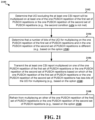
- FIG. 21 is a flowchart of a method of wireless communication in accordance with aspects presented herein.
- FIG. 22 is a flowchart of a method of wireless communication in accordance with aspects presented herein.
- FIG. 23 is a flowchart of a method of wireless communication in accordance with aspects presented herein.
- FIG. 24 is a flowchart of a method of wireless communication in accordance with aspects presented herein.
- FIG. 25 is a flowchart of a method of wireless communication in accordance with aspects presented herein.
- FIG. 26 is a flowchart of a method of wireless communication in accordance with aspects presented herein.
- FIG. 27 is a diagram illustrating an example of a hardware implementation for an example apparatus in accordance with aspects presented herein.
- processors include microprocessors, microcontrollers, graphics processing units (GPUs), central processing units (CPUs), application processors, digital signal processors (DSPs), reduced instruction set computing (RISC) processors, systems on a chip (SoC), baseband processors, field programmable gate arrays (FPGAs), programmable logic devices (PLDs), state machines, gated logic, discrete hardware circuits, and other suitable hardware configured to perform the various functionality described throughout this disclosure.
- processors in the processing system may execute software.
- Software shall be construed broadly to mean instructions, instruction sets, code, code segments, program code, programs, subprograms, software components, applications, software applications, software packages, routines, subroutines, objects, executables, threads of execution, procedures, functions, etc., whether referred to as software, firmware, middleware, microcode, hardware description language, or otherwise.
- the functions described may be implemented in hardware, software, or any combination thereof. If implemented in software, the functions may be stored on or encoded as one or more instructions or code on a computer-readable medium.
- Computer-readable media includes computer storage media. Storage media may be any available media that can be accessed by a computer.
- such computer-readable media can comprise a random-access memory (RAM), a read-only memory (ROM), an electrically erasable programmable ROM (EEPROM), optical disk storage, magnetic disk storage, other magnetic storage devices, combinations of the types of computer-readable media, or any other medium that can be used to store computer executable code in the form of instructions or data structures that can be accessed by a computer.
- implementations and/or uses may come about via integrated chip implementations and other non-module-component based devices (e.g., end-user devices, vehicles, communication devices, computing devices, industrial equipment, retail/purchasing devices, medical devices, artificial intelligence (AI)-enabled devices, etc.). While some examples may or may not be specifically directed to use cases or applications, a wide assortment of applicability of described innovations may occur.
- non-module-component based devices e.g., end-user devices, vehicles, communication devices, computing devices, industrial equipment, retail/purchasing devices, medical devices, artificial intelligence (AI)-enabled devices, etc.
- Implementations may range a spectrum from chip-level or modular components to non-modular, non-chip-level implementations and further to aggregate, distributed, or original equipment manufacturer (OEM) devices or systems incorporating one or more aspects of the described innovations.
- devices incorporating described aspects and features may also include additional components and features for implementation and practice of claimed and described aspect.
- transmission and reception of wireless signals necessarily includes a number of components for analog and digital purposes (e.g., hardware components including antenna, RF-chains, power amplifiers, modulators, buffer, processor(s), interleaver, adders/summers, etc.).
- innovations described herein may be practiced in a wide variety of devices, chip-level components, systems, distributed arrangements, aggregated or disaggregated components, end-user devices, etc. of varying sizes, shapes, and constitution.
- FIG. 1 is a diagram illustrating an example of a wireless communications system and an access network 100 .
- the wireless communications system (also referred to as a wireless wide area network (WWAN)) includes base stations 102 , UEs 104 , an Evolved Packet Core (EPC) 160 , and another core network 190 (e.g., a 5G Core (5GC)).
- the base stations 102 may include macrocells (high power cellular base station) and/or small cells (low power cellular base station).
- the macrocells include base stations.
- the small cells include femtocells, picocells, and microcells.
- the UE 104 may include a CSI report multiplexing determination component 198 configured to determine whether to multiplex one or more CSI reports on PUSCH repetition(s) and/or which PUSCH repetition(s) to multiplex the one or more CSI reports for multi-TRP PUSCH repetitions.
- a CSI report multiplexing determination component 198 configured to determine whether to multiplex one or more CSI reports on PUSCH repetition(s) and/or which PUSCH repetition(s) to multiplex the one or more CSI reports for multi-TRP PUSCH repetitions.
- the CSI report multiplexing determination component 198 may be configured to receive DCI scheduling a plurality of PUSCH repetitions including a first set of PUSCH repetitions associated with a first SRS set and a second set of PUSCH repetitions associated with a second SRS set, and requesting transmission of at least one CSI report to be multiplexed on one PUSCH repetition of the first set of PUSCH repetitions, one PUSCH repetition of the second set of PUSCH repetitions, or both the one PUSCH repetition of the first set of PUSCH repetitions and the one PUSCH repetition of the second set of PUSCH repetitions.
- the CSI report multiplexing determination component 198 may determine whether to multiplex the at least one CSI report in the one PUSCH repetition of the first set of PUSCH repetitions, the one PUSCH repetition of the second set of PUSCH repetitions, or both the one PUSCH repetition of the first set of PUSCH repetitions and the one PUSCH repetition of the second set of PUSCH repetitions based on at least one of whether a number of symbols in the one PUSCH repetition of the first set of PUSCH repetitions and in the one PUSCH repetition of the second set of PUSCH repetitions is different, or UCI excluding the at least one CSI report will be transmitted in the one PUSCH repetition of the first set of PUSCH repetitions or the one PUSCH repetition of the second set of PUSCH repetitions.
- the CSI report multiplexing determination component 198 may transmit, based on the determination, the at least one CSI report multiplexed on the one PUSCH repetition of the first set of PUSCH repetitions, the one PUSCH repetition of the second set of PUSCH repetitions, or both the one PUSCH repetition of the first set of PUSCH repetitions and the one PUSCH repetition of the second set of PUSCH repetitions.
- the base stations 102 configured for 4G LTE may interface with the EPC 160 through first backhaul links 132 (e.g., 51 interface).
- the base stations 102 configured for 5G NR may interface with core network 190 through second backhaul links 184 .
- the base stations 102 may perform one or more of the following functions: transfer of user data, radio channel ciphering and deciphering, integrity protection, header compression, mobility control functions (e.g., handover, dual connectivity), inter-cell interference coordination, connection setup and release, load balancing, distribution for non-access stratum (NAS) messages, NAS node selection, synchronization, radio access network (RAN) sharing, multimedia broadcast multicast service (MBMS), subscriber and equipment trace, RAN information management (RIM), paging, positioning, and delivery of warning messages.
- the base stations 102 may communicate directly or indirectly (e.g., through the EPC 160 or core network 190 ) with each other over third backhaul links 134 (e.g., X2 interface).
- the first backhaul links 132 , the second backhaul links 184 , and the third backhaul links 134 may be wired or wireless.
- a network entity may include a base station, one or more components of a disaggregated or virtualized base station (such as a distributed unit or a central unit), a radio unit, a transmission reception point (TRP), a relay, an intelligent reflective surface (IRS), and/or a combination thereof.
- a base station 102 or 180 may be referred as a RAN and may include aggregated or disaggregated components.
- a base station may include a central/centralized unit (CU) 103 , one or more distributed units (DU) 105 , and/or one or more radio units (RU) 109 , as illustrated in FIG. 1 .
- a RAN may be disaggregated with a split between an RU 109 and an aggregated CU/DU.
- a RAN may be disaggregated with a split between the CU 103 , the DU 105 , and the RU 109 .
- a RAN may be disaggregated with a split between the CU 103 and an aggregated DU/RU.
- the CU 103 and the one or more DUs 105 may be connected via an F1 interface.
- a DU 105 and an RU 109 may be connected via a fronthaul interface.
- a connection between the CU 103 and a DU 105 may be referred to as a midhaul, and a connection between a DU 105 and an RU 109 may be referred to as a fronthaul.
- the connection between the CU 103 and the core network may be referred to as the backhaul.
- the RAN may be based on a functional split between various components of the RAN, e.g., between the CU 103 , the DU 105 , or the RU 109 .
- the CU may be configured to perform one or more aspects of a wireless communication protocol, e.g., handling one or more layers of a protocol stack, and the DU(s) may be configured to handle other aspects of the wireless communication protocol, e.g., other layers of the protocol stack.
- the split between the layers handled by the CU and the layers handled by the DU may occur at different layers of a protocol stack.
- a DU 105 may provide a logical node to host a radio link control (RLC) layer, a medium access control (MAC) layer, and at least a portion of a physical (PHY) layer based on the functional split.
- RLC radio link control
- MAC medium access control
- PHY physical
- An RU may provide a logic al node configured to host at least a portion of the PHY layer and radio frequency (RF) processing.
- a CU 103 may host higher layer functions, e.g., above the RLC layer, such as a service data adaptation protocol (SDAP) layer, a packet data convergence protocol (PDCP) layer.
- SDAP service data adaptation protocol
- PDCP packet data convergence protocol
- the split between the layer functions provided by the CU, DU, or RU may be different.
- An access network may include one or more integrated access and backhaul (IAB) nodes 111 that exchange wireless communication with a UE 104 or other IAB node 111 to provide access and backhaul to a core network.
- IAB integrated access and backhaul
- an anchor node may be referred to as an IAB donor.
- the IAB donor may be a base station 102 or 180 that provides access to a core network 190 or EPC 160 and/or control to one or more IAB nodes 111 .
- the IAB donor may include a CU 103 and a DU 105 .
- IAB nodes 111 may include a DU 105 and a mobile termination (MT) 113 .
- the DU 105 of an IAB node 111 may operate as a parent node, and the MT 113 may operate as a child node.
- the base stations 102 may wirelessly communicate with the UEs 104 . Each of the base stations 102 may provide communication coverage for a respective geographic coverage area 110 . There may be overlapping geographic coverage areas 110 .
- the small cell 102 ′ may have a coverage area 110 ′ that overlaps the coverage area 110 of one or more macro base stations 102 .
- a network that includes both small cell and macrocells may be known as a heterogeneous network.
- a heterogeneous network may also include Home Evolved Node Bs (eNBs) (HeNBs), which may provide service to a restricted group known as a closed subscriber group (CSG).
- eNBs Home Evolved Node Bs
- CSG closed subscriber group
- the communication links 120 between the base stations 102 and the UEs 104 may include uplink (UL) (also referred to as reverse link) transmissions from a UE 104 to a base station 102 and/or downlink (DL) (also referred to as forward link) transmissions from a base station 102 to a UE 104 .
- the communication links 120 may use multiple-input and multiple-output (MIMO) antenna technology, including spatial multiplexing, beamforming, and/or transmit diversity.
- the communication links may be through one or more carriers.
- the base stations 102 /UEs 104 may use spectrum up to Y MHz (e.g., 5, 10, 15, 20, 100, 400, etc.
- the component carriers may include a primary component carrier and one or more secondary component carriers.
- a primary component carrier may be referred to as a primary cell (PCell) and a secondary component carrier may be referred to as a secondary cell (SCell).
- D2D communication link 158 may use the DL/UL WWAN spectrum.
- the D2D communication link 158 may use one or more sidelink channels, such as a physical sidelink broadcast channel (PSBCH), a physical sidelink discovery channel (PSDCH), a physical sidelink shared channel (PSSCH), and a physical sidelink control channel (PSCCH).
- sidelink channels such as a physical sidelink broadcast channel (PSBCH), a physical sidelink discovery channel (PSDCH), a physical sidelink shared channel (PSSCH), and a physical sidelink control channel (PSCCH).
- sidelink channels such as a physical sidelink broadcast channel (PSBCH), a physical sidelink discovery channel (PSDCH), a physical sidelink shared channel (PSSCH), and a physical sidelink control channel (PSCCH).
- sidelink channels such as a physical sidelink broadcast channel (PSBCH), a physical sidelink discovery channel (PSDCH), a physical sidelink shared channel (PSSCH), and a physical sidelink control channel (PSCCH).
- the wireless communications system may further include a Wi-Fi access point (AP) 150 in communication with Wi-Fi stations (STAs) 152 via communication links 154 , e.g., in a 5 GHz unlicensed frequency spectrum or the like.
- AP Wi-Fi access point
- STAs Wi-Fi stations
- communication links 154 e.g., in a 5 GHz unlicensed frequency spectrum or the like.
- the STAs 152 /AP 150 may perform a clear channel assessment (CCA) prior to communicating in order to determine whether the channel is available.
- CCA clear channel assessment
- the small cell 102 ′ may operate in a licensed and/or an unlicensed frequency spectrum. When operating in an unlicensed frequency spectrum, the small cell 102 ′ may employ NR and use the same unlicensed frequency spectrum (e.g., 5 GHz, or the like) as used by the Wi-Fi AP 150 . The small cell 102 ′, employing NR in an unlicensed frequency spectrum, may boost coverage to and/or increase capacity of the access network.
- the small cell 102 ′ employing NR in an unlicensed frequency spectrum, may boost coverage to and/or increase capacity of the access network.
- FR1 frequency range designations FR1 (410 MHz-7.125 GHz) and FR2 (24.25 GHz-52.6 GHz). Although a portion of FR1 is greater than 6 GHz, FR1 is often referred to (interchangeably) as a “sub-6 GHz” band in various documents and articles.
- FR2 which is often referred to (interchangeably) as a “millimeter wave” band in documents and articles, despite being different from the extremely high frequency (EHF) band (30 GHz-300 GHz) which is identified by the International Telecommunications Union (ITU) as a “millimeter wave” band.
- EHF extremely high frequency
- ITU International Telecommunications Union
- FR3 7.125 GHz-24.25 GHz
- FR4 71 GHz-114.25 GHz
- FR5 114.25 GHz-300 GHz
- sub-6 GHz or the like if used herein may broadly represent frequencies that may be less than 6 GHz, may be within FR1, or may include mid-band frequencies.
- millimeter wave or the like if used herein may broadly represent frequencies that may include mid-band frequencies, may be within FR2, FR4, FR2-2, and/or FR5, or may be within the EHF band.
- a base station 102 may include and/or be referred to as an eNB, gNodeB (gNB), or another type of base station.
- Some base stations, such as gNB 180 may operate in a traditional sub 6 GHz spectrum, in millimeter wave frequencies, and/or near millimeter wave frequencies in communication with the UE 104 .
- the gNB 180 may be referred to as a millimeter wave base station.
- the millimeter wave base station 180 may utilize beamforming 182 with the UE 104 to compensate for the path loss and short range.
- the base station 180 and the UE 104 may each include a plurality of antennas, such as antenna elements, antenna panels, and/or antenna arrays to facilitate the beamforming.
- the base station 180 may transmit a beamformed signal to the UE 104 in one or more transmit directions 182 ′.
- the UE 104 may receive the beamformed signal from the base station 180 in one or more receive directions 182 ′′.
- the UE 104 may also transmit a beamformed signal to the base station 180 in one or more transmit directions.
- the base station 180 may receive the beamformed signal from the UE 104 in one or more receive directions.
- the base station 180 /UE 104 may perform beam training to determine the best receive and transmit directions for each of the base station 180 /UE 104 .
- the transmit and receive directions for the base station 180 may or may not be the same.
- the transmit and receive directions for the UE 104 may or may not be the same.
- the EPC 160 may include a Mobility Management Entity (MME) 162 , other MMES 164 , a Serving Gateway 166 , a Multimedia Broadcast Multicast Service (MBMS) Gateway 168 , a Broadcast Multicast Service Center (BM-SC) 170 , and a Packet Data Network (PDN) Gateway 172 .
- MME Mobility Management Entity
- MBMS Multimedia Broadcast Multicast Service
- BM-SC Broadcast Multicast Service Center
- PDN Packet Data Network
- the MME 162 may be in communication with a Home Subscriber Server (HSS) 174 .
- HSS Home Subscriber Server
- the MME 162 is the control node that processes the signaling between the UEs 104 and the EPC 160 .
- the MME 162 provides bearer and connection management. All user Internet protocol (IP) packets are transferred through the Serving Gateway 166 , which itself is connected to the PDN Gateway 172 .
- IP Internet protocol
- the PDN Gateway 172 provides UE IP address allocation as well as other functions.
- the PDN Gateway 172 and the BM-SC 170 are connected to the IP Services 176 .
- the IP Services 176 may include the Internet, an intranet, an IP Multimedia Subsystem (IMS), a PS Streaming Service, and/or other IP services.
- the BM-SC 170 may provide functions for MBMS user service provisioning and delivery.
- the BM-SC 170 may serve as an entry point for content provider MBMS transmission, may be used to authorize and initiate MBMS Bearer Services within a public land mobile network (PLMN), and may be used to schedule MBMS transmissions.
- PLMN public land mobile network
- the MBMS Gateway 168 may be used to distribute MBMS traffic to the base stations 102 belonging to a Multicast Broadcast Single Frequency Network (MBSFN) area broadcasting a particular service, and may be responsible for session management (start/stop) and for collecting eMBMS related charging information.
- MMSFN Multicast Broadcast Single Frequency Network
- the core network 190 may include an Access and Mobility Management Function (AMF) 192 , other AMFs 193 , a Session Management Function (SMF) 194 , and a User Plane Function (UPF) 195 .
- the AMF 192 may be in communication with a Unified Data Management (UDM) 196 .
- the AMF 192 is the control node that processes the signaling between the UEs 104 and the core network 190 .
- the AMF 192 provides QoS flow and session management. All user Internet protocol (IP) packets are transferred through the UPF 195 .
- the UPF 195 provides UE IP address allocation as well as other functions.
- the UPF 195 is connected to the IP Services 197 .
- the IP Services 197 may include the Internet, an intranet, an IP Multimedia Subsystem (IMS), a Packet Switch (PS) Streaming (PSS) Service, and/or other IP services.
- IMS IP Multimedia Subsystem
- PS Packet
- the base station may include and/or be referred to as a gNB, Node B, eNB, an access point, a base transceiver station, a radio base station, a radio transceiver, a transceiver function, a basic service set (BSS), an extended service set (ESS), a transmit reception point (TRP), or some other suitable terminology.
- the base station 102 provides an access point to the EPC 160 or core network 190 for a UE 104 .
- Examples of UEs 104 include a cellular phone, a smart phone, a session initiation protocol (SIP) phone, a laptop, a personal digital assistant (PDA), a satellite radio, a global positioning system, a multimedia device, a video device, a digital audio player (e.g., MP3 player), a camera, a game console, a tablet, a smart device, a wearable device, a vehicle, an electric meter, a gas pump, a large or small kitchen appliance, a healthcare device, an implant, a sensor/actuator, a display, or any other similar functioning device.
- SIP session initiation protocol
- PDA personal digital assistant
- Some of the UEs 104 may be referred to as IoT devices (e.g., parking meter, gas pump, toaster, vehicles, heart monitor, etc.).
- the UE 104 may also be referred to as a station, a mobile station, a subscriber station, a mobile unit, a subscriber unit, a wireless unit, a remote unit, a mobile device, a wireless device, a wireless communications device, a remote device, a mobile subscriber station, an access terminal, a mobile terminal, a wireless terminal, a remote terminal, a handset, a user agent, a mobile client, a client, or some other suitable terminology.
- the term UE may also apply to one or more companion devices such as in a device constellation arrangement. One or more of these devices may collectively access the network and/or individually access the network.
- FIG. 2 A is a diagram 200 illustrating an example of a first subframe within a 5G NR frame structure.
- FIG. 2 B is a diagram 230 illustrating an example of DL channels within a 5G NR subframe.
- FIG. 2 C is a diagram 250 illustrating an example of a second subframe within a 5G NR frame structure.
- FIG. 2 D is a diagram 280 illustrating an example of UL channels within a 5G NR subframe.
- the 5G NR frame structure may be frequency division duplexed (FDD) in which for a particular set of subcarriers (carrier system bandwidth), subframes within the set of subcarriers are dedicated for either DL or UL, or may be time division duplexed (TDD) in which for a particular set of subcarriers (carrier system bandwidth), subframes within the set of subcarriers are dedicated for both DL and UL.
- FDD frequency division duplexed
- TDD time division duplexed
- the 5G NR frame structure is assumed to be TDD, with subframe 4 being configured with slot format 28 (with mostly DL), where D is DL, U is UL, and F is flexible for use between DL/UL, and subframe 3 being configured with slot format 1 (with all UL). While subframes 3, 4 are shown with slot formats 1, 28, respectively, any particular subframe may be configured with any of the various available slot formats 0-61. Slot formats 0, 1 are all DL, UL, respectively. Other slot formats 2-61 include a mix of DL, UL, and flexible symbols.
- UEs are configured with the slot format (dynamically through DL control information (DCI), or semi-statically/statically through radio resource control (RRC) signaling) through a received slot format indicator (SFI).
- DCI DL control information
- RRC radio resource control
- SFI received slot format indicator
- FIGS. 2 A- 2 D illustrate a frame structure, and the aspects of the present disclosure may be applicable to other wireless communication technologies, which may have a different frame structure and/or different channels.
- a frame (10 ms) may be divided into 10 equally sized subframes (1 ms). Each subframe may include one or more time slots. Subframes may also include mini-slots, which may include 7, 4, or 2 symbols. Each slot may include 14 or 12 symbols, depending on whether the cyclic prefix (CP) is normal or extended. For normal CP, each slot may include 14 symbols, and for extended CP, each slot may include 12 symbols.
- the symbols on DL may be CP orthogonal frequency division multiplexing (OFDM) (CP-OFDM) symbols.
- OFDM orthogonal frequency division multiplexing
- the symbols on UL may be CP-OFDM symbols (for high throughput scenarios) or discrete Fourier transform (DFT) spread OFDM (DFT-s-OFDM) symbols (also referred to as single carrier frequency-division multiple access (SC-FDMA) symbols) (for power limited scenarios; limited to a single stream transmission).
- DFT discrete Fourier transform
- SC-FDMA single carrier frequency-division multiple access
- the number of slots within a subframe is based on the CP and the numerology.
- the numerology defines the subcarrier spacing (SC S) and, effectively, the symbol length/duration, which is equal to 1/SCS.
- the numerology 2 allows for 4 slots per subframe. Accordingly, for normal CP and numerology ⁇ , there are 14 symbols/slot and 2 ⁇ slots/subframe.
- the symbol length/duration is inversely related to the subcarrier spacing.
- the slot duration is 0.25 ms
- the subcarrier spacing is 60 kHz
- the symbol duration is approximately 16.67 ⁇ s.
- there may be one or more different bandwidth parts (BWPs) (see FIG. 2 B ) that are frequency division multiplexed.
- Each BWP may have a particular numerology and CP (normal or extended).
- a resource grid may be used to represent the frame structure.
- Each time slot includes a resource block (RB) (also referred to as physical RBs (PRBs)) that extends 12 consecutive subcarriers.
- RB resource block
- PRBs physical RBs
- the resource grid is divided into multiple resource elements (REs). The number of bits carried by each RE depends on the modulation scheme.
- the RS may include demodulation RS (DM-RS) (indicated as R for one particular configuration, but other DM-RS configurations are possible) and channel state information reference signals (CSI-RS) for channel estimation at the UE.
- DM-RS demodulation RS
- CSI-RS channel state information reference signals
- the RS may also include beam measurement RS (BRS), beam refinement RS (BRRS), and phase tracking RS (PT-RS).
- BRS beam measurement RS
- BRRS beam refinement RS
- PT-RS phase tracking RS
- FIG. 2 B illustrates an example of various DL channels within a subframe of a frame.
- the physical downlink control channel (PDCCH) carries DCI within one or more control channel elements (CCEs) (e.g., 1, 2, 4, 8, or 16 CCEs), each CCE including six RE groups (REGs), each REG including 12 consecutive REs in an OFDM symbol of an RB.
- CCEs control channel elements
- a PDCCH within one BWP may be referred to as a control resource set (CORESET).
- a UE is configured to monitor PDCCH candidates in a PDCCH search space (e.g., common search space, UE-specific search space) during PDCCH monitoring occasions on the CORESET, where the PDCCH candidates have different DCI formats and different aggregation levels.
- a PDCCH search space e.g., common search space, UE-specific search space
- a primary synchronization signal may be within symbol 2 of particular subframes of a frame.
- the PSS is used by a UE 104 to determine subframe/symbol timing and a physical layer identity.
- a secondary synchronization signal may be within symbol 4 of particular subframes of a frame.
- the SSS is used by a UE to determine a physical layer cell identity group number and radio frame timing. Based on the physical layer identity and the physical layer cell identity group number, the UE can determine a physical cell identifier (PCI). Based on the PCI, the UE can determine the locations of the DM-RS.
- PCI physical cell identifier
- the physical broadcast channel which carries a master information block (MIB), may be logically grouped with the PSS and SSS to form a synchronization signal (SS)/PBCH block (also referred to as SS block (SSB)).
- the MIB provides a number of RBs in the system bandwidth and a system frame number (SFN).
- the physical downlink shared channel (PDSCH) carries user data, broadcast system information not transmitted through the PBCH such as system information blocks (SIBs), and paging messages.
- SIBs system information blocks
- some of the REs carry DM-RS (indicated as R for one particular configuration, but other DM-RS configurations are possible) for channel estimation at the base station.
- the UE may transmit DM-RS for the physical uplink control channel (PUCCH) and DM-RS for the physical uplink shared channel (PUSCH).
- the PUSCH DM-RS may be transmitted in the first one or two symbols of the PUSCH.
- the PUCCH DM-RS may be transmitted in different configurations depending on whether short or long PUCCHs are transmitted and depending on the particular PUCCH format used.
- the UE may transmit sounding reference signals (SRS).
- the SRS may be transmitted in the last symbol of a subframe.
- the SRS may have a comb structure, and a UE may transmit SRS on one of the combs.
- the SRS may be used by a base station for channel quality estimation to enable frequency-dependent scheduling on the UL.
- FIG. 2 D illustrates an example of various UL channels within a subframe of a frame.
- the PUCCH may be located as indicated in one configuration.
- the PUCCH carries uplink control information (UCI), such as scheduling requests, a channel quality indicator (CQI), a precoding matrix indicator (PMI), a rank indicator (RI), and hybrid automatic repeat request (HARQ) acknowledgment (ACK) (HARQ-ACK) feedback (i.e., one or more HARQ ACK bits indicating one or more ACK and/or negative ACK (NACK)).
- the PUSCH carries data, and may additionally be used to carry a buffer status report (BSR), a power headroom report (PHR), and/or UCI.
- BSR buffer status report
- PHR power headroom report
- FIG. 3 is a block diagram of a base station 310 in communication with a UE 350 in an access network.
- IP packets from the EPC 160 may be provided to a controller/processor 375 .
- the controller/processor 375 implements layer 3 and layer 2 functionality.
- Layer 3 includes a radio resource control (RRC) layer
- layer 2 includes a service data adaptation protocol (SDAP) layer, a packet data convergence protocol (PDCP) layer, a radio link control (RLC) layer, and a medium access control (MAC) layer.
- RRC radio resource control
- SDAP service data adaptation protocol
- PDCP packet data convergence protocol
- RLC radio link control
- MAC medium access control
- the controller/processor 375 provides RRC layer functionality associated with broadcasting of system information (e.g., MIB, SIBs), RRC connection control (e.g., RRC connection paging, RRC connection establishment, RRC connection modification, and RRC connection release), inter radio access technology (RAT) mobility, and measurement configuration for UE measurement reporting; PDCP layer functionality associated with header compression/decompression, security (ciphering, deciphering, integrity protection, integrity verification), and handover support functions; RLC layer functionality associated with the transfer of upper layer packet data units (PDUs), error correction through ARQ, concatenation, segmentation, and reassembly of RLC service data units (SDUs), re-segmentation of RLC data PDUs, and reordering of RLC data PDUs; and MAC layer functionality associated with mapping between logical channels and transport channels, multiplexing of MAC SDUs onto transport blocks (TBs), demultiplexing of MAC SDUs from TBs, scheduling information reporting, error correction through
- the transmit (TX) processor 316 and the receive (RX) processor 370 implement layer 1 functionality associated with various signal processing functions.
- Layer 1 which includes a physical (PHY) layer, may include error detection on the transport channels, forward error correction (FEC) coding/decoding of the transport channels, interleaving, rate matching, mapping onto physical channels, modulation/demodulation of physical channels, and MIMO antenna processing.
- the TX processor 316 handles mapping to signal constellations based on various modulation schemes (e.g., binary phase-shift keying (BPSK), quadrature phase-shift keying (QPSK), M-phase-shift keying (M-PSK), M-quadrature amplitude modulation (M-QAM)).
- BPSK binary phase-shift keying
- QPSK quadrature phase-shift keying
- M-PSK M-phase-shift keying
- M-QAM M-quadrature amplitude modulation
- Each stream may then be mapped to an OFDM subcarrier, multiplexed with a reference signal (e.g., pilot) in the time and/or frequency domain, and then combined together using an Inverse Fast Fourier Transform (IFFT) to produce a physical channel carrying a time domain OFDM symbol stream.
- the OFDM stream is spatially precoded to produce multiple spatial streams.
- Channel estimates from a channel estimator 374 may be used to determine the coding and modulation scheme, as well as for spatial processing.
- the channel estimate may be derived from a reference signal and/or channel condition feedback transmitted by the UE 350 .
- Each spatial stream may then be provided to a different antenna 320 via a separate transmitter 318 TX.
- Each transmitter 318 TX may modulate a radio frequency (RF) carrier with a respective spatial stream for transmission.
- RF radio frequency
- each receiver 354 RX receives a signal through its respective antenna 352 .
- Each receiver 354 RX recovers information modulated onto an RF carrier and provides the information to the receive (RX) processor 356 .
- the TX processor 368 and the RX processor 356 implement layer 1 functionality associated with various signal processing functions.
- the RX processor 356 may perform spatial processing on the information to recover any spatial streams destined for the UE 350 . If multiple spatial streams are destined for the UE 350 , they may be combined by the RX processor 356 into a single OFDM symbol stream.
- the RX processor 356 then converts the OFDM symbol stream from the time-domain to the frequency domain using a Fast Fourier Transform (FFT).
- FFT Fast Fourier Transform
- the frequency domain signal comprises a separate OFDM symbol stream for each subcarrier of the OFDM signal.
- the symbols on each subcarrier, and the reference signal are recovered and demodulated by determining the most likely signal constellation points transmitted by the base station 310 . These soft decisions may be based on channel estimates computed by the channel estimator 358 .
- the soft decisions are then decoded and deinterleaved to recover the data and control signals that were originally transmitted by the base station 310 on the physical channel.
- the data and control signals are then provided to the controller/processor 359 , which implements layer 3 and layer 2 functionality.
- the controller/processor 359 can be associated with a memory 360 that stores program codes and data.
- the memory 360 may be referred to as a computer-readable medium.
- the controller/processor 359 provides demultiplexing between transport and logical channels, packet reassembly, deciphering, header decompression, and control signal processing to recover IP packets from the EPC 160 .
- the controller/processor 359 is also responsible for error detection using an ACK and/or NACK protocol to support HARQ operations.
- the controller/processor 359 provides RRC layer functionality associated with system information (e.g., MIB, SIBs) acquisition, RRC connections, and measurement reporting; PDCP layer functionality associated with header compression/decompression, and security (ciphering, deciphering, integrity protection, integrity verification); RLC layer functionality associated with the transfer of upper layer PDUs, error correction through ARQ, concatenation, segmentation, and reassembly of RLC SDUs, re-segmentation of RLC data PDUs, and reordering of RLC data PDUs; and MAC layer functionality associated with mapping between logical channels and transport channels, multiplexing of MAC SDUs onto TBs, demultiplexing of MAC SDUs from TBs, scheduling information reporting, error correction through HARQ, priority handling, and logical channel prioritization.
- RRC layer functionality associated with system information (e.g., MIB, SIBs) acquisition, RRC connections, and measurement reporting
- PDCP layer functionality associated with header compression/
- Channel estimates derived by a channel estimator 358 from a reference signal or feedback transmitted by the base station 310 may be used by the TX processor 368 to select the appropriate coding and modulation schemes, and to facilitate spatial processing.
- the spatial streams generated by the TX processor 368 may be provided to different antenna 352 via separate transmitters 354 TX. Each transmitter 354 TX may modulate an RF carrier with a respective spatial stream for transmission.
- the UL transmission is processed at the base station 310 in a manner similar to that described in connection with the receiver function at the UE 350 .
- Each receiver 318 RX receives a signal through its respective antenna 320 .
- Each receiver 318 RX recovers information modulated onto an RF carrier and provides the information to a RX processor 370 .
- the controller/processor 375 can be associated with a memory 376 that stores program codes and data.
- the memory 376 may be referred to as a computer-readable medium.
- the controller/processor 375 provides demultiplexing between transport and logical channels, packet reassembly, deciphering, header decompression, control signal processing to recover IP packets from the UE 350 .
- IP packets from the controller/processor 375 may be provided to the EPC 160 .
- the controller/processor 375 is also responsible for error detection using an ACK and/or NACK protocol to support HARQ operations.
- At least one of the TX processor 368 , the RX processor 356 , and the controller/processor 359 may be configured to perform aspects in connection with the CSI report multiplexing determination component 198 of FIG. 1 .
- a transmitting device may transmit data (e.g., via a PDSCH, PDSCH, etc.) with repetitions/retransmissions (e.g., PDSCH repetitions, PUSCH repetitions, etc.).
- a UE may be configured to transmit a PUSCH followed by N (e.g., 2, 4, 5, etc.) repetitions.
- N e.g. 2, 4, 5, etc.
- the UE may transmit N PUSCH repetitions. Transmitting data with repetitions of the data may increase the success rate of the transmission, as the data may have a higher chance of being received by a receiving device.
- the term “repetition” and the term “retransmission” may be used interchangeably, which may refer to a copy or a duplication of data that may be transmitted more than once.
- a PUSCH repetition and a PUSCH retransmission may both refer to a copy/duplication of a PUSCH that is transmitted by a UE after the UE transmits the PUSCH.
- FIG. 4 is a diagram 400 illustrating an example of a data transmission involving repetitions.
- a UE 402 may be configured to transmit a PUSCH 406 with four (4) repetitions/retransmissions to a base station 404 (or to a component of the base station 404 or a network entity).
- the UE 402 may transmit the PUSCH 406 at slot n, then the UE 402 may transmit a first PUSCH repetition 408 (e.g., repetition #0) at slot n+1, a second PUSCH repetition 410 (e.g., repetition #1) at slot n+2, a third PUSCH repetition 412 (e.g., repetition #2) at slot n+3, and a fourth PUSCH repetition 414 (e.g., repetition #3) at slot n+4.
- the repeated transmission of the PUSCH 406 may be referred to as inter-slot repetitions.
- the repetitions may also be transmitted at non-consecutive slots (e.g., at n+1, n+3, n+5, etc.) or within a same slot (e.g., intra-slot repetitions).
- a network may include different data repetition types or modes.
- a network may include at least two types of PUSCH repetition for its dynamic grant (DG) and/or configured grant (CG).
- FIG. 5 is a diagram 500 illustrating an example of a first type of PUSCH repetition, which may be referred to as “PUSCH repetition Type A.”
- PUSCH repetition Type A a UE may be configured to transmit a number of K PUSCH repetitions using the same time and frequency resources in multiple slots when more than one PUSCH repetition (e.g., K>1) is configured for the UE, and the UE may not transmit a PUSCH or a PUSCH repetition across a slot boundary for DG PUSCH and/or CG PUSCH.
- the base station may indicate to the UE resources in which the UE may use for transmitting the PUSCH or the PUSCH repetition. For example, the base station may transmit a start and length indicator value (SLIV) to the UE, where the SLIV may indicate/include a starting symbol (S) and a length (L) of PUSCH (e.g., in symbols) in which the UE may use for transmitting the PUSCH or the PUSCH repetition in a slot.
- SLIV start and length indicator value
- K PUSCH repetitions
- a UE may transmit different PUSCH repetitions in different slots, where the same symbols (e.g., same starting symbol and same length) may be used for the PUSCH repetitions in each slot).
- the number of repetitions K may be either semi-statically configured (e.g., via RRC) or dynamically indicated by the DCI (e.g., by a time domain resource assignment (TDRA) field).
- TDRA time domain resource assignment
- the number of repetitions K may be equal to the pusch-AggregationFactor.
- the number of repetitions K may be equal to the numberofrepetitions indicated by the DCI (e.g., pointing to a TDRA row).
- FIG. 6 is a diagram 600 illustrating examples of a second type of PUSCH repetition, which may be referred to as “PUSCH repetition Type B.”
- PUSCH repetition Type B a UE may transmit PUSCH across a slot boundary for DG PUSCH and/or CG PUSCH, and the UE may transmit PUSCH or PUSCH repetition using different time and/or frequency resources for different slots.
- a base station (or a component of the base station) may also dynamically indicate a number of PUSCH repetitions, an inter-nominal PUSCH frequency hopping, new uplink/downlink (U/D) symbol interaction, and/or new SLIV to the UE under the second type of PUSCH repetition.
- a base station may indicate a number of “nominal” repetitions to a UE in DCI, which may be consecutive.
- the number of nominal repetitions (e.g., numberofrepetitions) may be configured per row of the TDRA table, and may be dynamically indicated by the DCI (by pointing to a TDRA row).
- the nominal repetitions may have the same length (e.g., two nominal repetitions with each nominal repetition being four symbols in length).
- a nominal repetition may cross a slot boundary.
- the nominal repetition when a nominal repetition crosses a slot boundary, the nominal repetition may be divided into two “actual repetitions.” For example, as one of a four symbols long repetition in diagram 610 crosses the slot boundary, that repetition may be divided into two actual repetitions. Thus, the four nominal repetitions may turn into five actual repetitions. Similarly, as the fourteen-symbols repetition in diagram 620 crosses the slot boundary, that repetition may be divided into two actual repetitions.
- FIG. 7 is a diagram 700 illustrating an example of dividing nominal repetitions into multiple actual repetitions based on invalid symbol and across slot boundary.
- a UE may be scheduled by a base station (or a component of the base station) with four (4) nominal repetitions with each nominal repetition having five (5) symbols in length, where one of the nominal repetitions may include an invalid symbol and one of the nominal repetitions may cross a slot boundary.
- the nominal repetition that include the invalid symbol may be divided into two actual repetitions after removing the invalid symbol, and the nominal repetition that crosses the slot boundary may be divided into two actual repetitions.
- the invalid symbol(s) may include semi-static downlink (DL) symbols, indicated symbol in a pattern of invalid symbols, synchronization signal block (SSB) symbol(s), and/or symbol(s) where CORESET0 for Type0-PDCCH is monitored, etc.
- DL downlink
- SSB synchronization signal block
- a UE may be configured to transmit a PUSCH to multiple transmission and reception points (TRPs) and/or multiple antennas/panels.
- TRPs transmission and reception points
- a PUSCH transmitted to one TRP/panel is blocked, another repetition of the PUSCH may be received and decoded by the other TRP/panel (hence increasing the diversity).
- different PUSCH transmission occasions i.e., PUSCH repetitions
- PUSCH repetitions corresponding to a same transport block (TB) may be transmitted in different slots (e.g., for the PUSCH repetition Type A) or mini-slots (e.g., for the PUSCH repetition Type B).
- the number of PUSCH repetitions may be RRC configured and/or may be indicated dynamically through TDRA field of DCI.
- the UE may transmit the PUSCH repetitions using a same beam as the sounding reference signal (SRS) resource indicator (SRI) field of the DCI may be applied to all the repetitions.
- the SRI e.g., the SRS resource indicator
- the SRI may be a field in DCI (e.g., an UL DCI) that determines/indicates the beam and/or power control for PUSCH by pointing to one or more SRS resources within a SRS resource set.
- a UE may be configured to transmit different PUSCH repetitions with different transmitting beams.
- FIG. 8 is a diagram 800 illustrating an example of associating different sets of PUSCH repetitions with different UL beams and power control parameters.
- a base station (or a component of the base station) may schedule/configure a set of four (4) PUSCH repetitions for a UE, which may include a first PUSCH repetition 802 , a second PUSCH repetition 804 , a third PUSCH repetition 806 , and a fourth PUSCH repetition 808 .
- the set of PUSCH repetitions may be separated into two sets of PUSCH repetitions, where each set of PUSCH repetitions may be associated with a beam and/or power control parameter that is different from the other set of PUSCH repetitions.
- a first set of PUSCH repetitions may include the first PUSCH repetition 802 and the third PUSCH repetition 806 , and the first set of PUSCH repetitions may be associated with a first UL beam and/or a first set of power control parameter(s).
- the UE may transmit the first set of PUSCH repetitions to a first TRP of the base station based on the first UL beam and/or the first set of power control parameter(s).
- a second set of PUSCH repetitions may include the second PUSCH repetition 804 and the fourth PUSCH repetition 808 , and the second set of PUSCH repetitions may be associated with a second UL beam and/or a second set of power control parameter(s).
- the UE may transmit the second set of PUSCH repetitions to a second TRP of the base station based on the second UL beam and/or the second set of power control parameter(s), etc.
- the two sets of PUSCH repetitions may correspond to two SRS resource sets, where the DCI may indicate two beams/two sets of power control parameters by indicating one or more SRS resources within each of the two SRS resource sets.
- the base station may request or configure the UE to measure the channel and report the channel measurement back to the base station. For example, the base station may transmit a set of channel state information (CSI) reference signals (RSs) to the UE and request/configure the UE to measure the set of CSI-RSs. After the UE measures the set of CSI-RSs, the UE may transmit one or more reports (e.g., CSI report(s)) to the base station via PUSCH that indicates the CSI. Based on the reported CSI, the base station may determine the channel condition between the base station and the UE, and the base station may adjust one or more communication parameters between the base station and the UE based on the reported CSI to improve the communication between the base station and the UE.
- CSI channel state information
- RSs channel state information reference signals
- a base station may configure/trigger CSI reporting from a UE to be aperiodic (AP) (e.g., using a PUSCH), periodic (e.g., using a PUCCH), and/or semi-persistent (SP) (e.g., using a PUCCH or DCI-activated PUSCH).
- AP aperiodic
- SP semi-persistent
- FIG. 9 is a diagram 900 illustrating an example of triggering AP-CSI reporting on PUSCH.
- a base station may trigger a UE to transmit AP-CSI report on PUSCH via DCI (e.g., UL DCI), where the base station may configure up to 128 trigger states for the UE via RRC (e.g., via a higher layer parameter Aperiodic TriggerStateList) and each trigger state may be associated with one or more (e.g., up to sixteen (16)) CSI report settings.
- DCI e.g., UL DCI
- RRC e.g., via a higher layer parameter Aperiodic TriggerStateList
- each trigger state may be associated with one or more (e.g., up to sixteen (16)) CSI report settings.
- a “CSI request” field in the DCI has N bits, a maximum of 2 N ⁇ 1 trigger states may be activated through MAC-CE.
- the value (e.g., codepoint) of the CSI request field in the UL DCI corresponds to zero (0), it may indicate that no CSI report is triggered; if the value of the CSI request field corresponds to one (1), it may indicate that a first (#1) and a third (#3) CSI report settings/configurations are triggered; if the value of the CSI request field corresponds to two (2), it may indicate that a fourth (#4) CSI report setting/configuration is triggered, etc.
- the CSI request field of the UL DCI may indicate one trigger state, which may trigger one or more CSI report settings/configurations.
- the UE when a base station requests a UE to provide AP-CSI report via DCI that also schedules multiple PUSCH repetitions, the UE may be configured to multiplex one or more AP-CSI reports on the first PUSCH repetition, which may apply to both PUSCH repetition Type A and PUSCH repetition Type B.
- the UE may be configured to multiplex one or more AP-CSI reports on the first PUSCH repetition (e.g., at slot n) but not on other PUSCH repetitions.
- the UE may be configured to multiplex one or more AP-CSI reports on the first actual PUSCH repetition but not on other PUSCH repetitions.
- FIG. 10 is a diagram 1000 illustrating an example of AP-CSI reporting for PUSCH repetition Type B.
- the first nominal repetition may include an invalid symbol
- the second nominal repetition may cross a slot boundary.
- the two nominal repetitions may be divided into four (4) actual repetitions due to the invalid symbol and crossing the slot boundary.
- the UE may be configured to multiplex one or more AP-CSI reports on the first actual PUSCH repetition but not on other actual PUSCH repetitions. In some examples, the UE may not expect that the first actual repetition has a single symbol duration.
- the UE may assume the nominal repetition to be one instead of four.
- the UE may be configured to expect/assume the length of the first nominal repetition to be the same as the first actual repetition (e.g., no segmentation due to invalid symbol(s) or crossing the slot boundary, etc.).
- FIG. 11 is a diagram 1100 illustrating an example of triggering SP-CSI reporting on PUSCH.
- a base station (or a component of the base station) may trigger a UE to transmit a SP-CSI report on a PUSCH via DCI (e.g., UL DCI), where the base station may configure up to 64 trigger states for the UE via RRC signaling (e.g., via a higher layer parameter SemiPersistentOnPUSCH-TriggerStateList) and each trigger state may be associated with one CSI report setting/configuration.
- the CSI request field in DCI may point to one trigger state which triggers a corresponding CSI report setting/configuration.
- the value of the CSI request field in DCI corresponds to zero (0), it may trigger a first (#1) CSI report setting/configuration; if the value of the CSI request field corresponds to one (1), it may trigger a fourth (#4) CSI report setting/configuration; and if the value of the CSI request field corresponds to sixty-three (63), it may trigger a seventh (#7) CSI report setting/configuration, etc.
- FIG. 12 is a diagram 1200 illustrating an example of SP-CSI reporting.
- the UE may be configured to transmit PUSCHs 1202 periodically carrying CSI reports until another DCI deactivates the SP-CSI reporting.
- the PUSCHs 1202 carrying CSI reports may not carry TB, and the DCI activating the SP-CSI reporting may be scrambled with SP-CSI radio network temporary identifier (RNTI) (SP-CSI-RNTI).
- RNTI SP-CSI radio network temporary identifier
- a periodicity 1204 between two consecutive PUSCHs 1202 may be configured in each CSI report configuration (e.g., with report configuration type set to semiPersistentOnPUSCH) in terms of number of slots (e.g., reportSlotConfig).
- a parameter P0alpha may also be configured per CSI report configuration, which may determine a P0 (offset) and an alpha (factor for partial path loss (PL) compensation) for power control of the PUSCHs that carry the SP-CSI report corresponding to that CSI report configuration.
- each PUSCH may include one PUSCH repetition, where multiple repetitions (e.g., more than one PUSCH repetition) may not be supported for the SP-CSI reporting on a PUSCH.
- FIG. 13 is a diagram 1300 illustrating an example of SP-CSI reporting for PUSCH repetition Type B. If a UE is configured with PUSCH repetition Type B, after the UE is activated to transmit SP-CSI report on PUSCH (e.g., by a base station via the CSI request field in an activating DCI 1302 ), the UE may be configured to expect/assume the nominal repetition is to be the same as the actual repetition (e.g., no segmentation) for the first PUSCH 1304 after the activation.
- the nominal repetition e.g., no segmentation
- the nominal repetition e.g., the first nominal repetition
- the nominal repetition may be omitted by the UE. For example, if a nominal repetition for a PUSCH 1306 includes an invalid symbol or crosses a slot boundary, the nominal repetition may be divided into two actual repetitions, resulting in the nominal repetition not having the same length as the first actual repetition. Thus, the UE may be configured to omit the nominal repetition.
- the UE may be configured to multiplex the AP-CSI report on a first PUSCH repetition corresponding to a first beam (e.g., UL/transmitting beam) of the UE and multiplex the AP-CSI report on the X-th PUSCH repetition corresponding to a second beam of the UE.
- a first beam e.g., UL/transmitting beam
- the first PUSCH repetition may correspond to the second beam.
- the first actual PUSCH repetition may be configured to correspond to a first beam and the X-th actual repetition may be configured to correspond to a second beam.
- the UE may not expect the first actual repetition corresponding to the first beam and the X-th actual repetition corresponding to the second beam to have a single symbol duration.
- the UE may also expect the first actual repetition corresponding to the first beam and the X-th actual repetition corresponding to the second beam to have the same number of symbols.
- a UE may be configured to transmit AP-CSI and/or SP-CSI in more than one PUSCH repetition so that the CSI report(s) may benefit from multi-beam diversity.
- a UE by configuring a UE to transmit one or more CSI reports in different PUSCH repetitions associated with different transmitting beams and/or transmission power parameters to different TRPS/panels/antennas of a base station, if a link to one of the TRPS/panels/antennas is blocked, the one or more CSI reports may still be received by the base station via other TRPs/panels/antennas.
- FIG. 14 is a diagram 1400 illustrating an example of different UE configurations/behaviors for multiplexing one or more CSI reports on multi-beam (or multi-TRP) PUSCH repetitions.
- a UE 1402 may be configured with a set of four (4) PUSCH repetitions, which may include a first PUSCH repetition 1412 , a second PUSCH repetition 1414 , a third PUSCH repetition 1416 , and a fourth PUSCH repetition 1418 .
- the first PUSCH repetition 1412 and the second PUSCH repetition 1414 may belong to a first set of PUSCH repetitions 1408 , which may be associated with a first SRS resource set (e.g., associated with a first transmitting beam and/or first transmission power parameter(s) for transmitting to a first TRP).
- the third PUSCH repetition 1416 and the fourth PUSCH repetition 1418 may belong to a second set of PUSCH repetitions 1410 , which may be associated with a second SRS resource set (e.g., associated with a second transmitting beam and/or second transmission power parameter(s) for transmitting to a second TRP).
- the UE 1402 may be indicated or configured (e.g., by a base station or based on a pre-configuration) to apply a first behavior 1404 (e.g., configuration or setting) or a second behavior 1406 regarding how CSI report(s) is to be multiplexed with PUSCH repetition(s).
- a first behavior 1404 e.g., behavior 1
- the UE 1402 may multiplex one or more CSI reports (e.g., AP-CSI report(s) or SP-CSI report) on a first (e.g., an earliest) PUSCH repetition (e.g., the first PUSCH among multiple PUSCH repetitions).
- the UE 1402 may multiplex one or more CSI reports on the first PUSCH repetition 1412 , such that the UE 1402 may transmit one or more CSI reports to the first TRP based on the first transmitting beam and/or the first transmission power parameter(s).
- the UE 1402 may multiplex the one or more CSI reports on the first (e.g., an earliest) PUSCH repetition associated with the first SRS resource set (e.g., with the first transmitting beam and/or the first transmission power parameter(s)) and on the first (earliest) PUSCH repetition associated with the second SRS resource set (e.g., with the second transmitting beam and/or the second transmission power parameter(s)).
- the UE 1402 may multiplex one or more CSI reports on the first PUSCH repetition 1412 as the first PUSCH repetition 1412 is the first PUSCH repetition associated with the first SRS resource set, such that the UE 1402 may transmit one or more CSI reports to the first TRP based on the first transmitting beam and/or the first transmission power parameter(s).
- the UE 1402 may also multiplex the one or more CSI reports on the third PUSCH repetition 1416 as the third PUSCH repetition 1416 is the first PUSCH repetition associated with the second SRS resource set, such that the UE 1402 may transmit the one or more CSI reports to the second TRP based on the second transmitting beam and/or the second transmission power parameter(s).
- the UE 1402 may be configured to apply the second behavior 1406 if the UE 1402 satisfies a first condition 1422 and a second condition 1424 , where the first condition 1422 may indicate that the number of symbols of the two actual PUSCH repetitions are the same (e.g., relevant for PUSCH repetition Type B) and the second condition 1424 may indicate that UCIs other than the AP-CSI are not multiplexed on any of the two PUSCH repetitions.
- the number of symbols for the first PUSCH repetition 1412 and the third PUSCH repetition 1416 may be the same.
- the first PUSCH repetition 1412 and the third PUSCH repetition 1416 may not be multiplexed with UCIs other than the AP-CSI. If at least one of the first condition 1422 or the second condition 1424 is not met, the UE 1402 may not be able to determine whether to multiplex the one or more CSI reports and/or which PUSCH repetition(s) to multiplex with the one or more CSI reports, etc.
- aspects presented herein may enable a UE to determine whether to multiplex the one or more CSI reports and/or which PUSCH repetition(s) to multiplex with the one or more CSI reports when at least one of the first condition 1422 or the second condition 1424 is not satisfied.
- a UE may receive a DCI that schedules multiple PUSCH repetitions, where the multiple PUSCH repetitions may include two sets of PUSCH repetitions, such as described in connection with FIG. 14 .
- the first set of PUSCH repetitions may be associated with a first SRS resource set (e.g., associated with a first UL beam and/or a first set of power control parameters) and the second set of PUSCH repetitions may be associated with a second SRS resource set (e.g., associated with a second UL beam and/or a second set of power control parameters).
- the two sets of PUSCH repetitions may correspond to different UL transmission parameters, such as different UL beam/different sets of power control parameters).
- the DCI When the DCI also requests the UE to provide AP-CSI report(s) (e.g., by the “CSI request” field in the DCI as described in connection with FIG. 9 ) and the UE is indicated/configured to multiplex CSI report(s) on one PUSCH repetition (e.g., a first PUSCH repetition) associated with the first SRS resource set and on one PUSCH repetition (e.g., a first PUSCH repetition) associated with the second SRS resource set (e.g., similar to the second behavior 1406 ), the UE may determine which of the two PUSCH repetitions to multiplex with the CSI report(s) based at least in part on a number of symbols for the PUSCH repetitions (e.g., the actual repetition), a number of bits for the PUSCH repetitions, number of resource elements (REs) for the PUSCH repetitions, and/or whether UCI other than CSI are multiplexed on the PUSCH repetitions, etc.
- the UE may be configured to not multiplex AP-CSI on an actual PUSCH repetition that has a smaller number of symbols.
- the UE may be configured to not multiplex AP-CSI on an actual PUSCH repetition that has a larger number of bits of the other UCIs.
- the UE may be configured to drop the other UCIs on both PUSCH repetitions, and the UE may multiplex the AP-CSI on both PUSCH repetitions.
- the UE may be configured to not multiplex AP-CSI on an actual PUSCH repetition that has less available REs (may exclude DMRS and other UCIs).
- FIG. 15 is a communication flow 1500 between a UE and multiple TRPs of a base station according to aspects of the present disclosure.
- a UE 1502 may be communicating with a base station 1504 via a first TRP 1506 and a second TRP 1508 of the base station 1504 .
- the UE 1502 may transmit or receive data with the base station 1504 via at least one of the two TRPs.
- the UE 1502 may receive data from or transmit data to the base station 1504 via the first TRP 1506 , the second TRP 1508 , or both the first TRP 1506 and the second TRP 1508 , etc.
- a base station may include disaggregated components, such as a CU, one or more DUs, one or more RUs, one or more TRPs, one or more relays, one or more intelligent reflective surfaces, and/or a combination thereof.
- the term “base station” may include component(s) of a base station.
- the term “base station” may also be used interchangeably with the term “network entity” or “network node,” which may refer to or include one or more disaggregated components of a base station.
- the UE 1502 may receive DCI 1512 from the base station 1504 , such as via one of the first TRP 1506 or the second TRP 1508 .
- the DCI 1512 may schedule multiple (or a set of) PUSCH repetitions that include at least two sets of PUSCH repetitions, such as described in connection with FIG. 14 .
- the UE 1502 may be configured with a set of four (4) PUSCH repetitions, which may include a first PUSCH repetition 1514 , a second PUSCH repetition 1516 , a third PUSCH repetition 1518 , and a fourth PUSCH repetition 1520 .
- the first PUSCH repetition 1514 and the second PUSCH repetition 1516 may belong to a first set of PUSCH repetitions 1522 , which may be associated with a first SRS resource set, e.g., associated with a first transmitting beam and/or a first set of power control parameters for transmitting to the first TRP 1506 .
- the third PUSCH repetition 1518 and the fourth PUSCH repetition 1520 may belong to a second set of PUSCH repetitions 1524 , which may be associated with a second SRS resource set, e.g., associated with a second transmitting beam and/or a second set of power control parameters for transmitting to the second TRP 1508 .
- the two sets of PUSCH repetitions 1522 and 1524 may correspond to different uplink transmission parameters, such as different transmitting beams and/or different sets of power control parameters.
- the DCI 1512 may also request/indicate the UE 1502 to provide one or more AP-CSI reports 1526 (e.g., by the “CSI request” field in the DCI as described in connection with FIG. 9 ).
- the UE 1502 may also be indicated/configured (e.g., by the base station 1504 or pre-configuration, etc.) to multiplex one or more CSI reports, such as the AP-CSI reports 1526 , on one PUSCH repetition associated with the first SRS resource set (e.g., a PUSCH repetition from the first set of PUSCH repetitions 1522 ) and on one PUSCH repetition associated with the second SRS resource set (e.g., a PUSCH repetition from the second set of PUSCH repetitions 1524 ).
- the UE 1502 may be configured to apply the second behavior 1406 , as described in connection with FIG. 14 .
- the UE 1502 may determine whether a number of symbols for one PUSCH repetition of the first set of PUSCH repetitions 1522 and one PUSCH repetition of the second set of PUSCH repetitions 1524 are the same or different. For example, the UE 1502 may determine whether a first PUSCH repetition of the first set of PUSCH repetitions 1522 (e.g., first PUSCH repetition 1514 ) and a first PUSCH repetition of the second set of PUSCH repetitions 1524 (e.g., the third PUSCH repetition 1518 ) have same (or different) number of symbols.
- a first PUSCH repetition of the first set of PUSCH repetitions 1522 e.g., first PUSCH repetition 1514
- a first PUSCH repetition of the second set of PUSCH repetitions 1524 e.g., the third PUSCH repetition 1518
- the UE may determine whether the first PUSCH repetition 1514 and the third PUSCH repetition 1518 meet the first condition 1422 , as described in connection with FIG. 14 .
- the UE 1502 may also determine whether UCIs other than the AP-CSI are multiplexed on any of the one PUSCH repetition of the first set of PUSCH repetitions 1522 and the one PUSCH repetition of the second set of PUSCH repetitions 1524 .
- the UE 1502 may determine whether UCIs other than AP-CSI are multiplexed on any of the first PUSCH repetition 1514 and the third PUSCH repetition 1518 .
- the UE may determine whether the first PUSCH repetition 1514 and the third PUSCH repetition 1518 meet the second condition 1424 , as described in connection with FIG. 14 .
- the UE 1502 may determine whether to multiplex the one or more AP-CSI reports 1526 on one PUSCH repetition of the first set of PUSCH repetitions 1522 and one PUSCH repetition of the second set of PUSCH repetitions 1524 (collectively as “the two PUSCH repetitions”) based on whether the first condition 1422 and/or the second condition 1424 are met (e.g., determined at 1530 ), and further based on a number of symbols for the two PUSCH repetitions (e.g., the actual repetition), a number of bits for the two PUSCH repetitions, and/or a number of REs for the two PUSCH repetitions.
- the UE 1502 may be configured to not multiplex AP-CSI on an actual PUSCH repetition that has a smaller number of symbols.
- the UE 1502 may be configured to refrain from multiplexing the one or more AP-CSI reports 1526 on the first PUSCH repetition 1514 , and may multiplex the one or more AP-CSI reports 1526 on the third PUSCH repetition 1518 .
- the UE 1502 may transmit the third PUSCH repetition 1518 that is multiplexed with the one or more AP-CSI reports 1526 to the second TRP 1508 based on the second transmitting beam and/or the second set of power control parameters, as shown at 1546 .
- the UE 1502 may be configured to not multiplex AP-CSI on an actual PUSCH repetition that has a larger number of bits of the other UCIs.
- the UE 1502 may be configured to refrain from multiplexing the one or more AP-CSI reports 1526 on the first PUSCH repetition 1514 , and may multiplex the one or more AP-CSI reports 1526 on the third PUSCH repetition 1518 .
- the UE 1502 may transmit the third PUSCH repetition 1518 that is multiplexed with the one or more AP-CSI reports 1526 to the second TRP 1508 based on the second transmitting beam and/or the second set of power control parameters, as shown at 1546 .
- the third PUSCH repetition 1518 may have a larger number of bits of the other UCIs.
- the UE 1502 may be configured to refrain from multiplexing the one or more AP-CSI reports 1526 on the third PUSCH repetition 1518 , and may multiplex the one or more AP-CSI reports 1526 on the first PUSCH repetition 1514 . Then, at 1534 , the UE 1502 may transmit the first PUSCH repetition 1514 that is multiplexed with the one or more AP-CSI reports 1526 to the first TRP 1506 based on the first transmitting beam and/or the first set of power control parameters, as shown at 1544 .
- the UE 1502 may be configured to not multiplex AP-CSI on an actual PUSCH repetition that has less available REs (excluding DMRS and other UCIs).
- the two PUSCH repetitions may include the first PUSCH repetition 1514 and the third PUSCH repetition 1518 , where the first PUSCH repetition 1514 and the third PUSCH repetition 1518 may not have same number of symbols (e.g., the first condition 1422 is not met) and at least one of the first PUSCH repetition 1514 and the third PUSCH repetition 1518 may include (e.g., multiplexed with) UCIs other than AP-CSI (e.g., the second condition 1424 is not met).
- the UE 1502 may be configured to refrain from multiplexing the one or more AP-CSI reports 1526 on the first PUSCH repetition 1514 , and may multiplex the one or more AP-CSI reports 1526 on the third PUSCH repetition 1518 . Then, at 1534 , the UE 1502 may transmit the third PUSCH repetition 1518 that is multiplexed with the one or more AP-CSI reports 1526 to the second TRP 1508 based on the second transmitting beam and/or the second set of power control parameters, as shown at 1546 .
- the UE 1502 may be configured to drop UCIs other than the AP-CSI, and the UE 1502 may multiplex AP-CSI on both PUSCH repetitions.
- the UE 1502 may drop UCIs that are not AP-CSI from the first PUSCH repetition 1514 and/or the third PUSCH repetition 1518 . Then, the UE 1502 may multiplex the one or more AP-CSI reports on both the first PUSCH repetition 1514 and the third PUSCH repetition 1518 .
- the UE 1502 may transmit the first PUSCH repetition 1514 that is multiplexed with the one or more AP-CSI reports 1526 to the first TRP 1506 based on the first transmitting beam and/or the first set of power control parameters, as shown at 1544 , and the UE 1502 may also transmit the third PUSCH repetition 1518 that is multiplexed with the one or more AP-CSI reports 1526 to the second TRP 1508 based on the second transmitting beam and/or the second set of power control parameters, as shown at 1546 .
- a network entity e.g., the base station 1504
- a UE e.g., the UE 1502
- a UE may receive a DCI (e.g., the DCI 1512 ) that schedules AP-CSI reports on PUSCH with no transport block (e.g., via a CSI request field of the DCI).
- a DCI e.g., the DCI 1512
- no transport block e.g., via a CSI request field of the DCI.
- two SRS resource sets corresponding to two sets of transmission parameters e.g., two UL beams and/or two power control parameters, etc.
- two SRS resource sets corresponding to two sets of transmission parameters e.g., two UL beams and/or two power control parameters, etc.
- the UE may assume that the number of repetitions is one (1) irrespective of the indicated number of repetitions (e.g., indicated number of repetitions not equal to one may be ignored). Then, the UE may be configured to transmit the AP-CSI reports on the one PUSCH repetition.
- the UE may assume that the number of repetitions is two (2) irrespective of the indicated number of repetitions (e.g., indicated number of repetitions not equal to two may be ignored), and the UE may be configured to apply one of the options 1536 , 1538 , 1540 , and 1542 described in connection with FIG. 15 .
- the UE 1502 may be configured to not multiplex AP-CSI on an actual PUSCH repetition that has the smaller number of symbols.
- the UE 1502 may be configured to not multiplex AP-CSI on an actual PUSCH repetition that has a larger number of bits of the other UCIs.
- the UE 1502 may be configured to not multiplex AP-CSI on an actual repetition that has a lesser amount of available REs (e.g., excluding DMRS and other UCIs).
- the UE 1502 may be configured the to drop the other UCIs (e.g., UCIs other than AP-CSI) on both PUSCH repetitions, and multiplex AP-CSI on both PUSCH repetitions.
- UCIs e.g., UCIs other than AP-CSI
- the UE may additionally be configured to drop the whole PUSCH repetition (e.g., not transmitting the PUSCH repetition) if the PUSCH repetition is not being multiplexed with the AP-CSI, and which PUSCH repetition to drop may depend on the options 1536 , 1538 , 1540 , and 1542 .
- the UE may apply the option 1536 (e.g., not to multiplex AP-CSI on an actual PUSCH repetition that has the smaller number of symbols) to a first PUSCH repetition and a second PUSCH repetition.
- the UE may multiplex the AP-CSI report(s) on the second PUSCH repetition, and the UE may drop the first PUSCH repetition. Then, the UE may transmit the second PUSCH repetition that is multiplexed with the AP-CSI report(s), such as based on a second transmitting beam and/or a second set of power control parameters to a second TRP, as described in connection with FIG. 15 .
- the whole PUSCH repetition may be dropped as the PUSCH is without TB.
- the UE may drop the other UCIs on both PUSCH repetitions, and the UE may multiplex AP-CSI on both PUSCH repetitions.
- a PUSCH with no TB may be indicated by an UL-SCH indicator of the DCI being set to zero (0).
- a UE may be configured to transmit two PUSCH repetitions in each instance of the SP-CSI report on a PUSCH (in each periodicity), where the UE may assume that the number of repetitions is two (2) irrespective of the indicated number of repetitions (e.g., indicated number of repetitions not equal to two may be ignored). For example, the UE may transmit the SP-CSI report on both of the two PUSCH repetitions.
- CRC cyclic redundancy check
- each PUSCH may include just one PUSCH repetition and multiple repetitions (e.g., more than one PUSCH repetition) are not be supported for the SP-CSI reporting on a PUSCH (e.g., the UE assume number of repetitions is one irrespective of the value/parameter of numberofrepetitions configured for the UE).
- the UE may be configured to expect/assume that the first condition 1422 and the second condition 1424 are satisfied for the first PUSCH after DCI activation (e.g., the first PUSCH 1304 described in connection with FIG. 13 ), where both a first and a second nominal repetitions are the same as a first and a second actual repetitions (e.g., so they have a same number of symbols), respectively, for the first PUSCH after activation, and there are no other UCIs other than SP-CSI multiplexed on any of the two PUSCH repetitions.
- DCI activation e.g., the first PUSCH 1304 described in connection with FIG. 13
- both a first and a second nominal repetitions are the same as a first and a second actual repetitions (e.g., so they have a same number of symbols)
- the UE may apply at least one of the following choices.
- the UE may apply one of the options 1536 , 1538 , and 1540 (e.g., Option 1A, 1B and 1C) described in connection with FIG. 15 , where the UE may be refrained from multiplexing SP-CSI report on an actual PUSCH repetition that has a smaller number of symbols, a larger number of bits of the other UCIs, or less available REs, and the UE may omit the PUSCH repetition that is not multiplexed with the SP-CSI report (e.g., which repetition to omit depends on options 1536 , 1538 , and 1540 ).
- the options 1536 , 1538 , and 1540 e.g., Option 1A, 1B and 1C
- the UE may be configured to multiplex the SP-CSI report on a PUSCH repetition that has a larger number of symbols, a lesser number of bits of the other UCIs (or no other UCIs), or more available REs, and the UE may omit the other PUSCH repetition that is not multiplexed with the SP-CSI report.
- the UE may be configured to drop UCIs other than SP-CSI on both PUSCH repetitions, and the UE may multiplex the SP-CSI report on both PUSCH repetitions.
- the UE may be configured to not distinguish the first PUSCH after DCI activation (e.g., the first PUSCH 1304 ) and other PUSCHs (e.g., the PUSCHs 1306 without corresponding PDCCH). Then, for all the PUSCH occasions, if the first condition 1422 and the second condition 1424 are not satisfied, in one example (e.g., choice 2-1), the UE may apply one of the options 1536 , 1538 , and 1540 (e.g., Option 1A, 1B and 1C) described in connection with FIG.
- the options 1536 , 1538 , and 1540 e.g., Option 1A, 1B and 1C
- the UE may be refrained from multiplexing SP-CSI report on an actual PUSCH repetition that has a smaller number of symbols, a larger number of bits of the other UCIs, or less available REs, and the UE may omit the PUSCH repetition that is not multiplexed with the SP-CSI report (e.g., which repetition to omit depends on options 1536 , 1538 , and 1540 ).
- the UE may be configured to multiplex the SP-CSI report on a PUSCH repetition that has a larger number of symbols, a lesser number of bits of the other UCIs (or no other UCIs), or more available REs, and the UE may omit the other PUSCH repetition that is not multiplexed with the SP-CSI report.
- the UE may be configured to drop UCIs other than SP-CSI on both PUSCH repetitions, and the UE may multiplex the SP-CSI report on both PUSCH repetitions.
- FIG. 16 is a communication flow 1600 between a UE and multiple TRPs of a base station according to aspects of the present disclosure.
- a UE 1602 may be communicating with a base station 1604 via a first TRP 1606 and a second TRP 1608 of the base station 1604 .
- the UE 1602 may transmit or receive data with the base station 1604 via at least one of the two TRPs.
- the UE 1602 may receive data from or transmit data to the base station 1604 via the first TRP 1606 , the second TRP 1608 , or both the first TRP 1606 and the second TRP 1608 , etc.
- a base station may include disaggregated components, such as a CU, one or more DUs, one or more RUs, one or more TRPs, one or more relays, one or more intelligent reflective surfaces, and/or a combination thereof.
- the term “base station” may include component(s) of a base station.
- the term “base station” may also be used interchangeably with the term “network entity” or “network node,” which may refer to or include one or more disaggregated components of abase station.
- the UE 1602 may receive a DCI 1612 from the base station 1604 , such as via one of the first TRP 1606 or the second TRP 1608 .
- the DCI 1612 may request/indicate the UE 1602 to provide an SP-CSI report 1626 .
- the CRC of the DCI 1610 may be scrambled with an SP-CSI-RNTI.
- the UE 1602 may be configured with SP-CSI reporting by the DCI 1612 as described in connection with FIG. 11 , which may be different from the AP-CSI reporting described in connection with FIGS. 9 and 15 where the DCI (e.g., the DCI 1512 ) triggers AP-CSI reporting (or triggers CSI reporting on-demand).
- aspects described in connection with FIG. 16 may enable the UE 1602 to determine how to treat the first PUSCH after DCI activation. Then, the UE 1602 may determine how to multiple CSI reports on PUSCH repetitions similar to aspects described in connection with FIG. 15 (e.g., for AP-CSI reporting).
- the DCI 1612 may also configure the UE 1602 to transmit two PUSCH repetitions in each instance of an SP-CSI report on a PUSCH (e.g., for each periodicity), which may include a first PUSCH repetition 1614 and a second PUSCH repetition 1616 .
- the first PUSCH repetition 1614 may be associated with a first SRS resource set, e.g., associated with a first transmitting beam and/or a first set of power control parameters for transmitting to the first TRP 1606
- the second PUSCH repetition 1616 may be associated with a second SRS resource set, e.g., associated with a second transmitting beam and/or a second set of power control parameters for transmitting to the second TRP 1608 .
- the two PUSCH repetitions 1614 and 1616 may correspond to different uplink transmission parameters, such as different transmitting beams and/or different sets of power control parameters.
- the UE 1602 may be configured to assume that the number of PUSCH repetitions is two (2) irrespective of the indicated number of repetitions (e.g., indicated number of repetitions not equal to two may be ignored). Thus, the UE 1602 may transmit the SP-CSI report 1626 on both PUSCH repetitions.
- the UE 1602 may also be indicated/configured (e.g., by the base station 1604 or pre-configuration, etc.) to multiplex one or more CSI reports, such as the SP-CSI report 1626 , on a PUSCH repetition associated with the first SRS resource set (e.g., the first PUSCH repetition 1614 ) and on a PUSCH repetition associated with the second SRS resource set (e.g., the second PUSCH repetitions 1616 ).
- the UE 1602 may be configured to apply the second behavior 1406 , as described in connection with FIG. 14 .
- the UE 1602 may determine whether a number of symbols for the first PUSCH repetition 1614 and the second PUSCH repetition 1616 are the same. In other words, the UE may determine whether the first PUSCH repetition 1614 and the second PUSCH repetition 1616 meet the first condition 1422 , as described in connection with FIG. 14 . The UE 1602 may also determine whether UCIs other than the SP-CSI are multiplexed on any of the first PUSCH repetition 1614 and the second PUSCH repetition 1616 . In other words, the UE may determine whether the first PUSCH repetition 1614 and the second PUSCH repetition 1616 meet the second condition 1424 , as described in connection with FIG. 14 .
- the UE 1602 may determine whether to multiplex the SP-CSI report 1626 on the first PUSCH repetition 1614 and/or the second PUSCH repetition 1616 (collectively as “the two PUSCH repetitions”) based on whether the first condition 1422 and/or the second condition 1424 are met (e.g., determined at 1630 ), and further based on a number of symbols for the two PUSCH repetitions (e.g., the actual repetition), a number of bits for the two PUSCH repetitions, and/or a number of REs for the two PUSCH repetitions, etc. (e.g., options 1536 , 1538 , 1540 , and 1542 ).
- the UE 1602 may transmit the first PUSCH repetition 1614 and/or the second PUSCH repetition 1616 that are multiplexed with the SP-CSI report 1626 to the first TRP 1606 and/or the second TRP 1608 based on the determination, such as shown at 1644 and 1646 , respectively.
- the UE 1602 may be configured to apply a first choice 1648 , where the UE 1602 may be configured to expect/assume that the first condition 1422 and the second condition 1424 are satisfied for the first PUSCH after DCI activation (e.g., the first PUSCH 1304 described in connection with FIG. 13 ), where both a first and a second nominal repetitions are the same as a first and a second actual repetitions (e.g., the first PUSCH repetition 1614 and the second PUSCH repetition 1616 have a same number of symbols), respectively, for the first PUSCH after activation, and there are no other UCIs other than SP-CSI is multiplexed on any of the two PUSCH repetitions.
- DCI activation e.g., the first PUSCH 1304 described in connection with FIG. 13
- both a first and a second nominal repetitions are the same as a first and a second actual repetitions (e.g., the first PUSCH repetition 1614 and the second PUSCH repetition 16
- the UE 1602 may apply one of the options 1536 , 1538 , and 1540 (e.g., Option 1A, 1B, and 1C) described in connection with FIG.
- the UE 1602 may be refrained from multiplexing the SP-CSI report on an actual PUSCH repetition that has a smaller number of symbols, a larger number of bits of the other UCIs, or less available REs, and the UE 1602 may omit the PUSCH repetition that is not multiplexed with the SP-CSI report 1626 (e.g., which repetition to omit depends on options 1536 , 1538 , and 1540 ).
- the UE 1602 may be configured to multiplex the SP-CSI report 1626 on a PUSCH repetition that has a larger number of symbols, a lesser number of bits of the other UCIs (or no other UCIs), or more available REs, and the UE may omit the other PUSCH repetition that is not multiplexed with the SP-CSI report.
- the UE 1602 may be configured to drop UCIs other than the SP-CSI on both PUSCH repetitions, and the UE 1602 may multiplex the SP-CSI report 1626 on both PUSCH repetitions.
- FIG. 17 is a diagram 1700 illustrating an example of multiplexing SP-CSI report according to aspects of the present disclosure (e.g., based on the first choice 1648 ), where the UE 1602 may expect/assume that the first condition 1422 and the second condition 1424 are satisfied for the first PUSCH's repetitions (e.g., the first PUSCH repetitions 1614 and the second PUSCH repetitions 1616 ) after DCI activation (e.g., activated by the DCI 1612 ), otherwise it may be an error case.
- the first PUSCH's repetitions e.g., the first PUSCH repetitions 1614 and the second PUSCH repetitions 1616
- DCI activation e.g., activated by the DCI 1612
- the UE 1602 may determine which PUSCH repetition(s) (e.g., the first PUSCH repetition 1614 and/or the second PUSCH repetitions 1616 ) to multiplex the SP-CSI report 1626 based on options 1536 , 1538 , 1540 , and 1542 . For example, in one SP-CSI report occasion (e.g., in one periodicity), if conditions 1422 and/or 1424 are not satisfied, the UE 1602 may multiplex the SP-CSI report 1626 on one of the PUSCH repetitions and omit on another of the PUSCH repetitions. However, if both conditions 1422 and/or 1424 are satisfied, the UE 1602 may multiplex the SP-CSI report 1626 on both PUSCH repetitions.
- PUSCH repetition(s) e.g., the first PUSCH repetition 1614 and/or the second PUSCH repetitions 1616 .
- the UE 1602 may be configured to apply a second choice 1654 , where the UE 1602 may be configured to not distinguish the first PUSCH after DCI activation (e.g., the first PUSCH 1304 as described in connection with FIG. 13 ) and the PUSCHs without a corresponding PDCCH (e.g., the PUSCHs 1306 after the first PUSCH 1304 as described in connection with FIG. 13 ).
- the UE 1602 may apply one of the options 1536 , 1538 , and 1540 (e.g., Option 1A, 1B, and 1C) described in connection with FIG.
- the UE 1602 may be refrained from multiplexing the SP-CSI report on an actual PUSCH repetition that has a smaller number of symbols, a larger number of bits of the other UCIs, or less available REs, and the UE 1602 may omit the PUSCH repetition that is not multiplexed with the SP-CSI report 1626 (e.g., which repetition to omit depends on options 1536 , 1538 , and 1540 ).
- the UE 1602 may be configured to multiplex the SP-CSI report 1626 on a PUSCH repetition that has a larger number of symbols, a lesser number of bits of the other UCIs (or no other UCIs), or more available REs, and the UE may omit the other PUSCH repetition that is not multiplexed with the SP-CSI report.
- the UE 1602 may be configured to drop UCIs other than the SP-CSI on both PUSCH repetitions, and the UE 1602 may multiplex the SP-CSI report 1626 on both PUSCH repetitions.
- FIG. 18 is a diagram 1800 illustrating an example of multiplexing SP-CSI report according to aspects of the present disclosure (e.g., based on the second choice 1654 ), where the UE 1602 may be configured not to distinguish the first PUSCH after DCI activation (e.g., the first PUSCH 1304 as described in connection with FIG. 13 ) and the PUSCHs without a corresponding PDCCH (e.g., the PUSCHs 1306 after the first PUSCH 1304 as described in connection with FIG. 13 ).
- DCI activation e.g., the first PUSCH 1304 as described in connection with FIG. 13
- the PUSCHs without a corresponding PDCCH e.g., the PUSCHs 1306 after the first PUSCH 1304 as described in connection with FIG. 13 .
- the UE 1602 may determine which PUSCH repetition(s) (e.g., the first PUSCH repetition 1614 and/or the second PUSCH repetitions 1616 ) to multiplex the SP-CSI report 1626 based on options 1536 , 1538 , 1540 , and 1542 . For example, in one SP-CSI report occasion (e.g., in one periodicity), if conditions 1422 and/or 1424 are not satisfied, the UE 1602 may multiplex the SP-CSI report 1626 on one of PUSCH repetitions and omit another PUSCH repetition. However, if both conditions 1422 and/or 1424 are satisfied, the UE 1602 may multiplex the SP-CSI report 1626 on both PUSCH repetitions.
- PUSCH repetition(s) e.g., the first PUSCH repetition 1614 and/or the second PUSCH repetitions 1616
- a UE may multiplex SP-CSI reports in a more predictive manner, such that the base station may determine whether a transmission from the UE includes a CSI report.
- a UE may be configured to apply either choice 1648 or choice 1654 depending on implementations.
- FIGS. 19 to 26 are flowcharts 1900 , 2000 , 2100 , 2200 , 2300 , 2400 , 2500 , and 2600 , respectively, illustrating various aspects of a method of wireless communication.
- the method may be performed by a UE or a component of a UE (e.g., the UE 104 , 1402 , 1502 , 1602 ; the apparatus 2702 ; a processing system, which may include the memory 360 and which may be the entire UE 350 or a component of the UE 350 , such as the TX processor 368 , the RX processor 356 , and/or the controller/processor 359 ).
- the method may enable the UE to determine whether to multiplex one or more CSI reports on PUSCH repetition(s) and/or which PUSCH repetition(s) to multiplex the one or more CSI reports for multi-TRP PUSCH repetitions.
- the UE may receive DCI scheduling a plurality of PUSCH repetitions including a first set of PUSCH repetitions associated with a first SRS set and a second set of PUSCH repetitions associated with a second SRS set, such as described in connection with FIGS. 15 and 16 .
- the UE 1502 may receive the DCI 1512 that schedules a plurality of PUSCH repetitions including a first set of PUSCH repetitions 1522 associated with a first SRS set and a second set of PUSCH repetitions 1524 associated with a second SRS set, and requesting transmission of at least one CSI report 1526 to be multiplexed on one PUSCH repetition of the first set of PUSCH repetitions, one PUSCH repetition of the second set of PUSCH repetitions, or both the one PUSCH repetition of the first set of PUSCH repetitions and the one PUSCH repetition of the second set of PUSCH repetitions.
- the reception of the DCI may be performed, e.g., by the DCI processing component 2740 and/or reception component 2730 of the apparatus 2702 in FIG. 27 .
- the DCI may request transmission of at least one AP-CSI report, such as described in connection with FIG. 15 .
- the DCI may request transmission of an SP-CSI report, such as described in connection with FIG. 16 .
- the DCI may request transmission of at least one CSI report to be multiplexed on one PUSCH repetition of the first set of PUSCH repetitions, one PUSCH repetition of the second set of PUSCH repetitions, or both the one PUSCH repetition of the first set of PUSCH repetitions and the one PUSCH repetition of the second set of PUSCH repetitions.
- the UE may determine whether to multiplex at least one CSI report on one PUSCH repetition of the first set of PUSCH repetitions, one PUSCH repetition of the second set of PUSCH repetitions, or both the one PUSCH repetition of the first set of PUSCH repetitions and the one PUSCH repetition of the second set of PUSCH repetitions based on at least one of whether a number of symbols in the one PUSCH repetition of the first set of PUSCH repetitions and in the one PUSCH repetition of the second set of PUSCH repetitions is different, or UCI excluding the at least one CSI report will be transmitted in the one PUSCH repetition of the first set of PUSCH repetitions or the one PUSCH repetition of the second set of PUSCH repetitions, such as described in connection with FIGS.
- the UE 1502 may determine whether to multiplex the at least one CSI report 1526 in the one PUSCH repetition of the first set of PUSCH repetitions 1522 , the one PUSCH repetition of the second set of PUSCH repetitions 1524 , or both the one PUSCH repetition of the first set of PUSCH repetitions 1522 and the one PUSCH repetition of the second set of PUSCH repetitions 1524 based on at least one of whether a number of symbols in the one PUSCH repetition of the first set of PUSCH repetitions and in the one PUSCH repetition of the second set of PUSCH repetitions is different (e.g., whether the first condition 1422 is met), or UCI excluding the at least one CSI report will be transmitted in the one PUSCH repetition of the first set of PUSCH repetitions or the one PUSCH repetition of the second set of PUSCH repetitions (e.g., whether the second condition 1424 is met).
- the UE may transmit, based on the determination, the at least one CSI report multiplexed on the one PUSCH repetition of the first set of PUSCH repetitions, the one PUSCH repetition of the second set of PUSCH repetitions, or both the one PUSCH repetition of the first set of PUSCH repetitions and the one PUSCH repetition of the second set of PUSCH repetitions, such as described in connection with FIGS. 15 and 16 .
- the UE 1502 may transmit, based on the determination, the at least one CSI report 1526 multiplexed on the one PUSCH repetition of the first set of PUSCH repetitions 1522 , the one PUSCH repetition of the second set of PUSCH repetitions 1524 , or both the one PUSCH repetition of the first set of PUSCH repetitions 1522 and the one PUSCH repetition of the second set of PUSCH repetitions 1524 .
- the transmission of the at least one CSI report may be performed, e.g., by the CSI report process component 2744 and/or the transmission component 2734 of the apparatus 2702 in FIG. 27 .
- the UE may determine that the number of symbols in the one PUSCH repetition of the first set of PUSCH repetitions and in the one PUSCH repetition of the second set of PUSCH repetitions is different (e.g., the first condition 1422 is not met).
- the UE may transmit the at least one CSI report multiplexed on one of the one PUSCH repetition of the first set of PUSCH repetitions or the one PUSCH repetition of the second set of PUSCH repetitions based on which of the one PUSCH repetitions of the first and second sets of PUSCH repetitions has a greater number of symbols.
- the UE may refrain from multiplexing the other one of the one PUSCH repetition of the first set of PUSCH repetitions or the one PUSCH repetition of the second set of PUSCH repetitions, such as described in connection with the option 1536 of FIG. 15 .
- the scheduled PUSCH repetitions include x separate PUSCH occasions with periodicity P
- the first set of PUSCH repetitions and the second set of PUSCH repetitions may be within an i th PUSCH occasion of the x separate PUSCH occasions, where i ⁇ 2 (e.g., for the choice 1648 ) or i ⁇ 1 (e.g., for the choice 1654 ).
- a UE e.g., the UE 1602
- the UE may multiplex CSI report on the subsequent PUSCHs based on options 1536 , 1538 , 1540 , and 1542 .
- the UE may multiplex CSI report on all PUSCHs based on options 1536 , 1538 , 1540 , and 1542 .
- the UE may transmit the at least one CSI report multiplexed on the one PUSCH repetition of the first set of PUSCH repetitions, and the UE may refrain from multiplexing the at least one CSI report in the one PUSCH repetition of the second set of PUSCH repetitions.
- the UE may transmit the at least one CSI report multiplexed on the one PUSCH repetition of the second set of PUSCH repetitions, and the UE may refrain from multiplexing the at least one CSI report in the one PUSCH repetition of the first set of PUSCH repetitions.
- the UE may determine that UCI excluding the at least one CSI report will be multiplexed on at least one of the one PUSCH repetition of the first set of PUSCH repetitions or the one PUSCH repetition of the second set of PUSCH repetitions (e.g., the second condition 1424 is not met).
- the UE may determine that a number of bits of the UCI for multiplexing in the one PUSCH repetition of the first set of PUSCH repetitions and in the one PUSCH repetition of the second set of PUSCH repetitions is different.
- the UE may transmit the at least one CSI report multiplexed on one of the one PUSCH repetition of the first set of PUSCH repetitions or the one PUSCH repetition of the second set of PUSCH repetitions based on which of the one PUSCH repetition of the first set of PUSCH repetitions or the one PUSCH repetition of the second set of PUSCH repetitions has less bits of the UCI for multiplexing.
- the UE may refrain from multiplexing the other one of the one PUSCH repetition of the first set of PUSCH repetitions or the one PUSCH repetition of the second set of PUSCH repetitions, such as described in connection with the option 1538 of FIG. 15 .
- the UE may transmit the at least one CSI report multiplexed on the one PUSCH repetition of the first set of PUSCH repetitions, and the UE may refrain from multiplexing the at least one CSI report in the one PUSCH repetition of the second set of PUSCH repetitions.
- the UE may transmit the at least one CSI report multiplexed on the one PUSCH repetition of the second set of PUSCH repetitions, and the UE may refrain from multiplexing the at least one CSI report in the one PUSCH repetition of the first set of PUSCH repetitions.
- the UE may determine that the number of symbols in the one PUSCH repetition of the first set of PUSCH repetitions and in the one PUSCH repetition of the second set of PUSCH repetitions is different (e.g., the first condition 1422 is not met).
- the UE may determine that UCI excluding the at least one CSI report will be multiplexed on at least one of the one PUSCH repetition of the first set of PUSCH repetitions or the one PUSCH repetition of the second set of PUSCH repetitions (e.g., the second condition 1424 is not met).
- the UE may transmit the at least one CSI report multiplexed on one of the one PUSCH repetition of the first set of PUSCH repetitions or the one PUSCH repetition of the second set of PUSCH repetitions based on which of the one PUSCH repetition of the first set of PUSCH repetitions or the one PUSCH repetition of the second sets of PUSCH repetitions has a greater number of available REs for the transmission.
- the UE may refrain from multiplexing the other one of the one PUSCH repetition of the first set of PUSCH repetitions or the one PUSCH repetition of the second set of PUSCH repetitions, such as described in connection with the option 1540 of FIG. 15 .
- the first set of PUSCH repetitions and the second set of PUSCH repetitions may be within an i th PUSCH occasion of the x separate PUSCH occasions, where i ⁇ 2 (e.g., for the choice 1648 ) or i ⁇ 1 (e.g., for the choice 1654 ).
- the UE may transmit the at least one CSI report multiplexed on the one PUSCH repetition of the first set of PUSCH repetitions, and the UE may refrain from multiplexing the at least one CSI report in the one PUSCH repetition of the second set of PUSCH repetitions.
- the UE may transmit the at least one CSI report multiplexed on the one PUSCH repetition of the second set of PUSCH repetitions, and the UE may refrain from multiplexing the at least one CSI report in the one PUSCH repetition of the first set of PUSCH repetitions.
- the UE may determine that UCI excluding the at least one CSI report is to be multiplexed on at least one of the one PUSCH repetition of the first set of PUSCH repetitions or the one PUSCH repetition of the second set of PUSCH repetitions (e.g., the second condition 1424 is not met).
- the UE may transmit the at least one CSI report multiplexed on the one PUSCH repetition of the first set of PUSCH repetitions without the multiplexed UCI when the UCI would have been multiplexed on the one PUSCH repetition of the first set of PUSCH repetitions.
- the UE may transmit the at least one CSI report multiplexed on the one PUSCH repetition of the second set of PUSCH repetitions without the multiplexed UCI when the UCI would have been multiplexed on the one PUSCH repetition of the second set of PUSCH repetitions, such as described in connection with the option 1542 of FIG. 15 .
- the UE may transmit the at least one CSI report multiplexed on the one PUSCH repetition of the second set of PUSCH repetitions without the multiplexed UCI when the UCI would have been multiplexed on the one PUSCH repetition of the second set of PUSCH repetitions, such as described in connection with the option 1542 of FIG. 15 .
- the first set of PUSCH repetitions and the second set of PUSCH repetitions may be within an i th PUSCH occasion of the x separate PUSCH occasions, where i ⁇ 2 (e.g., for the choice 1648 ) or i ⁇ 1 (e.g., for the choice 1654 ).
- the UE may determine that the number of symbols in the one PUSCH repetition of the first set of PUSCH repetitions and in the one PUSCH repetition of the second set of PUSCH repetitions is different (e.g., the first condition 1422 is not met).
- the UE may determine that UCI excluding the at least one CSI report will be multiplexed on at least one of the one PUSCH repetition of the first set of PUSCH repetitions or the one PUSCH repetition of the second set of PUSCH repetitions (e.g., the second condition 1424 is not met).
- the UE may determine that the UE has no TB to transmit in the PUSCH repetitions. In such an example, at 2408 , the UE may transmit the at least one CSI in the one PUSCH repetition of the first set of PUSCH repetitions. In such an example, at 2410 , the UE may refrain from multiplexing the at least one CSI report in the one PUSCH repetition of the second set of PUSCH repetitions.
- the UE may determine that the number of symbols in the one PUSCH repetition of the first set of PUSCH repetitions and in the one PUSCH repetition of the second set of PUSCH repetitions is different (e.g., the first condition 1422 is not met).
- the UE may determine that UCI excluding the at least one CSI report will be multiplexed on at least one of the one PUSCH repetition of the first set of PUSCH repetitions or the one PUSCH repetition of the second set of PUSCH repetitions (e.g., the second condition 1424 is not met).
- the UE may determine that the UE has no TB to transmit in the PUSCH repetitions.
- the UE may transmit the at least one CSI report multiplexed on one of the one PUSCH repetition of the first set of PUSCH repetitions or the one PUSCH repetition of the second set of PUSCH repetitions based on at least one of which of the one PUSCH repetition of the first set of PUSCH repetitions or the one PUSCH repetition of the second set of PUSCH repetitions has a greater number of symbols, which of the one PUSCH repetition of the first set of PUSCH repetitions or the one PUSCH repetition of the second set of PUSCH repetitions has less bits of the UCI for multiplexing, or which of the one PUSCH repetition of the first set of PUSCH repetitions or the one PUSCH repetition of the second set of PUSCH repetitions has a greater number of available REs for the transmission.
- the UE may transmit the at least one CSI report multiplexed on one of the one PUSCH repetition of the first set
- the UE may determine that the number of symbols in the one PUSCH repetition of the first set of PUSCH repetitions and in the one PUSCH repetition of the second set of PUSCH repetitions is different (e.g., the first condition 1422 is not met).
- the UE may determine that UCI excluding the at least one CSI report will be multiplexed on at least one of the one PUSCH repetition of the first set of PUSCH repetitions or the one PUSCH repetition of the second set of PUSCH repetitions (e.g., the second condition 1424 is not met).
- the UE may determine that the UE has no TB to transmit in the PUSCH repetitions. In such an example, at 2608 , the UE may transmit the at least one CSI report multiplexed on the one PUSCH repetition of the first set of PUSCH repetitions without the multiplexed UCI when the UCI would have been multiplexed on the one PUSCH repetition of the first set of PUSCH repetitions.
- the UE may transmit the at least one CSI report multiplexed on the one PUSCH repetition of the second set of PUSCH repetitions without the multiplexed UCI when the UCI would have been multiplexed on the one PUSCH repetition of the second set of PUSCH repetitions.
- FIG. 27 is a diagram 2700 illustrating an example of a hardware implementation for an apparatus 2702 .
- the apparatus 2702 is a UE and includes a cellular baseband processor 2704 (also referred to as a modem) coupled to a cellular RF transceiver 2722 and one or more subscriber identity modules (SIM) cards 2720 , an application processor 2706 coupled to a secure digital (SD) card 2708 and a screen 2710 , a Bluetooth module 2712 , a wireless local area network (WLAN) module 2714 , a Global Positioning System (GPS) module 2716 , and a power supply 2718 .
- a cellular baseband processor 2704 also referred to as a modem
- SIM subscriber identity modules
- SD secure digital
- Bluetooth module 2712 a wireless local area network
- WLAN wireless local area network
- GPS Global Positioning System
- the cellular baseband processor 2704 communicates through the cellular RF transceiver 2722 with the UE 104 and/or BS 102 / 180 .
- the cellular baseband processor 2704 may include a computer-readable medium/memory.
- the computer-readable medium/memory may be non-transitory.
- the cellular baseband processor 2704 is responsible for general processing, including the execution of software stored on the computer-readable medium/memory.
- the software when executed by the cellular baseband processor 2704 , causes the cellular baseband processor 2704 to perform the various functions described supra.
- the computer-readable medium/memory may also be used for storing data that is manipulated by the cellular baseband processor 2704 when executing software.
- the cellular baseband processor 2704 further includes a reception component 2730 , a communication manager 2732 , and a transmission component 2734 .
- the communication manager 2732 includes the one or more illustrated components.
- the components within the communication manager 2732 may be stored in the computer-readable medium/memory and/or configured as hardware within the cellular baseband processor 2704 .
- the cellular baseband processor 2704 may be a component of the UE 350 and may include the memory 360 and/or at least one of the TX processor 368 , the RX processor 356 , and the controller/processor 359 .
- the apparatus 2702 may be a modem chip and include just the baseband processor 2704 , and in another configuration, the apparatus 2702 may be the entire UE (e.g., see 350 of FIG. 3 ) and include the additional modules of the apparatus 2702 .
- the communication manager 2732 includes a DCI processing component 2740 that is configured to receive DCI scheduling a plurality of PUSCH repetitions including a first set of PUSCH repetitions associated with a first SRS set and a second set of PUSCH repetitions associated with a second SRS set, and requesting transmission of at least one CSI report to be multiplexed on one PUSCH repetition of the first set of PUSCH repetitions, one PUSCH repetition of the second set of PUSCH repetitions, or both the one PUSCH repetition of the first set of PUSCH repetitions and the one PUSCH repetition of the second set of PUSCH repetitions, e.g., as described in connection with 1902 of FIG. 19 .
- the communication manager 2732 further includes a CSI report determination component 2742 that is configured to determine whether to multiplex the at least one CSI report in the one PUSCH repetition of the first set of PUSCH repetitions, the one PUSCH repetition of the second set of PUSCH repetitions, or both the one PUSCH repetition of the first set of PUSCH repetitions and the one PUSCH repetition of the second set of PUSCH repetitions based on at least one of whether a number of symbols in the one PUSCH repetition of the first set of PUSCH repetitions and in the one PUSCH repetition of the second set of PUSCH repetitions is different, or UCI excluding the at least one CSI report will be transmitted in the one PUSCH repetition of the first set of PUSCH repetitions or the one PUSCH repetition of the second set of PUSCH repetitions, e.g., as described in connection with 1904 of FIG.
- the communication manager 2732 further includes a CSI report process component 2744 that is configured to transmit, based on the determination, the at least one CSI report multiplexed on the one PUSCH repetition of the first set of PUSCH repetitions, the one PUSCH repetition of the second set of PUSCH repetitions, or both the one PUSCH repetition of the first set of PUSCH repetitions and the one PUSCH repetition of the second set of PUSCH repetitions, e.g., as described in connection with 1906 of FIG. 19 .
- a CSI report process component 2744 that is configured to transmit, based on the determination, the at least one CSI report multiplexed on the one PUSCH repetition of the first set of PUSCH repetitions, the one PUSCH repetition of the second set of PUSCH repetitions, or both the one PUSCH repetition of the first set of PUSCH repetitions and the one PUSCH repetition of the second set of PUSCH repetitions, e.g., as described in connection with 1906 of FIG. 19 .
- the apparatus may include additional components that perform each of the blocks of the algorithm in the flowcharts of FIGS. 19 to 26 .
- each block in the flowcharts of FIGS. 19 to 26 may be performed by a component and the apparatus may include one or more of those components.
- the components may be one or more hardware components specifically configured to carry out the stated processes/algorithm, implemented by a processor configured to perform the stated processes/algorithm, stored within a computer-readable medium for implementation by a processor, or some combination thereof.
- the apparatus 2702 includes means for receiving DCI scheduling a plurality of PUSCH repetitions including a first set of PUSCH repetitions associated with a first SRS set and a second set of PUSCH repetitions associated with a second SRS set, and requesting transmission of at least one CSI report to be multiplexed on one PUSCH repetition of the first set of PUSCH repetitions, one PUSCH repetition of the second set of PUSCH repetitions, or both the one PUSCH repetition of the first set of PUSCH repetitions and the one PUSCH repetition of the second set of PUSCH repetitions (e.g., the DCI processing component 2740 and/or reception component 2730 ).
- the apparatus 2702 includes means for determining whether to multiplex the at least one CSI report in the one PUSCH repetition of the first set of PUSCH repetitions, the one PUSCH repetition of the second set of PUSCH repetitions, or both the one PUSCH repetition of the first set of PUSCH repetitions and the one PUSCH repetition of the second set of PUSCH repetitions based on at least one of whether a number of symbols in the one PUSCH repetition of the first set of PUSCH repetitions and in the one PUSCH repetition of the second set of PUSCH repetitions is different, or UCI excluding the at least one CSI report will be transmitted in the one PUSCH repetition of the first set of PUSCH repetitions or the one PUSCH repetition of the second set of PUSCH repetitions (e.g., the CSI report determination component 2742 ).
- the apparatus 2702 includes means for transmitting, based on the determination, the at least one CSI report multiplexed on the one PUSCH repetition of the first set of PUSCH repetitions, the one PUSCH repetition of the second set of PUSCH repetitions, or both the one PUSCH repetition of the first set of PUSCH repetitions and the one PUSCH repetition of the second set of PUSCH repetitions (e.g., the CSI report process component 2744 and/or the transmission component 2734 ).
- the DCI may request transmission of at least one AP-CSI report.
- the DCI may request transmission of an SP-CSI report.
- the apparatus 2702 may determine that the number of symbols in the one PUSCH repetition of the first set of PUSCH repetitions and in the one PUSCH repetition of the second set of PUSCH repetitions is different. In such a configuration, the apparatus 2702 may include means for transmitting the at least one CSI report multiplexed on one of the one PUSCH repetition of the first set of PUSCH repetitions or the one PUSCH repetition of the second set of PUSCH repetitions based on which of the one PUSCH repetitions of the first and second sets of PUSCH repetitions has a greater number of symbols.
- the apparatus 2702 may include means for refraining from multiplexing the other one of the one PUSCH repetition of the first set of PUSCH repetitions or the one PUSCH repetition of the second set of PUSCH repetitions.
- the scheduled PUSCH repetitions include x separate PUSCH occasions with periodicity P
- the first set of PUSCH repetitions and the second set of PUSCH repetitions may be within an i th PUSCH occasion of the x separate PUSCH occasions, where i ⁇ 2 or i ⁇ 1.
- the UE may transmit the at least one CSI report multiplexed on the one PUSCH repetition of the first set of PUSCH repetitions, and the UE may refrain from multiplexing the at least one CSI report in the one PUSCH repetition of the second set of PUSCH repetitions.
- the UE may transmit the at least one CSI report multiplexed on the one PUSCH repetition of the second set of PUSCH repetitions, and the UE may refrain from multiplexing the at least one CSI report in the one PUSCH repetition of the first set of PUSCH repetitions.
- the apparatus 2702 may determine that UCI excluding the at least one CSI report will be multiplexed on at least one of the one PUSCH repetition of the first set of PUSCH repetitions or the one PUSCH repetition of the second set of PUSCH repetitions. In such a configuration, the apparatus 2702 may determine that that a number of bits of the UCI for multiplexing in the one PUSCH repetition of the first set of PUSCH repetitions and in the one PUSCH repetition of the second set of PUSCH repetitions is different.
- the apparatus 2702 may include means for transmitting the at least one CSI report multiplexed on one of the one PUSCH repetition of the first set of PUSCH repetitions or the one PUSCH repetition of the second set of PUSCH repetitions based on which of the one PUSCH repetition of the first set of PUSCH repetitions or the one PUSCH repetition of the second set of PUSCH repetitions has less bits of the UCI for multiplexing.
- the apparatus 2702 may include means for refraining from multiplexing the other one of the one PUSCH repetition of the first set of PUSCH repetitions or the one PUSCH repetition of the second set of PUSCH repetitions.
- the UE may transmit the at least one CSI report multiplexed on the one PUSCH repetition of the first set of PUSCH repetitions, and the UE may refrain from multiplexing the at least one CSI report in the one PUSCH repetition of the second set of PUSCH repetitions.
- the UE may transmit the at least one CSI report multiplexed on the one PUSCH repetition of the second set of PUSCH repetitions, and the UE may refrain from multiplexing the at least one CSI report in the one PUSCH repetition of the first set of PUSCH repetitions.
- the apparatus 2702 may determine that the number of symbols in the one PUSCH repetition of the first set of PUSCH repetitions and in the one PUSCH repetition of the second set of PUSCH repetitions is different. In such a configuration, the apparatus 2702 may determine that UCI excluding the at least one CSI report will be multiplexed on at least one of the one PUSCH repetition of the first set of PUSCH repetitions or the one PUSCH repetition of the second set of PUSCH repetitions.
- the apparatus 2702 may include means for transmitting the at least one CSI report multiplexed on one of the one PUSCH repetition of the first set of PUSCH repetitions or the one PUSCH repetition of the second set of PUSCH repetitions based on which of the one PUSCH repetition of the first set of PUSCH repetitions or the one PUSCH repetition of the second sets of PUSCH repetitions have a greater number of available REs for the transmission.
- the apparatus 2702 may include means for refraining from multiplexing the other one of the one PUSCH repetition of the first set of PUSCH repetitions or the one PUSCH repetition of the second set of PUSCH repetitions.
- the first set of PUSCH repetitions and the second set of PUSCH repetitions may be within an i th PUSCH occasion of the x separate PUSCH occasions, where i ⁇ 2 or i ⁇ 1.
- the UE may transmit the at least one CSI report multiplexed on the one PUSCH repetition of the first set of PUSCH repetitions, and the UE may refrain from multiplexing the at least one CSI report in the one PUSCH repetition of the second set of PUSCH repetitions.
- the UE may transmit the at least one CSI report multiplexed on the one PUSCH repetition of the second set of PUSCH repetitions, and the UE may refrain from multiplexing the at least one CSI report in the one PUSCH repetition of the first set of PUSCH repetitions.
- the apparatus 2702 may determine that UCI excluding the at least one CSI report is to be multiplexed on at least one of the one PUSCH repetition of the first set of PUSCH repetitions or the one PUSCH repetition of the second set of PUSCH repetitions.
- the apparatus 2702 may include means for transmitting the at least one CSI report multiplexed on the one PUSCH repetition of the first set of PUSCH repetitions without the multiplexed UCI when the UCI would have been multiplexed on the one PUSCH repetition of the first set of PUSCH repetitions.
- the apparatus 2702 may include means for transmitting the at least one CSI report multiplexed on the one PUSCH repetition of the second set of PUSCH repetitions without the multiplexed UCI when the UCI would have been multiplexed on the one PUSCH repetition of the second set of PUSCH repetitions.
- the scheduled PUSCH repetitions include x separate PUSCH occasions with periodicity P
- the first set of PUSCH repetitions and the second set of PUSCH repetitions may be within an i th PUSCH occasion of the x separate PUSCH occasions, where i ⁇ 2 or i ⁇ 1.
- the apparatus 2702 may determine that the number of symbols in the one PUSCH repetition of the first set of PUSCH repetitions and in the one PUSCH repetition of the second set of PUSCH repetitions is different. In such a configuration, the apparatus 2702 may determine that UCI excluding the at least one CSI report will be multiplexed on at least one of the one PUSCH repetition of the first set of PUSCH repetitions or the one PUSCH repetition of the second set of PUSCH repetitions. In such a configuration, the apparatus 2702 may include means for determining that the UE has no TB to transmit in the PUSCH repetitions.
- the apparatus 2702 may include means for transmitting the at least one CSI in the one PUSCH repetition of the first set of PUSCH repetitions. In such a configuration, the apparatus 2702 may include means for refraining from multiplexing the at least one CSI report in the one PUSCH repetition of the second set of PUSCH repetitions.
- the apparatus 2702 may determine that the number of symbols in the one PUSCH repetition of the first set of PUSCH repetitions and in the one PUSCH repetition of the second set of PUSCH repetitions is different. In such a configuration, the apparatus 2702 may determine that UCI excluding the at least one CSI report will be multiplexed on at least one of the one PUSCH repetition of the first set of PUSCH repetitions or the one PUSCH repetition of the second set of PUSCH repetitions. In such a configuration, the apparatus 2702 may include means for determining that the UE has no TB to transmit in the PUSCH repetitions.
- the apparatus 2702 may include means for transmitting the at least one CSI report multiplexed on the one PUSCH repetition of the first set of PUSCH repetitions or the one PUSCH repetition of the second set of PUSCH repetitions based on at least one of which of the one PUSCH repetition of the first set of PUSCH repetitions or the one PUSCH repetition of the second set of PUSCH repetitions have a greater number of symbols, which of the one PUSCH repetition of the first set of PUSCH repetitions or the one PUSCH repetition of the second set of PUSCH repetitions has less bits of the UCI for multiplexing, or which of the one PUSCH repetition of the first set of PUSCH repetitions or the one PUSCH repetition of the second set of PUSCH repetitions have a greater number of available REs for the transmission.
- the apparatus 2702 may include means for refraining from multiplexing the other one of the one PUSCH repetition of the first set of PUSCH repetitions or the one PUSCH repetition of
- the apparatus 2702 may determine that the number of symbols in the one PUSCH repetition of the first set of PUSCH repetitions and in the one PUSCH repetition of the second set of PUSCH repetitions is different. In such a configuration, the apparatus 2702 may determine that UCI excluding the at least one CSI report will be multiplexed on at least one of the one PUSCH repetition of the first set of PUSCH repetitions or the one PUSCH repetition of the second set of PUSCH repetitions. In such a configuration, the apparatus 2702 may include means for determining that the UE has no TB to transmit in the PUSCH repetitions.
- the apparatus 2702 may include means for transmitting the at least one CSI report multiplexed on the one PUSCH repetition of the first set of PUSCH repetitions without the multiplexed UCI when the UCI would have been multiplexed on the one PUSCH repetition of the first set of PUSCH repetitions.
- the apparatus 2702 may include means for transmitting the at least one CSI report multiplexed on the one PUSCH repetition of the second set of PUSCH repetitions without the multiplexed UCI when the UCI would have been multiplexed on the one PUSCH repetition of the second set of PUSCH repetitions.
- the means may be one or more of the components of the apparatus 2702 configured to perform the functions recited by the means.
- the apparatus 2702 may include the TX Processor 368 , the RX Processor 356 , and the controller/processor 359 .
- the means may be the TX Processor 368 , the RX Processor 356 , and the controller/processor 359 configured to perform the functions recited by the means.
- Aspect 1 a method for wireless communication at a UE, including: receiving DCI scheduling a plurality of PUSCH repetitions including a first set of PUSCH repetitions associated with a first SRS set and a second set of PUSCH repetitions associated with a second SRS set; determining whether to multiplex at least one CSI report on one PUSCH repetition of the first set of PUSCH repetitions, one PUSCH repetition of the second set of PUSCH repetitions, or both the one PUSCH repetition of the first set of PUSCH repetitions and the one PUSCH repetition of the second set of PUSCH repetitions based on at least one of whether a number of symbols in the one PUSCH repetition of the first set of PUSCH repetitions and in the one PUSCH repetition of the second set of PUSCH repetitions is different, or UCI excluding the at least one CSI report will be transmitted in the one PUSCH repetition of the first set of PUSCH repetitions or the one PUSCH repetition of the second set of PUSCH repetitions; and transmitting
- the method of aspect 1 further includes: determining that the number of symbols in the one PUSCH repetition of the first set of PUSCH repetitions and in the one PUSCH repetition of the second set of PUSCH repetitions is different; where the transmission of the at least one CSI report includes: transmitting the at least one CSI report multiplexed on the one PUSCH repetition of the first set of PUSCH repetitions or the one PUSCH repetition of the second set of PUSCH repetitions based on which of the one PUSCH repetitions of the first and second sets of PUSCH repetitions has a greater number of symbols; and refraining from multiplexing the other one of the one PUSCH repetition of the first set of PUSCH repetitions or the one PUSCH repetition of the second set of PUSCH repetitions.
- the method of aspect 1 or aspect 2 further includes that the number of symbols in the one PUSCH repetition of the first set of PUSCH repetitions is determined to be greater than the number of symbols in the one PUSCH repetition of the second set of PUSCH repetitions, and the transmission of the at least one CSI report includes: transmitting the at least one CSI report multiplexed on the one PUSCH repetition of the first set of PUSCH repetitions; and refraining from multiplexing the at least one CSI report in the one PUSCH repetition of the second set of PUSCH repetitions.
- the method of any of aspects 1-3 further includes that the number of symbols in the one PUSCH repetition of the first set of PUSCH repetitions is determined to be less than the number of symbols in the one PUSCH repetition of the second set of PUSCH repetitions, and the transmission of the at least one CSI report includes: transmitting the at least one CSI report multiplexed on the one PUSCH repetition of the second set of PUSCH repetitions; and refraining from multiplexing the at least one CSI report in the one PUSCH repetition of the first set of PUSCH repetitions.
- the method of any of aspects 1-4 further includes that the scheduled PUSCH repetitions include x separate PUSCH occasions with periodicity P, the first set of PUSCH repetitions and the second set of PUSCH repetitions being within an i th PUSCH occasion of the x separate PUSCH occasions, where i ⁇ 2.
- the method of any of aspects 1-4 further includes that the scheduled PUSCH repetitions include x separate PUSCH occasions with periodicity P, the first set of PUSCH repetitions and the second set of PUSCH repetitions being within an i th PUSCH occasion of the x separate PUSCH occasions, where i ⁇ 1.
- the method of any of aspects 1-6 further includes determining that UCI excluding the at least one CSI report will be multiplexed on at least one of the one PUSCH repetition of the first set of PUSCH repetitions or the one PUSCH repetition of the second set of PUSCH repetitions; and determining that a number of bits of the UCI for multiplexing in the one PUSCH repetition of the first set of PUSCH repetitions and in the one PUSCH repetition of the second set of PUSCH repetitions is different; where the transmission of the at least one CSI report includes: transmitting the at least one CSI report multiplexed on one of the one PUSCH repetition of the first set of PUSCH repetitions or the one PUSCH repetition of the second set of PUSCH repetitions based on which of the one PUSCH repetition of the first set of PUSCH repetitions or the one PUSCH repetition of the second set of PUSCH repetitions has less bits of the UCI for multiplexing; and refraining from multiplexing the other one of the one PUSCH
- the method of aspect 7 further includes that the number of bits of the UCI for multiplexing in the one PUSCH repetition of the first set of PUSCH repetitions is determined to be less than the number of bits of the UCI for multiplexing in the one PUSCH repetition of the second set of PUSCH repetitions, where the transmission of the at least one CSI report includes: transmitting the at least one CSI report multiplexed on the one PUSCH repetition of the first set of PUSCH repetitions; and refraining from multiplexing the at least one CSI report in the one PUSCH repetition of the second set of PUSCH repetitions.
- the method of any of aspects 7 or 8 further includes that the number of bits of the UCI for multiplexing in the one PUSCH repetition of the first set of PUSCH repetitions is determined to be greater than the number of bits of the UCI for multiplexing in the one PUSCH repetition of the second set of PUSCH repetitions, where the transmission of the at least one CSI report includes: transmitting the at least one CSI report multiplexed on the one PUSCH repetition of the second set of PUSCH repetitions; and refraining from multiplexing the at least one CSI report in the one PUSCH repetition of the first set of PUSCH repetitions.
- the method of any of aspects 7-9 further includes that the scheduled PUSCH repetitions include x separate PUSCH occasions with periodicity P, the first set of PUSCH repetitions and the second set of PUSCH repetitions being within an i th PUSCH occasion of the x separate PUSCH occasions, where i ⁇ 2.
- the method of any of aspects 7-9 further includes that the scheduled PUSCH repetitions include x separate PUSCH occasions with periodicity P, the first set of PUSCH repetitions and the second set of PUSCH repetitions being within an i th PUSCH occasion of the x separate PUSCH occasions, where i ⁇ 1.
- the method of any of aspects 1-11 further includes determining that the number of symbols in the one PUSCH repetition of the first set of PUSCH repetitions and in the one PUSCH repetition of the second set of PUSCH repetitions is different; and determining that UCI excluding the at least one CSI report will be multiplexing in at least one of the one PUSCH repetition of the first set of PUSCH repetitions or the one PUSCH repetition of the second set of PUSCH repetitions; where the transmission of the at least one CSI report includes: transmitting the at least one CSI report multiplexed on one of the one PUSCH repetition of the first set of PUSCH repetitions or the one PUSCH repetition of the second set of PUSCH repetitions based on which of the one PUSCH repetition of the first set of PUSCH repetitions or the one PUSCH repetition of the second sets of PUSCH repetitions has a greater number of available resource elements (REs) for the transmission; and refraining from multiplexing the other one of the one PUSCH repetition of the first set
- the method of aspect 12 further includes that the number of available REs for the transmission in the one PUSCH repetition of the first set of PUSCH repetitions is determined to be greater than the number of available REs for the transmission in the one PUSCH repetition of the second set of PUSCH repetitions, and the transmission of the at least one CSI report includes: transmitting the at least one CSI report multiplexed on the one PUSCH repetition of the first set of PUSCH repetitions; and refraining from multiplexing the at least one CSI report in the one PUSCH repetition of the second set of PUSCH repetitions.
- the method of any of aspects 12 or 13 further includes that the number of available REs for the transmission in the one PUSCH repetition of the first set of PUSCH repetitions is determined to be less than the number of available REs for the transmission in the one PUSCH repetition of the second set of PUSCH repetitions, and the transmission of the at least one CSI report includes: transmitting the at least one CSI report multiplexed on the one PUSCH repetition of the second set of PUSCH repetitions; and refraining from multiplexing the at least one CSI report in the one PUSCH repetition of the first set of PUSCH repetitions.
- the method of any of aspects 12-14 further includes that the scheduled PUSCH repetitions include x separate PUSCH occasions with periodicity P, the first set of PUSCH repetitions and the second set of PUSCH repetitions being within an i th PUSCH occasion of the x separate PUSCH occasions, where i ⁇ 2.
- the method of any of aspects 12-14 further includes that the scheduled PUSCH repetitions include x separate PUSCH occasions with periodicity P, the first set of PUSCH repetitions and the second set of PUSCH repetitions being within an i th PUSCH occasion of the x separate PUSCH occasions, where i ⁇ 1.
- the method of any of aspects 1-16 further includes determining that UCI excluding the at least one CSI report is to be multiplexed on at least one of the one PUSCH repetition of the first set of PUSCH repetitions or the one PUSCH repetition of the second set of PUSCH repetitions; where the transmission of the at least one CSI report includes: transmitting the at least one CSI report multiplexed on the one PUSCH repetition of the first set of PUSCH repetitions without the multiplexed UCI when the UCI would have been multiplexed on the one PUSCH repetition of the first set of PUSCH repetitions; and transmitting the at least one CSI report multiplexed on the one PUSCH repetition of the second set of PUSCH repetitions without the multiplexed UCI when the UCI would have been multiplexed on the one PUSCH repetition of the second set of PUSCH repetitions.
- the method of aspect 17 further includes that the scheduled PUSCH repetitions include x separate PUSCH occasions with periodicity P, the first set of PUSCH repetitions and the second set of PUSCH repetitions being within an i th PUSCH occasion of the x separate PUSCH occasions, where i ⁇ 2.
- the method of aspect 18 further includes that the scheduled PUSCH repetitions include x separate PUSCH occasions with periodicity P, the first set of PUSCH repetitions and the second set of PUSCH repetitions being within an i th PUSCH occasion of the x separate PUSCH occasions, where i ⁇ 1.
- the method of any of aspects 1-19 further includes including: determining that the number of symbols in the one PUSCH repetition of the first set of PUSCH repetitions and in the one PUSCH repetition of the second set of PUSCH repetitions is different; determining that UCI excluding the at least one CSI report will be multiplexed on at least one of the one PUSCH repetition of the first set of PUSCH repetitions or the one PUSCH repetition of the second set of PUSCH repetitions; and determining that the UE has no TB to transmit in the PUSCH repetitions; where the transmission of the at least one CSI report includes: transmitting the at least one CSI in the one PUSCH repetition of the first set of PUSCH repetitions; and refraining from multiplexing the at least one CSI report in the one PUSCH repetition of the second set of PUSCH repetitions.
- the method of aspect 20 further includes that determining that the number of symbols in the one PUSCH repetition of the first set of PUSCH repetitions and in the one PUSCH repetition of the second set of PUSCH repetitions is different; determining that UCI excluding the at least one CSI report will be multiplexed on at least one of the one PUSCH repetition of the first set of PUSCH repetitions or the one PUSCH repetition of the second set of PUSCH repetitions; and determining that the UE has no TB to transmit in the PUSCH repetitions; where the transmission of the at least one CSI report includes: transmitting the at least one CSI report multiplexed on one of the one PUSCH repetition of the first set of PUSCH repetitions or the one PUSCH repetition of the second set of PUSCH repetitions based on at least one of which of the one PUSCH repetition of the first set of PUSCH repetitions or the one PUSCH repetition of the second set of PUSCH repetitions has a greater number of symbols, which of the one PUSCH
- the method of any of aspects 20 or 21 further includes that determining that the number of symbols in the one PUSCH repetition of the first set of PUSCH repetitions and in the one PUSCH repetition of the second set of PUSCH repetitions is different; determining that UCI excluding the at least one CSI report will be multiplexed on at least one of the one PUSCH repetition of the first set of PUSCH repetitions or the one PUSCH repetition of the second set of PUSCH repetitions; and determining that the UE has no TB to transmit in the PUSCH repetitions; where the transmission of the at least one CSI report includes: transmitting the at least one CSI report multiplexed on the one PUSCH repetition of the first set of PUSCH repetitions without the multiplexed UCI when the UCI would have been multiplexed on the one PUSCH repetition of the first set of PUSCH repetitions; and transmitting the at least one CSI report multiplexed on the one PUSCH repetition of the second set of PUSCH repetitions without the multiplex
- the method of any of aspects 1-22 further includes that the DCI requests transmission of at least one AP-CSI report.
- the method of any of aspects 1-22 further includes that the DCI requests transmission of an SP-CSI report.
- the method of any aspects 1-24 further includes that the DCI requests transmission of the at least one CSI report to be multiplexed on the one PUSCH repetition of the first set of PUSCH repetitions, the one PUSCH repetition of the second set of PUSCH repetitions, or both the one PUSCH repetition of the first set of PUSCH repetitions and the one PUSCH repetition of the second set of PUSCH repetitions.
- Aspect 26 is an apparatus for wireless communication including at least one processor coupled to a memory and configured to implement a method as in any of aspects 1 to 24, further including at least one of a transceiver or an antenna coupled to the at least one processor.
- Aspect 27 is an apparatus for wireless communication including means for implementing a method as in any of aspects 1 to 24.
- Aspect 28 is a non-transitory computer-readable medium storing computer executable code, where the code when executed by a processor causes the processor to implement a method as in any of aspects 1 to 24.
- Combinations such as “at least one of A, B, or C,” “one or more of A, B, or C,” “at least one of A, B, and C,” “one or more of A, B, and C,” and “A, B, C, or any combination thereof” include any combination of A, B, and/or C, and may include multiples of A, multiples of B, or multiples of C.
- combinations such as “at least one of A, B, or C,” “one or more of A, B, or C,” “at least one of A, B, and C,” “one or more of A, B, and C,” and “A, B, C, or any combination thereof” may be A only, B only, C only, A and B, A and C, B and C, or A and B and C, where any such combinations may contain one or more member or members of A, B, or C.
Landscapes
- Engineering & Computer Science (AREA)
- Signal Processing (AREA)
- Computer Networks & Wireless Communication (AREA)
- Mobile Radio Communication Systems (AREA)
Priority Applications (8)
| Application Number | Priority Date | Filing Date | Title |
|---|---|---|---|
| US17/655,537 US12058676B2 (en) | 2021-04-09 | 2022-03-18 | Enhanced aperiodic or semi-persistent channel state information report on multi-beam PUSCH repetition |
| CN202280026110.8A CN117136612A (zh) | 2021-04-09 | 2022-03-21 | 多波束pusch重复上的增强型非周期性或半持久信道状态信息报告 |
| PCT/US2022/021217 WO2022216452A1 (en) | 2021-04-09 | 2022-03-21 | Enhanced aperiodic or semi-persistent channel state information report on multi-beam pusch repetition |
| BR112023019964A BR112023019964A2 (pt) | 2021-04-09 | 2022-03-21 | Relatório de informação de estado de canal aperiódico ou semipersistente melhorado em repetição de pucch multifeixe |
| JP2023560936A JP2024514104A (ja) | 2021-04-09 | 2022-03-21 | マルチビームpusch繰返しにおける、強化された非周期的または半永続的チャネル状態情報レポート |
| TW111110323A TWI907670B (zh) | 2021-04-09 | 2022-03-21 | 在多波束pusch重複上的增強的非週期性或半持久性通道狀態資訊報告 |
| EP22719657.3A EP4320972A1 (en) | 2021-04-09 | 2022-03-21 | Enhanced aperiodic or semi-persistent channel state information report on multi-beam pusch repetition |
| KR1020237033847A KR20230164682A (ko) | 2021-04-09 | 2022-03-21 | 멀티-빔 pusch 반복에서의 향상된 비주기적 또는 반영구적 채널 상태 정보 보고 |
Applications Claiming Priority (2)
| Application Number | Priority Date | Filing Date | Title |
|---|---|---|---|
| US202163173230P | 2021-04-09 | 2021-04-09 | |
| US17/655,537 US12058676B2 (en) | 2021-04-09 | 2022-03-18 | Enhanced aperiodic or semi-persistent channel state information report on multi-beam PUSCH repetition |
Publications (2)
| Publication Number | Publication Date |
|---|---|
| US20220330289A1 US20220330289A1 (en) | 2022-10-13 |
| US12058676B2 true US12058676B2 (en) | 2024-08-06 |
Family
ID=83509752
Family Applications (1)
| Application Number | Title | Priority Date | Filing Date |
|---|---|---|---|
| US17/655,537 Active 2043-01-24 US12058676B2 (en) | 2021-04-09 | 2022-03-18 | Enhanced aperiodic or semi-persistent channel state information report on multi-beam PUSCH repetition |
Country Status (7)
| Country | Link |
|---|---|
| US (1) | US12058676B2 (https=) |
| EP (1) | EP4320972A1 (https=) |
| JP (1) | JP2024514104A (https=) |
| KR (1) | KR20230164682A (https=) |
| CN (1) | CN117136612A (https=) |
| BR (1) | BR112023019964A2 (https=) |
| TW (1) | TWI907670B (https=) |
Families Citing this family (6)
| Publication number | Priority date | Publication date | Assignee | Title |
|---|---|---|---|---|
| JP7830432B2 (ja) * | 2021-04-13 | 2026-03-16 | 株式会社Nttドコモ | 端末、無線通信システム及び無線通信方法 |
| CN115442005A (zh) * | 2021-06-03 | 2022-12-06 | 中兴通讯股份有限公司 | 网络节点的控制方法、装置及计算机可读存储介质 |
| CN118282592A (zh) * | 2022-12-30 | 2024-07-02 | 北京三星通信技术研究有限公司 | 无线通信系统中的通信装置及其方法 |
| WO2025005650A1 (en) * | 2023-06-26 | 2025-01-02 | Samsung Electronics Co., Ltd. | Method and apparatus for multiplexing channel state information for full duplex in wireless communication systems |
| CN121925928A (zh) * | 2023-09-25 | 2026-04-24 | Lg电子株式会社 | 在无线通信系统中发送和接收信号的方法和设备 |
| CN118695408B (zh) * | 2024-08-27 | 2024-11-05 | 智慧尘埃(成都)科技有限公司 | 信号处理方法、装置及基站 |
Citations (3)
| Publication number | Priority date | Publication date | Assignee | Title |
|---|---|---|---|---|
| WO2019183827A1 (en) | 2018-03-28 | 2019-10-03 | Zte Corporation | Channel state information feedback methods and systems |
| US20210044385A1 (en) | 2019-08-06 | 2021-02-11 | Qualcomm Incorporated | Uplink repetition configuration |
| US20230123957A1 (en) * | 2020-04-09 | 2023-04-20 | Lenovo (Singapore) Pte. Ltd. | Apparatus and method for communicating a pusch including uci |
Family Cites Families (7)
| Publication number | Priority date | Publication date | Assignee | Title |
|---|---|---|---|---|
| US20200280992A1 (en) * | 2017-10-10 | 2020-09-03 | Ntt Docomo, Inc. | User terminal and radio communication method |
| CN110474747B (zh) * | 2018-05-11 | 2022-01-25 | 中兴通讯股份有限公司 | 一种信号传输方法和装置、及终端 |
| WO2020044409A1 (ja) * | 2018-08-27 | 2020-03-05 | 株式会社Nttドコモ | ユーザ端末及び無線通信方法 |
| CN114026937A (zh) * | 2019-05-09 | 2022-02-08 | 株式会社Ntt都科摩 | 用户终端以及无线通信方法 |
| US11356995B2 (en) * | 2019-07-01 | 2022-06-07 | FG Innovation Company Limited | Method and apparatus for performing repetition transmissions in wireless communication system |
| TW202549299A (zh) * | 2019-08-01 | 2025-12-16 | 南韓商韋勒斯標準與技術協會公司 | 在無線通訊系統中操作的使用者設備及其執行方法及基地站及其執行方法 |
| US11778617B2 (en) * | 2019-08-27 | 2023-10-03 | Qualcomm Incorporated | Multiplexing uplink control information on uplink shared channel transmissions |
-
2022
- 2022-03-18 US US17/655,537 patent/US12058676B2/en active Active
- 2022-03-21 JP JP2023560936A patent/JP2024514104A/ja active Pending
- 2022-03-21 EP EP22719657.3A patent/EP4320972A1/en active Pending
- 2022-03-21 CN CN202280026110.8A patent/CN117136612A/zh active Pending
- 2022-03-21 KR KR1020237033847A patent/KR20230164682A/ko active Pending
- 2022-03-21 TW TW111110323A patent/TWI907670B/zh active
- 2022-03-21 BR BR112023019964A patent/BR112023019964A2/pt unknown
Patent Citations (3)
| Publication number | Priority date | Publication date | Assignee | Title |
|---|---|---|---|---|
| WO2019183827A1 (en) | 2018-03-28 | 2019-10-03 | Zte Corporation | Channel state information feedback methods and systems |
| US20210044385A1 (en) | 2019-08-06 | 2021-02-11 | Qualcomm Incorporated | Uplink repetition configuration |
| US20230123957A1 (en) * | 2020-04-09 | 2023-04-20 | Lenovo (Singapore) Pte. Ltd. | Apparatus and method for communicating a pusch including uci |
Non-Patent Citations (3)
| Title |
|---|
| Ericsson: "On PDCCH, PUCCH and PUSCH Enhancements with Multiple TRPs", 3GPP Draft, R1-2009223, 3GPP, Mobile Competence Centre, 650, Route Des Lucioles, F-06921 Sophia-Antipolis Cedex, France, vol. RAN WG1, No. eMeeting, Oct. 26, 2020-Nov. 13, 2020, Oct. 24, 2020 (Oct. 24, 2020), 25 Pages, XP051946903, Retrieved from Internet: URL: https://www.3gpp.org/ftp/tsg_ran/WG1_RL1/TSGR1_103-e/Docs/R1-2009223.zip, R1-2009223 On PDCCH, PUSCH and PUCCH enhancemments using mTRP docx [retrieved on Oct. 24, 2020] Sections 1, 2.3, 2.3.8. |
| International Search Report and Written Opinion—PCT/US2022/021217—ISA/EPO—Jun. 22, 2022. |
| Nokia., et al., "Enhancements for Multi-TRP URLLC Schemes", 3GPP Draft, R1-2103366, 3rd Generation Partnership Project (3GPP), Mobile Competence Centre, 650, Route Des Lucioles, F-06921 Sophia-Antipolis Cedex, France, vol. RAN WG1, No. e Meeting, Apr. 12, 2021-Apr. 20, 20210, Apr. 6, 2021 (Apr. 6, 2021), 32 Pages, XP051993391, Retrieved from Internet: URL: https://www.3gpp.org/ftp/tsg_ran/WG1_RL1/TSGR1_104b-e/Docs/R1-2103366.zip, R1-2103366_M-TRP_URLLC.docx[retrieved on Apr. 6, 2021], Sections 2.3, 2.3.1, 2.3.5. |
Also Published As
| Publication number | Publication date |
|---|---|
| CN117136612A (zh) | 2023-11-28 |
| TWI907670B (zh) | 2025-12-11 |
| KR20230164682A (ko) | 2023-12-04 |
| JP2024514104A (ja) | 2024-03-28 |
| TW202245506A (zh) | 2022-11-16 |
| EP4320972A1 (en) | 2024-02-14 |
| US20220330289A1 (en) | 2022-10-13 |
| BR112023019964A2 (pt) | 2023-11-14 |
Similar Documents
| Publication | Publication Date | Title |
|---|---|---|
| US12016019B2 (en) | Multiple TRP PDSCH scheduling using DCI without TCI field | |
| US12058676B2 (en) | Enhanced aperiodic or semi-persistent channel state information report on multi-beam PUSCH repetition | |
| WO2022052935A1 (en) | Joint dl/ul tci state activation | |
| US12075419B2 (en) | Signaling of PUCCH and PUSCH simultaneous transmission or multiplexing | |
| US12114340B2 (en) | Apparatus and method for monitoring for a control signal in a resource block | |
| US12063633B2 (en) | SPS and ULCG enhancements | |
| US12052745B2 (en) | UL transmission control | |
| US12082013B2 (en) | PDCCH monitoring capability indication per search space set group | |
| US12224865B2 (en) | Codebook generation for SPS with delayed HARQ | |
| US11601159B2 (en) | Switching between different configurations of frequency and beam hopping for single-beam and multi-beam PUCCH | |
| US20250096940A1 (en) | Pucch/pusch dmrs bundling duration | |
| US12177018B2 (en) | PUCCH/PUSCH DMRS bundling duration | |
| US12207287B2 (en) | Group-common dynamic indication of physical uplink control channel repetition factor | |
| US20240154730A1 (en) | Sps pucch harq ack/nack configuration | |
| US12047944B2 (en) | Partial PUSCH repetition configuration | |
| US11937257B2 (en) | Uplink configured grant release and reactivation | |
| WO2022216452A1 (en) | Enhanced aperiodic or semi-persistent channel state information report on multi-beam pusch repetition | |
| US20230109239A1 (en) | Encoding for uplink channel repetition | |
| US12063170B2 (en) | Cross-carrier scheduling | |
| US12003446B2 (en) | Dynamic network power mode switching and timeline | |
| US12413279B2 (en) | Beam specific RMSI transmission | |
| US11722170B2 (en) | Frequency-hopping with zero offset for indication of no joint channel estimation | |
| US11690075B2 (en) | Multi-slot blind detection limits | |
| US20240364410A1 (en) | Multi-pusch repetitions with joint channel estimation | |
| US20230179344A1 (en) | Skip harq feedback for sps pdsch |
Legal Events
| Date | Code | Title | Description |
|---|---|---|---|
| FEPP | Fee payment procedure |
Free format text: ENTITY STATUS SET TO UNDISCOUNTED (ORIGINAL EVENT CODE: BIG.); ENTITY STATUS OF PATENT OWNER: LARGE ENTITY |
|
| AS | Assignment |
Owner name: QUALCOMM INCORPORATED, CALIFORNIA Free format text: ASSIGNMENT OF ASSIGNORS INTEREST;ASSIGNORS:CHEN, YITAO;KHOSHNEVISAN, MOSTAFA;SIGNING DATES FROM 20220324 TO 20220327;REEL/FRAME:059417/0351 |
|
| STPP | Information on status: patent application and granting procedure in general |
Free format text: DOCKETED NEW CASE - READY FOR EXAMINATION |
|
| STPP | Information on status: patent application and granting procedure in general |
Free format text: NOTICE OF ALLOWANCE MAILED -- APPLICATION RECEIVED IN OFFICE OF PUBLICATIONS |
|
| ZAAA | Notice of allowance and fees due |
Free format text: ORIGINAL CODE: NOA |
|
| ZAAB | Notice of allowance mailed |
Free format text: ORIGINAL CODE: MN/=. |
|
| STPP | Information on status: patent application and granting procedure in general |
Free format text: PUBLICATIONS -- ISSUE FEE PAYMENT RECEIVED |
|
| STPP | Information on status: patent application and granting procedure in general |
Free format text: PUBLICATIONS -- ISSUE FEE PAYMENT VERIFIED |
|
| STCF | Information on status: patent grant |
Free format text: PATENTED CASE |