US12045809B1 - Biller consortium enrollment and transaction management engine - Google Patents
Biller consortium enrollment and transaction management engine Download PDFInfo
- Publication number
- US12045809B1 US12045809B1 US16/704,155 US201916704155A US12045809B1 US 12045809 B1 US12045809 B1 US 12045809B1 US 201916704155 A US201916704155 A US 201916704155A US 12045809 B1 US12045809 B1 US 12045809B1
- Authority
- US
- United States
- Prior art keywords
- biller
- customer
- computing system
- exchange
- bill
- Prior art date
- Legal status (The legal status is an assumption and is not a legal conclusion. Google has not performed a legal analysis and makes no representation as to the accuracy of the status listed.)
- Active
Links
Images


Classifications
-
- G—PHYSICS
- G06—COMPUTING OR CALCULATING; COUNTING
- G06Q—INFORMATION AND COMMUNICATION TECHNOLOGY [ICT] SPECIALLY ADAPTED FOR ADMINISTRATIVE, COMMERCIAL, FINANCIAL, MANAGERIAL OR SUPERVISORY PURPOSES; SYSTEMS OR METHODS SPECIALLY ADAPTED FOR ADMINISTRATIVE, COMMERCIAL, FINANCIAL, MANAGERIAL OR SUPERVISORY PURPOSES, NOT OTHERWISE PROVIDED FOR
- G06Q20/00—Payment architectures, schemes or protocols
- G06Q20/02—Payment architectures, schemes or protocols involving a neutral party, e.g. certification authority, notary or trusted third party [TTP]
- G06Q20/023—Payment architectures, schemes or protocols involving a neutral party, e.g. certification authority, notary or trusted third party [TTP] the neutral party being a clearing house
-
- G—PHYSICS
- G06—COMPUTING OR CALCULATING; COUNTING
- G06Q—INFORMATION AND COMMUNICATION TECHNOLOGY [ICT] SPECIALLY ADAPTED FOR ADMINISTRATIVE, COMMERCIAL, FINANCIAL, MANAGERIAL OR SUPERVISORY PURPOSES; SYSTEMS OR METHODS SPECIALLY ADAPTED FOR ADMINISTRATIVE, COMMERCIAL, FINANCIAL, MANAGERIAL OR SUPERVISORY PURPOSES, NOT OTHERWISE PROVIDED FOR
- G06Q20/00—Payment architectures, schemes or protocols
- G06Q20/08—Payment architectures
- G06Q20/10—Payment architectures specially adapted for electronic funds transfer [EFT] systems; specially adapted for home banking systems
- G06Q20/102—Bill distribution or payments
-
- G—PHYSICS
- G06—COMPUTING OR CALCULATING; COUNTING
- G06Q—INFORMATION AND COMMUNICATION TECHNOLOGY [ICT] SPECIALLY ADAPTED FOR ADMINISTRATIVE, COMMERCIAL, FINANCIAL, MANAGERIAL OR SUPERVISORY PURPOSES; SYSTEMS OR METHODS SPECIALLY ADAPTED FOR ADMINISTRATIVE, COMMERCIAL, FINANCIAL, MANAGERIAL OR SUPERVISORY PURPOSES, NOT OTHERWISE PROVIDED FOR
- G06Q20/00—Payment architectures, schemes or protocols
- G06Q20/08—Payment architectures
- G06Q20/14—Payment architectures specially adapted for billing systems
-
- G—PHYSICS
- G06—COMPUTING OR CALCULATING; COUNTING
- G06Q—INFORMATION AND COMMUNICATION TECHNOLOGY [ICT] SPECIALLY ADAPTED FOR ADMINISTRATIVE, COMMERCIAL, FINANCIAL, MANAGERIAL OR SUPERVISORY PURPOSES; SYSTEMS OR METHODS SPECIALLY ADAPTED FOR ADMINISTRATIVE, COMMERCIAL, FINANCIAL, MANAGERIAL OR SUPERVISORY PURPOSES, NOT OTHERWISE PROVIDED FOR
- G06Q20/00—Payment architectures, schemes or protocols
- G06Q20/30—Payment architectures, schemes or protocols characterised by the use of specific devices or networks
- G06Q20/36—Payment architectures, schemes or protocols characterised by the use of specific devices or networks using electronic wallets or electronic money safes
- G06Q20/367—Payment architectures, schemes or protocols characterised by the use of specific devices or networks using electronic wallets or electronic money safes involving electronic purses or money safes
- G06Q20/3672—Payment architectures, schemes or protocols characterised by the use of specific devices or networks using electronic wallets or electronic money safes involving electronic purses or money safes initialising or reloading thereof
-
- G—PHYSICS
- G06—COMPUTING OR CALCULATING; COUNTING
- G06Q—INFORMATION AND COMMUNICATION TECHNOLOGY [ICT] SPECIALLY ADAPTED FOR ADMINISTRATIVE, COMMERCIAL, FINANCIAL, MANAGERIAL OR SUPERVISORY PURPOSES; SYSTEMS OR METHODS SPECIALLY ADAPTED FOR ADMINISTRATIVE, COMMERCIAL, FINANCIAL, MANAGERIAL OR SUPERVISORY PURPOSES, NOT OTHERWISE PROVIDED FOR
- G06Q20/00—Payment architectures, schemes or protocols
- G06Q20/38—Payment protocols; Details thereof
- G06Q20/382—Payment protocols; Details thereof insuring higher security of transaction
- G06Q20/3821—Electronic credentials
- G06Q20/38215—Use of certificates or encrypted proofs of transaction rights
-
- G—PHYSICS
- G06—COMPUTING OR CALCULATING; COUNTING
- G06Q—INFORMATION AND COMMUNICATION TECHNOLOGY [ICT] SPECIALLY ADAPTED FOR ADMINISTRATIVE, COMMERCIAL, FINANCIAL, MANAGERIAL OR SUPERVISORY PURPOSES; SYSTEMS OR METHODS SPECIALLY ADAPTED FOR ADMINISTRATIVE, COMMERCIAL, FINANCIAL, MANAGERIAL OR SUPERVISORY PURPOSES, NOT OTHERWISE PROVIDED FOR
- G06Q20/00—Payment architectures, schemes or protocols
- G06Q20/38—Payment protocols; Details thereof
- G06Q20/385—Payment protocols; Details thereof using an alias or single-use codes
-
- G—PHYSICS
- G06—COMPUTING OR CALCULATING; COUNTING
- G06Q—INFORMATION AND COMMUNICATION TECHNOLOGY [ICT] SPECIALLY ADAPTED FOR ADMINISTRATIVE, COMMERCIAL, FINANCIAL, MANAGERIAL OR SUPERVISORY PURPOSES; SYSTEMS OR METHODS SPECIALLY ADAPTED FOR ADMINISTRATIVE, COMMERCIAL, FINANCIAL, MANAGERIAL OR SUPERVISORY PURPOSES, NOT OTHERWISE PROVIDED FOR
- G06Q20/00—Payment architectures, schemes or protocols
- G06Q20/38—Payment protocols; Details thereof
- G06Q20/40—Authorisation, e.g. identification of payer or payee, verification of customer or shop credentials; Review and approval of payers, e.g. check credit lines or negative lists
- G06Q20/401—Transaction verification
- G06Q20/4014—Identity check for transactions
-
- G—PHYSICS
- G06—COMPUTING OR CALCULATING; COUNTING
- G06Q—INFORMATION AND COMMUNICATION TECHNOLOGY [ICT] SPECIALLY ADAPTED FOR ADMINISTRATIVE, COMMERCIAL, FINANCIAL, MANAGERIAL OR SUPERVISORY PURPOSES; SYSTEMS OR METHODS SPECIALLY ADAPTED FOR ADMINISTRATIVE, COMMERCIAL, FINANCIAL, MANAGERIAL OR SUPERVISORY PURPOSES, NOT OTHERWISE PROVIDED FOR
- G06Q40/00—Finance; Insurance; Tax strategies; Processing of corporate or income taxes
- G06Q40/02—Banking, e.g. interest calculation or account maintenance
-
- G—PHYSICS
- G06—COMPUTING OR CALCULATING; COUNTING
- G06Q—INFORMATION AND COMMUNICATION TECHNOLOGY [ICT] SPECIALLY ADAPTED FOR ADMINISTRATIVE, COMMERCIAL, FINANCIAL, MANAGERIAL OR SUPERVISORY PURPOSES; SYSTEMS OR METHODS SPECIALLY ADAPTED FOR ADMINISTRATIVE, COMMERCIAL, FINANCIAL, MANAGERIAL OR SUPERVISORY PURPOSES, NOT OTHERWISE PROVIDED FOR
- G06Q30/00—Commerce
- G06Q30/04—Billing or invoicing
Definitions
- the present application relates generally to multiparty bill presentment and payment processing systems.
- the present application relates to systems, methods, and application programming interfaces (APIs) that support biller enrollment and payments engine architectures.
- the present application further relates to systems, methods, and media for a biller consortium enrollment and transaction management engine.
- a bill payment infrastructure generally includes financial institutions, billers and customers.
- ACH Automated Clearing House
- financial institutions can be classified as originating deposit financial institutions (ODFI) and receiving deposit financial institutions (RDFI).
- ODFIs hold customer accounts from which funds are withdrawn to make a bill payment.
- RDFIs hold customer accounts where funds are deposited when a bill payment is made to a biller.
- ACH is sometimes used herein as an example, the terms “originating financial institution” and “receiving financial institution” are also used herein in the context of other situations where payments may be made via other (non-ACH) payment rails (networks or platforms).
- a bill payment infrastructure allows a customer of a financial institution to use online/mobile banking to make payments to the financial institution or to third-party billers. From the perspective of a particular financial institution, billers (payees) can be classified as “on-us” billers,” “off-us banking” billers, and “off-us non-banking” billers. When the particular financial institution itself is the biller, the biller is an “on-us” biller. For example, a bank offering both a checking account and a credit card account to a customer is an “on-us” biller when the bank sends a credit card bill for the credit card account to the customer.
- an “off-us” billing relationship exists when the biller and the financial institution are different. Depending on whether the biller is a customer of the financial institution, the “off-us” billing relationship subdivides into “banking” billers and “non-banking” billers.
- an “off-us banking biller” relationship both the biller and the payer have a banking relationship with the same financial institution. (Thus, both the biller and the billed customer are referred to as “customers” of the financial institution.)
- a utility company may have an account in a particular bank to receive utility bill payments from a billed customer.
- the billed customer may also have an account with the same bank which the customer uses for making the payments to the utility company.
- the utility company is an “off-us banking biller.”
- the biller is a customer of a different bank than the bank having the billed customer's account.
- the biller may be a utility company that uses a different bank than the payer, and only the payer (i.e., the billed customer) that is paying the utility bill is a customer of the financial institution.
- the biller may be a utility company that uses a different bank than the payer, and only the payer (i.e., the billed customer) that is paying the utility bill is a customer of the financial institution.
- two different financial institutions are involved when an “off-us non-banking biller” bills a customer.
- each financial institution has a set of its own “on-us” biller products as well as relationships with multiple “off-us” billers.
- a conventional bill payment infrastructure many payment processes are performed off-line or in an uncoordinated fashion or both. These example processes include off-line clearing of electronic payments, third party check processing and printing, third party e-payment processor activities (such as biller directory maintenance, payee validation, and e-payment provisioning), and fraud prevention activities.
- third party e-payment processor activities such as biller directory maintenance, payee validation, and e-payment provisioning
- fraud prevention activities In conventional arrangements, different financial institutions often do not connect, verify information, and process payments among the different financial institutions themselves. Even with third-party processors, each financial institution typically still has to set up communication infrastructures to accommodate the requirements of multiple, different third-party processors.
- Various embodiments may relate to systems, methods, and computer-readable media.
- the method comprises generating a biller enrollment record, the biller enrolment record including the authentication token, and saving the authentication token relationally to information regarding a user and relationally to information regarding the biller.
- the user holds an account with the biller.
- the token may be an OAuth token or another type of authentication token.
- the token may be a full-access or a limited-scope authentication token.
- FIG. 1 is a block diagram of an example bill payment infrastructure including third-party processor entities, wherein the bill payment infrastructure includes the biller exchange computing systems and methods disclosed herein
- FIG. 2 A is a diagram of another example bill payment infrastructure using biller exchange computing systems and methods.
- FIG. 2 B is a diagram of yet another example bill payment infrastructure using biller exchange computing systems and methods, the infrastructure further including one or more biller processors.
- FIG. 3 is a block diagram of an example bill payment computing environment using biller exchange computing systems and methods applicable to the example bill payment infrastructures disclosed herein.
- FIG. 4 is a data flow diagram of a detailed example bill payment computing environment using biller exchange computing systems and methods.
- FIG. 5 is a data model diagram of one example data store used in the example biller exchange computing system.
- FIG. 6 is a data model diagram of another example data store associated with a biller computing device for use in the example biller exchange computing system.
- FIG. 7 A shows the computing systems involved in the biller enrollment process enabled by the biller exchange computing system.
- FIG. 7 B is a sequence flow diagram for biller enrollment using an example API, according to an example embodiment.
- FIG. 7 C is a sequence flow diagram illustrating an enrollment operation with browser to browser customer consent.
- FIG. 7 D is a block diagram illustrating an enrollment operation with server to server token retrieval for preparing the example data store of FIG. 5 .
- FIG. 7 E is a block diagram illustrating an enrollment operation integrating small financial institutions or biller or both for preparing the example data store of FIG. 5 .
- FIG. 8 A shows the computing systems involved in the bill inquiry and/or bill presentment process enabled by the biller exchange computing system.
- FIG. 8 B is a sequence flow diagram for bill inquiry and/or bill presentment using an example API, according to an example embodiment.
- FIG. 8 C is a sequence flow diagram for a bill presentment process using an example API, according to an example embodiment.
- FIG. 9 A shows the computing systems involved in an example payment process enabled by the biller exchange computing system.
- FIG. 9 B is a sequence flow diagram for payment processing using an example API, according to an example embodiment.
- FIG. 10 A shows the computing systems involved in the biller registration process enabled by the biller exchange computing system.
- FIG. 10 B is a sequence flow diagram for a biller directory synchronization process using an example API, according to an example embodiment.
- FIG. 11 shows a customer-side landing page for a computer application structured to allow a customer to interact with the biller exchange computing system using a computing device, according to an example embodiment.
- FIG. 12 A- 12 D show customer-side aspects of an enrollment process, where a customer adds a biller using the biller exchange computing system using the computing device of FIG. 11 , according to an example embodiment.
- FIG. 13 A- 13 C show customer-side aspects of a bill payment process via the biller exchange computing system using the computing device of FIG. 11 , according to an example embodiment.
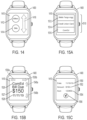
- FIG. 14 shows a customer-side landing page for a computer application structured to allow a customer to interact with the biller exchange computing system using a wearable computing device, according to an example embodiment.
- FIG. 15 A- 15 C show customer-side aspects of a bill payment process via the biller exchange computing system using the wearable computing device of FIG. 14 , according to an example embodiment.
- the biller exchange computing systems include two or more members (e.g., consortium members), which may include financial institutions and third party payment processors. Financial institutions may perform “on-us” and/or “off-us” payment transactions.
- the biller exchange computing systems enable the member financial institutions to conduct transactions by interacting directly with each other rather than via intermediaries, thus increasing transaction efficiency.
- intermediaries such as third party payment processors may be used, for example, in situations where third party billers are already registered with such intermediaries.
- Members may provide secure and real-time or instant payment transactions with minimal time delay, which is achieved through specific technical configurations.
- the biller exchange computing systems allow consumers, billers, financial institutions, and payment processors to fluidly interact with each other to reduce resistance in information flow.
- the disclosed biller exchange computing systems and methods may include a distributed application programming interface (API) system and one or more synchronized biller directories, collectively referred to as a payments engine.
- the distributed API system is coordinated by a biller exchange computing system (e.g., providing central management).
- the distributed API system may be deployed on the computing systems of various financial institutions, billers, and on the biller exchange computing system.
- financial institutions may create a separate operating entity that implements the centralized biller exchange computing system to enable secure payments.
- the distributed API system may also enable tokenization of access credentials to validate the payee/payer relationships between financial institutions (e.g., originating and receiving financial institutions), electronic bill inquiries, payment transactions, and so on.
- the disclosed biller exchange computing systems and methods allow various financial institutions and billers to achieve improved customer experience, reduce costs, and achieve cross-financial institution integration.
- Customer experience for retail customers and billers is improved through real-time or instant display and exchange of detailed biller and payment data, expedited payment delivery and receipts, an increase in direct electronic payments, accurate payee creation and linkage, and reduced return and misapplied payment items for billers.
- the disclosed biller exchange computing systems enable financial institutions to collaborate and reduce costs by streamlining electronic processing of financial transactions. This improves data security, decreases biller processing exceptions and risks, minimizes the number of parties involved in a transaction by reducing the need to use third-party processors, improves operational efficiency through standardization and reusability of components, and minimizes paper check issuance to payees. As such, the disclosed biller exchange computing systems can minimize data-related reasons for issuing paper checks, which include biller account validation rule failure, invalid actual biller accounts, or incorrect customer-entered payee names or addresses.
- biller exchange computing systems and methods disclosed herein allow financial institutions to reduce transaction costs and to achieve cross financial institution integration in payment processing.
- example biller exchange computing systems and methods may use an API arrangement in which each participating entity (financial institutions, billers, and a centralized biller exchange computer system) exposes a set of APIs that are accessible to other participating entities.
- each entity may offer an enroll customer to biller API, an inquire biller or bill API, a pay biller API, and a deliver bill API.
- bank B may offer an enroll customer to biller API that enables setting up bank B as a biller of the customer in the bill pay system of bank A.
- the customer may then go to online bill pay at bank A and perform other operations that are supported by the other afore-mentioned APIs (in this example, provided by bank B), such as inquire about bills, pay bills, or receive bills, without needing to visit the website of bank B.
- Similar functionality may be provided with respect to other billers (i.e., billers that are not financial institutions) that provide the aforementioned APIs.
- a biller may offer an enroll customer to biller API that enables setting up the biller as a biller of the customer in the bill pay system of bank A.
- the customer may then go to online bill pay at bank A and perform other operations that are supported by the other afore-mentioned APIs (in this example, provided by the biller), such as inquiring about bills and paying bills.
- the customer may be able to review historical transactions with the biller from the online banking website of the financial institution, retrieve copies (e.g., portable document format (PDF) copies) of recent statements, pay bills, and so on, all in real time and without needing to visit the website of the biller.
- PDF portable document format
- the embodiments of the biller exchange computing systems and methods described herein improve computer-related technology and includes performing, using specifically configured processors, computing devices, and computing systems, steps that cannot be done by conventional computing systems or human actors.
- the biller exchange computing systems may be configured to execute specific data flow sequences, using one or more processors of an example biller exchange computing system, to process data relevant to payment processing transactions.
- data includes counterparty validation and historical payment transactions.
- This data may be used to generate programmatically codified counterparty relationships and/or to enable the generation of bills by making predictions based on historical data (e.g., payment amount predictions, due date predictions, etc.).
- the embodiments of the biller exchange computing systems and methods described herein allow consortium members (e.g., financial institutions) to minimize fraud through advance counterparty verification and by securely exchanging sensitive customer and payment data, through an API of the biller exchange computing system, in a tokenized form.
- consortium members e.g., financial institutions
- the API infrastructure of the present disclosure allows for streamlining financial transactions by providing a reduced set of user interfaces delivered to the users via user computing devices (for example, as part of a mobile application, a web-based interface, etc.) and communicatively coupled to the biller exchange computing system through an API. For instance, in an example embodiment described in reference to FIGS.
- the biller exchange computing system allows at least six computing devices (a customer computing device, an ODFI application/web server, an ODFI back-end computing system, the biller exchange computing system, an RDFI computing system, and a biller computing device) to seamlessly, in real-time or instant, complete an end-to-end, secure payment transaction, inclusive of processing a customer payment request, counterparty verification using tokenized information, and a funds transfer, using fewer function calls made by each of the above parties at relevant times using a single distributed API.
- a customer computing device an ODFI application/web server, an ODFI back-end computing system, the biller exchange computing system, an RDFI computing system, and a biller computing device
- the consumer is provided with the ability to do more at a single online/mobile banking website, which reduces or eliminates the need for the consumer to visit various biller websites, and reduces the need of the various biller websites to authenticate the consumer and serve up web pages detailing the current account status and payment history of the consumer.
- FIGS. 1 - 2 B are diagrams of example bill payment infrastructures that use biller exchange computing systems and methods. Each of FIGS. 1 - 2 B provide details about different aspects of the bill payment infrastructure.
- FIGS. 1 - 2 B describe, according to various embodiments, the mechanics by which a financial institution makes a payment to a biller at the request of a bill pay customer.
- the payment infrastructures shown in these Figures include the biller exchange computing systems and methods disclosed herein.
- the biller exchange computing systems and methods disclosed herein standardize the APIs to enable system interoperability and centralize bill presentment and payment processing capabilities.
- One of skill will appreciate that various features of the Figures may be combined according to various embodiments.
- FIG. 1 is a block diagram of an example bill payment infrastructure including third-party processor entities, where the bill payment infrastructure includes the biller exchange computing systems and methods.
- the systems of FIG. 1 are shown from the perspective of a financial institution making a payment to a biller.
- the illustrated various systems may provide a data management and communication platform for entities associated with these individual providers to perform transactions.
- the configuration and arrangement of these systems, and the corresponding methods for procuring, storing, securing, managing, and communicating the data can substantially affect the efficiency and capabilities of transactions, such as payment transactions, among parties associated with these different providers.
- the features implemented by the financial institution may include a mobile/online banking website 102 , a bill pay system 104 , and a biller processing system 106 .
- a bill pay customer 101 is shown on the far left, and various types of billers are shown on the far right.
- the various types of billers include an on-us biller 114 , off-us banking billers 136 , and off-us non-banking billers 132 , 134 .
- the biller 132 is an individual/person payee, to whom the bill pay customer 101 may also wish to make a payment.
- Also shown located between the bill pay customer 101 on the left and the billers 114 , 132 , 134 and 136 on the right are various payment systems 106 , 108 , 110 , and 112 which may be used to make payments to the billers 114 , 132 , 134 and 136 .
- the payment systems 106 , 108 , 110 , and 112 provide various types of resources that enable making payments.
- the resources that each provides are indicated with legends numbered 1 through 5.
- the resources provided include bill/payee directories (1), payee validation (2), electronic payments (3), electronic bills (4), and paper check payments (5).
- Different payment systems and different resources may be used to make a given payment, depending on the type of biller, as described in greater detail below.
- the bill pay customer 101 can be an individual or an institution. For example, an individual bill pay customer 101 may want to use the bill payment infrastructure 100 to pay a credit card bill, mortgage bill, utility bill, internet bill, etc.
- the bill pay customer 101 may use a computing device to interact with an online/mobile banking website 102 of the financial institution of the bill pay customer 101 . While in the online/mobile banking website 102 , the bill pay customer may interact with a bill pay system 104 of the financial institution. The interaction may include data input, responding to requests and verifications, and obtaining secure information for making transaction decisions.
- the computing device of the customer 101 may be configured to connect to a bill pay system 104 using various communication methods, such as via the internet, a local endpoint, etc.
- the bill pay system 104 may include a directory of biller-payees. For example, if the individual bill pay customer 101 has an account with a utility company, the utility company may be included in the directory as a payee. To add the utility company as a biller, the customer 101 may access the biller directory and locate the utility company within the biller directory.
- a biller directory is a data store that contains payee information, such as routing information, account information, payee financial institution name and/or identifier, etc. The information in the biller directory may, for example, be provided by the biller itself during a biller registration (enrollment) process.
- the biller directory provides an easy way for the customer 101 to set up a new payee in the bill pay system 100 , and ensures that the correct account information, routing information, etc., will be used for the newly set up biller when the customer 101 makes payments to the biller.
- the bill pay system 104 is communicatively coupled (e.g., via a network) to several systems, including the internal “on-us” payment processing system 106 , the third-party processor system 108 , the P2P payment computer system 110 (e.g., such as Zelle®), and a third-party check printing system 112 .
- the internal “on-us” payment processing system 106 the third-party processor system 108 , the P2P payment computer system 110 (e.g., such as Zelle®), and a third-party check printing system 112 .
- the P2P payment computer system 110 e.g., such as Zelle®
- a third-party check printing system 112 e.g., such as Zelle®
- the internal on-us payment processing system 106 may be configured to process payments made in the context of an “on us” billing relationship, such as when the same financial institution holds a deposit account and a credit card account (i.e., the “on-us” biller) of the bill pay customer 101 .
- the internal on-us biller processing system 106 may also process “off-us” banking billers 136 , such as a utility company that uses the same bank as the bill pay customer 101 .
- the third-party processor system 108 may be configured to process payments made to “off-us” billers, including both banking and non-banking billers.
- the third-party processor system 108 may further be configured to process electronic bills from off-us billers.
- some billers may have registered with the third party processor system 108 and not with the financial institution.
- the account information, routing information, etc. may be stored in the biller directory of the third party processor system 108 , and made accessible to the bill pay system 104 via, for example, an API connection, such that the bill pay system 104 can make a payment to the biller through the third-party processor system 108 .
- the P2P payment computer system 110 may be configured to process peer-to-peer payments, such as when the bill pay customer 101 pays another individual.
- the third-party check printing system 112 may process paper checks 118 for any of the above scenarios.
- the biller exchange computing systems disclosed herein uses the third-party printing system 112 to process, issue, or receive check payments 118 , for example, via check printer or mail delivery, as a compatibility mechanism to handle paper checks.
- the P2P payment computer system 110 may further be coupled with or connected to the biller exchange computing systems and methods disclosed herein, and thus be modified, changed, upgraded, or otherwise improved to process transactions.
- FIG. 1 Also shown in FIG. 1 are a biller exchange computing system 150 (sometimes referred to as an on-we exchange computing system), one or more additional financial institutions 152 , and additional billers 154 connected to the one or more additional financial institutions and the biller exchange computing system.
- a biller exchange computing system 150 sometimes referred to as an on-we exchange computing system
- additional financial institutions 152 also shown in FIG. 1
- additional billers 154 connected to the one or more additional financial institutions and the biller exchange computing system.
- FIG. 2 A describes at a high level a centralized biller exchange computing system 210 that enables communication between multiple financial institutions and billers.
- the infrastructure of FIG. 2 A is shown from the perspective of the biller exchange computing system 210 , which provides the API features that connects multiple billers and financial institutions.
- the biller exchange computing system 210 may perform or enable both on-us and off-us billing transactions, among other various types of transactions.
- the biller exchange computing system 210 may be communicatively coupled to various financial institutions 204 , such as banks or similar entities receiving, lending, collecting, investing, borrowing, or otherwise transferring funds as an agent or a principal in association with one or more separate entities.
- Each of these financial institutions 204 can have its own set of “on-us” billing products, such as mortgage loans, credit cards, etc.
- each of these financial institutions 204 can also have its own relationships with one or more “off-us” billers 202 , which can be banking or non-banking billers.
- “off-us” billers 202 can be banking or non-banking billers.
- customers may have enhanced access to billing information associated with the various billers.
- These relationships are managed by the biller exchange computing system 210 through a secure enrollment process (for example, using the OAuth authorization protocol as described further herein).
- the secure enrollment process may be a one-time process or may include periodic information intake.
- the secure enrollment process may require multi-factor authorization or other identification/verification process.
- the biller exchange computing system 210 can utilize a distributed API system, which can include callable functions accessible to the computing systems of the various financial institutions 204 and/or “off-us” billers 202 .
- the distributed API can be deployed on the biller exchange computing system 210 , on the computing systems of the various financial institutions 204 , and/or on the computing systems of the various “off-us” billers 202 .
- the biller exchange computing system 210 enables real-time executions, including for example, customer-biller enrollment, biller information inquiry, payment transactions, and delivery of bills.
- the biller exchange computing system 210 may provide expedited access to biller data and payment transactions across multiple different financial institutions 204 .
- the distributed API is configured to enable bill presentment requests, payment requests, enrollment, data synchronization, and/or clearance and settlement activities.
- FIG. 2 B describes at a high level a bill payment infrastructure that includes one or more biller processors and a biller exchange computing system, such as the biller exchange computing systems of FIG. 1 and FIG. 2 A .
- the infrastructure of FIG. 2 B is shown from the perspective of a biller processor.
- a biller processor is an intermediary entity between a biller and a biller's financial institution.
- a biller processor may be a financial institution's biller processor 250 a , the biller financial institution's wholesale biller processor 250 b , or a third-party biller processor 250 c .
- a financial institution's biller processor 250 a may be internal to or associated with a financial institution, such as an on-us biller 254 a .
- a bank may offer a credit card product, a mortgage product, and various lines of credit and loan products.
- the bank may use the financial institution's biller processor 250 a to route the payments to and from recipient banks, where each product may have different accounts to which the funds are routed such that each product is associated with an individual biller.
- a biller financial institution's wholesale biller processor 250 b may be associated with wholesale biller products 254 b offered by a financial institution.
- a bank may have a commercial banking product offered to large retailers, such that the bank is a wholesale biller for the payments processed on behalf of the retailer, where the bank is the custodian of the retailer's account to which the payments are posted.
- a third-party biller processor 250 c may be associated with a third-party biller 254 c , such that payments may be routed to the third-party biller processor 250 c .
- each of the financial institution's biller processor 250 a , the biller financial institution's wholesale biller processor 250 b , or a third-party biller processor 250 c has its own biller directory, which may be synchronized via the biller processor API 252 as described further herein.
- Each biller processor is associated with a biller processor computing system 250 (e.g., each biller processor may have its own computing system 250 ).
- the biller processor computing system 250 includes a biller processor API 250 .
- the biller processor API 250 is managed and/or deployed using the biller exchange computing system and is structured to connect multiple billers with financial institutions via biller processors, as described further herein.
- the biller processor API 250 enables biller processors to participate in payment ecosystems and processes described further herein.
- some or all biller and/or RDFI functions are performed on behalf of the biller by the biller processor.
- the biller processor computing system 250 may be structured to generate bills (e.g., statements, invoices, electronic payment requests, etc.), look up authorization information, cause the generation of OAuth authentication tokens, retrieve and/or manage the OAuth authentication tokens, etc.
- the biller processor computing system 250 may be structured to transmit payment requests from a plurality of billers in an aggregated fashion.
- the biller processor computing system 250 may be associated with a plurality of billers and may be structured to transmit multiple payment requests, bills, etc. to a customer or each of a plurality of customers in a single batch and/or API message.
- the biller processor computing system 250 may be structured to manage a plurality of products (e.g., payer accounts of different types, such as a credit card, a mortgage, a home equity line, etc.) for one or more billers and may be structured to transmit payment requests for multiple products or accounts to a payee in a single batch and/or API message.
- a plurality of products e.g., payer accounts of different types, such as a credit card, a mortgage, a home equity line, etc.
- the biller processor computing system 250 may be structured to receive data from a biller in an aggregated fashion (e.g., in a single data file that includes bills for a plurality of payers). In some embodiments, the biller processor computing system 250 may be structured to parse the data file and generate a plurality of API messages, each comprising one or more payment request records grouped by payer, by product, etc. In some embodiments, this information is further enriched with ODFI information such that the bills are grouped by ODFI (e.g., where multiple payers have auto-pay set up using source accounts at the same ODFI). In one example, Sam and Joe may have accounts at the same ODFI and both may have auto-pay set up for the same biller.
- ODFI e.g., where multiple payers have auto-pay set up using source accounts at the same ODFI. In one example, Sam and Joe may have accounts at the same ODFI and both may have auto-pay set up for the same biller.
- the biller processor computing system 250 may be structured to group the bills received for Sam and Joe into a single data stream or electronic message such that their payments are processed together (e.g., such that the ODFI sends a total amount for both bills and the biller processor computing system 250 parses the remittance record associated with the ODFI and identifies the bills for Sam and Joe and the corresponding bills and target account(s) to post the payment to.)
- the biller processor computing system 250 may store data (e.g., authentication tokens, such as OAuth tokens) related to the payees' source accounts (e.g., ODFI accounts) in addition to storing data related to the payees' biller accounts (e.g., credit card accounts) or other biller products.
- data e.g., authentication tokens, such as OAuth tokens
- the biller processor computing system 250 may store a cross-reference table linking a customer's OAuth token for a biller account to the customer's OAuth token for the source account.
- the biller processor computing system 250 may store a cross-reference table linking a customer's OAuth token for a biller account to identifying information for an auto-pay source account (e.g., routing number, account number, auto-pay amount, auto-pay date, etc.)
- this information is encoded in the customer's OAuth token for the biller account.
- this information is stored relationally to the customer's OAuth token for the biller account and is linked by an identifier other than an OAuth token for the source account such that no OAuth token for the source account needs to be created.
- FIGS. 3 - 6 show various aspects of biller exchange computing systems and methods, according to example embodiments.
- biller exchange computing systems and methods disclosed herein provide a set of standardized APIs (e.g. distributed APIs) and processing capabilities (collectively, also sometimes referred to as a payments engine) that enable financial institutions to make payments to billers at the request of bill pay customers or in response to receiving a bill from a biller.
- the payments engine disclosed herein is structured to enable interoperability among various actors in payments ecosystems described above.
- the payments engine disclosed herein can be used to enable bill presentment requests, payment requests, enrollment, data synchronization, and/or clearance and settlement activities.
- System interoperability enabled by the systems and methods of the present disclosure, provides the technical benefit of efficiency in incorporating new member systems into the exchange via ready-to-deploy APIs and related electronic data interchange (EDI) functionality. This benefit is particularly evident in hybrid environments, where participant systems may each operate according to different specifications but are nevertheless enabled to exchange transaction data in a consistent format via the APIs disclosed herein.
- EDI electronic data interchange
- a secondary technical benefit of a standardized API is its improved interface and transaction status monitoring.
- transactions are implemented through a distributed set of APIs.
- Some aspects thereof may be structured according to standardized formats such that various parties may send and receive data according to a predetermined protocol (e.g., EDI format and messaging schema.)
- a predetermined protocol e.g., EDI format and messaging schema.
- the systems and methods of the present disclosure may make use of existing EDI specifications but further enhance EDI messages developed according to these specifications to accommodate exchange participant requirements.
- Enhancing already existing EDI specifications and/or authorization infrastructures, such as OAuth provides the technical benefit of streamlined participant on-boarding, API deployment, and system integration.
- the ability to further augment already existing specifications and authorization infrastructures ensures that system security is not compromised as a result of standardization. This is achieved, in some embodiments, by supporting institution-specific security requirements through extensible tokenization, as discussed further herein.
- FIG. 3 shows details of network interconnection and logic contained at various computer systems of financial institutions, billers, bill pay customers, and the biller exchange computing system.
- FIG. 4 shows details of data flows between financial institutions, billers, and the biller exchange computing system.
- the biller exchange computing system is implemented by a consortium of financial institutions, and therefore is sometimes referred to as an “on-we” exchange computing system.
- one or more financial institutions may perform one or more of the functions of the biller exchange computing system such that, in some implementations, the biller exchange computing system is not implemented by a stand-alone entity.
- FIGS. 5 and 6 show example data models for the payments engine embodied in the systems of FIGS. 3 and 4 .
- FIG. 3 is a block diagram of an example bill payment computing environment using biller exchange computing systems and methods applicable to the example bill payment infrastructures disclosed herein.
- the bill payment computing environment may include a biller computing device 304 , a financial institution computing device 320 , a clearinghouse computing device 326 , a user computing device 354 , a biller exchange computing system 330 , and/or a biller processor computing system 350 .
- all or some of these components can be standalone or combined.
- any of the biller computing system 304 , financial institution computing system 320 , clearinghouse computing system 326 , and/or biller processor computing system 350 can be individual devices or combined/integrated with the biller exchange computing system 330 .
- the biller exchange computing system 330 may be structured to manage and deploy aspects of its payments engine via the APIs.
- the API libraries may be installed on the respective computing systems and/or made accessible to the respective computing system(s) without being installed on the respective computing systems.
- the biller exchange computing system 330 is managed and/or operated a consortium of financial institutions, such as banks.
- the biller computing system 304 is managed and/or operated by a biller.
- the biller holds a deposit account at a financial institution that receives payment transactions where payment funds are deposited into the deposit account of the biller.
- the biller processor computing system 350 is managed by a biller processor.
- each of the user computing device 354 (e.g., used by the bill pay customer), the biller computing system 304 , the financial institution computing system 320 , the clearinghouse computing system 326 , the biller exchange computing system 330 , and the biller processor computing system 350 are communicatively coupled via the network 314 .
- the network 314 is a data exchange medium, which may include wireless networks (e.g., cellular networks, Bluetooth®, WiFi, Zigbee®, etc.), wired networks (e.g., Ethernet, DSL, cable, fiber-based, etc.), or a combination thereof.
- the network 314 includes a local area network or a wide area network.
- the network 314 includes the internet.
- the network 314 is enabled by short- and/or long-range communication technologies, such as Bluetooth® transceivers, Bluetooth® beacons, RFID transceivers, NFC transceivers, Wi-Fi transceivers, cellular transceivers, wired network connections (e.g., Ethernet), etc.
- short- and/or long-range communication technologies such as Bluetooth® transceivers, Bluetooth® beacons, RFID transceivers, NFC transceivers, Wi-Fi transceivers, cellular transceivers, wired network connections (e.g., Ethernet), etc.
- Each of the biller computing system 304 , the financial institution computing system 320 , the clearinghouse computing system 326 , the biller exchange computing system 330 , and the biller processor computing system 350 have respective network interface circuits, such as the network interface circuits 310 , 324 , 328 , 334 and 354 .
- the network interface circuits 310 , 324 , 328 , 334 and 354 may include components described herein and/or additional similar components that allow and/or enable connectivity to the network 314 .
- data that passes through the respective network interface circuits 310 , 324 , 328 , 334 and 354 is cryptographically protected (e.g., encrypted) such that each of the network interface circuits 310 , 324 , 328 , 334 and 354 is a secure communication module.
- data passing through the respective network interface circuits 310 , 324 , 328 , 334 and 354 is tokenized such that sensitive data (for example, account number(s), user location, personally identifiable information, and the like) is obscured for transmission within or outside the computing environment.
- Various communication protocols can be used, including, for example, any of the Internet protocol (IP), transmission control protocol (TCP), hypertext transfer protocol (http), simple object access protocol (SOAP), file transfer protocol (FTP), etc.
- secure versions of internet protocols may be used to exchange data via the network interface circuits 310 , 324 , 328 , 334 and 354 , such as IPsec, https://, etc.
- Data, messages, packages, etc. may be transferred over the network 314 , through network interface circuits 310 , 324 , 328 , 334 and 354 , using application programming interfaces (APIs) 310 , 322 , 332 , 354 and 356 .
- APIs application programming interfaces
- each entity may offer an enroll customer to biller API, an inquire biller or bill API, a pay biller API, and a deliver bill API.
- some or all functions of the API can be stored in a storage media that is communicatively coupled but not local to the respective system, such as cloud-based storage.
- the functions of the API can be executed by or on each respective computing environment.
- the distributed API is used by computing systems to exchange data and make function calls in a structured format.
- the distributed API e.g., biller APIs 308 , financial institution APIs 322 , exchange APIs 332 , biller processor API 352 , bill pay user financial institution API 356 , etc.
- the distributed API may be configured to specify an appropriate communication protocol using a suitable EDI standard or technology.
- the EDI standard may include any of a SQL data set, a protocol buffer message stream, an instantiated class implemented in a suitable object-oriented programming language (e.g., Java, Ruby, C #, etc.), an XML file, a text file, an Excel file, a web service message in a suitable web service message format (e.g., representational state transfer (REST), simple object access protocol (SOAP), web service definition language (WSDL), JavaScript object notation (JSON), XML remote procedure call (XML RPC), etc.).
- EDI messages may be implemented in any of the above or using another suitable technology.
- data is exchanged by components of the payments engine using web services.
- some or all components of the computing environment may include or may be associated with (e.g., as a client computing device) one or more web service node(s).
- the web service may be identifiable using a unique network address, such as an IP address, a uniform resource locator (URL), etc.
- Some or all components of the computing environment may include circuits structured to access and exchange data using one or more remote procedure call protocols, such as Java remote method invocation (RMI), Windows distributed component object model (DCOM), etc.
- the web service node(s) may include a web service library comprising callable code functions.
- the callable code functions may be structured according to a predefined format, which may include a service name (interface name), an operation name (e.g., read, write, initialize a class, etc.), operation input parameters and data type, operation return values and data type, service message format, etc.
- a service name interface name
- an operation name e.g., read, write, initialize a class, etc.
- operation input parameters and data type e.g., read, write, initialize a class, etc.
- operation return values and data type e.g., service message format, etc.
- Examples of callable code functions are provided further herein as embodied in various components of the payments engine, such as an example API for biller enrollment, example API for bill inquiry and presentment, example API for payments, and example API for biller directory synchronization.
- each of the biller computing system 304 , financial institution computing system 320 , clearinghouse computing system 326 , biller exchange computing system 330 , and biller processor computing system 350 may include a processor, a memory, at least one electronic circuit and at least one data storage entity for implementing the methods as disclosed.
- the processor may be a stand-alone or dedicated processor and/or a shared (virtualized) processing resource.
- the memory may be a stand-alone or dedicated memory device and/or a shared (virtualized) memory resource.
- the processing resource and/or memory resource may be dynamically allocated as needed to perform the functionality described herein.
- the circuits may include instructions stored in the memory (whether the memory associated with a particular computing system or with another system, such as the biller exchange computing system) and executed by the processor.
- the circuits may include various code, functions and resources (e.g., files, compiled objects, reference libraries, etc.) that comprise, in whole or in part, various APIs.
- one or more electronic circuit(s) of the biller computing system 304 , financial institution computing system 320 , clearinghouse computing system 326 , biller exchange computing system 330 , or biller processor computing system 350 may be implemented as software code suitable for compilation, object code, executable file(s) and/or code, a set of machine language instructions, and/or in another suitable form for carrying out the computer-implemented method(s) described herein.
- the one or more electronic circuit(s) may be implemented in a distributed fashion such that at least some of the code is executed and/or compiled on a system that is different from the system hosting the code, executable files, etc.
- These circuits may be structured to interact (exchange data, instructions, electronic signals, etc.) with one another, for example, through the API of the respective system.
- these electronic circuits may be deployed to client systems (e.g. biller computing system 304 , financial institution computing system 320 , etc.) in a “light” fashion such that no installation is required, which provides the technical benefit of streamlined application deployment.
- client systems e.g. biller computing system 304 , financial institution computing system 320 , etc.
- functionality provided by the circuits can be made accessible to the bill pay user computing device 354 , financial institution 321 , etc. through a web browser, a browser plug-in with navigable controls, an applet, a virtual application hosted externally to the respective computing system and deployed, by the payments engine of the biller exchange computing system 330 , in a software-as-a-service mode, etc.
- the functionality provided by the circuits can be deployed and made accessible as an application including executable code packages and the like, which provides the technical benefit of API extensibility by exchange participants.
- One or more data storage entities of the biller computing system 304 , financial institution computing system 320 , clearinghouse computing system 326 , biller exchange computing system 330 , and the biller processor computing system 350 may be implemented as an electronic structure(s) suitable for storing information, including, for example, one or more persistent electronic structures, such as one or more database(s), electronic file(s), data mart(s), distributed ledger(s) and the like.
- the data stored in the one or more data storage entities may be stored in a multidimensional form such that the structure of the data storage entity has two dimensions (e.g., a look-up table having indexed data) or more (e.g., a relational database, a multi-dimensional database, an online analytical processing (OLAP) cube, etc.).
- circuits and/or data storage entities may be combined as needed such that one or more data storage entities and/or circuit(s) are implemented in a hybrid form.
- An example of a hybrid implementation is a data storage entity having a shell and/or providing an API such that a library of code (for example, executable functions containing Data Manipulation Language (DML) instructions) may be used by entities within or outside the computing environment.
- DML Data Manipulation Language
- the exchange data vault 340 and/or biller directory 341 of the payments engine of the biller exchange computing system 330 may be coupled to a code library (e.g., API functions that call stored procedures implemented by a DBMS engine that underlies the vault or directory, etc.), which may be structured to support various system interoperability features described further herein, such as biller directory replication, biller directory synchronization, publishing of updates from auxiliary systems to the biller directory 341 and vice versa, etc.
- a code library e.g., API functions that call stored procedures implemented by a DBMS engine that underlies the vault or directory, etc.
- the financial institution computing system 320 includes a biller management circuit 329 and financial institution APIs 322 .
- the biller management circuit 329 is structured to manage requests for the biller exchange computing system 330 to enroll/create billing relationships for customers, generate bill presentment requests, and initiate payment transactions.
- the biller management circuit 329 is structured to generate financial institution registration requests for the biller exchange computing system 330 , initiate financial institution data propagation or synchronization activities to synchronize data with the biller exchange computing system 330 , etc.
- the financial institution APIs 322 are structured to allow external systems to access these example functions.
- the financial institution computing system 320 can include various data storage entities configured to store information, such as the tokens generated by the token generator 339 .
- the customer management circuit 336 is structured to enable billing relationships and enrollment for the banking billers 305 and financial institutions 321 .
- the customer management circuit 336 may participate in the various data acquisition sequences illustrated further herein.
- the registration circuit 338 is structured to register billers 305 in response to biller registration requests received from the biller computing system 304 .
- the registration circuit 338 is structured to register financial institutions 321 in response to requests received from the financial institution computing systems 320 .
- these processes can include creation and updating of registry information in the exchange data vault 340 .
- the token generator 339 is structured to route tokens and authorization requests between the biller computing system 304 and the financial institution computing system 320 .
- security of sensitive information is increased such that the biller computing system 304 is structured to generate and manage authorization tokens and the biller exchange computing system 330 passes along requests and information without storing the tokens.
- the exchange APIs 332 are structured to enable the above functions of the biller exchange computing system 330 .
- the exchange API 332 may be structured to receive messages from various systems via their respective APIs (e.g., from the biller APIs 310 , financial institution APIs 322 , biller processor APIs 352 , bill pay user financial institution API 356 , etc.) and to send messages thereto, as shown in various sequence diagrams illustrative of example embodiments and accompanying the present disclosure.
- the customer may use the interface to retrieve biller information from a centralized directory and/or to provide instructions to add a new biller, product, etc.
- the customer may use the interface to invoke a customer to biller enrollment request, to perform biller lookup and selection from centralized directory, to terminate enrollment, and/or to request a new token to be generated if a customer's account (e.g., source account or target account) is compromised.
- the access process may redirect (at 355 ) the access request to the computing system 320 of another financial institution 321 for OAuth enrollments, as described further herein.
- the customer and the financial institutions 321 may complete some or all on-us billings within the computer system 320 of one financial institution 321 .
- OAuth may be used to obtain account information from off-us billers. For example, if the customer holds a checking account at a Bank 1 and has a mortgage with Bank 2, OAuth may be used to obtain mortgage account information from Bank 2.
- biller registration information may be provided to the on-we biller directory 342 at operation 408 .
- Bank 2 may provide information about its on-us billers to the on-we biller directory 342 , such that the information is available to Bank 1 when the customer wishes to make a payment, for example.
- financial institutions typically have an array of off-us banking billers (e.g., a utility company that has an account at the financial institution) to whom they make payments on behalf of other customers (e.g., a residential customer of both the utility and the financial institution).
- off-us banking billers e.g., a utility company that has an account at the financial institution
- Such billers may already be in the biller directory of the respective financial institution computer system 320 .
- the biller registration information stored in the biller directory of the financial institution computing system 320 may be synchronized with the biller registration information stored in the biller exchange computing system 330 .
- the biller registers directly with the biller exchange computing system 330 .
- the biller may register directly with the biller exchange computing system 330 .
- the registration circuit 338 ( FIG. 3 ) is structured to register billers 305 , in response to biller registration requests received from the biller computing system 304 .
- the off-us biller 382 may have real-time interactions with the biller exchange computing system 330 via the exchange dashboard 346 , after completion of registration for example.
- these processes can include creation and updating of registry information in the exchange data vault 340 .
- the registry information regarding financial institutions can include financial institution names, identifiers, routing numbers (e.g., routing transit numbers (RTN), Swift network identifiers, etc.), account information, etc.
- the exchange data vault 340 also includes information about the API functions exposed by the biller computing system 304 or the financial institution computing system 320 to the biller exchange computing system 330 .
- the biller exchange computing system 330 may store version information, function definition libraries, parameter data types, etc. This information can be accessed by the biller exchange computing system 330 when calling the public functions of the respective system's API to route requests, data, signals, etc.
- the off-us billers may enable various processes 336 via its APIs 332 .
- These processes 336 may include operations to enroll customer to biller, to inquire biller or bill, to pay the biller, and/or to deliver a bill.
- the biller exchange computing system 330 may receive requests of these processes 336 via the exchange dashboard 390 and return responses to such requests to biller management circuit 329 associated with the financial institutions 321 .
- these entities provide a one-time initial data load to populate the exchange data vault 340 with registry information, at operation 420 . Subsequently, these entities can provide incremental data updates. These processes are managed by the publication circuit 342 of the biller exchange computing system 330 , at operation 422 .
- the publication circuit 342 can be configured to receive data in a suitable format, such as a SQL record set, a text file, an Excel file, etc. and execute a series of SQL commands to populate the exchange data vault 340 with this data.
- publication circuit 342 can be configured to receive registry data updates from the biller computing system 304 or the financial institution computing system 320 in a suitable format, such as SQL record set, a text file, an Excel file, etc.
- the publication circuit 342 can be coupled to a web server and/or can be otherwise configured to receive and decode registry updates as interface messages, such as web service messages in a suitable format (e.g., JSON, REST, etc.).
- the respective APIs of the source systems can be configured to “push” this data or to respond to the “pull” requests from the exchange APIs 332 of the biller exchange computing system 330 .
- the publication circuit 342 can be configured to call a public function of the biller APIs 308 and/or the financial institution APIs 322 to request updated data.
- the biller computing system 304 or the financial institution computing system 320 can be configured to call a public function of the exchange APIs 332 to “push” the data to the biller exchange computing system 300 .
- the publication circuit 342 is structured to interpret (decode, parse, extract, etc.) the data received in a web service message according to a pre-determined format, which may include pre-defined field separators, field definitions and labels, field lengths, data types, etc.
- the decoded data can be saved, as a registry update, in the exchange data vault 340 .
- the API connection includes APIs 310 , 322 , 332 the computing systems 304 of the billers 381 , the computer systems 320 of the financial institutions 321 , and the biller exchange computing system 330 , respectively.
- Each of the APIs 310 , 322 , 332 provides access to a set of services/processes that may be accessed by appropriate function calls, including enroll customer to biller process, inquire biller or bill process, pay biller process, and deliver bill process.
- the biller exchange computing system 330 is configured to manage requests for the biller exchange computing system 330 to enroll/create billing relationships for customers.
- enrollment is a real-time transaction.
- the biller exchange computing system 330 can be structured to generate a secure enrollment record.
- the relationship between the financial institution 321 and the biller 305 is created using an OAuth protocol, although another suitable credential tokenization/authorization protocol can be used.
- OAuth Open Authorization
- OAuth is a standard for token-based authentication and authorization on the Internet.
- OAuth is used for access delegation and may be used as a way for internet users to grant websites or applications access to their information on other websites without giving them the passwords.
- OAuth is used as a way for customers to grant online banking websites access to their information on biller websites without giving the financial institution or biller processor their passwords to the biller websites.
- the access given via OAuth is limited access in the sense that the functions the customer may be able to perform via online banking may be made more limited than if the customer accessed the biller website directly.
- financial institution 321 may want to receive access to information managed by the biller computing system 304 —for example, to see a bill, to see when a payment is due, or to access other services supported by biller APIs 332 .
- the customer may need to access the biller website directly if the customer wishes to perform other functions, such as making changes to services that the customer receives from the biller.
- the scope of access may be represented by one or more scope variables that may be associated (e.g., stored relationally to) each OAuth token (for example, in the exchange data vault 340 of the biller exchange computing system 330 ).
- this approach protects data-at-rest (e.g., sensitive information accessible via biller computing systems) from being intercepted and compromised (e.g., accounts being hacked.)
- separate token data vaults e.g., exchange data vaults 340
- the augmented OAuth token is a self-encoded OAuth token. In some embodiments, the augmented OAuth token is a self-contained way of transmitting data between the source (e.g., customer financial institution) and target (e.g., biller processor or biller financial institution) systems such that the number of copies of sensitive information saved in memory can be minimized.
- source e.g., customer financial institution
- target e.g., biller processor or biller financial institution
- a cross-reference data repository is provided linking particular OAuth tokens to customer-specific information, biller-specific information, security policy information, etc.
- a random numerical or alphanumeric character string generator circuit of the biller exchange computing system and/or of the biller processor computing system may be structured to generate a de-identified reference string.
- the de-identified reference string may be included in the OAuth token, and a cross-reference table may be maintained in storage media of the computing system that manages OAuth tokens.
- the cross-reference table may link the de-identified reference string to actual data (e.g., in this case, the account number).
- the cross-reference table may be accessible, after the de-identified reference string is parsed from the OAuth token, to determine the corresponding account number.
- this approach protects data-in-transit (e.g., OAuth tokens being transferred between systems) from being intercepted and compromised (e.g., accounts being hacked based on information included in OAuth tokens.)
- access privileges given via OAuth may be revoked in response to receiving customer instructions to terminate a customer-biller relationship.
- the customer may use a user interface of an online banking website to revoke access by the biller exchange computing system 330 to one or more biller websites.
- the customer uses a user interface provided by the biller exchange computing system 330 , and the biller exchange computing system 330 is structured to terminate the customer-biller association (e.g., by marking an electronic mapping relationship as terminated, expiring the token, etc.) and generate an electronic notification for transmission to the biller.
- the customer uses a user interface provided by the biller's online platform to terminate the customer-biller association
- the biller exchange computing system 330 is structured to receive an electronic access revocation message from the biller's computing system and, based on the message, terminate the customer-biller association.
- the customer management circuit 336 can be structured to collect authentication data for the biller 305 .
- the authentication data can include identification information of the biller 305 , such as IP address, MAC address, entity name, entity identifier, etc. In some embodiments, this information can be provided by the exchange data vault 340 and is browsable using the interface of the first computing device.
- the authentication data can further include information specific to the relationship between the financial institution 321 and biller 305 , such as account number, a proxy/alias for an account, etc.
- the customer management circuit 336 can be structured to transmit the authentication data to the biller computing system 304 .
- the biller computing system 304 can verify the authentication data (for example, by querying its internal systems).
- the biller computing system 304 can generate a one-time authorization code and send it to the financial institution computing system 320 via the biller exchange computing system 330 .
- the financial institution 321 may be presented with a user interface control requiring the financial institution 321 to enter the one-time authorization code to confirm the identity of the financial institution 321 before verification is completed.
- the customer management circuit 336 can be structured to transmit a request for a token to the biller computing system 304 and to cause the biller computing system 304 to generate a token using the token generator 339 .
- the token can include de-identified (obscured) sensitive information, such as account number, login credentials, financial institution identifier, instructions biller identifier, and other authorization information.
- the token is subsequently used during bill inquires and payment transactions to verify that a valid relationship exists between the biller 305 and the financial institution 321 indicating that the financial institution 321 is willing to send payments and biller 305 is willing to receive payments.
- the customer management circuit 336 can be structured to generate or cause another computing system to generate a financial institution enrollment record to supplement the tokenized information.
- the financial institution enrolment record may include the token and may be transmitted from the biller computing system 304 to the biller exchange computing system 300 by calling a public function of the exchange API 332 .
- enrollment records are product-(account-) level records rather than financial institution-level records, as shown at 514 of FIG. 5 .
- the customer management circuit 336 can be structured to transmit a first copy of the token to the financial institution computing system 320 and/or direct the biller computing system 304 to retain a second copy of the token.
- Each respective entity can save its copy of the token in a data store associated with the entity, such as non-volatile memory, a token vault, etc.
- the data store of each respective entity may include a mapping data structure (such as a table) that correlates a reference to a specific system (such as a URL, an IP address, a MAC address, a network path, etc.) with biller financial institution relationship information (such as an account handle, user name, identification number, account number in combination with a reference to a specific system, email address, social media handle, name, telephone number, email address, business address, etc.)
- the data store comprises a data structure for storing a timestamp for each token(s).
- the token(s) may expire and be replaced with new token(s) at periodic intervals, such as, for example, every week, every month, every quarter, every time a token has been used, after a set number of times a token has been used (for example, between one and ten times), etc. In some embodiments, these parameters are encoded in the token instead or in addition to being stored relationally to the token.
- the token(s) may be expired (e.g., marked as expired, deactivated, or deleted) at the request of a user received via a customer-facing application. In some embodiments, the token(s) may be expired (e.g., marked as expired, deactivated, or deleted) at the request of a biller received from a biller computing system.
- the biller request may comprise a data set cross-referencing tokens to particular customers and/or accounts, and only the tokens that meet these criteria may be expired.
- the token(s) are automatically expired (e.g., marked as expired, deactivated, or deleted) when a biller de-registers from the exchange and/or when a particular customer deletes an association with a particular biller.
- the customer management circuit 336 can be structured to enable bill inquiries and to transfer payments.
- the customer management circuit 336 can be structured to allow a customer to specify how the customer would like to configure the payments experience after a customer enrolls with a biller.
- the customer management circuit 336 may cause the biller exchange computing system 330 to generate a user interface and render the user interface to the computing device 354 of the customer.
- the user interface may be structured to enable the customer to specify whether the customer would like to initiate payments (e.g., on demand, on a particular day of the month, etc.) or if the customer would like payments to be initiated in response to requests for payments received via the financial institution API 322 .
- the customer management circuit 336 is structured to store an indicator of customer preference in memory. Based on the indicator and/or the information received via the financial institution API 322 (e.g., bill information, such as amount due, payoff amount, due date, etc.), the biller exchange computing system 330 may be structured to generate a payment transaction for the customer's review and transmit the payment transaction to computing device 354 of the customer for approval. In some embodiments, multiple transactions may be presented to the customer for approval. In one example implementation, the transactions may be presented as a sequence of screens, one per transaction, on a mobile device of the customer. The biller exchange computing system 330 may comprise functionality to determine, based on the customer's interaction with each screen item, whether a transaction is approved.
- bill information such as amount due, payoff amount, due date, etc.
- swiping in a first particular manner may be indicative of approval
- swiping in a second particular manner e.g., swiping left
- swiping in a third particular manner e.g., swiping down
- the biller exchange computing system 330 may initiate a payment transaction.
- the payment transaction includes electronic instructions to transfer funds from a source account associated with the customer to a target account associated with a biller (e.g., the financial institution 321 ).
- the payment transaction includes electronic instructions that may be transmitted to a clearance and settlement computing system.
- the biller exchange computing system 330 further includes functionality to allow a customer to revoke a pending payment transaction and/or reverse a completed payment transaction. For example, a list of recent transactions may be presented as a sequence of screens, one per transaction, on a mobile device of the customer.
- the biller exchange computing system 330 may comprise functionality to determine, based on the customer's interaction with each screen item, whether a transaction should be revoked or reversed. In one example embodiment, swiping left may be indicative of instructions to revoke or reverse the transactions.
- the biller exchange computing system 330 may comprise functionality to display to the customer, via the user interface, a confirmation screen confirming customer instructions to revoke or reverse the transaction. In some embodiments, revocation or reversal functionality is available only within a predetermined amount of time from performing the payment transaction (e.g., 2 hours, close of business, 24 hours, etc.).
- the biller exchange computing system 330 is structured to transmit transaction data to a clearinghouse computing system 326 for clearance and settlement.
- the clearinghouse computing system 326 can use various clearance and settlement platforms, such as Zelle®, ACH, TCH RTP®, etc.
- a biller exchange computing system 330 of FIG. 3 includes a centralized biller directory 341 .
- the biller directory represented, for example, in FIG. 5 by data storage entity 504 and its related entities, may include, in a standardized format identification data for all billers and/or their associated biller processors, receiving financial institutions (e.g., RDFI) and other payment routing information needed by the payments engine to route payments appropriately.
- RDFI receiving financial institutions
- Various other systems of the payment infrastructure may maintain their own copies of the biller directory, which may be maintained via replication and/or synchronization processes described further herein. To that end, FIG.
- FIG. 5 is a data model diagram of one aspect of an example data store used in the example biller exchange computing environment shown in FIG. 4 .
- FIG. 6 is a data model diagram of another aspect of an example data store associated with a biller computing system for use in the example biller exchange computing environment shown in FIG. 4 .
- FIG. 5 shows a relational data model diagram for a data store associated with the biller exchange computing system 330 , such as the exchange data vault 340 and/or a biller directory 341 .
- the data of the example embodiment is stored and available for inquiry by calling public functions of the exchange API 332 of the biller exchange computing system 330 .
- the data can include data dictionary/registry information for the biller 305 (at 504 , 506 , 510 , 512 ) and/or financial institution 321 (at 508 ), customer information (at 514 and 516 ) and payment transaction information (at 518 ).
- the data further includes API library information for the respective entity (at 508 ). More specifically a biller may hold an account at a receiving financial institution, which may be enrolled in the exchange.
- the financial institution may operate a computing device that may have a financial institution API (e.g., 322 of FIG. 3 ) deployed to or accessible by that computing device.
- the API library may be identified by a unique address, such as an API URL stored relationally to the financial institution and biller information as shown at 508 .
- the payments engine e.g., of the biller exchange computing system 330 of FIG.
- the payments engine may then use the API URL to send payment transactions, enrollment messages, etc. to the financial institution on behalf of the customer.
- the payment transaction information 518 is exposed, via the API, for mining historical trends, predicting future payments, etc.
- the information can be exposed in a de-identified form and/or may require a token to be accessible.
- the biller computing system 304 and/or the financial institution computing system 320 may be required to provide the token generated when the biller/FI relationship was registered via the biller exchange computing system 330 in order to access historical payment information for data mining.
- payment transaction information 518 is aggregated for the purposes of initiating transactions, posting transactions, clearance and settlement, etc.
- pending transactions can be sent, through the biller exchange computing system 330 , in batches to the systems responsible for performing the respective activities (e.g., the biller computing system 304 , the clearinghouse computing system 326 , etc.).
- FIG. 6 shows a relational data model diagram for a data store associated with a biller computing system 304 , according to an example embodiment.
- the data is stored in a data storage entity associated with the biller computing system 304 .
- the data is part of the exchange data vault 340 of FIG. 5 .
- biller account information stored in the exchange data vault 340 includes the items shown at 502 of FIG. 5 and 522 of FIG. 6 .
- FIG. 5 and FIG. 6 are shown as relational databases, other embodiments are contemplated, such as a multi-dimensional database, an online analytical processing (OLAP) cube, a distributed ledger, a collection of cross-referenced flat files, etc.
- OLAP online analytical processing
- FIGS. 7 A- 10 B computing systems sand sequence flow diagrams that illustrate various aspects of the payments engine are shown.
- FIGS. 7 A- 7 E show the computing systems involved in the biller enrollment process, according to an example embodiment, and APIs therefor.
- a biller and/or the biller's financial institution sign up to the exchange and are mapped to a particular customer and/or account (product).
- FIGS. 8 A- 8 C show the computing systems involved in the bill inquiry and presentment process, according to an example embodiment, and APIs therefor.
- a customer receives (either in a push or pull fashion) a bill from a biller that is signed up to the exchange.
- FIGS. 10 A and 10 B show the computing systems involved in a payment process, according to an example embodiment, and APIs therefor.
- a payment is originated from an originating financial institution to the receiving financial institution, where the receiving financial institution is determined by the payments engine based on information contained in the biller directory and where the payment transaction may be based on data from a bill routed through the exchange.
- FIGS. 10 A and 10 B show the computing systems involved in a biller directory replication and/or synchronization, and the APIs therefor.
- payment routing information (such as biller information, financial institution information, biller processor information, etc.) is standardized across computing systems of the participants in the payments ecosystem.
- the customer 701 of the sequence diagrams refers to the computing device 354 of the customer 101 of the originating financial institution (herein, although the acronym “ODFI” is used, it will be understood that payments may also be made via payment rails other than ACH—for example, via TCH RTP®).
- the ODFI bill page 702 refers to a bill page web interface provided by the computing system 320 of the ODFI.
- the ODFI computing system 721 refers to other, predominantly backend, operations performed by the computing system 320 of the ODFI.
- the biller exchange computing system 741 refers to the biller exchange computing system 330 , including APIs provided by the computing system 330 .
- the RDFI computing system 761 refers to the computing system 320 of the receiving financial institution, including APIs provided by the computing system 320 .
- the biller 771 refers to the biller computing system 304 used by the biller, including APIs provided by the computing system 304 .
- the computing systems further include biller processor computing systems. In embodiments where biller processor computing systems are not shown, one of skill will appreciate that biller processor computing system functions may be performed by the exchange computing systems, biller computing systems, and/or the biller's financial institution computing systems.
- data is exchanged between the entities of FIGS. 7 A- 10 B using function calls according to an API of each respective computing system.
- function calls made to the ODFI computing system 721 are made by calling the public functions exposed by the financial institution API 322 to external systems with which the ODFI computing system 721 is communicatively coupled.
- Function calls made to the biller exchange computing system 741 are made by calling the public functions exposed by the exchange API 332 to external systems with which the biller exchange computing system 741 is communicatively coupled.
- Function calls made to the RDFI computing system 761 (e.g., 726 , etc.) are made by calling the public functions exposed by the biller API 310 to external systems with which the RDFI computing system 761 is communicatively coupled.
- FIGS. 7 A- 7 E show the computing systems involved in the biller enrollment process, according to an example embodiment, and APIs therefor.
- FIG. 7 A shows the computing systems involved in the biller enrollment process facilitated by the biller exchange computing system.
- FIG. 7 B is a sequence flow diagram for biller enrollment using an example API, according to an example embodiment.
- FIG. 7 C is a sequence flow diagram illustrating an enrollment operation with browser to browser customer consent.
- FIG. 7 D is a block diagram illustrating an enrollment operation with server to server token retrieval for preparing the example data store of FIG. 5 .
- FIG. 7 E is a block diagram illustrating an enrollment operation integrating small financial institutions or billers or both for preparing the example data store of FIG. 5 .
- the infrastructure includes consumer 7001 operating a consumer computing device, consumer's financial institution 7021 operating a financial institution computing device, biller 7071 operating a biller computing device, biller processor 7081 operating a biller processor computing device, and biller financial institution 7061 operating a biller financial institution computing device.
- computing devices may be server devices, client devices, mobile devices, etc. as appropriate.
- the participants in the payments ecosystem share information and perform transactions enabled by the biller exchange computing system 7130 .
- the biller exchange computing system 7130 may be operated by a consortium of financial institutions, and the consumer's financial institution 7021 , biller's financial institution 7061 , biller processor 7081 , etc. may be members thereof.
- the participants in the payments ecosystem exchange data and perform transactions via a set of APIs that support interoperability among the participant systems. More particularly, in an example embodiment, the consumer 7001 may use the consumer computing device to initiate the process of adding a consumer's biller 7071 via the exchange, thereby creating a new mapping between the consumer 7001 and one or more consumer accounts with the biller 7071 . For example, a user with a new mortgage and credit card account at Bank A may hold a checking account at Bank B. The user may use Bank B's Bill Pay user interface to set up automatic bill inquiry, bill presentment, and payment features to Bank A using the exchange.
- the new mapping is secured using tokenization—for example, via an OAuth token, which may include or be stored relationally to customer information, biller identifier, biller account identifier, biller processor identifier, OAuth authorization scope information, pre-scheduled payment information, etc.
- OAuth token may include or be stored relationally to customer information, biller identifier, biller account identifier, biller processor identifier, OAuth authorization scope information, pre-scheduled payment information, etc.
- the customer 701 sets up bill pay for an off-us non-banking biller.
- the customer uses a first (ODFI) bank
- the biller uses a second (RDFI) bank.
- RDFI second
- a biller processor is not used, but one of skill will appreciate that some of the functions performed by the computing systems shown may be performed by a biller processor computing system and/or a biller processor's financial institution computing system.
- the customer 701 may search for a known biller on the ODFI bill pay page 702 at step 704 .
- the customer 701 may submit a request to add an on-we biller to the customer's list of payees on the ODFI bill pay page 702 .
- the ODFI bill pay page 702 forwards the biller enrollment request from the customer 701 to the ODFI computer system 721 at step 708 .
- the ODFI computing system 721 confirms the on-we biller at step 710 and enrolls the customer 701 to the biller profile in the biller exchange computing system 741 at step 712 .
- the biller exchange computing system 741 returns the biller RDFI OAuth URL to the ODFI 721 , which further returns the biller RDFI OAuth URL to the ODFI Bill pay page 702 .
- the customer 701 may redirect the customer 701 to RDFI authentication page at 718 and access RDFI 761 .
- the RDFI 761 may display the RDFI login page to the customer 701 at step 720 .
- the customer 701 may then interact with RDFI 761 through the biller exchange computing system 741 .
- the customer 701 may request authentication at step 722 .
- the RDFI 761 may then display authorization selection page to the customer 701 at step 724 .
- the customer 701 may submit selected on-we biller authorization at step 726 .
- the RDFI 761 may then generate authorization code at step 728 .
- the RDFI 761 may save the mapping of the authorization codes.
- a one-time OAuth authorization code is returned to the ODFI bill pay page 702 .
- the ODFI bill pay page 702 passes the OAuth authorization code to the ODFI 721 .
- the ODFI 721 may enroll the customer 701 to the biller 771 in the biller exchange computing system 741 at step 736 .
- the biller exchange computing system 741 may forward the customer enrollment to the RDFI 761 at step 738 , for example, without saving or otherwise interacting with the one-time authorization code.
- the RDFI 761 may validate the authorization at step 740 and generate an OAuth token at step 742 .
- the RDFI 761 returns the OAuth token to the biller exchange computing system 741 at step 744 .
- the biller exchange computing system 741 provides a live biller-customer OAuth token at step 746 and forwards or returns the OAuth token to the ODFI 721 at step 748 .
- the ODFI 721 saves the customer biller enrollment token at step 750 and sends a confirmation of success of customer-biller enrollment notification to the ODFI bill pay page 702 at step 752 .
- the ODFI bill pay page 702 displays an enrollment success notification to the customer 701 .
- FIG. 7 C is a block diagram illustrating an enrollment operation with browser to browser customer consent for preparing the example data store of FIG. 5 .
- a biller processor is not used, but one of skill will appreciate that some of the functions performed by the computing systems shown may be performed by a biller processor computing system and/or a biller processor's financial institution computing system.
- the customer may add a biller associated with a different financial institution using a client end bill pay user interface.
- the bill pay user interface redirects the customer to an OAuth sign-on web-site of the biller's financial institution.
- the user interface provides a biller's OAuth resource application sign-on or consent site URL.
- the customer 701 may sign on to the biller's financial institution.
- the customer 701 may consent to allow his own financial institution to access the account created in the sign-on financial institution.
- the resource application of the biller's financial institution may generate a one-time authorization code at step 1205 .
- the resource application may save the consent from the customer 701 for future reference at step 1206 .
- the customer 701 is redirected and returned to the bill pay user interface with authorization code at step 1207 .
- both the client's bill-pay site and the biller's OAuth sign-on site may whitelist the URLs therebetween, allowing OAuth to redirect information flow between these two endpoints.
- the redirecting URLs may be shared between the end points through new data attributes in the biller directory exchange systems as disclosed herein.
- FIG. 7 D is a block diagram illustrating an enrollment operation with server to server token retrieval for preparing the example data store of FIG. 5 .
- a biller processor is not used, but one of skill will appreciate that some of the functions performed by the computing systems shown may be performed by a biller processor computing system and/or a biller processor's financial institution computing system.
- a customer may be enrolled via the client application to associate with a biller using an OAuth authorization code at step 1221 . For example, this may be achieved through both the client bill pay application and the biller resource application that are integrated via an enroll API at the biller exchange computing system as disclosed.
- the biller exchange computing system may abstract and mediate the OAuth Token Retrieval request from the Client Bill Pay Application to the Biller Resource Application end points.
- the one-time integration (enrollment) with the biller exchange computing system provides the technical benefit of abrogating the need for each of the customer and biller's end point applications to implement multiple direct backend authorizations with each other every time a customer performs a presentment inquiry, schedules a transaction, etc.
- a second enrollment process which includes swapping of a temporary authorization code for a token, can also be performed without including biller information in the API messages.
- the resource application may be in connection with a public enroll API that allows the biller exchange computing system 210 to pass the token retrieval request to biller. In such a situation, the biller exchange computing system 210 may forward the OAuth token returned from this biller API to the client bill pay application.
- authorization code is validated by the resource application.
- the resource application may generate an OAuth token in response to a successful validation of the authorization code.
- the generated OAuth token may be tied to the biller for future transaction processes.
- the generated OAuth token is returned through the biller exchange computing system 210 to the next step.
- the OAuth token is returned, in a forwarding manner, to the client application.
- the client application then saves the OAuth token to note the customer enrollment with the biller at step 1228 .
- the biller exchange computing system may bridge the token requests and responses between the client application and resource application, facilitating real-time operations.
- FIG. 7 E is a block diagram illustrating an enrollment operation for integrating small financial institutions or billers or both for preparing the example data store of FIG. 5 .
- a biller processor is not used, but one of skill will appreciate that some of the functions performed by the computing systems shown may be performed by a biller processor computing system and/or a biller processor's financial institution computing system.
- the biller exchange computing system API 1263 performs some or all of the token generation functions that may ordinarily be performed by biller processor computing systems for larger billers (e.g., as shown in FIG. 7 A ). Often, small financial institutions or billers may not have adequate resources or technology setup to implement an OAuth API and/or tokenization infrastructure.
- FIG. 7 E provides another embodiment of enrollment token generation supported by the biller exchange computing system for such situations.
- a customer may access the biller exchange computing system API 1263 via its bill pay API 1261 associated with the customer's financial institution.
- the biller exchange computing system API 1263 may handle the responsibilities of OAuth authorization code and token generation in place of a tokenization infrastructure of a biller processor computing system.
- a customer device may initiate a small biller enrollment process.
- the customer's financial institution may send an electronic message that includes a customer signature payload.
- the customer signature may comprise information needed to identify the customer and/or the customer's financial institution to the biller.
- the message may be routed through the exchange computing system API 1263 .
- the exchange computing system API 1263 may, in response to a validation request, validate a signature at 1269 (e.g., confirm that a customer is associated with the customer's financial institution), generate an authorization code at 1271 , and sign the generated authorization code 1273 .
- the authorization code may be forwarded to a biller computing system, where the authorization code may be authenticated at 1277 (automatically or by an operator) to confirm that the biller will accept electronic remittances initiated by the customer's financial institution. If these operations are performed automatically, the biller may use the biller API 1265 to perform authentication of the authorization code.
- the biller may use the biller API 1265 to invoke an API exposed by the biller exchange computing system at step 1277 .
- the biller exchange computing system may swap out the authorization code for an access token (e.g., one generated by a token generator) and send the access token back to the biller computing system, where the token may be stored in storage media relationally to the customer and/or biller account information. This allows for biller account selection at step 1279 .
- an access token e.g., one generated by a token generator
- the access token may be a numeric or alphanumeric entity (including special characters) and may include or be stored relationally to a biller identifier, a customer identifier, a biller's product identifier, payment information (e.g., a monthly amount due, a monthly auto-pay amount), custom security policy information required by the biller (e.g., customer challenge questions and answers, customer PIN code, etc.).
- the token does not necessarily include the customer's login information for the biller's computing system, but may be used as a secondary authentication mechanism through the biller exchange computing system in the event the customer forgets the login credentials and is unable to reset them via the biller's computing system.
- the token may be decoded to provide challenge questions to the customer and request responses, to request a PIN code, etc. This provides the technical benefit of augmented system and data security.
- the bill pay API 1261 also saves the token relationally to the customer and/or biller identifier for future processing at step 1287 and sends a confirmation notification to the customer 701 at step 1289 .
- FIGS. 8 A- 8 C show the computing systems involved in the bill inquiry and presentment process, according to an example embodiment, and APIs therefor.
- FIG. 8 A shows the computing systems involved in the bill inquiry and/or bill presentment process facilitated by the biller exchange computing system.
- Bill inquiry may be initiated by the consumer.
- Bill presentment may be initiated by the biller.
- FIG. 8 B is a sequence flow diagram for bill inquiry and/or bill presentment using an example API, according to an example embodiment.
- FIG. 8 C is a sequence flow diagram for the bill presentment process using an example API, according to an example embodiment.
- the infrastructure includes consumer 8001 operating a consumer computing device, consumer's financial institution 8021 operating a financial institution computing device, biller 8071 operating a biller computing device, biller processor 8081 operating a biller processor computing device, and biller financial institution 8061 operating a biller processor computing device.
- computing devices may be server devices, client devices, mobile devices, etc. as appropriate.
- the participants in the payments ecosystem share information and perform transactions enabled by the biller exchange computing system 8041 .
- the biller exchange computing system 8041 may be operated by a consortium of financial institutions, and the consumer's financial institution 8021 , biller's financial institution 8061 , biller processor 8081 , etc. may be members thereof.
- the participants in the payments ecosystem exchange data and perform transactions via a set of APIs that support interoperability among the participant systems. More particularly, in an example embodiment, the consumer 8001 may use the consumer computing device to initiate the process obtaining the latest balance, latest bill, and other payment-related information from a particular biller 8071 .
- Some aspects of an example API library and EDI messages related thereto are discussed in the table below:
- the consumer 8001 may receive, via the consumer computing device, electronic notifications and bills (e.g., as PDF documents, standardized electronic messages, etc.) from a particular biller 8071 .
- electronic notifications and bills e.g., as PDF documents, standardized electronic messages, etc.
- Some aspects of an example API library and EDI messages related thereto are discussed in the table below:
- the customer 701 inquires about a bill from the biller 771 .
- the customer 701 may send request to view bill details at step 802 .
- the ODFI bill pay page 702 submits the request to view bill details to the ODFI 721 at step 804 .
- the ODFI 721 retrieves the customer-biller OAuth token saved from previous enrollment at step 806 .
- the ODFI 721 may, in a continuing or a different session, send an inquiry to the exchange 741 at step 808 .
- the biller exchange computing system 741 maps the biller-customer to RDFI 761 and forwards the inquiry to the biller 771 at step 812 .
- the RDFI 761 validates the token at step 816 and maps the token to biller account at step 814 .
- the RDFI 761 then sends the inquiry regarding the biller account to the biller 771 at step 818 .
- the biller 771 in response to the inquiry, may automatically and/or instantly return a result to the RDFI 761 at step 820 .
- the RDFI 761 ant the biller exchange computing system 741 may forward the result at steps 822 and 824 respectively, to the ODFI 721 .
- the ODFI 721 displays the bill details on the ODFI bill pay page 702 at step 826 .
- the ODFI bill pay page 702 then displays the bill details to the customer 701 at step 828 .
- a biller 771 may deliver an invoice or bill to the customer 701 .
- the process or method includes step 1102 where the biller 771 issues a bill to an ODFI 721 for the customer 701 at an RDFI.
- the ODFI 721 looks up a corresponding customer-biller OAuth token and delivers the bill to the biller exchange computing system 741 at step 1104 .
- the biller exchange computing system 741 maps the biller-customer relationship to RDFI and delivers the bill to RDFI 761 at step 1110 .
- the RDFI 761 is operable to validate the token and process the received bill at step 1114 .
- the RDFI 761 may then notify the customer 701 the billing request from the bill data at step 1116 .
- the customer 701 may then pay the biller 771 in response to the notification received from the RDFI 761 at step 1118 .
- FIGS. 9 A and 9 B show the computing systems involved in a payment process, according to an example embodiment, and APIs therefor.
- FIG. 9 A shows the computing systems involved in an example payment process facilitated by the biller exchange computing system.
- FIG. 9 B is a sequence flow diagram for payment processing using an example API, according to an example embodiment.
- the infrastructure includes consumer 9001 operating a consumer computing device, consumer's financial institution 9021 operating a financial institution computing device, biller 9071 operating a biller computing device, biller processor 9081 operating a biller processor computing device, and biller financial institution 9061 operating a biller processor computing device.
- computing devices may be server devices, client devices, mobile devices, etc. as appropriate.
- the participants in the payments ecosystem share information and perform transactions enabled by the biller exchange computing system 9051 .
- the biller exchange computing system 9051 may be operated by a consortium of financial institutions, and the consumer's financial institution 9021 , biller's financial institution 9061 , biller processor 9081 , etc. may be members thereof.
- the participants in the payments ecosystem exchange data and perform transactions via a set of APIs that support interoperability among the participant systems. More particularly, in an example embodiment, the consumer 9001 may use the consumer computing device to initiate or schedule a payment to particular biller 8071 .
- a payment transaction may be based at least in part on the billing information received from the biller 8071 via the exchange via the bill inquiry and/or bill presentment API functions. For example, certain fields of the payment transaction, such as a payment date, payment amount, memo line, reference account number, reference bill identifier, etc. may be pre-populated.
- the FI computing system of the consumer 9001 initiates a transmission of a remittance to the biller computing system through a payment rail, such as TCH RTP®.
- a Credit Transfer message (PACS 008) is used to transmit remittance information.
- the PACS 008 message may be generated by the API according to a predetermined PACS format and further augmented with exchange-specific information indicating that the payment is enabled via the exchange.
- the PACS 008 message may contain an indicator for financial institutions to recognize that the payment is made through the exchange, an exchange identifier, an encoded identifier of a computing resource where the biller exchange computing system 9051 stores the binding information for the corresponding enrollment mapping, a unique identifier assigned by the biller exchange computing system 9051 for a specific payment being made on a specific bill (to enable a technical benefit of the biller computing system automatically posting the payment received via the exchange to a particular bill, etc.).
- the Payment Rail computing system may route the real-time payment remittance to the Biller's FI computing system as part of the PACS 008 or similar message, passing the biller id and the OAuth token in addition to the remittance data.
- the OAuth token is included in the message.
- individual remittance messages contain records for a plurality of payments that may share, for example, the same biller, the same target account (e.g., where a biller posts all payments from different customers, received for a particular product/family of products, to a particular account), the same product or family of products (e.g., all credit card payments, all mortgage loan payments), etc.
- API Identifier Descriptor 9010 Consumer requests to pay their Biller via their FI computing system
- Bill Pay UI 9020 Consumer can select to pay their Biller manually or automatically when updated Biller info (e.g., updated bill) is received 9030
- Bill Pay retrieves the OAuth Access Token tied to the Consumer and Biller 9040
- Consumer's FI computing system executes real-time payment remittance to the Biller's FI computing system through a payment rail, passing the Payment Remittance data: Biller ID and Access Token 9050
- Payment Rail computing system routes the real-time payment remittance to the Biller's computing system, passing the Payment Remittance data: Biller ID and Access Token 9060
- Biller's computing system forwards the request to the Biller Processor computing system 9070
- Biller Processor computing system validates the Access Token tied to the Biller and Consumer, and maps this to Consumer and Biller Account Number 9080
- Biller Processor computing system remits the payment to the Bill
- the customer 701 initiates/makes a payment to the biller 771 .
- the customer 701 may submit a payment to biller on the ODFI bill pay page 702 at step 902 .
- the ODFI bill pay page 702 submits the payment for the biller 771 to ODFI 721 at step 804 .
- the ODFI 721 confirms the on-we biller relationship at step 906 and retrieves the OAuth token tied to the customer 701 and the biller 771 at step 908 .
- the ODFI 721 sends the payment toward the biller exchange computing system 741 which maps the biller-customer relationship at step 912 .
- the biller exchange computing system 741 then forwards the payment to RDFI 761 at step 914 .
- the RDFI 761 validates the token at step 916 and deposits a payment to the biller 771 's account at step 918 .
- the payment is posted to the biller 771 or a system thereof.
- the biller 771 may return a payment result at step 922 .
- the RDFI 761 may send an inquiry for the bill details at step 924 .
- the biller 771 returns the inquired bill details to the RDFI 761 at step 926 .
- the ODFI 721 and the RDFI 761 as shown in FIG. 9 may be the same financial institution. In such situation, the financial institution may post the payment and/or bill details internally or route roundtrip out to the biller exchange computing system 741 .
- the RDFI 761 then returns the payment results and bill details to the biller exchange computing system 741 at step 928 .
- the biller exchange computing system 741 forwards the payment result and bill details to the ODFI 721 at step 930 .
- the ODFI 721 returns the results to the ODFI bill pay page 702 at step 932 .
- the customer 701 may then view the payment results and bill details on the ODFI bill pay page 702 at step 934 .
- FIGS. 10 A and 10 B show the computing systems involved in biller directory replication and/or synchronization, and the APIs therefor.
- FIG. 10 A shows the computing systems involved in the biller registration process facilitated by the biller exchange computing system.
- FIG. 10 B is a sequence flow diagram for a biller directory replication and synchronization process using an example API, according to an example embodiment.
- the infrastructure includes biller 1071 operating a biller computing device, biller processor 1081 operating a biller processor computing device, biller and/or biller processor financial institution 1061 operating a computing device, and/or other financial institutions (such as other biller and/or biller processor financial institutions, consumer financial institutions, third party processors, payment rail operators, etc.) and their respective computing devices.
- biller 1071 operating a biller computing device
- biller processor 1081 operating a biller processor computing device
- biller and/or biller processor financial institution 1061 operating a computing device
- other financial institutions such as other biller and/or biller processor financial institutions, consumer financial institutions, third party processors, payment rail operators, etc.
- computing devices may be server devices, client devices, mobile devices, etc. as appropriate.
- the participants in the payments ecosystem share information and perform transactions enabled by the augmented biller directory 1010 .
- the augmented biller directory 1010 is hosted by a biller exchange computing system (not shown).
- the augmented biller directory 1010 is distributed in whole or in part across various computing systems.
- the augmented biller directory 1010 is distributed to financial institutions via data replication, data synchronization, and the like.
- the exchange can support an aggregated and standardized biller directory comprising billers that belong to multiple different biller directory sources that may be used across the participant systems (e.g., EBIDS, Fiserv, FIS, MasterCard, etc.).
- each participant can augment the aggregated biller directory by registering additional billers associated with the participant financial institution, their associated biller processors, relational mappings therebetween, etc.
- biller registration data can include an indicator denoting whether the biller will accept real-time or batch payments. The indicator may be used by the exchange when payments are scheduled or initiated to determine the appropriate payment rail, to build a credit transfer message, etc.
- biller registration and/or augmentation may be performed through a user interface of a biller registration web site (e.g., through data entry, batch biller data upload, etc.) and/or through an API hosted by the biller exchange computing system.
- the augmented biller directory is distributed, via synchronization (e.g., full download) and/or replication (e.g., partial download) to the participant computing system.
- the financial institution or biller 771 a may establish secure relationships on the biller exchange computing system 741 with other financial institutions 771 b .
- FIG. 10 B further elaborates the communications 420 and 422 of FIG. 4 .
- the biller 771 a may register with the biller exchange computing system 741 and allows the application to extract all biller data at step 1002 .
- the extracted biller data is then sent to the biller exchange computing system 741 at step 1004 .
- the biller exchange computing system 741 then saves the extracted biller data at step 1006 .
- the biller 771 a may provide a biller update or new biller registration by adding or updating biller data at step 1012 .
- the application then sends the updated or new data to the biller exchange computing system 741 at step 1014 .
- the biller exchange computing system 741 then saves the biller data at step 1016 and forward the saved updated data to other financial institutions 771 b at step 1018 .
- the updated biller account information or customer data may be published at the biller exchange computing system 741 per agreement.
- the biller data may be periodically updated, for example, through receiving incremental update records from a computing system of the biller 771 a .
- updated biller data may include remittance addresses, product names and/or identifiers, etc.
- the biller exchange computing system 741 may maintain a cross-reference directory, which may store the biller information relationally to an immutable biller identifier generated by the biller exchange computing system computing 741 and/or relationally to the access tokens generated for individual customers of the biller 771 a .
- the biller identifier and/or access tokens may remain immutable.
- FIG. 11 - 13 C show example customer-side user interfaces for interacting with a biller exchange computing system using a computing device, according to an example embodiment. More specifically, FIG. 11 shows a customer-side landing page for interacting with the biller exchange computing system using a computing device, according to an example embodiment.
- FIG. 12 A- 12 D show customer-side aspects of an enrollment process using a computing device, where a customer adds a biller using the biller exchange computing system, according to an example embodiment.
- FIG. 13 A- 13 C show customer-side aspects of a bill payment process through the biller exchange computing system using a computing device, according to an example embodiment.
- FIG. 11 shows a customer-side landing page for a biller exchange bill pay application 1110 .
- the biller exchange bill pay application 1110 is structured to allow a customer (user of a device 1100 ) to interact with a biller exchange computing system, according to an example embodiment.
- a user may interact with a biller exchange computing system, such as the biller exchange computing system 330 described in reference to FIG. 3 and FIG. 4 , to add bill pay billers, review bills, pay bills, request current bills, etc.
- the bill pay billers added by the user may include any of on-us or off-us billers subscribed to the exchange. For example, the systems and methods described relative to FIG.
- 11 - 13 C can enable a user to access mortgage loan bills, credit card bills, retail credit bills, utility bills, etc., and these bills may be generated by a number of billers who may or may not be affiliated with a financial institution at which the user holds the source account for paying the bills.
- the biller exchange bill pay application 1110 is accessible via the device 1100 .
- the device 1100 may be any suitable computing device, such as an information kiosk, an ATM, a desktop computer, a laptop, a tablet, an e-reader, a smart phone, a smart TV, and/or a wearable device (a smart watch, a smart bracelet, etc. as shown, for example, in FIG. 14 - 15 C ).
- the device 1100 is a mobile device, such as a smartphone, having a touchscreen.
- a network-enabled computing device having a display which allows the user to interact with the computing device (for example, by touching areas on the screen) can be used to access the biller exchange bill pay application 1110 .
- the biller exchange bill pay application 1110 is a web-based application accessible via a hyperlink. In some embodiments, the biller exchange bill pay application 1110 is an application installable or otherwise made available on the device 1100 .
- the biller exchange bill pay application 1110 may be managed by the financial institution at which the user holds the source account, or the biller exchange bill pay application 1110 may be a separate (e.g., stand-alone and/or managed by another party) application made accessible to the user by redirecting the user from the financial institution's website or application to the exchange bill pay application 1110 , or installable directly by the user to the device 1100 .
- a landing page of the exchange bill pay application 1110 includes a plurality of tiles 1120 .
- a tile-based interface is structured to place items in rows and columns with little white space between the tiles.
- the tiles 1120 can be implemented as icons, cards (e.g., tiles with additional functionality), menu items, navigable hyperlinks, etc.
- Each of the tiles 1120 are shown to allow the user to access various aspects of the exchange bill pay application 1110 .
- each of the tiles 1120 may be structured to allow the user to add a biller, pay a bill, request the latest bill, etc.
- the exchange bill pay application 1110 may be structured for optimized performance on the device 1100 .
- performance optimization may include a shortened application loading time on the device 1100 .
- the tiles 1120 may be structured to provide information in a “progressive disclosure” fashion, such that a reduced amount of content is initially provided.
- each tile 1120 may be structured, in response to detecting a user interaction with a particular tile 1120 , to expand or generate an overlaid menu that provides additional information, navigation options, etc. as shown in reference to FIG. 12 A .
- the exchange bill pay application 1110 may comprise a loading optimization circuit.
- the loading optimization circuit may be client-side (e.g., JavaScript code embedded in the code that implements the landing page) and/or server-side.
- the loading optimization circuit may be structured to optimize the exchange bill pay application 1110 for fast loading and/or fast performance.
- the loading optimization circuit may be structured to query the properties of the browser used on the device 1100 and/or to parse the user's HTTP request (e.g., the user agent part of the HPPT request submitted via a user's browser) to determine the device type, operating system, connection type (e.g., Wifi, LAN, cellular, etc.), connection speed, etc. If any of these properties are within a predetermined set or range of values, the loading optimization circuit may be structured to render a “light” or otherwise optimized version of the exchange bill pay application 1110 . For example, the loading optimization circuit may be structured to parse an HTTP request to render the exchange bill pay application 1110 , received from the device 1100 .
- the loading optimization circuit may identify the browser version of the device 1100 , the operating system version of the device 1100 , whether the device 1100 is a touchscreen device, etc. and to render appropriate content from a particular library of code, resources, and executables based on the determination.
- Rendering appropriate content may include, for example, using a set of compressed (smaller sized) images for populating the tiles 1120 , rendering particular touch-responsive user interface components, etc.
- FIG. 12 A- 12 D show customer-side aspects of a biller enrollment process, where a customer adds a biller using the biller exchange computing system, according to an example embodiment.
- the exchange bill pay application 1110 may display the menu 1220 .
- the menu 1220 may be overlaid in whole or in part over the manage billers touch-responsive tile 1210 .
- the menu 1220 may contain any suitable user interface components for selecting application functionality, such as icons, graphics, cards, hyperlink, etc.
- the menu 1220 is part of the manage billers touch-responsive tile 1210 , e.g., where the manage billers touch-responsive tile 1210 is implemented as an accordion control (e.g., as a graphical control element comprising a vertically stacked list of items).
- the manage billers touch-responsive tile 1210 may be structured to expand responsive to detecting a user interaction (a tap, a swipe, a mouse click, etc.) and to reveal the options shown on the menu 1220 .
- the menu 1220 contains a plurality of selectable entries. As shown, the menu 1220 may contain selectable entries to add 1222 , change 1224 , and remove 1226 billers.
- a user When adding a biller, a user establishes a new bill pay association for the respective biller such that the user can request, view and pay bills for the respective biller, for example, as described in reference to FIG. 12 B- 12 D .
- the user may request a replacement token (e.g., a new OAuth token) for a biller, change the OAuth scope of access for an existing token associated with a biller, set up auto-pay for a biller, etc.
- a replacement token e.g., a new OAuth token
- a user may cause the exchange bill pay application 1110 to delete or deactivate a particular biller with respect to the user such that the user may no longer use the exchange bill pay application 1110 to request, view and pay bills for that particular biller.
- the exchange bill pay application 1110 is structured to personalize the menu 1220 relative to the user. For example, before the exchange bill pay application 1110 fully loads, the exchange bill pay application 1110 may be structured to query a data source to identify the biller accounts set up for the user. The items to change 1224 and/or remove 1226 billers may not be displayed to the user if the user has not added any billers. In another example, the most frequently used menu options are displayed first.
- the exchange bill pay application 1110 Upon detecting a user interaction with the selectable entry to add 1222 a biller, the exchange bill pay application 1110 is structured to display a user interface screen, such as that of FIG. 12 B . As shown in FIG. 12 B , the user is presented with options to search for a biller and/or to browse a biller directory.
- the user may use the input control 1230 .
- the input control 1230 is a text box.
- the input control 1230 is combines the features of a text box and a drop-down box.
- the user may enter a search string 1232 to search for a biller.
- the exchange bill pay application 1110 is structured to search a biller directory (e.g., the biller directory 341 of FIG. 3 , the biller directory 1010 of FIG. 10 , etc.) and to return a data set comprising matching entries.
- the data from the biller directory is filtered to include only data applicable to the user.
- the exchange bill pay application 1110 may return a reduced data set 1234 comprising only entries for the billers from the biller directory with whom the user has accounts, as determined by querying the credit report data for the user.
- the glider 1236 is a scrollable list of entries.
- the glider 1236 may be implemented as a user-interactive card carousel, where various cards corresponding to categories of billers are presented to a user in a scrollable loop.
- a card is an electronic user interface control (e.g., a flexible and extensible content container, which may include touch-responsive functionality).
- the glider 1236 comprises a plurality of user-interactive cards including a credit card card 1236 a , a utilities card 1236 b , a retail card 1236 c , etc.
- the glider 1236 may include an auto-scroll and/or scroll lock features.
- the glider 1236 may be structured to present the cards in the card carousel in perspective view, such that the center card (e.g., the utilities card 1236 b ) is shown to be larger than its adjacent cards in order to maximize the amount of user-interactive screen space corresponding to the center card.
- the selection of cards in the glider 1236 is personalized to the user.
- the exchange bill pay application 1110 may return a reduced data set 1234 comprising entries for the billers from the biller directory with whom the user has accounts.
- the exchange bill pay application 1110 may be structured to cross-reference a classification table from the biller directory to determine the respective categories for each entry in the reduced data set 1234 such that, for example, a ComEd bill is classified as a utility bill.
- the exchange bill pay application may generate a separate card for each category such that only the relevant categories are displayed to the user via the glider 1236 .
- the user of the exchange bill pay application 1110 has one or more credit cards accessible via the credit card card 1236 a , one or more utility providers accessible via the utilities card 1236 b , and one or more retail cards accessible via the retail card 1236 c .
- the exchange bill pay application 1110 is structured to display (e.g., in a list, as a set of icons, as an accordion control, etc.) a data set comprising relevant entries for selectable particular billers.
- the exchange bill pay application 1110 Upon detecting a user interaction with an item from the data set comprising relevant entries for selectable particular billers, the exchange bill pay application 1110 is structured to provide a user interface to facilitate the user's login to the particular biller's website, as shown in FIG. 12 C .
- the exchange bill pay application 1110 can be structured to redirect the user's browser to a URL associated with the login page for the selected biller.
- the exchange bill pay application 1110 displays a sign-on page 1240 that allows the user to log into the selected biller's system.
- the sign-on page 1240 may be hosted by a biller processor computing system.
- the exchange bill pay application 1110 is structured to transmit the user name 1242 and the password 1244 to the biller computing system.
- the biller computing system may return a list of eligible accounts (e.g., an account data set) held by the user with the biller.
- a list of eligible accounts e.g., an account data set
- An example list of eligible accounts is displayed on the screen of the device 1100 , as shown in FIG. 12 D .
- the account data set includes an account access definition schema 1250 .
- the authorization protocol to access biller-provided data via the exchange bill pay application 1110 is OAuth.
- the account access definition schema 1250 comprises an account identifier 1252 and an access scope directive 1254 .
- the access scope directive 1254 is an OAuth scope variable that limits the access of the exchange bill pay application 1110 to client-facing functionality and/or APIs provided by the biller computing system.
- the user may set the access scope directive 1254 such that only bills can be accessed by the exchange bill pay application 1110 and such that access to other functionality (e.g., money transfers, account inquiry, account information updates, etc.) is restricted.
- the access scope directives 1254 are pre-set by an executable running in the background (for instance, contemporaneously or substantially contemporaneously with generating a new OAuth token) such that users are not able to change this setting.
- the exchange bill pay application 1110 is structured to cause the biller processor computing system to generate an authorization code.
- the authorization code is mapped to (e.g., associated with, the association being stored in a transitory or non-transitory memory) the access scope directive 1254 .
- the exchange bill pay application 1110 navigates the user back to the bill pay screen (e.g., to the landing page shown in FIG. 11 ).
- the exchange bill pay application 1110 transmits the authorization code to the user's financial institution computing system, which completes the biller addition process and initiates the generation of a new OAuth token as described, for example, in relation to FIG. 7 A .
- the exchange bill pay application 1110 is structured to initiate the generation of a new OAuth token.
- a biller-to-customer enrollment record is created.
- the biller-to-customer enrollment record is accessible to the exchange bill pay application 1110 and is cross-referenceable by exchange bill pay application 1110 to the OAuth token, which can be used by the exchange bill pay application 1110 to access bills, request new bills, schedule payments, process payments, etc.
- FIG. 13 A- 13 C show customer-side aspects of a bill payment process using the biller exchange computing system, according to an example embodiment.
- a user may use the exchange bill pay application 1110 , delivered to the user via the device 1100 , to inquire about bills (e.g., to request current bills from enrolled billers) and/or to make payments on bills, including one-time payments and auto-pay payments.
- the exchange bill pay application 1110 when the exchange bill pay application 1110 detects a user interaction with the manage bills touch-responsive tile 1310 , the exchange bill pay application 1110 is structured to determine the length of the user interaction and cause the user interface to display the appropriate controls based on the determination. For instance, if the user taps on the manage bills touch-responsive tile 1310 , the user may be redirected to a bill pay page as shown and discussed relative to FIG. 13 B . If the user taps and holds the manage bills touch-responsive tile 1310 for an amount of time that exceeds a predetermined threshold (e.g., 500 milliseconds, 1,000 milliseconds, etc.), a menu 1320 may be displayed, presenting additional options to the user.
- a predetermined threshold e.g., 500 milliseconds, 1,000 milliseconds, etc.
- the menu 1320 may be overlaid in whole or in part over the manage bills touch-responsive tile 1310 .
- the menu 1320 may contain any suitable user interface components for selecting application functionality, such as icons, graphics, cards, hyperlinks, etc.
- the menu 1320 is part of the manage bills touch-responsive tile 1310 , e.g., where the manage bills touch-responsive tile 1310 is implemented as an expandable accordion control.
- the menu 1320 contains a plurality of selectable entries. As shown, the menu 1320 may contain one or more selectable entries 1322 for the relevant billers.
- the menu 1320 may be personalized to the user of the exchange bill pay application 1110 .
- the menu 1320 may be populated only with dynamically generated icons 1322 for billers that have been previously added by the user as described relative to FIG. 12 A- 12 D .
- the exchange bill pay application 1110 may be structured to query a data store to retrieve a set of active (unexpired) OAuth tokens associated with the user of the exchange bill pay application 1110 .
- the exchange bill pay application 1110 may be structured to query a cross-reference data source to determine biller identifying information based on the token.
- the exchange bill pay application 1110 may be structured to access a data store to retrieve an appropriate graphical (e.g., the biller's logo), textual (e.g., the biller's name) and formatting (e.g., font type, font size, etc.) information.
- the exchange bill pay application 1110 may be structured to generate a dynamically generated icon 1322 by adding a generic icon to the menu 1320 and populating various properties of the dynamically generated icon 1322 control with biller-specific graphical, textual and formatting information.
- Each dynamically generated icon 1322 may be further structured (e.g., by generating a customized query string and linking the query string to the icon) to cause a retrieval and display of a set of bills corresponding to the biller identified by the icon.
- detecting a user interaction with a particular dynamically generated icon 1322 that corresponds to a previously added biller may cause the exchange bill pay application 1110 to perform a bill inquiry process in order to obtain the most recent bill from the corresponding biller (as described, for example, in reference to FIG. 8 A ).
- detecting a user interaction with a particular dynamically generated icon 1322 that corresponds to a previously added biller may cause the exchange bill pay application 1110 to navigate the user to a bill pay page shown in FIG. 13 B where the user can review and pay the bills associated with the selected biller.
- detecting a user interaction with a particular dynamically generated icon 1322 that corresponds to a previously added biller may cause the exchange bill pay application 1110 to navigate the user to an auto-pay set up page shown in FIG. 13 C where the user can manage auto-pay settings for the selected biller.
- the determination to redirect the user to one of the bill pay page or the auto-pay page is based on detecting the length of user interaction with the corresponding dynamically generated icon 1322 . For instance, if the user taps on the dynamically generated icon 1322 , the user may be redirected to the bill pay page. If the user taps and holds the dynamically generated icon 1322 for an amount of time that exceeds a predetermined threshold (e.g., 500 milliseconds, 1,000 milliseconds, etc.), the user may be redirected to the auto-pay setup page.
- a predetermined threshold e.g., 500 milliseconds, 1,000 milliseconds, etc.
- the menu 1320 may also be populated with dynamically generated icons 1322 for billers that have not been previously added by the user but that are relevant to the user as determined, for example, by querying the user's credit report or other relevant data to which the user has allowed access.
- the dynamically generated icons 1322 for the billers not previously added may be configured to be visually different from the previously added billers.
- the exchange bill pay application 1110 may be structured to set different opacity levels for the selectable entries 1322 for billers that have been previously added (e.g., 100%) and for billers that have not been previously added (e.g., 50%).
- the opacity level describes the transparency level, where 1 (or 100%) is not transparent at all, 0.5 (or 50%) is 50% see-through, and 0 (or 0%) is completely transparent.
- the dynamically generated icons 1322 for the billers that have not been previously added may be displayed in grayscale and the dynamically generated icons 1322 for the billers that have been previously added may be displayed in color.
- the exchange bill pay application 1110 may be structured to generate a dynamically generated icon 1322 by adding a generic icon to the menu 1320 and populating various properties of the dynamically generated icon 1322 control with biller-specific graphical, textual and formatting information.
- the dynamically generated icon 1322 may be saved or cached as a temporary RGB (red, green, and blue) image file (e.g., a PNG file).
- the exchange bill pay application 1110 may be structured to retrieve the temporary RGB image file from transitory or non-transitory memory and convert the temporary color image file to a grayscale image file.
- the temporary RGB image file may have the width of M pixels and the height of N pixels.
- the temporary RGB image file may be stored as three M-by-N arrays, each defining red, green, and blue color components on a zero-to-one scale for each pixel.
- the exchange bill pay application 1110 may be structured to use an appropriate scaling equation (e.g., by taking an average of three color values using a straight average method, by taking a weighted average of three color values using a weighted average or luminosity method, etc.) to determine a pixel color value for the grayscale image.
- the exchange bill pay application 1110 may be structured to construct an M-by-N array comprising the grayscale values for each pixel, and to generate a grayscale icon image (e.g., a PNG image) based on this data.
- the dynamically generated icon 1322 may be set to use the grayscale icon image instead of the original temporary RGB image.
- the menu 1320 may be populated only with selectable entries 1322 for billers with whom the user has a currently outstanding balance and/or currently outstanding unpaid bills.
- the selectable entries 1322 where the user is behind on payments may be visually identified by an attention-generating graphic, such as an exclamation point positioned proximate to or overlaying the dynamically generated icon 1322 .
- the dynamically generated icons 1322 are ordered such billers with overdue bills are displayed first within the menu 1320 , billers with currently outstanding but not yet due bills are displayed second (e.g., below the group of billers with overdue bills), and billers with already paid bills are displayed third (e.g., below the group of billers with currently outstanding bills).
- the exchange bill pay application 1110 is structured to display a bill review page.
- a user may review and/or pay bills by navigating to the bill review page.
- the user may review and/or pay bills by tapping on the manage bills touch-responsive tile 1310 or by selecting individual billers from the menu 1320 .
- the bill review page may comprise a glider 1330 .
- the glider 1330 may be populated with one or more user-interactive bills 1332 , each populated with data for a bill from a particular biller.
- the glider 1330 may comprise a plurality of user-interactive bills 1332 inclusive of all currently due and/or past due bills for the user.
- the glider 1330 is a scrollable list of entries.
- the glider 1330 may be implemented as a user-interactive card carousel, where various cards corresponding to user-interactive bills 1332 are presented to the user in a scrollable loop.
- the glider 1330 may include an auto-scroll and/or scroll lock features.
- the glider 1330 may be structured to present the cards in the card carousel in perspective view, such that the center card (e.g., the user-interactive bill 1332 ) is shown to be larger than its adjacent cards in order to maximize the amount of user-interactive screen space corresponding to the center card.
- the glider 1330 includes at least one user-interactive bill 1332 .
- the user-interactive bill 1332 is populated by the exchange bill pay application 1110 with bill information for a particular biller.
- the exchange bill pay application 1110 prior to loading the glider 1330 and/or generating the user-interactive bill 1332 , is structured to initiate a bill inquiry process to retrieve a current bill from a biller computing system (as described, for example, relative for FIG. 8 A ).
- the exchange bill pay application 1110 may be structured to compare a bill date from a previously stored copy to today's date and, if the age of the bill exceeds a predetermined threshold (e.g., 7 days, 30 days, 60 days, etc.), then cause a retrieval of a current bill.
- a predetermined threshold e.g. 7 days, 30 days, 60 days, etc.
- the exchange bill pay application 1110 may be structured to retrieve a previously stored copy of the most recent bill for the biller rather that initiate a bill inquiry process.
- the previously stored copy of the most recent bill is expected to be current (e.g., when bill information is periodically provided/pushed by a biller computing system to refresh the previously stored copy).
- the user-interactive bill 1332 includes various billing information, such as the amount due 1332 , the due date 1336 , previous payment information 1338 , etc.
- the exchange bill pay application 1110 may be structured to perform various programmatic operations in response to detecting particular single-gesture commands issued by the user via the device 1100 .
- the glider 1330 or user-interactive bill 1332 may comprise computer-executable instructions embodied in a swipe-left detection circuit 142 a , swipe-right detection circuit 142 b , swipe-up detection circuit 144 a , swipe-down detection circuit 144 b , and tap-and-hold detection circuit 146 .
- the swipe-left detection circuit 142 a may be structured to detect when a user swipes left within an area defined by the glider 1330 .
- the swipe-left detection circuit 142 a may be structured to cause the glider 1330 to scroll to the left and populate the center card with information for a different user-interactive bill 1332 that precedes the currently displayed bill in an ordered data set comprising the user's bills.
- the swipe-right detection circuit 142 b may be structured to detect when a user swipes right within an area defined by the glider 1330 .
- the swipe-right detection circuit 142 b may be structured to scroll to the right and populate the center card with information for a different user-interactive bill 1332 that follows the currently displayed bill in an ordered data set comprising the user's bills.
- the bills within the glider 1330 are ordered by the due date, with more immediate bills presented first.
- the bills are ordered by category (e.g., utilities, retail cards, mortgages, etc.).
- the bills are ordered by age (e.g., overdue bills preceding not-yet-due bills).
- the swipe-up detection circuit 144 a may be structured to detect when a user swipes up within an area defined by a currently displayed center card comprising a user-interactive bill 1332 .
- the swipe-up detection circuit 144 a may be structured to allow for completion of a single-gesture payment instruction received from the user via the device 1100 .
- the user pre-sets a source payment account for all bills or for bills from particular billers.
- the user may swipe up.
- the exchange bill pay application 1110 upon detecting this single-gesture command, is structured to generate an electronic payment instruction (e.g., as describes relative to FIG. 9 A ) using least on the amount due 1334 , due date 1336 and the user's stored source account information.
- the exchange bill pay application 1110 may display a modal message box to confirm the user's intent to make a payment and wait for the user to respond in the affirmative prior to proceeding to generate an electronic payment instruction.
- the swipe-up detection circuit 144 a may be structured to remove the corresponding user-interactive bill 1332 from the set of cards that populate the glider 1330 and/or to populate the central card with the next user-interactive bill 1332 from the ordered set of bills.
- the swipe-down detection circuit 144 b may be structured to detect when a user swipes down within an area defined by a currently displayed center card comprising a user-interactive bill 1332 .
- the swipe-down detection circuit 144 b may be structured to skip the corresponding bill (e.g., queue the corresponding bill for a later review by the user, delete the corresponding bill, etc.).
- the swipe-down detection circuit 144 b may be structured to skip the corresponding bill (e.g., queue the corresponding bill for a later review by the user, delete the corresponding bill, etc.).
- the swipe-down detection circuit 144 b may be structured to detect when a user swipes down within an area defined by a currently displayed center card comprising a user-interactive bill 1332 .
- the swipe-down detection circuit 144 b may be structured to skip the corresponding bill (e.g., queue the corresponding bill for a later review by the user, delete the corresponding bill, etc.).
- the corresponding user-interactive bill 1332 will not reappear in the glider 1330 during the same application, browser, or device log-in session (e.g., until the user closes the exchange bill pay application 1110 and/or until the user device 1100 is restarted). In some embodiments, the corresponding user-interactive bill 1332 will not reappear in the glider 1330 for a predetermined number of days pre-set by the user or dynamically specified by the user (e.g., using a modal message box displayed after detecting the swipe-down gesture).
- the tap-and-hold detection circuit 146 may be structured to detect when a user taps and holds within an area defined by a currently displayed center card comprising a user-interactive bill 1332 . For example, when a user taps and holds the center card for an amount of time that exceeds a predetermined threshold (e.g., 500 milliseconds, 1,000 milliseconds, etc.), a menu 150 may be displayed, presenting additional options to the user.
- the menu 150 may include a details item 152 structured to allow the user to view the details of transactions included in the user-interactive bill 1332 . For example, upon detecting a user interaction with the details item 152 , a modal form may be displayed and populated with detailed transaction information.
- the detailed transaction information may be received as part of the data set used to generate the user-interactive bill 1332 or may be retrieved on demand by generating an API message to query the biller computing system.
- the exchange bill pay application 1110 may be structured to execute a data retrieval query in the background such that the user's may continue to interact with the exchange bill pay application 1110 while the transaction data is being generated.
- the exchange bill pay application 1110 may be structured to cause detailed transaction information to be generated in response to detecting a multi-touch user command, such as a pinch-to-zoom command.
- the menu 150 may include an auto-pay item 154 structured to allow the user to set, change or cancel auto-pay options for the biller associated with the user-interactive bill 1332 .
- the exchange bill pay application 1110 may display a user interface similar to that shown in FIG. 13 C .
- the user interface display may include various items needed to manage auto-pay settings for a biller, such as the amount 1362 , the date 1364 (e.g., Nth day of the month), reminder settings 1366 , source account settings 1368 , etc.
- FIG. 14 - 15 C show example customer-side user interfaces for interacting with a biller exchange computing system using a wearable computing device, according to an example embodiment.
- a wearable computing device 1400 may be a smart watch, a smart bracelet, etc. and may comprise a touchscreen.
- the wearable computing device may include an exchange bill pay application 1410 .
- all or some modules, libraries, resources, etc. included in the exchange bill pay application 1410 are stand-alone items that do not require the wearable computing device 1400 to be paired to a smartphone in order for the exchange bill pay application 1410 to function.
- some items included in the exchange bill pay application 1410 are made available or included to the exchange bill pay application 1110 , discussed in reference to FIG. 11 - 13 C and accessible via a device 1100 , such as a smartphone.
- the wearable computing device 1400 may be paired to the device 1400 to make certain functionality accessible. For example, all or some aspects of biller enrollment and OAuth token generation described in reference to FIG. 12 C may be completed by the user using the device 1100 , such as a smartphone, as discussed further herein.
- FIG. 14 shows a customer-side landing page for interacting with the biller exchange computing system using a wearable computing device, according to an example embodiment.
- the landing page of the exchange bill pay application 1410 presented to the user via a wearable computing device 1400 includes a plurality of user-interactive menu items, such as the billers menu item 1412 , structured to allow the user to view and manage billers, and the bills menu item 1414 , structured to allow the user to view and manage bills.
- additional functionality of the exchange bill pay application 1410 may be available to the user.
- a scroll detection circuit 1416 may be structured to detect a user interaction with the touchscreen of the wearable computing device 1400 and present the additional menu items to the user.
- the user When a user interaction with the billers menu item 1412 is detected, the user may be presented with a display similar to that shown in FIG. 15 A .
- the user When a user interaction with the bills menu item 1414 is detected, the user may be presented with a display similar to that shown in FIG. 15 B .
- FIG. 15 A- 15 C show customer-side aspects of a biller enrollment and bill payment process through the biller exchange computing system using a wearable computing device, according to an example embodiment.
- a user may be presented with a menu 1510 showing the user's added (enrolled) and/or relevant billers. Relevant billers may be determined as described, for example, in reference to FIG. 13 A .
- a user may be presented with a display similar to that shown in FIG. 15 B .
- the exchange bill pay application 1410 can be structured to initiate and manage biller enrollment operations in conjunction with the exchange bill pay application 1110 accessible to the user via a device 1100 paired to the wearable computing device 1400 .
- the exchange bill pay application 1410 executable on the wearable computing device 1400 may initiate a remote procedure call to the exchange bill pay application 1110 executable on the device 1100 .
- the remote procedure call may include a parameter comprising a biller identifier extracted from the properties of the selected menu item 1514 .
- the biller identifier may correspond to a unique identifier for the biller that previously joined the exchange (e.g., a unique biller identifier for a biller record in the biller directory 341 of FIG. 3 , the biller directory 1010 of FIG. 10 , etc.).
- the exchange bill pay application 1110 may proceed to cause a new OAuth token to be generated such as described, for example, in reference to FIGS. 12 C and 12 D .
- a user may be presented with a display structured to allow the user to review and pay bills received through the exchange as described, for example, relative to FIG. 13 B .
- An example user-interactive bill delivered via the exchange bill pay application 1410 executable on the wearable computing device 1400 may include biller information 1526 , amount due 1527 and due date 1528 .
- the user may swipe left and/or right to view additional bills, may swipe down to defer a decision on a particular bill, and may swipe up to pay the bill.
- the exchange bill pay application 1410 may be structured to present the user with a confirmation screen, as shown in FIG. 15 C .
- the exchange bill pay applications 1110 and/or 1400 may be structured to generate various reminders and/or notifications for the user of the devices 1100 and/or 1400 .
- the exchange bill pay applications 1110 and/or 1400 may be structured to provide periodic bill review notifications via the devices 1100 and/or 1400 .
- notifications are provided in the form of a pop-up screen such as that shown in FIG. 13 B and/or 15 B .
- the notifications may be provided according to a pre-set schedule (e.g., every time a data push with new billing data is received from a biller, every week, every two weeks, every month, on the 1 st and 15 th of the month, N days before each bill is due, etc.).
- the auto-pay reminder settings such as those shown in FIG. 13 C , can structured to allow a user to set notification preferences for auto-pay transactions.
- circuit may include hardware structured to execute the functions described herein.
- each respective “circuit” may include machine-readable media for configuring the hardware to execute the functions described herein.
- the circuit may be embodied as one or more circuitry components including, but not limited to, processing circuitry, network interfaces, peripheral devices, input devices, output devices, sensors, etc.
- a circuit may take the form of one or more analog circuits, electronic circuits (e.g., integrated circuits (IC), discrete circuits, system on a chip (SOC) circuits), telecommunication circuits, hybrid circuits, and any other type of “circuit.”
- the “circuit” may include any type of component for accomplishing or facilitating achievement of the operations described herein.
- a circuit as described herein may include one or more transistors, logic gates (e.g., NAND, AND, NOR, OR, XOR, NOT, XNOR), resistors, multiplexers, registers, capacitors, inductors, diodes, wiring, and so on.
- the “circuit” may also include one or more processors communicatively coupled to one or more memory or memory devices.
- the one or more processors may execute instructions stored in the memory or may execute instructions otherwise accessible to the one or more processors.
- the one or more processors may be embodied in various ways.
- the one or more processors may be constructed in a manner sufficient to perform at least the operations described herein.
- the one or more processors may be shared by multiple circuits (e.g., circuit A and circuit B may comprise or otherwise share the same processor which, in some example embodiments, may execute instructions stored, or otherwise accessed, via different areas of memory).
- the one or more processors may be structured to perform or otherwise execute certain operations independent of one or more co-processors.
- two or more processors may be coupled via a bus to enable independent, parallel, pipelined, or multi-threaded instruction execution.
- Each processor may be implemented as one or more general-purpose processors, application specific integrated circuits (ASICs), field programmable gate arrays (FPGAs), digital signal processors (DSPs), or other suitable electronic data processing components structured to execute instructions provided by memory.
- the one or more processors may take the form of a single core processor, multi-core processor (e.g., a dual core processor, triple core processor, quad core processor), microprocessor, etc.
- the one or more processors may be external to the apparatus, for example the one or more processors may be a remote processor (e.g., a cloud based processor). Alternatively or additionally, the one or more processors may be internal and/or local to the apparatus. In this regard, a given circuit or components thereof may be disposed locally (e.g., as part of a local server, a local computing system) or remotely (e.g., as part of a remote server such as a cloud based server). To that end, a “circuit” as described herein may include components that are distributed across one or more locations.
- An exemplary system for implementing the overall system or portions of the embodiments might include a general purpose computing devices in the form of computers, including a processing unit, a system memory, and a system bus that couples various system components including the system memory to the processing unit.
- Each memory device may include non-transient volatile storage media, non-volatile storage media, non-transitory storage media (e.g., one or more volatile and/or non-volatile memories), etc.
- the non-volatile media may take the form of ROM, flash memory (e.g., flash memory such as NAND, 3D NAND, NOR, 3D NOR), EEPROM, MRAM, magnetic storage, hard discs, optical discs, etc.
- the volatile storage media may take the form of RAM, TRAM, ZRAM, etc. Combinations of the above are also included within the scope of machine-readable media.
- machine-executable instructions comprise, for example, instructions and data which cause a general purpose computer, special purpose computer, or special purpose processing machines to perform a certain function or group of functions.
- Each respective memory device may be operable to maintain or otherwise store information relating to the operations performed by one or more associated circuits, including processor instructions and related data (e.g., database components, object code components, script components), in accordance with the example embodiments described herein.
- input devices may include any type of input device including, but not limited to, a keyboard, a keypad, a mouse, joystick or other input devices performing a similar function.
- output device may include any type of output device including, but not limited to, a computer monitor, printer, facsimile machine, or other output devices performing a similar function.
Landscapes
- Business, Economics & Management (AREA)
- Accounting & Taxation (AREA)
- Engineering & Computer Science (AREA)
- Finance (AREA)
- General Physics & Mathematics (AREA)
- Strategic Management (AREA)
- Physics & Mathematics (AREA)
- General Business, Economics & Management (AREA)
- Theoretical Computer Science (AREA)
- Computer Security & Cryptography (AREA)
- Development Economics (AREA)
- Economics (AREA)
- Computer Networks & Wireless Communication (AREA)
- Marketing (AREA)
- Technology Law (AREA)
- Financial Or Insurance-Related Operations Such As Payment And Settlement (AREA)
Abstract
A computer-implemented method includes receiving an electronic enrollment request including identification information associated with a receiving financial institution holding a receiving financial account for a biller. The method includes displaying, on a user interface of a user computing device, an interactive control configured to collect user authentication data for the biller. The user holds an account with the biller. In response to receiving authentication data at the user computing device, the method includes transmitting the authentication data to a remote computing system associated with the biller, causing the remote computing system associated with the biller to generate an authentication token after validating the authentication data, generating a biller enrollment record, the biller enrolment record including the authentication token, and saving the authentication token relationally to information regarding a user and relationally to information regarding the biller.
Description
This application is a continuation-in-part of U.S. application Ser. No. 16/555,934, entitled “BILLER DIRECTORY AND PAYMENTS ENGINE ARCHITECTURE”, filed on Aug. 29, 2019, which claims the benefit of and priority to U.S. Provisional Patent Application No. 62/725,235 entitled “BILLER DIRECTORY AND PAYMENT CONSORTIUM SYSTEMS AND METHODS,” filed Aug. 30, 2018, which also claims the benefit of and priority to U.S. Provisional Patent Application No. 62/787,073 entitled “BILLER DIRECTORY AND PAYMENT SYSTEMS AND METHODS,” filed Dec. 31, 2018, which are incorporated herein by reference in their entireties.
The present application relates generally to multiparty bill presentment and payment processing systems. In particular, the present application relates to systems, methods, and application programming interfaces (APIs) that support biller enrollment and payments engine architectures. The present application further relates to systems, methods, and media for a biller consortium enrollment and transaction management engine.
A bill payment infrastructure generally includes financial institutions, billers and customers. When ACH (Automated Clearing House) is used to make the bill payments, financial institutions can be classified as originating deposit financial institutions (ODFI) and receiving deposit financial institutions (RDFI). ODFIs hold customer accounts from which funds are withdrawn to make a bill payment. Correspondingly, RDFIs hold customer accounts where funds are deposited when a bill payment is made to a biller. While ACH is sometimes used herein as an example, the terms “originating financial institution” and “receiving financial institution” are also used herein in the context of other situations where payments may be made via other (non-ACH) payment rails (networks or platforms).
A bill payment infrastructure allows a customer of a financial institution to use online/mobile banking to make payments to the financial institution or to third-party billers. From the perspective of a particular financial institution, billers (payees) can be classified as “on-us” billers,” “off-us banking” billers, and “off-us non-banking” billers. When the particular financial institution itself is the biller, the biller is an “on-us” biller. For example, a bank offering both a checking account and a credit card account to a customer is an “on-us” biller when the bank sends a credit card bill for the credit card account to the customer.
An “off-us” billing relationship exists when the biller and the financial institution are different. Depending on whether the biller is a customer of the financial institution, the “off-us” billing relationship subdivides into “banking” billers and “non-banking” billers. In an “off-us banking biller” relationship, both the biller and the payer have a banking relationship with the same financial institution. (Thus, both the biller and the billed customer are referred to as “customers” of the financial institution.) For example, a utility company may have an account in a particular bank to receive utility bill payments from a billed customer. The billed customer may also have an account with the same bank which the customer uses for making the payments to the utility company. Thus, the utility company is an “off-us banking biller.”
In an “off-us non-banking biller” relationship, the biller is a customer of a different bank than the bank having the billed customer's account. For example, the biller may be a utility company that uses a different bank than the payer, and only the payer (i.e., the billed customer) that is paying the utility bill is a customer of the financial institution. As a result, two different financial institutions are involved when an “off-us non-banking biller” bills a customer. Conventionally, each financial institution has a set of its own “on-us” biller products as well as relationships with multiple “off-us” billers.
In a conventional bill payment infrastructure, many payment processes are performed off-line or in an uncoordinated fashion or both. These example processes include off-line clearing of electronic payments, third party check processing and printing, third party e-payment processor activities (such as biller directory maintenance, payee validation, and e-payment provisioning), and fraud prevention activities. In conventional arrangements, different financial institutions often do not connect, verify information, and process payments among the different financial institutions themselves. Even with third-party processors, each financial institution typically still has to set up communication infrastructures to accommodate the requirements of multiple, different third-party processors.
Various embodiments may relate to systems, methods, and computer-readable media.
One example embodiment relates to a method for coordinating billing requests and payments across different financial institutions and performed by a computing system. The method comprises receiving an electronic enrollment request including identification information associated with a receiving financial institution holding a receiving financial account for a biller. The method comprises displaying, on a user interface of a user computing device, an interactive control configured to collect user authentication data for the biller. The method comprises, in response to receiving authentication data at the user computing device, transmitting the authentication data to a remote computing system associated with the biller. The method comprises causing the remote computing system associated with the biller to generate an authentication token after validating the authentication data. The method comprises generating a biller enrollment record, the biller enrolment record including the authentication token, and saving the authentication token relationally to information regarding a user and relationally to information regarding the biller. The user holds an account with the biller. According to various embodiments, the token may be an OAuth token or another type of authentication token. According to various embodiments, the token may be a full-access or a limited-scope authentication token.
These and other features, together with the organization and manner of operation thereof, will become apparent from the following detailed description when taken in conjunction with the accompanying drawings, wherein like elements have like numerals throughout the several drawings described below.
Like reference numerals indicate like elements.
This disclosure presents biller exchange computing systems and methods. One or more example embodiments, and/or implementation examples of the disclosed biller exchange computing systems are generally illustrated in the figures. The biller exchange computing systems include two or more members (e.g., consortium members), which may include financial institutions and third party payment processors. Financial institutions may perform “on-us” and/or “off-us” payment transactions. The biller exchange computing systems enable the member financial institutions to conduct transactions by interacting directly with each other rather than via intermediaries, thus increasing transaction efficiency. In other embodiments, intermediaries such as third party payment processors may be used, for example, in situations where third party billers are already registered with such intermediaries. Members may provide secure and real-time or instant payment transactions with minimal time delay, which is achieved through specific technical configurations. Furthermore, the biller exchange computing systems allow consumers, billers, financial institutions, and payment processors to fluidly interact with each other to reduce resistance in information flow.
At a high level, the disclosed biller exchange computing systems and methods may include a distributed application programming interface (API) system and one or more synchronized biller directories, collectively referred to as a payments engine. In some embodiments, the distributed API system is coordinated by a biller exchange computing system (e.g., providing central management). The distributed API system may be deployed on the computing systems of various financial institutions, billers, and on the biller exchange computing system. In some embodiments, financial institutions may create a separate operating entity that implements the centralized biller exchange computing system to enable secure payments. The distributed API system may also enable tokenization of access credentials to validate the payee/payer relationships between financial institutions (e.g., originating and receiving financial institutions), electronic bill inquiries, payment transactions, and so on.
Advantageously, the disclosed biller exchange computing systems and methods allow various financial institutions and billers to achieve improved customer experience, reduce costs, and achieve cross-financial institution integration. Customer experience for retail customers and billers is improved through real-time or instant display and exchange of detailed biller and payment data, expedited payment delivery and receipts, an increase in direct electronic payments, accurate payee creation and linkage, and reduced return and misapplied payment items for billers.
The disclosed biller exchange computing systems enable financial institutions to collaborate and reduce costs by streamlining electronic processing of financial transactions. This improves data security, decreases biller processing exceptions and risks, minimizes the number of parties involved in a transaction by reducing the need to use third-party processors, improves operational efficiency through standardization and reusability of components, and minimizes paper check issuance to payees. As such, the disclosed biller exchange computing systems can minimize data-related reasons for issuing paper checks, which include biller account validation rule failure, invalid actual biller accounts, or incorrect customer-entered payee names or addresses.
Furthermore, the biller exchange computing systems and methods disclosed herein allow financial institutions to reduce transaction costs and to achieve cross financial institution integration in payment processing.
For example, in some embodiments, example biller exchange computing systems and methods may use an API arrangement in which each participating entity (financial institutions, billers, and a centralized biller exchange computer system) exposes a set of APIs that are accessible to other participating entities. For example, each entity may offer an enroll customer to biller API, an inquire biller or bill API, a pay biller API, and a deliver bill API. For example, if a customer has a demand deposit account at bank A and has a mortgage with bank B, then bank B may offer an enroll customer to biller API that enables setting up bank B as a biller of the customer in the bill pay system of bank A. Thereafter, the customer may then go to online bill pay at bank A and perform other operations that are supported by the other afore-mentioned APIs (in this example, provided by bank B), such as inquire about bills, pay bills, or receive bills, without needing to visit the website of bank B. Similar functionality may be provided with respect to other billers (i.e., billers that are not financial institutions) that provide the aforementioned APIs. Hence, for example, a biller may offer an enroll customer to biller API that enables setting up the biller as a biller of the customer in the bill pay system of bank A. Thereafter, the customer may then go to online bill pay at bank A and perform other operations that are supported by the other afore-mentioned APIs (in this example, provided by the biller), such as inquiring about bills and paying bills. For example, the customer may be able to review historical transactions with the biller from the online banking website of the financial institution, retrieve copies (e.g., portable document format (PDF) copies) of recent statements, pay bills, and so on, all in real time and without needing to visit the website of the biller.
The embodiments of the biller exchange computing systems and methods described herein improve computer-related technology and includes performing, using specifically configured processors, computing devices, and computing systems, steps that cannot be done by conventional computing systems or human actors. For example, the biller exchange computing systems may be configured to execute specific data flow sequences, using one or more processors of an example biller exchange computing system, to process data relevant to payment processing transactions. Such data includes counterparty validation and historical payment transactions. This data may be used to generate programmatically codified counterparty relationships and/or to enable the generation of bills by making predictions based on historical data (e.g., payment amount predictions, due date predictions, etc.).
Advantageously, the embodiments of the biller exchange computing systems and methods described herein allow consortium members (e.g., financial institutions) to minimize fraud through advance counterparty verification and by securely exchanging sensitive customer and payment data, through an API of the biller exchange computing system, in a tokenized form.
As another advantage, the API infrastructure of the present disclosure allows for streamlining financial transactions by providing a reduced set of user interfaces delivered to the users via user computing devices (for example, as part of a mobile application, a web-based interface, etc.) and communicatively coupled to the biller exchange computing system through an API. For instance, in an example embodiment described in reference to FIGS. 7-9 , the biller exchange computing system allows at least six computing devices (a customer computing device, an ODFI application/web server, an ODFI back-end computing system, the biller exchange computing system, an RDFI computing system, and a biller computing device) to seamlessly, in real-time or instant, complete an end-to-end, secure payment transaction, inclusive of processing a customer payment request, counterparty verification using tokenized information, and a funds transfer, using fewer function calls made by each of the above parties at relevant times using a single distributed API. From the perspective of the consumer, the consumer is provided with the ability to do more at a single online/mobile banking website, which reduces or eliminates the need for the consumer to visit various biller websites, and reduces the need of the various biller websites to authenticate the consumer and serve up web pages detailing the current account status and payment history of the consumer.
Referring now to FIGS. 1-2B , FIGS. 1-2B are diagrams of example bill payment infrastructures that use biller exchange computing systems and methods. Each of FIGS. 1-2B provide details about different aspects of the bill payment infrastructure. Generally, FIGS. 1-2B describe, according to various embodiments, the mechanics by which a financial institution makes a payment to a biller at the request of a bill pay customer. The payment infrastructures shown in these Figures include the biller exchange computing systems and methods disclosed herein. At a high level, the biller exchange computing systems and methods disclosed herein standardize the APIs to enable system interoperability and centralize bill presentment and payment processing capabilities. One of skill will appreciate that various features of the Figures may be combined according to various embodiments.
Referring now to FIG. 1 , FIG. 1 is a block diagram of an example bill payment infrastructure including third-party processor entities, where the bill payment infrastructure includes the biller exchange computing systems and methods. The systems of FIG. 1 are shown from the perspective of a financial institution making a payment to a biller. The illustrated various systems may provide a data management and communication platform for entities associated with these individual providers to perform transactions. The configuration and arrangement of these systems, and the corresponding methods for procuring, storing, securing, managing, and communicating the data can substantially affect the efficiency and capabilities of transactions, such as payment transactions, among parties associated with these different providers. The features implemented by the financial institution may include a mobile/online banking website 102, a bill pay system 104, and a biller processing system 106.
In FIG. 1 , a bill pay customer 101 is shown on the far left, and various types of billers are shown on the far right. The various types of billers include an on-us biller 114, off-us banking billers 136, and off-us non-banking billers 132, 134. The biller 132 is an individual/person payee, to whom the bill pay customer 101 may also wish to make a payment. Also shown located between the bill pay customer 101 on the left and the billers 114, 132, 134 and 136 on the right are various payment systems 106, 108, 110, and 112 which may be used to make payments to the billers 114, 132, 134 and 136. The payment systems 106, 108, 110, and 112 provide various types of resources that enable making payments. The resources that each provides are indicated with legends numbered 1 through 5. The resources provided include bill/payee directories (1), payee validation (2), electronic payments (3), electronic bills (4), and paper check payments (5). Different payment systems and different resources may be used to make a given payment, depending on the type of biller, as described in greater detail below.
The bill pay customer 101 can be an individual or an institution. For example, an individual bill pay customer 101 may want to use the bill payment infrastructure 100 to pay a credit card bill, mortgage bill, utility bill, internet bill, etc. The bill pay customer 101 may use a computing device to interact with an online/mobile banking website 102 of the financial institution of the bill pay customer 101. While in the online/mobile banking website 102, the bill pay customer may interact with a bill pay system 104 of the financial institution. The interaction may include data input, responding to requests and verifications, and obtaining secure information for making transaction decisions. The computing device of the customer 101 may be configured to connect to a bill pay system 104 using various communication methods, such as via the internet, a local endpoint, etc.
The bill pay system 104 may include a directory of biller-payees. For example, if the individual bill pay customer 101 has an account with a utility company, the utility company may be included in the directory as a payee. To add the utility company as a biller, the customer 101 may access the biller directory and locate the utility company within the biller directory. Generally, a biller directory is a data store that contains payee information, such as routing information, account information, payee financial institution name and/or identifier, etc. The information in the biller directory may, for example, be provided by the biller itself during a biller registration (enrollment) process. The biller directory provides an easy way for the customer 101 to set up a new payee in the bill pay system 100, and ensures that the correct account information, routing information, etc., will be used for the newly set up biller when the customer 101 makes payments to the biller.
The bill pay system 104 is communicatively coupled (e.g., via a network) to several systems, including the internal “on-us” payment processing system 106, the third-party processor system 108, the P2P payment computer system 110 (e.g., such as Zelle®), and a third-party check printing system 112.
Generally, each of these respective systems is suitable for processing payments under specific scenarios. For example, the internal on-us payment processing system 106 may be configured to process payments made in the context of an “on us” billing relationship, such as when the same financial institution holds a deposit account and a credit card account (i.e., the “on-us” biller) of the bill pay customer 101. The internal on-us biller processing system 106 may also process “off-us” banking billers 136, such as a utility company that uses the same bank as the bill pay customer 101.
The third-party processor system 108 may be configured to process payments made to “off-us” billers, including both banking and non-banking billers. The third-party processor system 108 may further be configured to process electronic bills from off-us billers. For example, some billers may have registered with the third party processor system 108 and not with the financial institution. In such scenarios, the account information, routing information, etc., may be stored in the biller directory of the third party processor system 108, and made accessible to the bill pay system 104 via, for example, an API connection, such that the bill pay system 104 can make a payment to the biller through the third-party processor system 108.
The P2P payment computer system 110 may be configured to process peer-to-peer payments, such as when the bill pay customer 101 pays another individual. The third-party check printing system 112 may process paper checks 118 for any of the above scenarios. In some embodiments, the biller exchange computing systems disclosed herein uses the third-party printing system 112 to process, issue, or receive check payments 118, for example, via check printer or mail delivery, as a compatibility mechanism to handle paper checks. The P2P payment computer system 110 may further be coupled with or connected to the biller exchange computing systems and methods disclosed herein, and thus be modified, changed, upgraded, or otherwise improved to process transactions.
Also shown in FIG. 1 are a biller exchange computing system 150 (sometimes referred to as an on-we exchange computing system), one or more additional financial institutions 152, and additional billers 154 connected to the one or more additional financial institutions and the biller exchange computing system. These features are described in greater detail below in connection with the Figures that follow.
Referring now to FIG. 2A , FIG. 2A describes at a high level a centralized biller exchange computing system 210 that enables communication between multiple financial institutions and billers. The infrastructure of FIG. 2A is shown from the perspective of the biller exchange computing system 210, which provides the API features that connects multiple billers and financial institutions. The biller exchange computing system 210 may perform or enable both on-us and off-us billing transactions, among other various types of transactions. The biller exchange computing system 210 may be communicatively coupled to various financial institutions 204, such as banks or similar entities receiving, lending, collecting, investing, borrowing, or otherwise transferring funds as an agent or a principal in association with one or more separate entities. Each of these financial institutions 204 can have its own set of “on-us” billing products, such as mortgage loans, credit cards, etc.
As shown, each of these financial institutions 204 can also have its own relationships with one or more “off-us” billers 202, which can be banking or non-banking billers. Through the biller exchange computing system 210, customers may have enhanced access to billing information associated with the various billers. These relationships are managed by the biller exchange computing system 210 through a secure enrollment process (for example, using the OAuth authorization protocol as described further herein). The secure enrollment process may be a one-time process or may include periodic information intake. The secure enrollment process may require multi-factor authorization or other identification/verification process.
According to various implementations, the biller exchange computing system 210 can utilize a distributed API system, which can include callable functions accessible to the computing systems of the various financial institutions 204 and/or “off-us” billers 202. The distributed API can be deployed on the biller exchange computing system 210, on the computing systems of the various financial institutions 204, and/or on the computing systems of the various “off-us” billers 202.
The biller exchange computing system 210 enables real-time executions, including for example, customer-biller enrollment, biller information inquiry, payment transactions, and delivery of bills. In addition, the biller exchange computing system 210 may provide expedited access to biller data and payment transactions across multiple different financial institutions 204. The distributed API is configured to enable bill presentment requests, payment requests, enrollment, data synchronization, and/or clearance and settlement activities.
Referring now to FIG. 2B , FIG. 2B describes at a high level a bill payment infrastructure that includes one or more biller processors and a biller exchange computing system, such as the biller exchange computing systems of FIG. 1 and FIG. 2A . The infrastructure of FIG. 2B is shown from the perspective of a biller processor.
Generally, a biller processor is an intermediary entity between a biller and a biller's financial institution. A biller processor may be a financial institution's biller processor 250 a, the biller financial institution's wholesale biller processor 250 b, or a third-party biller processor 250 c. A financial institution's biller processor 250 a may be internal to or associated with a financial institution, such as an on-us biller 254 a. For example, a bank may offer a credit card product, a mortgage product, and various lines of credit and loan products. For these on-us billers (e.g., the bank's own billers or products), the bank may use the financial institution's biller processor 250 a to route the payments to and from recipient banks, where each product may have different accounts to which the funds are routed such that each product is associated with an individual biller. A biller financial institution's wholesale biller processor 250 b may be associated with wholesale biller products 254 b offered by a financial institution. For example, a bank may have a commercial banking product offered to large retailers, such that the bank is a wholesale biller for the payments processed on behalf of the retailer, where the bank is the custodian of the retailer's account to which the payments are posted. A third-party biller processor 250 c may be associated with a third-party biller 254 c, such that payments may be routed to the third-party biller processor 250 c. In some embodiments, each of the financial institution's biller processor 250 a, the biller financial institution's wholesale biller processor 250 b, or a third-party biller processor 250 c has its own biller directory, which may be synchronized via the biller processor API 252 as described further herein.
Each biller processor is associated with a biller processor computing system 250 (e.g., each biller processor may have its own computing system 250). The biller processor computing system 250 includes a biller processor API 250. The biller processor API 250 is managed and/or deployed using the biller exchange computing system and is structured to connect multiple billers with financial institutions via biller processors, as described further herein. The biller processor API 250 enables biller processors to participate in payment ecosystems and processes described further herein.
In some embodiments, some or all biller and/or RDFI functions are performed on behalf of the biller by the biller processor. For example, the biller processor computing system 250 may be structured to generate bills (e.g., statements, invoices, electronic payment requests, etc.), look up authorization information, cause the generation of OAuth authentication tokens, retrieve and/or manage the OAuth authentication tokens, etc.
In some embodiments, the biller processor computing system 250 may be structured to transmit payment requests from a plurality of billers in an aggregated fashion. For example, the biller processor computing system 250 may be associated with a plurality of billers and may be structured to transmit multiple payment requests, bills, etc. to a customer or each of a plurality of customers in a single batch and/or API message. In some embodiments, the biller processor computing system 250 may be structured to manage a plurality of products (e.g., payer accounts of different types, such as a credit card, a mortgage, a home equity line, etc.) for one or more billers and may be structured to transmit payment requests for multiple products or accounts to a payee in a single batch and/or API message.
In some embodiments, the biller processor computing system 250 may be structured to receive data from a biller in an aggregated fashion (e.g., in a single data file that includes bills for a plurality of payers). In some embodiments, the biller processor computing system 250 may be structured to parse the data file and generate a plurality of API messages, each comprising one or more payment request records grouped by payer, by product, etc. In some embodiments, this information is further enriched with ODFI information such that the bills are grouped by ODFI (e.g., where multiple payers have auto-pay set up using source accounts at the same ODFI). In one example, Sam and Joe may have accounts at the same ODFI and both may have auto-pay set up for the same biller. The biller processor computing system 250 may be structured to group the bills received for Sam and Joe into a single data stream or electronic message such that their payments are processed together (e.g., such that the ODFI sends a total amount for both bills and the biller processor computing system 250 parses the remittance record associated with the ODFI and identifies the bills for Sam and Joe and the corresponding bills and target account(s) to post the payment to.) In such embodiments, the biller processor computing system 250 may store data (e.g., authentication tokens, such as OAuth tokens) related to the payees' source accounts (e.g., ODFI accounts) in addition to storing data related to the payees' biller accounts (e.g., credit card accounts) or other biller products. The biller processor computing system 250 may store a cross-reference table linking a customer's OAuth token for a biller account to the customer's OAuth token for the source account. In some embodiments, instead of or in addition to maintaining OAuth tokens for source accounts, the biller processor computing system 250 may store a cross-reference table linking a customer's OAuth token for a biller account to identifying information for an auto-pay source account (e.g., routing number, account number, auto-pay amount, auto-pay date, etc.) In some embodiments, this information is encoded in the customer's OAuth token for the biller account. In some embodiments, this information is stored relationally to the customer's OAuth token for the biller account and is linked by an identifier other than an OAuth token for the source account such that no OAuth token for the source account needs to be created.
System interoperability, enabled by the systems and methods of the present disclosure, provides the technical benefit of efficiency in incorporating new member systems into the exchange via ready-to-deploy APIs and related electronic data interchange (EDI) functionality. This benefit is particularly evident in hybrid environments, where participant systems may each operate according to different specifications but are nevertheless enabled to exchange transaction data in a consistent format via the APIs disclosed herein. A secondary technical benefit of a standardized API is its improved interface and transaction status monitoring.
To enable system interoperability, transactions are implemented through a distributed set of APIs. Some aspects thereof may be structured according to standardized formats such that various parties may send and receive data according to a predetermined protocol (e.g., EDI format and messaging schema.) Further, in some embodiments, as described herein, the systems and methods of the present disclosure may make use of existing EDI specifications but further enhance EDI messages developed according to these specifications to accommodate exchange participant requirements. Enhancing already existing EDI specifications and/or authorization infrastructures, such as OAuth, provides the technical benefit of streamlined participant on-boarding, API deployment, and system integration. At the same time, the ability to further augment already existing specifications and authorization infrastructures ensures that system security is not compromised as a result of standardization. This is achieved, in some embodiments, by supporting institution-specific security requirements through extensible tokenization, as discussed further herein.
Referring now to FIG. 3 , FIG. 3 is a block diagram of an example bill payment computing environment using biller exchange computing systems and methods applicable to the example bill payment infrastructures disclosed herein. The bill payment computing environment may include a biller computing device 304, a financial institution computing device 320, a clearinghouse computing device 326, a user computing device 354, a biller exchange computing system 330, and/or a biller processor computing system 350. According to various embodiments, all or some of these components can be standalone or combined. For example, any of the biller computing system 304, financial institution computing system 320, clearinghouse computing system 326, and/or biller processor computing system 350 can be individual devices or combined/integrated with the biller exchange computing system 330. In one example embodiment, the biller exchange computing system 330 may be structured to manage and deploy aspects of its payments engine via the APIs. The API libraries may be installed on the respective computing systems and/or made accessible to the respective computing system(s) without being installed on the respective computing systems.
In the embodiment of FIG. 3 , the biller exchange computing system 330 is managed and/or operated a consortium of financial institutions, such as banks. The biller computing system 304 is managed and/or operated by a biller. Generally, the biller holds a deposit account at a financial institution that receives payment transactions where payment funds are deposited into the deposit account of the biller. The biller processor computing system 350 is managed by a biller processor.
As shown, each of the user computing device 354 (e.g., used by the bill pay customer), the biller computing system 304, the financial institution computing system 320, the clearinghouse computing system 326, the biller exchange computing system 330, and the biller processor computing system 350 are communicatively coupled via the network 314. The network 314 is a data exchange medium, which may include wireless networks (e.g., cellular networks, Bluetooth®, WiFi, Zigbee®, etc.), wired networks (e.g., Ethernet, DSL, cable, fiber-based, etc.), or a combination thereof. In some embodiments or combinations, the network 314 includes a local area network or a wide area network. In some embodiments, the network 314 includes the internet. The network 314 is enabled by short- and/or long-range communication technologies, such as Bluetooth® transceivers, Bluetooth® beacons, RFID transceivers, NFC transceivers, Wi-Fi transceivers, cellular transceivers, wired network connections (e.g., Ethernet), etc.
Each of the biller computing system 304, the financial institution computing system 320, the clearinghouse computing system 326, the biller exchange computing system 330, and the biller processor computing system 350 have respective network interface circuits, such as the network interface circuits 310, 324, 328, 334 and 354. The network interface circuits 310, 324, 328, 334 and 354 may include components described herein and/or additional similar components that allow and/or enable connectivity to the network 314. In some embodiments, data that passes through the respective network interface circuits 310, 324, 328, 334 and 354 is cryptographically protected (e.g., encrypted) such that each of the network interface circuits 310, 324, 328, 334 and 354 is a secure communication module.
In some embodiments, data passing through the respective network interface circuits 310, 324, 328, 334 and 354 is tokenized such that sensitive data (for example, account number(s), user location, personally identifiable information, and the like) is obscured for transmission within or outside the computing environment. Various communication protocols can be used, including, for example, any of the Internet protocol (IP), transmission control protocol (TCP), hypertext transfer protocol (http), simple object access protocol (SOAP), file transfer protocol (FTP), etc. In some embodiments, secure versions of internet protocols may be used to exchange data via the network interface circuits 310, 324, 328, 334 and 354, such as IPsec, https://, etc.
Data, messages, packages, etc. may be transferred over the network 314, through network interface circuits 310, 324, 328, 334 and 354, using application programming interfaces (APIs) 310, 322, 332, 354 and 356. For example, each entity may offer an enroll customer to biller API, an inquire biller or bill API, a pay biller API, and a deliver bill API. In some embodiments, some or all functions of the API can be stored in a storage media that is communicatively coupled but not local to the respective system, such as cloud-based storage. Thus, the functions of the API can be executed by or on each respective computing environment.
The distributed API is used by computing systems to exchange data and make function calls in a structured format. The distributed API (e.g., biller APIs 308, financial institution APIs 322, exchange APIs 332, biller processor API 352, bill pay user financial institution API 356, etc.) may be configured to specify an appropriate communication protocol using a suitable EDI standard or technology. The EDI standard (e.g., messaging standard and/or supporting technology) may include any of a SQL data set, a protocol buffer message stream, an instantiated class implemented in a suitable object-oriented programming language (e.g., Java, Ruby, C #, etc.), an XML file, a text file, an Excel file, a web service message in a suitable web service message format (e.g., representational state transfer (REST), simple object access protocol (SOAP), web service definition language (WSDL), JavaScript object notation (JSON), XML remote procedure call (XML RPC), etc.). As such, EDI messages may be implemented in any of the above or using another suitable technology.
Further, in some embodiments, data is exchanged by components of the payments engine using web services. Where data is exchanged using an API configured to exchange web service messages, some or all components of the computing environment may include or may be associated with (e.g., as a client computing device) one or more web service node(s). The web service may be identifiable using a unique network address, such as an IP address, a uniform resource locator (URL), etc. Some or all components of the computing environment may include circuits structured to access and exchange data using one or more remote procedure call protocols, such as Java remote method invocation (RMI), Windows distributed component object model (DCOM), etc. The web service node(s) may include a web service library comprising callable code functions. The callable code functions may be structured according to a predefined format, which may include a service name (interface name), an operation name (e.g., read, write, initialize a class, etc.), operation input parameters and data type, operation return values and data type, service message format, etc. Examples of callable code functions are provided further herein as embodied in various components of the payments engine, such as an example API for biller enrollment, example API for bill inquiry and presentment, example API for payments, and example API for biller directory synchronization.
According to various embodiments, each of the biller computing system 304, financial institution computing system 320, clearinghouse computing system 326, biller exchange computing system 330, and biller processor computing system 350 may include a processor, a memory, at least one electronic circuit and at least one data storage entity for implementing the methods as disclosed. The processor may be a stand-alone or dedicated processor and/or a shared (virtualized) processing resource. The memory may be a stand-alone or dedicated memory device and/or a shared (virtualized) memory resource. The processing resource and/or memory resource may be dynamically allocated as needed to perform the functionality described herein. As used herein, the terms “processor” and “processing resource” are used interchangeably, as are the terms “memory” and “memory resource”. The circuits may include instructions stored in the memory (whether the memory associated with a particular computing system or with another system, such as the biller exchange computing system) and executed by the processor. The circuits may include various code, functions and resources (e.g., files, compiled objects, reference libraries, etc.) that comprise, in whole or in part, various APIs.
More specifically, one or more electronic circuit(s) of the biller computing system 304, financial institution computing system 320, clearinghouse computing system 326, biller exchange computing system 330, or biller processor computing system 350 may be implemented as software code suitable for compilation, object code, executable file(s) and/or code, a set of machine language instructions, and/or in another suitable form for carrying out the computer-implemented method(s) described herein. In some embodiments, the one or more electronic circuit(s) may be implemented in a distributed fashion such that at least some of the code is executed and/or compiled on a system that is different from the system hosting the code, executable files, etc. These circuits may be structured to interact (exchange data, instructions, electronic signals, etc.) with one another, for example, through the API of the respective system.
According to various embodiments, these electronic circuits may be deployed to client systems (e.g. biller computing system 304, financial institution computing system 320, etc.) in a “light” fashion such that no installation is required, which provides the technical benefit of streamlined application deployment. For example, functionality provided by the circuits can be made accessible to the bill pay user computing device 354, financial institution 321, etc. through a web browser, a browser plug-in with navigable controls, an applet, a virtual application hosted externally to the respective computing system and deployed, by the payments engine of the biller exchange computing system 330, in a software-as-a-service mode, etc. Alternatively or additionally, the functionality provided by the circuits can be deployed and made accessible as an application including executable code packages and the like, which provides the technical benefit of API extensibility by exchange participants.
One or more data storage entities of the biller computing system 304, financial institution computing system 320, clearinghouse computing system 326, biller exchange computing system 330, and the biller processor computing system 350 may be implemented as an electronic structure(s) suitable for storing information, including, for example, one or more persistent electronic structures, such as one or more database(s), electronic file(s), data mart(s), distributed ledger(s) and the like. The data stored in the one or more data storage entities may be stored in a multidimensional form such that the structure of the data storage entity has two dimensions (e.g., a look-up table having indexed data) or more (e.g., a relational database, a multi-dimensional database, an online analytical processing (OLAP) cube, etc.).
The circuits and/or data storage entities may be combined as needed such that one or more data storage entities and/or circuit(s) are implemented in a hybrid form. An example of a hybrid implementation is a data storage entity having a shell and/or providing an API such that a library of code (for example, executable functions containing Data Manipulation Language (DML) instructions) may be used by entities within or outside the computing environment. For example, the exchange data vault 340 and/or biller directory 341 of the payments engine of the biller exchange computing system 330 may be coupled to a code library (e.g., API functions that call stored procedures implemented by a DBMS engine that underlies the vault or directory, etc.), which may be structured to support various system interoperability features described further herein, such as biller directory replication, biller directory synchronization, publishing of updates from auxiliary systems to the biller directory 341 and vice versa, etc.
As shown, the biller computing system 304 includes a biller experience circuit 306 and biller APIs 310. The biller experience circuit 306 is structured to authorize the biller exchange computing system 330 to enroll/create billing relationships for customers, respond to bill presentment requests, and receive and post payment transactions. In some embodiments, the biller experience circuit 306 is structured to generate biller registration requests for the biller exchange computing system 330, initiate biller data propagation or synchronization activities to synchronize data with the biller exchange computing system 330, etc. Additionally, the biller computing system 304 can include various data storage entities configured to store information, such as the tokens generated by token generator 339. The biller APIs 310 are structured to allow external systems to access these example functions.
As shown, the financial institution computing system 320 includes a biller management circuit 329 and financial institution APIs 322. The biller management circuit 329 is structured to manage requests for the biller exchange computing system 330 to enroll/create billing relationships for customers, generate bill presentment requests, and initiate payment transactions. In some embodiments, the biller management circuit 329 is structured to generate financial institution registration requests for the biller exchange computing system 330, initiate financial institution data propagation or synchronization activities to synchronize data with the biller exchange computing system 330, etc. The financial institution APIs 322 are structured to allow external systems to access these example functions. Additionally, the financial institution computing system 320 can include various data storage entities configured to store information, such as the tokens generated by the token generator 339.
As shown, the biller exchange computing system 330 includes exchange APIs 332, a customer management circuit 336, a registration circuit 338, a token generator 339, an exchange data vault 340, an exchange dashboard 346, and a publication circuit 342. In some embodiments, the biller exchange computing system 330 may interact with one or more third-party payment processors 350 communicably connected to the customer management circuit 336.
The customer management circuit 336 is structured to enable billing relationships and enrollment for the banking billers 305 and financial institutions 321. For example, the customer management circuit 336 may participate in the various data acquisition sequences illustrated further herein.
The registration circuit 338 is structured to register billers 305 in response to biller registration requests received from the biller computing system 304. In some embodiments, the registration circuit 338 is structured to register financial institutions 321 in response to requests received from the financial institution computing systems 320. According to various embodiments, these processes can include creation and updating of registry information in the exchange data vault 340.
The token generator 339 is structured to route tokens and authorization requests between the biller computing system 304 and the financial institution computing system 320.
Advantageously, in some embodiments security of sensitive information is increased such that the biller computing system 304 is structured to generate and manage authorization tokens and the biller exchange computing system 330 passes along requests and information without storing the tokens.
The publication circuit 342 is structured to enable synchronization of data, such as registry information, among the various systems, as described further herein.
The exchange APIs 332 are structured to enable the above functions of the biller exchange computing system 330. For example, the exchange API 332 may be structured to receive messages from various systems via their respective APIs (e.g., from the biller APIs 310, financial institution APIs 322, biller processor APIs 352, bill pay user financial institution API 356, etc.) and to send messages thereto, as shown in various sequence diagrams illustrative of example embodiments and accompanying the present disclosure.
Referring now to FIG. 4 , FIG. 4 is a data flow diagram of a detailed example bill payment computing environment 400 using biller exchange computing systems 330 and methods applicable to the example bill payment infrastructures. At a high level, block 401 represents multiple financial institutions that are members of the exchange and that provide online bill pay services to customers. Block 380 on the right represents multiple off-us biller entities that may send one or more bills to the customer. The biller exchange computing system 330 at the center enables various interactions (as illustrated by solid and dashed line connections according to the legend), including real-time interactions, between the customer side and the off-us biller side, including, for example, allowing the customer to make inquiries of the off-us biller or bill data and pay the bill. The real time interactions may also include allowing the off-us biller to deliver bills and receive payments from the customer. In some implementations, the customer may request a previous bill issued by the off-us biller, besides inquiring about existing bill(s).
Turning first to the customer side included in the block 401, a customer may access a bill pay mobile/online banking its account with a biller via a user computing device 354. The customer's account may be held by one of the financial institutions 321, each having an associated computer system 320 (FIG. 3 ).
The customer may use the user computing device 354 to access user interfaces and features related to the operations of the payments engine of the present disclosure. For example, the customer may use the user interface to access a consolidated view of billers and products associated with the customer as well as account status for accounts of the customer that correspond to the products (e.g., credit cart, mortgage, consumer credit account at a retailer, etc.) The features may include real time inquiry of account status, statements, etc.; a timeline of scheduled payments (e.g., for a selectable time period, for selectable multiple billers, etc.); a timeline showing scheduled payments relative to source account balance(s), etc.
In another example, the customer may use the interface to retrieve biller information from a centralized directory and/or to provide instructions to add a new biller, product, etc. The customer may use the interface to invoke a customer to biller enrollment request, to perform biller lookup and selection from centralized directory, to terminate enrollment, and/or to request a new token to be generated if a customer's account (e.g., source account or target account) is compromised. When the customer invokes a biller enrollment process, the access process may redirect (at 355) the access request to the computing system 320 of another financial institution 321 for OAuth enrollments, as described further herein. Further, in some circumstances, the customer and the financial institutions 321 may complete some or all on-us billings within the computer system 320 of one financial institution 321. In some circumstances, OAuth may be used to obtain account information from off-us billers. For example, if the customer holds a checking account at a Bank 1 and has a mortgage with Bank 2, OAuth may be used to obtain mortgage account information from Bank 2. For on-us banking billers, biller registration information may be provided to the on-we biller directory 342 at operation 408. Hence, in the above example, Bank 2 may provide information about its on-us billers to the on-we biller directory 342, such that the information is available to Bank 1 when the customer wishes to make a payment, for example.
In yet another example, the customer may use the interface to perform bill inquiry (e.g., to request a bill or balance information from a particular biller, to request bills due in a particular time period, etc.). Advantageously, bill inquiry is performed in an interoperable fashion using the biller exchange computing system 330. More generally, the interfaces rendered to the customer may be structured to present information delivered from one or more billers to the consumer (e.g., account status, account information, login information, balances, bills, transaction history, etc.).
In yet another example, the customer may use the interface to perform and/or schedule payments for one or more billers. Advantageously, payment transactions are initiated in an interoperable fashion using the biller exchange computing system 330. In one example embodiment, the customer may use the interface to complete a payment. The payment transaction may be generated by the one or more APIs (e.g., the APIs 332, etc.) based on payment data pre-populated via a bill inquiry API message received from a biller computing device via biller API 386.
The bill payment computing environment 400 enables real-time interactions between an off-us biller 382 and the customer using the user computing device 354. To achieve such functionality, electronic interconnection between the off-us biller 382 and the financial institutions 321, and between the off-us biller 382 and the exchange dashboard 390 of the biller exchange computing system 330 need be established. The relationship establishment may be achieved at the register operations 416 and 418, which show two example biller registration processes. In the registration operation 414, the biller registers with the financial institution computing system 320 of one of the financial institutions. As previously indicated, financial institutions typically have an array of off-us banking billers (e.g., a utility company that has an account at the financial institution) to whom they make payments on behalf of other customers (e.g., a residential customer of both the utility and the financial institution). Such billers may already be in the biller directory of the respective financial institution computer system 320. At operation 406, the biller registration information stored in the biller directory of the financial institution computing system 320 may be synchronized with the biller registration information stored in the biller exchange computing system 330.
At registration operation 418, the biller registers directly with the biller exchange computing system 330. For example, if a biller does not have an account with any of the financial institutions that are members of the consortium (off-us non-banking biller), then the biller may register directly with the biller exchange computing system 330. The registration circuit 338 (FIG. 3 ) is structured to register billers 305, in response to biller registration requests received from the biller computing system 304. In some embodiments, the off-us biller 382 may have real-time interactions with the biller exchange computing system 330 via the exchange dashboard 346, after completion of registration for example.
According to various embodiments, these processes can include creation and updating of registry information in the exchange data vault 340. For example, the registry information regarding financial institutions (e.g., financial institutions 321 and billers 305) can include financial institution names, identifiers, routing numbers (e.g., routing transit numbers (RTN), Swift network identifiers, etc.), account information, etc. In some embodiments, the exchange data vault 340 also includes information about the API functions exposed by the biller computing system 304 or the financial institution computing system 320 to the biller exchange computing system 330. For example, the biller exchange computing system 330 may store version information, function definition libraries, parameter data types, etc. This information can be accessed by the biller exchange computing system 330 when calling the public functions of the respective system's API to route requests, data, signals, etc.
In some embodiments, the off-us billers may enable various processes 336 via its APIs 332. These processes 336 may include operations to enroll customer to biller, to inquire biller or bill, to pay the biller, and/or to deliver a bill. Correspondingly, the biller exchange computing system 330 may receive requests of these processes 336 via the exchange dashboard 390 and return responses to such requests to biller management circuit 329 associated with the financial institutions 321.
Generally, as with the financial institutions 321, when the billers 380 become members of the consortium and register with the biller exchange computing system 330, these entities provide a one-time initial data load to populate the exchange data vault 340 with registry information, at operation 420. Subsequently, these entities can provide incremental data updates. These processes are managed by the publication circuit 342 of the biller exchange computing system 330, at operation 422.
For example, for a one-time data load, the publication circuit 342 can be configured to receive data in a suitable format, such as a SQL record set, a text file, an Excel file, etc. and execute a series of SQL commands to populate the exchange data vault 340 with this data. To manage incremental data loads, publication circuit 342 can be configured to receive registry data updates from the biller computing system 304 or the financial institution computing system 320 in a suitable format, such as SQL record set, a text file, an Excel file, etc.
In some embodiments, rather than receiving flat files or record sets, the publication circuit 342 can be coupled to a web server and/or can be otherwise configured to receive and decode registry updates as interface messages, such as web service messages in a suitable format (e.g., JSON, REST, etc.). The respective APIs of the source systems can be configured to “push” this data or to respond to the “pull” requests from the exchange APIs 332 of the biller exchange computing system 330. For example, in some embodiments, the publication circuit 342 can be configured to call a public function of the biller APIs 308 and/or the financial institution APIs 322 to request updated data. In some embodiments, the biller computing system 304 or the financial institution computing system 320 can be configured to call a public function of the exchange APIs 332 to “push” the data to the biller exchange computing system 300.
In some embodiments, the publication circuit 342 is structured to interpret (decode, parse, extract, etc.) the data received in a web service message according to a pre-determined format, which may include pre-defined field separators, field definitions and labels, field lengths, data types, etc. The decoded data can be saved, as a registry update, in the exchange data vault 340.
Referring further to FIGS. 4 , at 402, 404, and 414, further details of an API connection between the computing systems 304 of the billers 381, the computer systems 320 of the financial institutions 321, and the biller exchange computing system 330 are shown. The API connection includes APIs 310, 322, 332 the computing systems 304 of the billers 381, the computer systems 320 of the financial institutions 321, and the biller exchange computing system 330, respectively. Each of the APIs 310, 322, 332 provides access to a set of services/processes that may be accessed by appropriate function calls, including enroll customer to biller process, inquire biller or bill process, pay biller process, and deliver bill process.
Referring first to the enrollment process, this process is shown in further detail relative to FIG. 7A-7E , which show detailed example sequences of API function calls. More generally, however, in order to enable a biller/financial institution relationship, where the biller holds an account at a financial institution for receiving payment and the payer holds an account at another financial institution for initiating payment, the biller exchange computing system 330 is configured to manage requests for the biller exchange computing system 330 to enroll/create billing relationships for customers. In some embodiments, enrollment is a real-time transaction.
In an example embodiment, the customer management circuit 336 of the biller exchange computing system 330 can be structured to receive, from a first computing system (e.g., the financial institution computing system 320) associated with an originating deposit financial institution (e.g., the financial institution 321), an electronic enrollment request (e.g., a bill). The request comprises identification information associated with a receiving deposit financial institution (e.g., biller 305).
For each of the financial institution 321 and biller 305, the biller exchange computing system 330 can be structured to generate a secure enrollment record. In an example embodiment, the relationship between the financial institution 321 and the biller 305 is created using an OAuth protocol, although another suitable credential tokenization/authorization protocol can be used. OAuth (Open Authorization) is a standard for token-based authentication and authorization on the Internet. OAuth is used for access delegation and may be used as a way for internet users to grant websites or applications access to their information on other websites without giving them the passwords. In the context of the present arrangement, OAuth is used as a way for customers to grant online banking websites access to their information on biller websites without giving the financial institution or biller processor their passwords to the biller websites.
In some embodiments, the access given via OAuth is limited access in the sense that the functions the customer may be able to perform via online banking may be made more limited than if the customer accessed the biller website directly. In one example embodiment, financial institution 321 may want to receive access to information managed by the biller computing system 304—for example, to see a bill, to see when a payment is due, or to access other services supported by biller APIs 332. However, the customer may need to access the biller website directly if the customer wishes to perform other functions, such as making changes to services that the customer receives from the biller. The scope of access may be represented by one or more scope variables that may be associated (e.g., stored relationally to) each OAuth token (for example, in the exchange data vault 340 of the biller exchange computing system 330). Advantageously, this approach protects data-at-rest (e.g., sensitive information accessible via biller computing systems) from being intercepted and compromised (e.g., accounts being hacked.) In some embodiments, separate token data vaults (e.g., exchange data vaults 340) are maintained to segregate tokens and/or biller cross-reference data by particular biller, by biller processor, etc.
In some embodiments, the OAuth token is extended (customized) to include further information, such as a customer identifier, source system URL, a biller's product identifier or other account information, target system (biller or biller processor computing system) URL, payment information (e.g., source account information, a monthly payment amount, an auto-pay amount, a pre-set additional monthly principal payment for installment loans, etc.), custom security policy information required by the biller (e.g., customer challenge questions and answers, customer PIN code, etc.), a token expiration data field such that the token is a time-limited token, etc. Thus, the augmented OAuth token may be used for customer account recovery, to identify the biller account and schedule payments, and to support additional biller-specific authentication requirements. In some embodiments, the augmented OAuth token is a self-encoded OAuth token. In some embodiments, the augmented OAuth token is a self-contained way of transmitting data between the source (e.g., customer financial institution) and target (e.g., biller processor or biller financial institution) systems such that the number of copies of sensitive information saved in memory can be minimized.
In some embodiments, instead of or in addition to augmenting the OAuth token, a cross-reference data repository is provided linking particular OAuth tokens to customer-specific information, biller-specific information, security policy information, etc. For instance, instead of including an account number (or another sensitive information item) directly in the OAuth token, a random numerical or alphanumeric character string generator circuit of the biller exchange computing system and/or of the biller processor computing system may be structured to generate a de-identified reference string. The de-identified reference string may be included in the OAuth token, and a cross-reference table may be maintained in storage media of the computing system that manages OAuth tokens. The cross-reference table may link the de-identified reference string to actual data (e.g., in this case, the account number). The cross-reference table may be accessible, after the de-identified reference string is parsed from the OAuth token, to determine the corresponding account number. Advantageously, this approach protects data-in-transit (e.g., OAuth tokens being transferred between systems) from being intercepted and compromised (e.g., accounts being hacked based on information included in OAuth tokens.)
Further, access privileges given via OAuth may be revoked in response to receiving customer instructions to terminate a customer-biller relationship. For example, the customer may use a user interface of an online banking website to revoke access by the biller exchange computing system 330 to one or more biller websites. In some embodiments, the customer uses a user interface provided by the biller exchange computing system 330, and the biller exchange computing system 330 is structured to terminate the customer-biller association (e.g., by marking an electronic mapping relationship as terminated, expiring the token, etc.) and generate an electronic notification for transmission to the biller. In some embodiments, the customer uses a user interface provided by the biller's online platform to terminate the customer-biller association, and the biller exchange computing system 330 is structured to receive an electronic access revocation message from the biller's computing system and, based on the message, terminate the customer-biller association.
The customer management circuit 336 can be structured to collect authentication data for the biller 305. The authentication data can include identification information of the biller 305, such as IP address, MAC address, entity name, entity identifier, etc. In some embodiments, this information can be provided by the exchange data vault 340 and is browsable using the interface of the first computing device. The authentication data can further include information specific to the relationship between the financial institution 321 and biller 305, such as account number, a proxy/alias for an account, etc.
In response to receiving the authentication data, the customer management circuit 336 can be structured to transmit the authentication data to the biller computing system 304. The biller computing system 304 can verify the authentication data (for example, by querying its internal systems). In some embodiments, the biller computing system 304 can generate a one-time authorization code and send it to the financial institution computing system 320 via the biller exchange computing system 330. The financial institution 321 may be presented with a user interface control requiring the financial institution 321 to enter the one-time authorization code to confirm the identity of the financial institution 321 before verification is completed.
Once verification is completed, the customer management circuit 336 can be structured to transmit a request for a token to the biller computing system 304 and to cause the biller computing system 304 to generate a token using the token generator 339. The token can include de-identified (obscured) sensitive information, such as account number, login credentials, financial institution identifier, instructions biller identifier, and other authorization information. The token is subsequently used during bill inquires and payment transactions to verify that a valid relationship exists between the biller 305 and the financial institution 321 indicating that the financial institution 321 is willing to send payments and biller 305 is willing to receive payments.
The customer management circuit 336 can be structured to generate or cause another computing system to generate a financial institution enrollment record to supplement the tokenized information. The financial institution enrolment record may include the token and may be transmitted from the biller computing system 304 to the biller exchange computing system 300 by calling a public function of the exchange API 332. In some embodiments, enrollment records are product-(account-) level records rather than financial institution-level records, as shown at 514 of FIG. 5 .
The customer management circuit 336 can be structured to transmit a first copy of the token to the financial institution computing system 320 and/or direct the biller computing system 304 to retain a second copy of the token. Each respective entity can save its copy of the token in a data store associated with the entity, such as non-volatile memory, a token vault, etc. According to various embodiments, the data store of each respective entity may include a mapping data structure (such as a table) that correlates a reference to a specific system (such as a URL, an IP address, a MAC address, a network path, etc.) with biller financial institution relationship information (such as an account handle, user name, identification number, account number in combination with a reference to a specific system, email address, social media handle, name, telephone number, email address, business address, etc.) In some embodiments, the data store comprises a data structure for storing a timestamp for each token(s). The token(s) may expire and be replaced with new token(s) at periodic intervals, such as, for example, every week, every month, every quarter, every time a token has been used, after a set number of times a token has been used (for example, between one and ten times), etc. In some embodiments, these parameters are encoded in the token instead or in addition to being stored relationally to the token. In some embodiments, the token(s) may be expired (e.g., marked as expired, deactivated, or deleted) at the request of a user received via a customer-facing application. In some embodiments, the token(s) may be expired (e.g., marked as expired, deactivated, or deleted) at the request of a biller received from a biller computing system. The biller request may comprise a data set cross-referencing tokens to particular customers and/or accounts, and only the tokens that meet these criteria may be expired. In some embodiments, the token(s) are automatically expired (e.g., marked as expired, deactivated, or deleted) when a biller de-registers from the exchange and/or when a particular customer deletes an association with a particular biller.
Further with respect to 402, 404, and 414, the customer management circuit 336 can be structured to enable bill inquiries and to transfer payments. In some embodiments, the customer management circuit 336 can be structured to allow a customer to specify how the customer would like to configure the payments experience after a customer enrolls with a biller. The customer management circuit 336 may cause the biller exchange computing system 330 to generate a user interface and render the user interface to the computing device 354 of the customer. The user interface may be structured to enable the customer to specify whether the customer would like to initiate payments (e.g., on demand, on a particular day of the month, etc.) or if the customer would like payments to be initiated in response to requests for payments received via the financial institution API 322. In some embodiments, the customer management circuit 336 is structured to store an indicator of customer preference in memory. Based on the indicator and/or the information received via the financial institution API 322 (e.g., bill information, such as amount due, payoff amount, due date, etc.), the biller exchange computing system 330 may be structured to generate a payment transaction for the customer's review and transmit the payment transaction to computing device 354 of the customer for approval. In some embodiments, multiple transactions may be presented to the customer for approval. In one example implementation, the transactions may be presented as a sequence of screens, one per transaction, on a mobile device of the customer. The biller exchange computing system 330 may comprise functionality to determine, based on the customer's interaction with each screen item, whether a transaction is approved. For example, in one embodiment, swiping in a first particular manner (e.g., swiping up, swiping to the right) may be indicative of approval, swiping in a second particular manner (e.g., swiping left) may be indicative of a instructions to delete the pending transaction, and swiping in a third particular manner (e.g., swiping down) may indicate instructions to flag the transaction for further review by the customer.
In response to an electronic message or an interface interaction indicating approval of the transaction, the biller exchange computing system 330 may initiate a payment transaction. In some embodiments, the payment transaction includes electronic instructions to transfer funds from a source account associated with the customer to a target account associated with a biller (e.g., the financial institution 321). In some embodiments, the payment transaction includes electronic instructions that may be transmitted to a clearance and settlement computing system. In some embodiments, the biller exchange computing system 330 further includes functionality to allow a customer to revoke a pending payment transaction and/or reverse a completed payment transaction. For example, a list of recent transactions may be presented as a sequence of screens, one per transaction, on a mobile device of the customer. The biller exchange computing system 330 may comprise functionality to determine, based on the customer's interaction with each screen item, whether a transaction should be revoked or reversed. In one example embodiment, swiping left may be indicative of instructions to revoke or reverse the transactions. The biller exchange computing system 330 may comprise functionality to display to the customer, via the user interface, a confirmation screen confirming customer instructions to revoke or reverse the transaction. In some embodiments, revocation or reversal functionality is available only within a predetermined amount of time from performing the payment transaction (e.g., 2 hours, close of business, 24 hours, etc.).
Referring further to FIGS. 4 , at 420 and 424, a clearing process is shown. After a payment transaction is initiated, in some embodiments, the biller exchange computing system 330 is structured to transmit transaction data to a clearinghouse computing system 326 for clearance and settlement. According to various embodiments, the clearinghouse computing system 326 can use various clearance and settlement platforms, such as Zelle®, ACH, TCH RTP®, etc.
Referring now to FIGS. 5 and 6 , example data model diagrams are shown for various aspects of the biller exchange computing systems and methods. A biller exchange computing system 330 of FIG. 3 includes a centralized biller directory 341. The biller directory, represented, for example, in FIG. 5 by data storage entity 504 and its related entities, may include, in a standardized format identification data for all billers and/or their associated biller processors, receiving financial institutions (e.g., RDFI) and other payment routing information needed by the payments engine to route payments appropriately. Various other systems of the payment infrastructure may maintain their own copies of the biller directory, which may be maintained via replication and/or synchronization processes described further herein. To that end, FIG. 5 is a data model diagram of one aspect of an example data store used in the example biller exchange computing environment shown in FIG. 4 . FIG. 6 is a data model diagram of another aspect of an example data store associated with a biller computing system for use in the example biller exchange computing environment shown in FIG. 4 .
As shown, FIG. 5 shows a relational data model diagram for a data store associated with the biller exchange computing system 330, such as the exchange data vault 340 and/or a biller directory 341. The data of the example embodiment is stored and available for inquiry by calling public functions of the exchange API 332 of the biller exchange computing system 330. For example, the data can include data dictionary/registry information for the biller 305 (at 504, 506, 510, 512) and/or financial institution 321 (at 508), customer information (at 514 and 516) and payment transaction information (at 518).
In some embodiments, the data further includes API library information for the respective entity (at 508). More specifically a biller may hold an account at a receiving financial institution, which may be enrolled in the exchange. The financial institution may operate a computing device that may have a financial institution API (e.g., 322 of FIG. 3 ) deployed to or accessible by that computing device. The API library may be identified by a unique address, such as an API URL stored relationally to the financial institution and biller information as shown at 508. When a customer requests a bill, schedules a payment, requests enrollment, or otherwise invokes functionality that requires communication with the biller's financial institution, the payments engine (e.g., of the biller exchange computing system 330 of FIG. 3 ) may query the data store to determine the API URL based on customer identity and the token (at 514), based on enrollment data (at 510), and/or based on biller information (at 504). In some embodiments, these items are determined by decoding the token, which may contain this information. The payments engine may then use the API URL to send payment transactions, enrollment messages, etc. to the financial institution on behalf of the customer.
In some embodiments, the payment transaction information 518 is exposed, via the API, for mining historical trends, predicting future payments, etc. The information can be exposed in a de-identified form and/or may require a token to be accessible. For example, in some embodiments, the biller computing system 304 and/or the financial institution computing system 320 may be required to provide the token generated when the biller/FI relationship was registered via the biller exchange computing system 330 in order to access historical payment information for data mining.
In some embodiments, payment transaction information 518 is aggregated for the purposes of initiating transactions, posting transactions, clearance and settlement, etc. For example, pending transactions can be sent, through the biller exchange computing system 330, in batches to the systems responsible for performing the respective activities (e.g., the biller computing system 304, the clearinghouse computing system 326, etc.).
As shown, FIG. 6 shows a relational data model diagram for a data store associated with a biller computing system 304, according to an example embodiment. In some embodiments, the data is stored in a data storage entity associated with the biller computing system 304. In some embodiments, the data is part of the exchange data vault 340 of FIG. 5 . For example, in some embodiments, biller account information stored in the exchange data vault 340 includes the items shown at 502 of FIG. 5 and 522 of FIG. 6 .
While the embodiments of FIG. 5 and FIG. 6 are shown as relational databases, other embodiments are contemplated, such as a multi-dimensional database, an online analytical processing (OLAP) cube, a distributed ledger, a collection of cross-referenced flat files, etc.
Referring now to FIGS. 7A-10B , computing systems sand sequence flow diagrams that illustrate various aspects of the payments engine are shown. FIGS. 7A-7E show the computing systems involved in the biller enrollment process, according to an example embodiment, and APIs therefor. During the biller enrollment process, a biller and/or the biller's financial institution sign up to the exchange and are mapped to a particular customer and/or account (product). FIGS. 8A-8C show the computing systems involved in the bill inquiry and presentment process, according to an example embodiment, and APIs therefor. During the bill inquiry and presentment process, a customer receives (either in a push or pull fashion) a bill from a biller that is signed up to the exchange. FIGS. 9A and 9B show the computing systems involved in a payment process, according to an example embodiment, and APIs therefor. During the payment process, a payment is originated from an originating financial institution to the receiving financial institution, where the receiving financial institution is determined by the payments engine based on information contained in the biller directory and where the payment transaction may be based on data from a bill routed through the exchange. FIGS. 10A and 10B show the computing systems involved in a biller directory replication and/or synchronization, and the APIs therefor. During the biller directory replication and/or synchronization, payment routing information (such as biller information, financial institution information, biller processor information, etc.) is standardized across computing systems of the participants in the payments ecosystem.
In the example embodiments of FIGS. 7A-10B , data is exchanged between various computer-implemented entities shown in FIGS. 1-6 . For example, the customer 701 of the sequence diagrams refers to the computing device 354 of the customer 101 of the originating financial institution (herein, although the acronym “ODFI” is used, it will be understood that payments may also be made via payment rails other than ACH—for example, via TCH RTP®). The ODFI bill page 702 refers to a bill page web interface provided by the computing system 320 of the ODFI. The ODFI computing system 721 refers to other, predominantly backend, operations performed by the computing system 320 of the ODFI. The biller exchange computing system 741 refers to the biller exchange computing system 330, including APIs provided by the computing system 330. The RDFI computing system 761 refers to the computing system 320 of the receiving financial institution, including APIs provided by the computing system 320. The biller 771 refers to the biller computing system 304 used by the biller, including APIs provided by the computing system 304. In some embodiments, the computing systems further include biller processor computing systems. In embodiments where biller processor computing systems are not shown, one of skill will appreciate that biller processor computing system functions may be performed by the exchange computing systems, biller computing systems, and/or the biller's financial institution computing systems.
As shown, data is exchanged between the entities of FIGS. 7A-10B using function calls according to an API of each respective computing system. For example, function calls made to the ODFI computing system 721 are made by calling the public functions exposed by the financial institution API 322 to external systems with which the ODFI computing system 721 is communicatively coupled. Function calls made to the biller exchange computing system 741 (e.g., 712, 744, etc.) are made by calling the public functions exposed by the exchange API 332 to external systems with which the biller exchange computing system 741 is communicatively coupled. Function calls made to the RDFI computing system 761 (e.g., 726, etc.) are made by calling the public functions exposed by the biller API 310 to external systems with which the RDFI computing system 761 is communicatively coupled.
In FIG. 7A , the infrastructure includes consumer 7001 operating a consumer computing device, consumer's financial institution 7021 operating a financial institution computing device, biller 7071 operating a biller computing device, biller processor 7081 operating a biller processor computing device, and biller financial institution 7061 operating a biller financial institution computing device. One of skill will appreciate that computing devices may be server devices, client devices, mobile devices, etc. as appropriate. The participants in the payments ecosystem share information and perform transactions enabled by the biller exchange computing system 7130. In an example embodiment, the biller exchange computing system 7130 may be operated by a consortium of financial institutions, and the consumer's financial institution 7021, biller's financial institution 7061, biller processor 7081, etc. may be members thereof.
The participants in the payments ecosystem exchange data and perform transactions via a set of APIs that support interoperability among the participant systems. More particularly, in an example embodiment, the consumer 7001 may use the consumer computing device to initiate the process of adding a consumer's biller 7071 via the exchange, thereby creating a new mapping between the consumer 7001 and one or more consumer accounts with the biller 7071. For example, a user with a new mortgage and credit card account at Bank A may hold a checking account at Bank B. The user may use Bank B's Bill Pay user interface to set up automatic bill inquiry, bill presentment, and payment features to Bank A using the exchange. The new mapping is secured using tokenization—for example, via an OAuth token, which may include or be stored relationally to customer information, biller identifier, biller account identifier, biller processor identifier, OAuth authorization scope information, pre-scheduled payment information, etc. Once a mapping is established, the biller 7017 is considered enrolled (relative to the consumer and the consumer's particular product with the biller). Some aspects of an example API library and EDI messages related thereto are discussed in the table below:
| TABLE 1 |
| Example EDI Messages and API Functionality (Enrollment) |
| API | |
| Identifier | Descriptor |
| 7010 | Consumer adds a Biller as a Payee on their FI's computing system's Bill Pay UI |
| 7020 | Consumer's FI computing system checks its Biller Directory received from On- |
| We Exchange computing system to retrieve the OAuth Authorization URL and | |
| redirects Consumer there | |
| 7030 | Consumer provides username/password credentials on Sign-On page hosted by |
| Biller Processor computing system | |
| 7040 | Credentials are forwarded and validated by Biller computing system, which |
| returns the eligible account(s) that Consumer can authorize consent on | |
| 7050 | Consumer selects the account(s) for the scope of OAuth authorization consent |
| (e.g., read, write, selectively enabled read/write by functionality, selectively | |
| enabled read/write by data element access level/confidentiality, etc.) | |
| 7060 | Biller Processor computing system generates Authorization Code and maps it to |
| Consumer's selected account(s) scope of consent | |
| 7070 | Biller Processor computing system navigates User back to Bill Pay return URL, |
| along with Authorization Code | |
| 7080 | Consumer's FI computing system exchanges Authorization Code to Access |
| Token with Biller's FI computing system by invoking On-We Exchange's | |
| ″Enroll″ API, passing Biller ID and the Authorization Code received from Biller | |
| Processor computing system | |
| 7090 | On-We Exchange computing system processes the ″Enroll″ request, internally |
| maps the Biller ID received to the Biller's FI, and invokes Biller's FI comping | |
| system's ″Enroll″ API (forwarding the Biller ID and Authorization Code | |
| received) | |
| 7100 | Biller's FI computing system forwards the Authorization Code to Biller |
| Processor computing system for validation | |
| 7110 | Biller Processor computing system validates the Authorization Code received |
| 7120 | If validation is successful, Biller Processor computing system generates OAuth |
| Access Token to swap with the Authorization Code | |
| 7130 | Biller's FI computing system returns the Access Token in its ″Enroll″ API |
| response back to On-We Exchange | |
| 7140 | On-We Exchange computing system forwards the same result back on its |
| ″Enroll″ response to Consumer's Bank computing system | |
| 7150 | Consumer's FI computing system Bill Pay saves and binds the Access Token to |
| the Biller and Consumer | |
| 7160 | Consumer's FI computing system Bill Pay displays a successful Biller enroll to |
| Consumer message via UI | |
In FIG. 7B , the customer 701 sets up bill pay for an off-us non-banking biller. In other words, the customer uses a first (ODFI) bank, and the biller uses a second (RDFI) bank. As shown, a biller processor is not used, but one of skill will appreciate that some of the functions performed by the computing systems shown may be performed by a biller processor computing system and/or a biller processor's financial institution computing system. The customer 701 may search for a known biller on the ODFI bill pay page 702 at step 704. At step 706, the customer 701 may submit a request to add an on-we biller to the customer's list of payees on the ODFI bill pay page 702. The ODFI bill pay page 702 forwards the biller enrollment request from the customer 701 to the ODFI computer system 721 at step 708. The ODFI computing system 721 confirms the on-we biller at step 710 and enrolls the customer 701 to the biller profile in the biller exchange computing system 741 at step 712. At step 716, the biller exchange computing system 741 returns the biller RDFI OAuth URL to the ODFI 721, which further returns the biller RDFI OAuth URL to the ODFI Bill pay page 702. Afterwards, on the ODFI Bill pay page 702, the customer 701 may redirect the customer 701 to RDFI authentication page at 718 and access RDFI 761. The RDFI 761 may display the RDFI login page to the customer 701 at step 720.
After authentication, the customer 701 may then interact with RDFI 761 through the biller exchange computing system 741. For example, the customer 701 may request authentication at step 722. The RDFI 761 may then display authorization selection page to the customer 701 at step 724. The customer 701 may submit selected on-we biller authorization at step 726. The RDFI 761 may then generate authorization code at step 728. At step 730, the RDFI 761 may save the mapping of the authorization codes. At step 732, a one-time OAuth authorization code is returned to the ODFI bill pay page 702.
At step 734, the ODFI bill pay page 702 passes the OAuth authorization code to the ODFI 721. The ODFI 721 may enroll the customer 701 to the biller 771 in the biller exchange computing system 741 at step 736. In some embodiments, the biller exchange computing system 741 may forward the customer enrollment to the RDFI 761 at step 738, for example, without saving or otherwise interacting with the one-time authorization code. After validation, the RDFI 761 may validate the authorization at step 740 and generate an OAuth token at step 742. The RDFI 761 returns the OAuth token to the biller exchange computing system 741 at step 744. The biller exchange computing system 741 provides a live biller-customer OAuth token at step 746 and forwards or returns the OAuth token to the ODFI 721 at step 748. The ODFI 721 saves the customer biller enrollment token at step 750 and sends a confirmation of success of customer-biller enrollment notification to the ODFI bill pay page 702 at step 752. At step 754, the ODFI bill pay page 702 displays an enrollment success notification to the customer 701.
At step 1204, the customer 701 may consent to allow his own financial institution to access the account created in the sign-on financial institution. After signing on and providing the consent at the OAuth web site, the resource application of the biller's financial institution may generate a one-time authorization code at step 1205. The resource application may save the consent from the customer 701 for future reference at step 1206. The customer 701 is redirected and returned to the bill pay user interface with authorization code at step 1207. As such, both the client's bill-pay site and the biller's OAuth sign-on site may whitelist the URLs therebetween, allowing OAuth to redirect information flow between these two endpoints. In some embodiments, the redirecting URLs may be shared between the end points through new data attributes in the biller directory exchange systems as disclosed herein.
At steps 1223-1225, the resource application may be in connection with a public enroll API that allows the biller exchange computing system 210 to pass the token retrieval request to biller. In such a situation, the biller exchange computing system 210 may forward the OAuth token returned from this biller API to the client bill pay application. At step 1223, authorization code is validated by the resource application. At step 1224, the resource application may generate an OAuth token in response to a successful validation of the authorization code. At step 1225, the generated OAuth token may be tied to the biller for future transaction processes. At step 1226, the generated OAuth token is returned through the biller exchange computing system 210 to the next step. At step 1227, the OAuth token is returned, in a forwarding manner, to the client application. The client application then saves the OAuth token to note the customer enrollment with the biller at step 1228. In this manner, the biller exchange computing system may bridge the token requests and responses between the client application and resource application, facilitating real-time operations.
As shown in the embodiment of FIG. 7E , the biller exchange computing system API 1263 performs some or all of the token generation functions that may ordinarily be performed by biller processor computing systems for larger billers (e.g., as shown in FIG. 7A ). Often, small financial institutions or billers may not have adequate resources or technology setup to implement an OAuth API and/or tokenization infrastructure. FIG. 7E provides another embodiment of enrollment token generation supported by the biller exchange computing system for such situations. A customer may access the biller exchange computing system API 1263 via its bill pay API 1261 associated with the customer's financial institution. The biller exchange computing system API 1263 may handle the responsibilities of OAuth authorization code and token generation in place of a tokenization infrastructure of a biller processor computing system. For example, a customer device may initiate a small biller enrollment process. The customer's financial institution may send an electronic message that includes a customer signature payload. The customer signature may comprise information needed to identify the customer and/or the customer's financial institution to the biller. The message may be routed through the exchange computing system API 1263. The exchange computing system API 1263 may, in response to a validation request, validate a signature at 1269 (e.g., confirm that a customer is associated with the customer's financial institution), generate an authorization code at 1271, and sign the generated authorization code 1273. The authorization code may be forwarded to a biller computing system, where the authorization code may be authenticated at 1277 (automatically or by an operator) to confirm that the biller will accept electronic remittances initiated by the customer's financial institution. If these operations are performed automatically, the biller may use the biller API 1265 to perform authentication of the authorization code.
The biller may use the biller API 1265 to invoke an API exposed by the biller exchange computing system at step 1277. The biller exchange computing system may swap out the authorization code for an access token (e.g., one generated by a token generator) and send the access token back to the biller computing system, where the token may be stored in storage media relationally to the customer and/or biller account information. This allows for biller account selection at step 1279. The access token may be a numeric or alphanumeric entity (including special characters) and may include or be stored relationally to a biller identifier, a customer identifier, a biller's product identifier, payment information (e.g., a monthly amount due, a monthly auto-pay amount), custom security policy information required by the biller (e.g., customer challenge questions and answers, customer PIN code, etc.). In some embodiments, the token does not necessarily include the customer's login information for the biller's computing system, but may be used as a secondary authentication mechanism through the biller exchange computing system in the event the customer forgets the login credentials and is unable to reset them via the biller's computing system. For instance, the token may be decoded to provide challenge questions to the customer and request responses, to request a PIN code, etc. This provides the technical benefit of augmented system and data security.
The bill pay API 1261 also saves the token relationally to the customer and/or biller identifier for future processing at step 1287 and sends a confirmation notification to the customer 701 at step 1289.
In FIG. 8A , the infrastructure includes consumer 8001 operating a consumer computing device, consumer's financial institution 8021 operating a financial institution computing device, biller 8071 operating a biller computing device, biller processor 8081 operating a biller processor computing device, and biller financial institution 8061 operating a biller processor computing device. One of skill will appreciate that computing devices may be server devices, client devices, mobile devices, etc. as appropriate. The participants in the payments ecosystem share information and perform transactions enabled by the biller exchange computing system 8041. In an example embodiment, the biller exchange computing system 8041 may be operated by a consortium of financial institutions, and the consumer's financial institution 8021, biller's financial institution 8061, biller processor 8081, etc. may be members thereof.
The participants in the payments ecosystem exchange data and perform transactions via a set of APIs that support interoperability among the participant systems. More particularly, in an example embodiment, the consumer 8001 may use the consumer computing device to initiate the process obtaining the latest balance, latest bill, and other payment-related information from a particular biller 8071. Some aspects of an example API library and EDI messages related thereto are discussed in the table below:
| TABLE 2A |
| Example EDI Messages and API Functionality |
| (Consumer-Initiated Bill Inquiry) |
| | |
| Identifier | Descriptor |
| 8010 | Consumer requests updated Biller info via their FI's computing system |
| UI | |
| 8020 | Bill Pay retrieves the OAuth Access Token tied to the Consumer and |
| 8030 | Consumer's FI computing system executes an ″Inquire″ request against On-We |
| Exchange computing system, passing the Biller ID and |
|
| 8040 | On-We Exchange computing system processes the ″Inquire″ request, internally |
| maps the Biller ID received to the Biller's FI, and then invokes Biller's FI | |
| computing system's ″Inquire″ API, forwarding the Biller ID and Access Token | |
| 8050 | Biller's FI computing system forwards the request to the Biller |
| computing system | |
| 8060 | Biller Processor computing system validates the Access Token tied to the Biller |
| and Consumer, and maps this to Consumer and |
|
| 8070 | Biller Processor computing system retrieves the latest Biller info from the |
| computing system | |
| 8080 | Biller's FI computing system returns the latest Biller info to On-We |
| computing system | |
| 8090 | On-We Exchange computing system returns the latest Biller info to Consumer's |
| |
|
| 8100 | Consumer's FI computing system Bill Pay displays the latest Biller info to |
| Consumer via UI | |
In another example embodiment, the consumer 8001 may receive, via the consumer computing device, electronic notifications and bills (e.g., as PDF documents, standardized electronic messages, etc.) from a particular biller 8071. Some aspects of an example API library and EDI messages related thereto are discussed in the table below:
| TABLE 2B |
| Example EDI Messages and API Functionality (Biller-Initiated Bill Presentment) |
| API | |
| Identifier | Descriptor |
| 8210 | Biller computing system pushes updated Biller info to their Biller |
| computing system | |
| 8220 | Biller Processor computing system maps the Biller and Consumer to an Access |
| Token | |
| 8230 | Biller Processor computing system forwards updated Biller info to Biller's |
| computing system | |
| 8240 | Biller's FI computing system invokes On-We Exchange to update Biller Info to |
| Consumer, passing the Biller ID and |
|
| 8250 | On-We Exchange computing system passes the updated Biller info to the |
| Consumer's |
|
| 8260 | Consumer's FI computing system Bill Pay maps the Access Token and Biller ID |
| to its specific Consumer | |
In FIG. 8B , the customer 701 inquires about a bill from the biller 771. On the ODFI bill pay page 702, the customer 701 may send request to view bill details at step 802. The ODFI bill pay page 702 submits the request to view bill details to the ODFI 721 at step 804. In response, the ODFI 721 retrieves the customer-biller OAuth token saved from previous enrollment at step 806. The ODFI 721 may, in a continuing or a different session, send an inquiry to the exchange 741 at step 808. The biller exchange computing system 741 maps the biller-customer to RDFI 761 and forwards the inquiry to the biller 771 at step 812. The RDFI 761 validates the token at step 816 and maps the token to biller account at step 814. The RDFI 761 then sends the inquiry regarding the biller account to the biller 771 at step 818. The biller 771, in response to the inquiry, may automatically and/or instantly return a result to the RDFI 761 at step 820. The RDFI 761 ant the biller exchange computing system 741 may forward the result at steps 822 and 824 respectively, to the ODFI 721. The ODFI 721 then displays the bill details on the ODFI bill pay page 702 at step 826. The ODFI bill pay page 702 then displays the bill details to the customer 701 at step 828.
In FIG. 8C , a biller 771 may deliver an invoice or bill to the customer 701. The process or method includes step 1102 where the biller 771 issues a bill to an ODFI 721 for the customer 701 at an RDFI. The ODFI 721 looks up a corresponding customer-biller OAuth token and delivers the bill to the biller exchange computing system 741 at step 1104. The biller exchange computing system 741 maps the biller-customer relationship to RDFI and delivers the bill to RDFI 761 at step 1110. The RDFI 761 is operable to validate the token and process the received bill at step 1114. The RDFI 761 may then notify the customer 701 the billing request from the bill data at step 1116. The customer 701 may then pay the biller 771 in response to the notification received from the RDFI 761 at step 1118.
In FIG. 9A , the infrastructure includes consumer 9001 operating a consumer computing device, consumer's financial institution 9021 operating a financial institution computing device, biller 9071 operating a biller computing device, biller processor 9081 operating a biller processor computing device, and biller financial institution 9061 operating a biller processor computing device. One of skill will appreciate that computing devices may be server devices, client devices, mobile devices, etc. as appropriate. The participants in the payments ecosystem share information and perform transactions enabled by the biller exchange computing system 9051. In an example embodiment, the biller exchange computing system 9051 may be operated by a consortium of financial institutions, and the consumer's financial institution 9021, biller's financial institution 9061, biller processor 9081, etc. may be members thereof.
The participants in the payments ecosystem exchange data and perform transactions via a set of APIs that support interoperability among the participant systems. More particularly, in an example embodiment, the consumer 9001 may use the consumer computing device to initiate or schedule a payment to particular biller 8071. In some embodiments, a payment transaction may be based at least in part on the billing information received from the biller 8071 via the exchange via the bill inquiry and/or bill presentment API functions. For example, certain fields of the payment transaction, such as a payment date, payment amount, memo line, reference account number, reference bill identifier, etc. may be pre-populated. In an example embodiment, the FI computing system of the consumer 9001 initiates a transmission of a remittance to the biller computing system through a payment rail, such as TCH RTP®. In some embodiments, a Credit Transfer message (PACS 008) is used to transmit remittance information. The PACS 008 message may be generated by the API according to a predetermined PACS format and further augmented with exchange-specific information indicating that the payment is enabled via the exchange. For example, the PACS 008 message may contain an indicator for financial institutions to recognize that the payment is made through the exchange, an exchange identifier, an encoded identifier of a computing resource where the biller exchange computing system 9051 stores the binding information for the corresponding enrollment mapping, a unique identifier assigned by the biller exchange computing system 9051 for a specific payment being made on a specific bill (to enable a technical benefit of the biller computing system automatically posting the payment received via the exchange to a particular bill, etc.). The Payment Rail computing system may route the real-time payment remittance to the Biller's FI computing system as part of the PACS 008 or similar message, passing the biller id and the OAuth token in addition to the remittance data. In some embodiments, the OAuth token is included in the message. In some embodiments, individual remittance messages contain records for a plurality of payments that may share, for example, the same biller, the same target account (e.g., where a biller posts all payments from different customers, received for a particular product/family of products, to a particular account), the same product or family of products (e.g., all credit card payments, all mortgage loan payments), etc.
Some aspects of an example API library and EDI messages related thereto are discussed in the table below:
| TABLE 3 |
| Example EDI Messages and API Functionality (Payments) |
| API | |
| Identifier | Descriptor |
| 9010 | Consumer requests to pay their Biller via their FI computing system Bill Pay UI |
| 9020 | Consumer can select to pay their Biller manually or automatically when updated |
| Biller info (e.g., updated bill) is received | |
| 9030 | Bill Pay retrieves the OAuth Access Token tied to the Consumer and Biller |
| 9040 | Consumer's FI computing system executes real-time payment remittance to the |
| Biller's FI computing system through a payment rail, passing the Payment | |
| Remittance data: Biller ID and Access Token | |
| 9050 | Payment Rail computing system routes the real-time payment remittance to the |
| Biller's computing system, passing the Payment Remittance data: Biller ID and | |
| Access Token | |
| 9060 | Biller's computing system forwards the request to the Biller Processor computing |
| system | |
| 9070 | Biller Processor computing system validates the Access Token tied to the Biller |
| and Consumer, and maps this to Consumer and Biller Account Number | |
| 9080 | Biller Processor computing system remits the payment to the Biller, passing the |
| payment data, the Consumer, and Biller Account Number | |
| 9090 | Biller's FI computing system returns the status and result of the payment to On- |
| We Exchange computing system and/or Payment Rail Computing system | |
| 9100 | On-We Exchange computing system returns the payment status and result to |
| Consumer's FI computing system | |
| 9110 | Consumer's FI computing system Bill Pay UI displays the payment status and |
| result to Consumer | |
In FIG. 9B , the customer 701 initiates/makes a payment to the biller 771. The customer 701 may submit a payment to biller on the ODFI bill pay page 702 at step 902. The ODFI bill pay page 702 submits the payment for the biller 771 to ODFI 721 at step 804. The ODFI 721 confirms the on-we biller relationship at step 906 and retrieves the OAuth token tied to the customer 701 and the biller 771 at step 908. At step 910, the ODFI 721 sends the payment toward the biller exchange computing system 741 which maps the biller-customer relationship at step 912. The biller exchange computing system 741 then forwards the payment to RDFI 761 at step 914. The RDFI 761 validates the token at step 916 and deposits a payment to the biller 771's account at step 918.
At step 920, the payment is posted to the biller 771 or a system thereof. In response, the biller 771 may return a payment result at step 922. The RDFI 761 may send an inquiry for the bill details at step 924. The biller 771 returns the inquired bill details to the RDFI 761 at step 926. In some embodiments, the ODFI 721 and the RDFI 761 as shown in FIG. 9 may be the same financial institution. In such situation, the financial institution may post the payment and/or bill details internally or route roundtrip out to the biller exchange computing system 741. The RDFI 761 then returns the payment results and bill details to the biller exchange computing system 741 at step 928. The biller exchange computing system 741 forwards the payment result and bill details to the ODFI 721 at step 930. The ODFI 721 returns the results to the ODFI bill pay page 702 at step 932. The customer 701 may then view the payment results and bill details on the ODFI bill pay page 702 at step 934.
In FIG. 10A , the infrastructure includes biller 1071 operating a biller computing device, biller processor 1081 operating a biller processor computing device, biller and/or biller processor financial institution 1061 operating a computing device, and/or other financial institutions (such as other biller and/or biller processor financial institutions, consumer financial institutions, third party processors, payment rail operators, etc.) and their respective computing devices. One of skill will appreciate that computing devices may be server devices, client devices, mobile devices, etc. as appropriate.
The participants in the payments ecosystem share information and perform transactions enabled by the augmented biller directory 1010. In some embodiments, the augmented biller directory 1010 is hosted by a biller exchange computing system (not shown). In some embodiments, the augmented biller directory 1010 is distributed in whole or in part across various computing systems. The augmented biller directory 1010 is distributed to financial institutions via data replication, data synchronization, and the like. For instance, as shown at 1010, the exchange can support an aggregated and standardized biller directory comprising billers that belong to multiple different biller directory sources that may be used across the participant systems (e.g., EBIDS, Fiserv, FIS, MasterCard, etc.). Further, as shown at 1020, each participant can augment the aggregated biller directory by registering additional billers associated with the participant financial institution, their associated biller processors, relational mappings therebetween, etc. As shown at 1030, biller registration data can include an indicator denoting whether the biller will accept real-time or batch payments. The indicator may be used by the exchange when payments are scheduled or initiated to determine the appropriate payment rail, to build a credit transfer message, etc. As shown at 1040, biller registration and/or augmentation may be performed through a user interface of a biller registration web site (e.g., through data entry, batch biller data upload, etc.) and/or through an API hosted by the biller exchange computing system. As shown at 1050, the augmented biller directory is distributed, via synchronization (e.g., full download) and/or replication (e.g., partial download) to the participant computing system.
In FIG. 10B , the financial institution or biller 771 a may establish secure relationships on the biller exchange computing system 741 with other financial institutions 771 b. FIG. 10B further elaborates the communications 420 and 422 of FIG. 4 . For one-time biller data load 420, the biller 771 a may register with the biller exchange computing system 741 and allows the application to extract all biller data at step 1002. The extracted biller data is then sent to the biller exchange computing system 741 at step 1004. The biller exchange computing system 741 then saves the extracted biller data at step 1006. For recurring biller data synchronization 422, the biller 771 a may provide a biller update or new biller registration by adding or updating biller data at step 1012. The application then sends the updated or new data to the biller exchange computing system 741 at step 1014. The biller exchange computing system 741 then saves the biller data at step 1016 and forward the saved updated data to other financial institutions 771 b at step 1018. As such, the updated biller account information or customer data may be published at the biller exchange computing system 741 per agreement.
In some embodiments, the biller data may be periodically updated, for example, through receiving incremental update records from a computing system of the biller 771 a. Examples of updated biller data may include remittance addresses, product names and/or identifiers, etc. The biller exchange computing system 741 may maintain a cross-reference directory, which may store the biller information relationally to an immutable biller identifier generated by the biller exchange computing system computing 741 and/or relationally to the access tokens generated for individual customers of the biller 771 a. Advantageously, when biller information changes, the biller identifier and/or access tokens (or parts thereof related to biller identifying information) may remain immutable.
As shown, the biller exchange bill pay application 1110 is accessible via the device 1100. The device 1100 may be any suitable computing device, such as an information kiosk, an ATM, a desktop computer, a laptop, a tablet, an e-reader, a smart phone, a smart TV, and/or a wearable device (a smart watch, a smart bracelet, etc. as shown, for example, in FIG. 14-15C ). As shown according to an example embodiment, the device 1100 is a mobile device, such as a smartphone, having a touchscreen. One of skill will appreciate that another type of a network-enabled computing device having a display which allows the user to interact with the computing device (for example, by touching areas on the screen) can be used to access the biller exchange bill pay application 1110.
In some embodiments, the biller exchange bill pay application 1110 is a web-based application accessible via a hyperlink. In some embodiments, the biller exchange bill pay application 1110 is an application installable or otherwise made available on the device 1100. The biller exchange bill pay application 1110 may be managed by the financial institution at which the user holds the source account, or the biller exchange bill pay application 1110 may be a separate (e.g., stand-alone and/or managed by another party) application made accessible to the user by redirecting the user from the financial institution's website or application to the exchange bill pay application 1110, or installable directly by the user to the device 1100.
As shown, a landing page of the exchange bill pay application 1110 includes a plurality of tiles 1120. Generally, to maximize user-interactive screen space, a tile-based interface is structured to place items in rows and columns with little white space between the tiles. However, according to various embodiments, the tiles 1120 can be implemented as icons, cards (e.g., tiles with additional functionality), menu items, navigable hyperlinks, etc. Each of the tiles 1120 are shown to allow the user to access various aspects of the exchange bill pay application 1110. For example, each of the tiles 1120, respectively, may be structured to allow the user to add a biller, pay a bill, request the latest bill, etc.
As shown according to an example embodiment, the exchange bill pay application 1110 may be structured for optimized performance on the device 1100. In some embodiments, performance optimization may include a shortened application loading time on the device 1100. In some embodiments, to shorten the initial loading time of the exchange bill pay application 1110, the tiles 1120 may be structured to provide information in a “progressive disclosure” fashion, such that a reduced amount of content is initially provided. For example, each tile 1120 may be structured, in response to detecting a user interaction with a particular tile 1120, to expand or generate an overlaid menu that provides additional information, navigation options, etc. as shown in reference to FIG. 12A .
In some embodiments, to shorten the initial loading time and improve response time of the exchange bill pay application 1110 where the exchange bill pay application 1110 is a web application delivered via a browser on the device 1100, the exchange bill pay application 1110 may comprise a loading optimization circuit. The loading optimization circuit may be client-side (e.g., JavaScript code embedded in the code that implements the landing page) and/or server-side. The loading optimization circuit may be structured to optimize the exchange bill pay application 1110 for fast loading and/or fast performance. For example, the loading optimization circuit may be structured to query the properties of the browser used on the device 1100 and/or to parse the user's HTTP request (e.g., the user agent part of the HPPT request submitted via a user's browser) to determine the device type, operating system, connection type (e.g., Wifi, LAN, cellular, etc.), connection speed, etc. If any of these properties are within a predetermined set or range of values, the loading optimization circuit may be structured to render a “light” or otherwise optimized version of the exchange bill pay application 1110. For example, the loading optimization circuit may be structured to parse an HTTP request to render the exchange bill pay application 1110, received from the device 1100. Based on the request, the loading optimization circuit may identify the browser version of the device 1100, the operating system version of the device 1100, whether the device 1100 is a touchscreen device, etc. and to render appropriate content from a particular library of code, resources, and executables based on the determination. Rendering appropriate content may include, for example, using a set of compressed (smaller sized) images for populating the tiles 1120, rendering particular touch-responsive user interface components, etc.
As shown in FIG. 12A , when the exchange bill pay application 1110 detects a user interaction with the manage billers touch-responsive tile 1210, the exchange bill pay application 1110 may display the menu 1220. The menu 1220 may be overlaid in whole or in part over the manage billers touch-responsive tile 1210. The menu 1220 may contain any suitable user interface components for selecting application functionality, such as icons, graphics, cards, hyperlink, etc. In some embodiments, the menu 1220 is part of the manage billers touch-responsive tile 1210, e.g., where the manage billers touch-responsive tile 1210 is implemented as an accordion control (e.g., as a graphical control element comprising a vertically stacked list of items). The manage billers touch-responsive tile 1210 may be structured to expand responsive to detecting a user interaction (a tap, a swipe, a mouse click, etc.) and to reveal the options shown on the menu 1220.
The menu 1220 contains a plurality of selectable entries. As shown, the menu 1220 may contain selectable entries to add 1222, change 1224, and remove 1226 billers. When adding a biller, a user establishes a new bill pay association for the respective biller such that the user can request, view and pay bills for the respective biller, for example, as described in reference to FIG. 12B-12D . When changing an aspect of a biller relationship, the user may request a replacement token (e.g., a new OAuth token) for a biller, change the OAuth scope of access for an existing token associated with a biller, set up auto-pay for a biller, etc. When removing a biller, a user may cause the exchange bill pay application 1110 to delete or deactivate a particular biller with respect to the user such that the user may no longer use the exchange bill pay application 1110 to request, view and pay bills for that particular biller.
In some embodiments, the exchange bill pay application 1110 is structured to personalize the menu 1220 relative to the user. For example, before the exchange bill pay application 1110 fully loads, the exchange bill pay application 1110 may be structured to query a data source to identify the biller accounts set up for the user. The items to change 1224 and/or remove 1226 billers may not be displayed to the user if the user has not added any billers. In another example, the most frequently used menu options are displayed first.
Upon detecting a user interaction with the selectable entry to add 1222 a biller, the exchange bill pay application 1110 is structured to display a user interface screen, such as that of FIG. 12B . As shown in FIG. 12B , the user is presented with options to search for a biller and/or to browse a biller directory.
To search for a biller, the user may use the input control 1230. In some embodiments, the input control 1230 is a text box. In some embodiments, the input control 1230 is combines the features of a text box and a drop-down box. For example, the user may enter a search string 1232 to search for a biller. Responsive to detecting a user entry of a search string, the exchange bill pay application 1110 is structured to search a biller directory (e.g., the biller directory 341 of FIG. 3 , the biller directory 1010 of FIG. 10 , etc.) and to return a data set comprising matching entries. In some embodiments, the data from the biller directory is filtered to include only data applicable to the user. For example, if the exchange bill pay application 1110 has the user's permission to access the user's credit report data, the exchange bill pay application 1110 may return a reduced data set 1234 comprising only entries for the billers from the biller directory with whom the user has accounts, as determined by querying the credit report data for the user.
To browse for a biller, the user may use the glider 1236. As shown, the glider 1236 is a scrollable list of entries. In some embodiments, the glider 1236 may be implemented as a user-interactive card carousel, where various cards corresponding to categories of billers are presented to a user in a scrollable loop. As defined herein, a card is an electronic user interface control (e.g., a flexible and extensible content container, which may include touch-responsive functionality).
As shown, the glider 1236 comprises a plurality of user-interactive cards including a credit card card 1236 a, a utilities card 1236 b, a retail card 1236 c, etc. In some embodiments, the glider 1236 may include an auto-scroll and/or scroll lock features. In some embodiments, the glider 1236 may be structured to present the cards in the card carousel in perspective view, such that the center card (e.g., the utilities card 1236 b) is shown to be larger than its adjacent cards in order to maximize the amount of user-interactive screen space corresponding to the center card.
In some embodiments, the selection of cards in the glider 1236 is personalized to the user. For example, when loading the exchange bill pay application 1110 or the page shown in FIG. 12B , if the exchange bill pay application 1110 has the user's permission to access the user's credit report data, the exchange bill pay application 1110 may return a reduced data set 1234 comprising entries for the billers from the biller directory with whom the user has accounts. The exchange bill pay application 1110 may be structured to cross-reference a classification table from the biller directory to determine the respective categories for each entry in the reduced data set 1234 such that, for example, a ComEd bill is classified as a utility bill. The exchange bill pay application may generate a separate card for each category such that only the relevant categories are displayed to the user via the glider 1236. For example, as shown, the user of the exchange bill pay application 1110 has one or more credit cards accessible via the credit card card 1236 a, one or more utility providers accessible via the utilities card 1236 b, and one or more retail cards accessible via the retail card 1236 c. Upon detecting a user interaction with a particular card, the exchange bill pay application 1110 is structured to display (e.g., in a list, as a set of icons, as an accordion control, etc.) a data set comprising relevant entries for selectable particular billers. Upon detecting a user interaction with an item from the data set comprising relevant entries for selectable particular billers, the exchange bill pay application 1110 is structured to provide a user interface to facilitate the user's login to the particular biller's website, as shown in FIG. 12C .
As shown in FIG. 12C , the exchange bill pay application 1110 can be structured to redirect the user's browser to a URL associated with the login page for the selected biller. In some embodiments, the exchange bill pay application 1110 displays a sign-on page 1240 that allows the user to log into the selected biller's system. The sign-on page 1240 may be hosted by a biller processor computing system. When a user enters a user name 1242, a password 1244, and taps on (or otherwise interacts with) the log-in control 1246, the exchange bill pay application 1110 is structured to transmit the user name 1242 and the password 1244 to the biller computing system. Upon validating the user's credentials, the biller computing system may return a list of eligible accounts (e.g., an account data set) held by the user with the biller. An example list of eligible accounts is displayed on the screen of the device 1100, as shown in FIG. 12D .
As shown in FIG. 12D , the account data set includes an account access definition schema 1250. In an example embodiment, the authorization protocol to access biller-provided data via the exchange bill pay application 1110 is OAuth. The account access definition schema 1250 comprises an account identifier 1252 and an access scope directive 1254. As shown, the access scope directive 1254 is an OAuth scope variable that limits the access of the exchange bill pay application 1110 to client-facing functionality and/or APIs provided by the biller computing system. For example, the user may set the access scope directive 1254 such that only bills can be accessed by the exchange bill pay application 1110 and such that access to other functionality (e.g., money transfers, account inquiry, account information updates, etc.) is restricted. In some embodiments, the access scope directives 1254 are pre-set by an executable running in the background (for instance, contemporaneously or substantially contemporaneously with generating a new OAuth token) such that users are not able to change this setting.
After the user selects an account identifier 1252 and/or sets the access scope directive(s) 1254 to a particular access level, the exchange bill pay application 1110 is structured to cause the biller processor computing system to generate an authorization code. The authorization code is mapped to (e.g., associated with, the association being stored in a transitory or non-transitory memory) the access scope directive 1254. The exchange bill pay application 1110 navigates the user back to the bill pay screen (e.g., to the landing page shown in FIG. 11 ). The exchange bill pay application 1110 transmits the authorization code to the user's financial institution computing system, which completes the biller addition process and initiates the generation of a new OAuth token as described, for example, in relation to FIG. 7A . In some embodiments, the exchange bill pay application 1110 is structured to initiate the generation of a new OAuth token. At the completion of the biller addition process, a biller-to-customer enrollment record is created. The biller-to-customer enrollment record is accessible to the exchange bill pay application 1110 and is cross-referenceable by exchange bill pay application 1110 to the OAuth token, which can be used by the exchange bill pay application 1110 to access bills, request new bills, schedule payments, process payments, etc.
As shown in FIG. 13A , in some embodiments, when the exchange bill pay application 1110 detects a user interaction with the manage bills touch-responsive tile 1310, the exchange bill pay application 1110 is structured to determine the length of the user interaction and cause the user interface to display the appropriate controls based on the determination. For instance, if the user taps on the manage bills touch-responsive tile 1310, the user may be redirected to a bill pay page as shown and discussed relative to FIG. 13B . If the user taps and holds the manage bills touch-responsive tile 1310 for an amount of time that exceeds a predetermined threshold (e.g., 500 milliseconds, 1,000 milliseconds, etc.), a menu 1320 may be displayed, presenting additional options to the user.
The menu 1320 may be overlaid in whole or in part over the manage bills touch-responsive tile 1310. The menu 1320 may contain any suitable user interface components for selecting application functionality, such as icons, graphics, cards, hyperlinks, etc. In some embodiments, the menu 1320 is part of the manage bills touch-responsive tile 1310, e.g., where the manage bills touch-responsive tile 1310 is implemented as an expandable accordion control. The menu 1320 contains a plurality of selectable entries. As shown, the menu 1320 may contain one or more selectable entries 1322 for the relevant billers.
The menu 1320 may be personalized to the user of the exchange bill pay application 1110. As an example of menu personalization, in some embodiments, the menu 1320 may be populated only with dynamically generated icons 1322 for billers that have been previously added by the user as described relative to FIG. 12A-12D . More specifically, the exchange bill pay application 1110 may be structured to query a data store to retrieve a set of active (unexpired) OAuth tokens associated with the user of the exchange bill pay application 1110. For each OAuth token, the exchange bill pay application 1110 may be structured to query a cross-reference data source to determine biller identifying information based on the token. For each unique biller determined based on biller identifying information, the exchange bill pay application 1110 may be structured to access a data store to retrieve an appropriate graphical (e.g., the biller's logo), textual (e.g., the biller's name) and formatting (e.g., font type, font size, etc.) information. For each unique biller, the exchange bill pay application 1110 may be structured to generate a dynamically generated icon 1322 by adding a generic icon to the menu 1320 and populating various properties of the dynamically generated icon 1322 control with biller-specific graphical, textual and formatting information. Each dynamically generated icon 1322 may be further structured (e.g., by generating a customized query string and linking the query string to the icon) to cause a retrieval and display of a set of bills corresponding to the biller identified by the icon.
In some embodiments, detecting a user interaction with a particular dynamically generated icon 1322 that corresponds to a previously added biller may cause the exchange bill pay application 1110 to perform a bill inquiry process in order to obtain the most recent bill from the corresponding biller (as described, for example, in reference to FIG. 8A ). In some embodiments, detecting a user interaction with a particular dynamically generated icon 1322 that corresponds to a previously added biller may cause the exchange bill pay application 1110 to navigate the user to a bill pay page shown in FIG. 13B where the user can review and pay the bills associated with the selected biller. In some embodiments, detecting a user interaction with a particular dynamically generated icon 1322 that corresponds to a previously added biller may cause the exchange bill pay application 1110 to navigate the user to an auto-pay set up page shown in FIG. 13C where the user can manage auto-pay settings for the selected biller. In some embodiments, the determination to redirect the user to one of the bill pay page or the auto-pay page is based on detecting the length of user interaction with the corresponding dynamically generated icon 1322. For instance, if the user taps on the dynamically generated icon 1322, the user may be redirected to the bill pay page. If the user taps and holds the dynamically generated icon 1322 for an amount of time that exceeds a predetermined threshold (e.g., 500 milliseconds, 1,000 milliseconds, etc.), the user may be redirected to the auto-pay setup page.
As another example of menu personalization, in some embodiments, the menu 1320 may also be populated with dynamically generated icons 1322 for billers that have not been previously added by the user but that are relevant to the user as determined, for example, by querying the user's credit report or other relevant data to which the user has allowed access. When combined with the previously added billers, the dynamically generated icons 1322 for the billers not previously added may be configured to be visually different from the previously added billers. In some embodiments, the exchange bill pay application 1110 may be structured to set different opacity levels for the selectable entries 1322 for billers that have been previously added (e.g., 100%) and for billers that have not been previously added (e.g., 50%). The opacity level describes the transparency level, where 1 (or 100%) is not transparent at all, 0.5 (or 50%) is 50% see-through, and 0 (or 0%) is completely transparent. In some embodiments, the dynamically generated icons 1322 for the billers that have not been previously added may be displayed in grayscale and the dynamically generated icons 1322 for the billers that have been previously added may be displayed in color. To accomplish color conversion, for each unique currently unenrolled but potentially relevant biller, the exchange bill pay application 1110 may be structured to generate a dynamically generated icon 1322 by adding a generic icon to the menu 1320 and populating various properties of the dynamically generated icon 1322 control with biller-specific graphical, textual and formatting information. The dynamically generated icon 1322 may be saved or cached as a temporary RGB (red, green, and blue) image file (e.g., a PNG file). The exchange bill pay application 1110 may be structured to retrieve the temporary RGB image file from transitory or non-transitory memory and convert the temporary color image file to a grayscale image file. For example, the temporary RGB image file may have the width of M pixels and the height of N pixels. The temporary RGB image file may be stored as three M-by-N arrays, each defining red, green, and blue color components on a zero-to-one scale for each pixel. For each pixel in each of the three M-by-N arrays, the exchange bill pay application 1110 may be structured to use an appropriate scaling equation (e.g., by taking an average of three color values using a straight average method, by taking a weighted average of three color values using a weighted average or luminosity method, etc.) to determine a pixel color value for the grayscale image. The exchange bill pay application 1110 may be structured to construct an M-by-N array comprising the grayscale values for each pixel, and to generate a grayscale icon image (e.g., a PNG image) based on this data. The dynamically generated icon 1322 may be set to use the grayscale icon image instead of the original temporary RGB image.
As yet another example of menu personalization, in some embodiments, the menu 1320 may be populated only with selectable entries 1322 for billers with whom the user has a currently outstanding balance and/or currently outstanding unpaid bills. In some embodiments, the selectable entries 1322 where the user is behind on payments may be visually identified by an attention-generating graphic, such as an exclamation point positioned proximate to or overlaying the dynamically generated icon 1322. In some embodiments, the dynamically generated icons 1322 are ordered such billers with overdue bills are displayed first within the menu 1320, billers with currently outstanding but not yet due bills are displayed second (e.g., below the group of billers with overdue bills), and billers with already paid bills are displayed third (e.g., below the group of billers with currently outstanding bills).
Referring now to FIG. 13C , the exchange bill pay application 1110 is structured to display a bill review page. A user may review and/or pay bills by navigating to the bill review page. For example, the user may review and/or pay bills by tapping on the manage bills touch-responsive tile 1310 or by selecting individual billers from the menu 1320. The bill review page may comprise a glider 1330. The glider 1330 may be populated with one or more user-interactive bills 1332, each populated with data for a bill from a particular biller. When a user navigates to the bill review page from the manage bills touch-responsive tile 1310 (rather than by selecting individual billers), the glider 1330 may comprise a plurality of user-interactive bills 1332 inclusive of all currently due and/or past due bills for the user.
Generally, the glider 1330 is a scrollable list of entries. In some embodiments, the glider 1330 may be implemented as a user-interactive card carousel, where various cards corresponding to user-interactive bills 1332 are presented to the user in a scrollable loop. In some embodiments, the glider 1330 may include an auto-scroll and/or scroll lock features. In some embodiments, the glider 1330 may be structured to present the cards in the card carousel in perspective view, such that the center card (e.g., the user-interactive bill 1332) is shown to be larger than its adjacent cards in order to maximize the amount of user-interactive screen space corresponding to the center card.
As shown, the glider 1330 includes at least one user-interactive bill 1332. The user-interactive bill 1332 is populated by the exchange bill pay application 1110 with bill information for a particular biller. In some embodiments, prior to loading the glider 1330 and/or generating the user-interactive bill 1332, the exchange bill pay application 1110 is structured to initiate a bill inquiry process to retrieve a current bill from a biller computing system (as described, for example, relative for FIG. 8A ). In some embodiments, the exchange bill pay application 1110 may be structured to compare a bill date from a previously stored copy to today's date and, if the age of the bill exceeds a predetermined threshold (e.g., 7 days, 30 days, 60 days, etc.), then cause a retrieval of a current bill. In some embodiments, the exchange bill pay application 1110 may be structured to retrieve a previously stored copy of the most recent bill for the biller rather that initiate a bill inquiry process. In some embodiments, the previously stored copy of the most recent bill is expected to be current (e.g., when bill information is periodically provided/pushed by a biller computing system to refresh the previously stored copy).
As shown, the user-interactive bill 1332 includes various billing information, such as the amount due 1332, the due date 1336, previous payment information 1338, etc.
As the user reviews each successive user-interactive bill 1332 displayed within the glider 1330, the exchange bill pay application 1110 may be structured to perform various programmatic operations in response to detecting particular single-gesture commands issued by the user via the device 1100. For instance, in one example embodiment, the glider 1330 or user-interactive bill 1332 may comprise computer-executable instructions embodied in a swipe-left detection circuit 142 a, swipe-right detection circuit 142 b, swipe-up detection circuit 144 a, swipe-down detection circuit 144 b, and tap-and-hold detection circuit 146.
In an example embodiment, the swipe-left detection circuit 142 a may be structured to detect when a user swipes left within an area defined by the glider 1330. When the appropriate gesture is detected, the swipe-left detection circuit 142 a may be structured to cause the glider 1330 to scroll to the left and populate the center card with information for a different user-interactive bill 1332 that precedes the currently displayed bill in an ordered data set comprising the user's bills. The swipe-right detection circuit 142 b may be structured to detect when a user swipes right within an area defined by the glider 1330. When the appropriate gesture is detected, the swipe-right detection circuit 142 b may be structured to scroll to the right and populate the center card with information for a different user-interactive bill 1332 that follows the currently displayed bill in an ordered data set comprising the user's bills. In some embodiments, the bills within the glider 1330 are ordered by the due date, with more immediate bills presented first. In some embodiments, the bills are ordered by category (e.g., utilities, retail cards, mortgages, etc.). In some embodiments, the bills are ordered by age (e.g., overdue bills preceding not-yet-due bills).
In an example embodiment, the swipe-up detection circuit 144 a may be structured to detect when a user swipes up within an area defined by a currently displayed center card comprising a user-interactive bill 1332. When the appropriate gesture is detected, the swipe-up detection circuit 144 a may be structured to allow for completion of a single-gesture payment instruction received from the user via the device 1100. In some embodiments, the user pre-sets a source payment account for all bills or for bills from particular billers. When a user reviews a particular user-interactive bill 1332 and agrees to pay the amount due 1334 on or by the due date 1336, the user may swipe up. In some embodiments, upon detecting this single-gesture command, the exchange bill pay application 1110 is structured to generate an electronic payment instruction (e.g., as describes relative to FIG. 9A ) using least on the amount due 1334, due date 1336 and the user's stored source account information. In other embodiments, upon detecting the single-gesture command, the exchange bill pay application 1110 may display a modal message box to confirm the user's intent to make a payment and wait for the user to respond in the affirmative prior to proceeding to generate an electronic payment instruction. After a payment instruction is generated, the swipe-up detection circuit 144 a may be structured to remove the corresponding user-interactive bill 1332 from the set of cards that populate the glider 1330 and/or to populate the central card with the next user-interactive bill 1332 from the ordered set of bills.
In an example embodiment, the swipe-down detection circuit 144 b may be structured to detect when a user swipes down within an area defined by a currently displayed center card comprising a user-interactive bill 1332. When the appropriate gesture is detected, the swipe-down detection circuit 144 b may be structured to skip the corresponding bill (e.g., queue the corresponding bill for a later review by the user, delete the corresponding bill, etc.). In some embodiments, when a user reviews a particular user-interactive bill 1332 and wants to defer the user's decision on payment and move on to the next user-interactive bill 1332 in the ordered set, the user may swipe down. In some embodiments, the corresponding user-interactive bill 1332 will not reappear in the glider 1330 during the same application, browser, or device log-in session (e.g., until the user closes the exchange bill pay application 1110 and/or until the user device 1100 is restarted). In some embodiments, the corresponding user-interactive bill 1332 will not reappear in the glider 1330 for a predetermined number of days pre-set by the user or dynamically specified by the user (e.g., using a modal message box displayed after detecting the swipe-down gesture).
In an example embodiment, the tap-and-hold detection circuit 146 may be structured to detect when a user taps and holds within an area defined by a currently displayed center card comprising a user-interactive bill 1332. For example, when a user taps and holds the center card for an amount of time that exceeds a predetermined threshold (e.g., 500 milliseconds, 1,000 milliseconds, etc.), a menu 150 may be displayed, presenting additional options to the user. The menu 150 may include a details item 152 structured to allow the user to view the details of transactions included in the user-interactive bill 1332. For example, upon detecting a user interaction with the details item 152, a modal form may be displayed and populated with detailed transaction information. The detailed transaction information may be received as part of the data set used to generate the user-interactive bill 1332 or may be retrieved on demand by generating an API message to query the biller computing system. In some embodiments, to improve performance and responsiveness of the exchange bill pay application 1110, the exchange bill pay application 1110 may be structured to execute a data retrieval query in the background such that the user's may continue to interact with the exchange bill pay application 1110 while the transaction data is being generated. In some embodiments, the exchange bill pay application 1110 may be structured to cause detailed transaction information to be generated in response to detecting a multi-touch user command, such as a pinch-to-zoom command.
In some embodiments, the menu 150 may include an auto-pay item 154 structured to allow the user to set, change or cancel auto-pay options for the biller associated with the user-interactive bill 1332. Upon detecting a user interaction with the auto-pay item 154, the exchange bill pay application 1110 may display a user interface similar to that shown in FIG. 13C . As shown, the user interface display may include various items needed to manage auto-pay settings for a biller, such as the amount 1362, the date 1364 (e.g., Nth day of the month), reminder settings 1366, source account settings 1368, etc.
As shown according to an example embodiment of FIG. 15A , a user may be presented with a menu 1510 showing the user's added (enrolled) and/or relevant billers. Relevant billers may be determined as described, for example, in reference to FIG. 13A . In some embodiments, when a user selects a previously added biller from the menu 1510 (in the example shown, a previously added utility biller 1516), the user may be presented with a display similar to that shown in FIG. 15B . In some embodiments, when a user selects a relevant but not previously added biller, the exchange bill pay application 1410 can be structured to initiate and manage biller enrollment operations in conjunction with the exchange bill pay application 1110 accessible to the user via a device 1100 paired to the wearable computing device 1400. For example, when a user selects a relevant biller (e.g., by tapping on a menu item 1514), the exchange bill pay application 1410 executable on the wearable computing device 1400 may initiate a remote procedure call to the exchange bill pay application 1110 executable on the device 1100. The remote procedure call may include a parameter comprising a biller identifier extracted from the properties of the selected menu item 1514. The biller identifier may correspond to a unique identifier for the biller that previously joined the exchange (e.g., a unique biller identifier for a biller record in the biller directory 341 of FIG. 3 , the biller directory 1010 of FIG. 10 , etc.). Upon receiving the biller identifier, the exchange bill pay application 1110 may proceed to cause a new OAuth token to be generated such as described, for example, in reference to FIGS. 12C and 12D .
As shown according to an example embodiment of FIG. 15B , a user may be presented with a display structured to allow the user to review and pay bills received through the exchange as described, for example, relative to FIG. 13B . An example user-interactive bill delivered via the exchange bill pay application 1410 executable on the wearable computing device 1400 may include biller information 1526, amount due 1527 and due date 1528. The user may swipe left and/or right to view additional bills, may swipe down to defer a decision on a particular bill, and may swipe up to pay the bill. If the user initiates a bill pay command, the exchange bill pay application 1410 may be structured to present the user with a confirmation screen, as shown in FIG. 15C .
Referring generally to FIG. 11-15C , according to various embodiments, the exchange bill pay applications 1110 and/or 1400 may be structured to generate various reminders and/or notifications for the user of the devices 1100 and/or 1400. For example, in some embodiments, the exchange bill pay applications 1110 and/or 1400 may be structured to provide periodic bill review notifications via the devices 1100 and/or 1400. In some embodiments, notifications are provided in the form of a pop-up screen such as that shown in FIG. 13B and/or 15B . The notifications may be provided according to a pre-set schedule (e.g., every time a data push with new billing data is received from a biller, every week, every two weeks, every month, on the 1st and 15th of the month, N days before each bill is due, etc.). In some embodiments, the auto-pay reminder settings, such as those shown in FIG. 13C , can structured to allow a user to set notification preferences for auto-pay transactions.
The embodiments described herein have been described with reference to drawings. The drawings illustrate certain details of specific embodiments that implement the systems, methods and programs described herein. However, describing the embodiments with drawings should not be construed as imposing on the disclosure any limitations that may be present in the drawings.
It should be understood that no claim element herein is to be construed under the provisions of 35 U.S.C. § 112(f), unless the element is expressly recited using the phrase “means for.”
As used herein, the term “circuit” may include hardware structured to execute the functions described herein. In some embodiments, each respective “circuit” may include machine-readable media for configuring the hardware to execute the functions described herein. The circuit may be embodied as one or more circuitry components including, but not limited to, processing circuitry, network interfaces, peripheral devices, input devices, output devices, sensors, etc. In some embodiments, a circuit may take the form of one or more analog circuits, electronic circuits (e.g., integrated circuits (IC), discrete circuits, system on a chip (SOC) circuits), telecommunication circuits, hybrid circuits, and any other type of “circuit.” In this regard, the “circuit” may include any type of component for accomplishing or facilitating achievement of the operations described herein. For example, a circuit as described herein may include one or more transistors, logic gates (e.g., NAND, AND, NOR, OR, XOR, NOT, XNOR), resistors, multiplexers, registers, capacitors, inductors, diodes, wiring, and so on.
The “circuit” may also include one or more processors communicatively coupled to one or more memory or memory devices. In this regard, the one or more processors may execute instructions stored in the memory or may execute instructions otherwise accessible to the one or more processors. In some embodiments, the one or more processors may be embodied in various ways. The one or more processors may be constructed in a manner sufficient to perform at least the operations described herein. In some embodiments, the one or more processors may be shared by multiple circuits (e.g., circuit A and circuit B may comprise or otherwise share the same processor which, in some example embodiments, may execute instructions stored, or otherwise accessed, via different areas of memory). Alternatively or additionally, the one or more processors may be structured to perform or otherwise execute certain operations independent of one or more co-processors. In other example embodiments, two or more processors may be coupled via a bus to enable independent, parallel, pipelined, or multi-threaded instruction execution. Each processor may be implemented as one or more general-purpose processors, application specific integrated circuits (ASICs), field programmable gate arrays (FPGAs), digital signal processors (DSPs), or other suitable electronic data processing components structured to execute instructions provided by memory. The one or more processors may take the form of a single core processor, multi-core processor (e.g., a dual core processor, triple core processor, quad core processor), microprocessor, etc. In some embodiments, the one or more processors may be external to the apparatus, for example the one or more processors may be a remote processor (e.g., a cloud based processor). Alternatively or additionally, the one or more processors may be internal and/or local to the apparatus. In this regard, a given circuit or components thereof may be disposed locally (e.g., as part of a local server, a local computing system) or remotely (e.g., as part of a remote server such as a cloud based server). To that end, a “circuit” as described herein may include components that are distributed across one or more locations.
An exemplary system for implementing the overall system or portions of the embodiments might include a general purpose computing devices in the form of computers, including a processing unit, a system memory, and a system bus that couples various system components including the system memory to the processing unit. Each memory device may include non-transient volatile storage media, non-volatile storage media, non-transitory storage media (e.g., one or more volatile and/or non-volatile memories), etc. In some embodiments, the non-volatile media may take the form of ROM, flash memory (e.g., flash memory such as NAND, 3D NAND, NOR, 3D NOR), EEPROM, MRAM, magnetic storage, hard discs, optical discs, etc. In other embodiments, the volatile storage media may take the form of RAM, TRAM, ZRAM, etc. Combinations of the above are also included within the scope of machine-readable media. In this regard, machine-executable instructions comprise, for example, instructions and data which cause a general purpose computer, special purpose computer, or special purpose processing machines to perform a certain function or group of functions. Each respective memory device may be operable to maintain or otherwise store information relating to the operations performed by one or more associated circuits, including processor instructions and related data (e.g., database components, object code components, script components), in accordance with the example embodiments described herein.
It should also be noted that the term “input devices,” as described herein, may include any type of input device including, but not limited to, a keyboard, a keypad, a mouse, joystick or other input devices performing a similar function. Comparatively, the term “output device,” as described herein, may include any type of output device including, but not limited to, a computer monitor, printer, facsimile machine, or other output devices performing a similar function.
Any foregoing references to currency or funds are intended to include fiat currencies, non-fiat currencies (e.g., precious metals), and math-based currencies (often referred to as cryptocurrencies). Examples of math-based currencies include Bitcoin, Litecoin, Dogecoin, and the like.
It should be noted that although the diagrams herein may show a specific order and composition of method steps, it is understood that the order of these steps may differ from what is depicted. For example, two or more steps may be performed concurrently or with partial concurrence. Also, some method steps that are performed as discrete steps may be combined, steps being performed as a combined step may be separated into discrete steps, the sequence of certain processes may be reversed or otherwise varied, and the nature or number of discrete processes may be altered or varied. The order or sequence of any element or apparatus may be varied or substituted according to alternative embodiments. Accordingly, all such modifications are intended to be included within the scope of the present disclosure as defined in the appended claims. Such variations will depend on the machine-readable media and hardware systems chosen and on designer choice. It is understood that all such variations are within the scope of the disclosure. Likewise, software and web implementations of the present disclosure could be accomplished with standard programming techniques with rule-based logic and other logic to accomplish the various database searching steps, correlation steps, comparison steps and decision steps.
The foregoing description of embodiments has been presented for purposes of illustration and description. It is not intended to be exhaustive or to limit the disclosure to the precise form disclosed, and modifications and variations are possible in light of the above teachings or may be acquired from this disclosure. The embodiments were chosen and described in order to explain the principals of the disclosure and its practical application to enable one skilled in the art to utilize the various embodiments and with various modifications as are suited to the particular use contemplated. Other substitutions, modifications, changes and omissions may be made in the design, operating conditions and embodiment of the embodiments without departing from the scope of the present disclosure as expressed in the appended claims.
Claims (20)
1. A method for coordinating billing requests and payments across different financial institutions and performed by a computing system, the method comprising:
receiving, by a biller exchange computing system from a customer computing device, an electronic enrollment request including identification information associated with a receiving financial institution holding a receiving financial account for a biller previously registered with the biller exchange computing system, wherein a customer holds an account with the biller;
displaying, on a user interface of the customer computing device, an interactive control configured to collect customer authentication data for the biller, wherein the customer authentication data comprises identification data of the biller including at least one of an Internet Protocol address, a Media Access Control address, an entity name, or an entity identifier;
in response to receiving the customer authentication data at the customer computing device, transmitting the customer authentication data to a remote computing system associated with the biller and separate from the biller exchange computing system, the remote computing system communicably coupled with the biller exchange computing system via a network;
causing the remote computing system associated with the biller to generate a customer-biller account authentication token after validating the customer authentication data, the customer-biller account authentication token including the customer authentication data wherein generating the customer-biller account authentication token comprises:
validating a customer signature from the customer authentication data to confirm the customer is associated with an originating financial institution,
generating an authorization code in response to validating the customer signature,
signing the generated authorization code,
authenticating the signed authorization code to confirm the biller will accept electronic remittances initiated by the originating financial institution, and
swapping the signed authorization code for the customer-biller account authentication token in response to authenticating the signed authorization code;
transmitting, by the remote computing system to the biller exchange computing system, the customer-biller account authentication token, wherein the customer-biller account authentication token authorizes the biller exchange computing system to perform financial transactions with the biller on behalf of the customer;
generating, by the biller exchange computing system, a biller enrollment record as part of a one-time enrollment with the biller exchange computing system, the biller enrollment record including the customer-biller account authentication token;
saving, by the biller exchange computing system in a storage media associated with the biller exchange computing system, the customer-biller account authentication token relationally to information regarding the customer and relationally to information regarding the biller; and
authenticating, by the biller exchange computing system, a transaction request received from the customer computing device for a transaction between the customer and the biller without the customer computing device and the biller exchange computing system transmitting any additional customer authentication data to the remote computing system associated with the biller based on the one-time enrollment having been performed and based on performing a query function on the storage media to retrieve the customer-biller account authentication token.
2. The method of claim 1 , further comprising:
causing the remote computing system to generate a one-time authorization code, wherein the one-time authorization code expires within a predetermined amount of time relative to a time the one-time authorization code was transmitted to the customer computing device, wherein the remote computing system transmits the one-time authorization code to the customer computing device;
displaying, on the user interface of the customer computing device, a second interactive control configured to obtain a copy of the one-time authorization code entered by the customer;
in response to receiving the copy of the one-time authorization code at the customer computing device, transmitting the one-time authorization code to the remote computing system; and
causing the remote computing system to generate the customer-biller account authentication token in response to a confirmation that the one-time authorization code has been validated.
3. The method of claim 1 , further comprising:
receiving an electronic bill associated with the biller;
extracting information regarding the biller and information regarding the customer from the electronic bill;
based on the information regarding the biller and the information regarding the customer, retrieving the customer-biller account authentication token and including the customer-biller account authentication token in the electronic bill; and
transmitting the electronic bill to the customer computing device.
4. The method of claim 3 , wherein the electronic bill is generated responsive to a customer request message received from the customer computing device, the method further comprising including the customer-biller account authentication token in the customer request message and transmitting the customer request message to the remote computing system.
5. The method of claim 4 , further comprising:
extracting information regarding the biller and information regarding the customer from the customer request message;
based on the information regarding the biller and the information regarding the customer, retrieving the customer-biller account authentication token and including the customer-biller account authentication token in the customer request message; and
transmitting the customer request message to the customer computing device.
6. The method of claim 3 , further comprising:
receiving a payment transaction request from the customer computing device, wherein the payment transaction request is generated based on information included in the electronic bill upon receiving customer approval to pay the electronic bill, the customer approval received at the customer computing device;
based on the payment transaction request, determining information regarding the biller and information regarding the customer;
based on the information regarding the biller and the information regarding the customer, retrieving the customer-biller account authentication token and including the customer-biller account authentication token in the payment transaction request; and
initiating a funds transfer transaction from a customer account associated with the originating financial institution to the receiving financial account.
7. The method of claim 6 , further comprising causing a clearance and settlement process for the funds transfer transaction to be initiated.
8. The method of claim 7 , further comprising transmitting payment information from the payment transaction request to a clearinghouse computing system.
9. The method of claim 1 , wherein the customer computing device does not store a copy of the customer-biller account authentication token.
10. The method of claim 9 , further comprising storing the customer-biller account authentication token in a token vault.
11. The method of claim 10 , wherein the token vault is one of a plurality of token vaults; and wherein only one or more customer-biller account authentication tokens associated with the biller are accessible via the token vault such that customer-biller account authentication tokens are segregated by biller.
12. The method of claim 1 , further comprising:
receiving a request to expire the customer-biller account authentication token; and
expiring the customer-biller account authentication token, comprising performing at least one of deactivating the customer-biller account authentication token and deleting the customer-biller account authentication token.
13. The method of claim 12 , further comprising:
causing the remote computing system to generate a replacement customer-biller account authentication token; and
saving the replacement customer-biller account authentication token relationally to the information regarding the customer and relationally to the information regarding the biller.
14. The method of claim 12 , wherein the request is received from the customer computing device.
15. The method of claim 12 , wherein the request is received from the remote computing system.
16. The method of claim 1 , further comprising:
receiving, from the remote computing system, updated biller information; and
storing the customer-biller account authentication token relationally to the updated biller information;
wherein updating biller information does not require replacing the customer-biller account authentication token.
17. The method of claim 16 , wherein the updated biller information comprises an updated remittance address.
18. The method of claim 1 , wherein the customer-biller account authentication token comprises an access scope definition for the remote computing system such that the customer-biller account authentication token is a limited-scope authentication token.
19. The method of claim 1 , wherein the customer-biller account authentication token comprises information, decodable by the remote computing system, corresponding to a biller-specific authentication policy.
20. The method of claim 1 , further comprising:
receiving a remittance file comprising at least one payment record;
based on information included in the at least one payment record, determining information regarding the biller;
adding the customer-biller account authentication token corresponding to the information regarding the biller to the at least one payment record; and
transmitting the at least one payment record to the remote computing system.
Priority Applications (3)
| Application Number | Priority Date | Filing Date | Title |
|---|---|---|---|
| US16/704,155 US12045809B1 (en) | 2018-08-30 | 2019-12-05 | Biller consortium enrollment and transaction management engine |
| US18/397,034 US12536530B2 (en) | 2018-08-30 | 2023-12-27 | Biller consortium enrollment and transaction management engine |
| US19/433,441 US20260120088A1 (en) | 2018-08-30 | 2025-12-26 | Biller consortium enrollment and transaction management engine |
Applications Claiming Priority (4)
| Application Number | Priority Date | Filing Date | Title |
|---|---|---|---|
| US201862725235P | 2018-08-30 | 2018-08-30 | |
| US201862787073P | 2018-12-31 | 2018-12-31 | |
| US16/555,934 US12254463B1 (en) | 2018-08-30 | 2019-08-29 | Biller directory and payments engine architecture |
| US16/704,155 US12045809B1 (en) | 2018-08-30 | 2019-12-05 | Biller consortium enrollment and transaction management engine |
Related Parent Applications (1)
| Application Number | Title | Priority Date | Filing Date |
|---|---|---|---|
| US16/555,934 Continuation-In-Part US12254463B1 (en) | 2018-08-30 | 2019-08-29 | Biller directory and payments engine architecture |
Related Child Applications (1)
| Application Number | Title | Priority Date | Filing Date |
|---|---|---|---|
| US18/397,034 Continuation US12536530B2 (en) | 2018-08-30 | 2023-12-27 | Biller consortium enrollment and transaction management engine |
Publications (1)
| Publication Number | Publication Date |
|---|---|
| US12045809B1 true US12045809B1 (en) | 2024-07-23 |
Family
ID=90626603
Family Applications (3)
| Application Number | Title | Priority Date | Filing Date |
|---|---|---|---|
| US16/704,155 Active US12045809B1 (en) | 2018-08-30 | 2019-12-05 | Biller consortium enrollment and transaction management engine |
| US18/397,034 Active US12536530B2 (en) | 2018-08-30 | 2023-12-27 | Biller consortium enrollment and transaction management engine |
| US19/433,441 Pending US20260120088A1 (en) | 2018-08-30 | 2025-12-26 | Biller consortium enrollment and transaction management engine |
Family Applications After (2)
| Application Number | Title | Priority Date | Filing Date |
|---|---|---|---|
| US18/397,034 Active US12536530B2 (en) | 2018-08-30 | 2023-12-27 | Biller consortium enrollment and transaction management engine |
| US19/433,441 Pending US20260120088A1 (en) | 2018-08-30 | 2025-12-26 | Biller consortium enrollment and transaction management engine |
Country Status (1)
| Country | Link |
|---|---|
| US (3) | US12045809B1 (en) |
Families Citing this family (2)
| Publication number | Priority date | Publication date | Assignee | Title |
|---|---|---|---|---|
| US12488346B2 (en) * | 2023-03-17 | 2025-12-02 | Truist Bank | Automatic bulk token migration using reduced memory resources |
| AT528640A1 (en) * | 2024-08-22 | 2026-03-15 | Findustrial Gmbh | Method and device for improving data protection |
Citations (557)
| Publication number | Priority date | Publication date | Assignee | Title |
|---|---|---|---|---|
| US5412192A (en) | 1993-07-20 | 1995-05-02 | American Express Company | Radio frequency activated charge card |
| US5778067A (en) | 1990-04-12 | 1998-07-07 | Mondex International Limited | Value transfer system |
| US5953710A (en) | 1996-10-09 | 1999-09-14 | Fleming; Stephen S. | Children's credit or debit card system |
| US6016484A (en) | 1996-04-26 | 2000-01-18 | Verifone, Inc. | System, method and article of manufacture for network electronic payment instrument and certification of payment and credit collection utilizing a payment |
| US6353811B1 (en) | 1998-11-18 | 2002-03-05 | Steven I. Weissman | Credit card billing system for identifying expenditures on a credit card account |
| US20020032602A1 (en) | 2000-01-28 | 2002-03-14 | Lanzillo Kenneth F. | Recipient selection and message delivery system and method |
| US20020052852A1 (en) | 2000-10-30 | 2002-05-02 | Bozeman William O. | Universal positive pay match, authentication, authorization, settlement and clearing system |
| US20020062249A1 (en) | 2000-11-17 | 2002-05-23 | Iannacci Gregory Fx | System and method for an automated benefit recognition, acquisition, value exchange, and transaction settlement system using multivariable linear and nonlinear modeling |
| JP2002312554A (en) | 2001-04-10 | 2002-10-25 | Uc Card Co Ltd | Expense reimbursement method and its system and its program |
| US20020174016A1 (en) | 1997-06-16 | 2002-11-21 | Vincent Cuervo | Multiple accounts and purposes card method and system |
| US20020198829A1 (en) | 2001-04-03 | 2002-12-26 | Bottomline Technologies, Inc. | Modular business transactions platform |
| US20030028481A1 (en) | 1998-03-25 | 2003-02-06 | Orbis Patents, Ltd. | Credit card system and method |
| US20030040964A1 (en) | 2000-11-16 | 2003-02-27 | Lacek Mark A. | Loyalty currency vending system |
| US20030056096A1 (en) | 2001-04-18 | 2003-03-20 | Albert Roy David | Method and system for securely authenticating network access credentials for users |
| US20030055785A1 (en) | 2001-09-20 | 2003-03-20 | International Business Machines Corporation | System and method for electronic wallet transactions |
| US6615194B1 (en) | 1998-06-05 | 2003-09-02 | Lucent Technologies Inc. | System for secure execution of credit based point of sale purchases |
| US20030172039A1 (en) | 2002-03-05 | 2003-09-11 | First Data Corporation | System and method for managing accounts |
| US20040088349A1 (en) * | 2002-10-30 | 2004-05-06 | Andre Beck | Method and apparatus for providing anonymity to end-users in web transactions |
| US20040230535A1 (en) | 2002-10-07 | 2004-11-18 | Philip Binder | Method and system for conducting off-line and on-line pre-authorized payment transactions |
| US20040236632A1 (en) | 2000-12-07 | 2004-11-25 | Maritzen Michael L. | System and method for conducing financial transactions using a personal transaction device with vehicle-accessed, payment-gateway terminals |
| US20040254848A1 (en) | 2000-10-23 | 2004-12-16 | Lior Golan | Transaction system |
| US20040260646A1 (en) | 2001-07-10 | 2004-12-23 | American Express Travel Related Systems Company, Inc. | System and method for encoding information in magnetic stripe format for use in radio frequency identification transactions |
| US20050021457A1 (en) | 2003-07-25 | 2005-01-27 | Johnson A. Wayne | Financial account up-front incentives management system and method |
| US20050021401A1 (en) | 1999-06-23 | 2005-01-27 | Richard Postrel | Method and system for issuing, aggregating and redeeming merchant loyalty points with an acquiring bank |
| US20050043997A1 (en) | 2003-08-18 | 2005-02-24 | Sahota Jagdeep Singh | Method and system for generating a dynamic verification value |
| US6865547B1 (en) | 1998-11-17 | 2005-03-08 | Bank One Delaware, N.A. | Customer activated multi-value (CAM) card |
| US6873974B1 (en) | 1999-08-17 | 2005-03-29 | Citibank, N.A. | System and method for use of distributed electronic wallets |
| US20050077350A1 (en) | 2003-10-13 | 2005-04-14 | Starbucks Corporation | Dual card |
| US20050086492A1 (en) | 2003-08-15 | 2005-04-21 | Fiberlink Communications Corporation | System, method, apparatus and computer program product for facilitating digital communications |
| US20050125668A1 (en) | 2003-11-20 | 2005-06-09 | International Business Machines Corporation | Apparatus and method for inter-program authentication using dynamically-generated public/private key pairs |
| US20050125317A1 (en) | 2003-08-29 | 2005-06-09 | Starbucks Corporation | Method and apparatus for automatically reloading a stored value card |
| US20050138377A1 (en) | 2003-12-18 | 2005-06-23 | First Carl L. | Method and apparatus to provide secure communication |
| US20050133590A1 (en) | 2003-12-18 | 2005-06-23 | Rettenmyer Jessica A. | System and method for redeeming rewards and incentives |
| US20050184145A1 (en) | 2004-02-05 | 2005-08-25 | Simon Law | Secure wireless authorization system |
| US20050235363A1 (en) | 2004-04-06 | 2005-10-20 | Fortress Technologies, Inc. | Network, device, and/or user authentication in a secure communication network |
| US20060129502A1 (en) | 2004-12-15 | 2006-06-15 | Microsoft Corporation | Generation, distribution and verification of tokens using a secure hash algorithm |
| US7086586B1 (en) | 2003-08-13 | 2006-08-08 | Bank One, Delaware, National Association | System and method for a card payment program providing mutual benefits to card issuers and cardholders based on financial performance |
| US20060229985A1 (en) | 2005-04-08 | 2006-10-12 | Billeo, Inc. | Method and system for virtual consolidation of biller direct web sites |
| US20060253335A1 (en) | 2003-01-22 | 2006-11-09 | Gerard Keena | Cash based purchasing using mobile communication |
| US20070125840A1 (en) | 2005-12-06 | 2007-06-07 | Boncle, Inc. | Extended electronic wallet management |
| US20070162369A1 (en) | 2006-01-09 | 2007-07-12 | Hardison Joseph H Iii | Internet-based method of and system for transfering and exercising monetary rights within a financial marketplace |
| US20070168354A1 (en) | 2005-11-01 | 2007-07-19 | Jorey Ramer | Combined algorithmic and editorial-reviewed mobile content search results |
| US20070170243A1 (en) | 2006-01-24 | 2007-07-26 | First Data Corporation | Contactless-chip-initiated transaction system |
| US20070174873A1 (en) | 2000-07-20 | 2007-07-26 | Digital Deck, Inc. | Mechanism for distributing content data |
| US20070174166A1 (en) | 2005-10-28 | 2007-07-26 | Jones James G | Prepaid financial account incentives system and method |
| US20070198432A1 (en) | 2001-01-19 | 2007-08-23 | Pitroda Satyan G | Transactional services |
| US20070244811A1 (en) | 2006-03-30 | 2007-10-18 | Obopay Inc. | Mobile Client Application for Mobile Payments |
| US20070250923A1 (en) * | 2006-04-21 | 2007-10-25 | M Raihi David | Time and event based one time password |
| US7287695B2 (en) | 2001-12-06 | 2007-10-30 | Mastercard International Incorporated | Method and system for conducting transactions using a payment card with two technologies |
| US20070262140A1 (en) | 2005-02-03 | 2007-11-15 | Long Kenneth W Sr | Apparatus, System, and Method for Delivering Products or Services |
| US20080006685A1 (en) | 2006-07-06 | 2008-01-10 | Firethorn Holdings, Llc | Methods and Systems For Real Time Account Balances in a Mobile Environment |
| US20080033878A1 (en) | 2004-08-25 | 2008-02-07 | Krikorian Shari L | Method And System For Automated Payment Authorization And Settlement |
| US20080127317A1 (en) | 2006-11-27 | 2008-05-29 | Futurewei Technologies, Inc. | System for using an authorization token to separate authentication and authorization services |
| US7395243B1 (en) * | 2002-11-01 | 2008-07-01 | Checkfree Corporation | Technique for presenting matched billers to a consumer |
| US7398919B2 (en) | 2000-07-12 | 2008-07-15 | Tcf Financial Corporation | Transaction card system and approach |
| US7400883B2 (en) | 2004-07-22 | 2008-07-15 | At&T Services, Inc. | Methods, systems, and computer program products for joint account registers |
| US20080208742A1 (en) | 2007-02-22 | 2008-08-28 | First Data Corporation | Provisioning of a device for mobile commerce |
| US20080203152A1 (en) | 2007-02-28 | 2008-08-28 | Visa U.S.A. Inc. | Authentication of a data card using a transit verification value |
| US20080242274A1 (en) | 2007-03-27 | 2008-10-02 | Cingular Wireless Ii, Llc | Systems and methods for profile-based mobile commerce |
| US20080294556A1 (en) | 2007-05-24 | 2008-11-27 | Jim Anderson | Mobile commerce service |
| US20080319887A1 (en) | 2007-06-25 | 2008-12-25 | Mfoundry, Inc. | Systems and methods for accessing a secure electronic environment with a mobile device |
| US20090027191A1 (en) | 2007-07-23 | 2009-01-29 | Jeffrey Farah | Method and apparatus for determining a physical location of a customer |
| KR20090014076A (en) | 2007-08-03 | 2009-02-06 | (주)폴리다임 | Automatically expandable mobile content sales system using the Internet |
| US20090043695A1 (en) | 2007-08-09 | 2009-02-12 | Hickey Robyn J | Method & system for facilitating charitable donor to donee matching |
| US20090048971A1 (en) | 2007-08-17 | 2009-02-19 | Matthew Hathaway | Payment Card with Dynamic Account Number |
| US20090063178A1 (en) | 2007-08-17 | 2009-03-05 | Sms.Ac | Systems and methods for a mobile, community-based user interface |
| US20090076950A1 (en) | 2007-09-18 | 2009-03-19 | Ujin Chang | Universal Network-Based Deposit Management Service |
| US20090106558A1 (en) | 2004-02-05 | 2009-04-23 | David Delgrosso | System and Method for Adding Biometric Functionality to an Application and Controlling and Managing Passwords |
| US20090157531A1 (en) | 1999-12-09 | 2009-06-18 | Bui Hong Q | Payment service capable of being invoked from merchant sites |
| US20090177563A1 (en) | 2001-12-07 | 2009-07-09 | American Express Travel Related Services Company, Inc. | Authorization refresh system and method |
| US20090192873A1 (en) | 2007-08-24 | 2009-07-30 | John Joseph Marble | Apparatuses, methods and systems for a donation-coordinating electronic market platform |
| US20090271287A1 (en) | 2008-04-24 | 2009-10-29 | KIBOO LICENSING, LLC a Delaware limited liability company | Financial lifestyle navigator and banking system |
| US20090281941A1 (en) | 2008-05-06 | 2009-11-12 | Worth Julian Otto | System and Method for Managing the Generation, Collection and Distribution of Contributions from the Use of Payment Cards |
| US20090281951A1 (en) | 2008-05-09 | 2009-11-12 | Shakkarwar Rajesh G | Payment Processing Platform |
| US7631803B2 (en) | 2005-07-19 | 2009-12-15 | Plastyc, Inc. | System and method for child card payment |
| US20090319409A1 (en) | 2003-11-10 | 2009-12-24 | Ebay Inc. | Method and system to facilitate a payment in satisfaction of accumulated micropayment commitments to a vendor |
| US20090319427A1 (en) | 2008-06-23 | 2009-12-24 | Jeffrey Gardner | Methods for electronic payments using a third party facilitator |
| US20090327151A1 (en) | 2008-06-26 | 2009-12-31 | Mark Carlson | Systems and methods for visual representation of offers |
| US20090327010A1 (en) | 2008-06-27 | 2009-12-31 | Srinivas Vadhri | Systems and methods for facilitating financial transactions over a network |
| US20100057553A1 (en) | 2008-09-04 | 2010-03-04 | Michael Ameiss | System and Method for Performing a Real Time Redemption Transaction by Leveraging a Payment Network |
| US20100063906A1 (en) | 2008-09-05 | 2010-03-11 | Giftango Corporation | Systems and methods for authentication of a virtual stored value card |
| US20100076833A1 (en) | 2008-09-19 | 2010-03-25 | Giftango Corporation | Systems and methods for managing and using a virtual card |
| US20100088188A1 (en) | 2008-10-06 | 2010-04-08 | Pradeep Kumar | Systems, methods, and computer readable media for payment and non-payment virtual card transfer between mobile devices |
| US20100114731A1 (en) | 2008-10-30 | 2010-05-06 | Kingston Tamara S | ELECTRONIC WALLET ("eWallet") |
| US20100114724A1 (en) | 2008-10-30 | 2010-05-06 | Bank Of America Corporation | Bank card authorization with balance indicator |
| US20100114733A1 (en) | 2008-10-30 | 2010-05-06 | Socialwise, Inc. | Party Payment System |
| US20100125510A1 (en) | 2008-11-17 | 2010-05-20 | Smith Steven M | System and method of conducting transactions using a mobile wallet system |
| US20100125495A1 (en) | 2008-11-17 | 2010-05-20 | Smith Steven M | System and method of providing a mobile wallet at a mobile telephone |
| US20100131415A1 (en) | 2008-11-24 | 2010-05-27 | Research In Motion Limited | Electronic payment system including merchant server and associated methods |
| US7757944B2 (en) | 2004-12-30 | 2010-07-20 | Life Technologies Corporation | System and method for offering and managing online purchasing card transactions |
| US20100191602A1 (en) | 2001-06-27 | 2010-07-29 | John Mikkelsen | Mobile banking and payment platform |
| US7774274B2 (en) | 2000-05-10 | 2010-08-10 | General Electric Capital Corporation | Payment card processing system and methods |
| US20100205077A1 (en) | 2007-06-25 | 2010-08-12 | Ayman Hammad | Restricting access to compromised account information |
| US7822206B2 (en) | 2006-10-26 | 2010-10-26 | International Business Machines Corporation | Systems and methods for management and auto-generation of encryption keys |
| US20100274655A1 (en) | 2009-01-14 | 2010-10-28 | Signature Systems Llc | Point of sale device for online reward point exchange method and system |
| US7827057B1 (en) | 1998-10-05 | 2010-11-02 | Walker Digital, Llc | Method and apparatus for providing cross-benefits based on a customer activity |
| US20100280896A1 (en) | 2009-01-14 | 2010-11-04 | Signature Systems Llc | Online reward point exchange method and system |
| US20100325048A1 (en) | 2009-04-28 | 2010-12-23 | Mark Carlson | System and method for providing consumer tip assistance as part of payment transaction |
| US7860790B2 (en) | 2007-06-04 | 2010-12-28 | Visa U.S.A. Inc. | Systems and methods for automatic migration of a consumer between financial accounts |
| US20100332386A1 (en) | 2005-06-24 | 2010-12-30 | Wells Fargo Bank, N.A. | On-line payments facility |
| US20110055080A1 (en) | 2008-04-04 | 2011-03-03 | Rebecca Ahlers | System, Program Product, and Method for Debit Card and Checking Account Autodraw |
| US7909243B2 (en) | 2007-08-28 | 2011-03-22 | American Express Travel Related Services Company, Inc. | System and method for completing a secure financial transaction using a wireless communications device |
| US20110071914A1 (en) | 2009-09-22 | 2011-03-24 | Murphy Oil Usa, Inc. | Method and Apparatus for Secure Transaction Management |
| US7925285B2 (en) | 2001-08-21 | 2011-04-12 | Broadcom Corporation | System and method for synchronizing wireless communication devices |
| US7930225B2 (en) | 2008-07-04 | 2011-04-19 | Telefonaktiebolaget Lm Ericsson (Publ) | Synchronizing real-time and off-line accounts for communications |
| US20110106601A1 (en) | 2009-10-29 | 2011-05-05 | Jeffrey William Perlman | System And Method For Promotion Processing And Authorization |
| US20110106674A1 (en) | 2009-10-29 | 2011-05-05 | Jeffrey William Perlman | Optimizing Transaction Scenarios With Automated Decision Making |
| US7945776B1 (en) | 2006-09-29 | 2011-05-17 | Emc Corporation | Securing a passphrase |
| US7958049B2 (en) | 2001-11-01 | 2011-06-07 | Metavante Corporation | System and method for obtaining customer bill information and facilitating bill payment at biller websites |
| US20110137797A1 (en) | 2008-05-30 | 2011-06-09 | Luc Stals | Server Device for Controlling a Transaction, First Entity and Second Entity |
| US20110153397A1 (en) | 2009-12-21 | 2011-06-23 | Wagenheim Jerold I | Awarding an incentive based on parameters of an incentive program |
| US7970669B1 (en) | 2008-07-25 | 2011-06-28 | Intuit Inc. | Method and system for store-to-consumer transaction management |
| US20110191160A1 (en) | 2010-01-29 | 2011-08-04 | Bank Of America Corporation | Mobile payment device for conducting transactions associated with a merchant offer program |
| US20110196782A1 (en) | 2010-02-05 | 2011-08-11 | Bank Of America Corporation | Transferring Funds Using Mobile Devices |
| WO2011100529A1 (en) | 2010-02-12 | 2011-08-18 | Mastercard International Incorporated | Apparatus and method for bill presentment and payment |
| US8019365B2 (en) | 2005-12-31 | 2011-09-13 | Michelle Fisher | Conducting a payment using a secure element and SMS |
| WO2011113121A1 (en) | 2010-03-15 | 2011-09-22 | Anderson Cicotoste | System for making financial transactions over a cell phone, computer and management centre |
| US20110251892A1 (en) | 2010-04-09 | 2011-10-13 | Kevin Laracey | Mobile Phone Payment Processing Methods and Systems |
| US20110270748A1 (en) | 2010-04-30 | 2011-11-03 | Tobsc Inc. | Methods and apparatus for a financial document clearinghouse and secure delivery network |
| US20110270665A1 (en) | 2010-04-29 | 2011-11-03 | Visa U.S.A. | Expiring Virtual Gift Card Statement Credit Exchange for Loyalty Reward |
| US20110270749A1 (en) | 2010-04-30 | 2011-11-03 | Robert Bennett | Electronic invoice presentation and payment system |
| US20110276489A1 (en) | 2008-12-10 | 2011-11-10 | Colin Larkin | Electronic transaction fraud prevention |
| US20110289004A1 (en) | 2010-05-21 | 2011-11-24 | Gyan Prakash | Method and device for conducting trusted remote payment transactions |
| US20110295748A1 (en) | 2010-05-27 | 2011-12-01 | Christopher Woodriffe | Digital credit card |
| US20110295749A1 (en) | 2010-06-01 | 2011-12-01 | Daniel Scalisi | Systems and methods for fundraising via mobile applications |
| US8078140B2 (en) | 2007-06-28 | 2011-12-13 | Kajeet, Inc. | System and methods for managing the utilization of an electronic device |
| US20110313918A1 (en) | 2010-06-18 | 2011-12-22 | Fiserv, Inc. | Systems and Methods for Processing a Payment Coupon Image |
| WO2011159842A2 (en) | 2010-06-15 | 2011-12-22 | Nimbula, Inc. | Virtual computing infrastructure |
| US20120011063A1 (en) | 2010-07-06 | 2012-01-12 | Patrick Killian | Virtual wallet account with automatic-loading |
| US20120018511A1 (en) | 2009-05-15 | 2012-01-26 | Ayman Hammad | Integration of verification tokens with portable computing devices |
| US8126806B1 (en) | 2007-12-03 | 2012-02-28 | Sprint Communications Company L.P. | Method for launching an electronic wallet |
| US20120078751A1 (en) | 2010-09-24 | 2012-03-29 | Macphail William | Mobile device point of sale transaction system |
| US20120078735A1 (en) | 2010-09-28 | 2012-03-29 | John Bauer | Secure account provisioning |
| US20120084210A1 (en) | 2010-09-30 | 2012-04-05 | Arvin Farahmand | Mobile device payment system |
| US8160959B2 (en) | 2006-07-06 | 2012-04-17 | Firethorn Mobile, Inc. | Methods and systems for payment transactions in a mobile environment |
| US20120110634A1 (en) | 2010-11-03 | 2012-05-03 | Ebay, Inc. | Automatic pin creation using password |
| US20120130731A1 (en) | 2010-06-27 | 2012-05-24 | Matt Steven Canetto | Scheduled funds transfer platform apparatuses, methods and systems |
| US20120130887A1 (en) | 2010-11-18 | 2012-05-24 | Graham Meckling | Point of sale saving system |
| US20120143705A1 (en) | 2009-12-04 | 2012-06-07 | Ashmit Bhattacharya | Processing value-ascertainable items |
| US20120150687A1 (en) | 2010-12-13 | 2012-06-14 | Hart Annmarie D | Systems and methods for conducting contactless payments using a mobile device and a magstripe payment card |
| US20120158589A1 (en) | 2010-12-15 | 2012-06-21 | Edward Katzin | Social Media Payment Platform Apparatuses, Methods and Systems |
| US8215560B2 (en) | 2007-09-26 | 2012-07-10 | Visa U.S.A., Inc. | Real-time card balance on card plastic |
| US20120185317A1 (en) | 2008-12-02 | 2012-07-19 | Ebay, Inc. | Mobile barcode generation and payment |
| US20120185387A1 (en) | 2011-01-14 | 2012-07-19 | Doyle Paul F | System and method for compositing items and authorizing transactions |
| US20120196586A1 (en) | 2011-01-31 | 2012-08-02 | Bank Of America Corporation | Transferring content to a mobile device |
| US20120197794A1 (en) | 2011-01-31 | 2012-08-02 | Bank Of America Corporation | Shared mobile wallet |
| US20120197793A1 (en) | 2011-01-31 | 2012-08-02 | Bank Of America Corporation | Dependent notification alert |
| US20120209749A1 (en) | 2011-02-16 | 2012-08-16 | Ayman Hammad | Snap mobile payment apparatuses, methods and systems |
| US20120233005A1 (en) | 2011-03-12 | 2012-09-13 | Mocapay, Inc. | Systems and methods for secure wireless payment transactions when a wireless network is unavailable |
| US20120239417A1 (en) | 2011-03-04 | 2012-09-20 | Pourfallah Stacy S | Healthcare wallet payment processing apparatuses, methods and systems |
| US8280788B2 (en) | 2009-10-29 | 2012-10-02 | Visa International Service Association | Peer-to-peer and group financial management systems and methods |
| US20120254021A1 (en) | 2011-03-28 | 2012-10-04 | Ebay Inc. | Friendly funding source |
| US20120253852A1 (en) | 2011-04-01 | 2012-10-04 | Pourfallah Stacy S | Restricted-use account payment administration apparatuses, methods and systems |
| US20120253913A1 (en) | 2011-04-01 | 2012-10-04 | Postrel Richard | Method, system and device for executing a mobile transaction |
| WO2012139003A2 (en) | 2011-04-06 | 2012-10-11 | Dean Gregory Scott | Method of passing and redeeming coupons via webpage accessed from mobile phone |
| US20120271712A1 (en) | 2011-03-25 | 2012-10-25 | Edward Katzin | In-person one-tap purchasing apparatuses, methods and systems |
| US20120284130A1 (en) | 2011-05-05 | 2012-11-08 | Ebay, Inc. | Barcode checkout at point of sale |
| US20120284195A1 (en) | 2011-05-04 | 2012-11-08 | Mcmillen Glenn Curtiss | Method and system for secure user registration |
| US20120290376A1 (en) | 2011-05-09 | 2012-11-15 | Intuit Inc. | Processing electronic payment involving mobile communication device |
| US20120296720A1 (en) | 2011-05-17 | 2012-11-22 | Maritz Holdings Inc. | Mobile rewards redemption system and method |
| US20120303425A1 (en) | 2011-02-05 | 2012-11-29 | Edward Katzin | Merchant-consumer bridging platform apparatuses, methods and systems |
| US20120301774A1 (en) | 2011-05-26 | 2012-11-29 | Dongguan Amperex Technology Limited | Inorganic/organic composite porous separator and electrochemical device using the same |
| US20120310774A1 (en) | 2011-05-31 | 2012-12-06 | Chassin Christophe | Electronic payment system |
| US20120323717A1 (en) | 2011-06-16 | 2012-12-20 | OneID, Inc. | Method and system for determining authentication levels in transactions |
| US20120323762A1 (en) | 2011-06-14 | 2012-12-20 | Shashi Kapur | System and Method of Multi-Factor Balance Inquiry and Electronic Funds Transfer |
| US20120330837A1 (en) | 2011-06-01 | 2012-12-27 | Persaud Omesh A | Account linking system and method |
| US20130006848A1 (en) | 2010-11-12 | 2013-01-03 | Kuttuva Avinash | Method of virtual transaction using mobile electronic devices or fixed electronic devices or a combination of both, for global commercial or noncommercial purposes |
| US20130013509A1 (en) | 2006-10-11 | 2013-01-10 | Visa International Service Association | Method and system for processing micropayment transactions |
| US20130018791A1 (en) | 2011-07-14 | 2013-01-17 | Bank Of America Corporation | Fraud data exchange system |
| US20130018786A1 (en) | 2005-01-28 | 2013-01-17 | Wells Fargo Bank, N.A. | Electronic bill pay and bill presentment account number treatment system and method |
| US20130018777A1 (en) | 2011-07-11 | 2013-01-17 | Klein Candace S | Systems, methods and apparatus for social network-based lending |
| US20130018792A1 (en) | 2009-01-09 | 2013-01-17 | Apple Inc. | Parental controls |
| US20130024364A1 (en) | 2011-02-22 | 2013-01-24 | Abhinav Shrivastava | Consumer transaction leash control apparatuses, methods and systems |
| US20130030941A1 (en) | 2007-02-08 | 2013-01-31 | Thomas Meredith | Method of providing cash and cash equivalent for electronic transactions |
| US20130042261A1 (en) | 2011-08-10 | 2013-02-14 | Bank Of America | Electronic video media e-wallet application |
| US20130054336A1 (en) | 2011-04-05 | 2013-02-28 | Roam Data Inc | System and method for incorporating one-time tokens, coupons, and reward systems into merchant point of sale checkout systems |
| US20130054469A1 (en) | 2011-08-26 | 2013-02-28 | Sarvatra Technologies Pvt Ltd. | Computer implemented multi-level transaction authorization banking support system and method thereof |
| US20130054454A1 (en) | 2011-08-18 | 2013-02-28 | Thomas Purves | Wallet Service Enrollment Platform Apparatuses, Methods and Systems |
| US20130060679A1 (en) | 2011-09-06 | 2013-03-07 | Rawllin International Inc. | Third-party payments for electronic commerce |
| US20130060708A1 (en) | 2011-09-06 | 2013-03-07 | Rawllin International Inc. | User verification for electronic money transfers |
| US20130060689A1 (en) * | 2011-09-06 | 2013-03-07 | Rawllin International Inc. | Electronic money transfer service |
| US20130060696A1 (en) | 2011-07-13 | 2013-03-07 | Mastercard International, Inc. | Instantaneous merchant information retrieval for financial transactions |
| US20130065555A1 (en) | 2007-06-28 | 2013-03-14 | Kajeet, Inc. | Policy management of electronic devices |
| US8401904B1 (en) | 2011-11-13 | 2013-03-19 | Google Inc. | Real-time payment authorization |
| US20130074168A1 (en) | 2011-09-15 | 2013-03-21 | Verizon Patent And Licensing Inc. | Streaming video authentication |
| US20130073459A1 (en) | 2011-09-20 | 2013-03-21 | Plastic Jungle, Inc. | Digital exchange and mobile wallet for digital currency |
| US20130073365A1 (en) | 2011-09-21 | 2013-03-21 | Fexco Merchant Services | Systems and methods for making a payment using a wireless device |
| US20130080241A1 (en) | 2005-12-31 | 2013-03-28 | Blaze Mobile, Inc. | Redeeming coupons using nfc |
| US20130080323A1 (en) | 2011-09-26 | 2013-03-28 | Ebay, Inc. | Restricted funding source |
| US8433657B2 (en) | 2011-04-15 | 2013-04-30 | Ofinno Technologies, Llc | Secure and mobile financial transaction |
| US20130110658A1 (en) | 2011-05-05 | 2013-05-02 | Transaction Network Services, Inc. | Systems and methods for enabling mobile payments |
| US20130110628A1 (en) | 2011-10-28 | 2013-05-02 | Google Inc. | Advertisement determination system and method for clustered search results |
| US20130132854A1 (en) | 2009-01-28 | 2013-05-23 | Headwater Partners I Llc | Service Plan Design, User Interfaces, Application Programming Interfaces, and Device Management |
| US20130132275A1 (en) | 2011-11-22 | 2013-05-23 | The Western Union Company | Risk analysis of money transfer transactions |
| US8452257B2 (en) | 2007-09-26 | 2013-05-28 | Visa U.S.A., Inc | Real-time balance on a mobile phone |
| US20130144702A1 (en) | 2011-12-01 | 2013-06-06 | Sparkfly Llc | Integrated Payment and Reward Transactions |
| WO2013079793A1 (en) | 2011-12-02 | 2013-06-06 | Onsun Oy | Electronic payment system |
| US20130144663A1 (en) | 2011-12-01 | 2013-06-06 | Spenzi, Inc. | Online and Offline Authentication for Instant Physical or Virtual Access and Purchases |
| US20130151400A1 (en) | 2011-12-13 | 2013-06-13 | Oleg Makhotin | Integrated mobile trusted service manager |
| US8468587B2 (en) | 2008-09-26 | 2013-06-18 | Microsoft Corporation | Binding activation of network-enabled devices to web-based services |
| US8467766B2 (en) | 2006-07-06 | 2013-06-18 | Qualcomm Incorporated | Methods and systems for managing payment sources in a mobile environment |
| US20130166332A1 (en) | 2011-11-18 | 2013-06-27 | Ayman Hammad | Mobile wallet store and service injection platform apparatuses, methods and systems |
| US20130173456A1 (en) | 2012-01-01 | 2013-07-04 | Bank Of America Corporation | Presentation of mobile payment transactionhistory on a mobile communication device |
| US20130173474A1 (en) | 2011-12-30 | 2013-07-04 | Ebay, Inc. | Offline mobile phone payments |
| US20130168450A1 (en) | 2011-12-30 | 2013-07-04 | Clay W. von Mueller | Format preserving cipher system and method |
| US20130179336A1 (en) | 2012-01-11 | 2013-07-11 | Mastercard International Incorporated | Financial card method, device and system utilizing bar codes to identify transaction details |
| US20130179352A1 (en) | 2011-03-12 | 2013-07-11 | Mocapay, Inc. | Secure wireless transactions when a wireless network is unavailable |
| US8489067B2 (en) | 2006-07-06 | 2013-07-16 | Qualcomm Incorporated | Methods and systems for distribution of a mobile wallet for a mobile device |
| US20130185167A1 (en) | 2010-09-21 | 2013-07-18 | Mastercard International Incorporated | Financial transaction method and system having an update mechanism |
| US20130191277A1 (en) | 1999-05-03 | 2013-07-25 | Jpmorgan Chase Bank, N.A. | Method and System for Processing Internet Payments Using the Electronic Funds Transfer Network |
| US20130191227A1 (en) | 2012-01-19 | 2013-07-25 | Mastercard International Incorporated | System and method to enable a network of digital wallets |
| US20130191278A1 (en) | 1999-05-03 | 2013-07-25 | Jpmorgan Chase Bank, N.A. | Method and System for Processing Internet Payments Using the Electronic Funds Transfer Network |
| US8504699B2 (en) | 2006-10-06 | 2013-08-06 | Apple Inc. | Invitation to bind to a device |
| US20130200999A1 (en) | 2010-03-02 | 2013-08-08 | Douglas A. Spodak | Portable e-wallet and universal card |
| US20130204785A1 (en) | 2012-01-31 | 2013-08-08 | Justin T. Monk | Mobile managed service |
| US20130226720A1 (en) | 2012-02-27 | 2013-08-29 | American Express Travel Related Services Company, Inc. | Smart phone system and method |
| US20130226799A1 (en) | 2011-08-23 | 2013-08-29 | Thanigaivel Ashwin Raj | Authentication process for value transfer machine |
| US20130226751A1 (en) | 2012-02-29 | 2013-08-29 | Cass Information Systems, Inc., a Missouri Corporation | Methods and systems for managing employee-liable expenses |
| US20130232032A1 (en) | 2012-03-01 | 2013-09-05 | Citibank Europe plc | Methods and Systems for Performing Mobile Collections |
| US20130238455A1 (en) | 2010-04-09 | 2013-09-12 | Kevin Laracey | Methods and systems for selecting accounts and offers in payment transactions |
| US8538845B2 (en) | 2011-06-03 | 2013-09-17 | Mozido, Llc | Monetary transaction system |
| US20130246265A1 (en) | 2008-03-09 | 2013-09-19 | Mahmoud Anass Mahmoud Al-Sahli | System and method for conducting financial transactions using a mobile device |
| US20130246258A1 (en) | 2012-03-15 | 2013-09-19 | Firethorn Mobile, Inc. | System and method for managing payment in transactions with a pcd |
| US20130246260A1 (en) | 2011-12-01 | 2013-09-19 | Barclays Bank Plc | Mobile Payment Transaction System |
| US20130246261A1 (en) | 2011-08-18 | 2013-09-19 | Thomas Purves | Multi-Directional Wallet Connector Apparatuses, Methods and Systems |
| US20130254114A1 (en) | 2012-03-23 | 2013-09-26 | Ncr Corporation | Network-based self-checkout |
| US20130254028A1 (en) | 2012-03-22 | 2013-09-26 | Corbuss Kurumsal Telekom Hizmetleri A.S. | System and method for conducting mobile commerce |
| US20130254115A1 (en) | 2012-01-19 | 2013-09-26 | Mastercard International Incorporated | Converged cross-platform electronic wallet |
| US20130254102A1 (en) | 2012-03-20 | 2013-09-26 | First Data Corporation | Systems and Methods for Distributing Tokenization and De-Tokenization Services |
| US8548908B2 (en) | 2007-04-11 | 2013-10-01 | First Data Corporation | Mobile commerce infrastructure systems and methods |
| US20130262317A1 (en) | 2012-04-02 | 2013-10-03 | Mastercard International Incorporated | Systems and methods for processing mobile payments by provisoning credentials to mobile devices without secure elements |
| US20130262309A1 (en) | 2012-04-02 | 2013-10-03 | Mpayme Ltd. | Method and System for Secure Mobile Payment |
| US20130260734A1 (en) | 2012-04-03 | 2013-10-03 | Cellco Partnership D/B/A Verizon Wireless | Systems, methods, and computer program products for detecting and managing changes associated with mobile wallets |
| US20130262316A1 (en) | 2012-03-30 | 2013-10-03 | John Hruska | Securely Selling and Purchasing of Goods through Social Network Sites Using a Secure Mobile Wallet System as a Mobile Commerce |
| US8555361B2 (en) | 2010-02-26 | 2013-10-08 | Motorola Mobility Llc | Dynamic cryptographic subscriber-device identity binding for subscriber mobility |
| US20130275250A1 (en) | 2011-11-14 | 2013-10-17 | The Next One's On Me, Inc. | Systems and Methods For Exchanging Gifts in Socially Focused Categories |
| US8566237B2 (en) | 2002-11-01 | 2013-10-22 | Western Union Financial Services, Inc. | Internet payment system and method |
| US8566239B2 (en) | 2007-02-22 | 2013-10-22 | First Data Corporation | Mobile commerce systems and methods |
| US8571953B2 (en) | 2008-04-22 | 2013-10-29 | American Express Travel Related Services Company, Inc. | System and method for processing travel expense vouchers |
| US20130290176A1 (en) | 2012-04-26 | 2013-10-31 | Ebay, Inc. | Transaction service purchase options via a payment provider |
| US20130290169A1 (en) | 2012-04-25 | 2013-10-31 | Intuit Inc. | Managing financial transactions using transaction data from sms notifications |
| US20130297513A1 (en) | 2012-05-04 | 2013-11-07 | Rawllin International Inc. | Multi factor user authentication |
| US20130297425A1 (en) | 2012-05-04 | 2013-11-07 | Paytel, Inc. | Quick transaction completion using mobile device |
| US20130297486A1 (en) | 2012-05-07 | 2013-11-07 | Jeffrey A. Colborn | Hybrid installment-revolving credit method and system |
| US20130304642A1 (en) | 2012-04-04 | 2013-11-14 | Blackhawk Network, Inc. | System and Method for Using Intelligent Codes to Add a Stored-Value Card to an Electronic Wallet |
| US20130304559A1 (en) | 2012-05-09 | 2013-11-14 | Cashstar, Inc. | Systems, methods and devices for conducting transactions with portable electronic devices using virtual points |
| US8589290B2 (en) | 2010-08-11 | 2013-11-19 | Boku, Inc. | Systems and methods to identify carrier information for transmission of billing messages |
| US20130317928A1 (en) | 2012-05-24 | 2013-11-28 | Kevin Laracey | Methods and systems for wallet enrollment |
| US20130332344A1 (en) | 2012-06-06 | 2013-12-12 | Visa International Service Association | Method and system for correlating diverse transaction data |
| US8615468B2 (en) | 2010-01-27 | 2013-12-24 | Ca, Inc. | System and method for generating a dynamic card value |
| US20130346302A1 (en) * | 2012-06-20 | 2013-12-26 | Visa International Service Association | Remote Portal Bill Payment Platform Apparatuses, Methods and Systems |
| US20140006276A1 (en) | 2012-06-28 | 2014-01-02 | Bank Of America Corporation | Mobile wallet account number differentiation |
| US20140006194A1 (en) | 2006-09-24 | 2014-01-02 | Rfcyber Corporation | Method and apparatus for settling payments using mobile devices |
| US20140006277A1 (en) | 2011-09-29 | 2014-01-02 | Raj Rao | System and method for providing smart electronic wallet and reconfigurable transaction card thereof |
| US20140006129A1 (en) | 2011-09-15 | 2014-01-02 | Stephan HEATH | Systems and methods for mobile and online payment systems for purchases related to mobile and online promotions or offers provided using impressions tracking and analysis, location information, 2d and 3d mapping, mobile mapping, social media, and user behavior and information for generating mobile and internet posted promotions or offers for, and/or sales of, products and/or services in a social network, online or via a mobile device |
| US8626632B1 (en) | 2001-10-26 | 2014-01-07 | Charles Schwab & Co., Inc. | System and method for margin loan securitization |
| US8627424B1 (en) | 2010-06-30 | 2014-01-07 | Emc Corporation | Device bound OTP generation |
| US20140012750A1 (en) | 2012-07-09 | 2014-01-09 | Jvl Ventures, Llc | Systems, methods, and computer program products for integrating third party services with a mobile wallet |
| US20140019360A1 (en) | 2012-07-16 | 2014-01-16 | Chien-Kang Yang | Method for online payment, and system and electronic device for implementing the same |
| US20140019352A1 (en) | 2011-02-22 | 2014-01-16 | Visa International Service Association | Multi-purpose virtual card transaction apparatuses, methods and systems |
| US8635131B1 (en) | 2001-07-10 | 2014-01-21 | American Express Travel Related Services Company, Inc. | System and method for managing a transaction protocol |
| US8639621B1 (en) | 2012-04-25 | 2014-01-28 | Wells Fargo Bank, N.A. | System and method for a mobile wallet |
| US8645971B2 (en) | 2006-12-26 | 2014-02-04 | Visa U.S.A. Inc. | Real-time balance updates |
| US20140038546A1 (en) | 2011-11-08 | 2014-02-06 | Kajeet, Inc. | Master Limits and Filters for Electronic Devices |
| US20140040139A1 (en) | 2011-12-19 | 2014-02-06 | Sequent Software, Inc. | System and method for dynamic temporary payment authorization in a portable communication device |
| US20140052617A1 (en) | 2011-12-13 | 2014-02-20 | Visa International Service Association | Payment platform interface widget generation apparatuses, methods and systems |
| US20140058936A1 (en) | 2012-02-09 | 2014-02-27 | Deutsche Telekom Ag | Managing virtual wallets provided by a mobile terminal |
| US20140058855A1 (en) | 2012-04-03 | 2014-02-27 | Atif Hussein | System and method for mobile and social customer relationship management |
| US20140058938A1 (en) | 2012-08-27 | 2014-02-27 | Guy LaMonte McClung, III | eWallet choice |
| US20140067677A1 (en) | 2012-06-27 | 2014-03-06 | Moneris Solutions Corporation | Secure payment system |
| US20140074655A1 (en) | 2012-09-07 | 2014-03-13 | David Lim | System, apparatus and methods for online one-tap account addition and checkout |
| US20140074724A1 (en) | 2012-03-19 | 2014-03-13 | PayNet Payments Networks, LLC | Systems and methods for real-time account access |
| US20140074581A1 (en) | 2012-09-13 | 2014-03-13 | Jvl Ventures, Llc | Systems, methods, and computer program products for managing service provider loyalty programs |
| US8676704B2 (en) | 2008-03-13 | 2014-03-18 | Giftya Llc | Method for transferring funds |
| US20140081783A1 (en) | 2012-09-14 | 2014-03-20 | Jagadish Bhalchandra Paranjape | Push Payment Processor |
| US20140081854A1 (en) | 2012-09-11 | 2014-03-20 | First Data Corporation | Systems and methods for facilitating remote authorization and payment of goods via mobile commerce |
| US8682802B1 (en) | 2011-11-09 | 2014-03-25 | Amazon Technologies, Inc. | Mobile payments using payment tokens |
| US20140089171A1 (en) | 2012-09-24 | 2014-03-27 | Ebay Inc. | Instantaneous multi-cast funding at point of sale |
| US20140089195A1 (en) | 2012-09-25 | 2014-03-27 | Laura Ward | Person to person photo payments |
| US20140096215A1 (en) | 2012-09-28 | 2014-04-03 | Christian J. Hessler | Method for mobile security context authentication |
| US20140101034A1 (en) | 2012-10-10 | 2014-04-10 | Mastercard International Incorporated | Methods and systems for prepaid mobile payment staging accounts |
| US20140101048A1 (en) | 2012-10-10 | 2014-04-10 | Barclays Bank Plc | System and Method for Enrollment of Payment Transaction Services |
| US20140100975A1 (en) | 2012-10-05 | 2014-04-10 | Touch Networks Pty Ltd | Payment System and Method |
| US8700729B2 (en) | 2005-01-21 | 2014-04-15 | Robin Dua | Method and apparatus for managing credentials through a wireless network |
| US20140108254A1 (en) | 2011-12-16 | 2014-04-17 | Ebay Inc. | Travel account |
| US20140109200A1 (en) | 2012-10-17 | 2014-04-17 | Ca, Inc. | Biometric identification for mobile applications |
| US8706628B2 (en) | 2009-02-25 | 2014-04-22 | Mastercard International Incorporated | Automated opening of electronic wallet function in mobile device |
| US20140114856A1 (en) | 2012-10-23 | 2014-04-24 | Samsung Electronics Co., Ltd. | System for performing payment in mobile terminal |
| US20140122310A1 (en) | 2012-10-31 | 2014-05-01 | Strands, Inc. | Systems and methods regarding a purchase decision tool for determining a financial impact of a proposed purchase |
| US20140122563A1 (en) | 2011-10-26 | 2014-05-01 | Mastercard International Incorporated | Methods, systems and computer readable media for enabling a downloadable service to access components in a mobile device |
| US20140118704A1 (en) | 2012-10-31 | 2014-05-01 | Microvision, Inc. | Mobile Device, Case and Attachment with Retractable Optic |
| US20140129357A1 (en) | 2011-07-27 | 2014-05-08 | Russell S. Goodwin | Intelligent payment system |
| US20140129433A1 (en) | 2004-06-10 | 2014-05-08 | Ronald John Rosenberger | Method for a payer to change the funding source of a completed payment transaction |
| US20140136352A1 (en) | 2012-11-09 | 2014-05-15 | International Business Machines Corporation | Social Network-Assisted Electronic Payments |
| US8732080B2 (en) | 2009-03-03 | 2014-05-20 | Quercus (BVI) Limited | System and method for executing a financial transaction |
| US20140143089A1 (en) | 2012-11-20 | 2014-05-22 | Blackhawk Network, Inc. | System and Method for Using Intelligent Codes in Conjunction with Stored-Value Cards |
| US8744966B1 (en) | 2009-05-01 | 2014-06-03 | Amazon Technologies, Inc. | Real-time mobile wallet server |
| US8750901B1 (en) | 2008-06-26 | 2014-06-10 | Amazon Technologies, Inc. | Location aware requests |
| US8762265B2 (en) | 2011-10-25 | 2014-06-24 | Ryder Kessler | Method for collecting and disbursing electronic gratuities |
| US8762270B1 (en) | 2007-08-10 | 2014-06-24 | Jpmorgan Chase Bank, N.A. | System and method for providing supplemental payment or transaction information |
| US8768830B1 (en) | 2011-09-08 | 2014-07-01 | Citibank, N.A. | Method and system for a multi-purpose transactional platform |
| US20140188586A1 (en) | 2013-01-02 | 2014-07-03 | Andrew Carpenter | Tokenization and third-party interaction |
| US20140188719A1 (en) | 2011-12-22 | 2014-07-03 | Rajesh Poornachandran | Multi user electronic wallet and management thereof |
| US20140188718A1 (en) | 2013-01-01 | 2014-07-03 | Bank Of America Corporation | Pushing a new card number using a mobile interface |
| US20140188704A1 (en) | 2013-01-01 | 2014-07-03 | Bank Of America Corporation | Allowing a customer to obtain a new card number using a mobile interface |
| US8774781B1 (en) | 2011-11-01 | 2014-07-08 | First Data Corporation | Mobile payment and identity verification system |
| US8781955B2 (en) | 2010-05-20 | 2014-07-15 | Huntington Bane Shares Incorporated | System and method for providing time to cure negative balances in financial accounts while encouraging rapid curing of those balances to a positive net position |
| US20140201086A1 (en) | 2012-09-02 | 2014-07-17 | Mpayme Ltd. | Method and system for reversed near field contact electronic transaction |
| WO2014111888A1 (en) | 2013-01-17 | 2014-07-24 | Visa International Service Association | Mobile payment system |
| US20140207680A1 (en) | 2011-10-17 | 2014-07-24 | Capital One Financial Corporation | System and method for providing a mobile wallet shopping companion application |
| US20140210321A1 (en) | 2013-01-28 | 2014-07-31 | Randy J. Dixon | System, apparatus, and method for controlling a motor |
| US20140214640A1 (en) | 2013-01-29 | 2014-07-31 | Apple Inc. | Parental management of digital assets |
| US20140222670A1 (en) | 2013-02-01 | 2014-08-07 | Barclays Bank Plc | Contactless payment application management |
| US20140236792A1 (en) | 2013-02-21 | 2014-08-21 | Yodlee, Inc. | Financial account authentication |
| US20140244506A1 (en) | 2013-02-28 | 2014-08-28 | Euronet Worldwide, Inc. | Dynamic payment authorization system and method |
| WO2014134180A2 (en) | 2013-02-26 | 2014-09-04 | Digimarc Corporation | Methods and arrangements for smartphone payments and transactions |
| US20140250003A1 (en) | 1999-04-30 | 2014-09-04 | Max R. Levchin | Establishing an account limit for a digital wallet account |
| US8831677B2 (en) | 2010-11-17 | 2014-09-09 | Antony-Euclid C. Villa-Real | Customer-controlled instant-response anti-fraud/anti-identity theft devices (with true-personal identity verification), method and systems for secured global applications in personal/business e-banking, e-commerce, e-medical/health insurance checker, e-education/research/invention, e-disaster advisor, e-immigration, e-airport/aircraft security, e-military/e-law enforcement, with or without NFC component and system, with cellular/satellite phone/internet/multi-media functions |
| US20140258135A1 (en) | 2012-12-10 | 2014-09-11 | Shinhancard Co., Ltd. | Payment method using one-time card information |
| US8838501B1 (en) | 2014-02-26 | 2014-09-16 | Scvngr, Inc. | Methods and systems for permissions management |
| US20140282068A1 (en) | 2013-03-15 | 2014-09-18 | SingTel Idea Factory Pte. Ltd. | Systems and methods for transferring of objects among mobile devices based on pairing and matching using actions and/or gestures associated with the mobile device |
| US20140279097A1 (en) | 2013-03-14 | 2014-09-18 | Mobibucks Corp. | Purchasing Method with Funding Source Selection |
| US20140279566A1 (en) | 2013-03-15 | 2014-09-18 | Samsung Electronics Co., Ltd. | Secure mobile payment using media binding |
| US20140279459A1 (en) | 2013-03-15 | 2014-09-18 | Fiserv, Inc. | Electronic bill payment processing based on payor scheduled debits |
| US20140279559A1 (en) | 2013-03-15 | 2014-09-18 | Mastercard International Incorporated | System and method for using multiple payment accounts using a single payment device |
| US20140279469A1 (en) | 2013-03-12 | 2014-09-18 | Carta Worldwide Inc. | System and method for mobile transaction payments |
| US8843417B2 (en) | 2006-06-19 | 2014-09-23 | Visa U.S.A. Inc. | Track data encryption |
| US8843125B2 (en) | 2010-12-30 | 2014-09-23 | Sk C&C | System and method for managing mobile wallet and its related credentials |
| US20140297524A1 (en) | 2013-03-26 | 2014-10-02 | Jvl Ventures, Llc | Systems, methods, and computer program products for managing wallet activation |
| US20140297435A1 (en) | 2013-03-28 | 2014-10-02 | Hoiling Angel WONG | Bank card secured payment system and method using real-time communication technology |
| US20140304187A1 (en) | 2013-03-15 | 2014-10-09 | Hopela | System and method for making a context-sensitive donation |
| US20140310182A1 (en) | 2013-04-12 | 2014-10-16 | Mastercard International Incorporated | Systems and methods for outputting information on a display of a mobile device |
| US20140310173A1 (en) | 2013-04-11 | 2014-10-16 | Ryan Caldwell | Syncing two separate authentication channels to the same account or data using a token or the like |
| US8880432B2 (en) | 2012-05-30 | 2014-11-04 | Ncr Corporation | System and method of using electronic funds transfer to complete payment for goods and services |
| US20140337175A1 (en) | 2011-02-22 | 2014-11-13 | Visa International Service Association | Universal Electronic Payment Apparatuses, Methods and Systems |
| US20140337621A1 (en) | 2013-05-07 | 2014-11-13 | Serguei Nakhimov | Wearable communication device, security complex and user interface |
| US20140344153A1 (en) | 2013-05-15 | 2014-11-20 | Thanigaivel Ashwin Raj | Mobile tokenization hub |
| US20140351130A1 (en) | 2013-05-22 | 2014-11-27 | Tab Solutions, Llc | Multi-User Funding Sources |
| US20140351126A1 (en) | 2013-05-22 | 2014-11-27 | Seth Priebatsch | Secure synchronization of payment accounts to third-party applications or websites |
| US20140351072A1 (en) | 2013-05-22 | 2014-11-27 | Google Inc. | Split tender in a prepaid architecture |
| US20140365363A1 (en) | 2013-06-07 | 2014-12-11 | Prairie Cloudware, Inc | Secure integrative vault of consumer payment instruments for use in payment processing system and method |
| US20140365322A1 (en) | 2012-03-15 | 2014-12-11 | Andrew M. Phillips | Gratuity processing system apparatus and related methods |
| US20140379576A1 (en) | 2013-06-25 | 2014-12-25 | Joseph A. Marx | Transaction approval for shared payment account |
| US20140376576A1 (en) | 2011-12-06 | 2014-12-25 | Technische Universitaet Wien | High-fidelity, high-energy ultrashort pulses from a net normal-dispersion yb-fiber laser with an anomalous dispersion higher-order-mode fiber |
| US8924246B1 (en) | 2011-12-20 | 2014-12-30 | Mshift Inc. | Systems and methods for mobile payments |
| WO2014210321A2 (en) | 2013-06-28 | 2014-12-31 | Google Inc. | Omega names: name generation and derivation |
| WO2014207615A1 (en) | 2013-06-26 | 2014-12-31 | Visa Cape Town (Pty) Ltd | Financial account with group authorization |
| US8925805B2 (en) | 2012-08-15 | 2015-01-06 | Bank Of America Corporation | Pre-set readable indicia to facilitate payment during a transaction with a merchant when there is limited network connectivity |
| US20150019944A1 (en) | 2011-07-05 | 2015-01-15 | Visa International Service Association | Hybrid applications utilizing distributed models and views apparatuses, methods and systems |
| US20150026049A1 (en) | 2011-08-18 | 2015-01-22 | Visa International Service Association | Third-Party Value Added Wallet Features and interfaces Apparatuses, Methods and Systems |
| US20150032627A1 (en) | 2013-07-24 | 2015-01-29 | Matthew Dill | Systems and methods for communicating token attributes associated with a token vault |
| US20150046339A1 (en) | 2013-08-08 | 2015-02-12 | Erick Wong | Methods and systems for provisioning mobile devices with payment credentials |
| WO2015023172A2 (en) | 2013-08-16 | 2015-02-19 | Saadi Jawad | Systems and methods for instantaneous interpersonal mobile payment (p2p) |
| US8972297B2 (en) | 2011-11-15 | 2015-03-03 | Citibank, N.A. | System and method for conducting a transaction at a financial transaction terminal using a mobile device |
| US20150066790A1 (en) | 2013-09-04 | 2015-03-05 | Pixhug Media Inc. | Platform for image feed and charitable donation |
| US20150074774A1 (en) | 2013-09-09 | 2015-03-12 | Dhana Systems Corp. | System, apparatus, and method for a unified identity wallet |
| US8989712B2 (en) | 2007-01-09 | 2015-03-24 | Visa U.S.A. Inc. | Mobile phone payment process including threshold indicator |
| US20150088633A1 (en) | 2013-09-25 | 2015-03-26 | Visa International Service Association | Systems and methods to redeem loyalty rewards during payment transactions |
| US20150089568A1 (en) | 2013-09-26 | 2015-03-26 | Wave Systems Corp. | Device identification scoring |
| US20150095075A1 (en) | 2013-09-27 | 2015-04-02 | Insperity Services, L.P. | Method, Apparatus and System for Automated Funding |
| US20150100495A1 (en) | 2013-10-09 | 2015-04-09 | The Toronto-Dominion Bank | Systems and Methods for Providing Tokenized Transaction Accounts |
| US20150100442A1 (en) | 2013-10-09 | 2015-04-09 | The Toronto-Dominion Bank | Systems and Methods for Providing Enhanced Point-Of-Sale Services |
| WO2015054697A1 (en) * | 2013-10-11 | 2015-04-16 | Visa International Service Association | Network token system |
| US20150112781A1 (en) | 2013-10-21 | 2015-04-23 | Mastercard International Incorporated | Method and System for Processing of a Real-Time Rebate at Transaction Authorization |
| US9020836B2 (en) | 2007-11-14 | 2015-04-28 | Michelle Fisher | Method and system for mobile banking using a mobile application |
| US20150121063A1 (en) | 2013-10-31 | 2015-04-30 | Eco-Mail Development Llc | System and method for secured content delivery |
| US20150120472A1 (en) | 2013-10-29 | 2015-04-30 | Christian Aabye | Digital wallet system and method |
| US9026460B2 (en) | 2012-06-28 | 2015-05-05 | Bank Of America Corporation | Automatic activation of mobile payment mechanisms based on identified mobile payment types accepted by a merchant |
| US9027109B2 (en) | 2013-02-28 | 2015-05-05 | Citibank, N.A. | Methods and systems for accessing account information electronically |
| US9031880B2 (en) | 2001-07-10 | 2015-05-12 | Iii Holdings 1, Llc | Systems and methods for non-traditional payment using biometric data |
| US20150134514A1 (en) | 2007-04-06 | 2015-05-14 | Mastercard International Incorporated | Methods and apparatus for funds remittances to non-payment card accounts using payment card system |
| US20150134540A1 (en) | 2012-04-16 | 2015-05-14 | Salt Technology, Inc. | Systems and methods for facilitating a transaction using a virtual card on a mobile device |
| US20150140960A1 (en) | 2013-11-19 | 2015-05-21 | Glenn Leon Powell | Automated Account Provisioning |
| US20150137938A1 (en) | 2013-11-15 | 2015-05-21 | Motorola Mobility Llc | Method and Apparatus for Authenticating Access to a Multi-Level Secure Environment of an Electronic Device |
| US9043240B2 (en) | 2013-02-22 | 2015-05-26 | Mastercard International Incorporated | Systems, apparatus and methods for mobile companion prepaid card |
| US9043605B1 (en) | 2013-09-19 | 2015-05-26 | Emc Corporation | Online and offline validation of tokencodes |
| US20150154588A1 (en) | 2011-08-18 | 2015-06-04 | Visa International Service Association | Reversed User Account Generation Apparatuses, Methods and Systems |
| US20150178693A1 (en) | 2013-12-20 | 2015-06-25 | Eric A. Solis | Financial services ecosystem |
| US20150187021A1 (en) | 2013-12-26 | 2015-07-02 | Square, Inc. | Automatic triggering of receipt delivery |
| US20150186952A1 (en) | 2014-01-01 | 2015-07-02 | SlamAd.com, Inc. | Apparatus and method to facilitate downloading mobile software applications into a portable electronic device, which software applications include advertisements that are embedded within the software application and are re-transmitted to others through use of the portable electronic device |
| US20150186875A1 (en) | 2013-12-30 | 2015-07-02 | Tencent Technology (Shenzhen) Company Limited | Information Configuration Method, Device, System, Client And Server |
| US20150186872A1 (en) | 2014-01-01 | 2015-07-02 | Bank Of America Corporation | Temporary virtual card |
| US20150186886A1 (en) | 2014-01-02 | 2015-07-02 | Bank Of America Corporation | Purchase limits with primary account holder control |
| US20150186855A1 (en) | 2013-05-09 | 2015-07-02 | Invoice Cloud Incorporated | Electronic invoicing and payment |
| US20150193869A1 (en) | 2014-01-03 | 2015-07-09 | The Toronto-Dominion Bank | Systems and methods for providing balance notifications to connected devices |
| US20150193131A1 (en) | 2011-07-29 | 2015-07-09 | Google Inc. | Systems and Methods for Rendering User Interface Elements in Accordance with a Device Type |
| US20150193745A1 (en) | 2014-01-03 | 2015-07-09 | Mark Handwerger | Systems and methods for managing gratuity disbursement |
| US20150213435A1 (en) | 2014-01-27 | 2015-07-30 | Capital One Financial Corporation | Systems and Methods for Providing Transaction Tokens for Mobile Devices |
| US9098190B2 (en) | 2011-07-18 | 2015-08-04 | Andrew H B Zhou | Systems and methods for messaging, calling, digital multimedia capture and payment transactions |
| US20150220914A1 (en) | 2011-08-18 | 2015-08-06 | Visa International Service Association | Electronic Wallet Management Apparatuses, Methods and Systems |
| US20150229622A1 (en) | 2014-02-07 | 2015-08-13 | Bank Of America Corporation | Shutting down access to all user accounts |
| US20150237026A1 (en) | 2012-08-16 | 2015-08-20 | Tango Mobile, LLC | System And Method For Secure Transactions |
| US20150242987A1 (en) | 2014-02-21 | 2015-08-27 | Samsung Electronics Co., Ltd. | Image processing method and electronic device |
| US20150254698A1 (en) | 2014-03-04 | 2015-09-10 | Bank Of America Corporation | Providing offers associated with payment credentials authenticated in a specific digital wallet |
| US20150254699A1 (en) | 2014-03-04 | 2015-09-10 | Bank Of America Corporation | Providing offers associated with payment credentials in digital wallets |
| US20150254660A1 (en) | 2010-05-12 | 2015-09-10 | Bank Of America Corporation | Anonymous Electronic Payment System |
| US20150278816A1 (en) | 2001-01-26 | 2015-10-01 | Acxsys Corporation | Online payment transfer and identity management system and method |
| US20150278799A1 (en) | 2014-03-27 | 2015-10-01 | Karthikeyan Palanisamy | System incorporating wireless share process |
| US20150287037A1 (en) | 2014-04-08 | 2015-10-08 | Diane Salmon | Data passed in an interaction |
| US20150287015A1 (en) | 2014-04-08 | 2015-10-08 | International Business Machines Corporation | Integrating a mobile payment application with other applications utilizing analytic analysis |
| US9177307B2 (en) | 2010-07-29 | 2015-11-03 | Bank Of America Corporation | Wearable financial indicator |
| US20150324768A1 (en) | 2013-09-04 | 2015-11-12 | SlideNetwork, Inc. | Systems and Methods for Managing Prepaid Cards in a Digital Wallet, including Transferring Value from Prepaid Cards and Managing User Selected Accounts |
| US20150332252A1 (en) | 2014-05-15 | 2015-11-19 | Bijan Shahrokhi | System for activation of a digital card |
| US20150333964A1 (en) | 2014-03-27 | 2015-11-19 | Huawei Technologies Co., Ltd. | Application Scenario Identification Method, Power Consumption Management Method, Apparatus, and Terminal Device |
| US20150339663A1 (en) | 2014-05-21 | 2015-11-26 | Mastercard International Incorporated | Methods of payment token lifecycle management on a mobile device |
| US20150339662A1 (en) | 2014-05-23 | 2015-11-26 | LoopPay Inc. | Systems and methods for linking devices to user accounts |
| US20150339671A1 (en) | 2012-11-01 | 2015-11-26 | Double Check Solutions, Llc | Dynamic fraud alert system |
| US20150348029A1 (en) | 2014-05-29 | 2015-12-03 | Apple Inc. | User interface for payments |
| US9208528B2 (en) | 2012-10-16 | 2015-12-08 | American Express Travel Related Services Company, Inc. | Systems and methods for expense management |
| US9208488B2 (en) | 2011-11-21 | 2015-12-08 | Mozido, Inc. | Using a mobile wallet infrastructure to support multiple mobile wallet providers |
| US20150363810A1 (en) | 2014-06-16 | 2015-12-17 | Visa International Service Association | Communication systems and methods to transmit data among a plurality of computing systems in processing benefit redemption |
| US9218624B2 (en) | 2012-02-03 | 2015-12-22 | Paypal, Inc. | Adding card to mobile/cloud wallet using NFC |
| US20150371326A1 (en) | 2014-06-23 | 2015-12-24 | Pablo Montesano | Mobile financial solution for unbanked and under-banked consumers |
| US20150371212A1 (en) | 2013-01-25 | 2015-12-24 | Just Push Pay, Llc | Integrated transaction and account system |
| US20150371234A1 (en) | 2014-02-21 | 2015-12-24 | Looppay, Inc. | Methods, devices, and systems for secure provisioning, transmission, and authentication of payment data |
| US20160004876A1 (en) | 2012-08-10 | 2016-01-07 | Sprint Communications Company L.P. | Systems and Methods for Provisioning and Using Multiple Trusted Security Zones on an Electronic Device |
| US20160012465A1 (en) | 2014-02-08 | 2016-01-14 | Jeffrey A. Sharp | System and method for distributing, receiving, and using funds or credits and apparatus thereof |
| WO2016009198A1 (en) | 2014-07-15 | 2016-01-21 | Monitise Group Limited | Method and system for providing a payment service |
| US20160026999A1 (en) | 2014-07-23 | 2016-01-28 | Bank Of America Corporation | Tracking card usage using digital wallet |
| US9256876B2 (en) | 2014-02-03 | 2016-02-09 | Fmr Llc | Real-time spend management with savings goals |
| US20160042344A1 (en) | 2013-04-23 | 2016-02-11 | Naveen Patibandla | Method and system for facilitating online and offline financial transactions |
| US20160042341A1 (en) | 2010-11-11 | 2016-02-11 | Paypal, Inc. | Quick payment using mobile device binding |
| US20160048929A1 (en) | 2014-08-15 | 2016-02-18 | Mastercard International Incorporated | Payroll system with flexible disbursement options |
| US20160048828A1 (en) | 2014-08-14 | 2016-02-18 | Nhn Entertainment Corporation | Method, system and recording medium for payment service |
| US20160054336A1 (en) | 2008-11-10 | 2016-02-25 | Astute Medical, Inc. | Methods and compositions for diagnosis and prognosis of renal injury and renal failure |
| US20160063496A1 (en) | 2013-03-15 | 2016-03-03 | Vijay Kumar Royyuru | Remote Secure Transactions |
| US20160065370A1 (en) | 2014-08-29 | 2016-03-03 | Eric Le Saint | Methods for secure cryptogram generation |
| US20160071097A1 (en) | 2014-09-05 | 2016-03-10 | Silouet, Inc. | Payment system that reduces or eliminates the need to exchange personal information |
| US20160071074A1 (en) | 2014-09-09 | 2016-03-10 | Garrett Cameron Baird | System and method for administering billing, servicing messaging and payment in digital wallets |
| US20160071110A1 (en) | 2014-09-05 | 2016-03-10 | Silouet, Inc. | Payment system that reduces or eliminates the need to exchange personal information |
| US20160071071A1 (en) | 2014-09-05 | 2016-03-10 | Silouet, Inc. | Payment system that reduces or eliminates the need to exchange personal information |
| US20160071099A1 (en) | 2014-09-05 | 2016-03-10 | Silouet, Inc. | Payment system that reduces or eliminates the need to exchange personal information |
| US20160071096A1 (en) | 2014-09-08 | 2016-03-10 | Andrew Rosca | Method and System for Securing Cryptocurrency Wallet |
| US20160071109A1 (en) | 2014-09-05 | 2016-03-10 | Silouet, Inc. | Payment system that reduces or eliminates the need to exchange personal information |
| US9286606B2 (en) | 2008-08-14 | 2016-03-15 | Visa U.S.A. Inc. | Wireless mobile communicator for contactless payment on account read from removable card |
| US20160086170A1 (en) | 2008-08-29 | 2016-03-24 | First Data Corporation | Car wallet application |
| US20160086179A1 (en) | 2014-09-23 | 2016-03-24 | Transfer To Inc. | Shared Electronic Wallet With Permissions |
| US20160092874A1 (en) | 2013-04-04 | 2016-03-31 | Visa International Service Association | Method and system for conducting pre-authorized financial transactions |
| US20160092866A1 (en) | 2014-09-29 | 2016-03-31 | Mozido, Inc. | Providing frictionless push payments |
| US20160092868A1 (en) | 2014-09-29 | 2016-03-31 | The Toronto-Dominion Bank | Systems and methods for generating and administering mobile applications using pre-loaded tokens |
| US20160092696A1 (en) * | 2014-09-26 | 2016-03-31 | Abhishek Guglani | Remote Server Encrypted Data Provisioning System and Methods |
| US9324068B2 (en) | 2013-05-16 | 2016-04-26 | Avant-Garde Ip Llc | System, method and article of manufacture to facilitate a financial transaction without unlocking a mobile device |
| US20160125409A1 (en) | 2013-07-03 | 2016-05-05 | Visa Cape Town Pty Ltd | System and Method for Authorizing Direct Debit Transactions |
| US20160125396A1 (en) | 2014-10-29 | 2016-05-05 | Google Inc. | Confirming physical possession of plastic nfc cards with a mobile digital wallet application |
| US20160132875A1 (en) | 2014-02-05 | 2016-05-12 | Google Inc. | Enhancement of mobile device initiated transactions |
| US20160132884A1 (en) | 2010-11-30 | 2016-05-12 | Paypal, Inc. | Real-time payments through financial institution |
| US20160140561A1 (en) | 2013-07-03 | 2016-05-19 | Google Inc. | Fraud prevention based on user activity data |
| US20160140555A1 (en) | 2014-11-14 | 2016-05-19 | Ebay Inc. | Systems and methods for generating suggestions and enforcing transaction restrictions |
| US9361616B2 (en) | 2002-10-01 | 2016-06-07 | Dylan T X Zhou | One-scan and one-touch payment and buying using haptic control via messaging and calling multimedia system on mobile and wearable device, currency token interface, point of sale device, and electronic payment card |
| US20160162882A1 (en) | 2014-12-08 | 2016-06-09 | Guy LaMonte McClung, III | Digital money choice and eWallet selection |
| US20160162889A1 (en) | 2013-07-26 | 2016-06-09 | Visa International Service Association | Provisioning payment credentials to a consumer |
| WO2016097879A1 (en) | 2014-12-19 | 2016-06-23 | Mohammed Jaseem | Real-time electronic cheque issue system for money transfer, payment and management |
| US20160180305A1 (en) | 2011-10-24 | 2016-06-23 | Bc Investments & Leasing, Inc. | Payment Method Linked To A Mobile Number |
| US9424572B2 (en) | 2014-03-04 | 2016-08-23 | Bank Of America Corporation | Online banking digital wallet management |
| US20160269416A1 (en) | 2013-11-01 | 2016-09-15 | International Business Machines Corporation | Anonymously sharing resources based on social network user data |
| WO2016153977A1 (en) * | 2015-03-22 | 2016-09-29 | Apple Inc. | Methods and apparatus for user authentication and human intent verification in mobile devices |
| US20160283925A1 (en) | 2015-03-26 | 2016-09-29 | Kohl's Department Stores, Inc. | Omni-channel shopping and mobile payment system |
| US9473491B1 (en) * | 2014-12-16 | 2016-10-18 | Amazon Technologies, Inc. | Computing device with integrated authentication token |
| WO2016172107A1 (en) | 2015-04-20 | 2016-10-27 | Mastercard International Incorporated | Verification of contactless payment card for provisioning of payment credentials to mobile device |
| US20160343043A1 (en) | 2011-12-12 | 2016-11-24 | PlanG Holdings Inc. | System and Method for Charitable Giving |
| US20160342962A1 (en) | 2015-05-20 | 2016-11-24 | Mastercard International Incorporated | Systems and methods for managing financial payments between parties |
| US20160342992A1 (en) | 2014-01-13 | 2016-11-24 | Patricia Lee | System and method for financial management |
| WO2016196054A1 (en) | 2015-06-05 | 2016-12-08 | Apple Inc. | User interface for loyalty accounts and private label accounts |
| US20160379215A1 (en) | 2015-06-29 | 2016-12-29 | Mastercard International Incorporated | Method and system for supervisory control of payment transactions |
| US20170017958A1 (en) | 2015-07-02 | 2017-01-19 | Royal Bank Of Canada | Secure processing of electronic payments |
| US20170061406A1 (en) | 2015-08-31 | 2017-03-02 | Mastercard International Incorporated | Method and system for periodic saving using account controls |
| US20170061438A1 (en) | 2015-08-31 | 2017-03-02 | Ashish R. Patel | Security enhancement system, method and device for instrument-based transactions |
| US20170061402A1 (en) | 2015-01-27 | 2017-03-02 | WishExpress, Inc. | System and method for facilitating wish attainment |
| US9652770B1 (en) | 2014-04-30 | 2017-05-16 | Wells Fargo Bank, N.A. | Mobile wallet using tokenized card systems and methods |
| US20170164139A1 (en) | 2015-12-07 | 2017-06-08 | Google Inc. | Wireless signal forwarding |
| WO2017106309A1 (en) | 2015-12-15 | 2017-06-22 | Miltech Platform, Inc. | Methods and systems for telecommunication messaging and real-time replenishment systems |
| US20170178110A1 (en) | 2015-12-21 | 2017-06-22 | David Benjamin Swanson | Private Payee-Controlled Compensation Disbursement System to Multiple Payee Directed Disbursement Devices |
| US9691058B2 (en) | 2014-03-20 | 2017-06-27 | Bank Of America Corporation | Automated budgeted transfer process for linked accounts |
| US20170185989A1 (en) | 2015-12-28 | 2017-06-29 | Paypal, Inc. | Split group payments through a sharable uniform resource locator address for a group |
| US20170193468A1 (en) | 2015-12-30 | 2017-07-06 | Paypal, Inc. | Peer-to-peer mobile transaction device |
| US9704157B1 (en) | 2012-04-25 | 2017-07-11 | Wells Fargo Bank, N.A. | System and method for a mobile wallet |
| US20170228715A1 (en) | 2016-02-05 | 2017-08-10 | Mastercard International Incorporated | Method and system for point of sale payments |
| US20170236118A1 (en) | 2010-04-09 | 2017-08-17 | Paypal, Inc. | Transaction token issuing authorities |
| US9785934B2 (en) | 2014-12-16 | 2017-10-10 | Facebook, Inc. | Facilitating same day payment transactions |
| US9805363B1 (en) | 2012-09-04 | 2017-10-31 | Da Ip Corp. | System and method for accelerating account creation |
| US9818109B2 (en) | 2012-08-16 | 2017-11-14 | Danny Loh | User generated autonomous digital token system |
| US20170337542A1 (en) * | 2015-02-27 | 2017-11-23 | Samsung Electronics Co., Ltd. | Payment means operation supporting method and electronic device for supporting the same |
| US20170357977A1 (en) | 2016-06-14 | 2017-12-14 | Mastercard International Incorporated | Method and system for real time fraud decisioning in transaction processing |
| US20170357969A1 (en) | 2015-02-04 | 2017-12-14 | Huawei Technologies Co., Ltd. | Payment Authentication Method and Apparatus |
| US20170364914A1 (en) | 2016-06-17 | 2017-12-21 | Kelvan Howard | Token aggregation system for multi-party transactions |
| WO2018005798A1 (en) | 2016-07-01 | 2018-01-04 | Mastercard International Incorporated | Method for facilitating payment using instant messaging application |
| US20180007052A1 (en) | 2015-01-09 | 2018-01-04 | Ingenico Group | Method for processing an authorization to implement a service, devices and corresponding computer program |
| US20180012203A1 (en) | 2016-07-06 | 2018-01-11 | Edward Hall | Electronic payment system with option to accept or reject a proffered payment |
| US20180032981A1 (en) | 2016-07-26 | 2018-02-01 | Intuit Inc. | Method and system for integrating discrete invoices into a personal financial management and bill payment system and then aggregating discrete invoices having the same payor user and the same payee business into a single payment due item for processing |
| US20180068308A1 (en) | 2016-09-08 | 2018-03-08 | Ca, Inc. | Authorization Techniques for Fund Sharing Between Accounts |
| US20180082283A1 (en) | 2016-09-20 | 2018-03-22 | Mastercard International Incorporated | Shared card payment system and process |
| US9928518B1 (en) | 2012-05-11 | 2018-03-27 | Amazon Technologies, Inc. | Transaction processing using mobile devices |
| US20180096428A1 (en) | 2016-09-30 | 2018-04-05 | Mastercard International Incorporated | Methods, systems, and networks, for proactive currency exchange |
| US9972047B1 (en) | 2008-04-18 | 2018-05-15 | Capital One Services, Llc | Systems and methods for performing a purchase transaction using rewards points |
| US20180157336A1 (en) | 2014-05-16 | 2018-06-07 | Theodore Harris | Gesture Recognition Cloud Command Platform, System, Method, and Apparatus |
| US10019740B2 (en) | 2015-10-07 | 2018-07-10 | Way2Vat Ltd. | System and methods of an expense management system based upon business document analysis |
| US20180219863A1 (en) | 2017-01-31 | 2018-08-02 | Pivotal Software, Inc. | Invocation path security in distributed systems |
| US20180285836A1 (en) | 2015-09-23 | 2018-10-04 | Mroute Corp. | System and method for settling multiple payees from a single electronic and/or check payment |
| US10115112B2 (en) | 2006-08-31 | 2018-10-30 | Visa U.S.A. Inc. | Transaction evaluation for providing rewards |
| US10121129B2 (en) | 2011-07-05 | 2018-11-06 | Visa International Service Association | Electronic wallet checkout platform apparatuses, methods and systems |
| US20180324204A1 (en) | 2017-05-08 | 2018-11-08 | Datapipe, Inc. | System and method for real-time asynchronous multitenant gateway security |
| US20180322488A1 (en) | 2016-11-23 | 2018-11-08 | Iatai Enterprises Inc. | Communication system with multi-feature integrated digital wallet graphical user interface and related methods |
| US20180365675A1 (en) | 2011-12-19 | 2018-12-20 | Paypal, Inc. | Shared mobile payments |
| US20180374076A1 (en) | 2017-06-21 | 2018-12-27 | Therman Wheeler | Proximity based interactions via mobile devices |
| US10223710B2 (en) | 2013-01-04 | 2019-03-05 | Visa International Service Association | Wearable intelligent vision device apparatuses, methods and systems |
| US10242368B1 (en) | 2011-10-17 | 2019-03-26 | Capital One Services, Llc | System and method for providing software-based contactless payment |
| US20190108505A1 (en) | 2006-10-11 | 2019-04-11 | Visa International Service Association | Systems and methods for brokered authentification express seller links |
| US20190122222A1 (en) | 2017-10-25 | 2019-04-25 | Edward Yoshio UECHI | Computer-based system and method for payment processing |
| US20190165942A1 (en) | 2017-11-30 | 2019-05-30 | T-Mobile Usa, Inc. | Authorization token including fine grain entitlements |
| US20190220908A1 (en) | 2018-01-17 | 2019-07-18 | Galileo Processing, Inc. | Charitable giving matching via roundup |
| US20190236577A1 (en) | 2018-01-26 | 2019-08-01 | Partially Inc. | Customizable and flexible payment plans |
| US10380596B1 (en) | 2018-06-21 | 2019-08-13 | Capital One Services, Llc | Systems for providing and processing pre-authorized customizable gift tokens |
| US10395247B2 (en) | 2012-03-07 | 2019-08-27 | Early Warning Services, Llc | Systems and methods for facilitating a secure transaction at a non-financial institution system |
| US10402897B1 (en) | 2007-12-12 | 2019-09-03 | Capital One Services, Llc | Method and system for redirecting a financial transaction |
| US20190280863A1 (en) | 2018-03-06 | 2019-09-12 | BizOne Ltd. | Recovery of secret data in a distributed system |
| US20190303803A1 (en) | 2018-03-30 | 2019-10-03 | Mastercard International Incorporated | Method and system for providing digital compensation |
| US20190304029A1 (en) | 2018-03-30 | 2019-10-03 | Divvy Pay LLC | Systems and methods for managing company expenses |
| US10445739B1 (en) | 2014-08-14 | 2019-10-15 | Wells Fargo Bank, N.A. | Use limitations for secondary users of financial accounts |
| US10467615B1 (en) | 2015-09-30 | 2019-11-05 | Square, Inc. | Friction-less purchasing technology |
| US20190385250A1 (en) | 2016-12-12 | 2019-12-19 | Mastercard International Incorporated | Systems and methods for generating gratuity analytics for one or more restaurants |
| US10515356B2 (en) | 2011-04-15 | 2019-12-24 | Shift4 Corporation | Method and system for utilizing authorization factor pools |
| US20200005277A1 (en) | 2013-09-12 | 2020-01-02 | Paypal, Inc. | Electronic wallet fund transfer system |
| US20200028753A1 (en) | 2018-07-20 | 2020-01-23 | Paypal, Inc. | System architecture for dynamically rendering a customized user interface on a mobile device |
| US20200034813A1 (en) | 2018-07-30 | 2020-01-30 | Wells Fargo Bank, N.A. | Systems and methods for scheduling business-to-individual payments |
| US20200051117A1 (en) | 2013-07-13 | 2020-02-13 | Bruce Mitchell | Systems and Methods to Enable Offer and Rewards Marketing, and Customer Relationship Management (CRM) Network Platform |
| US10565558B2 (en) | 2004-06-23 | 2020-02-18 | Concur Technologies | Methods and systems for expense management |
| US10600128B2 (en) | 2012-12-29 | 2020-03-24 | Robert William Graham | Mobile expense report system |
| US20200097957A1 (en) | 2015-08-06 | 2020-03-26 | Green Dot Corporation | Systems and Methods for Fund Transfers |
| US20200151706A1 (en) | 2018-03-02 | 2020-05-14 | Capital One Services, Llc | Trigger peer to peer payment with financial cards and phone camera |
| US20200175496A1 (en) | 2017-05-12 | 2020-06-04 | Mshift, Inc. | Systems and methods for facilitating fund transfer |
| US20200279305A1 (en) | 2019-02-28 | 2020-09-03 | Capital One Services, Llc | Augmented reality systems for facilitating real-time charity donations |
| US10817950B1 (en) | 2015-01-28 | 2020-10-27 | Arity International Limited | Usage-based policies |
| US20200372536A1 (en) | 2019-05-24 | 2020-11-26 | NHI-2, LLC dba Travelliance | Maintenance of virtual credit card pool for airline passenger vouchers |
| US10853787B1 (en) | 2017-05-10 | 2020-12-01 | Moua Branckay Cesar Serge Mango | Universal fare payment and collection system |
| US10887301B1 (en) | 2017-12-12 | 2021-01-05 | United Services Automobile Association (Usaa) | Client registration for authorization |
| US20210027291A1 (en) | 2019-07-25 | 2021-01-28 | Paypal, Inc. | Systems and methods for two-way account onboarding and linking across multiple service providers |
| US20210056552A1 (en) | 2019-08-25 | 2021-02-25 | 423 Enterprises, LLC | System and Method of Providing Proximity Payments |
| US20210110392A1 (en) | 2019-10-11 | 2021-04-15 | Mastercard International Incorporated | Systems and methods for use in facilitating network messaging |
| US20210158333A1 (en) | 2019-11-26 | 2021-05-27 | TripActions, Inc. | Methods and systems for controlling usage of a payment card in accordance with a corporate travel policy |
| US20210166260A1 (en) | 2014-04-18 | 2021-06-03 | Wells Fargo Bank, N.A. | Systems and methods for providing a merchant offer |
| US11042882B2 (en) | 2015-07-01 | 2021-06-22 | The Clearing House Payments Company, L.L.C. | Real-time payment system, method, apparatus, and computer program |
| US11068866B1 (en) * | 2015-02-17 | 2021-07-20 | Wells Fargo Bank, N.A. | Real-time interbank transactions systems and methods |
| US11144902B2 (en) | 2013-08-23 | 2021-10-12 | Visa International Service Association | Dynamic account selection |
| US20210358754A1 (en) | 2018-12-21 | 2021-11-18 | Unisantis Electronics Singapore Pte. Ltd. | Method For Manufacturing Three-Dimensional Semiconductor Device |
| US20210398179A1 (en) | 2020-06-17 | 2021-12-23 | KOL Ventures LLC | Donees and donors matching platform with donee validation and needs verification |
| US11210715B2 (en) | 2020-02-05 | 2021-12-28 | Capital One Services, Llc | Computer-based systems configured to provide actionable graphical user interfaces on computing devices and methods of use thereof |
| US11228660B2 (en) | 2017-01-31 | 2022-01-18 | Walmart Apollo, Llc | Systems and methods for webpage personalization |
| US20220027873A1 (en) | 2020-07-24 | 2022-01-27 | Capital One Services, Llc | Peer-to-peer (p2p) payment with security protection for payee |
| US11270293B2 (en) | 2014-09-29 | 2022-03-08 | The Toronto-Dominion Bank | Systems and methods for administering mobile applications using pre-loaded tokens |
| US20220101609A1 (en) | 2020-09-30 | 2022-03-31 | Snap Inc. | Online transaction based on currency scan |
| US20220147967A1 (en) | 2020-11-11 | 2022-05-12 | Proactive Fintech Llc | Systems and methods for collaborative money management |
| US11334579B1 (en) | 2021-02-08 | 2022-05-17 | Shopify Inc. | Methods and systems for dynamically allocating amounts amongst database records |
| US20220210209A1 (en) | 2011-02-22 | 2022-06-30 | Theatro Labs, Inc. | Managing and distributing content in a plurality of observation platorms |
| US20220215356A1 (en) | 2021-01-01 | 2022-07-07 | Bank Of America Corporation | Image-based account number generator and identifier |
| US11416766B2 (en) | 2018-11-12 | 2022-08-16 | International Business Machines Corporation | Mistaken message prevention based on multiple classification layers |
| US11422393B2 (en) | 2018-07-18 | 2022-08-23 | Gentex Corporation | Electro-optic device with wire embedded in an adhesive seal |
| US11436581B1 (en) | 2013-08-06 | 2022-09-06 | Patricia A. Walker | Banking system using a wearable device for simultaneously visually perceiving physical surrounding in a field of view of a user and visual outputs on a display of the wearable device |
Family Cites Families (36)
| Publication number | Priority date | Publication date | Assignee | Title |
|---|---|---|---|---|
| US20020095386A1 (en) | 2000-12-07 | 2002-07-18 | Maritzen L. Michael | Account control and access management of sub-accounts from master account |
| CN102592239A (en) | 2005-04-19 | 2012-07-18 | 微软公司 | Network commercial transactions |
| CA2627092C (en) | 2005-10-23 | 2016-06-14 | Bill Nussey | Delivery of sensitive information through secure rss feed |
| US7540408B2 (en) | 2006-06-22 | 2009-06-02 | Hip Consult Inc. | Apparatus and method for facilitating money or value transfer |
| US8327428B2 (en) | 2006-11-30 | 2012-12-04 | Microsoft Corporation | Authenticating linked accounts |
| US20110078077A1 (en) | 2009-09-29 | 2011-03-31 | Boku, Inc. | Systems and Methods to Facilitate Online Transactions |
| WO2011081952A1 (en) | 2009-12-14 | 2011-07-07 | Cashedge, Inc. | Internetworking between p2p networks |
| US8894631B2 (en) | 2010-03-24 | 2014-11-25 | Baxter International Inc. | Multiple drug infusion system and method |
| US8442913B2 (en) | 2010-06-29 | 2013-05-14 | Visa International Service Association | Evolving payment device |
| US8266058B1 (en) | 2011-03-31 | 2012-09-11 | International Business Machines Corporation | Virtual accounts linked to financial accounts |
| US20130275282A1 (en) | 2012-04-17 | 2013-10-17 | Microsoft Corporation | Anonymous billing |
| US8930271B1 (en) | 2012-04-25 | 2015-01-06 | Wells Fargo Bank, N.A. | System and method for a mobile wallet |
| US10235668B1 (en) | 2012-04-25 | 2019-03-19 | Wells Fargo Bank, N.A. | System and method for a mobile wallet |
| US9117242B1 (en) | 2012-04-25 | 2015-08-25 | Wells Fargo Bank, N.A. | System and method for a mobile wallet |
| US10380583B1 (en) | 2012-12-17 | 2019-08-13 | Wells Fargo Bank, N.A. | System and method for interoperable mobile wallet |
| US10037561B1 (en) | 2013-03-29 | 2018-07-31 | Wells Fargo Bank, N.A. | Systems and methods for managing lists using an information storage and communication system |
| US20150254647A1 (en) | 2014-03-04 | 2015-09-10 | Bank Of America Corporation | Flexible funding account token associations |
| US10102529B2 (en) | 2014-03-05 | 2018-10-16 | Mastercard International Incorporated | Method and system for secure consumer identification |
| US11288660B1 (en) | 2014-04-30 | 2022-03-29 | Wells Fargo Bank, N.A. | Mobile wallet account balance systems and methods |
| US10997592B1 (en) | 2014-04-30 | 2021-05-04 | Wells Fargo Bank, N.A. | Mobile wallet account balance systems and methods |
| US20170091758A1 (en) | 2015-09-30 | 2017-03-30 | Bank Of America Corporation | Merchant tokenization migration infrastructure system |
| US11948133B2 (en) | 2016-03-09 | 2024-04-02 | Mastercard International Incorporated | Systems and methods for use in transferring funds between payment accounts |
| US11886611B1 (en) | 2016-07-01 | 2024-01-30 | Wells Fargo Bank, N.A. | Control tower for virtual rewards currency |
| US11113695B2 (en) | 2016-11-15 | 2021-09-07 | Paypal, Inc. | Token-based determination of transaction processing resources |
| US10410190B1 (en) | 2018-07-31 | 2019-09-10 | Morgan Stanley Services Group Inc. | Network of computing nodes and a method of operating the computing nodes to effectuate real-time bank account-to-bank account money transfer |
| CN113272846A (en) | 2018-08-31 | 2021-08-17 | 摩根大通国家银行 | System and method for token-based cross-currency interoperability |
| US11265324B2 (en) | 2018-09-05 | 2022-03-01 | Consumerinfo.Com, Inc. | User permissions for access to secure data at third-party |
| EP3895042A4 (en) | 2018-12-13 | 2022-09-07 | Poynt, LLC | TRANSACTION MEDIATION PROCESS |
| US11551190B1 (en) | 2019-06-03 | 2023-01-10 | Wells Fargo Bank, N.A. | Instant network cash transfer at point of sale |
| US11481743B2 (en) | 2019-07-15 | 2022-10-25 | Mastercard International Incorporated | Real-time digital cash management solution |
| EP4055546A4 (en) | 2019-11-07 | 2022-11-16 | Visa International Service Association | Seamless interaction processing with data security |
| CN115836313A (en) | 2020-01-09 | 2023-03-21 | 维萨国际服务协会 | System and method for token processing |
| US11151541B1 (en) | 2020-04-21 | 2021-10-19 | VocaLink Limited | Peer-to-peer prepaid card management system |
| US20220284505A1 (en) | 2021-03-03 | 2022-09-08 | Early Warning Services, Llc | Secure electronic billing with real-time payment settlement |
| US20220398622A1 (en) | 2021-05-26 | 2022-12-15 | KwikClick, LLC | Method for banking integration within a product tree based multi-level marketing system |
| CA3170654A1 (en) | 2021-08-17 | 2023-02-17 | The Toronto-Dominion Bank | Real-time provisioning of targeted digital content associated with future data exchanges based on structured messaging data |
-
2019
- 2019-12-05 US US16/704,155 patent/US12045809B1/en active Active
-
2023
- 2023-12-27 US US18/397,034 patent/US12536530B2/en active Active
-
2025
- 2025-12-26 US US19/433,441 patent/US20260120088A1/en active Pending
Patent Citations (576)
| Publication number | Priority date | Publication date | Assignee | Title |
|---|---|---|---|---|
| US5778067A (en) | 1990-04-12 | 1998-07-07 | Mondex International Limited | Value transfer system |
| US5412192A (en) | 1993-07-20 | 1995-05-02 | American Express Company | Radio frequency activated charge card |
| US6016484A (en) | 1996-04-26 | 2000-01-18 | Verifone, Inc. | System, method and article of manufacture for network electronic payment instrument and certification of payment and credit collection utilizing a payment |
| US5953710A (en) | 1996-10-09 | 1999-09-14 | Fleming; Stephen S. | Children's credit or debit card system |
| US20020174016A1 (en) | 1997-06-16 | 2002-11-21 | Vincent Cuervo | Multiple accounts and purposes card method and system |
| US20030028481A1 (en) | 1998-03-25 | 2003-02-06 | Orbis Patents, Ltd. | Credit card system and method |
| US6615194B1 (en) | 1998-06-05 | 2003-09-02 | Lucent Technologies Inc. | System for secure execution of credit based point of sale purchases |
| US7827057B1 (en) | 1998-10-05 | 2010-11-02 | Walker Digital, Llc | Method and apparatus for providing cross-benefits based on a customer activity |
| US6865547B1 (en) | 1998-11-17 | 2005-03-08 | Bank One Delaware, N.A. | Customer activated multi-value (CAM) card |
| US6353811B1 (en) | 1998-11-18 | 2002-03-05 | Steven I. Weissman | Credit card billing system for identifying expenditures on a credit card account |
| US20140297520A1 (en) | 1999-04-30 | 2014-10-02 | Max R. Levchin | Use of a digital wallet application |
| US20140250003A1 (en) | 1999-04-30 | 2014-09-04 | Max R. Levchin | Establishing an account limit for a digital wallet account |
| US20130191277A1 (en) | 1999-05-03 | 2013-07-25 | Jpmorgan Chase Bank, N.A. | Method and System for Processing Internet Payments Using the Electronic Funds Transfer Network |
| US20130191278A1 (en) | 1999-05-03 | 2013-07-25 | Jpmorgan Chase Bank, N.A. | Method and System for Processing Internet Payments Using the Electronic Funds Transfer Network |
| US20050021401A1 (en) | 1999-06-23 | 2005-01-27 | Richard Postrel | Method and system for issuing, aggregating and redeeming merchant loyalty points with an acquiring bank |
| US6873974B1 (en) | 1999-08-17 | 2005-03-29 | Citibank, N.A. | System and method for use of distributed electronic wallets |
| US20090157531A1 (en) | 1999-12-09 | 2009-06-18 | Bui Hong Q | Payment service capable of being invoked from merchant sites |
| US20020032602A1 (en) | 2000-01-28 | 2002-03-14 | Lanzillo Kenneth F. | Recipient selection and message delivery system and method |
| US7774274B2 (en) | 2000-05-10 | 2010-08-10 | General Electric Capital Corporation | Payment card processing system and methods |
| US7398919B2 (en) | 2000-07-12 | 2008-07-15 | Tcf Financial Corporation | Transaction card system and approach |
| US20070174873A1 (en) | 2000-07-20 | 2007-07-26 | Digital Deck, Inc. | Mechanism for distributing content data |
| US20040254848A1 (en) | 2000-10-23 | 2004-12-16 | Lior Golan | Transaction system |
| US20020052852A1 (en) | 2000-10-30 | 2002-05-02 | Bozeman William O. | Universal positive pay match, authentication, authorization, settlement and clearing system |
| US20030040964A1 (en) | 2000-11-16 | 2003-02-27 | Lacek Mark A. | Loyalty currency vending system |
| US20020062249A1 (en) | 2000-11-17 | 2002-05-23 | Iannacci Gregory Fx | System and method for an automated benefit recognition, acquisition, value exchange, and transaction settlement system using multivariable linear and nonlinear modeling |
| US20040236632A1 (en) | 2000-12-07 | 2004-11-25 | Maritzen Michael L. | System and method for conducing financial transactions using a personal transaction device with vehicle-accessed, payment-gateway terminals |
| US20070198432A1 (en) | 2001-01-19 | 2007-08-23 | Pitroda Satyan G | Transactional services |
| US20150278816A1 (en) | 2001-01-26 | 2015-10-01 | Acxsys Corporation | Online payment transfer and identity management system and method |
| US20020198829A1 (en) | 2001-04-03 | 2002-12-26 | Bottomline Technologies, Inc. | Modular business transactions platform |
| JP2002312554A (en) | 2001-04-10 | 2002-10-25 | Uc Card Co Ltd | Expense reimbursement method and its system and its program |
| US20030056096A1 (en) | 2001-04-18 | 2003-03-20 | Albert Roy David | Method and system for securely authenticating network access credentials for users |
| US20100191602A1 (en) | 2001-06-27 | 2010-07-29 | John Mikkelsen | Mobile banking and payment platform |
| US20040260646A1 (en) | 2001-07-10 | 2004-12-23 | American Express Travel Related Systems Company, Inc. | System and method for encoding information in magnetic stripe format for use in radio frequency identification transactions |
| US9031880B2 (en) | 2001-07-10 | 2015-05-12 | Iii Holdings 1, Llc | Systems and methods for non-traditional payment using biometric data |
| US8635131B1 (en) | 2001-07-10 | 2014-01-21 | American Express Travel Related Services Company, Inc. | System and method for managing a transaction protocol |
| US7925285B2 (en) | 2001-08-21 | 2011-04-12 | Broadcom Corporation | System and method for synchronizing wireless communication devices |
| US20030055785A1 (en) | 2001-09-20 | 2003-03-20 | International Business Machines Corporation | System and method for electronic wallet transactions |
| US8626632B1 (en) | 2001-10-26 | 2014-01-07 | Charles Schwab & Co., Inc. | System and method for margin loan securitization |
| US7958049B2 (en) | 2001-11-01 | 2011-06-07 | Metavante Corporation | System and method for obtaining customer bill information and facilitating bill payment at biller websites |
| US7287695B2 (en) | 2001-12-06 | 2007-10-30 | Mastercard International Incorporated | Method and system for conducting transactions using a payment card with two technologies |
| US20090177563A1 (en) | 2001-12-07 | 2009-07-09 | American Express Travel Related Services Company, Inc. | Authorization refresh system and method |
| US6993510B2 (en) | 2002-03-05 | 2006-01-31 | First Data Corporation | System and method for managing accounts |
| US20030172039A1 (en) | 2002-03-05 | 2003-09-11 | First Data Corporation | System and method for managing accounts |
| US9361616B2 (en) | 2002-10-01 | 2016-06-07 | Dylan T X Zhou | One-scan and one-touch payment and buying using haptic control via messaging and calling multimedia system on mobile and wearable device, currency token interface, point of sale device, and electronic payment card |
| US20040230535A1 (en) | 2002-10-07 | 2004-11-18 | Philip Binder | Method and system for conducting off-line and on-line pre-authorized payment transactions |
| US20040088349A1 (en) * | 2002-10-30 | 2004-05-06 | Andre Beck | Method and apparatus for providing anonymity to end-users in web transactions |
| US7395243B1 (en) * | 2002-11-01 | 2008-07-01 | Checkfree Corporation | Technique for presenting matched billers to a consumer |
| US8566237B2 (en) | 2002-11-01 | 2013-10-22 | Western Union Financial Services, Inc. | Internet payment system and method |
| US20060253335A1 (en) | 2003-01-22 | 2006-11-09 | Gerard Keena | Cash based purchasing using mobile communication |
| US20050021457A1 (en) | 2003-07-25 | 2005-01-27 | Johnson A. Wayne | Financial account up-front incentives management system and method |
| US7086586B1 (en) | 2003-08-13 | 2006-08-08 | Bank One, Delaware, National Association | System and method for a card payment program providing mutual benefits to card issuers and cardholders based on financial performance |
| US20050086492A1 (en) | 2003-08-15 | 2005-04-21 | Fiberlink Communications Corporation | System, method, apparatus and computer program product for facilitating digital communications |
| US20050043997A1 (en) | 2003-08-18 | 2005-02-24 | Sahota Jagdeep Singh | Method and system for generating a dynamic verification value |
| US20050125317A1 (en) | 2003-08-29 | 2005-06-09 | Starbucks Corporation | Method and apparatus for automatically reloading a stored value card |
| US20050077350A1 (en) | 2003-10-13 | 2005-04-14 | Starbucks Corporation | Dual card |
| US20090319409A1 (en) | 2003-11-10 | 2009-12-24 | Ebay Inc. | Method and system to facilitate a payment in satisfaction of accumulated micropayment commitments to a vendor |
| US20050125668A1 (en) | 2003-11-20 | 2005-06-09 | International Business Machines Corporation | Apparatus and method for inter-program authentication using dynamically-generated public/private key pairs |
| US20050133590A1 (en) | 2003-12-18 | 2005-06-23 | Rettenmyer Jessica A. | System and method for redeeming rewards and incentives |
| US20050138377A1 (en) | 2003-12-18 | 2005-06-23 | First Carl L. | Method and apparatus to provide secure communication |
| US20050184145A1 (en) | 2004-02-05 | 2005-08-25 | Simon Law | Secure wireless authorization system |
| US20090106558A1 (en) | 2004-02-05 | 2009-04-23 | David Delgrosso | System and Method for Adding Biometric Functionality to an Application and Controlling and Managing Passwords |
| US20050235363A1 (en) | 2004-04-06 | 2005-10-20 | Fortress Technologies, Inc. | Network, device, and/or user authentication in a secure communication network |
| US20140129433A1 (en) | 2004-06-10 | 2014-05-08 | Ronald John Rosenberger | Method for a payer to change the funding source of a completed payment transaction |
| US20200219060A1 (en) | 2004-06-23 | 2020-07-09 | Concur Technologies, Inc | Methods And Systems For Expense Management |
| US10565558B2 (en) | 2004-06-23 | 2020-02-18 | Concur Technologies | Methods and systems for expense management |
| US7400883B2 (en) | 2004-07-22 | 2008-07-15 | At&T Services, Inc. | Methods, systems, and computer program products for joint account registers |
| US20080033878A1 (en) | 2004-08-25 | 2008-02-07 | Krikorian Shari L | Method And System For Automated Payment Authorization And Settlement |
| US20060129502A1 (en) | 2004-12-15 | 2006-06-15 | Microsoft Corporation | Generation, distribution and verification of tokens using a secure hash algorithm |
| US7757944B2 (en) | 2004-12-30 | 2010-07-20 | Life Technologies Corporation | System and method for offering and managing online purchasing card transactions |
| US8700729B2 (en) | 2005-01-21 | 2014-04-15 | Robin Dua | Method and apparatus for managing credentials through a wireless network |
| US20130018786A1 (en) | 2005-01-28 | 2013-01-17 | Wells Fargo Bank, N.A. | Electronic bill pay and bill presentment account number treatment system and method |
| US20070262140A1 (en) | 2005-02-03 | 2007-11-15 | Long Kenneth W Sr | Apparatus, System, and Method for Delivering Products or Services |
| US20060229985A1 (en) | 2005-04-08 | 2006-10-12 | Billeo, Inc. | Method and system for virtual consolidation of biller direct web sites |
| US20100332386A1 (en) | 2005-06-24 | 2010-12-30 | Wells Fargo Bank, N.A. | On-line payments facility |
| US7631803B2 (en) | 2005-07-19 | 2009-12-15 | Plastyc, Inc. | System and method for child card payment |
| US20070174166A1 (en) | 2005-10-28 | 2007-07-26 | Jones James G | Prepaid financial account incentives system and method |
| US20070168354A1 (en) | 2005-11-01 | 2007-07-19 | Jorey Ramer | Combined algorithmic and editorial-reviewed mobile content search results |
| US20070125840A1 (en) | 2005-12-06 | 2007-06-07 | Boncle, Inc. | Extended electronic wallet management |
| US8019365B2 (en) | 2005-12-31 | 2011-09-13 | Michelle Fisher | Conducting a payment using a secure element and SMS |
| US20130080241A1 (en) | 2005-12-31 | 2013-03-28 | Blaze Mobile, Inc. | Redeeming coupons using nfc |
| US20070162369A1 (en) | 2006-01-09 | 2007-07-12 | Hardison Joseph H Iii | Internet-based method of and system for transfering and exercising monetary rights within a financial marketplace |
| US20070170243A1 (en) | 2006-01-24 | 2007-07-26 | First Data Corporation | Contactless-chip-initiated transaction system |
| US20070244811A1 (en) | 2006-03-30 | 2007-10-18 | Obopay Inc. | Mobile Client Application for Mobile Payments |
| US20070250923A1 (en) * | 2006-04-21 | 2007-10-25 | M Raihi David | Time and event based one time password |
| US8843417B2 (en) | 2006-06-19 | 2014-09-23 | Visa U.S.A. Inc. | Track data encryption |
| US8467766B2 (en) | 2006-07-06 | 2013-06-18 | Qualcomm Incorporated | Methods and systems for managing payment sources in a mobile environment |
| US8489067B2 (en) | 2006-07-06 | 2013-07-16 | Qualcomm Incorporated | Methods and systems for distribution of a mobile wallet for a mobile device |
| US20080006685A1 (en) | 2006-07-06 | 2008-01-10 | Firethorn Holdings, Llc | Methods and Systems For Real Time Account Balances in a Mobile Environment |
| US8160959B2 (en) | 2006-07-06 | 2012-04-17 | Firethorn Mobile, Inc. | Methods and systems for payment transactions in a mobile environment |
| US10115112B2 (en) | 2006-08-31 | 2018-10-30 | Visa U.S.A. Inc. | Transaction evaluation for providing rewards |
| US20140006194A1 (en) | 2006-09-24 | 2014-01-02 | Rfcyber Corporation | Method and apparatus for settling payments using mobile devices |
| US7945776B1 (en) | 2006-09-29 | 2011-05-17 | Emc Corporation | Securing a passphrase |
| US8504699B2 (en) | 2006-10-06 | 2013-08-06 | Apple Inc. | Invitation to bind to a device |
| US20190108505A1 (en) | 2006-10-11 | 2019-04-11 | Visa International Service Association | Systems and methods for brokered authentification express seller links |
| US20130013509A1 (en) | 2006-10-11 | 2013-01-10 | Visa International Service Association | Method and system for processing micropayment transactions |
| US7822206B2 (en) | 2006-10-26 | 2010-10-26 | International Business Machines Corporation | Systems and methods for management and auto-generation of encryption keys |
| US20080127317A1 (en) | 2006-11-27 | 2008-05-29 | Futurewei Technologies, Inc. | System for using an authorization token to separate authentication and authorization services |
| US8645971B2 (en) | 2006-12-26 | 2014-02-04 | Visa U.S.A. Inc. | Real-time balance updates |
| US8989712B2 (en) | 2007-01-09 | 2015-03-24 | Visa U.S.A. Inc. | Mobile phone payment process including threshold indicator |
| US20130030941A1 (en) | 2007-02-08 | 2013-01-31 | Thomas Meredith | Method of providing cash and cash equivalent for electronic transactions |
| US8566239B2 (en) | 2007-02-22 | 2013-10-22 | First Data Corporation | Mobile commerce systems and methods |
| US20080208742A1 (en) | 2007-02-22 | 2008-08-28 | First Data Corporation | Provisioning of a device for mobile commerce |
| US20080203152A1 (en) | 2007-02-28 | 2008-08-28 | Visa U.S.A. Inc. | Authentication of a data card using a transit verification value |
| US20080242274A1 (en) | 2007-03-27 | 2008-10-02 | Cingular Wireless Ii, Llc | Systems and methods for profile-based mobile commerce |
| US20150134514A1 (en) | 2007-04-06 | 2015-05-14 | Mastercard International Incorporated | Methods and apparatus for funds remittances to non-payment card accounts using payment card system |
| US8548908B2 (en) | 2007-04-11 | 2013-10-01 | First Data Corporation | Mobile commerce infrastructure systems and methods |
| US20080294556A1 (en) | 2007-05-24 | 2008-11-27 | Jim Anderson | Mobile commerce service |
| US7860790B2 (en) | 2007-06-04 | 2010-12-28 | Visa U.S.A. Inc. | Systems and methods for automatic migration of a consumer between financial accounts |
| US20100205077A1 (en) | 2007-06-25 | 2010-08-12 | Ayman Hammad | Restricting access to compromised account information |
| US20080319887A1 (en) | 2007-06-25 | 2008-12-25 | Mfoundry, Inc. | Systems and methods for accessing a secure electronic environment with a mobile device |
| US8078140B2 (en) | 2007-06-28 | 2011-12-13 | Kajeet, Inc. | System and methods for managing the utilization of an electronic device |
| US20130065555A1 (en) | 2007-06-28 | 2013-03-14 | Kajeet, Inc. | Policy management of electronic devices |
| US20090027191A1 (en) | 2007-07-23 | 2009-01-29 | Jeffrey Farah | Method and apparatus for determining a physical location of a customer |
| KR20090014076A (en) | 2007-08-03 | 2009-02-06 | (주)폴리다임 | Automatically expandable mobile content sales system using the Internet |
| US20090043695A1 (en) | 2007-08-09 | 2009-02-12 | Hickey Robyn J | Method & system for facilitating charitable donor to donee matching |
| US8762270B1 (en) | 2007-08-10 | 2014-06-24 | Jpmorgan Chase Bank, N.A. | System and method for providing supplemental payment or transaction information |
| US20090048971A1 (en) | 2007-08-17 | 2009-02-19 | Matthew Hathaway | Payment Card with Dynamic Account Number |
| US20090063178A1 (en) | 2007-08-17 | 2009-03-05 | Sms.Ac | Systems and methods for a mobile, community-based user interface |
| US20090192873A1 (en) | 2007-08-24 | 2009-07-30 | John Joseph Marble | Apparatuses, methods and systems for a donation-coordinating electronic market platform |
| US7909243B2 (en) | 2007-08-28 | 2011-03-22 | American Express Travel Related Services Company, Inc. | System and method for completing a secure financial transaction using a wireless communications device |
| US20090076950A1 (en) | 2007-09-18 | 2009-03-19 | Ujin Chang | Universal Network-Based Deposit Management Service |
| US8215560B2 (en) | 2007-09-26 | 2012-07-10 | Visa U.S.A., Inc. | Real-time card balance on card plastic |
| US8452257B2 (en) | 2007-09-26 | 2013-05-28 | Visa U.S.A., Inc | Real-time balance on a mobile phone |
| US9020836B2 (en) | 2007-11-14 | 2015-04-28 | Michelle Fisher | Method and system for mobile banking using a mobile application |
| US8725576B2 (en) | 2007-11-30 | 2014-05-13 | Michelle Fisher | Remote transaction processing with multiple payment methods using authentication |
| US8725577B2 (en) | 2007-11-30 | 2014-05-13 | Michelle Fisher | Personalized mobile banking transactions |
| US20140304095A1 (en) | 2007-11-30 | 2014-10-09 | Michelle Fisher | Personalized mobile banking transactions at a server without authentication |
| US8126806B1 (en) | 2007-12-03 | 2012-02-28 | Sprint Communications Company L.P. | Method for launching an electronic wallet |
| US10402897B1 (en) | 2007-12-12 | 2019-09-03 | Capital One Services, Llc | Method and system for redirecting a financial transaction |
| US20130246265A1 (en) | 2008-03-09 | 2013-09-19 | Mahmoud Anass Mahmoud Al-Sahli | System and method for conducting financial transactions using a mobile device |
| US8676704B2 (en) | 2008-03-13 | 2014-03-18 | Giftya Llc | Method for transferring funds |
| US20110055080A1 (en) | 2008-04-04 | 2011-03-03 | Rebecca Ahlers | System, Program Product, and Method for Debit Card and Checking Account Autodraw |
| US9972047B1 (en) | 2008-04-18 | 2018-05-15 | Capital One Services, Llc | Systems and methods for performing a purchase transaction using rewards points |
| US8571953B2 (en) | 2008-04-22 | 2013-10-29 | American Express Travel Related Services Company, Inc. | System and method for processing travel expense vouchers |
| US20090271287A1 (en) | 2008-04-24 | 2009-10-29 | KIBOO LICENSING, LLC a Delaware limited liability company | Financial lifestyle navigator and banking system |
| US20090281941A1 (en) | 2008-05-06 | 2009-11-12 | Worth Julian Otto | System and Method for Managing the Generation, Collection and Distribution of Contributions from the Use of Payment Cards |
| US20090281951A1 (en) | 2008-05-09 | 2009-11-12 | Shakkarwar Rajesh G | Payment Processing Platform |
| US20110137797A1 (en) | 2008-05-30 | 2011-06-09 | Luc Stals | Server Device for Controlling a Transaction, First Entity and Second Entity |
| US20090319427A1 (en) | 2008-06-23 | 2009-12-24 | Jeffrey Gardner | Methods for electronic payments using a third party facilitator |
| US20090327151A1 (en) | 2008-06-26 | 2009-12-31 | Mark Carlson | Systems and methods for visual representation of offers |
| US8750901B1 (en) | 2008-06-26 | 2014-06-10 | Amazon Technologies, Inc. | Location aware requests |
| US20090327010A1 (en) | 2008-06-27 | 2009-12-31 | Srinivas Vadhri | Systems and methods for facilitating financial transactions over a network |
| US7930225B2 (en) | 2008-07-04 | 2011-04-19 | Telefonaktiebolaget Lm Ericsson (Publ) | Synchronizing real-time and off-line accounts for communications |
| US7970669B1 (en) | 2008-07-25 | 2011-06-28 | Intuit Inc. | Method and system for store-to-consumer transaction management |
| US9286606B2 (en) | 2008-08-14 | 2016-03-15 | Visa U.S.A. Inc. | Wireless mobile communicator for contactless payment on account read from removable card |
| US20160086170A1 (en) | 2008-08-29 | 2016-03-24 | First Data Corporation | Car wallet application |
| US20100057553A1 (en) | 2008-09-04 | 2010-03-04 | Michael Ameiss | System and Method for Performing a Real Time Redemption Transaction by Leveraging a Payment Network |
| US20100063906A1 (en) | 2008-09-05 | 2010-03-11 | Giftango Corporation | Systems and methods for authentication of a virtual stored value card |
| US20100076833A1 (en) | 2008-09-19 | 2010-03-25 | Giftango Corporation | Systems and methods for managing and using a virtual card |
| US8468587B2 (en) | 2008-09-26 | 2013-06-18 | Microsoft Corporation | Binding activation of network-enabled devices to web-based services |
| US20100088188A1 (en) | 2008-10-06 | 2010-04-08 | Pradeep Kumar | Systems, methods, and computer readable media for payment and non-payment virtual card transfer between mobile devices |
| US20100114733A1 (en) | 2008-10-30 | 2010-05-06 | Socialwise, Inc. | Party Payment System |
| US20100114731A1 (en) | 2008-10-30 | 2010-05-06 | Kingston Tamara S | ELECTRONIC WALLET ("eWallet") |
| US20100114724A1 (en) | 2008-10-30 | 2010-05-06 | Bank Of America Corporation | Bank card authorization with balance indicator |
| US20160054336A1 (en) | 2008-11-10 | 2016-02-25 | Astute Medical, Inc. | Methods and compositions for diagnosis and prognosis of renal injury and renal failure |
| US20100125495A1 (en) | 2008-11-17 | 2010-05-20 | Smith Steven M | System and method of providing a mobile wallet at a mobile telephone |
| US20100125510A1 (en) | 2008-11-17 | 2010-05-20 | Smith Steven M | System and method of conducting transactions using a mobile wallet system |
| US20100131415A1 (en) | 2008-11-24 | 2010-05-27 | Research In Motion Limited | Electronic payment system including merchant server and associated methods |
| US20120185317A1 (en) | 2008-12-02 | 2012-07-19 | Ebay, Inc. | Mobile barcode generation and payment |
| US20110276489A1 (en) | 2008-12-10 | 2011-11-10 | Colin Larkin | Electronic transaction fraud prevention |
| US20130018792A1 (en) | 2009-01-09 | 2013-01-17 | Apple Inc. | Parental controls |
| US20100274655A1 (en) | 2009-01-14 | 2010-10-28 | Signature Systems Llc | Point of sale device for online reward point exchange method and system |
| US20100280896A1 (en) | 2009-01-14 | 2010-11-04 | Signature Systems Llc | Online reward point exchange method and system |
| US20130132854A1 (en) | 2009-01-28 | 2013-05-23 | Headwater Partners I Llc | Service Plan Design, User Interfaces, Application Programming Interfaces, and Device Management |
| US8706628B2 (en) | 2009-02-25 | 2014-04-22 | Mastercard International Incorporated | Automated opening of electronic wallet function in mobile device |
| US8732080B2 (en) | 2009-03-03 | 2014-05-20 | Quercus (BVI) Limited | System and method for executing a financial transaction |
| US20100325048A1 (en) | 2009-04-28 | 2010-12-23 | Mark Carlson | System and method for providing consumer tip assistance as part of payment transaction |
| US8744966B1 (en) | 2009-05-01 | 2014-06-03 | Amazon Technologies, Inc. | Real-time mobile wallet server |
| US20120018511A1 (en) | 2009-05-15 | 2012-01-26 | Ayman Hammad | Integration of verification tokens with portable computing devices |
| US20110071914A1 (en) | 2009-09-22 | 2011-03-24 | Murphy Oil Usa, Inc. | Method and Apparatus for Secure Transaction Management |
| US20110106674A1 (en) | 2009-10-29 | 2011-05-05 | Jeffrey William Perlman | Optimizing Transaction Scenarios With Automated Decision Making |
| US20110106601A1 (en) | 2009-10-29 | 2011-05-05 | Jeffrey William Perlman | System And Method For Promotion Processing And Authorization |
| US8280788B2 (en) | 2009-10-29 | 2012-10-02 | Visa International Service Association | Peer-to-peer and group financial management systems and methods |
| US20120143705A1 (en) | 2009-12-04 | 2012-06-07 | Ashmit Bhattacharya | Processing value-ascertainable items |
| US20110153397A1 (en) | 2009-12-21 | 2011-06-23 | Wagenheim Jerold I | Awarding an incentive based on parameters of an incentive program |
| US8615468B2 (en) | 2010-01-27 | 2013-12-24 | Ca, Inc. | System and method for generating a dynamic card value |
| US20110191160A1 (en) | 2010-01-29 | 2011-08-04 | Bank Of America Corporation | Mobile payment device for conducting transactions associated with a merchant offer program |
| US20110196782A1 (en) | 2010-02-05 | 2011-08-11 | Bank Of America Corporation | Transferring Funds Using Mobile Devices |
| WO2011100529A1 (en) | 2010-02-12 | 2011-08-18 | Mastercard International Incorporated | Apparatus and method for bill presentment and payment |
| US8555361B2 (en) | 2010-02-26 | 2013-10-08 | Motorola Mobility Llc | Dynamic cryptographic subscriber-device identity binding for subscriber mobility |
| US20130200999A1 (en) | 2010-03-02 | 2013-08-08 | Douglas A. Spodak | Portable e-wallet and universal card |
| WO2011113121A1 (en) | 2010-03-15 | 2011-09-22 | Anderson Cicotoste | System for making financial transactions over a cell phone, computer and management centre |
| US20170236118A1 (en) | 2010-04-09 | 2017-08-17 | Paypal, Inc. | Transaction token issuing authorities |
| US20110251892A1 (en) | 2010-04-09 | 2011-10-13 | Kevin Laracey | Mobile Phone Payment Processing Methods and Systems |
| US20130238455A1 (en) | 2010-04-09 | 2013-09-12 | Kevin Laracey | Methods and systems for selecting accounts and offers in payment transactions |
| US20110270665A1 (en) | 2010-04-29 | 2011-11-03 | Visa U.S.A. | Expiring Virtual Gift Card Statement Credit Exchange for Loyalty Reward |
| US20110270749A1 (en) | 2010-04-30 | 2011-11-03 | Robert Bennett | Electronic invoice presentation and payment system |
| US20110270748A1 (en) | 2010-04-30 | 2011-11-03 | Tobsc Inc. | Methods and apparatus for a financial document clearinghouse and secure delivery network |
| US20150254660A1 (en) | 2010-05-12 | 2015-09-10 | Bank Of America Corporation | Anonymous Electronic Payment System |
| US8781955B2 (en) | 2010-05-20 | 2014-07-15 | Huntington Bane Shares Incorporated | System and method for providing time to cure negative balances in financial accounts while encouraging rapid curing of those balances to a positive net position |
| US20110289004A1 (en) | 2010-05-21 | 2011-11-24 | Gyan Prakash | Method and device for conducting trusted remote payment transactions |
| US20110295748A1 (en) | 2010-05-27 | 2011-12-01 | Christopher Woodriffe | Digital credit card |
| US20110295749A1 (en) | 2010-06-01 | 2011-12-01 | Daniel Scalisi | Systems and methods for fundraising via mobile applications |
| WO2011159842A2 (en) | 2010-06-15 | 2011-12-22 | Nimbula, Inc. | Virtual computing infrastructure |
| US20110313918A1 (en) | 2010-06-18 | 2011-12-22 | Fiserv, Inc. | Systems and Methods for Processing a Payment Coupon Image |
| US20120130731A1 (en) | 2010-06-27 | 2012-05-24 | Matt Steven Canetto | Scheduled funds transfer platform apparatuses, methods and systems |
| US8627424B1 (en) | 2010-06-30 | 2014-01-07 | Emc Corporation | Device bound OTP generation |
| US20120011063A1 (en) | 2010-07-06 | 2012-01-12 | Patrick Killian | Virtual wallet account with automatic-loading |
| US9177307B2 (en) | 2010-07-29 | 2015-11-03 | Bank Of America Corporation | Wearable financial indicator |
| US8589290B2 (en) | 2010-08-11 | 2013-11-19 | Boku, Inc. | Systems and methods to identify carrier information for transmission of billing messages |
| US20130185167A1 (en) | 2010-09-21 | 2013-07-18 | Mastercard International Incorporated | Financial transaction method and system having an update mechanism |
| US20120078751A1 (en) | 2010-09-24 | 2012-03-29 | Macphail William | Mobile device point of sale transaction system |
| US20120078735A1 (en) | 2010-09-28 | 2012-03-29 | John Bauer | Secure account provisioning |
| US20120084210A1 (en) | 2010-09-30 | 2012-04-05 | Arvin Farahmand | Mobile device payment system |
| US20120110634A1 (en) | 2010-11-03 | 2012-05-03 | Ebay, Inc. | Automatic pin creation using password |
| US20160042341A1 (en) | 2010-11-11 | 2016-02-11 | Paypal, Inc. | Quick payment using mobile device binding |
| US20130006848A1 (en) | 2010-11-12 | 2013-01-03 | Kuttuva Avinash | Method of virtual transaction using mobile electronic devices or fixed electronic devices or a combination of both, for global commercial or noncommercial purposes |
| US8831677B2 (en) | 2010-11-17 | 2014-09-09 | Antony-Euclid C. Villa-Real | Customer-controlled instant-response anti-fraud/anti-identity theft devices (with true-personal identity verification), method and systems for secured global applications in personal/business e-banking, e-commerce, e-medical/health insurance checker, e-education/research/invention, e-disaster advisor, e-immigration, e-airport/aircraft security, e-military/e-law enforcement, with or without NFC component and system, with cellular/satellite phone/internet/multi-media functions |
| US20120130887A1 (en) | 2010-11-18 | 2012-05-24 | Graham Meckling | Point of sale saving system |
| US20160132884A1 (en) | 2010-11-30 | 2016-05-12 | Paypal, Inc. | Real-time payments through financial institution |
| US8533123B2 (en) | 2010-12-13 | 2013-09-10 | Magtek, Inc. | Systems and methods for conducting contactless payments using a mobile device and a magstripe payment card |
| US20120150687A1 (en) | 2010-12-13 | 2012-06-14 | Hart Annmarie D | Systems and methods for conducting contactless payments using a mobile device and a magstripe payment card |
| US20120158589A1 (en) | 2010-12-15 | 2012-06-21 | Edward Katzin | Social Media Payment Platform Apparatuses, Methods and Systems |
| US8843125B2 (en) | 2010-12-30 | 2014-09-23 | Sk C&C | System and method for managing mobile wallet and its related credentials |
| US20120185387A1 (en) | 2011-01-14 | 2012-07-19 | Doyle Paul F | System and method for compositing items and authorizing transactions |
| US20120196586A1 (en) | 2011-01-31 | 2012-08-02 | Bank Of America Corporation | Transferring content to a mobile device |
| US20120197794A1 (en) | 2011-01-31 | 2012-08-02 | Bank Of America Corporation | Shared mobile wallet |
| US8977251B2 (en) | 2011-01-31 | 2015-03-10 | Bank Of America Corporation | Transferring content to a mobile device |
| US20120197793A1 (en) | 2011-01-31 | 2012-08-02 | Bank Of America Corporation | Dependent notification alert |
| US20120303425A1 (en) | 2011-02-05 | 2012-11-29 | Edward Katzin | Merchant-consumer bridging platform apparatuses, methods and systems |
| US20120209749A1 (en) | 2011-02-16 | 2012-08-16 | Ayman Hammad | Snap mobile payment apparatuses, methods and systems |
| US20130024364A1 (en) | 2011-02-22 | 2013-01-24 | Abhinav Shrivastava | Consumer transaction leash control apparatuses, methods and systems |
| US20140019352A1 (en) | 2011-02-22 | 2014-01-16 | Visa International Service Association | Multi-purpose virtual card transaction apparatuses, methods and systems |
| US20140337175A1 (en) | 2011-02-22 | 2014-11-13 | Visa International Service Association | Universal Electronic Payment Apparatuses, Methods and Systems |
| US20220210209A1 (en) | 2011-02-22 | 2022-06-30 | Theatro Labs, Inc. | Managing and distributing content in a plurality of observation platorms |
| US20120239417A1 (en) | 2011-03-04 | 2012-09-20 | Pourfallah Stacy S | Healthcare wallet payment processing apparatuses, methods and systems |
| US20130179352A1 (en) | 2011-03-12 | 2013-07-11 | Mocapay, Inc. | Secure wireless transactions when a wireless network is unavailable |
| US20120233005A1 (en) | 2011-03-12 | 2012-09-13 | Mocapay, Inc. | Systems and methods for secure wireless payment transactions when a wireless network is unavailable |
| US20120271712A1 (en) | 2011-03-25 | 2012-10-25 | Edward Katzin | In-person one-tap purchasing apparatuses, methods and systems |
| US20120254021A1 (en) | 2011-03-28 | 2012-10-04 | Ebay Inc. | Friendly funding source |
| US20120253852A1 (en) | 2011-04-01 | 2012-10-04 | Pourfallah Stacy S | Restricted-use account payment administration apparatuses, methods and systems |
| US10586236B2 (en) | 2011-04-01 | 2020-03-10 | Visa International Service Association | Restricted-use account payment administration apparatuses, methods and systems |
| US20120253913A1 (en) | 2011-04-01 | 2012-10-04 | Postrel Richard | Method, system and device for executing a mobile transaction |
| US20130054336A1 (en) | 2011-04-05 | 2013-02-28 | Roam Data Inc | System and method for incorporating one-time tokens, coupons, and reward systems into merchant point of sale checkout systems |
| WO2012139003A2 (en) | 2011-04-06 | 2012-10-11 | Dean Gregory Scott | Method of passing and redeeming coupons via webpage accessed from mobile phone |
| US10515356B2 (en) | 2011-04-15 | 2019-12-24 | Shift4 Corporation | Method and system for utilizing authorization factor pools |
| US8433657B2 (en) | 2011-04-15 | 2013-04-30 | Ofinno Technologies, Llc | Secure and mobile financial transaction |
| US20120284195A1 (en) | 2011-05-04 | 2012-11-08 | Mcmillen Glenn Curtiss | Method and system for secure user registration |
| US20130110658A1 (en) | 2011-05-05 | 2013-05-02 | Transaction Network Services, Inc. | Systems and methods for enabling mobile payments |
| US20120284130A1 (en) | 2011-05-05 | 2012-11-08 | Ebay, Inc. | Barcode checkout at point of sale |
| US20120290376A1 (en) | 2011-05-09 | 2012-11-15 | Intuit Inc. | Processing electronic payment involving mobile communication device |
| US20120296720A1 (en) | 2011-05-17 | 2012-11-22 | Maritz Holdings Inc. | Mobile rewards redemption system and method |
| US20120301774A1 (en) | 2011-05-26 | 2012-11-29 | Dongguan Amperex Technology Limited | Inorganic/organic composite porous separator and electrochemical device using the same |
| US20120310774A1 (en) | 2011-05-31 | 2012-12-06 | Chassin Christophe | Electronic payment system |
| US20120330837A1 (en) | 2011-06-01 | 2012-12-27 | Persaud Omesh A | Account linking system and method |
| US8538845B2 (en) | 2011-06-03 | 2013-09-17 | Mozido, Llc | Monetary transaction system |
| US20120323762A1 (en) | 2011-06-14 | 2012-12-20 | Shashi Kapur | System and Method of Multi-Factor Balance Inquiry and Electronic Funds Transfer |
| US20120323717A1 (en) | 2011-06-16 | 2012-12-20 | OneID, Inc. | Method and system for determining authentication levels in transactions |
| US20150019944A1 (en) | 2011-07-05 | 2015-01-15 | Visa International Service Association | Hybrid applications utilizing distributed models and views apparatuses, methods and systems |
| US10121129B2 (en) | 2011-07-05 | 2018-11-06 | Visa International Service Association | Electronic wallet checkout platform apparatuses, methods and systems |
| US20130018777A1 (en) | 2011-07-11 | 2013-01-17 | Klein Candace S | Systems, methods and apparatus for social network-based lending |
| US20130060696A1 (en) | 2011-07-13 | 2013-03-07 | Mastercard International, Inc. | Instantaneous merchant information retrieval for financial transactions |
| US20130018791A1 (en) | 2011-07-14 | 2013-01-17 | Bank Of America Corporation | Fraud data exchange system |
| US9098190B2 (en) | 2011-07-18 | 2015-08-04 | Andrew H B Zhou | Systems and methods for messaging, calling, digital multimedia capture and payment transactions |
| US20140129357A1 (en) | 2011-07-27 | 2014-05-08 | Russell S. Goodwin | Intelligent payment system |
| US20150193131A1 (en) | 2011-07-29 | 2015-07-09 | Google Inc. | Systems and Methods for Rendering User Interface Elements in Accordance with a Device Type |
| US20130042261A1 (en) | 2011-08-10 | 2013-02-14 | Bank Of America | Electronic video media e-wallet application |
| US20150154588A1 (en) | 2011-08-18 | 2015-06-04 | Visa International Service Association | Reversed User Account Generation Apparatuses, Methods and Systems |
| US20150026049A1 (en) | 2011-08-18 | 2015-01-22 | Visa International Service Association | Third-Party Value Added Wallet Features and interfaces Apparatuses, Methods and Systems |
| US20130246261A1 (en) | 2011-08-18 | 2013-09-19 | Thomas Purves | Multi-Directional Wallet Connector Apparatuses, Methods and Systems |
| US20150220914A1 (en) | 2011-08-18 | 2015-08-06 | Visa International Service Association | Electronic Wallet Management Apparatuses, Methods and Systems |
| US20130054454A1 (en) | 2011-08-18 | 2013-02-28 | Thomas Purves | Wallet Service Enrollment Platform Apparatuses, Methods and Systems |
| US20130226799A1 (en) | 2011-08-23 | 2013-08-29 | Thanigaivel Ashwin Raj | Authentication process for value transfer machine |
| US20130054469A1 (en) | 2011-08-26 | 2013-02-28 | Sarvatra Technologies Pvt Ltd. | Computer implemented multi-level transaction authorization banking support system and method thereof |
| US20130060689A1 (en) * | 2011-09-06 | 2013-03-07 | Rawllin International Inc. | Electronic money transfer service |
| US20130060708A1 (en) | 2011-09-06 | 2013-03-07 | Rawllin International Inc. | User verification for electronic money transfers |
| US20130060679A1 (en) | 2011-09-06 | 2013-03-07 | Rawllin International Inc. | Third-party payments for electronic commerce |
| US8768830B1 (en) | 2011-09-08 | 2014-07-01 | Citibank, N.A. | Method and system for a multi-purpose transactional platform |
| US20130074168A1 (en) | 2011-09-15 | 2013-03-21 | Verizon Patent And Licensing Inc. | Streaming video authentication |
| US20140006129A1 (en) | 2011-09-15 | 2014-01-02 | Stephan HEATH | Systems and methods for mobile and online payment systems for purchases related to mobile and online promotions or offers provided using impressions tracking and analysis, location information, 2d and 3d mapping, mobile mapping, social media, and user behavior and information for generating mobile and internet posted promotions or offers for, and/or sales of, products and/or services in a social network, online or via a mobile device |
| US20130073459A1 (en) | 2011-09-20 | 2013-03-21 | Plastic Jungle, Inc. | Digital exchange and mobile wallet for digital currency |
| US8768834B2 (en) | 2011-09-20 | 2014-07-01 | E2Interactive, Inc. | Digital exchange and mobile wallet for digital currency |
| US20130073365A1 (en) | 2011-09-21 | 2013-03-21 | Fexco Merchant Services | Systems and methods for making a payment using a wireless device |
| WO2013044175A1 (en) | 2011-09-23 | 2013-03-28 | Visa International Service Association | Consumer transaction leash control apparatuses, methods and systems |
| US20130080323A1 (en) | 2011-09-26 | 2013-03-28 | Ebay, Inc. | Restricted funding source |
| US20140006277A1 (en) | 2011-09-29 | 2014-01-02 | Raj Rao | System and method for providing smart electronic wallet and reconfigurable transaction card thereof |
| US10242368B1 (en) | 2011-10-17 | 2019-03-26 | Capital One Services, Llc | System and method for providing software-based contactless payment |
| US20140207680A1 (en) | 2011-10-17 | 2014-07-24 | Capital One Financial Corporation | System and method for providing a mobile wallet shopping companion application |
| US20160180305A1 (en) | 2011-10-24 | 2016-06-23 | Bc Investments & Leasing, Inc. | Payment Method Linked To A Mobile Number |
| US8762265B2 (en) | 2011-10-25 | 2014-06-24 | Ryder Kessler | Method for collecting and disbursing electronic gratuities |
| US9111266B2 (en) | 2011-10-25 | 2015-08-18 | Dipjar Inc. | Device for collecting and disbursing electronic gratuities |
| US20140122563A1 (en) | 2011-10-26 | 2014-05-01 | Mastercard International Incorporated | Methods, systems and computer readable media for enabling a downloadable service to access components in a mobile device |
| US20130110628A1 (en) | 2011-10-28 | 2013-05-02 | Google Inc. | Advertisement determination system and method for clustered search results |
| US8774781B1 (en) | 2011-11-01 | 2014-07-08 | First Data Corporation | Mobile payment and identity verification system |
| US20140038546A1 (en) | 2011-11-08 | 2014-02-06 | Kajeet, Inc. | Master Limits and Filters for Electronic Devices |
| US8682802B1 (en) | 2011-11-09 | 2014-03-25 | Amazon Technologies, Inc. | Mobile payments using payment tokens |
| US20130290121A1 (en) | 2011-11-13 | 2013-10-31 | Google Inc. | Real-time payment authorization |
| US8401904B1 (en) | 2011-11-13 | 2013-03-19 | Google Inc. | Real-time payment authorization |
| US20130275250A1 (en) | 2011-11-14 | 2013-10-17 | The Next One's On Me, Inc. | Systems and Methods For Exchanging Gifts in Socially Focused Categories |
| US8972297B2 (en) | 2011-11-15 | 2015-03-03 | Citibank, N.A. | System and method for conducting a transaction at a financial transaction terminal using a mobile device |
| US20130166332A1 (en) | 2011-11-18 | 2013-06-27 | Ayman Hammad | Mobile wallet store and service injection platform apparatuses, methods and systems |
| US9208488B2 (en) | 2011-11-21 | 2015-12-08 | Mozido, Inc. | Using a mobile wallet infrastructure to support multiple mobile wallet providers |
| US20130132275A1 (en) | 2011-11-22 | 2013-05-23 | The Western Union Company | Risk analysis of money transfer transactions |
| US20130144663A1 (en) | 2011-12-01 | 2013-06-06 | Spenzi, Inc. | Online and Offline Authentication for Instant Physical or Virtual Access and Purchases |
| US20130144702A1 (en) | 2011-12-01 | 2013-06-06 | Sparkfly Llc | Integrated Payment and Reward Transactions |
| US20130246260A1 (en) | 2011-12-01 | 2013-09-19 | Barclays Bank Plc | Mobile Payment Transaction System |
| WO2013079793A1 (en) | 2011-12-02 | 2013-06-06 | Onsun Oy | Electronic payment system |
| US20140376576A1 (en) | 2011-12-06 | 2014-12-25 | Technische Universitaet Wien | High-fidelity, high-energy ultrashort pulses from a net normal-dispersion yb-fiber laser with an anomalous dispersion higher-order-mode fiber |
| US20160343043A1 (en) | 2011-12-12 | 2016-11-24 | PlanG Holdings Inc. | System and Method for Charitable Giving |
| US20130151400A1 (en) | 2011-12-13 | 2013-06-13 | Oleg Makhotin | Integrated mobile trusted service manager |
| US20140052617A1 (en) | 2011-12-13 | 2014-02-20 | Visa International Service Association | Payment platform interface widget generation apparatuses, methods and systems |
| US20140108254A1 (en) | 2011-12-16 | 2014-04-17 | Ebay Inc. | Travel account |
| US20140040139A1 (en) | 2011-12-19 | 2014-02-06 | Sequent Software, Inc. | System and method for dynamic temporary payment authorization in a portable communication device |
| US20180365675A1 (en) | 2011-12-19 | 2018-12-20 | Paypal, Inc. | Shared mobile payments |
| US8924246B1 (en) | 2011-12-20 | 2014-12-30 | Mshift Inc. | Systems and methods for mobile payments |
| US20140188719A1 (en) | 2011-12-22 | 2014-07-03 | Rajesh Poornachandran | Multi user electronic wallet and management thereof |
| US20130168450A1 (en) | 2011-12-30 | 2013-07-04 | Clay W. von Mueller | Format preserving cipher system and method |
| US20130173474A1 (en) | 2011-12-30 | 2013-07-04 | Ebay, Inc. | Offline mobile phone payments |
| US20130173456A1 (en) | 2012-01-01 | 2013-07-04 | Bank Of America Corporation | Presentation of mobile payment transactionhistory on a mobile communication device |
| US20130179336A1 (en) | 2012-01-11 | 2013-07-11 | Mastercard International Incorporated | Financial card method, device and system utilizing bar codes to identify transaction details |
| US20130254115A1 (en) | 2012-01-19 | 2013-09-26 | Mastercard International Incorporated | Converged cross-platform electronic wallet |
| US20130191227A1 (en) | 2012-01-19 | 2013-07-25 | Mastercard International Incorporated | System and method to enable a network of digital wallets |
| US20130204785A1 (en) | 2012-01-31 | 2013-08-08 | Justin T. Monk | Mobile managed service |
| US9218624B2 (en) | 2012-02-03 | 2015-12-22 | Paypal, Inc. | Adding card to mobile/cloud wallet using NFC |
| US20140058936A1 (en) | 2012-02-09 | 2014-02-27 | Deutsche Telekom Ag | Managing virtual wallets provided by a mobile terminal |
| US20130226720A1 (en) | 2012-02-27 | 2013-08-29 | American Express Travel Related Services Company, Inc. | Smart phone system and method |
| US20130226751A1 (en) | 2012-02-29 | 2013-08-29 | Cass Information Systems, Inc., a Missouri Corporation | Methods and systems for managing employee-liable expenses |
| US20130232032A1 (en) | 2012-03-01 | 2013-09-05 | Citibank Europe plc | Methods and Systems for Performing Mobile Collections |
| US10395247B2 (en) | 2012-03-07 | 2019-08-27 | Early Warning Services, Llc | Systems and methods for facilitating a secure transaction at a non-financial institution system |
| US20140365322A1 (en) | 2012-03-15 | 2014-12-11 | Andrew M. Phillips | Gratuity processing system apparatus and related methods |
| US20130246258A1 (en) | 2012-03-15 | 2013-09-19 | Firethorn Mobile, Inc. | System and method for managing payment in transactions with a pcd |
| US20140074724A1 (en) | 2012-03-19 | 2014-03-13 | PayNet Payments Networks, LLC | Systems and methods for real-time account access |
| US20130254102A1 (en) | 2012-03-20 | 2013-09-26 | First Data Corporation | Systems and Methods for Distributing Tokenization and De-Tokenization Services |
| US20130254028A1 (en) | 2012-03-22 | 2013-09-26 | Corbuss Kurumsal Telekom Hizmetleri A.S. | System and method for conducting mobile commerce |
| US20130254114A1 (en) | 2012-03-23 | 2013-09-26 | Ncr Corporation | Network-based self-checkout |
| US20130262316A1 (en) | 2012-03-30 | 2013-10-03 | John Hruska | Securely Selling and Purchasing of Goods through Social Network Sites Using a Secure Mobile Wallet System as a Mobile Commerce |
| US20130262317A1 (en) | 2012-04-02 | 2013-10-03 | Mastercard International Incorporated | Systems and methods for processing mobile payments by provisoning credentials to mobile devices without secure elements |
| US20130262309A1 (en) | 2012-04-02 | 2013-10-03 | Mpayme Ltd. | Method and System for Secure Mobile Payment |
| US20140058855A1 (en) | 2012-04-03 | 2014-02-27 | Atif Hussein | System and method for mobile and social customer relationship management |
| US20130260734A1 (en) | 2012-04-03 | 2013-10-03 | Cellco Partnership D/B/A Verizon Wireless | Systems, methods, and computer program products for detecting and managing changes associated with mobile wallets |
| US20130304642A1 (en) | 2012-04-04 | 2013-11-14 | Blackhawk Network, Inc. | System and Method for Using Intelligent Codes to Add a Stored-Value Card to an Electronic Wallet |
| US20150134540A1 (en) | 2012-04-16 | 2015-05-14 | Salt Technology, Inc. | Systems and methods for facilitating a transaction using a virtual card on a mobile device |
| US9037509B1 (en) | 2012-04-25 | 2015-05-19 | Wells Fargo Bank, N.A. | System and method for a mobile wallet |
| US20130290169A1 (en) | 2012-04-25 | 2013-10-31 | Intuit Inc. | Managing financial transactions using transaction data from sms notifications |
| US8639621B1 (en) | 2012-04-25 | 2014-01-28 | Wells Fargo Bank, N.A. | System and method for a mobile wallet |
| US9704157B1 (en) | 2012-04-25 | 2017-07-11 | Wells Fargo Bank, N.A. | System and method for a mobile wallet |
| US20130290176A1 (en) | 2012-04-26 | 2013-10-31 | Ebay, Inc. | Transaction service purchase options via a payment provider |
| US20130297425A1 (en) | 2012-05-04 | 2013-11-07 | Paytel, Inc. | Quick transaction completion using mobile device |
| US20130297513A1 (en) | 2012-05-04 | 2013-11-07 | Rawllin International Inc. | Multi factor user authentication |
| US20130297486A1 (en) | 2012-05-07 | 2013-11-07 | Jeffrey A. Colborn | Hybrid installment-revolving credit method and system |
| US20130304559A1 (en) | 2012-05-09 | 2013-11-14 | Cashstar, Inc. | Systems, methods and devices for conducting transactions with portable electronic devices using virtual points |
| US9928518B1 (en) | 2012-05-11 | 2018-03-27 | Amazon Technologies, Inc. | Transaction processing using mobile devices |
| US20130317928A1 (en) | 2012-05-24 | 2013-11-28 | Kevin Laracey | Methods and systems for wallet enrollment |
| US8880432B2 (en) | 2012-05-30 | 2014-11-04 | Ncr Corporation | System and method of using electronic funds transfer to complete payment for goods and services |
| US20130332344A1 (en) | 2012-06-06 | 2013-12-12 | Visa International Service Association | Method and system for correlating diverse transaction data |
| US20130346302A1 (en) * | 2012-06-20 | 2013-12-26 | Visa International Service Association | Remote Portal Bill Payment Platform Apparatuses, Methods and Systems |
| US20140067677A1 (en) | 2012-06-27 | 2014-03-06 | Moneris Solutions Corporation | Secure payment system |
| US20140006276A1 (en) | 2012-06-28 | 2014-01-02 | Bank Of America Corporation | Mobile wallet account number differentiation |
| US9026460B2 (en) | 2012-06-28 | 2015-05-05 | Bank Of America Corporation | Automatic activation of mobile payment mechanisms based on identified mobile payment types accepted by a merchant |
| US20140012750A1 (en) | 2012-07-09 | 2014-01-09 | Jvl Ventures, Llc | Systems, methods, and computer program products for integrating third party services with a mobile wallet |
| US20140019360A1 (en) | 2012-07-16 | 2014-01-16 | Chien-Kang Yang | Method for online payment, and system and electronic device for implementing the same |
| US20160004876A1 (en) | 2012-08-10 | 2016-01-07 | Sprint Communications Company L.P. | Systems and Methods for Provisioning and Using Multiple Trusted Security Zones on an Electronic Device |
| US8925805B2 (en) | 2012-08-15 | 2015-01-06 | Bank Of America Corporation | Pre-set readable indicia to facilitate payment during a transaction with a merchant when there is limited network connectivity |
| US9818109B2 (en) | 2012-08-16 | 2017-11-14 | Danny Loh | User generated autonomous digital token system |
| US20150237026A1 (en) | 2012-08-16 | 2015-08-20 | Tango Mobile, LLC | System And Method For Secure Transactions |
| US20140058938A1 (en) | 2012-08-27 | 2014-02-27 | Guy LaMonte McClung, III | eWallet choice |
| US20140201086A1 (en) | 2012-09-02 | 2014-07-17 | Mpayme Ltd. | Method and system for reversed near field contact electronic transaction |
| US9805363B1 (en) | 2012-09-04 | 2017-10-31 | Da Ip Corp. | System and method for accelerating account creation |
| US20140074655A1 (en) | 2012-09-07 | 2014-03-13 | David Lim | System, apparatus and methods for online one-tap account addition and checkout |
| US20140081854A1 (en) | 2012-09-11 | 2014-03-20 | First Data Corporation | Systems and methods for facilitating remote authorization and payment of goods via mobile commerce |
| US20140074581A1 (en) | 2012-09-13 | 2014-03-13 | Jvl Ventures, Llc | Systems, methods, and computer program products for managing service provider loyalty programs |
| US20140081783A1 (en) | 2012-09-14 | 2014-03-20 | Jagadish Bhalchandra Paranjape | Push Payment Processor |
| US20140089171A1 (en) | 2012-09-24 | 2014-03-27 | Ebay Inc. | Instantaneous multi-cast funding at point of sale |
| US20140089195A1 (en) | 2012-09-25 | 2014-03-27 | Laura Ward | Person to person photo payments |
| US20140096215A1 (en) | 2012-09-28 | 2014-04-03 | Christian J. Hessler | Method for mobile security context authentication |
| US20140100975A1 (en) | 2012-10-05 | 2014-04-10 | Touch Networks Pty Ltd | Payment System and Method |
| US20140101048A1 (en) | 2012-10-10 | 2014-04-10 | Barclays Bank Plc | System and Method for Enrollment of Payment Transaction Services |
| US20140101034A1 (en) | 2012-10-10 | 2014-04-10 | Mastercard International Incorporated | Methods and systems for prepaid mobile payment staging accounts |
| US9208528B2 (en) | 2012-10-16 | 2015-12-08 | American Express Travel Related Services Company, Inc. | Systems and methods for expense management |
| US20140109200A1 (en) | 2012-10-17 | 2014-04-17 | Ca, Inc. | Biometric identification for mobile applications |
| US20140114856A1 (en) | 2012-10-23 | 2014-04-24 | Samsung Electronics Co., Ltd. | System for performing payment in mobile terminal |
| US20140118704A1 (en) | 2012-10-31 | 2014-05-01 | Microvision, Inc. | Mobile Device, Case and Attachment with Retractable Optic |
| US20140122310A1 (en) | 2012-10-31 | 2014-05-01 | Strands, Inc. | Systems and methods regarding a purchase decision tool for determining a financial impact of a proposed purchase |
| US20150339671A1 (en) | 2012-11-01 | 2015-11-26 | Double Check Solutions, Llc | Dynamic fraud alert system |
| US20140136352A1 (en) | 2012-11-09 | 2014-05-15 | International Business Machines Corporation | Social Network-Assisted Electronic Payments |
| US20140143089A1 (en) | 2012-11-20 | 2014-05-22 | Blackhawk Network, Inc. | System and Method for Using Intelligent Codes in Conjunction with Stored-Value Cards |
| US20140258135A1 (en) | 2012-12-10 | 2014-09-11 | Shinhancard Co., Ltd. | Payment method using one-time card information |
| US10600128B2 (en) | 2012-12-29 | 2020-03-24 | Robert William Graham | Mobile expense report system |
| US20140188718A1 (en) | 2013-01-01 | 2014-07-03 | Bank Of America Corporation | Pushing a new card number using a mobile interface |
| US20140188704A1 (en) | 2013-01-01 | 2014-07-03 | Bank Of America Corporation | Allowing a customer to obtain a new card number using a mobile interface |
| US20140188586A1 (en) | 2013-01-02 | 2014-07-03 | Andrew Carpenter | Tokenization and third-party interaction |
| US9741051B2 (en) | 2013-01-02 | 2017-08-22 | Visa International Service Association | Tokenization and third-party interaction |
| US10223710B2 (en) | 2013-01-04 | 2019-03-05 | Visa International Service Association | Wearable intelligent vision device apparatuses, methods and systems |
| WO2014111888A1 (en) | 2013-01-17 | 2014-07-24 | Visa International Service Association | Mobile payment system |
| US20150371212A1 (en) | 2013-01-25 | 2015-12-24 | Just Push Pay, Llc | Integrated transaction and account system |
| US20140210321A1 (en) | 2013-01-28 | 2014-07-31 | Randy J. Dixon | System, apparatus, and method for controlling a motor |
| US20140214640A1 (en) | 2013-01-29 | 2014-07-31 | Apple Inc. | Parental management of digital assets |
| US20140222670A1 (en) | 2013-02-01 | 2014-08-07 | Barclays Bank Plc | Contactless payment application management |
| US20140236792A1 (en) | 2013-02-21 | 2014-08-21 | Yodlee, Inc. | Financial account authentication |
| US9043240B2 (en) | 2013-02-22 | 2015-05-26 | Mastercard International Incorporated | Systems, apparatus and methods for mobile companion prepaid card |
| WO2014134180A2 (en) | 2013-02-26 | 2014-09-04 | Digimarc Corporation | Methods and arrangements for smartphone payments and transactions |
| US20140244506A1 (en) | 2013-02-28 | 2014-08-28 | Euronet Worldwide, Inc. | Dynamic payment authorization system and method |
| US9027109B2 (en) | 2013-02-28 | 2015-05-05 | Citibank, N.A. | Methods and systems for accessing account information electronically |
| US20140279469A1 (en) | 2013-03-12 | 2014-09-18 | Carta Worldwide Inc. | System and method for mobile transaction payments |
| US20140279097A1 (en) | 2013-03-14 | 2014-09-18 | Mobibucks Corp. | Purchasing Method with Funding Source Selection |
| US20140282068A1 (en) | 2013-03-15 | 2014-09-18 | SingTel Idea Factory Pte. Ltd. | Systems and methods for transferring of objects among mobile devices based on pairing and matching using actions and/or gestures associated with the mobile device |
| US20140279566A1 (en) | 2013-03-15 | 2014-09-18 | Samsung Electronics Co., Ltd. | Secure mobile payment using media binding |
| US20140279459A1 (en) | 2013-03-15 | 2014-09-18 | Fiserv, Inc. | Electronic bill payment processing based on payor scheduled debits |
| US20140279559A1 (en) | 2013-03-15 | 2014-09-18 | Mastercard International Incorporated | System and method for using multiple payment accounts using a single payment device |
| US20160063496A1 (en) | 2013-03-15 | 2016-03-03 | Vijay Kumar Royyuru | Remote Secure Transactions |
| US20140304187A1 (en) | 2013-03-15 | 2014-10-09 | Hopela | System and method for making a context-sensitive donation |
| US20140297524A1 (en) | 2013-03-26 | 2014-10-02 | Jvl Ventures, Llc | Systems, methods, and computer program products for managing wallet activation |
| US20140297435A1 (en) | 2013-03-28 | 2014-10-02 | Hoiling Angel WONG | Bank card secured payment system and method using real-time communication technology |
| US20160092874A1 (en) | 2013-04-04 | 2016-03-31 | Visa International Service Association | Method and system for conducting pre-authorized financial transactions |
| US20140310173A1 (en) | 2013-04-11 | 2014-10-16 | Ryan Caldwell | Syncing two separate authentication channels to the same account or data using a token or the like |
| US20140310182A1 (en) | 2013-04-12 | 2014-10-16 | Mastercard International Incorporated | Systems and methods for outputting information on a display of a mobile device |
| US20160042344A1 (en) | 2013-04-23 | 2016-02-11 | Naveen Patibandla | Method and system for facilitating online and offline financial transactions |
| US20140337621A1 (en) | 2013-05-07 | 2014-11-13 | Serguei Nakhimov | Wearable communication device, security complex and user interface |
| US20150186855A1 (en) | 2013-05-09 | 2015-07-02 | Invoice Cloud Incorporated | Electronic invoicing and payment |
| US20140344153A1 (en) | 2013-05-15 | 2014-11-20 | Thanigaivel Ashwin Raj | Mobile tokenization hub |
| US9324068B2 (en) | 2013-05-16 | 2016-04-26 | Avant-Garde Ip Llc | System, method and article of manufacture to facilitate a financial transaction without unlocking a mobile device |
| US20140351130A1 (en) | 2013-05-22 | 2014-11-27 | Tab Solutions, Llc | Multi-User Funding Sources |
| US20140351126A1 (en) | 2013-05-22 | 2014-11-27 | Seth Priebatsch | Secure synchronization of payment accounts to third-party applications or websites |
| US20140351072A1 (en) | 2013-05-22 | 2014-11-27 | Google Inc. | Split tender in a prepaid architecture |
| US20140365363A1 (en) | 2013-06-07 | 2014-12-11 | Prairie Cloudware, Inc | Secure integrative vault of consumer payment instruments for use in payment processing system and method |
| US20140379576A1 (en) | 2013-06-25 | 2014-12-25 | Joseph A. Marx | Transaction approval for shared payment account |
| WO2014207615A1 (en) | 2013-06-26 | 2014-12-31 | Visa Cape Town (Pty) Ltd | Financial account with group authorization |
| WO2014210321A2 (en) | 2013-06-28 | 2014-12-31 | Google Inc. | Omega names: name generation and derivation |
| US20160140561A1 (en) | 2013-07-03 | 2016-05-19 | Google Inc. | Fraud prevention based on user activity data |
| US20160125409A1 (en) | 2013-07-03 | 2016-05-05 | Visa Cape Town Pty Ltd | System and Method for Authorizing Direct Debit Transactions |
| US20200051117A1 (en) | 2013-07-13 | 2020-02-13 | Bruce Mitchell | Systems and Methods to Enable Offer and Rewards Marketing, and Customer Relationship Management (CRM) Network Platform |
| US20150032627A1 (en) | 2013-07-24 | 2015-01-29 | Matthew Dill | Systems and methods for communicating token attributes associated with a token vault |
| US20150032626A1 (en) | 2013-07-24 | 2015-01-29 | Matthew Dill | Systems and methods for interoperable network token processing |
| US20160162889A1 (en) | 2013-07-26 | 2016-06-09 | Visa International Service Association | Provisioning payment credentials to a consumer |
| US11436581B1 (en) | 2013-08-06 | 2022-09-06 | Patricia A. Walker | Banking system using a wearable device for simultaneously visually perceiving physical surrounding in a field of view of a user and visual outputs on a display of the wearable device |
| US20150046339A1 (en) | 2013-08-08 | 2015-02-12 | Erick Wong | Methods and systems for provisioning mobile devices with payment credentials |
| WO2015023172A2 (en) | 2013-08-16 | 2015-02-19 | Saadi Jawad | Systems and methods for instantaneous interpersonal mobile payment (p2p) |
| US11144902B2 (en) | 2013-08-23 | 2021-10-12 | Visa International Service Association | Dynamic account selection |
| US20150066790A1 (en) | 2013-09-04 | 2015-03-05 | Pixhug Media Inc. | Platform for image feed and charitable donation |
| US20150324768A1 (en) | 2013-09-04 | 2015-11-12 | SlideNetwork, Inc. | Systems and Methods for Managing Prepaid Cards in a Digital Wallet, including Transferring Value from Prepaid Cards and Managing User Selected Accounts |
| US20150074774A1 (en) | 2013-09-09 | 2015-03-12 | Dhana Systems Corp. | System, apparatus, and method for a unified identity wallet |
| US20200005277A1 (en) | 2013-09-12 | 2020-01-02 | Paypal, Inc. | Electronic wallet fund transfer system |
| US9043605B1 (en) | 2013-09-19 | 2015-05-26 | Emc Corporation | Online and offline validation of tokencodes |
| US20150088633A1 (en) | 2013-09-25 | 2015-03-26 | Visa International Service Association | Systems and methods to redeem loyalty rewards during payment transactions |
| US20150089568A1 (en) | 2013-09-26 | 2015-03-26 | Wave Systems Corp. | Device identification scoring |
| US20150095075A1 (en) | 2013-09-27 | 2015-04-02 | Insperity Services, L.P. | Method, Apparatus and System for Automated Funding |
| US20150100495A1 (en) | 2013-10-09 | 2015-04-09 | The Toronto-Dominion Bank | Systems and Methods for Providing Tokenized Transaction Accounts |
| US20150100442A1 (en) | 2013-10-09 | 2015-04-09 | The Toronto-Dominion Bank | Systems and Methods for Providing Enhanced Point-Of-Sale Services |
| WO2015054697A1 (en) * | 2013-10-11 | 2015-04-16 | Visa International Service Association | Network token system |
| US20150112781A1 (en) | 2013-10-21 | 2015-04-23 | Mastercard International Incorporated | Method and System for Processing of a Real-Time Rebate at Transaction Authorization |
| US20150120472A1 (en) | 2013-10-29 | 2015-04-30 | Christian Aabye | Digital wallet system and method |
| US20150121063A1 (en) | 2013-10-31 | 2015-04-30 | Eco-Mail Development Llc | System and method for secured content delivery |
| US20160269416A1 (en) | 2013-11-01 | 2016-09-15 | International Business Machines Corporation | Anonymously sharing resources based on social network user data |
| US20150137938A1 (en) | 2013-11-15 | 2015-05-21 | Motorola Mobility Llc | Method and Apparatus for Authenticating Access to a Multi-Level Secure Environment of an Electronic Device |
| US20150140960A1 (en) | 2013-11-19 | 2015-05-21 | Glenn Leon Powell | Automated Account Provisioning |
| US20150178693A1 (en) | 2013-12-20 | 2015-06-25 | Eric A. Solis | Financial services ecosystem |
| US20150187021A1 (en) | 2013-12-26 | 2015-07-02 | Square, Inc. | Automatic triggering of receipt delivery |
| US20150186875A1 (en) | 2013-12-30 | 2015-07-02 | Tencent Technology (Shenzhen) Company Limited | Information Configuration Method, Device, System, Client And Server |
| US20150186952A1 (en) | 2014-01-01 | 2015-07-02 | SlamAd.com, Inc. | Apparatus and method to facilitate downloading mobile software applications into a portable electronic device, which software applications include advertisements that are embedded within the software application and are re-transmitted to others through use of the portable electronic device |
| US20150186872A1 (en) | 2014-01-01 | 2015-07-02 | Bank Of America Corporation | Temporary virtual card |
| US20150186886A1 (en) | 2014-01-02 | 2015-07-02 | Bank Of America Corporation | Purchase limits with primary account holder control |
| US20150193869A1 (en) | 2014-01-03 | 2015-07-09 | The Toronto-Dominion Bank | Systems and methods for providing balance notifications to connected devices |
| US20150193745A1 (en) | 2014-01-03 | 2015-07-09 | Mark Handwerger | Systems and methods for managing gratuity disbursement |
| US20160342992A1 (en) | 2014-01-13 | 2016-11-24 | Patricia Lee | System and method for financial management |
| US20150213435A1 (en) | 2014-01-27 | 2015-07-30 | Capital One Financial Corporation | Systems and Methods for Providing Transaction Tokens for Mobile Devices |
| US9256876B2 (en) | 2014-02-03 | 2016-02-09 | Fmr Llc | Real-time spend management with savings goals |
| US20160132875A1 (en) | 2014-02-05 | 2016-05-12 | Google Inc. | Enhancement of mobile device initiated transactions |
| US20150229622A1 (en) | 2014-02-07 | 2015-08-13 | Bank Of America Corporation | Shutting down access to all user accounts |
| US20160012465A1 (en) | 2014-02-08 | 2016-01-14 | Jeffrey A. Sharp | System and method for distributing, receiving, and using funds or credits and apparatus thereof |
| US20150242987A1 (en) | 2014-02-21 | 2015-08-27 | Samsung Electronics Co., Ltd. | Image processing method and electronic device |
| US20150371234A1 (en) | 2014-02-21 | 2015-12-24 | Looppay, Inc. | Methods, devices, and systems for secure provisioning, transmission, and authentication of payment data |
| US20160125417A1 (en) | 2014-02-21 | 2016-05-05 | Samsung Pay, Inc. | Terminal for magnetic secure transmission |
| US8838501B1 (en) | 2014-02-26 | 2014-09-16 | Scvngr, Inc. | Methods and systems for permissions management |
| US20150254699A1 (en) | 2014-03-04 | 2015-09-10 | Bank Of America Corporation | Providing offers associated with payment credentials in digital wallets |
| US20150254698A1 (en) | 2014-03-04 | 2015-09-10 | Bank Of America Corporation | Providing offers associated with payment credentials authenticated in a specific digital wallet |
| US9424572B2 (en) | 2014-03-04 | 2016-08-23 | Bank Of America Corporation | Online banking digital wallet management |
| US9691058B2 (en) | 2014-03-20 | 2017-06-27 | Bank Of America Corporation | Automated budgeted transfer process for linked accounts |
| US20150278799A1 (en) | 2014-03-27 | 2015-10-01 | Karthikeyan Palanisamy | System incorporating wireless share process |
| US20150333964A1 (en) | 2014-03-27 | 2015-11-19 | Huawei Technologies Co., Ltd. | Application Scenario Identification Method, Power Consumption Management Method, Apparatus, and Terminal Device |
| US20150287037A1 (en) | 2014-04-08 | 2015-10-08 | Diane Salmon | Data passed in an interaction |
| US20150287015A1 (en) | 2014-04-08 | 2015-10-08 | International Business Machines Corporation | Integrating a mobile payment application with other applications utilizing analytic analysis |
| US20210166260A1 (en) | 2014-04-18 | 2021-06-03 | Wells Fargo Bank, N.A. | Systems and methods for providing a merchant offer |
| US9652770B1 (en) | 2014-04-30 | 2017-05-16 | Wells Fargo Bank, N.A. | Mobile wallet using tokenized card systems and methods |
| US20150332252A1 (en) | 2014-05-15 | 2015-11-19 | Bijan Shahrokhi | System for activation of a digital card |
| US20180157336A1 (en) | 2014-05-16 | 2018-06-07 | Theodore Harris | Gesture Recognition Cloud Command Platform, System, Method, and Apparatus |
| US20150339663A1 (en) | 2014-05-21 | 2015-11-26 | Mastercard International Incorporated | Methods of payment token lifecycle management on a mobile device |
| US20150339662A1 (en) | 2014-05-23 | 2015-11-26 | LoopPay Inc. | Systems and methods for linking devices to user accounts |
| US20150348029A1 (en) | 2014-05-29 | 2015-12-03 | Apple Inc. | User interface for payments |
| US20150363810A1 (en) | 2014-06-16 | 2015-12-17 | Visa International Service Association | Communication systems and methods to transmit data among a plurality of computing systems in processing benefit redemption |
| US20150371326A1 (en) | 2014-06-23 | 2015-12-24 | Pablo Montesano | Mobile financial solution for unbanked and under-banked consumers |
| WO2016009198A1 (en) | 2014-07-15 | 2016-01-21 | Monitise Group Limited | Method and system for providing a payment service |
| US20160026999A1 (en) | 2014-07-23 | 2016-01-28 | Bank Of America Corporation | Tracking card usage using digital wallet |
| US20160048828A1 (en) | 2014-08-14 | 2016-02-18 | Nhn Entertainment Corporation | Method, system and recording medium for payment service |
| US10445739B1 (en) | 2014-08-14 | 2019-10-15 | Wells Fargo Bank, N.A. | Use limitations for secondary users of financial accounts |
| US20160048929A1 (en) | 2014-08-15 | 2016-02-18 | Mastercard International Incorporated | Payroll system with flexible disbursement options |
| US20160065370A1 (en) | 2014-08-29 | 2016-03-03 | Eric Le Saint | Methods for secure cryptogram generation |
| US20160071109A1 (en) | 2014-09-05 | 2016-03-10 | Silouet, Inc. | Payment system that reduces or eliminates the need to exchange personal information |
| US20160071097A1 (en) | 2014-09-05 | 2016-03-10 | Silouet, Inc. | Payment system that reduces or eliminates the need to exchange personal information |
| US20160071099A1 (en) | 2014-09-05 | 2016-03-10 | Silouet, Inc. | Payment system that reduces or eliminates the need to exchange personal information |
| US20160071071A1 (en) | 2014-09-05 | 2016-03-10 | Silouet, Inc. | Payment system that reduces or eliminates the need to exchange personal information |
| US20160071110A1 (en) | 2014-09-05 | 2016-03-10 | Silouet, Inc. | Payment system that reduces or eliminates the need to exchange personal information |
| US20160071096A1 (en) | 2014-09-08 | 2016-03-10 | Andrew Rosca | Method and System for Securing Cryptocurrency Wallet |
| US20160071074A1 (en) | 2014-09-09 | 2016-03-10 | Garrett Cameron Baird | System and method for administering billing, servicing messaging and payment in digital wallets |
| US20160086179A1 (en) | 2014-09-23 | 2016-03-24 | Transfer To Inc. | Shared Electronic Wallet With Permissions |
| US20160092696A1 (en) * | 2014-09-26 | 2016-03-31 | Abhishek Guglani | Remote Server Encrypted Data Provisioning System and Methods |
| US11270293B2 (en) | 2014-09-29 | 2022-03-08 | The Toronto-Dominion Bank | Systems and methods for administering mobile applications using pre-loaded tokens |
| US20160092866A1 (en) | 2014-09-29 | 2016-03-31 | Mozido, Inc. | Providing frictionless push payments |
| US20160092868A1 (en) | 2014-09-29 | 2016-03-31 | The Toronto-Dominion Bank | Systems and methods for generating and administering mobile applications using pre-loaded tokens |
| WO2016053975A1 (en) | 2014-09-29 | 2016-04-07 | Mozido, Inc. | Providing frictionless push payments |
| US20160125396A1 (en) | 2014-10-29 | 2016-05-05 | Google Inc. | Confirming physical possession of plastic nfc cards with a mobile digital wallet application |
| US20160140555A1 (en) | 2014-11-14 | 2016-05-19 | Ebay Inc. | Systems and methods for generating suggestions and enforcing transaction restrictions |
| US20160162882A1 (en) | 2014-12-08 | 2016-06-09 | Guy LaMonte McClung, III | Digital money choice and eWallet selection |
| US9785934B2 (en) | 2014-12-16 | 2017-10-10 | Facebook, Inc. | Facilitating same day payment transactions |
| US9473491B1 (en) * | 2014-12-16 | 2016-10-18 | Amazon Technologies, Inc. | Computing device with integrated authentication token |
| WO2016097879A1 (en) | 2014-12-19 | 2016-06-23 | Mohammed Jaseem | Real-time electronic cheque issue system for money transfer, payment and management |
| US20180007052A1 (en) | 2015-01-09 | 2018-01-04 | Ingenico Group | Method for processing an authorization to implement a service, devices and corresponding computer program |
| US20170061402A1 (en) | 2015-01-27 | 2017-03-02 | WishExpress, Inc. | System and method for facilitating wish attainment |
| US10817950B1 (en) | 2015-01-28 | 2020-10-27 | Arity International Limited | Usage-based policies |
| US20170357969A1 (en) | 2015-02-04 | 2017-12-14 | Huawei Technologies Co., Ltd. | Payment Authentication Method and Apparatus |
| US11068866B1 (en) * | 2015-02-17 | 2021-07-20 | Wells Fargo Bank, N.A. | Real-time interbank transactions systems and methods |
| US20170337542A1 (en) * | 2015-02-27 | 2017-11-23 | Samsung Electronics Co., Ltd. | Payment means operation supporting method and electronic device for supporting the same |
| WO2016153977A1 (en) * | 2015-03-22 | 2016-09-29 | Apple Inc. | Methods and apparatus for user authentication and human intent verification in mobile devices |
| US20160283925A1 (en) | 2015-03-26 | 2016-09-29 | Kohl's Department Stores, Inc. | Omni-channel shopping and mobile payment system |
| WO2016172107A1 (en) | 2015-04-20 | 2016-10-27 | Mastercard International Incorporated | Verification of contactless payment card for provisioning of payment credentials to mobile device |
| US20160342962A1 (en) | 2015-05-20 | 2016-11-24 | Mastercard International Incorporated | Systems and methods for managing financial payments between parties |
| WO2016196054A1 (en) | 2015-06-05 | 2016-12-08 | Apple Inc. | User interface for loyalty accounts and private label accounts |
| US20160379215A1 (en) | 2015-06-29 | 2016-12-29 | Mastercard International Incorporated | Method and system for supervisory control of payment transactions |
| US11042882B2 (en) | 2015-07-01 | 2021-06-22 | The Clearing House Payments Company, L.L.C. | Real-time payment system, method, apparatus, and computer program |
| US20170017958A1 (en) | 2015-07-02 | 2017-01-19 | Royal Bank Of Canada | Secure processing of electronic payments |
| US20200097957A1 (en) | 2015-08-06 | 2020-03-26 | Green Dot Corporation | Systems and Methods for Fund Transfers |
| US20170061406A1 (en) | 2015-08-31 | 2017-03-02 | Mastercard International Incorporated | Method and system for periodic saving using account controls |
| US20170061438A1 (en) | 2015-08-31 | 2017-03-02 | Ashish R. Patel | Security enhancement system, method and device for instrument-based transactions |
| US20180285836A1 (en) | 2015-09-23 | 2018-10-04 | Mroute Corp. | System and method for settling multiple payees from a single electronic and/or check payment |
| US10467615B1 (en) | 2015-09-30 | 2019-11-05 | Square, Inc. | Friction-less purchasing technology |
| US10019740B2 (en) | 2015-10-07 | 2018-07-10 | Way2Vat Ltd. | System and methods of an expense management system based upon business document analysis |
| US20170164139A1 (en) | 2015-12-07 | 2017-06-08 | Google Inc. | Wireless signal forwarding |
| WO2017106309A1 (en) | 2015-12-15 | 2017-06-22 | Miltech Platform, Inc. | Methods and systems for telecommunication messaging and real-time replenishment systems |
| US20170178110A1 (en) | 2015-12-21 | 2017-06-22 | David Benjamin Swanson | Private Payee-Controlled Compensation Disbursement System to Multiple Payee Directed Disbursement Devices |
| US20170185989A1 (en) | 2015-12-28 | 2017-06-29 | Paypal, Inc. | Split group payments through a sharable uniform resource locator address for a group |
| US20170193468A1 (en) | 2015-12-30 | 2017-07-06 | Paypal, Inc. | Peer-to-peer mobile transaction device |
| US20170228715A1 (en) | 2016-02-05 | 2017-08-10 | Mastercard International Incorporated | Method and system for point of sale payments |
| US20170357977A1 (en) | 2016-06-14 | 2017-12-14 | Mastercard International Incorporated | Method and system for real time fraud decisioning in transaction processing |
| US20170364914A1 (en) | 2016-06-17 | 2017-12-21 | Kelvan Howard | Token aggregation system for multi-party transactions |
| WO2018005798A1 (en) | 2016-07-01 | 2018-01-04 | Mastercard International Incorporated | Method for facilitating payment using instant messaging application |
| US20180012203A1 (en) | 2016-07-06 | 2018-01-11 | Edward Hall | Electronic payment system with option to accept or reject a proffered payment |
| US20180032981A1 (en) | 2016-07-26 | 2018-02-01 | Intuit Inc. | Method and system for integrating discrete invoices into a personal financial management and bill payment system and then aggregating discrete invoices having the same payor user and the same payee business into a single payment due item for processing |
| US20180068308A1 (en) | 2016-09-08 | 2018-03-08 | Ca, Inc. | Authorization Techniques for Fund Sharing Between Accounts |
| US20180082283A1 (en) | 2016-09-20 | 2018-03-22 | Mastercard International Incorporated | Shared card payment system and process |
| US20180096428A1 (en) | 2016-09-30 | 2018-04-05 | Mastercard International Incorporated | Methods, systems, and networks, for proactive currency exchange |
| US20180322488A1 (en) | 2016-11-23 | 2018-11-08 | Iatai Enterprises Inc. | Communication system with multi-feature integrated digital wallet graphical user interface and related methods |
| US20190385250A1 (en) | 2016-12-12 | 2019-12-19 | Mastercard International Incorporated | Systems and methods for generating gratuity analytics for one or more restaurants |
| US11228660B2 (en) | 2017-01-31 | 2022-01-18 | Walmart Apollo, Llc | Systems and methods for webpage personalization |
| US20180219863A1 (en) | 2017-01-31 | 2018-08-02 | Pivotal Software, Inc. | Invocation path security in distributed systems |
| US20180324204A1 (en) | 2017-05-08 | 2018-11-08 | Datapipe, Inc. | System and method for real-time asynchronous multitenant gateway security |
| US10853787B1 (en) | 2017-05-10 | 2020-12-01 | Moua Branckay Cesar Serge Mango | Universal fare payment and collection system |
| US20200175496A1 (en) | 2017-05-12 | 2020-06-04 | Mshift, Inc. | Systems and methods for facilitating fund transfer |
| US20180374076A1 (en) | 2017-06-21 | 2018-12-27 | Therman Wheeler | Proximity based interactions via mobile devices |
| US20190122222A1 (en) | 2017-10-25 | 2019-04-25 | Edward Yoshio UECHI | Computer-based system and method for payment processing |
| US20190165942A1 (en) | 2017-11-30 | 2019-05-30 | T-Mobile Usa, Inc. | Authorization token including fine grain entitlements |
| US10887301B1 (en) | 2017-12-12 | 2021-01-05 | United Services Automobile Association (Usaa) | Client registration for authorization |
| US20190220908A1 (en) | 2018-01-17 | 2019-07-18 | Galileo Processing, Inc. | Charitable giving matching via roundup |
| US20190236577A1 (en) | 2018-01-26 | 2019-08-01 | Partially Inc. | Customizable and flexible payment plans |
| US20200151706A1 (en) | 2018-03-02 | 2020-05-14 | Capital One Services, Llc | Trigger peer to peer payment with financial cards and phone camera |
| US11151546B2 (en) | 2018-03-02 | 2021-10-19 | Capital One Services, Llc | Trigger peer to peer payment with financial cards and phone camera |
| US20190280863A1 (en) | 2018-03-06 | 2019-09-12 | BizOne Ltd. | Recovery of secret data in a distributed system |
| US20190304029A1 (en) | 2018-03-30 | 2019-10-03 | Divvy Pay LLC | Systems and methods for managing company expenses |
| US20190303803A1 (en) | 2018-03-30 | 2019-10-03 | Mastercard International Incorporated | Method and system for providing digital compensation |
| US10380596B1 (en) | 2018-06-21 | 2019-08-13 | Capital One Services, Llc | Systems for providing and processing pre-authorized customizable gift tokens |
| US11422393B2 (en) | 2018-07-18 | 2022-08-23 | Gentex Corporation | Electro-optic device with wire embedded in an adhesive seal |
| US20200028753A1 (en) | 2018-07-20 | 2020-01-23 | Paypal, Inc. | System architecture for dynamically rendering a customized user interface on a mobile device |
| US20200034813A1 (en) | 2018-07-30 | 2020-01-30 | Wells Fargo Bank, N.A. | Systems and methods for scheduling business-to-individual payments |
| US11416766B2 (en) | 2018-11-12 | 2022-08-16 | International Business Machines Corporation | Mistaken message prevention based on multiple classification layers |
| US20210358754A1 (en) | 2018-12-21 | 2021-11-18 | Unisantis Electronics Singapore Pte. Ltd. | Method For Manufacturing Three-Dimensional Semiconductor Device |
| US20200279305A1 (en) | 2019-02-28 | 2020-09-03 | Capital One Services, Llc | Augmented reality systems for facilitating real-time charity donations |
| US20200372536A1 (en) | 2019-05-24 | 2020-11-26 | NHI-2, LLC dba Travelliance | Maintenance of virtual credit card pool for airline passenger vouchers |
| US20210027291A1 (en) | 2019-07-25 | 2021-01-28 | Paypal, Inc. | Systems and methods for two-way account onboarding and linking across multiple service providers |
| US20210056552A1 (en) | 2019-08-25 | 2021-02-25 | 423 Enterprises, LLC | System and Method of Providing Proximity Payments |
| US20210110392A1 (en) | 2019-10-11 | 2021-04-15 | Mastercard International Incorporated | Systems and methods for use in facilitating network messaging |
| US20210158333A1 (en) | 2019-11-26 | 2021-05-27 | TripActions, Inc. | Methods and systems for controlling usage of a payment card in accordance with a corporate travel policy |
| US11210715B2 (en) | 2020-02-05 | 2021-12-28 | Capital One Services, Llc | Computer-based systems configured to provide actionable graphical user interfaces on computing devices and methods of use thereof |
| US20210398179A1 (en) | 2020-06-17 | 2021-12-23 | KOL Ventures LLC | Donees and donors matching platform with donee validation and needs verification |
| US20220027873A1 (en) | 2020-07-24 | 2022-01-27 | Capital One Services, Llc | Peer-to-peer (p2p) payment with security protection for payee |
| US20220101609A1 (en) | 2020-09-30 | 2022-03-31 | Snap Inc. | Online transaction based on currency scan |
| US20220147967A1 (en) | 2020-11-11 | 2022-05-12 | Proactive Fintech Llc | Systems and methods for collaborative money management |
| US20220215356A1 (en) | 2021-01-01 | 2022-07-07 | Bank Of America Corporation | Image-based account number generator and identifier |
| US11334579B1 (en) | 2021-02-08 | 2022-05-17 | Shopify Inc. | Methods and systems for dynamically allocating amounts amongst database records |
Non-Patent Citations (41)
| Title |
|---|
| "Authors et al., Secure Authorization Token, Sep. 18, 2013, IP.com PAD, entire document" (Year: 2013). |
| "Cashcloud Mobile eWallet", FinTech Forum Exchange, Jul. 1, 2016. 4 pages. |
| "Cashcloud mobile eWallet", Popote Payments, www.popotepayments.com, 2016. 6 pages. |
| "Messages in the SCT interbank space—pacs.008 and pacs.002", Nov. 1, 2017, Paiementor, pp. 1-3 (Year: 2017). |
| "Wang et al. Mobile payment security, threats, and challenges, Mar. 24, 2016, IEEE Xplore, Entire document" (Year: 2016). |
| 1. Authors: Saygin Baksi et al.; Title: Optimal primary-secondary user pairing and power allocation in cognitive cooperative multiple access channels; Date Added to IEEE Xplore: Apr. 10, 2014 (Year: 2014). |
| 2. Authors et al.: Tianliang Lei ; Title: Investigation of Cross-Social Network User Identification; Date of Conference: Apr. 21-22, 2022. (Year: 2022). |
| A Smart Card Alliance Payments Council White Paper; Publication date: Sep. 2011; Publication No. PC-11002; 191 Clarksville Rd. Princeton Junction, NJ 08550 www.smartcardalliance.org (Year: 2011). |
| Alipay, Alipay Documentation Red Packet QR Code Introduction, printed on Sep. 30, 2019 at Internet address https://intl.alipay.com/doc/redpacket/scrzsv, 2 pages. |
| Alipay, Trust Makes It Simple, printed on Sep. 30, 2019 from Internet address https://intl.alipay.com/, 3 pages. |
| Authors et al.: Disclosed anonymously, Notifying a User When a Bill is Due Using a Notification on the User's Mobile Device, Oct. 18, 2013 IP.com PAD, entire document (Year: 2013). |
| Authors et al: Tianliang Lei ; Title: Investigation of Cross-Social Network User Identification; Date of Conference: Apr. 21-22, 2022. (Year: 2022). |
| Authors: Saygin Baksi et al; Title: Optimal primary-secondary user pairing and power allocation in cognitive cooperative multiple access channels; Date Added to IEEE Xplore: Apr. 10, 2014 (Year: 2014). |
| Bravo, Bravo Pay, CrunchBase, printed on Sep. 30, 2019 from Internet address https://www.crunchbase.com/organization/bravo#section-overview, 9 pages. |
| Bravo, Tip or Pay Your Tour Guide Without Sharing Personal Info, printed on Sep. 30, 2019 from Internet address https://trybravo.com, 4 pages. |
| Bravo, Trybravo's Competitors, Revenue, Number of Employees, Funding and Acquisitions, printed from Internet address https://www.owler.com/company/trybravo on Sep. 30, 2019, 2 pages. |
| Dipjar, printed on Sep. 30, 2019 from Internet address https://www.dipjar.com/, 10 pages. |
| EMV, "Payment Tokenisation Specification Technical Framework", 2014 EMVCO, LLC. 84 pages. |
| Final Office Action for U.S. Appl. No. 15/401,664 dated Aug. 15, 2019. |
| Hany Herb, Hassan Farahat, and Mohamed Ezz, SecureSMSPay: Secure SMS Mobile Payment Model, 2008, 2008 2nd International Conference on Anti-counterfeiting, Security and Identification (pp. 11-17) (Year:2008). |
| How to Control Children's Spending on Debit Cards | Money | by Jill Paperworth, May 10, 2009, https:www.theguardian.com/money/2009/mar/.../children-debit-cards-online-spend . . . (Year: 2009). |
| J. Gao, V. Kulkarni, H. Ranavat, L. Chang and H. Mei, "A 2D Barcode-Based Mobile Payment System," 2009 Third International Conference on Multimedia and Ubiquitous Engineering, 2009, pp. 320-329, doi: 10.1109/MU E.2009.62. (Year: 2009). |
| Kyrillidis; Mayes; Markantonakis, Card-present Transactions on the Internet Using the Smart CardWeb Server, 2013, IEEE, 12th, P616 (Year: 2013). |
| Latterell, Kayla, "How Do Gift Cards Work?," https://www.cardsource.com/news/how-do-gift-cards-work, pp. 1-6. |
| Lehdonvirta et al., UbiPay: Minimizing Transaction Costs with Smart Mobile Payments, Proceedings of the 6th International Conference on Mobile Technology, Application & Systems, ACM, Jan. 2009, retrieved from the Internet at http://www.researchgate.net/profile/Tatsuo_Nakajima/publication/220982951_UbiPay_minimizing_transaction_costs_with_smart_mobile_payments/links/548e9dad0cf225bf66a607bb.pdf on Oct. 30, 2015, 8 pages. |
| LevelUp, Restaurant Customers Expect Seamless Digital Experiences, printed on Sep. 30, 2019 from Internet address https://www.thelevelup.com/, 4 pages. |
| Message in the SCT interbank space—pacs.008 and pacs.002, Nov. 1, 2017, Paiementor, pp. 1-3 (Year: 2017). |
| N. C. Kiran and G. N. Kumar, "Reliable OSPM schema for secure transaction using mobile agent in micropayment system," 2013 Fourth International Conference on Computing, Communications and Networking Technologies (ICCCNT), 2013, pp. 1-6, doi: 10.1109/ICCCNT.2013,6726503. (Year: 2013). |
| Non-Final Office Action for U.S. Appl. No. 15/401,664 dated Mar. 4, 2019. |
| P. De, K. Dey, V. Mankar and S. Mukherjea, "Towards an interoperable mobile wallet service," 2013 10th International Conference and Expo on Emerging Technologies for a Smarter World (CEWIT), 2013, pp. 1-6, doi: 1109/CEWIT.2013.6713767. (Year: 2013). |
| P2P-Paid: A Peer-to-Peer Wireless Payment System by Gao et al.(Year: 2005). |
| Polito et al., Inter-provider AAA and Billing of VoIP Users with Token-based Method, Dec. 26, 2007, IEEE Xplore, entire document (Year: 2007). |
| Smart Card Alliance, "The Mobile Payments and NFC Landscape: A U.S. Perspective," Sep. 2011. 53 pages. |
| Square, Inc., Grow Your Business Your Way With Square Tools, printed on Sep. 30, 2019 from Internet address https://squareup.com/us/en, 8 pages. |
| TSIP, Introducing Helping Heart—A Contactless Payment Jacket to Help the Homeless, dated Jul. 4, 2017, printed on Sep. 30, 2019 from Internet address https://www.tsip.co.uk/blog/2019/2/19/introducing-helping-heart-a-contactless-payment-jacket-to-help-the-homeless, 4 pages. |
| Uber, How Uber Works, printed on Sep. 30, 2019 from Internet address https://www.uber.com/us/en/about/how-does-uber-work/, 6 pages. |
| Urien, P., et al., "A breakthrough for prepaid payment: End to end token exchange and management using secure SSL channels created by EAP-TLS smart cards", 2011 International Conference on Collaboration Technologies and Systems (CTS), 2011. (Year: 2011). * |
| W. Adi, A. Al-Qayedi, A. A. Zarooni and A. Mabrouk, "Secured multi-identity mobile infrastructure and offline mobile-assisted micro-payment application," 2004 IEEE Wireless Communications and Networking Conference (IEEE Cat. No. 04TH8733), 2004, pp. 879-882 vol. 2, doi: 10.1109/WCNC.2004.1311302. (Year: 2004). |
| Wazeopedia, Main Page, printed on Sep. 30, 2019 from Internet address https://wazeopedia.waze.com/wiki/USA/Main_Page, 3 pages. |
| White, Ron, "How Computers Work", Que Publishing, 7th Ed, Oct. 15, 2003, p. 4. 23 pages. |
| Yang, Ming-Hour. "Security enhanced EMV-based mobile payment protocol." TheScientificWorldJournal vol. 2014 (2014): 864571. Doi: 10.115/2014/864571 (Year: 2014). |
Also Published As
| Publication number | Publication date |
|---|---|
| US12536530B2 (en) | 2026-01-27 |
| US20260120088A1 (en) | 2026-04-30 |
| US20240127230A1 (en) | 2024-04-18 |
Similar Documents
| Publication | Publication Date | Title |
|---|---|---|
| US20230206198A1 (en) | User interface for a biller directory and payments engine | |
| JP7721631B2 (en) | Customer device application site accessible via merchant management identifier | |
| JP7704898B2 (en) | Method, apparatus, and non-transitory computer-readable storage medium for a user account-related payment and billing integrated digital biller payment wallet | |
| US11675974B2 (en) | Browser extension for field detection and automatic population | |
| US10489834B2 (en) | System and method for performing transactions similar to previous transactions | |
| KR102619230B1 (en) | Secure processing of electronic payments | |
| US20260120088A1 (en) | Biller consortium enrollment and transaction management engine | |
| US20100191622A1 (en) | Distributed Transaction layer | |
| US20120166311A1 (en) | Deferred payment and selective funding and payments | |
| US20140058862A1 (en) | Secure Online Push Payment Systems and Methods | |
| US12223505B1 (en) | Biometric token that functions as a universal identifier | |
| US10929841B1 (en) | Systems and methods for providing an adaptable mobile wallet with sub-wallets | |
| US12518260B2 (en) | Account open interfaces | |
| WO2020061472A1 (en) | Systems and methods using commerce platform checkout pages for merchant transactions | |
| US20190139010A1 (en) | Graphical user interfaces for facilitating end-to-end transactions on computing devices | |
| US20240362623A1 (en) | Liquidity and security mechanisms as part of a unified cryptographic wallet | |
| US12567051B2 (en) | Secure point of sale (POS) operations | |
| US20240320718A1 (en) | Biller-side biller directory and payments engine architecture | |
| US11880834B2 (en) | Data security for transactions with secure offer system | |
| US12254463B1 (en) | Biller directory and payments engine architecture | |
| US20140108240A1 (en) | Payment preference user interface | |
| JP2024507067A (en) | Built-in card reader security | |
| US12437277B2 (en) | Systems and methods for funds transfer account aggregator | |
| JP6910520B1 (en) | Information processing equipment, information processing methods and information processing programs | |
| US20230297995A1 (en) | Allocating payment transaction portions to more than one funding source via a single card |
Legal Events
| Date | Code | Title | Description |
|---|---|---|---|
| FEPP | Fee payment procedure |
Free format text: ENTITY STATUS SET TO UNDISCOUNTED (ORIGINAL EVENT CODE: BIG.); ENTITY STATUS OF PATENT OWNER: LARGE ENTITY |
|
| STCF | Information on status: patent grant |
Free format text: PATENTED CASE |