US11591237B2 - Layered compound and nanosheet containing indium and phosphorus, and electrical device using the same - Google Patents
Layered compound and nanosheet containing indium and phosphorus, and electrical device using the same Download PDFInfo
- Publication number
- US11591237B2 US11591237B2 US17/111,042 US202017111042A US11591237B2 US 11591237 B2 US11591237 B2 US 11591237B2 US 202017111042 A US202017111042 A US 202017111042A US 11591237 B2 US11591237 B2 US 11591237B2
- Authority
- US
- United States
- Prior art keywords
- layered compound
- nanosheet
- layered
- compound
- sample
- Prior art date
- Legal status (The legal status is an assumption and is not a legal conclusion. Google has not performed a legal analysis and makes no representation as to the accuracy of the status listed.)
- Active, expires
Links
Images






Classifications
-
- C—CHEMISTRY; METALLURGY
- C01—INORGANIC CHEMISTRY
- C01G—COMPOUNDS CONTAINING METALS NOT COVERED BY SUBCLASSES C01D OR C01F
- C01G15/00—Compounds of gallium, indium or thallium
- C01G15/006—Compounds containing gallium, indium or thallium, with or without oxygen or hydrogen, and containing two or more other elements
-
- C—CHEMISTRY; METALLURGY
- C01—INORGANIC CHEMISTRY
- C01B—NON-METALLIC ELEMENTS; COMPOUNDS THEREOF; METALLOIDS OR COMPOUNDS THEREOF NOT COVERED BY SUBCLASS C01C
- C01B25/00—Phosphorus; Compounds thereof
- C01B25/08—Other phosphides
- C01B25/082—Other phosphides of boron, aluminium, gallium or indium
- C01B25/087—Other phosphides of boron, aluminium, gallium or indium of gallium or indium
-
- C—CHEMISTRY; METALLURGY
- C01—INORGANIC CHEMISTRY
- C01B—NON-METALLIC ELEMENTS; COMPOUNDS THEREOF; METALLOIDS OR COMPOUNDS THEREOF NOT COVERED BY SUBCLASS C01C
- C01B25/00—Phosphorus; Compounds thereof
- C01B25/08—Other phosphides
- C01B25/088—Other phosphides containing plural metal
-
- C—CHEMISTRY; METALLURGY
- C30—CRYSTAL GROWTH
- C30B—SINGLE-CRYSTAL GROWTH; UNIDIRECTIONAL SOLIDIFICATION OF EUTECTIC MATERIAL OR UNIDIRECTIONAL DEMIXING OF EUTECTOID MATERIAL; REFINING BY ZONE-MELTING OF MATERIAL; PRODUCTION OF A HOMOGENEOUS POLYCRYSTALLINE MATERIAL WITH DEFINED STRUCTURE; SINGLE CRYSTALS OR HOMOGENEOUS POLYCRYSTALLINE MATERIAL WITH DEFINED STRUCTURE; AFTER-TREATMENT OF SINGLE CRYSTALS OR A HOMOGENEOUS POLYCRYSTALLINE MATERIAL WITH DEFINED STRUCTURE; APPARATUS THEREFOR
- C30B29/00—Single crystals or homogeneous polycrystalline material with defined structure characterised by the material or by their shape
- C30B29/10—Inorganic compounds or compositions
- C30B29/40—AIIIBV compounds wherein A is B, Al, Ga, In or Tl and B is N, P, As, Sb or Bi
-
- C—CHEMISTRY; METALLURGY
- C30—CRYSTAL GROWTH
- C30B—SINGLE-CRYSTAL GROWTH; UNIDIRECTIONAL SOLIDIFICATION OF EUTECTIC MATERIAL OR UNIDIRECTIONAL DEMIXING OF EUTECTOID MATERIAL; REFINING BY ZONE-MELTING OF MATERIAL; PRODUCTION OF A HOMOGENEOUS POLYCRYSTALLINE MATERIAL WITH DEFINED STRUCTURE; SINGLE CRYSTALS OR HOMOGENEOUS POLYCRYSTALLINE MATERIAL WITH DEFINED STRUCTURE; AFTER-TREATMENT OF SINGLE CRYSTALS OR A HOMOGENEOUS POLYCRYSTALLINE MATERIAL WITH DEFINED STRUCTURE; APPARATUS THEREFOR
- C30B29/00—Single crystals or homogeneous polycrystalline material with defined structure characterised by the material or by their shape
- C30B29/60—Single crystals or homogeneous polycrystalline material with defined structure characterised by the material or by their shape characterised by shape
-
- C—CHEMISTRY; METALLURGY
- C30—CRYSTAL GROWTH
- C30B—SINGLE-CRYSTAL GROWTH; UNIDIRECTIONAL SOLIDIFICATION OF EUTECTIC MATERIAL OR UNIDIRECTIONAL DEMIXING OF EUTECTOID MATERIAL; REFINING BY ZONE-MELTING OF MATERIAL; PRODUCTION OF A HOMOGENEOUS POLYCRYSTALLINE MATERIAL WITH DEFINED STRUCTURE; SINGLE CRYSTALS OR HOMOGENEOUS POLYCRYSTALLINE MATERIAL WITH DEFINED STRUCTURE; AFTER-TREATMENT OF SINGLE CRYSTALS OR A HOMOGENEOUS POLYCRYSTALLINE MATERIAL WITH DEFINED STRUCTURE; APPARATUS THEREFOR
- C30B29/00—Single crystals or homogeneous polycrystalline material with defined structure characterised by the material or by their shape
- C30B29/60—Single crystals or homogeneous polycrystalline material with defined structure characterised by the material or by their shape characterised by shape
- C30B29/64—Flat crystals, e.g. plates, strips or discs
-
- C—CHEMISTRY; METALLURGY
- C30—CRYSTAL GROWTH
- C30B—SINGLE-CRYSTAL GROWTH; UNIDIRECTIONAL SOLIDIFICATION OF EUTECTIC MATERIAL OR UNIDIRECTIONAL DEMIXING OF EUTECTOID MATERIAL; REFINING BY ZONE-MELTING OF MATERIAL; PRODUCTION OF A HOMOGENEOUS POLYCRYSTALLINE MATERIAL WITH DEFINED STRUCTURE; SINGLE CRYSTALS OR HOMOGENEOUS POLYCRYSTALLINE MATERIAL WITH DEFINED STRUCTURE; AFTER-TREATMENT OF SINGLE CRYSTALS OR A HOMOGENEOUS POLYCRYSTALLINE MATERIAL WITH DEFINED STRUCTURE; APPARATUS THEREFOR
- C30B33/00—After-treatment of single crystals or homogeneous polycrystalline material with defined structure
- C30B33/06—Joining of crystals
-
- C—CHEMISTRY; METALLURGY
- C30—CRYSTAL GROWTH
- C30B—SINGLE-CRYSTAL GROWTH; UNIDIRECTIONAL SOLIDIFICATION OF EUTECTIC MATERIAL OR UNIDIRECTIONAL DEMIXING OF EUTECTOID MATERIAL; REFINING BY ZONE-MELTING OF MATERIAL; PRODUCTION OF A HOMOGENEOUS POLYCRYSTALLINE MATERIAL WITH DEFINED STRUCTURE; SINGLE CRYSTALS OR HOMOGENEOUS POLYCRYSTALLINE MATERIAL WITH DEFINED STRUCTURE; AFTER-TREATMENT OF SINGLE CRYSTALS OR A HOMOGENEOUS POLYCRYSTALLINE MATERIAL WITH DEFINED STRUCTURE; APPARATUS THEREFOR
- C30B33/00—After-treatment of single crystals or homogeneous polycrystalline material with defined structure
- C30B33/08—Etching
- C30B33/10—Etching in solutions or melts
-
- C—CHEMISTRY; METALLURGY
- C30—CRYSTAL GROWTH
- C30B—SINGLE-CRYSTAL GROWTH; UNIDIRECTIONAL SOLIDIFICATION OF EUTECTIC MATERIAL OR UNIDIRECTIONAL DEMIXING OF EUTECTOID MATERIAL; REFINING BY ZONE-MELTING OF MATERIAL; PRODUCTION OF A HOMOGENEOUS POLYCRYSTALLINE MATERIAL WITH DEFINED STRUCTURE; SINGLE CRYSTALS OR HOMOGENEOUS POLYCRYSTALLINE MATERIAL WITH DEFINED STRUCTURE; AFTER-TREATMENT OF SINGLE CRYSTALS OR A HOMOGENEOUS POLYCRYSTALLINE MATERIAL WITH DEFINED STRUCTURE; APPARATUS THEREFOR
- C30B9/00—Single-crystal growth from melt solutions using molten solvents
- C30B9/04—Single-crystal growth from melt solutions using molten solvents by cooling of the solution
- C30B9/06—Single-crystal growth from melt solutions using molten solvents by cooling of the solution using as solvent a component of the crystal composition
-
- H01L29/0665—
-
- H—ELECTRICITY
- H10—SEMICONDUCTOR DEVICES; ELECTRIC SOLID-STATE DEVICES NOT OTHERWISE PROVIDED FOR
- H10D—INORGANIC ELECTRIC SEMICONDUCTOR DEVICES
- H10D62/00—Semiconductor bodies, or regions thereof, of devices having potential barriers
- H10D62/10—Shapes, relative sizes or dispositions of the regions of the semiconductor bodies; Shapes of the semiconductor bodies
- H10D62/117—Shapes of semiconductor bodies
- H10D62/118—Nanostructure semiconductor bodies
-
- H—ELECTRICITY
- H10—SEMICONDUCTOR DEVICES; ELECTRIC SOLID-STATE DEVICES NOT OTHERWISE PROVIDED FOR
- H10N—ELECTRIC SOLID-STATE DEVICES NOT OTHERWISE PROVIDED FOR
- H10N70/00—Solid-state devices having no potential barriers, and specially adapted for rectifying, amplifying, oscillating or switching
- H10N70/801—Constructional details of multistable switching devices
- H10N70/821—Device geometry
-
- H—ELECTRICITY
- H10—SEMICONDUCTOR DEVICES; ELECTRIC SOLID-STATE DEVICES NOT OTHERWISE PROVIDED FOR
- H10N—ELECTRIC SOLID-STATE DEVICES NOT OTHERWISE PROVIDED FOR
- H10N70/00—Solid-state devices having no potential barriers, and specially adapted for rectifying, amplifying, oscillating or switching
- H10N70/801—Constructional details of multistable switching devices
- H10N70/881—Switching materials
-
- H—ELECTRICITY
- H10—SEMICONDUCTOR DEVICES; ELECTRIC SOLID-STATE DEVICES NOT OTHERWISE PROVIDED FOR
- H10N—ELECTRIC SOLID-STATE DEVICES NOT OTHERWISE PROVIDED FOR
- H10N70/00—Solid-state devices having no potential barriers, and specially adapted for rectifying, amplifying, oscillating or switching
- H10N70/801—Constructional details of multistable switching devices
- H10N70/881—Switching materials
- H10N70/884—Switching materials based on at least one element of group IIIA, IVA or VA, e.g. elemental or compound semiconductors
-
- B—PERFORMING OPERATIONS; TRANSPORTING
- B82—NANOTECHNOLOGY
- B82Y—SPECIFIC USES OR APPLICATIONS OF NANOSTRUCTURES; MEASUREMENT OR ANALYSIS OF NANOSTRUCTURES; MANUFACTURE OR TREATMENT OF NANOSTRUCTURES
- B82Y30/00—Nanotechnology for materials or surface science, e.g. nanocomposites
-
- B—PERFORMING OPERATIONS; TRANSPORTING
- B82—NANOTECHNOLOGY
- B82Y—SPECIFIC USES OR APPLICATIONS OF NANOSTRUCTURES; MEASUREMENT OR ANALYSIS OF NANOSTRUCTURES; MANUFACTURE OR TREATMENT OF NANOSTRUCTURES
- B82Y40/00—Manufacture or treatment of nanostructures
-
- C—CHEMISTRY; METALLURGY
- C01—INORGANIC CHEMISTRY
- C01P—INDEXING SCHEME RELATING TO STRUCTURAL AND PHYSICAL ASPECTS OF SOLID INORGANIC COMPOUNDS
- C01P2002/00—Crystal-structural characteristics
- C01P2002/20—Two-dimensional structures
- C01P2002/22—Two-dimensional structures layered hydroxide-type, e.g. of the hydrotalcite-type
-
- C—CHEMISTRY; METALLURGY
- C01—INORGANIC CHEMISTRY
- C01P—INDEXING SCHEME RELATING TO STRUCTURAL AND PHYSICAL ASPECTS OF SOLID INORGANIC COMPOUNDS
- C01P2002/00—Crystal-structural characteristics
- C01P2002/70—Crystal-structural characteristics defined by measured X-ray, neutron or electron diffraction data
-
- C—CHEMISTRY; METALLURGY
- C01—INORGANIC CHEMISTRY
- C01P—INDEXING SCHEME RELATING TO STRUCTURAL AND PHYSICAL ASPECTS OF SOLID INORGANIC COMPOUNDS
- C01P2002/00—Crystal-structural characteristics
- C01P2002/70—Crystal-structural characteristics defined by measured X-ray, neutron or electron diffraction data
- C01P2002/72—Crystal-structural characteristics defined by measured X-ray, neutron or electron diffraction data by d-values or two theta-values, e.g. as X-ray diagram
-
- C—CHEMISTRY; METALLURGY
- C01—INORGANIC CHEMISTRY
- C01P—INDEXING SCHEME RELATING TO STRUCTURAL AND PHYSICAL ASPECTS OF SOLID INORGANIC COMPOUNDS
- C01P2004/00—Particle morphology
- C01P2004/01—Particle morphology depicted by an image
- C01P2004/03—Particle morphology depicted by an image obtained by SEM
-
- C—CHEMISTRY; METALLURGY
- C01—INORGANIC CHEMISTRY
- C01P—INDEXING SCHEME RELATING TO STRUCTURAL AND PHYSICAL ASPECTS OF SOLID INORGANIC COMPOUNDS
- C01P2004/00—Particle morphology
- C01P2004/01—Particle morphology depicted by an image
- C01P2004/04—Particle morphology depicted by an image obtained by TEM, STEM, STM or AFM
-
- C—CHEMISTRY; METALLURGY
- C01—INORGANIC CHEMISTRY
- C01P—INDEXING SCHEME RELATING TO STRUCTURAL AND PHYSICAL ASPECTS OF SOLID INORGANIC COMPOUNDS
- C01P2004/00—Particle morphology
- C01P2004/20—Particle morphology extending in two dimensions, e.g. plate-like
-
- C—CHEMISTRY; METALLURGY
- C01—INORGANIC CHEMISTRY
- C01P—INDEXING SCHEME RELATING TO STRUCTURAL AND PHYSICAL ASPECTS OF SOLID INORGANIC COMPOUNDS
- C01P2004/00—Particle morphology
- C01P2004/20—Particle morphology extending in two dimensions, e.g. plate-like
- C01P2004/24—Nanoplates, i.e. plate-like particles with a thickness from 1-100 nanometer
-
- C—CHEMISTRY; METALLURGY
- C01—INORGANIC CHEMISTRY
- C01P—INDEXING SCHEME RELATING TO STRUCTURAL AND PHYSICAL ASPECTS OF SOLID INORGANIC COMPOUNDS
- C01P2004/00—Particle morphology
- C01P2004/60—Particles characterised by their size
- C01P2004/64—Nanometer sized, i.e. from 1-100 nanometer
-
- C—CHEMISTRY; METALLURGY
- C01—INORGANIC CHEMISTRY
- C01P—INDEXING SCHEME RELATING TO STRUCTURAL AND PHYSICAL ASPECTS OF SOLID INORGANIC COMPOUNDS
- C01P2006/00—Physical properties of inorganic compounds
- C01P2006/40—Electric properties
-
- C—CHEMISTRY; METALLURGY
- C01—INORGANIC CHEMISTRY
- C01P—INDEXING SCHEME RELATING TO STRUCTURAL AND PHYSICAL ASPECTS OF SOLID INORGANIC COMPOUNDS
- C01P2006/00—Physical properties of inorganic compounds
- C01P2006/42—Magnetic properties
Definitions
- the present invention relates to a layered compound and a nanosheet containing indium and phosphorus, and an electrical device using the same, and more particularly, to a layered compound and a nanosheet containing an alkali metal and containing indium and phosphorus having various electrical properties, and an electrical device using the same.
- Layered compounds connected to interlayers through van der Waals bonds may show various properties, and the layered compounds may be delaminated through physical or chemical methods to prepare two-dimensional (2D) nanosheets having a thickness of several to hundreds of nanometers, and thus, active research into the layered compounds is underway.
- 2D two-dimensional
- low-dimensional materials such as nanosheets are expected to have innovative new functions that existing bulk materials fail to provide, and are highly likely to serve as next-generation future materials instead of the existing materials.
- the layered compounds having a two-dimensional crystal structure are limited to materials such as graphite, transition metals, and chalcogen compounds to hardly develop into materials of various compositions.
- indium phosphide is widely used in high-power, high-frequency electrical devices as a compound semiconductor material but up until now, indium phosphide having a layered structure is not specifically known.
- Indium phosphide compounds having a layered structure unlike existing indium phosphide compounds having a different crystal structure, are expected to allow diversified application, and to be applicable to new areas that have not been reached before.
- a layered compound represented by K 1-x In y P z (0 ⁇ x ⁇ 1.0, 0.75 ⁇ y ⁇ 1.25, 1.25 ⁇ z ⁇ 1.75).
- a nanosheet including a compound represented by K 1-x In y P z (0 ⁇ x ⁇ 1.0, 0.75 ⁇ y ⁇ 1.25, 1.25 ⁇ z ⁇ 1.75), and prepared through a physical or chemical peeling method.
- an electrical device including the layered compound of the first aspect or the nanosheet of the second aspect.
- a layered compound and a nanosheet provided through an embodiment of the invention may have various electrical properties, thereby enabling the development of new electrical devices.
- FIG. 1 is a conceptual view illustrating a layered compound according to an embodiment of the invention and a nanosheet prepared using the same;
- FIG. 2 is a graph illustrating results of XRD analysis of samples according to an embodiment of the invention.
- FIG. 3 is a scanning transmission electron microscopy (STEM) image of samples according to an embodiment of the invention.
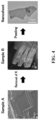
- FIG. 4 is a scanning electron microscopy (SEM) image of a layered compound and a transmission electron microscopy (TEM) image of a nanosheet according to an embodiment of the invention
- FIG. 5 shows an atomic force microscopy (AFM) image of a nanosheet according to an embodiment of the invention and a line-profile therefrom;
- AFM atomic force microscopy
- FIG. 6 is a graph illustrating results of XRD analysis of samples according to an embodiment of the invention.
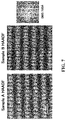
- FIG. 7 shows a STEM image of samples according to an embodiment of the invention and results of fast Fourier transform (FFT) of the image;
- FIG. 8 is a graph illustrating results of XRD analysis of samples according to an embodiment of the invention.
- FIG. 9 is an SEM image of a layered compound according to an embodiment of the invention.
- FIG. 10 is a TEM image of a nanosheet according to an embodiment of the invention.
- FIG. 11 is a TEM image of a nanosheet according to an embodiment of the invention.
- FIG. 12 is results of measuring hysteresis loop of samples according to an embodiment of the invention.
- FIG. 13 is voltage-current curves of samples according to an embodiment of the invention.
- a layered InP compound according an embodiment of the invention may be a layered compound represented by Formula 1 below.
- K 1-x In y P z [Formula 1] (0 ⁇ x ⁇ 1.0, 0.75 ⁇ y ⁇ 1.25, 1.25 ⁇ z ⁇ 1.75)
- InP has a zinc blende crystal structure, which is incapable of having a layered structure, and accordingly, using InP to form a nanosheet was hardly achievable.
- inventors of the invention have come up with an idea of adding additive elements to In y P z to place the additive elements between In y P z layers so as to prepare a layered compound in which the In y P z layers are connected.
- the inventors have calculated to create a layered material having a new composition and a crystal structure, and as a result, they have succeeded to synthesize a previously unreported new composition of a layered K 2 In 2 P 3 to prepare a layered compound having a composition of Formula 1 above.
- K is positioned between the In y P z layers to weakly bond the In y As z layers through van der Waals bonds, and a plane on which K is positioned forms a cleavage plane that is easily cleaved along the plane.
- x may be 0 according to Formula 1 described above, and as described above, K 2 In 2 P 3 is a previously unreported new synthesized material where x is 0 in Formula 1.
- the plane containing K may be peeled off as a cleavage plane that forms weak van der Waals bonds.
- K is positioned between the In y P z layers to weakly bond the In y P z layers through the van der Waals bonds, and along this cleavage plane, the plane may thus be easily peeled off into the In y P z layers through either or both physical or chemical methods, and the more K, an additive element, is removed, the weaker the interlayer bonding force is, and the easier the peeling is. Accordingly, through the physical or chemical peeling method, an In y P z nanosheet may be easily obtained from the layered compound, and in this case, K may partially remain in the In y P z nanosheet.
- the layered structure of the layered compound described in an embodiment of the invention includes a case where a repeating two-dimensional In y P z layers are interlayer-bonded through van der Waals bonds, as well as a case where the bonding force between the In y P z layers is removed to increase the interlayer distance, thereby causing cracks.
- FIG. 1 A conceptual view of examples of the layered compound and the nanosheet is shown in FIG. 1 , which shows that an additive element, K 11 , is positioned between In y P z layers 10 of KIn y P z to keep the bond between the In y P z layers 10 , and in this case, the removal of K 11 weakens the bond between the In y P z layers 10 , and thus to be easily peeled off physically or chemically, thereby in the end, developing into an In y P z nanosheet 20 .
- the additive element may partially remain in the In y P z nanosheet.
- the nanosheet prepared through the peeling from the layered compound may be a single layer of In y P z , but may be formed when a plurality of layers overlaps to be several hundreds of nm thick.
- nanosheets may exhibit anisotropy according to a two-dimensional shape only when a thickness to a lateral width is less than a certain level.
- the ratio of a thickness (d) to a width (L) of a nanosheet (d/L) is preferably 0.1 or less.
- a width of the nanosheet prepared through an embodiment of the invention may be 5 ⁇ m or greater, and thus, a thickness of the nanosheet is preferably 500 nm or less. In this case, the additive element may partially remain in the In y P z nanosheet.
- the nanosheet according to an embodiment of the invention refers to a sheet that is peeled off from a layered compound through a physical or chemical method, and includes being formed as a plurality of In y P z layers in addition to being formed as a single In y P z layer.
- Residual additive elements may satisfy 0 ⁇ x ⁇ 1, preferably 0.1 ⁇ m ⁇ 0.9, and more preferably 0.25 ⁇ m ⁇ 0.75, according to Formula 1 described above.
- x may be 0, and in preparing an In y P z compound having a layered structure, some of K to form a layered structure may be removed or may be completely removed.
- x may satisfy 0.1 ⁇ x ⁇ 0.9 to ensure easy peeling and to prevent the breakdown of the layered structure or changes in the crystal structure due to excessive removal of K.
- the crystal structure of the layered compound may have a space group of P2 1 /c.
- the nanosheet peeled off from the layered compound having the above range of x may equally satisfy 0.1 ⁇ x ⁇ 0.9.
- x for this may have a range of 0.25 ⁇ x ⁇ 0.75.
- K which is an additional element remaining between the layers, becomes movable to exhibit various electrical properties. Therefore, it may be desirable to remove some of the additive elements from the KIn y P z compound and keep the rest some.
- x for this may have a range of 0.25 ⁇ x ⁇ 0.75.
- Residual additive elements may be in the range of 0.9 ⁇ according to Formula 1 described above.
- the crystal structure of the layered compound may change, and with the removal of the additive element, the crystal structure of the layered compound may change to a zinc blende structure or amorphous structure.
- x is greater than 0.9
- the In y P z layers may change to a zinc blende structure or an amorphous structure, and even in this case, the plane having some residual additional elements still becomes a cleavage plane in which physical peeling is easily carried out or the bonding force between the In y P z layers is removed to increase the interlayer distance, thereby causing cracks, and accordingly, the In y P z layers keep a two-dimensional layer to allow the compound to have a layered structure.
- the K 1-x In y P z nanosheet peeled off from the compound of the composition may also have a zinc blende structure or an amorphous structure.
- y may have a range of 0.75 ⁇ y ⁇ 1.25 and z may have a range of 1.25 ⁇ z ⁇ 1.75, and y and z may have slight changes due to defects in an initially prepared K 2 In 2 As 3 , and the removal of K may cause slight changes in the ratio of In to P during the removal process, and thus, values of y and z in K 1-x In y P z may change within a range that does not alter the crystal structure for a given amount of K.
- a strong acid such as nitric acid or hydrochloric acid may be used for the removal of additive elements, and as the additive elements are removed through the strong acid, the place where the additive elements are removed is replaced with hydrogen ions included in the strong acid which is then bonded thereto, and thus a layered compound containing hydrogen and a nanosheet prepared using the compound may be provided.
- the layered compound containing hydrogen and the nanosheet therefrom may be represented by Formula 2 below.
- K 1-x H a In y P z [Formula 2]
- (M is at least one of Group I elements, and 0 ⁇ x ⁇ 1.0, 0 ⁇ a ⁇ x, 0.75 ⁇ y ⁇ 1.25, 1.25 ⁇ z ⁇ 1.75).
- hydrogen ions replace the additive elements, and are added in less than the amount of additive elements removed.
- X an amount by which the additive elements are removed, may remain in a very small amount in the range of 0.9 ⁇ x.
- the crystal structure may change as x becomes 0.9 or greater.
- the range of x may be 0.1 ⁇ x ⁇ 0.9, and more preferably may be 0.25 ⁇ x ⁇ 0.75.
- the crystal structure of the initial layered compound, KIn y P z is kept as it is, and as the additive element, K, is partially removed, the interlayer bonding force is weakened to easily peel off the compound into the In y P z layers, thereby exhibiting various electrical properties through the residual additive elements.
- a above may have the same value as x, and hydrogen ions may replace the removed additive elements to be included in the layered compound.
- the layered compound or nanosheet described above exhibit various properties as a result of analysis, and these properties will be described below.
- the layered compound and the nanosheet described here include both cases of with/without additional elements.
- the peaks may have an intensity of 3% or greater with respect to a peak having the greatest intensity in the graph provided through the XRD measurement.
- the results of the XRD measurement show that the layered compound or the nanosheet may have a space group of P2 1 /c.
- the crystal structure may change as described above.
- the crystal structure of KIn y P z before initial additive elements are removed may change to a zinc blende structure or an amorphous structure of general InP layers when the additive element K is removed. Even in this case, the cleavage plane already formed in KIn y P z may be kept as it is, or have gradually decreasing bonding force to cause cracks, resulting in having an open structure without forming interlayer bonds, and accordingly, the layered structure may be kept.
- a layered compound having a zinc blende crystal structure or an amorphous structure, and including a cleavage plane or cracks may be prepared, and the compound is peeled off to prepare an In y P z nanosheet having a zinc blende structure or an amorphous structure
- the layered compound or nanosheet as described above may exhibit various electrical properties due to a unique layered structure and residual additional elements.
- the layered compound or the nanosheet according to an embodiment of the invention exhibits ferroelectric-like properties.
- Ferroelectric properties are generally found in oxides of an asymmetric structure such as BaTiO 3 of a perovskite structure, and are found according to changes in the position of Ba located at the cent.
- the layered compound or the nanosheet according to an embodiment of the invention does not have the asymmetric structure, but nevertheless exhibits ferroelectric properties.
- the layered compound or nanosheet does not have the asymmetric structure, the layered compound or nanosheet still exhibits ferroelectric-like properties since the position of the residual additive elements moves according to an external electric field.
- ferroelectric-like properties of the layered compound and the nanosheet according to an embodiment of the invention enable application to various electrical devices.
- the layered compound and the nanosheet according to an embodiment of the invention exhibit resistance switching properties.
- resistance switching properties are generally found in oxides, and recently, using these properties, memory devices such as a memristor capable of storing information like a flash memory have been actively developed, and, through the resistance switching properties, the layered compound and the nanosheet of an embodiment of the invention may be actively used in the development of memory devices such as the memristor.
- K, In, and P were weighed at a molar ratio of 2:2:3, mixed, and then put into an alumina crucible. Next, the mixture was placed in a quartz tube which was then double-sealed to block outside air. The process was performed in a glove box under argon atmosphere. Thereafter, in the box furnace, the temperature was raised to 750° C. to allow all K, In, and P to be present as a liquid, which were kept for 20 hours, cooled to 500° C. for 100 hours, and kept again for 100 hours to obtain a sample of K 2 In 2 P 3 .
- the layered K 2 In 2 P 3 was subjected to reaction over time in a 1.5M hydrochloric acid solution diluted with IPA to remove K therefrom. The results are shown in the table below.
- K 2 In 2 P 3 having a layered structure projected through calculation was subjected to synthesis, and as a result, results of XRD measurement on the synthesized layered K 2 In 2 P 3 (Sample A) are shown in FIG. 2 .
- (a) shows peaks from the results of the XRD measurement for Sample A.
- (B) below shows peaks of K 2 Al 2 Sb 3 projected to have a similar structure.
- K 2 Al 2 Sb 3 is a material having a space group of P2 1 /c
- Sample A has similar peaks, it was seen that K 2 In 2 P 3 of Sample A had a space group of P2 1 /c.
- FIG. 3 is a scanning transmission electron microscopy (STEM) image in a zone-axis [010] direction for Sample A and results of energy dispersive spectroscopy (EDS) analysis.
- STEM scanning transmission electron microscopy
- the STEM image showed an atomic structure image consistent with the structure of the P2 1 /c material projected by XRD, and the results of the EDS elemental composition analysis of the same sample showed 29.35:27.84:42.82 which is close to 2:2:3. Accordingly, it was found that the synthesized K, In, P compound was a 2:2:3 compound having a P2 1 /c structure, indicating that a new material was synthesized.
- FIG. 4 shows Sample A before K was removed, Sample B after K was partially removed, and a nanosheet peeled off from Sample B.
- Sample A before the removal of K showed a layered structure and closely adhered between the layers, but in Sample B, after the partial removal of K, the interlayer distance of the layered structure increased, forming cracks. Accordingly, easier peeling is enabled to prepare nanosheets.
- FIG. 5 shows an atomic force microscopy (AFM) image of a nanosheet peeled off from Sample B and a line-profile therefrom. It was found that a nanosheet having a thickness of 6 nm to 16 nm and a width of several ⁇ m was prepared.
- AFM atomic force microscopy
- FIG. 6 shows XRD peaks of InP having a general zinc blende structure, XRD peaks of Sample A, and XRD peaks of Sample B from which K is partially removed.
- Sample A and Sample B had a different structure from InP having a general zinc blende structure, and with the removal of K from K 2 In 2 P 3 , and the peak intensity of the (002) plane became greater than that of the other plane.
- FIG. 7 shows a STEM image of Sample B and a fast Fourier transform (FFT) results of the image. It was found from the results of the STEM image and FFT that despite the fact that some of the additive elements was removed, the crystal structure was kept without a change to another structure or amorphization, and a slight increase (7.67 ⁇ 7.83 ⁇ ) in a c-axis direction [001] was caused.
- FFT fast Fourier transform
- FIG. 8 shows XRD peaks of InP having a general zinc blende structure, XRD peaks of Sample A, and XRD peaks of Sample C from which K was mostly removed.
- Sample C shows that the peaks of Sample A before the removal of K gradually switched to the peaks of InP having a zinc blend structure.
- Sample C had a zinc blende crystal structure, but still had a two-dimensional layer, and thus a nanosheet was easily prepared by being peeled off from Sample C.
- the TEM image for a zone-axis [110] for the nanosheet prepared therefrom is shown in FIG. 10 , and it was found that the nanosheet had a zinc blende crystal structure.
- the layered compound from which K element was mostly removed may have an amorphous structure, and that allows the peeled nanosheet to keep an amorphous structure as well (see FIG. 11 ).
- FIG. 12 ferroelectric-like properties were measured through an AFM image for the nanosheet peeled off from Sample B and piezoresponse force microscopy (PFM) in the nanosheet, and a hysteresis loop therefrom was showed.
- the nanosheet had ferroelectric properties applicable to actual electrical devices.
- the nanosheet kept a high resistance state 1, indicating a low current flow, but when the voltage was greater than a certain level, the nanosheet switched to a low resistance state 2, indicating a sharp increase in the current, thereby exhibiting resistance switching properties.
- the nanosheet would be applied as a memristor device, which is being actively developed as a neuromorphic memory device.
Landscapes
- Chemical & Material Sciences (AREA)
- Organic Chemistry (AREA)
- Engineering & Computer Science (AREA)
- Crystallography & Structural Chemistry (AREA)
- Materials Engineering (AREA)
- Metallurgy (AREA)
- Inorganic Chemistry (AREA)
- Inorganic Compounds Of Heavy Metals (AREA)
- Nanotechnology (AREA)
- Semiconductor Memories (AREA)
- Conductive Materials (AREA)
Abstract
Description
- Korean Registered Patent Publication No. 10-2057700
- Korean Patent Laid-open Publication No. 2019-0132294
- Korean Patent Laid-open Publication No. 2019-0132152
K1-xInyPz [Formula 1]
(0≤x≤1.0, 0.75≤y≤1.25, 1.25≤z≤1.75)
K1-xHaInyPz [Formula 2]
| TABLE 1 | |||||
| Name of | Removal of additive | Reaction | Residual K | ||
| sample | elements | time | (at %) | ||
| Sample A | — | — | 28.8 | ||
| Sample | Hydrochloric acid | 1 hour | 17.2 | ||
| Sample C | Hydrochloric acid | 6 hours | 1.8 | ||
| Sample D | Hydrochloric acid | 8 hours | 1.9 | ||
Claims (16)
K1-xInyPz [Formula 1]
K1-xInyPz [Formula 1]
Applications Claiming Priority (2)
| Application Number | Priority Date | Filing Date | Title |
|---|---|---|---|
| KR1020200115374A KR102425892B1 (en) | 2020-09-09 | 2020-09-09 | Layered compounds and nanosheets containing indium and phosphorus, and electrical devices using the same |
| KR10-2020-0115374 | 2020-09-09 |
Publications (2)
| Publication Number | Publication Date |
|---|---|
| US20220073363A1 US20220073363A1 (en) | 2022-03-10 |
| US11591237B2 true US11591237B2 (en) | 2023-02-28 |
Family
ID=73726557
Family Applications (1)
| Application Number | Title | Priority Date | Filing Date |
|---|---|---|---|
| US17/111,042 Active 2041-06-25 US11591237B2 (en) | 2020-09-09 | 2020-12-03 | Layered compound and nanosheet containing indium and phosphorus, and electrical device using the same |
Country Status (4)
| Country | Link |
|---|---|
| US (1) | US11591237B2 (en) |
| EP (1) | EP3967658B1 (en) |
| JP (1) | JP7116499B2 (en) |
| KR (1) | KR102425892B1 (en) |
Citations (7)
| Publication number | Priority date | Publication date | Assignee | Title |
|---|---|---|---|---|
| EP0271080A2 (en) | 1986-12-09 | 1988-06-15 | Nec Corporation | Indium-phosphide hetero-MIS-gate field effect transistor |
| CN102208756A (en) | 2011-04-21 | 2011-10-05 | 中国科学院半导体研究所 | Method for growing indium arsenide/indium gallium arsenide quantum well material on indium phosphide substrate |
| KR20140049190A (en) | 2012-10-16 | 2014-04-25 | 이화여자대학교 산학협력단 | Preparing method of nano-colloids of layered niobium-containing metal oxide, nano-colloids of layered niobium-containing metal oxide produced thereby and preparing method of highly dielectric thin film using the same |
| US20190157386A1 (en) * | 2017-11-21 | 2019-05-23 | International Business Machines Corporation | Stacked indium gallium arsenide nanosheets on silicon with bottom trapezoid isolation |
| KR20190132152A (en) | 2018-05-18 | 2019-11-27 | 연세대학교 산학협력단 | Layered AlN, manufacturing method thereof and exfoliated AlN nanosheet therefrom |
| KR20190132294A (en) | 2018-05-18 | 2019-11-27 | 연세대학교 산학협력단 | Layered InAs, manufacturing method thereof and InAs nanosheet exfoliated therefrom |
| KR102057700B1 (en) | 2018-05-18 | 2019-12-19 | 연세대학교 산학협력단 | Layered GaAs, manufacturing method thereof and exfoliated GaAs nanosheet therefrom |
Family Cites Families (3)
| Publication number | Priority date | Publication date | Assignee | Title |
|---|---|---|---|---|
| JP6949947B2 (en) | 2016-10-12 | 2021-10-13 | ダウ シリコーンズ コーポレーション | Thio (di) silane |
| KR101893264B1 (en) | 2016-11-22 | 2018-08-29 | 황주원 | Separate training Beauty Wig |
| CN111117615B (en) | 2019-12-31 | 2022-04-22 | 深圳市硅光半导体科技有限公司 | Quantum dot material, preparation method and application thereof, and light-emitting device |
-
2020
- 2020-09-09 KR KR1020200115374A patent/KR102425892B1/en active Active
- 2020-12-03 US US17/111,042 patent/US11591237B2/en active Active
- 2020-12-03 JP JP2020201200A patent/JP7116499B2/en active Active
- 2020-12-03 EP EP20211721.4A patent/EP3967658B1/en active Active
Patent Citations (7)
| Publication number | Priority date | Publication date | Assignee | Title |
|---|---|---|---|---|
| EP0271080A2 (en) | 1986-12-09 | 1988-06-15 | Nec Corporation | Indium-phosphide hetero-MIS-gate field effect transistor |
| CN102208756A (en) | 2011-04-21 | 2011-10-05 | 中国科学院半导体研究所 | Method for growing indium arsenide/indium gallium arsenide quantum well material on indium phosphide substrate |
| KR20140049190A (en) | 2012-10-16 | 2014-04-25 | 이화여자대학교 산학협력단 | Preparing method of nano-colloids of layered niobium-containing metal oxide, nano-colloids of layered niobium-containing metal oxide produced thereby and preparing method of highly dielectric thin film using the same |
| US20190157386A1 (en) * | 2017-11-21 | 2019-05-23 | International Business Machines Corporation | Stacked indium gallium arsenide nanosheets on silicon with bottom trapezoid isolation |
| KR20190132152A (en) | 2018-05-18 | 2019-11-27 | 연세대학교 산학협력단 | Layered AlN, manufacturing method thereof and exfoliated AlN nanosheet therefrom |
| KR20190132294A (en) | 2018-05-18 | 2019-11-27 | 연세대학교 산학협력단 | Layered InAs, manufacturing method thereof and InAs nanosheet exfoliated therefrom |
| KR102057700B1 (en) | 2018-05-18 | 2019-12-19 | 연세대학교 산학협력단 | Layered GaAs, manufacturing method thereof and exfoliated GaAs nanosheet therefrom |
Non-Patent Citations (2)
| Title |
|---|
| Jochen Gerwann, "European Search Report for EP Application No. 20211721.4", dated Apr. 26, 2021, EPO, Germany. |
| Kirfel, A. Petcov et al.,"Physical, and Chemical Aspects of Crystalline Materials", International Journal, vol. 195, No. 1/2, 1991. |
Also Published As
| Publication number | Publication date |
|---|---|
| KR102425892B1 (en) | 2022-07-26 |
| EP3967658A1 (en) | 2022-03-16 |
| KR20220033229A (en) | 2022-03-16 |
| US20220073363A1 (en) | 2022-03-10 |
| JP7116499B2 (en) | 2022-08-10 |
| EP3967658B1 (en) | 2023-06-28 |
| JP2022045867A (en) | 2022-03-22 |
Similar Documents
| Publication | Publication Date | Title |
|---|---|---|
| US11691891B2 (en) | Layered group III-V compound including additive elements and having ferroelectric-like properties, and nanosheet using the same | |
| EP3967658B1 (en) | Layered compound and nanosheet containing indium and phosphorus, and electrical device using the same | |
| US11820669B2 (en) | Layered compound and nanosheet containing indium and arsenic, and electrical device using the same | |
| US11634340B2 (en) | Layered group III-V compound and nanosheet containing arsenic, and electrical device using the same | |
| KR102453020B1 (en) | Layered compounds and nanosheets containing Zinc and Sulfur, and electrical devices using the same | |
| US11597651B2 (en) | Layered group III-V compound and nanosheet containing phosphorus, and electrical device using the same | |
| KR102425888B1 (en) | Layered compounds and nanosheets containing gallium and arsenic, and electrical devices using the same | |
| KR102425893B1 (en) | Layered compounds and nanosheets containing potassium, indium and arsenic, and electrical devices using the same | |
| US11643753B2 (en) | Layered group III-V compound and nanosheet containing antimony, and electrical device using the same | |
| KR102514683B1 (en) | Layered compounds and nanosheets containing indium and phosphorus, and electrical devices using the same | |
| Channagoudra et al. | Significant enhancement of magnetization in 0.67 Pb (Mg1/3Nb2/3) O3-0.33 PbTiO3/La0. 70Sr0. 30MnO3 heterostructure | |
| KR102425894B1 (en) | Layered compounds and nanosheets containing indium and antimony, and electrical devices using the same | |
| US11840458B2 (en) | Layered GaN and GaN nanosheet, and electrical device using the same | |
| KR102425891B1 (en) | Layered compounds and nanosheets containing gallium and antimony, and electrical devices using the same | |
| Islam et al. | Improved leakage currents and polarity control through oxygen incorporation in ferroelectric Al0. 73Sc0. 27N thin films | |
| KR102484718B1 (en) | Layered compounds and nanosheets containing gallium and arsenic, and electrical devices using the same | |
| KR102425890B1 (en) | Layered compounds and nanosheets containing aluminum and antimony, and electrical devices using the same | |
| KR102479782B1 (en) | Layered GaP, GaP nanosheet and Electrical Dvice using the Same | |
| Mohammed | Aqueous Chemical Solution Deposition of Epitaxial Lead-Free Ferroelectric Sodium Potassium Niobate (KNN) thin films | |
| Mason | Chemical solution deposition and advanced characterization of Pb-free, Bi-based, piezoelectric thin films |
Legal Events
| Date | Code | Title | Description |
|---|---|---|---|
| AS | Assignment |
Owner name: INDUSTRY-ACADEMIC COOPERATION FOUNDATION, YONSEI UNIVERSITY, KOREA, REPUBLIC OF Free format text: ASSIGNMENT OF ASSIGNORS INTEREST;ASSIGNORS:SHIM, WOO-YOUNG;KIM, MIN-JUNG;REEL/FRAME:054537/0069 Effective date: 20201202 |
|
| FEPP | Fee payment procedure |
Free format text: ENTITY STATUS SET TO UNDISCOUNTED (ORIGINAL EVENT CODE: BIG.); ENTITY STATUS OF PATENT OWNER: SMALL ENTITY |
|
| FEPP | Fee payment procedure |
Free format text: ENTITY STATUS SET TO SMALL (ORIGINAL EVENT CODE: SMAL); ENTITY STATUS OF PATENT OWNER: SMALL ENTITY |
|
| STPP | Information on status: patent application and granting procedure in general |
Free format text: DOCKETED NEW CASE - READY FOR EXAMINATION |
|
| STPP | Information on status: patent application and granting procedure in general |
Free format text: NON FINAL ACTION MAILED |
|
| STPP | Information on status: patent application and granting procedure in general |
Free format text: RESPONSE TO NON-FINAL OFFICE ACTION ENTERED AND FORWARDED TO EXAMINER |
|
| STPP | Information on status: patent application and granting procedure in general |
Free format text: NOTICE OF ALLOWANCE MAILED -- APPLICATION RECEIVED IN OFFICE OF PUBLICATIONS |
|
| STCF | Information on status: patent grant |
Free format text: PATENTED CASE |