US11560493B2 - Use of amphiphilic surface modifying additives to improve performance of siloxane-polyurethane fouling-release coatings - Google Patents
Use of amphiphilic surface modifying additives to improve performance of siloxane-polyurethane fouling-release coatings Download PDFInfo
- Publication number
- US11560493B2 US11560493B2 US16/376,144 US201916376144A US11560493B2 US 11560493 B2 US11560493 B2 US 11560493B2 US 201916376144 A US201916376144 A US 201916376144A US 11560493 B2 US11560493 B2 US 11560493B2
- Authority
- US
- United States
- Prior art keywords
- coating composition
- polyol
- functional
- hms
- siloxane
- Prior art date
- Legal status (The legal status is an assumption and is not a legal conclusion. Google has not performed a legal analysis and makes no representation as to the accuracy of the status listed.)
- Active
Links
Images




Classifications
-
- C—CHEMISTRY; METALLURGY
- C09—DYES; PAINTS; POLISHES; NATURAL RESINS; ADHESIVES; COMPOSITIONS NOT OTHERWISE PROVIDED FOR; APPLICATIONS OF MATERIALS NOT OTHERWISE PROVIDED FOR
- C09D—COATING COMPOSITIONS, e.g. PAINTS, VARNISHES OR LACQUERS; FILLING PASTES; CHEMICAL PAINT OR INK REMOVERS; INKS; CORRECTING FLUIDS; WOODSTAINS; PASTES OR SOLIDS FOR COLOURING OR PRINTING; USE OF MATERIALS THEREFOR
- C09D175/00—Coating compositions based on polyureas or polyurethanes; Coating compositions based on derivatives of such polymers
- C09D175/04—Polyurethanes
- C09D175/06—Polyurethanes from polyesters
-
- C—CHEMISTRY; METALLURGY
- C08—ORGANIC MACROMOLECULAR COMPOUNDS; THEIR PREPARATION OR CHEMICAL WORKING-UP; COMPOSITIONS BASED THEREON
- C08G—MACROMOLECULAR COMPOUNDS OBTAINED OTHERWISE THAN BY REACTIONS ONLY INVOLVING UNSATURATED CARBON-TO-CARBON BONDS
- C08G18/00—Polymeric products of isocyanates or isothiocyanates
- C08G18/06—Polymeric products of isocyanates or isothiocyanates with compounds having active hydrogen
- C08G18/70—Polymeric products of isocyanates or isothiocyanates with compounds having active hydrogen characterised by the isocyanates or isothiocyanates used
- C08G18/72—Polyisocyanates or polyisothiocyanates
- C08G18/74—Polyisocyanates or polyisothiocyanates cyclic
-
- C—CHEMISTRY; METALLURGY
- C08—ORGANIC MACROMOLECULAR COMPOUNDS; THEIR PREPARATION OR CHEMICAL WORKING-UP; COMPOSITIONS BASED THEREON
- C08G—MACROMOLECULAR COMPOUNDS OBTAINED OTHERWISE THAN BY REACTIONS ONLY INVOLVING UNSATURATED CARBON-TO-CARBON BONDS
- C08G18/00—Polymeric products of isocyanates or isothiocyanates
- C08G18/06—Polymeric products of isocyanates or isothiocyanates with compounds having active hydrogen
- C08G18/28—Polymeric products of isocyanates or isothiocyanates with compounds having active hydrogen characterised by the compounds used containing active hydrogen
- C08G18/2805—Compounds having only one group containing active hydrogen
- C08G18/288—Compounds containing at least one heteroatom other than oxygen or nitrogen
- C08G18/289—Compounds containing at least one heteroatom other than oxygen or nitrogen containing silicon
-
- C—CHEMISTRY; METALLURGY
- C08—ORGANIC MACROMOLECULAR COMPOUNDS; THEIR PREPARATION OR CHEMICAL WORKING-UP; COMPOSITIONS BASED THEREON
- C08G—MACROMOLECULAR COMPOUNDS OBTAINED OTHERWISE THAN BY REACTIONS ONLY INVOLVING UNSATURATED CARBON-TO-CARBON BONDS
- C08G18/00—Polymeric products of isocyanates or isothiocyanates
- C08G18/06—Polymeric products of isocyanates or isothiocyanates with compounds having active hydrogen
- C08G18/28—Polymeric products of isocyanates or isothiocyanates with compounds having active hydrogen characterised by the compounds used containing active hydrogen
- C08G18/40—High-molecular-weight compounds
- C08G18/4009—Two or more macromolecular compounds not provided for in one single group of groups C08G18/42 - C08G18/64
- C08G18/4063—Mixtures of compounds of group C08G18/62 with other macromolecular compounds
-
- C—CHEMISTRY; METALLURGY
- C08—ORGANIC MACROMOLECULAR COMPOUNDS; THEIR PREPARATION OR CHEMICAL WORKING-UP; COMPOSITIONS BASED THEREON
- C08G—MACROMOLECULAR COMPOUNDS OBTAINED OTHERWISE THAN BY REACTIONS ONLY INVOLVING UNSATURATED CARBON-TO-CARBON BONDS
- C08G18/00—Polymeric products of isocyanates or isothiocyanates
- C08G18/06—Polymeric products of isocyanates or isothiocyanates with compounds having active hydrogen
- C08G18/28—Polymeric products of isocyanates or isothiocyanates with compounds having active hydrogen characterised by the compounds used containing active hydrogen
- C08G18/40—High-molecular-weight compounds
- C08G18/42—Polycondensates having carboxylic or carbonic ester groups in the main chain
-
- C—CHEMISTRY; METALLURGY
- C08—ORGANIC MACROMOLECULAR COMPOUNDS; THEIR PREPARATION OR CHEMICAL WORKING-UP; COMPOSITIONS BASED THEREON
- C08G—MACROMOLECULAR COMPOUNDS OBTAINED OTHERWISE THAN BY REACTIONS ONLY INVOLVING UNSATURATED CARBON-TO-CARBON BONDS
- C08G18/00—Polymeric products of isocyanates or isothiocyanates
- C08G18/06—Polymeric products of isocyanates or isothiocyanates with compounds having active hydrogen
- C08G18/28—Polymeric products of isocyanates or isothiocyanates with compounds having active hydrogen characterised by the compounds used containing active hydrogen
- C08G18/40—High-molecular-weight compounds
- C08G18/48—Polyethers
-
- C—CHEMISTRY; METALLURGY
- C08—ORGANIC MACROMOLECULAR COMPOUNDS; THEIR PREPARATION OR CHEMICAL WORKING-UP; COMPOSITIONS BASED THEREON
- C08G—MACROMOLECULAR COMPOUNDS OBTAINED OTHERWISE THAN BY REACTIONS ONLY INVOLVING UNSATURATED CARBON-TO-CARBON BONDS
- C08G18/00—Polymeric products of isocyanates or isothiocyanates
- C08G18/06—Polymeric products of isocyanates or isothiocyanates with compounds having active hydrogen
- C08G18/28—Polymeric products of isocyanates or isothiocyanates with compounds having active hydrogen characterised by the compounds used containing active hydrogen
- C08G18/40—High-molecular-weight compounds
- C08G18/61—Polysiloxanes
-
- C—CHEMISTRY; METALLURGY
- C08—ORGANIC MACROMOLECULAR COMPOUNDS; THEIR PREPARATION OR CHEMICAL WORKING-UP; COMPOSITIONS BASED THEREON
- C08G—MACROMOLECULAR COMPOUNDS OBTAINED OTHERWISE THAN BY REACTIONS ONLY INVOLVING UNSATURATED CARBON-TO-CARBON BONDS
- C08G18/00—Polymeric products of isocyanates or isothiocyanates
- C08G18/06—Polymeric products of isocyanates or isothiocyanates with compounds having active hydrogen
- C08G18/28—Polymeric products of isocyanates or isothiocyanates with compounds having active hydrogen characterised by the compounds used containing active hydrogen
- C08G18/40—High-molecular-weight compounds
- C08G18/62—Polymers of compounds having carbon-to-carbon double bonds
- C08G18/6216—Polymers of alpha-beta ethylenically unsaturated carboxylic acids or of derivatives thereof
- C08G18/622—Polymers of esters of alpha-beta ethylenically unsaturated carboxylic acids
- C08G18/6225—Polymers of esters of acrylic or methacrylic acid
- C08G18/6229—Polymers of hydroxy groups containing esters of acrylic or methacrylic acid with aliphatic polyalcohols
-
- C—CHEMISTRY; METALLURGY
- C08—ORGANIC MACROMOLECULAR COMPOUNDS; THEIR PREPARATION OR CHEMICAL WORKING-UP; COMPOSITIONS BASED THEREON
- C08G—MACROMOLECULAR COMPOUNDS OBTAINED OTHERWISE THAN BY REACTIONS ONLY INVOLVING UNSATURATED CARBON-TO-CARBON BONDS
- C08G18/00—Polymeric products of isocyanates or isothiocyanates
- C08G18/06—Polymeric products of isocyanates or isothiocyanates with compounds having active hydrogen
- C08G18/70—Polymeric products of isocyanates or isothiocyanates with compounds having active hydrogen characterised by the isocyanates or isothiocyanates used
- C08G18/72—Polyisocyanates or polyisothiocyanates
- C08G18/73—Polyisocyanates or polyisothiocyanates acyclic
-
- C—CHEMISTRY; METALLURGY
- C08—ORGANIC MACROMOLECULAR COMPOUNDS; THEIR PREPARATION OR CHEMICAL WORKING-UP; COMPOSITIONS BASED THEREON
- C08G—MACROMOLECULAR COMPOUNDS OBTAINED OTHERWISE THAN BY REACTIONS ONLY INVOLVING UNSATURATED CARBON-TO-CARBON BONDS
- C08G18/00—Polymeric products of isocyanates or isothiocyanates
- C08G18/06—Polymeric products of isocyanates or isothiocyanates with compounds having active hydrogen
- C08G18/70—Polymeric products of isocyanates or isothiocyanates with compounds having active hydrogen characterised by the isocyanates or isothiocyanates used
- C08G18/72—Polyisocyanates or polyisothiocyanates
- C08G18/74—Polyisocyanates or polyisothiocyanates cyclic
- C08G18/75—Polyisocyanates or polyisothiocyanates cyclic cycloaliphatic
- C08G18/751—Polyisocyanates or polyisothiocyanates cyclic cycloaliphatic containing only one cycloaliphatic ring
- C08G18/752—Polyisocyanates or polyisothiocyanates cyclic cycloaliphatic containing only one cycloaliphatic ring containing at least one isocyanate or isothiocyanate group linked to the cycloaliphatic ring by means of an aliphatic group
- C08G18/757—Polyisocyanates or polyisothiocyanates cyclic cycloaliphatic containing only one cycloaliphatic ring containing at least one isocyanate or isothiocyanate group linked to the cycloaliphatic ring by means of an aliphatic group containing at least two isocyanate or isothiocyanate groups linked to the cycloaliphatic ring by means of an aliphatic group
-
- C—CHEMISTRY; METALLURGY
- C08—ORGANIC MACROMOLECULAR COMPOUNDS; THEIR PREPARATION OR CHEMICAL WORKING-UP; COMPOSITIONS BASED THEREON
- C08G—MACROMOLECULAR COMPOUNDS OBTAINED OTHERWISE THAN BY REACTIONS ONLY INVOLVING UNSATURATED CARBON-TO-CARBON BONDS
- C08G18/00—Polymeric products of isocyanates or isothiocyanates
- C08G18/06—Polymeric products of isocyanates or isothiocyanates with compounds having active hydrogen
- C08G18/70—Polymeric products of isocyanates or isothiocyanates with compounds having active hydrogen characterised by the isocyanates or isothiocyanates used
- C08G18/72—Polyisocyanates or polyisothiocyanates
- C08G18/74—Polyisocyanates or polyisothiocyanates cyclic
- C08G18/76—Polyisocyanates or polyisothiocyanates cyclic aromatic
- C08G18/7657—Polyisocyanates or polyisothiocyanates cyclic aromatic containing two or more aromatic rings
- C08G18/7692—Polyisocyanates or polyisothiocyanates cyclic aromatic containing two or more aromatic rings containing at least one isocyanate or isothiocyanate group linked to an aromatic ring by means of an aliphatic group
-
- C—CHEMISTRY; METALLURGY
- C08—ORGANIC MACROMOLECULAR COMPOUNDS; THEIR PREPARATION OR CHEMICAL WORKING-UP; COMPOSITIONS BASED THEREON
- C08G—MACROMOLECULAR COMPOUNDS OBTAINED OTHERWISE THAN BY REACTIONS ONLY INVOLVING UNSATURATED CARBON-TO-CARBON BONDS
- C08G18/00—Polymeric products of isocyanates or isothiocyanates
- C08G18/06—Polymeric products of isocyanates or isothiocyanates with compounds having active hydrogen
- C08G18/70—Polymeric products of isocyanates or isothiocyanates with compounds having active hydrogen characterised by the isocyanates or isothiocyanates used
- C08G18/72—Polyisocyanates or polyisothiocyanates
- C08G18/77—Polyisocyanates or polyisothiocyanates having heteroatoms in addition to the isocyanate or isothiocyanate nitrogen and oxygen or sulfur
- C08G18/78—Nitrogen
- C08G18/79—Nitrogen characterised by the polyisocyanates used, these having groups formed by oligomerisation of isocyanates or isothiocyanates
- C08G18/791—Nitrogen characterised by the polyisocyanates used, these having groups formed by oligomerisation of isocyanates or isothiocyanates containing isocyanurate groups
- C08G18/792—Nitrogen characterised by the polyisocyanates used, these having groups formed by oligomerisation of isocyanates or isothiocyanates containing isocyanurate groups formed by oligomerisation of aliphatic and/or cycloaliphatic isocyanates or isothiocyanates
-
- C—CHEMISTRY; METALLURGY
- C08—ORGANIC MACROMOLECULAR COMPOUNDS; THEIR PREPARATION OR CHEMICAL WORKING-UP; COMPOSITIONS BASED THEREON
- C08G—MACROMOLECULAR COMPOUNDS OBTAINED OTHERWISE THAN BY REACTIONS ONLY INVOLVING UNSATURATED CARBON-TO-CARBON BONDS
- C08G77/00—Macromolecular compounds obtained by reactions forming a linkage containing silicon with or without sulfur, nitrogen, oxygen or carbon in the main chain of the macromolecule
- C08G77/04—Polysiloxanes
- C08G77/045—Polysiloxanes containing less than 25 silicon atoms
-
- C—CHEMISTRY; METALLURGY
- C09—DYES; PAINTS; POLISHES; NATURAL RESINS; ADHESIVES; COMPOSITIONS NOT OTHERWISE PROVIDED FOR; APPLICATIONS OF MATERIALS NOT OTHERWISE PROVIDED FOR
- C09D—COATING COMPOSITIONS, e.g. PAINTS, VARNISHES OR LACQUERS; FILLING PASTES; CHEMICAL PAINT OR INK REMOVERS; INKS; CORRECTING FLUIDS; WOODSTAINS; PASTES OR SOLIDS FOR COLOURING OR PRINTING; USE OF MATERIALS THEREFOR
- C09D175/00—Coating compositions based on polyureas or polyurethanes; Coating compositions based on derivatives of such polymers
- C09D175/04—Polyurethanes
-
- C—CHEMISTRY; METALLURGY
- C09—DYES; PAINTS; POLISHES; NATURAL RESINS; ADHESIVES; COMPOSITIONS NOT OTHERWISE PROVIDED FOR; APPLICATIONS OF MATERIALS NOT OTHERWISE PROVIDED FOR
- C09D—COATING COMPOSITIONS, e.g. PAINTS, VARNISHES OR LACQUERS; FILLING PASTES; CHEMICAL PAINT OR INK REMOVERS; INKS; CORRECTING FLUIDS; WOODSTAINS; PASTES OR SOLIDS FOR COLOURING OR PRINTING; USE OF MATERIALS THEREFOR
- C09D183/00—Coating compositions based on macromolecular compounds obtained by reactions forming in the main chain of the macromolecule a linkage containing silicon, with or without sulfur, nitrogen, oxygen, or carbon only; Coating compositions based on derivatives of such polymers
- C09D183/10—Block or graft copolymers containing polysiloxane sequences
-
- C—CHEMISTRY; METALLURGY
- C09—DYES; PAINTS; POLISHES; NATURAL RESINS; ADHESIVES; COMPOSITIONS NOT OTHERWISE PROVIDED FOR; APPLICATIONS OF MATERIALS NOT OTHERWISE PROVIDED FOR
- C09D—COATING COMPOSITIONS, e.g. PAINTS, VARNISHES OR LACQUERS; FILLING PASTES; CHEMICAL PAINT OR INK REMOVERS; INKS; CORRECTING FLUIDS; WOODSTAINS; PASTES OR SOLIDS FOR COLOURING OR PRINTING; USE OF MATERIALS THEREFOR
- C09D5/00—Coating compositions, e.g. paints, varnishes or lacquers, characterised by their physical nature or the effects produced; Filling pastes
- C09D5/16—Antifouling paints; Underwater paints
- C09D5/1606—Antifouling paints; Underwater paints characterised by the anti-fouling agent
- C09D5/1637—Macromolecular compounds
-
- C—CHEMISTRY; METALLURGY
- C09—DYES; PAINTS; POLISHES; NATURAL RESINS; ADHESIVES; COMPOSITIONS NOT OTHERWISE PROVIDED FOR; APPLICATIONS OF MATERIALS NOT OTHERWISE PROVIDED FOR
- C09D—COATING COMPOSITIONS, e.g. PAINTS, VARNISHES OR LACQUERS; FILLING PASTES; CHEMICAL PAINT OR INK REMOVERS; INKS; CORRECTING FLUIDS; WOODSTAINS; PASTES OR SOLIDS FOR COLOURING OR PRINTING; USE OF MATERIALS THEREFOR
- C09D5/00—Coating compositions, e.g. paints, varnishes or lacquers, characterised by their physical nature or the effects produced; Filling pastes
- C09D5/16—Antifouling paints; Underwater paints
- C09D5/1656—Antifouling paints; Underwater paints characterised by the film-forming substance
- C09D5/1662—Synthetic film-forming substance
-
- C—CHEMISTRY; METALLURGY
- C09—DYES; PAINTS; POLISHES; NATURAL RESINS; ADHESIVES; COMPOSITIONS NOT OTHERWISE PROVIDED FOR; APPLICATIONS OF MATERIALS NOT OTHERWISE PROVIDED FOR
- C09D—COATING COMPOSITIONS, e.g. PAINTS, VARNISHES OR LACQUERS; FILLING PASTES; CHEMICAL PAINT OR INK REMOVERS; INKS; CORRECTING FLUIDS; WOODSTAINS; PASTES OR SOLIDS FOR COLOURING OR PRINTING; USE OF MATERIALS THEREFOR
- C09D5/00—Coating compositions, e.g. paints, varnishes or lacquers, characterised by their physical nature or the effects produced; Filling pastes
- C09D5/16—Antifouling paints; Underwater paints
- C09D5/1656—Antifouling paints; Underwater paints characterised by the film-forming substance
- C09D5/1662—Synthetic film-forming substance
- C09D5/1675—Polyorganosiloxane-containing compositions
-
- C—CHEMISTRY; METALLURGY
- C08—ORGANIC MACROMOLECULAR COMPOUNDS; THEIR PREPARATION OR CHEMICAL WORKING-UP; COMPOSITIONS BASED THEREON
- C08G—MACROMOLECULAR COMPOUNDS OBTAINED OTHERWISE THAN BY REACTIONS ONLY INVOLVING UNSATURATED CARBON-TO-CARBON BONDS
- C08G77/00—Macromolecular compounds obtained by reactions forming a linkage containing silicon with or without sulfur, nitrogen, oxygen or carbon in the main chain of the macromolecule
- C08G77/42—Block-or graft-polymers containing polysiloxane sequences
- C08G77/458—Block-or graft-polymers containing polysiloxane sequences containing polyurethane sequences
-
- C—CHEMISTRY; METALLURGY
- C08—ORGANIC MACROMOLECULAR COMPOUNDS; THEIR PREPARATION OR CHEMICAL WORKING-UP; COMPOSITIONS BASED THEREON
- C08G—MACROMOLECULAR COMPOUNDS OBTAINED OTHERWISE THAN BY REACTIONS ONLY INVOLVING UNSATURATED CARBON-TO-CARBON BONDS
- C08G77/00—Macromolecular compounds obtained by reactions forming a linkage containing silicon with or without sulfur, nitrogen, oxygen or carbon in the main chain of the macromolecule
- C08G77/42—Block-or graft-polymers containing polysiloxane sequences
- C08G77/46—Block-or graft-polymers containing polysiloxane sequences containing polyether sequences
Definitions
- marine biofouling The undesirable accumulation of marine organisms on structures submerged in seawater is referred to as marine biofouling (Yebra et al., 2004).
- the process of marine biofouling may involve over 4000 different marine organisms with varying sizes and modes of adhesion, which makes dealing with this phenomenon very difficult (Lejars et al., 2012), (Hellio and Yebra, 2009), (Yebra et al., 2004).
- proteins, nutrients, and other small molecules settle on the surface and form a conditioning film (Lejars et al., 2012). From this point, a highly complex, dynamic process of marine organism settlement is observed.
- Marine bacteria and other unicellular organisms are typically the first of many different organisms to adhere via reversible electrostatic mechanisms, and later, covalent interactions which ensure a permanent attachment to the substrate (Callow and Callow, 2011). Slightly larger organisms such as diatoms and algae spores are then seen to settle and adhere more readily to the substrate introducing even more diversity to complex biofilm formation. Lastly, larvae of barnacles, mussels, and tubeworms preferentially settle on substrates composed of these micro-foulant rich biofilms (Callow and Callow, 2011).
- Marine biofouling is often viewed as a linear chain of events, with biofilm and micro-foulant settlement occurring within seconds-days, and macro-foulant accumulation anywhere from days-months (Lejars et al., 2012).
- some organisms such as the barnacle A. amphitrite and green algae U. linza are shown to settle and adhere to clean or newly submersed substrates, making the process of marine biofouling harder to predict, and consequently, defend against (Lejars et al., 2012).
- FR coatings systems are mainly elastomers consisting of poly(dimethylsiloxane) (PDMS), or other silicones, as well as fluoropolymer based systems which result in low surface energy coatings (Lejars et al., 2012). These low surface energy coatings systems do not allow marine organisms to adhere strongly, and under hydrodynamic shear forces, organisms can be removed with little effort (Lejars et al., 2012). However, due to issues with mechanical durability, plus the need for a tie-coat to achieve proper adhesion to the substrate, superior FR coatings systems are being developed (Lejars et al., 2012), (Yebra et al., 2004).
- SiPU siloxane-polyurethane
- These SiPU coatings incorporate PDMS and polyurethane segments and exhibit self-stratifying behavior during curing.
- PDMS is present on the surface, due to its low surface energy, and offers FR performance comparable to commercially available FR coatings (Majumdar et al., 2007), (Webster et al., 2011), (Webster and Ekin, 2010).
- the coating composition consists of the polyurethane bulk, which offers superior adhesion and mechanical properties compared to conventional elastomeric coating systems.
- These SiPU FR coatings showed similar, in some cases superior, FR performance to commercial FR coatings (Ekin and Webster, 2007), (Bodkhe et al., 2012), (Sommer et al., 2010).
- poly(ethylene) glycol is one of the most studied and has a low interfacial energy between water ( ⁇ 5 mN/m), forming a “hydration layer” of water molecules making it thermodynamically unfavorable for biomolecules, like proteins, to disrupt this layer, thus resisting adsorption (Andrade et al.).
- hydrophilic moieties include zwitterionic poly(sulfobetaine) methacrylate (pSBMA), polysaccharides, and peptide-mimic polymers (Martinelli et al., 2016).
- a major method of incorporating these moieties is that of copolymer networks, forming regions of heterogeneity.
- SMA's surface modifying additives consisting of poly(ethylene) oxide (PEO) and oligomeric poly(dimethylsiloxane) (ODMS).
- PEO poly(ethylene) oxide
- ODMS oligomeric poly(dimethylsiloxane)
- the non-reactive SMA's varied in ODMS length, length of the PEO chain, and whether or not the SMA's were di- or triblock copolymers (Rufin et al., 2017). Small percentages of the additives compared to the bulk composition were blended with an RTV silicone elastomer.
- the invention relates to the use of non-reactive surface modifying amphiphilic additives (SMAA's) in a siloxane-polyurethane coating composition.
- SMAA's non-reactive surface modifying amphiphilic additives
- the invention relates to a curable coating composition comprising, consisting essentially of, or consisting of: (1) the SMAA's of the invention; and (2) the siloxane-polyurethane coating composition of the invention.
- the SMAA's used in the invention comprise, consist essentially of, or consist of a polydimethyl siloxane (PDMS) backbone to which is attached poly(ethylene glycol) chains.
- the siloxane-polyurethane coating composition used in the invention comprises, consists essentially of, or consists of: (1) an aminopropyl terminated polydimethyl siloxane; (2) a polyol; (3) a polyisocyanate crosslinker; and (4) optionally, additional additives, such as pigments, curing catalysts, pot-life extenders, and solvents.
- the invention also relates to methods of making and using the curable coating composition of the invention.
- the invention further relates to objects or substrates coated with the curable coating composition of the invention, which may then be cured to for a coating.
- the invention also relates to a cured coating composition of the invention.
- the invention also relates to a marine fouling-release coating comprising, consisting essentially of, or consisting of the curable coating composition of the invention.
- the invention also relates to a method for reducing or preventing biofouling of a surface exposed to an aqueous environment comprising, consisting essentially of, or consisting of the steps of: (1) coating the surface with the curable coating composition of the invention to form a coated surface, and (2) curing the coating composition on the coated surface.
- FIG. 1 depicts a general reaction scheme for the synthesis of allyl terminated polyethylene glycol monomethyl ether.
- FIG. 2 depicts a general reaction scheme for SMAA's synthesis.
- FIG. 4 shows a 1 H-NMR spectrum of APEG 750 with peak assignments.
- FIG. 5 shows an FT-IR spectrum of APEG 750.
- FIG. 6 shows a 1 H-NMR spectrum for the SMAA 991-g-350.
- FIG. 7 shows an FT-IR spectrum for the SMAA 991-g-350.
- FIG. 8 shows the water contact angles for PMHS-g-PEG250 1%.
- FIG. 9 shows the water contact angles for PMHS-g-PEG250 5%.
- FIG. 10 shows the water contact angles for PMHS-g-PEG250 10%.
- FIG. 11 shows the water contact angles for PMHS-g-PEG350 1%.
- FIG. 12 shows the water contact angles for PMHS-g-PEG350 5%.
- FIG. 13 shows the water contact angles for PMHS-g-PEG350 10%.
- FIG. 14 shows the water contact angles for PMHS-g-PEG750 1%.
- FIG. 15 shows the water contact angles for PMHS-g-PEG750 5%.
- FIG. 16 shows the water contact angles for PMHS-g-PEG750 10%.
- FIG. 17 shows the water contact angles for PMHS-g-PEG1100 1%.
- FIG. 18 shows the water contact angles for PMHS-g-PEG1100 5%.
- FIG. 19 shows the water contact angles for PMHS-g-PEG1100 5% and A4_20 SiPU control.
- FIG. 20 shows the Leachate toxicity for N. incerta on coatings formulations 1-36 from Table 3.
- FIG. 21 shows the Leachate toxicity for N. incerta on coatings formulations 37-65 from Table 3.
- FIG. 22 shows the attachment of N. incerta cells on the coatings after two hours of settlement time for coatings formulations 1-36 from Table 3.
- FIG. 23 shows the attachment of N. incerta cells on the coatings after two hours of settlement time for coatings formulations 37-65 from Table 3.
- FIG. 24 shows the percent removal of N. incerta cells after water-jetting at 10 psi for coatings formulations 1-36 from Table 3.
- FIG. 25 shows the percent removal of N. incerta cells after water-jetting at 10 psi for coatings formulations 37-65 from Table 3.
- FIG. 26 shows the percent removal of N. incerta cells after water-jetting at 20 psi for coatings formulations 1-36 from Table 3.
- FIG. 27 shows the percent removal of N. incerta cells after water-jetting at 20 psi for coatings formulations 37-65 from Table 3.
- FIG. 28 shows the amount of N. incerta cells remaining after water-jetting at 10 psi for coatings formulations 1-36 from Table 3.
- FIG. 29 shows the amount of N. incerta cells remaining after water-jetting at 10 psi for coatings formulations 37-65 from Table 3.
- FIG. 30 shows the amount of N. incerta cells remaining after water-jetting at 20 psi for coatings formulations 1-36 from Table 3.
- FIG. 31 shows the amount of N. incerta cells remaining after water-jetting at 20 psi for coatings formulations 37-65 from Table 3.
- FIG. 32 shows the leachate toxicity of (solution growth) of C. lytica for coatings formulations 1-36 from Table 3.
- FIG. 33 shows the leachate toxicity (solution growth) of C. lytica for coatings formulations 37-65 from Table 3.
- FIG. 34 shows the leachate toxicity (biofilm growth) of C. lytica for coatings formulations 1-36 from Table 3.
- FIG. 35 shows the leachate toxicity (biofilm growth) of C. lytica for coatings formulations 37-65 from Table 3.
- FIG. 36 shows the surface coverage on of C. lytica for coatings formulations 1-36 from Table 3.
- FIG. 37 shows the surface coverage of C. lytica for coatings formulations 37-65 from Table 3.
- FIG. 38 shows the settlement of C. lytica on the coatings' surfaces of formulations 1-36 from Table 3.
- FIG. 39 shows the settlement of C. lytica on the coatings' surfaces of formulations 37-65 from Table 3.
- FIG. 40 shows the percent removal of C. lytica after water-jetting at 10 psi for coatings formulations 1-36 from Table 3.
- FIG. 41 shows the percent removal of C. lytica after water-jetting at 10 psi for coatings formulations 37-65 from Table 3.
- FIG. 42 shows the percent removal of C. lytica after water-jetting at 20 psi for coatings formulations 1-36 from Table 3.
- FIG. 43 shows the percent removal of C. lytica after water-jetting at 20 psi for coatings formulations 37-65 from Table 3.
- FIG. 44 shows the amount of C. lytica biofilm remaining after water-jetting at 10 psi for coatings formulations 1-36 from Table 3.
- FIG. 45 shows the amount of C. lytica biofilm remaining after water-jetting at 10 psi for coatings formulations 37-65 from Table 3.
- FIG. 46 shows the amount of C. lytica biofilm remaining after water-jetting at 20 psi for coatings formulations 1-36 from Table 3.
- FIG. 47 shows the amount of C. lytica biofilm remaining after water-jetting at 20 psi for coatings formulations 37-65 from Table 3.
- FIG. 48 shows the biomass generation of U. linza sporelings that were grown in leachates (6 replicates) from the experimental coatings in set A leachate toxicity. Biomass is represented as relative fluorescent units (RFU) measured of extracted chlorophyll.
- REU relative fluorescent units
- FIG. 49 shows the biomass generation of U. linza sporelings on experimental coatings in set A after seven days growth. Biomass is represented as relative fluorescent units (RFU) measured of extracted chlorophyll.
- REU relative fluorescent units
- FIG. 50 shows the percentage removal of U. linza sporelings from experimental coatings of set A after seven days growth and using spinjet pressures of 18, 67, and 110 kPa.
- FIG. 51 shows the set B biomass generation of U. linza sporelings in leachate toxicity assay.
- FIG. 52 shows the set B biomass generation of U. linza sporelings during sporeling growth assay.
- FIG. 53 shows the set B percentage removal of U. linza sporelings after seven days growth and at 18, 67, and 110 kPa spinjet pressures.
- FIG. 54 shows the reattachment and adhesion values recorded from experimental coatings selected for further macrofouling analysis shown in Table 4.
- Adhesion strength is shown in MPa, with the number of barnacles reattached over total number of barnacles shown above the bars. *** pertains to a broken barnacle basal plate.
- FIG. 55 shows the mussel adhesion (N) for selected experimental coatings for macrofouling shown in Table 4. The number of attached mussels over total number of mussels is shown above the bars. N/A pertains to no mussels attaching to the surface of the coating.
- the invention relates to the use of surface modifying amphiphilic additives (SMAA's) in a siloxane-polyurethane coating composition in order to improve the FR performance towards multiple organisms present in the marine environment.
- SMAA's surface modifying amphiphilic additives
- the invention relates to a curable coating composition comprising, consisting essentially of, or consisting of: (1) a SMAA; and (2) a siloxane-polyurethane coating composition of the invention.
- the SMAA is incorporated into the siloxane-polyurethane coating composition in an amount ranging from 0.1-20 wt. % (of the total composition weight), such as, for example, 1, 5, or 10 wt. %.
- the SMAA's used in the invention comprise, consist essentially of, or consist of a polydimethyl siloxane (PDMS) backbone to which is attached poly(ethylene glycol) chains.
- the SMAA's used may comprise, consist essentially of, or consist of the reaction product of: (1) at least one Si—H functional siloxane; (2) at least one allyl-functional poly(ethylene glycol) monomethyl ether; and (3) optionally, at least one catalyst, such as, for example, Karstedt's catalyst.
- the Si—H functional siloxane may be a 100 mol % Si—H polymethylhydrosiloxane, a copolymer of methylhydrosiloxane-dimethylsiloxane of varying mol % Si—H, a tetra functional Si—H cyclosiloxane, and mixtures thereof.
- the 100 mol % Si—H polymethylhydrosiloxane is at least one Si—H trimethylsiloxyl terminated polymethylhydrosiloxane, and has a molecular weight ranging from 1400-1800 g/mol, 1800-2100 g/mol, or 2100-2400 g/mol.
- the copolymer of methylhydrosiloxane-dimethylsiloxane of varying mol % Si—H is at least one methylhydrosiloxane-dimethylsiloxane copolymer, and has 25-35 mol % Si—H and a molecular weight ranging from 1900-2000 g/mol, or 45-55 mol % Si—H and a molecular weight ranging from 900-1200 g/mol.
- the tetra functional Si—H cyclosiloxane is Si—H functional 1,3,5,7-tetramethylcyclotetrasiloxane (D′4).
- the allyl functional poly(ethylene glycol) monomethyl ether may be selected from at least one allyl-terminated poly(ethylene glycol) monomethyl ether.
- the allyl-terminated polyethylene glycol monomethyl ether may comprise, consist essentially of, or consist of the reaction product of a hydroxyl-terminated poly(ethylene glycol) monomethyl ether and allyl bromide.
- the allyl-terminated polyethylene glycol monomethyl ether may have a molecular weight ranging from about 200 g/mol to about 1,500 g/mol, such as 250 g/mol, 350 g/mol, 750 g/mol, or 1,100 g/mol.
- the Si—H functional siloxane and the allyl functional poly(ethylene glycol) monomethyl ether are present in a ratio of 1.0:1.0.
- the siloxane-polyurethane coating composition used in the invention comprises, consists essentially of, or consists of: (1) an aminopropyl terminated polydimethyl siloxane; (2) a polyol; (3) a polyisocyanate crosslinker; and (4) optionally, additional additives, such as pigments, curing catalysts, pot-life extenders, and solvents.
- additional additives such as pigments, curing catalysts, pot-life extenders, and solvents.
- the aminopropyl terminated polydimethyl siloxane may be at least one aminopropyl-terminated polydimethyl siloxane.
- the aminopropyl terminated polydimethyl siloxane may also have a molecular weight of 20,000 g/mol.
- the polyol may be an acrylic polyol, a polyester polyol, a polycarbonate polyol, a polyether polyol, or mixtures thereof.
- the polyol may also not be an acrylic polyol or a polyether polyol.
- the polyisocyanate crosslinker may be a polyisocyanate derived from isophorone diisocyanate, hexamethylene diisocyanate, or methylene diphenyl diisocyanate.
- the polyisocyanate crosslinker is a polyisocyanate derived from isophorone diisocyanate and the polyol is an acrylic polyol.
- the polyisocyanate crosslinker may also consist of a polyisocyanate derived from methylene diphenyl diisocyanate and the polyol consists of a polyether polyol.
- the invention also relates to methods of using the curable coating composition of the invention.
- the invention relates to methods of making a cured coating composition using the curable coating composition of the invention.
- the invention further relates to objects or substrates coated with the curable coating composition of the invention, which may then be cured to for a coating.
- the invention also relates to a cured coating composition of the invention.
- the invention also relates to a marine fouling-release coating comprising, consisting essentially of, or consisting of the curable coating composition of the invention.
- the invention also relates to a method for reducing or preventing biofouling of a surface exposed to an aqueous environment comprising, consisting essentially of, or consisting of the steps of: (1) coating the surface with the curable coating composition of the invention to form a coated surface, and (2) curing the coating composition on the coated surface.
- Solvents used in experiments included tetrahydrofuran (THF), toluene, chloroform, acetone, and methyl amyl ketone (MAK) purchased from Sigma Aldrich with the drying of solvents facilitated by 4 ⁇ molecular sieves also purchased from Sigma Aldrich.
- THF tetrahydrofuran
- MAK methyl amyl ketone
- 750 molecular weight hydroxyl terminated polyethylene glycol monomethyl ether, allyl bromide, a 60% w/w dispersion of sodium hydride in mineral oil, and anhydrous magnesium sulfate used in the synthesis of 750 molecular weight allyl terminated polyethylene glycol monomethyl ether (750 MW APEG) were purchased from Sigma Aldrich.
- Three other molecular weight allyl terminated polyethylene glycol monomethyl ethers (Polyglykol 250 AM, Polyglykol 350 AM, and Polyglykol 1000 AM) were provided by Clariant.
- Karstedt's Catalyst (Pt ⁇ 2% in xylenes), acetylacetone, d-chloroform 1% v/v TMS, and dibutyltin diacetate (DBTDAc) were also purchased from Sigma Aldrich.
- Potassium bromide crystal optic disks were used during FT-IR experiments and were purchased from Alfa Aesar.
- Intersleek 700 (IS 700), Intersleek 900 (IS 900), Intersleek 1100SR (IS 1100SR), and Intergard 264 were provided by AkzoNobel International Paint.
- Hempasil X3 was provided by Hempasil
- Silastic T2 silicone elastomer was provided by Dow Corning.
- Aluminum panels (3′′ ⁇ 6′′ A 3003 H14) purchased from Q-Lab were sandblasted and primed with Intergard 264 via air-assisted spray before coating application.
- Falcon sterile polystyrene 24-multiwell plates were purchased from VWR International.
- siloxane structures were chosen: a 100 mol % Si—H polymethylhydrosiloxanes (PMHS) of varying molecular weight, a copolymer of methylhydrosiloxane-dimethylsiloxane of varying mol % Si—H, and tetra functional Si—H cyclosiloxane.
- Hydrosilylation was then performed between allyl functional poly(ethylene glycol) monomethyl ethers of 250, 350, 750, and 1100 molecular weights and the selected Si—H functional siloxanes using Karstedt's catalyst (1.0:1.0 eq).
- siloxane-polyurethane formulations (A4_20) at 1, 5, and 10 wt. % total formulation, cast on 3′′ ⁇ 6′′ primed aluminum panels, cured, and left for 1 week.
- water contact angle analysis was performed before and after water immersion for 28 days in circulating artificial seawater tanks. After water immersion, small disks were punched from the coated panels and glued in plastic 24 well plates. These well plates were then used in laboratory biological assays to assess the AF/FR performance towards the marine bacterium Cellulophaga lytica and microalgae Navicula incerta.
- APEG allyl-terminated polyethylene glycol monomethyl ethers
- HMS-991 (0.9722 g), APEG350 (5.0080 g), and ⁇ 30 mL of anhydrous toluene was added.
- the reaction mixture was allowed to homogenize for 15 minutes whilst heating to 80° C.
- a solution of Karstedt's catalyst in anhydrous toluene was prepared by adding 25 ⁇ L (0.0214 g) of the catalyst to 5 mL of anhydrous toluene. Once the temperature of the reaction mixture had reached ⁇ 80° C., the catalyst solution was added dropwise, waiting until bubble formation had stopped between additions. This reaction was stirred for at least 16 hours, and then ⁇ 2 small scoops of activated charcoal (60 mesh) was added, with the temperature increased to 90° C.
- FIG. 3 details the different graft copolymers formed from these hydrosilylation reactions.
- the C—H stretching shown ⁇ 2870 cm ⁇ 1 is indicative of methyl groups situated along PEG and siloxane chains.
- a small, weak peak seen ⁇ 2156 cm ⁇ 1 is indicative of some remaining Si—H groups in the SMAA. This was also seen in 1 H-NMR, but the amount is low enough to be considered negligible in affecting properties of the additive.
- Two more significant peaks occur very close to each other, ⁇ 1106 and 1029 cm ⁇ 1 , and are characteristic of C—O—C and Si—O—Si stretching of PEG and siloxane chains respectively.
- the SMAA 991-g-350 was successfully synthesized, but an insignificant amount of unreacted PMHS still remains that is not anticipated to interfere with incorporation into coatings formulations.
- FIG. 8 - 19 include all water contact angle measurements for formulations 1-72 including the A4_20 SiPU control. Due to some delamination issues, some coatings were not able to be characterized after 28 days water immersion in circulating tanks of ASW.
- Microalgae analysis was carried out after 28 days of water immersion.
- Leachate toxicity was assessed by introducing algae into overnight extracts (artificial sea water with nutrients) of treatment and evaluating growth after 48 hours via fluorescence of chlorophyll. Growth in coating leachates was reported as a fluorescence ratio to a positive growth control (fresh nutrient medium). See FIGS. 20 and 21 . A negative growth controls (medium+bacteria+triclosan) was also included in the analysis. 3.
- Initial cell attachment of algae was assessed before water jet adhesion analysis. Algae were diluted to and OD of 0.03 at 660 nm in artificial sea water (ASW) supplemented with nutrients. 1 ml was added to each well of the plate and allowed to incubate statically for 2 hours to facilitate cell attachment.
- ASW artificial sea water
- Algal cell attachment was quantified by fluorescence measurement of DMSO extracts of chlorophyll. Cell attachment was reported as fluorescence intensity (relative fluorescence units). See FIGS. 22 and 23 . Error bars represent one standard deviation of the mean. 4. Water jet adhesion was carried out after 2 hrs of initial cell attachment. See FIG. 24 - 27 . The first column of each plate was not treated and served as the measure of cell attachment after 2 hrs. The second and third column of each coating was jetted for 10 seconds at a pressure of 10 psi and 20 psi, respectively. Algal adhesion was reported as a function of biomass remaining on the material surface after treatment with each pressure indicated above. See FIG. 28 - 31 . Error bars represent one standard deviation of the mean.
- Bacterial analysis was carried out after 28 days of water immersion preconditioning.
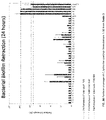
- Leachate toxicity was assessed by introducing the bacterium into overnight extracts (artificial sea water with nutrients) of each coating and evaluating growth after 24 hours via a crystal violet colorimetric assay. Growth in coating leachates was reported as an absorbance ratio (600 nm) to a growth control. See FIG. 32 - 35 . A series of negative growth controls (medium+bacteria+triclosan) was also included in the analysis. 3 .
- C. lytica biofilm retention analysis was assessed by a crystal violet colorimetric assay. A 5% suspension of C. lytica in ASW+nutrients ( ⁇ 10 7 cells ⁇ ml ⁇ 1 ) was prepared and 1 ml was added to each well of the coating plate.
- the peak force of removal for each barnacle was recorded, along with using Sigma Scan Pro 5.0 image analysis software used to quantify the base plate area of each dislodged barnacle.
- the adhesion strength (MPa) of each barnacle was calculated by taking the ratio of the force for removal to basal plate area and the average adhesion strength for each coating was reported as the total number of barnacles removed with a measurable force.
- Adult barnacles were provided by Duke University Marine Library, Beaufort, N.C., USA. The results from the adhesion assay are shown in FIG. 54 .
- mussels were obtained from Duke University Marine Laboratory in Beaufort, N.C., USA. These mussels then had a 4-cm-long acetal plastic rod attached via 3M® acrylic adhesive perpendicular to the ventral edge. The modified mussels were then immobilized onto each experimental coating surface followed by placing custom PVC sheets against the plastic rods to keep the mussels in contact with the surface. These coatings were then placed in ASW circulating tanks and fed DT's Premium Reef Blend Phytoplankton daily. After three days, the coatings were removed and the total number of mussels with byssus threads attached to each experimental coating was recorded.
- the plastic rod from each mussel was attached to an individual load cell of 5 N that was part of a custom-built force gauge where the mussels were then pulled off at a rate of 1 mm/s.
- the force required for detachment of the byssus thread was averaged and the pull-off value for each coating was recorded. Any non-attached mussels were recorded as well.
- the results for the mussel adhesion assay are shown in FIG. 55 .
Landscapes
- Chemical & Material Sciences (AREA)
- Organic Chemistry (AREA)
- Chemical Kinetics & Catalysis (AREA)
- Health & Medical Sciences (AREA)
- Medicinal Chemistry (AREA)
- Polymers & Plastics (AREA)
- Life Sciences & Earth Sciences (AREA)
- Engineering & Computer Science (AREA)
- Materials Engineering (AREA)
- Wood Science & Technology (AREA)
- Paints Or Removers (AREA)
Abstract
Description
| TABLE 1 |
| Summary of Synthesized Additives |
| M.W. | |||
| Siloxanes | (g/mol) | Functionality | Allyl PEG |
| HMS-991 | 1400-1800 | 100 mol % Si— |
4 different |
| HMS-992 | 1800-2100 | 100 mol % Si—H | M.W.: 250, |
| HMS-993 | 2100-2400 | 100 mol % Si— |
350, 750, |
| HMS-301 | 1900-2000 | 25-35 mol % Si—H | and 1100 |
| HMS-501 | 900-1200 | 45-55 mol % Si—H | |
| D′4 | 240.51 | Cyclosiloxane, Si—H | |
| functionality = 4 | |||
| TABLE 2 |
| Formulation compositions where each additive described in Table 1 |
| is formulated at 1, 5, and 10 wt. % of total formulation weight. |
| Formulation | Siloxane | PEG Molecular | Wt. % | |
| # | Sample ID | Backbone | Weight g/mol | Additive |
| 1 | 991-g-250-1% | HMS-991 | 250 | 1 |
| 2 | 991-g-250-5% | HMS-991 | 250 | 5 |
| 3 | 991-g-250-10% | HMS-991 | 250 | 10 |
| 4 | 992-g-250-1% | HMS-992 | 250 | 1 |
| 5 | 992-g-250-5% | HMS-992 | 250 | 5 |
| 6 | 992-g-250-10% | HMS-992 | 250 | 10 |
| 7 | 993-g-250-1% | HMS-993 | 250 | 1 |
| 8 | 993-g-250-5% | HMS-993 | 250 | 5 |
| 9 | 993-g-250-10% | HMS-993 | 250 | 10 |
| 10 | 301-g-250-1% | HMS-301 | 250 | 1 |
| 11 | 301-g-250-5% | HMS-301 | 250 | 5 |
| 12 | 301-g-250-10% | HMS-301 | 250 | 10 |
| 13 | 501-g-250-1% | HMS-501 | 250 | 1 |
| 14 | 501-g-250-5% | HMS-501 | 250 | 5 |
| 15 | 501-g-250-10% | HMS-501 | 250 | 10 |
| 16 | D′4-g-250-1% | D′4 | 250 | 1 |
| 17 | D′4-g-250-5% | D′4 | 250 | 5 |
| 18 | D′4-g-250-10% | D′4 | 250 | 10 |
| 19 | 991-g-350-1% | HMS-991 | 350 | 1 |
| 20 | 991-g-350-5% | HMS-991 | 350 | 5 |
| 21 | 991-g-350-10% | HMS-991 | 350 | 10 |
| 22 | 992-g-350-1% | HMS-992 | 350 | 1 |
| 23 | 992-g-350-5% | HMS-992 | 350 | 5 |
| 24 | 992-g-350-10% | HMS-992 | 350 | 10 |
| 25 | 993-g-350-1% | HMS-993 | 350 | 1 |
| 26 | 993-g-350-5% | HMS-993 | 350 | 5 |
| 27 | 993-g-350-10% | HMS-993 | 350 | 10 |
| 28 | 301-g-350-1% | HMS-301 | 350 | 1 |
| 29 | 301-g-350-5% | HMS-301 | 350 | 5 |
| 30 | 301-g-350-10% | HMS-301 | 350 | 10 |
| 31 | 501-g-350-1% | HMS-501 | 350 | 1 |
| 32 | 501-g-350-5% | HMS-501 | 350 | 5 |
| 33 | 501-g-350-10% | HMS-501 | 350 | 10 |
| 34 | D′4-g-350-1% | D′4 | 350 | 1 |
| 35 | D′4-g-350-5% | D′4 | 350 | 5 |
| 36 | D′4-g-350-10% | D′4 | 350 | 10 |
| 37 | 991-g-750-1% | HMS-991 | 750 | 1 |
| 38 | 991-g-750-5% | HMS-991 | 750 | 5 |
| 39 | 991-g-750-10% | HMS-991 | 750 | 10 |
| 40 | 992-g-750-1% | HMS-992 | 750 | 1 |
| 41 | 992-g-750-5% | HMS-992 | 750 | 5 |
| 42 | 992-g-750-10% | HMS-992 | 750 | 10 |
| 43 | 993-g-750-1% | HMS-993 | 750 | 1 |
| 44 | 993-g-750-5% | HMS-993 | 750 | 5 |
| 45 | 993-g-750-10% | HMS-993 | 750 | 10 |
| 46 | 301-g-750-1% | HMS-301 | 750 | 1 |
| 47 | 301-g-750-5% | HMS-301 | 750 | 5 |
| 48 | 301-g-750-10% | HMS-301 | 750 | 10 |
| 49 | 501-g-750-1% | HMS-501 | 750 | 1 |
| 50 | 501-g-750-5% | HMS-501 | 750 | 5 |
| 51 | 501-g-750-10% | HMS-501 | 750 | 10 |
| 52 | D′4-g-750-1% | D′4 | 750 | 1 |
| 53 | D′4-g-750-5% | D′4 | 750 | 5 |
| 54 | D′4-g-750-10% | D′4 | 750 | 10 |
| 55 | 991-g-1100-1% | HMS-991 | 1100 | 1 |
| 56 | 991-g-1100-5% | HMS-991 | 1100 | 5 |
| 57 | 991-g-1100-10% | HMS-991 | 1100 | 10 |
| 58 | 992-g-1100-1% | HMS-992 | 1100 | 1 |
| 59 | 992-g-1100-5% | HMS-992 | 1100 | 5 |
| 60 | 992-g-1100-10% | HMS-992 | 1100 | 10 |
| 61 | 993-g-1100-1% | HMS-993 | 1100 | 1 |
| 62 | 993-g-1100-5% | HMS-993 | 1100 | 5 |
| 63 | 993-g-1100-10% | HMS-993 | 1100 | 10 |
| 64 | 301-g-1100-1% | HMS-301 | 1100 | 1 |
| 65 | 301-g-1100-5% | HMS-301 | 1100 | 5 |
| 66 | 301-g-1100-10% | HMS-301 | 1100 | 10 |
| 67 | 501-g-1100-1% | HMS-501 | 1100 | 1 |
| 68 | 501-g-1100-5% | HMS-501 | 1100 | 5 |
| 69 | 501-g-1100-10% | HMS-501 | 1100 | 10 |
| 70 | D′4-g-1100-1% | D′4 | 1100 | 1 |
| 71 | D′4-g-1100-5% | D′4 | 1100 | 5 |
| 72 | D′4-g-1100-10% | D′4 | 1100 | 10 |
| TABLE 3 |
| Siloxane-polyurethane coatings containing |
| SMAA's tested for marine biofouling. |
| Formulation | Siloxane | PEG Molecular | Wt. % | |
| # | Sample ID | Backbone | Weight g/mol | Additive |
| 1 | 991-g-250-1% | HMS-991 | 250 | 1 |
| 2 | 991-g-250-5% | HMS-991 | 250 | 5 |
| 3 | 991-g-250-10% | HMS-991 | 250 | 10 |
| 4 | 992-g-250-1% | HMS-992 | 250 | 1 |
| 5 | 992-g-250-5% | HMS-992 | 250 | 5 |
| 6 | 992-g-250-10% | HMS-992 | 250 | 10 |
| 7 | 993-g-250-1% | HMS-993 | 250 | 1 |
| 8 | 993-g-250-5% | HMS-993 | 250 | 5 |
| 9 | 993-g-250-10% | HMS-993 | 250 | 10 |
| 10 | 301-g-250-1% | HMS-301 | 250 | 1 |
| 11 | 301-g-250-5% | HMS-301 | 250 | 5 |
| 12 | 301-g-250-10% | HMS-301 | 250 | 10 |
| 13 | 501-g-250-1% | HMS-501 | 250 | 1 |
| 14 | 501-g-250-5% | HMS-501 | 250 | 5 |
| 15 | 501-g-250-10% | HMS-501 | 250 | 10 |
| 16 | D′4-g-250-1% | D′4 | 250 | 1 |
| 17 | D′4-g-250-5% | D′4 | 250 | 5 |
| 18 | D′4-g-250-10% | D′4 | 250 | 10 |
| 19 | 991-g-350-1% | HMS-991 | 350 | 1 |
| 20 | 991-g-350-5% | HMS-991 | 350 | 5 |
| 21 | 991-g-350-10% | HMS-991 | 350 | 10 |
| 22 | 992-g-350-1% | HMS-992 | 350 | 1 |
| 23 | 992-g-350-5% | HMS-992 | 350 | 5 |
| 24 | 992-g-350-10% | HMS-992 | 350 | 10 |
| 25 | 993-g-350-1% | HMS-993 | 350 | 1 |
| 26 | 993-g-350-5% | HMS-993 | 350 | 5 |
| 27 | 993-g-350-10% | HMS-993 | 350 | 10 |
| 28 | 301-g-350-1% | HMS-301 | 350 | 1 |
| 29 | 301-g-350-5% | HMS-301 | 350 | 5 |
| 30 | 301-g-350-10% | HMS-301 | 350 | 10 |
| 31 | 501-g-350-1% | HMS-501 | 350 | 1 |
| 32 | 501-g-350-5% | HMS-501 | 350 | 5 |
| 33 | 501-g-350-10% | HMS-501 | 350 | 10 |
| 34 | D′4-g-350-1% | D′4 | 350 | 1 |
| 35 | D′4-g-350-5% | D′4 | 350 | 5 |
| 36 | D′4-g-350-10% | D′4 | 350 | 10 |
| 37 | 991-g-750-1% | HMS-991 | 750 | 1 |
| 38 | 991-g-750-5% | HMS-991 | 750 | 5 |
| 39 | 991-g-750-10% | HMS-991 | 750 | 10 |
| 40 | 992-g-750-1% | HMS-992 | 750 | 1 |
| 41 | 992-g-750-5% | HMS-992 | 750 | 5 |
| 42 | 992-g-750-10% | HMS-992 | 750 | 10 |
| 43 | 993-g-750-1% | HMS-993 | 750 | 1 |
| 44 | 993-g-750-5% | HMS-993 | 750 | 5 |
| 45 | 993-g-750-10% | HMS-993 | 750 | 10 |
| 46 | 301-g-750-1% | HMS-301 | 750 | 1 |
| 47 | 301-g-750-5% | HMS-301 | 750 | 5 |
| 48 | 301-g-750-10% | HMS-301 | 750 | 10 |
| 49 | 501-g-750-1% | HMS-501 | 750 | 1 |
| 50 | 501-g-750-5% | HMS-501 | 750 | 5 |
| 51 | 501-g-750-10% | HMS-501 | 750 | 10 |
| 52 | D′4-g-750-1% | D′4 | 750 | 1 |
| 53 | D′4-g-750-5% | D′4 | 750 | 5 |
| 54 | D′4-g-750-10% | D′4 | 750 | 10 |
| 55 | 992-g-1100-1% | HMS-992 | 1100 | 1 |
| 56 | 993-g-1100-1% | HMS-993 | 1100 | 1 |
| 57 | 993-g-1100-5% | HMS-993 | 1100 | 5 |
| 58 | 993-g-1100-10% | HMS-993 | 1100 | 10 |
| 59 | 301-g-1100-1% | HMS-301 | 1100 | 1 |
| 60 | 301-g-1100-5% | HMS-301 | 1100 | 5 |
| 61 | 501-g-1100-1% | HMS-501 | 1100 | 1 |
| 62 | 501-g-1100-5% | HMS-501 | 1100 | 5 |
| 63 | 501-g-1100-10% | HMS-501 | 1100 | 10 |
| 64 | D′4-g-1100-1% | D′4 | 1100 | 1 |
| 65 | D′4-g-1100-5% | D′4 | 1100 | 5 |
3. Initial cell attachment of algae was assessed before water jet adhesion analysis. Algae were diluted to and OD of 0.03 at 660 nm in artificial sea water (ASW) supplemented with nutrients. 1 ml was added to each well of the plate and allowed to incubate statically for 2 hours to facilitate cell attachment. Algal cell attachment was quantified by fluorescence measurement of DMSO extracts of chlorophyll. Cell attachment was reported as fluorescence intensity (relative fluorescence units). See
4. Water jet adhesion was carried out after 2 hrs of initial cell attachment. See
3. C. lytica biofilm retention analysis was assessed by a crystal violet colorimetric assay. A 5% suspension of C. lytica in ASW+nutrients (˜107 cells·ml−1) was prepared and 1 ml was added to each well of the coating plate. Plates were incubated statically at 28° C. for 24 hours to facilitate bacterial attachment and colonization. Plates were rinsed three times with DI water and stained with crystal violet. Images were taken after staining, and then the crystal violet was extracted in 33% acetic acid (AA) and the resulting eluates were measured for absorbance at 600 nm. See
4. Water jet adhesion was carried out after 24 hrs of bacterial biofilm growth. See
| TABLE 4 |
| Experimental formulations selected for further macrofouling assays |
| Formulation # | ID | Mol % Si— | MW PEG | |
| 3 | JB_991_250_10% | 100 | 250 |
| 15 | JB_501_250_10% | 45-55 | 250 |
| 33 | JB_501_350_10% | 45-55 | 350 |
| 36 | JB_D′4_350_10% | f = 4 | 350 |
| 44 | JB_993_750_5% | 100 | 750 |
| 47 | JB_301_750_5% | 25-35 | 750 |
| 50 | JB_501_750_5% | 45-55 | 750 |
| 54 | JB_D′4_750_10% | f = 4 | 750 |
| TABLE 5 |
| Selected experimental coatings from microfouling assays to undergo further U. linza |
| macroalgae biological assays. |
| Plate | ||||||
| No. | Plate | Formulation | MW | |||
| Set A | No. Set B | No. | Identification No. | Backbone | PEG | Mol |
| 1 | 2 | 3 | JB_991_250 10 | Polysiloxane | 250 | 100 | |
| 3 | 4 | 15 | JB_501_250_10 | Polysiloxane | 250 | 45-55 | |
| 5 | 6 | 33 | JB_501_350_10 | Polysiloxane | 350 | 45-55 | |
| 7 | 8 | 36 | JB_D′4_350_10% | Cyclosiloxane | 350 | f = 4 | |
| 9 | 10 | 44 | JB_993_750_5 | Polysiloxane | 750 | 100 | |
| 11 | 12 | 47 | JB_301_750_5 | Polysiloxane | 750 | 25-35 | |
| 13 | 14 | 50 | JB_501_750_5 | Polysiloxane | 750 | 45-55 | |
| 15 | 16 | 54 | JB_D′4_750_10% | Cyclosiloxane | 750 | f = 4 | |
| 17 | 18 | Control | JB_A4_20 | Polysiloxane | — | — | |
- ANDRADE, J. D. et al. Surface characterization of poly (hydroxyethyl methacrylate) and related polymers. I. Contact angle methods in water. 1: Wiley Online Library, 1979. p. 313-336.
- BODKHE, R. B. et al. The Effect of Formulation Variables on Fouling-Release Performance of Stratified Siloxane-Polyurethane Coatings. Journal of Coatings Technology Research, v. 9, n. 3, p. 235, 2012.
- CALLOW, J. A.; CALLOW, M. E. Trends in the development of environmentally friendly fouling-resistant marine coatings. Nature Communications, v. 2, p. 244, 03/22/online 2011. Available at: <http://dx.doi.org/10.1038/ncomms1251>.
- CALLOW, M. E.; CALLOW, J. A. Marine Biofouling: A Sticky Problem. Biologist, v. 49, n. 1, p. 10, 2002.
- CALLOW, M. E. et al. Biofouling Methods. 2014. 291.
- CASSE, F. et al. Laboratory Screening of Coating Libraries for Algal Adhesion. Biofouling, v. 23, n. 4, p. 267, 2007.
- CASSE, F. et al. Combinatorial materials research applied to the development of new surface coatings V. Application of a spinning water-jet for the semi-high throughput assessment of the attachment strength of marine fouling algae. Biofouling, v. 23, n. 2, p. 121-130, 2007. ISSN 0892-7014.
- EKIN, A.; WEBSTER, D. C. Combinatorial and High-Throughput Screening of the Effect of Siloxane Composition on the Surface Properties of Crosslinked Siloxane-Polyurethane Coatings. J. Comb. Chem., v. 9, n. 1, p. 178, 2007.
- HELLIO, C.; YEBRA, D. M. Advances in Marine Antifouling Coatings and Technologies. 2009.
- KRISHNAN, S. et al. Comparison of the Fouling Release Properties of Hydrophobic Fluorinated and Hydrophilic Pegylated Block Copolymer Surfaces: Attachment Strength of the Diatom Navicula and the Green Alga Ulva. Biomacromolecules, v. 7, n. 5, p. 1449, 2006.
- LEJARS, M. N.; MARGAILLAN, A.; BRESSY, C. Fouling release coatings: a nontoxic alternative to biocidal antifouling coatings. Chemical reviews, v. 112, n. 8, p. 4347-4390, 2012. ISSN 0009-2665.
- MAJUMDAR, P.; EKIN, A.; WEBSTER, D. C. Thermoset Siloxane-Urethane Fouling Release Coatings. In: (Ed.): ACS Publications, 2007. ISBN 1947-5918.
- MARTINELLI, E. et al. Amphiphilic modified-styrene copolymer films: Antifouling/fouling release properties against the green alga Ulva linza. Progress in Organic Coatings, v. 90, p. 235-242, 2016/01/01/2016. ISSN 0300-9440. Available at: <http://www.sciencedirect.com/science/article/pi/S030094401530182X>.
- RUFIN, M. A. et al. Antifouling silicones based on surface-modifying additive amphiphiles. Green Materials, v. 5, n. 1, p. 4-13, 2017. ISSN 2049-1220.
- SCHULTZ, M. P. et al. Economic Impact of Biofouling on a Naval Surface Ship. Biofouling, v. 27, n. 1, p. 87, 2011.
- SOMMER, S. et al. A Preliminary Study on the Properties and Fouling-Release Performance of Siloxane-Polyurethane Coatings Prepared from Pdms Macromers. Biofouling, v. 26, n. 8, p. 961, 2010.
- STAFSLIEN, S. J. et al. An Improved Laboratory Reattachment Method for the Rapid Assessment of Adult Barnacle Adhesion Strength to Fouling-Release Marine Coatings. Journal of Coatings Technology and Research, v. 9, n. 6, p. 651, 2012.
- STAFSLIEN, S. J. et al. Combinatorial materials research applied to the development of new surface coatings VI: An automated spinning water jet apparatus for the high-throughput characterization of fouling-release marine coatings. Review of Scientific Instruments, v. 78, n. 7, p. 072204, 2007. ISSN 0034-6748.
- WEBSTER, D. C.; EKIN, A. Functionalized polysiloxane polymers:
Google Patents 2010. - WEBSTER, D. C.; PIEPER, R. J.; EKIN, A. Thermoset siloxane-urethane fouling release coatings: Google Patents 2011.
- YEBRA, D. M.; KIIL, S. K.; DAM-JOHANSEN, K. Antifouling Technology-Past, Present and Future Steps Towards Efficient and Environmentally Friendly Antifouling Coatings. Prog. Org. Coat., v. 50, n. 2, p. 75, 2004.
Claims (22)
Priority Applications (1)
| Application Number | Priority Date | Filing Date | Title |
|---|---|---|---|
| US16/376,144 US11560493B2 (en) | 2018-04-06 | 2019-04-05 | Use of amphiphilic surface modifying additives to improve performance of siloxane-polyurethane fouling-release coatings |
Applications Claiming Priority (2)
| Application Number | Priority Date | Filing Date | Title |
|---|---|---|---|
| US201862653654P | 2018-04-06 | 2018-04-06 | |
| US16/376,144 US11560493B2 (en) | 2018-04-06 | 2019-04-05 | Use of amphiphilic surface modifying additives to improve performance of siloxane-polyurethane fouling-release coatings |
Publications (2)
| Publication Number | Publication Date |
|---|---|
| US20190309187A1 US20190309187A1 (en) | 2019-10-10 |
| US11560493B2 true US11560493B2 (en) | 2023-01-24 |
Family
ID=68096349
Family Applications (1)
| Application Number | Title | Priority Date | Filing Date |
|---|---|---|---|
| US16/376,144 Active US11560493B2 (en) | 2018-04-06 | 2019-04-05 | Use of amphiphilic surface modifying additives to improve performance of siloxane-polyurethane fouling-release coatings |
Country Status (1)
| Country | Link |
|---|---|
| US (1) | US11560493B2 (en) |
Cited By (1)
| Publication number | Priority date | Publication date | Assignee | Title |
|---|---|---|---|---|
| US20230097569A1 (en) * | 2021-09-14 | 2023-03-30 | Nan Ya Plastics Corporation | Antibacterial modified polyurethane resin |
Families Citing this family (3)
| Publication number | Priority date | Publication date | Assignee | Title |
|---|---|---|---|---|
| US11827804B2 (en) | 2021-01-29 | 2023-11-28 | Ndsu Research Foundation | Curable coating compositions containing glycidyl carbamate resins and amphiphilic glycidyl-carbamate-functional prepolymers having fouling-release and anti-icing properties |
| CN113717626A (en) * | 2021-09-06 | 2021-11-30 | 中国科学院海洋研究所 | Marine antifouling paint and preparation method and application thereof |
| IL310179B2 (en) * | 2024-01-16 | 2025-04-01 | Slibio Labs Ltd | Self-lubricating compositions and uses thereof; and polymers within said compositions |
Citations (23)
| Publication number | Priority date | Publication date | Assignee | Title |
|---|---|---|---|---|
| US4546154A (en) * | 1983-05-23 | 1985-10-08 | Ici Americas Inc. | Process for forming mold releasable polyurethane, polyurea and polyureaurethane resins using isocyanate reactive polysiloxanes as internal mold release agents |
| JPS6343973A (en) * | 1986-08-08 | 1988-02-25 | Kansai Paint Co Ltd | Non-toxic antifouling coating composition |
| EP0302467A1 (en) * | 1987-08-06 | 1989-02-08 | Incinatrol Inc. | Incinerator combustion air control |
| US20030069351A1 (en) * | 2000-03-28 | 2003-04-10 | Masato Kishihara | Antifouling coating composition |
| US6685952B1 (en) * | 1999-06-25 | 2004-02-03 | Unilever Home & Personal Care Usa, Division Of Conopco, Inc. | Personal care compositions and methods-high internal phase water-in-volatile silicone oil systems |
| US7297745B2 (en) * | 1999-10-13 | 2007-11-20 | Chugoku Marine Patents, Ltd. | Curable composition, coating composition, paint, antifouling paint, cured product thereof and method of rendering base material antifouling |
| US20080213599A1 (en) * | 2006-06-09 | 2008-09-04 | Ndsu Research Foundation | Thermoset siloxane-urethane fouling release coatings |
| US20100003211A1 (en) * | 2008-07-07 | 2010-01-07 | Shin-Etsu Chemical Co., Ltd. | Antifouling coating composition and underwater structure using the same |
| US7799434B2 (en) | 2005-07-29 | 2010-09-21 | Ndsu Research Foundation | Functionalized polysiloxane polymers |
| US20110182844A1 (en) * | 2007-08-14 | 2011-07-28 | Momentive Performance Materials Gmbh | Novel Polyurea- and/or Polyurethane-Polyorganosiloxane Compounds |
| US20120135244A1 (en) * | 2005-04-05 | 2012-05-31 | Chugoku Marine Paints, Ltd. | Tie coat for organopolysiloxane antifouling coat, composite coats, and ships and underwater structures covered with the composite coats |
| US8299200B2 (en) * | 2007-06-11 | 2012-10-30 | Ndsu Research Foundation | Anchored polysiloxane-modified polyurethane coatings and uses thereof |
| US20130078460A1 (en) * | 2010-06-01 | 2013-03-28 | Basf Se | Paint, adhesive composition, bonding method and laminate |
| US8629210B2 (en) | 2008-10-10 | 2014-01-14 | Ndsu Research Foundation | Zwitterionic/amphiphilic pentablock copolymers and coatings therefrom |
| US20140221549A1 (en) * | 2011-06-17 | 2014-08-07 | Ndsu Research Foundation | Functionalized silicones with polyalkylene oxide side chains |
| US20170247572A1 (en) * | 2014-11-20 | 2017-08-31 | Byk-Chemie, Gmbh | Polysiloxanes as anti-adhesive and dirt-repellant additives, method for the production and use thereof |
| US10647878B2 (en) | 2015-06-01 | 2020-05-12 | Ndsu Research Foundation | Amphiphilic siloxane-polyurethane fouling-release coatings and uses thereof |
| US10759950B2 (en) | 2016-02-29 | 2020-09-01 | Ndsu Research Foundation | Non-isocyanate siloxane-modified glycidyl carbamate resins and coatings containing them |
| US20210292573A1 (en) | 2020-03-12 | 2021-09-23 | Ndsu Research Foundation | Amphiphilic surface-modifying additives to improve fouling-release of marine coatings |
| US20210348021A1 (en) | 2015-06-01 | 2021-11-11 | Ndsu Research Foundation | Amphiphilic siloxane-polyurethane fouling-release coatings and uses thereof |
| US20220025209A1 (en) | 2019-12-12 | 2022-01-27 | Ndsu Research Foundation | Amphiphilic siloxane polyurethane coating compositions and methods of making and using thereof |
| US20220119651A1 (en) | 2020-04-13 | 2022-04-21 | Ndsu Research Foundation | Amphiphilic siloxane-polyurethane fouling-release coatings |
| US20220243091A1 (en) | 2021-01-29 | 2022-08-04 | Ndsu Research Foundation | Curable coating compositions containing glycidyl carbamate resins and amphiphilic glycidyl-carbamate-functional prepolymers having fouling-release and anti-icing properties |
-
2019
- 2019-04-05 US US16/376,144 patent/US11560493B2/en active Active
Patent Citations (27)
| Publication number | Priority date | Publication date | Assignee | Title |
|---|---|---|---|---|
| US4546154A (en) * | 1983-05-23 | 1985-10-08 | Ici Americas Inc. | Process for forming mold releasable polyurethane, polyurea and polyureaurethane resins using isocyanate reactive polysiloxanes as internal mold release agents |
| JPS6343973A (en) * | 1986-08-08 | 1988-02-25 | Kansai Paint Co Ltd | Non-toxic antifouling coating composition |
| EP0302467A1 (en) * | 1987-08-06 | 1989-02-08 | Incinatrol Inc. | Incinerator combustion air control |
| US6685952B1 (en) * | 1999-06-25 | 2004-02-03 | Unilever Home & Personal Care Usa, Division Of Conopco, Inc. | Personal care compositions and methods-high internal phase water-in-volatile silicone oil systems |
| US7297745B2 (en) * | 1999-10-13 | 2007-11-20 | Chugoku Marine Patents, Ltd. | Curable composition, coating composition, paint, antifouling paint, cured product thereof and method of rendering base material antifouling |
| US20030069351A1 (en) * | 2000-03-28 | 2003-04-10 | Masato Kishihara | Antifouling coating composition |
| US20120135244A1 (en) * | 2005-04-05 | 2012-05-31 | Chugoku Marine Paints, Ltd. | Tie coat for organopolysiloxane antifouling coat, composite coats, and ships and underwater structures covered with the composite coats |
| US7799434B2 (en) | 2005-07-29 | 2010-09-21 | Ndsu Research Foundation | Functionalized polysiloxane polymers |
| US7989074B2 (en) * | 2006-06-09 | 2011-08-02 | Ndsu Research Foundation | Thermoset siloxane-urethane fouling release coatings |
| US20080213599A1 (en) * | 2006-06-09 | 2008-09-04 | Ndsu Research Foundation | Thermoset siloxane-urethane fouling release coatings |
| US8299200B2 (en) * | 2007-06-11 | 2012-10-30 | Ndsu Research Foundation | Anchored polysiloxane-modified polyurethane coatings and uses thereof |
| US8604152B2 (en) | 2007-06-11 | 2013-12-10 | Ndsu Research Foundation | Anchored polysiloxane-modified polyurethane coatings and uses thereof |
| US20110182844A1 (en) * | 2007-08-14 | 2011-07-28 | Momentive Performance Materials Gmbh | Novel Polyurea- and/or Polyurethane-Polyorganosiloxane Compounds |
| US20100003211A1 (en) * | 2008-07-07 | 2010-01-07 | Shin-Etsu Chemical Co., Ltd. | Antifouling coating composition and underwater structure using the same |
| US8629210B2 (en) | 2008-10-10 | 2014-01-14 | Ndsu Research Foundation | Zwitterionic/amphiphilic pentablock copolymers and coatings therefrom |
| US20130078460A1 (en) * | 2010-06-01 | 2013-03-28 | Basf Se | Paint, adhesive composition, bonding method and laminate |
| US20140221549A1 (en) * | 2011-06-17 | 2014-08-07 | Ndsu Research Foundation | Functionalized silicones with polyalkylene oxide side chains |
| US9169359B2 (en) | 2011-06-17 | 2015-10-27 | Ndsu Research Foundation | Functionalized silicones with polyalkylene oxide side chains |
| US9938432B2 (en) * | 2014-11-20 | 2018-04-10 | BYK Chemie, GmbH | Polysiloxanes as anti-adhesive and dirt-repellant additives, method for the production and use thereof |
| US20170247572A1 (en) * | 2014-11-20 | 2017-08-31 | Byk-Chemie, Gmbh | Polysiloxanes as anti-adhesive and dirt-repellant additives, method for the production and use thereof |
| US10647878B2 (en) | 2015-06-01 | 2020-05-12 | Ndsu Research Foundation | Amphiphilic siloxane-polyurethane fouling-release coatings and uses thereof |
| US20210348021A1 (en) | 2015-06-01 | 2021-11-11 | Ndsu Research Foundation | Amphiphilic siloxane-polyurethane fouling-release coatings and uses thereof |
| US10759950B2 (en) | 2016-02-29 | 2020-09-01 | Ndsu Research Foundation | Non-isocyanate siloxane-modified glycidyl carbamate resins and coatings containing them |
| US20220025209A1 (en) | 2019-12-12 | 2022-01-27 | Ndsu Research Foundation | Amphiphilic siloxane polyurethane coating compositions and methods of making and using thereof |
| US20210292573A1 (en) | 2020-03-12 | 2021-09-23 | Ndsu Research Foundation | Amphiphilic surface-modifying additives to improve fouling-release of marine coatings |
| US20220119651A1 (en) | 2020-04-13 | 2022-04-21 | Ndsu Research Foundation | Amphiphilic siloxane-polyurethane fouling-release coatings |
| US20220243091A1 (en) | 2021-01-29 | 2022-08-04 | Ndsu Research Foundation | Curable coating compositions containing glycidyl carbamate resins and amphiphilic glycidyl-carbamate-functional prepolymers having fouling-release and anti-icing properties |
Non-Patent Citations (20)
| Title |
|---|
| Andrade, J. D. et al. Surface characterization of poly (hydroxyethyl methacrylate) and related polymers. I. Contact angle methods in water. 1: Wiley Online Library, 1979. p. 313-336. |
| Bodkhe, R. B. et al. The Effect of Formulation Variables on Fouling-Release Performance of Stratified Siloxane-Polyurethane Coatings. Journal of Coatings Technology Research, v. 9, n. 3, p. 235, 2012. |
| Callow, J. A.; Callow, M. E. Trends in the development of environmentally friendly fouling-resistant marine coatings. Nature Communications, v. 2, p. 244, 03/22/online 2011. Available at: < http://dx.doi.org/10.1038/ncomms1251 >. |
| Callow, M. E. et al. Biofouling Methods. 2014. 291. |
| Callow, M. E.; Callow, J. A. Marine Biofouling: A Sticky Problem. Biologist, v. 49, n. 1, p. 10, 2002. |
| Casse, F. et al. Combinatorial materials research applied to the development of new surface coatings V. Application of a spinning water-jet for the semi-high throughput assessment of the attachment strength of marine fouling algae. Biofouling, v. 23, n. 2, p. 121-130, 2007. ISSN 0892-7014. |
| Casse, F. et al. Laboratory Screening of Coating Libraries for Algal Adhesion. Biofouling, v. 23, n. 4, p. 267, 2007. |
| Ekin, A.; Webster, D. C. Combinatorial and High-Throughput Screening of the Effect of Siloxane Composition on the Surface Properties of Crosslinked Siloxane-Polyurethane Coatings. J. Comb. Chem., v. 9, n. 1, p. 178, 2007. |
| English language abstract JP 63-043973 Feb. 1988. * |
| Krishnan, S. et al. Comparison of the Fouling Release Properties of Hydrophobic Fluorinated and Hydrophilic Pegylated Block Copolymer Surfaces: Attachment Strength of the Diatom Navicula and the Green Alga Ulva. Biomacromolecules, v. 7, n. 5, p. 1449, 2006. |
| Lejars, M. N.; Margaillan, A.; Bressy, C. Fouling release coatings: a nontoxic alternative to biocidal antifouling coatings. Chemical reviews, v. 112, n. 8, p. 4347-4390, 2012. ISSN 0009-2665. |
| Majumdar, P.; Ekin, A.; Webster, D. C. Thermoset Siloxane—Urethane Fouling Release Coatings. In: (Ed.): ACS Publications, 2007. ISBN 1947-5918. |
| Martinelli, E. et al. Amphiphilic modified-styrene copolymer films: Antifouling/fouling release properties against the green alga Ulva linza. Progress in Organic Coatings, v. 90, p. 235-242, 2016/Jan. 1, 2016. ISSN 0300-9440. Available at <http://www.sciencedirect.com/science/article/pii/S030094401530182X >. |
| Pieper, R. J. et al. "A Combinatorial Approach to Study the Effect of Acrylic Polyol Composition on the Properties of Crosslinked Siloxane-Polyurethane Fouling-Release Coatings," J Coatings Tech. & Res., 4(4), 453-461 (2007). |
| Rufin, M. A. et al. Antifouling silicones based on surface-modifying additive amphiphiles. Green Materials, v. 5, n. 1, 3. p. 4-13, 2017 ISSN 2049-1220. |
| Schultz, M. P. et al. Economic Impact of Biofouling on a Naval Surface Ship. Biofouling, v. 27, n. 1, p. 87, 2011. |
| Sommer, S. et al. A Preliminary Study on the Properties and Fouling-Release Performance of Siloxane-Polyurethane Coatings Prepared from Pdms Macromers. Biofouling, v. 26, n. 8, p. 961, 2010. |
| Stafslien, S. J. et al. An Improved Laboratory Reattachment Method for the Rapid Assessment of Adult Barnacle Adhesion Strength to Fouling-Release Marine Coatings. Journal of Coatings Technology and Research, v. 9, n. 6, p. 651, 2012. |
| Stafslien, S. J. et al. Combinatorial materials research applied to the development of new surface coatings VI: An automated spinning waterjet apparatus for the high-throughput characterization of fouling-release marine coatings. Review of Scientific Instruments, v. 78, n. 7, p. 072204, 2007. ISSN 0034-6748. |
| Yebra, D. M.; Kiil, S. K.; Dam-Johansen, K. Antifouling Technology—Past, Present and Future Steps Towards Efficient and Environmentally Friendly Antifouling Coatings. Prog. Org. Coat., v. 50, n. 2, p. 75, 2004. |
Cited By (1)
| Publication number | Priority date | Publication date | Assignee | Title |
|---|---|---|---|---|
| US20230097569A1 (en) * | 2021-09-14 | 2023-03-30 | Nan Ya Plastics Corporation | Antibacterial modified polyurethane resin |
Also Published As
| Publication number | Publication date |
|---|---|
| US20190309187A1 (en) | 2019-10-10 |
Similar Documents
| Publication | Publication Date | Title |
|---|---|---|
| US11560493B2 (en) | Use of amphiphilic surface modifying additives to improve performance of siloxane-polyurethane fouling-release coatings | |
| Galhenage et al. | Poly (ethylene) glycol-modified, amphiphilic, siloxane–polyurethane coatings and their performance as fouling-release surfaces | |
| Rahimi et al. | Amphiphilic zwitterionic-PDMS-based surface-modifying additives to tune fouling-release of siloxane-polyurethane marine coatings | |
| US8846821B2 (en) | Metal-crosslinked organopolysiloxane-thio block vinyl copolymer and antifouling coating composition containing the metal-crosslinked copolymer | |
| Bodkhe et al. | Zwitterionic siloxane-polyurethane fouling-release coatings | |
| US9169359B2 (en) | Functionalized silicones with polyalkylene oxide side chains | |
| US7989074B2 (en) | Thermoset siloxane-urethane fouling release coatings | |
| US10647878B2 (en) | Amphiphilic siloxane-polyurethane fouling-release coatings and uses thereof | |
| US12023816B2 (en) | Amphiphilic surface-modifying additives to improve fouling-release of marine coatings | |
| US20220119651A1 (en) | Amphiphilic siloxane-polyurethane fouling-release coatings | |
| JP2008001896A (en) | Organopolysiloxane thioblock vinyl copolymer containing polymerizable group-containing polyether-modified silicone, copolymer-containing composition thereof, antifouling coating composition, coating film thereof and antifouling method | |
| KR20120101516A (en) | Amphiphilic fouling release coatings | |
| Benda et al. | Surface modifying amphiphilic additives and their effect on the fouling-release performance of siloxane-polyurethane coatings | |
| Yesudass et al. | Zwitterionic–polyurethane coatings for non-specific marine bacterial inhibition: A nontoxic approach for marine application | |
| JP4093794B2 (en) | Marine primer antifouling coating composition, marine composite antifouling coating, method for forming the composite antifouling coating, ship coated with the composite antifouling coating and antifouling method for ship skin | |
| US11859099B2 (en) | Amphiphilic siloxane-polyurethane fouling-release coatings and uses thereof | |
| US12466977B2 (en) | Amphiphilic siloxane polyurethane coating compositions and methods of making and using thereof | |
| JP2018080274A (en) | Antifouling coating composition, antifouling coating film and use therefor | |
| Rahimi et al. | Amphiphilic balance: effect of the hydrophilic–hydrophobic ratio on fouling-release surfaces | |
| JP4060701B2 (en) | Underwater construction structure coated body coated with primer antifouling coating film or composite antifouling coating film, and antifouling method for underwater construction structure | |
| KR20220078860A (en) | Modified ether-polydialkyl polysiloxane compound, method for manufacturing the same and antifouling paint composition containing the same | |
| JPH11293183A (en) | Antifouling paint composition, antifouling coating film, underwater structure or ship covered with the antifouling coating film, and method for antifouling underwater structure or ship outer plate | |
| Sommer | Graduate School | |
| Rahimi | Investigation of Novel Approaches for Improved Amphiphilic Fouling-release Coatings | |
| Cheng | Amphiphilic Marine Coatings System of Self-Layered PDMS-Peg Surface with an Epoxy-Polyurethane Matrix and Its Critical Hydrophilic-Lipophilic Ratio (CHLR) |
Legal Events
| Date | Code | Title | Description |
|---|---|---|---|
| FEPP | Fee payment procedure |
Free format text: ENTITY STATUS SET TO UNDISCOUNTED (ORIGINAL EVENT CODE: BIG.); ENTITY STATUS OF PATENT OWNER: MICROENTITY |
|
| FEPP | Fee payment procedure |
Free format text: ENTITY STATUS SET TO SMALL (ORIGINAL EVENT CODE: SMAL); ENTITY STATUS OF PATENT OWNER: MICROENTITY Free format text: ENTITY STATUS SET TO MICRO (ORIGINAL EVENT CODE: MICR); ENTITY STATUS OF PATENT OWNER: MICROENTITY |
|
| AS | Assignment |
Owner name: NDSU RESEARCH FOUNDATION, NORTH DAKOTA Free format text: ASSIGNMENT OF ASSIGNORS INTEREST;ASSIGNOR:NORTH DAKOTA STATE UNIVERSITY;REEL/FRAME:049483/0754 Effective date: 20180413 Owner name: NORTH DAKOTA STATE UNIVERSITY, NORTH DAKOTA Free format text: ASSIGNMENT OF ASSIGNORS INTEREST;ASSIGNORS:WEBSTER, DEAN C.;BENDA, JACKSON;REEL/FRAME:049483/0708 Effective date: 20180412 |
|
| STPP | Information on status: patent application and granting procedure in general |
Free format text: APPLICATION DISPATCHED FROM PREEXAM, NOT YET DOCKETED |
|
| AS | Assignment |
Owner name: NAVY, SECRETARY OF THE UNITED STATES OF AMERICA, VIRGINIA Free format text: ASSIGNMENT OF ASSIGNORS INTEREST;ASSIGNOR:NORTH DAKOTA STATE UNIVERSITY;REEL/FRAME:051262/0163 Effective date: 20190410 Owner name: NAVY, SECRETARY OF THE UNITED STATES OF AMERICA, V Free format text: ASSIGNMENT OF ASSIGNORS INTEREST;ASSIGNOR:NORTH DAKOTA STATE UNIVERSITY;REEL/FRAME:051262/0163 Effective date: 20190410 |
|
| STPP | Information on status: patent application and granting procedure in general |
Free format text: DOCKETED NEW CASE - READY FOR EXAMINATION |
|
| AS | Assignment |
Owner name: NAVY, SECRETARY OF THE UNITED STATES OF AMERICA, VIRGINIA Free format text: CONFIRMATORY LICENSE;ASSIGNOR:NORTH DAKOTA STATE UNIVERSITY;REEL/FRAME:053993/0930 Effective date: 20190410 |
|
| AS | Assignment |
Owner name: NAVY, SECRETARY OF THE UNITED STATES OF AMERICA, VIRGINIA Free format text: CONFIRMATORY LICENSE;ASSIGNOR:NORTH DAKOTA STATE UNIVERSITY;REEL/FRAME:053548/0538 Effective date: 20190410 |
|
| STPP | Information on status: patent application and granting procedure in general |
Free format text: RESPONSE TO NON-FINAL OFFICE ACTION ENTERED AND FORWARDED TO EXAMINER |
|
| STPP | Information on status: patent application and granting procedure in general |
Free format text: FINAL REJECTION MAILED |
|
| STPP | Information on status: patent application and granting procedure in general |
Free format text: DOCKETED NEW CASE - READY FOR EXAMINATION |
|
| STPP | Information on status: patent application and granting procedure in general |
Free format text: NON FINAL ACTION MAILED |
|
| AS | Assignment |
Owner name: NAVY, SECRETARY OF THE UNITED STATES OF AMERICA, VIRGINIA Free format text: CONFIRMATORY LICENSE;ASSIGNOR:NORTH DAKOTA STATE UNIVERSITY;REEL/FRAME:059451/0646 Effective date: 20190410 |
|
| STPP | Information on status: patent application and granting procedure in general |
Free format text: RESPONSE TO NON-FINAL OFFICE ACTION ENTERED AND FORWARDED TO EXAMINER |
|
| STPP | Information on status: patent application and granting procedure in general |
Free format text: NOTICE OF ALLOWANCE MAILED -- APPLICATION RECEIVED IN OFFICE OF PUBLICATIONS |
|
| STPP | Information on status: patent application and granting procedure in general |
Free format text: DOCKETED NEW CASE - READY FOR EXAMINATION |
|
| STPP | Information on status: patent application and granting procedure in general |
Free format text: NOTICE OF ALLOWANCE MAILED -- APPLICATION RECEIVED IN OFFICE OF PUBLICATIONS |
|
| STPP | Information on status: patent application and granting procedure in general |
Free format text: PUBLICATIONS -- ISSUE FEE PAYMENT VERIFIED |
|
| STCF | Information on status: patent grant |
Free format text: PATENTED CASE |