US11547762B2 - Methods for preparing antibody drug conjugates - Google Patents
Methods for preparing antibody drug conjugates Download PDFInfo
- Publication number
- US11547762B2 US11547762B2 US16/354,905 US201916354905A US11547762B2 US 11547762 B2 US11547762 B2 US 11547762B2 US 201916354905 A US201916354905 A US 201916354905A US 11547762 B2 US11547762 B2 US 11547762B2
- Authority
- US
- United States
- Prior art keywords
- antibody
- seq
- amino acid
- hvr
- acid sequence
- Prior art date
- Legal status (The legal status is an assumption and is not a legal conclusion. Google has not performed a legal analysis and makes no representation as to the accuracy of the status listed.)
- Active, expires
Links
Images


Classifications
-
- A—HUMAN NECESSITIES
- A61—MEDICAL OR VETERINARY SCIENCE; HYGIENE
- A61K—PREPARATIONS FOR MEDICAL, DENTAL OR TOILETRY PURPOSES
- A61K47/00—Medicinal preparations characterised by the non-active ingredients used, e.g. carriers or inert additives; Targeting or modifying agents chemically bound to the active ingredient
- A61K47/50—Medicinal preparations characterised by the non-active ingredients used, e.g. carriers or inert additives; Targeting or modifying agents chemically bound to the active ingredient the non-active ingredient being chemically bound to the active ingredient, e.g. polymer-drug conjugates
- A61K47/51—Medicinal preparations characterised by the non-active ingredients used, e.g. carriers or inert additives; Targeting or modifying agents chemically bound to the active ingredient the non-active ingredient being chemically bound to the active ingredient, e.g. polymer-drug conjugates the non-active ingredient being a modifying agent
- A61K47/68—Medicinal preparations characterised by the non-active ingredients used, e.g. carriers or inert additives; Targeting or modifying agents chemically bound to the active ingredient the non-active ingredient being chemically bound to the active ingredient, e.g. polymer-drug conjugates the non-active ingredient being a modifying agent the modifying agent being an antibody, an immunoglobulin or a fragment thereof, e.g. an Fc-fragment
- A61K47/6889—Conjugates wherein the antibody being the modifying agent and wherein the linker, binder or spacer confers particular properties to the conjugates, e.g. peptidic enzyme-labile linkers or acid-labile linkers, providing for an acid-labile immuno conjugate wherein the drug may be released from its antibody conjugated part in an acidic, e.g. tumoural or environment
-
- A—HUMAN NECESSITIES
- A61—MEDICAL OR VETERINARY SCIENCE; HYGIENE
- A61K—PREPARATIONS FOR MEDICAL, DENTAL OR TOILETRY PURPOSES
- A61K47/00—Medicinal preparations characterised by the non-active ingredients used, e.g. carriers or inert additives; Targeting or modifying agents chemically bound to the active ingredient
- A61K47/50—Medicinal preparations characterised by the non-active ingredients used, e.g. carriers or inert additives; Targeting or modifying agents chemically bound to the active ingredient the non-active ingredient being chemically bound to the active ingredient, e.g. polymer-drug conjugates
- A61K47/51—Medicinal preparations characterised by the non-active ingredients used, e.g. carriers or inert additives; Targeting or modifying agents chemically bound to the active ingredient the non-active ingredient being chemically bound to the active ingredient, e.g. polymer-drug conjugates the non-active ingredient being a modifying agent
- A61K47/68—Medicinal preparations characterised by the non-active ingredients used, e.g. carriers or inert additives; Targeting or modifying agents chemically bound to the active ingredient the non-active ingredient being chemically bound to the active ingredient, e.g. polymer-drug conjugates the non-active ingredient being a modifying agent the modifying agent being an antibody, an immunoglobulin or a fragment thereof, e.g. an Fc-fragment
- A61K47/6801—Drug-antibody or immunoglobulin conjugates defined by the pharmacologically or therapeutically active agent
- A61K47/6803—Drugs conjugated to an antibody or immunoglobulin, e.g. cisplatin-antibody conjugates
-
- A—HUMAN NECESSITIES
- A61—MEDICAL OR VETERINARY SCIENCE; HYGIENE
- A61K—PREPARATIONS FOR MEDICAL, DENTAL OR TOILETRY PURPOSES
- A61K47/00—Medicinal preparations characterised by the non-active ingredients used, e.g. carriers or inert additives; Targeting or modifying agents chemically bound to the active ingredient
- A61K47/50—Medicinal preparations characterised by the non-active ingredients used, e.g. carriers or inert additives; Targeting or modifying agents chemically bound to the active ingredient the non-active ingredient being chemically bound to the active ingredient, e.g. polymer-drug conjugates
- A61K47/51—Medicinal preparations characterised by the non-active ingredients used, e.g. carriers or inert additives; Targeting or modifying agents chemically bound to the active ingredient the non-active ingredient being chemically bound to the active ingredient, e.g. polymer-drug conjugates the non-active ingredient being a modifying agent
- A61K47/62—Medicinal preparations characterised by the non-active ingredients used, e.g. carriers or inert additives; Targeting or modifying agents chemically bound to the active ingredient the non-active ingredient being chemically bound to the active ingredient, e.g. polymer-drug conjugates the non-active ingredient being a modifying agent the modifying agent being a protein, peptide or polyamino acid
- A61K47/65—Peptidic linkers, binders or spacers, e.g. peptidic enzyme-labile linkers
-
- A—HUMAN NECESSITIES
- A61—MEDICAL OR VETERINARY SCIENCE; HYGIENE
- A61P—SPECIFIC THERAPEUTIC ACTIVITY OF CHEMICAL COMPOUNDS OR MEDICINAL PREPARATIONS
- A61P29/00—Non-central analgesic, antipyretic or antiinflammatory agents, e.g. antirheumatic agents; Non-steroidal antiinflammatory drugs [NSAID]
-
- A—HUMAN NECESSITIES
- A61—MEDICAL OR VETERINARY SCIENCE; HYGIENE
- A61P—SPECIFIC THERAPEUTIC ACTIVITY OF CHEMICAL COMPOUNDS OR MEDICINAL PREPARATIONS
- A61P31/00—Antiinfectives, i.e. antibiotics, antiseptics, chemotherapeutics
-
- A—HUMAN NECESSITIES
- A61—MEDICAL OR VETERINARY SCIENCE; HYGIENE
- A61P—SPECIFIC THERAPEUTIC ACTIVITY OF CHEMICAL COMPOUNDS OR MEDICINAL PREPARATIONS
- A61P33/00—Antiparasitic agents
- A61P33/02—Antiprotozoals, e.g. for leishmaniasis, trichomoniasis, toxoplasmosis
- A61P33/06—Antimalarials
-
- A—HUMAN NECESSITIES
- A61—MEDICAL OR VETERINARY SCIENCE; HYGIENE
- A61P—SPECIFIC THERAPEUTIC ACTIVITY OF CHEMICAL COMPOUNDS OR MEDICINAL PREPARATIONS
- A61P35/00—Antineoplastic agents
-
- A—HUMAN NECESSITIES
- A61—MEDICAL OR VETERINARY SCIENCE; HYGIENE
- A61P—SPECIFIC THERAPEUTIC ACTIVITY OF CHEMICAL COMPOUNDS OR MEDICINAL PREPARATIONS
- A61P37/00—Drugs for immunological or allergic disorders
- A61P37/02—Immunomodulators
- A61P37/06—Immunosuppressants, e.g. drugs for graft rejection
-
- A—HUMAN NECESSITIES
- A61—MEDICAL OR VETERINARY SCIENCE; HYGIENE
- A61P—SPECIFIC THERAPEUTIC ACTIVITY OF CHEMICAL COMPOUNDS OR MEDICINAL PREPARATIONS
- A61P43/00—Drugs for specific purposes, not provided for in groups A61P1/00-A61P41/00
-
- A—HUMAN NECESSITIES
- A61—MEDICAL OR VETERINARY SCIENCE; HYGIENE
- A61P—SPECIFIC THERAPEUTIC ACTIVITY OF CHEMICAL COMPOUNDS OR MEDICINAL PREPARATIONS
- A61P5/00—Drugs for disorders of the endocrine system
- A61P5/24—Drugs for disorders of the endocrine system of the sex hormones
- A61P5/28—Antiandrogens
-
- A—HUMAN NECESSITIES
- A61—MEDICAL OR VETERINARY SCIENCE; HYGIENE
- A61P—SPECIFIC THERAPEUTIC ACTIVITY OF CHEMICAL COMPOUNDS OR MEDICINAL PREPARATIONS
- A61P5/00—Drugs for disorders of the endocrine system
- A61P5/24—Drugs for disorders of the endocrine system of the sex hormones
- A61P5/32—Antioestrogens
-
- C—CHEMISTRY; METALLURGY
- C07—ORGANIC CHEMISTRY
- C07K—PEPTIDES
- C07K16/00—Immunoglobulins [IG], e.g. monoclonal or polyclonal antibodies
- C07K16/18—Immunoglobulins [IG], e.g. monoclonal or polyclonal antibodies against material from animals or humans
- C07K16/22—Immunoglobulins [IG], e.g. monoclonal or polyclonal antibodies against material from animals or humans against growth factors ; against growth regulators
-
- C—CHEMISTRY; METALLURGY
- C07—ORGANIC CHEMISTRY
- C07K—PEPTIDES
- C07K16/00—Immunoglobulins [IG], e.g. monoclonal or polyclonal antibodies
- C07K16/18—Immunoglobulins [IG], e.g. monoclonal or polyclonal antibodies against material from animals or humans
- C07K16/28—Immunoglobulins [IG], e.g. monoclonal or polyclonal antibodies against material from animals or humans against receptors, cell surface antigens or cell surface determinants
- C07K16/2863—Immunoglobulins [IG], e.g. monoclonal or polyclonal antibodies against material from animals or humans against receptors, cell surface antigens or cell surface determinants against receptors for growth factors, growth regulators
Definitions
- ADCs antibody-drug conjugates
- the antibody is linked to the drug through a linker, wherein the drug contains a heteroaryl group having a secondary nitrogen, and the linker is attached to the drug via the secondary nitrogen.
- the major treatment modalities used by oncologists to treat cancer are surgical resection, radiation therapy, and classical chemotherapeutic drugs.
- surgical resection is not a viable option for many tumors or forms of cancers.
- radiation therapy and chemotherapeutic drugs do not target only diseased cells, and therefore it is often the case that damage occurs to off-target healthy cells.
- Therapeutics that more specifically target tumor cells are being developed by taking advantage of tumor-specific expression of antigens or inappropriate overexpression or activation of specific proteins within tumor cells.
- tumor cells are prone to mutation and can become resistant to drugs that specifically target tumor cells.
- Antibody therapy can provide more targeted therapy with less off-target toxicity.
- ADC antibody-drug conjugate
- cytotoxic or cytostatic agents can provide delivery of the drug moiety to tumors, and intracellular accumulation therein.
- Efforts to design ADCs have focused on the selectivity of monoclonal antibodies (mAbs) as well as drug mechanism of action, drug-linking, and drug/antibody ratio (loading).
- the design of the drug linker is of importance, because it impacts both the efficacy and safety of the ADCs.
- the linker needs to provide sufficient stability during systemic circulation but allow for the rapid and efficient intracellular release of the drug in an active form.
- the subject matter described herein is directed to methods of makings ADCs of Formula I.
- the subject matter described herein is directed to ADCs of Formula I.
- the subject matter described herein is directed to methods of makings compounds of Formula III.
- FIG. 1 is a graph showing the reduction of ER ⁇ levels in MCF7-neo/HER2 cells treated with either CNJ-1 (HER2, circles) or CM-2 (B7H4, squares).
- FIG. 2 is a graph showing the reduction of ER ⁇ levels in MCF7-neo/HER2 cells treated with either CNJ-3 (HER2, circles) or CNJ-4 (B7H4, squares).
- FIG. 3 is a set of graphs showing the stability of CNJ-1 measured over 24 h in buffer and in whole blood from various species.
- DAR antibody-drug conjugate with indicated drug antibody ratio.
- FIG. 4 is a set of graphs showing the stability of CNJ-3 measured over 24 h in buffer and in whole blood from various species.
- DAR antibody-drug conjugate with indicated drug antibody ratio.
- FIG. 5 is a graph showing the reduction of ER ⁇ levels in MCF7-neo/HER2 tumors in mice following single IV treatment with either CNJ-3 (HER2) or CNJ-4 (B7H4).
- Timepoint day 4.
- Error bars standard error of the mean.
- Described herein are methods for conjugating antibodies to biologically active molecules through a linker that is covalently bound to a secondary nitrogen contained in the structure of the biologically active molecule.
- the methods provide compounds of Formulae II and III, which are amenable to conjugation with antibodies.
- the compounds of Formulae II and III contain a carbamate formed by a secondary nitrogen on a biologically active molecule and an oxycarbonyl on a linker moiety.
- the compounds of Formulae II and III can then be conjugated with a wide variety of antibodies, engineered antibodies, antibody fragments, etc., to prepare ADCs of Formula I.
- alkyl refers to a straight-chained or branched hydrocarbon group containing 1 to 12 carbon atoms.
- alkyl groups include methyl, ethyl, n-propyl, isopropyl, tert-butyl, and n-pentyl. Alkyl groups may be optionally substituted with one or more substituents.
- substituted refers to an atom or a group of atoms that replaces a hydrogen atom on a molecule.
- substituted denotes that a specified molecule bears one or more substituents. Examples of substituents include alkyl, cycloalkyl, aryl, heteroaryl, hydroxyl, nitrile, halo, alkoxy, haloalkoxy, arylalkoxy, acyloxy, alkylthio, sulfonate, amino, alkylamino, acylamino, carbamoyl, alkylcarbamoyl, or nitro.
- alkoxy refers to an —O-alkyl radical. Alkoxy groups may be optionally substituted with one or more substituents.
- haloalkoxy refers to an —O-alkyl group that is substituted by one or more halo substituents.
- haloalkoxy groups include trifluoromethoxy and 2,2,2-trifluoroethoxy.
- arylalkoxy refers to an —O-alkyl group that is substituted by an aryl substituent.
- An examples of an arylalkoxy group is O-benzyl.
- alkylamino refers to an amino substituent which is further substituted with one or two alkyl groups.
- alkylthio refers to an —S-alkyl radical. Alkylthio groups may be optionally substituted with one or more substituents.
- acylamino refers to an amino substituent which is further substituted with a —CO—R group.
- acylamino groups include acetamido and 2-phenylacetamido.
- a compound of the formula or “a compound of formula” or “compounds of the formula” or “compounds of formula” refers to any compound selected from the genus of compounds as defined by Formula II, III, V, VI, VII, VIII, IX, X, and XI.
- benzyl refers to a hydrocarbon with the formula of C 6 H 5 CH 2 where the point of attachment to the group in question is at the CH 2 position.
- the benzyl may be substituted on the aromatic ring.
- 0, 1, 2, 3, 4, or 5 atoms of the aryl group may be substituted by a substituent.
- halogen means —F, —Cl, —Br or —I.
- cycloalkyl refers to a hydrocarbon 3-8 membered monocyclic or 7-14 membered bicyclic ring system having at least one saturated ring or having at least one non-aromatic ring, wherein the non-aromatic ring may have some degree of unsaturation.
- Cycloalkyl groups may be optionally substituted with one or more substituents. In one embodiment, 0, 1, 2, 3, or 4 atoms of each ring of a cycloalkyl group may be substituted by a substituent.
- cycloalkyl groups include cyclopropyl, cyclopentyl, cyclohexyl, cyclobutyl, cycloheptyl, cyclopentenyl, cyclopentadienyl, cyclohexenyl, cyclohexadienyl, and the like.
- aryl refers to a hydrocarbon monocyclic, bicyclic or tricyclic aromatic ring system.
- Aryl groups may be optionally substituted with one or more substituents. In one embodiment, 0, 1, 2, 3, 4, 5 or 6 atoms of each ring of an aryl group may be substituted by a substituent. Examples of aryl groups include phenyl, naphthyl, anthracenyl, fluorenyl, indenyl, azulenyl, and the like.
- heteroaryl refers to an aromatic 5-8 membered monocyclic, 8-12 membered bicyclic, or 11-14 membered tricyclic ring system having 1-4 ring heteroatoms if monocyclic, 1-6 heteroatoms if bicyclic, or 1-9 heteroatoms if tricyclic, said heteroatoms selected from O, N, or S, and the remainder ring atoms being carbon (with appropriate hydrogen atoms unless otherwise indicated).
- Heteroaryl groups may have one, two, or more different tautomeric forms. Heteroaryl groups may be optionally substituted with one or more substituents. In one embodiment, 0, 1, 2, 3, or 4 atoms of each ring of a heteroaryl group may be substituted by a substituent.
- Non-limiting examples of such heteroaryl groups include imidazolyl, quinolyl, isoquinolyl, indolyl, indazolyl, pyridazyl, pyridyl, pyrrolyl, pyrazolyl, pyrazinyl, quinoxolyl, pyranyl, pyrimidinyl, furyl, thienyl, triazolyl, thiazolyl, carbolinyl, tetrazolyl, benzofuranyl, thiamorpholinyl sulfone, oxazolyl, benzoxazolyl, benzimidazolyl, benzthiazolyl, oxopiperidinyl, oxopyrrolidinyl, oxoazepinyl, azepinyl, isoxazolyl, isothiazolyl, furazanyl, thiadiazyl, oxathiolyl, acridinyl, phen
- tautomer or “tautomeric form” refers to structural isomers of different energies which are interconvertible via a low energy barrier.
- proton tautomers also known as prototropic tautomers
- Valence tautomers include interconversions by reorganization of some of the bonding electrons.
- heterocycloalkyl refers to a ring or ring system containing at least one heteroatom selected from nitrogen, oxygen, and sulfur, wherein said heteroatom is in a non-aromatic ring.
- the heterocycloalkyl ring is optionally fused to or otherwise attached to other heterocycloalkyl rings and/or non-aromatic hydrocarbon rings and/or phenyl rings.
- heterocycloalkyl groups include, for example, piperazinyl, morpholinyl, 1,2,3,4-tetrahydroisoquinolinyl, piperidinyl, tetrahydrofuranyl, pyrrolidinyl, pyridinoyl, and pyrazolidinyl.
- the heterocycloalkyl groups may be substituted.
- the term “optionally” means that the subsequently described event(s) may or may not occur, and includes both event(s) that occur and event(s) that do not occur.
- chiral refers to molecules which have the property of non-superimposability of the mirror image partner, while the term “achiral” refers to molecules which are superimposable on their mirror image partner.
- chiral atoms use the “R” and “S” nomenclature to designate the absolute configuration at said chiral atom.
- diastereomers refers to stereoisomers with two or more centers of dissymmetry and whose molecules are not minor images of one another.
- enantiomers refers to two stereoisomers of a compound which are non-superimposable mirror images of one another.
- An equimolar mixture of two enantiomers is called a “racemic mixture” or a “racemate.”
- isomers or “stereoisomers” refers to compounds which have identical chemical constitution, but differ with regard to the arrangement of the atoms or groups in space.
- a “leaving group” is the group that is displaced by a nucleophile in a conjugation reaction. Leaving groups can be anions or neutral molecules. Anionic leaving groups can be, for example, halides and sulfonate esters. The group displacing the leaving group can be, for example, a nucleophile.
- a “nucleophile” or “nucleophilic group” is a chemical species having unshared pair electrons (e.g., any Lewis base), and can be neutral or have a negative charge. A nucleophile donates an electron pair to form a chemical bond during a chemical reaction.
- Non-limiting examples of the nucleophilic group include an oxygen-containing group (e.g., hydroxyl, alkoxy, or acyloxy), a sulfur-containing group (e.g., mercapto, alkylthio, or sulfonate), a nitrogen-containing group (e.g., amino, alkylamino, acylamino, nitro, azido, or isocyanato), and halogen.
- an oxygen-containing group e.g., hydroxyl, alkoxy, or acyloxy
- a sulfur-containing group e.g., mercapto, alkylthio, or sulfonate
- a nitrogen-containing group e.g., amino, alkylamino, acylamino, nitro, azido, or isocyanato
- protecting group refers to chemical moieties that are used during the preparation of compounds or antibody-drug conjugates for protection of functionality (e.g., primary or secondary amines, carboxylic acids, or thiols).
- functionality e.g., primary or secondary amines, carboxylic acids, or thiols.
- Suitable amino-protecting groups include acetyl, trifluoroacetyl, t-butoxycarbonyl (Boc), benzyloxycarbonyl (CBz or CBZ) and 9-fluorenylmethyleneoxycarbonyl (Fmoc).
- Suitable thiol protecting groups are, for example, unsubstituted or substituted benzyl groups such as a benzyl group, a p-methoxybenzyl group, a 4-methylbenzyl group, a 3,4-dimethylbenzyl group, a p-hydroxybenzyl group, a p-acetoxybenzyl group and a p-nitrobenzyl group, a diphenylmethyl group, a trityl group, a t-butyl group, an acetyl group, a benzoyl group, and so on, with an acid labile protecting group being more preferable.
- benzyl group such as a benzyl group, a p-methoxybenzyl group, a 4-methylbenzyl group, a 3,4-dimethylbenzyl group, a p-hydroxybenzyl group, a p-acetoxybenzyl group and a p-nitrobenzyl group
- Acid labile thiol protecting groups can be, for example, trityl, fluorenyl, dimethoxybenzyl, methoxybenzyl, 2,4,6-trimethyl benzyl, xanthenyl, ferrocenyl, methoxymethyl, isobutoxymethyl, and diphenylmethyl.
- Suitable carboxylic acid protecting groups can be, for example, branched and unbranched alkyl groups and silyl groups.
- the species of protecting group is not critical provided that it is stable to the conditions of any subsequent reaction(s) on other positions of the compound and can be removed at the appropriate point without adversely affecting the remainder of the molecule.
- the “contacting” refers to reagents in close proximity so that a reaction may occur.
- ambient temperature or “room temperature” refers to a temperature in the range of about 20 to 25° C.
- phrases “pharmaceutically acceptable” indicates that the substance or composition must be compatible chemically and/or toxicologically, with the other ingredients comprising a formulation, and/or the subject being treated therewith.
- phrases “pharmaceutically acceptable salt” as used herein, refers to pharmaceutically acceptable organic or inorganic salts of a compound of the subject matter described herein.
- Exemplary salts include, but are not limited, to sulfate, citrate, acetate, oxalate, chloride, bromide, iodide, nitrate, bisulfate, phosphate, acid phosphate, isonicotinate, lactate, salicylate, acid citrate, tartrate, oleate, tannate, pantothenate, bitartrate, ascorbate, succinate, maleate, gentisinate, fumarate, gluconate, glucuronate, saccharate, formate, benzoate, glutamate, methanesulfonate “mesylate”, ethanesulfonate, benzenesulfonate, p-toluenesulfonate, pamoate (i.e., 1,1′-methylene
- a pharmaceutically acceptable salt may involve the inclusion of another molecule such as an acetate ion, a succinate ion or other counter ion.
- the counter ion may be any organic or inorganic moiety that stabilizes the charge on the parent compound.
- a pharmaceutically acceptable salt may have more than one charged atom in its structure. Instances where multiple charged atoms are part of the pharmaceutically acceptable salt, the salt can have multiple counter ions. Hence, a pharmaceutically acceptable salt can have one or more charged atoms and/or one or more counter ion.
- salts which are not pharmaceutically acceptable, may be useful in the preparation of compounds of described herein and these should be considered to form a further aspect of the subject matter.
- These salts such as oxalic or trifluoroacetate, while not in themselves pharmaceutically acceptable, may be useful in the preparation of salts useful as intermediates in obtaining the compounds described herein and their pharmaceutically acceptable salts.
- the components of the ADC can also be described in terms of a “residue,” “moiety” or “group,” which refers to the component being covalently bound to another component.
- covalently bound or “covalently linked” refers to a chemical bond formed by sharing of one or more pairs of electrons.
- antibody herein is used in the broadest sense and specifically covers monoclonal antibodies, polyclonal antibodies, dimers, multimers, multispecific antibodies (e.g., bispecific antibodies), and antibody fragments, so long as they exhibit the desired biological activity (Miller et al (2003) Jour. of Immunology 170:4854-4861). Antibodies may be murine, human, humanized, chimeric, or derived from other species. An antibody is a protein generated by the immune system that is capable of recognizing and binding to a specific antigen. (Janeway, C., Travers, P., Walport, M., Shlomchik (2001) Immuno Biology, 5th Ed., Garland Publishing, New York).
- a target antigen generally has numerous binding sites, also called epitopes, recognized by CDRs on multiple antibodies. Each antibody that specifically binds to a different epitope has a different structure. Thus, one antigen may have more than one corresponding antibody.
- An antibody includes a full-length immunoglobulin molecule or an immunologically active portion of a full-length immunoglobulin molecule, i.e., a molecule that contains an antigen binding site that immunospecifically binds an antigen of a target of interest or part thereof, such targets including but not limited to, cancer cell or cells that produce autoimmune antibodies associated with an autoimmune disease.
- the immunoglobulin disclosed herein can be of any type (e.g., IgG, IgE, IgM, IgD, and IgA), class (e.g., IgG1, IgG2, IgG3, IgG4, IgA1 and IgA2) or subclass of immunoglobulin molecule.
- the immunoglobulins can be derived from any species. In one aspect, however, the immunoglobulin is of human, murine, or rabbit origin.
- a “reduced antibody” refers to an antibody wherein at least one cysteine has a free thiol group.
- the term “acidic conditions” refers to a milieu having a pH below 7.0, and specifically conditions that are amenable to cleavage of a leaving group or protecting group, e.g., a pH of less than 1.0, less than 2.0, less than 3.0, less than 4.0, less than 5.0, or less than 6.0.
- a “reducing agent” is a reagent that causes another substance to undergo reduction and that is oxidized in the process.
- reducing agents can be used to stabilize free cysteines and to reduce disulfide bonds.
- Non-limiting examples of reducing agents are 2-mercaptoethanol, 2-mercaptoethylamine, dithiothreitol, and tris(2-carboxyethyl)phosphine.
- an “oxidizing agent” is a substance that causes another substance to undergo oxidation and that is reduced in the process.
- a non-limiting example of an oxidizing agents is DHAA.
- a “buffer” is a solution that resists changes in pH when acid or base is added to it. Buffers typically involve a weak acid or bases together with one of its salts.
- Non-limiting examples of buffers are Tris, HEPES, PBS (phosphate buffered saline), triethylammonium acetate buffer, and triethylammonium bicarbonate buffer.
- antibody fragment(s) comprises a portion of a full length antibody, generally the antigen binding or variable region thereof.
- antibody fragments include Fab, Fab′, F(ab′) 2 , and Fv fragments; diabodies; linear antibodies; minibodies (Olafsen et al (2004) Protein Eng. Design & Sel. 17(4):315-323), fragments produced by a Fab expression library, anti-idiotypic (anti-Id) antibodies, CDR (complementary determining region), and epitope-binding fragments of any of the above which immunospecifically bind to cancer cell antigens, viral antigens or microbial antigens, single-chain antibody molecules; and multispecific antibodies formed from antibody fragments.
- the term “monoclonal antibody” as used herein refers to an antibody obtained from a population of substantially homogeneous antibodies, i.e., the individual antibodies comprising the population are identical except for possible naturally occurring mutations that may be present in minor amounts. Monoclonal antibodies are highly specific, being directed against a single antigenic site. Furthermore, in contrast to polyclonal antibody preparations which include different antibodies directed against different determinants (epitopes), each monoclonal antibody is directed against a single determinant on the antigen. In addition to their specificity, the monoclonal antibodies are advantageous in that they may be synthesized uncontaminated by other antibodies.
- the modifier “monoclonal” indicates the character of the antibody as being obtained from a substantially homogeneous population of antibodies, and is not to be construed as requiring production of the antibody by any particular method.
- the monoclonal antibodies to be used in accordance with the subject matter described herein may be made by the hybridoma method first described by Kohler et al (1975) Nature, 256:495, or may be made by recombinant DNA methods (see for example: U.S. Pat. Nos. 4,816,567; 5,807,715).
- the monoclonal antibodies may also be isolated from phage antibody libraries using the techniques described in Clackson et al (1991) Nature, 352:624-628; Marks et al (1991) J. Mol. Biol., 222:581-597; for example.
- the monoclonal antibodies herein specifically include “chimeric” antibodies in which a portion of the heavy and/or light chain is identical with or homologous to corresponding sequences in antibodies derived from a particular species or belonging to a particular antibody class or subclass, while the remainder of the chain(s) is identical with or homologous to corresponding sequences in antibodies derived from another species or belonging to another antibody class or subclass, as well as fragments of such antibodies, so long as they exhibit the desired biological activity (U.S. Pat. No. 4,816,567; and Morrison et al (1984) Proc. Natl. Acad. Sci. USA. 81:6851-6855).
- Chimeric antibodies of interest herein include “primatized” antibodies comprising variable domain antigen-binding sequences derived from a non-human primate (e.g., Old World Monkey, Ape, etc.) and human constant region sequences.
- chimeric antibody refers to an antibody in which a portion of the heavy and/or light chain is derived from a particular source or species, while the remainder of the heavy and/or light chain is derived from a different source or species.
- the “class” of an antibody refers to the type of constant domain or constant region possessed by its heavy chain.
- the heavy chain constant domains that correspond to the different classes of immunoglobulins are called ⁇ , ⁇ , ⁇ , ⁇ , and ⁇ , respectively.
- the term “intact antibody” as used herein is one comprising a VL and VH domains, as well as a light chain constant domain (CL) and heavy chain constant domains, CH1, CH2 and CH3.
- the constant domains may be native sequence constant domains (e.g., human native sequence constant domains) or amino acid sequence variant thereof.
- the intact antibody may have one or more “effector functions” which refer to those biological activities attributable to the Fc constant region (a native sequence Fc region or amino acid sequence variant Fc region) of an antibody. Examples of antibody effector functions include C1q binding; complement dependent cytotoxicity; Fc receptor binding; antibody-dependent cell-mediated cytotoxicity (ADCC); phagocytosis; and down regulation of cell surface receptors such as B cell receptor and BCR.
- Fc region means a C-terminal region of an immunoglobulin heavy chain that contains at least a portion of the constant region.
- a human IgG heavy chain Fc region extends from Cys226, or from Pro230, to the carboxyl-terminus of the heavy chain.
- the C-terminal lysine (Lys447) of the Fc region may or may not be present.
- numbering of amino acid residues in the Fc region or constant region is according to the EU numbering system, also called the EU index, as described in Kabat et al., Sequences of Proteins of Immunological Interest, 5th Ed. Public Health Service, National Institutes of Health, Bethesda, Md., 1991.
- FR refers to variable domain residues other than hypervariable region (HVR) residues.
- the FR of a variable domain generally consists of four FR domains: FR1, FR2, FR3, and FR4. Accordingly, the HVR and FR sequences generally appear in the following sequence in VH (or VL): FR1-H1(L1)-FR2-H2(L2)-FR3-H3(L3)-FR4.
- full length antibody “intact antibody,” and “whole antibody” are used herein interchangeably to refer to an antibody having a structure substantially similar to a native antibody structure or having heavy chains that contain an Fc region as defined herein.
- a “human antibody” is one which possesses an amino acid sequence which corresponds to that of an antibody produced by a human or a human cell or derived from a non-human source that utilizes human antibody repertoires or other human antibody-encoding sequences. This definition of a human antibody specifically excludes a humanized antibody comprising non-human antigen-binding residues.
- a “humanized” antibody refers to a chimeric antibody comprising amino acid residues from non-human HVRs and amino acid residues from human FRs.
- a humanized antibody will comprise substantially all of at least one, and typically two, variable domains, in which all or substantially all of the HVRs (e.g., CDRs) correspond to those of a non-human antibody, and all or substantially all of the FRs correspond to those of a human antibody.
- a humanized antibody optionally may comprise at least a portion of an antibody constant region derived from a human antibody.
- a “humanized form” of an antibody, e.g., a non-human antibody refers to an antibody that has undergone humanization.
- an “isolated antibody” is one which has been separated from a component of its natural environment.
- an antibody is purified to greater than 95% or 99% purity as determined by, for example, electrophoretic (e.g., SDS-PAGE, isoelectric focusing (IEF), capillary electrophoresis) or chromatographic (e.g., ion exchange or reverse phase HPLC).
- electrophoretic e.g., SDS-PAGE, isoelectric focusing (IEF), capillary electrophoresis
- chromatographic e.g., ion exchange or reverse phase HPLC
- isolated nucleic acid refers to a nucleic acid molecule that has been separated from a component of its natural environment.
- An isolated nucleic acid includes a nucleic acid molecule contained in cells that ordinarily contain the nucleic acid molecule, but the nucleic acid molecule is present extrachromosomally or at a chromosomal location that is different from its natural chromosomal location.
- isolated nucleic acid encoding an antibody refers to one or more nucleic acid molecules encoding antibody heavy and light chains (or fragments thereof), including such nucleic acid molecule(s) in a single vector or separate vectors, and such nucleic acid molecule(s) present at one or more locations in a host cell.
- naked antibody refers to an antibody that is not conjugated to a heterologous moiety (e.g., a cytotoxic moiety) or radiolabel.
- the naked antibody may be present in a pharmaceutical formulation.
- “Native antibodies” refer to naturally occurring immunoglobulin molecules with varying structures.
- native IgG antibodies are heterotetrameric glycoproteins of about 150,000 daltons, composed of two identical light chains and two identical heavy chains that are disulfide-bonded. From N- to C-terminus, each heavy chain has a variable region (VH), also called a variable heavy domain or a heavy chain variable domain, followed by three constant domains (CH1, CH2, and CH3). Similarly, from N- to C-terminus, each light chain has a variable region (VL), also called a variable light domain or a light chain variable domain, followed by a constant light (CL) domain.
- VH variable heavy domain
- VL variable region
- the light chain of an antibody may be assigned to one of two types, called kappa ( ⁇ ) and lambda ( ⁇ ), based on the amino acid sequence of its constant domain.
- Percent (%) amino acid sequence identity with respect to a reference polypeptide sequence is defined as the percentage of amino acid residues in a candidate sequence that are identical with the amino acid residues in the reference polypeptide sequence, after aligning the sequences and introducing gaps, if necessary, to achieve the maximum percent sequence identity, and not considering any conservative substitutions as part of the sequence identity. Alignment for purposes of determining percent amino acid sequence identity can be achieved in various ways that are within the skill in the art, for instance, using publicly available computer software such as BLAST, BLAST-2, ALIGN or Megalign (DNASTAR) software. Those skilled in the art can determine appropriate parameters for aligning sequences, including any algorithms needed to achieve maximal alignment over the full length of the sequences being compared.
- % amino acid sequence identity values are generated using the sequence comparison computer program ALIGN-2.
- the ALIGN-2 sequence comparison computer program was authored by Genentech, Inc., and the source code has been filed with user documentation in the U.S. Copyright Office, Washington D.C., 20559, where it is registered under U.S. Copyright Registration No. TXU510087.
- the ALIGN-2 program is publicly available from Genentech, Inc., South San Francisco, Calif., or may be compiled from the source code.
- the ALIGN-2 program should be compiled for use on a UNIX operating system, including digital UNIX V4.0D. All sequence comparison parameters are set by the ALIGN-2 program and do not vary.
- the % amino acid sequence identity of a given amino acid sequence A to, with, or against a given amino acid sequence B is calculated as follows: 100 times the fraction X/Y, where X is the number of amino acid residues scored as identical matches by the sequence alignment program ALIGN-2 in that program's alignment of A and B, and where Y is the total number of amino acid residues in B.
- immunoglobulin antibodies can be assigned to different “classes.” There are five major classes of intact immunoglobulin antibodies: IgA, IgD, IgE, IgG, and IgM, and several of these may be further divided into “subclasses” (isotypes), e.g., IgG1, IgG2, IgG3, IgG4, IgA, and IgA2.
- the heavy-chain constant domains that correspond to the different classes of antibodies are called ⁇ , ⁇ , ⁇ , ⁇ , and ⁇ , respectively.
- the subunit structures and three-dimensional configurations of different classes of immunoglobulins are well known.
- Ig forms include hinge-modifications or hingeless forms (Roux et al (1998) J. Immunol. 161:4083-4090; Lund et al (2000) Eur. J. Biochem. 267:7246-7256; US 2005/0048572; US 2004/0229310).
- human consensus framework refers to a framework which represents the most commonly occurring amino acid residues in a selection of human immunoglobulin VL or VH framework sequences.
- the selection of human immunoglobulin VL or VH sequences is from a subgroup of variable domain sequences.
- the subgroup of sequences is a subgroup as in Kabat et al., Sequences of Proteins of Immunological Interest , Fifth Edition, NIH Publication 91-3242, Bethesda Md. (1991), vols. 1-3.
- the subgroup is subgroup kappa I as in Kabat et al., supra.
- the subgroup is subgroup III as in Kabat et al., supra.
- acceptor human framework for the purposes herein is a framework comprising the amino acid sequence of a light chain variable domain (VL) framework or a heavy chain variable domain (VH) framework derived from a human immunoglobulin framework or a human consensus framework, as defined below.
- An acceptor human framework “derived from” a human immunoglobulin framework or a human consensus framework may comprise the same amino acid sequence thereof, or it may contain amino acid sequence changes. In some embodiments, the number of amino acid changes are 10 or less, 9 or less, 8 or less, 7 or less, 6 or less, 5 or less, 4 or less, 3 or less, or 2 or less.
- the VL acceptor human framework is identical in sequence to the VL human immunoglobulin framework sequence or human consensus framework sequence.
- variable region or “variable domain” as used herein refers to the domain of an antibody heavy or light chain that is involved in binding the antibody to antigen.
- the variable domains of the heavy chain and light chain (VH and VL, respectively) of a native antibody generally have similar structures, with each domain comprising four conserved framework regions (FRs) and three hypervariable regions (HVRs).
- FRs conserved framework regions
- HVRs hypervariable regions
- antibodies that bind a particular antigen may be isolated using a VH or VL domain from an antibody that binds the antigen to screen a library of complementary VL or VH domains, respectively. See, e.g., Portolano et al., J. Immunol. 150:880-887 (1993); Clarkson et al., Nature 352:624-628 (1991).
- hypervariable region refers to each of the regions of an antibody variable domain which are hypervariable in sequence and/or form structurally defined loops (“hypervariable loops”).
- native four-chain antibodies comprise six HVRs; three in the VH (H1, H2, H3), and three in the VL (L1, L2, L3).
- HVRs generally comprise amino acid residues from the hypervariable loops and/or from the “complementarity determining regions” (CDRs), the latter being of highest sequence variability and/or involved in antigen recognition.
- CDRs complementarity determining regions
- Exemplary hypervariable loops occur at amino acid residues 26-32 (L1), 50-52 (L2), 91-96 (L3), 26-32 (H1), 53-55 (H2), and 96-101 (H3).
- Exemplary CDRs CDR-L1, CDR-L2, CDR-L3, CDR-H1, CDR-H2, and CDR-H3 occur at amino acid residues 24-34 of L1, 50-56 of L2, 89-97 of L3, 31-35B of H1, 50-65 of H2, and 95-102 of H3.
- CDRs generally comprise the amino acid residues that form the hypervariable loops.
- CDRs also comprise “specificity determining residues,” or “SDRs,” which are residues that contact antigen. SDRs are contained within regions of the CDRs called abbreviated-CDRs, or a-CDRs.
- Exemplary a-CDRs (a-CDR-L1, a-CDR-L2, a-CDR-L3, a-CDR-H1, a-CDR-H2, and a-CDR-H3) occur at amino acid residues 31-34 of L1, 50-55 of L2, 89-96 of L3, 31-35B of H1, 50-58 of H2, and 95-102 of H3.
- HVR residues and other residues in the variable domain are numbered herein according to Kabat et al., supra.
- “Effector functions” refer to those biological activities attributable to the Fc region of an antibody, which vary with the antibody isotype. Examples of antibody effector functions include: C1q binding and complement dependent cytotoxicity (CDC); Fc receptor binding; antibody-dependent cell-mediated cytotoxicity (ADCC); phagocytosis; down regulation of cell surface receptors (e.g. B cell receptor); and B cell activation.
- epitope refers to the particular site on an antigen molecule to which an antibody binds.
- epitope 4D5 or “4D5 epitope” or “4D5” is the region in the extracellular domain of HER2 to which the antibody 4D5 (ATCC CRL 10463) and trastuzumab bind. This epitope is close to the transmembrane domain of HER2, and within domain IV of HER2.
- a routine cross-blocking assay such as that described in Antibodies, A Laboratory Manual, Cold Spring Harbor Laboratory, Ed Harlow and David Lane (1988), can be performed.
- epitope mapping can be performed to assess whether the antibody binds to the 4D5 epitope of HER2 (e.g. any one or more residues in the region from about residue 550 to about residue 610, inclusive, of HER2 (SEQ ID NO: 39).
- epitope 2C4 or “2C4 epitope” is the region in the extracellular domain of HER2 to which the antibody 2C4 binds.
- a routine cross-blocking assay such as that described in Antibodies, A Laboratory Manual, Cold Spring Harbor Laboratory, Ed Harlow and David Lane (1988) can be performed.
- epitope mapping can be performed to assess whether the antibody binds to the 2C4 epitope of HER2.
- Epitope 2C4 comprises residues from domain II in the extracellular domain of HER2.
- the 2C4 antibody and pertuzumab bind to the extracellular domain of HER2 at the junction of domains I, II and III (Franklin et al. Cancer Cell 5:317-328 (2004)).
- Bind refers to the strength of the sum total of noncovalent interactions between a single binding site of a molecule (e.g., an antibody) and its binding partner (e.g., an antigen). Unless indicated otherwise, as used herein, “binding affinity” refers to intrinsic binding affinity which reflects a 1:1 interaction between members of a binding pair (e.g., antibody and antigen). The affinity of a molecule X for its partner Y can generally be represented by the dissociation constant (Kd). Affinity can be measured by common methods known in the art, including those described herein.
- an antibody as described herein has dissociation constant (Kd) of ⁇ 1 ⁇ M, ⁇ 100 nM, ⁇ 10 nM, ⁇ 5 nm, ⁇ 4 nM, ⁇ 3 nM, ⁇ 2 nM, ⁇ 1 nM, ⁇ 0.1 nM, ⁇ 0.01 nM, or ⁇ 0.001 nM (e.g., 10 ⁇ 8 M or less, e.g. from 10 ⁇ 8 M to 10 ⁇ 13 M, e.g., from 10 ⁇ 9 M to 10 ⁇ 13 M).
- Kd dissociation constant
- an “affinity matured” antibody refers to an antibody with one or more alterations in one or more hypervariable regions (HVRs), compared to a parent antibody which does not possess such alterations, such alterations resulting in an improvement in the affinity of the antibody for antigen.
- HVRs hypervariable regions
- free cysteine amino acid refers to a cysteine amino acid residue which has been engineered into a parent antibody, has a thiol functional group (—SH), and is not paired as an intramolecular or intermolecular disulfide bridge.
- amino acid as used herein means glycine, alanine, valine, leucine, isoleucine, phenylalanine, proline, serine, threonine, tyrosine, cysteine, methionine, lysine, arginine, histidine, tryptophan, aspartic acid, glutamic acid, asparagine, glutamine or citrulline.
- Linker means a chemical moiety comprising a chain of atoms that covalently attaches a drug to an antibody.
- a linker is a divalent radical, specified as L1.
- the term “plurality” refers to two or more conjugates. Each conjugate can be the same or different from any other conjugate in the plurality.
- WT Wild-type
- thio Cysteine engineered mutant antibody
- LC light chain
- HC heavy chain
- MP 6-maleimidocaproyl
- MP maleimidopropanoyl
- val-cit valine-citrulline
- alanine-phenylalanine ala-phe
- PAB p-aminobenzyl
- PABC p-aminobenzyloxycarbonyl
- the Antibody-Drug Conjugate (ADC) molecules described herein comprise an antibody conjugated via a linker (L1) to a drug.
- the general Formula I of an ADC is: Ab-(L1-D) p , I wherein, D is a biologically active molecule, e.g. a drug; L1 is a linker, covalently bound to Ab and to D; and p has a value from about 1 to about 10, or about 1 to about 9, or about 1 to about 8, or about 1 to about 7, or about 1 to about 6, or about 1 to about 5, or about 1 to about 4, or about 1 to about 3. In an embodiment, p is about 2.
- a method for preparing an antibody-drug conjugate of Formula I Ab-(L1-D) p I
- Ab is an antibody
- L1 is a linking moiety
- D is a biologically active molecule comprising a secondary nitrogen containing heteroaryl, wherein L1 is covalently bonded to the secondary nitrogen;
- p is about 1, 2, 3, 4, 5, 6, 7, 8, 9, or 10, and preferably p is about 2;
- R 1 , R 2 , R 3 , and R 4 are independently selected from the group consisting of H, optionally substituted branched or linear C 1 -C 5 alkyl, and optionally substituted C 3 -C 6 cycloalkyl, or R 3 and R 4 taken together with the carbon atom to which they are bound form a C 3 -C 6 cycloalkyl ring,
- T-L1-D has the following formula:
- R 5 is selected from the group consisting of optionally substituted pyridine and nitropyridine.
- R 1 , R 2 , R 3 , and R 4 are independently selected from the group consisting of H and optionally substituted branched or linear C 1 -C 5 alkyl.
- R 1 , R 2 , R 3 , and R 4 is optionally substituted branched or linear C 1 -C 5 alkyl and the others are H.
- R 1 is methyl
- R 2 , R 3 , and R 4 are each H.
- p is 1, 2, 3, 4, 5, 6, 7, 8, 9, or 10, and preferably p is about 2.
- p is 1, 2, 3, 4, 5, 6, 7, 8, 9, or 10, and preferably p is about 2.
- heteroaryl is selected from the group consisting of:
- heteroaryl is selected from the group consisting of:
- p is 1, 2, 3, 4, 5, 6, 7, 8, 9, or 10, and preferably p is about 2.
- the subject mater herein is directed to an antibody-drug conjugate of Formula IV:
- Ab is an antibody
- R 1 , R 2 , R 3 , and R 4 are independently selected from the group consisting of H, optionally substituted branched or linear C 1 -C 5 alkyl, and optionally substituted C 3 -C 6 cycloalkyl, or R 3 and R 4 taken together with the carbon atom to which they are bound form a C 3 -C 6 cycloalkyl ring,
- D is a biologically active molecule comprising a secondary nitrogen containing heteroaryl wherein the carbonyl in Formula IV is covalently bonded to the secondary nitrogen in D;
- p is 1, 2, 3, 4, 5, 6, 7, 8, 9, or 10, and preferably p is about 2.
- the antibody-drug conjugate wherein R 1 , R 2 , R 3 , and R 4 are independently selected from the group consisting of H and optionally substituted branched or linear C 1 -C 5 alkyl.
- the antibody-drug conjugate wherein one of R 1 , R 2 , R 3 , and R 4 is optionally substituted branched or linear C 1 -C 5 alkyl and the others are H.
- the antibody-drug conjugate wherein said optionally substituted branched or linear C 1 -C 5 alkyl is methyl.
- the antibody-drug conjugate wherein R 1 is methyl, and R 2 , R 3 , and R 4 are each H.
- the antibody-drug conjugate wherein said antibody-drug conjugate of Formula IV has the structure:
- p is 1, 2, 3, 4, 5, 6, 7, 8, 9, or 10, and preferably p is about 2.
- the antibody-drug conjugate wherein said antibody-drug conjugate of Formula IV has the structure:
- p is 1, 2, 3, 4, 5, 6, 7, 8, 9, or 10, and preferably p is about 2.
- the antibody-drug conjugate wherein said Ab is a cysteine engineered antibody or variants thereof.
- the antibody-drug conjugate wherein the antibody binds to HER2 or B7-H4.
- the antibody-drug conjugate wherein the carbonyl of Formula IV is covalently bound to the secondary nitrogen of the heteroaryl of D, wherein the heteroaryl is selected from the group consisting of:
- the antibody-drug conjugate wherein the heteroaryl is selected from the group consisting of:
- the antibody-drug conjugate wherein the heteroaryl is selected from the group consisting of:
- the antibody-drug conjugate wherein the heteroaryl is
- the antibody-drug conjugate wherein D is selected from the group consisting of
- the antibody-drug conjugate selected from the group consisting of:
- p is 1, 2, 3, 4, 5, 6, 7, 8, 9, or 10, and preferably p is about 2.
- the antibody is Anti-HER2 7C2 LC K149C and p is 1, 2, 3, 4, 5, 6, 7, 8, 9, or 10, and preferably p is about 2.
- the antibody is Anti-B7H4 1D11v1.9 varD LC K149C and p is 1, 2, 3, 4, 5, 6, 7, 8, 9, or 10, and preferably p is about 2.
- R 1 , R 2 , R 3 , and R 4 are independently selected from the group consisting of H, optionally substituted branched or linear C 1 -C 5 alkyl, and optionally substituted C 3 -C 6 cycloalkyl, or R 3 and R 4 taken together with the carbon atom to which they are bound form a C 3 -C 6 cycloalkyl ring,
- D is a biologically active molecule comprising a secondary nitrogen containing heteroaryl wherein the carbonyl in Formula III is covalently bonded to the secondary nitrogen in D;
- R 5 is selected from the group consisting of optionally substituted pyridine and nitropyridine;
- the protecting group, PG is a protecting group suitable for thiol protection.
- the protecting group, PG is selected from the group consisting of trityl, fluorenyl, dimethoxybenzyl, methoxybenzyl, 2, 4, 6-trimethyl benzyl, xanthenyl, ferrocenyl, methoxymethyl, isobutoxymethyl, and diphenylmethyl.
- LG is a group suitable for displacement by a nucleophile.
- R 1 , R 2 , R 3 , and R 4 are independently selected from the group consisting of H, optionally substituted branched or linear C 1 -C 5 alkyl, and optionally substituted C 3 -C 6 cycloalkyl, or R 3 and R 4 taken together with the carbon atom to which they are bound form a C 3 -C 6 cycloalkyl ring,
- R 5 is selected from the group consisting of optionally substituted pyridine and nitropyridine;
- D is a biologically active molecule comprising a secondary nitrogen containing heteroaryl wherein the carbonyl in Formula III is covalently bonded to the secondary nitrogen in D.
- the compound wherein R 1 is methyl and R 2 , R 3 , and R 4 are each H.
- the compound wherein R 1 is methyl and has R stereochemistry.
- Ab is an antibody
- R 1 , R 2 , R 3 , and R 4 are independently selected from the group consisting of H, optionally substituted branched or linear C 1 -C 5 alkyl, and optionally substituted C 3 -C 6 cycloalkyl, or R 3 and R 4 taken together with the carbon atom to which they are bound form a C 3 -C 6 cycloalkyl ring,
- D is a biologically active molecule comprising a secondary nitrogen containing heteroaryl wherein the carbonyl in Formula IV is covalently bonded to the secondary nitrogen in D;
- p is 1, 2, 3, 4, 5, 6, 7, 8, 9, or 10, and preferably 2;
- R 5 is an optionally substituted pyridine
- PG is a protecting group
- D is a biologically active molecule comprising a secondary nitrogen containing heteroaryl wherein the ester carbonyl in Formula VII forms a carbamate with the secondary nitrogen in D;
- the antibody-drug conjugate prepared by the method as in any embodiment above.
- heteroaryl is selected from the group consisting of indole, indazole, benzimidazole, benzotriazole, pyrrole, pyrrolopyridine, imidazole, triazole, and tetrazoles.
- said D is selected from the group consisting of cytotoxic agents; growth inhibitory agents; antibiotics; toxins; antitumor or anticancer agents; alkylating agents; alkyl sulfonates; aziridines; ethylenimines and methylamelamines; acetogenins; topoisomerase 1 inhibitors; proteosome inhibitors; EGFR inhibitors; tyrosine kinase inhibitors; serine-threonine kinase inhibitors; farnesyltransferase inhibitors; anti-hormonal agents; selective estrogen receptor modulators (SERMs); anti-estrogens; aromatase inhibitors; lutenizing hormone-releaseing hormone agonists; sex steroids; estrogens; and androgens/retinoids; estrogen receptor down-regulators (ERDs); anti-androgens; immunosuppressive agents; non-steroidal anti-inflammatory drugs (NSAIDs); anti-inflammatory agents;
- NSAIDs non-steroidal
- said D is selected from the group consisting of amanitin, vinblastine, vincristine, duocarmycin A, duocarmycin SA, CC-1065, adozelesin, U-76074, U-73073, carzelesin (U-80244), KW-2189, diazonamide A, esomeprazole, aripiprazole, valsartan, lansoprazole, rabeprazole, pometrexed, olmesartan, tadalafil, pantoprazole, candosartan, omeprazole, sunitinib, pemetrexed, alectinib, dacarbazine, semaxanib, dacinostat, dovitinib, mebendazole, and pimobendan.
- Starting materials are generally available from commercial sources such as Aldrich Chemicals (Milwaukee, Wis.) or are readily prepared using methods well known to those skilled in the art (e.g., prepared by methods generally described in Louis F. Fieser and Mary Fieser, Reagents for Organic Synthesis , v. 1-23, Wiley, N.Y. (1967-2006 ed.), or Beilsteins Handbuch der organischen Chemie, 4, Aufl. ed. Springer-Verlag, Berlin, including supplements (also available via the Beilstein online database).
- DTT refers to dithiothreitol.
- DHAA refers to dehydroascorbic acid.
- Synthetic chemistry transformations and protecting group methodologies useful in synthesizing compounds and necessary reagents and intermediates are known in the art and include, for example, those described in R. Larock, Comprehensive Organic Transformations, VCH Publishers (1989); T. W. Greene and P. G. M. Wuts, Protective Groups in Organic Synthesis, 3 rd Ed., John Wiley and Sons (1999); and L. Paquette, ed., Encyclopedia of Reagents for Organic Synthesis, John Wiley and Sons (1995) and subsequent editions thereof.
- Compounds may be prepared singly or as compound libraries comprising at least 2, for example 5 to 1,000 compounds, or 10 to 100 compounds.
- Libraries of compounds of Formula I may be prepared by a combinatorial ‘split and mix’ approach or by multiple parallel syntheses using either solution phase or solid phase chemistry, by procedures known to those skilled in the art.
- a compound library comprising at least 2 compounds, or pharmaceutically acceptable salts thereof.
- the General Procedures and Examples provide exemplary methods for preparing compounds. Those skilled in the art will appreciate that other synthetic routes may be used to synthesize the compounds. Although specific starting materials and reagents are depicted and discussed in the Schemes, General Procedures, and Examples, other starting materials and reagents can be easily substituted to provide a variety of derivatives and/or reaction conditions. In addition, many of the exemplary compounds prepared by the described methods can be further modified in light of this disclosure using conventional chemistry well known to those skilled in the art.
- Scheme 1 depicts a synthetic route for preparing a drug disulfide-linker molecule as described herein.
- Scheme 2 depicts a synthetic route for preparing a drug disulfide-linker molecule as described herein.
- Scheme 3 depicts a synthetic route for preparing a drug-protected peptide linker molecule as described herein.
- Scheme 4 depicts a synthetic route for preparing a drug-peptide linker.
- the ADCs described herein are composed of the following components:
- antibodies e.g., a monoclonal antibodies (mABs) are used to deliver a drug to target cells, e.g., cells that express the specific protein that is targeted by the drug.
- target cells e.g., cells that express the specific protein that is targeted by the drug.
- an antibody provided herein is a human antibody.
- Human antibodies can be produced using various techniques known in the art. Human antibodies are described generally in van Dijk and van de Winkel, Curr. Opin. Pharmacol. 5: 368-74 (2001) and Lonberg, Curr. Opin. Immunol. 20:450-459 (2008).
- Human antibodies may be prepared by administering an immunogen to a transgenic animal that has been modified to produce intact human antibodies or intact antibodies with human variable regions in response to antigenic challenge.
- Such animals typically contain all or a portion of the human immunoglobulin loci, which replace the endogenous immunoglobulin loci, or which are present extrachromosomally or integrated randomly into the animal's chromosomes.
- the endogenous immunoglobulin loci have generally been inactivated.
- Human antibodies can also be made by hybridoma-based methods. Human myeloma and mouse-human heteromyeloma cell lines for the production of human monoclonal antibodies have been described. (See. e.g., Kozbor J. Immunol., 133: 3001 (1984); Brodeur et al., Monoclonal Antibody Production Techniques and Applications , pp. 51-63 (Marcel Dekker, Inc., New York, 1987); and Boerner et al., J. Immunol., 147: 86 (1991)). Human antibodies generated via human B-cell hybridoma technology are also described in Li et al., Proc. Natl. Acad. Sci. USA, 103:3557-3562 (2006).
- Additional methods include those described, for example, in U.S. Pat. No. 7,189,826 (describing production of monoclonal human IgM antibodies from hybridoma cell lines) and Ni, Xiandai Mianyixue, 26(4):265-268 (2006) (describing human-human hybridomas).
- Human hybridoma technology Trioma technology
- Vollmers and Brandlein, Histology and Histopathology, 20(3):927-937 (2005) and Vollmers and Brandlein, Methods and Findings in Experimental and Clinical Pharmacology, 27(3): 185-91 (2005).
- Human antibodies may also be generated by isolating Fv clone variable domain sequences selected from human-derived phage display libraries. Such variable domain sequences may then be combined with a desired human constant domain. Techniques for selecting human antibodies from antibody libraries are described below.
- Antibodies for use in an ADC may be isolated by screening combinatorial libraries for antibodies with the desired activity or activities. For example, a variety of methods are known in the art for generating phage display libraries and screening such libraries for antibodies possessing the desired binding characteristics. Such methods are reviewed, e.g., in Hoogenboom et al. in Methods in Molecular Biology 178:1-37 (O'Brien et al., ed., Human Press, Totowa, N.J., 2001) and further described, e.g., in the McCafferty et al., Nature 348:552-554; Clackson et al., Nature 352: 624-628 (1991); Marks et al., J. Mol. Biol.
- repertoires of VH and VL genes are separately cloned by polymerase chain reaction (PCR) and recombined randomly in phage libraries, which can then be screened for antigen-binding phage as described in Winter et al., Ann. Rev. Immunol., 12: 433-455 (1994).
- Phage typically display antibody fragments, either as single-chain Fv (scFv) fragments or as Fab fragments.
- scFv single-chain Fv
- Libraries from immunized sources provide high-affinity antibodies to the immunogen without the requirement of constructing hybridomas.
- naive repertoire can be cloned (e.g., from human) to provide a single source of antibodies to a wide range of non-self and also self antigens without any immunization as described by Griffiths et al., EMBO J, 12: 725-734 (1993).
- naive libraries can also be made synthetically by cloning unrearranged V-gene segments from stem cells, and using PCR primers containing random sequence to encode the highly variable CDR3 regions and to accomplish rearrangement in vitro, as described by Hoogenboom and Winter, J. Mol. Biol., 227: 381-388 (1992).
- Patent publications describing human antibody phage libraries include, for example: U.S. Pat. No. 5,750,373, and US Patent Publication Nos. 2005/0079574, 2005/0119455, 2005/0266000, 2007/0117126, 2007/0160598, 2007/0237764, 2007/0292936, and 2009/0002360.
- Antibodies or antibody fragments isolated from human antibody libraries are considered human antibodies or human antibody fragments herein.
- an antibody provided herein is a chimeric antibody.
- chimeric antibodies are described, e.g., in U.S. Pat. No. 4,816,567; and Morrison et al., Proc. Natl. Acad. Sci. USA, 81:6851-6855 (1984)).
- a chimeric antibody comprises a non-human variable region (e.g., a variable region derived from a mouse, rat, hamster, rabbit, or non-human primate, such as a monkey) and a human constant region.
- a chimeric antibody is a “class switched” antibody in which the class or subclass has been changed from that of the parent antibody. Chimeric antibodies include antigen-binding fragments thereof.
- a chimeric antibody is a humanized antibody.
- a non-human antibody is humanized to reduce immunogenicity to humans, while retaining the specificity and affinity of the parental non-human antibody.
- a humanized antibody comprises one or more variable domains in which HVRs, e.g., CDRs, (or portions thereof) are derived from a non-human antibody, and FRs (or portions thereof) are derived from human antibody sequences.
- HVRs e.g., CDRs, (or portions thereof) are derived from a non-human antibody
- FRs or portions thereof
- a humanized antibody optionally will also comprise at least a portion of a human constant region.
- some FR residues in a humanized antibody are substituted with corresponding residues from a non-human antibody (e.g., the antibody from which the HVR residues are derived), e.g., to restore or improve antibody specificity or affinity.
- a non-human antibody e.g., the antibody from which the HVR residues are derived
- Human framework regions that may be used for humanization include but are not limited to: framework regions selected using the “best-fit” method (see, e.g., Sims et al. J. Immunol. 151:2296 (1993)); framework regions derived from the consensus sequence of human antibodies of a particular subgroup of light or heavy chain variable regions (see, e.g., Carter et al. Proc. Natl. Acad. Sci. USA, 89:4285 (1992); and Presta et al. J. Immunol., 151:2623 (1993)); human mature (somatically mutated) framework regions or human germline framework regions (see, e.g., Almagro and Fransson, Front. Biosci.
- an antibody provided herein is a multispecific antibody, e.g. a bispecific antibody.
- multispecific antibody refers to an antibody comprising an antigen-binding domain that has polyepitopic specificity (i.e., is capable of binding to two, or more, different epitopes on one molecule or is capable of binding to epitopes on two, or more, different molecules).
- multispecific antibodies are monoclonal antibodies that have binding specificities for at least two different antigen binding sites (such as a bispecific antibody).
- the first antigen-binding domain and the second antigen-binding domain of the multispecific antibody may bind the two epitopes within one and the same molecule (intramolecular binding).
- the first antigen-binding domain and the second antigen-binding domain of the multispecific antibody may bind to two different epitopes on the same protein molecule.
- the two different epitopes that a multispecific antibody binds are epitopes that are not normally bound at the same time by one monospecific antibody, such as e.g. a conventional antibody or one immunoglobulin single variable domain.
- the first antigen-binding domain and the second antigen-binding domain of the multispecific antibody may bind epitopes located within two distinct molecules (intermolecular binding).
- the first antigen-binding domain of the multispecific antibody may bind to one epitope on one protein molecule, whereas the second antigen-binding domain of the multispecific antibody may bind to another epitope on a different protein molecule, thereby cross-linking the two molecules.
- the antigen-binding domain of a multispecific antibody comprises two VH/VL units, wherein a first VH/VL unit binds to a first epitope and a second VH/VL unit binds to a second epitope, wherein each VH/VL unit comprises a heavy chain variable domain (VH) and a light chain variable domain (VL).
- Such multispecific antibodies include, but are not limited to, full length antibodies, antibodies having two or more VL and VH domains, and antibody fragments (such as Fab, Fv, dsFv, scFv, diabodies, bispecific diabodies and triabodies, antibody fragments that have been linked covalently or non-covalently).
- a VH/VL unit that further comprises at least a portion of a heavy chain variable region and/or at least a portion of a light chain variable region may also be referred to as an “arm” or “hemimer” or “half antibody.”
- a hemimer comprises a sufficient portion of a heavy chain variable region to allow intramolecular disulfide bonds to be formed with a second hemimer.
- a hemimer comprises a knob mutation or a hole mutation, for example, to allow heterodimerization with a second hemimer or half antibody that comprises a complementary hole mutation or knob mutation. Knob mutations and hole mutations are discussed further below.
- a multispecific antibody provided herein may be a bispecific antibody.
- the term “bispecific antibody” as used herein refers to a multispecific antibody comprising an antigen-binding domain that is capable of binding to two different epitopes on one molecule or is capable of binding to epitopes on two different molecules.
- a bispecific antibody may also be referred to herein as having “dual specificity” or as being “dual specific.”
- Exemplary bispecific antibodies may bind both protein and any other antigen.
- one of the binding specificities is for protein and the other is for CD3. See, e.g., U.S. Pat. No. 5,821,337.
- bispecific antibodies may bind to two different epitopes of the same protein molecule. In certain embodiments, bispecific antibodies may bind to two different epitopes on two different protein molecules. Bispecific antibodies may also be used to localize cytotoxic agents to cells which express protein. Bispecific antibodies can be prepared as full length antibodies or antibody fragments.
- Techniques for making multispecific antibodies include, but are not limited to, recombinant co-expression of two immunoglobulin heavy chain-light chain pairs having different specificities (see Milstein and Cuello, Nature 305: 537 (1983), WO 93/08829, and Traunecker et al., EMBO J. 10: 3655 (1991)), and “knob-in-hole” engineering (see, e.g., U.S. Pat. No. 5,731,168, WO2009/089004, US2009/0182127, US2011/0287009, Marvin and Zhu, Acta Pharmacol. Sin. (2005) 26(6):649-658, and Kontermann (2005) Acta Pharmacol. Sin., 26:1-9).
- KnH knock-into-hole
- a protuberance for example, KnHs have been introduced in the Fc:Fc binding interfaces, CL:CH1 interfaces or VH/VL interfaces of antibodies (see. e.g., US 2011/0287009, US2007/0178552, WO 96/027011, WO 98/050431, Zhu et al., 1997 , Protein Science 6:781-788, and WO2012/106587).
- KnHs drive the pairing of two different heavy chains together during the manufacture of multispecific antibodies.
- multispecific antibodies having KnH in their Fc regions can further comprise single variable domains linked to each Fc region, or further comprise different heavy chain variable domains that pair with similar or different light chain variable domains.
- KnH technology can be also be used to pair two different receptor extracellular domains together or any other polypeptide sequences that comprises different target recognition sequences (e.g., including affibodies, peptibodies and other Fc fusions).
- knock mutation refers to a mutation that introduces a protuberance (knob) into a polypeptide at an interface in which the polypeptide interacts with another polypeptide.
- the other polypeptide has a hole mutation.
- hole mutation refers to a mutation that introduces a cavity (hole) into a polypeptide at an interface in which the polypeptide interacts with another polypeptide.
- the other polypeptide has a knob mutation.
- a “protuberance” refers to at least one amino acid side chain which projects from the interface of a first polypeptide and is therefore positionable in a compensatory cavity in the adjacent interface (i.e. the interface of a second polypeptide) so as to stabilize the heteromultimer, and thereby favor heteromultimer formation over homomultimer formation, for example.
- the protuberance may exist in the original interface or may be introduced synthetically (e.g., by altering nucleic acid encoding the interface). In some embodiments, nucleic acid encoding the interface of the first polypeptide is altered to encode the protuberance.
- nucleic acid encoding at least one “original” amino acid residue in the interface of the first polypeptide is replaced with nucleic acid encoding at least one “import” amino acid residue which has a larger side chain volume than the original amino acid residue. It will be appreciated that there can be more than one original and corresponding import residue.
- the side chain volumes of the various amino residues are shown, for example, in Table 1 of US2011/0287009. A mutation to introduce a “protuberance” may be referred to as a “knob mutation.”
- import residues for the formation of a protuberance are naturally occurring amino acid residues selected from arginine (R), phenylalanine (F), tyrosine (Y) and tryptophan (W).
- an import residue is tryptophan or tyrosine.
- the original residue for the formation of the protuberance has a small side chain volume, such as alanine, asparagine, aspartic acid, glycine, serine, threonine or valine.
- a “cavity” refers to at least one amino acid side chain which is recessed from the interface of a second polypeptide and therefore accommodates a corresponding protuberance on the adjacent interface of a first polypeptide.
- the cavity may exist in the original interface or may be introduced synthetically (e.g. by altering nucleic acid encoding the interface).
- nucleic acid encoding the interface of the second polypeptide is altered to encode the cavity.
- the nucleic acid encoding at least one “original” amino acid residue in the interface of the second polypeptide is replaced with DNA encoding at least one “import” amino acid residue which has a smaller side chain volume than the original amino acid residue. It will be appreciated that there can be more than one original and corresponding import residue.
- import residues for the formation of a cavity are naturally occurring amino acid residues selected from alanine (A), serine (S), threonine (T) and valine (V).
- an import residue is serine, alanine or threonine.
- the original residue for the formation of the cavity has a large side chain volume, such as tyrosine, arginine, phenylalanine or tryptophan.
- a mutation to introduce a “cavity” may be referred to as a “hole mutation.”
- the protuberance is “positionable” in the cavity which means that the spatial location of the protuberance and cavity on the interface of a first polypeptide and second polypeptide respectively and the sizes of the protuberance and cavity are such that the protuberance can be located in the cavity without significantly perturbing the normal association of the first and second polypeptides at the interface.
- protuberances such as Tyr, Phe and Trp do not typically extend perpendicularly from the axis of the interface and have preferred conformations
- the alignment of a protuberance with a corresponding cavity may, in some instances, rely on modeling the protuberance/cavity pair based upon a three-dimensional structure such as that obtained by X-ray crystallography or nuclear magnetic resonance (NMR). This can be achieved using widely accepted techniques in the art.
- a knob mutation in an IgG1 constant region is T366W (EU numbering).
- a hole mutation in an IgG1 constant region comprises one or more mutations selected from T366S, L368A and Y407V (EU numbering).
- a hole mutation in an IgG1 constant region comprises T366S, L368A and Y407V (EU numbering).
- a knob mutation in an IgG4 constant region is T366W (EU numbering).
- a hole mutation in an IgG4 constant region comprises one or more mutations selected from T366S, L368A, and Y407V (EU numbering).
- a hole mutation in an IgG4 constant region comprises T366S, L368A, and Y407V (EU numbering).
- Multispecific antibodies may also be made by engineering electrostatic steering effects for making antibody Fc-heterodimeric molecules (WO 2009/089004A1); cross-linking two or more antibodies or fragments (see, e.g., U.S. Pat. No. 4,676,980, and Brennan et al., Science, 229: 81 (1985)); using leucine zippers to produce bi-specific antibodies (see, e.g., Kostelny et al., J. Immunol., 148(5):1547-1553 (1992)); using “diabody” technology for making bispecific antibody fragments (see, e.g., Hollinger et al., Proc. Natl. Acad. Sci.
- Engineered antibodies with three or more functional antigen binding sites including “Octopus antibodies” or “dual-variable domain immunoglobulins” (DVDs) are also included herein (see, e.g., US 2006/0025576A1, and Wu et al. Nature Biotechnology (2007)).
- the antibody or fragment herein also includes a “Dual Acting FAb” or “DAF” comprising an antigen binding site that binds to a target protein as well as another, different antigen (see, US 2008/0069820, for example).
- an antibody provided herein is an antibody fragment.
- Antibody fragments include, but are not limited to, Fab, Fab′, Fab′-SH, F(ab′) 2 , Fv, and scFv fragments, and other fragments described below.
- Fab fragment antigen
- Fab′ fragment antigen binding domain
- Fab′-SH fragment antigen binding domain antigen binding domain antigen binding domain antigen binding domain antigen binding domain antigen binding domains
- Fv fragment antigen binding domain antigen binding
- scFv fragments see, e.g., Pluckthin, in The Pharmacology of Monoclonal Antibodies , vol. 113, Rosenburg and Moore eds., (Springer-Verlag, New York), pp. 269-315 (1994); see also WO 93/16185; and U.S. Pat. Nos.
- Diabodies are antibody fragments with two antigen-binding sites that may be bivalent or bispecific. See, for example, EP 404,097; WO 1993/01161; Hudson et al., Nat. Med. 9:129-134 (2003); and Hollinger et al., Proc. Natl. Acad. Sci. USA 90: 6444-6448 (1993). Triabodies and tetrabodies are also described in Hudson et al., Nat. Med. 9:129-134 (2003).
- Single-domain antibodies are antibody fragments comprising all or a portion of the heavy chain variable domain or all or a portion of the light chain variable domain of an antibody.
- a single-domain antibody is a human single-domain antibody (Domantis, Inc., Waltham, Mass.; see, e.g., U.S. Pat. No. 6,248,516 B1).
- Antibody fragments can be made by various techniques, including but not limited to proteolytic digestion of an intact antibody as well as production by recombinant host cells (e.g. E. coli or phage), as described herein.
- recombinant host cells e.g. E. coli or phage
- amino acid sequence variants of the antibodies provided herein are contemplated. For example, it may be desirable to improve the binding affinity and/or other biological properties of the antibody.
- Amino acid sequence variants of an antibody may be prepared by introducing appropriate modifications into the nucleotide sequence encoding the antibody, or by peptide synthesis. Such modifications include, for example, deletions from, and/or insertions into and/or substitutions of residues within the amino acid sequences of the antibody. Any combination of deletion, insertion, and substitution can be made to arrive at the final construct, provided that the final construct possesses the desired characteristics, e.g., antigen-binding.
- antibody variants having one or more amino acid substitutions are provided.
- Sites of interest for substitutional mutagenesis include the HVRs and FRs.
- Conservative substitutions are shown in Table 1 under the heading of “preferred substitutions.” More substantial changes are provided in Table 1 under the heading of “exemplary substitutions,” and as further described below in reference to amino acid side chain classes.
- Amino acid substitutions may be introduced into an antibody of interest and the products screened for a desired activity, e.g., retained/improved antigen binding, decreased immunogenicity, or improved ADCC or CDC.
- Amino acids may be grouped according to common side-chain properties:
- Non-conservative substitutions will entail exchanging a member of one of these classes for another class.
- substitutional variant involves substituting one or more hypervariable region residues of a parent antibody (e.g. a humanized or human antibody).
- a parent antibody e.g. a humanized or human antibody
- the resulting variant(s) selected for further study will have modifications (e.g., improvements) in certain biological properties (e.g., increased affinity, reduced immunogenicity) relative to the parent antibody and/or will have substantially retained certain biological properties of the parent antibody.
- An exemplary substitutional variant is an affinity matured antibody, which may be conveniently generated, e.g., using phage display-based affinity maturation techniques such as those described herein. Briefly, one or more HVR residues are mutated and the variant antibodies displayed on phage and screened for a particular biological activity (e.g. binding affinity).
- Alterations may be made in HVRs, e.g., to improve antibody affinity. Such alterations may be made in HVR “hotspots,” i.e., residues encoded by codons that undergo mutation at high frequency during the somatic maturation process (see, e.g., Chowdhury, Methods Mol. Biol. 207:179-196 (2008)), and/or SDRs (a-CDRs), with the resulting variant VH or VL being tested for binding affinity.
- HVR “hotspots” i.e., residues encoded by codons that undergo mutation at high frequency during the somatic maturation process (see, e.g., Chowdhury, Methods Mol. Biol. 207:179-196 (2008)), and/or SDRs (a-CDRs), with the resulting variant VH or VL being tested for binding affinity.
- Affinity maturation by constructing and reselecting from secondary libraries has been described, e.g., in Hoogenboom
- affinity maturation diversity is introduced into the variable genes chosen for maturation by any of a variety of methods (e.g., error-prone PCR, chain shuffling, or oligonucleotide-directed mutagenesis).
- a secondary library is then created. The library is then screened to identify any antibody variants with the desired affinity.
- Another method to introduce diversity involves HVR-directed approaches, in which several HVR residues (e.g., 4-6 residues at a time) are randomized. HVR residues involved in antigen binding may be specifically identified, e.g., using alanine scanning mutagenesis or modeling. CDR-H3 and CDR-L3 in particular are often targeted.
- substitutions, insertions, or deletions may occur within one or more HVRs so long as such alterations do not substantially reduce the ability of the antibody to bind antigen.
- conservative alterations e.g., conservative substitutions as provided herein
- Such alterations may be outside of HVR “hotspots” or SDRs.
- each HVR either is unaltered, or contains no more than one, two or three amino acid substitutions.
- a useful method for identification of residues or regions of an antibody that may be targeted for mutagenesis is called “alanine scanning mutagenesis” as described by Cunningham and Wells (1989) Science, 244:1081-1085.
- a residue or group of target residues e.g., charged residues such as arg, asp, his, lys, and glu
- a neutral or negatively charged amino acid e.g., alanine or polyalanine
- Further substitutions may be introduced at the amino acid locations demonstrating functional sensitivity to the initial substitutions.
- a crystal structure of an antigen-antibody complex is used to identify contact points between the antibody and antigen. Such contact residues and neighboring residues may be targeted or eliminated as candidates for substitution.
- Variants may be screened to determine whether they contain the desired properties.
- Amino acid sequence insertions include amino- and/or carboxyl-terminal fusions ranging in length from one residue to polypeptides containing a hundred or more residues, as well as intrasequence insertions of single or multiple amino acid residues.
- terminal insertions include an antibody with an N-terminal methionyl residue.
- Other insertional variants of the antibody molecule include the fusion to the N- or C-terminus of the antibody to an enzyme (e.g. for ADEPT) or a polypeptide which increases the serum half-life of the antibody.
- cysteine engineered antibodies e.g., “THIOMABTM antibody”
- one or more residues of an antibody are substituted with cysteine residues.
- the substituted residues occur at accessible sites of the antibody.
- reactive thiol groups are thereby positioned at accessible sites of the antibody and may be used to conjugate the antibody to other moieties, such as drugs or a Linker L1-drug intermediates, to create an ADC, as described further herein.
- any one or more of the following residues may be substituted with cysteine: V205 (Kabat numbering) of the light chain; A140 (EU numbering) of the heavy chain; L174 (EU numbering) of the heavy chain; Y373 (EU numbering) of the heavy chain; K149 (Kabat numbering) of the light chain; A118 (EU numbering) of the heavy chain; and S400 (EU numbering) of the heavy chain Fc region.
- the antibodies described herein comprise the HC-A140C (EU numbering) cysteine substitution.
- the antibodies described herein comprise the LC-K149C (Kabat numbering) cysteine substitution.
- the antibodies described herein comprise the HC-A118C (EU numbering) cysteine substitution.
- Cysteine engineered antibodies may be generated as described, e.g., in U.S. Pat. No. 7,521,541.
- the antibody comprises one of the following heavy chain cysteine substitutions:
- the antibody comprises one of the following light chain cysteine substitutions:
- a nonlimiting exemplary hu7C2.v2.2.LA light chain (LC) K149C THIOMABTM antibody has the heavy chain and light chain amino acid sequences of SEQ ID NOs: 26 and 30, respectively.
- a nonlimiting exemplary hu7C2.v2.2.LA heavy chain (HC) A118C THIOMABTM antibody has the heavy chain and light chain amino acid sequences of SEQ ID NOs: 31 and 25, respectively.
- ADCs include cysteine engineered antibodies where one or more amino acids of a wild-type or parent antibody are replaced with a cysteine amino acid. Any form of antibody may be so engineered, i.e. mutated.
- a parent Fab antibody fragment may be engineered to form a cysteine engineered Fab, referred to herein as “ThioFab.”
- a parent monoclonal antibody may be engineered to form a “ThioMab.” It should be noted that a single site mutation yields a single engineered cysteine residue in a ThioFab, while a single site mutation yields two engineered cysteine residues in a ThioMab, due to the dimeric nature of the IgG antibody.
- thiol reactivity value is a relative, numerical term in the range of 0 to 1.0 and can be measured for any cysteine engineered antibody.
- Thiol reactivity values of cysteine engineered antibodies for use in an ADC are in the ranges of 0.6 to 1.0; 0.7 to 1.0; or 0.8 to 1.0.
- DNA encoding an amino acid sequence variant of the starting polypeptide is prepared by a variety of methods known in the art. These methods include, but are not limited to, preparation by site-directed (or oligonucleotide-mediated) mutagenesis, PCR mutagenesis, and cassette mutagenesis of an earlier prepared DNA encoding the polypeptide. Variants of recombinant antibodies may be constructed also by restriction fragment manipulation or by overlap extension PCR with synthetic oligonucleotides. Mutagenic primers encode the cysteine codon replacement(s). Standard mutagenesis techniques can be employed to generate DNA encoding such mutant cysteine engineered antibodies.
- Cysteine amino acids may be engineered at reactive sites in an antibody and which do not form intrachain or intermolecular disulfide linkages (Junutula, et al., 2008b Nature Biotech., 26(8):925-932; Dornan et al (2009) Blood 114(13):2721-2729; U.S. Pat. Nos. 7,521,541; 7,723,485; WO2009/052249, Shen et al (2012) Nature Biotech., 30(2):184-191; Junutula et al (2008) Jour of Immun. Methods 332:41-52).
- the engineered cysteine thiols may react with linker reagents or the Linker-Drug intermediates described herein, which have thiol-reactive, electrophilic groups such as maleimide or alpha-halo amides to form an ADC with cysteine engineered antibodies (ThioMabs) and the drug residue.
- the location of the drug moiety can thus be designed, controlled, and known.
- Drug/antibody ratio (“PAR”) can be controlled since the engineered cysteine thiol groups typically react with thiol-reactive linker reagents or linker-drug intermediates in high yield.
- Engineering an antibody to introduce a cysteine amino acid by substitution at a single site on the heavy or light chain gives two new cysteines on the symmetrical antibody.
- a PAR of about 2 can be achieved and near homogeneity of the conjugation product.
- cysteine engineered antibodies preferably retain the antigen binding capability of their wild type, parent antibody counterparts.
- cysteine engineered antibodies are capable of binding, preferably specifically, to antigens.
- antigens include, for example, tumor-associated antigens (TAA), cell surface receptor proteins and other cell surface molecules, transmembrane proteins, signaling proteins, cell survival regulatory factors, cell proliferation regulatory factors, molecules associated with (for e.g., known or suspected to contribute functionally to) tissue development or differentiation, lymphokines, cytokines, molecules involved in cell cycle regulation, molecules involved in vasculogenesis and molecules associated with (for e.g., known or suspected to contribute functionally to) angiogenesis.
- TAA tumor-associated antigens
- cell surface receptor proteins and other cell surface molecules include, for example, tumor-associated antigens (TAA), cell surface receptor proteins and other cell surface molecules, transmembrane proteins, signaling proteins, cell survival regulatory factors, cell proliferation regulatory factors, molecules associated with (for e.g., known or suspected to contribute
- the tumor-associated antigen may be a cluster differentiation factor (i.e., a CD protein).
- An antigen to which a cysteine engineered antibody is capable of binding may be a member of a subset of one of the above-mentioned categories, wherein the other subset(s) of said category comprise other molecules/antigens that have a distinct characteristic (with respect to the antigen of interest).
- Cysteine engineered antibodies are prepared for conjugation with linker or linker-drug intermediates by reduction and reoxidation of intrachain disulfide groups.
- an antibody provided herein is altered to increase or decrease the extent to which the antibody is glycosylated.
- Addition or deletion of glycosylation sites to an antibody may be conveniently accomplished by altering the amino acid sequence such that one or more glycosylation sites is created or removed.
- the carbohydrate attached thereto may be altered.
- Native antibodies produced by mammalian cells typically comprise a branched, biantennary oligosaccharide that is generally attached by an N-linkage to Asn297 of the CH2 domain of the Fc region. See, e.g., Wright et al. TIBTECH 15:26-32 (1997).
- the oligosaccharide may include various carbohydrates, e.g., mannose, N-acetyl glucosamine (GlcNAc), galactose, and sialic acid, as well as a fucose attached to a GlcNAc in the “stem” of the biantennary oligosaccharide structure.
- modifications of the oligosaccharide in an antibody may be made in order to create antibody variants with certain improved properties.
- antibody variants having a carbohydrate structure that lacks fucose attached (directly or indirectly) to an Fc region.
- the amount of fucose in such antibody may be from 1% to 80%, from 1% to 65%, from 5% to 65% or from 20% to 40%.
- the amount of fucose is determined by calculating the average amount of fucose within the sugar chain at Asn297, relative to the sum of all glycostructures attached to Asn 297 (e. g. complex, hybrid and high mannose structures) as measured by MALDI-TOF mass spectrometry, as described in WO 2008/077546, for example.
- Asn297 refers to the asparagine residue located at about position 297 in the Fc region (Eu numbering of Fc region residues); however, Asn297 may also be located about ⁇ 3 amino acids upstream or downstream of position 297, i.e., between positions 294 and 300, due to minor sequence variations in antibodies. Such fucosylation variants may have improved ADCC function. See, e.g., US Patent Publication Nos. US 2003/0157108 (Presta, L.); US 2004/0093621 (Kyowa Hakko Kogyo Co., Ltd).
- Examples of publications related to “defucosylated” or “fucose-deficient” antibody variants include: US 2003/0157108; WO 2000/61739; WO 2001/29246; US 2003/0115614; US 2002/0164328; US 2004/0093621; US 2004/0132140; US 2004/0110704; US 2004/0110282; US 2004/0109865; WO 2003/085119; WO 2003/084570; WO 2005/035586; WO 2005/035778; WO2005/053742; WO2002/031140; Okazaki et al. J. Mol. Biol. 336:1239-1249 (2004); Yamane-Ohnuki et al. Biotech. Bioeng.
- Examples of cell lines capable of producing defucosylated antibodies include Lec13 CHO cells deficient in protein fucosylation (Ripka et al. Arch. Biochem. Biophys. 249:533-545 (1986); US Pat Appl No US 2003/0157108 A1, Presta, L; and WO 2004/056312 A1, Adams et al., especially at Example 11), and knockout cell lines, such as alpha-1,6-fucosyltransferase gene, FUT8, knockout CHO cells (see, e.g., Yamane-Ohnuki et al. Biotech. Bioeng. 87: 614 (2004); Kanda, Y. et al., Biotechnol. Bioeng., 94(4):680-688 (2006); and WO2003/085107).
- Antibodies variants are further provided with bisected oligosaccharides, e.g., in which a biantennary oligosaccharide attached to the Fc region of the antibody is bisected by GlcNAc. Such antibody variants may have reduced fucosylation and/or improved ADCC function. Examples of such antibody variants are described, e.g., in WO 2003/011878 (Jean-Mairet et al.); U.S. Pat. No. 6,602,684 (Umana et al.); and US 2005/0123546 (Umana et al.). Antibody variants with at least one galactose residue in the oligosaccharide attached to the Fc region are also provided.
- Such antibody variants may have improved CDC function.
- Such antibody variants are described, e.g., in WO 1997/30087 (Patel et al.); WO 1998/58964 (Raju, S.); and WO 1999/22764 (Raju, S.).
- one or more amino acid modifications may be introduced into the Fc region of an antibody provided herein, thereby generating an Fc region variant.
- the Fc region variant may comprise a human Fc region sequence (e.g., a human IgG1, IgG2, IgG3 or IgG4 Fc region) comprising an amino acid modification (e.g. a substitution) at one or more amino acid positions.
- the subject matter described herein is directed to an antibody variant that possesses some but not all effector functions, which make it a desirable candidate for applications in which the half-life of the antibody in vivo is important yet certain effector functions (such as complement and ADCC) are unnecessary or deleterious.
- In vitro and/or in vivo cytotoxicity assays can be conducted to confirm the reduction/depletion of CDC and/or ADCC activities.
- Fc receptor (FcR) binding assays can be conducted to ensure that the antibody lacks Fc ⁇ R binding (hence likely lacking ADCC activity), but retains FcRn binding ability.
- NK cells express Fc(RIII only, whereas monocytes express Fc(RI, Fc(RII and Fc(RIII.
- FcR expression on hematopoietic cells is summarized in Table 3 on page 464 of Ravetch and Kinet, Annu. Rev. Immunol. 9:457-492 (1991).
- Non-limiting examples of in vitro assays to assess ADCC activity of a molecule of interest is described in U.S. Pat. No. 5,500,362 (see, e.g. Hellstrom, I. et al. Proc. Nat'l Acad. Sci . USA 83:7059-7063 (1986)) and Hellstrom, I et al., Proc.
- non-radioactive assays methods may be employed (see, for example, ACTITM non-radioactive cytotoxicity assay for flow cytometry (CellTechnology, Inc. Mountain View, Calif.; and CytoTox 96® non-radioactive cytotoxicity assay (Promega, Madison, Wis.).
- Useful effector cells for such assays include peripheral blood mononuclear cells (PBMC) and Natural Killer (NK) cells.
- PBMC peripheral blood mononuclear cells
- NK Natural Killer
- ADCC activity of the molecule of interest may be assessed in vivo, e.g., in a animal model such as that disclosed in Clynes et al. Proc. Nat'l Acad. Sci . USA 95:652-656 (1998).
- C1q binding assays may also be carried out to confirm that the antibody is unable to bind C1q and hence lacks CDC activity. See, e.g., C1q and C3c binding ELISA in WO 2006/029879 and WO 2005/100402.
- a CDC assay may be performed (see, for example, Gazzano-Santoro et al., J. Immunol. Methods 202:163 (1996); Cragg, M. S. et al., Blood 101:1045-1052 (2003); and Cragg, M. S. and M. J. Glennie, Blood 103:2738-2743 (2004)).
- FcRn binding and in vivo clearance/half life determinations can also be performed using methods known in the art (see, e.g., Petkova, S. B. et al., Int'l. Immunol. 18(12):1759-1769 (2006)).
- one or more amino acid modifications may be introduced into the Fc portion of the antibody provided herein in order to increase IgG binding to the neonatal Fc receptor.
- the antibody comprises the following three mutations according to EU numbering: M252Y, S254T, and T256E (the “YTE mutation”) (U.S. Pat. No. 8,697,650; see also Dall'Acqua et al., Journal of Biological Chemistry 281(33):23514-23524 (2006).
- the YTE mutation does not affect the ability of the antibody to bind to its cognate antigen.
- the YTE mutation increases the antibody's serum half-life compared to the native (i.e., non-YTE mutant) antibody. In some embodiments, the YTE mutation increases the serum half-life of the antibody by 3-fold compared to the native (i.e., non-YTE mutant) antibody. In some embodiments, the YTE mutation increases the serum half-life of the antibody by 2-fold compared to the native (i.e., non-YTE mutant) antibody. In some embodiments, the YTE mutation increases the serum half-life of the antibody by 4-fold compared to the native (i.e., non-YTE mutant) antibody.
- the YTE mutation increases the serum half-life of the antibody by at least 5-fold compared to the native (i.e., non-YTE mutant) antibody. In some embodiments, the YTE mutation increases the serum half-life of the antibody by at least 10-fold compared to the native (i.e., non-YTE mutant) antibody. See, e.g., U.S. Pat. No. 8,697,650; see also Dall'Acqua et al., Journal of Biological Chemistry 281(33):23514-23524 (2006).
- the YTE mutant provides a means to modulate antibody-dependent cell-mediated cytotoxicity (ADCC) activity of the antibody.
- ADCC antibody-dependent cell-mediated cytotoxicity
- the YTEO mutant provides a means to modulate ADCC activity of a humanized IgG antibody directed against a human antigen. See, e.g., U.S. Pat. No. 8,697,650; see also Dall'Acqua et al., Journal of Biological Chemistry 281(33):23514-23524 (2006).
- the YTE mutant allows the simultaneous modulation of serum half-life, tissue distribution, and antibody activity (e.g., the ADCC activity of an IgG antibody). See, e.g., U.S. Pat. No. 8,697,650; see also Dall'Acqua et al., Journal of Biological Chemistry 281(33):23514-23524 (2006).
- Antibodies with reduced effector function include those with substitution of one or more of Fc region residues 238, 265, 269, 270, 297, 327 and 329 according to EU numbering (U.S. Pat. No. 6,737,056).
- Such Fc mutants include Fc mutants with substitutions at two or more of amino acid positions 265, 269, 270, 297 and 327 according to EU numbering, including the so-called “DANA” Fc mutant with substitution of residues 265 and 297 to alanine according to EU numbering (i.e., D265A and N297A according to EU numbering) (U.S. Pat. No. 7,332,581).
- the Fc mutant comprises the following two amino acid substitutions: D265A and N297A.
- the Fc mutant consists of the following two amino acid substitutions: D265A and N297A.
- the proline at position 329 (EU numbering) (P329) of a wild-type human Fc region is substituted with glycine or arginine or an amino acid residue large enough to destroy the proline sandwich within the Fc/Fc ⁇ receptor interface, that is formed between the P329 of the Fc and tryptophane residues W87 and W110 of FcgRIII (Sondermann et al.: Nature 406, 267-273 (20 Jul. 2000)).
- At least one further amino acid substitution in the Fc variant is S228P, E233P, L234A, L235A, L235E, N297A, N297D, or P331S and still in another embodiment said at least one further amino acid substitution is L234A and L235A of the human IgG1 Fc region or S228P and L235E of the human IgG4 Fc region, all according to EU numbering (U.S. Pat. No. 8,969,526 which is incorporated by reference in its entirety).
- a polypeptide comprises the Fc variant of a wild-type human IgG Fc region wherein the polypeptide has P329 of the human IgG Fc region substituted with glycine and wherein the Fc variant comprises at least two further amino acid substitutions at L234A and L235A of the human IgG1 Fc region or S228P and L235E of the human IgG4 Fc region, and wherein the residues are numbered according to the EU numbering (U.S. Pat. No. 8,969,526 which is incorporated by reference in its entirety).
- the polypeptide comprising the P329G, L234A and L235A (EU numbering) substitutions exhibit a reduced affinity to the human Fc ⁇ RIIIA and Fc ⁇ RIIA, for down-modulation of ADCC to at least 20% of the ADCC induced by the polypeptide comprising the wild-type human IgG Fc region, and/or for down-modulation of ADCP (U.S. Pat. No. 8,969,526 which is incorporated by reference in its entirety).
- polypeptide comprising an Fc variant of a wild-type human Fc polypeptide comprises a triple mutation: an amino acid substitution at position Pro329, a L234A and a L235A mutation according to EU numbering (P329/LALA) (U.S. Pat. No. 8,969,526 which is incorporated by reference in its entirety).
- the polypeptide comprises the following amino acid substitutions: P329G, L234A, and L235A according to EU numbering.
- an antibody variant comprises an Fc region with one or more amino acid substitutions which improve ADCC, e.g., substitutions at positions 298, 333, and/or 334 of the Fc region (EU numbering).
- alterations are made in the Fc region that result in altered (i.e., either improved or diminished) C1q binding and/or Complement Dependent Cytotoxicity (CDC), e.g., as described in U.S. Pat. No. 6,194,551, WO 99/51642, and Idusogie et al. J. Immunol. 164: 4178-4184 (2000).
- CDC Complement Dependent Cytotoxicity
- Antibodies with increased half lives and improved binding to the neonatal Fc receptor (FcRn), which is responsible for the transfer of maternal IgGs to the fetus are described in US2005/0014934A1 (Hinton et al.). Those antibodies comprise an Fc region with one or more substitutions therein which improve binding of the Fc region to FcRn.
- Such Fc variants include those with substitutions at one or more of Fc region residues: 238, 256, 265, 272, 286, 303, 305, 307, 311, 312, 317, 340, 356, 360, 362, 376, 378, 380, 382, 413, 424 or 434, e.g., substitution of Fc region residue 434 (U.S. Pat. No. 7,371,826) according to EU numbering. See also Duncan & Winter, Nature 322:738-40 (1988); U.S. Pat. Nos. 5,648,260; 5,624,821; and WO 94/29351 concerning other examples of Fc region variants.
- an antibody provided herein may be further modified to contain additional nonproteinaceous moieties that are known in the art and readily available.
- the moieties suitable for derivatization of the antibody include but are not limited to water soluble polymers.
- water soluble polymers include, but are not limited to, polyethylene glycol (PEG), copolymers of ethylene glycol/propylene glycol, carboxymethylcellulose, dextran, polyvinyl alcohol, polyvinyl pyrrolidone, poly-1, 3-dioxolane, poly-1,3,6-trioxane, ethylene/maleic anhydride copolymer, polyaminoacids (either homopolymers or random copolymers), and dextran or poly(n-vinyl pyrrolidone)polyethylene glycol, propylene glycol homopolymers, polypropylene oxide/ethylene oxide co-polymers, polyoxyethylated polyols (e.g., glycerol
- Polyethylene glycol propionaldehyde may have advantages in manufacturing due to its stability in water.
- the polymer may be of any molecular weight, and may be branched or unbranched.
- the number of polymers attached to the antibody may vary, and if more than one polymer is attached, they can be the same or different molecules. In general, the number and/or type of polymers used for derivatization can be determined based on considerations including, but not limited to, the particular properties or functions of the antibody to be improved, whether the antibody derivative will be used in a therapy under defined conditions, etc.
- conjugates of an antibody and nonproteinaceous moiety that may be selectively heated by exposure to radiation are provided.
- the nonproteinaceous moiety is a carbon nanotube (Kam et al., Proc. Natl. Acad. Sci. USA 102: 11600-11605 (2005)).
- the radiation may be of any wavelength, and includes, but is not limited to, wavelengths that do not harm ordinary cells, but which heat the nonproteinaceous moiety to a temperature at which cells proximal to the antibody-nonproteinaceous moiety are killed.
- Antibodies including but not limited to cysteine engineered antibodies, which may be useful in the ADCs described herein in the treatment of cancer include, but are not limited to, antibodies against cell surface receptors and tumor-associated antigens (TAA). Certain tumor-associated antigens are known in the art, and can be prepared for use in generating antibodies using methods and information which are well known in the art. In attempts to discover effective cellular targets for cancer diagnosis and therapy, researchers have sought to identify transmembrane or otherwise tumor-associated polypeptides that are specifically expressed on the surface of one or more particular type(s) of cancer cell as compared to on one or more normal non-cancerous cell(s).
- TAA tumor-associated antigens
- tumor-associated polypeptides are more abundantly expressed on the surface of the cancer cells as compared to on the surface of the non-cancerous cells.
- the identification of such tumor-associated cell surface antigen polypeptides has given rise to the ability to more specifically target cancer cells for destruction via antibody-based therapies.
- TAA tumor-associated antigens
- examples of tumor-associated antigens TAA include, but are not limited to, those listed below. For convenience, information relating to these antigens, all of which are known in the art, is listed below and includes names, alternative names, Genbank accession numbers and primary reference(s), following nucleic acid and protein sequence identification conventions of the National Center for Biotechnology Information (NCBI). Nucleic acid and protein sequences corresponding to TAA listed below are available in public databases such as GenBank.
- Tumor-associated antigens targeted by antibodies include all amino acid sequence variants and isoforms possessing at least about 70%, 80%, 85%, 90%, or 95% sequence identity relative to the sequences identified in the cited references, and/or which exhibit substantially the same biological properties or characteristics as a TAA having a sequence found in the cited references.
- a TAA having a variant sequence generally is able to bind specifically to an antibody that binds specifically to the TAA with the corresponding sequence listed.
- Antibodies may be produced using recombinant methods and compositions, e.g., as described in U.S. Pat. No. 4,816,567.
- isolated nucleic acid encoding an antibody described herein is provided.
- Such nucleic acid may encode an amino acid sequence comprising the VL and/or an amino acid sequence comprising the VH of the antibody (e.g., the light and/or heavy chains of the antibody).
- one or more vectors e.g., expression vectors
- a host cell comprising such nucleic acid is provided.
- a host cell comprises (e.g., has been transformed with): (1) a vector comprising a nucleic acid that encodes an amino acid sequence comprising the VL of the antibody and an amino acid sequence comprising the VH of the antibody, or (2) a first vector comprising a nucleic acid that encodes an amino acid sequence comprising the VL of the antibody and a second vector comprising a nucleic acid that encodes an amino acid sequence comprising the VH of the antibody.
- the host cell is eukaryotic, e.g. a Chinese Hamster Ovary (CHO) cell or lymphoid cell (e.g., Y0, NS0, Sp20 cell).
- a method of making an antibody comprises culturing a host cell comprising a nucleic acid encoding the antibody, as provided above, under conditions suitable for expression of the antibody, and optionally recovering the antibody from the host cell (or host cell culture medium).
- nucleic acid encoding an antibody is isolated and inserted into one or more vectors for further cloning and/or expression in a host cell.
- nucleic acid may be readily isolated and sequenced using conventional procedures (e.g., by using oligonucleotide probes that are capable of binding specifically to genes encoding the heavy and light chains of the antibody).
- Suitable host cells for cloning or expression of antibody-encoding vectors include prokaryotic or eukaryotic cells described herein.
- antibodies may be produced in bacteria, in particular when glycosylation and Fc effector function are not needed.
- For expression of antibody fragments and polypeptides in bacteria see, e.g., U.S. Pat. Nos. 5,648,237, 5,789,199, and 5,840,523. (See also Charlton, Methods in Molecular Biology , Vol. 248 (B. K. C. Lo, ed., Humana Press, Totowa, N.J., 2003), pp. 245-254, describing expression of antibody fragments in E. coli .)
- the antibody may be isolated from the bacterial cell paste in a soluble fraction and can be further purified.
- eukaryotic microbes such as filamentous fungi or yeast are suitable cloning or expression hosts for antibody-encoding vectors, including fungi and yeast strains whose glycosylation pathways have been “humanized,” resulting in the production of an antibody with a partially or fully human glycosylation pattern. See Gerngross, Nat. Biotech. 22:1409-1414 (2004), and Li et al., Nat. Biotech. 24:210-215 (2006).
- Suitable host cells for the expression of glycosylated antibody are also derived from multicellular organisms (invertebrates and vertebrates). Examples of invertebrate cells include plant and insect cells. Numerous baculoviral strains have been identified which may be used in conjunction with insect cells, particularly for transfection of Spodoptera frugiperda cells.
- Plant cell cultures can also be utilized as hosts. See, e.g., U.S. Pat. Nos. 5,959,177, 6,040,498, 6,420,548, 7,125,978, and 6,417,429 (describing PLANTIBODIESTM technology for producing antibodies in transgenic plants).
- Vertebrate cells may also be used as hosts.
- mammalian cell lines that are adapted to grow in suspension may be useful.
- Other examples of useful mammalian host cell lines are monkey kidney CV1 line transformed by SV40 (COS-7); human embryonic kidney line (293 or 293 cells as described, e.g., in Graham et al., J. Gen Virol. 36:59 (1977); baby hamster kidney cells (BHK); mouse sertoli cells (TM4 cells as described, e.g., in Mather, Biol. Reprod.
- monkey kidney cells (CV1); African green monkey kidney cells (VERO-76); human cervical carcinoma cells (HELA); canine kidney cells (MDCK; buffalo rat liver cells (BRL 3A); human lung cells (W138); human liver cells (Hep G2); mouse mammary tumor (MMT 060562); TRI cells, as described, e.g., in Mather et al., Annals N. Y. Acad. Sci. 383:44-68 (1982); MRC 5 cells; and FS4 cells.
- Other useful mammalian host cell lines include Chinese hamster ovary (CHO) cells, including DHFR ⁇ CHO cells (Urlaub et al., Proc. Natl. Acad. Sci.
- the antibody binds to one or more tumor-associated antigens or cell-surface receptors selected from (1)-(53):
- BMPR1B bone morphogenetic protein receptor-type IB, Genbank accession no. NM_001203
- NP_001194 bone morphogenetic protein receptor, type IB/pid NP_001194.1 Cross-references: MIM:603248; NP_001194.1; AY065994 (2) E16 (LAT1, SLC7A5, Genbank accession no. NM_003486) Biochem. Biophys. Res. Commun.
- NP_036581 six transmembrane epithelial antigen of the prostate Cross-references: MIM:604415; NP_036581.1; NM_012449_1 (4) 0772P (CA125, MUC16, Genbank accession no. AF361486) J. Biol. Chem. 276 (29):27371-27375 (2001)); WO2004045553 (Claim 14); WO200292836 (Claim 6; FIG. 12); WO200283866 (Claim 15; Page 116-121); US2003124140 (Example 16); U.S. Pat. No. 798,959.
- TrpM4 (BR22450, FLJ20041, TRPM4, TRPM4B, transient receptor potential cation channel, subfamily M, member 4, Genbank accession no. NM_017636) Xu, X. Z., et al Proc. Natl. Acad. Sci. U.S.A. 98 (19):10692-10697 (2001), Cell 109 (3):397-407 (2002), J. Biol. Chem.
- NP_003203 or NM_003212 Ciccodicola, A., et al EMBO J. 8 (7):1987-1991 (1989), Am. J. Hum. Genet. 49 (3):555-565 (1991)); US2003224411 (Claim 1); WO2003083041 (Example 1); WO2003034984 (Claim 12); WO200288170 (Claim 2; Page 52-53); WO2003024392 (Claim 2; FIG. 58); WO200216413 (Claim 1; Page 94-95, 105); WO200222808 (Claim 2; FIG. 1); U.S. Pat. No.
- CD79a (CD79A, CD79a, immunoglobulin-associated alpha, a B cell-specific protein that covalently interacts with Ig beta (CD79B) and forms a complex on the surface with Ig M molecules, transduces a signal involved in B-cell differentiation), pI: 4.84, MW: 25028 TM: 2 [P] Gene Chromosome: 19q13.2, Genbank accession No. NP_001774.10) WO2003088808, US20030228319; WO2003062401 (claim 9); US2002150573 (claim 4, pages 13-14); WO9958658 (claim 13, FIG.
- CXCR5 Burkitt's lymphoma receptor 1, a G protein-coupled receptor that is activated by the CXCL13 chemokine, functions in lymphocyte migration and humoral defense, plays a role in HIV-2 infection and perhaps development of AIDS, lymphoma, myeloma, and leukemia); 372 aa, pI: 8.54 MW: 41959 TM: 7 [P] Gene Chromosome: 11q23.3, Genbank accession No. NP_001707.1) WO2004040000; WO2004015426; US2003105292 (Example 2); U.S. Pat. No.
- HLA-DOB Beta subunit of MHC class II molecule (Ia antigen) that binds peptides and presents them to CD4+ T lymphocytes); 273 aa, pI: 6.56 MW: 30820 TM: 1 [P] Gene Chromosome: 6p21.3, Genbank accession No. NP_002111.1) Tonnelle et al (1985) EMBO J. 4(11):2839-2847; Jonsson et al (1989) Immunogenetics 29(6):411-413; Beck et al (1992) J. Mol. Biol. 228:433-441; Strausberg et al (2002) Proc. Natl. Acad.
- P2X5 Purinergic receptor P2X ligand-gated ion channel 5, an ion channel gated by extracellular ATP, may be involved in synaptic transmission and neurogenesis, deficiency may contribute to the pathophysiology of idiopathic detrusor instability
- 422 aa Purinergic receptor P2X ligand-gated ion channel 5, an ion channel gated by extracellular ATP, may be involved in synaptic transmission and neurogenesis, deficiency may contribute to the pathophysiology of idiopathic detrusor instability
- 422 aa) pI: 7.63, MW: 47206 TM: 1
- Gene Chromosome 17p13.3, Genbank accession No. NP_002552.2) Le et al (1997) FEBS Lett. 418(1-2):195-199; WO2004047749; WO2003072035 (claim 10); Touchman et al (2000) Genome Res.
- WO2004042346 (claim 65); WO2003026493 (pages 51-52, 57-58); WO200075655 (pages 105-106); Von Hoegen et al (1990) J. Immunol. 144(12):4870-4877; Strausberg et al (2002) Proc. Natl. Acad.
- LY64 Lymphocyte antigen 64 (RP105), type I membrane protein of the leucine rich repeat (LRR) family, regulates B-cell activation and apoptosis, loss of function is associated with increased disease activity in patients with systemic lupus erythematosis); 661 aa, pI: 6.20, MW: 74147 TM: 1 [P] Gene Chromosome: 5q12, Genbank accession No.
- FcRH1 Fc receptor-like protein 1, a putative receptor for the immunoglobulin Fc domain that contains C2 type Ig-like and ITAM domains, may have a role in B-lymphocyte differentiation
- NP_443170.1) WO2003077836; WO200138490 (claim 6, FIG. 18E-1-18-E-2); Davis et al (2001) Proc. Natl. Acad. Sci USA 98(17):9772-9777; WO2003089624 (claim 8); EP1347046 (claim 1); WO2003089624 (claim 7); (35) FCRH5 (IRTA2, Immunoglobulin superfamily receptor translocation associated 2, a putative immunoreceptor with possible roles in B cell development and lymphomagenesis; deregulation of the gene by translocation occurs in some B cell malignancies); 977 aa, pI: 6.88 MW: 106468 TM: 1 [P] Gene Chromosome: 1q21, Genbank accession No.
- TENB2 tomoregulin, TPEF, HPP1, TR, putative transmembrane proteoglycan, related to the EGF/heregulin family of growth factors and follistatin
- 374 aa NCBI Accession: AAD55776, AAF91397, AAG49451, NCBI RefSeq: NP_057276; NCBI Gene: 23671; OMIM: 605734; SwissProt Q9UIK5; Genbank accession No.
- TMEFF1 transmembrane protein with EGF-like and two follistatin-like domains 1; Tomoregulin-1); H7365; C9orf2; C90ORF2; U19878; X83961; NM_080655; NM_003692; Harms, P. W. (2003) Genes Dev. 17 (21), 2624-2629; Gery, S.
- GDNF-Ra1 GDNF family receptor alpha 1; GFRA1; GDNFR; GDNFRA; RETL1; TRNR1; RET1L; GDNFR-alpha1; GFR-ALPHA-1
- Ly6E lymphocyte antigen 6 complex, locus E, Ly67, RIG-E, SCA-2, TSA-1
- NP_002337.1 NM_002346.2
- de Nooij-van Dalen A. G. et al (2003) Int. J. Cancer 103 (6), 768-774
- Zammit D. J. et al (2002) Mol. Cell. Biol.
- LGR5 leucine-rich repeat-containing G protein-coupled receptor 5; GPR49, GPR67
- NP_003658.1 NM_003667.2
- Salanti G. et al (2009) Am. J. Epidemiol. 170 (5):537-545; Yamamoto, Y. et al (2003) Hepatology 37 (3):528-533; (44) RET (ret proto-oncogene; MEN2A; HSCRI; MEN2B; MTC1; PTC; CDHF12; Hs.
- GPR19 G protein-coupled receptor 19; Mm.4787
- NP_006134.1 G protein-coupled receptor 19; Mm.4787
- NP_006134.1 G protein-coupled receptor 19; Mm.4787
- NP_006134.1 G protein-coupled receptor 19; Mm.4787
- NP_006134.1 NM_006143.2
- GPR54 KISS1 receptor; KISS1R; GPR54; HOT7T175; AXOR12
- NP_115940.2 NM_032551.4
- Navenot, J. M. et al (2009) Mol. Pharmacol. 75 (6):1300-1306; Hata, K.
- TMEM118 ring finger protein, transmembrane 2; RNFT2; FLJ14627
- NP_001103373.1 NM_001109903.1
- GPR172A G protein-coupled receptor 172A; GPCR41; FLJ11856; D15Ertd747e
- NP_078807.1 NM_024531.3
- Ericsson T. A. et al (2003) Proc. Natl. Acad. Sci. U.S.A.
- CD33 a member of the sialic acid binding, immunoglobulin-like lectin family, is a 67-kDa glycosylated transmembrane protein. CD33 is expressed on most myeloid and monocytic leukemia cells in addition to committed myelomonocytic and erythroid progenitor cells. It is not seen on the earliest pluripotent stem cells, mature granulocytes, lymphoid cells, or nonhematopoietic cells (Sabbath et al., (1985) J. Clin. Invest.
- CD33 contains two tyrosine residues on its cytoplasmic tail, each of which is followed by hydrophobic residues similar to the immunoreceptor tyrosine-based inhibitory motif (ITIM) seen in many inhibitory receptors.
- ITIM immunoreceptor tyrosine-based inhibitory motif
- CLL-1 (CLEC12A, MICL, and DCAL2), encodes a member of the C-type lectin/C-type lectin-like domain (CTL/CTLD) superfamily.
- CTL/CTLD C-type lectin/C-type lectin-like domain
- the protein encoded by this gene is a negative regulator of granulocyte and monocyte function.
- Several alternatively spliced transcript variants of this gene have been described, but the full-length nature of some of these variants has not been determined.
- This gene is closely linked to other CTL/CTLD superfamily members in the natural killer gene complex region on chromosome 12p13 (Drickamer K (1999) Curr. Opin. Struct. Biol. 9 (5):585-90; van Rhenen A, et al., (2007) Blood 110 (7):2659-66; Chen C H, et al. (2006) Blood 107 (4):1459-67; Marshall A S, et al. (2006) Eur. J. Immunol.
- CLL-1 has been shown to be a type II transmembrane receptor comprising a single C-type lectin-like domain (which is not predicted to bind either calcium or sugar), a stalk region, a transmembrane domain and a short cytoplasmic tail containing an ITIM motif.
- an ADC comprises an antibody, e.g., an antibody selected from:
- an ADC can comprise anti-Ly6E antibodies.
- Lymphocyte antigen 6 complex locus E (Ly6E), also known as retinoic acid induced gene E (RIG-E) and stem cell antigen 2 (SCA-2). It is a GPI linked, 131 amino acid length, ⁇ 8.4 kDa protein of unknown function with no known binding partners. It was initially identified as a transcript expressed in immature thymocyte, thymic medullary epithelial cells in mice (Mao, et al. (1996) Proc. Natl. Acad. Sci. U.S.A. 93:5910-5914).
- the subject matter described herein provides an ADC comprising an anti-Ly6E antibody described in PCT Publication No. WO 2013/177055.
- the subject matter described herein provides an ADC comprising an anti-Ly6E antibody comprising at least one, two, three, four, five, or six HVRs selected from (a) HVR-H1 comprising the amino acid sequence of SEQ ID NO: 12; (b) HVR-H2 comprising the amino acid sequence of SEQ ID NO: 13; (c) HVR-H3 comprising the amino acid sequence of SEQ ID NO: 14; (d) HVR-L1 comprising the amino acid sequence of SEQ ID NO: 9; (e) HVR-L2 comprising the amino acid sequence of SEQ ID NO: 10; and (f) HVR-L3 comprising the amino acid sequence of SEQ ID NO: 11.
- HVR-H1 comprising the amino acid sequence of SEQ ID NO: 12
- HVR-H2 comprising the amino acid sequence of SEQ ID NO: 13
- HVR-H3 comprising the amino acid sequence of SEQ ID NO: 14
- HVR-L1 comprising the amino acid sequence of SEQ ID NO: 9
- the subject matter described herein provides an ADC comprising an antibody that comprises at least one, at least two, or all three VH HVR sequences selected from (a) HVR-H1 comprising the amino acid sequence of SEQ ID NO: 12; (b) HVR-H2 comprising the amino acid sequence of SEQ ID NO: 13; and (c) HVR-H3 comprising the amino acid sequence of SEQ ID NO: 14.
- the antibody comprises (a) HVR-H1 comprising the amino acid sequence of SEQ ID NO: 12; (b) HVR-H2 comprising the amino acid sequence of SEQ ID NO: 13; and (c) HVR-H3 comprising the amino acid sequence of SEQ ID NO: 14.
- the subject matter described herein provides an ADC comprising an antibody that comprises at least one, at least two, or all three VL HVR sequences selected from (a) HVR-L1 comprising the amino acid sequence of SEQ ID NO: 9; (b) HVR-L2 comprising the amino acid sequence of SEQ ID NO: 10; and (c) HVR-L3 comprising the amino acid sequence of SEQ ID NO: 11.
- the antibody comprises (a) HVR-L1 comprising the amino acid sequence of SEQ ID NO: 9; (b) HVR-L2 comprising the amino acid sequence of SEQ ID NO: 10; and (c) HVR-L3 comprising the amino acid sequence of SEQ ID NO: 11.
- an ADC comprises an antibody comprising (a) a VH domain comprising at least one, at least two, or all three VH HVR sequences selected from (i) HVR-H1 comprising the amino acid sequence of SEQ ID NO: 12, (ii) HVR-H2 comprising the amino acid sequence of SEQ ID NO: 13, and (iii) HVR-H3 comprising an amino acid sequence selected from SEQ ID NO: 14; and (b) a VL domain comprising at least one, at least two, or all three VL HVR sequences selected from (i) HVR-L1 comprising the amino acid sequence of SEQ ID NO: 9, (ii) HVR-L2 comprising the amino acid sequence of SEQ ID NO: 10, and (c) HVR-L3 comprising the amino acid sequence of SEQ ID NO: 11.
- an ADC comprising an antibody that comprises (a) HVR-H1 comprising the amino acid sequence of SEQ ID NO: 12; (b) HVR-H2 comprising the amino acid sequence of SEQ ID NO: 13; (c) HVR-H3 comprising the amino acid sequence of SEQ ID NO: 14; (d) HVR-L1 comprising the amino acid sequence of SEQ ID NO: 9; (e) HVR-L2 comprising the amino acid sequence of SEQ ID NO: 10; and (f) HVR-L3 comprising the amino acid sequence of SEQ ID NO: 11.
- an anti-Ly6E antibody of an ADC is humanized.
- an anti-Ly6E antibody comprises HVRs as in any of the above embodiments, and further comprises a human acceptor framework, e.g. a human immunoglobulin framework or a human consensus framework.
- an anti-Ly6E antibody of an ADC comprises a heavy chain variable domain (VH) sequence having at least 90%, 91%, 92%, 93%, 94%, 95%, 96%, 97%, 98%, 99%, or 100% sequence identity to the amino acid sequence of SEQ ID NO: 8.
- VH heavy chain variable domain
- a VH sequence having at least 90%, 91%, 92%, 93%, 94%, 95%, 96%, 97%, 98%, or 99% identity to the amino acid sequence of SEQ ID NO:8 contains substitutions (e.g., conservative substitutions), insertions, or deletions relative to the reference sequence, but an anti-Ly6E antibody comprising that sequence retains the ability to bind to Ly6E.
- the anti-Ly6E antibody comprises the VH sequence of SEQ ID NO: 8, including post-translational modifications of that sequence.
- the VH comprises one, two or three HVRs selected from: (a) HVR-H1 comprising the amino acid sequence of SEQ ID NO: 12, (b) HVR-H2 comprising the amino acid sequence of SEQ ID NO: 13, and (c) HVR-H3 comprising the amino acid sequence of SEQ ID NO: 14.
- an anti-Ly6E antibody of an ADC comprising a light chain variable domain (VL) having at least 90%, 91%, 92%, 93%, 94%, 95%, 96%, 97%, 98%, 99%, or 100% sequence identity to the amino acid sequence of SEQ ID NO: 7.
- VL light chain variable domain
- a VL sequence having at least 90%, 91%, 92%, 93%, 94%, 95%, 96%, 97%, 98%, or 99% identity to the amino acid sequence of SEQ ID NO:7 contains substitutions (e.g., conservative substitutions), insertions, or deletions relative to the reference sequence, but an anti-Ly6E antibody comprising that sequence retains the ability to bind to Ly6E.
- the anti-Ly6E antibody comprises the VL sequence of SEQ ID NO: 7, including post-translational modifications of that sequence.
- the VL comprises one, two or three HVRs selected from (a) HVR-L1 comprising the amino acid sequence of SEQ ID NO: 9; (b) HVR-L2 comprising the amino acid sequence of SEQ ID NO: 10; and (c) HVR-L3 comprising the amino acid sequence of SEQ ID NO: 11.
- an ADC comprising an anti-Ly6E antibody
- the antibody comprises a VH as in any of the embodiments provided above, and a VL as in any of the embodiments provided above.
- an ADC comprising the VH and VL sequences in SEQ ID NO: 8 and SEQ ID NO: 7, respectively, including post-translational modifications of those sequences.
- ADCs comprising antibodies that bind to the same epitope as an anti-Ly6E antibody provided herein.
- an ADC comprising an antibody that binds to the same epitope as an anti-Ly6E antibody comprising a VH sequence of SEQ ID NO: 8 and a VL sequence of SEQ ID NO: 7, respectively.
- an anti-Ly6E antibody of an ADC is a monoclonal antibody, including a human antibody.
- an anti-Ly6E antibody of an ADC is an antibody fragment, e.g., a Fv, Fab, Fab′, scFv, diabody, or F(ab′) 2 fragment.
- the antibody is a substantially full length antibody, e.g., an IgG1 antibody, IgG2a antibody or other antibody class or isotype as defined herein.
- an ADC comprises an anti-Ly6E antibody comprising a heavy chain and a light chain comprising the amino acid sequences of SEQ ID NO: 16 and 15, respectively.
- ADCs comprise anti-HER2 antibodies.
- an anti-HER2 antibody of an ADC comprises a humanized anti-HER2 antibody, e.g., huMAb4D5-1, huMAb4D5-2, huMAb4D5-3, huMAb4D5-4, huMAb4D5-5, huMAb4D5-6, huMAb4D5-7 and huMAb4D5-8, as described in Table 3 of U.S. Pat. No. 5,821,337, which is specifically incorporated by reference herein.
- Those antibodies contain human framework regions with the complementarity-determining regions of a murine antibody (4D5) that binds to HER2.
- the humanized antibody huMAb4D5-8 is also referred to as trastuzumab, commercially available under the tradename HERCEPTIN®.
- an anti-HER2 antibody of an ADC comprises a humanized anti-HER2 antibody, e.g., humanized 2C4, as described in U.S. Pat. No. 7,862,817.
- An exemplary humanized 2C4 antibody is pertuzumab, commercially available under the tradename PERJETA®.
- an anti-HER2 antibody of an ADC comprises a humanized 7C2 anti-HER2 antibody.
- a humanized 7C2 antibody is an anti-HER2 antibody.
- ADCs comprising an anti-HER2 antibody comprising at least one, two, three, four, five, or six HVRs selected from (a) HVR-H1 comprising the amino acid sequence of SEQ ID NO: 22; (b) HVR-H2 comprising the amino acid sequence of SEQ ID NO: 23, 27, or 28; (c) HVR-H3 comprising the amino acid sequence of SEQ ID NO: 24 or 29; (d) HVR-L1 comprising the amino acid sequence of SEQ ID NO: 19: (e) HVR-L2 comprising the amino acid sequence of SEQ ID NO: 20; and (f) HVR-L3 comprising the amino acid sequence of SEQ ID NO: 21.
- ADCs comprising an anti-HER2 antibody comprising at least one, two, three, four, five, or six HVRs selected from (a) HVR-H1 comprising the amino acid sequence of SEQ ID NO: 22; (b) HVR-H2 comprising the amino acid sequence of SEQ ID NO: 23; (c) HVR-H3 comprising the amino acid sequence of SEQ ID NO: 24; (d) HVR-L1 comprising the amino acid sequence of SEQ ID NO: 19; (e) HVR-L2 comprising the amino acid sequence of SEQ ID NO: 20; and (f) HVR-L3 comprising the amino acid sequence of SEQ ID NO: 21.
- ADCs comprising an antibody that comprises at least one, at least two, or all three VH HVR sequences selected from (a) HVR-H1 comprising the amino acid sequence of SEQ ID NO: 22; (b) HVR-H2 comprising the amino acid sequence of SEQ ID NO: 23, 27, or 28; and (c) HVR-H3 comprising the amino acid sequence of SEQ ID NO: 24 or 29.
- ADCs comprising an antibody that comprises at least one, at least two, or all three VH HVR sequences selected from (a) HVR-H1 comprising the amino acid sequence of SEQ ID NO: 22; (b) HVR-H2 comprising the amino acid sequence of SEQ ID NO: 23; and (c) HVR-H3 comprising the amino acid sequence of SEQ ID NO: 24.
- the antibody comprises (a) HVR-H1 comprising the amino acid sequence of SEQ ID NO: 68, (b) HVR-H2 comprising the amino acid sequence of SEQ ID NO: 23, 27, or 28; and (c) HVR-H3 comprising the amino acid sequence of SEQ ID NO: 24 or 29.
- the antibody comprises (a) HVR-H1 comprising the amino acid sequence of SEQ ID NO: 22; (b) HVR-H2 comprising the amino acid sequence of SEQ ID NO: 23; and (c) HVR-H3 comprising the amino acid sequence of SEQ ID NO: 24.
- ADCs comprising an antibody that comprises at least one, at least two, or all three VL HVR sequences selected from (a) HVR-L1 comprising the amino acid sequence of SEQ ID NO: 19; (b) HVR-L2 comprising the amino acid sequence of SEQ ID NO: 20; and (c) HVR-L3 comprising the amino acid sequence of SEQ ID NO: 21.
- the antibody comprises (a) HVR-L1 comprising the amino acid sequence of SEQ ID NO: 19: (b) HVR-L2 comprising the amino acid sequence of SEQ ID NO: 20; and (c) HVR-L3 comprising the amino acid sequence of SEQ ID NO: 21.
- an ADC comprises an antibody comprising (a) a VH domain comprising at least one, at least two, or all three VH HVR sequences selected from (i) HVR-H1 comprising the amino acid sequence of SEQ ID NO: 22, (ii) HVR-H2 comprising the amino acid sequence of SEQ ID NO: 23, 27, or 28, and (iii) HVR-H3 comprising an amino acid sequence selected from SEQ ID NO: 24 or 29; and (b) a VL domain comprising at least one, at least two, or all three VL HVR sequences selected from (i) HVR-L1 comprising the amino acid sequence of SEQ ID NO: 19, (ii) HVR-L2 comprising the amino acid sequence of SEQ ID NO: 20, and (c) HVR-L3 comprising the amino acid sequence of SEQ ID NO: 21.
- an ADC comprises an antibody comprising (a) a VH domain comprising at least one, at least two, or all three VH HVR sequences selected from (i) HVR-H1 comprising the amino acid sequence of SEQ ID NO: 22, (ii) HVR-H2 comprising the amino acid sequence of SEQ ID NO: 23, and (iii) HVR-H3 comprising an amino acid sequence selected from SEQ ID NO: 24; and (b) a VL domain comprising at least one, at least two, or all three VL HVR sequences selected from (i) HVR-L1 comprising the amino acid sequence of SEQ ID NO: 19, (ii) HVR-L2 comprising the amino acid sequence of SEQ ID NO: 20, and (c) HVR-L3 comprising the amino acid sequence of SEQ ID NO: 21.
- ADCs comprising an antibody that comprises (a) HVR-H1 comprising the amino acid sequence of SEQ ID NO: 22; (b) HVR-H2 comprising the amino acid sequence of SEQ ID NO: 23, 27, or 28; (c) HVR-H3 comprising the amino acid sequence of SEQ ID NO: 24 or 29; (d) HVR-L1 comprising the amino acid sequence of SEQ ID NO: 19; (e) HVR-L2 comprising the amino acid sequence of SEQ ID NO: 20; and (f) HVR-L3 comprising the amino acid sequence of SEQ ID NO: 21.
- ADCs comprising an antibody that comprises (a) HVR-H1 comprising the amino acid sequence of SEQ ID NO: 22; (b) HVR-H2 comprising the amino acid sequence of SEQ ID NO: 23; (c) HVR-H3 comprising the amino acid sequence of SEQ ID NO: 24; (d) HVR-L1 comprising the amino acid sequence of SEQ ID NO: 19; (e) HVR-L2 comprising the amino acid sequence of SEQ ID NO: 20; and (f) HVR-L3 comprising the amino acid sequence of SEQ ID NO: 21.
- an anti-HER2 antibody of an ADC is humanized.
- an anti-HER2 antibody of an ADC comprises HVRs as in any of the above embodiments, and further comprises a human acceptor framework, e.g. a human immunoglobulin framework or a human consensus framework.
- an anti-HER2 antibody of an ADC comprises a heavy chain variable domain (VH) sequence having at least 90%, 91%, 92%, 93%, 94%, 95%, 96%, 97%, 98°/%, 99%, or 100% sequence identity to the amino acid sequence of SEQ ID NO: 18.
- VH heavy chain variable domain
- a VH sequence having at least 90%, 91%, 92%, 93%, 94%, 95%, 96%, 97%, 98%, or 99% identity to the amino acid sequence of SEQ ID NO: 18 contains substitutions (e.g., conservative substitutions), insertions, or deletions relative to the reference sequence, but an anti-HER2 antibody comprising that sequence retains the ability to bind to HER2.
- the anti-HER2 antibody comprises the VH sequence of SEQ ID NO: 18, including post-translational modifications of that sequence.
- the VH comprises one, two or three HVRs selected from: (a) HVR-H1 comprising the amino acid sequence of SEQ ID NO: 22, (b) HVR-H2 comprising the amino acid sequence of SEQ ID NO: 23, and (c) HVR-H3 comprising the amino acid sequence of SEQ ID NO: 24.
- an anti-HER2 antibody of an ADC comprising a light chain variable domain (VL) having at least 90%, 91%, 92%, 93%, 94%, 95%, 96%, 97%, 98%, 99%, or 100% sequence identity to the amino acid sequence of SEQ ID NO: 17.
- VL light chain variable domain
- a VL sequence having at least 900/%, 91 0 %, 92%, 93%, 94%, 95%, 96%, 97%, 98%, or 99% identity to the amino acid sequence of SEQ ID NO: 17 contains substitutions (e.g., conservative substitutions), insertions, or deletions relative to the reference sequence, but an anti-HER2 antibody comprising that sequence retains the ability to bind to HER2.
- the anti-HER2 antibody comprises the VL sequence of SEQ ID NO: 17, including post-translational modifications of that sequence.
- the VL comprises one, two or three HVRs selected from (a) HVR-L1 comprising the amino acid sequence of SEQ ID NO: 19; (b) HVR-L2 comprising the amino acid sequence of SEQ ID NO: 20; and (c) HVR-L3 comprising the amino acid sequence of SEQ ID NO: 21.
- an ADC comprising an anti-HER2 antibody
- the antibody comprises a VH as in any of the embodiments provided above, and a VL as in any of the embodiments provided above.
- an ADC comprising an antibody
- the antibody comprises the VH and VL sequences in SEQ ID NO: 18 and SEQ ID NO: 17, respectively, including post-translational modifications of those sequences.
- an ADC comprising an antibody
- the antibody comprises the humanized 7C2.v2.2.LA (hu7C2) K149C kappa light chain sequence of SEQ ID NO: 30.
- an ADC comprising an antibody
- the antibody comprises the Hu7C2 A118C IgG1 heavy chain sequence of SEQ ID NO: 31.
- ADCs comprising antibodies that bind to the same epitope as an anti-HER2 antibody provided herein.
- an ADC comprising an antibody that binds to the same epitope as an anti-HER2 antibody comprising a VH sequence of SEQ ID NO: 18 and a VL sequence of SEQ ID NO: 17, respectively.
- an anti-HER2 antibody of an ADC is a monoclonal antibody, including a human antibody.
- an anti-HER2 antibody of an ADC is an antibody fragment, e.g., a Fv, Fab, Fab′, scFv, diabody, or F(ab′) 2 fragment.
- an ADC comprises an antibody that is a substantially full length antibody, e.g., an IgG1 antibody, IgG2a antibody or other antibody class or isotype as defined herein.
- ADCs comprise anti-MUC16 antibodies.
- ADCs comprising an anti-MUC16 antibody comprising at least one, two, three, four, five, or six HVRs selected from (a) HVR-H1 comprising the amino acid sequence of SEQ ID NO: 35; (b) HVR-H2 comprising the amino acid sequence of SEQ ID NO: 36; (c) HVR-H3 comprising the amino acid sequence of SEQ ID NO: 37; (d) HVR-L1 comprising the amino acid sequence of SEQ ID NO: 32; (e) HVR-L2 comprising the amino acid sequence of SEQ ID NO: 33 and (f) HVR-L3 comprising the amino acid sequence of SEQ ID NO: 34.
- HVR-H1 comprising the amino acid sequence of SEQ ID NO: 35
- HVR-H2 comprising the amino acid sequence of SEQ ID NO: 36
- HVR-H3 comprising the amino acid sequence of SEQ ID NO: 37
- HVR-L1 comprising the amino acid sequence of SEQ ID NO: 32
- HVR-L2 comprising
- ADCs comprising an antibody that comprises at least one, at least two, or all three VH HVR sequences selected from (a) HVR-H1 comprising the amino acid sequence of SEQ ID NO: 35; (b) HVR-H2 comprising the amino acid sequence of SEQ ID NO: 36; (c) HVR-H3 comprising the amino acid sequence of SEQ ID NO: 37.
- the antibody comprises (a) HVR-H1 comprising the amino acid sequence of SEQ ID NO: 35; (b) HVR-H2 comprising the amino acid sequence of SEQ ID NO: 36; (c) HVR-H3 comprising the amino acid sequence of SEQ ID NO: 37.
- ADCs comprising an antibody that comprises at least one, at least two, or all three VL HVR sequences selected from (a) HVR-L1 comprising the amino acid sequence of SEQ ID NO: 32; (b) HVR-L2 comprising the amino acid sequence of SEQ ID NO: 33; and (c) HVR-L3 comprising the amino acid sequence of SEQ ID NO: 34.
- the antibody comprises (a) HVR-L1 comprising the amino acid sequence of SEQ ID NO: 32; (b) HVR-L2 comprising the amino acid sequence of SEQ ID NO: 33; and (c) HVR-L3 comprising the amino acid sequence of SEQ ID NO: 34.
- an ADC comprises an antibody comprising (a) a VH domain comprising at least one, at least two, or all three VH HVR sequences selected from (i) HVR-H1 comprising the amino acid sequence of SEQ ID NO: 35, (ii) HVR-H2 comprising the amino acid sequence of SEQ ID NO: 36, and (iii) HVR-H3 comprising an amino acid sequence selected from SEQ ID NO: 37; and (b) a VL domain comprising at least one, at least two, or all three VL HVR sequences selected from (i) HVR-L1 comprising the amino acid sequence of SEQ ID NO: 32, (ii) HVR-L2 comprising the amino acid sequence of SEQ ID NO: 33, and (c) HVR-L3 comprising the amino acid sequence of SEQ ID NO: 34.
- ADCs comprising an antibody that comprises (a) HVR-H1 comprising the amino acid sequence of SEQ ID NO: 35 (b) HVR-H2 comprising the amino acid sequence of SEQ ID NO: 36; (c) HVR-H3 comprising the amino acid sequence of SEQ ID NO: 37; (d) HVR-L1 comprising the amino acid sequence of SEQ ID NO: 32; (e) HVR-L2 comprising the amino acid sequence of SEQ ID NO: 33; and (f) HVR-L3 comprising the amino acid sequence of SEQ ID NO: 34.
- an anti-MUC16 antibody of an ADC is humanized.
- an anti-MUC16 antibody comprises HVRs as in any of the above embodiments, and further comprises a human acceptor framework, e.g. a human immunoglobulin framework or a human consensus framework.
- an anti-MUC16 antibody of an ADC comprises a heavy chain variable domain (VH) sequence having at least 90%, 91%, 92%, 93%, 94%, 95%, 96%, 97%, 98%, 99%, or 100% sequence identity to the amino acid sequence of SEQ ID NO: 39.
- VH heavy chain variable domain
- a VH sequence having at least 90%, 91%, 92%, 93%, 94%, 95%, 96%, 97%, 98%, or 99% identity to the amino acid sequence of SEQ ID NO: 39 contains substitutions (e.g., conservative substitutions), insertions, or deletions relative to the reference sequence, but an anti-MUC16 antibody comprising that sequence retains the ability to bind to MUC16.
- the anti-MUC16 antibody comprises the VH sequence of SEQ ID NO: 39, including post-translational modifications of that sequence.
- the VH comprises one, two or three HVRs selected from: (a) HVR-H1 comprising the amino acid sequence of SEQ ID NO: 35, (b) HVR-H2 comprising the amino acid sequence of SEQ ID NO: 36, and (c) HVR-H3 comprising the amino acid sequence of SEQ ID NO: 37.
- an anti-MUC16 antibody of an ADC comprising a light chain variable domain (VL) having at least 90%, 91%, 920/%, 93%, 94%, 95%, 96%, 97%, 98%, 99%, or 100% sequence identity to the amino acid sequence of SEQ ID NO: 38.
- VL light chain variable domain
- a VL sequence having at least 90%, 91%, 92%, 93%, 94%, 95%, 96%, 97%, 98%, or 99% identity to the amino acid sequence of SEQ ID NO:38 contains substitutions (e.g., conservative substitutions), insertions, or deletions relative to the reference sequence, but an anti-MUC16 antibody comprising that sequence retains the ability to bind to MUC16.
- the anti-MUC16 antibody comprises the VL sequence of SEQ ID NO: 38, including post-translational modifications of that sequence.
- the VL comprises one, two or three HVRs selected from (a) HVR-L1 comprising the amino acid sequence of SEQ ID NO: 32; (b) HVR-L2 comprising the amino acid sequence of SEQ ID NO: 33; and (c) HVR-L3 comprising the amino acid sequence of SEQ ID NO: 34.
- an ADC comprising an anti-MUC16 antibody
- the antibody comprises a VH as in any of the embodiments provided above, and a VL as in any of the embodiments provided above.
- an ADC comprising the VH and VL sequences in SEQ ID NO: 39 and SEQ ID NO: 38, respectively, including post-translational modifications of those sequences.
- ADCs comprising antibodies that bind to the same epitope as an anti-MUC16 antibody provided herein.
- an ADC comprising an antibody that binds to the same epitope as an anti-MUC16 antibody comprising a VH sequence of SEQ ID NO: 39 and a VL sequence of SEQ ID NO: 38, respectively.
- an anti-MUC16 antibody of an ADC is a monoclonal antibody, including a human antibody.
- an anti-MUC16 antibody of an ADC is an antibody fragment, e.g., a Fv, Fab, Fab′, scFv, diabody, or F(ab′) 2 fragment.
- the antibody is a substantially full length antibody, e.g., an IgG1 antibody, IgG2a antibody or other antibody class or isotype as defined herein.
- ADCs comprise anti-STEAP-1 antibodies.
- ADCs comprising an anti-STEAP-1 antibody comprising at least one, two, three, four, five, or six HVRs selected from (a) HVR-H1 comprising the amino acid sequence of SEQ ID NO: 40; (b) HVR-H2 comprising the amino acid sequence of SEQ ID NO: 41; (c) HVR-H3 comprising the amino acid sequence of SEQ ID NO: 42; (d) HVR-L1 comprising the amino acid sequence of SEQ ID NO: 43; (e) HVR-L2 comprising the amino acid sequence of SEQ ID NO: 44 and (f) HVR-L3 comprising the amino acid sequence of SEQ ID NO: 45.
- HVR-H1 comprising the amino acid sequence of SEQ ID NO: 40
- HVR-H2 comprising the amino acid sequence of SEQ ID NO: 41
- HVR-H3 comprising the amino acid sequence of SEQ ID NO: 42
- HVR-L1 comprising the amino acid sequence of SEQ ID NO: 43
- HVR-L2 comprising
- ADCs comprising an antibody that comprises at least one, at least two, or all three VH HVR sequences selected from (a) HVR-H1 comprising the amino acid sequence of SEQ ID NO: 40; (b) HVR-H2 comprising the amino acid sequence of SEQ ID NO: 41; (c) HVR-H3 comprising the amino acid sequence of SEQ ID NO: 42.
- the antibody comprises (a) HVR-H1 comprising the amino acid sequence of SEQ ID NO: 40; (b) HVR-H2 comprising the amino acid sequence of SEQ ID NO: 41; (c) HVR-H3 comprising the amino acid sequence of SEQ ID NO: 42.
- ADCs comprising an antibody that comprises at least one, at least two, or all three VL HVR sequences selected from (a) HVR-L1 comprising the amino acid sequence of SEQ ID NO: 43; (b) HVR-L2 comprising the amino acid sequence of SEQ ID NO: 44; and (c) HVR-L3 comprising the amino acid sequence of SEQ ID NO: 45.
- the antibody comprises (a) HVR-L1 comprising the amino acid sequence of SEQ ID NO: 43; (b) HVR-L2 comprising the amino acid sequence of SEQ ID NO: 44; and (c) HVR-L3 comprising the amino acid sequence of SEQ ID NO: 45.
- an ADC comprises an antibody comprising (a) a VH domain comprising at least one, at least two, or all three VH HVR sequences selected from (i) HVR-H1 comprising the amino acid sequence of SEQ ID NO: 40, (ii) HVR-H2 comprising the amino acid sequence of SEQ ID NO: 41, and (iii) HVR-H3 comprising an amino acid sequence selected from SEQ ID NO: 42; and (b) a VL domain comprising at least one, at least two, or all three VL HVR sequences selected from (i) HVR-L1 comprising the amino acid sequence of SEQ ID NO: 43, (ii) HVR-L2 comprising the amino acid sequence of SEQ ID NO: 44, and (c) HVR-L3 comprising the amino acid sequence of SEQ ID NO: 45.
- ADCs comprising an antibody that comprises (a) HVR-H1 comprising the amino acid sequence of SEQ ID NO: 40 (b) HVR-H2 comprising the amino acid sequence of SEQ ID NO: 41; (c) HVR-H3 comprising the amino acid sequence of SEQ ID NO: 42; (d) HVR-L1 comprising the amino acid sequence of SEQ ID NO: 43; (e) HVR-L2 comprising the amino acid sequence of SEQ ID NO: 44; and (f) HVR-L3 comprising the amino acid sequence of SEQ ID NO: 45.
- an anti-STEAP-1 antibody of an ADC is humanized.
- an anti-STEAP-1 antibody comprises HVRs as in any of the above embodiments, and further comprises a human acceptor framework, e.g. a human immunoglobulin framework or a human consensus framework.
- an anti-STEAP-1 antibody of an ADC comprises a heavy chain variable domain (VH) sequence having at least 90%, 91%, 92%, 93%, 94%, 95%, 96%, 97%, 98%, 99%, or 100% sequence identity to the amino acid sequence of SEQ ID NO: 46.
- VH heavy chain variable domain
- a VH sequence having at least 90%, 91%, 92%, 93%, 94%, 95%, 96%, 97%, 98%, or 99% identity to the amino acid sequence of SEQ ID NO: 46 contains substitutions (e.g., conservative substitutions), insertions, or deletions relative to the reference sequence, but an anti-STEAP-1 antibody comprising that sequence retains the ability to bind to STEAP-1.
- the anti-STEAP-1 antibody comprises the VH sequence of SEQ ID NO: 46, including post-translational modifications of that sequence.
- the VH comprises one, two or three HVRs selected from: (a) HVR-H1 comprising the amino acid sequence of SEQ ID NO: 40, (b) HVR-H2 comprising the amino acid sequence of SEQ ID NO: 41, and (c) HVR-H3 comprising the amino acid sequence of SEQ ID NO: 42.
- an anti-STEAP-1 antibody of an ADC comprising a light chain variable domain (VL) having at least 90%, 91%, 92%, 93%, 94%, 95%, 96%, 97%, 98%, 99%, or 100% sequence identity to the amino acid sequence of SEQ ID NO: 47.
- VL light chain variable domain
- a VL sequence having at least 90%, 91%, 92%, 93%, 94%, 95%, 96%, 97%, 98%, or 99% identity to the amino acid sequence of SEQ ID NO: 47 contains substitutions (e.g., conservative substitutions), insertions, or deletions relative to the reference sequence, but an anti-STEAP-1 antibody comprising that sequence retains the ability to bind to STEAP-1.
- the anti-STEAP-1 antibody comprises the VL sequence of SEQ ID NO: 47, including post-translational modifications of that sequence.
- the VL comprises one, two or three HVRs selected from (a) HVR-L1 comprising the amino acid sequence of SEQ ID NO: 43; (b) HVR-L2 comprising the amino acid sequence of SEQ ID NO: 44; and (c) HVR-L3 comprising the amino acid sequence of SEQ ID NO: 45.
- an ADC comprising an anti-STEAP-1 antibody
- the antibody comprises a VH as in any of the embodiments provided above, and a VL as in any of the embodiments provided above.
- an ADC comprising the VH and VL sequences in SEQ ID NO: 46 and SEQ ID NO: 47, respectively, including post-translational modifications of those sequences.
- ADCs comprising antibodies that bind to the same epitope as an anti-STEAP-1 antibody provided herein.
- an ADC comprising an antibody that binds to the same epitope as an anti-STEAP-1 antibody comprising a VH sequence of SEQ ID NO: 46 and a VL sequence of SEQ ID NO: 47, respectively.
- an anti-STEAP-1 antibody of an ADC is a monoclonal antibody, including a human antibody.
- an anti-STEAP-1 antibody of an ADC is an antibody fragment, e.g., a Fv, Fab, Fab′, scFv, diabody, or F(ab′) 2 fragment.
- the antibody is a substantially full length antibody, e.g., an IgG1 antibody, IgG2a antibody or other antibody class or isotype as defined herein.
- an ADC comprises anti-NaPi2b antibodies.
- ADCs comprising an anti-NaPi2b antibody comprising at least one, two, three, four, five, or six HVRs selected from (a) HVR-H1 comprising the amino acid sequence of SEQ ID NO: 48; (b) HVR-H2 comprising the amino acid sequence of SEQ ID NO: 49; (c) HVR-H3 comprising the amino acid sequence of SEQ ID NO: 50; (d) HVR-L1 comprising the amino acid sequence of SEQ ID NO: 51; (e) HVR-L2 comprising the amino acid sequence of SEQ ID NO: 52 and (f) HVR-L3 comprising the amino acid sequence of SEQ ID NO: 53.
- ADCs comprising an antibody that comprises at least one, at least two, or all three VH HVR sequences selected from (a) HVR-H1 comprising the amino acid sequence of SEQ ID NO: 48; (b) HVR-H2 comprising the amino acid sequence of SEQ ID NO: 49; (c) HVR-H3 comprising the amino acid sequence of SEQ ID NO: 50.
- the antibody comprises (a) HVR-H1 comprising the amino acid sequence of SEQ ID NO: 48; (b) HVR-H2 comprising the amino acid sequence of SEQ ID NO: 49; (c) HVR-H3 comprising the amino acid sequence of SEQ ID NO: 50.
- ADCs comprising an antibody that comprises at least one, at least two, or all three VL HVR sequences selected from (a) HVR-L1 comprising the amino acid sequence of SEQ ID NO: 51; (b) HVR-L2 comprising the amino acid sequence of SEQ ID NO: 52; and (c) HVR-L3 comprising the amino acid sequence of SEQ ID NO: 53.
- the antibody comprises (a) HVR-L1 comprising the amino acid sequence of SEQ ID NO: 51; (b) HVR-L2 comprising the amino acid sequence of SEQ ID NO: 52; and (c) HVR-L3 comprising the amino acid sequence of SEQ ID NO: 53.
- an ADC comprises an antibody comprising (a) a VH domain comprising at least one, at least two, or all three VH HVR sequences selected from (i) HVR-H1 comprising the amino acid sequence of SEQ ID NO: 48, (ii) HVR-H2 comprising the amino acid sequence of SEQ ID NO: 49, and (iii) HVR-H3 comprising an amino acid sequence selected from SEQ ID NO: 50; and (b) a VL domain comprising at least one, at least two, or all three VL HVR sequences selected from (i) HVR-L1 comprising the amino acid sequence of SEQ ID NO: 51, (ii) HVR-L2 comprising the amino acid sequence of SEQ ID NO: 52, and (c) HVR-L3 comprising the amino acid sequence of SEQ ID NO: 53.
- ADCs comprising an antibody that comprises (a) HVR-H1 comprising the amino acid sequence of SEQ ID NO: 48 (b) HVR-H2 comprising the amino acid sequence of SEQ ID NO: 49; (c) HVR-H3 comprising the amino acid sequence of SEQ ID NO: 50; (d) HVR-L1 comprising the amino acid sequence of SEQ ID NO: 51; (e) HVR-L2 comprising the amino acid sequence of SEQ ID NO: 52; and (f) HVR-L3 comprising the amino acid sequence of SEQ ID NO: 53.
- an anti-NaPi2b antibody of an ADC is humanized.
- an anti-NaPi2b antibody comprises HVRs as in any of the above embodiments, and further comprises a human acceptor framework, e.g. a human immunoglobulin framework or a human consensus framework.
- an anti-NaPi2b antibody of an ADC comprises a heavy chain variable domain (VH) sequence having at least 90%, 91%, 92%, 93%, 94%, 95%, 96%, 97%, 98%, 990%, or 100% sequence identity to the amino acid sequence of SEQ ID NO: 54.
- VH heavy chain variable domain
- a VH sequence having at least 90%, 91%, 92%, 93%, 94%, 95%, 96%, 97%, 98%, or 99% identity to the amino acid sequence of SEQ ID NO: 54 contains substitutions (e.g., conservative substitutions), insertions, or deletions relative to the reference sequence, but an anti-NaPi2b antibody comprising that sequence retains the ability to bind to NaPi2b.
- the anti-NaPi2b antibody comprises the VH sequence of SEQ ID NO: 54, including post-translational modifications of that sequence.
- the VH comprises one, two or three HVRs selected from: (a) HVR-H1 comprising the amino acid sequence of SEQ ID NO: 48, (b) HVR-H2 comprising the amino acid sequence of SEQ ID NO: 49, and (c) HVR-H3 comprising the amino acid sequence of SEQ ID NO: 50.
- an anti-NaPi2b antibody of an ADC comprising a light chain variable domain (VL) having at least 90%, 91%, 92%, 930%, 94%, 95%, 96%, 97%, 98%, 99%, or 100% sequence identity to the amino acid sequence of SEQ ID NO: 55.
- VL light chain variable domain
- a VL sequence having at least 90%, 91%, 92%, 93%, 94%, 95%, 96%, 97%, 98%, or 99% identity to the amino acid sequence of SEQ ID NO: 55 contains substitutions (e.g., conservative substitutions), insertions, or deletions relative to the reference sequence, but an anti-NaPi2b antibody comprising that sequence retains the ability to bind to anti-NaPi2b.
- a total of 1 to 10 amino acids have been substituted, inserted and/or deleted in SEQ ID NO: 55.
- a total of 1 to 5 amino acids have been substituted, inserted and/or deleted in SEQ ID NO: 55.
- the substitutions, insertions, or deletions occur in regions outside the HVRs (i.e., in the FRs).
- the anti-NaPi2b antibody comprises the VL sequence of SEQ ID NO: 55, including post-translational modifications of that sequence.
- the VL comprises one, two or three HVRs selected from (a) HVR-L1 comprising the amino acid sequence of SEQ ID NO: 51; (b) HVR-L2 comprising the amino acid sequence of SEQ ID NO: 52; and (c) HVR-L3 comprising the amino acid sequence of SEQ ID NO: 53.
- an ADC comprising an anti-NaPi2b antibody
- the antibody comprises a VH as in any of the embodiments provided above, and a VL as in any of the embodiments provided above.
- an ADC comprising the VH and VL sequences in SEQ ID NO: 54 and SEQ ID NO: 55, respectively, including post-translational modifications of those sequences.
- ADCs comprising antibodies that bind to the same epitope as an anti-NaPi2b antibody provided herein.
- an ADC comprising an antibody that binds to the same epitope as an anti-NaPi2b antibody comprising a VH sequence of SEQ ID NO: 54 and a VL sequence of SEQ ID NO: 55, respectively.
- an anti-NaPi2b antibody of an ADC is a monoclonal antibody, including a human antibody.
- an anti-NaPi2b antibody of an ADC is an antibody fragment, e.g., a Fv, Fab, Fab′, scFv, diabody, or F(ab′) 2 fragment.
- the antibody is a substantially full length antibody, e.g., an IgG1 antibody, IgG2a antibody or other antibody class or isotype as defined herein.
- ADCs comprise anti-CD79b antibodies.
- ADCs comprising an anti-CD79b antibody comprising at least one, two, three, four, five, or six HVRs selected from (a) HVR-H1 comprising the amino acid sequence of SEQ ID NO: 58; (b) HVR-H2 comprising the amino acid sequence of SEQ ID NO: 59; (c) HVR-H3 comprising the amino acid sequence of SEQ ID NO: 60; (d) HVR-L1 comprising the amino acid sequence of SEQ ID NO: 61; (e) HVR-L2 comprising the amino acid sequence of SEQ ID NO: 62; and (f) HVR-L3 comprising the amino acid sequence of SEQ ID NO: 63.
- ADCs comprising an antibody that comprises at least one, at least two, or all three VH HVR sequences selected from (a) HVR-H1 comprising the amino acid sequence of SEQ ID NO: 58; (b) HVR-H2 comprising the amino acid sequence of SEQ ID NO: 59; and (c) HVR-H3 comprising the amino acid sequence of SEQ ID NO: 60.
- the antibody comprises (a) HVR-H1 comprising the amino acid sequence of SEQ ID NO: 58; (b) HVR-H2 comprising the amino acid sequence of SEQ ID NO: 59, and (c) HVR-H3 comprising the amino acid sequence of SEQ ID NO: 60.
- ADCs comprising an antibody that comprises at least one, at least two, or all three VL HVR sequences selected from (a) HVR-L1 comprising the amino acid sequence of SEQ ID NO: 61; (b) HVR-L2 comprising the amino acid sequence of SEQ ID NO: 62; and (c) HVR-L3 comprising the amino acid sequence of SEQ ID NO: 63.
- the antibody comprises (a) HVR-L1 comprising the amino acid sequence of SEQ ID NO: 61; (b) HVR-L2 comprising the amino acid sequence of SEQ ID NO: 62; and (c) HVR-L3 comprising the amino acid sequence of SEQ ID NO: 63.
- an ADC comprises an antibody comprising (a) a VH domain comprising at least one, at least two, or all three VH HVR sequences selected from (i) HVR-H1 comprising the amino acid sequence of SEQ ID NO: 58, (ii) HVR-H2 comprising the amino acid sequence of SEQ ID NO: 59, and (iii) HVR-H3 comprising an amino acid sequence selected from SEQ ID NO: 60; and (b) a VL domain comprising at least one, at least two, or all three VL HVR sequences selected from (i) HVR-L1 comprising the amino acid sequence of SEQ ID NO: 61, (ii) HVR-L2 comprising the amino acid sequence of SEQ ID NO: 62, and (c) HVR-L3 comprising the amino acid sequence of SEQ ID NO: 63.
- ADCs comprising an antibody that comprises (a) HVR-H1 comprising the amino acid sequence of SEQ ID NO: 58; (b) HVR-H2 comprising the amino acid sequence of SEQ ID NO: 59; (c) HVR-H3 comprising the amino acid sequence of SEQ ID NO: 60; (d) HVR-L1 comprising the amino acid sequence of SEQ ID NO: 61; (e) HVR-L2 comprising the amino acid sequence of SEQ ID NO: 62; and (f) HVR-L3 comprising the amino acid sequence of SEQ ID NO: 63.
- an anti-CD79b antibody of an ADC is humanized.
- an anti-CD79b antibody comprises HVRs as in any of the above embodiments, and further comprises a human acceptor framework, e.g. a human immunoglobulin framework or a human consensus framework.
- an anti-CD79b antibody of an ADC comprises a heavy chain variable domain (VH) sequence having at least 90%, 91%, 92%, 93%, 94%, 95%, 96%, 97%, 98%, 990%, or 100% sequence identity to the amino acid sequence of SEQ ID NO: 56.
- VH heavy chain variable domain
- a VH sequence having at least 90%, 91%, 92%, 93%, 94%, 95%, 96%, 97%, 98%, or 99% identity to the amino acid sequence of SEQ ID NO: 56 contains substitutions (e.g., conservative substitutions), insertions, or deletions relative to the reference sequence, but an anti-CD79b antibody comprising that sequence retains the ability to bind to CD79b.
- the anti-CD79b antibody comprises the VH sequence of SEQ ID NO: 8, including post-translational modifications of that sequence.
- the VH comprises one, two or three HVRs selected from: (a) HVR-H1 comprising the amino acid sequence of SEQ ID NO: 58, (b) HVR-H2 comprising the amino acid sequence of SEQ ID NO: 59, and (c) HVR-H3 comprising the amino acid sequence of SEQ ID NO: 60.
- an anti-CD79b antibody of an ADC comprising a light chain variable domain (VL) having at least 90%, 91%, 92%, 93%, 94%, 95%, 96%, 97%, 98%, 99%, or 100% sequence identity to the amino acid sequence of SEQ ID NO: 57.
- VL light chain variable domain
- a VL sequence having at least 90%, 91%, 92%, 93%, 94%, 95%, 96%, 97%, 98%, or 99% identity to the amino acid sequence of SEQ ID NO: 57 contains substitutions (e.g., conservative substitutions), insertions, or deletions relative to the reference sequence, but an anti-Ly6E antibody comprising that sequence retains the ability to bind to CD79b.
- the anti-CD79b antibody comprises the VL sequence of SEQ ID NO: 57, including post-translational modifications of that sequence.
- the VL comprises one, two or three HVRs selected from (a) HVR-L1 comprising the amino acid sequence of SEQ ID NO: 61; (b) HVR-L2 comprising the amino acid sequence of SEQ ID NO: 62; and (c) HVR-L3 comprising the amino acid sequence of SEQ ID NO: 63.
- ADCs comprising an anti-CD79b antibody is provided, wherein the antibody comprises a VH as in any of the embodiments provided above, and a VL as in any of the embodiments provided above.
- an ADC comprising the VH and VL sequences in SEQ ID NO: 56 and SEQ ID NO: 57, respectively, including post-translational modifications of those sequences.
- ADCs comprising antibodies that bind to the same epitope as an anti-CD79b antibody provided herein.
- an ADC comprising an antibody that binds to the same epitope as an anti-CD79b antibody comprising a VH sequence of SEQ ID NO: 56 and a VL sequence of SEQ ID NO: 57, respectively.
- an anti-CD79b antibody of an ADC is a monoclonal antibody, including a human antibody.
- an anti-CD79b antibody of an ADC is an antibody fragment, e.g., a Fv, Fab, Fab′, scFv, diabody, or F(ab′) 2 fragment.
- the antibody is a substantially full length antibody, e.g., an IgG1 antibody, IgG2a antibody or other antibody class or isotype as defined herein.
- an ADC can comprise anti-CD22 antibodies, which comprise three light chain hypervariable regions (HVR-L1, HVR-L2 and HVR-L3) and three heavy chain hypervariable regions (HVR-H1, HVR-H2 and HVR-H3).
- the anti-CD22 antibody of an ADC comprises three light chain hypervariable regions and three heavy chain hypervariable regions (SEQ ID NO: 66-71), the sequences of which are shown below.
- the anti-CD22 antibody of an ADC comprises the variable light chain sequence of SEQ ID NO: 72 and the variable heavy chain sequence of SEQ ID NO: 73.
- the anti-CD22 antibody of ADCs of the present subject matter described herein comprises the light chain sequence of SEQ ID NO: 74 and the heavy chain sequence of SEQ ID NO: 75:
- an ADC can comprise anti-CD33 antibodies, which comprise three light chain hypervariable regions and three heavy chain hypervariable regions, the sequences (SEQ ID NO:76-81) of which are shown below.
- the anti-CD33 antibody of an ADC comprises the variable light chain sequence of SEQ ID NO: 82 and the variable heavy chain sequence of SEQ ID NO: 83.
- the anti-CD33 antibody of an ADC comprises the light chain sequence of SEQ ID NO: 84 and the heavy chain sequence of SEQ ID NO: 85. In one embodiment, the anti-CD33 antibody of an ADC comprises three light chain hypervariable regions and three heavy chain hypervariable regions, the sequences (Seq ID NO: 84-89) of which are shown below. In one embodiment, the anti-CD33 antibody of an ADC comprises the variable light chain sequence of SEQ ID NO: 90 and the variable heavy chain sequence of SEQ ID NO: 91. In one embodiment, the anti-CD33 antibody of ADC comprises the variable light chain sequence of SEQ ID NO: 92 and the variable heavy chain sequence of SEQ ID NO: 93.
- the anti-CD33 antibody of ADCs of the present subject matter described herein comprises the variable light chain sequence of SEQ ID NO: 94 and the variable heavy chain sequence of SEQ ID NO: 95. In one embodiment, the anti-CD33 antibody of ADCs of the present subject matter described herein comprises the variable light chain sequence of SEQ ID NO: 96 and the variable heavy chain sequence of SEQ ID NO: 97.
- an antibody provided herein has a dissociation constant (Kd) of ⁇ 1 ⁇ M, ⁇ 100 nM, ⁇ 50 nM, ⁇ 10 nM, ⁇ 5 nM, ⁇ 1 nM, ⁇ 0.1 nM, ⁇ 0.01 nM, or ⁇ 0.001 nM, and optionally is ⁇ 10 ⁇ 13 M. (e.g. 10 ⁇ 8 M or less, e.g. from 10 ⁇ 8 M to 10 ⁇ 13 M. e.g., from 10 ⁇ 9 M to 10 ⁇ 13 M).
- Kd dissociation constant
- Kd is measured by a radiolabeled antigen binding assay (RIA) performed with the Fab version of an antibody of interest and its antigen as described by the following assay.
- Solution binding affinity of Fabs for antigen is measured by equilibrating Fab with a minimal concentration of ( 125 I)-labeled antigen in the presence of a titration series of unlabeled antigen, then capturing bound antigen with an anti-Fab antibody-coated plate (see, e.g., Chen et al., J. Mol. Biol. 293:865-881(1999)).
- MICROTITER® multi-well plates (Thermo Scientific) are coated overnight with 5 ⁇ g/ml of a capturing anti-Fab antibody (Cappel Labs) in 50 mM sodium carbonate (pH 9.6), and subsequently blocked with 2% (w/v) bovine serum albumin in PBS for two to five hours at room temperature (approximately 23° C.).
- a non-adsorbent plate (Nunc #269620)
- 100 ⁇ M or 26 ⁇ M [ 125 I]-antigen are mixed with serial dilutions of a Fab of interest (e.g., consistent with assessment of the anti-VEGF antibody, Fab-12, in Presta et al., Cancer Res.
- the Fab of interest is then incubated overnight; however, the incubation may continue for a longer period (e.g., about 65 hours) to ensure that equilibrium is reached. Thereafter, the mixtures are transferred to the capture plate for incubation at room temperature (e.g., for one hour). The solution is then removed and the plate washed eight times with 0.1% polysorbate 20 (TWEEN-20®) in PBS. When the plates have dried, 150 ⁇ l/well of scintillant (MICROSCINT-20®; Packard) is added, and the plates are counted on a TOPCOUNTTM gamma counter (Packard) for ten minutes. Concentrations of each Fab that give less than or equal to 20% of maximal binding are chosen for use in competitive binding assays.
- Kd is measured using surface plasmon resonance assays using a BIACORE®-2000 or a BIACORE®-3000 (BIAcore, Inc., Piscataway, N.J.) at 25° C. with immobilized antigen CM5 chips at ⁇ 10 response units (RU).
- CM5 carboxymethylated dextran biosensor chips
- EDC N-ethyl-N′-(3-dimethylaminopropyl)-carbodiimide hydrochloride
- NHS N-hydroxysuccinimide
- Antigen is diluted with 10 mM sodium acetate, pH 4.8, to 5 ⁇ g/ml ( ⁇ 0.2 ⁇ M) before injection at a flow rate of 5 ⁇ l/minute to achieve approximately 10 response units (RU) of coupled protein. Following the injection of antigen, 1 M ethanolamine is injected to block unreacted groups. For kinetics measurements, two-fold serial dilutions of Fab (0.78 nM to 500 nM) are injected in PBS with 0.05% polysorbate 20 (TWEEN-20TM) surfactant (PBST) at 25° C. at a flow rate of approximately 25 ⁇ l/min.
- TWEEN-20TM polysorbate 20
- association rates (k on ) and dissociation rates (k off ) are calculated using a simple one-to-one Langmuir binding model (BIACORE® Evaluation Software version 3.2) by simultaneously fitting the association and dissociation sensorgrams.
- the equilibrium dissociation constant (Kd) is calculated as the ratio k off /k on . See, e.g., Chen et al., J. Mol. Biol. 293:865-881 (1999).
- a “linker” is a bifunctional or multifunctional moiety that can be used to link one or more drug moieties (D) to an antibody (Ab) to form an ADC.
- ADCs can be prepared using a L1 having reactive functionalities for covalently attaching to the drug and to the antibody.
- a cysteine thiol of an antibody (Ab) can form a bond with a reactive functional group of a linker or a linker L1-drug intermediate to make an ADC.
- the chemical structure of the linker can have significant impact on both the efficacy and the safety of an ADC (Ducry & Stump, Bioconjugate Chem, 2010, 21, 5-13). Choosing the right linker influences proper drug delivery to the intended cellular compartment of target cells.
- Linkers can be generally divided into two categories: cleavable (such as peptide, hydrazone, or disulfide) or non-cleavable (such as thioether).
- Peptide linkers such as Valine-Citrulline (Val-Cit) that can be hydrolyzed by lysosomal enzymes (such as Cathepsin B) have been used to connect the drug with the antibody (U.S. Pat. No. 6,214,345). They have been particularly useful, due in part to their relative stability in systemic circulation and the ability to efficiently release the drug in tumor.
- non-peptide linkers which act like peptides and can be effectively cleaved by lysosomal proteases.
- the greater diversity of non-peptide structures may yield novel, beneficial properties that are not afforded by the peptide linkers.
- linker L1 Provided herein are different types of non-peptide linkers for linker L1 that can be cleaved by lysosomal enzymes.
- non-peptide, peptidomimetic linkers for ADC's that are cleavable by lysosomal enzymes.
- the amide bond in the middle of a dipeptide e.g. Val-Cit
- an amide mimic e.g., an amide mimic
- entire amino acid e.g., valine amino acid in Val-Cit dipeptide
- L1 is a peptidomimetic linker, it is represented by the following formula -Str-(PM)-Sp-, wherein: Str is a stretcher unit covalently attached to Ab; Sp is a bond or spacer unit covalently attached to a biologically active moiety; PM is a non-peptide chemical moiety selected from the group consisting of:
- W is —NH-heterocycloalkyl- or heterocycloalkyl
- Y is heteroaryl, aryl, —C(O)C 1 -C 6 alkylene, C 1 -C 6 alkylene-NH 2 , C 1 -C 6 alkylene-NH—CH 3 , C 1 -C 6 alkylene-N—(CH 3 ) 2 , C 1 -C 6 alkenyl or C 1 -C 6 alkylenyl; each R 6 is independently C 1 -C 10 alkyl, C 1 -C 10 alkenyl, (C 1 -C 10 alkyl)NHC(NH)NH 2 or (C 1 -C 10 alkyl)NHC(O)NH 2 ; R 7 and R 8 are each independently H, C 1 -C 10 alkyl, C 1 -C 10 alkenyl, arylalkyl or heteroaryl, or R 7 and R 8 together may form a C 3 -C 7 cycloalky
- p has a value from about 1 to about 10;
- Y is heteroaryl; R 9 and R 10 together form a cyclobutyl ring.
- Y is a moiety selected from the group consisting of:
- Str is a chemical moiety represented by the following formula:
- R 11 is selected from the group consisting of C 1 -C 10 alkylene.
- Str has the formula:
- R 12 is selected from C 1 -C 10 alkylene, C 1 -C 10 alkenyl, (C 1 -C 10 alkylene)O—, N(R c )—(C 2 -C 6 alkylene)-N(R c ) and N(R c )—(C 2 -C 6 alkylene); where each R C is independently H or C 1 -C 6 alkyl; Sp is —Ar—R b —, wherein Ar is aryl or heteroaryl, R b is (C 1 -C 10 alkylene)O— or Sp-C 1 -C 6 alkylene-C(O)NH—.
- L is a non-peptide chemical moiety represented by the following formula
- R 6 is C 1 -C 6 alkyl, C 1 -C 6 alkenyl, (C 1 -C 6 alkyl)NHC(NH)NH 2 or (C 1 -C 6 alkyl)NHC(O)NH 2 ;
- R 7 and R 8 are each independently H or C 1 -C 10 alkyl.
- L is non-peptide chemical moiety represented by the following formula
- R 6 is C 1 -C 6 alkyl, (C 1 -C 6 alkyl)NHC(NH)NH 2 or (C 1 -C 6 alkyl)NHC(O)NH 2 ;
- R 9 and R 10 together form a C 3 -C 7 cycloalkyl ring.
- L is non-peptide chemical moiety represented by the following formula
- R 6 is C 1 -C 6 alkyl, (C 1 -C 6 alkyl)NHC(NH)NH 2 or (C 1 -C 6 alkyl)NHC(O)NH 2 .
- the linker may be a peptidomimetic linker such as those described in WO2015/095227, WO2015/095124 or WO2015/095223, which documents are hereby incorporated by reference in their entirety.
- a Linker L1 forms a disulfide bond with the antibody, and the linker has the structure:
- R 1 , R 2 , R 3 , and R 4 are independently selected from the group consisting of H, optionally substituted branched or linear C 1 -C 5 alkyl, and optionally substituted C 3 -C 6 cycloalkyl, or R 3 and R 4 taken together with the carbon atom to which they are bound form a C 3 -C 6 cycloalkyl ring.
- the linker is covalently bound to an antibody and a drug as follows:
- a linker L1 has a functionality that is capable of reacting with an antibody having a cysteine with a free thiol present to form a covalent bond.
- reactive functionalities include maleimide, haloacetamides, ⁇ -haloacetyl, activated esters such as succinimide esters, 4-nitrophenyl esters, pentafluorophenyl esters, tetrafluorophenyl esters, anhydrides, acid chlorides, sulfonyl chlorides, isocyanates, and isothiocyanates. See, e.g., the conjugation method at page 766 of Klussman, et al (2004), Bioconjugate Chemistry 15(4):765-773, and the Examples herein.
- a linker has a functionality that is capable of reacting with an electrophilic group present on an antibody.
- electrophilic groups include, but are not limited to, aldehyde and ketone carbonyl groups.
- a heteroatom of the reactive functionality of the linker can react with an electrophilic group on an antibody and form a covalent bond to an antibody unit.
- Nonlimiting exemplary such reactive functionalities include, but are not limited to, hydrazide, oxime, amino, hydrazine, thiosemicarbazone, hydrazine carboxylate, and arylhydrazide.
- a linker may comprise one or more linker components.
- exemplary linker components include 6-maleimidocaproyl (“MC”), maleimidopropanoyl (“MP”), valine-citrulline (“val-cit” or “vc”), alanine-phenylalanine (“ala-phe”), p-aminobenzyloxycarbonyl (a “PAB”), N-Succinimidyl 4-(2-pyridylthio) pentanoate (“SPP”), and 4-(N-maleimidomethyl) cyclohexane-1 carboxylate (“MCC”).
- MC 6-maleimidocaproyl
- MP maleimidopropanoyl
- val-cit valine-citrulline
- alanine-phenylalanine ala-phe
- PAB p-aminobenzyloxycarbonyl
- SPP N-Succinimidyl 4-(2-pyridylthio)
- a linker may be a “cleavable linker,” facilitating release of a drug.
- Nonlimiting exemplary cleavable linkers include acid-labile linkers (e.g., comprising hydrazone), protease-sensitive (e.g., peptidase-sensitive) linkers, photolabile linkers, or disulfide-containing linkers (Chari et al., Cancer Research 52:127-131 (1992); U.S. Pat. No. 5,208,020).
- a linker has the following Formula: -A a W w —Y y —
- A is a “stretcher unit”, and a is an integer from 0 to 1; W is an “amino acid unit”, and w is an integer from 0 to 12; Y is a “spacer unit”, and y is 0, 1, or 2.
- exemplary embodiments of such linkers are described in U.S. Pat. No. 7,498,298, which is expressly incorporated herein by reference.
- a linker component comprises a “stretcher unit” that links an antibody to another linker component or to a biologically active moiety.
- stretcher units are shown below (wherein the wavy line indicates sites of covalent attachment to an antibody, biologically active, or additional linker components):
- the term “drug” refers to a biologically active molecule comprising a secondary nitrogen-containing heteroaryl.
- secondary nitrogen refers to a nitrogen that is available for covalent functionalization. That is, the drug has a secondary nitrogen-containing heteroaryl group wherein said nitrogen is capable of forming a covalent bond to a linker (L1) as further defined herein.
- the secondary nitrogen can be present in the drug within any portion of the drug molecule, whether part of a core functionality that has been highly substituted or a pendant piece, which may or may not be substituted.
- drugs may contain heteroaryl groups such as indoles, indazoles, benzimidazoles, benzotriazoles, pyrroles, pyrrolopyridines, imidazoles, triazoles, tetrazoles, and the like.
- heteroaryl groups such as indoles, indazoles, benzimidazoles, benzotriazoles, pyrroles, pyrrolopyridines, imidazoles, triazoles, tetrazoles, and the like.
- heteroaryl structures include, but are not limited to the following heteroaryl structures:
- heteroaryl groups may also exist in alternate tautomeric forms, as can be seen in such non-limiting examples as:
- heteroaryl groups may be substituted in many forms, such as, for example, additional functionalization or fused rings.
- the secondary nitrogen can be represented in a structure as N—H. It is to be understood that this means that in the ADC, the N—H refers to the point of attachment of the drug:
- biologically active molecule refers to a small molecule capable of performing a function or an action or stimulating or responding to a function in a biological context, e.g., an organism, a cell, an in vitro model, or in vivo systems.
- a small molecule capable of treating a disease or condition in a subject The function may be related to a receptor, enzyme, ion channel, target, or the like.
- Useful drugs can include cytotoxic agents that inhibit or prevent a cellular function and/or causes cell death or destruction; growth inhibitory agents; enzymes and fragments thereof such as nucleolytic enzymes; antibiotics; toxins such as small molecule toxins or enzymatically active toxins of bacterial, fungal, plant or animal origin, including fragments and/or variants thereof; antitumor or anticancer agents, such as alkylating agents; alkyl sulfonates; aziridines; ethylenimines and methylamelamines; acetogenins (especially bullatacin and bullatacinone); antisense oligonucleotides, particularly those that inhibit expression of genes in signaling pathways implicated in aberrant cell proliferation; topoisomerase 1 inhibitors; proteosome inhibitors; EGFR inhibitors; tyrosine kinase inhibitors; serine-threonine kinase inhibitors; farnesyltransferase inhibitors; and pharmaceutically acceptable salts
- Additional drugs include “anti-hormonal agents” or “endocrine therapeutics” which act to regulate, reduce, block, or inhibit the effects of hormones that can promote the growth of cancer. They may be hormones themselves, including, but not limited to: anti-estrogens with mixed agonist/antagonist profile; selective estrogen receptor modulators (SERMs); pure anti-estrogens without agonist properties; aromatase inhibitors, including steroidal aromatase inhibitors and nonsteroidal aromatase inhibitors; lutenizing hormone-releaseing hormone agonists; sex steroids; estrogens; and androgens/retinoids; estrogen receptor down-regulators (ERDs); anti-androgens; and pharmaceutically acceptable salts, acids or derivatives of any of the above.
- anti-hormonal agents or “endocrine therapeutics” which act to regulate, reduce, block, or inhibit the effects of hormones that can promote the growth of cancer. They may be hormones themselves, including, but not limited to: anti-estrogens with mixed agonist
- immunosuppressive agent refers to substances that act to suppress or mask the immune system of the mammal being treated herein. This would include substances that suppress cytokine production, down-regulate or suppress self-antigen expression, or mask the MHC antigens; non-steroidal anti-inflammatory drugs (NSAIDs); anti-inflammatory agents; cyclooxygenase inhibitors, leukotriene receptor antagonists; purine antagonists; steroids; dihydrofolate reductase inhibitors; anti-malarial agents
- Non-limiting examples of drugs comprising a secondary nitrogen containing heteroaryl are amanitin, vinblastine, vincristine, duocarmycin A, duocarmycin SA, CC-1065, adozelesin, U-76074, U-73073, carzelesin (U-80244), KW-2189, diazonamide A, esomeprazole, aripiprazole, valsartan, lansoprazole, rabeprazole, pometrexed, olmesartan, tadalafil, pantoprazole, candosartan, omeprazole, sunitinib, pemetrexed, alectinib, dacarbazine, semaxanib, dacinostat, dovitinib, mebendazole, and pimobendan.
- examples of drugs also include the following compounds:
- the subject matter described herein also includes pharmaceutically acceptable salts of antibody-drug conjugates of Formula I.
- the desired pharmaceutically acceptable salt may be prepared by any suitable method available in the art, for example, treatment of the free base with an inorganic acid, such as hydrochloric acid, hydrobromic acid, sulfuric acid, nitric acid, methanesulfonic acid, phosphoric acid and the like, or with an organic acid, such as acetic acid, maleic acid, succinic acid, mandelic acid, fumaric acid, malonic acid, pyruvic acid, oxalic acid, glycolic acid, salicylic acid, a pyranosidyl acid, such as glucuronic acid or galacturonic acid, an alpha hydroxy acid, such as citric acid or tartaric acid, an amino acid, such as aspartic acid or glutamic acid, an aromatic acid, such as benzoic acid or cinnamic acid,
- an inorganic acid such as hydrochloric acid, hydrobromic acid, sulfuric acid, nitric acid, methanesulfonic acid, phosphoric acid and
- the desired pharmaceutically acceptable salt may be prepared by any suitable method, for example, treatment of the free acid with an inorganic or organic base, such as an amine (primary, secondary or tertiary), an alkali metal hydroxide or alkaline earth metal hydroxide, or the like.
- an inorganic or organic base such as an amine (primary, secondary or tertiary), an alkali metal hydroxide or alkaline earth metal hydroxide, or the like.
- suitable salts include, but are not limited to, organic salts derived from amino acids, such as glycine and arginine, ammonia, primary, secondary, and tertiary amines, and cyclic amines, such as piperidine, morpholine and piperazine, and inorganic salts derived from sodium, calcium, potassium, magnesium, manganese, iron, copper, zinc, aluminum and lithium.
- amino acids such as glycine and arginine
- ammonia such as glycine and arginine
- primary, secondary, and tertiary amines such as piperidine, morpholine and piperazine
- inorganic salts derived from sodium, calcium, potassium, magnesium, manganese, iron, copper, zinc, aluminum and lithium.
- Suitable salts include, but are not limited to, organic salts derived from amino acids, such as glycine and arginine, ammonia, primary, secondary, and tertiary amines, and cyclic amines, such as piperidine, morpholine and piperazine, and inorganic salts derived from sodium, calcium, potassium, magnesium, manganese, iron, copper, zinc, aluminum and lithium.
- Step 1 (E)-3-(3,5-difluoro-4-((1R,3R)-2-(2-fluoro-2-methylpropyl)-3-methyl-2,3,4,9-tetrahydro-1H-pyrido[3,4-b]indol-1-yl)phenyl)acrylic acid
- Step 2 tert-butyl (E)-3-(3,5-difluoro-4-((1R,3R)-2-(2-fluoro-2-methylpropyl)-3-methyl-2,3,4,9-tetrahydro-1H-pyrido[3,4-b]indol-1-yl)phenyl)acrylate
- Step 5 (R)-2-(tritylthio)propyl (1R,3R)-1-(4-((E)-3-(tert-butoxy)-3-oxoprop-1-en-1-yl)-2,6-difluorophenyl)-2-(2-fluoro-2-methylpropyl)-3-methyl-1,2,3,4-tetrahydro-9H-pyrido[3,4-b]indole-9-carboxylate
- Step 6 (E)-3-(3,5-difluoro-4-((1R,3R)-2-(2-fluoro-2-methylpropyl)-3-methyl-9-(((R)-2-((5-nitropyridin-2-yl)disulfaneyl)propoxy)carbonyl)-2,3,4,9-tetrahydro-1H-pyrido[3,4-b]indol-1-yl)phenyl)acrylic acid
- Step 3 2-(tritylthio)ethyl (1R,3R)-1-(4-((E)-3-(tert-butoxy)-3-oxoprop-1-en-1-yl)-2,6-difluorophenyl)-2-(2-fluoro-2-methylpropyl)-3-methyl-1,2,3,4-tetrahydro-9H-pyrido[3,4-b]indole-9-carboxylate
- Step 4 (E)-3-(3,5-difluoro-4-((1R,3R)-2-(2-fluoro-2-methylpropyl)-3-methyl-9-((2-((5-nitropyridin-2-yl)disulfaneyl)ethoxy)carbonyl)-2,3,4,9-tetrahydro-1H-pyrido[3,4-b]indol-1-yl)phenyl)acrylic acid
- Step 2 1-(4-((S)-2-((S)-2-((tert-butoxycarbonyl)amino)-3-methylbutanamido)-5-ureidopentanamido)benzyl) 2-methyl 6-(benzyloxy)-1H-indole-1,2-dicarboxylate
- Anti-HER2 7C2 LC K149C and anti-B7H4 1D11 LC K149C were conjugated to compound 8 or compound 13 via the engineered LC K149C cysteine residues.
- Solutions of a given antibody at 10 mg/mL in 50 mM Tris pH 8.5 were reduced with 50 molar excess of DTT at ambient temperature for 16-18 hours.
- the reduced antibody was purified using SP HP cationic exchange chromatography.
- the purified antibody in 50 mM Tris pH 8 was re-oxidized using 15 molar excess of DHAA dissolved in DMA at ambient temperature for 2-3 hours.
- the antibody was again purified using SP HP cationic exchange column to remove DHAA and aggregates.
- the resulting purified conjugate was formulated using dialysis with 10 kDa MWCO Slide-a-Lyzer dialysis cassette into 20 mM histidine acetate pH 5.5, 240 mM sucrose, 0.02% polysorbate-20.
- Stability samples were generated in mouse (CB17 SCID), rat (Sprague-Dawley), cynomologus monkey and human whole blood plasma as well as buffer (0 and 24 h timepoints). Blood was collected by bioreclamation, then shipped cold overnight, and samples were created immediately on arrival. To create stability samples, initial dilutions of the source conjugates were made in buffer (1 ⁇ PBS, 0.5% BSA, 15 ppm proclin) so that all molecules were 1 mg/mL in concentration. Then a 1:10 ⁇ dilution (36 uL of 1 mg/mL initial dilution+324 uL blood or buffer) was performed to generate the stability samples with a final compound concentration of 100 ug/mL.
- 150 ⁇ L of the whole blood/buffer stability samples was aliquoted into two separate sets of tubes for the two different time points.
- the 0 h time points were then placed in a ⁇ 80° C. freezer, while the 24 h time points were placed on a shaker in a 37° C. incubator. When the 24 h samples reached the given time point they were also placed in the ⁇ 80° C. freezer.
- the whole blood stability samples were evaluated using an affinity-capture LC-MS assay.
- streptavidin-coated magnetic beads (Life Technologies Corporation, Grand Island, N.Y.) were washed 2 ⁇ with HBS-EP buffer (GE Healthcare, Sunnyvale, Calif.), then mixed with biotinylated HER2 anti-idiotypic antibody using the KingFisher Flex (Thermo Fisher Scientific, Waltham, Mass.) and incubated for 2 h at room temperature with gentle agitation.
- the SA-bead/biotin-xId Ab complex was washed 2 ⁇ with HBS-EP buffer, mixed with the diluted whole blood stability samples and then incubated for 2 h at room temperature with gentle agitation.
- the SA-bead/biotin-xId Ab/sample complex was washed 2 ⁇ with HBS-EP buffer, mixed with the deglycosylation enzyme PNGase F (New England BioLabs, Ipswich, Mass.) and incubated overnight at 37° C. with gentle agitation. After the overnight incubation, the deglycosylated SA-bead/biotin-xId Ab/sample complex was washed 2 ⁇ with HBS-EP buffer, followed by 2 ⁇ washes with water (Optima H 2 O, Fisher Scientific, Pittsburgh, Pa.) and finally a 1 ⁇ wash with 10% acetonitrile.
- PNGase F New England BioLabs, Ipswich, Mass.
- the beads were placed in 300% acetonitrile/0.1% formic acid for elution where they were incubated for 30 min at room temperature with gentle agitation before the beads were collected.
- the eluted samples were injected and loaded onto a Thermo Scientific PepSwift RP monolithic column (500 ⁇ m ⁇ 5 cm) maintained at 65° C.
- the samples were separated on the column using a Waters Acquity UPLC system at a flow rate of 20 ⁇ L/min with the following gradient: 20% B (95% acetonitrile+0.1% formic acid) at 0-2 min; 35% B at 2.5 min; 65% B at 5 min; 95% B at 5.5 min; 5% B at 6 min.
- the column was directly coupled for online detection with a Waters Synapt G2-S Q-ToF mass spectrometry operated in positive ESI with an acquisition mass range from 500 to 5000 Th (m/z).
- MCF7-neo/HER2 breast cancer cells were seeded on day 1 at a density of 10,000 cells per well in 384 well poly-lysine coated tissue culture plate (Greiner #T-3101-4), in 50 uL/well RPMI (phenol red free), 10% FBS (Charcoal stripped), containing L-glutamine.
- Antibody Conjugates were thawed at RT and were each diluted to 60 ug/mL in 37° C. growth media, followed by a 20-point 2 ⁇ serial dilution across a 384 well plate (Ref: 781091). 10 uL of each sample from the serial dilution was transferred to the wells of the cell plates.
- the highest working concentration of the ADCs was 10 ug/mL.
- Cell plate columns 1, 2, 23 and 24 were left untreated for data normalization while Columns 3-22 contained the ADC dilutions.
- After compound treatment, cell plates were stored in a 37° C. incubator for 72 h. Fixation and permeabilization were carried out using a Biotek EL406 plate washer and dispenser on day-5 as follows. Cells were fixed by addition of 15 uL of 16% paraformaldehyde (Electron Microscopy Sciences #15710-S) directly to the 50 uL cell culture medium in each well using the peristaltic pump 5 uL cassette on a Biotek EL406 (final concentration of formaldehyde was 3.7%/c w/v).
- the well supernatant was aspirated from the wells and 25 uL/well of anti-ESR1 mAb (F10) (Santa Cruz sc-8002) diluted 1:1000 in Antibody Dilution Buffer was dispensed. Samples were incubated for 2 hours at room temperature and then washed 4 times with 100 uL/well of PBS. 25 uL/well of secondary antibody solution (Alexafluor 488 conjugate anti-mouse IgG (LifeTechnologies #A21202) diluted 1:1000 and Hoechst 33342 1 ug/mL diluted in Antibody Dilution Buffer) were dispensed into each well.
- secondary antibody solution Alexafluor 488 conjugate anti-mouse IgG (LifeTechnologies #A21202) diluted 1:1000 and Hoechst 33342 1 ug/mL diluted in Antibody Dilution Buffer
- ESR1 Quantitative fluorescence imaging of ESR1 was carried out using a Cellomics Arrayscan V (Thermo). Fluorescence images of the samples [Channel 1: XF53 Hoechst (DNA stain); Channel 2: XF53 FITC (ESR1 stain)] were acquired using a Cellomics VTI Arrayscan using the Bioapplication “Compartmental Analysis” using the auto-exposure (based on DMSO control wells) setting “peak target percentile” set to 25% target saturation for both channels. Channel 1 (DNA stain) was used to define the nuclear region (Circ).
- ESR1 Alexafluor 488 fluorescence intensity
- Human breast cancer MCF7 cells were originally obtained from American Type Culture Collection (Rockville, Md.) and were engineered at Genentech to overexpress HER2 to generate MCF7-neo/HER2.
- Genentech to overexpress HER2 to generate MCF7-neo/HER2.
- 55 female NCR nude mice (Taconic) were put on ad libitum estrogen fortified water containing 0.8 ug/mL 1713-estradiol (Sigma; St. Louis, Mo.) in 0.003% ethanol.
- MCF7-neo/HER2 cells resuspended in 50% phenol red-free Matrigel (Becton Dickinson Bioscience; San Jose, Calif.) and Hank's Balanced Salt Solution, were inoculated subcutaneously in the number 2 ⁇ 3 mammary fat pad. Each mouse was injected with 5 ⁇ 106 cells. Tumors were monitored until they reached an approximate tumor volume of 400 mm 3 . Seventeen days after tumor implantation (four days prior to dosing conjugates), mice were distributed into five groups of 4 mice per group and estrogen fortified water was removed and replaced with ad libitum regular drinking water.
- mice Twenty-one days after tumor implantation, designated as Day 1 of the study, mice were administered a single intravenous injection of vehicle (20 mM histidine acetate pH 5.5, 240 mM sucrose, 0.02% polysorbate 20), CNJ-1 (HER2) at 2, 10, or 25 mg/kg or CNJ-2 (B7H4) at 25 mg/kg in a volume of 200 uL. Twenty-four hours post-dose blood was collected via retro-orbital bleeds and processed for serum. On Day 4, all mice were euthanized and tumors and blood were collected. Tumors were flash frozen at ⁇ 80° C. and blood was processed for serum.
- vehicle (20 mM histidine acetate pH 5.5, 240 mM sucrose, 0.02% polysorbate 20
- CNJ-1 HER2
- B7H4 CNJ-2
- each frozen tumor was transferred to a tissueTUBE (Covaris) and cryofractured using a cryoPREP Impactor set to impact level 5 (Covaris).
- Half of the pulverized tumor samples were resuspended in 300 uL cell extraction buffer (FNN0011, Life Technologies) supplemented with protease inhibitor cocktail (Roche), phosphatase inhibitor cocktail (Sigma) and containing one 1 ⁇ 8′′ Coneball (Glenmills) and two 3 mm Zirconia beads (Glenmills).
- the samples were homogenized in a Geno Grinder (SPEX Sample Prep) for 1.5 min at 1,500 rpm, and the extracts were cleared twice by centrifugation (14,000 rpm at 4° C.
- the membranes were incubated with the secondary antibodies IR Dye 800 CW Donkey anti Rabbit (dilution 1:10,000, LI-COR, cat #926-32213) and IR Dye 680 RD Donkey anti Mouse (dilution 1:10,000, LI-COR, cat #926-68072) for 45 min.
- the membranes were scanned using an Odyssey CLx instrument (LI-COR) and the ER ⁇ and tubulin levels quantified. The ER ⁇ /tubulin ratio and standard error of the mean (SEM) were calculated using Excel and plotted using Prism6 (Graphpad).
- the term “about,” when referring to a value is meant to encompass variations of, in some embodiments ⁇ 50%, in some embodiments ⁇ 20%, in some embodiments ⁇ 10%, in some embodiments ⁇ 5%, in some embodiments ⁇ 1%, in some embodiments ⁇ 0.5%, and in some embodiments ⁇ 0.1% from the specified amount, as such variations are appropriate to perform the disclosed methods or employ the disclosed compositions.
Landscapes
- Health & Medical Sciences (AREA)
- Chemical & Material Sciences (AREA)
- Life Sciences & Earth Sciences (AREA)
- Bioinformatics & Cheminformatics (AREA)
- Engineering & Computer Science (AREA)
- Medicinal Chemistry (AREA)
- General Health & Medical Sciences (AREA)
- Veterinary Medicine (AREA)
- Animal Behavior & Ethology (AREA)
- Public Health (AREA)
- Pharmacology & Pharmacy (AREA)
- Organic Chemistry (AREA)
- Immunology (AREA)
- Nuclear Medicine, Radiotherapy & Molecular Imaging (AREA)
- General Chemical & Material Sciences (AREA)
- Chemical Kinetics & Catalysis (AREA)
- Epidemiology (AREA)
- Proteomics, Peptides & Aminoacids (AREA)
- Molecular Biology (AREA)
- Biophysics (AREA)
- Genetics & Genomics (AREA)
- Biochemistry (AREA)
- Diabetes (AREA)
- Endocrinology (AREA)
- Tropical Medicine & Parasitology (AREA)
- Rheumatology (AREA)
- Pain & Pain Management (AREA)
- Oncology (AREA)
- Communicable Diseases (AREA)
- Transplantation (AREA)
- Peptides Or Proteins (AREA)
- Medicines Containing Antibodies Or Antigens For Use As Internal Diagnostic Agents (AREA)
- Medicinal Preparation (AREA)
- Pharmaceuticals Containing Other Organic And Inorganic Compounds (AREA)
- Indole Compounds (AREA)
- Plural Heterocyclic Compounds (AREA)
- Nitrogen Condensed Heterocyclic Rings (AREA)
Abstract
Description
100 times the fraction X/Y,
where X is the number of amino acid residues scored as identical matches by the sequence alignment program ALIGN-2 in that program's alignment of A and B, and where Y is the total number of amino acid residues in B. It will be appreciated that where the length of amino acid sequence A is not equal to the length of amino acid sequence B, the % amino acid sequence identity of A to B will not equal the % amino acid sequence identity of B to A. Unless specifically stated otherwise, all % amino acid sequence identity values used herein are obtained as described in the immediately preceding paragraph using the ALIGN-2 computer program.
Ab-(L1-D)p, I
wherein, D is a biologically active molecule, e.g. a drug; L1 is a linker, covalently bound to Ab and to D; and p has a value from about 1 to about 10, or about 1 to about 9, or about 1 to about 8, or about 1 to about 7, or about 1 to about 6, or about 1 to about 5, or about 1 to about 4, or about 1 to about 3. In an embodiment, p is about 2.
Ab-(L1-D)p I
-
- i. contacting a compound of Formula II
T-L1-D II - with an antibody, wherein,
- L1 and D are as described above,
- T is a leaving group having the structure R5—S,
- wherein R5 is an optionally substituted pyridine,
- wherein an antibody-drug conjugate of Formula I is prepared.
As in any embodiment above, a method wherein
- i. contacting a compound of Formula II

-
- wherein said optionally substituted alkyl or cycloalkyl may be substituted with alkyl, cycloalkyl, aryl, heteroaryl, hydroxyl, nitrile, halo, alkoxy, haloalkoxy, arylalkoxy, acyloxy, alkylthio, sulfonate, amino, alkylamino, acylamino, carbamoyl, alkylcarbamoyl, or nitro.


wherein p is 1, 2, 3, 4, 5, 6, 7, 8, 9, or 10, and preferably p is about 2.

wherein p is 1, 2, 3, 4, 5, 6, 7, 8, 9, or 10, and preferably p is about 2.


wherein p is 1, 2, 3, 4, 5, 6, 7, 8, 9, or 10, and preferably p is about 2.

-
- wherein said optionally substituted alkyl or cycloalkyl may be substituted with alkyl, cycloalkyl, aryl, heteroaryl, hydroxyl, nitrile, halo, alkoxy, haloalkoxy, arylalkoxy, acyloxy, alkylthio, sulfonate, amino, alkylamino, acylamino, carbamoyl, alkylcarbamoyl, or nitro;

wherein p is 1, 2, 3, 4, 5, 6, 7, 8, 9, or 10, and preferably p is about 2.

wherein p is 1, 2, 3, 4, 5, 6, 7, 8, 9, or 10, and preferably p is about 2.


wherein p is 1, 2, 3, 4, 5, 6, 7, 8, 9, or 10, and preferably p is about 2.


-
- wherein said optionally substituted alkyl or cycloalkyl may be substituted with alkyl, cycloalkyl, aryl, heteroaryl, hydroxyl, nitrile, halo, alkoxy, haloalkoxy, arylalkoxy, acyloxy, alkylthio, sulfonate, amino, alkylamino, acylamino, carbamoyl, alkylcarbamoyl, or nitro; and


and,


-
- wherein said optionally substituted alkyl or cycloalkyl may be substituted with alkyl, cycloalkyl, aryl, heteroaryl, hydroxyl, nitrile, halo, alkoxy, haloalkoxy, arylalkoxy, acyloxy, alkylthio, sulfonate, amino, alkylamino, acylamino, carbamoyl, alkylcarbamoyl, or nitro;


-
- wherein said optionally substituted alkyl or cycloalkyl may be substituted with alkyl, cycloalkyl, aryl, heteroaryl, hydroxyl, nitrile, halo, alkoxy, haloalkoxy, arylalkoxy, acyloxy, alkylthio, sulfonate, amino, alkylamino, acylamino, carbamoyl, alkylcarbamoyl, or nitro;


Reaction conditions:
-
- A: A suitable base in a suitable solvent.
- B: Reaction conditions providing free cysteine thiol(s) for reacting with the linker. In one embodiment, step B can comprise i) contacting Ab with a reducing agent, ii) purification of the reduced antibody, iii) contacting the purified antibody with an oxidizing agent to form Ab′, and iv) purification of Ab′.
- C: A suitable base in a suitable solvent.


| TABLE 1 |
| Amino acid substitutions. |
| Original | Exemplary | Preferred |
| Residue | Substitutions | Substitutions |
| Ala (A) | Val; Leu; Ile | Val |
| Arg (R) | Lys; Gln; Asn | Lys |
| Asn (N) | Gln; His; Asp, Lys; Arg | Gln |
| Asp (D) | Glu; Asn | Glu |
| Cys (C) | Ser; Ala | Ser |
| Gln (Q) | Asn; Glu | Asn |
| Glu (E) | Asp; Gln | Asp |
| Gly (G) | Ala | Ala |
| His (H) | Asn; Gln; Lys; Arg | Arg |
| Ile (I) | Leu; Val; Met; Ala; Phe; Norleucine | Leu |
| Leu (L) | Norleucine; Ile; Val; Met; Ala; Phe | Ile |
| Lys (K) | Arg; Gln; Asn | Arg |
| Met (M) | Leu; Phe; Ile | Leu |
| Phe (F) | Trp; Leu; Val; Ile; Ala; Tyr | Tyr |
| Pro (P) | Ala | Ala |
| Ser (S) | Thr | Thr |
| Thr (T) | Val; Ser | Ser |
| Trp (W) | Tyr; Phe | Tyr |
| Tyr (Y) | Trp; Phe; Thr; Ser | Phe |
| Val (V) | Ile; Leu; Met; Phe; Ala; Norleucine | Leu |
| TABLE 2 |
| HC Cysteine Substitutions. |
| Chain | EU Mutation | Kabat Mutation | |||
| (HC/LC) | Residue | Site # | Site # | ||
| HC | T | 114 | 110 | ||
| HC | A | 140 | 136 | ||
| HC | L | 174 | 170 | ||
| HC | L | 179 | 175 | ||
| HC | T | 187 | 183 | ||
| HC | T | 209 | 205 | ||
| HC | V | 262 | 258 | ||
| HC | G | 371 | 367 | ||
| HC | Y | 373 | 369 | ||
| HC | E | 382 | 378 | ||
| HC | S | 424 | 420 | ||
| HC | N | 434 | 430 | ||
| HC | Q | 438 | 434 | ||
| TABLE 3 |
| LC Cysteine Substitutions. |
| Chain | EU Mutation | Kabat Mutation | |||
| (HC/LC) | Residue | Site # | Site # | ||
| LC | I | 106 | 106 | ||
| LC | R | 108 | 108 | ||
| LC | R | 142 | 142 | ||
| LC | K | 149 | 149 | ||
| LC | V | 205 | 205 | ||
NP_001194 bone morphogenetic protein receptor, type IB/pid=NP_001194.1 Cross-references: MIM:603248; NP_001194.1; AY065994
(2) E16 (LAT1, SLC7A5, Genbank accession no. NM_003486) Biochem. Biophys. Res. Commun. 255 (2), 283-288 (1999), Nature 395 (6699):288-291 (1998), Gaugitsch, H. W., et al (1992) J. Biol. Chem. 267 (16):11267-11273); WO2004048938 (Example 2); WO2004032842 (Example IV); WO2003042661 (Claim 12); WO2003016475 (Claim 1); WO200278524 (Example 2); WO200299074 (Claim 19; Page 127-129); WO200286443 (Claim 27; Pages 222, 393); WO2003003906 (
NP_003477 solute carrier family 7 (cationic amino acid transporter, y+system), member 5/pid=NP_003477.3—Homo sapiens
Cross-references: MIM:600182; NP_003477.3; NM_015923; NM_003486_1
(3) STEAP1 (six transmembrane epithelial antigen of prostate, Genbank accession no. NM_012449)
Cancer Res. 61 (15), 5857-5860 (2001), Hubert, R. S., et al (1999) Proc. Natl. Acad. Sci. U.S.A. 96 (25):14523-14528); WO2004065577 (Claim 6); WO2004027049 (FIG. 1L); EP1394274 (Example 11); WO2004016225 (Claim 2); WO2003042661 (Claim 12); US2003157089 (Example 5); US2003185830 (Example 5); US2003064397 (FIG. 2); WO200289747 (Example 5; Page 618-619); WO2003022995 (Example 9; FIG. 13A, Example 53; Page 173, Example 2; FIG. 2A);
NP_036581 six transmembrane epithelial antigen of the prostate
Cross-references: MIM:604415; NP_036581.1; NM_012449_1
(4) 0772P (CA125, MUC16, Genbank accession no. AF361486) J. Biol. Chem. 276 (29):27371-27375 (2001)); WO2004045553 (Claim 14); WO200292836 (
(5) MPF (MPF, MSLN, SMR, megakaryocyte potentiating factor, mesothelin, Genbank accession no. NM_005823) Yamaguchi, N., et al Biol. Chem. 269 (2), 805-808 (1994), Proc. Natl. Acad. Sci. U.S.A. 96 (20):11531-11536 (1999), Proc. Natl. Acad. Sci. U.S.A. 93 (1):136-140 (1996), J. Biol. Chem. 270 (37):21984-21990 (1995)); WO2003101283 (Claim 14); (WO2002102235 (Claim 13; Page 287-288); WO2002101075 (Claim 4; Page 308-309); WO200271928 (Page 320-321); WO9410312 (Page 52-57); Cross-references: MIM:601051; NP_005814.2; NM_005823_1
(6) Napi2b (Napi3b, NAPI-3B, NPTIIb, SLC34A2, solute carrier family 34 (sodium phosphate),
J. Biol. Chem. 277 (22):19665-19672 (2002), Genomics 62 (2):281-284 (1999), Feild, J. A., et al (1999) Biochem. Biophys. Res. Commun. 258 (3):578-582); WO2004022778 (Claim 2); EP1394274 (Example 11); WO2002102235 (Claim 13; Page 326); EP875569 (Claim 1; Page 17-19); WO200157188 (
(7) Sema 5b (FLJ10372, KIAA1445, Mm.42015, SEMA5B, SEMAG, Semaphorin 5b Hlog, sema domain, seven thrombospondin repeats (type 1 and type 1-like), transmembrane domain (TM) and short cytoplasmic domain, (semaphorin) 5B, Genbank accession no. AB040878)
Nagase T., et al (2000) DNA Res. 7 (2):143-150); WO2004000997 (Claim 1); WO2003003984 (Claim 1); WO200206339 (Claim 1; Page 50); WO200188133 (Claim 1; Page 41-43, 48-58); WO2003054152 (Claim 20); WO2003101400 (Claim 11); Accession: Q9P283; EMBL; AB040878; BAA95969.1. Genew; HGNC: 10737;
(8) PSCA hlg (2700050C12Rik, C530008O16Rik, RIKEN cDNA 2700050C12, RIKEN cDNA 2700050C12 gene, Genbank accession no. AY358628); Ross et al (2002) Cancer Res. 62:2546-2553; US2003129192 (Claim 2); US2004044180 (Claim 12); US2004044179 (Claim 11); US2003096961 (Claim 11); US2003232056 (Example 5); WO2003105758 (Claim 12); US2003206918 (Example 5); EP1347046 (Claim 1); WO2003025148 (Claim 20);
Cross-references: GI:37182378; AAQ88991.1; AY358628_1
(9) ETBR (Endothelin type B receptor, Genbank accession no. AY275463);
Nakamuta M., et al Biochem. Biophys. Res. Commun. 177, 34-39, 1991; Ogawa Y., et al Biochem. Biophys. Res. Commun. 178, 248-255, 1991; Arai H., et al Jpn. Circ. J. 56, 1303-1307, 1992; Arai H., et al J. Biol. Chem. 268, 3463-3470, 1993; Sakamoto A., Yanagisawa M., et al Biochem. Biophys. Res. Commun. 178, 656-663, 1991; Elshourbagy N. A., et al J. Biol. Chem. 268, 3873-3879, 1993; Haendler B., et al J. Cardiovasc. Pharmacol. 20, s1-S4, 1992; Tsutsumi M., et al Gene 228, 43-49, 1999; Strausberg R. L., et al Proc. Natl. Acad. Sci. U.S.A. 99, 16899-16903, 2002; Bourgeois C., et al J. Clin. Endocrinol. Metab. 82, 3116-3123, 1997; Okamoto Y., et al Biol. Chem. 272, 21589-21596, 1997; Verheij J. B., et al Am. J. Med. Genet. 108, 223-225, 2002; Hofstra R. M. W., et al Eur. J. Hum. Genet. 5, 180-185, 1997; Puffenberger E. G., et al Cell 79, 1257-1266, 1994; Attie T., et al, Hum. Mol. Genet. 4, 2407-2409, 1995; Auricchio A., et al Hum. Mol. Genet. 5:351-354, 1996; Amiel J., et al Hum. Mol. Genet. 5, 355-357, 1996; Hofstra R. M. W., et al Nat. Genet. 12, 445-447, 1996; Svensson P. J., et al Hum. Genet. 103, 145-148, 1998; Fuchs S., et al Mol. Med. 7, 115-124, 2001; Pingault V., et al (2002) Hum. Genet. 111, 198-206; WO2004045516 (Claim 1); WO2004048938 (Example 2); WO2004040000 (Claim 151); WO2003087768 (Claim 1); WO2003016475 (Claim 1); WO2003016475 (Claim 1); WO200261087 (FIG. 1); WO2003016494 (FIG. 6); WO2003025138 (
(10) MSG783 (RNF124, hypothetical protein FLJ20315, Genbank accession no. NM_017763);
WO2003104275 (Claim 1); WO2004046342 (Example 2); WO2003042661 (Claim 12); WO2003083074 (Claim 14; Page 61); WO2003018621 (Claim 1); WO2003024392 (
(11) STEAP2 (HGNC_8639, IPCA-1, PCANAP1, STAMP1, STEAP2, STMP, prostate cancer associated gene 1, prostate cancer associated protein 1, six transmembrane epithelial antigen of
Lab. Invest. 82 (11):1573-1582 (2002)); WO2003087306; US2003064397 (Claim 1; FIG. 1); WO200272596 (Claim 13; Page 54-55); WO200172962 (Claim 1; FIG. 4B); WO2003104270 (Claim 11); WO2003104270 (Claim 16); US2004005598 (Claim 22); WO2003042661 (Claim 12); US2003060612 (
(12) TrpM4 (BR22450, FLJ20041, TRPM4, TRPM4B, transient receptor potential cation channel, subfamily M, member 4, Genbank accession no. NM_017636)
Xu, X. Z., et al Proc. Natl. Acad. Sci. U.S.A. 98 (19):10692-10697 (2001), Cell 109 (3):397-407 (2002), J. Biol. Chem. 278 (33):30813-30820 (2003)); US2003143557 (Claim 4); WO200040614 (Claim 14; Page 100-103); WO200210382 (Claim 1; FIG. 9A); WO2003042661 (Claim 12); WO200230268 (Claim 27; Page 391); US2003219806 (Claim 4); WO200162794 (Claim 14; FIG. 1A-D);
Cross-references: MIM:606936; NP_060106.2; NM_017636_1
(13) CRIPTO (CR, CR1, CRGF, CRIPTO, TDGF1, teratocarcinoma-derived growth factor, Genbank accession no. NP_003203 or NM_003212)
Ciccodicola, A., et al EMBO J. 8 (7):1987-1991 (1989), Am. J. Hum. Genet. 49 (3):555-565 (1991)); US2003224411 (Claim 1); WO2003083041 (Example 1); WO2003034984 (Claim 12); WO200288170 (
Cross-references: MIM: 187395; NP 003203.1; NM_003212_1
(14) CD21 (CR2 (Complement receptor 2) or C3DR (C3d/Epstein Barr virus receptor) or Hs.73792 Genbank accession no. M26004)
Fujisaku et al (1989) J. Biol. Chem. 264 (4):2118-2125); Weis J. J., et al J. Exp. Med. 167, 1047-1066, 1988; Moore M., et al Proc. Natl. Acad. Sci. U.S.A. 84, 9194-9198, 1987; Barel M., et al Mol. Immunol. 35, 1025-1031, 1998; Weis J. J., et al Proc. Natl. Acad. Sci. U.S.A. 83, 5639-5643, 1986; Sinha S. K., et al (1993) J. Immunol. 150, 5311-5320; WO2004045520 (Example 4); US2004005538 (Example 1); WO2003062401 (Claim 9); WO2004045520 (Example 4); WO9102536 (FIGS. 9.1-9.9); WO2004020595 (Claim 1);
Accession: P20023; Q13866; Q14212; EMBL; M26004; AAA35786.1.
(15) CD79b (CD79B, CD7913, IGb (immunoglobulin-associated beta), B29, Genbank accession no. NM_000626 or 11038674)
Proc. Natl. Acad. Sci. U.S.A. (2003) 100 (7):4126-4131, Blood (2002) 100 (9):3068-3076, Muller et al (1992) Eur. J. Immunol. 22 (6):1621-1625); WO2004016225 (
Cross-references: MIM:147245; NP_000617.1; NM_000626_1
(16) FcRH2 (IFGP4, IRTA4, SPAP1A (SH2 domain containing phosphatase anchor protein 1a), SPAP1B, SPAP1C, Genbank accession no. NM_030764, AY358130)
Genome Res. 13 (10):2265-2270 (2003), Immunogenetics 54 (2):87-95 (2002), Blood 99 (8):2662-2669 (2002), Proc. Natl. Acad. Sci. U.S.A. 98 (17):9772-9777 (2001), Xu, M. J., et al (2001) Biochem. Biophys. Res. Commun. 280 (3):768-775; WO2004016225 (Claim 2); WO2003077836; WO200138490 (Claim 5; FIG. 18D-1-18D-2); WO2003097803 (Claim 12); WO2003089624 (Claim 25);
Cross-references: MIM:606509; NP_110391.2; NM_030764_1
(17) HER2 (ErbB2, Genbank accession no. M11730)
Coussens L., et al Science (1985) 230(4730):1132-1139); Yamamoto T., et al Nature 319, 230-234, 1986; Semba K., et al Proc. Natl. Acad. Sci. U.S.A. 82, 6497-6501, 1985; Swiercz J. M., et al J. Cell Biol. 165, 869-880, 2004; Kuhns J. J., et al J. Biol. Chem. 274, 36422-36427, 1999; Cho H.-S., et al Nature 421, 756-760, 2003; Ehsani A., et al (1993)
Accession: P04626; EMBL; M11767; AAA35808.1. EMBL; M11761; AAA35808.1.
(18) NCA (CEACAM6, Genbank accession no. M18728);
Barnett T., et al
Accession: P40199; Q14920; EMBL; M29541; AAA59915.1. EMBL; M18728;
(19) MDP (DPEP1, Genbank accession no. BC017023)
Proc. Natl. Acad. Sci. U.S.A. 99 (26):16899-16903 (2002)); WO2003016475 (Claim 1); WO200264798 (Claim 33; Page 85-87); JP05003790 (FIG. 6-8); WO9946284 (FIG. 9);
Cross-references: MIM: 179780; AAH17023.1; BC017023_1
(20) IL20Rα (IL20Ra, ZCYTOR7, Genbank accession no. AF184971);
Clark H. F., et al Genome Res. 13, 2265-2270, 2003; Mungall A. J., et al Nature 425, 805-811, 2003; Blumberg H., et al Cell 104, 9-19, 2001; Dumoutier L., et al J. Immunol. 167, 3545-3549, 2001; Parrish-Novak J., et al J. Biol. Chem. 277, 47517-47523, 2002; Pletnev S., et al (2003) Biochemistry 42:12617-12624; Sheikh F., et al (2004) J. Immunol. 172, 2006-2010; EP1394274 (Example 11); US2004005320 (Example 5); WO2003029262 (Page 74-75); WO2003002717 (
(21) Brevican (BCAN, BEHAB, Genbank accession no. AF229053)
Gary S. C., et al Gene 256, 139-147, 2000; Clark H. F., et al Genome Res. 13, 2265-2270, 2003; Strausberg R. L., et al Proc. Natl. Acad. Sci. U.S.A. 99, 16899-16903, 2002; US2003186372 (Claim 11); US2003186373 (Claim 11); US2003119131 (Claim 1; FIG. 52); US2003119122 (Claim 1; FIG. 52); US2003119126 (Claim 1); US2003119121 (Claim 1; FIG. 52); US2003119129 (Claim 1); US2003119130 (Claim 1); US2003119128 (Claim 1; FIG. 52); US2003119125 (Claim 1); WO2003016475 (Claim 1); WO200202634 (Claim 1);
(22) EphB2R (DRT, ERK, Hek5, EPHT3, Tyro5, Genbank accession no. NM_004442)
Chan, J. and Watt, V. M., Oncogene 6 (6), 1057-1061 (1991) Oncogene 10 (5):897-905 (1995), Annu. Rev. Neurosci. 21:309-345 (1998), Int. Rev. Cytol. 196:177-244 (2000)); WO2003042661 (Claim 12); WO200053216 (Claim 1; Page 41); WO2004065576 (Claim 1); WO2004020583 (Claim 9); WO2003004529 (Page 128-132); WO200053216 (Claim 1; Page 42);
Cross-references: MIM:600997; NP_004433.2; NM_004442_1
(23) ASLG659 (B7h, Genbank accession no. AX092328)
US20040101899 (Claim 2); WO2003104399 (Claim 11); WO2004000221 (FIG. 3); US2003165504 (Claim 1); US2003124140 (Example 2); US2003065143 (FIG. 60); WO2002102235 (Claim 13; Page 299); US2003091580 (Example 2); WO200210187 (
(24) PSCA (Prostate stem cell antigen precursor, Genbank accession no. AJ297436)
Reiter R. E., et al Proc. Natl. Acad. Sci. U.S.A. 95, 1735-1740, 1998; Gu Z., et al Oncogene 19, 1288-1296, 2000; Biochem. Biophys. Res. Commun. (2000) 275(3):783-788; WO2004022709; EP1394274 (Example 11); US2004018553 (Claim 17); WO2003008537 (Claim 1); WO200281646 (Claim 1; Page 164); WO2003003906 (
Accession: 043653; EMBL; AF043498; AAC39607.1.
(25) GEDA (Genbank accession No. AY260763);
AAP14954 lipoma HMGIC fusion-partner-like protein/pid=AAP14954.1—Homo sapiens
Species: Homo sapiens (human); WO2003054152 (Claim 20); WO2003000842 (Claim 1); WO2003023013 (Example 3, Claim 20); US2003194704 (Claim 45);
Cross-references: GI:30102449; AAP14954.1; AY260763_1
(26) BAFF-R (B cell-activating factor receptor,
Thompson, J. S., et al Science 293 (5537), 2108-2111 (2001); WO2004058309; WO2004011611; WO2003045422 (Example; Page 32-33); WO2003014294 (Claim 35; FIG. 6B); WO2003035846 (
Cross-references: MIM:107266; NP 001762.1; NM_001771_1
(28) CD79a (CD79A, CD79a, immunoglobulin-associated alpha, a B cell-specific protein that covalently interacts with Ig beta (CD79B) and forms a complex on the surface with Ig M molecules, transduces a signal involved in B-cell differentiation), pI: 4.84, MW: 25028 TM: 2 [P] Gene Chromosome: 19q13.2, Genbank accession No. NP_001774.10)
WO2003088808, US20030228319; WO2003062401 (claim 9); US2002150573 (claim 4, pages 13-14); WO9958658 (claim 13, FIG. 16); WO9207574 (FIG. 1); U.S. Pat. No. 5,644,033; Ha et al (1992) J. Immunol. 148(5):1526-1531; Mueller et al (1992) Eur. J. Biochem. 22:1621-1625; Hashimoto et al (1994) Immunogenetics 40(4):287-295; Preud'homme et al (1992) Clin. Exp. Immunol. 90(1):141-146; Yu et al (1992) J. Immunol. 148(2) 633-637; Sakaguchi et al (1988) EMBO J. 7(11):3457-3464; (29) CXCR5 (Burkitt's lymphoma receptor 1, a G protein-coupled receptor that is activated by the CXCL13 chemokine, functions in lymphocyte migration and humoral defense, plays a role in HIV-2 infection and perhaps development of AIDS, lymphoma, myeloma, and leukemia); 372 aa, pI: 8.54 MW: 41959 TM: 7 [P] Gene Chromosome: 11q23.3, Genbank accession No. NP_001707.1)
WO2004040000; WO2004015426; US2003105292 (Example 2); U.S. Pat. No. 6,555,339 (Example 2); WO200261087 (FIG. 1); WO200157188 (
(30) HLA-DOB (Beta subunit of MHC class II molecule (Ia antigen) that binds peptides and presents them to CD4+ T lymphocytes); 273 aa, pI: 6.56 MW: 30820 TM: 1 [P] Gene Chromosome: 6p21.3, Genbank accession No. NP_002111.1)
Tonnelle et al (1985) EMBO J. 4(11):2839-2847; Jonsson et al (1989) Immunogenetics 29(6):411-413; Beck et al (1992) J. Mol. Biol. 228:433-441; Strausberg et al (2002) Proc. Natl. Acad. Sci USA 99:16899-16903; Servenius et al (1987) J. Biol. Chem. 262:8759-8766; Beck et al (1996) J. Mol. Biol. 255:1-13; Naruse et al (2002) Tissue Antigens 59:512-519; WO9958658 (claim 13, FIG. 15); U.S. Pat. No. 6,153,408 (Col 35-38); U.S. Pat. No. 5,976,551 (col 168-170); U.S. Pat. No. 6,011,146 (col 145-146); Kasahara et al (1989) Immunogenetics 30(1):66-68; Larhammar et al (1985) J. Biol. Chem. 260(26):14111-14119;
(31) P2X5 (Purinergic receptor P2X ligand-gated ion channel 5, an ion channel gated by extracellular ATP, may be involved in synaptic transmission and neurogenesis, deficiency may contribute to the pathophysiology of idiopathic detrusor instability); 422 aa), pI: 7.63, MW: 47206 TM: 1 [P] Gene Chromosome: 17p13.3, Genbank accession No. NP_002552.2)
Le et al (1997) FEBS Lett. 418(1-2):195-199; WO2004047749; WO2003072035 (claim 10); Touchman et al (2000) Genome Res. 10:165-173; WO200222660 (claim 20); WO2003093444 (claim 1); WO2003087768 (claim 1); WO2003029277 (page 82);
(32) CD72 (B-cell differentiation antigen CD72, Lyb-2) PROTEIN SEQUENCE Full maeaity . . . tafrfpd (1 . . . 359; 359 aa), pI: 8.66, MW: 40225 TM: 1 [P] Gene Chromosome: 9p13.3, Genbank accession No. NP_001773.1) WO2004042346 (claim 65); WO2003026493 (pages 51-52, 57-58); WO200075655 (pages 105-106); Von Hoegen et al (1990) J. Immunol. 144(12):4870-4877; Strausberg et al (2002) Proc. Natl. Acad. Sci USA 99:16899-16903;
(33) LY64 (Lymphocyte antigen 64 (RP105), type I membrane protein of the leucine rich repeat (LRR) family, regulates B-cell activation and apoptosis, loss of function is associated with increased disease activity in patients with systemic lupus erythematosis); 661 aa, pI: 6.20, MW: 74147 TM: 1 [P] Gene Chromosome: 5q12, Genbank accession No. NP_005573.1)
US2002193567; WO9707198 (claim 11, pages 39-42); Miura et al (1996) Genomics 38(3):299-304; Miura et al (1998) Blood 92:2815-2822; WO2003083047; WO9744452 (
(34) FcRH1 (Fc receptor-like protein 1, a putative receptor for the immunoglobulin Fc domain that contains C2 type Ig-like and ITAM domains, may have a role in B-lymphocyte differentiation); 429 aa, pI: 5.28, MW: 46925 TM: 1 [P] Gene Chromosome: 1q21-1q22, Genbank accession No. NP_443170.1)
WO2003077836; WO200138490 (
(35) FCRH5 (IRTA2, Immunoglobulin superfamily receptor translocation associated 2, a putative immunoreceptor with possible roles in B cell development and lymphomagenesis; deregulation of the gene by translocation occurs in some B cell malignancies); 977 aa, pI: 6.88 MW: 106468 TM: 1 [P] Gene Chromosome: 1q21, Genbank accession No. Human:AF343662, AF343663, AF343664, AF343665, AF369794, AF397453, AK090423, AK090475, AL834187, AY358085; Mouse:AK089756, AY158090, AY506558; NP 112571.1
WO2003024392 (
(36) TENB2 (TMEFF2, tomoregulin, TPEF, HPP1, TR, putative transmembrane proteoglycan, related to the EGF/heregulin family of growth factors and follistatin); 374 aa, NCBI Accession: AAD55776, AAF91397, AAG49451, NCBI RefSeq: NP_057276; NCBI Gene: 23671; OMIM: 605734; SwissProt Q9UIK5; Genbank accession No. AF179274; AY358907, CAF85723, CQ782436
WO2004074320 (SEQ ID NO 810); JP2004113151 (
(37) PMELI7 (silver homolog; SILV; D12S53E; PMELI7; SI; SIL); ME20; gp100) BC001414; BT007202; M32295; M77348; NM_006928; McGlinchey, R. P. et al (2009) Proc. Natl. Acad. Sci. U.S.A. 106 (33), 13731-13736; Kummer, M. P. et al (2009) J. Biol. Chem. 284 (4), 2296-2306;
(38) TMEFF1 (transmembrane protein with EGF-like and two follistatin-like domains 1; Tomoregulin-1); H7365; C9orf2; C90ORF2; U19878; X83961; NM_080655; NM_003692; Harms, P. W. (2003) Genes Dev. 17 (21), 2624-2629; Gery, S. et al (2003) Oncogene 22 (18):2723-2727;
(39) GDNF-Ra1 (GDNF family receptor alpha 1; GFRA1; GDNFR; GDNFRA; RETL1; TRNR1; RET1L; GDNFR-alpha1; GFR-ALPHA-1); U95847; BC014962; NM_145793 NM_005264; Kim, M. H. et al (2009) Mol. Cell. Biol. 29 (8), 2264-2277; Treanor, J. J. et al (1996) Nature 382 (6586):80-83;
(40) Ly6E (
(41) TMEM46 (shisa homolog 2 (Xenopus laevis); SHISA2); NP_001007539.1; NM_001007538.1; Furushima, K. et al (2007) Dev. Biol. 306 (2), 480-492; Clark, H. F. et al (2003) Genome Res. 13 (10):2265-2270;
(42) Ly6G6D (
(43) LGR5 (leucine-rich repeat-containing G protein-coupled receptor 5; GPR49, GPR67); NP_003658.1; NM_003667.2; Salanti, G. et al (2009) Am. J. Epidemiol. 170 (5):537-545; Yamamoto, Y. et al (2003) Hepatology 37 (3):528-533;
(44) RET (ret proto-oncogene; MEN2A; HSCRI; MEN2B; MTC1; PTC; CDHF12; Hs. 168114; RET51; RET-ELE1); NP_066124.1; NM_020975.4; Tsukamoto, H. et al (2009) Cancer Sci. 100 (10):1895-1901; Narita, N. et al (2009) Oncogene 28 (34):3058-3068;
(45) LY6K (
(46) GPR19 (G protein-coupled receptor 19; Mm.4787); NP_006134.1; NM_006143.2; Montpetit, A. and Sinnett, D. (1999) Hum. Genet. 105 (1-2):162-164; O'Dowd, B. F. et al (1996) FEBS Lett. 394 (3):325-329;
(47) GPR54 (KISS1 receptor; KISS1R; GPR54; HOT7T175; AXOR12); NP_115940.2; NM_032551.4; Navenot, J. M. et al (2009) Mol. Pharmacol. 75 (6):1300-1306; Hata, K. et al (2009) Anticancer Res. 29 (2):617-623;
(48) ASPHD1 (aspartate beta-hydroxylase domain containing 1; LOC253982); NP_859069.2; NM_181718.3; Gerhard, D. S. et al (2004) Genome Res. 14 (10B):2121-2127;
(49) Tyrosinase (TYR; OCAIA; OCA1A; tyrosinase; SHEP3); NP_000363.1; NM_000372.4; Bishop, D. T. et al (2009) Nat. Genet. 41 (8):920-925; Nan, H. et al (2009) Int. J. Cancer 125 (4):909-917;
(50) TMEM118 (ring finger protein, transmembrane 2; RNFT2; FLJ14627); NP_001103373.1; NM_001109903.1; Clark, H. F. et al (2003) Genome Res. 13 (10):2265-2270; Scherer, S. E. et al (2006) Nature 440 (7082):346-351
(51) GPR172A (G protein-coupled receptor 172A; GPCR41; FLJ11856; D15Ertd747e); NP_078807.1; NM_024531.3; Ericsson, T. A. et al (2003) Proc. Natl. Acad. Sci. U.S.A. 100 (11):6759-6764; Takeda, S. et al (2002) FEBS Lett. 520 (1-3):97-101.
(52) CD33, a member of the sialic acid binding, immunoglobulin-like lectin family, is a 67-kDa glycosylated transmembrane protein. CD33 is expressed on most myeloid and monocytic leukemia cells in addition to committed myelomonocytic and erythroid progenitor cells. It is not seen on the earliest pluripotent stem cells, mature granulocytes, lymphoid cells, or nonhematopoietic cells (Sabbath et al., (1985) J. Clin. Invest. 75:756-56; Andrews et al., (1986) Blood 68:1030-5). CD33 contains two tyrosine residues on its cytoplasmic tail, each of which is followed by hydrophobic residues similar to the immunoreceptor tyrosine-based inhibitory motif (ITIM) seen in many inhibitory receptors.
(53) CLL-1 (CLEC12A, MICL, and DCAL2), encodes a member of the C-type lectin/C-type lectin-like domain (CTL/CTLD) superfamily. Members of this family share a common protein fold and have diverse functions, such as cell adhesion, cell-cell signalling, glycoprotein turnover, and roles in inflammation and immune response. The protein encoded by this gene is a negative regulator of granulocyte and monocyte function. Several alternatively spliced transcript variants of this gene have been described, but the full-length nature of some of these variants has not been determined. This gene is closely linked to other CTL/CTLD superfamily members in the natural killer gene complex region on chromosome 12p13 (Drickamer K (1999) Curr. Opin. Struct. Biol. 9 (5):585-90; van Rhenen A, et al., (2007) Blood 110 (7):2659-66; Chen C H, et al. (2006) Blood 107 (4):1459-67; Marshall A S, et al. (2006) Eur. J. Immunol. 36 (8):2159-69; Bakker A B, et al (2005) Cancer Res. 64 (22):8443-50; Marshall A S, et al (2004) J. Biol. Chem. 279 (15):14792-802). CLL-1 has been shown to be a type II transmembrane receptor comprising a single C-type lectin-like domain (which is not predicted to bind either calcium or sugar), a stalk region, a transmembrane domain and a short cytoplasmic tail containing an ITIM motif.
| TABLE 4 |
| Ly6E Antibody Sequences. |
| SEQ ID | ||
| NO | Description | Sequence |
| 7 | anti-Ly6E | DIQMTQSPSS LSASVGDRVT ITCSASQGIS NYLNWYQQKP |
| antibody | GKTVKLLIYY TSNLHSGVPS RFSGSGSGTD YTLTISSLQP | |
| hu9B12 v12 | EDFATYYCQQ YSELPWTFGQ GTKVEIK | |
| light | ||
| variable region | ||
| 8 | anti-Ly6E | EVQLVESGPA LVKPTQTLTL TCTVSGFSLT GYSVNWIRQPGKAL |
| antibody | EWLGMIWGDG STDYNSALKS RLTISKDTSK NQVVLTMTNM | |
| hu9B12 v12 | DPVDTATYYC ARDYYFNYAS WFAYWGQGTL VTVSS | |
| heavy chain | ||
| | ||
| 9 | anti-Ly6E | SASQGISNYLN |
| antibody | ||
| hu9B12 v12 | ||
| HVR- | ||
| 10 | anti-Ly6E | YTSNLHS |
| antibody | ||
| hu9B12 v12 | ||
| HVR-L2 | ||
| 11 | anti-Ly6E | QQYSELPWT |
| antibody | ||
| hu9B12 v12 | ||
| HVR- | ||
| 12 | anti-Ly6E | GFSLTGYSVN |
| antibody | ||
| hu9B12 V12 | ||
| HVR-H1 | ||
| 13 | anti-Ly6E | MIWGDGSTDY NSALKS |
| antibody | ||
| hu9B12 v12 | ||
| HVR-H2 | ||
| 14 | anti-Ly6E | DYYVNYASWEAY |
| antibody | ||
| hu9B12 v12 | ||
| HVR- | ||
| 15 | anti-Ly6E | DIQMTQSPSS LSASVGDRVT ITCSASQGIS NYLNWYQQKP |
| antibody | GKTVKLLIYY TSNLHSGVPS RFSGSGSGTD YTLTISSLQP | |
| hu9B12 v12 | EDFATYYCQQ YSELPWTFGQ GTKVEIK RTVAAPSVFIF | |
| K149C kappa | PPSDEQLKSG TASVVCLLNN FYPREAKVQW CVDNALQSGN | |
| light chain | SQESVTEQDS KDSTYSLSST LTLSKADYEK | |
| QGLSSPVTKS FNRGEC | ||
| 16 | anti-Ly6E | EVQLVESGPA LVKPTQTLTL TCTVSGFSLT GYSVNWIRQP |
| antibody | PGKALEWLGM IWGDGSTDYN SALKSRLTIS KDTSKNQVVL | |
| hu9B12 v12 | TMTNMDPVDT ATYYCARDYY FNYASWFAYW GQGTLVTVSS | |
| IgG1 heavy | ASTKGPSVFP LAPSSKSTSG GTAALGCLVK DYFPEPVTVS | |
| chain | WNSGALTSGV HTFPAVLQSS GLYSLSSVVT VPSSSLGTQT | |
| YICNVNHKPS NTKVDKKVEP KSCDKTHTCP PCPAPELLGG | ||
| PSVFLFPPKP KDTLMISRTP EVTCVVVDVS HEDPEVKFNW | ||
| YVDGVEVHNA KTKPREEQYN STYRVVSVLT VLHQDWLNGK | ||
| EYKCKVSNKA LPAPIEKTIS KAKGQPREPQ VYTLPPSREE | ||
| MTKNQVSLTC LVKGFYPSDI AVEWESNGQP ENNYKTTPPV | ||
| LDSDGSFFLY SKLTVDKSRW QQGNVFSCSV MHEALHNHYT | ||
| QKSLSLSPGK | ||
Anti-HER2 Antibodies
| TABLE 5 |
| Humanized 7C2 anti-HER2 antibody sequences. |
| SEQ. ID | ||
| NO. | Description | Sequence |
| 17 | Humanized | DIVMTQSPDS LAVSLGERAT INCRASQSVS GSRFTYMHWY |
| 7C2.v2.2.LA | QQKPGQPPKL LIKYASILES GVPDRFSGSG SGTDFTLTIS | |
| (″hu7C2″) | SLQAEDVAVY YCQHSWEIPP WTFGQGTKVE IK | |
| light | ||
| variable region | ||
| 18 | Hu7C2 heavy | EVQLVQSGAE VKKPGASVKV SCKASGYSFT GYWMNWVRQA |
| chain variable | PGQGLEWIGM IHPLDAEIRA NQKFRDRVTI TVDTSTSTAY | |
| region | LELSSLRSED TAVYYCARGT YDGGFEYWGQ GTLVTVSS | |
| 19 | Hu7C2 HVR- | |
| L1 | ||
| 20 | Hu7C2 HVR- | |
| L2 | ||
| 21 | Hu7C2 HVR- | |
| L3 | ||
| 22 | Hu7C2 HVR- | GYWMN |
| H1 | ||
| 23 | Hu7C2 HVR- | MIHPLDAEIRANQKFRD |
| H2 (Hu7C2. | ||
| v2.1.S53L, | ||
| S55A HVR- | ||
| H2) | ||
| 24 | Hu7C2 HVR- | |
| H3 | ||
| 25 | Humanized | DIVMTQSPDS LAVSLGERAT INCRASQSVS GSRFTYMHWY |
| 7C2.v2.2.LA. | QQKPGQPPKL LIKYASILES GVPDRFSGSG SGTDFTLTIS | |
| (hu7C2) kappa | SLQAEDVAVY YCQHSWEIPP WTFGQGTKVE IKRTVAAPSV | |
| light chain | FIFPPSDEQL KSGTASVVCL LNNFYPREAK VQWKVDNALQ | |
| SGNSQESVTE QDSKDSTYSL SSTLTLSKAD YEKHKVYACE | ||
| VTHQGLSSPV TKSFNRGEC | ||
| 26 | Hu7C2 IgG1 | EVQLVQSGAE VKKPGASVKV SCKASGYSFT GYWMNWVRQA |
| heavy chain | PGQGLEWIGM IHPLDAEIRA NQKFRDRVTI TVDTSTSTAY | |
| LELSSLRSED TAVYYCARGT YDGGFEYWGQ GTLVTVSSAS | ||
| TKGPSVFPLA PSSKSTSGGT AALGCLVKDY FPEPVTVSWN | ||
| SGALTSGVHT FPAVLQSSGL YSLSSVVTVP SSSLGTQTYI | ||
| CNVNHKPSNT KVDKKVEPKS CDKTHTCPPC PAPELLGGPS | ||
| VFLFPPKPKD TLMISRTPEV TCVVVDVSHE DPEVKFNWYV | ||
| DGVEVHNAKT KPREEQYNST YRVVSVLTVL HQDWLNGKEY | ||
| KCKVSNKALP APTEKTISKA KGQPREPQVY TLPPSREEMT | ||
| KNQVSLTCLV KGFYPSDIAV EWESNGQPEN NYKTTPPVLD | ||
| SDGSFFLYSK LTVDKSRWQQ GNVFSCSVMH EALHNHYTQK | ||
| SLSLSPGK | ||
| 27 | Hu7C2. | MIHPMDSEIRANQKFRD |
| v2.1.S53M | ||
| HVR-H2 | ||
| 28 | Hu7C2. | MIHPLDSEIRANQKFRD |
| v2.1.S53L | ||
| HVR-H2 | ||
| 29 | Hu7C2. | GTYDGGFKY |
| v2.1.E101K | ||
| HVR- | ||
| 30 | Humanized | DIVMTQSPDS LAVSLGERAT INCRASQSVS GSRFTYMHWY |
| 7C2.v2.2.LA. | QQKPGQPPKL LIKYASILES GVPDRFSGSG SGTDFTLTIS | |
| (Hu7C2) | SLQAEDVAVY YCQHSWEIPP WTFGQGTKVE IKRTVAAPSV | |
| K149C kappa | FIFPPSDEQL KSGTASVVCL LNNFYPREAK VQWCVDNALQ | |
| light chain | SGNSQESVTE QDSKDSTYSL SSTLTLSKAD YEKHKVYACE | |
| VTHQGLSSPV TKSFNRGEC | ||
| 31 | Hu7C2 A118C | EVQLVQSGAE VKKPGASVKV SCKASGYSFT GYWMNWVRQA |
| IgG1 heavy | PGQGLEWIGM IHPLDAEIRA NQKFRDRVTI TVDTSTSTAY | |
| chain | LELSSLRSED TAVYYCARGT YDGGFEYWGQ GTLVTVSSCS | |
| TKGPSVFPLA PSSKSTSGGT AALGCLVKDY FPEPVTVSWN | ||
| SGALTSGVHT FPAVLQSSGL YSLSSVVTVP SSSLGTQTYI | ||
| CNVNHKPSNT KVDKKVEPKS CDKTHTCPPC PAPELLGGPS | ||
| VFLFPPKPKD TLMISRTPEV TCVVVDVSHE DPEVKFNWYV | ||
| DGVEVHNAKT KPREEQYNST YRVVSVLTVL HQDWLNGKEY | ||
| KCKVSNKALP APIEKTISKA KGQPREPQVY TLPPSREEMT | ||
| KNQVSLTCLV KGFYPSDIAV EWESNGQPEN NYKTTPPVLD | ||
| SDGSFFLYSK LTVDKSRWQQ GNVFSCSVMH EALHNHYTQK | ||
| SLSLSPGK | ||
| 98 | exemplary | MELAALCRWG LLLALLPPGA ASTQVCTGTD MKLRLPASPE |
| human HER2 | THLDMLRHLY QGCQVVQGNL ELTYLPTNAS LSFLQDIQEV | |
| precursor | QGYVLIAHNQ VRQVPLQRLR IVRGTQLFED NYALAVLDNG | |
| protein, with | DPLNNTTPVT GASPGGLREL QLRSLTEILK GGVLIQRNPQ | |
| signal | LCYQDTILWK DIFHKNNQLA LTLIDTNRSR ACHPCSPMCK | |
| sequence | GSRCWGESSE DCQSLTRTVC AGGCARCKGP LPTDCCHEQC | |
| AAGCTGPKHS DCLACLHFNH SGICELHCPA LVTYNTDTFE | ||
| SMPNPEGRYT FGASCVTACP YNYLSTDVGS CTLVCPLHNQ | ||
| EVTAEDGTQR CEKCSKPCAR VCYGLGMEHL REVRAVTSAN | ||
| IQEFAGCKKI FGSLAFLPES FDGDPASNTA PLQPEQLQVF | ||
| ETLEEITGYL YISAWPDSLP DLSVFQNLQV IRGRILHNGA | ||
| YSLTLQGLGI SWLGLRSLRE LGSGLALIHH NTHLCFVHTV | ||
| PWDQLFRNPH QALLHTANRP EDECVGEGLA CHQLCARGHC | ||
| WGPGPTQCVN CSQFLRGQEC VEECRVLQGL PREYVNARHC | ||
| LPCHPECQPQ NGSVTCFGPE ADQCVACAHY KDPPFCVARC | ||
| PSGVKPDLSY MPIWKFPDEE GACQPCPINC THSCVDLDDK | ||
| GCPAEQRASP LTSIISAVVG ILLVVVLGVV FGILIKRRQQ | ||
| KIRKYTMRRL LQETELVEPL TPSGAMPNQA QMRILKETEL | ||
| RKVKVLGSGA FGTVYKGIWI PDGENVKIPV AIKVLRENTS | ||
| PKANKEILDE AYVMAGVGSP YVSRLLGICL TSTVQLVTQL | ||
| MPYGCLLDHV RENRGRLGSQ DLLNWCMQIA KGMSYLEDVR | ||
| LVHRDLAARN VLVKSPNHVK ITDFGLARLL DIDETEYHAD | ||
| GGKVPIKWMA LESILRRRFT HQSDVWSYGV TVWELMTFGA | ||
| KPYDGIPARE IPDLLEKGER LPQPPICTID VYMIMVKCWM | ||
| IDSECRPRFR ELVSEFSRMA RDPQRFVVIQ NEDLGPASPL | ||
| DSTFYRSLLE DDDMGDLVDA EEYLVTQQGF FCPDPAPGAG | ||
| GMVHHRHRSS STRSGGGDLT LGLEPSEEEA PRSPLAPSEG | ||
| AGSDVFDGDL GMGAKKGLQS LPTHDPSPLQ RYSEDPTVPL | ||
| PSETDGYVAP LTCSPQPEYV NQPDVRPQPP SPREGPLPAA | ||
| RPAGATLERP KTLSPGKNGV VKDVFAFGGA VENPEYLTPQ | ||
| GGAAPQPHPP PAFSPAFDNL YYWDQDPPER GAPPSTFKGT | ||
| PTAENPEYLG LDVPV | ||
Anti-MUC16 Antibodies
| TABLE 6 |
| MUC16 Antibody Sequences. |
| SEQ ID | ||
| NO: | Description | Sequence |
| 32 | Anti-Muc16 | KASDLIHNWL A |
| antibody | ||
| HVR-L1 | ||
| 33 | Anti-Muc16 | YGATSLET |
| antibody | ||
| HVR- | ||
| 34 | Anti-Muc16 | QQYWTTPFT |
| antibody | ||
| HVR-L3 | ||
| 35 | Anti-Muc16 | GYSITNDYAW N |
| antibody | ||
| HVR-H1 | ||
| 36 | Anti-Muc16 | GYISYSGYTT YNPSLKS |
| antibody | ||
| HVR-H2 | ||
| 37 | Anti-Muc16 | ARWASGLDY |
| antibody | ||
| HVR-H3 | ||
| 38 | Anti-Muc16 | DIQMTQSPSS LSASVGDRVT ITCKASDLIH |
| antibody light | NWLAWYQQKP GKAPKLLIYG ATSLETGVPS | |
| chain variable | RFSGSGSGTD FTLTISSLQP EDFATYYCQQ | |
| region | YWTTPFTFGQ GTKVEIKR | |
| 39 | Anti-Muc16 | EVQLVESGGG LVQPGGSLRL SCAASGYSIT |
| antibody heavy | NDYAWNWVRQ ARGKGLEWVG YISYSGYTTY | |
| chain variable | NPSLKSRFTI SRDTSKNTLY LQMNSLRAED | |
| region | TAVYYCARWA SGLDYWGQGT LVTVSS | |
Anti-STEAP-1 Antibodies
| TABLE 7 |
| STEAP Antibody Sequences. |
| SEQ ID | |||
| NO: | | Sequence | |
| 40 | Anti-STEAP-1 | GYSITSDYAW N | |
| HVR-H1 | |||
| 41 | Anti-STEAP-1 | GYISNSGSTS YNPSLKS | |
| HVR-H2 | |||
| 42 | Anti-STEAP-1 | ERNYDYDDYY YAMDY | |
| HVR-H3 | |||
| 43 | Anti-STEAP-1 | KSSQSLLYRS NQKNYLA | |
| HVR-L1 | |||
| 44 | Anti-STEAP-1 | WASTRES | |
| HVR-L2 | |||
| 45 | Anti-STEAP1 | QQYYNYPRT | |
| HVR-L3 | |||
| 46 | Anti-STEAP1 | EVQLVESGGG LVQPGGSLRL SCAVSGYSIT | |
| heavy chain | SDYAWNWVRQ APGKGLEWVG YISNSGSTSY | ||
| variable region | NPSLKSRFTI SRDTSKNTLY LQMNSLRAED | ||
| TAVYYCARER NYDYDDYYYA MDYWGQGTLV TVSS | |||
| 47 | Anti-STEAP1 | DIQMTQSPSS LSASVGDRVT ITCKSSQSLL | |
| light chain | YRSNQKNYLA WYQQKPGKAP LKKIYWASTR | ||
| variable region | ESGVPSRFSG SGSGTDFTLT ISSLQPEDFA | ||
| TYYCQQYYNY PRTFGQGTKV EIK | |||
Anti-NaPi2b Antibodies
| TABLE 8 |
| NaPi2B Antibody Sequences. |
| SEQ ID | ||
| NO: | Description | Sequence |
| 48 | Anti-NaPi2b | GFSGSDFAMS |
| HVR-H1 | ||
| 10H1.11.4B | ||
| 49 | Anti-NaPi2b | ATIGRVAFHTYYPDSMKG |
| HVR-H2 | ||
| 10H1.11.4 | ||
| 50 | Anti-NaPi2b | ARHRGFDVGHFDF |
| HVR-H3 | ||
| 10H1.11.4B | ||
| 51 | Anti-NaPi2b | RSSETLVHSSGNTYLE |
| HVR-L1 | ||
| 10H1.11.4B | ||
| 52 | Anti-NaPi2b | RVSNRFS |
| HVR-L2 | ||
| 53 | Anti-NaPi2b | FQGSFNPLT |
| HVR-L3 | ||
| 10H1.11.4B | ||
| 54 | Anti-NaPi2b | EVQLVESGGGLVQPGGSLRLSCAASGFSFSDFAMSWVRQ |
| heavy chain | APGKGLEWVATIGRVAFHTYYPDSMKGRFTISRDNSKNT | |
| variable region | LYLQMNSLRAEDTAVYYCARHRGFDVGHFDFWGQGTLVT | |
| 10H1.11.4B | VSS | |
| VH | ||
| 55 | Anti-NaPi2b | DIQMTQSPSSLSASVGDRVTITCRSSETLVHSSGNTYLE |
| light chain | WYQQKPGKAPKLLIYRVSNRFSGVPSRFSGSGSGTDFTL | |
| variable region | TISSLQPEDFATYYCFQGSFNPLTFGQGTKVEIKR | |
| 10H1.11.4B | ||
| VL | ||
| 64 | 10H1.114B | DIQMTQSPSSLSASVGDRVTITCRSSETLVHSSGNTYLE |
| Light Chain | WYQQKPGKAPKLLIYRVSNRFSGVPSRFSGSGSGTDFTL | |
| TISSLQPEDFATYYCFQGSFNPLTFGQGTKVEIKRTVAA | ||
| PSVFIFPPSDEQLKSGTASVVCLLNNFYPREAKVQWKVD | ||
| NALQSGNSQESVTEQDSKDSTYSLSSTLTLSKADYEKHK | ||
| VYACEVTHQGLSSPVTKSFNRGEC | ||
| 65 | 10H1.114B | EVQLVESGGGLVQPGGSLRLSCAASGFSFSDFAMSWVRQ |
| Heavy Chain | APGKGLEWVATIGRVAFHTYYPDSMKGRFTISRDNSKNT | |
| LYLQMNSLRAEDTAVYYCARHRGFDVGHFDFWGQGTLVT | ||
| VSSCSTKGPSVFPLAPSSKSTSGGTAALGCLVKDYFPEP | ||
| VTVSWNSGALTSGVHTFPAVLQSSGLYSLSSVVTVPSSS | ||
| LGTQTYICNVNHKPSKTKVDKKVEPKSCDKTHTCPPCPA | ||
| PELLGGPSVFLFPPKPKDTLMISRTPEVTCVVVDVSHED | ||
| PEVKFNWYVDGVEVHNAKTKPREEQYNSTYRVVSVLTVL | ||
| HQDWLNGKEYKCKVSNKALPAPIEKTISKAKGQPREPQV | ||
| YTLPFSREEMTKNQVSLTCLVKGFYPSDIAVEWESNGQP | ||
| ENNYKTTPPVLDSDGSFFLYSKLTVDKSRWQQGNVFSCS | ||
| VMHEALHNHYTQKSLSLSPGK | ||
Anti-CD79b Antibodies
| TABLE 9 |
| CD79b Antibody Sequences. |
| SEQ ID | ||
| NO: | Description | Sequence |
| 56 | anti-CD79b | EVQLVESGGG LVQPGGSLRL SCAASGYTFS |
| huMA79bv28 | SYWIEWVRQA PGKGLEWIGE ILPGGGDTNY | |
| heavy chain | NEIFKGRATF SADTSKNTAY LQMNSLRAED | |
| variable region | TAVYYCTRRV PIRLDYWGQG TLVTVSS | |
| 57 | anti-CD79b | DIQLTQSPSS LSASVGDRVT ITCKASQSVD |
| huMA79bv28 | YEGDSFLNWY QQKPGKAPKL LIYAASNLES | |
| light chain | GVPSRFSGSG SGTDFTLTIS SLQPEDFATY | |
| variable region | YCQQSNEDPL TFGQGTKVEI KR | |
| 58 | anti-CD79b | GYTFSSYWIE |
| huMA79bv28 | ||
| HVR H1 | ||
| 59 | anti-CD79b | GEILPGGGDTNYNEIFKG |
| | ||
| HVR H2 | ||
| 60 | anti-CD79b | TRRVPIRLDY |
| huMA79bv28 | ||
| HVR H3 | ||
| 61 | anti-CD79b | KASQSVDYEGDSFLN |
| huMA79bv28 | ||
| HVR L1 | ||
| 62 | anti-CD79b | AASNLES |
| huMA79bv28 | ||
| HVR L2 | ||
| 63 | anti-CD79b | QQSNEDPLT |
| huMA79bv28 | ||
| HVR L3 | ||
Anti-CD22 Antibodies
| TABLE 10 |
| Anti-CD22 Antibodies, |
| h10F4.V3.K149C | RSSQSIVHSVGNTFLE | Seq ID No: 66 |
| HVR-L1 | ||
| h10F4.V3.K149C | KVSNRFS | Seq ID No: 67 |
| HVR-L2 | ||
| h10F4.V3.K149C | FQGSQFPYT | Seq ID No: 68 |
| HVR-L3 | ||
| h10F4.V3.K149C | GYEFSRSWMN | Seq ID No: 69 |
| HVR-H1 | ||
| h10F4.V3.K149C | RIYPGDGDTNYSGKFKG | Seq ID No: 70 |
| HVR-H2 | ||
| h10F4.V3.K149C | DGSSWDWYFDV | Seq ID No: 71 |
| HVR-H3 | ||
| h10F4.V3.K149C | DIQMTQSPSSLSASVGDRVTITCRSSQSIVHSVG | Seq ID No: 72 |
| VL | NTFLEWYQQKPGKAPKLLIYKVSNRFSGVPSRFS | |
| GSGSGTDFTLTISSLQPEDFATYYCFQGSQFPYT | ||
| FGQGTKVEIKR | ||
| h10F4.V3.K149C | EVQLVESGGGLVQPGGSLRLSCAASGYEFSRSWM | Seq ID No: 73 |
| VH | NWVRQAPGKGLEWVGRIYPGDGDTNYSGKFKGRF | |
| TISADTSKKTAYLQMNSLRAEDTAVYYCARDGSS | ||
| WDWYFDVWGQGTLVTVSS | ||
| h10F4.V3.K149C | DIQMTQSPSSLSASVGDRVTITCRSSQSIVHSVG | Seq ID No: 74 |
| Light Chain | NTFLEWYQQKP | |
| GKAPKLLIYKVSNRFSGVPSRFSGSGSGTDFTLT | ||
| ISSLQPEDFATYYCFQGSQFPYTFGQGTKVEIKR | ||
| TVAAPSVFIFPPSDEQLKSGTASVVCLLNNFYPR | ||
| EAKVQWCVDNALQSGNSQESVTEQDSKDSTYSLS | ||
| STLTLSKADYEKHKVYACEVTHQGLSSPVTKSFN | ||
| RGEC | ||
| h10F4.V3.K149C | EVQLVESGGGLVQPGGSLRLSCAASGYEFSRSWM | Seq ID No: 75 |
| Heavy Chain | NWVRQAPGKGLEWVGRIYPGDGDTNYSGKFKGRF | |
| TISADTSKNTAYLQMNSLRAEDTAVYYCARDGSS | ||
| WDWYFDVWGQGTLVTVSSASTKGPSVFPLAPSSK | ||
| STSGGTAALGCLVKDYFPEPVTVSWNSGALTSGV | ||
| HTFPAVLQSSGLYSLSSVVTVPSSSLGTQTYICN | ||
| VNHKPSNTKVDKKVEPKSCDKTHTCPPCPAPELL | ||
| GGPSVFLFPPKPKDTLMISRTPEVTCVVVDVSHE | ||
| DPEVKFNWYVDGVEVHNAKTKPREEQYNSTYRVV | ||
| SVLTVLHQDWLNGKEYKCKVSNKALPAPIEKTIS | ||
| KAKGQPREPQVYTLPPSREEMTKNQVSLTCLVKG | ||
| FYPSDIAVEWESNGQPENNYKTTPPVLDSDGSFF | ||
| LYSKLTVDKSRW | ||
| QQGNVFSCSVMHEALHNHYTQKSLSLSPGK | ||
Anti-CD33 Antibodies
| TABLE 11 | ||
| 15G15.33- | RSSQSLLHSNGYNYLD | SEQ ID |
| HVR L1 | NO: 76 | |
| 15G15.33- | LGVNSVS | SEQ ID |
| HVR L2 | NO: 77 | |
| 15G15.33- | MQALQTPWT | SEQ ID |
| HVR L3 | NO: 78 | |
| 15G15.33- | NHAIS | SEQ ID |
| HVR H1 | NO: 79 | |
| 15G-15.33- | GIIPIFGTANYAQKFQG | SEQ ID |
| HVR H2 | NO: 80 | |
| 15G15.33- | EWADVFDI | SEQ ID |
| HVR H3 | NO: 81 | |
| 15G15.33 | EIVLTQSPLSLPVTPGEPASISCRSSQSLLHSNGYNYLDW | SEQ ID |
| VL | YLQKPGQSPQLLIYLGVNSVSGVPDRFSGSGSGTDFTLKI | NO: 82 |
| SRVEAEDVGVYYCMQALQTPWTFGQGTKVEIK | ||
| 15G15.33 | QVQLVQSGAEVKKPGSSVKVSCKASGGIFSNHAISWVRQA | SEQ ID |
| VH | PGQGLEWMGGIIPIFGTANYAQKFQGRVTITADESTSTAF | NO: 83 |
| MELSSLRSEDTAVYYCAREWADVFDIWGQGTMVTVSS | ||
| TABLE 12 | ||
| 9C3-HVR | RASQGIRNDLG | Seq ID NO: |
| L1 | 84 | |
| 9C3-HVR | AASSLQS | Seq ID NO: |
| L2 | 85 | |
| 9C3-HVR | LQHNSYPWT | Seq ID NO: |
| L3 | 86 | |
| 9C3-HVR | GNYMS | Seq ID NO: |
| H1 | 87 | |
| 9C3-HVR | LIYSGDSTYYADSVKG | Seq ID NO: |
| H2 | 88 | |
| 9C3-HVR | DGYYVSDMVV | Seq ID NO: |
| H3 | 89 | |
| 9C3 VL | DIQMTQSPSSLSASVGDRVTITCRASQGIRNDLGWYQ | Seq ID NO: |
| QKPGKAPKRLIYAASSLQSGVPSRFSGSGSGTEFTLT | 90 | |
| ISSLQPEDFATYYCLQHNSYPWTFGQGTKLEIK | ||
| 9C3 VH | EVQLVESGGALIQPGGSLRLSCVASGFTISGNYMSWV | Seq ID NO: |
| RQAPGKGLEWVSLIYSGDSTYYADSVKGRFNISRDIS | 91 | |
| KNTVYLQMNSLRVEDTAVYYCVRDGYYVSDMVVWGKG | ||
| TTVTVSS | ||
| 9C3.2 VL | DIQMTQSPSSLSASVGDRVTITCRASQGIRNDLGWYQ | Seq ID NO: |
| QKPGKAPKRLIYAASSLQSGVPSRFSGSGSGTEFTLT | 92 | |
| ISSLQPEDFATYYCLQHNSYPWTFGQGTKLEIK | ||
| 9C3.2 VH | EVQLVESGGALIQPGGSLRLSCVASGFTISGNYMSWV | Seq ID NO: |
| RQAPGKGLEWVSLIYSGDSTYYADSVKGRFTISRDIS | 93 | |
| KNTVYLQMNSLRVEDTAVYYCVRDGYYVSDMVVWGKG | ||
| TTVTVSS | ||
| 9C3.3 VL | DIQMTQSPSSLSASVGDRVTITCRASQGIRNDLGWYQ | Seq ID NO: |
| QKPGKAPKRLIYAASSLQSGVPSRFSGSGSGTEFTLT | 94 | |
| ISSLQPEDFATYYCLQHNSYPWTFGQGTKLEIK | ||
| 9C3.3 VH | EVQLVESGGALIQPGGSLRLSCVASGFTISGNYMSWV | Seq ID NO: |
| RQAPGKGLEWVSLIYSGDSTYYADSVKGRFSISRDIS | 95 | |
| KNTVYLQMNSLRVEDTAVYYCVRDGYYVSDMVVWGKG | ||
| TTVTVSS | ||
| 9C3.4 VL | DIQMTQSPSSLSASVGDRVTITCRASQGIRNDLGWYQ | Seq ID NO: |
| QKPGKAPKRLIYAASSLQSGVPSRFSGSGSGTEFTLT | 96 | |
| ISSLQPEDFATYYCLQHNSYPWTFGQGTKLEIK | ||
| 9C3.4 VH | EVQLVESGGALIQPGGSLRLSCVASGFTISGNYMSWV | Seq ID NO: |
| RQAPGKGLEWVSLIYSGDSTYYADSVKGRFAISRDIS | 97 | |
| KNTVYLQMNSLRVEDTAVYYCVRDGYYVSDMVVWGKG | ||
| TTVTVSS | ||
Antibody Affinity
-Str-(PM)-Sp-,
wherein:
Str is a stretcher unit covalently attached to Ab;
Sp is a bond or spacer unit covalently attached to a biologically active moiety;
PM is a non-peptide chemical moiety selected from the group consisting of:

W is —NH-heterocycloalkyl- or heterocycloalkyl;
Y is heteroaryl, aryl, —C(O)C1-C6 alkylene, C1-C6 alkylene-NH2, C1-C6 alkylene-NH—CH3, C1-C6 alkylene-N—(CH3)2, C1-C6 alkenyl or C1-C6 alkylenyl;
each R6 is independently C1-C10 alkyl, C1-C10 alkenyl, (C1-C10 alkyl)NHC(NH)NH2 or (C1-C10 alkyl)NHC(O)NH2;
R7 and R8 are each independently H, C1-C10 alkyl, C1-C10 alkenyl, arylalkyl or heteroaryl, or R7 and R8 together may form a C3-C7 cycloalkyl;
R9 and R10 are each independently C1-C10 alkyl, C1-C10 alkenyl, arylalkyl, heteroaryl, (C1-C10 alkyl)OCH2—, or R9 and R0 may form a C3-C7 cycloalkyl ring;


wherein R11 is selected from the group consisting of C1-C10 alkylene. C1-C10 alkenyl. C3-C8 cycloalkyl, (C1-C8 alkylene)O—, and C1-C10 alkylene-C(O)N(Ra)—C2-C6 alkylene, where each alkylene may be substituted by one to five substituents selected from the group consisting of halo, trifluoromethyl, difluoromethyl, amino, alkylamino, cyano, sulfonyl, sulfonamide, sulfoxide, hydroxy, alkoxy, ester, carboxylic acid, alkylthio, C3-C8 cycloalkyl, C4-C7 heterocycloalkyl, aryl, arylalkyl, and heteroaryl each Ra is independently H or C1-C6 alkyl; Sp is —Ar—Rb—, wherein Ar is aryl or heteroaryl, Rb is (C1-C10 alkylene)O—.


R6 is C1-C6 alkyl, C1-C6 alkenyl, (C1-C6 alkyl)NHC(NH)NH2 or (C1-C6 alkyl)NHC(O)NH2;
R7 and R8 are each independently H or C1-C10 alkyl.

R6 is C1-C6 alkyl, (C1-C6 alkyl)NHC(NH)NH2 or (C1-C6 alkyl)NHC(O)NH2;

R6 is C1-C6 alkyl, (C1-C6 alkyl)NHC(NH)NH2 or (C1-C6 alkyl)NHC(O)NH2.

wherein R1, R2, R3, and R4 are independently selected from the group consisting of H, optionally substituted branched or linear C1-C5 alkyl, and optionally substituted C3-C6 cycloalkyl, or R3 and R4 taken together with the carbon atom to which they are bound form a C3-C6 cycloalkyl ring. The linker is covalently bound to an antibody and a drug as follows:

-AaWw—Yy—


The heteroaryl groups may also exist in alternate tautomeric forms, as can be seen in such non-limiting examples as:

The aforementioned heteroaryl groups may be substituted in many forms, such as, for example, additional functionalization or fused rings. The secondary nitrogen can be represented in a structure as N—H. It is to be understood that this means that in the ADC, the N—H refers to the point of attachment of the drug:

in the ADC.


| TABLE 13 | |||||||
| CNJ | Linker | Free drug | |||||
| lot | Antibody | Drug | DAR | nitroPDS | Aggregation | content | Yield |
| CNJ-1 | Anti-HER2 7C2 LC | Compound | 1.9 | 4.9% | 1.5% | <5% | 55% |
| K149C | 13 | ||||||
| CNJ-2 | Anti-B7H4 1D11v1.9 | Compound | 1.9 | 1.9% | 3.9% | <5% | 52% |
| varD LC K149C | 13 | ||||||
| CNJ-3 | Anti-HER2 7C2 LC | Compound | 2.0 | 0.5% | 0.5% | <2% | 70 |
| K149C | |||||||
| 8 | |||||||
| CNJ-4 | Anti-B7H4 1D11v1.9 | Compound | 2.0 | 0.6% | 0.6% | <2% | 77% |
| |
8 | ||||||
Claims (10)
Ab-(L1-D)p I


T-L1-D II


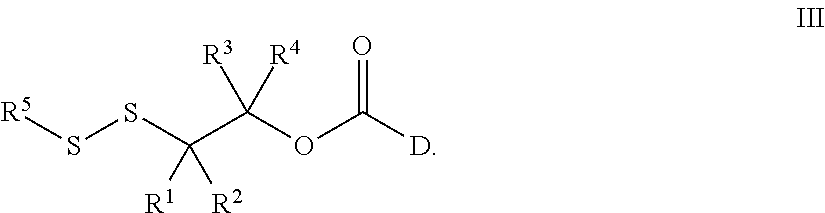


Priority Applications (2)
| Application Number | Priority Date | Filing Date | Title |
|---|---|---|---|
| US16/354,905 US11547762B2 (en) | 2016-10-05 | 2019-03-15 | Methods for preparing antibody drug conjugates |
| US17/990,988 US12090211B2 (en) | 2016-10-05 | 2022-11-21 | Methods for preparing antibody drug conjugates |
Applications Claiming Priority (3)
| Application Number | Priority Date | Filing Date | Title |
|---|---|---|---|
| US201662404514P | 2016-10-05 | 2016-10-05 | |
| PCT/EP2017/075272 WO2018065501A1 (en) | 2016-10-05 | 2017-10-04 | Methods for preparing antibody drug conjugates |
| US16/354,905 US11547762B2 (en) | 2016-10-05 | 2019-03-15 | Methods for preparing antibody drug conjugates |
Related Parent Applications (1)
| Application Number | Title | Priority Date | Filing Date |
|---|---|---|---|
| PCT/EP2017/075272 Continuation WO2018065501A1 (en) | 2016-10-05 | 2017-10-04 | Methods for preparing antibody drug conjugates |
Related Child Applications (1)
| Application Number | Title | Priority Date | Filing Date |
|---|---|---|---|
| US17/990,988 Division US12090211B2 (en) | 2016-10-05 | 2022-11-21 | Methods for preparing antibody drug conjugates |
Publications (2)
| Publication Number | Publication Date |
|---|---|
| US20190201544A1 US20190201544A1 (en) | 2019-07-04 |
| US11547762B2 true US11547762B2 (en) | 2023-01-10 |
Family
ID=60143682
Family Applications (2)
| Application Number | Title | Priority Date | Filing Date |
|---|---|---|---|
| US16/354,905 Active 2040-05-11 US11547762B2 (en) | 2016-10-05 | 2019-03-15 | Methods for preparing antibody drug conjugates |
| US17/990,988 Active 2038-02-10 US12090211B2 (en) | 2016-10-05 | 2022-11-21 | Methods for preparing antibody drug conjugates |
Family Applications After (1)
| Application Number | Title | Priority Date | Filing Date |
|---|---|---|---|
| US17/990,988 Active 2038-02-10 US12090211B2 (en) | 2016-10-05 | 2022-11-21 | Methods for preparing antibody drug conjugates |
Country Status (5)
| Country | Link |
|---|---|
| US (2) | US11547762B2 (en) |
| EP (1) | EP3522933B1 (en) |
| JP (1) | JP7050770B2 (en) |
| CN (1) | CN110139674B (en) |
| WO (1) | WO2018065501A1 (en) |
Cited By (1)
| Publication number | Priority date | Publication date | Assignee | Title |
|---|---|---|---|---|
| US12090211B2 (en) | 2016-10-05 | 2024-09-17 | Genentech, Inc. | Methods for preparing antibody drug conjugates |
Families Citing this family (8)
| Publication number | Priority date | Publication date | Assignee | Title |
|---|---|---|---|---|
| US20190142811A1 (en) | 2016-04-01 | 2019-05-16 | Zeno Royalties & Milestones, LLC | Estrogen receptor modulators |
| CN112533957B (en) * | 2018-06-04 | 2026-01-16 | 普瑞赛格恩公司 | MUC16 specific chimeric antigen receptor and uses thereof |
| WO2020244657A1 (en) * | 2019-06-06 | 2020-12-10 | 上海翰森生物医药科技有限公司 | Anti-b7-h4 antibody–drug conjugate and medicinal use thereof |
| GB201909103D0 (en) * | 2019-06-25 | 2019-08-07 | Univ Bath | Compounds |
| EP3993787A4 (en) | 2019-08-06 | 2023-07-12 | Recurium IP Holdings, LLC | ESTROGEN RECEPTOR MODULATORS FOR THE TREATMENT OF MUTANTS |
| PH12022551426A1 (en) * | 2020-01-06 | 2023-11-20 | Cytomx Therapeutics Inc | Auristatin-related compounds, conjugated auristatin-related compounds, and methods of use thereof |
| CN114075285B (en) * | 2020-08-20 | 2023-05-30 | 瑞阳(苏州)生物科技有限公司 | Humanized monoclonal antibody against human CD38 and application thereof |
| BR112023022098A2 (en) * | 2021-04-26 | 2023-12-19 | Jiangsu Hengrui Pharmaceuticals Co Ltd | ANTI-NECTIN-4 ANTIBODY AND ANTI-NECTIN-4 ANTIBODY-DRUG CONJUGATE AND MEDICINAL USE THEREOF |
Citations (13)
| Publication number | Priority date | Publication date | Assignee | Title |
|---|---|---|---|---|
| WO2008144544A1 (en) | 2007-05-18 | 2008-11-27 | Helicos Biosciences Corporation | Nucleotide analogs |
| US20130266595A1 (en) * | 2011-10-14 | 2013-10-10 | Genentech, Inc. | Pyrrolobenzodiazepines and conjugates thereof |
| US20140030279A1 (en) * | 2012-07-09 | 2014-01-30 | Spirogen Sarl | Anti-cd22 antibodies and immunoconjugates |
| US20140134193A1 (en) * | 2012-11-05 | 2014-05-15 | Pfizer Inc. | Spliceostatin analogs and methods for their preparation |
| WO2014191726A1 (en) | 2013-05-28 | 2014-12-04 | Astrazeneca Ab | Chemical compounds |
| US20150165063A1 (en) * | 2013-08-12 | 2015-06-18 | Genentech, Inc. | 1-(chloromethyl)-2,3-dihydro-1h-benzo[e]indole dimer antibody-drug conjugate compounds, and methods of use and treatment |
| US20160074528A1 (en) * | 2014-09-12 | 2016-03-17 | Genentech, Inc. | Anthracycline disulfide intermediates, antibody-drug conjugates and methods |
| US20160074527A1 (en) * | 2014-09-17 | 2016-03-17 | Genentech, Inc. | Pyrrolobenzodiazepines and antibody disulfide conjugates thereof |
| WO2016040724A1 (en) | 2014-09-12 | 2016-03-17 | Genentech, Inc. | Anti-b7-h4 antibodies and immunoconjugates |
| WO2016085967A1 (en) | 2014-11-25 | 2016-06-02 | Endocyte, Inc. | Methods of treating cancer by targeting tumor-associated macrophages |
| WO2017064675A1 (en) | 2015-10-16 | 2017-04-20 | Genentech, Inc. | Hindered disulfide drug conjugates |
| US9814782B2 (en) | 2012-02-24 | 2017-11-14 | Alteogen Inc. | Modified antibody in which motif comprising cysteine residue is bound, modified antibody-drug conjugate comprising the modified antibody, and production method for same |
| WO2018031662A1 (en) | 2016-08-11 | 2018-02-15 | Genentech, Inc. | Pyrrolobenzodiazepine prodrugs and antibody conjugates thereof |
Family Cites Families (324)
| Publication number | Priority date | Publication date | Assignee | Title |
|---|---|---|---|---|
| US798959A (en) | 1904-12-19 | 1905-09-05 | George W Goss | Corn-husker. |
| US4816567A (en) | 1983-04-08 | 1989-03-28 | Genentech, Inc. | Recombinant immunoglobin preparations |
| JPS6098584A (en) | 1983-11-02 | 1985-06-01 | Canon Inc | Camera - Body shape VTR |
| US5807715A (en) | 1984-08-27 | 1998-09-15 | The Board Of Trustees Of The Leland Stanford Junior University | Methods and transformed mammalian lymphocyte cells for producing functional antigen-binding protein including chimeric immunoglobulin |
| US4676980A (en) | 1985-09-23 | 1987-06-30 | The United States Of America As Represented By The Secretary Of The Department Of Health And Human Services | Target specific cross-linked heteroantibodies |
| US6548640B1 (en) | 1986-03-27 | 2003-04-15 | Btg International Limited | Altered antibodies |
| IL85035A0 (en) | 1987-01-08 | 1988-06-30 | Int Genetic Eng | Polynucleotide molecule,a chimeric antibody with specificity for human b cell surface antigen,a process for the preparation and methods utilizing the same |
| EP0307434B2 (en) | 1987-03-18 | 1998-07-29 | Scotgen Biopharmaceuticals, Inc. | Altered antibodies |
| ES2052027T5 (en) | 1988-11-11 | 2005-04-16 | Medical Research Council | IMMUNOGLOBULINE VARIABLE DOMAIN SEQUENCE CLONING. |
| DE3920358A1 (en) | 1989-06-22 | 1991-01-17 | Behringwerke Ag | BISPECIFIC AND OLIGO-SPECIFIC, MONO- AND OLIGOVALENT ANTI-BODY CONSTRUCTS, THEIR PRODUCTION AND USE |
| AU6355090A (en) | 1989-08-23 | 1991-04-03 | Scripps Clinic And Research Foundation | Compositions and methods for detection and treatment of epstein-barr virus infection and immune disorders |
| US5208020A (en) | 1989-10-25 | 1993-05-04 | Immunogen Inc. | Cytotoxic agents comprising maytansinoids and their therapeutic use |
| US5959177A (en) | 1989-10-27 | 1999-09-28 | The Scripps Research Institute | Transgenic plants expressing assembled secretory antibodies |
| US6075181A (en) | 1990-01-12 | 2000-06-13 | Abgenix, Inc. | Human antibodies derived from immunized xenomice |
| US6150584A (en) | 1990-01-12 | 2000-11-21 | Abgenix, Inc. | Human antibodies derived from immunized xenomice |
| US5256643A (en) | 1990-05-29 | 1993-10-26 | The Government Of The United States | Human cripto protein |
| US5770429A (en) | 1990-08-29 | 1998-06-23 | Genpharm International, Inc. | Transgenic non-human animals capable of producing heterologous antibodies |
| WO1992007574A1 (en) | 1990-10-25 | 1992-05-14 | Tanox Biosystems, Inc. | Glycoproteins associated with membrane-bound immunoglobulins as antibody targets on b cells |
| ES2113940T3 (en) | 1990-12-03 | 1998-05-16 | Genentech Inc | ENRICHMENT METHOD FOR PROTEIN VARIANTS WITH ALTERED UNION PROPERTIES. |
| US5571894A (en) | 1991-02-05 | 1996-11-05 | Ciba-Geigy Corporation | Recombinant antibodies specific for a growth factor receptor |
| US5543503A (en) | 1991-03-29 | 1996-08-06 | Genentech Inc. | Antibodies to human IL-8 type A receptor |
| US5440021A (en) | 1991-03-29 | 1995-08-08 | Chuntharapai; Anan | Antibodies to human IL-8 type B receptor |
| ES2149772T5 (en) | 1991-03-29 | 2008-02-16 | Genentech, Inc. | HUMAN RECEPTORS PF4A AND ITS USE. |
| ATE255131T1 (en) | 1991-06-14 | 2003-12-15 | Genentech Inc | HUMANIZED HEREGULIN ANTIBODIES |
| GB9114948D0 (en) | 1991-07-11 | 1991-08-28 | Pfizer Ltd | Process for preparing sertraline intermediates |
| JP3050424B2 (en) | 1991-07-12 | 2000-06-12 | 塩野義製薬株式会社 | Human endothelin receptor |
| US5264557A (en) | 1991-08-23 | 1993-11-23 | The United States Of America As Represented By The Department Of Health And Human Services | Polypeptide of a human cripto-related gene, CR-3 |
| CA2116774C (en) | 1991-09-19 | 2003-11-11 | Paul J. Carter | Expression in e. coli antibody fragments having at least a cysteine present as a free thiol. use for the production of bifunctional f(ab') 2 antibodies |
| FI941572L (en) | 1991-10-07 | 1994-05-27 | Oncologix Inc | Combination and method of use of anti-erbB-2 monoclonal antibodies |
| WO1993008829A1 (en) | 1991-11-04 | 1993-05-13 | The Regents Of The University Of California | Compositions that mediate killing of hiv-infected cells |
| US6011146A (en) | 1991-11-15 | 2000-01-04 | Institut Pasteur | Altered major histocompatibility complex (MHC) determinant and methods of using the determinant |
| US6153408A (en) | 1991-11-15 | 2000-11-28 | Institut Pasteur And Institut National De La Sante Et De La Recherche Medicale | Altered major histocompatibility complex (MHC) determinant and methods of using the determinant |
| WO1993016185A2 (en) | 1992-02-06 | 1993-08-19 | Creative Biomolecules, Inc. | Biosynthetic binding protein for cancer marker |
| IL107366A (en) | 1992-10-23 | 2003-03-12 | Chugai Pharmaceutical Co Ltd | Genes coding for megakaryocyte potentiator |
| US5644033A (en) | 1992-12-22 | 1997-07-01 | Health Research, Inc. | Monoclonal antibodies that define a unique antigen of human B cell antigen receptor complex and methods of using same for diagnosis and treatment |
| US5801005A (en) | 1993-03-17 | 1998-09-01 | University Of Washington | Immune reactivity to HER-2/neu protein for diagnosis of malignancies in which the HER-2/neu oncogene is associated |
| US5869445A (en) | 1993-03-17 | 1999-02-09 | University Of Washington | Methods for eliciting or enhancing reactivity to HER-2/neu protein |
| US6214345B1 (en) | 1993-05-14 | 2001-04-10 | Bristol-Myers Squibb Co. | Lysosomal enzyme-cleavable antitumor drug conjugates |
| JPH08511420A (en) | 1993-06-16 | 1996-12-03 | セルテック・セラピューテイクス・リミテッド | Body |
| US5773223A (en) | 1993-09-02 | 1998-06-30 | Chiron Corporation | Endothelin B1, (ETB1) receptor polypeptide and its encoding nucleic acid methods, and uses thereof |
| US5750370A (en) | 1995-06-06 | 1998-05-12 | Human Genome Sciences, Inc. | Nucleic acid encoding human endothlein-bombesin receptor and method of producing the receptor |
| US5789199A (en) | 1994-11-03 | 1998-08-04 | Genentech, Inc. | Process for bacterial production of polypeptides |
| US5840523A (en) | 1995-03-01 | 1998-11-24 | Genetech, Inc. | Methods and compositions for secretion of heterologous polypeptides |
| US5731168A (en) | 1995-03-01 | 1998-03-24 | Genentech, Inc. | Method for making heteromultimeric polypeptides |
| US5869046A (en) | 1995-04-14 | 1999-02-09 | Genentech, Inc. | Altered polypeptides with increased half-life |
| US5707829A (en) | 1995-08-11 | 1998-01-13 | Genetics Institute, Inc. | DNA sequences and secreted proteins encoded thereby |
| US20020193567A1 (en) | 1995-08-11 | 2002-12-19 | Genetics Institute, Inc. | Secreted proteins and polynucleotides encoding them |
| GB9603256D0 (en) | 1996-02-16 | 1996-04-17 | Wellcome Found | Antibodies |
| JP3646191B2 (en) | 1996-03-19 | 2005-05-11 | 大塚製薬株式会社 | Human gene |
| SK157498A3 (en) | 1996-05-17 | 1999-10-08 | Schering Corp | Isolated and recombinant nucleic acid, bas-1 protein or peptide thereof, and agent, antibody, expression vector, host cell and method of their use |
| US5945511A (en) | 1997-02-20 | 1999-08-31 | Zymogenetics, Inc. | Class II cytokine receptor |
| US20030185830A1 (en) | 1997-02-25 | 2003-10-02 | Corixa Corporation | Compositions and methods for the therapy and diagnosis of prostate cancer |
| US7033827B2 (en) | 1997-02-25 | 2006-04-25 | Corixa Corporation | Prostate-specific polynucleotide compositions |
| US6541212B2 (en) | 1997-03-10 | 2003-04-01 | The Regents Of The University Of California | Methods for detecting prostate stem cell antigen protein |
| US6261791B1 (en) | 1997-03-10 | 2001-07-17 | The Regents Of The University Of California | Method for diagnosing cancer using specific PSCA antibodies |
| EP2343085B1 (en) | 1997-03-10 | 2014-12-10 | The Regents of The University of California | Antibody against prostate stem cell antigen (PSCA) |
| US6555339B1 (en) | 1997-04-14 | 2003-04-29 | Arena Pharmaceuticals, Inc. | Non-endogenous, constitutively activated human protein-coupled receptors |
| US6319688B1 (en) | 1997-04-28 | 2001-11-20 | Smithkline Beecham Corporation | Polynucleotide encoding human sodium dependent phosphate transporter (IPT-1) |
| DK0979281T3 (en) | 1997-05-02 | 2005-11-21 | Genentech Inc | Process for the preparation of multispecific antibodies with heteromultimers and common components |
| US6890749B2 (en) | 1997-05-15 | 2005-05-10 | Abbott Laboratories | Reagents and methods useful for detecting diseases of the prostate |
| WO1998051824A1 (en) | 1997-05-15 | 1998-11-19 | Abbott Laboratories | Reagents and methods useful for detecting disease of the urinary tract |
| CA2293829C (en) | 1997-06-24 | 2011-06-14 | Genentech, Inc. | Methods and compositions for galactosylated glycoproteins |
| US6040498A (en) | 1998-08-11 | 2000-03-21 | North Caroline State University | Genetically engineered duckweed |
| US20030060612A1 (en) | 1997-10-28 | 2003-03-27 | Genentech, Inc. | Compositions and methods for the diagnosis and treatment of tumor |
| DE69840412D1 (en) | 1997-10-31 | 2009-02-12 | Genentech Inc | METHODS AND COMPOSITIONS CONTAINING GLYCOPROTEIN GLYCOR FORMS |
| US20020034749A1 (en) | 1997-11-18 | 2002-03-21 | Billing-Medel Patricia A. | Reagents and methods useful for detecting diseases of the breast |
| US6610833B1 (en) | 1997-11-24 | 2003-08-26 | The Institute For Human Genetics And Biochemistry | Monoclonal human natural antibodies |
| US6110695A (en) | 1997-12-02 | 2000-08-29 | The Regents Of The University Of California | Modulating the interaction of the chemokine, B Lymphocyte Hemoattractant, and its Receptor, BLR1 |
| ES2375931T3 (en) | 1997-12-05 | 2012-03-07 | The Scripps Research Institute | HUMANIZATION OF ANTIBODY MURINO. |
| CA2323071C (en) | 1998-03-13 | 2011-06-21 | The Burnham Institute | Molecules that home to various selected organs or tissues |
| IL138608A0 (en) | 1998-04-02 | 2001-10-31 | Genentech Inc | Antibody variants and fragments thereof |
| US6194551B1 (en) | 1998-04-02 | 2001-02-27 | Genentech, Inc. | Polypeptide variants |
| AU3657899A (en) | 1998-04-20 | 1999-11-08 | James E. Bailey | Glycosylation engineering of antibodies for improving antibody-dependent cellular cytotoxicity |
| US6534482B1 (en) | 1998-05-13 | 2003-03-18 | Epimmune, Inc. | Expression vectors for stimulating an immune response and methods of using the same |
| US20030064397A1 (en) | 1998-05-22 | 2003-04-03 | Incyte Genomics, Inc. | Transmembrane protein differentially expressed in prostate and lung tumors |
| US20020187472A1 (en) | 2001-03-09 | 2002-12-12 | Preeti Lal | Steap-related protein |
| WO2000012130A1 (en) | 1998-08-27 | 2000-03-09 | Smithkline Beecham Corporation | Rp105 agonists and antagonists |
| JP4689781B2 (en) | 1998-09-03 | 2011-05-25 | 独立行政法人科学技術振興機構 | Amino acid transport protein and its gene |
| WO2000020579A1 (en) | 1998-10-02 | 2000-04-13 | Mcmaster University | Spliced form of erbb-2/neu oncogene |
| US6468546B1 (en) | 1998-12-17 | 2002-10-22 | Corixa Corporation | Compositions and methods for therapy and diagnosis of ovarian cancer |
| US6858710B2 (en) | 1998-12-17 | 2005-02-22 | Corixa Corporation | Compositions and methods for the therapy and diagnosis of ovarian cancer |
| US6962980B2 (en) | 1999-09-24 | 2005-11-08 | Corixa Corporation | Compositions and methods for the therapy and diagnosis of ovarian cancer |
| US20030091580A1 (en) | 2001-06-18 | 2003-05-15 | Mitcham Jennifer L. | Compositions and methods for the therapy and diagnosis of ovarian cancer |
| US20020119158A1 (en) | 1998-12-17 | 2002-08-29 | Corixa Corporation | Compositions and methods for the therapy and diagnosis of ovarian cancer |
| US20030190669A1 (en) | 1998-12-30 | 2003-10-09 | Genentech, Inc. | Secreted and transmembrane polypeptides and nucleic acids encoding the same |
| HK1041009B (en) | 1998-12-30 | 2009-05-08 | Beth Israel Deaconess Medical Center, Inc. | Characterization of the soc/crac calcium channel protein family |
| US6737056B1 (en) | 1999-01-15 | 2004-05-18 | Genentech, Inc. | Polypeptide variants with altered effector function |
| KR100940380B1 (en) | 1999-01-15 | 2010-02-02 | 제넨테크, 인크. | Polypeptide Variants with Altered Effector Function |
| AU780109B2 (en) | 1999-01-29 | 2005-03-03 | Corixa Corporation | HER-2/neu fusion proteins |
| GB9905124D0 (en) | 1999-03-05 | 1999-04-28 | Smithkline Beecham Biolog | Novel compounds |
| AU3395900A (en) | 1999-03-12 | 2000-10-04 | Human Genome Sciences, Inc. | Human lung cancer associated gene sequences and polypeptides |
| PT1176195E (en) | 1999-04-09 | 2013-07-18 | Kyowa Hakko Kirin Co Ltd | Method for controlling the activity of immunologically functional molecule |
| US7304126B2 (en) | 1999-05-11 | 2007-12-04 | Genentech, Inc. | Secreted and transmembrane polypeptides and nucleic acids encoding the same |
| WO2000075655A1 (en) | 1999-06-03 | 2000-12-14 | Takeda Chemical Industries, Ltd. | Screening method with the use of cd100 |
| BRPI0012196B8 (en) | 1999-06-25 | 2021-05-25 | Genentech Inc | industrialized article |
| US6949245B1 (en) | 1999-06-25 | 2005-09-27 | Genentech, Inc. | Humanized anti-ErbB2 antibodies and treatment with anti-ErbB2 antibodies |
| US20030119113A1 (en) | 1999-07-20 | 2003-06-26 | Genentech, Inc. | Secreted and transmembrane polypeptides and nucleic acids encoding the same |
| US7297770B2 (en) | 1999-08-10 | 2007-11-20 | Genentech, Inc. | PRO6496 polypeptides |
| US7294696B2 (en) | 1999-08-17 | 2007-11-13 | Genentech Inc. | PRO7168 polypeptides |
| CA2380355A1 (en) | 1999-09-01 | 2001-03-08 | Genentech, Inc. | Secreted and transmembrane polypeptides and nucleic acids encoding the same |
| US20030232056A1 (en) | 1999-09-10 | 2003-12-18 | Corixa Corporation | Compositions and methods for the therapy and diagnosis of ovarian cancer |
| US20030206918A1 (en) | 1999-09-10 | 2003-11-06 | Corixa Corporation | Compositions and methods for the therapy and diagnosis of ovarian cancer |
| US20030129192A1 (en) | 1999-09-10 | 2003-07-10 | Corixa Corporation | Compositions and methods for the therapy and diagnosis of ovarian cancer |
| PT1222292E (en) | 1999-10-04 | 2005-11-30 | Medicago Inc | METHOD FOR REGULATING THE TRANSCRIPTION OF EXOGENEOUS GENES IN THE PRESENCE OF NITROGEN |
| US7125978B1 (en) | 1999-10-04 | 2006-10-24 | Medicago Inc. | Promoter for regulating expression of foreign genes |
| US6750054B2 (en) | 2000-05-18 | 2004-06-15 | Lexicon Genetics Incorporated | Human semaphorin homologs and polynucleotides encoding the same |
| CA2388245C (en) | 1999-10-19 | 2012-01-10 | Kyowa Kirin Co., Ltd. | The use of serum-free adapted rat cells for producing heterologous polypeptides |
| BR0015224A (en) | 1999-10-29 | 2002-07-09 | Genentech Inc | Isolated prostatic stem cell (psca) anti-antigen, monoclonal anti-psca antibody, isolated nucleic acid, expression vector, cell, host cell, antibody production method, in vitro method composition to kill a cancer cell that expresses psca , use of an anti-psca monoclonal antibody and industrialized article |
| CA2393126C (en) | 1999-11-29 | 2016-05-24 | The Trustees Of Columbia University In The City Of New York | Isolation of five novel genes coding for new fc receptors-type melanoma involved in the pathogenesis of lymphoma/melanoma |
| AU1807401A (en) | 1999-11-30 | 2001-06-12 | Corixa Corporation | Compositions and methods for therapy and diagnosis of breast cancer |
| AU2087401A (en) | 1999-12-10 | 2001-06-18 | Epimmune, Inc. | Inducing cellular immune responses to her2/neu using peptide and nucleic acid compositions |
| EP1240319A1 (en) | 1999-12-15 | 2002-09-18 | Genentech, Inc. | Shotgun scanning, a combinatorial method for mapping functional protein epitopes |
| NZ502058A (en) | 1999-12-23 | 2003-11-28 | Ovita Ltd | Isolated mutated nucleic acid molecule for regulation of ovulation rate |
| EP2295079A3 (en) | 1999-12-23 | 2011-03-23 | ZymoGenetics, L.L.C. | Method for treating inflammation |
| DE60045139D1 (en) | 1999-12-23 | 2010-12-02 | Zymogenetics Inc | Soluble interleukin-20 receptor |
| US6610286B2 (en) | 1999-12-23 | 2003-08-26 | Zymogenetics, Inc. | Method for treating inflammation using soluble receptors to interleukin-20 |
| US7297333B2 (en) | 2000-01-20 | 2007-11-20 | Genentech, Inc. | Anti-PRO10268 antibodies |
| US20030224379A1 (en) | 2000-01-21 | 2003-12-04 | Tang Y. Tom | Novel nucleic acids and polypeptides |
| AU2001234493A1 (en) | 2000-01-21 | 2001-07-31 | Corixa Corporation | Compounds and methods for prevention and treatment of her-2/neu associated malignancies |
| AU2001243142A1 (en) | 2000-02-03 | 2001-08-14 | Hyseq, Inc. | Novel nucleic acids and polypeptides |
| US20030104562A1 (en) | 2000-02-11 | 2003-06-05 | Genentech, Inc. | Secreted and transmembrane polypeptides and nucleic acids encoding the same |
| AU2001238596A1 (en) | 2000-02-22 | 2001-09-03 | Millennium Pharmaceuticals, Inc. | 18607, a novel human calcium channel |
| US20030219806A1 (en) | 2000-02-22 | 2003-11-27 | Millennium Pharmaceuticals, Inc. | Novel 18607, 15603, 69318, 12303, 48000, 52920, 5433, 38554, 57301, 58324, 55063, 52991, 59914, 59921 and 33751 molecules and uses therefor |
| US20040002068A1 (en) | 2000-03-01 | 2004-01-01 | Corixa Corporation | Compositions and methods for the detection, diagnosis and therapy of hematological malignancies |
| US20040005561A1 (en) | 2000-03-01 | 2004-01-08 | Corixa Corporation | Compositions and methods for the detection, diagnosis and therapy of hematological malignancies |
| AU2001245280A1 (en) | 2000-03-07 | 2001-09-17 | Hyseq, Inc. | Novel nucleic acids and polypeptides |
| EP1268526A4 (en) | 2000-03-24 | 2004-09-08 | Fahri Saatcioglu | Novel prostate-specific or testis-specific nucleic acid molecules, polypeptides, and diagnostic and therapeutic methods |
| JP2003530325A (en) | 2000-03-31 | 2003-10-14 | イーペーエフ ファルマシューティカルス ゲゼルシャフト ミット ベシュレンクテル ハフツング | Diagnostics and agents for the investigation of cell surface proteomes of tumors and inflammatory cells, and the treatment of tumor and inflammatory diseases, preferably with the aid of specific chemokine receptor analysis and chemokine receptor / ligand interactions |
| AU2001253140A1 (en) | 2000-04-03 | 2001-10-15 | The Government Of The United States Of America, As Represented By The Secretary Of The Department Of Health And Human Services | Tumor markers in ovarian cancer |
| AU2001249885A1 (en) | 2000-04-07 | 2001-10-23 | Arena Pharmaceuticals, Inc. | Non-endogenous, constitutively activated known g protein-coupled receptors |
| AU2001247616B2 (en) | 2000-04-11 | 2007-06-14 | Genentech, Inc. | Multivalent antibodies and uses therefor |
| AU2001274888A1 (en) | 2000-05-19 | 2001-12-03 | Human Genome Sciences, Inc. | Nucleic acids, proteins, and antibodies |
| WO2001094641A2 (en) | 2000-06-09 | 2001-12-13 | Idec Pharmaceuticals Corporation | Gene targets and ligands that bind thereto for treatment and diagnosis of ovarian carcinomas |
| AU2001268471A1 (en) | 2000-06-16 | 2002-01-02 | Incyte Genomics, Inc. | G-protein coupled receptors |
| EP1383892A2 (en) | 2000-06-30 | 2004-01-28 | Incyte Genomics, Inc. | Human extracellular matrix and cell adhesion polypeptides |
| MXPA02012749A (en) | 2000-06-30 | 2003-10-06 | Amgen Inc | B7-like molecules and uses thereof. |
| WO2002002587A1 (en) | 2000-06-30 | 2002-01-10 | Human Genome Sciences, Inc. | B7-like polynucleotides, polypeptides, and antibodies |
| AU2002214531A1 (en) | 2000-07-03 | 2002-01-30 | Curagen Corporation | Proteins and nucleic acids encoding same |
| US20040044179A1 (en) | 2000-07-25 | 2004-03-04 | Genentech, Inc. | Secreted and transmembrane polypeptides and nucleic acids encoding the same |
| AU2001283507A1 (en) | 2000-07-27 | 2002-02-13 | Mayo Foundation For Medical Education And Research | B7-h3 and b7-h4, novel immunoregulatory molecules |
| CA2417671A1 (en) | 2000-07-28 | 2002-02-07 | Ulrich Wissenbach | Trp8, trp9 and trp10, novel markers for cancer |
| US7229623B1 (en) | 2000-08-03 | 2007-06-12 | Corixa Corporation | Her-2/neu fusion proteins |
| WO2002013847A2 (en) | 2000-08-14 | 2002-02-21 | Corixa Corporation | Methods for diagnosis and therapy of hematological and virus-associated malignancies |
| PL365789A1 (en) | 2000-08-14 | 2005-01-10 | Corixa Corporation | Compositions and methods of treatment and diagnosis of Her-2 / neu-related cancers |
| MXPA03001645A (en) | 2000-08-24 | 2004-05-14 | Genentech Inc | Compositions and methods for the diagnosis and treatment of tumor. |
| GB0020953D0 (en) | 2000-08-24 | 2000-10-11 | Smithkline Beecham Biolog | Vaccine |
| EP1346040A2 (en) | 2000-09-11 | 2003-09-24 | Nuvelo, Inc. | Novel nucleic acids and polypeptides |
| US20030119121A1 (en) | 2000-09-15 | 2003-06-26 | Genentech, Inc. | Secreted and transmembrane polypeptides and nucleic acids encoding the same |
| US6613567B1 (en) | 2000-09-15 | 2003-09-02 | Isis Pharmaceuticals, Inc. | Antisense inhibition of Her-2 expression |
| EP1803733B1 (en) | 2000-09-15 | 2010-03-10 | ZymoGenetics, Inc. | Polypeptides comprising the extracellular domains of IL-20RA and/or IL-20RB |
| CA2422814A1 (en) | 2000-09-18 | 2002-03-21 | Biogen, Inc. | Cripto mutant and uses thereof |
| UA83458C2 (en) | 2000-09-18 | 2008-07-25 | Байоджен Айдек Ма Інк. | The isolated polypeptide baff-r (the receptor of the factor of activation of b-cells of the family tnf) |
| US6946292B2 (en) | 2000-10-06 | 2005-09-20 | Kyowa Hakko Kogyo Co., Ltd. | Cells producing antibody compositions with increased antibody dependent cytotoxic activity |
| US7064191B2 (en) | 2000-10-06 | 2006-06-20 | Kyowa Hakko Kogyo Co., Ltd. | Process for purifying antibody |
| DK2314686T4 (en) | 2000-10-06 | 2023-08-21 | Kyowa Kirin Co Ltd | Cells that form antibody complexes |
| CA2425569A1 (en) | 2000-10-13 | 2002-04-18 | Eos Biotechnology, Inc. | Methods of diagnosis of prostate cancer, compositions and methods of screening for modulators of prostate cancer |
| US6596541B2 (en) | 2000-10-31 | 2003-07-22 | Regeneron Pharmaceuticals, Inc. | Methods of modifying eukaryotic cells |
| JP2004516826A (en) | 2000-11-07 | 2004-06-10 | ザイモジェネティクス,インコーポレイティド | Human tumor necrosis factor receptor |
| US20020150573A1 (en) | 2000-11-10 | 2002-10-17 | The Rockefeller University | Anti-Igalpha-Igbeta antibody for lymphoma therapy |
| IL155977A0 (en) | 2000-11-30 | 2003-12-23 | Medarex Inc | Transgenic transchromosomal rodents for making human antibodies |
| WO2002061087A2 (en) | 2000-12-19 | 2002-08-08 | Lifespan Biosciences, Inc. | Antigenic peptides, such as for g protein-coupled receptors (gpcrs), antibodies thereto, and systems for identifying such antigenic peptides |
| EP1357828A2 (en) | 2001-01-12 | 2003-11-05 | University of Medicine and Dentistry of New Jersey | Bone morphogenetic protein-2 in the treatment and diagnosis of cancer |
| US20030119126A1 (en) | 2001-01-16 | 2003-06-26 | Genentech, Inc. | Secreted and transmembrane polypeptides and nucleic acids encoding the same |
| US20030119119A1 (en) | 2001-01-16 | 2003-06-26 | Genentech, Inc. | Secreted and transmembrane polypeptides and nucleic acids encoding the same |
| US7754208B2 (en) | 2001-01-17 | 2010-07-13 | Trubion Pharmaceuticals, Inc. | Binding domain-immunoglobulin fusion proteins |
| EP1425302A2 (en) | 2001-01-24 | 2004-06-09 | Protein Design Labs | Methods of diagnosis of breast cancer, compositions and methods of screening for modulators of breast cancer |
| AU2002251841A1 (en) | 2001-01-30 | 2002-08-12 | Corixa Corporation | Compositions and methods for the therapy and diagnosis of pancreatic cancer |
| US20040170994A1 (en) | 2001-02-12 | 2004-09-02 | Callen David Frederick | DNA sequences for human tumour suppressor genes |
| AU2002258518A1 (en) | 2001-03-14 | 2002-09-24 | Millennium Pharmaceuticals, Inc. | Nucleic acid molecules and proteins for the identification, assessment, prevention, and therapy of ovarian cancer |
| US20040236091A1 (en) | 2001-03-28 | 2004-11-25 | Chicz Roman M. | Translational profiling |
| WO2003008537A2 (en) | 2001-04-06 | 2003-01-30 | Mannkind Corporation | Epitope sequences |
| US6820011B2 (en) | 2001-04-11 | 2004-11-16 | The Regents Of The University Of Colorado | Three-dimensional structure of complement receptor type 2 and uses thereof |
| AU2002254615A1 (en) | 2001-04-17 | 2002-10-28 | The Board Of Trustees Of The University Of Arkansas | Repeat sequences of the ca125 gene and their use for diagnostic and therapeutic interventions |
| JP2005527180A (en) | 2001-04-18 | 2005-09-15 | プロテイン デザイン ラブス, インコーポレイテッド | Lung cancer diagnosis method, composition of lung cancer modifier and screening method |
| ES2321065T3 (en) | 2001-04-26 | 2009-06-02 | Biogen Idec Ma Inc. | BLOCKING ANTIBODIES OF CRYPT AND USES OF THE SAME. |
| AU2002334799B2 (en) | 2001-04-26 | 2009-05-07 | Biogen Ma Inc. | Cripto-specific antibodies |
| CA2446788A1 (en) | 2001-05-09 | 2002-11-14 | Corixa Corporation | Compositions and methods for the therapy and diagnosis of prostate cancer |
| US20030078399A1 (en) | 2001-05-11 | 2003-04-24 | Sloan-Kettering Institute For Cancer Research | Nucleic acid sequence encoding ovarian antigen, CA125, and uses thereof |
| EA010594B1 (en) | 2001-05-24 | 2008-10-30 | Займодженетикс, Инк. | Taci-immunoglobulin fusion proteins |
| US7157558B2 (en) | 2001-06-01 | 2007-01-02 | Genentech, Inc. | Polypeptide encoded by a polynucleotide overexpresses in tumors |
| AU2002314901A1 (en) | 2001-06-04 | 2002-12-16 | Eos Biotechnology, Inc. | Methods of diagnosis and treatment of androgen-dependent prostate cancer, prostate cancer undergoing androgen-withdrawal, and androgen-independent prostate cancer |
| WO2003000842A2 (en) | 2001-06-04 | 2003-01-03 | Curagen Corporation | Novel proteins and nucleic acids encoding same |
| EP1402053A4 (en) | 2001-06-05 | 2005-05-11 | Exelixis Inc | CHDS AS MODULATORS OF THE MECHANISM OF ACTION OF P53 AND USES THEREOF |
| ATE483976T1 (en) | 2001-06-05 | 2010-10-15 | Exelixis Inc | GFATS AS P53 PATHWAY MODIFIERS AND METHODS OF USE |
| US7235358B2 (en) | 2001-06-08 | 2007-06-26 | Expression Diagnostics, Inc. | Methods and compositions for diagnosing and monitoring transplant rejection |
| US7125663B2 (en) | 2001-06-13 | 2006-10-24 | Millenium Pharmaceuticals, Inc. | Genes, compositions, kits and methods for identification, assessment, prevention, and therapy of cervical cancer |
| WO2002102235A2 (en) | 2001-06-18 | 2002-12-27 | Eos Biotechnology Inc. | Methods of diagnosis of ovarian cancer, compositions and methods of screening for modulators of ovarian cancer |
| US7189507B2 (en) | 2001-06-18 | 2007-03-13 | Pdl Biopharma, Inc. | Methods of diagnosis of ovarian cancer, compositions and methods of screening for modulators of ovarian cancer |
| AU2002322280A1 (en) | 2001-06-21 | 2003-01-21 | Millennium Pharmaceuticals, Inc. | Compositions, kits, and methods for identification, assessment, prevention, and therapy of breast cancer |
| WO2003002717A2 (en) | 2001-06-28 | 2003-01-09 | Schering Corporation | Biological activity of ak155 |
| WO2003004529A2 (en) | 2001-07-02 | 2003-01-16 | Licentia Ltd. | Ephrin-tie receptor materials and methods |
| US20040076955A1 (en) | 2001-07-03 | 2004-04-22 | Eos Biotechnology, Inc. | Methods of diagnosis of bladder cancer, compositions and methods of screening for modulators of bladder cancer |
| WO2003003984A2 (en) | 2001-07-05 | 2003-01-16 | Curagen Corporation | Novel proteins and nucleic acids encoding same |
| WO2003055439A2 (en) | 2001-07-18 | 2003-07-10 | The Regents Of The University Of California | Her2/neu target antigen and use of same to stimulate an immune response |
| US20030108963A1 (en) | 2001-07-25 | 2003-06-12 | Millennium Pharmaceuticals, Inc. | Novel genes, compositions, kit, and methods for identification, assessment, prevention and therapy of prostate cancer |
| NZ581474A (en) | 2001-08-03 | 2011-04-29 | Glycart Biotechnology Ag | Antibody glycosylation variants having increased antibody-dependent cellular cytotoxicity |
| CA2453995A1 (en) | 2001-08-03 | 2003-02-20 | Genentech, Inc. | Tacis and br3 polypeptides and uses thereof |
| EP1478772A2 (en) | 2001-08-14 | 2004-11-24 | The General Hospital Corporation | Nucleic acid and amino acid sequences involved in pain |
| US20030092013A1 (en) | 2001-08-16 | 2003-05-15 | Vitivity, Inc. | Diagnosis and treatment of vascular disease |
| WO2003018621A2 (en) | 2001-08-23 | 2003-03-06 | Oxford Biomedica (Uk) Limited | Genes |
| US6902930B2 (en) | 2001-08-29 | 2005-06-07 | Vanderbilt University | Human Mob-5 (IL-24) receptors and uses thereof |
| US20030124579A1 (en) | 2001-09-05 | 2003-07-03 | Eos Biotechnology, Inc. | Methods of diagnosis of ovarian cancer, compositions and methods of screening for modulators of ovarian cancer |
| AU2002336446B2 (en) | 2001-09-06 | 2008-03-06 | Agensys, Inc. | Nucleic acid and corresponding protein entitled STEAP-1 useful in treatment and detection of cancer |
| WO2003025138A2 (en) | 2001-09-17 | 2003-03-27 | Protein Design Labs, Inc. | Methods of diagnosis of cancer compositions and methods of screening for modulators of cancer |
| IL160933A0 (en) | 2001-09-18 | 2004-08-31 | Proteologics Inc | Methods and compositions for treating ?cap associated diseases |
| ES2431929T3 (en) | 2001-09-18 | 2013-11-28 | Genentech, Inc. | Compositions and procedures for the diagnosis and treatment of tumors |
| WO2003025148A2 (en) | 2001-09-19 | 2003-03-27 | Nuvelo, Inc. | Novel nucleic acids and polypeptides |
| AU2002327792A1 (en) | 2001-09-28 | 2003-04-07 | Bing Yang | Diagnosis and treatment of diseases caused by mutations in cd72 |
| AU2002362454A1 (en) | 2001-10-03 | 2003-04-14 | Origene Technologies, Inc. | Regulated breast cancer genes |
| AU2002362436A1 (en) | 2001-10-03 | 2003-04-14 | Rigel Pharmaceuticals, Inc. | Modulators of lymphocyte activation and migration |
| US20050123925A1 (en) | 2002-11-15 | 2005-06-09 | Genentech, Inc. | Compositions and methods for the diagnosis and treatment of tumor |
| WO2003034984A2 (en) | 2001-10-19 | 2003-05-01 | Genentech, Inc. | Compositions and methods for the diagnosis and treatment of inflammatory bowel disorders |
| CA2465268A1 (en) | 2001-10-24 | 2003-05-01 | National Jewish Medical And Research Center | Three-dimensional structures of tall-1 and its cognate receptors and modified proteins and methods related thereto |
| KR100988949B1 (en) | 2001-10-25 | 2010-10-20 | 제넨테크, 인크. | Glycoprotein Composition |
| CA2463143A1 (en) | 2001-10-31 | 2003-07-10 | Alcon, Inc. | Bone morphogenic proteins (bmp), bmp receptors and bmp binding proteins and their use in the diagnosis and treatment of glaucoma |
| US20030232350A1 (en) | 2001-11-13 | 2003-12-18 | Eos Biotechnology, Inc. | Methods of diagnosis of cancer, compositions and methods of screening for modulators of cancer |
| WO2003042661A2 (en) | 2001-11-13 | 2003-05-22 | Protein Design Labs, Inc. | Methods of diagnosis of cancer, compositions and methods of screening for modulators of cancer |
| AU2002339691A1 (en) | 2001-11-29 | 2003-06-10 | Genset | Agonists and antagonists of prolixin for the treatment of metabolic disorders |
| WO2003048202A2 (en) | 2001-12-03 | 2003-06-12 | Asahi Kasei Pharma Corporation | Nf-kappab activating genes |
| EP1504099A4 (en) | 2001-12-10 | 2006-05-10 | Nuvelo Inc | NEW NUCLEIC ACIDS AND POLYPEPTIDES |
| US20040093621A1 (en) | 2001-12-25 | 2004-05-13 | Kyowa Hakko Kogyo Co., Ltd | Antibody composition which specifically binds to CD20 |
| US20030134790A1 (en) | 2002-01-11 | 2003-07-17 | University Of Medicine And Dentistry Of New Jersey | Bone Morphogenetic Protein-2 And Bone Morphogenetic Protein-4 In The Treatment And Diagnosis Of Cancer |
| US7452675B2 (en) | 2002-01-25 | 2008-11-18 | The Queen's Medical Center | Methods of screening for TRPM4b modulators |
| DE60334364D1 (en) | 2002-02-21 | 2010-11-11 | Univ California | TREATMENT PROCEDURE USING ANTI-CD22 ANTIBODIES |
| US20040258678A1 (en) | 2002-02-22 | 2004-12-23 | Genentech, Inc. | Compositions and methods for the treatment of immune related diseases |
| WO2003074662A2 (en) | 2002-03-01 | 2003-09-12 | Exelixis, Inc. | SCDs AS MODIFIERS OF THE p53 PATHWAY AND METHODS OF USE |
| US20050220798A1 (en) | 2002-06-04 | 2005-10-06 | Reinhard Ebner | Cancer-linked gene as target for chemotherapy |
| WO2003097803A2 (en) | 2002-05-15 | 2003-11-27 | Avalon Pharmaceuticals | Cancer-linked gene as target for chemotherapy |
| EP2258712A3 (en) | 2002-03-15 | 2011-05-04 | Multicell Immunotherapeutics, Inc. | Compositions and Methods to Initiate or Enhance Antibody and Major-histocompatibility Class I or Class II-restricted T Cell Responses by Using Immunomodulatory, Non-coding RNA Motifs |
| WO2004000997A2 (en) | 2002-03-19 | 2003-12-31 | Curagen Corporation | Therapeutic polypeptides, nucleic acids encoding same, and methods of use |
| JP2005534286A (en) | 2002-03-21 | 2005-11-17 | サネシス ファーマシューティカルズ, インコーポレイテッド | Identification of kinase inhibitors |
| US7193069B2 (en) | 2002-03-22 | 2007-03-20 | Research Association For Biotechnology | Full-length cDNA |
| WO2003089624A2 (en) | 2002-03-25 | 2003-10-30 | Uab Research Foundation | Fc receptor homolog, reagents, and uses thereof |
| AU2003222103A1 (en) | 2002-03-28 | 2003-10-13 | Idec Pharmaceuticals Corporation | Novel gene targets and ligands that bind thereto for treatment and diagnosis of colon carcinomas |
| US20030194704A1 (en) | 2002-04-03 | 2003-10-16 | Penn Sharron Gaynor | Human genome-derived single exon nucleic acid probes useful for gene expression analysis two |
| CA2481503A1 (en) | 2002-04-05 | 2003-10-23 | Agensys, Inc. | Nucleic acid and corresponding protein entitled 98p4b6 useful in treatment and detection of cancer |
| EP1502603A4 (en) | 2002-04-09 | 2006-12-13 | Kyowa Hakko Kogyo Kk | MEDICAMENT CONTAINING ANTIBODY COMPOSITION APPROPRIATE TO PATIENT SUFFERING FROM POLYMORPHISM FC gammma RIIIA |
| AU2003236017B2 (en) | 2002-04-09 | 2009-03-26 | Kyowa Kirin Co., Ltd. | Drug containing antibody composition |
| US20040110704A1 (en) | 2002-04-09 | 2004-06-10 | Kyowa Hakko Kogyo Co., Ltd. | Cells of which genome is modified |
| AU2003236020B2 (en) | 2002-04-09 | 2009-03-19 | Kyowa Hakko Kirin Co., Ltd. | Cell with depression or deletion of the activity of protein participating in GDP-fucose transport |
| CA2481837A1 (en) | 2002-04-09 | 2003-10-16 | Kyowa Hakko Kogyo Co., Ltd. | Production process for antibody composition |
| US20040259150A1 (en) | 2002-04-09 | 2004-12-23 | Kyowa Hakko Kogyo Co., Ltd. | Method of enhancing of binding activity of antibody composition to Fcgamma receptor IIIa |
| US20040101874A1 (en) | 2002-04-12 | 2004-05-27 | Mitokor Inc. | Targets for therapeutic intervention identified in the mitochondrial proteome |
| CA2481507A1 (en) | 2002-04-16 | 2003-10-30 | Genentech, Inc. | Compositions and methods for the diagnosis and treatment of tumor |
| US20030224467A1 (en) | 2002-04-17 | 2003-12-04 | Osborne C. Kent | AIB1 as a prognostic marker and predictor of resistance to endocrine therapy |
| AU2003228869A1 (en) | 2002-05-03 | 2003-11-17 | Incyte Corporation | Transporters and ion channels |
| AU2003232453A1 (en) | 2002-05-30 | 2003-12-19 | David K. Bol | Human solute carrier family 7 member 11 (hslc7a11) |
| CA2488441C (en) | 2002-06-03 | 2015-01-27 | Genentech, Inc. | Synthetic antibody phage libraries |
| AU2003240495A1 (en) | 2002-06-04 | 2003-12-19 | Incyte Corporation | Diagnostics markers for lung cancer |
| SG145559A1 (en) | 2002-06-06 | 2008-09-29 | Oncotherapy Science Inc | Genes and polypeptides relating to human colon cancers |
| WO2003104270A2 (en) | 2002-06-06 | 2003-12-18 | Ingenium Pharmaceuticals Ag | Dudulin 2 genes, expression products, non-human animal model: uses in human hematological disease |
| AU2003249691A1 (en) | 2002-06-07 | 2003-12-22 | Avalon Pharmaceuticals, Inc | Cancer-linked gene as target for chemotherapy |
| AU2003245441A1 (en) | 2002-06-12 | 2003-12-31 | Avalon Pharmaceuticals, Inc. | Cancer-linked gene as target for chemotherapy |
| US20040022727A1 (en) | 2002-06-18 | 2004-02-05 | Martin Stanton | Aptamer-toxin molecules and methods for using same |
| US20040249130A1 (en) | 2002-06-18 | 2004-12-09 | Martin Stanton | Aptamer-toxin molecules and methods for using same |
| AU2003245615A1 (en) | 2002-06-20 | 2004-01-06 | The Regents Of The University Of California | Compositions and methods for modulating lymphocyte activity |
| EP2365004B1 (en) | 2002-06-21 | 2016-01-06 | Johns Hopkins University School of Medicine | Membrane associated tumor endothelium markers |
| WO2004009622A2 (en) | 2002-07-19 | 2004-01-29 | Cellzome Ag | Protein complexes of cellular networks underlying the development of cancer and other diseases |
| US20050043516A1 (en) | 2002-07-25 | 2005-02-24 | Genentech, Inc. | TACI antibodies and uses thereof |
| JP2004121218A (en) | 2002-08-06 | 2004-04-22 | Jenokkusu Soyaku Kenkyusho:Kk | Method for testing bronchial asthma or chronic obstructive pulmonary disease |
| WO2004015426A1 (en) | 2002-08-06 | 2004-02-19 | Bayer Healthcare Ag | Diagnostics and therapeutics for diseases associated with human cxc chemokine receptor 5(cxcr5) |
| AU2003259913A1 (en) | 2002-08-19 | 2004-03-03 | Genentech, Inc. | Compositions and methods for the diagnosis and treatment of tumor |
| US7504211B2 (en) | 2002-08-27 | 2009-03-17 | Bristol-Myers Squibb Company | Methods of using EPHA2 for predicting activity of compounds that interact with and/or modulate protein tyrosine kinases and/or protein tyrosine kinase pathways in breast cells |
| WO2004020595A2 (en) | 2002-08-29 | 2004-03-11 | Five Prime Therapeutics, Inc. | Novel human polypeptides encoded by polynucleotides |
| AU2002951346A0 (en) | 2002-09-05 | 2002-09-26 | Garvan Institute Of Medical Research | Diagnosis of ovarian cancer |
| US20040180354A1 (en) | 2002-09-06 | 2004-09-16 | Simard John J.L. | Epitope sequences |
| AU2003300776A1 (en) | 2002-09-09 | 2004-05-25 | Omeros Corporation | G protein coupled receptors and uses thereof |
| JP2004113151A (en) | 2002-09-27 | 2004-04-15 | Sankyo Co Ltd | Oncogene and its application |
| CA2500978A1 (en) | 2002-10-03 | 2004-04-15 | Mcgill University | Antibodies and cyclic peptides which bind cea (carcinoembryonic antigen) and their use as cancer therapeutics |
| US20060183120A1 (en) | 2002-10-04 | 2006-08-17 | Teh Bin T | Molecular sub-classification of kidney tumors and the discovery of new diagnostic markers |
| US7361740B2 (en) | 2002-10-15 | 2008-04-22 | Pdl Biopharma, Inc. | Alteration of FcRn binding affinities or serum half-lives of antibodies by mutagenesis |
| EP1578447A4 (en) | 2002-10-31 | 2009-06-03 | Genentech Inc | METHODS AND COMPOSITIONS THAT CAN INCREASE ANTIBODY PRODUCTION |
| AU2003295401B2 (en) | 2002-11-08 | 2010-04-29 | Genentech, Inc. | Compositions and methods for the treatment of natural killer cell related diseases |
| EP1578940A4 (en) | 2002-11-13 | 2007-12-12 | Genentech Inc | METHODS AND COMPOSITIONS FOR DIAGNOSING DYSPLASIA |
| CN100594037C (en) | 2002-11-15 | 2010-03-17 | Musc研究发展基金会 | Complement modulator directed through complement receptor 2 |
| WO2004045553A2 (en) | 2002-11-15 | 2004-06-03 | The Board Of Trustees Of The University Of Arkansas | Ca125 gene and its use for diagnostic and therapeutic interventions |
| WO2004046342A2 (en) | 2002-11-20 | 2004-06-03 | Biogen Idec Inc. | Novel gene targets and ligands that bind thereto for treatment and diagnosis of carcinomas |
| AU2003294462C1 (en) | 2002-11-21 | 2011-06-30 | University Of Utah Research Foundation | Purinergic modulation of smell |
| US20040253606A1 (en) | 2002-11-26 | 2004-12-16 | Protein Design Labs, Inc. | Methods of detecting soft tissue sarcoma, compositions and methods of screening for soft tissue sarcoma modulators |
| US20070154886A1 (en) | 2002-12-06 | 2007-07-05 | Macina Roberto A | Composition, splice variants and methods relating to ovarian specific genes and proteins |
| US20040157278A1 (en) | 2002-12-13 | 2004-08-12 | Bayer Corporation | Detection methods using TIMP 1 |
| EP1944320A1 (en) | 2002-12-16 | 2008-07-16 | Genentech, Inc. | Immunoglobulin variants and uses thereof |
| ES2388280T3 (en) | 2002-12-20 | 2012-10-11 | Abbott Biotherapeutics Corp. | Antibodies that react to GPR64 and use them |
| WO2004058309A1 (en) | 2002-12-23 | 2004-07-15 | Human Genome Sciences, Inc. | Neutrokine-alpha conjugate, neutrokine-alpha complex, and uses thereof |
| JP2007520995A (en) | 2003-01-08 | 2007-08-02 | ブリストル−マイヤーズ スクイブ カンパニー | Biomarkers and methods for determining susceptibility to epidermal growth factor receptor modulators |
| US20050227301A1 (en) | 2003-01-10 | 2005-10-13 | Polgen | Cell cycle progression proteins |
| US20050181375A1 (en) | 2003-01-10 | 2005-08-18 | Natasha Aziz | Novel methods of diagnosis of metastatic cancer, compositions and methods of screening for modulators of metastatic cancer |
| WO2004065577A2 (en) | 2003-01-14 | 2004-08-05 | Bristol-Myers Squibb Company | Polynucleotides and polypeptides associated with the nf-kb pathway |
| JP2007520996A (en) | 2003-01-15 | 2007-08-02 | ミレニアム・ファーマシューティカルズ・インコーポレイテッド | 44390, 54181, 211, 5687, 884, 1405, 636, 4421, 5410, 30905, 2045, 16405, 18560, 2047, 33751, 52721, 14063, 20739, 32544, 43239, 44373, 51164, 53010, 16852, 1587, 2207, 22245, 2387, 52908, 69112, 14990, 18547, 115, 579, 15985, 15625, 760, 18603, 2395, 2554, 8675, 32720, 4809, 14303, 16816, 17827, 32620, 577, 619, 1423, 2158, 8263, 15402, 16209, 16386, 21165, 30911, 41897, 1643, 2543, 9626, 13 31,32409,84260,2882,8203,32678 or methods and compositions for treating urological disorders using 55,053 |
| US20050079574A1 (en) | 2003-01-16 | 2005-04-14 | Genentech, Inc. | Synthetic antibody phage libraries |
| CA2513113A1 (en) | 2003-01-23 | 2004-08-05 | Genentech, Inc. | Methods for producing humanized antibodies and improving yield of antibodies or antigen binding fragments in cell culture |
| CA2516128A1 (en) | 2003-02-14 | 2004-09-02 | Sagres Discovery, Inc. | Therapeutic targets in cancer |
| US20030224411A1 (en) | 2003-03-13 | 2003-12-04 | Stanton Lawrence W. | Genes that are up- or down-regulated during differentiation of human embryonic stem cells |
| AU2004279742A1 (en) | 2003-10-08 | 2005-04-21 | Kyowa Hakko Kirin Co., Ltd. | Fused protein composition |
| JPWO2005035778A1 (en) | 2003-10-09 | 2006-12-21 | 協和醗酵工業株式会社 | Method for producing antibody composition using RNA that suppresses function of α1,6-fucosyltransferase |
| PT1692182E (en) | 2003-11-05 | 2010-05-13 | Roche Glycart Ag | Cd20 antibodies with increased fc receptor binding affinity and effector function |
| EP3434275A1 (en) | 2003-11-06 | 2019-01-30 | Seattle Genetics, Inc. | Assay for cancer cells based on the use of auristatin conjugates with antibodies |
| JPWO2005053742A1 (en) | 2003-12-04 | 2007-06-28 | 協和醗酵工業株式会社 | Medicament containing antibody composition |
| CA2561686C (en) | 2004-03-31 | 2014-12-02 | Genentech, Inc. | Humanized anti-tgf-beta antibodies |
| US7785903B2 (en) | 2004-04-09 | 2010-08-31 | Genentech, Inc. | Variable domain library and uses |
| PT1737891E (en) | 2004-04-13 | 2013-04-16 | Hoffmann La Roche | Anti-p-selectin antibodies |
| TWI309240B (en) | 2004-09-17 | 2009-05-01 | Hoffmann La Roche | Anti-ox40l antibodies |
| ES2579805T3 (en) | 2004-09-23 | 2016-08-16 | Genentech, Inc. | Antibodies and conjugates engineered with cysteine |
| EP1957531B1 (en) | 2005-11-07 | 2016-04-13 | Genentech, Inc. | Binding polypeptides with diversified and consensus vh/vl hypervariable sequences |
| WO2007064919A2 (en) | 2005-12-02 | 2007-06-07 | Genentech, Inc. | Binding polypeptides with restricted diversity sequences |
| CA2651567A1 (en) | 2006-05-09 | 2007-11-22 | Genentech, Inc. | Binding polypeptides with optimized scaffolds |
| WO2007147901A1 (en) | 2006-06-22 | 2007-12-27 | Novo Nordisk A/S | Production of bispecific antibodies |
| DK2059533T3 (en) | 2006-08-30 | 2013-02-25 | Genentech Inc | MULTI-SPECIFIC ANTIBODIES |
| US20080226635A1 (en) | 2006-12-22 | 2008-09-18 | Hans Koll | Antibodies against insulin-like growth factor I receptor and uses thereof |
| TW200902554A (en) | 2007-05-08 | 2009-01-16 | Genentech Inc | Cysteine engineered anti-MUC16 antibodies and antibody drug conjugates |
| CN100592373C (en) | 2007-05-25 | 2010-02-24 | 群康科技(深圳)有限公司 | Liquid crystal display panel driving device and driving method thereof |
| AU2008312457B2 (en) | 2007-10-19 | 2014-04-17 | Genentech, Inc. | Cysteine engineered anti-TENB2 antibodies and antibody drug conjugates |
| EP3663318A1 (en) | 2008-01-07 | 2020-06-10 | Amgen Inc. | Method for making antibody fc-heterodimeric molecules using electrostatic steering effects |
| JP2013519392A (en) | 2010-02-16 | 2013-05-30 | メディミューン,エルエルシー | HSA related compositions and methods of use |
| CA2796633C (en) | 2010-04-23 | 2020-10-27 | Genentech, Inc. | Production of heteromultimeric proteins |
| WO2012106587A1 (en) | 2011-02-04 | 2012-08-09 | Genentech, Inc. | Fc VARIANTS AND METHODS FOR THEIR PRODUCTION |
| ES2692268T5 (en) | 2011-03-29 | 2025-02-26 | Roche Glycart Ag | Antibody fc variants |
| WO2013017705A1 (en) | 2011-08-03 | 2013-02-07 | Salvador Moreno Rufino Baltasar | Panel system for construction with backlighting based on light-emitting diodes |
| EP2852404B1 (en) | 2012-05-21 | 2017-07-26 | Genentech, Inc. | ANTI-Ly6E ANTIBODIES AND IMMUNOCONJUGATES AND METHODS OF USE |
| KR102337414B1 (en) | 2013-12-16 | 2021-12-10 | 제넨테크, 인크. | Peptidomimetic compounds and antibody-drug conjugates thereof |
| UA118113C2 (en) | 2013-12-16 | 2018-11-26 | Дженентек, Інк. | Peptidomimetic compounds and antibody-drug conjugates thereof |
| CA2928952A1 (en) | 2013-12-16 | 2015-06-25 | Genentech, Inc. | Peptidomimetic compounds and antibody-drug conjugates thereof |
| CN106470708B (en) | 2014-04-25 | 2019-12-31 | 皮埃尔法布雷医药公司 | Antibody-drug-conjugates and their use for the treatment of cancer |
| EP3522933B1 (en) | 2016-10-05 | 2021-12-15 | F. Hoffmann-La Roche AG | Methods for preparing antibody drug conjugates |
-
2017
- 2017-10-04 EP EP17787127.4A patent/EP3522933B1/en active Active
- 2017-10-04 CN CN201780075175.0A patent/CN110139674B/en active Active
- 2017-10-04 JP JP2019517907A patent/JP7050770B2/en active Active
- 2017-10-04 WO PCT/EP2017/075272 patent/WO2018065501A1/en not_active Ceased
-
2019
- 2019-03-15 US US16/354,905 patent/US11547762B2/en active Active
-
2022
- 2022-11-21 US US17/990,988 patent/US12090211B2/en active Active
Patent Citations (15)
| Publication number | Priority date | Publication date | Assignee | Title |
|---|---|---|---|---|
| WO2008144544A1 (en) | 2007-05-18 | 2008-11-27 | Helicos Biosciences Corporation | Nucleotide analogs |
| US20130266595A1 (en) * | 2011-10-14 | 2013-10-10 | Genentech, Inc. | Pyrrolobenzodiazepines and conjugates thereof |
| US9814782B2 (en) | 2012-02-24 | 2017-11-14 | Alteogen Inc. | Modified antibody in which motif comprising cysteine residue is bound, modified antibody-drug conjugate comprising the modified antibody, and production method for same |
| US20140030279A1 (en) * | 2012-07-09 | 2014-01-30 | Spirogen Sarl | Anti-cd22 antibodies and immunoconjugates |
| US20140134193A1 (en) * | 2012-11-05 | 2014-05-15 | Pfizer Inc. | Spliceostatin analogs and methods for their preparation |
| WO2014191726A1 (en) | 2013-05-28 | 2014-12-04 | Astrazeneca Ab | Chemical compounds |
| US20140357661A1 (en) * | 2013-05-28 | 2014-12-04 | Astrazeneca Ab | Chemical compounds |
| US20150165063A1 (en) * | 2013-08-12 | 2015-06-18 | Genentech, Inc. | 1-(chloromethyl)-2,3-dihydro-1h-benzo[e]indole dimer antibody-drug conjugate compounds, and methods of use and treatment |
| WO2016040724A1 (en) | 2014-09-12 | 2016-03-17 | Genentech, Inc. | Anti-b7-h4 antibodies and immunoconjugates |
| US20160074528A1 (en) * | 2014-09-12 | 2016-03-17 | Genentech, Inc. | Anthracycline disulfide intermediates, antibody-drug conjugates and methods |
| US20160074527A1 (en) * | 2014-09-17 | 2016-03-17 | Genentech, Inc. | Pyrrolobenzodiazepines and antibody disulfide conjugates thereof |
| WO2016044560A1 (en) | 2014-09-17 | 2016-03-24 | Genentech, Inc. | Pyrrolobenzodiazepines and antibody disulfide conjugates thereof |
| WO2016085967A1 (en) | 2014-11-25 | 2016-06-02 | Endocyte, Inc. | Methods of treating cancer by targeting tumor-associated macrophages |
| WO2017064675A1 (en) | 2015-10-16 | 2017-04-20 | Genentech, Inc. | Hindered disulfide drug conjugates |
| WO2018031662A1 (en) | 2016-08-11 | 2018-02-15 | Genentech, Inc. | Pyrrolobenzodiazepine prodrugs and antibody conjugates thereof |
Non-Patent Citations (18)
Cited By (1)
| Publication number | Priority date | Publication date | Assignee | Title |
|---|---|---|---|---|
| US12090211B2 (en) | 2016-10-05 | 2024-09-17 | Genentech, Inc. | Methods for preparing antibody drug conjugates |
Also Published As
| Publication number | Publication date |
|---|---|
| CN110139674B (en) | 2023-05-16 |
| CN110139674A (en) | 2019-08-16 |
| EP3522933B1 (en) | 2021-12-15 |
| US20230233700A1 (en) | 2023-07-27 |
| US20190201544A1 (en) | 2019-07-04 |
| US12090211B2 (en) | 2024-09-17 |
| JP7050770B2 (en) | 2022-04-08 |
| WO2018065501A1 (en) | 2018-04-12 |
| JP2019537558A (en) | 2019-12-26 |
| EP3522933A1 (en) | 2019-08-14 |
Similar Documents
| Publication | Publication Date | Title |
|---|---|---|
| US12090211B2 (en) | Methods for preparing antibody drug conjugates | |
| US20240002379A1 (en) | Asymmetric conjugate compounds | |
| US20240109916A1 (en) | Cytotoxic agents | |
| RU2736725C1 (en) | Antibody-drug conjugates and methods of using said conjugates of pyrrolobenzodiazepine | |
| AU2015358532B2 (en) | Quaternary amine compounds and antibody-drug conjugates thereof | |
| US11576979B2 (en) | Pyrrolobenzodiazepine prodrugs and antibody conjugates thereof | |
| US11648315B2 (en) | Silvestrol antibody-drug conjugates and methods of use | |
| US10730900B2 (en) | Calicheamicin-antibody-drug conjugates and methods of use | |
| CN108472384A (en) | Hindered Disulfide Drug Conjugates | |
| US20220047711A1 (en) | Photocrosslinking peptides for site specific conjugation to fc-containing proteins | |
| US20220098191A1 (en) | G-a crosslinking cytotoxic agents | |
| US20230302142A1 (en) | Cytotoxic Agents | |
| HK40012948A (en) | Methods for preparing antibody drug conjugates | |
| HK40012948B (en) | Methods for preparing antibody drug conjugates |
Legal Events
| Date | Code | Title | Description |
|---|---|---|---|
| FEPP | Fee payment procedure |
Free format text: ENTITY STATUS SET TO UNDISCOUNTED (ORIGINAL EVENT CODE: BIG.); ENTITY STATUS OF PATENT OWNER: LARGE ENTITY |
|
| STPP | Information on status: patent application and granting procedure in general |
Free format text: NON FINAL ACTION MAILED |
|
| STPP | Information on status: patent application and granting procedure in general |
Free format text: RESPONSE TO NON-FINAL OFFICE ACTION ENTERED AND FORWARDED TO EXAMINER |
|
| STPP | Information on status: patent application and granting procedure in general |
Free format text: NON FINAL ACTION MAILED |
|
| STPP | Information on status: patent application and granting procedure in general |
Free format text: NOTICE OF ALLOWANCE MAILED -- APPLICATION RECEIVED IN OFFICE OF PUBLICATIONS |
|
| STPP | Information on status: patent application and granting procedure in general |
Free format text: PUBLICATIONS -- ISSUE FEE PAYMENT RECEIVED |
|
| STPP | Information on status: patent application and granting procedure in general |
Free format text: PUBLICATIONS -- ISSUE FEE PAYMENT VERIFIED |
|
| STCF | Information on status: patent grant |
Free format text: PATENTED CASE |
|
| CC | Certificate of correction |