US11512477B2 - Telescoping guardrail/flip door - Google Patents

Telescoping guardrail/flip door Download PDF

Info

Publication number
US11512477B2
US11512477B2 US16/693,012 US201916693012A US11512477B2 US 11512477 B2 US11512477 B2 US 11512477B2 US 201916693012 A US201916693012 A US 201916693012A US 11512477 B2 US11512477 B2 US 11512477B2
Authority
US
United States
Prior art keywords
guardrail
flip door
configuration
door portion
platform
Prior art date
Legal status (The legal status is an assumption and is not a legal conclusion. Google has not performed a legal analysis and makes no representation as to the accuracy of the status listed.)
Active, expires
Application number
US16/693,012
Other versions
US20210156152A1 (en
Inventor
Justin A. Restivo
Current Assignee (The listed assignees may be inaccurate. Google has not performed a legal analysis and makes no representation or warranty as to the accuracy of the list.)
Boeing Co
Original Assignee
Boeing Co
Priority date (The priority date is an assumption and is not a legal conclusion. Google has not performed a legal analysis and makes no representation as to the accuracy of the date listed.)
Filing date
Publication date
Application filed by Boeing Co filed Critical Boeing Co
Priority to US16/693,012 priority Critical patent/US11512477B2/en
Assigned to THE BOEING COMPANY reassignment THE BOEING COMPANY ASSIGNMENT OF ASSIGNORS INTEREST (SEE DOCUMENT FOR DETAILS). Assignors: RESTIVO, JUSTIN A.
Publication of US20210156152A1 publication Critical patent/US20210156152A1/en
Application granted granted Critical
Publication of US11512477B2 publication Critical patent/US11512477B2/en
Active legal-status Critical Current
Adjusted expiration legal-status Critical

Links

Images

Classifications

    • EFIXED CONSTRUCTIONS
    • E04BUILDING
    • E04FFINISHING WORK ON BUILDINGS, e.g. STAIRS, FLOORS
    • E04F11/00Stairways, ramps, or like structures; Balustrades; Handrails
    • E04F11/18Balustrades; Handrails
    • EFIXED CONSTRUCTIONS
    • E04BUILDING
    • E04GSCAFFOLDING; FORMS; SHUTTERING; BUILDING IMPLEMENTS OR AIDS, OR THEIR USE; HANDLING BUILDING MATERIALS ON THE SITE; REPAIRING, BREAKING-UP OR OTHER WORK ON EXISTING BUILDINGS
    • E04G5/00Component parts or accessories for scaffolds
    • E04G5/14Railings
    • EFIXED CONSTRUCTIONS
    • E06DOORS, WINDOWS, SHUTTERS, OR ROLLER BLINDS IN GENERAL; LADDERS
    • E06BFIXED OR MOVABLE CLOSURES FOR OPENINGS IN BUILDINGS, VEHICLES, FENCES OR LIKE ENCLOSURES IN GENERAL, e.g. DOORS, WINDOWS, BLINDS, GATES
    • E06B11/00Means for allowing passage through fences, barriers or the like, e.g. stiles

Definitions

  • the present disclosure generally relates to systems and methods involving adjustable walkway platforms and/or movable guardrails.
  • movable deck platforms e.g., flip doors
  • the fixed deck platforms may be coupled to the fixed deck platforms and may be operable to provide personnel with the remaining platform access up to the body of the aircraft.
  • the movable deck platforms Prior to pulsing the production line, the movable deck platforms may be manually rotated (e.g., raised upward or lowered downward away from the fuselage) so as to provide sufficient clearance for airplane movement along the production line.
  • removable guardrails can be manually installed near the end of the fixed deck platform.
  • the guardrails may be manually removed and the movable deck platform could be reinstalled or rotated to a horizontal position to once again close the gap between the fixed deck platform and the aircraft fuselage and provide standing access for personnel immediately next to the fuselage.
  • a system in an aspect, includes a bracket configured to be coupled to a fixed structure having a walking surface.
  • the system also includes a flip door portion rotatably coupled to the bracket and a guardrail portion extendibly coupled to the flip door portion.
  • the system includes a telescopic linkage further coupling the flip door portion to the guardrail portion and a locking mechanism with a locking pin.
  • the locking pin is configured to maintain the flip door portion in a raised configuration.
  • the system is configured to be adjusted between the raised configuration and a platform configuration.
  • a deck platform in an aspect, includes a fixed deck platform portion having a walking surface.
  • the deck platform also includes a movable deck platform portion.
  • the movable deck platform portion includes a bracket configured to be coupled to the fixed deck platform portion.
  • the movable deck platform portion additionally includes a flip door portion rotatably coupled to the bracket and a guardrail portion extendibly coupled to the flip door portion.
  • the movable deck platform portion further includes a telescopic linkage further coupling the flip door portion to the guardrail portion and a locking mechanism with a locking pin.
  • the locking pin is configured to maintain the flip door portion in a raised configuration.
  • the movable deck platform portion is configured to be adjusted between the raised configuration and a platform configuration.
  • a method in a further aspect, includes receiving, from a remote unit, information indicative of a desired configuration or a desired movement of a flip door portion and a guardrail portion with respect to a fixed structure having a walking surface.
  • the flip door portion is rotatably coupled to a bracket attached to the fixed structure.
  • the guardrail portion is rotatably coupled to the flip door portion.
  • the method also includes determining, based on the received information, that the desired configuration or the desired movement includes at least one of: a raised configuration or a platform configuration with respect to the walking surface.
  • the method also includes moving the flip door portion and the guardrail portion according to the desired configuration or the desired movement.
  • FIG. 1 illustrates a system, according to an example implementation.
  • FIG. 2A illustrates the system of FIG. 1 , according to an example implementation.
  • FIG. 2B illustrates the system of FIG. 1 , according to an example implementation.
  • FIG. 2C illustrates the system of FIG. 1 , according to an example implementation.
  • FIG. 2D illustrates the system of FIG. 1 , according to an example implementation.
  • FIG. 3A illustrates the system of FIG. 1 , according to an example implementation.
  • FIG. 3B illustrates the system of FIG. 1 , according to an example implementation.
  • FIG. 4A illustrates the system of FIG. 1 , according to an example implementation.
  • FIG. 4B illustrates the system of FIG. 1 , according to an example implementation.
  • FIG. 4C illustrates the system of FIG. 1 , according to an example implementation.
  • FIG. 5 illustrates a deck platform, according to an example implementation.
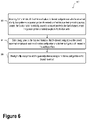
  • FIG. 6 illustrates a method, according to an example implementation.
  • FIG. 7A illustrates a deck platform, according to an example implementation.
  • FIG. 7B illustrates a deck platform, according to an example implementation.
  • FIG. 7C illustrates a deck platform, according to an example implementation.
  • FIG. 7D illustrates a deck platform, according to an example implementation.
  • FIG. 7E illustrates a deck platform, according to an example implementation.
  • FIG. 7F illustrates a deck platform, according to an example implementation.
  • FIG. 8A illustrates a deck platform, according to an example implementation.
  • FIG. 8B illustrates a deck platform, according to an example implementation.
  • FIG. 8C illustrates a portion of a deck platform, according to an example implementation.
  • FIG. 8D illustrates a portion of a deck platform, according to an example implementation.
  • FIG. 9 illustrates a portion of a deck platform, according to an example implementation.
  • FIG. 10A illustrates a portion of a deck platform, according to an example implementation.
  • FIG. 10B illustrates a portion of a deck platform, according to an example implementation.
  • FIG. 11A illustrates several deck platforms, according to an example implementation.
  • FIG. 11B illustrates several deck platforms, according to an example implementation.
  • FIG. 11C illustrates several deck platforms, according to an example implementation.
  • FIG. 12A illustrates an operating scenario, according to an example implementation.
  • FIG. 12B illustrates an operating scenario, according to an example implementation.
  • FIG. 12C illustrates an operating scenario, according to an example implementation.
  • Example methods, devices, and systems are described herein. It should be understood that the words “example” and “exemplary” are used herein to mean “serving as an example, instance, or illustration.” Any example or feature described herein as being an “example” or “exemplary” is not necessarily to be construed as preferred or advantageous over other examples or features. Other examples can be utilized, and other changes can be made, without departing from the scope of the subject matter presented herein.
  • an example system could include a bracket configured to couple to a fixed structure (e.g., a fixed deck platform).
  • the system also includes a flip door portion rotatably coupled to the bracket and a guardrail portion extendibly coupled to the flip door portion.
  • a telescopic linkage further couples the flip door portion to the guardrail portion.
  • a locking mechanism with a locking pin may be utilized to maintain the flip door portion in a raised configuration.
  • Such a system could be configured to be adjusted between the raised configuration and a lowered configuration (e.g., a platform configuration).
  • Such a flip door/guardrail system could be implemented in at least three ways.
  • the system could be operated manually by personnel who could directly raise and lower the guardrail portion and controllably raise and lower the flip door portion.
  • the system could be operated in a “mechanically-assisted” mode where personnel could operate a hand crank or another type of mechanism to mechanically control the raising or lowering of the flip door portion.
  • the system could be operated in a “fully automated” mode where the operator could operate the system via a remote controller to control the configuration of the system.
  • the systems and deck platforms described herein could be intended to comply with various federal and state safety guidelines, such as, but not limited to, current Occupational Safety and Health Administration (OSHA) Regulation 1910.29 (Fall protection systems) (See e.g., Federal Register Volume 81, Issue 223, Nov. 18, 2016). Other United States and international safety standards could be addressed by way of the present systems and deck platforms as well.
  • OSHA current Occupational Safety and Health Administration
  • FIG. 1 illustrates a system 100 , according to an example implementation.
  • the system 100 includes a bracket 110 configured to be coupled to a fixed structure 10 having a walking surface 12 .
  • the various elements of system 100 could be formed from round and/or square metal tubing, rods, pins, or bars. Some elements of system 100 could be formed from L- or C-shaped metal (e.g., angle or channel structural materials). Additionally or alternatively, the various elements of system 100 could be formed from one or more materials such as aluminum, steel, and/or another material. Furthermore, it will be understood that such parts could additionally or alternatively be formed from machined parts.
  • the system 100 also includes a flip door portion 120 rotatably coupled to the bracket 110 .
  • elements that are “rotatably coupled” to one another could be coupled by way of a pin, a rotary bearing; or at least one rotary bushing and a stripper bolt.
  • Other types of flexible and/or adjustable couplings are contemplated to join the relevant elements in a rotatable fashion.
  • elements of system 100 could be rotatably coupled to one another by way of a straight or articulated axle, a clevis pin, a plain bearing (e.g., sleeve bearing/bushing), a ball bearing, or roller bearing, among other possibilities.
  • the system 100 also includes a guardrail portion 130 extendibly coupled to the flip door portion 120 .
  • the guardrail portion 130 could include a top rail 132 and a plurality of extendible posts 134 coupled to the top rail 132 and the flip door portion 120 .
  • a telescoping joint or telescoping coupling could include two elements configured such that one part may slide out from another, lengthening an object (such as a telescope, an antenna, or a lift arm of an aerial work platform) from its rest state.
  • the telescoping movement can be achieved by manual actuation, a jack screw attached to an electric motor, hydraulics, and/or springs.
  • other ways to actuate the telescoping movement could include cables/ropes and pulleys.
  • elements that are “extendibly coupled” to one another could be coupled by way of a linear sliding joint (e.g., a drawer slide rail).
  • the sliding joint could include one or more ball bearings or cylindrical bearings that could facilitate a sliding motion between a first element and a second element so as to “extend” or “retract” with respect to one another.
  • Other ways to extend or retract elements with respect to one another are contemplated and possible within the scope of the present disclosure.
  • the system 100 may include a telescopic linkage 140 further coupling the flip door portion 120 to the guardrail portion 130 .
  • the telescopic linkage 140 could include a plurality of gas springs 142 that are configured to provide an extending force between the guardrail portion 130 and the flip door portion 120 .
  • the system 100 additionally includes a locking mechanism 160 with a locking pin 162 .
  • the locking mechanism 160 could be operable through a groove opening 124 of a top surface 122 of the flip door portion 120 .
  • the locking pin 162 is configured to maintain the flip door portion 120 in a raised configuration.
  • the system 100 could be configured to be adjusted between the raised configuration and a platform configuration.
  • the walking surface 12 defines a reference plane 14 .
  • the raised configuration includes the flip door portion 120 being disposed substantially perpendicular to the reference plane 14 and the guardrail portion 130 being extended away from the flip door portion 120 .
  • the platform configuration could include the flip door portion 120 extending substantially parallel along the reference plane 14 and the guardrail portion 130 being stowed under a top surface 122 of the flip door portion 120 .
  • system 100 may additionally include a guardrail release mechanism 180 .
  • the guardrail release mechanism 180 could be configured to operably maintain the guardrail portion 130 in a retracted guardrail configuration or release the guardrail portion 130 to an extended guardrail configuration.
  • the guardrail release mechanism 180 could be operable by way of a guardrail release handle 182 .
  • the guardrail release handle 182 could be operable from a top surface 122 of the flip door portion 120 .
  • system 100 may include a guardrail retention device 190 .
  • the guardrail retention device 190 could be configured to retain the guardrail portion 130 in the retracted guardrail configuration.
  • the guardrail release mechanism 180 could be configured to operably release the guardrail retention device 190 .
  • system 100 could optionally include a latching device 192 .
  • the latching device 192 could be configured to allow operation of the locking mechanism 160 only if the guardrail portion 130 is in a retracted guardrail configuration.
  • system 100 could include a flip door actuation mechanism 144 .
  • the flip door actuation mechanism 144 could be configured to move the flip door portion 120 between the raised configuration and the platform configuration.
  • the flip door actuation mechanism 144 could include a link arm 145 coupled to the flip door portion 120 .
  • the flip door actuation mechanism 144 may also include a push rod 146 coupled to the link arm 145 .
  • the flip door actuation mechanism 144 could include gearing 147 coupled to the push rod 146 .
  • the flip door actuation mechanism 144 could additionally or alternatively include a hand crank 148 coupled to the gearing 147 .
  • the hand crank 148 could be accessible from a top surface 122 of the flip door portion 120 .
  • the flip door actuation mechanism 144 could alternatively include an electric motor 149 coupled to the gearing 147 .
  • the flip door actuation mechanism 144 could include an electric ball-screw linear actuator comprising an actuator arm with a throw range between 100 mm to 300 mm. Other throw ranges are possible and contemplated.
  • other types of linear actuators are possible and contemplated, including, without limitation, pneumatic actuators, rotary actuators, or hydraulic actuators.
  • the system 100 could include a controller 150 .
  • the controller 150 could include a computer, or another type of microcontroller configured to execute instructions so as to carry out various operations.
  • the controller 150 may include one or more processors 152 and at least one memory 154 .
  • the processor(s) may include, for instance, a microprocessor, an application-specific integrated circuit (ASIC), or a field-programmable gate array (FPGA).
  • ASIC application-specific integrated circuit
  • FPGA field-programmable gate array
  • Other types of processors, circuits, computers, or electronic devices configured to carry out software instructions are contemplated herein.
  • the memory may include a non-transitory computer-readable medium, such as, but not limited to, read-only memory (ROM), programmable read-only memory (PROM), erasable programmable read-only memory (EPROM), electrically erasable programmable read-only memory (EEPROM), non-volatile random-access memory (e.g., flash memory), a solid state drive (SSD), a hard disk drive (HDD), a Compact Disc (CD), a Digital Video Disk (DVD), a digital tape, read/write (R/W) CDs, R/W DVDs, etc.
  • ROM read-only memory
  • PROM programmable read-only memory
  • EPROM erasable programmable read-only memory
  • EEPROM electrically erasable programmable read-only memory
  • non-volatile random-access memory e.g., flash memory
  • SSD solid state drive
  • HDD hard disk drive
  • CD Compact Disc
  • DVD Digital Video Disk
  • digital tape read
  • the one or more processors of controller 150 may be configured to execute instructions stored in the memory so as to carry out various operations and method steps/blocks described herein.
  • the instructions may be stored in a permanent or transitory manner in the memory.
  • the operations carried out by the controller 150 may include causing the flip door actuation mechanism 144 to controllably move the flip door portion 120 between the raised configuration and the platform configuration.
  • the operations may additionally include causing the guardrail portion 130 to controllably move between a retracted guardrail configuration and an extended guardrail configuration.
  • controller-based operations could take the place of, supplement, or make safer manual tasks during aircraft assembly line pulsing activities.
  • the flip door portion 120 could be automatically or semi-automatically adjusted between the raised configuration and the platform configuration.
  • the systems and methods described herein may provide that the guardrail portion 130 could be automatically or semi-automatically adjusted between a retracted guardrail configuration and an extended guardrail configuration.
  • controller-based (e.g., automated or semi-automated) operations could prevent injuries to worker personnel, such as repetitive-use injuries and falls.
  • the system 100 includes a remote unit 170 .
  • the remote unit 170 could be configured to control one or more configurations of the system 100 .
  • the remote unit 170 may include a wired remote controller having a user interface 172 .
  • the user interface 172 at least one button 174 .
  • Other types of remote units are possible and contemplated.
  • a user could press the at least one button 174 to provide a command to extend or retract the system 100 between the raised configuration and the platform configuration.
  • the remote unit 170 could include a “RAISE” button and a “LOWER” button. User interactions with such buttons could provide corresponding commands to the flip door actuation mechanism 144 and/or controller 150 to adjust a position of the flip door portion 120 and/or the guardrail portion 130 .
  • FIG. 2A illustrates the system 100 of FIG. 1 , according to an example implementation.
  • system 100 may include a raised flip door portion 120 that is arranged substantially perpendicular to a walking surface (e.g., walking surface 12 ) and/or a reference plane (e.g., reference plane 14 ).
  • the guardrail portion 130 particularly the top rail 132 could be extended away from the flip door portion 120 and the corresponding walking surface and/or reference plane.
  • the system 100 may provide protection from falls and/or prevent access to unauthorized areas by providing a physical barrier and guardrail.
  • FIG. 2B illustrates the system 100 of FIG. 1 , according to an example implementation.
  • FIG. 2B provides an alternate view of the configuration illustrated and described with reference to FIG. 2A .
  • FIG. 2C illustrates the system 100 of FIG. 1 , according to an example implementation.
  • the system 100 could be arranged in a configuration that includes the flip door portion 120 being raised (e.g., substantially perpendicular) with respect to the walking surface and/or reference plane.
  • the guardrail portion 130 may be retracted (e.g., unextended) with respect to the flip door portion 120 .
  • the system 100 may be in an intermediate position provided between the configuration illustrated in FIG. 2A and the configuration illustrated in FIG. 2D .
  • FIG. 2D illustrates the system 100 of FIG. 1 , according to an example implementation.
  • the system 100 may be arranged in a PLATFORM CONFIGURATION, which could include the flip door portion 120 arranged as being substantially parallel to the walking surface 12 and/or the corresponding reference plane 14 .
  • the system 100 may provide a standing platform and/or walkway for users (e.g., maintenance personnel) while working.
  • the guardrail portion 130 would generally be retracted so as to prevent “mark off” or other types of damage to an airplane structure (e.g., aircraft bulkhead or wing, etc.).
  • FIG. 3A illustrates the system 100 of FIG. 1 , according to an example implementation.
  • FIG. 3A provides an alternate view of the system 100 while in the RAISED FLIP DOOR WITH EXTENDED GUARDRAIL CONFIGURATION.
  • FIG. 3B illustrates the system 100 of FIG. 1 , according to an example implementation.
  • FIG. 3B provides an alternate view of the system 100 while in the RAISED FLIP DOOR WITH EXTENDED GUARDRAIL CONFIGURATION.
  • FIG. 3B illustrates the groove opening 124 in the top surface 122 of the flip door portion 120 .
  • FIG. 3B illustrates a portion of the locking mechanism 160 that is accessible by way of the groove opening 124 .
  • the locking mechanism 160 could include a pin or bar that can be manually manipulated from a first position along the groove opening 124 to a second position along the groove opening 124 so as to lock and/or unlock the locking mechanism 160 .
  • FIG. 3B illustrates a portion of the guardrail release mechanism 180 , which could include a guardrail release handle 182 that is accessible from the top surface 122 of the flip door portion 120 .
  • FIG. 4A illustrates the system 100 of FIG. 1 , according to an example implementation.
  • the system 100 could be in the PLATFORM CONFIGURATION.
  • system 100 may include a flip door actuation mechanism 144 .
  • the flip door actuation mechanism 144 could include, for example, gearing 147 , a hand crank 148 , a push rod 146 , and/or a link arm 145 . It will be understood that other ways to mechanically actuate the flip door portion 120 are contemplated and possible within the context of the current disclosure.
  • FIG. 4B illustrates the system 100 of FIG. 1 , according to an example implementation.
  • FIG. 4B may illustrate the system 100 as being in the RAISED FLIP DOOR WITH EXTENDED GUARDRAIL CONFIGURATION.
  • the flip door actuation mechanism 144 could include an electric motor 149 configured to drive the gearing 147 , push rod 146 and/or the link arm 145 .
  • the electric motor 149 could be controlled by controller 150 and/or the remote unit 170 .
  • the controller 150 and/or the remote unit 170 could provide instructions (e.g., electrical signals) to the electric motor 149 to rotate a jack screw (e.g., push rod 146 ) so as to actuate the link arm 145 so as to raise or lower the flip door portion 120 .
  • the gearing 147 could be attached to one or more cables (e.g., cable 402 and/or cable 404 ) so as to extend or retract the top rail 132 of the guardrail portion 130 . It will be understood that other mechanical configurations to raise or lower the flip door portion 120 and extend or retract the top rail 132 are possible. All such other mechanical configurations are contemplated within the context of the present disclosure.
  • FIG. 4C illustrates the system 100 of FIG. 1 , according to an example implementation.
  • FIG. 4C is a close up view of the underside of system 100 .
  • the hand crank 148 could be operable to i) raise or lower the flip door portion 120 by way of push rod 146 and link arm 145 and; ii) extend or retract the top rail 132 by way of cable 402 and/or cable 404 .
  • FIG. 5 illustrates a deck platform 500 , according to an example implementation.
  • the deck platform 500 could include a fixed deck platform portion 510 that includes a walking surface 12 .
  • the deck platform 500 also includes a movable deck platform portion 520 .
  • the movable deck platform portion 520 could be similar or identical to system 100 , as illustrated and described in reference to FIGS. 1, 2A -D, 3 A-B, and 4 A-C.
  • the movable deck platform portion 520 could be operable to rotate or fold with respect to the fixed deck platform portion 510 so as to provide clearance for an aircraft to move along an aircraft assembly line.
  • Other types of deck platforms are possible and contemplated herein.
  • the movable deck platform portion 520 While “pulsing” the aircraft assembly line, the movable deck platform portion 520 could rotate to a substantially vertical position to provide a protective barrier for personnel with the extended guardrails while rotating the movable deck platform portion up and away from the aircraft fuselage. Once an aircraft is in proper position for work to commence, the movable deck platform portion 520 may be rotated into a substantially horizontal position, and the guardrail portion 130 described herein could retract substantially under a top surface 122 of the flip door portion 120 .
  • the movable deck platform portion 520 could include a bracket 110 configured to be coupled to the fixed deck platform portion 510 and a flip door portion 120 rotatably coupled to the bracket 110 .
  • the movable deck platform portion 520 also includes a guardrail portion 130 extendibly coupled to the flip door portion 120 .
  • the movable deck platform portion 520 additionally includes a telescopic linkage 140 .
  • the telescopic linkage 140 further couples the flip door portion 120 to the guardrail portion 130 .
  • the movable deck platform portion 520 also includes a locking mechanism 160 with a locking pin 162 .
  • the locking pin 162 is configured to maintain the flip door portion 120 in a raised configuration.
  • the movable deck platform portion 520 is configured to be adjusted between the raised configuration and a platform configuration.
  • the walking surface 12 could define a reference plane 14 .
  • the raised configuration includes the flip door portion 120 disposed substantially perpendicular to the reference plane 14 and the guardrail portion 130 being extended away from the flip door portion 120 .
  • the platform configuration comprises the flip door portion 120 extending substantially parallel along the reference plane 14 and the guardrail portion 130 being stowed under a top surface 122 of the flip door portion 120 .
  • FIG. 6 illustrates a method 600 , according to an example implementation.
  • Method 600 may involve elements of system 100 and/or deck platforms 500 as illustrated and described in reference to FIGS. 1 and 5 . While FIG. 6 illustrates certain blocks or steps of method 600 as following a specific order, it will be understood that some blocks or steps could be omitted and/or other blocks or steps could be included. Furthermore, the blocks or steps could be carried out in a different order, in parallel (e.g., concurrently), and/or repeated. In some embodiments, at least some blocks of method 600 could be carried out, at least in part, by controller 150 , as illustrated and described in reference to FIG. 1 .
  • Block 602 includes receiving, from a remote unit (e.g., remote unit 170 ), information indicative of a desired configuration or a desired movement of a flip door portion (e.g., flip door portion 120 ) and a guardrail portion (e.g., guardrail portion 130 ) with respect to a fixed structure 10 having a walking surface 12 .
  • the flip door portion is rotatably coupled to a bracket (e.g., bracket 110 ) attached to the fixed structure 10 .
  • the guardrail portion is rotatably coupled to the flip door portion.
  • a user could push a button (e.g., button 174 ) on the remote unit corresponding to a desired configuration or desired movement of the flip door portion and guardrail portion.
  • a button e.g., button 174
  • the user could interact with a user interface (e.g., user interface 172 ) of the remote unit to indicate the desired configuration or desired movement.
  • Block 604 includes determining, based on the received information, that the desired configuration or the desired movement comprises at least one of a raised configuration or a platform configuration with respect to the walking surface. Determining the desired configuration or desired movement could include comparing the received information to a look up table and/or carrying out instructions otherwise associated with the received information.
  • Block 606 includes moving the flip door portion and the guardrail portion according to the desired configuration or the desired movement.
  • moving the flip door portion and/or the guardrail portion could be controlled by a controller (e.g., controller 150 ).
  • the controller could provide instructions and/or control signals to a flip door actuation mechanism (e.g., flip door actuation mechanism 144 ) so as to mechanically move the flip door portion and/or the guardrail portion.
  • the flip door portion and/or the guardrail portion could be moved manually.
  • method 600 may additionally or alternatively include, in response to determining that the desired movement comprises the raised configuration: rotating the flip door portion upward with respect to the walking surface of the fixed structure, releasing a guardrail release mechanism (e.g., guardrail release mechanism 180 ), and extending the guardrail portion with respect to the flip door portion.
  • a guardrail release mechanism e.g., guardrail release mechanism 180
  • method 600 may include, in response to determining the desired movement comprises the platform configuration: retracting the guardrail portion with respect to the flip door portion, engaging a guardrail retention device, rotating the flip door portion downward with respect to the walking surface of the fixed structure. It will be understood that other physical adjustments of the various elements of the system and/or deck platform are possible within the context of the present disclosure so as to perform the desired movement and/or achieve the desired configuration.
  • the information about the desired configuration or the desired movement could include a signal from a user interaction, which could include a user pushing a button, touching a touchscreen, moving a switch, a voice command, etc.
  • the remote unit could include two buttons—a first button to lower the flip door portion (and retract the guardrail portion) and a second button to raise the flip door portion (and extend the guardrail portion).
  • the remote unit may transmit the desired movement (lower the flip door portion) to an actuator controller or another type of control system.
  • the remote unit may transmit the desired movement (raise the flip door portion) to an actuator controller or another type of control system.
  • the signal to raise or lower the flip door portion may be transmitted while the user is pushing the corresponding button on the remote unit. For instance, a user may be able to control an amount of movement of the flip door portion by releasing a button once the flip door portion has reached a desired configuration (e.g., an intermediate configuration, etc.).
  • a desired configuration e.g., an intermediate configuration, etc.
  • the received information could include a desired configuration (e.g., fully raised flip door portion or fully lowered flip door portion).
  • a desired configuration e.g., fully raised flip door portion or fully lowered flip door portion.
  • a user need only push the corresponding button (or touchscreen icon) once to provide a signal relating to the desired configuration.
  • the information about the desired configuration or the desired movement could also include a signal from a computing system.
  • the signal could include an automated raise command or an automated lower command.
  • the information about the desired configuration or the desired movement could be provided according to a predetermined schedule and/or based on a planned movement of an aircraft, personnel shift change, among other possibilities.
  • FIGS. 7A-7F illustrate various views of a deck platform 700 , according to an example implementation.
  • Deck platform 700 could be similar or identical to system 100 and/or deck platform 500 as illustrated and described in reference to FIGS. 1, 2A -D, 3 A-B, 4 A-C, and 5 .
  • deck platform 700 may include a back plate 710 .
  • the back plate 710 could cover and/or physically protect other portions of the deck platform 700 , such as the moving mechanisms configured to move the flip door portion (e.g., flip door portion 120 , locking mechanism 160 , guardrail release mechanism 180 , and flip door actuation mechanism 144 ), telescopic linkage (e.g., telescopic linkage 140 ) and/or the guardrail portion (e.g., guardrail portion 130 ).
  • the moving mechanisms configured to move the flip door portion (e.g., flip door portion 120 , locking mechanism 160 , guardrail release mechanism 180 , and flip door actuation mechanism 144 ), telescopic linkage (e.g., telescopic linkage 140 ) and/or the guardrail portion (e.g., guardrail portion 130 ).
  • deck platform 700 could include one or more stake pockets 702 a , 702 b .
  • the stake pockets 702 a , 702 b could include openings in the deck platform 700 that may pass through a walking/deck surface (e.g., top surface 122 ).
  • the stake pockets 702 a and 702 b could be configured to accept physical barrier gates to prevent personnel from falling off a side of the deck platform 700 .
  • the deck platform 700 could be operated in a manual fashion.
  • personnel may:
  • Toggle spring-loaded lock pin lever e.g., locking mechanism 160
  • Toggle spring-loaded lock pin lever e.g., locking mechanism 160
  • personnel may:
  • guardrail release latch e.g., guardrail release mechanism 180
  • the deck platform 700 may be configured to flip substantially 180 degrees into a load/unload configuration.
  • personnel may:
  • FIGS. 8A and 8B illustrate a deck platform 800 , according to an example implementation.
  • Deck platform 800 may be similar or identical to deck platform 700 except in that a back plate (e.g., back plate 710 ) may be removed for illustrative purposes.
  • deck platform 800 could be operated utilizing mechanical assistance, as described herein.
  • deck platform 800 may include a dampener 802 configured to ease the flip door into deployed (lowered) and/or raised positions.
  • the dampener 802 may include a gas spring or another type of opposing force to prevent/avoid abrupt “slamming” or falling of the flip door.
  • deck platform 800 may include a cable guide assembly 804 .
  • the cable guide assembly 804 may include one or more pulleys and/or sprockets configured to guide a wire cable 806 .
  • the wire cable 806 could be configured to help raise and/or lower the guard rail.
  • FIGS. 8C and 8D illustrate portions 830 and 840 of a deck platform 800 , according to an example implementation.
  • FIG. 9 illustrates a portion 900 of a deck platform 800 , according to an example implementation.
  • deck platform 800 may include a hand crank 148 coupled to a shaft 902 .
  • personnel may:
  • personnel may:
  • personnel may:
  • FIG. 10A illustrates a portion 1000 of a deck platform 800 , according to an example implementation.
  • FIG. 10B illustrates a portion 1020 of a deck platform 800 , according to an example implementation.
  • the deck platform 800 or other systems described herein may include an electric motor 149 that could be installed and integrated onto the shaft 902 of the hand crank 148 .
  • the electric motor 149 could be coupled to the shaft 902 via a quick disconnect 1002 to provide a way for personnel to operate the hand crank 148 in case of motor failure.
  • a mechanical linkage e.g., link arm 145 and push rod 146
  • link arm 145 and push rod 146 may be configured to rotate the flip door and/or deploy the telescoping guardrail in a single, fluid motion.
  • the electric motor 149 could be controlled by the remote unit 170 , or another control mechanism.
  • programmable logic may be utilized to provide a safety interlock system.
  • the safety interlock system may provide improved (e.g., redundant) safety for personnel by detecting whether physical barrier gates (e.g., popsicle sticks) are within stake pockets of adjacent flip doors before actuating a particular flip door.
  • physical barrier gates e.g., popsicle sticks
  • programmable logic may relieve some or all tie-off requirements for personnel. Furthermore, full automation of load/unload and flip door operation may reduce potential hazards for personnel and/or reduce the risk of injury.
  • FIG. 11A illustrates several deck platforms 1100 in a platform configuration 1110 , according to an example implementation.
  • FIG. 11B illustrates an alternative view 1120 of the several deck platforms 1100 in a platform configuration 1110 , according to an example implementation.
  • FIG. 11C illustrates several deck platforms 1100 in a flipped-back configuration 1130 , according to an example implementation.
  • FIGS. 12A-12C illustrate various views of an operating scenario 1200 , according to an example implementation.
  • various operating scenarios could include installation of one or more physical barrier gates 1202 to prevent personnel from falling into open portions of the deck platform.
  • a step or block that represents a processing of information can correspond to circuitry that can be configured to perform the specific logical functions of a herein-described method or technique.
  • a step or block that represents a processing of information can correspond to a module, a segment, or a portion of program code (including related data).
  • the program code can include one or more instructions executable by a processor for implementing specific logical functions or actions in the method or technique.
  • the program code and/or related data can be stored on any type of computer readable medium such as a storage device including a disk, hard drive, or other storage medium.
  • the computer readable medium can also include non-transitory computer readable media such as computer-readable media that store data for short periods of time like register memory, processor cache, and random access memory (RAM).
  • the computer readable media can also include non-transitory computer readable media that store program code and/or data for longer periods of time.
  • the computer readable media may include secondary or persistent long term storage, like read only memory (ROM), optical or magnetic disks, compact-disc read only memory (CD-ROM), for example.
  • the computer readable media can also be any other volatile or non-volatile storage systems.
  • a computer readable medium can be considered a computer readable storage medium, for example, or a tangible storage device.

Landscapes

  • Engineering & Computer Science (AREA)
  • Architecture (AREA)
  • Civil Engineering (AREA)
  • Structural Engineering (AREA)
  • Mechanical Engineering (AREA)
  • Refuge Islands, Traffic Blockers, Or Guard Fence (AREA)

Abstract

The present disclosure relates systems and methods involving movable/adjustable platforms and/or guardrails. An example system a bracket configured to be coupled to a fixed structure having a walking surface and a flip door portion rotatably coupled to the bracket. The system also includes a guardrail portion extendibly coupled to the flip door portion and a telescopic linkage further coupling the flip door portion to the guardrail portion. The system additionally includes a locking mechanism with a locking pin. The locking pin is configured to maintain the flip door portion in a raised configuration. The system is configured to be adjusted between the raised configuration and a platform configuration.

Description

FIELD
The present disclosure generally relates to systems and methods involving adjustable walkway platforms and/or movable guardrails.
BACKGROUND
During their manufacture in an airplane production facility, aircraft move along the production line between different stages of assembly. This periodic (e.g., daily) movement is called “pulsing” the production line.
In some stages of assembly, personnel may access elevated portions of the aircraft by way of fixed deck platforms positioned within a few feet from the respective sides of the aircraft's fuselage. In such scenarios, movable deck platforms (e.g., flip doors) may be coupled to the fixed deck platforms and may be operable to provide personnel with the remaining platform access up to the body of the aircraft.
Prior to pulsing the production line, the movable deck platforms may be manually rotated (e.g., raised upward or lowered downward away from the fuselage) so as to provide sufficient clearance for airplane movement along the production line. To avoid falls from the fixed deck platform at this stage, removable guardrails can be manually installed near the end of the fixed deck platform.
Once a new airplane is in a proper position along the production line, the guardrails may be manually removed and the movable deck platform could be reinstalled or rotated to a horizontal position to once again close the gap between the fixed deck platform and the aircraft fuselage and provide standing access for personnel immediately next to the fuselage.
Frequent handling of the removable guardrail sections, which can weigh 40 pounds or more, can lead to repetitive lift injuries. Furthermore, personnel who install and remove the guardrails can be at particular risk of falling or dropping the guardrails.
SUMMARY
In an aspect, a system is described. The system includes a bracket configured to be coupled to a fixed structure having a walking surface. The system also includes a flip door portion rotatably coupled to the bracket and a guardrail portion extendibly coupled to the flip door portion. The system includes a telescopic linkage further coupling the flip door portion to the guardrail portion and a locking mechanism with a locking pin. The locking pin is configured to maintain the flip door portion in a raised configuration. The system is configured to be adjusted between the raised configuration and a platform configuration.
In an aspect, a deck platform is described. The deck platform includes a fixed deck platform portion having a walking surface. The deck platform also includes a movable deck platform portion. The movable deck platform portion includes a bracket configured to be coupled to the fixed deck platform portion. The movable deck platform portion additionally includes a flip door portion rotatably coupled to the bracket and a guardrail portion extendibly coupled to the flip door portion. The movable deck platform portion further includes a telescopic linkage further coupling the flip door portion to the guardrail portion and a locking mechanism with a locking pin. The locking pin is configured to maintain the flip door portion in a raised configuration. The movable deck platform portion is configured to be adjusted between the raised configuration and a platform configuration.
In a further aspect, a method is described. The method includes receiving, from a remote unit, information indicative of a desired configuration or a desired movement of a flip door portion and a guardrail portion with respect to a fixed structure having a walking surface. The flip door portion is rotatably coupled to a bracket attached to the fixed structure. The guardrail portion is rotatably coupled to the flip door portion. The method also includes determining, based on the received information, that the desired configuration or the desired movement includes at least one of: a raised configuration or a platform configuration with respect to the walking surface. The method also includes moving the flip door portion and the guardrail portion according to the desired configuration or the desired movement.
Other aspects, examples, and implementations will become apparent to those of ordinary skill in the art by reading the following detailed description with reference, where appropriate, to the accompanying drawings.
BRIEF DESCRIPTION OF THE FIGURES
The novel features believed characteristic of the illustrative examples are set forth in the appended claims. The illustrative examples, however, as well as a preferred mode of use, further objectives and descriptions thereof, will best be understood by reference to the following detailed description of an illustrative example of the present disclosure when read in conjunction with the accompanying drawings, wherein:
FIG. 1 illustrates a system, according to an example implementation.
FIG. 2A illustrates the system of FIG. 1, according to an example implementation.
FIG. 2B illustrates the system of FIG. 1, according to an example implementation.
FIG. 2C illustrates the system of FIG. 1, according to an example implementation.
FIG. 2D illustrates the system of FIG. 1, according to an example implementation.
FIG. 3A illustrates the system of FIG. 1, according to an example implementation.
FIG. 3B illustrates the system of FIG. 1, according to an example implementation.
FIG. 4A illustrates the system of FIG. 1, according to an example implementation.
FIG. 4B illustrates the system of FIG. 1, according to an example implementation.
FIG. 4C illustrates the system of FIG. 1, according to an example implementation.
FIG. 5 illustrates a deck platform, according to an example implementation.
FIG. 6 illustrates a method, according to an example implementation.
FIG. 7A illustrates a deck platform, according to an example implementation.
FIG. 7B illustrates a deck platform, according to an example implementation.
FIG. 7C illustrates a deck platform, according to an example implementation.
FIG. 7D illustrates a deck platform, according to an example implementation.
FIG. 7E illustrates a deck platform, according to an example implementation.
FIG. 7F illustrates a deck platform, according to an example implementation.
FIG. 8A illustrates a deck platform, according to an example implementation.
FIG. 8B illustrates a deck platform, according to an example implementation.
FIG. 8C illustrates a portion of a deck platform, according to an example implementation.
FIG. 8D illustrates a portion of a deck platform, according to an example implementation.
FIG. 9 illustrates a portion of a deck platform, according to an example implementation.
FIG. 10A illustrates a portion of a deck platform, according to an example implementation.
FIG. 10B illustrates a portion of a deck platform, according to an example implementation.
FIG. 11A illustrates several deck platforms, according to an example implementation.
FIG. 11B illustrates several deck platforms, according to an example implementation.
FIG. 11C illustrates several deck platforms, according to an example implementation.
FIG. 12A illustrates an operating scenario, according to an example implementation.
FIG. 12B illustrates an operating scenario, according to an example implementation.
FIG. 12C illustrates an operating scenario, according to an example implementation.
DETAILED DESCRIPTION
I. Overview
Example methods, devices, and systems are described herein. It should be understood that the words “example” and “exemplary” are used herein to mean “serving as an example, instance, or illustration.” Any example or feature described herein as being an “example” or “exemplary” is not necessarily to be construed as preferred or advantageous over other examples or features. Other examples can be utilized, and other changes can be made, without departing from the scope of the subject matter presented herein.
Thus, the examples described herein are not meant to be limiting. Aspects of the present disclosure, as generally described herein, and illustrated in the figures, can be arranged, substituted, combined, separated, and designed in a wide variety of different configurations, all of which are contemplated herein.
Further, unless context suggests otherwise, the features illustrated in each of the figures may be used in combination with one another. Thus, the figures should be generally viewed as component aspects of one or more overall examples, with the understanding that not all illustrated features are necessary for each example.
The present disclosure relates to an adjustable guardrail/flip door system and a movable deck platform that may improve safety and efficiency in such scenarios. Namely, an example system could include a bracket configured to couple to a fixed structure (e.g., a fixed deck platform). The system also includes a flip door portion rotatably coupled to the bracket and a guardrail portion extendibly coupled to the flip door portion. A telescopic linkage further couples the flip door portion to the guardrail portion. Furthermore, a locking mechanism with a locking pin may be utilized to maintain the flip door portion in a raised configuration. Such a system could be configured to be adjusted between the raised configuration and a lowered configuration (e.g., a platform configuration).
Such a flip door/guardrail system could be implemented in at least three ways. First, the system could be operated manually by personnel who could directly raise and lower the guardrail portion and controllably raise and lower the flip door portion. Second, the system could be operated in a “mechanically-assisted” mode where personnel could operate a hand crank or another type of mechanism to mechanically control the raising or lowering of the flip door portion. Third, the system could be operated in a “fully automated” mode where the operator could operate the system via a remote controller to control the configuration of the system.
In some embodiments, the systems and deck platforms described herein could be intended to comply with various federal and state safety guidelines, such as, but not limited to, current Occupational Safety and Health Administration (OSHA) Regulation 1910.29 (Fall protection systems) (See e.g., Federal Register Volume 81, Issue 223, Nov. 18, 2016). Other United States and international safety standards could be addressed by way of the present systems and deck platforms as well.
II. Example Systems
FIG. 1 illustrates a system 100, according to an example implementation. The system 100 includes a bracket 110 configured to be coupled to a fixed structure 10 having a walking surface 12. As described herein, the various elements of system 100 could be formed from round and/or square metal tubing, rods, pins, or bars. Some elements of system 100 could be formed from L- or C-shaped metal (e.g., angle or channel structural materials). Additionally or alternatively, the various elements of system 100 could be formed from one or more materials such as aluminum, steel, and/or another material. Furthermore, it will be understood that such parts could additionally or alternatively be formed from machined parts.
The system 100 also includes a flip door portion 120 rotatably coupled to the bracket 110. As described herein, elements that are “rotatably coupled” to one another could be coupled by way of a pin, a rotary bearing; or at least one rotary bushing and a stripper bolt. Other types of flexible and/or adjustable couplings are contemplated to join the relevant elements in a rotatable fashion. For example, it will be understood that other types of rotatable couplings are contemplated herein. Without limitation, elements of system 100 could be rotatably coupled to one another by way of a straight or articulated axle, a clevis pin, a plain bearing (e.g., sleeve bearing/bushing), a ball bearing, or roller bearing, among other possibilities.
The system 100 also includes a guardrail portion 130 extendibly coupled to the flip door portion 120. In various embodiments, the guardrail portion 130 could include a top rail 132 and a plurality of extendible posts 134 coupled to the top rail 132 and the flip door portion 120.
As described herein, elements that are “extendibly coupled” to one another could be coupled in a telescoping manner. For example, a telescoping joint or telescoping coupling could include two elements configured such that one part may slide out from another, lengthening an object (such as a telescope, an antenna, or a lift arm of an aerial work platform) from its rest state. In some embodiments, the telescoping movement can be achieved by manual actuation, a jack screw attached to an electric motor, hydraulics, and/or springs. However, other ways to actuate the telescoping movement could include cables/ropes and pulleys. In some embodiments, elements that are “extendibly coupled” to one another could be coupled by way of a linear sliding joint (e.g., a drawer slide rail). In such scenarios, the sliding joint could include one or more ball bearings or cylindrical bearings that could facilitate a sliding motion between a first element and a second element so as to “extend” or “retract” with respect to one another. Other ways to extend or retract elements with respect to one another are contemplated and possible within the scope of the present disclosure.
In some embodiments, the system 100 may include a telescopic linkage 140 further coupling the flip door portion 120 to the guardrail portion 130. In such scenarios, the telescopic linkage 140 could include a plurality of gas springs 142 that are configured to provide an extending force between the guardrail portion 130 and the flip door portion 120.
In various embodiments, the system 100 additionally includes a locking mechanism 160 with a locking pin 162. In such scenarios, the locking mechanism 160 could be operable through a groove opening 124 of a top surface 122 of the flip door portion 120. The locking pin 162 is configured to maintain the flip door portion 120 in a raised configuration. In such scenarios, the system 100 could be configured to be adjusted between the raised configuration and a platform configuration.
In example embodiments, the walking surface 12 defines a reference plane 14. In such scenarios, the raised configuration includes the flip door portion 120 being disposed substantially perpendicular to the reference plane 14 and the guardrail portion 130 being extended away from the flip door portion 120.
By the term “substantially” used herein, it is meant that the recited characteristic, parameter, or value need not be achieved exactly, but that deviations or variations, including for example, tolerances, measurement error, measurement accuracy limitations and other factors known to skill in the art, may occur in amounts that do not preclude the effect the characteristic was intended to provide.
Additionally or alternatively, the platform configuration could include the flip door portion 120 extending substantially parallel along the reference plane 14 and the guardrail portion 130 being stowed under a top surface 122 of the flip door portion 120.
In some embodiments, system 100 may additionally include a guardrail release mechanism 180. The guardrail release mechanism 180 could be configured to operably maintain the guardrail portion 130 in a retracted guardrail configuration or release the guardrail portion 130 to an extended guardrail configuration. In example embodiments, the guardrail release mechanism 180 could be operable by way of a guardrail release handle 182. In such scenarios, the guardrail release handle 182 could be operable from a top surface 122 of the flip door portion 120.
In various embodiments, system 100 may include a guardrail retention device 190. In such scenarios, the guardrail retention device 190 could be configured to retain the guardrail portion 130 in the retracted guardrail configuration. Furthermore, the guardrail release mechanism 180 could be configured to operably release the guardrail retention device 190.
In example embodiments, system 100 could optionally include a latching device 192. In such scenarios, the latching device 192 could be configured to allow operation of the locking mechanism 160 only if the guardrail portion 130 is in a retracted guardrail configuration.
In some embodiments, system 100 could include a flip door actuation mechanism 144. The flip door actuation mechanism 144 could be configured to move the flip door portion 120 between the raised configuration and the platform configuration. By way of example, the flip door actuation mechanism 144 could include a link arm 145 coupled to the flip door portion 120. In such scenarios, the flip door actuation mechanism 144 may also include a push rod 146 coupled to the link arm 145. Additionally or alternatively, the flip door actuation mechanism 144 could include gearing 147 coupled to the push rod 146.
In various embodiments, the flip door actuation mechanism 144 could additionally or alternatively include a hand crank 148 coupled to the gearing 147. In some such scenarios, the hand crank 148 could be accessible from a top surface 122 of the flip door portion 120.
In some embodiments, the flip door actuation mechanism 144 could alternatively include an electric motor 149 coupled to the gearing 147. As an example, the flip door actuation mechanism 144 could include an electric ball-screw linear actuator comprising an actuator arm with a throw range between 100 mm to 300 mm. Other throw ranges are possible and contemplated. Furthermore, other types of linear actuators are possible and contemplated, including, without limitation, pneumatic actuators, rotary actuators, or hydraulic actuators.
In example embodiments, the system 100 could include a controller 150. The controller 150 could include a computer, or another type of microcontroller configured to execute instructions so as to carry out various operations. For example, the controller 150 may include one or more processors 152 and at least one memory 154. The processor(s) may include, for instance, a microprocessor, an application-specific integrated circuit (ASIC), or a field-programmable gate array (FPGA). Other types of processors, circuits, computers, or electronic devices configured to carry out software instructions are contemplated herein.
The memory may include a non-transitory computer-readable medium, such as, but not limited to, read-only memory (ROM), programmable read-only memory (PROM), erasable programmable read-only memory (EPROM), electrically erasable programmable read-only memory (EEPROM), non-volatile random-access memory (e.g., flash memory), a solid state drive (SSD), a hard disk drive (HDD), a Compact Disc (CD), a Digital Video Disk (DVD), a digital tape, read/write (R/W) CDs, R/W DVDs, etc.
The one or more processors of controller 150 may be configured to execute instructions stored in the memory so as to carry out various operations and method steps/blocks described herein. The instructions may be stored in a permanent or transitory manner in the memory.
In some examples, the operations carried out by the controller 150 may include causing the flip door actuation mechanism 144 to controllably move the flip door portion 120 between the raised configuration and the platform configuration.
In some embodiments, the operations may additionally include causing the guardrail portion 130 to controllably move between a retracted guardrail configuration and an extended guardrail configuration.
Such operations could be beneficial because the controller-based operations could take the place of, supplement, or make safer manual tasks during aircraft assembly line pulsing activities. Namely, instead of using personnel to manually replace guardrails, the flip door portion 120 could be automatically or semi-automatically adjusted between the raised configuration and the platform configuration. Additionally or alternatively, the systems and methods described herein may provide that the guardrail portion 130 could be automatically or semi-automatically adjusted between a retracted guardrail configuration and an extended guardrail configuration. Such controller-based (e.g., automated or semi-automated) operations could prevent injuries to worker personnel, such as repetitive-use injuries and falls.
In various embodiments, the system 100 includes a remote unit 170. The remote unit 170 could be configured to control one or more configurations of the system 100. The remote unit 170 may include a wired remote controller having a user interface 172. In such scenarios, the user interface 172 at least one button 174. Other types of remote units are possible and contemplated.
In some embodiments, a user could press the at least one button 174 to provide a command to extend or retract the system 100 between the raised configuration and the platform configuration. For instance, the remote unit 170 could include a “RAISE” button and a “LOWER” button. User interactions with such buttons could provide corresponding commands to the flip door actuation mechanism 144 and/or controller 150 to adjust a position of the flip door portion 120 and/or the guardrail portion 130.
FIG. 2A illustrates the system 100 of FIG. 1, according to an example implementation. As illustrated in FIG. 2A, system 100 may include a raised flip door portion 120 that is arranged substantially perpendicular to a walking surface (e.g., walking surface 12) and/or a reference plane (e.g., reference plane 14). Additionally, as illustrated in FIG. 2A, the guardrail portion 130, particularly the top rail 132 could be extended away from the flip door portion 120 and the corresponding walking surface and/or reference plane. In such a configuration (e.g., RAISED FLIP DOOR WITH EXTENDED GUARDRAIL CONFIGURATION), the system 100 may provide protection from falls and/or prevent access to unauthorized areas by providing a physical barrier and guardrail.
FIG. 2B illustrates the system 100 of FIG. 1, according to an example implementation. FIG. 2B provides an alternate view of the configuration illustrated and described with reference to FIG. 2A.
FIG. 2C illustrates the system 100 of FIG. 1, according to an example implementation. As illustrated in FIG. 2C, the system 100 could be arranged in a configuration that includes the flip door portion 120 being raised (e.g., substantially perpendicular) with respect to the walking surface and/or reference plane. Furthermore, in some embodiments, the guardrail portion 130 may be retracted (e.g., unextended) with respect to the flip door portion 120. In such a configuration (e.g., RAISED FLIP DOOR WITH RETRACTED GUARDRAIL CONFIGURATION), the system 100 may be in an intermediate position provided between the configuration illustrated in FIG. 2A and the configuration illustrated in FIG. 2D.
FIG. 2D illustrates the system 100 of FIG. 1, according to an example implementation. As illustrated in FIG. 2D, the system 100 may be arranged in a PLATFORM CONFIGURATION, which could include the flip door portion 120 arranged as being substantially parallel to the walking surface 12 and/or the corresponding reference plane 14. In such a manner, the system 100 may provide a standing platform and/or walkway for users (e.g., maintenance personnel) while working. In such a configuration, the guardrail portion 130 would generally be retracted so as to prevent “mark off” or other types of damage to an airplane structure (e.g., aircraft bulkhead or wing, etc.).
FIG. 3A illustrates the system 100 of FIG. 1, according to an example implementation. FIG. 3A provides an alternate view of the system 100 while in the RAISED FLIP DOOR WITH EXTENDED GUARDRAIL CONFIGURATION.
FIG. 3B illustrates the system 100 of FIG. 1, according to an example implementation. FIG. 3B provides an alternate view of the system 100 while in the RAISED FLIP DOOR WITH EXTENDED GUARDRAIL CONFIGURATION. In particular, FIG. 3B illustrates the groove opening 124 in the top surface 122 of the flip door portion 120. Furthermore, FIG. 3B illustrates a portion of the locking mechanism 160 that is accessible by way of the groove opening 124. In some examples, the locking mechanism 160 could include a pin or bar that can be manually manipulated from a first position along the groove opening 124 to a second position along the groove opening 124 so as to lock and/or unlock the locking mechanism 160. Additionally, FIG. 3B illustrates a portion of the guardrail release mechanism 180, which could include a guardrail release handle 182 that is accessible from the top surface 122 of the flip door portion 120.
FIG. 4A illustrates the system 100 of FIG. 1, according to an example implementation. As illustrated in FIG. 4A, the system 100 could be in the PLATFORM CONFIGURATION. Furthermore, in some embodiments, system 100 may include a flip door actuation mechanism 144. The flip door actuation mechanism 144 could include, for example, gearing 147, a hand crank 148, a push rod 146, and/or a link arm 145. It will be understood that other ways to mechanically actuate the flip door portion 120 are contemplated and possible within the context of the current disclosure.
FIG. 4B illustrates the system 100 of FIG. 1, according to an example implementation. FIG. 4B may illustrate the system 100 as being in the RAISED FLIP DOOR WITH EXTENDED GUARDRAIL CONFIGURATION. As illustrated in FIG. 4B, the flip door actuation mechanism 144 could include an electric motor 149 configured to drive the gearing 147, push rod 146 and/or the link arm 145. In some embodiments, the electric motor 149 could be controlled by controller 150 and/or the remote unit 170. That is, the controller 150 and/or the remote unit 170 could provide instructions (e.g., electrical signals) to the electric motor 149 to rotate a jack screw (e.g., push rod 146) so as to actuate the link arm 145 so as to raise or lower the flip door portion 120. Furthermore, the gearing 147 could be attached to one or more cables (e.g., cable 402 and/or cable 404) so as to extend or retract the top rail 132 of the guardrail portion 130. It will be understood that other mechanical configurations to raise or lower the flip door portion 120 and extend or retract the top rail 132 are possible. All such other mechanical configurations are contemplated within the context of the present disclosure.
FIG. 4C illustrates the system 100 of FIG. 1, according to an example implementation. FIG. 4C is a close up view of the underside of system 100. In particular, in the illustrated embodiment, the hand crank 148 could be operable to i) raise or lower the flip door portion 120 by way of push rod 146 and link arm 145 and; ii) extend or retract the top rail 132 by way of cable 402 and/or cable 404.
III. Example Deck Platforms
FIG. 5 illustrates a deck platform 500, according to an example implementation. The deck platform 500 could include a fixed deck platform portion 510 that includes a walking surface 12. The deck platform 500 also includes a movable deck platform portion 520. In some embodiments, the movable deck platform portion 520 could be similar or identical to system 100, as illustrated and described in reference to FIGS. 1, 2A-D, 3A-B, and 4A-C.
In some embodiments, the movable deck platform portion 520 could be operable to rotate or fold with respect to the fixed deck platform portion 510 so as to provide clearance for an aircraft to move along an aircraft assembly line. Other types of deck platforms are possible and contemplated herein.
While “pulsing” the aircraft assembly line, the movable deck platform portion 520 could rotate to a substantially vertical position to provide a protective barrier for personnel with the extended guardrails while rotating the movable deck platform portion up and away from the aircraft fuselage. Once an aircraft is in proper position for work to commence, the movable deck platform portion 520 may be rotated into a substantially horizontal position, and the guardrail portion 130 described herein could retract substantially under a top surface 122 of the flip door portion 120.
In some embodiments, the movable deck platform portion 520 could include a bracket 110 configured to be coupled to the fixed deck platform portion 510 and a flip door portion 120 rotatably coupled to the bracket 110. The movable deck platform portion 520 also includes a guardrail portion 130 extendibly coupled to the flip door portion 120.
In various examples, the movable deck platform portion 520 additionally includes a telescopic linkage 140. In some embodiments, the telescopic linkage 140 further couples the flip door portion 120 to the guardrail portion 130.
In some embodiments, the movable deck platform portion 520 also includes a locking mechanism 160 with a locking pin 162. In such scenarios, the locking pin 162 is configured to maintain the flip door portion 120 in a raised configuration. In such scenarios, the movable deck platform portion 520 is configured to be adjusted between the raised configuration and a platform configuration.
In some embodiments, the walking surface 12 could define a reference plane 14. In such scenarios, the raised configuration includes the flip door portion 120 disposed substantially perpendicular to the reference plane 14 and the guardrail portion 130 being extended away from the flip door portion 120. In some scenarios, the platform configuration comprises the flip door portion 120 extending substantially parallel along the reference plane 14 and the guardrail portion 130 being stowed under a top surface 122 of the flip door portion 120.
IV. Example Methods
FIG. 6 illustrates a method 600, according to an example implementation. Method 600 may involve elements of system 100 and/or deck platforms 500 as illustrated and described in reference to FIGS. 1 and 5. While FIG. 6 illustrates certain blocks or steps of method 600 as following a specific order, it will be understood that some blocks or steps could be omitted and/or other blocks or steps could be included. Furthermore, the blocks or steps could be carried out in a different order, in parallel (e.g., concurrently), and/or repeated. In some embodiments, at least some blocks of method 600 could be carried out, at least in part, by controller 150, as illustrated and described in reference to FIG. 1.
Block 602 includes receiving, from a remote unit (e.g., remote unit 170), information indicative of a desired configuration or a desired movement of a flip door portion (e.g., flip door portion 120) and a guardrail portion (e.g., guardrail portion 130) with respect to a fixed structure 10 having a walking surface 12. The flip door portion is rotatably coupled to a bracket (e.g., bracket 110) attached to the fixed structure 10. The guardrail portion is rotatably coupled to the flip door portion.
For example, a user could push a button (e.g., button 174) on the remote unit corresponding to a desired configuration or desired movement of the flip door portion and guardrail portion. Alternatively, the user could interact with a user interface (e.g., user interface 172) of the remote unit to indicate the desired configuration or desired movement.
Block 604 includes determining, based on the received information, that the desired configuration or the desired movement comprises at least one of a raised configuration or a platform configuration with respect to the walking surface. Determining the desired configuration or desired movement could include comparing the received information to a look up table and/or carrying out instructions otherwise associated with the received information.
Block 606 includes moving the flip door portion and the guardrail portion according to the desired configuration or the desired movement. As described herein, moving the flip door portion and/or the guardrail portion could be controlled by a controller (e.g., controller 150). Furthermore, the controller could provide instructions and/or control signals to a flip door actuation mechanism (e.g., flip door actuation mechanism 144) so as to mechanically move the flip door portion and/or the guardrail portion. In other embodiments, the flip door portion and/or the guardrail portion could be moved manually.
In some embodiments, method 600 may additionally or alternatively include, in response to determining that the desired movement comprises the raised configuration: rotating the flip door portion upward with respect to the walking surface of the fixed structure, releasing a guardrail release mechanism (e.g., guardrail release mechanism 180), and extending the guardrail portion with respect to the flip door portion.
Additionally or alternatively, method 600 may include, in response to determining the desired movement comprises the platform configuration: retracting the guardrail portion with respect to the flip door portion, engaging a guardrail retention device, rotating the flip door portion downward with respect to the walking surface of the fixed structure. It will be understood that other physical adjustments of the various elements of the system and/or deck platform are possible within the context of the present disclosure so as to perform the desired movement and/or achieve the desired configuration.
The information about the desired configuration or the desired movement could include a signal from a user interaction, which could include a user pushing a button, touching a touchscreen, moving a switch, a voice command, etc. For example, the remote unit could include two buttons—a first button to lower the flip door portion (and retract the guardrail portion) and a second button to raise the flip door portion (and extend the guardrail portion). In response to a user pushing the button to lower the flip door portion, the remote unit may transmit the desired movement (lower the flip door portion) to an actuator controller or another type of control system. Similarly, in response to a user pushing the button to raise the flip door portion, the remote unit may transmit the desired movement (raise the flip door portion) to an actuator controller or another type of control system. In some examples, the signal to raise or lower the flip door portion may be transmitted while the user is pushing the corresponding button on the remote unit. For instance, a user may be able to control an amount of movement of the flip door portion by releasing a button once the flip door portion has reached a desired configuration (e.g., an intermediate configuration, etc.).
In other examples, the received information could include a desired configuration (e.g., fully raised flip door portion or fully lowered flip door portion). In such scenarios, a user need only push the corresponding button (or touchscreen icon) once to provide a signal relating to the desired configuration.
The information about the desired configuration or the desired movement could also include a signal from a computing system. For example, the signal could include an automated raise command or an automated lower command. Additionally or alternatively, the information about the desired configuration or the desired movement could be provided according to a predetermined schedule and/or based on a planned movement of an aircraft, personnel shift change, among other possibilities.
V. Additional Example Embodiments
FIGS. 7A-7F illustrate various views of a deck platform 700, according to an example implementation. Deck platform 700 could be similar or identical to system 100 and/or deck platform 500 as illustrated and described in reference to FIGS. 1, 2A-D, 3A-B, 4A-C, and 5. In some embodiments, deck platform 700 may include a back plate 710. The back plate 710 could cover and/or physically protect other portions of the deck platform 700, such as the moving mechanisms configured to move the flip door portion (e.g., flip door portion 120, locking mechanism 160, guardrail release mechanism 180, and flip door actuation mechanism 144), telescopic linkage (e.g., telescopic linkage 140) and/or the guardrail portion (e.g., guardrail portion 130).
In some embodiments, deck platform 700 could include one or more stake pockets 702 a, 702 b. The stake pockets 702 a, 702 b could include openings in the deck platform 700 that may pass through a walking/deck surface (e.g., top surface 122). In some embodiments, the stake pockets 702 a and 702 b could be configured to accept physical barrier gates to prevent personnel from falling off a side of the deck platform 700.
In various embodiments, the deck platform 700 could be operated in a manual fashion. In such scenarios, to open (e.g., raise) the deck platform 700, personnel may:
1). Place physical barrier gates (e.g., popsicle sticks) in adjacent flip door stake pockets.
2Using a “shepherd's hook” tool, hook into eyelet 704 to rotate flip door up to 90 degrees into a “raised” configuration.
3). Toggle spring-loaded lock pin lever (e.g., locking mechanism 160) to the right within the groove opening 124 to engage flip door in vertical orientation.
4). Pull on handrail until guardrail self-deploys and latches into an extended guardrail configuration.
In various embodiments, to close (e.g., lower) the deck platform 700, personnel may:
1). Pull on the guardrail release latch (e.g., guardrail release mechanism 180) to release the flip door from the raised position.
2). Push down on the guardrail until it collapses into the retracted guardrail configuration.
3). Pull up on the flip door lock pin lever (e.g., locking mechanism 160) and toggle to the left to the hold position.
4). Release door and allow it to arrest back to closed position.
5). Remove physical barrier gates (e.g., popsicle sticks) from adjacent flip door stake pockets and move to storage area.
In some embodiments, the deck platform 700 may be configured to flip substantially 180 degrees into a load/unload configuration. For example, in such scenarios, personnel may:
1). Utilize a “shepard's hook” tool to hook into flip door eyelet 704 and pull up on flip door.
2). Rotate flip door 180 degrees and disengage “shepard's hook” tool for load/unload as needed.
3). After completing load/unload processes, rotate flip door back to upward position (e.g., 90 degrees) and then release locking pin to allow flip door to arrest into closed position.
FIGS. 8A and 8B illustrate a deck platform 800, according to an example implementation. Deck platform 800 may be similar or identical to deck platform 700 except in that a back plate (e.g., back plate 710) may be removed for illustrative purposes. Furthermore, in some embodiments, deck platform 800 could be operated utilizing mechanical assistance, as described herein.
In various embodiments, deck platform 800 may include a dampener 802 configured to ease the flip door into deployed (lowered) and/or raised positions. In other words, the dampener 802 may include a gas spring or another type of opposing force to prevent/avoid abrupt “slamming” or falling of the flip door.
Additionally or alternatively, deck platform 800 may include a cable guide assembly 804. The cable guide assembly 804 may include one or more pulleys and/or sprockets configured to guide a wire cable 806. For example, the wire cable 806 could be configured to help raise and/or lower the guard rail.
FIGS. 8C and 8D illustrate portions 830 and 840 of a deck platform 800, according to an example implementation.
FIG. 9 illustrates a portion 900 of a deck platform 800, according to an example implementation. In some embodiments, deck platform 800 may include a hand crank 148 coupled to a shaft 902.
For example, to “open” (e.g., raise) the deck platform 800, personnel may:
1). Place physical barrier gates (e.g., popsicle sticks) into adjacent flip door stake pockets.
2). Located flip door “hand crank” access.
3). Visually inspect to verify “popsicle sticks” are fully engaged in adjacent flip door stake pockets.
4). Rotate hand crank 148 clockwise to raise flip door and telescoping guardrail to a deployed (raised/extended) configuration.
In some embodiments, to “close” (e.g., lower) the deck platform 800, personnel may:
1). Rotate the hand crank 148 counter clockwise until flip door and telescoping guardrail have returned to a collapsed (retracted) position.
2). Remove popsicle sticks and place in storage area.
To provide 180 degree “load/unload” operations, personnel may:
1). Rotate hand crank 148 until vertical flip door configuration is obtained, and then continue rotating the hand crank 148 clockwise until flip door and telescoping guardrail have collapsed back to the 180 degree “load/unload” position.
2). Rotate hand crank 148 counter clockwise up to cause the flip door to reach vertical deployed position and then continue counter clockwise rotation of the hand crank 148 until telescoping guardrail and flip door have returned to collapsed (lowered) position.
FIG. 10A illustrates a portion 1000 of a deck platform 800, according to an example implementation.
FIG. 10B illustrates a portion 1020 of a deck platform 800, according to an example implementation.
While several embodiments described and illustrated herein describe either manual operation or mechanically-assisted (e.g., hand crank) operation, it will be understood that “fully-automated” operation is also possible and contemplated here.
For example, the deck platform 800 or other systems described herein may include an electric motor 149 that could be installed and integrated onto the shaft 902 of the hand crank 148. In some embodiments, the electric motor 149 could be coupled to the shaft 902 via a quick disconnect 1002 to provide a way for personnel to operate the hand crank 148 in case of motor failure.
In such embodiments, a mechanical linkage (e.g., link arm 145 and push rod 146) may be configured to rotate the flip door and/or deploy the telescoping guardrail in a single, fluid motion. Furthermore, the electric motor 149 could be controlled by the remote unit 170, or another control mechanism.
In some embodiments, programmable logic may be utilized to provide a safety interlock system. The safety interlock system may provide improved (e.g., redundant) safety for personnel by detecting whether physical barrier gates (e.g., popsicle sticks) are within stake pockets of adjacent flip doors before actuating a particular flip door.
The integration of programmable logic may relieve some or all tie-off requirements for personnel. Furthermore, full automation of load/unload and flip door operation may reduce potential hazards for personnel and/or reduce the risk of injury.
FIG. 11A illustrates several deck platforms 1100 in a platform configuration 1110, according to an example implementation.
FIG. 11B illustrates an alternative view 1120 of the several deck platforms 1100 in a platform configuration 1110, according to an example implementation.
FIG. 11C illustrates several deck platforms 1100 in a flipped-back configuration 1130, according to an example implementation.
FIGS. 12A-12C illustrate various views of an operating scenario 1200, according to an example implementation. As described herein, various operating scenarios could include installation of one or more physical barrier gates 1202 to prevent personnel from falling into open portions of the deck platform.
The particular arrangements shown in the Figures should not be viewed as limiting. It should be understood that other embodiments may include more or less of each element shown in a given Figure. Further, some of the illustrated elements may be combined or omitted. Yet further, an illustrative embodiment may include elements that are not illustrated in the Figures.
A step or block that represents a processing of information can correspond to circuitry that can be configured to perform the specific logical functions of a herein-described method or technique. Alternatively or additionally, a step or block that represents a processing of information can correspond to a module, a segment, or a portion of program code (including related data). The program code can include one or more instructions executable by a processor for implementing specific logical functions or actions in the method or technique. The program code and/or related data can be stored on any type of computer readable medium such as a storage device including a disk, hard drive, or other storage medium.
The computer readable medium can also include non-transitory computer readable media such as computer-readable media that store data for short periods of time like register memory, processor cache, and random access memory (RAM). The computer readable media can also include non-transitory computer readable media that store program code and/or data for longer periods of time. Thus, the computer readable media may include secondary or persistent long term storage, like read only memory (ROM), optical or magnetic disks, compact-disc read only memory (CD-ROM), for example. The computer readable media can also be any other volatile or non-volatile storage systems. A computer readable medium can be considered a computer readable storage medium, for example, or a tangible storage device.
The description of the different advantageous arrangements has been presented for purposes of illustration and description, and is not intended to be exhaustive or limited to the examples in the form disclosed. Many modifications and variations will be apparent to those of ordinary skill in the art. Further, different advantageous examples may describe different advantages as compared to other advantageous examples. The example or examples selected are chosen and described in order to best explain the principles of the examples, the practical application, and to enable others of ordinary skill in the art to understand the disclosure for various examples with various modifications as are suited to the particular use contemplated.

Claims (20)

What is claimed is:
1. A system comprising:
a bracket configured to be coupled to a fixed structure having a walking surface;
a flip door portion rotatably coupled to the bracket;
a guardrail portion extendibly coupled to the flip door portion;
a telescopic linkage further coupling the flip door portion to the guardrail portion; and
a locking mechanism with a locking pin, wherein the locking pin is configured to maintain the flip door portion in a raised configuration, wherein the system is configured to be adjusted between the raised configuration and a platform configuration.
2. The system of claim 1, wherein the walking surface defines a reference plane, wherein the raised configuration comprises the flip door portion disposed substantially perpendicular to the reference plane and the guardrail portion being extended away from the flip door portion.
3. The system of claim 1, wherein the walking surface defines a reference plane, wherein the platform configuration comprises the flip door portion extending substantially parallel along the reference plane and the guardrail portion being stowed under a top surface of the flip door portion.
4. The system of claim 1, wherein the guardrail portion comprises:
a top rail; and
a plurality of extendible posts coupled to the top rail and the flip door portion.
5. The system of claim 1, wherein the telescopic linkage comprises a plurality of gas springs that are configured to provide an extending force between the guardrail portion and the flip door portion.
6. The system of claim 1, wherein the locking mechanism is operable through a groove opening of a top surface of the flip door portion.
7. The system of claim 1, further comprising a guardrail release mechanism configured to operably maintain the guardrail portion in a retracted guardrail configuration or release the guardrail portion to an extended guardrail configuration, wherein the guardrail release mechanism is operable by way of a guardrail release handle, wherein the guardrail release handle is operable from a top surface of the flip door portion.
8. The system of claim 7, further comprising a guardrail retention device, wherein the guardrail retention device is configured to retain the guardrail portion in the retracted guardrail configuration, wherein the guardrail release mechanism is configured to operably release the guardrail retention device.
9. The system of claim 1, further comprising a latching device, wherein the latching device is configured to allow operation of the locking mechanism only if the guardrail portion is in a retracted guardrail configuration.
10. The system of claim 1, further comprising a flip door actuation mechanism configured to move the flip door portion between the raised configuration and the platform configuration.
11. The system of claim 10, wherein the flip door actuation mechanism comprises:
a link arm coupled to the flip door portion;
a push rod coupled to the link arm; and
gearing coupled to the push rod.
12. The system of claim 11, wherein the flip door actuation mechanism further comprises a hand crank coupled to the gearing, wherein the hand crank is accessible from a top surface of the flip door portion.
13. The system of claim 11, wherein the flip door actuation mechanism further comprises an electric motor coupled to the gearing.
14. The system of claim 10, further comprising a controller having at least one processor and a memory, wherein the at least one processor executes program instructions stored in the memory so as to carry out operations, the operations comprising:
causing the flip door actuation mechanism to controllably move the flip door portion between the raised configuration and the platform configuration.
15. The system of claim 14, wherein the operations further comprise:
causing the guardrail portion to controllably move between a retracted guardrail configuration and an extended guardrail configuration.
16. The system of claim 14, further comprising a remote unit configured to control a configuration of the system, wherein the remote unit comprises a wired remote controller having a user interface, wherein the user interface comprises at least one button.
17. A deck platform comprising:
a fixed deck platform portion comprising a walking surface;
a movable deck platform portion comprising:
a bracket configured to be coupled to the fixed deck platform portion;
a flip door portion rotatably coupled to the bracket;
a guardrail portion extendibly coupled to the flip door portion;
a telescopic linkage further coupling the flip door portion to the guardrail portion; and
a locking mechanism with a locking pin, wherein the locking pin is configured to maintain the flip door portion in a raised configuration, wherein the movable deck platform portion is configured to be adjusted between the raised configuration and a platform configuration.
18. The deck platform of claim 17, wherein the walking surface defines a reference plane, wherein the raised configuration comprises the flip door portion disposed substantially perpendicular to the reference plane and the guardrail portion being extended away from the flip door portion, and wherein the platform configuration comprises the flip door portion extending substantially parallel along the reference plane and the guardrail portion being stowed under a top surface of the flip door portion.
19. A method comprising:
receiving, from a remote unit, information indicative of a desired configuration or a desired movement of a flip door portion and a guardrail portion with respect to a fixed structure having a walking surface, wherein the flip door portion is rotatably coupled to a bracket attached to the fixed structure, wherein the guardrail portion is rotatably coupled to the flip door portion;
determining, based on the received information, that the desired configuration or the desired movement comprises at least one of: a raised configuration or a platform configuration with respect to the walking surface; and
moving the flip door portion and the guardrail portion according to the desired configuration or the desired movement.
20. The method of claim 19, further comprising at least one of:
i) in response to determining the desired movement comprises the raised configuration:
rotating the flip door portion upward with respect to the walking surface of the fixed structure;
releasing a guardrail release mechanism; and
extending the guardrail portion with respect to the flip door portion; or
ii) in response to determining the desired movement comprises the platform configuration:
retracting the guardrail portion with respect to the flip door portion;
engaging a guardrail retention device; and
rotating the flip door portion downward with respect to the walking surface of the fixed structure.
US16/693,012 2019-11-22 2019-11-22 Telescoping guardrail/flip door Active 2041-03-26 US11512477B2 (en)

Priority Applications (1)

Application Number Priority Date Filing Date Title
US16/693,012 US11512477B2 (en) 2019-11-22 2019-11-22 Telescoping guardrail/flip door

Applications Claiming Priority (1)

Application Number Priority Date Filing Date Title
US16/693,012 US11512477B2 (en) 2019-11-22 2019-11-22 Telescoping guardrail/flip door

Publications (2)

Publication Number Publication Date
US20210156152A1 US20210156152A1 (en) 2021-05-27
US11512477B2 true US11512477B2 (en) 2022-11-29

Family

ID=75975211

Family Applications (1)

Application Number Title Priority Date Filing Date
US16/693,012 Active 2041-03-26 US11512477B2 (en) 2019-11-22 2019-11-22 Telescoping guardrail/flip door

Country Status (1)

Country Link
US (1) US11512477B2 (en)

Cited By (3)

* Cited by examiner, † Cited by third party
Publication number Priority date Publication date Assignee Title
US20230011346A1 (en) * 2021-07-07 2023-01-12 The Boeing Company Systems and Methods for Preventing a Walkway Platform Flip Door From Being Raised Without a Guardrail Installed
US20230010425A1 (en) * 2021-07-07 2023-01-12 The Boeing Company Inboard-Mounted Safety Latch Mechanism for Preventing a Walkway Platform Flip Door From Being Raised Without a Guardrail Installed
US20230279675A1 (en) * 2022-03-01 2023-09-07 Penzel Valier Ag Work platform for working on a roof area of a vehicle, particularly on a roof area of an electrified vehicle, and maintenance device having at least one such work platform

Families Citing this family (3)

* Cited by examiner, † Cited by third party
Publication number Priority date Publication date Assignee Title
US11512477B2 (en) * 2019-11-22 2022-11-29 The Boeing Company Telescoping guardrail/flip door
US20220041419A1 (en) * 2020-03-31 2022-02-10 Samuel Alan Ballard Novel front-mounted aerial work platform and push bumper for public works departments to assist in the installation and maintenance of street signs
CN113789944B (en) * 2021-10-22 2023-06-09 国网山东省电力公司济南市长清区供电公司 Power supply high-altitude operation safety protection device

Citations (45)

* Cited by examiner, † Cited by third party
Publication number Priority date Publication date Assignee Title
US3596735A (en) * 1969-10-30 1971-08-03 Howard H Denier Portable elevator working and load-lifting platform
US3666045A (en) * 1971-03-15 1972-05-30 Martin F Olsen Emergency gangway for railroad cars
US3825095A (en) * 1972-10-10 1974-07-23 Pac Craft Prod Inc Aerial scaffold for vehicle
US4301627A (en) * 1979-08-17 1981-11-24 Sico Incorporated Guard rails for portable stages
US4688768A (en) * 1986-04-14 1987-08-25 The Bilco Company Extendable railing
US5921531A (en) * 1997-03-19 1999-07-13 Early; Stephen R. Retractable handrail for railroad cars
US6045157A (en) * 1997-03-11 2000-04-04 Poulin; Denis L. Collapsible tank trailer railing
US6138812A (en) * 1998-08-25 2000-10-31 Midwest Industrial Door, Inc. Edge protection gate
US20030020253A1 (en) * 1998-12-31 2003-01-30 Booth Engineering Pty Ltd Guard railing arrangement for tankers
US7140467B2 (en) * 2004-04-29 2006-11-28 Aluminum Ladder Co Bulk material transport vehicle access structure
US7216741B2 (en) * 2004-08-30 2007-05-15 Aluminum Ladder Company Safety cage for gangway
US20100294592A1 (en) * 2009-05-19 2010-11-25 California Manufacturing & Engineering Company, Llc Aerial work platform and pinless guardrail
US8051951B2 (en) * 2009-06-04 2011-11-08 Aluminum Ladder Company Retractable access platform
US20120006619A1 (en) * 2010-07-07 2012-01-12 Aluminum Ladder Company Cement industry gangway
US8246285B2 (en) * 2006-11-30 2012-08-21 Tld (Canada) Inc. Barrier system for an aircraft loader
US8627925B2 (en) * 2006-05-15 2014-01-14 Vestil Manufacturing Corporation Foldable work platform
US20140020978A1 (en) * 2011-02-01 2014-01-23 Teletower.Com Limited Guardrail for an elevated working platform
US20140261098A1 (en) * 2013-03-14 2014-09-18 Adam Giemza Vehicle platform and method
US20140367195A1 (en) * 2013-06-17 2014-12-18 Aluminum Ladder Company Adaptable platform for loading and unloading railway cars
US20150034418A1 (en) * 2013-08-02 2015-02-05 Sam Carbis Asset Management, Llc Platform safety enclosure
US9080336B1 (en) * 2015-02-10 2015-07-14 Joey Yantis Oil well workover equipment
US9481314B2 (en) * 2012-09-18 2016-11-01 Rom Acquisition Corporation Vehicle roof rack with collapsible handrail assembly
US20180016809A1 (en) * 2016-07-18 2018-01-18 Patrick Hyland Retractable Fence Assembly
US20180135307A1 (en) * 2014-11-26 2018-05-17 Control Dynamics, Inc. Vertically raising safety rail with dual support structure for rail arm bearing
US10087641B2 (en) * 2015-10-07 2018-10-02 Safe Rack Llc Cage assembly for use with pivotal gangway
US20180347275A1 (en) * 2017-05-31 2018-12-06 Toyota Motor Engineering & Manufacturing North America, Inc. Height actuated self-activating safety gate
US10184256B2 (en) * 2014-03-25 2019-01-22 Jonathan Jonny Melic Collapsible safety barrier and support post
US10279724B2 (en) * 2016-07-20 2019-05-07 Lippert Components, Inc. Ramp door patio deck system
US20190270364A1 (en) * 2018-03-05 2019-09-05 Lippert Components, Inc. Ramp door with self-deploying rail
US20190330034A1 (en) * 2018-04-27 2019-10-31 California Manufacturing & Engineering Company, Llc Work platform with extension deck and work step
US20190360219A1 (en) * 2018-05-23 2019-11-28 Safe Rack Llc Elevating cage with pivotably attached panels having respective pivotable latches
US20200080315A1 (en) * 2018-09-12 2020-03-12 The Boeing Company Rotating Mount Folding Guardrail
US20200087932A1 (en) * 2018-09-13 2020-03-19 The Boeing Company Folding Guardrail
US10724256B1 (en) * 2017-05-04 2020-07-28 Sam Carbis Asset Management, Llc. Enhanced safety cage apparatus for work areas on top of rolling stock such as rail tank cars
US20200270107A1 (en) * 2019-02-26 2020-08-27 Hhi Corporation Adjustable aircraft maintenance stand
US20200370370A1 (en) * 2019-05-23 2020-11-26 Ps Industries Incorporated Hinged safety gate
US20210017774A1 (en) * 2019-07-18 2021-01-21 The Boeing Company Flip Door-to-Guardrail
US20210078845A1 (en) * 2019-09-16 2021-03-18 Zhejiang Dingli Machinery Co., Ltd Anti-extrusion device and aerial work platform
US10968643B2 (en) * 2017-07-05 2021-04-06 Alimak Group Management Ab Transportation systems, elevator systems, kits, tower sections and methods for performing assembly or maintenance operations in towers
US11007944B1 (en) * 2017-11-27 2021-05-18 Hwh Corporation Automatic railing for a retractable stairway
US20210156152A1 (en) * 2019-11-22 2021-05-27 The Boeing Company Telescoping Guardrail/Flip Door
US20210293028A1 (en) * 2018-07-13 2021-09-23 Kee Safety Limited Walkway installation having a handrail connector
US11156008B2 (en) * 2018-11-26 2021-10-26 The Boeing Company Collapsible guardrail
US20220042327A1 (en) * 2020-08-04 2022-02-10 Echafaudages Secur-It Inc. Height adjustable building mounted platform assembly.
US20220134242A1 (en) * 2020-10-29 2022-05-05 Universal City Studios Llc Multi-segment movable railing assembly

Patent Citations (55)

* Cited by examiner, † Cited by third party
Publication number Priority date Publication date Assignee Title
US3596735A (en) * 1969-10-30 1971-08-03 Howard H Denier Portable elevator working and load-lifting platform
US3666045A (en) * 1971-03-15 1972-05-30 Martin F Olsen Emergency gangway for railroad cars
US3825095A (en) * 1972-10-10 1974-07-23 Pac Craft Prod Inc Aerial scaffold for vehicle
US4301627A (en) * 1979-08-17 1981-11-24 Sico Incorporated Guard rails for portable stages
US4688768A (en) * 1986-04-14 1987-08-25 The Bilco Company Extendable railing
US6045157A (en) * 1997-03-11 2000-04-04 Poulin; Denis L. Collapsible tank trailer railing
US5921531A (en) * 1997-03-19 1999-07-13 Early; Stephen R. Retractable handrail for railroad cars
US6138812A (en) * 1998-08-25 2000-10-31 Midwest Industrial Door, Inc. Edge protection gate
US20030020253A1 (en) * 1998-12-31 2003-01-30 Booth Engineering Pty Ltd Guard railing arrangement for tankers
US7140467B2 (en) * 2004-04-29 2006-11-28 Aluminum Ladder Co Bulk material transport vehicle access structure
US7216741B2 (en) * 2004-08-30 2007-05-15 Aluminum Ladder Company Safety cage for gangway
US8627925B2 (en) * 2006-05-15 2014-01-14 Vestil Manufacturing Corporation Foldable work platform
US8246285B2 (en) * 2006-11-30 2012-08-21 Tld (Canada) Inc. Barrier system for an aircraft loader
US20100294592A1 (en) * 2009-05-19 2010-11-25 California Manufacturing & Engineering Company, Llc Aerial work platform and pinless guardrail
US8051951B2 (en) * 2009-06-04 2011-11-08 Aluminum Ladder Company Retractable access platform
US20120006619A1 (en) * 2010-07-07 2012-01-12 Aluminum Ladder Company Cement industry gangway
US8479882B2 (en) * 2010-07-07 2013-07-09 Aluminum Ladder Company Cement industry gangway
US9273475B1 (en) * 2010-07-07 2016-03-01 Sam Carbis Asset Management, Llc Cement industry gangway
US20140020978A1 (en) * 2011-02-01 2014-01-23 Teletower.Com Limited Guardrail for an elevated working platform
US9366042B2 (en) * 2011-02-01 2016-06-14 Teletower.Com Limited Guardrail for an elevated working platform
US9481314B2 (en) * 2012-09-18 2016-11-01 Rom Acquisition Corporation Vehicle roof rack with collapsible handrail assembly
US20140261098A1 (en) * 2013-03-14 2014-09-18 Adam Giemza Vehicle platform and method
US9637975B2 (en) * 2013-06-17 2017-05-02 Sam Carbis Asset Management, Llc Adaptable platform for loading and unloading railway cars
US9027712B2 (en) * 2013-06-17 2015-05-12 Sam Carbis Asset Management, Llc Adaptable platform for loading and unloading railway cars
US20140367195A1 (en) * 2013-06-17 2014-12-18 Aluminum Ladder Company Adaptable platform for loading and unloading railway cars
US9409755B2 (en) * 2013-08-02 2016-08-09 Sam Carbis Asset Management, Llc Platform safety enclosure
US20150034418A1 (en) * 2013-08-02 2015-02-05 Sam Carbis Asset Management, Llc Platform safety enclosure
US10184256B2 (en) * 2014-03-25 2019-01-22 Jonathan Jonny Melic Collapsible safety barrier and support post
US20180135307A1 (en) * 2014-11-26 2018-05-17 Control Dynamics, Inc. Vertically raising safety rail with dual support structure for rail arm bearing
US9080336B1 (en) * 2015-02-10 2015-07-14 Joey Yantis Oil well workover equipment
US10087641B2 (en) * 2015-10-07 2018-10-02 Safe Rack Llc Cage assembly for use with pivotal gangway
US10822818B2 (en) * 2015-10-07 2020-11-03 Safe Rack Llc Cage assembly for use with pivotal gangway
US20180016809A1 (en) * 2016-07-18 2018-01-18 Patrick Hyland Retractable Fence Assembly
US10279724B2 (en) * 2016-07-20 2019-05-07 Lippert Components, Inc. Ramp door patio deck system
US10724256B1 (en) * 2017-05-04 2020-07-28 Sam Carbis Asset Management, Llc. Enhanced safety cage apparatus for work areas on top of rolling stock such as rail tank cars
US20180347275A1 (en) * 2017-05-31 2018-12-06 Toyota Motor Engineering & Manufacturing North America, Inc. Height actuated self-activating safety gate
US10968643B2 (en) * 2017-07-05 2021-04-06 Alimak Group Management Ab Transportation systems, elevator systems, kits, tower sections and methods for performing assembly or maintenance operations in towers
US11007944B1 (en) * 2017-11-27 2021-05-18 Hwh Corporation Automatic railing for a retractable stairway
US10730372B2 (en) * 2018-03-05 2020-08-04 Lippert Components, Inc. Ramp door with self-deploying rail
US20190270364A1 (en) * 2018-03-05 2019-09-05 Lippert Components, Inc. Ramp door with self-deploying rail
US20190330034A1 (en) * 2018-04-27 2019-10-31 California Manufacturing & Engineering Company, Llc Work platform with extension deck and work step
US20190360219A1 (en) * 2018-05-23 2019-11-28 Safe Rack Llc Elevating cage with pivotably attached panels having respective pivotable latches
US11319713B2 (en) * 2018-05-23 2022-05-03 Safe Rack Llc Elevating cage with pivotably attached panels having respective pivotable latches
US20210293028A1 (en) * 2018-07-13 2021-09-23 Kee Safety Limited Walkway installation having a handrail connector
US20200080315A1 (en) * 2018-09-12 2020-03-12 The Boeing Company Rotating Mount Folding Guardrail
US20210293029A1 (en) * 2018-09-13 2021-09-23 The Boeing Company Folding Guardrail
US20200087932A1 (en) * 2018-09-13 2020-03-19 The Boeing Company Folding Guardrail
US11156008B2 (en) * 2018-11-26 2021-10-26 The Boeing Company Collapsible guardrail
US20200270107A1 (en) * 2019-02-26 2020-08-27 Hhi Corporation Adjustable aircraft maintenance stand
US20200370370A1 (en) * 2019-05-23 2020-11-26 Ps Industries Incorporated Hinged safety gate
US20210017774A1 (en) * 2019-07-18 2021-01-21 The Boeing Company Flip Door-to-Guardrail
US20210078845A1 (en) * 2019-09-16 2021-03-18 Zhejiang Dingli Machinery Co., Ltd Anti-extrusion device and aerial work platform
US20210156152A1 (en) * 2019-11-22 2021-05-27 The Boeing Company Telescoping Guardrail/Flip Door
US20220042327A1 (en) * 2020-08-04 2022-02-10 Echafaudages Secur-It Inc. Height adjustable building mounted platform assembly.
US20220134242A1 (en) * 2020-10-29 2022-05-05 Universal City Studios Llc Multi-segment movable railing assembly

Cited By (5)

* Cited by examiner, † Cited by third party
Publication number Priority date Publication date Assignee Title
US20230011346A1 (en) * 2021-07-07 2023-01-12 The Boeing Company Systems and Methods for Preventing a Walkway Platform Flip Door From Being Raised Without a Guardrail Installed
US20230010425A1 (en) * 2021-07-07 2023-01-12 The Boeing Company Inboard-Mounted Safety Latch Mechanism for Preventing a Walkway Platform Flip Door From Being Raised Without a Guardrail Installed
US12404707B2 (en) * 2021-07-07 2025-09-02 The Boeing Company Systems and methods for preventing a walkway platform flip door from being raised without a guardrail installed
US12421741B2 (en) * 2021-07-07 2025-09-23 The Boeing Company Inboard-mounted safety latch mechanism for preventing a walkway platform flip door from being raised without a guardrail installed
US20230279675A1 (en) * 2022-03-01 2023-09-07 Penzel Valier Ag Work platform for working on a roof area of a vehicle, particularly on a roof area of an electrified vehicle, and maintenance device having at least one such work platform

Also Published As

Publication number Publication date
US20210156152A1 (en) 2021-05-27

Similar Documents

Publication Publication Date Title
US11512477B2 (en) Telescoping guardrail/flip door
US12442205B2 (en) Collapsible guardrail
US11773606B2 (en) Flip door-to-guardrail
US11761216B2 (en) Folding guardrail
US20190324069A1 (en) Scaffold system
US9434482B2 (en) Cab of passenger boarding bridge and passenger boarding bridge having the same and docking method thereof
US8246285B2 (en) Barrier system for an aircraft loader
US11466462B2 (en) Rotating mount folding guardrail
JP2022540766A (en) Locking head assembly for crane boom pin, boom with such assembly, and crane with such boom
KR20170085103A (en) Stabilizer arrangement
CN109413923A (en) Rail assembly
EP3440005A1 (en) Personnel lift
KR101501899B1 (en) Hatch of work scaffold
CN109573796A (en) Mechanical well entrance control device
EP4613651A1 (en) Airplane cabin door protection apparatus and method, bridgehead, ground device, and electronic device
CN108203945B (en) A tunnel access control device
CN109477359B (en) Locking System for Collapsible Ladders
CN108284965B (en) Boarding bridge
CN211731795U (en) A landing gear upper lock structure for aviation emergency
US12208999B2 (en) Locking head assembly for crane boom pins, boom with such an assembly and crane with such a boom
KR102139885B1 (en) scaffold System
CN113135535B (en) Work platform, control method thereof and telescopic arm forklift
CN203319468U (en) Cage skylight and cage
RU87391U1 (en) EMERGENCY TECHNICAL MACHINE FOR MAINTENANCE OF ELECTRIC NETWORKS OF TRAMWAYS AND TROLLEYBUSES
EP3872021B1 (en) A system for controlling service access associated with an elevator car

Legal Events

Date Code Title Description
FEPP Fee payment procedure

Free format text: ENTITY STATUS SET TO UNDISCOUNTED (ORIGINAL EVENT CODE: BIG.); ENTITY STATUS OF PATENT OWNER: LARGE ENTITY

AS Assignment

Owner name: THE BOEING COMPANY, ILLINOIS

Free format text: ASSIGNMENT OF ASSIGNORS INTEREST;ASSIGNOR:RESTIVO, JUSTIN A.;REEL/FRAME:051136/0139

Effective date: 20191120

STPP Information on status: patent application and granting procedure in general

Free format text: DOCKETED NEW CASE - READY FOR EXAMINATION

STPP Information on status: patent application and granting procedure in general

Free format text: NON FINAL ACTION MAILED

STPP Information on status: patent application and granting procedure in general

Free format text: RESPONSE TO NON-FINAL OFFICE ACTION ENTERED AND FORWARDED TO EXAMINER

STPP Information on status: patent application and granting procedure in general

Free format text: NOTICE OF ALLOWANCE MAILED -- APPLICATION RECEIVED IN OFFICE OF PUBLICATIONS

STPP Information on status: patent application and granting procedure in general

Free format text: PUBLICATIONS -- ISSUE FEE PAYMENT VERIFIED

STCF Information on status: patent grant

Free format text: PATENTED CASE