US11368343B2 - Reserving channel by cyclic prefix extension for alignment with symbol boundary in mobile communications - Google Patents
Reserving channel by cyclic prefix extension for alignment with symbol boundary in mobile communications Download PDFInfo
- Publication number
- US11368343B2 US11368343B2 US16/836,916 US202016836916A US11368343B2 US 11368343 B2 US11368343 B2 US 11368343B2 US 202016836916 A US202016836916 A US 202016836916A US 11368343 B2 US11368343 B2 US 11368343B2
- Authority
- US
- United States
- Prior art keywords
- symbol
- transmission
- processor
- network
- extending
- Prior art date
- Legal status (The legal status is an assumption and is not a legal conclusion. Google has not performed a legal analysis and makes no representation as to the accuracy of the status listed.)
- Active, expires
Links
Images


Classifications
-
- H—ELECTRICITY
- H04—ELECTRIC COMMUNICATION TECHNIQUE
- H04L—TRANSMISSION OF DIGITAL INFORMATION, e.g. TELEGRAPHIC COMMUNICATION
- H04L27/00—Modulated-carrier systems
- H04L27/26—Systems using multi-frequency codes
- H04L27/2601—Multicarrier modulation systems
- H04L27/2602—Signal structure
- H04L27/2605—Symbol extensions, e.g. Zero Tail, Unique Word [UW]
- H04L27/2607—Cyclic extensions
-
- H—ELECTRICITY
- H04—ELECTRIC COMMUNICATION TECHNIQUE
- H04L—TRANSMISSION OF DIGITAL INFORMATION, e.g. TELEGRAPHIC COMMUNICATION
- H04L27/00—Modulated-carrier systems
- H04L27/26—Systems using multi-frequency codes
- H04L27/2601—Multicarrier modulation systems
- H04L27/2602—Signal structure
-
- H—ELECTRICITY
- H04—ELECTRIC COMMUNICATION TECHNIQUE
- H04L—TRANSMISSION OF DIGITAL INFORMATION, e.g. TELEGRAPHIC COMMUNICATION
- H04L5/00—Arrangements affording multiple use of the transmission path
- H04L5/0001—Arrangements for dividing the transmission path
- H04L5/0014—Three-dimensional division
- H04L5/0023—Time-frequency-space
-
- H—ELECTRICITY
- H04—ELECTRIC COMMUNICATION TECHNIQUE
- H04W—WIRELESS COMMUNICATION NETWORKS
- H04W74/00—Wireless channel access
- H04W74/002—Transmission of channel access control information
-
- H—ELECTRICITY
- H04—ELECTRIC COMMUNICATION TECHNIQUE
- H04W—WIRELESS COMMUNICATION NETWORKS
- H04W74/00—Wireless channel access
- H04W74/08—Non-scheduled access, e.g. ALOHA
- H04W74/0808—Non-scheduled access, e.g. ALOHA using carrier sensing, e.g. carrier sense multiple access [CSMA]
- H04W74/0816—Non-scheduled access, e.g. ALOHA using carrier sensing, e.g. carrier sense multiple access [CSMA] with collision avoidance
-
- H—ELECTRICITY
- H04—ELECTRIC COMMUNICATION TECHNIQUE
- H04L—TRANSMISSION OF DIGITAL INFORMATION, e.g. TELEGRAPHIC COMMUNICATION
- H04L27/00—Modulated-carrier systems
- H04L27/0006—Assessment of spectral gaps suitable for allocating digitally modulated signals, e.g. for carrier allocation in cognitive radio
-
- H—ELECTRICITY
- H04—ELECTRIC COMMUNICATION TECHNIQUE
- H04L—TRANSMISSION OF DIGITAL INFORMATION, e.g. TELEGRAPHIC COMMUNICATION
- H04L27/00—Modulated-carrier systems
- H04L27/26—Systems using multi-frequency codes
- H04L27/2601—Multicarrier modulation systems
- H04L27/2647—Arrangements specific to the receiver only
- H04L27/2655—Synchronisation arrangements
- H04L27/2668—Details of algorithms
- H04L27/2673—Details of algorithms characterised by synchronisation parameters
- H04L27/2676—Blind, i.e. without using known symbols
- H04L27/2678—Blind, i.e. without using known symbols using cyclostationarities, e.g. cyclic prefix or postfix
-
- H—ELECTRICITY
- H04—ELECTRIC COMMUNICATION TECHNIQUE
- H04L—TRANSMISSION OF DIGITAL INFORMATION, e.g. TELEGRAPHIC COMMUNICATION
- H04L5/00—Arrangements affording multiple use of the transmission path
- H04L5/14—Two-way operation using the same type of signal, i.e. duplex
Definitions
- the present disclosure is generally related to mobile communications and, more particularly, to techniques pertaining to reserving channel by cyclic prefix (CP) extension for alignment with a symbol boundary in mobile communications.
- CP cyclic prefix
- One objective of the present disclosure is to propose various schemes, concepts, designs, techniques, methods and apparatuses to address the aforementioned issue. It is believed that the proposed schemes would improve the reception of the initial symbol. Additionally, it is believed that one or more the proposed schemes would block other competing devices from using the resource(s) won by a device implementing the proposed scheme(s) during its adaptivity procedure. Moreover, it is believed that the proposed schemes would allow the device to align to a desired timing reference.
- a method may involve a processor of an apparatus extending a CP of a symbol to result in an extended symbol that aligns with a timing reference. The method may also involve the processor transmitting the extended symbol.
- a method may involve a processor of an apparatus performing an adaptivity procedure with a network.
- the method may also involve the processor extending a CP of a symbol to result in an extended symbol that aligns with a timing reference.
- the method may further involve the processor transmitting the extended symbol.
- the method may additionally involve the processor performing an uplink (UL) transmission or a downlink (DL) transmission during a channel occupancy time (COT) after transmitting the extended symbol.
- UL uplink
- DL downlink
- COT channel occupancy time
- an apparatus may include a transceiver and a processor coupled to the transceiver.
- the transceiver may be configured to communicate with a network.
- the processor may be configured to extend a CP of a symbol to result in an extended symbol that aligns with a timing reference.
- the processor may be also configured to transmit the extended symbol.
- FIG. 1 is a diagram of an example network environment in which various solutions and schemes in accordance with the present disclosure may be implemented.
- FIG. 2 shows an example scenario in accordance with an implementation of the present disclosure.
- FIG. 3 is a block diagram of an example communication system in accordance with an implementation of the present disclosure.
- FIG. 4 is a flowchart of an example process in accordance with an implementation of the present disclosure.
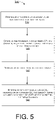
- FIG. 5 is a flowchart of an example process in accordance with an implementation of the present disclosure.
- Implementations in accordance with the present disclosure relate to various techniques, methods, schemes and/or solutions pertaining to reserving channel by CP extension for alignment with a symbol boundary in mobile communications.
- a number of possible solutions may be implemented separately or jointly. That is, although these possible solutions may be described below separately, two or more of these possible solutions may be implemented in one combination or another.
- FIG. 1 illustrates an example network environment 100 in which various solutions and schemes in accordance with the present disclosure may be implemented.
- FIG. 2 illustrates an example scenario 200 of CP extension in accordance with an implementation of the present disclosure. Scenario 200 may be implemented in network environment 100 . The following description of various proposed schemes is provided with reference to FIG. 1 and FIG. 2 .
- network environment 100 may involve a UE 110 in wireless communication with a wireless network 120 (e.g., a 5G NR mobile network).
- UE 110 may be in wireless communication with wireless network 120 via a base station or network node 125 (e.g., an eNB, gNB or transmit-receive point (TRP)) in a time-division duplexing (TDD) system in which UE 110 may operate in either a transmit mode or a receive mode and switch between the transmit mode and the receive mode.
- TDD time-division duplexing
- UE 110 and wireless network 120 may implement various schemes pertaining to reserving channel by CP extension for alignment with a symbol boundary in mobile communications in accordance with the present disclosure, as described herein.
- Communication systems in compliance with the 3 rd Generation Partnership Project (3GPP) specification(s) are slot-based systems with reference timing dictated by the timing of a base station (e.g., gNB).
- gNB timing is not flexibly adjusted, and this means gNB timing is synchronous and all devices (e.g., UEs) would need to communicate with the gNB synchronously or at least near-synchronously.
- the term “unlicensed spectrum” refers to a shared resource used by any system at any time. This implies such shared resource is inherently asynchronous. Accordingly, competing devices conforming to Institute of Electrical and Electronics Engineers (IEEE) 802.11 specification(s) would be completely asynchronous.
- IEEE Institute of Electrical and Electronics Engineers
- Shared spectrum can thus become free at any moment in time, completely unrelated to the timing of any gNB symbol.
- a device e.g., UE 110
- a license-assisted access (LAA) device is to reserve a channel by immediately transmitting dummy payload or useless information until a desired timing boundary is reached before switching over to transmitting useful information.
- LAA license-assisted access
- ETSI LBE load-based equipment
- 3GPP LAA resource is reserved by transmitting dummy loads/useless information with multiple symbols, which is undesirable.
- IEEE 802.11 specifications for Wi-Fi there is no alignment to any timing reference.
- UE 110 may transmit a useful signal (e.g., a signal with useful information), rather than dummy payload or useless information, which may in turn be utilized to better receive a subsequent symbol.
- a useful signal e.g., a signal with useful information
- extending a CP of the symbol may be one such useful signal that may reserve a channel and provide better protection in that UE 110 may be better able to receive the subsequent symbol.
- CP extension may be used wherever a certain timing boundary is desired to be met as well as where idly waiting for the timing boundary would have undesired effect(s) on the ability of UE 110 to gain access to the channel.
- CP extension of a symbol may be performed by UE 110 at the start of a channel occupancy time (COT) where a transition of a radio of UE 110 is between asynchronous listen-before-talk (LBT) listening and transmitting (e.g., from asynchronous LBT listening to transmitting) at a specific time alignment of network node 125 or at a specific time alignment directed to UE 110 by network node 125 .
- COT channel occupancy time
- LBT listen-before-talk
- CP extension of the symbol may be performed by UE 110 at any transition in either direction between downlink (DL) transmission and uplink (UL) transmission (e.g., from DL transmission to UL transmission or from UL transmission to DL transmission) where a short gap is requisite to allowing the TDD system to turn around its radio between a transmit mode and a receive mode (e.g., from transmit mode to receive mode or from receive mode to transmit mode).
- DL downlink
- UL uplink
- a short gap is requisite to allowing the TDD system to turn around its radio between a transmit mode and a receive mode (e.g., from transmit mode to receive mode or from receive mode to transmit mode).
- gaps would be maintained at, or not greater than, 16 ⁇ s or 25 ⁇ s.
- CP extension may be equally applied to transitions between DL and UL transmissions.
- a gap in transmission for radio turnaround time may need to be created. Since the system is synchronous, a partial symbol may be wasted for each turnaround DL ⁇ UL (from DL to UL) or UL ⁇ DL (from UL to DL), or a whole symbol may be wasted for each turnaround sequence of DL ⁇ UL ⁇ DL or UL ⁇ DL ⁇ UL.
- CP extension may span multiple shorter symbols, as shown in FIG. 2 .
- T TA time-of-arrival
- any CP extension may also need to account for UE time-of-arrival as depicted in FIG. 2 .
- UE 110 may extend the CP of a first orthogonal frequency-division multiplexing (OFDM) symbol to result in an extended symbol to an extent that the extended symbol aligns with a desired timing reference such that UE 110 may commence transmission of the extended symbol as soon as the transmission is allowed by pertinent regulations. For instance, UE 110 may extend the symbol by a fraction thereof. The fraction of symbol extended would be less than 1.0 (e.g., may be almost 1.0).
- OFDM orthogonal frequency-division multiplexing
- locations of symbol alignment may be at the start of transmission after winning a COT or at any switching point(s) within a COT between DL transmission and UL transmission in any direction (e.g., DL ⁇ UL or UL ⁇ DL).
- FIG. 3 illustrates an example communication system 300 having at least an example apparatus 310 and an example apparatus 320 in accordance with an implementation of the present disclosure.
- apparatus 310 and apparatus 320 may perform various functions to implement schemes, techniques, processes and methods described herein pertaining to reserving channel by CP extension for alignment with a symbol boundary in mobile communications, including the various schemes described above with respect to various proposed designs, concepts, schemes, systems and methods described above, including network environment 100 , as well as processes described below.
- Each of apparatus 310 and apparatus 320 may be a part of an electronic apparatus, which may be a network apparatus or a UE (e.g., UE 110 ), such as a portable or mobile apparatus, a wearable apparatus, a vehicular device or a vehicle, a wireless communication apparatus or a computing apparatus.
- a network apparatus e.g., UE 110
- UE e.g., UE 110
- each of apparatus 310 and apparatus 320 may be implemented in a smartphone, a smart watch, a personal digital assistant, an electronic control unit (ECU) in a vehicle, a digital camera, or a computing equipment such as a tablet computer, a laptop computer or a notebook computer.
- ECU electronice control unit
- Each of apparatus 310 and apparatus 320 may also be a part of a machine type apparatus, which may be an IoT apparatus such as an immobile or a stationary apparatus, a home apparatus, a roadside unit (RSU), a wire communication apparatus or a computing apparatus.
- IoT apparatus such as an immobile or a stationary apparatus, a home apparatus, a roadside unit (RSU), a wire communication apparatus or a computing apparatus.
- each of apparatus 310 and apparatus 320 may be implemented in a smart thermostat, a smart fridge, a smart door lock, a wireless speaker or a home control center.
- apparatus 310 and/or apparatus 320 may be implemented in an eNodeB in an LTE, LTE-Advanced or LTE-Advanced Pro network or in a gNB or TRP in a 5G network, an NR network or an IoT network.
- each of apparatus 310 and apparatus 320 may be implemented in the form of one or more integrated-circuit (IC) chips such as, for example and without limitation, one or more single-core processors, one or more multi-core processors, one or more complex-instruction-set-computing (CISC) processors, or one or more reduced-instruction-set-computing (RISC) processors.
- IC integrated-circuit
- CISC complex-instruction-set-computing
- RISC reduced-instruction-set-computing
- each of apparatus 310 and apparatus 320 may be implemented in or as a network apparatus or a UE.
- Each of apparatus 310 and apparatus 320 may include at least some of those components shown in FIG. 3 such as a processor 312 and a processor 322 , respectively, for example.
- Each of apparatus 310 and apparatus 320 may further include one or more other components not pertinent to the proposed scheme of the present disclosure (e.g., internal power supply, display device and/or user interface device), and, thus, such component(s) of apparatus 310 and apparatus 320 are neither shown in FIG. 3 nor described below in the interest of simplicity and brevity.
- other components e.g., internal power supply, display device and/or user interface device
- each of processor 312 and processor 322 may be implemented in the form of one or more single-core processors, one or more multi-core processors, or one or more CISC or RISC processors. That is, even though a singular term “a processor” is used herein to refer to processor 312 and processor 322 , each of processor 312 and processor 322 may include multiple processors in some implementations and a single processor in other implementations in accordance with the present disclosure.
- each of processor 312 and processor 322 may be implemented in the form of hardware (and, optionally, firmware) with electronic components including, for example and without limitation, one or more transistors, one or more diodes, one or more capacitors, one or more resistors, one or more inductors, one or more memristors and/or one or more varactors that are configured and arranged to achieve specific purposes in accordance with the present disclosure.
- each of processor 312 and processor 322 is a special-purpose machine specifically designed, arranged and configured to perform specific tasks including those pertaining to reserving channel by CP extension for alignment with a symbol boundary in mobile communications in accordance with various implementations of the present disclosure.
- apparatus 310 may also include a transceiver 316 coupled to processor 312 .
- Transceiver 316 may be capable of wirelessly transmitting and receiving data.
- transceiver 316 may be capable of wirelessly communicating with different types of wireless networks of different radio access technologies (RATs).
- RATs radio access technologies
- transceiver 316 may be equipped with a plurality of antenna ports (not shown) such as, for example, four antenna ports. That is, transceiver 316 may be equipped with multiple transmit antennas and multiple receive antennas for multiple-input multiple-output (MIMO) wireless communications.
- apparatus 320 may also include a transceiver 326 coupled to processor 322 .
- Transceiver 326 may include a transceiver capable of wirelessly transmitting and receiving data.
- transceiver 326 may be capable of wirelessly communicating with different types of UEs/wireless networks of different RATs.
- transceiver 326 may be equipped with a plurality of antenna ports (not shown) such as, for example, four antenna ports. That is, transceiver 326 may be equipped with multiple transmit antennas and multiple receive antennas for MIMO wireless communications.
- apparatus 310 may further include a memory 314 coupled to processor 312 and capable of being accessed by processor 312 and storing data therein.
- apparatus 320 may further include a memory 324 coupled to processor 322 and capable of being accessed by processor 322 and storing data therein.
- RAM random-access memory
- DRAM dynamic RAM
- SRAM static RAM
- T-RAM thyristor RAM
- Z-RAM zero-capacitor RAM
- each of memory 314 and memory 324 may include a type of read-only memory (ROM) such as mask ROM, programmable ROM (PROM), erasable programmable ROM (EPROM) and/or electrically erasable programmable ROM (EEPROM).
- ROM read-only memory
- PROM programmable ROM
- EPROM erasable programmable ROM
- EEPROM electrically erasable programmable ROM
- each of memory 314 and memory 324 may include a type of non-volatile random-access memory (NVRAM) such as flash memory, solid-state memory, ferroelectric RAM (FeRAM), magnetoresistive RAM (MRAM) and/or phase-change memory.
- NVRAM non-volatile random-access memory
- Each of apparatus 310 and apparatus 320 may be a communication entity capable of communicating with each other using various proposed schemes in accordance with the present disclosure.
- a description of capabilities of apparatus 310 as a UE (e.g., UE 110 ), and apparatus 320 , as a network node (e.g., network node 125 ) of a wireless network (e.g., wireless network 120 as a 5G/NR mobile network), is provided below.
- processor 312 of apparatus 310 may extend a CP of a symbol to result in an extended symbol that aligns with a timing reference. Moreover, processor 312 may transmit, via transceiver 316 , to apparatus 320 the extended symbol.
- processor 312 may extend the CP of the symbol by a fraction of a duration of the symbol with the fraction being less than 1.0.
- processor 312 may extend the CP of the symbol after completion of an adaptivity procedure.
- processor 312 may extend the CP of the symbol at a start of a COT where a transition between asynchronous LBT listening and transmission at a specific time alignment of a network or directed by the network.
- processor 312 may extend the CP of the symbol at a transition from a DL transmission to an UL transmission with a gap allowing radio switching between a transmit mode and a receive mode in a TDD system.
- the gap may be no greater than 25 ⁇ s (e.g., no greater than 16 ⁇ s).
- the CP of the symbol processor 312 may extend the CP of the symbol at a transition from an UL transmission to a DL transmission with a gap allowing radio switching between a transmit mode and a receive mode in a TDD system.
- the gap may be no greater than 25 ⁇ s (e.g., no greater than 16 ⁇ s).
- the extended symbol may align with the timing reference at a start of transmission after the apparatus acquiring a COT.
- the extended symbol may align with the timing reference at a switching point within a COT from a DL transmission to an UL transmission.
- the extended symbol may align with the timing reference at a switching point within a COT from an UL transmission to a DL transmission.
- processor 312 of apparatus 310 may perform, via transceiver 316 , an adaptivity procedure with a network (e.g., wireless network 120 ) via apparatus 320 (e.g., as network node 125 ). Additionally, processor 312 may extend a CP of a symbol to result in an extended symbol that aligns with a timing reference. Moreover, processor 312 may transmit, via transceiver 316 , the extended symbol (e.g., to apparatus 320 ). Furthermore, processor 312 may perform, via transceiver 316 , an UL transmission or a DL transmission during a COT after transmitting the extended symbol.
- a network e.g., wireless network 120
- apparatus 320 e.g., as network node 125
- processor 312 may transmit, via transceiver 316 , the extended symbol (e.g., to apparatus 320 ).
- processor 312 may perform, via transceiver 316 , an UL transmission or a DL transmission during a COT after
- processor 312 may perform certain operations. For instance, processor 312 may extend the CP of the symbol by a fraction of a duration of the symbol with the fraction being less than 1.0. Alternatively, processor 312 may extend the CP of the symbol at a start of the COT where a transition between asynchronous LBT listening and transmission at a specific time alignment of the network or directed by the network.
- processor 312 may perform other operations. For instance, processor 312 may extend the CP of the symbol at a transition from the DL transmission to the UL transmission with a gap allowing radio switching between a transmit mode and a receive mode in a TDD system. Alternatively, processor 312 may extend the CP of the symbol at a transition from the UL transmission to the DL transmission with a gap allowing radio switching between the transmit mode and the receive mode in the TDD system.
- FIG. 4 illustrates an example process 400 in accordance with an implementation of the present disclosure.
- Process 400 may represent an aspect of implementing various proposed designs, concepts, schemes, systems and methods described above, whether partially or entirely, including those pertaining to FIG. 1 ⁇ FIG. 3 . More specifically, process 400 may represent an aspect of the proposed concepts and schemes pertaining to reserving channel by CP extension for alignment with a symbol boundary in mobile communications.
- Process 400 may include one or more operations, actions, or functions as illustrated by one or more of blocks 410 and 420 . Although illustrated as discrete blocks, various blocks of process 400 may be divided into additional blocks, combined into fewer blocks, or eliminated, depending on the desired implementation. Moreover, the blocks/sub-blocks of process 400 may be executed in the order shown in FIG.
- Process 400 may be implemented by or in apparatus 310 and apparatus 320 as well as any variations thereof. Solely for illustrative purposes and without limiting the scope, process 400 is described below in the context of apparatus 310 as a UE (e.g., UE 110 ) and apparatus 320 as a communication entity such as a network node or base station (e.g., network node 125 ) of a wireless network (e.g., wireless network 120 ). Process 400 may begin at block 410 .
- process 400 may involve processor 312 of apparatus 310 (e.g., as UE 110 ) extending a CP of a symbol to result in an extended symbol that aligns with a timing reference.
- Process 400 may proceed from 410 to 420 .
- process 400 may involve processor 312 transmitting, via transceiver 316 , to apparatus 320 (e.g., as network node 125 ) the extended symbol.
- process 400 may involve processor 312 extending the CP of the symbol by a fraction of a duration of the symbol with the fraction being less than 1.0.
- process 400 may involve processor 312 extending the CP of the symbol after completion of an adaptivity procedure.
- process 400 may involve processor 312 extending the CP of the symbol at a start of a COT where a transition between asynchronous LBT listening and transmission at a specific time alignment of a network or directed by the network.
- process 400 may involve processor 312 extending the CP of the symbol at a transition from a DL transmission to an UL transmission with a gap allowing radio switching between a transmit mode and a receive mode in a TDD system.
- the gap may be no greater than 25 ⁇ s (e.g., no greater than 16 ⁇ s).
- process 400 may involve processor 312 extending the CP of the symbol at a transition from an UL transmission to a DL transmission with a gap allowing radio switching between a transmit mode and a receive mode in a TDD system.
- the gap may be no greater than 25 ⁇ s (e.g., no greater than 16 ⁇ s).
- the extended symbol may align with the timing reference at a start of transmission after the apparatus acquiring a COT.
- the extended symbol may align with the timing reference at a switching point within a COT from a DL transmission to an UL transmission.
- the extended symbol may align with the timing reference at a switching point within a COT from an UL transmission to a DL transmission.
- FIG. 5 illustrates an example process 500 in accordance with an implementation of the present disclosure.
- Process 500 may represent an aspect of implementing various proposed designs, concepts, schemes, systems and methods described above, whether partially or entirely, including those pertaining to FIG. 1 ⁇ FIG. 3 . More specifically, process 500 may represent an aspect of the proposed concepts and schemes pertaining to reserving channel by CP extension for alignment with a symbol boundary in mobile communications.
- Process 500 may include one or more operations, actions, or functions as illustrated by one or more of blocks 510 , 520 , 530 and 540 . Although illustrated as discrete blocks, various blocks of process 500 may be divided into additional blocks, combined into fewer blocks, or eliminated, depending on the desired implementation.
- Process 500 may be implemented by or in apparatus 310 and apparatus 320 as well as any variations thereof. Solely for illustrative purposes and without limiting the scope, process 500 is described below in the context of apparatus 310 as a UE (e.g., UE 110 ) and apparatus 320 as a communication entity such as a network node or base station (e.g., network node 125 ) of a wireless network (e.g., wireless network 120 ). Process 500 may begin at block 510 .
- UE e.g., UE 110
- apparatus 320 as a communication entity such as a network node or base station (e.g., network node 125 ) of a wireless network (e.g., wireless network 120 ).
- Process 500 may begin at block 510 .
- process 500 may involve processor 312 of apparatus 310 (e.g., as UE 110 ) performing, via transceiver 316 , an adaptivity procedure with a network (e.g., wireless network 120 ) via apparatus 320 (e.g., as network node 125 ).
- a network e.g., wireless network 120
- apparatus 320 e.g., as network node 125
- Process 500 may proceed from 510 to 520 .
- process 500 may involve processor 312 extending a CP of a symbol to result in an extended symbol that aligns with a timing reference.
- Process 500 may proceed from 520 to 530 .
- process 500 may involve processor 312 transmitting, via transceiver 316 , the extended symbol (e.g., to apparatus 320 ).
- Process 500 may proceed from 530 to 540 .
- process 500 may involve processor 312 performing, via transceiver 316 , an UL transmission or a DL transmission during a COT after transmitting the extended symbol.
- process 500 may involve processor 312 performing certain operations. For instance, process 500 may involve processor 312 extending the CP of the symbol by a fraction of a duration of the symbol with the fraction being less than 1.0. Alternatively, process 500 may involve processor 312 extending the CP of the symbol at a start of the COT where a transition between asynchronous LBT listening and transmission at a specific time alignment of the network or directed by the network.
- process 500 may involve processor 312 performing other operations. For instance, process 500 may involve processor 312 extending the CP of the symbol at a transition from the DL transmission to the UL transmission with a gap allowing radio switching between a transmit mode and a receive mode in a TDD system. Alternatively, process 500 may involve processor 312 extending the CP of the symbol at a transition from the UL transmission to the DL transmission with a gap allowing radio switching between the transmit mode and the receive mode in the TDD system.
- any two components so associated can also be viewed as being “operably connected”, or “operably coupled”, to each other to achieve the desired functionality, and any two components capable of being so associated can also be viewed as being “operably couplable”, to each other to achieve the desired functionality.
- operably couplable include but are not limited to physically mateable and/or physically interacting components and/or wirelessly interactable and/or wirelessly interacting components and/or logically interacting and/or logically interactable components.
Landscapes
- Engineering & Computer Science (AREA)
- Signal Processing (AREA)
- Computer Networks & Wireless Communication (AREA)
- Mobile Radio Communication Systems (AREA)
Abstract
Description
Claims (10)
Priority Applications (1)
| Application Number | Priority Date | Filing Date | Title |
|---|---|---|---|
| US16/836,916 US11368343B2 (en) | 2019-04-03 | 2020-04-01 | Reserving channel by cyclic prefix extension for alignment with symbol boundary in mobile communications |
Applications Claiming Priority (2)
| Application Number | Priority Date | Filing Date | Title |
|---|---|---|---|
| US201962828553P | 2019-04-03 | 2019-04-03 | |
| US16/836,916 US11368343B2 (en) | 2019-04-03 | 2020-04-01 | Reserving channel by cyclic prefix extension for alignment with symbol boundary in mobile communications |
Publications (2)
| Publication Number | Publication Date |
|---|---|
| US20200322198A1 US20200322198A1 (en) | 2020-10-08 |
| US11368343B2 true US11368343B2 (en) | 2022-06-21 |
Family
ID=72662515
Family Applications (1)
| Application Number | Title | Priority Date | Filing Date |
|---|---|---|---|
| US16/836,916 Active 2040-08-14 US11368343B2 (en) | 2019-04-03 | 2020-04-01 | Reserving channel by cyclic prefix extension for alignment with symbol boundary in mobile communications |
Country Status (4)
| Country | Link |
|---|---|
| US (1) | US11368343B2 (en) |
| CN (1) | CN112042162B (en) |
| TW (1) | TWI816997B (en) |
| WO (1) | WO2020200219A1 (en) |
Families Citing this family (5)
| Publication number | Priority date | Publication date | Assignee | Title |
|---|---|---|---|---|
| WO2021208031A1 (en) * | 2020-04-16 | 2021-10-21 | Qualcomm Incorporated | Cyclic prefix (cp) extension in channel occupancy time (cot) sharing for sidelink communication |
| CN114915390B (en) * | 2021-02-08 | 2025-04-18 | 展讯通信(上海)有限公司 | Cyclic prefix extension generation and indication method, device, and readable storage medium |
| WO2023065225A1 (en) * | 2021-10-21 | 2023-04-27 | 富士通株式会社 | Signal sending method and apparatus, and communications system |
| WO2023173281A1 (en) * | 2022-03-15 | 2023-09-21 | Mediatek Inc. | A method of sidelink transmission over unlicensed bands |
| CN115299019B (en) * | 2022-06-30 | 2024-03-12 | 北京小米移动软件有限公司 | Method and device for transmitting cyclic prefix extension CPE |
Citations (12)
| Publication number | Priority date | Publication date | Assignee | Title |
|---|---|---|---|---|
| CN101022309A (en) | 2007-03-16 | 2007-08-22 | 中兴通讯股份有限公司 | Wideband time division duplexing system up-link signal transmitting method |
| CN101110634A (en) | 2006-07-21 | 2008-01-23 | 中兴通讯股份有限公司 | Signal transmission method of enhanced time division duplex system |
| WO2012155680A1 (en) | 2011-08-24 | 2012-11-22 | 中兴通讯股份有限公司 | Method and device for configuring guard interval in communication system |
| US20160127098A1 (en) | 2014-11-03 | 2016-05-05 | Samsung Electronics Co., Ltd. | Method and apparatus for channel access for lte on unlicensed spectrum |
| CN105721376A (en) | 2014-12-05 | 2016-06-29 | 中国移动通信集团公司 | Unlicensed frequency spectrum disturbance avoiding method based on TDD transmission mode, and base station |
| EP3301827A1 (en) | 2007-10-28 | 2018-04-04 | ZTE Corporation | Signal transmission method and frame structure adopted in a tdd system |
| US20180098342A1 (en) * | 2016-09-30 | 2018-04-05 | Qualcomm Incorporated | Aligning slots allocated to extended cyclic prefix symbols with slots allocated to normal cyclic prefix symbols |
| US20180097679A1 (en) * | 2016-09-30 | 2018-04-05 | Huawei Technologies Co., Ltd. | Timing Adjustment Free Solution to Uplink Synchronous Operations |
| US20190190687A1 (en) * | 2016-08-10 | 2019-06-20 | Lg Electronics Inc. | Method and apparatus for supporting mechanisms for flexible duplex operations at symbol level in wireless communication system |
| US20200044796A1 (en) * | 2017-01-09 | 2020-02-06 | Zte Corporation | Method and apparatus for uplink and downlink transmission alignment |
| US20200169375A1 (en) * | 2016-06-08 | 2020-05-28 | Lg Electronics Inc. | A communication method using nr for 5g |
| US20200266959A1 (en) * | 2017-10-15 | 2020-08-20 | Lg Electronics Inc. | Method and device for performing initial connection in wireless communication system |
Family Cites Families (2)
| Publication number | Priority date | Publication date | Assignee | Title |
|---|---|---|---|---|
| US11197317B2 (en) * | 2014-12-23 | 2021-12-07 | Qualcomm Incorporated | Techniques for determining a symbol period for a starting symbol of a transmission in a shared radio frequency spectrum |
| WO2017131476A1 (en) * | 2016-01-29 | 2017-08-03 | 엘지전자 주식회사 | Method for adjusting downlink lbt parameter, in wireless communication system supporting unlicensed band, and device for supporting same |
-
2020
- 2020-04-01 TW TW109111171A patent/TWI816997B/en active
- 2020-04-01 US US16/836,916 patent/US11368343B2/en active Active
- 2020-04-01 CN CN202080001957.1A patent/CN112042162B/en active Active
- 2020-04-01 WO PCT/CN2020/082679 patent/WO2020200219A1/en not_active Ceased
Patent Citations (12)
| Publication number | Priority date | Publication date | Assignee | Title |
|---|---|---|---|---|
| CN101110634A (en) | 2006-07-21 | 2008-01-23 | 中兴通讯股份有限公司 | Signal transmission method of enhanced time division duplex system |
| CN101022309A (en) | 2007-03-16 | 2007-08-22 | 中兴通讯股份有限公司 | Wideband time division duplexing system up-link signal transmitting method |
| EP3301827A1 (en) | 2007-10-28 | 2018-04-04 | ZTE Corporation | Signal transmission method and frame structure adopted in a tdd system |
| WO2012155680A1 (en) | 2011-08-24 | 2012-11-22 | 中兴通讯股份有限公司 | Method and device for configuring guard interval in communication system |
| US20160127098A1 (en) | 2014-11-03 | 2016-05-05 | Samsung Electronics Co., Ltd. | Method and apparatus for channel access for lte on unlicensed spectrum |
| CN105721376A (en) | 2014-12-05 | 2016-06-29 | 中国移动通信集团公司 | Unlicensed frequency spectrum disturbance avoiding method based on TDD transmission mode, and base station |
| US20200169375A1 (en) * | 2016-06-08 | 2020-05-28 | Lg Electronics Inc. | A communication method using nr for 5g |
| US20190190687A1 (en) * | 2016-08-10 | 2019-06-20 | Lg Electronics Inc. | Method and apparatus for supporting mechanisms for flexible duplex operations at symbol level in wireless communication system |
| US20180098342A1 (en) * | 2016-09-30 | 2018-04-05 | Qualcomm Incorporated | Aligning slots allocated to extended cyclic prefix symbols with slots allocated to normal cyclic prefix symbols |
| US20180097679A1 (en) * | 2016-09-30 | 2018-04-05 | Huawei Technologies Co., Ltd. | Timing Adjustment Free Solution to Uplink Synchronous Operations |
| US20200044796A1 (en) * | 2017-01-09 | 2020-02-06 | Zte Corporation | Method and apparatus for uplink and downlink transmission alignment |
| US20200266959A1 (en) * | 2017-10-15 | 2020-08-20 | Lg Electronics Inc. | Method and device for performing initial connection in wireless communication system |
Non-Patent Citations (6)
| Title |
|---|
| Broadcom, Discussion on short fixed duration LBT for transmissions outside a COT, 3GPP TSG RAN WG1 Meeting #96, R1-1903370, Athens, Greece, Feb. 25-Mar. 1, 2019. |
| China National Intellectual Property Administration, International Search Report and Written Opinion tor PCT/CN2020/082679, dated Jun. 29, 2020. |
| Huawei et al., Coexistence and channel access or NR unlicensed band operations, 3GPP TSG RAN WG1 Meeting #96bis, R1-1903928, Xi'an, China, Apr. 8-12, 2019. |
| Intel Corporation, DL Signals and Channels for NR-unlicensed, 3GPP TSG RAN WG1 Meeting #96bis, R1-1904283, Xi'an, China, Apr. 8-14, 2019. |
| Lenovo et al., DL Frame Structure and COT Aspects for NR-U, 3GPP TSG RAN WG1#96, R1-1902955, Athens, Greece, Feb. 25-Mar. 1, 2019. |
| Taiwan Intellectual Property Office, Office Action for Taiwan Patent Application No. 109111171, dated Jan. 29, 2021. |
Also Published As
| Publication number | Publication date |
|---|---|
| US20200322198A1 (en) | 2020-10-08 |
| CN112042162B (en) | 2023-07-21 |
| CN112042162A (en) | 2020-12-04 |
| WO2020200219A1 (en) | 2020-10-08 |
| TWI816997B (en) | 2023-10-01 |
| TW202038661A (en) | 2020-10-16 |
Similar Documents
| Publication | Publication Date | Title |
|---|---|---|
| CN111034325B (en) | Initial access method of new radio unlicensed spectrum | |
| US20200322198A1 (en) | Reserving Channel By Cyclic Prefix Extension For Alignment With Symbol Boundary In Mobile Communications | |
| EP3086591B1 (en) | Opportunistic secondary channel access | |
| US20200100279A1 (en) | Method And Apparatus For Handling Multiple Active Configurations Of Configured Grant In Mobile Communications | |
| WO2020200221A1 (en) | Floating frame-based channel occupancy time in fixed frame period in mobile communications | |
| US11672012B2 (en) | Detection of beginning of a transmission session in new radio unlicensed spectrum | |
| US12022510B2 (en) | Uplink designs for new radio unlicensed spectrum | |
| US12302181B2 (en) | Enhancements for faster BWP switching in mobile communications | |
| US20230300723A1 (en) | Identifying Support Of Reduced Capability In Mobile Communications | |
| US20200329504A1 (en) | MsgB Format In Two-Step Random Access In Mobile Communications | |
| WO2020094152A1 (en) | Enhancement of sounding reference signal in mobile communications | |
| WO2023226685A1 (en) | Methods for supporting arbitrary drx cycle and periodicity of sps and cg in mobile communications | |
| WO2025011501A1 (en) | Collision handling for multi-universal subscriber identity module device | |
| EP4369646A1 (en) | Method and apparatus for supporting small data transmission on a bandwidth part with non-cell-defining synchronization signal block | |
| EP4366350A1 (en) | Method and apparatus for capability reporting to support small data transmission on a bandwidth part with non-cell-defining synchronization signal block | |
| WO2024032427A1 (en) | Methods for pdcch monitoring in subband-fullduplex network | |
| WO2023207767A1 (en) | Hybrid dynamic grant and configured grant schemes addressing traffic arrival jitter for uplink augmented reality transmissions | |
| EP4178146A2 (en) | Method and apparatus for supporting enhanced bandwidth part (bwp) operation for reduced capability (redcap) user equipment (ue) | |
| WO2023226677A1 (en) | Even further enhancements in drx operation for xr and cloud gaming in mobile communications | |
| WO2023207766A1 (en) | Further enhancements in drx operation for xr and cloud gaming in mobile communications | |
| WO2022213804A1 (en) | Enhancements for wideband operation of reduced-capability new radio user equipment in mobile communications | |
| WO2026103776A1 (en) | Methods and apparatus for configuration switching in mobile communications | |
| WO2026098609A1 (en) | Methods and apparatus for physical random access channel resource allocation on preamble domain in mobile communications | |
| US20260101322A1 (en) | Methods And Apparatus For Bandwidth Part Configuration In Mobile Communications | |
| WO2024164923A1 (en) | Methods and apparatus for uplink occasion validation in mobile communications |
Legal Events
| Date | Code | Title | Description |
|---|---|---|---|
| FEPP | Fee payment procedure |
Free format text: ENTITY STATUS SET TO UNDISCOUNTED (ORIGINAL EVENT CODE: BIG.); ENTITY STATUS OF PATENT OWNER: LARGE ENTITY |
|
| STPP | Information on status: patent application and granting procedure in general |
Free format text: DOCKETED NEW CASE - READY FOR EXAMINATION |
|
| AS | Assignment |
Owner name: MEDIATEK SINGAPORE PTE. LTD., SINGAPORE Free format text: ASSIGNMENT OF ASSIGNORS INTEREST;ASSIGNORS:FISHER-JEFFES, TIMOTHY PERRIN;KUO, CHUN-HSUAN;SIGNING DATES FROM 20200322 TO 20200616;REEL/FRAME:052967/0903 |
|
| STPP | Information on status: patent application and granting procedure in general |
Free format text: NON FINAL ACTION MAILED |
|
| STPP | Information on status: patent application and granting procedure in general |
Free format text: NOTICE OF ALLOWANCE MAILED -- APPLICATION RECEIVED IN OFFICE OF PUBLICATIONS |
|
| STPP | Information on status: patent application and granting procedure in general |
Free format text: PUBLICATIONS -- ISSUE FEE PAYMENT RECEIVED |
|
| STPP | Information on status: patent application and granting procedure in general |
Free format text: PUBLICATIONS -- ISSUE FEE PAYMENT VERIFIED |
|
| STCF | Information on status: patent grant |
Free format text: PATENTED CASE |
|
| MAFP | Maintenance fee payment |
Free format text: PAYMENT OF MAINTENANCE FEE, 4TH YEAR, LARGE ENTITY (ORIGINAL EVENT CODE: M1551); ENTITY STATUS OF PATENT OWNER: LARGE ENTITY Year of fee payment: 4 |
|
| AS | Assignment |
Owner name: HFI INNOVATION INC., TAIWAN Free format text: ASSIGNMENT OF ASSIGNORS INTEREST;ASSIGNOR:MEDIATEK SINGAPORE PTE LTD.;REEL/FRAME:075050/0209 Effective date: 20250601 |