US11355670B2 - Deep ultraviolet light emitting device - Google Patents
Deep ultraviolet light emitting device Download PDFInfo
- Publication number
- US11355670B2 US11355670B2 US16/173,768 US201816173768A US11355670B2 US 11355670 B2 US11355670 B2 US 11355670B2 US 201816173768 A US201816173768 A US 201816173768A US 11355670 B2 US11355670 B2 US 11355670B2
- Authority
- US
- United States
- Prior art keywords
- layer
- type semiconductor
- semiconductor layer
- active layer
- deep ultraviolet
- Prior art date
- Legal status (The legal status is an assumption and is not a legal conclusion. Google has not performed a legal analysis and makes no representation as to the accuracy of the status listed.)
- Active
Links
Images




Classifications
-
- H01L33/20—
-
- H—ELECTRICITY
- H10—SEMICONDUCTOR DEVICES; ELECTRIC SOLID-STATE DEVICES NOT OTHERWISE PROVIDED FOR
- H10H—INORGANIC LIGHT-EMITTING SEMICONDUCTOR DEVICES HAVING POTENTIAL BARRIERS
- H10H20/00—Individual inorganic light-emitting semiconductor devices having potential barriers, e.g. light-emitting diodes [LED]
- H10H20/80—Constructional details
- H10H20/81—Bodies
- H10H20/819—Bodies characterised by their shape, e.g. curved or truncated substrates
- H10H20/821—Bodies characterised by their shape, e.g. curved or truncated substrates of the light-emitting regions, e.g. non-planar junctions
-
- H—ELECTRICITY
- H10—SEMICONDUCTOR DEVICES; ELECTRIC SOLID-STATE DEVICES NOT OTHERWISE PROVIDED FOR
- H10H—INORGANIC LIGHT-EMITTING SEMICONDUCTOR DEVICES HAVING POTENTIAL BARRIERS
- H10H20/00—Individual inorganic light-emitting semiconductor devices having potential barriers, e.g. light-emitting diodes [LED]
- H10H20/80—Constructional details
- H10H20/81—Bodies
- H10H20/819—Bodies characterised by their shape, e.g. curved or truncated substrates
-
- H01L33/0025—
-
- H01L33/007—
-
- H01L33/145—
-
- H01L33/32—
-
- H01L33/44—
-
- H—ELECTRICITY
- H10—SEMICONDUCTOR DEVICES; ELECTRIC SOLID-STATE DEVICES NOT OTHERWISE PROVIDED FOR
- H10H—INORGANIC LIGHT-EMITTING SEMICONDUCTOR DEVICES HAVING POTENTIAL BARRIERS
- H10H20/00—Individual inorganic light-emitting semiconductor devices having potential barriers, e.g. light-emitting diodes [LED]
- H10H20/01—Manufacture or treatment
- H10H20/011—Manufacture or treatment of bodies, e.g. forming semiconductor layers
- H10H20/013—Manufacture or treatment of bodies, e.g. forming semiconductor layers having light-emitting regions comprising only Group III-V materials
- H10H20/0133—Manufacture or treatment of bodies, e.g. forming semiconductor layers having light-emitting regions comprising only Group III-V materials with a substrate not being Group III-V materials
- H10H20/01335—Manufacture or treatment of bodies, e.g. forming semiconductor layers having light-emitting regions comprising only Group III-V materials with a substrate not being Group III-V materials the light-emitting regions comprising nitride materials
-
- H—ELECTRICITY
- H10—SEMICONDUCTOR DEVICES; ELECTRIC SOLID-STATE DEVICES NOT OTHERWISE PROVIDED FOR
- H10H—INORGANIC LIGHT-EMITTING SEMICONDUCTOR DEVICES HAVING POTENTIAL BARRIERS
- H10H20/00—Individual inorganic light-emitting semiconductor devices having potential barriers, e.g. light-emitting diodes [LED]
- H10H20/80—Constructional details
- H10H20/81—Bodies
-
- H—ELECTRICITY
- H10—SEMICONDUCTOR DEVICES; ELECTRIC SOLID-STATE DEVICES NOT OTHERWISE PROVIDED FOR
- H10H—INORGANIC LIGHT-EMITTING SEMICONDUCTOR DEVICES HAVING POTENTIAL BARRIERS
- H10H20/00—Individual inorganic light-emitting semiconductor devices having potential barriers, e.g. light-emitting diodes [LED]
- H10H20/80—Constructional details
- H10H20/81—Bodies
- H10H20/811—Bodies having quantum effect structures or superlattices, e.g. tunnel junctions
-
- H—ELECTRICITY
- H10—SEMICONDUCTOR DEVICES; ELECTRIC SOLID-STATE DEVICES NOT OTHERWISE PROVIDED FOR
- H10H—INORGANIC LIGHT-EMITTING SEMICONDUCTOR DEVICES HAVING POTENTIAL BARRIERS
- H10H20/00—Individual inorganic light-emitting semiconductor devices having potential barriers, e.g. light-emitting diodes [LED]
- H10H20/80—Constructional details
- H10H20/81—Bodies
- H10H20/816—Bodies having carrier transport control structures, e.g. highly-doped semiconductor layers or current-blocking structures
- H10H20/8162—Current-blocking structures
-
- H—ELECTRICITY
- H10—SEMICONDUCTOR DEVICES; ELECTRIC SOLID-STATE DEVICES NOT OTHERWISE PROVIDED FOR
- H10H—INORGANIC LIGHT-EMITTING SEMICONDUCTOR DEVICES HAVING POTENTIAL BARRIERS
- H10H20/00—Individual inorganic light-emitting semiconductor devices having potential barriers, e.g. light-emitting diodes [LED]
- H10H20/80—Constructional details
- H10H20/81—Bodies
- H10H20/822—Materials of the light-emitting regions
- H10H20/824—Materials of the light-emitting regions comprising only Group III-V materials, e.g. GaP
-
- H—ELECTRICITY
- H10—SEMICONDUCTOR DEVICES; ELECTRIC SOLID-STATE DEVICES NOT OTHERWISE PROVIDED FOR
- H10H—INORGANIC LIGHT-EMITTING SEMICONDUCTOR DEVICES HAVING POTENTIAL BARRIERS
- H10H20/00—Individual inorganic light-emitting semiconductor devices having potential barriers, e.g. light-emitting diodes [LED]
- H10H20/80—Constructional details
- H10H20/81—Bodies
- H10H20/822—Materials of the light-emitting regions
- H10H20/824—Materials of the light-emitting regions comprising only Group III-V materials, e.g. GaP
- H10H20/825—Materials of the light-emitting regions comprising only Group III-V materials, e.g. GaP containing nitrogen, e.g. GaN
-
- H—ELECTRICITY
- H10—SEMICONDUCTOR DEVICES; ELECTRIC SOLID-STATE DEVICES NOT OTHERWISE PROVIDED FOR
- H10H—INORGANIC LIGHT-EMITTING SEMICONDUCTOR DEVICES HAVING POTENTIAL BARRIERS
- H10H20/00—Individual inorganic light-emitting semiconductor devices having potential barriers, e.g. light-emitting diodes [LED]
- H10H20/80—Constructional details
- H10H20/84—Coatings, e.g. passivation layers or antireflective coatings
-
- H—ELECTRICITY
- H10—SEMICONDUCTOR DEVICES; ELECTRIC SOLID-STATE DEVICES NOT OTHERWISE PROVIDED FOR
- H10H—INORGANIC LIGHT-EMITTING SEMICONDUCTOR DEVICES HAVING POTENTIAL BARRIERS
- H10H20/00—Individual inorganic light-emitting semiconductor devices having potential barriers, e.g. light-emitting diodes [LED]
- H10H20/80—Constructional details
- H10H20/85—Packages
- H10H20/852—Encapsulations
Definitions
- the present invention relates to deep ultraviolet light emitting devices.
- a light emitting device for emitting deep ultraviolet light includes an aluminum gallium nitride (AlGaN) based n-type clad layer, active layer, p-type clad layer, etc. stacked successively on a substrate.
- AlGaN aluminum gallium nitride
- a deep ultraviolet light emitting device is manufactured by forming a p-side electrode in a first region on the p-type clad layer, removing the active layer and the p-type clad layer in a second region different from the first region to expose the n-type clad layer, and forming an n-side electrode on the n-type clad layer in the second region.
- the deep ultraviolet light emitted by the active layer is output from a light extraction surface of the substrate.
- the optical characteristics of the AlGaN crystal in AlGaN-based deep ultraviolet light emitting devices vary depending on the AlN composition ratio and that the light extraction efficiency is lowered due to the unique polarizing property of the crystal. If the device is configured to output short-wavelength deep ultraviolet light by increasing the AlN composition ratio in the active layer, the light component propagating in a direction along the interface of the active layer is increased, and the amount of light propagating in a direction intersecting the interface of the active layer and extractable outside from the light extraction surface of the substrate is decreased.
- one illustrative purpose of the present invention is to provide a technology of increasing the light extraction efficiency of deep ultraviolet light emitting devices.
- a deep ultraviolet light emitting device includes: a light extraction surface; an n-type semiconductor layer provided on the light extraction surface; an active layer having a band gap of 3.4 eV or larger; and a p-type semiconductor layer provided on the active layer. Deep ultraviolet light emitted by the active layer is output outside from the light extraction surface.
- a side surface of the active layer is inclined with respect to an interface between the n-type semiconductor layer and the active layer, and an angle of inclination of the side surface is not less than 15° and not more than 50°.
- the deep ultraviolet light propagating in a direction along the interface of the active layer is reflected on the side surface of the active layer to change the direction of propagation to a direction intersecting the interface of the active layer, by inclining the side surface of the active layer.
- the direction of propagation of the deep ultraviolet light reflected by the side surface of the active layer is changed to a direction that causes the light to be output outside from the light extraction surface, by configuring the angle of inclination of the side surface to be not less than 15° and not more than 50°. In this way, the amount of deep ultraviolet light output from the light extraction surface is increased, and the light extraction efficiency is increased.
- the deep ultraviolet light emitting device may further include an n-side electrode provided in a partial region on the n-type semiconductor layer different from the region where the active layer is provided.
- the side surface of the n-type semiconductor layer may be perpendicular to the interface between the n-type semiconductor layer and the active layer in a range from the interface between the n-type semiconductor layer and the n-side electrode to the light extraction surface.
- the deep ultraviolet light emitting device may further include a sapphire substrate having the light extraction surface, wherein the n-type semiconductor layer, the active layer, and the p-type semiconductor layer may be AlGaN-based semiconductor layers.
- the deep ultraviolet light emitting device may further include a protective layer covering the side surface of the active layer and transparent to the deep ultraviolet light emitted by the active layer.
- An angle of inclination ⁇ a of the side surface of the active layer may meet a relationship of the following expression:
- n 1 is a refractive index of the active layer.
- An angle of inclination of the side surface of the active layer may be not less than 20° and not more than 40°.
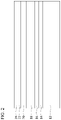
- FIG. 1 is a cross sectional view schematically showing a configuration of a deep ultraviolet light emitting device according to the embodiment
- FIG. 2 is a cross sectional view schematically showing a step of manufacturing a deep ultraviolet light emitting device
- FIG. 3 is a cross sectional view schematically showing a step of manufacturing a deep ultraviolet light emitting device
- FIG. 4 is a cross sectional view schematically showing a step of manufacturing a deep ultraviolet light emitting device
- FIG. 5 is a cross sectional view schematically showing a step of manufacturing a deep ultraviolet light emitting device
- FIG. 6 is a graph showing a simulation result of a deep ultraviolet light emitting device according to a comparative example
- FIG. 7 is a graph showing a simulation result of a deep ultraviolet light emitting device according to the embodiment.
- FIG. 8 is a graph showing a relationship between the angle of inclination of the side surface and the amount of light output from the light extraction surface.
- FIG. 9 schematically shows the benefit provided by the deep ultraviolet light emitting device according to the embodiment.
- FIG. 1 is a cross sectional view schematically showing a configuration of a deep ultraviolet light emitting device 10 according to the embodiment.
- the deep ultraviolet light emitting device 10 includes a substrate 12 , a first base layer 14 , a second base layer 16 , an n-type clad layer 18 , an active layer 20 , an electron block layer 22 , a p-type clad layer 24 , a p-side electrode 26 , an n-side electrode 28 , and a protective layer 30 .
- the deep ultraviolet light emitting device 10 is a semiconductor light emitting device configured to emit “deep ultraviolet light” having a central wavelength A of about 355 nm or shorter.
- the active layer 20 is made of an aluminum gallium nitride (AlGaN)-based semiconductor material having a band gap of about 3.4 eV or larger.
- AlGaN aluminum gallium nitride
- the case of emitting deep ultraviolet light having a central wavelength A of about 310 nm or shorter is specifically discussed.
- AlGaN-based semiconductor material mainly refers to a semiconductor material containing aluminum nitride (AlN) and gallium nitride (GaN) and shall encompass a semiconductor material containing other materials such as indium nitride (InN). Therefore, “AlGaN-based semiconductor materials” as recited in this specification can be represented by a composition In 1-x-y Al x Ga y N (0 ⁇ x+y ⁇ 1, 0 ⁇ x ⁇ 1, 0 ⁇ y ⁇ 1).
- the AlGaN-based semiconductor material shall contain AlN, GaN, AlGaN, indium aluminum nitride (InAlN), indium gallium nitride (InGaN), and indium aluminum gallium nitride (InAlGaN).
- AlGaN-based semiconductor materials those materials that do not substantially contain AlN may be distinguished by referring to them as “GaN-based semiconductor materials”. “GaN-based semiconductor materials” mainly contain GaN and InGaN and encompass materials that additionally contain a slight amount of AlN. Similarly, of “AlGaN-based semiconductor materials”, those materials that do not substantially contain GaN may be distinguished by referring to them as “AlN-based semiconductor materials”. “AlN-based semiconductor materials” mainly contain AlN and InAlN and encompass materials that additionally contain a slight amount of GaN.
- the substrate 12 is a sapphire (Al 2 O 3 ) substrate.
- the substrate 12 includes a crystal growth surface 12 a and a light extraction surface 12 b .
- the crystal growth surface 12 a is the (0001) plane of the sapphire substrate, and the first base layer 14 and the second base layer 16 are stacked on the crystal growth surface 12 a .
- the first base layer 14 is a layer made of an AlN-based semiconductor material and is, for example, an AlN(HT-AlN) layer gown at a high temperature.
- the second base layer 16 is a layer made of an AlGaN-based semiconductor material and is, for example, an undoped AlGaN(u-AlGaN) layer.
- the substrate 12 , the first base layer 14 , and the second base layer 16 function as a foundation layer (template) to form the n-type clad layer 18 and the layers above. These layers also function as a light extraction substrate for extracting the deep ultraviolet light emitted by the active layer 20 outside and transmit the deep ultraviolet light emitted by the active layer 20 . Accordingly, the deep ultraviolet light emitted by the active layer 20 is output outside from the light extraction surface 12 b of the substrate 12 .
- the light extraction surface 12 b may be a texture surface formed with a micro-asperity structure of a submicron or submillimeter scale instead of a flat surface. By forming a texture structure on the light extraction surface 12 b , reflection or total reflection on the light extraction surface 12 b is inhibited and the light extraction efficiency is increased.
- the n-type clad layer 18 is an n-type semiconductor layer provided on the second base layer 16 .
- the n-type clad layer 18 is made of a n-type AlGaN-based semiconductor material.
- the n-type clad layer 18 is an AlGaN layer doped with silicon (Si) as an n-type impurity.
- the composition ratio of the n-type clad layer 18 is selected to transmit the deep ultraviolet light emitted by the active layer 20 .
- the n-type clad layer 18 is formed such that the molar fraction of AlN is 40% or higher, and, preferably, 50% or higher.
- the n-type clad layer 18 has a band gap larger than the wavelength of the deep ultraviolet light emitted by the active layer 20 .
- the n-type clad layer 18 is formed to have a band gap of 4.3 eV or larger.
- the n-type clad layer 18 has a thickness of about 100 nm-300 nm.
- the n-type clad layer 18 has a thickness of about 200 nm.
- the n-side electrode 28 is formed on a first region W 1 of the n-type clad layer 18 .
- the active layer 20 is provided on a region of the n-type clad layer 18 different from the first region W 1 (a second region W 2 and a third region W 3 ).
- the n-side electrode 28 is provided on the n-type clad layer 18 and is formed in the first region W 1 .
- the n-side electrode 28 is formed by a titanium (Ti)/Al/Ti/Au stack structure.
- the thickness of the first Ti layer is about 20 nm
- the thickness of the Al layer is about 100 nm
- the thickness of the second Ti layer is about 50 nm
- the thickness of the Au layer is about 100 nm.
- An n-type contact layer may be provided between the n-type clad layer 18 and the n-side electrode 28 to lower the contact resistance between the n-type clad layer 18 and the n-side electrode 28 .
- the n-type contact layer may be made of an AlGaN-based semiconductor material or a GaN-based semiconductor material of an n-type having a composition ratio selected such that the Al content percentage thereof is lower than that of the n-type clad layer 18 . It is preferable that the molar fraction of AlN in the n-type contact layer is 20% or lower, and it is more preferable that the molar fraction of AlN is 10% or lower.
- the active layer 20 is formed on the n-type clad layer 18 .
- the active layer 20 is made of an AlGaN-based semiconductor material and has a double heterojunction structure by being sandwiched by the n-type clad layer 18 and the electron block layer 22 .
- the active layer 20 may form a monolayer or multilayer quantum well structure.
- the quantum well structure like this can be formed by building a stack of a barrier layer made of an n-type AlGaN-based semiconductor material and a well layer made of an undoped AlGaN-based semiconductor material.
- the active layer 20 is formed to have a band gap of 3.4 eV or larger.
- the composition ratio of the active layer 20 is selected so as to output deep ultraviolet light having a wavelength of 310 nm or shorter.
- the electron block layer 22 is a p-type semiconductor layer provided on the active layer 20 .
- the electron block layer 22 is a layer made of a p-type AlGaN-based semiconductor material and is exemplified by a Mg-doped AlGaN layer.
- the composition ratio of the electron block layer 22 is selected such that the molar fraction of AlN in the electron block layer 22 is higher than that of the active layer 20 or the p-type clad layer 24 .
- the electron block layer 22 is formed such that the molar fraction of AlN is 40% or higher, and, preferably, 50% or higher.
- the electron block layer 22 may be formed such that the molar fraction of AlN is 80% or higher or may be made of an AlN-based semiconductor material that does not substantially contain GaN.
- the electron block layer 22 has a thickness of about 1 nm-10 nm.
- the electron block layer 22 has a thickness of about 2 nm-5 nm.
- the p-type clad layer 24 is a p-type semiconductor layer provided on the electron block layer 22 .
- the p-type clad layer 24 is a layer made of a p-type AlGaN-based semiconductor material and is exemplified by a Mg-doped AlGaN layer.
- the composition ratio of the p-type clad layer 24 is selected such that the molar fraction of AlN in the p-type clad layer 24 is higher than that of the active layer 20 and the molar fraction of AlN in the p-type clad layer 24 is lower than that of the electron block layer 22 .
- the p-type clad layer 24 has a thickness of about 300 nm-700 nm.
- the p-type clad layer 24 has a thickness of about 400 nm-600 nm.
- the p-side electrode 26 is provided on the p-type clad layer 24 and is formed in the second region W 2 .
- the p-side electrode 26 is made of a material capable of establishing ohmic contact with the p-type clad layer 24 .
- the p-side electrode 26 is formed by a nickel (Ni)/gold (Au) stack structure.
- the thickness of the Ni layer is about 60 nm
- the thickness of the Au layer is about 50 nm.
- a p-type contact layer may be provided between the p-type clad layer 24 and the p-side electrode 26 to lower the contact resistance between the p-type clad layer 24 and the p-side electrode 26 .
- the p-type contact layer may be made of an AlGaN-based semiconductor material or a GaN-based semiconductor material of a p-type having a composition ratio selected such that the Al content percentage thereof is lower than that of the p-type clad layer 24 . It is preferable that the molar fraction of AlN in the p-type contact layer is 20% or lower, and it is more preferable that the molar fraction of AlN is 10% or lower.
- the active layer 20 , the electron block layer 22 , and the p-type clad layer 24 are configured such that a side surface 32 (mesa surface) is inclined.
- the inclined side surface 32 is located between the first region W 1 where the n-side electrode 28 is formed and the second region W 2 where the p-side electrode 26 is formed.
- the side surface 32 is formed to have an angle of inclination ⁇ a with respect to an interface 19 between the n-type clad layer 18 and the active layer 20 .
- the angle of inclination ⁇ a of the side surface 32 is configured to be not less than 15° and not more than 50°, and, preferably, not less than 20° and not more than 40°.
- the angle of inclination ⁇ a of the side surface 32 is configured to be in this angular range, the amount of deep ultraviolet light output from the light extraction surface 12 b is increased and the light extraction efficiency is increased. The reason that this angular range is preferable will be discussed later.
- the side surface 32 is coated with the protective layer 30 .
- the protective layer 30 is made of an insulating material transparent to the deep ultraviolet light emitted by the active layer 20 .
- silicon oxide (SiO 2 ), silicon oxynitride (SiON), silicon nitride (SiN), aluminum oxide (Al 2 O 3 ), aluminum nitride (AlN), or the like may be used for the protective layer 30 .
- the protective layer 30 is made of a material having a low reflectivity for deep ultraviolet light. Among the materials listed above, SiO 2 (refractive index is 1.4) is preferable.
- the angular range in which total reflection on the side surface 32 occurs is enlarged and the deep ultraviolet reflectivity on the side surface 32 is increased.
- loss resulting from absorption of deep ultraviolet light by the protective layer 30 is reduced.
- the first base layer 14 , the second base layer 16 , the n-type clad layer 18 , the active layer 20 , the electron block layer 22 , and the p-type clad layer 24 are stacked successively on the substrate 12 .
- the second base layer 16 , the n-type clad layer 18 , the active layer 20 , the electron block layer 22 , and the p-type clad layer 24 made of an AlGaN-based semiconductor material can be formed by a well-known epitaxial growth method such as the metalorganic chemical vapor deposition (MOVPE) method and the molecular beam epitaxial (MBE) method.
- MOVPE metalorganic chemical vapor deposition
- MBE molecular beam epitaxial
- a mask layer 40 is formed on the p-type clad layer 24 .
- the mask layer 40 is formed on the second region W 2 and the third region W 3 of the p-type clad layer 24 .
- the mask layer 40 is formed to have a predetermined angle of inclination ⁇ b in the third region W 3 .
- the angle of inclination ⁇ b of the mask layer is adjusted by controlling the post-baking temperature for the resist used after the resist is exposed to form a mask pattern.
- the angle of inclination ⁇ b of the mask layer 40 is increased, and, by using a higher post-baking temperature for the resist, the angle of inclination ⁇ b of the mask layer 40 is decreased. While the adjustment is affected by the material of the resist used, the angle of inclination ⁇ b of the mask layer 40 can be adjusted between 70°-20° by adjusting the post-baking temperature between 100° C.-200° C.
- FIG. 4 shows the pre-etching structure in a broken line and shows the post-etching structure in a solid line.
- the mask layer 40 and the semiconductor layers are dry-etched by using reactive ion etching, plasma, etc. to form the side surface 32 having the angle of inclination ⁇ a corresponding to the angle of inclination ⁇ b of the mask layer 40 .
- the dry-etching step is performed until a top surface 18 a of the n-type clad layer 18 is exposed.
- the top surface 18 a of the n-type clad layer 18 may be formed to be at the same height as the interface 19 between the n-type clad layer 18 and the active layer 20 or formed to be positioned lower than the interface 19 . In the latter case, a portion of the n-type clad layer 18 may be removed by this etching step.
- the angle of inclination ⁇ a of the side surface 32 is determined by the angle of inclination ⁇ b of the mask layer 40 and the speed of etching the mask layer 40 and the semiconductor layers. For example, if the speed of etching the mask layer 40 is relatively higher than that of the semiconductor layers, the angle of inclination ⁇ a of the side surface 32 will be smaller than the angle of inclination ⁇ b of the mask layer 40 . As a result, the angle of inclination ⁇ a of the side surface 32 can be adjusted in a range 15°-50° by adjusting the angle of inclination ⁇ b of the mask layer 40 in a range 20°-70°. It is difficult in terms of manufacturing to form the uniform side surface 32 having the angle of inclination less than 15°. In order to form the side surface 32 having the uniform angle of inclination ⁇ a, it is necessary to configure the angle of inclination ⁇ a to be 15° or larger. It is preferable to configure the angle to be 20° or larger.
- the protective layer 30 is formed as shown in FIG. 5 .
- the protective layer 30 is provided to cover at least the active layer 20 , the electron block layer 22 , and the side surface 32 of the p-type clad layer 24 . It is preferable that the protective layer 30 is formed to be thick enough to suitably reflect or totally reflect the deep ultraviolet light on the side surface 32 .
- the protective layer 30 may be configured to have a thickness of about 20 nm-300 nm.
- the protective layer 30 may be selectively formed on the side surface 32 by forming it from above a mask provided in the first region W 1 and the third region W 3 .
- the protective layer may be formed to cover the entirety of the top surface 18 a of the n-type clad layer 18 , the side surface 32 , and the top surface 24 a of the p-type clad layer 24 , whereupon the portions corresponding to the first region W 1 and the third region W 3 may be removed.
- the portions of the protective layer may be removed by dry etching using plasma, etc.
- the portions of the protective layer may be removed by wet etching using hydrofluoric acid (HF), etc.
- the n-side electrode 28 is formed on the top surface 18 a of the n-type clad layer 18 exposed in the first region W 1
- the p-side electrode 26 is formed on the top surface 24 a of the p-type clad layer 24 exposed in the second region W 2 .
- An n-type contact layer may be formed on the top surface 18 a of the n-type clad layer 18
- the n-side electrode 28 may be formed on the n-type contact layer.
- a p-type contact layer may be formed on the top surface 24 a of the p-type clad layer 24
- the p-side electrode 26 may be formed on the p-type contact layer.
- the deep ultraviolet light emitting device 10 shown in FIG. 1 is manufactured through the steps described above.
- FIG. 6 is a graph showing a simulation result of a deep ultraviolet light emitting device according to a comparative example and shows a result of ray tracing light rays in the case the angle of inclination ⁇ a of the side surface 32 is 70°. As illustrated, it is revealed that much of the light rays traveling toward the side surface 32 leaks outside from an outer surface 30 a of the protective layer 30 , and the proportion of the light rays traveling toward the n-type clad layer 18 after being reflected by the side surface 32 is extremely small. Thus, in the case the angle of inclination ⁇ a of the side surface 32 is large, it is impossible to extract the deep ultraviolet light traveling toward the side surface 32 from the light extraction surface 12 b of the substrate 12 .
- FIG. 7 is a graph showing a simulation result of a deep ultraviolet light emitting device according to the embodiment and shows a result of tracing light rays in the case the angle of inclination ⁇ a of the side surface 32 is 30°. As illustrated, a portion of the light rays traveling toward the side surface 32 leaks outside from the outer surface 30 a of the protective layer 30 , but much of the light rays traveling toward the side surface 32 is reflected by the side surface 32 or the outer surface 30 a of the protective layer 30 and travels toward the n-type clad layer 18 .
- the angle of incidence of the light rays on the interface 19 between the n-type clad layer 18 and the active layer 20 is small, the light rays are extracted outside without being totally reflected by the light extraction surface 12 b of the substrate 12 .
- the angle of inclination ⁇ a of the side surface 32 is small, a portion of the deep ultraviolet light traveling toward the side surface 32 is extracted from the light extraction surface 12 b of the substrate 12 .
- FIG. 8 is a graph showing a relationship between the angle of inclination ⁇ a of the side surface 32 and the amount of light output from the light extraction surface 12 b .
- the graph is generated by executing a simulation by tracing light rays in a model simulating the structure of the deep ultraviolet light emitting device described above and calculating the amount of light output from the light extraction surface 12 b .
- a sapphire substrate (refractive index is 1.83) of a thickness of 400 ⁇ m, an AlN base layer (refractive index is 2.1) of a thickness of 2 ⁇ m, an AlGaN layer (refractive index is 2.3) of a thickness of 2 ⁇ m, and an active layer (refractive index is 2.56) of a thickness of 500 nm are stacked.
- a total absorber simulating the p-type semiconductor layer is provided on the active layer as a boundary layer.
- the side surface of the active layer is inclined, and a silicon oxide layer (refractive index is 1.4) is provided on the inclined surface.
- the angle of inclination ⁇ a of the side surface of the active layer is varied in a range 20°-90°, and the amount of light output from the sapphire substrate is determined.
- the amount of output light is relatively small in a range 60°-90° of the angle of inclination ⁇ a, and the amount of output light is increased by about 5%-8% in a range 20°-50° of the angle of inclination ⁇ a.
- the simulation result reveals that the light extraction efficiency is increased by configuring the angle of inclination ⁇ a of the side surface 32 of the active layer 20 to be 50° or smaller.
- FIG. 9 schematically shows the benefit provided by the deep ultraviolet light emitting device 10 according to the embodiment and shows how the deep ultraviolet light created in the active layer 20 propagates.
- a description will be given of the reason that the light extraction efficiency is increased when the angle of inclination ⁇ a is 50° or smaller with reference to FIG. 9 .
- the deep ultraviolet light created at an arbitrary spot S in the active layer 20 mainly travels toward the interface 19 between the n-type clad layer 18 and the active layer 20 or the interface between the active layer 20 and the electron block layer 22 .
- a portion of the deep ultraviolet light incident on the interface 19 between the n-type clad layer 18 and the active layer 20 propagates toward the light extraction surface 12 b of the substrate 12 and is output outside from the light extraction surface 12 b .
- a portion of the deep ultraviolet light incident on the interface 19 is reflected by the interface 19 , propagates inside the active layer 20 , and travels toward the side surface 32 .
- the direction in which the deep ultraviolet light created in the active layer 20 propagates is determined by the direction of output at the wave source S and the refractive indices of the layers constituting the deep ultraviolet light emitting device 10 .
- the incidence angle ⁇ 1 is smaller than the first critical angle ⁇ C1 , total reflection does not occur on the light extraction surface 12 b and the deep ultraviolet light is output outside from the light extraction surface 12 b.
- Total reflection occurs on the interface 19 between the n-type clad layer 18 and the active layer 20 so that the deep ultraviolet light having the incidence angle ⁇ 1 in a predetermine range is not output from the interface 19 to the n-type clad layer 18 .
- the higher the AlN composition ratio i.e., the larger the band gap
- the refractive index n 2 of the n-type clad layer 18 having a relatively high AlN composition ratio is lower than the refractive index n 1 of the active layer 20 having a relatively lower AlN composition ratio.
- the deep ultraviolet light is output outside from the light extraction surface 12 b as indicated by a light ray L 0 provided that the incidence angle ⁇ 1 of the deep ultraviolet light incident on the interface 19 is smaller than the first critical angle ⁇ C1 . Meanwhile, when the incidence angle ⁇ 1 of the deep ultraviolet light incident on the interface 19 is larger than the second critical angle ⁇ C2 , the deep ultraviolet light is totally reflected by the interface 19 and travels toward the side surface 32 as indicated by a light ray L 1 .
- the deep ultraviolet light reflected by the side surface 32 changes its direction in accordance with the angle of inclination ⁇ a of the side surface 32 and is incident on the interface 19 again at an incidence angle ⁇ 3 as indicated by a light ray L 2 . Further, the as indicated by a light ray L 4 , the deep ultraviolet light that is not reflected by the side surface 32 , transmitted through the protective layer 30 , and reflected by the outer surface 30 a of the protective layer 30 is incident on the interface 19 again also at the incidence angle ⁇ 3 .
- the deep ultraviolet light is output from the light extraction surface 12 b as indicated by a light ray L 3 .
- the deep ultraviolet light traveling toward the side surface 32 of the active layer 20 is extracted outside from the light extraction surface 12 b provided that the angle of incidence ⁇ a is such that the first incidence angle ⁇ 1 that meets a condition ⁇ 1 ⁇ 2 ⁇ a
- the condition of the angle of inclination ⁇ a is given by the following expression (1).
- the direction of output of the deep ultraviolet light created in the active layer 20 varies depending on the AlN composition ratio of the active layer 20 .
- the AlN composition ratio of the active layer 20 is increased in order to output deep ultraviolet light of a short wavelength (310 nm or shorter)
- the light component in a direction perpendicular to the interface 19 tends to be reduced and the light component in a direction along the interface 19 tends to be increased.
- the direction of the deep ultraviolet light that cannot travel toward the light extraction surface 12 b as a result of being reflected or totally reflected by the interface 19 can be changed properly by configuring the angle of inclination ⁇ a of the side surface 32 properly.
- the efficiency of light extraction from the light extraction surface 12 b in the deep ultraviolet light emitting device 10 for outputting deep ultraviolet light of a short wavelength is increased.
Landscapes
- Led Devices (AREA)
Abstract
Description
wherein n1 is a refractive index of the active layer.
Claims (5)
Applications Claiming Priority (4)
| Application Number | Priority Date | Filing Date | Title |
|---|---|---|---|
| JP2016-095537 | 2016-05-11 | ||
| JP2016095537A JP6553541B2 (en) | 2016-05-11 | 2016-05-11 | Deep UV light emitting element |
| JPJP2016-095537 | 2016-05-11 | ||
| PCT/JP2017/014238 WO2017195507A1 (en) | 2016-05-11 | 2017-04-05 | Deep ultraviolet light emitting element |
Related Parent Applications (1)
| Application Number | Title | Priority Date | Filing Date |
|---|---|---|---|
| PCT/JP2017/014238 Continuation WO2017195507A1 (en) | 2016-05-11 | 2017-04-05 | Deep ultraviolet light emitting element |
Publications (2)
| Publication Number | Publication Date |
|---|---|
| US20190067520A1 US20190067520A1 (en) | 2019-02-28 |
| US11355670B2 true US11355670B2 (en) | 2022-06-07 |
Family
ID=60266503
Family Applications (1)
| Application Number | Title | Priority Date | Filing Date |
|---|---|---|---|
| US16/173,768 Active US11355670B2 (en) | 2016-05-11 | 2018-10-29 | Deep ultraviolet light emitting device |
Country Status (6)
| Country | Link |
|---|---|
| US (1) | US11355670B2 (en) |
| JP (1) | JP6553541B2 (en) |
| KR (1) | KR102075286B1 (en) |
| CN (1) | CN109314157B (en) |
| TW (1) | TWI730079B (en) |
| WO (1) | WO2017195507A1 (en) |
Cited By (1)
| Publication number | Priority date | Publication date | Assignee | Title |
|---|---|---|---|---|
| US20220085242A1 (en) * | 2019-04-17 | 2022-03-17 | Nikkiso Co., Ltd. | Semiconductor light emitting element |
Families Citing this family (5)
| Publication number | Priority date | Publication date | Assignee | Title |
|---|---|---|---|---|
| CN109103313A (en) * | 2018-07-30 | 2018-12-28 | 华中科技大学鄂州工业技术研究院 | A kind of epitaxial structure and preparation method thereof of deep ultraviolet LED chip |
| CN110491980B (en) * | 2019-07-31 | 2021-08-24 | 厦门三安光电有限公司 | A kind of ultraviolet LED chip and preparation method thereof |
| KR102760284B1 (en) * | 2019-08-26 | 2025-02-03 | 엘지전자 주식회사 | Display device using micro led and manufacturing method thereof |
| GB2586861B (en) | 2019-09-06 | 2022-01-19 | Plessey Semiconductors Ltd | Light Emitting Diode and method of forming a Light Emitting Diode |
| WO2025008748A1 (en) * | 2023-07-03 | 2025-01-09 | King Abdullah University Of Science And Technology | Monolithic integration of deep ultraviolet and visible light-emitting diodes for radiative sterilization |
Citations (21)
| Publication number | Priority date | Publication date | Assignee | Title |
|---|---|---|---|---|
| JP2003347589A (en) | 2002-05-28 | 2003-12-05 | Matsushita Electric Works Ltd | Led chip |
| JP2005008792A (en) | 2003-06-20 | 2005-01-13 | Ge Toshiba Silicones Co Ltd | Conductive liquid silicone composition |
| WO2005008792A1 (en) | 2003-07-18 | 2005-01-27 | Sanyo Electric Co., Ltd. | Light emitting diode |
| US20060145174A1 (en) * | 2004-12-31 | 2006-07-06 | Lee Hyun J | High output light emitting diode and method for fabricating the same |
| CN1819282A (en) | 2005-02-08 | 2006-08-16 | 晶元光电股份有限公司 | Light-emitting diode and method of making the same |
| US20090050916A1 (en) * | 2007-08-22 | 2009-02-26 | Hiroshi Katsuno | Semiconductor light emitting device and semiconductor light emitting apparatus |
| CN101378100A (en) | 2007-08-29 | 2009-03-04 | 台达电子工业股份有限公司 | Light emitting diode device and manufacturing method thereof |
| JP2010141241A (en) | 2008-12-15 | 2010-06-24 | Seiko Epson Corp | Method for manufacturing light-emitting device and the light-emitting device |
| CN101834250A (en) | 2004-03-09 | 2010-09-15 | 三洋电机株式会社 | The manufacture method of light-emitting component |
| US20110049550A1 (en) * | 2009-09-01 | 2011-03-03 | Hiroshi Katsuno | Semiconductor light emitting element and semiconductor light emitting device |
| US20120258557A1 (en) | 2009-12-25 | 2012-10-11 | Sumitomo Electric Industries, Ltd. | Group-iii nitride semiconductor laser device, method of fabricating group-iii nitride semiconductor laser device, and epitaxial substrate |
| KR20120129449A (en) | 2011-05-20 | 2012-11-28 | 엘지이노텍 주식회사 | Ultraviolet light emitting device |
| JP2013030817A (en) | 2012-11-07 | 2013-02-07 | Toshiba Corp | Semiconductor light-emitting element and semiconductor light-emitting device |
| CN103928451A (en) | 2014-04-25 | 2014-07-16 | 南京琦光光电科技有限公司 | White-light LED light source module based on low luminance decrease and high color rendering index of purple light chip |
| JP5594530B2 (en) | 2010-10-21 | 2014-09-24 | 創光科学株式会社 | Nitride semiconductor ultraviolet light emitting device |
| CN104241455A (en) | 2013-06-11 | 2014-12-24 | 展晶科技(深圳)有限公司 | Led chip and manufacturing method thereof |
| CN104465928A (en) | 2014-12-10 | 2015-03-25 | 聚灿光电科技(苏州)有限公司 | LED epitaxial structure with hollowed-out structure and manufacturing method for LED epitaxial structure |
| US20150091046A1 (en) * | 2013-10-02 | 2015-04-02 | Auk Corp. | HIGH-EFFICIENCY AlGaInP LIGHT-EMITTING DIODE GROWN DIRECTLY ON TRANSPARENT SUBSTRATE AND MANUFACTURING METHOD THEREOF |
| US20150255504A1 (en) | 2012-09-07 | 2015-09-10 | Seoul Viosys Co., Ltd. | Wafer level light-emitting diode array |
| CN105009310A (en) | 2013-02-05 | 2015-10-28 | 株式会社德山 | Nitride semiconductor light-emitting element |
| US20150311392A1 (en) | 2014-04-24 | 2015-10-29 | Riken | Ultraviolet light-emitting diode and electric apparatus having the same |
Family Cites Families (1)
| Publication number | Priority date | Publication date | Assignee | Title |
|---|---|---|---|---|
| JPS5594530A (en) | 1979-01-12 | 1980-07-18 | Tokyo Shibaura Electric Co | Device for protecting multiple hysteresis motors |
-
2016
- 2016-05-11 JP JP2016095537A patent/JP6553541B2/en active Active
-
2017
- 2017-04-05 CN CN201780023379.XA patent/CN109314157B/en active Active
- 2017-04-05 KR KR1020187031728A patent/KR102075286B1/en active Active
- 2017-04-05 WO PCT/JP2017/014238 patent/WO2017195507A1/en not_active Ceased
- 2017-04-14 TW TW106112670A patent/TWI730079B/en active
-
2018
- 2018-10-29 US US16/173,768 patent/US11355670B2/en active Active
Patent Citations (24)
| Publication number | Priority date | Publication date | Assignee | Title |
|---|---|---|---|---|
| JP2003347589A (en) | 2002-05-28 | 2003-12-05 | Matsushita Electric Works Ltd | Led chip |
| JP2005008792A (en) | 2003-06-20 | 2005-01-13 | Ge Toshiba Silicones Co Ltd | Conductive liquid silicone composition |
| WO2005008792A1 (en) | 2003-07-18 | 2005-01-27 | Sanyo Electric Co., Ltd. | Light emitting diode |
| CN1735976A (en) | 2003-07-18 | 2006-02-15 | 三洋电机株式会社 | Light-emitting diode |
| CN101834250A (en) | 2004-03-09 | 2010-09-15 | 三洋电机株式会社 | The manufacture method of light-emitting component |
| US20060145174A1 (en) * | 2004-12-31 | 2006-07-06 | Lee Hyun J | High output light emitting diode and method for fabricating the same |
| CN1819282A (en) | 2005-02-08 | 2006-08-16 | 晶元光电股份有限公司 | Light-emitting diode and method of making the same |
| US20090050916A1 (en) * | 2007-08-22 | 2009-02-26 | Hiroshi Katsuno | Semiconductor light emitting device and semiconductor light emitting apparatus |
| CN101378100A (en) | 2007-08-29 | 2009-03-04 | 台达电子工业股份有限公司 | Light emitting diode device and manufacturing method thereof |
| JP2010141241A (en) | 2008-12-15 | 2010-06-24 | Seiko Epson Corp | Method for manufacturing light-emitting device and the light-emitting device |
| US20110049550A1 (en) * | 2009-09-01 | 2011-03-03 | Hiroshi Katsuno | Semiconductor light emitting element and semiconductor light emitting device |
| US20120258557A1 (en) | 2009-12-25 | 2012-10-11 | Sumitomo Electric Industries, Ltd. | Group-iii nitride semiconductor laser device, method of fabricating group-iii nitride semiconductor laser device, and epitaxial substrate |
| JP5594530B2 (en) | 2010-10-21 | 2014-09-24 | 創光科学株式会社 | Nitride semiconductor ultraviolet light emitting device |
| KR20120129449A (en) | 2011-05-20 | 2012-11-28 | 엘지이노텍 주식회사 | Ultraviolet light emitting device |
| US20150255504A1 (en) | 2012-09-07 | 2015-09-10 | Seoul Viosys Co., Ltd. | Wafer level light-emitting diode array |
| JP2013030817A (en) | 2012-11-07 | 2013-02-07 | Toshiba Corp | Semiconductor light-emitting element and semiconductor light-emitting device |
| CN105009310A (en) | 2013-02-05 | 2015-10-28 | 株式会社德山 | Nitride semiconductor light-emitting element |
| US20160005919A1 (en) * | 2013-02-05 | 2016-01-07 | Tokuyama Corporation | Nitride semiconductor light emitting device |
| CN104241455A (en) | 2013-06-11 | 2014-12-24 | 展晶科技(深圳)有限公司 | Led chip and manufacturing method thereof |
| US20150091046A1 (en) * | 2013-10-02 | 2015-04-02 | Auk Corp. | HIGH-EFFICIENCY AlGaInP LIGHT-EMITTING DIODE GROWN DIRECTLY ON TRANSPARENT SUBSTRATE AND MANUFACTURING METHOD THEREOF |
| US20150311392A1 (en) | 2014-04-24 | 2015-10-29 | Riken | Ultraviolet light-emitting diode and electric apparatus having the same |
| JP2015216352A (en) | 2014-04-24 | 2015-12-03 | 国立研究開発法人理化学研究所 | Ultraviolet light-emitting diode and electrical apparatus including the same |
| CN103928451A (en) | 2014-04-25 | 2014-07-16 | 南京琦光光电科技有限公司 | White-light LED light source module based on low luminance decrease and high color rendering index of purple light chip |
| CN104465928A (en) | 2014-12-10 | 2015-03-25 | 聚灿光电科技(苏州)有限公司 | LED epitaxial structure with hollowed-out structure and manufacturing method for LED epitaxial structure |
Non-Patent Citations (10)
| Title |
|---|
| International Preliminary Examining Authority, International Preliminary Report on Patentability, dated Apr. 5, 2017, 6 pages, with English translation (10 pages). |
| International Preliminary Examining Authority, Written Opinion of the International Preliminary Examining Authority, dated Apr. 5, 2017, 4 pages, with English translation (8 pages). |
| International Searching Authority, Written Opinion of the International Seaching Authority, dated May 16, 2017, 3 pages, with English Translation, (6 pages). |
| Japanese Office Action cited in counterpart application No. 2016-095537, dated May 14, 2019, 3 pages English language translation. |
| Korean Patent Office. Office Action. dated Oct. 12, 2019 with English Translation. (10 pages). |
| Machine translation of Hashimoto et al. JP2003-347589 (Year: 2019). * |
| Machine translation of JP2003-347589 (Year: 2020). * |
| Nam et al., Unique Optical Properities of AlGaN Alloys and Related Ultraviolet Emitters, Applied Physics Letters, Jun. 10, 2004, 84/25. |
| Office Action dated Sep. 1, 2020 in Chinese Application No. 201780023379.X (18 pages). |
| Office Action dated Sep. 22, 2020 in Taiwan Application No. TW106112670 (9 pages). |
Cited By (2)
| Publication number | Priority date | Publication date | Assignee | Title |
|---|---|---|---|---|
| US20220085242A1 (en) * | 2019-04-17 | 2022-03-17 | Nikkiso Co., Ltd. | Semiconductor light emitting element |
| US11705538B2 (en) * | 2019-04-17 | 2023-07-18 | Nikkiso Co., Ltd. | Semiconductor light emitting element |
Also Published As
| Publication number | Publication date |
|---|---|
| KR20180127472A (en) | 2018-11-28 |
| KR102075286B1 (en) | 2020-02-07 |
| WO2017195507A1 (en) | 2017-11-16 |
| JP2017204568A (en) | 2017-11-16 |
| TW201806184A (en) | 2018-02-16 |
| JP6553541B2 (en) | 2019-07-31 |
| TWI730079B (en) | 2021-06-11 |
| US20190067520A1 (en) | 2019-02-28 |
| CN109314157A (en) | 2019-02-05 |
| CN109314157B (en) | 2021-05-11 |
Similar Documents
| Publication | Publication Date | Title |
|---|---|---|
| US11355670B2 (en) | Deep ultraviolet light emitting device | |
| US11404606B2 (en) | Semiconductor light-emitting element | |
| TWI258906B (en) | Semiconductor laser device | |
| TWI734445B (en) | Semiconductor light-emitting element and manufacturing method of semiconductor light-emitting element | |
| US9312448B2 (en) | Metallic contact for optoelectronic semiconductor device | |
| CN100485978C (en) | Nitride-based semiconductor light-emitting device | |
| US11164996B2 (en) | Semiconductor light-emitting device and method of manufacturing semiconductor light-emitting device | |
| US11217728B2 (en) | Semiconductor light emitting element and method of manufacturing semiconductor light emitting element | |
| US20190081215A1 (en) | Deep ultraviolet light emitting device | |
| TWI877391B (en) | Semiconductor light-emitting element and method of manufacturing semiconductor light-emitting element | |
| WO2015111134A1 (en) | Nitride semiconductor light emitting element | |
| TWI832544B (en) | Semiconductor light-emitting element and method of manufacturing semiconductor light-emitting element | |
| JP7295924B2 (en) | Semiconductor light emitting device and method for manufacturing semiconductor light emitting device | |
| JP4258191B2 (en) | Nitride semiconductor light emitting device and manufacturing method thereof | |
| JP7023899B2 (en) | Semiconductor light emitting device | |
| JP2007173569A (en) | Light emitting element | |
| KR20060134490A (en) | Flip Chip Nitride Semiconductor Light Emitting Diode and Manufacturing Method Thereof | |
| KR20100061134A (en) | Method of fabricating nitride semiconductor light emitting device and nitride semiconductor light emitting device fabricated thereby |
Legal Events
| Date | Code | Title | Description |
|---|---|---|---|
| FEPP | Fee payment procedure |
Free format text: ENTITY STATUS SET TO UNDISCOUNTED (ORIGINAL EVENT CODE: BIG.); ENTITY STATUS OF PATENT OWNER: LARGE ENTITY |
|
| AS | Assignment |
Owner name: NIKKISO CO., LTD., JAPAN Free format text: ASSIGNMENT OF ASSIGNORS INTEREST;ASSIGNORS:SAKAI, HARUHITO;NIWA, NORITAKA;INAZU, TETSUHIKO;AND OTHERS;SIGNING DATES FROM 20180806 TO 20180822;REEL/FRAME:047354/0645 |
|
| STPP | Information on status: patent application and granting procedure in general |
Free format text: DOCKETED NEW CASE - READY FOR EXAMINATION |
|
| STPP | Information on status: patent application and granting procedure in general |
Free format text: NON FINAL ACTION MAILED |
|
| STPP | Information on status: patent application and granting procedure in general |
Free format text: RESPONSE TO NON-FINAL OFFICE ACTION ENTERED AND FORWARDED TO EXAMINER |
|
| STPP | Information on status: patent application and granting procedure in general |
Free format text: FINAL REJECTION MAILED |
|
| STPP | Information on status: patent application and granting procedure in general |
Free format text: ADVISORY ACTION MAILED |
|
| STPP | Information on status: patent application and granting procedure in general |
Free format text: DOCKETED NEW CASE - READY FOR EXAMINATION |
|
| STPP | Information on status: patent application and granting procedure in general |
Free format text: NON FINAL ACTION MAILED |
|
| STPP | Information on status: patent application and granting procedure in general |
Free format text: ADVISORY ACTION MAILED |
|
| STPP | Information on status: patent application and granting procedure in general |
Free format text: DOCKETED NEW CASE - READY FOR EXAMINATION |
|
| STPP | Information on status: patent application and granting procedure in general |
Free format text: NON FINAL ACTION MAILED |
|
| STPP | Information on status: patent application and granting procedure in general |
Free format text: RESPONSE TO NON-FINAL OFFICE ACTION ENTERED AND FORWARDED TO EXAMINER |
|
| STPP | Information on status: patent application and granting procedure in general |
Free format text: NOTICE OF ALLOWANCE MAILED -- APPLICATION RECEIVED IN OFFICE OF PUBLICATIONS |
|
| STPP | Information on status: patent application and granting procedure in general |
Free format text: PUBLICATIONS -- ISSUE FEE PAYMENT VERIFIED |
|
| STCF | Information on status: patent grant |
Free format text: PATENTED CASE |
|
| MAFP | Maintenance fee payment |
Free format text: PAYMENT OF MAINTENANCE FEE, 4TH YEAR, LARGE ENTITY (ORIGINAL EVENT CODE: M1551); ENTITY STATUS OF PATENT OWNER: LARGE ENTITY Year of fee payment: 4 |