US11234138B2 - Data transmission method, transmitting device, and receiving device - Google Patents
Data transmission method, transmitting device, and receiving device Download PDFInfo
- Publication number
- US11234138B2 US11234138B2 US16/455,999 US201916455999A US11234138B2 US 11234138 B2 US11234138 B2 US 11234138B2 US 201916455999 A US201916455999 A US 201916455999A US 11234138 B2 US11234138 B2 US 11234138B2
- Authority
- US
- United States
- Prior art keywords
- indication information
- receiving
- information
- transmitting device
- receiving device
- Prior art date
- Legal status (The legal status is an assumption and is not a legal conclusion. Google has not performed a legal analysis and makes no representation as to the accuracy of the status listed.)
- Active, expires
Links
Images




Classifications
-
- H—ELECTRICITY
- H04—ELECTRIC COMMUNICATION TECHNIQUE
- H04W—WIRELESS COMMUNICATION NETWORKS
- H04W16/00—Network planning, e.g. coverage or traffic planning tools; Network deployment, e.g. resource partitioning or cells structures
- H04W16/24—Cell structures
- H04W16/28—Cell structures using beam steering
-
- H—ELECTRICITY
- H04—ELECTRIC COMMUNICATION TECHNIQUE
- H04B—TRANSMISSION
- H04B7/00—Radio transmission systems, i.e. using radiation field
- H04B7/02—Diversity systems; Multi-antenna system, i.e. transmission or reception using multiple antennas
- H04B7/022—Site diversity; Macro-diversity
- H04B7/024—Co-operative use of antennas of several sites, e.g. in co-ordinated multipoint or co-operative multiple-input multiple-output [MIMO] systems
-
- H—ELECTRICITY
- H04—ELECTRIC COMMUNICATION TECHNIQUE
- H04B—TRANSMISSION
- H04B7/00—Radio transmission systems, i.e. using radiation field
- H04B7/02—Diversity systems; Multi-antenna system, i.e. transmission or reception using multiple antennas
- H04B7/04—Diversity systems; Multi-antenna system, i.e. transmission or reception using multiple antennas using two or more spaced independent antennas
- H04B7/08—Diversity systems; Multi-antenna system, i.e. transmission or reception using multiple antennas using two or more spaced independent antennas at the receiving station
- H04B7/0868—Hybrid systems, i.e. switching and combining
- H04B7/088—Hybrid systems, i.e. switching and combining using beam selection
-
- H—ELECTRICITY
- H04—ELECTRIC COMMUNICATION TECHNIQUE
- H04B—TRANSMISSION
- H04B7/00—Radio transmission systems, i.e. using radiation field
- H04B7/02—Diversity systems; Multi-antenna system, i.e. transmission or reception using multiple antennas
- H04B7/04—Diversity systems; Multi-antenna system, i.e. transmission or reception using multiple antennas using two or more spaced independent antennas
- H04B7/0408—Diversity systems; Multi-antenna system, i.e. transmission or reception using multiple antennas using two or more spaced independent antennas using two or more beams, i.e. beam diversity
-
- H—ELECTRICITY
- H04—ELECTRIC COMMUNICATION TECHNIQUE
- H04B—TRANSMISSION
- H04B7/00—Radio transmission systems, i.e. using radiation field
- H04B7/02—Diversity systems; Multi-antenna system, i.e. transmission or reception using multiple antennas
- H04B7/04—Diversity systems; Multi-antenna system, i.e. transmission or reception using multiple antennas using two or more spaced independent antennas
- H04B7/06—Diversity systems; Multi-antenna system, i.e. transmission or reception using multiple antennas using two or more spaced independent antennas at the transmitting station
- H04B7/0613—Diversity systems; Multi-antenna system, i.e. transmission or reception using multiple antennas using two or more spaced independent antennas at the transmitting station using simultaneous transmission
- H04B7/0615—Diversity systems; Multi-antenna system, i.e. transmission or reception using multiple antennas using two or more spaced independent antennas at the transmitting station using simultaneous transmission of weighted versions of same signal
- H04B7/0617—Diversity systems; Multi-antenna system, i.e. transmission or reception using multiple antennas using two or more spaced independent antennas at the transmitting station using simultaneous transmission of weighted versions of same signal for beam forming
-
- H—ELECTRICITY
- H04—ELECTRIC COMMUNICATION TECHNIQUE
- H04B—TRANSMISSION
- H04B7/00—Radio transmission systems, i.e. using radiation field
- H04B7/02—Diversity systems; Multi-antenna system, i.e. transmission or reception using multiple antennas
- H04B7/04—Diversity systems; Multi-antenna system, i.e. transmission or reception using multiple antennas using two or more spaced independent antennas
- H04B7/06—Diversity systems; Multi-antenna system, i.e. transmission or reception using multiple antennas using two or more spaced independent antennas at the transmitting station
- H04B7/0686—Hybrid systems, i.e. switching and simultaneous transmission
- H04B7/0695—Hybrid systems, i.e. switching and simultaneous transmission using beam selection
-
- H—ELECTRICITY
- H04—ELECTRIC COMMUNICATION TECHNIQUE
- H04B—TRANSMISSION
- H04B7/00—Radio transmission systems, i.e. using radiation field
- H04B7/02—Diversity systems; Multi-antenna system, i.e. transmission or reception using multiple antennas
- H04B7/04—Diversity systems; Multi-antenna system, i.e. transmission or reception using multiple antennas using two or more spaced independent antennas
- H04B7/06—Diversity systems; Multi-antenna system, i.e. transmission or reception using multiple antennas using two or more spaced independent antennas at the transmitting station
- H04B7/0686—Hybrid systems, i.e. switching and simultaneous transmission
- H04B7/0695—Hybrid systems, i.e. switching and simultaneous transmission using beam selection
- H04B7/06952—Selecting one or more beams from a plurality of beams, e.g. beam training, management or sweeping
-
- H—ELECTRICITY
- H04—ELECTRIC COMMUNICATION TECHNIQUE
- H04W—WIRELESS COMMUNICATION NETWORKS
- H04W72/00—Local resource management
- H04W72/04—Wireless resource allocation
- H04W72/044—Wireless resource allocation based on the type of the allocated resource
-
- H—ELECTRICITY
- H04—ELECTRIC COMMUNICATION TECHNIQUE
- H04W—WIRELESS COMMUNICATION NETWORKS
- H04W72/00—Local resource management
- H04W72/20—Control channels or signalling for resource management
-
- H—ELECTRICITY
- H04—ELECTRIC COMMUNICATION TECHNIQUE
- H04W—WIRELESS COMMUNICATION NETWORKS
- H04W80/00—Wireless network protocols or protocol adaptations to wireless operation
- H04W80/08—Upper layer protocols
-
- H—ELECTRICITY
- H04—ELECTRIC COMMUNICATION TECHNIQUE
- H04B—TRANSMISSION
- H04B7/00—Radio transmission systems, i.e. using radiation field
- H04B7/02—Diversity systems; Multi-antenna system, i.e. transmission or reception using multiple antennas
- H04B7/04—Diversity systems; Multi-antenna system, i.e. transmission or reception using multiple antennas using two or more spaced independent antennas
- H04B7/0413—MIMO systems
- H04B7/0456—Selection of precoding matrices or codebooks, e.g. using matrices antenna weighting
- H04B7/046—Selection of precoding matrices or codebooks, e.g. using matrices antenna weighting taking physical layer constraints into account
- H04B7/0473—Selection of precoding matrices or codebooks, e.g. using matrices antenna weighting taking physical layer constraints into account taking constraints in layer or codeword to antenna mapping into account
-
- H—ELECTRICITY
- H04—ELECTRIC COMMUNICATION TECHNIQUE
- H04L—TRANSMISSION OF DIGITAL INFORMATION, e.g. TELEGRAPHIC COMMUNICATION
- H04L25/00—Baseband systems
- H04L25/02—Details ; arrangements for supplying electrical power along data transmission lines
- H04L25/03—Shaping networks in transmitter or receiver, e.g. adaptive shaping networks
- H04L25/03891—Spatial equalizers
- H04L25/03898—Spatial equalizers codebook-based design
- H04L25/03929—Spatial equalizers codebook-based design with layer mapping, e.g. codeword-to layer design
-
- H—ELECTRICITY
- H04—ELECTRIC COMMUNICATION TECHNIQUE
- H04W—WIRELESS COMMUNICATION NETWORKS
- H04W72/00—Local resource management
- H04W72/04—Wireless resource allocation
- H04W72/044—Wireless resource allocation based on the type of the allocated resource
- H04W72/046—Wireless resource allocation based on the type of the allocated resource the resource being in the space domain, e.g. beams
Definitions
- Embodiments of the present invention relate to the field of wireless communications technologies, and in particular, to a data transmission method, a transmitting device, and a receiving device.
- a coordinated multipoint transmission technology is introduced, including multipoint transmission.
- a typical technology of multipoint transmission includes a joint transmission technology. Being restricted by a capacity and a speed of information exchange between cells, the multipoint transmission technology, especially the joint transmission technology, is not optimized.
- 5G NR 5 th generation new radio
- the joint transmission technology needs to be further optimized.
- a plurality of base stations or stations of data flows from different directions for the multi-beam transmission scenario.
- Embodiments of the present invention provide a data transmission method, a transmitting device, and a receiving device, to improve a capability of a terminal of receiving data from a plurality of beam directions in a 5G NR scenario.
- a data transmission method is provided.
- the data transmission method is applicable to a wireless communications system including a plurality of beams, and includes: determining, by a transmitting device, beam indication information and at least one transmit beam used for sending data to a receiving device; sending, by the transmitting device, the beam indication information to the receiving device; and transmitting, by the transmitting device, the data by using the at least one transmit beam.
- the transmitting device sends the beam indication information to indicate, to the receiving device, a corresponding receive beam used for receiving the data transmitted by the transmitting device, so that the receiving device can select a suitable receive beam to receive the data, thereby improving a signal to interference plus noise ratio of receiving.
- the beam indication information indicates, to the receiving device, each receive beam used for receiving the data.
- the transmitting device sends the beam indication information to indicate, to the receiving device, each receive beam used for receiving the data, so that the receiving device can select a suitable receive beam to receive the data, thereby improving a signal to interference plus noise ratio of receiving.
- the beam indication information includes information about each receive beam or information about each transmit beam.
- the information about the receive beam may enable the receiving device to directly know the receive beam used for receiving the data, and the information about the transmit beam may enable the receiving device to indirectly know the receive beam used for receiving the data.
- the beam indication information is of a single-layer signaling structure or double-layer signaling structure.
- the single-layer signaling structure includes physical layer indication signaling used for indicating an index value of the transmit beam or the receive beam.
- the double-layer signaling structure includes data link layer indication signaling and physical layer indication signaling.
- the data link layer indication signaling is used for indicating a beam set used by the transmitting device
- the physical layer indication signaling is used for indicating a beam in the beam set used by the transmitting device.
- the beam indication information is sent by using the signaling of different structures, so that the beam indication information may be dynamically indicated to the receiving device.
- the sending, by the transmitting device, the beam indication information to the receiving device includes: sending, by the transmitting device, quasi co-location (QCL) information to the receiving device.
- QCL quasi co-location
- the method further includes: determining, by the transmitting device, a correspondence between the transmit beam and/or the receive beam and a transport layer.
- the sending, by the transmitting device, the beam indication information to the receiving device includes: sending, by the transmitting device, the beam indication information and the correspondence to the receiving device.
- the transmitting device sends the beam indication information and the correspondence between a transmit beam and/or a receive beam and a transport layer to indicate, to the receiving device, a corresponding receive beam used for receiving the data transmitted by the transmitting device, and indicate a corresponding transport stream received by each receive beam to the receiving device, so that the receiving device may distinguish between power strength of data signals received by using the receive beams, and the receiving device uses a power difference between transport layers to eliminate signal interference.
- This increases a capability of the receiving device of receiving data from a plurality of beam directions, thereby increasing a signal-to-noise ratio of signal receiving of the receiving device.
- the sending, by the transmitting device, the beam indication information and the correspondence between the transmit beam and/or the receive beam and a transport layer to the receiving device includes: sending, by the transmitting device, the beam indication information and the correspondence between the transmit beam and/or the receive beam and a transport layer to the receiving device by using physical layer indication signaling.
- the determining, by the transmitting device, a correspondence between the transmit beam and/or the receive beam and a transport layer includes: determining, by the transmitting device, a correspondence between the transmit beam and/or the receive beam and a code word; and determining, by the transmitting device, a mapping relationship between the code word and the transport layer.
- the sending, by the transmitting device, the beam indication information to the receiving device includes: sending, by the transmitting device, the beam indication information and the mapping relationship between the code word and the transport layer to the receiving device.
- the transmitting device sends the beam indication information and the mapping relationship between the code word and the transport layer to indicate, to the receiving device, a corresponding receive beam used for receiving the data transmitted by the transmitting device, and indicate the transport layer corresponding to the code word, so that the receiving device further uses a power difference between transport layers to improve a capability of eliminating interference between a plurality of code words, thereby increasing a capability of the receiving device of receiving data from a plurality of beam directions.
- the sending, by the transmitting device, the beam indication information and the mapping relationship between the code word and the transport layer to the receiving device includes: sending, by the transmitting device, the beam indication information and the mapping relationship between the code word and the transport layer to the receiving device by using physical layer indication signaling, where information bits of a specified bit quantity are set in the physical layer indication signaling to indicate a quantity of transport layers to which the code word is mapped; or a specific information bit is set in the physical layer indication signaling to indicate an index value of a mapping combination of the code word and the transport layer.
- the beam indication information and the mapping relationship between the code word and the transport layer are sent by using the physical layer indication signaling, so that the beam indication information may be dynamically indicated to the receiving device.
- the transmitting device determines the specified bit quantity based on a largest quantity of transport layers of the system; or the transmitting device determines the specified bit quantity based on a largest quantity of transport layers of each code word stipulated in a protocol.
- a data transmission method is provided.
- the data transmission method is applicable to a wireless communications system including a plurality of beams, and includes: receiving, by a receiving device, beam indication information from a transmitting device, determining, by the receiving device according to the beam indication information, at least one receive beam used for receiving data transmitted by the transmitting device; and receiving, by the receiving device by using the determined at least one receive beam, the data transmitted by the transmitting device.
- the receiving device may determine, according to the beam indication information sent by the transmitting device, the receive beams used for receiving the data transmitted by the transmitting device, so that the receiving device may distinguish between power strength of data signals received by using the receive beams, and the receiving device uses a power difference between transport layers to eliminate signal interference. This increases a capability of the receiving device of receiving data from a plurality of beam directions, thereby increasing a signal-to-noise ratio of signal receiving of the receiving device.
- the beam indication information includes information about the at least one receive beam; and the determining, by the receiving device according to the beam indication information, at least one receive beam used for receiving data transmitted by the transmitting device includes: determining, by the receiving device based on the information about the at least one receive beam indicated by the beam indication information, the at least one receive beam used for receiving the data transmitted by the transmitting device.
- the beam indication information includes information about at least one transmit beam.
- the determining, by the receiving device according to the beam indication information, at least one receive beam used for receiving data transmitted by the transmitting device includes: determining, by the receiving device based on the information about the at least one transmit beam indicated by the beam indication information and a correspondence between a transmit beam and a receive beam, information about at least one receive beam corresponding to the information about the at least one transmit beam; and determining, by the receiving device based on the information about the at least one receive beam corresponding to the information about the at least one transmit beam, the at least one receive beam used for receiving the data transmitted by the transmitting device.
- the receiving, by a receiving device, beam indication information from a transmitting device includes: receiving, by the receiving device, QCL information from the transmitting device; and determining, by the receiving device, the beam indication information based on a correspondence between the QCL information and the beam indication information.
- the receiving, by a receiving device, beam indication information from a transmitting device includes: receiving, by the receiving device, the beam indication information and a correspondence between a transmit beam and/or a receive beam and a transport layer from the transmitting device.
- the determining, by the receiving device according to the beam indication information, at least one receive beam used for receiving data transmitted by the transmitting device includes: determining, by the receiving device according to the beam indication information and the correspondence between a transmit beam and/or a receive beam and a transport layer, the at least one receive beam used for receiving the data transmitted by the transmitting device, and a transport stream that needs to be received by the at least one receive beam.
- the receiving, by a receiving device, beam indication information from a transmitting device includes: receiving, by the receiving device, the beam indication information and a mapping relationship between a code word and a transport layer from the transmitting device.
- the determining, by the receiving device according to the beam indication information, at least one receive beam used for receiving data transmitted by the transmitting device includes: determining, by the receiving device according to the beam indication information and the mapping relationship between the code word and the transport layer, the at least one receive beam used for receiving the data transmitted by the transmitting device, and a transport stream that needs to be received by the at least one receive beam.
- the receiving, by the receiving device, the beam indication information and a mapping relationship between a code word and a transport layer from the transmitting device includes: receiving, by the receiving device, the beam indication information and the mapping relationship between the code word and the transport layer from the transmitting device by using physical layer indication signaling, where information bits of a specified bit quantity are set in the physical layer indication signaling to indicate a quantity of transport layers to which the code word is mapped; or a specific information bit is set in the physical layer indication signaling to indicate an index value of a mapping combination of the code word and the transport layer.
- the method further includes: determining, by the receiving device based on a largest quantity of transport layers of the system and the information bits of the specified bit quantity, the quantity of transport layers to which the code word is mapped; or determining, by the receiving device based on the information bits of the specified bit quantity, a largest quantity of transport layers of each code word stipulated in a protocol; or determining, by the receiving device based on the specific information bit, the index value of the mapping combination of the code word and the transport layer.
- a transmitting device is provided.
- the transmitting device is applicable to a wireless communications system including a plurality of beams, and includes: a processing unit, configured to determine beam indication information and at least one transmit beam used for sending data to a receiving device; and a transceiver unit, configured to: send the beam indication information to the receiving device; and transmit the data by using the at least one transmit beam.
- the beam indication information indicates, to the receiving device, each receive beam used for receiving the data.
- the beam indication information includes information about each receive beam or information about each transmit beam.
- the transceiver unit is specifically configured to send QCL information to the receiving device.
- the processing unit is further configured to: determine a correspondence between the transmit beam and/or the receive beam and a transport layer after determining the beam indication information.
- the transceiver unit is specifically configured to send the beam indication information and the correspondence to the receiving device.
- the processing unit is specifically configured to: determine a correspondence between the transmit beam and/or the receive beam and a code word; and determine a mapping relationship between the code word and the transport layer.
- the transceiver unit is specifically configured to send the beam indication information and the mapping relationship between the code word and the transport layer to the receiving device.
- the transceiver unit is specifically configured to send the beam indication information and the mapping relationship between the code word and the transport layer to the receiving device by using physical layer indication signaling, where information bits of a specified bit quantity are set in the physical layer indication signaling to indicate a quantity of transport layers to which the code word is mapped; or a specific information bit is set in the physical layer indication signaling to indicate an index value of a mapping combination of the code word and the transport layer.
- the processing unit is specifically configured to: determine the specified bit quantity based on a largest quantity of transport layers of the system; or determine the specified bit quantity based on a largest quantity of transport layers of each code word stipulated in a protocol.
- a receiving device is provided.
- the receiving device is applicable to a wireless communications system including a plurality of beams, and includes: a transceiver unit, configured to receive beam indication information from a transmitting device; and a processing unit, configured to determine, according to the beam indication information, at least one receive beam used for receiving data transmitted by the transmitting device, and the transceiver unit is further configured to receive, by using the determined at least one receive beam, the data transmitted by the transmitting device.
- the beam indication information includes information about the at least one receive beam; and the processing unit is specifically configured to: determine, based on the information about the at least one receive beam indicated by the beam indication information, the at least one receive beam used for receiving the data transmitted by the transmitting device.
- the beam indication information includes information about at least one transmit beam
- the processing unit is specifically configured to: determine, based on the information about the at least one transmit beam indicated by the beam indication information and a correspondence between a transmit beam and a receive beam, information about at least one receive beam corresponding to the information about the at least one transmit beam; and determine, based on the information about the at least one receive beam corresponding to the information about the at least one transmit beam, the at least one receive beam used for receiving the data transmitted by the transmitting device.
- the transceiver unit is specifically configured to: receive QCL information from the transmitting device; and determine, by using the processing unit, the beam indication information based on a correspondence between the QCL information and the beam indication information.
- the transceiver unit is specifically configured to: receive the beam indication information and a correspondence between a transmit beam and/or a receive beam and a transport layer from the transmitting device.
- the processing unit is specifically configured to: determine, according to the beam indication information and the correspondence between a transmit beam and/or a receive beam and a transport layer, the at least one receive beam used for receiving the data transmitted by the transmitting device, and a transport stream that needs to be received by the at least one receive beam.
- the transceiver unit is specifically configured to: receive the beam indication information and a mapping relationship between a code word and a transport layer from the transmitting device.
- the processing unit is specifically configured to: determine, according to the beam indication information and the mapping relationship between the code word and the transport layer, the at least one receive beam used for receiving the data transmitted by the transmitting device, and a transport stream that needs to be received by the at least one receive beam.
- the transceiver unit is specifically configured to: receive the beam indication information and the mapping relationship between the code word and the transport layer from the transmitting device by using physical layer indication signaling, where information bits of a specified bit quantity are set in the physical layer indication signaling to indicate a quantity of transport layers to which the code word is mapped; or a specific information bit is set in the physical layer indication signaling to indicate an index value of a mapping combination of the code word and the transport layer.
- the processing unit is further configured to: determine, based on a largest quantity of transport layers of the system and the information bits of the specified bit quantity, the quantity of transport layers to which the code word is mapped; or determine, based on the information bits of the specified bit quantity, a largest quantity of transport layers of each code word stipulated in a protocol; or determine, based on the specific information bit, the index value of the mapping combination of the code word and the transport layer.
- a transmitting device including a transceiver and a processor.
- the processor is configured to perform the method according to any one of the first aspect or the implementations of the first aspect.
- a receiving device including a transceiver and a processor.
- the processor is configured to perform the method according to any one of the second aspect or the implementations of the second aspect.
- a computer storage medium configured to store a computer software instruction executed by the processor provided in the fifth aspect, to perform the method according to the first aspect or the possible implementations of the first aspect.
- a computer storage medium configured to store a computer software instruction executed by the processor provided in the sixth aspect, to perform the method according to the second aspect or the possible implementations of the second aspect.
- FIG. 1 is a schematic diagram of a system architecture according to an embodiment of the present invention
- FIG. 2 is a data transmission method according to an embodiment of the present invention.
- FIG. 3 is a schematic diagram of a scenario of multipoint joint transmission according to an embodiment of the present invention.
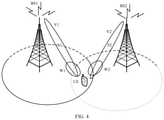
- FIG. 4 is a schematic diagram of a scenario of multipoint joint transmission according to an embodiment of the present invention.
- FIG. 5 is a schematic structural diagram of a transmitting device according to an embodiment of the present invention.
- FIG. 6 is a schematic structural diagram of a receiving device according to an embodiment of the present invention.
- FIG. 7 is a schematic structural diagram of a transmitting device according to an embodiment of the present invention.
- FIG. 8 is a schematic structural diagram of a receiving device according to an embodiment of the present invention.
- FIG. 1 shows a system architecture to which an embodiment of the present invention is applicable.
- a data transmission procedure can be controlled based on the system architecture.
- the system architecture for data transmission provided in this embodiment of the present invention includes a plurality of transmitting devices 101 and a receiving device 102 .
- the transmitting devices 101 may be base stations or stations managed by base stations.
- the receiving device 102 may be a mobile terminal.
- the plurality of transmitting devices 101 may send data to the receiving device 102 by using a joint transmission technology and a plurality of beams.
- the plurality of beams may be a plurality of beams in one transmitting device 101 , or may be a plurality of beams in a plurality of transmitting devices 101 .
- a first transmitting device 101 may use one beam
- a second transmitting device 101 may use two beams
- the receiving device 102 needs to use three beams to receive data transmitted by the two transmitting devices 101 .
- a primary device of the plurality of transmitting devices 101 is responsible for allocating beams used for data transmission and notifying each transmitting device 101 of the beams, so that each transmitting device 101 knows beams that can be used by the transmitting device 101 for implementing data transmission.
- FIG. 2 shows an example of a procedure of a data transmission method according to an embodiment of the present invention.
- the procedure is applicable to a wireless communications system including a plurality of beams.
- the procedure includes the following specific steps.
- Step 201 A transmitting device determines beam indication information and at least one transmit beam used for sending data to a receiving device.
- Step 202 The transmitting device sends the beam indication information to the receiving device.
- Step 203 The transmitting device transmits the data by using the at least one transmit beam.
- Step 204 The receiving device receives the beam indication information from the transmitting device, and determines, according to the beam indication information, at least one receive beam used for receiving the data transmitted by the transmitting device.
- Step 205 The receiving device receives, by using the determined at least one receive beam, the data transmitted by the transmitting device.
- the transmitting device when transmitting the data to the receiving device, the transmitting device needs to first determine the at least one transmit beam used for sending the data to the receiving device.
- the at least one transmit beam that is used is determined by using an existing common technology. This is not further described in this embodiment of the present invention.
- the beam indication information may indicate, to the receiving device, each receive beam used for receiving the data.
- the beam indication information may be information about each receive beam.
- the information about each receive beam may instruct the receiving device to determine each receive beam used for receiving the data.
- the beam indication information may alternatively be information about each transmit beam.
- the information about each transmit beam may instruct the receiving device to determine the receive beam used for receiving the data.
- the information about each receive beam or the information about each transmit beam is indicated, so that the receiving device can know receive beams by using which power of a received data signal is strongest, and use an advantage of a great power difference to enhance iterative interference elimination, thereby increasing a capability of the receiving device of receiving data from a plurality of beam directions.
- the beam indication information may be of a single-layer signaling structure or double-layer signaling structure.
- the beam indication information may be physical layer indication signaling, and an index value of the transmit beam and/or the receive beam is indicated by using the physical layer indication signaling.
- the beam indication information may be a combination of data link layer indication signaling and physical layer indication signaling, a transmit beam set and/or receive beam set is indicated by using the data link layer indication signaling, and a transmit beam and/or receive beam in the transmit beam set or the receive beam set is indicated by using the physical layer indication signaling.
- the transmitting device determines the beam indication information
- the transmitting device also needs to determine a correspondence between the transmit beam and/or the receive beam and a transport layer, so that the receiving device knows a transport layer received by using the receive beam when receiving data.
- the transmit beam and/or the receive beam may correspond to one or more transport layers. This is not limited in this embodiment of the present invention.
- the transmitting device may send the beam indication information and the determined correspondence between the transmit beam and/or the receive beam and the transport layer to the receiving device.
- the transmitting device sends the beam indication information and the correspondence between the transmit beam and/or the receive beam and a transport layer to the receiving device by using physical layer indication signaling.
- the beam indication information and the determined correspondence between the transmit beam and/or the receive beam and the transport layer may be indicated in a same information field or two different information fields in one piece of signaling.
- a station BS 1 and a station BS 2 jointly transmit data to a terminal UE 1 .
- the station BS 1 transmits data to the terminal UE 1 by using a transmit beam 1
- the station BS 2 transmits data to the terminal UE 1 by using a transmit beam 2 .
- An indication manner may be as shown in Table 1 when the beam indication information and the correspondence between a transmit beam and/or a receive beam and a transport layer are in a same information field.
- a placement manner of the beam indication information in one information field may be as shown in Table 2 when the beam indication information and the correspondence between a transmit beam and/or a receive beam and a transport layer are in different information fields.
- the correspondence between a transmit beam and/or a receive beam and a transport layer may be placed in another information field, and may be receive beam 1:3, indicating that the first three transport layers are all received by one receive beam.
- Receive beam 2:1 indicates that the fourth, that is, the (3+1) th , transport layer is received by a receive beam 2.
- the transmitting device may first determine a correspondence between the transmit beam and/or the receive beam and a code word; determine a mapping relationship between the code word and the transport layer, and then send the beam indication information and the mapping relationship between the code word and the transport layer to the receiving device.
- the transmitting device sends the beam indication information and the mapping relationship between the code word and the transport layer to indicate, to the receiving device, a corresponding receive beam used for receiving the data transmitted by the transmitting device, and indicate the transport layer corresponding to the code word, so that the receiving device further uses a power difference between transport layers to improve a capability of eliminating interference between a plurality of code words, thereby increasing a capability of the receiving device of receiving data from a plurality of beam directions.
- signals S 1 , S 2 , and S 3 transmitted by the station BS 1 correspond to a code word 1
- a signal S 4 transmitted by the station BS 2 corresponds to a code word 2
- Information about a receive beam in each code word is indicated in each information field.
- the beam indication information and the mapping relationship between the code word and the transport layer may be sent to the receiving device by using physical layer indication signaling, and information bits of a specified bit quantity are set in the physical layer indication signaling to indicate a quantity of transport layers to which the code word is mapped.
- the transmitting device may determine the specified bit quantity based on a largest quantity of transport layers of the system.
- M is the largest quantity of transport layers of the current system, and the specified bit quantity is determined based on a value of M by using log 2 (M), to indicate the quantity of transport layers to which each code word is mapped.
- the specified bit quantity may be determined based on a largest quantity of transport layers of each code word stipulated in a protocol, to indicate the quantity of transport layers to which each code word is mapped. For example, one code word dynamically corresponds to one or two layers, so that each code word requires only one information bit to indicate the quantity of transport layers to which the code word is mapped.
- a specific information bit may be set in the physical layer indication signaling to indicate an index value of a mapping combination of the code word and the transport layer. For example, when there are two code words and each code word is mapped to two transport layers at most, mapping combinations of the code words and the transport layers are respectively ⁇ 1,1 ⁇ , ⁇ 1,2 ⁇ , ⁇ 2,1 ⁇ , and ⁇ 2,2 ⁇ . Therefore, two specific information bits may be used to indicate the four cases. When a current mapping relationship between the code word and the transport layer is ⁇ 1,2 ⁇ , the specific information bit is 01.
- the transmitting device may implicitly indicate the beam indication information to the receiving device.
- the transmitting device may send QCL information to the receiving device, and the receiving device may determine, based on a correspondence between the QCL information and the beam indication information, the receive beam used for receiving the data.
- the transmitting device sends the beam indication information to indicate, to the receiving device, a corresponding receive beam used for receiving the data transmitted by the transmitting device, so that the receiving device can select a suitable receive beam to receive the data, thereby improving a signal to interference plus noise ratio of receiving.
- the receiving device may identify, by using indicated receive beams, a receive beam having strong signal power. This mainly includes the following manners.
- Manner 1 Indicate that different beam receiving directions correspond to different code words, and identify a code word having a high confidence level (higher receive power) in each beam direction and preferentially test the code word.
- Manner 2 Indicate that different beam receiving directions correspond to different code words, and identify a code word having a high confidence level (higher receive power) in each beam direction and preferentially test the code word, and then test a code word having a low confidence level, and eliminate the code word having a high confidence level as interference.
- Manner 3 Indicate that different beam receiving directions correspond to different code words, and identify a code word having a high confidence level (higher receive power) in each beam direction and preferentially test the code word, and then substitute a test result into another beam to eliminate the test result as interference, to further improve a test effect of a wanted signal.
- the following manners may be used by the receiving device to perform signal test.
- the receiving device uses a receive beam 1 to receive an S 1 , where an S 2 is used as interference, and uses a receive beam 2 to receive the S 2 , where the S 1 is used as interference.
- the receive beam 1 receives the S 1 , and the S 1 is preferentially tested as a strong signal. Then, after the S 1 is eliminated as known interference after being tested, the S 2 is tested. Then, after the S 2 is eliminated as interference, the S 1 is tested again. Because the interference S 2 is eliminated, a test correctness percentage of the S 1 that is tested again is increased.
- the receive beam 2 receives the S 2 , and the S 2 is preferentially tested as a strong signal. Then, after the S 2 is eliminated as known interference after being tested, the S 1 is tested. Then, after the S 1 is eliminated as interference, the S 2 is tested again. Because the interference S 1 is eliminated, a test correctness percentage of the S 2 that is tested again is increased.
- the receive beam 1 receives the S 1 and an S 1 ′ is obtained by test; and the receive beam 2 receives the S 2 and an S 2 ′ is obtained by test.
- the S 2 ′ is substituted into a receiving model of the receive beam 1 to be eliminated as interference, and then the S 1 is tested.
- the S 1 ′ is substituted into a receiving model of the receive beam 2 to be eliminated as interference, and then the S 2 is tested.
- the receiving device when receiving the beam indication information from the transmitting device, the receiving device needs to determine, according to the beam indication information, at least one receive beam used for receiving the data transmitted by the transmitting device.
- the beam indication information includes information about the at least one receive beam
- the receiving device determines, based on the information about the at least one receive beam indicated by the beam indication information, the at least one receive beam used for receiving the data transmitted by the transmitting device.
- the receiving device needs to determine, based on the information about the at least one transmit beam indicated by the beam indication information and a correspondence between a transmit beam and a receive beam, information about at least one receive beam corresponding to the information about the at least one transmit beam.
- the correspondence between a transmit beam and a receive beam is learned in advance, and the receiving device may search for the correspondence between a transmit beam and a receive beam in practice. Then, the receiving device determines, based on the information about the at least one receive beam corresponding to the information about the at least one transmit beam, the at least one receive beam used for receiving the data transmitted by the transmitting device.
- the beam indication information includes a transmit beam 1 and a transmit beam 2, and when searching for the correspondence between a transmit beam and a receive beam, the receiving device finds that the transmit beam 1 corresponds to a receive beam a, and the transmit beam 2 corresponds to a receive beam b. Therefore, the receiving device determines to use the receive beam a to receive data transmitted by the transmit beam 1 and use the receive beam b to receive data transmitted by the transmit beam 2.
- the receiving device determines, according to the beam indication information and the correspondence between a transmit beam and/or a receive beam and a transport layer, the at least one receive beam used for receiving the data transmitted by the transmitting device and a transport stream received by the at least one receive beam. That is, the receiving device not only knows the receive beam used for receiving the transmitted data, but also may know a transport layer to which the transport stream received by the receive beam belongs.
- the beam indication information and the correspondence between a transmit beam and/or a receive beam and a transport layer sent by the transmitting device are received by using physical layer indication signaling.
- a placement format and an identifying manner in the physical layer indication signaling are described in the foregoing embodiments, and are not described herein again.
- FIG. 5 shows an example of a structure of a transmitting device.
- the structure is applicable to a wireless communications system including a plurality of beams, and includes:
- a processing unit 501 configured to determine beam indication information and at least one transmit beam used for sending data to a receiving device;
- a transceiver unit 502 configured to: send the beam indication information to the receiving device; and transmit the data by using the at least one transmit beam.
- the beam indication information indicates, to the receiving device, each receive beam used for receiving the data.
- the beam indication information includes information about each receive beam or information about each transmit beam.
- the transceiver unit 502 is specifically configured to:
- processing unit 501 is further configured to:
- the transceiver unit 502 is specifically configured to:
- processing unit 501 is specifically configured to:
- the transceiver unit 502 is specifically configured to:
- the transceiver unit 502 is specifically configured to:
- information bits of a specified bit quantity are set in the physical layer indication signaling to indicate a quantity of transport layers to which the code word is mapped; or a specific information bit is set in the physical layer indication signaling to indicate an index value of a mapping combination of the code word and the transport layer.
- processing unit 501 is specifically configured to:
- FIG. 6 shows an example of a structure of a receiving device.
- the structure is applicable to a wireless communications system including a plurality of beams, and includes:
- a transceiver unit 601 configured to receive beam indication information from a transmitting device
- a processing unit 602 configured to determine, according to the beam indication information, at least one receive beam used for receiving data transmitted by the transmitting device, and
- the transceiver unit 601 is further configured to receive, by using the determined at least one receive beam, the data transmitted by the transmitting device.
- the beam indication information includes information about the at least one receive beam
- the processing unit 602 is specifically configured to:
- the at least one receive beam used for receiving the data transmitted by the transmitting device determine, based on the information about the at least one receive beam indicated by the beam indication information, the at least one receive beam used for receiving the data transmitted by the transmitting device.
- the beam indication information includes information about at least one transmit beam
- the processing unit 602 is specifically configured to:
- the at least one receive beam used for receiving the data transmitted by the transmitting device.
- the transceiver unit 601 is specifically configured to:
- the processing unit 602 determines, by using the processing unit 602 , the beam indication information based on a correspondence between the QCL information and the beam indication information.
- the transceiver unit 601 is specifically configured to:
- the processing unit 602 is specifically configured to:
- the at least one receive beam used for receiving the data transmitted by the transmitting device determines, according to the beam indication information and the correspondence between a transmit beam and/or a receive beam and a transport layer, the at least one receive beam used for receiving the data transmitted by the transmitting device, and a transport stream that needs to be received by the at least one receive beam.
- the transceiver unit 601 is specifically configured to:
- the processing unit 602 is specifically configured to:
- the at least one receive beam used for receiving the data transmitted by the transmitting device determines, according to the beam indication information and the mapping relationship between the code word and the transport layer, the at least one receive beam used for receiving the data transmitted by the transmitting device, and a transport stream that needs to be received by the at least one receive beam.
- the transceiver unit 601 is specifically configured to:
- information bits of a specified bit quantity are set in the physical layer indication signaling to indicate a quantity of transport layers to which the code word is mapped; or a specific information bit is set in the physical layer indication signaling to indicate an index value of a mapping combination of the code word and the transport layer.
- the processing unit 602 is further configured to: determine, based on a largest quantity of transport layers of the system and the information bits of the specified bit quantity, the quantity of transport layers to which the code word is mapped; or
- FIG. 7 shows a transmitting device 700 according to this application.
- the transmitting device 700 can perform the steps or functions performed by the transmitting device in the foregoing embodiments.
- the transmitting device 700 may include: a transceiver 701 , a processor 702 , and a memory 703 .
- the processor 702 is configured to control an operation of the transmitting device 700 .
- the memory 703 may include a read-only memory and a random access memory, and stores an instruction and data that can be executed by the processor 702 .
- Various components such as the transceiver 701 , the processor 702 , and the memory 703 are connected by using a bus 709 .
- the bus 709 may include a power supply bus, a control bus, and a status signal bus.
- various types of buses in the figure are marked as the bus 709 .
- the transceiver 701 and the memory 703 may also be connected to the processor 702 in another manner.
- the transceiver 701 may include a transmitter and a receiver.
- the data transmission method disclosed in this application may be applied to the processor 702 or implemented by the processor 702 .
- the processor 702 is configured to read code in the memory 703 to perform a data transmission procedure.
- FIG. 8 shows a receiving device 800 according to this application.
- the receiving device 800 can perform the steps or functions performed by the receiving device in the foregoing embodiments.
- the receiving device 800 may include: a transceiver 801 , a processor 802 , and a memory 803 .
- the processor 802 is configured to control an operation of the receiving device 800 .
- the memory 803 may include a read-only memory and a random access memory, and stores an instruction and data that can be executed by the processor 802 .
- Various components such as the transceiver 801 , the processor 802 , and the memory 803 are connected by using a bus 809 .
- the bus 809 may include a power supply bus, a control bus, and a status signal bus.
- various types of buses in the figure are marked as the bus 809 .
- the transceiver 801 and the memory 803 may also be connected to the processor 802 in another manner.
- the transceiver 801 may be a transceiver, and may include a transmitter and a receiver.
- the data transmission method disclosed in this application may be applied to the processor 802 or implemented by the processor 802 .
- the processor 802 is configured to read code in the memory 803 to perform a data transmission procedure.
- the embodiments of the present invention may be provided as a method, or a computer program product. Therefore, the present invention may use a form of hardware only embodiments, software only embodiments, or embodiments with a combination of software and hardware. Moreover, the present invention may use a form of a computer program product that is implemented on one or more computer-usable storage media (including but not limited to a disk memory, a CD-ROM, an optical memory, and or the like) that include computer-usable program code.
- computer-usable storage media including but not limited to a disk memory, a CD-ROM, an optical memory, and or the like
- These computer program instructions may be provided for a general-purpose computer, a dedicated computer, an embedded processor, or a processor of any other programmable data processing device to generate a machine, so that the instructions executed by a computer or a processor of any other programmable data processing device generate an apparatus for implementing a function in one or more processes in the flowcharts and/or in one or more blocks in the block diagrams.
- These computer program instructions may also be stored in a computer readable memory that can instruct the computer or any other programmable data processing device to work in a specific manner, so that the instructions stored in the computer readable memory generate an artifact that includes an instruction apparatus.
- the instruction apparatus implements a function in one or more processes in the flowcharts and/or in one or more blocks in the block diagrams.
- These computer program instructions may also be loaded onto a computer or another programmable data processing device, so that a series of operations and steps are performed on the computer or the another programmable device, thereby generating computer-implemented processing. Therefore, the instructions executed on the computer or the another programmable device provide steps for implementing a function in one or more processes in the flowcharts and/or in one or more blocks in the block diagrams.
Landscapes
- Engineering & Computer Science (AREA)
- Computer Networks & Wireless Communication (AREA)
- Signal Processing (AREA)
- Mobile Radio Communication Systems (AREA)
Applications Claiming Priority (3)
| Application Number | Priority Date | Filing Date | Title |
|---|---|---|---|
| CN201611261964.7 | 2016-12-30 | ||
| CN201611261964.7A CN108270470B (zh) | 2016-12-30 | 2016-12-30 | 一种数据传输的方法及发送端设备、接收端设备 |
| PCT/CN2017/118668 WO2018121539A1 (zh) | 2016-12-30 | 2017-12-26 | 一种数据传输的方法及发送端设备、接收端设备 |
Related Parent Applications (1)
| Application Number | Title | Priority Date | Filing Date |
|---|---|---|---|
| PCT/CN2017/118668 Continuation WO2018121539A1 (zh) | 2016-12-30 | 2017-12-26 | 一种数据传输的方法及发送端设备、接收端设备 |
Publications (2)
| Publication Number | Publication Date |
|---|---|
| US20190320330A1 US20190320330A1 (en) | 2019-10-17 |
| US11234138B2 true US11234138B2 (en) | 2022-01-25 |
Family
ID=62706898
Family Applications (1)
| Application Number | Title | Priority Date | Filing Date |
|---|---|---|---|
| US16/455,999 Active 2038-05-11 US11234138B2 (en) | 2016-12-30 | 2019-06-28 | Data transmission method, transmitting device, and receiving device |
Country Status (6)
| Country | Link |
|---|---|
| US (1) | US11234138B2 (de) |
| EP (1) | EP3553963A4 (de) |
| JP (1) | JP2020503772A (de) |
| KR (1) | KR20190100303A (de) |
| CN (1) | CN108270470B (de) |
| WO (1) | WO2018121539A1 (de) |
Families Citing this family (4)
| Publication number | Priority date | Publication date | Assignee | Title |
|---|---|---|---|---|
| CN110913480B (zh) * | 2018-09-17 | 2023-03-31 | 华为技术有限公司 | 通信方法及相关装置 |
| CN111385824B (zh) | 2018-12-29 | 2022-06-10 | 成都华为技术有限公司 | 一种信息传输方法、网络设备、终端设备及存储介质 |
| CN114430317A (zh) * | 2019-04-30 | 2022-05-03 | 华为技术有限公司 | 通信方法和通信装置 |
| CN117014047A (zh) * | 2022-04-29 | 2023-11-07 | 中兴通讯股份有限公司 | 通信方法、设备和存储介质 |
Citations (38)
| Publication number | Priority date | Publication date | Assignee | Title |
|---|---|---|---|---|
| US20080090575A1 (en) * | 2006-07-13 | 2008-04-17 | Oz Barak | WiMAX ACCESS POINT NETWORK WITH BACKHAUL TECHNOLOGY |
| US20080212700A1 (en) * | 2006-12-29 | 2008-09-04 | Samsung Electronics Co., Ltd. | Method and apparatus for transmitting and receiving control channel message in a mimo mobile communication system |
| CN101505182A (zh) | 2009-03-18 | 2009-08-12 | 北京邮电大学 | 一种多天线系统中基于波束赋形的数据传输方法和基站 |
| US20100075706A1 (en) * | 2008-09-19 | 2010-03-25 | Qualcomm Incorporated | Reference signal design for lte a |
| US20110143807A1 (en) | 2009-12-14 | 2011-06-16 | Blue Wonder Communications Gmbh | Method and apparatus for data communication in lte cellular networks |
| US20110170625A1 (en) * | 2010-01-11 | 2011-07-14 | Futurewei Technologies, Inc. | System and Method for Multiplexing Control and Data Channels in a Multiple Input, Multiple Output Communications System |
| US20110243007A1 (en) * | 2010-04-01 | 2011-10-06 | Futurewei Technologies, Inc. | System and Method for Uplink Multi-Antenna Power Control in a Communications System |
| US20120028628A1 (en) * | 2010-03-16 | 2012-02-02 | Telefonaktiebolaget L M Ericsson (Publ) | Switching between Open and Closed Loop Multi-Stream Transmission |
| US20120182951A1 (en) * | 2009-08-17 | 2012-07-19 | Ntt Docomo, Inc. | Radio base station and mobile station |
| US20120307648A1 (en) * | 2010-01-08 | 2012-12-06 | Ntt Docomo, Inc. | User device, base station, and method for mobile communication systems |
| US20130059595A1 (en) * | 2010-04-15 | 2013-03-07 | Ntt Docomo, Inc. | Base station and method in mobile communication system |
| US20130128761A1 (en) * | 2010-07-27 | 2013-05-23 | Lg Electronics Inc. | Method and device whereby base station allocates nodes to terminal in a semi-static fashion in multi-node system |
| US20130176952A1 (en) * | 2011-08-12 | 2013-07-11 | Interdigital Patent Holdings, Inc. | Flexible Bandwidth Operation In Wireless Systems |
| US20130235819A1 (en) * | 2012-03-12 | 2013-09-12 | Zte (Usa) Inc. | Sequence Initialization for Demodulation Reference Signal |
| US20130336176A1 (en) * | 2012-06-13 | 2013-12-19 | All Purpose Networks LLC | Baseband data transmission and reception in an lte wireless base station employing periodically scanning rf beam forming techniques |
| US20140135061A1 (en) * | 2012-11-12 | 2014-05-15 | Broadcom Corporation | Apparatus and method for sharing antenna |
| US8743728B2 (en) * | 2009-09-15 | 2014-06-03 | Ntt Docomo, Inc. | Radio base station and mobile communication method |
| JP2014158106A (ja) | 2013-02-14 | 2014-08-28 | National Institute Of Information & Communication Technology | 無線通信システム及び方法 |
| JP2014526837A (ja) | 2011-09-16 | 2014-10-06 | サムスン エレクトロニクス カンパニー リミテッド | 無線通信システムにおけるビーム割り当て装置及び方法 |
| US20140334440A1 (en) * | 2013-05-10 | 2014-11-13 | Alcatel-Lucent Usa Inc. | Network assisted interference cancellation |
| CN104184561A (zh) | 2014-01-13 | 2014-12-03 | 中兴通讯股份有限公司 | 预编码导频处理方法、装置、基站及终端 |
| EP2945414A1 (de) * | 2013-01-14 | 2015-11-18 | LG Electronics Inc. | Verfahren zur berichterstattung von kanalstatusinformationen für dreidimensionale strahlformung in einem drahtlosen kommunikationssystem und vorrichtung dafür |
| US20160029395A1 (en) * | 2013-03-13 | 2016-01-28 | Lg Electronics Inc. | Method for transmitting and receiving information for interference cancellation, and apparatus therefor |
| JP2016506112A (ja) | 2012-11-23 | 2016-02-25 | サムスン エレクトロニクス カンパニー リミテッド | ビームフォーミングベースの無線通信システムにおける送受信ビームパターン変更によるビーム利得補償の運用のための方法及び装置 |
| JP2016521026A (ja) | 2013-04-10 | 2016-07-14 | 中興通訊股▲分▼有限公司 | プリコーディング後のチャネルの連続性を保証する方法、基地局、ユーザ装置およびコンピュータ可読記憶媒体 |
| JP2016532365A (ja) | 2013-07-29 | 2016-10-13 | エルジー エレクトロニクス インコーポレイティド | 無線通信システムにおいてNIB CoMP方法及び装置 |
| WO2016197660A1 (zh) | 2015-06-08 | 2016-12-15 | 中兴通讯股份有限公司 | 一种载频间协作方法及装置 |
| US20170264355A1 (en) * | 2014-11-19 | 2017-09-14 | Samsung Electronics Co., Ltd. | Method and apparatus for transmitting and receiving reference signal and for scheduling |
| US20180132227A1 (en) * | 2016-11-04 | 2018-05-10 | At&T Intellectual Property I, L.P. | Asynchronous multi-point transmission schemes |
| US20180219605A1 (en) * | 2015-07-31 | 2018-08-02 | Intel Corporation | Receive beam indication for 5g systems |
| US20180309496A1 (en) * | 2015-11-10 | 2018-10-25 | Idac Holdings, Inc. | Transmission schemes and modes and fallback schemes for the access link of systems operating in higher frequency bands |
| US20180309484A1 (en) * | 2015-10-18 | 2018-10-25 | Ntt Docomo, Inc. | Base station, mobile station and radio communication method |
| US20180323830A1 (en) * | 2015-11-04 | 2018-11-08 | Lg Electronics Inc. | Method for transmitting and receiving downlink data in wireless communication system, and apparatus therefor |
| US20190013916A1 (en) * | 2015-08-19 | 2019-01-10 | China Mobile Communications Group Co., Ltd. | Dmrs indication method and system, base station and user equipment |
| US20190058558A1 (en) * | 2015-11-02 | 2019-02-21 | Samsung Electronics Co., Ltd. | Method and apparatus for transmitting or receiving reference signal in beamforming communication system |
| US20190149276A1 (en) * | 2016-05-09 | 2019-05-16 | Intel IP Corporation | Extended physical broadcast channel design for 5g standalone system |
| US20190253108A1 (en) * | 2016-06-17 | 2019-08-15 | Nokia Technologies Oy | Enhanced uplink beam selection for massive mimo system |
| US20190387501A1 (en) * | 2015-10-02 | 2019-12-19 | Lg Electronics Inc. | Method for transmitting downlink control information in wireless communication system |
-
2016
- 2016-12-30 CN CN201611261964.7A patent/CN108270470B/zh active Active
-
2017
- 2017-12-26 KR KR1020197021599A patent/KR20190100303A/ko not_active Ceased
- 2017-12-26 EP EP17887884.9A patent/EP3553963A4/de active Pending
- 2017-12-26 WO PCT/CN2017/118668 patent/WO2018121539A1/zh not_active Ceased
- 2017-12-26 JP JP2019535347A patent/JP2020503772A/ja active Pending
-
2019
- 2019-06-28 US US16/455,999 patent/US11234138B2/en active Active
Patent Citations (39)
| Publication number | Priority date | Publication date | Assignee | Title |
|---|---|---|---|---|
| US20080090575A1 (en) * | 2006-07-13 | 2008-04-17 | Oz Barak | WiMAX ACCESS POINT NETWORK WITH BACKHAUL TECHNOLOGY |
| US20080212700A1 (en) * | 2006-12-29 | 2008-09-04 | Samsung Electronics Co., Ltd. | Method and apparatus for transmitting and receiving control channel message in a mimo mobile communication system |
| US20100075706A1 (en) * | 2008-09-19 | 2010-03-25 | Qualcomm Incorporated | Reference signal design for lte a |
| CN101505182A (zh) | 2009-03-18 | 2009-08-12 | 北京邮电大学 | 一种多天线系统中基于波束赋形的数据传输方法和基站 |
| US20120182951A1 (en) * | 2009-08-17 | 2012-07-19 | Ntt Docomo, Inc. | Radio base station and mobile station |
| US8743728B2 (en) * | 2009-09-15 | 2014-06-03 | Ntt Docomo, Inc. | Radio base station and mobile communication method |
| US20110143807A1 (en) | 2009-12-14 | 2011-06-16 | Blue Wonder Communications Gmbh | Method and apparatus for data communication in lte cellular networks |
| US20120307648A1 (en) * | 2010-01-08 | 2012-12-06 | Ntt Docomo, Inc. | User device, base station, and method for mobile communication systems |
| US20110170625A1 (en) * | 2010-01-11 | 2011-07-14 | Futurewei Technologies, Inc. | System and Method for Multiplexing Control and Data Channels in a Multiple Input, Multiple Output Communications System |
| US20120028628A1 (en) * | 2010-03-16 | 2012-02-02 | Telefonaktiebolaget L M Ericsson (Publ) | Switching between Open and Closed Loop Multi-Stream Transmission |
| US20110243007A1 (en) * | 2010-04-01 | 2011-10-06 | Futurewei Technologies, Inc. | System and Method for Uplink Multi-Antenna Power Control in a Communications System |
| US20130059595A1 (en) * | 2010-04-15 | 2013-03-07 | Ntt Docomo, Inc. | Base station and method in mobile communication system |
| US20130128761A1 (en) * | 2010-07-27 | 2013-05-23 | Lg Electronics Inc. | Method and device whereby base station allocates nodes to terminal in a semi-static fashion in multi-node system |
| US20130176952A1 (en) * | 2011-08-12 | 2013-07-11 | Interdigital Patent Holdings, Inc. | Flexible Bandwidth Operation In Wireless Systems |
| JP2014526837A (ja) | 2011-09-16 | 2014-10-06 | サムスン エレクトロニクス カンパニー リミテッド | 無線通信システムにおけるビーム割り当て装置及び方法 |
| US20130235819A1 (en) * | 2012-03-12 | 2013-09-12 | Zte (Usa) Inc. | Sequence Initialization for Demodulation Reference Signal |
| US20130336176A1 (en) * | 2012-06-13 | 2013-12-19 | All Purpose Networks LLC | Baseband data transmission and reception in an lte wireless base station employing periodically scanning rf beam forming techniques |
| US20140135061A1 (en) * | 2012-11-12 | 2014-05-15 | Broadcom Corporation | Apparatus and method for sharing antenna |
| JP2016506112A (ja) | 2012-11-23 | 2016-02-25 | サムスン エレクトロニクス カンパニー リミテッド | ビームフォーミングベースの無線通信システムにおける送受信ビームパターン変更によるビーム利得補償の運用のための方法及び装置 |
| EP2945414A1 (de) * | 2013-01-14 | 2015-11-18 | LG Electronics Inc. | Verfahren zur berichterstattung von kanalstatusinformationen für dreidimensionale strahlformung in einem drahtlosen kommunikationssystem und vorrichtung dafür |
| JP2014158106A (ja) | 2013-02-14 | 2014-08-28 | National Institute Of Information & Communication Technology | 無線通信システム及び方法 |
| US20160029395A1 (en) * | 2013-03-13 | 2016-01-28 | Lg Electronics Inc. | Method for transmitting and receiving information for interference cancellation, and apparatus therefor |
| JP2016521026A (ja) | 2013-04-10 | 2016-07-14 | 中興通訊股▲分▼有限公司 | プリコーディング後のチャネルの連続性を保証する方法、基地局、ユーザ装置およびコンピュータ可読記憶媒体 |
| US20140334440A1 (en) * | 2013-05-10 | 2014-11-13 | Alcatel-Lucent Usa Inc. | Network assisted interference cancellation |
| JP2016532365A (ja) | 2013-07-29 | 2016-10-13 | エルジー エレクトロニクス インコーポレイティド | 無線通信システムにおいてNIB CoMP方法及び装置 |
| CN104184561A (zh) | 2014-01-13 | 2014-12-03 | 中兴通讯股份有限公司 | 预编码导频处理方法、装置、基站及终端 |
| US20170264355A1 (en) * | 2014-11-19 | 2017-09-14 | Samsung Electronics Co., Ltd. | Method and apparatus for transmitting and receiving reference signal and for scheduling |
| WO2016197660A1 (zh) | 2015-06-08 | 2016-12-15 | 中兴通讯股份有限公司 | 一种载频间协作方法及装置 |
| US20180167174A1 (en) | 2015-06-08 | 2018-06-14 | Zte Corporation | Inter-carrier frequency cooperation method and device |
| US20180219605A1 (en) * | 2015-07-31 | 2018-08-02 | Intel Corporation | Receive beam indication for 5g systems |
| US20190013916A1 (en) * | 2015-08-19 | 2019-01-10 | China Mobile Communications Group Co., Ltd. | Dmrs indication method and system, base station and user equipment |
| US20190387501A1 (en) * | 2015-10-02 | 2019-12-19 | Lg Electronics Inc. | Method for transmitting downlink control information in wireless communication system |
| US20180309484A1 (en) * | 2015-10-18 | 2018-10-25 | Ntt Docomo, Inc. | Base station, mobile station and radio communication method |
| US20190058558A1 (en) * | 2015-11-02 | 2019-02-21 | Samsung Electronics Co., Ltd. | Method and apparatus for transmitting or receiving reference signal in beamforming communication system |
| US20180323830A1 (en) * | 2015-11-04 | 2018-11-08 | Lg Electronics Inc. | Method for transmitting and receiving downlink data in wireless communication system, and apparatus therefor |
| US20180309496A1 (en) * | 2015-11-10 | 2018-10-25 | Idac Holdings, Inc. | Transmission schemes and modes and fallback schemes for the access link of systems operating in higher frequency bands |
| US20190149276A1 (en) * | 2016-05-09 | 2019-05-16 | Intel IP Corporation | Extended physical broadcast channel design for 5g standalone system |
| US20190253108A1 (en) * | 2016-06-17 | 2019-08-15 | Nokia Technologies Oy | Enhanced uplink beam selection for massive mimo system |
| US20180132227A1 (en) * | 2016-11-04 | 2018-05-10 | At&T Intellectual Property I, L.P. | Asynchronous multi-point transmission schemes |
Non-Patent Citations (13)
| Title |
|---|
| "5G/NR—Beam Management." ShareTechnote, Nov. 7, 2016, www.sharetechnote.com/html/5G/5G_Phy_BeamManagement.html. * |
| 3GPP TS 36.211 V14.0.0 (Sep. 2016), "3rd Generation Partnership Project; Technical Specification Group Radio Access Network; Evolved Universal Terrestrial Radio Access (E-UTRA); Physical channels and modulation (Release 14)," Sep. 2016, 69 pages. |
| 3GPP TS 36.212 V14.0.0 (Sep. 2016), "3rd Generation Partnership Project; Technical Specification Group Radio Access Network; Evolved Universal Terrestrial Radio Access (E-UTRA); Multiplexing and channel coding (Release 14)," Technical Specification, Sep. 2016, 148 pages. |
| 3GPP TSG RAN WG1 #87, Samsung, "QCL relations for different types of RS." Reno, USA, Nov. 14-18, 2016. * |
| CATT, "Beamforming for data and control channel," 3GPP TSG RAN WG1 Meeting #87, R1-1611386, Reno, USA Nov. 14-18, 2016, 4 pages. |
| EPO Communication pursuant to Article 94(3) EPC issued in European Application No. 17887884.9 dated Apr. 7, 2021, 9 pages. |
| Extended European Search Report issued in European Application No. 17887884.9 dated Aug. 16, 2019, 13 pages. |
| Office Action issued in Japanese Application No. 2019-535347 dated Sep. 1, 2020, 6 pages (with English translation). |
| Office Action issued in Korean Application No. 2019-7021599 dated Jan. 24, 2021, 9 pages (with English translation). |
| PCT International Search Report and Written Opinion issued in International Application No. PCT/CN2017/118668 dated Feb. 26, 2018, 10 pages (with English translation). |
| R1-1611385—CATT, "Discussion on beam reporting," 3GPP TSG RAN WG1 Meeting #87, Reno, USA, Nov. 14-18, 2016, 4 pages. |
| R1-1612492—Samsung, "QCL relations for different types of RS," 3GPP TSG RAN WG1 #87, Reno, USA, Nov. 14-18, 2016, 6 pages. |
| R1-1613106—ZTE et al., "Multi-TRP transmission for NR," 3GPP TSG RAN WG1 Meeting #87, Reno, USA, Nov. 14-18, 2016, 6 pages. |
Also Published As
| Publication number | Publication date |
|---|---|
| US20190320330A1 (en) | 2019-10-17 |
| CN108270470B (zh) | 2021-02-23 |
| KR20190100303A (ko) | 2019-08-28 |
| JP2020503772A (ja) | 2020-01-30 |
| EP3553963A1 (de) | 2019-10-16 |
| WO2018121539A1 (zh) | 2018-07-05 |
| CN108270470A (zh) | 2018-07-10 |
| EP3553963A4 (de) | 2019-10-16 |
Similar Documents
| Publication | Publication Date | Title |
|---|---|---|
| US11234138B2 (en) | Data transmission method, transmitting device, and receiving device | |
| US11419098B2 (en) | Method and device for reporting and receiving information, and computer readable storage medium | |
| US11317399B2 (en) | Wireless communication method, base station, transmission/reception point, user equipment and wireless communication system | |
| US12132674B2 (en) | Uplink transmission method and device | |
| WO2019128873A1 (zh) | 一种波束训练方法及相关设备 | |
| CN113905393B (zh) | 一种确定波束对的方法及装置 | |
| US20250337465A1 (en) | Information transmission method and device, and storage medium | |
| JP2014519776A (ja) | 送信および受信の方法およびデバイス | |
| CN105637927A (zh) | 通信接入方法和用户设备 | |
| CN105208635A (zh) | 一种系统信息的读取方法、调度方法及装置 | |
| CN107708210B (zh) | 用于多用户叠加传输的方法、网络设备和终端设备 | |
| US20220103215A1 (en) | Methods for beam correspondence signalling, related wireless devices and related network nodes | |
| US11489577B2 (en) | Methods for establishing beam reciprocity, related wireless devices and related network nodes | |
| JP2019531625A (ja) | 通信方法、ネットワーク・デバイスおよび端末デバイス | |
| CN110677225B (zh) | 一种上报及接收参考信号的方法和设备 | |
| US20240314799A1 (en) | Information transmission method, device, and storage medium | |
| CN104023405B (zh) | 一种数据传输方法、装置及系统 | |
| US20230029373A1 (en) | Retransmission method and apparatus in multi-transmission reception point architecture | |
| EP4429374A1 (de) | Verfahren und vorrichtung zur konfiguration einer tdd-rahmenstruktur und vorrichtung | |
| JP6422006B2 (ja) | 通信装置及び通信方法 | |
| WO2022237389A1 (zh) | 信道状态信息传输方法、装置和存储介质 | |
| CN110493881B (zh) | 一种ue、基站中的用于多天线传输方法和装置 | |
| KR20160086928A (ko) | D2d 신호 검출 방법 및 장치 | |
| JP2020025300A (ja) | 端末装置、通信方法及び集積回路 | |
| JP2019033511A (ja) | 通信装置、通信方法及び集積回路 |
Legal Events
| Date | Code | Title | Description |
|---|---|---|---|
| FEPP | Fee payment procedure |
Free format text: ENTITY STATUS SET TO UNDISCOUNTED (ORIGINAL EVENT CODE: BIG.); ENTITY STATUS OF PATENT OWNER: LARGE ENTITY |
|
| STPP | Information on status: patent application and granting procedure in general |
Free format text: DOCKETED NEW CASE - READY FOR EXAMINATION |
|
| AS | Assignment |
Owner name: HUAWEI TECHNOLOGIES CO., LTD., CHINA Free format text: ASSIGNMENT OF ASSIGNORS INTEREST;ASSIGNORS:ZHANG, LEIMING;LIU, YIFAN;LEI, MING;SIGNING DATES FROM 20180912 TO 20201202;REEL/FRAME:054542/0635 |
|
| STPP | Information on status: patent application and granting procedure in general |
Free format text: NON FINAL ACTION MAILED |
|
| STPP | Information on status: patent application and granting procedure in general |
Free format text: RESPONSE TO NON-FINAL OFFICE ACTION ENTERED AND FORWARDED TO EXAMINER |
|
| STPP | Information on status: patent application and granting procedure in general |
Free format text: FINAL REJECTION MAILED |
|
| STPP | Information on status: patent application and granting procedure in general |
Free format text: RESPONSE AFTER FINAL ACTION FORWARDED TO EXAMINER |
|
| STPP | Information on status: patent application and granting procedure in general |
Free format text: NOTICE OF ALLOWANCE MAILED -- APPLICATION RECEIVED IN OFFICE OF PUBLICATIONS |
|
| STPP | Information on status: patent application and granting procedure in general |
Free format text: PUBLICATIONS -- ISSUE FEE PAYMENT VERIFIED |
|
| STCF | Information on status: patent grant |
Free format text: PATENTED CASE |
|
| MAFP | Maintenance fee payment |
Free format text: PAYMENT OF MAINTENANCE FEE, 4TH YEAR, LARGE ENTITY (ORIGINAL EVENT CODE: M1551); ENTITY STATUS OF PATENT OWNER: LARGE ENTITY Year of fee payment: 4 |