US11222012B2 - Method, apparatus, and computer-readable medium for dynamic hierarchical data flow mapping - Google Patents
Method, apparatus, and computer-readable medium for dynamic hierarchical data flow mapping Download PDFInfo
- Publication number
- US11222012B2 US11222012B2 US16/915,062 US202016915062A US11222012B2 US 11222012 B2 US11222012 B2 US 11222012B2 US 202016915062 A US202016915062 A US 202016915062A US 11222012 B2 US11222012 B2 US 11222012B2
- Authority
- US
- United States
- Prior art keywords
- data
- dynamic
- hierarchical
- data flow
- field
- Prior art date
- Legal status (The legal status is an assumption and is not a legal conclusion. Google has not performed a legal analysis and makes no representation as to the accuracy of the status listed.)
- Active, expires
Links
Images




Classifications
-
- G—PHYSICS
- G06—COMPUTING OR CALCULATING; COUNTING
- G06F—ELECTRIC DIGITAL DATA PROCESSING
- G06F16/00—Information retrieval; Database structures therefor; File system structures therefor
- G06F16/20—Information retrieval; Database structures therefor; File system structures therefor of structured data, e.g. relational data
- G06F16/24—Querying
- G06F16/242—Query formulation
- G06F16/2423—Interactive query statement specification based on a database schema
-
- G—PHYSICS
- G06—COMPUTING OR CALCULATING; COUNTING
- G06F—ELECTRIC DIGITAL DATA PROCESSING
- G06F16/00—Information retrieval; Database structures therefor; File system structures therefor
- G06F16/20—Information retrieval; Database structures therefor; File system structures therefor of structured data, e.g. relational data
- G06F16/21—Design, administration or maintenance of databases
- G06F16/211—Schema design and management
-
- G—PHYSICS
- G06—COMPUTING OR CALCULATING; COUNTING
- G06F—ELECTRIC DIGITAL DATA PROCESSING
- G06F16/00—Information retrieval; Database structures therefor; File system structures therefor
- G06F16/20—Information retrieval; Database structures therefor; File system structures therefor of structured data, e.g. relational data
- G06F16/22—Indexing; Data structures therefor; Storage structures
- G06F16/221—Column-oriented storage; Management thereof
-
- G—PHYSICS
- G06—COMPUTING OR CALCULATING; COUNTING
- G06F—ELECTRIC DIGITAL DATA PROCESSING
- G06F16/00—Information retrieval; Database structures therefor; File system structures therefor
- G06F16/20—Information retrieval; Database structures therefor; File system structures therefor of structured data, e.g. relational data
- G06F16/24—Querying
- G06F16/245—Query processing
- G06F16/2455—Query execution
- G06F16/24564—Applying rules; Deductive queries
-
- G—PHYSICS
- G06—COMPUTING OR CALCULATING; COUNTING
- G06F—ELECTRIC DIGITAL DATA PROCESSING
- G06F16/00—Information retrieval; Database structures therefor; File system structures therefor
- G06F16/20—Information retrieval; Database structures therefor; File system structures therefor of structured data, e.g. relational data
- G06F16/25—Integrating or interfacing systems involving database management systems
- G06F16/254—Extract, transform and load [ETL] procedures, e.g. ETL data flows in data warehouses
-
- G—PHYSICS
- G06—COMPUTING OR CALCULATING; COUNTING
- G06F—ELECTRIC DIGITAL DATA PROCESSING
- G06F16/00—Information retrieval; Database structures therefor; File system structures therefor
- G06F16/20—Information retrieval; Database structures therefor; File system structures therefor of structured data, e.g. relational data
- G06F16/28—Databases characterised by their database models, e.g. relational or object models
- G06F16/282—Hierarchical databases, e.g. IMS, LDAP data stores or Lotus Notes
Definitions
- Hierarchical data is usually structured as a combination of different kinds of hierarchies—collections, multi-occurring hierarchies (arrays) etc. These structures (metadata) are typically described in documents called schemas.
- FIGS. 1A-1C illustrate data flow mapping fragments to process data in data tables containing different versions of a hierarchical Address column.
- FIG. 3 illustrates a method for dynamic hierarchical data flow mapping according to an exemplary embodiment.
- FIG. 4 illustrates a set of data flow mappings including a dynamic data flow mapping according to an exemplary embodiment.
- FIG. 5 illustrates another set of data flow mappings including a dynamic data flow mapping according to an exemplary embodiment.
- FIG. 6 illustrates a method for generating one or more static data flow mappings by resolving all dynamic hierarchical fields into static hierarchical fields during compilation of the one or more dynamic data flow mappings with the source data container and the destination data container according to an exemplary embodiment.
- FIG. 10 illustrates a specialized computing environment for dynamic hierarchical data flow mapping according to an exemplary embodiment.
- the hierarchical data described in this disclosure can be, for example, some combination of data structures or elements, collections of elements, arrays of elements, and/or maps that map particular keys to elements.
- data flow systems can be implemented that process hierarchical data that is read from multiple hierarchical data sources (repositories) and write it to one or more hierarchical data sources while at the same time leveraging transformation logic on the data within the hierarchical columns.
- a data flow designer can use this system to design a single data flow mapping that can be reused for different source metadata based upon the structural differences between the different source metadata.
- auxiliary dynamic R2H Relational-to-Hierarchical building patterns to be able to read from multiple flat data sources with varying column schemas and transform the shape of the data to a hierarchical structure to be further written to a hierarchical data source.
- This construction of hierarchical data columns can be encoded in a single data flow mapping and be reused for different versions of flat data.
- the present system also allows for auxiliary dynamic Hierarchical-to-Relational (H2R) flattening patterns to be able to read from multiple complex sources with varying hierarchical schema and flatten the data to completely two-dimensional relational data.
- H2R Hierarchical-to-Relational
- the disclosed system also allows data flow designers to describe hierarchical schema using rule language without requiring that the designer have expert knowledge of schema definition languages.
- FIG. 1A illustrates a data flow mapping fragment 101 A to process data in a data table that contains a hierarchical Address column with the sub-fields of Street, City, Zip, State.
- the user defined type library interface 102 A it is necessary for the user to define a specific hierarchical address structure that corresponds to the sub-fields of the hierarchical address column in the underlying data table.
- FIG. 1B illustrates a data flow mapping fragment 101 B to process data that contains a similar hierarchical Address column but with fewer sub-fields—just Street and Zip.
- FIG. 1C illustrates a data flow mapping fragment 101 C to process data that contains a third version of a hierarchical Address column with the sub-fields Street, City, Zip, State.
- the Zip sub-field is stored as decimal with 9 digits of precision (to allow for a zip code+4 digits), whereas in the version shown in FIG. 1A , the Zip sub-field has only 5 digits of precision.
- a user would still be required to define a new type for this particular Address structure, as shown in interface 102 C.
- a dynamic design of the data flow processes shown in FIGS. 1A-1C requires definition of only one data flow mapping and does not require any accompanying user types. Instead, the structure of each type of hierarchical data is generated based on information extracted from the underlying data set itself during compilation of the data flow mapping with a particular data source. The structure of each type is therefore inferred upon initialization and execution of the data flow mapping.
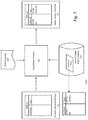
- FIG. 2 illustrates the same extract, transform, load (ETL) job shown in FIGS. 1A-1C when processed using dynamic hierarchical data types for dynamic data flow design according to an exemplary embodiment.
- ETL extract, transform, load
- the dynamic hierarchical field is configured to adapt to the underlying structure of a particular source data container or target data container during compilation of the dynamic data flow mapping.
- This dynamic structure means that users are not required to define user data types with specific sub-fields and parameters to support hierarchical columns. Instead, rules are defined on the dynamic hierarchical data fields that are configured to adapt the dynamic columns to the structure of data from a particular data source in order to satisfy target schema restrictions for a destination schema of the mapping.
- FIG. 3 illustrates a method for dynamic hierarchical data flow mapping according to an exemplary embodiment.
- each dynamic data flow mapping comprising a mapping of data from an input port corresponding to a source data container to an output port corresponding to a destination data container and including a dynamic hierarchical field having a dynamic hierarchical data type.
- Each dynamic data flow mapping links an input container in a source schema to an output container in a target schema.
- a container can be any structure configured to store data of particular type, such as columns, fields, or tables.
- the dynamic hierarchical data type can be, for example, a dynamic structure (“struct”), a dynamic array, a dynamic map, a dynamic class object, or other type of dynamic hierarchical data type.
- struct a dynamic structure
- dynamic map which stores pairs of sub-fields (the key-value pairs)
- each pair of sub-fields can be dynamically determined at compile time, similar to other dynamic hierarchical data types.
- FIG. 4 illustrates a set of data flow mappings including a dynamic data flow mapping according to an exemplary embodiment.
- Data flow mappings 400 map between a source data container 402 and a target data container 403 .
- each of the source data container 402 and the target data container 403 include the fields Name, Age, and Address.
- Each data flow mapping specifies fields that can be encoded as an input port (corresponding to a source container in a source schema), an output port (corresponding a destination container in a destination schema), or both.
- each of the fields in the data flow mappings 400 (Name, Age, and Address) are mapped to both the input port and the output ports. This means, for example, that the data field “Age” is read from a field “Age” in the source data container 402 and written to a field “Age” in the target data container 403 .
- FIG. 5 illustrates another set of data flow mappings including a dynamic data flow mapping according to an exemplary embodiment.
- FIG. 5 is similar to FIG. 4 and includes a set of data flow mappings 500 , including dynamic data flow mapping 501 , that map between a source data container 502 and a target data container 503 .
- FIG. 5 differs from FIG. 4 in that the Address field, which is again a dynamic hierarchical structure, is mapped only to the input port and not the output port. Assuming that the Address field within the Source Data Container 502 includes sub-fields of Zip and State, these sub-fields will then be mapped separately to non-hierarchical fields Zip and State, which exist in the target data container 503 but not the source data container 502 .
- the rule language defines acceptable parameters for sub-fields of that dynamic hierarchical field/data type
- the rule language can have different applicable rules depending upon the type of hierarchical data.
- the rule language can supports all rules that are currently used to denote a collection of flat data columns.
- the language can allow for a singular rule describing the acceptable data types for a typical recurring element.
- the rule language can allow for two rules or sets of rules—one describing the acceptable data types for the recurring element and another describing the acceptable data types for the reference key.
- the rules of the rule language are utilized as configuration parameters for the data flow mapping fragments and provide a set of filters and checks for designing data flow operations in a graphical environment where data columns/fields are joined using links that are translated to machine code at a later stage.
- the rule language can specify which data types can be instantiated as sub-fields of a dynamic hierarchical data field or type (e.g., integer, string, decimal, etc.), acceptable or restricted characteristics of those data types (e.g., precision), and/or acceptable or restricted characteristics of data values mapped to the sub-fields (e.g., maximum or minimum length, acceptable characters, acceptable range of values, syntax, etc.).
- data types can be instantiated as sub-fields of a dynamic hierarchical data field or type (e.g., integer, string, decimal, etc.), acceptable or restricted characteristics of those data types (e.g., precision), and/or acceptable or restricted characteristics of data values mapped to the sub-fields (e.g., maximum or minimum length, acceptable characters, acceptable range of values, syntax, etc.).
- the rule language can also specify transformations or modifications to be performed to values mapped to input or output fields for a particular type of dynamic hierarchical data types when the values do not meet other criteria. For example, a rule can specify that any integer sub-fields of a dynamic hierarchical address field must have a particular precision value. Another related rule can specify operations to modify any input or output sub-fields to adjust the precision of a detected integer sub-field that has a different precision.
- the expression language of the present the dynamic hierarchical data flow mapping system is further enhanced to contain a new expression function that takes in a schema agnostic hierarchical column and returns a variable set of constituent hierarchical elements thereby flattening or reducing the hierarchical level of the previously nested hierarchical column.
- FIG. 5 illustrates this type of flattening operation, in which a hierarchical address field is flattened to a zip field and a state field.
- the present mapping system is also able to take in a multi-occurring hierarchical column and normalize entire rows of data that contain a resultant column that is of variable type and denotes the multi occurring element of the hierarchical column, thereby the flattening or reducing the hierarchical level of the previously multi occurring hierarchical column
- FIG. 6 illustrates a method for generating one or more static data flow mappings by resolving all dynamic hierarchical fields into static hierarchical fields during compilation of the one or more dynamic data flow mappings with the source data container and the destination data container according to an exemplary embodiment.
- a data flow mapping that is designed dynamically is executed, it first requires a phase to resolve all dynamic elements in the mapping, apart from running other logical on the data flow operation denoted by the mapping.
- This phase is called data flow mapping compilation.
- the hierarchical data source that is chosen to run with the data flow mapping i.e., the input and/or output hierarchical data field
- the hierarchical data source is used to transform the dynamic hierarchical fields having a dynamic/variable number of subfields into static hierarchical fields having a static number of subfields that correspond to the relevant hierarchical data in the underlying data set.
- a static (non-dynamic) hierarchical field corresponding to each dynamic hierarchical field is generated.
- the static hierarchical field includes the one or more static sub-fields determined for that dynamic hierarchical field in step 601 .
- the generated static hierarchical fields are not persisted and are applicable only to the current instance of an ETL job. This allows the dynamic data flow mappings to be run in multiple different instances with differently structured/shaped hierarchical data
- FIG. 7 illustrates an example of the static sub-field determination and static hierarchical field generation process according to an exemplary embodiment.
- the address field is a dynamic hierarchical field 701 and does not have any sub-fields or types defined prior to compilation of the data flow mapping.
- the dynamic hierarchical field 701 , the determined rule language 704 for that dynamic hierarchical field, and the source and/or target data container 703 are provided to the compilation process 702 .
- the underlying sub-fields in the address field 703 A of the source and/or target data container 703 may be detected and/or filtered by the rule language 704 .
- the address field 703 A in the underlying source/target data container 703 includes two sub-fields, Street and Zip. These two sub-fields can then be identified as corresponding to the dynamic hierarchical field and used to generate the static hierarchical field 705 corresponding to dynamic hierarchical field 701 .
- Static hierarchical field 806 corresponds to the input mapping from source data container 803 to the address field in the dynamic hierarchical field 801 and static hierarchical field 807 corresponds to the output mapping from dynamic hierarchical field 801 to the target data container 805 .
- the rules language can specify that only a single static hierarchical data field corresponding to the dynamic hierarchical field should be utilized (e.g., the structure of the field in the target container can be given priority).
- one or more static data flow mappings are generated (for the current instance of an ETL job) by replacing each dynamic hierarchical field in the dynamic data flow mappings with corresponding static hierarchical fields.
- the one or more static data flow mappings are executed to map data from the source data container to the destination data container.
- data in one or more of the source container or the destination data container is stored in the static hierarchical fields generated from a dynamic hierarchical fields.
- FIG. 9 illustrates a schematic comparing the life cycles of non-dynamic hierarchical data flow mappings and dynamic hierarchical data flow mappings.
- the dynamic hierarchical data flow mappings and associated methods disclosed herein enable re-use and adaption of hierarchical data fields to the characteristics of an underlying data set, based on compile-time analysis of the data set metadata corresponding to each hierarchical field.
- FIG. 10 illustrates a specialized computing environment for dynamic hierarchical data flow mapping according to an exemplary embodiment.
- Computing environment 1000 includes a memory 1001 that is a non-transitory computer-readable medium and can be volatile memory (e.g., registers, cache, RAM), non-volatile memory (e.g., ROM, EEPROM, flash memory, etc.), or some combination of the two.
- volatile memory e.g., registers, cache, RAM
- non-volatile memory e.g., ROM, EEPROM, flash memory, etc.
- Memory 1001 includes dynamic data flow mapping software 1001 A, dynamic hierarchical data types 1001 B, rule languages 1001 C, data containers 1001 D, the data flow mapping compiler 1001 E, dynamitic type resolution software for mapping dynamic to static types 1001 F, and schema storage 1001 G.
- the memory 1001 can include specialized software, comprising specialized instructions, that when executed by the processor 1002 , cause the processor to perform any of the functionality described herein.
- the memory 1001 can also store data corresponding to the datasets, dynamic and non-dynamic mappings, and intermediate values of the processes described herein. All of the software stored within memory 1001 can be stored as a computer-readable instructions, that when executed by one or more processors 1002 , cause the processors to perform the functionality described with respect to FIGS. 2-9 .
- Computing environment 1000 further includes input and output interfaces 1004 that allow users (such as system administrators) to provide input to the system and display or otherwise transmit information for display to users.
- users such as system administrators
- An interconnection mechanism (shown as a solid line in FIG. 10 ), such as a bus, controller, or network interconnects the components of the computing environment 1000 .
- Input and output interfaces 1004 can be coupled to input and output devices.
- the input device(s) can be a touch input device such as a keyboard, mouse, pen, trackball, touch screen, or game controller, a voice input device, a scanning device, a digital camera, remote control, or another device that provides input to the computing environment.
- the output device(s) can be a display, television, monitor, printer, speaker, or another device that provides output from the computing environment 1000 .
- Displays can include a graphical user interface (GUI) that presents a graphical data flow editing and creation interface to designers.
- GUI graphical user interface
- the computing environment 1000 can additionally utilize a removable or non-removable storage, such as magnetic disks, magnetic tapes or cassettes, CD-ROMs, CD-RWs, DVDs, USB drives, or any other medium which can be used to store information and which can be accessed within the computing environment 1000 .
- a removable or non-removable storage such as magnetic disks, magnetic tapes or cassettes, CD-ROMs, CD-RWs, DVDs, USB drives, or any other medium which can be used to store information and which can be accessed within the computing environment 1000 .
- the computing environment 1000 can be a set-top box, personal computer, a client device, a database or databases, or one or more servers, for example a farm of networked servers, a clustered server environment, or a cloud network of computing devices and/or distributed databases.
Landscapes
- Engineering & Computer Science (AREA)
- Theoretical Computer Science (AREA)
- Databases & Information Systems (AREA)
- Physics & Mathematics (AREA)
- Data Mining & Analysis (AREA)
- General Engineering & Computer Science (AREA)
- General Physics & Mathematics (AREA)
- Computational Linguistics (AREA)
- Software Systems (AREA)
- Mathematical Physics (AREA)
- Information Retrieval, Db Structures And Fs Structures Therefor (AREA)
Abstract
Description
Claims (21)
Priority Applications (2)
| Application Number | Priority Date | Filing Date | Title |
|---|---|---|---|
| US16/915,062 US11222012B2 (en) | 2019-06-28 | 2020-06-29 | Method, apparatus, and computer-readable medium for dynamic hierarchical data flow mapping |
| US17/558,376 US11983174B2 (en) | 2019-06-28 | 2021-12-21 | Method, apparatus, and computer-readable medium for dynamic hierarchical data flow mapping |
Applications Claiming Priority (2)
| Application Number | Priority Date | Filing Date | Title |
|---|---|---|---|
| US201962868503P | 2019-06-28 | 2019-06-28 | |
| US16/915,062 US11222012B2 (en) | 2019-06-28 | 2020-06-29 | Method, apparatus, and computer-readable medium for dynamic hierarchical data flow mapping |
Related Child Applications (1)
| Application Number | Title | Priority Date | Filing Date |
|---|---|---|---|
| US17/558,376 Continuation US11983174B2 (en) | 2019-06-28 | 2021-12-21 | Method, apparatus, and computer-readable medium for dynamic hierarchical data flow mapping |
Publications (2)
| Publication Number | Publication Date |
|---|---|
| US20200409946A1 US20200409946A1 (en) | 2020-12-31 |
| US11222012B2 true US11222012B2 (en) | 2022-01-11 |
Family
ID=74043681
Family Applications (2)
| Application Number | Title | Priority Date | Filing Date |
|---|---|---|---|
| US16/915,062 Active 2040-07-09 US11222012B2 (en) | 2019-06-28 | 2020-06-29 | Method, apparatus, and computer-readable medium for dynamic hierarchical data flow mapping |
| US17/558,376 Active 2040-08-07 US11983174B2 (en) | 2019-06-28 | 2021-12-21 | Method, apparatus, and computer-readable medium for dynamic hierarchical data flow mapping |
Family Applications After (1)
| Application Number | Title | Priority Date | Filing Date |
|---|---|---|---|
| US17/558,376 Active 2040-08-07 US11983174B2 (en) | 2019-06-28 | 2021-12-21 | Method, apparatus, and computer-readable medium for dynamic hierarchical data flow mapping |
Country Status (1)
| Country | Link |
|---|---|
| US (2) | US11222012B2 (en) |
Families Citing this family (8)
| Publication number | Priority date | Publication date | Assignee | Title |
|---|---|---|---|---|
| WO2022155952A1 (en) * | 2021-01-25 | 2022-07-28 | 深圳市大疆创新科技有限公司 | Address mapping method and apparatus |
| CN112925749A (en) * | 2021-02-20 | 2021-06-08 | 北京同邦卓益科技有限公司 | Data processing method and device, electronic equipment and storage medium |
| CN113672287B (en) * | 2021-09-03 | 2024-11-15 | 中国邮政储蓄银行股份有限公司 | A method and device for generating dynamic flowing water |
| US12493591B2 (en) * | 2022-11-08 | 2025-12-09 | Palantir Technologies Inc. | Systems and methods for data harmonization |
| WO2024118300A1 (en) * | 2022-12-02 | 2024-06-06 | Red Planet Labs, Inc. | Systems and methods for providing a vertically integrated backend |
| CN116915878B (en) * | 2023-08-11 | 2026-07-07 | 哈尔滨电气科学技术有限公司 | Method for uploading data of power generation equipment to cloud upper platform, electronic equipment and storage medium |
| US12627688B2 (en) * | 2023-12-21 | 2026-05-12 | Google Llc | Low-code parser creation |
| CN121071968B (en) * | 2025-11-10 | 2026-03-17 | 重庆诺源工业软件科技有限公司 | Scheme data organization method of CAD application system |
Citations (3)
| Publication number | Priority date | Publication date | Assignee | Title |
|---|---|---|---|---|
| US20080263515A1 (en) * | 2007-04-20 | 2008-10-23 | Dellas Christina M | Automatically Generating a Graphical Data Flow Program from a Statechart |
| US20130332897A1 (en) * | 2012-06-07 | 2013-12-12 | Carmel - Haifa University Economic Corporation Ltd. | Creating a user model using component based approach |
| US20170329786A1 (en) * | 2016-05-11 | 2017-11-16 | Informatica Llc | Data flow design with static and dynamic elements |
-
2020
- 2020-06-29 US US16/915,062 patent/US11222012B2/en active Active
-
2021
- 2021-12-21 US US17/558,376 patent/US11983174B2/en active Active
Patent Citations (3)
| Publication number | Priority date | Publication date | Assignee | Title |
|---|---|---|---|---|
| US20080263515A1 (en) * | 2007-04-20 | 2008-10-23 | Dellas Christina M | Automatically Generating a Graphical Data Flow Program from a Statechart |
| US20130332897A1 (en) * | 2012-06-07 | 2013-12-12 | Carmel - Haifa University Economic Corporation Ltd. | Creating a user model using component based approach |
| US20170329786A1 (en) * | 2016-05-11 | 2017-11-16 | Informatica Llc | Data flow design with static and dynamic elements |
Non-Patent Citations (2)
| Title |
|---|
| Lee et al., Dataflow Process Networks, IEEE, 1995, pp. 773-799. (Year: 1995). * |
| Pino et al., "Hierarchical Static Scheduling of DataFlow Graphs onto Multiple Processors", IEEE, 1995, pp. 2643-2646. (Year: 1995). * |
Also Published As
| Publication number | Publication date |
|---|---|
| US20220114170A1 (en) | 2022-04-14 |
| US20200409946A1 (en) | 2020-12-31 |
| US11983174B2 (en) | 2024-05-14 |
Similar Documents
| Publication | Publication Date | Title |
|---|---|---|
| US11983174B2 (en) | Method, apparatus, and computer-readable medium for dynamic hierarchical data flow mapping | |
| Fourment et al. | A comparison of common programming languages used in bioinformatics | |
| US9229697B2 (en) | Speculative object shapes | |
| US10248688B2 (en) | Annotations for parallelization of user-defined functions with flexible partitioning | |
| US7840585B2 (en) | DISCOSQL: distributed processing of structured queries | |
| Adamczyk et al. | Scikit-fingerprints: Easy and efficient computation of molecular fingerprints in Python | |
| US11379499B2 (en) | Method and apparatus for executing distributed computing task | |
| US11520565B2 (en) | Interpreter for interpreting a data model algorithm and creating a data schema | |
| US12204539B2 (en) | Automatic selection of precompiled or code-generated operator variants | |
| US10521426B2 (en) | Query plan generation for split table query operations | |
| Murray et al. | Accessible data curation and analytics for international-scale citizen science datasets | |
| WO2024156113A1 (en) | Runtime error attribution for database queries specified using a declarative database query language | |
| US20230418807A1 (en) | Query processing of stream objects using stream expansion | |
| Spoth et al. | Adaptive schema databases | |
| Birjali et al. | Evaluation of high-level query languages based on MapReduce in Big Data | |
| US20180150512A1 (en) | Query plan generation for precompiled and code generating query operations | |
| Esmaeilzadeh et al. | Building wikipedia n-grams with apache spark | |
| US11467752B2 (en) | Data migration system and data migration method | |
| US12210877B2 (en) | Offloading computation based on extended instruction set architecture | |
| WO2023076805A1 (en) | Devices, systems, and methods for type inferencing code scripted in a dynamic language | |
| TWI911119B (en) | Method for supporting front-end development and system thereof | |
| Sanjel et al. | Partitionable programs using tyro v2 | |
| US20190018665A1 (en) | Upgrading an application function library | |
| Fegaras | A query processing framework for large-scale scientific data analysis | |
| Kunft | Optimizing end-to-end machine learning pipelines for model training |
Legal Events
| Date | Code | Title | Description |
|---|---|---|---|
| FEPP | Fee payment procedure |
Free format text: ENTITY STATUS SET TO UNDISCOUNTED (ORIGINAL EVENT CODE: BIG.); ENTITY STATUS OF PATENT OWNER: LARGE ENTITY |
|
| STPP | Information on status: patent application and granting procedure in general |
Free format text: DOCKETED NEW CASE - READY FOR EXAMINATION |
|
| AS | Assignment |
Owner name: INFORMATICA CORPORATION, CALIFORNIA Free format text: ASSIGNMENT OF ASSIGNORS INTEREST;ASSIGNORS:RANGHABHATLA, CHANDRA VIKAS;SOHONI, TEJASWINEE;SIGNING DATES FROM 20200626 TO 20200803;REEL/FRAME:055643/0448 |
|
| STPP | Information on status: patent application and granting procedure in general |
Free format text: NOTICE OF ALLOWANCE MAILED -- APPLICATION RECEIVED IN OFFICE OF PUBLICATIONS |
|
| AS | Assignment |
Owner name: JPMORGAN CHASE BANK, N.A., NEW YORK Free format text: SECURITY INTEREST;ASSIGNOR:INFORMATICA LLC;REEL/FRAME:057973/0568 Effective date: 20211029 |
|
| STPP | Information on status: patent application and granting procedure in general |
Free format text: PUBLICATIONS -- ISSUE FEE PAYMENT VERIFIED |
|
| STCF | Information on status: patent grant |
Free format text: PATENTED CASE |
|
| MAFP | Maintenance fee payment |
Free format text: PAYMENT OF MAINTENANCE FEE, 4TH YEAR, LARGE ENTITY (ORIGINAL EVENT CODE: M1551); ENTITY STATUS OF PATENT OWNER: LARGE ENTITY Year of fee payment: 4 |
|
| AS | Assignment |
Owner name: INFORMATICA LLC, CALIFORNIA Free format text: RELEASE OF SECURITY INTEREST;ASSIGNOR:JPMORGAN CHASE BANK, N.A.;REEL/FRAME:073597/0722 Effective date: 20251118 |