US11059799B2 - Process for preparation of eribulin and intermediates thereof - Google Patents
Process for preparation of eribulin and intermediates thereof Download PDFInfo
- Publication number
- US11059799B2 US11059799B2 US16/304,470 US201716304470A US11059799B2 US 11059799 B2 US11059799 B2 US 11059799B2 US 201716304470 A US201716304470 A US 201716304470A US 11059799 B2 US11059799 B2 US 11059799B2
- Authority
- US
- United States
- Prior art keywords
- compound
- formula
- alcohol
- protecting group
- aryl
- Prior art date
- Legal status (The legal status is an assumption and is not a legal conclusion. Google has not performed a legal analysis and makes no representation as to the accuracy of the status listed.)
- Expired - Fee Related
Links
- 0 C[C@](C[C@@](CCC*)O)C(N(C)[C@](C)[C@@](c1ccccc1)O)=O Chemical compound C[C@](C[C@@](CCC*)O)C(N(C)[C@](C)[C@@](c1ccccc1)O)=O 0.000 description 36
- BUJXAHAPNALUSR-XBVQOTNRSA-N C=C1C[C@H](CCCOP)O[C@H]1CC[C@H](C[C@@H](C)C(=C)C)OPP Chemical compound C=C1C[C@H](CCCOP)O[C@H]1CC[C@H](C[C@@H](C)C(=C)C)OPP BUJXAHAPNALUSR-XBVQOTNRSA-N 0.000 description 7
- KGLNMQPXLJHYBL-CAPXZKIUSA-N C=C1C[C@H](CCCOP)O[C@H]1CC[C@H](C[C@@H](C)C(C)=O)OP Chemical compound C=C1C[C@H](CCCOP)O[C@H]1CC[C@H](C[C@@H](C)C(C)=O)OP KGLNMQPXLJHYBL-CAPXZKIUSA-N 0.000 description 5
- NFHPPQQFSIKTKW-MJHUSHSPSA-K C.C=C(C)C[C@H](C)CCCOP.C=C1C[C@H](CCCOP)OC1CC[C@H](C[C@@H](C)C(=O)N(C)[C@H](C)[C@H](OP)C1=CC=CC=C1)OP.CI.C[C@H](C[C@@H](CCC=O)OP)C(=O)N(C)[C@H](C)[C@H](OP)C1=CC=CC=C1.I[V](I)I Chemical compound C.C=C(C)C[C@H](C)CCCOP.C=C1C[C@H](CCCOP)OC1CC[C@H](C[C@@H](C)C(=O)N(C)[C@H](C)[C@H](OP)C1=CC=CC=C1)OP.CI.C[C@H](C[C@@H](CCC=O)OP)C(=O)N(C)[C@H](C)[C@H](OP)C1=CC=CC=C1.I[V](I)I NFHPPQQFSIKTKW-MJHUSHSPSA-K 0.000 description 4
- DBPLRNFCLXAFAV-SIXLDLHFSA-N C=C1C[C@H](CCCO)O[C@H]1CC[C@@H](O)C[C@@H](C)C(=C)C Chemical compound C=C1C[C@H](CCCO)O[C@H]1CC[C@@H](O)C[C@@H](C)C(=C)C DBPLRNFCLXAFAV-SIXLDLHFSA-N 0.000 description 3
- AOAWWGRAMLAMIS-ZIRALVQZSA-M CCC(=O)N(C)[C@H](C)[C@H](O)C1=CC=CC=C1.C[C@H](C[C@H](O)CCCOP)C(=O)N(C)[C@H](C)[C@H](O)C1=CC=CC=C1.I[IH]I.POCCCC1CO1.[V].[V]I Chemical compound CCC(=O)N(C)[C@H](C)[C@H](O)C1=CC=CC=C1.C[C@H](C[C@H](O)CCCOP)C(=O)N(C)[C@H](C)[C@H](O)C1=CC=CC=C1.I[IH]I.POCCCC1CO1.[V].[V]I AOAWWGRAMLAMIS-ZIRALVQZSA-M 0.000 description 3
- GSUGZJGCEVAPJX-SRABZTEZSA-N C[C@H](C[C@@H](CCC=O)OP)C(=O)N(C)[C@H](C)[C@H](OP)C1=CC=CC=C1 Chemical compound C[C@H](C[C@@H](CCC=O)OP)C(=O)N(C)[C@H](C)[C@H](OP)C1=CC=CC=C1 GSUGZJGCEVAPJX-SRABZTEZSA-N 0.000 description 3
- XJRAZVURKYOYMW-SRABZTEZSA-N C[C@H](C[C@@H](CCCO)OP)C(=O)N(C)[C@H](C)[C@H](OP)C1=CC=CC=C1 Chemical compound C[C@H](C[C@@H](CCCO)OP)C(=O)N(C)[C@H](C)[C@H](OP)C1=CC=CC=C1 XJRAZVURKYOYMW-SRABZTEZSA-N 0.000 description 3
- UXYAGZQIUBQZLR-SRABZTEZSA-N C[C@H](C[C@@H](CCCOP)OP)C(=O)N(C)[C@H](C)[C@H](OP)C1=CC=CC=C1 Chemical compound C[C@H](C[C@@H](CCCOP)OP)C(=O)N(C)[C@H](C)[C@H](OP)C1=CC=CC=C1 UXYAGZQIUBQZLR-SRABZTEZSA-N 0.000 description 3
- KGLNMQPXLJHYBL-AWVAWBNFSA-N C=C1C[C@H](CCCOP)OC1CC[C@H](C[C@@H](C)C(C)=O)OP Chemical compound C=C1C[C@H](CCCOP)OC1CC[C@H](C[C@@H](C)C(C)=O)OP KGLNMQPXLJHYBL-AWVAWBNFSA-N 0.000 description 2
- PAOQCJOEPDTZKO-IWBBLCBDSA-N CC(=O)C1=CC([N+](=O)[O-])=CC([N+](=O)[O-])=C1.CC(=O)C1=CC=C(Br)C=C1.CC(=O)C1=CC=C(C2=CC=C(O)C=C2)C=C1.CC(=O)C1=CC=C(C2=CC=CC=C2)C=C1.CC(=O)C1=CC=C([No][No])C=C1.CC(=O)C1=CC=C2C=CC=CC2=N1.CC(=O)C1=CC=CC2=C1C=CC=C2.CC(=O)O[C@@H](C(C)=O)C1=CC=CC=C1.COC1=CC=C(C2=CC=C(C(C)=O)C=C2)C=C1.COC1=CC=C2C=C([C@H](C)C(C)=O)C=CC2=C1.CO[C@@H](C(C)=O)C1=CC=CC=C1 Chemical compound CC(=O)C1=CC([N+](=O)[O-])=CC([N+](=O)[O-])=C1.CC(=O)C1=CC=C(Br)C=C1.CC(=O)C1=CC=C(C2=CC=C(O)C=C2)C=C1.CC(=O)C1=CC=C(C2=CC=CC=C2)C=C1.CC(=O)C1=CC=C([No][No])C=C1.CC(=O)C1=CC=C2C=CC=CC2=N1.CC(=O)C1=CC=CC2=C1C=CC=C2.CC(=O)O[C@@H](C(C)=O)C1=CC=CC=C1.COC1=CC=C(C2=CC=C(C(C)=O)C=C2)C=C1.COC1=CC=C2C=C([C@H](C)C(C)=O)C=CC2=C1.CO[C@@H](C(C)=O)C1=CC=CC=C1 PAOQCJOEPDTZKO-IWBBLCBDSA-N 0.000 description 2
- ZBVCSSNLSUHOKH-LUHIOKDZSA-N CC(C)C[C@H]1COC(=O)N1C.CC(C)C[C@H]1COC(=S)N1C.CC(C)[C@H]1COC(=O)N1C.CC(C)[C@H]1COC(=S)N1C.CC[C@H]1COC(=O)N1C.CC[C@H]1COC(=S)N1C.CN(C)[C@@H](C1=CC=CC=C1)[C@@H](O)C1=CC=CC=C1.CN(C)[C@H](C1=CC=CC=C1)[C@H](O)C1=CC=CC=C1.CN1C(=O)OC[C@@H]1C(C)(C)C.CN1C(=O)OC[C@@H]1C1=CC=CC=C1.CN1C(=O)OC[C@@H]1CC1=CC=CC=C1.CN1C(=S)OC[C@@H]1C(C)(C)C.CN1C(=S)OC[C@@H]1C1=CC=CC=C1.CN1C(=S)OC[C@@H]1CC1=CC=CC=C1.C[C@@H]([C@@H](O)C1=CC=CC=C1)N(C)C.C[C@@H]1N(C)C(=O)OC1(C)C.C[C@@H]1N(C)C(=S)OC1(C)C.C[C@@H]1[C@H](C2=CC=CC=C2)OC(=O)N1C.C[C@H]([C@H](O)C1=CC=CC=C1)N(C)C.C[C@H]1COC(=O)N1C.C[C@H]1COC(=S)N1C Chemical compound CC(C)C[C@H]1COC(=O)N1C.CC(C)C[C@H]1COC(=S)N1C.CC(C)[C@H]1COC(=O)N1C.CC(C)[C@H]1COC(=S)N1C.CC[C@H]1COC(=O)N1C.CC[C@H]1COC(=S)N1C.CN(C)[C@@H](C1=CC=CC=C1)[C@@H](O)C1=CC=CC=C1.CN(C)[C@H](C1=CC=CC=C1)[C@H](O)C1=CC=CC=C1.CN1C(=O)OC[C@@H]1C(C)(C)C.CN1C(=O)OC[C@@H]1C1=CC=CC=C1.CN1C(=O)OC[C@@H]1CC1=CC=CC=C1.CN1C(=S)OC[C@@H]1C(C)(C)C.CN1C(=S)OC[C@@H]1C1=CC=CC=C1.CN1C(=S)OC[C@@H]1CC1=CC=CC=C1.C[C@@H]([C@@H](O)C1=CC=CC=C1)N(C)C.C[C@@H]1N(C)C(=O)OC1(C)C.C[C@@H]1N(C)C(=S)OC1(C)C.C[C@@H]1[C@H](C2=CC=CC=C2)OC(=O)N1C.C[C@H]([C@H](O)C1=CC=CC=C1)N(C)C.C[C@H]1COC(=O)N1C.C[C@H]1COC(=S)N1C ZBVCSSNLSUHOKH-LUHIOKDZSA-N 0.000 description 2
- LMUMULGSAMKXIJ-CGTXIFEJSA-N C.CC(C)C(=O)C1=CC=C(C2=CC=CC=C2)C=C1.CC(C)C(=O)C1=CC=C2C=CC=CC2=N1.CC(C)C(=O)C1=CC=CC2=C1C=CC=C2.CC1=CC(C(=O)C(C)C)=CC([N+](=O)[O-])=C1.CC1=CC=C(C(=O)C(C)C)C=C1.CC1=CC=C(C(=O)C(C)C)C=C1.CC1=CC=C(C2=CC=C(C(=O)C(C)C)C=C2)C=C1.CC1=C\C=C2\C=C([C@H](C)C(=O)C(C)C)C=C\C2=C\1.CO[C@@H](C(=O)C(C)C)C1=CC=CC=C1 Chemical compound C.CC(C)C(=O)C1=CC=C(C2=CC=CC=C2)C=C1.CC(C)C(=O)C1=CC=C2C=CC=CC2=N1.CC(C)C(=O)C1=CC=CC2=C1C=CC=C2.CC1=CC(C(=O)C(C)C)=CC([N+](=O)[O-])=C1.CC1=CC=C(C(=O)C(C)C)C=C1.CC1=CC=C(C(=O)C(C)C)C=C1.CC1=CC=C(C2=CC=C(C(=O)C(C)C)C=C2)C=C1.CC1=C\C=C2\C=C([C@H](C)C(=O)C(C)C)C=C\C2=C\1.CO[C@@H](C(=O)C(C)C)C1=CC=CC=C1 LMUMULGSAMKXIJ-CGTXIFEJSA-N 0.000 description 1
- CFUYEVPHHNGPTQ-DSEOTOSYSA-N CC(C)C[C@H]1COC(=O)N1C(C)C.CC(C)C[C@H]1COC(=S)N1C(C)C.CC(C)N1C(=O)OC(C)(C)[C@@H]1C.CC(C)N1C(=O)OC[C@@H]1C.CC(C)N1C(=O)OC[C@@H]1C(C)(C)C.CC(C)N1C(=O)OC[C@@H]1C1=CC=CC=C1.CC(C)N1C(=O)O[C@@H](C2=CC=CC=C2)[C@H]1C.CC(C)N1C(=S)OC(C)(C)[C@@H]1C.CC(C)N1C(=S)OC[C@@H]1C.CC(C)N1C(=S)OC[C@@H]1C(C)(C)C.CC(C)N1C(=S)OC[C@@H]1C1=CC=CC=C1.CC(C)[C@H]1COC(=O)N1C(C)C.CC(C)[C@H]1COC(=S)N1C(C)C.CC[C@H]1COC(=O)N1C(C)C.CC[C@H]1COC(=S)N1C(C)C Chemical compound CC(C)C[C@H]1COC(=O)N1C(C)C.CC(C)C[C@H]1COC(=S)N1C(C)C.CC(C)N1C(=O)OC(C)(C)[C@@H]1C.CC(C)N1C(=O)OC[C@@H]1C.CC(C)N1C(=O)OC[C@@H]1C(C)(C)C.CC(C)N1C(=O)OC[C@@H]1C1=CC=CC=C1.CC(C)N1C(=O)O[C@@H](C2=CC=CC=C2)[C@H]1C.CC(C)N1C(=S)OC(C)(C)[C@@H]1C.CC(C)N1C(=S)OC[C@@H]1C.CC(C)N1C(=S)OC[C@@H]1C(C)(C)C.CC(C)N1C(=S)OC[C@@H]1C1=CC=CC=C1.CC(C)[C@H]1COC(=O)N1C(C)C.CC(C)[C@H]1COC(=S)N1C(C)C.CC[C@H]1COC(=O)N1C(C)C.CC[C@H]1COC(=S)N1C(C)C CFUYEVPHHNGPTQ-DSEOTOSYSA-N 0.000 description 1
- GSUGZJGCEVAPJX-MDKVJWTPSA-N CC(C[C@@H](CCC=O)OP)C(=O)N(C)[C@H](C)[C@H](OP)C1=CC=CC=C1 Chemical compound CC(C[C@@H](CCC=O)OP)C(=O)N(C)[C@H](C)[C@H](OP)C1=CC=CC=C1 GSUGZJGCEVAPJX-MDKVJWTPSA-N 0.000 description 1
- XJRAZVURKYOYMW-MDKVJWTPSA-N CC(C[C@@H](CCCO)OP)C(=O)N(C)[C@H](C)[C@H](OP)C1=CC=CC=C1 Chemical compound CC(C[C@@H](CCCO)OP)C(=O)N(C)[C@H](C)[C@H](OP)C1=CC=CC=C1 XJRAZVURKYOYMW-MDKVJWTPSA-N 0.000 description 1
- UXYAGZQIUBQZLR-MDKVJWTPSA-N CC(C[C@@H](CCCOP)OP)C(=O)N(C)[C@H](C)[C@H](OP)C1=CC=CC=C1 Chemical compound CC(C[C@@H](CCCOP)OP)C(=O)N(C)[C@H](C)[C@H](OP)C1=CC=CC=C1 UXYAGZQIUBQZLR-MDKVJWTPSA-N 0.000 description 1
- AOAWWGRAMLAMIS-SJPMREIJSA-M CC(C[C@H](O)CCCOP)C(=O)N(C)[C@H](C)[C@H](O)C1=CC=CC=C1.CCC(=O)N(C)[C@H](C)[C@H](O)C1=CC=CC=C1.I[IH]I.POCCCC1CO1.[V].[V]I Chemical compound CC(C[C@H](O)CCCOP)C(=O)N(C)[C@H](C)[C@H](O)C1=CC=CC=C1.CCC(=O)N(C)[C@H](C)[C@H](O)C1=CC=CC=C1.I[IH]I.POCCCC1CO1.[V].[V]I AOAWWGRAMLAMIS-SJPMREIJSA-M 0.000 description 1
- NOUIRZGGWSLLAJ-HQVZTVAUSA-N CCC(N(C)C(C)[C@@H](c1ccccc1)O)=O Chemical compound CCC(N(C)C(C)[C@@H](c1ccccc1)O)=O NOUIRZGGWSLLAJ-HQVZTVAUSA-N 0.000 description 1
- DGBNCEMKTJSAST-RVSMEHQNSA-N C[C@H](C[C@H](CC[C@@H](C(C1)=C)O[C@H]1CC[C@@]1(C2)O[C@@H]3[C@@H](C4O[C@H]5CC6)O[C@H]2[C@@H]4O1)O[C@@H]1C[C@@H]([C@@H]2C4)O[C@H](C[C@@H](CN)O)[C@@H]2OC)/C1=N\[C@@]35O[C@H]6CC4=O Chemical compound C[C@H](C[C@H](CC[C@@H](C(C1)=C)O[C@H]1CC[C@@]1(C2)O[C@@H]3[C@@H](C4O[C@H]5CC6)O[C@H]2[C@@H]4O1)O[C@@H]1C[C@@H]([C@@H]2C4)O[C@H](C[C@@H](CN)O)[C@@H]2OC)/C1=N\[C@@]35O[C@H]6CC4=O DGBNCEMKTJSAST-RVSMEHQNSA-N 0.000 description 1
- WGEWZTJGHWULLO-ZFGFWMIUSA-N [H][C@@]12CC[C@@H]3CC(=O)C[C@H]4[C@H](C[C@H]5O[C@@H](CC[C@@H]6O[C@@H](CC[C@]78C[C@@]9([H])O[C@H](C(O1)[C@H]9O7)[C@@H](O8)[C@@]2([H])O3)CC6=C)C[C@@H](C)C5=C)O[C@H](C[C@H](O)CN)[C@@H]4C Chemical compound [H][C@@]12CC[C@@H]3CC(=O)C[C@H]4[C@H](C[C@H]5O[C@@H](CC[C@@H]6O[C@@H](CC[C@]78C[C@@]9([H])O[C@H](C(O1)[C@H]9O7)[C@@H](O8)[C@@]2([H])O3)CC6=C)C[C@@H](C)C5=C)O[C@H](C[C@H](O)CN)[C@@H]4C WGEWZTJGHWULLO-ZFGFWMIUSA-N 0.000 description 1
- UFNVPOGXISZXJD-HRXOQTAYSA-N [H][C@@]12CC[C@@H]3CC(=O)C[C@H]4[C@H](C[C@H]5O[C@@H](CC[C@@H]6O[C@@H](CC[C@]78C[C@@]9([H])O[C@H](C(O1)[C@H]9O7)[C@@H](O8)[C@@]2([H])O3)CC6=C)C[C@@H](C)C5=C)O[C@H](C[C@H](O)CN)[C@@H]4OC Chemical compound [H][C@@]12CC[C@@H]3CC(=O)C[C@H]4[C@H](C[C@H]5O[C@@H](CC[C@@H]6O[C@@H](CC[C@]78C[C@@]9([H])O[C@H](C(O1)[C@H]9O7)[C@@H](O8)[C@@]2([H])O3)CC6=C)C[C@@H](C)C5=C)O[C@H](C[C@H](O)CN)[C@@H]4OC UFNVPOGXISZXJD-HRXOQTAYSA-N 0.000 description 1
Classifications
-
- C—CHEMISTRY; METALLURGY
- C07—ORGANIC CHEMISTRY
- C07D—HETEROCYCLIC COMPOUNDS
- C07D307/00—Heterocyclic compounds containing five-membered rings having one oxygen atom as the only ring hetero atom
- C07D307/02—Heterocyclic compounds containing five-membered rings having one oxygen atom as the only ring hetero atom not condensed with other rings
- C07D307/26—Heterocyclic compounds containing five-membered rings having one oxygen atom as the only ring hetero atom not condensed with other rings having one double bond between ring members or between a ring member and a non-ring member
- C07D307/28—Heterocyclic compounds containing five-membered rings having one oxygen atom as the only ring hetero atom not condensed with other rings having one double bond between ring members or between a ring member and a non-ring member with only hydrogen atoms, hydrocarbon or substituted hydrocarbon radicals, directly attached to ring carbon atoms
-
- C—CHEMISTRY; METALLURGY
- C07—ORGANIC CHEMISTRY
- C07C—ACYCLIC OR CARBOCYCLIC COMPOUNDS
- C07C233/00—Carboxylic acid amides
- C07C233/01—Carboxylic acid amides having carbon atoms of carboxamide groups bound to hydrogen atoms or to acyclic carbon atoms
- C07C233/16—Carboxylic acid amides having carbon atoms of carboxamide groups bound to hydrogen atoms or to acyclic carbon atoms having the nitrogen atom of at least one of the carboxamide groups bound to a carbon atom of a hydrocarbon radical substituted by singly-bound oxygen atoms
- C07C233/17—Carboxylic acid amides having carbon atoms of carboxamide groups bound to hydrogen atoms or to acyclic carbon atoms having the nitrogen atom of at least one of the carboxamide groups bound to a carbon atom of a hydrocarbon radical substituted by singly-bound oxygen atoms with the substituted hydrocarbon radical bound to the nitrogen atom of the carboxamide group by an acyclic carbon atom
- C07C233/18—Carboxylic acid amides having carbon atoms of carboxamide groups bound to hydrogen atoms or to acyclic carbon atoms having the nitrogen atom of at least one of the carboxamide groups bound to a carbon atom of a hydrocarbon radical substituted by singly-bound oxygen atoms with the substituted hydrocarbon radical bound to the nitrogen atom of the carboxamide group by an acyclic carbon atom having the carbon atom of the carboxamide group bound to a hydrogen atom or to a carbon atom of an acyclic saturated carbon skeleton
-
- C—CHEMISTRY; METALLURGY
- C07—ORGANIC CHEMISTRY
- C07D—HETEROCYCLIC COMPOUNDS
- C07D493/00—Heterocyclic compounds containing oxygen atoms as the only ring hetero atoms in the condensed system
- C07D493/22—Heterocyclic compounds containing oxygen atoms as the only ring hetero atoms in the condensed system in which the condensed system contains four or more hetero rings
-
- C—CHEMISTRY; METALLURGY
- C07—ORGANIC CHEMISTRY
- C07F—ACYCLIC, CARBOCYCLIC OR HETEROCYCLIC COMPOUNDS CONTAINING ELEMENTS OTHER THAN CARBON, HYDROGEN, HALOGEN, OXYGEN, NITROGEN, SULFUR, SELENIUM OR TELLURIUM
- C07F7/00—Compounds containing elements of Groups 4 or 14 of the Periodic Table
- C07F7/02—Silicon compounds
- C07F7/08—Compounds having one or more C—Si linkages
- C07F7/18—Compounds having one or more C—Si linkages as well as one or more C—O—Si linkages
- C07F7/1804—Compounds having Si-O-C linkages
-
- A—HUMAN NECESSITIES
- A61—MEDICAL OR VETERINARY SCIENCE; HYGIENE
- A61K—PREPARATIONS FOR MEDICAL, DENTAL OR TOILETRY PURPOSES
- A61K31/00—Medicinal preparations containing organic active ingredients
- A61K31/33—Heterocyclic compounds
- A61K31/335—Heterocyclic compounds having oxygen as the only ring hetero atom, e.g. fungichromin
- A61K31/35—Heterocyclic compounds having oxygen as the only ring hetero atom, e.g. fungichromin having six-membered rings with one oxygen as the only ring hetero atom
-
- A—HUMAN NECESSITIES
- A61—MEDICAL OR VETERINARY SCIENCE; HYGIENE
- A61P—SPECIFIC THERAPEUTIC ACTIVITY OF CHEMICAL COMPOUNDS OR MEDICINAL PREPARATIONS
- A61P35/00—Antineoplastic agents
Definitions
- aspects of the present application relate to a process for preparation of 4-Methylene tetrahydrofuran compound of formula II, which is useful as an intermediate for the preparation of halichondrin B analogues such as Eribulin.
- the drug compound having the adopted name Eribulin is a synthetic analogue of halichondrin B, and is represented by structure of formula I.
- Eribulin is a microtubule inhibitor indicated for the treatment of patients with metastatic breast cancer who have previously received at least two chemotherapeutic regimens for the treatment of metastatic disease.
- U.S. Pat. No. 6,214,865 discloses eribulin and its pharmaceutically acceptable salts. 4-Methylene tetrahydrofuran compound of formula II used as an intermediate for the preparation of halichondrin B analogues such as Eribulin.
- P 1 is H or an alcohol protected group
- P 2 is H or an alcohol protected group or —SO 2 (R 1 ); wherein R 1 is selected from straight or branched C 1 -C 10 alkyl or optionally substituted C 5 -C 12 aryl
- X is halogen.
- the present application provides a process for preparation of 4-Methylene tetrahydrofuran compound of formula II,
- P 1 is H or an alcohol protecting group
- P2 is H or an alcohol protecting group or —SO 2 (R 1 ); wherein R 1 is selected from straight or branched C 1 -C 10 alkyl or optionally substituted C 5 -C 12 aryl
- X is halogen; which includes one or more of the following steps:
- P is an alcohol-protecting group
- P is an alcohol-protecting group
- P is an alcohol-protecting group
- P is an alcohol protecting group
- P is an alcohol-protecting group
- LG is —OSO 2 (R 1 ); wherein R 1 is selected from straight or branched C 1 -C 10 alkyl or optionally substituted C 5 -C 12 aryl;
- X is halogen.
- P is an alcohol-protecting group
- the present application provides a process for preparation of 4-Methylene tetrahydrofuran compound of formula II,
- P 1 is H or an alcohol protecting group
- P 2 is H or an alcohol protecting group or —SO 2 (R 1 ); wherein R 1 is selected from straight or branched C 1 -C 10 alkyl or optionally substituted C 5 -C 12 aryl
- X is halogen; which includes one or more of the following steps:
- R 2 , R 3 is same or different and are independently selected from hydrogen, alkyl, alkenyl, alkoxy, heteroalkyl, aryl, aralkyl, heteroaryl; all optionally substituted through available carbon atoms with 1, 2, 3, 4 or 5 groups selected from hydrogen, halo, alkyl, alkoxy, haloalkoxy, alkenyl, alkynyl, cycloalkyl, heteroalkyl, aryl, nitro, cyano, amino or substituted amino and the like or R 2 and R 3 together to form a 4-7 membered ring containing a 1-3 heteroatoms selected from N, O, S wherein one or more carbon or hetero atoms of the 4-7 membered ring optionally substituted with halo, alkyl, alkoxy, carbonyl, thiocarbonyl, haloalkoxy, alkenyl, alkynyl, cycloalkyl, heteroalkyl
- P is an alcohol-protecting group
- LG is —OSO 2 (R 1 ); wherein R 1 is selected from straight or branched C 1 -C 10 alkyl or optionally substituted C 5 -C 12 aryl;
- X is halogen and R 2 and R 3 defined above;
- P is an alcohol-protecting group
- the present application provides a compound of formula VI or a compound of formula VII or a compound of formula VIII or a compound of formula X or a compound of formula XI or a compound of formula XII or a compound of formula XIII or a compound of formula XIV or a compound of formula XV or a compound of formula XVI or a compound of formula XVII or a compound of formula XVIII or stereoisomers thereof.
- the present application provides a process for preparation of Eribulin or its pharmaceutically acceptable salts via a compound of formula VI or a compound of formula VII or a compound of formula VIII or a compound of formula X or a compound of formula XI or a compound of formula XII or a compound of formula XIII or a compound of formula XIV or a compound of formula XV or a compound of formula XVI or a compound of formula XVII or a compound of formula XVIII or a stereoisomers thereof.
- the present application provides a purification process of compound of formula IIa, said process comprising;
- the present application provides a process for preparation of 4-Methylene tetrahydrofuran compound of formula II,
- P 1 is H or an alcohol protecting group
- P2 is H or an alcohol protecting group or —SO 2 (R 1 ); wherein R 1 is selected from straight or branched C 1 -C 10 alkyl or optionally substituted C 5 -C 12 aryl
- X is halogen; which includes one or more of the following steps:
- P is an alcohol-protecting group
- P is an alcohol-protecting group
- P is an alcohol-protecting group
- P is an alcohol protecting group
- P is an alcohol-protecting group
- LG is —OSO 2 (R 1 ); wherein R 1 is selected from straight or branched C 1 -C 10 alkyl or optionally substituted C 5 -C 12 aryl;
- X is halogen.
- P is an alcohol-protecting group
- Step (a) involves reacting compound of formula III with compound of formula IV to provide compound of formula V;
- P is an alcohol-protecting group
- Suitable reagents that may be used in step (a) include n-Butyllithium, sec-Butyllithium, tert-Butyllithium, lithium bis(trimethylsilyl)amide, lithium diisopropylamide and the like or any other suitable reagents known in the art.
- Suitable solvents that may be used in step (a) include ethers, aliphatic and alicyclic hydrocarbons, halogenated hydrocarbons, polar aprotic solvents or mixtures thereof.
- the reaction mixture obtained from step (a) may be optionally processed to remove any insoluble solids, and particles may be removed by methods such as decantation, centrifugation, gravity filtration, suction filtration, or any other techniques for the removal of solids.
- the product of step (a) may be isolated directly from the reaction mixture itself after the reaction is complete in step (a), or after conventional work up with techniques such as filtration, quenching with a suitable reagent, extraction, or the like.
- the resulting product may be directly used for step (b) with or without isolation or it may be further purified, if isolated, to improve the purity of the product.
- Step (b) involves protecting compound of formula V to provide compound of formula VI;
- P is an alcohol-protecting group
- Suitable base that may be used in step (c) include, alkali metal or alkaline earth metal hydroxides such as sodium hydroxide, potassium hydroxide, lithium hydroxide, calcium hydroxide; carbonates such as sodium carbonate, potassium carbonate, cesium carbonate, calcium carbonate, magnesium carbonate, sodium bicarbonate, potassium bicarbonate, alkoxides such as sodium methoxide, potassium methoxide; organic bases, such as for example, triethylamine, tributylamine, N-methylmorpholine, N,N-diisopropylethylamine, N-methylpyrrolidine, pyridine, collidine 4-(N,N-dimethylamino)pyridine, morpholine, imidazole, 2-methylimidazole, 4-methylimidazole and the like or any other suitable base known in the art.
- alkali metal or alkaline earth metal hydroxides such as sodium hydroxide, potassium hydroxide, lithium hydroxide, calcium hydroxide
- carbonates such
- Suitable solvents that may be used in step (b) include ketones, esters, ethers, aliphatic and alicyclic hydrocarbons, halogenated hydrocarbons, aromatic hydrocarbons, nitriles, polar aprotic solvents, nitromethane or mixtures thereof.
- the reaction mixture obtained from step (b) may be optionally processed to remove any insoluble solids, and particles may be removed by methods such as decantation, centrifugation, gravity filtration, suction filtration, or any other techniques for the removal of solids.
- the product of step (b) may be isolated directly from the reaction mixture itself after the reaction is complete in step (b), or after conventional work up with techniques such as filtration, quenching with a suitable reagent, extraction, or the like.
- the resulting product may be directly used for step (c) with or without isolation or it may be further purified, if isolated, to improve the purity of the product.
- Step (c) involves deprotecting compound of formula VI to provide compound of formula VII;
- P is an alcohol-protecting group
- Suitable reagents that may be used in step (c) include, hydrochloric acid, hydrobromic acid, hydroiodic acid, nitric acid, sulfuric acid, acetic acid, formic acid, phosphoric acid, methanesulfonic acid, p-toluenesulfonic acid, tetra-n-butylammonium fluoride (TBAF), pyridinium p-toluenesulfonate (PPTS), tris(dimethylamino)sulfonium difluorotrimethylsilicate, ammonia, sodium hydroxide, potassium hydroxide, sodium methoxide, potassium t-butoxide, sodium t-butoxide, sodium carbonate, potassium carbonate, sodium bicarbonate, potassium bicarbonate, and the like; ion exchange resins, such as: resins bound to metal ions, including lithium, sodium, potassium, and the like; and resins bound to acids, including phosphoric, sulfonic, me
- Suitable solvents that may be used in step (c) include water, alcohols, ketones, ethers, aliphatic and alicyclic hydrocarbons, halogenated hydrocarbons, aromatic hydrocarbons, nitriles, polar aprotic solvents, nitromethane or mixtures thereof.
- Suitable temperature that may be used in step (c) may be less than about 120° C., less than about 90° C., less than about 70° C., less than about 40° C., less than about 30° C., less than about 10° C., less than about 0° C., less than about ⁇ 10° C., less than about ⁇ 20° C., or any other suitable temperature.
- the reaction mixture obtained from step (c) may be optionally processed to remove any insoluble solids, and particles may be removed by methods such as decantation, centrifugation, gravity filtration, suction filtration, or any other techniques for the removal of solids.
- the product of step (c) may be isolated directly from the reaction mixture itself after the reaction is complete in step (c), or after conventional work up with techniques such as filtration, quenching with a suitable reagent, extraction, or the like.
- the resulting product may be directly used for step (d) with or without isolation or it may be further purified, if isolated, to improve the purity of the product.
- Step (d) involves converting compound of formula VII to provide compound of formula VIII;
- P is an alcohol protecting group
- Suitable reagents that may be used in step (d) include, (2,2,6,6-tetramethyl-piperidin-1-yl)oxyl (TEMPO), pyridinium chlorochromate (PCC), oxalyl chloride & dimethyl sulfoxide (DMSO), dicyclohexylcarbodiimide & DMSO, Dess-Martin periodinane, [Bis(acetoxy)iodo]-benzene (BAIB), manganese dioxide, (diacetoxyiodo)benzene, sulphurtrioxide-pyridine complex and the like or combination thereof or any other suitable oxidizing agent known in the art.
- TEMPO (2,2,6,6-tetramethyl-piperidin-1-yl)oxyl
- PCC pyridinium chlorochromate
- DMSO oxalyl chloride & dimethyl sulfoxide
- DMSO dicyclohexylcarbodiimide
- Suitable solvents that may be used in step (d) include, ethers, aliphatic and alicyclic hydrocarbons, aromatic hydrocarbons, halogenated hydrocarbons, polar aprotic solvents or mixtures thereof.
- the reaction mixture obtained from step (d) may be optionally processed to remove any insoluble solids, and particles may be removed by methods such as decantation, centrifugation, gravity filtration, suction filtration, or any other techniques for the removal of solids.
- the product of step (d) may be isolated directly from the reaction mixture itself after the reaction is complete in step (d), or after conventional work up with techniques such as filtration, quenching with a suitable reagent, extraction, or the like.
- the resulting product may be directly used for step (e) with or without isolation or it may be further purified, if isolated, to improve the purity of the product.
- Step (e) involves reacting compound of formula VIII with compound of formula IX to provide compound of formula X;
- P is an alcohol-protecting group
- LG is —OSO 2 (R); wherein R is selected from straight or branched C 1 -C 10 alkyl or optionally substituted C 5 -C 12 aryl
- X is halogen.
- Suitable reagents that may be used in step (e) include, chromium chloride and optionally a ligand such as ‘(R)—N-(2-(4-isopropyl-4,5-dihydrooxazol-2-yl)phenyl)methanesulfonamide and the like, nickel chloride and optionally a ligand such as 2,9-dimethyl-1,10-phenanthroline and the like or any other suitable catalyst or ligands known in the art used in Nozaki-Hiyama-Kishi (NHK) reaction.
- a ligand such as ‘(R)—N-(2-(4-isopropyl-4,5-dihydrooxazol-2-yl)phenyl)methanesulfonamide and the like
- nickel chloride and optionally a ligand such as 2,9-dimethyl-1,10-phenanthroline and the like or any other suitable catalyst or ligands known in the art used in Nozaki-Hi
- Suitable bases that may be used in step (e) include, sodium hydride, potassium tert-butoxide, sodium methoxide, lithium hexamthyldisilazide, sodium amide, 1,8-bis(dimethylamino)naphthalene (Proton-sponge) and the like; other organic bases, such as for example, N-methylmorpholine, N-methylpyrrolidine, pyridine, 4-(N,N-dimethylamino)pyridine, morpholine, imidazole and the like or any other suitable base known in the art.
- Suitable solvents that may be used in step (e) include, ethers, aliphatic and alicyclic hydrocarbons, aromatic hydrocarbons, nitriles, polar aprotic solvents or mixtures thereof.
- the reaction mixture obtained from step (e) may be optionally processed to remove any insoluble solids, and particles may be removed by methods such as decantation, centrifugation, gravity filtration, suction filtration, or any other techniques for the removal of solids.
- the product of step (e) may be isolated directly from the reaction mixture itself after the reaction is complete in step (e), or after conventional work up with techniques such as filtration, quenching with a suitable reagent, extraction, or the like.
- the resulting product may be directly used for step (f) with or without isolation or it may be further purified, if isolated, to improve the purity of the product.
- Step (f) involves converting compound of formula X to compound of formula XI;
- P is an alcohol-protecting group
- Suitable solvents that may be used in step (f) include, esters, ethers, aliphatic and alicyclic hydrocarbons, aromatic hydrocarbons, nitriles, polar aprotic solvents or mixtures thereof.
- the reaction mixture obtained from step (f) may be optionally processed to remove any insoluble solids, and particles may be removed by methods such as decantation, centrifugation, gravity filtration, suction filtration, or any other techniques for the removal of solids.
- the product of step (f) may be isolated directly from the reaction mixture itself after the reaction is complete in step (f), or after conventional work up with techniques such as filtration, quenching with a suitable reagent, extraction, or the like.
- the resulting product may be directly used for step (g) with or without isolation or it may be further purified, if isolated, to improve the purity of the product.
- Step (g) involves converting compound of formula XI to compound of formula II
- Step (g) may be carried out in two steps. The first involves the conversion of methyl ketone compound of formula XI in to hydrazone compound of formula XII and the second step involves the conversion of compound of formula XII to vinyl halide compound of formula II.
- Suitable reagents or catalysts that may be used in step (g) include the reagents or catalysts that are known in the art for Shapiro reaction or Barton iodination or any other suitable reagents or catalysts known in the art for the conversion of methyl ketone substrate to vinyl halide.
- Suitable solvents that may be used in step (g) include, esters, ethers, aliphatic and alicyclic hydrocarbons, aromatic hydrocarbons, nitriles, polar aprotic solvents or mixtures thereof.
- the reaction mixture obtained from step (g) may be optionally processed to remove any insoluble solids, and particles may be removed by methods such as decantation, centrifugation, gravity filtration, suction filtration, or any other techniques for the removal of solids.
- the product of step (g) may be isolated directly from the reaction mixture itself after the reaction is complete in step (g), or after conventional work up with techniques such as filtration, quenching with a suitable reagent, extraction, or the like.
- the resulting product may be directly used for next step with or without isolation or it may be further purified, if isolated, to improve the purity of the product.
- steps (a) to (g) or any two or more steps may be carried out as in-situ i.e. without isolating the intermediates in each stage.
- the present application provides a process for preparation of 4-Methylene tetrahydrofuran compound of formula II,
- P 1 is H or an alcohol protecting group
- P 2 is H or an alcohol protecting group or —SO 2 (R 1 ); wherein R 1 is selected from straight or branched C 1 -C 10 alkyl or optionally substituted C 5 -C 12 aryl
- X is halogen; which includes one or more of the following steps:
- R 2 , R 3 is same or different and are independently selected from hydrogen, alkyl, alkenyl, alkoxy, heteroalkyl, aryl, aralkyl, heteroaryl; all optionally substituted through available carbon atoms with 1, 2, 3, 4 or 5 groups selected from hydrogen, halo, alkyl, alkoxy, haloalkoxy, alkenyl, alkynyl, cycloalkyl, heteroalkyl, aryl, nitro, cyano, amino or substituted amino and the like or R 2 and R 3 together to form a 4-7 membered ring containing a 1-3 heteroatoms selected from N, O, S wherein one or more carbon or hetero atoms of the 4-7 membered ring optionally substituted with halo, alkyl, alkoxy, carbonyl, thiocarbonyl, haloalkoxy, alkenyl, alkynyl, cycloalkyl, heteroalkyl
- P is an alcohol-protecting group
- LG is —OSO 2 (R 1 ); wherein R 1 is selected from straight or branched C 1 -C 10 alkyl or optionally substituted C 5 -C 12 aryl;
- X is halogen and R 2 and R 3 defined above;
- P is an alcohol-protecting group
- the present application provides a compound of formula VI or a compound of formula VII or a compound of formula VIII or a compound of formula X or a compound of formula XI or a compound of formula XII or a compound of formula XIII or a compound of formula XIV or a compound of formula XV or a compound of formula XVI or a compound of formula XVII or a compound of formula XVIII or stereoisomers thereof.
- the present application provides a process for preparation of Eribulin or its pharmaceutically acceptable salts via a compound of formula VI or a compound of formula VII or a compound of formula VIII or a compound of formula X or a compound of formula XI or a compound of formula XII or a compound of formula XIII or a compound of formula XIV or a compound of formula XV or a compound of formula XVI or a compound of formula XVII or a compound of formula XVIII or stereoisomers thereof.
- the present application provides a purification process of compound of formula IIa, said process comprising:
- Step (a) involves reacting crude compound of formula IIa with a suitable derivatizing agent to give compound of formula IIb;
- Suitable base that may be used in step (a) include, organic bases, such as for example, triethylamine, tributylamine, N-methylmorpholine, N,N-diisopropylethylamine, N-methylpyrrolidine, pyridine, collidine 4-(N,N-dimethylamino)pyridine, morpholine, imidazole, 2-methylimidazole, 4-methylimidazole and the like or any other suitable base known in the art.
- organic bases such as for example, triethylamine, tributylamine, N-methylmorpholine, N,N-diisopropylethylamine, N-methylpyrrolidine, pyridine, collidine 4-(N,N-dimethylamino)pyridine, morpholine, imidazole, 2-methylimidazole, 4-methylimidazole and the like or any other suitable base known in the art.
- Suitable solvents that may be used in step (a) include ketones, esters, ethers, aliphatic and alicyclic hydrocarbons, halogenated hydrocarbons, aromatic hydrocarbons, nitriles, polar aprotic solvents, nitromethane or mixtures thereof.
- the reaction mixture obtained from step (a) may be optionally processed to remove any insoluble solids, and particles may be removed by methods such as decantation, centrifugation, gravity filtration, suction filtration, or any other techniques for the removal of solids.
- the product of step (a) may be isolated directly from the reaction mixture itself after the reaction is complete in step (a), or after conventional work up with techniques such as filtration, quenching with a suitable reagent, extraction, or the like.
- the resulting product may be directly used for step (b) with or without isolation or it may be further purified.
- Step (b) involves optionally purifying compound of formula IIb.
- Purification may be carried out by recrystallization, slurrying in a suitable solvent, acid-base treatment, column chromatography, treating with adsorbent materials such as, but not limited to, silica gel, aluminium oxide, synthetic resin, and the like; or any other suitable techniques known in the art.
- adsorbent materials such as, but not limited to, silica gel, aluminium oxide, synthetic resin, and the like; or any other suitable techniques known in the art.
- Step (c) involves converting compound of formula IIb to compound of formula IIa.
- Suitable reagents that may be used in step (c) include, hydrochloric acid, hydrobromic acid, hydroiodic acid, nitric acid, sulfuric acid, acetic acid, formic acid, phosphoric acid, methanesulfonic acid, p-toluenesulfonic acid, tetra-n-butylammonium fluoride (TBAF), pyridinium p-toluenesulfonate (PPTS), tris(dimethylamino)sulfonium difluorotrimethylsilicate, ammonia, sodium hydroxide, potassium hydroxide, sodium methoxide, potassium t-butoxide, sodium t-butoxide, sodium carbonate, potassium carbonate, sodium bicarbonate, potassium bicarbonate, and the like; metals such as magnesium and the like, ion exchange resins, such as: resins bound to metal ions, including lithium, sodium, potassium, and the like; and resins bound to acids, including phospho
- Suitable solvents that may be used in step (c) include water, alcohols, ketones, ethers, aliphatic and alicyclic hydrocarbons, halogenated hydrocarbons, aromatic hydrocarbons, nitriles, polar aprotic solvents, nitromethane or mixtures thereof.
- Suitable temperature that may be used in step (c) may be less than about 120° C., less than about 90° C., less than about 70° C., less than about 40° C., less than about 30° C., less than about 10° C., less than about 0° C., less than about ⁇ 10° C., less than about ⁇ 20° C., or any other suitable temperature.
- the reaction mixture obtained from step (c) may be optionally processed to remove any insoluble solids, and particles may be removed by methods such as decantation, centrifugation, gravity filtration, suction filtration, or any other techniques for the removal of solids.
- the product of step (c) may be isolated directly from the reaction mixture itself after the reaction is complete in step (c), or after conventional work up with techniques such as filtration, quenching with a suitable reagent, extraction, or the like.
- the number of carbon atoms present in a given group or compound is designated “C x -C y ”, where x and y are the lower and upper limits, respectively.
- a group designated as “C 1 -C 6 ” contains from 1 to 6 carbon atoms.
- the carbon number as used in the definitions herein refers to carbon backbone and carbon branching, but does not include carbon atoms of the substituents, such as alkoxy substitutions or the like.
- an alcohol protecting group is a functional group that protects the alcohol group from participating in reactions that are occurring in other parts of the molecule.
- Suitable alcohol protecting groups that are used in step (a) include, acetyl, benzoyl, benzyl, ⁇ -methoxyethoxymethyl ether, methoxymethyl ether, dimethoxytrityl, p-methoxybenzyl ether, methylthiomethyl ether, allyl ether, t-butyl ether, pivaloyl, trityl, silyl ether (e.g., trimethylsilyl (TMS), t-butyldimethylsilyl (TBMDS), t-butyldiphenylsilyl (TBDPS), t-butyldimethylsilyloxymethyl (TOM) or triisopropylsilyl (TIPS) ether), tetrahydropyranyl (THP), methyl ether and ethyl,
- lower alkyl includes both straight and branched chain hydrocarbons, containing 1 to 20 carbons, preferably 1 to 10 carbons, more preferably 1 to 8 carbons, in the normal chain, such as methyl, ethyl, propyl, isopropyl, butyl, t-butyl, isobutyl, pentyl, hexyl, isohexyl, heptyl, 4,4-dimethylpentyl, octyl, 2,2,4-trimethyl-pentyl, nonyl, decyl, undecyl, dodecyl, the various branched chain isomers thereof.
- lower alkenyl or “alkenyl” as used by itself or as part of another group refers to straight or branched chain radicals of 2 to 20 carbons, preferably 2 to 12 carbons, and more preferably 1 to 8 carbons in the normal chain, which include one to six double bonds in the normal chain, such as vinyl, 2-propenyl, 3-butenyl, 2-butenyl, 4-pentenyl, 3-pentenyl, 2-hexenyl, 3-hexenyl, 2-heptenyl, 3-heptenyl, 4-heptenyl, 3-octenyl, 3-nonenyl, 4-decenyl, 3-undecenyl, 4-dodecenyl, 4,8,12-tetradecatrienyl, and the like.
- halogen or “halo” as used herein alone or as part of another group refers to chlorine, bromine, fluorine, and iodine.
- aryl as alone or as part of another group refers to monocyclic and bicyclic aromatic groups containing 6 to 10 carbons in the ring portion such as phenyl or naphthyl including 1-naphthyl and 2-naphthyl and the like.
- lower alkoxy As used herein, the term “lower alkoxy”, “alkoxy”, “aryloxy” or “aralkoxy” as alone or as part of another group includes any of the above alkyl, aralkyl or aryl groups linked to an oxygen atom.
- heteroaryl as used herein alone or as part of another group refers to a 5- or 6-membered aromatic ring which includes 1, 2, 3 or 4 hetero atoms such as nitrogen, oxygen or sulfur, and such rings fused to an aryl, cycloalkyl, heteroaryl or cycloheteroalkyl ring (e.g. benzothiophenyl, indolyl), and includes possible N-oxides.
- C 1 -C 6 alcohols include methanol, ethanol, 2-nitroethanol, 2-fluoroethanol, 2,2,2-trifluoroethanol, hexafluoroisopropyl alcohol, ethylene glycol, 1-propanol, 2-propanol (isopropyl alcohol), 2-methoxyethanol, 1-butanol, 2-butanol, i-butyl alcohol, t-butyl alcohol, 2-ethoxyethanol, diethylene glycol, 1-, 2-, or 3-pentanol, neo-pentyl alcohol, t-pentyl alcohol, diethylene glycol monomethyl ether, diethylene glycol monoethyl ether, cyclohexanol, phenol, glycerol and the like.
- aliphatic hydrocarbon is a liquid hydrocarbon compound, which may be linear, branched, or cyclic and may be saturated or have as many as two double bonds.
- a liquid hydrocarbon compound that contains a six-carbon group having three double bonds in a ring is called “aromatic.”
- Examples of “C 5 -C 8 aliphatic or aromatic hydrocarbons” include n-pentane, isopentane, neopentane, n-hexane, isohexane, 3-methylpentane, 2,3-dimethylbutane, neohexane, n-heptane, isoheptane, 3-methylhexane, neoheptane, 2,3-dimethylpentane, 2,4-dimethylpentane, 3,3-dimethylpentane, 3-ethylpentane, 2,2,3-trimethylbutane, n-octane, isooct
- aromatic hydrocarbon solvent refers to a liquid, unsaturated, cyclic, hydrocarbon containing one or more rings which has delocalized conjugated ⁇ system.
- aromatic hydrocarbon solvent include benzene toluene, ethylbenzene, m-xylene, o-xylene, p-xylene, indane, naphthalene, tetralin, trimethylbenzene, chlorobenzene, fluorobenzene, trifluorotoluene, anisole, C 6 -C 12 aromatic hydrocarbons and the like.
- esters are an organic compound containing a carboxyl group —(C ⁇ O)—O-bonded to two other carbon atoms.
- C 3 -C 6 esters include ethyl acetate, n-propyl acetate, n-butyl acetate, isobutyl acetate, t-butyl acetate, ethyl formate, methyl acetate, methyl propanoate, ethyl propanoate, methyl butanoate, ethyl butanoate and the like.
- ether is an organic compound containing an oxygen atom —O— bonded to two other carbon atoms.
- C 2 -C 6 ethers include diethyl ether, diisopropyl ether, methyl t-butyl ether, glyme, diglyme, tetrahydrofuran, 2-methyltetrahydrofuran, 1, 4-dioxane, dibutyl ether, dimethylfuran, 2-methoxyethanol, 2-ethoxyethanol, anisole and the like.
- halogenated hydrocarbon is an organic compound containing a carbon bound to a halogen.
- Halogenated hydrocarbons include dichloromethane, 1,2-dichloroethane, trichloroethylene, perchloroethylene, 1,1,1-trichloroethane, 1,1,2-trichloroethane, chloroform, carbon tetrachloride and the like.
- a “ketone” is an organic compound containing a carbonyl group —(C ⁇ O)— bonded to two other carbon atoms.
- C 3 -C 6 ketones include acetone, ethyl methyl ketone, diethyl ketone, methyl isobutyl ketone, ketones and the like.
- a “nitrile” is an organic compound containing a cyano —(C ⁇ N) bonded to another carbon atom.
- C 2 -C 6 Nitriles include acetonitrile, propionitrile, butanenitrile and the like.
- a “polar aprotic solvents” include N, N-dimethylformamide, N, N-dimethylacetamide, dimethylsulfoxide, sulfolane, N-methylpyrrolidone and the like;
- Lithium chloride (47 g) charged in to a round bottom flask, heated to 135° C. under reduced pressure (4 Torr) and stirred at 135° C. for 2 hours 15 minutes.
- Tetrahydrofuran 600 mL was added to the lithium chloride at 25° C. under argon atmosphere and cooled to ⁇ 78° C.
- Diisopropylamine (54.4 mL)
- n-Butyllithium 2.5M in Hexane; 155.3 mL was added at ⁇ 78° C. and the resultant reaction mixture was stirred at ⁇ 78° C. for 15 minutes and at 0° C. for 35 minutes.
- N-((1R,2R)-1-hydroxy-1-phenylpropan-2-yl)-Nmethylpropionamide (40.9 g) was added at ⁇ 78° C. and stirred at ⁇ 78° C. for 1 hour 20 minutes. Reaction mass temperature slowly increased to 25° C. and cooled back to 0° C. (R)-tert-butyldimethyl(3-(oxiran-2-yl)propoxy)silane(40 g) slowly added to the reaction mass at 0° C. and stirred at 25° C. for 10 hours. Aqueous ammonium chloride solution (400 mL) was slowly added to the reaction mass at 0° C.
- Example-2 Preparation of (2R,4R)-4,7-bis((tert-butyldimethylsilyl)oxy)-N-((1R,2R)-1-((tertbutyldimethylsilyl)oxy)-1-phenylpropan-2-yl)-N,2-dimethylheptan amide
- Aqueous ammonium chloride solution (600 mL) was added to the reaction mass at 4° C. and stirred for 10 minutes. Layers were separated and aqueous layer was extracted with ethyl acetate (100 mL). The combined organic layer was washed with water (2 ⁇ 100 mL), dried over NaSO 4 and concentrated in vacuo to afford titled compound (107 g).
- Dess-Martin Periodinane (29.2 g) was added to the reaction mass containing (2R,4R)-4-((tert-butyldimethylsilyl)oxy)-N-((1R,2R)-1-((tert-butyldimethylsilyl)oxy)-1-phenylpropan-2-yl)-7-hydroxy-N,2-Dimethylheptan amide (19 g) and dichloromethane (380 mL) at 25° C. and the resultant reaction mass was stirred at 25° C. for 1 hour. Aqueous sodium carbonate solution (400 mL) and sodium sulfite solution (400 mL) was added to the reaction mass at 27° C. Reaction mass extracted with dichloromethane (2 ⁇ 100 mL), combined organic layer dried over NaSO 4 and concentrated in vacuo. The obtained compound was purified by column chromatography using EtOAc/hexane to afford titled compound (15.8 g).
- Example-5 Preparation of (2R,4R)-4-((tert-butyldimethylsilyl)oxy)-N-((1R,2R)-1-((tertbutyldimethylsilyl)oxy)-1-phenylpropan-2-yl)-6-((2S,5S)-5-(3-((tert-butyl dimethylsilyl)oxy)propyl)-3-methylenetetrahydrofuran-2-yl)-N,2-dimethylhexan amide
- Triethylamine (8.59 g) was slowly added to the reaction mass containing (R)—N-(2-(4-isopropyl-4,5-dihydrooxazol-2-yl)-6-methylphenyl)methanesulfonamide (25.1 g), tetrahydrofuran (220 mL) and chromium chloride (10.35 g). Nickel chloride (0.278 g) was added portion wise at 25° C.
- Example-6 Preparation of (3R,5R)-5-((tert-butyldimethylsilyl)oxy)-7-((2S,5S)-5-(3-((tertbutyldimethylsilyl)oxy)propyl)-3-methylenetetrahydrofuran-2-yl)-3-methyl heptan-2-one
- Methyl lithium (3.1 M in Diethoxymethane; 10.83 mL) was added to the reaction mass containing (2R,4R)-4-((tert-butyldimethylsilyl)oxy)-N-((1R,2R)-1-((tertbutyl dimethylsilyl)oxy)-1-phenylpropan-2-yl)-6-((2S,5S)-5-(3-((tert-butyldimethylsilyl)oxy) propyl)-3-methylene tetrahydrofuran-2-yl)-N,2-dimethylhexan amide (8 g) and tetrahydrofuran (80 mL) at ⁇ 78° C.
- reaction mass temperature slowly increased to 0° C. and stirred at 0° C. for 30 minutes.
- Saturated ammonium chloride solution 80 mL was added to the reaction mass at 0° C. and stirred for 10 minutes.
- Reaction mass was extracted with ethyl acetate (2 ⁇ 80 mL) and concentrated in vacuo. The obtained compound was purified by column chromatography using EtOAc/hexane to afford titled compound (4.4 g).
- Example-7 Preparation of (E)-N′-((3R,5R)-5-((tert-butyldimethylsilyl)oxy)-7-((2S,5S)-5-(3-((tert-butyldimethylsilyl)oxy)propyl)-3-methylenetetrahydrofuran-2-yl)-3-methylheptan-2-ylidene)-2,4,6-triisopropylbenzenesulfonohydrazide
- 2,4,6-triisopropylbenzenesulfonohydrazide (3.13 g) was added to the reaction mass containing (3R,5R)-5-((tert-butyldimethylsilyl)oxy)-7-((2S,5S)-5-(3-((tertbutyldimethylsilyl)oxy)propyl)-3-methylenetetrahydrofuran-2-yl)-3-methyl heptan-2-one (3.26 g) and tetrahydrofuran (30 mL) at 0° C. and the resultant reaction mass was stirred at 27° C. for 20 hours.
- Example-8 Preparation of tert-butyl(3-((2S,5S)-5-((3R,5R)-3-((tert-butyldimethyl silyl)oxy)-6-iodo-5-methylhept-6-en-1-yl)-4-methylenetetrahydrofuran-2-yl) propoxy) dimethylsilane
- Example-9 Preparation of ((3R,5R)-5-((tert-butyldimethylsilyl)oxy)-7-((2S,5S)-5-(3-((tertbutyldimethylsilyl)oxy)propyl)-3-methylenetetrahydrofuran-2-yl)-3-methyl heptan-2-ylidene)hydrazine
- the obtained compound was diluted with water (50 mL) and extracted with ethyl acetate (2 ⁇ 100 mL). The combined organic layer was washed with brine (1 ⁇ 20 mL) and dried over NaSO 4 . The resultant organic layer passed through a small plug of silica gel, washed with ethyl acetate (5 ⁇ 30 mL) and the combined organic layer concentrated in vacuo to afford titled compound.
- Example-10 Preparation of tert-butyl(3-((2S,5S)-5-((3R,5R)-3-((tert-butyldimethylsilyl)oxy)-6-iodo-5-methylhept-6-en-1-yl)-4-methylenetetrahydrofuran-2-yl) propoxy) dimethylsilane
- Triethylamine (43.4 g) was added to the reaction mass containing ((3R,5R)-5-((tert-butyldimethylsilyl)oxy)-7-((2S,5S)-5-(3-((tertbutyldimethylsilyl)oxy)propyl)-3-methylene tetrahydrofuran-2-yl)-3-methyl heptan-2-ylidene)hydrazine (4.52 g) and tetrahydrofuran (60 mL) at 5° C. under argon atmosphere. Solution of iodine (5.44 g in 10 mL of anhydrous tetrahydrofuran) was slowly added to the reaction mass at 5° C.
- reaction mass was stirred at 24° C. for 1 hour.
- Saturated aqueous sodium sulfite solution (20 mL) was added to the reaction mass at 31° C.
- Reaction mass was diluted with water (100 mL) and extracted with ethyl acetate (3 ⁇ 100 mL).
- the combined organic layer was washed with water (1 ⁇ 100 mL), brine solution (1 ⁇ 50 mL) and dried over anhydrous sodium sulfate.
- the resultant organic layer passed through a small plug of silica gel, washed with ethyl acetate (5 ⁇ 30 mL) and the combined organic layer concentrated in vacuo.
- the obtained compound was purified by column chromatography using EtOAc/hexane to afford titled compound (3.37 g).
- Triethylamine (1.4 mL) was added to the reaction mass containing (3R,5R)-1-((2S,5S)-5-(3-hydroxypropyl)-3-methylenetetrahydrofuran-2-yl)-6-iodo-5-methylhept-6-en-3-ol (1 g; Purity By HPLC: 79.6%) and dichloromethane (20 mL) at 1° C. N,N-dimethylpyridin-4-amine (0.12 g) and 4-nitrobenzoyl chloride (1.412 g) was added to the reaction mass at 1° C. and the resultant reaction mass was stirred at 27° C. for 21 hours.
- the resultant compound (200 mg; Purity by HPLC: 92.4%) was dissolved in methyl tert-butyl ether (0.9 mL) at 31° C. and stirred for 10 minutes. Heptane (1 mL) was added at 31° C. and stirred at 31° C. for 5 minutes. Seed was added to the reaction mass and stirred at 31° C. for 2 hours. Separated solid was filtered and washed with heptane (2 ⁇ 2 mL) and dried to afford title compound. (Purity by HPLC: 93.2%).
- Example-12 Preparation of (3S,5R)-1-((2S,5S)-5-(3-hydroxypropyl)-3-methylenetetrahydrofuran-2-yl)-6-iodo-5-methyl hept-6-en-3-ol
- Example-13 Preparation of 3-((2S,5S)-5-((3R,5R)-3-(([1,1-biphenyl]-4-carbonyl) oxy)-6-iodo-5-methylhept-6-en-1-yl)-4-methylenetetrahydrofuran-2-yl)propyl [1,1′-biphenyl]-4-carboxylate
- N,N-dimethylpyridin-4-amine (0.774 g) was added to the reaction mass containing (3R,5R)-1-((2S,5S)-5-(3-hydroxypropyl)-3-methylenetetrahydrofuran-2-yl)-6-iodo-5-methylhept-6-en-3-ol (5 g; Purity by HPLC: 79.6%) and dichloromethane (75 mL) under an argon atmosphere at 4° C. Triethylamine (7.7 g) was added to the reaction mass at 2° C. [1,1′-biphenyl]-4-carbonyl chloride (10.98 g) was added to the reaction mass at 0° C.
- the obtained compound (8.28 g; Purity by HPLC: 82.33%) was dissolved in 10% EtOAc/Hexane (166 mL) at 58° C. and allowed to cool to 28° C. Seed compound (5 mg) was added at 27° C. and stirred at 22° C. for 1 hour 30 minutes. Separated solid was filtered and dried (Purity by HPLC: 90.49%). The obtained compound (5.44 g; purity by HPLC: 90.49%) and ethyl acetate (10.88 mL) was added at 28° C. and stirred at 28° C. for 1 hour. n-Hexane (97.9 mL) was added to the reaction mass at 28° C.
- reaction mass was heated to 58° C. Reaction mass was cooled to 8° C. and stirred for 1 hour 30 minutes. Separated solid was filtered, washed with mixture of ethyl acetate (0.5 mL) and n-hexane (10.3 mL) and dried to afford title compound. (Purity by HPLC: 92.84%).
- Lithium hydroxide monohydrate solution (0.067 g of lithium hydroxide dissolved in 0.6 mL water) was added to the reaction mass containing 3-((2S,5S)-5-((3R,5R)-3-(([1,1′-biphenyl]-4-carbonyl)oxy)-6-iodo-5-methylhept-6-en-1-yl)-4-methylenetetrahydrofuran-2-yl)propyl [1,1′-biphenyl]-4-carboxylate (300 mg; Purity by HPLC: 89.05%), tetrahydrofuran (1.8 mL) & methanol (0.6 mL) at 28° C. and stirred at 28° C. for 24 hours.
Landscapes
- Chemical & Material Sciences (AREA)
- Organic Chemistry (AREA)
- Health & Medical Sciences (AREA)
- Life Sciences & Earth Sciences (AREA)
- General Health & Medical Sciences (AREA)
- Veterinary Medicine (AREA)
- Public Health (AREA)
- Pharmacology & Pharmacy (AREA)
- Medicinal Chemistry (AREA)
- Animal Behavior & Ethology (AREA)
- Chemical Kinetics & Catalysis (AREA)
- General Chemical & Material Sciences (AREA)
- Nuclear Medicine, Radiotherapy & Molecular Imaging (AREA)
- Organic Low-Molecular-Weight Compounds And Preparation Thereof (AREA)
- Pharmaceuticals Containing Other Organic And Inorganic Compounds (AREA)
- Plural Heterocyclic Compounds (AREA)
- Heterocyclic Carbon Compounds Containing A Hetero Ring Having Oxygen Or Sulfur (AREA)
- Epidemiology (AREA)
Abstract
Description


wherein P1 is H or an alcohol protected group; P2 is H or an alcohol protected group or —SO2(R1); wherein R1 is selected from straight or branched C1-C10 alkyl or optionally substituted C5-C12 aryl; X is halogen.

wherein P1 is H or an alcohol protecting group; P2 is H or an alcohol protecting group or —SO2(R1); wherein R1 is selected from straight or branched C1-C10 alkyl or optionally substituted C5-C12 aryl; X is halogen;
which includes one or more of the following steps:
-
- (a) reacting compound of formula III with compound of formula IV to provide compound of formula V;

wherein P is an alcohol-protecting group;
-
- (b) protecting compound of formula V to provide compound of formula VI;

wherein P is an alcohol-protecting group;
-
- (c) deprotecting compound of formula VI to provide compound of formula VII;

wherein P is an alcohol-protecting group;
-
- (d) converting compound of formula VII to provide compound of formula VIII;

wherein P is an alcohol protecting group;
-
- (e) reacting compound of formula VIII with compound of formula IX to provide compound of formula X;

wherein P is an alcohol-protecting group; LG is —OSO2(R1); wherein R1 is selected from straight or branched C1-C10 alkyl or optionally substituted C5-C12 aryl; X is halogen.
-
- (f) converting compound of formula X to compound of formula XI; and

wherein P is an alcohol-protecting group;
-
- (g) converting compound of formula XI to compound of formula II

wherein P1 is H or an alcohol protecting group; P2 is H or an alcohol protecting group or —SO2(R1); wherein R1 is selected from straight or branched C1-C10 alkyl or optionally substituted C5-C12 aryl; X is halogen;
which includes one or more of the following steps:
-
- (a) reacting compound of formula III with compound of formula XIII to provide compound of formula XIV;

wherein P is an alcohol-protecting group; R2, R3 is same or different and are independently selected from hydrogen, alkyl, alkenyl, alkoxy, heteroalkyl, aryl, aralkyl, heteroaryl; all optionally substituted through available carbon atoms with 1, 2, 3, 4 or 5 groups selected from hydrogen, halo, alkyl, alkoxy, haloalkoxy, alkenyl, alkynyl, cycloalkyl, heteroalkyl, aryl, nitro, cyano, amino or substituted amino and the like or R2 and R3 together to form a 4-7 membered ring containing a 1-3 heteroatoms selected from N, O, S wherein one or more carbon or hetero atoms of the 4-7 membered ring optionally substituted with halo, alkyl, alkoxy, carbonyl, thiocarbonyl, haloalkoxy, alkenyl, alkynyl, cycloalkyl, heteroalkyl, aryl, nitro, cyano or amino; provided that when R2 is methyl, then R3 is not methoxy or when R3 is methyl, then R2 is not methoxy. For example, —NR2R3 include;

or stereoisomers thereof;
-
- (b) protecting compound of formula XIV to provide compound of formula XV;

wherein P, R2 and R3 defined above;
-
- (c) deprotecting compound of formula XV to provide compound of formula XVI;

wherein P, R2 and R3 defined above;
-
- (d) converting compound of formula XVI to provide compound of formula XVII;

wherein P, R2 and R3 defined above;
-
- (e) reacting compound of formula XVII with compound of formula IX to provide compound of formula XVIII;

wherein P is an alcohol-protecting group; LG is —OSO2(R1); wherein R1 is selected from straight or branched C1-C10 alkyl or optionally substituted C5-C12 aryl; X is halogen and R2 and R3 defined above;
-
- (f) converting compound of formula XVIII to compound of formula XI; and

wherein P is an alcohol-protecting group;
-
- (g) converting compound of formula XI to compound of formula II


wherein P, R, R1, R2 and R3 defined above;

-
- (a) Reacting crude compound of formula IIa with a suitable derivatizing agent to give compound of formula IIb; and

-
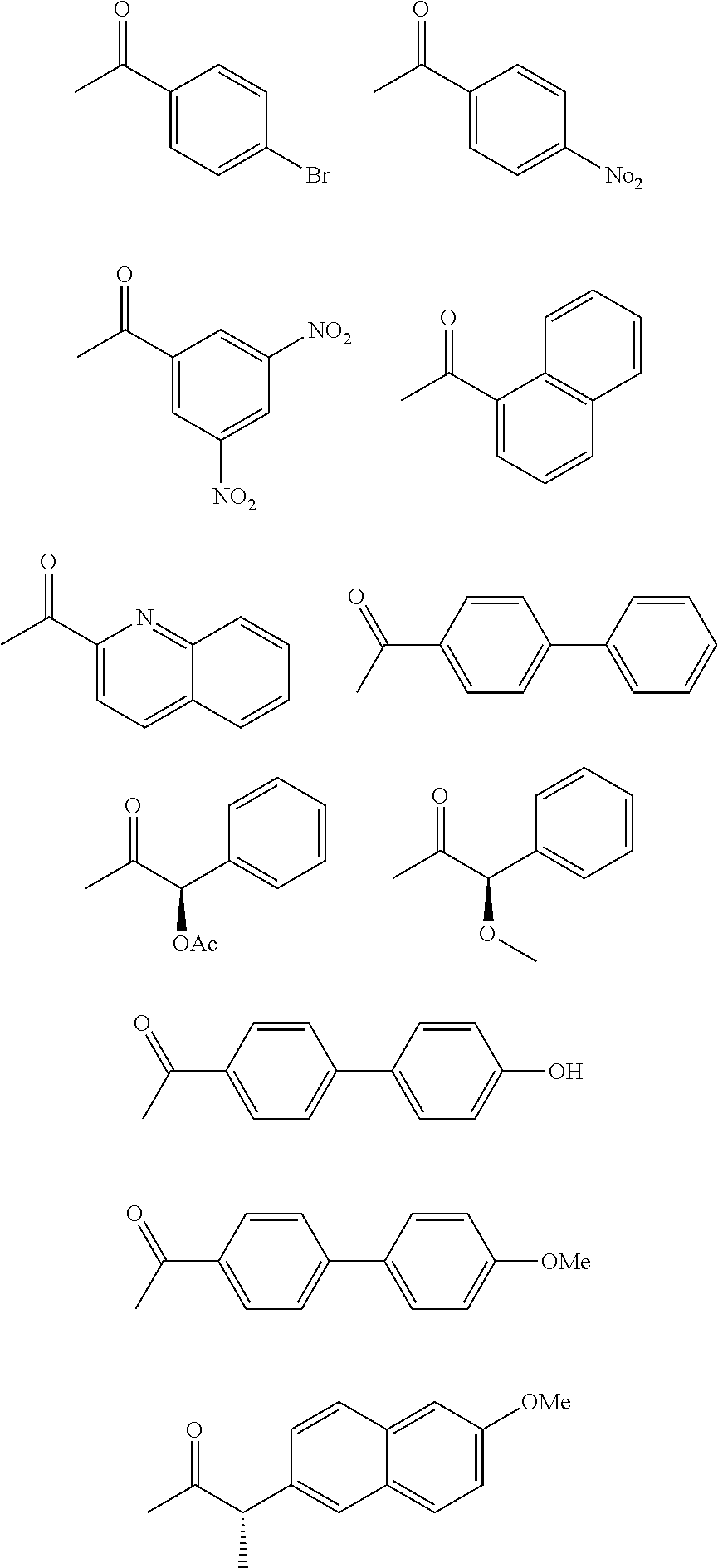
- wherein X is halogen, one of R4 or R5 is hydrogen, or R4 and R5 are independently selected from —C(O)—R6 wherein R6 is alkyl, heteroalkyl, aryl, aralkyl, heteroaryl; which are optionally substituted with groups selected from hydrogen, halo, alkyl, alkoxy, haloalkoxy, alkenyl, alkynyl, cycloalkyl, heteroalkyl, aryl, aralkyl, nitro, cyano, amino or substituted amino and the like, for example —C(O)—R6 includes:
-
- (b) optionally purifying compound of Formula IIb; and
- (c) converting compound of formula IIb to compound of formula IIa.

wherein P1 is H or an alcohol protecting group; P2 is H or an alcohol protecting group or —SO2(R1); wherein R1 is selected from straight or branched C1-C10 alkyl or optionally substituted C5-C12 aryl; X is halogen;
which includes one or more of the following steps:
-
- (a) reacting compound of formula III with compound of formula IV to provide compound of formula V;

wherein P is an alcohol-protecting group;
-
- (b) protecting compound of formula V to provide compound of formula VI;

wherein P is an alcohol-protecting group;
-
- (c) deprotecting compound of formula VI to provide compound of formula VII;

wherein P is an alcohol-protecting group;
-
- (d) converting compound of formula VII to provide compound of formula VIII;

wherein P is an alcohol protecting group;
-
- (e) reacting compound of formula VIII with compound of formula IX to provide compound of formula X;

wherein P is an alcohol-protecting group; LG is —OSO2(R1); wherein R1 is selected from straight or branched C1-C10 alkyl or optionally substituted C5-C12 aryl; X is halogen.
-
- (f) converting compound of formula X to compound of formula XI; and

wherein P is an alcohol-protecting group;
-
- (g) converting compound of formula XI to compound of formula II

wherein P is an alcohol-protecting group;

wherein P is an alcohol-protecting group;

wherein P is an alcohol-protecting group;

wherein P is an alcohol protecting group;

wherein P is an alcohol-protecting group; LG is —OSO2(R); wherein R is selected from straight or branched C1-C10 alkyl or optionally substituted C5-C12 aryl; X is halogen.

wherein P is an alcohol-protecting group;

wherein P1 is H or an alcohol protecting group; P2 is H or an alcohol protecting group or —SO2(R1); wherein R1 is selected from straight or branched C1-C10 alkyl or optionally substituted C5-C12 aryl; X is halogen;
which includes one or more of the following steps:
-
- (a) reacting compound of formula III with compound of formula XIII to provide compound of formula XIV;

wherein P is an alcohol-protecting group; R2, R3 is same or different and are independently selected from hydrogen, alkyl, alkenyl, alkoxy, heteroalkyl, aryl, aralkyl, heteroaryl; all optionally substituted through available carbon atoms with 1, 2, 3, 4 or 5 groups selected from hydrogen, halo, alkyl, alkoxy, haloalkoxy, alkenyl, alkynyl, cycloalkyl, heteroalkyl, aryl, nitro, cyano, amino or substituted amino and the like or R2 and R3 together to form a 4-7 membered ring containing a 1-3 heteroatoms selected from N, O, S wherein one or more carbon or hetero atoms of the 4-7 membered ring optionally substituted with halo, alkyl, alkoxy, carbonyl, thiocarbonyl, haloalkoxy, alkenyl, alkynyl, cycloalkyl, heteroalkyl, aryl, nitro, cyano or amino; provided that when R2 is methyl, then R3 is not methoxy or when R3 is methyl, then R2 is not methoxy. For example, —NR2R3 include

or stereoisomers thereof;
-
- (b) protecting compound of formula XIV to provide compound of formula XV;

wherein P, R2 and R3 defined above;
-
- (c) deprotecting compound of formula XV to provide compound of formula XVI;

wherein P, R2 and R3 defined above;
-
- (d) converting compound of formula XVI to provide compound of formula XVII;

wherein P, R2 and R3 defined above;
-
- (e) reacting compound of formula XVII with compound of formula IX to provide compound of formula XVIII;

wherein P is an alcohol-protecting group; LG is —OSO2(R1); wherein R1 is selected from straight or branched C1-C10 alkyl or optionally substituted C5-C12 aryl; X is halogen and R2 and R3 defined above;
-
- (f) converting compound of formula XVIII to compound of formula XI; and

wherein P is an alcohol-protecting group;
-
- (g) converting compound of formula XI to compound of formula II


wherein P, R, R1, R2 and R3 defined above;


wherein P, R, R1, R2 and R3 defined above;

-
- (a) Reacting crude compound of formula IIa with a suitable derivatizing agent to give compound of formula IIb; and

-
- wherein X is halogen, one of R4 or R5 is hydrogen, or R4 and R5 are independently selected from —C(O)—R6 wherein R6 is alkyl, heteroalkyl, aryl, aralkyl, heteroaryl; which are optionally substituted with groups selected from hydrogen, halo, alkyl, alkoxy, haloalkoxy, alkenyl, alkynyl, cycloalkyl, heteroalkyl, aryl, aralkyl, nitro, cyano, amino or substituted amino and the like, for example —C(O)—R6 includes:

-
- (b) optionally purifying compound of formula IIb; and
- (c) converting compound of formula IIb to compound of formula IIa.

Claims (7)


Applications Claiming Priority (5)
| Application Number | Priority Date | Filing Date | Title |
|---|---|---|---|
| IN201641018136 | 2016-05-26 | ||
| IN201641018136 | 2016-05-26 | ||
| IN201641021480 | 2016-06-22 | ||
| IN201641021480 | 2016-06-22 | ||
| PCT/IB2017/053082 WO2017203459A1 (en) | 2016-05-26 | 2017-05-25 | Process for preparation of eribulin and intermediates thereof |
Publications (2)
| Publication Number | Publication Date |
|---|---|
| US20190177291A1 US20190177291A1 (en) | 2019-06-13 |
| US11059799B2 true US11059799B2 (en) | 2021-07-13 |
Family
ID=60412830
Family Applications (1)
| Application Number | Title | Priority Date | Filing Date |
|---|---|---|---|
| US16/304,470 Expired - Fee Related US11059799B2 (en) | 2016-05-26 | 2017-05-25 | Process for preparation of eribulin and intermediates thereof |
Country Status (7)
| Country | Link |
|---|---|
| US (1) | US11059799B2 (en) |
| EP (1) | EP3464297B1 (en) |
| JP (1) | JP2019521969A (en) |
| KR (1) | KR20190009326A (en) |
| CN (1) | CN109415383A (en) |
| BR (1) | BR112018074287A2 (en) |
| WO (1) | WO2017203459A1 (en) |
Cited By (1)
| Publication number | Priority date | Publication date | Assignee | Title |
|---|---|---|---|---|
| US11724982B2 (en) | 2014-10-10 | 2023-08-15 | The Research Foundation For The State University Of New York | Trifluoromethoxylation of arenes via intramolecular trifluoromethoxy group migration |
Families Citing this family (2)
| Publication number | Priority date | Publication date | Assignee | Title |
|---|---|---|---|---|
| CN109415383A (en) | 2016-05-26 | 2019-03-01 | 雷迪博士实验室有限公司 | Prepare the method and its intermediate of eribulin |
| BR112019010494A2 (en) | 2016-11-23 | 2019-09-17 | Dr Reddys Laboratories Ltd | process for the preparation of eribulin and intermediates thereof |
Citations (7)
| Publication number | Priority date | Publication date | Assignee | Title |
|---|---|---|---|---|
| US6214865B1 (en) | 1998-06-17 | 2001-04-10 | Eisai Co., Ltd. | Macrocyclic analogs and methods of their use and preparation |
| WO2005118565A1 (en) | 2004-06-03 | 2005-12-15 | Eisai Co., Ltd. | Intermediates for the preparation of halichondrin b |
| WO2013142999A1 (en) | 2012-03-30 | 2013-10-03 | Alphora Research Inc. | Synthetic process for preparation of macrocyclic c1-keto analogs of halichondrin b and intermediates useful therein |
| CN105713031A (en) | 2014-12-05 | 2016-06-29 | 正大天晴药业集团股份有限公司 | Intermediate for preparing eribulin and preparation method thereof |
| WO2017064627A2 (en) | 2015-10-14 | 2017-04-20 | Dr. Reddy's Laboratories Limited | Process for preparation of eribulin and intermediates thereof |
| WO2017203459A1 (en) | 2016-05-26 | 2017-11-30 | Dr. Reddy's Laboratories Limited | Process for preparation of eribulin and intermediates thereof |
| WO2018096478A2 (en) * | 2016-11-23 | 2018-05-31 | Dr. Reddy’S Laboratories Limited | Process for preparation of eribulin and intermediates thereof |
Family Cites Families (1)
| Publication number | Priority date | Publication date | Assignee | Title |
|---|---|---|---|---|
| US9650397B2 (en) * | 2013-05-15 | 2017-05-16 | Alphora Research Inc. | 3-((2S,5S)-4-methylene-5-(3-oxopropyl)tetrahydrofuran-2-yl)propanol derivatives, their preparation and intermediates useful thereof |
-
2017
- 2017-05-25 CN CN201780039426.XA patent/CN109415383A/en active Pending
- 2017-05-25 JP JP2018562019A patent/JP2019521969A/en active Pending
- 2017-05-25 EP EP17802297.6A patent/EP3464297B1/en active Active
- 2017-05-25 BR BR112018074287A patent/BR112018074287A2/en not_active Application Discontinuation
- 2017-05-25 KR KR1020187036202A patent/KR20190009326A/en not_active Ceased
- 2017-05-25 US US16/304,470 patent/US11059799B2/en not_active Expired - Fee Related
- 2017-05-25 WO PCT/IB2017/053082 patent/WO2017203459A1/en not_active Ceased
Patent Citations (9)
| Publication number | Priority date | Publication date | Assignee | Title |
|---|---|---|---|---|
| US6214865B1 (en) | 1998-06-17 | 2001-04-10 | Eisai Co., Ltd. | Macrocyclic analogs and methods of their use and preparation |
| US6469182B1 (en) | 1998-06-17 | 2002-10-22 | Eisai Co., Ltd. | Intermediates in the preparation of macrocyclic analogs |
| WO2005118565A1 (en) | 2004-06-03 | 2005-12-15 | Eisai Co., Ltd. | Intermediates for the preparation of halichondrin b |
| US8445701B2 (en) | 2004-06-03 | 2013-05-21 | Eisai R&D Management Co., Ltd. | Intermediates for the preparation of analogs of halichondrin B |
| WO2013142999A1 (en) | 2012-03-30 | 2013-10-03 | Alphora Research Inc. | Synthetic process for preparation of macrocyclic c1-keto analogs of halichondrin b and intermediates useful therein |
| CN105713031A (en) | 2014-12-05 | 2016-06-29 | 正大天晴药业集团股份有限公司 | Intermediate for preparing eribulin and preparation method thereof |
| WO2017064627A2 (en) | 2015-10-14 | 2017-04-20 | Dr. Reddy's Laboratories Limited | Process for preparation of eribulin and intermediates thereof |
| WO2017203459A1 (en) | 2016-05-26 | 2017-11-30 | Dr. Reddy's Laboratories Limited | Process for preparation of eribulin and intermediates thereof |
| WO2018096478A2 (en) * | 2016-11-23 | 2018-05-31 | Dr. Reddy’S Laboratories Limited | Process for preparation of eribulin and intermediates thereof |
Non-Patent Citations (14)
| Title |
|---|
| Aicher, Thomas, Synthesis of Halichondrin B Norhalichondrin B, Harvard University, Cambridge MA J. Am. Chem. Soc. 1992, 114, pp. 3162-3164. |
| Bonini, Carlo, New Functionalized Hydroxymethyl Ketones from the Mild and Chemoselective KMnO4 Oxidation of Chiral Terminal Olefins., Eur.J. Org. Chem., 2006 pp. 80-83. |
| Habrant, Damien, Conversion of Carbonyl Compounds to Alkynes: General Overview and Recent Developments, Chem. Soc. Rev., 2010, 39, 2007-2017, Mar. 24, 2010. |
| Herbert C. Brown et. al., "Asymmetric Reduction with Chiral Organoboranes Based on alpha-Pinene", Acc. Chem. Res., vol. 25, No. 1, 1992. |
| International Preliminary Report on Patentability dated May 28, 2019, for International Patent Application No. PCT/IB2017/057352, U.S. Appl. No. 16/463,727. |
| International Preliminary Report on Patentability dated Nov. 27, 2018, for corresponding International Patent Application No. PCT/IB2017/053082. |
| International Search Report dated May 31, 2018, for International Patent Application No. PCT/IB2017/057352, U.S. Appl. No. 16/463,727. |
| International Search Report dated Sep. 19, 2017, for corresponding International Patent Application No. PCT/IB2017/053082. |
| Jackson, K.L., et al. "A Total Synthesis of Norhalichondrin B." Angew Chem. Int. Ed. Engl. (2009), vol. 48, Issue 13, pp. 2346-2350. (Year: 2009). * |
| Jiang, et al., A Novel Route to the F-Ring of Halichondrin B Diastereoselection in Pd(0)-Mediated Meso and C2 Diol Desymmetrization, Organic Letters, 2002 vol. 4, No. 20, 3411-3414. |
| Martin, M.J., et al. "Stellatolides, a New Cyclodepsipeptide Family from the Sponge Ecionemia acervus: Isolation, Solid-Phase Total Synthesis, and Full Structural Assignment of Stellatolide A." J. Am. Chem. Soc. (2014), vol. 136, pp. 6754-6762. (Year: 2014). * |
| Written Opinion dated May 31, 2018, for International Patent Application No. PCT/IB2017/057352, U.S. Appl. No. 16/463,727. |
| Written Opinion dated Sep. 19, 2017, for corresponding International Patent Application No. PCT/IB2017/053082. |
| Yu, Melvin, et al., From Micrograms to Grams: Scale-Up Synthesis of Eribulin Mesylate, Nat. Prod. Rep., 2013, 30, 1158-1164, Jul. 30, 2013. |
Cited By (1)
| Publication number | Priority date | Publication date | Assignee | Title |
|---|---|---|---|---|
| US11724982B2 (en) | 2014-10-10 | 2023-08-15 | The Research Foundation For The State University Of New York | Trifluoromethoxylation of arenes via intramolecular trifluoromethoxy group migration |
Also Published As
| Publication number | Publication date |
|---|---|
| JP2019521969A (en) | 2019-08-08 |
| EP3464297A4 (en) | 2020-03-25 |
| WO2017203459A1 (en) | 2017-11-30 |
| KR20190009326A (en) | 2019-01-28 |
| EP3464297B1 (en) | 2023-10-25 |
| EP3464297A1 (en) | 2019-04-10 |
| BR112018074287A2 (en) | 2019-06-18 |
| CN109415383A (en) | 2019-03-01 |
| US20190177291A1 (en) | 2019-06-13 |
Similar Documents
| Publication | Publication Date | Title |
|---|---|---|
| US20070225510A1 (en) | Convergent Process for the Synthesis of Taxane Derivatives | |
| CN109651396B (en) | Alkylation of alkyl fluoroalkylsulfonates | |
| US10081620B2 (en) | Radioactive fluorine labeling precursor compound and method for manufacturing radioactive fluorine labeled compound using the same | |
| JP2010037289A (en) | Trifunctional nitrile oxide and method for producing the same | |
| US20190177291A1 (en) | Process for preparation of eribulin and intermediates thereof | |
| US10538477B2 (en) | Production intermediate of polymerizable compound, production method for same, composition, and stabilization method | |
| JP6121492B2 (en) | Method for producing (1S, 4R) -2-oxa-3-azabicyclo [2.2.1] hept-5-ene | |
| US20210340156A1 (en) | Process for preparation of eribulin and intermediates thereof | |
| WO2011141414A1 (en) | Process for the preparation of 5-substituted 3-aryl-3-(trifluoromethyl)-3,4-dihydro-2h-pyrroles | |
| WO2020008382A1 (en) | Process for preparation of eribulin and intermediates thereof | |
| US10836776B2 (en) | Process for preparation of eribulin and intermediates thereof | |
| JP5496908B2 (en) | Intermediates and methods for making zeralenone macrolide analogs | |
| EP3110791B1 (en) | Process for preparing 2,4-diamino-3-hydroxybutyric acid derivatives | |
| US20230374060A1 (en) | Novel method for preparing inotodiol | |
| BE876625R (en) | IMIDAZOLE-4-CARBOXAMIDE 5-0-ACYLES DERIVATIVES, PROCESS FOR THEIR PREPARATION AND MEDICINAL PRODUCTS CONTAINING | |
| KR20200116118A (en) | Method for producing 2-chloro-4-nitroimidazole derivative | |
| JP2000044571A (en) | Production of 13-ester derivatives of milbemycin compounds | |
| HK40083539A (en) | Process of preparing butyl-(5s)-5-({2-[4-(butoxycarbonyl)phenyl]ethyl}[2-(2-{[3-chloro-4'-(trifluoromethyl[biphenyl]-4yl]methoxy}phenyl)ethyl]amino)-5,6,7,8-tetrahydroquinoline-2-carboxy late | |
| WO2013042693A1 (en) | Halo-ester derivative | |
| JP2001233892A (en) | Sulfated nucleoside derivatives | |
| JPH07138272A (en) | Method for purifying optically active glutaric acid derivative | |
| EP2719684A1 (en) | Method of manufacturing benzylamine compound | |
| CH510671A (en) | Anti-inflammatory 3-dialkyl aminoalkoxy-1h-indazoles |
Legal Events
| Date | Code | Title | Description |
|---|---|---|---|
| FEPP | Fee payment procedure |
Free format text: ENTITY STATUS SET TO UNDISCOUNTED (ORIGINAL EVENT CODE: BIG.); ENTITY STATUS OF PATENT OWNER: LARGE ENTITY |
|
| STPP | Information on status: patent application and granting procedure in general |
Free format text: RESPONSE TO NON-FINAL OFFICE ACTION ENTERED AND FORWARDED TO EXAMINER |
|
| STPP | Information on status: patent application and granting procedure in general |
Free format text: NON FINAL ACTION MAILED |
|
| AS | Assignment |
Owner name: DR. REDDY'S LABORATORIES LIMITED, INDIA Free format text: ASSIGNMENT OF ASSIGNORS INTEREST;ASSIGNORS:SAI, SUDHIR;BASU, DEBJIT;SARVESH, KUMAR;AND OTHERS;SIGNING DATES FROM 20190903 TO 20191027;REEL/FRAME:052547/0148 |
|
| STPP | Information on status: patent application and granting procedure in general |
Free format text: NON FINAL ACTION MAILED |
|
| STPP | Information on status: patent application and granting procedure in general |
Free format text: RESPONSE TO NON-FINAL OFFICE ACTION ENTERED AND FORWARDED TO EXAMINER |
|
| STPP | Information on status: patent application and granting procedure in general |
Free format text: FINAL REJECTION MAILED |
|
| STPP | Information on status: patent application and granting procedure in general |
Free format text: RESPONSE AFTER FINAL ACTION FORWARDED TO EXAMINER |
|
| STPP | Information on status: patent application and granting procedure in general |
Free format text: NOTICE OF ALLOWANCE MAILED -- APPLICATION RECEIVED IN OFFICE OF PUBLICATIONS |
|
| STPP | Information on status: patent application and granting procedure in general |
Free format text: PUBLICATIONS -- ISSUE FEE PAYMENT RECEIVED |
|
| STPP | Information on status: patent application and granting procedure in general |
Free format text: PUBLICATIONS -- ISSUE FEE PAYMENT VERIFIED |
|
| STCF | Information on status: patent grant |
Free format text: PATENTED CASE |
|
| FEPP | Fee payment procedure |
Free format text: MAINTENANCE FEE REMINDER MAILED (ORIGINAL EVENT CODE: REM.); ENTITY STATUS OF PATENT OWNER: LARGE ENTITY |
|
| LAPS | Lapse for failure to pay maintenance fees |
Free format text: PATENT EXPIRED FOR FAILURE TO PAY MAINTENANCE FEES (ORIGINAL EVENT CODE: EXP.); ENTITY STATUS OF PATENT OWNER: LARGE ENTITY |
|
| STCH | Information on status: patent discontinuation |
Free format text: PATENT EXPIRED DUE TO NONPAYMENT OF MAINTENANCE FEES UNDER 37 CFR 1.362 |
|
| FP | Lapsed due to failure to pay maintenance fee |
Effective date: 20250713 |