US10969952B2 - Color and texture match ratings for optimal match selection - Google Patents

Color and texture match ratings for optimal match selection Download PDF

Info

Publication number
US10969952B2
US10969952B2 US16/693,100 US201916693100A US10969952B2 US 10969952 B2 US10969952 B2 US 10969952B2 US 201916693100 A US201916693100 A US 201916693100A US 10969952 B2 US10969952 B2 US 10969952B2
Authority
US
United States
Prior art keywords
coating
texture
ratings
color
target
Prior art date
Legal status (The legal status is an assumption and is not a legal conclusion. Google has not performed a legal analysis and makes no representation as to the accuracy of the status listed.)
Active
Application number
US16/693,100
Other versions
US20200089399A1 (en
Inventor
Paul Beymore
Penny Neisen
Mary Kimbro
James Pereksta
Thomas Pondelik
Current Assignee (The listed assignees may be inaccurate. Google has not performed a legal analysis and makes no representation or warranty as to the accuracy of the list.)
PPG Industries Ohio Inc
Original Assignee
PPG Industries Ohio Inc
Priority date (The priority date is an assumption and is not a legal conclusion. Google has not performed a legal analysis and makes no representation as to the accuracy of the date listed.)
Filing date
Publication date
Application filed by PPG Industries Ohio Inc filed Critical PPG Industries Ohio Inc
Priority to US16/693,100 priority Critical patent/US10969952B2/en
Assigned to PPG INDUSTRIES OHIO, INC. reassignment PPG INDUSTRIES OHIO, INC. ASSIGNMENT OF ASSIGNORS INTEREST (SEE DOCUMENT FOR DETAILS). Assignors: BEYMORE, PAUL M., PEREKSTA, James, PONDELIK, Thomas, NEISEN, Penny, KIMBRO, Mary
Publication of US20200089399A1 publication Critical patent/US20200089399A1/en
Application granted granted Critical
Publication of US10969952B2 publication Critical patent/US10969952B2/en
Active legal-status Critical Current
Anticipated expiration legal-status Critical

Links

Images

Classifications

    • GPHYSICS
    • G01MEASURING; TESTING
    • G01JMEASUREMENT OF INTENSITY, VELOCITY, SPECTRAL CONTENT, POLARISATION, PHASE OR PULSE CHARACTERISTICS OF INFRARED, VISIBLE OR ULTRAVIOLET LIGHT; COLORIMETRY; RADIATION PYROMETRY
    • G01J3/00Spectrometry; Spectrophotometry; Monochromators; Measuring colours
    • G01J3/46Measurement of colour; Colour measuring devices, e.g. colorimeters
    • G01J3/463Colour matching
    • GPHYSICS
    • G06COMPUTING OR CALCULATING; COUNTING
    • G06FELECTRIC DIGITAL DATA PROCESSING
    • G06F3/00Input arrangements for transferring data to be processed into a form capable of being handled by the computer; Output arrangements for transferring data from processing unit to output unit, e.g. interface arrangements
    • G06F3/01Input arrangements or combined input and output arrangements for interaction between user and computer
    • G06F3/048Interaction techniques based on graphical user interfaces [GUI]
    • G06F3/0484Interaction techniques based on graphical user interfaces [GUI] for the control of specific functions or operations, e.g. selecting or manipulating an object, an image or a displayed text element, setting a parameter value or selecting a range
    • G06F3/04847Interaction techniques to control parameter settings, e.g. interaction with sliders or dials
    • GPHYSICS
    • G01MEASURING; TESTING
    • G01JMEASUREMENT OF INTENSITY, VELOCITY, SPECTRAL CONTENT, POLARISATION, PHASE OR PULSE CHARACTERISTICS OF INFRARED, VISIBLE OR ULTRAVIOLET LIGHT; COLORIMETRY; RADIATION PYROMETRY
    • G01J3/00Spectrometry; Spectrophotometry; Monochromators; Measuring colours
    • G01J3/46Measurement of colour; Colour measuring devices, e.g. colorimeters
    • G01J3/50Measurement of colour; Colour measuring devices, e.g. colorimeters using electric radiation detectors
    • G01J3/504Goniometric colour measurements, for example measurements of metallic or flake based paints
    • BPERFORMING OPERATIONS; TRANSPORTING
    • B05SPRAYING OR ATOMISING IN GENERAL; APPLYING FLUENT MATERIALS TO SURFACES, IN GENERAL
    • B05BSPRAYING APPARATUS; ATOMISING APPARATUS; NOZZLES
    • B05B15/00Details of spraying plant or spraying apparatus not otherwise provided for; Accessories
    • GPHYSICS
    • G06COMPUTING OR CALCULATING; COUNTING
    • G06FELECTRIC DIGITAL DATA PROCESSING
    • G06F3/00Input arrangements for transferring data to be processed into a form capable of being handled by the computer; Output arrangements for transferring data from processing unit to output unit, e.g. interface arrangements
    • G06F3/01Input arrangements or combined input and output arrangements for interaction between user and computer
    • G06F3/048Interaction techniques based on graphical user interfaces [GUI]
    • G06F3/0481Interaction techniques based on graphical user interfaces [GUI] based on specific properties of the displayed interaction object or a metaphor-based environment, e.g. interaction with desktop elements like windows or icons, or assisted by a cursor's changing behaviour or appearance
    • G06F3/04817Interaction techniques based on graphical user interfaces [GUI] based on specific properties of the displayed interaction object or a metaphor-based environment, e.g. interaction with desktop elements like windows or icons, or assisted by a cursor's changing behaviour or appearance using icons

Definitions

  • Coatings have been used for hundreds of years for protection and to add visual appeal to products and structures. For example, houses are painted or stained in order to protect the underlying siding from the weather and also to add aesthetic qualities to a house. Similarly, automobiles are painted, sometimes with multiple purpose-made layers, to protect the metal body of the vehicle and also to add visual appeal to the vehicle.
  • coatings may have specific features and properties that are beneficial or desirable for certain uses. For example, different coatings can have different electrical conductive properties, different chemical reactivity properties, different hardness properties, different UV properties, and other different use-specific properties. Additionally, coatings may comprise unique visual features. For example, some automotive coatings comprise texture features that give the coating unique visual effects.
  • the ability to provide highly consistent coating compositions is an important aspect in many different coating markets. For example, it is desirable for decorative coatings to comprise consistent colors and visual features. Similarly, the ability to match previously applied coatings to available coating colors is important. For example, when fixing a scratch in a car's coating, it is desirable to match both the color and the texture of the original coating. The ability to match coatings requires both consistent coating compositions and tools for correctly identifying the target coating and/or identifying an acceptable composition to match the target coating.
  • coating information involves large numbers of distinct measurements from different angles.
  • the resulting datasets can be large and difficult to use in practice.
  • Implementations of a computer system for analyzing a paint sample and generating values that describe various attributes of a proposed matching color can comprise instructions for receiving from a coating-measurement instrument one or more coating sparkle characteristics of a target coating.
  • the system can also comprise instructions for calculating sparkle ratings for the multiple respective proposed coating matches.
  • the sparkle ratings can indicate a similarity between the one or more coating sparkle characteristics of the target coating and respective coating sparkle characteristics of each of the respective proposed coating matches.
  • the system can comprise instructions for sending instructions to generate a user interface that depicts overall rankings of at least a portion of the proposed coating matches. The overall rankings indicate a similarity between the target coating and each of the at least a portion of the proposed coating matches with respect to the sparkle ratings.
  • implementations for a computerized method for matching a paint sample to various proposed paint coatings can comprise an act of receiving one or more coating characteristics of a target coating from a coating-measurement instrument.
  • the method can also comprise an act of displaying effect texture ratings for multiple respective proposed coating matches on a digital display device.
  • the effect texture ratings can indicate a similarity between the one or more coating characteristics of the target coating and respective coating characteristics of each of the respective proposed coating matches.
  • the method can include an act for ordering at least a portion of the proposed coating matches. The ordering indicates a strength in similarity between the target coating and each of the at least a portion of the proposed coating matches with respect to the coating texture ratings.
  • implementations of a computer program product can comprise instructions for a method that include an act of receiving from a coating-measurement instrument one or more coating variables and one or more coating sparkle variables of a target coating. Additionally, the method can comprise an act of calculating effect texture ratings for multiple respective proposed coating matches. The effect texture ratings can indicate a similarity between the one or more effect texture characteristics of the target coating and respective effect textures characteristics of each of the respective proposed coating matches. Further, the method can comprise an act of calculating sparkle ratings for the multiple respective proposed coating matches. The sparkle ratings can indicate a similarity between the one or more coating sparkle characteristics of the target coating and respective coating sparkle characteristics of each of the respective proposed coating matches.
  • the method can comprise an act of generating a user interface that depicts overall rankings of at least a portion of the proposed coating matches.
  • the overall rankings can indicate a similarity between the target coating and each of the at least a portion of the proposed coating matches with respect to the coating texture ratings and the texture color ratings.
  • FIG. 1 depicts a schematic diagram of a system for calculating a coating texture in accordance with implementations of the present invention
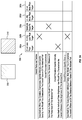
  • FIG. 2A depicts a relative texture characteristic chart and accompanying example coatings in accordance with implementations of the present invention
  • FIG. 2B depicts another relative texture characteristic chart and accompanying example coatings in accordance with implementations of the present invention.
  • FIG. 2C depicts yet another relative texture characteristic chart and accompanying example coatings in accordance with implementations of the present invention.
  • FIG. 3 depicts a line chart of relative texture characteristics in accordance with implementations of the present invention.
  • FIG. 4 depicts a table of texture variables in accordance with implementations of the present invention.
  • FIG. 5 depicts a graph of a correlation of perceived texture characteristics in accordance with implementations of the present invention.
  • FIG. 6 depicts an exemplary coating texture information user interface in accordance with implementations of the present invention.
  • FIG. 7 depicts another exemplary coating texture information user interface 700 in accordance with implementations of the present invention.
  • FIG. 8 depicts a flow chart of steps within a method for matching a paint sample to various proposed paint coatings in accordance with implementations of the present invention.
  • the present invention generally relates to a method, interpretation process, and apparatus for providing assessments of colorimetric and physical property attributes of cured simple and complex paint mixtures inside and outside of a laboratory environment. It further explains a unique methodology to utilize the supplied information to select an optimal match for appropriate matches in a database or other appropriate sample, or quality assurance purposes.
  • the present invention extends to systems, methods, and apparatus configured to characterize a target coating with respect to one or more previously analyzed reference coatings.
  • computer systems and data acquisition devices may be used to gather texture information from a target coating and generate one or more texture outputs that describe the target coating relative to one or more other coatings.
  • the present invention may employ computer systems and data acquisition devices for receiving large data sets of texture variables and transforming the large dataset into simplified and readily useable texture value indicators. Further, the present invention may also comprise data transformations for mapping unprocessed texture variables to human-perceived texture characteristics. Implementations of the present invention provide novel and non-obvious improvements to the field of coating matching.
  • the present invention provides novel and innovative systems and methods for analyzing and matching coating textures.
  • the present invention can provide simple and clear information that is understandable by a lay person.
  • the present invention can provide a true visual texture match for an analyzed coating.
  • a target coating may be matched to reference data that is based upon visual impressions of a large cross-section of the general population.
  • the present invention can provide a simpler and more accurate means for analyzing and matching coating texture.
  • FIG. 1 depicts a schematic diagram of a system for calculating a coating texture.
  • the software application 100 can comprise a data input module 120 that is configured to receive target coating variables from an image and coating color variables from a target coating.
  • the data input module 120 comprises an application program interface (“API”) for communicating with the coating texture calculating software application 100 , a user interface for communicating with the coating texture calculating software application 100 , or any other function configured to receive input into and/or send output out of the coating texture calculating software application 100 .
  • the target coating variables may comprise target coating variables generated from an image of a target coating.
  • FIG. 1 shows that the data input module 120 may be in communication with a coating-measurement instrument, such as a camera-enabled spectrophotometer 110 that provides the software application 100 with a set of target coating variables for a target coating.
  • target coating variables comprise texture related data received from either a spectrophotometer or from an algorithm that has processed an image of a coating.
  • the target coating variables may comprise a variety of different measurements relating to the target coating, including readings at a wide-range of different angles.
  • the actual data received from the camera-enabled spectrophotometer may be dependent on the type and brand of camera-enabled spectrophotometer.
  • coating variables can comprise a wide variety of different forms and values depending upon how the specific data was initially gathered and processed.
  • the data input module 120 may directly receive an image of a coating.
  • the received image may comprise a photograph taken with at least three-times optical zoom with a digital camera.
  • the data input module 120 may be configured to analyze the image of the coating and calculate desired texture variables.
  • a black-and-white image is utilized to calculate the set of texture variables for the target coating because calculations can be simplified by removing color information.
  • a color image can be used to calculate the set of texture variables for the target coating because additional texture information may be available in a color image that would not otherwise be accessible in a black-and-white image.
  • FIG. 1 further shows that data input module 120 can provide the coating color variables to a color match module 170 .
  • the color coating variables can be received from a spectrometer and processed using conventional methods.
  • the color match module 170 can search a coating information database 140 for one or more colors that most closely match the color of the target coating.
  • each of the colors stored within the coating information database 140 can be associated with a particular coating and with coating variables.
  • the color match module 170 may determine that the target coating comprises a forest green color that is similar to a particular group of colors stored within the coating information database 140 .
  • the color match module 170 can provide the texture calculating module 130 with indicators of the proposed matches.
  • the indicators can comprise pointers to the proposed matches within the coating information database, data structures comprising information about each proposed match, or any other data communication that provides the texture calculating module 130 with access to the necessary coating information for the proposed matches.
  • the texture calculation module 130 can then access, from within the coating information database 140 , the coating variables that are associated with each of the one or more proposed matching coatings.
  • the texture calculation module 130 can calculate a correlation between the target coating and each of the proposed matching coatings. Based upon the calculated correlation, the texture calculation module 130 can calculate a set of relative texture characteristics for the proposed matching coating that indicate relative differences in texture between the proposed matching coating and the target coating. Each of the relative texture characteristics can comprise an assessment over all angles of the target coating.
  • the relative texture characteristics may be based on human-provided relative visual impressions between different reference coatings.
  • the relative visual impressions can comprise a relative coarseness, a relative sparkle intensity, and/or a relative sparkle density with respect to a plurality of different reference coatings.
  • the relative impressions can be gathered by having a large group of diverse individuals view several different coating samples with respect to each other. The individuals can then state their impression as to various texture characteristics of the samples.
  • the individuals may be asked to rate the respective samples as having relatively more or less overall texture on a numeric scale.
  • the individuals can be asked to rate the respective samples on a relative scale with respect to coarseness, sparkle intensity, and/or sparkle density.
  • the relative impressions can then be statistically mapped to coating variables that are associated with each of the respective samples. Accordingly, a statistical correlation can be created between each of the coating variables received from the spectrophotometer and the human perception of various texture characteristics.
  • the texture calculation module 130 can utilize the statistical correlation to identify a set of relative texture characteristics of the target coating with respect to each of the proposed coating matches. For example, the texture calculation module 130 can calculate a relative coarseness value, a relative texture density value, and/or a relative texture intensity value. Additionally, the texture calculation module 130 can calculate an overall relative texture characteristic value based upon the set of relative texture characteristics. For example, the overall relative texture characteristic value can be directly derived from correlation to human perception, or the overall relative texture characteristic value can be calculated from an average of other relative texture data.
  • the display module 150 can then display the identified relative texture characteristics to a user (e.g., at display 160 ) on a graphical user interface, such that the user can easily identify the difference in texture characteristics between the target coating and each of the proposed matching coatings.
  • the displayed relative texture characteristics may comprise the single overall texture value, the relative coarseness value, the relative texture density value, and/or the relative texture intensity value. As such, various implementations of the present invention can significantly simplify and standardize the texture information that is displayed to an end user.
  • Providing a simple indication of a human-perceived difference between one or more coatings can provide significant improvements to the technical field of coating matching.
  • providing a consistent and standard basis for distinguishing texture attributes of a coating addresses significant shortcomings in the technical art.
  • utilizing a statistically standardized approach to utilizing human-perception of texture differences can provide an innovative method for matching coating textures.
  • relative texture values can be provided with respect to all available coating compositions, such that it is not necessary to identify specific potential matching coatings in order to generate relative texture values.
  • standardized texture values can be calculated based upon a large color space.
  • FIG. 2A depicts an example of a chart 230 derived from gathering and utilizing human-perceived texture differences within implementations of the present invention.
  • FIG. 2A depicts a first example coating 200 , a second example coating 210 and a human-perspective texture comparison chart 230 . While the first example coating 200 and the second example coating 210 are depicted in image form in FIG. 2A , when presented to a user, the first example coating 200 and the second example coating 210 can also be actual painted and cured panels. As such, the user(s) are provided with true and accurate representations of the final coating color and texture.
  • the human-perspective texture comparison chart 230 is directed towards differences in visual appearance between the first example coating 200 and the second example coating 210 .
  • the human-perspective texture comparison chart 230 requests that a human user indicate whether they perceive that the first example coating 200 comprises more or less overall perceived texture than the second example coating 210 .
  • a human user may be asked to rate the two example coatings 200 , 210 with regards to a variety of different texture characteristics. Each rating may be provided using a pre-defined scale of rating options 260 ( a - e ).
  • a large number of users with different racial, gender, and other demographic differences can be asked to compare the same two example coatings 200 , 210 and provide their own respective perceived texture differences.
  • the total resulting perceptions of the variety of users can then be respectively summarized such that a typical, or most-likely, predicted human-perceived texture comparison for each requested texture question is calculated.
  • the user determined that the first example coating 200 comprises a “little less” overall perceived texture than the second example coating 210 .
  • FIG. 2A shows that the user determined that the first example coating 200 comprises “relatively equal” perceived coarseness to the second example coating 210 .
  • FIG. 2A shows that the user determined that the first example coating 200 comprises “a lot less” sparkle intensity than the second example coating 210 .
  • FIG. 2A shows that the user determined that the first example coating 200 comprises a “little less” sparkle density than the second example coating 210 .
  • FIG. 2B depicts a similar human-perspective texture comparison chart 230 to the one depicted in FIG. 2A .
  • the chart shows that the user compares the first example coating 200 to a third example coating 220 .
  • the third example coating 220 comprises a different texture characteristic profile than either the first example coating 200 or the second example coating 210 .
  • FIG. 2C depicts yet another human-perspective texture comparison chart 230 .
  • a user is comparing the third example coating 220 to the second example coating 210 .
  • FIGS. 2A-2C illustrate several different results that may be derived from human-perceived comparisons between a variety of different example coatings and to provide human-perspective comparisons between the example coatings across a range of different texture characteristics.
  • the human-perspective comparisons provided to the human-perspective texture comparison charts 230 of FIGS. 2A-2C can be translated into relative numerical values. The resulting values can then be stored in a coating information database 140 .
  • FIG. 3 depicts a number line 330 with indications 300 , 310 , 320 of each respective example coating 200 , 210 , 220 .
  • FIG. 3 shows that the “X” indication 300 represents the first example coating 200 , while the square indicator 310 represents the second example coating 210 , and the circle indicator 320 represents the third example coating 220 .
  • the illustrated number line 330 may represent the examples coatings 200 , 210 , 220 relative relationships to each other with respect to their overall perceived texture.
  • the number line 330 is merely exemplary and is provided for the sake of clarity and example. In practice the relationship between various texture characteristics of different coatings may comprise a far more complex, multi-variable relationship that is much more difficult to conveniently depict and describe. Accordingly, the number line 330 is provided as a simplified example to establish various innovative and novel features in implementations of the present invention.
  • the human-perspective texture comparison charts 230 , 240 , 250 of FIGS. 2A-2C comprise five different relative indications 260 ( a - e ).
  • a relative value can be assigned to each indicator for each comparison between two respective example coatings, with one of the example coatings being considered the “target” from which the other example coating is to be compared.
  • the “a lot less than target” indicator 260 a may be assigned a relative value of ⁇ 2
  • the “a little less than target” indicator 260 b may be assigned a relative value of ⁇ 1
  • the “relatively equal to target” indicator 260 c may be assigned a relative value of 0
  • the “a little more than target” indicator 260 d may be assigned a relative value of +1
  • the “a lot more than target” indicator 260 e may be assigned a relative value of +2.
  • the above provided integers of ⁇ 2, ⁇ 1, 0, +1, +2 are provided for the sake of example and clarity.
  • Various implementations can utilize different schemes, including non-integer and non-numerical schemes to quantify human-perception.
  • the user indicated that the first example coating 200 comprises “a little less” overall perceived texture than the second example coating 210 .
  • a numerical value of ⁇ 1 can be assigned to the first example coating 200 with respect to the second example coating 210 .
  • the user indicated that the first example coating 200 comprises “a lot more” overall perceived texture than the third example coating 220 .
  • a numerical value of +2 can be assigned to the first example coating 200 with respect to the third example coating 220 .
  • the user indicated that the third example coating 220 comprises “a lot less” overall perceived texture than the second example coating 210 .
  • a numerical value of ⁇ 2 can be assigned to the third example coating 220 with respect to the second example coating 210 .
  • These relationships can be depicted by placing the “X” indicator 300 for the first example coating 200 at “0” on the number line 330 .
  • the first example coating 200 is placed at the “0” as a form of normalizing the numerical relationships around the median human-perspective texture comparison data point—in this case, the first example coating 200 .
  • the above data indicated that the second example coating 210 was +1 higher in texture than the first example coating 200 .
  • This relationship can be represented by placing the square indicator 210 for the second example coating 210 on the “+1” on the number line 330 .
  • the placement of the third example coating 220 on the number line 300 may comprise accounting for two different human-perspective texture comparison data points.
  • the human-perspective texture comparison data indicates that the third example coating 220 comprises “a lot less” overall perceived texture than the second example coating 210 .
  • the human-perspective texture comparison data indicates that the first example coating 200 comprises “a lot more” overall perceived texture than the third example coating 220 .
  • assigning a numerical value to the relationships would require that the third example coating 220 be assigned a numerical value of ⁇ 2 with respect to both the first example coating 200 and the second example coating 210 .
  • the numerical value of ⁇ 2 assigned to the third example coating 220 can be treated as a minimum difference.
  • the third example coating 220 can be placed on the number line 330 , such that it is at least a numerical value of ⁇ 2 lower than both the first example coating 200 and the second example coating 210 .
  • This relationship is depicted in FIG. 3 by placing the circle indicator 320 for the third example coating 220 at the “ ⁇ 2”, while placing the “X” indicator 300 for the first example coating 200 at “0” on the number line 330 , and placing the square indicator 210 for the second example coating 210 on the “+1” on the number line 330 .
  • the number line 330 of FIG. 3 is limited to data from the first example coating 200 , the second example coating 210 , and the third example coating 220 , one will appreciate that in at least one implementation, the number line 330 can comprise information from a company's entire coating portfolio or from a large number of random coatings. Creating a number line 330 that accounts for a large number of coatings may result in a standard basis by which any coating (whether originally accounted for on the number line or not) can be rated. Stated more generally, comparing a large number of different coatings, and their associated textures, can result in a standard comparison metric by which textures can be universally compared.
  • the universal standard may allow a user to enter a single coating into the coating texture calculation software application 100 and receive an indication of how the coating's texture compares with respect to the large number of randomly entered coating textures. Accordingly, in at least one implementation, the coating texture calculation software application 100 can provide standardized indicators regarding the texture of a particular coating, without requiring the user to enter specific comparison coatings.
  • FIG. 4 depicts a coating analysis output data table 400 comprising example data received from a spectrophotometer 110 .
  • FIG. 4 depicts four exemplary data variables ( ⁇ , ⁇ , ⁇ , and ⁇ ) for the first example coating 200 , the second example coating 210 , and the third example coating 220 , respectively.
  • the data variables, ⁇ , ⁇ , ⁇ , and ⁇ are merely exemplary.
  • Various different spectrophotometers may provide unique proprietary output data.
  • the coating texture calculation software application 100 processes images (i.e., photographs) itself, it may also provide a unique data set of output variables. Accordingly, the examples provided here with respect to variables ⁇ , ⁇ , ⁇ , and ⁇ are merely for the sake of clarity and discussion and should not be read to limit the present invention to any particular method, system, or apparatus.
  • the coating analysis output data table 400 and the human-perspective texture comparison charts 230 can be statistically analyzed with pattern matching algorithms, machine learning techniques, or otherwise analyzed to identify correlations and patterns between the various variables within the data table 400 and the relative texture characteristics obtained by human-perspective texture comparisons. For example, it may be identified that there is an inverse relationship between the difference between ⁇ and ⁇ and the overall perceived texture of a coating. For example, with respect to the third example coating 220 , ⁇ is 114 and 6 is 21, which results in a difference of 93. In contrast, the differences between ⁇ and ⁇ for the first example coating 210 and the second example coating 200 are 36 and 7, respectively. As such, the third example coating 220 with the least amount of overall perceived texture comprises the greatest difference between ⁇ and ⁇ , while the second example coating with the greatest amount of overall perceived texture comprises the least difference between ⁇ and ⁇ .
  • correlations and/or relationships can be identified between the coating analysis output data table 400 and a wide variety of different random coatings. Additionally, the identified correlations and/or relationships can be used to derive formulas describing the identified correlations and/or relationships. As such, the coating texture calculation software application 100 can process a new, unique coating and interpolate various human-perspective texture characteristics.
  • FIG. 5 depicts a graph 500 of the differences between ⁇ and ⁇ for the first, second, and third example coatings, along with their respective overall perceived texture.
  • the graph 500 depicts overall perceived texture 520 on the Y-axis and the difference between ⁇ and ⁇ 510 on the X-axis.
  • an equation can be developed that draws a line 530 between each of the respective data points 310 , 300 , 320 .
  • the equation can then be used to interpolate the overall perceived texture for other coatings, based upon the ⁇ and ⁇ variables received from the respective target coating. While the equation of FIG. 5 is depicted as being linear and only depending upon the difference between ⁇ and ⁇ , in at least one implementation, the relationship between the received output variables and a particular perceived texture characteristic may be far more complex. As such, the graph 500 and relationship depicted in FIG. 5 is provided only for the sake of example and clarity.
  • FIG. 6 depicts an exemplary coating information user interface 600 that can be generated by the display module 150 of FIG. 1 .
  • the coating texture information user interface 600 is depicted as a webpage within a web browser; however, in alternate implementations the user interface 600 may be depicted within a standalone application, in association with a purpose-made texture identification device, or within any other system that provides a display device.
  • At least one implementation of creating a user interface 600 comprises first receiving from a coating-measurement instrument one or more coating variables, wherein coating variables comprise data variables received from a particular coating-measurement device.
  • the coating-measurement instrument can comprise a spectrometer for detecting color data, a camera-enabled spectrometer for detecting color and texture data, a camera for gathering color and texture data, or any other device capable of measuring color characteristics and providing texture variables.
  • the coating variables may describe various coating characteristics associated with a target coating.
  • the coating variables may comprise one or more variables that are associated with one or more coating sparkle color characteristics, coating texture characteristics, coating color characteristics, coating color travel characteristics, or any other available coating characteristics provided by conventional coating-measurement instruments.
  • the received coating variables may be in the form of various variables that have to be correlated to the desired coating sparkle color characteristics, coating texture characteristics, coating color characteristics, and/or coating color travel characteristics.
  • the received coating characteristics may comprise proprietary information that is specific to a particular measurement device.
  • the proprietary information can be mapped to desired texture attributes, such as the characteristics listed above.
  • an entire set of received coating variables may comprise subsets of variables that can be grouped as coating sparkle color characteristics, coating texture characteristics, coating color characteristics, coating color travel characteristics, or any other available coating characteristics provided by conventional coating-measurement instruments.
  • the received coating variables can be used to calculate sparkle color ratings.
  • techniques similar to those disclosed in PCT/US2015/057782, which is hereby incorporated by reference in its entirety, can be used for calculating a sparkle color rating.
  • an image of a coating can be obtained from a camera, a camera-enabled spectrometer, or any other source.
  • the distribution of colored sparkles may then be determined within a coating at a multitude of angles. Because micas and xirallics change colors uniquely over various viewing angles and conditions, the appropriate pearl may be selected for a search or formulation algorithm, and a relative ratio as to the amount of each required to match the target coating may be estimated.
  • the sparkle color may be used to assist in selection of, for example, appropriate aluminums and other special effect pigments such as glass flake because the color of such materials does not shift over various angles.
  • various ratios can be determined—for example, ratios of aluminums to pearls in effect coatings or ratios of green aluminum flakes to yellow aluminum flakes.
  • a high pass filter may be applied to the target image to determine the brightest spots amongst the various pixels in the image.
  • the resultant data/image may include information on only the bright locations.
  • the high pass filter may convolve a matrix of values with a high value center point and low value edge points with the matrix of intensity information of the image. This isolates high intensity pixels.
  • an edge detection method of filtering may be applied in conjunction with the intensity filtering.
  • individual sparkle points may be labeled and counted, thus isolating/labeling them based upon hue range.
  • the described method may result in a count of labeled sparkle points, each meeting criteria based upon the individual hue criteria, which can then be formatted and output as desired.
  • Additional or alternative embodiments may include the use of a series of hue-based band pass filters that identify individual hue regions independent of lightness and/or brightness. Regional labeling and analysis of chroma and lightness (and/or brightness) of the regions may be used to isolate individual sparkle points within each hue band. Such a technique may determine sparkle points while estimating the percentage of the image that falls within each hue to enable a relatively quick analysis of color change in sparkle color over multiple images to supplement any further identification.
  • a band stop filter may be used in place of or in combination with a band pass filter.
  • the sparkle color ratings can indicate a similarity between the one or more coating sparkle color characteristics of a target coating and respective coating sparkle color characteristics of each of the respective proposed coating matches.
  • the target coating may comprise a yellow-green aluminum flake color
  • at least one of the proposed coating matches may comprise a yellow-blue aluminum flake color.
  • the sparkle color rating can be calculated by calculating a percentage match of the sparkle color and ratio information from a target coating and the sparkle color and ratio information from one or more proposed match coatings.
  • the target coating may comprise a ratio of yellow-to-blue flakes of 1 yellow flake for every 2 blue flakes.
  • a proposed matched coating may comprise a ratio of 1 yellow flake for every 4 blue flakes.
  • a resulting sparkle color rating may be 50% because the proposed match only comprises 50% of the target coatings sparkle color ratio.
  • human perception can be used to calculate a relative sparkle color rating. For example, using techniques described above, a large group of individuals can provide their perceptions relating to comparative sparkle colors of several different coatings. Correlation functions can then be calculated based upon statistical relationships between the above calculated sparkle color ratios and the human perception data. The correlation function can then generate sparkle color ratings as described above.
  • the received coating characteristics can be used to calculate human-perceived effect texture ratings.
  • the coating characteristics can be used to calculate human-perceived effect texture ratings for multiple respective proposed coating matches.
  • the effect textures ratings are also referred to herein as overall perceived textures (as shown and described with respect to FIGS. 2A-2C ).
  • the effect texture rating can indicate a similarity between the one or more coating characteristics of a target coating and respective coating textures characteristics of each of the respective proposed coating matches.
  • the target coating may comprise a relatively coarse aluminum flake effect, while at least one of the proposed coating matches may comprise a relatively fine aluminum flake effect.
  • the effect texture rating can indicate whether the one or more coating characteristics associated with each respective proposed coating match is more coarse or more fine than the target coating. Additionally, in at least one implementation, the effect texture rating can indicate whether the one or more coating characteristics associated with each respective proposed coating match comprises more or less texture than the target coating. In at least one implementation, the indicated similarities are determined using correlations based upon human-perceived texture differences, as disclosed above.
  • the received coating variables can also be used to calculate conventional color coating ratings and/or human-perceived coating color ratings.
  • the coating color characteristics can be calculated using known color matching techniques that are then normalized to a desired scale for display.
  • the coating variables can be used to calculate human-perceived coating color ratings for multiple respective proposed coating matches using methods similar to those described above with respect to FIGS. 2A-2C .
  • a correlation can be identified between the visual perceptions of multiple users regarding color similarity and the coating variables.
  • the coating color ratings can indicate a similarity between the one or more coating color characteristics of a target coating and respective coating color characteristics of each of the respective proposed coating matches.
  • the target coating may comprise a deep blue color
  • at least one of the proposed coating matches may comprise a midnight blue color.
  • the indicated similarities are determined using correlations based upon human-perceived texture differences, as disclosed above.
  • the received coating variables can also be used to calculate human-perceived color travel ratings.
  • the coating color travel variables can be used to calculate color travel using conventional methods or to calculate human-perceived color travel ratings for multiple respective proposed coating matches using methods similar to those described above.
  • the coating color travel ratings can indicate a similarity between the one or more coating color travel characteristics of a target coating and respective coating color travel characteristics of each of the respective proposed coating matches.
  • the target coating may comprise a color that travels from a blue color to a green color over a specific angle transition
  • at least one of the proposed coating matches may comprise a color that travels from a blue color to a gold color over the same angle transition.
  • the indicated similarities are determined using correlations based upon human-perceived texture differences, as disclosed above.
  • a computer processor that is in communication with a display device can send instructions to generate a graphical representation of coating-related information on a user interface that depicts a visual ordering of at least a portion of the proposed coating matches.
  • the overall rankings may indicate a similarity between the target coating and each of the proposed coating matches with respect to one or more of the various ratings.
  • the overall rankings may comprise a single rating for each proposed match that indicates the overall texture similarity between each respective proposed match and the target coating.
  • the overall rankings comprise one or more of a sparkle color rating, an effect texture rating, a coating color rating, or a color travel rating for each respective proposed match coating.
  • the ratings may be with respect to an entire color space, such that the target coating is associated with one or more ratings that are not with respective to specific proposed match coatings.
  • the user interface 600 depicts various implementations of ratings and other coating information.
  • the depicted user interface is provided for clarity and is not meant to limit implementations of the user interface 600 to particular visual elements, layouts, or other similar depicted features.
  • the user interface 600 comprises various elements, including, a proposed match element 610 , an image of the target coating 615 , and a match information section 620 .
  • the proposed match element 610 may comprise information about a particular coating that was selected based upon it comprising the closest overall match to the target coating 615 .
  • the proposed match element 610 may comprise information about a proposed match coating that comprises the least average differentiation between the proposed match coating's texture and color characteristics and the texture and color characteristics gathered from the target coating. Additional proposed match coatings may be ordered based using a similar calculation, where they are order by least average differentiation to greatest average differentiation.
  • the match information section 620 comprises various data columns 630 , 640 , 650 , 660 , 670 , 680 , 690 , 695 for providing information about each respective proposed match.
  • the depicted exemplary match information section 620 comprises a proposed match coating image column 630 , a match rating column 640 , a sparkle color column 650 , an effect texture column 660 , a color travel column 670 , a coating manufacturer column 680 , a coating description column 690 , and a paint system column 695 .
  • the match information section 620 may also comprise a column for effect coarseness that indicates whether a coating is more or less coarse than the target coating.
  • the proposed match coating image column 630 can comprise images of each respective proposed match coating.
  • the images may comprise pictures of each of the proposed match coatings taken under similar light conditions.
  • a user may compare the images within the proposed match coating image column 630 to the image of the target color 615 .
  • the ability to compare the images of the proposed coatings 630 with the image of the target coating 615 provides a user with the ability to visually distinguish between potential matches.
  • the match rating column 640 can comprise color coating ratings.
  • the color coating ratings may indicate a similarity between the coating color characteristics of the target coating and respective coating color characteristics of each of the proposed coating matches.
  • the color coating ratings may be depicted in a variety of different forms. For example, in FIG. 6 , the color coating ratings are depicted as a numerical value (with the lower numbers being a closer match to the target coating).
  • the depicted number may be derived using the human-perceived ratings described above.
  • the depicted numerical values may be derived using a correlation similar to that depicted and described with respect to FIGS. 3 and 5 .
  • the resulting values from the human-derived correlation function can be normalized to fit a particular scale (e.g., 1-100).
  • the numbers can also be color-coded such that lower numbers are a particular color on a spectrum (e.g., green) while higher numbers are a different color on the spectrum (e.g., yellow or red).
  • the sparkle color column 650 can comprise sparkle color ratings.
  • the sparkle color ratings may indicate a similarity between the coating sparkle color characteristics of the target coating and respective coating sparkle color characteristics of each of the proposed coating matches.
  • the sparkle color ratings may be depicted in a variety of different forms. For example, in FIG. 6 , the color coating ratings are depicted as a numerical value. The numerical values and depictions thereof may also utilize the human-perceived ratings described above. In the depicted implementation, the higher sparkle color ratings indicate a closer match. One will note that this association is opposite from the association within the matching ratings column 640 . In at least one implementation, displaying contrasting rating systems may help prevent inadvertent misreading by a user.
  • the effect texture column 660 can comprise effect ratings.
  • the effect texture ratings may indicate a similarity between the coating texture characteristics of the target coating and respective coating texture characteristics of each of the proposed coating matches.
  • the effect texture ratings may be depicted in a variety of different forms. For example, in FIG. 6 , the color coating ratings are depicted as a graphical slider.
  • the graphical slider may comprise various colors and/or increments that visually depict the similarity (or dissimilarity) between the effect texture of the target coating the effect textures of the various respective proposed matching coatings.
  • the graphical slider values may be derived using the human-perceived ratings described above.
  • the relative values associated with the graphical slider may be derived using a correlation similar to that depicted and described within respect to FIGS. 3 and 5 .
  • the resulting values from the human-derived correlation function can be normalized to fit a particular scale (e.g., ⁇ 2 to +2).
  • the graphical slider can also be color-coded such that values within an ideal range are a particular color on a spectrum (e.g., green) while values outside of the ideal range are a different color on the spectrum (e.g., yellow or red).
  • values within an ideal range are a particular color on a spectrum (e.g., green) while values outside of the ideal range are a different color on the spectrum (e.g., yellow or red).
  • the graphical slider in addition to providing a user within an indication about the similarity between effect textures, the graphical slider also allows a user to determine whether a proposed matching coating comprises more or less effect texture than the target coating.
  • the color travel column 670 can comprise color travel ratings.
  • the color travel ratings may indicate a similarity between the coating color travel characteristics of the target coating and respective coating color travel characteristics of each of the proposed coating matches.
  • the color travel ratings may be depicted in a variety of different forms. For example, in FIG. 6 , the color coating ratings are depicted as a textual description of the match.
  • the texture descriptions comprise descriptions such as “OK,” “Face: Lighter,” “Face: Bluer,” “Flop: Yellower,” and “Flow: Redder, Yellower.”
  • a user may be provided with an indication that the color travel is a match (i.e., “OK”) or a description of the differences in the color travel.
  • the textual description may be derived using the human-perceived ratings described above.
  • the depicted textual description may be derived using a correlation similar to that depicted and described with respect to FIGS. 3 and 5 .
  • the resulting correlation values may be associated with specific color differences (e.g., yellower, redder, etc.).
  • a description “OK” can be used to describe colors that fall within a desired threshold of the target coating. Color travel ratings associated with proposed match coatings that fall outside the threshold can then be described with a color difference, as determined by the human-perceived correlations.
  • the coating manufacturer column 680 , coating description column 690 , and paint system column 695 each depict various textual information relating to each respective proposed match coating.
  • the depicted information can be gathered from a coating information database 140 (depicted in FIG. 1 ).
  • the information may assist a user in both verifying a match and in ordering or mixing a desired coating. For example, the user may be searching for a paint match for a particular brand of automobile. Verifying that the proposed match coating is associated with the manufacturer for the particular brand of automobile may server to further verify that a proposed match is correct.
  • FIG. 6 depicts an implementation of a user interface 600 that depicts various columns 630 , 640 , 650 , 660 , 670 , 680 , 690 , 695 for providing information about each respective proposed match.
  • the depicted columns comprise various different visual depictions of ratings, including a graphical slider, a numerical value, and a textual description. While the visual depictions of ratings are each associated with particular columns and data in FIG. 6 , one will understand that the particular visual depictions of ratings are only shown for the sake of example, and in alternate implementations, the respective visual depictions of ratings may be associated with other columns and data.
  • any of rating within the columns 630 , 640 , 650 , 660 , 670 , 680 , 690 , 695 may be properly depicted using any combination of graphical sliders, numerical values, and/or textual descriptions.
  • the system when generating a user interface 600 the system can receive from a user a preferred characteristic.
  • the preferred characteristic may comprise effect texture ratings, sparkle color ratings, coating color ratings, color travel ratings, or any other rating of interest.
  • the overall rankings, or ordering, of the proposed coating matches may then by sorted based upon the preferred characteristic received from the user.
  • a user may be particularly interested in matching the color travel of a target paint. Selecting the color travel rating as a preferred characteristic can cause the system to sort the proposed match coatings such that the color travel rating is prioritized.
  • Prioritizing a particular characteristic may comprise simply sorting by the preferred characteristics—without regard to the similarity of any other characteristics.
  • prioritizing a particular characteristic may cause the system to rely upon the preferred characteristic when breaking ties between proposed matching colors.
  • prioritizing a particular characteristic may cause the system to weigh the preferred characteristic with respect to the other characteristics such that proposed match coatings with similar preferred characteristics are sorted higher in the ranking than they otherwise would have been.
  • the system when generating a user interface 600 the system can receive from a user one or more characteristic thresholds.
  • the one or more characteristic thresholds may comprise user-defined acceptable thresholds relating to effect texture ratings, sparkle color ratings, coating color ratings, color travel ratings, or any other rating of interest.
  • the overall rankings, or ordering, of the proposed coating matches may then be sorted based upon the user-defined acceptable thresholds received from the user.
  • a user may be particularly interested in matching the effect texture of a target paint.
  • the user can set a user-defined acceptable threshold for effect texture of +/ ⁇ 3.
  • the system will exclude all proposed coating matches that fail to meet the user-defined acceptable thresholds.
  • FIG. 7 depicts another exemplary coating texture information user interface 700 .
  • the user interface 700 depicts a user interface 700 for describing only the target coating without any proposed match coatings.
  • the user interface 700 comprises an image 710 , or photograph, of the target coating.
  • the user interface 700 depicts a name 712 associated with the target coating, a color value 714 , and an overall texture rating 720 .
  • the name 712 may be provided manually by a user, may comprise a temporary sample name, or may be otherwise provided.
  • the color value 714 may comprise a color match that is derived from the target coating itself. In various implementations, however, the color value 714 may not be depicted.
  • the overall texture value 720 may comprise an overall texture value that describes in a single value the texture of the target coating.
  • the overall texture value 720 may be calculated directing from human-perspective texture comparison charts 250 (shown in FIG. 2 ) that directly request an “overall perceived texture” indication.
  • the overall texture value 720 can be calculated based upon a subset of other texture ratings, 740 , 750 , 760 .
  • the overall texture rating 714 can be calculated by averaging at least the sparkle color rating 740 , the effect texture rating 750 , and the color travel rating 760 .
  • the user interface 700 can also comprise a data portion 770 that allows a user to view conventional texture data.
  • the data portion 770 may be visually expandable to display all data and variables received from a coating-measurement instrument. In at least one implementation, however, the data portion 770 is initially hidden from view, such that the interface 700 depicts a simple and clean organization of information. Additionally, in at least one implementation, the texture ratings 730 , 740 , 750 , 760 , other than the overall rating 720 , are also not depicted initially.
  • the user interface 700 can display various texture ratings 720 , 740 , 750 , 760 for a target color 710 without respect to particular proposed match coating ratings.
  • the various depicted ratings 720 , 730 , 740 , 750 , 760 are calculated with respect to a large number of other coating configurations.
  • the ratings 720 , 730 , 740 , 750 , 760 may be calculated with respect to a every other coating stored within the coating information database 140 .
  • the ratings 720 , 730 , 740 , 750 , 760 can be calculated with respect to a specific color space, defined either automatically or by a user.
  • each of the ratings 720 , 730 , 740 , 750 , 760 can be calculated as compared to every coating provided by that particular manufacturer.
  • FIGS. 1-7 and the corresponding text depict or otherwise describe various implementations of the present invention that are adapted to analyze a paint sample and generate values that describe various attributes of a target coating.
  • the implementations of a user interface described above can display simple texture ratings that describe various unique aspects of texture characteristics.
  • a user interface can display ratings that are based upon human-perceptions of various textures and coatings.
  • FIG. 8 illustrates that a method for matching a paint sample to various proposed paint coatings can include an act 800 of receiving coating variables.
  • Act 800 can comprise receiving one or more coating variables of a target coating from a coating-measurement instrument.
  • a coating texture calculation software application 100 e.g., executed on computer system 160
  • FIG. 8 shows that the method can include, in any order, one or more of act 810 , act 820 , act 830 , and/or act 840 for displaying effect texture ratings, sparkle color ratings, coating color ratings, and/or coating travel ratings, respectively.
  • Acts 810 - 840 can comprise displaying respective ratings 810 , 820 , 830 , 840 for multiple respective proposed coating matches on a digital display device.
  • the respective ratings can indicate a similarity between the one or more coating characteristics of the target coating and respective coating characteristics of each of the respective proposed coating matches. For example, as depicted and described in FIGS.
  • a user interface 600 , 700 can display any combination of an overall texture rating 720 , a match rating 640 , 730 , a sparkle color rating 650 , 740 , an effect texture rating 660 , 740 , a color travel rating 670 , 760 , or any other coating rating.
  • FIG. 8 also shows that the method can include an act 850 of ordering proposed coating matches.
  • Act 850 can comprise ordering at least a portion of the proposed coating matches.
  • the ordering indicates a strength in similarity between the target coating and each of the at least a portion of the proposed coating matches with respect to the coating texture ratings.
  • a set of proposed coating matches 620 can be sorted based upon the similarity of each respective proposed match coating with respect to the various coating ratings 640 , 650 , 660 , 670 .
  • implementations of a texture matching computer system can provide unique and novel methods and systems for processing and displaying coating-specific texture information. Additionally, implementations of a texture information user interface can display a single overall texture rating or a set of attribute-specific texture ratings. Further, in at least one implementation, the various texture ratings can be based upon human-perceived correlations.
  • the present invention may comprise or utilize a special-purpose or general-purpose computer system that includes computer hardware, such as, for example, one or more processors and system memory, as discussed in greater detail below.
  • Embodiments within the scope of the present invention also include physical and other computer-readable media for carrying or storing computer-executable instructions and/or data structures.
  • Such computer-readable media can be any available media that can be accessed by a general-purpose or special-purpose computer system.
  • Computer-readable media that store computer-executable instructions and/or data structures are computer storage media.
  • Computer-readable media that carry computer-executable instructions and/or data structures are transmission media.
  • embodiments of the invention can comprise at least two distinctly different kinds of computer-readable media: computer storage media and transmission media.
  • Computer storage media are physical storage media that store computer-executable instructions and/or data structures.
  • Physical storage media include computer hardware, such as RAM, ROM, EEPROM, solid state drives (“SSDs”), flash memory, phase-change memory (“PCM”), optical disk storage, magnetic disk storage or other magnetic storage devices, or any other hardware storage device(s) which can be used to store program code in the form of computer-executable instructions or data structures, which can be accessed and executed by a general-purpose or special-purpose computer system to implement the disclosed functionality of the invention.
  • Transmission media can include a network and/or data links which can be used to carry program code in the form of computer-executable instructions or data structures, and which can be accessed by a general-purpose or special-purpose computer system.
  • a “network” is defined as one or more data links that enable the transport of electronic data between computer systems and/or modules and/or other electronic devices.
  • program code in the form of computer-executable instructions or data structures can be transferred automatically from transmission media to computer storage media (or vice versa).
  • program code in the form of computer-executable instructions or data structures received over a network or data link can be buffered in RAM within a network interface module (e.g., a “NIC”), and then eventually transferred to computer system RAM and/or to less volatile computer storage media at a computer system.
  • a network interface module e.g., a “NIC”
  • computer storage media can be included in computer system components that also (or even primarily) utilize transmission media.
  • Computer-executable instructions comprise, for example, instructions and data which, when executed at one or more processors, cause a general-purpose computer system, special-purpose computer system, or special-purpose processing device to perform a certain function or group of functions.
  • Computer-executable instructions may be, for example, binaries, intermediate format instructions such as assembly language, or even source code.
  • the invention may be practiced in network computing environments with many types of computer system configurations, including, personal computers, desktop computers, laptop computers, message processors, hand-held devices, multi-processor systems, microprocessor-based or programmable consumer electronics, network PCs, minicomputers, mainframe computers, mobile telephones, PDAs, tablets, pagers, routers, switches, and the like.
  • the invention may also be practiced in distributed system environments where local and remote computer systems, which are linked (either by hardwired data links, wireless data links, or by a combination of hardwired and wireless data links) through a network, both perform tasks.
  • a computer system may include a plurality of constituent computer systems.
  • program modules may be located in both local and remote memory storage devices.
  • Cloud computing environments may be distributed, although this is not required. When distributed, cloud computing environments may be distributed internationally within an organization and/or have components possessed across multiple organizations.
  • cloud computing is defined as a model for enabling on-demand network access to a shared pool of configurable computing resources (e.g., networks, servers, storage, applications, and services). The definition of “cloud computing” is not limited to any of the other numerous advantages that can be obtained from such a model when properly deployed.
  • a cloud-computing model can be composed of various characteristics, such as on-demand self-service, broad network access, resource pooling, rapid elasticity, measured service, and so forth.
  • a cloud-computing model may also come in the form of various service models such as, for example, Software as a Service (“SaaS”), Platform as a Service (“PaaS”), and Infrastructure as a Service (“IaaS”).
  • SaaS Software as a Service
  • PaaS Platform as a Service
  • IaaS Infrastructure as a Service
  • the cloud-computing model may also be deployed using different deployment models such as private cloud, community cloud, public cloud, hybrid cloud, and so forth.
  • Some embodiments may comprise a system that includes one or more hosts that are each capable of running one or more virtual machines.
  • virtual machines emulate an operational computing system, supporting an operating system and perhaps one or more other applications as well.
  • each host includes a hypervisor that emulates virtual resources for the virtual machines using physical resources that are abstracted from view of the virtual machines.
  • the hypervisor also provides proper isolation between the virtual machines.
  • the hypervisor provides the illusion that the virtual machine is interfacing with a physical resource, even though the virtual machine only interfaces with the appearance (e.g., a virtual resource) of a physical resource. Examples of physical resources including processing capacity, memory, disk space, network bandwidth, media drives, and so forth.
  • the present invention therefore relates in particular, without being limited thereto, to the following aspects:

Landscapes

  • Physics & Mathematics (AREA)
  • Engineering & Computer Science (AREA)
  • Spectroscopy & Molecular Physics (AREA)
  • General Physics & Mathematics (AREA)
  • General Engineering & Computer Science (AREA)
  • Theoretical Computer Science (AREA)
  • Human Computer Interaction (AREA)
  • Spectrometry And Color Measurement (AREA)

Abstract

A computer system for analyzing a paint sample and generating values that describe various attributes of a proposed matching color can comprise instructions for receiving from a coating-measurement instrument one or more coating variables of a target coating. The system can also comprise instructions for calculating coating texture ratings for the multiple respective proposed coating matches. The coating texture ratings can indicate a similarity between the one or more coating texture characteristics of the target coating and respective coating texture characteristics of each of the respective proposed coating matches. Additionally, the system can comprise instructions for sending instructions to generate a user interface that depicts overall rankings of at least a portion of the proposed coating matches. The overall rankings indicate a similarity between the target coating and each of the at least a portion of the proposed coating matches with respect to the coating texture ratings.

Description

CROSS-REFERENCE TO RELATED APPLICATIONS
This application is a continuation of U.S. patent application Ser. No. 15/047,950 filed on Feb. 19, 2016 and entitled “COLOR AND TEXTURE MATCH RATINGS FOR OPTIMAL MATCH SELECTION,” which application is expressly incorporated herein by reference in its entirety.
BACKGROUND OF THE INVENTION
Coatings have been used for hundreds of years for protection and to add visual appeal to products and structures. For example, houses are painted or stained in order to protect the underlying siding from the weather and also to add aesthetic qualities to a house. Similarly, automobiles are painted, sometimes with multiple purpose-made layers, to protect the metal body of the vehicle and also to add visual appeal to the vehicle.
Various coatings may have specific features and properties that are beneficial or desirable for certain uses. For example, different coatings can have different electrical conductive properties, different chemical reactivity properties, different hardness properties, different UV properties, and other different use-specific properties. Additionally, coatings may comprise unique visual features. For example, some automotive coatings comprise texture features that give the coating unique visual effects.
The ability to provide highly consistent coating compositions is an important aspect in many different coating markets. For example, it is desirable for decorative coatings to comprise consistent colors and visual features. Similarly, the ability to match previously applied coatings to available coating colors is important. For example, when fixing a scratch in a car's coating, it is desirable to match both the color and the texture of the original coating. The ability to match coatings requires both consistent coating compositions and tools for correctly identifying the target coating and/or identifying an acceptable composition to match the target coating.
Significant technical difficulties exist in providing complex coating and texture information to end users. For example, coating information involves large numbers of distinct measurements from different angles. The resulting datasets can be large and difficult to use in practice. As such, there is a need for technically sound methods and schemes for processing large coating datasets and presenting the resulting information to end users in consistent terms that are easy to use and understand.
BRIEF SUMMARY OF THE INVENTION
Implementations of a computer system for analyzing a paint sample and generating values that describe various attributes of a proposed matching color can comprise instructions for receiving from a coating-measurement instrument one or more coating sparkle characteristics of a target coating. The system can also comprise instructions for calculating sparkle ratings for the multiple respective proposed coating matches. The sparkle ratings can indicate a similarity between the one or more coating sparkle characteristics of the target coating and respective coating sparkle characteristics of each of the respective proposed coating matches. Additionally, the system can comprise instructions for sending instructions to generate a user interface that depicts overall rankings of at least a portion of the proposed coating matches. The overall rankings indicate a similarity between the target coating and each of the at least a portion of the proposed coating matches with respect to the sparkle ratings.
Additionally, implementations for a computerized method for matching a paint sample to various proposed paint coatings can comprise an act of receiving one or more coating characteristics of a target coating from a coating-measurement instrument. The method can also comprise an act of displaying effect texture ratings for multiple respective proposed coating matches on a digital display device. The effect texture ratings can indicate a similarity between the one or more coating characteristics of the target coating and respective coating characteristics of each of the respective proposed coating matches. Additionally, the method can include an act for ordering at least a portion of the proposed coating matches. The ordering indicates a strength in similarity between the target coating and each of the at least a portion of the proposed coating matches with respect to the coating texture ratings.
Further, implementations of a computer program product can comprise instructions for a method that include an act of receiving from a coating-measurement instrument one or more coating variables and one or more coating sparkle variables of a target coating. Additionally, the method can comprise an act of calculating effect texture ratings for multiple respective proposed coating matches. The effect texture ratings can indicate a similarity between the one or more effect texture characteristics of the target coating and respective effect textures characteristics of each of the respective proposed coating matches. Further, the method can comprise an act of calculating sparkle ratings for the multiple respective proposed coating matches. The sparkle ratings can indicate a similarity between the one or more coating sparkle characteristics of the target coating and respective coating sparkle characteristics of each of the respective proposed coating matches. Further still, the method can comprise an act of generating a user interface that depicts overall rankings of at least a portion of the proposed coating matches. The overall rankings can indicate a similarity between the target coating and each of the at least a portion of the proposed coating matches with respect to the coating texture ratings and the texture color ratings.
Additional features and advantages of exemplary implementations of the invention will be set forth in the description which follows, and in part will be obvious from the description, or may be learned by the practice of such exemplary implementations. The features and advantages of such implementations may be realized and obtained by means of the instruments and combinations particularly pointed out in the appended claims. These and other features will become more fully apparent from the following description and appended claims, or may be learned by the practice of such exemplary implementations as set forth hereinafter.
BRIEF DESCRIPTION OF THE DRAWINGS
In order to describe the manner in which the above recited and other advantages and features of the invention can be obtained, a more particular description of the invention briefly described above will be rendered in the following detailed description by reference to the appended drawings. Understanding that these drawings depict only exemplary or typical implementations of the invention and are not therefore to be considered to be limiting of its scope, the invention will be described and explained with additional specificity and detail through the use of the accompanying drawings in which:
FIG. 1 depicts a schematic diagram of a system for calculating a coating texture in accordance with implementations of the present invention;
FIG. 2A depicts a relative texture characteristic chart and accompanying example coatings in accordance with implementations of the present invention;
FIG. 2B depicts another relative texture characteristic chart and accompanying example coatings in accordance with implementations of the present invention;
FIG. 2C depicts yet another relative texture characteristic chart and accompanying example coatings in accordance with implementations of the present invention;
FIG. 3 depicts a line chart of relative texture characteristics in accordance with implementations of the present invention;
FIG. 4 depicts a table of texture variables in accordance with implementations of the present invention;
FIG. 5 depicts a graph of a correlation of perceived texture characteristics in accordance with implementations of the present invention;
FIG. 6 depicts an exemplary coating texture information user interface in accordance with implementations of the present invention;
FIG. 7 depicts another exemplary coating texture information user interface 700 in accordance with implementations of the present invention; and
FIG. 8 depicts a flow chart of steps within a method for matching a paint sample to various proposed paint coatings in accordance with implementations of the present invention.
DETAILED DESCRIPTION
The present invention generally relates to a method, interpretation process, and apparatus for providing assessments of colorimetric and physical property attributes of cured simple and complex paint mixtures inside and outside of a laboratory environment. It further explains a unique methodology to utilize the supplied information to select an optimal match for appropriate matches in a database or other appropriate sample, or quality assurance purposes.
The present invention extends to systems, methods, and apparatus configured to characterize a target coating with respect to one or more previously analyzed reference coatings. Herein, computer systems and data acquisition devices may be used to gather texture information from a target coating and generate one or more texture outputs that describe the target coating relative to one or more other coatings. The present invention may employ computer systems and data acquisition devices for receiving large data sets of texture variables and transforming the large dataset into simplified and readily useable texture value indicators. Further, the present invention may also comprise data transformations for mapping unprocessed texture variables to human-perceived texture characteristics. Implementations of the present invention provide novel and non-obvious improvements to the field of coating matching.
Accordingly, the present invention provides novel and innovative systems and methods for analyzing and matching coating textures. In contrast to conventional methods of displaying texture differences, the present invention can provide simple and clear information that is understandable by a lay person. Additionally, the present invention can provide a true visual texture match for an analyzed coating. In particular, according to the present invention a target coating may be matched to reference data that is based upon visual impressions of a large cross-section of the general population. As such, the present invention can provide a simpler and more accurate means for analyzing and matching coating texture.
At least one implementation of the present invention can comprise a coating texture calculation software application 100. FIG. 1 depicts a schematic diagram of a system for calculating a coating texture. In particular, FIG. 1 shows the software application 100 can comprise a data input module 120 that is configured to receive target coating variables from an image and coating color variables from a target coating. As used herein, the data input module 120 comprises an application program interface (“API”) for communicating with the coating texture calculating software application 100, a user interface for communicating with the coating texture calculating software application 100, or any other function configured to receive input into and/or send output out of the coating texture calculating software application 100. The target coating variables may comprise target coating variables generated from an image of a target coating.
For example, FIG. 1 shows that the data input module 120 may be in communication with a coating-measurement instrument, such as a camera-enabled spectrophotometer 110 that provides the software application 100 with a set of target coating variables for a target coating. As used herein, target coating variables comprise texture related data received from either a spectrophotometer or from an algorithm that has processed an image of a coating. The target coating variables may comprise a variety of different measurements relating to the target coating, including readings at a wide-range of different angles. Additionally, in at least one implementation, the actual data received from the camera-enabled spectrophotometer may be dependent on the type and brand of camera-enabled spectrophotometer. For instance, different brands of camera-enabled spectrophotometers may measure different characteristics of a coating and may perform unique internal processing on the data before communicating it to a computer for further processing. As such, coating variables can comprise a wide variety of different forms and values depending upon how the specific data was initially gathered and processed.
In alternate implementations, the data input module 120 may directly receive an image of a coating. The received image may comprise a photograph taken with at least three-times optical zoom with a digital camera. The data input module 120 may be configured to analyze the image of the coating and calculate desired texture variables. In at least one implementation, a black-and-white image is utilized to calculate the set of texture variables for the target coating because calculations can be simplified by removing color information. In contrast, in at least one implementation, a color image can be used to calculate the set of texture variables for the target coating because additional texture information may be available in a color image that would not otherwise be accessible in a black-and-white image.
FIG. 1 further shows that data input module 120 can provide the coating color variables to a color match module 170. The color coating variables can be received from a spectrometer and processed using conventional methods. Using the coating color variables, the color match module 170 can search a coating information database 140 for one or more colors that most closely match the color of the target coating. In at least one implementation, each of the colors stored within the coating information database 140 can be associated with a particular coating and with coating variables. For example, the color match module 170 may determine that the target coating comprises a forest green color that is similar to a particular group of colors stored within the coating information database 140.
Once one or more proposed matching colors have been identified, the color match module 170 can provide the texture calculating module 130 with indicators of the proposed matches. The indicators can comprise pointers to the proposed matches within the coating information database, data structures comprising information about each proposed match, or any other data communication that provides the texture calculating module 130 with access to the necessary coating information for the proposed matches. As shown in FIG. 1, the texture calculation module 130 can then access, from within the coating information database 140, the coating variables that are associated with each of the one or more proposed matching coatings.
Using the coating variables associated with the proposed matching coatings and the coating variables associated with the target coating, the texture calculation module 130 can calculate a correlation between the target coating and each of the proposed matching coatings. Based upon the calculated correlation, the texture calculation module 130 can calculate a set of relative texture characteristics for the proposed matching coating that indicate relative differences in texture between the proposed matching coating and the target coating. Each of the relative texture characteristics can comprise an assessment over all angles of the target coating.
The relative texture characteristics may be based on human-provided relative visual impressions between different reference coatings. For example, the relative visual impressions can comprise a relative coarseness, a relative sparkle intensity, and/or a relative sparkle density with respect to a plurality of different reference coatings. The relative impressions can be gathered by having a large group of diverse individuals view several different coating samples with respect to each other. The individuals can then state their impression as to various texture characteristics of the samples.
For instance, the individuals may be asked to rate the respective samples as having relatively more or less overall texture on a numeric scale. Similarly, the individuals can be asked to rate the respective samples on a relative scale with respect to coarseness, sparkle intensity, and/or sparkle density. The relative impressions can then be statistically mapped to coating variables that are associated with each of the respective samples. Accordingly, a statistical correlation can be created between each of the coating variables received from the spectrophotometer and the human perception of various texture characteristics.
The texture calculation module 130 can utilize the statistical correlation to identify a set of relative texture characteristics of the target coating with respect to each of the proposed coating matches. For example, the texture calculation module 130 can calculate a relative coarseness value, a relative texture density value, and/or a relative texture intensity value. Additionally, the texture calculation module 130 can calculate an overall relative texture characteristic value based upon the set of relative texture characteristics. For example, the overall relative texture characteristic value can be directly derived from correlation to human perception, or the overall relative texture characteristic value can be calculated from an average of other relative texture data.
The display module 150 can then display the identified relative texture characteristics to a user (e.g., at display 160) on a graphical user interface, such that the user can easily identify the difference in texture characteristics between the target coating and each of the proposed matching coatings. The displayed relative texture characteristics may comprise the single overall texture value, the relative coarseness value, the relative texture density value, and/or the relative texture intensity value. As such, various implementations of the present invention can significantly simplify and standardize the texture information that is displayed to an end user.
Providing a simple indication of a human-perceived difference between one or more coatings can provide significant improvements to the technical field of coating matching. In particular, providing a consistent and standard basis for distinguishing texture attributes of a coating addresses significant shortcomings in the technical art. As such, utilizing a statistically standardized approach to utilizing human-perception of texture differences can provide an innovative method for matching coating textures. For example, in at least one implementation, relative texture values can be provided with respect to all available coating compositions, such that it is not necessary to identify specific potential matching coatings in order to generate relative texture values. Instead, standardized texture values can be calculated based upon a large color space.
FIG. 2A depicts an example of a chart 230 derived from gathering and utilizing human-perceived texture differences within implementations of the present invention. In particular, FIG. 2A depicts a first example coating 200, a second example coating 210 and a human-perspective texture comparison chart 230. While the first example coating 200 and the second example coating 210 are depicted in image form in FIG. 2A, when presented to a user, the first example coating 200 and the second example coating 210 can also be actual painted and cured panels. As such, the user(s) are provided with true and accurate representations of the final coating color and texture.
The human-perspective texture comparison chart 230 is directed towards differences in visual appearance between the first example coating 200 and the second example coating 210. For example, the human-perspective texture comparison chart 230 requests that a human user indicate whether they perceive that the first example coating 200 comprises more or less overall perceived texture than the second example coating 210. As indicated by the human-perspective texture comparison chart 230 of FIG. 2A, a human user may be asked to rate the two example coatings 200, 210 with regards to a variety of different texture characteristics. Each rating may be provided using a pre-defined scale of rating options 260(a-e).
A large number of users with different racial, gender, and other demographic differences can be asked to compare the same two example coatings 200, 210 and provide their own respective perceived texture differences. The total resulting perceptions of the variety of users can then be respectively summarized such that a typical, or most-likely, predicted human-perceived texture comparison for each requested texture question is calculated.
In the example depicted in FIG. 2A, the user determined that the first example coating 200 comprises a “little less” overall perceived texture than the second example coating 210. Additionally, FIG. 2A shows that the user determined that the first example coating 200 comprises “relatively equal” perceived coarseness to the second example coating 210. Further, FIG. 2A shows that the user determined that the first example coating 200 comprises “a lot less” sparkle intensity than the second example coating 210. Further still, FIG. 2A shows that the user determined that the first example coating 200 comprises a “little less” sparkle density than the second example coating 210.
FIG. 2B depicts a similar human-perspective texture comparison chart 230 to the one depicted in FIG. 2A. In FIG. 2B, however, the chart shows that the user compares the first example coating 200 to a third example coating 220. As indicated by the human-perspective texture comparison chart 240 of FIG. 2B, the third example coating 220 comprises a different texture characteristic profile than either the first example coating 200 or the second example coating 210.
FIG. 2C depicts yet another human-perspective texture comparison chart 230. In this particular depiction, a user is comparing the third example coating 220 to the second example coating 210. Accordingly, FIGS. 2A-2C illustrate several different results that may be derived from human-perceived comparisons between a variety of different example coatings and to provide human-perspective comparisons between the example coatings across a range of different texture characteristics. The human-perspective comparisons provided to the human-perspective texture comparison charts 230 of FIGS. 2A-2C can be translated into relative numerical values. The resulting values can then be stored in a coating information database 140.
For example, FIG. 3 depicts a number line 330 with indications 300, 310, 320 of each respective example coating 200, 210, 220. In particular, FIG. 3 shows that the “X” indication 300 represents the first example coating 200, while the square indicator 310 represents the second example coating 210, and the circle indicator 320 represents the third example coating 220. The illustrated number line 330 may represent the examples coatings 200, 210, 220 relative relationships to each other with respect to their overall perceived texture. One will understand that the number line 330 is merely exemplary and is provided for the sake of clarity and example. In practice the relationship between various texture characteristics of different coatings may comprise a far more complex, multi-variable relationship that is much more difficult to conveniently depict and describe. Accordingly, the number line 330 is provided as a simplified example to establish various innovative and novel features in implementations of the present invention.
The human-perspective texture comparison charts 230, 240, 250 of FIGS. 2A-2C comprise five different relative indications 260(a-e). In at least one implementation, a relative value can be assigned to each indicator for each comparison between two respective example coatings, with one of the example coatings being considered the “target” from which the other example coating is to be compared. For example, the “a lot less than target” indicator 260 a may be assigned a relative value of −2, the “a little less than target” indicator 260 b may be assigned a relative value of −1, the “relatively equal to target” indicator 260 c may be assigned a relative value of 0, the “a little more than target” indicator 260 d may be assigned a relative value of +1, and the “a lot more than target” indicator 260 e may be assigned a relative value of +2. One will understand that the above provided integers of −2, −1, 0, +1, +2 are provided for the sake of example and clarity. Various implementations can utilize different schemes, including non-integer and non-numerical schemes to quantify human-perception.
Returning to the human-perspective texture comparison in FIG. 2A with respect to “overall perceived texture,” the user indicated that the first example coating 200 comprises “a little less” overall perceived texture than the second example coating 210. As such, a numerical value of −1 can be assigned to the first example coating 200 with respect to the second example coating 210.
In FIG. 2B with respect to “overall perceived texture,” the user indicated that the first example coating 200 comprises “a lot more” overall perceived texture than the third example coating 220. As such, a numerical value of +2 can be assigned to the first example coating 200 with respect to the third example coating 220.
In FIG. 2C with respect to “overall perceived texture,” the user indicated that the third example coating 220 comprises “a lot less” overall perceived texture than the second example coating 210. As such, a numerical value of −2 can be assigned to the third example coating 220 with respect to the second example coating 210.
An analysis of the above human-perspective texture comparison data reveals that the third example coating 220 comprises “a lot less” overall perceived texture than both the first example coating 200 and the second example coating 210. This conclusion can be reached based upon the assumption that the human-perspective texture comparison data in FIG. 2B, which indicates that the first example coating 200 comprises “a lot more” perceived texture than the third example coating 220, is the equivalent to the third example coating 220 comprising “a lot less” perceived texture than the first example coating 200. A further, similar analysis of the human-perspective texture comparison data reveals the second example coating 210 comprise a little more overall perceived texture than the first example coating 200 and a lot more overall perceived texture than the third example coating 220.
These relationships can be depicted by placing the “X” indicator 300 for the first example coating 200 at “0” on the number line 330. In this example, the first example coating 200 is placed at the “0” as a form of normalizing the numerical relationships around the median human-perspective texture comparison data point—in this case, the first example coating 200. The above data indicated that the second example coating 210 was +1 higher in texture than the first example coating 200. This relationship can be represented by placing the square indicator 210 for the second example coating 210 on the “+1” on the number line 330.
The placement of the third example coating 220 on the number line 300 may comprise accounting for two different human-perspective texture comparison data points. For example, the human-perspective texture comparison data indicates that the third example coating 220 comprises “a lot less” overall perceived texture than the second example coating 210. Additionally, the human-perspective texture comparison data indicates that the first example coating 200 comprises “a lot more” overall perceived texture than the third example coating 220. In other words, assigning a numerical value to the relationships would require that the third example coating 220 be assigned a numerical value of −2 with respect to both the first example coating 200 and the second example coating 210.
Because the first example coating 200 and the second example coating 210 have different overall perceived textures with respect to each other, in at least one implementation, the numerical value of −2 assigned to the third example coating 220 can be treated as a minimum difference. As such, the third example coating 220 can be placed on the number line 330, such that it is at least a numerical value of −2 lower than both the first example coating 200 and the second example coating 210. This relationship is depicted in FIG. 3 by placing the circle indicator 320 for the third example coating 220 at the “−2”, while placing the “X” indicator 300 for the first example coating 200 at “0” on the number line 330, and placing the square indicator 210 for the second example coating 210 on the “+1” on the number line 330.
While the number line 330 of FIG. 3 is limited to data from the first example coating 200, the second example coating 210, and the third example coating 220, one will appreciate that in at least one implementation, the number line 330 can comprise information from a company's entire coating portfolio or from a large number of random coatings. Creating a number line 330 that accounts for a large number of coatings may result in a standard basis by which any coating (whether originally accounted for on the number line or not) can be rated. Stated more generally, comparing a large number of different coatings, and their associated textures, can result in a standard comparison metric by which textures can be universally compared. The universal standard may allow a user to enter a single coating into the coating texture calculation software application 100 and receive an indication of how the coating's texture compares with respect to the large number of randomly entered coating textures. Accordingly, in at least one implementation, the coating texture calculation software application 100 can provide standardized indicators regarding the texture of a particular coating, without requiring the user to enter specific comparison coatings.
FIG. 4 depicts a coating analysis output data table 400 comprising example data received from a spectrophotometer 110. FIG. 4 depicts four exemplary data variables (λ, δ, σ, and θ) for the first example coating 200, the second example coating 210, and the third example coating 220, respectively. As used herein, the data variables, λ, δ, σ, and θ, are merely exemplary. Various different spectrophotometers may provide unique proprietary output data. Similarly, in implementations where the coating texture calculation software application 100 processes images (i.e., photographs) itself, it may also provide a unique data set of output variables. Accordingly, the examples provided here with respect to variables λ, δ, σ, and θ are merely for the sake of clarity and discussion and should not be read to limit the present invention to any particular method, system, or apparatus.
In at least one implementation, the coating analysis output data table 400 and the human-perspective texture comparison charts 230 can be statistically analyzed with pattern matching algorithms, machine learning techniques, or otherwise analyzed to identify correlations and patterns between the various variables within the data table 400 and the relative texture characteristics obtained by human-perspective texture comparisons. For example, it may be identified that there is an inverse relationship between the difference between λ and δ and the overall perceived texture of a coating. For example, with respect to the third example coating 220, λ is 114 and 6 is 21, which results in a difference of 93. In contrast, the differences between λ and δ for the first example coating 210 and the second example coating 200 are 36 and 7, respectively. As such, the third example coating 220 with the least amount of overall perceived texture comprises the greatest difference between λ and δ, while the second example coating with the greatest amount of overall perceived texture comprises the least difference between λ and δ.
In at least one implementation, correlations and/or relationships can be identified between the coating analysis output data table 400 and a wide variety of different random coatings. Additionally, the identified correlations and/or relationships can be used to derive formulas describing the identified correlations and/or relationships. As such, the coating texture calculation software application 100 can process a new, unique coating and interpolate various human-perspective texture characteristics.
For example, FIG. 5 depicts a graph 500 of the differences between λ and δ for the first, second, and third example coatings, along with their respective overall perceived texture. In particular, the graph 500 depicts overall perceived texture 520 on the Y-axis and the difference between λ and δ 510 on the X-axis. Additionally, using conventional curve fitting algorithms or other complex statistical analysis, an equation can be developed that draws a line 530 between each of the respective data points 310, 300, 320.
In at least one implementation, the equation can then be used to interpolate the overall perceived texture for other coatings, based upon the λ and δ variables received from the respective target coating. While the equation of FIG. 5 is depicted as being linear and only depending upon the difference between λ and δ, in at least one implementation, the relationship between the received output variables and a particular perceived texture characteristic may be far more complex. As such, the graph 500 and relationship depicted in FIG. 5 is provided only for the sake of example and clarity.
The resulting identified correlations and/or relationships can be used in the methods and systems according to the present invention for assisting users in easily and quickly evaluating and/or matching coatings based upon coating characteristics. For example, FIG. 6 depicts an exemplary coating information user interface 600 that can be generated by the display module 150 of FIG. 1. In the depicted implementation, the coating texture information user interface 600 is depicted as a webpage within a web browser; however, in alternate implementations the user interface 600 may be depicted within a standalone application, in association with a purpose-made texture identification device, or within any other system that provides a display device.
As disclosed above, at least one implementation of creating a user interface 600 comprises first receiving from a coating-measurement instrument one or more coating variables, wherein coating variables comprise data variables received from a particular coating-measurement device. The coating-measurement instrument can comprise a spectrometer for detecting color data, a camera-enabled spectrometer for detecting color and texture data, a camera for gathering color and texture data, or any other device capable of measuring color characteristics and providing texture variables. The coating variables may describe various coating characteristics associated with a target coating. For example, the coating variables may comprise one or more variables that are associated with one or more coating sparkle color characteristics, coating texture characteristics, coating color characteristics, coating color travel characteristics, or any other available coating characteristics provided by conventional coating-measurement instruments. The received coating variables may be in the form of various variables that have to be correlated to the desired coating sparkle color characteristics, coating texture characteristics, coating color characteristics, and/or coating color travel characteristics. The received coating characteristics may comprise proprietary information that is specific to a particular measurement device. The proprietary information can be mapped to desired texture attributes, such as the characteristics listed above. As such, an entire set of received coating variables may comprise subsets of variables that can be grouped as coating sparkle color characteristics, coating texture characteristics, coating color characteristics, coating color travel characteristics, or any other available coating characteristics provided by conventional coating-measurement instruments.
Using the systems and methods described above, in various implementations, the received coating variables can be used to calculate sparkle color ratings. For example, techniques similar to those disclosed in PCT/US2015/057782, which is hereby incorporated by reference in its entirety, can be used for calculating a sparkle color rating. In short, an image of a coating can be obtained from a camera, a camera-enabled spectrometer, or any other source. The distribution of colored sparkles may then be determined within a coating at a multitude of angles. Because micas and xirallics change colors uniquely over various viewing angles and conditions, the appropriate pearl may be selected for a search or formulation algorithm, and a relative ratio as to the amount of each required to match the target coating may be estimated. Also, the sparkle color may be used to assist in selection of, for example, appropriate aluminums and other special effect pigments such as glass flake because the color of such materials does not shift over various angles. Thus, various ratios can be determined—for example, ratios of aluminums to pearls in effect coatings or ratios of green aluminum flakes to yellow aluminum flakes.
In various additional or alternative embodiments, a high pass filter may be applied to the target image to determine the brightest spots amongst the various pixels in the image. The resultant data/image may include information on only the bright locations. The high pass filter may convolve a matrix of values with a high value center point and low value edge points with the matrix of intensity information of the image. This isolates high intensity pixels. To further refine the sparkle points, an edge detection method of filtering may be applied in conjunction with the intensity filtering.
In various additional or alternative embodiments individual sparkle points may be labeled and counted, thus isolating/labeling them based upon hue range. As such, the described method may result in a count of labeled sparkle points, each meeting criteria based upon the individual hue criteria, which can then be formatted and output as desired.
Additional or alternative embodiments may include the use of a series of hue-based band pass filters that identify individual hue regions independent of lightness and/or brightness. Regional labeling and analysis of chroma and lightness (and/or brightness) of the regions may be used to isolate individual sparkle points within each hue band. Such a technique may determine sparkle points while estimating the percentage of the image that falls within each hue to enable a relatively quick analysis of color change in sparkle color over multiple images to supplement any further identification. In various embodiments, a band stop filter may be used in place of or in combination with a band pass filter.
As used herein, the sparkle color ratings can indicate a similarity between the one or more coating sparkle color characteristics of a target coating and respective coating sparkle color characteristics of each of the respective proposed coating matches. For example, the target coating may comprise a yellow-green aluminum flake color, while at least one of the proposed coating matches may comprise a yellow-blue aluminum flake color.
In at least one additional or alternative implementation, the sparkle color rating can be calculated by calculating a percentage match of the sparkle color and ratio information from a target coating and the sparkle color and ratio information from one or more proposed match coatings. For example, the target coating may comprise a ratio of yellow-to-blue flakes of 1 yellow flake for every 2 blue flakes. In contrast, a proposed matched coating may comprise a ratio of 1 yellow flake for every 4 blue flakes. A resulting sparkle color rating may be 50% because the proposed match only comprises 50% of the target coatings sparkle color ratio.
Additionally, in additional or alternative embodiments, human perception can be used to calculate a relative sparkle color rating. For example, using techniques described above, a large group of individuals can provide their perceptions relating to comparative sparkle colors of several different coatings. Correlation functions can then be calculated based upon statistical relationships between the above calculated sparkle color ratios and the human perception data. The correlation function can then generate sparkle color ratings as described above.
Additionally, the received coating characteristics can be used to calculate human-perceived effect texture ratings. For example, the coating characteristics can be used to calculate human-perceived effect texture ratings for multiple respective proposed coating matches. As used herein, the effect textures ratings are also referred to herein as overall perceived textures (as shown and described with respect to FIGS. 2A-2C). The effect texture rating can indicate a similarity between the one or more coating characteristics of a target coating and respective coating textures characteristics of each of the respective proposed coating matches. For example, the target coating may comprise a relatively coarse aluminum flake effect, while at least one of the proposed coating matches may comprise a relatively fine aluminum flake effect.
As such, in at least one implementation, the effect texture rating can indicate whether the one or more coating characteristics associated with each respective proposed coating match is more coarse or more fine than the target coating. Additionally, in at least one implementation, the effect texture rating can indicate whether the one or more coating characteristics associated with each respective proposed coating match comprises more or less texture than the target coating. In at least one implementation, the indicated similarities are determined using correlations based upon human-perceived texture differences, as disclosed above.
The received coating variables can also be used to calculate conventional color coating ratings and/or human-perceived coating color ratings. For example, the coating color characteristics can be calculated using known color matching techniques that are then normalized to a desired scale for display. Additionally or alternatively, the coating variables can be used to calculate human-perceived coating color ratings for multiple respective proposed coating matches using methods similar to those described above with respect to FIGS. 2A-2C. For example, a correlation can be identified between the visual perceptions of multiple users regarding color similarity and the coating variables. As used herein, the coating color ratings can indicate a similarity between the one or more coating color characteristics of a target coating and respective coating color characteristics of each of the respective proposed coating matches. For example, the target coating may comprise a deep blue color, while at least one of the proposed coating matches may comprise a midnight blue color. In at least one implementation, the indicated similarities are determined using correlations based upon human-perceived texture differences, as disclosed above.
Further, the received coating variables can also be used to calculate human-perceived color travel ratings. For example, the coating color travel variables can be used to calculate color travel using conventional methods or to calculate human-perceived color travel ratings for multiple respective proposed coating matches using methods similar to those described above. As used herein, the coating color travel ratings can indicate a similarity between the one or more coating color travel characteristics of a target coating and respective coating color travel characteristics of each of the respective proposed coating matches. For example, the target coating may comprise a color that travels from a blue color to a green color over a specific angle transition, while at least one of the proposed coating matches may comprise a color that travels from a blue color to a gold color over the same angle transition. In at least one implementation, the indicated similarities are determined using correlations based upon human-perceived texture differences, as disclosed above.
Once a desired rating or combination of ratings is calculated, a computer processor that is in communication with a display device can send instructions to generate a graphical representation of coating-related information on a user interface that depicts a visual ordering of at least a portion of the proposed coating matches. The overall rankings may indicate a similarity between the target coating and each of the proposed coating matches with respect to one or more of the various ratings.
In various implementations, the overall rankings may comprise a single rating for each proposed match that indicates the overall texture similarity between each respective proposed match and the target coating. In contrast, in at least one implementation, the overall rankings comprise one or more of a sparkle color rating, an effect texture rating, a coating color rating, or a color travel rating for each respective proposed match coating. Further, in at least one implementation, the ratings may be with respect to an entire color space, such that the target coating is associated with one or more ratings that are not with respective to specific proposed match coatings.
Returning now to the user interface 600 of FIG. 6, the user interface 600 depicts various implementations of ratings and other coating information. One will understand, however, that the depicted user interface is provided for clarity and is not meant to limit implementations of the user interface 600 to particular visual elements, layouts, or other similar depicted features.
The user interface 600 comprises various elements, including, a proposed match element 610, an image of the target coating 615, and a match information section 620. The proposed match element 610 may comprise information about a particular coating that was selected based upon it comprising the closest overall match to the target coating 615. For example, the proposed match element 610 may comprise information about a proposed match coating that comprises the least average differentiation between the proposed match coating's texture and color characteristics and the texture and color characteristics gathered from the target coating. Additional proposed match coatings may be ordered based using a similar calculation, where they are order by least average differentiation to greatest average differentiation.
The match information section 620 comprises various data columns 630, 640, 650, 660, 670, 680, 690, 695 for providing information about each respective proposed match. For example, the depicted exemplary match information section 620 comprises a proposed match coating image column 630, a match rating column 640, a sparkle color column 650, an effect texture column 660, a color travel column 670, a coating manufacturer column 680, a coating description column 690, and a paint system column 695. In alternate implementations, the match information section 620 may also comprise a column for effect coarseness that indicates whether a coating is more or less coarse than the target coating.
The proposed match coating image column 630 can comprise images of each respective proposed match coating. In at least one implementation, the images may comprise pictures of each of the proposed match coatings taken under similar light conditions. A user may compare the images within the proposed match coating image column 630 to the image of the target color 615. The ability to compare the images of the proposed coatings 630 with the image of the target coating 615 provides a user with the ability to visually distinguish between potential matches.
The match rating column 640 can comprise color coating ratings. The color coating ratings may indicate a similarity between the coating color characteristics of the target coating and respective coating color characteristics of each of the proposed coating matches. The color coating ratings may be depicted in a variety of different forms. For example, in FIG. 6, the color coating ratings are depicted as a numerical value (with the lower numbers being a closer match to the target coating).
In at least one implementation, the depicted number may be derived using the human-perceived ratings described above. For example, the depicted numerical values may be derived using a correlation similar to that depicted and described with respect to FIGS. 3 and 5. Additionally, in at least one implementation, the resulting values from the human-derived correlation function can be normalized to fit a particular scale (e.g., 1-100). Further, to increase the ease with which the number can be interpreted, in at least one implementation, the numbers can also be color-coded such that lower numbers are a particular color on a spectrum (e.g., green) while higher numbers are a different color on the spectrum (e.g., yellow or red).
The sparkle color column 650 can comprise sparkle color ratings. The sparkle color ratings may indicate a similarity between the coating sparkle color characteristics of the target coating and respective coating sparkle color characteristics of each of the proposed coating matches. The sparkle color ratings may be depicted in a variety of different forms. For example, in FIG. 6, the color coating ratings are depicted as a numerical value. The numerical values and depictions thereof may also utilize the human-perceived ratings described above. In the depicted implementation, the higher sparkle color ratings indicate a closer match. One will note that this association is opposite from the association within the matching ratings column 640. In at least one implementation, displaying contrasting rating systems may help prevent inadvertent misreading by a user.
The effect texture column 660 can comprise effect ratings. The effect texture ratings may indicate a similarity between the coating texture characteristics of the target coating and respective coating texture characteristics of each of the proposed coating matches. The effect texture ratings may be depicted in a variety of different forms. For example, in FIG. 6, the color coating ratings are depicted as a graphical slider.
The graphical slider may comprise various colors and/or increments that visually depict the similarity (or dissimilarity) between the effect texture of the target coating the effect textures of the various respective proposed matching coatings. In at least one implementation, the graphical slider values may be derived using the human-perceived ratings described above. For example, the relative values associated with the graphical slider may be derived using a correlation similar to that depicted and described within respect to FIGS. 3 and 5. Additionally, in at least one implementation, the resulting values from the human-derived correlation function can be normalized to fit a particular scale (e.g., −2 to +2).
Further, to increase the ease with which the number can be interpreted, in at least one implementation, the graphical slider can also be color-coded such that values within an ideal range are a particular color on a spectrum (e.g., green) while values outside of the ideal range are a different color on the spectrum (e.g., yellow or red). In at least one implementation, in addition to providing a user within an indication about the similarity between effect textures, the graphical slider also allows a user to determine whether a proposed matching coating comprises more or less effect texture than the target coating.
The color travel column 670 can comprise color travel ratings. The color travel ratings may indicate a similarity between the coating color travel characteristics of the target coating and respective coating color travel characteristics of each of the proposed coating matches. The color travel ratings may be depicted in a variety of different forms. For example, in FIG. 6, the color coating ratings are depicted as a textual description of the match. In particular, the texture descriptions comprise descriptions such as “OK,” “Face: Lighter,” “Face: Bluer,” “Flop: Yellower,” and “Flow: Redder, Yellower.” As such, a user may be provided with an indication that the color travel is a match (i.e., “OK”) or a description of the differences in the color travel.
In at least one implementation, the textual description may be derived using the human-perceived ratings described above. For example, the depicted textual description may be derived using a correlation similar to that depicted and described with respect to FIGS. 3 and 5. For example, the resulting correlation values may be associated with specific color differences (e.g., yellower, redder, etc.). When describing the color travel of various proposed match coating, a description “OK” can be used to describe colors that fall within a desired threshold of the target coating. Color travel ratings associated with proposed match coatings that fall outside the threshold can then be described with a color difference, as determined by the human-perceived correlations.
The coating manufacturer column 680, coating description column 690, and paint system column 695 each depict various textual information relating to each respective proposed match coating. The depicted information can be gathered from a coating information database 140 (depicted in FIG. 1). The information may assist a user in both verifying a match and in ordering or mixing a desired coating. For example, the user may be searching for a paint match for a particular brand of automobile. Verifying that the proposed match coating is associated with the manufacturer for the particular brand of automobile may server to further verify that a proposed match is correct.
Accordingly, FIG. 6 depicts an implementation of a user interface 600 that depicts various columns 630, 640, 650, 660, 670, 680, 690, 695 for providing information about each respective proposed match. The depicted columns comprise various different visual depictions of ratings, including a graphical slider, a numerical value, and a textual description. While the visual depictions of ratings are each associated with particular columns and data in FIG. 6, one will understand that the particular visual depictions of ratings are only shown for the sake of example, and in alternate implementations, the respective visual depictions of ratings may be associated with other columns and data. As such, any of rating within the columns 630, 640, 650, 660, 670, 680, 690, 695 may be properly depicted using any combination of graphical sliders, numerical values, and/or textual descriptions.
In at least one implementation, when generating a user interface 600 the system can receive from a user a preferred characteristic. The preferred characteristic may comprise effect texture ratings, sparkle color ratings, coating color ratings, color travel ratings, or any other rating of interest. The overall rankings, or ordering, of the proposed coating matches may then by sorted based upon the preferred characteristic received from the user.
For example, a user may be particularly interested in matching the color travel of a target paint. Selecting the color travel rating as a preferred characteristic can cause the system to sort the proposed match coatings such that the color travel rating is prioritized. Prioritizing a particular characteristic may comprise simply sorting by the preferred characteristics—without regard to the similarity of any other characteristics. In contrast, in an alternate implementation, prioritizing a particular characteristic may cause the system to rely upon the preferred characteristic when breaking ties between proposed matching colors. Further, in at least one implementation, prioritizing a particular characteristic may cause the system to weigh the preferred characteristic with respect to the other characteristics such that proposed match coatings with similar preferred characteristics are sorted higher in the ranking than they otherwise would have been.
Similarly, in at least one implementation, when generating a user interface 600 the system can receive from a user one or more characteristic thresholds. The one or more characteristic thresholds may comprise user-defined acceptable thresholds relating to effect texture ratings, sparkle color ratings, coating color ratings, color travel ratings, or any other rating of interest. The overall rankings, or ordering, of the proposed coating matches may then be sorted based upon the user-defined acceptable thresholds received from the user.
For example, a user may be particularly interested in matching the effect texture of a target paint. To ensure a close match, the user can set a user-defined acceptable threshold for effect texture of +/−3. In at least one implementation, the system will exclude all proposed coating matches that fail to meet the user-defined acceptable thresholds.
Turning now to FIG. 7, FIG. 7 depicts another exemplary coating texture information user interface 700. In particular, FIG. 7 depicts a user interface 700 for describing only the target coating without any proposed match coatings. In the depicted implementation, the user interface 700 comprises an image 710, or photograph, of the target coating. Additionally, the user interface 700 depicts a name 712 associated with the target coating, a color value 714, and an overall texture rating 720. The name 712 may be provided manually by a user, may comprise a temporary sample name, or may be otherwise provided. The color value 714 may comprise a color match that is derived from the target coating itself. In various implementations, however, the color value 714 may not be depicted.
The overall texture value 720 may comprise an overall texture value that describes in a single value the texture of the target coating. The overall texture value 720 may be calculated directing from human-perspective texture comparison charts 250 (shown in FIG. 2) that directly request an “overall perceived texture” indication. In at least one implementation, however, the overall texture value 720 can be calculated based upon a subset of other texture ratings, 740, 750, 760. For example, the overall texture rating 714 can be calculated by averaging at least the sparkle color rating 740, the effect texture rating 750, and the color travel rating 760.
In at least one implementation, the user interface 700 can also comprise a data portion 770 that allows a user to view conventional texture data. For example, the data portion 770 may be visually expandable to display all data and variables received from a coating-measurement instrument. In at least one implementation, however, the data portion 770 is initially hidden from view, such that the interface 700 depicts a simple and clean organization of information. Additionally, in at least one implementation, the texture ratings 730, 740, 750, 760, other than the overall rating 720, are also not depicted initially.
As depicted, the user interface 700 can display various texture ratings 720, 740, 750, 760 for a target color 710 without respect to particular proposed match coating ratings. In at least one implementation, the various depicted ratings 720, 730, 740, 750, 760 are calculated with respect to a large number of other coating configurations. For example, the ratings 720, 730, 740, 750, 760 may be calculated with respect to a every other coating stored within the coating information database 140. In contrast, in at least one implementation, the ratings 720, 730, 740, 750, 760 can be calculated with respect to a specific color space, defined either automatically or by a user. For example, a user may wish to know the each of the ratings 720, 730, 740, 750, 760 for the target color 710 with respect to the coatings provided by a particular manufacturer. As such, each of the ratings 720, 730, 740, 750, 760 can be calculated as compared to every coating provided by that particular manufacturer.
Accordingly, FIGS. 1-7 and the corresponding text depict or otherwise describe various implementations of the present invention that are adapted to analyze a paint sample and generate values that describe various attributes of a target coating. In particular, the implementations of a user interface described above can display simple texture ratings that describe various unique aspects of texture characteristics. Additionally, in at least one implementation, a user interface can display ratings that are based upon human-perceptions of various textures and coatings.
For example, FIG. 8 illustrates that a method for matching a paint sample to various proposed paint coatings can include an act 800 of receiving coating variables. Act 800 can comprise receiving one or more coating variables of a target coating from a coating-measurement instrument. For example, as depicted and described with respect to FIG. 1, a coating texture calculation software application 100 (e.g., executed on computer system 160) can receive from a camera-enabled spectrophotometer 110 various coating variables.
Additionally, FIG. 8 shows that the method can include, in any order, one or more of act 810, act 820, act 830, and/or act 840 for displaying effect texture ratings, sparkle color ratings, coating color ratings, and/or coating travel ratings, respectively. Acts 810-840 can comprise displaying respective ratings 810, 820, 830, 840 for multiple respective proposed coating matches on a digital display device. The respective ratings can indicate a similarity between the one or more coating characteristics of the target coating and respective coating characteristics of each of the respective proposed coating matches. For example, as depicted and described in FIGS. 6 and 7 and the accompanying descriptions, a user interface 600, 700 can display any combination of an overall texture rating 720, a match rating 640, 730, a sparkle color rating 650, 740, an effect texture rating 660, 740, a color travel rating 670, 760, or any other coating rating.
FIG. 8 also shows that the method can include an act 850 of ordering proposed coating matches. Act 850 can comprise ordering at least a portion of the proposed coating matches. The ordering indicates a strength in similarity between the target coating and each of the at least a portion of the proposed coating matches with respect to the coating texture ratings. For example, as depicted and described with respect to FIG. 6, a set of proposed coating matches 620 can be sorted based upon the similarity of each respective proposed match coating with respect to the various coating ratings 640, 650, 660, 670.
Accordingly, implementations of a texture matching computer system can provide unique and novel methods and systems for processing and displaying coating-specific texture information. Additionally, implementations of a texture information user interface can display a single overall texture rating or a set of attribute-specific texture ratings. Further, in at least one implementation, the various texture ratings can be based upon human-perceived correlations.
Although the subject matter has been described in language specific to structural features and/or methodological acts, it is to be understood that the subject matter defined in the appended claims is not necessarily limited to the described features or acts described above, or the order of the acts described above. Rather, the described features and acts are disclosed as example forms of implementing the claims.
The present invention may comprise or utilize a special-purpose or general-purpose computer system that includes computer hardware, such as, for example, one or more processors and system memory, as discussed in greater detail below. Embodiments within the scope of the present invention also include physical and other computer-readable media for carrying or storing computer-executable instructions and/or data structures. Such computer-readable media can be any available media that can be accessed by a general-purpose or special-purpose computer system. Computer-readable media that store computer-executable instructions and/or data structures are computer storage media. Computer-readable media that carry computer-executable instructions and/or data structures are transmission media. Thus, by way of example, and not limitation, embodiments of the invention can comprise at least two distinctly different kinds of computer-readable media: computer storage media and transmission media.
Computer storage media are physical storage media that store computer-executable instructions and/or data structures. Physical storage media include computer hardware, such as RAM, ROM, EEPROM, solid state drives (“SSDs”), flash memory, phase-change memory (“PCM”), optical disk storage, magnetic disk storage or other magnetic storage devices, or any other hardware storage device(s) which can be used to store program code in the form of computer-executable instructions or data structures, which can be accessed and executed by a general-purpose or special-purpose computer system to implement the disclosed functionality of the invention.
Transmission media can include a network and/or data links which can be used to carry program code in the form of computer-executable instructions or data structures, and which can be accessed by a general-purpose or special-purpose computer system. A “network” is defined as one or more data links that enable the transport of electronic data between computer systems and/or modules and/or other electronic devices. When information is transferred or provided over a network or another communications connection (either hardwired, wireless, or a combination of hardwired or wireless) to a computer system, the computer system may view the connection as transmission media. Combinations of the above should also be included within the scope of computer-readable media.
Further, upon reaching various computer system components, program code in the form of computer-executable instructions or data structures can be transferred automatically from transmission media to computer storage media (or vice versa). For example, computer-executable instructions or data structures received over a network or data link can be buffered in RAM within a network interface module (e.g., a “NIC”), and then eventually transferred to computer system RAM and/or to less volatile computer storage media at a computer system. Thus, it should be understood that computer storage media can be included in computer system components that also (or even primarily) utilize transmission media.
Computer-executable instructions comprise, for example, instructions and data which, when executed at one or more processors, cause a general-purpose computer system, special-purpose computer system, or special-purpose processing device to perform a certain function or group of functions. Computer-executable instructions may be, for example, binaries, intermediate format instructions such as assembly language, or even source code.
Those skilled in the art will appreciate that the invention may be practiced in network computing environments with many types of computer system configurations, including, personal computers, desktop computers, laptop computers, message processors, hand-held devices, multi-processor systems, microprocessor-based or programmable consumer electronics, network PCs, minicomputers, mainframe computers, mobile telephones, PDAs, tablets, pagers, routers, switches, and the like. The invention may also be practiced in distributed system environments where local and remote computer systems, which are linked (either by hardwired data links, wireless data links, or by a combination of hardwired and wireless data links) through a network, both perform tasks. As such, in a distributed system environment, a computer system may include a plurality of constituent computer systems. In a distributed system environment, program modules may be located in both local and remote memory storage devices.
Those skilled in the art will also appreciate that the invention may be practiced in a cloud-computing environment. Cloud computing environments may be distributed, although this is not required. When distributed, cloud computing environments may be distributed internationally within an organization and/or have components possessed across multiple organizations. In this description and the following claims, “cloud computing” is defined as a model for enabling on-demand network access to a shared pool of configurable computing resources (e.g., networks, servers, storage, applications, and services). The definition of “cloud computing” is not limited to any of the other numerous advantages that can be obtained from such a model when properly deployed.
A cloud-computing model can be composed of various characteristics, such as on-demand self-service, broad network access, resource pooling, rapid elasticity, measured service, and so forth. A cloud-computing model may also come in the form of various service models such as, for example, Software as a Service (“SaaS”), Platform as a Service (“PaaS”), and Infrastructure as a Service (“IaaS”). The cloud-computing model may also be deployed using different deployment models such as private cloud, community cloud, public cloud, hybrid cloud, and so forth.
Some embodiments, such as a cloud-computing environment, may comprise a system that includes one or more hosts that are each capable of running one or more virtual machines. During operation, virtual machines emulate an operational computing system, supporting an operating system and perhaps one or more other applications as well. In some embodiments, each host includes a hypervisor that emulates virtual resources for the virtual machines using physical resources that are abstracted from view of the virtual machines. The hypervisor also provides proper isolation between the virtual machines. Thus, from the perspective of any given virtual machine, the hypervisor provides the illusion that the virtual machine is interfacing with a physical resource, even though the virtual machine only interfaces with the appearance (e.g., a virtual resource) of a physical resource. Examples of physical resources including processing capacity, memory, disk space, network bandwidth, media drives, and so forth.
The present invention therefore relates in particular, without being limited thereto, to the following aspects:
    • 1. A computer implemented method comprising:
      • receiving, using at least one processor, one or more coating characteristics of a target coating selected from sparkle color characteristics, coating texture characteristics, coating color characteristics and coating color travel characteristics and combinations thereof from a coating-measurement instrument;
      • accessing, using the processor, a database comprising corresponding coating characteristics for a plurality of reference coatings and associated comparative human ratings of the visual appearance of different reference coatings;
      • identifying, using the processor, a plurality of prospective matching coatings from the plurality of reference coatings;
      • determining, using the processor, based on the received one or more coating characteristics of the target coating and the data stored in the database, ratings indicating similarity between the target coating and each of the identified prospective matching reference coatings with respect to one or more of the coating characteristics;
      • displaying, using the processor, the determined ratings for at least a portion of the plurality of prospective matching reference coatings to a user; and
      • ordering, using the processor, at least a portion of the prospective matching reference coatings based on the determined ratings with respect to one or more of the coating characteristics.
    • 2. The computer implemented method according to aspect 1, wherein:
      • The step of receiving, using the processor, one or more coating characteristics of the target coating from the coating-measurement instrument comprises receiving, using the processor, one or more coating texture characteristics of the target coating;
      • the step of determining ratings indicating similarity between the target coating and each of the identified prospective matching reference coatings with respect to one or more of the coating characteristics comprises determining, using the processor, based on the received one or more coating texture characteristics of the target coating and the data stored in the database, ratings indicating similarity between the target coating and each of the identified prospective matching reference coatings with respect to one or more of the coating texture characteristics; and
      • wherein the ordering is based on the determined ratings with respect to one or more of the coating texture characteristics.
    • 3. The computer implemented method according to aspect 2, wherein:
      • the step of receiving, using the processor, one or more coating characteristics of the target coating from the coating-measurement instrument further comprises receiving, using the processor, one or more sparkle color characteristics of the target coating;
      • the step of determining ratings indicating similarity between the target coating and each of the identified prospective matching reference coatings with respect to one or more of the coating characteristics further comprises determining, using the processor, based on the received one or more sparkle color characteristics of the target coating and the data stored in the database, ratings indicating similarity between the target coating and each of the identified prospective matching reference coatings with respect to one or more of the sparkle color characteristics, and
      • wherein the ordering is also based on the determined ratings with respect to one or more of the sparkle color characteristics.
    • 4. The computer implemented method according to aspect 2 or 3, wherein:
      • the step of receiving, using the processor, one or more coating characteristics of the target coating from the coating-measurement instrument further comprises receiving, using the processor, one or more coating color characteristics of the target coating;
      • the step of determining ratings indicating similarity between the target coating and each of the identified prospective matching reference coatings with respect to one or more of the coating characteristics comprises determining, using the processor, based on the received one or more coating color characteristics of the target coating and the data stored in the database, ratings indicating similarity between the target coating and each of the identified prospective matching reference coatings with respect to one or more of the coating color characteristics, and
      • wherein the ordering is also based on the determined ratings with respect to one or more of the coating color characteristics.
    • 5. The computer implemented method according to any one of the preceding aspects, further comprising:
      • receiving a preferred characteristic from a user input, wherein the preferred characteristic is a coating texture characteristic, a coating sparkle color characteristic, or a coating color characteristic; and
      • wherein the ordering is determined by prioritizing the preferred characteristic.
    • 6. The computer implemented method according to any one of the preceding aspects, further comprising:
      • receiving from a user one or more characteristic thresholds, wherein the one or more characteristic thresholds define user-defined acceptable thresholds relating to one or more coating texture characteristic(s), one or more coating sparkle color characteristic(s), and/or one or more coating color characteristic(s); and
      • wherein the ordering accounts for the one or more characteristic thresholds.
    • 7. The computer implemented method according to any one of the preceding aspects 2-6, wherein:
      • the step of receiving, using the processor, one or more coating characteristics of the target coating from the coating-measurement instrument further comprises receiving, using the processor, one or more coating color travel characteristics of the target coating;
      • the step of determining ratings indicating similarity between the target coating and each of the identified prospective matching reference coatings with respect to one or more of the coating characteristics comprises determining, using the processor, based on the received one or more coating color travel characteristics of the target coating and the data stored in the database, ratings indicating similarity between the target coating and each of the identified prospective matching reference coatings with respect to one or more of the coating color travel characteristics, and
      • wherein the ordering is also based on the determined ratings with respect to one or more of the coating color travel characteristics.
    • 8. The computer implemented method according to aspect 7 comprising displaying, using the processor, the determined ratings indicating similarity between the target coating and each of the identified prospective matching reference coatings with respect to one or more of the coating color travel characteristics for at least a portion of the plurality of prospective matching reference coatings to a user, wherein the displaying comprises displaying a visual indication indicating a difference in face or flop color.
    • 9. The computer implemented method according to any one of the preceding aspects 2-8 comprising displaying, using the processor, the determined ratings indicating similarity between the target coating and each of the identified prospective matching reference coatings with respect to one or more of the coating texture characteristics for at least a portion of the plurality of prospective matching reference coatings to a user, wherein the displaying comprises (a) displaying a visual indication indicating whether the one or more coating texture characteristics associated with each of the prospective matching reference coatings is more coarse or more fine compared to the target coating, and/or (b) displaying a visual indication indicating whether the one or more coating texture characteristics associated with each of the prospective matching reference coatings comprise more or less texture compared to the target coating.
    • 10. The computer implemented method according to any one of the preceding aspects wherein the coating-measurement instrument is a camera-equipped spectrometer.
    • 11. A system comprising:
      • a user interface comprising a display;
      • a database comprising one or more coating characteristics for a plurality of reference coatings and associated comparative human ratings of the visual appearance of different reference coatings;
      • a coating-measurement instrument;
      • at least one processor in communication with the user interface, the database and the coating-measurement instrument, wherein the at least one processor is configured to:
      • receive from the coating-measurement instrument one or more coating characteristics of a target coating selected from sparkle color characteristics, coating texture characteristics, coating color characteristics, coating color travel characteristics and combinations thereof;
      • identify a plurality of prospective matching coatings from the plurality of reference coatings in the database;
      • determine, based on the received one or more coating characteristics of the target coating and the data stored in the database, ratings indicating similarity between the target coating and each of the identified prospective matching reference coatings with respect to one or more of the coating characteristics;
      • display the determined ratings for at least a portion of the plurality of prospective matching reference coatings on the display to a user; and
      • order at least a portion of the prospective matching reference coatings based on the determined ratings with respect to one or more of the coating characteristics.
    • 12. The system according to aspect 11, wherein the processor is configured to:
      • receive from the coating-measurement instrument one or more coating texture characteristics of the target coating;
      • determine, based on the received one or more coating texture characteristics of the target coating and the data stored in the database, ratings indicating similarity between the target coating and each of the identified prospective matching reference coatings with respect to one or more of the coating texture characteristics; and
      • wherein the ordering is based on the determined ratings with respect to one or more of the coating texture characteristics.
    • 13. The system according to aspect 12, wherein the processor is further configured to:
      • receive from the coating-measurement instrument one or more sparkle color characteristics of the target coating;
      • determine, based on the received one or more sparkle color characteristics of the target coating and the data stored in the database, ratings indicating similarity between the target coating and each of the identified prospective matching reference coatings with respect to one or more of the sparkle color characteristics; and
      • wherein the ordering is also based on the determined ratings with respect to one or more of the sparkle color characteristics.
    • 14. The system according to aspect 13, wherein determining the ratings indicating similarity between the target coating and each of the identified prospective matching reference coatings with respect to one or more of the sparkle color characteristics comprises calculating a coating sparkle color ratio of first colored sparkles to second colored sparkles.
    • 15. The system according to any one of aspect 12 to aspect 14, wherein the processor is further configured to:
      • receive from the coating-measurement instrument one or more coating color characteristics of the target coating;
      • determine, based on the received one or more coating color characteristics of the target coating and the data stored in the database, ratings indicating similarity between the target coating and each of the identified prospective matching reference coatings with respect to one or more of the coating color characteristics; and
      • wherein the ordering is also based on the determined ratings with respect to one or more of the coating color characteristics.
    • 16. The system according to any one of the preceding aspects 11-15, wherein the processor is further configured to:
      • receive via the user interface a preferred characteristic from a user, wherein the preferred characteristic is a coating texture characteristic, a coating sparkle color characteristic, or a coating color characteristic; and
      • wherein the ordering is determined by prioritizing the preferred characteristic.
    • 17. The system according to any one of the preceding aspects 11-16, wherein the processor is further configured to:
      • receive via the user interface from a user one or more characteristic thresholds, wherein the one or more characteristic thresholds define user-defined acceptable thresholds relating to one or more coating texture characteristic(s), one or more coating sparkle color characteristic(s), and/or one or more coating color characteristic(s); and
      • wherein the ordering accounts for the one or more characteristic thresholds.
    • 18. The system according to any one of the preceding aspects 12-17, wherein the processor is further configured to:
      • receive from the coating-measurement instrument one or more coating color travel characteristics of the target coating;
      • determine, based on the received one or more coating color travel characteristics of the target coating and the data stored in the database, ratings indicating similarity between the target coating and each of the identified prospective matching reference coatings with respect to one or more of the coating color travel characteristics; and
      • wherein the ordering is also based on the determined ratings with respect to one or more of the coating color travel characteristics.
    • 19. The system according to any one of the preceding aspects 12-18 wherein the processor is further configured to display to the user on the display (a) a visual indication indicating whether the one or more coating texture characteristics associated with each of the prospective matching reference coatings is more coarse or more fine compared to the target coating, and/or (b) a visual indication indicating whether the one or more coating texture characteristics associated with each of the prospective matching reference coatings comprise more or less texture compared to the target coating.
    • 20. The system according to any one of the preceding aspects 11-19, wherein the coating-measurement instrument is a camera-equipped spectrometer.
    • 21. A non-transitory computer readable medium including software for causing a processor to:
      • receive from a coating-measurement instrument one or more coating characteristics of a target coating selected from sparkle color characteristics, coating texture characteristics, coating color characteristics, coating color travel characteristics and combinations thereof;
      • access a database comprising corresponding coating characteristics for a plurality of reference coatings and associated comparative human ratings of the visual appearance of different reference coatings;
      • identify a plurality of prospective matching coatings from the plurality of reference coatings in the database;
      • determine, based on the received one or more coating characteristics of the target coating and the data stored in the database, ratings indicating similarity between the target coating and each of the identified prospective matching reference coatings with respect to one or more of the coating characteristics;
      • display the determined ratings for at least a portion of the plurality of prospective matching reference coatings on the display to a user; and
      • order at least a portion of the prospective matching reference coatings based on the determined ratings with respect to one or more of the coating characteristics.
The present invention may be embodied in other specific forms without departing from its spirit or essential characteristics. The described embodiments are to be considered in all respects only as illustrative and not restrictive. The scope of the invention is, therefore, indicated by the appended claims rather than by the foregoing description. All changes which come within the meaning and range of equivalency of the claims are to be embraced within their scope.

Claims (20)

We claim:
1. A computer system for analyzing a coating sample and generating values that describe various attributes of a proposed matching color, comprising:
one or more processors; and
one or more computer-readable media having stored thereon executable instructions that when executed by the one or more processors configure the computer system to perform at least the following:
receive from a coating-measurement instrument one or more coating variables of a target coating;
calculate sparkle ratings for each of multiple proposed coating matches, wherein:
the sparkle ratings indicate differences in sparkle between a target coating sparkle and sparkle associated with each of the multiple proposed coating matches, and
each sparkle ratings is derived from a statistical mapping of the one or more coating variables to human-perceived rankings of relative sparkle differences between each coating in a set of coatings with respect to other coatings within the set of coatings, wherein the set of coatings does not include the target coating; and
send instructions to generate a user interface that depicts overall rankings of at least a portion of the multiple proposed coating matches, wherein the overall rankings indicate a similarity between the target coating and each of the at least a portion of the multiple proposed coating matches with respect to the sparkle ratings.
2. The computer system of claim 1, further comprising computer-executable instructions that are executable by the one or more processors to configure the computer system to:
receive from the coating-measurement instrument one or more coating texture variables of the target coating;
calculate effect texture ratings for multiple respective proposed coating matches, wherein the effect texture ratings indicate a similarity between the one or more coating texture variables of the target coating and respective coating textures variables of each of the multiple proposed coating matches; and
wherein the overall rankings also indicate a similarity between the target coating and each of the at least a portion of the multiple proposed coating matches with respect to the effect texture ratings.
3. The computer system of claim 2, further comprising computer-executable instructions that are executable by the one or more processors to configure the computer system to:
receive from the coating-measurement instrument one or more coating color variables of the target coating;
calculate coating color ratings for the multiple respective proposed coating matches, wherein the coating color ratings indicate a similarity between one or more coating color characteristics of the target coating, based upon the one or more coating color variables, and respective coating color characteristics of each of the respective proposed coating matches; and
wherein the overall rankings also indicate a similarity between the target coating and each of the at least a portion of the multiple proposed coating matches with respect to the coating color ratings.
4. The computer system of claim 3, further comprising computer-executable instructions that are executable by the one or more processors to configure the computer system to:
receive from a user a preferred characteristic, wherein the preferred characteristic is coating texture, coating sparkle, or coating color; and
wherein the overall rankings are determined by prioritizing the preferred characteristic.
5. The computer system of claim 3, further comprising computer-executable instructions that are executable by the one or more processors to configure the computer system to:
receive from a user one or more characteristic thresholds, wherein the one or more characteristic thresholds define user-defined acceptable thresholds relating to coating texture, coating sparkle, or coating color; and
wherein overall rankings account for the one or more characteristic thresholds.
6. The computer system of claim 2, wherein calculating the effect texture ratings for the multiple respective proposed coating matches comprises determining whether one or more coating texture characteristics is more coarse or more fine than the target coating.
7. The computer system of claim 2, wherein calculating the effect texture ratings for the multiple respective proposed coating matches comprises determining whether one or more coating texture characteristics associated with each respective proposed coating match indicates more or less texture than the target coating.
8. The computer system of claim 1, further comprising computer-executable instructions that are executable by the one or more processors to configure the computer system to:
receive from the coating-measurement instrument one or more coating travel variables of the target coating;
calculate coating color travel ratings for each of the multiple proposed coating matches, wherein the coating color travel ratings indicate a similarity between one or more coating color travel characteristics of the target coating, based upon the one or more coating travel variables, and respective coating color travel characteristics of each of the multiple proposed coating matches; and
wherein the overall rankings also indicate a similarity between the target coating and each of the at least a portion of the multiple proposed coating matches with respect to the coating color travel ratings.
9. The computer system of claim 1, wherein calculating the sparkle ratings for the multiple proposed coating matches comprises identifying a target coating sparkle ratio of first colored texture sparkles to second colored texture sparkles within the target coating.
10. The computer system of claim 1, wherein the coating-measurement instrument gathers image data from the target coating that is used to calculate the sparkle ratings.
11. A computerized method for execution on a computer system, comprising one or more processors, system memory, and one or more computer-readable media storing computer-executable instructions, the computerized method for matching a paint sample to various proposed paint coatings, comprising the acts of:
receiving one or more coating variables of a target coating from a coating-measurement instrument;
displaying effect texture ratings for each of multiple proposed coating matches on a digital display device, wherein:
the effect texture ratings indicate differences in effect textures between a target coating effect texture and effect textures associated with each of the multiple proposed coating matches, and each effect texture rating is derived from a statistical mapping of the one or more coating variables to human-perceived rankings of relative effect texture differences between each coating in a set of coatings with respect to other coatings within the set of coatings, wherein the set of coatings does not include the target coating; and
ordering at least a portion of the multiple proposed coating matches, wherein an ordering indicates a strength in similarity between the target coating and each of the at least a portion of the multiple proposed coating matches with respect to the effect texture ratings.
12. The method as recited in claim 11, further comprising:
receiving from the coating-measurement instrument one or more sparkle variables of the target coating;
displaying sparkle ratings for the multiple proposed coating matches, wherein the sparkle ratings indicate a similarity between the one or more sparkle variables of the target coating and respective sparkle variables of each of the respective proposed coating matches; and
wherein the ordering also indicates a strength in similarity between the target coating and each of the at least a portion of the multiple proposed coating matches with respect to the sparkle ratings.
13. The method as recited in claim 12, further comprising:
receiving from the coating-measurement instrument one or more coating color variables of the target coating;
displaying coating color ratings for the multiple proposed coating matches, wherein the coating color ratings indicate a similarity between one or more coating color characteristics of the target coating, based upon the one or more coating color variables, and respective coating color characteristics of each of the respective proposed coating matches; and
wherein the ordering also indicates a strength in similarity between the target coating and each of the at least a portion of the proposed coating matches with respect to the coating color ratings.
14. The method as recited in claim 13, further comprising:
receiving a preferred characteristic from a user input, wherein the preferred characteristic is coating texture, coating sparkle, or coating color; and
wherein the ordering is determined by prioritizing the preferred characteristic.
15. The method as recited in claim 13, further comprising:
receiving from a user one or more characteristic thresholds, wherein the one or more characteristic thresholds define user-defined acceptable thresholds relating to coating texture, coating sparkle, or coating color; and
wherein the ordering accounts for the one or more characteristic thresholds.
16. The method as recited in claim 11, further comprising:
receiving from the coating-measurement instrument one or more coating color travel variables of the target coating;
displaying, on the digital display device, coating color travel ratings for the multiple proposed coating matches, wherein the coating color travel ratings indicate a similarity between one or more coating color travel characteristics of the target coating, based upon the one or more coating color travel variables, and respective coating color travel characteristics of each of the respective proposed coating matches; and
wherein the ordering also indicates strength in similarity between the target coating and each of the at least a portion of the multiple proposed coating matches with respect to the coating color travel ratings.
17. The method as recited in claim 16, wherein displaying the coating color travel ratings for the multiple proposed coating matches comprises displaying a visual indication indicating a difference in face or flop color.
18. The method as recited in claim 11, wherein displaying the effect texture ratings for the multiple proposed coating matches comprises displaying a visual indication indicating whether one or more coating texture characteristics associated with each respective proposed coating match is more coarse or more fine than the target coating.
19. The method as recited in claim 11, wherein displaying the effect texture ratings for the multiple proposed coating matches comprises displaying an effect texture visual indication indicating whether one or more coating texture characteristics associated with each respective proposed coating match comprises more or less texture than the target coating.
20. A computer program product comprising one or more computer storage media having stored thereon computer-executable instructions that, when executed at a processor, cause a computer system to perform a method for analyzing a paint sample and generating values that describe various attributes of a proposed matching color, the method comprising:
receiving from a coating-measurement instrument one or more coating texture variables and one or more coating sparkle variables of a target coating;
calculating effect texture ratings for each of multiple proposed coating matches on a digital display device, wherein:
the effect texture ratings indicate differences in effect textures between a target coating effect texture and effect textures associated with each of the multiple proposed coating matches, and
each effect texture rating is derived from a statistical mapping of the one or more coating texture variables to human-perceived rankings of relative effect texture differences between each coating in a set of coatings with respect to other coatings within the set of coatings, wherein the set of coatings does not include the target coating;
calculating sparkle ratings for each of the multiple proposed coating matches, wherein: the sparkle ratings indicate differences in sparkle between a target coating sparkle and sparkle associated with each of the multiple proposed coating matches, and
each sparkle rating is derived from a statistical mapping of the one or more coating texture variables to human-perceived rankings of relative sparkle differences between each coating in a set of coatings with respect to other coatings within the set of coatings, wherein the set of coatings does not include the target coating; and
generating a user interface that depicts overall rankings of at least a portion of the multiple proposed coating matches, wherein the overall rankings indicate a similarity between the target coating and each of the at least a portion of the multiple proposed coating matches with respect to the effect texture ratings and the sparkle ratings.
US16/693,100 2016-02-19 2019-11-22 Color and texture match ratings for optimal match selection Active US10969952B2 (en)

Priority Applications (1)

Application Number Priority Date Filing Date Title
US16/693,100 US10969952B2 (en) 2016-02-19 2019-11-22 Color and texture match ratings for optimal match selection

Applications Claiming Priority (2)

Application Number Priority Date Filing Date Title
US15/047,950 US10613727B2 (en) 2016-02-19 2016-02-19 Color and texture match ratings for optimal match selection
US16/693,100 US10969952B2 (en) 2016-02-19 2019-11-22 Color and texture match ratings for optimal match selection

Related Parent Applications (1)

Application Number Title Priority Date Filing Date
US15/047,950 Continuation US10613727B2 (en) 2016-02-19 2016-02-19 Color and texture match ratings for optimal match selection

Publications (2)

Publication Number Publication Date
US20200089399A1 US20200089399A1 (en) 2020-03-19
US10969952B2 true US10969952B2 (en) 2021-04-06

Family

ID=58228576

Family Applications (2)

Application Number Title Priority Date Filing Date
US15/047,950 Active 2037-05-06 US10613727B2 (en) 2016-02-19 2016-02-19 Color and texture match ratings for optimal match selection
US16/693,100 Active US10969952B2 (en) 2016-02-19 2019-11-22 Color and texture match ratings for optimal match selection

Family Applications Before (1)

Application Number Title Priority Date Filing Date
US15/047,950 Active 2037-05-06 US10613727B2 (en) 2016-02-19 2016-02-19 Color and texture match ratings for optimal match selection

Country Status (11)

Country Link
US (2) US10613727B2 (en)
EP (1) EP3417255A1 (en)
JP (1) JP2019512674A (en)
KR (1) KR20180102653A (en)
CN (1) CN108700466B (en)
AU (1) AU2017221464B2 (en)
BR (1) BR112018016984A2 (en)
CA (1) CA3014915A1 (en)
MX (1) MX2018010006A (en)
RU (1) RU2018133038A (en)
WO (1) WO2017143278A1 (en)

Families Citing this family (17)

* Cited by examiner, † Cited by third party
Publication number Priority date Publication date Assignee Title
US11062479B2 (en) * 2017-12-06 2021-07-13 Axalta Coating Systems Ip Co., Llc Systems and methods for matching color and appearance of target coatings
US11874220B2 (en) 2018-04-26 2024-01-16 Ppg Industries Ohio, Inc. Formulation systems and methods employing target coating data results
US11119035B2 (en) 2018-04-26 2021-09-14 Ppg Industries Ohio, Inc. Systems and methods for rapid coating composition determinations
US12050131B2 (en) * 2018-12-14 2024-07-30 Basf Coatings Gmbh Analysis system and method for evaluating and predicting a quality of a coating
AU2020215098B2 (en) * 2019-01-31 2022-12-08 Basf Coatings Gmbh Method and device for detecting and adjusting decorative colour formulations in alignment with the visual perception of texture characteristics
AR118333A1 (en) * 2019-03-18 2021-09-29 Evonik Operations Gmbh METHOD OF GENERATING A COMPOSITION FOR PAINTS, VARNISHES, PRINTING INKS, GRINDING RESINS, PIGMENT CONCENTRATES OR OTHER COATING MATERIALS
US12148146B2 (en) 2019-09-19 2024-11-19 Ppg Industries Ohio, Inc. Systems and methods for mapping coatings to a spatial appearance space
US12100171B2 (en) * 2019-12-31 2024-09-24 Axalta Coating Systems Ip Co., Llc Systems and methods for matching color and appearance of target coatings
EP4208853B1 (en) 2020-09-04 2026-02-18 Sun Chemical Corporation Fully integrated digital color management system
WO2022187806A1 (en) * 2021-03-02 2022-09-09 Ppg Industries Ohio, Inc. Systems, methods, and interfaces for comparing complex coating mixtures with sparkle color
WO2023208771A1 (en) * 2022-04-25 2023-11-02 Basf Coatings Gmbh Method and apparatus for determining at least one adjusted sample coating to match the appearance of a reference coating
CN115100186B (en) * 2022-07-25 2022-12-13 南通市爱诺家用纺织品有限公司 Textile color difference detection method based on image data
US12380536B2 (en) 2023-02-01 2025-08-05 Axalta Coating Systems Ip Co., Llc Image-based matching of color and appearance of coatings containing effect pigments, using a cosine comparison methodology
US12380673B2 (en) 2023-02-01 2025-08-05 Axalta Coating Systems Ip Co., Llc Image-based matching of color and appearance of coatings containing effect pigments, using binary patterns derived from color model properties
US20240290006A1 (en) * 2023-02-28 2024-08-29 Axalta Coating Systems Ip Co., Llc Systems and methods for displaying a coating
US12392662B2 (en) * 2023-03-13 2025-08-19 Axalta Coating Systems Ip Co., Llc Perceptual-realistic colored sparkle evaluation and measurement system for image-based matching of color and appearance of coatings containing effect pigments
WO2025125105A1 (en) * 2023-12-11 2025-06-19 Basf Coatings Gmbh Methods and systems for enabling more efficient coating material development

Citations (187)

* Cited by examiner, † Cited by third party
Publication number Priority date Publication date Assignee Title
US2117101A (en) 1935-06-29 1938-05-10 Rca Corp Oscillator
US3751282A (en) 1971-07-08 1973-08-07 Chroma Printing Corp Methods for color printing and articles made thereby
US4344142A (en) 1974-05-23 1982-08-10 Federal-Mogul Corporation Direct digital control of rubber molding presses
JPS5876741A (en) 1981-10-31 1983-05-09 Toyota Central Res & Dev Lab Inc Optical apparatus
US4479718A (en) 1982-06-17 1984-10-30 E. I. Du Pont De Nemours And Company Three direction measurements for characterization of a surface containing metallic particles
US4692481A (en) 1984-09-27 1987-09-08 E. I. Du Pont De Nemours And Company Process for matching color of paint to a colored surface
US4711580A (en) 1985-01-28 1987-12-08 Hunter Associates Laboratory, Inc. Modeling properties of flake finishes using directional resolution and statistical flake orientation distribution function
US5153825A (en) 1987-11-18 1992-10-06 Yada Systes, Inc. Paint formula retrieval and management system and method
US5217744A (en) 1991-04-30 1993-06-08 Little Jr Frederick N Paint color testing method
US5217377A (en) 1991-04-30 1993-06-08 Little Jr Frederick N Paint color testing kit and method
US5231472A (en) 1991-09-16 1993-07-27 Ppg Industries, Inc. Color matching and characterization of surface coatings
US5319437A (en) 1991-07-26 1994-06-07 Kollmorgen Corporation Handheld portable spectrophotometer
US5583642A (en) 1994-09-20 1996-12-10 Honda Giken Kogyo Kabushiki Kaisha Method of determining color tone of glitter-containing coating
US5590251A (en) 1993-08-06 1996-12-31 Toyota Jidosha Kabushiki Kaisha Color reproducing device for reproducing matched colors and an outputting device for outputting information for reproducing a color of a coated surface
US5612928A (en) 1992-05-28 1997-03-18 Northrop Grumman Corporation Method and apparatus for classifying objects in sonar images
EP0828144A2 (en) 1996-09-10 1998-03-11 Herberts Gesellschaft mit beschränkter Haftung Method for matching a colour mixture
US5798943A (en) 1995-03-21 1998-08-25 Light Source Computer Images Apparatus and process for a digital swatchbook
US5926262A (en) 1997-07-01 1999-07-20 Lj Laboratories, L.L.C. Apparatus and method for measuring optical characteristics of an object
KR100220769B1 (en) 1994-05-09 1999-09-15 맥퍼레인 다비에스 Method of selecting a color suitable for an individual and apparatus used therein
US6166814A (en) 1997-09-30 2000-12-26 Georgia Tech Research Corp. Method and apparatus for color matching paints
US6210159B1 (en) 1998-05-20 2001-04-03 Shade Analyzing Technologies, Inc. System and methods for analyzing tooth shades
WO2001025737A1 (en) 1999-10-05 2001-04-12 Akzo Nobel N.V. Method for colour matching by means of an electronic imaging device
US6249751B1 (en) 1998-02-10 2001-06-19 Nippon Paint Co., Ltd. Method of measuring gonio-spectral reflectance factor
KR20010078213A (en) 2000-02-04 2001-08-20 사사키 요시오 Computer color-matching apparatus and paint color-matching method using the apparatus
US20020002497A1 (en) 2000-03-16 2002-01-03 Steve Tilman Method and system of marketing and selecting color
US6343264B1 (en) 1998-02-13 2002-01-29 Carpet Co-Op Of America Association Color selection method and system for floor, wall, and window coverings
US6358047B2 (en) 1995-06-26 2002-03-19 Shade Analyzing Technologies, Inc. Tooth shade analyzer system and methods
US20020106121A1 (en) 2001-02-07 2002-08-08 Mcclanahan Craig J. Computer-implemented neural network color matching formulation applications
WO2002063556A2 (en) 2001-02-07 2002-08-15 Basf Corporation Computer-implemented neural network color matching formulation system
JP2002236850A (en) 2001-02-13 2002-08-23 Nippon Paint Co Ltd Paint and paint information providing method using server device, terminal device, and communication terminal
US6449384B2 (en) 1998-10-23 2002-09-10 Facet Technology Corp. Method and apparatus for rapidly determining whether a digitized image frame contains an object of interest
US20020126134A1 (en) 2001-03-09 2002-09-12 Willis Donald Henry Reducing sparkle artifacts with low brightness filtering
US20020126079A1 (en) 2001-03-09 2002-09-12 Willis Donald Henry Reducing sparkle artifacts with low brightness slew rate limiting
US20020126075A1 (en) 2001-03-12 2002-09-12 Willis Donald Henry Reducing sparkle artifacts with post gamma correction slew rate limiting
US20020184232A1 (en) 2001-05-30 2002-12-05 Menner Joseph L. Method and system for color matching decorative products
US6507824B1 (en) 1999-11-30 2003-01-14 General Electric Company Method and system for selecting product colors
US20030048942A1 (en) 2000-03-21 2003-03-13 Yutaka Masuda Method for identifying glittering material in paint
US20030055737A1 (en) 2001-06-05 2003-03-20 Pope Nicholas Henry Validation system
US6539325B1 (en) 1997-05-22 2003-03-25 Nippon Paint Co., Ltd. Color matching apparatus for automotive repair paints
WO2003063719A1 (en) 2002-01-29 2003-08-07 Nihon University Skin-cutting surgery support system
JP2003294530A (en) 2002-04-03 2003-10-15 Nisshinbo Ind Inc Computer color matching calculation method
US20030193669A1 (en) 2002-04-12 2003-10-16 Toyota Jidosha Kabushiki Kaisha Reflectance estimating method
US20030197710A1 (en) 1999-04-16 2003-10-23 Avid Technology, Inc. Graphical user interface for color correction
EP1359399A2 (en) 2002-05-02 2003-11-05 Rohm And Haas Company Color matching and simulation of multicolor surfaces
US20030216972A1 (en) 2002-05-17 2003-11-20 Dainippon Ink And Chemicals, Inc. Color designating server, color ordering system, color designating method, color ordering method and its program
US20030223060A1 (en) 2002-05-30 2003-12-04 General Electric Company Method, system and computer product for formulating a bi-directional color match
US20040001203A1 (en) 2002-06-28 2004-01-01 Trefford Simpson Apparatus and method for measuring a hue of a predetermined primary color in reflected light
US20040032588A1 (en) 2002-08-19 2004-02-19 Imperial Chemical Industries Plc Method for obtaining an approximate standard colour definition for a sample colour
WO2004015380A1 (en) 2002-07-25 2004-02-19 Jean-Pierre Guillemin Method for the quantitative evaluation of the colorimetric potential of a pigment composition and applications thereof
US20040046802A1 (en) 2000-10-03 2004-03-11 Wright Angela Bridget Colour system
US6717673B1 (en) 2002-10-02 2004-04-06 3M Innovative Properties Company Method of color-matching
US20040068417A1 (en) 2002-01-25 2004-04-08 Menahem Sevdermish Method for digital color grading of gems and communication thereof
US6750970B2 (en) 2001-02-28 2004-06-15 Kansai Paint Co., Ltd. Method for quickly retrieving approximate color of metallic paint color
US6760483B1 (en) 2000-10-13 2004-07-06 Vimatix (Bvi) Ltd. Method and apparatus for image analysis and processing by identification of characteristic lines and corresponding parameters
US6774903B1 (en) 2000-11-06 2004-08-10 Ati International Srl Palette anti-sparkle enhancement
US20040158505A1 (en) 2003-02-10 2004-08-12 Meredith Corporation Decorating center
US6786726B2 (en) 1998-11-03 2004-09-07 Shade Analyzing Technologies, Inc. Interactive dental restorative network
US6794669B2 (en) 2002-07-24 2004-09-21 Lexmark International, Inc. Media sensing apparatus for detecting an absence of print media
US20040218182A1 (en) 2003-04-30 2004-11-04 Alman David H. Method for identifying effect pigments in a paint film for field color matching
WO2004101689A2 (en) 2003-05-07 2004-11-25 E. I. Du Pont De Nemours And Company Method of producing matched coating composition and device used therefor
US20050090919A1 (en) 2003-05-09 2005-04-28 Pogue Robert T. Method and system for designing the color of a coating composition on an article
US6901379B1 (en) 2000-07-07 2005-05-31 4-D Networks, Inc. Online shopping with virtual modeling and peer review
US20050128484A1 (en) 2003-12-15 2005-06-16 Rodrigues Allan B.J. Computer-implemented method for matching paint
US6914613B2 (en) 2002-10-31 2005-07-05 E. I. Du Pont De Nemours And Company Color selection method
CN1635957A (en) 2001-12-20 2005-07-06 宝洁公司 Articles and methods for applying color on surfaces
US20050157926A1 (en) 2004-01-15 2005-07-21 Xerox Corporation Method and apparatus for automatically determining image foreground color
US6924817B2 (en) 2000-03-30 2005-08-02 Behr Process Corporation Paint color matching and coordinating system
US20050169518A1 (en) 2004-01-29 2005-08-04 Boston Christopher J. Method for visually accurately predicting color matches on different materials
US20050281480A1 (en) 2004-06-18 2005-12-22 Baldwin Robert A Computer apparatus and method for generating a paint-by-number picture from a digital image
WO2005124301A2 (en) 2004-06-22 2005-12-29 Imperial Chemical Industries Plc Colour display system for aiding the selection and combination of colours
US20060001677A1 (en) 2003-11-06 2006-01-05 Marc Webb Color selection and coordination system
US20060030060A1 (en) 1991-04-02 2006-02-09 Minori Noguchi Apparatus and method for testing defects
TW200608310A (en) 2004-06-30 2006-03-01 Intel Corp Computing a higher resolution image from multiple lower resolution images using model-based, robust bayesian estimation
WO2006030028A1 (en) 2004-09-17 2006-03-23 Akzo Nobel Coatings International B.V. Method for matching paint
US7030986B2 (en) 1999-12-08 2006-04-18 X-Rite Incorporated Optical measurement device and related process
US7062722B1 (en) 2000-08-22 2006-06-13 Bruce Carlin Network-linked interactive three-dimensional composition and display of saleable objects in situ in viewer-selected scenes for purposes of promotion and procurement
US7071909B2 (en) 2001-03-09 2006-07-04 Thomson Licensing Reducing sparkle artifacts with low brightness processing
CN1797420A (en) 2004-12-30 2006-07-05 中国科学院自动化研究所 Method for recognizing human face based on statistical texture analysis
US20060195369A1 (en) 2005-02-28 2006-08-31 Marc Webb Color selection, coordination, purchase and delivery system
US7106363B2 (en) 2001-05-28 2006-09-12 Canon Kabushiki Kaisha Lens apparatus, camera system, and camera
US7106343B1 (en) 2003-04-08 2006-09-12 Carter Hickman Method and process for virtual paint application
WO2006096402A2 (en) 2005-03-08 2006-09-14 Ems Technologies, Inc. Capacitively coupled log periodic dipole antenna
US20060232802A1 (en) 2005-04-01 2006-10-19 Melinda Gray Color selection process and system
WO2006112864A2 (en) 2004-07-07 2006-10-26 Exxonmobil Upstream Research Company Bayesian network applications to geology and geophysics
US20060245632A1 (en) 2005-04-25 2006-11-02 Nisper Jon K Measuring an appearance property of a surface using a spatially under-sampled bidirectional reflectance distribution function
WO2006121776A1 (en) 2005-05-05 2006-11-16 E. I. Du Pont De Nemours And Company Color clustering technique for matching refinish paints
US7167246B1 (en) 2002-07-12 2007-01-23 The Sherwin-Williams Company Method of color matching metallic paints
US20070019887A1 (en) 2004-06-30 2007-01-25 Oscar Nestares Computing a higher resolution image from multiple lower resolution images using model-base, robust bayesian estimation
WO2007021376A1 (en) 2005-08-09 2007-02-22 Basf Corporation Method of visualizing a color deviation
US7193632B2 (en) 2003-11-06 2007-03-20 Behr Process Corporation Distributed color coordination system
US20070097119A1 (en) 2005-10-28 2007-05-03 Steenhoek Larry E Realistic video color display
US7230629B2 (en) 2003-11-06 2007-06-12 Behr Process Corporation Data-driven color coordinator
US20070172113A1 (en) 2006-01-20 2007-07-26 Kansai Paint Co., Ltd. Effective pigment identification method, identification system, identification program, and recording medium therefor
JP2007218895A (en) 2006-01-20 2007-08-30 Kansai Paint Co Ltd Identification method, system and program for bright pigment, and recording medium therefor
WO2007096402A2 (en) 2006-02-24 2007-08-30 Akzo Nobel Coatings International B.V. Method of analyzing a paint film with effect pigments
US20070200337A1 (en) 2006-02-27 2007-08-30 Aaron Henry Johnson Method for creating a decoy exhibiting realistic spectral reflectance
US7330585B2 (en) 2003-11-06 2008-02-12 Behr Process Corporation Color selection and coordination kiosk and system
US20080056563A1 (en) 2003-10-24 2008-03-06 Adobe Systems Incorporated Object Extraction Based on Color and Visual Texture
WO2008042393A1 (en) 2006-10-02 2008-04-10 E. I. Du Pont De Nemours And Company Method for matching color and appearance of a coating containing effect pigments
WO2008045418A1 (en) 2006-10-06 2008-04-17 Evonik Degussa Corporation Electronic consumer color selection and display with automated ordering and paint mixing system
TW200821602A (en) 2006-08-03 2008-05-16 Lam Res Corp Automated test and characterization data analysis methods and arrangement
US7375335B2 (en) 2003-10-07 2008-05-20 E. I. Du Pont De Nemours And Company Effect-particle orientation and apparatus therefor
US20080162157A1 (en) 2006-12-29 2008-07-03 Grzegorz Daniluk Method and Apparatus for creating and aggregating rankings of people, companies and products based on social network acquaintances and authoristies' opinions
US20080177586A1 (en) 2007-01-22 2008-07-24 International Business Machines Corporation Apparatus and Method for Identifying Process Elements
TW200834273A (en) 2006-12-22 2008-08-16 Harris Stratex Networks Operating Corp Manufacturing system and method
WO2008103405A1 (en) 2007-02-21 2008-08-28 E. I. Du Pont De Nemours And Company Automatic selection of colorants and flakes for matching coating color and appearance
US20080235224A1 (en) 2000-03-28 2008-09-25 Allan Blase Joseph Rodrigues Digital display of color and appearance and the use thereof
WO2008121358A1 (en) 2007-03-29 2008-10-09 E. I. Du Pont De Nemours And Company System for color match and digital color display
US20080255976A1 (en) 2007-04-10 2008-10-16 Utbk, Inc. Systems and Methods to Present Members of a Social Network for Real Time Communications
US20080278723A1 (en) 2005-03-04 2008-11-13 Sun Chemical Corporation Method, Apparatus and System for Measuring the Transparency of Film
US20080284791A1 (en) 2007-05-17 2008-11-20 Marco Bressan Forming coloring books from digital images
US7509271B2 (en) 2000-12-27 2009-03-24 Dainippon Ink And Chemicals, Inc. Color-designating server, color-designating receiving/ordering system, color-designating method, color-designating receiving/ordering method, and recording medium
DE102007000980A1 (en) 2007-11-07 2009-05-14 Vistec Semiconductor Systems Gmbh Camera i.e. color camera, characteristic curve determining method for inspection machine, involves adjusting exposure time of camera to value, and allocating sparkles or associated exposure time to camera signal measured in camera
US7536231B2 (en) 2001-06-05 2009-05-19 Basf Corporation Method for determining acceptability of proposed color solution using an artificial intelligence model
WO2009075728A1 (en) 2007-12-12 2009-06-18 Basf Corporation System and method of determining paint formula having an effect pigment
US20090213120A1 (en) 2005-04-25 2009-08-27 X-Rite, Inc. Method And System For Enhanced Formulation And Visualization Rendering
US20090240363A1 (en) 1998-12-23 2009-09-24 Microblend Technologies, Inc. Mobile paint system utilizing slider attribute prompts and reflectance memory storage
US20090274827A1 (en) 2008-04-30 2009-11-05 Ppg Industries Ohio, Inc. Color formulation selection process with visual display
US20090292520A1 (en) 2006-07-27 2009-11-26 Drexel University Solver for hardware based computing
WO2009144222A1 (en) 2008-05-28 2009-12-03 Akzo Nobel Coatings International B.V. Method for determination of a matching colour variant
US20090324068A1 (en) 2008-06-30 2009-12-31 Shinji Yamakawa Image processing apparatus, image forming apparatus, image processing method, and computer program product
US20100048242A1 (en) 2008-08-19 2010-02-25 Rhoads Geoffrey B Methods and systems for content processing
EP2161555A1 (en) 2007-06-20 2010-03-10 Kansai Paint Co., Ltd Coating color database creating method, search method using the database, their system, program, and recording medium
US20100067786A1 (en) 1999-04-26 2010-03-18 Adobe Systems Incorporated Identifying intrinsic pixel colors in a region of uncertain pixels
EP2199350A1 (en) 2008-12-16 2010-06-23 Akzo Nobel Coatings International B.V. Tailor-made metallic effect pigment modules
CN101784871A (en) 2007-08-14 2010-07-21 巴斯福涂料股份公司 Produce the learning method of color formulas
CN101784781A (en) 2007-08-20 2010-07-21 埃尔塞乐公司 Thrust reverser with a system for braking the actuators
US20100228511A1 (en) 2009-03-03 2010-09-09 Columbia Insurance Company Method for managing metamerism of color merchandise
US20100262551A1 (en) 2009-04-14 2010-10-14 Ppg Industries Ohio, Inc. Method and apparatus for digital coating project purchase
US7815435B2 (en) 2005-11-15 2010-10-19 Paula Riley Home decorating system
US7827163B2 (en) 2003-08-19 2010-11-02 Kansai Paint Co., Ltd. Approximate blending search system
WO2010125023A1 (en) 2009-04-28 2010-11-04 Akzo Nobel Coatings International B.V. Display of effect coatings on electronic display devices
US7865041B1 (en) 2001-08-09 2011-01-04 Pixelworks, Inc. Artifacts measurement on video decomposable properties by dynamic fuzzy reasoning
US20110013176A1 (en) 2009-07-15 2011-01-20 Peter Schwarz Method and device for determining properties of textured surfaces
US7909241B2 (en) 2004-03-09 2011-03-22 Lowe's Companies, Inc. Systems, methods and computer program products for implementing processes relating to retail sales
US7944561B2 (en) 2005-04-25 2011-05-17 X-Rite, Inc. Measuring an appearance property of a surface using a bidirectional reflectance distribution function
US7953274B2 (en) 2005-03-18 2011-05-31 Valspar Sourcing, Inc. Digital method for matching stains
WO2011068600A1 (en) 2009-12-02 2011-06-09 E. I. Du Pont De Nemours And Company Method and system for matching color and coarseness appearance of coatings
WO2011075212A1 (en) 2009-12-18 2011-06-23 E. I. Du Pont De Nemours And Company Method for coating measurement
US20110237683A1 (en) 2010-02-04 2011-09-29 Basf Se Pigment compositions with improved sparking effect
US20110246087A1 (en) 2008-02-21 2011-10-06 Arun Prakash Automatic selection of colorants and flakes for matching coating color and appearance
US20110282613A1 (en) 2010-05-11 2011-11-17 Xerox Corporation Characterization of a model-based spectral reflectance sensing device
US20110299099A1 (en) 2010-06-08 2011-12-08 Xerox Corporation Identifying a color separation wherein a banding defect originates
WO2011163579A1 (en) 2010-06-25 2011-12-29 E. I. Du Pont De Nemours And Company Process for producing and delivering matching color coating and use thereof
WO2011163583A1 (en) 2010-06-25 2011-12-29 E. I. Du Pont De Nemours And Company System for producing and delivering matching color coating and use thereof
USD657267S1 (en) 2011-02-16 2012-04-10 The Sherwin-Williams Company Color matching template
CN102444964A (en) 2011-12-30 2012-05-09 宁波奥克斯空调有限公司 Water collecting tank water-full reminding device of movable air-conditioner and control method
WO2012065037A1 (en) 2010-11-12 2012-05-18 Colormodules Inc. Method and system for color matching and color recommendation
US20120188544A1 (en) 2011-01-26 2012-07-26 Toyota Motor Engineering & Manufacturing North America, Inc. Stand and method for color match evaluation
US20120206479A1 (en) 2011-02-16 2012-08-16 Apple Inc. Cross Reference to Related Applications
JP2012173272A (en) 2011-02-24 2012-09-10 Nissan Motor Co Ltd Method and apparatus for evaluating paint color
US20120243797A1 (en) 2005-09-05 2012-09-27 Alpvision, S.A. Means for using microstructure of materials surface as a unique identifier
US8290253B1 (en) 2009-10-30 2012-10-16 Adobe Systems Incorporated Method and apparatus for applying Gaussian Mixture Models to local image patches using an adaptive color lookup table
WO2012177508A2 (en) 2011-06-20 2012-12-27 E.I. Du Pont De Nemours And Company Method for matching sparkle appearance of coatings
WO2013049792A1 (en) 2011-09-30 2013-04-04 E. I. Du Pont De Nemours And Company Method for matching color and appearance of coatings containing effect pigments
WO2013049796A1 (en) 2011-09-30 2013-04-04 E. I. Du Pont De Nemours And Company System for matching color and appearance of coatings containing effect pigments
WO2013063552A1 (en) 2011-10-28 2013-05-02 U.S. Coatings Ip Co. Llc Process for displaying and designing colors
WO2013063547A1 (en) 2011-10-28 2013-05-02 U.S. Coatings Ip Co. Llc Kit for displaying and designing colors
US20130127689A1 (en) 2011-11-17 2013-05-23 Jacques Gollier Multi-Colored Pixelated Display with Sparkle Reduction Surface
WO2013081812A1 (en) 2011-11-29 2013-06-06 U.S. Coatings Ip Co. Llc Real time measurement and quality control process for producing liquid composition
WO2013081903A1 (en) 2011-11-29 2013-06-06 U.S. Coatings Ip Co. Llc System for producing liquid composition
WO2013092678A1 (en) 2011-12-21 2013-06-27 Akzo Nobel Coatings International B.V. Colour variant selection method using a mobile device
WO2013092679A1 (en) 2011-12-21 2013-06-27 Akzo Nobel Coatings International B.V. Colour variant selection method using a mobile device
US20130215143A1 (en) 2008-05-28 2013-08-22 Apple Inc. Defining a border for an image
US20130244197A1 (en) 2012-03-16 2013-09-19 Soek Gam Tjioe Dental Shade Matching Device
TW201339652A (en) 2012-02-13 2013-10-01 Toray Industries Reflective film
WO2013173400A1 (en) 2012-05-16 2013-11-21 U.S. Coatings Ip Co. Llc Device for measuring liquid property and use thereof
WO2013173401A1 (en) 2012-05-16 2013-11-21 U.S. Coatings Ip Co. Llc Process for measuring liquid property and use thereof
WO2014014555A1 (en) 2012-07-17 2014-01-23 U.S. Coatings Ip Co. Llc Device for measuring liquid property
US20140078293A1 (en) 2012-09-19 2014-03-20 Ppg Industries Ohio, Inc. Multi-angular color, opacity, pigment characterization and texture analysis of a painted surface via visual and/or instrumental techniques
WO2014121869A1 (en) 2013-02-06 2014-08-14 Robert Bosch Gmbh High pressure pump with an integrated differential pressure valve
US8824640B1 (en) 2013-03-12 2014-09-02 Sorenson Communications, Inc. Methods, devices and systems for creating or sharing a visual indicator pattern
WO2014134099A1 (en) 2013-02-26 2014-09-04 Axalta Coating Systems IP Co. LLC Process for matching color and appearance of coatings
US20140250109A1 (en) 2011-11-24 2014-09-04 Microsoft Corporation Reranking using confident image samples
WO2014135503A1 (en) 2013-03-07 2014-09-12 Akzo Nobel Coatings International B.V. Process for matching paint
US20140278254A1 (en) 2013-03-15 2014-09-18 Ppg Industries Ohio, Inc. Systems and methods for texture assessment of a coating formulation
US20140278253A1 (en) 2013-03-15 2014-09-18 Ppg Industries Ohio, Inc. Systems and methods for determining a coating formulation
US8879066B2 (en) 2012-10-26 2014-11-04 Ppg Industries Ohio, Inc. Texture analysis of a painted surface using specular angle data
US20150032430A1 (en) 2013-07-29 2015-01-29 X-Rite Europe Gmbh Visualization Method
US20150134300A1 (en) 2013-11-08 2015-05-14 Ppg Industries Ohio, Inc. Texture analysis of a coated surface using pivot-normalization
US20150134299A1 (en) 2013-11-08 2015-05-14 Ppg Industries Ohio, Inc. Texture analysis of a coated surface using electrostatics calculations
US20150134269A1 (en) 2013-11-08 2015-05-14 Ppg Industries Ohio, Inc. Texture analysis of a coated surface using kepler's planetary motion laws
US20150160122A1 (en) 2012-05-16 2015-06-11 Axalta Coating Systems Ip Co., Llc Device for measuring liquid property and use thereof
WO2015107889A1 (en) 2014-01-14 2015-07-23 有限会社パパラボ Coloration testing device and coloration testing method
WO2015110687A1 (en) 2014-01-24 2015-07-30 Arte Y Ciencia Global Projects, S.L.U. Multisensory product and method for identifying chromatic information
US20150228002A1 (en) 2014-02-10 2015-08-13 Kelly Berger Apparatus and method for online search, imaging, modeling, and fulfillment for interior design applications
WO2017143165A1 (en) 2016-02-19 2017-08-24 Ppg Industries Ohio, Inc. Simplified texture comparison engine

Patent Citations (288)

* Cited by examiner, † Cited by third party
Publication number Priority date Publication date Assignee Title
US2117101A (en) 1935-06-29 1938-05-10 Rca Corp Oscillator
US3751282A (en) 1971-07-08 1973-08-07 Chroma Printing Corp Methods for color printing and articles made thereby
US4344142A (en) 1974-05-23 1982-08-10 Federal-Mogul Corporation Direct digital control of rubber molding presses
JPS5876741A (en) 1981-10-31 1983-05-09 Toyota Central Res & Dev Lab Inc Optical apparatus
US4479718A (en) 1982-06-17 1984-10-30 E. I. Du Pont De Nemours And Company Three direction measurements for characterization of a surface containing metallic particles
US4692481A (en) 1984-09-27 1987-09-08 E. I. Du Pont De Nemours And Company Process for matching color of paint to a colored surface
US4711580A (en) 1985-01-28 1987-12-08 Hunter Associates Laboratory, Inc. Modeling properties of flake finishes using directional resolution and statistical flake orientation distribution function
US5153825A (en) 1987-11-18 1992-10-06 Yada Systes, Inc. Paint formula retrieval and management system and method
US20060030060A1 (en) 1991-04-02 2006-02-09 Minori Noguchi Apparatus and method for testing defects
US5217744A (en) 1991-04-30 1993-06-08 Little Jr Frederick N Paint color testing method
US5217377A (en) 1991-04-30 1993-06-08 Little Jr Frederick N Paint color testing kit and method
US5319437A (en) 1991-07-26 1994-06-07 Kollmorgen Corporation Handheld portable spectrophotometer
US5231472A (en) 1991-09-16 1993-07-27 Ppg Industries, Inc. Color matching and characterization of surface coatings
US5612928A (en) 1992-05-28 1997-03-18 Northrop Grumman Corporation Method and apparatus for classifying objects in sonar images
US5590251A (en) 1993-08-06 1996-12-31 Toyota Jidosha Kabushiki Kaisha Color reproducing device for reproducing matched colors and an outputting device for outputting information for reproducing a color of a coated surface
KR100220769B1 (en) 1994-05-09 1999-09-15 맥퍼레인 다비에스 Method of selecting a color suitable for an individual and apparatus used therein
US5583642A (en) 1994-09-20 1996-12-10 Honda Giken Kogyo Kabushiki Kaisha Method of determining color tone of glitter-containing coating
US5798943A (en) 1995-03-21 1998-08-25 Light Source Computer Images Apparatus and process for a digital swatchbook
US6358047B2 (en) 1995-06-26 2002-03-19 Shade Analyzing Technologies, Inc. Tooth shade analyzer system and methods
EP0828144A2 (en) 1996-09-10 1998-03-11 Herberts Gesellschaft mit beschränkter Haftung Method for matching a colour mixture
US5929998A (en) 1996-09-10 1999-07-27 Herbert Gmbh Method for matching a colour formulation
US6539325B1 (en) 1997-05-22 2003-03-25 Nippon Paint Co., Ltd. Color matching apparatus for automotive repair paints
US5926262A (en) 1997-07-01 1999-07-20 Lj Laboratories, L.L.C. Apparatus and method for measuring optical characteristics of an object
US6166814A (en) 1997-09-30 2000-12-26 Georgia Tech Research Corp. Method and apparatus for color matching paints
US6249751B1 (en) 1998-02-10 2001-06-19 Nippon Paint Co., Ltd. Method of measuring gonio-spectral reflectance factor
US6343264B1 (en) 1998-02-13 2002-01-29 Carpet Co-Op Of America Association Color selection method and system for floor, wall, and window coverings
US6210159B1 (en) 1998-05-20 2001-04-03 Shade Analyzing Technologies, Inc. System and methods for analyzing tooth shades
US6449384B2 (en) 1998-10-23 2002-09-10 Facet Technology Corp. Method and apparatus for rapidly determining whether a digitized image frame contains an object of interest
US6786726B2 (en) 1998-11-03 2004-09-07 Shade Analyzing Technologies, Inc. Interactive dental restorative network
US20090240363A1 (en) 1998-12-23 2009-09-24 Microblend Technologies, Inc. Mobile paint system utilizing slider attribute prompts and reflectance memory storage
US20030197710A1 (en) 1999-04-16 2003-10-23 Avid Technology, Inc. Graphical user interface for color correction
US20100067786A1 (en) 1999-04-26 2010-03-18 Adobe Systems Incorporated Identifying intrinsic pixel colors in a region of uncertain pixels
WO2001025737A1 (en) 1999-10-05 2001-04-12 Akzo Nobel N.V. Method for colour matching by means of an electronic imaging device
US6507824B1 (en) 1999-11-30 2003-01-14 General Electric Company Method and system for selecting product colors
US7030986B2 (en) 1999-12-08 2006-04-18 X-Rite Incorporated Optical measurement device and related process
US7050168B2 (en) 1999-12-08 2006-05-23 X-Rite, Incorporated Optical measurement device and related process
KR20010078213A (en) 2000-02-04 2001-08-20 사사키 요시오 Computer color-matching apparatus and paint color-matching method using the apparatus
US20020002497A1 (en) 2000-03-16 2002-01-03 Steve Tilman Method and system of marketing and selecting color
US7035464B2 (en) 2000-03-21 2006-04-25 Kansai Paint Co., Ltd. Method for identifying brilliant material in paint
US20030048942A1 (en) 2000-03-21 2003-03-13 Yutaka Masuda Method for identifying glittering material in paint
US7743055B2 (en) 2000-03-28 2010-06-22 E.I. Du Pont De Nemours And Company Digital display of color and appearance and the use thereof
US20080235224A1 (en) 2000-03-28 2008-09-25 Allan Blase Joseph Rodrigues Digital display of color and appearance and the use thereof
US7187386B2 (en) 2000-03-30 2007-03-06 Behr Process Corporation Paint color matching and coordinating system
US6924817B2 (en) 2000-03-30 2005-08-02 Behr Process Corporation Paint color matching and coordinating system
US6901379B1 (en) 2000-07-07 2005-05-31 4-D Networks, Inc. Online shopping with virtual modeling and peer review
US7062722B1 (en) 2000-08-22 2006-06-13 Bruce Carlin Network-linked interactive three-dimensional composition and display of saleable objects in situ in viewer-selected scenes for purposes of promotion and procurement
US20040046802A1 (en) 2000-10-03 2004-03-11 Wright Angela Bridget Colour system
US6760483B1 (en) 2000-10-13 2004-07-06 Vimatix (Bvi) Ltd. Method and apparatus for image analysis and processing by identification of characteristic lines and corresponding parameters
US6774903B1 (en) 2000-11-06 2004-08-10 Ati International Srl Palette anti-sparkle enhancement
US7509271B2 (en) 2000-12-27 2009-03-24 Dainippon Ink And Chemicals, Inc. Color-designating server, color-designating receiving/ordering system, color-designating method, color-designating receiving/ordering method, and recording medium
US20040073526A1 (en) 2001-02-07 2004-04-15 Mcclanahan Craig J. Computer-implemented neural network color matching formulation system
WO2002063557A2 (en) 2001-02-07 2002-08-15 Basf Corporation Computer-implemented neural network color matching formulation applications
US6714924B1 (en) 2001-02-07 2004-03-30 Basf Corporation Computer-implemented neural network color matching formulation system
US20020106121A1 (en) 2001-02-07 2002-08-08 Mcclanahan Craig J. Computer-implemented neural network color matching formulation applications
WO2002063556A2 (en) 2001-02-07 2002-08-15 Basf Corporation Computer-implemented neural network color matching formulation system
JP2002236850A (en) 2001-02-13 2002-08-23 Nippon Paint Co Ltd Paint and paint information providing method using server device, terminal device, and communication terminal
US6750970B2 (en) 2001-02-28 2004-06-15 Kansai Paint Co., Ltd. Method for quickly retrieving approximate color of metallic paint color
US20020126079A1 (en) 2001-03-09 2002-09-12 Willis Donald Henry Reducing sparkle artifacts with low brightness slew rate limiting
US7071909B2 (en) 2001-03-09 2006-07-04 Thomson Licensing Reducing sparkle artifacts with low brightness processing
US20020126134A1 (en) 2001-03-09 2002-09-12 Willis Donald Henry Reducing sparkle artifacts with low brightness filtering
US20020126075A1 (en) 2001-03-12 2002-09-12 Willis Donald Henry Reducing sparkle artifacts with post gamma correction slew rate limiting
US7106363B2 (en) 2001-05-28 2006-09-12 Canon Kabushiki Kaisha Lens apparatus, camera system, and camera
US20020184232A1 (en) 2001-05-30 2002-12-05 Menner Joseph L. Method and system for color matching decorative products
US6928454B2 (en) 2001-05-30 2005-08-09 Ppg Industries Ohio, Inc. Method and system for color matching decorative products
US20030055737A1 (en) 2001-06-05 2003-03-20 Pope Nicholas Henry Validation system
US7536231B2 (en) 2001-06-05 2009-05-19 Basf Corporation Method for determining acceptability of proposed color solution using an artificial intelligence model
US20110052058A1 (en) 2001-08-09 2011-03-03 Pixelworks, Inc. Artifacts measurement on video decomposable properties by dynamic fuzzy reasoning
US7865041B1 (en) 2001-08-09 2011-01-04 Pixelworks, Inc. Artifacts measurement on video decomposable properties by dynamic fuzzy reasoning
CN1635957A (en) 2001-12-20 2005-07-06 宝洁公司 Articles and methods for applying color on surfaces
US20040068417A1 (en) 2002-01-25 2004-04-08 Menahem Sevdermish Method for digital color grading of gems and communication thereof
WO2003063719A1 (en) 2002-01-29 2003-08-07 Nihon University Skin-cutting surgery support system
JP2003294530A (en) 2002-04-03 2003-10-15 Nisshinbo Ind Inc Computer color matching calculation method
US7283244B2 (en) 2002-04-12 2007-10-16 Toyota Jidosha Kabushiki Kaisha Reflectance estimating method
US20030193669A1 (en) 2002-04-12 2003-10-16 Toyota Jidosha Kabushiki Kaisha Reflectance estimating method
EP1359399A2 (en) 2002-05-02 2003-11-05 Rohm And Haas Company Color matching and simulation of multicolor surfaces
US20030208345A1 (en) 2002-05-02 2003-11-06 O'neill Julia Catherine Color matching and simulation of multicolor surfaces
US20030216972A1 (en) 2002-05-17 2003-11-20 Dainippon Ink And Chemicals, Inc. Color designating server, color ordering system, color designating method, color ordering method and its program
JP2005528603A (en) 2002-05-30 2005-09-22 ゼネラル・エレクトリック・カンパニイ Method, system and computer product for prescribing angle-dependent color matching
US20030223060A1 (en) 2002-05-30 2003-12-04 General Electric Company Method, system and computer product for formulating a bi-directional color match
US6870614B2 (en) 2002-05-30 2005-03-22 General Electric Company Method, system and computer product for formulating a bi-directional color match
WO2003102521A1 (en) 2002-05-30 2003-12-11 General Electric Company Method, system and computer product for formulating an angle-dependent color match
US20040001203A1 (en) 2002-06-28 2004-01-01 Trefford Simpson Apparatus and method for measuring a hue of a predetermined primary color in reflected light
US6926407B2 (en) 2002-06-28 2005-08-09 Trefford Simpson Apparatus and method for measuring a hue of a predetermined primary color in reflected light
US7167246B1 (en) 2002-07-12 2007-01-23 The Sherwin-Williams Company Method of color matching metallic paints
US6794669B2 (en) 2002-07-24 2004-09-21 Lexmark International, Inc. Media sensing apparatus for detecting an absence of print media
WO2004015380A1 (en) 2002-07-25 2004-02-19 Jean-Pierre Guillemin Method for the quantitative evaluation of the colorimetric potential of a pigment composition and applications thereof
US6940597B2 (en) 2002-08-19 2005-09-06 Imperial Chemical Industries Plc Method for obtaining an approximate standard color definition for a sample color
US20040032588A1 (en) 2002-08-19 2004-02-19 Imperial Chemical Industries Plc Method for obtaining an approximate standard colour definition for a sample colour
US6717673B1 (en) 2002-10-02 2004-04-06 3M Innovative Properties Company Method of color-matching
US6914613B2 (en) 2002-10-31 2005-07-05 E. I. Du Pont De Nemours And Company Color selection method
US20040158505A1 (en) 2003-02-10 2004-08-12 Meredith Corporation Decorating center
US7106343B1 (en) 2003-04-08 2006-09-12 Carter Hickman Method and process for virtual paint application
CA2522414A1 (en) 2003-04-30 2004-11-18 David H. Alman Method for identifying effect pigments in a paint film for field color matching
US20040218182A1 (en) 2003-04-30 2004-11-04 Alman David H. Method for identifying effect pigments in a paint film for field color matching
WO2004099741A1 (en) 2003-04-30 2004-11-18 E.I. Dupont De Nemours And Company Method for identifying effect pigments in a paint film for field color matching
WO2004101689A2 (en) 2003-05-07 2004-11-25 E. I. Du Pont De Nemours And Company Method of producing matched coating composition and device used therefor
US20060181707A1 (en) 2003-05-07 2006-08-17 Gibson Mark A Method of producing matched coating composition and device used therefor
CN1784592A (en) 2003-05-07 2006-06-07 纳幕尔杜邦公司 Method for preparing a matching coating composition and apparatus for the method
US7466415B2 (en) 2003-05-07 2008-12-16 E.I. Du Pont De Nemours & Company Method of producing matched coating composition and device used therefor
JP2007505202A (en) 2003-05-07 2007-03-08 イー・アイ・デュポン・ドウ・ヌムール・アンド・カンパニー Method for producing color-matched paint and apparatus used therefor
US20050090919A1 (en) 2003-05-09 2005-04-28 Pogue Robert T. Method and system for designing the color of a coating composition on an article
US7827163B2 (en) 2003-08-19 2010-11-02 Kansai Paint Co., Ltd. Approximate blending search system
US7375335B2 (en) 2003-10-07 2008-05-20 E. I. Du Pont De Nemours And Company Effect-particle orientation and apparatus therefor
US20080056563A1 (en) 2003-10-24 2008-03-06 Adobe Systems Incorporated Object Extraction Based on Color and Visual Texture
US7330585B2 (en) 2003-11-06 2008-02-12 Behr Process Corporation Color selection and coordination kiosk and system
US20060001677A1 (en) 2003-11-06 2006-01-05 Marc Webb Color selection and coordination system
US20090183122A1 (en) 2003-11-06 2009-07-16 Behr Process Corporation Color selection and coordination system
US7999825B2 (en) 2003-11-06 2011-08-16 Behr Process Corporation Color selection and coordination system
US7230629B2 (en) 2003-11-06 2007-06-12 Behr Process Corporation Data-driven color coordinator
US7605824B2 (en) 2003-11-06 2009-10-20 Behr Process Corporation Data-driven color coordinator
US7193632B2 (en) 2003-11-06 2007-03-20 Behr Process Corporation Distributed color coordination system
US7145656B2 (en) 2003-12-15 2006-12-05 E. I. Du Pont De Nemours And Company Computer-implemented method for matching paint
US20050128484A1 (en) 2003-12-15 2005-06-16 Rodrigues Allan B.J. Computer-implemented method for matching paint
WO2005059841A1 (en) 2003-12-15 2005-06-30 E.I. Dupont De Nemours And Company Comptuer-implemented method for matching paint
EP1695293A1 (en) 2003-12-15 2006-08-30 E.I.Du pont de nemours and company Computer-implemented method for matching paint
US20050157926A1 (en) 2004-01-15 2005-07-21 Xerox Corporation Method and apparatus for automatically determining image foreground color
US20050169518A1 (en) 2004-01-29 2005-08-04 Boston Christopher J. Method for visually accurately predicting color matches on different materials
US7909241B2 (en) 2004-03-09 2011-03-22 Lowe's Companies, Inc. Systems, methods and computer program products for implementing processes relating to retail sales
US20050281480A1 (en) 2004-06-18 2005-12-22 Baldwin Robert A Computer apparatus and method for generating a paint-by-number picture from a digital image
WO2005124301A2 (en) 2004-06-22 2005-12-29 Imperial Chemical Industries Plc Colour display system for aiding the selection and combination of colours
TW200608310A (en) 2004-06-30 2006-03-01 Intel Corp Computing a higher resolution image from multiple lower resolution images using model-based, robust bayesian estimation
US20070019887A1 (en) 2004-06-30 2007-01-25 Oscar Nestares Computing a higher resolution image from multiple lower resolution images using model-base, robust bayesian estimation
US7809155B2 (en) 2004-06-30 2010-10-05 Intel Corporation Computing a higher resolution image from multiple lower resolution images using model-base, robust Bayesian estimation
WO2006112864A2 (en) 2004-07-07 2006-10-26 Exxonmobil Upstream Research Company Bayesian network applications to geology and geophysics
US20070226158A1 (en) 2004-07-07 2007-09-27 Alex Woronow Bayesian Network Applications to Geology and Geophysics
CN101023332A (en) 2004-09-17 2007-08-22 阿克佐诺贝尔国际涂料股份有限公司 Ways to Make Paint Match
US20070250273A1 (en) 2004-09-17 2007-10-25 Akzo Nobel Coatings International B.V. Method for Matching Paint
WO2006030028A1 (en) 2004-09-17 2006-03-23 Akzo Nobel Coatings International B.V. Method for matching paint
EP1789763A1 (en) 2004-09-17 2007-05-30 Akzo Nobel Coatings International BV Method for matching paint
KR20070053295A (en) 2004-09-17 2007-05-23 아크조노벨코팅스인터내셔널비.브이. Paint matching method
US7804597B2 (en) 2004-09-17 2010-09-28 Akzo Nobel Coatings International B.V. Method for matching paint
JP2008513192A (en) 2004-09-17 2008-05-01 アクゾ ノーベル コーティングス インターナショナル ビー ヴィ How to match paint
CN1797420A (en) 2004-12-30 2006-07-05 中国科学院自动化研究所 Method for recognizing human face based on statistical texture analysis
WO2006078858A2 (en) 2005-01-22 2006-07-27 Behr Process Corporation Color selection and coordination system
US20060195369A1 (en) 2005-02-28 2006-08-31 Marc Webb Color selection, coordination, purchase and delivery system
US20080228599A1 (en) 2005-02-28 2008-09-18 Behr Process Corporation Color Selection, Coordination, Purchase and Delivery System
WO2006093689A2 (en) 2005-02-28 2006-09-08 Behr Process Corporation Color selection, coordination, purchase and delivery system
US20080278723A1 (en) 2005-03-04 2008-11-13 Sun Chemical Corporation Method, Apparatus and System for Measuring the Transparency of Film
WO2006096402A2 (en) 2005-03-08 2006-09-14 Ems Technologies, Inc. Capacitively coupled log periodic dipole antenna
US7953274B2 (en) 2005-03-18 2011-05-31 Valspar Sourcing, Inc. Digital method for matching stains
US20060232802A1 (en) 2005-04-01 2006-10-19 Melinda Gray Color selection process and system
US20090213120A1 (en) 2005-04-25 2009-08-27 X-Rite, Inc. Method And System For Enhanced Formulation And Visualization Rendering
US7944561B2 (en) 2005-04-25 2011-05-17 X-Rite, Inc. Measuring an appearance property of a surface using a bidirectional reflectance distribution function
US20060245632A1 (en) 2005-04-25 2006-11-02 Nisper Jon K Measuring an appearance property of a surface using a spatially under-sampled bidirectional reflectance distribution function
US8345252B2 (en) 2005-04-25 2013-01-01 X-Rite, Inc. Method and system for enhanced formulation and visualization rendering
CN101180523A (en) 2005-05-05 2008-05-14 纳幕尔杜邦公司 Color set technology for matching refinish paint
KR20080006642A (en) 2005-05-05 2008-01-16 이 아이 듀폰 디 네모아 앤드 캄파니 Color clustering technology to match repair paints
CA2607324A1 (en) 2005-05-05 2006-11-16 E.I. Du Pont De Nemours And Company Color clustering technique for matching refinish paints
WO2006121776A1 (en) 2005-05-05 2006-11-16 E. I. Du Pont De Nemours And Company Color clustering technique for matching refinish paints
US7737991B2 (en) 2005-08-09 2010-06-15 Basf Corporation Method of visualizing a color deviation
WO2007021376A1 (en) 2005-08-09 2007-02-22 Basf Corporation Method of visualizing a color deviation
US20120243797A1 (en) 2005-09-05 2012-09-27 Alpvision, S.A. Means for using microstructure of materials surface as a unique identifier
US20070097119A1 (en) 2005-10-28 2007-05-03 Steenhoek Larry E Realistic video color display
US7639255B2 (en) 2005-10-28 2009-12-29 E.I. Du Pont De Nemours And Company Realistic video color display
US7815435B2 (en) 2005-11-15 2010-10-19 Paula Riley Home decorating system
JP2007218895A (en) 2006-01-20 2007-08-30 Kansai Paint Co Ltd Identification method, system and program for bright pigment, and recording medium therefor
US20070172113A1 (en) 2006-01-20 2007-07-26 Kansai Paint Co., Ltd. Effective pigment identification method, identification system, identification program, and recording medium therefor
US20090015835A1 (en) 2006-02-24 2009-01-15 Akzo Nobel Coatings International B.V. Method of analyzing a paint film with effect pigments
WO2007096402A2 (en) 2006-02-24 2007-08-30 Akzo Nobel Coatings International B.V. Method of analyzing a paint film with effect pigments
US20070200337A1 (en) 2006-02-27 2007-08-30 Aaron Henry Johnson Method for creating a decoy exhibiting realistic spectral reflectance
US20090292520A1 (en) 2006-07-27 2009-11-26 Drexel University Solver for hardware based computing
TW200821602A (en) 2006-08-03 2008-05-16 Lam Res Corp Automated test and characterization data analysis methods and arrangement
CN101523172A (en) 2006-10-02 2009-09-02 纳幕尔杜邦公司 Method for matching color and appearance of a coating containing effect pigments
CA2665161A1 (en) 2006-10-02 2008-04-10 E. I. Dupont De Nemours And Company Method for matching color and appearance of a coating containing effect pigments
JP2010508134A (en) 2006-10-02 2010-03-18 イー・アイ・デュポン・ドウ・ヌムール・アンド・カンパニー Method for matching color and appearance of coatings containing effect pigments
WO2008042393A1 (en) 2006-10-02 2008-04-10 E. I. Du Pont De Nemours And Company Method for matching color and appearance of a coating containing effect pigments
US8065314B2 (en) 2006-10-02 2011-11-22 E. I. Du Pont De Nemours And Company Method for matching color and appearance of a coating containing effect pigments
WO2008045418A1 (en) 2006-10-06 2008-04-17 Evonik Degussa Corporation Electronic consumer color selection and display with automated ordering and paint mixing system
TW200834273A (en) 2006-12-22 2008-08-16 Harris Stratex Networks Operating Corp Manufacturing system and method
US20080162157A1 (en) 2006-12-29 2008-07-03 Grzegorz Daniluk Method and Apparatus for creating and aggregating rankings of people, companies and products based on social network acquaintances and authoristies' opinions
US20080177586A1 (en) 2007-01-22 2008-07-24 International Business Machines Corporation Apparatus and Method for Identifying Process Elements
WO2008103405A1 (en) 2007-02-21 2008-08-28 E. I. Du Pont De Nemours And Company Automatic selection of colorants and flakes for matching coating color and appearance
WO2008121358A1 (en) 2007-03-29 2008-10-09 E. I. Du Pont De Nemours And Company System for color match and digital color display
US7747615B2 (en) 2007-03-29 2010-06-29 E. I. Du Pont De Nemours And Company System for color match and digital color display
US20080255976A1 (en) 2007-04-10 2008-10-16 Utbk, Inc. Systems and Methods to Present Members of a Social Network for Real Time Communications
US20080284791A1 (en) 2007-05-17 2008-11-20 Marco Bressan Forming coloring books from digital images
CN101730835A (en) 2007-06-20 2010-06-09 关西涂料株式会社 Paint color database creation method, search method using database, and system, program, and recording medium thereof
US20100169255A1 (en) 2007-06-20 2010-07-01 Kansai Paint Co., Ltd. Coating color database creating method, search method using the database, their system, program, and recording medium
US8606731B2 (en) 2007-06-20 2013-12-10 Kansai Paint Co. Ltd. Coating color database creating method, search method using the database, their system, program, and recording medium
EP2161555A1 (en) 2007-06-20 2010-03-10 Kansai Paint Co., Ltd Coating color database creating method, search method using the database, their system, program, and recording medium
CN101784871A (en) 2007-08-14 2010-07-21 巴斯福涂料股份公司 Produce the learning method of color formulas
CN101784781A (en) 2007-08-20 2010-07-21 埃尔塞乐公司 Thrust reverser with a system for braking the actuators
DE102007000980A1 (en) 2007-11-07 2009-05-14 Vistec Semiconductor Systems Gmbh Camera i.e. color camera, characteristic curve determining method for inspection machine, involves adjusting exposure time of camera to value, and allocating sparkles or associated exposure time to camera signal measured in camera
KR20100102147A (en) 2007-12-12 2010-09-20 바스프 코포레이션 System and method of determining paint formula having an effect pigment
WO2009075728A1 (en) 2007-12-12 2009-06-18 Basf Corporation System and method of determining paint formula having an effect pigment
US20090157212A1 (en) 2007-12-12 2009-06-18 Basf Corporation System and method of determining paint formula having a effect pigment
US20110246087A1 (en) 2008-02-21 2011-10-06 Arun Prakash Automatic selection of colorants and flakes for matching coating color and appearance
US8407014B2 (en) 2008-02-21 2013-03-26 E I Du Pont De Nemours And Company Automatic selection of colorants and flakes for matching coating color and appearance
US20090274827A1 (en) 2008-04-30 2009-11-05 Ppg Industries Ohio, Inc. Color formulation selection process with visual display
KR20110018388A (en) 2008-05-28 2011-02-23 아크조노벨코팅스인터내셔널비.브이. How to determine matching color variance
WO2009144222A1 (en) 2008-05-28 2009-12-03 Akzo Nobel Coatings International B.V. Method for determination of a matching colour variant
US20110085169A1 (en) 2008-05-28 2011-04-14 Akzo Nobel Coatings International B.V. Method for determination of a matching colour variant
CN102047086A (en) 2008-05-28 2011-05-04 阿克佐诺贝尔国际涂料股份有限公司 Method for determination of a matching colour variant
US20130215143A1 (en) 2008-05-28 2013-08-22 Apple Inc. Defining a border for an image
US20090324068A1 (en) 2008-06-30 2009-12-31 Shinji Yamakawa Image processing apparatus, image forming apparatus, image processing method, and computer program product
US20100048242A1 (en) 2008-08-19 2010-02-25 Rhoads Geoffrey B Methods and systems for content processing
AU2009308956A1 (en) 2008-10-31 2010-05-06 Ppg Industries Ohio, Inc. Color formulation selection process with visual display
WO2010051294A2 (en) 2008-10-31 2010-05-06 Ppg Industries Ohio, Inc. Color formulation selection process with visual display
JP2012515950A (en) 2008-10-31 2012-07-12 ピーピージー インダストリーズ オハイオ,インコーポレイテッド Toning selection process using visual display
CN102549545A (en) 2008-10-31 2012-07-04 Ppg工业俄亥俄公司 Color formulation selection process with visual display
EP2199350A1 (en) 2008-12-16 2010-06-23 Akzo Nobel Coatings International B.V. Tailor-made metallic effect pigment modules
US20100228511A1 (en) 2009-03-03 2010-09-09 Columbia Insurance Company Method for managing metamerism of color merchandise
WO2010120873A2 (en) 2009-04-14 2010-10-21 Ppg Industries Ohio, Inc. Method and apparatus for digital coating project purchase
US20100262551A1 (en) 2009-04-14 2010-10-14 Ppg Industries Ohio, Inc. Method and apparatus for digital coating project purchase
US20120098845A1 (en) 2009-04-28 2012-04-26 Akzo Nobel Coatings International B.V. Display of effect coatings on electronic display devices
WO2010125023A1 (en) 2009-04-28 2010-11-04 Akzo Nobel Coatings International B.V. Display of effect coatings on electronic display devices
CN102414722A (en) 2009-04-28 2012-04-11 阿克佐诺贝尔国际涂料股份有限公司 Display effect coatings on electronic display devices
US20110013176A1 (en) 2009-07-15 2011-01-20 Peter Schwarz Method and device for determining properties of textured surfaces
US8867043B2 (en) 2009-07-15 2014-10-21 Byk-Gardner Gmbh Method and device for determining properties of textured surfaces
US8290253B1 (en) 2009-10-30 2012-10-16 Adobe Systems Incorporated Method and apparatus for applying Gaussian Mixture Models to local image patches using an adaptive color lookup table
US20140239234A1 (en) 2009-12-02 2014-08-28 Axalta Coating Systems Ip Co., Llc System for matching color and coarseness appearance of coatings
US9080915B2 (en) 2009-12-02 2015-07-14 Axalta Coating Systems Ip Co., Llc System for matching color and coarseness appearance of coatings
WO2011068600A1 (en) 2009-12-02 2011-06-09 E. I. Du Pont De Nemours And Company Method and system for matching color and coarseness appearance of coatings
US8743364B2 (en) 2009-12-02 2014-06-03 Axalta Coating Systems Ip Co., Llc Method and system for matching color and coarseness appearance of coatings
US20120236309A1 (en) 2009-12-02 2012-09-20 E.I. Du Pont De Nemours And Company Method and system for matching color and coarseness appearance of coatings
WO2011075212A1 (en) 2009-12-18 2011-06-23 E. I. Du Pont De Nemours And Company Method for coating measurement
US20120225190A1 (en) 2009-12-18 2012-09-06 E. I. Du Pont De Nemours And Company Method for coating measurement
CN102667444A (en) 2009-12-18 2012-09-12 纳幕尔杜邦公司 Method for coating measurement
US20110237683A1 (en) 2010-02-04 2011-09-29 Basf Se Pigment compositions with improved sparking effect
US20110282613A1 (en) 2010-05-11 2011-11-17 Xerox Corporation Characterization of a model-based spectral reflectance sensing device
US20110299099A1 (en) 2010-06-08 2011-12-08 Xerox Corporation Identifying a color separation wherein a banding defect originates
JP2013536060A (en) 2010-06-25 2013-09-19 イー・アイ・デュポン・ドウ・ヌムール・アンド・カンパニー Method and use thereof for producing and providing a consistent color coating
WO2011163583A1 (en) 2010-06-25 2011-12-29 E. I. Du Pont De Nemours And Company System for producing and delivering matching color coating and use thereof
US20130071015A1 (en) 2010-06-25 2013-03-21 E I Du Pont De Nemours And Company System for producing and delivering matching color coating and use thereof
US20130083991A1 (en) 2010-06-25 2013-04-04 Allan Blase Joseph Rodrigues Process for producing and delivering matching color coating and use thereof
WO2011163579A1 (en) 2010-06-25 2011-12-29 E. I. Du Pont De Nemours And Company Process for producing and delivering matching color coating and use thereof
US8929646B2 (en) 2010-06-25 2015-01-06 Axalta Coating Systems Ip Co., Llc System for producing and delivering matching color coating and use thereof
WO2012065037A1 (en) 2010-11-12 2012-05-18 Colormodules Inc. Method and system for color matching and color recommendation
US20130300761A1 (en) 2010-11-12 2013-11-14 Colormodules Inc. Method and system for color matching and color recommendation
US20120188544A1 (en) 2011-01-26 2012-07-26 Toyota Motor Engineering & Manufacturing North America, Inc. Stand and method for color match evaluation
US20120206479A1 (en) 2011-02-16 2012-08-16 Apple Inc. Cross Reference to Related Applications
USD657267S1 (en) 2011-02-16 2012-04-10 The Sherwin-Williams Company Color matching template
JP2012173272A (en) 2011-02-24 2012-09-10 Nissan Motor Co Ltd Method and apparatus for evaluating paint color
US20140244558A1 (en) 2011-06-20 2014-08-28 Axal Ta Coating Systems Ip Co., Llc Method for matching sparkle appearance of coatings
WO2012177508A2 (en) 2011-06-20 2012-12-27 E.I. Du Pont De Nemours And Company Method for matching sparkle appearance of coatings
US20140195468A1 (en) 2011-06-20 2014-07-10 Axalta Coating Systems Ip Co., Llc Method for matching sparkle appearance of coatings
EP2721542A2 (en) 2011-06-20 2014-04-23 Coatings Foreign IP Co. LLC Method for matching sparkle appearance of coatings
CN104114985A (en) 2011-09-30 2014-10-22 涂层国外知识产权有限公司 Method for matching color and appearance of coatings containing effect pigments
US20140242271A1 (en) 2011-09-30 2014-08-28 Axalta Coating Systmes Ip Co., Llc Method for matching color and appearance of coatings containing effect pigments
WO2013049796A1 (en) 2011-09-30 2013-04-04 E. I. Du Pont De Nemours And Company System for matching color and appearance of coatings containing effect pigments
EP2761517A1 (en) 2011-09-30 2014-08-06 Coatings Foreign IP Co. LLC Method for matching color and appearance of coatings containing effect pigments
WO2013049792A1 (en) 2011-09-30 2013-04-04 E. I. Du Pont De Nemours And Company Method for matching color and appearance of coatings containing effect pigments
WO2013063547A1 (en) 2011-10-28 2013-05-02 U.S. Coatings Ip Co. Llc Kit for displaying and designing colors
CN104137049A (en) 2011-10-28 2014-11-05 涂层国外知识产权有限公司 Process for displaying and designing colors
US20140253610A1 (en) 2011-10-28 2014-09-11 Axalta Coating Systems Ip Co., Llc Process for displaying and designing colors
WO2013063552A1 (en) 2011-10-28 2013-05-02 U.S. Coatings Ip Co. Llc Process for displaying and designing colors
DE112012004460T5 (en) 2011-10-28 2014-07-10 Coatings Foreign Ip Co. Llc Process for displaying and designing colors
US20130127689A1 (en) 2011-11-17 2013-05-23 Jacques Gollier Multi-Colored Pixelated Display with Sparkle Reduction Surface
US20140250109A1 (en) 2011-11-24 2014-09-04 Microsoft Corporation Reranking using confident image samples
WO2013081903A1 (en) 2011-11-29 2013-06-06 U.S. Coatings Ip Co. Llc System for producing liquid composition
WO2013081812A1 (en) 2011-11-29 2013-06-06 U.S. Coatings Ip Co. Llc Real time measurement and quality control process for producing liquid composition
US20150026298A1 (en) 2011-12-21 2015-01-22 Akzo Nobel Coatings International B.V. Colour variant selection method using a mobile device
WO2013092677A1 (en) 2011-12-21 2013-06-27 Akzo Nobel Coatings International B.V. Colour variant selection method using a mobile device
WO2013092679A1 (en) 2011-12-21 2013-06-27 Akzo Nobel Coatings International B.V. Colour variant selection method using a mobile device
WO2013092678A1 (en) 2011-12-21 2013-06-27 Akzo Nobel Coatings International B.V. Colour variant selection method using a mobile device
CN102444964A (en) 2011-12-30 2012-05-09 宁波奥克斯空调有限公司 Water collecting tank water-full reminding device of movable air-conditioner and control method
TW201339652A (en) 2012-02-13 2013-10-01 Toray Industries Reflective film
US20150023054A1 (en) 2012-02-13 2015-01-22 Toray Industries, Inc. Reflective film
US20130244197A1 (en) 2012-03-16 2013-09-19 Soek Gam Tjioe Dental Shade Matching Device
US20150160122A1 (en) 2012-05-16 2015-06-11 Axalta Coating Systems Ip Co., Llc Device for measuring liquid property and use thereof
WO2013173401A1 (en) 2012-05-16 2013-11-21 U.S. Coatings Ip Co. Llc Process for measuring liquid property and use thereof
WO2013173400A1 (en) 2012-05-16 2013-11-21 U.S. Coatings Ip Co. Llc Device for measuring liquid property and use thereof
WO2014014555A1 (en) 2012-07-17 2014-01-23 U.S. Coatings Ip Co. Llc Device for measuring liquid property
US20150160123A1 (en) 2012-07-17 2015-06-11 Axalta Coating Systems Ip Co., Llc Device for measuring liquid property
US10178351B2 (en) 2012-09-19 2019-01-08 Ppg Industries Ohio, Inc. Multi-angular color, opacity, pigment characterization and texture analysis of a painted surface via visual and/or instrumental techniques
JP2015529832A (en) 2012-09-19 2015-10-08 ピーピージー・インダストリーズ・オハイオ・インコーポレイテッドPPG Industries Ohio,Inc. Polygonal color, opacity, pigment characterization, and texture analysis of painted surfaces via visual and / or appliance techniques
EP2898313A1 (en) 2012-09-19 2015-07-29 PPG Industries Ohio, Inc. Multi-angular color, opacity, pigment characterization and texture analysis of a painted surface via visual and/or instrumental techniques
CN104769419A (en) 2012-09-19 2015-07-08 Ppg工业俄亥俄公司 Multi-angular color, opacity, pigment characterization and texture analysis of a painted surface via visual and/or instrumental techniques
US20140078293A1 (en) 2012-09-19 2014-03-20 Ppg Industries Ohio, Inc. Multi-angular color, opacity, pigment characterization and texture analysis of a painted surface via visual and/or instrumental techniques
US8879066B2 (en) 2012-10-26 2014-11-04 Ppg Industries Ohio, Inc. Texture analysis of a painted surface using specular angle data
WO2014121869A1 (en) 2013-02-06 2014-08-14 Robert Bosch Gmbh High pressure pump with an integrated differential pressure valve
WO2014134099A1 (en) 2013-02-26 2014-09-04 Axalta Coating Systems IP Co. LLC Process for matching color and appearance of coatings
WO2014135503A1 (en) 2013-03-07 2014-09-12 Akzo Nobel Coatings International B.V. Process for matching paint
US8824640B1 (en) 2013-03-12 2014-09-02 Sorenson Communications, Inc. Methods, devices and systems for creating or sharing a visual indicator pattern
US20140278253A1 (en) 2013-03-15 2014-09-18 Ppg Industries Ohio, Inc. Systems and methods for determining a coating formulation
CN105051762A (en) 2013-03-15 2015-11-11 Ppg工业俄亥俄公司 Systems and methods for determining paint formulations
US20140278254A1 (en) 2013-03-15 2014-09-18 Ppg Industries Ohio, Inc. Systems and methods for texture assessment of a coating formulation
WO2014150337A2 (en) 2013-03-15 2014-09-25 Ppg Industries Ohio, Inc. Systems and methods for texture assessment of a coating formulation
CN104346420A (en) 2013-07-29 2015-02-11 爱色丽瑞士公司 Method and system for digitally generating appearance data
EP2833327A2 (en) 2013-07-29 2015-02-04 X-Rite Switzerland GmbH Method and system for digitally generating appearance data
US20150032430A1 (en) 2013-07-29 2015-01-29 X-Rite Europe Gmbh Visualization Method
US20150134269A1 (en) 2013-11-08 2015-05-14 Ppg Industries Ohio, Inc. Texture analysis of a coated surface using kepler's planetary motion laws
US20150134299A1 (en) 2013-11-08 2015-05-14 Ppg Industries Ohio, Inc. Texture analysis of a coated surface using electrostatics calculations
US20150134300A1 (en) 2013-11-08 2015-05-14 Ppg Industries Ohio, Inc. Texture analysis of a coated surface using pivot-normalization
WO2015107889A1 (en) 2014-01-14 2015-07-23 有限会社パパラボ Coloration testing device and coloration testing method
WO2015110687A1 (en) 2014-01-24 2015-07-30 Arte Y Ciencia Global Projects, S.L.U. Multisensory product and method for identifying chromatic information
US20150228002A1 (en) 2014-02-10 2015-08-13 Kelly Berger Apparatus and method for online search, imaging, modeling, and fulfillment for interior design applications
WO2017143165A1 (en) 2016-02-19 2017-08-24 Ppg Industries Ohio, Inc. Simplified texture comparison engine

Non-Patent Citations (42)

* Cited by examiner, † Cited by third party
Title
Anonymous, "Chapter 1_3.5_17. Detection of Outliers", NISTISEMATECH e-Handbook of Statistical Methods, Jan. 1, 2012, XP055162021.
Corrected Notice of Allowability dated Oct. 16, 2017 from U.S. Appl. No. 151047,982, filed Feb. 19, 2016.
D. Puig, M.A. Garcia, J. Melendez: "Application-Independent feature selection for texture classification", Pattern Recognition, vol. 43, No. 10, May 10, 2010 (May 10, 2010) pp. 3182-3297, XP027095420, DOI: 10. 1016/j. 3atcog.2010.05.005 abstract and section 3.
Dekker et al, "Total Appearance Differences for Metallic and Pearlescent Materials: Contributions From Color and Texture", Color Research and Application, Feb. 2011, pp. 4 through 14, vol. 36, No. 1.
Dffice Action dated Apr. 15, 2019 from Canadian Patent Application No. 3014901 filed Feb. 17, 2017.
Dffice Action dated Apr. 23, 2019 from Canadian Patent Application No. 3014915 filed Feb. 17, 2017.
Dffice Action dated Mar. 30, 2019 from Australian Patent Application No. 2017221431 filed Feb. 17, 2017.
E. J. J. KIRCHNER, RAVI J.: "Setting tolerances on color and texture for automotive coatings", COLOR RESEARCH & APPLICATION, WILEY., vol. 39, no. 1, 25 July 2012 (2012-07-25), pages 88 - 98, XP055152561, ISSN: 03612317, DOI: 10.1002/col.21767
E. Kirchner: "Appearance and measurement modeling and rendering of the visual texture of automotive paints", Detroit Color Council, Mar. 13, 2013, XP055153196, Retreived from the Internet: URL: http://www.detroitccorg/ iles/2013March14b.pdf, [retireved on Apr. 3, 2013] Models for predicting Texture.
E.J.J. Kirchner, J. Ravi: "Setting tolerances on color and texture for automotive coatings", Color Research & 4pplic.ation, vol. 39, No. 1, Jul. 25, 2012 pp. 88-98, XP055152561, D01:10.1002/col_21767.
Exam Report dated Mar. 14, 2019 from Australian Patent Application No. 2017221464 filed Feb. 17, 2017.
Huang et al, "Camera-based model to predict the total difference between effect coatings under directional Ilumination", Chinese Optics Letters, Sep. 10, 2011, pp. 093301-1 through 093301-5, col. 9(9).
INGMAR LISSNER, URBAN PHILIPP: "Upgrading color-difference formulas", JOURNAL OF THE OPTICAL SOCIETY OF AMERICA A, vol. 27, no. 7, 11 June 2010 (2010-06-11), pages 1620 - 1629, XP055152562, ISSN: 10847529, DOI: 10.1364/JOSAA.27.001620
International Preliminary Report on Patentability dated Aug. 21, 2018 from International Patent Application No. PCT/ JS2017/018336 filed Feb. 17, 2017.
International Preliminary Report on Patentability dated Aug. 21, 2018 from International Patent Application No. PCT/ JS2017/018497 filed Feb. 17, 2017.
International Search Report and Written Opinion dated Aug. 24, 2017 from International Patent Application No. PCT JS2017/018497 filed Feb. 17, 2017.
International Search Report and Written Opinion dated Aug. 24, 2018 from International Patent Application No. PCT JS2017/018336 filed Feb. 17, 2017.
J.H. Xin, S. Shag, K.F.-L Chung: "Colour-appearance modelling using feedforward networks with Bayesian-regularization method-part 1: forward model", Color Research & Application, vol. 25, No. 6, Oct. 13, 2000, pp. 124-434, XP055152560, DOI: 10.1002/1520-6378(200012)25:6<424:″AID-COL7>3.0.0O2-Q.
JOHN H. XIN, SHAO SIJIE, KORRIS CHUNG FU-LAI: "Colour-appearance modeling using feedforward networks with Bayesian regularization method--part 1: forward model", COLOR RESEARCH & APPLICATION, WILEY., vol. 25, no. 6, 13 October 2000 (2000-10-13), pages 424 - 434, XP055152560, ISSN: 03612317, DOI: 10.1002/1520-6378(200012)25:6<424::AID-COL7>3.0.CO;2-Q
Kitaguchi, Saori, "Modelling Texture Appearance of Gonioapparent Objects", University of Leets Department of colour Science, Mar. 2008.
Kitaguchi, Saori, et al., "Application of HDR Colour Imaging to Modeling of Glints in Metallic Coatings", Department of Colour Science, University of Leeds, School of Design, Technology Center Colorimetry, Association Internationale de la Couleur (AIM. Interim Meeting in Stockholm Jun. 15-18, 2008.
Kokla, Vassiliki et al., A Bayesian decision model for water colour analysis, Proc. of SPIE, 2007, vol. 6618, pp. 56180S-1-66180S-9.
Kuncheva, Ludmila I., James C. Bezdek, and Robert PW Duin.—Decision templates for multiple classifier fusion: an experimental comparison_ "Pattemrecognition 34.2.2001."
Lissner, U. Philipp: "Upgrading Color-Difference Formulas", Journal of the Optical Society of America, vol. 27 Vo. 7, Jun. 11, 2010 (Jun. 11, 2010), pp. 1620-1629, XP055152562, DOI: 10,1364/JOSAA.27.001620 Sections 1 and 2.A.
Notice of Allowance dated Jul. 11, 2017 from U.S. Appl. No. 151047,982, filed Feb. 19, 2016.
Office Action dated Aug. 20, 2019 from Korean Patent Application No. 20187023632.
Office Action dated Aug. 26, 2019 from Japanese Patent Application No. 2018543657.
Office Action dated Dec. 10, 2019 from China Patent Application No. 201780011913.5.
Office Action dated Nov. 8, 2019 from Japan Patent Application No. 2018543656.
Office Action dated Oct. 1, 2019 from Japanese Patent Application No. 2018543656.
Office Action dated Oct. 18, 2019 from Japan Patent Application No. 2018543657.
Office Action dated Sep. 17, 2019 from Australian Patent Application No. 2017221431.
Office Action dated Sep. 30, 2019 from Korean Patent Application No. 1020187023618.
Office Action for Chinese application No. 201780011914.X dated Dec. 2, 2019.
Office Action received for Chinese Patent Application No. 201780011914.X, dated Jul. 2, 2020, 23 pages (8 pages of English Translation and 15 pages of Original Document).
Office Action received for Chinese Patent Application No. 2018-543656, dated May 29, 2020, 8 pages with English Translation.
Paravina et al, "Evaluation of blending effect of composites related to restoration size", Dental Materials, Elsevier, Amsterdam, NL, vol. 22, No. 4, Apr. 1, 2006, pp. 299-307, XP027943381, ISSN: 0109-5641 table 2.
PARAVINA, R.D. ; WESTLAND, S. ; IMAI, F.H. ; KIMURA, M. ; POWERS, J.M.: "Evaluation of blending effect of composites related to restoration size", DENTAL MATERIALS, ELSEVIER, AMSTERDAM, NL, vol. 22, no. 4, 1 April 2006 (2006-04-01), AMSTERDAM, NL, pages 299 - 307, XP027943381, ISSN: 0109-5641
PPG Automotive Refinish: "RapidMatchTmX-5:guida utente", Pittsburgh Plate Glass (PPG) Industries, 2013, KP055153237, retrieved from the Internet: URL:http:Ilit.nexaautocolor.com/media/213903/-apidmatch_v1-2012_email_version.pdf [retrieved on Sep. 22, 2014].
PUIG, D. ; GARCIA, M.A. ; MELENDEZ, J.: "Application-independent feature selection for texture classification", PATTERN RECOGNITION., ELSEVIER., GB, vol. 43, no. 10, 1 October 2010 (2010-10-01), GB, pages 3282 - 3297, XP027095420, ISSN: 0031-3203
TAKAGI A, SATO S, BABA G: "Prediction of spectral reflectance factor distribution of color-shift paint finishes", COLOR RESEARCH & APPLICATION, JOHN WILEY & SONS, INC., US, vol. 32, no. 5, 1 October 2007 (2007-10-01), US, pages 378 - 387, XP002604927, ISSN: 0361-2317
Takagi et al, "Prediction of spectral reflectance factor distribution of color-shift paint finishes", Color Research & Applic.ation, John Wiley & Sons, Inc., US, vol. 32, No. 5, Oct. 1, 2007, pp. 378-387, XP002604927, ISSN: 0361-2317.

Also Published As

Publication number Publication date
US20170242570A1 (en) 2017-08-24
US10613727B2 (en) 2020-04-07
CA3014915A1 (en) 2017-08-24
KR20180102653A (en) 2018-09-17
AU2017221464A1 (en) 2018-09-06
WO2017143278A1 (en) 2017-08-24
CN108700466A (en) 2018-10-23
EP3417255A1 (en) 2018-12-26
RU2018133038A3 (en) 2020-03-19
US20200089399A1 (en) 2020-03-19
RU2018133038A (en) 2020-03-19
JP2019512674A (en) 2019-05-16
BR112018016984A2 (en) 2018-12-26
MX2018010006A (en) 2018-11-09
CN108700466B (en) 2021-06-25
AU2017221464B2 (en) 2019-12-05

Similar Documents

Publication Publication Date Title
US10969952B2 (en) Color and texture match ratings for optimal match selection
JP6701394B2 (en) Dye identification of complex coating mixtures using bright colors
JP5721673B2 (en) Paint color database creation method, creation system, creation program, and recording medium
EP3417256B1 (en) Simplified texture comparison engine
US20250037270A1 (en) Systems and methods for mapping coatings to a spatial appearance space
CA3127899A1 (en) Process and apparatus for finding and adapting effect color formulations, incorporating comparison with the visual perception of texture qualities
EP2972247B1 (en) Systems and methods for texture analysis of a coated surface using multi-dimensional geometries
US20240135588A1 (en) Systems, methods, and interfaces for comparing complex coating mixtures with sparkle color

Legal Events

Date Code Title Description
FEPP Fee payment procedure

Free format text: ENTITY STATUS SET TO UNDISCOUNTED (ORIGINAL EVENT CODE: BIG.); ENTITY STATUS OF PATENT OWNER: LARGE ENTITY

AS Assignment

Owner name: PPG INDUSTRIES OHIO, INC., PENNSYLVANIA

Free format text: ASSIGNMENT OF ASSIGNORS INTEREST;ASSIGNORS:BEYMORE, PAUL M.;KIMBRO, MARY;PEREKSTA, JAMES;AND OTHERS;SIGNING DATES FROM 20160312 TO 20160412;REEL/FRAME:051116/0622

STPP Information on status: patent application and granting procedure in general

Free format text: NON FINAL ACTION MAILED

STPP Information on status: patent application and granting procedure in general

Free format text: PUBLICATIONS -- ISSUE FEE PAYMENT RECEIVED

STPP Information on status: patent application and granting procedure in general

Free format text: PUBLICATIONS -- ISSUE FEE PAYMENT VERIFIED

STCF Information on status: patent grant

Free format text: PATENTED CASE

MAFP Maintenance fee payment

Free format text: PAYMENT OF MAINTENANCE FEE, 4TH YEAR, LARGE ENTITY (ORIGINAL EVENT CODE: M1551); ENTITY STATUS OF PATENT OWNER: LARGE ENTITY

Year of fee payment: 4