US10858363B2 - SGC stimulators - Google Patents
SGC stimulators Download PDFInfo
- Publication number
- US10858363B2 US10858363B2 US16/273,557 US201916273557A US10858363B2 US 10858363 B2 US10858363 B2 US 10858363B2 US 201916273557 A US201916273557 A US 201916273557A US 10858363 B2 US10858363 B2 US 10858363B2
- Authority
- US
- United States
- Prior art keywords
- occurrences
- optionally
- independently substituted
- compound
- disease
- Prior art date
- Legal status (The legal status is an assumption and is not a legal conclusion. Google has not performed a legal analysis and makes no representation as to the accuracy of the status listed.)
- Active
Links
- 0 *C1=CC2=C(C(C)=N1)N(C)C(C)=C2C.*C1=CC2=C(C(C)=N1)N(C)N=N2.*C1=CC2=C(N=NN2C)C(C)=N1.*C1=CC2=CN(C)C=C2C(C)=N1.*C1=CC2=NC(C)=NN2C(C)=N1.*C1=CN2C(=NC(C)=C2C)C(C)=N1.*C1=CN2C(C)=NC(C)=C2C(C)=N1.*C1=CN2N=C(C)C(C)=C2C(C)=N1.*C1=CN2N=C(C)N=C2C(C)=N1.*C1=NC2=C(C(C)=N1)N(C)N=N2.*C1=NC2=C(N=NN2C)C(C)=N1.*C1=NC2=NC(C)=NN2C(C)=N1.*C1=NN2C(=NC(C)=C2C)C(C)=N1.*C1=NN2N=C(C)N=C2C(C)=N1 Chemical compound *C1=CC2=C(C(C)=N1)N(C)C(C)=C2C.*C1=CC2=C(C(C)=N1)N(C)N=N2.*C1=CC2=C(N=NN2C)C(C)=N1.*C1=CC2=CN(C)C=C2C(C)=N1.*C1=CC2=NC(C)=NN2C(C)=N1.*C1=CN2C(=NC(C)=C2C)C(C)=N1.*C1=CN2C(C)=NC(C)=C2C(C)=N1.*C1=CN2N=C(C)C(C)=C2C(C)=N1.*C1=CN2N=C(C)N=C2C(C)=N1.*C1=NC2=C(C(C)=N1)N(C)N=N2.*C1=NC2=C(N=NN2C)C(C)=N1.*C1=NC2=NC(C)=NN2C(C)=N1.*C1=NN2C(=NC(C)=C2C)C(C)=N1.*C1=NN2N=C(C)N=C2C(C)=N1 0.000 description 11
- SMDLREWRKVEAQH-UHFFFAOYSA-N CCN1N=C(C2=CN3C=CN=C3C(CC3=CC=CC=C3F)=N2)N=C1C Chemical compound CCN1N=C(C2=CN3C=CN=C3C(CC3=CC=CC=C3F)=N2)N=C1C SMDLREWRKVEAQH-UHFFFAOYSA-N 0.000 description 3
- HCSSVNPHQOVTLI-UHFFFAOYSA-N FC(F)(F)C1=NNC(C2=CN3N=CN=C3C(CC3=CC=CC=C3)=N2)=N1 Chemical compound FC(F)(F)C1=NNC(C2=CN3N=CN=C3C(CC3=CC=CC=C3)=N2)=N1 HCSSVNPHQOVTLI-UHFFFAOYSA-N 0.000 description 3
- AOSDXFQLYYPWJZ-UHFFFAOYSA-N FC1=C(F)C(CC2=NC(C3=NC(C(F)(F)F)=NN3)=CN3N=CN=C23)=CC=C1 Chemical compound FC1=C(F)C(CC2=NC(C3=NC(C(F)(F)F)=NN3)=CN3N=CN=C23)=CC=C1 AOSDXFQLYYPWJZ-UHFFFAOYSA-N 0.000 description 3
- FAHUHPNUMKPMNA-UHFFFAOYSA-N CC1=C(F)C=C(CC2=NC(C3=NC(C(F)(F)F)=NN3)=CN3C=CN=C23)C=C1F Chemical compound CC1=C(F)C=C(CC2=NC(C3=NC(C(F)(F)F)=NN3)=CN3C=CN=C23)C=C1F FAHUHPNUMKPMNA-UHFFFAOYSA-N 0.000 description 2
- ZKVUKCGETHRLGL-UHFFFAOYSA-N CC1=C(F)C=C(CC2=NC(C3=NC(C(F)F)=NN3)=CN3C=CN=C23)C=C1F Chemical compound CC1=C(F)C=C(CC2=NC(C3=NC(C(F)F)=NN3)=CN3C=CN=C23)C=C1F ZKVUKCGETHRLGL-UHFFFAOYSA-N 0.000 description 2
- KPTMOOPMFOYICA-UHFFFAOYSA-N CC1=CC(CN2N=C(C3=CN4C=CN=C4C(CC4=CC=CC=C4F)=N3)N=C2C)=NO1 Chemical compound CC1=CC(CN2N=C(C3=CN4C=CN=C4C(CC4=CC=CC=C4F)=N3)N=C2C)=NO1 KPTMOOPMFOYICA-UHFFFAOYSA-N 0.000 description 2
- SFJPNDLBRHAQRL-UHFFFAOYSA-N CC1=CC=C(CC2=NC(C3=NC(C(F)(F)F)=NN3)=CN3C=CN=C23)C=C1F Chemical compound CC1=CC=C(CC2=NC(C3=NC(C(F)(F)F)=NN3)=CN3C=CN=C23)C=C1F SFJPNDLBRHAQRL-UHFFFAOYSA-N 0.000 description 2
- PDWXLLVZZVDQKF-UHFFFAOYSA-N CC1=CC=C(CC2=NC(C3=NC(C(F)F)=NN3)=CN3C=CN=C23)C=C1F Chemical compound CC1=CC=C(CC2=NC(C3=NC(C(F)F)=NN3)=CN3C=CN=C23)C=C1F PDWXLLVZZVDQKF-UHFFFAOYSA-N 0.000 description 2
- HCGYASUZOVTXDY-UHFFFAOYSA-N CC1=CN2C=C(C3=NC(C(F)(F)F)=NN3)N=C(CC3=CC=CC=C3F)C2=N1 Chemical compound CC1=CN2C=C(C3=NC(C(F)(F)F)=NN3)N=C(CC3=CC=CC=C3F)C2=N1 HCGYASUZOVTXDY-UHFFFAOYSA-N 0.000 description 2
- OPBJJUDXVCQYPL-UHFFFAOYSA-N CC1=CN2C=C(C3=NC(C(F)F)=NN3)N=C(CC3=CC=CC=C3F)C2=N1 Chemical compound CC1=CN2C=C(C3=NC(C(F)F)=NN3)N=C(CC3=CC=CC=C3F)C2=N1 OPBJJUDXVCQYPL-UHFFFAOYSA-N 0.000 description 2
- GZANVCVUIMMLPI-UHFFFAOYSA-N CC1=NC(C2=CN3C=CN=C3C(CC3=CC=CC=C3F)=N2)=NN1CC(=O)C(C)(C)C Chemical compound CC1=NC(C2=CN3C=CN=C3C(CC3=CC=CC=C3F)=N2)=NN1CC(=O)C(C)(C)C GZANVCVUIMMLPI-UHFFFAOYSA-N 0.000 description 2
- FVSFBUQZYQZDHZ-UHFFFAOYSA-N CC1=NC(C2=CN3C=CN=C3C(CC3=CC=CC=C3F)=N2)=NN1CC1=CC(F)=CC=C1 Chemical compound CC1=NC(C2=CN3C=CN=C3C(CC3=CC=CC=C3F)=N2)=NN1CC1=CC(F)=CC=C1 FVSFBUQZYQZDHZ-UHFFFAOYSA-N 0.000 description 2
- OFNZPZPSCQXFOA-UHFFFAOYSA-N CC1=NC(C2=CN3C=CN=C3C(CC3=CC=CC=C3F)=N2)=NN1CCC(F)(F)F Chemical compound CC1=NC(C2=CN3C=CN=C3C(CC3=CC=CC=C3F)=N2)=NN1CCC(F)(F)F OFNZPZPSCQXFOA-UHFFFAOYSA-N 0.000 description 2
- SSWHNIUYSAYAJC-UHFFFAOYSA-N CC1=NC(C2=CN3C=CN=C3C(CC3=CC=CC=C3F)=N2)=NN1CCCCF Chemical compound CC1=NC(C2=CN3C=CN=C3C(CC3=CC=CC=C3F)=N2)=NN1CCCCF SSWHNIUYSAYAJC-UHFFFAOYSA-N 0.000 description 2
- GEHYTEZHLSFKOH-UHFFFAOYSA-N CCCCN1N=C(C2=CN3C=CN=C3C(CC3=CC=CC=C3F)=N2)N=C1C Chemical compound CCCCN1N=C(C2=CN3C=CN=C3C(CC3=CC=CC=C3F)=N2)N=C1C GEHYTEZHLSFKOH-UHFFFAOYSA-N 0.000 description 2
- OREKZCCNTFVURN-YXWRBFHGSA-N C[C@H]1CCCN(C2=NC(C3=NN(CC4=CC=CC=C4F)C(C4=NOC=C4)=C3)=NC=C2F)C1C(=O)O Chemical compound C[C@H]1CCCN(C2=NC(C3=NN(CC4=CC=CC=C4F)C(C4=NOC=C4)=C3)=NC=C2F)C1C(=O)O OREKZCCNTFVURN-YXWRBFHGSA-N 0.000 description 2
- XFDOBTAMZODASQ-UHFFFAOYSA-N FC(F)(F)C1=NNC(C2=CN3C=CN=C3C(CC3=CC=CC=C3)=N2)=N1 Chemical compound FC(F)(F)C1=NNC(C2=CN3C=CN=C3C(CC3=CC=CC=C3)=N2)=N1 XFDOBTAMZODASQ-UHFFFAOYSA-N 0.000 description 2
- UJMSWJQJJNGAMV-UHFFFAOYSA-N FC(F)(F)C1=NNC(C2=CN3C=CN=C3C(CCC(F)(F)C(F)(F)F)=N2)=N1 Chemical compound FC(F)(F)C1=NNC(C2=CN3C=CN=C3C(CCC(F)(F)C(F)(F)F)=N2)=N1 UJMSWJQJJNGAMV-UHFFFAOYSA-N 0.000 description 2
- IMWSJFTXQSFQGN-UHFFFAOYSA-N FC(F)C1=NNC(C2=CN3C=CN=C3C(CC3=CC=CC=C3)=N2)=N1 Chemical compound FC(F)C1=NNC(C2=CN3C=CN=C3C(CC3=CC=CC=C3)=N2)=N1 IMWSJFTXQSFQGN-UHFFFAOYSA-N 0.000 description 2
- OQROGDGUIZXGQI-UHFFFAOYSA-N FC1=C(F)C(CC2=NC(C3=NC(C(F)(F)F)=NN3)=CN3C=CN=C23)=CC=C1 Chemical compound FC1=C(F)C(CC2=NC(C3=NC(C(F)(F)F)=NN3)=CN3C=CN=C23)=CC=C1 OQROGDGUIZXGQI-UHFFFAOYSA-N 0.000 description 2
- YFOMDEZJRBNZGM-UHFFFAOYSA-N FC1=C(F)C(CC2=NC(C3=NC(C(F)F)=NN3)=CN3C=CN=C23)=CC=C1 Chemical compound FC1=C(F)C(CC2=NC(C3=NC(C(F)F)=NN3)=CN3C=CN=C23)=CC=C1 YFOMDEZJRBNZGM-UHFFFAOYSA-N 0.000 description 2
- LVXIGGHZDVIHHW-UHFFFAOYSA-N FC1=C(F)C(CC2=NC(C3=NC(C(F)F)=NN3)=CN3N=CN=C23)=CC=C1 Chemical compound FC1=C(F)C(CC2=NC(C3=NC(C(F)F)=NN3)=CN3N=CN=C23)=CC=C1 LVXIGGHZDVIHHW-UHFFFAOYSA-N 0.000 description 2
- QXRJBEDYDXPIPO-UHFFFAOYSA-N FC1=CC(CC2=NC(C3=NC(C(F)(F)F)=NN3)=CN3N=CN=C23)=CC=C1 Chemical compound FC1=CC(CC2=NC(C3=NC(C(F)(F)F)=NN3)=CN3N=CN=C23)=CC=C1 QXRJBEDYDXPIPO-UHFFFAOYSA-N 0.000 description 2
- TZENNOGBHGELNH-UHFFFAOYSA-N FC1=CC(CC2=NC(C3=NC(C(F)F)=NN3)=CN3N=CN=C23)=CC=C1 Chemical compound FC1=CC(CC2=NC(C3=NC(C(F)F)=NN3)=CN3N=CN=C23)=CC=C1 TZENNOGBHGELNH-UHFFFAOYSA-N 0.000 description 2
- SEOXSNRLLKMULN-UHFFFAOYSA-N FC1=CC(F)=CC(CC2=NC(C3=NC(C(F)(F)F)=NN3)=CN3C=CN=C23)=C1 Chemical compound FC1=CC(F)=CC(CC2=NC(C3=NC(C(F)(F)F)=NN3)=CN3C=CN=C23)=C1 SEOXSNRLLKMULN-UHFFFAOYSA-N 0.000 description 2
- LRPVAHXWWYFTCQ-UHFFFAOYSA-N FC1=CC(F)=CC(CC2=NC(C3=NC(C(F)(F)F)=NN3)=CN3N=CN=C23)=C1 Chemical compound FC1=CC(F)=CC(CC2=NC(C3=NC(C(F)(F)F)=NN3)=CN3N=CN=C23)=C1 LRPVAHXWWYFTCQ-UHFFFAOYSA-N 0.000 description 2
- BSFXWPSIJKSIEP-UHFFFAOYSA-N FC1=CC(F)=CC(CC2=NC(C3=NC(C(F)F)=NN3)=CN3C=CN=C23)=C1 Chemical compound FC1=CC(F)=CC(CC2=NC(C3=NC(C(F)F)=NN3)=CN3C=CN=C23)=C1 BSFXWPSIJKSIEP-UHFFFAOYSA-N 0.000 description 2
- AVRUWWIGWWULMD-UHFFFAOYSA-N FC1=CC(F)=CC(CC2=NC(C3=NC(C(F)F)=NN3)=CN3N=CN=C23)=C1 Chemical compound FC1=CC(F)=CC(CC2=NC(C3=NC(C(F)F)=NN3)=CN3N=CN=C23)=C1 AVRUWWIGWWULMD-UHFFFAOYSA-N 0.000 description 2
- PEYNVAFTQOSECZ-UHFFFAOYSA-N FC1=CC=C(CC2=NC(C3=NC(C(F)(F)F)=NN3)=CN3C=CN=C23)C=C1 Chemical compound FC1=CC=C(CC2=NC(C3=NC(C(F)(F)F)=NN3)=CN3C=CN=C23)C=C1 PEYNVAFTQOSECZ-UHFFFAOYSA-N 0.000 description 2
- IKQLTPIOXDSCFG-UHFFFAOYSA-N FC1=CC=C(F)C(CC2=NC(C3=NC(C(F)(F)F)=NN3)=CN3C=CN=C23)=C1 Chemical compound FC1=CC=C(F)C(CC2=NC(C3=NC(C(F)(F)F)=NN3)=CN3C=CN=C23)=C1 IKQLTPIOXDSCFG-UHFFFAOYSA-N 0.000 description 2
- YLEKGRWMFAVDQH-UHFFFAOYSA-N FC1=CC=C(F)C(CC2=NC(C3=NC(C(F)(F)F)=NN3)=CN3N=CN=C23)=C1 Chemical compound FC1=CC=C(F)C(CC2=NC(C3=NC(C(F)(F)F)=NN3)=CN3N=CN=C23)=C1 YLEKGRWMFAVDQH-UHFFFAOYSA-N 0.000 description 2
- BXXOSQSWUWSVRG-UHFFFAOYSA-N FC1=CC=C(F)C(CC2=NC(C3=NC(C(F)F)=NN3)=CN3C=CN=C23)=C1 Chemical compound FC1=CC=C(F)C(CC2=NC(C3=NC(C(F)F)=NN3)=CN3C=CN=C23)=C1 BXXOSQSWUWSVRG-UHFFFAOYSA-N 0.000 description 2
- KIYWETCRPLCQFH-UHFFFAOYSA-N FC1=CC=C(F)C(CC2=NC(C3=NC(C(F)F)=NN3)=CN3N=CN=C23)=C1 Chemical compound FC1=CC=C(F)C(CC2=NC(C3=NC(C(F)F)=NN3)=CN3N=CN=C23)=C1 KIYWETCRPLCQFH-UHFFFAOYSA-N 0.000 description 2
- QPBUYZPOBSFTOD-UHFFFAOYSA-N FC1=CC=CC(CC2=NC(C3=NC(C(F)(F)F)=NN3)=CN3C=CN=C23)=C1 Chemical compound FC1=CC=CC(CC2=NC(C3=NC(C(F)(F)F)=NN3)=CN3C=CN=C23)=C1 QPBUYZPOBSFTOD-UHFFFAOYSA-N 0.000 description 2
- ZLUOJDAXAOEOCX-UHFFFAOYSA-N FC1=CC=CC(CC2=NC(C3=NC(C(F)F)=NN3)=CN3C=CN=C23)=C1 Chemical compound FC1=CC=CC(CC2=NC(C3=NC(C(F)F)=NN3)=CN3C=CN=C23)=C1 ZLUOJDAXAOEOCX-UHFFFAOYSA-N 0.000 description 2
- PEFDPBBEHOCXTD-UHFFFAOYSA-N FC1=CC=CC(F)=C1CC1=NC(C2=NC(C(F)(F)F)=NN2)=CN2C=CN=C12 Chemical compound FC1=CC=CC(F)=C1CC1=NC(C2=NC(C(F)(F)F)=NN2)=CN2C=CN=C12 PEFDPBBEHOCXTD-UHFFFAOYSA-N 0.000 description 2
- REGUPCMGPCJNHU-UHFFFAOYSA-N FC1=CC=CC(F)=C1CC1=NC(C2=NC(C(F)F)=NN2)=CN2C=CN=C12 Chemical compound FC1=CC=CC(F)=C1CC1=NC(C2=NC(C(F)F)=NN2)=CN2C=CN=C12 REGUPCMGPCJNHU-UHFFFAOYSA-N 0.000 description 2
- WPDVHETVPOCACL-UHFFFAOYSA-N FC1=CC=CC=C1CC1=NC(C2=NC(C(F)(F)C(F)(F)F)=NN2)=CN2C=CN=C12 Chemical compound FC1=CC=CC=C1CC1=NC(C2=NC(C(F)(F)C(F)(F)F)=NN2)=CN2C=CN=C12 WPDVHETVPOCACL-UHFFFAOYSA-N 0.000 description 2
- QZQWREBFEWGITD-UHFFFAOYSA-N FC1=CC=CC=C1CC1=NC(C2=NC(C(F)(F)F)=NN2)=CN2N=CN=C12 Chemical compound FC1=CC=CC=C1CC1=NC(C2=NC(C(F)(F)F)=NN2)=CN2N=CN=C12 QZQWREBFEWGITD-UHFFFAOYSA-N 0.000 description 2
- ZCNNIWBASMYHJH-UHFFFAOYSA-N FC1=CC=CC=C1CC1=NC(C2=NC(C(F)F)=NN2)=CN2C=CN=C12 Chemical compound FC1=CC=CC=C1CC1=NC(C2=NC(C(F)F)=NN2)=CN2C=CN=C12 ZCNNIWBASMYHJH-UHFFFAOYSA-N 0.000 description 2
- ZYHURCOQEFOXFW-UHFFFAOYSA-N FC1=CC=CC=C1CC1=NC(C2=NC(C(F)F)=NN2)=CN2N=CN=C12 Chemical compound FC1=CC=CC=C1CC1=NC(C2=NC(C(F)F)=NN2)=CN2N=CN=C12 ZYHURCOQEFOXFW-UHFFFAOYSA-N 0.000 description 2
- NDOLPZPAVMYPOW-UHFFFAOYSA-N NC1=NC(C2=CN3C=CN=C3C(CC3=CC=CC=C3F)=N2)=NN1CC1=CC(F)=CC=C1 Chemical compound NC1=NC(C2=CN3C=CN=C3C(CC3=CC=CC=C3F)=N2)=NN1CC1=CC(F)=CC=C1 NDOLPZPAVMYPOW-UHFFFAOYSA-N 0.000 description 2
- FKDJEFXZEYPIEG-UHFFFAOYSA-N NC1=NNC(C2=CN3C=CN=C3C(CC3=CC=CC=C3F)=N2)=N1 Chemical compound NC1=NNC(C2=CN3C=CN=C3C(CC3=CC=CC=C3F)=N2)=N1 FKDJEFXZEYPIEG-UHFFFAOYSA-N 0.000 description 2
- VOVXVGLEUYRXNV-UHFFFAOYSA-N *.B.C1=CC=CC=C1.CC Chemical compound *.B.C1=CC=CC=C1.CC VOVXVGLEUYRXNV-UHFFFAOYSA-N 0.000 description 1
- LYCHKCOWTSEZSH-UHFFFAOYSA-N *.B.C1=CC=CC=C1.CC.C[Y] Chemical compound *.B.C1=CC=CC=C1.CC.C[Y] LYCHKCOWTSEZSH-UHFFFAOYSA-N 0.000 description 1
- SRNBIHYPSVRSHW-UHFFFAOYSA-N BrC1=CN2C=CN=C2C(Br)=N1.FC1=CC(CC2=NC(Br)=CN3C=CN=C23)=CC=C1.N#CC1=CN2C=CN=C2C(CC2=CC=CC(F)=C2)=N1 Chemical compound BrC1=CN2C=CN=C2C(Br)=N1.FC1=CC(CC2=NC(Br)=CN3C=CN=C23)=CC=C1.N#CC1=CN2C=CN=C2C(CC2=CC=CC(F)=C2)=N1 SRNBIHYPSVRSHW-UHFFFAOYSA-N 0.000 description 1
- HNCHXELFJOLSHJ-UHFFFAOYSA-N BrC1=CN2C=CN=C2C(Br)=N1.FC1=CC=CC=C1CC1=NC(Br)=CN2C=CN=C12.N#CC1=CN2C=CN=C2C(CC2=CC=CC=C2F)=N1 Chemical compound BrC1=CN2C=CN=C2C(Br)=N1.FC1=CC=CC=C1CC1=NC(Br)=CN2C=CN=C12.N#CC1=CN2C=CN=C2C(CC2=CC=CC=C2F)=N1 HNCHXELFJOLSHJ-UHFFFAOYSA-N 0.000 description 1
- XLDKZDWQMFYOND-UHFFFAOYSA-N BrC1=CN2N=CN=C2C(Br)=N1.BrC1=CN2N=CN=C2C(CC2=CC=CC=C2)=N1.N#CC1=CN2N=CN=C2C(CC2=CC=CC=C2)=N1 Chemical compound BrC1=CN2N=CN=C2C(Br)=N1.BrC1=CN2N=CN=C2C(CC2=CC=CC=C2)=N1.N#CC1=CN2N=CN=C2C(CC2=CC=CC=C2)=N1 XLDKZDWQMFYOND-UHFFFAOYSA-N 0.000 description 1
- QSXPBMWXGJVXNH-UHFFFAOYSA-N C1=CC=C2NC=CC2=C1.CC.CC1=C(C)C(C)=C2C(=C1C)C(C)=C(C)N2C Chemical compound C1=CC=C2NC=CC2=C1.CC.CC1=C(C)C(C)=C2C(=C1C)C(C)=C(C)N2C QSXPBMWXGJVXNH-UHFFFAOYSA-N 0.000 description 1
- BXAFMWFXGLHGIY-UHFFFAOYSA-N C1=CN=CN=C1.CC Chemical compound C1=CN=CN=C1.CC BXAFMWFXGLHGIY-UHFFFAOYSA-N 0.000 description 1
- LNMGFMHIBVRDRO-UHFFFAOYSA-N CC(=O)N(C)C1=C(N)N=C(C2=NN(CC3=C(F)C=CC=C3)C3=NC=CC=C23)N=C1N Chemical compound CC(=O)N(C)C1=C(N)N=C(C2=NN(CC3=C(F)C=CC=C3)C3=NC=CC=C23)N=C1N LNMGFMHIBVRDRO-UHFFFAOYSA-N 0.000 description 1
- LZDMMYOMDDCJNA-UHFFFAOYSA-N CC(=O)NC1=C(N)N=C(C2=NN(CC3=C(F)C=CC=C3)C3=NC=C(F)C=C23)N=C1N Chemical compound CC(=O)NC1=C(N)N=C(C2=NN(CC3=C(F)C=CC=C3)C3=NC=C(F)C=C23)N=C1N LZDMMYOMDDCJNA-UHFFFAOYSA-N 0.000 description 1
- HFIHFFYSJUIURU-UHFFFAOYSA-N CC(=O)NC1=C(N)N=C(C2=NN(CC3=C(F)C=CC=C3)C3=NC=CC=C23)N=C1N Chemical compound CC(=O)NC1=C(N)N=C(C2=NN(CC3=C(F)C=CC=C3)C3=NC=CC=C23)N=C1N HFIHFFYSJUIURU-UHFFFAOYSA-N 0.000 description 1
- IRSZGKNBNQQXKP-RTWAWAEBSA-N CC(=O)O[C@H]1C(=O)N(CCN(C)C)C2=C(C=CC=C2)S[C@H]1C1=CC=C(C)C=C1 Chemical compound CC(=O)O[C@H]1C(=O)N(CCN(C)C)C2=C(C=CC=C2)S[C@H]1C1=CC=C(C)C=C1 IRSZGKNBNQQXKP-RTWAWAEBSA-N 0.000 description 1
- SLUAPVYEQGLTIB-MOCPGIEUSA-N CC(C)(C)CSC1=C(/C=C/C(=O)NC2CCCC(O)C2)C=CC=N1.CC1=CC=C(SC2=C(/C=C\C(=O)CCCCCN(C)C)C=CC=C2)C=C1.CC1=CC=C(SC2=C(CCC(=O)CCCCCN(C)C)C=CC=C2)C=C1 Chemical compound CC(C)(C)CSC1=C(/C=C/C(=O)NC2CCCC(O)C2)C=CC=N1.CC1=CC=C(SC2=C(/C=C\C(=O)CCCCCN(C)C)C=CC=C2)C=C1.CC1=CC=C(SC2=C(CCC(=O)CCCCCN(C)C)C=CC=C2)C=C1 SLUAPVYEQGLTIB-MOCPGIEUSA-N 0.000 description 1
- MPSZASIGZZOHJP-UHFFFAOYSA-N CC.CCCCC.ClC1=NC=NC=C1.NC1=C(F)N=CN=C1.O=C1C=CN=CN1.O=C1NC=NC=C1Cl Chemical compound CC.CCCCC.ClC1=NC=NC=C1.NC1=C(F)N=CN=C1.O=C1C=CN=CN1.O=C1NC=NC=C1Cl MPSZASIGZZOHJP-UHFFFAOYSA-N 0.000 description 1
- MCYDBOXYAQYFQK-UHFFFAOYSA-N CC1=CC(CN2N=C(C3=CN4C=CN=C4C(CC4=CC=CC=C4F)=N3)N=C2C)=NO1.CC1=NC(C2=CN3C=CN=C3C(CC3=CC=CC=C3F)=N2)=NN1CCC(F)(F)F.CC1=NC(C2=CN3C=CN=C3C(CC3=CC=CC=C3F)=N2)=NN1CCCCF.CCCCN1N=C(C2=CN3C=CN=C3C(CC3=CC=CC=C3F)=N2)N=C1C.CCN1N=C(C2=CN3C=CN=C3C(CC3=CC=CC=C3F)=N2)N=C1C Chemical compound CC1=CC(CN2N=C(C3=CN4C=CN=C4C(CC4=CC=CC=C4F)=N3)N=C2C)=NO1.CC1=NC(C2=CN3C=CN=C3C(CC3=CC=CC=C3F)=N2)=NN1CCC(F)(F)F.CC1=NC(C2=CN3C=CN=C3C(CC3=CC=CC=C3F)=N2)=NN1CCCCF.CCCCN1N=C(C2=CN3C=CN=C3C(CC3=CC=CC=C3F)=N2)N=C1C.CCN1N=C(C2=CN3C=CN=C3C(CC3=CC=CC=C3F)=N2)N=C1C MCYDBOXYAQYFQK-UHFFFAOYSA-N 0.000 description 1
- ASNGNKPKQRBFKA-UHFFFAOYSA-N CC1=CN2C=C(C3=NC(C(F)(F)F)=NN3)N=C(CC3=CC=CC=C3F)C2=N1.CC1=CN2C=C(C3=NC(C(F)(F)F)=NN3)N=C(CC3=CC=CC=C3F)C2=N1.CC1=NC(C2=CN3C=CN=C3C(CC3=CC=CC=C3F)=N2)=NN1CC(F)(F)F.FC1=CC=C(CC2=NC(C3=NC(C(F)(F)F)=NN3)=CN3C=CN=C23)C=C1.FC1=CC=CC=C1CC1=NC(C2=NC(C(F)F)=NN2)=CN2C=CN=C12 Chemical compound CC1=CN2C=C(C3=NC(C(F)(F)F)=NN3)N=C(CC3=CC=CC=C3F)C2=N1.CC1=CN2C=C(C3=NC(C(F)(F)F)=NN3)N=C(CC3=CC=CC=C3F)C2=N1.CC1=NC(C2=CN3C=CN=C3C(CC3=CC=CC=C3F)=N2)=NN1CC(F)(F)F.FC1=CC=C(CC2=NC(C3=NC(C(F)(F)F)=NN3)=CN3C=CN=C23)C=C1.FC1=CC=CC=C1CC1=NC(C2=NC(C(F)F)=NN2)=CN2C=CN=C12 ASNGNKPKQRBFKA-UHFFFAOYSA-N 0.000 description 1
- LKROPWIGNSJMHP-UHFFFAOYSA-N CC1=CN=C2C(CC3=CC=CC=C3F)=NC(C3=NC(C(F)(F)F)=NN3)=CN12 Chemical compound CC1=CN=C2C(CC3=CC=CC=C3F)=NC(C3=NC(C(F)(F)F)=NN3)=CN12 LKROPWIGNSJMHP-UHFFFAOYSA-N 0.000 description 1
- FXAZDPRKVQIGTG-UHFFFAOYSA-N CC1=CN=C2C(CC3=CC=CC=C3F)=NC(C3=NC(C(F)(F)F)=NN3)=CN12.FC1=CC=CC=C1CC1=NC(C2=NC(C(F)(F)F)=NN2)=CN2C(Cl)=CN=C12.FC1=CC=CC=C1CC1=NC(C2=NC(C(F)(F)F)=NN2)=CN2C(F)=CN=C12.N#CC1=CN=C2C(CC3=CC=CC=C3F)=NC(C3=NC(C(F)(F)F)=NN3)=CN12 Chemical compound CC1=CN=C2C(CC3=CC=CC=C3F)=NC(C3=NC(C(F)(F)F)=NN3)=CN12.FC1=CC=CC=C1CC1=NC(C2=NC(C(F)(F)F)=NN2)=CN2C(Cl)=CN=C12.FC1=CC=CC=C1CC1=NC(C2=NC(C(F)(F)F)=NN2)=CN2C(F)=CN=C12.N#CC1=CN=C2C(CC3=CC=CC=C3F)=NC(C3=NC(C(F)(F)F)=NN3)=CN12 FXAZDPRKVQIGTG-UHFFFAOYSA-N 0.000 description 1
- SRFNTDRPVUHZKV-UHFFFAOYSA-N CC1=CN=C2C(CC3=CC=CC=C3F)=NC(C3=NC(C(F)(F)F)=NN3)=CN12.FC1=CC=CC=C1CC1=NC(C2=NC(C(F)(F)F)=NN2)=CN2C(I)=CN=C12 Chemical compound CC1=CN=C2C(CC3=CC=CC=C3F)=NC(C3=NC(C(F)(F)F)=NN3)=CN12.FC1=CC=CC=C1CC1=NC(C2=NC(C(F)(F)F)=NN2)=CN2C(I)=CN=C12 SRFNTDRPVUHZKV-UHFFFAOYSA-N 0.000 description 1
- PDYSIXMXJGRMGP-UHFFFAOYSA-N CC1=NC(C2=CN3C=CN=C3C(CC3=CC=CC=C3F)=N2)=NN1CC(=O)C(C)(C)C.CC1=NC(C2=CN3C=CN=C3C(CC3=CC=CC=C3F)=N2)=NN1CC1=CC(F)=CC=C1.CC1=NC(C2=CN3C=CN=C3C(CC3=CC=CC=C3F)=N2)=NN1CC1=CC=C(F)C=C1.CC1=NN(CC(F)(F)F)C(C2=CN3C=CN=C3C(CC3=CC=CC=C3F)=N2)=N1.CC1=NN(CC2=CC=C(F)C=C2)C(C2=CN3C=CN=C3C(CC3=CC=CC=C3F)=N2)=N1 Chemical compound CC1=NC(C2=CN3C=CN=C3C(CC3=CC=CC=C3F)=N2)=NN1CC(=O)C(C)(C)C.CC1=NC(C2=CN3C=CN=C3C(CC3=CC=CC=C3F)=N2)=NN1CC1=CC(F)=CC=C1.CC1=NC(C2=CN3C=CN=C3C(CC3=CC=CC=C3F)=N2)=NN1CC1=CC=C(F)C=C1.CC1=NN(CC(F)(F)F)C(C2=CN3C=CN=C3C(CC3=CC=CC=C3F)=N2)=N1.CC1=NN(CC2=CC=C(F)C=C2)C(C2=CN3C=CN=C3C(CC3=CC=CC=C3F)=N2)=N1 PDYSIXMXJGRMGP-UHFFFAOYSA-N 0.000 description 1
- PXORWHOVAQVICE-UHFFFAOYSA-N CC1=NC(C2=CN3C=CN=C3C(CC3=CC=CC=C3F)=N2)=NN1CC(F)(F)F Chemical compound CC1=NC(C2=CN3C=CN=C3C(CC3=CC=CC=C3F)=N2)=NN1CC(F)(F)F PXORWHOVAQVICE-UHFFFAOYSA-N 0.000 description 1
- KNEQUJUMWOQQAJ-UHFFFAOYSA-N CC1=NC(C2=CN3C=CN=C3C(CC3=CC=CC=C3F)=N2)=NN1CC(F)(F)F.CC1=NN(CC(F)(F)F)C(C2=CN3C=CN=C3C(CC3=CC=CC=C3F)=N2)=N1.CC1=NNC(C2=CN3C=CN=C3C(CC3=CC=CC=C3F)=N2)=N1 Chemical compound CC1=NC(C2=CN3C=CN=C3C(CC3=CC=CC=C3F)=N2)=NN1CC(F)(F)F.CC1=NN(CC(F)(F)F)C(C2=CN3C=CN=C3C(CC3=CC=CC=C3F)=N2)=N1.CC1=NNC(C2=CN3C=CN=C3C(CC3=CC=CC=C3F)=N2)=N1 KNEQUJUMWOQQAJ-UHFFFAOYSA-N 0.000 description 1
- DKVSXAYWNNQMDN-UHFFFAOYSA-N CC1=NC(C2=CN3C=CN=C3C(CC3=CC=CC=C3F)=N2)=NN1CC1=CC=C(F)C=C1 Chemical compound CC1=NC(C2=CN3C=CN=C3C(CC3=CC=CC=C3F)=N2)=NN1CC1=CC=C(F)C=C1 DKVSXAYWNNQMDN-UHFFFAOYSA-N 0.000 description 1
- BWEAHAQZOIJUOJ-UHFFFAOYSA-N CC1=NC(C2=CN3C=CN=C3C(CC3=CC=CC=C3F)=N2)=NN1CC1=CC=C(F)C=C1.CC1=NN(CC2=CC=C(F)C=C2)C(C2=CN3C=CN=C3C(CC3=CC=CC=C3F)=N2)=N1 Chemical compound CC1=NC(C2=CN3C=CN=C3C(CC3=CC=CC=C3F)=N2)=NN1CC1=CC=C(F)C=C1.CC1=NN(CC2=CC=C(F)C=C2)C(C2=CN3C=CN=C3C(CC3=CC=CC=C3F)=N2)=N1 BWEAHAQZOIJUOJ-UHFFFAOYSA-N 0.000 description 1
- RFCAECFJMMOYNA-UHFFFAOYSA-N CC1=NCC(C2=CN3C=CN=C3C(CC3=CC=CC=C3F)=N2)=N1.N#CC1=CN2C=CN=C2C(CC2=CC=CC=C2F)=N1.N/N=C(\N)C1=CN2C=CN=C2C(CC2=CC=CC=C2F)=N1.[IH-4] Chemical compound CC1=NCC(C2=CN3C=CN=C3C(CC3=CC=CC=C3F)=N2)=N1.N#CC1=CN2C=CN=C2C(CC2=CC=CC=C2F)=N1.N/N=C(\N)C1=CN2C=CN=C2C(CC2=CC=CC=C2F)=N1.[IH-4] RFCAECFJMMOYNA-UHFFFAOYSA-N 0.000 description 1
- KKOGUIGUZYXGHF-UHFFFAOYSA-N CC1=NN(CC(F)(F)F)C(C2=CN3C=CN=C3C(CC3=CC=CC=C3F)=N2)=N1 Chemical compound CC1=NN(CC(F)(F)F)C(C2=CN3C=CN=C3C(CC3=CC=CC=C3F)=N2)=N1 KKOGUIGUZYXGHF-UHFFFAOYSA-N 0.000 description 1
- IBEFDXFNHMQZCO-UHFFFAOYSA-N CC1=NN(CC2=CC=C(F)C=C2)C(C2=CN3C=CN=C3C(CC3=CC=CC=C3F)=N2)=N1 Chemical compound CC1=NN(CC2=CC=C(F)C=C2)C(C2=CN3C=CN=C3C(CC3=CC=CC=C3F)=N2)=N1 IBEFDXFNHMQZCO-UHFFFAOYSA-N 0.000 description 1
- QDVLAUXUPDLIKM-UHFFFAOYSA-N CC1=NNC(C2=CN3C=CN=C3C(CC3=CC=CC=C3F)=N2)=N1 Chemical compound CC1=NNC(C2=CN3C=CN=C3C(CC3=CC=CC=C3F)=N2)=N1 QDVLAUXUPDLIKM-UHFFFAOYSA-N 0.000 description 1
- XQGVXAPWIBSXQA-UHFFFAOYSA-N CC1=NNC(C2=CN3C=CN=C3C(CC3=CC=CC=C3F)=N2)=N1.FC1=CC=CC(CC2=NC(C3=NC(C(F)(F)F)=NN3)=CN3C=CN=C23)=C1.FC1=CC=CC(CC2=NC(C3=NC(C(F)F)=NN3)=CN3C=CN=C23)=C1.FC1=CC=CC=C1CC1=NC(C2=NC(C(F)(F)C(F)(F)F)=NN2)=CN2C=CN=C12.FC1=CC=CC=C1CC1=NC(C2=NC(C(F)(F)F)=NN2)=CN2C=CN=C12 Chemical compound CC1=NNC(C2=CN3C=CN=C3C(CC3=CC=CC=C3F)=N2)=N1.FC1=CC=CC(CC2=NC(C3=NC(C(F)(F)F)=NN3)=CN3C=CN=C23)=C1.FC1=CC=CC(CC2=NC(C3=NC(C(F)F)=NN3)=CN3C=CN=C23)=C1.FC1=CC=CC=C1CC1=NC(C2=NC(C(F)(F)C(F)(F)F)=NN2)=CN2C=CN=C12.FC1=CC=CC=C1CC1=NC(C2=NC(C(F)(F)F)=NN2)=CN2C=CN=C12 XQGVXAPWIBSXQA-UHFFFAOYSA-N 0.000 description 1
- ZTLOGVKGZPPNRU-CKFJUJTCSA-N CCC(=O)CC.CCC(F)(F)CC.O=C1C=CN=CN1.OC1=NC=CC=C1.[2HH].[2H][2H].[2H][2H].[2H][2H].[2H][2H].[2H][2H].[2H][2H].[2H][2H] Chemical compound CCC(=O)CC.CCC(F)(F)CC.O=C1C=CN=CN1.OC1=NC=CC=C1.[2HH].[2H][2H].[2H][2H].[2H][2H].[2H][2H].[2H][2H].[2H][2H].[2H][2H] ZTLOGVKGZPPNRU-CKFJUJTCSA-N 0.000 description 1
- YFRQHRVIGXZQIN-UHFFFAOYSA-N CCC1=CC=C(C2=NN(CC3=CC=CC=C3)C3=CC=CC=C32)O1 Chemical compound CCC1=CC=C(C2=NN(CC3=CC=CC=C3)C3=CC=CC=C32)O1 YFRQHRVIGXZQIN-UHFFFAOYSA-N 0.000 description 1
- DOKPGURXWYGCOA-UHFFFAOYSA-N CN(C)C1=NNC(C2=CN3C=CN=C3C(CC3=CC=CC=C3F)=N2)=N1 Chemical compound CN(C)C1=NNC(C2=CN3C=CN=C3C(CC3=CC=CC=C3F)=N2)=N1 DOKPGURXWYGCOA-UHFFFAOYSA-N 0.000 description 1
- WGQMFMACIAKUEK-UHFFFAOYSA-N CN(C)C1=NNC(C2=CN3C=CN=C3C(CC3=CC=CC=C3F)=N2)=N1.FC1=CC=CC=C1CC1=NC(C2=NC(C(F)(F)F)=NN2)=CN2C(I)=CN=C12.FC1=CC=CC=C1CC1=NC(C2=NC(C3CC3(F)F)=NN2)=CN2C=CN=C12.FC1=CC=CC=C1CC1=NC(C2=NC(N3C=CN=C3)=NN2)=CN2C=CN=C12 Chemical compound CN(C)C1=NNC(C2=CN3C=CN=C3C(CC3=CC=CC=C3F)=N2)=N1.FC1=CC=CC=C1CC1=NC(C2=NC(C(F)(F)F)=NN2)=CN2C(I)=CN=C12.FC1=CC=CC=C1CC1=NC(C2=NC(C3CC3(F)F)=NN2)=CN2C=CN=C12.FC1=CC=CC=C1CC1=NC(C2=NC(N3C=CN=C3)=NN2)=CN2C=CN=C12 WGQMFMACIAKUEK-UHFFFAOYSA-N 0.000 description 1
- LOSBRVWYFLEEEB-UHFFFAOYSA-N CN(C)C1=NNC(C2=CN3C=CN=C3C(CC3=CC=CC=C3F)=N2)=N1.FC1=CC=CC=C1CC1=NC(C2=NC(C3CC3(F)F)=NN2)=CN2C=CN=C12.N=C(NCC(=O)C1CC1(F)F)C1=CN2C=CN=C2C(CC2=CC=CC=C2F)=N1.N=C(NN)C1=CN2C=CN=C2C(CC2=CC=CC=C2F)=N1 Chemical compound CN(C)C1=NNC(C2=CN3C=CN=C3C(CC3=CC=CC=C3F)=N2)=N1.FC1=CC=CC=C1CC1=NC(C2=NC(C3CC3(F)F)=NN2)=CN2C=CN=C12.N=C(NCC(=O)C1CC1(F)F)C1=CN2C=CN=C2C(CC2=CC=CC=C2F)=N1.N=C(NN)C1=CN2C=CN=C2C(CC2=CC=CC=C2F)=N1 LOSBRVWYFLEEEB-UHFFFAOYSA-N 0.000 description 1
- ZDRFBYNZOPPZPZ-UHFFFAOYSA-N CN1C=NC2=C1C=C(C#N)N=C2CC1=CC=CC=C1F.CN1C=NC2=C1C=C(C1=NC(C(F)(F)F)=NN1)N=C2CC1=CC=CC=C1F.CN1C=NC2=C1C=C(Cl)N=C2CC1=CC=CC=C1F.CN1C=NC2=C1C=C(Cl)N=C2Cl Chemical compound CN1C=NC2=C1C=C(C#N)N=C2CC1=CC=CC=C1F.CN1C=NC2=C1C=C(C1=NC(C(F)(F)F)=NN1)N=C2CC1=CC=CC=C1F.CN1C=NC2=C1C=C(Cl)N=C2CC1=CC=CC=C1F.CN1C=NC2=C1C=C(Cl)N=C2Cl ZDRFBYNZOPPZPZ-UHFFFAOYSA-N 0.000 description 1
- MRSFPWHDHSBLSU-UHFFFAOYSA-N CN1C=NC2=C1C=C(C1=NC(C(F)(F)F)=NN1)N=C2CC1=CC=CC=C1F Chemical compound CN1C=NC2=C1C=C(C1=NC(C(F)(F)F)=NN1)N=C2CC1=CC=CC=C1F MRSFPWHDHSBLSU-UHFFFAOYSA-N 0.000 description 1
- KEIKPNVHCFQKHP-UHFFFAOYSA-N CN1C=NC2=C1N=C(C#N)N=C2CC1=CC=CC=C1F.CN1C=NC2=C1N=C(C1=NC(C(F)(F)F)=NN1)N=C2CC1=CC=CC=C1F.CN1C=NC2=C1N=C(Cl)N=C2CC1=CC=CC=C1F.CN1C=NC2=C1N=C(Cl)N=C2Cl Chemical compound CN1C=NC2=C1N=C(C#N)N=C2CC1=CC=CC=C1F.CN1C=NC2=C1N=C(C1=NC(C(F)(F)F)=NN1)N=C2CC1=CC=CC=C1F.CN1C=NC2=C1N=C(Cl)N=C2CC1=CC=CC=C1F.CN1C=NC2=C1N=C(Cl)N=C2Cl KEIKPNVHCFQKHP-UHFFFAOYSA-N 0.000 description 1
- IMJIDKLBVLTXRW-UHFFFAOYSA-N CN1C=NC2=C1N=C(C1=NC(C(F)(F)F)=NN1)N=C2CC1=CC=CC=C1F Chemical compound CN1C=NC2=C1N=C(C1=NC(C(F)(F)F)=NN1)N=C2CC1=CC=CC=C1F IMJIDKLBVLTXRW-UHFFFAOYSA-N 0.000 description 1
- QZFHIXARHDBPBY-UHFFFAOYSA-N COC(Nc1c(N)nc(-c(c2c3)n[n](Cc4ccccc4F)c2ncc3F)nc1N)=O Chemical compound COC(Nc1c(N)nc(-c(c2c3)n[n](Cc4ccccc4F)c2ncc3F)nc1N)=O QZFHIXARHDBPBY-UHFFFAOYSA-N 0.000 description 1
- FTQHGWIXJSSWOY-UHFFFAOYSA-N COC(Nc1c(N)nc(-c2n[n](Cc(cccc3)c3F)c3ncccc23)nc1N)=O Chemical compound COC(Nc1c(N)nc(-c2n[n](Cc(cccc3)c3F)c3ncccc23)nc1N)=O FTQHGWIXJSSWOY-UHFFFAOYSA-N 0.000 description 1
- XBIXOJLFEQKVLH-UHFFFAOYSA-N COC1=C(OC)C=C(C(=O)NC2=CC=C(S(=O)(=O)N3CCSCC3)C=C2)C(NS(=O)(=O)C2=CC=C(C)C=C2)=C1 Chemical compound COC1=C(OC)C=C(C(=O)NC2=CC=C(S(=O)(=O)N3CCSCC3)C=C2)C(NS(=O)(=O)C2=CC=C(C)C=C2)=C1 XBIXOJLFEQKVLH-UHFFFAOYSA-N 0.000 description 1
- SGTNSNPWRIOYBX-UHFFFAOYSA-N COC1=CC=C(CCN(C)CCCC(C#N)(C2=CC=C(OC)C(OC)=C2)C(C)C)C=C1OC Chemical compound COC1=CC=C(CCN(C)CCCC(C#N)(C2=CC=C(OC)C(OC)=C2)C(C)C)C=C1OC SGTNSNPWRIOYBX-UHFFFAOYSA-N 0.000 description 1
- YZCSJBGQLATPMH-UHFFFAOYSA-N COC1=CC=C(NC(=O)C2=CC(OCCCN(C)C)=NN2CC2=CC=CC=C2)C=C1 Chemical compound COC1=CC=C(NC(=O)C2=CC(OCCCN(C)C)=NN2CC2=CC=CC=C2)C=C1 YZCSJBGQLATPMH-UHFFFAOYSA-N 0.000 description 1
- WTPGFCGGWUCZJC-UHFFFAOYSA-N Cc([n](cc(C)nc1C)c1n1)c1I Chemical compound Cc([n](cc(C)nc1C)c1n1)c1I WTPGFCGGWUCZJC-UHFFFAOYSA-N 0.000 description 1
- YUKVRXCEZDDMPX-UHFFFAOYSA-N Cc([n]1nc(C)nc(C)c1n1)c1I Chemical compound Cc([n]1nc(C)nc(C)c1n1)c1I YUKVRXCEZDDMPX-UHFFFAOYSA-N 0.000 description 1
- WKLVTHHMGRXQMC-UHFFFAOYSA-N Cc(nc(C)c1n2)c[n]1nc2I Chemical compound Cc(nc(C)c1n2)c[n]1nc2I WKLVTHHMGRXQMC-UHFFFAOYSA-N 0.000 description 1
- QPYMLEIEQUIMPO-UHFFFAOYSA-N Cc1nnc2[n]1cc(C)nc2C Chemical compound Cc1nnc2[n]1cc(C)nc2C QPYMLEIEQUIMPO-UHFFFAOYSA-N 0.000 description 1
- FJBFYLKRDFICOG-UHFFFAOYSA-N ClC1=NC(Br)=CN2C=NN=C12.FC1=CC=CC=C1CC1=NC(Br)=CN2C=NN=C12.FC1=CC=CC=C1CC1=NC(C2=NC(C(F)(F)F)=NN2)=CN2C=NN=C12.N#CC1=CN2C=NN=C2C(CC2=CC=CC=C2F)=N1 Chemical compound ClC1=NC(Br)=CN2C=NN=C12.FC1=CC=CC=C1CC1=NC(Br)=CN2C=NN=C12.FC1=CC=CC=C1CC1=NC(C2=NC(C(F)(F)F)=NN2)=CN2C=NN=C12.N#CC1=CN2C=NN=C2C(CC2=CC=CC=C2F)=N1 FJBFYLKRDFICOG-UHFFFAOYSA-N 0.000 description 1
- QMMZYZNNWNNUPX-UHFFFAOYSA-N FC1=CC=CC=C1CC1=NC(C2=NC(C(F)(F)F)=NC2)=CN2C=CN=C12.N#CC1=CN2C=CN=C2C(CC2=CC=CC=C2F)=N1.N/N=C(\N)C1=CN2C=CN=C2C(CC2=CC=CC=C2F)=N1.[I-] Chemical compound FC1=CC=CC=C1CC1=NC(C2=NC(C(F)(F)F)=NC2)=CN2C=CN=C12.N#CC1=CN2C=CN=C2C(CC2=CC=CC=C2F)=N1.N/N=C(\N)C1=CN2C=CN=C2C(CC2=CC=CC=C2F)=N1.[I-] QMMZYZNNWNNUPX-UHFFFAOYSA-N 0.000 description 1
- LKKUCJGDRVNNOI-UHFFFAOYSA-N FC1=CC=CC=C1CC1=NC(C2=NC(C(F)(F)F)=NN2)=CN2C(Cl)=CN=C12 Chemical compound FC1=CC=CC=C1CC1=NC(C2=NC(C(F)(F)F)=NN2)=CN2C(Cl)=CN=C12 LKKUCJGDRVNNOI-UHFFFAOYSA-N 0.000 description 1
- SXUUYUZEMKCFHG-UHFFFAOYSA-N FC1=CC=CC=C1CC1=NC(C2=NC(C(F)(F)F)=NN2)=CN2C(Cl)=CN=C12.FC1=CC=CC=C1CC1=NC(C2=NC(C(F)(F)F)=NN2)=CN2C=CN=C12 Chemical compound FC1=CC=CC=C1CC1=NC(C2=NC(C(F)(F)F)=NN2)=CN2C(Cl)=CN=C12.FC1=CC=CC=C1CC1=NC(C2=NC(C(F)(F)F)=NN2)=CN2C=CN=C12 SXUUYUZEMKCFHG-UHFFFAOYSA-N 0.000 description 1
- QNKFXVCYIKPFGI-UHFFFAOYSA-N FC1=CC=CC=C1CC1=NC(C2=NC(C(F)(F)F)=NN2)=CN2C(F)=CN=C12 Chemical compound FC1=CC=CC=C1CC1=NC(C2=NC(C(F)(F)F)=NN2)=CN2C(F)=CN=C12 QNKFXVCYIKPFGI-UHFFFAOYSA-N 0.000 description 1
- DKNDQAADXHNRPL-UHFFFAOYSA-N FC1=CC=CC=C1CC1=NC(C2=NC(C(F)(F)F)=NN2)=CN2C(F)=CN=C12.FC1=CC=CC=C1CC1=NC(C2=NC(C(F)(F)F)=NN2)=CN2C=CN=C12 Chemical compound FC1=CC=CC=C1CC1=NC(C2=NC(C(F)(F)F)=NN2)=CN2C(F)=CN=C12.FC1=CC=CC=C1CC1=NC(C2=NC(C(F)(F)F)=NN2)=CN2C=CN=C12 DKNDQAADXHNRPL-UHFFFAOYSA-N 0.000 description 1
- IAKPTHYTPQBDLV-UHFFFAOYSA-N FC1=CC=CC=C1CC1=NC(C2=NC(C(F)(F)F)=NN2)=CN2C(I)=CN=C12 Chemical compound FC1=CC=CC=C1CC1=NC(C2=NC(C(F)(F)F)=NN2)=CN2C(I)=CN=C12 IAKPTHYTPQBDLV-UHFFFAOYSA-N 0.000 description 1
- XICCCHBBNFANON-UHFFFAOYSA-N FC1=CC=CC=C1CC1=NC(C2=NC(C(F)(F)F)=NN2)=CN2C(I)=CN=C12.FC1=CC=CC=C1CC1=NC(C2=NC(C(F)(F)F)=NN2)=CN2C=CN=C12 Chemical compound FC1=CC=CC=C1CC1=NC(C2=NC(C(F)(F)F)=NN2)=CN2C(I)=CN=C12.FC1=CC=CC=C1CC1=NC(C2=NC(C(F)(F)F)=NN2)=CN2C=CN=C12 XICCCHBBNFANON-UHFFFAOYSA-N 0.000 description 1
- NVGFNHIUDGKDCT-UHFFFAOYSA-N FC1=CC=CC=C1CC1=NC(C2=NC(C(F)(F)F)=NN2)=CN2C(I)=CN=C12.N#CC1=CN=C2C(CC3=CC=CC=C3F)=NC(C3=NC(C(F)(F)F)=NN3)=CN12 Chemical compound FC1=CC=CC=C1CC1=NC(C2=NC(C(F)(F)F)=NN2)=CN2C(I)=CN=C12.N#CC1=CN=C2C(CC3=CC=CC=C3F)=NC(C3=NC(C(F)(F)F)=NN3)=CN12 NVGFNHIUDGKDCT-UHFFFAOYSA-N 0.000 description 1
- GTKNNCQKFKGSHR-UHFFFAOYSA-N FC1=CC=CC=C1CC1=NC(C2=NC(C(F)(F)F)=NN2)=CN2C=CN=C12 Chemical compound FC1=CC=CC=C1CC1=NC(C2=NC(C(F)(F)F)=NN2)=CN2C=CN=C12 GTKNNCQKFKGSHR-UHFFFAOYSA-N 0.000 description 1
- NVJZYMUQRXXFNP-UHFFFAOYSA-N FC1=CC=CC=C1CC1=NC(C2=NC(C(F)(F)F)=NN2)=CN2C=NN=C12 Chemical compound FC1=CC=CC=C1CC1=NC(C2=NC(C(F)(F)F)=NN2)=CN2C=NN=C12 NVJZYMUQRXXFNP-UHFFFAOYSA-N 0.000 description 1
- MTVMYCYALISMMW-UHFFFAOYSA-N FC1=CC=CC=C1CC1=NC(C2=NC(C3CC3(F)F)=NN2)=CN2C=CN=C12 Chemical compound FC1=CC=CC=C1CC1=NC(C2=NC(C3CC3(F)F)=NN2)=CN2C=CN=C12 MTVMYCYALISMMW-UHFFFAOYSA-N 0.000 description 1
- QJCHFYPTVVBWKU-UHFFFAOYSA-N FC1=CC=CC=C1CC1=NC(C2=NC(Cl)=NN2)=CN2C=CN=C12 Chemical compound FC1=CC=CC=C1CC1=NC(C2=NC(Cl)=NN2)=CN2C=CN=C12 QJCHFYPTVVBWKU-UHFFFAOYSA-N 0.000 description 1
- VLNGVMBCLRHRBX-UHFFFAOYSA-N FC1=CC=CC=C1CC1=NC(C2=NC(Cl)=NN2)=CN2C=CN=C12.FC1=CC=CC=C1CC1=NC(C2=NC(N3C=CN=C3)=NN2)=CN2C=CN=C12.N=C(NN)C1=CN2C=CN=C2C(CC2=CC=CC=C2F)=N1.O=C1NN=C(C2=CN3C=CN=C3C(CC3=CC=CC=C3F)=N2)N1 Chemical compound FC1=CC=CC=C1CC1=NC(C2=NC(Cl)=NN2)=CN2C=CN=C12.FC1=CC=CC=C1CC1=NC(C2=NC(N3C=CN=C3)=NN2)=CN2C=CN=C12.N=C(NN)C1=CN2C=CN=C2C(CC2=CC=CC=C2F)=N1.O=C1NN=C(C2=CN3C=CN=C3C(CC3=CC=CC=C3F)=N2)N1 VLNGVMBCLRHRBX-UHFFFAOYSA-N 0.000 description 1
- DRWLDZBLGNNFAE-UHFFFAOYSA-N FC1=CC=CC=C1CC1=NC(C2=NC(Cl)=NN2)=CN2C=CN=C12.NC1=NC(C2=CN3C=CN=C3C(CC3=CC=CC=C3F)=N2)=NN1CC(F)(F)F.NC1=NC(C2=CN3C=CN=C3C(CC3=CC=CC=C3F)=N2)=NN1CC1=CC(F)=CC=C1.NC1=NN(CC(F)(F)F)C(C2=CN3C=CN=C3C(CC3=CC=CC=C3F)=N2)=N1.NC1=NNC(C2=CN3C=CN=C3C(CC3=CC=CC=C3F)=N2)=N1 Chemical compound FC1=CC=CC=C1CC1=NC(C2=NC(Cl)=NN2)=CN2C=CN=C12.NC1=NC(C2=CN3C=CN=C3C(CC3=CC=CC=C3F)=N2)=NN1CC(F)(F)F.NC1=NC(C2=CN3C=CN=C3C(CC3=CC=CC=C3F)=N2)=NN1CC1=CC(F)=CC=C1.NC1=NN(CC(F)(F)F)C(C2=CN3C=CN=C3C(CC3=CC=CC=C3F)=N2)=N1.NC1=NNC(C2=CN3C=CN=C3C(CC3=CC=CC=C3F)=N2)=N1 DRWLDZBLGNNFAE-UHFFFAOYSA-N 0.000 description 1
- JXLXCAYFSRPHLB-UHFFFAOYSA-N FC1=CC=CC=C1CC1=NC(C2=NC(N3C=CN=C3)=NN2)=CN2C=CN=C12 Chemical compound FC1=CC=CC=C1CC1=NC(C2=NC(N3C=CN=C3)=NN2)=CN2C=CN=C12 JXLXCAYFSRPHLB-UHFFFAOYSA-N 0.000 description 1
- NIEPPRSFUZUIOC-UHFFFAOYSA-N N#CC1=CN=C2C(CC3=CC=CC=C3F)=NC(C3=NC(C(F)(F)F)=NN3)=CN12 Chemical compound N#CC1=CN=C2C(CC3=CC=CC=C3F)=NC(C3=NC(C(F)(F)F)=NN3)=CN12 NIEPPRSFUZUIOC-UHFFFAOYSA-N 0.000 description 1
- ACGMWJRPDWKJMA-UHFFFAOYSA-N N=C(NN)C1=CN2C=CN=C2C(CC2=CC=CC=C2F)=N1.NC1=NNC(C2=CN3C=CN=C3C(CC3=CC=CC=C3F)=N2)=N1 Chemical compound N=C(NN)C1=CN2C=CN=C2C(CC2=CC=CC=C2F)=N1.NC1=NNC(C2=CN3C=CN=C3C(CC3=CC=CC=C3F)=N2)=N1 ACGMWJRPDWKJMA-UHFFFAOYSA-N 0.000 description 1
- DQOKEHHZWXLADL-UHFFFAOYSA-N NC1=NC(C2=CN3C=CN=C3C(CC3=CC=CC=C3F)=N2)=NN1CC(F)(F)F Chemical compound NC1=NC(C2=CN3C=CN=C3C(CC3=CC=CC=C3F)=N2)=NN1CC(F)(F)F DQOKEHHZWXLADL-UHFFFAOYSA-N 0.000 description 1
- LXPSARNFTUSBNS-UHFFFAOYSA-N NC1=NC(C2=CN3C=CN=C3C(CC3=CC=CC=C3F)=N2)=NN1CC(F)(F)F.NC1=NN(CC(F)(F)F)C(C2=CN3C=CN=C3C(CC3=CC=CC=C3F)=N2)=N1.NC1=NNC(C2=CN3C=CN=C3C(CC3=CC=CC=C3F)=N2)=N1 Chemical compound NC1=NC(C2=CN3C=CN=C3C(CC3=CC=CC=C3F)=N2)=NN1CC(F)(F)F.NC1=NN(CC(F)(F)F)C(C2=CN3C=CN=C3C(CC3=CC=CC=C3F)=N2)=N1.NC1=NNC(C2=CN3C=CN=C3C(CC3=CC=CC=C3F)=N2)=N1 LXPSARNFTUSBNS-UHFFFAOYSA-N 0.000 description 1
- RXMOXJSZCFYODD-UHFFFAOYSA-N NC1=NC(C2=CN3C=CN=C3C(CC3=CC=CC=C3F)=N2)=NN1CC1=CC(F)=CC=C1.NC1=NNC(C2=CN3C=CN=C3C(CC3=CC=CC=C3F)=N2)=N1 Chemical compound NC1=NC(C2=CN3C=CN=C3C(CC3=CC=CC=C3F)=N2)=NN1CC1=CC(F)=CC=C1.NC1=NNC(C2=CN3C=CN=C3C(CC3=CC=CC=C3F)=N2)=N1 RXMOXJSZCFYODD-UHFFFAOYSA-N 0.000 description 1
- AQYFUZRYBJBAGZ-UHFFFAOYSA-N NC1=NC(C2=NN(CC3=C(F)C=CC=C3)C3=NC=CC=C23)=NC(N)=C1N1CCOCC1 Chemical compound NC1=NC(C2=NN(CC3=C(F)C=CC=C3)C3=NC=CC=C23)=NC(N)=C1N1CCOCC1 AQYFUZRYBJBAGZ-UHFFFAOYSA-N 0.000 description 1
- VAIBMQLMFYXTLJ-UHFFFAOYSA-N NC1=NC(C2=NN(CC3=C(F)C=CC=C3)C3=NC=CC=C23)=NC=C1C1=CC=NC=C1 Chemical compound NC1=NC(C2=NN(CC3=C(F)C=CC=C3)C3=NC=CC=C23)=NC=C1C1=CC=NC=C1 VAIBMQLMFYXTLJ-UHFFFAOYSA-N 0.000 description 1
- ATOAHNRJAXSBOR-UHFFFAOYSA-N NC1=NC(C2=NN(CC3=C(F)C=CC=C3)C3=NC=CC=C23)=NC=C1C1CC1 Chemical compound NC1=NC(C2=NN(CC3=C(F)C=CC=C3)C3=NC=CC=C23)=NC=C1C1CC1 ATOAHNRJAXSBOR-UHFFFAOYSA-N 0.000 description 1
- GGUHGFJEKNVEHE-UHFFFAOYSA-N NC1=NN(CC(F)(F)F)C(C2=CN3C=CN=C3C(CC3=CC=CC=C3F)=N2)=N1 Chemical compound NC1=NN(CC(F)(F)F)C(C2=CN3C=CN=C3C(CC3=CC=CC=C3F)=N2)=N1 GGUHGFJEKNVEHE-UHFFFAOYSA-N 0.000 description 1
- OMFVNSJKEVBXKX-UHFFFAOYSA-N O=C(NC1=CC=C(S(=O)(=O)N2CCCCC2)C=C1)C1=C(NS(=O)(=O)C2=CC=C(Cl)S2)C=CC(Cl)=C1 Chemical compound O=C(NC1=CC=C(S(=O)(=O)N2CCCCC2)C=C1)C1=C(NS(=O)(=O)C2=CC=C(Cl)S2)C=CC(Cl)=C1 OMFVNSJKEVBXKX-UHFFFAOYSA-N 0.000 description 1
- WPYWMXNXEZFMAK-UHFFFAOYSA-N O=C(O)CCCCN(CCC1=CC=CC=C1OCC1=CC=C(CCC2=CC=CC=C2)C=C1)CC1=CC=C(C(=O)O)C=C1 Chemical compound O=C(O)CCCCN(CCC1=CC=CC=C1OCC1=CC=C(CCC2=CC=CC=C2)C=C1)CC1=CC=C(C(=O)O)C=C1 WPYWMXNXEZFMAK-UHFFFAOYSA-N 0.000 description 1
Images


Classifications
-
- C—CHEMISTRY; METALLURGY
- C07—ORGANIC CHEMISTRY
- C07D—HETEROCYCLIC COMPOUNDS
- C07D487/00—Heterocyclic compounds containing nitrogen atoms as the only ring hetero atoms in the condensed system, not provided for by groups C07D451/00 - C07D477/00
- C07D487/02—Heterocyclic compounds containing nitrogen atoms as the only ring hetero atoms in the condensed system, not provided for by groups C07D451/00 - C07D477/00 in which the condensed system contains two hetero rings
- C07D487/04—Ortho-condensed systems
-
- A—HUMAN NECESSITIES
- A61—MEDICAL OR VETERINARY SCIENCE; HYGIENE
- A61K—PREPARATIONS FOR MEDICAL, DENTAL OR TOILETRY PURPOSES
- A61K31/00—Medicinal preparations containing organic active ingredients
- A61K31/33—Heterocyclic compounds
- A61K31/395—Heterocyclic compounds having nitrogen as a ring hetero atom, e.g. guanethidine or rifamycins
- A61K31/41—Heterocyclic compounds having nitrogen as a ring hetero atom, e.g. guanethidine or rifamycins having five-membered rings with two or more ring hetero atoms, at least one of which being nitrogen, e.g. tetrazole
- A61K31/4164—1,3-Diazoles
- A61K31/4188—1,3-Diazoles condensed with other heterocyclic ring systems, e.g. biotin, sorbinil
-
- A—HUMAN NECESSITIES
- A61—MEDICAL OR VETERINARY SCIENCE; HYGIENE
- A61K—PREPARATIONS FOR MEDICAL, DENTAL OR TOILETRY PURPOSES
- A61K31/00—Medicinal preparations containing organic active ingredients
- A61K31/33—Heterocyclic compounds
- A61K31/395—Heterocyclic compounds having nitrogen as a ring hetero atom, e.g. guanethidine or rifamycins
- A61K31/435—Heterocyclic compounds having nitrogen as a ring hetero atom, e.g. guanethidine or rifamycins having six-membered rings with one nitrogen as the only ring hetero atom
- A61K31/4353—Heterocyclic compounds having nitrogen as a ring hetero atom, e.g. guanethidine or rifamycins having six-membered rings with one nitrogen as the only ring hetero atom ortho- or peri-condensed with heterocyclic ring systems
- A61K31/437—Heterocyclic compounds having nitrogen as a ring hetero atom, e.g. guanethidine or rifamycins having six-membered rings with one nitrogen as the only ring hetero atom ortho- or peri-condensed with heterocyclic ring systems the heterocyclic ring system containing a five-membered ring having nitrogen as a ring hetero atom, e.g. indolizine, beta-carboline
-
- A—HUMAN NECESSITIES
- A61—MEDICAL OR VETERINARY SCIENCE; HYGIENE
- A61K—PREPARATIONS FOR MEDICAL, DENTAL OR TOILETRY PURPOSES
- A61K31/00—Medicinal preparations containing organic active ingredients
- A61K31/33—Heterocyclic compounds
- A61K31/395—Heterocyclic compounds having nitrogen as a ring hetero atom, e.g. guanethidine or rifamycins
- A61K31/495—Heterocyclic compounds having nitrogen as a ring hetero atom, e.g. guanethidine or rifamycins having six-membered rings with two or more nitrogen atoms as the only ring heteroatoms, e.g. piperazine or tetrazines
- A61K31/4985—Pyrazines or piperazines ortho- or peri-condensed with heterocyclic ring systems
-
- A—HUMAN NECESSITIES
- A61—MEDICAL OR VETERINARY SCIENCE; HYGIENE
- A61K—PREPARATIONS FOR MEDICAL, DENTAL OR TOILETRY PURPOSES
- A61K31/00—Medicinal preparations containing organic active ingredients
- A61K31/33—Heterocyclic compounds
- A61K31/395—Heterocyclic compounds having nitrogen as a ring hetero atom, e.g. guanethidine or rifamycins
- A61K31/495—Heterocyclic compounds having nitrogen as a ring hetero atom, e.g. guanethidine or rifamycins having six-membered rings with two or more nitrogen atoms as the only ring heteroatoms, e.g. piperazine or tetrazines
- A61K31/505—Pyrimidines; Hydrogenated pyrimidines, e.g. trimethoprim
- A61K31/519—Pyrimidines; Hydrogenated pyrimidines, e.g. trimethoprim ortho- or peri-condensed with heterocyclic rings
- A61K31/52—Purines, e.g. adenine
-
- A—HUMAN NECESSITIES
- A61—MEDICAL OR VETERINARY SCIENCE; HYGIENE
- A61P—SPECIFIC THERAPEUTIC ACTIVITY OF CHEMICAL COMPOUNDS OR MEDICINAL PREPARATIONS
- A61P1/00—Drugs for disorders of the alimentary tract or the digestive system
-
- A—HUMAN NECESSITIES
- A61—MEDICAL OR VETERINARY SCIENCE; HYGIENE
- A61P—SPECIFIC THERAPEUTIC ACTIVITY OF CHEMICAL COMPOUNDS OR MEDICINAL PREPARATIONS
- A61P1/00—Drugs for disorders of the alimentary tract or the digestive system
- A61P1/04—Drugs for disorders of the alimentary tract or the digestive system for ulcers, gastritis or reflux esophagitis, e.g. antacids, inhibitors of acid secretion, mucosal protectants
-
- A—HUMAN NECESSITIES
- A61—MEDICAL OR VETERINARY SCIENCE; HYGIENE
- A61P—SPECIFIC THERAPEUTIC ACTIVITY OF CHEMICAL COMPOUNDS OR MEDICINAL PREPARATIONS
- A61P1/00—Drugs for disorders of the alimentary tract or the digestive system
- A61P1/16—Drugs for disorders of the alimentary tract or the digestive system for liver or gallbladder disorders, e.g. hepatoprotective agents, cholagogues, litholytics
-
- A—HUMAN NECESSITIES
- A61—MEDICAL OR VETERINARY SCIENCE; HYGIENE
- A61P—SPECIFIC THERAPEUTIC ACTIVITY OF CHEMICAL COMPOUNDS OR MEDICINAL PREPARATIONS
- A61P11/00—Drugs for disorders of the respiratory system
-
- A—HUMAN NECESSITIES
- A61—MEDICAL OR VETERINARY SCIENCE; HYGIENE
- A61P—SPECIFIC THERAPEUTIC ACTIVITY OF CHEMICAL COMPOUNDS OR MEDICINAL PREPARATIONS
- A61P11/00—Drugs for disorders of the respiratory system
- A61P11/06—Antiasthmatics
-
- A—HUMAN NECESSITIES
- A61—MEDICAL OR VETERINARY SCIENCE; HYGIENE
- A61P—SPECIFIC THERAPEUTIC ACTIVITY OF CHEMICAL COMPOUNDS OR MEDICINAL PREPARATIONS
- A61P13/00—Drugs for disorders of the urinary system
- A61P13/08—Drugs for disorders of the urinary system of the prostate
-
- A—HUMAN NECESSITIES
- A61—MEDICAL OR VETERINARY SCIENCE; HYGIENE
- A61P—SPECIFIC THERAPEUTIC ACTIVITY OF CHEMICAL COMPOUNDS OR MEDICINAL PREPARATIONS
- A61P13/00—Drugs for disorders of the urinary system
- A61P13/12—Drugs for disorders of the urinary system of the kidneys
-
- A—HUMAN NECESSITIES
- A61—MEDICAL OR VETERINARY SCIENCE; HYGIENE
- A61P—SPECIFIC THERAPEUTIC ACTIVITY OF CHEMICAL COMPOUNDS OR MEDICINAL PREPARATIONS
- A61P15/00—Drugs for genital or sexual disorders; Contraceptives
-
- A—HUMAN NECESSITIES
- A61—MEDICAL OR VETERINARY SCIENCE; HYGIENE
- A61P—SPECIFIC THERAPEUTIC ACTIVITY OF CHEMICAL COMPOUNDS OR MEDICINAL PREPARATIONS
- A61P15/00—Drugs for genital or sexual disorders; Contraceptives
- A61P15/02—Drugs for genital or sexual disorders; Contraceptives for disorders of the vagina
-
- A—HUMAN NECESSITIES
- A61—MEDICAL OR VETERINARY SCIENCE; HYGIENE
- A61P—SPECIFIC THERAPEUTIC ACTIVITY OF CHEMICAL COMPOUNDS OR MEDICINAL PREPARATIONS
- A61P15/00—Drugs for genital or sexual disorders; Contraceptives
- A61P15/08—Drugs for genital or sexual disorders; Contraceptives for gonadal disorders or for enhancing fertility, e.g. inducers of ovulation or of spermatogenesis
-
- A—HUMAN NECESSITIES
- A61—MEDICAL OR VETERINARY SCIENCE; HYGIENE
- A61P—SPECIFIC THERAPEUTIC ACTIVITY OF CHEMICAL COMPOUNDS OR MEDICINAL PREPARATIONS
- A61P15/00—Drugs for genital or sexual disorders; Contraceptives
- A61P15/10—Drugs for genital or sexual disorders; Contraceptives for impotence
-
- A—HUMAN NECESSITIES
- A61—MEDICAL OR VETERINARY SCIENCE; HYGIENE
- A61P—SPECIFIC THERAPEUTIC ACTIVITY OF CHEMICAL COMPOUNDS OR MEDICINAL PREPARATIONS
- A61P17/00—Drugs for dermatological disorders
- A61P17/02—Drugs for dermatological disorders for treating wounds, ulcers, burns, scars, keloids, or the like
-
- A—HUMAN NECESSITIES
- A61—MEDICAL OR VETERINARY SCIENCE; HYGIENE
- A61P—SPECIFIC THERAPEUTIC ACTIVITY OF CHEMICAL COMPOUNDS OR MEDICINAL PREPARATIONS
- A61P19/00—Drugs for skeletal disorders
- A61P19/08—Drugs for skeletal disorders for bone diseases, e.g. rachitism, Paget's disease
- A61P19/10—Drugs for skeletal disorders for bone diseases, e.g. rachitism, Paget's disease for osteoporosis
-
- A—HUMAN NECESSITIES
- A61—MEDICAL OR VETERINARY SCIENCE; HYGIENE
- A61P—SPECIFIC THERAPEUTIC ACTIVITY OF CHEMICAL COMPOUNDS OR MEDICINAL PREPARATIONS
- A61P21/00—Drugs for disorders of the muscular or neuromuscular system
-
- A—HUMAN NECESSITIES
- A61—MEDICAL OR VETERINARY SCIENCE; HYGIENE
- A61P—SPECIFIC THERAPEUTIC ACTIVITY OF CHEMICAL COMPOUNDS OR MEDICINAL PREPARATIONS
- A61P25/00—Drugs for disorders of the nervous system
-
- A—HUMAN NECESSITIES
- A61—MEDICAL OR VETERINARY SCIENCE; HYGIENE
- A61P—SPECIFIC THERAPEUTIC ACTIVITY OF CHEMICAL COMPOUNDS OR MEDICINAL PREPARATIONS
- A61P25/00—Drugs for disorders of the nervous system
- A61P25/04—Centrally acting analgesics, e.g. opioids
-
- A—HUMAN NECESSITIES
- A61—MEDICAL OR VETERINARY SCIENCE; HYGIENE
- A61P—SPECIFIC THERAPEUTIC ACTIVITY OF CHEMICAL COMPOUNDS OR MEDICINAL PREPARATIONS
- A61P25/00—Drugs for disorders of the nervous system
- A61P25/14—Drugs for disorders of the nervous system for treating abnormal movements, e.g. chorea, dyskinesia
-
- A—HUMAN NECESSITIES
- A61—MEDICAL OR VETERINARY SCIENCE; HYGIENE
- A61P—SPECIFIC THERAPEUTIC ACTIVITY OF CHEMICAL COMPOUNDS OR MEDICINAL PREPARATIONS
- A61P25/00—Drugs for disorders of the nervous system
- A61P25/14—Drugs for disorders of the nervous system for treating abnormal movements, e.g. chorea, dyskinesia
- A61P25/16—Anti-Parkinson drugs
-
- A—HUMAN NECESSITIES
- A61—MEDICAL OR VETERINARY SCIENCE; HYGIENE
- A61P—SPECIFIC THERAPEUTIC ACTIVITY OF CHEMICAL COMPOUNDS OR MEDICINAL PREPARATIONS
- A61P25/00—Drugs for disorders of the nervous system
- A61P25/18—Antipsychotics, i.e. neuroleptics; Drugs for mania or schizophrenia
-
- A—HUMAN NECESSITIES
- A61—MEDICAL OR VETERINARY SCIENCE; HYGIENE
- A61P—SPECIFIC THERAPEUTIC ACTIVITY OF CHEMICAL COMPOUNDS OR MEDICINAL PREPARATIONS
- A61P25/00—Drugs for disorders of the nervous system
- A61P25/22—Anxiolytics
-
- A—HUMAN NECESSITIES
- A61—MEDICAL OR VETERINARY SCIENCE; HYGIENE
- A61P—SPECIFIC THERAPEUTIC ACTIVITY OF CHEMICAL COMPOUNDS OR MEDICINAL PREPARATIONS
- A61P25/00—Drugs for disorders of the nervous system
- A61P25/24—Antidepressants
-
- A—HUMAN NECESSITIES
- A61—MEDICAL OR VETERINARY SCIENCE; HYGIENE
- A61P—SPECIFIC THERAPEUTIC ACTIVITY OF CHEMICAL COMPOUNDS OR MEDICINAL PREPARATIONS
- A61P25/00—Drugs for disorders of the nervous system
- A61P25/28—Drugs for disorders of the nervous system for treating neurodegenerative disorders of the central nervous system, e.g. nootropic agents, cognition enhancers, drugs for treating Alzheimer's disease or other forms of dementia
-
- A—HUMAN NECESSITIES
- A61—MEDICAL OR VETERINARY SCIENCE; HYGIENE
- A61P—SPECIFIC THERAPEUTIC ACTIVITY OF CHEMICAL COMPOUNDS OR MEDICINAL PREPARATIONS
- A61P25/00—Drugs for disorders of the nervous system
- A61P25/30—Drugs for disorders of the nervous system for treating abuse or dependence
-
- A—HUMAN NECESSITIES
- A61—MEDICAL OR VETERINARY SCIENCE; HYGIENE
- A61P—SPECIFIC THERAPEUTIC ACTIVITY OF CHEMICAL COMPOUNDS OR MEDICINAL PREPARATIONS
- A61P25/00—Drugs for disorders of the nervous system
- A61P25/30—Drugs for disorders of the nervous system for treating abuse or dependence
- A61P25/32—Alcohol-abuse
-
- A—HUMAN NECESSITIES
- A61—MEDICAL OR VETERINARY SCIENCE; HYGIENE
- A61P—SPECIFIC THERAPEUTIC ACTIVITY OF CHEMICAL COMPOUNDS OR MEDICINAL PREPARATIONS
- A61P25/00—Drugs for disorders of the nervous system
- A61P25/30—Drugs for disorders of the nervous system for treating abuse or dependence
- A61P25/36—Opioid-abuse
-
- A—HUMAN NECESSITIES
- A61—MEDICAL OR VETERINARY SCIENCE; HYGIENE
- A61P—SPECIFIC THERAPEUTIC ACTIVITY OF CHEMICAL COMPOUNDS OR MEDICINAL PREPARATIONS
- A61P27/00—Drugs for disorders of the senses
- A61P27/02—Ophthalmic agents
-
- A—HUMAN NECESSITIES
- A61—MEDICAL OR VETERINARY SCIENCE; HYGIENE
- A61P—SPECIFIC THERAPEUTIC ACTIVITY OF CHEMICAL COMPOUNDS OR MEDICINAL PREPARATIONS
- A61P27/00—Drugs for disorders of the senses
- A61P27/02—Ophthalmic agents
- A61P27/04—Artificial tears; Irrigation solutions
-
- A—HUMAN NECESSITIES
- A61—MEDICAL OR VETERINARY SCIENCE; HYGIENE
- A61P—SPECIFIC THERAPEUTIC ACTIVITY OF CHEMICAL COMPOUNDS OR MEDICINAL PREPARATIONS
- A61P27/00—Drugs for disorders of the senses
- A61P27/02—Ophthalmic agents
- A61P27/06—Antiglaucoma agents or miotics
-
- A—HUMAN NECESSITIES
- A61—MEDICAL OR VETERINARY SCIENCE; HYGIENE
- A61P—SPECIFIC THERAPEUTIC ACTIVITY OF CHEMICAL COMPOUNDS OR MEDICINAL PREPARATIONS
- A61P27/00—Drugs for disorders of the senses
- A61P27/16—Otologicals
-
- A—HUMAN NECESSITIES
- A61—MEDICAL OR VETERINARY SCIENCE; HYGIENE
- A61P—SPECIFIC THERAPEUTIC ACTIVITY OF CHEMICAL COMPOUNDS OR MEDICINAL PREPARATIONS
- A61P29/00—Non-central analgesic, antipyretic or antiinflammatory agents, e.g. antirheumatic agents; Non-steroidal antiinflammatory drugs [NSAID]
-
- A—HUMAN NECESSITIES
- A61—MEDICAL OR VETERINARY SCIENCE; HYGIENE
- A61P—SPECIFIC THERAPEUTIC ACTIVITY OF CHEMICAL COMPOUNDS OR MEDICINAL PREPARATIONS
- A61P3/00—Drugs for disorders of the metabolism
- A61P3/04—Anorexiants; Antiobesity agents
-
- A—HUMAN NECESSITIES
- A61—MEDICAL OR VETERINARY SCIENCE; HYGIENE
- A61P—SPECIFIC THERAPEUTIC ACTIVITY OF CHEMICAL COMPOUNDS OR MEDICINAL PREPARATIONS
- A61P3/00—Drugs for disorders of the metabolism
- A61P3/06—Antihyperlipidemics
-
- A—HUMAN NECESSITIES
- A61—MEDICAL OR VETERINARY SCIENCE; HYGIENE
- A61P—SPECIFIC THERAPEUTIC ACTIVITY OF CHEMICAL COMPOUNDS OR MEDICINAL PREPARATIONS
- A61P3/00—Drugs for disorders of the metabolism
- A61P3/08—Drugs for disorders of the metabolism for glucose homeostasis
- A61P3/10—Drugs for disorders of the metabolism for glucose homeostasis for hyperglycaemia, e.g. antidiabetics
-
- A—HUMAN NECESSITIES
- A61—MEDICAL OR VETERINARY SCIENCE; HYGIENE
- A61P—SPECIFIC THERAPEUTIC ACTIVITY OF CHEMICAL COMPOUNDS OR MEDICINAL PREPARATIONS
- A61P33/00—Antiparasitic agents
- A61P33/10—Anthelmintics
- A61P33/12—Schistosomicides
-
- A—HUMAN NECESSITIES
- A61—MEDICAL OR VETERINARY SCIENCE; HYGIENE
- A61P—SPECIFIC THERAPEUTIC ACTIVITY OF CHEMICAL COMPOUNDS OR MEDICINAL PREPARATIONS
- A61P35/00—Antineoplastic agents
-
- A—HUMAN NECESSITIES
- A61—MEDICAL OR VETERINARY SCIENCE; HYGIENE
- A61P—SPECIFIC THERAPEUTIC ACTIVITY OF CHEMICAL COMPOUNDS OR MEDICINAL PREPARATIONS
- A61P35/00—Antineoplastic agents
- A61P35/04—Antineoplastic agents specific for metastasis
-
- A—HUMAN NECESSITIES
- A61—MEDICAL OR VETERINARY SCIENCE; HYGIENE
- A61P—SPECIFIC THERAPEUTIC ACTIVITY OF CHEMICAL COMPOUNDS OR MEDICINAL PREPARATIONS
- A61P37/00—Drugs for immunological or allergic disorders
- A61P37/02—Immunomodulators
- A61P37/06—Immunosuppressants, e.g. drugs for graft rejection
-
- A—HUMAN NECESSITIES
- A61—MEDICAL OR VETERINARY SCIENCE; HYGIENE
- A61P—SPECIFIC THERAPEUTIC ACTIVITY OF CHEMICAL COMPOUNDS OR MEDICINAL PREPARATIONS
- A61P7/00—Drugs for disorders of the blood or the extracellular fluid
- A61P7/02—Antithrombotic agents; Anticoagulants; Platelet aggregation inhibitors
-
- A—HUMAN NECESSITIES
- A61—MEDICAL OR VETERINARY SCIENCE; HYGIENE
- A61P—SPECIFIC THERAPEUTIC ACTIVITY OF CHEMICAL COMPOUNDS OR MEDICINAL PREPARATIONS
- A61P9/00—Drugs for disorders of the cardiovascular system
-
- A—HUMAN NECESSITIES
- A61—MEDICAL OR VETERINARY SCIENCE; HYGIENE
- A61P—SPECIFIC THERAPEUTIC ACTIVITY OF CHEMICAL COMPOUNDS OR MEDICINAL PREPARATIONS
- A61P9/00—Drugs for disorders of the cardiovascular system
- A61P9/04—Inotropic agents, i.e. stimulants of cardiac contraction; Drugs for heart failure
-
- A—HUMAN NECESSITIES
- A61—MEDICAL OR VETERINARY SCIENCE; HYGIENE
- A61P—SPECIFIC THERAPEUTIC ACTIVITY OF CHEMICAL COMPOUNDS OR MEDICINAL PREPARATIONS
- A61P9/00—Drugs for disorders of the cardiovascular system
- A61P9/06—Antiarrhythmics
-
- A—HUMAN NECESSITIES
- A61—MEDICAL OR VETERINARY SCIENCE; HYGIENE
- A61P—SPECIFIC THERAPEUTIC ACTIVITY OF CHEMICAL COMPOUNDS OR MEDICINAL PREPARATIONS
- A61P9/00—Drugs for disorders of the cardiovascular system
- A61P9/10—Drugs for disorders of the cardiovascular system for treating ischaemic or atherosclerotic diseases, e.g. antianginal drugs, coronary vasodilators, drugs for myocardial infarction, retinopathy, cerebrovascula insufficiency, renal arteriosclerosis
-
- A—HUMAN NECESSITIES
- A61—MEDICAL OR VETERINARY SCIENCE; HYGIENE
- A61P—SPECIFIC THERAPEUTIC ACTIVITY OF CHEMICAL COMPOUNDS OR MEDICINAL PREPARATIONS
- A61P9/00—Drugs for disorders of the cardiovascular system
- A61P9/12—Antihypertensives
-
- C—CHEMISTRY; METALLURGY
- C07—ORGANIC CHEMISTRY
- C07D—HETEROCYCLIC COMPOUNDS
- C07D471/00—Heterocyclic compounds containing nitrogen atoms as the only ring hetero atoms in the condensed system, at least one ring being a six-membered ring with one nitrogen atom, not provided for by groups C07D451/00 - C07D463/00
- C07D471/02—Heterocyclic compounds containing nitrogen atoms as the only ring hetero atoms in the condensed system, at least one ring being a six-membered ring with one nitrogen atom, not provided for by groups C07D451/00 - C07D463/00 in which the condensed system contains two hetero rings
- C07D471/04—Ortho-condensed systems
-
- C—CHEMISTRY; METALLURGY
- C07—ORGANIC CHEMISTRY
- C07D—HETEROCYCLIC COMPOUNDS
- C07D473/00—Heterocyclic compounds containing purine ring systems
-
- Y—GENERAL TAGGING OF NEW TECHNOLOGICAL DEVELOPMENTS; GENERAL TAGGING OF CROSS-SECTIONAL TECHNOLOGIES SPANNING OVER SEVERAL SECTIONS OF THE IPC; TECHNICAL SUBJECTS COVERED BY FORMER USPC CROSS-REFERENCE ART COLLECTIONS [XRACs] AND DIGESTS
- Y02—TECHNOLOGIES OR APPLICATIONS FOR MITIGATION OR ADAPTATION AGAINST CLIMATE CHANGE
- Y02A—TECHNOLOGIES FOR ADAPTATION TO CLIMATE CHANGE
- Y02A50/00—TECHNOLOGIES FOR ADAPTATION TO CLIMATE CHANGE in human health protection, e.g. against extreme weather
- Y02A50/30—Against vector-borne diseases, e.g. mosquito-borne, fly-borne, tick-borne or waterborne diseases whose impact is exacerbated by climate change
Definitions
- Soluble guanylate cyclase is the primary receptor for nitric oxide (NO) in vivo.
- sGC can be activated via both NO-dependent and NO-independent mechanisms.
- sGC converts guanosine 5′-triphosphate (GTP) into the secondary messenger cyclic GMP (cGMP).
- GTP guanosine 5′-triphosphate
- cGMP secondary messenger cyclic GMP
- the increased level of cGMP in turn, modulates the activity of downstream effectors including protein kinases, phosphodiesterases (PDEs) and ion channels.
- NO-independent, heme-dependent, sGC stimulators have several important differentiating characteristics, when compared to other types of sGC modulators, including crucial dependency on the presence of the reduced prosthetic heme moiety for their activity, strong synergistic enzyme activation when combined with NO and stimulation of the synthesis of cGMP by direct stimulation of sGC, independent of NO.
- the benzylindazole compound YC-1 was the first sGC stimulator to be identified. Additional sGC stimulators with improved potency and specificity for sGC have since been developed.
- rings E and A form the core of the molecule and are aromatic; each instance of X and Y is independently selected from N or C; wherein a maximum of 4 instances of X and Y are simultaneously N; W is either i) absent, with J B connected directly to the carbon atom bearing two J groups, each J is independently selected from hydrogen or methyl, n is 1 and J B is a C 1-7 alkyl chain optionally substituted by up to 9 instances of fluorine; or ii) a ring B that is a phenyl, a C 3-7 cycloalkyl ring or a 5 or 6-membered heteroaryl ring, containing 1 or 2 ring nitrogen atoms;
- the invention is also directed to a pharmaceutical composition comprising a compound according to Formula I, or a pharmaceutically acceptable salt thereof, and at least one pharmaceutically acceptable excipient or carrier.
- the invention is also directed to a pharmaceutical formulation or dosage form comprising the pharmaceutical composition.
- the invention also provides a method of treating or preventing a disease, health condition or disorder in a subject in need thereof, comprising administering, alone or in combination therapy, a therapeutically effective amount of a compound of Formula I or a pharmaceutically acceptable salt thereof to the subject; wherein the disease is one that benefits from sGC stimulation or from an increase in the concentration of NO or cGMP or both, or from an upregulation of the NO pathway.
- FIG. 2 is a plot of the long-term potentiation of wild type (WT) mice hippocampal slices (top curve, overlaps with middle curve), R6/2 mice hippocampal slices (bottom curve), and R6/2 mice hippocampal slices treated with 46 nM Compound I-1 (middle curve, overlaps with top curve).
- FIG. 3 is a plot of the long-term potentiation of wild type (WT) mice hippocampal slices (top curve, overlaps with middle curve), R6/2 mice hippocampal slices (bottom curve), and R6/2 mice hippocampal slices treated with 308 nM Compound I-1 (middle curve, overlaps with top curve).
- FIG. 4 is a picture of the brain of a rat treated with a peripherally restricted sGC stimulator (left) and a picture of the brain of a rat treated with a compound of the invention (right).
- FIG. 5 is a picture of the brain of a mouse transferred using an ice-cold spatula to mouse brain matrix with coronal spacing for slicing at 1 mm intervals.
- compounds of Formula I may be optionally substituted with one or more substituents, such as illustrated generally below, or as exemplified by particular classes, subclasses and species of the invention.
- substituents such as illustrated generally below, or as exemplified by particular classes, subclasses and species of the invention.
- the phrase “optionally substituted” is used interchangeably with the phrase “substituted or unsubstituted.”
- substituted refers to the replacement of one or more hydrogen radicals in a given structure with the radical of a specified substituent.
- an optionally substituted group may have a substituent at each substitutable position of the group. When more than one position in a given structure can be substituted with more than one substituent selected from a specified group, the substituent may be either the same or different at each position unless otherwise specified.
- R 10 which may be, among other options, C 1-6 alkyl optionally and independently substituted with 0-3 occurrences of R 15 .
- the C 1-6 alkyl may be “optionally substituted”: it may be unsubstituted (i.e., 0 occurrences of R 15 ) or substituted (i.e., 1, 2, or 3 occurrences of R 15 ).
- each R 15 may be the same substituent (e.g., two fluoro atoms) or different (e.g., —OH and chloro).
- groups such as —H, halogen, —NO 2 , —CN, —OH, —NH 2 or —OCF 3 would not be substitutable groups.
- stable refers to compounds that are not substantially altered when subjected to conditions to allow for their production, detection, and, in some embodiments, their recovery, purification, and use for one or more of the purposes disclosed herein.
- a stable compound is one that is not substantially altered when kept at a temperature of 25° C. or less, in the absence of moisture or other chemically reactive conditions, for at least a week.
- a chemically feasible compound is a compound that can be prepared by a person skilled in the art based on the disclosures herein supplemented, if necessary, relevant knowledge of the art.
- a compound such as the compounds of Formula I or Table I or other compounds herein disclosed, may be present in its free form (e.g. an amorphous form, or a crystalline form or a polymorph). Under certain conditions, compounds may also form co-forms. As used herein, the term co-form is synonymous with the term multi-component crystalline form. The formation of a salt is determined by how large the difference is in the pKas between the partners that form the mixture. For purposes of this disclosure, compounds include pharmaceutically acceptable salts, even if the term “pharmaceutically acceptable salts” is not explicitly noted.
- structures depicted herein are also meant to include all stereoisomeric (e.g., enantiomeric, diastereomeric, atropoisomeric and cis-trans isomeric) forms of the structure; for example, the R and S configurations for each asymmetric center, Ra and Sa configurations for each asymmetric axis, (Z) and (E) double bond configurations, and cis and trans conformational isomers. Therefore, single stereochemical isomers as well as racemates, and mixtures of enantiomers, diastereomers, and cis-trans isomers (double bond or conformational) of the present compounds are within the scope of the present disclosure. Unless otherwise stated, all tautomeric forms of the compounds of the present disclosure are also within the scope of the invention.
- Exemplary isotopes that can be incorporated into compounds of the invention include isotopes of hydrogen, carbon, nitrogen, oxygen, phosphorus, sulfur, fluorine, chlorine, and iodine, such as 2 H, 3 H, 11 C, 13 C, 14 C, 13 N, 15 N, 15 O, 17 O, 18 O, 32 P, 33 P, 35 S, 18 F, 36 Cl, 123 I, and 125 I, respectively.
- Certain isotopically-labeled compounds of the present invention e.g., those labeled with 3 H and 14 C are useful in compound and/or substrate tissue distribution assays.
- Tritiated (i.e., 3 H) and carbon-14 (i.e., 14 C) isotopes are useful for their ease of preparation and detectability. Further, substitution with heavier isotopes such as deuterium (i.e., 2 H) may afford certain therapeutic advantages resulting from greater metabolic stability (e.g., increased in vivo half-life or reduced dosage requirements) and hence may be preferred in some circumstances.
- Positron emitting isotopes such as 15 O, 13 N, 11 C, and 18 F are useful for positron emission tomography (PET) studies to examine substrate receptor occupancy.
- Isotopically labeled compounds of the present invention can generally be prepared by following procedures analogous to those disclosed in the Schemes and/or in the Examples herein below, by substituting an isotopically labeled reagent for a non-isotopically labeled reagent.
- aliphatic groups contain 1-4 aliphatic carbon atoms and in yet other embodiments, aliphatic groups contain 1-3 or 1-2 aliphatic carbon atoms.
- Suitable aliphatic groups include, but are not limited to, linear or branched, substituted or unsubstituted alkyl, alkenyl, or alkynyl groups. Specific examples of aliphatic groups include, but are not limited to: methyl, ethyl, propyl, butyl, isopropyl, isobutyl, vinyl, sec-butyl, tert-butyl, butenyl, propargyl, acetylene and the like.
- An aliphatic group will be represented by the term “C x-y aliphatic”; wherein x and y are the minimum and the maximum number of carbon atoms forming the aliphatic chain.
- alkyl refers to a saturated linear or branched-chain monovalent hydrocarbon radical. Unless otherwise specified, an alkyl group contains 1-20 carbon atoms (e.g., 1-20 carbon atoms, 1-10 carbon atoms, 1-8 carbon atoms, 1-6 carbon atoms, 1-4 carbon atoms or 1-3 carbon atoms).
- alkyl groups include, but are not limited to, methyl, ethyl, n-propyl, isopropyl, n-butyl, isobutyl, s-butyl (sec-butyl), t-butyl, pentyl, hexyl, heptyl, octyl and the like.
- An alkyl group will be represented by the term “C x-y alkyl”; wherein x and y are the minimum and the maximum number of carbon atoms forming the alkyl chain.
- alkenyl refers to a linear or branched-chain monovalent hydrocarbon radical with at least one site of unsaturation, i.e., a carbon-carbon, sp 2 double bond, wherein the alkenyl radical includes radicals having “cis” and “trans” orientations, or alternatively, “E” and “Z” orientations.
- an alkenyl group contains 2-20 carbon atoms (e.g., 2-20 carbon atoms, 2-10 carbon atoms, 2-8 carbon atoms, 2-6 carbon atoms, 2-4 carbon atoms or 2-3 carbon atoms).
- alkenyl group will be represented by the term “C x-y alkenyl”; wherein x and y are the minimum and the maximum number of carbon atoms forming the alkenyl chain.
- alkynyl refers to a linear or branched monovalent hydrocarbon radical with at least one site of unsaturation, i.e., a carbon-carbon sp triple bond.
- an alkynyl group contains 2-20 carbon atoms (e.g., 2-20 carbon atoms, 2-10 carbon atoms, 2-8 carbon atoms, 2-6 carbon atoms, 2-4 carbon atoms or 2-3 carbon atoms). Examples include, but are not limited to, ethynyl, propynyl, and the like.
- An alkynyl group will be represented by the term “C x-y alkynyl”; wherein x and y are the minimum and the maximum number of carbon atoms forming the alkynyl chain.
- carbocyclic refers to a ring system formed only by carbon and hydrogen atoms. Unless otherwise specified, throughout this disclosure, carbocycle is used as a synonym of “non-aromatic carbocycle” or “cycloaliphatic”. In some instances the term could be used in the phrase “aromatic carbocycle”, and in this case it would refers to an “aryl group” as defined below.
- cycloaliphatic refers to a cyclic hydrocarbon that is completely saturated or that contains one or more units of unsaturation but which is not aromatic, and which has a single point of attachment to the rest of the molecule.
- cycloaliphatic refers to a monocyclic C 3-12 hydrocarbon.
- a cycloaliphatic ring will be represented by the term “C x-y cycloaliphatic”; wherein x and y are the minimum and the maximum number of carbon atoms forming the cycloaliphatic ring.
- Suitable cycloaliphatic groups include, but are not limited to, cycloalkyl, cycloalkenyl, and cycloalkynyl.
- aliphatic groups include cyclopropyl, cyclobutyl, cyclopentyl, cyclopentenyl, cyclohexyl, cyclohexenyl, cycloheptyl, cycloheptenyl, norbornyl, cyclooctyl, cyclononyl, cyclodecyl, cycloundecyl, cyclododecyl, and the like.
- Cycloalkyl or “cycloalkyl ring”, as used herein, refers to a ring system in which is completely saturated and which has a single point of attachment to the rest of the molecule.
- cycloalkyl refers to a monocyclic C 3-12 saturated hydrocarbon.
- Suitable cycloalkyl groups include, but are not limited to, cyclopropyl, cyclobutyl, cyclopentyl, cyclohexyl, cycloheptyl, cycloheptenyl, norbornyl, cyclooctyl, cyclononyl, cyclodecyl, cycloundecyl, cyclododecyl, and the like.
- a cycloalkyl ring will be represented by the term “C x-y cycloalkyl”; wherein x and y are the minimum and the maximum number of carbon atoms forming the cycloalkyl ring.
- Heterocycle refers to a ring system in which one or more ring members are an independently selected heteroatom, which is completely saturated or that contains one or more units of unsaturation but which is not aromatic, and which has a single point of attachment to the rest of the molecule.
- heterocycle is used as a synonym of “non-aromatic heterocycle”. In some instances the term could be used in the phrase “aromatic heterocycle”, and in this case it would refer to a “heteroaryl group” as defined below.
- the heterocycle has 3-10 ring members in which one or more ring members is a heteroatom independently selected from oxygen or nitrogen.
- a heterocycle may be a monocycle having 3-7 ring members (2-6 carbon atoms and 1-4 heteroatoms).
- heterocyclic rings include, but are not limited to, the following monocycles: 2-tetrahydrofuranyl, 3-tetrahydrofuranyl, 2-tetrahydrothiophenyl, 3-tetrahydrothiophenyl, 2-morpholino, 3-morpholino, 4-morpholino, 2-thiomorpholino, 3-thiomorpholino, 4-thiomorpholino, 1-pyrrolidinyl, 2-pyrrolidinyl, 3-pyrrolidinyl, 1-tetrahydropiperazinyl, 2-tetrahydropiperazinyl, 3-tetrahydropiperazinyl, 1-piperidinyl, 2-piperidinyl, 3-piperidinyl, 1-pyrazolinyl, 3-pyrazolinyl, 4-pyrazolinyl, 5-pyrazolinyl, 1-piperidinyl, 2-piperidinyl, 3-piperidinyl, 4-piperidinyl, 2-thiazolidinyl, 3-thiazolidinyl
- heteroaryl (or “heteroaromatic” or “heteroaryl group” or “aromatic heterocycle” or “heteroaryl ring”) used alone or as part of a larger moiety as in “heteroarylalkyl” or “heteroarylalkoxy” refers to a ring which is aromatic and contains one or more heteroatoms, has between 5 and 6 ring members and which has a single point of attachment to the rest of the molecule.
- Heteroaryl rings include, but are not limited to the following monocycles: 2-furanyl, 3-furanyl, N-imidazolyl, 2-imidazolyl, 4-imidazolyl, 5-imidazolyl, 3-isoxazolyl, 4-isoxazolyl, 5-isoxazolyl, 2-oxazolyl, 4-oxazolyl, 5-oxazolyl, N-pyrrolyl, 2-pyrrolyl, 3-pyrrolyl, 2-pyridyl, 3-pyridyl, 4-pyridyl, 2-pyrimidinyl, 4-pyrimidinyl, 5-pyrimidinyl, pyridazinyl (e.g., 3-pyridazinyl), 2-thiazolyl, 4-thiazolyl, 5-thiazolyl, tetrazolyl (e.g., 5-tetrazolyl), triazolyl (e.g., 2-triazolyl and 5-triazolyl), 2-thienyl,
- ring atom refers to an atom such as C, N, O or S that is part of the ring of an aromatic ring, a cycloaliphatic ring, a heterocyclic or a heteroaryl ring.
- a “substitutable ring atom” is a ring carbon or nitrogen atom bonded to at least one hydrogen atom. The hydrogen can be optionally replaced with a suitable substituent group.
- substituted ring atom does not include ring nitrogen or carbon atoms which are shared when two rings are fused.
- substitutedutable ring atom does not include ring carbon or nitrogen atoms when the structure depicts that they are already attached to one or more moiety other than hydrogen and no hydrogens are available for substitution.
- Heteroatom refers to one or more of oxygen, sulfur, nitrogen, including any oxidized form of nitrogen, sulfur, the quaternized form of any basic nitrogen, or a substitutable nitrogen of a heterocyclic or heteroaryl ring, for example N (as in 3,4-dihydro-2H-pyrrolyl), NH (as in pyrrolidinyl) or NR + (as in N-substituted pyrrolidinyl).
- two independent occurrences of a variable may be taken together with the atom(s) to which each variable is bound to form a 5-8-membered aryl or heteroaryl ring or a 3-8-membered cycloaliphatic ring or heterocyclyl.
- Exemplary rings that are formed when two independent occurrences of a substituent are taken together with the atom(s) to which each variable is bound include, but are not limited to the following: a) two independent occurrences of a substituent that are bound to the same atom and are taken together with that atom to form a ring, where both occurrences of the substituent are taken together with the atom to which they are bound to form a heterocyclyl, heteroaryl, cycloaliphatic or aryl ring, wherein the group is attached to the rest of the molecule by a single point of attachment; and b) two independent occurrences of a substituent that are bound to different atoms and are taken together with both of those atoms to form a heterocyclyl, heteroaryl, cycloaliphatic or aryl ring, wherein the ring that is formed has two points of attachment with the rest of the molecule.
- a bond drawn from a substituent to the center of one ring within a multiple-ring system represents substitution of the substituent at any substitutable position in any of the rings within the multiple ring system.
- formula D3 represents possible substitution in any of the positions shown in formula D4:
- each substituent only represents substitution on the ring to which it is attached.
- Y is an optional substituent for ring A only
- X is an optional substituent for ring B only.
- alkoxy refers to an alkyl group, as previously defined, attached to the molecule, or to another chain or ring, through an oxygen (“alkoxy” i.e., —O-alkyl) atom.
- haloalkyl mean alkyl, alkenyl, aliphatic or alkoxy, as the case may be, substituted with one or more halogen atoms.
- a C 1-3 haloalkyl could be —CFHCH 2 CHF 2 and a C 1-2 haloalkoxy could be —OC(Br)HCHF 2 .
- This term includes perfluorinated alkyl groups, such as —CF 3 and —CF 2 CF 3 .
- cyano refers to —CN or —C ⁇ N.
- cyanoalkyl mean alkyl, alkenyl, aliphatic or alkoxy, as the case may be, substituted with one or more cyano groups.
- a C 1-3 cyanoalkyl could be —C(CN) 2 CH 2 CH 3 and a C 1-2 cyanoalkenyl could be ⁇ CHC(CN)H 2 .
- amino refers to —NH 2 .
- aminoalkyl means alkyl, alkenyl, aliphatic or alkoxy, as the case may be, substituted with one or more amino groups.
- a C 1-3 aminoalkyl could be —CH(NH 2 )CH 2 CH 2 NH 2 and a C 1-2 aminoalkoxy could be —OCH 2 CH 2 NH 2 .
- hydroxyl or “hydroxy” refers to —OH.
- hydroxyalkyl mean alkyl, alkenyl, aliphatic or alkoxy, as the case may be, substituted with one or more —OH groups.
- a C 1-3 hydroxyalkyl could be —CH 2 (CH 2 OH)CH 3 and a C 4 hydroxyalkoxy could be —OCH 2 C(CH 3 )(OH)CH 3 .
- a “carbonyl”, used alone or in connection with another group refers to —C(O)— or —C(O)H.
- an “oxo” refers to ⁇ O, wherein oxo is usually, but not always, attached to a carbon atom (e.g., it can also be attached to a sulfur atom).
- An aliphatic chain can be optionally interrupted by a carbonyl group or can optionally be substituted by an oxo group, and both expressions refer to the same: e.g. —CH 2 —C(O)—CH 3 .
- an “oxo’ group is listed as a possible substituent on a ring or another moiety or group (e.g.
- the bond between the oxo group and the ring will be a double bond.
- a hydrogen bond will be exchanged between atoms and substituents in the ring, so that the oxo becomes a hydroxy and an additional double bond is formed in the ring.
- the compound is depicted as D7 or D8, both will be taken to represent the set of all possible tautomers for that particular compound.
- a “linker”, as used herein, refers to a divalent group in which the two free valences are on different atoms (e.g. carbon or heteroatom) or are on the same atom but can be substituted by two different substituents.
- a methylene group can be C 1 alkyl linker (—CH 2 —) which can be substituted by two different groups, one for each of the free valences (e.g. as in Ph-CH 2 -Ph, wherein methylene acts as a linker between two phenyl rings).
- Ethylene can be C 2 alkyl linker (—CH 2 CH 2 —) wherein the two free valences are on different atoms.
- the amide group for example, can act as a linker when placed in an internal position of a chain (e.g. —CONH—).
- the compounds of the invention are defined herein by their chemical structures and/or chemical names. Where a compound is referred to by both a chemical structure and a chemical name, and the chemical structure and chemical name conflict, the chemical structure is determinative of the compound's identity.
- the present invention is directed to compounds of Formula I, or pharmaceutically acceptable salts thereof,
- n is an integer selected from 1 or 2 and each J B is independently selected from halogen, a C 1-4 alkyl, —OR B or —OR B1 .
- each J B is independently selected from halogen atoms.
- each J B is independently selected from fluoro or chloro.
- each J B is fluoro.
- each J B is a C 1-4 alkyl. In some of these embodiments, J B is ethyl or methyl. In some embodiments, J B is methyl.
- n 1
- n is 1 and J B is independently selected from halogen, a C 1-4 alkyl, —OR B or —OR B1 .
- J B is halogen.
- J B is chloro or fluoro.
- J B is fluoro.
- J B is C 1-4 alkyl.
- J B is methyl or ethyl.
- ring B is phenyl.
- n is 1 or 2.
- a J B is ortho to the attachment of the methylene linker between ring B and the core of the molecule, and the J B is halogen.
- J B is chloro. In other embodiments, J B is fluoro.
- ring B is a 6-membered heteroaryl ring. In other embodiments, ring B is a pyridyl ring. In still other embodiments, ring B is a pyrimidinyl ring.
- ring B is a C 3-7 cycloalkyl ring.
- R 11 is H, NR a2 R b2 , —C(O)NR a2 R b2 , —C(O)R 15a , —SO 2 R b2 , —SR b2 , halo, —OCF 3 , —CN, hydroxyl, C 2-6 alkenyl optionally and independently substituted with 0-2 occurrences of R b2 , C 2-6 alkynyl optionally and independently substituted with 0-2 occurrences of R b2 ; C 1-6 alkyl optionally and independently substituted with 0-5 occurrences of R 15 , C 1-6 alkoxy optionally and independently substituted with 0-3 occurrences of R 15 , phenyl optionally and independently substituted with 0-3 occurrences of R 15 , 5- or 6-membered heteroaryl optionally and independently substituted with 0-3 occurrences of R 15 , C 3-8
- R 11 is H or C 1-6 alkyl optionally and independently substituted with 0-5 occurrences of R 15 . In some further embodiments, R 11 is C 1-6 alkyl optionally substituted with 0-5 occurrences of R 15 . In some further embodiments, R 11 is methyl optionally substituted with 0-3 occurrences of R 15 . In some further embodiments, R 11 is methyl optionally substituted with 0-3 occurrences of R 15 , and R 15 is halo (e.g., fluoro). In some further embodiments, R 11 is methyl optionally substituted with 0-3 occurrences of R 15 , and R 15 is fluoro. In some further embodiments, R 11 is unsubstituted methyl.
- R 11 is methyl substituted with 2 occurrences of R 15 . In some further embodiments, R 11 is methyl substituted with 2 occurrences of R 15 and R 15 is halo. In some further embodiments, R 11 is —CF 2 H. In some embodiments, R 11 is methyl substituted with 3 occurrences of R 15 . In some embodiments, R 11 is methyl substituted with 3 occurrences of R 15 and R 15 is halo. In some embodiments, R 11 is —CF 3 .
- R 11 is ethyl substituted with 0-5 occurrences of R 15 . In some further embodiments, R 11 is ethyl substituted with 5 occurrences of R 15 and R 15 is halo. In some further embodiments, R 11 is ethyl substituted with 5 occurrences of R 15 and R 15 is fluoro.
- each J B is a C 1-4 alkyl. In some of these embodiments, J B is ethyl or methyl. In some embodiments, J B is methyl.
- n 1
- n is 1 and each J B is independently selected from halogen, a C 1-4 alkyl, —OR B or —OR B1 .
- J B is halogen.
- J B is chloro or fluoro.
- J B is fluoro.
- J B is C 1-4 alkyl.
- J B is methyl or ethyl.
- n is 2 and each J B is a halogen atom.
- each J B is independently selected from chloro or fluoro.
- one J B is fluoro and the other J B is chloro.
- each J B is fluoro.
- ring B is phenyl. In some of these embodiments, n is 1 or 2. In some of these embodiments, a J B is ortho to the attachment of the methylene linker between ring B and the core of the molecule, and the J B is halogen. In some of these embodiments, J B is chloro. In other embodiments, J B is fluoro.
- ring B is a 6-membered heteroaryl ring. In other embodiments, ring B is a pyridyl ring. In still other embodiments, ring B is a pyrimidinyl ring.
- ring B is a C 3-7 cycloalkyl ring.
- R 11 is C 1-6 alkyl optionally and independently substituted with 0-3 occurrences of R 15 .
- R 11 is methyl optionally and independently substituted with 0-3 occurrences of R 15 and R 15 is halo (e.g., fluoro).
- R 11 is methyl independently substituted with 2 occurrences of R 15 and R 15 is halo (e.g., fluoro).
- R 11 is methyl independently substituted with 3 occurrences of R 15 and R 15 is halo (e.g., fluoro).
- the core formed by rings E and A is selected from:
- each instance of J C is hydrogen.
- the core formed by rings E and A is selected from:
- each instance of J C is hydrogen.
- the compound is one of Formula IV, or a pharmaceutically acceptable salt thereof:
- Each Y is independently selected from N, NJ c , CH, or CJ c ;
- Each X is either N, NJ c , CH, or CJ c ; wherein a maximum of 3 instances of X and Y are simultaneously N or NJ c ;
- J c is halo, CN, or C 1-3 alkyl optionally substituted with 1 to 3 halo;
- Each J B is independently selected from halo or C 1-4 alkyl; n is 0, 1, 2, or 3;
- R 10 is C 1-4 alkyl optionally substituted with 1, 2, or 3 groups independently selected from halo, —C(O)R b2 , phenyl, and 5- or 6-membered heteroaryl, wherein the phenyl and 5- or 6-membered heteroaryl are optionally substituted with 1, 2, or 3 halo or C 1-4 alkyl, wherein the heteroaryl includes 1, 2, or 3 heteroatoms independently selected from N, O, and S; q is 0 or
- the compound is one of Formula V, or a pharmaceutically acceptable salt thereof:
- Y is N or CH;
- Each J B is independently selected from halo or C 1-4 alkyl; n is 0, 1, 2, or 3;
- R 11 is H, halo, —NR a2 R b2 , C 1-4 alkyl, 5- to 6-membered heteroaryl, or C 3-6 cycloalkyl, wherein the C 1-4 alkyl, 5- to 6-membered heteroaryl, and C 3-6 cycloalkyl are each optionally substituted with 1, 2, or 3 groups independently selected from halo;
- R a2 is hydrogen or C 1-4 alkyl; and
- R b2 is hydrogen or C 1-4 alkyl.
- the compound is one of Formula VI, or a pharmaceutically acceptable salt thereof:
- Y is N or CH;
- Each J B is independently selected from halo or C 1-4 alkyl; n is 0, 1, 2, or 3;
- R 11 is H, halo, —NR a2 R b2 , C 1-4 alkyl, 5- to 6-membered heteroaryl, or C 3-6 cycloalkyl, wherein the C 1-4 alkyl, 5- to 6-membered heteroaryl, and C 3-6 cycloalkyl are each optionally substituted with 1, 2, or 3 groups independently selected from halo;
- R a2 is hydrogen or C 1-4 alkyl; and
- R b2 is hydrogen or C 1-4 alkyl.
- R 11 is C 1-4 alkyl optionally substituted with 1, 2, or 3 halo.
- the compounds of Formula I are selected from those listed in Table I.
- the compound of Formula I is either in its neutral form or as a pharmaceutically acceptable salt.
- Pharmaceutically Acceptable Salts of the Invention are either in its neutral form or as a pharmaceutically acceptable salt.
- phrases “pharmaceutically acceptable salt,” as used herein, refers to pharmaceutically acceptable organic or inorganic salts of a compound of Formula I.
- the pharmaceutically acceptable salts of a compound of Formula I are used in medicine. Salts that are not pharmaceutically acceptable may, however, be useful in the preparation of a compound of Formula I or of their pharmaceutically acceptable salts.
- a pharmaceutically acceptable salt may involve the inclusion of another molecule such as an acetate ion, a succinate ion or other counter ion.
- the counter ion may be any organic or inorganic moiety that stabilizes the charge on the parent compound.
- a pharmaceutically acceptable salt may have more than one charged atom in its structure. Instances where multiple charged atoms are part of the pharmaceutically acceptable salt can have multiple counter ions. Hence, a pharmaceutically acceptable salt can have one or more charged atoms and/or one or more counter ion.
- salts of the compounds described herein include those derived from the compounds with inorganic acids, organic acids or bases.
- the salts can be prepared in situ during the final isolation and purification of the compounds.
- the salts can be prepared from the free form of the compound in a separate synthetic step.
- Salts derived from pharmaceutically acceptable organic non-toxic bases include salts of primary, secondary and tertiary amines, substituted amines including naturally occurring substituted amines, cyclic amines and basic ion exchange resins, such as arginine, betaine, caffeine, choline, N, N dibenzylethylenediamine, diethylamine, 2-diethylaminoethanol, 2-dimethylaminoethanol, ethanolamine, ethylenediamine, N-ethylmorpholine, N-ethylpiperidine, glucamine, glucosamine, histidine, hydrabamine, isopropylamine, lysine, methylglucamine, morpholine, piperazine, piperidine, polyamine resins, procaine, purines, theobromine, triethylamine, trimethylamine tripropylamine, tromethamine and the like.
- basic ion exchange resins such as arginine, betaine,
- salts may be prepared from pharmaceutically acceptable non-toxic acids, including inorganic and organic acids.
- acids include acetic, benzenesulfonic, benzoic, camphorsulfonic, citric, ethanesulfonic, fumaric, gluconic, glutamic, hydrobromic, hydrochloric, isethionic, lactic, maleic, malic, mandelic, methanesulfonic, mucic, nitric, pamoic, pantothenic, phosphoric, succinic, sulfuric, tartaric, p-toluenesulfonic acid and the like.
- safe solvents are non-toxic aqueous solvents such as water and other non-toxic solvents that are soluble or miscible in water.
- Suitable aqueous solvents include water, ethanol, propylene glycol, polyethylene glycols (e.g., PEG400, PEG300), etc. and mixtures thereof.
- the formulations may also include other types of excipients such as one or more buffers, stabilizing agents, antiadherents, surfactants, wetting agents, lubricating agents, emulsifiers, binders, suspending agents, disintegrants, fillers, sorbents, coatings (e.g.
- the formulations may be prepared using conventional dissolution and mixing procedures.
- the bulk drug substance i.e., a compound of Formula I, a pharmaceutically acceptable salt thereof, or a stabilized form of the compound, such as a complex with a cyclodextrin derivative or other known complexation agent
- a suitable solvent in the presence of one or more of the excipients described above.
- a compound having the desired degree of purity is optionally mixed with pharmaceutically acceptable diluents, carriers, excipients or stabilizers, in the form of a lyophilized formulation, milled powder, or an aqueous solution.
- Formulation may be conducted by mixing at ambient temperature at the appropriate pH, and at the desired degree of purity, with physiologically acceptable carriers.
- therapeutically effective amount means that amount of active compound or pharmaceutical agent that elicits the biological or medicinal response in a tissue, system, animal or human that is being sought by a researcher, veterinarian, medical doctor or other clinician.
- the therapeutically or pharmaceutically effective amount of the compound to be administered will be governed by such considerations, and is the minimum amount necessary to ameliorate, cure or treat the disease or disorder or one or more of its symptoms.
- compositions of Formula I will be formulated, dosed, and administered in a fashion, i.e., amounts, concentrations, schedules, course, vehicles, and route of administration, consistent with good medical practice.
- Factors for consideration in this context include the particular disorder being treated, the particular mammal being treated, the clinical condition of the individual patient, the cause of the disorder, the site of delivery of the agent, the method of administration, the scheduling of administration, and other factors known to medical practitioners, such as the age, weight, and response of the individual patient.
- prophylactically effective amount refers to an amount effective in preventing or substantially lessening the chances of acquiring a disease or disorder or in reducing the severity of the disease or disorder before it is acquired or reducing the severity of one or more of its symptoms before the symptoms develop. Roughly, prophylactic measures are divided between primary prophylaxis (to prevent the development of a disease) and secondary prophylaxis (whereby the disease has already developed and the patient is protected against worsening of this process).
- Acceptable diluents, carriers, excipients, and stabilizers are those that are nontoxic to recipients at the dosages and concentrations employed, and include buffers such as phosphate, citrate, and other organic acids; antioxidants including ascorbic acid and methionine; preservatives (such as octadecyldimethylbenzyl ammonium chloride; hexamethonium chloride; benzalkonium chloride, benzethonium chloride; phenol, butyl or benzyl alcohol; alkyl parabens such as methyl or propyl paraben; catechol; resorcinol; cyclohexanol; 3-pentanol; and m-cresol); proteins, such as serum albumin, gelatin, or immunoglobulins; hydrophilic polymers such as polyvinylpyrrolidone; amino acids such as glycine, glutamine, asparagine, histidine, arginine, or lys
- sustained-release preparations are the most common applications of controlled release. Suitable examples of sustained-release preparations include semipermeable matrices of solid hydrophobic polymers containing the compound, which matrices are in the form of shaped articles, e.g. films, or microcapsules. Examples of sustained-release matrices include polyesters, hydrogels (for example, poly(2-hydroxyethyl-methacrylate), or poly(vinylalcohol)), polylactides (U.S. Pat. No.
- Agents described herein can be incorporated into an erodible or non-erodible polymeric matrix controlled release device.
- an erodible matrix is meant aqueous-erodible or water-swellable or aqueous-soluble in the sense of being either erodible or swellable or dissolvable in pure water or requiring the presence of an acid or base to ionize the polymeric matrix sufficiently to cause erosion or dissolution.
- the erodible polymeric matrix When contacted with the aqueous environment of use, the erodible polymeric matrix imbibes water and forms an aqueous-swollen gel or matrix that entraps the agent described herein.
- Cellulosics are cellulose polymer that has been modified by reaction of at least a portion of the hydroxyl groups on the saccharide repeat units with a compound to form an ester-linked or an ether-linked substituent.
- the cellulosic ethyl cellulose has an ether linked ethyl substituent attached to the saccharide repeat unit, while the cellulosic cellulose acetate has an ester linked acetate substituent.
- the osmotic agent contained in the core of this device may be an aqueous-swellable hydrophilic polymer or it may be an osmogen, also known as an osmagent. Pressure is generated within the device which forces the agent(s) out of the device via an orifice (of a size designed to minimize solute diffusion while preventing the build-up of a hydrostatic pressure head).
- osmotic control devices are disclosed in U.S. patent application Ser. No. 09/495,061.
- hydrogels comprising interpenetrating networks of polymers that may be formed by addition or by condensation polymerization, the components of which may comprise hydrophilic and hydrophobic monomers such as those just mentioned.
- Water-swellable hydrophilic polymers include but are not limited to PEO, PEG, PVP, sodium croscarmellose, HPMC, sodium starch glycolate, polyacrylic acid and cross linked versions or mixtures thereof.
- the core may also include an osmogen (or osmagent).
- the amount of osmogen present in the core may range from about 2 to about 70 wt % (including, for example, from 10 to 50 wt %).
- suitable osmogens are water-soluble organic acids, salts and sugars that are capable of imbibing water to thereby effect an osmotic pressure gradient across the barrier of the surrounding coating.
- Typical useful osmogens include but are not limited to magnesium sulfate, magnesium chloride, calcium chloride, sodium chloride, lithium chloride, potassium sulfate, sodium carbonate, sodium sulfite, lithium sulfate, potassium chloride, sodium sulfate, mannitol, xylitol, urea, sorbitol, inositol, raffinose, sucrose, glucose, fructose, lactose, citric acid, succinic acid, tartaric acid, and mixtures thereof.
- the osmogen is glucose, lactose, sucrose, mannitol, xylitol, sodium chloride, including combinations thereof.
- non-gelling, non-swelling disintegrants are resins, for example, ion-exchange resins.
- the resin is AmberliteTM IRP 88 (available from Rohm and Haas, Philadelphia, Pa.).
- the disintegrant is present in amounts ranging from about 1-25% of the core agent.
- porosigens are water-soluble polymers such as HPMC, PEG, and low molecular weight compounds such as glycerol, sucrose, glucose, and sodium chloride.
- pores may be formed in the coating by drilling holes in the coating using a laser or other mechanical means.
- the membrane material may comprise any film-forming polymer, including polymers which are water permeable or impermeable, providing that the membrane deposited on the tablet core is porous or contains water-soluble porosigens or possesses a macroscopic hole for water ingress and drug release.
- Embodiments of this class of sustained release devices may also be multilayered, as described, for example, in EP378404.
- the osmotic controlled-release device may comprise a soft-gel or gelatin capsule formed with a composite wall and comprising the liquid formulation where the wall comprises a barrier layer formed over the external surface of the capsule, an expandable layer formed over the barrier layer, and a semipermeable layer formed over the expandable layer.
- a delivery port connects the liquid formulation with the aqueous use environment.
- the agents described herein may be provided in the form of microparticulates, generally ranging in size from about 10 ⁇ m to about 2 mm (including, for example, from about 100 ⁇ m to 1 mm in diameter).
- Such multiparticulates may be packaged, for example, in a capsule such as a gelatin capsule or a capsule formed from an aqueous-soluble polymer such as HPMCAS, HPMC or starch; dosed as a suspension or slurry in a liquid; or they may be formed into a tablet, caplet, or pill by compression or other processes known in the art.
- Such multiparticulates may be made by any known process, such as wet- and dry-granulation processes, extrusion/spheronization, roller-compaction, melt-congealing, or by spray-coating seed cores.
- wet- and dry-granulation processes the agent described herein and optional excipients may be granulated to form multiparticulates of the desired size.
- microemulsions which generally are thermodynamically stable, isotropically clear dispersions of two immiscible liquids, such as oil and water, stabilized by an interfacial film of surfactant molecules (Encyclopedia of Pharmaceutical Technology, New York: Marcel Dekker, 1992, volume 9).
- surfactant emulsifier
- co-surfactant co-emulsifier
- an oil phase and a water phase are necessary.
- Suitable surfactants include any surfactants that are useful in the preparation of emulsions, e.g., emulsifiers that are typically used in the preparation of creams.
- the water phase includes not only water but also, typically, buffers, glucose, propylene glycol, polyethylene glycols, preferably lower molecular weight polyethylene glycols (e.g., PEG 300 and PEG 400), and/or glycerol, and the like, while the oil phase will generally comprise, for example, fatty acid esters, modified vegetable oils, silicone oils, mixtures of mono- di- and triglycerides, mono- and di-esters of PEG (e.g., oleoyl macrogol glycerides), etc.
- buffers glucose, propylene glycol, polyethylene glycols, preferably lower molecular weight polyethylene glycols (e.g., PEG 300 and PEG 400), and/or glycerol, and the like
- the oil phase will generally comprise, for example, fatty acid esters, modified vegetable oils, silicone oils, mixtures of mono- di- and triglycerides, mono- and di-esters of PEG (e.g., ole
- Nanocapsules can generally entrap compounds in a stable and reproducible way.
- ultrafine particles sized around 0.1 m
- polymers able to be degraded in vivo e.g. biodegradable polyalkyl-cyanoacrylate nanoparticles. Such particles are described in the prior art.
- Implantable devices coated with a compound of this invention are another embodiment of the present invention.
- the compounds may also be coated on implantable medical devices, such as beads, or co-formulated with a polymer or other molecule, to provide a “drug depot”, thus permitting the drug to be released over a longer time period than administration of an aqueous solution of the drug.
- Suitable coatings and the general preparation of coated implantable devices are described in U.S. Pat. Nos. 6,099,562; 5,886,026; and 5,304,121.
- the coatings are typically biocompatible polymeric materials such as a hydrogel polymer, polymethyldisiloxane, polycaprolactone, polyethylene glycol, polylactic acid, ethylene vinyl acetate, and mixtures thereof.
- the coatings may optionally be further covered by a suitable topcoat of fluorosilicone, polysaccharides, polyethylene glycol, phospholipids or combinations thereof to impart controlled release characteristics in the composition.
- administer in reference to a compound, composition or formulation of the invention means introducing the compound into the system of the animal in need of treatment.
- administration and its variants are each understood to include concurrent and/or sequential introduction of the compound and the other active agents.
- compositions described herein may be administered systemically or locally, e.g.: orally (e.g. using capsules, powders, solutions, suspensions, tablets, sublingual tablets and the like), by inhalation (e.g. with an aerosol, gas, inhaler, nebulizer or the like), to the ear (e.g. using ear drops), topically (e.g. using creams, gels, liniments, lotions, ointments, pastes, transdermal patches, etc.), ophthalmically (e.g. with eye drops, ophthalmic gels, ophthalmic ointments), rectally (e.g.
- parenteral includes, but is not limited to, subcutaneous, intravenous, intramuscular, intra-articular, intra-synovial, intrasternal, intrathecal, intrahepatic, intralesional and intracranial injection or infusion techniques.
- the compositions are administered orally, intraperitoneally or intravenously.
- the liquid dosage forms may contain inert diluents commonly used in the art such as, for example, water or other solvents, solubilizing agents and emulsifiers such as ethyl alcohol, isopropyl alcohol, ethyl carbonate, ethyl acetate, benzyl alcohol, benzyl benzoate, propylene glycol, 1,3-butylene glycol, dimethylformamide, oils (in particular, cottonseed, groundnut, corn, germ, olive, castor, and sesame oils), glycerol, tetrahydrofurfuryl alcohol, polyethylene glycols and fatty acid esters of sorbitan, and mixtures thereof.
- the oral compositions can also include adjuvants such as wetting agents, emulsifying and suspending agents, sweetening, flavoring, and perfuming agents.
- Solid dosage forms for oral administration include capsules, tablets, pills, powders, and granules.
- the active compound is mixed with at least one inert, pharmaceutically acceptable excipient or carrier such as sodium citrate or dicalcium phosphate and/or a) fillers or extenders such as starches, lactose, sucrose, glucose, mannitol, and silicic acid, b) binders such as, for example, carboxymethylcellulose, alginates, gelatin, polyvinylpyrrolidinone, sucrose, and acacia, c) humectants such as glycerol, d) disintegrating agents such as agar, calcium carbonate, potato or tapioca starch, alginic acid, certain silicates, and sodium carbonate, e) solution retarding agents such as paraffin, f) absorption accelerators such as quaternary ammonium compounds, g) wetting agents such as, for example, cetyl alcohol and glycerol mono
- Compressed tablets may be prepared by compressing in a suitable machine the active ingredient in a free-flowing form such as a powder or granules, optionally mixed with a binder, lubricant, inert diluent, preservative, surface active or dispersing agent. Molded tablets may be made by molding in a suitable machine a mixture of the powdered active ingredient moistened with an inert liquid diluent.
- Formulations for oral use may also be presented as hard gelatin capsules wherein the active ingredient is mixed with an inert solid diluent, for example, calcium carbonate, calcium phosphate or kaolin, or as soft gelatin capsules wherein the active ingredient is mixed with water soluble carrier such as polyethyleneglycol or an oil medium, for example peanut oil, liquid paraffin, or olive oil.
- an inert solid diluent for example, calcium carbonate, calcium phosphate or kaolin
- water soluble carrier such as polyethyleneglycol or an oil medium, for example peanut oil, liquid paraffin, or olive oil.
- aqueous suspensions When aqueous suspensions are required for oral use, the active ingredient is combined with emulsifying and suspending agents. If desired, certain sweetening and/or flavoring agents may be added. Syrups and elixirs may be formulated with sweetening agents, for example glycerol, propylene glycol, sorbitol or sucrose. Such formulations may also contain a demulcent, a preservative, flavoring and coloring agents and antioxidant.
- sweetening agents for example glycerol, propylene glycol, sorbitol or sucrose.
- Such formulations may also contain a demulcent, a preservative, flavoring and coloring agents and antioxidant.
- Sterile injectable forms of the compositions described herein may be aqueous or oleaginous suspension. These suspensions may be formulated according to techniques known in the art using suitable dispersing or wetting agents and suspending agents.
- the sterile injectable preparation may also be a sterile injectable solution or suspension in a non-toxic parenterally-acceptable diluent or solvent, for example as a solution in 1,3-butanediol.
- the acceptable vehicles and solvents that may be employed are water, Ringer's solution and isotonic sodium chloride solution.
- sterile, fixed oils are conventionally employed as a solvent or suspending medium.
- any bland fixed oil may be employed including synthetic mono- or di-glycerides.
- Fatty acids such as oleic acid and its glyceride derivatives are useful in the preparation of injectables, as are natural pharmaceutically-acceptable oils, such as olive oil or castor oil, especially in their polyoxyethylated versions.
- These oil solutions or suspensions may also contain a long-chain alcohol diluent or dispersant, such as carboxymethyl cellulose or similar dispersing agents which are commonly used in the formulation of pharmaceutically acceptable dosage forms including emulsions and suspensions.
- surfactants such as Tweens, Spans and other emulsifying agents or bioavailability enhancers which are commonly used in the manufacture of pharmaceutically acceptable solid, liquid, or other dosage forms may also be used for the purposes of injectable formulations.
- Aqueous suspensions of a compound of Formula I contain the active materials in admixture with excipients suitable for the manufacture of aqueous suspensions.
- excipients include a suspending agent, such as sodium carboxymethylcellulose, croscarmellose, povidone, methylcellulose, hydroxypropyl methylcelluose, sodium alginate, polyvinylpyrrolidone, gum tragacanth and gum acacia, and dispersing or wetting agents such as a naturally occurring phosphatide (e.g., lecithin), a condensation product of an alkylene oxide with a fatty acid (e.g., polyoxyethylene stearate), a condensation product of ethylene oxide with a long chain aliphatic alcohol (e.g., heptadecaethyleneoxycetanol), a condensation product of ethylene oxide with a partial ester derived from a fatty acid and a hexitol anhydride (e.g., polyoxyethylene
- the aqueous suspension may also contain one or more preservatives such as ethyl or n-propyl p-hydroxy-benzoate, one or more coloring agents, one or more flavoring agents and one or more sweetening agents, such as sucrose or saccharin.
- the injectable formulations can be sterilized, for example, by filtration through a bacterial-retaining filter, or by incorporating sterilizing agents in the form of sterile solid compositions which can be dissolved or dispersed in sterile water or other sterile injectable medium prior to use.
- the injectable solutions or microemulsions may be introduced into a patient's bloodstream by local bolus injection.
- a continuous intravenous delivery device may be utilized.
- An example of such a device is the Deltec CADD-PLUSTM model 5400 intravenous pump.
- compositions for rectal or vaginal administration are preferably suppositories which can be prepared by mixing the compounds described herein with suitable non-irritating excipients or carriers such as cocoa butter, beeswax, polyethylene glycol or a suppository wax which are solid at ambient temperature but liquid at body temperature and therefore melt in the rectum or vaginal cavity and release the active compound.
- suitable non-irritating excipients or carriers such as cocoa butter, beeswax, polyethylene glycol or a suppository wax which are solid at ambient temperature but liquid at body temperature and therefore melt in the rectum or vaginal cavity and release the active compound.
- suitable non-irritating excipients or carriers such as cocoa butter, beeswax, polyethylene glycol or a suppository wax which are solid at ambient temperature but liquid at body temperature and therefore melt in the rectum or vaginal cavity and release the active compound.
- Other formulations suitable for vaginal administration may be presented as pess
- the rate can be controlled by either providing a rate controlling membrane or by dispersing the compound in a polymer matrix or gel.
- Topical application for the lower intestinal tract can be effected in a rectal suppository formulation (see above) or in a suitable enema formulation.
- Topically-transdermal patches may also be used.
- the pharmaceutical compositions may be formulated in a suitable ointment containing the active component suspended or dissolved in one or more carriers.
- Carriers for topical administration of the compounds of this invention include, but are not limited to, mineral oil, liquid petrolatum, white petrolatum, propylene glycol, polyoxyethylene, polyoxypropylene compound, emulsifying wax and water.
- the pharmaceutical compositions can be formulated in a suitable lotion or cream containing the active components suspended or dissolved in one or more pharmaceutically acceptable carriers.
- Suitable carriers include, but are not limited to, mineral oil, sorbitan monostearate, polysorbate 60, cetyl esters wax, cetearyl alcohol, 2 octyldodecanol, benzyl alcohol and water.
- the pharmaceutical compositions may be formulated as micronized suspensions in isotonic, pH adjusted sterile saline, or, preferably, as solutions in isotonic, pH adjusted sterile saline, either with or without a preservative such as benzylalkonium chloride.
- the pharmaceutical compositions may be formulated in an ointment such as petrolatum.
- the formulations may be applied as a topical ointment or cream containing the active ingredient(s) in an amount of, for example, 0.075 to 20% w/w.
- the active ingredients may be employed with either an oil-based, paraffinic or a water-miscible ointment base.
- the active ingredients may be formulated in a cream with an oil-in-water cream base.
- the aqueous phase of the cream base may include a polyhydric alcohol, i.e. an alcohol having two or more hydroxyl groups such as propylene glycol, butane 1,3-diol, mannitol, sorbitol, glycerol and polyethylene glycol (including PEG 400) and mixtures thereof.
- the topical formulations may desirably include a compound which enhances absorption or penetration of the active ingredient through the skin or other affected areas. Examples of such dermal penetration enhancers include dimethyl sulfoxide and related analogs.
- Emulgents and emulsion stabilizers suitable for use in the formulation of a compound of Formula I include TweenTM-60, SpanTM-80, cetostearyl alcohol, benzyl alcohol, myristyl alcohol, glyceryl mono-stearate and sodium lauryl sulfate.
- the invention relates to the treatment of certain disorders by using sGC stimulators, either alone or in combination, or their pharmaceutically acceptable salts or pharmaceutical compositions comprising them, in a patient in need thereof.
- the present disclosure relates to stimulators of soluble guanylate cyclase (sGC), pharmaceutical formulations thereof and their use, alone or in combination with one or more additional agents, for treating and/or preventing various diseases, wherein an increase in the concentration of NO or an increase in the concentration of cGMP might be desirable.
- the diseases that can be treated include but are not limited to pulmonary hypertension, arterial hypertension, heart failure, atherosclerosis, inflammation, thrombosis, renal fibrosis and failure, liver cirrhosis, erectile dysfunction, female sexual disorders, disorders related to diabetes, ocular disorders and other related cardiovascular disorders.
- Increased concentration of cGMP leads to vasodilation, inhibition of platelet aggregation and adhesion, anti-hypertensive effects, anti-remodeling effects, anti-apoptotic effects, anti-inflammatory effects and neuronal signal transmission effects.
- the diseases and disorders is a CNS disease or disorder as described in sections (9)-(16), below.
- the disease is Vascular Dementia or Alzheimer's Disease.
- the disease is Mixed Dementia.
- CNS disorder is selected from either traumatic (closed or open, penetrating head injuries), traumatic brain injury (TBI), or nontraumatic (stroke, aneurism, hypoxia) injury to the brain or cognitive impairment or dysfunction resulting from brain injuries or neurodegenerative disorders.
- the compounds here disclosed are sGC stimulators that may be useful in the prevention and/or treatment of diseases and disorders characterized by increased neurodegeneration.
- One embodiment of the invention is a method of decreasing neurodegeneration in a subject in need thereof by administering to the subject any one of the compounds of Formula I, IIA, IIB, II, III, IV, V, VI, I-1, I-2, I-3, I-4, I-5, I-6, I-7, I-8, I-9, I-10, I-11, I-12, I-13, I-14, I-15, or 1-16, I-17 through 1-39, I-41, I-42, I-47, I-48, I-50, I-51, I-53, I-54, I-56 through 1-60, I-62 through 1-68, I-70, I-7, and I-72, or a pharmaceutically acceptable salt thereof.
- the diseases and disorders is a CNS disease or disorder as described in sections (9)-(16), below.
- hypertension refers to an extremely common and highly preventable chronic condition in which blood pressure (BP) in the arteries is higher than normal. If not properly controlled, it represents a significant risk factor for several serious cardiovascular and renal conditions.
- Hypertension may be a primary disease, called “essential hypertension” or “idiopathic hypertension”, or it may be caused by other diseases, in which case it is classified as “secondary hypertension”. Essential hypertension accounts for 90-95% of all cases.
- PH Pulmonary hypertension
- PAH pulmonary arterial hypertension
- PH PH with left heart disease
- PH associated with lung diseases and/or hypoxaemia PH due to chronic thrombotic and/or embolic disease and miscellaneous PH.
- PAH chronic obstructive pulmonary disease
- COPD chronic obstructive pulmonary disease
- Cachexia has long been recognized as a serious and frequent complication of heart failure, affecting up to 15% of all heart failure patients and being associated with poor prognosis. Cardiac cachexia is defined as the nonedematous, nonvoluntary loss of at least 6% of body weight over a period of six months.
- sleep apnea refers to the most common of the sleep-disordered breathing disorders. It is a condition characterized by intermittent, cyclical reductions or total cessations of airflow, which may or may not involve obstruction of the upper airway. There are three types of sleep apnea: obstructive sleep apnea, the most common form, central sleep apnea and mixed sleep apnea.
- CSA Central sleep apnea
- Metabolic syndrome is characterized by a specific lipid profile of increased triglycerides, decreased high-density lipoprotein cholesterol (HDL-cholesterol) and in some cases moderately elevated low-density lipoprotein cholesterol (LDL-cholesterol) levels, as well as accelerated progression of “atherosclerotic disease” due to the pressure of the component risk factors.
- HDL-cholesterol high-density lipoprotein cholesterol
- LDL-cholesterol low-density lipoprotein cholesterol
- dyslipidemias refers to elevated levels of cholesterol. Familial hypercholesterolemia is a specific form of hypercholesterolemia due to a defect on chromosome 19 (19p13.1-13.3).
- “Hyperglyceridemia” refers to elevated levels of glycerides (e.g., “hypertrigliceridemia” involves elevated levels of triglycerides). “Hyperlipoproteinemia” refers to elevated levels of lipoproteins (usually LDL unless otherwise specified).
- PVD peripheral vascular disease
- PAD peripheral arterial disease
- PAOD peripheral artery occlusive disease
- a thrombus occupies more than 75% of surface area of the lumen of an artery, blood flow to the tissue supplied is reduced enough to cause symptoms because of decreased oxygen (hypoxia) and accumulation of metabolic products like lactic acid (“gout”). More than 90% obstruction can result in anoxia, the complete deprivation of oxygen, and “infarction”, a mode of cell death.
- a “stroke”, or cerebrovascular accident (CVA) is the rapid loss of brain function(s) due to disturbance in the blood supply to the brain. This can be due to “ischemia” (lack of blood flow) caused by blockage (thrombosis, arterial embolism), or a hemorrhage (leakage of blood). As a result, the affected area of the brain cannot function, which might result in an inability to move one or more limbs on one side of the body, inability to understand or formulate speech, or an inability to see one side of the visual field.
- Risk factors for stroke include old age, hypertension, previous stroke or transient ischemic attack (TIA), diabetes, high cholesterol, cigarette smoking and atrial fibrillation. High blood pressure is the most important modifiable risk factor of stroke.
- ischemic stroke is occasionally treated in a hospital with thrombolysis (also known as a “clot buster”), and some hemorrhagic strokes benefit from neurosurgery.
- thrombolysis also known as a “clot buster”
- Prevention of recurrence may involve the administration of antiplatelet drugs such as aspirin and dipyridamole, control and reduction of hypertension, and the use of statins.
- Selected patients may benefit from carotid endarterectomy and the use of anticoagulants.
- Ischemia is a restriction in blood supply to tissues, causing a shortage of oxygen and glucose needed for cellular metabolism (to keep tissue alive). Ischemia is generally caused by problems with blood vessels, with resultant damage to or dysfunction of tissue. It also means local anemia in a given part of a body sometimes resulting from congestion (such as vasoconstriction, thrombosis or embolism).
- sexual dysfunction encompasses a series of conditions “characterized by disturbances in sexual desire and in the psychophysiological changes associated with the sexual response cycle”; while problems of this type are common, sexual dysfunction is only considered to exist when the problems cause distress for the patient.
- sexual dysfunction can be either physical or psychological in origin. It can exist as a primary condition, generally hormonal in nature, although most often it is secondary to other medical conditions or to drug therapy for said conditions. All types of sexual dysfunction can be further classified as life-long, acquired, situational or generalized (or combinations thereof).
- the DSM-IV-TR specifies five major categories of “female sexual dysfunction”: sexual desire/interest disorders; “sexual arousal disorders (including genital, subjective and combined)”; orgasmic disorder; dyspareunia and vaginismus; and persistent sexual arousal disorder.
- FSAD Male sexual arousal disorder
- FSAD encompasses both the lack of subjective feelings of excitement (i.e., subjective sexual arousal disorder) and the lack of somatic responses such as lubrication and swelling (i.e., genital/physical sexual arousal disorder).
- FSAD may be strictly psychological in origin, although it generally is caused or complicated by medical or physiological factors.
- Hypoestrogenism is the most common physiologic condition associated with FSAD, which leads to urogenital atrophy and a decrease in vaginal lubrication.
- disorders which may be treated and/or prevented by administering an sGC stimulator of the invention, include but are not limited to: hypertension (e.g., diabetic hypertension, arterial hypertension, pulmonary hypertension, resistant hypertension, peripheral artery disease, etc.), heart failure (e.g., left ventricular diastolic dysfunction (LVDD) and left ventricular systolic dysfunction (LVSD), sleep apnea associated with heart failure), arteriosclerotic disease (e.g., atherosclerosis), thromboembolic disorders (e.g., chronic thromboembolic pulmonary hypertension, thrombosis, stroke (in particular, ischemic stroke), embolism, pulmonary embolism), Alzheimer's disease, renal diseases (e.g., renal fibrosis, ischemic renal disease, renal failure, renal insufficiency, chronic kidney disease), hepatic disease (e.g., liver fibrosis or cirrhosis), respiratory disease (e.g., pulmonary pulmonary
- disorders which may be treated and/or prevented by administering an sGC stimulator of the invention, include but are not limited to: age-associated memory impairment, mixed dementia, sleep wake disorders, and Sneddon's syndrome.
- an sGC stimulator of the invention include but are not limited to: acute pain, central pain syndrome, chemotherapy induced neuropathy and neuropathic pain, diabetic neuropathy, fibromyalgia, inflammatory pain, neuropathic pain, neuropathic pain associated with a CNS disease, painful diabetic peripheral neuropathy, post-operative pain, tonic pain, and visceral pain.
- sGC stimulator of the invention include but are not limited to: altitude (mountain) sickness, cerebral small vessel disease, cerebral vasculitis, cerebral vasospasm, diabetic heart failure (diabetic HF), diabetic angiopathy, diabetic macular edema, diabetic microangiopathies, Heart failure with preserved ejection fraction (HFpEF), hepatic encephalopathy, moyamoya, non-diabetic nephropathy, and Parkinson's Dysphagia.
- altitude (mountain) sickness cerebral small vessel disease, cerebral vasculitis, cerebral vasospasm
- diabetic heart failure diabetic HF
- diabetic angiopathy diabetic macular edema
- diabetic microangiopathies include Heart failure with preserved ejection fraction (HFpEF), hepatic encephalopathy, moyamoya, non-diabetic nephropathy, and Parkinson's Dysphagia.
- angina ataxia telangliectasia, autism spectrum disorder, chronic fatigue, chronic traumatic encephalopathy (CTE), cognitive impairment associated with diabetes, cognitive impairment associated with Multiple Sclerosis, cognitive impairment associated with obstructive sleep apnea, cognitive impairment associated with schizophrenia (CIAS), cognitive impairment associated with sickle cell, concussion, dysphagia, eye fibrosis, Fabry Disease, Gaucher Disease, glioblastoma, inflammation caused by cerebral malaria (SoC), inflammation caused by infectious disease, intellectual disability, microvascular angina, myopic choroidal neovascularization, neuromyelitis optica, neuropathic pain with Multiple Sclerosis, neuropathic pain with shingles (herpes zoster), neuropathic pain with spine surgery, Parkinson's Dementia, peripheral and autonomic neuropathies, peripheral retinal degeneration, post-traumatic stress syndrome, post
- the compounds of Formula I as well as pharmaceutically acceptable salts thereof, as stimulators of sGC, are useful in the prevention and/or treatment of the following types of diseases, conditions and disorders which can benefit from sGC stimulation or an upregulation of the NO pathway:
- the compounds of Formula I as well as pharmaceutically acceptable salts thereof are useful in the prevention and/or treatment of the following types of diseases, conditions and disorders which can benefit from sGC stimulation or an upregulation of the NO pathway:
- hypertension resistant hypertension, diabetic hypertension, pulmonary hypertension (PH), pulmonary arterial hypertension, PH associated with COPD, chronic airflow obstruction, asthma or pulmonary fibrosis, thrombosis, embolism, thromboembolic disorders, Alzheimer's disease, atherosclerosis, right heart hypertrophy, heart failure, diastolic dysfunction, systolic dysfunction, sleep apnea associated with heart failure, liver cirrhosis, renal fibrosis, renal failure resulting from chronic kidney diseases or insufficiency, metabolic disorder, dyslipidemia, hypercholesterolemia, hypertriglyceridemia, sitosterolemia, fatty liver disease, hepatitis, erectile dysfunction, female sexual dysfunction, female sexual arousal dysfunction and vaginal atrophy.
- the invention relates to a method of treating a disease, health condition or disorder in a subject, comprising administering a therapeutically effective amount of a compound of any of the above depicted Formulae, or a pharmaceutically acceptable salt thereof, to the subject in need of treatment, wherein the disease, health condition or disorder is selected from one of the diseases listed above.
- the disease, health condition or disorder is selected from a peripheral, pulmonary, hepatic, kidney, cardiac or cerebralvascular/endothelial disorder or condition, or a disease otherwise related to circulation selected from: increased acute and chronic coronary blood pressure, arterial hypertension and vascular disorder resulting from cardiac and renal complications, heart disease, stroke (in particular, ischemic stroke), cerebral ischemia, renal failure; resistant hypertension, diabetic hypertension, congestive heart failure; diastolic or systolic dysfunction; coronary insufficiency; arrhythmias; reduction of ventricular preload; cardiac hypertrophy; heart failure/cardiorenal syndrome; portal hypertension; endothelial dysfunction or injury; myocardial infarction; stroke or transient ischemic attacks (TIAs); obstructive thromboanginitis; stable or unstable angina pectoris; coronary spasms, variant angina, Prinzmetal's angina; restenosis as a result of thrombolysis therapies and thrombo
- the disease, health condition or disorder is selected from a peripheral vascular/endothelial disorder or condition or a disease otherwise related to circulation selected from: peripheral arterial disease, peripheral occlusive arterial disease; peripheral vascular disease; hypertonias; Raynaud's syndrome or phenomenon or disease; critical limb ischemia; vasculitis; peripheral embolism; intermittent claudication; vaso-occlusive crisis; Duchenne and Becker muscular dystrophies; microcirculation abnormalities; and vascular leakage or permeability issues.
- a peripheral vascular/endothelial disorder or condition or a disease otherwise related to circulation selected from: peripheral arterial disease, peripheral occlusive arterial disease; peripheral vascular disease; hypertonias; Raynaud's syndrome or phenomenon or disease; critical limb ischemia; vasculitis; peripheral embolism; intermittent claudication; vaso-occlusive crisis; Duchenne and Becker muscular dystrophies; microcirculation abnormalities; and vascular leakage or permeability issues.
- the disease, health condition or disorder is a pulmonary disorder or condition or a disease otherwise related to circulation selected from: pulmonary hypertension; pulmonary arterial hypertension and associated pulmonary vascular remodeling; localized thrombosis; right heart hypertrophy; pulmonary hypertonia; primary pulmonary hypertension, secondary pulmonary hypertension, familial pulmonary hypertension, sporadic pulmonary hypertension, pre-capillary pulmonary hypertension, idiopathic pulmonary hypertension, thrombotic pulmonary arteriopathy, plexogenic pulmonary arteriopathy; cystic fibrosis; bronchoconstriction or pulmonary bronchoconstriction; acute respiratory distress syndrome; lung fibrosis and lung transplant.
- pulmonary hypertension pulmonary arterial hypertension and associated pulmonary vascular remodeling
- localized thrombosis right heart hypertrophy
- pulmonary hypertonia primary pulmonary hypertension, secondary pulmonary hypertension, familial pulmonary hypertension, sporadic pulmonary hypertension, pre-capillary pulmonary hypertension, idiopathic pulmonary
- the pulmonary hypertension is pulmonary hypertension associated with or related to: left ventricular dysfunction, hypoxemia, WHO groups I, II, III, IV and V hypertensions, mitral valve disease, constrictive pericarditis, aortic stenosis, cardiomyopathy, mediastinal fibrosis, pulmonary fibrosis, anomalous pulmonary venous drainage, pulmonary venooclusive disease, pulmonary vasculitis, collagen vascular disease, congenital heart disease, pulmonary venous hypertension, interstitial lung disease, sleep-disordered breathing, sleep apnea, alveolar hypoventilation disorders, chronic exposure to high altitude, neonatal lung disease, alveolar-capillary dysplasia, sickle cell disease, coagulation disorders, chronic thromboembolism; pulmonary embolism, due to tumor, parasites or foreign material; connective tissue disease, lupus, schistosomiasis, sarcoidosis,
- the health condition or disorder is a vascular or endothelial disorder or condition or a disease otherwise related to circulation selected from: arterosclerotic diseases; atherosclerosis, atherosclerosis associated with endothelial injury, atherosclerosis associated with platelet and monocyte adhesion and aggregation, atherosclerosis associated with smooth muscle proliferation and migration; restenosis, restenosis developed after thrombolysis therapies; restenosis developed after percutaneous transluminal angioplasties; restenosis developed after percutaneous transluminal coronary angioplasties and bypass; inflammation; cardiovascular disease associated with metabolic syndrome, obesity, dyslipidemia, diabetes or high blood pressure; lipid related disorders, dyslipidemia, hypercholesterolemia, hypertriglyceridemia, sitosterolemia, fatty liver disease, and hepatitis; preeclampsia; polycystic kidney disease progression; and subcutaneous fat.
- arterosclerotic diseases atherosclerosis, atherosclerosis associated with endothelial injury, atherosclerosis associated with
- the disease, health condition or disorder selected from liver cirrhosis, liver cirrhosis associated with chronic liver disease, hepatic fibrosis, hepatic stellate cell activation, hepatic fibrous collagen and total collagen accumulation; and liver disease of necro-inflammatory or of immunological origin.
- the disease, health condition or disorder is a urogenital system disorder selected from renal fibrosis; renal failure resulting from chronic kidney diseases or insufficiency; renal failure due to accumulation or deposition and tissue injury, progressive sclerosis or glomerulonephritis; and prostatic hypertrophy.
- the disease, health condition or disorder is systemic sclerosis.
- the disease, health condition or disorder is a cardiac disorder selected from cardiac interstitial fibrosis; cardiac remodeling and fibrosis and cardiac hypertrophy.
- the disorder is a CNS disease, health condition or disorder selected from Alzheimer's disease, amyotrophic lateral sclerosis (ALS or Lou Gehrig's disease), Down syndrome, dementia, vascular dementia, Mixed Dementia, vascular cognitive impairment, Binswanger's dementia (subcortical arteriosclerotic encephalopathy), Cerebral Autosomal-Dominant Arteriopathy with Subcortical Infarcts and Leukoencephalopathy (CADASIL or CADASIL syndrome), frontotemporal lobar degeneration or dementia, HIV-associated dementia (including asymptomatic neurocognitive impairment (ANI), minor neurocognitive disorder (MND), and HIV-associated dementia (HAD) (also called AIDS dementia complex [ADC] or HIV encephalopathy), Lewy body dementia, pre-senile dementia (mild cognitive impairment, MCI), glaucoma, Huntington's diseases (or chorea, HD), or a cognitive defect associated with HD; multiple sclerosis (MS), multiple system at
- the disease, health condition or disorder is a CNS disorder or condition selected from Alzheimer's disease or pre-Alzheimer's disease, mild to moderate Alzheimer's disease or moderate to severe Alzheimer's disease.
- the CNS disorder is selected from either traumatic (closed or open, penetrating head injuries), traumatic brain injury (TBI), or nontraumatic (stroke (in particular, ischemic stroke), aneurism, hypoxia) injury to the brain or cognitive impairment or dysfunction resulting from brain injuries or neurodegenerative disorders.
- the CNS disease or disorder is selected from dystonias, including for example, generalized, focal, segmental, sexual, intermediate, acute dystonic reaction, and genetic/primary dystonia; and dyskinesias, including for example, acute, chronic/tardive, and non-motor and levo-dopa induced dyskinesia (LID).
- dystonias including for example, generalized, focal, segmental, sexual, intermediate, acute dystonic reaction, and genetic/primary dystonia
- dyskinesias including for example, acute, chronic/tardive, and non-motor and levo-dopa induced dyskinesia (LID).
- the CNS disease or disorder is selected from disorders characterized by a relative reduction in synaptic plasticity and synaptic processes including, for example, Fragile X, Rhett's disorder, Williams syndrome, Renpenning's syndrome, autism spectrum disorders, including autism, Asperger's syndrome, pervasive development disorder and childhood disintegrative disorder.
- the CNS disorder is neuropathic pain.
- the CNS disorder is a psychiatric, mental, mood or affective disorder selected from a bipolar disorder, schizophrenia, general psychosis, drug-induced psychosis, a delusional disorder, schizoaffective disorder, obsessive compulsive disorder (OCD), a depressive disorder, an anxiety disorder, a panic disorder, post-traumatic stress disorder (PTSD).
- a bipolar disorder schizophrenia, general psychosis, drug-induced psychosis, a delusional disorder, schizoaffective disorder, obsessive compulsive disorder (OCD), a depressive disorder, an anxiety disorder, a panic disorder, post-traumatic stress disorder (PTSD).
- the CNS disorder is selected from chemo brain, levo-dopa induced addictive behavior, alcoholism, narcotic dependence (including but not limited to amphetamine, opiates or other substances) and substance abuse.
- the disease or disorder is achalasia or esophageal achalasia.
- the disease or disorder is non-alcoholic steatohepatitis or NASH.
- the disease, health condition or disorder is selected from ischemia, reperfusion damage; ischemia/reperfusion associated with organ transplant, lung transplant, pulmonary transplant or cardiac transplant; conserving blood substituents in trauma patients.
- the disease, health condition or disorder is a sexual, gynecological or urological disorder of condition selected from erectile dysfunction; impotence; premature ejaculation; female sexual dysfunction; female sexual arousal dysfunction; hypoactive sexual arousal disorder; vaginal atrophy, dyspaneuria, atrophic vaginitis; benign prostatic hyperplasia (BPH) or hypertrophy or enlargement; bladder outlet obstruction; bladder pain syndrome (BPS); interstitial cystitis (IC); overactive bladder, neurogenic bladder and incontinence; diabetic nephropathy.
- a sexual, gynecological or urological disorder of condition selected from erectile dysfunction; impotence; premature ejaculation; female sexual dysfunction; female sexual arousal dysfunction; hypoactive sexual arousal disorder; vaginal atrophy, dyspaneuria, atrophic vaginitis; benign prostatic hyperplasia (BPH) or hypertrophy or enlargement; bladder outlet obstruction
- the disease, health condition or disorder is selected from vaginal atrophy, dyspaneuria and atrophic vaginitis.
- the disease, health condition or disorder is selected from benign prostatic hyperplasia (BPH) or hypertrophy or enlargement; bladder outlet obstruction; bladder pain syndrome (BPS); interstitial cystitis (IC); overactive bladder, neurogenic bladder and incontinence.
- BPH benign prostatic hyperplasia
- BPS bladder pain syndrome
- IC interstitial cystitis
- the disease, health condition or disorder is a sexual, condition selected from erectile dysfunction; impotence; premature ejaculation; female sexual dysfunction; female sexual arousal dysfunction and hypoactive sexual arousal disorder.
- the disease or disorder is diabetic nephropathy.
- the disease, health condition or disorder is Duchenne and Becker muscular dystrophies.
- the disease is a hearing diseases or disorder selected from hearing impairment, partial or total hearing loss; partial or total deafness; tinnitus; and noise-induced hearing loss.
- the treatment involves wound healing; wound healing in diabetics; improvement of microvascular perfusion; improvement of microvascular perfusion issues following injury; treatment of anal fissures; and treatment of diabetic ulcers.
- the disease or condition is selected from acute pain, central pain syndrome, chemotherapy induced neuropathy and neuropathic pain, diabetic neuropathy, fibromyalgia, Inflammatory pain, neuropathic pain, neuropathic pain associated with a CNS disease, painful diabetic peripheral neuropathy, post-operative pain, tonic pain, and visceral pain.
- the disease or condition is selected from an orphan pain indication.
- the orphan pain indication is selected from Acetazolamide-responsive myotonia, Autoerythrocyte sensitization syndrome, Autosomal dominant Charcot-Marie-Tooth disease type 2V, Autosomal dominant intermediate Charcot-Marie-Tooth disease with neuropathic pain, Autosomal recessive limb-girdle muscular dystrophy type 2A, Channelopathy-associated congenital insensitivity to pain, Chronic pain requiring intraspinal analgesia, Complex regional pain syndrome, Complex regional pain syndrome type 1, Complex regional pain syndrome type 2, Congenital insensitivity to pain with hyperhidrosis, Congenital insensitivity to pain with severe intellectual disability, Congenital insensitivity to pain-hypohidrosis syndrome, Diffuse palmoplantar keratoderma with painful fissures, Familial episodic pain syndrome, Familial episodic pain syndrome with predominantly lower limb involvement, Familial episodic pain syndrome with predominantly upper body involvement, Hereditary painful callosities, Her
- a drug-eluting stent is a peripheral or coronary stent (a scaffold) placed into narrowed, diseased peripheral or coronary arteries that slowly releases a drug to block cell proliferation, usually smooth muscle cell proliferation. This prevents fibrosis that, together with clots (thrombus), could otherwise block the stented artery, a process called restenosis.
- the stent is usually placed within the peripheral or coronary artery by an Interventional cardiologist or Interventional Radiologist during an angioplasty procedure.
- Drugs commonly used in DES in order to block cell proliferation include paclitaxel or rapamycin analogues
- a sGC stimulator of the invention can be delivered by means of a drug-eluting stent coated with said sGC stimulator.
- a drug-eluting stent coated with a sGC stimulator of the invention may be useful in the prevention of stent restenosis and thrombosis during percutaneous coronary interventions.
- a drug-eluting stent coated with a sGC stimulator of the invention may be able to prevent smooth cell proliferation as well as to assist re-vascularization and re-generation of the endothelial tissue of the artery in which the stent is inserted.
- CABG Coronary Artery Bypass Grafting
- the terms “subject” and “patient” are used interchangeably.
- the terms “subject” and “patient” refer to an animal (e.g., a bird such as a chicken, quail or turkey, or a mammal), specifically a “mammal” including a non-primate (e.g., a cow, pig, horse, sheep, rabbit, guinea pig, rat, cat, dog, and mouse) and a primate (e.g., a monkey, chimpanzee and a human), and more specifically a human.
- a non-primate e.g., a cow, pig, horse, sheep, rabbit, guinea pig, rat, cat, dog, and mouse
- a primate e.g., a monkey, chimpanzee and a human
- the subject is a non-human animal such as a farm animal (e.g., a horse, cow, pig or sheep), or a pet (e.g., a dog, cat, guinea pig or rabbit). In some embodiments, the subject is a human.
- a farm animal e.g., a horse, cow, pig or sheep
- a pet e.g., a dog, cat, guinea pig or rabbit.
- the subject is a human.
- preventing refers to administering a medicament beforehand to avert or forestall the appearance of one or more symptoms of a disease or disorder.
- prevent is not an absolute term. In the medical art it is understood to refer to the prophylactic administration of a drug to substantially diminish the likelihood or seriousness of a condition, or symptom of the condition and this is the sense intended in this disclosure.
- the Physician's Desk Reference a standard text in the field, uses the term “prevent” hundreds of times.
- the terms “prevent”, “preventing” and “prevention” with regard to a disorder or disease refer to averting the cause, effects, symptoms or progression of a disease or disorder prior to the disease or disorder fully manifesting itself.
- the methods of the invention are a preventative or “pre-emptive” measure to a patient, specifically a human, suffering from a disease, disorder or condition that makes him at risk of developing an sGC, cGMP or NO related disease, disorder or symptom.
- the compounds and pharmaceutical compositions described herein can be used alone or in combination therapy for the treatment or prevention of a disease or disorder mediated, regulated or influenced by sGC, cGMP and/or NO.
- compounds described herein can be administered to a subject in a dosage range from between about 0.01 to about 10,000 mg/kg body weight/day, about 0.01 to about 5000 mg/kg body weight/day, about 0.01 to about 3000 mg/kg body weight/day, about 0.01 to about 1000 mg/kg body weight/day, about 0.01 to about 500 mg/kg body weight/day, about 0.01 to about 300 mg/kg body weight/day, about 0.01 to about 100 mg/kg body weight/day.
- an effective amount can be achieved using a first amount of a compound of Formula I or a pharmaceutically acceptable salt thereof and a second amount of an additional suitable therapeutic agent.
- a first therapy e.g., a prophylactic or therapeutic agent such as a compound described herein
- a first therapy can be administered prior to (e.g., 5 minutes, 15 minutes, 30 minutes, 45 minutes, 1 hour, 2 hours, 4 hours, 6 hours, 12 hours, 24 hours, 48 hours, 72 hours, 96 hours, 1 week, 2 weeks, 3 weeks, 4 weeks, 5 weeks, 6 weeks, 8 weeks, or 12 weeks before), concomitantly with, or subsequent to (e.g., 5 minutes, 15 minutes, 30 minutes, 45 minutes, 1 hour, 2 hours, 4 hours, 6 hours, 12 hours, 24 hours, 48 hours, 72 hours, 96 hours, 1 week, 2 weeks, 3 weeks, 4 weeks, 5 weeks, 6 weeks, 8 weeks, or 12 weeks after) the administration of a second therapy (e.g., a prophylactic or therapeutic agent such as an anti-cancer agent) to a subject.
- a second therapy e.g., a prophylactic or therapeutic agent such as an anti-cancer agent
- NO donors such as a nitrosothiol, a nitrite, a sydnonimine, a NONOate, a N-nitrosamine, a N-hydroxyl nitrosamine, a nitrosimine, nitrotyrosine, a diazetine dioxide, an oxatriazole 5-imine, an oxime, a hydroxylamine, a N-hydroxyguanidine, a hydroxyurea or a furoxan.
- NO donors such as a nitrosothiol, a nitrite, a sydnonimine, a NONOate, a N-nitrosamine, a N-hydroxyl nitrosamine, a nitrosimine, nitrotyrosine, a diazetine dioxide, an oxatriazole 5-imine, an oxime, a hydroxylamine, a N-hydroxyguanidine, a hydroxyurea or a furoxan.
- glyceryl trinitrate also known as GTN, nitroglycerin, nitroglycerine, and trinitrogylcerin
- GTN sodium nitroprusside
- SNP sodium nitroprusside
- SIN-1 3-morpholinosydnonimine
- SNAP S-nitroso-N-acetylpenicillamine
- DETA/NO diethylenetriamine/NO
- DETA/NO diethylenetriamine/NO
- HMR-1766 (ataciguat sodium, described in patent publication WO2000002851)
- PDE5 inhibitors such as, for example, sildenafil (Viagra®) and related agents such as avanafil, lodenafil, mirodenafil, sildenafil citrate (Revatio®), tadalafil (Cialis® or Adcirca®), vardenafil (Levitra®) and udenafil; alprostadil; dipyridamole and PF-00489791; and PDE9 inhibitors, such as, for example, PF-04447943, and PDE10 inhibitors such as, for example, PF-02545920 (PF-10).
- PDE5 inhibitors such as, for example, sildenafil (Viagra®) and related agents such as avanafil, lodenafil, mirodenafil, sildenafil citrate (Revatio®), tadalafil (Cialis® or Adcirca®), vardenafil (Levitra®) and udena
- Calcium channel blockers of the following types dihydropyridine calcium channel blockers such asamlodipine (Norvasc®), aranidipine (Sapresta®), azelnidipine (Calblock®), barnidipine (HypoCa®), benidipine (Coniel®), cilnidipine (Atelec®, Cinalong®, Siscard®), clevidipine (Cleviprex®), diltiazem, efonidipine (Landel®), felodipine (Plendil®), lacidipine (Motens®, Lacipil®), lercanidipine (Zanidip®), manidipine (Calslot®, Madipine®), nicardipine (Cardene®, Carden SR®), nifedipine (Procardia®, Adalat®), nilvadipine (Nivadil®), nimodipine (Nimotop®),
- Endothelin receptor antagonists such as the dual (ET A and ET B ) endothelin receptor antagonist bosentan (Tracleer®), sitaxentan (Thelin®) or ambrisentan (Letairis®).
- Antihyperlipidemics such as the following types: bile acid sequestrants like cholestyramine, colestipol, colestilan, colesevelam or sevelamer; statins like atorvastatin, simvastatin, lovastatin, fluvastatin, pitavastatin, rosuvastatin and pravastatin; cholesterol absorption inhibitors such as ezetimibe; other lipid lowering agents such as icosapent ethyl ester, omega-3-acid ethyl esters, reducol; fibric acid derivatives such as clofibrate, bezafibrate, clinofibrate, gemfibrozil, ronifibrate, binifibrate, fenofibrate, ciprofibrate, choline fenofibrate; nicotinic acid derivatives such as acipimox and niacin; combinations of statins, niacin;
- Beta blockers such as the following types: non-selective agents such as alprenolol, bucindolol, carteolol, carvedilol, labetalol, nadolol, penbutolol, pindolol, oxprenonol, acebutolol, sotalol, mepindolol, celiprolol, arotinolol, tertatolol, amosulalol, nipradilol, propranolol and timolol; ⁇ 1 -Selective agents such as cebutolol, atenolol, betaxolol, bisoprolol, celiprolol, dobutamine hydrochloride, irsogladine maleate, carvedilol, talinolol, esmolol, metop
- non-selective agents
- Antiarrhythmic agents such as the following types: Type I (sodium channel blockers) such as quinidine, lidocaine, phenytoin, propafenone; Type III (potassium channel blockers) such as amiodarone, dofetilide and sotalol; and Type V such as adenosine and digoxin.
- Type I sodium channel blockers
- Type III potassium channel blockers
- Type V such as adenosine and digoxin.
- Diuretics such as thiazide diuretics, for example chlorothiazide, chlorthalidone and hydrochlorothiazide, bendroflumethiazide, cyclopenthiazide, methyclothiazide, polythiazide, quinethazone, xipamide, metolazone, indapamide, cicletanine; loop diuretics, such as furosemide and toresamide; potassium-sparing diuretics such as amiloride, spironolactone, canrenoate potassium, eplerenone and triamterene; combinations of these agents; other diuretics such as acetazolamid and carperitide.
- thiazide diuretics for example chlorothiazide, chlorthalidone and hydrochlorothiazide, bendroflumethiazide, cyclopenthiazide, methyclothiazide, polythiazide, quinethazone, xip
- vasodilators such as hydralazine hydrochloride, diazoxide, sodium nitroprusside, cadralazine; other vasodilators such as isosorbide dinitrate and isosorbide 5-mononitrate.
- Exogenous vasodilators such as Adenocard® and alpha blockers.
- Alpha-1-adrenoceptor antagonists such as prazosin, indoramin, urapidil, bunazosin, terazosin and doxazosin; atrial natriuretic peptide (ANP), ethanol, histamine-inducers, tetrahydrocannabinol (THC) and papaverine.
- Bronchodilators of the following types short acting ⁇ 2 agonists, such as albutamol or albuterol (Ventolin®) and terbutaline; long acting ⁇ 2 agonists (LABAs) such as salmeterol and formoterol; anticholinergics such as pratropium and tiotropium; and theophylline, a bronchodilator and phosphodiesterase inhibitor.
- short acting ⁇ 2 agonists such as albutamol or albuterol (Ventolin®) and terbutaline
- long acting ⁇ 2 agonists such as salmeterol and formoterol
- anticholinergics such as pratropium and tiotropium
- theophylline a bronchodilator and phosphodiesterase inhibitor.
- Corticosteroids such as beclomethasone, methylprednisolone, betamethasone, prednisone, prednisolone, triamcinolone, dexamethasone, fluticasone, flunisolide, hydrocortisone, and corticosteroid analogs such as budesonide.
- Dietary supplements such as, for example omega-3 oils; folic acid, niacin, zinc, copper, Korean red ginseng root, ginkgo, pine bark, Tribulus terrestris , arginine, Avena sativa , horny goat weed, maca root, muira puama, saw palmetto, and Swedish flower pollen; vitamin C, Vitamin E, Vitamin K2; testosterone supplements, testosterone transdermal patch; zoraxel, naltrexone, bremelanotide and melanotan II.
- Dietary supplements such as, for example omega-3 oils; folic acid, niacin, zinc, copper, Korean red ginseng root, ginkgo, pine bark, Tribulus terrestris , arginine, Avena sativa , horny goat weed, maca root, muira puama, saw palmetto, and Swedish flower pollen; vitamin C, Vitamin E, Vitamin K2; testosterone supplements
- Immunosuppressants such as cyclosporine (cyclosporine A, Sandimmune®, Neoral®), tacrolimus (FK-506, Prograf®), rapamycin (Sirolimus®, Rapamune®) and other FK-506 type immunosuppressants, mycophenolate, e.g., mycophenolate mofetil (CellCept®).
- Non-steroidal anti-asthmatics such as ⁇ 2-agonists like terbutaline, metaproterenol, fenoterol, isoetharine, albuterol, salmeterol, bitolterol and pirbuterol; ⁇ 2-agonist-corticosteroid combinations such as salmeterol-fluticasone (Advair®), formoterol-budesonide (Symbicort®), theophylline, cromolyn, cromolyn sodium, nedocromil, atropine, ipratropium, ipratropium bromide and leukotriene biosynthesis inhibitors (zileuton, BAY1005).
- ⁇ 2-agonists like terbutaline, metaproterenol, fenoterol, isoetharine, albuterol, salmeterol, bitolterol and pirbuterol
- ⁇ 2-agonist-corticosteroid combinations such as salmeterol-flutica
- Non-steroidal anti-inflammatory agents such as propionic acid derivatives like alminoprofen, benoxaprofen, bucloxic acid, carprofen, fenbufen, fenoprofen, fluprofen, flurbiprofen, ibuprofen, indoprofen, ketoprofen, miroprofen, naproxen, oxaprozin, pirprofen, pranoprofen, suprofen, tiaprofenic acid and tioxaprofen); acetic acid derivatives such as indomethacin, acemetacin, alclofenac, clidanac, diclofenac, fenclofenac, fenclozic acid, fentiazac, furofenac, ibufenac, isoxepac, oxpinac, sulindac, tiopinac, tolmetin, zidom
- Cyclooxygenase-2 (COX-2) inhibitors such as celecoxib (Celebrex®), rofecoxib (Vioxx®), valdecoxib, etoricoxib, parecoxib and lumiracoxib; opioid analgesics such as codeine, fentanyl, hydromorphone, levorphanol, meperidine, methadone, morphine, oxycodone, oxymorphone, propoxyphene, buprenorphine, butorphanol, dezocine, nalbuphine and pentazocine.
- COX-2 (COX-2) inhibitors such as celecoxib (Celebrex®), rofecoxib (Vioxx®), valdecoxib, etoricoxib, parecoxib and lumiracoxib
- opioid analgesics such as codeine, fentanyl, hydromorphone, levorphanol, meperidine, methadone, morphine,
- Anti-diabetic agents such as insulin and insulin mimetics; sulfonylureas such as glyburide, glybenclamide, glipizide, gliclazide, gliquidone, glimepiride, meglinatide, tolbutamide, chlorpropamide, acetohexamide and olazamide; biguanides such as metformin (Glucophage®); ⁇ -glucosidase inhibitors such as acarbose, epalrestat, voglibose, miglitol; thiazolidinone compounds such as rosiglitazone (Avandia®), troglitazone (Rezulin®), ciglitazone, pioglitazone (Actos®) and englitazone; insulin sensitizers such as pioglitazone and rosiglitazone; insulin secretagogues such as repaglinide, nateglinide
- HDL cholesterol-increasing agents such as anacetrapib and dalcetrapib.
- Antiobesity drugs such as methamphetamine hydrochloride, amfepramone hydrochloride (Tenuate®), phentermine (Ionamin®), benzfetamine hydrochloride (Didrex®), phendimetrazine tartrate (Bontril®, Prelu-2 ®, Plegine®), mazindol (Sanorex®), orlistat (Xenical®), sibutramine hydrochloride monohydrate (Meridia®, Reductil®), rimonabant (Acomplia®), amfepramone, chromium picolinate; combination such as phentermine/topiramate, bupropion/naltrexone, sibutramine/metformin, bupropion SR/zonisamide SR, salmeterol, xinafoate/fluticasone propionate
- Angiotensin receptor blockers such as losartan, valsartan, candesartan, cilexetil, eprosaran, irbesartan, telmisartan, olmesartran, medoxomil, azilsartan and medoxomil.
- Renin inhibitors such as aliskiren hemifumirate.
- Centrally acting alpha-2-adrenoceptor agonists such as methyldopa, clonidine and guanfacine.
- Adrenergic neuron blockers such as guanethidine and guanadrel.
- Imidazoline I-1 receptor agonists such as rimenidine dihydrogen phosphate and moxonidine hydrochloride hydrate.
- Aldosterone antagonists such as spironolactone and eplerenone.
- Potassium channel activators such as pinacidil.
- Dopamine D1 agonists such as fenoldopam mesilate; other dopamine agonists such as ibopamine, dopexamine and docarpamine.
- 5-HT2 antagonists such as ketanserin.
- Vasopressin antagonists such as tolvaptan.
- Calcium channel sensitizers such as levosimendan or activators such as nicorandil.
- PDE-3 inhibitors such as amrinone, milrinone, enoximone, vesnarinone, pimobendan, and olprinone.
- Adenylate cyclase activators such as colforsin dapropate hydrochloride.
- Positive inotropic agents such as digoxin and metildigoxin; metabolic cardiotonic agents such as ubidecarenone; brain natriuretic peptides such as nesiritide.
- Drugs used for the treatment of erectile dysfunction such as alprostadil, aviptadil, and phentolamine mesilate.
- Drugs used in the treatment of obesity including but not limited to, methamphetamine hydrochloride (Desoxyn®), amfepramone hydrochloride (Tenuate®), phentermine (Ionamin®), benzfetamine hydrochloride (Didrex®), phendimetrazine hydrochloride (Bontril®, Prelu-2®, Plegine®), mazindol (Sanorex®) and orlistat (Xenical®).
- Drugs used for the treatment of Alzheimer's disease and dementias such as the following types: acetyl cholinesterase inhibitors including galantamine (Razadyne®), rivastigmine (Exelon®), donepezil (Aricept®) and tacrine (Cognex®); NMDA receptor antagonists such as mernantine (Namenda®); and oxidoreductase inhibitors such as idebenone.
- acetyl cholinesterase inhibitors including galantamine (Razadyne®), rivastigmine (Exelon®), donepezil (Aricept®) and tacrine (Cognex®)
- NMDA receptor antagonists such as mernantine (Namenda®)
- oxidoreductase inhibitors such as idebenone.
- Psychiatric medications such as the following types: ziprasidone (GeodonTM), risperidone (RisperdalTM), olanzapine (ZyprexaTM), valproate; dopamine D4 receptor antagonists such as clozapine; dopamine D2 receptor antagonists such as nemonapride; mixed dopamine D1/D2 receptor antagonists such as zuclopenthixol; GABA A receptor modulators such as carbamazepine; sodium channel inhibitors such as lamotrigine; monoamine oxidase inhibitors such as moclobemide and indeloxazine; primavanserin, perospirone; and PDE4 inhibitors such as rolumilast.
- Drugs used for the treatment of movement disorders or symptoms such as the following types: catechol-O-methyl transferase inhibitors such as entacapone; monoamine oxidase B inhibitors such as selegiline; dopamine receptor modulators such as levodopa; dopamine D3 receptor agonists such as pramipexole; decarboxylase inhibitors such as carbidopa; other dopamine receptor agonists such as pergolide, ropinirole, cabergoline; ritigonide, istradefylline, talipexole; zonisamide and safinamide; and synaptic vesicular amine transporter inhibitors such as tetrabenazine.
- catechol-O-methyl transferase inhibitors such as entacapone
- monoamine oxidase B inhibitors such as selegiline
- dopamine receptor modulators such as levodopa
- dopamine D3 receptor agonists such as pr
- Drugs used for the treatment of mood or affective disorders or OCD such as the following types tricyclic antidepressants such as amitriptyline (Elavil®), desipramine (Norpramin®), imipramine (Tofranil®), amoxapine (Asendin®), nortriptyline and clomipramine; selective serotonin reuptake inhibitors (SSRIs) such as paroxetine (Paxil®), fluoxetine (Prozac®), sertraline (Zoloft®), and citralopram (Celexa®); doxepin (Sinequan®), trazodone (Desyrel®) and agomelatine; selective norepinephrine reuptake inhibitors (SNRIs) such as venlafaxine, reboxetine and atomoxetine; dopaminergic antidepressants such as bupropion and amineptine.
- tricyclic antidepressants such as amitriptyline
- Drugs for the enhancement of synaptic plasticity such as the following types: nicotinic receptor antagonists such as mecamylamine; and mixed 5-HT, dopamine and norepinephrine receptor agonists such as lurasidone.
- Drugs used for the treatment of ADHD such as amphetamine; 5-HT receptor modulators such as vortioxetine and alpha-2 adrenoceptor agonists such as clonidine.
- Neutral endopeptidase (NEP) inhibitors such as sacubitril, omapatrilat; and (57) Methylene blue (MB). Kits
- the compounds and pharmaceutical formulations described herein may be contained in a kit.
- the kit may include single or multiple doses of two or more agents, each packaged or formulated individually, or single or multiple doses of two or more agents packaged or formulated in combination.
- one or more agents can be present in first container, and the kit can optionally include one or more agents in a second container.
- the container or containers are placed within a package, and the package can optionally include administration or dosage instructions.
- a kit can include additional components such as syringes or other means for administering the agents as well as diluents or other means for formulation.
- kits can comprise: a) a pharmaceutical composition comprising a compound described herein and a pharmaceutically acceptable carrier, vehicle or diluent; and b) a container or packaging.
- the kits may optionally comprise instructions describing a method of using the pharmaceutical compositions in one or more of the methods described herein (e.g. preventing or treating one or more of the diseases and disorders described herein).
- the kit may optionally comprise a second pharmaceutical composition comprising one or more additional agents described herein for co therapy use, a pharmaceutically acceptable carrier, vehicle or diluent.
- the pharmaceutical composition comprising the compound described herein and the second pharmaceutical composition contained in the kit may be optionally combined in the same pharmaceutical composition.
- a kit includes a container or packaging for containing the pharmaceutical compositions and may also include divided containers such as a divided bottle or a divided foil packet.
- the container can be, for example a paper or cardboard box, a glass or plastic bottle or jar, a re-sealable bag (for example, to hold a “refill” of tablets for placement into a different container), or a blister pack with individual doses for pressing out of the pack according to a therapeutic schedule. It is feasible that more than one container can be used together in a single package to market a single dosage form. For example, tablets may be contained in a bottle which is in turn contained within a box.
- Blister packs are well known in the packaging industry and are being widely used for the packaging of pharmaceutical unit dosage forms (tablets, capsules, and the like). Blister packs generally consist of a sheet of relatively stiff material covered with a foil of a preferably transparent plastic material. During the packaging process, recesses are formed in the plastic foil. The recesses have the size and shape of individual tablets or capsules to be packed or may have the size and shape to accommodate multiple tablets and/or capsules to be packed. Next, the tablets or capsules are placed in the recesses accordingly and the sheet of relatively stiff material is sealed against the plastic foil at the face of the foil which is opposite from the direction in which the recesses were formed.
- the tablets or capsules are individually sealed or collectively sealed, as desired, in the recesses between the plastic foil and the sheet.
- the strength of the sheet is such that the tablets or capsules can be removed from the blister pack by manually applying pressure on the recesses whereby an opening is formed in the sheet at the place of the recess. The tablet or capsule can then be removed via said opening.
- a “daily dose” can be a single tablet or capsule or several tablets or capsules to be taken on a given day.
- a daily dose of one or more compositions of the kit can consist of one tablet or capsule while a daily dose of another or more compositions of the kit can consist of several tablets or capsules.
- a kit can take the form of a dispenser designed to dispense the daily doses one at a time in the order of their intended use. The dispenser can be equipped with a memory-aid, so as to further facilitate compliance with the regimen.
- a memory-aid is a mechanical counter which indicates the number of daily doses that have been dispensed.
- a battery-powered micro-chip memory coupled with a liquid crystal readout, or audible reminder signal which, for example, reads out the date that the last daily dose has been taken and/or reminds one when the next dose is to be taken.
- the brown organic phase was concentrated to dryness, re-dissolved in DCM (1.3 L) and filtered through a bed of Celite.
- the organic layer in the filtrate was collected, decolorized with activated charcoal (45 g), filtered through Celite and concentrated to dryness.
- the crude material was dried azeotropically with toluene (2 ⁇ 500 mL) and carried forward without purification.
- a reaction mixture comprised of the crude material (360 mmol, theoretical yield) from the previous step, zinc cyanide (35 g, 300 mmol), Pd 2 (dba) 3 (16 g, 18 mmol), 1,1′-bis(diphenylphosphino)ferrocene (dppf) (14 g, 25 mmol), and zinc powder (1.0 g) in DMF (800 mL) was degassed under nitrogen for 10 minutes and then heated at 85° C. until complete consumption of starting material. The reaction was cooled to ambient temperature and poured into EtOAc (1.5 L), 10% NH 4 Cl solution (1.1 L) and 5% NaCl solution (1.0 L).
- the title compound was synthesized in 2 steps.
- the reaction was stirred at ambient temperature until complete consumption of the amidrazone intermediate.
- the solvent was removed in vacuo and dried to a yellow residue.
- the residue was taken up in AcOH (10 mL) and EtOH (100 mL) and heated at 90° C. for 1 hour.
- the reaction mixture was cooled to ambient temperature and concentrated to half the reaction volume.
- the resultant thick suspension was filtered, and the filtrate was concentrated to brown oil.
- the crude material was purified using silica gel chromatography (10-100% EtOAc/hexanes gradient) to isolate the title compound (4.0 g, 69% yield) as a tan solid.
- the title compound was synthesized in 3 steps.
- Step 3 Synthesis of 4-(2-fluorobenzyl)-1-methyl-6-(3-(trifluoromethyl)-1H-1,2,4-triazol-5-yl)-1H-imidazo[4,5-c]pyridine (I-36)
- the title compound was synthesized in 3 steps.
- Step 3 Synthesis of 8-(2-fluorobenzyl)-6-(3-(trifluoromethyl)-1H-1,2,4-triazol-5-yl)-[1,2,4]triazolo[4,3-a]pyrazine (I-72)
- the title compound was synthesized in 3 steps.
- Step 3 Synthesis of 6-(2-fluorobenzyl)-9-methyl-2-(3-(trifluoromethyl)-1H-1,2,4-triazol-5-yl)-9H-purine (I-37)
- the crude material was purified using silica gel chromatography (20-100% EtOAc/hexanes gradient) to isolate 8-(2-fluorobenzyl)-6-(5-methyl-1-(2,2,2-trifluoroethyl)-1H-1,2,4-triazol-3-yl)imidazo[1,2-a]pyrazine (I-38) (18 mg, 21% yield) as a pale yellow solid and 8-(2-fluorobenzyl)-6-(3-methyl-1-(2,2,2-trifluoroethyl)-1H-1,2,4-triazol-5-yl)imidazo[1,2-a]pyrazine (I-39) (52 mg, 60% yield) as a pale yellow solid.
- the chemical structures were assigned with the aid of 1 H NMR nOe experiments. In this case, a potential third regioisomer (usually minor) was not observed.
- 6-(1-Ethyl-5-methyl-1H-1,2,4-triazol-3-yl)-8-(2-fluorobenzyl)imidazo[1,2-a]pyrazine (I-53) was synthesized according to General Procedure C, with the exception that iodoethane was used as the alkylating agent, as a solid (3.0 mg, 11% yield). The other regioisomers were not isolated. The reaction conditions (such as reagents ratio, temperature and reaction time) were modified as needed.
- a solid mixture comprised of 8-(2-fluorobenzyl)-3-iodo-6-(3-(trifluoromethyl)-1H-1,2,4-triazol-5-yl)imidazo[1,2-a]pyrazine (49 mg, 0.10 mmol), zinc cyanide (18 mg, 0.15 mmol), [1,1′-bis(diphenylphosphino)ferrocene]dichloropalladium(II) (3.7 mg, 5.0 ⁇ mol), and zinc powder (1.3 mg, 0.020 mmol) was flushed with nitrogen for 15 minutes. DMF (2 mL) was added and the reaction was heated at 120° C.
- a solid mixture comprised of 8-(2-fluorobenzyl)-3-iodo-6-(3-(trifluoromethyl)-1H-1,2,4-triazol-5-yl)imidazo[1,2-a]pyrazine (71 mg, 0.15 mmol), potassium carbonate (60 mg, 0.44 mmol) and tetrakis(triphenylphosphine)palladium(0) (17 mg, 0.015 mmol) was flushed with nitrogen for 5 minutes. DME (3.5 mL) and water (0.5 mL) were added followed by trimethylboroxine (37 ⁇ L, 0.29 mmol). The reaction was heated at 100° C. for 5 hours and then at 120° C. for 1 hour.
- Example 2a Biological Activity Measurement by the cGMP GloSensor Cell-Based Assay, 384-Well Format
- HEK293 Human embryonic kidney cells (HEK293) cells expressing GloSensorTM 40F cGMP (Part No: CS 182801, Promega) were used to evaluate the activity of test compounds.
- the luminescent biosensors engineered luciferase that were incorporated into these cells detect cGMP formed by the compounds stimulating the sGC enzyme and emit luminescence.
- cGMP GloSensor cells were maintained in Dulbecco's Modification of Eagle's Medium (DMEM) supplemented with fetal bovine serum (FBS, 10% final) and hygromycine (200 ug/ml). The day before assay, cells were plated in DMEM with 10% FBS in a 50 ⁇ L volume at a density of 1.5 ⁇ 10 4 cells/well in a poly-D-lysine coated 384-well flat white-bottom plate (Corning Cat No 35661). Cells were incubated overnight at 37° C. in a humidified chamber with 5% CO 2 .
- DMEM Dulbecco's Modification of Eagle's Medium
- FBS fetal bovine serum
- hygromycine 200 ug/ml
- Test compounds and Diethylenetriamine NONOate was diluted to 3 mM (20 ⁇ ) in serum-free CO 2 independent medium and serially diluted at 4 ⁇ dilutions to create 5 ⁇ dose curve from which 10 ul was added to the wells (x ⁇ M concentration for test compound solution and 10 ⁇ M concentration for DETA-NONOate solution; wherein x is one of the following final concentrations: 30000 nM, 7500 nM, 1875 nM, 468.8 nM, 117.2 nM, 29.29 nM, 7.320 nM, 1.830 nM, 0.460 nM, 0.114 nM, and 0.029 nM).
- Data were normalized to a high control using the following equation: 100*(Sample ⁇ Low Control)/(High Control ⁇ Low Control), where the low control is the average of 16 samples treated with 1% DMSO, and the high control is the average of 16 samples treated with 30 ⁇ M of Compound Y depicted below.
- the Absolute (Abs) EC 50 was interpolated from the curve fit and is defined as the concentration at which a given compound elicits 50% of the high control response after data normalization as indicated above.
- HEK293 cells expressing GloSensorTM 40F cGMP (Part No: CS 182801, Promega) were used to evaluate the synergy of the test compounds with NO.
- Multiple assays where run in which the concentrations of test compound also well as the concentration of Diethylenetriamine NONOate (DETA-NONOate) were varied to determine the synergy of the test compound with NO.
- DETA-NONOate Diethylenetriamine NONOate
- Test compounds and Diethylenetriamine NONOate were diluted to 3 mM (20 ⁇ ) in serum-free CO 2 independent medium and serially diluted at 4 ⁇ dilutions to create 5 ⁇ dose curve from which 10 ul was added to the wells (x ⁇ M concentration for test compound solution and y ⁇ M concentration for DETA-NO solution; wherein x is one of the following final concentrations: 30000 nM, 7500 nM, 1875 nM, 468.8 nM, 117.2 nM, 29.29 nM, 7.320 nM, 1.830 nM, 0.460 nM, 0.114 nM, and 0.029 nM and y is one of the following final concentrations: 30 ⁇ M, 10 ⁇ M, 3.33 ⁇ M 1.11 ⁇ M, and 0 ⁇ M).
- Table 2b summarizes results obtained for Compound I-1 with the various DETA-NO amount in this assay.
- Cells were plated at a density of 4 ⁇ 10 4 cells/well in a poly-D-lysine coated 384-well flat clear-bottom plate (Corning Cat No 354662). Cells were incubated 6-7 days at 37° C. in a humidified chamber with 5% CO 2 . Media was removed and cells were washed 1 ⁇ with HBSS containing Ca2+ and Mg2+, and replaced with 40 uL HBSS containing 0.5 mM IBMX, and incubated for 15 minutes at 37° C. 10 uL of a 5 ⁇ stock of test compounds with diethylenetriamine NONOate (DETA-NO) was added. Final concentration of DETA-NO was 30 M. Cells were incubated for 20 min at 37° C.
- DETA-NO diethylenetriamine NONOate
- Plasma samples were collected as follows: samples of CSF and blood were collected at 1 hour, 2, and optionally at 4 hours post-dosing. CSF samples (0.05 mL) were collected through the intracisternal catheter. Blood samples (0.25 mL) were collected through retro-orbital sampling. These samples were kept on ice until processed for plasma. Blood samples were centrifuged at 3200 rpm for 5 minutes at approximately 5° C. within 1 hour of collection. Plasma was directly transferred to a 96-well plate tube (0.125 mL). Plug caps were placed on the tubes and the tubes frozen at approximately ⁇ 70° C. and stored until analysis. Plasma was collected and analyzed for the presence of a compound.
- the compound in question and the internal standard were extracted from plasma and CSF by precipitation. Samples were analyzed using liquid chromatography (LC) with tandem mass spectrometric detection (MS/MS) using electrospray ionization. The standard curve range was from 1 to 1000 ng/mL. Results of the compounds described herein in this assay are illustrated in Table 4a below (10 mg/kg dose) and Tables 4b and 4c below (1 mg/kg).
- Kp,uu is defined as the concentration ratio of unbound drug in CSF to unbound drug in plasma. Unbound drug in plasma (or free plasma concentration) is calculated by multiplying the total plasma concentration by the unbound fraction as determined by plasma protein binding. The CSF concentration is then divided by the free plasma concentration to determine the Kp,uu. (See e.g., Di et al., J. Med. Chem., 56, 2-12 (2013))
- Plasma and CSF samples were collected as follows: samples of CSF and blood were collected at 1, 2, 4 and 8 hours post PO dosing. CSF samples (0.05 mL) were collected from the lumbosacral region (L4/5) via direct needle puncture at the appropriate time points. Blood samples (0.25 mL) were collected via cephalic vein. These samples were kept on ice until processed for plasma. Blood samples were centrifuged at 3200 rpm for 5 minutes at approximately 5° C. within 1 hour of collection. Plasma was directly transferred to a 96-well plate tube (0.125 mL). Plug caps were placed on the tubes and the tubes frozen at approximately ⁇ 70° C. and stored until analysis. Plasma was collected and analyzed for the presence of a compound.
- PK in NHP was determined following intravenous and oral dosing.
- IV intravenous
- a group of 4 male Cynomolgus monkeys were used.
- the IV group was dosed with 0.3 mg/kg of a compound formulated as a solution in 10% PEG-400, 25% of a 20% Solutol HS 15 in Water, and 65% DPBS.
- IV doses were administered by injection and delivered via catheter into the cephalic vein.
- PO oral
- a group of 4 male Cynomolgus monkeys were used.
- the PO group was dosed with 1 mg/kg of a compound formulated as a suspension in 1% HPMC E5, 0.2% Tween 80, 0.5% MC in water.
- PO doses were administered by oral gavage and delivered via gelatin capsule.
- the compound of the invention and the internal standard were extracted from plasma and CSF by precipitation. Samples were analyzed using liquid chromatography (LC) with tandem mass spectrometric detection (MS/MS) using electrospray ionization. The standard curve range was from 1 to 1000 ng/mL. Results of the compounds described herein in this assay are illustrated in Tables 6a and 6b below (0.3 mg/kg IV dose, 1 mg/kg PO dose).
- Kp,uu is defined as the concentration ratio of unbound drug in CSF to unbound drug in plasma. Unbound drug in plasma (or free plasma concentration) is calculated by multiplying the total plasma concentration by the unbound fraction as determined by plasma protein binding. The CSF concentration is then divided by the free plasma concentration to determine the Kp,uu. (See e.g., Di et al., J. Med. Chem., 56, 2-12 (2013))
- This experiment was to determine the effect of different doses of a compound of the invention on the cGMP response as well as the compound concentration in rat CSF and compound concentration in rat plasma.
- Each rat was sampled one time or multiple times with 3 or more days in between each dosing.
- Plasma and CSF samples were collected under isoflurane anesthesia as follows: samples of CSF were collected at 1 hour and 6 hours post-dosing and samples of blood were collected 1 h post-dosing. CSF samples were collected through the intracisternal catheter. Approximately 20 ⁇ L of CSF and discard (dead volume is 14-16 ⁇ L); then withdraw approximately 50 ⁇ L of CSF in eppendorf tubes containing 5 ⁇ L of glacial acetic acid. Snap freeze CSF by immersion in liquid nitrogen. Blood samples (0.25 mL) were collected through retro-orbital sampling. These samples were kept on ice until processed for plasma. Blood samples were centrifuged at 3200 rpm for 10 minutes at approximately 5° C. within 1 hour of collection. Plasma was directly transferred to a 96-well plate tube (0.125 mL). Plug caps were placed on the tubes and the tubes frozen at approximately ⁇ 70° C. and stored until analysis. Plasma was collected and analyzed for the presence of a compound.
- the compound of the invention, cGMP and the internal standard were extracted from plasma and CSF by precipitation. Samples were analyzed using liquid chromatography (LC) with tandem mass spectrometric detection (MS/MS) using electrospray ionization. The standard curve range was from 1 to 1000 ng/mL. Results of the compounds described herein in this assay are illustrated in Table 7 below (3 and 10 mg/kg dose). Statistics were determined by planned comparison t-tests.
- LTP was induced by a 10 ⁇ TBS. Potentiation of synaptic transmission was then monitored for an additional 60-minute period (in the continuous presence of the compound or vehicle for control slices).
- vehicle 1% hydroxypropyl methyl cellulose, 0.2% Tween80, 0.5% methyl cellulose
- the mouse was decapitated and the brain was removed and placed into an ice-cold petri dish containing slushy dissection solution (saturated with 95% O 2 0.5% CO 2 ).
- slushy dissection solution saturated with 95% O 2 0.5% CO 2 .
- the brain was transferred to mouse brain matrix with coronal spacing for slicing at 1 mm intervals, as shown in FIG. 5 (not to scale, just a scheme).
- NOR Novel Object Recognition
- Rats were placed in the experimental rooms and assigned unique identification numbers (tail marks). Rats were housed 2 per cage in polycarbonate cages with filter tops and acclimated for at least 7 days prior to testing. Animal room was maintained in a 12/12 h light/dark cycle (lights on at 07.00 EST), 22 ⁇ 1° C. and relative humidity at approximately 50%. Food and water were provided ad libitum. All animals were examined, handled and weighed prior to the study to assure adequate health and to minimize the non-specific stress associated with testing. Each animal was randomly assigned across the treatment groups. The experiments were conducted during the animal's light cycle phase.
- MK-801 (0.1 mg/kg; Sigma-Aldrich) was dissolved in saline and injected IP 15 min prior to NOR training.
- Galantamine (1 mg/kg; Tocris) was dissolved in saline and injected IP 15 minutes prior to training.
- mice On Days 1 and 2, rats were allowed to freely explore the arena (no objects inside) for a 5-minute habituation period. On Day 3 (training and testing day), rats were administered vehicle (saline), galantamine or compound solutions followed by MK-801 or vehicle (saline). After the pretreatment time, each animal was placed into the test arena in the presence of two identical objects. Each rat was placed in the arena facing the same direction at the same position, and the time spent actively exploring the objects during a 3-minute training period (T1) was recorded. The rat was returned to its home cage following training. NOR test (T2) was conducted 1 hours after T1.
- T1 3-minute training period
- Recognition Index is defined as the ratio of the time spent exploring the novel object over the total time spent exploring both objects (Novel/(Familiar+Novel) ⁇ 100%) during the test session.
- Functional magnetic resonance imaging or functional MRI is a functional neuroimaging procedure using MRI technology that measures brain activity by detecting changes associated with blood flow. This technique relies on the fact that cerebral blood flow and neuronal activation are coupled. When an area of the brain is in use, blood flow to that region also increases. Awake rats were studied by fMRI to assess changes (“fingerprint”) in brain activity following a single intravenous administration of a compound of the invention
- a greater region of the brain is activated when the animal is administered a compound of the invention (Compound I-1) ( FIG. 4 , right) then when the animal is dosed with a sGC stimulator that is peripherally restricted (i.e., a compound that does not enter the CNS) ( FIG. 4 , left).
- a compound of the invention Compound I-1
- a sGC stimulator that is peripherally restricted (i.e., a compound that does not enter the CNS)
- brain regions associated with memory cortical transition areas, thalamus, and ventral hippocampus
- arousal the reticular activating system
- CREB cAMP response element-binding protein
- CREB proteins are activated by phosphorylation of Serine 133 by various kinases, including cAMP-dependent protein kinase or Protein Kinase A (PKA), cGMP-dependent protein kinase or Protein Kinase G (PKG), and Ca2+/calmodulin-dependent protein kinases.
- PKA Protein Kinase A
- PKG Protein Kinase G
- Ca2+/calmodulin-dependent protein kinases See Shaywitz A J and Greenberg M E, Annual Review of Biochemistry 1999; 68 (1): 821-861 and Wong J C, et al., J Cell Biochem 2012: 113(11):3587-98).
- Stimulation of CREB could have therapeutic benefits for diseases in which cognition, neuronal plasticity, and or neuronal function is impaired.
- Compound I-1 was dissolved in DMSO as a 10 mM solution and stored at ⁇ 20° C. To achieve desired test concentrations, stock concentrations were serially diluted into DMSO and then diluted to the appropriate concentration in assay buffer.
- Neurons were isolated from Sprague Dawley rat embryos on embryonic day 18 (E18). Approximately 10 embryos were obtained from each rat, and whole brains were isolated from the embryos. Hippocampus and cortex were dissected from the brains under a stereoscopic microscope using two pairs of fine tweezers. The meninges were carefully removed. After dissection, the tissues were chopped and washed gently once with 10 mL of Ca 2+ and Mg 2+ free Hank's solution (HBSS, Corning cat #21-022-CM) in a 15-mL conical tube.
- HBSS Ca 2+ and Mg 2+ free Hank's solution
- the cell pellet was resuspended in the culture medium (Neurobasal medium, Gibco cat #21103-049), 2% of B27 supplement (Gibco Cat #17504-044), 0.5 mM L-glutamine (Corning cat #25-005-Cl), 25 aM L-glutamic acid (Sigma cat #G1251) and 1% penicillin/streptomycin (Gibco cat #15070-063)). Subsequently, the cell suspension was plated into poly-L-lysine coated 96-well plates at 100,000 cells/well. Twenty-four h after plating, half of the culture medium was removed and replaced with culture medium as described above but without glutamic acid. Cells were maintained in a 37° C. humidified incubator with 5% CO 2 and used between days 6-10.
- Compound I-1 was diluted in 100% DMSO to 100-fold of its final assay concentration. Immediately prior to the assay, Compound I-1 was diluted 10-fold into HBSS (containing calcium and magnesium) (10 ⁇ the final assay concentration) containing 100 aM DETA-NONOate (10 ⁇ the final assay concentration). Medium was removed and cells were washed once with 90 ⁇ L HBSS (Corning cat #21-023-CV). Cells were then incubated with 90 ⁇ L HBSS for 30 min at 37° C. 10 ⁇ L from the test article/HBSS/DETA-NONOate plate was added to the cells, which were incubated for additional 30 min at 37° C.
- HBSS containing calcium and magnesium
- DETA-NONOate 100 aM DETA-NONOate
- Final DMSO concentrations were 1%, final DETA-NONOate concentration was 10 aM; and final Compound I-1 concentrations were 10,000 nM, 1000 nM, 100 nM, 10 nM, 1 nM, 0.1 nM, 0.01 nM, and 0.0 nM.
- Medium was removed and cell were lysed and assay was performed according to Cisbio protocol (phospho-CREB (Ser133) catalog #64CREPEG) and the plate was read using Envision instrument (PerkinElmer).
- Static mechanical hyperalgesia is measured. This test requires the application of an increasing pressure on the hind paws between a flat surface and a blunt pointer. To evaluate the analgesic action of a compound, one hind paw of the animal was inflamed by an injection or injured by ligation, while the other hind paw was not injured or inflamed. The apparatus exerted a steadily increasing force on the hind paws. The reaction threshold was determined as the pressure (g) required to elicit paw withdrawal and/or vocalization. The animals were gently handled by the experimenter and static mechanical hyperalgesia were assessed two times for both hind paws.
- Induction In rats, unilateral arthritis was induced by an intra-articular injection of a 10% kaolin suspension into the knee joint of the right hind paw under gas anesthesia (3.5% isoflurane/3 L/min). Gait score: The gait score will be evaluated 3 h 30 min after kaolin administration by:
- Tactile allodynia was assessed using the electronic Von Frey test 24 h after surgery. The test requires the application of an increasing pressure onto the plantar aspect of the hind paws. The apparatus exerted a steady force on the hind paws. Reaction thresholds were determined as the pressure (g) required to elicit paw withdrawal. Each reaction threshold measurement was repeated three times for both hind paws with intervals of approximately 2 to 3 mins.
- Compound I-1 Internal Reference p.o., 10 mg/kg % of % of activity vs. activity vs. Pain Model Model-test vehicle Reference ID vehicle Acute and Healthy rats- ⁇ 6% Morphine 4 69% Tonic Pain paw pressure mg/kg s.c. test Healthy rats- 25% Morphine 4 66% tail mg/kg s.c. flick test Acetic acid 7% (-) U50, 488 H 100% test- 3 mg/kg s.c. Abdominal cramps Formalin 57% Morphine 4 57% test- mg/kg s.c. Score (early phase) Formalin 32% Morphine 4 38% test- mg/kg s.c.
- Compound I-1 demonstrated effects in the formalin test for acute pain.
- Compound I-1 demonstrated effects in the carrageenan and kaolin models of inflammatory pain.
- Compound I-1 demonstrated effects in the test for post-operative pain.
- diabetic neuropathy In humans, one of the leading causes of neuropathic pain is diabetic neuropathy.
- streptozotocin model is available but the most commonly used for the study of pain.
- neuropathy is reproduced in rats using a single intraperitoneal injection of streptozotocin which induces diabetes and consequently hyperalgesia and allodynia (See Rakieten N et al., Cancer Chemother, 1963(Rep.29):91).
- D7 diabetic animals present a significant increase in glycemia associated with weight loss, polydipsia and polyuria. Animals develop a mechanical hyperalgesia which can be measured after Day 18 using a mechanical nociceptive stimulation (paw pressure test) (See Randall L O and Selitto J J, Arch Int Pharmacodyn, 1957(111):409-419).
- Rats Seventy (70) male Sprague-Dawley rats (SPF status, Janvier, France), weighing 210-300 g the day of diabetes induction were used. Rats were housed in a temperature (20-24° C.) and relative humidity (45%-65%) controlled room and acclimated to an artificial day/night cycle of 12 hours light (6.30 a.m. to 6.30 p.m.)/12 hours darkness. Rats had free access to tap water and were fed ad libitum with pelleted complete diet (reference A04, S.A.F.E.). Animals were housed 3 per cage (cages Type E) and were acclimated for a period of at least 5 days before any testing. Each rat was identified by tail markings. Based on the SPF status of the animal facilities, there was no reason to expect that contaminants were present in the food, water or bedding, at levels capable of interfering with the results of the tests.
- Streptozotocin (STZ, Sigma-Aldrich) was extemporaneously prepared as a solution in Citrate (Citric acid trisodium salt, Sigma-Aldrich) buffer 1 mM pH 4-4.5 (in water for injection). 0.9% NaCl was used as vehicle for Gabapentin (Zhejiang Excel pharma Co. Ltd.), Morphine HCl (Francopia) and Compound I-1. Insulin (Sanofi-Aventis) was prepared at 10 UI/ml in 0.9% NaCl
- Group 1 Sham animals (Citrate buffer)/Vehicle, p.o., solution, daily from Day 18 to Day 21 (D18 to D21)
- Group 2 STZ (75 mg/kg, i.p.)/Vehicle, p.o., solution, daily from D18 to D21
- Group 7 STZ (75 mg/kg, i.p.)/Morphine (4 mg/kg, s.c.) in 0.9% NaCl, solution, acute on testing days (D18 and D21)
- Compound I-1 were orally administered at 5 ml/kg.
- Gabapentin was orally administered at 10 ml/kg.
- Morphine HCl was subcutaneously administered (5 ml/kg). Doses are expressed in terms of free active substance. Dosing and testing were performed in a random order by a blinded experimenter except for the Sham and the Morphine-treated groups.
- Chronic peripheral neuropathy was induced by a single intraperitoneal injection of Streptozotocin (75 mg/kg, i.p.) on D0.
- Streptozotocin 75 mg/kg, i.p.
- Six experimental groups were treated with streptozotocin and one will be treated with Citrate buffer 1 mM (vehicle of streptozotocin) after Glycemia measurement.
- Citrate buffer 1 mM vehicle of streptozotocin
- glycemia was measured and rats having level>250 mg/dl were treated subcutaneously with Insulin (Lantus®, 2 IU/rat), three times a week with injections every two days from D7-8 to D14, on D18 at the end of the day and on D20 to prevent excessive cachexia.
- STZ animals are selected (baseline) on D18 and tested (animal dosing and behavioral test) on D18 and D21.
- the time course was as follows:
- glycemia was measured before diabetes induction by injection of streptozotocin (75 mg/kg, i.p.) to select animals meeting the inclusion criteria (glycemia ⁇ 150 mg/dl).
- glycemia was measured in to select animals with a glycemia higher than 250 mg/dl (except for the Group #1 sham animals).
- nociceptive reaction thresholds (vocalization or paw withdrawal) was measured in all groups in order to select diabetic animals meeting the inclusion criteria: 20 g ⁇ paw withdrawal threshold ⁇ 240 g. Sham animals with a paw withdrawal threshold included between 280 g and 520 g for both hind paws were selected. Animals having a body weight ⁇ 200 g or >400 g were excluded from the study.
- Compound I-1, gabapentin and morphine On D18 vehicle, Compound I-1, gabapentin and morphine will be given (T0).
- the antihyperalgesic effect of the vehicle, Compound I-1, gabapentin and morphine were evaluated on both hind paws using the Paw pressure test 60, 120, 180, and 240 min post drug administration. Morphine-treated animals were also tested 30 min after administration, but these data were not used as morphine showed significant antihyperalgesic effects 60 min after treatment.
- glycemia and nociceptive thresholds were measured before the daily treatment in all groups.
- Vehicle Compound I-1 gabapentin and morphine were given (T0).
- the antihyperalgesic effect of the morphine was evaluated 30 min post administration using the Paw pressure test and 120 min post vehicle, Compound I-1, gabapentin and morphine administration.
- the paw withdrawal threshold (mean ⁇ s.e.m.) in grams of contact pressure for each group, calculated from individual paw withdrawal thresholds.
- the percentage of variation of the paw withdrawal threshold calculated from the mean value of the vehicle-treated group.
- nociceptive threshold around 200 g as compared to normal rats with nociceptive threshold approximately 350 g.
- the nociceptive threshold for gabapentin (272 ⁇ 6.6, p ⁇ 0.01), morphine (420 ⁇ 35 p ⁇ 0.001) and Compound I-1 at 10 mg/kg (328 ⁇ 32.6 p ⁇ 0.001) were statistically different demonstrating efficacy as compared to the vehicle-only treated group.
- Compound I-1 demonstrated an anti-hyperalgesic response when tested at 10 mg/kg in the STZ model of diabetic neuropathy. The effect in pain was observed acutely for up to 3 hours at levels at least comparable to morphine or gabapentin. After 3-days of dosing compound I-1 demonstrated efficacy in pain when tested at Cmin indicating a long-term effect. Also, when tested after 4-days of dosing, compound I-1 maintained its efficacy in the STZ model of neuropathic pain.
- n is an integer selected from 1 or 2 and each J B is independently selected from halogen, a C 1-4 alkyl, —OR B or —OR B1 .
- each J B is selected from ethyl or methyl.
Landscapes
- Health & Medical Sciences (AREA)
- Chemical & Material Sciences (AREA)
- Organic Chemistry (AREA)
- Veterinary Medicine (AREA)
- Public Health (AREA)
- General Health & Medical Sciences (AREA)
- Animal Behavior & Ethology (AREA)
- Life Sciences & Earth Sciences (AREA)
- Medicinal Chemistry (AREA)
- Pharmacology & Pharmacy (AREA)
- Engineering & Computer Science (AREA)
- Bioinformatics & Cheminformatics (AREA)
- Chemical Kinetics & Catalysis (AREA)
- General Chemical & Material Sciences (AREA)
- Nuclear Medicine, Radiotherapy & Molecular Imaging (AREA)
- Neurology (AREA)
- Neurosurgery (AREA)
- Biomedical Technology (AREA)
- Diabetes (AREA)
- Psychiatry (AREA)
- Physical Education & Sports Medicine (AREA)
- Cardiology (AREA)
- Addiction (AREA)
- Ophthalmology & Optometry (AREA)
- Epidemiology (AREA)
- Heart & Thoracic Surgery (AREA)
- Hematology (AREA)
- Endocrinology (AREA)
- Reproductive Health (AREA)
- Orthopedic Medicine & Surgery (AREA)
- Pain & Pain Management (AREA)
- Obesity (AREA)
- Rheumatology (AREA)
- Psychology (AREA)
- Immunology (AREA)
- Gynecology & Obstetrics (AREA)
- Urology & Nephrology (AREA)
- Hospice & Palliative Care (AREA)
- Gastroenterology & Hepatology (AREA)
- Child & Adolescent Psychology (AREA)
Abstract

Description

wherein:
rings E and A form the core of the molecule and are aromatic; each instance of X and Y is independently selected from N or C; wherein a maximum of 4 instances of X and Y are simultaneously N;
W is either
i) absent, with JB connected directly to the carbon atom bearing two J groups, each J is independently selected from hydrogen or methyl, n is 1 and JB is a C1-7 alkyl chain optionally substituted by up to 9 instances of fluorine; or
ii) a ring B that is a phenyl, a C3-7 cycloalkyl ring or a 5 or 6-membered heteroaryl ring, containing 1 or 2 ring nitrogen atoms;
-
- wherein when ring B is the phenyl or 5 or 6-membered heteroaryl ring; each J is independently selected from hydrogen or methyl; n is an integer selected from 0 to 3; and each JB is independently selected from halogen, —CN, a C1-6 aliphatic, —ORB or a C3-8 cycloaliphatic ring; and
- wherein when ring B is the C3-7 cycloalkyl ring; each J is hydrogen; n is an integer selected from 0 to 3 and each JB is independently selected from halogen, —CN, a C1-6 aliphatic or —ORB1;
- wherein each JB that is a C1-6 aliphatic and each JB that is a C3-8 cycloaliphatic ring is optionally and independently substituted with up to 3 instances of R3;
each RB is independently selected from a C1-6 aliphatic or a C3-8 cycloaliphatic ring; said RB optionally and independently substituted with up to 3 instances of R3a;
each RB1 is independently selected from hydrogen, a C1-6 aliphatic or a C3-8 cycloaliphatic ring;
wherein each of said C1-6 aliphatic and each of said C3-8 cycloaliphatic ring is optionally and independently substituted with up to 3 instances of R3b;
each R3, R3a and R3b is, in each instance, independently selected from halogen, —CN, C1-4 alkyl, C1-4 haloalkyl, —O(C1-4 alkyl) or —O(C1-4 haloalkyl);
p is an integer selected from 1, 2 or 3;
each JC is independently selected from hydrogen, halogen, C1-4 aliphatic, C1-4 alkoxy or —CN; wherein each said C1-4 aliphatic and C1-4 alkoxy is optionally and independently substituted by up to 3 instances of C1-4 alkoxy, C1-4 haloalkoxy, —OH or halogen;
Q, G and Z are each independently N, S or O, wherein at least two of Q, G and Z are N;
q is 0, 1 or 2;
R10 is C1-6 alkyl optionally and independently substituted with 0-3 occurrences of R15, phenyl optionally and independently substituted with 0-3 occurrences of R15, 5- or 6-membered heteroaryl optionally and independently substituted with 0-3 occurrences of R15, C3-8 cycloalkyl optionally and independently substituted with 0-3 occurrences of R15 or 3-8 membered heterocyclyl optionally and independently substituted with 0-3 occurrences of R15; wherein each of said 5- to 6-membered heteroaryl ring and each of said 3-8 membered heterocyclyl contains up to 3 ring heteroatoms independently selected from N, O or S;
R11 is H, —NRa2Rb2, —C(O)NRa2Rb2, —C(O)R15a, —SO2Rb2, —SRb2, halo, —OCF3, —CN, hydroxyl, C2-6 alkenyl optionally and independently substituted with 0-2 occurrences of Rb2, C2-6 alkynyl optionally and independently substituted with 0-2 occurrences of Rb2; C1-6 alkyl optionally and independently substituted with 0-3 occurrences of R15, C1-6 alkoxy optionally and independently substituted with 0-5 occurrences of R15, phenyl optionally and independently substituted with 0-3 occurrences of R15, 5- to 6-membered heteroaryl optionally and independently substituted with 0-3 occurrences of R15, C3-8 cycloalkyl optionally and independently substituted with 0-3 occurrences of R15 or 3-8 membered heterocyclyl optionally and independently substituted with 0-3 occurrences of R15; wherein each of said 5- to 6-membered heteroaryl and each of said 3-8 membered heterocyclyl contains up to 3 ring heteroatoms independently selected from N, O or S; or
when R10 is a substituent of Z, R10 and R11, taken together with Z and the carbon to which R11 is attached, form a 3-10 membered heterocyclic ring optionally and independently substituted with 0-3 occurrences of R15; wherein each of said 3-10 membered heterocyclyl contains up to 3 ring heteroatoms independently selected from N, O or S;
R15 is halo, —ORb2, —SRb2, —NRa2Rb2, —C(O)Rb2, —C(O)NRa2Rb2, —NRb2C(O)ORb2, —OC(O)NRa2Rb2C2-4 alkenoxy, C3-8 cycloalkyl optionally and independently substituted with 0-3 occurrences of R18, phenyl optionally and independently substituted with 0-3 occurrences of R18, 5- or 6-membered heteroaryl optionally and independently substituted with 0-3 occurrences of R18 or 3-10 membered heterocyclyl optionally and independently substituted with 0-3 occurrences of R18;
wherein each of said 5- or 6-membered heteroaryl ring and each of said 3-10 membered heterocyclyl contains up to 3 ring heteroatoms independently selected from N, O or S;
R15a is C3-8 cycloalkyl optionally and independently substituted with 0-3 occurrences of R18, phenyl optionally and independently substituted with 0-3 occurrences of R18, 5- or 6-membered heteroaryl optionally and independently substituted with 0-3 occurrences of R18 or 3-10 membered heterocyclyl optionally and independently substituted with 0-3 occurrences of R18; wherein each of said 5- or 6-membered heteroaryl ring and each of said 3-10 membered heterocyclyl contains up to 3 ring heteroatoms independently selected from N, O or S;
each R18 is independently selected from halo, hydroxyl, C1-6 alkyl, C1-6 alkoxy, C1-6 haloalkyl or phenyl;
Ra2 is hydrogen, —C(O)Rb2, C1-6 alkyl or C1-6 haloalkyl; and
Rb2 is hydrogen, C1-6 alkyl or C1-6 haloalkyl.


could be, for example:

could be, for example


wherein:
rings E and A form the core of the molecule and are aromatic; each instance of X and Y is independently selected from N or C; wherein a maximum of 4 instances of X and Y are simultaneously N;
W is either
i) absent, with JB connected directly to the carbon atom bearing two J groups, each J is independently selected from hydrogen or methyl, n is 1 and JB is a C1-7 alkyl chain optionally substituted by up to 9 instances of fluorine; or
ii) a ring B that is a phenyl, a C3-7 cycloalkyl ring or a 5 or 6-membered heteroaryl ring, containing 1 or 2 ring nitrogen atoms;
wherein when ring B is the phenyl or 5 or 6-membered heteroaryl ring; each J is independently selected from hydrogen or methyl; n is an integer selected from 0 to 3; and each JB is independently selected from halogen, —CN, a C1-6 aliphatic, —ORB or a C3-8 cycloaliphatic ring; and
wherein when ring B is the C3-7 cycloalkyl ring; each J is hydrogen; n is an integer selected from 0 to 3 and each JB is independently selected from halogen, —CN, a C1-6 aliphatic or —ORB1 wherein each JB that is a C1-6 aliphatic and each JB that is a C3-8 cycloaliphatic ring is optionally and independently substituted with up to 3 instances of R3;
each RB is independently selected from a C1-6 aliphatic or a C3-8 cycloaliphatic ring; said RB optionally and independently substituted with up to 3 instances of R3a;
each RB1 is independently selected from hydrogen, a C1-6 aliphatic or a C3-8 cycloaliphatic ring; wherein each of said C1-6 aliphatic and each of said C3-8 cycloaliphatic ring is optionally and independently substituted with up to 3 instances of R3b;
each R3, R3a and R3b is, in each instance, independently selected from halogen, —CN, C1-4 alkyl, C1-4 haloalkyl, —O(C1-4 alkyl) or —O(C1-4 haloalkyl);
p is an integer selected from 1, 2 or 3;
each JC is independently selected from hydrogen, halogen, C1-4 aliphatic, C1-4 alkoxy or —CN; wherein each said C1-4 aliphatic and each said C1-4 alkoxy is optionally and independently substituted by up to 3 instances of C1-4 alkoxy, C1-4 haloalkoxy, —OH or halogen;
Q, G and Z are each independently N, S or O, wherein at least two of Q, G and Z are N; q is 0, 1 or 2;
R10 is C1-6 alkyl optionally and independently substituted with 0-3 occurrences of R15, phenyl optionally and independently substituted with 0-3 occurrences of R15, 5- or 6-membered heteroaryl optionally and independently substituted with 0-3 occurrences of R15, C3-8 cycloalkyl optionally and independently substituted with 0-3 occurrences of R15 or 3-8 membered heterocyclyl optionally and independently substituted with 0-3 occurrences of R15; wherein each of said 5- to 6-membered heteroaryl ring and each of said 3-8 membered heterocyclyl contains up to 3 ring heteroatoms independently selected from N, O or S;
R11 is H, —NRa2Rb2, —C(O)NRa2Rb2, —C(O)R1a, —SO2Rb2, —SRb2, halo, —OCF3, —CN, hydroxyl, C2-6 alkenyl optionally and independently substituted with 0-2 occurrences of Rb2, C2-6 alkynyl optionally and independently substituted with 0-2 occurrences of Rb2; C1-6 alkyl optionally and independently substituted with 0-5 occurrences of R15, C1-6 alkoxy optionally and independently substituted with 0-3 occurrences of R15, phenyl optionally and independently substituted with 0-3 occurrences of R15, 5- or 6-membered heteroaryl optionally and independently substituted with 0-3 occurrences of R15, C3-8 cycloalkyl optionally and independently substituted with 0-3 occurrences of R15 or 3-8 membered heterocyclyl optionally and independently substituted with 0-3 occurrences of R15; wherein each of said 5- to 6-membered heteroaryl and each of said 3-8 membered heterocyclyl contains up to 3 ring heteroatoms independently selected from N, O or S; or
when R10 is a substituent of Z, R10 and R11, taken together with Z and the carbon to which R11 is attached form a 3 to 10-membered heterocyclic ring optionally and independently substituted with 0-3 occurrences of R15; wherein each of said 3 to 10 membered heterocyclyl contains up to 3 ring heteroatoms independently selected from N, O or S;
R15 is halo, —ORb2, —SRb2, —NRa2Rb2, —C(O)Rb2, —C(O)NRa2Rb2, —NRb2C(O)ORb2, —OC(O)NRa2Rb2—, C2-4 alkenoxy, C3-8 cycloalkyl optionally and independently substituted with 0-3 occurrences of R18, phenyl optionally and independently substituted with 0-3 occurrences of R18, 5- or 6-membered heteroaryl optionally and independently substituted with 0-3 occurrences of R18 or 3-10 membered heterocyclyl optionally and independently substituted with 0-3 occurrences of R18; wherein each of said 3-10 membered heterocyclyl contains up to 3 ring heteroatoms independently selected from N, O or S;
R15a is C3-8 cycloalkyl optionally and independently substituted with 0-3 occurrences of R8, phenyl optionally and independently substituted with 0-3 occurrences of R18, 5- or 6-membered heteroaryl optionally and independently substituted with 0-3 occurrences of R18 or 3-10 membered heterocyclyl optionally and independently substituted with 0-3 occurrences of R18; wherein each of said 5- or 6-membered heteroaryl ring and each of said 3-10 membered heterocyclyl contains up to 3 ring heteroatoms independently selected from N, O or S;
each R18 is independently selected from halo, hydroxyl, C1-6 alkyl, C1-6 alkoxy, C1-6 haloalkyl or phenyl;
Ra2 is hydrogen, —C(O)Rb2, C1-6 alkyl or C1-6 haloalkyl; and
Rb2 is hydrogen, C1-6 alkyl or C1-6 haloalkyl.

wherein JB is a C1-7 alkyl chain optionally substituted by up to 9 instances of fluorine. In some embodiments of Formula IIA, JB is a C1-4 alkyl chain, optionally substituted by up to 5 instances of fluorine. In other embodiments, JB is a C1-2 alkyl chain, optionally substituted by up to 5 instances of fluorine. In still other instances, JB is an ethyl chain, optionally substituted by either 3 or 5 instances of fluorine.


wherein the C atom with a symbol * represents the attachment point to the ring containing G, Z, and Q and the C atom with a symbol ** represents the point of attachment of the 2 instances of J. In some of these embodiments, each instance of JC is hydrogen.

In some of these embodiments, each instance of JC is hydrogen.

wherein:
Each Y is independently selected from N, NJc, CH, or CJc;
Each X is either N, NJc, CH, or CJc;
wherein a maximum of 3 instances of X and Y are simultaneously N or NJc;
Jc is halo, CN, or C1-3alkyl optionally substituted with 1 to 3 halo;
Each JB is independently selected from halo or C1-4alkyl;
n is 0, 1, 2, or 3;
R10 is C1-4alkyl optionally substituted with 1, 2, or 3 groups independently selected from halo, —C(O)Rb2, phenyl, and 5- or 6-membered heteroaryl, wherein the phenyl and 5- or 6-membered heteroaryl are optionally substituted with 1, 2, or 3 halo or C1-4alkyl, wherein the heteroaryl includes 1, 2, or 3 heteroatoms independently selected from N, O, and S;
q is 0 or 1;
R11 is H, halo, —NRa2Rb2, C1-4alkyl, 5- to 6-membered heteroaryl, or C3-6 cycloalkyl, wherein the C1-4alkyl, 5- to 6-membered heteroaryl, and C3-6 cycloalkyl are each optionally substituted with 1, 2, or 3 groups independently selected from halo, wherein the heteroaryl includes 1, 2, or 3 heteroatoms independently selected from N, O, and S;
Ra2 is hydrogen or C1-4 alkyl; and
Rb2 is hydrogen or C1-4 alkyl.

Wherein:
Y is N or CH;
Each JB is independently selected from halo or C1-4alkyl;
n is 0, 1, 2, or 3;
R11 is H, halo, —NRa2Rb2, C1-4alkyl, 5- to 6-membered heteroaryl, or C3-6 cycloalkyl, wherein the C1-4alkyl, 5- to 6-membered heteroaryl, and C3-6 cycloalkyl are each optionally substituted with 1, 2, or 3 groups independently selected from halo;
Ra2 is hydrogen or C1-4 alkyl; and
Rb2 is hydrogen or C1-4 alkyl.

Wherein:
Y is N or CH;
Each JB is independently selected from halo or C1-4alkyl;
n is 0, 1, 2, or 3;
R11 is H, halo, —NRa2Rb2, C1-4alkyl, 5- to 6-membered heteroaryl, or C3-6 cycloalkyl, wherein the C1-4alkyl, 5- to 6-membered heteroaryl, and C3-6 cycloalkyl are each optionally substituted with 1, 2, or 3 groups independently selected from halo;
Ra2 is hydrogen or C1-4 alkyl; and
Rb2 is hydrogen or C1-4 alkyl.
| TABLE I | |||
 | I-1 | ||
 | I-2 | ||
 | I-3 | ||
 | I-4 | ||
 | I-5 | ||
 | I-6 | ||
 | I-7 | ||
 | I-8 | ||
 | I-9 | ||
 | I-10 | ||
 | I-11 | ||
 | I-12 | ||
 | I-13 | ||
 | I-14 | ||
 | I-15 | ||
 | I-16 | ||
 | I-17 | ||
 | I-18 | ||
 | I-19 | ||
 | I-20 | ||
 | I-21 | ||
 | I-22 | ||
 | I-23 | ||
 | I-24 | ||
 | I-25 | ||
 | I-26 | ||
 | I-27 | ||
 | I-28 | ||
 | I-29 | ||
 | I-30 | ||
 | I-31 | ||
 | I-32 | ||
 | I-33 | ||
 | I-34 | ||
 | I-35 | ||
 | I-36 | ||
 | I-37 | ||
 | I-38 | ||
 | I-39 | ||
 | I-41 | ||
 | I-42 | ||
 | I-47 | ||
 | I-48 | ||
 | I-50 | ||
 | I-51 | ||
 | I-53 | ||
 | I-54 | ||
 | I-56 | ||
 | I-57 | ||
 | I-58 | ||
 | I-59 | ||
 | I-60 | ||
 | I-62 | ||
 | I-63 | ||
 | I-64 | ||
 | I-65 | ||
 | I-66 | ||
 | I-67 | ||
 | I-68 | ||
 | I-70 | ||
 | I-71 | ||
 | I-72 | ||
In some embodiments, the compound of Formula I is either in its neutral form or as a pharmaceutically acceptable salt.
Pharmaceutically Acceptable Salts of the Invention.
-
- disorders related to high blood pressure and decreased coronary blood flow such as increased acute and chronic coronary blood pressure, arterial hypertension and vascular disorder resulting from cardiac and renal complications (e.g. heart disease, stroke, cerebral ischemia, renal failure); resistant hypertension, diabetic hypertension, congestive heart failure; diastolic or systolic dysfunction; coronary insufficiency; arrhythmias; reduction of ventricular preload; cardiac hypertrophy; heart failure/cardiorenal syndrome; portal hypertension; endothelial dysfunction or injury;
- thromboembolic disorders and ischemias such as myocardial infarction, stroke (in particular, ischemic stroke), transient ischemic attacks (TIAs); obstructive thromboanginitis; stable or unstable angina pectoris; coronary spasms, variant angina, Prinzmetal's angina; prevention of restenosis after thrombolysis therapies; thrombogenic disorders;
- peripheral arterial disease, peripheral occlusive arterial disease; peripheral vascular disease; hypertonia; Raynaud's syndrome or phenomenon, critical limb ischemia, vasculitis; peripheral embolism; intermittent claudication; vaso-occlusive crisis; Duchenne and Becker muscular dystrophies; microcirculation abnormalities; control of vascular leakage or permeability;
- shock; sepsis; cardiogenic shock; control of leukocyte activation; inhibition or modulation of platelet aggregation;
- pulmonary/respiratory conditions such as pulmonary hypertension, pulmonary arterial hypertension, and associated pulmonary vascular remodeling (e.g. localized thrombosis and right heart hypertrophy); pulmonary hypertonia; primary pulmonary hypertension, secondary pulmonary hypertension, familial pulmonary hypertension, sporadic pulmonary hypertension, pre-capillary pulmonary hypertension, idiopathic pulmonary hypertension, thrombotic pulmonary arteriopathy, plexogenic pulmonary arteriopathy; cystic fibrosis; bronchoconstriction or pulmonary bronchoconstriction; acute respiratory distress syndrome; lung fibrosis, lung transplant;
- pulmonary hypertension associated with or related to: left ventricular dysfunction, hypoxemia, WHO groups I, II, III, IV and V hypertensions, mitral valve disease, constrictive pericarditis, aortic stenosis, cardiomyopathy, mediastinal fibrosis, pulmonary fibrosis, anomalous pulmonary venous drainage, pulmonary venooclusive disease, pulmonary vasculitis, collagen vascular disease, congenital heart disease, pulmonary venous hypertension, interstitial lung disease, sleep-disordered breathing, sleep apnea, alveolar hypoventilation disorders, chronic exposure to high altitude, neonatal lung disease, alveolar-capillary dysplasia, sickle cell disease, other coagulation disorders, chronic thromboembolism, pulmonary embolism (due to tumor, parasites or foreign material), connective tissue disease, lupus, schistosomiasis, sarcoidosis, chronic obstructive pulmonary disease, asthma, emphysema, chronic bronchitis, pulmonary capillary hemangiomatosis; histiocytosis X, lymphangiomatosis and compressed pulmonary vessels (such as due to adenopathy, tumor or fibrosing mediastinitis);
- arterosclerotic diseases or conditions such as atherosclerosis (e.g., associated with endothelial injury, platelet and monocyte adhesion and aggregation, smooth muscle proliferation and migration); restenosis (e.g., developed after thrombolysis therapies, percutaneous transluminal angioplasties (PTAs), percutaneous transluminal coronary angioplasties (PTCAs) and bypass); inflammation;
- cardiovascular disease associated with metabolic syndrome (e.g., obesity, dyslipidemia, diabetes, high blood pressure); lipid related disorders such as dyslipidemia, hypercholesterolemia, hypertriglyceridemia, sitosterolemia, fatty liver disease, and hepatitis; preeclampsia; polycystic kidney disease progression; subcutaneous fat; obesity;
- liver cirrhosis, associated with chronic liver disease, hepatic fibrosis, hepatic stellate cell activation, hepatic fibrous collagen and total collagen accumulation; liver disease of necro-inflammatory and/or of immunological origin; and urogenital system disorders, such as renal fibrosis and renal failure resulting from chronic kidney diseases or insufficiency (e.g. due to accumulation/deposition and tissue injury, progressive sclerosis, glomerulonephritis); prostate hypertrophy systemic sclerosis; cardiac interstitial fibrosis; cardiac remodeling and fibrosis; cardiac hypertrophy; non-alcoholic steatohepatitis or NASH;
(2) ischemia, reperfusion damage; ischemia/reperfusion associated with organ transplant, lung transplant, pulmonary transplant, cardiac transplant; conserving blood substituents in trauma patients;
(3) sexual, gynecological and urological disorders of conditions: erectile dysfunction; impotence; premature ejaculation; female sexual dysfunction (e.g., female sexual arousal dysfunction, hypoactive sexual arousal disorder), vaginal atrophy, dyspaneuria, atrophic vaginitis; benign prostatic hyperplasia (BPH) or hypertrophy or enlargement, bladder outlet obstruction; bladder pain syndrome (BPS), interstitial cystitis (IC), overactive bladder, neurogenic bladder and incontinence; diabetic nephropathy;
(4) ocular diseases or disorders: glaucoma, retinopathy, diabetic retinopathy (including proliferative and non-proliferative), blepharitis, dry eye syndrome, Sjögren's Syndrome;
(5) hearing diseases or disorders: hearing impairment, partial or total hearing loss; partial or total deafness; tinnitus; noise-induced hearing loss;
(6) topical or skin disorders or conditions: dermal fibrosis, scleroderma, skin fibrosis;
(7) wound healing: for instance in diabetics; microvascular perfusion improvement (e.g., following injury, to counteract the inflammatory response in perioperative care), anal fissures, diabetic ulcers;
(8) other diseases or conditions: cancer metastasis, osteoporosis, gastroparesis; functional dyspepsia; diabetic complications, diseases associated with endothelial dysfunction, and neurologic disorders associated with decreased nitric oxide production; achalasia or esophageal achalasia.
(9) a CNS disease, health condition or disorder selected from Alzheimer's disease, amyotrophic lateral sclerosis (ALS or Lou Gehrig's disease), Down syndrome, dementia, vascular dementia, vascular cognitive impairment, Mixed Dementia, Binswanger's dementia (subcortical arteriosclerotic encephalopathy), Cerebral Autosomal-Dominant Arteriopathy with Subcortical Infarcts and Leukoencephalopathy (CADASIL or CADASIL syndrome), frontotemporal lobar degeneration or dementia, HIV-associated dementia (including asymptomatic neurocognitive impairment (ANI), minor neurocognitive disorder (MND), and HIV-associated dementia (HAD) (also called AIDS dementia complex [ADC] or HIV encephalopathy), Lewy body dementia, pre-senile dementia (mild cognitive impairment, MCI), glaucoma, Huntington's diseases (or chorea, HD), or a cognitive defect associated with HD; multiple sclerosis (MS) (including Clinically isolated syndrome (CIS), Relapsing-remitting MS (RRMS), Primary progressive MS (PPMS), and Secondary progressive MS (SPMS)) multiple system atrophy (MSA), Parkinson's disease, Parkinsonism Plus, spinocerebellar ataxias, Steel-Richardson-Olszewski disease (progressive supranuclear palsy), attention deficit disorder (ADD) and attention deficit hyperactivity disorder (ADHD);
(10) a CNS disorder or condition selected from Alzheimer's disease or pre-Alzheimer's disease, mild to moderate Alzheimer's disease or moderate to severe Alzheimer's disease;
(11) a CNS disorder is selected from either traumatic (closed or open, penetrating head injuries), traumatic brain injury (TBI, including, for example, concussions and Chronic traumatic encephalopathy (CTE)), or nontraumatic (stroke (including ischemic stroke), aneurism, hypoxia) injury to the brain or cognitive impairment or dysfunction resulting from brain injuries or neurodegenerative disorders;
(12) a CNS disease or disorder is selected from dystonias, including for example, generalized, focal, segmental, sexual, intermediate, acute dystonic reaction, and genetic/primary dystonia; and dyskinesias, including for example, acute, chronic/tardive, and non-motor and levo-dopa induced dyskinesia (LID);
(13) a CNS disease or disorder is selected from disorders characterized by a relative reduction in synaptic plasticity and synaptic processes including, for example, Fragile X, Rhett's disorder, Williams syndrome, Renpenning's syndrome, autism spectrum disorders, including autism, Asperger's syndrome, pervasive development disorder and childhood disintegrative disorder;
(14) a CNS disorder is neuropathic pain;
(15) a CNS disorder is a psychiatric, mental, mood or affective disorder selected from a bipolar disorder, schizophrenia, general psychosis, drug-induced psychosis, a delusional disorder, schizoaffective disorder, obsessive compulsive disorder (OCD), a depressive disorder, an anxiety disorder, a panic disorder, post-traumatic stress disorder (PTSD); or
(16) a CNS disorder is selected from chemo brain, levo-dopa induced addictive behavior, alcoholism, narcotic dependence (including but not limited to amphetamine, opiates or other substances) and substance abuse.
(3) Other substances that enhance cGMP concentrations such as protoporphyrin IX, arachidonic acid and phenyl hydrazine derivatives.
(4) Nitric Oxide Synthase substrates: for example, N-hydroxyguanidine based analogs, such as N[G]-hydroxy-L-arginine (NOHA), 1-(3, 4-dimethoxy-2-chlorobenzylideneamino)-3-hydroxyguanidine, and PR5 (1-(3, 4-dimethoxy-2-chlorobenzylideneamino)-3-hydroxyguanidine); L-arginine derivatives (such as homo-Arg, homo-NOHA, N-tert-butyloxy- and N-(3-methyl-2-butenyl)oxy-L-arginine, canavanine, epsilon guanidine-carpoic acid, agmatine, hydroxyl-agmatine, and L-tyrosyl-L-arginine); N-alkyl-N′-hydroxyguanidines (such as N-cyclopropyl-N′-hydroxyguanidine and N-butyl-N′-hydroxyguanidine), N-aryl-N′-hydroxyguanidines (such as N-phenyl-N′-hydroxyguanidine and its para-substituted derivatives which bear —F, —Cl, -methyl, —OH substituents, respectively); guanidine derivatives such as 3-(trifluoromethyl) propylguanidine.
(5) Compounds which enhance eNOS transcription.
(6) NO independent heme-independent sGC activators, including, but not limited to: BAY 58-2667 (described in patent publication DE19943635)

HMR-1766 (ataciguat sodium, described in patent publication WO2000002851)

S 3448 (2-(4-chloro-phenylsulfonylamino)-4,5-dimethoxy-N-(4-(thiomorpholine-4-sulfonyl)-phenyl)-benzamide (described in patent publications DE19830430 and WO2000002851)

and
HMR-1069 (Sanofi-Aventis).
(7) Heme-dependent, NO-independent sGC stimulators including, but not limited to:
YC-1 (see patent publications EP667345 and DE19744026)

riociguat (BAY 63-2521, Adempas®, described in DE19834044)

neliciguat (BAY 60-4552, described in WO 2003095451)

vericiguat (BAY 1021189)

BAY 41-2272 (described in DE19834047 and DE19942809)

BAY 41-8543 (described in DE19834044)

etriciguat (described in WO 2003086407)

CFM-1571 (described in patent publication WO2000027394)

A-344905, its acrylamide analogue A-350619 and the aminopyrimidine analogue A-778935

and other sGC stimulators described in one of publications US20090209556, U.S. Pat. No. 8,455,638, US20110118282 (WO2009032249), US20100292192, US20110201621, U.S. Pat. Nos. 7,947,664, 8,053,455 (WO2009094242), US20100216764, U.S. Pat. No. 8,507,512, (WO2010099054) US20110218202 (WO2010065275), US20130012511 (WO2011119518), US20130072492 (WO2011149921), US20130210798 (WO2012058132) and other compounds described in Tetrahedron Letters (2003), 44(48): 8661-8663.
(8) Compounds that inhibit the degradation of cGMP, such as: PDE5 inhibitors, such as, for example, sildenafil (Viagra®) and related agents such as avanafil, lodenafil, mirodenafil, sildenafil citrate (Revatio®), tadalafil (Cialis® or Adcirca®), vardenafil (Levitra®) and udenafil; alprostadil; dipyridamole and PF-00489791; and PDE9 inhibitors, such as, for example, PF-04447943, and PDE10 inhibitors such as, for example, PF-02545920 (PF-10).
(9) Calcium channel blockers of the following types: dihydropyridine calcium channel blockers such asamlodipine (Norvasc®), aranidipine (Sapresta®), azelnidipine (Calblock®), barnidipine (HypoCa®), benidipine (Coniel®), cilnidipine (Atelec®, Cinalong®, Siscard®), clevidipine (Cleviprex®), diltiazem, efonidipine (Landel®), felodipine (Plendil®), lacidipine (Motens®, Lacipil®), lercanidipine (Zanidip®), manidipine (Calslot®, Madipine®), nicardipine (Cardene®, Carden SR®), nifedipine (Procardia®, Adalat®), nilvadipine (Nivadil®), nimodipine (Nimotop®), nisoldipine (Baymycard®, Sular®, Syscor®), nitrendipine (Cardif®, Nitrepin®, Baylotensin®), pranidipine (Acalas®), isradipine (Lomir®);
phenylalkylamine calcium channel blockers such as verapamil (Calan®, Isoptin®)

and gallopamil (Procorum®, D600);
benzothiazepines such asdiltiazem (Cardizem®)

and
nonselective calcium channel inhibitors such as mibefradil, bepridil, fluspirilene, and fendiline.
(10) Endothelin receptor antagonists (ERAs) such as the dual (ETA and ETB) endothelin receptor antagonist bosentan (Tracleer®), sitaxentan (Thelin®) or ambrisentan (Letairis®).
(11) Prostacyclin derivatives or analogues, such asprostacyclin (prostaglandin I2), epoprostenol (synthetic prostacyclin, Flolan®), treprostinil (Remodulin®), iloprost (Ilomedin®), iloprost (Ventavis®); and oral and inhaled forms of Remodulin® under development.
(12) Antihyperlipidemics such as the following types:
bile acid sequestrants like cholestyramine, colestipol, colestilan, colesevelam or sevelamer;
statins like atorvastatin, simvastatin, lovastatin, fluvastatin, pitavastatin, rosuvastatin and pravastatin;
cholesterol absorption inhibitors such as ezetimibe;
other lipid lowering agents such as icosapent ethyl ester, omega-3-acid ethyl esters, reducol;
fibric acid derivatives such as clofibrate, bezafibrate, clinofibrate, gemfibrozil, ronifibrate, binifibrate, fenofibrate, ciprofibrate, choline fenofibrate;
nicotinic acid derivatives such as acipimox and niacin;
combinations of statins, niacin and intestinal cholesterol absorption-inhibiting supplements (ezetimibe and others) and fibrates; and
antiplatelet therapies such as clopidogrel bisulfate.
(13) Anticoagulants, such as the following types:
coumarines (Vitamin K antagonists) such as warfarin (Coumadin®), cenocoumarol, phenprocoumon and phenindione;
heparin and derivatives such as low molecular weight heparin, fondaparinux and idraparinux; direct thrombin inhibitors such as argatroban, lepirudin, bivalirudin, dabigatran and ximelagatran (Exanta®); and
tissue-plasminogen activators, used to dissolve clots and unblock arteries, such as alteplase.
(14) Antiplatelet drugs such as, for instance, topidogrel, ticlopidine, dipyridamole and aspirin.
(15) ACE inhibitors, for example the following types:
sulfhydryl-containing agents such as captopril (Capoten®) and zofenopril;
dicarboxylate-containing agents such as enalapril (Vasotec/Renitec®), ramipril (Altace®/Tritace®/Ramace®/Ramiwin®), quinapril (Accupril®), perindopril (Coversyl®/Aceon®), lisinopril (Lisodur®/Lopril®/Novatec®/Prinivil®/Zestril®) and benazepril (Lotensin®);
phosphonate-containing agents such as fosinopril;
naturally occurring ACE inhibitors such as casokinins and lactokinins, which are breakdown products of casein and whey that occur naturally after ingestion of milk products, especially cultured milk;
the lactotripeptides Val-Pro-Pro and Ile-Pro-Pro produced by the probiotic Lactobacillus helveticus or derived from casein also having ACE-inhibiting and antihypertensive functions; other ACE inhibitors such as alacepril, delapril, cilazapril, imidapril, trandolapril, temocapril, moexipril and pirapril.
(16) Supplemental oxygen therapy.
(17) Beta blockers, such as the following types: non-selective agents such as alprenolol, bucindolol, carteolol, carvedilol, labetalol, nadolol, penbutolol, pindolol, oxprenonol, acebutolol, sotalol, mepindolol, celiprolol, arotinolol, tertatolol, amosulalol, nipradilol, propranolol and timolol;
β1-Selective agents such as cebutolol, atenolol, betaxolol, bisoprolol, celiprolol, dobutamine hydrochloride, irsogladine maleate, carvedilol, talinolol, esmolol, metoprolol and nebivolol; and
β2-Selective agents such as butaxamine.
(18) Antiarrhythmic agents such as the following types:
Type I (sodium channel blockers) such as quinidine, lidocaine, phenytoin, propafenone;
Type III (potassium channel blockers) such as amiodarone, dofetilide and sotalol; and
Type V such as adenosine and digoxin.
(19) Diuretics such as thiazide diuretics, for example chlorothiazide, chlorthalidone and hydrochlorothiazide, bendroflumethiazide, cyclopenthiazide, methyclothiazide, polythiazide, quinethazone, xipamide, metolazone, indapamide, cicletanine; loop diuretics, such as furosemide and toresamide; potassium-sparing diuretics such as amiloride, spironolactone, canrenoate potassium, eplerenone and triamterene; combinations of these agents; other diuretics such as acetazolamid and carperitide.
(20) Direct-acting vasodilators such as hydralazine hydrochloride, diazoxide, sodium nitroprusside, cadralazine; other vasodilators such as isosorbide dinitrate and isosorbide 5-mononitrate.
(21) Exogenous vasodilators such as Adenocard® and alpha blockers.
(22) Alpha-1-adrenoceptor antagonists such as prazosin, indoramin, urapidil, bunazosin, terazosin and doxazosin; atrial natriuretic peptide (ANP), ethanol, histamine-inducers, tetrahydrocannabinol (THC) and papaverine.
(23) Bronchodilators of the following types:
short acting β2 agonists, such as albutamol or albuterol (Ventolin®) and terbutaline;
long acting β2 agonists (LABAs) such as salmeterol and formoterol;
anticholinergics such as pratropium and tiotropium; and
theophylline, a bronchodilator and phosphodiesterase inhibitor.
(24) Corticosteroids such as beclomethasone, methylprednisolone, betamethasone, prednisone, prednisolone, triamcinolone, dexamethasone, fluticasone, flunisolide, hydrocortisone, and corticosteroid analogs such as budesonide.
(25) Dietary supplements such as, for example omega-3 oils; folic acid, niacin, zinc, copper, Korean red ginseng root, ginkgo, pine bark, Tribulus terrestris, arginine, Avena sativa, horny goat weed, maca root, muira puama, saw palmetto, and Swedish flower pollen; vitamin C, Vitamin E, Vitamin K2; testosterone supplements, testosterone transdermal patch; zoraxel, naltrexone, bremelanotide and melanotan II.
(26) PGD2 receptor antagonists.
(27) Immunosuppressants such as cyclosporine (cyclosporine A, Sandimmune®, Neoral®), tacrolimus (FK-506, Prograf®), rapamycin (Sirolimus®, Rapamune®) and other FK-506 type immunosuppressants, mycophenolate, e.g., mycophenolate mofetil (CellCept®).
(28) Non-steroidal anti-asthmatics such as β2-agonists like terbutaline, metaproterenol, fenoterol, isoetharine, albuterol, salmeterol, bitolterol and pirbuterol; β2-agonist-corticosteroid combinations such as salmeterol-fluticasone (Advair®), formoterol-budesonide (Symbicort®), theophylline, cromolyn, cromolyn sodium, nedocromil, atropine, ipratropium, ipratropium bromide and leukotriene biosynthesis inhibitors (zileuton, BAY1005).
(29) Non-steroidal anti-inflammatory agents (NSAIDs) such as propionic acid derivatives like alminoprofen, benoxaprofen, bucloxic acid, carprofen, fenbufen, fenoprofen, fluprofen, flurbiprofen, ibuprofen, indoprofen, ketoprofen, miroprofen, naproxen, oxaprozin, pirprofen, pranoprofen, suprofen, tiaprofenic acid and tioxaprofen); acetic acid derivatives such as indomethacin, acemetacin, alclofenac, clidanac, diclofenac, fenclofenac, fenclozic acid, fentiazac, furofenac, ibufenac, isoxepac, oxpinac, sulindac, tiopinac, tolmetin, zidometacin and zomepirac; fenamic acid derivatives such as flufenamic acid, meclofenamic acid, mefenamic acid, niflumic acid and tolfenamic acid; biphenylcarboxylic acid derivatives such as diflunisal and flufenisal; oxicams such as isoxicam, piroxicam, sudoxicam and tenoxican; salicylates such as acetyl salicylic acid and sulfasalazine; and the pyrazolones such as apazone, bezpiperylon, feprazone, mofebutazone, oxyphenbutazone and phenylbutazone.
(30) Cyclooxygenase-2 (COX-2) inhibitors such as celecoxib (Celebrex®), rofecoxib (Vioxx®), valdecoxib, etoricoxib, parecoxib and lumiracoxib; opioid analgesics such as codeine, fentanyl, hydromorphone, levorphanol, meperidine, methadone, morphine, oxycodone, oxymorphone, propoxyphene, buprenorphine, butorphanol, dezocine, nalbuphine and pentazocine.
(31) Anti-diabetic agents such as insulin and insulin mimetics; sulfonylureas such as glyburide, glybenclamide, glipizide, gliclazide, gliquidone, glimepiride, meglinatide, tolbutamide, chlorpropamide, acetohexamide and olazamide; biguanides such as metformin (Glucophage®); α-glucosidase inhibitors such as acarbose, epalrestat, voglibose, miglitol; thiazolidinone compounds such as rosiglitazone (Avandia®), troglitazone (Rezulin®), ciglitazone, pioglitazone (Actos®) and englitazone; insulin sensitizers such as pioglitazone and rosiglitazone; insulin secretagogues such as repaglinide, nateglinide and mitiglinide; incretin mimetics such as exanatide and liraglutide; amylin analogues such as pramlintide; glucose lowering agents such as chromium picolinate, optionally combined with biotin; dipeptidyl peptidase IV inhibitors such as sitagliptin, vildagliptin, saxagliptin, alogliptin and linagliptin.
(32) HDL cholesterol-increasing agents such as anacetrapib and dalcetrapib.
(33) Antiobesity drugs such as methamphetamine hydrochloride, amfepramone hydrochloride (Tenuate®), phentermine (Ionamin®), benzfetamine hydrochloride (Didrex®), phendimetrazine tartrate (Bontril®, Prelu-2 ®, Plegine®), mazindol (Sanorex®), orlistat (Xenical®), sibutramine hydrochloride monohydrate (Meridia®, Reductil®), rimonabant (Acomplia®), amfepramone, chromium picolinate; combination such as phentermine/topiramate, bupropion/naltrexone, sibutramine/metformin, bupropion SR/zonisamide SR, salmeterol, xinafoate/fluticasone propionate; lorcaserin hydrochloride, phentermine/topiramate, cetilistat, exenatide, liraglutide, metformin hydrochloride, sibutramine/metformin, bupropion SR/zonisamide SR, CORT-108297, canagliflozin, chromium picolinate, GSK-1521498, LY-377604, metreleptin, obinepitide, P-57AS3, PSN-821, salmeterol xinafoate/fluticasone propionate, sodium tungstate, somatropin (recombinant), tesamorelin, tesofensine, velneperit, zonisamide, beloranib hemioxalate, insulinotropin, resveratrol, sobetirome, tetrahydrocannabivarin and beta-lapachone.
(34) Angiotensin receptor blockers such as losartan, valsartan, candesartan, cilexetil, eprosaran, irbesartan, telmisartan, olmesartran, medoxomil, azilsartan and medoxomil.
(35) Renin inhibitors such as aliskiren hemifumirate.
(36) Centrally acting alpha-2-adrenoceptor agonists such as methyldopa, clonidine and guanfacine.
(37) Adrenergic neuron blockers such as guanethidine and guanadrel.
(38) Imidazoline I-1 receptor agonists such as rimenidine dihydrogen phosphate and moxonidine hydrochloride hydrate.
(39) Aldosterone antagonists such as spironolactone and eplerenone.
(40) Potassium channel activators such as pinacidil.
(41) Dopamine D1 agonists such as fenoldopam mesilate; other dopamine agonists such as ibopamine, dopexamine and docarpamine.
(42) 5-HT2 antagonists such as ketanserin.
(43) Vasopressin antagonists such as tolvaptan.
(44) Calcium channel sensitizers such as levosimendan or activators such as nicorandil.
(45) PDE-3 inhibitors such as amrinone, milrinone, enoximone, vesnarinone, pimobendan, and olprinone.
(46) Adenylate cyclase activators such as colforsin dapropate hydrochloride.
(47) Positive inotropic agents such as digoxin and metildigoxin; metabolic cardiotonic agents such as ubidecarenone; brain natriuretic peptides such as nesiritide.
(48) Drugs used for the treatment of erectile dysfunction such as alprostadil, aviptadil, and phentolamine mesilate.
(49) Drugs used in the treatment of obesity, including but not limited to, methamphetamine hydrochloride (Desoxyn®), amfepramone hydrochloride (Tenuate®), phentermine (Ionamin®), benzfetamine hydrochloride (Didrex®), phendimetrazine hydrochloride (Bontril®, Prelu-2®, Plegine®), mazindol (Sanorex®) and orlistat (Xenical®).
(50) Drugs used for the treatment of Alzheimer's disease and dementias such as the following types:
acetyl cholinesterase inhibitors including galantamine (Razadyne®), rivastigmine (Exelon®), donepezil (Aricept®) and tacrine (Cognex®);
NMDA receptor antagonists such as mernantine (Namenda®); and
oxidoreductase inhibitors such as idebenone.
(51) Psychiatric medications such as the following types:
ziprasidone (Geodon™), risperidone (Risperdal™), olanzapine (Zyprexa™), valproate;
dopamine D4 receptor antagonists such as clozapine;
dopamine D2 receptor antagonists such as nemonapride;
mixed dopamine D1/D2 receptor antagonists such as zuclopenthixol;
GABA A receptor modulators such as carbamazepine;
sodium channel inhibitors such as lamotrigine;
monoamine oxidase inhibitors such as moclobemide and indeloxazine;
primavanserin, perospirone; and
PDE4 inhibitors such as rolumilast.
(52) Drugs used for the treatment of movement disorders or symptoms such as the following types:
catechol-O-methyl transferase inhibitors such as entacapone;
monoamine oxidase B inhibitors such as selegiline;
dopamine receptor modulators such as levodopa;
dopamine D3 receptor agonists such as pramipexole;
decarboxylase inhibitors such as carbidopa;
other dopamine receptor agonists such as pergolide, ropinirole, cabergoline;
ritigonide, istradefylline, talipexole; zonisamide and safinamide; and
synaptic vesicular amine transporter inhibitors such as tetrabenazine.
(53) Drugs used for the treatment of mood or affective disorders or OCD such as the following types
tricyclic antidepressants such as amitriptyline (Elavil®), desipramine (Norpramin®), imipramine (Tofranil®), amoxapine (Asendin®), nortriptyline and clomipramine;
selective serotonin reuptake inhibitors (SSRIs) such as paroxetine (Paxil®), fluoxetine (Prozac®), sertraline (Zoloft®), and citralopram (Celexa®);
doxepin (Sinequan®), trazodone (Desyrel®) and agomelatine;
selective norepinephrine reuptake inhibitors (SNRIs) such as venlafaxine, reboxetine and atomoxetine; dopaminergic antidepressants such as bupropion and amineptine.
(54) Drugs for the enhancement of synaptic plasticity such as the following types:
nicotinic receptor antagonists such as mecamylamine; and
mixed 5-HT, dopamine and norepinephrine receptor agonists such as lurasidone.
(55) Drugs used for the treatment of ADHD such as amphetamine; 5-HT receptor modulators such as vortioxetine and alpha-2 adrenoceptor agonists such as clonidine.
(56) Neutral endopeptidase (NEP) inhibitors such as sacubitril, omapatrilat; and
(57) Methylene blue (MB).
Kits

- 8-Phenylimidazo[1,2-a]pyrazine-6-carbonitrile;
- 8-Benzylimidazo[1,2-a]pyrazine-6-carbonitrile;
- 8-(4-Fluorobenzyl)imidazo[1,2-a]pyrazine-6-carbonitrile;
- 8-(2,3-Difluorobenzyl)imidazo[1,2-a]pyrazine-6-carbonitrile;
- 8-(2,5-Difluorobenzyl)imidazo[1,2-a]pyrazine-6-carbonitrile;
- 8-(3,3,4,4,4-Pentafluorobutyl)imidazo[1,2-a]pyrazine-6-carbonitrile,
- 8-(2-Fluorobenzyl)-2-methylimidazo[1,2-a]pyrazine-6-carbonitrile;
- 8-(3,5-Difluorobenzyl)imidazo[1,2-a]pyrazine-6-carbonitrile;
- 8-(3,5-Difluoro-4-methylbenzyl)imidazo[1,2-a]pyrazine-6-carbonitrile.

- 8-(2,6-Difluorobenzyl)imidazo[1,2-a]pyrazine-6-carbonitrile;
- 8-(3-Fluoro-4-methylbenzyl)imidazo[1,2-a]pyrazine-6-carbonitrile.
Intermediate 2

- 8-(2-Fluorobenzyl)-[1,2,4]triazolo[1,5-a]pyrazine-6-carbonitrile.
- 8-(2,3-Difluorobenzyl)-[1,2,4]triazolo[1,5-a]pyrazine-6-carbonitrile;
- 8-(3-Fluorobenzyl)-[1,2,4]triazolo[1,5-a]pyrazine-6-carbonitrile;
- 8-(2,5-Difluorobenzyl)-[1,2,4]triazolo[1,5-a]pyrazine-6-carbonitrile;
- 8-(3,5-Difluorobenzyl)-[1,2,4]triazolo[1,5-a]pyrazine-6-carbonitrile.
Compound I-1


8-(3,5-Difluorobenzyl)-6-(3-(trifluoromethyl)-1H-1,2,4-triazol-5-yl)-[1,2,4]triazolo[1,5-a]pyrazine (I-24) was synthesized according to General Procedure A as a white solid (120 mg, 42% yield). The reaction conditions (such as reagents ratio, temperature and reaction time) were modified as needed.


6-(3-(Difluoromethyl)-1H-1,2,4-triazol-5-yl)-8-(2-fluorobenzyl)-[1,2,4]triazolo[1,5-a]pyrazine (I-26) was synthesized according to General Procedure B, with the exception that 2,2-difluoroacetic anhydride was used as the acylating agent, as a white solid (180 mg, 88% yield). The reaction conditions (such as reagents ratio, temperature and reaction time) were modified as needed.


8-(2-Fluorobenzyl)-2-methyl-6-(3-(trifluoromethyl)-1H-1,2,4-triazol-5-yl)imidazo[1,2-a]pyrazine (I-31) was synthesized according to General Procedure B, with the exception that 2,2,2-trifluoroacetic anhydride was used as the acylating agent, as a white solid (35 mg, 55% yield). The reaction conditions (such as reagents, ratio, temperature and reaction time) were modified as needed.

6-(3-(Difluoromethyl)-1H-1,2,4-triazol-5-yl)-8-(2-fluorobenzyl)-2-methylimidazo[1,2-a]pyrazine (I-32) was synthesized according to General Procedure B, with the exception that 2,2-difluoroacetic anhydride was used as the acylating agent, as a white solid (44 mg, 85% yield). The reaction conditions (such as reagents, ratio, temperature and reaction time) were modified as needed.


| TABLE 2a |
| Whole cell activity in the GloSensor cell-based assay, |
| 384-well format (Example 2a) |
| Compound | Abs EC50 (nM) | ||
| I-1 | A | ||
| I-2 | A | ||
| I-3 | B | ||
| I-4 | B | ||
| I-5 | A | ||
| I-6 | B | ||
| I-7 | B | ||
| I-8 | A | ||
| I-9 | A | ||
| I-10 | A | ||
| I-11 | B | ||
| I-12 | B | ||
| I-13 | C | ||
| I-14 | A | ||
| I-15 | B | ||
| I-16 | A | ||
| I-17 | A | ||
| I-18 | A | ||
| I-19 | C | ||
| I-20 | C | ||
| I-21 | A | ||
| I-22 | A | ||
| I-23 | A | ||
| I-24 | A | ||
| I-25 | A | ||
| I-26 | A | ||
| I-27 | A | ||
| I-28 | A | ||
| I-29 | A | ||
| I-30 | A | ||
| I-31 | B | ||
| I-32 | C | ||
| I-33 | A | ||
| I-34 | A | ||
| I-35 | A | ||
| I-36 | C | ||
| I-37 | C | ||
| I-38 | A | ||
| I-39 | |||
| I-41 | A | ||
| I-42 | C | ||
| I-47 | A | ||
| I-48 | A | ||
| I-50 | B | ||
| I-51 | A | ||
| I-53 | B | ||
| I-54 | B | ||
| I-56 | A | ||
| I-57 | B | ||
| I-58 | A | ||
| I-59 | A | ||
| I-60 | C | ||
| I-62 | A | ||
| I-63 | B | ||
| I-64 | B | ||
| I-65 | B | ||
| I-66 | B | ||
| I-67 | A | ||
| I-68 | A | ||
| I-70 | B | ||
| I-71 | A | ||
| I-72 | C | ||
| sGC enzyme activity values in HEK cells, determined by the GloSensor assay. (-) Code definitions for the sGC enzyme activity values, expressed as Absolute EC50 which is defined as the concentration at which a given compound elicits 50% of the high control response (Compound Y) after data normalization: Abs EC50 ≤ 100 nM = A; 100 nM <Abs EC50 ≤ 1000 nM = B; 1000 nM <Abs EC50 = C. Compounds failing to elicit a minimum response of 50% are reported as >30 μM or ND. | |||
| TABLE 2b |
| Whole cell activity in the GloSensor |
| cell-based assay, 384-well format (Example 2b) |
| [DETA-NO] | 30 |
10 uM | 3.33 uM | 1.11 uM | 0 uM |
| I-1-EC50 | A | B | B | B | B |
| sGC enzyme activity values in HEK cells, determined by the GloSensor assay. (~) Code definitions for the sGC enzyme activity values, expressed as Absolute EC50 which is defined as the concentration at which a given compound elicits 50% of the high control response (Compound Y) after data normalization: Abs EC50 ≤ 100 nM = A; 100 nM < Abs EC50 ≤ 1000 nM = B; 1000 nM < Abs EC50 = C. Compounds failing to elicit a minimum response of 50% are reported as > 30 μM or ND. | |||||
| TABLE 3 |
| Biological activity in the cGMP neuronal cell-based assay (Example 3) |
| Compound | Abs EC50 (nM) |
| I-1 | A |
| I-6 | A |
| I-7 | B |
| I-10 | A |
| I-11 | A |
| I-14 | A |
| I-2 | A |
| I-3 | A |
| I-5 | A |
| I-8 | A |
| I-9 | A |
| I-12 | B |
| I-13 | C |
| I-15 | B |
| I-16 | A |
| Neuronal-based cell assay. AbsEC50 ≤ 100 nM = A; 100 nM < AbsEC50 ≤ 1000 nM = B; 1000 nM < AbsEC50 = C. Compounds failing to elicit a minimum response of 50% are reported as > 30 μM or ND. | |
| TABLE 4a |
| CSF PK properties of select compounds |
| described herein (Example 4) at a 10 mg/kg dose. |
| Compound | CSF Conc. (nM @ 1 h) | Kp, uu (@ 1 h) | ||
| I-1 | 210 | 0.9 | ||
| I-10 | 108 | 3.1 | ||
| I-11 | 72 | 2.1 | ||
| I-14 | 284 | 1.7 | ||
| I-2 | 59 | 0.9 | ||
| I-3 | 6 | 0.8 | ||
| I-16 | 272 | 1.6 | ||
| I-27 | 41 | 0.2 | ||
| I-28 | 20 | 0.2 | ||
| TABLE 4b |
| CSF Concentration of a select compound |
| described herein (Example 4) at a 1 mg/kg dose. |
| CSF Conc. (nM) |
| Cmpd | @ 1 h | @ 2 h | @ 4 h | ||
| I-1 | 21 | 35 | 39 | ||
| TABLE 4c |
| Kp, uu of a select compound described |
| herein (Example 4) at a 1 mg/kg dose. |
| Kp, uu |
| Cmpd | @ 1 h | @ 2 h | @ 4 h | ||
| I-1 | 1.0 | 1.4 | 1.9 | ||
| TABLE 5a |
| CSF Concentration of a select compound described herein (Example 5) |
| at a 1 mg/kg dose. |
| CSF Conc. (nM) |
| Cmpd | @ 1 h | @ 2 h | @ 4 h | @ 8 h |
| I-1 | 34 | 34 | 19 | 2.4 |
| TABLE 5b |
| Kp, uu of a select compound described herein (Example 5) at a 1 mg/kg |
| dose. |
| Kp, uu |
| Cmpd | @ 1h | @ 2 h | @ 4 h | @ 8 h |
| I-1 | 0.7 | 0.7 | 0.7 | 0.4 |
| TABLE 6a |
| CSF Concentration of a select compound described herein |
| (Example 6) at a 0.3 mg/kg IV and 1 mg/kg PO dose. |
| CSF Conc. (nM) |
| @ 1 h, | @ 2 h, | @ 4 h, | @ 8 h, | @ 24 h, | @ 24 h, | |
| Cmpd | IV | PO | IV | PO | IV | PO |
| I-1 | 27 | 42 | 20 | 31 | 6 | 11 |
| TABLE 6b |
| Kp,uu of a select compound described herein (Example |
| 6) at a 0.3 mg/kg IV and 1 mg/kg PO dose. |
| Kp,uu |
| @ 1 h, | @ 2 h, | @ 4 h, | @ 8 h, | @ 24 h, | @ 24 h, | |
| Cmpd | IV | PO | IV | PO | IV | PO |
| I-1 | 1.8 | 1.8 | 3.0 | 2.5 | 2.8 | 2.1 |
| TABLE 7 |
| CSF PK properties of select compounds described herein |
| (Example 7) at a 3 and 10 mg/kg dose. |
| Compound, Dose | CSF Conc. (nM @ 1 h) | CSF Conc. (nM @ 6 h) |
| I-1, 0 mg/kg | 3.9 | 4.7 |
| I-1, 3 mg/kg | 7.2* | 6.7 |
| I-1, 10 mg/kg | 14.8** | 13.8* |
| *p < than 0.05 vs. vehicle; | ||
| **p < than 0.01 vs. vehicle | ||
| TABLE 9a |
| The concentration of cGMP in the mouse hippocampus normalized to protein |
| concentration in the samples. |
| Hippocampus | nM cGMP/μg protein |
| Vehicle | 0.3 MPK I-1 | 1 MPK I-1 | 3 MPK I-1 | 10 MPK I-1 |
| 0.035359286 | 0.042545857 | 0.04302025 | 0.051901286 | 0.117125** |
| **p < than 0.01 vs. vehicle | ||||
| TABLE 9b |
| The concentration of cGMP in the mouse striatum normalized to protein concentration |
| in the samples. |
| STRIATUM | nM cGMP/μg protein |
| Vehicle | 0.3 MPK I-1 | 1 MPK I-1 | 3 MPK I-1 | 10 MPK I-1 |
| 0.02185575 | 0.022608143 | 0.031235625 | 0.037185875 | 0.046120125* |
| *p < than 0.05 vs. vehicle; | ||||
| TABLE 9c |
| The concentration of cGMP in the mouse cerebellum normalized to protein |
| concentration in the samples. |
| CEREBELLUM | nM cGMP/μg protein |
| vehicle | 0.3 MPK I-1 | 1 MPK I-1 | 3 MPK I-1 | 10 MPK I-1 |
| 0.473119429 | 0.319919286 | 0.457655 | 0.75244675 | 1.7957685**** |
| ****p < or = to 0.0001 vs. vehicle; | ||||
| TABLE 9d |
| The concentration of cGMP in the mouse cortex normalized to protein concentration in |
| the samples. |
| CORTEX | nM cGMP/μg protein |
| vehicle | 0.3 MPK I-1 | 1 MPK I-1 | 3 MPK I-1 | 10 MPK I-1 |
| 0.06765825 | 0.077611714 | 0.08063575 | 0.10810275 | 0.173364125* |
| *p < than 0.05 vs. vehicle; | ||||
| TABLE 10 |
| Summary of Recognition Index |
| Measurements (0 to 3 minute time bin) |
| Standard | |||||
| Error | Statistical | ||||
| Standard | of the | Analysis | |||
| Treatment | n-number | Mean | Deviation | Mean | (p-value) |
| Vehicle + | 13 | 72.4 | 6.8 | 1.9 | <0.001 |
| Saline | |||||
| Control | |||||
| Vehicle + | 12 | 54.1 | 7.8 | 2.3 | NA |
| MK-801 | |||||
| Galantamine + | 14 | 66.2 | 9.3 | 2.5 | 0.002 |
| MK-801 | |||||
| I-1 (0.1 mg/kg) + | 13 | 60.1 | 10.0 | 2.8 | 0.133 |
| MK-801 | |||||
| I-1 (1 mg/kg) + | 16 | 64.8 | 12.0 | 3.0 | 0.005 |
| MK-801 | |||||
| I-1 (10 mg/kg) + | 15 | 66.8 | 9.5 | 2.5 | 0.001 |
| MK-801 | |||||
Statistical comparisons are made to the “Vehicle+MK-801” treatment group. Statistical significance is deemed when p value is less than 0.005.
| Group | ||||||
| No. | N | Treatment | Dose (mg/kg) | | Imaging | |
| 1 | 10 | Vehicle | — | IV @ | Images were |
| 2 | 10 | I-1 | Defined by EC50 | EC50 | acquired |
| 3 | 10 | Non-CNS | Defined by | continuously | |
| penetrant | target BP | starting 5 min | |||
| sGC | response | prior | |||
| compound | to dosing | ||||
| and for | |||||
| 30 minutes | |||||
| post-dosing | |||||
| Compound I-1, | Internal Reference | ||
| p.o., 10 mg/kg | % of | ||||
| % of activity vs. | activity vs. | ||||
| Pain Model | Model-test | vehicle | Reference ID | vehicle | |
| Acute and | Healthy rats- | −6% | Morphine 4 | 69% | |
| Tonic Pain | paw pressure | mg/kg s.c. | |||
| test | |||||
| Healthy rats- | 25% | Morphine 4 | 66% | ||
| tail | mg/kg s.c. | ||||
| flick test | |||||
| | 7% | (-) U50, 488 H | 100% | ||
| test- | 3 mg/kg s.c. | ||||
| Abdominal | |||||
| cramps | |||||
| Formalin | 57% | Morphine 4 | 57% | ||
| test- | mg/kg s.c. | ||||
| Score (early | |||||
| phase) | |||||
| Formalin | 32% | Morphine 4 | 38% | ||
| test- | mg/kg s.c. | ||||
| Score | |||||
| (late phase) | |||||
| Inflammatory | Carrageenan- | 38% | Indomethacin | 100% | |
| | paw pressure | 30 | |||
| test | mg/kg p.o. | ||||
| Kaolin-gait | 40% | Indomethacin | 58 | ||
| score | |||||
| 30 mg/kg p.o. | |||||
| Post- | Brennan | 31% | Morphine 4 | 88% | |
| operative | model- | mg/kg s.c. | |||
| Pain | Electronic | ||||
| Von | |||||
| Frey test | |||||
Testing: 120 minutes after treatment. N=4/model/test. Results are expressed for each group as a percentage of activity calculated from the mean value of the vehicle-treated animals and compared to naïve animals, control paw, or cut-off value, depending on the test.
[28]. A compound of any one of [1] to [27] above, or according to other embodiments of the invention, wherein R11 is H or C1-6 alkyl optionally and independently substituted with 0-5 occurrences of R15.
[29]. A compound of any one of [1] to [28] above, or according to other embodiments of the invention, wherein R11 is C1-6 alkyl optionally and independently substituted with 0-5 occurrences of R15.
[30]. A compound of any one of [1] to [29] above, or according to other embodiments of the invention, wherein R11 is methyl optionally and independently substituted with 0-3 occurrences of R15.
[31]. A compound of any one of [1] to [30] above, or according to other embodiments of the invention, wherein R15 is halo in each instance.
[32]. A compound of any one of [1] to [31] above, or according to other embodiments of the invention, wherein R15 is fluoro in each instance.
[33]. A compound of any one of [1] to [30] above, or according to other embodiments of the invention, wherein R11 is unsubstituted methyl.
[34]. A compound of any one of [1] to [32] above, or according to other embodiments of the invention, wherein R11 is methyl substituted with 2 occurrences of R15.
[35]. A compound of any one of [1] to [32], or [34] above, or according to other embodiments of the invention, wherein R11 is —CF2H.
[36]. A compound of any one of [1] to [32] above, or according to other embodiments of the invention, wherein R11 is methyl independently substituted with 3 occurrences of R15.
[37]. A compound of any one of [1] to [32], or [36] above, or according to other embodiments of the invention, wherein R11 is —CF3.
[38]. A compound of any one of [1] to [29] above, or according to other embodiments of the invention, wherein R11 is ethyl optionally and independently substituted with 0-5 occurrences of R15.
[39]. A compound of any one of [1] to [38] above, or according to other embodiments of the invention, wherein q is 0.
[40]. A compound of any one of [1] to [39] above, or according to other embodiments of the invention, wherein the core formed by rings E and A is selected from:


wherein the C atom with a symbol * represents the attachment point to the ring containing G, Z, and Q; and the C atom with a symbol ** represents the point of attachment of the 2 instances of J.
[41]. A compound of any one of [1] to [40] above, or according to other embodiments of the invention, wherein the core formed by rings E and A is selected from:

[42]. A compound of any one of [1] to [41] above, or according to other embodiments of the invention, wherein each instance of JC is hydrogen.
[43]. A compound of any one of [1] to [42] above, or according to other embodiments of the invention, wherein the compound is selected from those listed in Table I.
[44]. A pharmaceutical composition comprising at least one pharmaceutically acceptable excipient or carrier and a compound of any one of [1] to [42] above, or according to other embodiments of the invention.
[45]. A method for treating a disease, health condition or disorder selected from a CNS disease, health condition or disorder, the method comprising administering to a subject in need of treatment a therapeutically effective amount of a compound of any of [1] to [43] above, or a pharmaceutical composition of [44] above, or according to other embodiments of the invention, wherein the disease, health condition or disorder is selected from:
-
- Alzheimer's disease, amyotrophic lateral sclerosis (ALS or Lou Gehrig's disease), Down syndrome, dementia, vascular dementia, mixed dementia, vascular cognitive impairment, Binswanger's dementia (subcortical arteriosclerotic encephalopathy), Cerebral Autosomal-Dominant Arteriopathy with Subcortical Infarcts and Leukoencephalopathy (CADASIL or CADASIL syndrome), frontotemporal lobar degeneration or dementia, HIV-associated dementia (including asymptomatic neurocognitive impairment (ANI), minor neurocognitive disorder (MND), and HIV-associated dementia (HAD) (also called AIDS dementia complex [ADC] or HIV encephalopathy), Lewy body dementia, pre-senile dementia (mild cognitive impairment, MCI), glaucoma, Huntington's diseases (or chorea, HD), or a cognitive defect associated with HD; multiple sclerosis (MS), multiple system atrophy (MSA), Parkinson's disease, Parkinsonism Plus, spinocerebellar ataxias, Steel-Richardson-Olszewski disease (progressive supranuclear palsy), attention deficit disorder (ADD) and attention deficit hyperactivity disorder (ADHD);
- neuropathic pain;
- a psychiatric, mental, mood or affective disorder selected from a bipolar disorder, schizophrenia, general psychosis, drug-induced psychosis, a delusional disorder, schizoaffective disorder, obsessive compulsive disorder (OCD), a depressive disorder, an anxiety disorder, a panic disorder, or post-traumatic stress disorder (PTSD);
- traumatic (closed or open, penetrating head injuries, including concussion and CTE) or non-traumatic (stroke (in particular, ischemic stroke), aneurism, hypoxia) injury to the brain or cognitive impairment or dysfunction resulting from brain injuries or neurodegenerative disorders;
- dystonias, including generalized, focal, segmental, sexual, intermediate, acute dystonic reaction, and genetic/primary dystonia; and dyskinesias, including acute, chronic/tardive, and non-motor and levo-dopa induced dyskinesia (LID);
- disorders characterized by a relative reduction in synaptic plasticity and synaptic processes including, Fragile X, Rhett's disorder, Williams syndrome, Renpenning's syndrome, autism spectrum disorders, including autism, Asperger's syndrome, pervasive development disorder and childhood disintegrative disorder;
- chemo brain, levo-dopa induced addictive behavior, alcoholism, narcotic dependence (including to amphetamine, opiates or other substances) and substance abuse.
[46]. A method according to [45] above, or according to other embodiments of the invention, wherein the disease, health condition or disorder is selected from Alzheimer's disease, amyotrophic lateral sclerosis (ALS or Lou Gehrig's disease), Down syndrome, dementia, vascular dementia, mixed dementia, vascular cognitive impairment, Binswanger's dementia (subcortical arteriosclerotic encephalopathy), Cerebral Autosomal-Dominant Arteriopathy with Subcortical Infarcts and Leukoencephalopathy (CADASIL or CADASIL syndrome), frontotemporal lobar degeneration or dementia, HIV-associated dementia (including asymptomatic neurocognitive impairment (ANI), minor neurocognitive disorder (MND), and HIV-associated dementia (HAD) (also called AIDS dementia complex [ADC] or HIV encephalopathy), Lewy body dementia, pre-senile dementia (mild cognitive impairment, MCI), glaucoma, Huntington's diseases (or chorea, HD), or a cognitive defect associated with HD; multiple sclerosis (MS), multiple system atrophy (MSA), Parkinson's disease, Parkinsonism Plus, spinocerebellar ataxias, Steel-Richardson-Olszewski disease (progressive supranuclear palsy), attention deficit disorder (ADD) or attention deficit hyperactivity disorder (ADHD).
[47]. A method according to [45] above, or according to other embodiments of the invention, wherein the disease, health condition or disorder is neuropathic pain.
[48]. A method according to [45] above, or according to other embodiments of the invention, wherein the disease, health condition or disorder is selected from a psychiatric, mental, mood or affective disorder selected from a bipolar disorder, schizophrenia, general psychosis, drug-induced psychosis, a delusional disorder, schizoaffective disorder, obsessive compulsive disorder (OCD), a depressive disorder, an anxiety disorder, a panic disorder, or post-traumatic stress disorder (PTSD).
[49]. A method according to [45] above, or according to other embodiments of the invention, wherein the disease, health condition or disorder is selected from traumatic or non-traumatic injury to the brain or cognitive impairment or dysfunction resulting from brain injuries or neurodegenerative disorders.
[50]. A method according to [45] above, or according to other embodiments of the invention, wherein the disease, health condition or disorder is selected from Alzheimer's disease or pre-Alzheimer's disease, mild to moderate Alzheimer's disease or moderate to severe Alzheimer's disease.
[51]. A method according to [45] above, or according to other embodiments of the invention, wherein the disease, health condition or disorder is selected from a dystonia or a dyskinesia.
[52]. A method according to [45] above, or according to other embodiments of the invention, wherein the disease, health condition or disorder is selected from a disorder characterized by a relative reduction in synaptic plasticity and synaptic processes, including Fragile X, Rhett's disorder, Williams syndrome, Renpenning's syndrome, autism spectrum disorders, including autism, Asperger's syndrome, pervasive development disorder and childhood disintegrative disorder.
[53]. A method according to [45] above, or according to other embodiments of the invention, wherein the disease, health condition or disorder is selected from chemo brain, levo-dopa induced addictive behavior, alcoholism, narcotic dependence (including to amphetamine, opiates or other substances) and substance abuse.
[54]. A method for treating a disease, health condition or disorder the method comprising administering to a subject in need of treatment a therapeutically effective amount of a compound of any of [1] to [43] above, or a pharmaceutical composition of [44] above, or according to other embodiments of the invention, wherein the disease, health condition or disorder is selected from: - disorders related to high blood pressure and decreased coronary blood flow, increased acute and chronic coronary blood pressure, arterial hypertension, vascular disorder resulting from cardiac and renal complications, heart disease, stroke, cerebral ischemia, renal failure, resistant hypertension, diabetic hypertension, congestive heart failure, diastolic or systolic dysfunction, coronary insufficiency, arrhythmia, reduction of ventricular preload, cardiac hypertrophy, heart failure/cardiorenal syndrome, portal hypertension, endothelial dysfunction or injury;
- thromboembolic disorder, ischemia, myocardial infarction, stroke, transient ischemic attack (TIA), obstructive thromboanginitis, stable or unstable angina pectoris, coronary spasms, variant angina, Prinzmetal's angina, prevention of restenosis after thrombolysis therapies, thrombogenic disorders;
- a CNS disease, health condition or disorder selected from Alzheimer's disease, amyotrophic lateral sclerosis, Down syndrome, dementia, vascular dementia, mixed dementia, vascular cognitive impairment, Binswanger's dementia, Cerebral Autosomal-Dominant Arteriopathy with Subcortical Infarcts and Leukoencephalopathy, frontotemporal lobar degeneration or dementia, HIV-associated dementia (including asymptomatic neurocognitive impairment (ANI), minor neurocognitive disorder (MND), and HIV-associated dementia (HAD) (also called AIDS dementia complex [ADC] or HIV encephalopathy), Lewy body dementia, pre-senile dementia, glaucoma, Huntington's diseases, or a cognitive defect associated with HD; multiple sclerosis, multiple system atrophy, Parkinson's disease, Parkinsonism Plus, spinocerebellar ataxies, Steel-Richardson-Olszewski disease, attention deficit disorder and attention deficit hyperactivity disorder, Alzheimer's disease or pre-Alzheimer's disease, mild to moderate Alzheimer's disease or moderate to severe Alzheimer's disease, traumatic (closed or open, penetrating head injuries) brain injury (TBI), nontraumatic (stroke, aneurism, hypoxia) injury to the brain, cognitive impairment or dysfunction resulting from brain injuries or neurodegenerative disorder, dystonia, dyskinesia, a disorder characterized by a relative reduction in synaptic plasticity and synaptic processes, Fragile X, Rhett's disorder, Williams syndrome, Renpenning's syndrome, autism spectrum disorders, including autism, Asperger's syndrome, pervasive development disorder, childhood disintegrative disorder, neuropathic pain, bipolar disorder, schizophrenia, general psychosis, drug-induced psychosis, a delusional disorder, schizoaffective disorder, obsessive compulsive disorder, a depressive disorder, an anxiety disorder, a panic disorder, post-traumatic stress disorder, chemo brain, levo-dopa induced addictive behavior, alcoholism, narcotic dependence or substance abuse;
- peripheral arterial disease, peripheral occlusive arterial disease, peripheral vascular disease, hypertonia, Raynaud's syndrome or phenomenon, critical limb ischemia, vasculitis, peripheral embolism, intermittent claudication, vaso-occlusive crisis, Duchenne muscular dystrophy, Becker muscular dystrophy, microcirculation abnormalities, control of vascular leakage or permeability;
- shock, sepsis, cardiogenic shock, control of leukocyte activation, inhibition or modulation of platelet aggregation;
- pulmonary hypertension, pulmonary arterial hypertension, associated pulmonary vascular remodeling, localized thrombosis, right heart hypertrophy, pulmonary hypertonia, primary pulmonary hypertension, secondary pulmonary hypertension, familial pulmonary hypertension, sporadic pulmonary hypertension, pre-capillary pulmonary hypertension, idiopathic pulmonary hypertension, thrombotic pulmonary arteriopathy, plexogenic pulmonary arteriopathy, cystic fibrosis, bronchoconstriction or pulmonary bronchoconstriction, acute respiratory distress syndrome, lung fibrosis, lung transplant;
- pulmonary hypertension associated with or related to: left ventricular dysfunction, hypoxemia, WHO groups I, II, III, IV and V hypertensions, mitral valve disease, constrictive pericarditis, aortic stenosis, cardiomyopathy, mediastinal fibrosis, pulmonary fibrosis, anomalous pulmonary venous drainage, pulmonary venooclusive disease, pulmonary vasculitis, collagen vascular disease, congenital heart disease, pulmonary venous hypertension, interstitial lung disease, sleep-disordered breathing, sleep apnea, alveolar hypoventilation disorders, chronic exposure to high altitude, neonatal lung disease, alveolar-capillary dysplasia, sickle cell disease, other coagulation disorders, chronic thromboembolism, pulmonary embolism (due to tumor, parasites or foreign material), connective tissue disease, lupus, schistosomiasis, sarcoidosis, chronic obstructive pulmonary disease, asthma, emphysema, chronic bronchitis, pulmonary capillary hemangiomatosis, histiocytosis X, lymphangiomatosis and compressed pulmonary vessels (such as due to adenopathy, tumor or fibrosing mediastinitis);
- atherosclerosis (e.g., associated with endothelial injury, platelet and monocyte adhesion and aggregation, smooth muscle proliferation and migration), restenosis (e.g., developed after thrombolysis therapies, percutaneous transluminal angioplasties (PTAs), percutaneous transluminal coronary angioplasties (PTCAs) and bypass), inflammation;
- cardiovascular disease associated with metabolic syndrome (e.g., obesity, dyslipidemia, diabetes, high blood pressure), dyslipidemia, hypercholesterolemia, hypertriglyceridemia, sitosterolemia, fatty liver disease, hepatitis, preeclampsia, polycystic kidney disease progression, subcutaneous fat, obesity;
- liver cirrhosis associated with chronic liver disease, hepatic fibrosis, hepatic stellate cell activation, hepatic fibrous collagen and total collagen accumulation; liver disease of necro-inflammatory and/or of immunological origin; renal fibrosis and renal failure resulting from chronic kidney diseases or insufficiency (e.g. due to accumulation/deposition and tissue injury, progressive sclerosis, glomerulonephritis); prostate hypertrophy systemic sclerosis; cardiac interstitial fibrosis; cardiac remodeling and fibrosis; cardiac hypertrophy; non-alcoholic steatohepatitis or NASH;
- ischemia, reperfusion damage; ischemia/reperfusion associated with organ transplant, lung transplant, pulmonary transplant, cardiac transplant; conserving blood substituents in trauma patients;
- erectile dysfunction; impotence; premature ejaculation; female sexual dysfunction, vaginal atrophy, dyspaneuria, atrophic vaginitis; benign prostatic hyperplasia (BPH) or hypertrophy or enlargement; bladder outlet obstruction; bladder pain syndrome (BPS), interstitial cystitis (IC), overactive bladder, neurogenic bladder and incontinence; diabetic nephropathy;
- glaucoma, retinopathy, diabetic retinopathy (including proliferative and non-proliferative), blepharitis, dry eye syndrome, Sjögren's Syndrome;
- hearing impairment, partial or total hearing loss; partial or total deafness; tinnitus; noise-induced hearing loss; dermal fibrosis, scleroderma, skin fibrosis;
- microvascular perfusion improvement (e.g., following injury, to counteract the inflammatory response in perioperative care), anal fissures, diabetic ulcers; and cancer metastasis, osteoporosis, gastroparesis; functional dyspepsia; diabetic complications, diseases associated with endothelial dysfunction, neurologic disorders associated with decreased nitric oxide production, achalasia or esophageal achalasia.
[55]. A method of treating or preventing a disease, health condition or disorder in a subject in need thereof, comprising administering, alone or in combination therapy, a therapeutically effective amount of a compound of any of [1] to [43] above, or a pharmaceutical composition of [44] above, or according to other embodiments of the invention, wherein the disease or disorder is one that benefits from sGC stimulation or from an increase in the concentration of NO or cGMP or both, or the upregulation of the NO pathway.
[56]. A method of any of [45] to [55] above, or according to other embodiments of the invention, further comprising a second amount of an additional suitable therapeutic agent.
Claims (10)


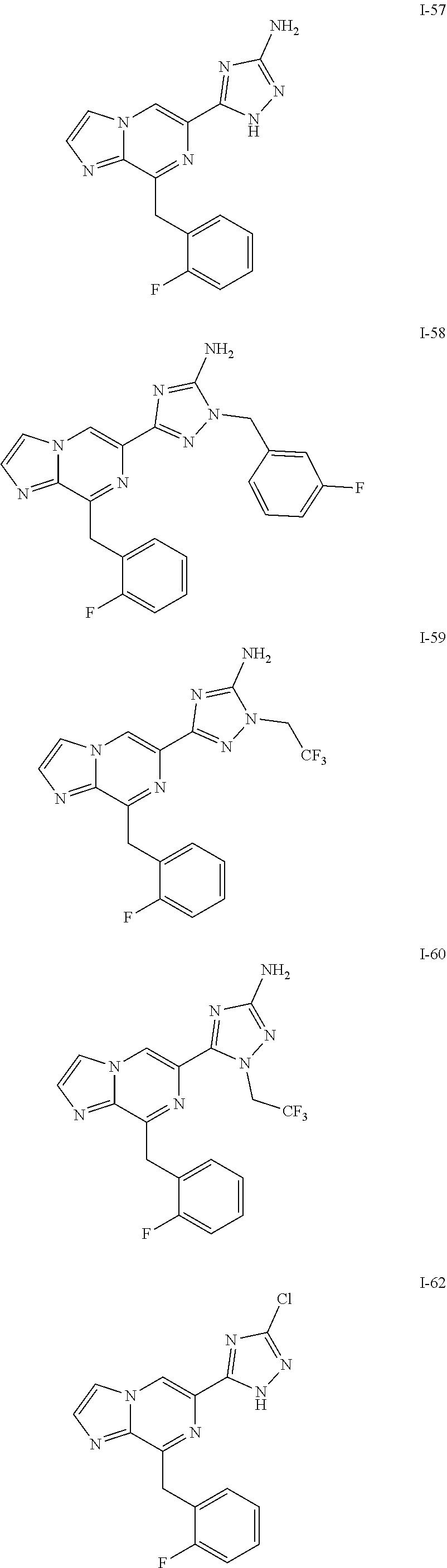


Priority Applications (4)
| Application Number | Priority Date | Filing Date | Title |
|---|---|---|---|
| US16/273,557 US10858363B2 (en) | 2016-09-02 | 2019-02-12 | SGC stimulators |
| US17/112,351 US20210087198A1 (en) | 2016-09-02 | 2020-12-04 | sGC STIMULATORS |
| US17/485,892 US11731977B2 (en) | 2016-09-02 | 2021-09-27 | SGC stimulators |
| US19/040,267 US20250326761A1 (en) | 2016-09-02 | 2025-01-29 | sGC STIMULATORS |
Applications Claiming Priority (6)
| Application Number | Priority Date | Filing Date | Title |
|---|---|---|---|
| US201662382942P | 2016-09-02 | 2016-09-02 | |
| US201662423445P | 2016-11-17 | 2016-11-17 | |
| US201762468598P | 2017-03-08 | 2017-03-08 | |
| US201762482486P | 2017-04-06 | 2017-04-06 | |
| US15/693,758 US10472363B2 (en) | 2016-09-02 | 2017-09-01 | SGC stimulators |
| US16/273,557 US10858363B2 (en) | 2016-09-02 | 2019-02-12 | SGC stimulators |
Related Parent Applications (1)
| Application Number | Title | Priority Date | Filing Date |
|---|---|---|---|
| US15/693,758 Continuation US10472363B2 (en) | 2016-09-02 | 2017-09-01 | SGC stimulators |
Related Child Applications (1)
| Application Number | Title | Priority Date | Filing Date |
|---|---|---|---|
| US17/112,351 Continuation US20210087198A1 (en) | 2016-09-02 | 2020-12-04 | sGC STIMULATORS |
Publications (2)
| Publication Number | Publication Date |
|---|---|
| US20190248794A1 US20190248794A1 (en) | 2019-08-15 |
| US10858363B2 true US10858363B2 (en) | 2020-12-08 |
Family
ID=59887396
Family Applications (5)
| Application Number | Title | Priority Date | Filing Date |
|---|---|---|---|
| US15/693,758 Active US10472363B2 (en) | 2016-09-02 | 2017-09-01 | SGC stimulators |
| US16/273,557 Active US10858363B2 (en) | 2016-09-02 | 2019-02-12 | SGC stimulators |
| US17/112,351 Abandoned US20210087198A1 (en) | 2016-09-02 | 2020-12-04 | sGC STIMULATORS |
| US17/485,892 Active US11731977B2 (en) | 2016-09-02 | 2021-09-27 | SGC stimulators |
| US19/040,267 Pending US20250326761A1 (en) | 2016-09-02 | 2025-01-29 | sGC STIMULATORS |
Family Applications Before (1)
| Application Number | Title | Priority Date | Filing Date |
|---|---|---|---|
| US15/693,758 Active US10472363B2 (en) | 2016-09-02 | 2017-09-01 | SGC stimulators |
Family Applications After (3)
| Application Number | Title | Priority Date | Filing Date |
|---|---|---|---|
| US17/112,351 Abandoned US20210087198A1 (en) | 2016-09-02 | 2020-12-04 | sGC STIMULATORS |
| US17/485,892 Active US11731977B2 (en) | 2016-09-02 | 2021-09-27 | SGC stimulators |
| US19/040,267 Pending US20250326761A1 (en) | 2016-09-02 | 2025-01-29 | sGC STIMULATORS |
Country Status (29)
| Country | Link |
|---|---|
| US (5) | US10472363B2 (en) |
| EP (2) | EP3872080B1 (en) |
| JP (2) | JP7050759B2 (en) |
| KR (2) | KR102568384B1 (en) |
| CN (2) | CN117105939B (en) |
| AU (2) | AU2017321810B2 (en) |
| CA (1) | CA3035210A1 (en) |
| CL (1) | CL2019000486A1 (en) |
| CO (1) | CO2019001760A2 (en) |
| CR (2) | CR20220309A (en) |
| CY (1) | CY1124612T1 (en) |
| DK (1) | DK3507291T3 (en) |
| ES (2) | ES2885003T3 (en) |
| HR (1) | HRP20211355T1 (en) |
| HU (1) | HUE056051T2 (en) |
| IL (2) | IL264955B (en) |
| LT (1) | LT3507291T (en) |
| MA (1) | MA53999A (en) |
| MX (3) | MX383782B (en) |
| MY (1) | MY199759A (en) |
| PE (1) | PE20190607A1 (en) |
| PH (1) | PH12019500461B1 (en) |
| PL (1) | PL3507291T3 (en) |
| PT (1) | PT3507291T (en) |
| RS (1) | RS62256B1 (en) |
| SG (1) | SG11201901729YA (en) |
| SI (1) | SI3507291T1 (en) |
| TW (2) | TWI813078B (en) |
| WO (1) | WO2018045276A1 (en) |
Cited By (3)
| Publication number | Priority date | Publication date | Assignee | Title |
|---|---|---|---|---|
| US20210177846A1 (en) * | 2018-07-11 | 2021-06-17 | Cyclerion Therapeutics, Inc. | USE OF sGC STIMULATORS FOR THE TREATMENT OF MITOCHONDRIAL DISORDERS |
| WO2023148203A1 (en) | 2022-02-01 | 2023-08-10 | Charité - Universitätsmedizin Berlin | A soluble guanylat cyclase activator for treating chronic vascular dysfunction |
| US11731977B2 (en) | 2016-09-02 | 2023-08-22 | Cyclerion Therapeutics, Inc. | SGC stimulators |
Families Citing this family (28)
| Publication number | Priority date | Publication date | Assignee | Title |
|---|---|---|---|---|
| KR100467946B1 (en) * | 1997-01-24 | 2005-01-24 | 로무 가부시키가이샤 | Method for manufacturing a semiconductor chip |
| EP3194386A2 (en) * | 2014-09-17 | 2017-07-26 | Ironwood Pharmaceuticals, Inc. | Sgc stimulators |
| CA3015172A1 (en) | 2016-02-18 | 2017-08-24 | Privo Technologies, Inc. | Two-stage microparticle-based therapeutic delivery system and method |
| ES2972711T3 (en) * | 2016-11-08 | 2024-06-14 | Tisento Therapeutics Inc | Treatment of CNS diseases with sGC stimulators |
| WO2018151849A1 (en) | 2017-02-17 | 2018-08-23 | Privo Technologies, Inc. | Particle-based multi-layer therapeutic delivery device and method |
| US10478403B1 (en) | 2017-05-03 | 2019-11-19 | Privo Technologies, Inc. | Intraoperative topically-applied non-implantable rapid release patch |
| TWI877770B (en) | 2018-02-27 | 2025-03-21 | 美商英塞特公司 | Imidazopyrimidines and triazolopyrimidines as a2a / a2b inhibitors |
| AU2019231724B2 (en) * | 2018-03-07 | 2024-06-27 | Tisento Therapeutics Inc. | Crystalline forms of an sGC stimulator |
| AU2019231721B2 (en) * | 2018-03-07 | 2024-06-27 | Tisento Therapeutics Inc. | Process for preparing soluble guanylate cyclase stimulators |
| EP3787610A1 (en) * | 2018-04-30 | 2021-03-10 | Bayer Aktiengesellschaft | The use of sgc activators and sgc stimulators for the treatment of cognitive impairment |
| EP3810610A1 (en) | 2018-05-18 | 2021-04-28 | Incyte Corporation | Fused pyrimidine derivatives as a2a / a2b inhibitors |
| WO2020010197A1 (en) | 2018-07-05 | 2020-01-09 | Incyte Corporation | Fused pyrazine derivatives as a2a / a2b inhibitors |
| GB201811695D0 (en) * | 2018-07-17 | 2018-08-29 | Salvensis | Compounds for use in the treatment of fascioliasis |
| US20210393621A1 (en) | 2018-10-26 | 2021-12-23 | The Research Foundation For The State University Of New York | Combination serotonin specific reuptake inhibitor and serotonin 1a receptor partial agonist for reducing l-dopa-induced dyskinesia |
| BR112021009958A2 (en) * | 2018-11-28 | 2021-08-17 | Topadur Pharma Ag | dual mode of action of soluble guanylate cyclase activators and phosphodiesterase inhibitors and their uses |
| TWI829857B (en) | 2019-01-29 | 2024-01-21 | 美商英塞特公司 | Pyrazolopyridines and triazolopyridines as a2a / a2b inhibitors |
| CN110305125B (en) * | 2019-06-06 | 2021-09-03 | 山东新华制药股份有限公司 | 5-pyrimidine-6-oxy-pyrazolopyridine derivative and preparation method and application thereof |
| CN114980899A (en) * | 2019-11-26 | 2022-08-30 | 普拉西斯精密医药公司 | Ion channel modulators |
| US20230130739A1 (en) | 2020-03-26 | 2023-04-27 | Cyclerion Therapeutics, Inc. | DEUTERATED sGC STIMULATORS |
| WO2022081610A1 (en) | 2020-10-13 | 2022-04-21 | Cyclerion Therapeutics, Inc. | Treatment of cognitive impairment with a cns-penetrant sgc stimulator |
| EP4326268A1 (en) | 2021-04-20 | 2024-02-28 | Tisento Therapeutics Inc. | Treatment of cns diseases with sgc stimulators |
| US20240208979A1 (en) | 2021-04-20 | 2024-06-27 | Tisento Therapeutics Inc. | sGC STIMULATORS |
| CN117957228A (en) * | 2021-04-20 | 2024-04-30 | 帝善多制药公司 | sGC stimulators |
| KR20240041285A (en) * | 2021-06-01 | 2024-03-29 | 프리보 테크놀로지스, 인코포레이티드 | An improved two-stage microparticle-based topical therapeutic delivery system |
| US20230277521A1 (en) * | 2022-03-07 | 2023-09-07 | Harrow Ip, Llc | Extended-release pharmaceutical compositions for treating eye conditions |
| EP4605080A1 (en) | 2022-10-18 | 2025-08-27 | Tisento Therapeutics Inc. | Treatment of mitochondrial diseases with sgc stimulators |
| CN119285629A (en) * | 2024-09-03 | 2025-01-10 | 中南大学 | 5-[1,2,4-oxadiazole]-6-oxo-pyrazolopyridine derivatives and preparation method and application thereof |
| CN119185590B (en) * | 2024-11-28 | 2025-02-25 | 华润双鹤利民药业(济南)有限公司 | Application of hydroxypropyl-β-cyclodextrin in preparing solid preparation of Vericipiracil, solid preparation and preparation method |
Citations (31)
| Publication number | Priority date | Publication date | Assignee | Title |
|---|---|---|---|---|
| WO2001064643A2 (en) | 2000-02-29 | 2001-09-07 | Cor Therapeutics, Inc. | BENZAMIDES AND RELATED INHIBITORS OF FACTOR Xa |
| WO2003059346A1 (en) | 2002-01-18 | 2003-07-24 | The Genetics Company Inc. | Beta-secretase inhibitors |
| US6632815B2 (en) | 1999-09-17 | 2003-10-14 | Millennium Pharmaceuticals, Inc. | Inhibitors of factor Xa |
| WO2003086407A1 (en) | 2002-04-12 | 2003-10-23 | Bayer Healthcare Ag | Use of stimulators of soluble guanylate cyclase for treating glaucoma |
| US6720317B1 (en) | 1999-09-17 | 2004-04-13 | Millennium Pharmaceuticals, Inc. | Inhibitors of factor Xa |
| US20040186148A1 (en) | 2003-03-20 | 2004-09-23 | Schering Corporation | Cannabinoid receptor ligands |
| US6844367B1 (en) | 1999-09-17 | 2005-01-18 | Millennium Pharmaceuticals, Inc. | Benzamides and related inhibitors of factor Xa |
| WO2005020921A2 (en) | 2003-08-29 | 2005-03-10 | Exelixis, Inc. | C-kit modulators and methods of use |
| WO2010069684A1 (en) | 2008-12-17 | 2010-06-24 | Biomarin Iga, Ltd. | Compounds for treatment of duchenne muscular dystrophy |
| WO2010088518A2 (en) | 2009-01-31 | 2010-08-05 | Kalypsys, Inc. | Heterocyclic modulators of gpr119 for treatment of disease |
| US20110071128A1 (en) | 2009-09-24 | 2011-03-24 | Daniela Alberati | Novel imidazopyridines |
| WO2011110545A1 (en) | 2010-03-09 | 2011-09-15 | Janssen Pharmaceutica Nv | Imidazo [1, 2 -a] pyrazine derivatives and their use for the prevention or treatment of neurological, psychiatric and metabolic disorders and diseases |
| WO2011149921A1 (en) | 2010-05-27 | 2011-12-01 | Merck Sharp & Dohme Corp. | Soluble guanylate cyclase activators |
| WO2012080729A2 (en) | 2010-12-14 | 2012-06-21 | Electrophoretics Limited | CASEIN KINASE 1δ (CK1δ) INHIBITORS |
| WO2014068099A1 (en) | 2012-11-05 | 2014-05-08 | Bayer Pharma Aktiengesellschaft | Amino-substituted imidazo[1,2-a]pyridinecarboxamides and their use |
| US8748442B2 (en) | 2010-06-30 | 2014-06-10 | Ironwood Pharmaceuticals, Inc. | sGC stimulators |
| US9061030B2 (en) | 2010-11-09 | 2015-06-23 | Ironwood Pharmaceuticals, Inc. | sGC stimulators |
| WO2015187470A1 (en) | 2014-06-04 | 2015-12-10 | Merck Sharp & Dohme Corp. | Imidazo-pyrazine derivatives useful as soluble guanylate cyclase activators |
| WO2016044446A2 (en) | 2014-09-17 | 2016-03-24 | Ironwood Pharmaceuticals, Inc. | Sgc stimulators |
| US9309235B2 (en) | 2012-09-18 | 2016-04-12 | Ironwood Pharmaceuticals, Inc. | SGC stimulators |
| WO2016081668A1 (en) | 2014-11-21 | 2016-05-26 | Merck Sharp & Dohme Corp. | Triazolo-pyrazinyl derivatives useful as soluble guanylate cyclase activators |
| WO2016087342A1 (en) | 2014-12-02 | 2016-06-09 | Bayer Pharma Aktiengesellschaft | Substituted pyrazolo[1,5-a]pyridines and imidazo[1,2-a]pyrazines and their use |
| US9481689B2 (en) | 2013-03-15 | 2016-11-01 | Ironwood Pharmaceuticals, Inc. | sGC stimulators |
| WO2016191334A1 (en) | 2015-05-27 | 2016-12-01 | Merck Sharp & Dohme Corp. | Imidazo-pyrazinyl derivatives useful as soluble guanylate cyclase activators |
| WO2016191335A1 (en) | 2015-05-28 | 2016-12-01 | Merck Sharp & Dohme Corp. | Imidazo-pyrazinyl derivatives useful as soluble guanylate cyclase activators |
| WO2017002120A1 (en) | 2015-07-02 | 2017-01-05 | Yeda Research And Development Co. Ltd. | Selective inhibitors of senescent cells and uses thereof |
| US20170183328A1 (en) | 2015-12-29 | 2017-06-29 | Pfizer Inc. | Substituted 3-azabicyclo[3.1.0]hexanes as ketohexokinase inhibitors |
| WO2017108441A1 (en) | 2015-12-22 | 2017-06-29 | Universiteit Maastricht | Treatment of cognitive impairment with cgc stimulator |
| US20180065971A1 (en) | 2016-09-02 | 2018-03-08 | Ironwood Pharmaceuticals, Inc. | sGC STIMULATORS |
| WO2018041947A1 (en) | 2016-09-02 | 2018-03-08 | Glaxosmithkline Intellectual Property (No.2) Limited | Imidazole derivatives and their use in the treatment of autoimmune or inflammatory diseases or cancers |
| WO2018187553A1 (en) | 2017-04-06 | 2018-10-11 | Fmc Corporation | Fungicidal oxadiazoles |
Family Cites Families (34)
| Publication number | Priority date | Publication date | Assignee | Title |
|---|---|---|---|---|
| US3773919A (en) | 1969-10-23 | 1973-11-20 | Du Pont | Polylactide-drug mixtures |
| US3995631A (en) | 1971-01-13 | 1976-12-07 | Alza Corporation | Osmotic dispenser with means for dispensing active agent responsive to osmotic gradient |
| US4203440A (en) | 1978-10-23 | 1980-05-20 | Alza Corporation | Device having variable volume chamber for dispensing useful agent |
| US4627850A (en) | 1983-11-02 | 1986-12-09 | Alza Corporation | Osmotic capsule |
| EP0192963B1 (en) | 1985-02-27 | 1988-07-20 | Werkzeugmaschinenfabrik Oerlikon-Bührle AG | Apparatus for measuring the vibrations of a spiral bevel gear transmission in a gear-testing machine |
| IL92966A (en) | 1989-01-12 | 1995-07-31 | Pfizer | Dispensing devices powered by hydrogel |
| US5304121A (en) | 1990-12-28 | 1994-04-19 | Boston Scientific Corporation | Drug delivery system making use of a hydrogel polymer coating |
| US5324280A (en) | 1990-04-02 | 1994-06-28 | Alza Corporation | Osmotic dosage system for delivering a formulation comprising liquid carrier and drug |
| US5886026A (en) | 1993-07-19 | 1999-03-23 | Angiotech Pharmaceuticals Inc. | Anti-angiogenic compositions and methods of use |
| JP2928079B2 (en) | 1994-02-14 | 1999-07-28 | 永信薬品工業股▲ふん▼有限公司 | 1- (Substituted benzyl) -3- (substituted aryl) condensed pyrazoles, their production and use |
| US6099562A (en) | 1996-06-13 | 2000-08-08 | Schneider (Usa) Inc. | Drug coating with topcoat |
| DE19744026A1 (en) | 1997-10-06 | 1999-04-08 | Hoechst Marion Roussel De Gmbh | Pyrazole derivatives, their preparation and their use in medicinal products |
| CZ302691B6 (en) | 1998-07-08 | 2011-09-07 | Sanofi - Aventis Deutschland GmbH | N-arylamide compound, process for its preparation, pharmaceutical composition containing thereof, the compound for use as activator and for use in therapy or prophylaxis |
| DE19830430A1 (en) | 1998-07-08 | 2000-01-13 | Hoechst Marion Roussel De Gmbh | New sulfur-substituted sulfonylamino-carboxylic acid N-arylamide derivatives useful as guanylate cyclase activators in treatment of e.g. cardiovascular disorders, asthma and diabetes |
| DE19834044A1 (en) | 1998-07-29 | 2000-02-03 | Bayer Ag | New substituted pyrazole derivatives |
| DE19834047A1 (en) | 1998-07-29 | 2000-02-03 | Bayer Ag | Substituted pyrazole derivatives |
| GB9824310D0 (en) | 1998-11-05 | 1998-12-30 | Univ London | Activators of soluble guanylate cyclase |
| PT1140012E (en) | 1998-12-17 | 2004-05-31 | Alza Corp | CONVERSATION OF FULL GELATINE CAPSULES WITH LIQUID IN LIBERTACAO SYSTEMS CONTROLLED BY MULTIPLE LAYERS |
| US6342249B1 (en) | 1998-12-23 | 2002-01-29 | Alza Corporation | Controlled release liquid active agent formulation dosage forms |
| DE19942809A1 (en) | 1999-09-08 | 2001-03-15 | Bayer Ag | Process for the preparation of substituted pyrimidine derivatives |
| DE19943635A1 (en) | 1999-09-13 | 2001-03-15 | Bayer Ag | Novel aminodicarboxylic acid derivatives with pharmaceutical properties |
| DE10220570A1 (en) | 2002-05-08 | 2003-11-20 | Bayer Ag | Carbamate-substituted pyrazolopyridines |
| BRPI0413363A (en) | 2003-08-04 | 2006-10-10 | Pfizer Prod Inc | dosage forms providing controlled release of cholesteryl ester transfer protein inhibitors and immediate release of hmg-coa reductase inhibitors |
| DE102006020327A1 (en) * | 2006-04-27 | 2007-12-27 | Bayer Healthcare Ag | Heterocyclic substituted, fused pyrazole derivatives and their use |
| BRPI0816382A2 (en) | 2007-09-06 | 2015-02-24 | Merck Sharp & Dohme | COMPOUND, COMPOSITION, AND METHODS TO ACTIVATE SOLUBLE GUANILATE CYCLASE AND TO TREAT OR PREVENT DISEASES |
| WO2009094242A1 (en) | 2008-01-24 | 2009-07-30 | Merck & Co., Inc. | Angiotensin ii receptor antagonists |
| AU2009322836B2 (en) | 2008-11-25 | 2013-04-04 | Merck Sharp & Dohme Corp. | Soluble guanylate cyclase activators |
| KR20110133034A (en) | 2009-02-26 | 2011-12-09 | 머크 샤프 앤드 돔 코포레이션 | Soluble Guanylate Cyclase Activator |
| US9284301B2 (en) | 2010-03-25 | 2016-03-15 | Merck Sharp & Dohme Corp. | Soluble guanylate cyclase activators |
| EP2632551B1 (en) | 2010-10-28 | 2016-07-06 | Merck Sharp & Dohme Corp. | Soluble guanylate cyclase activators |
| CN106117194A (en) * | 2011-12-27 | 2016-11-16 | 铁木医药有限公司 | Can be used as 2 benzyls of SGC stimulant, 3 (pyrimidine 2 base) substituted pyrazoles |
| DE102012200349A1 (en) | 2012-01-11 | 2013-07-11 | Bayer Intellectual Property Gmbh | Substituted fused pyrimidines and triazines and their use |
| CA2933250A1 (en) | 2013-12-11 | 2015-06-18 | Ironwood Pharmaceuticals, Inc. | Sgc stimulators |
| KR20210122319A (en) | 2017-04-06 | 2021-10-08 | 항저우 디에이씨 바이오테크 씨오, 엘티디 | Conjugation of a cytotoxic drug with bis-linkage |
-
2017
- 2017-09-01 SI SI201730889T patent/SI3507291T1/en unknown
- 2017-09-01 HR HRP20211355TT patent/HRP20211355T1/en unknown
- 2017-09-01 US US15/693,758 patent/US10472363B2/en active Active
- 2017-09-01 EP EP21167805.7A patent/EP3872080B1/en active Active
- 2017-09-01 IL IL264955A patent/IL264955B/en unknown
- 2017-09-01 RS RS20211055A patent/RS62256B1/en unknown
- 2017-09-01 CA CA3035210A patent/CA3035210A1/en active Pending
- 2017-09-01 ES ES17768311T patent/ES2885003T3/en active Active
- 2017-09-01 PH PH1/2019/500461A patent/PH12019500461B1/en unknown
- 2017-09-01 HU HUE17768311A patent/HUE056051T2/en unknown
- 2017-09-01 CN CN202310684903.5A patent/CN117105939B/en active Active
- 2017-09-01 ES ES21167805T patent/ES2957159T3/en active Active
- 2017-09-01 MX MX2019002313A patent/MX383782B/en unknown
- 2017-09-01 MX MX2021007580A patent/MX394958B/en unknown
- 2017-09-01 EP EP17768311.7A patent/EP3507291B1/en active Active
- 2017-09-01 SG SG11201901729YA patent/SG11201901729YA/en unknown
- 2017-09-01 CR CR20220309A patent/CR20220309A/en unknown
- 2017-09-01 IL IL292968A patent/IL292968B2/en unknown
- 2017-09-01 PT PT177683117T patent/PT3507291T/en unknown
- 2017-09-01 TW TW110143580A patent/TWI813078B/en active
- 2017-09-01 KR KR1020197008522A patent/KR102568384B1/en active Active
- 2017-09-01 AU AU2017321810A patent/AU2017321810B2/en active Active
- 2017-09-01 JP JP2019512205A patent/JP7050759B2/en active Active
- 2017-09-01 MA MA053999A patent/MA53999A/en unknown
- 2017-09-01 PL PL17768311T patent/PL3507291T3/en unknown
- 2017-09-01 LT LTEP17768311.7T patent/LT3507291T/en unknown
- 2017-09-01 DK DK17768311.7T patent/DK3507291T3/en active
- 2017-09-01 TW TW106129952A patent/TWI750218B/en active
- 2017-09-01 WO PCT/US2017/049834 patent/WO2018045276A1/en not_active Ceased
- 2017-09-01 CN CN201780059390.1A patent/CN109790167B/en active Active
- 2017-09-01 MY MYPI2019001096A patent/MY199759A/en unknown
- 2017-09-01 CR CR20190101A patent/CR20190101A/en unknown
- 2017-09-01 KR KR1020237027632A patent/KR102854313B1/en active Active
- 2017-09-01 PE PE2019000448A patent/PE20190607A1/en unknown
-
2019
- 2019-02-12 US US16/273,557 patent/US10858363B2/en active Active
- 2019-02-22 CL CL2019000486A patent/CL2019000486A1/en unknown
- 2019-02-26 CO CONC2019/0001760A patent/CO2019001760A2/en unknown
- 2019-02-26 MX MX2021007579A patent/MX2021007579A/en unknown
-
2020
- 2020-12-04 US US17/112,351 patent/US20210087198A1/en not_active Abandoned
-
2021
- 2021-08-24 CY CY20211100756T patent/CY1124612T1/en unknown
- 2021-09-27 US US17/485,892 patent/US11731977B2/en active Active
-
2022
- 2022-03-25 JP JP2022050708A patent/JP7628096B2/en active Active
- 2022-03-30 AU AU2022202167A patent/AU2022202167B2/en active Active
-
2025
- 2025-01-29 US US19/040,267 patent/US20250326761A1/en active Pending
Patent Citations (34)
| Publication number | Priority date | Publication date | Assignee | Title |
|---|---|---|---|---|
| US6844367B1 (en) | 1999-09-17 | 2005-01-18 | Millennium Pharmaceuticals, Inc. | Benzamides and related inhibitors of factor Xa |
| US6632815B2 (en) | 1999-09-17 | 2003-10-14 | Millennium Pharmaceuticals, Inc. | Inhibitors of factor Xa |
| US6720317B1 (en) | 1999-09-17 | 2004-04-13 | Millennium Pharmaceuticals, Inc. | Inhibitors of factor Xa |
| WO2001064643A2 (en) | 2000-02-29 | 2001-09-07 | Cor Therapeutics, Inc. | BENZAMIDES AND RELATED INHIBITORS OF FACTOR Xa |
| WO2003059346A1 (en) | 2002-01-18 | 2003-07-24 | The Genetics Company Inc. | Beta-secretase inhibitors |
| WO2003086407A1 (en) | 2002-04-12 | 2003-10-23 | Bayer Healthcare Ag | Use of stimulators of soluble guanylate cyclase for treating glaucoma |
| US20040186148A1 (en) | 2003-03-20 | 2004-09-23 | Schering Corporation | Cannabinoid receptor ligands |
| WO2005020921A2 (en) | 2003-08-29 | 2005-03-10 | Exelixis, Inc. | C-kit modulators and methods of use |
| WO2010069684A1 (en) | 2008-12-17 | 2010-06-24 | Biomarin Iga, Ltd. | Compounds for treatment of duchenne muscular dystrophy |
| WO2010088518A2 (en) | 2009-01-31 | 2010-08-05 | Kalypsys, Inc. | Heterocyclic modulators of gpr119 for treatment of disease |
| US20110071128A1 (en) | 2009-09-24 | 2011-03-24 | Daniela Alberati | Novel imidazopyridines |
| WO2011110545A1 (en) | 2010-03-09 | 2011-09-15 | Janssen Pharmaceutica Nv | Imidazo [1, 2 -a] pyrazine derivatives and their use for the prevention or treatment of neurological, psychiatric and metabolic disorders and diseases |
| WO2011149921A1 (en) | 2010-05-27 | 2011-12-01 | Merck Sharp & Dohme Corp. | Soluble guanylate cyclase activators |
| US8748442B2 (en) | 2010-06-30 | 2014-06-10 | Ironwood Pharmaceuticals, Inc. | sGC stimulators |
| US9061030B2 (en) | 2010-11-09 | 2015-06-23 | Ironwood Pharmaceuticals, Inc. | sGC stimulators |
| WO2012080729A2 (en) | 2010-12-14 | 2012-06-21 | Electrophoretics Limited | CASEIN KINASE 1δ (CK1δ) INHIBITORS |
| US9309235B2 (en) | 2012-09-18 | 2016-04-12 | Ironwood Pharmaceuticals, Inc. | SGC stimulators |
| WO2014068099A1 (en) | 2012-11-05 | 2014-05-08 | Bayer Pharma Aktiengesellschaft | Amino-substituted imidazo[1,2-a]pyridinecarboxamides and their use |
| US9586937B2 (en) | 2013-03-15 | 2017-03-07 | Ironwood Pharmaceuticals, Inc. | sGC stimulators |
| US9481689B2 (en) | 2013-03-15 | 2016-11-01 | Ironwood Pharmaceuticals, Inc. | sGC stimulators |
| WO2015187470A1 (en) | 2014-06-04 | 2015-12-10 | Merck Sharp & Dohme Corp. | Imidazo-pyrazine derivatives useful as soluble guanylate cyclase activators |
| WO2016044446A2 (en) | 2014-09-17 | 2016-03-24 | Ironwood Pharmaceuticals, Inc. | Sgc stimulators |
| WO2016081668A1 (en) | 2014-11-21 | 2016-05-26 | Merck Sharp & Dohme Corp. | Triazolo-pyrazinyl derivatives useful as soluble guanylate cyclase activators |
| WO2016087342A1 (en) | 2014-12-02 | 2016-06-09 | Bayer Pharma Aktiengesellschaft | Substituted pyrazolo[1,5-a]pyridines and imidazo[1,2-a]pyrazines and their use |
| WO2016191334A1 (en) | 2015-05-27 | 2016-12-01 | Merck Sharp & Dohme Corp. | Imidazo-pyrazinyl derivatives useful as soluble guanylate cyclase activators |
| WO2016191335A1 (en) | 2015-05-28 | 2016-12-01 | Merck Sharp & Dohme Corp. | Imidazo-pyrazinyl derivatives useful as soluble guanylate cyclase activators |
| WO2017002120A1 (en) | 2015-07-02 | 2017-01-05 | Yeda Research And Development Co. Ltd. | Selective inhibitors of senescent cells and uses thereof |
| WO2017108441A1 (en) | 2015-12-22 | 2017-06-29 | Universiteit Maastricht | Treatment of cognitive impairment with cgc stimulator |
| US20170183328A1 (en) | 2015-12-29 | 2017-06-29 | Pfizer Inc. | Substituted 3-azabicyclo[3.1.0]hexanes as ketohexokinase inhibitors |
| US20180065971A1 (en) | 2016-09-02 | 2018-03-08 | Ironwood Pharmaceuticals, Inc. | sGC STIMULATORS |
| WO2018045276A1 (en) | 2016-09-02 | 2018-03-08 | Ironwood Pharmaceuticals, Inc. | Fused bicyclic sgc stimulators |
| WO2018041947A1 (en) | 2016-09-02 | 2018-03-08 | Glaxosmithkline Intellectual Property (No.2) Limited | Imidazole derivatives and their use in the treatment of autoimmune or inflammatory diseases or cancers |
| US10472363B2 (en) * | 2016-09-02 | 2019-11-12 | Cyclerion Therapeutics, Inc. | SGC stimulators |
| WO2018187553A1 (en) | 2017-04-06 | 2018-10-11 | Fmc Corporation | Fungicidal oxadiazoles |
Non-Patent Citations (18)
| Title |
|---|
| Aissa et al., Targeting NO/cGMP Signaling in the CNS for Neurodegeneration and Alzheimer's Disease. Curr Med Chem. 2016;23(24):2770-2788. |
| Csiszar et al., Hypertension impairs neurovascular coupling and promotes microvascular injury: role in exacerbation of Alzheimer's disease. GeroScience. 2017;39:359-372. |
| De La Torre, Is Alzheimer's disease a neurodegenerative or a vascular disorder? Data, dogma, and dialectics. Lancet Neurol. Mar. 2004;3(3):184-190. |
| Di Marco et al., Vascular dysfunction in the pathogenesis of Alzheimer's disease-A review of endothelium-mediated mechanisms and ensuing vicious circles. Neurobiol Dis. Oct. 2015:82:593-606. |
| Di Marco et al., Vascular dysfunction in the pathogenesis of Alzheimer's disease—A review of endothelium-mediated mechanisms and ensuing vicious circles. Neurobiol Dis. Oct. 2015:82:593-606. |
| Griebenow et al., Identification of acidic heterocycle-substituted 1H-pyrazolo[3,4-b]pyridines as soluble guanylate cyclase stimulators. Bioorg Med Chem Lett. Mar. 1, 2013;23(5):1197-1200. |
| Hutson et al., The selective phosphodiesterase 9 (PDE9) inhibitor PF-04447943 (6-[(3S,4S)-4-methyl-1-(pyrimidin-2-ylmethyl)pyrrolidin-3-yl]-1-(tetrahydro-2H-py ran-4-yl)-1,5-dihydro-4H-pyrazolo[3,4-d]pyrimidin-4-one) enhances synaptic plasticity and cognitive function in rodents. Neuropharmacology. Sep. 2011;61(4):665-676. |
| International Search Report and Written Opinion for Application No. PCT/US2017/049834, dated Nov. 6, 2017. |
| Katusic et al., Endothelial nitric oxide: protector of a healthy mind. Eur Heart J. Apr. 2014;35(14):888-894. |
| Kleiman et al., Phosphodiesterase 9A regulates central cGMP and modulates responses to cholinergic and monoaminergic perturbation in vivo. J Pharmacol Exp Ther. May 2012;341(2):396-409. |
| Lourenço et al., Neurovascular-neuroenergetic coupling axis in the brain: master regulation by nitric oxide and consequences in aging and neurodegeneration. Free Radic Biol Med. Jul. 2017;108:668-682. |
| Puzzo et al., Amyloid-beta peptide inhibits activation of the nitric oxide/cGMP/cAMP-responsive element-binding protein pathway during hippocampal synaptic plasticity. J Neurosci. Jul. 20, 2005;25(29):6887-6897. |
| Qin, Modulating nitric oxide signaling in the CNS for Alzheimer's disease therapy. Future Med Chem. Aug. 2013;5(12):1451-1468. |
| Roberts et al., Acidic triazoles as soluble guanylate cyclase stimulators. Bioorg Med Chem Lett. Nov. 1, 2011;21(21):6515-6518. |
| Thatcher et al., Nitric Oxide Mimetic Molecules as Therapeutic Agents in Alzheimer's Disease. Current Alzheimer Research. 2005;2:1-12. |
| Toda et al., Cerebral blood flow regulation by nitric oxide: recent advances. Pharmacol Rev. Mar. 2009;61(1):62-97. |
| U.S. Appl. No. 15/693,758, filed Sep. 1, 2017, 2018-0065971, Published. |
| Verhoest et al., Design and discovery of 6-[(3S,4S)-4-methyl-1-(pyrimidin-2-ylmethyl)pyrrolidin-3-yl]-1-(tetrahydro-2H-pyr an-4-yl)-1,5-dihydro-4H-pyrazolo[3,4-d]pyrimidin-4-one (PF-04447943), a selective brain penetrant PDE9A inhibitor for the treatment of cognitive disorders. J Med Chem. Nov. 8, 2012;55(21):9045-9054. |
Cited By (4)
| Publication number | Priority date | Publication date | Assignee | Title |
|---|---|---|---|---|
| US11731977B2 (en) | 2016-09-02 | 2023-08-22 | Cyclerion Therapeutics, Inc. | SGC stimulators |
| US20210177846A1 (en) * | 2018-07-11 | 2021-06-17 | Cyclerion Therapeutics, Inc. | USE OF sGC STIMULATORS FOR THE TREATMENT OF MITOCHONDRIAL DISORDERS |
| US12220414B2 (en) * | 2018-07-11 | 2025-02-11 | Tisento Therapeutics Inc. | Use of sGC stimulators for the treatment of mitochondrial disorders |
| WO2023148203A1 (en) | 2022-02-01 | 2023-08-10 | Charité - Universitätsmedizin Berlin | A soluble guanylat cyclase activator for treating chronic vascular dysfunction |
Also Published As
Similar Documents
| Publication | Publication Date | Title |
|---|---|---|
| US11731977B2 (en) | SGC stimulators | |
| US12435080B2 (en) | sGC stimulators | |
| HK40061428B (en) | Fused bicyclic sgc stimulators | |
| HK40061428A (en) | Fused bicyclic sgc stimulators | |
| HK40010650B (en) | Fused bicyclic sgc stimulators | |
| HK40010650A (en) | Fused bicyclic sgc stimulators | |
| BR112019004468B1 (en) | SGC STIMULANTS |
Legal Events
| Date | Code | Title | Description |
|---|---|---|---|
| FEPP | Fee payment procedure |
Free format text: ENTITY STATUS SET TO UNDISCOUNTED (ORIGINAL EVENT CODE: BIG.); ENTITY STATUS OF PATENT OWNER: LARGE ENTITY |
|
| AS | Assignment |
Owner name: CYCLERION THERAPEUTICS, INC., MASSACHUSETTS Free format text: ASSIGNMENT OF ASSIGNORS INTEREST;ASSIGNOR:IRONWOOD PHARMACEUTICALS, INC.;REEL/FRAME:048853/0001 Effective date: 20190401 |
|
| AS | Assignment |
Owner name: IRONWOOD PHARMACEUTICALS, INC., MASSACHUSETTS Free format text: ASSIGNMENT OF ASSIGNORS INTEREST;ASSIGNORS:RENNIE, GLEN ROBERT;IYENGAR, RAJESH R.;LEE, THOMAS WAI-HO;AND OTHERS;SIGNING DATES FROM 20171030 TO 20180501;REEL/FRAME:048969/0569 |
|
| STPP | Information on status: patent application and granting procedure in general |
Free format text: NON FINAL ACTION MAILED |
|
| STPP | Information on status: patent application and granting procedure in general |
Free format text: RESPONSE TO NON-FINAL OFFICE ACTION ENTERED AND FORWARDED TO EXAMINER |
|
| STPP | Information on status: patent application and granting procedure in general |
Free format text: EX PARTE QUAYLE ACTION MAILED |
|
| STPP | Information on status: patent application and granting procedure in general |
Free format text: NOTICE OF ALLOWANCE MAILED -- APPLICATION RECEIVED IN OFFICE OF PUBLICATIONS |
|
| STPP | Information on status: patent application and granting procedure in general |
Free format text: NOTICE OF ALLOWANCE MAILED -- APPLICATION RECEIVED IN OFFICE OF PUBLICATIONS |
|
| STPP | Information on status: patent application and granting procedure in general |
Free format text: PUBLICATIONS -- ISSUE FEE PAYMENT VERIFIED |
|
| STCF | Information on status: patent grant |
Free format text: PATENTED CASE |
|
| CC | Certificate of correction | ||
| AS | Assignment |
Owner name: TISENTO THERAPEUTICS, INC., MASSACHUSETTS Free format text: ASSIGNMENT OF ASSIGNORS INTEREST;ASSIGNOR:CYCLERION THERAPEUTICS, INC.;REEL/FRAME:064792/0500 Effective date: 20230727 |
|
| AS | Assignment |
Owner name: TISENTO THERAPEUTICS INC., MASSACHUSETTS Free format text: CORRECTIVE ASSIGNMENT TO CORRECT THE ASSIGNEE NAME FROM TISENTO THERAPEUTICS, INC. TO TISENTO THERAPEUTICS INC. PREVIOUSLY RECORDED ON REEL 064792 FRAME 0500. ASSIGNOR(S) HEREBY CONFIRMS THE ASSIGNMENT;ASSIGNOR:CYCLERION THERAPEUTICS, INC.;REEL/FRAME:064889/0459 Effective date: 20230728 |
|
| FEPP | Fee payment procedure |
Free format text: ENTITY STATUS SET TO SMALL (ORIGINAL EVENT CODE: SMAL); ENTITY STATUS OF PATENT OWNER: SMALL ENTITY |
|
| MAFP | Maintenance fee payment |
Free format text: PAYMENT OF MAINTENANCE FEE, 4TH YR, SMALL ENTITY (ORIGINAL EVENT CODE: M2551); ENTITY STATUS OF PATENT OWNER: SMALL ENTITY Year of fee payment: 4 |